
Category: Medical Equipment

  • Alpha Emitter Market Forecast Signals New Revenue Opportunities Through 2030

    Alpha Emitter Market Forecast Signals New Revenue Opportunities Through 2030

    Through market attractiveness analysis, total addressable market evaluation, company benchmarking matrices, interactive Excel dashboards, expanded supply chain intelligence, emerging startup coverage, and detailed product insights, The Business Research Company’s 2026 market reports provide more actionable and strategically valuable research.

    The alpha emitter market is rapidly evolving, driven by advancements in medical technology and a growing focus on targeted cancer treatments. As research expands and production methods improve, this sector is poised for significant growth over the next several years. Below, we explore the current market size, key growth factors, industry trends, major players, and regional outlook shaping the future of alpha emitters.

    Alpha Emitter Market Size and Growth Projections

    The alpha emitter market has experienced remarkable expansion recently. It is projected to increase from $1.61 billion in 2025 to $1.99 billion in 2026, representing a strong compound annual growth rate (CAGR) of 23.6%. This upward trend in the past years can be linked to the scarcity of alpha-emitting radionuclides, reliance on natural sources like uranium and radium, heightened awareness about targeted cancer therapies, the early clinical trial phase emergence, and limited production infrastructure.

    Looking ahead, the market is expected to continue its exponential rise, reaching $4.6 billion by 2030 with a CAGR of 23.3%. Factors contributing to this growth include the development of artificial radionuclide production facilities, increased investments in oncology treatments, expanding use in bone metastasis and prostate cancer therapies, advancements in targeted alpha therapy technologies, and the broadening scope of medical research applications. Notable trends for the forecast period involve greater adoption of alpha-emitter-based cancer therapies, intensified research into radionuclide production and isolation, growth in artificially produced alpha emitters, expansion of therapeutic uses beyond oncology, and an enhanced focus on safety and regulatory compliance for handling radioactive substances.

    Download A Free Sample Report For Comprehensive Market Insights:

    https://www.thebusinessresearchcompany.com/sample.aspx?id=19284&type=smp

    Rising Cancer Cases as a Primary Growth Catalyst for Alpha Emitter Market

    The growing incidence of cancer is a significant factor propelling the alpha emitter market forward. Cancer involves the uncontrolled proliferation and spread of abnormal cells, often forming tumors that invade surrounding tissues. This increase in cancer prevalence is driven by aging populations, environmental factors, lifestyle changes, and improved diagnostic methods. Alpha emitters play a crucial role in cancer treatment by precisely targeting and destroying tumor cells while limiting damage to healthy tissue. For example, according to the World Health Organization in February 2024, more than 35 million new cancer cases are projected by 2050—a 77% increase compared to approximately 20 million cases in 2022. This surge in cancer incidence is directly fueling demand for alpha emitter therapies.

    Key Segments Defining the Alpha Emitter Market

    This report categorizes the alpha emitter market across several important segments:

    1) By Type of Radionuclide: Radium, Actinium, Lead, Bismuth, and other radionuclides.

    2) By Source: Natural sources, artificially produced sources, and other sources.

    3) By Application: Including pancreatic cancer, ovarian cancer, prostate cancer, lymphoma, melanoma, bone metastasis, and miscellaneous applications.

    4) By End-User: Hospitals, medical research institutions, and other end-users.

    Further detailed subcategories include specific isotopes such as Radium-223, Actinium-225, Lead-210, Bismuth-213, Thorium, Polonium, and Francium.

    https://www.thebusinessresearchcompany.com/report/alpha-emitter-global-market-report

    Alpha Emitter Market Regional Distribution: Which Areas Drive Market Expansion?

    Innovations and Industry Advancements Reshaping Demand

    Leading players in the alpha emitter market are heavily investing in cutting-edge technologies like cyclotron-produced alpha-emitting radionuclides to maintain competitive advantages. Cyclotrons work by accelerating charged particles to high energies, enabling the production of radioactive isotopes that emit alpha particles. For instance, in April 2023, Ionetix, a US-based cyclotron and technology company, launched its first alpha-emitting radionuclide, Astatine-211 (At-211), at its newly opened Alpha Isotope Manufacturing facility in Lansing, Michigan. This facility is the first in the United States dedicated solely to producing alpha-emitting radionuclides using cyclotron technology. The operation relies on a 30 MeV cyclotron designed specifically to generate high yields of At-211 and Actinium-225 (Ac-225).

    Key Market Players Driving Competition in Alpha Emitters

    The alpha emitter market is shaped by several prominent companies, including Bayer AG, Lantheus Holdings Inc., Curium Pharma, Eckert & Ziegler BEBIG GmbH, Telix Pharmaceuticals Limited, NorthStar Medical Radioisotopes LLC, ITM Isotope Technologies Munich SE, International Isotopes Inc., IBA Radiopharma Solutions, Orano Med LLC, Actinium Pharmaceuticals Inc., Clarity Pharmaceuticals Ltd., RadioMedix Inc., Nordic Nanovector ASA, TAE Life Sciences, Fusion Pharmaceuticals Inc., Alpha Tau Medical Ltd., Alpha‑9 Oncology, Aktis Oncology, Abdera Therapeutics, Oncoinvent ASA, Theragnostics Ltd., ARICEUM Therapeutics, and Sirius Medical Systems B.V.

    Regional Dynamics and Growth Opportunities for Alpha Emitters

    In 2025, North America held the largest share in the alpha emitter market. However, Europe is expected to experience the fastest growth during the forecast period. The market report covers key regions including Asia-Pacific, Southeast Asia, Western Europe, Eastern Europe, North America, South America, the Middle East, and Africa, providing a comprehensive view of global developments and opportunities in this space.

    Get in touch with us:

    The Business Research Company: https://www.thebusinessresearchcompany.com/

    Americas: +1 310-496-7795

    Asia: +44 7882 955267 & +91 8897263534

    Europe: +44 7882 955267

    Email us at: marketing@tbrc.info

    Follow us on:

    LinkedIn: https://in.linkedin.com/company/the-business-research-company

    YouTube: https://www.youtube.com/channel/UC24_fI0rV8cR5DxlCpgmyFQ

    Global Market Model: https://www.thebusinessresearchcompany.com/global-market-model
  • Alimentary Tract Implant Market Growth Is Accelerating As Industry Transformation Continues

    Alimentary Tract Implant Market Growth Is Accelerating As Industry Transformation Continues

    Delivering more actionable and strategically valuable research, The Business Research Company’s 2026 market reports feature market attractiveness analysis, total addressable market evaluation, company benchmarking matrices, interactive Excel dashboards, expanded supply chain intelligence, emerging startup coverage, and detailed product insights.

    The alimentary tract implant market has witnessed considerable growth over the past few years, driven by various health and technological factors. As the demand for advanced digestive treatments continues to climb, this sector is set to experience further expansion. Let’s explore the market’s size, key growth drivers, segments, innovations, leading companies, and regional dynamics shaping its future.

    Current Market Size and Expected Growth Trajectory for the Alimentary Tract Implant Market

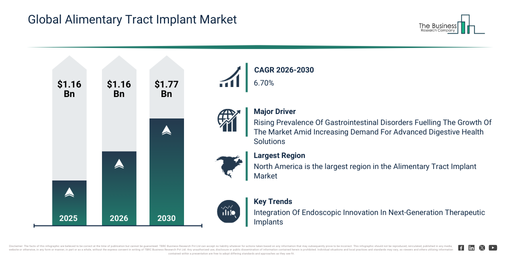
    The alimentary tract implant market has demonstrated strong growth recently, with revenues projected to increase from $5.13 billion in 2025 to $5.49 billion in 2026. This represents a compound annual growth rate (CAGR) of 7.0%. Factors contributing to this historic growth include rising obesity rates, an increase in metabolic disorders, advancements in endoscopic surgical techniques, greater demand for non-pharmaceutical treatment options, and the expansion of healthcare infrastructure worldwide.

    Looking ahead, the market is expected to continue its upward trend, reaching $7.12 billion by 2030 at a CAGR of 6.7%. The forecasted growth is fueled by a rising number of diabetes management implants, increased popularity of minimally invasive procedures, innovations in implant materials, precision treatment methods, and the aging global population. Key trends anticipated to influence the market include minimally invasive digestive implants, bariatric and metabolic devices, endoscopic implant procedures, neuromodulation therapies targeting gastrointestinal disorders, and improvements in the long-term biocompatibility of implant materials.

    Download A Free Sample Report For Comprehensive Market Insights:

    https://www.thebusinessresearchcompany.com/sample.aspx?id=30189&type=smp

    Rising Prevalence of Digestive Disorders as a Primary Growth Driver in the Alimentary Tract Implant Market

    One of the main catalysts for the alimentary tract implant market’s expansion is the growing incidence of gastrointestinal disorders. These encompass a broad range of conditions affecting the digestive system, including the stomach, intestines, and related organs, which often result in symptoms such as inflammation, pain, obstructions, or motility issues.

    The surge in gastrointestinal disorders is largely linked to unhealthy dietary patterns, notably the increased consumption of processed and high-fat foods. Such diets disrupt the balance of gut microbiota, contributing to digestive dysfunction. As a result, there is rising demand for advanced implantable solutions to manage obesity, fecal incontinence, gastrointestinal blockages, and other chronic digestive ailments. For example, in September 2025, the UK Health Security Agency reported a 27% increase in laboratory-confirmed Campylobacter infections in England, highlighting the growing burden of digestive health challenges that propel the market forward.

    Segment Overview Highlighting Growth Opportunities in the Alimentary Tract Implant Market

    This report divides the alimentary tract implant market into several critical segments:

    1) Implant Type: This includes Bariatric Restriction and Balloons, Gastric Electrical Stimulation or Neuromodulation devices, Gastrointestinal Stents or Endoluminal Scaffolds, and Continence or Anal Sphincter Implants.

    2) Procedure Approach: Key categories are Endoscopic or Transoral procedures, Laparoscopic Bariatric surgeries, Open or Revision surgeries, and Colorectal or Perineal Implantations.

    3) Indication: Segments are focused on Obesity or Metabolic Control, Motility Disorders, Management of Gastrointestinal Stricture, Obstruction or Leak, and Restoration of Continence or Fecal Incontinence.

    Within these, the report further breaks down subcategories such as types of bariatric balloons (gastric bands, adjustable and non-adjustable gastric balloons), various neuromodulation devices (implantable gastric stimulators, vagal nerve stimulators), stent types (esophageal, gastric, duodenal, colonic, biliary), and continence devices (artificial anal sphincters, sacral nerve stimulators).

    https://www.thebusinessresearchcompany.com/report/global-alimentary-tract-implant-market-report

    Alimentary Tract Implant Market Leading Geography: Which Region Generates The Most Revenue?

    Innovations and Technological Advances Shaping the Alimentary Tract Implant Market

    Leading companies in the alimentary tract implant sector are increasingly focusing on minimally invasive and high-precision technologies to improve treatment outcomes and patient safety. Minimally invasive endoscopic procedures, which use flexible endoscopes equipped with imaging and surgical instruments, allow surgeons to treat internal digestive organs without external incisions, enabling real-time visualization and intervention.

    For instance, in December 2024, Boston Scientific introduced the Apollo ESG System and the Orbera365 Intragastric Balloon System. Both utilize advanced endoscopic technology to provide incision-free access and treatment for weight loss and gastrointestinal conditions. These products incorporate durable, biocompatible materials and real-time imaging capabilities, resulting in shorter recovery times, fewer complications, and enhanced clinical efficiency.

    Key Industry Players Driving the Alimentary Tract Implant Market

    Several major companies hold significant positions in the alimentary tract implant market, including Medtronic Public Limited Company, Boston Scientific Corporation, Cook Group Incorporated, B. Braun Melsungen AG, Allurion Technologies Incorporated, ReShape Lifesciences Incorporated, Spatz Medical Limited, Hobbs Medical Incorporated, MICRO-TECH (Nanjing) Company Limited, M.I.Tech Company Limited, ELLA-CS s.r.o., BVM Medical Limited, EndoGastric Solutions Inc., EnteroMedics Inc., Inspire Medical Systems Inc., Coloplast A/S, Axonics Inc., Medica S.p.A., Taewoong Medical Co. Ltd., and S&G Biotech Incorporated. These organizations are pivotal in driving innovation and expanding market reach.

    Regional Market Leadership and Emerging Growth Areas for the Alimentary Tract Implant Market

    In 2025, North America was the largest regional market for alimentary tract implants, reflecting strong healthcare infrastructure and high adoption rates. However, the Asia-Pacific region is forecasted to experience the fastest growth during the coming years, driven by increasing healthcare investments and a rising burden of digestive disorders. The market analysis also covers other key regions including South East Asia, Western Europe, Eastern Europe, South America, the Middle East, and Africa, providing a comprehensive global perspective.

    Get in touch with us:

    The Business Research Company: https://www.thebusinessresearchcompany.com/

    Americas: +1 310-496-7795

    Asia: +44 7882 955267 & +91 8897263534

    Europe: +44 7882 955267

    Email us at: marketing@tbrc.info

    Follow us on:

    LinkedIn: https://in.linkedin.com/company/the-business-research-company

    YouTube: https://www.youtube.com/channel/UC24_fI0rV8cR5DxlCpgmyFQ

    Global Market Model: https://www.thebusinessresearchcompany.com/global-market-model
  • Alcohol Tests Market Outlook Highlights The Next Major Growth Opportunities

    Alcohol Tests Market Outlook Highlights The Next Major Growth Opportunities

    Enhanced with market attractiveness analysis, total addressable market evaluation, company benchmarking matrices, interactive Excel dashboards, expanded supply chain intelligence, emerging startup coverage, and detailed product insights, The Business Research Company’s 2026 market reports deliver more actionable and strategically valuable research.

    The alcohol tests market is experiencing steady growth as demand for accurate and rapid alcohol monitoring solutions rises globally. With ongoing technological advancements and expanding applications across various sectors, this market is set to witness considerable revenue increases in the coming years. Below is a detailed overview of the market’s size, driving factors, segments, emerging trends, leading players, and regional outlook.

    Alcohol Tests Market Size and Projected Growth Trajectory

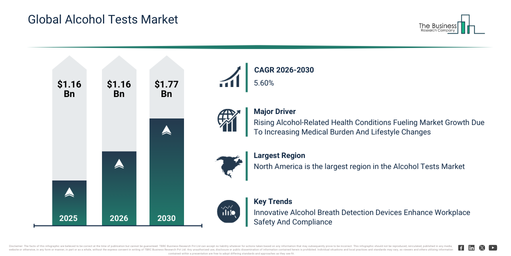
    The alcohol tests market has demonstrated strong expansion recently, with its value anticipated to rise from $7.71 billion in 2025 to $8.16 billion in 2026 at a compound annual growth rate (CAGR) of 5.8%. This growth in the past years is largely due to sustained use of traditional urine and blood testing methods, limited public awareness regarding alcohol monitoring, widespread workplace alcohol testing policies, dependence on stationary equipment in hospitals and laboratories, and a fragmented landscape dominated by regional companies. Looking ahead, the market is expected to reach $10.15 billion by 2030, maintaining a CAGR of 5.6%. This future growth is driven by innovations in wearable and portable analyzers, increased preference for non-invasive and rapid testing methodologies, broader adoption in workplaces and criminal justice systems, expansion of point-of-care and home-based testing options, and integration with digital health platforms. Key trends shaping the market include greater use of portable breath analyzers, embedding alcohol tests into workplace safety programs, rising appeal for non-invasive testing, growth in law enforcement and rehabilitation monitoring, and healthcare-based alcohol consumption tracking.

    Download A Free Sample Report For Comprehensive Market Insights:

    https://www.thebusinessresearchcompany.com/sample.aspx?id=27198&type=smp

    Rising Alcohol-Related Health Problems as a Catalyst for Market Expansion

    The growing prevalence of health issues linked to excessive alcohol consumption is a major factor propelling market demand. Conditions such as liver disease, cardiovascular problems, and mental health disorders associated with chronic alcohol use are becoming increasingly common due to heightened stress levels and changing lifestyle patterns, which drive individuals toward alcohol as a coping mechanism. Early detection and continuous monitoring through alcohol tests play an important role in managing these health concerns by enabling timely interventions and treatment. For instance, according to the UK’s Office for Health Improvement and Disparities, England recorded 22,644 alcohol-related deaths in 2023—a 3.3% increase from 2022—equating to a mortality rate of 40.7 per 100,000 people. This rise in alcohol-associated health problems continues to fuel demand for effective testing solutions.

    Product and Application Segmentation in the Alcohol Tests Market

    This report divides the alcohol tests market into several key segments:

    By Product Type: Infrared (IR)-Based Equipment, Alcohol Breath Analyzers, Semi-Conductor Equipment, Urine Testing Devices, Fuel Cell-Based Equipment, Chromatography Instruments, Immunoassay Analyzers, and Hair-Testing Devices.

    By Sample Type: Urine, Blood, Hair, Breath, and Sweat.

    By End User: Hospitals, Laboratories, Rehabilitation Centers, Federal Agencies, Criminal Justice, and Workplaces.

    https://www.thebusinessresearchcompany.com/report/alcohol-tests-global-market-report

    Alcohol Tests Market Regional Outlook: Where Are The Largest Opportunities Located?

    Further subcategories include fixed and portable infrared breath analyzers; handheld, desktop, and wearable breath analyzers; reusable sensor devices in semi-conductor equipment; dipstick kits and urine analyzers; personal and professional fuel cell-based devices; gas and liquid chromatography systems; laboratory and point-of-care immunoassay analyzers; and single and multi-panel hair test kits.

    Innovations and Trends Influencing the Alcohol Tests Market

    Leading companies in the alcohol tests sector are prioritizing the development of innovative products to improve testing precision, speed, and ease of use, particularly in alcohol breath detection devices. These devices provide a non-invasive, rapid method of estimating blood alcohol content (BAC) by analyzing breath samples, making them ideal for workplace safety and law enforcement. For example, in May 2024, Canada-based Cannabix Technologies launched the Compact Breath Logix Workplace Series—an autonomous, wall-mounted alcohol breath detection device tailored for office and indoor facility environments. The system is compact and lightweight, facilitating easy installation and quick, contactless screening of employees. It features advanced sensors, automated identity and incident tracking, modular cartridge maintenance, and real-time alerts for positive results, helping organizations streamline alcohol testing while enhancing workplace safety and compliance.

    Major Players Influencing the Alcohol Tests Industry

    Key companies shaping the alcohol tests market include Abbott Laboratories, 3M Company, Siemens Healthineers, Labcorp Holdings Inc., Drägerwerk AG & Co. KGaA, Alcohol Countermeasure Systems Corporation, MP Biomedicals LLC, LifeSafer Inc., Intoximeters Inc., Randox Laboratories, Psychemedics Corporation, Premier Biotech Inc., Omega Laboratories Inc., Lifeloc Technologies Inc., Securetec Detektions-Systeme AG, AK GlobalTech Corporation, AlcoPro Inc., Andatech Private Limited, BACtrack LLC, Lion Laboratories Limited, PAS Systems International Inc., Quest Products Inc., Sentech Korea Corp., and CMI Inc.

    Regional Market Overview and Growth Opportunities

    In 2025, North America accounted for the largest share of the alcohol tests market. However, the Asia-Pacific region is projected to experience the fastest growth during the forecast period. The market analysis encompasses regions such as Asia-Pacific, South East Asia, Western Europe, Eastern Europe, North America, South America, the Middle East, and Africa, providing a global perspective on market dynamics and future opportunities.

    Get in touch with us:

    The Business Research Company: https://www.thebusinessresearchcompany.com/

    Americas: +1 310-496-7795

    Asia: +44 7882 955267 & +91 8897263534

    Europe: +44 7882 955267

    Email us at: marketing@tbrc.info

    Follow us on:

    LinkedIn: https://in.linkedin.com/company/the-business-research-company

    YouTube: https://www.youtube.com/channel/UC24_fI0rV8cR5DxlCpgmyFQ

    Global Market Model: https://www.thebusinessresearchcompany.com/global-market-model
  • Airway Stent Market Trends And Growth Drivers Point To Strong Future Potential

    Airway Stent Market Trends And Growth Drivers Point To Strong Future Potential

    Through market attractiveness analysis, total addressable market evaluation, company benchmarking matrices, interactive Excel dashboards, expanded supply chain intelligence, emerging startup coverage, and detailed product insights, The Business Research Company’s 2026 market reports provide more actionable and strategically valuable research.

    The airway stent market has witnessed significant expansion recently, driven by advances in medical technology and rising respiratory health concerns worldwide. As the demand for effective airway management solutions increases, this market is set to experience continued growth and innovation. Here is an in-depth overview of the current market size, key growth drivers, industry segments, emerging trends, major players, and regional dynamics shaping its future.

    Airway Stent Market Size Evolution and Future Outlook

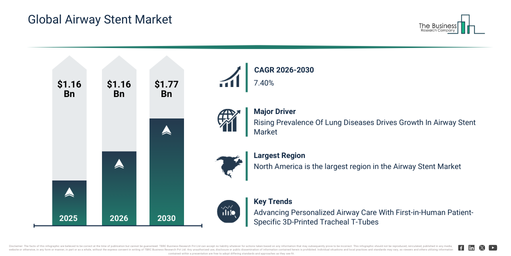
    The airway stent market has shown strong growth in recent years and is projected to expand from $10.66 billion in 2025 to $11.46 billion in 2026, marking a compound annual growth rate (CAGR) of 7.5%. This upward trend reflects the increased prevalence of tracheal and bronchial strictures, lung cancer, and airway tumors. Additionally, the rise in hospital-based interventional pulmonology procedures, wider availability of metal and silicone stents, and greater use of palliative treatments for respiratory obstruction have all contributed to this growth. Moving ahead, the market is forecasted to reach $15.27 billion by 2030, growing at a CAGR of 7.4%. Factors driving this future expansion include the growing preference for minimally invasive respiratory interventions, adoption of hybrid and biodegradable stents, increased outpatient airway stenting procedures, and heightened clinical understanding of the benefits of airway stents. Trends anticipated in the coming years involve precision-fit and customized stents, biocompatible and hybrid materials for enhanced durability, and greater utilization in oncology-related respiratory cases as well as diverse healthcare settings.

    Download A Free Sample Report For Comprehensive Market Insights:

    https://www.thebusinessresearchcompany.com/sample.aspx?id=18778&type=smp

    Rising Respiratory Health Issues as a Key Market Driver

    A major force propelling the airway stent market is the increasing occurrence of lung diseases and respiratory disorders. These conditions disrupt normal breathing and lung function and are becoming more common due to factors like rising pollution, smoking, exposure to environmental toxins, and an aging population. In addition, lifestyle changes and genetic factors contribute to the growing number of patients affected by these ailments. Airway stents provide critical support by relieving obstructions and improving airflow in patients suffering from issues such as tracheal stenosis or bronchial tumors.

    Growing Prevalence of Respiratory Diseases Reinforces Demand

    For example, data published in May 2024 by the National Center for Health Statistics showed that asthma prevalence among U.S. adults aged 18 and over reached 8.7% in 2022, with 3.7% experiencing asthma attacks within the past year. Such statistics highlight the rising burden of respiratory conditions, which in turn fuels demand for airway stenting solutions. This expanding patient base creates a strong foundation for sustained market growth in the airway stent sector.

    https://www.thebusinessresearchcompany.com/report/airway-stent-global-market-report

    Airway Stent Market Geographic Landscape: Which Region Dominates Industry Growth?

    Breakdown of the Airway Stent Market Segments

    This market is segmented across several categories to address diverse clinical needs:

    1) Anatomical Site: Tracheal Stents, Laryngeal Stents, Bronchial Stents

    2) Product Type: Expandable Stents, Non-Expandable Stents

    3) Material: Metal, Silicone, Hybrid

    4) End User: Hospitals, Clinics

    Further classification includes:

    – Tracheal Stents: Silicone, Metallic, Hybrid

    – Laryngeal Stents: Silicone, Self-Expanding, Biodegradable

    – Bronchial Stents: Metallic, Silicone, Covered, Self-Expanding

    This detailed segmentation enables targeted development and marketing of stents suited for specific anatomical and treatment requirements.

    Technological Innovations Driving Airway Stent Market Growth

    A key trend shaping the future of this market is the development of patient-specific, 3D-printed airway stents designed to improve fit and clinical outcomes. These customized devices are crafted from medical-grade silicone based on individual airway anatomy derived from CT scans. This approach reduces complications such as mucus buildup, granulation tissue formation, and vocal-cord interference that are common with standard stents.

    For instance, in July 2024, University Hospitals in the US implanted the first patient-specific 3D-printed tracheal T-tube under FDA compassionate-use approval. Developed in partnership with VisionAir Solutions, this custom stent matched the patient’s airway dimensions precisely and resulted in fewer complications, improved vocal function, and extended periods between replacements compared to traditional commercial tubes.

    Leading Companies Shaping the Airway Stent Market

    Several key players dominate the airway stent industry, including Medtronic Plc, Boston Scientific Corporation, Olympus Corporation, Teleflex Incorporated, Cook Medical, KARL STORZ SE & Co. KG, Merit Medical Systems, MICRO-TECH (Nanjing) Co. Ltd., Taewoong Medical Co. Ltd., Alvimedica Medical Technologies Inc, M.I. Tech Co. Ltd., Pnn Medical A/S, Endo-Flex GmbH, InSitu Technologies, QualiMed Innovative Medizinprodukte GmbH, Novatech SA, Boston Medical Products Inc., Meditek Systems Pvt. Ltd., AndraTec GmbH, Allium Medical Solutions Ltd., Medi-Globe GmbH, and Bess medizintechnik GmbH. These companies focus on advancing airway stent technologies and expanding product portfolios to meet growing clinical demands.

    Regional Market Leadership and Fastest Growing Areas

    In 2025, North America held the largest share of the airway stent market, benefiting from advanced healthcare infrastructure and rising respiratory health awareness. Meanwhile, Asia-Pacific is anticipated to be the fastest-growing region during the forecast period, driven by increasing healthcare investments, expanding patient populations, and rising prevalence of respiratory diseases. The market report covers additional regions such as South East Asia, Western Europe, Eastern Europe, South America, the Middle East, and Africa, providing a comprehensive perspective on global market trends.

    Get in touch with us:

    The Business Research Company: https://www.thebusinessresearchcompany.com/

    Americas: +1 310-496-7795

    Asia: +44 7882 955267 & +91 8897263534

    Europe: +44 7882 955267

    Email us at: marketing@tbrc.info

    Follow us on:

    LinkedIn: https://in.linkedin.com/company/the-business-research-company

    YouTube: https://www.youtube.com/channel/UC24_fI0rV8cR5DxlCpgmyFQ

    Global Market Model: https://www.thebusinessresearchcompany.com/global-market-model
  • Airway Management Devices Market Expansion Is Reshaping Competitive Dynamics Across The Industry

    Airway Management Devices Market Expansion Is Reshaping Competitive Dynamics Across The Industry

    Delivering more actionable and strategically valuable research, The Business Research Company’s 2026 market reports feature market attractiveness analysis, total addressable market evaluation, company benchmarking matrices, interactive Excel dashboards, expanded supply chain intelligence, emerging startup coverage, and detailed product insights.

    The airway management devices market has seen steady progress in recent years, reflecting growing demand across healthcare settings. With ongoing innovations and rising awareness about airway safety, this sector is well-positioned for continued expansion. Let’s explore the current market size, key growth drivers, segmentation details, notable trends, leading companies, and geographic insights shaping this vital medical device industry.

    Market Size and Expected Growth Trajectory of the Airway Management Devices Market

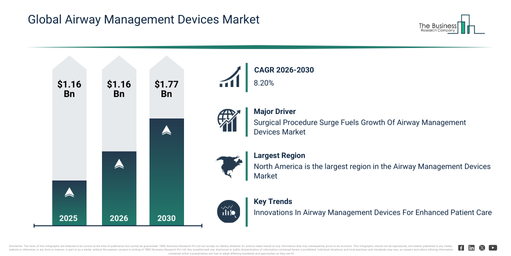
    The airway management devices market is projected to grow from $2.61 billion in 2025 to $2.76 billion in 2026, exhibiting a compound annual growth rate (CAGR) of 5.6%. The historical growth has been supported by factors such as the limited availability of advanced airway devices, continued reliance on traditional endotracheal and laryngeal mask airways, an increase in surgical and anesthesia procedures, heightened awareness about airway management, and expanding hospital and critical care infrastructure. Looking further ahead, the market is expected to reach $3.78 billion by 2030, accelerating at a CAGR of 8.2%. This upcoming growth phase is driven by technological advancements in video and fiberoptic laryngoscopes, growth in homecare and portable airway device segments, the rising need for emergency and critical care services, stricter regulatory compliance, and the integration of smart monitoring systems and connected healthcare technologies. Key trends anticipated during this period include greater adoption of video and fiberoptic laryngoscopes, increasing demand for portable and homecare devices, expansion in emergency medicine applications, intensified focus on patient safety by reducing airway complications, and growth in simulation-based airway management training.

    Download A Free Sample Report For Comprehensive Market Insights:

    https://www.thebusinessresearchcompany.com/sample.aspx?id=3268&type=smp

    Factors Influencing Growth in the Airway Management Devices Market

    The increasing volume of surgical procedures is a primary factor propelling the airway management devices market forward. Surgical interventions typically involve making incisions under anesthesia and require effective airway support to ensure patient safety. Airway management devices play a crucial role in maintaining open airways and preventing lung aspiration of secretions or fluids during these procedures.

    For instance, in June 2024, data released by the International Society of Aesthetic Plastic Surgery (ISAPS), a US-based nonprofit, showed that total surgical and non-surgical procedures rose by 3.4% in 2023, reaching 34.9 million. Liposuction continued to be the most frequently performed surgical procedure with over 2.2 million cases, followed by breast augmentation, eyelid surgery, abdominoplasty, and rhinoplasty. This upward trend in surgeries directly supports the expanding demand for airway management devices.

    Detailed Breakdown of the Airway Management Devices Market by Type and Usage

    This market report categorizes the airway management devices market into several segments:

    1) By Type: Infraglottic Airway Management Devices, Supraglottic Airway Management Devices, Resuscitators, Laryngoscopes, and Other Devices

    2) By Application: Anesthesia, Emergency Medicine, and Other Applications

    3) By End Use: Hospitals and Homecare settings

    Further subcategories include:

    – Infraglottic Airway Management Devices such as Endotracheal Tubes, Tracheostomy Tubes, and Cuffed Tubes

    – Supraglottic Airway Management Devices including Laryngeal Mask Airways (LMA), Supraglottic Airway Devices, and Oropharyngeal Airways

    – Resuscitators like Bag-Valve Masks (BVM), Manual Resuscitators, and Neonatal Resuscitators

    – Laryngoscopes broken down into Direct, Video, and Fiberoptic types

    – Other Devices encompassing Airway Accessories, Airway Pressure Monitoring Devices, and Airway Management Suction Devices

    https://www.thebusinessresearchcompany.com/report/airway-management-devices-global-market-report

    #Airway Management Devices Market Largest Region: Which Geography Holds The Highest Market Share?

    Innovations and Trends Fueling Development in the Airway Management Devices Sector

    Leading companies in this market are focusing on developing cutting-edge medical devices designed to improve airway accessibility, enhance patient care, and ensure safer intubation procedures across clinical environments. Medical devices here include instruments and equipment essential for diagnosis, prevention, monitoring, and treatment of diseases or medical conditions.

    For example, in March 2023, BHV Partners, a US-based investment firm, launched Conus Airway, a startup dedicated to creating innovative medical devices that improve anesthesia and respiratory surgical procedures. By leveraging advanced technology and thoughtful design, Conus Airway aims to provide safer, more effective solutions that benefit both patients and healthcare providers by addressing specific challenges in airway management.

    Leading Players Competing in the Airway Management Devices Industry

    Key companies actively shaping the airway management devices market include Medtronic PLC, Smiths Medical Inc., Teleflex Incorporated, Ambu A/S, KARL STORZ SE & Co. KG, Flexicare Medical Limited, Intersurgical Ltd., Becton Dickinson and Company, Mercury Medical, Well Lead Medical Co. Ltd., Unomedical Inc., SunMed LLC, Tuoren Medical Device India Pvt. Ltd., Medline Industries Inc., Armstrong Medical Limited, Zhejiang Sujia Medical Device Co. Ltd., Vyaire Medical Inc., Salter Labs Inc., Cook Medical Inc., Olympus Corporation, ICU Medical Inc., VBM Medizintechnik GmbH, and Verathon Inc. These organizations consistently invest in innovation and strategic partnerships to maintain leadership and meet evolving market demands.

    Regions Leading in Airway Management Devices Market Share and Growth

    In 2025, North America emerged as the largest market region for airway management devices, with Western Europe ranking second in terms of market share. The report also provides insights into other key geographical areas including Asia-Pacific, Southeast Asia, Eastern Europe, South America, the Middle East, and Africa. These regions are expected to contribute to the overall global growth and present diverse opportunities influenced by local healthcare infrastructure developments and increasing demand for advanced medical devices.

    Get in touch with us:

    The Business Research Company: https://www.thebusinessresearchcompany.com/

    Americas: +1 310-496-7795

    Asia: +44 7882 955267 & +91 8897263534

    Europe: +44 7882 955267

    Email us at: marketing@tbrc.info

    Follow us on:

    LinkedIn: https://in.linkedin.com/company/the-business-research-company

    YouTube: https://www.youtube.com/channel/UC24_fI0rV8cR5DxlCpgmyFQ

    Global Market Model: https://www.thebusinessresearchcompany.com/global-market-model
  • Airway Clearance Devices For Cystic Fibrosis Market Forecast Reveals Where Future Industry Value Will Be Created

    Airway Clearance Devices For Cystic Fibrosis Market Forecast Reveals Where Future Industry Value Will Be Created

    Enhanced with market attractiveness analysis, total addressable market evaluation, company benchmarking matrices, interactive Excel dashboards, expanded supply chain intelligence, emerging startup coverage, and detailed product insights, The Business Research Company’s 2026 market reports deliver more actionable and strategically valuable research.

    The market for airway clearance devices designed specifically for cystic fibrosis has experienced notable growth recently, driven by advances in technology and increasing awareness of respiratory health. As the demand for effective airway management rises, this sector is poised for continued expansion through 2030. Let’s explore the current market size, key factors influencing growth, major market players, and regional trends shaping this industry.

    Airway Clearance Devices for Cystic Fibrosis Market Size and Projected Growth

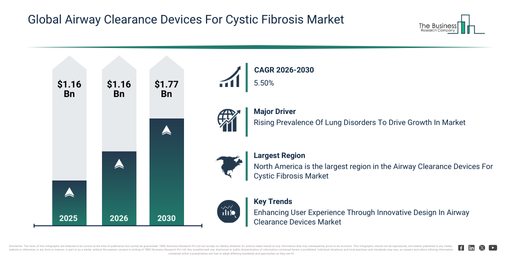
    The airway clearance devices market for cystic fibrosis has witnessed strong expansion in recent years. It is projected to grow from $2.73 billion in 2025 to $2.89 billion in 2026, reflecting a compound annual growth rate (CAGR) of 5.6%. This upward trend in the historical period is largely due to a higher number of cystic fibrosis diagnoses, better patient survival rates, broader availability of respiratory therapy devices, the growth of home healthcare services, and increased awareness of airway clearance therapies.

    Download A Free Sample Report For Comprehensive Market Insights:

    https://www.thebusinessresearchcompany.com/sample.aspx?id=20709&type=smp

    Looking ahead, this market is expected to continue its positive trajectory, reaching $3.58 billion by 2030 at a CAGR of 5.5%. The forecast period’s growth is fueled by greater emphasis on personalized respiratory care, rising use of connected respiratory devices, expansion of telehealth services supporting cystic fibrosis management, increasing preference for lightweight and portable airway clearance systems, and heightened investment in respiratory device innovation. Notable trends during this time include the growing adoption of portable devices, demand for home-based care solutions, increased use of wearable chest oscillation technologies, development of pediatric-focused devices, and a stronger focus on patient comfort and adherence.

    Key Demand Factors Fueling the Airway Clearance Devices Market for Cystic Fibrosis

    The rising occurrence of lung-related disorders is a significant driver behind the growth of the airway clearance devices market for cystic fibrosis. Lung disorders often lead to excessive mucus production and reduced lung function, creating an urgent need for effective airway clearance solutions that help improve respiratory health. The increase in lung conditions is closely linked to environmental factors such as worsening air pollution and higher rates of tobacco use, both contributing to chronic respiratory problems and permanent lung damage.

    https://www.thebusinessresearchcompany.com/report/airway-clearance-devices-for-cystic-fibrosis-global-market-report

    Airway Clearance Devices For Cystic Fibrosis Market Regional Analysis: Which Region Leads By Revenue?

    Airway clearance devices—including high-frequency chest wall oscillation (HFCWO) vests, positive expiratory pressure (PEP) devices, and oscillatory PEP devices—play a crucial role in breaking down thick, sticky mucus that cystic fibrosis patients commonly experience. This mucus buildup can cause persistent lung infections and breathing difficulties. For example, data from the Centers for Disease Control and Prevention showed that tuberculosis cases in the US increased from 8,320 in 2022 to 9,615 in 2023, with an additional 1,295 cases reported. This trend highlights the growing prevalence of lung disorders contributing to demand for airway clearance technologies.

    Detailed Segment Analysis and Revenue Streams in the Airway Clearance Devices Market

    This market report categorizes airway clearance devices for cystic fibrosis into several key segments:

    1) Device Type: Vest Systems, Intrapulmonary Percussive Ventilators (IPV), Positive Expiratory Pressure (PEP) Devices, High-Frequency Chest Wall Oscillation (HFCWO) Devices, and Other Airway Clearance Devices.

    2) Patient Type: Adults with cystic fibrosis and pediatric cystic fibrosis patients.

    3) End User: Hospitals and clinics, home healthcare settings, and other user categories.

    Further subdivisions include:

    – Vest Systems: Pneumatic and electrical vest systems.

    – Intrapulmonary Percussive Ventilators (IPV): Manual and automatic IPV devices.

    – Positive Expiratory Pressure (PEP) Devices: Single-use and reusable options.

    – High-Frequency Chest Wall Oscillation (HFCWO) Devices: Portable and hospital-grade models.

    – Other Devices: Oscillating Positive Expiratory Pressure (OPEP) devices and mechanical insufflation-exsufflation devices.

    How Market Trends Are Shaping the Competitive Landscape

    Leading companies in this sector are dedicating resources to technological advancements aimed at improving the efficiency of mucus clearance, enhancing patient comfort, reducing treatment duration, and making therapies more accessible outside of clinical settings. High-frequency chest wall oscillation technology, which uses rapid air pulses to generate vibrations that loosen mucus in the lungs, is a key focus.

    For instance, in September 2024, Baxter International Inc., a US healthcare company, introduced its latest airway clearance solution called the Vest Advanced Pulmonary Experience (APX) System at the North American Cystic Fibrosis Conference. This new system maintains the effective airflow technology of its predecessor while adding features designed to boost comfort and usability, incorporating feedback from both patients and healthcare providers. It is intended for regular use by adults and children suffering from chronic lung conditions that cause retained secretions.

    Major Industry Players Influencing the Airway Clearance Devices Market

    The market is shaped by several prominent companies, including Koninklijke Philips N.V., Baxter International Inc., ICU Medical Inc., Vyaire Medical Inc., Tactile Systems Technology Inc., RespirTech, Mercury Medical Inc., Electromed Inc., Vitality Medical Inc., Monaghan Medical Corporation, Pulmodyne Inc., PARI GmbH, Flexicare Limited, D.R. Burton Healthcare Limited, Intersurgical Ltd., Clement Clarke International Ltd., Thayer Medical Inc., AirPhysio, VORTRAN Medical Technology Inc., Med Systems Inc., and Wave Healthcare.

    Regional Market Leadership and Growth Outlook

    In 2025, North America held the largest share in the airway clearance devices market for cystic fibrosis. However, the Asia-Pacific region is forecasted to be the fastest-growing market over the coming years. The comprehensive market report covers major geographic areas including Asia-Pacific, South East Asia, Western Europe, Eastern Europe, North America, South America, the Middle East, and Africa, offering a broad perspective on global growth trends.

    Get in touch with us:

    The Business Research Company: https://www.thebusinessresearchcompany.com/

    Americas: +1 310-496-7795

    Asia: +44 7882 955267 & +91 8897263534

    Europe: +44 7882 955267

    Email us at: marketing@tbrc.info

    Follow us on:

    LinkedIn: https://in.linkedin.com/company/the-business-research-company

    YouTube: https://www.youtube.com/channel/UC24_fI0rV8cR5DxlCpgmyFQ

    Global Market Model: https://www.thebusinessresearchcompany.com/global-market-model
  • Air Compression Leg Massager Market Growth Through 2030 Creates New Strategic Opportunities

    Air Compression Leg Massager Market Growth Through 2030 Creates New Strategic Opportunities

    Through market attractiveness analysis, total addressable market evaluation, company benchmarking matrices, interactive Excel dashboards, expanded supply chain intelligence, emerging startup coverage, and detailed product insights, The Business Research Company’s 2026 market reports provide more actionable and strategically valuable research.

    The air compression leg massager market is rapidly evolving as more people become aware of the importance of leg health and circulation. With technological advancements and changing lifestyle preferences, this market is set to experience significant growth in the coming years. Let’s explore the market’s current size, key growth drivers, segmentation, emerging trends, competitive landscape, and regional outlook.

    Air Compression Leg Massager Market Size and Projected Growth

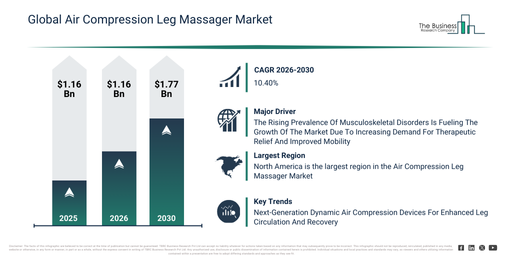
    The air compression leg massager market has shown remarkable expansion recently, with its value anticipated to rise from $2.05 billion in 2025 to $2.27 billion in 2026. This corresponds to a compound annual growth rate (CAGR) of 10.7%. This initial growth phase has been propelled by increasing awareness about leg health, more people adopting home wellness devices, the aging population’s care needs, growing interest in non-invasive therapies, and the limited availability of advanced massage technologies. Looking ahead, the market is expected to reach $3.38 billion by 2030, maintaining an impressive CAGR of 10.4%. Factors driving future growth include the integration of smart technology, demand for portable and multi-functional devices, expansion of e-commerce, a more health-conscious population, and the development of eco-friendly, energy-efficient products. Key trends anticipated in the coming years feature wearable health monitoring, smart home wellness devices, compact designs for travel, personalized therapy options, and sustainable materials.

    Download A Free Sample Report For Comprehensive Market Insights:

    https://www.thebusinessresearchcompany.com/sample.aspx?id=28115&type=smp

    Rising Cases of Musculoskeletal Disorders Fuel Market Demand

    A primary factor fueling the expansion of the air compression leg massager market is the increasing prevalence of musculoskeletal disorders. These conditions affect muscles, bones, joints, tendons, ligaments, and nerves, causing pain and restricting movement. Sedentary lifestyles and prolonged sitting in modern work environments contribute significantly to the rise of these disorders by weakening muscles and causing imbalances that lead to chronic discomfort and mobility issues. This growing health challenge encourages greater usage of air compression leg massagers, which help improve circulation and aid muscle recovery. For instance, in June 2024, the Australian Institute of Health and Welfare reported that around 7.3 million Australians, or 29% of the population, suffer from chronic musculoskeletal conditions, underlining the strong market demand linked to this health trend.

    Product and Technology Segmentation in the Air Compression Leg Massager Market

    This market consists of several product types, including Portable Leg Massagers, Stationary Leg Massagers, Multi-Functional Massagers, and Heated Compression Massagers. The technology segment is divided into Pneumatic Compression, Electric Compression, and Hydro Compression. Distribution channels cover Online Retailers, Brick-And-Mortar Stores, Fitness Equipment Outlets, and Medical Supply Stores. Application areas include Athletes, Inactive People, Elderly Individuals, and other uses. End-users range from Hospitals and Clinics to Homecare and other sectors.

    https://www.thebusinessresearchcompany.com/report/air-compression-leg-massager-global-market-report

    Air Compression Leg Massager Market Geographic Distribution And Regional Opportunities

    Further subcategories of products provide additional detail: Portable Massagers include battery-operated, rechargeable, foldable, and travel-friendly versions; Stationary Massagers comprise chair-integrated, standalone floor models, recliner styles, and professional clinic-grade devices; Multi-Functional Massagers combine compression with vibration, heat therapy, shiatsu rollers, or reflexology; Heated Compression Massagers feature infrared, electric heating, adjustable temperature settings, or combined heat and compression benefits.

    Innovations and Trends Shaping Market Demand for Air Compression Leg Massagers

    Leading companies are pushing the boundaries by developing cutting-edge air compression devices that automate therapy and enhance user convenience. These dynamic air compression therapy tools use inflatable chambers to apply controlled pressure on the legs, promoting circulation and reducing swelling. For example, in June 2024, Hyperice, a US wellness brand, introduced the Normatec Elite — an advanced, fully integrated dynamic air compression device. This product offers wireless operation, eliminating the need for external control units and hoses, making it highly convenient. It targets muscles effectively with customizable intensity levels to suit individual needs. Its sleek, portable design suits both home use and on-the-go recovery, appealing especially to athletes and wellness enthusiasts.

    Major Companies Competing in the Air Compression Leg Massager Industry

    The market features several prominent players, including Brookstone LLC, Beurer GmbH, Miko Robotics Private Limited, Naipo, HoMedics Inc, Therabody Inc, Hyperice Inc, Renpho LLC, Nekteck Inc, Vive Health LLC, Actegy Health Inc, Zyllion LLC, Bio Compression Systems Inc, Fit King LLC, Rapid Reboot Recovery Products LLC, Nine New Investments SL, Snailax LLC, Lifepro Fitness LLC, ARG Healthcare Private Limited, and AGARO. These companies are at the forefront of innovation and market expansion.

    Regional Market Overview and Growth Potential

    In 2025, North America held the largest share of the air compression leg massager market. However, Asia-Pacific is projected to witness the fastest growth throughout the forecast period. The market report covers key regions including Asia-Pacific, South East Asia, Western Europe, Eastern Europe, North America, South America, the Middle East, and Africa, providing a detailed look at regional opportunities and market dynamics.

    Get in touch with us:

    The Business Research Company: https://www.thebusinessresearchcompany.com/

    Americas: +1 310-496-7795

    Asia: +44 7882 955267 & +91 8897263534

    Europe: +44 7882 955267

    Email us at: marketing@tbrc.info

    Follow us on:

    LinkedIn: https://in.linkedin.com/company/the-business-research-company

    YouTube: https://www.youtube.com/channel/UC24_fI0rV8cR5DxlCpgmyFQ

    Global Market Model: https://www.thebusinessresearchcompany.com/global-market-model
  • AI-based Surgical Robots Market Size Projected To Increase From $9.37 Billion To $17.34 Billion During The Forecast Period

    AI-based Surgical Robots Market Size Projected To Increase From $9.37 Billion To $17.34 Billion During The Forecast Period

    Delivering more actionable and strategically valuable research, The Business Research Company’s 2026 market reports feature market attractiveness analysis, total addressable market evaluation, company benchmarking matrices, interactive Excel dashboards, expanded supply chain intelligence, emerging startup coverage, and detailed product insights.

    The AI-based surgical robots market is experiencing rapid expansion, driven by technological advancements and growing adoption in various medical fields. As hospitals and surgical centers increasingly integrate AI-powered robotic systems, this sector is poised for significant growth in the coming years. Let’s explore the current market dynamics, key drivers, innovative trends, leading players, and regional developments shaping this promising industry.

    Market Size and Projected Growth of the AI-based Surgical Robots Market

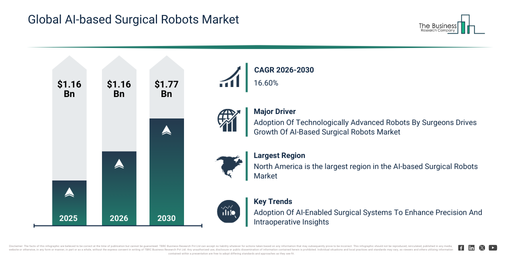
    The AI-based surgical robots market has witnessed substantial growth recently, with its size expected to rise from $7.96 billion in 2025 to $9.37 billion in 2026, reflecting a compound annual growth rate (CAGR) of 17.8%. This upward trend is largely fueled by the growing use of minimally invasive surgeries, increased investments in hospital automation, a rise in complex surgical procedures, the expansion of robotic-assisted operating rooms, and wider acceptance of robotic platforms among surgeons. Looking ahead, the market is anticipated to reach $17.35 billion by 2030, growing at a CAGR of 16.6%. This forecasted surge is driven by heightened demand for AI-driven surgical planning, a stronger emphasis on outcome-based healthcare, the extension of robotic surgery into new medical specialties, increased funding for smart operating theaters, and the adoption of data-driven surgical workflows.

    Download A Free Sample Report For Comprehensive Market Insights:

    https://www.thebusinessresearchcompany.com/sample.aspx?id=7274&type=smp

    Key Factors Stimulating Growth in the AI-based Surgical Robots Market

    The rising acceptance of technologically advanced robotic systems by surgeons for a variety of surgical applications is a major growth factor. Robots, which perform preprogrammed tasks autonomously, are being enhanced with AI capabilities to improve their accuracy, efficiency, and overall performance. These AI-based surgical robots are utilized across different specialties, including neurology, urology, ENT, thoracic, and colorectal surgery. For example, in 2023, Oliver Wyman reported that robotic surgery accounted for 2% of all surgeries in Europe and around 15% in the United States, indicating a growing trend toward robotic assistance in the operating room.

    Expanding Applications and New Revenue Opportunities in the AI-based Surgical Robots Sector

    Another driver of market expansion is the diversification of AI-based surgical robots into new fields and applications. The integration of AI technologies allows for enhanced surgical planning, precision, and real-time decision-making, which improves clinical outcomes and boosts surgeon confidence. This progress is supported by increasing investments in advanced operating room infrastructure and a shift toward outcome-oriented healthcare delivery models.

    https://www.thebusinessresearchcompany.com/report/ai-based-surgical-robots-global-market-report

    AI-based Surgical Robots Market Largest Region By Revenue And Market Share

    Breakdown of Market Segments in AI-based Surgical Robots

    The AI-based surgical robots market is segmented by product, application, and end user. Product categories include services and instruments/accessories. Services cover installation and commissioning, training and support, and maintenance and repair. Instruments and accessories consist of surgical instruments, vision systems and cameras, surgical planning and navigation software, consumables and disposable items, integration solutions, and specialized robotic systems. Applications are classified into orthopedics, neurology, urology, gynecology, and other areas. End users primarily include hospitals and ambulatory surgical centers.

    Innovative Trends Pushing the AI-based Surgical Robots Market Forward

    Leading companies in this field are focusing on cutting-edge innovations such as AI-powered force-feedback systems that deliver ergonomic precision and real-time surgical insights, thereby improving safety and surgeon feedback. These systems use sensors in instrument tips to measure forces applied to tissue, sending tactile data back to the surgeon to simulate a sense of touch—something traditional robotic systems lack. For instance, in March 2024, Intuitive Surgical introduced the da Vinci 5 surgical robot, featuring force-feedback instruments that reduce tissue force by up to 43% during preclinical tests, carry over 10,000 times the computing power of previous models, and incorporate AI-driven analytics like Case Insights to enhance data-driven surgical performance. This platform also connects to applications such as My Intuitive, the SimNow VR simulator, and the Intuitive Hub edge-computing system to improve workflow, training, and clinical results.

    Key Players Leading the AI-based Surgical Robots Market

    The competitive landscape includes major companies such as Accuray Incorporated, Intuitive Surgical Inc., Medtronic plc, Medrobotics Corporation, Zimmer Biomet Holdings Inc., Transenterix Inc., Stryker Corporation, Activ Surgical Inc., Titan Medical Inc., CMR Surgical Inc., Smith and Nephew plc, Auris Health Inc., EndoMaster Pte Ltd., Globus Medical Inc., Johnson & Johnson, Memic Innovative Surgery Ltd., Microbot Medical Inc., Renishaw plc, Synaptive Medical Inc., Think Surgical Inc., XACT Robotics Ltd., Vicarious Surgical Inc., Asensus Surgical Inc., Brainlab AG, and IMRIS Inc.

    Regional Market Insights Reflecting Growth and Dominance

    In 2025, North America held the largest revenue share in the AI-based surgical robots market. Meanwhile, the Asia-Pacific region is expected to be the fastest-growing market throughout the forecast period. The report covers regions including Asia-Pacific, South East Asia, Western Europe, Eastern Europe, North America, South America, the Middle East, and Africa, providing a comprehensive view of global market trends and opportunities.

    Get in touch with us:

    The Business Research Company: https://www.thebusinessresearchcompany.com/

    Americas: +1 310-496-7795

    Asia: +44 7882 955267 & +91 8897263534

    Europe: +44 7882 955267

    Email us at: marketing@tbrc.info

    Follow us on:

    LinkedIn: https://in.linkedin.com/company/the-business-research-company

    YouTube: https://www.youtube.com/channel/UC24_fI0rV8cR5DxlCpgmyFQ

    Global Market Model: https://www.thebusinessresearchcompany.com/global-market-model

  • AI Skin Analysis Instruments Market Growth Outlook Reveals A CAGR Of 18.6% And A Market Value Of $5.03 Billion By 2030

    AI Skin Analysis Instruments Market Growth Outlook Reveals A CAGR Of 18.6% And A Market Value Of $5.03 Billion By 2030

    Enhanced with market attractiveness analysis, total addressable market evaluation, company benchmarking matrices, interactive Excel dashboards, expanded supply chain intelligence, emerging startup coverage, and detailed product insights, The Business Research Company’s 2026 market reports deliver more actionable and strategically valuable research.

    The AI skin analysis instruments market is undergoing swift transformation as advanced technologies become more prevalent in skincare diagnostics. With rising consumer interest in personalized and preventive skin health, this sector is poised for robust growth over the next several years. Below, we explore the market’s size, driving forces, leading players, emerging trends, and regional dynamics shaping its future trajectory.

    Steady Growth Trajectory of the AI Skin Analysis Instruments Market

    The market for AI skin analysis instruments has experienced rapid expansion recently, with its size expected to increase from $2.14 billion in 2025 to $2.54 billion in 2026, representing a compound annual growth rate (CAGR) of 18.8%. This historical growth is largely driven by the growing implementation of digital dermatology tools, heightened demand for objective and accurate skin assessments, the surge in aesthetic and cosmetic clinics, advancements in imaging technologies, and the use of sophisticated computing algorithms.

    Download A Free Sample Report For Comprehensive Market Insights:

    https://www.thebusinessresearchcompany.com/sample.aspx?id=24137&type=smp

    Looking ahead, the market is poised to maintain this momentum, projected to reach $5.03 billion by 2030 at a CAGR of 18.6%. The forecasted rise stems from increasing consumer demand for tailored skincare solutions, greater integration of AI with personal health devices, expansion of at-home skin monitoring options, rising investments in digital beauty tech, and an enhanced focus on skin health prevention. Key trends include widespread adoption of AI-driven diagnostic platforms, increased use of multispectral and imaging-based analysis tools, growth in mobile and app-based skin assessment technologies, the rise of personalized skincare recommendation systems, and an emphasis on improving data accuracy and consistency.

    Factors Fueling Demand in the AI Skin Analysis Instruments Market

    The growing incidence of skin conditions such as acne and hyperpigmentation is a significant driver for the AI skin analysis instruments market. These common inflammatory and pigmentary disorders, characterized by acne breakouts and darkened skin spots due to excess melanin following irritation or injury, have seen heightened attention due to increased beauty awareness and social media influence. This has made people more conscious of skin imperfections and more inclined to seek targeted solutions.

    https://www.thebusinessresearchcompany.com/report/ai-skin-analysis-instruments-global-market-report

    AI Skin Analysis Instruments Market Regional Analysis And Leading Geography

    For example, a September 2024 report from the Journal of the American Academy of Dermatology (JAAD) highlighted that around 15% of surveyed individuals experienced post-inflammatory hyperpigmentation (PIH), with women comprising 56% of this group and an average age of 39 years. Additionally, 30% had skin phototype IV or higher, a higher figure compared to the global average of 25%, indicating a substantial and vulnerable population segment affected by pigmentary disorders. The data also revealed that 71% of PIH sufferers had prior acne, and 85% believed earlier acne treatment could have prevented their condition, emphasizing the increasing burden of acne-related hyperpigmentation and reinforcing demand for AI-based skin analysis tools.

    Unpacking the AI Skin Analysis Instruments Market Segmentation

    This market is segmented by product type, technology, distribution channel, application, and end user. The product categories include handheld skin analysis devices, desktop analyzers, wearable skin monitors, and mobile application-based analyzers. Technological classifications feature multispectral imaging, optical coherence tomography (OCT), ultrasound technology, and AI algorithms. Distribution channels involve online sales, retail outlets, direct sales, and distributor partnerships. Applications cover skin type analysis, diagnosis of skin conditions, product recommendations, and optimization of home skincare routines. End users include hospitals and clinics, beauty and skincare centers, research institutions, home users, and cosmetics manufacturers.

    Further detailing product subsegments, handheld devices include AI-enabled dermatoscopes, portable spectrometers with AI diagnostics, and smart beauty scanners integrated with AI. Desktop analyzers feature multi-spectrum imaging systems, clinical-grade diagnostic platforms, and AI-assisted imaging stations. Wearable monitors encompass AI-powered UV exposure trackers, smart patches for hydration and pH monitoring, and continuous skin health monitoring bands. Mobile app analyzers cover AI-driven skin health apps using smartphone cameras, cloud-based dermatology platforms, and real-time analyzers for acne, wrinkles, and pigmentation.

    Emerging Trends Steering AI Skin Analysis Instruments Market Growth

    Leading companies in this space are focusing heavily on AI-powered skin diagnostic systems that leverage computer vision and machine learning to analyze skin biomarkers and recommend personalized skincare routines. These digital tools assess skin images, such as selfies, to quantify wrinkles, pigmentation, pores, texture, and other clinically relevant metrics, providing data-driven guidance for product selection and skincare regimens.

    For instance, in April 2024, French skincare brand NAOS launched Skin Observer, an AI-driven digital skin-analysis platform developed in collaboration with Haut.AI. The service evaluates over 150 skin biomarkers using advanced computer vision and machine learning algorithms to deliver clinical-grade, highly precise assessments. It personalizes skincare advice by tracking skin condition changes over time and tailoring recommendations to individual needs. Designed for both consumers and professionals, this platform enhances skin health monitoring, supports evidence-based product choices, and bolsters NAOS’s standing in delivering data-powered, personalized skincare solutions.

    Leading Market Players in the AI Skin Analysis Instruments Industry

    The AI skin analysis instruments market features several prominent companies including L’Oréal S.A., Meitu Inc., Neutrogena Corporation, Foreo AB, Perfect Corp., FotoFinder Systems Inc., DJM Medical Instrument GmbH, Beijing ADSS Development Co. Ltd., Canfield Scientific Inc., MetaOptima Technology Inc., Shiseido Company Limited, Aesthetic Bureau Pty Ltd., Haut.AI OÜ, Shanghai May Skin Information Technology Co. Ltd., SkinVision B.V., Zemits Inc., VISIA Skin Analysis (Canfield), HiMirror (Caliber Interactive), WaySkin Inc., and SK-II Skin Analysis Solutions. These players are key drivers of innovation and competition within the market.

    Regional Market Overview and Growth Patterns

    North America held the largest share of the AI skin analysis instruments market as of 2025. Meanwhile, the Asia-Pacific region is anticipated to be the fastest-growing market over the forecast period. The market report covers various important regions including Asia-Pacific, South East Asia, Western Europe, Eastern Europe, North America, South America, the Middle East, and Africa, providing a thorough understanding of global market dynamics.

    Get in touch with us:

    The Business Research Company: https://www.thebusinessresearchcompany.com/

    Americas: +1 310-496-7795

    Asia: +44 7882 955267 & +91 8897263534

    Europe: +44 7882 955267

    Email us at: marketing@tbrc.info

    Follow us on:

    LinkedIn: https://in.linkedin.com/company/the-business-research-company

    YouTube: https://www.youtube.com/channel/UC24_fI0rV8cR5DxlCpgmyFQ

    Global Market Model: https://www.thebusinessresearchcompany.com/global-market-model

  • Agarose Gel Electrophoresis System Market Forecast Highlights Expansion From $4.12 Billion To $5.63 Billion Through 2030

    Agarose Gel Electrophoresis System Market Forecast Highlights Expansion From $4.12 Billion To $5.63 Billion Through 2030

    Through market attractiveness analysis, total addressable market evaluation, company benchmarking matrices, interactive Excel dashboards, expanded supply chain intelligence, emerging startup coverage, and detailed product insights, The Business Research Company’s 2026 market reports provide more actionable and strategically valuable research.

    The agarose gel electrophoresis system market has seen notable expansion in recent years, driven by advancements in molecular biology research and increasing demand from clinical testing centers. This report explores the market’s current size, key factors stimulating its growth, major players, and emerging trends shaping its future outlook.

    Current Market Size and Expected Growth Trajectory of the Agarose Gel Electrophoresis System Market

    The market for agarose gel electrophoresis systems has experienced substantial growth and is projected to continue this trend. Valued at $3.81 billion in 2025, it is expected to rise to $4.13 billion in 2026, reflecting a compound annual growth rate (CAGR) of 8.4%. Factors contributing to past growth include reliance on manual agarose gel preparation, limited access to precast gels, expansion in molecular biology research, standardization of laboratory protocols, and an increasing number of testing centers worldwide. Looking ahead, the market is forecast to reach $5.63 billion by 2030, growing at a CAGR of 8.1%. This anticipated rise is supported by automation advancements in agarose gel electrophoresis systems, the development of high-throughput tray and tape systems, increasing genomics and proteomics research, growing clinical diagnostics demand, and greater integration with digital laboratory management systems. Key trends expected to shape the market include the adoption of precast agarose gels, rising need for multi-well and customized tray systems, expansion of laboratories and testing centers, a focus on high-throughput DNA/RNA analysis, and enhanced automation in laboratory workflows.

    Download A Free Sample Report For Comprehensive Market Insights:

    https://www.thebusinessresearchcompany.com/sample.aspx?id=19272&type=smp

    Primary Factors Influencing Agarose Gel Electrophoresis System Market Growth

    A significant driver behind market expansion is the growing emphasis on personalized medicine. This approach customizes medical treatments based on an individual’s unique genetic makeup, environment, and lifestyle, aiming to improve treatment outcomes, increase drug efficacy, reduce side effects, and provide targeted therapies. Agarose gel electrophoresis systems play a crucial role by enabling DNA fragment separation and analysis, which supports genetic testing and identification of specific genetic variations important for personalized treatment strategies.

    Supporting this trend, in February 2024, the Personalized Medicine Coalition, a US-based non-profit organization, reported that the FDA approved 16 new personalized therapies for rare diseases in 2023, a notable increase from six approvals in 2022. This growing focus on tailor-made medical solutions is thus expected to drive further demand for agarose gel electrophoresis systems.

    https://www.thebusinessresearchcompany.com/report/agarose-gel-electrophoresis-system-global-market-report

    Agarose Gel Electrophoresis System Market Geographic Analysis: Where Is Demand Growing The Fastest?

    Segmentation of the Agarose Gel Electrophoresis System Market Highlighting Growth Opportunities

    This market is divided into several key segments based on product type, gel type, and application area. The product categories include Tray Style, Tape Style, and Dam Style systems. Gel types are classified into Pourable Agarose Gel and Precast Agarose Gel. Application segments cover Testing Centers, Laboratories, and other uses.

    Within these segments, further breakdowns include standard tray systems, multi-well and customized tray systems under Tray Style; adhesive, modular, and precast tape systems under Tape Style; and fixed, removable, and integrated dam systems under Dam Style. These detailed categories reveal where the largest growth opportunities lie, particularly in customized and high-throughput solutions.

    Emerging Strategic Trends Advancing the Agarose Gel Electrophoresis System Market

    Leading companies in this market are focusing heavily on creating cutting-edge technologies like high-performance and high-resolution gel imaging systems. These systems enhance research accuracy and efficiency by capturing clear and precise images of electrophoresis results, allowing for exact visualization and quantification of nucleic acids or proteins with minimal distortion and high sensitivity.

    For example, in December 2023, Transgen Biotech Co. Ltd., a biotechnology research firm based in China, introduced the TSE-N multi-purpose horizontal electrophoresis system along with the TSI-100 gel imaging system. These advanced instruments deliver precise electrophoresis performance combined with high-resolution imaging capabilities. They use both white and ultraviolet light sources for digital processing of gels stained with various dyes such as silver, fluorescent, film, Coomassie brilliant blue, and nucleic acid-specific stains, significantly improving molecular biology research outcomes.

    Major Players and Competitive Landscape in the Agarose Gel Electrophoresis System Market

    Key companies shaping this market include Thermo Fisher Scientific Inc., Merck KGaA, Lonza Group Ltd, Agilent Technologies Inc., Kaneka Corporation, VWR International, Beckman Coulter Inc., PerkinElmer Inc., Bio-Rad Laboratories Inc., QIAGEN N.V., Bioneer Corporation, Analytik Jena, Sebia Group, Major Science Co. Ltd., Biocompare Inc., Geno Technology Inc., Cleaver Scientific Ltd., IBI Scientific, C.B.S. Scientific Company, DH Life Sciences LLC., Hoefer Inc., and Roylab Pte Ltd. These players are driving innovation and competitive strategies, helping to expand the market through new product introductions and technological enhancements.

    Geographical Markets and Areas of Rapid Demand Growth

    In 2025, North America held the largest share of the agarose gel electrophoresis system market. However, the Asia-Pacific region is expected to demonstrate the fastest growth during the forecast period. The market analysis spans various regions including Asia-Pacific, South East Asia, Western Europe, Eastern Europe, North America, South America, the Middle East, and Africa, providing a comprehensive view of global demand trends.

    Get in touch with us:

    The Business Research Company: https://www.thebusinessresearchcompany.com/

    Americas: +1 310-496-7795

    Asia: +44 7882 955267 & +91 8897263534

    Europe: +44 7882 955267

    Email us at: marketing@tbrc.info

    Follow us on:

    LinkedIn: https://in.linkedin.com/company/the-business-research-company

    YouTube: https://www.youtube.com/channel/UC24_fI0rV8cR5DxlCpgmyFQ

    Global Market Model: https://www.thebusinessresearchcompany.com/global-market-model