Category: Medical Equipment

  • 3D Printing In Healthcare Market Trends Are Creating New Opportunities For Industry Leaders

    3D Printing In Healthcare Market Trends Are Creating New Opportunities For Industry Leaders

    Through market attractiveness analysis, total addressable market evaluation, company benchmarking matrices, interactive Excel dashboards, expanded supply chain intelligence, emerging startup coverage, and detailed product insights, The Business Research Company’s 2026 market reports provide more actionable and strategically valuable research.

    The healthcare sector is witnessing remarkable advancements thanks to the integration of 3D printing technologies. This innovative approach is transforming how medical devices, implants, and personalized treatment options are developed and delivered. The rapid growth of 3D printing in healthcare highlights its rising importance and potential to reshape medical practices globally.

    Rapid Expansion of the 3D Printing in Healthcare Market

    The 3D printing in healthcare market has experienced significant growth in recent years. From $2.47 billion in 2025, it is projected to reach $2.95 billion in 2026, marking a compound annual growth rate (CAGR) of 19.3%. This upward trajectory during the historical period is largely due to technological advancements in additive manufacturing, early adoption of 3D printed surgical guides, increased academic research in medical printing, the growing use of anatomical models, and a wider variety of printable biomaterials becoming accessible.

    Download A Free Sample Report For Comprehensive Market Insights:

    https://www.thebusinessresearchcompany.com/sample.aspx?id=13361&type=smp

    Future Growth Prospects for 3D Printing in Healthcare

    Looking ahead, the market is expected to expand rapidly, reaching $5.99 billion by 2030, with a CAGR of 19.4%. This forecasted growth is driven by greater investments in bioprinting research, growing demand for customized healthcare solutions, broader applications in regenerative medicine, increased use of point-of-care manufacturing, and more regulatory approvals for printed medical devices. Emerging trends anticipated to influence the market include the rise of patient-specific medical devices, the growing adoption of bioprinting technologies, increased demand for personalized surgical models, expansion in 3D printed implants and prosthetics, and tighter integration of digital design with manufacturing processes.

    Rising Chronic Diseases as a Major Growth Driver for 3D Printing in Healthcare

    One of the primary factors accelerating the 3D printing market is the increasing prevalence of chronic diseases worldwide. Conditions such as diabetes, hypertension, and arthritis are becoming more common due to lifestyle factors like sedentary habits, unhealthy diets, and high consumption of tobacco and alcohol. 3D printing offers customized medical devices and implants tailored for these chronic illnesses, providing more precise and personalized treatment options.

    https://www.thebusinessresearchcompany.com/report/3d-printing-in-healthcare-global-market-report

    3D Printing In Healthcare Market Regional Analysis And Leading Geography

    Specific Evidence of Chronic Disease Impact on Market Growth

    For example, in June 2024, the National Health Service in the UK reported that 3,615,330 individuals registered with a general practitioner were diagnosed with non-diabetic hyperglycemia, or pre-diabetes, in 2023. This reflects an 18% increase from 3,065,825 cases in 2022. Such a rise in chronic health conditions underscores the expanding need for innovative medical solutions, thereby fueling demand for 3D printed healthcare products.

    Detailed Segmentation of the 3D Printing in Healthcare Market

    This market is categorized into several segments to provide a clear understanding of its structure:

    1) By Component: Systems, Materials, Services

    2) By Technology: Laser Beam Melting (LBM), Electron Beam Melting (EBM), Photo Polymerization, Droplet Deposition, Laminated Object Manufacturing, Wax Deposition Modeling, Bioprinting

    3) By Application: Personalized Medical Equipment, Surgical Planning and Education Models, Prosthetics and Implants, Biomaterials, Personalized Medicine Printing, and Other Applications

    4) By End User: Medical and Surgical Centers, Pharmaceutical and Biotechnology Companies, Academic Institutions

    Further subcategories include:

    – Systems: 3D Printers, 3D Bioprinters, Scanners, and Other Systems

    – Materials: Plastics, Metals, Ceramics, Biomaterials, and Others

    – Services: Custom Prosthetics, Implants, Surgical Guides, Medical Device Prototyping, and Tissue Engineering

    Innovations Shaping the Future of 3D Printing in Healthcare

    Leading companies are focusing on technological breakthroughs such as multi-material 3D printing. This technique enables the simultaneous production of complex, patient-specific restorations using two or more different materials, enhancing precision, functionality, and aesthetic appeal.

    A notable example is Stratasys Ltd., which in July 2024 released the DentaJet XL, a high-speed PolyJet 3D printer designed specifically for digital dental laboratories. It features a large print tray, 4 kg hot-swap resin cartridges, and supports continuous printing of up to 102 crowns and bridges simultaneously. The printer’s super high-speed mode boosts productivity by 50%, while dual-material printing allows the creation of multi-component dental restorations in one run. Integrated software automates part arrangement and batch post-processing, reducing labor costs and increasing accuracy and efficiency in large-scale dental manufacturing.

    Prominent Players in the 3D Printing in Healthcare Market

    The market is home to several major corporations driving innovation and competition, including Hewlett-Packard Company, Stratasys Ltd., EOS GmbH – Electro Optical Systems, 3D Systems Corporation, Formlabs Inc., Materialise NV, Ultimaker BV, SLM Solutions Group AG, Arcam AB, The ExOne Company, EnvisionTEC GmbH, Concept Laser GmbH, MedPrin Regenerative Medical Technologies Co. Ltd., Medical Molding Inc., Nanoscribe GmbH & Co. KG, Oxford Performance Materials Inc., Aspect Biosystems Ltd., Cyfuse Biomedical K.K., Anatomics Pty. Ltd., Organovo Holdings Inc., 3D Bioprinting Solutions, and Allevi Inc.

    Geographical Market Overview Highlighting Regional Leaders

    In 2025, North America held the largest share of the 3D printing in healthcare market, reflecting robust adoption and technological infrastructure. However, the Asia-Pacific region is predicted to be the fastest-growing market throughout the forecast period due to rising healthcare investments and expanding medical infrastructure. Other regions covered in the market analysis include South East Asia, Western Europe, Eastern Europe, South America, the Middle East, and Africa.

    Get in touch with us:

    The Business Research Company: https://www.thebusinessresearchcompany.com/

    Americas: +1 310-496-7795

    Asia: +44 7882 955267 & +91 8897263534

    Europe: +44 7882 955267

    Email us at: marketing@tbrc.info

    Follow us on:

    LinkedIn: https://in.linkedin.com/company/the-business-research-company

    YouTube: https://www.youtube.com/channel/UC24_fI0rV8cR5DxlCpgmyFQ

    Global Market Model: https://www.thebusinessresearchcompany.com/global-market-model

  • 3D Printed Prosthetics Market Growth Is Reshaping Competitive Advantage Across The Industry

    3D Printed Prosthetics Market Growth Is Reshaping Competitive Advantage Across The Industry

    Delivering more actionable and strategically valuable research, The Business Research Company’s 2026 market reports feature market attractiveness analysis, total addressable market evaluation, company benchmarking matrices, interactive Excel dashboards, expanded supply chain intelligence, emerging startup coverage, and detailed product insights.

    The market for 3D printed prosthetics has experienced rapid growth in recent years, reflecting significant advancements in technology and increasing demand for innovative solutions. As the market continues to evolve, numerous factors are driving its expansion, while emerging trends and leading companies shape its future trajectory. Here is a detailed overview of the current landscape and what lies ahead for this promising sector.

    Market Size and Growth Forecast in the 3D Printed Prosthetics Market

    The 3D printed prosthetics industry is expected to expand swiftly, starting from $0 billion in 2025 and reaching $0 billion in 2026, with a compound annual growth rate (CAGR) of 15.8%. This growth during the historical period can be linked to several factors, including a rising number of limb loss cases, limited availability of conventional prosthetic manufacturing, early adoption of desktop 3D printing technologies, the growth of rehabilitation centers, and advancements in prosthetic design software. Looking ahead, the market is forecast to grow even faster, reaching $0 billion by 2030 with a CAGR of 16.0%. This projected surge is driven by increasing demand for affordable prosthetic options, expansion of humanitarian prosthetic programs, wider adoption of advanced polymer materials, integration of sensor technology in prosthetics, and improvements in comfort and durability.

    Download A Free Sample Report For Comprehensive Market Insights:

    https://www.thebusinessresearchcompany.com/sample.aspx?id=2512&type=smp

    Key Factors Sparking Growth in the 3D Printed Prosthetics Market

    An important driver for this market is the rising prevalence of bone cancer, a rare form of cancer that originates in bone tissue or spreads to bones from other parts of the body. 3D printed prosthetic devices are playing an essential role in treating bone cancer by repairing affected bones and replacing traditional tumor prostheses or bone grafts. For example, in January 2025, the American Cancer Society (ACS) projected approximately 3,770 new cases of primary bone and joint cancer in the United States, with 2,150 cases in males and 1,620 in females. The same year, around 2,190 deaths related to bone cancer were estimated. This growing incidence of bone cancer is boosting demand for 3D printed prosthetics designed for reconstruction and rehabilitation.

    Segments and Revenue Opportunities in the 3D Printed Prosthetics Market

    This market is segmented into several categories based on type, material, and end users. By type, it includes sockets, limbs, joints, and covers. Materials used comprise polypropylene, polyethylene, acrylics, and polyurethane. End users mainly involve hospitals, rehabilitation centers, and specialized prosthetic clinics. Further subcategories break down sockets into adjustable and standard versions, limbs into upper and lower prosthetics, joints into knee, ankle, and elbow types, and covers into cosmetic and functional variants. These distinctions highlight diverse opportunities for revenue generation across various product lines and customer bases.

    https://www.thebusinessresearchcompany.com/report/3d-printed-prosthetics-global-market-report

    3D Printed Prosthetics Market Geographic Analysis: Where Is Demand Growing The Fastest?

    Technological Innovations Accelerating Growth in 3D Printed Prosthetics

    Leading companies in this space are increasingly adopting advanced in-house additive manufacturing techniques to enhance product quality, speed up production, and offer more customization options. In-house additive manufacturing means the entire process—ranging from design and printing to cooling and final finishing—is completed within a single facility, allowing tighter quality control and reduced turnaround times. For instance, in February 2025, WIMBA, a Poland-based provider of custom 3D-printed pet orthotics and prosthetics, launched a new facility in Kraków that integrates printing, cooling, and sandblasting processes. This investment enables the company to maintain high standards, deliver most products within 10 working days, reduce waiting times for veterinary customers, and continuously develop new materials and designs to better serve pets and professionals worldwide.

    Top Companies Driving Innovation and Market Leadership in 3D Printed Prosthetics

    Key players shaping the 3D printed prosthetics market include Open Bionics, LimbForge Inc., UNYQ Inc., Mecuris GmbH, YouBionic Srl, Create Prosthetics Inc., Bio3D Technologies Pte Ltd., Protosthetics LLC, 3T RPD Ltd., Bionicohand, Limbitless Solutions, Instalimb, Bionic Prosthetics and Orthotics, Eqwal Group (Steeper Group), Prothea, Motorica, WillowWood, Psyonic, and HopeLabs. These companies are instrumental in pushing technological boundaries and expanding accessibility to personalized prosthetic solutions.

    Geographic Markets with Rapidly Growing Demand for 3D Printed Prosthetics

    In 2025, North America held the largest share of the global 3D printed prosthetics market, reflecting strong healthcare infrastructure and technological adoption. Asia-Pacific ranked as the second-largest region, demonstrating increasing investments and rising demand in emerging markets. Other regions analyzed in the market include South East Asia, Western Europe, Eastern Europe, South America, the Middle East, and Africa, offering a comprehensive view of global market dynamics and growth opportunities.

    Get in touch with us:

    The Business Research Company: https://www.thebusinessresearchcompany.com/

    Americas: +1 310-496-7795

    Asia: +44 7882 955267 & +91 8897263534

    Europe: +44 7882 955267

    Email us at: marketing@tbrc.info

    Follow us on:

    LinkedIn: https://in.linkedin.com/company/the-business-research-company

    YouTube: https://www.youtube.com/channel/UC24_fI0rV8cR5DxlCpgmyFQ

    Global Market Model: https://www.thebusinessresearchcompany.com/global-market-model

  • 3D Printed Medical Devices Market Forecast Signals New Revenue Opportunities Through 2030

    3D Printed Medical Devices Market Forecast Signals New Revenue Opportunities Through 2030

    Enhanced with market attractiveness analysis, total addressable market evaluation, company benchmarking matrices, interactive Excel dashboards, expanded supply chain intelligence, emerging startup coverage, and detailed product insights, The Business Research Company’s 2026 market reports deliver more actionable and strategically valuable research.

    The 3D printed medical devices market is rapidly evolving, driven by advancements in technology and growing demand for personalized healthcare solutions. As innovations continue to shape this sector, it is set to experience significant expansion over the coming years. Below, we explore the market size, key drivers, segmentation, trends, major players, and regional insights shaping its future.

    Steady Growth Trajectory of the 3D Printed Medical Devices Market

    The market for 3D printed medical devices has seen impressive growth recently and is poised to continue expanding swiftly. It is projected to increase from $4.1 billion in 2025 to $4.83 billion in 2026, reflecting a robust compound annual growth rate (CAGR) of 17.7%. This growth during the historical period has largely resulted from rising demand for personalized medical solutions, early clinical adoption of printed surgical tools, improvements in medical imaging workflows for printing, increased academic research, and the availability of certified printing systems.

    Download A Free Sample Report For Comprehensive Market Insights:

    https://www.thebusinessresearchcompany.com/sample.aspx?id=2503&type=smp

    Looking ahead, the market is expected to expand even more rapidly, reaching $8.83 billion by 2030 with a CAGR of 16.3%. Several factors are driving this surge, including the expansion of point-of-care manufacturing models, clearer regulatory frameworks for printed medical devices, growing investments in digital healthcare infrastructure, demand for shorter device development cycles, and advancements in bioprinting and tissue engineering. Key trends shaping this period include broader adoption of custom medical device fabrication, increased use of multi-material printing technologies, integration of software-driven design platforms, the rise of on-demand device production, and a stronger emphasis on rapid prototyping and validation.

    Factors Fueling Demand in the 3D Printed Medical Devices Market

    One of the main forces propelling the growth of the 3D printed medical devices market is the increasing prevalence of cardiovascular diseases worldwide. Cardiovascular diseases encompass conditions affecting the heart and blood vessels, often referred to as heart or circulatory diseases. 3D printed devices play a crucial role in this area by enabling the creation of patient-specific cardiac models derived from medical imaging data, such as CT scans and MRIs, which assist in treatment planning.

    https://www.thebusinessresearchcompany.com/report/3d-printed-medical-devices-global-market-report

    3D Printed Medical Devices Market Global Footprint: Which Region Holds Market Leadership?

    To illustrate the impact, in September 2025, the British Heart Foundation reported that over 7.6 million people in the UK—comprising more than 4 million men and over 3.6 million women—live with cardiovascular disease. Projections estimate this number could rise by about 1 million by 2030 and approximately 2 million by 2040 due to an aging population and improved survival rates. This growing patient base underscores the rising demand for 3D printed medical devices tailored to these conditions.

    Detailed Segmentation of the 3D Printed Medical Devices Market

    The 3D printed medical devices market can be categorized across several dimensions:

    1) By Type:

    – Implants

    – Surgical instruments

    – Prosthetics

    – Tissue engineering devices

    2) By Raw Material:

    – Plastics

    – Biomaterial inks

    – Metals and alloys

    3) By Technology:

    – Fused Deposition Modelling

    – Digital Light Processing

    – Stereolithography

    – Selective Laser Melting

    4) By Application:

    – Orthopedic

    – Spinal

    – Dental

    – Hearing aids

    – Other applications

    5) By End User:

    – Hospitals

    – Other end users

    Further subcategories include orthopedic, dental, and cranial implants; customized surgical tools and 3D printed guides; limb and facial prosthetics; and scaffolds and bioprinted tissues within tissue engineering.

    Trends Driving Innovation in the 3D Printed Medical Devices Market

    Leading companies in this sector are focusing on launching innovative products that improve patient outcomes, especially in oral health care. Oral health devices include 3D printed aligners, dentures, and surgical guides designed to enhance precision and comfort in dental treatments.

    For example, in January 2024, US-based Proclaim introduced the Custom-Jet Oral Health System. This product features a 3D printed mouthpiece proven to eliminate harmful bacteria such as P. Gingivalis in just seven seconds, significantly improving oral health, reducing symptoms of gum disease, and contributing to overall systemic wellness.

    Competitive Environment in the 3D Printed Medical Devices Market

    The market is dominated by several major players driving innovation and expansion. Key companies include 3D Systems Corporation, Stratasys Ltd, Materialise NV, EOS GmbH Electro Optical Systems, Renishaw plc, SLM Solutions Group AG, Arcam AB, Concept Laser GmbH, EnvisionTEC Inc, Carbon Inc, Formlabs Inc, Oxford Performance Materials Inc, Organovo Holdings Inc, Cyfuse Biomedical KK, Bio3D Technologies Pte Ltd, FabRx Ltd, Nano3D Biosciences Inc, Aspect Biosystems Ltd, Cellink AB, and 3T RPD Ltd.

    Regional Leadership and Market Distribution

    In 2025, North America held the largest share of the 3D printed medical devices market, followed by Western Europe as the second-largest region. The comprehensive market report also covers regions such as Asia-Pacific, South East Asia, Eastern Europe, South America, the Middle East, and Africa, providing a broad perspective on global market dynamics and growth opportunities.

    Get in touch with us:

    The Business Research Company: https://www.thebusinessresearchcompany.com/

    Americas: +1 310-496-7795

    Asia: +44 7882 955267 & +91 8897263534

    Europe: +44 7882 955267

    Email us at: marketing@tbrc.info

    Follow us on:

    LinkedIn: https://in.linkedin.com/company/the-business-research-company

    YouTube: https://www.youtube.com/channel/UC24_fI0rV8cR5DxlCpgmyFQ

    Global Market Model: https://www.thebusinessresearchcompany.com/global-market-model

  • 3D Printed Implants Market Growth Is Accelerating As Industry Transformation Continues

    3D Printed Implants Market Growth Is Accelerating As Industry Transformation Continues

    Through market attractiveness analysis, total addressable market evaluation, company benchmarking matrices, interactive Excel dashboards, expanded supply chain intelligence, emerging startup coverage, and detailed product insights, The Business Research Company’s 2026 market reports provide more actionable and strategically valuable research.

    The 3D printed implants industry is witnessing swift advancement as more healthcare providers adopt additive manufacturing technologies for customized medical solutions. This market is evolving rapidly due to technological breakthroughs and growing acceptance among surgeons, promising significant expansion in the coming years. Below is an overview of the market size, key growth drivers, segment highlights, strategic trends, leading companies, and regional influences shaping this sector.

    Market Size and Projected Growth Trajectory of the 3D Printed Implants Market

    The 3D printed implants market has experienced rapid growth recently and is projected to increase from $3.9 billion in 2025 to $4.64 billion in 2026, representing a compound annual growth rate (CAGR) of 18.9%. This historic growth phase is driven by factors such as the rising prevalence of orthopedic and dental disorders, early adoption of additive manufacturing in healthcare, advancements in medical-grade 3D printing materials, improved acceptance of customized implants by surgeons, and regulatory approvals for printed implant products.

    Looking ahead, the market is expected to expand significantly, reaching $9.51 billion by 2030 with an accelerated CAGR of 19.6%. This forecasted growth stems from increasing demand for personalized healthcare solutions, a rise in cranio-maxillofacial and orthopedic surgeries, greater investments in biocompatible materials, enhanced use of digital twin technologies for implant design, and progress in high-resolution 3D printing systems. Key trends predicted to influence this period include greater adoption of patient-specific implant designs, expanded use of advanced metal and polymer materials, integration of digital surgical planning tools, extension into complex anatomical implant applications, and a stronger focus on implant fit and precision.

    Download A Free Sample Report For Comprehensive Market Insights:

    https://www.thebusinessresearchcompany.com/sample.aspx?id=2460&type=smp

    Growth Factors Propelling the 3D Printed Implants Market

    The increase in dental procedures is poised to be a major catalyst for the 3D printed implants market’s growth. Dental procedures encompass a range of medical treatments performed by dentists and dental hygienists to diagnose, prevent, and treat various oral health issues. The rising volume of these procedures is driving demand for patient-specific 3D printed implants such as crowns, bridges, and prosthetic devices tailored to individual dental anatomy.

    For instance, according to data from the UK’s NHS Business Services Authority in November 2024, dental services delivered 34 million treatment courses—an increase of 4.3% from 2022/23. Additionally, total dental activity rose by 3.4% to 73 million units, with 18 million adults and 6.6 million children receiving care within the last year. Notably, 31% of adult treatments involved scale and polish procedures. This rise in dental interventions is directly fueling the demand for customized 3D printed implants, thereby boosting market growth.

    Segment Overview: Key Categories Driving Expansion in the 3D Printed Implants Market

    This report breaks down the 3D printed implants market into several segments:

    1) Implantation Technology: Laser Beam Melting and Electronic Beam Melting

    2) Application Areas: Dental, Orthopedic, and Cranio-maxillofacial

    3) End Users: Medical and Surgical Centers, Medical Institutions

    Further subsegments include specific techniques such as Selective Laser Melting (SLM) and Direct Metal Laser Sintering (DMLS) under Laser Beam Melting, and Vacuum and Atmospheric Electronic Beam Melting (EBM). These classifications help identify which technologies and applications are contributing most to market growth.

    https://www.thebusinessresearchcompany.com/report/3d-printed-implants-global-market-report

    3D Printed Implants Market Regional Distribution: Which Areas Drive Market Expansion?

    Strategic Innovations Defining the Future of the 3D Printed Implants Market

    Leading companies in the 3D printed implants field are focusing on innovative products designed to improve clinical outcomes. A prime example is the development of porous PEEK implants, which are additively manufactured polymer devices with interconnected porous structures to support bone ingrowth while maintaining mechanical properties compatible with natural bone.

    In September 2024, Nvision Biomedical Technologies, a US-based implant manufacturer, received FDA clearance for the first 3D-printed PEEK interbody system made from PEEK-OPTIMA. This system features an additively manufactured porous architecture aimed at promoting multidirectional bone growth and enhancing implant fixation in cervical and lumbar spinal fusion procedures. It also offers mechanical performance similar to natural bone and improved radiolucency, allowing surgeons to more accurately monitor fusion progress while reducing risks such as implant subsidence.

    Top Players and Competitive Landscape in the 3D Printed Implants Market

    The market features several prominent companies, including: Johnson & Johnson, Medtronic plc, Stryker Corporation, Zimmer Biomet Holdings Inc, Lima Corporation, Smith & Nephew plc, Globus Medical Inc, Exactech Inc, KLS Martin Group, Materialise NV, Xilloc Medical B V, 3D LifePrints Ltd, Oxford Performance Materials, Cyfuse Medical, Cyfuse Biomedical K K, SINTX Technologies Inc, restor3d Inc, Additive Orthopaedics Inc, Conformis Inc, and Anatomics Pty Ltd. These industry leaders are driving innovation and competitive positioning across global markets.

    Regional Market Insights Highlighting Growth Hotspots for 3D Printed Implants

    In 2025, North America held the largest share of the 3D printed medical implants market, reflecting strong adoption and infrastructure in this region. Asia-Pacific ranked as the second-largest market, showing considerable potential due to growing healthcare investments and expanding surgical volumes. The analysis spans key regions including Asia-Pacific, South East Asia, Western and Eastern Europe, North America, South America, the Middle East, and Africa, offering a comprehensive global perspective on market dynamics.

    Get in touch with us:

    The Business Research Company: https://www.thebusinessresearchcompany.com/

    Americas: +1 310-496-7795

    Asia: +44 7882 955267 & +91 8897263534

    Europe: +44 7882 955267

    Email us at: marketing@tbrc.info

    Follow us on:

    LinkedIn: https://in.linkedin.com/company/the-business-research-company

    YouTube: https://www.youtube.com/channel/UC24_fI0rV8cR5DxlCpgmyFQ

    Global Market Model: https://www.thebusinessresearchcompany.com/global-market-model

  • 3D Orthopedics/Prosthetics Market Outlook Highlights The Next Major Growth Opportunities

    3D Orthopedics/Prosthetics Market Outlook Highlights The Next Major Growth Opportunities

    Delivering more actionable and strategically valuable research, The Business Research Company’s 2026 market reports feature market attractiveness analysis, total addressable market evaluation, company benchmarking matrices, interactive Excel dashboards, expanded supply chain intelligence, emerging startup coverage, and detailed product insights.

    The 3D orthopedics and prosthetics market has shown impressive growth over recent years, driven by technological advancements and increasing healthcare needs. As these innovations continue to evolve, the market is set to expand further, reshaping how patients receive customized limb replacements and orthopedic devices. Let’s explore the current market size, key growth drivers, segmentation, technological trends, leading companies, and regional dynamics shaping this industry.

    Market Size and Growth Potential in the 3D Orthopedics/Prosthetics Industry

    The 3D orthopedics/prosthetics market has demonstrated strong growth and is projected to increase from $3.55 billion in 2025 to $3.75 billion in 2026, showing a compound annual growth rate (CAGR) of 5.5%. Historically, this expansion has been fueled by the rising incidence of limb loss and orthopedic injuries, advancements in additive manufacturing technologies, greater availability of rehabilitation services, increased acceptance of prosthetic solutions, and improvements in material sciences. Looking ahead, the market is expected to reach $4.77 billion by 2030 with a CAGR of 6.2%. This forecasted growth is supported by surging investments in smart prosthetic technologies, growing demand for customized medical devices, the rise of digital orthopedic design platforms, a stronger focus on patient mobility outcomes, and wider adoption of AI-assisted prosthetic design. Key trends anticipated include the increased use of 3D-printed personalized prosthetics, smart and sensor-integrated devices, hybrid and electric-powered prosthetics, and a stronger emphasis on rapid prototyping and flexible design methods.

    Download A Free Sample Report For Comprehensive Market Insights:

    https://www.thebusinessresearchcompany.com/sample.aspx?id=6039&type=smp

    Factors Boosting Demand in the 3D Orthopedics/Prosthetics Market

    A significant factor driving market expansion is the increasing number of trauma cases and accidental injuries worldwide. Orthopedic prosthetics, which are artificial limbs designed to improve the quality of life and functionality for individuals with limb loss, must be tailored precisely to each patient’s needs, combining proper alignment, materials, construction, and design. For example, data from the Wisconsin Department of Health Services in December 2023 indicated a 4% rise in traumatic injuries treated by Trauma System Hospitals in Wisconsin, alongside a 3% increase in pediatric trauma cases. In total, 44,970 trauma system entries and 38,198 unique injury events were recorded in 2023. This steady increase in trauma cases directly contributes to the demand for advanced 3D orthopedics and prosthetics solutions.

    Segmentation Highlights Driving Market Growth in 3D Orthopedics/Prosthetics

    This market is segmented by product type, technology, and end user. The product types include upper extremity orthopedic and prosthetics, lower extremity orthopedic and prosthetics, and other products. Technological classifications are conventional, electric-powered, and hybrid devices. End users consist of hospitals, orthopedic and prosthetic centers, rehabilitation centers, and other relevant users. More granular subcategories break down products further: for upper extremities, prosthetic arms, prosthetic hands, orthotic braces for arms, and shoulder and elbow supports; for lower extremities, prosthetic legs, prosthetic feet, orthotic braces for legs, and knee and ankle supports; and for other products, custom-made orthopedic devices, 3D printed implants, surgical guides and templates, and rehabilitation devices.

    https://www.thebusinessresearchcompany.com/report/3d-orthpedics-prosthetics-global-market-report

    3D Orthopedics/Prosthetics Market Leading Geography: Which Region Generates The Most Revenue?

    Innovations and Technological Advancements in the 3D Orthopedics/Prosthetics Market

    Leading companies in this sector are dedicating resources to developing cutting-edge solutions that enhance durability, customization, and performance. One notable innovation is the use of glass-fiber-reinforced thermoplastics for orthoses. This high-performance composite material offers greater strength, flexibility, and impact resistance, making it ideal for patient-specific devices created through additive manufacturing. For instance, in March 2024, Italy-based 3D printing firm CRP Technology showcased orthoses produced using selective laser sintering and the Windform GT material at the SuperPower Design exhibition. These devices demonstrated a high level of customization and durability tailored to individual anatomical requirements.

    Major Players Competing in the 3D Orthopedics/Prosthetics Market

    The market features competition among several prominent companies, including Zimmer Biomet, Ottobock Inc., DJO Global Inc., Instalimb Inc., Open Bionics, Tornier Inc., Corin Group Plc., Exactech Inc., United Orthopedic Corporation, Stryker Corporation, Allegra Orthopedics, Globus Medical Inc., NEOORTHO, Smith & Nephew, Ortosintese, IMPOL Próteses Ortopédicas, Wright Medical, B. Braun, Meril Life, Matrix Medical, Lithotech Medical, and 3D Systems. These industry leaders are driving innovation and expanding their product portfolios to meet growing market demands.

    Regional Market Overview and Growth Prospects for 3D Orthopedics/Prosthetics

    In 2025, North America held the largest share within the 3D orthopedics/prosthetics market. However, the Asia-Pacific region is expected to emerge as the fastest-growing market during the forecast period. The analysis includes key regions such as Asia-Pacific, South East Asia, Western Europe, Eastern Europe, North America, South America, the Middle East, and Africa, providing a comprehensive global perspective on market trends and opportunities.

    Get in touch with us:

    The Business Research Company: https://www.thebusinessresearchcompany.com/

    Americas: +1 310-496-7795

    Asia: +44 7882 955267 & +91 8897263534

    Europe: +44 7882 955267

    Email us at: marketing@tbrc.info

    Follow us on:

    LinkedIn: https://in.linkedin.com/company/the-business-research-company

    YouTube: https://www.youtube.com/channel/UC24_fI0rV8cR5DxlCpgmyFQ

    Global Market Model: https://www.thebusinessresearchcompany.com/global-market-model

  • 3D Medical Imaging Devices Market Trends And Growth Drivers Point To Strong Future Potential

    3D Medical Imaging Devices Market Trends And Growth Drivers Point To Strong Future Potential

    Enhanced with market attractiveness analysis, total addressable market evaluation, company benchmarking matrices, interactive Excel dashboards, expanded supply chain intelligence, emerging startup coverage, and detailed product insights, The Business Research Company’s 2026 market reports deliver more actionable and strategically valuable research.

    The 3D medical imaging devices market is experiencing rapid growth, driven by technological advancements and expanding healthcare needs. As demand for detailed anatomical visualization and improved diagnostic accuracy rises, this sector is poised for significant development through 2030. Let’s explore the current market size, key growth drivers, major players, emerging trends, and future opportunities shaping this important healthcare technology field.

    Steady Growth Forecast in the 3D Medical Imaging Devices Market

    The market for 3D medical imaging devices has expanded notably over recent years. It is projected to increase from $13.68 billion in 2025 to $14.76 billion in 2026, reflecting a compound annual growth rate (CAGR) of 7.9%. This upward trajectory during the historic period has been fueled by advances in medical imaging technology, a rise in diagnostic imaging centers, increased demand for detailed anatomical views, the growing burden of chronic diseases, and enhancements in hospital imaging infrastructure. Looking ahead, the market is expected to reach $20.16 billion by 2030, with a slightly higher CAGR of 8.1%. Key factors contributing to this forecast include the rising use of AI-powered diagnostic tools, greater investments in precision medicine, expanded applications in oncology and cardiology imaging, increased focus on early disease detection, and the integration of cloud-based imaging solutions. Notable trends anticipated in the coming years are the adoption of AI-enabled image reconstruction, more widespread use of high-resolution 3D imaging systems, advanced visualization software, multi-modality imaging platforms, and an emphasis on improving diagnostic speed and accuracy.

    Download A Free Sample Report For Comprehensive Market Insights:

    https://www.thebusinessresearchcompany.com/sample.aspx?id=2513&type=smp

    How Chronic Disease Prevalence Fuels Market Expansion

    One of the primary forces driving the growth of the 3D medical imaging devices market is the increasing prevalence of chronic diseases. Chronic illnesses, defined as long-term health conditions lasting three months or more, require precise and early diagnosis to manage effectively. 3D imaging techniques such as computed tomography (CT) scans and magnetic resonance imaging (MRI) provide detailed three-dimensional views of internal anatomy, enabling healthcare providers to identify chronic conditions at earlier stages. For instance, data from the National Library of Medicine in January 2023 highlighted that the population of Americans aged 50 and older with at least one chronic condition is expected to rise by 99.5%, reaching 142.66 million by 2050. This surge highlights a growing need for sophisticated imaging solutions, directly boosting demand in the 3D medical imaging market.

    Additional Factors Supporting Market Growth

    Beyond chronic disease, ongoing improvements in hospital infrastructure and the expansion of diagnostic imaging centers worldwide are strengthening the market. The increasing utilization of 3D imaging technologies in routine clinical practice and the broadening range of diagnostic applications also contribute significantly. Furthermore, advancements in imaging algorithms and hardware are making these devices more accessible and effective, encouraging adoption across diverse healthcare settings.

    https://www.thebusinessresearchcompany.com/report/3d-medical-imaging-devices-global-market-report

    3D Medical Imaging Devices Market Regional Outlook: Where Are The Largest Opportunities Located?

    Segment Overview Highlighting Opportunities in the 3D Medical Imaging Devices Market

    This report divides the 3D medical imaging devices market into several key segments for deeper analysis:

    1) By Type: Ultrasound, X-ray, CT Scan, and Other Types

    2) By Application: Gynecology and Obstetrics, Cardiology, Neurology, Orthopedics, and Oncology

    3) By End User: Diagnostic Centers, Hospitals, and Research Centers

    Further subcategories provide detail on ultrasound types such as 3D/4D ultrasound and contrast-enhanced ultrasound; X-ray modalities including 3D mammography or tomosynthesis, cone beam CT (CBCT) for X-ray imaging, and fluoroscopy; CT scans featuring spiral/helical CT, cone beam CT, and dual-energy CT; and other types encompassing MRI, positron emission tomography (PET), single photon emission computed tomography (SPECT), and 3D endoscopic imaging systems. This segmentation highlights where the most promising growth opportunities are unfolding within the market.

    Innovative Trends Driving Future Growth in 3D Medical Imaging

    Leading players in this market are pushing forward innovations such as immersive learning platforms that utilize hyper-realistic 3D medical images derived from MRI and CT scans. These platforms aim to enhance training for medical professionals and students by providing precise, interactive diagnostic images. For example, in August 2023, GigXR, Inc., a US-based pioneer in holographic training solutions, launched the DICOM XR Library. This shared resource offers 3D DICOM holograms from computed tomography and magnetic resonance imaging, enabling a 360-degree diagnostic imaging experience. Such innovations improve educational outcomes and prepare healthcare providers with accurate simulation tools for observation and assessment.

    Key Companies Competing in the 3D Medical Imaging Devices Market

    The market features a broad range of influential companies, including GE Healthcare, Royal Philips, Siemens AG, Materialise NV, Toshiba Group, Samsung Medison Co. Ltd., Shimadzu Corporation, Analogic Corporation, Digirad Corporation, Del Medical Systems Group, Hologic Inc., Carestream Health Inc., Ambra Health, Fovia, Mach7 Technologies Ltd., Barco NV, TomTec Imaging Systems GmbH, Fujifilm Holdings Corporation, 3D Systems Healthcare, Canon Medical Systems Corporation, ContextVision AB, Curvebeam AI Ltd., EchoPixel Inc., EOS Imaging, Esaote SpA, Hitachi Healthcare, Intrasense, Konica Minolta Healthcare, Mobius Imaging, Neusoft Medical Systems, Pie Medical Imaging, Planmed Oy, Sectra, Shenzhen Mindray Bio-Medical Electronics, Varian Medical Systems, and Ziehm Imaging GmbH. These companies are instrumental in driving innovation, expanding market reach, and enhancing product portfolios.

    Regional Market Dynamics and Growth Hotspots

    In 2025, Western Europe stood as the largest market for 3D medical imaging devices, with Asia-Pacific ranking as the second largest. The report covers key regions including Asia-Pacific, South East Asia, Western Europe, Eastern Europe, North America, South America, the Middle East, and Africa. Each of these areas offers unique opportunities and challenges, contributing to a comprehensive global perspective on the market’s growth and development.

    Get in touch with us:

    The Business Research Company: https://www.thebusinessresearchcompany.com/

    Americas: +1 310-496-7795

    Asia: +44 7882 955267 & +91 8897263534

    Europe: +44 7882 955267

    Email us at: marketing@tbrc.info

    Follow us on:

    LinkedIn: https://in.linkedin.com/company/the-business-research-company

    YouTube: https://www.youtube.com/channel/UC24_fI0rV8cR5DxlCpgmyFQ

    Global Market Model: https://www.thebusinessresearchcompany.com/global-market-model

  • 3D Dental Scanners Market Expansion Is Reshaping Competitive Dynamics Across The Industry

    3D Dental Scanners Market Expansion Is Reshaping Competitive Dynamics Across The Industry

    Through market attractiveness analysis, total addressable market evaluation, company benchmarking matrices, interactive Excel dashboards, expanded supply chain intelligence, emerging startup coverage, and detailed product insights, The Business Research Company’s 2026 market reports provide more actionable and strategically valuable research.

    The market for 3D dental scanners is experiencing remarkable expansion as digital technology continues to transform dental care. With advancements in imaging and scanning solutions, dental professionals are increasingly adopting digital workflows that enhance diagnostic accuracy and treatment planning. Let’s explore the market’s size, key growth drivers, segmentation, current trends, leading companies, and the geographical outlook shaping this evolving sector.

    Market Size and Expected Growth Trajectory of the 3D Dental Scanners Market

    The 3D dental scanners market has seen significant growth in recent years, scaling from $2.19 billion in 2025 to an anticipated $2.36 billion in 2026, at a compound annual growth rate (CAGR) of 7.9%. This upward trajectory during the past period has been fueled by rising volumes of orthodontic and prosthodontic treatments, a shift from traditional manual impressions to digital workflows, increased installations of CBCT systems in dental offices, broader adoption of digital dentistry technologies in hospitals and clinics, and expanded use of laboratory scanners for creating dental restorations.

    Looking ahead, the market is projected to reach $3.19 billion by 2030, maintaining a CAGR of 7.9%. This forecasted growth is supported by surging demand for chairside intraoral scanning, a preference for minimally invasive and precise dental procedures, deeper integration of digital scanning in implantology planning, greater use of portable and handheld scanners, and rising investments in advanced 3D imaging capabilities within dental facilities. Trends expected to drive the market include wider adoption of intraoral 3D scanners for chairside diagnostics, increased use of CBCT scanners for detailed orthodontic and implantology imaging, growing popularity of handheld scanners in clinical settings, expanded laboratory scanner adoption for prosthodontic workflows, and a shift toward digital impressions over conventional molds.

    Download A Free Sample Report For Comprehensive Market Insights:

    https://www.thebusinessresearchcompany.com/sample.aspx?id=18204&type=smp

    Primary Factors Contributing to the Expansion of the 3D Dental Scanners Market

    An important factor fueling this market’s growth is the rising prevalence of dental disorders worldwide. These conditions, which include abnormalities and diseases within the oral cavity, demand accurate evaluation, diagnosis, and treatment to maintain oral health and prevent further complications. Contributing causes for the increase in dental disorders include poor oral hygiene practices, higher consumption of sugary foods and drinks, and limited access to dental healthcare services.

    3D dental scanners play a crucial role in managing these conditions by enabling precise diagnosis, treatment planning, and the production of customized dental prosthetics with enhanced accuracy and efficiency. For instance, data from the Australian Institute of Health and Welfare in October 2024 revealed that in 2022–23, about 87,400 hospitalizations in Australia were due to dental conditions that could have been prevented with timely care. Children aged 5 to 9 years showed the highest rate of avoidable hospitalizations, at 12.3 per 1,000 population, highlighting the urgent need for improved dental diagnostics and care solutions like 3D scanning technologies.

    Detailed Breakdown of the 3D Dental Scanners Market Segments

    This market is categorized into several key segments based on type, application, and end-user.

    1) By Type: The market includes Desktop or Laboratory 3D Dental Scanners, Intraoral 3D Dental Scanners, Hand-Held 3D Dental Scanners, and Cone Beam Computerized Tomography (CBCT) systems.

    – Desktop or Laboratory Scanners are further divided into Optical Laboratory Scanners and Structured Light Laboratory Scanners.

    – Intraoral Scanners are classified as Wireless or Wired.

    – Hand-Held Scanners include Laser-Based and Structured Light variants.

    – CBCT scanners come in Standard Field-Of-View and Extended Field-Of-View models.

    2) By Application: The main applications covered are Prosthodontics, Orthodontics, and Implantology.

    3) By End-User: The primary users include Hospitals, Dental Clinics, and Research and Academic Institutes.

    https://www.thebusinessresearchcompany.com/report/3d-dental-scanners-global-market-report

    3D Dental Scanners Market Geographic Landscape: Which Region Dominates Industry Growth?

    Emerging Industry Trends Shaping Demand in the 3D Dental Scanners Market

    Leading companies in this sector are investing in cutting-edge technologies to improve scanning precision and efficiency, such as multi-direct capture technology, which captures multiple images from various angles simultaneously. This innovation enables more accurate dental treatments and streamlined workflows.

    For example, in January 2024, Align Technology Inc., a US-based medical device company, introduced the iTero Lumina intraoral scanner. This device offers a field of capture three times wider than previous models, packed into a smaller, lighter wand. It delivers faster scanning speeds, higher precision, improved visualization, and greater patient comfort. The scanner can capture data from complex oral areas, including narrow or deep palates, edentulous spaces, and partially erupted teeth, with minimal adjustments. This technology produces high-quality scans and photorealistic 3D models, eliminating the need for bulky digital cameras and traditional cheek retractors.

    Top Companies Driving Innovation and Competition in the 3D Dental Scanners Market

    The competitive landscape includes major players such as Danaher Corporation, Dentsply Sirona Inc., Align Technology Inc., Midmark Corp., J. Morita Corporation, 3Shape Inc., Roland DG Corp., KaVo Dental GmbH, Amann Girrbach AG, Zirkonzahn, Carestream Health India Pvt. Ltd., Imes-icore GmbH, Planmeca Group Company, Hint-ELS GmbH, Dental Wings Inc., Condor Technologies Inc., Imetric 3D SA, Medit Corporation, Owandy Radiology, and 3M Co. These companies are leading the charge in developing innovative scanning solutions and expanding market reach.

    Geographical Overview and Regional Market Dynamics of the 3D Dental Scanners Industry

    In 2025, North America held the largest share of the 3D dental scanners market due to advanced dental infrastructures and widespread adoption of digital technologies. Meanwhile, the Asia-Pacific region is anticipated to be the fastest-growing market in the coming years, driven by rising dental awareness, increasing investment in healthcare infrastructure, and growing demand for advanced dental imaging solutions. The report covers a wide range of regions including Asia-Pacific, South East Asia, Western Europe, Eastern Europe, North America, South America, the Middle East, and Africa, providing a comprehensive global market perspective.

    Get in touch with us:

    The Business Research Company: https://www.thebusinessresearchcompany.com/

    Americas: +1 310-496-7795

    Asia: +44 7882 955267 & +91 8897263534

    Europe: +44 7882 955267

    Email us at: marketing@tbrc.info

    Follow us on:

    LinkedIn: https://in.linkedin.com/company/the-business-research-company

    YouTube: https://www.youtube.com/channel/UC24_fI0rV8cR5DxlCpgmyFQ

    Global Market Model: https://www.thebusinessresearchcompany.com/global-market-model
  • 3D Bioprinting Market Forecast Reveals Where Future Industry Value Will Be Created

    3D Bioprinting Market Forecast Reveals Where Future Industry Value Will Be Created

    Delivering more actionable and strategically valuable research, The Business Research Company’s 2026 market reports feature market attractiveness analysis, total addressable market evaluation, company benchmarking matrices, interactive Excel dashboards, expanded supply chain intelligence, emerging startup coverage, and detailed product insights.

    The 3D bioprinting sector is witnessing remarkable progress, driven by innovations in medical research and regenerative technologies. As this industry evolves, understanding its current market status, growth drivers, key players, and emerging trends is essential for grasping its future potential. Here’s a detailed overview of the 3D bioprinting market landscape.

    3D Bioprinting Market Size and Growth Projections

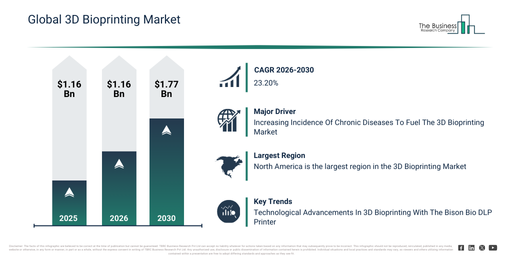
    The 3D bioprinting market has seen rapid expansion recently and is projected to continue this trend. From a valuation of $2.19 billion in 2025, the market is expected to reach $2.7 billion in 2026, growing at a compound annual growth rate (CAGR) of 23.0%. This past growth was fueled by increased funding in biomedical research, a rising need for in vitro drug testing models, early adoption of regenerative medicine, advancements in cell culture techniques, and broader use of 3D printing in healthcare. Looking ahead, the market is forecasted to surge to $6.21 billion by 2030, driven by personalized medicine expansion, growing organ transplantation demand, supportive regulations for bioprinted tissues, advancements in biopharmaceutical research pipelines, and the development of scalable bioprinting platforms. Key trends expected during this period include tissue engineering for regenerative therapies, creation of patient-specific implants, new bioink formulations, high-resolution multi-material bioprinting, and the clinical application of printed tissues.

    Download A Free Sample Report For Comprehensive Market Insights:

    https://www.thebusinessresearchcompany.com/sample.aspx?id=5341&type=smp

    Key Factors Encouraging Growth in the 3D Bioprinting Market

    A significant factor contributing to the 3D bioprinting market’s expansion is the rising prevalence of chronic diseases. Chronic illnesses, which persist for long durations typically exceeding three months, often require ongoing medical care. 3D bioprinting plays a crucial role in generating tissue models for studying these diseases and facilitating organ replacement therapies.

    For example, in June 2024, the National Health Service in the UK reported that 3,615,330 people registered with general practitioners were diagnosed with non-diabetic hyperglycemia or pre-diabetes in 2023. This figure represents an 18% increase compared to 3,065,825 cases in 2022, highlighting the growing health burden that supports demand for advanced bioprinting solutions.

    Primary Segments Within the 3D Bioprinting Market

    This market is categorized into several important segments for clarity and analysis:

    1) By Component: encompassing 3D bioprinters and bioinks

    2) By Material: including living cells, hydrogels, extracellular matrices, and other materials

    3) By Application: comprising research applications, clinical applications, and other uses

    4) By End User: covering research organizations and academic institutes, biopharmaceutical companies, hospitals, and other end users

    These categories are further divided; for example, 3D bioprinters include inkjet, microextrusion, laser-assisted, and stereolithography (SLA) types, while bioinks are classified as natural, synthetic, and hybrid.

    https://www.thebusinessresearchcompany.com/report/3d-bioprinting-global-market-report

    #3D Bioprinting Market Largest Region: Which Geography Holds The Highest Market Share?

    Innovations Shaping the Future of the 3D Bioprinting Market

    Leading companies in the 3D bioprinting field are heavily investing in advanced technological solutions to improve the precision and efficiency of tissue engineering and regenerative medicine. Devices known as 3D bioprinters use bioinks loaded with living cells to fabricate three-dimensional tissue and organ structures that benefit medical research and patient therapies.

    An illustrative example is the June 2024 launch of the Bison Bio DLP 3D bioprinter by Tethon 3D, a U.S.-based firm specializing in ceramic and metal-polymer products. Developed in partnership with Carima, this device offers adjustable build sizes (30 × 20 mm, 57 × 32 mm, and 96 × 54 mm) and works with proprietary photoinitiators and hydrogel bioinks essential for creating live tissues. Measuring 24 × 24 × 24 inches and weighing 75 pounds, the Bison Bio is priced at $19,950. It aims to advance healthcare by enabling the production of complex tissues and organs, thus supporting personalized medicine and regenerative therapies.

    Leading Players and Strategic Positioning in the 3D Bioprinting Industry

    The 3D bioprinting market is shaped by numerous key companies, including Organovo Holdings Inc., Allevi Inc., Cellink AB, Aspect Biosystems Ltd., Cyfuse Biomedical KK, Poietis SA, TeVido BioDevices, Nano3D Biosciences Inc., RegenHU Ltd., GeSiM mbH, Advanced Solutions Life Sciences LLC, Regenovo Biotechnology Co. Ltd., Regemat 3D S.L., Bio3D Technologies, ROKIT Healthcare Co. Ltd., Inventia Life Science Pvt. Ltd., Vivax Bio LLC, 3D Biotek LLC, 3D Bio Corp, 3D Bioprinting Solutions, BICO Group AB, CollPlant Biotechnologies Ltd., 3D Systems Corporation, EnvisionTEC GmbH, GE HealthCare Technologies Inc., and Nuclera Nucleics Ltd. These companies play critical roles in technology development and market expansion.

    Geographical Leadership and Regional Growth in the 3D Bioprinting Market

    North America held the largest share of the 3D bioprinting market in 2025, reflecting its strong infrastructure and established biomedical research hubs. However, the Asia-Pacific region is anticipated to emerge as the fastest-growing market throughout the forecast period, driven by increasing investments, expanding healthcare sectors, and growing awareness. The market report also covers other important regions such as South East Asia, Western Europe, Eastern Europe, South America, the Middle East, and Africa, providing a comprehensive global perspective.

    Get in touch with us:

    The Business Research Company: https://www.thebusinessresearchcompany.com/

    Americas: +1 310-496-7795

    Asia: +44 7882 955267 & +91 8897263534

    Europe: +44 7882 955267

    Email us at: marketing@tbrc.info

    Follow us on:

    LinkedIn: https://in.linkedin.com/company/the-business-research-company

    YouTube: https://www.youtube.com/channel/UC24_fI0rV8cR5DxlCpgmyFQ

    Global Market Model: https://www.thebusinessresearchcompany.com/global-market-model
  • 3D And 4D Ultrasound Devices Market Growth Through 2030 Creates New Strategic Opportunities

    3D And 4D Ultrasound Devices Market Growth Through 2030 Creates New Strategic Opportunities

    Enhanced with market attractiveness analysis, total addressable market evaluation, company benchmarking matrices, interactive Excel dashboards, expanded supply chain intelligence, emerging startup coverage, and detailed product insights, The Business Research Company’s 2026 market reports deliver more actionable and strategically valuable research.

    The market for 3D and 4D ultrasound devices has seen remarkable growth recently, driven by advancements in medical imaging technologies and increasing demand for detailed diagnostic tools. As healthcare providers seek more precise and non-invasive solutions, this sector continues to expand rapidly. Below is an in-depth look at the market’s size, key growth factors, segmentation, emerging trends, major players, and regional outlook.

    Significant Expansion in the 3D and 4D Ultrasound Devices Market Size

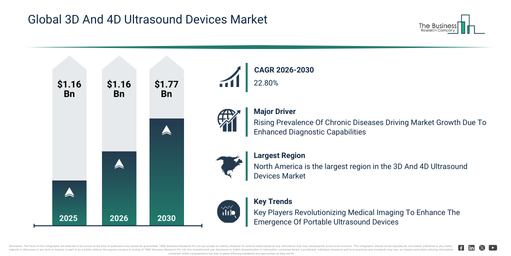
    The 3D and 4D ultrasound devices market is experiencing rapid growth, with revenues increasing from $14.07 billion in 2025 to $17.25 billion in 2026, representing a compound annual growth rate (CAGR) of 22.6%. This surge has been driven by the expanding use of ultrasound imaging, particularly in prenatal care, along with improved diagnostic infrastructure, more skilled sonographers, heightened awareness about early disease detection, and widespread adoption of non-invasive diagnostic technologies.

    Download A Free Sample Report For Comprehensive Market Insights:

    https://www.thebusinessresearchcompany.com/sample.aspx?id=14233&type=smp

    Forecasted Market Growth Through 2030

    Looking ahead, the market is projected to grow dramatically to $39.28 billion by 2030, at a CAGR of 22.8%. This anticipated expansion is fueled by the rising need for advanced prenatal diagnostic tools, increased investment in portable ultrasound devices, greater availability of point-of-care diagnostics, the growing incorporation of AI-assisted image analysis, and a stronger emphasis on detecting diseases at early stages. Key trends shaping the future include the growing use of high-resolution fetal imaging systems, demand for portable and point-of-care ultrasound devices, integration of sophisticated visualization software, expansion of multi-specialty diagnostic applications, and improvements in workflow efficiency and image accuracy.

    Factors Propelling Growth Due to Rising Chronic Disease Rates

    One of the primary drivers behind the expanding 3D and 4D ultrasound devices market is the increasing prevalence of chronic diseases worldwide. Chronic conditions, which require continuous management and medical attention, are becoming more common due to sedentary lifestyles, poor dietary habits, and an aging population. Ultrasound devices provide detailed 3D images that improve diagnosis and monitoring of these diseases, enhancing clinical outcomes.

    https://www.thebusinessresearchcompany.com/report/3d-and-4d-ultrasound-devices-global-market-report

    3D And 4D Ultrasound Devices Market Regional Analysis: Which Region Leads By Revenue?

    Demographic Changes Accelerating Market Demand

    For example, a January 2023 report from the US National Library of Medicine projects that by 2050, the number of Americans aged 50 and above with at least one chronic condition will nearly double to 142.66 million, a 99.5% increase. This demographic shift intensifies the need for advanced imaging technologies like 3D and 4D ultrasound devices, thereby driving market growth.

    How the 3D and 4D Ultrasound Devices Market Is Categorized

    This market is segmented across several crucial categories:

    1) By Type: Stationary 3D and 4D ultrasound devices and portable 3D and 4D ultrasound devices.

    2) By Display: Color ultrasound and black-and-white (B/W) ultrasound.

    3) By Portability: Trolley or cart-based ultrasound systems, compact or handheld ultrasound systems, and point-of-care (PoC) ultrasound systems.

    4) By Application: Radiology/general imaging, obstetrics/gynecology, cardiology, urology, vascular imaging, orthopedic and musculoskeletal uses, pain management, and other specialized applications.

    5) By End-User: Hospitals, surgical and diagnostic centers, maternity centers, ambulatory care centers, and various other users.

    Further breakdowns include categories such as console-based stationary systems, high-performance imaging machines, handheld portable devices, mobile ultrasound units, and compact point-of-care machines.

    Innovations and Trends Shaping the Future of 3D and 4D Ultrasound Devices

    Leading companies in this sector are pushing the boundaries of technology by developing ultrasound-on-chip solutions that miniaturize components onto a single chip. This innovation enables the creation of compact, portable ultrasound devices suitable for diverse medical imaging needs, improving accessibility and convenience in diagnostics.

    For instance, Butterfly Network Inc., a US-based company, introduced its Butterfly iQ3 handheld ultrasound system in June 2023. This device utilizes P4.3 ultrasound-on-chip technology, offering the fastest digital data transfer rate globally. It delivers enhanced high-resolution imaging, advanced 3D capabilities, and portable functionality while doubling the processing power of its predecessor, Butterfly iQ+.

    Top Companies Driving the 3D and 4D Ultrasound Devices Market

    Key players dominating this market include Hitachi Ltd., Toshiba Corporation, Siemens Healthineers, Koninklijke Philips N.V., GE HealthCare Technologies Inc., Fujifilm Holdings Corporation, Konica Minolta Healthcare Americas Inc., Hologic Inc., Mindray Medical International Limited, Canon Medical Systems Corporation, Samsung Medison Co. Ltd., Mobisante Inc., Esaote S.p.A, Shimadzu Medical Systems USA, Terason, Alpinion Medical Systems Co. Ltd., Shenzhen Bestman Instrument Co. Ltd., Chison Medical Technologies Co. Ltd., Edan Instruments Inc., and Mindray DS USA.

    Regional Market Leadership and Growth Potential

    In 2025, North America held the largest share of the 3D and 4D ultrasound devices market. However, the Asia-Pacific region is expected to witness the fastest growth during the forecast period. The market analysis includes various regions such as Asia-Pacific, South East Asia, Western Europe, Eastern Europe, North America, South America, the Middle East, and Africa, providing a broad view of regional trends and opportunities.

    Get in touch with us:

    The Business Research Company: https://www.thebusinessresearchcompany.com/

    Americas: +1 310-496-7795

    Asia: +44 7882 955267 & +91 8897263534

    Europe: +44 7882 955267

    Email us at: marketing@tbrc.info

    Follow us on:

    LinkedIn: https://in.linkedin.com/company/the-business-research-company

    YouTube: https://www.youtube.com/channel/UC24_fI0rV8cR5DxlCpgmyFQ

    Global Market Model: https://www.thebusinessresearchcompany.com/global-market-model
  • Thermal Cyclers Market Outlook Highlighting Demand Trends for 2026–2030

    Thermal Cyclers Market Outlook Highlighting Demand Trends for 2026–2030

    The Business Research Company’s 2026 market reports feature advanced enhancements such as market attractiveness analysis, total addressable market evaluation, company benchmarking matrices, interactive Excel dashboards, expanded supply chain intelligence, emerging startup coverage, and detailed product insights, delivering more actionable and strategically valuable research.

    How Will The Market Size Of The Thermal Cyclers Market Progress Through 2030?

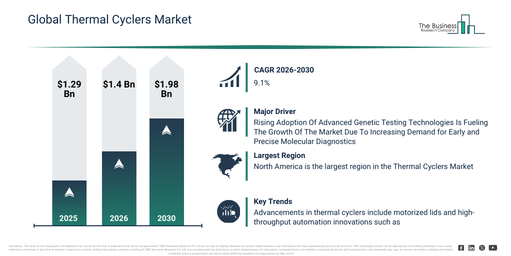
    The thermal cyclers market has experienced considerable growth in recent years. It is anticipated to expand from $1.29 billion in 2025 to $1.4 billion in 2026, exhibiting a compound annual growth rate (CAGR) of 8.9%. This past growth can be attributed to various factors, including the advancement of molecular diagnostics, the broadening scope of genomics research, an increase in infectious disease testing, a rise in forensic analysis, and the proliferation of academic research laboratories.

    The thermal cyclers market is poised for robust expansion in the upcoming years. It is projected to reach $1.98 billion in 2030, exhibiting a compound annual growth rate (CAGR) of 9.1%. This anticipated growth during the forecast period is driven by the increasing spread of point of care testing, advancements in precision medicine, a growing need for rapid diagnostics, augmented biotech research funding, and the wider uptake of digital PCR. Significant developments anticipated in this period encompass high throughput pcr cycler systems, portable field deployable cyclers, AI assisted temperature optimization, cloud connected pcr platforms, and rapid cycling thermal blocks.

    Download A Free Sample Report For Comprehensive Market Insights:

    https://www.thebusinessresearchcompany.com/sample.aspx?id=33341&type=smp

    What Core Drivers Are Transforming The Thermal Cyclers Market?

    The increasing adoption of advanced genetic testing technologies is anticipated to propel the growth of the thermal cyclers market moving forward. Molecular diagnostics refers to sophisticated laboratory techniques utilized to detect and analyze genetic material (DNA and RNA) for accurately identifying diseases, infections, and genetic conditions. The expansion of molecular diagnostics is fueled by the escalating demand for early and precise disease detection, which in turn encourages the use of advanced genetic testing methods for quicker and more reliable clinical outcomes. Thermal cyclers support molecular diagnostics by enabling precise DNA amplification through controlled temperature cycling, thereby ensuring accurate, rapid, and reliable molecular testing. For instance, in May 2025, according to Ellume, an Australia-based developer of rapid digital diagnostic tests, more than 96,215 molecular diagnostic tests were conducted per week in the US in 2023, highlighting extensive clinical use and the persistent importance of molecular diagnostics in disease surveillance and clinical decision-making. Therefore, the growing adoption of advanced genetic testing technologies is driving the expansion of the thermal cyclers market.

    How Is The Thermal Cyclers Market Examined Through Segment Analysis?

    The thermal cyclers market covered in this report is segmented –

    1) By Product Type: Standard Polymerase Chain Reaction (PCR) Thermal Cyclers; Real-Time Polymerase Chain Reaction (PCR) (qPCR) Systems; Digital Polymerase Chain Reaction (dPCR) Systems; High-Throughput Thermal Cyclers; Portable Or Compact Thermal Cyclers

    2) By Technology: Gradient Polymerase Chain Reaction (PCR); Touchdown Polymerase Chain Reaction (PCR); Fast Polymerase Chain Reaction (PCR); Reverse Transcription Polymerase Chain Reaction (RT-PCR); Other Technologies

    3) By Application: Clinical Diagnostics; Research And Academic Use; Forensic Applications; Agricultural Biotechnology; Environmental Testing

    4) By Distribution Channel: Direct Sales; Distributors Or Resellers; Online Sales

    5) By End User: Hospitals And Diagnostic Centers; Academic And Research Institutions; Biotechnology And Pharmaceutical Companies; Forensic Laboratories; Contract Research Organizations (CROs)

    Subsegments:

    1) By Standard Polymerase Chain Reaction (PCR) Thermal Cyclers: Conventional Block Thermal Cyclers; Gradient Thermal Cyclers; Touchscreen Controlled Thermal Cyclers; Multi Block Thermal Cyclers

    2) By Real-Time Polymerase Chain Reaction (PCR) (qPCR) Systems: Dye Based Detection Systems; Probe Based Detection Systems; Multiplex Real Time Systems; Fast Cycling Real Time Systems

    3) By Digital Polymerase Chain Reaction (dPCR) Systems: Droplet Based Digital Systems; Chip Based Digital Systems; Microfluidic Digital Systems; High Precision Quantification Systems

    4) By High-Throughput Thermal Cyclers: Ninety Six Well Thermal Cyclers; Three Hundred Eighty Four Well Thermal Cyclers; Automated High Capacity Thermal Cyclers; Parallel Processing Thermal Cyclers

    5) By Portable Or Compact Thermal Cyclers: Battery Operated Thermal Cyclers; Handheld Thermal Cyclers; Field Deployable Thermal Cyclers; Point Of Care Thermal Cyclers

    Which Trends Are Expected To Shape The Thermal Cyclers Market?

    Leading firms within the thermal cyclers market are concentrating on sophisticated advancements like deep-well thermal cyclers to achieve a competitive advantage in the sector. Deep-well thermal cyclers represent specialized lab equipment designed for executing temperature-regulated reactions, including PCR, with samples housed in deep-well plates, capable of accommodating greater volumes compared to conventional PCR tubes or plates. For example, in March 2025, Bio-Rad Laboratories, a research firm based in the US, introduced the PTC Tempo 384 Thermal Cycler, which is the newest addition to its PTC Tempo series. This cutting-edge device is specifically engineered for high-throughput PCR uses across basic research, translational investigations, process refinement, and quality assurance. The PTC Tempo 384 incorporates a 384-well reaction module fitted with a motorized lid, facilitating effortless automation and compatibility with robotic systems. It provides exceptional thermal uniformity (±0.3°C at 95°C), rapid ramp rates reaching up to 5°C per second, and multizone gradient programming, thereby proving more effective than alternative models, like the dual-block PTC Tempo 48/48, for rigorous, expandable workflows. Constructed upon the reliable C1000 Touch platform, the PTC Tempo 384 includes an enhanced intuitive user interface, versatile connectivity choices such as BR.io cloud monitoring, and the recent software update v3.0.0.8, which improves API support. Consequently, the PTC Tempo 384 stands as an outstanding option for academic, commercial, and biopharma laboratories, presenting unparalleled reproducibility and ease of use.

    Which Organizations Are Operating Within The Thermal Cyclers Market?

    Major companies operating in the thermal cyclers market are Roche Diagnostics, Thermo Fisher Scientific Inc., Agilent Technologies, Bio-Rad Laboratories, QIAGEN, Eppendorf, Cepheid, Bio-Techne, Hamilton Company, Heal Force Bio-Meditech, Takara Bio, Hangzhou Bioer Technology, Analytik Jena, Esco Lifesciences, ELITechGroup, Benchmark Scientific, Cole-Parmer Instrument Company, Biomeme, GNA Biosolutions, Cleaver Scientific, Starlab International, and Scilogex.

    Access The Complete Thermal Cyclers Market Report:

    https://www.thebusinessresearchcompany.com/report/thermal-cyclers-market-report

    What Is The Largest Regional Market In The Thermal Cyclers Market?

    North America was the largest region in the thermal cyclers market in 2025. Asia-Pacific is expected to be the fastest-growing region in the forecast period. The regions covered in the thermal cyclers market report are Asia-Pacific, South East Asia, Western Europe, Eastern Europe, North America, South America, Middle East, Africa.

    Access a Customized Thermal Cyclers Market Report for Deeper Competitive Insights

    Get in touch with us:

    The Business Research Company: https://www.thebusinessresearchcompany.com/

    Americas: +1 310-496-7795

    Asia: +44 7882 955267 & +91 8897263534

    Europe: +44 7882 955267

    Email us at: marketing@tbrc.info

    Follow us on:

    LinkedIn: https://in.linkedin.com/company/the-business-research-company

    YouTube: https://www.youtube.com/channel/UC24_fI0rV8cR5DxlCpgmyFQ

    Global Market Model: https://www.thebusinessresearchcompany.com/global-market-model