Category: Medical Equipment

  • Global Mechanical Thrombectomy Devices Market Forecast Highlighting Expansion And Competitive Dynamics

    Global Mechanical Thrombectomy Devices Market Forecast Highlighting Expansion And Competitive Dynamics

    The Business Research Company’s 2026 market reports feature advanced enhancements such as market attractiveness analysis, total addressable market evaluation, company benchmarking matrices, interactive Excel dashboards, expanded supply chain intelligence, emerging startup coverage, and detailed product insights, delivering more actionable and strategically valuable research.

    What Are The Forecasted Market Size Figures For The Mechanical Thrombectomy Devices Market In 2026 And 2030?

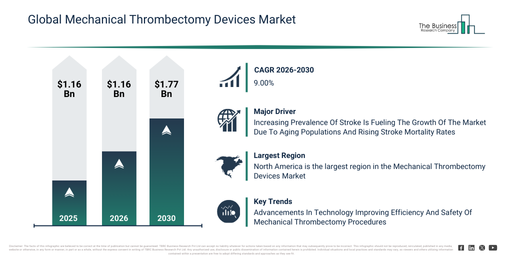
    Strong growth has been observed in the mechanical thrombectomy devices market in recent years. This market is projected to expand from $1.52 billion in 2025 to $1.67 billion in 2026, exhibiting a compound annual growth rate (CAGR) of 9.9%. The expansion witnessed during earlier periods stemmed from factors such as the limited availability of mechanical thrombectomy devices, the reliance on manual procedures for stroke treatment, a growing awareness of stroke and cardiovascular risks, increasing hospital infrastructure for interventional procedures, and the adoption of catheter-based interventions.

    The mechanical thrombectomy devices market is projected to experience substantial expansion over the upcoming years, with an anticipated growth to $2.36 billion by 2030, exhibiting a compound annual growth rate (CAGR) of 9.0%. This forecasted growth is attributable to factors such as the advancement of automated and electromechanical thrombectomy devices, an increase in the occurrence of ischemic stroke and coronary thrombosis, the incorporation of AI-assisted device navigation, the proliferation of ambulatory surgical centers and specialized invasive care facilities, and heightened research and development investments in thrombectomy technologies. Key trends anticipated during this period encompass the growing acceptance of minimally invasive procedures, a surge in the utilization of combined thrombectomy devices, expansion within the electromechanical and hybrid device sector, an increase in ischemic stroke treatment interventions, and a heightened emphasis on device safety alongside regulatory adherence.

    Download A Free Sample Report For Comprehensive Market Insights:

    https://www.thebusinessresearchcompany.com/sample.aspx?id=27335&type=smp

    Which Major Factors Are Contributing To The Development Of The Mechanical Thrombectomy Devices Market?

    The expanding occurrence of stroke is anticipated to stimulate the development of the mechanical thrombectomy devices market. Stroke is a serious medical condition where brain cells perish due to an interruption or reduction in blood flow, leading to a lack of oxygen and vital nutrients. The rising incidence of stroke is attributed to demographic shifts towards aging populations, as advanced age significantly elevates stroke risk due to natural physiological changes in blood vessels and overall health. Mechanical thrombectomy devices are vital for stroke intervention, effectively removing blood clots from obstructed brain arteries, thus restoring blood flow, reducing brain damage, and notably improving patient recovery. For instance, in October 2023, the World Economic Forum, a Switzerland-based non-profit organization, reported that by 2050, stroke deaths could see an increase of 50%. This escalating prevalence of stroke is therefore a primary factor driving expansion within the mechanical thrombectomy devices market.

    Which Segment Divisions Form The Structure Of The Mechanical Thrombectomy Devices Market?

    The mechanical thrombectomy devices market covered in this report is segmented –

    1) By Product Type: Stent Retrievers, Catheter-Based Thrombectomy Devices, Mechanical Aspiration Devices, Combined Devices

    2) By Technology: Manual Mechanical Thrombectomy Devices, Automated Mechanical Thrombectomy Devices, Electromechanical Thrombectomy Devices, Hybrid Devices

    3) By Application: Ischemic Stroke, Peripheral Artery Disease (PAD), Coronary Thrombosis, Post-Surgical Thrombosis

    4) By Distribution Channel: Direct Sales, Distributors And Wholesalers, Online Sales, Retail Pharmacies

    5) By End User: Hospitals, Ambulatory Surgical Centers, Specialized Invasive Care Centers, Research And Academic Institutions

    Subsegments:

    1) By Stent Retrievers: Closed-Cell Stent Retrievers, Open-Cell Stent Retrievers, Hybrid Stent Retrievers

    2) By Catheter-Based Thrombectomy Devices: Aspiration Catheters, Guide Catheters, Micro Catheters

    3) By Mechanical Aspiration Devices: Manual Aspiration Devices, Powered Aspiration Devices

    4) By Combined Devices: Aspiration Plus Stent Retrievers, Aspiration Plus Mechanical Devices

    What Trends Are Driving Changes In The Mechanical Thrombectomy Devices Market?

    Companies operating in the mechanical thrombectomy devices market are concentrating on developing innovative strategies, like dual clot detection algorithms, to create advanced systems that boost clot removal efficiency and enhance patient safety. Dual clot detection algorithms are sophisticated computer-assisted methods that leverage both pressure and flow data to accurately identify and differentiate blood clots from normal blood flow during thrombectomy procedures. For instance, in January 2023, Penumbra Inc., a US-based healthcare company, unveiled the Lightning Flash, an advanced mechanical thrombectomy system engineered to revolutionize how blood clots are extracted from the body. This pioneering device marries powerful aspiration technology with a meticulously designed catheter to efficiently and safely remove large blood clots, including venous thrombi and pulmonary emboli, thereby aiding physicians in performing quicker procedures while minimizing potential complications and improving overall patient outcomes.

    Who Are The Major Companies Operating In The Mechanical Thrombectomy Devices Market?

    Major companies operating in the mechanical thrombectomy devices market are Stryker Corporation, Medtronic plc, Penumbra Inc., Terumo Corporation, Boston Scientific Corporation, Johnson & Johnson, Edwards Lifesciences Corporation, AngioDynamics Inc., Acandis GmbH & Co. KG, Rapid Medical, Vesalio, Control Medical Technology LLC, Perflow Medical, Sino Medical Sciences Technology Inc., Natec Medical Ltd., Straub Medical AG, Vascular Medcure Inc., Imperative Care Inc., NeuroVasc Technologies Inc., Inquis Medical Inc., Balt Extrusion S.A.S., Anaconda Biomed SL, SILK Road Medical Inc., Argon Medical Devices Inc., Minnetronix Inc.

    Access The Complete Mechanical Thrombectomy Devices Market Report:

    https://www.thebusinessresearchcompany.com/report/mechanical-thrombectomy-devices-global-market-report

    Which Geographic Region Represents The Largest Mechanical Thrombectomy Devices Market Share?

    North America was the largest region in the mechanical thrombectomy devices market in 2025. Asia-Pacific is expected to be the fastest-growing region in the forecast period. The regions covered in the mechanical thrombectomy devices market report are Asia-Pacific, South East Asia, Western Europe, Eastern Europe, North America, South America, Middle East, Africa.

    Access a Mechanical Thrombectomy Devices Market Report for Deeper Competitive Insights

    https://www.thebusinessresearchcompany.com/report/mechanical-thrombectomy-devices-global-market-report

    Browse Through More Reports Similar to the Global Mechanical Thrombectomy Devices Market 2026, By The Business Research Company

    Architectural Acoustic Panels Market Report 2026

    https://www.thebusinessresearchcompany.com/report/architectural-acoustic-panels-global-market-report

    Acoustic Insulation Market Report 2026

    https://www.thebusinessresearchcompany.com/report/acoustic-insulation-global-market-report

    Loudspeakers Market Report 2026

    https://www.thebusinessresearchcompany.com/report/loudspeakers-global-market-report

    Get in touch with us:

    The Business Research Company: https://www.thebusinessresearchcompany.com/

    Americas: +1 310-496-7795

    Asia: +44 7882 955267 & +91 8897263534

    Europe: +44 7882 955267

    Email us at: marketing@tbrc.info

    Follow us on:

    LinkedIn: https://in.linkedin.com/company/the-business-research-company

    YouTube: https://www.youtube.com/channel/UC24_fI0rV8cR5DxlCpgmyFQ

    Global Market Model: https://www.thebusinessresearchcompany.com/global-market-model

  • Mechanical Circulatory Support Devices Market Analysis Through 2030 Focusing On Demand Trends And Growth Drivers

    Mechanical Circulatory Support Devices Market Analysis Through 2030 Focusing On Demand Trends And Growth Drivers

    The Business Research Company’s 2026 market reports feature advanced enhancements such as market attractiveness analysis, total addressable market evaluation, company benchmarking matrices, interactive Excel dashboards, expanded supply chain intelligence, emerging startup coverage, and detailed product insights, delivering more actionable and strategically valuable research.

    How Much Larger Will The Mechanical Circulatory Support Devices Market Become By 2030 Compared To 2026?

    The mechanical circulatory support devices market has experienced significant expansion in its size over recent years. Looking forward, it is projected to grow from $3.47 billion in 2025 to $3.82 billion in 2026, achieving a compound annual growth rate (CAGR) of 10.1%. Historically, the growth of this market can be attributed to factors such as the limited availability of advanced circulatory support devices, a reliance on conventional intra-aortic balloon pumps, the increasing prevalence of heart failure, a rise in cardiac surgery procedures, and the absence of standardized training for device implantation.

    The mechanical circulatory support devices market size is projected to experience significant expansion in the coming years. It will grow to $5.59 billion in 2030 at a compound annual growth rate (CAGR) of 10.0%. This anticipated growth throughout the forecast timeframe stems from several factors, such as improvements in the technology of pulsatile and non-pulsatile flow devices, an increase in minimally invasive cardiac procedures, a greater embrace of left and biventricular assist devices, the proliferation of hospitals and specialized cardiac facilities, and growing investment in research and development within cardiac care. Key developments anticipated during this period encompass a surge in the use of ventricular assist devices and total artificial hearts, an expansion of cardiac surgical operations and heart failure management protocols, more widespread deployment of extracorporeal membrane oxygenation (ecmo) systems, an emphasis on the deployment of minimally invasive and percutaneous devices, and heightened adherence to regulatory compliance and safety benchmarks for cardiac devices.

    Download A Free Sample Report For Comprehensive Market Insights:

    https://www.thebusinessresearchcompany.com/sample.aspx?id=27334&type=smp

    What Key Growth Drivers Are Influencing The Mechanical Circulatory Support Devices Market?

    An increasing incidence of heart failure is anticipated to boost the expansion of the mechanical circulatory support devices market in the future. Heart failure is a chronic condition in which the heart cannot pump enough blood to meet the body’s needs. The growing occurrence of heart failure stems from an aging demographic, given that elderly individuals are more susceptible to cardiovascular illnesses and associated issues. Mechanical circulatory support devices aid patients with heart failure by supporting the heart’s pumping function, enhancing blood flow, and reducing the strain on the impaired organ. For example, data from September 2024 published by the Heart Failure Society of America (HFSA), a US-based non-profit organization, indicates that 6.7 million Americans over the age of 20 currently suffer from heart failure; this figure is projected to climb to 8.7 million by 2030, 10.3 million by 2040, and a significant 11.4 million by 2050. Consequently, the escalating prevalence of heart failure is a key factor propelling the expansion of the mechanical circulatory support devices market.

    How Are Different Segment Groups Identified Within The Mechanical Circulatory Support Devices Market?

    The mechanical circulatory support devices market covered in this report is segmented –

    1) By Type: Intra-Aortic Balloon Pump, Ventricular Assist Device, Total Artificial Heart, Extracorporeal Membrane Oxygenation

    2) By Technology: Pulsatile Flow Devices, Non-Pulsatile Flow Devices

    3) By Application: Cardiac Surgery, Heart Failure Management, Myocardial Infraction, Cardiogenic Shock

    4) By End User: Hospitals, Ambulatory Surgical Centers, Specialty Clinics, Other End Users

    Subsegments:

    1) By Intra-Aortic Balloon Pump: Percutaneous Intra-Aortic Balloon Pump, Surgical Intra-Aortic Balloon Pump

    2) By Ventricular Assist Device: Left Ventricular Assist Device, Right Ventricular Assist Device, Biventricular Assist Device

    3) By Total Artificial Heart: Pneumatic Total Artificial Heart, Electric Total Artificial Heart

    4) By Extracorporeal Membrane Oxygenation: Venoarterial Extracorporeal Membrane Oxygenation, Venovenous Extracorporeal Membrane Oxygenation

    Which Trends Are Shaping The Mechanical Circulatory Support Devices Market Landscape?

    Leading companies in the mechanical circulatory support devices market are concentrating on developing advanced technologies, such as magnetically levitated rotor (MAGLEV) technology, with the goal of equipping patients with more reliable and efficient devices that enhance heart function and improve survival rates. Magnetically levitated rotor (MAGLEV) technology functions by using magnetic fields to suspend and spin a rotor without physical contact, thereby reducing friction and wear for smoother, longer-lasting device performance. For instance, in July 2024, BiVACOR Inc., a US-based clinical-stage medical device company, initiated the first-in-human implantation of its Total Artificial Heart (TAH). This groundbreaking device is engineered to completely replace both ventricles of a failing heart in patients with severe biventricular or univentricular heart failure who are not suitable for conventional left ventricular assist devices. It serves as a crucial bridge-to-transplant solution, holding the potential to improve survival and quality of life for thousands of patients with limited treatment options due to the scarcity of donor hearts.

    Which Companies Are Influencing The Mechanical Circulatory Support Devices Market?

    Major companies operating in the mechanical circulatory support devices market are Abbott Laboratories, Medtronic Plc, Getinge AB, LivaNova PLC, Magenta Medical Ltd., CorWave SA, Jarvik Heart Inc., Carmat SAS, Procyrion Inc., BiVACOR Inc., Evaheart Inc., ReliantHeart Inc., SynCardia Systems LLC, Berlin Heart GmbH, NovaPump GmbH, CardiacAssist Inc., Circulite Medical Inc., Windmill Cardiovascular Systems Inc., NuPulseCV Inc., FineHeart SAS

    Access The Complete Mechanical Circulatory Support Devices Market Report:

    https://www.thebusinessresearchcompany.com/report/mechanical-circulatory-support-devices-global-market-report

    Which Region Leads The Mechanical Circulatory Support Devices Market By Size?

    North America was the largest region in the mechanical circulatory support devices market in 2025. Asia-Pacific is expected to be the fastest-growing region in the forecast period. The regions covered in the mechanical circulatory support devices market report are Asia-Pacific, South East Asia, Western Europe, Eastern Europe, North America, South America, Middle East, Africa.

    Access a Mechanical Circulatory Support Devices Market Report for Deeper Competitive Insights

    https://www.thebusinessresearchcompany.com/report/mechanical-circulatory-support-devices-global-market-report

    Browse Through More Reports Similar to the Global Mechanical Circulatory Support Devices Market 2026, By The Business Research Company

    Virtual Payment Pos Terminals Market Report 2026

    https://www.thebusinessresearchcompany.com/report/virtual-payment-pos-terminals-global-market-report

    Point Of Sale Terminals Market Report 2026

    https://www.thebusinessresearchcompany.com/report/point-of-sale-terminals-global-market-report

    Proximity Payment Market Report 2026

    https://www.thebusinessresearchcompany.com/report/proximity-payment-global-market-report

    Get in touch with us:

    The Business Research Company: https://www.thebusinessresearchcompany.com/

    Americas: +1 310-496-7795

    Asia: +44 7882 955267 & +91 8897263534

    Europe: +44 7882 955267

    Email us at: marketing@tbrc.info

    Follow us on:

    LinkedIn: https://in.linkedin.com/company/the-business-research-company

    YouTube: https://www.youtube.com/channel/UC24_fI0rV8cR5DxlCpgmyFQ

    Global Market Model: https://www.thebusinessresearchcompany.com/global-market-model
  • Maternal Infant Care Equipment Market Projected To Surpass $8.82 Billion By 2030 At 7% CAGR

    Maternal Infant Care Equipment Market Projected To Surpass $8.82 Billion By 2030 At 7% CAGR

    The Business Research Company’s 2026 market reports feature advanced enhancements such as market attractiveness analysis, total addressable market evaluation, company benchmarking matrices, interactive Excel dashboards, expanded supply chain intelligence, emerging startup coverage, and detailed product insights, delivering more actionable and strategically valuable research.

    What Growth In Market Value Is Anticipated For The Maternal Infant Care Equipment Market Between 2026 And 2030?

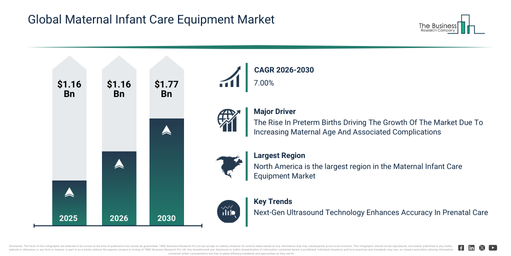
    The maternal infant care equipment market has demonstrated significant growth in recent years. Its value is projected to rise from $6.28 billion in 2025 to $6.73 billion in 2026, exhibiting a compound annual growth rate (CAGR) of 7.3%. This historical growth can be linked to several factors: a scarcity of sophisticated maternal-infant care equipment, ongoing dependence on traditional infant incubators and warmers, an expanding population of neonatal patients, the development of more extensive hospital and clinic infrastructure, and heightened public awareness regarding maternal and neonatal care.

    The maternal infant care equipment market size is projected to experience substantial expansion in the coming years. By 2030, this market is anticipated to reach a valuation of $8.82 billion, demonstrating a compound annual growth rate (CAGR) of 7.0%. This projected growth is primarily driven by various factors, including advancements in phototherapy and suction device technology, the growing uptake of electric and hospital-grade breast pumps, an increase in home care service provisions, escalating healthcare spending in developing nations, and the incorporation of smart monitoring and IoT-enabled solutions for maternal and infant care. Key trends anticipated during this period encompass the increasing integration of advanced neonatal monitoring systems, a heightened need for portable and home care maternal-infant devices, a growing emphasis on energy-efficient and environmentally friendly equipment, the broadening of maternal and neonatal care services in developing areas, and improved training and awareness initiatives for healthcare providers.

    Download A Free Sample Report For Comprehensive Market Insights:

    https://www.thebusinessresearchcompany.com/sample.aspx?id=27333&type=smp

    Which Core Factors Are Supporting The Expansion Of The Maternal Infant Care Equipment Market?

    The maternal infant care equipment market is expected to experience growth driven by the increasing occurrence of preterm births. Preterm births are defined as the delivery of a baby before completing 37 weeks of gestation, resulting in a pregnancy of shorter-than-normal duration. The prevalence of preterm births is on the rise due to an increase in maternal age, as older mothers face a greater risk of pregnancy complications that can lead to early delivery. Maternal infant care equipment plays a crucial role in supporting preterm births by offering advanced monitoring, respiratory assistance, and thermal regulation, thereby enhancing the survival and health outcomes for premature infants. For instance, the Centers for Disease Control and Prevention (CDC), a US-based government agency, indicated in March 2025 that in 2023, singleton preterm births represented 8.71%, a slight increase from 8.67% in 2022. Hence, the growing number of preterm births is propelling the expansion of the maternal infant care equipment market.

    What Segment Categories Are Evaluated In The Maternal Infant Care Equipment Market Study?

    The maternal infant care equipment market covered in this report is segmented –

    1) By Product Type: Infant Incubators, Infant Warmers, Phototherapy Equipment, Suction Devices, Breast Pumps

    2) By Material Type: Plastic, Wood, Fabric, Metal, Organic Materials

    3) By Application: Neonatal Care, Maternal Care, Pediatric Care

    4) By Distribution Channel: Online Stores, Offline Stores

    5) By End-User: Hospitals, Clinics, Home Care, Ambulatory Surgical Centers

    Subsegments:

    1) By Infant Incubators: Closed Incubators, Open Incubators, Transport Incubators

    2) By Infant Warmers: Radiant Warmers, Conductive Warmers, Combination Warmers

    3) By Phototherapy Equipment: Conventional Phototherapy Units, Fiber-Optic Phototherapy Units, Compact Phototherapy Devices

    4) By Suction Devices: Portable Suction Devices, Wall-Mounted Suction Devices, Battery Operated Suction Devices

    5) By Breast Pumps: Manual Breast Pumps, Electric Breast Pumps, Hospital Grade Breast Pumps

    What Trends Are Influencing The Maternal Infant Care Equipment Market Outlook?

    Leading companies in the maternal infant care equipment market are concentrating on technological breakthroughs, such as artificial intelligence-powered ultrasound systems, with the aim of improving diagnostic accuracy, boosting workflow efficiency, and facilitating quicker, more confident clinical choices in women’s and neonatal healthcare. Artificial intelligence-enabled ultrasound systems are defined as medical imaging devices that utilize AI algorithms to automate image analysis, refine diagnostic precision, and optimize clinical operations. For example, in April 2024, GE Healthcare Technologies Inc., a US-based medical technology company, unveiled its Voluson Signature 20 and 18 ultrasound systems, designed to advance women’s health imaging. These particular systems integrate artificial intelligence to enhance image clarity, automate routine procedures, and assist clinical decision-making via tools like sonolyst and sonobiometry. Boasting an ergonomic design and personalized settings, they further feature advanced reporting functionalities and improved connectivity, allowing for effortless integration into clinical workflows. These innovations empower healthcare professionals to efficiently evaluate and oversee maternal and fetal health, especially concerning high-risk pregnancies.

    Who Are The Companies Shaping The Maternal Infant Care Equipment Market Landscape?

    Major companies operating in the maternal infant care equipment market are Cardinal Health Inc., Koninklijke Philips N.V, GE Healthcare Technologies Inc., Drägerwerk AG And Co KGaA, Masimo Corporation, Natus Medical Incorporated, Atom Medical Corporation, Edan Instruments Inc., OxygenCare Private Limited, Janitri Innovations Private Limited, Maternova Inc., Spectra Baby USA LLC, Fisher & Paykel Healthcare Corporation Limited, Shenzhen Mindray Bio-Medical Electronics Co Ltd., Nihon Kohden Corporation, OSI Systems Inc., Contec Medical Systems Co Ltd., Bistos Co Ltd., Fanem Ltd., Phoenix Medical Systems, nice Neotech Medical Systems Pvt Ltd., IndoSurgicals Private Limited, Hosmed-Inc.

    Access The Complete Maternal Infant Care Equipment Market Report:

    https://www.thebusinessresearchcompany.com/report/maternal-infant-care-equipment-global-market-report

    Which Region Has The Strongest Presence In The Maternal Infant Care Equipment Market?

    North America was the largest region in the maternal infant care equipment market in 2025. Asia-Pacific is expected to be the fastest-growing region in the forecast period. The regions covered in the maternal infant care equipment market report are Asia-Pacific, South East Asia, Western Europe, Eastern Europe, North America, South America, Middle East, Africa.

    Access a Maternal Infant Care Equipment Market Report for Deeper Competitive Insights

    https://www.thebusinessresearchcompany.com/report/maternal-infant-care-equipment-global-market-report

    Browse Through More Reports Similar to the Global Maternal Infant Care Equipment Market 2026, By The Business Research Company

    Organic Meat Products Market Report 2026

    https://www.thebusinessresearchcompany.com/report/organic-meat-products-global-market-report

    Organic Food Market Report 2026

    https://www.thebusinessresearchcompany.com/report/organic-food-global-market-report

    Organic Olive Oil Market Report 2026

    https://www.thebusinessresearchcompany.com/report/organic-olive-oil-global-market-report

    Get in touch with us:

    The Business Research Company: https://www.thebusinessresearchcompany.com/

    Americas: +1 310-496-7795

    Asia: +44 7882 955267 & +91 8897263534

    Europe: +44 7882 955267

    Email us at: marketing@tbrc.info

    Follow us on:

    LinkedIn: https://in.linkedin.com/company/the-business-research-company

    YouTube: https://www.youtube.com/channel/UC24_fI0rV8cR5DxlCpgmyFQ

    Global Market Model: https://www.thebusinessresearchcompany.com/global-market-model

  • Maternal And Baby Grade Wipes Market Forecast Through 2030 Featuring Industry Drivers And Opportunities

    Maternal And Baby Grade Wipes Market Forecast Through 2030 Featuring Industry Drivers And Opportunities

    The Business Research Company’s 2026 market reports feature advanced enhancements such as market attractiveness analysis, total addressable market evaluation, company benchmarking matrices, interactive Excel dashboards, expanded supply chain intelligence, emerging startup coverage, and detailed product insights, delivering more actionable and strategically valuable research.

    What Is The Expected Market Value Outlook For The Maternal And Baby Grade Wipes Market Through 2030?

    The maternal and baby grade wipes market has shown robust expansion in recent years. This market is set to expand from $6.37 billion in 2025 to $6.91 billion in 2026, demonstrating a compound annual growth rate (CAGR) of 8.6%. The notable growth observed historically can be linked to factors like increasing birth rates in emerging economies, a heightened awareness regarding infant hygiene, the broader adoption of maternal care products, the rising availability of disposable hygiene products, and an increase in the retail penetration of baby care items.

    The maternal and baby grade wipes market is projected to experience substantial expansion in the coming years, reaching $9.53 billion by 2030, with a compound annual growth rate (CAGR) of 8.3%. This anticipated growth is primarily driven by an escalating demand for sustainable personal care products, a greater emphasis on eco-friendly packaging solutions, the expansion of premium baby hygiene categories, increasing reliance on online baby care retail channels, and stricter regulatory oversight of chemical ingredients. Significant trends identified for this period include a rising demand for biodegradable baby wipes, the growing adoption of hypoallergenic formulations, the broadening availability of organic and chemical-free wipe products, an increasing focus on innovation in skin-safe materials, and an enhanced commitment to dermatologically tested wipes.

    Download A Free Sample Report For Comprehensive Market Insights:

    https://www.thebusinessresearchcompany.com/sample.aspx?id=24290&type=smp

    What Are The Main Drivers Accelerating The Growth Of The Maternal And Baby Grade Wipes Market?

    The increased expenditure on personal hygiene products is anticipated to stimulate the expansion of the maternal and baby-grade wipes market moving forward. These personal hygiene products encompass items individuals utilize to uphold cleanliness and foster good health, mitigating the likelihood of infections and body odor. This rise in spending on personal hygiene products is largely fueled by heightened consumer understanding regarding health and sanitation, as people are increasingly focused on preventing infections and sustaining overall well-being through consistent hygiene practices. Maternal and baby-grade wipes augment the efficacy of personal hygiene products by offering mild, secure, and convenient cleansing options appropriate for delicate skin, thereby assisting daily hygiene regimens, lowering the potential for irritation or infection, and advancing general cleanliness for both mothers and infants. As an illustration, data from September 2024, provided by the Bureau of Labor Statistics, a US-based government agency, revealed that spending on personal care products and services grew by 9.7% from 2022 to 2023, with their proportion of total annual expenditures holding firm at 1.2% in both years. Consequently, the heightened spending on personal hygiene products acts as a significant factor driving the growth of the maternal and baby-grade wipes market.

    How Is The Maternal And Baby Grade Wipes Market Examined Through Segment Analysis?

    The maternal and baby grade wipes market covered in this report is segmented –

    1) By Product Type: Moist Wipes, Dry Wipes, Biodegradable Wipes, Organic Wipes, Antibacterial Wipes

    2) By Material Type: Non-Woven Fabric, Cotton, Bamboo, Polyester, Wood Pulp

    3) By Functionality: Cleansing, Moisturizing, Cooling, Anti-Inflammatory, Hypoallergenic

    4) By Distribution Channel: Online Retail, Supermarkets Or Hypermarkets, Pharmacies Or Drugstores, Specialty Stores, Department Stores

    5) By End-User: Mothers, Babies (Infants And Toddlers), Healthcare Providers, Childcare Facilities, Skin Care Enthusiasts

    Subsegments:

    1) By Moist Wipes: Fragrance-Free Wipes, Aloe Vera Infused Wipes, Vitamin E Enriched Wipes, Alcohol-Free Wipes

    2) By Dry Wipes: Cotton Dry Wipes, Bamboo Fiber Dry Wipes, Spunlace Non-Woven Dry Wipes, Reusable Dry Wipes

    3) By Biodegradable Wipes: Plant-Based Fiber Wipes, Compostable Wet Wipes, Flushable Wipes, Plastic-Free Wipes

    4) By Organic Wipes: United States Department of Agriculture Certified Organic Wipes, Organic Cotton Wipes, Natural Extract-Based Wipes, Hypoallergenic Organic Wipes

    5) By Antibacterial Wipes: Benzalkonium Chloride Wipes, Herbal Antibacterial Wipes, Alcohol-Based Sanitizing Wipes, Hypoallergenic Antibacterial Wipes

    Which Trends Are Expected To Shape The Maternal And Baby Grade Wipes Market?

    Leading companies within the maternal and baby grade wipes market are concentrating on creating inventive solutions, such as certified organic, biodegradable baby wipes. This initiative aims to address the growing consumer need for secure, toxin-free infant skincare items and environmentally sustainable hygiene options. Certified organic biodegradable wipes utilize plant-based fibers, such as FSC-certified bamboo, and high-purity water formulas, presenting a natural and chemical-free alternative compared to conventional synthetic wipes, which are typically composed of plastic-based nonwoven materials and more potent preservatives. As an illustration, TERRA, an eco-conscious personal care company from New Zealand, launched its Premium Certified Organic Biodegradable Baby Wipes collection in India in November 2023. This product line features variations like Manuka Honey Baby Wipes, Kiwifruit Baby Wipes, and Pure Water Wipes, incorporating natural extracts, formulations with 99%+ pure water, and holding internationally recognized certifications (SGS, Dermatest, Intertek, and FernMark). These wipes demonstrate swift biodegradability, breaking down up to 10 times faster than standard wipes, all while ensuring gentle cleansing for infants and mothers due to their hypoallergenic, fragrance-free, and chemical-free compositions.

    Which Industry Players Are Present In The Maternal And Baby Grade Wipes Market?

    Major companies operating in the maternal and baby grade wipes market are Johnson & Johnson Services Inc., Kimberly-Clark Corporation, Oji Holdings Corporation, Georgia-Pacific LLC, Unicharm Corporation, Hengan International Group Company Limited, Pigeon Corporation, The Honest Company Inc., WaterWipes UC, Nuby, TerraCare Ltd., Farlin Industrial Co. Ltd., Mustela, Natracare, Millie Moon, Doctor Butler’s Rx Formulations LLC, Kanga Care LLC, Bambo Nature, Kressa, KAS Direct LLC

    Access The Complete Maternal And Baby Grade Wipes Market Report:

    https://www.thebusinessresearchcompany.com/report/maternal-and-baby-grade-wipes-global-market-report

    Which Region Stands As The Largest Contributor To The Maternal And Baby Grade Wipes Market?

    North America was the largest region in the maternal and baby grade wipes market in 2025. Asia-Pacific is expected to be the fastest-growing region in the forecast period. The regions covered in the maternal and baby grade wipes market report are Asia-Pacific, South East Asia, Western Europe, Eastern Europe, North America, South America, Middle East, Africa.

    Access a Maternal And Baby Grade Wipes Market Report for Deeper Competitive Insights

    https://www.thebusinessresearchcompany.com/report/maternal-and-baby-grade-wipes-global-market-report

    Browse Through More Reports Similar to the Global Maternal And Baby Grade Wipes Market 2026, By The Business Research Company

    Women Intimate Care Wipes Market Report 2026

    https://www.thebusinessresearchcompany.com/report/women-intimate-care-wipes-global-market-report

    Feminine Wipes Market Report 2026

    https://www.thebusinessresearchcompany.com/report/feminine-wipes-global-market-report

    Wipes Market Report 2026

    https://www.thebusinessresearchcompany.com/report/wipes-global-market-report

    Get in touch with us:

    The Business Research Company: https://www.thebusinessresearchcompany.com/

    Americas: +1 310-496-7795

    Asia: +44 7882 955267 & +91 8897263534

    Europe: +44 7882 955267

    Email us at: marketing@tbrc.info

    Follow us on:

    LinkedIn: https://in.linkedin.com/company/the-business-research-company

    YouTube: https://www.youtube.com/channel/UC24_fI0rV8cR5DxlCpgmyFQ

    Global Market Model: https://www.thebusinessresearchcompany.com/global-market-model

  • Increasing Incidence Of Breast Cancer Fuels Growth In Mastectomy Reconstruction Implants Market Is Supporting Development Across The Mastectomy Reconstruction Implants Market

    Increasing Incidence Of Breast Cancer Fuels Growth In Mastectomy Reconstruction Implants Market Is Supporting Development Across The Mastectomy Reconstruction Implants Market

    The Business Research Company’s 2026 market reports feature advanced enhancements such as market attractiveness analysis, total addressable market evaluation, company benchmarking matrices, interactive Excel dashboards, expanded supply chain intelligence, emerging startup coverage, and detailed product insights, delivering more actionable and strategically valuable research.

    How Will The Market Value Of The Mastectomy Reconstruction Implants Market Increase Between 2026 And 2030?

    The mastectomy reconstruction implants market has seen rapid growth in recent years. Its expansion is anticipated to be from $1.97 billion in 2025 to $2.23 billion in 2026, progressing at a compound annual growth rate (CAGR) of 12.9%. This historical growth can be attributed to several factors, including the increasing incidence of breast cancer, the limited reconstruction options available in earlier periods, a growing awareness of post-mastectomy aesthetic solutions, the adoption of silicone and saline implants, and the reliance on hospital-based reconstructive procedures.

    The mastectomy reconstruction implants market size is anticipated to undergo rapid expansion over the next few years. It is expected to reach $3.58 billion in 2030, demonstrating a compound annual growth rate (CAGR) of 12.6%. The projected growth can be ascribed to progress in implant substances and personalization, an increase in outpatient and ambulatory surgery centers, the fusion of tissue expanders with direct-to-implant approaches, a rising acceptance of anatomical and teardrop implants, and a strong emphasis on bettering patient outcomes and minimally invasive reconstruction techniques. Significant trends for the forecast period include a growing demand for aesthetic breast reconstruction, an increase in two-stage and direct-to-implant procedures, the expanded application of customizable and anatomical implants, the proliferation of ambulatory surgery centers for reconstruction, and an intensified focus on post-surgical recuperation and patient contentment.

    Download A Free Sample Report For Comprehensive Market Insights:

    https://www.thebusinessresearchcompany.com/sample.aspx?id=20571&type=smp

    Which Growth Drivers Are Expected To Support The Mastectomy Reconstruction Implants Market Forward?

    The rising prevalence of breast cancer is anticipated to fuel the expansion of the mastectomy reconstruction implants market going forward. This condition refers to a cancerous growth developing from cells within the breast. The escalation in breast cancer cases is attributed to an aging demographic, various lifestyle influences, hormonal aspects, genetic predispositions, and shifts in dietary habits. Following a mastectomy, individuals with breast cancer utilize mastectomy reconstruction implants to regain the breast’s original appearance and contour, thereby improving their physical and psychological well-being through a more natural aesthetic after tumor removal. For instance, in January 2024, according to the American Cancer Society, a US-based organization, approximately 297,790 new cases of invasive breast cancer were identified in women in 2023, exhibiting an annual increase rate of 0.6%. Consequently, the growing occurrence of breast cancer is a significant catalyst for growth within the mastectomy reconstruction implants market.

    Which Segment Groups Define The Mastectomy Reconstruction Implants Market Landscape?

    The mastectomy reconstruction implants market covered in this report is segmented –

    1) By Product: Two-Stage Implant Reconstruction, Direct-To-Implant Reconstruction

    2) By Shape: Round, Anatomical

    3) By Application: Hospital, Beauty Clinic, Ambulatory Surgery Centers (ASCs), Other Applications

    Subsegments:

    1) By Two-Stage Implant Reconstruction: Tissue Expander-Based Two-Stage Reconstruction, Expander To Implant Conversion For Reconstruction, Silicone Two-Stage Reconstruction Implants, Saline Two-Stage Reconstruction Implants, Customizable Two-Stage Implants

    2) By Direct-To-Implant Reconstruction: Silicone Direct-To-Implant Reconstruction, Saline Direct-To-Implant Reconstruction, Pre-formed Direct-To-Implant Options, Hybrid Direct-To-Implant With Tissue Grafting, Anatomical Or Teardrop Direct-To-Implants, Round Direct-To-Implants

    What Trends Are Affecting The Mastectomy Reconstruction Implants Market Dynamics?

    Major companies operating in the mastectomy reconstruction implants market are concentrating on technological breakthroughs, such as the FixNip NRI (Nipple Reconstruction Implant), to improve standards in the breast reconstruction segment for women. The FixNip NRI is an innovative device designed to tackle the difficulties associated with rebuilding the nipple-areola complex (NAC), which is crucial for achieving the desired aesthetic look of the breast and increasing patient satisfaction. For instance, in March 2024, GC Aesthetics France SAS, a France-based medical technology company, introduced the FixNip NRI, a revolutionary nipple implant specifically for women undergoing breast reconstruction after a mastectomy. This implant is constructed from biocompatible smooth silicone and incorporates a floral-shaped nitinol frame. This design facilitates a minimally invasive insertion procedure, which can be completed in about 15 minutes, resulting in a small scar and minimal patient recovery period.

    Which Organizations Are Involved In The Mastectomy Reconstruction Implants Market?

    Major companies operating in the mastectomy reconstruction implants market are Johnson & Johnson, Integra LifeSciences Corporation, CollPlant Biotechnologies Ltd., RTI Surgical Holdings Inc., Sientra Inc., Aesthetic Medical International Holdings Group Ltd., GC Aesthetics Inc., Hans Biomed Co. Ltd., Establishment Labs S.A., PMT Corporation, POLYTECH Health & Aesthetics GmbH, Symatese SAS, Groupe Sebbin SAS, Ideal Implant Inc., Nagor Ltd., BellaSeno GmbH, Guangzhou Wanhe Plastic Materials Co. Ltd., Koken Co Ltd., Laboratoires Arion, CEREPLAS, Silimed S.A., AART Inc., Shanghai Kangning Medical Devices Co Ltd., Beijing Yimei Medical Technology Co Ltd., Sebbin Innovation Group

    Access The Complete Mastectomy Reconstruction Implants Market Report:

    https://www.thebusinessresearchcompany.com/report/mastectomy-reconstruction-implants-global-market-report

    What Is The Largest Regional Market In The Mastectomy Reconstruction Implants Market?

    North America was the largest region in the mastectomy reconstruction implants market in 2025. The regions covered in the mastectomy reconstruction implants market report are Asia-Pacific, South East Asia, Western Europe, Eastern Europe, North America, South America, Middle East, Africa.

    Access a Mastectomy Reconstruction Implants Market Report for Deeper Competitive Insights

    https://www.thebusinessresearchcompany.com/report/mastectomy-reconstruction-implants-global-market-report

    Browse Through More Reports Similar to the Global Mastectomy Reconstruction Implants Market 2026, By The Business Research Company

    Acl Reconstruction Procedures Market Report 2026

    https://www.thebusinessresearchcompany.com/report/acl-reconstruction-procedures-global-market-report

    Breast Implants Market Report 2026

    https://www.thebusinessresearchcompany.com/report/breast-implants-global-market-report

    Ocular Implants Market Report 2026

    https://www.thebusinessresearchcompany.com/report/ocular-implants-global-market-report

    Get in touch with us:

    The Business Research Company: https://www.thebusinessresearchcompany.com/

    Americas: +1 310-496-7795

    Asia: +44 7882 955267 & +91 8897263534

    Europe: +44 7882 955267

    Email us at: marketing@tbrc.info

    Follow us on:

    LinkedIn: https://in.linkedin.com/company/the-business-research-company

    YouTube: https://www.youtube.com/channel/UC24_fI0rV8cR5DxlCpgmyFQ

    Global Market Model: https://www.thebusinessresearchcompany.com/global-market-model
  • Shifting Consumer Demand Toward Holistic Wellness Equipment Is Affecting The Direction Of The Massage Chair Market

    Shifting Consumer Demand Toward Holistic Wellness Equipment Is Affecting The Direction Of The Massage Chair Market

    The Business Research Company’s 2026 market reports feature advanced enhancements such as market attractiveness analysis, total addressable market evaluation, company benchmarking matrices, interactive Excel dashboards, expanded supply chain intelligence, emerging startup coverage, and detailed product insights, delivering more actionable and strategically valuable research.

    What Will Be The Estimated Market Size Of The Massage Chair Market By 2030?

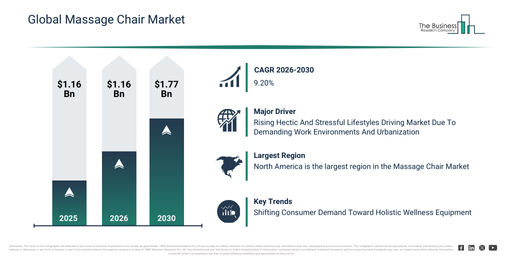
    The massage chair market size has seen strong growth in recent years. It is projected to expand from $4.82 billion in 2025 to $5.27 billion in 2026, exhibiting a compound annual growth rate (CAGR) of 9.4%. The increase observed in the past can be attributed to heightened awareness of stress management benefits, the expansion of wellness and spa centers, rising disposable income levels, increased adoption of home wellness products, and the availability of advanced massage technologies.

    The massage chair market is projected to experience substantial expansion over the upcoming years. This market is anticipated to reach a valuation of $7.51 billion by 2030, demonstrating a compound annual growth rate (CAGR) of 9.2%. This forecasted growth is primarily driven by factors such as the increasing consumer demand for smart home wellness devices, a rise in investments directed towards connected health furniture, the broadening availability of premium massage chair products, a heightened emphasis on personalized relaxation options, and the growing incorporation of these chairs into corporate wellness initiatives. Key trends anticipated during this period encompass the wider adoption of AI-enabled massage chairs, an escalating preference for zero-gravity massage functionalities, the increasing integration of smart health monitoring sensors, the development of more customizable massage programs, and an intensified focus on ergonomic and comfort-oriented designs.

    Download A Free Sample Report For Comprehensive Market Insights:

    https://www.thebusinessresearchcompany.com/sample.aspx?id=24289&type=smp

    What Influential Factors Are Boosting The Massage Chair Market Demand?

    The expansion of the massage chair market is anticipated as individuals increasingly face demanding and high-stress daily routines. These lifestyles are characterized by extended working hours, situations of intense pressure, limited opportunities for leisure, and constant exposure to personal and professional pressures. The rise in such taxing lifestyles is largely attributable to challenging professional settings that necessitate prolonged work hours, strict deadlines, and continuous multitasking, which leaves little room for personal rest and wellness. Massage chairs serve as a beneficial tool for those with busy and demanding lives, offering an accessible, economical, and efficient way to alleviate stress and encourage relaxation within the home environment. For example, in 2024, data from Ciphr Ltd., a UK-based HR software and payroll partner company, indicated that approximately one in three individuals reported experiencing stress linked to family or relationship matters (34%). This was closely followed by worries concerning personal health (32%) and pressures from work (30%). Consequently, the growing prevalence of hectic and stressful lifestyles is a primary catalyst for the expansion of the massage chair market.

    What Key Segment Areas Are Included In The Massage Chair Market Assessment?

    The massage chair market covered in this report is segmented –

    1) By Type: Air Bag Massage Chair, Zero Gravity Massage Chair, Full Body Massage Chair, Heated Massage Chair, 2D, 3D And 4D Massage Chair, Other Types

    2) By Nature: Conventional, Robotics

    3) By Application: Residential, Commercial, Clubs

    4) By Distribution Channels: Specialty Stores, Online, Supermarkets And Hypermarkets, Other Distribution Channels

    5) By Use: Professional, Consumerist

    Subsegments:

    1) By Air Bag Massage Chair: Upper Body Air Bag Massage, Lower Body Air Bag Massage, Full Body Air Bag Coverage, Adjustable Intensity Air Bag Massage

    2) By Zero Gravity Massage Chair: Single-Stage Zero Gravity, Multi-Stage Zero Gravity, Manual Recline Adjustment, Automatic Recline Adjustment

    3) By Full Body Massage Chair: Neck And Shoulder Massage, Back And Spine Massage, Arm And Hand Massage, Leg And Foot Massage

    4) By Heated Massage Chair: Lower Back Heating, Full Back Heating, Leg Heating, Adjustable Temperature Settings

    5) By 2D, 3D, And 4D Massage Chair: 2D (Two-Dimensional) Roller Technology, 3D (Three-Dimensional) Roller Depth Adjustment, 4D (Four-Dimensional) Variable Speed and Rhythm, AI (Artificial Intelligence)-Based Adaptive Motion Control

    6) By Other Types: Recliner Massage Chairs, Portable Massage Chairs, Office Massage Chairs, Coin-Operated Massage Chairs

    Which Trends Are Influencing The Expansion Of The Massage Chair Market?

    Major companies within the massage chair market are concentrating on employing advanced technologies, including advanced duosync technology, to improve the accuracy and synchronization of massage mechanisms, thereby offering a more personalized and therapeutic user experience. Advanced duosync technology, a component in massage chairs, utilizes dual-axis synchronization to precisely coordinate both vertical and horizontal massage movements. An illustrative example is the launch in October 2024 by Human Touch LLC, a US-based wellness technology company, of the Super Novo X, an innovative massage chair equipped with DuoSync dual massage motors, the HT Flex S- and L-Track System, and virtual therapist voice control. This particular chair employs AI-driven automation and an ergonomic design to deliver a full-body massage experience customized to each user’s unique demands. These ongoing innovations are repositioning massage chairs as holistic wellness equipment, providing heightened relaxation and various health advantages across both residential and commercial contexts.

    Who Are The Firms Contributing To The Massage Chair Market Ecosystem?

    Major companies operating in the massage chair market are Panasonic Corporation, Brookstone Company Inc., Bodyfriend Inc., Fujiiryoki Co.Ltd., Family Inada Co.Ltd., Ogawa World Bhd, Infinity Massage Chairs, Sharper Image, Cozzia, Osaki Massage Chair, Human Touch LLC, Hutech Co. Ltd., OHCO, Luraco Technologies Inc., OSIM International Ltd., Kahuna Massage Chair, Zarifa, iRest Health Science and Technology Co. Ltd., Daiwa Massage Chairs, Fujita Massage Chair, OTA World LLC, Synca Wellness.

    Access The Complete Massage Chair Market Report:

    https://www.thebusinessresearchcompany.com/report/massage-chair-global-market-report

    Which Region Contributes The Most To The Massage Chair Market?

    North America was the largest region in the massage chair market in 2025. The regions covered in the massage chair market report are Asia-Pacific, South East Asia, Western Europe, Eastern Europe, North America, South America, Middle East, Africa.

    Access a Massage Chair Market Report for Deeper Competitive Insights

    https://www.thebusinessresearchcompany.com/report/massage-chair-global-market-report

    Browse Through More Reports Similar to the Global Massage Chair Market 2026, By The Business Research Company

    Medical Spa Market Report 2026

    https://www.thebusinessresearchcompany.com/report/medical-spa-global-market-report

    Luxury Furniture Market Report 2026

    https://www.thebusinessresearchcompany.com/report/luxury-furniture-global-market-report

    Sauna Services Market Report 2026

    https://www.thebusinessresearchcompany.com/report/sauna-services-global-market-report

    Get in touch with us:

    The Business Research Company: https://www.thebusinessresearchcompany.com/

    Americas: +1 310-496-7795

    Asia: +44 7882 955267 & +91 8897263534

    Europe: +44 7882 955267

    Email us at: marketing@tbrc.info

    Follow us on:

    LinkedIn: https://in.linkedin.com/company/the-business-research-company

    YouTube: https://www.youtube.com/channel/UC24_fI0rV8cR5DxlCpgmyFQ

    Global Market Model: https://www.thebusinessresearchcompany.com/global-market-model

  • The Masks (N95 Respirators And Other Surgical Masks) Market Is Advancing With Support From Surge In Airborne Disease Outbreaks Fuels Growth In The Masks Market

    The Masks (N95 Respirators And Other Surgical Masks) Market Is Advancing With Support From Surge In Airborne Disease Outbreaks Fuels Growth In The Masks Market

    The Business Research Company’s 2026 market reports feature advanced enhancements such as market attractiveness analysis, total addressable market evaluation, company benchmarking matrices, interactive Excel dashboards, expanded supply chain intelligence, emerging startup coverage, and detailed product insights, delivering more actionable and strategically valuable research.

    What Is The Estimated Growth In Market Size Of The Masks (N95 Respirators And Other Surgical Masks) Market During 2026–2030?

    The market size for masks, which include n95 respirators and other surgical masks, has observed a significant reduction in recent years. It is anticipated to decline from $10.75 billion in 2025 to $9.76 billion in 2026, exhibiting a compound annual growth rate (CAGR) of -9.3%. This historical decrease can be attributed to several factors such as a diminishing occurrence of airborne infectious diseases, less widespread expansion of healthcare infrastructure, slow progress in hospital-acquired infection prevention, and a reduction in large-scale emergency procurement of medical masks.

    The market for masks, encompassing n95 respirators and other surgical masks, is anticipated to undergo a substantial decline over the next few years. It is projected to reach $6.54 billion by 2030, with a compound annual growth rate (CAGR) of -9.5%. This forecasted decrease can be attributed to a reduced focus on pandemic preparedness, diminished demand from non-healthcare occupational environments, limited expansion in sustainable PPE manufacturing, and a decline in the uptake of reusable medical masks. Significant trends during this period include a greater adoption of high-filtration respiratory protection, an escalating demand for fluid-resistant surgical masks, an increasing use of reusable and eco-friendly mask materials, the expansion of automated mask manufacturing lines, and an elevated emphasis on breathability and comfort.

    Download A Free Sample Report For Comprehensive Market Insights:

    https://www.thebusinessresearchcompany.com/sample.aspx?id=3992&type=smp

    Which Drivers Are Advancing The Masks (N95 Respirators And Other Surgical Masks) Market Growth?

    The increasing occurrence of airborne infections is propelling the growth of the masks (N95 respirators and other surgical masks) market. Airborne transmission of infectious agents involves the spread of disease via droplet nuclei that remain infectious while suspended in air for considerable distances and time. Interruption of disease transmission relies on precautions that establish a barrier and procedures that reduce or eradicate microbes from the surroundings or personal effects. For instance, data from the Centers for Disease Control and Prevention, a US-based government agency, indicates that the number of tuberculosis cases climbed from 8,320 in 2022 to 9,615 in 2023, which is an increase of 1,295 cases. Additionally, the incidence rate moved from 2.5 per 100,000 individuals in 2022 to 2.9 in 2023. Therefore, the expanding incidence of airborne infections is fostering the growth of the masks (N95 respirators and other surgical masks) market.

    How Is Segment Classification Applied In The Masks (N95 Respirators And Other Surgical Masks) Market?

    The masks (n95 respirators and other surgical masks) market covered in this report is segmented –

    1) By Type: N95 Respirator, Common Grade Surgical Masks, Others Types

    2) By Nature: Reusable, Disposable

    3) By End User: Hospitals And Clinics, Individual, Other End Users

    Subsegments:

    1) By N95 Respirator: Standard N95 Respirators, N95 Respirators With Valves, N95 Respirators With Additional Features

    2) By Common Grade Surgical Masks: Disposable Surgical Masks, Medical-Grade Surgical Masks, Fluid-Resistant Surgical Masks

    3) By Other Types: Cloth Masks, Dust Masks, Comfort Masks With Additional Filtration

    What Trends Are Impacting The Masks (N95 Respirators And Other Surgical Masks) Market?

    Major companies and federal initiatives in the respirator and mask sector are concentrating on developing practical solutions to improve fit accuracy, user comfort, and protective effectiveness. Technologies for fit evaluation aim to ensure that respirators, including N95 and surgical masks, provide the anticipated level of protection against hazards such as infectious diseases, pollution, and wildfire smoke. For instance, in January 2023, the National Institute for Occupational Safety and Health (NIOSH), a US federal institute, launched the Respirator Fit Evaluation Challenge, inviting innovators to submit novel concepts that offer real-time, user-friendly feedback on respirator fit. The challenge incorporates a multi-phase evaluation process with prizes for top concepts, emphasizes solutions suitable for small or disadvantaged workplaces lacking fit testing resources, and seeks to enhance overall respiratory protection for both occupational and public settings.

    Which Key Players Are Active In The Masks (N95 Respirators And Other Surgical Masks) Market?

    Major companies operating in the masks (n95 respirators and other surgical masks) market are Honeywell, BYD, 3M, Intco Medical Technology, Unicharm, Moldex-Metric, Kimberly-Clark, Alpha Pro-Tech, Prestige Ameritech, The Gerson Company, Halyard Health, Salus Products, Louis M. Gerson Company, Shanghai Dasheng, DuPont, Toray Industries, Koken, Yamamoto Kogaku, Protect U, MSA Safety, Irema, Kolmi-Hopen, Segetex-EIF, Paul Boyé Technologies, Cambridge Mask Co, Vostok Service, Technoavia, Zelinsky Group, Respiratorniy Kompleks, Alvateks, CERVA GROUP, Medline Industries, Johnson and Johnson, Dukal Corporation, Key Surgical, Dynarex Corporation, Canada Medical Ltd, Medicom, CPMC, Fine Hygienic Holding, GreenLine, U-Mask

    Access The Complete Masks (N95 Respirators And Other Surgical Masks) Market Report:

    https://www.thebusinessresearchcompany.com/report/masks-n95-respirators-and-other-surgical-masks-global-market-report

    Which Regional Market Leads The Masks (N95 Respirators And Other Surgical Masks) Market?

    North America was the largest region in the N95 respirators and other surgical masks market in 2025. Asia-Pacific is expected to be the fastest-growing region in the forecast period. The regions covered in the masks (n95 respirators and other surgical masks) market report are Asia-Pacific, South East Asia, Western Europe, Eastern Europe, North America, South America, Middle East, Africa.

    Access a Masks (N95 Respirators And Other Surgical Masks) Market Report for Deeper Competitive Insights

    https://www.thebusinessresearchcompany.com/report/masks-n95-respirators-and-other-surgical-masks-global-market-report

    Browse Through More Reports Similar to the Global Masks (N95 Respirators And Other Surgical Masks) Market 2026, By The Business Research Company

    Surgical Masks Market Report 2026

    https://www.thebusinessresearchcompany.com/report/surgical-masks-global-market-report

    Respiratory Disposables Market Report 2026

    https://www.thebusinessresearchcompany.com/report/respiratory-disposables-global-market-report

    Reusable Face Mask Market Report 2026

    https://www.thebusinessresearchcompany.com/report/reusable-face-mask-global-market-report

    Get in touch with us:

    The Business Research Company: https://www.thebusinessresearchcompany.com/

    Americas: +1 310-496-7795

    Asia: +44 7882 955267 & +91 8897263534

    Europe: +44 7882 955267

    Email us at: marketing@tbrc.info

    Follow us on:

    LinkedIn: https://in.linkedin.com/company/the-business-research-company

    YouTube: https://www.youtube.com/channel/UC24_fI0rV8cR5DxlCpgmyFQ

    Global Market Model: https://www.thebusinessresearchcompany.com/global-market-model
  • Increasing Adoption Of The Surge In Breast Cancer Cases Fueling Demand For Mammography Systems Is Influencing The Mammography Systems Market

    Increasing Adoption Of The Surge In Breast Cancer Cases Fueling Demand For Mammography Systems Is Influencing The Mammography Systems Market

    The Business Research Company’s 2026 market reports feature advanced enhancements such as market attractiveness analysis, total addressable market evaluation, company benchmarking matrices, interactive Excel dashboards, expanded supply chain intelligence, emerging startup coverage, and detailed product insights, delivering more actionable and strategically valuable research.

    What Market Value Expansion Is Expected For The Mammography Systems Market Over The Forecast Period?

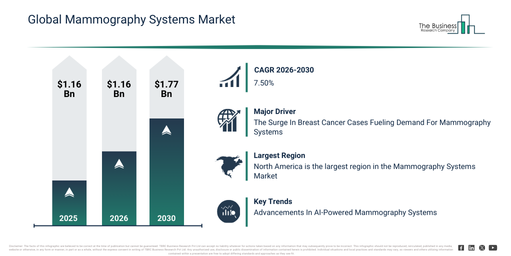
    The mammography systems market size has seen substantial growth in recent years. This market is anticipated to expand from $2.72 billion in 2025 to $2.96 billion in 2026, displaying a compound annual growth rate (CAGR) of 8.9%. The growth observed in the past can be attributed to factors such as increasing awareness of early breast cancer detection, the expansion of national screening programs, a rising adoption of digital imaging technologies, growing investments in hospital imaging infrastructure, and an increasing prevalence of breast cancer.

    The mammography systems market is projected to experience substantial expansion over the upcoming years. This market is anticipated to reach a valuation of $3.96 billion by 2030, demonstrating a compound annual growth rate (CAGR) of 7.5%. Factors contributing to this growth during the forecast period include a heightened demand for sophisticated diagnostic imaging, the increasing incorporation of AI-assisted diagnostic tools, the proliferation of outpatient diagnostic facilities, an intensified emphasis on discovering diseases at their initial stages, and elevated healthcare expenditure on imaging solutions. Key trends anticipated for the forecast period encompass the wider acceptance of 3D breast tomosynthesis systems, the greater integration of AI-based image analysis, an increasing rollout of portable mammography devices, the broadening scope of digital screening initiatives, and a stronger emphasis on technologies designed to reduce radiation dosage.

    Download A Free Sample Report For Comprehensive Market Insights:

    https://www.thebusinessresearchcompany.com/sample.aspx?id=15214&type=smp

    What Primary Factors Are Fueling The Expansion Of The Mammography Systems Market?

    An increase in breast cancer diagnoses is anticipated to drive the expansion of the mammography systems market moving ahead. Breast cancer is characterized by the uncontrolled proliferation of cells within breast tissue, potentially leading to malignant tumor formation capable of metastasizing to other bodily regions. This surge in breast cancer incidents is attributed to evolving lifestyle elements, an aging demographic, inherited genetic predispositions, and hormonal influences. Mammography systems serve as crucial instruments in combating breast cancer, facilitating prompt detection, precise diagnosis, and efficient management approaches that ultimately enhance patient results and survival probabilities. For example, data from January 2023 by the American Cancer Society, a US-based nonprofit cancer advocacy organization, indicated that breast cancer occurrences climbed from 284,200 to 300,590 in 2023, representing a 5.76% rise. Consequently, the escalating number of breast cancer cases is fueling the expansion of the mammography systems market.

    What Are The Core Segment Classifications In The Mammography Systems Market?

    The mammography systems market covered in this report is segmented –

    1) By Product: Analog Systems, Full Field Digital Mammography Systems, Breast Tomosynthesis Systems

    2) By Technology: Screen Film, 2D Mammography, 3D Mammography, Other Technologies

    3) By Modality: Portable Mammography Systems, Non-Portable Mammography Systems

    4) By End-User: Hospitals, Ambulatory Surgical Centers, Other End-Users

    Subsegments:

    1) By Analog Systems: Film-Based Mammography Systems, Screen-Film Mammography Systems

    2) By Full Field Digital Mammography Systems: Direct Radiography (DR) Systems, Computed Radiography (CR) Systems

    3) By Breast Tomosynthesis Systems: Digital Breast Tomosynthesis (DBT) Systems, 3D Mammography Systems

    Which Trends Are Affecting The Mammography Systems Market Framework?

    Leading companies within the mammography systems market are channeling their efforts into developing artificial intelligence (AI)-powered mammography systems, such as Amulet Sophinity, to heighten diagnostic accuracy, streamline operational processes, and improve patient outcomes. Amulet Sophinity is an AI-enhanced digital mammography system employed to boost the precision and comfort associated with breast cancer diagnostics. For example, in February 2024, Fujifilm Holdings Corporation, a Japan-based firm known for its medical imaging and diagnostic solutions, unveiled Amulet Sophinity. This digital mammography system offers a low radiation dose, exceptional image quality, and refined workflow functionalities, all powered by artificial intelligence (AI) technology. It is designed to support dual-angle tomosynthesis, featuring sharp image reconstruction for more effective calcification detection. Additionally, it incorporates an AI-powered projection function that aids in guiding breast positioning by utilizing previous mammography images.

    Who Are The Leading Firms Participating In The Mammography Systems Market?

    Major companies operating in the mammography systems market are Toshiba Corporation, Siemens Healthineers AG, Fujifilm Holdings Corporation, Koninklijke Philips N.V., GE Healthcare Inc., Delphinus Medical Technologies Inc., Konica Minolta Inc., Hologic Inc., Carestream Health Inc., Analogic Corporation, Canon Medical Systems Corporation, Genoray Co. Ltd., Planmed Oy, General Medical Merate SpA, Allengers Medical Systems Limited, BET Medical, Arcoma AB, BMI Biomedical International Ltd., Apex Medical Systems Pvt. Ltd., Metaltronica S.p.A., Perlong Medical Equipment Co. Ltd., DRGEM Corporation

    Access The Complete Mammography Systems Market Report:

    https://www.thebusinessresearchcompany.com/report/mammography-systems-global-market-report

    Which Region Holds The Largest Share In The Mammography Systems Market?

    North America was the largest region in the mammography systems market in 2025. Asia Pacific is expected to be the fastest-growing region in the forecast period. The regions covered in the mammography systems market report are Asia-Pacific, South East Asia, Western Europe, Eastern Europe, North America, South America, Middle East, Africa.

    Access a Mammography Systems Market Report for Deeper Competitive Insights

    https://www.thebusinessresearchcompany.com/report/mammography-systems-global-market-report

    Browse Through More Reports Similar to the Global Mammography Systems Market 2026, By The Business Research Company

    Mammography Market Report 2026

    https://www.thebusinessresearchcompany.com/report/mammography-global-market-report

    Mammography Devices Market Report 2026

    https://www.thebusinessresearchcompany.com/report/mammography-devices-global-market-report

    Breast Imaging Technologies Market Report 2026

    https://www.thebusinessresearchcompany.com/report/breast-imaging-technologies-global-market-report

    Get in touch with us:

    The Business Research Company: https://www.thebusinessresearchcompany.com/

    Americas: +1 310-496-7795

    Asia: +44 7882 955267 & +91 8897263534

    Europe: +44 7882 955267

    Email us at: marketing@tbrc.info

    Follow us on:

    LinkedIn: https://in.linkedin.com/company/the-business-research-company

    YouTube: https://www.youtube.com/channel/UC24_fI0rV8cR5DxlCpgmyFQ

    Global Market Model: https://www.thebusinessresearchcompany.com/global-market-model
  • Growing Prevalence Of Breast Cancer Boosts Demand For Mammography Devices Continues To Impact The Growth Of The Mammography Devices Market

    Growing Prevalence Of Breast Cancer Boosts Demand For Mammography Devices Continues To Impact The Growth Of The Mammography Devices Market

    The Business Research Company’s 2026 market reports feature advanced enhancements such as market attractiveness analysis, total addressable market evaluation, company benchmarking matrices, interactive Excel dashboards, expanded supply chain intelligence, emerging startup coverage, and detailed product insights, delivering more actionable and strategically valuable research.

    How Will The Market Value Of The Mammography Devices Market Change Between 2026 And 2030?

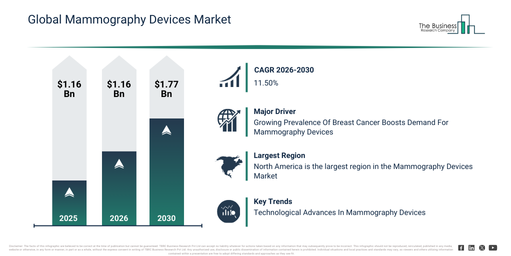
    The mammography devices market size has shown rapid growth in recent years. It is anticipated to increase from $2.2 billion in 2025 to $2.46 billion in 2026, achieving a compound annual growth rate (CAGR) of 11.8%. The growth observed in the historic period can be attributed to several factors including a reliance on analog mammography devices, limited access to breast imaging in rural areas, a rise in awareness regarding breast cancer, the adoption of screen-film mammography, and the expansion of specialty clinics and diagnostic centers.

    The mammography devices market size is projected for significant expansion over the coming years. By 2030, its size is anticipated to reach $3.81 billion, growing at a compound annual growth rate (CAGR) of 11.5%. This growth during the forecast period is attributable to several factors, including the progress in full-field digital mammography, an increasing need for 3D digital mammography and DBT, the incorporation of CAD and AI-based imaging analysis, the proliferation of portable mammography systems, and a rise in government efforts for breast cancer screening. Key trends identified for the forecast period encompass the growing acceptance of digital mammography systems, the expansion of 3D mammography and tomosynthesis, increased deployment of portable mammography units, the broadening of computer-aided detection (CAD) technologies, and a heightened emphasis on early breast cancer screening programs.

    Download A Free Sample Report For Comprehensive Market Insights:

    https://www.thebusinessresearchcompany.com/sample.aspx?id=19558&type=smp

    Which Strategic Drivers Are Supporting The Mammography Devices Market Development?

    The rising incidence of breast cancer is anticipated to drive the expansion of the mammography device market in the future. Breast cancer involves the irregular proliferation of cells within breast tissue, potentially forming a malignant tumor that can metastasize to other bodily regions. The widespread occurrence of breast cancer cases stems from shifts in lifestyle choices, an aging demographic, inherited genetic alterations, and hormonal influences. Mammography devices serve as crucial instruments in combating breast cancer, facilitating early discovery, precise diagnosis, and successful treatment plans, which ultimately enhance patient results and longevity. As an illustration, in January 2024, the American Cancer Society, a US-based nonprofit organization, reported an estimated 310,720 new invasive breast cancer diagnoses expected among women in 2024. Additionally, approximately 42,250 women are foreseen to succumb to breast cancer this year. Current patterns indicate an annual increase in incidence rates of 0.6%, with a marginally greater escalation of 1.0% per year observed in women under 50. Consequently, the rising prevalence of breast cancer is fueling the expansion of the mammography device market.

    How Is The Mammography Devices Market Structured Across Different Market Segments?

    The mammography devices market covered in this report is segmented –

    1) By Device Type: Analog, Digital, Other Device Types

    2) By Modality: Portable Mammography Systems, Non-Portable Mammography Systems

    3) By End User: Hospitals, Specialty Clinics, Diagnostic Centers

    Subsegments:

    1) By Analog: Screen-Film Mammography (SFM), Full-Field Analog Mammography

    2) By Digital: Full-Field Digital Mammography (FFDM), 2D Digital Mammography, 3D Digital Mammography (Tomosynthesis), Computer-Aided Detection (CAD) Mammography, Digital Breast Tomosynthesis (DBT)

    3) By Other Device Types: Portable Mammography Units, Cone Beam Breast Computed Tomography (CBBCT), Automated Breast Ultrasound Systems (ABUS), Molecular Breast Imaging (MBI), Contrast-Enhanced Mammography (CEM)

    What Trends Are Influencing The Mammography Devices Market?

    Leading companies within the mammography devices market are prioritizing the creation of sophisticated products, such as mammography systems featuring wide-angle tomosynthesis, to deliver enhanced image resolution and clarity. A mammography system incorporating wide-angle tomosynthesis represents an advanced breast imaging technique that improves upon conventional mammography by providing three-dimensional (3D) images of breast tissue. This technology is particularly effective for detecting breast cancer, especially in dense breast tissue where overlapping structures often obscure abnormalities in standard 2D mammography. For instance, in September 2023, Siemens Healthineers, a Germany-based medical technology firm, introduced the Mammomat B. Brilliant mammography system, which includes wide-angle tomosynthesis. The Mammomat B. Brilliant utilizes the innovative PlatinumTomo technology, featuring a wide-angle tomosynthesis with a 50° tube movement, the largest angle currently available. This system achieves a quick scan time of approximately five seconds, making it the fastest in its category and enabling high-definition 3D imaging. It accurately identifies abnormalities and microcalcifications with exceptional precision. The device’s acquisition speed is roughly 35% faster than comparable models, thereby increasing patient comfort. It also incorporates Flying Focus Spot technology, a pioneering feature in mammography, designed to minimize blurring effects caused by tube movement, ensuring sharp images even at high operational speeds.

    Which Companies Are Engaged In The Mammography Devices Market Environment?

    Major companies operating in the mammography devices market are Siemens Healthineers AG, Fujifilm Holdings Corporation, Koninklijke Philips N.V., GE HealthCare Technologies Inc., Konica Minolta Inc., Hologic Inc., Carestream Health Inc., Analogic Corporation, Canon Medical Systems Corporation, Aurora Health Care Inc., DMS Group, SuperSonic Imagine Ltd., Villa Sistemi Medicali S.p.A, Planmed Oy, Allengers Medical Systems Limited, General Medical Merate S.p.A, KUB Technologies Inc., Delphinus Medical Technologies Inc., Metaltronica S.p.A., SonoCiné Inc., Micrima Limited, IMS Giotto S.p.A., CMR Naviscan Corporation, SternMed GmbH.

    Access The Complete Mammography Devices Market Report:

    https://www.thebusinessresearchcompany.com/report/mammography-devices-global-market-report

    Which Region Is The Dominant Market In The Mammography Devices Market?

    North America was the largest region in the mammography devices market in 2025. Asia-Pacific is expected to be the fastest-growing region in the forecast period. The regions covered in the mammography devices market report are Asia-Pacific, South East Asia, Western Europe, Eastern Europe, North America, South America, Middle East, Africa.

    Access a Mammography Devices Market Report for Deeper Competitive Insights

    https://www.thebusinessresearchcompany.com/report/mammography-devices-global-market-report

    Browse Through More Reports Similar to the Global Mammography Devices Market 2026, By The Business Research Company

    Digital Mammography Market Report 2026

    https://www.thebusinessresearchcompany.com/report/digital-mammography-global-market-report

    Ophthalmic Devices Market Report 2026

    https://www.thebusinessresearchcompany.com/report/ophthalmic-devices-global-market-report

    Cardiovascular Devices Market Report 2026

    https://www.thebusinessresearchcompany.com/report/cardiovascular-devices-global-market-report

    Get in touch with us:

    The Business Research Company: https://www.thebusinessresearchcompany.com/

    Americas: +1 310-496-7795

    Asia: +44 7882 955267 & +91 8897263534

    Europe: +44 7882 955267

    Email us at: marketing@tbrc.info

    Follow us on:

    LinkedIn: https://in.linkedin.com/company/the-business-research-company

    YouTube: https://www.youtube.com/channel/UC24_fI0rV8cR5DxlCpgmyFQ

    Global Market Model: https://www.thebusinessresearchcompany.com/global-market-model
  • Mammalian Cell Banking Market Outlook Through 2030 With Analysis Of Industry Trends And Developments

    Mammalian Cell Banking Market Outlook Through 2030 With Analysis Of Industry Trends And Developments

    The Business Research Company’s 2026 market reports feature advanced enhancements such as market attractiveness analysis, total addressable market evaluation, company benchmarking matrices, interactive Excel dashboards, expanded supply chain intelligence, emerging startup coverage, and detailed product insights, delivering more actionable and strategically valuable research.

    What Is The Forecasted Rise In Market Size Of The Mammalian Cell Banking Market During The Forecast Period?

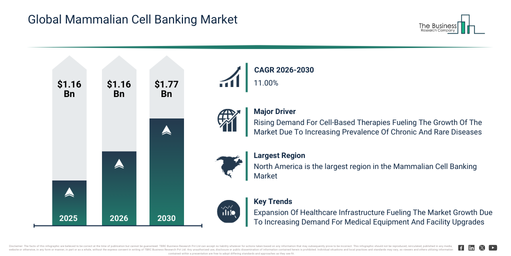
    The mammalian cell banking market has experienced rapid growth in its size in recent years. It is projected to expand from $3.14 billion in 2025 to $3.5 billion in 2026, demonstrating a compound annual growth rate (CAGR) of 11.3%. Historically, this expansion has been attributable to developments in monoclonal antibodies, an increase in vaccine manufacturing, regulatory quality requirements, the broadening of academic research, and the commercialization of biologics.

    The mammalian cell banking market size is projected to undergo significant expansion in the coming years, with its value set to reach $5.31 billion by 2030, demonstrating a compound annual growth rate (CAGR) of 11.0%. This anticipated growth over the forecast period is primarily driven by advancements in gene therapy, the increasing prevalence of personalized medicine, ongoing biosimilar development, the expansion of cell-based therapy pipelines, and the necessity for long-term cell traceability. Prominent trends expected during this period include the standardization of cell line preservation, the growth of biopharmaceutical pipelines, the establishment of more CGMP-compliant cell banks, a heightened focus on genetic stability, and an increase in outsourcing to specialized facilities.

    Download A Free Sample Report For Comprehensive Market Insights:

    https://www.thebusinessresearchcompany.com/sample.aspx?id=28262&type=smp

    What Major Growth Factors Are Impacting The Mammalian Cell Banking Market?

    The increasing requirement for cell-based therapies is anticipated to boost the expansion of the mammalian cell banking market in the future. Cell-based therapies involve cutting-edge medical approaches that utilize living cells, frequently altered or engineered, to mend, substitute, or restore damaged tissues and organs, delivering precise solutions for a broad spectrum of illnesses. The need for cell-based therapies is escalating due to the rising occurrence of chronic and rare diseases, which generates an urgent necessity for more potent and targeted treatment options. Mammalian cell banking assists cell-based therapies by supplying a dependable, uniform source of top-quality cells, guaranteeing uniformity, safety, and expandability in the creation and production of regenerative treatments. For example, in April 2024, the American Society of Gene and Cell Therapy, a US non-profit medical and scientific body, stated that the quantity of therapies across all clinical pipeline stages has expanded since the close of 2023, with Phase I exhibiting the strongest growth of 11% compared to before the fourth quarter of 2022. Consequently, the increasing need for cell-based therapies is propelling the growth of the mammalian cell banking market.

    Which Segment-Based Categories Are Covered In The Mammalian Cell Banking Market?

    The mammalian cell banking market covered in this report is segmented –

    1) By Product Type: Master Cell Bank, Working Cell Bank

    2) By Cell Type: Chinese Hamster Ovary Mammalian Cell Banking (CHO), Baby Hamster Kidney (BHK), Non-Secreting 0 (NS0), YB2/0 And P2/0, Human Embryonic Kidney 293 (HEK293) And Derivatives, Henrietta Lacks (HELA)

    3) By Storage Type: Liquid Nitrogen, Controlled Rate Freezer, Flash Freezing

    4) By Application: Drug Development, Vaccine Production, Gene Therapy, Monoclonal Antibody Production

    5) By End User: Academic And Research Laboratories, Biopharmaceutical Companies, Contract Research Organizations (CROs)

    Subsegments:

    1) By Master Cell Bank: Recombinant Cell Lines, Hybridoma Cell Lines, Primary Cell Lines, Genetically Engineered Cell Lines, Viral Vector Producing Cell Lines

    2) By Working Cell Bank: Current Good Manufacturing Practice (CGMP)-Compliant Cell Banks, Research-Grade Cell Banks, Clinical Trial Cell Banks, Commercial Production Cell Banks, Stability Testing Cell Banks

    Which Trends Are Guiding The Development Of The Mammalian Cell Banking Market?

    Leading firms within the mammalian cell banking market are concentrating on creating novel solutions, including advanced stable cell line systems, with the aim of boosting cell line productivity, maintaining genetic stability over extended periods, and optimizing biopharmaceutical manufacturing workflows. These stable cell line systems comprise mammalian cells that have been genetically modified to reliably generate a specific protein or therapeutic agent across numerous generations, exhibiting significant genetic consistency and repeatability. As an example, in August 2024, WuXi Biologics, a biopharmaceutical enterprise from China, introduced the WuXia293 Stable platform, which is an inventive HEK293-based stable cell line system specifically crafted for the production and development of biological molecules that are challenging to express. Employing proprietary technology for mammalian cell line development, the platform guarantees consistent expression and uniform quality through extended cell passages. The WuXia293 Stable platform addresses issues of diminished yields and inferior quality typically encountered with conventional CHO cell systems by providing elevated protein titers, enhanced human-like glycosylation, and scalable production suitable for both clinical and commercial manufacturing.

    Who Are The Prominent Players Across The Mammalian Cell Banking Market?

    Major companies operating in the mammalian cell banking market are Merck KGaA, Thermo Fisher Scientific Inc., Lonza Group AG, Eurofins Scientific SE, Charles River Laboratories International Inc., Catalent Inc., Sartorius Stedim Biotech S A, Samsung Biologics Co Ltd, CMIC Holdings Co Ltd, WuXi Biologics Inc., Evotec SE, AGC Biologics Inc., GenScript ProBio Co Ltd, Syngene International Limited, KBI Biopharma Inc., Rentschler Biopharma SE, Polpharma Biologics S A, Abzena plc, 53Biologics, Cellistic, GBI Biomanufacturing, ABL Inc, OmniaBio, uBriGene Biosciences

    Access The Complete Mammalian Cell Banking Market Report:

    https://www.thebusinessresearchcompany.com/report/mammalian-cell-banking-global-market-report

    Which Area Represents The Largest Portion Of The Mammalian Cell Banking Market?

    North America was the largest region in the mammalian cell banking market in 2025. The regions covered in the mammalian cell banking market report are Asia-Pacific, South East Asia, Western Europe, Eastern Europe, North America, South America, Middle East, Africa.

    Access a Mammalian Cell Banking Market Report for Deeper Competitive Insights

    https://www.thebusinessresearchcompany.com/report/mammalian-cell-banking-global-market-report

    Browse Through More Reports Similar to the Global Mammalian Cell Banking Market 2026, By The Business Research Company

    Cell Cultures Market Report 2026

    https://www.thebusinessresearchcompany.com/report/cell-cultures-global-market-report

    Cell Harvesting Market Report 2026

    https://www.thebusinessresearchcompany.com/report/cell-harvesting-global-market-report

    Cell Based Assays Market Report 2026

    https://www.thebusinessresearchcompany.com/report/cell-based-assays-global-market-report

    Get in touch with us:

    The Business Research Company: https://www.thebusinessresearchcompany.com/

    Americas: +1 310-496-7795

    Asia: +44 7882 955267 & +91 8897263534

    Europe: +44 7882 955267

    Email us at: marketing@tbrc.info

    Follow us on:

    LinkedIn: https://in.linkedin.com/company/the-business-research-company

    YouTube: https://www.youtube.com/channel/UC24_fI0rV8cR5DxlCpgmyFQ

    Global Market Model: https://www.thebusinessresearchcompany.com/global-market-model