Category: Medical Equipment

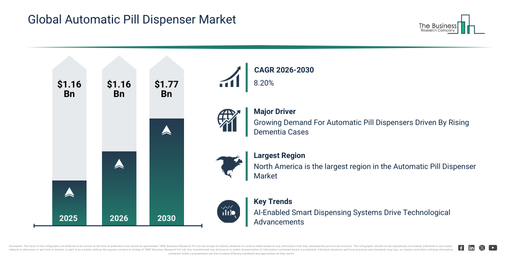
  • Increasing Adoption Of Growing Demand For Automatic Pill Dispensers Driven By Rising Dementia Cases Is Influencing The Automatic Pill Dispenser Market

    Increasing Adoption Of Growing Demand For Automatic Pill Dispensers Driven By Rising Dementia Cases Is Influencing The Automatic Pill Dispenser Market

    The Business Research Company’s 2026 market reports feature advanced enhancements such as market attractiveness analysis, total addressable market evaluation, company benchmarking matrices, interactive Excel dashboards, expanded supply chain intelligence, emerging startup coverage, and detailed product insights, delivering more actionable and strategically valuable research.

    How Will The Market Value Of The Automatic Pill Dispenser Market Change Between 2026 And 2030?

    The automatic pill dispenser market has experienced robust growth in recent years. It is projected to expand from $3.12 billion in 2025 to $3.38 billion in 2026, demonstrating a compound annual growth rate (CAGR) of 8.3%. The market’s past growth is attributable to factors such as the rise in medication consumption among the aging population, the expansion of home healthcare and assisted living services, the early adoption of automatic dispensers in hospital and retail pharmacies, the necessity to minimize medication administration errors and missed doses, and the development of centralized medication dispensing workflows.

    The automatic pill dispenser market size is anticipated to demonstrate robust growth in the coming years, forecasting an increase to $4.63 billion by 2030, with a compound annual growth rate (CAGR) of 8.2%. This projected expansion during the forecast period is attributed to several factors, including the rising prevalence of neurodegenerative disorders and dementia, an escalating demand for solutions promoting medication adherence in home settings, a growing transition towards decentralized and mobile pill dispensers, increased utilization for multi-drug and chronic disease therapy management, and the expansion of pharmacy-led patient monitoring and care coordination programs. Prominent trends expected within this period encompass the increasing adoption of automatic pill dispensers in elderly and dementia care, a rising application of scheduled medication dispensing for chronic disease management, the expansion of automatic dispensers into home healthcare and remote care environments, their growing deployment in nursing homes and assisted living facilities, and a dedicated focus on minimizing missed doses and enhancing overall medication compliance.

    Download A Free Sample Report For Comprehensive Market Insights:

    https://www.thebusinessresearchcompany.com/sample.aspx?id=18233&type=smp

    What Primary Factors Are Fueling The Expansion Of The Automatic Pill Dispenser Market?

    The rising incidence of dementia is projected to drive the growth of the automatic pill dispenser market in the foreseeable future. Dementia encompasses a range of symptoms that severely affect memory, thinking, and social capabilities, sufficient to hinder daily functioning. Various conditions, including Alzheimer’s disease, vascular issues, and Lewy body dementia, are among its causes. The increase in dementia cases can largely be attributed to an aging global population, enhanced awareness, and refined diagnostic methods. Automatic pill dispensers are crucial in dementia care for ensuring timely and accurate medication administration, thereby mitigating the risk of missed or incorrect doses. For instance, in April 2024, the Alzheimer’s Association reported that approximately 6.9 million Americans aged 65 and older were living with Alzheimer’s dementia, marking an increase from 6.7 million in their 2023 report. Thus, the escalating prevalence of dementia cases is acting as a key driver for the automatic pill dispenser market’s expansion.

    How Is The Automatic Pill Dispenser Market Examined Through Segment Analysis?

    The automatic pill dispenser market covered in this report is segmented –

    1) By Type: Centralized Automatic Dispenser, Decentralized Automatic Dispenser, Other Types

    2) By Indication: Physical Disability, Neurodegenerative Disorders And Dementia, Other Indications

    3) By Application: Hospital Pharmacy, Retail Pharmacy, Home Healthcare

    Subsegments:

    1) By Centralized Automatic Dispenser: Hospital-Based Pill Dispensers, Pharmacy-Based Pill Dispensers, Large-Scale Healthcare Facility Dispensers

    2) By Decentralized Automatic Dispenser: Home-Based Pill Dispensers, Nursing Home-Based Pill Dispensers, Point-Of-Care Dispensers (Clinics, Small Healthcare Units)

    3) By Other Types: Mobile Pill Dispensers, Pill Dispensers With Medication Tracking Features, Custom-Designed Dispensers For Specific Applications

    Which Trends Are Expected To Shape The Automatic Pill Dispenser Market?

    Leading companies within the automatic pill dispenser market are concentrating on AI-enabled and cloud-connected medication management. This includes smart automated dispensing systems that incorporate real-time inventory tracking, remote oversight, and automated optimization. These systems are defined as advanced dispensers utilizing AI and connectivity to boost medication safety, adherence, and operational efficiency. For instance, in April 2024, Omnicell, a US-based pharmacy automation company, launched its XT Amplify innovation program for the XT Automated Dispensing System. This program features XTExtend for enhanced interoperability, MedChill for secure temperature-controlled storage with real-time visibility, and SupplyXpert for data-driven inventory optimization, underscoring the market’s progression toward intelligent, connected dispensing technologies.

    Who Are The Leading Firms Participating In The Automatic Pill Dispenser Market?

    Major companies operating in the automatic pill dispenser market are McKesson Corporation, Omnicell Inc., MedMinder Systems Inc, Capsa Healthcare, Hero Health Inc., Swisslog Healthcare, ARxIUM Inc., Aesynt Inc., PillDrill Inc., Talyst LLC, Yuyama Co Ltd, InstyMeds Corporation, E-pill Medication Reminders, MedaCube, MedReady Inc., PharmaSystems Inc., Tunstall Healthcare Group Ltd, Koninklijke Philips N.V., CareRX Inc., RxSafe Inc.

    Access The Complete Automatic Pill Dispenser Market Report:

    https://www.thebusinessresearchcompany.com/report/automatic-pill-dispenser-global-market-report

    Which Region Holds The Largest Share In The Automatic Pill Dispenser Market?

    North America was the largest region in the automatic pill dispenser market in 2025. Asia-Pacific is expected to be the fastest-growing region in the forecast period. The regions covered in the automatic pill dispenser market report are Asia-Pacific, South East Asia, Western Europe, Eastern Europe, North America, South America, Middle East, Africa.

    Access a Customized Automatic Pill Dispenser Market Report for Deeper Competitive Insights

    https://www.thebusinessresearchcompany.com/customise?id=18233&type=smp

    Browse Through More Reports Similar to the Global Automatic Pill Dispenser Market 2026, By The Business Research Company

    Dispensing Pharmacy Packaging Machine Market Report 2026

    https://www.thebusinessresearchcompany.com/report/dispensing-pharmacy-packaging-machine-global-market-report

    Central Fill Pharmacy Automation Market Report 2026

    https://www.thebusinessresearchcompany.com/report/central-fill-pharmacy-automation-global-market-report

    Electronic Soap Dispenser Market Report 2026

    https://www.thebusinessresearchcompany.com/report/electronic-soap-dispenser-global-market-report

    Get in touch with us:

    The Business Research Company: https://www.thebusinessresearchcompany.com/

    Americas: +1 310-496-7795

    Asia: +44 7882 955267 & +91 8897263534

    Europe: +44 7882 955267

    Email us at: marketing@tbrc.info

    Follow us on:

    LinkedIn: https://in.linkedin.com/company/the-business-research-company

    YouTube: https://www.youtube.com/channel/UC24_fI0rV8cR5DxlCpgmyFQ

    Global Market Model: https://www.thebusinessresearchcompany.com/global-market-model
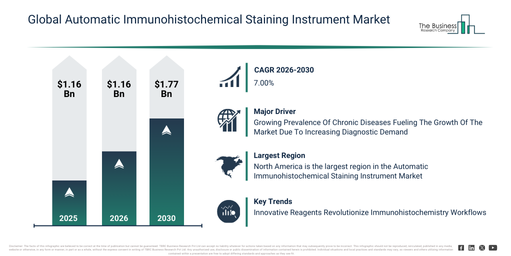
  • Growing Prevalence Of Chronic Diseases Fueling The Growth Of The Market Due To Increasing Diagnostic Demand Continues To Impact The Growth Of The Automatic Immunohistochemical Staining Instrument Market

    Growing Prevalence Of Chronic Diseases Fueling The Growth Of The Market Due To Increasing Diagnostic Demand Continues To Impact The Growth Of The Automatic Immunohistochemical Staining Instrument Market

    The Business Research Company’s 2026 market reports feature advanced enhancements such as market attractiveness analysis, total addressable market evaluation, company benchmarking matrices, interactive Excel dashboards, expanded supply chain intelligence, emerging startup coverage, and detailed product insights, delivering more actionable and strategically valuable research.

    What Is The Forecasted Rise In Market Size Of The Automatic Immunohistochemical Staining Instrument Market During The Forecast Period?

    The market size for automatic immunohistochemical staining instruments has experienced strong expansion in recent years. This market is projected to expand from $1.3 billion in 2025 to $1.4 billion in 2026, demonstrating a compound annual growth rate (CAGR) of 7.1%. Historically, this growth can be ascribed to several factors, including an increase in cancer diagnostic testing volumes, the expansion of pathology laboratory infrastructure, a heightened reliance on immunohistochemistry in diagnosing diseases, the increasing availability of automated laboratory instruments, and a rising demand for reproducible diagnostic results.

    The automatic immunohistochemical staining instrument market is projected for substantial expansion in the coming years. By 2030, this market is anticipated to reach $1.83 billion, demonstrating a compound annual growth rate (CAGR) of 7.0%. Factors contributing to this growth during the forecast period include a rise in the uptake of precision oncology diagnostics, greater investments in digital pathology platforms, an increasing need for laboratory automation, the broadened development of companion diagnostics, and a heightened emphasis on personalized medicine strategies. Key trends expected over the forecast horizon involve the increasing integration of fully automated IHC staining systems, a heightened requirement for high-throughput diagnostic workflows, greater incorporation of digital pathology compatibility, the broadening of standardized and reproducible staining protocols, and an amplified focus on improving workflow efficiency within laboratories.

    Download A Free Sample Report For Comprehensive Market Insights:

    https://www.thebusinessresearchcompany.com/sample.aspx?id=24164&type=smp

    Which Strategic Drivers Are Supporting The Automatic Immunohistochemical Staining Instrument Market Development?

    The escalating occurrence of chronic diseases is anticipated to boost the automatic immunohistochemical staining instrument market in the coming years. Chronic diseases are long-term health issues that typically advance gradually and necessitate continuous care. These conditions encompass diabetes, heart disease, hypertension, arthritis, chronic respiratory diseases, cancer, and obesity. The rise in chronic disease prevalence stems from evolving lifestyles, poor dietary habits, and insufficient physical activity, all contributing to prolonged health problems. Automatic immunohistochemical staining instruments improve diagnostic precision and efficiency in tissue analysis, making them vital for identifying chronic illnesses. These devices minimize manual labor through rapid, automated staining procedures, thereby enhancing diagnostic accuracy and facilitating earlier disease discovery. For example, in June 2024, data from the National Health Service, a UK government department, indicated that 3,615,330 individuals registered with a general practitioner (GP) were diagnosed with non-diabetic hyperglycemia or pre-diabetes in 2023. This represented an 18% increase compared to 3,065,825 cases recorded in 2022. Consequently, the increasing incidence of chronic diseases is a significant factor propelling the growth of the automatic immunohistochemical staining instrument market.

    Which Segment Groups Define The Automatic Immunohistochemical Staining Instrument Market Landscape?

    The automatic immunohistochemical staining instrument market covered in this report is segmented –

    1) By Product Type: Fully Automated Stainers, Semi-Automated Stainers, Manual Stainers

    2) By Technology: Slide Staining, Tissue Staining, Fluorescent Staining

    3) By Consumables: Antibodies, Staining Kits, Slides, Coverslips

    4) By Application: Oncology, Cardiovascular Diseases, Neurological Disorders, Infectious Diseases

    5) By End-User: Hospitals, Diagnostic Laboratories, Academic Institutes, Research Laboratories

    Subsegments:

    1) By Fully Automated Stainers: Compact Automated Stainers, High-Throughput Stainers, Benchtop Automated Stainers

    2) By Semi-Automated Stainers: Programmable Stainers, Timer-Based Stainers, Hybrid Stainers

    3) By Manual Stainers: Dip-Type Manual Stainers, Rotary Manual Stainers, Handheld Staining Kits

    What Trends Are Affecting The Automatic Immunohistochemical Staining Instrument Market Dynamics?

    Leading companies within the automatic immunohistochemical staining instrument market are concentrating on developing advanced solutions, such as antibody alternative reagents, to improve the accuracy, efficiency, and versatility of tissue analysis, while simultaneously reducing costs and enhancing reproducibility. An antibody alternative reagent denotes a non-antibody molecule, like an aptamer, affirmer, or antibody mimetic, that can specifically attach to target antigens and is utilized instead of conventional antibodies for research, diagnostic, or therapeutic purposes. For example, in March 2023, Aptamer Group plc, a UK-based biotechnology company, introduced Optimer-Fc, a new reagent solution for automated immunohistochemistry (IHC) workflows. Optimer-Fc presents an innovative antibody alternative for immunohistochemistry, thereby broadening target detection and improving assay selectivity. It integrates seamlessly into automated immunohistochemistry (IHC) workflows to precisely identify both established and novel biomarkers.

    Which Companies Are Engaged In The Automatic Immunohistochemical Staining Instrument Market Environment?

    Major companies operating in the automatic immunohistochemical staining instrument market are F. Hoffmann-La Roche AG, Thermo Fisher Scientific, Agilent Technologies, Leica Biosystems, Sakura Finetek, Olympus Corporation, Biocare Medical, Celnovte Biotechnology Co. Ltd., BioGenex Laboratories, Diagnostic BioSystems, ADS Biotec, Fuzhou Maixin Biotech Co. Ltd., Shenzhen Dartmon Biotechnology Co. Ltd., Ventana Medical Systems, Dako (Agilent Pathology), Nichirei Biosciences Inc., Abcam plc, Bio-Rad Laboratories, Milestone Medical, Medite GmbH

    Access The Complete Automatic Immunohistochemical Staining Instrument Market Report:

    https://www.thebusinessresearchcompany.com/report/automatic-immunohistochemical-staining-instrument-global-market-report

    Which Region Is The Dominant Market In The Automatic Immunohistochemical Staining Instrument Market?

    North America was the largest region in the automatic immunohistochemical staining instrument market in 2025. Asia-Pacific is expected to be the fastest-growing region in the forecast period. The regions covered in the automatic immunohistochemical staining instrument market report are Asia-Pacific, South East Asia, Western Europe, Eastern Europe, North America, South America, Middle East, Africa.

    Access a Customized Automatic Immunohistochemical Staining Instrument Market Report for Deeper Competitive Insights

    https://www.thebusinessresearchcompany.com/customise?id=24164&type=smp

    Browse Through More Reports Similar to the Global Automatic Immunohistochemical Staining Instrument Market 2026, By The Business Research Company

    Immunohematology Market Report 2026

    https://www.thebusinessresearchcompany.com/report/immunohematology-global-market-report

    Immunofluorescence Assay Market Report 2026

    https://www.thebusinessresearchcompany.com/report/immunofluorescence-assay-global-market-report

    Immunohistochemistry Ihc Market Report 2026

    https://www.thebusinessresearchcompany.com/report/immunohistochemistry-ihc-global-market-report

    Get in touch with us:

    The Business Research Company: https://www.thebusinessresearchcompany.com/

    Americas: +1 310-496-7795

    Asia: +44 7882 955267 & +91 8897263534

    Europe: +44 7882 955267

    Email us at: marketing@tbrc.info

    Follow us on:

    LinkedIn: https://in.linkedin.com/company/the-business-research-company

    YouTube: https://www.youtube.com/channel/UC24_fI0rV8cR5DxlCpgmyFQ

    Global Market Model: https://www.thebusinessresearchcompany.com/global-market-model
  • Automated Suturing Devices Market Outlook Through 2030 With Analysis Of Industry Trends And Developments

    Automated Suturing Devices Market Outlook Through 2030 With Analysis Of Industry Trends And Developments

    The Business Research Company’s 2026 market reports feature advanced enhancements such as market attractiveness analysis, total addressable market evaluation, company benchmarking matrices, interactive Excel dashboards, expanded supply chain intelligence, emerging startup coverage, and detailed product insights, delivering more actionable and strategically valuable research.

    How Is The Automated Suturing Devices Market’s Market Value Anticipated To Evolve From 2026 To 2030?

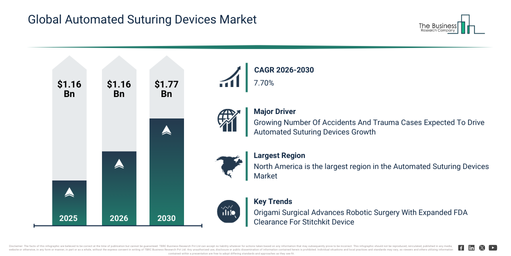
    The automated suturing devices market size has experienced robust growth recently. This market is projected to expand from $3.46 billion in 2025 to $3.73 billion in 2026, exhibiting a compound annual growth rate (CAGR) of 7.8%. Historically, this expansion has been driven by several factors, including an increase in open and cardiovascular surgical procedures, an early move towards surgical automation, the adoption of automated stapling and suturing instruments, a focus on minimizing surgical complications and human error, and the development of hospital surgical infrastructure.

    The automated suturing devices market is projected to experience substantial expansion in the coming years. This market is forecast to reach $5.02 billion by 2030, exhibiting a compound annual growth rate (CAGR) of 7.7%. Factors contributing to this growth include an increase in minimally invasive and laparoscopic procedures, a rise in trauma and emergency care interventions, a greater need for swift and consistent suturing processes, increased uptake of disposable suturing devices, and a heightened emphasis on improving postoperative results and operational effectiveness. Key trends anticipated during this period encompass a broader integration of automated suturing in minimally invasive surgeries, an increasing inclination towards disposable and single-use suturing solutions, expanded application in intricate and high-risk surgical fields, wider deployment of automated suturing in trauma and emergency settings, and efforts to shorten operative durations while enhancing surgical accuracy.

    Download A Free Sample Report For Comprehensive Market Insights:

    https://www.thebusinessresearchcompany.com/sample.aspx?id=18781&type=smp

    What Major Growth Factors Are Impacting The Automated Suturing Devices Market?

    The automated suturing devices market is projected to see growth driven by an increasing number of accidents and trauma cases. These cases involve unexpected incidents or events that result in physical injury or harm to individuals. Factors contributing to the rise in accidents and trauma include expanding urbanization, increased vehicle usage, hazardous working environments, and high-risk behaviors. Automated suturing devices are crucial for streamlining and enhancing the efficiency of surgical procedures for such cases, leading to improved patient outcomes, reduced surgery time, and minimized complication risks. For instance, according to the Government of Canada, serious injuries increased to 9,261 in 2023, showing a 0.9% year-on-year rise from 9,179 in 2022, reaching their peak level in the past five years. Therefore, the growing incidence of accidents and trauma cases is actively propelling the automated suturing devices market.

    What Key Segment Areas Are Included In The Automated Suturing Devices Market Assessment?

    The automated suturing devices market covered in this report is segmented –

    1) By Type: Reusable, Disposable

    2) By Application: Open Heart Surgery, Minimally Invasive Surgery, Trauma, Other Applications

    3) By End Use: Hospitals, Ambulatory Surgical Centers, Other End Uses

    Subsegments:

    1) By Reusable: Handheld Reusable Suturing Devices, Automated Stapling Devices (Reusable)

    2) By Disposable: Handheld Disposable Suturing Devices, Disposable Stapling Devices, Disposable Surgical Suturing Kits

    Which Trends Are Influencing The Expansion Of The Automated Suturing Devices Market?

    Major companies within the automated suturing devices market are concentrating on developing technologically advanced products, such as suture delivery canisters, to elevate surgical efficiency and safety. These canisters mitigate the risk of needle loss, reduce manual handling, and bolster overall safety by keeping discarded needles securely contained. For example, in February 2023, Origami Surgical Inc., a US-based manufacturer of medical devices, secured expanded FDA clearance for its StitchKit device, now approved for application through any existing 8mm trocar incision during robotic-assisted surgeries. This updated FDA clearance enables StitchKit’s use with smaller 8mm trocars, which are increasingly common as procedures adopt smaller port sizes. The device incorporates all essential sutures and a SHARPS container for needle disposal, thereby improving safety by decreasing the risk of needle loss and minimizing exposed needle transfers. At the conclusion of the procedure, StitchKit can be removed using a retrieval string concurrently with the trocar, thus streamlining the process and enhancing surgical outcomes.

    Who Are The Prominent Players Across The Automated Suturing Devices Market?

    Major companies operating in the automated suturing devices market are Medtronic plc, Intuitive Surgical Inc, Boston Scientific Corporation, Smith & Nephew plc, B Braun Melsungen AG, LSI Solutions Inc, EndoEvolution LLC, Apollo Endosurgery Inc, Sutrue Ltd, DemeTECH Corporation, Surgical Specialties Corporation, Peters Surgical Inc, Teleflex Incorporated, Becton Dickinson and Company, Centennial Surgical Suture Ltd, Coloplast AS, KARL STORZ SE & Co KG, Applied Medical Resources Corporation, Medical Devices Business Services Inc, SuturTek Inc

    Access The Complete Automated Suturing Devices Market Report:

    https://www.thebusinessresearchcompany.com/report/automated-suturing-devices-global-market-report

    Which Area Represents The Largest Portion Of The Automated Suturing Devices Market?

    North America was the largest region in the automated suturing devices market in 2025. Asia-Pacific is expected to be the fastest-growing region in the forecast period. The regions covered in the automated suturing devices market report are Asia-Pacific, South East Asia, Western Europe, Eastern Europe, North America, South America, Middle East, Africa.

    Access a Customized Automated Suturing Devices Market Report for Deeper Competitive Insights

    https://www.thebusinessresearchcompany.com/customise?id=18781&type=smp

    Browse Through More Reports Similar to the Global Automated Suturing Devices Market 2026, By The Business Research Company

    Specialty Devices Market Report 2026

    https://www.thebusinessresearchcompany.com/report/specialty-devices-global-market-report

    Bionic Devices Market Report 2026

    https://www.thebusinessresearchcompany.com/report/bionic-devices-global-market-report

    Medical Device Engineering Services Market Report 2026

    https://www.thebusinessresearchcompany.com/report/medical-device-engineering-services-global-market-report

    Get in touch with us:

    The Business Research Company: https://www.thebusinessresearchcompany.com/

    Americas: +1 310-496-7795

    Asia: +44 7882 955267 & +91 8897263534

    Europe: +44 7882 955267

    Email us at: marketing@tbrc.info

    Follow us on:

    LinkedIn: https://in.linkedin.com/company/the-business-research-company

    YouTube: https://www.youtube.com/channel/UC24_fI0rV8cR5DxlCpgmyFQ

    Global Market Model: https://www.thebusinessresearchcompany.com/global-market-model
  • Automated Sample Storage Systems Market Revenue Anticipated To Reach $2.95 Billion By 2030 With 10.9% CAGR

    Automated Sample Storage Systems Market Revenue Anticipated To Reach $2.95 Billion By 2030 With 10.9% CAGR

    The Business Research Company’s 2026 market reports feature advanced enhancements such as market attractiveness analysis, total addressable market evaluation, company benchmarking matrices, interactive Excel dashboards, expanded supply chain intelligence, emerging startup coverage, and detailed product insights, delivering more actionable and strategically valuable research.

    By 2030, How Much Growth In Market Size Is Expected For The Automated Sample Storage Systems Market?

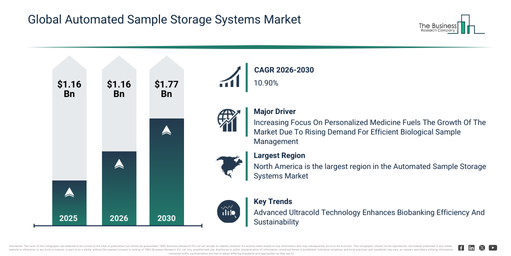
    The automated sample storage systems market has experienced significant expansion in recent years. This market is projected to expand from $1.76 billion in 2025 to $1.95 billion in 2026, exhibiting a compound annual growth rate (CAGR) of 10.8%. The historical growth of this market can be attributed to factors such as a prevailing reliance on manual sample storage systems, limited automation in sample management, the proliferation of hospital and clinical research labs, increasing biological sample volumes, and conventional temperature monitoring practices.

    The automated sample storage systems market is poised for significant expansion in the coming years. It is projected to reach $2.95 billion by 2030, demonstrating a compound annual growth rate (CAGR) of 10.9%. This growth throughout the forecast period stems from advancements in robotic sample retrieval, increased investment in cloud-based storage solutions, the expansion of genomics and pharmaceutical research, the widespread adoption of integrated cryo-inventory management systems, and the development of energy-efficient and scalable storage units. Prominent trends for the same period involve the growing acceptance of automated cryogenic storage solutions, a heightened demand for ultra-low temperature freezers, the integration of RFID and barcode sample tracking systems, the broadening scope of biobanking and clinical research applications, and a strong focus on energy-efficient and high-capacity storage systems.

    Download A Free Sample Report For Comprehensive Market Insights:

    https://www.thebusinessresearchcompany.com/sample.aspx?id=27217&type=smp

    What Market Drivers Are Helping Shape The Automated Sample Storage Systems Market Expansion?

    A growing focus on personalized medicine is anticipated to drive the expansion of the automated sample storage systems market moving ahead. Personalized medicine involves a healthcare strategy that customizes treatment and care according to distinct patient attributes, including genetic composition, lifestyle, and surroundings, thereby enhancing health results. The rise of personalized medicine stems from progress in genetic testing, allowing for highly accurate, customized therapies derived from a person’s unique genetic profile. Within personalized medicine, automated sample storage systems are utilized for the secure keeping and management of biological specimens, facilitating streamlined access and examination for planning patient-specific treatments. As an illustration, in February 2024, the Personalized Medicine Coalition, a US-based non-profit organization, reported that the Food and Drug Administration (FDA) sanctioned 16 new personalized treatments for individuals with rare conditions in 2023, an increase from six in 2022. Consequently, the heightened focus on personalized medicine is propelling the expansion of the automated sample storage systems services market.

    How Is Segment Classification Applied In The Automated Sample Storage Systems Market?

    The automated sample storage systems market covered in this report is segmented –

    1) By Type: Liquid Nitrogen Storage Systems, Mechanical Freezers, Automated Cryogenic Storage

    2) By Technology: Robotics, Liquid Handling Systems, Temperature Monitoring Systems, Cloud-Based Storage Solutions

    3) By Sample: Blood Samples, Tissue Samples, Cellular Samples, DNA Or RNA Samples

    4) By Application: Biobanking, Pharmaceuticals, Clinical Research, Genomics

    5) By End User: Hospitals, Neurological Clinics, Rehabilitation Centers, Sports Medicine Clinics, Other End Users

    Subsegments:

    1) By Liquid Nitrogen Storage Systems: Vapor Phase Storage Systems, Liquid Phase Storage Systems, Manual Fill LN2 Systems, Auto-fill LN2 Systems, Dewar Vessels And Canisters

    2) By Mechanical Freezers: Ultra-Low Temperature Freezers (ULT, -80°C), Low Temperature Freezers (-20°C to -40°C), High-Capacity Mechanical Freezers, Single-Door And Double-Door Units, Energy-Efficient Mechanical Freezers

    3) By Automated Cryogenic Storage: Robotic Sample Retrieval Systems, Modular Cryogenic Storage Units, High-Throughput Cryo Storage Systems, RFID Or Barcode-Enabled Cryo Units, Integrated Cryo-Inventory Management Systems

    What Trends Are Impacting The Automated Sample Storage Systems Market?

    Major companies in the automated sample storage systems market are concentrating on developing advanced solutions, such as ultracold automated technology, to enhance the long-term preservation of sensitive biological samples. This is achieved by maintaining ultra-low temperatures with high precision and minimal manual intervention. Ultracold automated technology utilizes sophisticated systems to store and manage biological samples at very low temperatures, ensuring their stability and reducing manual effort in laboratory environments. For instance, in July 2023, Azenta Life Sciences, a US-based biotechnology research company, unveiled the BioArc Ultra, an advanced and eco-friendly ultracold automated sample storage system. Designed specifically for high-capacity biorepositories, this system enables automated storage and retrieval at temperatures as low as -80°C, offering secure and efficient management for up to 10 million 2D barcoded tubes. The BioArc Ultra incorporates a modular architecture for scalability, redundant cooling and power systems to ensure reliability, and a user-friendly interface for streamlined operations. Its energy-efficient design helps to minimize environmental impact while maximizing uptime and sample integrity, establishing it as a cutting-edge solution for modern biobanking requirements.

    Which Companies Form The Competitive Landscape Of The Automated Sample Storage Systems Market?

    Major companies operating in the automated sample storage systems market are Thermo Fisher Scientific Inc., Micronic Holding B.V., Revvity Inc., Beckman Coulter Inc., Getinge, Eppendorf SE, Brooks Automation Inc., Hamilton Company, Azenta Inc., Oxford Instruments plc, SPT Labtech Ltd., B Medical Systems S.à r.l., Hier Biomedical Corporation, Simport Scientific Inc., LiCONiC AG, Starlab International GmbH, Biotron Healthcare (India) Pvt. Ltd., ASKION GmbH, Biofortuna Limited, Angelantoni Life Science S.r.l.

    Access The Complete Automated Sample Storage Systems Market Report:

    https://www.thebusinessresearchcompany.com/report/automated-sample-storage-systems-global-market-report

    Which Region Commands The Largest Share Of The Automated Sample Storage Systems Market?

    North America was the largest region in the automated sample storage systems market in 2025. Asia-Pacific is expected to be the fastest-growing region in the forecast period. The regions covered in the automated sample storage systems market report are Asia-Pacific, South East Asia, Western Europe, Eastern Europe, North America, South America, Middle East, Africa.

    Access a Customized Automated Sample Storage Systems Market Report for Deeper Competitive Insights

    https://www.thebusinessresearchcompany.com/customise?id=27217&type=smp

    Browse Through More Reports Similar to the Global Automated Sample Storage Systems Market 2026, By The Business Research Company

    Water Heaters Market Report 2026

    https://www.thebusinessresearchcompany.com/report/water-heaters-global-market-report

    Hot Melt Based Adhesives Market Report 2026

    https://www.thebusinessresearchcompany.com/report/hot-melt-based-adhesives-global-market-report

    Fireproofing Materials Market Report 2026

    https://www.thebusinessresearchcompany.com/report/fireproofing-materials-global-market-report

    Get in touch with us:

    The Business Research Company: https://www.thebusinessresearchcompany.com/

    Americas: +1 310-496-7795

    Asia: +44 7882 955267 & +91 8897263534

    Europe: +44 7882 955267

    Email us at: marketing@tbrc.info

    Follow us on:

    LinkedIn: https://in.linkedin.com/company/the-business-research-company

    YouTube: https://www.youtube.com/channel/UC24_fI0rV8cR5DxlCpgmyFQ

    Global Market Model: https://www.thebusinessresearchcompany.com/global-market-model
  • Automated Optometry Equipment Market Outlook Assessing Future Opportunities And Growth Prospects

    Automated Optometry Equipment Market Outlook Assessing Future Opportunities And Growth Prospects

    The Business Research Company’s 2026 market reports feature advanced enhancements such as market attractiveness analysis, total addressable market evaluation, company benchmarking matrices, interactive Excel dashboards, expanded supply chain intelligence, emerging startup coverage, and detailed product insights, delivering more actionable and strategically valuable research.

    What Market Value Trend Is Expected For The Automated Optometry Equipment Market From 2026 To 2030?

    The automated optometry equipment market has seen strong expansion in recent years. It is anticipated to increase from $3.24 billion in 2025 to $3.55 billion in 2026, exhibiting a compound annual growth rate (CAGR) of 9.6%. The historical growth can be attributed to the rising prevalence of vision impairment, a scarcity of trained optometrists, the initial integration of automated refractors, the expansion of optical retail chains, and a growing demand for routine eye examinations.

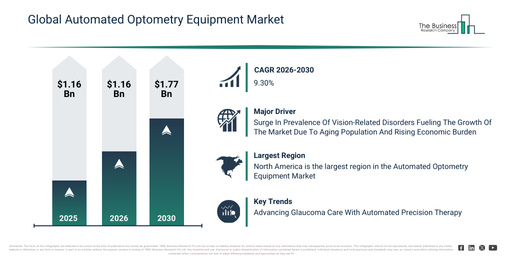
    The automated optometry equipment market is projected to experience robust expansion over the coming years. By 2030, its value is anticipated to reach $5.07 billion, demonstrating a compound annual growth rate (CAGR) of 9.3%. This growth during the forecast period is fueled by several factors, including the incorporation of artificial intelligence into diagnostics, an increasing need for tele-optometry services, heightened public awareness concerning eye health, advancements in imaging technologies, and the expansion of screening initiatives within developing economies. Key trends anticipated during this period encompass the wider acceptance of automated eye examination systems, a heightened desire for rapid and precise vision tests, the expanding application of AI-driven refraction and screening instruments, the broadening availability of optometry services in both retail settings and clinical environments, and a move towards more portable and compact diagnostic instruments.

    Download A Free Sample Report For Comprehensive Market Insights:

    https://www.thebusinessresearchcompany.com/sample.aspx?id=28943&type=smp

    Which Significant Factors Are Encouraging Growth In The Automated Optometry Equipment Market?

    The increasing incidence of vision impairments is anticipated to drive the expansion of the automated optometry equipment market in the future. These disorders are defined as medical conditions that hinder clear vision, encompassing issues affecting the eyes, optic nerve, or the brain’s visual processing capabilities. The heightened occurrence of vision-related disorders stems from an aging demographic, given that seniors are more susceptible to conditions such as cataracts, glaucoma, and age-related macular degeneration. Automated optometry instruments assist in tackling the widespread nature of vision disorders through facilitating prompt detection, precise diagnosis, and effective monitoring, ultimately leading to enhanced patient results and a diminished risk of significant vision impairment. For example, the Royal National Institute of Blind People, a UK organization, stated in June 2024 that 322,638 individuals were registered as blind or partially sighted, with 268,500 of these registrations occurring in England by March 2023. Consequently, the increasing prevalence of vision disorders is stimulating the growth within the automated optometry equipment market.

    What Are The Core Segment Classifications In The Automated Optometry Equipment Market?

    The automated optometry equipment market covered in this report is segmented –

    1) By Product Type: Autorefractors, Lensmeters, Phoropters, Tonometers, Retinal Cameras, Other Product Types

    2) By Technology: Automated Technology, Semi-Automated Technology, Digital Technology

    3) By Application: Vision Testing, Diagnosis Of Eye Diseases, Research And Clinical Studies

    4) By End Users: Hospitals, Eye Clinics, Optometry Practices, Research Institutions, Other End Users

    Subsegments:

    1) By Autorefractors: Desktop Automated Autorefractors, Handheld Automated Autorefractors, Wavefront-Based Autorefractors, Portable Digital Autorefractors

    2) By Lensmeters: Digital Automated Lensmeters, Imaging-Based Lensmeters, Computer-Integrated Lensmeters

    3) By Phoropters: Digital Phoropters, Fully Automated Phoropters, Computer-Controlled Phoropters

    4) By Tonometers: Non-Contact Automated Tonometers, Digital Applanation Tonometers, Handheld Electronic Tonometers, Continuous Monitoring Tonometers

    5) By Retinal Cameras: Digital Fundus Cameras, Scanning Laser Retinal Cameras, Ultra-Widefield Retinal Cameras, Handheld Digital Retinal Cameras

    6) By Other Product Types: Automated Vision Screeners, Digital Slit Lamp Imaging Systems, Electronic Keratometers, Digital Pachymeters, Corneal Topography Systems

    Which Trends Are Affecting The Automated Optometry Equipment Market Framework?

    Key players within the automated optometry equipment market are prioritizing the creation of novel glaucoma solutions, including direct selective laser trabeculoplasty, to boost treatment availability, streamline procedures, and ensure patients receive safer, more accurate results. This particular laser treatment for glaucoma employs a machine to accurately direct laser beams to a precise area of the eye, eliminating the need for specialized lenses or manual aim. An illustration of this is the full commercial introduction of the Voyager Direct selective laser trabeculoplasty device by Alcon, a pharmaceutical and medical device company based in Switzerland, in the United States during February 2025. This launch signifies the availability of the first and sole direct selective laser trabeculoplasty device within the market. The system integrates an automated process, enabling the delivery of 120 accurate laser pulses without requiring a gonio lens or manual adjustments. Direct selective laser trabeculoplasty has shown substantial clinical advantages by effectively managing intraocular pressure. Furthermore, the device presents a favorable safety record, with a very low likelihood of adverse events, positioning it as a notable progression in glaucoma therapy.

    Who Are The Key Market Participants In The Automated Optometry Equipment Market?

    Major companies operating in the automated optometry equipment market are Canon Inc., Carl Zeiss Meditec Aktiengesellschaft, Topcon Corporation, NIDEK Co. Ltd., Alcon Inc., EssilorLuxottica, Hoya Corporation, OCULUS Optikgeräte GmbH, Huvitz Co. Ltd., Marco Ophthalmic Inc., Tomey Corporation, Medmont International Pty Ltd., Kowa Company Ltd., Plen Optika Ltd., Visionix Ltd., Keeler Ltd., HEINE Optotechnik GmbH & Co. KG, Forus Health Pvt. Ltd., Gulden Ophthalmic, Reichert Technologies, Optopol Technology, Costruzione Strumenti Oftalmici

    Access The Complete Automated Optometry Equipment Market Report:

    https://www.thebusinessresearchcompany.com/report/automated-optometry-equipment-global-market-report

    Which Region Accounts For The Highest Share Of The Automated Optometry Equipment Market?

    North America was the largest region in the automated optometry equipment market in 2025. Asia-Pacific is expected to be the fastest-growing region in the forecast period. The regions covered in the automated optometry equipment market report are Asia-Pacific, South East Asia, Western Europe, Eastern Europe, North America, South America, Middle East, Africa.

    Access a Customized Automated Optometry Equipment Market Report for Deeper Competitive Insights

    https://www.thebusinessresearchcompany.com/customise?id=28943&type=smp

    Browse Through More Reports Similar to the Global Automated Optometry Equipment Market 2026, By The Business Research Company

    Optoelectronics Market Report 2026

    https://www.thebusinessresearchcompany.com/report/optoelectronics-global-market-report

    Eye Testing Equipment Market Report 2026

    https://www.thebusinessresearchcompany.com/report/eye-testing-equipment-global-market-report

    Ophthalmic Microscope Market Report 2026

    https://www.thebusinessresearchcompany.com/report/ophthalmic-microscope-global-market-report

    Get in touch with us:

    The Business Research Company: https://www.thebusinessresearchcompany.com/

    Americas: +1 310-496-7795

    Asia: +44 7882 955267 & +91 8897263534

    Europe: +44 7882 955267

    Email us at: marketing@tbrc.info

    Follow us on:

    LinkedIn: https://in.linkedin.com/company/the-business-research-company

    YouTube: https://www.youtube.com/channel/UC24_fI0rV8cR5DxlCpgmyFQ

    Global Market Model: https://www.thebusinessresearchcompany.com/global-market-model
  • Automated Nucleic Acid Extraction Devices Market Industry Forecast Reflecting Growth To $11.04 Billion By 2030

    Automated Nucleic Acid Extraction Devices Market Industry Forecast Reflecting Growth To $11.04 Billion By 2030

    The Business Research Company’s 2026 market reports feature advanced enhancements such as market attractiveness analysis, total addressable market evaluation, company benchmarking matrices, interactive Excel dashboards, expanded supply chain intelligence, emerging startup coverage, and detailed product insights, delivering more actionable and strategically valuable research.

    How Does The Forecasted Market Size Of The Automated Nucleic Acid Extraction Devices Market Compare Between 2026 And 2030?

    The market for automated nucleic acid extraction devices has experienced swift growth in recent years. This market is expected to expand from $6.6 billion in 2025 to $7.32 billion in 2026, demonstrating a compound annual growth rate (CAGR) of 10.9%. The increase observed in previous periods is linked to the wider adoption of molecular diagnostic testing, a rise in the incidence of infectious diseases, greater implementation of laboratory automation, an increase in clinical testing volumes, and innovations in nucleic acid chemistry.

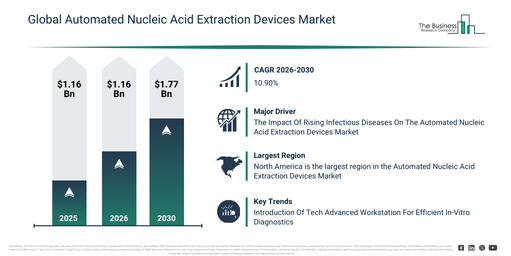
    The automated nucleic acid extraction devices market is anticipated to experience substantial growth over the coming years. Projections indicate it will expand to $11.05 billion by 2030, demonstrating a compound annual growth rate (CAGR) of 10.9%. This projected expansion during the forecast period is primarily driven by factors such as an escalating demand for swift diagnostic solutions, increasing financial commitments to genomic research, the broadening scope of personalized medicine testing, greater acceptance of point-of-care molecular diagnostics, and advancements in extraction efficiency technologies. Furthermore, key developments expected within this period include a rising uptake of fully automated extraction platforms, a heightened requirement for high-throughput molecular diagnostics, the expanding implementation of integrated sample-to-result systems, a wider application of automated lab workflows, and an intensified focus on processing free from contamination.

    Download A Free Sample Report For Comprehensive Market Insights:

    https://www.thebusinessresearchcompany.com/sample.aspx?id=9421&type=smp

    What Core Drivers Are Transforming The Automated Nucleic Acid Extraction Devices Market?

    The growing occurrence of infectious diseases is anticipated to accelerate the expansion of the automated nucleic acid extraction devices market in the future. Such diseases are conditions triggered by disease-causing microorganisms like bacteria, viruses, fungi, or parasites, which can spread directly or indirectly between individuals or from animals to people. This rise in infectious diseases, especially during worldwide health emergencies like pandemics, increases the demand for diagnostic testing. Automated nucleic acid extraction devices are crucial in preparing samples for molecular diagnostics, helping to identify viruses and bacteria. For example, as reported by GOV.UK, a UK public sector information site, in September 2023, the first half of 2023 saw a 7% increase in tuberculosis (TB) cases in England compared to the corresponding period in 2022, with reported cases climbing from 2,251 to 2,408. Consequently, the heightened occurrence of infectious diseases is propelling the expansion of the automated nucleic acid extraction devices market.

    How Is The Automated Nucleic Acid Extraction Devices Market Structured Across Different Market Segments?

    The automated nucleic acid extraction devices market covered in this report is segmented –

    1) By Type: Instruments, Kits, Consumables

    2) By Automation Level: Fully Automated, Semi-Automated

    3) By End User: Hospitals, Diagnostic Centers, Forensic Laboratories, Pharmaceutical And Biotechnology Companies, Academic Research Institutes

    Subsegments:

    1) By Instruments: Automated Extractors, Liquid Handling Systems

    2) By Kits: DNA Extraction Kits, RNA Extraction Kits, Viral Nucleic Acid Extraction Kits

    3) By Consumables: Reagents, Columns, Tips And Tubes

    What Trends Are Influencing The Automated Nucleic Acid Extraction Devices Market?

    Leading companies in the automated nucleic acid extraction devices market are developing innovative offerings, such as automated nucleic acid extraction workstations, to expand their customer base, increase sales, and boost revenue. An automated nucleic acid extraction workstation is defined as a specialized and automated system designed for isolating nucleic acids, including DNA and RNA, from biological samples. For example, in April 2023, Jiangsu Bioperfectus Technologies Co. Ltd., a China-based provider of in-vitro diagnostic products, launched the SAW-48 and the Cell Nucleic Acid Extraction Kit (Magnetic Bead Method). The SAW-48 distinguishes itself as a unique in-vitro diagnostic medical device by integrating sample loading, nucleic acid purification, and PCR setup functions into a single instrument. This innovative device is capable of concurrently processing up to 48 samples, significantly reducing the time required to obtain test results. The SAW-48 streamlines the entire process of sample loading, nucleic acid purification, and PCR setup, thereby enhancing the efficiency of STD and HPV detection. Together, the SAW-48 and the Cell Nucleic Acid Extraction Kit provide a comprehensive solution, ensuring a more efficient and streamlined approach to identifying sexually transmitted diseases and human papillomavirus.

    Which Organizations Are Operating Within The Automated Nucleic Acid Extraction Devices Market?

    Major companies operating in the automated nucleic acid extraction devices market are QIAGEN N.V., PerkinElmer Inc., F. Hoffmann-La Roche AG, Analytik Jena GmbH, Thermo Fisher Scientific Inc., Accubiomed Co. Ltd., AutoGen Inc., Bioneer Corporation, Tecan Group Ltd., Merck KGaA, Becton Dickinson and Company, DiaSorin Molecular LLC, BioTeke Corporation (Wuxi) Co. Ltd., Xi’an TianLong Science and Technology Co. Ltd., Jiangsu Bioperfectus Technologies Co. Ltd., Hangzhou Bloer Technology Co. Ltd., MGI Tech Co. Ltd., Aurora Biomed Inc., Promega Corporation, Hamilton Company, Beckman Coulter Inc., Bio-Rad Laboratories Inc., Zymo Research Corporation, Agilent Technologies Inc., Danaher Corporation, Eppendorf AG, GE Healthcare Life Sciences, GenScript Biotech Corporation, Greiner Bio-One International GmbH, IntegenX Inc., MicroGEM International Company, Norgen Biotek Corp.

    Access The Complete Automated Nucleic Acid Extraction Devices Market Report:

    https://www.thebusinessresearchcompany.com/report/automated-nucleic-acid-extraction-devices-global-market-report

    Which Region Is The Primary Market For The Automated Nucleic Acid Extraction Devices Market?

    North America was the largest region in the automated nucleic acid extraction devices market in 2025. The regions covered in the automated nucleic acid extraction devices market report are Asia-Pacific, South East Asia, Western Europe, Eastern Europe, North America, South America, Middle East, Africa.

    Access a Customized Automated Nucleic Acid Extraction Devices Market Report for Deeper Competitive Insights

    https://www.thebusinessresearchcompany.com/customise?id=9421&type=smp

    Browse Through More Reports Similar to the Global Automated Nucleic Acid Extraction Devices Market 2026, By The Business Research Company

    Nucleic Acid Extraction Instruments And Reagents Market Report 2026

    https://www.thebusinessresearchcompany.com/report/nucleic-acid-extraction-instruments-and-reagents-global-market-report

    Nucleic Acid Labeling Market Report 2026

    https://www.thebusinessresearchcompany.com/report/nucleic-acid-labeling-global-market-report

    Dna Or Rna Sample Extraction And Isolation Market Report 2026

    https://www.thebusinessresearchcompany.com/report/dna-or-rna-sample-extraction-and-isolation-global-market-report

    Get in touch with us:

    The Business Research Company: https://www.thebusinessresearchcompany.com/

    Americas: +1 310-496-7795

    Asia: +44 7882 955267 & +91 8897263534

    Europe: +44 7882 955267

    Email us at: marketing@tbrc.info

    Follow us on:

    LinkedIn: https://in.linkedin.com/company/the-business-research-company

    YouTube: https://www.youtube.com/channel/UC24_fI0rV8cR5DxlCpgmyFQ

    Global Market Model: https://www.thebusinessresearchcompany.com/global-market-model
  • Automated Immunoassay Analyzers Market Forecast Analysis Through 2030 With Insights On Industry Expansion

    Automated Immunoassay Analyzers Market Forecast Analysis Through 2030 With Insights On Industry Expansion

    The Business Research Company’s 2026 market reports feature advanced enhancements such as market attractiveness analysis, total addressable market evaluation, company benchmarking matrices, interactive Excel dashboards, expanded supply chain intelligence, emerging startup coverage, and detailed product insights, delivering more actionable and strategically valuable research.

    What Increase In Market Value Is Predicted For The Automated Immunoassay Analyzers Market During The 2026–2030 Period?

    The automated immunoassay analyzers market has experienced substantial expansion in recent years. This market is set to expand from $23.09 billion in 2025 to $26.39 billion in 2026, exhibiting a compound annual growth rate (CAGR) of 14.3%. The historical growth of this market can be linked to the broadening of centralized clinical laboratories, an increase in routine immunoassay testing volumes, the implementation of more disease screening programs, the early adoption of laboratory workflow automation, and the use of immunoassay systems for tracking infectious diseases.

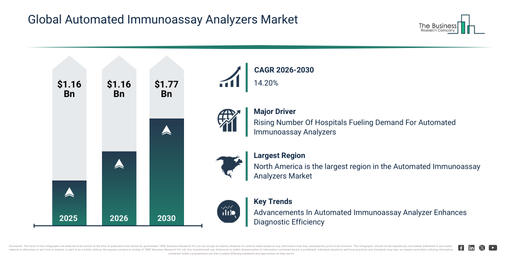
    The automated immunoassay analyzers market is set for substantial growth over the next few years, with its size expected to reach $44.93 billion by 2030, growing at a compound annual growth rate (CAGR) of 14.2%. This expansion during the forecast period can be attributed to increasing requirements for chronic and endocrine disorder testing, the rise in oncology and biomarker testing, the need for faster diagnostic results, greater integration of automated systems in research laboratories, and the broadening of pharmaceutical and biotech research and development testing applications. Significant developments projected for this period include a rising demand for high-throughput diagnostic testing, expanded use in infectious disease and endocrinology diagnostics, the proliferation of automated testing in research and academic environments, increased application in therapeutic drug monitoring and oncology diagnostics, and the ongoing standardization of laboratory procedures to enhance testing efficiency.

    Download A Free Sample Report For Comprehensive Market Insights:

    https://www.thebusinessresearchcompany.com/sample.aspx?id=18232&type=smp

    Which Growth Factors Are Strengthening The Automated Immunoassay Analyzers Market Landscape?

    A growing number of hospitals is projected to drive the expansion of the automated immunoassay analyzers market in the future. Hospitals are healthcare facilities offering medical, surgical, and diagnostic services to individuals needing treatment or emergency attention. These organized facilities employ healthcare professionals to deliver both inpatient and outpatient care across diverse medical specializations. The rise in hospital numbers stems from the escalating healthcare demands of an expanding and aging global populace. Automated immunoassay analyzers boost efficiency and precision in hospitals by quickly processing extensive quantities of diagnostic tests for a range of diseases and conditions. For example, in May 2023, data from the American Health Care Association, a US-based nonprofit group, indicated that the total number of hospitals in the US grew to 6,129 in 2023 from 6,093 in 2022, representing a 0.59% increase. Consequently, the expanding count of hospitals is fueling the growth of the automated immunoassay analyzers market.

    Which Segment-Based Categories Are Covered In The Automated Immunoassay Analyzers Market?

    The automated immunoassay analyzers market covered in this report is segmented –

    1) By Product: Immunofluorescence, Chemiluminescence, Enzyme Linked Fluorescent System (ELISA), Multiplexed Assay System, Radioimmunoassay

    2) By Application: Infectious Diseases, Endocrinology, Drug Monitoring, Cardiology, Oncology, Allergy Testing, Other Applications

    3) By End-User: Hospitals, Diagnostic Laboratories, Research And Academic Laboratories, Pharmaceutical And Biotechnology Companies, Other End-Users

    Subsegments:

    1) By Immunofluorescence: Fluorescent Labeling Kits, Fluorescent Detectors And Readers, Immunofluorescence Reagents

    2) By Chemiluminescence: Chemiluminescent Labels And Reagents, Chemiluminescence Detectors And Readers, Chemiluminescent Assay Kits

    3) By Enzyme Linked Fluorescent System (ELISA): ELISA Kits (Capture And Detection Kits), ELISA Microplates And Plates Coating Systems, Enzyme Substrates And Detection Reagents

    4) By Multiplexed Assay System: Multiplexed Assay Kits, Multi-Analyte Detection Systems, Multiplexing Software And Data Analysis Tools

    5) By Radioimmunoassay (RIA): Radioactive Isotope Kits, Gamma Counters, Radiolabeled Reagents

    Which Trends Are Guiding The Development Of The Automated Immunoassay Analyzers Market?

    Leading companies active in the automated immunoassay analyzers market are focusing on developing innovative products, such as compact immunoassay analyzers, to gain a competitive advantage. These compact immunoassay analyzers are smaller, portable devices engineered for conducting immunoassay tests that detect specific biomarkers in biological samples. They provide convenience and efficiency in various healthcare settings, particularly where space and mobility are limited. For instance, in July 2023, Siemens Healthineers, a Germany-based healthcare company, unveiled the Atellica CI Analyzer, a compact laboratory testing system designed to enhance efficiency in both immunoassay and clinical chemistry testing. By integrating these two testing methods into a single platform, the Atellica CI Analyzer addresses the increasing demand for versatile systems capable of performing various tests efficiently. The attributes of this product align effectively with current market trends, successfully tackling the challenges laboratories face in delivering timely and accurate diagnostic results. Features like random access sampling, micro-volume aspiration, and automated maintenance and quality control scheduling assist laboratories in achieving more consistent and predictable sample processing times.

    Who Are The Businesses Driving Activity In The Automated Immunoassay Analyzers Market?

    Major companies operating in the automated immunoassay analyzers market are Roche Diagnostics AG, Abbott Laboratories, Danaher Corporation, Siemens Healthineers, Becton Dickinson and Company, Tosoh Corporation, bioMérieux SA, QuidelOrtho Corporation, Sysmex Corporation, Bio-Rad Laboratories Inc, Qiagen NV, Werfen Group SA, DiaSorin SpA, Bio-Techne Corporation, Meril Life Sciences Private Limited, Randox Laboratories Ltd, Getein Biotech Inc, Aesku Diagnostics GmbH & Co KG, Carolina Liquid Chemistries Corporation, Chengdu Seamaty Technology Co Ltd, Hipro Biotechnology Co Ltd

    Access The Complete Automated Immunoassay Analyzers Market Report:

    https://www.thebusinessresearchcompany.com/report/automated-immunoassay-analyzers-global-market-report

    Which Geographic Region Represents The Largest Automated Immunoassay Analyzers Market Share?

    North America was the largest region in the automated immunoassay analyzer market in 2025. Asia-Pacific is expected to be the fastest-growing region in the forecast period. The regions covered in the automated immunoassay analyzers market report are Asia-Pacific, South East Asia, Western Europe, Eastern Europe, North America, South America, Middle East, Africa.

    Access a Customized Automated Immunoassay Analyzers Market Report for Deeper Competitive Insights

    https://www.thebusinessresearchcompany.com/customise?id=18232&type=smp

    Browse Through More Reports Similar to the Global Automated Immunoassay Analyzers Market 2026, By The Business Research Company

    Immunohematology Market Report 2026

    https://www.thebusinessresearchcompany.com/report/immunohematology-global-market-report

    Immunodiagnostics Market Report 2026

    https://www.thebusinessresearchcompany.com/report/immunodiagnostics-global-market-report

    Immunoassay Market Report 2026

    https://www.thebusinessresearchcompany.com/report/immunoassay-global-market-report

    Get in touch with us:

    The Business Research Company: https://www.thebusinessresearchcompany.com/

    Americas: +1 310-496-7795

    Asia: +44 7882 955267 & +91 8897263534

    Europe: +44 7882 955267

    Email us at: marketing@tbrc.info

    Follow us on:

    LinkedIn: https://in.linkedin.com/company/the-business-research-company

    YouTube: https://www.youtube.com/channel/UC24_fI0rV8cR5DxlCpgmyFQ

    Global Market Model: https://www.thebusinessresearchcompany.com/global-market-model
  • Automated Hospital Beds Market Growth Outlook Indicating Expansion To $46.99 Billion By 2030

    Automated Hospital Beds Market Growth Outlook Indicating Expansion To $46.99 Billion By 2030

    The Business Research Company’s 2026 market reports feature advanced enhancements such as market attractiveness analysis, total addressable market evaluation, company benchmarking matrices, interactive Excel dashboards, expanded supply chain intelligence, emerging startup coverage, and detailed product insights, delivering more actionable and strategically valuable research.

    How Will The Market Size Of The Automated Hospital Beds Market Progress Through 2030?

    The automated hospital beds market size has experienced significant growth in recent years. This market is projected to expand from $33.24 billion in 2025 to $35.84 billion in 2026, demonstrating a compound annual growth rate (CAGR) of 7.8%. Historically, this expansion has been driven by factors such as hospital modernization programs, an increase in critical care admissions, the procurement of automated beds to improve caregiver productivity, an early emphasis on patient safety and fall reduction, and the expansion of public and private hospital capacity.

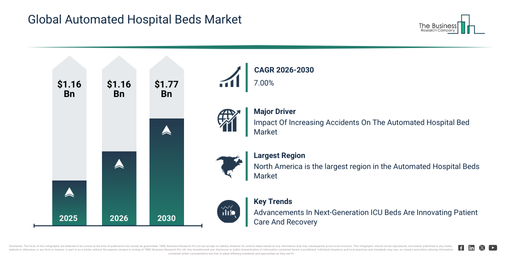
    The automated hospital beds market is poised for significant expansion in the coming years. Projections indicate it will achieve a size of $46.99 billion by 2030, advancing at a compound annual growth rate (CAGR) of 7.0%. This anticipated growth during the forecast period can be attributed to factors such as an increasing elderly population, a rise in long-term care admissions, the wider adoption of advanced automated and specialized beds, a greater emphasis on patient comfort and the prevention of pressure injuries, and growing demand from home care and post-acute settings. Key trends expected over this period include the increased integration of patient safety and fall-prevention features, the broader deployment of automated beds in critical and acute care environments, rising demand fueled by an aging population and the burden of chronic illnesses, greater utilization in long-term care and rehabilitation facilities, and a shift towards premium comfort, ergonomic design, and sophisticated adjustability.

    Download A Free Sample Report For Comprehensive Market Insights:

    https://www.thebusinessresearchcompany.com/sample.aspx?id=16594&type=smp

    What Important Drivers Are Powering The Automated Hospital Beds Market Growth?

    The projected expansion of the automated hospital bed market is anticipated to be fueled by the rising incidence of road accidents. This surge in accidents stems from various factors, including heightened traffic volume, inattentive driving caused by mobile phone usage, poor upkeep of infrastructure, and non-compliance with traffic laws. Automated hospital beds play a crucial role in managing accident cases by improving patient care and safety. They offer functionalities such as adjustable height for easier patient transfer and medical procedures, automatic positioning to mitigate the risk of bedsores, and remote control capabilities for quick modifications, thereby guaranteeing prompt medical intervention and patient comfort. As an illustration, in January 2024, data from the Bureau of Infrastructure and Transport Research Economic (BITRE), an Australia-based department of infrastructure, transport, and Regional Development, revealed that 1,266 fatalities occurred on Australian roads in 2023. This represented a 7.3% rise when compared to the 12 months ending in December 2022. Consequently, the escalating frequency of road accidents serves as a primary impetus for the automated hospital bed market.

    What Are The Major Segment Categories Within The Automated Hospital Beds Market?

    The automated hospital beds market covered in this report is segmented –

    1) By Type: Semi-Automatic Hospital Beds, Fully Automatic Hospital Beds

    2) By Technology: Basic Automated Hospital Beds, Smart Automated Hospital Beds

    3) By Application: Critical Care, Acute Care, Long Term Care

    4) By End User: Hospitals And Clinics, Reproductive Care Centers, Home Care, Other End-Users

    Subsegments:

    1) By Semi-Automatic Hospital Beds: Electric-Spring Hybrid Beds, Manual Adjustment With Electric Controls, Beds With Adjustable Backrests And Leg Supports, Semi-automatic Icu Beds

    2) By Fully Automatic Hospital Beds: Fully Electric Icu Beds, Fully Electric Critical Care Beds, Advanced Pressure Relief Beds, High-End Electric Beds With Zero Gravity Function, Fully Adjustable Pediatric And Geriatric Beds

    What Trends Are Influencing The Future Of The Automated Hospital Beds Market?

    Leading companies within the automated hospital beds market are engaged in creating advanced intensive care unit (ICU) beds to improve patient care and address the increasing need for sophisticated medical technology. These next-generation ICU beds are sophisticated medical beds crafted to better patient outcomes and optimize care within intensive care units. For instance, in May 2023, Baxter International Inc., a US healthcare firm, introduced an enhanced Hillrom Progressa+ bed specifically for the ICU. The Progressa+ is a state-of-the-art hospital bed designed to elevate patient care and assist recovery. It provides advanced pulmonary support, including in-bed percussion, vibration, and continuous lateral rotation therapies, to lessen complications arising from immobility. The bed also offers improved accessibility for intubation and various procedures. Furthermore, it facilitates early patient movement with an integrated lift system and a single-button FullChair feature for secure and easy patient transfers, thereby reducing the potential for clinician harm.

    Which Firms Are Competing In The Automated Hospital Beds Market?

    Major companies operating in the automated hospital beds market are Stryker Corporation, Malvestio SpA, Medline Industries Inc., Hill-Rom Holdings Inc., Arjo Huntleigh, Invacare Corporation, Paramount Bed Co Ltd, Midmark India Pvt Ltd, Linet spol s r o, Joerns Healthcare LLC, Amico Corporation, Stiegelmeyer GmbH & Co KG, Span-America Medical Systems Inc., Merivaara Corp, Howard Wright Limited, Haelvoet NV, Volker GmbH, Mespa, Gendron Inc., Besco Medical Ltd, Savion Industries

    Access The Complete Automated Hospital Beds Market Report:

    https://www.thebusinessresearchcompany.com/report/automated-hospital-beds-global-market-report

    Which Region Leads The Automated Hospital Beds Market By Size?

    North America was the largest region in the automated hospital beds market in 2025. The regions covered in the automated hospital beds market report are Asia-Pacific, South East Asia, Western Europe, Eastern Europe, North America, South America, Middle East, Africa.

    Access a Customized Automated Hospital Beds Market Report for Deeper Competitive Insights

    https://www.thebusinessresearchcompany.com/customise?id=16594&type=smp

    Browse Through More Reports Similar to the Global Automated Hospital Beds Market 2026, By The Business Research Company

    Hospital Bed Management Systems Market Report 2026

    https://www.thebusinessresearchcompany.com/report/hospital-bed-management-systems-global-market-report

    Hospital Beds Market Report 2026

    https://www.thebusinessresearchcompany.com/report/hospital-beds-global-market-report

    Medical Bed Market Report 2026

    https://www.thebusinessresearchcompany.com/report/medical-bed-global-market-report

    Get in touch with us:

    The Business Research Company: https://www.thebusinessresearchcompany.com/

    Americas: +1 310-496-7795

    Asia: +44 7882 955267 & +91 8897263534

    Europe: +44 7882 955267

    Email us at: marketing@tbrc.info

    Follow us on:

    LinkedIn: https://in.linkedin.com/company/the-business-research-company

    YouTube: https://www.youtube.com/channel/UC24_fI0rV8cR5DxlCpgmyFQ

    Global Market Model: https://www.thebusinessresearchcompany.com/global-market-model
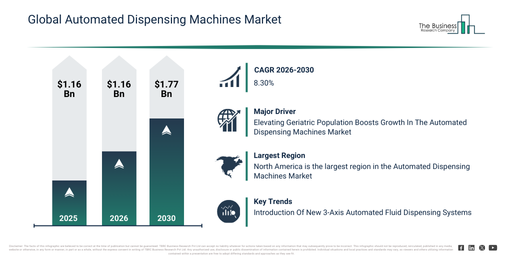
  • Global Automated Dispensing Machines Market Anticipated To Grow To $6.56 Billion By 2030 At 8.3% CAGR

    Global Automated Dispensing Machines Market Anticipated To Grow To $6.56 Billion By 2030 At 8.3% CAGR

    The Business Research Company’s 2026 market reports feature advanced enhancements such as market attractiveness analysis, total addressable market evaluation, company benchmarking matrices, interactive Excel dashboards, expanded supply chain intelligence, emerging startup coverage, and detailed product insights, delivering more actionable and strategically valuable research.

    What Is The Expected Market Size Of The Automated Dispensing Machines Market In 2026 And How Much Will It Reach By 2030?

    The automated dispensing machines market size has experienced robust expansion in recent years. This market is projected to grow from $4.4 billion in 2025 to $4.78 billion in 2026, demonstrating a compound annual growth rate (CAGR) of 8.7%. The expansion observed in the historic period can be attributed to factors such as increasing hospital patient volumes, rising medication safety concerns, the adoption of hospital automation solutions, growing complexity of drug inventories, and the expansion of inpatient pharmacy services.

    The automated dispensing machines market is projected to experience substantial expansion in the coming years. By 2030, its size is anticipated to reach $6.57 billion, exhibiting a compound annual growth rate (CAGR) of 8.3%. This projected growth is driven by factors such as the increasing adoption of smart hospital infrastructure, rising investments in digital pharmacy automation, a growing demand for workflow optimization, the expansion of outpatient care automation, and advancements in secure medication management technologies. Key trends expected during the forecast period involve the increasing deployment of automated medication dispensing systems, rising integration of pharmacy information systems, a growing focus on medication error reduction, the expansion of decentralized dispensing solutions, and enhanced use of real-time inventory monitoring.

    Download A Free Sample Report For Comprehensive Market Insights:

    https://www.thebusinessresearchcompany.com/sample.aspx?id=7971&type=smp

    Which Major Factors Are Contributing To The Development Of The Automated Dispensing Machines Market?

    The expanding elderly demographic is anticipated to fuel the future expansion of the automated dispensing machines market. The geriatric population comprises individuals generally aged 60 years and above, who frequently undergo age-related shifts in physical, mental, and social aspects and often need tailored healthcare and assistance to uphold their well-being and overall quality of life. This increase in the elderly population is mainly attributed to longer life expectancy, given that improvements in healthcare and nutrition enable individuals to live longer, leading to a greater share of older adults within the populace. Automated dispensing machines assist the geriatric population by guaranteeing punctual and precise medication distribution, minimizing the potential for forgotten or wrong doses, and facilitating autonomous handling of intricate prescriptions. For example, a report from October 2025 by WHO (World Health Organization), an intergovernmental body based in Switzerland, predicts that by 2030, one in six individuals globally will be 60 or older, with this demographic expanding from 1 billion in 2020 to 1.4 billion. Furthermore, by 2050, the worldwide population of those 60 and above is estimated to double to 2.1 billion, whereas the count of individuals aged 80 and older is forecasted to triple, reaching 426 million. Consequently, the growing elderly demographic is a key driver for the automated dispensing machines market.

    How Is The Automated Dispensing Machines Market Distributed Across Key Segments?

    The automated dispensing machines market covered in this report is segmented –

    1) By Product: Automated Medication Dispensing And Storage System., Automated Packaging And Labelling Systems, Automated Tabletop Counters, Automated Medication Compounding Systems

    2) By Application: In-Patient, Out-Patient

    3) By End-user: Hospitals, Pharmacies

    Subsegments:

    1) By Automated Medication Dispensing And Storage System: Centralized Dispensing Systems, Decentralized Dispensing Systems

    2) By Automated Packaging And Labelling Systems: Blister Packaging Machines, Bottle Filling And Labelling Machines

    3) By Automated Tabletop Counters: Manual Input Counters, Automated Counting And Dispensing Units

    4) By Automated Medication Compounding Systems: IV Compounding Systems, Oral Compounding Systems

    Which Trends Are Contributing To Changes In The Automated Dispensing Machines Market?

    Leading companies in the automated dispensing machines market are introducing new 3-axis automated fluid dispensing systems. This capability ensures precise fluid placement on intricate geometries or irregular surfaces, which are frequently encountered in advanced manufacturing processes. For instance, in March 2024, Nordson EFD, a US-based provider of automated dispensing machines, announced the launch of its new 3-axis automated fluid dispensing systems. These systems, encompassing the PROX and GVPlus families, are equipped with advanced linear motors that boost actuation speed and minimize maintenance requirements. They offer best-in-class repeatability, with the PROX system achieving an impressive accuracy of ±0.003 mm, making them ideal for complex applications across various industries, including electronics and life sciences. The integrated vision technology guarantees precise fluid placement on challenging surfaces, thereby enhancing product quality and production efficiency.

    Who Are The Major Companies Operating In The Automated Dispensing Machines Market?

    Major companies operating in the automated dispensing machines market are Omnicell Inc., Becton Dickinson and Company, Baxter International Inc., B Braun Melsungen AG, Swisslog Holding Limited, ScriptPro LLC, Takazono Corporation, Tosho Inc., Willach Pharmacy Solutions, NewIcon Oy, ARxIUM Inc., RxSafe LLC, MedDispense Ltd., Pearson Medical Technologies LLC, IML Medical Automation, Pharmadule Morpho, Yuyama Co Ltd, ROBOTIK TECHNOLOGY GmbH, APD SA, Linet Group SE

    Access The Complete Automated Dispensing Machines Market Report:

    https://www.thebusinessresearchcompany.com/report/automated-dispensing-machines-global-market-report

    Which Region Has The Strongest Presence In The Automated Dispensing Machines Market?

    North America was the largest region in the automated dispensing machines market in 2025. Asia-Pacific is expected to be the fastest-growing region in the automated dispensing machines market report during the forecast period. The regions covered in the automated dispensing machines market report are Asia-Pacific, South East Asia, Western Europe, Eastern Europe, North America, South America, Middle East, Africa.

    Access a Customized Automated Dispensing Machines Market Report for Deeper Competitive Insights

    https://www.thebusinessresearchcompany.com/customise?id=7971&type=smp

    Browse Through More Reports Similar to the Global Automated Dispensing Machines Market 2026, By The Business Research Company

    Industrial Dispensing System And Equipment Market Report 2026

    https://www.thebusinessresearchcompany.com/report/industrial-dispensing-system-and-equipment-global-market-report

    Distribution Automation Market Report 2026

    https://www.thebusinessresearchcompany.com/report/distribution-automation-global-market-report

    Dispensing Pharmacy Packaging Machine Market Report 2026

    https://www.thebusinessresearchcompany.com/report/dispensing-pharmacy-packaging-machine-global-market-report

    Get in touch with us:

    The Business Research Company: https://www.thebusinessresearchcompany.com/

    Americas: +1 310-496-7795

    Asia: +44 7882 955267 & +91 8897263534

    Europe: +44 7882 955267

    Email us at: marketing@tbrc.info

    Follow us on:

    LinkedIn: https://in.linkedin.com/company/the-business-research-company

    YouTube: https://www.youtube.com/channel/UC24_fI0rV8cR5DxlCpgmyFQ

    Global Market Model: https://www.thebusinessresearchcompany.com/global-market-model
  • Automated Compounding Devices Market Future Analysis Covering Industry Shifts And Growth Potential

    Automated Compounding Devices Market Future Analysis Covering Industry Shifts And Growth Potential

    The Business Research Company’s 2026 market reports feature advanced enhancements such as market attractiveness analysis, total addressable market evaluation, company benchmarking matrices, interactive Excel dashboards, expanded supply chain intelligence, emerging startup coverage, and detailed product insights, delivering more actionable and strategically valuable research.

    What Market Size Is Forecasted For The Automated Compounding Devices Market By 2030 Based On Its 2026 Value?

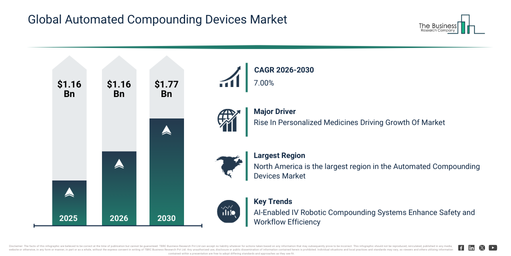
    The automated compounding devices market has experienced significant expansion recently. This market is projected to expand from $2.51 billion in 2025 to $2.69 billion in 2026, demonstrating a compound annual growth rate (CAGR) of 7.1%. The historical growth can be linked to factors such as an increasing workload in hospital pharmacies, a heightened demand for sterile iv preparations, the early implementation of tpn compounding automation, hospital-led efforts to minimize compounding errors, and a rise in inpatient medication therapy volumes.

    The automated compounding devices market size is projected to experience substantial expansion over the coming years, reaching $3.53 billion by 2030, demonstrating a compound annual growth rate (CAGR) of 7.0%. This anticipated growth during the forecast period is primarily driven by a heightened focus on medication safety compliance, increased investments in automated pharmacy technology, a rise in the outsourcing of sterile compounding services, the broadening scope of oncology and critical care drug compounding, and the expanding integration of digital workflow and reporting systems. Key trends anticipated in this period include a greater uptake of automated compounding devices to mitigate manual medication preparation errors in hospital and pharmacy environments, an escalating demand for high-precision compounding of IV formulations, oncology drugs, and TPN solutions, a developing transition towards centralized and large-volume sterile compounding facilities across healthcare systems, a widening application of automated workflow validation and barcode-based verification in compounding procedures, and a growing preference for compact, modular, and upgradeable automated compounding platforms for pharmacy operations.

    Download A Free Sample Report For Comprehensive Market Insights:

    https://www.thebusinessresearchcompany.com/sample.aspx?id=18231&type=smp

    What Key Growth Drivers Are Influencing The Automated Compounding Devices Market?

    A rise in personalized medicines is anticipated to propel the expansion of the automated compounding devices market in the future. Personalized medicine describes a healthcare strategy where decisions, methods, actions, and therapies are customized to meet the unique characteristics of every patient. The growing prevalence of personalized medicines stems from enhanced genetic comprehension, specific patient information, and supportive regulations. Automated compounding devices (ACDs) are vital in personalized medicine, facilitating the precise and accurate creation of custom medication formulas that match individual patient requirements. Such devices automate the blending of different pharmaceutical components in exact ratios, which is fundamental for developing tailored treatments. For example, data from February 2024, provided by the Personalized Medicine Coalition, a US-based non-profit organization, shows that the FDA cleared 16 new personalized therapies for rare disease patients in 2023, an increase from six in 2022. Consequently, the growing volume of personalized medicines is boosting the expansion of the automated compounding devices market.

    How Does Segment Analysis Break Down The Automated Compounding Devices Market Structure?

    The automated compounding devices market covered in this report is segmented –

    1) By Component: Automated Compounding Systems Equipment, Automated Compounding Systems Software

    2) By Product Type: Intravenous Compounding Systems, Oral Compounding Systems, Total Parenteral Nutrition (TPN) Compounding Systems

    3) By Mode Of Operation: Fully Automated Compounding Systems, Semi-Automated Compounding Systems

    4) By End-User: Hospitals, Ambulatory Surgical Centers, Other End Users

    Subsegments:

    1) By Automated Compounding Systems Equipment: Compounding Workstations, Compounding Pumps, Mixing Chambers, Scales And Balances, Dispensing Units, Vial And Syringe Filling Systems, Other Related Equipment (Filtration Devices)

    2) By Automated Compounding Systems Software: Prescription Management Software, Workflow Management Software, Monitoring And Control Software, Data Analytics And Reporting Software, Safety And Compliance Software, Integration Software For Hospital Or Pharmacy Management Systems

    What Trends Are Shaping The Automated Compounding Devices Market Structure?

    Major companies operating in the automated compounding devices market are prioritizing AI-driven robotic compounding, such as AI-enabled IV compounding platforms systems that leverage artificial intelligence, gravimetric verification, and cloud-based monitoring to automate sterile admixture preparation with high precision, real-time quality assessments, and continuous oversight. For example, in August 2025, Omnicell, a US-based health-technology company, launched an AI-enhanced upgrade to its IV compounding system, designed to bolster safety and accuracy in medication preparation. The updated system integrates sophisticated AI-based quality-assurance tools that continuously supervise compounding activities, automatically detecting and flagging any departures from expected procedures. By implementing this level of automated oversight, Omnicell aims to mitigate human error, enhance workflow efficiency, and support elevated standards of medication quality in pharmacy operations.

    Which Companies Are Influencing The Automated Compounding Devices Market?

    Major companies operating in the automated compounding devices market are Becton Dickinson and Company, Baxter International Inc, B Braun Melsungen AG, Fresenius Kabi AG, Terumo Corporation, ICU Medical Inc., Omnicell Inc., Tecan Group Ltd., Fagron NV, Swisslog Healthcare, ScriptPro LLC, PharMEDium Services LLC, Loccioni Group SPA, ARxIUM Inc., Codonics Inc., Equashield LLC, Yuyama Mfg Co Ltd, Shanghai Weibond Technology Co Ltd, Medimpex LLC, Medica Inc

    Access The Complete Automated Compounding Devices Market Report:

    https://www.thebusinessresearchcompany.com/report/automated-compounding-devices-global-market-report

    Which Region Stands As The Largest Contributor To The Automated Compounding Devices Market?

    North America was the largest region in the automated compounding devices market in 2025. Asia-Pacific is expected to be the fastest-growing region in the forecast period. The regions covered in the automated compounding devices market report are Asia-Pacific, South East Asia, Western Europe, Eastern Europe, North America, South America, Middle East, Africa.

    Access a Customized Automated Compounding Devices Market Report for Deeper Competitive Insights

    https://www.thebusinessresearchcompany.com/customise?id=18231&type=smp

    Browse Through More Reports Similar to the Global Automated Compounding Devices Market 2026, By The Business Research Company

    Plastic Compounding Market Report 2026

    https://www.thebusinessresearchcompany.com/report/plastic-compounding-global-market-report

    Compound Management Market Report 2026

    https://www.thebusinessresearchcompany.com/report/compound-management-global-market-report

    Electronic Products Market 2026

    https://www.thebusinessresearchcompany.com/report/electronic-products-market

    Get in touch with us:

    The Business Research Company: https://www.thebusinessresearchcompany.com/

    Americas: +1 310-496-7795

    Asia: +44 7882 955267 & +91 8897263534

    Europe: +44 7882 955267

    Email us at: marketing@tbrc.info

    Follow us on:

    LinkedIn: https://in.linkedin.com/company/the-business-research-company

    YouTube: https://www.youtube.com/channel/UC24_fI0rV8cR5DxlCpgmyFQ

    Global Market Model: https://www.thebusinessresearchcompany.com/global-market-model