Category: Medical Equipment

  • Increasing Adoption Of Rising Respiratory Disease Prevalence Drives Growth In Aerosol Delivery Device Market Is Influencing The Aerosol Delivery Devices Market

    Increasing Adoption Of Rising Respiratory Disease Prevalence Drives Growth In Aerosol Delivery Device Market Is Influencing The Aerosol Delivery Devices Market

    The Business Research Company’s 2026 market reports feature advanced enhancements such as market attractiveness analysis, total addressable market evaluation, company benchmarking matrices, interactive Excel dashboards, expanded supply chain intelligence, emerging startup coverage, and detailed product insights, delivering more actionable and strategically valuable research.

    What Increase In Market Value Is Predicted For The Aerosol Delivery Devices Market During The 2026–2030 Period?

    The market for aerosol delivery devices has experienced robust expansion recently. This market is projected to expand from $51.24 billion in 2025 to $55.42 billion by 2026, demonstrating a compound annual growth rate (CAGR) of 8.1%. Historically, this growth has been driven by factors such as the rising incidence of asthma and COPD cases, increased adoption of metered dose inhalers in clinical settings, an uptick in hospital acquisition of nebulizers and DPIs, the expansion of respiratory therapy programs across healthcare systems, and a greater emphasis on targeted pulmonary drug delivery.

    The aerosol delivery devices market is projected to experience substantial growth in the upcoming years. This market is anticipated to reach $73.33 billion by 2030, demonstrating a compound annual growth rate (CAGR) of 7.3%. Key factors driving this expansion during the forecast period include the increasing uptake of home care respiratory treatment devices, a rising demand for portable mesh and ultrasonic nebulizers, a growing inclination towards patient-centric inhalation technologies, the broadening of retail and e-commerce distribution channels, and a heightened focus on enhancing treatment adherence for chronic respiratory conditions. Significant trends observed over the forecast period encompass an increasing clinical emphasis on optimizing aerosol drug delivery for respiratory disorder management, the greater adoption of advanced inhalation platforms across asthma and COPD treatment areas, a growing preference for portable and home-use aerosol delivery devices to support chronic therapy, the wider use of nebulizers and dry powder inhalers among pediatric and geriatric patient demographics, and the increased development of patient-friendly inhalation interfaces aimed at improving adherence and treatment outcomes.

    Download A Free Sample Report For Comprehensive Market Insights:

    https://www.thebusinessresearchcompany.com/sample.aspx?id=17054&type=smp

    What Primary Factors Are Fueling The Expansion Of The Aerosol Delivery Devices Market?

    Anticipated to drive the expansion of the aerosol delivery device market is the rising incidence of respiratory diseases. These conditions cover a wide spectrum of ailments impacting the airways, lungs, and the overall respiratory system. Factors contributing to these respiratory illness cases include air pollution, smoking, allergens, and various respiratory infections. For individuals with respiratory conditions, aerosol delivery devices facilitate the effective administration of medicines, such as bronchodilators and corticosteroids, directly into the lungs, thereby enhancing treatment results and patient adherence. As an illustration, data from June 2025, provided by the World Health Organization/European Respiratory Society, a health agency based in Europe, indicated that the population afflicted with chronic respiratory diseases within the WHO European Region reached 81.7 million in 2025. This figure represents an increase over earlier projections, with a significant number of cases still not diagnosed. Consequently, the expanding prevalence of respiratory diseases is set to stimulate the expansion of the aerosol delivery device market.

    How Is The Aerosol Delivery Devices Market Distributed Across Key Segments?

    The aerosol delivery devices market covered in this report is segmented –

    1) By Product: Dry Powder Inhalers, Metered Dose Inhalers, Nebulizers

    2) By Application: Asthma, Chronic Obstructive Pulmonary Disease, Cystic Fibrosis

    3) By Distribution Channel: Retail Pharmacies, Hospital Pharmacies, E Commerce

    Subsegments:

    1) By Dry Powder Inhalers (DPIs): Single-Dose DPIs, Multi-Dose DPIs

    2) By Metered Dose Inhalers (MDIs): Conventional MDIs, MDIs With Spacer/Chamber

    3) By Nebulizers: Jet Nebulizers, Ultrasonic Nebulizers, Mesh Nebulizers

    Which Trends Are Contributing To Changes In The Aerosol Delivery Devices Market?

    Leading firms within the aerosol delivery device market are concentrating on novel inhaler dose tracking solutions, like smart inhaler dose monitoring devices, to improve medication compliance and facilitate live monitoring of inhaler application. Such a smart inhaler dose monitoring device constitutes an electronic framework that observes and logs inhaler utilization, delivering immediate dose oversight and compliance metrics. As an illustration, in June 2024, Aseptika Ltd., a UK-based MedTech company, unveiled the revolutionary PUFFClicker3 Universal Inhaler. This intelligent inhaler dose counter can be affixed to a range of inhalers, employing sensors to register every dose administered. The device incorporates live dose tracking, an intuitive interface, and Bluetooth capabilities for synchronization with health applications, thereby assisting patients in maintaining medication regimens and furnishing healthcare professionals with exhaustive adherence details.

    Who Are The Leading Firms Participating In The Aerosol Delivery Devices Market?

    Major companies operating in the aerosol delivery devices market are AstraZeneca plc, Novartis AG, GlaxoSmithKline plc, 3M Company, Becton Dickinson and Company, Koninklijke Philips NV, Teva Pharmaceutical Industries Ltd, Draegerwerk AG & Co KGaA, Chiesi Farmaceutici SpA, Vectura Group plc, Sunovion Pharmaceuticals Inc., Omron Healthcare Inc., PARI GmbH, Aerogen Inc, Clement Clarke International Ltd, Iconovo AB, Boehringer Ingelheim GmbH, Cipla Ltd, Cipla Respiratory Devices, Cipla Pharma Ltd, Mylan NV

    Access The Complete Aerosol Delivery Devices Market Report:

    https://www.thebusinessresearchcompany.com/report/aerosol-delivery-devices-global-market-report

    Which Region Commands The Largest Share Of The Aerosol Delivery Devices Market?

    North America was the largest region in the aerosol delivery devices market in 2025. Asia-Pacific is expected to be the fastest-growing region in the forecast period. The regions covered in the aerosol delivery devices market report are Asia-Pacific, South East Asia, Western Europe, Eastern Europe, North America, South America, Middle East, Africa.

    Access a Customized Aerosol Delivery Devices Market Report for Deeper Competitive Insights

    https://www.thebusinessresearchcompany.com/customise?id=17054&type=smp

    Browse Through More Reports Similar to the Global Aerosol Delivery Devices Market 2026, By The Business Research Company

    Aerosol Valves Market Report 2026

    https://www.thebusinessresearchcompany.com/report/aerosol-valves-global-market-report

    Air Purification Equipment Market Report 2026

    https://www.thebusinessresearchcompany.com/report/air-purification-equipment-global-market-report

    Air Transport Market Report 2026

    https://www.thebusinessresearchcompany.com/report/air-transport-global-market-report

    Get in touch with us:

    The Business Research Company: https://www.thebusinessresearchcompany.com/

    Americas: +1 310-496-7795

    Asia: +44 7882 955267 & +91 8897263534

    Europe: +44 7882 955267

    Email us at: marketing@tbrc.info

    Follow us on:

    LinkedIn: https://in.linkedin.com/company/the-business-research-company

    YouTube: https://www.youtube.com/channel/UC24_fI0rV8cR5DxlCpgmyFQ

    Global Market Model: https://www.thebusinessresearchcompany.com/global-market-model

  • Diabetes Prevalence Fuels The Advanced Wound Care Devices Market Continues To Impact The Growth Of The Advanced Wound Care Market

    Diabetes Prevalence Fuels The Advanced Wound Care Devices Market Continues To Impact The Growth Of The Advanced Wound Care Market

    The Business Research Company’s 2026 market reports feature advanced enhancements such as market attractiveness analysis, total addressable market evaluation, company benchmarking matrices, interactive Excel dashboards, expanded supply chain intelligence, emerging startup coverage, and detailed product insights, delivering more actionable and strategically valuable research.

    How Will The Market Size Of The Advanced Wound Care Market Progress Through 2030?

    The advanced wound care market has experienced significant expansion in recent years. It is projected to increase from $11.61 billion in 2025 to $12.43 billion in 2026, achieving a compound annual growth rate (CAGR) of 7.0%. The historical growth of this market can be attributed to the rising prevalence of chronic and acute wounds, the expansion of hospital wound care departments, an increasing incidence of surgical wounds, the growing diabetic population, and the greater availability of advanced wound care products.

    The advanced wound care market size is expected to experience robust expansion in the coming years, projected to grow to $16.43 billion in 2030 at a compound annual growth rate (CAGR) of 7.2%. This growth over the forecast period is primarily driven by the escalating demand for sophisticated wound healing solutions, the increasing embrace of home healthcare wound management, the broadening scope of personalized wound treatment approaches, a heightened focus on reducing healing time, and rising investments in wound care innovation. Significant trends anticipated during the forecast period include the widespread adoption of moist wound healing technologies, a rise in the application of antimicrobial and active dressings, the expanding integration of NPWT systems, the proliferation of bioengineered skin substitutes, and an intensified concentration on chronic wound management.

    Download A Free Sample Report For Comprehensive Market Insights:

    https://www.thebusinessresearchcompany.com/sample.aspx?id=9943&type=smp

    Which Strategic Drivers Are Supporting The Advanced Wound Care Market Development?

    The increasing incidence of diabetes is projected to fuel the expansion of the advanced wound care devices market in the future. Diabetes, a long-term health condition, is defined by high blood glucose (blood sugar) levels, which occur when the body cannot produce or properly utilize insulin, the hormone that regulates blood sugar. The rising occurrence of diabetes leads to an increased need for specialized advanced wound care devices, highlighting the critical importance of ongoing innovation and technological investment to tackle the specific difficulties associated with diabetic wounds and improve patient results. Advanced wound care assists diabetic patients by facilitating quicker healing of persistent wounds, minimizing infection risks, averting complications such as ulcers or amputations, and enhancing their overall skin health. For example, in June 2024, data from the National Health Service, a UK-based government department, indicated that in 2023, the NHS identified more than half a million (549,000) new individuals in England facing a risk of developing type 2 diabetes, pushing the total number of people registered with a GP having non-diabetic hyperglycemia, or pre-diabetes, to 3,615,330. This figure marks a notable surge from 3,065,825 in 2022, demonstrating an increase of nearly 20%. Consequently, the expanding prevalence of diabetes is a key factor propelling the growth of the advanced wound care devices market.

    How Does Segment Analysis Break Down The Advanced Wound Care Market Structure?

    The advanced wound care market covered in this report is segmented –

    1) By Product: Moist, Antimicrobial, Active

    2) By Application: Chronic Wounds, Acute Wounds

    3) By End User: Hospitals, Specialty Clinics, Home Healthcare, Other End Users

    Subsegments:

    1) By Moist: Hydrocolloid Dressings, Hydrogels, Foam Dressings

    2) By Antimicrobial: Silver-Infused Dressings, Honey-Infused Dressings, Iodine-Containing Dressings

    3) By Active: Negative Pressure Wound Therapy (NPWT), Bioengineered Skin Substitutes

    What Trends Are Shaping The Advanced Wound Care Market Structure?

    Major companies in the advanced wound care market are concentrating on creating innovative products, specifically portable, patient-friendly negative pressure wound therapy (NPWT) systems. This initiative aims to address the growing need for more accessible and home-based chronic wound management as healthcare transitions towards outpatient settings and remote care. NPWT itself involves applying controlled suction (sub-atmospheric pressure) to wounds, facilitating healing by removing exudate, lessening edema, and encouraging tissue growth, thus providing active, continuous management unlike passive traditional dressings. An illustrative example occurred in April 2024, when Smith+Nephew PLC, a UK-based medical-technology firm, introduced the RENASYS EDGE NPWT System in the U.S. This device is a compact, lightweight, and quiet system specifically tailored for chronic wound patients receiving care at home. Its discreet canister and near-field communication interface enhance user-friendliness, offering step-by-step setup guidance. The system operates quietly, enabling continuous therapy in an ambulatory setting, and is supported by 24-hour clinical assistance. Furthermore, Smith+Nephew collaborated with national distributors SunMED Medical Solutions and First Nation Group to broaden the device’s availability, thereby improving patient independence and adherence.

    Which Companies Are Engaged In The Advanced Wound Care Market Environment?

    Major companies operating in the advanced wound care market are Integra LifeSciences Corp., Mölnlycke Health Care, Johnson & Johnson Services Inc., Medline Industries Inc., Medtronic plc, Organogenesis Holdings Inc., Smith & Nephew plc, B. Braun Melsungen AG, Coloplast A/S, ConvaTec Group plc, Hollister Incorporated, URGO Medical Ltd., Lohmann & Rauscher GmbH & Co. KG, MiMedx Group Inc., BSN medical GmbH, Paul Hartmann AG, Johnson & Johnson Medical Devices Group, Beiersdorf AG, Zimmer Biomet Holdings Inc., Misonix Inc., Cardinal Health Inc., Nestlé Health Science SA, Becton Dickinson and Company

    Access The Complete Advanced Wound Care Market Report:

    https://www.thebusinessresearchcompany.com/report/advanced-wound-care-global-market-report

    Which Region Accounts For The Highest Share Of The Advanced Wound Care Market?

    North America was the largest region in the advanced wound care devices market in 2025. Asia-Pacific is expected to be the fastest-growing region in the advanced wound care devices market report during the forecast period. The regions covered in the advanced wound care market report are Asia-Pacific, South East Asia, Western Europe, Eastern Europe, North America, South America, Middle East, Africa.

    Access a Customized Advanced Wound Care Market Report for Deeper Competitive Insights

    https://www.thebusinessresearchcompany.com/customise?id=9943&type=smp

    Browse Through More Reports Similar to the Global Advanced Wound Care Market 2026, By The Business Research Company

    Active Wound Care Market Report 2026

    https://www.thebusinessresearchcompany.com/report/active-wound-care-global-market-report

    Chronic Wound Care Market Report 2026

    https://www.thebusinessresearchcompany.com/report/chronic-wound-care-global-market-report

    Wound Care Biologics Market Report 2026

    https://www.thebusinessresearchcompany.com/report/wound-care-biologics-global-market-report

    Get in touch with us:

    The Business Research Company: https://www.thebusinessresearchcompany.com/

    Americas: +1 310-496-7795

    Asia: +44 7882 955267 & +91 8897263534

    Europe: +44 7882 955267

    Email us at: marketing@tbrc.info

    Follow us on:

    LinkedIn: https://in.linkedin.com/company/the-business-research-company

    YouTube: https://www.youtube.com/channel/UC24_fI0rV8cR5DxlCpgmyFQ

    Global Market Model: https://www.thebusinessresearchcompany.com/global-market-model
  • Advanced Orthopedic Technologies, Implants, And Regenerative Products Market Outlook Through 2030 With Analysis Of Industry Trends And Developments

    Advanced Orthopedic Technologies, Implants, And Regenerative Products Market Outlook Through 2030 With Analysis Of Industry Trends And Developments

    The Business Research Company’s 2026 market reports feature advanced enhancements such as market attractiveness analysis, total addressable market evaluation, company benchmarking matrices, interactive Excel dashboards, expanded supply chain intelligence, emerging startup coverage, and detailed product insights, delivering more actionable and strategically valuable research.

    What Is The Expected Market Size Of The Advanced Orthopedic Technologies, Implants, And Regenerative Products Market In 2026 And How Much Will It Reach By 2030?

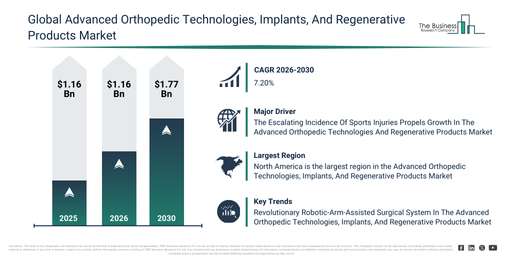
    The market for advanced orthopedic technologies, implants, and regenerative products has experienced robust growth recently. This market is projected to expand from $69.58 billion in 2025 to $74.2 billion in 2026, exhibiting a compound annual growth rate (CAGR) of 6.6%. Historically, this growth was driven by factors such as the increasing occurrence of musculoskeletal disorders, a rise in orthopedic surgical procedures, innovations in implant material science, the establishment of more specialty orthopedic clinics, and enhanced availability of joint replacement operations.

    The advanced orthopedic technologies, implants, and regenerative products market is projected to experience robust expansion over the coming years. By 2030, its size is anticipated to reach $98.14 billion, demonstrating a compound annual growth rate (CAGR) of 7.2%. This anticipated growth is primarily driven by the escalating demand for patient-specific implants, the increasing embrace of biologics within orthopedics, a surge in investments directed towards regenerative medicine research, the broadening scope of robotic-assisted orthopedic surgeries, and improvements in long-term implant outcomes. Concurrently, major developments during this period are expected to include a greater adoption of regenerative orthopedic therapies, the increasing application of advanced implant materials, wider integration of smart orthopedic implants, an expansion of minimally invasive orthopedic procedures, and a heightened emphasis on personalized orthopedic treatments.

    Download A Free Sample Report For Comprehensive Market Insights:

    https://www.thebusinessresearchcompany.com/sample.aspx?id=12682&type=smp

    What Major Growth Factors Are Impacting The Advanced Orthopedic Technologies, Implants, And Regenerative Products Market?

    An increasing occurrence of sports injuries is projected to drive the expansion of the advanced orthopedic technologies, implants, and regenerative products market in upcoming years. These are injuries incurred during engagement in sports or physical exercise, with the potential to affect muscles, bones, ligaments, joints, and tendons, among other bodily structures. The prevalence of sports-related injuries is growing due to increased participation in sports and various physical activities. This trend fuels a greater need for orthopedic technology and regenerative products designed to repair injuries, regenerate tissues, and facilitate quicker healing. As an illustration, according to the U.S. National Safety Council, a US-based public health and safety organization, the count of sports and recreational injuries reached 564,845 in 2024, up from 482,886 injuries in 2023. Consequently, the growing frequency of sports injuries is a key driver for the advanced orthopedic technologies, implants, and regenerative products market.

    What Segment Types Are Included In The Advanced Orthopedic Technologies, Implants, And Regenerative Products Market Analysis?

    The advanced orthopedic technologies, implants, and regenerative products market covered in this report is segmented –

    1) By Type: Implants, Regenerative Products

    2) By Site: Hip And Pelvis, Foot And Ankle, Knee And Thigh, Hand And Wrist, Shoulder, Arm And Elbow, Spine, Craniomaxillofacial

    3) By Application: Hospitals, Ambulatory Surgical Centers, Specialty Clinics, Other Applications

    Subsegments:

    1) By Implants: Joint Implants, Bone Implants, Spine Implants

    2) By Regenerative Products: Stem Cell Products, Platelet-Rich Plasma (PRP) Products, Bone Graft Substitutes

    Which Trends Are Supporting The Evolution Of The Advanced Orthopedic Technologies, Implants, And Regenerative Products Market?

    Leading companies in the advanced orthopedic technologies, implants, and regenerative products market are prioritizing innovative offerings like robotic-arm-assisted surgical systems to better address the requirements of their existing clientele. Such a system is an advanced medical device designed to improve both the precision and overall capability of surgical operations. As an illustration, in March 2023, Stryker Corporation, a US-based medical technology company, launched Mako Total Knee 2.0. This Mako Total Knee 2.0 is a robotic-arm-assisted surgical system developed to enhance the total knee arthroplasty (TKA) surgical procedure by providing an intuitive design, an adaptable workflow, and advanced capabilities, such as a digital tensioner that permits physicians to evaluate knee stability during the procedure without requiring additional instruments. Mako whole Knee 2.0 is built upon the principles of Mako SmartRobotics and its three primary components: 3D CT-based planning, AccuStopTM haptic technology, and insightful data analytics, which have demonstrated superior patient outcomes for whole knee, total hip, and partial knee cases when compared to manual surgery.

    Who Are The Prominent Players Across The Advanced Orthopedic Technologies, Implants, And Regenerative Products Market?

    Major companies operating in the advanced orthopedic technologies, implants, and regenerative products market are Johnson & Johnson, Medtronic PLC, Stryker Corporation, B Braun Medical Inc., Zimmer Biomet Holdings Inc., Smith & Nephew PLC, Arthrex Inc., Integra LifeSciences Holdings Corporation, Lepu Medical Technology Co Ltd., NuVasive Inc., CONMED Corporation, Globus Medical Inc., Wright Medical Group N.V., Bioventus LLC, Orthofix Medical Inc., Alphatec Holdings Inc., Acumed LLC, MiMedx Group Inc., Exactech Inc., Anika Therapeutics Inc., DJO Global Inc., Misonix Inc., Osiris Therapeutics Inc., Bacterin International Holdings Inc., Cerapedics Inc., Histogenics Corporation, Kuros Biosciences AG, Life Spine Inc., Aurora Spine Corporation, Camber Spine Technologies LLC.

    Access The Complete Advanced Orthopedic Technologies, Implants, And Regenerative Products Market Report:

    https://www.thebusinessresearchcompany.com/report/advanced-orthopedic-technologies-implants-and-regenerative-products-global-market-report

    Which Region Is The Primary Market For The Advanced Orthopedic Technologies, Implants, And Regenerative Products Market?

    North America was the largest region in the advanced orthopedic technologies, implants, and regenerative products market in 2025. Asia-Pacific is expected to be the fastest-growing region in the forecast period. The regions covered in the advanced orthopedic technologies, implants, and regenerative products market report are Asia-Pacific, South East Asia, Western Europe, Eastern Europe, North America, South America, Middle East, Africa.

    Access a Customized Advanced Orthopedic Technologies, Implants, And Regenerative Products Market Report for Deeper Competitive Insights

    https://www.thebusinessresearchcompany.com/customise?id=12682&type=smp

    Browse Through More Reports Similar to the Global Advanced Orthopedic Technologies, Implants, And Regenerative Products Market 2026, By The Business Research Company

    Orthopedic Regenerative Surgical Products Market Report 2026

    https://www.thebusinessresearchcompany.com/report/orthopedic-regenerative-surgical-products-global-market-report

    Orthopedic Prosthetics Market Report 2026

    https://www.thebusinessresearchcompany.com/report/orthopedic-prosthetics-global-market-report

    Orthopedic Devices Market Report 2026

    https://www.thebusinessresearchcompany.com/report/orthopedic-devices-global-market-report

    Get in touch with us:

    The Business Research Company: https://www.thebusinessresearchcompany.com/

    Americas: +1 310-496-7795

    Asia: +44 7882 955267 & +91 8897263534

    Europe: +44 7882 955267

    Email us at: marketing@tbrc.info

    Follow us on:

    LinkedIn: https://in.linkedin.com/company/the-business-research-company

    YouTube: https://www.youtube.com/channel/UC24_fI0rV8cR5DxlCpgmyFQ

    Global Market Model: https://www.thebusinessresearchcompany.com/global-market-model
  • Advanced Life Support (ALS) Training Manikins Market Revenue Anticipated To Reach $2.03 Billion By 2030 With 7.4% CAGR

    Advanced Life Support (ALS) Training Manikins Market Revenue Anticipated To Reach $2.03 Billion By 2030 With 7.4% CAGR

    The Business Research Company’s 2026 market reports feature advanced enhancements such as market attractiveness analysis, total addressable market evaluation, company benchmarking matrices, interactive Excel dashboards, expanded supply chain intelligence, emerging startup coverage, and detailed product insights, delivering more actionable and strategically valuable research.

    What Market Size Is Forecasted For The Advanced Life Support (ALS) Training Manikins Market By 2030 Based On Its 2026 Value?

    The advanced life support (als) training manikins market has experienced robust expansion in recent years. The market is projected to expand from $1.42 billion in 2025 to $1.53 billion by 2026, exhibiting a compound annual growth rate (CAGR) of 7.7%. Historically, this growth was influenced by factors such as limited availability of advanced manikins, reliance on basic CPR training tools, increasing hospital-based training programs, rising awareness of emergency care training, and the adoption of manual skill assessment methods.

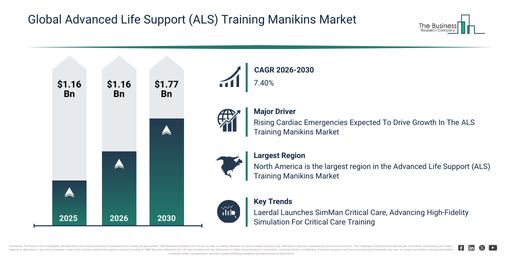
    The advanced life support (als) training manikins market size is expected to show significant growth in the upcoming years. It is forecasted to expand to $2.04 billion by 2030, exhibiting a compound annual growth rate (CAGR) of 7.4%. This anticipated growth during the forecast period can be attributed to the development of high-fidelity simulation manikins, their integration with AR/VR training platforms, the expansion of certification programs for healthcare professionals, increasing investment in medical training centers, and the adoption of connected and intelligent training devices. Dominant trends during this period include the incorporation of realistic anatomical features in manikins, the uptake of multi-age (adult, child, infant) training solutions, the rising use of AED and trauma simulation manikins, the enlargement of hospital and training center programs, and an enhanced focus on skill assessment and certification.

    Download A Free Sample Report For Comprehensive Market Insights:

    https://www.thebusinessresearchcompany.com/sample.aspx?id=19270&type=smp

    What Market Drivers Are Helping Shape The Advanced Life Support (ALS) Training Manikins Market Expansion?

    The increasing occurrence of heart-related emergencies is anticipated to drive expansion in the advanced life support training (ALS) manikins market in the future. These emergencies encompass critical medical situations concerning the heart, including heart attacks, sudden cardiac arrest, or serious arrhythmias, where prompt action is vital to avert fatalities or severe health issues. The growing number of cardiac emergencies is attributed to factors like rising rates of obesity, high blood pressure, diabetes, and lifestyle habits such as unhealthy eating, insufficient physical activity, and smoking. Advanced life support training manikins serve to address cardiac emergencies by replicating real-life scenarios, enabling the practice of vital skills like cardiopulmonary resuscitation (CPR), defibrillation, and advanced cardiac life support techniques, thereby helping healthcare professionals hone their responses to cardiac arrest. For example, in May 2023, data from the Centers for Disease Control and Prevention, a US-based government agency, indicated that more than 695,000 individuals in the US succumbed to heart disease, representing one out of every five deaths. Consequently, the increasing prevalence of cardiac emergencies is a significant factor propelling the growth of the advanced life support training (ALS) manikins market.

    Which Segment Divisions Form The Structure Of The Advanced Life Support (ALS) Training Manikins Market?

    The advanced life support (als) training manikins market covered in this report is segmented –

    1) By Type: Adult, Child, Infant

    2) By Manikin Category: Adult Cardiopulmonary Resuscitation Manikins, Full Body Manikins, Choking Manikins, Injection Simulators, Other Manikin Categories

    3) By Application: Hospital And Clinic, Training Center, Other Applications

    Subsegments:

    1) By Adult: Full-Body Adult Manikins, Half-Body Adult Manikins, Adult CPR Manikins, Adult Trauma Manikins, Adult AED (Automated External Defibrillator) Training Manikins

    2) By Child: Full-Body Child Manikins, Half-Body Child Manikins, Child CPR Manikins, Child Trauma Manikins, Child AED Training Manikins

    3) By Infant: Full-Body Infant Manikins, Half-Body Infant Manikins, Infant CPR Manikins, Infant Trauma Manikins, Infant Airway Management Manikins.

    What Trends Are Affecting The Growth Of The Advanced Life Support (ALS) Training Manikins Market?

    Leading companies within the advanced life support training (ALS) manikins market are concentrating on developing groundbreaking products, such as sophisticated high-fidelity patient simulators, aimed at improving patient care for critical and respiratory life-threatening ailments. These high-fidelity patient simulators represent advanced educational tools capable of replicating authentic physiological reactions and medical scenarios, thereby facilitating an immersive and precise environment for honing clinical skills. An illustrative case occurred in March 2024, when Laerdal Medical AS, a Norway-based healthcare provider, joined forces with IngMar Medical, a US-based medical equipment manufacturer, to unveil SimMan Critical Care. This high-fidelity simulator is specifically engineered for exhaustive critical care and respiratory training. The SimMan Critical Care model delivers broad capabilities for practicing essential patient care situations, encompassing realistic bodily responses like breath sounds, heartbeats, and palpable pulses. It integrates cutting-edge technology for tracking and handling various emergency conditions, including cardiac arrest, respiratory distress, and shock. Furthermore, the manikin provides immediate feedback and is compatible with simulation software to record performance and assist in debriefing sessions.

    Which Companies Form The Competitive Landscape Of The Advanced Life Support (ALS) Training Manikins Market?

    Major companies operating in the advanced life support (als) training manikins market are HealthFirst Medical Corporation, CAE Inc., Ambu A S, Laerdal Medical, Nasco, 3B Scientific, Life-Assist Inc., Gaumard Scientific Company Inc., Medisol International, Simulaids Ltd., Prestan Products, TruCorp Ltd., Simulaids Inc., Zoll Medical Corporation, Simulab Corporation, Prometheus Medical, Jordan Anesthesia, Richmond Products, Harvard Apparatus, GrahamField, Medical Simulation Corporation, Simbionix, Limbs & Things Ltd., BT Inc., Medical-X, Koken Co Ltd., Sakamoto Model Corporation, Yuan Technology Limited, V4EMS Inc., SmartMan Inc., RealityWorks Inc., Adam Rouilly Ltd.

    Access The Complete Advanced Life Support (ALS) Training Manikins Market Report:

    https://www.thebusinessresearchcompany.com/report/advanced-life-support-als-training-manikins-global-market-report

    Which Geographic Region Represents The Largest Advanced Life Support (ALS) Training Manikins Market Share?

    North America was the largest region in the advanced life support (ALS) training manikins’ market in 2025. The regions covered in the advanced life support (als) training manikins market report are Asia-Pacific, South East Asia, Western Europe, Eastern Europe, North America, South America, Middle East, Africa.

    Access a Customized Advanced Life Support (ALS) Training Manikins Market Report for Deeper Competitive Insights

    https://www.thebusinessresearchcompany.com/customise?id=19270&type=smp

    Browse Through More Reports Similar to the Global Advanced Life Support (ALS) Training Manikins Market 2026, By The Business Research Company

    Advanced Driver Assistance Systems Adas Market Report 2026

    https://www.thebusinessresearchcompany.com/report/advanced-driver-assistance-systems-adas-global-market-report

    Advanced Analytics Market Report 2026

    https://www.thebusinessresearchcompany.com/report/advanced-analytics-global-market-report

    Advanced Energy Storage Systems Market Report 2026

    https://www.thebusinessresearchcompany.com/report/advanced-energy-storage-systems-global-market-report

    Get in touch with us:

    The Business Research Company: https://www.thebusinessresearchcompany.com/

    Americas: +1 310-496-7795

    Asia: +44 7882 955267 & +91 8897263534

    Europe: +44 7882 955267

    Email us at: marketing@tbrc.info

    Follow us on:

    LinkedIn: https://in.linkedin.com/company/the-business-research-company

    YouTube: https://www.youtube.com/channel/UC24_fI0rV8cR5DxlCpgmyFQ

    Global Market Model: https://www.thebusinessresearchcompany.com/global-market-model

  • Advanced Drug Delivery Systems Market Outlook Assessing Future Opportunities And Growth Prospects

    Advanced Drug Delivery Systems Market Outlook Assessing Future Opportunities And Growth Prospects

    The Business Research Company’s 2026 market reports feature advanced enhancements such as market attractiveness analysis, total addressable market evaluation, company benchmarking matrices, interactive Excel dashboards, expanded supply chain intelligence, emerging startup coverage, and detailed product insights, delivering more actionable and strategically valuable research.

    How Is The Market Value Of The Advanced Drug Delivery Systems Market Projected To Expand During 2026–2030?

    The advanced drug delivery systems market has experienced robust expansion over the past few years. Projections indicate its size will increase from $285.59 billion in 2025 to $310.15 billion by 2026, exhibiting a compound annual growth rate (CAGR) of 8.6%. This historical growth is attributable to several factors, including the escalation of pharmaceutical research and development endeavors, the increasing incidence of chronic illnesses, innovations in formulation science, the expansion of injectable drug treatments, and a heightened emphasis on therapeutic effectiveness.

    The advanced drug delivery systems market size is projected to experience substantial growth over the next few years. It is expected to expand to $433.56 billion by 2030, demonstrating a compound annual growth rate (CAGR) of 8.7%. This anticipated growth can be attributed to several factors including the increasing demand for personalized medicine, the rising adoption of biologics, the expansion of nanotechnology-based therapies, a growing focus on reducing drug side effects, and increasing investments in advanced pharmaceutical delivery platforms. Significant trends during the forecast period include the increasing adoption of targeted drug delivery technologies, the rising use of nanocarrier-based formulations, a growing demand for controlled release systems, the expansion of biologic and biosimilar delivery solutions, and an enhanced focus on patient-centric drug administration.

    Download A Free Sample Report For Comprehensive Market Insights:

    https://www.thebusinessresearchcompany.com/sample.aspx?id=12683&type=smp

    Which Significant Factors Are Encouraging Growth In The Advanced Drug Delivery Systems Market?

    The expansion of the advanced drug delivery systems market is anticipated to be driven by the rising incidence of chronic conditions. These enduring health issues typically persist for a year or longer, demanding continuous medical attention, limiting daily functions, or both. Several high-risk behaviors contribute to chronic diseases, such as smoking and exposure to passive smoke, inadequate diet, lack of physical activity, and heavy alcohol consumption. Advanced drug delivery systems enable precise targeting of therapeutic agents to specific areas of the body impacted by chronic conditions. This ensures medications reach their intended action site, boosting efficacy and reducing adverse effects. For example, statistics from May 2023, released by The United Nations (UN), a US-based intergovernmental organization dedicated to fostering international cooperation and preserving global peace and security, indicate that chronic illnesses account for seven out of 10 deaths in the US, leading to over 1.7 million American fatalities annually. Consequently, the expanding occurrence of chronic conditions is fueling the expansion of the advanced drug delivery systems market.

    How Are Different Segment Groups Identified Within The Advanced Drug Delivery Systems Market?

    The advanced drug delivery systems market covered in this report is segmented –

    1) By Type: Oral Drug Delivery System, Injection-Based Drug Delivery System, Inhalation Or Pulmonary Drug Delivery System, Transdermal Drug Delivery System, Transmucosal Drug Delivery System, Carrier-Based Drug Delivery System, Other Types

    2) By Carrier Type: Liposomes, Nanoparticles, Microspheres, Other Carrier Types

    3) By Technology: Prodrug, Implants And Intrauterine Devices, Targeted Drug Delivery, Polymeric Drug Delivery, Other Technologies

    4) By Application: Cardiovascular Diseases, Oncology, Urology, Diabetes, CNS (Central Nervous System), Ophthalmology, Inflammatory Diseases, Infections, Other Applications

    5) By End User: Hospitals, Specialized clinics, Clinical Research And Development Centers

    Subsegments:

    1) By Oral Drug Delivery System: Solid Dosage Forms, Liquid Dosage Forms, Novel Oral Delivery Systems

    2) By Injection-Based Drug Delivery System: Autoinjectors, Microneedle-Based Systems

    3) By Inhalation Or Pulmonary Drug Delivery System: Metered-Dose Inhalers (MDIs), Dry Powder Inhalers (DPIs), Nebulizers, Soft Mist Inhalers

    4) By Transdermal Drug Delivery System: Transdermal Patches, Microneedle Patches, Iontophoresis Systems

    5) By Transmucosal Drug Delivery System: Buccal Delivery Systems, Sublingual Delivery Systems, Nasal Delivery Systems

    6) By Carrier-Based Drug Delivery System: Liposomes, Nanoparticles, Dendrimers, Niosomes

    7) By Other Types: Implantable Drug Delivery Systems, Targeted Delivery Systems, Bioadhesive Drug Delivery Systems

    Which Trends Are Influencing The Direction Of The Advanced Drug Delivery Systems Market?

    Companies at the forefront of the advanced drug delivery system market are prioritizing the development of novel solutions, including subcutaneous biologic delivery technologies, to address the growing demand for convenient, rapid, and patient-friendly administration of complex medical treatments. Subcutaneous biologic delivery allows for the high-volume delivery of drugs beneath the skin, offering a less invasive option compared to traditional intravenous infusion. For example, in June 2023, Halozyme Therapeutics, Inc., a US-based biopharmaceutical firm, disclosed the FDA approval of VYVGART Hytrulo with ENHANZE, a groundbreaking subcutaneous formulation intended for generalized myasthenia gravis. This product combines efgartigimod alfa with Halozyme’s recombinant human hyaluronidase PH20 (rHuPH20), facilitating swift, high-volume subcutaneous delivery via a single injection. It effectively reduces infusion time to seconds, boosts patient convenience, supports therapy delivery outside hospital settings, and maintains clinical efficacy comparable to IV administration.

    Who Are The Key Market Participants In The Advanced Drug Delivery Systems Market?

    Major companies operating in the advanced drug delivery systems market are Pfizer Inc., Johnson and Johnson Services Inc., Roche Holding AG, Abbvie Inc., Bayer AG, Novartis AG, AstraZeneca plc, GlaxoSmithKline plc, 3M Company, Medtronic plc, Eli Lilly and Company, Boehringer Ingelheim GmbH, Amgen Inc., Merck Group, Becton Dickinson and Company, Baxter International Inc., Teva Pharmaceutical Industries Ltd., Sanofi S.A., Boston Scientific Corporation, Astellas Pharma Inc., Catalent Inc., Nipro Corporation, AptarGroup Inc., West Pharmaceutical Services Inc., Gerresheimer AG, Insulet Corporation

    Access The Complete Advanced Drug Delivery Systems Market Report:

    https://www.thebusinessresearchcompany.com/report/advanced-drug-delivery-systems-global-market-report

    Which Region Leads The Advanced Drug Delivery Systems Market By Size?

    North America was the largest region in the advanced drug delivery systems market in 2025. Asia-Pacific is expected to be the fastest-growing region in the forecast period. The regions covered in the advanced drug delivery systems market report are Asia-Pacific, South East Asia, Western Europe, Eastern Europe, North America, South America, Middle East, Africa.

    Access a Customized Advanced Drug Delivery Systems Market Report for Deeper Competitive Insights

    https://www.thebusinessresearchcompany.com/customise?id=12683&type=smp

    Browse Through More Reports Similar to the Global Advanced Drug Delivery Systems Market 2026, By The Business Research Company

    Electronic Drug Delivery Systems Market Report 2026

    https://www.thebusinessresearchcompany.com/report/electronic-drug-delivery-systems-global-market-report

    Pharmaceutical Drug Delivery Market Report 2026

    https://www.thebusinessresearchcompany.com/report/pharmaceutical-drug-delivery-global-market-report

    Smart Drug Delivery Systems Market Report 2026

    https://www.thebusinessresearchcompany.com/report/smart-drug-delivery-systems-global-market-report

    Get in touch with us:

    The Business Research Company: https://www.thebusinessresearchcompany.com/

    Americas: +1 310-496-7795

    Asia: +44 7882 955267 & +91 8897263534

    Europe: +44 7882 955267

    Email us at: marketing@tbrc.info

    Follow us on:

    LinkedIn: https://in.linkedin.com/company/the-business-research-company

    YouTube: https://www.youtube.com/channel/UC24_fI0rV8cR5DxlCpgmyFQ

    Global Market Model: https://www.thebusinessresearchcompany.com/global-market-model

  • Advanced Dental Digital And Robotic Solutions Market Industry Forecast Reflecting Growth To $10.95 Billion By 2030

    Advanced Dental Digital And Robotic Solutions Market Industry Forecast Reflecting Growth To $10.95 Billion By 2030

    The Business Research Company’s 2026 market reports feature advanced enhancements such as market attractiveness analysis, total addressable market evaluation, company benchmarking matrices, interactive Excel dashboards, expanded supply chain intelligence, emerging startup coverage, and detailed product insights, delivering more actionable and strategically valuable research.

    What Are The Forecasted Market Size Figures For The Advanced Dental Digital And Robotic Solutions Market In 2026 And 2030?

    The market size for advanced dental digital and robotic solutions has demonstrated robust expansion over recent years. Projections indicate it will grow from $7.41 billion in 2025 to $8.03 billion in 2026, reflecting a compound annual growth rate (CAGR) of 8.3%. Historically, this growth can be ascribed to factors like the demand for precise dental treatments, the rise of cosmetic dentistry, the need for increased dentist productivity, the adoption of digital imaging, and a greater emphasis on patient comfort.

    The advanced dental digital and robotic solutions market size is anticipated to experience robust expansion over the next few years. It is projected to achieve $10.96 billion in 2030, with a compound annual growth rate (CAGR) of 8.1%. The increase during the forecast period is attributable to AI-driven diagnostics expansion, robotic precision demand, digital dental clinics growth, minimally invasive dentistry adoption, and global oral health awareness. Significant trends for the forecast period include the advancement of digital dentistry workflows, the escalating adoption of robotic implantology, the demand for chairside CAD/CAM systems, intensified use of 3D dental imaging, and the broadening of teledentistry platforms.

    Download A Free Sample Report For Comprehensive Market Insights:

    https://www.thebusinessresearchcompany.com/sample.aspx?id=23294&type=smp

    What Core Drivers Are Transforming The Advanced Dental Digital And Robotic Solutions Market?

    The increasing need for minimally invasive procedures is anticipated to drive the expansion of the advanced dental digital and robotic solutions market in the coming years. Minimally invasive procedures are medical interventions conducted via small openings or incisions, leading to less patient trauma and faster recuperation. Their popularity is growing because they offer quicker recovery periods, lower complication risks, and less discomfort, making them more attractive to individuals looking for faster and safer treatment alternatives. These procedures support advanced dental digital and robotic solutions by lessening the requirement for extensive surgical operations and by making treatments more exact and patient-friendly. They boost efficiency by minimizing physical trauma, shortening recovery durations, and enhancing overall treatment results. For example, in January 2025, Synektik SA, a Poland-based testing laboratories company, reported that over 2.2 million procedures were performed globally in 2023 utilizing the da Vinci robotic system. On average, a da Vinci-assisted surgery commences every 16.8 seconds across the world. Consequently, the increasing preference for minimally invasive procedures is propelling the growth of the advanced dental digital and robotic solutions market.

    What Segment Categories Are Evaluated In The Advanced Dental Digital And Robotic Solutions Market Study?

    The advanced dental digital and robotic solutions market covered in this report is segmented –

    1) By Product: Digital Solutions, Robotics

    2) By Application: Implantology, Endodontics, Other Applications

    3) By End-Users: Dental Clinics, Hospitals, Other End-Users

    Subsegments:

    1) By Digital Solutions: Intraoral Scanners, Computer-Aided Design (CAD) Or Computer-Aided Manufacturing (CAM) Systems, Three-Dimensional (3D) Imaging Systems, Artificial Intelligence (AI)-Driven Diagnostic Tools, Digital Impressions, Treatment Planning Software, Teledentistry Platforms

    2) By Robotics: Robot-Assisted Implantology Systems, Robotic Surgery Systems, Robot-Assisted Orthodontic Systems, Robotic Endodontic Systems, Robotic Prosthetics Systems, Surgical Navigation Systems

    What Trends Are Driving Changes In The Advanced Dental Digital And Robotic Solutions Market?

    Leading companies in the advanced dental digital and robotic solutions market are concentrating on developing innovative offerings, such as seamless digital integration solutions, to optimize operational workflows, improve precision, and enhance patient care. Seamless digital integration solutions involve the smooth and efficient linking of various digital technologies and systems to streamline processes, boost accuracy, and improve overall performance in procedures like dental treatments. For instance, in March 2025, Medit Corp. Ltd., a South Korea-based digital dentistry company, unveiled Medit SmartX, an advanced All-on-X solution designed to improve implant workflows. Medit SmartX acquires high-precision three-dimensional (3D) digital impressions through artificial intelligence (AI)-driven intraoral scanning technology, thereby enhancing both accuracy and efficiency. It integrates effortlessly with computer-aided design (CAD) or computer-aided manufacturing (CAM) systems and robotic tools, which streamlines workflows and refines treatment precision in advanced dental solutions.

    Which Organizations Are Operating Within The Advanced Dental Digital And Robotic Solutions Market?

    Major companies operating in the advanced dental digital and robotic solutions market are Henry Schein Inc., Dentsply Sirona, Align Technology Inc., Straumann Group, Planmeca Group, Ivoclar Vivadent, KaVo Kerr, Carestream Dental LLC, Envista Holdings Corporation, 3D Systems Inc., Formlabs Inc., Vatech, Neocis Inc., BEGO GmbH & Co. KG, Zirkonzahn, imes-icore GmbH, X-NAV Technologies, 3Shape A/S, exocad GmbH, Blue Sky Bio, Dental Wings Inc., Pearl AI

    Access The Complete Advanced Dental Digital And Robotic Solutions Market Report:

    https://www.thebusinessresearchcompany.com/report/advanced-dental-digital-and-robotic-solutions-global-market-report

    Which Region Has The Strongest Presence In The Advanced Dental Digital And Robotic Solutions Market?

    North America was the largest region in the advanced dental digital and robotic solutions market in 2025. Asia-Pacific is expected to be the fastest-growing region in the forecast period. The regions covered in the advanced dental digital and robotic solutions market report are Asia-Pacific, South East Asia, Western Europe, Eastern Europe, North America, South America, Middle East, Africa.

    Access a Customized Advanced Dental Digital And Robotic Solutions Market Report for Deeper Competitive Insights

    https://www.thebusinessresearchcompany.com/customise?id=23294&type=smp

    Browse Through More Reports Similar to the Global Advanced Dental Digital And Robotic Solutions Market 2026, By The Business Research Company

    3D Dental Scanners Market Report 2026

    https://www.thebusinessresearchcompany.com/report/3d-dental-scanners-global-market-report

    Dental 3D Scanners Market Report 2026

    https://www.thebusinessresearchcompany.com/report/dental-3d-scanners-global-market-report

    General Dental Devices And Equipment Market Report 2026

    https://www.thebusinessresearchcompany.com/report/general-dental-devices-and-equipment-global-market-report

    Get in touch with us:

    The Business Research Company: https://www.thebusinessresearchcompany.com/

    Americas: +1 310-496-7795

    Asia: +44 7882 955267 & +91 8897263534

    Europe: +44 7882 955267

    Email us at: marketing@tbrc.info

    Follow us on:

    LinkedIn: https://in.linkedin.com/company/the-business-research-company

    YouTube: https://www.youtube.com/channel/UC24_fI0rV8cR5DxlCpgmyFQ

    Global Market Model: https://www.thebusinessresearchcompany.com/global-market-model
  • Adhesion Barriers Market Forecast Analysis Through 2030 With Insights On Industry Expansion

    Adhesion Barriers Market Forecast Analysis Through 2030 With Insights On Industry Expansion

    The Business Research Company’s 2026 market reports feature advanced enhancements such as market attractiveness analysis, total addressable market evaluation, company benchmarking matrices, interactive Excel dashboards, expanded supply chain intelligence, emerging startup coverage, and detailed product insights, delivering more actionable and strategically valuable research.

    How Much Larger Will The Adhesion Barriers Market Become By 2030 Compared To 2026?

    The adhesion barriers market has demonstrated significant growth in recent years. This market is expected to increase from $0.89 billion in 2025 to $0.96 billion in 2026, achieving a compound annual growth rate (CAGR) of 7.1%. The expansion witnessed in previous periods was driven by factors such as the restricted availability of various adhesion barrier types, a reliance on conventional film and gel formulations, an global rise in surgical procedures, increasing awareness regarding postoperative complications, and a strong dependence on hospital-centric applications.

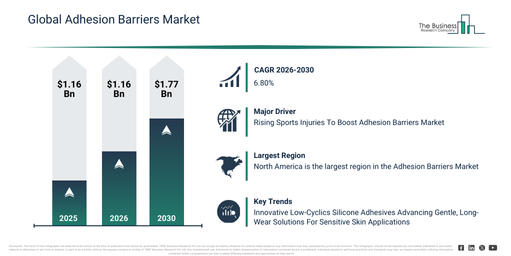
    The adhesion barriers market is projected to experience substantial expansion over the upcoming years. Its valuation is anticipated to reach $1.24 billion by 2030, demonstrating a compound annual growth rate (CAGR) of 6.8%. This growth during the projected timeframe stems from several factors, including the creation of sophisticated hydrogel and thermoreversible barriers, a rise in the use of cross-linked hyaluronic acid products, the proliferation of ambulatory surgical centers, the incorporation of adhesion barriers into orthopedic and cardiovascular surgical procedures, and an increasing commitment to patient-focused postoperative care. Key trends for the forecast period encompass a greater acceptance of collagen and protein-based adhesion barriers, an escalating reliance on synthetic hydrogels and polylactide barriers, the broadening scope of minimally invasive surgical techniques, an uptick in gynecological and abdominal operations, and a concentrated effort on minimizing postoperative complications and improving patient recuperation.

    Download A Free Sample Report For Comprehensive Market Insights:

    https://www.thebusinessresearchcompany.com/sample.aspx?id=19267&type=smp

    Which Growth Factors Are Strengthening The Adhesion Barriers Market Landscape?

    The increasing occurrence of sports-related injuries is anticipated to drive the expansion of the adhesion barriers market in the future. These injuries encompass physical damage incurred during athletic pursuits or physical training. The rise in sports-related injuries stems from various elements like heightened involvement, more intense competitive environments, insufficient preparation, and inadequate recuperation periods. Adhesion barriers find application in sports-related injuries to hinder scar tissue from adhering to adjacent tissues, thereby promoting a more seamless recovery and rehabilitation process. For example, as reported in July 2025 by the Australian Institute of Health and Welfare, an Australia-based government department, Cycling represented the largest share of sports injury hospitalisations in 2023–24, making up 12% (or 7,500 cases) of all such hospitalisations, trailed by Australian rules football (8.7% or 5,400 cases), and soccer (8.6% or 5,300 cases). Consequently, the increasing prevalence of sports-related injuries is set to fuel the growth of the adhesion barriers market.

    How Is The Adhesion Barriers Market Examined Through Segment Analysis?

    The adhesion barriers market covered in this report is segmented –

    1) By Type: Natural Adhesion Barriers, Collagen And Protein, Fibrin, Synthetic Adhesion Barriers, Hyaluronic Acid, Regenerated Cellulose, Polyethylene Glycol

    2) By Formulation: Film Formulations, Gel Formulations, Liquid Formulations

    3) By Application Area Or Surgical Procedure: Gynecological Surgeries, General Or Abdominal Surgeries, Orthopedic Surgeries, Cardiovascular Surgeries, Neurological Surgeries, Urological Surgeries, Reconstructive Surgeries

    4) By End User: Hospitals And Clinics, Ambulatory Surgical Centers, Other End Users

    Subsegments:

    1) By Natural Adhesion Barriers: Collagen-Based Adhesion Barriers, Protein-Based Adhesion Barriers, Fibrin-Based Adhesion Barriers

    2) By Collagen And Protein: Bovine-Derived Collagen Adhesion Barriers, Porcine-Derived Collagen Adhesion Barriers, Human-Derived Protein Adhesion Barriers

    3) By Fibrin: Fibrin Sealant Adhesion Barriers, Fibrin Matrix Adhesion Barriers

    4) By Synthetic Adhesion Barriers: Hydrogels, Thermoreversible Adhesion Barriers, Polylactide Adhesion Barriers, Silicon-Based Adhesion Barriers

    5) By Hyaluronic Acid: Cross-Linked Hyaluronic Acid Adhesion Barriers, Non-Cross-Linked Hyaluronic Acid Adhesion Barriers

    6) By Regenerated Cellulose: Oxidized Regenerated Cellulose Adhesion Barriers, Non-Oxidized Regenerated Cellulose Adhesion Barriers

    7) By Polyethylene Glycol: Hydrophilic Polyethylene Glycol Adhesion Barriers, Polyethylene Glycol Hydrogel Adhesion Barriers

    Which Trends Are Shaping The Adhesion Barriers Market Landscape?

    Leading companies in the adhesion barriers market are prioritizing the development of innovative products, such as low-cyclics silicone soft-skin adhesives, to achieve longer wear times and gentle, atraumatic removal from sensitive skin. A soft-skin adhesive (SSA) is a biocompatible, silicone-based adhesive crafted to adhere firmly to skin for extended periods while minimizing damage or irritation during its removal. For example, in October 2023, DuPont, a US-based chemical company, unveiled its new DuPont Liveo MG 7-9960 Soft Skin Adhesive. This adhesive delivers the strongest peel adhesion in the Liveo SSA family, ensuring secure, long-lasting attachment, high repositionability, enhanced wear performance, excellent conformability, and atraumatic removal, making it suitable for advanced wound dressings and wearable medical devices. The product is non-sensitizing, non-irritating, and non-cytotoxic, offering protection for fragile skin, including that of children, the elderly, or patients with open wounds. Additionally, DuPont allows device manufacturers to customize performance by adjusting the adhesive coat weight to meet specific device design requirements, thereby broadening the adoption of advanced wound care solutions.

    Who Are The Businesses Driving Activity In The Adhesion Barriers Market?

    Major companies operating in the adhesion barriers market are Johnson & Johnson Services Inc., Terumo Corporation, Atrium Medical Corporation, Integra LifeSciences Holdings Corporation, Gunze Industries Co. Ltd., Anika Therapeutics Inc., CG Bio Inc., Seikagaku Corporation, Hangzhou Singclean Medical Products Co. Ltd., FzioMed Inc., MAST Biosurgery Inc., Betatech Medical Ltd., PlantTec Medical GmbH, Actamax Surgical Materials LLC, Arc Medical Devices Inc., CorMatrix Cardiovascular Inc., Innocoll Biotherapeutics N.A. Inc., Leader Biomedical, BiosCompass Inc.

    Access The Complete Adhesion Barriers Market Report:

    https://www.thebusinessresearchcompany.com/report/adhesion-barriers-global-market-report

    Which Region Stands As The Largest Contributor To The Adhesion Barriers Market?

    North America was the largest region in the adhesion barriers market in 2025. Asia-Pacific is expected to be the fastest-growing region in the forecast period. The regions covered in the adhesion barriers market report are Asia-Pacific, South East Asia, Western Europe, Eastern Europe, North America, South America, Middle East, Africa.

    Access a Customized Adhesion Barriers Market Report for Deeper Competitive Insights

    https://www.thebusinessresearchcompany.com/customise?id=19267&type=smp

    Browse Through More Reports Similar to the Global Adhesion Barriers Market 2026, By The Business Research Company

    Crash Barrier Systems Market Report 2026

    https://www.thebusinessresearchcompany.com/report/crash-barrier-systems-global-market-report

    Barrier Resins Market Report 2026

    https://www.thebusinessresearchcompany.com/report/barrier-resins-global-market-report

    Barrier Systems Market Report 2026

    https://www.thebusinessresearchcompany.com/report/barrier-systems-global-market-report

    Get in touch with us:

    The Business Research Company: https://www.thebusinessresearchcompany.com/

    Americas: +1 310-496-7795

    Asia: +44 7882 955267 & +91 8897263534

    Europe: +44 7882 955267

    Email us at: marketing@tbrc.info

    Follow us on:

    LinkedIn: https://in.linkedin.com/company/the-business-research-company

    YouTube: https://www.youtube.com/channel/UC24_fI0rV8cR5DxlCpgmyFQ

    Global Market Model: https://www.thebusinessresearchcompany.com/global-market-model

  • Adaptive Radiotherapy Software Market Growth Outlook Indicating Expansion To $1.36 Billion By 2030

    Adaptive Radiotherapy Software Market Growth Outlook Indicating Expansion To $1.36 Billion By 2030

    The Business Research Company’s 2026 market reports feature advanced enhancements such as market attractiveness analysis, total addressable market evaluation, company benchmarking matrices, interactive Excel dashboards, expanded supply chain intelligence, emerging startup coverage, and detailed product insights, delivering more actionable and strategically valuable research.

    What Growth In Market Value Is Anticipated For The Adaptive Radiotherapy Software Market Between 2026 And 2030?

    The adaptive radiotherapy software market has seen substantial expansion in recent years. It is projected to increase from $0.7 billion in 2025 to $0.81 billion in 2026, exhibiting a compound annual growth rate (CAGR) of 14.3%. Historically, this market growth was propelled by the increasing adoption of image-guided radiotherapy, a rising global incidence of cancer, ongoing advancements in radiation oncology software, the imperative for improved treatment accuracy, and the expansion of radiotherapy centers.

    The adaptive radiotherapy software market is set to experience significant expansion over the next few years. It is forecasted to ascend to a value of $1.36 billion by 2030, exhibiting a compound annual growth rate (CAGR) of 14.0%. This growth during the projection period is primarily driven by the escalating demand for individualized cancer treatment, the incorporation of AI-powered treatment customization, the increasing uptake of cloud-based oncology software, a heightened focus on minimizing radiation toxicity, and substantial investments in advanced oncology infrastructure. Notable trends anticipated in this period encompass adaptive treatment methodologies, image-guided dose optimization, tailored radiation therapy protocols, workflow automation within radiation oncology, and the integration of diverse imaging modalities.

    Download A Free Sample Report For Comprehensive Market Insights:

    https://www.thebusinessresearchcompany.com/sample.aspx?id=28114&type=smp

    What Important Drivers Are Powering The Adaptive Radiotherapy Software Market Growth?

    The increasing incidence of cancer is anticipated to fuel the expansion of the adaptive radiotherapy software market in the future. Cancer cases denote the total count of individuals diagnosed with malignancy within a particular demographic over a specific timeframe. These instances of cancer are increasing among older demographics, primarily because extended lifespans contribute to a greater buildup of genetic mutations, thereby heightening the susceptibility to the illness. Adaptive radiotherapy software aids in cancer therapy by dynamically modifying radiation treatment according to alterations in tumor dimensions, configuration, and patient anatomy. This capability enhances accuracy, optimizes tumor targeting, and reduces harm to healthy cells. For example, as reported by Cancer Australia, an Australian government body, in February 2025, there were 4,641 new pancreatic cancer diagnoses in 2024, comprising 2,414 in males and 2,227 in females. Consequently, the growing prevalence of cancer cases is stimulating the demand within the adaptive radiotherapy software market.

    Which Segment Groups Define The Adaptive Radiotherapy Software Market Landscape?

    The adaptive radiotherapy software market covered in this report is segmented –

    1) By Component: Software, Services

    2) By Deployment Mode: On-Premises, Cloud-Based

    3) By Application: Prostate Cancer, Head And Neck Cancer, Breast Cancer, Lung Cancer, Other Applications

    4) By End User: Hospitals, Cancer Treatment Centers, Research Institutes, Other End-Users

    Subsegments:

    1) By Software: Treatment Planning Software, Workflow Management Software, Imaging And Visualization Software

    2) By Services: Implementation And Integration Services, Maintenance And Consulting Services, Training And Support Services

    What Trends Are Influencing The Adaptive Radiotherapy Software Market Outlook?

    Leading companies in the adaptive radiotherapy software market are focusing on advancing technology, such as AI-powered, adaptive CT-Linac systems, to improve real-time tumor targeting, boost treatment accuracy, and enhance patient outcomes. An AI-powered, adaptive CT-Linac is a radiation therapy system that integrates computed tomography (CT) imaging with a linear accelerator (Linac), utilizing artificial intelligence (AI) to dynamically adjust and optimize radiation delivery in real time, based on changes in tumor size, shape, and position during treatment. As an illustration, in May 2024, Elekta AB, a Sweden-based medication company, launched Evo, which is specifically designed for precise and efficient radiotherapy treatments. Evo is engineered to deliver highly personalized and accurate cancer radiation therapy. It features advanced AI-enhanced imaging, allowing clinicians to visualize tumors with remarkable clarity and adjust treatments either in real time or between sessions. Evo aims to heighten treatment accuracy, decrease side effects, and improve patients’ quality of life, while also enabling clinics to embrace this innovative technology at their preferred speed.

    Which Firms Are Competing In The Adaptive Radiotherapy Software Market?

    Major companies operating in the adaptive radiotherapy software market are Siemens Healthineers AG, Koninklijke Philips N.V., GE HealthCare Technologies Inc., Elekta AB, Shanghai United Imaging Healthcare Co. Ltd., United Imaging Healthcare Co. Ltd., Brainlab AG, Accuray Incorporated, RaySearch Laboratories AB, ViewRay Inc., C-RAD AB, Standard Imaging Inc., LAP GmbH Laser Applikationen, Oncology Systems Limited, DOSIsoft SA, Mirada Medical Ltd., Limbus AI, MagnetTx Oncology Solutions Ltd., Spectronic Medical AB, Akesis Inc.

    Access The Complete Adaptive Radiotherapy Software Market Report:

    https://www.thebusinessresearchcompany.com/report/adaptive-radiotherapy-software-global-market-report

    What Is The Largest Regional Market In The Adaptive Radiotherapy Software Market?

    North America was the largest region in the adaptive radiotherapy software market in 2025. Asia-Pacific is expected to be the fastest-growing region in the forecast period. The regions covered in the adaptive radiotherapy software market report are Asia-Pacific, South East Asia, Western Europe, Eastern Europe, North America, South America, Middle East, Africa.

    Access a Customized Adaptive Radiotherapy Software Market Report for Deeper Competitive Insights

    https://www.thebusinessresearchcompany.com/customise?id=28114&type=smp

    Browse Through More Reports Similar to the Global Adaptive Radiotherapy Software Market 2026, By The Business Research Company

    Single Dose Radiotherapy Services Market Report 2026

    https://www.thebusinessresearchcompany.com/report/single-dose-radiotherapy-services-global-market-report

    Image Guided Radiation Therapy Market Report 2026

    https://www.thebusinessresearchcompany.com/report/image-guided-radiation-therapy-global-market-report

    Radiation Dose Management Market Report 2026

    https://www.thebusinessresearchcompany.com/report/radiation-dose-management-global-market-report

    Get in touch with us:

    The Business Research Company: https://www.thebusinessresearchcompany.com/

    Americas: +1 310-496-7795

    Asia: +44 7882 955267 & +91 8897263534

    Europe: +44 7882 955267

    Email us at: marketing@tbrc.info

    Follow us on:

    LinkedIn: https://in.linkedin.com/company/the-business-research-company

    YouTube: https://www.youtube.com/channel/UC24_fI0rV8cR5DxlCpgmyFQ

    Global Market Model: https://www.thebusinessresearchcompany.com/global-market-model

  • Global Acute Care Syndromic Testing Market Anticipated To Grow To $8.29 Billion By 2030 At 12.5% CAGR

    Global Acute Care Syndromic Testing Market Anticipated To Grow To $8.29 Billion By 2030 At 12.5% CAGR

    The Business Research Company’s 2026 market reports feature advanced enhancements such as market attractiveness analysis, total addressable market evaluation, company benchmarking matrices, interactive Excel dashboards, expanded supply chain intelligence, emerging startup coverage, and detailed product insights, delivering more actionable and strategically valuable research.

    What Is The Expected Market Value Outlook For The Acute Care Syndromic Testing Market Through 2030?

    The acute care syndromic testing market has demonstrated rapid expansion in recent years. This market is projected to grow from $4.59 billion in 2025 to $5.17 billion in 2026, at a compound annual growth rate (CAGR) of 12.8%. The historical growth can be attributed to several factors, including the demand for emergency infection diagnosis, the expansion of hospital ICUs, initiatives for outbreak preparedness, the adoption of molecular diagnostics, and the optimization of critical care workflows.

    The acute care syndromic testing market size is predicted to experience swift growth over the upcoming period. It is expected to expand to $8.3 billion by 2030, achieving a compound annual growth rate (CAGR) of 12.5%. This projected increase is driven by elements such as AI-enabled syndromic panels, the broadening of emergency testing, antimicrobial stewardship initiatives, point-of-care molecular systems, and a sharpened focus on pandemic preparedness. Significant trends expected during this forecast include rapid multiplex pathogen detection, molecular testing within emergency departments, multi-disease panels utilizing single samples, enhanced clinical decision support, and a reduction in diagnostic turnaround time.

    Download A Free Sample Report For Comprehensive Market Insights:

    https://www.thebusinessresearchcompany.com/sample.aspx?id=21078&type=smp

    Which Major Factors Are Contributing To The Development Of The Acute Care Syndromic Testing Market?

    The rising occurrence of infectious diseases is anticipated to stimulate the acute care syndromic testing market moving forward. Infectious diseases are illnesses stemming from detrimental microorganisms such as bacteria, viruses, fungi, or parasites, which possess the ability to spread between individuals, animals, or through the environment. The increasing prevalence of infectious diseases is fueled by factors including population growth, urbanization, international travel, antimicrobial resistance, and climate change, thereby amplifying the necessity for effective prevention and treatment. Acute care syndromic testing is employed in infectious diseases to rapidly identify pathogens and co-infections through multiplex molecular diagnostics, facilitating precise treatment decisions. For instance, in February 2024, according to the Health Security Agency, a UK-based government agency, week 4 of 2024 saw the influenza positivity rate climb to 16.6%, an increase from 14.0% the previous week. Consultations for influenza-like illness (ILI) also rose, reaching 9.8 per 100,000 people, compared to 7.5 per 100,000 in the prior week. Additionally, influenza hospitalizations ascended to 7.63 per 100,000, up from 5.12 per 100,000 the week before. Thus, the escalating incidence of infectious diseases is a key driver for the acute care syndromic testing market.

    What Key Segment Areas Are Included In The Acute Care Syndromic Testing Market Assessment?

    The acute care syndromic testing market covered in this report is segmented –

    1) By Disease Type: Respiratory Diseases, Gastrointestinal Diseases, Genitourinary Diseases, Tropical Diseases, Other Disease Types

    2) By Sample Type: Blood, Urine, Biofluids, Stool, Swabs, Other Sample Types

    3) By Target: Bacteria, Viruses, Fungi, Parasites

    4) By End User: Hospitals, Clinical And Diagnostic Laboratories, Research And Academic Institutions, Other End Users

    Subsegments:

    1) By Respiratory Diseases: Influenza, Respiratory Syncytial Virus (RSV), COVID-19, Tuberculosis, Other Respiratory Diseases

    2) By Gastrointestinal Diseases: Clostridium Difficile Infection, Norovirus, Rotavirus, Salmonella, Other Gastrointestinal Diseases

    3) By Genitourinary Diseases: Urinary Tract Infections (UTIs), Sexually Transmitted Infections (STIs), Vaginal Infections, Other Genitourinary Diseases

    4) By Tropical Diseases: Malaria, Dengue, Chikungunya, Zika Virus, Other Tropical Diseases

    5) By Other Disease Types: Meningitis, Sepsis, Other Emerging Infectious Diseases

    Which Trends Are Expected To Shape The Acute Care Syndromic Testing Market?

    Major companies within the acute care syndromic testing market are concentrating on technological progress, particularly multiplex real-time polymerase chain reaction (PCR) technology, to improve diagnostic accuracy, facilitate rapid pathogen detection, streamline laboratory workflows, decrease turnaround time, and better patient outcomes via precise and prompt treatment. Multiplex real-time PCR technology represents a sophisticated molecular diagnostic approach that simultaneously identifies and quantifies several pathogens or genetic targets in a single PCR reaction, boosting the efficiency and accuracy of disease diagnosis. For example, in April 2023, QIAGEN N.V., a Netherlands-based biotechnology research company, launched the QIAstat-Dx syndromic testing solution in Japan, which includes a SARS-CoV-2 respiratory panel that can detect over 20 pathogens from a single sample. Utilizing multiplex real-time PCR technology, this system delivers quick results with minimal labor in contrast to individual PCR assays. The system is available in over 100 countries, thereby increasing the worldwide accessibility of syndromic testing.

    Who Are The Major Companies Operating In The Acute Care Syndromic Testing Market?

    Major companies operating in the acute care syndromic testing market are Siemens Healthineers AG, F. Hoffmann-La Roche Ltd, Thermo Fisher Scientific Inc., Danaher Corporation, Becton Dickinson and Company, Seegene Inc., bioMérieux SA, Sysmex Corporation, Bio-Rad Laboratories Inc., QIAGEN N.V., Werfen, DiaSorin S.p.A., Quidel Corporation, Luminex Corporation, Biocartis NV, Microbiologics Inc., QuantuMDx Group Ltd., Curetis GmbH by OpGen Inc., Genetic Signatures Ltd., Applied BioCode Inc.

    Access The Complete Acute Care Syndromic Testing Market Report:

    https://www.thebusinessresearchcompany.com/report/acute-care-syndromic-testing-global-market-report

    Which Region Contributes The Most To The Acute Care Syndromic Testing Market?

    North America was the largest region in the acute care syndromic testing market in 2025. The regions covered in the acute care syndromic testing market report are Asia-Pacific, South East Asia, Western Europe, Eastern Europe, North America, South America, Middle East, Africa.

    Access a Customized Acute Care Syndromic Testing Market Report for Deeper Competitive Insights

    https://www.thebusinessresearchcompany.com/customise?id=21078&type=smp

    Browse Through More Reports Similar to the Global Acute Care Syndromic Testing Market 2026, By The Business Research Company

    Tele Intensive Care Market Report 2026

    https://www.thebusinessresearchcompany.com/report/tele-intensive-care-global-market-report

    Severe Acute Respiratory Syndrome Treatment Market Report 2026

    https://www.thebusinessresearchcompany.com/report/severe-acute-respiratory-syndrome-treatment-global-market-report

    Tele Intensive Care Unit Market Report 2026

    https://www.thebusinessresearchcompany.com/report/tele-intensive-care-unit-global-market-report

    Get in touch with us:

    The Business Research Company: https://www.thebusinessresearchcompany.com/

    Americas: +1 310-496-7795

    Asia: +44 7882 955267 & +91 8897263534

    Europe: +44 7882 955267

    Email us at: marketing@tbrc.info

    Follow us on:

    LinkedIn: https://in.linkedin.com/company/the-business-research-company

    YouTube: https://www.youtube.com/channel/UC24_fI0rV8cR5DxlCpgmyFQ

    Global Market Model: https://www.thebusinessresearchcompany.com/global-market-model
  • Active Implantable Medical Devices Market Future Analysis Covering Industry Shifts And Growth Potential

    Active Implantable Medical Devices Market Future Analysis Covering Industry Shifts And Growth Potential

    The Business Research Company’s 2026 market reports feature advanced enhancements such as market attractiveness analysis, total addressable market evaluation, company benchmarking matrices, interactive Excel dashboards, expanded supply chain intelligence, emerging startup coverage, and detailed product insights, delivering more actionable and strategically valuable research.

    How Will The Market Value Of The Active Implantable Medical Devices Market Increase Between 2026 And 2030?

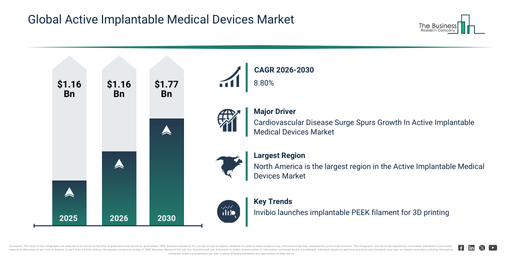
    The active implantable medical devices market has experienced robust growth in recent years. It is projected to expand from $27.95 billion in 2025 to $30.51 billion in 2026, at a compound annual growth rate (CAGR) of 9.1%. This historical growth can be attributed to the increasing prevalence of cardiovascular and neurological disorders, the early adoption of pacemakers and neurostimulators, advancements in battery technologies, improvements in implant biocompatibility, and a growing familiarity among clinicians with implantable systems.

    The active implantable medical devices market size is anticipated to experience substantial growth over the coming years. This market is projected to reach $42.81 billion by 2030, demonstrating a compound annual growth rate (CAGR) of 8.8%. Factors contributing to this growth during the forecast period include the expansion of remote patient monitoring solutions, an increasing demand for personalized implantable therapies, the growing integration of AI-enabled diagnostics, an expanding aging population needing chronic care, and advancements in wireless power and communication technologies. Key trends expected over the forecast period encompass the increasing integration of smart and connected implantable devices, a rising adoption of miniaturized electronic components, the growing utilization of data-driven therapeutic monitoring, the expansion of long-term implantable therapies, and an enhanced focus on device longevity and reliability.

    Download A Free Sample Report For Comprehensive Market Insights:

    https://www.thebusinessresearchcompany.com/sample.aspx?id=8938&type=smp

    What Key Growth Drivers Are Influencing The Active Implantable Medical Devices Market?

    The active implantable medical devices market is projected to expand significantly due to a growing prevalence of cardiovascular diseases. Cardiovascular disease (CVD) encompasses conditions impacting the heart or blood vessels, commonly linked to the development of fatty deposits within arteries (atherosclerosis) and a heightened risk of blood clot formation. These active implantable medical devices serve to regulate or monitor abnormal heart rhythms in individuals experiencing particular heart rhythm disorders or heart failure. An expanding elderly population has also contributed to the demand for active implantable medical devices. Illustratively, data from September 2025 by the British Heart Foundation, a UK charity, indicates that over 7.6 million people in the UK, comprising more than 4 million men and over 3.6 million women, are living with cardiovascular disease. Forecasts suggest this figure could increase by approximately 1 million by 2030 and about 2 million by 2040, primarily driven by an aging population and improved survival rates. Consequently, the escalating incidence of cardiovascular diseases is a primary catalyst for the growth in the active implantable medical devices market.

    How Is Segment Classification Applied In The Active Implantable Medical Devices Market?

    The active implantable medical devices market covered in this report is segmented –

    1) By Product Type: Cardiac Pacemakers, Implantable Cardioverter Defibrillators (ICD), Nerve Simulators, Cochlear Implants, Ventricular Assist Devices, Other Products

    2) By Application: Cardiovascular, Neurological, Hearing Impairment, Other Applications

    3) By End User: Hospitals, Specialty Clinics, Ambulatory Surgical Centers

    Subsegments:

    1) By Cardiac Pacemakers: Single Chamber Pacemakers, Dual Chamber Pacemakers, Biventricular Pacemakers

    2) By Implantable Cardioverter Defibrillators (ICD): Transvenous ICDs, Subcutaneous ICDs

    3) By Nerve Stimulators: Spinal Cord Stimulators, Peripheral Nerve Stimulators, Deep Brain Stimulators

    4) By Cochlear Implants: Single-Electrode Cochlear Implants, Multichannel Cochlear Implants

    5) By Ventricular Assist Devices: Left Ventricular Assist Devices (LVAD), Right Ventricular Assist Devices (RVAD), Bi-Ventricular Assist Devices (BiVAD)

    6) By Other Products: Neurostimulators for Pain Management, Implantable Drug Delivery Systems, Implantable Blood Pressure Monitors

    What Trends Are Affecting The Active Implantable Medical Devices Market Dynamics?

    Leading companies within the active implantable medical device market are prioritizing technological innovations, such as implantable PEEK filament, to enhance customization, improve patient outcomes, and streamline production processes. This specialized implantable PEEK filament is a material crafted for creating medical implants utilizing additive manufacturing techniques. For instance, in March 2023, Invibio, a U.K.-based provider of high-performance implantable biomaterials, launched PEEK-OPTIMA AM filament. PEEK-OPTIMA AM filament is composed of implantable polyetheretherketone (PEEK) filament, recognized for its biocompatibility and mechanical strength, making it well-suited for implantable medical devices. This new filament is optimized for fused filament fabrication (FFF) and aims to improve the production of medical devices. Its design is specifically tailored for 3D printing applications in the medical sector.

    Which Companies Are Influencing The Active Implantable Medical Devices Market?

    Major companies operating in the active implantable medical devices market are Medtronic plc, Abbott Laboratories, Boston Scientific Corporation, BIOTRONIK SE & Co KG, LivaNova PLC, Cochlear Limited, MED-EL Medical Electronics, Sonova Holding AG, NeuroPace Inc, NEVRO Corp, Axonics Inc, Aleva Neurotherapeutics SA, MicroTransponder Inc, Shree Pacetronix, Berlin Heart GmbH, Jarvik Heart Inc, Blackrock Neurotech, Nurotron Biotechnology Co Ltd, CARMAT SA, Precision Neuroscience, Pins Medical, Lepu Medical Technology Co Ltd, LifeTech Scientific

    Access The Complete Active Implantable Medical Devices Market Report:

    https://www.thebusinessresearchcompany.com/report/active-implantable-medical-devices-global-market-report

    Which Regional Market Leads The Active Implantable Medical Devices Market?

    North America was the largest region in the active implantable medical devices market in 2025. North America is expected to be the fastest-growing region in the forecast period. The regions covered in the active implantable medical devices market report are Asia-Pacific, South East Asia, Western Europe, Eastern Europe, North America, South America, Middle East, Africa.

    Access a Customized Active Implantable Medical Devices Market Report for Deeper Competitive Insights

    https://www.thebusinessresearchcompany.com/customise?id=8938&type=smp

    Browse Through More Reports Similar to the Global Active Implantable Medical Devices Market 2026, By The Business Research Company

    Smart Implants Market Report 2026

    https://www.thebusinessresearchcompany.com/report/smart-implants-global-market-report

    Implantable Drug Delivery Devices Market Report 2026

    https://www.thebusinessresearchcompany.com/report/implantable-drug-delivery-devices-global-market-report

    Microelectronic Medical Implants Market Report 2026

    https://www.thebusinessresearchcompany.com/report/microelectronic-medical-implants-global-market-report

    Get in touch with us:

    The Business Research Company: https://www.thebusinessresearchcompany.com/

    Americas: +1 310-496-7795

    Asia: +44 7882 955267 & +91 8897263534

    Europe: +44 7882 955267

    Email us at: marketing@tbrc.info

    Follow us on:

    LinkedIn: https://in.linkedin.com/company/the-business-research-company

    YouTube: https://www.youtube.com/channel/UC24_fI0rV8cR5DxlCpgmyFQ

    Global Market Model: https://www.thebusinessresearchcompany.com/global-market-model