Category: Medical Equipment

  • 3D Printed Medical Devices Market Expected To Witness Revenue Growth Toward $8.83 Billion By 2030

    3D Printed Medical Devices Market Expected To Witness Revenue Growth Toward $8.83 Billion By 2030

    The Business Research Company’s 2026 market reports feature advanced enhancements such as market attractiveness analysis, total addressable market evaluation, company benchmarking matrices, interactive Excel dashboards, expanded supply chain intelligence, emerging startup coverage, and detailed product insights, delivering more actionable and strategically valuable research.

    How Will The Market Size Of The 3D Printed Medical Devices Market Progress Through 2030?

    The 3D printed medical devices market has observed swift growth in recent years. This market is expected to expand from $4.1 billion in 2025 to $4.83 billion in 2026, achieving a compound annual growth rate (CAGR) of 17.7%. The expansion witnessed in the past can be attributed to several factors such as the rising demand for tailored medical solutions, the initial clinical acceptance of printed surgical instruments, enhancements in medical imaging to print workflows, intensified academic research, and the presence of certified printing systems.

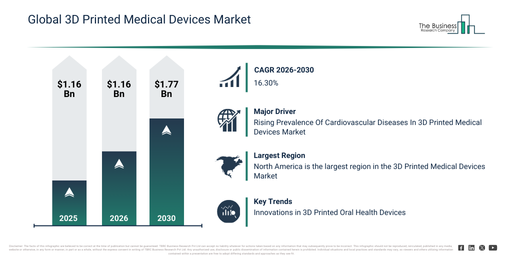
    The 3D printed medical devices market size is anticipated to experience substantial growth in the coming years. It is projected to expand to $8.83 billion by 2030, achieving a compound annual growth rate (CAGR) of 16.3%. This projected growth within the forecast period is attributable to several factors, including the expansion of point-of-care manufacturing models, increasing regulatory clarity for printed medical devices, escalating investments in digital healthcare infrastructure, a heightened demand for quicker device development cycles, and advancements in bioprinting and tissue engineering. Prominent trends expected during this period encompass the increasing adoption of custom medical device fabrication, a growing utilization of multi-material printing technologies, an expanding integration of software-driven design platforms, the proliferation of on-demand medical device production, and an intensified focus on rapid prototyping and validation.

    Download A Free Sample Report For Comprehensive Market Insights:

    https://www.thebusinessresearchcompany.com/sample.aspx?id=2503&type=smp

    What Core Drivers Are Transforming The 3D Printed Medical Devices Market?

    The increasing incidence of cardiovascular diseases is anticipated to drive expansion in the 3D printed medical device market in the future. Cardiovascular diseases (CVDs) encompass a category of conditions impacting the heart and blood vessels, also identified as heart ailments or circulatory disorders. For cardiovascular diseases, 3D printed medical devices are utilized to produce bespoke cardiac models derived from medical imaging information, including computed tomography (CT) scans and magnetic resonance imaging (MRI), serving as treatment approaches. As an illustration, figures from September 2025, supplied by the British Heart Foundation, a charity located in the UK, reveal that over 7.6 million individuals throughout the UK—comprising more than 4 million men and over 3.6 million women—are currently afflicted with cardiovascular disease. Furthermore, forecasts suggest that, influenced by an aging populace and better survival statistics, the count of those affected could escalate by approximately 1 million by 2030 and by around 2 million by 2040. Consequently, the growing occurrence of cardiovascular diseases is fueling the development of the 3D printed medical device market.

    How Is The 3D Printed Medical Devices Market Examined Through Segment Analysis?

    The 3D printed medical devices market covered in this report is segmented –

    1) By Type: Implants, Surgical instruments, Prosthetics, Tissue engineering devices

    2) By Raw Material: Plastics, Biomaterial inks, Metals and Alloys

    3) By Technology: Fused Deposition Modelling, Digital Light Processing, Stereolithography, Selective Laser melting

    4) By Application: Orthopedic, Spinal, Dental, Hearing Aids, Other Applications

    5) By End User: Hospitals, Other End Users

    Subsegments:

    1) By Implants: Orthopedic Implants, Dental Implants, Cranial Implants

    2) By Surgical Instruments: Customized Surgical Tools, 3D Printed Guides And Templates

    3) By Prosthetics: Limb Prosthetics, Facial Prosthetics

    4) By Tissue Engineering Devices: Scaffolds, Bioprinted Tissues

    Which Trends Are Influencing The Direction Of The 3D Printed Medical Devices Market?

    Leading firms within the 3D printed medical devices market are prioritizing the launch of novel offerings, including oral health devices, crafted to enhance dental care through tailored patient solutions. These oral health devices encompass items precisely engineered for addressing dental problems, from their prevention and diagnosis to their treatment. This category includes 3D-printed aligners, dentures, and surgical guides, all of which contribute to greater patient comfort and precision during dental interventions. An illustrative example occurred in January 2024 when Proclaim, a US-based company, unveiled its Custom-Jet Oral Health System. This innovative Custom-Jet Oral Health System incorporates a 3D printed mouthpiece, engineered to eradicate detrimental bacteria, notably P.Gingivalis, within a mere seven seconds. Clinical evidence supports this advanced device’s efficacy in boosting oral health, leading to a notable decrease in gum disease indicators and an improvement in general systemic well-being.

    Which Organizations Are Operating Within The 3D Printed Medical Devices Market?

    Major companies operating in the 3d printed medical devices market are 3D Systems Corporation, Stratasys Ltd, Materialise NV, EOS GmbH Electro Optical Systems, Renishaw plc, SLM Solutions Group AG, Arcam AB, Concept Laser GmbH, EnvisionTEC Inc, Carbon Inc, Formlabs Inc, Oxford Performance Materials Inc, Organovo Holdings Inc, Cyfuse Biomedical KK, Bio3D Technologies Pte Ltd, FabRx Ltd, Nano3D Biosciences Inc, Aspect Biosystems Ltd, Cellink AB, 3T RPD Ltd

    Access The Complete 3D Printed Medical Devices Market Report:

    https://www.thebusinessresearchcompany.com/report/3d-printed-medical-devices-global-market-report

    What Is The Largest Regional Market In The 3D Printed Medical Devices Market?

    North America was the largest region in the 3D printed medical devices market in 2025. Western Europe was the second largest region in the global 3D printed medical devices market report. The regions covered in the 3D printed medical devices market report are Asia-Pacific, South East Asia, Western Europe, Eastern Europe, North America, South America, Middle East, Africa.

    Access a Customized 3D Printed Medical Devices Market Report for Deeper Competitive Insights

    https://www.thebusinessresearchcompany.com/customise?id=2503&type=smp

    Browse Through More Reports Similar to the Global 3D Printed Medical Devices Market 2026, By The Business Research Company

    3D Printing In Healthcare Market Report 2026

    https://www.thebusinessresearchcompany.com/report/3d-printing-in-healthcare-global-market-report

    3D Printed Implants Market Report 2026

    https://www.thebusinessresearchcompany.com/report/3d-printed-implants-global-market-report

    3D Printed Wearables Market Report 2026

    https://www.thebusinessresearchcompany.com/report/3d-printed-wearables-global-market-report

    Get in touch with us:

    The Business Research Company: https://www.thebusinessresearchcompany.com/

    Americas: +1 310-496-7795

    Asia: +44 7882 955267 & +91 8897263534

    Europe: +44 7882 955267

    Email us at: marketing@tbrc.info

    Follow us on:

    LinkedIn: https://in.linkedin.com/company/the-business-research-company

    YouTube: https://www.youtube.com/channel/UC24_fI0rV8cR5DxlCpgmyFQ

    Global Market Model: https://www.thebusinessresearchcompany.com/global-market-model
  • 3D Printed Implants Market Industry Outlook 2026–2030 Highlighting Growth Momentum And Market Trends

    3D Printed Implants Market Industry Outlook 2026–2030 Highlighting Growth Momentum And Market Trends

    The Business Research Company’s 2026 market reports feature advanced enhancements such as market attractiveness analysis, total addressable market evaluation, company benchmarking matrices, interactive Excel dashboards, expanded supply chain intelligence, emerging startup coverage, and detailed product insights, delivering more actionable and strategically valuable research.

    What Is The Expected Market Size Of The 3D Printed Implants Market In 2026 And How Much Will It Reach By 2030?

    The 3D printed implants market has seen rapid expansion in recent years. It is anticipated to increase from $3.9 billion in 2025 to $4.64 billion in 2026, achieving a compound annual growth rate (CAGR) of 18.9%. Historical growth in this market can be attributed to the rising incidence of orthopedic and dental disorders, early adoption of additive manufacturing in healthcare, improvements in medical-grade 3D printing materials, increasing surgeon acceptance of customized implants, and regulatory approvals for printed implants.

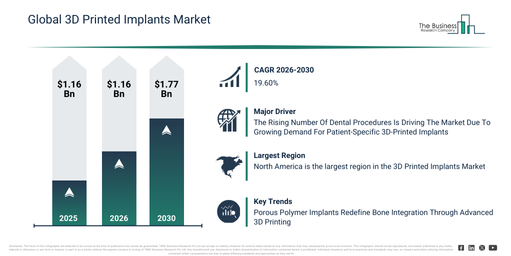
    The 3D printed implants market size is poised for substantial expansion over the coming years. This sector is anticipated to grow to $9.51 billion in 2030, driven by a robust compound annual growth rate (CAGR) of 19.6%. The anticipated market surge can be attributed to the escalating demand for personalized healthcare solutions, the increasing number of cranio-maxillofacial and orthopedic surgeries, greater investments in biocompatible materials, the rising adoption of digital twin technologies in implant design, and ongoing advancements in high-resolution 3D printing systems. Prominent trends observed within this forecast period encompass the wider embrace of patient-specific implant designs, the growing application of advanced metal and polymer printing materials, the deeper integration of digital surgical planning, the expansion into complex anatomical implant applications, and an intensified focus on enhancing implant precision and fit.

    Download A Free Sample Report For Comprehensive Market Insights:

    https://www.thebusinessresearchcompany.com/sample.aspx?id=2460&type=smp

    Which Growth Factors Are Strengthening The 3D Printed Implants Market Landscape?

    The increasing volume of dental treatments is anticipated to drive the expansion of the 3D-printed implants market in the future. These procedures encompass medical interventions and care provided by dental professionals, including dentists and dental hygienists, aimed at diagnosing, preventing, or addressing diverse oral health conditions and problems. This surge in dental treatments is fueling the demand for customized, patient-tailored 3D-printed implants, such as crowns, bridges, and prosthetic devices, engineered to perfectly fit an individual’s distinct dental structure. As an illustration, in November 2024, data from the NHS Business Services Authority (NHSBSA), a UK-based Special Health Authority, indicated that dental services provided 34 million treatment courses—a 4.3% increase compared to 2022/23. Overall activity climbed by 3.4% to 73 million units, with 18 million adults attending appointments over the 24 months leading up to March 2024, and 6.6 million children seen in the 12 months ending March 2024. Furthermore, 31% of adult treatments included a scale and polish. Consequently, the growing application of dental procedures is propelling the expansion of the 3D-printed implants market.

    Which Segment Groups Define The 3D Printed Implants Market Landscape?

    The 3D printed implants market covered in this report is segmented –

    1) By Implantation Technology: Laser Beam Melting, Electronic Beam Melting

    2) By Application: Dental, Orthopedic, Cranio-maxillofacial

    3) By End Users: Medical And Surgical Centers, Medical Institution

    Subsegments:

    1) By Laser Beam Melting (LBM): Selective Laser Melting (SLM), Direct Metal Laser Sintering (DMLS)

    2) By Electronic Beam Melting (EBM): Vacuum EBM, Atmospheric EBM

    What Trends Are Driving Changes In The 3D Printed Implants Market?

    Prominent companies within the 3D printed implants market are prioritizing the creation of advanced products, including porous PEEK implants, to foster better bone integration and achieve superior clinical outcomes in orthopedic and spinal interventions. A porous PEEK implant represents an additively manufactured, polymer-based device, intentionally designed with interconnected porous structures to encourage biological ingrowth while sustaining mechanical attributes consistent with human bone. As an illustration, in September 2024, Nvision Biomedical Technologies, a US-based medical device and implant manufacturer, disclosed that the U.S. Food and Drug Administration (FDA) had cleared its inaugural 3D-printed PEEK interbody system, crafted from PEEK-OPTIMA. This system incorporates an additively manufactured porous architecture, specifically engineered to encourage multidirectional bone ingrowth and strengthen implant fixation during cervical and lumbar spinal fusion. Additionally, it delivers mechanical performance akin to natural bone and improved radiolucency, empowering surgeons to more precisely monitor fusion progression and lessen the likelihood of implant subsidence.

    Who Are The Businesses Driving Activity In The 3D Printed Implants Market?

    Major companies operating in the 3d printed implants market are Johnson & Johnson, Medtronic plc, Stryker Corporation, Zimmer Biomet Holdings Inc, Lima Corporation, Smith & Nephew plc, Globus Medical Inc, Exactech Inc, KLS Martin Group, Materialise NV, Xilloc Medical B V, 3D LifePrints Ltd, Oxford Performance Materials, Cyfuse Medical, Cyfuse Biomedical K K, SINTX Technologies Inc, restor3d Inc, Additive Orthopaedics Inc, Conformis Inc, Anatomics Pty Ltd

    Access The Complete 3D Printed Implants Market Report:

    https://www.thebusinessresearchcompany.com/report/3d-printed-implants-global-market-report

    Which Region Contributes The Most To The 3D Printed Implants Market?

    North America was the largest region in the 3D printed medical implants market in 2025. Asia-Pacific was the second-largest region in the global 3D printed medical implants market. The regions covered in the 3D printed implants market report are Asia-Pacific, South East Asia, Western Europe, Eastern Europe, North America, South America, Middle East, Africa.

    Access a Customized 3D Printed Implants Market Report for Deeper Competitive Insights

    https://www.thebusinessresearchcompany.com/customise?id=2460&type=smp

    Browse Through More Reports Similar to the Global 3D Printed Implants Market 2026, By The Business Research Company

    3D Printed Prosthetics Market Report 2026

    https://www.thebusinessresearchcompany.com/report/3d-printed-prosthetics-global-market-report

    3D Printed Medical Devices Market Report 2026

    https://www.thebusinessresearchcompany.com/report/3d-printed-medical-devices-global-market-report

    3D Printing In Healthcare Market Report 2026

    https://www.thebusinessresearchcompany.com/report/3d-printing-in-healthcare-global-market-report

    Get in touch with us:

    The Business Research Company: https://www.thebusinessresearchcompany.com/

    Americas: +1 310-496-7795

    Asia: +44 7882 955267 & +91 8897263534

    Europe: +44 7882 955267

    Email us at: marketing@tbrc.info

    Follow us on:

    LinkedIn: https://in.linkedin.com/company/the-business-research-company

    YouTube: https://www.youtube.com/channel/UC24_fI0rV8cR5DxlCpgmyFQ

    Global Market Model: https://www.thebusinessresearchcompany.com/global-market-model
  • 3D Orthopedics/Prosthetics Market Growth Forecast With Analysis Of Industry Progress Through 2030

    3D Orthopedics/Prosthetics Market Growth Forecast With Analysis Of Industry Progress Through 2030

    The Business Research Company’s 2026 market reports feature advanced enhancements such as market attractiveness analysis, total addressable market evaluation, company benchmarking matrices, interactive Excel dashboards, expanded supply chain intelligence, emerging startup coverage, and detailed product insights, delivering more actionable and strategically valuable research.

    What Market Size Is Forecasted For The 3D Orthopedics/Prosthetics Market By 2030 Based On Its 2026 Value?

    Recently, the 3D orthopedics/prosthetics market has demonstrated robust growth. It is projected to expand from $3.55 billion in 2025 to $3.75 billion in 2026, registering a compound annual growth rate (CAGR) of 5.5%. This historical expansion is primarily driven by factors such as the increasing incidence of limb loss and orthopedic injuries, advancements in additive manufacturing technologies, growing rehabilitation service availability, rising acceptance of prosthetic solutions, and improved material science developments.

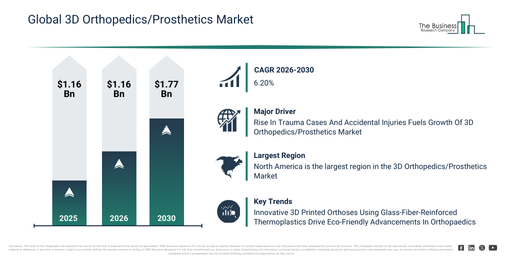
    The 3D orthopedics/prosthetics market is projected to experience substantial expansion over the upcoming years, reaching $4.77 billion by 2030, exhibiting a compound annual growth rate (CAGR) of 6.2%. This anticipated growth stems from factors such as heightened investments in intelligent prosthetic solutions, a growing need for customized medical devices, the broadening of digital platforms for orthopedic design, an intensified focus on improving patient mobility outcomes, and the wider integration of AI in prosthetic design. Key trends anticipated during this period encompass the increased use of 3D printed bespoke prosthetics, a heightened call for orthopedic devices tailored to individual patients, the expanding incorporation of smart prosthetics with sensor capabilities, the proliferation of hybrid and electric-powered prosthetic systems, and a sharpened emphasis on rapid prototyping and adaptable design.

    Download A Free Sample Report For Comprehensive Market Insights:

    https://www.thebusinessresearchcompany.com/sample.aspx?id=6039&type=smp

    What Important Drivers Are Powering The 3D Orthopedics/Prosthetics Market Growth?

    The escalating prevalence of trauma cases and accidental injuries is a significant catalyst for the growth of the 3D orthopedics/prosthetics market. Orthopedic prosthetics involves the use of artificial limbs (prostheses) to enhance the function and lifestyle of individuals who have lost limbs, requiring a unique combination of appropriate alignment, construction, materials, and design to match the individual’s functional needs. For instance, in December 2023, according to the Wisconsin Department of Health Services, a US-based public health department, Trauma System Hospitals in Wisconsin reported a 4% rise in the number of traumatic injuries treated in 2023, alongside a 3% increase specifically in pediatric trauma cases. Additionally, 2023 recorded 44,970 trauma system entries and 38,198 unique injury events. Therefore, the increasing number of trauma cases and accidental injuries consistently drives the market for 3D orthopedics/prosthetics.

    What Key Segment Areas Are Included In The 3D Orthopedics/Prosthetics Market Assessment?

    The 3D orthopedics/prosthetics market covered in this report is segmented –

    1) By Product Type: Upper Extremity Orthopedic And Prosthetics, Lower Extremity Orthopedic And Prosthetics, Other Product Types

    2) By Technology: Conventional, Electric-powered, Hybrid

    3) By End User: Hospitals, Orthopedic And Prosthetic Centers, Rehabilitation Center, Other End-Users

    Subsegments:

    1) By Upper Extremity Orthopedic And Prosthetics: Prosthetic Arms, Prosthetic Hands, Orthotic Braces for Arms, Shoulder and Elbow Supports

    2) By Lower Extremity Orthopedic And Prosthetics: Prosthetic Legs, Prosthetic Feet, Orthotic Braces for Legs, Knee and Ankle Supports

    3) By Other Product Types: Custom-Made Orthopedic Devices, 3D Printed Implants, Surgical Guides and Templates, Rehabilitation Devices

    Which Trends Are Shaping The 3D Orthopedics/Prosthetics Market Landscape?

    Leading firms within the 3D orthopedics or prosthetics market are concentrating on creating sophisticated solutions, including orthoses crafted from glass-fiber-reinforced thermoplastics, aiming to boost their longevity, structural integrity, and precision in customization. This material, a high-performance composite, provides superior strength, enhanced flexibility, and better impact resistance, rendering it ideal for manufacturing individualized orthopedic devices using additive manufacturing techniques. Illustratively, CRP Technology, an Italy-based 3D-printing company, presented its 3D-printed orthoses at the SuperPower Design exhibition in March 2024. These orthoses were manufactured via selective laser sintering and utilizing Windform GT material, thereby showcasing the capability to produce exceptionally customized and robust support apparatuses precisely adapted to unique anatomical specifications.

    Which Firms Are Competing In The 3D Orthopedics/Prosthetics Market?

    Major companies operating in the 3d orthopedics/prosthetics market are Zimmer Biomet, Ottobock Inc., DJO Global Inc., Instalimb Inc., Open Bionics, Tornier Inc., Corin Group Plc., Exactech Inc., United Orthopedic Corporation, Stryker Corporation, Allegra Orthopedics, Globus Medical Inc., NEOORTHO, Smith & Nephew, Ortosintese, IMPOL Próteses Ortopédicas, Wright Medical, B. Braun, Meril Life, Matrix Medical, Lithotech Medical, 3D Systems

    Access The Complete 3D Orthopedics/Prosthetics Market Report:

    https://www.thebusinessresearchcompany.com/report/3d-orthpedics-prosthetics-global-market-report

    Which Regional Market Leads The 3D Orthopedics/Prosthetics Market?

    North America was the largest region in the 3D orthopedics/prosthetics market in 2025. Asia-Pacific is expected to be the fastest-growing region in the forecast period. The regions covered in the 3D orthopedics/prosthetics market report are Asia-Pacific, South East Asia, Western Europe, Eastern Europe, North America, South America, Middle East, Africa.

    Access a Customized 3D Orthopedics/Prosthetics Market Report for Deeper Competitive Insights

    https://www.thebusinessresearchcompany.com/customise?id=6039&type=smp

    Browse Through More Reports Similar to the Global 3D Orthopedics/Prosthetics Market 2026, By The Business Research Company

    3D Orthpedics Prosthetics Market Report 2026

    https://www.thebusinessresearchcompany.com/report/3d-orthpedics-prosthetics-global-market-report

    3D Printed Prosthetics Market Report 2026

    https://www.thebusinessresearchcompany.com/report/3d-printed-prosthetics-global-market-report

    Advanced Orthopedic Technologies Implants And Regenerative Products Market Report 2026

    https://www.thebusinessresearchcompany.com/report/advanced-orthopedic-technologies-implants-and-regenerative-products-global-market-report

    Get in touch with us:

    The Business Research Company: https://www.thebusinessresearchcompany.com/

    Americas: +1 310-496-7795

    Asia: +44 7882 955267 & +91 8897263534

    Europe: +44 7882 955267

    Email us at: marketing@tbrc.info

    Follow us on:

    LinkedIn: https://in.linkedin.com/company/the-business-research-company

    YouTube: https://www.youtube.com/channel/UC24_fI0rV8cR5DxlCpgmyFQ

    Global Market Model: https://www.thebusinessresearchcompany.com/global-market-model
  • Global 3D Medical Imaging Devices Market Forecast Highlighting Expansion And Competitive Dynamics

    Global 3D Medical Imaging Devices Market Forecast Highlighting Expansion And Competitive Dynamics

    The Business Research Company’s 2026 market reports feature advanced enhancements such as market attractiveness analysis, total addressable market evaluation, company benchmarking matrices, interactive Excel dashboards, expanded supply chain intelligence, emerging startup coverage, and detailed product insights, delivering more actionable and strategically valuable research.

    How Is The Market Value Of The 3D Medical Imaging Devices Market Projected To Expand During 2026–2030?

    The 3D medical imaging devices market has experienced significant expansion recently. Projections indicate its expansion from $13.68 billion in 2025 to $14.76 billion in 2026, exhibiting a compound annual growth rate (CAGR) of 7.9%. This past growth is attributable to several factors, including developments in medical imaging technologies, a greater number of diagnostic imaging centers, a rising need for intricate anatomical visualization, the increasing incidence of chronic illnesses, and improvements in hospital imaging infrastructure.

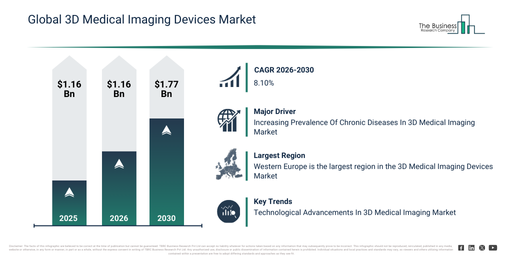
    The 3D medical imaging devices market size is anticipated to experience robust expansion in the upcoming years. Its value is projected to reach $20.16 billion by 2030, demonstrating a compound annual growth rate (CAGR) of 8.1%. This projected growth can be attributed to the increasing adoption of AI-driven diagnostics, rising investments in precision medicine, the expansion of advanced imaging applications in oncology and cardiology, a growing demand for early disease detection, and the increasing integration of cloud-based imaging platforms. Noteworthy trends during the forecast period include the enhanced integration of AI-enabled image reconstruction, a rising uptake of high-resolution 3D imaging modalities, the expanding use of advanced visualization software, the development of multi-modality imaging platforms, and a heightened focus on diagnostic accuracy and speed.

    Download A Free Sample Report For Comprehensive Market Insights:

    https://www.thebusinessresearchcompany.com/sample.aspx?id=2513&type=smp

    Which Major Factors Are Contributing To The Development Of The 3D Medical Imaging Devices Market?

    A rising occurrence of chronic diseases is anticipated to drive the expansion of the 3D medical imaging market in the future. These conditions are defined as persistent health issues lasting for at least three months. 3D medical imaging modalities, including computed tomography (CT) scans and magnetic resonance imaging (MRI), offer comprehensive three-dimensional insights into internal body structures, thereby empowering healthcare providers to identify and diagnose chronic diseases in their initial phases. For example, as per data from January 2023 by the US-based National Library of Medicine, the count of individuals in the US aged 50 and above suffering from at least one chronic ailment is projected to surge by 99.5%, reaching 142.66 million, by the year 2050. Consequently, the growing incidence of chronic diseases acts as a catalyst for the development of the 3D medical imaging market.

    How Is Segment Classification Applied In The 3D Medical Imaging Devices Market?

    The 3D medical imaging devices market covered in this report is segmented –

    1) By Type: Ultrasound, X-ray, CT Scan, Other Types

    2) By Application: Gynecology and Obstetrics, Cardiology, Neurology, Orthopedics, Oncology

    3) By End User: Diagnostic Centers, Hospitals, Research Centers

    Subsegments:

    1) By Ultrasound: 3D Or 4D Ultrasound, Contrast-Enhanced Ultrasound

    2) By X-Ray: 3D Mammography Or Tomosynthesis, Cone Beam CT Or CBCT For X-Ray Imaging, Fluoroscopy

    3) By CT Scan: Spiral Or Helical CT, Cone Beam CT Or CBCT, Dual-Energy CT

    4) By Other Types: MRI Or Magnetic Resonance Imaging, Positron Emission Tomography Or PET, Single Photon Emission Computed Tomography Or SPECT, 3D Endoscopic Imaging Systems

    What Trends Are Influencing The 3D Medical Imaging Devices Market Outlook?

    Companies primarily engaged in the 3D medical imaging market are introducing innovative immersive learning platforms to offer dependable services to consumers. An immersive learning platform in 3D medical imaging is designed to employ hyper-realistic 3D medical visuals, derived from MRI and CT scans, for teaching medical professionals and students. For example, in August 2023, GigXR, Inc., a US-based pioneering company and supplier of holographic training solutions, unveiled DICOM XR Library. The DICOM XR Library is a communal repository of 3D DICOM holograms that delivers exceedingly realistic 3D medical imagery from computed tomography (CT) scans and magnetic resonance imaging (MRI). This system offers diagnostic imaging with 360-degree coverage, allowing instructors to more thoroughly equip learners with medically accurate simulations for both observation and assessment.

    Who Are The Major Companies Operating In The 3D Medical Imaging Devices Market?

    Major companies operating in the 3d medical imaging devices market are GE Healthcare, Royal Philips, Siemens AG, Materialise NV, Toshiba Group, Samsung Medison Co. Ltd., Shimadzu Corporation, Analogic Corporation, Digirad Corporation, Del Medical Systems Group, Hologic Inc., Carestream Health Inc., Ambra Health, Fovia, Mach7 Technologies Ltd., Barco NV, TomTec Imaging Systems GmbH, Fujifilm Holdings Corporation, 3D Systems Healthcare, Canon Medical Systems Corporation, ContextVision AB, Curvebeam AI Ltd., EchoPixel Inc., EOS Imaging, Esaote SpA, Hitachi Healthcare, Intrasense, Konica Minolta Healthcare, Mobius Imaging, Neusoft Medical Systems, Pie Medical Imaging, Planmed Oy, Sectra, Shenzhen Mindray Bio-Medical Electronics, Varian Medical Systems, Ziehm Imaging GmbH

    Access The Complete 3D Medical Imaging Devices Market Report:

    https://www.thebusinessresearchcompany.com/report/3d-medical-imaging-devices-global-market-report

    Which Region Holds The Largest Share In The 3D Medical Imaging Devices Market?

    Western Europe was the largest region in the 3D medical imaging market in 2025. Asia-Pacific was the second-largest region in the global 3D medical imaging devices market. The regions covered in the 3D medical imaging devices market report are Asia-Pacific, South East Asia, Western Europe, Eastern Europe, North America, South America, Middle East, Africa.

    Access a Customized 3D Medical Imaging Devices Market Report for Deeper Competitive Insights

    https://www.thebusinessresearchcompany.com/customise?id=2513&type=smp

    Browse Through More Reports Similar to the Global 3D Medical Imaging Devices Market 2026, By The Business Research Company

    3D Printed Medical Devices Market Report 2026

    https://www.thebusinessresearchcompany.com/report/3d-printed-medical-devices-global-market-report

    3D Diagnostic Imaging Services Market Report 2026

    https://www.thebusinessresearchcompany.com/report/3d-diagnostic-imaging-services-global-market-report

    3D Imaging Market Report 2026

    https://www.thebusinessresearchcompany.com/report/3d-imaging-global-market-report

    Get in touch with us:

    The Business Research Company: https://www.thebusinessresearchcompany.com/

    Americas: +1 310-496-7795

    Asia: +44 7882 955267 & +91 8897263534

    Europe: +44 7882 955267

    Email us at: marketing@tbrc.info

    Follow us on:

    LinkedIn: https://in.linkedin.com/company/the-business-research-company

    YouTube: https://www.youtube.com/channel/UC24_fI0rV8cR5DxlCpgmyFQ

    Global Market Model: https://www.thebusinessresearchcompany.com/global-market-model
  • 3D Dental Scanners Market Analysis Through 2030 Focusing On Demand Trends And Growth Drivers

    3D Dental Scanners Market Analysis Through 2030 Focusing On Demand Trends And Growth Drivers

    The Business Research Company’s 2026 market reports feature advanced enhancements such as market attractiveness analysis, total addressable market evaluation, company benchmarking matrices, interactive Excel dashboards, expanded supply chain intelligence, emerging startup coverage, and detailed product insights, delivering more actionable and strategically valuable research.

    What Are The Forecasted Market Size Figures For The 3D Dental Scanners Market In 2026 And 2030?

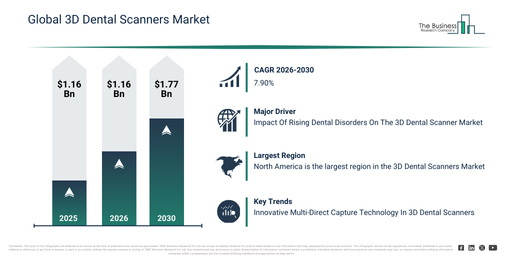
    The 3D dental scanners market size has shown robust growth in recent years. It is anticipated to increase from $2.19 billion in 2025 to $2.36 billion in 2026, achieving a compound annual growth rate (CAGR) of 7.9%. This historical expansion can be attributed to several factors, including a rise in orthodontic and prosthodontic treatment volumes, a growing transition from manual impressions to digital workflows, an increase in the installation of CBCT systems in dental practices, wider adoption of digital dentistry in hospitals and dental clinics, and more frequent use of laboratory scanners for restoration fabrication.

    The market for 3D dental scanners is anticipated to experience significant expansion over the coming years. By 2030, its valuation is projected to reach $3.19 billion, exhibiting a compound annual growth rate (CAGR) of 7.9%. This projected growth is driven by several factors, including the increasing need for chairside intraoral scanning solutions, a growing inclination towards minimally invasive and precise dental treatments, greater incorporation of digital scanning into implantology planning, the wider use of portable and handheld dental scanners, and increased funding for sophisticated 3D imaging technologies within dental practices. Key trends during this period are expected to encompass the growing acceptance of intraoral 3D dental scanners for diagnostics and treatment planning at the chairside, a surge in the use of CBCT scanners for intricate orthodontic and implantology imaging, an escalating demand for portable and handheld dental scanners in clinical settings, the broader application of laboratory dental scanners for precise prosthodontic workflows, and a rising preference for digital impressions over traditional mold-based methods.

    Download A Free Sample Report For Comprehensive Market Insights:

    https://www.thebusinessresearchcompany.com/sample.aspx?id=18204&type=smp

    What Key Growth Drivers Are Influencing The 3D Dental Scanners Market?

    The increasing occurrence of dental health issues is projected to advance the global 3D dental scanner market. These dental disorders refer to any irregularities, illnesses, or states within the mouth needing assessment, identification, and frequently intervention by dental practitioners to uphold oral wellness and avert complications. The uptick in dental disorders stems from factors like insufficient oral hygiene routines, greater intake of sugary foods and drinks, and limited availability of dental care provisions. For accurate diagnosis, detailed treatment planning, and the production of personalized dental prosthetics with improved precision and effectiveness, 3D dental scanners are essential in managing dental disorders. As an illustration, in October 2024, data from the Australian Institute of Health and Welfare, an Australia-based government agency, indicated that in 2022–23 approximately 87,400 hospitalizations for dental conditions were recorded, which could have been prevented with prompt intervention. Children aged 5–9 years exhibited the highest incidence of avoidable hospitalizations, at 12.3 per 1,000 population. Consequently, the growing prevalence of dental disorders is a key factor propelling the expansion of the 3D dental scanner market.

    What Are The Core Segment Classifications In The 3D Dental Scanners Market?

    The 3D dental scanners market covered in this report is segmented –

    1) By Type: Desktop Or Laboratory 3D Dental Scanners, Intraoral 3D Dental Scanners, Hand-Held 3D Dental Scanners, Cone Beam Computerized Tomography

    2) By Application: Prosthodontics, Orthodontics, Implantology

    3) By End-User: Hospitals, Dental Clinics, Research And Academic Institutes

    Subsegments:

    1) By Desktop Or Laboratory 3D Dental Scanners: Optical Laboratory Scanners, Structured Light Laboratory Scanners

    2) By Intraoral 3D Dental Scanners: Wireless Intraoral Scanners, Wired Intraoral Scanners

    3) By Hand-Held 3D Dental Scanners: Laser-Based Hand-Held Scanners, Structured Light Hand-Held Scanners

    4) By Cone Beam Computerized Tomography (CBCT): Standard Field-Of-View CBCT Scanners, Extended Field-Of-View CBCT Scanners

    Which Trends Are Expected To Shape The 3D Dental Scanners Market?

    Companies leading the dental 3D scanner market are concentrating on developing advanced solutions, such as multi-direct capture technology, to enhance scanning accuracy and operational efficiency, thereby enabling more precise dental treatments and streamlined workflows. Multi-direct capture technology in 3D dental scanners describes a technique where several images or scans are acquired concurrently from different angles. For example, in January 2024, Align Technology Inc., a US-based medical device company, introduced the iTero Lumina intraoral scanner. This scanner is notable for its unique ability to provide a 3X wider field of capture using a significantly smaller and lighter wand, which ensures quicker scanning, superior precision, improved visualization, and a more comfortable experience for the user. It also features a greater capture distance of up to 25 mm, simplifying the scanning of challenging oral areas like narrow or deep palates, edentulous spaces, and partially erupted teeth with minimal adjustments. This sophisticated technology adeptly captures extensive data and fine details, delivering exceptional scan quality and photorealistic 3D models, thus eliminating the requirement for bulky digital cameras and conventional cheek retractors.

    Which Companies Are Influencing The 3D Dental Scanners Market?

    Major companies operating in the 3d dental scanners market are Danaher Corporation, Dentsply Sirona Inc., Align Technology Inc., Midmark Corp., J. Morita Corporation, 3Shape Inc., Roland DG Corp., KaVo Dental GmbH, Amann Girrbach AG, Zirkonzahn, Carestream Health India Pvt. Ltd., Imes-icore GmbH, Planmeca Group Company, Hint-ELS GmbH, Dental Wings Inc., Condor Technologies Inc., Imetric 3D SA, Medit Corporation, Owandy Radiology, 3M Co.

    Access The Complete 3D Dental Scanners Market Report:

    https://www.thebusinessresearchcompany.com/report/3d-dental-scanners-global-market-report

    Which Region Is The Dominant Market In The 3D Dental Scanners Market?

    North America was the largest region in the 3D dental scanners market in 2025. Asia-Pacific is expected to be the fastest-growing region in the forecast period. The regions covered in the 3D dental scanners market report are Asia-Pacific, South East Asia, Western Europe, Eastern Europe, North America, South America, Middle East, Africa.

    Access a Customized 3D Dental Scanners Market Report for Deeper Competitive Insights

    https://www.thebusinessresearchcompany.com/customise?id=18204&type=smp

    Browse Through More Reports Similar to the Global 3D Dental Scanners Market 2026, By The Business Research Company

    3D Dental Scanners Market Report 2026

    https://www.thebusinessresearchcompany.com/report/3d-dental-scanners-global-market-report

    Dental Diagnostic Imaging Devices And Equipment Market Report 2026

    https://www.thebusinessresearchcompany.com/report/dental-diagnostic-imaging-devices-and-equipment-global-market-report

    3D Scanning Market Report 2026

    https://www.thebusinessresearchcompany.com/report/3d-scanning-global-market-report

    Get in touch with us:

    The Business Research Company: https://www.thebusinessresearchcompany.com/

    Americas: +1 310-496-7795

    Asia: +44 7882 955267 & +91 8897263534

    Europe: +44 7882 955267

    Email us at: marketing@tbrc.info

    Follow us on:

    LinkedIn: https://in.linkedin.com/company/the-business-research-company

    YouTube: https://www.youtube.com/channel/UC24_fI0rV8cR5DxlCpgmyFQ

    Global Market Model: https://www.thebusinessresearchcompany.com/global-market-model

  • 3D Bioprinting Market Projected To Surpass $6.21 Billion By 2030 At 23.2% CAGR

    3D Bioprinting Market Projected To Surpass $6.21 Billion By 2030 At 23.2% CAGR

    The Business Research Company’s 2026 market reports feature advanced enhancements such as market attractiveness analysis, total addressable market evaluation, company benchmarking matrices, interactive Excel dashboards, expanded supply chain intelligence, emerging startup coverage, and detailed product insights, delivering more actionable and strategically valuable research.

    How Much Larger Will The 3D Bioprinting Market Become By 2030 Compared To 2026?

    The 3D bioprinting market has experienced significant expansion over recent years. Its projected growth will see it increase from $2.19 billion in 2025 to $2.7 billion in 2026, demonstrating a compound annual growth rate (CAGR) of 23.0%. Historically, this expansion has been driven by increased funding for biomedical research, a heightened need for in vitro drug testing models, the nascent adoption of regenerative medicine, advancements in cell culture technologies, and the expanding application of 3D printing within the healthcare sector.

    The 3D bioprinting market is projected to experience rapid expansion in the coming years. This market is set to reach $6.21 billion by 2030, demonstrating a compound annual growth rate (CAGR) of 23.2%. Several factors will drive this growth during the forecast period, including the broadening scope of personalized medicine, a rising need for organ transplants, favorable regulatory frameworks for bioprinted tissues, an increase in biopharmaceutical research and development, and improvements in scalable bioprinting technologies. Key trends anticipated for this period encompass tissue engineering applications for regenerative therapies, the creation of patient-specific implants, the ongoing development of sophisticated bioink formulations, high-resolution multi-material bioprinting, and the movement of printed tissues into clinical settings.

    Download A Free Sample Report For Comprehensive Market Insights:

    https://www.thebusinessresearchcompany.com/sample.aspx?id=5341&type=smp

    Which Core Factors Are Supporting The Expansion Of The 3D Bioprinting Market?

    The rising occurrence of long-term illnesses is anticipated to drive expansion in the 3D bioprinting market in the future. A chronic ailment is defined as a health state that endures for an extended duration, usually exceeding three months, and frequently lasts for an individual’s entire life. 3D bioprinting finds application in developing tissue constructs for investigations into chronic conditions and for prospective organ transplantation treatments. An example illustrates this: in June 2024, data from the National Health Service, a government agency in the UK, revealed that 3,615,330 people registered with a general practitioner (GP) received a diagnosis of non-diabetic hyperglycemia or pre-diabetes (a state where blood sugar levels are high but not high enough for a diabetes diagnosis) in 2023, representing an 18% rise from 3,065,825 instances recorded in 2022. Consequently, the growing frequency of chronic illnesses is fostering the expansion of the 3D bioprinting market.

    How Is The 3D Bioprinting Market Structured Across Different Market Segments?

    The 3D bioprinting market covered in this report is segmented –

    1) By Component: 3D Bioprinters, Bioinks

    2) By Material: Living Cells, Hydrogels, Extracellular Matrices, Other Materials

    3) By Application: Research Applications, Clinical Application, Other Applications

    4) By End User: Research Organization And Academic Institutes, Biopharmaceutical Companies, Hospitals, Other End Users

    Subsegments:

    1) By 3D Bioprinters: Inkjet 3D Bioprinters, Microextrusion 3D Bioprinters, Laser-Assisted 3D Bioprinters, Stereolithography (SLA) Bioprinters

    2) By Bioinks: Natural Bioinks, Synthetic Bioinks, Hybrid Bioinks

    What Trends Are Affecting The 3D Bioprinting Market Dynamics?

    Leading companies within the 3D bioprinting market are concentrating on developing advanced technological solutions, such as 3D bioprinters, to improve the accuracy and efficiency of tissue engineering and regenerative medicine. These 3D bioprinters are devices that utilize bioinks containing living cells to construct three-dimensional tissue and organ structures for medical research and regenerative medicine applications. For instance, in June 2024, Tethon 3D, a US developer of ceramic powder and metal-polymer products, introduced the Bison Bio DLP 3D bioprinter, marking its initial venture into the bioprinting market, developed collaboratively with Carima. This innovative printer features adjustable build sizes (30 × 20 mm, 57 × 32 mm, and 96 × 54 mm) and is compatible with Tethon’s proprietary LAP photoinitiator and GelMA hydrogel bioink, which are crucial for bioprinting live tissues. Measuring 24 × 24 × 24 inches and weighing 75 lbs, the Bison Bio is available for $19,950 and aims to foster progress in healthcare by enabling the creation of complex tissues and organs for biomedical research, ultimately contributing to personalized medicine and regenerative therapies.

    Who Are The Companies Shaping The 3D Bioprinting Market Landscape?

    Major companies operating in the 3d bioprinting market are Organovo Holdings Inc., Allevi Inc., Cellink AB, Aspect Biosystems Ltd., Cyfuse Biomedical KK, Poietis SA, TeVido BioDevices, Nano3D Biosciences Inc., RegenHU Ltd., GeSiM mbH, Advanced Solutions Life Sciences LLC, Regenovo Biotechnology Co. Ltd., Regemat 3D S.L., Bio3D Technologies, ROKIT Healthcare Co. Ltd., Inventia Life Science Pvt. Ltd., Vivax Bio LLC, 3D Biotek LLC, 3D Bio Corp, 3D Bioprinting Solutions, BICO Group AB, CollPlant Biotechnologies Ltd., 3D Systems Corporation, EnvisionTEC GmbH, GE HealthCare Technologies Inc., Nuclera Nucleics Ltd.

    Access The Complete 3D Bioprinting Market Report:

    https://www.thebusinessresearchcompany.com/report/3d-bioprinting-global-market-report

    Which Area Represents The Largest Portion Of The 3D Bioprinting Market?

    North America was the largest region in the 3D bioprinting market in 2025. Asia-Pacific is expected to be the fastest-growing region in the 3D bioprinting market during the forecast period. The regions covered in the 3D bioprinting market report are Asia-Pacific, South East Asia, Western Europe, Eastern Europe, North America, South America, Middle East, Africa.

    Access a Customized 3D Bioprinting Market Report for Deeper Competitive Insights

    https://www.thebusinessresearchcompany.com/customise?id=5341&type=smp

    Browse Through More Reports Similar to the Global 3D Bioprinting Market 2026, By The Business Research Company

    4D Bioprinting Market Report 2026

    https://www.thebusinessresearchcompany.com/report/4d-bioprinting-global-market-report

    3D Printing In Healthcare Market Report 2026

    https://www.thebusinessresearchcompany.com/report/3d-printing-in-healthcare-global-market-report

    3D Printing Services Market Report 2026

    https://www.thebusinessresearchcompany.com/report/3d-printing-services-global-market-report

    Get in touch with us:

    The Business Research Company: https://www.thebusinessresearchcompany.com/

    Americas: +1 310-496-7795

    Asia: +44 7882 955267 & +91 8897263534

    Europe: +44 7882 955267

    Email us at: marketing@tbrc.info

    Follow us on:

    LinkedIn: https://in.linkedin.com/company/the-business-research-company

    YouTube: https://www.youtube.com/channel/UC24_fI0rV8cR5DxlCpgmyFQ

    Global Market Model: https://www.thebusinessresearchcompany.com/global-market-model
  • 3D And 4D Ultrasound Devices Market Forecast Through 2030 Featuring Industry Drivers And Opportunities

    3D And 4D Ultrasound Devices Market Forecast Through 2030 Featuring Industry Drivers And Opportunities

    The Business Research Company’s 2026 market reports feature advanced enhancements such as market attractiveness analysis, total addressable market evaluation, company benchmarking matrices, interactive Excel dashboards, expanded supply chain intelligence, emerging startup coverage, and detailed product insights, delivering more actionable and strategically valuable research.

    What Growth In Market Value Is Anticipated For The 3D And 4D Ultrasound Devices Market Between 2026 And 2030?

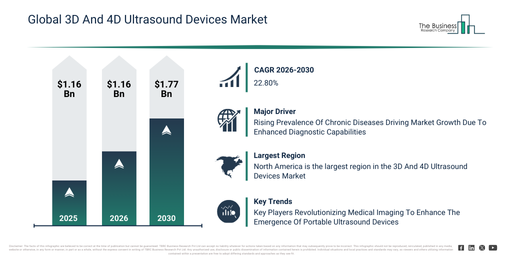
    The market for 3D and 4D ultrasound devices has experienced rapid expansion recently. Projections indicate a rise from $14.07 billion in 2025 to $17.25 billion in 2026, demonstrating a compound annual growth rate (CAGR) of 22.6%. Historically, this expansion has been driven by factors such as the increasing application of ultrasound imaging in prenatal care, improvements in diagnostic imaging infrastructure, a greater supply of qualified sonography experts, heightened recognition of the benefits of early disease detection, and the uptake of non-invasive diagnostic instruments.

    The market for 3D and 4D ultrasound devices is projected to experience rapid expansion over the coming years, with its size anticipated to reach $39.28 billion by 2030, demonstrating a compound annual growth rate (CAGR) of 22.8%. This growth during the forecast period can be linked to a heightened demand for advanced prenatal diagnostics, increased investments in portable imaging technologies, the expansion of point-of-care diagnostics, a growing utilization of AI-assisted image interpretation, and an increasing focus on the early detection of diseases. Significant trends in the outlook period include the rising adoption of high-resolution fetal imaging systems, a surging demand for portable and point-of-care ultrasound equipment, greater integration of advanced visualization software, the broadening of multi-specialty diagnostic applications, and an enhanced emphasis on workflow efficiency and imaging accuracy.

    Download A Free Sample Report For Comprehensive Market Insights:

    https://www.thebusinessresearchcompany.com/sample.aspx?id=14233&type=smp

    What Are The Main Drivers Accelerating The Growth Of The 3D And 4D Ultrasound Devices Market?

    The increasing prevalence of chronic illnesses is projected to fuel the expansion of the 3D and 4D ultrasound devices market going forward. Chronic diseases are defined as long-term health conditions that persist over an extended period and frequently require ongoing management and medical care. The growing occurrence of these conditions is primarily attributed to sedentary lifestyles, unhealthy diets, and an aging population. 3D and 4D ultrasound devices assist in diagnosing and monitoring chronic diseases by providing detailed, three-dimensional images that enhance the visualization and assessment of affected organs and structures. For instance, in January 2023, as per the National Library of Medicine, a US-based agency, the number of people in the US aged 50 and older with at least one chronic condition is expected to rise by 99.5%, amounting to 142.66 million, by 2050. Therefore, the increasing prevalence of chronic diseases is a key driver for the growth of the 3D and 4D ultrasound devices market.

    Which Segment-Based Categories Are Covered In The 3D And 4D Ultrasound Devices Market?

    The 3D and 4d ultrasound devices market covered in this report is segmented –

    1) By Type: Stationary 3D And 4D Ultrasound Devices, Portable 3D And 4D Ultrasound Devices

    2) By Display: Color Ultrasound, Black And White (B/W) Ultrasound

    3) By Portability: Trolley Or Cart-Based Ultrasound Systems, Compact Or Handheld Ultrasound Systems, Point-Of-Care (PoC) Ultrasound Systems

    4) By Application: Radiology Or General Imaging, Obstetrics Or Gynecology, Cardiology, Urology, Vascular, Orthopedic And Musculoskeletal, Pain Management, Other Applications

    5) By End-User: Hospitals, Surgical Centers And Diagnostic Centers, Maternity Centers, Ambulatory Care Centers, Other End-Users

    Subsegments:

    1) By Stationary 3D And 4D Ultrasound Devices: Console-Based Systems, High-Performance Ultrasound Machines, Advanced Imaging Systems

    2) By Portable 3D And 4D Ultrasound Devices: Handheld Ultrasound Devices, Mobile Ultrasound Systems, Compact Point-Of-Care Ultrasound Machines

    Which Trends Are Influencing The Expansion Of The 3D And 4D Ultrasound Devices Market?

    Leading companies in the 3D and 4D ultrasound devices market are concentrating on creating technologically advanced products, such as ultrasound-on-chip technology, to improve imaging capabilities and stimulate innovation in medical diagnostics. This approach miniaturizes ultrasound components onto a single chip, allowing for compact and portable ultrasound devices across various medical imaging applications. Such innovation increases access to ultrasound diagnostics, with potential advancements for point-of-care and wearable healthcare devices. For example, in June 2023, Butterfly Network Inc., a US-based maker of medical imaging devices, introduced the Butterfly iQ3, which is the newest version of its handheld point-of-care ultrasound (POCUS) system. It incorporates P4.3 ultrasound-on-chip technology, noted for having the world’s fastest digital data transfer rate. This system is designed to provide enhanced high-resolution imaging and portable ultrasound imaging with advanced 3D features, and it offers double the processing power compared to its predecessor, the Butterfly iQ+.

    Which Industry Players Are Present In The 3D And 4D Ultrasound Devices Market?

    Major companies operating in the 3d and 4d ultrasound devices market are Hitachi Ltd., Toshiba Corporation, Siemens Healthineers, Koninklijke Philips N.V., GE HealthCare Technologies Inc., Fujifilm Holdings Corporation, Konica Minolta Healthcare Americas Inc., Hologic Inc., Mindray Medical International Limited, Canon Medical Systems Corporation, Samsung Medison Co. Ltd., Mobisante Inc., Esaote S.p.A, Shimadzu Medical Systems USA, Terason, Alpinion Medical Systems Co. Ltd., Shenzhen Bestman Instrument Co. Ltd., Chison Medical Technologies Co. Ltd., Edan Instruments Inc., Mindray DS USA

    Access The Complete 3D And 4D Ultrasound Devices Market Report:

    https://www.thebusinessresearchcompany.com/report/3d-and-4d-ultrasound-devices-global-market-report

    Which Region Commands The Largest Share Of The 3D And 4D Ultrasound Devices Market?

    North America was the largest region in the 3D and 4D ultrasound devices market in 2025. Asia-Pacific is expected to be the fastest-growing region in the forecast period. The regions covered in the 3D and 4D ultrasound devices market report are Asia-Pacific, South East Asia, Western Europe, Eastern Europe, North America, South America, Middle East, Africa.

    Access a Customized 3D And 4D Ultrasound Devices Market Report for Deeper Competitive Insights

    https://www.thebusinessresearchcompany.com/customise?id=14233&type=smp

    Browse Through More Reports Similar to the Global 3D And 4D Ultrasound Devices Market 2026, By The Business Research Company

    Ultrasound Systems Devices And Equipment Market Report 2026

    https://www.thebusinessresearchcompany.com/report/ultrasound-systems-devices-and-equipment-global-market-report

    3D And 4D Technology Market Report 2026

    https://www.thebusinessresearchcompany.com/report/3d-and-4d-technology-global-market-report

    3D Medical Imaging Devices Market Report 2026

    https://www.thebusinessresearchcompany.com/report/3d-medical-imaging-devices-global-market-report

    Get in touch with us:

    The Business Research Company: https://www.thebusinessresearchcompany.com/

    Americas: +1 310-496-7795

    Asia: +44 7882 955267 & +91 8897263534

    Europe: +44 7882 955267

    Email us at: marketing@tbrc.info

    Follow us on:

    LinkedIn: https://in.linkedin.com/company/the-business-research-company

    YouTube: https://www.youtube.com/channel/UC24_fI0rV8cR5DxlCpgmyFQ

    Global Market Model: https://www.thebusinessresearchcompany.com/global-market-model

  • Digital Slide Scanners Sector Forecast Shows Robust Momentum, Climbing to $1.79 Billion With 15% CAGR

    Digital Slide Scanners Sector Forecast Shows Robust Momentum, Climbing to $1.79 Billion With 15% CAGR

    Uncover key drivers, emerging technologies, and competitive movements shaping the digital slide scanners market from 2026–2035 with trusted insights from The Business Research Company

    What is the estimated market size of the Digital Slide Scanners Market by the end of 2030?

    The digital slide scanners market has observed substantial growth in recent years. It is projected to expand from $0.89 billion in 2025 to $1.02 billion in 2026, progressing at a compound annual growth rate (CAGR) of 15.3%. This historical development can be attributed to the increasing adoption of digital pathology, a growing demand for high-resolution imaging, the rising need for efficient pathology workflows, the expanding use of telepathology solutions, and an increasing focus on accurate disease diagnosis.

    The digital slide scanners market is anticipated to undergo significant expansion in the upcoming years, with its valuation projected to reach $1.79 billion by 2030, exhibiting a compound annual growth rate (CAGR) of 15.0%. This expected increase during the forecast period stems from factors such as the growing integration of AI-assisted slide analysis, a heightened demand for remote diagnostic capabilities, the rising adoption of whole-slide imaging in hospitals, expanding investment in digital pathology infrastructure, and an increased emphasis on workflow automation in laboratories. Noteworthy trends predicted for this period include technological advancements in high-speed slide scanning, innovations in AI-driven image interpretation, developments in cloud-based pathology platforms, ongoing research and development in ultra-high-resolution imaging systems, and improvements in interoperable digital pathology ecosystems.

    Access Your Free Sample Report for In-Depth Market Insights:

    https://www.thebusinessresearchcompany.com/sample.aspx?id=30575&type=smp

    What Drivers Are Shaping Future Opportunities In The Digital Slide Scanners Market?

    The escalating incidence of cancer is anticipated to fuel the expansion of the digital slide scanners market in the foreseeable future. This illness is marked by the uncontrolled multiplication and dispersion of abnormal cells, which, if left untreated, can damage adjacent tissues and organs. The rise in cancer cases is linked to lifestyle-related elements such as unhealthy eating habits, smoking, alcohol consumption, and exposure to environmental contaminants, all of which heighten the chances of developing various forms of cancer. Digital slide scanners contribute to cancer management by transforming physical tissue samples into high-resolution digital images for detailed examination and sharing. These devices enhance the precision of diagnoses, facilitate remote medical consultations, and optimize pathology processes, thus supporting prompt and accurate treatment choices. For instance, in October 2025, data from NHS Digital, a UK government organisation, revealed 354,820 new cancer diagnoses recorded in England in 2023, averaging 972 diagnoses per day and representing an increase of 8,605 cases compared to 2022. Prostate cancer was the most commonly diagnosed type with 58,137 new cases, showing a 6% increase in registrations over the previous year. Consequently, the increasing prevalence of cancer is a key factor propelling the growth of the digital slide scanners market.

    Which Segment Groups Are Influencing The Digital Slide Scanners Market?

    The digital slide scanners market covered in this report is segmented –

    1) By Product Type: Brightfield Scanners, Fluorescence Scanners, Whole Slide Imaging Scanners, Other Product Types

    2) By Technology: Automated, Semi-Automated, Manual

    3) By Distribution Channel: Direct Sales, Distributors, Online Retail, Third-Party E-Commerce Platforms

    4) By Application: Pathology, Research, Education, Other Applications

    5) By End-User: Hospitals, Diagnostic Laboratories, Academic And Research Institutes, Other End-Users

    Subsegments:

    1) By Brightfield Scanners: High Resolution Brightfield Imaging Units, Automated Tissue Section Scanning Systems, Rapid Slide Digitization Modules, Clinical Grade Brightfield Scanner Device, Multi Magnification Brightfield Imaging Platforms

    2) By Fluorescence Scanners: Multi Channel Fluorescence Imaging Units, High Sensitivity Fluorescent Detection Systems, Advanced Fluorescent Marker Scanning Modules, Low Noise Fluorescence Signal Capture Devices, Multi Spectrum Fluorescence Imaging Platforms

    3) By Whole Slide Imaging Scanners: Large Format Whole Slide Capture Systems, High Throughput Slide Imaging Units, Automated Pathology Slide Digitization Platforms, Ultra High Resolution Whole Slide Scanning Devices, Multi Modal Whole Slide Imaging Modules

    4) By Other Product Types: Hybrid Brightfield And Fluorescence Scanners, Portable Digital Slide Scanning Devices, Cloud Connected Slide Imaging Units, Specialized Research Grade Scanning Platforms, Innovative Digital Pathology Imaging Systems

    What Trends Are Driving The Growth Trajectory Of The Digital Slide Scanners Market?

    Leading companies within the digital slide scanners market are concentrating on developing advanced products, such as high-throughput, high-capacity slide scanner systems. This focus aims to accelerate digital pathology adoption, improve operational efficiency, and support large-scale diagnostic workflows. These high-throughput, high-capacity slide scanner systems are automated digital pathology scanners capable of rapidly digitizing extensive batches of glass slides in a single operation, all while maintaining consistent diagnostic-grade image quality and requiring minimal manual intervention. As an illustration, in April 2025, Hamamatsu Photonics K.K., a Japan-based imaging technology company, introduced the NanoZoomer S540MD slide scanner system. This system delivers a high-throughput scanner specifically designed for large digital pathology workflows, with the capacity to process up to 540 slides per batch. It also enables continuous cassette loading to enhance efficiency and shorten turnaround without compromising image quality. The device includes a touchscreen interface and is compatible with common slide racks from brands like Leica and Sakura, facilitating smooth integration into existing laboratory setups.

    Who Are The Prominent Global Companies Shaping The Digital Slide Scanners Market Landscape?

    Major companies operating in the digital slide scanners market are F. Hoffmann-La Roche AG, Danaher Corporation, Koninklijke Philips N.V., Olympus Corporation, Nikon Corporation, Hologic Inc., Carl Zeiss Microscopy GmbH, Excelitas Technologies Corp., Hamamatsu Photonics K.K., Motic Instruments Inc., Dakewe Medical Equipment Co. Ltd., OptraSCAN Inc., Paige AI Inc., Proscia Inc., Pramana Inc., Grundium Oy, 3DHISTECH Ltd., Ibex Medical Analytics Ltd., Huron Technologies International Inc., Mikroscan Technologies Inc.

    Access The Complete Report For Deeper Market Insights:

    https://www.thebusinessresearchcompany.com/report/digital-slide-scanners-market-report

    Which Geographic Areas Are Emerging As Strong Markets For The Digital Slide Scanners Market?

    North America was the largest region in the digital slide scanners market in 2025. Asia-Pacific is expected to be the fastest-growing region in the forecast period. The regions covered in the digital slide scanners market report are Asia-Pacific, South East Asia, Western Europe, Eastern Europe, North America, South America, Middle East, Africa.

    Request Your Customized Digital Slide Scanners Market Research Report for Competitive Advantage:

    https://www.thebusinessresearchcompany.com/customise?id=30575&type=smp

    Browse Through More Reports Similar to the Global Digital Slide Scanners Market 2026, By The Business Research Company

    Scanner Software Market Report 2026

    https://www.thebusinessresearchcompany.com/report/scanner-software-global-market-report

    Scanner Market Report 2026

    https://www.thebusinessresearchcompany.com/report/scanner-global-market-report

    whole slide imaging global market report

    https://www.thebusinessresearchcompany.com/report/whole-slide-imaging-global-market-report

    Get in touch with us:

    The Business Research Company: https://www.thebusinessresearchcompany.com/

    Americas +1 310-496-7795

    Asia +44 7882 955267 & +91 8897263534

    Europe +44 7882 955267

    Email us at marketing@tbrc.info

    Follow us on:

    LinkedIn: https://in.linkedin.com/company/the-business-research-company

    YouTube: https://www.youtube.com/channel/UC24_fI0rV8cR5DxlCpgmyFQ

    Global Market Model: https://www.thebusinessresearchcompany.com/global-market-model
  • Digital Rights Management Software Market Anticipated to Record Steady Gains, Advancing to $14.48 Billion by 2030

    Digital Rights Management Software Market Anticipated to Record Steady Gains, Advancing to $14.48 Billion by 2030

    Uncover key drivers, emerging technologies, and competitive movements shaping the digital rights management software market from 2026–2035 with trusted insights from The Business Research Company

    What was the valuation of the Digital Rights Management Software Market in 2026, and what figure is it projected to hit by 2030?

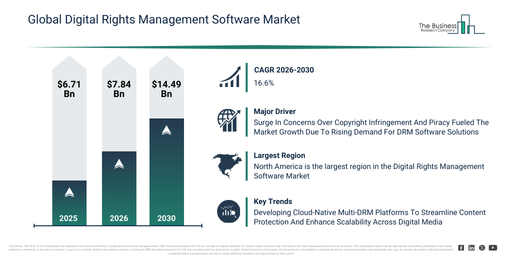
    The digital rights management software market has experienced substantial growth in recent years. Its valuation is projected to expand from $6.71 billion in 2025 to $7.84 billion in 2026, at a compound annual growth rate (CAGR) of 16.9%. This historical growth can be attributed to several factors, including the surge in digital piracy driving demand for content protection, the increasing uptake of online video and music platforms, a heightened need for secure software licensing management, the expansion of digital publishing and electronic books, and enterprises’ accelerating shift towards digital content distribution.

    The digital rights management software market is projected for substantial expansion over the upcoming years. The market’s value is forecast to reach $14.49 billion by 2030, exhibiting a compound annual growth rate (CAGR) of 16.6%. This anticipated expansion during the forecast period stems from factors such as the increasing embrace of cloud-based rights management solutions, the escalating need for secure content access across multiple devices, enhanced integration of artificial intelligence for automated content safeguarding, the spread of subscription-based digital monetization models, and the rising requirement for protected digital learning and remote work content systems. Key developments expected within this period encompass progress in blockchain-based rights verification technologies, breakthroughs in forensic watermarking for anti-piracy protection, advances in machine learning-driven content surveillance, ongoing research and development in next generation encryption frameworks, and technological improvements in automated rights lifecycle management systems.

    Access Your Free Sample Report for In-Depth Market Insights:

    https://www.thebusinessresearchcompany.com/sample.aspx?id=30574&type=smp

    Which Drivers Are Affecting Market Participation In The Digital Rights Management Software Market?

    Future expansion of the digital rights management software market is anticipated to be driven by increasing worries regarding copyright infringement and piracy. These issues involve the unsanctioned use, reproduction, and sharing of digital materials, including music, movies, literature, and software, without obtaining consent from the copyright holder, thereby compromising intellectual property safeguards. As more individuals access digital content via online platforms, and turn to unofficial channels when legitimate access is either unavailable or expensive, anxieties surrounding copyright infringement and piracy have intensified. Digital rights management software aids these endeavors by offering technology that upholds access permissions, deters unsanctioned usage, and preserves the intellectual property rights of those who create and distribute content. For example, in June 2025, data from the 13th wave of the Online Copyright Infringement Tracker Survey, conducted by the UK Intellectual Property Office (a UK government body), indicated that the percentage of UK internet users accessing illicit content rose from 24 % in 2024 to 26 % in 2025, representing an 8.3 % increase year-over-year. Consequently, the expanding concerns about copyright infringement and piracy are propelling the expansion of the DRM Software market.

    What Segment Classifications Make Up The Digital Rights Management Software Market?

    The digital rights management software market covered in this report is segmented –

    1) By Component: Software, Services

    2) By Deployment Mode: On Premises, Cloud

    3) By Organization Size: Small And Medium Enterprises, Large Enterprises

    4) By Application: Video Content, Electronic Books, Software, Games, Music, Other Applications

    5) By End User: Media And Entertainment, Banking, Financial Services, And Insurance, Information Technology And Telecommunications, Education, Healthcare, Government, Other End Users

    Subsegments:

    1) By Software: Content Protection Software, License Management Software, Encryption Management Software, Access Control Software, Digital Content Monitoring Software

    2) By Services: Implementation Services, Consulting Services, Support and Maintenance Services, Managed Digital Rights Services, Training and Integration Services

    What Upcoming Trends Are Likely To Define The Future Path Of The Digital Rights Management Software Market?

    Leading companies within the digital rights management software market are prioritizing the creation of innovative solutions, such as cloud-native multi-DRM platforms, to simplify integration, enhance scalability, and streamline licensing processes across diverse digital platforms. These cloud-native multi-DRM platforms are defined as software offered through cloud environments that deliver centralized DRM services, encompassing key management, license delivery, and policy enforcement, without demanding on-premises infrastructure. For example, NAGRA, a US-based content security company, introduced its Multi-DRM service on the AWS Marketplace in September 2023. This offering delivers scalable content protection constructed on Amazon EKS, OpenSearch, S3, and RDS, enabling streaming developers to incorporate DRM through a SaaS model, which includes a free trial option. This introduction represents a substantial technological leap by merging cloud scalability with enterprise-grade DRM capabilities, thereby bridging secure content delivery with straightforward deployment. It offers content providers a flexible, efficient solution for safeguarding digital media and overseeing licenses across multiple platforms.

    Which Key Players Are Driving Competition In The Digital Rights Management Software Market?

    Major companies operating in the digital rights management software market are Apple Inc., Google LLC, Microsoft Corporation, Synamedia Ltd., Irdeto B.V., Viaccess-Orca SAS, JW Player LLC, Verimatrix Inc., Wowza Media Systems LLC, Seclore Inc., Wibu-Systems AG, Axinom GmbH, Locklizard Limited, Intertrust Technologies Corporation, Vitrium Systems Inc., BuyDRM Inc., EZDRM Inc., castLabs GmbH, VdoCipher Pvt. Ltd., FileOpen Systems Inc.

    Access The Complete Report For Deeper Market Insights:

    https://www.thebusinessresearchcompany.com/report/digital-rights-management-software-market-report

    Which Region Is Projected To Lead The Digital Rights Management Software Market During The Forecast Period?

    North America was the largest region in the digital rights management software market in 2025. Asia-Pacific is expected to be the fastest-growing region in the forecast period. The regions covered in the digital rights management software market report are Asia-Pacific, South East Asia, Western Europe, Eastern Europe, North America, South America, Middle East, Africa.

    Request Your Customized Digital Rights Management Software Market Research Report for Competitive Advantage:

    https://www.thebusinessresearchcompany.com/customise?id=30574&type=smp

    Browse Through More Reports Similar to the Global Digital Rights Management Software Market 2026, By The Business Research Company

    Digital Rights Management Market Report 2026

    https://www.thebusinessresearchcompany.com/report/digital-rights-management-global-market-report

    Digital Rights Management In Media And Entertainment Market Report 2026

    https://www.thebusinessresearchcompany.com/report/digital-rights-management-in-media-and-entertainment-global-market-report

    legal document management software global market report

    https://www.thebusinessresearchcompany.com/report/legal-document-management-software-global-market-report

    Get in touch with us:

    The Business Research Company: https://www.thebusinessresearchcompany.com/

    Americas +1 310-496-7795

    Asia +44 7882 955267 & +91 8897263534

    Europe +44 7882 955267

    Email us at marketing@tbrc.info

    Follow us on:

    LinkedIn: https://in.linkedin.com/company/the-business-research-company

    YouTube: https://www.youtube.com/channel/UC24_fI0rV8cR5DxlCpgmyFQ

    Global Market Model: https://www.thebusinessresearchcompany.com/global-market-model
  • Digital Neuro Biomarkers Industry Poised for Rapid Growth, Forecast to Touch $3.18 Billion by 2030 at 27.2% CAGR

    Digital Neuro Biomarkers Industry Poised for Rapid Growth, Forecast to Touch $3.18 Billion by 2030 at 27.2% CAGR

    Uncover key drivers, emerging technologies, and competitive movements shaping the digital neuro biomarkers market from 2026–2035 with trusted insights from The Business Research Company

    What are the forecasted starting (2026) and ending (2030) market sizes for the Digital Neuro Biomarkers Market?

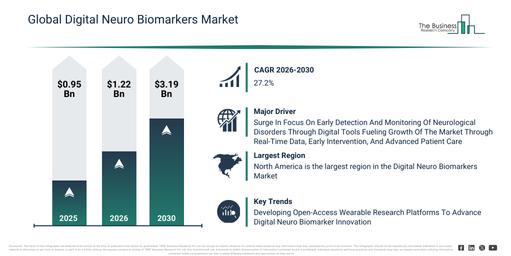
    The digital neuro biomarkers market has shown substantial expansion in recent years. Its value is predicted to climb from $0.95 billion in 2025 to $1.22 billion in 2026, achieving a compound annual growth rate (CAGR) of 27.5%. The historical growth of this market can be linked to the increasing occurrence of neurological disorders, the wider adoption of wearable devices, a greater focus on cognitive assessment, breakthroughs in neuroimaging technologies, and initial investigations into digital biomarker development.

    The digital neuro biomarkers market is anticipated to experience significant expansion over the coming years, with its size projected to reach $3.19 billion by 2030, demonstrating a compound annual growth rate (CAGR) of 27.2%. This expansion during the projection period stems from several factors, including the increasing application of artificial intelligence in neurological diagnostics, a rising need for remote patient observation, the broadening of tele-neurology offerings, increased funding in neuroscience studies, and the creation of customized neurology treatments. Key developments expected within this forecast period involve more extensive use of cloud-based neurological data analytics, the implementation of real-time brain monitoring systems, the proliferation of mobile cognitive assessment tools, the incorporation of machine learning into biomarker analysis, and the advancement of platforms for predictive and precision neurology.

    Access Your Free Sample Report for In-Depth Market Insights:

    https://www.thebusinessresearchcompany.com/sample.aspx?id=30571&type=smp

    What Drivers Are Supporting Technological Adoption In The Digital Neuro Biomarkers Market?

    The heightened emphasis on promptly identifying and tracking neurological disorders is set to fuel the expansion of the digital neuro biomarkers market. This early identification and tracking utilize digital tools like wearable gadgets, mobile applications, and sensors for ongoing evaluation of neurological function, cognitive abilities, and behavior, allowing for prompt recognition of these conditions. Such attention is growing stronger, driven by public health programs and clinical objectives focused on detecting cognitive decline and neurodegenerative illnesses prior to the manifestation of advanced symptoms. Digital neuro biomarkers aid these endeavors by providing unbiased, live data, assisting clinicians and researchers in pinpointing subtle neurological shifts and implementing timely interventions. For example, the U.S. Centres for Disease Control and Prevention’s Healthy Brain Initiative indicated in 2024 that roughly one billion people worldwide suffer from neurological disorders, with about 50 million experiencing epilepsy and 24 million living with Alzheimer’s disease. Consequently, the growing focus on the early detection and ongoing monitoring of neurological disorders via digital instruments is propelling the expansion of the digital neuro biomarkers market.

    What Segment Types Are Examined In The Digital Neuro Biomarkers Market?

    The digital neuro biomarkers market covered in this report is segmented –

    1) By Type: Wearable, Mobile-Based Applications, Sensors, Other Types

    2) By Deployment Mode: Cloud-Based Platforms, On-Premise Platforms, Hybrid Deployment Models

    3) By Biomarker Type: Cognitive Digital Biomarkers, Motor Function Digital Biomarkers, Speech And Language Digital Biomarkers, Behavioral Digital Biomarkers

    4) By End-User: Healthcare Companies, Healthcare Providers, Payers, Other End-Users

    Subsegments:

    1) By Wearable: Smart Wristbands, Smart Headbands, Smart Watches, Smart Clothing, Implantable Devices

    2) By Mobile-Based Applications: Cognitive Assessment Applications, Neurological Monitoring Applications, Mental Health Tracking Applications, Motor Function Assessment Applications, Speech And Language Tracking Applications

    3) By Sensors: Electroencephalography Sensors, Electrocardiography Sensors, Eye Tracking Sensors, Motion Tracking Sensors, Biometric Monitoring Sensors

    4) By Other Types: Cloud Based Platforms, Data Analytics Tools, Digital Therapeutic Platforms, Artificial Intelligence Enabled Assessment Tools, Virtual Reality Based Assessment Tools

    Which Trends Are Shaping Activity Within The Digital Neuro Biomarkers Market?

    Major companies operating in the digital neuro biomarkers market are focusing on establishing open-access research infrastructure, such as WearGait PD, to aid in the development, validation, and regulatory assessment of wearable-based digital neuro biomarkers for neurological disorders. WearGait PD is a regulatory science dataset that provides synchronized wearable sensor and gait data from individuals with Parkinson’s disease and age-matched controls, enabling the extraction and evaluation of gait-derived digital biomarkers for disease monitoring and progression assessment. For instance, in July 2024, the U.S. Food and Drug Administration (FDA), a U.S.-based regulatory agency, published WearGait PD: Wearables Dataset for Gait in Parkinson’s Disease and Age-Matched Controls, an open-access dataset designed to support researchers and industry developers in deriving and validating digital biomarkers. This dataset includes raw inertial measurement unit (IMU) acceleration and rotational velocity data, insole pressure recordings, and synchronized gait annotations, facilitating algorithm testing, metric validation, and the development of wearable sensor-based monitoring tools.

    Who Are The Top-Performing Companies In The Digital Neuro Biomarkers Market In Recent Years?

    Major companies operating in the digital neuro biomarkers market are F. Hoffmann-La Roche AG, Merck KGaA, Biogen Inc., Evidation Health Inc., Huma Therapeutics Limited, Altoida Inc, Cogstate Limited, Quibim S.L., Empatica Inc., Linus Health Inc., Cambridge Cognition Holdings plc, Brainomix Limited, Mindstrong Health Inc., Neurotrack Technologies Inc., Feel Therapeutics Inc., BrainCheck Inc., IXICO plc, NeuraMetrix Inc., NeuraLight Ltd., Koneksa Health Inc., Sonde Health Inc., Aural Analytics Inc., Winterlight Labs Inc.

    Access The Complete Report For Deeper Market Insights:

    https://www.thebusinessresearchcompany.com/report/digital-neuro-biomarkers-market-report

    Which Region Currently Holds The Largest Share Of The Digital Neuro Biomarkers Market?

    North America was the largest region in the digital neuro biomarkers market in 2025. Asia-Pacific is expected to be the fastest-growing region in the forecast period. The regions covered in the digital neuro biomarkers market report are Asia-Pacific, South East Asia, Western Europe, Eastern Europe, North America, South America, Middle East, Africa.

    Request Your Customized Digital Neuro Biomarkers Market Research Report for Competitive Advantage:

    https://www.thebusinessresearchcompany.com/customise?id=30571&type=smp

    Browse Through More Reports Similar to the Global Digital Neuro Biomarkers Market 2026, By The Business Research Company

    Neurological Biomarkers Market Report 2026

    https://www.thebusinessresearchcompany.com/report/neurological-biomarkers-global-market-report

    Central Nervous System Biomarkers Market Report 2026

    https://www.thebusinessresearchcompany.com/report/central-nervous-system-biomarkers-global-market-report

    clinical biomarkers global market report

    https://www.thebusinessresearchcompany.com/report/clinical-biomarkers-global-market-report

    Get in touch with us:

    The Business Research Company: https://www.thebusinessresearchcompany.com/

    Americas +1 310-496-7795

    Asia +44 7882 955267 & +91 8897263534

    Europe +44 7882 955267

    Email us at marketing@tbrc.info

    Follow us on:

    LinkedIn: https://in.linkedin.com/company/the-business-research-company

    YouTube: https://www.youtube.com/channel/UC24_fI0rV8cR5DxlCpgmyFQ

    Global Market Model: https://www.thebusinessresearchcompany.com/global-market-model