Category: Medical Equipment

  • 4D Radiotherapy Equipment Market 2026–2030: Forecast, Innovation, and Competitive Trends

    Uncover key drivers, emerging technologies, and competitive movements shaping the 4d radiotherapy equipment market from 2026–2035 with trusted insights from The Business Research Company

    What market expansion outlook does the 4D Radiotherapy Equipment Market show for the 2026–2030 period?

    Significant growth has been observed in the 4D radiotherapy equipment market size over recent years. This market is projected to expand from $1.91 billion in 2025 to $2.09 billion in 2026, exhibiting a compound annual growth rate (CAGR) of 9.6%. Historically, this expansion can be linked to factors such as an increasing demand for motion-adaptive radiation therapy, the growing adoption of advanced imaging systems, a rising focus on minimizing treatment errors, the expanding use of real-time patient monitoring, and an increasing preference for high-precision radiotherapy.

    The 4D radiotherapy equipment market is anticipated to experience robust expansion over the coming years, reaching $2.99 billion in 2030 with a compound annual growth rate (CAGR) of 9.3%. This projected growth stems from factors such as increasing investment in advanced radiotherapy technologies, the rising uptake of 4D treatment systems, a growing need for precise tumor-tracking methods, the broadened integration of AI-powered motion management, and an escalating demand for customized radiation therapy. Key developments expected during this period involve technological progress in motion-synchronized radiotherapy systems, novel real-time imaging functionalities, advancements in adaptive treatment delivery platforms, continuous research and development in tumor-tracking technologies, and improvements in imaging-guided radiotherapy solutions.

    Access Your Free Sample Report for In-Depth Market Insights:

    https://www.thebusinessresearchcompany.com/sample.aspx?id=30492&type=smp

    What Drivers Are Shaping The Development Of The 4D Radiotherapy Equipment Market?

    The increasing occurrence of cancer is projected to stimulate the expansion of the 4D radiotherapy equipment market in the future. Cancer, a condition marked by the uncontrolled proliferation and dissemination of abnormal cells, can harm surrounding tissues and organs if not properly addressed. The escalating incidence of cancer is attributed to lifestyle factors such as inadequate nutrition, smoking, alcohol intake, and exposure to environmental contaminants, which heighten the likelihood of developing various cancers. 4D radiotherapy technology aids in cancer management by providing exceptionally precise, motion-adaptive radiation treatments that account for tumor motion during respiration. This enhances patient results by optimizing tumor targeting, reducing harm to healthy tissues, and boosting treatment efficacy. For example, NHS Digital, a UK government body, reported in October 2025 that England saw 354,820 new cancer diagnoses in 2023, averaging 972 daily diagnoses and marking an increase of 8,605 cases from 2022; prostate cancer was the most frequently diagnosed at 58,137 new cases, showing a 6% rise in registrations year-over-year. Consequently, the growing prevalence of cancer is propelling the demand for the 4D radiotherapy equipment market. The increasing expenditure on healthcare is anticipated to foster the expansion of the 4D radiotherapy equipment market moving ahead. Healthcare spending in developing economies involves financial allocations by governmental bodies, private organizations, and medical service providers aimed at enhancing medical infrastructure, availability of advanced therapies, and patient care. This expenditure is growing in emerging markets as expanding middle-class demographics achieve greater incomes and extended lifespans, consequently boosting the need for superior medical services, hospital facilities, and insurance schemes. 4D radiotherapy equipment supports this development by offering accurate, image-guided radiation therapy that considers tumor movement, thereby enhancing treatment results and lessening harm to adjacent healthy tissue. For instance, Statistics Austria, the national statistical office, reported in June 2025 that Austria’s total healthcare spending reached approximately $61.6 billion (€57 billion) in 2024, funded by both public and private sectors, marking an increase of about $4.6 billion (€4.25 billion) from the prior year, with healthcare’s share of gross domestic product climbing from 11.2% in 2023 to 11.8% in 2024. Thus, the escalating healthcare spending in emerging markets is stimulating the growth of the 4D radiotherapy equipment market.

    Which Segments Are Contributing To The Growth Of The 4D Radiotherapy Equipment Market?

    The 4D radiotherapy equipment market covered in this report is segmented –

    1) By Product Type Or Component: 4D Gating/RT Systems, Linear Accelerators (LINACs), 4D Imaging Modalities, SGRT Systems, Treatment Planning Software

    2) By Motion Management Technique: Respiratory Gating, Real-Time Tumor Tracking, Breath-Hold Techniques, Adaptive Radiotherapy (ART)

    3) By Application: Lung Cancer, Liver Cancers, Pancreatic Cancer, Breast Cancer, Lymphoma, Other Cancers

    4) By End User: Hospitals, Cancer Treatment Centers, Specialty Radiotherapy Clinics, Research Institutions

    Subsegments:

    1) By 4D Gating / RT Systems: Respiratory Gating Systems, Real-Time Tumor Tracking Systems, Motion Management Platforms, Adaptive Radiation Delivery Systems

    2) By Linear Accelerators: Standard Linear Accelerators, Image Guided Linear Accelerators, Motion Compensated Linear Accelerators, Stereotactic Body Radiation Therapy Linear Accelerators

    3) By 4D Imaging Modalities: Four Dimensional Computed Tomography, Four Dimensional Magnetic Resonance Imaging, Four Dimensional Positron Emission Tomography, Four Dimensional Cone Beam Computed Tomography

    4) By SGRT Systems: Surface Guided Patient Positioning Systems, Optical Surface Monitoring Systems, Real-Time Surface Tracking Systems, Motion Compensated Surface Imaging Systems

    5) By Treatment Planning Software: Motion Adaptive Planning Software, Dose Calculation Software, Image Fusion Planning Software, Tumor Contouring And Delineation Software

    How Are New Market Trends Shaping The Landscape Of The 4D Radiotherapy Equipment Market?

    Leading companies operating within the 4D radiotherapy equipment market are prioritizing the development of high-definition imaging systems, specifically AI-powered CT-Linac platforms, to enhance treatment precision, facilitate real-time plan adjustments, and boost workflow efficiency. AI-powered CT-Linac platforms refer to integrated computed tomography–linear accelerator systems that leverage artificial intelligence for high-definition imaging, adaptive treatment planning, and real-time dose adjustment, aiming to deliver exceptionally precise and personalized radiation therapy for cancer patients. For example, in May 2024, Elekta AB, a medical technology company based in Sweden, introduced Elekta Evo, a CT-Linac featuring AI-enhanced imaging and both online and offline adaptive radiotherapy capabilities. This system empowers clinicians to visualize target anatomy with clarity and modify radiation delivery during each session to account for patient movement and anatomical shifts. This launch signifies a substantial technological advancement by integrating highly precise imaging and adaptive therapy into everyday clinical workflows, connecting conventional radiotherapy with AI-driven adaptive 4D planning, and offering clinicians a scalable, efficient solution for better patient outcomes.

    Who Are The Top-Performing Companies In The 4D Radiotherapy Equipment Market In Recent Years?

    Major companies operating in the 4D radiotherapy equipment market are Hitachi Ltd., Siemens Healthineers AG, GE HealthCare Technologies Inc., Koninklijke Philips N.V., Varian Medical Systems Inc., Elekta AB, Shanghai United Imaging Healthcare Co. Ltd., Accuray Incorporated, Brainlab AG, Canon Medical Systems Corporation, RefleXion Medical, Vision RT Ltd., C-Rad AB, MVision AI Ltd., Anzai Medical Co. Ltd., ViewRay Technologies Inc., DYN’R Medical Systems, Ion Beam Applications SA (IBA SA)

    Access The Complete Report For Deeper Market Insights:

    https://www.thebusinessresearchcompany.com/report/4d-radiotherapy-equipment-market-report

    Which Region Currently Holds The Largest Share Of The 4D Radiotherapy Equipment Market?

    North America was the largest region in the 4D radiotherapy equipment market in 2025. Asia-Pacific is expected to be the fastest-growing region in the forecast period. The regions covered in the 4D radiotherapy equipment market report are Asia-Pacific, South East Asia, Western Europe, Eastern Europe, North America, South America, Middle East, Africa.

    Request Your Customized 4D Radiotherapy Equipment Market Research Report for Competitive Advantage:

    https://www.thebusinessresearchcompany.com/customise?id=30492&type=smp

    Browse Through More Reports Similar to the Global 4D Radiotherapy Equipment Market 2026, By The Business Research Company

    Radiotherapy Devices Market Report 2026

    https://www.thebusinessresearchcompany.com/report/radiotherapy-devices-global-market-report

    Single Dose Radiotherapy Services Market Report 2026

    https://www.thebusinessresearchcompany.com/report/single-dose-radiotherapy-services-global-market-report

    radiosurgery and radiotherapy robotics global market report

    https://www.thebusinessresearchcompany.com/report/radiosurgery-and-radiotherapy-robotics-global-market-report

    Get in touch with us:

    The Business Research Company: https://www.thebusinessresearchcompany.com/

    Americas +1 310-496-7795

    Asia +44 7882 955267 & +91 8897263534

    Europe +44 7882 955267

    Email us at marketing@tbrc.info

    Follow us on:

    LinkedIn: https://in.linkedin.com/company/the-business-research-company

    YouTube: https://www.youtube.com/channel/UC24_fI0rV8cR5DxlCpgmyFQ

    Global Market Model: https://www.thebusinessresearchcompany.com/global-market-model
  • 3D Neuroscience Market Forecast 2026–2035: Data Trends and Industry Insights

    Uncover key drivers, emerging technologies, and competitive movements shaping the 3d neuroscience market from 2026–2035 with trusted insights from The Business Research Company

    What level of growth is expected in the 3D Neuroscience Market between 2026 and 2030?

    The three-dimensional (3D) neuroscience market has seen rapid expansion in recent years. Its size is expected to increase from $1.49 billion in 2025 to $1.71 billion in 2026, exhibiting a compound annual growth rate (CAGR) of 14.8%. Historically, this growth can be attributed to several factors, including the increasing adoption of 3D brain modeling techniques, a rising demand for advanced neurological research tools, expanded use in drug discovery and neuropharmacology, the development of imaging and visualization technologies, and an intensified focus on understanding complex neural networks.

    The three-dimensional (3D) neuroscience market is anticipated to experience substantial expansion over the coming years. Its valuation is projected to reach $2.95 billion by 2030, exhibiting a compound annual growth rate (CAGR) of 14.5%. This growth throughout the forecast period can be linked to the increasing incorporation of 3D models with artificial intelligence (AI) analytics, a rise in investment in personalized neuroscience research, greater use in disease modeling and therapeutic development, the widening availability of high-resolution imaging and data acquisition platforms, and an elevated need for predictive and translational neuroscience studies. Key developments expected during this period involve technological innovations in 3D neural tissue modeling, progress in AI-powered data analysis, advancements in organoid and lab-grown neural systems, increased research and development in imaging and simulation platforms, and breakthroughs in integrated neuroscience modeling and visualization tools.

    Access Your Free Sample Report for In-Depth Market Insights:

    https://www.thebusinessresearchcompany.com/sample.aspx?id=30491&type=smp

    Which Drivers Are Expected To Impact The 3D Neuroscience Market During The Forecast Period?

    The expanding occurrence of neurological conditions is anticipated to boost the development of the 3D neuroscience market in the future. These disorders represent health issues impacting the brain, spinal cord, and nerves, thereby disturbing typical nervous system operations and resulting in deficiencies across movement, cognition, sensation, behavior, or general bodily regulation. The rising incidence of neurological disorders stems from detrimental lifestyle practices, such as inadequate diet, lack of physical activity, smoking, excessive drinking, and persistent stress. 3D neuroscience improves comprehension of brain structure and function, facilitating more accurate diagnoses and tailored therapies for individuals suffering from neurological conditions. As an illustration, in April 2024, data from the National Institutes of Health (NIH), a US-based government agency, indicated that approximately 6.9 million Americans aged 65 and above are presently afflicted with Alzheimer’s dementia, with this number forecasted to almost double, reaching 13.8 million by 2060. Consequently, the growing occurrence of neurological conditions fuels the 3D neuroscience market.

    How Is The 3D Neuroscience Market Divided Into Segments?

    The 3D neuroscience market covered in this report is segmented –

    1) By Component: Instruments And Consumables, Software And Services

    2) By Technology: Brain Imaging, Neuro-Microscopy, Electrophysiology, Neurophotonic Analysis, Other Technologies

    3) By Scale Of Analysis: Macro-Scale Connectomics (MSC), Meso-Scale Connectomics (MeSC), Micro-Scale Connectomics (MiSC), Nanoscale Or Synaptic Analysis (NSA)

    4) By Application: Disease Modeling And Drug Discovery, Brain Mapping And Connectomics, Developmental Neuroscience, Diagnostics And Surgical Planning

    5) By End-User: Hospitals, Diagnostic Laboratories, Research and Academic Institutes, Other End-Users

    Subsegments:

    1) By Instruments And Consumables: Imaging Devices, Microelectrodes, Sensors, Reagents, Laboratory Consumables

    2) By Software And Services: Data Analysis Software, Visualization Software, Modeling And Simulation Software, Technical Support Services, Training And Consultation Services

    Which Trends Are Expected To Influence The 3D Neuroscience Market In The Upcoming Years?

    Leading companies in the 3D neuroscience market are focusing on the development of advanced 3D human brain tissue platforms, such as multicellular integrated brain models, aiming to improve disease modeling, accelerate drug testing, and yield more physiologically relevant outcomes. Multicellular integrated brain models are laboratory-grown three-dimensional constructs derived from induced pluripotent stem cells that incorporate multiple primary brain cell types, thereby allowing for detailed study of cellular interactions, pathology, and drug responses. As an illustration, in November 2025, Massachusetts Institute of Technology (MIT), a US-based research institution, introduced Multicellular Integrated Brains (miBrains), which is a customizable 3D human brain tissue system. This platform integrates six major brain cell types, supports genetic engineering for individualized disease studies, and offers scalability for large-scale research projects, thus enhancing the availability and utility of complex in vitro models for neuroscience research.

    Which Leading Companies Dominate The 3D Neuroscience Market Share?

    Major companies operating in the 3D neuroscience market are Siemens Healthineers AG, Merck KGaA, Koninklijke Philips N.V., GE Healthcare Technologies Inc., Corning Incorporated, Bruker Corporation, STEMCELL Technologies Inc., Greiner Bio-One International GmbH, American Type Culture Collection, Cellink AB, Aspect Biosystems Ltd., InSphero AG, Axion BioSystems Inc., Emulate Inc., Mimetas B.V., NeuroNexus Technologies Inc., Tessara Therapeutics Inc., TheWell Bioscience Inc., Kirkstall Ltd., Pelobiotech GmbH, 3D Biotek LLC, Mightex Systems Inc., Advanced BioMatrix Inc.

    Access The Complete Report For Deeper Market Insights:

    https://www.thebusinessresearchcompany.com/report/3d-neuroscience-market-report

    How Does The 3D Neuroscience Market Perform Across Major Global Regions?

    North America was the largest region in the three dimensional (3D) neuroscience market in 2025. Asia-Pacific is expected to be the fastest-growing region in the forecast period. The regions covered in the 3D neuroscience market report are Asia-Pacific, South East Asia, Western Europe, Eastern Europe, North America, South America, Middle East, Africa.

    Request Your Customized 3D Neuroscience Market Research Report for Competitive Advantage:

    https://www.thebusinessresearchcompany.com/customise?id=30491&type=smp

    Browse Through More Reports Similar to the Global 3D Neuroscience Market 2026, By The Business Research Company

    Neuroscience Market Report 2026

    https://www.thebusinessresearchcompany.com/report/neuroscience-global-market-report

    3D Imaging Market Report 2026

    https://www.thebusinessresearchcompany.com/report/3d-imaging-global-market-report

    3D animation global market report

    https://www.thebusinessresearchcompany.com/report/3d-animation-global-market-report

    Get in touch with us:

    The Business Research Company: https://www.thebusinessresearchcompany.com/

    Americas +1 310-496-7795

    Asia +44 7882 955267 & +91 8897263534

    Europe +44 7882 955267

    Email us at marketing@tbrc.info

    Follow us on:

    LinkedIn: https://in.linkedin.com/company/the-business-research-company

    YouTube: https://www.youtube.com/channel/UC24_fI0rV8cR5DxlCpgmyFQ

    Global Market Model: https://www.thebusinessresearchcompany.com/global-market-model
  • 3D Digital X-Ray Systems Market Outlook 2026–2030: Key Business Drivers and Trends

    Uncover key drivers, emerging technologies, and competitive movements shaping the 3d digital x-ray systems market from 2026–2035 with trusted insights from The Business Research Company

    How much is the 3D Digital X-Ray Systems Market valued at in 2026, and what valuation is forecast for 2030?

    The 3D digital X-Ray systems market size has demonstrated robust growth in recent years. It is projected to expand from $6.05 billion in 2025 to $6.53 billion in 2026, at a compound annual growth rate (CAGR) of 8.1%. The market’s historical growth can be attributed to several factors, including heightened demand for sophisticated diagnostic imaging, a greater incidence of chronic and orthopedic conditions, wider acceptance of digital radiography, expanded application of 3D imaging in dental care, improved understanding of the importance of early disease detection, a move towards less invasive diagnostic methods, enhanced integration of imaging within outpatient settings, escalating healthcare spending, the increased availability of portable 3D x-ray devices, and a stronger inclination towards highly accurate diagnostics.

    The 3D digital X-Ray systems market is projected for substantial expansion in the coming years, with its valuation reaching $8.81 billion by 2030, driven by a compound annual growth rate (CAGR) of 7.8%. This anticipated growth during the forecast period is fueled by several factors, including the increasing integration of digital radiography, a heightened demand for precise 3D imaging, the expanding need for tools for early diagnosis, greater investment in imaging advancements, ongoing hospital modernization efforts, the expanded application of imaging in managing chronic diseases, a move towards automated radiology solutions, the increasing embrace of tele-radiology, a preference for imaging options with lower radiation doses, and the wider deployment of portable digital x-ray devices. Key trends expected during this period involve enhancements in high-resolution 3D imaging technology, progress in low-dose radiation solutions, improvements in portable 3D x-ray equipment, breakthroughs in AI-powered diagnostic instruments, innovations in automated image optimization, development of digital workflow platforms, integration with cloud storage, incorporation into hospital digital frameworks, the convergence of 3D imaging with robotics, and the development of more economical digital radiography solutions.

    Access Your Free Sample Report for In-Depth Market Insights:

    https://www.thebusinessresearchcompany.com/sample.aspx?id=30490&type=smp

    What Drivers Are Influencing The Growth Of The 3D Digital X-Ray Systems Market?

    The increasing need for high-resolution diagnostic imaging is anticipated to drive the expansion of the 3D Digital X-Ray Systems market in the future. This type of imaging encompasses medical technologies that produce precise, clear images of internal body structures, thereby facilitating accurate diagnoses and effective clinical choices. The demand for high-resolution diagnostic imaging is increasing because healthcare providers are broadening their services to allow for earlier detection of complex illnesses, better patient care, and improved diagnostic effectiveness. 3D Digital X-Ray Systems facilitate high-resolution diagnostic imaging by offering advanced solutions that provide excellent image clarity, enhance diagnostic precision, and optimize patient flow in clinical environments. For example, data from March 2024 released by the Australian Institute of Health and Welfare (AIHW), an Australian government health agency, revealed that nearly 2 in 5 Australians (39%) utilized more than 27 million Medicare-subsidised diagnostic imaging services. The number of imaging services per 100 individuals grew from 103 in 2022–23 to 106 in 2023–24, indicating a consistent annual increase and expanded adoption of advanced imaging techniques. Consequently, the growing requirement for high-resolution diagnostic imaging is fueling the expansion of the 3D Digital X-Ray Systems market.

    What Segments Are Included Within The 3D Digital X-Ray Systems Market?

    The 3D digital x-ray systems market covered in this report is segmented –

    1) By Product Type: Stationary 3D Digital X-Ray Systems, Portable 3D Digital X-Ray Systems, Mobile 3D Digital X-Ray Systems

    2) By Detector Type: Flat Panel Detectors, Charge-Coupled Devices (CCD), Image Intensifier Detectors, Computed Radiography (CR) Systems, Line-Scanning Detectors

    3) By Technology: Computed Tomography (CT) Systems, Digital Radiography (DR) Systems, Fluoroscopy Systems, X-Ray Systems With Dual Energy, Portable X-Ray Systems

    4) By Application: Orthopedics, Dental Imaging, Oncology, Pediatric Imaging, Cardiology

    5) By End-User: Hospitals, Diagnostic Imaging Centers, Outpatient Surgery Centers, Research Institutions, Veterinary Clinics

    Subsegments:

    1) By Stationary 3D Digital X-Ray Systems: Fixed-Room 3D Imaging Systems, Hospital Radiology Department Systems, High-Capacity 3D X-Ray Units, Floor-Mounted 3D X-Ray Systems, Ceiling-Mounted 3D X-Ray Systems, Advanced Diagnostic 3D Systems, Large-Format 3D Orthopedic Imaging Units

    2) By Portable 3D Digital X-Ray Systems: Handheld 3D X-Ray Devices, Backpack-Style Portable 3D Systems, Battery-Powered Portable 3D X-Ray Units, Emergency Or Trauma Portable 3D Systems, Field-Use Portable 3D Devices, Compact Point-Of-Care 3D X-Ray Units

    3) By Mobile 3D Digital X-Ray Systems: Cart-Based Mobile 3D X-Ray Systems, Motorized Mobile 3D Systems, Mobile 3D C-Arm Units, ICU Or Mobile Ward 3D Imaging Systems, Mobile Surgical 3D X-Ray Units, Mobile Diagnostic Screening Units

    What Trends Are Driving The Growth Trajectory Of The 3D Digital X-Ray Systems Market?

    Leading companies in the 3D digital X-ray systems market are concentrating on creating clinical imaging solutions, including multi-purpose 3D dental imaging platforms, to improve diagnostic accuracy, support treatment planning, and optimize surgical workflows. These platforms are technologies utilized for capturing volumetric images, planning interventions, and facilitating precise clinical decision-making in dental and oral surgery practices. For example, in September 2024, Dental Imaging Technologies Corporation (DEXIS), a US-based dental imaging technology company, introduced the ORTHOPANTOMOGRAPH OP 3D EX. This 3D X-ray platform features adaptable field of view options, sophisticated imaging software for chairside treatment planning, and integrated tools for generating surgical guides swiftly within practice settings. It is specifically designed for general practitioners aiming to enhance their diagnostic capabilities with 3D imaging, supporting a variety of clinical indications with a broad spectrum of field of view sizes.

    Who Are The Major Companies Operating In The 3D Digital X-Ray Systems Market?

    Major companies operating in the 3D digital x-ray systems market are Siemens Healthineers AG, Fujifilm Holdings Corporation, Koninklijke Philips N.V., GE HealthCare Technologies Inc., Mindray Medical International Limited, Dentsply Sirona Inc., Shimadzu Corporation, Canon Medical Systems Corporation, Acteon Group Ltd., United Imaging Healthcare Co. Ltd., Hamamatsu Photonics K.K., Agfa-Gevaert Group, Carestream Health Inc., Samsung Medison Co. Ltd., Analogic Corporation, Planmed Oy, Vatech Co. Ltd., Carestream Dental LLC, Ziehm Imaging GmbH, EOS Imaging S.A.

    Access The Complete Report For Deeper Market Insights:

    https://www.thebusinessresearchcompany.com/report/3d-digital-x-ray-systems-market-report

    Which Region Is Anticipated To See The Fastest Growth In The 3D Digital X-Ray Systems Market?

    North America was the largest region in the 3D digital X-Ray systems market in 2025. Asia-Pacific is expected to be the fastest-growing region in the forecast period. The regions covered in the 3D digital x-ray systems market report are Asia-Pacific, South East Asia, Western Europe, Eastern Europe, North America, South America, Middle East, Africa.

    Request Your Customized 3D Digital X-Ray Systems Market Research Report for Competitive Advantage:

    https://www.thebusinessresearchcompany.com/customise?id=30490&type=smp

    Browse Through More Reports Similar to the Global 3D Digital X-Ray Systems Market 2026, By The Business Research Company

    Digital Xray Devices Market Report 2026

    https://www.thebusinessresearchcompany.com/report/digital-xray-devices-global-market-report

    X Ray Systems Devices And Equipment Market Report 2026

    https://www.thebusinessresearchcompany.com/report/x-ray-systems-devices-and-equipment-global-market-report

    medical x ray equipment and imaging software global market report

    https://www.thebusinessresearchcompany.com/report/medical-x-ray-equipment-and-imaging-software-global-market-report

    Get in touch with us:

    The Business Research Company: https://www.thebusinessresearchcompany.com/

    Americas +1 310-496-7795

    Asia +44 7882 955267 & +91 8897263534

    Europe +44 7882 955267

    Email us at marketing@tbrc.info

    Follow us on:

    LinkedIn: https://in.linkedin.com/company/the-business-research-company

    YouTube: https://www.youtube.com/channel/UC24_fI0rV8cR5DxlCpgmyFQ

    Global Market Model: https://www.thebusinessresearchcompany.com/global-market-model

  • Wearable Fertility Trackers Market Projected To Reach $1.87 Billion By 2030 With 13.2% CAGR

    Wearable Fertility Trackers Market Projected To Reach $1.87 Billion By 2030 With 13.2% CAGR

    The Business Research Company’s 2026 market reports feature enhanced tools like market attractiveness analysis, TAM assessment, and company scoring matrices, along with interactive dashboards, deeper supply chain insights, and startup coverage strengthening the depth, usability, and strategic value of insights.

    How Will The Market Value Of The Wearable Fertility Trackers Market Progress Between 2026 And 2030?

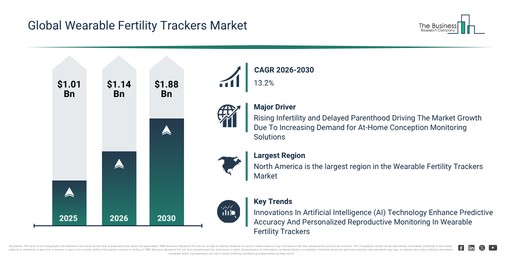
    The wearable fertility trackers market has experienced substantial growth in recent years. Its valuation is anticipated to climb from $1.01 billion in 2025 to $1.14 billion in 2026, achieving a compound annual growth rate (CAGR) of 13.0%. Historically, this expansion has been driven by rising awareness of fertility health, adoption of wearable health devices, growth of menstrual tracking apps, increasing female health awareness, and expansion of mobile health platforms.

    The market for wearable fertility trackers is anticipated to experience significant expansion in the coming years, with its size projected to reach $1.88 billion by 2030, advancing at a compound annual growth rate (CAGR) of 13.2%. This growth over the forecast period is attributable to factors such as the integration of AI-based predictive algorithms, the incorporation of multi-sensor smart wearables, a rise in the adoption of hormone monitoring devices, the expansion of telehealth services, and an increasing demand for personalized fertility solutions. Key trends anticipated during this period include continuous hormone monitoring, basal body temperature tracking, sleep pattern analysis, app-integrated fertility insights, and predictive ovulation modeling.

    Access Your Free Sample Report For In-Depth Market Analysis:

    https://www.thebusinessresearchcompany.com/sample_request?id=16775202&type=smp&name=Wearable%20Fertility%20Trackers%20Market%20Report%202026

    What Factors Are Contributing To The Growth Of The Wearable Fertility Trackers Market?

    The increasing prevalence of infertility and a trend towards delayed parenthood are projected to drive the expansion of the wearable fertility tracker market moving ahead. Infertility is defined as a medical state where conception does not occur after 12 or more months of consistent, unprotected sexual activity; meanwhile, delayed parenthood signifies the inclination of individuals and couples to begin families later in life. The increasing occurrence of both infertility and delayed parenthood is predominantly linked to evolving societal priorities, wherein a greater number of individuals prioritize advanced education and professional development, resulting in them deferring family planning until their late 30s and 40s – a phase marked by a substantial decrease in natural fertility. The growing frequency of infertility and delayed parenthood boosts the demand for wearable fertility trackers, as people aim for accurate, real-time tracking of ovulation cycles and key reproductive health metrics to maximize their prospects for natural conception. As an illustration, in August 2025, data from the Office for National Statistics, a government department based in the UK, indicated that the overall infertility rate in 2024 stood at 1.41 children per woman, a slight decrease from 1.42 in 2023. Additionally, in April 2025, information from the Society for Assisted Reproductive Technology (SART), a US-based professional medical organization that compiles and disseminates national IVF statistics for its member clinics, showed that the aggregate number of IVF cycles conducted by reporting SART member clinics climbed from 389,993 in 2022 to 432,641 in 2023, signifying an increment of 42,648 cycles. Consequently, the increase in infertility and the trend of delayed parenthood are fueling the expansion of the wearable fertility tracker market.

    What Are The Key Segment Divisions In The Wearable Fertility Trackers Market Segment Structure?

    The wearable fertility trackers market covered in this report is segmented –

    1) By Product Type: Bracelets, Rings, Patches, Smartwatches, Other Product Types

    2) By Technology: Sensor-based, App-integrated, Temperature-based, Hormone-based, Other Technologies

    3) By Distribution Channel: Online Retail, Pharmacies, Specialty Stores, Other Distribution Channels

    4) By Application: Ovulation Prediction, Menstrual Cycle Tracking, Pregnancy Planning, Other Applications

    5) By End-Users: Women, Healthcare Providers, Other End Users

    Subsegments:

    1) By Bracelets: Temperature Sensing Bracelets, Heart Rate Variability Bracelets, Hormone Monitoring Bracelets, Sleep Tracking Bracelets, Multi Sensor Bracelets

    2) By Rings: Continuous Temperature Rings, Ovulation Prediction Rings, Basal Body Temperature Rings, Smart Notification Rings, Rechargeable Battery Rings

    3) By Patches: Disposable Skin Patches, Reusable Adhesive Patches, Hormone Detection Patches, Sweat Analysis Patches, Wireless Sync Patches

    4) By Smartwatches: Integrated Fertility Tracking Smartwatches, Third Party App Compatible Smartwatches, Medical Grade Sensor Smartwatches, Cycle Prediction Smartwatches, Wellness Focused Smartwatches

    5) By Other Product Types: Clip On Sensors, Underwear Embedded Sensors, Bedside Sensor Devices, Handheld Fertility Monitors, Hybrid Wearable Devices

    What Trends Are Transforming The Wearable Fertility Trackers Market?

    Leading companies in the wearable fertility trackers market are focusing on developing sophisticated AI-powered fertility monitoring solutions to improve real-time cycle prediction and provide data-driven reproductive health recommendations. This AI-powered fertility monitoring is a technology-driven system utilizing artificial intelligence to analyze physiological and hormonal data via wearable sensors or digital platforms, offering personalized, real-time insights to accurately forecast ovulation, menstrual cycles, and fertility windows for enhanced reproductive planning. For instance, in December 2025, OTO Fertility, a Canada-based digital health and biometric intelligence company, launched the world’s initial AI-powered platform, integrated with a wearable device, designed for predictive reproductive insight. This solution integrates continuous physiological monitoring with advanced analytics to deliver personalized fertility forecasts, early identification of cycle irregularities, and actionable reproductive health recommendations, thereby enabling users to achieve more precise and proactive fertility management.

    Which Organizations Are Engaged In The Wearable Fertility Trackers Market?

    Major companies operating in the wearable fertility trackers market are Apple Inc., Samsung Electronics Co. Ltd., Ultrahuman PTE. Ltd., Garmin Ltd., Natural Cycles AB, Ava AG, Bellabeat d.o.o., kegg Fertility Inc., kegg Health Inc., Lady Technologies Inc., Tempdrop Ltd., VE Valley Electronics GmbH, Oura Health Oy, Mira Laboratories Inc., Trackle GmbH, WHOOP Inc., Femometer, Inito, OvuFirst Ltd., OTO Fertility, Movano Health.

    Get The Full Wearable Fertility Trackers Market Report:

    https://www.thebusinessresearchcompany.com/report/wearable-fertility-trackers-market-report

    Which Region Is The Leading Market For The Wearable Fertility Trackers Market?

    North America was the largest region in the wearable fertility trackers market in 2025. Asia-Pacific is expected to be the fastest-growing region in the forecast period. The regions covered in the wearable fertility trackers market report are Asia-Pacific, South East Asia, Western Europe, Eastern Europe, North America, South America, Middle East, Africa.

    Request A Customized Wearable Fertility Trackers Market Report For Competitive Insights:

    https://www.thebusinessresearchcompany.com/Customise?id=16775202&name=Wearable%20Fertility%20Trackers%20Market%20Report%202026&type=smp

    Browse Through More Reports Similar to the Global Wearable Fertility Trackers Market 2026, By The Business Research Company

    connected health personal medical devices market report 2026

    https://www.thebusinessresearchcompany.com/report/connected-health-personal-medical-devices-global-market-report

    contract sterilization market report 2026

    https://www.thebusinessresearchcompany.com/report/contract-sterilization-global-market-report

    orthotic insole 3-d printer market report 2026

    https://www.thebusinessresearchcompany.com/report/orthotic-insole-3-d-printer-global-market-report

    Get in touch with us:

    The Business Research Company: https://www.thebusinessresearchcompany.com/

    Americas +1 310-496-7795

    Asia +44 7882 955267 & +91 8897263534

    Europe +44 7882 955267

    Email us at marketing@tbrc.info

    Follow us on:

    LinkedIn: https://in.linkedin.com/company/the-business-research-company

    YouTube: https://www.youtube.com/channel/UC24_fI0rV8cR5DxlCpgmyFQ

    Global Market Model: https://www.thebusinessresearchcompany.com/global-market-model

  • Wearable Fall Detection Market Outlook Highlighting Expansion Trends Across Industries Through 2030

    Wearable Fall Detection Market Outlook Highlighting Expansion Trends Across Industries Through 2030

    The Business Research Company’s 2026 market reports feature enhanced tools like market attractiveness analysis, TAM assessment, and company scoring matrices, along with interactive dashboards, deeper supply chain insights, and startup coverage strengthening the depth, usability, and strategic value of insights.

    What Are The Market Size Estimates For The Wearable Fall Detection Market In 2026 And 2030?

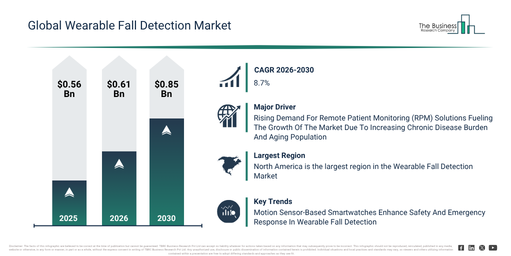
    The wearable fall detection market size has shown substantial growth recently. It is forecast to grow from $0.56 billion in 2025 to $0.61 billion in 2026, progressing at a compound annual growth rate (CAGR) of 8.5%. This expansion during the historic period is largely due to a rising elderly population, increasing adoption of wearable devices, growing awareness of personal safety, advancements in motion sensor technology, and the demand for home healthcare solutions.

    The wearable fall detection market size is projected to experience substantial expansion in the coming years. It is anticipated to reach $0.85 billion in 2030, exhibiting a compound annual growth rate (CAGR) of 8.7%. This growth during the forecast period is attributable to factors such as the integration with AI and machine learning, the broadening of telehealth services, increasing demand in senior living facilities, the adoption of multi-sensor wearable devices, and advancements in cloud-based monitoring platforms. Key trends expected in the forecast period include wearable multi-sensor integration, real-time fall alerts, remote health monitoring, AI-powered predictive analytics, and integration with emergency response systems.

    Access Your Free Sample Report For In-Depth Market Analysis:

    https://www.thebusinessresearchcompany.com/sample_request?id=58572496&type=smp&name=Wearable%20Fall%20Detection%20Market%20Report%202026

    Which Strong Drivers Are Impacting The Wearable Fall Detection Market Growth?

    The rising requirement for remote patient monitoring (RPM) solutions is projected to fuel the expansion of the wearable fall detection market moving forward. Remote patient monitoring (RPM) describes the utilization of connected digital technologies and wearable devices to gather medical and health-related information from individuals in one place and digitally transmit it to healthcare providers for evaluation and recommendations. The increasing need for RPM solutions is driven by the rising prevalence of chronic conditions, the expanding elderly demographic, and the necessity for continuous monitoring beyond traditional clinical settings. Wearable fall detection devices support remote patient monitoring by enabling real-time observation of patient movement, automatically identifying falls, and immediately alerting caregivers or healthcare providers, thereby enhancing patient safety and response times. For instance, in August 2025, according to the U.S. Department of Health & Human Services, a US-based executive branch department, Medicare spending on remote patient monitoring in 2024 surpassed US$536 million, reflecting a 31% increase compared to 2023, while nearly 1 million beneficiaries utilized RPM services, representing a 27% year-over-year rise, and approximately 4,600 medical practices regularly billed for RPM services. As a result, the growing demand for remote patient monitoring (RPM) solutions is boosting the growth of the wearable fall detection market.

    Which Segment Categories Are Included In The Wearable Fall Detection Market Segment Analysis?

    The wearable fall detection market covered in this report is segmented –

    1) By Product Type: Smart Watches, Pendants, Clip-Ons, Belt-Worn Devices, Other Product Types

    2) By Technology: Accelerometer-Based, Gyroscope-Based, Multi-Sensor, Other Technologies

    3) By Distribution Channel: Online, Offline

    4) By Application: Home Care, Senior Living Facilities, Hospitals And Clinics, Other Applications

    5) By End-User: Elderly, Patients with Chronic Diseases, Other End-Users

    Subsegments:

    1) By Smart Watches: Standalone Smart Watches, Companion Smart Watches, Medical Alert Smart Watches, Cellular-Enabled Smart Watches

    2) By Pendants: Emergency Response Pendants, Fall Detection Pendants, Waterproof Pendants, Two Way Communication Pendants

    3) By Clip-Ons: Waist Clip Devices, Pocket Clip Devices, Magnetic Clip Devices, Lightweight Clip Devices

    4) By Belt-Worn Devices: Motion Sensor Devices, Impact Detection Devices, GPS-Enabled Devices, Rechargeable Belt Devices

    5) By Other Product Types: Smart Insoles, Smart Patches, Smart Clothing, Wristbands

    What Trends Are Shaping The Future Of The Wearable Fall Detection Market?

    Major companies in the wearable fall detection market are prioritizing the development of advanced products, such as motion sensor-based fall detection and prevention watches, to offer enhanced safety and independence for elderly and high-risk individuals. These sensor-based watches for fall detection and prevention are advanced wearable devices equipped with motion and positioning sensors designed to identify unexpected falls and quickly send emergency alerts for immediate help. For instance, in September 2023, Antara Senior Care, an India-based integrated senior care service provider, launched ‘AGEasy ‘Empower’ Smart Watches as a means to improve its integrated care ecosystem for seniors. These smartwatches feature advanced fall detection using motion sensors that automatically alert emergency contacts if a user does not respond after a fall, alongside real-time health tracking (heart rate, blood pressure, SpO2, and temperature), GPS location, geo-fencing, and two-way voice/video calling. These were developed in partnership with US firm LifeQ and are available on the AGEasyByAntara site and Amazon India.

    Who Are The Active Companies Shaping The Wearable Fall Detection Market?

    Major companies operating in the wearable fall detection market are Apple Inc., Samsung Electronics Co. Ltd., Huawei Technologies Co. Ltd., Xiaomi Corporation, Koninklijke Philips N.V., Garmin Ltd., Blackline Safety Corp, LifeStation Inc., Medical Guardian LLC, LifeFone Inc., VitalConnect Inc., UnaliWear Inc., Mytrex Inc., CarePredict Inc., AlertOne Services LLC, Ranix Co. Ltd., Qmedic Health Inc., Bay Alarm Medical LLC, Aloe Care Health Inc., FallCall Solutions LLC.

    Get The Full Wearable Fall Detection Market Report:

    https://www.thebusinessresearchcompany.com/report/wearable-fall-detection-market-report

    Where Is The Wearable Fall Detection Market Primarily Concentrated By Region?

    North America was the largest region in the wearable fall detection market in 2025. Asia-Pacific is expected to be the fastest-growing region in the forecast period. The regions covered in the wearable fall detection market report are Asia-Pacific, South East Asia, Western Europe, Eastern Europe, North America, South America, Middle East, Africa.

    Request A Customized Wearable Fall Detection Market Report For Competitive Insights:

    https://www.thebusinessresearchcompany.com/Customise?id=58572496&name=Wearable%20Fall%20Detection%20Market%20Report%202026&type=smp

    Browse Through More Reports Similar to the Global Wearable Fall Detection Market 2026, By The Business Research Company

    connected health personal medical devices market report 2026

    https://www.thebusinessresearchcompany.com/report/connected-health-personal-medical-devices-global-market-report

    contract sterilization market report 2026

    https://www.thebusinessresearchcompany.com/report/contract-sterilization-global-market-report

    orthotic insole 3-d printer market report 2026

    https://www.thebusinessresearchcompany.com/report/orthotic-insole-3-d-printer-global-market-report

    Get in touch with us:

    The Business Research Company: https://www.thebusinessresearchcompany.com/

    Americas +1 310-496-7795

    Asia +44 7882 955267 & +91 8897263534

    Europe +44 7882 955267

    Email us at marketing@tbrc.info

    Follow us on:

    LinkedIn: https://in.linkedin.com/company/the-business-research-company

    YouTube: https://www.youtube.com/channel/UC24_fI0rV8cR5DxlCpgmyFQ

    Global Market Model: https://www.thebusinessresearchcompany.com/global-market-model

  • Virtual Dissection Labs Market Outlook Through 2030 Featuring Market Trends And Industry Developments

    Virtual Dissection Labs Market Outlook Through 2030 Featuring Market Trends And Industry Developments

    The Business Research Company’s 2026 market reports feature enhanced tools like market attractiveness analysis, TAM assessment, and company scoring matrices, along with interactive dashboards, deeper supply chain insights, and startup coverage strengthening the depth, usability, and strategic value of insights.

    How Much Growth In Market Value Is Expected For The Virtual Dissection Labs Market Between 2026 And 2030?

    The virtual dissection labs market has experienced rapid expansion in recent years. It is projected to increase from $1.77 billion in 2025 to $2.15 billion in 2026, demonstrating a compound annual growth rate (CAGR) of 21.2%. This historical growth is attributed to factors such as the rising adoption of digital learning tools, an increasing demand for anatomy visualization, a shortage of physical cadavers, the growth in medical and veterinary education, and the integration of simulation software in curriculum.

    The virtual dissection labs market size is anticipated to experience substantial growth in the forthcoming years. This market is set to expand to $4.67 billion by 2030, exhibiting a compound annual growth rate (CAGR) of 21.5%. The projected increase throughout the forecast period can be attributed to several factors, including the expansion of cloud-based virtual labs, advancements in AI and AR/VR technologies, growing adoption in K-12 and higher education, a rising demand for personalized learning experiences, and increased investment in content customization and analytics. Noteworthy trends anticipated during this period include interactive 3D anatomical simulations, AR/VR-based collaborative learning, AI-powered assessment and analytics, cloud-based virtual dissection platforms, and customizable curriculum integration.

    Access Your Free Sample Report For In-Depth Market Analysis:

    https://www.thebusinessresearchcompany.com/sample_request?id=76204773&type=smp&name=Virtual%20Dissection%20Labs%20Market%20Report%202026

    Which Major Drivers Are Influencing The Expansion Of The Virtual Dissection Labs Market?

    The increasing pace of digital transformation is anticipated to propel the growth of the virtual dissection labs market going forward. Digital transformation involves the integration of advanced technologies like cloud computing, artificial intelligence, 3D visualization, and immersive learning platforms into traditional systems to enhance efficiency, accessibility, and data-driven decision-making. This transformation is driven by a rising demand for scalable, software-based solutions that enable faster deployment and remote access across various sectors, including education and healthcare. Virtual dissection labs support digital transformation by offering interactive, digital anatomy learning environments that reduce dependence on physical cadavers, improve accessibility, and integrate advanced visualization and analytics tools into medical education and training. For instance, in December 2023, according to Eurostat, a Luxemburg-based government agency, approximately 45.2% of European Union enterprises purchased cloud computing services in 2023, an increase of 12% from the previous year. Therefore, accelerating digital transformation is driving the growth of the virtual dissection labs market.

    How Is The Virtual Dissection Labs Market Segmented Across Different Segment Categories?

    The virtual dissection labs market covered in this report is segmented –

    1) By Component: Software, Hardware, Services

    2) By Deployment Mode: On-Premises, Cloud-Based

    3) By Application: Medical Education, Veterinary Education, Biological Research, K-12 Education, Other Applications

    4) By End-User: Academic Institutions, Research Centers, Hospitals And Clinics, Other End-Users

    Subsegments:

    1) By Software: Anatomy Visualization Software, Simulation And Modeling Software, Analytics And Assessment Tools

    2) By Hardware: Virtual Dissection Tables, VR/AR Devices, Interactive Displays, Tracking Sensors And Controllers

    3) By Services: Installation And Integration, Training Services, Content Customization, Support And Maintenance

    What Trends Are Affecting The Growth Of The Virtual Dissection Labs Market?

    Major companies operating in the virtual dissection labs market are increasingly focusing on developing advanced solutions such as immersive virtual reality-based anatomy learning platforms to enhance student engagement and interactive science education. Immersive virtual reality-based anatomy learning utilizes VR environments to enable students to explore and dissect digital specimens within a realistic three-dimensional space, thereby eliminating the need for physical materials while allowing for repeatable and self-paced practice. For instance, in April 2024, Xennial Digital, a US-based education technology company, launched the VR Dissection Lab, a virtual reality learning platform specifically designed for middle and high school biology programs. This solution empowers students to conduct dissections in a fully guided virtual environment that aligns with curriculum objectives and offers a safe and ethical alternative to traditional specimen use. The platform supports repeated exploration, interactive visualization of anatomical structures, and teacher-led instruction via an easy-to-implement classroom system, contributing to the broader adoption of virtual dissection labs in K–12 education while simultaneously reducing preparation time and material costs.

    Which Organizations Play A Role In The Virtual Dissection Labs Market Landscape?

    Major companies operating in the virtual dissection labs market are Pearson Education, Mentice AB, Froggipedia, Leap Motion, Eisco Scientific, zSpace, Synaptive Medical, Labster, Anatomage, Realityworks, BioDigital, Inovus Medical, Visible Body, 3D4Medical, Touch of Life Technologies (TolTech), VIVED Learning, Brahmarsive, Elsevier, Cyber-Anatomy, Medical Augmented Intelligence (MedAI), Immersive Labz, Primal Pictures, Pirogov Interactive Anatomy.

    Get The Full Virtual Dissection Labs Market Report:

    https://www.thebusinessresearchcompany.com/report/virtual-dissection-labs-market-report

    Which Region Is The Largest In The Virtual Dissection Labs Market?

    North America was the largest region in the virtual dissection Labs market in 2025. Asia-Pacific is expected to be the fastest-growing region in the forecast period. The regions covered in the virtual dissection labs market report are Asia-Pacific, South East Asia, Western Europe, Eastern Europe, North America, South America, Middle East, Africa.

    Request A Customized Virtual Dissection Labs Market Report For Competitive Insights:

    https://www.thebusinessresearchcompany.com/Customise?id=76204773&name=Virtual%20Dissection%20Labs%20Market%20Report%202026&type=smp

    Browse Through More Reports Similar to the Global Virtual Dissection Labs Market 2026, By The Business Research Company

    connected health personal medical devices market report 2026

    https://www.thebusinessresearchcompany.com/report/connected-health-personal-medical-devices-global-market-report

    contract sterilization market report 2026

    https://www.thebusinessresearchcompany.com/report/contract-sterilization-global-market-report

    orthotic insole 3-d printer market report 2026

    https://www.thebusinessresearchcompany.com/report/orthotic-insole-3-d-printer-global-market-report

    Get in touch with us:

    The Business Research Company: https://www.thebusinessresearchcompany.com/

    Americas +1 310-496-7795

    Asia +44 7882 955267 & +91 8897263534

    Europe +44 7882 955267

    Email us at marketing@tbrc.info

    Follow us on:

    LinkedIn: https://in.linkedin.com/company/the-business-research-company

    YouTube: https://www.youtube.com/channel/UC24_fI0rV8cR5DxlCpgmyFQ

    Global Market Model: https://www.thebusinessresearchcompany.com/global-market-model
  • Tumor Exosome Profiling Market Forecast Indicating Stable Growth Toward $2.48 Billion By 2030

    Tumor Exosome Profiling Market Forecast Indicating Stable Growth Toward $2.48 Billion By 2030

    The Business Research Company’s 2026 market reports feature enhanced tools like market attractiveness analysis, TAM assessment, and company scoring matrices, along with interactive dashboards, deeper supply chain insights, and startup coverage strengthening the depth, usability, and strategic value of insights.

    By 2030, What Market Size Is The Tumor Exosome Profiling Market Expected To Reach Based On Its 2026 Value?

    The tumor exosome profiling market has undergone rapid expansion in recent years. Its valuation is anticipated to rise from $1.13 billion in 2025 to $1.32 billion by 2026, achieving a compound annual growth rate (CAGR) of 16.9%. This past growth can be ascribed to elements such as the increasing incidence of cancer, progress in molecular biology techniques, the rising embrace of liquid biopsy methods, increased research funding dedicated to oncology, and the imperative for non-invasive diagnostic instruments.

    The tumor exosome profiling market is projected to experience substantial expansion in the coming years, reaching $2.49 billion by 2030, with a compound annual growth rate (CAGR) of 17.1%. This expansion during the forecast period is driven by factors such as the incorporation of AI and bioinformatics into exosome profiling, the creation of personalized medicine solutions, the increase in diagnostic laboratories, the embrace of advanced high-throughput exosome analysis platforms, and advances in cancer biomarker discovery. Key trends anticipated for this period involve the integration of liquid biopsy, high-throughput exosome analysis, automated sample preparation, multi-omics data profiling, and personalized cancer therapeutics.

    Access Your Free Sample Report For In-Depth Market Analysis:

    https://www.thebusinessresearchcompany.com/sample_request?id=27247992&type=smp&name=Tumor%20Exosome%20Profiling%20Market%20Report%202026

    What Significant Factors Are Influencing The Tumor Exosome Profiling Market Expansion?

    The rising occurrence of cancer is anticipated to drive the expansion of the tumor exosome profiling market moving forward. Cancer is defined as a collection of conditions marked by the unrestrained multiplication of aberrant cells that can invade surrounding tissues and metastasize to other body parts. This increasing prevalence of cancer stems from detrimental lifestyle choices such as inadequate nutrition, insufficient exercise, tobacco use, and excessive alcohol intake, all of which elevate the risk of developing various cancer types. Tumor exosome profiling assists in managing cancer by facilitating prompt diagnosis, tracking disease advancement, and informing tailored therapy approaches via examining tumor-derived exosomes present in bodily fluids. As an illustration, in February 2024, the World Health Organization, a Switzerland-based international organization specializing in global health policy and public health initiatives, projected over 35 million new cancer cases in 2050, representing a 77% increase from the estimated 20 million cases in 2022. Consequently, the increasing occurrence of cancer is a key factor boosting the swift development of the tumor exosome profiling market.

    Which Segment Types Are Examined In The Tumor Exosome Profiling Market Segment Study?

    The tumor exosome profiling market covered in this report is segmented –

    1) By Product Type: Kits And Reagents, Instruments, Software, Services

    2) By Sample Type: Blood, Urine, Saliva, Other Sample Types

    3) By Application: Cancer Diagnostics, Prognostics, Therapeutics, Research

    4) By End-User: Hospitals And Clinics, Research Institutes, Diagnostic Laboratories, Other End-Users

    Subsegments:

    1) By Kits And Reagents: Isolation Kits, Detection Kits, Quantification Kits, Labeling Reagents, Antibodies

    2) By Instruments: Flow Cytometers, Nanoparticle Tracking Analyzers, Ultracentrifuges, Microfluidic Devices, Polymerase Chain Reaction Machines (PCR) Machines

    3) By Software: Data Analysis Software, Visualization Software, Bioinformatics Platforms, Statistical Modeling Software, Exosome Tracking Software

    4) By Services: Sample Preparation Services, Exosome Isolation Services, Molecular Profiling Services, Data Analysis Services, Custom Assay Development Services

    Which Trends Are Impacting The Progress Of The Tumor Exosome Profiling Market?

    Leading firms within the tumor exosome profiling market are prioritizing the creation of novel solutions, including liquid biopsy–based exosome assays, aimed at facilitating early cancer diagnosis and personalized treatment oversight. This type of assay involves a blood test capable of identifying minute vesicles, known as exosomes, which are shed by tumor cells, thereby enabling medical professionals to detect and track cancer without resorting to invasive tissue biopsies. As an illustration, in June 2024, Mercy BioAnalytics Inc., a US biotechnology firm, collaborated with University College London (UCL), a UK university, to introduce the Mercy Halo Ovarian Cancer Screening Test. This advanced extracellular vesicle liquid biopsy is engineered to detect ovarian cancer in postmenopausal women who show no symptoms, by identifying multiple co-localized cancer biomarkers on specific tumor-derived vesicles. It utilizes a small blood sample and a quantitative polymerase chain reaction (qPCR) based readout, delivering high sensitivity and specificity years prior to clinical diagnosis.

    Which Players Are Part Of The Competitive Landscape Of The Tumor Exosome Profiling Market?

    Major companies operating in the tumor exosome profiling market are Thermo Fisher Scientific Inc., Lonza Group Ltd., NanoFCM Inc., QIAGEN N.V., Bio-Techne Corporation, Miltenyi Biotec B.V. And Co. KG, Aethlon Medical Inc., Cusabio Technology LLC, Norgen Biotek Corp., Kimera Labs Inc, Diagenode Inc., Creative Biolabs Inc, Izon Science Ltd., System Biosciences LLC, Mercy Bioanalytics Inc, MtoZ Biolab, Capital Biosciences Inc., ExoCan Healthcare Technologies Private Limited, INOVIQ Ltd, Codiak BioSciences Inc.

    Get The Full Tumor Exosome Profiling Market Report:

    https://www.thebusinessresearchcompany.com/report/tumor-exosome-profiling-market-report

    Which Region Leads The Tumor Exosome Profiling Market In Overall Market Size?

    North America was the largest region in the tumor exosome profiling market in 2025. Asia-Pacific is expected to be the fastest-growing region in the forecast period. The regions covered in the tumor exosome profiling market report are Asia-Pacific, South East Asia, Western Europe, Eastern Europe, North America, South America, Middle East, Africa.

    Request A Customized Tumor Exosome Profiling Market Report For Competitive Insights:

    https://www.thebusinessresearchcompany.com/Customise?id=27247992&name=Tumor%20Exosome%20Profiling%20Market%20Report%202026&type=smp

    Browse Through More Reports Similar to the Global Tumor Exosome Profiling Market 2026, By The Business Research Company

    connected health personal medical devices market report 2026

    https://www.thebusinessresearchcompany.com/report/connected-health-personal-medical-devices-global-market-report

    contract sterilization market report 2026

    https://www.thebusinessresearchcompany.com/report/contract-sterilization-global-market-report

    orthotic insole 3-d printer market report 2026

    https://www.thebusinessresearchcompany.com/report/orthotic-insole-3-d-printer-global-market-report

    Get in touch with us:

    The Business Research Company: https://www.thebusinessresearchcompany.com/

    Americas +1 310-496-7795

    Asia +44 7882 955267 & +91 8897263534

    Europe +44 7882 955267

    Email us at marketing@tbrc.info

    Follow us on:

    LinkedIn: https://in.linkedin.com/company/the-business-research-company

    YouTube: https://www.youtube.com/channel/UC24_fI0rV8cR5DxlCpgmyFQ

    Global Market Model: https://www.thebusinessresearchcompany.com/global-market-model
  • Tracheal Tubes And Airway Products Market Outlook Showing Expansion To $4.56 Billion By 2030 At 6.6% CAGR

    Tracheal Tubes And Airway Products Market Outlook Showing Expansion To $4.56 Billion By 2030 At 6.6% CAGR

    The Business Research Company’s 2026 market reports feature enhanced tools like market attractiveness analysis, TAM assessment, and company scoring matrices, along with interactive dashboards, deeper supply chain insights, and startup coverage strengthening the depth, usability, and strategic value of insights.

    What Is The Anticipated Rise In Market Value Of The Tracheal Tubes And Airway Products Market During The Forecast Period?

    The tracheal tubes and airway products market size has experienced robust growth in recent years. It is projected to expand from $3.33 billion in 2025 to $3.54 billion in 2026, achieving a compound annual growth rate (CAGR) of 6.3%. This historical growth is primarily attributable to rising surgical procedures, increasing emergency care cases, growing awareness of airway management, the adoption of reusable airway devices, and advancements in anesthesia administration.

    The tracheal tubes and airway products market is anticipated to experience robust growth in the coming years. It is projected to expand to $4.56 billion by 2030, demonstrating a compound annual growth rate (CAGR) of 6.6%. This expected growth throughout the forecast period can be attributed to several factors, including the increasing demand for disposable airway products, the integration of video laryngoscopes, the rising adoption of AI-assisted airway monitoring, the expansion of critical care infrastructure, and the growth in minimally invasive surgical procedures. Key trends identified for the forecast period include the widespread adoption of video laryngoscopy, the use of disposable airway devices, the development of high-flow ventilation systems, the implementation of integrated airway management solutions, and the emergence of advanced airway monitoring systems.

    Access Your Free Sample Report For In-Depth Market Analysis:

    https://www.thebusinessresearchcompany.com/sample_request?id=97698556&type=smp&name=Tracheal%20Tubes%20And%20Airway%20Products%20Market%20Report%202026

    Which Important Drivers Are Guiding The Tracheal Tubes And Airway Products Market Growth?

    A rising incidence of severe respiratory conditions is projected to stimulate the expansion of the tracheal tubes and airway products market. These conditions are disorders that impact the lungs and airways, impeding normal breathing and oxygen exchange. Increasing air pollution levels and the ongoing circulation of respiratory viruses have contributed to a surge in serious respiratory illnesses, leading to higher rates of hospitalization and ICU admissions. Tracheal tubes and airway products are vital in addressing these conditions by maintaining open airways, facilitating efficient ventilation, and ensuring secure oxygen delivery during emergency care, critical care, and surgical procedures. For instance, in December 2024, MedRxiv, an US-based non-profit organization, noted that respiratory virus–related hospitalizations in the United States rose to 9.3% of all hospital admissions, up from 3.0% in late November, underscoring the escalating demand for advanced respiratory support due to acute respiratory illnesses. Thus, the growing prevalence of respiratory diseases is fueling the growth of the tracheal tubes and airway products market.

    How Are Different Segments Classified In The Tracheal Tubes And Airway Products Market Segment Analysis?

    The tracheal tubes and airway products market covered in this report is segmented –

    1) By Product Type: Endotracheal Tube, Oral Airway Tube, Nasal Airway Tube, Oral And Nasal Airway Tube, Laryngoscope, Other Product Types

    2) By Material: Polyvinyl Chloride (PVC), Thermoplastic Polyurethane (TPU), Silicone, Polyolefins, Other Materials

    3) By Performance: Single Use Disposable, Reusable, High Flow, Low Flow

    4) By Application: Surgical Procedures, Emergency Care, Critical Care, Anesthesia Administration, Respiratory Therapy

    5) By End User: Hospitals, Ambulatory Surgical Centers, Emergency Medical Services (EMS), Clinics

    Subsegments:

    1) By Endotracheal Tube: Cuffed Endotracheal Tube, Uncuffed Endotracheal Tube, Reinforced Endotracheal Tube, Preformed Endotracheal Tube, Double Lumen Endotracheal Tube, Tapered Cuff Endotracheal Tube

    2) By Oral Airway Tube: Guedel Oral Airway, Berman Oral Airway, Color Coded Oral Airway, Disposable Oral Airway, Reusable Oral Airway

    3) By Nasal Airway Tube: Standard Nasopharyngeal Airway, Flared Nasopharyngeal Airway, Soft Nasal Airway, Pre Lubricated Nasal Airway, Disposable Nasal Airway

    4) By Oral And Nasal Airway Tube: Combination Airway Tube, Dual Channel Airway Tube, Esophageal Tracheal Combitube, Multi Lumen Airway Tube, Disposable Combination Airway Tube

    5) By Laryngoscope: Direct Laryngoscope, Video Laryngoscope, Fiber Optic Laryngoscope, Rigid Laryngoscope, Flexible Laryngoscope, Disposable Blade Laryngoscope

    6) By Other Product Types: Airway Introducer, Intubation Stylet, Airway Exchange Catheter, Bite Block Airway Device, Tracheostomy Tube, Supraglottic Airway Device

    What Trends Are Transforming The Tracheal Tubes And Airway Products Market?

    Leading enterprises within the tracheal tubes and airway products market are increasingly prioritizing the development of sophisticated airway management solutions, particularly closed suction catheters. This focus aims to bolster patient safety, elevate clinical operational effectiveness, and mitigate the incidence of ventilator-associated infections. These catheters represent medical tools designed to clear respiratory secretions from patients who are intubated or tracheostomized, all while ensuring they remain connected to mechanical ventilators, thus preserving lung volume, oxygenation, and uninterrupted respiratory aid. A notable example is Dynarex Corporation, a US-based medical device firm, which introduced its Resp-O2 Vortex 72 Closed Suction Catheter in November 2025, engineered for sustained use for up to 72 hours. This specific product is engineered with a closed-system design to bolster infection control and incorporates features such as smooth, adaptable tubing, distinct depth markers, and broad compatibility for both endotracheal and tracheostomy uses. Breakthroughs like these facilitate more secure suctioning processes, alleviate the burden on clinicians, and contribute to superior patient outcomes, especially during extended periods of mechanical ventilation, thereby underscoring the rising market need for advanced airway management solutions.

    Who Are The Companies Driving Activity In The Tracheal Tubes And Airway Products Market?

    Major companies operating in the tracheal tubes airway products market are Medtronic Public Limited Company, Becton Dickinson Company, Boston Scientific Corporation, Teleflex Incorporated, Karl Storz SE & Co. Kommanditgesellschaft, Cook Medical LLC, ICU Medical Inc., ConvaTec Group Public Limited Company, Nihon Kohden Corporation, Ambu Aktieselskab, Vygon S.A., Atos Medical AB, SunMed LLC, Fuji Systems Corporation, Mercury Medical Inc., Medis Medical (UK) Limited, Penlon Limited, Flexicare Medical Limited, Intersurgical Limited, Well Lead Medical Co. Ltd.

    Get The Full Tracheal Tubes And Airway Products Market Report:

    https://www.thebusinessresearchcompany.com/report/tracheal-tubes-and-airway-products-market-report

    Which Region Is The Top Contributor To The Tracheal Tubes And Airway Products Market By Share?

    North America was the largest region in the tracheal tubes and airway products market in 2025. Asia-Pacific is expected to be the fastest-growing region in the forecast period. The regions covered in the tracheal tubes and airway products market report are Asia-Pacific, South East Asia, Western Europe, Eastern Europe, North America, South America, Middle East, Africa.

    Request A Customized Tracheal Tubes And Airway Products Market Report For Competitive Insights:

    https://www.thebusinessresearchcompany.com/Customise?id=97698556&name=Tracheal%20Tubes%20And%20Airway%20Products%20Market%20Report%202026&type=smp

    Browse Through More Reports Similar to the Global Tracheal Tubes And Airway Products Market 2026, By The Business Research Company

    connected health personal medical devices market report 2026

    https://www.thebusinessresearchcompany.com/report/connected-health-personal-medical-devices-global-market-report

    contract sterilization market report 2026

    https://www.thebusinessresearchcompany.com/report/contract-sterilization-global-market-report

    orthotic insole 3-d printer market report 2026

    https://www.thebusinessresearchcompany.com/report/orthotic-insole-3-d-printer-global-market-report

    Get in touch with us:

    The Business Research Company: https://www.thebusinessresearchcompany.com/

    Americas +1 310-496-7795

    Asia +44 7882 955267 & +91 8897263534

    Europe +44 7882 955267

    Email us at marketing@tbrc.info

    Follow us on:

    LinkedIn: https://in.linkedin.com/company/the-business-research-company

    YouTube: https://www.youtube.com/channel/UC24_fI0rV8cR5DxlCpgmyFQ

    Global Market Model: https://www.thebusinessresearchcompany.com/global-market-model

  • Global Tissue Protectors Market Forecast To Achieve $2.19 Billion By 2030 At 7.2% CAGR

    Global Tissue Protectors Market Forecast To Achieve $2.19 Billion By 2030 At 7.2% CAGR

    The Business Research Company’s 2026 market reports feature enhanced tools like market attractiveness analysis, TAM assessment, and company scoring matrices, along with interactive dashboards, deeper supply chain insights, and startup coverage strengthening the depth, usability, and strategic value of insights.

    What Level Of Market Value Growth Is Predicted For The Tissue Protectors Market From 2026 To 2030?

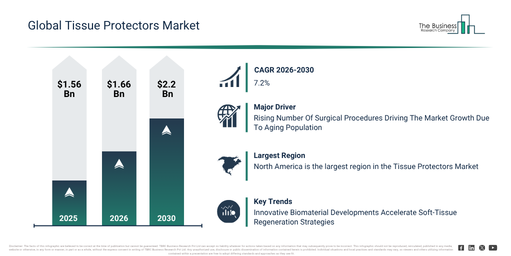
    The tissue protectors market size has experienced significant expansion over recent years. It is anticipated to increase from $1.56 billion in 2025 to $1.66 billion in 2026, achieving a compound annual growth rate (CAGR) of 7.0%. The expansion observed in the past can be ascribed to several factors, including a global rise in surgical procedures, heightened awareness regarding surgical site infections, the demand for disposable surgical devices, continuous innovations in surgical materials, and the overall development of hospital infrastructure.

    The tissue protectors market is projected to experience substantial expansion over the upcoming years. Its valuation is anticipated to reach $2.2 billion by 2030, demonstrating a compound annual growth rate (CAGR) of 7.2%. Factors contributing to this expansion during the projected timeframe include the embrace of antimicrobial wound edge protectors, their incorporation into robotic surgery systems, the creation of sustainable surgical materials, the proliferation of ambulatory surgical centers, and the need for automated surgical workflow solutions. Key developments expected during the forecast period encompass the increasing use of disposable surgical devices, breakthroughs in antimicrobial barriers, the integration with minimally invasive surgery, the advancement of materials, and the advent of automated surgical workflow solutions.

    Access Your Free Sample Report For In-Depth Market Analysis:

    https://www.thebusinessresearchcompany.com/sample_request?id=26422862&type=smp&name=Tissue%20Protectors%20Market%20Report%202026

    Which Key Drivers Are Affecting The Tissue Protectors Market Development?

    The growing volume of surgical interventions is anticipated to fuel expansion in the tissue protectors market. These medical operations, carried out by skilled surgeons to identify, treat, or avert illnesses and injuries through operative methods, are increasing primarily due to the aging demographic in developed nations. Older individuals frequently need operations for conditions linked to age, such as joint replacements, cardiovascular issues, and cancer treatments. Tissue protectors enhance surgical outcomes by protecting healthy tissues from damage during operations, which enables surgeons to perform with greater precision and efficiency, lessens the likelihood of complications, and ultimately improves patient recuperation and clinical results. A notable example is data from Intuitive Surgical Inc., a US-based medical device firm, which reported approximately 2,683,000 surgical procedures performed using da Vinci surgical systems by March 2025. This marks an increase from about 2,286,000 procedures in 2023 and 1,875,000 in 2022, demonstrating consistent annual growth in their usage. Consequently, the increasing frequency of surgical procedures is propelling the expansion of the tissue protectors market.

    How Are Segments Identified Within The Tissue Protectors Market Segment Framework?

    The tissue protectors market covered in this report is segmented –

    1) By Product Type: Wound Edge Protectors, Surgical Retractors, Incision Drapes

    2) By Material Type: Polyurethane, Silicone, Polyethylene, Latex-Free Elastomers

    3) By Usability: Disposable, Reusable

    4) By Application: General Surgery, Obstetrics And Gynecology, Colorectal Surgery, Cardiac Surgery

    5) By End User: Hospitals, Ambulatory Surgical Centers, Specialty Clinics

    Subsegments:

    1) By Wound Edge Protectors: Disposable Wound Edge Protectors, Reusable Wound Edge Protectors, Self-Retaining Wound Edge Protectors, Non-Self-Retaining Wound Edge Protectors, Circular Wound Edge Protectors

    2) By Surgical Retractors: Handheld Surgical Retractors, Self-Retaining Surgical Retractors, Rib Spreaders, Abdominal Surgical Retractors, Orthopedic Surgical Retractors

    3) By Incision Drapes: Adhesive Incision Drapes, Non-Adhesive Incision Drapes, Fenestrated Incision Drapes, Non-Fenestrated Incision Drapes, Antimicrobial Incision Drapes

    Which Trends Are Contributing To Changes In The Tissue Protectors Market?

    Leading companies in the tissue protectors market are prioritizing the development of innovative products, such as flowable collagen-based gels, to enhance post-surgical recovery and reduce tissue adhesion. These gels are injectable, collagen-rich hydrogels designed to conform to complex tissue surfaces, forming a protective barrier that diminishes adhesions, supports natural tissue regeneration, minimizes inflammation, and promotes quicker, smoother post-surgical healing compared to conventional solid barriers. For instance, in January 2026, TYBR Health Inc., a US-based regenerative medicine and medical device company, launched the B3 GEL System, a flowable collagen-based tissue protection gel developed to support post-surgical soft-tissue healing. This system was applied in orthopedic soft-tissue procedures to assist tendon repair and help reduce tissue tethering during recovery. The B3 GEL system adjusts to the surgical site, preserves biomechanical separation during the early healing phase, and is gradually resorbed by the body. Its unique extracellular matrix composition interacts with the body’s native repair mechanisms, fostering tissue regeneration while maintaining flexibility and glide for tendons and ligaments.

    Who Are The Companies Competing Within The Tissue Protectors Market?

    Major companies operating in the tissue protectors market are Cardinal Health Inc., Johnson & Johnson, Medtronic plc, 3M Company, Stryker Corporation, Becton Dickinson Company, B. Braun Melsungen AG, Smith & Nephew plc, Coloplast A/S, Cooper Surgical Inc., Hartmann Group, ConvaTec Group plc, Integra LifeSciences Holdings Corporation, Applied Medical Resources Corporation, Geister Medizintechnik GmbH, Prescient Surgical Inc., BetaTech Medical Inc., SunMedica Inc., PRAN Medsystems LLP, TYBR Health Inc.

    Get The Full Tissue Protectors Market Report:

    https://www.thebusinessresearchcompany.com/report/tissue-protectors-market-report

    Which Geographic Region Dominates The Tissue Protectors Market?

    North America was the largest region in the tissue protectors market in 2025. Asia-Pacific is expected to be the fastest-growing region in the forecast period. The regions covered in the tissue protectors market report are Asia-Pacific, South East Asia, Western Europe, Eastern Europe, North America, South America, Middle East, Africa.

    Request A Customized Tissue Protectors Market Report For Competitive Insights:

    https://www.thebusinessresearchcompany.com/Customise?id=26422862&name=Tissue%20Protectors%20Market%20Report%202026&type=smp

    Browse Through More Reports Similar to the Global Tissue Protectors Market 2026, By The Business Research Company

    connected health personal medical devices market report 2026

    https://www.thebusinessresearchcompany.com/report/connected-health-personal-medical-devices-global-market-report

    contract sterilization market report 2026

    https://www.thebusinessresearchcompany.com/report/contract-sterilization-global-market-report

    orthotic insole 3-d printer market report 2026

    https://www.thebusinessresearchcompany.com/report/orthotic-insole-3-d-printer-global-market-report

    Get in touch with us:

    The Business Research Company: https://www.thebusinessresearchcompany.com/

    Americas +1 310-496-7795

    Asia +44 7882 955267 & +91 8897263534

    Europe +44 7882 955267

    Email us at marketing@tbrc.info

    Follow us on:

    LinkedIn: https://in.linkedin.com/company/the-business-research-company

    YouTube: https://www.youtube.com/channel/UC24_fI0rV8cR5DxlCpgmyFQ

    Global Market Model: https://www.thebusinessresearchcompany.com/global-market-model

  • Tinnitus Treatment Devices Market Projected To Reach $3.06 Billion By 2030 With 7.6% CAGR

    Tinnitus Treatment Devices Market Projected To Reach $3.06 Billion By 2030 With 7.6% CAGR

    The Business Research Company’s 2026 market reports feature enhanced tools like market attractiveness analysis, TAM assessment, and company scoring matrices, along with interactive dashboards, deeper supply chain insights, and startup coverage strengthening the depth, usability, and strategic value of insights.

    How Will The Market Value Of The Tinnitus Treatment Devices Market Progress Between 2026 And 2030?

    The tinnitus treatment devices market size has experienced significant growth over recent years. It is projected to increase from $2.13 billion in 2025 to $2.28 billion in 2026, exhibiting a compound annual growth rate (CAGR) of 7.4%. The expansion observed in the historic period can be ascribed to the rising incidence of tinnitus, heightened awareness of auditory health, the adoption of conventional hearing aids, an increasing geriatric population, and the proliferation of otolaryngology clinics.

    The tinnitus treatment devices market size is projected to experience robust expansion over the coming years, reaching $3.06 billion by 2030, demonstrating a compound annual growth rate (CAGR) of 7.6%. This anticipated growth is driven by factors such as the incorporation of AI and ML into tinnitus devices, the creation of wearable sound therapy solutions, the expansion of tele-audiology services, an increasing need for homecare tinnitus management, and growing investments in personalized auditory devices. Key trends for the forecast period encompass personalized sound therapy devices, AI-powered tinnitus management, wearable monitoring systems, the adoption of home-based treatments, and seamless integration with mobile health applications.

    Access Your Free Sample Report For In-Depth Market Analysis:

    https://www.thebusinessresearchcompany.com/sample_request?id=84119276&type=smp&name=Tinnitus%20Treatment%20Devices%20Market%20Report%202026

    What Factors Are Contributing To The Growth Of The Tinnitus Treatment Devices Market?

    The increasing occurrence of hearing impairment is projected to boost the expansion of the tinnitus treatment devices market in the future. Hearing loss signifies a partial or complete inability to perceive sounds in one or both ears, stemming from issues within the outer, middle, inner ear, or the auditory nerve. The growing prevalence of hearing loss is linked to an aging population, as age-related degradation of the auditory system heightens the risk of compromised hearing and long-term auditory disorders. Tinnitus treatment devices aid in managing hearing loss by delivering targeted sound therapy or neuromodulation to diminish the perception of ringing and enhance auditory function. They improve patients’ quality of life through alleviating symptoms, supporting communication, and complementing conventional hearing rehabilitation strategies. For instance, in March 2025, according to the Ministers for the Department of Social Services, an Australia-based government agency, more than 3.6 million people in Australia are living with hearing loss, and this figure is anticipated to double by 2060. Therefore, the rising prevalence of hearing loss is driving the growth of the tinnitus treatment devices market.

    What Are The Key Segment Divisions In The Tinnitus Treatment Devices Market Segment Structure?

    The tinnitus treatment devices market covered in this report is segmented –

    1) By Product Type: Sound Masking Devices, Notched Music Devices, Hearing Aids, Cochlear Implants

    2) By Technology: Wearable Devices, Non-wearable Devices

    3) By Patient Type: Adults, Pediatrics

    4) By Distribution Channel: Online, Offline

    5) By Application: Hospitals, Ear, Nose, And Throat Clinics, Homecare Settings

    Subsegments:

    1) By Sound Masking Devices: Tabletop Sound Generators, Wearable Sound Generators, In Ear Sound Maskers, Combination Sound And Sleep Devices, Environmental Sound Machines, Bedside White Noise Devices, Smartphone Controlled Sound Maskers

    2) By Notched Music Devices: Customized Frequency Notched Music Players, Software Based Notched Music Therapy Platforms, Portable Notched Music Devices, Integrated Notched Music Hearing Devices, Personalized Streaming Notched Music Applications

    3) By Hearing Aids: Behind The Ear Hearing Aids, Receiver In Canal Hearing Aids, In The Ear Hearing Aids, In The Canal Hearing Aids, Completely In Canal Hearing Aids, Rechargeable Digital Hearing Aids, Bluetooth Enabled Hearing Aids

    4) By Cochlear Implants: Unilateral Cochlear Implants, Bilateral Cochlear Implants, Hybrid Cochlear Implants, Implantable Sound Processor Systems, External Sound Processor Units

    What Market Trends Are Affecting The Tinnitus Treatment Devices Market?

    Leading companies within the tinnitus treatment devices market are concentrating on creating innovative products, such as bimodal neuromodulation devices, to offer non-invasive, personalized relief from persistent tinnitus symptoms. These bimodal neuromodulation devices are wearable medical instruments that integrate precise sound therapy with gentle electrical stimulation, typically applied to the tongue, to re-educate the brain’s auditory pathways, lessen abnormal neural activity, and gradually diminish the experience and severity of tinnitus. For example, in March 2023, Neuromod Devices Ltd., an Ireland-based medical technology company, obtained U.S. Food and Drug Administration approval for Lenire, a bimodal neuromodulation device engineered to treat chronic tinnitus. Lenire operates by combining auditory stimulation delivered through headphones with subtle electrical pulses directed to the tongue, thereby retraining the brain’s auditory pathways to reduce the perception of ringing or buzzing. It addresses the neurological underpinnings of tinnitus instead of merely concealing symptoms, is wearable, adaptable to individual patient requirements, and designed for home use, providing a non-invasive therapy clinically shown to enhance tinnitus outcomes over time. This distinct fusion of sound and tongue-based electrical stimulation signifies a major step forward in neuromodulation therapies for auditory disorders.

    Which Organizations Are Engaged In The Tinnitus Treatment Devices Market?

    Major companies operating in the tinnitus treatment devices market are Sonova Holding AG, Demant A/S, GN Store Nord A/S, WS Audiology A/S, Starkey Hearing Technologies Inc., Cochlear Limited, Widex A/S, MED-EL Elektromedizinische Geräte GmbH, Starkey Laboratories Inc., Rion Co. Ltd., Neuromod Devices Ltd., Puretone Ltd., Micro-DSP Technology Co. Ltd., Neosensory Inc., Neuromonics Inc., Arches Natural Products Inc., Otoharmonics Corporation, SoundCure Inc., Desyncra Technologies Ltd., AlgorKorea Co. Ltd.

    Get The Full Tinnitus Treatment Devices Market Report:

    https://www.thebusinessresearchcompany.com/report/tinnitus-treatment-devices-market-report

    Which Region Is The Leading Market For The Tinnitus Treatment Devices Market?

    North America was the largest region in the tinnitus treatment devices market in 2025. Asia-Pacific is expected to be the fastest-growing region in the forecast period. The regions covered in the tinnitus treatment devices market report are Asia-Pacific, South East Asia, Western Europe, Eastern Europe, North America, South America, Middle East, Africa.

    Request A Customized Tinnitus Treatment Devices Market Report For Competitive Insights:

    https://www.thebusinessresearchcompany.com/Customise?id=84119276&name=Tinnitus%20Treatment%20Devices%20Market%20Report%202026&type=smp

    Browse Through More Reports Similar to the Global Tinnitus Treatment Devices Market 2026, By The Business Research Company

    connected health personal medical devices market report 2026

    https://www.thebusinessresearchcompany.com/report/connected-health-personal-medical-devices-global-market-report

    contract sterilization market report 2026

    https://www.thebusinessresearchcompany.com/report/contract-sterilization-global-market-report

    orthotic insole 3-d printer market report 2026

    https://www.thebusinessresearchcompany.com/report/orthotic-insole-3-d-printer-global-market-report

    Get in touch with us:

    The Business Research Company: https://www.thebusinessresearchcompany.com/

    Americas +1 310-496-7795

    Asia +44 7882 955267 & +91 8897263534

    Europe +44 7882 955267

    Email us at marketing@tbrc.info

    Follow us on:

    LinkedIn: https://in.linkedin.com/company/the-business-research-company

    YouTube: https://www.youtube.com/channel/UC24_fI0rV8cR5DxlCpgmyFQ

    Global Market Model: https://www.thebusinessresearchcompany.com/global-market-model