Category: Medical Equipment

  • Global Three-Dimensional (3D) Printed Surgical Models Market Forecast Through 2030 With Strategic Industry Perspectives

    Global Three-Dimensional (3D) Printed Surgical Models Market Forecast Through 2030 With Strategic Industry Perspectives

    The Business Research Company’s 2026 market reports feature enhanced tools like market attractiveness analysis, TAM assessment, and company scoring matrices, along with interactive dashboards, deeper supply chain insights, and startup coverage strengthening the depth, usability, and strategic value of insights.

    What Expansion In Market Value Is Forecasted For The Three-Dimensional (3D) Printed Surgical Models Market Between 2026 And 2030?

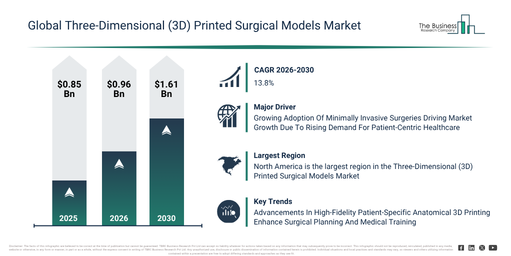
    The market size for three-dimensional (3D) printed surgical models has experienced swift expansion in recent years. This market is projected to expand from $0.85 billion in 2025 to $0.96 billion in 2026, indicating a compound annual growth rate (CAGR) of 13.6%. Historically, this growth can be attributed to several factors including increasing demand for surgical planning tools, advancements in 3D printing technologies, the adoption of polymers and biomaterials, the growth of medical training programs, and heightened research in anatomical modeling.

    The three-dimensional (3D) printed surgical models market is anticipated to undergo significant expansion in the coming years, with projections indicating a rise to $1.61 billion by 2030, demonstrating a compound annual growth rate (CAGR) of 13.8%. This growth during the forecast period is driven by factors such as the integration of AI and machine learning, the creation of multi-material and composite models, the increased presence of surgical simulation centers, the requirement for customized patient-specific solutions, and investments in real-time surgical planning platforms. Noteworthy trends for the forecast period encompass the development of patient-specific models, advanced surgical simulation techniques, integration with medical imaging software, adaptable organ and tissue models, and improvements in preoperative planning.

    Access Your Free Sample Report For In-Depth Market Analysis:

    https://www.thebusinessresearchcompany.com/sample_request?id=64591391&type=smp&name=Three-Dimensional%20%283D%29%20Printed%20Surgical%20Models%20Market%20Report%202026

    What Key Factors Are Shaping The Three-Dimensional (3D) Printed Surgical Models Market Landscape?

    The increasing use of minimally invasive surgeries is projected to drive expansion in the three-dimensional (3D)-printed surgical models market in the future. These surgical techniques involve restricting the dimensions and quantity of necessary incisions, often employing miniature instruments, cameras, and robotic support to lessen complications post-surgery and shorten recovery periods. The uptake of minimally invasive surgeries is escalating because of an increasing desire for procedures that shorten patient recuperation, alleviate discomfort, and decrease the likelihood of complications after an operation. Three-dimensional (3D)-printed surgical models offer surgeons accurate, patient-specific anatomical duplicates, enabling thorough planning and rehearsal before an operation, thereby improving precision and security during minimally invasive procedures and lowering complication risks. As an illustration, the Annual Report 2023 from Intuitive Surgical Inc., a US-based medical device company, indicated that approximately 2,286,000 surgical procedures were conducted with da Vinci surgical systems in 2023, an increase from about 1,875,000 procedures in 2022. Consequently, the expanding use of minimally invasive surgeries is fueling the expansion of the three-dimensional (3D) printed surgical models market.

    How Is The Three-Dimensional (3D) Printed Surgical Models Market Broken Down By Segment Categories?

    The three-dimensional (3D) printed surgical models market covered in this report is segmented –

    1) By Model Type: Soft Tissue Models, Bone Models, Organ Models, Vascular Models, Tumor Models

    2) By Material Type: Polymer, Metal, Ceramic, Composite, Biomaterials

    3) By Technology: Fused Deposition Modeling, Stereolithography, Selective Laser Sintering, Digital Light Processing, Binder Jetting

    4) By Application: Preoperative Planning, Surgical Training, Patient-Specific Models, Anatomical Education, Surgical Simulation

    5) By End User: Hospitals And Surgical Centers, Diagnostic Imaging Centers, Academic And Research Institutes, Medical Device Companies, Specialty Clinics, Other End Users

    Subsegments:

    1) By Soft Tissue Models: Skin Layer Models, Muscle Structure Models, Ligament And Tendon Models, Cartilage Structure Models, Multilayer Soft Tissue Models, Facial Soft Tissue Models, Reconstructive Soft Tissue Models

    2) By Bone Models: Cranial Bone Models, Dental And Jaw Bone Models, Spinal Bone Models, Orthopedic Bone Models

    3) By Organ Models: Heart Organ Models, Liver Organ Models, Kidney Organ Models, Lung Organ Models, Brain Organ Models, Gastrointestinal Organ Models

    4) By Vascular Models: Arterial System Models, Venous System Models, Cardiac Vascular Models, Neurovascular Models, Peripheral Vascular Models

    5) By Tumor Models: Brain Tumor Models, Breast Tumor Models, Lung Tumor Models, Liver Tumor Models, Bone Tumor Models, Prostate Tumor Models, Customized Tumor Models

    What Emerging Trends Are Seen In The Three-Dimensional (3D) Printed Surgical Models Market?

    Leading companies in the three-dimensional (3D)-printed surgical models market are concentrating on developing innovative products like high-fidelity patient-specific anatomical 3D printers to enhance surgical planning, improve medical training, and accelerate device development. These advanced 3D printing systems produce accurate, lifelike replicas of a patient’s anatomy using materials that mimic real tissue and bone, thereby assisting surgeons in planning procedures, training medical staff, and testing devices more effectively than traditional generic models or cadavers. For instance, in June 2024, Stratasys Ltd., a US-based 3D printing technology company, introduced the J5 Digital Anatomy 3D printer, which is a high-fidelity patient-specific anatomical 3D printer designed to create realistic patient-specific anatomical models. The J5 Digital Anatomy printer features biomechanically accurate materials that replicate human tissue behavior, a compact office-friendly design, and high repeatability for precise modeling. Its capabilities encompass preoperative surgical planning, medical training, and iterative device prototyping, while also reducing reliance on animal testing and lowering operating room costs.

    Which Players Are Present In The Three-Dimensional (3D) Printed Surgical Models Market Space?

    Major companies operating in the three-dimensional (3D) printed surgical models market are Stratasys Ltd, 3D Systems Corporation, Formlabs Inc, Materialise NV, WhiteClouds Inc, 3D Medical Support BV, Axial3D Ltd, Onkos Surgical Inc, GPI Prototype & Manufacturing Services LLC, DF3D Creations Private Limited, 3D Surgical, Lazarus 3D LLC, 3D LifePrints U.K. Ltd., 3Deus Dynamics, CliniModel 3D, MedCAD, Graft3D Health Care Solutions Pvt Ltd, MedScan3D, 3D Incredible, Curewith3D, Customy, MCare360.

    Get The Full Three-Dimensional (3D) Printed Surgical Models Market Report:

    https://www.thebusinessresearchcompany.com/report/three-dimensional-3d-printed-surgical-models-market-report

    Which Region Has The Greatest Market Share In The Three-Dimensional (3D) Printed Surgical Models Market?

    North America was the largest region in the three-dimensional (3D) printed surgical models market in 2025. Asia-Pacific is expected to be the fastest-growing region in the forecast period. The regions covered in the three-dimensional (3D) printed surgical models market report are Asia-Pacific, South East Asia, Western Europe, Eastern Europe, North America, South America, Middle East, Africa.

    Request A Customized Three-Dimensional (3D) Printed Surgical Models Market Report For Competitive Insights:

    https://www.thebusinessresearchcompany.com/Customise?id=64591391&name=Three-Dimensional%20%283D%29%20Printed%20Surgical%20Models%20Market%20Report%202026&type=smp

    Browse Through More Reports Similar to the Global Three-Dimensional (3D) Printed Surgical Models Market 2026, By The Business Research Company

    connected health personal medical devices market report 2026

    https://www.thebusinessresearchcompany.com/report/connected-health-personal-medical-devices-global-market-report

    contract sterilization market report 2026

    https://www.thebusinessresearchcompany.com/report/contract-sterilization-global-market-report

    orthotic insole 3-d printer market report 2026

    https://www.thebusinessresearchcompany.com/report/orthotic-insole-3-d-printer-global-market-report

    Get in touch with us:

    The Business Research Company: https://www.thebusinessresearchcompany.com/

    Americas +1 310-496-7795

    Asia +44 7882 955267 & +91 8897263534

    Europe +44 7882 955267

    Email us at marketing@tbrc.info

    Follow us on:

    LinkedIn: https://in.linkedin.com/company/the-business-research-company

    YouTube: https://www.youtube.com/channel/UC24_fI0rV8cR5DxlCpgmyFQ

    Global Market Model: https://www.thebusinessresearchcompany.com/global-market-model
  • Sternal Closure Devices Market Forecast 2026–2030 Highlighting Industry Drivers And Growth Trends

    Sternal Closure Devices Market Forecast 2026–2030 Highlighting Industry Drivers And Growth Trends

    The Business Research Company’s 2026 market reports feature enhanced tools like market attractiveness analysis, TAM assessment, and company scoring matrices, along with interactive dashboards, deeper supply chain insights, and startup coverage strengthening the depth, usability, and strategic value of insights.

    What Is The Estimated Market Size Of The Sternal Closure Devices Market In 2026, And How Will Its Value Evolve By 2030?

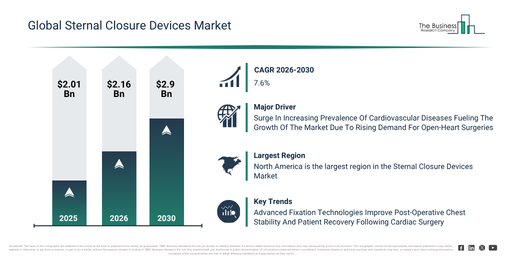
    The sternal closure devices market has observed strong expansion in recent years. Its value is forecast to increase from $2.01 billion in 2025 to $2.16 billion in 2026, demonstrating a compound annual growth rate (CAGR) of 7.4%. The growth witnessed historically is due to an escalating number of open-heart surgeries, the prevalent adoption of traditional wire cerclage techniques, greater awareness of postoperative complications, the development of cardiac care infrastructure, and a consistent demand for reliable sternal stabilization.

    The sternal closure devices market size is projected for substantial expansion in the coming years. This market is set to reach $2.9 billion by 2030, exhibiting a compound annual growth rate (CAGR) of 7.6%. This anticipated expansion during the forecast period is propelled by several factors, including pioneering developments in bioabsorbable and hybrid closure systems, the widespread adoption of patient-specific titanium and peek devices, their seamless integration with digital surgical planning tools, an increasing demand for improved postoperative recovery monitoring, and the ongoing expansion of ambulatory surgical centers. Key developments expected within the forecast period encompass minimally invasive sternal closure techniques, the emergence of patient-specific sternal fixation devices, the utilization of advanced biocompatible materials, integration with surgical navigation systems, and sophisticated postoperative monitoring and analytics.

    Access Your Free Sample Report For In-Depth Market Analysis:

    https://www.thebusinessresearchcompany.com/sample_request?id=98571702&type=smp&name=Sternal%20Closure%20Devices%20Market%20Report%202026

    What Key Drivers Are Fueling The Growth Of The Sternal Closure Devices Market?

    The expanding occurrence of cardiovascular diseases is projected to propel the growth of the sternal closure devices market in the coming years. Cardiovascular diseases encompass various disorders affecting the heart and blood vessels, including conditions like coronary artery disease, heart failure, and stroke, all of which impede normal circulatory function. The incidence of these diseases is rising due to increased exposure to unhealthy lifestyle patterns such as physical inactivity, which heightens cardiac risk and leads to more patients requiring surgical intervention. Sternal closure devices are essential for securing the sternum after open-heart procedures, facilitating proper bone healing, maintaining chest stability, and minimizing risks such as infection, instability, and delayed recovery, thereby enhancing overall postoperative outcomes for cardiovascular patients. For instance, in October 2024, data from the Centers for Disease Control and Prevention, a US-based government agency monitoring public health, indicated that cardiovascular disease deaths increased significantly from 371,506 cases in 2022 to 919,032 deaths in 2023. Consequently, this increasing prevalence of cardiovascular diseases is a key factor driving the sternal closure devices market. The rising number of cardiac surgery procedures is anticipated to propel the growth of the sternal closure devices market going forward. Cardiac surgery procedures refer to operative interventions performed on the heart and its surrounding structures to treat various conditions like coronary artery disease, valvular disorders, and congenital heart defects. The increasing volume of surgical procedures is primarily due to the growing prevalence of chronic diseases associated with aging populations and lifestyle-related health conditions. This surge in cardiac surgical procedures directly escalates the demand for sternal closure devices, as every open-heart surgery involving a median sternotomy requires secure and reliable sternal closure to ensure proper healing and prevent postoperative complications. For example, in March 2025, according to The Society of Thoracic Surgeons (STS) Adult Cardiac Surgery Database, a US-based clinical registry covering over 97% of cardiac surgery performed in the United States, overall cardiac surgical volumes increased by 4.2% in 2023 compared with 2022, reflecting a continued post-pandemic rebound in surgical activity across the country. Therefore, the rising cardiac surgery procedures are driving the growth of the sternal closure devices market.

    What Are The Main Segments Within The Sternal Closure Devices Market Segment Structure?

    The sternal closure devices market covered in this report is segmented –

    1) By Product Type: Wire Cerclage, Plate And Screw Systems, Cable Systems, Clips, Other Product Types

    2) By Material: Stainless Steel, Titanium, Polyether Ether Ketone (PEEK), Other Materials

    3) By Procedure: Median Sternotomy, Hemisternotomy, Bilateral Thoracosternotomy

    4) By End-User: Hospitals, Cardiac Centers, Ambulatory Surgical Centers, Other End Users

    Subsegments:

    1) By Wire Cerclage: Stainless Steel Wires, Double Loop Wires, Figure Eight Wires, Twisted Wires, Coated Surgical Wires

    2) By Plate And Screw Systems: Titanium Plates, Locking Plate Systems, Rigid Fixation Plates, Low Profile Plates, Self Tapping Screw Systems

    3) By Cable Systems: Titanium Cables, Stainless Steel Cables, Adjustable Tension Cable Systems, Crimped Cable Systems, Multi Strand Cable Systems

    4) By Clips: Titanium Sternal Clips, Stainless Steel Clips, Compression Clips, Locking Clips, Preloaded Clip Systems

    5) By Other Product Types: Bioabsorbable Fixation Systems, Hybrid Closure Systems, Polymer Based Devices, Composite Fixation Devices, Reinforced Closure Bands

    Which Trends Are Impacting The Progress Of The Sternal Closure Devices Market?

    Major companies in the sternal closure devices market are prioritizing the development of advanced rigid fixation solutions to improve chest stability, lessen postoperative complications, and accelerate patient recovery following cardiac procedures. Rigid sternal fixation systems are defined as implantable devices, utilizing plates and screws, that stabilize the sternum after median sternotomy, promoting bone healing and reducing the likelihood of sternal dehiscence. For instance, in August 2024, DePuy Synthes, a US-based medical device company, introduced the MatrixSTERNUM Fixation System to deliver enhanced sternal stability after open-heart surgery. This system features titanium plates and locking screw technology crafted to provide strong, reliable fixation, support bone healing, and limit movement at the surgical site, thereby enhancing clinical outcomes and patient safety after cardiac surgery.

    Who Are The Companies Participating In The Sternal Closure Devices Market?

    Major companies operating in the sternal closure devices market are Stryker Corporation, B. Braun, Zimmer Biomet Holdings Inc., Arthrex Inc., Teleflex Incorporated, KLS Martin SE & Co. KG, Acumed LLC, Peters Surgical, DePuy Synthes, J.J.A.C.E. Ltd, Medicon eG, Kinamed Incorporated, ABYRX Inc., Jeil Medical Corporation, Able Medical Devices, Neos Surgery S.L., Praesidia S.R.L., MedXpert GmbH, Investigaciones y Desarrollos Argentinos S.R.L., Changzhou Waston Medical Appliance Co. Ltd., Dispomedica GmbH.

    Get The Full Sternal Closure Devices Market Report:

    https://www.thebusinessresearchcompany.com/report/sternal-closure-devices-market-report

    Which Region Leads The Sternal Closure Devices Market In Terms Of Market Share?

    North America was the largest region in the sternal closure devices market in 2025. Asia-Pacific is expected to be the fastest-growing region in the forecast period. The regions covered in the sternal closure devices market report are Asia-Pacific, South East Asia, Western Europe, Eastern Europe, North America, South America, Middle East, Africa.

    Request A Customized Sternal Closure Devices Market Report For Competitive Insights:

    https://www.thebusinessresearchcompany.com/Customise?id=98571702&name=Sternal%20Closure%20Devices%20Market%20Report%202026&type=smp

    Browse Through More Reports Similar to the Global Sternal Closure Devices Market 2026, By The Business Research Company

    connected health personal medical devices market report 2026

    https://www.thebusinessresearchcompany.com/report/connected-health-personal-medical-devices-global-market-report

    contract sterilization market report 2026

    https://www.thebusinessresearchcompany.com/report/contract-sterilization-global-market-report

    orthotic insole 3-d printer market report 2026

    https://www.thebusinessresearchcompany.com/report/orthotic-insole-3-d-printer-global-market-report

    Get in touch with us:

    The Business Research Company: https://www.thebusinessresearchcompany.com/

    Americas +1 310-496-7795

    Asia +44 7882 955267 & +91 8897263534

    Europe +44 7882 955267

    Email us at marketing@tbrc.info

    Follow us on:

    LinkedIn: https://in.linkedin.com/company/the-business-research-company

    YouTube: https://www.youtube.com/channel/UC24_fI0rV8cR5DxlCpgmyFQ

    Global Market Model: https://www.thebusinessresearchcompany.com/global-market-model
  • Stair Climbing Wheelchairs Market Outlook And Future Growth Forecast Through 2030

    Stair Climbing Wheelchairs Market Outlook And Future Growth Forecast Through 2030

    The Business Research Company’s 2026 market reports feature enhanced tools like market attractiveness analysis, TAM assessment, and company scoring matrices, along with interactive dashboards, deeper supply chain insights, and startup coverage strengthening the depth, usability, and strategic value of insights.

    How Is The Market Size Of The Stair Climbing Wheelchairs Market Expected To Scale Between 2026 And 2030?

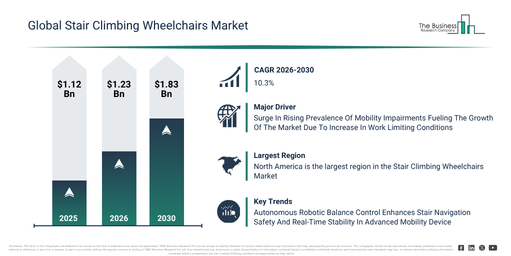
    In recent years, the market for stair climbing wheelchairs has experienced significant expansion. Projected figures indicate that it is set to increase from $1.12 billion in 2025 to $1.23 billion in 2026, demonstrating a compound annual growth rate (CAGR) of 10.1%. Historically, this growth can be ascribed to factors such as an increasing elderly population, the rising incidence of mobility impairments, the adoption of traditional wheelchairs, a heightened awareness of accessibility solutions, and the expansion of homecare services.

    The stair climbing wheelchairs market size is anticipated to experience significant expansion in the next few years. It is projected to increase to $1.83 billion by 2030, demonstrating a compound annual growth rate (CAGR) of 10.3%. This growth during the forecast period can be ascribed to factors like the incorporation of AI and intelligent sensors, a rising demand for powered stair climbing wheelchairs, the proliferation of rehabilitation centers, a concentrated effort on battery efficiency, and the advancement of hybrid wheel and track mobility systems. Noteworthy trends expected in the forecast period encompass smart sensor integration, remote controlled mobility, lightweight and foldable designs, enhanced battery efficiency leading to longer runtime, and AI-assisted navigation.

    Access Your Free Sample Report For In-Depth Market Analysis:

    https://www.thebusinessresearchcompany.com/sample_request?id=35713244&type=smp&name=Stair%20Climbing%20Wheelchairs%20Market%20Report%202026

    Which Major Drivers Are Influencing The Expansion Of The Stair Climbing Wheelchairs Market?

    The increasing occurrence of mobility impairments is anticipated to fuel the expansion of the stair-climbing wheelchairs market moving forward. Mobility impairments refer to significant challenges with walking or ascending stairs, which restrict daily activities. The prevalence of these impairments is rising as the elderly population experiences greater physical constraints with advancing age. Stair-climbing wheelchairs assist individuals with limited mobility by enabling them to securely traverse staircases and maintain their autonomy in everyday living. For example, in December 2025, the Bureau of Labor Statistics, a US-based independent federal statistical agency, reported that in July 2024, mobility impairment stood as the most common work-limiting health condition among employees, impacting 1.8 percent of the workforce. Consequently, the growing incidence of mobility impairments is stimulating the expansion of the stair-climbing wheelchairs market.

    How Are Segments Identified Within The Stair Climbing Wheelchairs Market Segment Framework?

    The stair climbing wheelchairs market covered in this report is segmented –

    1) By Product Type: Manual Stair Climbing Wheelchairs, Powered Stair Climbing Wheelchairs

    2) By Technology: Track-based, Wheel-based

    3) By Distribution Channel: Online, Offline

    4) By Application: Residential, Commercial, Healthcare Facilities, Other Applications

    5) By End-User: Hospitals, Homecare, Rehabilitation Centers, Other End-Users

    Subsegments:

    1) By Manual Stair Climbing Wheelchairs: Folding Frame Manual Stair Climbing Wheelchairs, Rigid Frame Manual Stair Climbing Wheelchairs, Lightweight Manual Stair Climbing Wheelchairs, Heavy Duty Manual Stair Climbing Wheelchairs, Track Based Manual Stair Climbing Wheelchairs, Lever Operated Manual Stair Climbing Wheelchairs

    2) By Powered Stair Climbing Wheelchairs: Battery Operated Stair Climbing Wheelchairs, Electric Motor Driven Stair Climbing Wheelchairs, Track Based Powered Stair Climbing Wheelchairs, Wheel And Track Hybrid Stair Climbing Wheelchairs, Remote Controlled Stair Climbing Wheelchairs, Smart Sensor Enabled Stair Climbing Wheelchairs

    What Trends Are Transforming The Stair Climbing Wheelchairs Market?

    Major companies operating in the stair-climbing wheelchair market are dedicating their efforts to crafting groundbreaking robotic balancing systems, such as autonomous stair-climbing wheelchairs, to elevate user safety and enhance movement across diverse multi-level environments. Autonomous stair-climbing wheelchairs function as intelligent mobility devices that leverage robotic mechanisms and sensors to independently traverse stairs and uneven ground, thereby increasing user safety and independence without the need for manual assistance. For instance, in October 2025, Toyota Motor Corporation, a Japan-based mobility technology company, introduced the Walk Me robotic mobility chair at the Japan Mobility Show 2025. This autonomous wheelchair features innovative foldable, tentacle-inspired legs that facilitate stair climbing, enable users to sit directly on the floor, and seamlessly adapt to challenging uneven terrain. It incorporates integrated LiDAR and radar sensors for continuous real-time environmental mapping, alongside advanced balance control software that constantly optimizes positioning to prevent tipping and maintain user stability.

    Who Are The Companies Competing Within The Stair Climbing Wheelchairs Market?

    Major companies operating in the stair climbing wheelchairs market are Evac+Chair International Limited, SANO Transportgeraete GmbH, MEYRA GmbH, Ostrich Mobility Instruments Private Limited, Guangzhou Topmedi Co Ltd, Caterwil LLC, Scewo AG, Mobius Mobility LLC, Zhangjiagang New Fellow Med Co Ltd, Antano Group S r l, Dragon Industry ZJG Co Ltd, XSTO Co Ltd, Anand International, VSM Enterprises, Neerja Group, Shanghai Brother Medical Manufacturer Co Ltd, SEEDEE WHEELCHAIRS LLP, Zhangjiagang Herui Medical Equipment Co Ltd, Ningbo Baichen Medical Devices Co Ltd, TopChair SAS.

    Get The Full Stair Climbing Wheelchairs Market Report:

    https://www.thebusinessresearchcompany.com/report/stair-climbing-wheelchairs-market-report

    Which Region Leads The Stair Climbing Wheelchairs Market In Overall Market Size?

    North America was the largest region in the stair climbing wheelchairs market in 2025. Asia-Pacific is expected to be the fastest-growing region in the forecast period. The regions covered in the stair climbing wheelchairs market report are Asia-Pacific, South East Asia, Western Europe, Eastern Europe, North America, South America, Middle East, Africa.

    Request A Customized Stair Climbing Wheelchairs Market Report For Competitive Insights:

    https://www.thebusinessresearchcompany.com/Customise?id=35713244&name=Stair%20Climbing%20Wheelchairs%20Market%20Report%202026&type=smp

    Browse Through More Reports Similar to the Global Stair Climbing Wheelchairs Market 2026, By The Business Research Company

    connected health personal medical devices market report 2026

    https://www.thebusinessresearchcompany.com/report/connected-health-personal-medical-devices-global-market-report

    contract sterilization market report 2026

    https://www.thebusinessresearchcompany.com/report/contract-sterilization-global-market-report

    orthotic insole 3-d printer market report 2026

    https://www.thebusinessresearchcompany.com/report/orthotic-insole-3-d-printer-global-market-report

    Get in touch with us:

    The Business Research Company: https://www.thebusinessresearchcompany.com/

    Americas +1 310-496-7795

    Asia +44 7882 955267 & +91 8897263534

    Europe +44 7882 955267

    Email us at marketing@tbrc.info

    Follow us on:

    LinkedIn: https://in.linkedin.com/company/the-business-research-company

    YouTube: https://www.youtube.com/channel/UC24_fI0rV8cR5DxlCpgmyFQ

    Global Market Model: https://www.thebusinessresearchcompany.com/global-market-model
  • Slide-Deoxyribonucleic Acid (DNA)-Sequencing For Copy Number Mapping Market Forecast Highlighting Emerging Developments Across The Industry Through 2030

    Slide-Deoxyribonucleic Acid (DNA)-Sequencing For Copy Number Mapping Market Forecast Highlighting Emerging Developments Across The Industry Through 2030

    The Business Research Company’s 2026 market reports feature enhanced tools like market attractiveness analysis, TAM assessment, and company scoring matrices, along with interactive dashboards, deeper supply chain insights, and startup coverage strengthening the depth, usability, and strategic value of insights.

    How Will The Market Value Of The Slide-Deoxyribonucleic Acid (DNA)-Sequencing For Copy Number Mapping Market Progress Between 2026 And 2030?

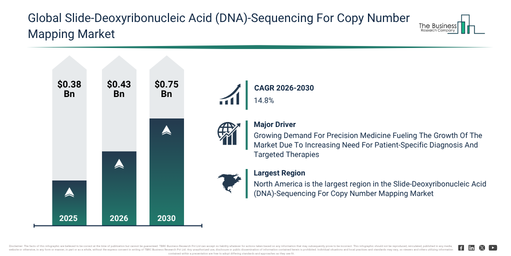
    The slide-deoxyribonucleic acid (DNA)-sequencing for copy number mapping market has seen rapid expansion in recent years. This market is projected to increase from $0.38 billion in 2025 to $0.43 billion in 2026, achieving a compound annual growth rate (CAGR) of 14.6%. The historical growth can be ascribed to advancements in fluorescent labeling techniques, the uptake of optical mapping sequencing, escalating cancer genomics research, the rise in genetic disease studies, and the broader development of academic genomics infrastructure.

    The slide-deoxyribonucleic acid (DNA)-sequencing for copy number mapping market is anticipated to experience substantial expansion over the coming years. By 2030, its valuation is projected to reach $0.75 billion, expanding at a compound annual growth rate (CAGR) of 14.8%. This projected increase is largely driven by factors such as the integration with AI-driven variant calling, a rising demand for high-throughput imaging, the increasing adoption of single-molecule sequencing, the proliferation of personalized medicine applications, and the growth of genomic laboratories in developing markets. Throughout this period, key developments and trends will encompass high-resolution DNA mapping, the integration of single-cell sequencing, automated slide processing, advancements in spatial genomics analytics, and the modeling of predictive genomic variation.

    Access Your Free Sample Report For In-Depth Market Analysis:

    https://www.thebusinessresearchcompany.com/sample_request?id=70497191&type=smp&name=Slide-Deoxyribonucleic%20Acid%20%28DNA%29-Sequencing%20For%20Copy%20Number%20Mapping%20Market%20Report%202026

    Which Drivers Are Supporting The Slide-Deoxyribonucleic Acid (DNA)-Sequencing For Copy Number Mapping Market Growth?

    The expanding need for precision medicine is anticipated to drive forward the slide-deoxyribonucleic acid (DNA)-sequencing for copy number mapping market. Precision medicine defines a healthcare approach that leverages individual genetic and molecular characteristics to guide diagnosis and treatment decisions, aiming for improved clinical outcomes. Its adoption is increasing due to the rising global burden of complex and chronic diseases, which demand highly specific and individualized treatment strategies. Slide-deoxyribonucleic acid (DNA) sequencing for copy number mapping supports this growing demand by enabling detailed analysis of genomic variations, which are essential for informing patient-specific diagnosis and treatment. This technology facilitates targeted therapies, enhances risk assessment, and improves clinical decision-making, leading to more personalized and effective healthcare. For instance, in February 2024, according to the Personalized Medicine Coalition, a US-based educational and advocacy organization, in 2023, the FDA approved 16 new personalized treatments for rare disease patients, up from 6 in 2022. Therefore, the escalating demand for precision medicine is propelling the growth of the slide-deoxyribonucleic acid (DNA)-sequencing for copy number mapping market. The increasing prevalence of genetic disorders is projected to propel the growth of the slide-deoxyribonucleic acid (DNA)-sequencing for copy number mapping market. Genetic disorders are conditions stemming from abnormalities in an individual’s DNA, such as mutations, deletions, or chromosomal changes, which disrupt normal biological functions. The rise in these disorders, fueled by enhanced awareness and advanced diagnostic capabilities, leads to more identified cases, enabling earlier detection and management of inherited conditions. Slide-deoxyribonucleic acid (DNA) sequencing for copy number mapping supports the management of genetic disorders through precise detection of genomic variations, including duplications and deletions, that contribute to disease. It aids in early diagnosis, guides personalized treatment strategies, and improves the monitoring of disease progression, resulting in better patient outcomes. For instance, in May 2024, the National Health Service, a UK-based government department, reported that 17,000 people live with sickle cell disease, an inherited genetic blood disorder, with around 250 new cases diagnosed each year. Consequently, the rising occurrence of genetic disorders is driving the expansion of the slide-deoxyribonucleic acid (DNA)-sequencing for copy number mapping market.

    Which Segment Categories Are Included In The Slide-Deoxyribonucleic Acid (DNA)-Sequencing For Copy Number Mapping Market Segment Analysis?

    The slide-deoxyribonucleic acid (DNA)-sequencing for copy number mapping market covered in this report is segmented –

    1) By Workflow: Sample Preparation, Sequencing And Imaging, Data Analysis And Interpretation

    2) By Product Type: Instruments, Consumables, Software, Services

    3) By Sample Type: Fresh Frozen (FF) Tissues, Formalin-Fixed Paraffin-Embedded (FFPE) Tissues, Organoids And 3D Cell Cultures

    4) By Application: Cancer Genomics, Genetic Disease Research, Prenatal Diagnostics, Other Applications

    5) By End User: Hospitals And Diagnostic Centers, Academic And Research Institutes, Biotechnology And Pharmaceutical Companies, Contract Research Organizations, Genomic Laboratories

    Subsegments:

    1) By Sample Preparation: Deoxyribonucleic Acid Extraction, Library Preparation, Fragmentation And Shearing, Quality Control And Quantification

    2) By Sequencing And Imaging: Fluorescent Labeling Sequencing, Optical Mapping Sequencing, Single Molecule Sequencing, High Throughput Imaging

    3) By Data Analysis And Interpretation: Alignment And Mapping, Variant Calling, Copy Number Variation Analysis, Visualization And Reporting

    Who Are The Active Companies Shaping The Slide-Deoxyribonucleic Acid (DNA)-Sequencing For Copy Number Mapping Market?

    Major companies operating in the slide-deoxyribonucleic acid (DNA)-sequencing for copy number mapping market are Thermo Fisher Scientific, Becton Dickinson Company (BD), Agilent Technologies Inc., Illumina Inc., PerkinElmer Inc., Bruker Corporation, Bio-Rad Laboratories Inc., Qiagen N.V., 10x Genomics Inc., BGI Genomics Co. Ltd., Takara Bio Inc., Oxford Nanopore Technologies Ltd., Pacific Biosciences of California Inc., Fluidigm Corporation, Roche Sequencing Solutions, Mission Bio Inc., Twist Bioscience Corp., Genapsys Inc., Phase Genomics Inc., Singular Genomics Systems Inc.

    Get The Full Slide-Deoxyribonucleic Acid (DNA)-Sequencing For Copy Number Mapping Market Report:

    https://www.thebusinessresearchcompany.com/report/slide-deoxyribonucleic-acid-dna-sequencing-for-copy-number-mapping-market-report

    Which Region Represents The Largest Share Of The Slide-Deoxyribonucleic Acid (DNA)-Sequencing For Copy Number Mapping Market?

    North America was the largest region in the slide-deoxyribonucleic acid (DNA)-sequencing for copy number mapping market in 2025. Asia-Pacific is expected to be the fastest-growing region in the forecast period. The regions covered in the slide-deoxyribonucleic acid (DNA)-sequencing for copy number mapping market report are Asia-Pacific, South East Asia, Western Europe, Eastern Europe, North America, South America, Middle East, Africa.

    Request A Customized Slide-Deoxyribonucleic Acid (DNA)-Sequencing For Copy Number Mapping Market Report For Competitive Insights:

    https://www.thebusinessresearchcompany.com/Customise?id=70497191&name=Slide-Deoxyribonucleic%20Acid%20%28DNA%29-Sequencing%20For%20Copy%20Number%20Mapping%20Market%20Report%202026&type=smp

    Browse Through More Reports Similar to the Global Slide-Deoxyribonucleic Acid (DNA)-Sequencing For Copy Number Mapping Market 2026, By The Business Research Company

    connected health personal medical devices market report 2026

    https://www.thebusinessresearchcompany.com/report/connected-health-personal-medical-devices-global-market-report

    contract sterilization market report 2026

    https://www.thebusinessresearchcompany.com/report/contract-sterilization-global-market-report

    orthotic insole 3-d printer market report 2026

    https://www.thebusinessresearchcompany.com/report/orthotic-insole-3-d-printer-global-market-report

    Get in touch with us:

    The Business Research Company: https://www.thebusinessresearchcompany.com/

    Americas +1 310-496-7795

    Asia +44 7882 955267 & +91 8897263534

    Europe +44 7882 955267

    Email us at marketing@tbrc.info

    Follow us on:

    LinkedIn: https://in.linkedin.com/company/the-business-research-company

    YouTube: https://www.youtube.com/channel/UC24_fI0rV8cR5DxlCpgmyFQ

    Global Market Model: https://www.thebusinessresearchcompany.com/global-market-model
  • Reverse Transcription Kits Market Outlook Highlighting Emerging Opportunities Through 2030

    Reverse Transcription Kits Market Outlook Highlighting Emerging Opportunities Through 2030

    The Business Research Company’s 2026 market reports feature enhanced tools like market attractiveness analysis, TAM assessment, and company scoring matrices, along with interactive dashboards, deeper supply chain insights, and startup coverage strengthening the depth, usability, and strategic value of insights.

    From Its 2026 Market Size, What Value Is The Reverse Transcription Kits Market Projected To Reach By 2030?

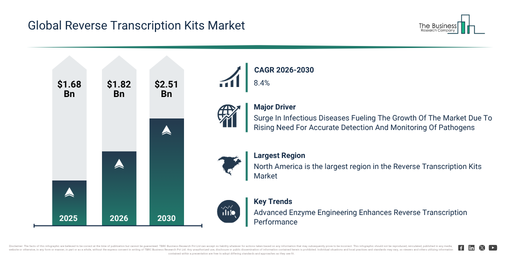
    The market for reverse transcription kits has experienced substantial growth in recent years. This market is projected to expand from $1.68 billion in 2025 to $1.82 billion in 2026, demonstrating a compound annual growth rate (CAGR) of 8.2%. Historically, this expansion has been driven by factors such as the expanding application of reverse transcription in molecular biology research, the proliferation of academic research endeavors, a heightened need for gene expression analysis, continuous improvements in enzyme technologies, and the continued implementation of conventional RT-PCR methods.

    The reverse transcription kits market is anticipated to show significant expansion over the next few years. It is projected to achieve a value of $2.51 billion by 2030, demonstrating a compound annual growth rate (CAGR) of 8.4%. This projected growth can be linked to an increasing need for high-throughput reverse transcription kits, their incorporation into automated laboratory systems, the expansion of pharmaceutical R&D initiatives, a wider application in cDNA library construction, and the evolution of multiplex and quantitative kits. Important trends expected in this timeframe involve high-fidelity reverse transcription kits, multiplex reverse transcription kits, quantitative cDNA analysis, automated reverse transcription workflows, and their integration with next-generation sequencing.

    Access Your Free Sample Report For In-Depth Market Analysis:

    https://www.thebusinessresearchcompany.com/sample_request?id=55758796&type=smp&name=Reverse%20Transcription%20Kits%20Market%20Report%202026

    Which Key Drivers Are Affecting The Reverse Transcription Kits Market Development?

    The future expansion of the reverse transcription kits market is anticipated to be driven by the rising occurrence of infectious diseases. These diseases are ailments caused by pathogenic microorganisms, including bacteria, viruses, parasites, or fungi, which can spread between individuals or organisms. The growing incidence of infectious diseases is fueled by worldwide population growth, as greater population density promotes quicker pathogen transmission and elevates the risk of epidemics. Reverse transcription kits are instrumental in managing infectious diseases by converting viral RNA into complementary DNA, thereby enabling precise detection, monitoring, and investigation of RNA-based pathogens for prompt diagnosis and treatment. An example highlighting this is the World Health Organization, a Switzerland-based intergovernmental organization, which reported in July 2023 that approximately 40-60 million doses of malaria vaccinations would be required yearly across the globe in 2026, with this figure projected to climb to 80-100 million doses annually by 2030. Consequently, the increasing prevalence of infectious diseases is propelling the growth of the reverse transcription kits market.

    How Is The Reverse Transcription Kits Market Segmented Across Different Segment Categories?

    The reverse transcription kits market covered in this report is segmented –

    1) By Product Type: One-Step Reverse Transcription Kits, Two-Step Reverse Transcription Kits, Other Product Types

    2) By Application: Gene Expression Analysis, Complementary DNA Library Construction, Reverse Transcription Polymerase Chain Reaction, Ribonucleic Acid Sequencing, Other Applications

    3) By End-User: Academic And Research Institutes, Pharmaceutical And Biotechnology Companies, Hospitals And Diagnostic Centers, Other End Users

    Subsegments:

    1) By One-Step Reverse Transcription Kits: Standard One-Step Reverse Transcription Kits, High Fidelity One-Step Reverse Transcription Kits, Quantitative One-Step Reverse Transcription Kits, Multiplex One-Step Reverse Transcription Kits

    2) By Two-Step Reverse Transcription Kits: Standard Two-Step Reverse Transcription Kits, High Efficiency Two-Step Reverse Transcription Kits, Quantitative Two-Step Reverse Transcription Kits, Multiplex Two-Step Reverse Transcription Kits

    3) By Other Product Types: Complementary Deoxyribonucleic Acid Synthesis Kits, Ribonucleic Acid Template Preparation Kits, Reverse Transcription Enzyme Kits, Specialized Nucleic Acid Kits

    Which Trends Are Shaping The Reverse Transcription Kits Market?

    Major companies in the reverse transcription kits market are concentrating on creating advanced products, such as high-fidelity reverse transcriptase, to ensure precise and effective cDNA synthesis for both research and diagnostic purposes. High-fidelity reverse transcription kits are comprehensive solutions that combine engineered enzymes, optimized buffers, and essential accessories, facilitating accurate RNA-to-cDNA conversion with impressive yield, sensitivity, and consistency for uses in genomics, transcriptomics, and molecular diagnostics. An example of this trend is RNAConnect, a US-based life sciences tools firm, which introduced UltraMarathonRT (uMRT) in May 2024, an ultra-processive next-generation reverse transcriptase engineered to boost cDNA synthesis efficiency, handle extended RNA templates, and improve subsequent assay performance. Such kits allow for quick, superior-quality reverse transcription with reduced errors, thereby supporting intensive laboratory operations, high-volume analyses, and delicate RNA detection in research, clinical diagnostics, and biotechnology fields.

    Which Organizations Play A Role In The Reverse Transcription Kits Market Landscape?

    Major companies operating in the reverse transcription kits market are Roche Holding AG, Thermo Fisher Scientific Inc., Merck KGaA, Agilent Technologies Inc., Illumina Inc., Bio-Rad Laboratories Inc., QIAGEN N.V., Promega Corporation, Bioline, Takara Bio Inc., Analytik Jena AG, Bioneer Corporation, New England Biolabs Inc., Biovendor a.s., Enzo Life Sciences Inc., Zymo Research Corporation, Lucigen Corporation, System Biosciences LLC, Norgen Biotek Corp., Jena Bioscience GmbH, Canvax Biotech S.L., GeneCopoeia Inc., Toyobo Co. Ltd.

    Get The Full Reverse Transcription Kits Market Report:

    https://www.thebusinessresearchcompany.com/report/reverse-transcription-kits-market-report

    Which Region Holds The Highest Market Share In The Reverse Transcription Kits Market?

    North America was the largest region in the reverse transcription kits market in 2025. Asia-Pacific is expected to be the fastest-growing region in the forecast period. The regions covered in the reverse transcription kits market report are Asia-Pacific, South East Asia, Western Europe, Eastern Europe, North America, South America, Middle East, Africa.

    Request A Customized Reverse Transcription Kits Market Report For Competitive Insights:

    https://www.thebusinessresearchcompany.com/Customise?id=55758796&name=Reverse%20Transcription%20Kits%20Market%20Report%202026&type=smp

    Browse Through More Reports Similar to the Global Reverse Transcription Kits Market 2026, By The Business Research Company

    connected health personal medical devices market report 2026

    https://www.thebusinessresearchcompany.com/report/connected-health-personal-medical-devices-global-market-report

    contract sterilization market report 2026

    https://www.thebusinessresearchcompany.com/report/contract-sterilization-global-market-report

    orthotic insole 3-d printer market report 2026

    https://www.thebusinessresearchcompany.com/report/orthotic-insole-3-d-printer-global-market-report

    Get in touch with us:

    The Business Research Company: https://www.thebusinessresearchcompany.com/

    Americas +1 310-496-7795

    Asia +44 7882 955267 & +91 8897263534

    Europe +44 7882 955267

    Email us at marketing@tbrc.info

    Follow us on:

    LinkedIn: https://in.linkedin.com/company/the-business-research-company

    YouTube: https://www.youtube.com/channel/UC24_fI0rV8cR5DxlCpgmyFQ

    Global Market Model: https://www.thebusinessresearchcompany.com/global-market-model
  • Respiratory Viral Load Quantification Market Forecast Highlighting Growth Toward $3.12 Billion By 2030

    Respiratory Viral Load Quantification Market Forecast Highlighting Growth Toward $3.12 Billion By 2030

    The Business Research Company’s 2026 market reports feature enhanced tools like market attractiveness analysis, TAM assessment, and company scoring matrices, along with interactive dashboards, deeper supply chain insights, and startup coverage strengthening the depth, usability, and strategic value of insights.

    What Is The Estimated Market Size Of The Respiratory Viral Load Quantification Market In 2026, And How Will Its Value Evolve By 2030?

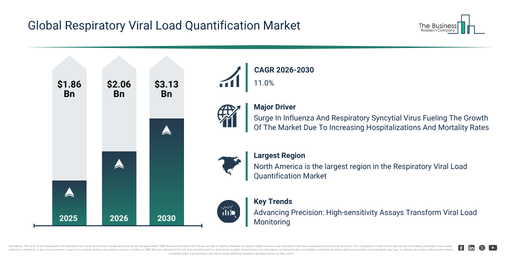
    The market size for respiratory viral load quantification has expanded rapidly in recent years. It is anticipated to increase from $1.86 billion in 2025 to $2.06 billion in 2026, achieving a compound annual growth rate (CAGR) of 10.8%. The historical growth of this market can be attributed to the rising prevalence of respiratory infections, the adoption of PCR-based diagnostics, an increasing demand for laboratory automation, government-funded disease surveillance programs, and the expansion of clinical research activities.

    The market for respiratory viral load quantification is projected to experience swift expansion over the coming years. This market is anticipated to reach a valuation of $3.13 billion by 2030, exhibiting a compound annual growth rate (CAGR) of 11.0%. Factors driving this expansion during the forecast period include the incorporation of next-generation sequencing, the increasing use of AI-enabled diagnostic platforms, a rising demand for multiplex assays, advancements in epidemiology and outbreak surveillance, and greater investment in rapid diagnostic technologies. Key trends anticipated for the forecast period encompass real-time viral load surveillance, seamless integration with laboratory information systems, streamlined automated sample processing, the development of high-sensitivity diagnostic assays, and predictive modeling for disease progression.

    Access Your Free Sample Report For In-Depth Market Analysis:

    https://www.thebusinessresearchcompany.com/sample_request?id=76884570&type=smp&name=Respiratory%20Viral%20Load%20Quantification%20Market%20Report%202026

    Which Strong Drivers Are Impacting The Respiratory Viral Load Quantification Market Growth?

    The increasing occurrence of influenza and respiratory syncytial virus (RSV) is projected to fuel expansion within the respiratory viral load quantification market throughout the forecast period. These infections, influenza and RSV, are highly transmissible respiratory illnesses stemming from viral agents, impacting the lungs and air passages, and presenting a spectrum of clinical manifestations from minor sickness to grave respiratory issues. The growing widespread nature of these infections is boosting the need for precise viral load measurement to aid prompt diagnosis, track treatment effectiveness, and bolster infection management initiatives. Respiratory viral load quantification facilitates accurate identification and continuous evaluation of the viral burden, assisting healthcare providers in making well-informed choices and enhancing patient care. As an illustration, in February 2026, data from the Centers for Disease Control and Prevention (CDC), a US-based government department, indicated that in 2026, influenza caused approximately 290,000–450,000 hospitalizations and 34,000–53,000 deaths annually in the United States, whereas RSV led to an estimated 190,000–350,000 hospitalizations and 10,000–23,000 deaths. Consequently, the increasing occurrence of influenza and respiratory syncytial virus is stimulating the expansion of the respiratory viral load quantification market.

    How Is Segmentation Applied In The Respiratory Viral Load Quantification Market Segment Analysis?

    The respiratory viral load quantification market covered in this report is segmented –

    1) By Technology: Polymerase Chain Reaction, Next-Generation Sequencing, Immunoassays, Other Technologies

    2) By Product Type: Instruments, Assays And Kits, Software

    3) By Pathogen: Influenza A And B, Respiratory Syncytial Virus, Human Metapneumovirus, Parainfluenza Viruses

    4) By Application: Clinical Diagnostics, Research, Epidemiology, Other Applications

    5) By End-User: Hospitals And Clinics, Diagnostic Laboratories, Research Institutes, Other End Users

    Subsegments:

    1) By Polymerase Chain Reaction: Real Time Polymerase Chain Reaction, Digital Polymerase Chain Reaction, Reverse Transcription Polymerase Chain Reaction, Multiplex Polymerase Chain Reaction

    2) By Next Generation Sequencing: Whole Genome Sequencing, Targeted Sequencing, RNA Sequencing, Metagenomic Sequencing

    3) By Immunoassays: Enzyme Linked Immunosorbent Assay, Chemiluminescent Immunoassay, Fluorescent Immunoassay, Lateral Flow Immunoassay

    4) By Other Technologies: Mass Spectrometry Based Quantification, Microarray Based Detection, Biosensor Based Analysis, Hybridization Based Assays

    What Market Trends Are Affecting The Respiratory Viral Load Quantification Market?

    Companies active in the respiratory viral load quantification market are prioritizing the development of innovative solutions, such as high-sensitivity quantitative assays, to enable precise viral load measurement and support enhanced patient monitoring and therapeutic decision-making. These high-sensitivity quantitative assays are platforms, either molecular- or immunoassay-based, designed to detect and quantify viral RNA or antigens with significant accuracy, speed, and reproducibility for respiratory pathogens including respiratory syncytial virus (RSV), influenza, and SARS-CoV-2. For example, in January 2025, Shionogi & Co., Ltd., a Japan-based pharmaceutical company, announced positive Phase 2 trial results for its oral antiviral candidate S-337395, where respiratory viral load quantification was utilized as a crucial endpoint to assess treatment efficacy and viral suppression. By employing advanced molecular detection technologies and optimized assay workflows, these diagnostic solutions facilitate rapid, reliable, and reproducible viral load measurements, thereby supporting clinical trials, therapeutic monitoring, and public health interventions across hospital and laboratory settings.

    Who Are The Companies Participating In The Respiratory Viral Load Quantification Market Environment?

    Major companies operating in the respiratory viral load quantification market are Cardinal Health, Johnson & Johnson Services Inc, Roche Diagnostics, Thermo Fisher Scientific, Abbott Laboratories, Siemens Healthineers AG, Danaher Corporation (Cepheid), Becton Dickinson Company (BD), Laboratory Corporation Of America Holdings (LabCorp), Quest Diagnostics Incorporated, Agilent Technologies, Illumina Inc, bioMérieux SA, Hologic Inc, PerkinElmer Inc, Sysmex Corporation, Bio-Rad Laboratories Inc, Qiagen NV, DiaSorin SpA, Seegene Inc, GC Diagnostics Corporation.

    Get The Full Respiratory Viral Load Quantification Market Report:

    https://www.thebusinessresearchcompany.com/report/respiratory-viral-load-quantification-market-report

    Which Region Dominates The Respiratory Viral Load Quantification Market By Market Share?

    North America was the largest region in the respiratory viral load quantification market in 2025. Asia-Pacific is expected to be the fastest-growing region in the forecast period. The regions covered in the respiratory viral load quantification market report are Asia-Pacific, South East Asia, Western Europe, Eastern Europe, North America, South America, Middle East, Africa.

    Request A Customized Respiratory Viral Load Quantification Market Report For Competitive Insights:

    https://www.thebusinessresearchcompany.com/Customise?id=76884570&name=Respiratory%20Viral%20Load%20Quantification%20Market%20Report%202026&type=smp

    Browse Through More Reports Similar to the Global Respiratory Viral Load Quantification Market 2026, By The Business Research Company

    connected health personal medical devices market report 2026

    https://www.thebusinessresearchcompany.com/report/connected-health-personal-medical-devices-global-market-report

    contract sterilization market report 2026

    https://www.thebusinessresearchcompany.com/report/contract-sterilization-global-market-report

    orthotic insole 3-d printer market report 2026

    https://www.thebusinessresearchcompany.com/report/orthotic-insole-3-d-printer-global-market-report

    Get in touch with us:

    The Business Research Company: https://www.thebusinessresearchcompany.com/

    Americas +1 310-496-7795

    Asia +44 7882 955267 & +91 8897263534

    Europe +44 7882 955267

    Email us at marketing@tbrc.info

    Follow us on:

    LinkedIn: https://in.linkedin.com/company/the-business-research-company

    YouTube: https://www.youtube.com/channel/UC24_fI0rV8cR5DxlCpgmyFQ

    Global Market Model: https://www.thebusinessresearchcompany.com/global-market-model
  • Recurrent Implantation Failure Panels Market Anticipated To Reach $1.3 Billion By 2030 With 9.8% CAGR

    Recurrent Implantation Failure Panels Market Anticipated To Reach $1.3 Billion By 2030 With 9.8% CAGR

    The Business Research Company’s 2026 market reports feature enhanced tools like market attractiveness analysis, TAM assessment, and company scoring matrices, along with interactive dashboards, deeper supply chain insights, and startup coverage strengthening the depth, usability, and strategic value of insights.

    How Does The Market Size Of The Recurrent Implantation Failure Panels Market Compare Between 2026 And 2030?

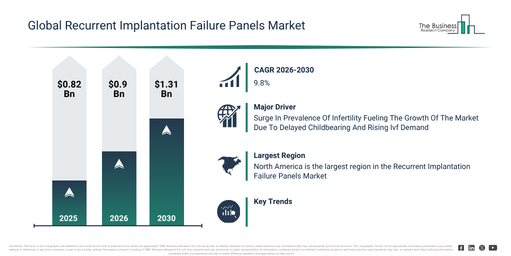
    The recurrent implantation failure panels market has experienced significant growth over recent years. Its value is anticipated to increase from $0.82 billion in 2025 to $0.9 billion in 2026, demonstrating a compound annual growth rate (CAGR) of 9.5%. This historical expansion can be attributed to factors like rising infertility awareness, the adoption of conventional IVF protocols, the proliferation of diagnostic laboratories, the increasing application of genetic testing, and the demand for endometrial evaluation.

    The recurrent implantation failure panels market is anticipated to experience robust expansion over the coming years. By 2030, its size is projected to reach $1.31 billion, demonstrating a compound annual growth rate (CAGR) of 9.8%. This projected increase during the forecast period stems from factors such as the incorporation of AI and machine learning, the proliferation of fertility clinics, the uptake of multi-omics strategies, the creation of automated testing platforms, and a rising patient need for customized fertility remedies. Key developments anticipated in this period encompass personalized implantation risk evaluations, the integration of multi-omics information, AI-driven predictive fertility modeling, continuous monitoring of endometrial receptivity, and heightened automation in genetic and immunological examinations.

    Access Your Free Sample Report For In-Depth Market Analysis:

    https://www.thebusinessresearchcompany.com/sample_request?id=67042694&type=smp&name=Recurrent%20Implantation%20Failure%20Panels%20Market%20Report%202026

    What Key Factors Are Shaping The Recurrent Implantation Failure Panels Market Landscape?

    The increasing global incidence of infertility is anticipated to propel the growth of the recurrent implantation failure (RIF) panels market during the projected period. Infertility is defined as the inability to achieve conception after 12 months of regular, unprotected intercourse. Elevated infertility rates are largely attributed to factors such as delaying parenthood, changes in lifestyle, and age-related reductions in reproductive potential, which heighten the probability of conception challenges and unsuccessful assisted reproductive outcomes. Recurrent implantation failure panels assist in infertility management by pinpointing genetic, immunological, and hormonal elements that could obstruct successful embryo implantation, thereby allowing clinicians to develop more individualized treatment approaches and improve in vitro fertilization (IVF) success rates. For instance, in June 2025, information from the Human Fertilisation and Embryology Authority (HFEA), a UK-based statutory regulator of fertility treatment, indicated that roughly 52,400 patients completed more than 77,500 IVF cycles at accredited fertility clinics in 2023. Therefore, the expanding worldwide prevalence of infertility is a key driver for the recurrent implantation failure panels market.

    What Segment Categories Shape The Recurrent Implantation Failure Panels Market Segment Landscape?

    The recurrent implantation failure panels market covered in this report is segmented –

    1) By Product Type: Genetic Panels, Immunological Panels, Endometrial Receptivity Panels, Combined Panels, Other Product Types

    2) By Technology: Polymerase Chain Reaction (PCR), Next-Generation Sequencing, Microarray, Immunoassay, Other Technologies

    3) By Sample Type: Blood, Tissue, Other Sample Types

    4) By End User: Hospitals And Clinics, Diagnostic Laboratories, Fertility Centers, Other End Users

    Subsegments:

    1) By Genetic Panels: Chromosomal Abnormality Panels, Gene Mutation Panels, Single Nucleotide Variation Panels, Epigenetic Marker Panels

    2) By Immunological Panels: Cytokine Profile Panels, Autoantibody Detection Panels, Natural Killer Cell Activity Panels, T Cell Subset Panels

    3) By Endometrial Receptivity Panels: Gene Expression Profiling Panels, Protein Marker Panels, Microbiome Analysis Panels, Histological Assessment Panels

    4) By Combined Panels: Genetic And Immunological Panels, Genetic And Endometrial Panels, Immunological And Endometrial Panels, Multi Parameter Comprehensive Panels

    5) By Other Product Types: Hormonal Assay Panels, Metabolic Function Panels, Inflammatory Marker Panels, Customized Research Panels

    Who Are The Companies Operating Across The Recurrent Implantation Failure Panels Market Value Chain?

    Major companies operating in the recurrent implantation failure panels market are Thermo Fisher Scientific Inc., Laboratory Corporation of America Holdings (LabCorp), Quest Diagnostics Incorporated, Illumina Inc., Natera Inc., Redcliffe Labs, MedGenome Labs Ltd., Mayo Clinic Laboratories, Fulgent Genetics Inc., LifeCell International, Kindbody Genetics, MapmyGenome, DNA Labs India, Shree IVF Clinic, Inti Labs, Vida Fertility Genetics, Cleveland Clinic, ReceptivaDx (CicloMed), MatriceLab, Reproductive Genetic Innovations (RGI), BGI Genomics Co. Ltd., Embryolab Next Gen IVF, Aksigen IVF, Progenesis IVF, Vani IVF.

    Get The Full Recurrent Implantation Failure Panels Market Report:

    https://www.thebusinessresearchcompany.com/report/recurrent-implantation-failure-panels-market-report

    Which Region Is The Largest In The Recurrent Implantation Failure Panels Market?

    North America was the largest region in the recurrent implantation failure panels market in 2025. Asia-Pacific is expected to be the fastest-growing region in the forecast period. The regions covered in the recurrent implantation failure panels market report are Asia-Pacific, South East Asia, Western Europe, Eastern Europe, North America, South America, Middle East, Africa.

    Request A Customized Recurrent Implantation Failure Panels Market Report For Competitive Insights:

    https://www.thebusinessresearchcompany.com/Customise?id=67042694&name=Recurrent%20Implantation%20Failure%20Panels%20Market%20Report%202026&type=smp

    Browse Through More Reports Similar to the Global Recurrent Implantation Failure Panels Market 2026, By The Business Research Company

    connected health personal medical devices market report 2026

    https://www.thebusinessresearchcompany.com/report/connected-health-personal-medical-devices-global-market-report

    contract sterilization market report 2026

    https://www.thebusinessresearchcompany.com/report/contract-sterilization-global-market-report

    orthotic insole 3-d printer market report 2026

    https://www.thebusinessresearchcompany.com/report/orthotic-insole-3-d-printer-global-market-report

    Get in touch with us:

    The Business Research Company: https://www.thebusinessresearchcompany.com/

    Americas +1 310-496-7795

    Asia +44 7882 955267 & +91 8897263534

    Europe +44 7882 955267

    Email us at marketing@tbrc.info

    Follow us on:

    LinkedIn: https://in.linkedin.com/company/the-business-research-company

    YouTube: https://www.youtube.com/channel/UC24_fI0rV8cR5DxlCpgmyFQ

    Global Market Model: https://www.thebusinessresearchcompany.com/global-market-model
  • Rapid Molecular Flu Testing Platforms Market Outlook Showing Expansion To $4.46 Billion By 2030 At 10.6% CAGR

    Rapid Molecular Flu Testing Platforms Market Outlook Showing Expansion To $4.46 Billion By 2030 At 10.6% CAGR

    The Business Research Company’s 2026 market reports feature enhanced tools like market attractiveness analysis, TAM assessment, and company scoring matrices, along with interactive dashboards, deeper supply chain insights, and startup coverage strengthening the depth, usability, and strategic value of insights.

    How Much Will The Market Value Of The Rapid Molecular Flu Testing Platforms Market Grow Between 2026 And 2030?

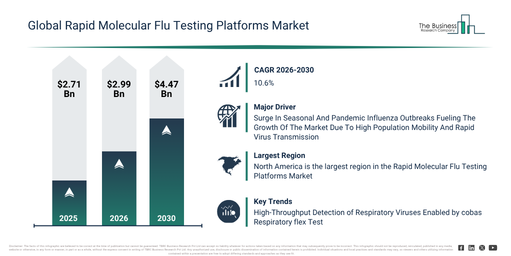
    The rapid molecular flu testing platforms market has demonstrated substantial growth in recent years. This market is anticipated to expand from $2.71 billion in 2025 to $2.99 billion in 2026, achieving a compound annual growth rate (CAGR) of 10.3%. Historically, this expansion has been driven by factors such as the increasing prevalence of influenza, the need for swift diagnostic results, the adoption of RT-PCR technologies, the development of hospital and clinical testing infrastructure, and a heightened awareness of infectious disease management.

    The rapid molecular flu testing platforms market size is anticipated to experience significant growth in the coming years. It is forecast to grow to $4.47 billion by 2030, achieving a compound annual growth rate (CAGR) of 10.6%. The expansion during the forecast period can be attributed to the incorporation of AI and IoT for rapid diagnostics, the increasing availability of portable and point-of-care platforms, the creation of multiplex and high-throughput testing systems, rising investment in molecular diagnostic technologies, and the uptake of home-based and decentralized testing. Prominent trends for the forecast period include the swift expansion of point-of-care testing, multiplex molecular diagnostics, integration with laboratory information systems, automated sample processing, and high-throughput testing platforms.

    Access Your Free Sample Report For In-Depth Market Analysis:

    https://www.thebusinessresearchcompany.com/sample_request?id=71086521&type=smp&name=Rapid%20Molecular%20Flu%20Testing%20Platforms%20Market%20Report%202026

    What Leading Drivers Are Supporting The Rapid Molecular Flu Testing Platforms Market Expansion?

    The increasing occurrence of seasonal and pandemic influenza outbreaks is anticipated to drive the expansion of the rapid molecular flu testing platforms market. These outbreaks refer to the recurring or widespread presence of influenza infections caused by existing or novel influenza viruses. The escalating frequency and intensity of these outbreaks are influenced by factors such as high population mobility, extensive international travel, urban density, viral mutations, and inadequate vaccination coverage, all of which facilitate the rapid transmission of the virus. Rapid molecular flu testing platforms are crucial in managing seasonal and pandemic influenza outbreaks by enabling swift and highly accurate detection of influenza viruses, thereby supporting timely clinical decisions, early treatment initiation, and effective infection control measures. For instance, in February 2026, according to the Centers for Disease Control and Prevention (CDC), a US-based government agency, for the 2025–2026 influenza season, influenza infections in the United States resulted in approximately 290,000–450,000 hospitalizations and 34,000–53,000 deaths, emphasizing the substantial public health and economic burden of the disease. Therefore, the rising global incidence of seasonal and pandemic influenza outbreaks is fostering the growth of the rapid molecular flu testing platforms market.

    How Are Different Segments Classified In The Rapid Molecular Flu Testing Platforms Market Segment Analysis?

    The rapid molecular flu testing platforms market covered in this report is segmented –

    1) By Product Type: Benchtop Platforms, Portable Platforms, Other Product Types

    2) By Sample Type: Nasopharyngeal Swabs, Throat Swabs, Saliva, Other Sample Types

    3) By Technology: Reverse Transcription Polymerase Chain Reaction (RT-PCR), Isothermal Nucleic Acid Amplification, Clustered Regularly Interspaced Short Palindromic Repeats (CRISPR) Based, Other Technologies

    4) By Distribution Channel: Direct Sales, Distributors, Online Sales, Other Distribution Channels

    5) By End User: Hospitals And Clinics, Diagnostic Laboratories, Research Institutes, Other End Users

    Subsegments:

    1) By Benchtop Platforms: Multiplex Testing Platform, High Throughput Platform, Automated Sample Processing Platform, Standard Laboratory Platform

    2) By Portable Platforms: Handheld Testing Platform, Point Of Care Testing Platform, Battery Operated Portable Platform, Field Deployable Platform

    3) By Other Product Types: Integrated Workflow Platform, Compact Diagnostic Platform, Rapid Screening Platform, Custom Configured Platform

    What Trends Are Shaping The Future Of The Rapid Molecular Flu Testing Platforms Market?

    Major companies operating in the rapid molecular flu testing platforms market are increasingly concentrating on developing advanced multiplex molecular solutions, like temperature-activated generation of signal (TAGS) technology, to allow for high-throughput and simultaneous identification of multiple respiratory pathogens, such as influenza A and B, from a single patient sample. TAGS technology, an advanced PCR innovation, enables the differentiation of multiple genetic targets within a single fluorescence channel, yielding up to 15 diagnostic results in one test well. For example, in September 2024, F. Hoffmann-La Roche Ltd., a Switzerland-based healthcare company, launched the cobas Respiratory flex test. This test permits the rapid detection of up to 12 respiratory viruses, including influenza A and B, when used on Roche’s cobas 5800, 6800, and 8800 high-throughput molecular systems. This solution aids flexible, syndromic panel testing with high throughput, optimizing laboratory workflows and resources while promoting accurate and timely diagnosis of respiratory infections.

    Who Are The Companies Driving Activity In The Rapid Molecular Flu Testing Platforms Market?

    Major companies operating in the rapid molecular flu testing platforms market are Roche Diagnostics, Thermo Fisher Scientific, Abbott Laboratories, Siemens Healthineers, Becton Dickinson (BD), bioMérieux, Bio-Rad Laboratories, Qiagen N.V., Seegene Inc., BioPerfectus, Fapon Biotech, Visby Medical, Vircell S.L., QuantuMDx Group, Altona Diagnostics, Creative Diagnostics, Princeton BioMeditech Corporation, Credo Diagnostics, Genetic Signatures Ltd, AccuBioTech, Kogene Co. Ltd., Ameritek Inc., Alpha Diagnostic Intl, Medlere Ltd, ProtonDx Ltd.

    Get The Full Rapid Molecular Flu Testing Platforms Market Report:

    https://www.thebusinessresearchcompany.com/report/rapid-molecular-flu-testing-platforms-market-report

    Which Region Leads The Rapid Molecular Flu Testing Platforms Market In Overall Market Size?

    North America was the largest region in the rapid molecular flu testing platforms market in 2025. Asia-Pacific is expected to be the fastest-growing region in the forecast period. The regions covered in the rapid molecular flu testing platforms market report are Asia-Pacific, South East Asia, Western Europe, Eastern Europe, North America, South America, Middle East, Africa.

    Request A Customized Rapid Molecular Flu Testing Platforms Market Report For Competitive Insights:

    https://www.thebusinessresearchcompany.com/Customise?id=71086521&name=Rapid%20Molecular%20Flu%20Testing%20Platforms%20Market%20Report%202026&type=smp

    Browse Through More Reports Similar to the Global Rapid Molecular Flu Testing Platforms Market 2026, By The Business Research Company

    connected health personal medical devices market report 2026

    https://www.thebusinessresearchcompany.com/report/connected-health-personal-medical-devices-global-market-report

    contract sterilization market report 2026

    https://www.thebusinessresearchcompany.com/report/contract-sterilization-global-market-report

    orthotic insole 3-d printer market report 2026

    https://www.thebusinessresearchcompany.com/report/orthotic-insole-3-d-printer-global-market-report

    Get in touch with us:

    The Business Research Company: https://www.thebusinessresearchcompany.com/

    Americas +1 310-496-7795

    Asia +44 7882 955267 & +91 8897263534

    Europe +44 7882 955267

    Email us at marketing@tbrc.info

    Follow us on:

    LinkedIn: https://in.linkedin.com/company/the-business-research-company

    YouTube: https://www.youtube.com/channel/UC24_fI0rV8cR5DxlCpgmyFQ

    Global Market Model: https://www.thebusinessresearchcompany.com/global-market-model
  • Radiation Dosimetry Badges Market Expected To Reach $1.5 Billion By 2030 Driven By 8.2% CAGR

    Radiation Dosimetry Badges Market Expected To Reach $1.5 Billion By 2030 Driven By 8.2% CAGR

    The Business Research Company’s 2026 market reports feature enhanced tools like market attractiveness analysis, TAM assessment, and company scoring matrices, along with interactive dashboards, deeper supply chain insights, and startup coverage strengthening the depth, usability, and strategic value of insights.

    What Changes In Market Value Are Expected For The Radiation Dosimetry Badges Market Over The 2026–2030 Period?

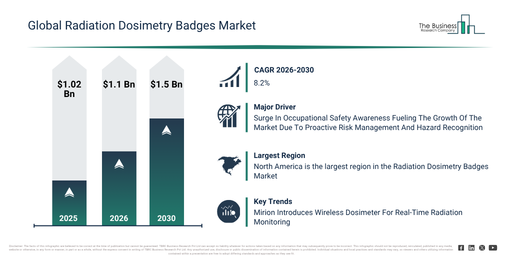
    The radiation dosimetry badges market has demonstrated substantial growth in recent years. It is anticipated to expand from $1.02 billion in 2025 to $1.1 billion in 2026, achieving a compound annual growth rate (CAGR) of 7.9%. The market’s past expansion can be ascribed to heightened awareness of radiation hazards, obligations for regulatory compliance, the uptake of film and thermoluminescent dosimeters, an increase in nuclear and medical facilities, and broader industrial radiation applications.

    The radiation dosimetry badges market is projected to experience robust expansion over the coming years. By 2030, its valuation is anticipated to reach $1.5 billion, demonstrating a compound annual growth rate (CAGR) of 8.2%. This projected growth during the forecast period is propelled by factors such as the adoption of electronic personal dosimeters, the integration with iot-enabled safety systems, an increasing demand for real-time exposure monitoring, the expansion of healthcare and nuclear infrastructure, and greater investment in predictive radiation analytics. Key developments shaping the market in the forecast period encompass real-time dosimetry monitoring, wearable radiation safety devices, integration with health & safety management systems, automated dose reporting & analytics, and predictive radiation exposure assessment.

    Access Your Free Sample Report For In-Depth Market Analysis:

    https://www.thebusinessresearchcompany.com/sample_request?id=95649109&type=smp&name=Radiation%20Dosimetry%20Badges%20Market%20Report%202026

    Which Key Factors Are Driving The Radiation Dosimetry Badges Market Growth?

    Increased understanding of workplace safety is anticipated to boost the expansion of the radiation dosimetry badges market. This awareness involves comprehending and identifying dangers in the workplace, especially in hazardous settings, and establishing protocols to avert incidents and safeguard worker well-being. The heightened focus on workplace safety stems from proactive approaches to risk management, more stringent regulations, and greater responsibility placed on employers, collectively promoting prompt detection of hazards and secure working conditions. Radiation dosimetry badges contribute to occupational safety efforts by continuously tracking individual exposure to ionizing radiation, thereby allowing both employees and employers to gauge risk, adhere to exposure thresholds, and institute necessary corrective safety actions. As an example, in June 2024, the European Agency for Safety and Health at Work (EU-OSHA) indicated that about 85–91% of workers in Spain recognized a greater understanding of workplace safety and occupational safety and health (OSH) risk reduction, marking a 7% rise from 2023. Consequently, the increased focus on occupational safety is propelling the expansion of the radiation dosimetry badges market.

    How Is The Radiation Dosimetry Badges Market Categorized Across Its Segment Groups?

    The radiation dosimetry badges market covered in this report is segmented –

    1) By Product Type: Thermoluminescent Dosimeter Badges, Film Badge Dosimeters, Optically Stimulated Luminescence Dosimeter Badges, Electronic Personal Dosimeters, Other Product Types

    2) By Detection Method: Passive Dosimetry, Active Dosimetry

    3) By Distribution Channel: Direct Sales, Distributors, Online Sales, Other Distribution Channels

    4) By End-User: Hospitals And Medical Institutions, Nuclear Facilities, Research Laboratories, Industrial Facilities, Other End-Users

    Subsegments:

    1) By Thermoluminescent Dosimeter Badges: Card Type Dosimeter, Pocket Dosimeter, Ring Dosimeter, Button Dosimeter

    2) By Film Badge Dosimeters: Single Film Badge, Dual Film Badge, Multi Film Badge, Special Purpose Film Badge

    3) By Optically Stimulated Luminescence Dosimeter Badges: Card Type Dosimeter, Finger Ring Dosimeter, Wearable Dosimeter, Environmental Dosimeter

    4) By Electronic Personal Dosimeters: Portable Dosimeter, Wearable Dosimeter, Real Time Monitoring Dosimeter, Multi Parameter Dosimeter

    5) By Other Product Types: Chemical Dosimeter, Solid State Dosimeter, Pocket Ionization Chamber, Neutron Dosimeter

    Which Trends Are Contributing To Changes In The Radiation Dosimetry Badges Market?

    Leading companies in the radiation dosimetry badges market are concentrating on developing technological advancements, such as electronic personal dosimeters with real-time monitoring, to provide continuous exposure tracking, enhance worker safety, and ensure regulatory compliance in radiation environments. These electronic personal dosimeters with real-time monitoring are advanced wearable devices that continuously measure and transmit radiation exposure data instantly, enabling proactive risk management, immediate alerts for hazardous doses, and seamless compliance reporting. For instance, in April 2024, Mirion Dosimetry Services, a US-based radiation safety solutions company, introduced the InstadoseVUE Wireless Dosimeter. This newly launched device allows for real-time monitoring of individual radiation exposure, enabling workers and supervisors to continuously track doses. It improves workplace safety and compliance through wireless data transmission and instant alerts, while also facilitating proactive radiation protection measures in high-risk environments.

    Which Firms Are Influencing Competition In The Radiation Dosimetry Badges Market?

    Major companies operating in the radiation dosimetry badges market are Thermo Fisher Scientific Inc., Honeywell International Inc, SGS SA, Fuji Electric Co. Ltd., CERN Dosimetry Service, Ludlum Measurements Inc., PTW Freiburg, Chiyoda Technol Corp., ECOTEST group, Seibersdorf Labor GmbH, Avanttec Medical Systems, Polimaster, Renentech Laboratories, Best Dosimetry Services Inc., Ultra-Tech Laboratories, RadPro International GmbH, RadPro Radiation Protection Services Limited, Laurus Systems, Atomic Energy Industrial Laboratories of the Southwest Inc. (AEIL), Xray Dose Company.

    Get The Full Radiation Dosimetry Badges Market Report:

    https://www.thebusinessresearchcompany.com/report/radiation-dosimetry-badges-market-report

    Which Region Is The Top Contributor To The Radiation Dosimetry Badges Market By Share?

    North America was the largest region in the radiation dosimetry badges market in 2025. Asia-Pacific is expected to be the fastest-growing region in the forecast period. The regions covered in the radiation dosimetry badges market report are Asia-Pacific, South East Asia, Western Europe, Eastern Europe, North America, South America, Middle East, Africa.

    Request A Customized Radiation Dosimetry Badges Market Report For Competitive Insights:

    https://www.thebusinessresearchcompany.com/Customise?id=95649109&name=Radiation%20Dosimetry%20Badges%20Market%20Report%202026&type=smp

    Browse Through More Reports Similar to the Global Radiation Dosimetry Badges Market 2026, By The Business Research Company

    connected health personal medical devices market report 2026

    https://www.thebusinessresearchcompany.com/report/connected-health-personal-medical-devices-global-market-report

    contract sterilization market report 2026

    https://www.thebusinessresearchcompany.com/report/contract-sterilization-global-market-report

    orthotic insole 3-d printer market report 2026

    https://www.thebusinessresearchcompany.com/report/orthotic-insole-3-d-printer-global-market-report

    Get in touch with us:

    The Business Research Company: https://www.thebusinessresearchcompany.com/

    Americas +1 310-496-7795

    Asia +44 7882 955267 & +91 8897263534

    Europe +44 7882 955267

    Email us at marketing@tbrc.info

    Follow us on:

    LinkedIn: https://in.linkedin.com/company/the-business-research-company

    YouTube: https://www.youtube.com/channel/UC24_fI0rV8cR5DxlCpgmyFQ

    Global Market Model: https://www.thebusinessresearchcompany.com/global-market-model
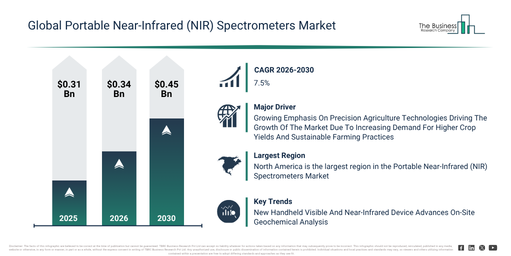
  • Portable Near-Infrared (NIR) Spectrometers Market Analysis Through 2030 Presenting Long-Term Industry Opportunities

    Portable Near-Infrared (NIR) Spectrometers Market Analysis Through 2030 Presenting Long-Term Industry Opportunities

    The Business Research Company’s 2026 market reports feature enhanced tools like market attractiveness analysis, TAM assessment, and company scoring matrices, along with interactive dashboards, deeper supply chain insights, and startup coverage strengthening the depth, usability, and strategic value of insights.

    What Expansion In Market Value Is Forecasted For The Portable Near-Infrared (NIR) Spectrometers Market Between 2026 And 2030?

    The market for portable near-infrared (NIR) spectrometers has seen substantial growth in recent years. It is anticipated to expand from $0.31 billion in 2025 to $0.34 billion in 2026, with a compound annual growth rate (CAGR) of 7.3%. Historically, this expansion has been driven by an increasing need for rapid material analysis, the growth of agricultural testing, wider adoption in food quality testing, advancements in handheld detector technology, and the demand for on-site chemical analysis.

    The portable near-infrared (NIR) spectrometers market is projected to experience substantial expansion over the coming years. By 2030, this market is anticipated to reach a value of $0.45 billion, exhibiting a compound annual growth rate (CAGR) of 7.5%. Factors contributing to this growth during the forecast period include the incorporation of AI and cloud-based software, the reduction in size of spectrometer components, increased application in environmental and industrial testing, the creation of multi-wavelength spectrometers, and the embrace of portable NIR spectrometers within the pharmaceutical sector. Key trends for the same period encompass portable real-time analysis, material testing without destruction, seamless integration with mobile devices, AI-powered spectral interpretation, and quality control solutions that can be deployed in the field.

    Access Your Free Sample Report For In-Depth Market Analysis:

    https://www.thebusinessresearchcompany.com/sample_request?id=88998838&type=smp&name=Portable%20Near-Infrared%20%28NIR%29%20Spectrometers%20Market%20Report%202026

    What Significant Factors Are Influencing The Portable Near-Infrared (NIR) Spectrometers Market Expansion?

    The expanding focus on precision agriculture technologies is anticipated to propel the expansion of the portable near-infrared (NIR) spectrometers market throughout the forecast period. Precision agriculture incorporates sophisticated digital, sensor-reliant, and data-powered instruments that empower farmers to precisely oversee and handle soil and crop statuses, subsequently boosting yields, enhancing input efficiency, and diminishing environmental effects. The rising uptake of these innovations stems from the imperative to boost agricultural output, curb escalating input expenses, and foster sustainable farming methods via localized control of water, fertilizers, and pesticides informed by live field data. Given that precision agriculture significantly depends on swift, on-location analytical findings, portable NIR spectrometers are becoming more popular because they can provide instantaneous measurements of soil nutrients, moisture levels, and crop vitality right in the field. For example, in January 2024, data from the Government Accountability Office, a US-based government agency, revealed that approximately 27% of farms and ranches in the United States had implemented precision agriculture techniques for crop management in 2023. Consequently, the increased focus on precision agriculture technologies is fueling the expansion of the portable near-infrared (NIR) spectrometers market.

    How Is The Portable Near-Infrared (NIR) Spectrometers Market Organized By Segment Classification?

    The portable near-infrared (NIR) spectrometers market covered in this report is segmented –

    1) By Component: Detectors, Optical Components, Software

    2) By Wavelength Range: Short-Wave Near-Infrared, Long-Wave Near-Infrared

    3) By Technology: Transmission Near-Infrared Spectroscopy, Reflectance Near-Infrared Spectroscopy, Diffuse Reflectance Near-Infrared Spectroscopy

    4) By Application: Agriculture And Raw Material Testing, Pharmaceutical And Chemical Analysis, Food Quality And Composition Testing, Industrial Material Identification, Environmental And Field Testing

    5) By End-User: Research Laboratories, Manufacturing Industries, Food Processing Units

    Subsegments:

    1) By Detectors: Indium Gallium Arsenide Detectors, Lead Sulfide Detectors, Silicon Detectors, Extended Range Indium Gallium Arsenide Detectors, Thermoelectrically Cooled Detectors

    2) By Optical Components: Light Sources, Diffraction Gratings, Optical Filters, Sample Holders, Fiber Optic Probes

    3) By Software: Data Acquisition Software, Spectral Analysis Software, Calibration And Modeling Software, Instrument Control Software, Cloud Based Data Management Software

    What Trends Are Influencing The Portable Near-Infrared (NIR) Spectrometers Market?

    Major companies operating in the portable near-infrared (NIR) spectrometers market are focusing on developing innovative solutions, such as handheld visible and near-infrared analyzers, to enable swift, on-site mineral identification and real-time geochemical decision-making in field exploration environments. Handheld visible and near-infrared (Vis-NIR) analyzers are portable spectroscopic instruments that use reflected light in the visible and near-infrared wavelength range to rapidly identify and analyze material composition directly in the field, eliminating the need for laboratory testing. For instance, in January 2025, SciAps Inc., a US-based instrumentation company, launched reveNIR, a handheld Vis-NIR (Visible and Near-Infrared) analyzer designed to enhance real-time mineral identification and field-based decision-making in mineral exploration. This device is engineered to provide quick, direct analysis of rocks, soils, and drill cores without the necessity for laboratory testing. It operates across an extensive spectral range, facilitating the accurate detection of key alteration and ore-related minerals.

    Who Are The Industry Participants Involved In The Portable Near-Infrared (NIR) Spectrometers Market?

    Major companies operating in the portable near-infrared (NIR) spectrometers market are Thermo Fisher Scientific Inc., ABB Ltd., Agilent Technologies Inc., Yokogawa Electric Corporation, Sartorius AG, Shimadzu Corporation, Bruker Corporation, Carl Zeiss AG, HORIBA Ltd., Hamamatsu Photonics K.K., VIAVI Solutions Inc., Metrohm AG, KPM Analytics Inc., Unity Scientific Inc., Ocean Insight Inc., JASCO Corporation, Kett Electric Laboratory Co. Ltd., Nynomic AG, Wasatch Photonics Inc., Q-Interline A/S, StellarNet Inc., Polytec GmbH, Anton Paar GmbH.

    Get The Full Portable Near-Infrared (NIR) Spectrometers Market Report:

    https://www.thebusinessresearchcompany.com/report/portable-near-infrared-nir-spectrometers-market-report

    Which Region Holds The Highest Market Share In The Portable Near-Infrared (NIR) Spectrometers Market?

    North America was the largest region in the portable near-infrared (NIR) spectrometers market in 2025. Asia-Pacific is expected to be the fastest-growing region in the forecast period. The regions covered in the portable near-infrared (NIR) spectrometers market report are Asia-Pacific, South East Asia, Western Europe, Eastern Europe, North America, South America, Middle East, Africa.

    Request A Customized Portable Near-Infrared (NIR) Spectrometers Market Report For Competitive Insights:

    https://www.thebusinessresearchcompany.com/Customise?id=88998838&name=Portable%20Near-Infrared%20%28NIR%29%20Spectrometers%20Market%20Report%202026&type=smp

    Browse Through More Reports Similar to the Global Portable Near-Infrared (NIR) Spectrometers Market 2026, By The Business Research Company

    connected health personal medical devices market report 2026

    https://www.thebusinessresearchcompany.com/report/connected-health-personal-medical-devices-global-market-report

    contract sterilization market report 2026

    https://www.thebusinessresearchcompany.com/report/contract-sterilization-global-market-report

    orthotic insole 3-d printer market report 2026

    https://www.thebusinessresearchcompany.com/report/orthotic-insole-3-d-printer-global-market-report

    Get in touch with us:

    The Business Research Company: https://www.thebusinessresearchcompany.com/

    Americas +1 310-496-7795

    Asia +44 7882 955267 & +91 8897263534

    Europe +44 7882 955267

    Email us at marketing@tbrc.info

    Follow us on:

    LinkedIn: https://in.linkedin.com/company/the-business-research-company

    YouTube: https://www.youtube.com/channel/UC24_fI0rV8cR5DxlCpgmyFQ

    Global Market Model: https://www.thebusinessresearchcompany.com/global-market-model