Category: Medical Equipment

  • Long-Read Full-Length Complementary Deoxyribonucleic Acid (cDNA) Sequencing Market Outlook Showing Expansion To $3.18 Billion By 2030 At 18.9% CAGR

    Long-Read Full-Length Complementary Deoxyribonucleic Acid (cDNA) Sequencing Market Outlook Showing Expansion To $3.18 Billion By 2030 At 18.9% CAGR

    The Business Research Company’s 2026 market reports feature enhanced tools like market attractiveness analysis, TAM assessment, and company scoring matrices, along with interactive dashboards, deeper supply chain insights, and startup coverage strengthening the depth, usability, and strategic value of insights.

    What Changes In Market Value Are Expected For The Long-Read Full-Length Complementary Deoxyribonucleic Acid (cDNA) Sequencing Market Over The 2026–2030 Period?

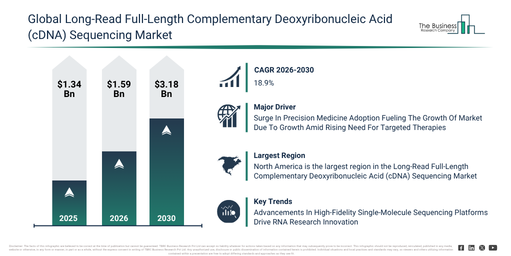
    The market for long-read full-length complementary deoxyribonucleic acid (cDNA) sequencing has experienced significant expansion recently. This market is projected to expand from $1.34 billion in 2025 to $1.59 billion in 2026, demonstrating a compound annual growth rate (CAGR) of 18.6%. Historically, this expansion has been driven by several factors, including developments in long-read sequencing technologies, an increase in transcriptome analysis research, greater funding for genomics research, wider acceptance of PacBio and Nanopore platforms, and the broadening of applications in gene expression studies.

    The long-read full-length complementary deoxyribonucleic acid (cDNA) sequencing market is projected for significant expansion in the coming years, with an anticipated rise to $3.18 billion by 2030, showcasing a compound annual growth rate (CAGR) of 18.9%. This forecasted growth is primarily driven by an increasing demand for precision medicine applications, the greater integration of AI-driven bioinformatics tools, a rise in its utility for rare disease research, the broadening scope of clinical transcriptomics, and the creation of more cost-efficient long-read sequencing workflows. Key developments expected within this period include the increased adoption of single-cell full-length cDNA sequencing, a rising need for high-fidelity long-read platforms, its expanding use in alternative splicing detection, the growth of transcript isoform characterization studies, and the increasing incorporation of advanced library preparation kits.

    Access Your Free Sample Report For In-Depth Market Analysis:

    https://www.thebusinessresearchcompany.com/sample_request?id=35483821&type=smp&name=Long-Read%20Full-Length%20Complementary%20Deoxyribonucleic%20Acid%20%28cDNA%29%20Sequencing%20Market%20Report%202026

    Which Major Drivers Are Influencing The Expansion Of The Long-Read Full-Length Complementary Deoxyribonucleic Acid (cDNA) Sequencing Market?

    The increasing emphasis on precision medicine is anticipated to fuel the expansion of the long-read full-length complementary deoxyribonucleic acid (cDNA) sequencing market moving forward. Precision medicine refers to a medical methodology that tailors prevention and treatment based on an individual’s genetic and molecular attributes. The heightened attention on precision medicine arises from the growing demand for effective treatments for diverse and therapy-resistant ailments. Long-read full-length cDNA sequencing contributes to better clinical decision-making by offering extensive data on transcript isoforms and relevant biomarkers, which allows for more accurate selection of targeted interventions. For instance, in February 2024, the Personalized Medicine Coalition, a US-based non-profit organization, reported that in 2023, the U.S. Food and Drug Administration (FDA) authorized 16 new personalized therapies for rare disease patients, indicating a notable surge from the six approvals observed in 2022. Thus, the intensifying focus on precision medicine is accelerating the growth of the long-read full-length complementary deoxyribonucleic acid (cDNA) sequencing market.

    How Is The Long-Read Full-Length Complementary Deoxyribonucleic Acid (cDNA) Sequencing Market Broken Down By Segment Categories?

    The long-read full-length complementary deoxyribonucleic acid (cDNA) sequencing market covered in this report is segmented –

    1) By Technology: Pacific Biosciences Single-Molecule Real-Time (PacBio SMRT), Oxford Nanopore, Other Technologies

    2) By Product Type: Instruments And Sequencing Platforms, Reagents And Consumables, Library Preparation Kits, Flow Cells And Chips, Data Analysis Software And Bioinformatics Tools

    3) By Sample Type: Human, Animal, Plant, Microbial

    4) By Application: Transcriptome Analysis, Gene Expression Studies, Alternative Splicing Detection, Fusion Gene Detection, Other Application

    5) By End-Users: Academic And Research Institutes, Pharmaceutical And Biotechnology Companies, Clinical Laboratories, Other End Users

    Subsegments:

    1) By Pacific Biosciences Single-Molecule Real-Time (PacBio SMRT): Sequel System, Sequel II System, RS II System, High-Fidelity Sequencing Systems

    2) By Oxford Nanopore: MinION Sequencing Devices, GridION Sequencing Platforms, PromethION Sequencing Platforms, Flongle Sequencing Modules

    3) By Other Technologies: Synthetic Long-Read Sequencing, Linked-Read Sequencing, Single-Cell Full-Length cDNA Sequencing, Hybrid Sequencing Approaches

    What Trends Are Transforming The Long-Read Full-Length Complementary Deoxyribonucleic Acid (cDNA) Sequencing Market?

    Leading companies in the long-read full-length complementary deoxyribonucleic acid (cDNA) sequencing market are concentrating on developing innovative solutions, such as high-fidelity single-molecule sequencing platforms, to enhance transcript accuracy and identify complex RNA isoforms. These high-fidelity single-molecule sequencing platforms are crucial for accurately capturing full-length transcripts and detecting intricate RNA isoforms in a single operation, as they read complete cDNA molecules with low error rates without fragmentation. For instance, in December 2023, Pacific Biosciences of California Inc., a US-based biotechnology company, launched Kinnex RNA kits specifically designed to advance RNA research. These kits leverage high-fidelity single-molecule sequencing platforms technology combined with optimized library preparation workflows to generate highly accurate, long-read transcriptome data. Key features of the Kinnex RNA kits include ultra-long reads that span entire transcripts, superior consensus accuracy, and compatibility with complex RNA samples, enabling researchers to detect alternative splicing, fusion transcripts, and novel isoforms with unprecedented precision. The Kinnex kits are applicable in genomics, transcriptomics, biomarker discovery, and therapeutic target identification, offering a more comprehensive insight into RNA biology compared to conventional methods.

    Which Players Are Present In The Long-Read Full-Length Complementary Deoxyribonucleic Acid (cDNA) Sequencing Market Space?

    Major companies operating in the long-read full-length complementary deoxyribonucleic acid (cDNA) sequencing market are Eurofins Scientific SE, Bio-Rad Laboratories Inc., QIAGEN N.V., 10x Genomics Inc., Azenta Life Sciences Inc., BGI Genomics Co. Ltd., Novogene Co. Ltd., Takara Bio Inc., Oxford Nanopore Technologies plc, Pacific Biosciences of California Inc., New England Biolabs Inc., Macrogen Inc., DNAnexus Inc., Zymo Research Corporation, CD Genomics Inc., BaseClear B.V., Microsynth AG, Creative Biogene Inc., Nucleome Informatics Inc., Operify Tech Pvt. Ltd., Signios Bio Inc.

    Get The Full Long-Read Full-Length Complementary Deoxyribonucleic Acid (cDNA) Sequencing Market Report:

    https://www.thebusinessresearchcompany.com/report/long-read-full-length-complementary-deoxyribonucleic-acid-cdna-sequencing-market-report

    Where Is The Long-Read Full-Length Complementary Deoxyribonucleic Acid (cDNA) Sequencing Market Most Concentrated Geographically?

    North America was the largest region in the long-read full-length complementary deoxyribonucleic acid (cDNA) sequencing market in 2025. Asia-Pacific is expected to be the fastest-growing region in the forecast period. The regions covered in the long-read full-length complementary deoxyribonucleic acid (cDNA) sequencing market report are Asia-Pacific, South East Asia, Western Europe, Eastern Europe, North America, South America, Middle East, Africa.

    Request A Customized Long-Read Full-Length Complementary Deoxyribonucleic Acid (cDNA) Sequencing Market Report For Competitive Insights:

    https://www.thebusinessresearchcompany.com/Customise?id=35483821&name=Long-Read%20Full-Length%20Complementary%20Deoxyribonucleic%20Acid%20%28cDNA%29%20Sequencing%20Market%20Report%202026&type=smp

    Browse Through More Reports Similar to the Global Long-Read Full-Length Complementary Deoxyribonucleic Acid (cDNA) Sequencing Market 2026, By The Business Research Company

    connected health personal medical devices market report 2026

    https://www.thebusinessresearchcompany.com/report/connected-health-personal-medical-devices-global-market-report

    contract sterilization market report 2026

    https://www.thebusinessresearchcompany.com/report/contract-sterilization-global-market-report

    orthotic insole 3-d printer market report 2026

    https://www.thebusinessresearchcompany.com/report/orthotic-insole-3-d-printer-global-market-report

    Get in touch with us:

    The Business Research Company: https://www.thebusinessresearchcompany.com/

    Americas +1 310-496-7795

    Asia +44 7882 955267 & +91 8897263534

    Europe +44 7882 955267

    Email us at marketing@tbrc.info

    Follow us on:

    LinkedIn: https://in.linkedin.com/company/the-business-research-company

    YouTube: https://www.youtube.com/channel/UC24_fI0rV8cR5DxlCpgmyFQ

    Global Market Model: https://www.thebusinessresearchcompany.com/global-market-model
  • Intraocular Pressure Sensor Market Outlook Highlighting Expansion Trends Across Industries Through 2030

    Intraocular Pressure Sensor Market Outlook Highlighting Expansion Trends Across Industries Through 2030

    The Business Research Company’s 2026 market reports feature enhanced tools like market attractiveness analysis, TAM assessment, and company scoring matrices, along with interactive dashboards, deeper supply chain insights, and startup coverage strengthening the depth, usability, and strategic value of insights.

    What Level Of Market Value Growth Is Predicted For The Intraocular Pressure Sensor Market From 2026 To 2030?

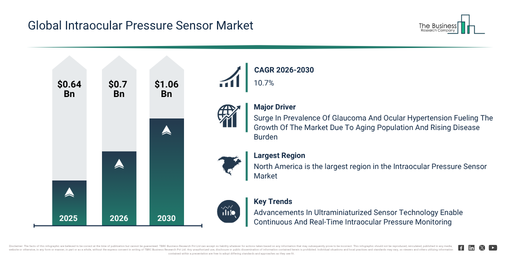
    The intraocular pressure sensor market size has observed rapid expansion in recent years. It is anticipated to grow from $0.64 billion in 2025 to $0.7 billion in 2026, at a compound annual growth rate (CAGR) of 10.4%. The growth witnessed historically can be attributed to the rising prevalence of glaucoma cases, an expanding geriatric population, increasing awareness about early eye disease diagnosis, advancements in microsensor technology, and a growing number of ophthalmic surgeries.

    The intraocular pressure sensor market is projected for significant expansion in the coming years, anticipated to reach $1.06 billion by 2030, exhibiting a compound annual growth rate (CAGR) of 10.7%. Factors driving this growth during the forecast period include the escalating demand for remote patient monitoring, the rising uptake of wireless implantable sensors, increased investments in ophthalmic research and development, the broadening scope of homecare-based eye monitoring, and a heightened emphasis on personalized ophthalmic treatment. Key trends anticipated within this period involve the increasing integration of implantable intraocular pressure sensors, a surging need for continuous glaucoma monitoring solutions, the ongoing advancement of smart contact lens-based sensors, the proliferation of minimally invasive ocular monitoring devices, and an enhanced focus on early diagnosis and preventative eye care.

    Access Your Free Sample Report For In-Depth Market Analysis:

    https://www.thebusinessresearchcompany.com/sample_request?id=23055748&type=smp&name=Intraocular%20Pressure%20Sensor%20Market%20Report%202026

    Which Primary Drivers Are Impacting The Intraocular Pressure Sensor Market Growth?

    The intraocular pressure sensor market is projected to grow as the occurrence of glaucoma and ocular hypertension continues to increase. These eye conditions, glaucoma and ocular hypertension, are characterized by elevated pressure inside the eye, which can harm the optic nerve and lead to loss of vision. The increasing prevalence of these conditions is attributed to an aging population, as older individuals face a higher risk of elevated intraocular pressure and optic nerve damage. An intraocular pressure sensor aids in managing glaucoma and ocular hypertension by consistently monitoring eye pressure, allowing for early identification of sudden increases, guiding prompt treatment, and thereby preventing irreversible vision loss. For instance, in June 2023, Glaucoma Australia, an Australia-based non-profit organization, reported that almost 300,000 Australians have glaucoma, with only half being diagnosed, and the related costs are anticipated to climb from $1.9 billion to $4.3 billion. Thus, the growing prevalence of glaucoma and ocular hypertension is a key driver for the expansion of the intraocular pressure sensor market.

    Which Segments Define The Intraocular Pressure Sensor Market Segment Structure?

    The intraocular pressure sensor market covered in this report is segmented –

    1) By Product Type: Implantable (Intraocular) Sensors, Passive Sensors, Active Sensors, Contact Lens-Based Sensors, Embedded Micro-Sensors, Implantable Drainage Devices

    2) By Technology: Optical Technology, Electromechanical Technology, Capacitive Or Inductive Technology, Microfluidic Technology

    3) By Distribution Channel: Direct Sales, Distributors, Online Sales

    4) By Application: Glaucoma Management, Post-Operative Monitoring, Ocular Hypertension Monitoring, Research Applications

    5) By End-User: Hospitals, Ophthalmic Clinics, Ambulatory Surgical Centers, Homecare Settings, Other End-Users

    Subsegments:

    1) By Implantable (Intraocular) Sensors: Wireless Implantable Sensors, Telemetric Implantable Sensors, Microfluidic Implantable Sensors

    2) By Passive Sensors: Strain Gauge-Based Sensors, Capacitive Passive Sensors, Piezoelectric Passive Sensors

    3) By Active Sensors: Microelectromechanical System Sensors, Optical Active Sensors, Electrochemical Active Sensors

    4) By Contact Lens-Based Sensors: Smart Contact Lens Sensors, Hydrogel Contact Lens Sensors, Embedded Electronics Contact Lens Sensors

    5) By Embedded Micro-Sensors: Nanoelectronic Embedded Sensors, Photonic Embedded Sensors, MEMS-Based Embedded Sensors

    6) By Implantable Drainage Devices: Microshunt Drainage Devices, Valved Drainage Devices, Non-Valved Drainage Devices

    Which Trends Are Influencing Demand In The Intraocular Pressure Sensor Market?

    Companies within the intraocular pressure sensor market are concentrating on creating advanced battery-free implantable devices. These innovations are intended to facilitate continuous, real-time monitoring of intraocular pressure (IOP), thereby enhancing glaucoma management and improving long-term patient outcomes. Battery-free implantable devices are medical implants that operate without an onboard battery, instead drawing power wirelessly from external electromagnetic or radiofrequency sources. This design supports prolonged, maintenance-free performance within the body, enabling smaller device construction, fewer replacement procedures, and increased patient safety and comfort. For example, in August 2024, Injectsense Inc., a US-based medical device company, successfully achieved the first human implantation of its ultra-miniaturized intraocular pressure sensor. This wireless, battery-free implantable device is engineered to provide continuous IOP monitoring, allowing physicians to track pressure changes over time and optimize glaucoma treatment strategies through data-driven clinical decision-making.

    Who Are The Established Players Within The Intraocular Pressure Sensor Market?

    Major companies operating in the intraocular pressure sensor market are Carl Zeiss Meditec AG, Topcon Corporation, Tomey Corporation, Appasamy Associates Private Limited, Rexxam Co. Ltd., Huvitz Co. Ltd., Reichert Inc., IOP Medical Ltd, OCULUS Optikgeräte GmbH, Marco Ophthalmic Inc., Luneau Technology Group, Takagi Seiko Corporation, NIDEK Co. Ltd., iCare Finland Oy, Haag-Streit Group AG, CSO Srl, Sensimed SA, Implandata Ophthalmic Products GmbH, Ziemer Ophthalmic Systems AG, Kowa Company Ltd, Rumax International Pvt Ltd, Bon Optic Vertriebsgesellschaft mbH, Diaton, Suzhou Suowei Electronic Technology Co Ltd, Tianjin Suowei Electronic Technology Co Ltd.

    Get The Full Intraocular Pressure Sensor Market Report:

    https://www.thebusinessresearchcompany.com/report/intraocular-pressure-sensor-market-report

    Which Region Leads The Intraocular Pressure Sensor Market In Overall Market Size?

    North America was the largest region in the intraocular pressure sensor market in 2025. Asia-Pacific is expected to be the fastest-growing region in the forecast period. The regions covered in the intraocular pressure sensor market report are Asia-Pacific, South East Asia, Western Europe, Eastern Europe, North America, South America, Middle East, Africa.

    Request A Customized Intraocular Pressure Sensor Market Report For Competitive Insights:

    https://www.thebusinessresearchcompany.com/Customise?id=23055748&name=Intraocular%20Pressure%20Sensor%20Market%20Report%202026&type=smp

    Browse Through More Reports Similar to the Global Intraocular Pressure Sensor Market 2026, By The Business Research Company

    connected health personal medical devices market report 2026

    https://www.thebusinessresearchcompany.com/report/connected-health-personal-medical-devices-global-market-report

    contract sterilization market report 2026

    https://www.thebusinessresearchcompany.com/report/contract-sterilization-global-market-report

    orthotic insole 3-d printer market report 2026

    https://www.thebusinessresearchcompany.com/report/orthotic-insole-3-d-printer-global-market-report

    Get in touch with us:

    The Business Research Company: https://www.thebusinessresearchcompany.com/

    Americas +1 310-496-7795

    Asia +44 7882 955267 & +91 8897263534

    Europe +44 7882 955267

    Email us at marketing@tbrc.info

    Follow us on:

    LinkedIn: https://in.linkedin.com/company/the-business-research-company

    YouTube: https://www.youtube.com/channel/UC24_fI0rV8cR5DxlCpgmyFQ

    Global Market Model: https://www.thebusinessresearchcompany.com/global-market-model
  • Global Interventional Robotics Market Forecast Through 2030 With Strategic Industry Perspectives

    Global Interventional Robotics Market Forecast Through 2030 With Strategic Industry Perspectives

    The Business Research Company’s 2026 market reports feature enhanced tools like market attractiveness analysis, TAM assessment, and company scoring matrices, along with interactive dashboards, deeper supply chain insights, and startup coverage strengthening the depth, usability, and strategic value of insights.

    How Will The Market Value Of The Interventional Robotics Market Progress Between 2026 And 2030?

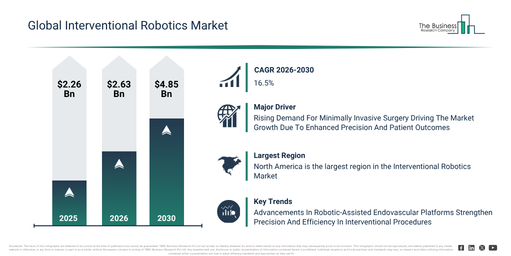
    The interventional robotics market has experienced rapid expansion in recent years. It is projected to grow from $2.26 billion in 2025 to $2.63 billion in 2026, exhibiting a compound annual growth rate (CAGR) of 16.3%. The historical growth in this market can be attributed to several factors, including increasing demand for minimally invasive surgery, the rising prevalence of cardiovascular and neurological disorders, technological advancements in medical robotics, growing investment in hospital infrastructure, and an increased focus on improving surgical precision.

    The interventional robotics market is anticipated to experience substantial expansion over the coming years. By 2030, this market is projected to reach $4.85 billion, growing at a compound annual growth rate (CAGR) of 16.5%. This growth during the forecast period is propelled by factors such as the increasing incorporation of AI-enabled robotic systems, wider acceptance of image-guided interventions, escalating healthcare spending, the proliferation of specialized surgical centers, and an increasing need for enhanced patient safety and better outcomes. Key trends foreseen in this period involve the rising uptake of minimally invasive robotic procedures, enhanced integration of image-guided navigation systems, a surging demand for robotic-assisted catheter-based interventions, the broadening of simulation and training platforms for surgeons, and an intensified focus on procedure-specific robotic platforms.

    Access Your Free Sample Report For In-Depth Market Analysis:

    https://www.thebusinessresearchcompany.com/sample_request?id=61263047&type=smp&name=Interventional%20Robotics%20Market%20Report%202026

    What Significant Factors Are Influencing The Interventional Robotics Market Expansion?

    The increasing need for minimally invasive surgery (MIS) is anticipated to drive the expansion of the interventional robotics market going forward. MIS refers to surgical operations conducted via small incisions using specialized instruments and cameras, thereby reducing bodily trauma compared to conventional open surgery. The heightened demand for MIS is primarily due to its proven clinical advantages, as patients increasingly seek procedures that offer faster recovery times, less postoperative pain, and reduced hospital stays. This growing adoption of MIS techniques fuels the requirement for advanced robotic surgical systems, which provide surgeons with enhanced precision and control during complex procedures. For instance, in April 2025, the British Association of Aesthetic Plastic Surgeons, a UK-based surgical organization, reported that cosmetic surgical procedures increased by 5% between 2023 and 2024, reaching a total of 27,462 procedures performed in 2024. Consequently, the rising demand for minimally invasive surgery is propelling the growth of the interventional robotics market.

    How Is The Interventional Robotics Market Segmented Across Different Segment Categories?

    The interventional robotics market covered in this report is segmented –

    1) By Product Type: Robotic Systems, Accessories, Software

    2) By Procedure Type: Minimally Invasive Surgery (MIS), Catheter-Based Interventions, Image-Guided Interventions, Biopsy Procedures, Ablation Procedures

    3) By Technology: Image-Guided Robotic Systems, Artificial Intelligence (AI)-Integrated Robotic Systems, Electromechanical Robotic Systems, Magnetic Navigation Systems

    4) By Application: Cardiology, Neurology, Orthopedics, Urology, Oncology, Other Applications

    5) By End-User: Hospitals, Ambulatory Surgical Centers, Specialty Clinics, Other End-Users

    Subsegments:

    1) By Robotic Systems: Surgical Robotic Systems, Orthopedic Robotic Systems, Neurosurgical Robotic Systems, Cardiovascular Robotic Systems, Urological Robotic Systems, General Surgery Robotic Systems, Image Guided Robotic Systems

    2) By Accessories: Robotic Arms, Disposable Instruments, End Effectors, Catheters And Guidewires, Imaging Probes, Sterilization Trays, System Carts

    3) By Software: Procedure Planning Software, Navigation And Mapping Software, Imaging And Visualization Software, Data Management Software, Simulation And Training Software, Analytics And Reporting Software, Workflow Management Software

    What Emerging Trends Are Seen In The Interventional Robotics Market?

    Leading companies in the interventional robotics market are concentrating on developing advanced single-use endovascular robotic systems to enhance procedural accuracy, improve physician oversight, and reduce radiation exposure during minimally invasive vascular interventions. A single-use endovascular robotic system functions as a disposable robotic solution, enabling physicians to carry out minimally invasive vascular interventions with heightened precision through the remote manipulation of guidewires and catheters. For instance, in February 2026, Microbot Medical Inc., a US-based medical device company, launched the LIBERTY Endovascular Robotic System, which is the first FDA-cleared single-use, remotely operated robotic platform designed for peripheral endovascular procedures, and it was featured at the International Symposium on Endovascular Therapy (ISET) conference. During a town hall session discussing advancements in endovascular robotics, key opinion leaders, including interventional radiologists, cardiologists, and vascular surgeons, shared their real-world clinical experiences, seamless workflow integration, and the system’s potential to decrease radiation exposure and physical strain while simultaneously improving precision and efficiency.

    Which Organizations Play A Role In The Interventional Robotics Market Landscape?

    Major companies operating in the interventional robotics market are Stereotaxis Inc, Intuitive Surgical Inc, Accuray Incorporated, Brainlab AG, PROCEPT BioRobotics Corporation, MMI S.p.A., Noah Medical Corporation, Vicarious Surgical Inc, Neocis Inc, Think Surgical Inc, Titan Medical Inc, MicroPort MedBot Shanghai Co Ltd, Asensus Surgical Inc, Microsure B.V., XACT Robotics Ltd, Robocath SA, Microbot Medical Inc, EndoQuest Robotics Inc, Insight Medbotics Inc, Medicaroid Corporation, Medrobotics Corporation, EndoMaster Pte Ltd, Magnetecs Corporation, Catheter Precision Inc, Aibo Medical Technology Co Ltd.

    Get The Full Interventional Robotics Market Report:

    https://www.thebusinessresearchcompany.com/report/interventional-robotics-market-report

    Which Region Is The Top Contributor To The Interventional Robotics Market By Share?

    North America was the largest region in the interventional robotics market in 2025. Asia-Pacific is expected to be the fastest-growing region in the forecast period. The regions covered in the interventional robotics market report are Asia-Pacific, South East Asia, Western Europe, Eastern Europe, North America, South America, Middle East, Africa.

    Request A Customized Interventional Robotics Market Report For Competitive Insights:

    https://www.thebusinessresearchcompany.com/Customise?id=61263047&name=Interventional%20Robotics%20Market%20Report%202026&type=smp

    Browse Through More Reports Similar to the Global Interventional Robotics Market 2026, By The Business Research Company

    connected health personal medical devices market report 2026

    https://www.thebusinessresearchcompany.com/report/connected-health-personal-medical-devices-global-market-report

    contract sterilization market report 2026

    https://www.thebusinessresearchcompany.com/report/contract-sterilization-global-market-report

    orthotic insole 3-d printer market report 2026

    https://www.thebusinessresearchcompany.com/report/orthotic-insole-3-d-printer-global-market-report

    Get in touch with us:

    The Business Research Company: https://www.thebusinessresearchcompany.com/

    Americas +1 310-496-7795

    Asia +44 7882 955267 & +91 8897263534

    Europe +44 7882 955267

    Email us at marketing@tbrc.info

    Follow us on:

    LinkedIn: https://in.linkedin.com/company/the-business-research-company

    YouTube: https://www.youtube.com/channel/UC24_fI0rV8cR5DxlCpgmyFQ

    Global Market Model: https://www.thebusinessresearchcompany.com/global-market-model
  • In Vitro Diagnostic (IVD) Labware Market Outlook Through 2030 Featuring Market Trends And Industry Developments

    In Vitro Diagnostic (IVD) Labware Market Outlook Through 2030 Featuring Market Trends And Industry Developments

    The Business Research Company’s 2026 market reports feature enhanced tools like market attractiveness analysis, TAM assessment, and company scoring matrices, along with interactive dashboards, deeper supply chain insights, and startup coverage strengthening the depth, usability, and strategic value of insights.

    How Is The Market Size Of The In Vitro Diagnostic (IVD) Labware Market Expected To Change From 2026 To 2030?

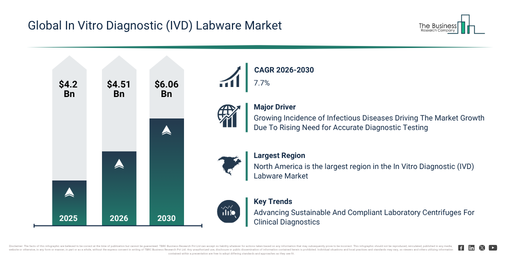
    The in vitro diagnostic (IVD) labware market has experienced substantial growth in recent years. This market is projected to expand from $4.2 billion in 2025 to $4.51 billion in 2026, demonstrating a compound annual growth rate (CAGR) of 7.4%. Historically, this expansion has been driven by the increasing prevalence of infectious diseases, the expansion of clinical laboratory networks, a rise in hospital diagnostic services, growing demand for routine blood and urine testing, and the adoption of standardized laboratory protocols.

    The in vitro diagnostic (IVD) labware market is projected to experience robust expansion over the coming years. Its valuation is anticipated to reach $6.06 billion by 2030, demonstrating a compound annual growth rate (CAGR) of 7.7%. This anticipated growth during the forecast period is primarily driven by escalating investments in molecular and genetic testing, enhanced automation within diagnostic facilities, a surge in the need for point-of-care testing solutions, the broadening healthcare infrastructure in developing regions, and a heightened emphasis on environmentally friendly laboratory consumables. Key trends expected during this period involve the wider acceptance of single-use disposable labware, a greater need for precision sample handling instruments, increased incorporation of labware compatible with automated systems, expanding volumes of molecular diagnostics testing, and an elevated commitment to contamination prevention and biosafety protocols.

    Access Your Free Sample Report For In-Depth Market Analysis:

    https://www.thebusinessresearchcompany.com/sample_request?id=72248772&type=smp&name=In%20Vitro%20Diagnostic%20%28IVD%29%20Labware%20Market%20Report%202026

    Which Strong Drivers Are Impacting The In Vitro Diagnostic (IVD) Labware Market Growth?

    The escalating prevalence of infectious illnesses is anticipated to drive the expansion of the in vitro diagnostics (IVD) labware market. These conditions are caused by detrimental microorganisms such as bacteria, viruses, fungi, or parasites, which can be transmitted between individuals or through environmental exposure. The rising occurrence of infectious diseases is linked to increasing urbanization and population density, fostering closer human contact and accelerating pathogen dissemination. In vitro diagnostics (IVD) labware plays a vital role in the detection, monitoring, and management of infectious diseases by facilitating accurate and timely testing of blood, tissue, and other biological samples, which helps healthcare professionals identify pathogens, track outbreaks, and implement appropriate treatment and prevention measures. For instance, in March 2024, the Centers for Disease Control and Prevention, a US-based government agency, reported that the number of tuberculosis cases increased from 8,320 in 2022 to 9,615 in 2023, representing a rise of 1,295 cases. Consequently, the growing incidence of infectious diseases is a key factor propelling the in vitro diagnostics (IVD) labware market.

    How Are Different Segments Classified In The In Vitro Diagnostic (IVD) Labware Market Segment Analysis?

    The in vitro diagnostic (IVD) labware market covered in this report is segmented –

    1) By Product Type: Plastic Labware, Glass Labware, Other Product Types

    2) By Usage Type: Single-Use Labware, Reusable Labware

    3) By Application: Clinical Chemistry, Immunoassays, Molecular Diagnostics, Hematology, Microbiology, Other Applications

    4) By End User: Clinical Laboratories, Hospitals, Academic Institutes, Other End Users

    Subsegments:

    1) By Plastic Labware: Test Tubes, Pipette Tips, Multiwell Plates, Petri Dishes, Cuvettes, Specimen Containers

    2) By Glass Labware: Glass Test Tubes, Beakers, Flasks, Slides And Cover Slips, Measuring Cylinders

    3) By Other Product Types: Ceramic Labware, Metal Labware, Coated Vessels, Specialty Assay Trays

    What Market Trends Are Affecting The In Vitro Diagnostic (IVD) Labware Market?

    Leading firms within the in vitro diagnostics (IVD) labware market are prioritizing the creation of novel offerings, specifically IVD-compliant refrigerated centrifuges, with the goal of improving diagnostic precision and adhering to regulatory standards. These specialized laboratory instruments facilitate the separation of biological samples under stringent regulatory guidelines, all while sustaining exact temperature management, which contributes to reliable test outcomes, consistent reproducibility, and secure manipulation of clinical samples. As an illustration, in December 2025, OHAUS Corporation, a US-based manufacturer of laboratory equipment, introduced the frontier multi-pro, multi, and micro IVD series compliant centrifuges. This advanced range of IVD-compliant refrigerated centrifuges was specifically engineered to address the demanding requirements of clinical diagnostics. These compliant centrifuges utilize natural R290 refrigerant, which has a warming potential of only 3, over 700 times lower than conventional synthetic coolants, concurrently ensuring precise temperature control for sensitive biological samples. The frontier IVD Series provides broad utility across hospitals, diagnostic centers, and research laboratories, guaranteeing excellent reproducibility, safety, and efficiency in various in vitro testing scenarios.

    Who Are The Companies Driving Activity In The In Vitro Diagnostic (IVD) Labware Market?

    Major companies operating in the in vitro diagnostics (IVD) labware market are market are Thermo Fisher Scientific Inc., Abbott Laboratories, Corning Incorporated, Avantor Inc., bioMérieux SA, Sartorius AG, Sysmex Corporation, Greiner AG, QIAGEN N.V., Eppendorf SE, Sarstedt AG & Co. KG, Azenta Inc., Biolyst Scientific Inc., Zhejiang Bioland Biotechnology Co. Ltd., WuXi NEST Biotechnology Co. Ltd., Tarsons Products Limited, Abdos Group, Heathrow Scientific LLC, Labcon North America Inc., Kangjian Medical Apparatus Co. Ltd., Accumax Lab Devices Pvt. Ltd.

    Get The Full In Vitro Diagnostic (IVD) Labware Market Report:

    https://www.thebusinessresearchcompany.com/report/in-vitro-diagnostic-ivd-labware-market-report

    Which Region Has The Greatest Market Share In The In Vitro Diagnostic (IVD) Labware Market?

    North America was the largest region in the in vitro diagnostics (IVD) labware market in 2025. Asia-Pacific is expected to be the fastest-growing region in the forecast period. The regions covered in the in vitro diagnostics (IVD) labware market report are Asia-Pacific, South East Asia, Western Europe, Eastern Europe, North America, South America, Middle East, Africa.

    Request A Customized In Vitro Diagnostic (IVD) Labware Market Report For Competitive Insights:

    https://www.thebusinessresearchcompany.com/Customise?id=72248772&name=In%20Vitro%20Diagnostic%20%28IVD%29%20Labware%20Market%20Report%202026&type=smp

    Browse Through More Reports Similar to the Global In Vitro Diagnostic (IVD) Labware Market 2026, By The Business Research Company

    connected health personal medical devices market report 2026

    https://www.thebusinessresearchcompany.com/report/connected-health-personal-medical-devices-global-market-report

    contract sterilization market report 2026

    https://www.thebusinessresearchcompany.com/report/contract-sterilization-global-market-report

    orthotic insole 3-d printer market report 2026

    https://www.thebusinessresearchcompany.com/report/orthotic-insole-3-d-printer-global-market-report

    Get in touch with us:

    The Business Research Company: https://www.thebusinessresearchcompany.com/

    Americas +1 310-496-7795

    Asia +44 7882 955267 & +91 8897263534

    Europe +44 7882 955267

    Email us at marketing@tbrc.info

    Follow us on:

    LinkedIn: https://in.linkedin.com/company/the-business-research-company

    YouTube: https://www.youtube.com/channel/UC24_fI0rV8cR5DxlCpgmyFQ

    Global Market Model: https://www.thebusinessresearchcompany.com/global-market-model
  • Implantable Pressure Sensor Market Forecast 2026–2030 Highlighting Industry Drivers And Growth Trends

    Implantable Pressure Sensor Market Forecast 2026–2030 Highlighting Industry Drivers And Growth Trends

    The Business Research Company’s 2026 market reports feature enhanced tools like market attractiveness analysis, TAM assessment, and company scoring matrices, along with interactive dashboards, deeper supply chain insights, and startup coverage strengthening the depth, usability, and strategic value of insights.

    From Its 2026 Market Size, What Value Is The Implantable Pressure Sensor Market Projected To Reach By 2030?

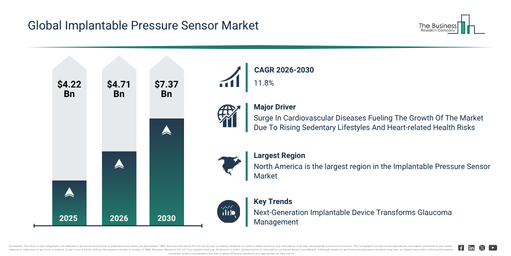
    The implantable pressure sensor market has shown rapid expansion in recent years. It is projected to increase from $4.22 billion in 2025 to $4.71 billion in 2026, at a compound annual growth rate (CAGR) of 11.6%. The historical growth of this market is attributable to the rising prevalence of cardiovascular diseases, an escalating demand for continuous patient monitoring, technological advancements in MEMS technology, an increase in minimally invasive surgeries, and expanding hospital infrastructure.

    The implantable pressure sensor market is anticipated to experience significant expansion in the coming years, reaching a valuation of $7.37 billion by 2030, driven by a compound annual growth rate (CAGR) of 11.8%. This projected growth over the forecast period stems from factors such as the increasing acceptance of remote patient monitoring, enhanced integration with digital health platforms, a heightened need for individualized treatment options, an expanding elderly demographic, and increased investment in research and development for implantable medical devices. Key trends for this period encompass the growing prevalence of wireless implantable pressure sensors, a heightened requirement for continuous real-time internal monitoring, the progressive miniaturization of implantable sensor devices, the wider application of minimally invasive implantation techniques, and the increasing clinical utilization in both cardiovascular and neurological fields.

    Access Your Free Sample Report For In-Depth Market Analysis:

    https://www.thebusinessresearchcompany.com/sample_request?id=85078072&type=smp&name=Implantable%20Pressure%20Sensor%20Market%20Report%202026

    What Key Factors Are Shaping The Implantable Pressure Sensor Market Landscape?

    The growing incidence of cardiovascular diseases (CVDs) is anticipated to significantly boost the expansion of the implantable pressure sensor market in the coming period. These conditions, which involve disorders of the heart and blood vessels such as heart failure, coronary artery disease, hypertension, and stroke, are becoming more widespread. The increased burden of CVDs is primarily fueled by sedentary lifestyles, which contribute to obesity, elevated blood pressure, and a heightened risk of heart-related complications. Implantable pressure sensors are vital for managing cardiovascular diseases, offering continuous monitoring of intracardiac or arterial pressure, particularly for patients suffering from chronic conditions like heart failure. For example, in October 2024, data from the Centers for Disease Control and Prevention, a US-based national public health agency, revealed that cardiovascular disease caused 919,032 deaths in the US, accounting for roughly 1 in 3 fatalities, with approximately 805,000 heart attacks occurring, including 605,000 first-time and 200,000 repeat cases. Consequently, the rising prevalence of cardiovascular diseases is a major driver for the growth of the implantable pressure sensor market.

    How Is The Implantable Pressure Sensor Market Categorized Across Its Segment Groups?

    The implantable pressure sensor market covered in this report is segmented –

    1) By Product Type: Wireless Implantable Pressure Sensors, Wired Implantable Pressure Sensors

    2) By Technology: Microelectromechanical Systems (MEMS), Fiber Optic, Other Technologies

    3) By Application: Cardiovascular, Neurology, Urology, Intraocular, Other Applications

    4) By End-User: Hospitals, Ambulatory Surgical Centers, Specialty Clinics, Other End-Users

    Subsegments:

    1) By Wireless Implantable Pressure Sensors: Telemetric Pressure Sensor, Inductive Coupling Sensor, Radiofrequency Pressure Sensor

    2) By Wired Implantable Pressure Sensors: Microelectromechanical Pressure Sensor, Strain Gauge Pressure Sensor, Piezoelectric Pressure Sensor

    Which Trends Are Impacting The Progress Of The Implantable Pressure Sensor Market?

    Leading companies in the implantable pressure sensor market are increasingly concentrating on developing innovative implantable devices. These innovations aim to provide continuous, real-time intraocular pressure (IOP) monitoring, thereby enhancing patient outcomes in glaucoma management. Implantable devices are defined as medical technologies specifically designed for internal placement within the body, intended to monitor, support, or treat physiological functions over extended durations. For instance, in August 2024, Injectsense Inc., a US-based medical device company, announced the first human implantation of its ultraminiaturized intraocular pressure sensor, which has also received FDA Breakthrough Device designation. This specific implantable sensor is engineered to offer continuous and minimally invasive pressure monitoring, enabling clinicians and patients to track glaucoma progression more accurately and adjust treatment strategies with greater precision. The device effectively allows for reliable real-time data collection while simultaneously minimizing patient discomfort. Such technological advancements support consistent monitoring, facilitate the early detection of intraocular pressure fluctuations, and lead to improved long-term disease management, ultimately contributing to superior clinical outcomes for individuals with glaucoma.

    Which Firms Are Influencing Competition In The Implantable Pressure Sensor Market?

    Major companies operating in the implantable pressure sensor market are Abbott Laboratories, Medtronic plc, Koninklijke Philips N.V., TE Connectivity Ltd, Analog Devices Inc., Keller America Inc., ICU Medical Inc., Integra LifeSciences Holdings Corporation, Raumedic AG, Endotronix Inc., Sophysa SA, Silex Microsystems AB, Millar Inc., Spiegelberg GmbH Co. KG, InjectSense Inc., Implandata Ophthalmic Products GmbH, Opsens Inc, MEMSCAP S.A., Aesculap Miethke GmbH Co. KG, First Sensor AG.

    Get The Full Implantable Pressure Sensor Market Report:

    https://www.thebusinessresearchcompany.com/report/implantable-pressure-sensor-market-report

    Which Region Accounts For The Largest Portion Of The Implantable Pressure Sensor Market?

    North America was the largest region in the implantable pressure sensor market in 2025. Asia-Pacific is expected to be the fastest-growing region in the forecast period. The regions covered in the implantable pressure sensor market report are Asia-Pacific, South East Asia, Western Europe, Eastern Europe, North America, South America, Middle East, Africa.

    Request A Customized Implantable Pressure Sensor Market Report For Competitive Insights:

    https://www.thebusinessresearchcompany.com/Customise?id=85078072&name=Implantable%20Pressure%20Sensor%20Market%20Report%202026&type=smp

    Browse Through More Reports Similar to the Global Implantable Pressure Sensor Market 2026, By The Business Research Company

    connected health personal medical devices market report 2026

    https://www.thebusinessresearchcompany.com/report/connected-health-personal-medical-devices-global-market-report

    contract sterilization market report 2026

    https://www.thebusinessresearchcompany.com/report/contract-sterilization-global-market-report

    orthotic insole 3-d printer market report 2026

    https://www.thebusinessresearchcompany.com/report/orthotic-insole-3-d-printer-global-market-report

    Get in touch with us:

    The Business Research Company: https://www.thebusinessresearchcompany.com/

    Americas +1 310-496-7795

    Asia +44 7882 955267 & +91 8897263534

    Europe +44 7882 955267

    Email us at marketing@tbrc.info

    Follow us on:

    LinkedIn: https://in.linkedin.com/company/the-business-research-company

    YouTube: https://www.youtube.com/channel/UC24_fI0rV8cR5DxlCpgmyFQ

    Global Market Model: https://www.thebusinessresearchcompany.com/global-market-model
  • High-Plex Protein Biomarker Platforms Market Expansion Driven By Innovations In Deep Learning And Spatial Proteomics Technologies

    High-Plex Protein Biomarker Platforms Market Expansion Driven By Innovations In Deep Learning And Spatial Proteomics Technologies

    The Business Research Company’s 2026 market reports feature enhanced tools like market attractiveness analysis, TAM assessment, and company scoring matrices, along with interactive dashboards, deeper supply chain insights, and startup coverage strengthening the depth, usability, and strategic value of insights.

    What Is The Forecasted Market Size Trajectory Of The High-Plex Protein Biomarker Platforms Market From 2026 To 2030?

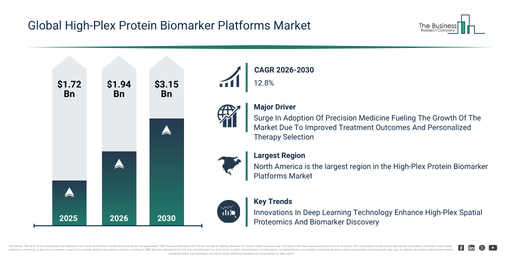
    The high-plex protein biomarker platforms market has experienced swift expansion in recent years. It is forecast to increase from $1.72 billion in 2025 to $1.94 billion in 2026, at a compound annual growth rate (CAGR) of 12.6%. The historical growth can be attributed to augmented investment in proteomics research, an increasing prevalence of chronic and complex diseases, the broadening of pharmaceutical R&D activities, a greater need for tools in early disease detection, and advancements in mass spectrometry technologies.

    The high-plex protein biomarker platforms market is projected for substantial expansion in the coming years. By 2030, its valuation is anticipated to reach $3.15 billion, demonstrating a compound annual growth rate (CAGR) of 12.8%. This anticipated expansion is fueled by factors such as the expanding integration of precision medicine initiatives, a heightened need for the creation of companion diagnostics, increased financial support for translational research efforts, the broadening scope of oncology and immunology biomarker investigations, and advancements in cutting-edge proteomic technologies. Key developments foreseen during this period encompass a greater uptake of ultra-high multiplex protein profiling, a surge in the requirement for integrated multi-omics platforms, wider implementation of high-sensitivity immunoassay technologies, an increase in biomarker validation within clinical trials, and an enhanced emphasis on ensuring standardization and reproducibility within the field of proteomics.

    Access Your Free Sample Report For In-Depth Market Analysis:

    https://www.thebusinessresearchcompany.com/sample_request?id=65695415&type=smp&name=High-Plex%20Protein%20Biomarker%20Platforms%20Market%20Report%202026

    What Primary Drivers Are Shaping The High-Plex Protein Biomarker Platforms Market?

    The increased embrace of precision medicine is projected to boost the expansion of the high-plex protein biomarker platforms market in the coming period. This medical strategy involves customizing disease prevention, diagnosis, and treatment according to an individual’s genetic profile, biological traits, and environmental influences. The growing acceptance of precision medicine stems from better treatment results, given that therapies personalized to specific genetic and molecular profiles boost efficacy and lessen negative reactions. High-plex protein biomarker platforms facilitate the faster integration of precision medicine through extensive profiling of numerous protein biomarkers, leading to more precise patient categorization, customized therapy choices, and better tracking of treatment efficacy. An example of this trend is that in February 2024, the Personalized Medicine Coalition, a US-based nonprofit advocacy group, reported the approval of 16 new personalized treatments for rare diseases, marking an increase from six in 2022. Consequently, the increasing embrace of precision medicine is fueling the expansion of the high-plex protein biomarker platforms market.

    How Is The High-Plex Protein Biomarker Platforms Market Broken Down By Segment Categories?

    The high-plex protein biomarker platforms market covered in this report is segmented –

    1) By Technology: Mass Spectrometry, Immunoassays, Multiplexed Immunofluorescence, Next-Generation Sequencing, Other Technologies

    2) By Product: Protein Biomarker Detection Instruments, Reagents And Assay Kits, Software And Data Analysis Tools, Consumables And Accessories, Service And Support Contracts

    3) By Application: Biomarker Discovery, Translational Research, Drug Discovery And Development, Clinical Diagnostics, Precision Medicine, Immunology And Oncology Research, Other Applications

    4) By End User: Pharmaceutical And Biotechnology Companies, Academic And Research Institutes, Contract Research Organizations (CROs), Healthcare And Diagnostic Centers, Biopharmaceutical Service Providers

    Subsegments:

    1) By Mass Spectrometry: Matrix Assisted Laser Desorption Ionization, Electrospray Ionization, Tandem Mass Spectrometry, Time Of Flight Mass Spectrometry

    2) By Immunoassays: Enzyme Linked Immunosorbent Assay, Radioimmunoassay, Fluorescence Immunoassay, Chemiluminescence Immunoassay

    3) By Multiplexed Immunofluorescence: Tissue Based Multiplexed Immunofluorescence, Cell Based Multiplexed Immunofluorescence, Quantitative Multiplexed Immunofluorescence

    4) By Next Generation Sequencing: Targeted Protein Sequencing, Whole Proteome Sequencing, Transcriptome Based Protein Sequencing

    5) By Other Technologies: Protein Microarray Platforms, Surface Plasmon Resonance Platforms, Electrochemical Biosensor Platforms, Label Free Detection Platforms

    What Market Trends Are Affecting The High-Plex Protein Biomarker Platforms Market?

    Leading companies in the high-plex protein biomarker platforms market are concentrating on creating sophisticated solutions, such as deep learning-powered spatial proteomics models, to streamline multiplexed protein analysis, elevate the precision of biomarker identification, and expedite the development of therapeutics. Deep learning-powered spatial proteomics models represent artificial intelligence-driven computational systems designed to examine highly multiplexed protein expression data within preserved tissue samples, thereby facilitating accurate spatial mapping and quantitative profiling of biomarkers down to single-cell resolution. As an illustration, in April 2025, Nucleai, a US-based spatial biology firm, introduced its pioneering deep learning model aimed at automating spatial proteomics analysis. This solution improves the identification and validation of protein biomarkers by blending high-dimensional imaging data with AI-driven analytics, thereby assisting in the advancement of antibody-drug conjugates (ADCs), bispecific antibodies, and immunotherapies through deeper understanding of tumor microenvironments and target expression characteristics.

    Which Players Are Present In The High-Plex Protein Biomarker Platforms Market Space?

    Major companies operating in the high-plex protein biomarker platforms market are SomaLogic Inc, F. Hoffmann-La Roche AG, Thermo Fisher Scientific Inc, Merck KGaA, Agilent Technologies Inc, PerkinElmer Inc, Bio-Rad Laboratories Inc, Bio-Techne Corporation, Novogene Co Ltd, Meso Scale Diagnostics LLC, Quanterix Corporation, Akoya Biosciences Inc, RayBiotech Inc, Protavio Ltd, Proteome Sciences plc, Lucence Diagnostics Pte Ltd, Applied Biomics Inc, Sword Bio, BGI Group, Immudex A/S.

    Get The Full High-Plex Protein Biomarker Platforms Market Report:

    https://www.thebusinessresearchcompany.com/report/high-plex-protein-biomarker-platforms-market-report

    Which Region Is The Largest In The High-Plex Protein Biomarker Platforms Market?

    North America was the largest region in the high-plex protein biomarker platforms market in 2025. Asia-Pacific is expected to be the fastest-growing region in the forecast period. The regions covered in the high-plex protein biomarker platforms market report are Asia-Pacific, South East Asia, Western Europe, Eastern Europe, North America, South America, Middle East, Africa.

    Request A Customized High-Plex Protein Biomarker Platforms Market Report For Competitive Insights:

    https://www.thebusinessresearchcompany.com/Customise?id=65695415&name=High-Plex%20Protein%20Biomarker%20Platforms%20Market%20Report%202026&type=smp

    Browse Through More Reports Similar to the Global High-Plex Protein Biomarker Platforms Market 2026, By The Business Research Company

    connected health personal medical devices market report 2026

    https://www.thebusinessresearchcompany.com/report/connected-health-personal-medical-devices-global-market-report

    contract sterilization market report 2026

    https://www.thebusinessresearchcompany.com/report/contract-sterilization-global-market-report

    orthotic insole 3-d printer market report 2026

    https://www.thebusinessresearchcompany.com/report/orthotic-insole-3-d-printer-global-market-report

    Get in touch with us:

    The Business Research Company: https://www.thebusinessresearchcompany.com/

    Americas +1 310-496-7795

    Asia +44 7882 955267 & +91 8897263534

    Europe +44 7882 955267

    Email us at marketing@tbrc.info

    Follow us on:

    LinkedIn: https://in.linkedin.com/company/the-business-research-company

    YouTube: https://www.youtube.com/channel/UC24_fI0rV8cR5DxlCpgmyFQ

    Global Market Model: https://www.thebusinessresearchcompany.com/global-market-model
  • Herpes Simplex Virus (HSV) Polymerase Chain Reaction (PCR) Testing Market Growth Influenced By Increasing Adoption Of Precision Medicine And Personalized Therapies

    Herpes Simplex Virus (HSV) Polymerase Chain Reaction (PCR) Testing Market Growth Influenced By Increasing Adoption Of Precision Medicine And Personalized Therapies

    The Business Research Company’s 2026 market reports feature enhanced tools like market attractiveness analysis, TAM assessment, and company scoring matrices, along with interactive dashboards, deeper supply chain insights, and startup coverage strengthening the depth, usability, and strategic value of insights.

    How Much Will The Market Value Of The Herpes Simplex Virus (HSV) Polymerase Chain Reaction (PCR) Testing Market Grow Between 2026 And 2030?

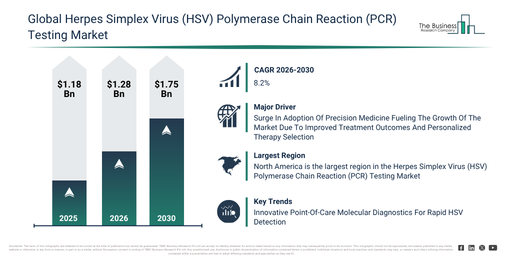
    The herpes simplex virus (HSV) polymerase chain reaction (PCR) testing market has seen considerable expansion in recent years. It is projected to grow from $1.18 billion in 2025 to $1.28 billion in 2026, progressing at a compound annual growth rate (CAGR) of 8.0%. This historical development can be ascribed to factors such as the increasing global occurrence of HSV infections, greater public understanding of sexually transmitted infections, the expansion of molecular diagnostic laboratories, a rising adoption of nucleic acid amplification tests, and the improved availability of antiviral treatments.

    The herpes simplex virus (HSV) polymerase chain reaction (PCR) testing market is projected to experience robust growth in the coming years. It is anticipated to expand to $1.75 billion by 2030, achieving a compound annual growth rate (CAGR) of 8.2%. This market expansion during the forecast period is fueled by the increased rollout of routine HSV screening programs, the escalating need for rapid point-of-care molecular testing, the broadening application of precision medicine in infectious disease management, rising healthcare investments across emerging markets, and technological advancements in both multiplex and quantitative PCR platforms. Significant trends anticipated for this period encompass a greater uptake of real-time PCR for swift HSV detection, a heightened requirement for early diagnosis in neonatal and genital HSV instances, the increasing deployment of multiplex PCR assays for distinguishing diagnoses, the wider availability of high-sensitivity quantitative PCR testing, and the growing incorporation of automated sample-to-result systems.

    Access Your Free Sample Report For In-Depth Market Analysis:

    https://www.thebusinessresearchcompany.com/sample_request?id=59187268&type=smp&name=Herpes%20Simplex%20Virus%20%28HSV%29%20Polymerase%20Chain%20Reaction%20%28PCR%29%20Testing%20Market%20Report%202026

    Which Major Drivers Are Influencing The Expansion Of The Herpes Simplex Virus (HSV) Polymerase Chain Reaction (PCR) Testing Market?

    An escalating frequency of infections is anticipated to boost the expansion of the herpes simplex virus (HSV) polymerase chain reaction (PCR) testing market in the coming years. Infections are defined as the invasion and multiplication of detrimental microorganisms within the body, which can lead to illness. The rise in infections is linked to urbanization, where increased population density in urban areas promotes swifter pathogen dissemination through close human interaction and shared facilities. Herpes simplex virus (HSV) polymerase chain reaction (PCR) testing proves valuable by promptly and precisely identifying the presence of HSV DNA, thereby allowing for early diagnosis and intervention, which stops the infection from deteriorating or transmitting to others. For example, in 2023, the UK Health Security Agency, a UK-based governmental body, reported a 4% increase in the rate of yeast-related bloodstream infections throughout England when compared to 2022. Hence, the increasing prevalence of infections is a key factor propelling the growth of the herpes simplex virus (HSV) polymerase chain reaction (PCR) testing market.

    What Are The Different Segment Types In The Herpes Simplex Virus (HSV) Polymerase Chain Reaction (PCR) Testing Market Segment Breakdown?

    The herpes simplex virus (HSV) polymerase chain reaction (PCR) testing market covered in this report is segmented –

    1) By Test Type: Polymerase Chain Reaction Testing, Serology Testing, Culture Testing

    2) By Product Type: Instruments, Reagents And Kits, Software

    3) By Sample Type: Vesicular Swabs or Fluid Samples, Cerebrospinal Fluid Samples, Blood or Serum Samples

    4) By Application: Clinical Diagnostics, Research, Blood Screening, Other Applications

    5) By End User: Hospitals And Clinics, Diagnostic Laboratories, Research Institutes, Other End Users

    Subsegments:

    1) By Polymerase Chain Reaction Testing: Real Time Polymerase Chain Reaction, Nested Polymerase Chain Reaction, Multiplex Polymerase Chain Reaction, Quantitative Polymerase Chain Reaction

    2) By Serology Testing: IgM Antibody Testing, IgG Antibody Testing, Western Blot Testing, Enzyme Linked Immunosorbent Assay

    3) By Culture Testing: Cell Culture Isolation, Plaque Assay Culture, Shell Vial Culture, Tissue Culture Infection Assay

    Which Trends Are Influencing Demand In The Herpes Simplex Virus (HSV) Polymerase Chain Reaction (PCR) Testing Market?

    Major companies within the herpes simplex virus (HSV) polymerase chain reaction (PCR) testing market are actively pursuing innovative solutions, such as point-of-care molecular diagnostics, to enable rapid, accurate, and decentralized identification of HSV infections for enhanced patient management. Point-of-care molecular diagnostics specifically refer to tests capable of quickly and precisely detecting pathogens at the location of patient care, negating the requirement for a central laboratory. For example, in January 2023, Molbio Diagnostics Pvt. Ltd., an India-based medical technology company, launched a Truenat HSV 1/2 chip-based RT-PCR test designed for diagnosing herpes simplex virus types 1 and 2. This portable, point-of-care assay delivers results in under one hour from either genital swabs or cerebrospinal fluid (CSF) when used with the battery-operated Truelab platform, requiring no additional equipment and having central drugs standard control organisation (CDSCO) approval in India. It aims to support the swift detection of active herpes simplex virus (HSV) infections to raise awareness and facilitate early treatment amidst an increase in cases.

    Who Are The Well-Known Companies In The Herpes Simplex Virus (HSV) Polymerase Chain Reaction (PCR) Testing Market?

    Major companies operating in the herpes simplex virus (HSV) polymerase chain reaction (PCR) testing market are F. Hoffmann-La Roche Ltd., Thermo Fisher Scientific Inc., Abbott Laboratories, Danaher Corporation, Becton, Dickinson Company, Quest Diagnostics Incorporated, Hologic Inc., bioMérieux SA, Bio-Rad Laboratories Inc., QIAGEN N.V., DiaSorin S.p.A., Promega Corporation, Meridian Bioscience Inc., Seegene Inc., BioPerfectus Technologies Co. Ltd., altona Diagnostics GmbH, Xi’an Tianlong Science & Technology Co. Ltd., 3B BlackBio Dx Limited, GeneProof s.r.o., Primerdesign Ltd., BioHelix Corporation.

    Get The Full Herpes Simplex Virus (HSV) Polymerase Chain Reaction (PCR) Testing Market Report:

    https://www.thebusinessresearchcompany.com/report/herpes-simplex-virus-hsv-polymerase-chain-reaction-pcr-testing-market-report

    Which Region Leads The Herpes Simplex Virus (HSV) Polymerase Chain Reaction (PCR) Testing Market In Terms Of Market Share?

    North America was the largest region in the herpes simplex virus (HSV) polymerase chain reaction (PCR) testing market in 2025. Asia-Pacific is expected to be the fastest-growing region in the forecast period. The regions covered in the herpes simplex virus (HSV) polymerase chain reaction (PCR) testing market report are Asia-Pacific, South East Asia, Western Europe, Eastern Europe, North America, South America, Middle East, Africa.

    Request A Customized Herpes Simplex Virus (HSV) Polymerase Chain Reaction (PCR) Testing Market Report For Competitive Insights:

    https://www.thebusinessresearchcompany.com/Customise?id=59187268&name=Herpes%20Simplex%20Virus%20%28HSV%29%20Polymerase%20Chain%20Reaction%20%28PCR%29%20Testing%20Market%20Report%202026&type=smp

    Browse Through More Reports Similar to the Global Herpes Simplex Virus (HSV) Polymerase Chain Reaction (PCR) Testing Market 2026, By The Business Research Company

    connected health personal medical devices market report 2026

    https://www.thebusinessresearchcompany.com/report/connected-health-personal-medical-devices-global-market-report

    contract sterilization market report 2026

    https://www.thebusinessresearchcompany.com/report/contract-sterilization-global-market-report

    orthotic insole 3-d printer market report 2026

    https://www.thebusinessresearchcompany.com/report/orthotic-insole-3-d-printer-global-market-report

    Get in touch with us:

    The Business Research Company: https://www.thebusinessresearchcompany.com/

    Americas +1 310-496-7795

    Asia +44 7882 955267 & +91 8897263534

    Europe +44 7882 955267

    Email us at marketing@tbrc.info

    Follow us on:

    LinkedIn: https://in.linkedin.com/company/the-business-research-company

    YouTube: https://www.youtube.com/channel/UC24_fI0rV8cR5DxlCpgmyFQ

    Global Market Model: https://www.thebusinessresearchcompany.com/global-market-model

  • Hemolysis Detection Devices Market Forecast Focusing On Market Potential And Long-Term Industry Prospects

    Hemolysis Detection Devices Market Forecast Focusing On Market Potential And Long-Term Industry Prospects

    The Business Research Company’s 2026 market reports feature enhanced tools like market attractiveness analysis, TAM assessment, and company scoring matrices, along with interactive dashboards, deeper supply chain insights, and startup coverage strengthening the depth, usability, and strategic value of insights.

    What Is The Anticipated Rise In Market Value Of The Hemolysis Detection Devices Market During The Forecast Period?

    The hemolysis detection devices market size has experienced robust expansion over recent years. This market is projected to expand from $0.92 billion in 2025 to $0.99 billion by 2026, demonstrating a compound annual growth rate (CAGR) of 7.5%. Historically, this growth has been driven by factors such as the rising incidence of hemolytic disorders, an increase in blood transfusion procedures, expanding volumes of clinical laboratory tests, the integration of spectrophotometry into diagnostics, and a heightened regulatory emphasis on the quality of samples.

    The market for hemolysis detection devices is projected to experience substantial expansion in the coming years. This market is forecast to reach $1.34 billion by 2030, exhibiting a compound annual growth rate (CAGR) of 7.7%. Several factors are contributing to this growth during the forecast period, including the increasing demand for automated laboratory processes, greater investment in sophisticated diagnostic infrastructure, the growing use of portable point-of-care devices, the expansion of blood bank networks in developing economies, and a heightened focus on the early identification of transfusion-related issues. Key trends anticipated during the forecast period involve the wider adoption of automated hemolysis detection systems, a rising need for high-throughput laboratory analyzers, the increasing incorporation of spectrophotometric detection technologies, an expansion of point-of-care hemolysis testing options, and an enhanced emphasis on blood sample quality control protocols.

    Access Your Free Sample Report For In-Depth Market Analysis:

    https://www.thebusinessresearchcompany.com/sample_request?id=81635672&type=smp&name=Hemolysis%20Detection%20Devices%20Market%20Report%202026

    What Key Factors Are Affecting The Hemolysis Detection Devices Market Demand?

    The expansion of clinical trials is projected to drive the demand for the hemolysis detection devices market in the future. This activity involves human research studies aimed at assessing the safety and effectiveness of new drugs or therapies, where headspace gas analysis plays a role in maintaining product quality and stability throughout the trials. The surge in clinical trials stems from a heightened need for novel and effective treatments, propelled by the increasing incidence of chronic and lifestyle diseases that necessitate extensive clinical investigations to safely evaluate groundbreaking therapies. Hemolysis detection devices support clinical trial efforts by quickly detecting the lysis of red blood cells within blood samples, thereby guaranteeing sample integrity and accurate laboratory outcomes, which are essential for precisely evaluating drug safety and efficacy. For example, data released in December 2024 by the Association of the British Pharmaceutical Industry (ABPI), a UK-based trade association, indicated an increase in industry clinical trials commenced in the UK, rising from 411 in 2022 to 426 in 2023. Consequently, the expanding scope of clinical trials is a key driver for the growth of the hemolysis detection devices market.

    Which Segments Define The Hemolysis Detection Devices Market Segment Structure?

    The hemolysis detection devices market covered in this report is segmented –

    1) By Product Type: Benchtop Hemolysis Detection Devices, Portable Hemolysis Detection Devices, Automated Hemolysis Detection Systems

    2) By Technology: Spectrophotometry, Colorimetry, Visual Inspection, Other Technologies

    3) By Application: Blood Banks, Hospitals, Diagnostic Laboratories, Research Institutes, Other Applications

    4) By End-User: Hospitals And Clinics, Blood Centers, Research And Academic Institutes, Other End Users

    Subsegments:

    1) By Benchtop Hemolysis Detection Devices: Single Sample Benchtop Hemolysis Analyzers, Multi Sample Benchtop Hemolysis Analyzers, Integrated Laboratory Benchtop Hemolysis Systems

    2) By Portable Hemolysis Detection Devices: Handheld Hemolysis Detection Devices, Battery Operated Portable Hemolysis Analyzers, Point Of Care Portable Hemolysis Devices

    3) By Automated Hemolysis Detection Systems: Fully Automated Hemolysis Detection Systems, Semi Automated Hemolysis Detection Systems, High Throughput Automated Hemolysis Analyzers

    What Trends Are Affecting The Growth Of The Hemolysis Detection Devices Market?

    Leading companies in the hemolysis detection devices market are concentrating on developing innovative products, such as point-of-care blood gas analyzers with hemolysis detection, to allow for rapid, precise, and bedside identification of hemolysis, thereby improving clinical decision-making and patient care. A point-of-care blood gas analyzer with hemolysis detection represents a portable diagnostic tool that assesses crucial blood parameters directly at the bedside while simultaneously detecting sample hemolysis. This capability supports quick and reliable clinical decisions by boosting test accuracy and minimizing errors stemming from red blood cell breakdown. For instance, in July 2024, Werfen S.A., a Spain-based diagnostics company, introduced the GEM Premier 7000 with intelligent quality management 3 (iQM3), specifically designed to address key challenges in point-of-care blood gas testing. This technology integrates patented acoustofluidic technology and photometric determination to identify hemolysis within 45 seconds, ensuring accurate potassium and other blood gas measurements. The system also offers real-time, automated quality checks for hemolysis, micro-clots, bubbles, and lipemia, alongside a comprehensive test menu covering pH, electrolytes, and CO-oximetry, making it an ideal solution for enhancing patient safety, clinical decision-making, and workflow efficiency in critical care settings.

    Who Are The Established Players Within The Hemolysis Detection Devices Market?

    Major companies operating in the hemolysis detection devices market are F. Hoffmann-La Roche Ltd., Thermo Fisher Scientific Inc., Abbott Laboratories, Danaher Corporation, Siemens Healthineers AG, Becton Dickinson Company, Mindray Bio Medical Electronics Co. Ltd., Sysmex Corporation, Bio Rad Laboratories Inc., Werfen S.A., HORIBA Medical SAS, Greiner Bio One International GmbH, Randox Laboratories Ltd., Agappe Diagnostics Ltd., Guangzhou Wondfo Biotech Co. Ltd., Radiometer Medical ApS, EKF Diagnostics Holdings plc, Hemcheck Sweden AB, Alta DiagnoTech Co. Ltd., Ortho Clinical Diagnostics Inc.

    Get The Full Hemolysis Detection Devices Market Report:

    https://www.thebusinessresearchcompany.com/report/hemolysis-detection-devices-market-report

    Which Region Represents The Largest Share Of The Hemolysis Detection Devices Market?

    North America was the largest region in the hemolysis detection devices market in 2025. Asia-Pacific is expected to be the fastest-growing region in the forecast period. The regions covered in the hemolysis detection devices market report are Asia-Pacific, South East Asia, Western Europe, Eastern Europe, North America, South America, Middle East, Africa.

    Request A Customized Hemolysis Detection Devices Market Report For Competitive Insights:

    https://www.thebusinessresearchcompany.com/Customise?id=81635672&name=Hemolysis%20Detection%20Devices%20Market%20Report%202026&type=smp

    Browse Through More Reports Similar to the Global Hemolysis Detection Devices Market 2026, By The Business Research Company

    connected health personal medical devices market report 2026

    https://www.thebusinessresearchcompany.com/report/connected-health-personal-medical-devices-global-market-report

    contract sterilization market report 2026

    https://www.thebusinessresearchcompany.com/report/contract-sterilization-global-market-report

    orthotic insole 3-d printer market report 2026

    https://www.thebusinessresearchcompany.com/report/orthotic-insole-3-d-printer-global-market-report

    Get in touch with us:

    The Business Research Company: https://www.thebusinessresearchcompany.com/

    Americas +1 310-496-7795

    Asia +44 7882 955267 & +91 8897263534

    Europe +44 7882 955267

    Email us at marketing@tbrc.info

    Follow us on:

    LinkedIn: https://in.linkedin.com/company/the-business-research-company

    YouTube: https://www.youtube.com/channel/UC24_fI0rV8cR5DxlCpgmyFQ

    Global Market Model: https://www.thebusinessresearchcompany.com/global-market-model

  • Headspace Gas Analysis Market Forecast Highlighting Emerging Trends Influencing Industry Expansion Through 2030

    Headspace Gas Analysis Market Forecast Highlighting Emerging Trends Influencing Industry Expansion Through 2030

    The Business Research Company’s 2026 market reports feature enhanced tools like market attractiveness analysis, TAM assessment, and company scoring matrices, along with interactive dashboards, deeper supply chain insights, and startup coverage strengthening the depth, usability, and strategic value of insights.

    What Level Of Market Value Growth Is Predicted For The Headspace Gas Analysis Market From 2026 To 2030?

    The headspace gas analysis market has seen substantial growth over recent years. Its valuation is anticipated to climb from $1.16 billion in 2025 to $1.26 billion in 2026, progressing at a compound annual growth rate (CAGR) of 8.1%. The market’s expansion in past periods is attributable to factors including rising demand for food safety testing, advancements in pharmaceutical quality control standards, the expansion of the packaged food industry, increasing regulatory requirements for product stability, and improvements in gas chromatography instrumentation.

    The headspace gas analysis market is projected to experience robust expansion over the coming years. This market is anticipated to reach $1.73 billion by 2030, exhibiting a compound annual growth rate (CAGR) of 8.3%. Factors contributing to this growth during the forecast period include the increasing uptake of real-time analytical monitoring systems, a heightened emphasis on validating sustainable packaging, the expansion of biopharmaceutical manufacturing, rising capital allocation towards laboratory automation, and the need for highly precise detection of volatile compounds. Significant trends expected in this period encompass the greater integration of automated headspace sampling systems, an escalating requirement for modified atmosphere packaging verification, the broadening application of high-sensitivity gas chromatography techniques, increased utilization in pharmaceutical stability testing, and the advancement of integrated solutions for leak detection.

    Access Your Free Sample Report For In-Depth Market Analysis:

    https://www.thebusinessresearchcompany.com/sample_request?id=99576783&type=smp&name=Headspace%20Gas%20Analysis%20Market%20Report%202026

    What Significant Factors Are Influencing The Headspace Gas Analysis Market Expansion?

    Increased apprehension regarding food safety is projected to drive the expansion of the headspace gas analysis market in the future. This apprehension stems from heightened public awareness concerning contamination, adulteration, and hygienic challenges in food items, which may endanger consumer well-being. The surge in food safety worries is fueled by the worldwide expansion of food supply chains, elevating the potential for contamination throughout various production, processing, and distribution phases, thereby complicating traceability and quality assurance. Headspace gas analysis plays a crucial role in addressing these concerns by confirming modified atmosphere packaging (MAP) conditions, guaranteeing an ideal gas composition to impede microbial proliferation and avert contamination, thus preserving product freshness and adherence to regulations across the entire supply chain. For example, in December 2024, data from the European Food Safety Authority, a government agency located in Italy, reported 148,181 cases of campylobacteriosis in 2023, equating to 45.7 cases per 100,000 individuals, indicating a 4.3% rise in the notification rate compared to 2022. Consequently, growing anxieties about food safety are propelling the expansion of the headspace gas analysis market. The increasing adoption of automation is anticipated to stimulate the expansion of the headspace gas analysis market in the coming years. Automation involves leveraging technology to execute tasks or processes with little to no human involvement. Its prevalence is growing due to its ability to enhance efficiency through quicker task completion, error reduction, and optimized resource utilization. Headspace gas analysis supports automation by facilitating accurate and consistent sample preparation, injection, and measurement, thereby minimizing human error, boosting reproducibility, and accelerating throughput for swifter and more dependable identification of volatile compounds. For instance, in April 2024, the International Federation of Robotics, an international organization based in Germany, reported that manufacturing firms in the United States substantially intensified their automation initiatives, with overall industrial robot installations climbing 12% to reach 44,303 units in 2023. Thus, the expanding trend of automation is contributing to the growth of the headspace gas analysis market.

    What Are The Main Segments Within The Headspace Gas Analysis Market Segment Structure?

    The headspace gas analysis market covered in this report is segmented –

    1) By Technology: Gas Chromatography, Mass Spectrometry, Infrared Spectroscopy, Other Technologies

    2) By Product Type: Instruments, Consumables, Services

    3) By Sales Channel: Direct Sales, Distributors Or Resellers, Online Sales

    4) By Application: Modified Atmosphere Packaging Verification, Package Integrity Testing, Shelf-Life Studies, Quality Control Testing, Leak Detection

    5) By End-User: Pharmaceutical Companies, Food And Beverage Companies, Research Laboratories, Other End Users

    Subsegments:

    1) By Gas Chromatography: Capillary Gas Chromatography, Packed Column Gas Chromatography, Gas Liquid Chromatography, Gas Solid Chromatography

    2) By Mass Spectrometry: Quadrupole Mass Spectrometry, Time Of Flight Mass Spectrometry, Ion Trap Mass Spectrometry, Magnetic Sector Mass Spectrometry

    3) By Infrared Spectroscopy: Fourier Transform Infrared Spectroscopy, Near Infrared Spectroscopy, Mid Infrared Spectroscopy, Photoacoustic Infrared Spectroscopy

    4) By Other Technologies: Atomic Absorption Spectroscopy, Flame Ionization Detection, Electron Capture Detection, Thermal Conductivity Detection

    What Trends Are Influencing The Headspace Gas Analysis Market?

    Companies operating within the headspace gas analysis market are concentrating on creating sophisticated solutions, such as the compact headspace oxygen sensor module. These innovations facilitate swift, precise, and non-invasive assessment of gas content within sealed packaging, thereby improving product quality checks and extending shelf-life surveillance. The small headspace oxygen sensor module itself is a compact device designed to gauge oxygen levels in the confined gas area above a product inside sealed packaging, enabling real-time, non-destructive quality assurance. For instance, in September 2025, AMETEK MOCON Inc., a US-based manufacturing firm, unveiled the Dansensor CheckMate 4, comprising two novel small-volume module headspace gas analyzers. These interchangeable modules incorporate specialized probes for quick, non-destructive oxygen readings in packages with extremely limited headspace, such as coffee capsules and pharmaceutical blister packs. They elevate quality control in modified atmosphere packaging (MAP) across the food, beverage, pharmaceutical, and medical sectors by guaranteeing accurate gas analysis and prolonged shelf life.

    Who Are The Companies Participating In The Headspace Gas Analysis Market?

    Major companies operating in the headspace gas analysis market are Thermo Fisher Scientific Inc., Agilent Technologies Inc., Shimadzu Corporation, WILCO AG, SRI International, GERSTEL GmbH, Owlstone Medical Ltd., Hiden Analytical Ltd., Labthink Instruments Co. Ltd., JASCO Inc., Witt-Gasetechnik GmbH & Co. KG, CTC Analytics AG, AMETEK MOCON, VICI Valco Instruments Co. Inc., Lighthouse Instruments, HTA S.r.l., Buck Scientific, Ellutia Ltd., Quantek Instruments Inc., Xepics Ltd, Illinois Instruments Inc.

    Get The Full Headspace Gas Analysis Market Report:

    https://www.thebusinessresearchcompany.com/report/headspace-gas-analysis-market-report

    Which Region Is The Leading Market For The Headspace Gas Analysis Market?

    North America was the largest region in the headspace gas analysis market in 2025. Asia-Pacific is expected to be the fastest-growing region in the forecast period. The regions covered in the headspace gas analysis market report are Asia-Pacific, South East Asia, Western Europe, Eastern Europe, North America, South America, Middle East, Africa.

    Request A Customized Headspace Gas Analysis Market Report For Competitive Insights:

    https://www.thebusinessresearchcompany.com/Customise?id=99576783&name=Headspace%20Gas%20Analysis%20Market%20Report%202026&type=smp

    Browse Through More Reports Similar to the Global Headspace Gas Analysis Market 2026, By The Business Research Company

    connected health personal medical devices market report 2026

    https://www.thebusinessresearchcompany.com/report/connected-health-personal-medical-devices-global-market-report

    contract sterilization market report 2026

    https://www.thebusinessresearchcompany.com/report/contract-sterilization-global-market-report

    orthotic insole 3-d printer market report 2026

    https://www.thebusinessresearchcompany.com/report/orthotic-insole-3-d-printer-global-market-report

    Get in touch with us:

    The Business Research Company: https://www.thebusinessresearchcompany.com/

    Americas +1 310-496-7795

    Asia +44 7882 955267 & +91 8897263534

    Europe +44 7882 955267

    Email us at marketing@tbrc.info

    Follow us on:

    LinkedIn: https://in.linkedin.com/company/the-business-research-company

    YouTube: https://www.youtube.com/channel/UC24_fI0rV8cR5DxlCpgmyFQ

    Global Market Model: https://www.thebusinessresearchcompany.com/global-market-model
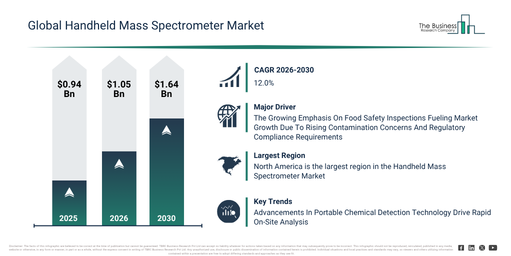
  • Handheld Mass Spectrometer Market Outlook And Future Growth Forecast Through 2030

    Handheld Mass Spectrometer Market Outlook And Future Growth Forecast Through 2030

    The Business Research Company’s 2026 market reports feature enhanced tools like market attractiveness analysis, TAM assessment, and company scoring matrices, along with interactive dashboards, deeper supply chain insights, and startup coverage strengthening the depth, usability, and strategic value of insights.

    How Will The Market Value Of The Handheld Mass Spectrometer Market Progress Between 2026 And 2030?

    The handheld mass spectrometer market size has seen swift expansion in recent years. It is forecast to rise from $0.94 billion in 2025 to $1.05 billion in 2026, achieving a compound annual growth rate (CAGR) of 11.7%. This historic growth can be attributed to developments in miniaturized analytical instruments, the increasing necessity for field-based substance identification, the rise of environmental monitoring programs, intensified security and defense screening operations, and the wider application in pharmaceutical research.

    The handheld mass spectrometer market is anticipated to undergo significant expansion in the coming years, with its size projected to reach $1.64 billion in 2030, exhibiting a compound annual growth rate (CAGR) of 12.0%. This growth during the forecast period is attributable to an increasing demand for real-time mobile diagnostics, the rising integration of AI-based spectral analysis software, the extension of industrial safety monitoring regulations, growing investments in portable laboratory technologies, and the evolution of high-sensitivity miniature ionization techniques. Noteworthy trends for this period encompass the escalating adoption of portable on-site chemical analysis, a heightened need for rapid field-based drug detection, the expansion of compact time-of-flight systems, increased utilization in environmental contaminant monitoring, and the development of designs that are both battery-efficient and lightweight.

    Access Your Free Sample Report For In-Depth Market Analysis:

    https://www.thebusinessresearchcompany.com/sample_request?id=72023251&type=smp&name=Handheld%20Mass%20Spectrometer%20Market%20Report%202026

    Which Important Drivers Are Guiding The Handheld Mass Spectrometer Market Growth?

    The increasing application of food safety checks is projected to boost the growth of the handheld mass spectrometer market in the coming years. Food safety checks involve methodical inspections, testing, oversight, and investigative processes conducted to guarantee that food products adhere to hygiene, safety, and regulatory benchmarks prior to consumer distribution. The increased adoption of these checks is driven by growing worries about food contamination, which in turn mandates stricter monitoring, testing, and regulatory adherence throughout the food supply chain. Handheld mass spectrometers support these food safety initiatives by enabling quick, on-site identification of contaminants and chemical residues, thereby enhancing inspection efficiency, facilitating real-time decision-making, and ensuring regulatory compliance across the food supply chain. For example, in January 2025, as per FoodDocs, a US-based digital food safety management platform, the Canadian Food Inspection Agency (CFIA) conducts around 2,800 food safety investigations each year, with this figure anticipated to rise to approximately 3,375 between April 2024 and March 2025, indicating heightened enforcement and monitoring efforts. Consequently, the rising focus on food safety checks is propelling the expansion of the handheld mass spectrometer market.

    How Is Segmentation Applied In The Handheld Mass Spectrometer Market Segment Analysis?

    The handheld mass spectrometer market covered in this report is segmented –

    1) By Product Type: Portable Mass Spectrometer, Miniature Mass Spectrometer

    2) By Technology: Ion Trap, Quadrupole, Time Of Flight, Other Technologies

    3) By Application: Environmental Testing, Drug Testing, Food Safety, Security And Defense, Biotechnology, Other Applications

    4) By End-User: Pharmaceutical And Biotechnology Companies, Environmental Agencies, Research Institutes, Law Enforcement Agencies, Other End Users

    Subsegments:

    1) By Portable Mass Spectrometer: Time-of-Flight Portable Mass Spectrometer, Quadrupole Portable Mass Spectrometer, Ion Trap Portable Mass Spectrometer, Magnetic Sector Portable Mass Spectrometer, Orbitrap Portable Mass Spectrometer

    2) By Miniature Mass Spectrometer: Time-of-Flight Miniature Mass Spectrometer, Quadrupole Miniature Mass Spectrometer, Ion Trap Miniature Mass Spectrometer, Magnetic Sector Miniature Mass Spectrometer, Orbitrap Miniature Mass Spectrometer

    What Market Trends Are Affecting The Handheld Mass Spectrometer Market?

    Major companies operating in the handheld mass spectrometer market are concentrating on developing innovative products, such as high-pressure mass spectrometry (HPMS) devices, to facilitate rapid, on-site chemical detection with high sensitivity and accuracy. High-pressure mass spectrometry (HPMS) devices function as portable instruments that identify trace chemicals in real time by examining vapors, liquids, or solids under high pressure, assisting first responders and field operators in the swift detection of hazardous substances and drugs directly on-site. For instance, in February 2026, 908 Devices Inc., a US-based manufacturing company, enhanced its MX908, a high-pressure mass spectrometry (HPMS) device, by introducing updated mission modes and five new priority drug targets. The MX908, as a leading HPMS device, now features a refined Hazard Survey mode, which has been replaced with TIC Hunter for focused hazardous vapor detection, along with mission-specific modes such as Drug Hunter and Explosives Hunter. It is capable of detecting emerging synthetic drugs, including medetomidine, synthetic cathinones, and benzodiazepines, thereby providing actionable intelligence to first responders.

    Who Are The Companies Participating In The Handheld Mass Spectrometer Market Environment?

    Major companies operating in the handheld mass spectrometer market are Smiths Detection Group Ltd., PerkinElmer Inc., Bruker Corporation, Waters Corporation, Inficon Holding AG, Focused Photonics Inc., Kore Technology Ltd., 908 Devices Inc., Hiden Analytical Ltd., TOFWERK AG, Advion Inc., Analyticon Instruments GmbH, BaySpec Inc., 1st Detect Corporation, Griffin Analytical Technology LLC, FLIR Systems Inc., Microsaic Systems plc, MassTech Inc., IonSense Inc., Purspec Technologies Inc., Plasmion GmbH.

    Get The Full Handheld Mass Spectrometer Market Report:

    https://www.thebusinessresearchcompany.com/report/handheld-mass-spectrometer-market-report

    Where Is The Handheld Mass Spectrometer Market Primarily Concentrated By Region?

    North America was the largest region in the handheld mass spectrometer market in 2025. Asia-Pacific is expected to be the fastest-growing region in the forecast period. The regions covered in the handheld mass spectrometer market report are Asia-Pacific, South East Asia, Western Europe, Eastern Europe, North America, South America, Middle East, Africa.

    Request A Customized Handheld Mass Spectrometer Market Report For Competitive Insights:

    https://www.thebusinessresearchcompany.com/Customise?id=72023251&name=Handheld%20Mass%20Spectrometer%20Market%20Report%202026&type=smp

    Browse Through More Reports Similar to the Global Handheld Mass Spectrometer Market 2026, By The Business Research Company

    connected health personal medical devices market report 2026

    https://www.thebusinessresearchcompany.com/report/connected-health-personal-medical-devices-global-market-report

    contract sterilization market report 2026

    https://www.thebusinessresearchcompany.com/report/contract-sterilization-global-market-report

    orthotic insole 3-d printer market report 2026

    https://www.thebusinessresearchcompany.com/report/orthotic-insole-3-d-printer-global-market-report

    Get in touch with us:

    The Business Research Company: https://www.thebusinessresearchcompany.com/

    Americas +1 310-496-7795

    Asia +44 7882 955267 & +91 8897263534

    Europe +44 7882 955267

    Email us at marketing@tbrc.info

    Follow us on:

    LinkedIn: https://in.linkedin.com/company/the-business-research-company

    YouTube: https://www.youtube.com/channel/UC24_fI0rV8cR5DxlCpgmyFQ

    Global Market Model: https://www.thebusinessresearchcompany.com/global-market-model