Category: Medical Equipment

  • Wearable Neurotech Market Revenue Growth Forecast To Reach $5.34 Billion By 2030 At 19.7% CAGR

    Wearable Neurotech Market Revenue Growth Forecast To Reach $5.34 Billion By 2030 At 19.7% CAGR

    The Business Research Company’s 2026 market reports feature enhanced tools like market attractiveness analysis, TAM assessment, and company scoring matrices, along with interactive dashboards, deeper supply chain insights, and startup coverage strengthening the depth, usability, and strategic value of insights.

    What Changes In Market Value Are Expected For The Wearable Neurotech Market Over The 2026–2030 Period?

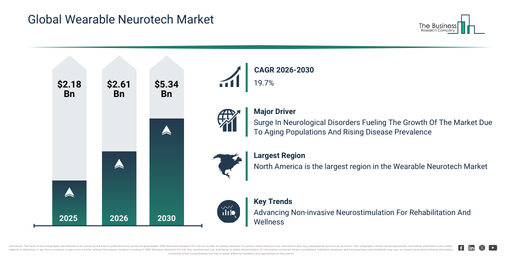
    The wearable neurotech market has experienced significant expansion in recent years. Its projected growth will take it from $2.18 billion in 2025 to $2.61 billion in 2026, at a compound annual growth rate (CAGR) of 19.4%. This historical growth can be attributed to advancements in EEG miniaturization, the increasing presence of digital health devices, an expansion of brain computer interface research, the emergence of mental wellness technology, and a higher rate of wearable sensor adoption.

    The wearable neurotech market is projected to experience substantial expansion in the coming years. By 2030, its valuation is expected to reach $5.34 billion, growing at a compound annual growth rate (CAGR) of 19.7%. This anticipated growth can be attributed to several factors, including an increase in remote neuro monitoring, a growing need for cognitive enhancement solutions, the spread of neuro digital therapeutics, greater application of sports performance analytics, and the proliferation of personalized brain health initiatives. Additionally, major trends in this period will involve the rise of consumer brain-computer interfaces, increasing uptake of neurofeedback wearables, the availability of more portable EEG devices, the incorporation of cognitive monitoring applications, and a surge in home-based neurostimulation devices.

    Access Your Free Sample Report For In-Depth Market Analysis:

    https://www.thebusinessresearchcompany.com/sample.aspx?id=33359&type=smp

    Which Primary Drivers Are Impacting The Wearable Neurotech Market Growth?

    The increasing occurrence of neurological conditions is anticipated to drive the expansion of the wearable neurotech market in the future. These conditions are medical ailments impacting the brain, spinal cord, or nerves, thereby influencing aspects such as movement, sensation, cognitive functions, or behavior. The rise in neurological disorders stems from an aging global demographic, which in turn elevates the incidence of age-associated neurological conditions. Wearable neurotech offers assistance in managing neurological disorders through continuous monitoring of brain and nerve activity, facilitating prompt diagnosis, tailored therapeutic approaches, and immediate symptom control. For example, in March 2023, the Alzheimer’s Association, a US-based nonprofit voluntary health organization, stated that 6.7 million Americans aged 65+ suffer from Alzheimer’s, a figure expected to climb to 13.8 million by 2060. Consequently, the growing prevalence of neurological conditions is a significant factor boosting the development of the wearable neurotech market.

    What Segment Categories Shape The Wearable Neurotech Market Segment Landscape?

    The wearable neurotech market covered in this report is segmented –

    1) By Product Type: Electroencephalography Headsets; Brain Computer Interface Devices; Neurostimulation Wearables; Neurofeedback Wearable Devices; Wearable Neural Sensors

    2) By Technology: Electroencephalography Technology; Functional Near Infrared Spectroscopy Technology; Magnetoencephalography Technology; Transcranial Direct Current Stimulation Technology; Other Neural Sensing and Stimulation Technologies

    3) By Distribution Channel: Online Stores; Specialty Retail Stores; Direct Sales; Other Distribution Channels

    4) By Application: Healthcare; Consumer Electronics; Sports and Fitness; Other Applications

    5) By End User: Hospitals and Clinics; Research Institutes and Laboratories; Consumer End Users; Sports and Fitness Centers; Academic and Educational Institutions

    Subsegments:

    1) By Electroencephalography Headsets: Portable Electroencephalography Headsets; Wireless Electroencephalography Headsets; Clinical Electroencephalography Headsets

    2) By Brain Computer Interface Devices: Non Invasive Brain Computer Interface Devices; Invasive Brain Computer Interface Devices; Hybrid Brain Computer Interface Devices

    3) By Neurostimulation Wearables: Transcranial Direct Current Stimulation Wearables; Transcranial Magnetic Stimulation Wearables; Vagus Nerve Stimulation Wearables

    4) By Neurofeedback Wearable Devices: Real Time Neurofeedback Wearable Devices; Home Use Neurofeedback Wearable Devices; Clinical Neurofeedback Wearable Devices

    5) By Wearable Neural Sensors: Electroencephalography Sensors; Functional Near-Infrared Spectroscopy Sensors; Magnetoencephalography Sensors; Electromyography Sensors; Cognitive Monitoring Sensors; Brain Computer Interface Sensors

    Which Trends Are Expected To Impact The Wearable Neurotech Market?

    Key companies operating within the wearable neurotech market are focusing on innovations in non-invasive neurostimulation technologies, including wearable vagus nerve and electrical muscle stimulation devices, to facilitate rehabilitation, enhance wellness, or support neural recovery. Wearable vagus nerve devices are non-invasive systems worn on the body that deliver electrical stimulation to the vagus nerve, aiming to support health, well-being, or therapeutic results. For instance, in February 2025, Neuvotion Inc., a US medical device company, unveiled NeuStim, an FDA-cleared, non-invasive, wearable neurostimulation system that precisely stimulates muscles to aid hand movement recovery after stroke or spinal cord injury. This device boasts a lightweight, wrist-worn design, a clinician-friendly touchscreen for targeting stimulation, and customizable programs accessible through a mobile interface. Similarly, in 2025, Lithuania-based Pulsetto introduced or expanded its wearable vagus nerve stimulation device designed for stress reduction and sleep support. This neck-worn device provides low-frequency transcutaneous stimulation, offers multiple preset programs via a companion app, and is intended for daily, drug-free use. Both devices highlight the increasing trend of noninvasive, wearable neurotechnologies for health and rehabilitation.

    Who Are The Companies Operating Across The Wearable Neurotech Market Value Chain?

    Major companies operating in the wearable neurotech market are Kernel Labs Inc., Nuro Corporation, NeuroSky Inc., BrainCo Inc., Emotiv Inc., Cognito Therapeutics Inc., Neuroelectrics Barcelona S.L.U, Q30 Innovations Inc., Halo Neuroscience, Thync, Neurable Inc., Neurovalens Ltd., Neurovalens Ltd., Bitbrain Technologies S.L., Muse (InteraXon), OpenBCI Inc., BrainBit, Nexstem Technologies Pvt. Ltd, Nalu Medical Inc., Alphabeats, Motif Neurotech.

    Get The Full Wearable Neurotech Market Report:

    https://www.thebusinessresearchcompany.com/report/wearable-neurotech-market-report

    Which Region Leads The Wearable Neurotech Market In Terms Of Market Share?

    North America was the largest region in the wearable neurotech market in 2025. Asia-Pacific is expected to be the fastest-growing region in the forecast period. The regions covered in the wearable neurotech market report are Asia-Pacific, South East Asia, Western Europe, Eastern Europe, North America, South America, Middle East, Africa.

    Request A Customized Wearable Neurotech Market Report For Competitive Insights:

    https://www.thebusinessresearchcompany.com/customise?id=33359&type=smp

    Browse Through More Reports Similar to the Global Wearable Neurotech Market 2026, By The Business Research Company

    Wearable Medical Devices Market 2026

    https://www.thebusinessresearchcompany.com/report/wearable-medical-devices-market

    Wearable Computing Market Report 2026

    https://www.thebusinessresearchcompany.com/report/wearable-computing-global-market-report

    Neurotechnology Market Report 2026

    https://www.thebusinessresearchcompany.com/report/neurotechnology-global-market-report

    Get in touch with us:

    The Business Research Company: https://www.thebusinessresearchcompany.com/

    Americas +1 310-496-7795

    Asia +44 7882 955267 & +91 8897263534

    Europe +44 7882 955267

    Email us at info@tbrc.info

    Follow us on:

    LinkedIn: https://in.linkedin.com/company/the-business-research-company

    YouTube: https://www.youtube.com/channel/UC24_fI0rV8cR5DxlCpgmyFQ

    Global Market Model: https://www.thebusinessresearchcompany.com/global-market-model
  • Vibrating Mesh Nebulizer Market Forecast 2026–2030 Highlighting Expansion Across Industries

    Vibrating Mesh Nebulizer Market Forecast 2026–2030 Highlighting Expansion Across Industries

    The Business Research Company’s 2026 market reports feature enhanced tools like market attractiveness analysis, TAM assessment, and company scoring matrices, along with interactive dashboards, deeper supply chain insights, and startup coverage strengthening the depth, usability, and strategic value of insights.

    What Are The Market Size Estimates For The Vibrating Mesh Nebulizer Market In 2026 And 2030?

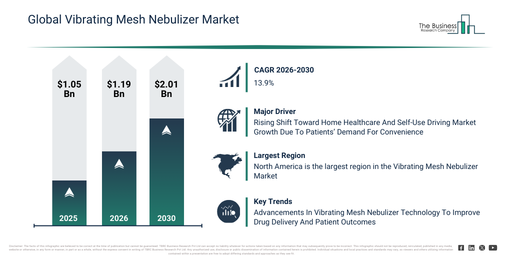
    The vibrating mesh nebulizer market has observed substantial expansion in recent years. Its valuation is anticipated to climb from $1.05 billion in 2025 to $1.19 billion in 2026, demonstrating a compound annual growth rate (CAGR) of 13.7%. The market’s past growth can be ascribed to an increase in asthma prevalence, the expansion of the COPD patient population, the rising need for home respiratory care, innovations in portable devices, and the requirements for pediatric inhalation therapy.

    The vibrating mesh nebulizer market size is projected to experience substantial growth over the next few years. It is forecast to reach $2.01 billion in 2030, expanding at a compound annual growth rate (CAGR) of 13.9%. This anticipated growth during the forecast period is fueled by the increased adoption of connected respiratory devices, the expansion of home-based chronic care, innovations in wearable inhalation monitoring, the demand for personalized drug delivery, and the necessity for respiratory care for an aging population. Key trends identified for the forecast period include portable handheld mesh nebulizers, ultra-quiet nebulization devices, smart connected inhalation systems, high-efficiency aerosol delivery, and rechargeable mesh nebulizer units.

    Access Your Free Sample Report For In-Depth Market Analysis:

    https://www.thebusinessresearchcompany.com/sample.aspx?id=33348&type=smp

    Which Strong Drivers Are Impacting The Vibrating Mesh Nebulizer Market Growth?

    The increasing trend toward home healthcare and self-use is anticipated to fuel the expansion of the vibrating mesh nebulizer market in the coming years. Home healthcare and self-use encompass medical interventions and devices that empower patients to manage their health autonomously in non-clinical environments. This transition is largely driven by patients’ desire for convenient, cost-effective care, as home-based treatment reduces hospital visits, lowers overall healthcare costs, and enhances comfort and adherence to therapy. Vibrating mesh nebulizers are particularly well-suited for home healthcare and self-use due to their compact design, quiet operation, portability, and capacity to efficiently deliver precise respiratory drug doses. For instance, in July 2025, according to the Department of Health and Social Care (DHSC), a UK-based government body, in July 2025, approximately 489,000 people in England received community-based support in 2024, equivalent to 1,070 per 100,000 adults, representing year-on-year growth in home-based care utilization. Consequently, the rising shift toward home healthcare and self-use is driving the growth of the vibrating mesh nebulizer market.

    Which Segment Categories Are Included In The Vibrating Mesh Nebulizer Market Segment Analysis?

    The vibrating mesh nebulizer market covered in this report is segmented –

    1) By Product Type: Active Mesh Nebulizer; Passive Mesh Nebulizer

    2) By Age Group: Adults; Paediatrics

    3) By Distribution Channel: Online; Offline

    4) By Application: Chronic Obstructive Pulmonary Disease; Asthma; Cystic Fibrosis; Other Applications

    5) By End User: Hospitals; Clinics; Home Healthcare; Emergency Medical Centres; Other End Users

    Subsegments:

    1) By Active Mesh Nebulizer: Portable Active Mesh Nebulizers; Handheld Active Mesh Nebulizers; Battery Operated Active Mesh Nebulizers; Rechargeable Active Mesh Nebulizers; High Frequency Vibration Active Mesh Nebulizers

    2) By Passive Mesh Nebulizer: Compact Passive Mesh Nebulizers; Tabletop Passive Mesh Nebulizers; Low Noise Passive Mesh Nebulizers; Single Patient Use Passive Mesh Nebulizers; Continuous Use Passive Mesh Nebulizers

    What Trends Are Transforming The Vibrating Mesh Nebulizer Market?

    Major companies in the vibrating mesh nebulizer market are concentrating on technological innovation, specifically in vibrating mesh nebulizers, to improve drug delivery efficiency, patient compliance, and overall treatment outcomes. A vibrating mesh nebulizer is a medical device engineered to deliver medication in the form of a fine aerosol directly into the lungs. For instance, in March 2025, Loxim, a China-based medical technology company, unveiled the LX8201-0B chip, a dedicated drive solution for vibrating mesh nebulizers designed to enhance device performance. The LX8201-0B chip optimizes vibration frequency and amplitude to ensure uniform aerosol particle size, supports low power consumption for portable applications, and integrates seamlessly into existing nebulizer systems. Its key benefits include improved medication delivery efficiency, a longer device lifespan, and adaptability for a variety of therapeutic uses, including asthma, COPD, and other respiratory treatments. This launch highlights the industry’s progression towards miniaturized, energy-efficient, and high-precision nebulizer solutions.

    Who Are The Active Companies Shaping The Vibrating Mesh Nebulizer Market?

    Major companies operating in the vibrating mesh nebulizer market are McKesson Corporation, Medtronic plc, Koninklijke Philips N.V, Henry Schein Inc., OMRON Corporation, Jiangsu Yuyue Medical Equipment & Supply Co. Ltd., Beurer GmbH, Drive DeVilbiss Healthcare, AptarGroup Inc., Aerogen Ltd., PARI GmbH, BPL Medical Technologies Private Limited, GF Health Products Inc., Rossmax International Ltd., Shenzhen Feellife Health Technology Co. Ltd., Labtron Equipment Ltd., Honsun (Nantong) Co. Ltd., Well Lead Medical Co. Ltd., Medline Industries LP

    Get The Full Vibrating Mesh Nebulizer Market Report:

    https://www.thebusinessresearchcompany.com/report/vibrating-mesh-nebulizer-market-report

    Where Is The Vibrating Mesh Nebulizer Market Primarily Concentrated By Region?

    North America was the largest region in the vibrating mesh nebulizer market in 2025. Asia-Pacific is expected to be the fastest-growing region in the forecast period. The regions covered in the vibrating mesh nebulizer market report are Asia-Pacific, South East Asia, Western Europe, Eastern Europe, North America, South America, Middle East, Africa.

    Request A Customized Vibrating Mesh Nebulizer Market Report For Competitive Insights:

    https://www.thebusinessresearchcompany.com/customise?id=33348&type=smp

    Browse Through More Reports Similar to the Global Vibrating Mesh Nebulizer Market 2026, By The Business Research Company

    Nebulizers Market 2026

    https://www.thebusinessresearchcompany.com/report/nebulizers-market

    Noise Vibration Harshness Testing Market Report 2026

    https://www.thebusinessresearchcompany.com/report/noise-vibration-harshness-testing-global-market-report

    Vibration System Market Report 2026

    https://www.thebusinessresearchcompany.com/report/vibration-system-global-market-report

    Get in touch with us:

    The Business Research Company: https://www.thebusinessresearchcompany.com/

    Americas +1 310-496-7795

    Asia +44 7882 955267 & +91 8897263534

    Europe +44 7882 955267

    Email us at info@tbrc.info

    Follow us on:

    LinkedIn: https://in.linkedin.com/company/the-business-research-company

    YouTube: https://www.youtube.com/channel/UC24_fI0rV8cR5DxlCpgmyFQ

    Global Market Model: https://www.thebusinessresearchcompany.com/global-market-model
  • Global Thermal Cyclers Market Analysis For 2026–2030 With Strategic Insights

    Global Thermal Cyclers Market Analysis For 2026–2030 With Strategic Insights

    The Business Research Company’s 2026 market reports feature enhanced tools like market attractiveness analysis, TAM assessment, and company scoring matrices, along with interactive dashboards, deeper supply chain insights, and startup coverage strengthening the depth, usability, and strategic value of insights.

    What Expansion In Market Value Is Forecasted For The Thermal Cyclers Market Between 2026 And 2030?

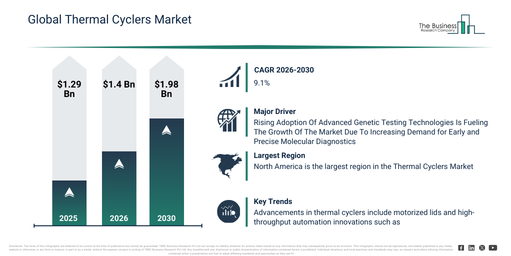
    The thermal cyclers market has demonstrated robust expansion in recent years. It is forecast to grow from $1.29 billion in 2025 to $1.4 billion in 2026, at a compound annual growth rate (CAGR) of 8.9%. This historical growth can be linked to the rise of molecular diagnostics, the broadening of genomics research, an increase in infectious disease testing, advancements in forensic analysis, and the expansion of academic research laboratories.

    The thermal cyclers market size is projected to experience substantial expansion over the upcoming years, reaching $1.98 billion by 2030, with a compound annual growth rate (CAGR) of 9.1%. Key factors contributing to this growth during the forecast period include the expansion of point-of-care testing, the advancement of precision medicine, the growing demand for rapid diagnostics, increased biotech research funding, and the wider adoption of digital PCR. Prominent trends expected in the forecast period are high-throughput PCR cycler systems, portable field-deployable cyclers, AI-assisted temperature optimization, cloud-connected PCR platforms, and rapid-cycling thermal blocks.

    Access Your Free Sample Report For In-Depth Market Analysis:

    https://www.thebusinessresearchcompany.com/sample.aspx?id=33341&type=smp

    What Key Factors Are Shaping The Thermal Cyclers Market Landscape?

    The expanding integration of sophisticated genetic testing methods is anticipated to boost the growth of the thermal cyclers market moving forward. Molecular diagnostics encompasses advanced laboratory procedures for accurately detecting and analyzing genetic material (DNA and RNA) to pinpoint diseases, infections, and inherited conditions. The growth in molecular diagnostics stems from a greater need for early and accurate disease identification, promoting the application of advanced genetic testing techniques for quicker and more dependable clinical results. Thermal cyclers aid molecular diagnostics by facilitating precise DNA amplification via regulated temperature changes, thereby guaranteeing accurate, swift, and dependable molecular tests. As an example, reports from Ellume, an Australia-based rapid digital diagnostic test developer, indicated that in May 2025, more than 96,215 molecular diagnostic tests were performed weekly in the US in 2023. This demonstrates widespread clinical application and the sustained relevance of molecular diagnostics in monitoring diseases and informing clinical decisions. Consequently, the increased adoption of advanced genetic testing methods is fueling the expansion of the thermal cyclers market.

    How Is The Thermal Cyclers Market Broken Down By Segment Categories?

    The thermal cyclers market covered in this report is segmented –

    1) By Product Type: Standard Polymerase Chain Reaction (PCR) Thermal Cyclers; Real-Time Polymerase Chain Reaction (PCR) (qPCR) Systems; Digital Polymerase Chain Reaction (dPCR) Systems; High-Throughput Thermal Cyclers; Portable Or Compact Thermal Cyclers

    2) By Technology: Gradient Polymerase Chain Reaction (PCR); Touchdown Polymerase Chain Reaction (PCR); Fast Polymerase Chain Reaction (PCR); Reverse Transcription Polymerase Chain Reaction (RT-PCR); Other Technologies

    3) By Application: Clinical Diagnostics; Research And Academic Use; Forensic Applications; Agricultural Biotechnology; Environmental Testing

    4) By Distribution Channel: Direct Sales; Distributors Or Resellers; Online Sales

    5) By End User: Hospitals And Diagnostic Centers; Academic And Research Institutions; Biotechnology And Pharmaceutical Companies; Forensic Laboratories; Contract Research Organizations (CROs)

    Subsegments:

    1) By Standard Polymerase Chain Reaction (PCR) Thermal Cyclers: Conventional Block Thermal Cyclers; Gradient Thermal Cyclers; Touchscreen Controlled Thermal Cyclers; Multi Block Thermal Cyclers

    2) By Real-Time Polymerase Chain Reaction (PCR) (qPCR) Systems: Dye Based Detection Systems; Probe Based Detection Systems; Multiplex Real Time Systems; Fast Cycling Real Time Systems

    3) By Digital Polymerase Chain Reaction (dPCR) Systems: Droplet Based Digital Systems; Chip Based Digital Systems; Microfluidic Digital Systems; High Precision Quantification Systems

    4) By High-Throughput Thermal Cyclers: Ninety Six Well Thermal Cyclers; Three Hundred Eighty Four Well Thermal Cyclers; Automated High Capacity Thermal Cyclers; Parallel Processing Thermal Cyclers

    5) By Portable Or Compact Thermal Cyclers: Battery Operated Thermal Cyclers; Handheld Thermal Cyclers; Field Deployable Thermal Cyclers; Point Of Care Thermal Cyclers

    What Trends Are Shaping The Future Of The Thermal Cyclers Market?

    Leading companies within the **thermal cyclers market** are increasingly prioritizing advanced innovations, such as **deep-well thermal cyclers**, to secure a competitive edge. These specialized laboratory instruments facilitate temperature-controlled reactions, like **PCR**, on samples contained in deep-well plates, which accommodate greater volumes compared to standard **PCR** tubes or plates. For example, in **March 2025**, Bio-Rad Laboratories, a US-based research firm, introduced its **PTC Tempo 384 Thermal Cycler**, the latest addition to its **PTC Tempo** series. This sophisticated device is specifically engineered for high-throughput **PCR** applications across fundamental research, translational studies, process development, and quality control. The **PTC Tempo 384** incorporates a **384-well** reaction module featuring a motorized lid, which enables seamless automation and robotic integration. It boasts exceptional thermal uniformity (**±0.3°C at 95°C**), dynamic ramp rates reaching up to **5°C per second**, and multizone gradient programming, rendering it more effective for demanding, scalable workflows than alternative models such as the dual-block **PTC Tempo 48/48**. Constructed upon the reliable **C1000 Touch** platform, the **PTC Tempo 384** comes equipped with an enhanced, user-friendly interface, versatile connectivity options including **BR.io** cloud monitoring, and the recent software update **v3.0.0.8** that improves API support. Consequently, the **PTC Tempo 384** stands as an ideal solution for academic, commercial, and biopharma laboratories, delivering unparalleled reproducibility and usability.

    Which Players Are Present In The Thermal Cyclers Market Space?

    Major companies operating in the thermal cyclers market are Roche Diagnostics, Thermo Fisher Scientific Inc., Agilent Technologies, Bio-Rad Laboratories, QIAGEN, Eppendorf, Cepheid, Bio-Techne, Hamilton Company, Heal Force Bio-Meditech, Takara Bio, Hangzhou Bioer Technology, Analytik Jena, Esco Lifesciences, ELITechGroup, Benchmark Scientific, Cole-Parmer Instrument Company, Biomeme, GNA Biosolutions, Cleaver Scientific, Starlab International, and Scilogex.

    Get The Full Thermal Cyclers Market Report:

    https://www.thebusinessresearchcompany.com/report/thermal-cyclers-market-report

    Which Region Has The Greatest Market Share In The Thermal Cyclers Market?

    North America was the largest region in the thermal cyclers market in 2025. Asia-Pacific is expected to be the fastest-growing region in the forecast period. The regions covered in the thermal cyclers market report are Asia-Pacific, South East Asia, Western Europe, Eastern Europe, North America, South America, Middle East, Africa.

    Request A Customized Thermal Cyclers Market Report For Competitive Insights:

    https://www.thebusinessresearchcompany.com/customise?id=33341&type=smp

    Browse Through More Reports Similar to the Global Thermal Cyclers Market 2026, By The Business Research Company

    Automotive Heat Exchanger Market Report 2026

    https://www.thebusinessresearchcompany.com/report/automotive-heat-exchanger-global-market-report

    Automotive Thermal System Market Report 2026

    https://www.thebusinessresearchcompany.com/report/automotive-thermal-system-global-market-report

    Battery Cyclers Market Report 2026

    https://www.thebusinessresearchcompany.com/report/battery-cyclers-global-market-report

    Get in touch with us:

    The Business Research Company: https://www.thebusinessresearchcompany.com/

    Americas +1 310-496-7795

    Asia +44 7882 955267 & +91 8897263534

    Europe +44 7882 955267

    Email us at info@tbrc.info

    Follow us on:

    LinkedIn: https://in.linkedin.com/company/the-business-research-company

    YouTube: https://www.youtube.com/channel/UC24_fI0rV8cR5DxlCpgmyFQ

    Global Market Model: https://www.thebusinessresearchcompany.com/global-market-model
  • Teleultrasound System Market Outlook 2026–2030 Driven By Growth Factors And Projections

    Teleultrasound System Market Outlook 2026–2030 Driven By Growth Factors And Projections

    The Business Research Company’s 2026 market reports feature enhanced tools like market attractiveness analysis, TAM assessment, and company scoring matrices, along with interactive dashboards, deeper supply chain insights, and startup coverage strengthening the depth, usability, and strategic value of insights.

    How Large Will The Teleultrasound System Market Be By 2030 Compared To Its 2026 Market Size?

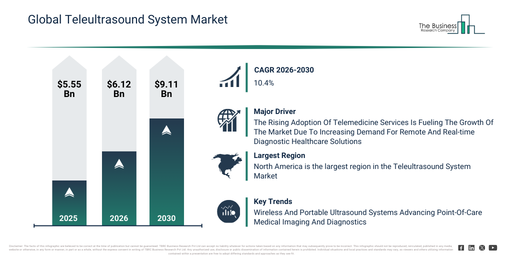
    The teleultrasound system market size has shown substantial growth in recent years. This market is anticipated to expand from $5.55 billion in 2025 to $6.12 billion in 2026, achieving a compound annual growth rate (CAGR) of 10.2%. The historical increase in market size is linked to factors such as the rising adoption of telemedicine, a deficiency of imaging specialists, the broadening of rural healthcare initiatives, the proliferation of portable ultrasound devices, and the demand for quicker diagnoses.

    The teleultrasound system market is projected to experience substantial growth over the next few years. Forecasts show it will expand to $9.11 billion by 2030, achieving a compound annual growth rate (CAGR) of 10.4%. This anticipated growth during the forecast period is driven by factors such as the expansion of remote diagnostics, an increase in connected medical devices, a rising demand for point of care imaging, intensified healthcare digitization, and broader reimbursement options for telehealth services. Significant trends expected in this period include AI-enabled remote ultrasound guidance, cloud-based image transmission platforms, portable connected ultrasound devices, real-time specialist collaboration tools, and secure tele-imaging workflows.

    Access Your Free Sample Report For In-Depth Market Analysis:

    https://www.thebusinessresearchcompany.com/sample.aspx?id=33339&type=smp

    Which Factors Are Influencing The Growth Of The Teleultrasound System Market?

    The increasing utilization of telemedicine services is anticipated to fuel the expansion of the teleultrasound system market moving forward. Telemedicine services involve delivering healthcare consultations, diagnoses, and monitoring through digital communication technologies, eliminating the need for in-person visits. The surge in telemedicine adoption is attributed to the growing demand for convenient and remote access to healthcare, particularly in regions that are underserved or geographically isolated. The teleultrasound system plays a crucial role in broadening access to diagnostic imaging by enabling real-time remote guidance, image acquisition, and interpretation by specialists, especially beneficial in remote or underserved healthcare environments. As an illustration, in June 2025, a report from Harmony Healthcare IT, a US-based data management firm, revealed that 62% of Americans had used telehealth services for their medical requirements, while more than 77% considered telehealth to be the future of healthcare, showcasing robust consumer confidence and sustained growth in usage. Thus, the growing adoption of telemedicine services is a primary driver for the teleultrasound system market’s growth.

    What Are The Different Segment Types In The Teleultrasound System Market Segment Breakdown?

    The teleultrasound system market covered in this report is segmented –

    1) By Component: Hardware; Software; Services

    2) By Technology: Two-Dimensional (2D) Ultrasound; Three-Dimensional (3D) Or Four Dimensional (4D) Ultrasound; Artificial Intelligence-Enabled Ultrasound; Cloud-Based Imaging Platforms

    3) By Product Type: Portable Teleultrasound Systems; Handheld Teleultrasound Systems; Cart-Based Teleultrasound Systems

    4) By Application: Cardiology; Obstetrics Or Gynecology; Radiology; Vascular; Musculoskeletal; Other Applications

    5) By End-User: Hospitals; Diagnostic Centers; Ambulatory Surgical Centers; Other End-Users

    Subsegments:

    1) By Hardware: Ultrasound Imaging Devices; Ultrasound Probes And Transducers; Communication And Transmission Modules; Display And Control Units; Peripheral And Accessory Equipment

    2) By Software: Image Processing Software; Real Time Image Transmission Software; Remote Collaboration And Guidance Software; Data Storage And Management Software; Integration And Workflow Management Software

    3) By Services: Installation And System Integration Services; Maintenance And Technical Support Services; Training And Education Services; Calibration And Quality Assurance Services; Operational And Consulting Services

    Which Trends Are Contributing To Changes In The Teleultrasound System Market?

    Companies operating within the medical imaging and diagnostic ultrasound market are concentrating on developing innovative solutions, such as wireless and portable ultrasound systems. This focus aims to enhance point-of-care diagnostics, improve clinical workflow efficiency, and expand access to imaging across various care settings. Wireless ultrasound systems are defined as compact, cable-free imaging devices that wirelessly transmit ultrasound data to smartphones, tablets, or workstations, thereby offering enhanced mobility, ease of use, and quick deployment in hospitals, clinics, emergency care, and remote environments. As an illustration, in November 2025, Mindray Bio-Medical Electronics Co. Ltd., a China-based medical device manufacturer, unveiled a new wireless ultrasound system. This system is engineered to provide high-quality imaging through flexible, handheld operation, supporting real-time imaging, seamless wireless connectivity, and compatibility with numerous clinical applications, enabling healthcare professionals to conduct rapid and accurate assessments at the bedside or in the field. This release emphasizes the growing demand for portable, user-friendly diagnostic technologies that contribute to better clinical decision-making while boosting efficiency and accessibility across healthcare environments.

    Who Are The Well-Known Companies In The Teleultrasound System Market?

    Major companies operating in the teleultrasound system market are Siemens Healthineers AG, FUJIFILM Holdings Corporation, Koninklijke Philips N.V., GE HealthCare Technologies Inc., Mindray Medical International Limited, Canon Medical Systems Corporation, DeepEcho Inc., Esaote S.p.A., TELSONIC AG, Butterfly Network Inc., EchoNous Inc., Clarius Mobile Health Corp., Telemed Medical Systems S.r.l., Healcerion Co. Ltd., Interson Corporation, Remote Medical Technologies LLC, Pulsenmore Ltd., e-Medical Systems Pty Ltd, Alpinion Medical Systems Co. Ltd., TeleGuidance Systems Inc.

    Get The Full Teleultrasound System Market Report:

    https://www.thebusinessresearchcompany.com/report/teleultrasound-system-market-report

    Which Region Accounts For The Largest Portion Of The Teleultrasound System Market?

    North America was the largest region in the teleultrasound system market in 2025. Asia-Pacific is expected to be the fastest-growing region in the forecast period. The regions covered in the teleultrasound system market report are Asia-Pacific, South East Asia, Western Europe, Eastern Europe, North America, South America, Middle East, Africa.

    Request A Customized Teleultrasound System Market Report For Competitive Insights:

    https://www.thebusinessresearchcompany.com/customise?id=33339&type=smp

    Browse Through More Reports Similar to the Global Teleultrasound System Market 2026, By The Business Research Company

    Consumer Telematics Market Report 2026

    https://www.thebusinessresearchcompany.com/report/consumer-telematics-global-market-report

    Commercial Telematics Market Report 2026

    https://www.thebusinessresearchcompany.com/report/commercial-telematics-global-market-report

    Commercial Vehicle Telematics Market Report 2026

    https://www.thebusinessresearchcompany.com/report/commercial-vehicle-telematics-global-market-report

    Get in touch with us:

    The Business Research Company: https://www.thebusinessresearchcompany.com/

    Americas +1 310-496-7795

    Asia +44 7882 955267 & +91 8897263534

    Europe +44 7882 955267

    Email us at info@tbrc.info

    Follow us on:

    LinkedIn: https://in.linkedin.com/company/the-business-research-company

    YouTube: https://www.youtube.com/channel/UC24_fI0rV8cR5DxlCpgmyFQ

    Global Market Model: https://www.thebusinessresearchcompany.com/global-market-model
  • Surgical Robotics for Gynecology Market Growth Analysis 2026–2030 Highlighting Innovation And Competitive Landscape

    Surgical Robotics for Gynecology Market Growth Analysis 2026–2030 Highlighting Innovation And Competitive Landscape

    The Business Research Company’s 2026 market reports feature enhanced tools like market attractiveness analysis, TAM assessment, and company scoring matrices, along with interactive dashboards, deeper supply chain insights, and startup coverage strengthening the depth, usability, and strategic value of insights.

    From Its 2026 Market Size, What Value Is The Surgical Robotics for Gynecology Market Projected To Reach By 2030?

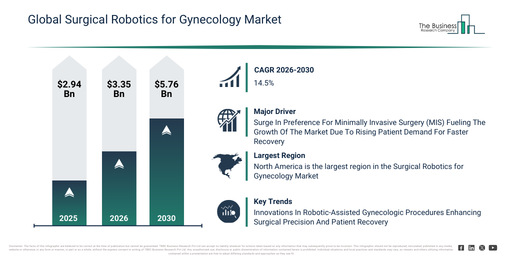
    The surgical robotics for gynecology market size has experienced substantial growth in recent years. It is projected to expand from $2.94 billion in 2025 to $3.35 billion in 2026, at a compound annual growth rate (CAGR) of 14.2%. Historically, this growth can be attributed to factors such as the rise in minimally invasive gynecology, increasing volumes of women’s health procedures, the expansion of robotic surgery centers, advancements in laparoscopic outcomes, and the growing demand for surgeon ergonomics.

    The surgical robotics for gynecology market is set for significant expansion in the coming years, with its valuation expected to reach $5.76 billion by 2030, at a compound annual growth rate (CAGR) of 14.5%. This projected increase during the forecast period is driven by factors such as greater hospital investment in robotic facilities, an rise in complex gynecologic operations, an increasing patient preference for less invasive surgical options, the broadening of robotic training initiatives, and improved reimbursement assistance. Noteworthy trends predicted for this period encompass the increasing integration of robotic hysterectomy systems, an growth in minimally invasive gynecologic robotic applications, the widening scope of robotic single-port procedures, enhanced utilization of advanced surgical visualization techniques, and the incorporation of procedure planning software.

    Access Your Free Sample Report For In-Depth Market Analysis:

    https://www.thebusinessresearchcompany.com/sample.aspx?id=33332&type=smp

    What Primary Drivers Are Shaping The Surgical Robotics for Gynecology Market?

    The rising inclination towards minimally invasive surgery is projected to fuel the expansion of the surgical robotics for gynecology market moving forward. This surgical approach involves executing gynecological operations like hysterectomies and myomectomies via small incisions, leveraging laparoscopic or robotic-assisted methods, which leads to reduced tissue damage. The adoption of minimally invasive surgery is increasing, driven by developments in surgical instruments and imaging technologies that allow for enhanced precision, less patient trauma, and quicker recovery. Surgical robotics specifically for gynecology improves these minimally invasive procedures by providing superior precision, three-dimensional visualization, heightened dexterity, and tremor filtration, thereby empowering surgeons to carry out intricate operations more efficiently. As an illustration, in November 2025, Intuitive Surgical Inc., a US-based medical device company, reported that in 2023, approximately 2,286,000 surgical procedures worldwide utilized da Vinci robotic surgical systems, marking an increase of about 22% from 2022, with the total experience on da Vinci platforms surpassing 14 million procedures. Consequently, the increasing preference for minimally invasive surgery is stimulating the growth of the surgical robotics for gynecology market.

    Which Segments Define The Surgical Robotics for Gynecology Market Segment Structure?

    The surgical robotics for gynecology market covered in this report is segmented –

    1) By Product Type: Robotic Systems; Instruments And Accessories; Services

    2) By Technology: Telerobotics; Minimally Invasive Robotics; Autonomous Robotics

    3) By Application: Hysterectomy; Myomectomy; Oophorectomy; Sacrocolpopexy; Other Applications

    4) By End-User: Hospitals; Ambulatory Surgical Centers; Specialty Clinics; Other End-Users

    Subsegments:

    1) By Robotic Systems: Robotic Surgical Platforms; Robotic Laparoscopy Systems; Robotic Hysterectomy Systems; Robotic Myomectomy Systems; Single Port Robotic Systems

    2) By Instruments And Accessories: Robotic Surgical Instruments; Endoscopic Staplers; Energy Devices; Needle Holders; Trocars And Cannulas

    3) By Services: Installation Services; Maintenance Services; Training And Education Services; Software Upgradation Services; Technical Support Services

    What Emerging Trends Are Seen In The Surgical Robotics for Gynecology Market?

    Companies in the surgical robotics for gynecology market are prioritizing the development of innovative solutions, such as minimally invasive gynecologic surgery platforms, to enhance surgical precision, lessen patient trauma, and improve clinical outcomes. These minimally invasive gynecologic surgery platforms are robotic systems that empower surgeons to conduct intricate gynecological procedures through small incisions, offering superior precision, clearer visualization, and increased dexterity, which helps to reduce blood loss, postoperative pain, and recovery time compared to traditional surgery. For instance, in September 2025, the Royal Free Hospital, a UK-based public healthcare provider, launched a robotic gynaecology surgery programme aimed at broadening access to advanced robotic-assisted procedures for women’s health. This programme utilizes state-of-the-art surgical robotics to enable complex gynecological procedures, including hysterectomies and cancer-related surgeries, to be performed with improved precision and control. The robotic platform allows surgeons to execute delicate movements through small incisions, enhancing the visualization of anatomical structures and decreasing blood loss in contrast to conventional techniques. Significant advantages include shorter recovery times, a lower risk of infection, diminished postoperative pain, and better clinical outcomes for patients. This initiative also supports surgeon training and the wider adoption of robotic gynecology across the UK healthcare system.

    Who Are The Established Players Within The Surgical Robotics for Gynecology Market?

    Major companies operating in the surgical robotics for gynecology market are Johnson & Johnson, Medtronic plc, Intuitive Surgical Inc., Meere Company, Avateramedical GmbH, CMR Surgical Ltd., DistalMotion SA, Distalmotion SA, Ronovo Surgical Inc., OmniGuide Holdings, SS Innovations International Inc., Titan Medical Inc., MicroPort MedBot, Virtual Incision Corporation, Asensus Surgical, Moon Surgical SAS, Virtuoso Surgical Inc., Edge Medical Robotics Corporation, Momentis Surgical Ltd., Medicaroid Corporation.

    Get The Full Surgical Robotics for Gynecology Market Report:

    https://www.thebusinessresearchcompany.com/report/surgical-robotics-for-gynecology-market-report

    Which Region Dominates The Surgical Robotics for Gynecology Market By Market Share?

    North America was the largest region in the surgical robotics for gynecology market in 2025. Asia-Pacific is expected to be the fastest-growing region in the forecast period. The regions covered in the surgical robotics for gynecology market report are Asia-Pacific, South East Asia, Western Europe, Eastern Europe, North America, South America, Middle East, Africa.

    Request A Customized Surgical Robotics for Gynecology Market Report For Competitive Insights:

    https://www.thebusinessresearchcompany.com/customise?id=33332&type=smp

    Browse Through More Reports Similar to the Global Surgical Robotics for Gynecology Market 2026, By The Business Research Company

    Surgical Robots Market Report 2026

    https://www.thebusinessresearchcompany.com/report/surgical-robots-global-market-report

    Robotic Surgery Services Market Report 2026

    https://www.thebusinessresearchcompany.com/report/robotic-surgery-services-global-market-report

    Surgical Robot Accessories Market Report 2026

    https://www.thebusinessresearchcompany.com/report/surgical-robot-accessories-global-market-report

    Get in touch with us:

    The Business Research Company: https://www.thebusinessresearchcompany.com/

    Americas +1 310-496-7795

    Asia +44 7882 955267 & +91 8897263534

    Europe +44 7882 955267

    Email us at info@tbrc.info

    Follow us on:

    LinkedIn: https://in.linkedin.com/company/the-business-research-company

    YouTube: https://www.youtube.com/channel/UC24_fI0rV8cR5DxlCpgmyFQ

    Global Market Model: https://www.thebusinessresearchcompany.com/global-market-model
  • Subdermal Neural Display Market Outlook For 2026–2030 Covering Growth Drivers And Industry Trends

    Subdermal Neural Display Market Outlook For 2026–2030 Covering Growth Drivers And Industry Trends

    The Business Research Company’s 2026 market reports feature enhanced tools like market attractiveness analysis, TAM assessment, and company scoring matrices, along with interactive dashboards, deeper supply chain insights, and startup coverage strengthening the depth, usability, and strategic value of insights.

    What Is The Estimated Market Size Of The Subdermal Neural Display Market In 2026, And How Will Its Value Evolve By 2030?

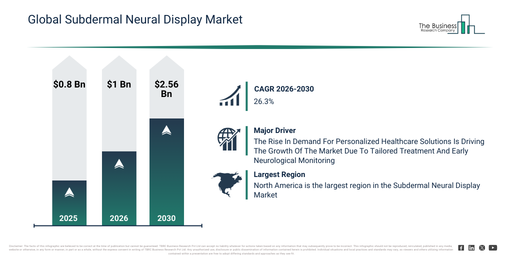
    The subdermal neural display market has experienced substantial growth in its size in recent years. It is anticipated to expand from $0.8 billion in 2025 to $1 billion in 2026, achieving a compound annual growth rate (CAGR) of 26.1%. The historical growth can be ascribed to factors such as the increase in neural interface research, a rise in brain computer interface trials, the expansion of implantable medical electronics, rising neuroscience funding, and the early adoption of eeg based interfaces.

    The subdermal neural display market is projected to experience substantial growth over the coming years. This market is predicted to reach $2.56 billion by 2030, exhibiting a compound annual growth rate (CAGR) of 26.3%. Key drivers for this expansion during the forecast period include increasing investments in neurotechnology, an elevated demand for cognitive augmentation tools, the broadening use of clinical neural implants, the development of defense neurotech programs, and increased funding for human machine interface research. Prominent trends expected over the forecast period encompass the growing development of implantable neural interfaces, an increase in the adoption of wireless neural signal transmission, the expansion of miniaturized neural electrode arrays, enhanced integration of brain computer interface modules, and a greater emphasis on closed loop neural feedback systems.

    Access Your Free Sample Report For In-Depth Market Analysis:

    https://www.thebusinessresearchcompany.com/sample.aspx?id=33328&type=smp

    What Key Drivers Are Fueling The Growth Of The Subdermal Neural Display Market?

    The future expansion of the subdermal neural display market is anticipated to be driven by the rising need for tailored healthcare solutions. These solutions involve medical strategies and services customized to each patient’s unique characteristics and conditions, aiming to enhance treatment efficacy and minimize adverse reactions. This escalating demand stems from the growing incidence of chronic and lifestyle-related illnesses, which necessitate individualized approaches to prevention, monitoring, and therapy. Subdermal neural displays facilitate personalized healthcare by enabling direct tracking and stimulation of neural activity, providing real-time health data for early diagnosis of neurological issues and customized neurofeedback therapies adapted to an individual’s unique brain and body signals. For example, in February 2024, the US-based non-profit Personalized Medicine Coalition reported that the FDA cleared 16 new personalized treatments for rare disease patients in 2023, an increase from six in 2022. The 2023 approvals also featured seven cancer medications and three for other ailments. Consequently, the expanding requirement for personalized healthcare solutions is propelling the subdermal neural display market’s growth. The future expansion of the subdermal neural display market is anticipated to be spurred by the increasing incidence of neurological disorders. A neurological disorder is defined as any ailment or condition impacting the standard structure or function of either the central nervous system (comprising the brain and spinal cord) or the peripheral nervous system (nerves distributed across the body). This growing occurrence of neurological disorders is mainly attributable to aging populations, as the likelihood of developing conditions like Alzheimer’s, Parkinson’s, and stroke rises with age, resulting in a greater overall prevalence among older demographics. Subdermal Neural Displays assist in addressing neurological disorders by facilitating real-time, customized monitoring and modulation of neural activity directly within the brain, thereby aiding in earlier diagnosis, more precise therapy adjustments, and enhanced long-term management of these conditions. For instance, in March 2023, the Alzheimer’s Association, a US-based nonprofit voluntary health organization, reported that around 6.7 million Americans aged 65 and older were living with Alzheimer’s dementia in 2023, with projections indicating this figure could reach 13.8 million by 2060. Thus, the increasing incidence of neurological disorders is fueling the expansion of the subdermal neural display market.

    What Are The Main Segments Within The Subdermal Neural Display Market Segment Structure?

    The subdermal neural display market covered in this report is segmented –

    1) By Component Type: Hardware; Software

    2) By Product Type: Implantable Neural Display Devices; Wearable Neural Interface Devices; Subdermal Electrode Arrays; Implantable Display Modules; Wireless Neural Transmitters; Neural Signal Amplifiers

    3) By Technology: Electroencephalography (EEG); Electrocorticography (ECoG); Optogenetics; Other Technologies

    4) By End-User: Hospitals And Clinics; Research Institutes; Consumer Electronics; Military And Defense; Other End-Users

    Subsegments:

    1) By Hardware: Electrode Arrays; Implantable Sensors; Microcontroller Units; Power Management Modules; Signal Amplification Units

    2) By Software: Neural Signal Processing Software; Data Visualization Software; Device Control Software; Algorithm Development Software; Simulation And Modeling Software

    Who Are The Companies Participating In The Subdermal Neural Display Market?

    Major companies operating in the subdermal neural display market are Synchron Inc., BrainCo Inc., MindMaze SA, INBRAIN Neuroelectronics SL, Axoft Inc., VisionCare Ophthalmic Technologies Inc., Blackrock Neurotech Inc., LambdaVision Inc., Advanced Brain Monitoring Inc., iBionics Inc., CorTec GmbH, Bionic Vision Technologies, Braingrade Inc., Nano Retina Inc., Neurable Inc., OpenBCI LLC, Optobionics Corporation, Pixium Vision SA, Precision Neuroscience Corporation, Cognixion Inc.

    Get The Full Subdermal Neural Display Market Report:

    https://www.thebusinessresearchcompany.com/report/subdermal-neural-display-market-report

    Which Region Leads The Subdermal Neural Display Market In Terms Of Market Share?

    North America was the largest region in the subdermal neural display market in 2025. Asia-Pacific is expected to be the fastest-growing region in the forecast period. The regions covered in the subdermal neural display market report are Asia-Pacific, South East Asia, Western Europe, Eastern Europe, North America, South America, Middle East, Africa.

    Request A Customized Subdermal Neural Display Market Report For Competitive Insights:

    https://www.thebusinessresearchcompany.com/customise?id=33328&type=smp

    Browse Through More Reports Similar to the Global Subdermal Neural Display Market 2026, By The Business Research Company

    Commercial Display Market Report 2026

    https://www.thebusinessresearchcompany.com/report/commercial-display-global-market-report

    Point Of Sale Display Market Report 2026

    https://www.thebusinessresearchcompany.com/report/point-of-sale-display-global-market-report

    Data Lake Market Report 2026

    https://www.thebusinessresearchcompany.com/report/data-lake-global-market-report

    Get in touch with us:

    The Business Research Company: https://www.thebusinessresearchcompany.com/

    Americas +1 310-496-7795

    Asia +44 7882 955267 & +91 8897263534

    Europe +44 7882 955267

    Email us at info@tbrc.info

    Follow us on:

    LinkedIn: https://in.linkedin.com/company/the-business-research-company

    YouTube: https://www.youtube.com/channel/UC24_fI0rV8cR5DxlCpgmyFQ

    Global Market Model: https://www.thebusinessresearchcompany.com/global-market-model
  • Spiral Computed Tomography (SCT) Market Insights On Growth Drivers, Trends, And Opportunities

    Spiral Computed Tomography (SCT) Market Insights On Growth Drivers, Trends, And Opportunities

    The Business Research Company’s 2026 market reports feature enhanced tools like market attractiveness analysis, TAM assessment, and company scoring matrices, along with interactive dashboards, deeper supply chain insights, and startup coverage strengthening the depth, usability, and strategic value of insights.

    What Level Of Market Value Growth Is Predicted For The Spiral Computed Tomography (SCT) Market From 2026 To 2030?

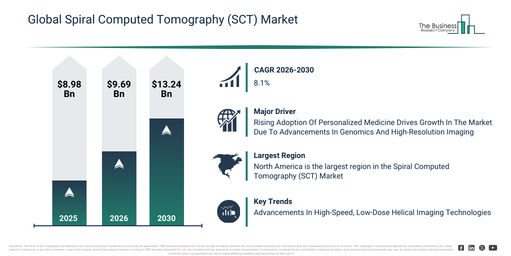
    The market size for spiral computed tomography (sct) has shown significant expansion in recent years. This market is anticipated to increase from $8.98 billion in 2025 to $9.69 billion in 2026, exhibiting a compound annual growth rate (CAGR) of 7.9%. Historically, this growth has been driven by an increase in chronic disease diagnoses, enhanced hospital imaging capacity, higher oncology screening rates, the broadening of radiology departments, and the timely replacement of conventional CT systems.

    The spiral computed tomography (sct) market is projected for substantial growth over the next few years. It is expected to expand to $13.24 billion in 2030, achieving a compound annual growth rate (CAGR) of 8.1%. The expansion during this forecast period is attributed to factors such as a growing aging population, increasing demand for early detection imaging, the development of emergency diagnostic services, greater investment in advanced radiology, and higher outpatient imaging volumes. Noteworthy trends anticipated for the forecast period include the increasing adoption of multi-slice spiral scanners, a rising preference for low-dose imaging protocols, the broadening use of three-dimensional reconstruction software, an increasing integration of AI-assisted image analysis, and a greater demand for fast scan trauma imaging.

    Access Your Free Sample Report For In-Depth Market Analysis:

    https://www.thebusinessresearchcompany.com/sample.aspx?id=33326&type=smp

    What Key Drivers Are Fueling The Growth Of The Spiral Computed Tomography (SCT) Market?

    The increasing integration of personalized medicine is propelling the future expansion of the spiral computed tomography (SCT) market. Personalized medicine represents a healthcare strategy that customizes disease prevention, diagnosis, and treatment based on an individual’s distinct genetic, molecular, and cellular attributes. Its growth is fueled by advancements in genomics and molecular diagnostics, which enable therapies to be tailored to a person’s genetic profile and disease characteristics. Spiral computed tomography (SCT) facilitates personalized medicine by delivering high-resolution, three-dimensional imaging, allowing clinicians to precisely visualize specific anatomical and pathological details. This capability supports customized diagnosis, treatment planning, and monitoring for each patient’s unique medical condition. For instance, in February 2024, as per the Personalized Medicine Coalition (PMC), a US-based nonprofit organization, the FDA approved 16 new personalised treatments for patients with rare diseases in 2023, which was a substantial rise from the six approvals documented in 2022. Thus, the growing embrace of personalized medicine has driven the growth of the Spiral Computed Tomography (SCT) market.

    What Are The Key Segment Divisions In The Spiral Computed Tomography (SCT) Market Segment Structure?

    The spiral computed tomography (sct) market covered in this report is segmented –

    1) By Component: Hardware; Software; Services

    2) By Technology: Single-Slice Spiral Computed Tomography; Multi-Slice Spiral Computed Tomography

    3) By Detector Type: Ionization Chamber Detectors; Solid-State Detectors

    4) By Application: Oncology; Cardiology; Neuroscience; Pulmonology; Trauma Care

    5) By End-User: Hospitals; Diagnostic Imaging Centers; Outpatient Care Centers; Research Institutions

    Subsegments:

    1) By Hardware: Computed Tomography Scanner Systems; Extended Ray Tubes; Detector Arrays; Gantry And Patient Table Components; Data Acquisition Systems

    2) By Software: Image Reconstruction Software; Three Dimensional Visualization Software; Dose Management Software; Workflow Management Software; Diagnostic Analysis Software

    3) By Services: Installation And Commissioning Services; Maintenance And Repair Services; Calibration And Quality Assurance Services; Training And Education Services; Technical Support Services

    What Trends Are Influencing The Spiral Computed Tomography (SCT) Market?

    Major companies within the spiral computed tomography (SCT) market are concentrating on creating advanced spiral CT technology solutions to satisfy the growing need for diagnostic imaging that is quicker, more precise, and uses less radiation. This demand is fueled by the rising occurrence of chronic illnesses and the necessity for effective early diagnosis. Spiral CT technology functions by employing a continuously rotating X-ray tube and a patient table that moves, generating comprehensive three-dimensional body images. This method offers quicker data acquisition and better spatial resolution compared to conventional step-and-shoot CT scanners, which capture images in separate slices instead of a helical volume. For instance, in June 2024, FUJIFILM Healthcare Americas Corporation, a US–based supplier of diagnostic imaging solutions, unveiled the FCT iStream 128-Slice Computed Tomography System. This innovative CT scanner integrates unique technologies such as HiMAR Plus for superior image quality and metal artifact reduction, Intelli IPV for iterative progressive reconstruction that significantly decreases image noise, IntelliODM for organ-based dose modulation, and SynergyDrive for automated workflow enhancement. This compact, AI-enabled system is capable of capturing up to 60 images per second, thereby improving diagnostic accuracy and considerably reducing patient radiation exposure across diverse radiological uses, from routine body scanning to sophisticated cardiac CT angiography, while also boosting patient comfort through its wide bore design.

    Which Organizations Are Engaged In The Spiral Computed Tomography (SCT) Market?

    Major companies operating in the spiral computed tomography (sct) market are Hitachi Ltd., Siemens Healthineers AG, FUJIFILM Holdings Corporation, Koninklijke Philips N.V., GE HealthCare Technologies Inc., Analogic Corporation, Shimadzu Corporation, Canon Medical Systems Corporation, United Imaging Healthcare Co. Ltd., Carestream Health Inc., Accuray Incorporated, Neusoft Medical Systems Co. Ltd., MinFound Medical Systems Co. Ltd., North Star Imaging Inc., Xoran Technologies LLC, Koning Corporation, Shenzhen Anke High-tech Co. Ltd., Planmed Oy, NeuroLogica Corporation, Comet Yxlon GmbH.

    Get The Full Spiral Computed Tomography (SCT) Market Report:

    https://www.thebusinessresearchcompany.com/report/spiral-computed-tomography-sct-market-report

    Which Region Is The Top Contributor To The Spiral Computed Tomography (SCT) Market By Share?

    North America was the largest region in the spiral computed tomography (SCT) market in 2025. Asia-Pacific is expected to be the fastest-growing region in the forecast period. The regions covered in the spiral computed tomography (sct) market report are Asia-Pacific, South East Asia, Western Europe, Eastern Europe, North America, South America, Middle East, Africa.

    Request A Customized Spiral Computed Tomography (SCT) Market Report For Competitive Insights:

    https://www.thebusinessresearchcompany.com/customise?id=33326&type=smp

    Browse Through More Reports Similar to the Global Spiral Computed Tomography (SCT) Market 2026, By The Business Research Company

    Cone Beam Computed Tomography Market Report 2026

    https://www.thebusinessresearchcompany.com/report/cone-beam-computed-tomography-global-market-report

    Computed Tomography Ct Scanners Devices And Equipment Market Report 2026

    https://www.thebusinessresearchcompany.com/report/computed-tomography-ct-scanners-devices-and-equipment-global-market-report

    Computed Tomography Ct Scanner Market Report 2026

    https://www.thebusinessresearchcompany.com/report/computed-tomography-ct-scanner-global-market-report

    Get in touch with us:

    The Business Research Company: https://www.thebusinessresearchcompany.com/

    Americas +1 310-496-7795

    Asia +44 7882 955267 & +91 8897263534

    Europe +44 7882 955267

    Email us at info@tbrc.info

    Follow us on:

    LinkedIn: https://in.linkedin.com/company/the-business-research-company

    YouTube: https://www.youtube.com/channel/UC24_fI0rV8cR5DxlCpgmyFQ

    Global Market Model: https://www.thebusinessresearchcompany.com/global-market-model
  • Spinal Immobilizer Market Developments Shaping Growth Across The Forecast Period

    Spinal Immobilizer Market Developments Shaping Growth Across The Forecast Period

    The Business Research Company’s 2026 market reports feature enhanced tools like market attractiveness analysis, TAM assessment, and company scoring matrices, along with interactive dashboards, deeper supply chain insights, and startup coverage strengthening the depth, usability, and strategic value of insights.

    How Will The Market Value Of The Spinal Immobilizer Market Progress Between 2026 And 2030?

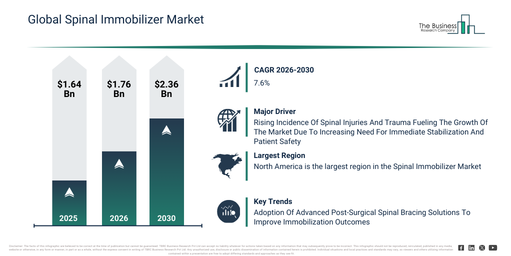
    The spinal immobilizer market has experienced robust expansion in recent years. This market is projected to expand from $1.64 billion in 2025 to reach $1.76 billion in 2026, advancing at a compound annual growth rate (CAGR) of 7.4%. Historically, this expansion has been driven by factors such as an increase in road traffic accidents, the development of emergency medical services, a surge in sports injury cases, the proliferation of trauma care centers, and the early integration of cervical collars.

    The spinal immobilizer market is anticipated to experience substantial expansion in the coming years, with its value projected to reach $2.36 billion by 2030, demonstrating a compound annual growth rate (CAGR) of 7.6%. This projected growth is driven by factors such as a rise in trauma incidents, increased investments in emergency response services, the expansion of ambulance fleets, elevated hospital safety protocols, and the broadening of disaster preparedness initiatives. Key trends influencing the market during this period involve an escalating demand for lightweight immobilization equipment, a greater adoption of radiolucent spinal boards, the development of specialized pediatric immobilizers, an uptick in the use of disposable immobilizer systems, and a stronger emphasis on ergonomic designs for emergency transport.

    Access Your Free Sample Report For In-Depth Market Analysis:

    https://www.thebusinessresearchcompany.com/sample.aspx?id=33325&type=smp

    Which Drivers Are Supporting The Spinal Immobilizer Market Growth?

    The increasing occurrence of spinal injuries and trauma is projected to fuel the expansion of the spinal immobilizer market. Spinal injuries and trauma denote acute damage to the spinal column or spinal cord, frequently resulting from road traffic accidents, falls, violence, or sports-related incidents, which necessitates immediate immobilization to avert further harm. The incidence of spinal injuries and trauma is escalating due to a rise in road traffic accidents, a trend linked with rapid urbanization and increased vehicle utilization. Spinal immobilizers facilitate the management of spinal injuries and trauma by stabilizing the spine and head during rescue, transportation, and early medical intervention, thereby diminishing the likelihood of secondary neurological damage and enhancing patient safety outcomes. For instance, in October 2024, information from the Congressionally Directed Medical Research Programs, an authentic US-based platform for Clinical Services, estimated that 300,000 individuals in the U.S. are living with spinal cord injuries (SCI), with more than 17,000 new cases reported annually, and these numbers continue their upward trajectory. Thus, the escalating incidence of spinal injuries and trauma is a key factor driving the growth of the spinal immobilizer market.

    Which Segment Categories Are Included In The Spinal Immobilizer Market Segment Analysis?

    The spinal immobilizer market covered in this report is segmented –

    1) By Product Type: Cervical Immobilizers; Spinal Boards; Vacuum Mattresses; Soft Collars; Hard Collars

    2) By Material: Plastic; Metal; Foam; Composite Materials; Fabric

    3) By Sales Channel: Direct Sales; Indirect Sales; Online Platforms

    4) By Application: Trauma Cases; Surgical Procedures; Sports Injuries; Emergency Medical Services; Transportation of Patients

    5) By End User: Hospitals; Ambulance Services; Rehabilitation Centers; Home Care Settings; Sports Facilities

    Subsegments:

    1) By Cervical Immobilizers: Rigid Cervical Immobilizers; Adjustable Cervical Immobilizers; Pediatric Cervical Immobilizers; Disposable Cervical Immobilizers

    2) By Spinal Boards: Rigid Spinal Boards; Radiolucent Spinal Boards; Pediatric Spinal Boards; Foldable Spinal Boards

    3) By Vacuum Mattresses: Full Body Vacuum Mattresses; Pediatric Vacuum Mattresses; Multi Chamber Vacuum Mattresses; Reusable Vacuum Mattresses

    4) By Soft Collars: Foam Soft Collars; Contoured Soft Collars; Adjustable Soft Collars; Post Injury Support Collars

    5) By Hard Collars: Two Piece Hard Collars; Adjustable Hard Collars; Emergency Trauma Hard Collars; Post Surgical Hard Collars

    Which Trends Are Expected To Impact The Spinal Immobilizer Market?

    Leading companies in the spinal immobilizer market are concentrating on developing innovative solutions, such as advanced post-surgical thoracolumbosacral orthoses, to address the increasing demand for improved spinal stability after surgery and reduced complication rates. These advanced post-surgical thoracolumbosacral orthoses are prefabricated spinal braces engineered to offer targeted flexion control, circumferential stabilization, and enhanced comfort, providing superior biomechanical support and patient compliance compared to traditional hyperextension braces that often lack optimized pressure distribution and comfort features. For instance, in August 2024, Aspen Medical Products, a US-based medical device company specializing in spinal orthopedics and pain therapy solutions, unveiled the Align Orthosis, an innovative prefabricated thoracolumbosacral orthosis created to help reduce the incidence of proximal junctional kyphosis following spinal deformity surgery. The Align Orthosis features a three-point pressure system that makes contact at key points on the chest, lower abdomen, and mid-back to restore symmetrical spinal loads and guide correct spinal biomechanics; improved flexion control with enhanced comfort for better patient compliance; and a design that supports safer postoperative movement, potentially lowering readmission and revision surgery rates compared to conventional braces.

    Who Are The Active Companies Shaping The Spinal Immobilizer Market?

    Major companies operating in the spinal immobilizer market are Medline Industries Inc., Trulife Inc., Össur hf., Orthofix Medical Inc., DeRoyal Industries Inc., Laerdal Medical AS, Medi USA Inc., Breg Inc., Ferno-EMS, Allied Healthcare Products Inc., Thuasne USA Inc., Aspen Medical Products Inc., Bird & Cronin Inc., Spinal Technology Inc., Zhangjiagang Herui Medical Equipment Co. Ltd., DJO Global Inc., Red Leaf Medical Inc., Live Action Safety, Dynarex Corporation, Asia Connection Co. Ltd., ShanghAI EMSS Medical & Technology Co. Ltd., SAM Medical Products Inc.

    Get The Full Spinal Immobilizer Market Report:

    https://www.thebusinessresearchcompany.com/report/spinal-immobilizer-market-report

    Which Region Represents The Largest Share Of The Spinal Immobilizer Market?

    North America was the largest region in the spinal immobilizer market in 2025. Asia-Pacific is expected to be the fastest-growing region in the forecast period. The regions covered in the spinal immobilizer market report are Asia-Pacific, South East Asia, Western Europe, Eastern Europe, North America, South America, Middle East, Africa.

    Request A Customized Spinal Immobilizer Market Report For Competitive Insights:

    https://www.thebusinessresearchcompany.com/customise?id=33325&type=smp

    Browse Through More Reports Similar to the Global Spinal Immobilizer Market 2026, By The Business Research Company

    Spinal Surgery Devices And Equipment Market Report 2026

    https://www.thebusinessresearchcompany.com/report/spinal-surgery-devices-and-equipment-global-market-report

    Spinal Cord Stimulation Market Report 2026

    https://www.thebusinessresearchcompany.com/report/spinal-cord-stimulation-global-market-report

    Spine Implants Market Report 2026

    https://www.thebusinessresearchcompany.com/report/spine-implants-global-market-report

    Get in touch with us:

    The Business Research Company: https://www.thebusinessresearchcompany.com/

    Americas +1 310-496-7795

    Asia +44 7882 955267 & +91 8897263534

    Europe +44 7882 955267

    Email us at info@tbrc.info

    Follow us on:

    LinkedIn: https://in.linkedin.com/company/the-business-research-company

    YouTube: https://www.youtube.com/channel/UC24_fI0rV8cR5DxlCpgmyFQ

    Global Market Model: https://www.thebusinessresearchcompany.com/global-market-model
  • Smart Tissue Autonomous Robot (STAR) Market Forecast With Insights On Demand And Industry Growth

    Smart Tissue Autonomous Robot (STAR) Market Forecast With Insights On Demand And Industry Growth

    The Business Research Company’s 2026 market reports feature enhanced tools like market attractiveness analysis, TAM assessment, and company scoring matrices, along with interactive dashboards, deeper supply chain insights, and startup coverage strengthening the depth, usability, and strategic value of insights.

    What Are The Market Size Estimates For The Smart Tissue Autonomous Robot (STAR) Market In 2026 And 2030?

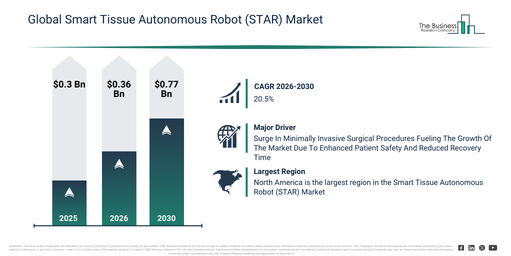
    The smart tissue autonomous robot (star) market has experienced significant expansion in recent years. It is projected to grow from $0.3 billion in 2025 to $0.36 billion in 2026, at a compound annual growth rate (CAGR) of 20.3%. The market’s historic growth can be attributed to several factors including the proliferation of robotic surgery platforms, increased demand for minimally invasive surgery, advancements in surgical imaging, investments in hospital robotics, and the critical need for precision surgery.

    The smart tissue autonomous robot (star) market is projected to experience substantial growth in the coming years, with its size anticipated to reach $0.77 billion by 2030, driven by a compound annual growth rate (CAGR) of 20.5%. This notable expansion throughout the forecast period is largely attributable to factors such as the increased focus on autonomous surgery research, the integration of AI into surgical workflows, a rising demand for advanced sensing instruments, an emphasis on reproducible surgery outcomes, and dedicated funding for next-generation surgical robotics. Furthermore, major developments expected in this period include autonomous soft tissue suturing systems, AI-guided surgical decision engines, real-time tissue tracking robotics, force feedback surgical instruments, and image-driven robotic navigation.

    Access Your Free Sample Report For In-Depth Market Analysis:

    https://www.thebusinessresearchcompany.com/sample.aspx?id=33322&type=smp

    What Key Factors Are Affecting The Smart Tissue Autonomous Robot (STAR) Market Demand?

    The increasing need for minimally invasive surgical procedures is projected to fuel the expansion of the smart tissue autonomous robot (STAR) market. These procedures involve operations conducted via small cuts or natural openings with specialized tools, aiming to lessen tissue damage, blood loss, and recovery time while ensuring surgical accuracy. This surge in demand stems from improved patient safety. The smart tissue autonomous robot (STAR) addresses this need by precisely carrying out intricate soft-tissue manipulations through minimal incisions, thereby decreasing human error, reducing tissue trauma, and enhancing overall surgical accuracy and patient recuperation. As an illustration, in June 2024, the American Society of Plastic Surgeons, a US-based non-profit, reported that hyaluronic acid filler minimally invasive procedures reached 5.29 million in 2023, an 8% rise compared to 2022. Consequently, the growing demand for minimally invasive surgical procedures is propelling the growth of the smart tissue autonomous robot (STAR) market.

    How Is The Smart Tissue Autonomous Robot (STAR) Market Broken Down By Segment Categories?

    The smart tissue autonomous robot (star) market covered in this report is segmented –

    1) By Component: Hardware; Software

    2) By Surgical Technique: Open Surgery; Minimally Invasive Surgery; Endoscopic Surgery

    3) By Technology: Artificial Intelligence; Machine Learning; Computer Vision; Robotic Manipulation

    4) By Application: Soft Tissue Surgery; Plastic And Reconstructive Surgery; Orthopedic Surgery; Gastrointestinal Surgery; Cardiothoracic Surgery

    5) By End-User: Hospitals; Ambulatory Surgical Centers; Research Institutions; Clinics

    Subsegments:

    1) By Hardware: Sensors; Actuators; Robotic Arms; Control Units; Imaging Modules; Power Systems

    2) By Software: Algorithmic Control Software; Machine Learning Platforms; Surgical Planning Software; Real Time Navigation Software; Image Processing Software; Data Analytics Software

    Which Players Are Present In The Smart Tissue Autonomous Robot (STAR) Market Space?

    Major companies operating in the smart tissue autonomous robot (star) market are Johnson & Johnson, Medtronic, ABB Ltd, Siemens Healthineers, Stryker Corporation, Philips, Boston Scientific, Zimmer Biomet Holdings, Inc., Intuitive Surgical, Smith & Nephew plc, KARL STORZ, Globus Medical, Inc., Renishaw plc, CMR Surgical Limited, Osso VR, Caresyntax, Think Surgical, Inc, Activ Surgical, Tuodao Medical, Sina Robotics & Medical Innovators Co

    Get The Full Smart Tissue Autonomous Robot (STAR) Market Report:

    https://www.thebusinessresearchcompany.com/report/smart-tissue-autonomous-robot-star-market-report

    Which Geographic Region Dominates The Smart Tissue Autonomous Robot (STAR) Market?

    North America was the largest region in the smart tissue autonomous robot (STAR) market in 2025. Asia-Pacific is expected to be the fastest-growing region in the forecast period. The regions covered in the smart tissue autonomous robot (star) market report are Asia-Pacific, South East Asia, Western Europe, Eastern Europe, North America, South America, Middle East, Africa.

    Request A Customized Smart Tissue Autonomous Robot (STAR) Market Report For Competitive Insights:

    https://www.thebusinessresearchcompany.com/customise?id=33322&type=smp

    Browse Through More Reports Similar to the Global Smart Tissue Autonomous Robot (STAR) Market 2026, By The Business Research Company

    Medical Robots Market Report 2026

    https://www.thebusinessresearchcompany.com/report/medical-robots-global-market-report

    Medical Robotics Market Report 2026

    https://www.thebusinessresearchcompany.com/report/medical-robotics-global-market-report

    Surgical Robots Market Report 2026

    https://www.thebusinessresearchcompany.com/report/surgical-robots-global-market-report

    Get in touch with us:

    The Business Research Company: https://www.thebusinessresearchcompany.com/

    Americas +1 310-496-7795

    Asia +44 7882 955267 & +91 8897263534

    Europe +44 7882 955267

    Email us at info@tbrc.info

    Follow us on:

    LinkedIn: https://in.linkedin.com/company/the-business-research-company

    YouTube: https://www.youtube.com/channel/UC24_fI0rV8cR5DxlCpgmyFQ

    Global Market Model: https://www.thebusinessresearchcompany.com/global-market-model
  • Sleep Apnea Implants Market Overview 2026–2030 With Insights On Industry Developments

    Sleep Apnea Implants Market Overview 2026–2030 With Insights On Industry Developments

    The Business Research Company’s 2026 market reports feature enhanced tools like market attractiveness analysis, TAM assessment, and company scoring matrices, along with interactive dashboards, deeper supply chain insights, and startup coverage strengthening the depth, usability, and strategic value of insights.

    How Large Will The Sleep Apnea Implants Market Be By 2030 Compared To Its 2026 Market Size?

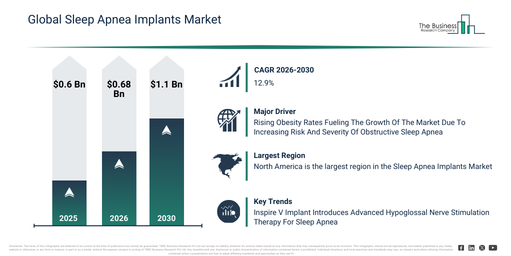
    The sleep apnea implants market has experienced substantial expansion in recent years. This market is projected to expand from $0.6 billion in 2025 to $0.68 billion in 2026, demonstrating a compound annual growth rate (CAGR) of 12.6%. Factors contributing to its past development include an increase in sleep apnea prevalence, higher rates of CPAP intolerance, advancements in sleep disorder diagnosis, a rise in obesity, and the proliferation of sleep clinics.

    The sleep apnea implants market is projected to undergo significant expansion in the coming years. It is forecast to achieve a valuation of $1.1 billion by 2030, exhibiting a compound annual growth rate (CAGR) of 12.9%. This expansion during the forecast period is driven by the demand for long-term implant therapy, an increase in minimally invasive procedures, rising awareness of sleep health, the broadening of reimbursement coverage, and innovation in neurostimulation devices. Prominent trends identified for the forecast period include hypoglossal nerve stimulation devices, implantable airway support systems, programmable neurostimulation implants, minimally invasive sleep implants, and wireless-controlled implant platforms.

    Access Your Free Sample Report For In-Depth Market Analysis:

    https://www.thebusinessresearchcompany.com/sample.aspx?id=33317&type=smp

    What Significant Factors Are Influencing The Sleep Apnea Implants Market Expansion?

    An increase in obesity rates is projected to stimulate the expansion of the sleep apnea implants market in the future. Obesity, a medical condition, is defined by the excessive buildup of body fat, which substantially elevates the likelihood of negative health consequences and chronic illnesses. The primary cause of the escalating obesity trend is the greater intake of calorie-rich, heavily processed foods; these foods offer surplus energy with minimal nutritional content, fostering sustained weight gain. The growing prevalence of obesity boosts the demand for sleep apnea implants because excess fat deposits around the neck and upper airway heighten both the risk and seriousness of obstructive sleep apnea, prompting more patients unable to use CPAP to seek long-term implantable treatment options. For example, data from May 2024 by the Office for Health Improvement and Disparities, a UK government department, indicated that roughly 64% of adults aged 18 and older in England were considered overweight or obese. This figure was markedly higher among men at around 69% versus approximately 59% among women. Consequently, the increasing occurrence of obesity is propelling the expansion of the sleep apnea implants market.

    Which Segment Classifications Are Used In The Sleep Apnea Implants Market Segment Analysis?

    The sleep apnea implants market covered in this report is segmented –

    1) By Product: Phrenic Nerve Stimulator; Hypoglossal Neurostimulation Devices; Bone Screw Implant System; Palatal Implants; Pillar Procedure

    2) By Indication: Central Sleep Apnea; Obstructive Sleep Apnea

    3) By Distribution Channel: Direct Sales to Hospitals; Medical Device Distributors; Specialty Medical Suppliers

    4) By End Use: Hospitals; Ambulatory Surgical Centers

    Subsegments:

    1) By Phrenic Nerve Stimulator: Implantable Phrenic Nerve Stimulators; Rechargeable Phrenic Nerve Stimulators; Fully Programmable Phrenic Nerve Stimulators; Wireless Controlled Phrenic Nerve Stimulators; Long Term Use Phrenic Nerve Stimulators

    2) By Hypoglossal Neurostimulation Devices: Implantable Hypoglossal Neurostimulation Devices; Rechargeable Hypoglossal Neurostimulation Devices; Programmable Hypoglossal Neurostimulation Devices; Wireless Controlled Hypoglossal Neurostimulation Devices; Sleep Activated Hypoglossal Neurostimulation Devices

    3) By Bone Screw Implant System: Titanium Bone Screw Implant Systems; Adjustable Bone Screw Implant Systems; Self Tapping Bone Screw Implant Systems; Long Term Fixation Bone Screw Implant Systems; Minimally Invasive Bone Screw Implant Systems

    4) By Palatal Implants: Soft Palate Implants; Rigid Palatal Implants; Bio Compatible Palatal Implants; Permanent Palatal Implants; Minimally Invasive Palatal Implants

    5) By Pillar Procedure: Single Implant Pillar Procedures; Multiple Implant Pillar Procedures; Office Based Pillar Procedures; Minimally Invasive Pillar Procedures; Outpatient Pillar Procedures

    What Trends Are Affecting The Direction Of The Sleep Apnea Implants Market?

    Major companies in the sleep apnea implants market are concentrating on technological innovation, notably hypoglossal nerve stimulation (HNS) therapy, to improve airway patency and lessen obstructive sleep apnea occurrences. HNS therapy is an implantable medical procedure designed to treat obstructive sleep apnea by electrically stimulating the hypoglossal nerve, which controls tongue movements, to maintain an open airway during sleep. For instance, in November 2025, Children’s Hospital of Pittsburgh, a US-based pediatric hospital, introduced the Inspire V implant through its first implantation. This device features an integrated respiratory sensor, which reduces the implanted system from three components to two, and updated software that enhances patient management efficiency and accessibility. Recovery is minimal, typically needing one night of observation. The Inspire V implant system treats obstructive sleep apnea by stimulating the hypoglossal nerve to keep the airway open while sleeping, offering patients advantages such as an integrated respiratory sensor, a simplified two-component design, and updated software that improves therapy management and decreases procedural complexity.

    Which Firms Are Contributing To The Sleep Apnea Implants Market Ecosystem?

    Major companies operating in the sleep apnea implants market are Medtronic Plc, Koninklijke Philips N.V., Asahi Kasei Corporation, Nyxoah SA, Fisher & Paykel Healthcare Limited, LivaNova Plc, Contec Medical Systems Co. Ltd., Inspire Medical Systems Inc., Drive DeVilbiss Healthcare GmbH, Pillar Palatal LLC, SomnoMed Limited, Respicardia, Inc., Sibel Health Inc., LinguaFlex LLC, Advanced Brain Monitoring Inc, Cleveland Medical Devices Inc., Siesta Medical, Inc., Avery Biomedical Devices Inc., and Nox Medical, Somnowell Ltd.

    Get The Full Sleep Apnea Implants Market Report:

    https://www.thebusinessresearchcompany.com/report/sleep-apnea-implants-market-report

    Where Is The Sleep Apnea Implants Market Primarily Concentrated By Region?

    North America was the largest region in the sleep apnea implants market in 2025. Asia-Pacific is expected to be the fastest-growing region in the forecast period. The regions covered in the sleep apnea implants market report are Asia-Pacific, South East Asia, Western Europe, Eastern Europe, North America, South America, Middle East, Africa.

    Request A Customized Sleep Apnea Implants Market Report For Competitive Insights:

    https://www.thebusinessresearchcompany.com/customise?id=33317&type=smp

    Browse Through More Reports Similar to the Global Sleep Apnea Implants Market 2026, By The Business Research Company

    Sleep Apnea Devices Market Report 2026

    https://www.thebusinessresearchcompany.com/report/sleep-apnea-devices-global-market-report

    Sleep Tech Devices Market Report 2026

    https://www.thebusinessresearchcompany.com/report/sleep-tech-devices-global-market-report

    Dental Sleep Medicine Market Report 2026

    https://www.thebusinessresearchcompany.com/report/dental-sleep-medicine-global-market-report

    Get in touch with us:

    The Business Research Company: https://www.thebusinessresearchcompany.com/

    Americas +1 310-496-7795

    Asia +44 7882 955267 & +91 8897263534

    Europe +44 7882 955267

    Email us at info@tbrc.info

    Follow us on:

    LinkedIn: https://in.linkedin.com/company/the-business-research-company

    YouTube: https://www.youtube.com/channel/UC24_fI0rV8cR5DxlCpgmyFQ

    Global Market Model: https://www.thebusinessresearchcompany.com/global-market-model