Category: Medical Equipment

  • Direct Oral Anticoagulants (DOACs) Device Market Developments And Opportunities Across 2026–2030

    Direct Oral Anticoagulants (DOACs) Device Market Developments And Opportunities Across 2026–2030

    The Business Research Company’s 2026 market reports feature enhanced tools like market attractiveness analysis, TAM assessment, and company scoring matrices, along with interactive dashboards, deeper supply chain insights, and startup coverage strengthening the depth, usability, and strategic value of insights.

    How Much Growth In Market Value Is Expected For The Direct Oral Anticoagulants (DOACs) Device Market Between 2026 And 2030?

    The direct oral anticoagulants (doacs) device market size has demonstrated significant expansion in recent years. It is anticipated to increase from $32.8 billion in 2025 to $35.69 billion in 2026, exhibiting a compound annual growth rate (CAGR) of 8.8%. This historical growth can be attributed to factors like the constrained availability of doac monitoring devices, the established dependence on hospital-based coagulation tests, the escalating prevalence of atrial fibrillation and thrombotic disorders, the wider adoption of oral anticoagulant therapies, and a heightened focus on patient safety and anticoagulation monitoring.

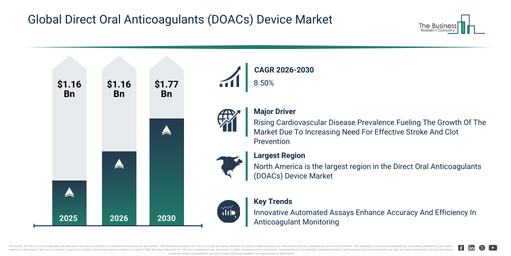
    The direct oral anticoagulants (doacs) device market size is anticipated to experience substantial growth in the coming years. It is projected to expand to $49.48 billion by 2030, with a compound annual growth rate (CAGR) of 8.5%. The growth during this forecast period can be attributed to advancements in portable and point-of-care devices, the integration with digital health platforms and cloud-based monitoring, a rising adoption of personalized anticoagulation management, the expansion of homecare and specialty clinic services, and increasing regulatory approvals for novel monitoring systems. Key trends anticipated in the forecast period include the growing adoption of point-of-care doac monitoring devices, increasing use of factor xa and direct thrombin inhibitor monitoring, rising awareness of stroke and thromboembolism prevention, the expansion of homecare and ambulatory monitoring solutions, and an enhanced focus on accuracy, sensitivity, and rapid testing capabilities.

    Access Your Free Sample Report For In-Depth Market Analysis:

    https://www.thebusinessresearchcompany.com/sample.aspx?id=27281&type=smp

    What Key Factors Are Affecting The Direct Oral Anticoagulants (DOACs) Device Market Demand?

    The anticipated expansion of the direct oral anticoagulants (DOACs) device market is primarily fueled by the rising occurrence of cardiovascular disorders. These disorders encompass various ailments affecting the heart and blood vessels, frequently resulting in complications like heart attacks, strokes, or other circulatory problems. A key factor in the surge of cardiovascular disorders is the growing adoption of sedentary lifestyles, which contribute to weight gain, increased blood pressure, and the gradual deterioration of cardiovascular health. Direct oral anticoagulants (DOACs) play a crucial role in managing these conditions by significantly reducing the risk of stroke and blood clot formation in individuals suffering from atrial fibrillation, providing dependable anticoagulation without requiring routine blood tests. For example, data from October 2024 released by the Centers for Disease Control and Prevention, a US-based government agency, indicated that in 2023, cardiovascular disease was responsible for 919,032 lives, representing one in every three deaths. Coronary heart disease remained the most common type of heart ailment, and notably, approximately one in six deaths due to cardiovascular diseases occurred among adults younger than 65 years. Consequently, the escalating incidence of cardiovascular disorders is a significant catalyst for the expansion of the direct oral anticoagulants (DOACs) device market.

    How Is Segmentation Applied In The Direct Oral Anticoagulants (DOACs) Device Market Segment Analysis?

    The direct oral anticoagulants (doacs) device market covered in this report is segmented –

    1) By Product: Factor Xa Inhibitors, Direct Thrombin Inhibitors

    2) By Disease: Atrial Fibrillation, Deep Vein Thrombosis, Pulmonary Embolism, Heart Attacks, Post-Surgical Thromboprophylaxis, Other Diseases

    3) By Application: Stroke Prevention, Venous Thromboembolism Prevention, Treatment Of Acute Thrombotic Events, Long-Term Prophylaxis, Other Applications

    4) By End User: Hospitals, Ambulatory Surgical Centers, Specialty Clinics, Homecare Settings, Other End Users

    Subsegments:

    1) By Factor Xa Inhibitors: Rivaroxaban Monitoring Devices, Apixaban Monitoring Devices, Edoxaban Monitoring Devices, Betrixaban Monitoring Devices

    2) By Direct Thrombin Inhibitors: Dabigatran Etexilate, Dabigatran Mesylate

    What Trends Are Influencing Changes In The Direct Oral Anticoagulants (DOACs) Device Market?

    Leading companies within the direct oral anticoagulants (DOACs) device market are concentrating on creating sophisticated solutions, such as automated coagulation assays, aimed at enhancing the precision, effectiveness, and uniformity of direct oral anticoagulant level tracking in clinical settings. These automated coagulation assays represent machine-conducted laboratory analyses that determine the rate of blood clotting, assisting in the diagnosis of bleeding or clotting conditions. An illustration of this is Roche Holding AG, a Switzerland-based pharmaceutical company, which introduced three novel coagulation tests in February 2024, specifically tailored for Factor Xa inhibitors. These offerings improve clinicians’ capacity to precisely assess the anticoagulation state of individuals on direct Factor Xa inhibitors like rivaroxaban and apixaban. They support clinical judgments by accurately quantifying the anti-Xa activity of apixaban, edoxaban, rivaroxaban, and heparin during crucial situations such as bleeding episodes, overdoses, or impending surgeries. Leveraging Roche’s reagent cassette technology on cobas t analyzers, these automated diagnostics yield superior results, reduce the need for manual intervention, and optimize the efficiency of laboratory operations.

    Who Are The Companies Participating In The Direct Oral Anticoagulants (DOACs) Device Market Environment?

    Major companies operating in the direct oral anticoagulants (doacs) device market are Pfizer Inc., Roche Diagnostics Corporation, Bristol-Myers Squibb Company, Siemens Healthcare GmbH, Becton Dickinson And Company, Boehringer Ingelheim International GmbH, Teva Pharmaceutical Industries Limited, Daiichi Sankyo Co. Ltd, Sysmex Corporation, Dr. Reddy’s Laboratories Limited, Werfen S.A., Alembic Pharmaceuticals Limited, Diagnostica Stago SAS, Helena Laboratories Corporation, iLine Microsystems S.L., Technoclone GmbH, Anthos Therapeutics Inc., FLoBio LLC, Perosphere Technologies Inc., DOASENSE GmbH.

    Get The Full Direct Oral Anticoagulants (DOACs) Device Market Report:

    https://www.thebusinessresearchcompany.com/report/direct-oral-anticoagulants-doacs-device-global-market-report

    Which Region Leads The Direct Oral Anticoagulants (DOACs) Device Market In Terms Of Market Share?

    North America was the largest region in the direct oral anticoagulants (DOACs) device market in 2025. The regions covered in the direct oral anticoagulants (doacs) device market report are Asia-Pacific, South East Asia, Western Europe, Eastern Europe, North America, South America, Middle East, Africa.

    Request A Customized Direct Oral Anticoagulants (DOACs) Device Market Report For Competitive Insights:

    https://www.thebusinessresearchcompany.com/customise?id=27281&type=smp

    Browse Through More Reports Similar to the Global Direct Oral Anticoagulants (DOACs) Device Market 2026, By The Business Research Company

    Machine Learning Market Report 2026

    https://www.thebusinessresearchcompany.com/report/machine-learning-global-market-report

    Financial Analytics Market Report 2026

    https://www.thebusinessresearchcompany.com/report/financial-analytics-global-market-report

    Machine Learning Ml In The Pharmaceutical Industry Market Report 2026

    https://www.thebusinessresearchcompany.com/report/machine-learning-ml-in-the-pharmaceutical-industry-global-market-report

    Get in touch with us:

    The Business Research Company: https://www.thebusinessresearchcompany.com/

    Americas +1 310-496-7795

    Asia +44 7882 955267 & +91 8897263534

    Europe +44 7882 955267

    Email us at info@tbrc.info

    Follow us on:

    LinkedIn: https://in.linkedin.com/company/the-business-research-company

    YouTube: https://www.youtube.com/channel/UC24_fI0rV8cR5DxlCpgmyFQ

    Global Market Model: https://www.thebusinessresearchcompany.com/global-market-model
  • Coagulation Analyzer Market Analysis Covering Growth Drivers And Future Outlook

    Coagulation Analyzer Market Analysis Covering Growth Drivers And Future Outlook

    The Business Research Company’s 2026 market reports feature enhanced tools like market attractiveness analysis, TAM assessment, and company scoring matrices, along with interactive dashboards, deeper supply chain insights, and startup coverage strengthening the depth, usability, and strategic value of insights.

    What Level Of Market Value Growth Is Predicted For The Coagulation Analyzer Market From 2026 To 2030?

    The coagulation analyzer market size has experienced significant growth over recent years. It is anticipated to expand from $3.26 billion in 2025 to $3.53 billion in 2026, reflecting a compound annual growth rate (CAGR) of 8.2%. This historical expansion can be attributed to factors such as the increasing incidence of cardiovascular disorders, greater demand for anticoagulant therapy monitoring, the broadening of hospital diagnostic infrastructure, the adoption of standardized coagulation testing protocols, and a rise in surgical procedure volumes.

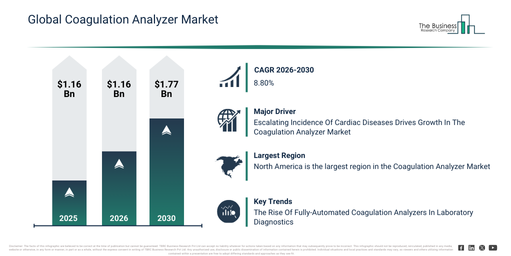
    The coagulation analyzer market is anticipated to experience robust expansion over the coming years. Its valuation is projected to reach $4.95 billion by 2030, exhibiting a compound annual growth rate (CAGR) of 8.8%. This anticipated growth during the forecast period stems from factors such as heightened demand for swift coagulation diagnostics, the widening of decentralized testing environments, increased capital allocation towards advanced hematology analyzers, a sharper emphasis on patient safety oversight, and the incorporation of intelligent diagnostic platforms. Key developments expected in the same period encompass a greater uptake of entirely automated coagulation systems, a surging requirement for highly sensitive clotting assays, the progressive embedding of AI-supported result interpretation, the broadening scope of point-of-care coagulation testing, and an intensified drive towards automating workflows.

    Access Your Free Sample Report For In-Depth Market Analysis:

    https://www.thebusinessresearchcompany.com/sample.aspx?id=11991&type=smp

    What Significant Factors Are Influencing The Coagulation Analyzer Market Expansion?

    The rising occurrence of cardiac diseases is anticipated to boost the expansion of the coagulation analyzer market in the future. Cardiac diseases include various ailments that affect both the heart and the circulatory system. Coagulation analyzers play a crucial role in the management of these conditions, by evaluating blood clotting factors, guiding treatment with anticoagulants, and preventing potential complications, thereby ensuring effective patient care. For example, in June 2024, data from the National Health Service, a UK-based government department, revealed that 3,615,330 individuals registered with a general practitioner (GP) were diagnosed with non-diabetic hyperglycemia or pre-diabetes (a state characterized by elevated blood sugar levels, not yet meeting diabetes criteria) in 2023. This represented an 18% increase from 3,065,825 cases recorded in 2022. Consequently, the growing incidence of heart failure and other cardiac conditions is driving the need for coagulation testing tools.

    Which Segments Define The Coagulation Analyzer Market Segment Structure?

    The coagulation analyzer market covered in this report is segmented –

    1) By Product Type: Semi-automated Coagulation Analyzer, Automated Coagulation Analyzer

    2) By Test Type: Prothrombin Time Testing, Fibrinogen Testing, Activated Partial Thromboplastin Time Testing, D-dimer Testing, Anti-factor Xa Testing, Other Tests

    3) By Technology Type: Optical Technology, Mechanical Technology, Other Technologies

    4) By End User: Hospitals And Clinics, Diagnostic Centers, Other End-Users

    Subsegments:

    1) By Semi-Automated Coagulation Analyzer: Benchtop Semi-Automated Analyzers, Portable Semi-Automated Analyzers

    2) By Automated Coagulation Analyzer: Fully Automated Analyzers, High-Throughput Analyzers, Point-Of-Care Automated Analyzers

    What Trends Are Affecting The Direction Of The Coagulation Analyzer Market?

    Leading companies within the coagulation analyzer market are developing sophisticated products, such as fully-automated coagulation analyzers, to manage high volumes of tests with minimal human involvement. A fully automated coagulation analyzer serves as a laboratory instrument that conducts automated testing of blood clotting processes, facilitating accurate and efficient diagnosis of coagulation disorders without the need for manual intervention. For example, in March 2024, Zybio Inc., a China-based supplier of in vitro diagnostic reagents and equipment, introduced the EXT 9800 fully-automated coagulation analyzer. The EXT 9800 Fully-Automated Coagulation Analyzer is distinguished as the first to utilize micro magnetic particle detection, which permits visualized, multi-dimensional analysis of the coagulation process for improved accuracy and depth. It redefines automated detection with its distributed structure, modular expandability, and high-throughput capabilities, providing a lightweight, complete solution for laboratories. Additionally, the analyzer incorporates a thorough upgrade across its entire testing process, establishing a new benchmark for innovation in coagulation testing.

    Who Are The Established Players Within The Coagulation Analyzer Market?

    Major companies operating in the coagulation analyzer market are Siemens AG, F. Hoffmann-La Roche Ltd., Abbott Laboratories, Sysmex Corporation, Werfen S.A., Nihon Kohden Corporation, Diagnostica Stago SAS, ARKRAY Inc., Beckman Coulter Inc., Helena Laboratories Corporation, Maccura Biotechnology Co. Ltd., Beijing Succeeder Technology Inc., Trivitron Healthcare Pvt. Ltd., A&T Corporation, ACON Laboratories Inc., Genrui Biotech Inc., Teco Medical Instruments, Eurolyser Diagnostica GmbH, Meril Life Science Pvt. Ltd., Bioevopeak Co. Ltd.

    Get The Full Coagulation Analyzer Market Report:

    https://www.thebusinessresearchcompany.com/report/coagulation-analyzer-global-market-report

    Where Is The Coagulation Analyzer Market Primarily Concentrated By Region?

    North America was the largest region in the coagulation analyzer market in 2025. Asia-Pacific is expected to be the fastest-growing region in the forecast period. The regions covered in the coagulation analyzer market report are Asia-Pacific, South East Asia, Western Europe, Eastern Europe, North America, South America, Middle East, Africa.

    Request A Customized Coagulation Analyzer Market Report For Competitive Insights:

    https://www.thebusinessresearchcompany.com/customise?id=11991&type=smp

    Browse Through More Reports Similar to the Global Coagulation Analyzer Market 2026, By The Business Research Company

    Capillary Blood Collection Devices Market Report 2026

    https://www.thebusinessresearchcompany.com/report/capillary-blood-collection-devices-global-market-report

    Skull Clamp Market Report 2026

    https://www.thebusinessresearchcompany.com/report/skull-clamp-global-market-report

    Thrombectomy Devices Market Report 2026

    https://www.thebusinessresearchcompany.com/report/thrombectomy-devices-global-market-report

    Get in touch with us:

    The Business Research Company: https://www.thebusinessresearchcompany.com/

    Americas +1 310-496-7795

    Asia +44 7882 955267 & +91 8897263534

    Europe +44 7882 955267

    Email us at info@tbrc.info

    Follow us on:

    LinkedIn: https://in.linkedin.com/company/the-business-research-company

    YouTube: https://www.youtube.com/channel/UC24_fI0rV8cR5DxlCpgmyFQ

    Global Market Model: https://www.thebusinessresearchcompany.com/global-market-model
  • Digital X-ray Devices Market Forecast 2026–2030 Presenting Long-Term Industry Insights

    Digital X-ray Devices Market Forecast 2026–2030 Presenting Long-Term Industry Insights

    The Business Research Company’s 2026 market reports feature enhanced tools like market attractiveness analysis, TAM assessment, and company scoring matrices, along with interactive dashboards, deeper supply chain insights, and startup coverage strengthening the depth, usability, and strategic value of insights.

    What Is The Estimated Market Size Of The Digital X-ray Devices Market In 2026, And How Will Its Value Evolve By 2030?

    The digital x-ray devices market size has experienced rapid expansion in recent years. It is projected to increase from $14.3 billion in 2025 to $16.41 billion in 2026, demonstrating a compound annual growth rate (CAGR) of 14.7%. The historical growth in this sector is attributable to factors such as the increasing demand for diagnostic imaging services, the shift from analog to digital radiography, the expansion of hospital imaging infrastructure, the rising prevalence of chronic diseases, and the enhanced availability of digital imaging solutions.

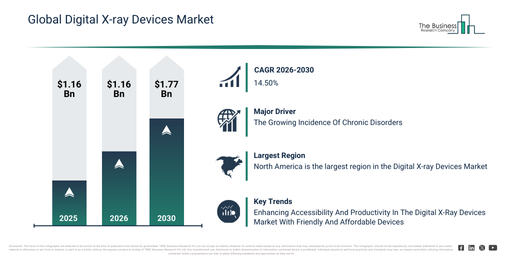
    The market for digital x-ray devices is projected to experience swift expansion over the coming years. This market is anticipated to reach a valuation of $28.17 billion by 2030, exhibiting a compound annual growth rate (CAGR) of 14.5%. Several factors will fuel this growth during the forecast period, including the increased incorporation of AI-based diagnostic tools, a surge in demand for point-of-care imaging solutions, the broadening reach of teleradiology services, greater capital allocation for sophisticated healthcare infrastructure, and an intensified emphasis on automating workflows. Key trends expected over the forecast period encompass a wider embrace of AI-assisted image analysis, the growing implementation of portable and mobile x-ray devices, a heightened inclination towards flat panel detector technologies, the proliferation of cloud-integrated imaging platforms, and a strengthened commitment to technologies that minimize radiation dosage.

    Access Your Free Sample Report For In-Depth Market Analysis:

    https://www.thebusinessresearchcompany.com/sample.aspx?id=6101&type=smp

    Which Primary Drivers Are Impacting The Digital X-ray Devices Market Growth?

    An increasing occurrence of chronic illnesses, notably cancer, is anticipated to drive expansion in the digital X-ray devices market in the foreseeable future. These long-term medical conditions, including cancer, are characterized by their prolonged duration and typically gradual development. Digital X-ray devices play a role in cancer treatment through their improved imaging abilities, lower radiation doses, and more precise diagnoses. As an illustration, figures released by Cancer Research UK, a UK-based cancer charity, in July 2024 indicate an expected rise in cancer incidence rates for the majority of types in the United Kingdom between 2023-2025 and 2038-2040. These increases are projected to span from less than 1% for breast cancer to 50% for eye cancer. Conversely, a minority of cancers are forecast to decrease, with reductions ranging from 2% for lung cancer to 27% for mesothelioma. Consequently, the rising prevalence of chronic conditions like cancer acts as a primary driver for the digital X-ray devices market.

    What Segment Categories Shape The Digital X-ray Devices Market Segment Landscape?

    The digital x-ray devices market covered in this report is segmented –

    1) By Technology: Direct Radiography, Computed Radiography

    2) By Portability: Handheld Systems, Portable X-Ray Systems, Mobile X-Ray Systems, Floor-to-ceiling Mounted Systems, Ceiling Mounted Systems, Fixed Digital X-Ray Systems

    3) By Application: General Radiography, Chest Imaging Applications, Orthopedic Applications, Cardiovascular Imaging, Other General Radiography Applications, Dental Applications, Mammography, Fluoroscopy

    4) By End Users: Hospitals, Diagnostic Centers, Dental Care Centers

    Subsegments:

    1) By Direct Radiography (DR): Flat Panel Detectors, Portable DR Systems

    2) By Computed Radiography (CR): CR Cassette-Based Systems, CR Tabletop Systems

    Which Trends Are Shaping Growth In The Digital X-ray Devices Market?

    Leading companies in the digital x-ray devices market are dedicated to developing user-friendly and affordable equipment to boost productivity. Through an emphasis on intuitive designs and accessible pricing, these manufacturers strive to provide healthcare providers with easier access to advanced imaging technology. As an illustration, in November 2023, Carestream Health, a US-based company focused on medical and dental imaging systems, unveiled the HORIZON X-ray System. This imaging solution is both affordable and digital-ready, targeting small to midsize healthcare facilities, such as imaging centers, orthopedic clinics, and urgent care centers. The HORIZON X-ray System is engineered to be user-friendly and cost-effective, positioning it as an excellent choice for these smaller and medium-sized facilities. Its compact, floor-mounted design enables simple installation even in restricted areas, removing the necessity for additional ceiling reinforcement. The intuitive manual analog system allows operators to rapidly master its use, thereby enhancing productivity during patient examinations. The system also incorporates a floating tabletop, which aids in quick positioning for diverse procedures, further optimizing the workflow. Moreover, its budget-conscious pricing and low maintenance requirements offer a practical solution for facilities mindful of their expenditures, providing them with access to high-quality imaging without a substantial financial burden.

    Who Are The Companies Operating Across The Digital X-ray Devices Market Value Chain?

    Major companies operating in the digital x-ray devices market are Samsung Medison, Esaote SpA, Hitachi Ltd, Canon Inc., Siemens Healthcare GmbH, FUJIFILM Holdings Corporation, Koninklijke Philips N.V., GE Healthcare, Villa Sistemi Medicali S.p.A., Konica Minolta, Hologic Inc., Toshiba Medical Systems Corporation, Shenzhen Mindray Bio-Medical Electronics Co., Dentsply Sirona, Shimadzu Corporation, Carestream Health, Agfa-Gevaert Group, Planmeca Oy, J. Morita Corporation, MinXray Inc.

    Get The Full Digital X-ray Devices Market Report:

    https://www.thebusinessresearchcompany.com/report/digital-xray-devices-global-market-report

    Which Region Leads The Digital X-ray Devices Market In Overall Market Size?

    North America was the largest region in the digital X-ray devices market in 2025. Asia-Pacific is expected to be the fastest-growing region in the forecast period. The regions covered in the digital x-ray devices market report are Asia-Pacific, South East Asia, Western Europe, Eastern Europe, North America, South America, Middle East, Africa.

    Request A Customized Digital X-ray Devices Market Report For Competitive Insights:

    https://www.thebusinessresearchcompany.com/customise?id=6101&type=smp

    Browse Through More Reports Similar to the Global Digital X-ray Devices Market 2026, By The Business Research Company

    X Ray Systems Devices And Equipment Market Report 2026

    https://www.thebusinessresearchcompany.com/report/x-ray-systems-devices-and-equipment-global-market-report

    Medical X Ray Equipment And Imaging Software Market Report 2026

    https://www.thebusinessresearchcompany.com/report/medical-x-ray-equipment-and-imaging-software-global-market-report

    X Ray Detectors Market Report 2026

    https://www.thebusinessresearchcompany.com/report/x-ray-detectors-global-market-report

    Get in touch with us:

    The Business Research Company: https://www.thebusinessresearchcompany.com/

    Americas +1 310-496-7795

    Asia +44 7882 955267 & +91 8897263534

    Europe +44 7882 955267

    Email us at info@tbrc.info

    Follow us on:

    LinkedIn: https://in.linkedin.com/company/the-business-research-company

    YouTube: https://www.youtube.com/channel/UC24_fI0rV8cR5DxlCpgmyFQ

    Global Market Model: https://www.thebusinessresearchcompany.com/global-market-model
  • Digital Wound Measurement Devices Market Growth Analysis 2026–2030 Highlighting Innovation And Competitive Landscape

    Digital Wound Measurement Devices Market Growth Analysis 2026–2030 Highlighting Innovation And Competitive Landscape

    The Business Research Company’s 2026 market reports feature enhanced tools like market attractiveness analysis, TAM assessment, and company scoring matrices, along with interactive dashboards, deeper supply chain insights, and startup coverage strengthening the depth, usability, and strategic value of insights.

    How Does The Market Size Of The Digital Wound Measurement Devices Market Compare Between 2026 And 2030?

    The market for digital wound measurement devices has demonstrated robust growth over the past few years. This market is projected to expand from $2.74 billion in 2025 to $2.93 billion in 2026, achieving a compound annual growth rate (CAGR) of 6.9%. Historically, this expansion has been driven by factors such as the increasing occurrence of chronic wounds, the wider acceptance of digital healthcare solutions, the rising need for precise wound documentation, the broadening of hospital-based wound care initiatives, and advancements in imaging sensor technologies.

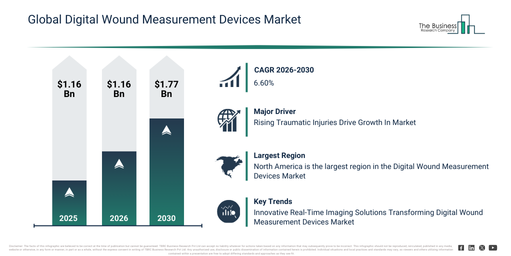
    The digital wound measurement devices market size is anticipated to experience robust expansion over the coming years. This market is projected to reach $3.79 billion by 2030, driven by a compound annual growth rate (CAGR) of 6.6%. Factors contributing to this growth during the forecast period include the expanding embrace of telemedicine for wound care, a heightened demand for wound monitoring solutions in home settings, increasing capital allocation towards digital health infrastructure, the proliferation of AI-assisted tools for wound assessment, and an amplified emphasis on outcome-driven wound management. Key trends anticipated in this period encompass the growing uptake of non-contact wound measurement technologies, enhanced integration with electronic medical records, an increase in the application of 3D imaging for wound evaluation, the broadening availability of remote wound monitoring solutions, and a stronger emphasis on clinical accuracy and comprehensive documentation.

    Access Your Free Sample Report For In-Depth Market Analysis:

    https://www.thebusinessresearchcompany.com/sample.aspx?id=20751&type=smp

    What Significant Factors Are Influencing The Digital Wound Measurement Devices Market Expansion?

    An anticipated increase in traumatic injuries is poised to drive the digital wound measurement devices market in the future. These injuries are characterized as sudden physical harm necessitating urgent medical care due to their critical nature. Various elements, such as an escalation in road accidents, more frequent workplace mishaps, injuries sustained during sports, and an increase in violent clashes or natural catastrophes, contribute to the surge in traumatic injuries, thereby fueling greater demand for medical interventions and equipment, including digital wound measurement solutions. For patients with traumatic injuries, digital wound measurement devices provide precise, live assessments of wound dimensions, depth, and healing trajectory, enabling medical professionals to customize treatment regimens, monitor recuperation more efficiently, and enhance healing results, subsequently diminishing infection risks and elevating overall care standards. As an illustration, in May 2025, the UK government agency Department for Transport reported that Great Britain recorded an estimated 1,633 road fatalities in 2024, representing a 1% increase from 2023. Among primary categories of road users, motorcyclists experienced the most significant increase in fatalities, rising by 9% compared to 2023. Consequently, the growing number of traumatic injuries is propelling the expansion of the digital wound measurement devices market.

    Which Segment Types Are Examined In The Digital Wound Measurement Devices Market Segment Study?

    The digital wound measurement devices market covered in this report is segmented –

    1) By Product: Contact Wound Measuring Devices, Non-contact Measuring Devices

    2) By Wound Type: Chronic Wounds, Acute Wounds

    3) By Technique: 2D, 3D

    4) By End User: Hospitals And Clinics, Long Term Care Facilities, Home Care Settings, Other End Users

    Subsegments:

    1) By Contact Wound Measuring Devices: Contact Laser Wound Measurement Devices, Contact Optical Wound Measuring Devices, Contact Ultrasound Wound Measuring Devices

    2) By Non-Contact Measuring Devices: 3D Imaging Wound Measurement Devices, Laser Scanning Wound Measuring Devices, Infrared Wound Measurement Devices

    What Trends Are Affecting The Direction Of The Digital Wound Measurement Devices Market?

    Leading companies in the digital wound measurement devices market are developing cutting-edge solutions, such as flagship wound imaging devices, to enhance the precision of wound assessments, streamline clinical operations, and deliver real-time data that supports individualized treatment planning, ultimately boosting patient outcomes and cutting healthcare costs. A flagship wound imaging device is defined as a primary or leading product within wound care technology that employs advanced imaging techniques to improve the diagnosis and treatment of wounds. For instance, in December 2024, MolecuLight Corp., a digital wound measurement company based in Canada, launched the MolecuLight digital wound measurement devices, expanding the capabilities of its core wound imaging device. This device provides immediate visual feedback, enabling healthcare professionals to accurately assess wounds at the point of care. It utilizes advanced imaging technology to create three-dimensional representations of wounds, allowing for precise measurements of their size and depth. The device is designed for non-invasive use, minimizing patient discomfort while ensuring accurate data collection.

    Which Players Are Part Of The Competitive Landscape Of The Digital Wound Measurement Devices Market?

    Major companies operating in the digital wound measurement devices market are 3M company, Medline Industries Inc., Smith & Nephew plc, Coloplast A/S, ConvaTec Group plc, Molnlycke Health Care AB, Net Health Systems Inc., WoundSource Inc., DermaRite Industries LLC, Advancis Medical, Swift Medical Inc., Spectral MD Inc., Kent Imaging Inc., Arnaz Medical Ltd., eKare Inc., Wound Matrix Inc., WoundZoom Inc., MolecuLight Inc., BSN Medical GmbH, WoundVision

    Get The Full Digital Wound Measurement Devices Market Report:

    https://www.thebusinessresearchcompany.com/report/digital-wound-measurement-devices-global-market-report

    Which Region Is The Top Contributor To The Digital Wound Measurement Devices Market By Share?

    North America was the largest region in the digital wound measurement devices market in 2025. Asia-Pacific is expected to be the fastest-growing region in the forecast period. The regions covered in the digital wound measurement devices market report are Asia-Pacific, South East Asia, Western Europe, Eastern Europe, North America, South America, Middle East, Africa.

    Request A Customized Digital Wound Measurement Devices Market Report For Competitive Insights:

    https://www.thebusinessresearchcompany.com/customise?id=20751&type=smp

    Browse Through More Reports Similar to the Global Digital Wound Measurement Devices Market 2026, By The Business Research Company

    Advanced Wound Care Devices Market Report 2026

    https://www.thebusinessresearchcompany.com/report/advanced-wound-care-devices-global-market-report

    Wound Closure Devices Market Report 2026

    https://www.thebusinessresearchcompany.com/report/wound-closure-devices-global-market-report

    Dermatology Devices Market Report 2026

    https://www.thebusinessresearchcompany.com/report/dermatology-devices-global-market-report

    Get in touch with us:

    The Business Research Company: https://www.thebusinessresearchcompany.com/

    Americas +1 310-496-7795

    Asia +44 7882 955267 & +91 8897263534

    Europe +44 7882 955267

    Email us at info@tbrc.info

    Follow us on:

    LinkedIn: https://in.linkedin.com/company/the-business-research-company

    YouTube: https://www.youtube.com/channel/UC24_fI0rV8cR5DxlCpgmyFQ

    Global Market Model: https://www.thebusinessresearchcompany.com/global-market-model
  • Clot Management Devices Market Insights Highlighting Opportunities Supporting Growth To 2030

    Clot Management Devices Market Insights Highlighting Opportunities Supporting Growth To 2030

    The Business Research Company’s 2026 market reports feature enhanced tools like market attractiveness analysis, TAM assessment, and company scoring matrices, along with interactive dashboards, deeper supply chain insights, and startup coverage strengthening the depth, usability, and strategic value of insights.

    How Will The Market Value Of The Clot Management Devices Market Progress Between 2026 And 2030?

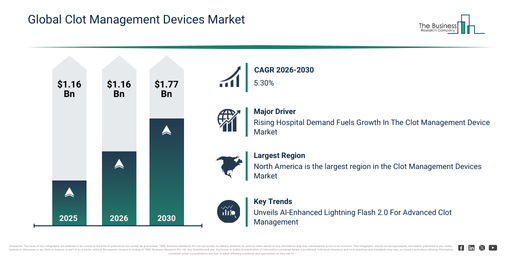
    In recent years, the clot management devices market has experienced significant expansion in its size. Projections indicate it will increase from $1.82 billion in 2025 to reach $1.93 billion in 2026, demonstrating a compound annual growth rate (CAGR) of 6.0%. Historically, this growth has been driven by several factors, including a greater occurrence of deep vein thrombosis and pulmonary embolism, an uptick in cardiovascular disease prevalence, an increase in interventional radiology procedures, the expansion of hospital capabilities in vascular care, and heightened awareness regarding complications associated with clots.

    The clot management devices market is poised for significant expansion in the coming years, projected to grow to $2.37 billion in 2030 at a compound annual growth rate (CAGR) of 5.3%. This anticipated growth can be attributed to an aging demographic with elevated thrombotic risks, a surging demand for minimally invasive vascular interventions, a concentrated effort on the early detection and management of clotting disorders, the expansion of advanced stroke and thrombosis centers, and the increasing embrace of endovascular treatment approaches. Prominent trends throughout this forecast period involve the rising adoption of minimally invasive clot removal procedures, an increasing reliance on mechanical and aspiration thrombectomy devices, a sharpened focus on rapid intervention for acute thrombotic incidents, the expansion of catheter-based treatments for DVT and PE, and a growing preference for retrievable inferior vena cava filters.

    Access Your Free Sample Report For In-Depth Market Analysis:

    https://www.thebusinessresearchcompany.com/sample.aspx?id=15768&type=smp

    Which Important Drivers Are Guiding The Clot Management Devices Market Growth?

    The escalating need for hospitals is projected to boost the growth of the clot management device market moving forward. Hospitals are healthcare establishments specifically designed to deliver medical care, treatment, and services to individuals suffering from various illnesses, injuries, or health conditions. The proliferation of hospitals is influenced by multiple factors, such as an aging population, increasing urbanization, improved healthcare access, overall population expansion, and medical tourism. Within the healthcare sector, clot management devices are vital tools for treating conditions like deep vein thrombosis, pulmonary embolism, and ischemic strokes, offering patients effective and minimally invasive solutions that enhance overall treatment outcomes and patient safety. For instance, in May 2024, data from the American Health Care Association, a US-based nonprofit organization, indicated that the number of hospitals in the US rose to 6,120 from 5,129 in 2022. Thus, the escalating demand for hospitals is stimulating the expansion of the clot management device market.

    How Is The Clot Management Devices Market Segmented Across Different Segment Categories?

    The clot management devices market covered in this report is segmented –

    1) By Product Type: Neurovascular Embolectomy Devices, Embolectomy Balloon Catheters, Percutaneous Thrombectomy Devices, Catheter-Directed Thrombolysis (CDT) devices, Inferior vena cava filters (IVCF)

    2) By Percutaneous Thrombectomy Devices Type Outlook: Aspiration Thrombectomy Devices, Percutaneous Mechanical Thrombectomy Device

    3) By End User: Diagnostic centers, Hospitals

    Subsegments:

    1) By Neurovascular Embolectomy Devices: Aspiration Embolectomy Devices, Mechanical Embolectomy Devices, Embolectomy Balloon Catheters

    2) By Embolectomy Balloon Catheters: High-Pressure Balloon Catheters, Low-Pressure Balloon Catheters

    3) By Percutaneous Thrombectomy Devices: Rotational Thrombectomy Devices, Aspiration Thrombectomy Devices

    4) By Catheter-Directed Thrombolysis (CDT) Devices: Infusion Catheters, Guidewires For CDT

    5) By Inferior Vena Cava Filters (IVCF): Permanent IVC Filters, Retrievable IVC Filters

    What Trends Are Influencing The Evolution Of The Clot Management Devices Market?

    Major companies in the clot management device market are advancing their technologies, introducing innovations like computer-assisted vacuum thrombectomy (CAVT) systems to provide customers with enhanced features. Computer-assisted vacuum thrombectomy (CAVT) systems are medical instruments utilized for treating blood clots, especially in conditions such as deep vein thrombosis (DVT) and pulmonary embolism (PE). For instance, in April 2024, Penumbra Inc., a US-based medical company, launched the Lightning Flash 2.0. This product is its newest clot aspiration and vacuum thrombectomy (CAVT) technology, designed for rapid removal of blood clots. The Lightning Flash 2.0 marks a significant evolution in clot management devices, delivering improved performance and efficiency. This sophisticated device integrates cutting-edge AI and advanced engineering to enhance patient outcomes in both acute and chronic care environments. It features advanced imaging and suction capabilities, enabling precise and effective clot removal to meet the demands of various medical settings.

    Which Organizations Play A Role In The Clot Management Devices Market Landscape?

    Major companies operating in the clot management devices market are Bayer AG, Abbott Laboratories, Medtronic plc, Boston Scientific Corporation, B. Braun Melsungen AG, Terumo Corporation, Acandis GmbH & Co KG, Cook Medical, Merit Medical Systems Inc., Penumbra Inc., MicroVention Inc., Inari Medical Inc., AngioDynamics Inc., Argon Medical Devices Inc., LeMaitre Vascular Inc., iVascular SLU, Straub Medical AG, Rapid Medical, C.R. Bard Inc., InspireMD Inc.

    Get The Full Clot Management Devices Market Report:

    https://www.thebusinessresearchcompany.com/report/clot-management-devices-global-market-report

    Which Region Has The Greatest Market Share In The Clot Management Devices Market?

    North America was the largest region in the clot management devices market in 2025. Asia-Pacific is expected to be the fastest-growing region in the forecast period. The regions covered in the clot management devices market report are Asia-Pacific, South East Asia, Western Europe, Eastern Europe, North America, South America, Middle East, Africa.

    Request A Customized Clot Management Devices Market Report For Competitive Insights:

    https://www.thebusinessresearchcompany.com/customise?id=15768&type=smp

    Browse Through More Reports Similar to the Global Clot Management Devices Market 2026, By The Business Research Company

    Internal Neuromodulation Devices Market Report 2026

    https://www.thebusinessresearchcompany.com/report/internal-neuromodulation-devices-global-market-report

    Neurostimulation Devices Market Report 2026

    https://www.thebusinessresearchcompany.com/report/neurostimulation-devices-global-market-report

    Neuromorphic Chips Market Report 2026

    https://www.thebusinessresearchcompany.com/report/neuromorphic-chips-global-market-report

    Get in touch with us:

    The Business Research Company: https://www.thebusinessresearchcompany.com/

    Americas +1 310-496-7795

    Asia +44 7882 955267 & +91 8897263534

    Europe +44 7882 955267

    Email us at info@tbrc.info

    Follow us on:

    LinkedIn: https://in.linkedin.com/company/the-business-research-company

    YouTube: https://www.youtube.com/channel/UC24_fI0rV8cR5DxlCpgmyFQ

    Global Market Model: https://www.thebusinessresearchcompany.com/global-market-model
  • Digital Twin Cardio-Pulmonary Bypass Market Forecast Through 2030 With Insights On Market Patterns And Developments

    Digital Twin Cardio-Pulmonary Bypass Market Forecast Through 2030 With Insights On Market Patterns And Developments

    The Business Research Company’s 2026 market reports feature enhanced tools like market attractiveness analysis, TAM assessment, and company scoring matrices, along with interactive dashboards, deeper supply chain insights, and startup coverage strengthening the depth, usability, and strategic value of insights.

    What Is The Forecasted Market Size Trajectory Of The Digital Twin Cardio-Pulmonary Bypass Market From 2026 To 2030?

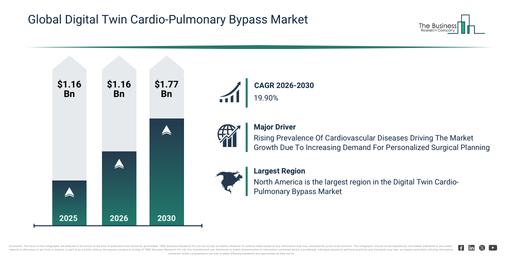
    The digital twin cardio-pulmonary bypass market has experienced exponential growth in recent years. Its size is anticipated to expand from $0.6 billion in 2025 to $0.72 billion in 2026, demonstrating a compound annual growth rate (CAGR) of 20.1%. The historical increase in this market can be attributed to the adoption of simulation software in cardiac surgeries, advancements in cardio-pulmonary modeling, the development of real-time monitoring systems, the integration of predictive analytics, and a rising interest in risk-free training platforms.

    The digital twin cardio-pulmonary bypass market is projected for swift expansion in the coming years. This market is anticipated to reach $1.49 billion by 2030, exhibiting a compound annual growth rate (CAGR) of 19.9%. Key factors driving this growth during the forecast period include the integration with ai-driven decision support, the expansion of remote surgical monitoring, increased utilization in clinical training programs, improved predictive modeling for patient outcomes, and a rise in adoption across hospitals and research institutes. Significant trends expected during this period involve real-time hemodynamic simulation, predictive surgical planning, ai-driven procedural optimization, virtual training for surgeons, and remote clinical monitoring.

    Access Your Free Sample Report For In-Depth Market Analysis:

    https://www.thebusinessresearchcompany.com/sample.aspx?id=29032&type=smp

    Which Important Drivers Are Guiding The Digital Twin Cardio-Pulmonary Bypass Market Growth?

    The expanding occurrence of cardiovascular diseases (CVDs) is anticipated to drive the future expansion of the digital twin cardio-pulmonary bypass market. These conditions, which encompass issues like coronary artery disease, heart failure, stroke, and hypertension, affect the heart and blood vessels. The increase in CVD cases is linked to an aging global population, as the heart and blood vessels naturally weaken with age, raising the susceptibility to heart-related ailments. Digital Twin Cardio-Pulmonary Bypass technology aids in replicating a patient’s cardiac and circulatory systems virtually, empowering medical professionals to forecast surgical results, refine methods, and minimize issues. This directly assists in managing and treating cardiovascular diseases. For instance, in October 2024, the Centers for Disease Control and Prevention, a US government body, reported that in 2023, cardiovascular disease was responsible for 919,032 fatalities, representing one in every three deaths. Coronary heart disease continued to be the most widespread type of heart disease, and it’s significant that approximately one in six deaths due to cardiovascular diseases occurred in individuals under 65 years of age. Consequently, the growing incidence of cardiovascular diseases is fueling the development of the digital twin cardio-pulmonary bypass market.

    How Are Different Segments Classified In The Digital Twin Cardio-Pulmonary Bypass Market Segment Analysis?

    The digital twin cardio-pulmonary bypass market covered in this report is segmented –

    1) By Component: Software, Hardware, Services

    2) By Deployment Mode: On-Premises, Cloud-Based

    3) By Application: Cardiac Surgery, Pulmonary Surgery, Research And Development, Training And Education, Other Applications

    4) By End-User: Hospitals, Specialty Clinics, Academic And Research Institutes, Other End-Users

    Subsegments:

    1) By Software: Simulation Software, Data Analytics Software, Monitoring Software, Integration Software

    2) By Hardware: Sensors And Monitoring Devices, Computing Systems, Imaging Devices, Connectivity Modules

    3) By Services: Implementation Services, Maintenance Services, Training Services, Consulting Services

    Who Are The Companies Driving Activity In The Digital Twin Cardio-Pulmonary Bypass Market?

    Major companies operating in the digital twin cardio-pulmonary bypass market are Tata Consultancy Services Limited (TCS), Medtronic plc, Siemens Healthineers AG, Koninklijke Philips N.V., GE HealthCare Technologies Inc., Boston Scientific Corporation, Dassault Systèmes SE, Terumo Corporation, Synopsys Inc., Getinge AB, LivaNova PLC, Materialise NV, HeartFlow Inc., CFD Research Corporation (CFDRC), Kitware Inc., Circle Cardiovascular Imaging Inc., Keya Medical Inc., inHEART SAS, PrediSurge Inc., InSilicoTrials Technologies SA

    Get The Full Digital Twin Cardio-Pulmonary Bypass Market Report:

    https://www.thebusinessresearchcompany.com/report/digital-twin-cardio-pulmonary-bypass-global-market-report

    Which Region Represents The Largest Share Of The Digital Twin Cardio-Pulmonary Bypass Market?

    North America was the largest region in the digital twin cardio-pulmonary bypass market in 2025. Asia-Pacific is expected to be the fastest-growing region in the forecast period. The regions covered in the digital twin cardio-pulmonary bypass market report are Asia-Pacific, South East Asia, Western Europe, Eastern Europe, North America, South America, Middle East, Africa.

    Request A Customized Digital Twin Cardio-Pulmonary Bypass Market Report For Competitive Insights:

    https://www.thebusinessresearchcompany.com/customise?id=29032&type=smp

    Browse Through More Reports Similar to the Global Digital Twin Cardio-Pulmonary Bypass Market 2026, By The Business Research Company

    Digital Twin Market Report 2026

    https://www.thebusinessresearchcompany.com/report/digital-twin-global-market-report

    Cardiovascular Digital Solutions Market Report 2026

    https://www.thebusinessresearchcompany.com/report/cardiovascular-digital-solutions-global-market-report

    Cardiopulmonary Bypass Accessory Equipment Market Report 2026

    https://www.thebusinessresearchcompany.com/report/cardiopulmonary-bypass-accessory-equipment-global-market-report

    Get in touch with us:

    The Business Research Company: https://www.thebusinessresearchcompany.com/

    Americas +1 310-496-7795

    Asia +44 7882 955267 & +91 8897263534

    Europe +44 7882 955267

    Email us at info@tbrc.info

    Follow us on:

    LinkedIn: https://in.linkedin.com/company/the-business-research-company

    YouTube: https://www.youtube.com/channel/UC24_fI0rV8cR5DxlCpgmyFQ

    Global Market Model: https://www.thebusinessresearchcompany.com/global-market-model
  • Global Closed-Loop Neuromodulation Processor Market Expected To Reach $4.62 Billion By 2030 With 12.9% CAGR

    Global Closed-Loop Neuromodulation Processor Market Expected To Reach $4.62 Billion By 2030 With 12.9% CAGR

    The Business Research Company’s 2026 market reports feature enhanced tools like market attractiveness analysis, TAM assessment, and company scoring matrices, along with interactive dashboards, deeper supply chain insights, and startup coverage strengthening the depth, usability, and strategic value of insights.

    What Are The Market Size Estimates For The Closed-Loop Neuromodulation Processor Market In 2026 And 2030?

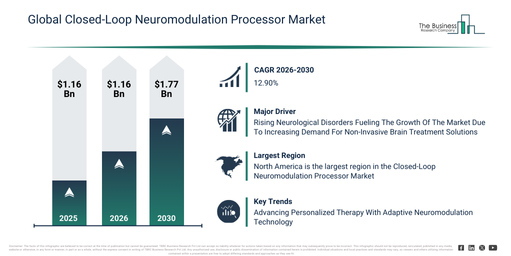
    The closed-loop neuromodulation processor market has experienced significant expansion in its size over recent years. This market is projected to expand from $2.52 billion in 2025 to $2.85 billion by 2026, demonstrating a compound annual growth rate (CAGR) of 13.2%. Factors contributing to this historical growth include the increasing prevalence of neurological disorders, the rising demand for precise neuromodulation, ongoing advancements in implantable devices, wider adoption of DBS/SCS systems, and a surge in research funding within neurotech.

    The closed-loop neuromodulation processor market is projected to experience substantial expansion over the upcoming years. This market is predicted to reach a valuation of $4.63 billion by 2030, demonstrating a compound annual growth rate (CAGR) of 12.9%. Key drivers for this expansion during the forecast period include the advancement of AI-enabled adaptive processors, the broadening use of external wearable controllers, integration with telemedicine services, an increase in home-based neuromodulation therapy, and rising uptake in developing markets. Prominent trends anticipated within this forecast timeframe encompass real-time neural feedback, adaptive stimulation algorithms, seamless integration with wearable controllers, enhanced remote monitoring capabilities, and optimized multimodal therapy approaches.

    Access Your Free Sample Report For In-Depth Market Analysis:

    https://www.thebusinessresearchcompany.com/sample.aspx?id=28175&type=smp

    What Major Factors Are Driving The Closed-Loop Neuromodulation Processor Market Forward?

    The growth of the closed-loop neuromodulation processor market is expected to be fueled by the increasing prevalence of neurological disorders. A neurological disorder is defined as a condition that impairs the nervous system, affecting the function of the brain, spinal cord, or nerves, which can lead to issues with movement, thinking, or sensation. These disorders are on the rise due to a globally aging population, contributing to a higher incidence of conditions such as Alzheimer’s and Parkinson’s disease. Closed-loop neuromodulation processors assist in managing these disorders through continuous monitoring of brain activity and by delivering targeted electrical stimulation in real time to regulate abnormal neural signals. For instance, according to the Institute for Health Metrics and Evaluation, a US-based research organization, neurological conditions impacted 43% of the global population in 2022, with projections indicating this could double by 2050. Therefore, the rise in neurological disorders is a key factor driving the expansion of the closed-loop neuromodulation processor market.

    What Are The Main Segments Within The Closed-Loop Neuromodulation Processor Market Segment Structure?

    The closed-loop neuromodulation processor market covered in this report is segmented –

    1) By Product Type: Implantable Processors, External Processors

    2) By Technology: Deep Brain Stimulation, Spinal Cord Stimulation, Vagus Nerve Stimulation, Other Technologies

    3) By Application: Chronic Pain Management, Epilepsy, Parkinson’s Disease, Depression, Other Applications

    4) By End-User: Hospitals, Specialty Clinics, Research Institutes, Other End Users

    Subsegments:

    1) By Implantable Processors: Deep Brain Stimulation (DBS) Processors, Spinal Cord Stimulation (SCS) Processors, Vagus Nerve Stimulation (VNS) Processors, Sacral Nerve Stimulation (SNS) Processors, Peripheral Nerve Stimulation (PNS) Processors

    2) By External Processors: Wearable Neuromodulation Controllers, Handheld Programming Devices, External Pulse Generators, Charging Systems And Power Management Units, Wireless Communication Interfaces

    Which Trends Are Impacting The Progress Of The Closed-Loop Neuromodulation Processor Market?

    Companies operating within the closed-loop neuromodulation processor market are increasingly prioritizing the incorporation of brain-computer interface (BCI) technology to improve treatment accuracy, enhance symptom management, and tailor care for individuals with neurological conditions. A brain-computer interface serves as a system enabling direct communication between the brain and an external device by sensing, interpreting, and converting neural signals into commands that can operate computers, prosthetics, or therapeutic apparatuses. These interfaces are commonly integrated into neuromodulation or rehabilitation devices, providing real-time monitoring and adaptive therapy based on a patient’s unique brain activity. For instance, in February 2025, Medtronic plc, a US-based medical technology company, secured approval from the United States Food and Drug Administration (FDA) for its BrainSense Adaptive Deep Brain Stimulation (aDBS) and BrainSense Electrode Identifier (EI), which constituted the most significant commercial rollout of brain-computer interface technology. This specific closed-loop neuromodulation system continuously observes a patient’s brain activity and automatically modifies stimulation in real time, thereby personalizing therapy for Parkinson’s disease. Clinical trials showcased superior symptom control, fewer motor fluctuations, and enhanced patient outcomes when compared to conventional continuous Deep Brain Stimulation.

    Who Are The Companies Participating In The Closed-Loop Neuromodulation Processor Market?

    Major companies operating in the closed-loop neuromodulation processor market are Abbott Laboratories, Medtronic PLC, Boston Scientific Corporation, Beijing PINS Medical, CorTec, NeuroPace, Saluda Medical, NeuSpera Medical, Inbrain Neuroelectronics, Blackrock Neurotech, Great Lakes NeuroTechnologies, SensArs Neuroprosthetics, BioControl Medical, Precision Neuroscience, Motif Neurotech, Synergia Medical, BrainQ Technologies, Soterix Medical (partially relevant), Synergia Medical, Inbrain Neuroelectronics

    Get The Full Closed-Loop Neuromodulation Processor Market Report:

    https://www.thebusinessresearchcompany.com/report/closed-loop-neuromodulation-processor-global-market-report

    Which Region Accounts For The Largest Portion Of The Closed-Loop Neuromodulation Processor Market?

    North America was the largest region in the closed-loop neuromodulation processor market in 2025. Asia-Pacific is expected to be the fastest-growing region in the forecast period. The regions covered in the closed-loop neuromodulation processor market report are Asia-Pacific, South East Asia, Western Europe, Eastern Europe, North America, South America, Middle East, Africa.

    Request A Customized Closed-Loop Neuromodulation Processor Market Report For Competitive Insights:

    https://www.thebusinessresearchcompany.com/customise?id=28175&type=smp

    Browse Through More Reports Similar to the Global Closed-Loop Neuromodulation Processor Market 2026, By The Business Research Company

    Transfer Switch Market Report 2026

    https://www.thebusinessresearchcompany.com/report/transfer-switch-global-market-report

    Automotive Transfer Case Market Report 2026

    https://www.thebusinessresearchcompany.com/report/automotive-transfer-case-global-market-report

    Money Transfer Services Market Report 2026

    https://www.thebusinessresearchcompany.com/report/money-transfer-services-global-market-report

    Get in touch with us:

    The Business Research Company: https://www.thebusinessresearchcompany.com/

    Americas +1 310-496-7795

    Asia +44 7882 955267 & +91 8897263534

    Europe +44 7882 955267

    Email us at info@tbrc.info

    Follow us on:

    LinkedIn: https://in.linkedin.com/company/the-business-research-company

    YouTube: https://www.youtube.com/channel/UC24_fI0rV8cR5DxlCpgmyFQ

    Global Market Model: https://www.thebusinessresearchcompany.com/global-market-model
  • Digital Twin Cardiac Cath Lab Market Outlook For 2026–2030 Covering Growth Drivers And Industry Trends

    Digital Twin Cardiac Cath Lab Market Outlook For 2026–2030 Covering Growth Drivers And Industry Trends

    The Business Research Company’s 2026 market reports feature enhanced tools like market attractiveness analysis, TAM assessment, and company scoring matrices, along with interactive dashboards, deeper supply chain insights, and startup coverage strengthening the depth, usability, and strategic value of insights.

    How Much Will The Market Value Of The Digital Twin Cardiac Cath Lab Market Grow Between 2026 And 2030?

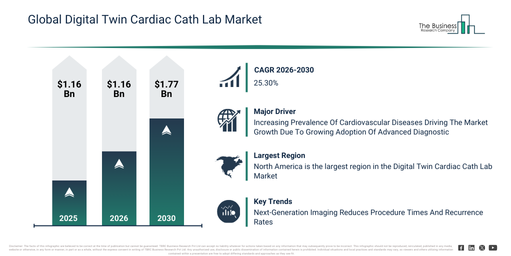
    The digital twin cardiac cath lab market has experienced rapid expansion in recent years. Its valuation is predicted to climb from $1.7 billion in 2025 to $2.13 billion in 2026, reflecting a compound annual growth rate (CAGR) of 25.5%. The market’s growth in the past can be ascribed to the early adoption of digital twins in healthcare, development of advanced imaging systems, integration of cath lab data analytics, rising demand for minimally invasive procedures, and growing investments in healthcare it infrastructure.

    The digital twin cardiac cath lab market is anticipated to experience significant expansion over the coming years. Its valuation is projected to reach $5.24 billion by 2030, exhibiting a compound annual growth rate (CAGR) of 25.3%. This projected growth throughout the forecast period stems from factors such as AI-powered predictive modeling, the scaling up of remote training initiatives, seamless integration with hospital ERP systems, the implementation of immersive AR/VR simulations, and a rising need for real-time procedure enhancements. Key trends expected during this period involve real-time procedure simulations, AI-driven workflow streamlining, proactive equipment maintenance, virtual training and educational platforms, and improved clinical decision-making support.

    Access Your Free Sample Report For In-Depth Market Analysis:

    https://www.thebusinessresearchcompany.com/sample.aspx?id=29031&type=smp

    What Major Factors Are Driving The Digital Twin Cardiac Cath Lab Market Forward?

    The rising occurrence of cardiovascular ailments is projected to drive expansion in the digital twin cardiac cath lab market in the future. These conditions are disorders of the heart and blood vessels, encompassing issues like coronary artery disease, heart attacks, and strokes. Their increasing frequency stems from inactive lifestyles, marked by a lack of physical activity and unhealthy eating habits, coupled with extended lifespans, resulting in a larger demographic prone to heart-related health problems. Digital twin cardiac cath lab systems aid in managing cardiovascular diseases by generating virtual models of patients’ hearts and blood vessels. This allows cardiologists to simulate and refine intricate interventional procedures prior to execution, leading to greater treatment accuracy, fewer procedural issues, and better patient results in cardiac catheterization laboratories. For example, data from October 2024 by the Centers for Disease Control and Prevention, a US government body, showed that in 2023, cardiovascular disease was responsible for 919,032 fatalities, representing one in every three deaths. Coronary heart disease continued to be the most common type of heart ailment, and it was significant that approximately one in six deaths from cardiovascular diseases affected individuals younger than 65 years. Consequently, the rising incidence of cardiovascular diseases is propelling the expansion of the digital twin cardiac cath lab market.

    How Is The Digital Twin Cardiac Cath Lab Market Categorized Across Its Segment Groups?

    The digital twin cardiac cath lab market covered in this report is segmented –

    1) By Component: Software, Hardware, Services

    2) By Deployment Mode: On-Premises, Cloud-Based

    3) By Application: Cardiac Diagnostics, Interventional Cardiology, Training And Education, Research And Development, Other Applications

    4) By End User: Hospitals, Specialty Clinics, Academic And Research Institutes, Other End Users

    Subsegments:

    1) By Software: Cardiac Simulation Software, Imaging And Visualization Software, Data Integration And Analytics Platforms, Procedure Planning And Optimization Tools

    2) By Hardware: Imaging Systems, Catheterization Equipment, Sensors And Monitoring Devices, Computing And Storage Systems

    3) By Services: Implementation And Integration Services, Training And Education Services, Maintenance And Support Services, Consulting Services

    Which Trends Are Impacting The Progress Of The Digital Twin Cardiac Cath Lab Market?

    Major companies operating in the digital twin cardiac cath lab market are concentrating on employing advanced technologies, specifically artificial intelligence (AI)-driven imaging, to boost the accuracy of procedures, shorten operational durations, and elevate patient recovery. This AI-driven imaging involves applying AI algorithms to examine medical images for the automated identification and interpretation of anatomical features, a process that facilitates quicker, more precise insights, supports tailored treatment strategies, and enhances procedural effectiveness along with patient well-being. A notable example is inHEART, a US-based medical technology company focused on artificial intelligence, which in March 2024 obtained U.S. Food and Drug Administration (FDA) 510(k) clearance for its AI-powered software module, designed to achieve fully automated segmentation of CT images to generate comprehensive 3D cardiac models. Such a development empowers medical professionals to refine treatment approaches, streamline procedure planning, and decrease ventricular tachycardia (VT) procedure durations by as much as 60%, concurrently reducing recurrence rates. The software functions by employing AI algorithms to analyze pre-procedural imaging data, thereby delivering highly accurate, patient-specific models of the heart that are readily compatible with prominent electroanatomic mapping (EAM) systems found in cardiac catheterization labs.

    Which Firms Are Influencing Competition In The Digital Twin Cardiac Cath Lab Market?

    Major companies operating in the digital twin cardiac cath lab market are Tata Consultancy Services Limited, Siemens Healthineers AG, Koninklijke Philips N.V., GE HealthCare Technologies Inc., Dassault Systèmes SE, Materialise NV, HeartFlow Inc., Stereotaxis Inc., Imricor Medical Systems Inc., Circle Cardiovascular Imaging Inc., Medis Medical Imaging Systems BV, VirtaMed AG, Volta Medical SAS, DASI Simulations Inc., inHEART SAS, PrediSurge Inc., InSilicoTrials Technologies SA, Canon Medical Systems Corporation, Abbott Laboratories, Boston Scientific Corporation, Johnson & Johnson MedTech

    Get The Full Digital Twin Cardiac Cath Lab Market Report:

    https://www.thebusinessresearchcompany.com/report/digital-twin-cardiac-cath-lab-global-market-report

    Which Geographic Region Dominates The Digital Twin Cardiac Cath Lab Market?

    North America was the largest region in the digital twin cardiac cath lab market in 2025. Asia-Pacific is expected to be the fastest-growing region in the forecast period. The regions covered in the digital twin cardiac cath lab market report are Asia-Pacific, South East Asia, Western Europe, Eastern Europe, North America, South America, Middle East, Africa.

    Request A Customized Digital Twin Cardiac Cath Lab Market Report For Competitive Insights:

    https://www.thebusinessresearchcompany.com/customise?id=29031&type=smp

    Browse Through More Reports Similar to the Global Digital Twin Cardiac Cath Lab Market 2026, By The Business Research Company

    Digital Twin Market Report 2026

    https://www.thebusinessresearchcompany.com/report/digital-twin-global-market-report

    Digital Twin Technology Market Report 2026

    https://www.thebusinessresearchcompany.com/report/digital-twin-technology-global-market-report

    Remote Cardiac Monitoring Market Report 2026

    https://www.thebusinessresearchcompany.com/report/remote-cardiac-monitoring-global-market-report

    Get in touch with us:

    The Business Research Company: https://www.thebusinessresearchcompany.com/

    Americas +1 310-496-7795

    Asia +44 7882 955267 & +91 8897263534

    Europe +44 7882 955267

    Email us at info@tbrc.info

    Follow us on:

    LinkedIn: https://in.linkedin.com/company/the-business-research-company

    YouTube: https://www.youtube.com/channel/UC24_fI0rV8cR5DxlCpgmyFQ

    Global Market Model: https://www.thebusinessresearchcompany.com/global-market-model
  • Closed System Transfer Devices Market Future Outlook Showing Growth Toward $2.17 Billion By 2030

    Closed System Transfer Devices Market Future Outlook Showing Growth Toward $2.17 Billion By 2030

    The Business Research Company’s 2026 market reports feature enhanced tools like market attractiveness analysis, TAM assessment, and company scoring matrices, along with interactive dashboards, deeper supply chain insights, and startup coverage strengthening the depth, usability, and strategic value of insights.

    What Expansion In Market Value Is Forecasted For The Closed System Transfer Devices Market Between 2026 And 2030?

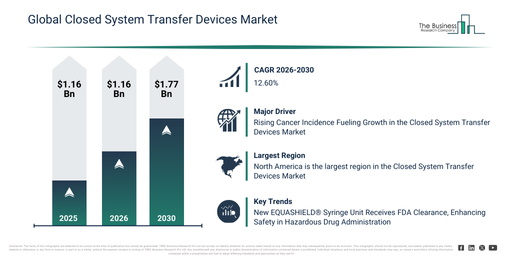
    The market size for closed system transfer devices has seen rapid expansion in recent years. This market is forecast to increase from $1.18 billion in 2025 to $1.35 billion in 2026, achieving a compound annual growth rate (CAGR) of 14.2%. The growth observed in the historical period is linked to the rising use of hazardous drugs in oncology, increased awareness of occupational exposure risks, the establishment of safety guidelines for drug handling, the expansion of hospital oncology services, and the growing adoption of chemotherapy infusion therapies.

    The market for closed system transfer devices is projected to experience swift expansion in the coming years. This market is anticipated to reach $2.18 billion by 2030, exhibiting a compound annual growth rate (CAGR) of 12.6%. The projected expansion during this period stems from factors such as more stringent regulatory enforcement regarding hazardous drug handling, an increase in cancer treatment volumes, a greater focus on adherence to workplace safety, the worldwide proliferation of oncology centers, and increased capital expenditure in hospital pharmacy safety infrastructure. Key trends expected during the forecast period encompass the increasing integration of closed drug handling systems in oncology, an elevated focus on protecting healthcare workers and minimizing their exposure, a growing inclination towards needleless closed transfer systems, the broader implementation of CSTD across hospital pharmacies, and the increasing standardization of protocols for handling hazardous drugs.

    Access Your Free Sample Report For In-Depth Market Analysis:

    https://www.thebusinessresearchcompany.com/sample.aspx?id=15767&type=smp

    Which Key Drivers Are Affecting The Closed System Transfer Devices Market Development?

    A rising incidence of cancer is anticipated to fuel the expansion of the closed-system transfer devices market. This condition involves the unregulated proliferation of abnormal cells, capable of invading adjacent tissues and disseminating throughout the body via the blood and lymph systems. An uptick in cancer diagnoses can be attributed to several elements, including lifestyle choices, environmental influences, and heightened infection rates. Closed-system transfer devices are crucial instruments in cancer therapy, safeguarding healthcare professionals and patients from hazards linked to the manipulation and delivery of chemotherapy medications. Their deployment fosters a more secure healthcare setting and improved treatment results for individuals battling cancer. For example, projections released in February 2024 by the World Health Organization (WHO), a Switzerland-based intergovernmental body, indicate that by 2050, cancer cases are predicted to surpass 35 million. This figure signifies a 77% surge from the approximately 20 million cases forecast for 2022, underscoring the escalating global impact of cancer. Moreover, data from January 2023, provided by the US-based intergovernmental organization, the National Center for Biotechnology Information, revealed 1,958,310 new cancer cases in the United States, with 609,820 cancer deaths anticipated for 2023. Consequently, the rising prevalence of cancer acts as a key impetus for the closed-system transfer devices market.

    How Is Segmentation Applied In The Closed System Transfer Devices Market Segment Analysis?

    The closed system transfer devices market covered in this report is segmented –

    1) By Type: Needleless Systems, Membrane-To-Membrane Systems

    2) By Technology: Diaphragm-Based, Compartmentalized, Filtration

    3) By Closing Mechanism: Color-To-Color Alignment Systems, Push-To-Turn Systems, Click-To-Lock Systems, Luer-Lock Systems

    4) By End User: Hospitals And Clinics, Oncology Centers, Other End Users

    Subsegments:

    1) By Needleless Systems: Closed Vial Systems, Closed Syringe Systems, Transfer Device Adapters

    2) By Membrane-To-Membrane Systems: Membrane-To-Membrane Transfer Devices, Filtered Membrane Transfer Devices

    What Trends Are Transforming The Closed System Transfer Devices Market?

    Major companies active in the closed system transfer devices (CSTD) market are focusing on creating innovative syringe units to bolster safety, refine user experience, reduce the chance of contamination, and comply with strict regulatory mandates within the healthcare industry. A syringe unit for full volume use describes a syringe specifically designed to dispense or deliver the complete volume of a liquid or medication it holds, without requiring any additional mixing or dilution. For instance, in October 2023, Equashield, a US-based medical device company, launched the EQUASHIELD Syringe Unit, which secured FDA clearance for full-volume use, thus enabling safer and more efficient handling of hazardous drugs. This inventive design prevents vapor from escaping and guards against plunger contamination, establishing it as a cost-effective solution for compounding and administering medications.

    Who Are The Companies Participating In The Closed System Transfer Devices Market Environment?

    Major companies operating in the closed system transfer devices market are Cardinal Health Inc., Becton Dickinson and Company, Baxter International Inc., B Braun Melsungen AG, Terumo Corporation, ICU Medical Inc., Amsino International Inc., JMS Co. Ltd., Vygon SA, Codan Medical GmbH, Equashield LLC, Hospira Inc., Nipro Corporation, Simplivia Healthcare Ltd., Practivet Inc., Corvida Medical Inc., Yukon Medical, Caragen Ltd., Insung Medical Co. Ltd., Aegis Medical Technologies, Epic Medical Pte Ltd., Smiths Medical

    Get The Full Closed System Transfer Devices Market Report:

    https://www.thebusinessresearchcompany.com/report/closed-system-transfer-devices-global-market-report

    Which Region Holds The Highest Market Share In The Closed System Transfer Devices Market?

    North America was the largest region in the closed system transfer device market in 2025. Asia-Pacific is expected to be the fastest-growing region in the forecast period. The regions covered in the closed system transfer devices market report are Asia-Pacific, South East Asia, Western Europe, Eastern Europe, North America, South America, Middle East, Africa.

    Request A Customized Closed System Transfer Devices Market Report For Competitive Insights:

    https://www.thebusinessresearchcompany.com/customise?id=15767&type=smp

    Browse Through More Reports Similar to the Global Closed System Transfer Devices Market 2026, By The Business Research Company

    White Biotechnology Market Report 2026

    https://www.thebusinessresearchcompany.com/report/white-biotechnology-global-market-report

    Pet Cloning Market Report 2026

    https://www.thebusinessresearchcompany.com/report/pet-cloning-global-market-report

    Synthetic Biology Market Report 2026

    https://www.thebusinessresearchcompany.com/report/synthetic-biology-global-market-report

    Get in touch with us:

    The Business Research Company: https://www.thebusinessresearchcompany.com/

    Americas +1 310-496-7795

    Asia +44 7882 955267 & +91 8897263534

    Europe +44 7882 955267

    Email us at info@tbrc.info

    Follow us on:

    LinkedIn: https://in.linkedin.com/company/the-business-research-company

    YouTube: https://www.youtube.com/channel/UC24_fI0rV8cR5DxlCpgmyFQ

    Global Market Model: https://www.thebusinessresearchcompany.com/global-market-model
  • The Rising Prevalence Of Cardiovascular Diseases Is Fueling The Market Growth Due To Increasing Demand For Advanced Diagnostic And Treatment Solutions Is Supporting Expansion In The Digital Twin Cardiac Ablation Suite Market

    The Rising Prevalence Of Cardiovascular Diseases Is Fueling The Market Growth Due To Increasing Demand For Advanced Diagnostic And Treatment Solutions Is Supporting Expansion In The Digital Twin Cardiac Ablation Suite Market

    The Business Research Company’s 2026 market reports feature enhanced tools like market attractiveness analysis, TAM assessment, and company scoring matrices, along with interactive dashboards, deeper supply chain insights, and startup coverage strengthening the depth, usability, and strategic value of insights.

    What Changes In Market Value Are Expected For The Digital Twin Cardiac Ablation Suite Market Over The 2026–2030 Period?

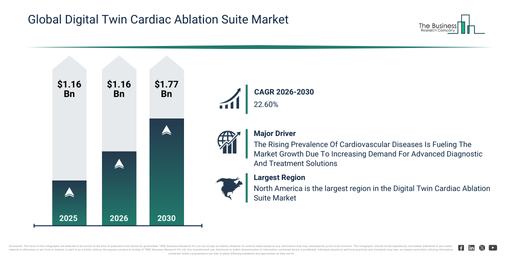
    The digital twin cardiac ablation suite market has shown significant expansion in recent years. Its value is projected to rise from $0.99 billion in 2025 to $1.21 billion in 2026, achieving a compound annual growth rate (CAGR) of 22.9%. The factors contributing to its growth during the historic period include the high cost of traditional ablation tools, limited access to patient-specific modeling, reliance on manual planning, fragmented healthcare data systems, and slow adoption of advanced simulation technologies.

    The market size for the digital twin cardiac ablation suite is projected to experience substantial expansion over the upcoming years. This market is anticipated to reach $2.73 billion by 2030, exhibiting a compound annual growth rate (CAGR) of 22.6%. Factors contributing to this growth during the forecast period include the increasing demand for precise cardiac interventions, wider acceptance of digital twin technologies, the incorporation of AI into procedure planning, escalating investments in healthcare IT infrastructure, and the broadening reach of telecardiology and remote monitoring solutions. Key trends identified for this period encompass personalized procedure optimization, continuous patient monitoring in real-time, predictive maintenance for medical equipment, surgical training utilizing simulations, and seamless integration with electronic health records.

    Access Your Free Sample Report For In-Depth Market Analysis:

    https://www.thebusinessresearchcompany.com/sample.aspx?id=29030&type=smp

    Which Key Drivers Are Affecting The Digital Twin Cardiac Ablation Suite Market Development?

    The increasing occurrence of cardiovascular diseases is anticipated to drive the expansion of the digital twin cardiac ablation suite market moving forward. These are conditions impacting the heart and blood vessels, potentially resulting in heart attacks, strokes, and other severe health issues. The rise in cardiovascular disease prevalence stems from the aging demographics in developed countries, where older age considerably elevates the likelihood of cardiac-related problems and complications. Digital Twin Cardiac Ablation Suites assist in managing cardiovascular diseases by generating virtual models of patient hearts, allowing doctors to simulate and fine-tune ablation procedures pre-treatment, thereby enhancing patient results and lessening complications for individuals with cardiac arrhythmias. For example, data from the Centers for Disease Control and Prevention, a US-based government body, indicated that in October 2024, cardiovascular disease was responsible for 919,032 lives, representing one in every three deaths. Coronary heart disease continued to be the most common type of heart ailment, with approximately one in six deaths from cardiovascular diseases affecting adults under 65 years of age. Consequently, the growing prevalence of cardiovascular diseases is propelling the expansion of the digital twin cardiac ablation suite market.

    Digital Twin Cardiac Ablation Suite Market Driver: Growing Emphasis On Precision Medicine Driving The Market Growth Due To Advancements In Genomic Technologies

    How Are Segments Identified Within The Digital Twin Cardiac Ablation Suite Market Segment Framework?

    The digital twin cardiac ablation suite market covered in this report is segmented –

    1) By Component: Software, Hardware, Services

    2) By Deployment Mode: On-Premises, Cloud-Based

    3) By Application: Preoperative Planning, Intraoperative Guidance, Postoperative Assessment, Training And Education, Other Applications

    4) By End-Users: Hospitals, Specialty Clinics, Research Institutes, Other End-Users

    Subsegments:

    1) By Software: Virtual Heart Modeling, Cardiac Simulation Software, Electrophysiology Simulation Tools, Patient Specific Cardiac Modeling, Three Dimensional Cardiac Mapping

    2) By Hardware: Imaging Devices, Computing Systems, Data Storage Devices

    3) By Services: Installation And Integration Services, Maintenance And Support Services, Training And Education Services, Consulting Services, Remote Monitoring Services

    Who Are The Companies Competing Within The Digital Twin Cardiac Ablation Suite Market?

    Major companies operating in the digital twin cardiac ablation suite market are Siemens Healthineers AG, Koninklijke Philips N.V., GE HealthCare Technologies Inc., Boston Scientific Corporation, Medtronic Public Limited Company, Abbott Laboratories, Dassault Systèmes SE, Stereotaxis Inc., Johnson & Johnson, Kardium Inc., CathWorks Ltd., inHEART SAS, Volta Medical SAS, Circle Cardiovascular Imaging Inc., Imricor Medical Systems Inc., CardioFocus Inc., CathVision ApS, HeartFlow Inc., Lepu Medical Technology Beijing Co. Ltd., Ortus Solutions Ltd., Biosense Webster Inc.

    Get The Full Digital Twin Cardiac Ablation Suite Market Report:

    https://www.thebusinessresearchcompany.com/report/digital-twin-cardiac-ablation-suite-global-market-report

    Which Region Is The Leading Market For The Digital Twin Cardiac Ablation Suite Market?

    North America was the largest region in the digital twin cardiac ablation suite market in 2025. Asia-Pacific is expected to be the fastest-growing region in the forecast period. The regions covered in the digital twin cardiac ablation suite market report are Asia-Pacific, South East Asia, Western Europe, Eastern Europe, North America, South America, Middle East, Africa.

    Request A Customized Digital Twin Cardiac Ablation Suite Market Report For Competitive Insights:

    https://www.thebusinessresearchcompany.com/customise?id=29030&type=smp

    Browse Through More Reports Similar to the Global Digital Twin Cardiac Ablation Suite Market 2026, By The Business Research Company

    Digital Twin Market Report 2026

    https://www.thebusinessresearchcompany.com/report/digital-twin-global-market-report

    Digital Twin Technology Market Report 2026

    https://www.thebusinessresearchcompany.com/report/digital-twin-technology-global-market-report

    Digital Twins In Healthcare Market Report 2026

    https://www.thebusinessresearchcompany.com/report/digital-twins-in-healthcare-global-market-report

    Get in touch with us:

    The Business Research Company: https://www.thebusinessresearchcompany.com/

    Americas +1 310-496-7795

    Asia +44 7882 955267 & +91 8897263534

    Europe +44 7882 955267

    Email us at info@tbrc.info

    Follow us on:

    LinkedIn: https://in.linkedin.com/company/the-business-research-company

    YouTube: https://www.youtube.com/channel/UC24_fI0rV8cR5DxlCpgmyFQ

    Global Market Model: https://www.thebusinessresearchcompany.com/global-market-model