Category: Medical Equipment

  • Global Clinical Oncology Next Generation Sequencing Market Set To Expand To $1.03 Billion By 2030 At 12.1% CAGR

    Global Clinical Oncology Next Generation Sequencing Market Set To Expand To $1.03 Billion By 2030 At 12.1% CAGR

    The Business Research Company’s 2026 market reports feature enhanced tools like market attractiveness analysis, TAM assessment, and company scoring matrices, along with interactive dashboards, deeper supply chain insights, and startup coverage strengthening the depth, usability, and strategic value of insights.

    How Much Growth In Market Value Is Expected For The Clinical Oncology Next Generation Sequencing Market Between 2026 And 2030?

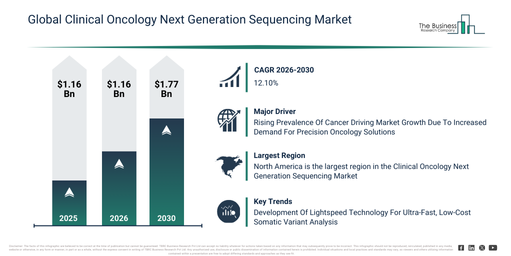
    The clinical oncology next generation sequencing market size has seen rapid expansion in recent years. It is anticipated to expand from $0.58 billion in 2025 to $0.66 billion in 2026, achieving a compound annual growth rate (CAGR) of 13.3%. The previous growth period can be attributed to the expansion of cancer genomics research, increased availability of sequencing platforms, a rise in oncology clinical trials, the growing adoption of molecular diagnostics, and declining sequencing costs.

    The clinical oncology next generation sequencing market is poised for significant expansion in the coming years. It is anticipated to grow to $1.04 billion by 2030, exhibiting a compound annual growth rate (CAGR) of 12.1%. This projected growth can be linked to the increasing need for precision oncology, heightened investments in genomic medicine, the broadening of hospital-based sequencing laboratories, the expanding application of targeted cancer therapies, and ongoing improvements in sequencing technologies. Important trends anticipated for the forecast period encompass the greater adoption of NGS-based oncology diagnostics, a rise in the utilization of companion diagnostic applications, enhanced integration of bioinformatics and data analytics, the development of personalized cancer treatment methodologies, and an increased emphasis on detecting rare mutations.

    Access Your Free Sample Report For In-Depth Market Analysis:

    https://www.thebusinessresearchcompany.com/sample.aspx?id=3344&type=smp

    What Leading Drivers Are Supporting The Clinical Oncology Next Generation Sequencing Market Expansion?

    An anticipated surge in cancer cases is poised to drive the expansion of the clinical oncology next-generation sequencing market in the future. Cancer encompasses a range of illnesses marked by the unchecked multiplication and dissemination of atypical cells throughout the body. The increasing prevalence of this disease is largely attributed to an aging global population, given that the risk of developing cancer substantially escalates with advancing age. Next-generation sequencing (NGS) serves to pinpoint novel and infrequent cancer mutations, thereby offering enhanced insight into the molecular basis of specific tumors. Illustratively, data from February 2024, provided by the World Health Organization, a Switzerland-based public health agency of United Nations, forecasts more than 35 million new cancer diagnoses by 2050. This represents a 77% rise from the approximately 20 million cases documented in 2022. Consequently, the growing incidence of cancer is a key factor fueling the expansion of the clinical oncology next-generation sequencing market.

    How Are Segments Identified Within The Clinical Oncology Next Generation Sequencing Market Segment Framework?

    The clinical oncology next generation sequencing market covered in this report is segmented –

    1) By Technology: Ion Semiconductor Sequencing, Pyro-Sequencing, Synthesis Sequencing, Real Time Sequencing, Ligation Sequencing, Reversible Dye Termination Sequencing, Nano-Pore Sequencing

    2) By Application: Screening, Companion Diagnostics, Other Diagnostics

    3) By End User: Hospital Laboratories, Clinical Research Organizations, Diagnostic Laboratories

    Subsegments:

    1) By Ion Semiconductor Sequencing: Ion Proton System, Ion PGM System, Ion S5 System, Other Ion Semiconductor Sequencing Technologies

    2) By Pyro-Sequencing: 454 Pyrosequencing, Other Pyro-Sequencing Technologies

    3) By Synthesis Sequencing: Illumina Sequencing Technology, SOLiD Sequencing Technology, Other Synthesis Sequencing Technologies

    4) By Real-Time Sequencing: PacBio RS II System, Sequel System, Other Real-Time Sequencing Technologies

    5) By Ligation Sequencing: Helicos Single Molecule Sequencing, Other Ligation Sequencing Technologies

    6) By Reversible Dye Termination Sequencing: Illumina HiSeq, Illumina NextSeq, Other Reversible Dye Termination Sequencing Technologies

    7) By Nano-Pore Sequencing: Oxford Nanopore Technologies (MinION, GridION, PromethION), Other Nano-Pore Sequencing Technologies

    What Emerging Trends Are Seen In The Clinical Oncology Next Generation Sequencing Market?

    Leading companies in the clinical oncology next-generation sequencing (NGS) market are concentrating on technological advancements, such as integrating software accelerators that significantly lower the time and expense of second-level NGS analysis. This innovation enables laboratories to provide results more quickly while decreasing computational resource requirements. These accelerator technologies support comprehensive genomic profiling and enhance the accessibility of high-throughput cancer panels for both large centralized laboratories and decentralized diagnostic settings. For instance, in January 2024, QIAGEN Digital Insights, a Germany-based bioinformatics company, introduced an improved version of its CLC Genomics Workbench Premium featuring LightSpeed technology, which now supports somatic cancer secondary analysis. The LightSpeed accelerator is capable of analyzing a 275-gene cancer panel at 3377× coverage in just 6 minutes, with a cost of less than US$ 0.72 per test in standard cloud environments. LightSpeed is designed to provide high speed, accuracy, reduced power consumption, and removes the need for new hardware or additional licenses beyond the existing CLC platform.

    Who Are The Companies Competing Within The Clinical Oncology Next Generation Sequencing Market?

    Major companies operating in the clinical oncology next generation sequencing market are Thermo Fisher Scientific, Oxford Nanopore Technologies Ltd., QIAGEN N.V., Myriad Genetics Inc., Illumina Inc., F. Hoffmann-La Roche Ltd., PerkinElmer Inc., Agilent Technologies Inc., Pacific Biosciences of California Inc., Caris Life Sciences, Paradigm Diagnostics, GATC Biotech AG, Macrogen Inc., DNASTAR Inc., Exosome Diagnostics Inc., Biomatters Ltd., Partek Inc., Foundation Medicine Inc., Becton Dickinson and Company (BD), Takara Bio Inc., Knome Inc., Genomatix Software GmbH, CLC bio, GnuBIO Inc., Bio-Rad Laboratories Inc., BGI Genomics Co. Ltd., Guardant Health Inc., Invitae Corporation, Natera Inc., NeoGenomics Laboratories Inc., Sysmex Corporation, Veracyte Inc., Zymo Research Corporation, ArcherDX Inc., Karius Inc., OncoDNA S.A., Personal Genome Diagnostics Inc., PierianDx Inc.

    Get The Full Clinical Oncology Next Generation Sequencing Market Report:

    https://www.thebusinessresearchcompany.com/report/clinical-oncology-next-generation-sequencing-global-market-report

    Which Region Leads The Clinical Oncology Next Generation Sequencing Market In Overall Market Size?

    North America was the largest region in the clinical oncology next-generation sequencing market in 2025. Asia-Pacific was the second largest region in the clinical oncology next-generation sequencing market. The regions covered in the clinical oncology next generation sequencing market report are Asia-Pacific, South East Asia, Western Europe, Eastern Europe, North America, South America, Middle East, Africa.

    Request A Customized Clinical Oncology Next Generation Sequencing Market Report For Competitive Insights:

    https://www.thebusinessresearchcompany.com/customise?id=3344&type=smp

    Browse Through More Reports Similar to the Global Clinical Oncology Next Generation Sequencing Market 2026, By The Business Research Company

    Clinical Chemistry Market Report 2026

    https://www.thebusinessresearchcompany.com/report/clinical-chemistry-global-market-report

    Dental Diagnostic Imaging Devices And Equipment Market Report 2026

    https://www.thebusinessresearchcompany.com/report/dental-diagnostic-imaging-devices-and-equipment-global-market-report

    Biochemistry Analyzer Market Report 2026

    https://www.thebusinessresearchcompany.com/report/biochemistry-analyzer-global-market-report

    Get in touch with us:

    The Business Research Company: https://www.thebusinessresearchcompany.com/

    Americas +1 310-496-7795

    Asia +44 7882 955267 & +91 8897263534

    Europe +44 7882 955267

    Email us at info@tbrc.info

    Follow us on:

    LinkedIn: https://in.linkedin.com/company/the-business-research-company

    YouTube: https://www.youtube.com/channel/UC24_fI0rV8cR5DxlCpgmyFQ

    Global Market Model: https://www.thebusinessresearchcompany.com/global-market-model
  • Digital Health For Obesity Market Forecast Showing Industry Progress And Growth Trends

    Digital Health For Obesity Market Forecast Showing Industry Progress And Growth Trends

    The Business Research Company’s 2026 market reports feature enhanced tools like market attractiveness analysis, TAM assessment, and company scoring matrices, along with interactive dashboards, deeper supply chain insights, and startup coverage strengthening the depth, usability, and strategic value of insights.

    How Large Will The Digital Health For Obesity Market Be By 2030 Compared To Its 2026 Market Size?

    The digital health for obesity market size has experienced significant expansion in recent years. It is projected to increase from $78.91 billion in 2025 to $99.36 billion in 2026, reflecting a compound annual growth rate (CAGR) of 25.9%. Factors such as limited access to digital obesity management tools, the growing prevalence of obesity, a reliance on traditional weight management methods, insufficient integration between healthcare providers and digital solutions, and increasing smartphone and internet penetration have contributed to this growth in the historic period.

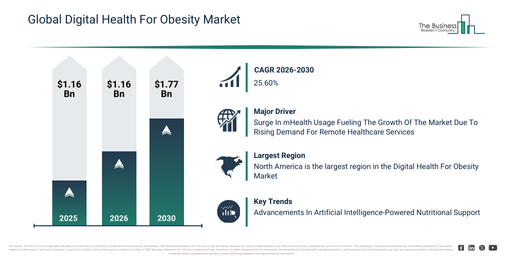
    The digital health for obesity market size is anticipated to undergo significant expansion over the next few years. This market is predicted to reach a valuation of $247.33 billion by 2030, exhibiting a compound annual growth rate (CAGR) of 25.6%. This expansion during the projection period stems from various factors, including progress in AI-powered coaching and predictive analytics, an uptick in the embrace of connected wearable devices, the development of telemedicine infrastructure, increasing understanding of personalized obesity care, and greater capital allocation into digital health platforms. Key trends anticipated within this forecast timeframe encompass the expanding uptake of mobile and web-based health applications, a rise in the utilization of wearable fitness and health tracking devices, surging demand for individualized weight management programs, the broadening of telehealth and remote patient monitoring offerings, and the incorporation of behavioral therapy and lifestyle coaching into digital platforms.

    Access Your Free Sample Report For In-Depth Market Analysis:

    https://www.thebusinessresearchcompany.com/sample.aspx?id=25753&type=smp

    Which Major Drivers Are Influencing The Expansion Of The Digital Health For Obesity Market?

    The expanding embrace of mHealth is projected to propel the expansion of the digital health for obesity market in the coming period. mHealth, or mobile health, involves utilizing mobile devices like smartphones and tablets, in conjunction with health applications and wireless tech, to offer medical and public health provisions. This facilitates remote oversight, patient instruction, and immediate health management. Its growth stems from the widespread ownership of smartphones, providing straightforward access to health apps and digital instruments for monitoring, managing, and enhancing individual health instantly. This technology bolsters digital health solutions for obesity by allowing for mobile-centric interventions, including tracking diets, monitoring physical activity, offering virtual coaching, and providing tailored feedback – all crucial for successful weight management and altering behaviors. A notable example is data from December 2023 by the National Health Service (NHS), the UK’s publicly funded health system. It indicated that appointments viewed or managed via the National Health Service (NHS) app surged to 4.1 million in November 2023, an increase from 1.95 million in November 2022. Consequently, the growing integration of mHealth is a key force behind the expansion of the digital health for obesity market.

    How Is The Digital Health For Obesity Market Segmented Across Different Segment Categories?

    The digital health for obesity market covered in this report is segmented –

    1) By Component: Software, Hardware, Services

    2) By Functionality: Weight Monitoring, Diet And Nutrition Management, Physical Activity Tracking, Behavioral Therapy Or Computer Based Test, Remote Patient Monitoring

    3) By End-Use: Patients, Providers, Payers, Other Users

    Subsegments:

    1) By Software: Mobile Applications, Web-Based Platforms, Artificial Intelligence-Powered Coaching Tools, Diet And Nutrition Tracking Software, Fitness And Activity Monitoring Software, Behavioral Modification Programs, Telehealth Software, Electronic Health Record (EHR) Integration Tools

    2) By Hardware: Wearable Fitness Trackers, Smart Scales, Smartwatches, Body Composition Analyzers, Connected Glucometers, Blood Pressure Monitors, Sleep Trackers, Internet of Things-Enabled Health Devices

    3) By Services: Remote Patient Monitoring, Teleconsultation Services, Weight Management Counseling, Subscription-Based Wellness Programs, Personalized Coaching Services, Behavioral Therapy Sessions, Data Analytics And Reporting Services, Clinical Support And Follow-Up

    Which Trends Are Shaping The Digital Health For Obesity Market?

    Companies operating in the digital health for obesity market are concentrating on technological advancements in artificial intelligence-powered nutritional support to enhance individualized care, improve patient involvement, and encourage sustained behavioral modifications for managing weight and related chronic conditions. Artificial intelligence-powered nutritional support involves the utilization of artificial intelligence algorithms and virtual agents to provide customized dietary guidance, immediate feedback, and behavior coaching, assisting individuals in making better food choices and sustaining long-term lifestyle changes. For instance, in May 2025, Omada Health Inc., a US-based digital healthcare company focused on preventing and managing chronic diseases, launched OmadaSpark Inc., an artificial intelligence-powered virtual agent within its nutritional intelligence initiative to strengthen personalized nutrition support. This agent offers real-time educational advice, motivation, and tools for building habits. The innovation aims to transform individuals’ relationships with food by integrating advanced technology with clinical care. This development marks an important step in expanding Omada’s digital platform for chronic condition and obesity management.

    Which Organizations Play A Role In The Digital Health For Obesity Market Landscape?

    Major companies operating in the digital health for obesity market are Teladoc Health Inc., WW International Inc., Hims & Hers Inc., Noom Inc., Vida Health Inc., Twin Health Inc., Allurion Technologies Inc., Virta Health Corp., Omada Health Inc., DarioHealth Corp., WellDoc Inc., Sidekick Health, Qardio Inc., Fitterfly Pvt. Ltd., Form Health, Lark Health Inc., Knownwell Inc., Ilant Health Inc., MyNetDiary Inc., Rimidi Inc

    Get The Full Digital Health For Obesity Market Report:

    https://www.thebusinessresearchcompany.com/report/digital-health-for-obesity-global-market-report

    Which Region Leads The Digital Health For Obesity Market In Terms Of Market Share?

    North America was the largest region in the digital health for obesity market in 2025. Asia-Pacific is expected to be the fastest-growing region in the forecast period. The regions covered in the digital health for obesity market report are Asia-Pacific, South East Asia, Western Europe, Eastern Europe, North America, South America, Middle East, Africa.

    Request A Customized Digital Health For Obesity Market Report For Competitive Insights:

    https://www.thebusinessresearchcompany.com/customise?id=25753&type=smp

    Browse Through More Reports Similar to the Global Digital Health For Obesity Market 2026, By The Business Research Company

    Womens Digital Health Market Report 2026

    https://www.thebusinessresearchcompany.com/report/womens-digital-health-global-market-report

    Digital Diabetes Management Market Report 2026

    https://www.thebusinessresearchcompany.com/report/digital-diabetes-management-global-market-report

    Digital Health In Neurology Market Report 2026

    https://www.thebusinessresearchcompany.com/report/digital-health-in-neurology-global-market-report

    Get in touch with us:

    The Business Research Company: https://www.thebusinessresearchcompany.com/

    Americas +1 310-496-7795

    Asia +44 7882 955267 & +91 8897263534

    Europe +44 7882 955267

    Email us at info@tbrc.info

    Follow us on:

    LinkedIn: https://in.linkedin.com/company/the-business-research-company

    YouTube: https://www.youtube.com/channel/UC24_fI0rV8cR5DxlCpgmyFQ

    Global Market Model: https://www.thebusinessresearchcompany.com/global-market-model
  • Clinical Chemistry Analyzers Market Growth Expected To Reach $22.64 Billion By 2030 At 8% CAGR

    Clinical Chemistry Analyzers Market Growth Expected To Reach $22.64 Billion By 2030 At 8% CAGR

    The Business Research Company’s 2026 market reports feature enhanced tools like market attractiveness analysis, TAM assessment, and company scoring matrices, along with interactive dashboards, deeper supply chain insights, and startup coverage strengthening the depth, usability, and strategic value of insights.

    What Is The Estimated Market Size Of The Clinical Chemistry Analyzers Market In 2026, And How Will Its Value Evolve By 2030?

    The clinical chemistry analyzers market has demonstrated strong expansion in recent years. Its valuation is expected to rise from $15.49 billion in 2025 to $16.63 billion in 2026, exhibiting a compound annual growth rate (CAGR) of 7.3%. This historical growth can be linked to several factors, including an increase in diagnostic testing volumes, the expansion of hospital laboratory infrastructure, a rising prevalence of chronic diseases, greater adoption of automated laboratory equipment, and the availability of standardized reagents.

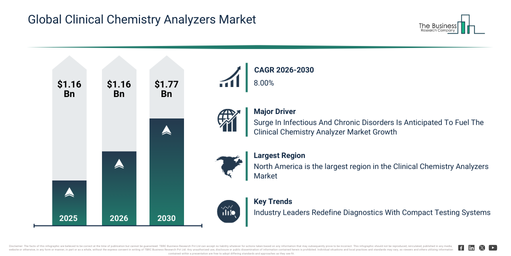
    The market for clinical chemistry analyzers is anticipated to experience substantial expansion over the upcoming years. This market is projected to reach $22.64 billion by 2030, exhibiting a compound annual growth rate (CAGR) of 8.0%. This anticipated growth during the forecast period stems from factors such as a heightened need for swift diagnostic methods, the proliferation of decentralized testing approaches, increased capital directed towards intelligent laboratories, an expanding emphasis on individualized medical care, and the incorporation of sophisticated analytical tools in clinical diagnostics. Key developments expected within this forecast timeframe encompass a greater uptake of fully automated analyzer systems, an increasing incorporation of AI-powered diagnostic assistance, a surging requirement for high-volume testing platforms, the broadening scope of point-of-care chemistry tests, and an intensified concentration on data interoperability and laboratory information system (LIS) integration.

    Access Your Free Sample Report For In-Depth Market Analysis:

    https://www.thebusinessresearchcompany.com/sample.aspx?id=12462&type=smp

    Which Key Factors Are Driving The Clinical Chemistry Analyzers Market Growth?

    The rising prevalence of both infectious and chronic disorders is anticipated to propel the clinical chemistry analyzer market in the future. Infectious diseases originate from pathogens, which are harmful substances entering the human body via food or another individual. Chronic diseases typically last for three months or longer and may worsen over time. The increasing occurrence of these conditions is significantly boosting the clinical chemistry analyzer market, as these instruments are crucial for analyzing specimen samples to diagnose and manage various illnesses. For instance, in September 2023, the UK Health Security Agency, a government agency based in the UK, reported a 7% increase in tuberculosis (TB) cases in England during the first half of 2023, with 2,408 notifications compared to 2,251 in the same period of 2022. Therefore, the growing incidence of infectious and chronic disorders is a primary driver for the clinical chemistry analyzer market.

    What Are The Key Segment Divisions In The Clinical Chemistry Analyzers Market Segment Structure?

    The clinical chemistry analyzers market covered in this report is segmented –

    1) By Product: Clinical Chemistry Analyzers, Clinical Chemistry Reagents, Other Products

    2) By Analyzer Technology: Semi-Automated Clinical Chemistry Analyzers, Fully Automated Clinical Chemistry Analyzers

    3) By Test Type: Basic Metabolic Panels, Electrolyte Panels, Liver Panels, Lipid Profiles, Renal Panels, Thyroid Function Panels, Specialty Chemical Tests

    4) By End-User: Hospitals, Academic Research Centers, Diagnostic Laboratories, Other End-Users

    Subsegments:

    1) By Clinical Chemistry Analyzers: Fully Automated Analyzers, Semi-Automated Analyzers, Benchtop Analyzers, Portable Analyzers

    2) By Clinical Chemistry Reagents: Enzymatic Reagents, Immunochemical Reagents, Colorimetric Reagents, Control And Calibration Reagents

    3) By Other Products: Quality Control Products, Calibration Standards, Sample Preparation Kits

    Which Trends Are Guiding The Direction Of The Clinical Chemistry Analyzers Market?

    Key entities in the clinical chemistry analyzers market are channeling their efforts into the creation of compact testing systems. These compact testing systems typically denote diagnostic or analytical platforms engineered to be small, portable, and efficient for conducting various tests or assays. For example, in July 2023, Siemens Healthineers, a Germany-based firm offering healthcare solutions, revealed the introduction of its ‘Atellica CI Analyzer’. It is utilized for clinical chemistry testing and immunoassay. The Atellica CI Analyzer facilitates consistency in reagents, consumables, and intelligent software for both standalone laboratories and satellite facilities within broader healthcare networks.

    Which Organizations Are Engaged In The Clinical Chemistry Analyzers Market?

    Major companies operating in the clinical chemistry analyzers market are F. Hoffmann-La Roche AG, Abbott Laboratories, Siemens Healthineers AG, Thermo Fisher Scientific Inc., Mindray Medical International Limited, Sysmex Corporation, HORIBA Ltd., Nova Biomedical Corporation, Randox Laboratories Ltd., ELITechGroup, DiaSys Diagnostic Systems GmbH, SNIBE Co. Ltd., EKF Diagnostics Holdings plc, Awareness Technology Inc., Bio Systems Diagnostics Pvt. Ltd., Analyticon Biotechnologies AG, SFRI Medical Diagnostics, Shenzhen Rayto Life and Analytical Sciences Co. Ltd., Biobase Group, Jokoh Co. Ltd., Dirui Industrial Co. Ltd.

    Get The Full Clinical Chemistry Analyzers Market Report:

    https://www.thebusinessresearchcompany.com/report/clinical-chemistry-analyzers-global-market-report

    Which Region Is The Top Contributor To The Clinical Chemistry Analyzers Market By Share?

    North America was the largest region in the clinical chemistry analyzer market in 2025. The regions covered in the clinical chemistry analyzers market report are Asia-Pacific, South East Asia, Western Europe, Eastern Europe, North America, South America, Middle East, Africa.

    Request A Customized Clinical Chemistry Analyzers Market Report For Competitive Insights:

    https://www.thebusinessresearchcompany.com/customise?id=12462&type=smp

    Browse Through More Reports Similar to the Global Clinical Chemistry Analyzers Market 2026, By The Business Research Company

    Dental Practice Management Market Report 2026

    https://www.thebusinessresearchcompany.com/report/dental-practice-management-global-market-report

    Dental X Ray Equipment Market Report 2026

    https://www.thebusinessresearchcompany.com/report/dental-x-ray-equipment-global-market-report

    Dental Implants Market Report 2026

    https://www.thebusinessresearchcompany.com/report/dental-implants-global-market-report

    Get in touch with us:

    The Business Research Company: https://www.thebusinessresearchcompany.com/

    Americas +1 310-496-7795

    Asia +44 7882 955267 & +91 8897263534

    Europe +44 7882 955267

    Email us at info@tbrc.info

    Follow us on:

    LinkedIn: https://in.linkedin.com/company/the-business-research-company

    YouTube: https://www.youtube.com/channel/UC24_fI0rV8cR5DxlCpgmyFQ

    Global Market Model: https://www.thebusinessresearchcompany.com/global-market-model
  • Digital Health For Cardiovascular Market Future Trends Influencing Growth Through 2030

    Digital Health For Cardiovascular Market Future Trends Influencing Growth Through 2030

    The Business Research Company’s 2026 market reports feature enhanced tools like market attractiveness analysis, TAM assessment, and company scoring matrices, along with interactive dashboards, deeper supply chain insights, and startup coverage strengthening the depth, usability, and strategic value of insights.

    What Is The Projected Increase In Market Value Of The Digital Health For Cardiovascular Market During 2026–2030?

    The digital health for cardiovascular market size has seen substantial growth over recent years. Forecasts indicate it will expand from $49.64 billion in 2025 to $60.99 billion by 2026, exhibiting a compound annual growth rate (CAGR) of 22.9%. Historically, this expansion has been driven by factors such as the increasing incidence of cardiovascular diseases, the broadening of hospital digital infrastructure, the uptake of electronic health records, the growing utilization of remote healthcare services, and the advancement of wearable health technology.

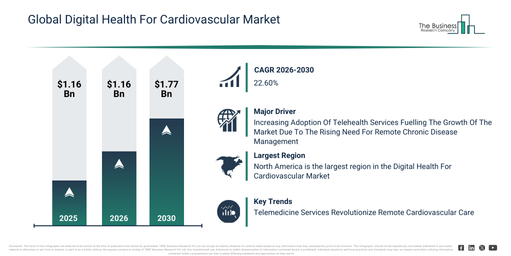
    The digital health for cardiovascular market is projected to undergo significant expansion over the next few years. Its valuation is anticipated to reach $137.87 billion by 2030, exhibiting a compound annual growth rate (CAGR) of 22.6%. This growth in the forecast period is primarily attributed to a surging demand for home-based cardiac care, increasing investments in AI-driven diagnostics, the expansion of cloud-based healthcare platforms, a heightened focus on preventive cardiovascular care, and the rising adoption of real-time patient monitoring. Noteworthy trends during this period include the increased uptake of remote cardiac monitoring solutions, the growing utilization of wearable ECG devices, the broadening integration of AI-based diagnostic software, the proliferation of telecardiology platforms, and an enhanced emphasis on continuous patient monitoring.

    Access Your Free Sample Report For In-Depth Market Analysis:

    https://www.thebusinessresearchcompany.com/sample.aspx?id=24210&type=smp

    What Key Drivers Are Fueling The Growth Of The Digital Health For Cardiovascular Market?

    The expanding embrace of telehealth services is projected to drive the future growth of the digital health for cardiovascular care market. Telehealth services encompass healthcare delivered remotely using phones, video calls, or applications, allowing patients to consult medical professionals without physically visiting a clinic or hospital. The rising utilization of telehealth is primarily driven by its convenience, enabling access to healthcare from home, which is particularly beneficial for managing chronic conditions like heart disease. Digital health for cardiovascular care supports telehealth through capabilities such as remote monitoring and virtual consultations, thus simplifying patient access to care. It also improves healthcare efficiency by supplying real-time data, enhancing diagnosis and treatment strategies, and reducing the need for in-person visits. For instance, in November 2024, the Australian Digital Health Agency 2022, a government agency located in Australia, reported in Patient Experiences 2023–24 that 89.2% of individuals who had a telehealth consultation indicated they would use telehealth for a consultation again if it was offered. This marks an increase from 87.7% in 2022-23. Therefore, the growing adoption of telehealth services is fueling the growth of the digital health for cardiovascular care market.

    What Are The Main Segments Within The Digital Health For Cardiovascular Market Segment Structure?

    The digital health for cardiovascular market covered in this report is segmented –

    1) By Product Type: Remote Monitoring Devices, Mobile Health Applications, Diagnostic Software, Wearable ECG Monitors, Blood Pressure Monitors, Biosensors

    2) By Technology: Artificial Intelligence (AI), Internet Of Things (IoT), Telemedicine, Wearable Devices, Big Data Analytics, Interoperable Health Data Platforms

    3) By Deployment: On-Premise, Cloud

    4) By Application: Cardiac Monitoring, Diagnosis And Early Detection, Post-Surgical Care, Preventive Care, Rehabilitation Management

    5) By End User: Hospitals And Clinics, Homecare Settings, Ambulatory Care Centers, Academic And Research Institutes

    Subsegments:

    1) By Remote Monitoring Devices: Implantable Loop Recorders, Holter Monitors, Mobile Cardiac Telemetry Devices, Patch Monitors

    2) By Mobile Health Applications: Heart Rate Monitoring Apps, Blood Pressure Monitoring Apps, Medication Adherence Apps, Diet And Lifestyle Management Apps

    3) By Diagnostic Software: Electrocardiogram (ECG) Interpretation Software, Artificial intelligence (AI)-Powered Diagnostic Tools, Cardiac Imaging Analysis Software, Risk Assessment Tools

    4) By Wearable Electrocardiogram (ECG) Monitors: Smartwatches With Electrocardiogram (ECG) Functionality, Chest Strap Electrocardiogram (ECG) Monitors, Wristband Electrocardiogram (ECG) Monitors, Clothing-Integrated Electrocardiogram (ECG) Sensors

    5) By Blood Pressure Monitors: Arm Cuff Monitors, Wrist Cuff Monitors, Cuffless Continuous BP Monitors, Wireless Blood Pressure (BP) Monitors

    6) By Biosensors: Implantable Biosensors, Skin Patch Biosensors, Sweat-Based Sensors, Multi-Parameter Biosensors

    What Trends Are Influencing The Digital Health For Cardiovascular Market?

    Companies active in the digital health for cardiovascular care market are focusing on creating innovative services, such as telemedicine offerings, to improve remote patient monitoring, broaden access to care, and deliver prompt interventions for individuals with heart conditions. A telemedicine service utilizes digital communication technologies, including video calls, mobile apps, and remote monitoring devices, to provide medical consultations, diagnoses, and treatment from a distance. For instance, in January 2025, Withings, a France-based consumer electronics company, launched Cardio Check-Up, a telemedicine service included with its Withings Plus subscription. Subscribers are able to use any Withings device that collects electrocardiogram data to receive a professional review of their heart health. This service delivers four annual cardiologist reports based on the data, facilitated through Heartbeat Health.

    Who Are The Companies Participating In The Digital Health For Cardiovascular Market?

    Major companies operating in the digital health for cardiovascular market are Abbott Laboratories, Medtronic plc, Siemens Healthineers AG, Philips Healthcare, GE HealthCare Technologies Inc., Boston Scientific Corporation, Edwards Lifesciences Corporation, Biotronik SE & Co. KG, LivaNova PLC, HeartFlow Inc., Viz.ai Inc., Bardy Diagnostics Inc., Ultromics Limited, RSIP Vision Ltd., Cardiologs Technologies SAS, Aktiia SA, FibriCheck, Cleerly Inc., AliveCor Inc., iRhythm Technologies Inc., Preventice Solutions (Boston Scientific), Eko Health Inc., BioTelemetry Inc., Withings Health Solutions

    Get The Full Digital Health For Cardiovascular Market Report:

    https://www.thebusinessresearchcompany.com/report/digital-health-for-cardiovascular-global-market-report

    Which Region Leads The Digital Health For Cardiovascular Market In Overall Market Size?

    North America was the largest region in the digital health for cardiovascular market in 2025. Asia-Pacific is expected to be the fastest-growing region in the forecast period. The regions covered in the digital health for cardiovascular market report are Asia-Pacific, South East Asia, Western Europe, Eastern Europe, North America, South America, Middle East, Africa.

    Request A Customized Digital Health For Cardiovascular Market Report For Competitive Insights:

    https://www.thebusinessresearchcompany.com/customise?id=24210&type=smp

    Browse Through More Reports Similar to the Global Digital Health For Cardiovascular Market 2026, By The Business Research Company

    Digital Health Market Report 2026

    https://www.thebusinessresearchcompany.com/report/digital-health-global-market-report

    Womens Digital Health Market Report 2026

    https://www.thebusinessresearchcompany.com/report/womens-digital-health-global-market-report

    Cardiovascular Information System Market Report 2026

    https://www.thebusinessresearchcompany.com/report/cardiovascular-information-system-global-market-report

    Get in touch with us:

    The Business Research Company: https://www.thebusinessresearchcompany.com/

    Americas +1 310-496-7795

    Asia +44 7882 955267 & +91 8897263534

    Europe +44 7882 955267

    Email us at info@tbrc.info

    Follow us on:

    LinkedIn: https://in.linkedin.com/company/the-business-research-company

    YouTube: https://www.youtube.com/channel/UC24_fI0rV8cR5DxlCpgmyFQ

    Global Market Model: https://www.thebusinessresearchcompany.com/global-market-model
  • Clear Aligners Market Forecast 2026–2030 Highlighting Expansion Across Industries

    Clear Aligners Market Forecast 2026–2030 Highlighting Expansion Across Industries

    The Business Research Company’s 2026 market reports feature enhanced tools like market attractiveness analysis, TAM assessment, and company scoring matrices, along with interactive dashboards, deeper supply chain insights, and startup coverage strengthening the depth, usability, and strategic value of insights.

    How Does The Market Size Of The Clear Aligners Market Compare Between 2026 And 2030?

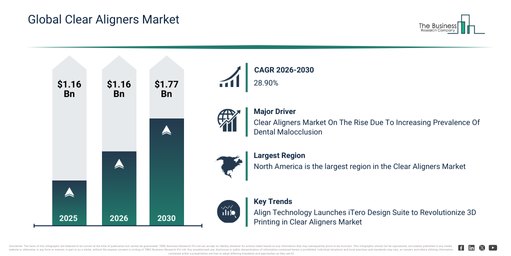
    The clear aligners market has experienced substantial expansion in recent years. It is projected to increase from $7.14 billion in 2025 to $9.29 billion in 2026, exhibiting a compound annual growth rate (CAGR) of 30.1%. Historically, this growth was influenced by the elevated cost of traditional braces, limited public awareness of clear aligners, a reliance on manual orthodontic treatment planning, a lack of diverse material options, and gradual adoption in developing regions.

    The clear aligners market is anticipated to experience substantial growth in the coming years, projected to reach $25.66 billion by 2030, exhibiting a compound annual growth rate (CAGR) of 28.9%. This expansion during the forecast period is attributable to several factors, including strides in digital treatment planning, increased disposable income coupled with greater awareness of cosmetic dentistry, the introduction of novel aligner materials such as PETG and PVC, the incorporation of AI into orthodontic treatments, and the increasing number of dental clinics providing clear aligner services. Key trends anticipated for this period encompass a growing acceptance of clear aligners among both adults and teenagers, a heightened demand for customizable and removable aligner options, a strong preference for aesthetically pleasing and inconspicuous orthodontic solutions, an expansion in dental and orthodontic practices offering aligners, and continuous innovation in material technologies to improve comfort and durability.

    Access Your Free Sample Report For In-Depth Market Analysis:

    https://www.thebusinessresearchcompany.com/sample.aspx?id=3271&type=smp

    What Primary Drivers Are Shaping The Clear Aligners Market?

    The rising global prevalence of dental malocclusion is a primary factor driving the expansion of the clear aligners market. Malocclusion is a medical condition where teeth are misaligned or there’s an incorrect relationship between the upper and lower dental arches. The incidence of this condition is significant, varying across different geographic regions and age groups, making it one of the most common dental problems alongside dental caries, gingival disease, and dental fluorosis. For example, in October 2024, the Australian Institute of Health and Welfare, an Australia-based government agency, indicated that in 2022–23, approximately 87,400 hospitalizations for dental conditions could have been prevented with timely treatment. Children aged 5–9 years recorded the highest rate of these avoidable hospitalizations, at 12.3 per 1,000 population. This demonstrates the increasing adoption rate of clear aligners for straightening and aligning misaligned teeth, thereby fueling the market’s growth.

    Which Segment Categories Are Included In The Clear Aligners Market Segment Analysis?

    The clear aligners market covered in this report is segmented –

    1) By Product: Soft, Medium, Hard

    2) By Age Group: Children Or Teenagers, Adults

    3) By Material Type: Polyurethane Plastic, Polyethylene Terephthalate Glycol (PETG), Poly-Vinyl Chloride (PVC), Other Material Types

    4) By End-User: Hospitals, Dental And Orthodontic Clinics

    Subsegments:

    1) By Soft: Removable Soft Aligners, Invisible Soft Aligners

    2) By Medium: Customizable Medium Aligners, Hybrid Medium Aligners

    3) By Hard: Retainer-Style Hard Aligners

    What Trends Are Affecting The Growth Of The Clear Aligners Market?

    Leading companies in the Clear Aligners market are dedicated to creating technologically advanced solutions, such as 3D-printable models, to boost treatment accuracy and quicken the production process. 3D-printable models are digital blueprints that can be developed and altered with software, then manufactured using 3D printing technology. These models facilitate the precise, customized creation of physical items, like dental aligners, by layering materials based on the digital design. For example, in July 2024, Align Technology, a US-based medical devices company, introduced the iTero Design Suite, providing doctors with an intuitive method to facilitate designs for 3D printing of models, bite splints, and restorations within their practice. The iTero Design Suite improves the Align Digital Platform, which delivers an innovative range of customer-focused technologies that enable smooth, comprehensive workflows for dental professionals. This newest software innovation is designed to assist doctors in increasing their practice efficiency and enhancing patient experiences by reducing the time to treatment through an intuitive approach to designing for in-practice 3D printing.

    Who Are The Active Companies Shaping The Clear Aligners Market?

    Major companies operating in the clear aligners market are Align Technology Inc., Henry Schein Inc., Dentsply Sirona, Straumann Group, The 3M Company, Envista Holdings Corporation, 3Shape A/S, Argen Corporation, TP Orthodontics Inc., Great Lakes Dental Technologies, Toothsi, ezsmile, SmilePath, SLX Clear Aligners, NewSmile, Aso Aligner, Dr Clear Aligners, Star Smile, Orthodontic Solutions, Clearbite Aligners, Clove Dental, Zenyum, Wood Grove Dental Surgery, Angelalign, Keen Dental, Q&M Dental Holdings, Shenzhen Midway Dental Lab Co Ltd, RYO Dental Clinic, PlusDental, Straight Teeth Direct, Dentelia, DB Orthodontics, Oasis Dental Care, German Dental Clinic Ltd, Colosseum Dental UK (CDUK), Alpha Dental Group, Portman Dental Care

    Get The Full Clear Aligners Market Report:

    https://www.thebusinessresearchcompany.com/report/clear-aligners-global-market-report

    Which Region Represents The Largest Share Of The Clear Aligners Market?

    North America was the largest region in the clear aligners market in 2025. Western Europe was the second largest region in the global clear aligners market share. The regions covered in the clear aligners market report are Asia-Pacific, South East Asia, Western Europe, Eastern Europe, North America, South America, Middle East, Africa.

    Request A Customized Clear Aligners Market Report For Competitive Insights:

    https://www.thebusinessresearchcompany.com/customise?id=3271&type=smp

    Browse Through More Reports Similar to the Global Clear Aligners Market 2026, By The Business Research Company

    Remote Monitoring And Control Market Report 2026

    https://www.thebusinessresearchcompany.com/report/remote-monitoring-and-control-global-market-report

    Remote Health Monitoring Market Report 2026

    https://www.thebusinessresearchcompany.com/report/remote-health-monitoring-global-market-report

    Remote Cardiac Monitoring Market Report 2026

    https://www.thebusinessresearchcompany.com/report/remote-cardiac-monitoring-global-market-report

    Get in touch with us:

    The Business Research Company: https://www.thebusinessresearchcompany.com/

    Americas +1 310-496-7795

    Asia +44 7882 955267 & +91 8897263534

    Europe +44 7882 955267

    Email us at info@tbrc.info

    Follow us on:

    LinkedIn: https://in.linkedin.com/company/the-business-research-company

    YouTube: https://www.youtube.com/channel/UC24_fI0rV8cR5DxlCpgmyFQ

    Global Market Model: https://www.thebusinessresearchcompany.com/global-market-model
  • Digital Fluoroscopy System Market Growth Patterns And Forecast Outlook Through 2030

    Digital Fluoroscopy System Market Growth Patterns And Forecast Outlook Through 2030

    The Business Research Company’s 2026 market reports feature enhanced tools like market attractiveness analysis, TAM assessment, and company scoring matrices, along with interactive dashboards, deeper supply chain insights, and startup coverage strengthening the depth, usability, and strategic value of insights.

    How Is The Market Size Of The Digital Fluoroscopy System Market Expected To Change From 2026 To 2030?

    The market for digital fluoroscopy systems has experienced robust expansion in recent years. This market is projected to expand from $6.77 billion in 2025 to reach $7.26 billion by 2026, demonstrating a compound annual growth rate (CAGR) of 7.3%. Historically, this expansion has been driven by factors such as the previous dependence on analog fluoroscopy systems, restricted access to sophisticated imaging equipment, an increase in diagnostic procedures, the development of hospital infrastructure, and a heightened focus on patient safety during imaging processes.

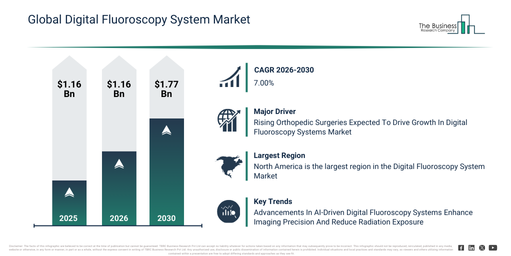
    The digital fluoroscopy system market is anticipated to experience substantial growth over the upcoming years, with its size projected to reach $9.51 billion by 2030, exhibiting a compound annual growth rate (CAGR) of 7.0%. This expansion during the forecast period is primarily attributed to the ongoing development of mobile and ceiling-mounted c-arms, the adoption of advanced fixed fluoroscopy systems, an increasing volume of interventional procedures, the rising integration of AI-based imaging analytics, and the expansion of ambulatory surgery centers. Major developments expected in this forecast period include the increasing uptake of real-time imaging systems, a heightened demand for minimally invasive surgeries, advancements in radiation dose management and safety protocols, integration with hospital information systems (HIS), and the broadening scope of gastrointestinal and interventional procedures.

    Access Your Free Sample Report For In-Depth Market Analysis:

    https://www.thebusinessresearchcompany.com/sample.aspx?id=20544&type=smp

    Which Drivers Are Supporting The Digital Fluoroscopy System Market Growth?

    The increasing number of orthopedic surgeries is expected to propel the growth of the digital fluoroscopy system market going forward. Orthopedic surgeries are medical procedures that involve the correction or treatment of musculoskeletal system disorders, including bones, joints, muscles, ligaments, and tendons. The increasing number of orthopedic surgeries is due to the growing aging population and rising incidence of musculoskeletal conditions and injuries. A digital fluoroscopy system provides real-time imaging during orthopedic surgeries, enhancing precision in diagnosing and treating musculoskeletal issues. For instance, in April 2024, according to the Independent Healthcare Providers Network, a UK-based healthcare Organization, in February 2024, the independent sector accounted for 25.7% of all NHS elective trauma and orthopaedics procedures and 22.6% of all NHS ophthalmology activity. Therefore, the increasing number of orthopedic surgeries will drive the growth of the digital fluoroscopy system market.

    Digital Fluoroscopy System Market Driver: Rise In Cardiovascular Disease Cases Fueling The Growth Of The Market Due To Increasing Need For Real-Time Imaging In Cardiac Diagnosis And Treatment

    The rise in cases of cardiovascular diseases is expected to propel the growth of the digital fluoroscopy system market going forward. Cardiovascular disease is a group of conditions affecting the heart and blood vessels. The increase in cardiovascular disease cases is driving a higher demand for implantable biomaterials. Implantable biomaterials play a critical role in the treatment and management of cardiovascular diseases. These materials are used in various medical devices and procedures to repair or replace damaged cardiovascular tissues. Digital fluoroscopy systems are used in cardiovascular diseases to provide real-time, high-resolution imaging that guides diagnosis and minimally invasive cardiac procedures. For instance, in October 2025, according to the Australian Institute Of Health and Welfare, an Australia-based government agency reported that in 2023, an estimated 57,100 adults aged 25 and above experienced acute coronary events, averaging roughly 156 incidents per day. Therefore, the rise in cases of cardiovascular diseases will drive the digital fluoroscopy system market.

    How Is Segmentation Applied In The Digital Fluoroscopy System Market Segment Analysis?

    The digital fluoroscopy system market covered in this report is segmented –

    1) By Type: Fixed Fluoroscopy Equipment, C Arms

    2) By Application: Diagnostics, Surgeries, Gastrointestinal Surgeries, Other Applications

    3) By End User: Hospital And Clinics, Diagnostics Centers, Ambulatory Surgery Centers, Other End Users

    Subsegments:

    1) By Fixed Fluoroscopy Equipment: Single-Plane Fixed Fluoroscopy, Bi-Plane Fixed Fluoroscopy, Advanced Fixed Fluoroscopy Systems, Mobile Integration Fixed Fluoroscopy

    2) By C-Arms: Mobile C-Arms, Ceiling-Mounted C-Arms, Compact C-Arms, High-End C-Arms, Mini C-Arms

    Which Trends Are Expected To Impact The Digital Fluoroscopy System Market?

    Major companies in the digital fluoroscopy system market are concentrating on data-integrated imaging solutions, particularly AI-based systems in cardiology suites, to improve imaging accuracy and procedural efficiency while reducing radiation exposure. AI-driven solutions in cardiology suites for digital fluoroscopy enhance image clarity and procedural precision, enabling real-time analysis and better decision-making during complex cardiovascular procedures. For example, in August 2023, Canon Medical Systems Corporation, a Japan-based provider of X-ray systems, launched the Alphenix/Evolve Edition Angiography system in Europe. This system features real-time AI technology specifically designed to enhance imaging for interventional cardiology. It incorporates deep learning for noise reduction and improved image clarity, which in turn reduces radiation exposure and procedural time. Key innovations include aEvolve Imaging for superior contrast, Dynamic Device Stabilizer for real-time balloon marker detection, and Echo Fusion for the automatic merging of fluoroscopic and echocardiography images. Additionally, the system includes a 12×12-inch flat panel detector and a Dose Tracking System, offering enhanced procedural flexibility and comprehensive radiation monitoring.

    Who Are The Companies Participating In The Digital Fluoroscopy System Market Environment?

    Major companies operating in the digital fluoroscopy system market are Medtronic Plc, Siemens Healthineers AG, Fujifilm Holdings Corporation, Koninklijke Philips NV, GE HealthCare Technologies Inc., Hologic Inc, Hitachi High-Tech Corporation, Shimadzu Corporation, Neusoft Medical Systems Co Ltd, Agfa-Gevaert NV, Carestream Health Inc, Varex Imaging Corporation, United Imaging Healthcare Co Ltd, Canon Medical Systems Corporation, Ziehm Imaging GmbH, Orthoscan Inc, Villa Sistemi Medicali SpA, Planmed Oy, Allengers Medical Systems Limited, Xoran Technologies LLC, Del Medical Inc, Omega Medical Imaging LLC, Eurocolumbus srl

    Get The Full Digital Fluoroscopy System Market Report:

    https://www.thebusinessresearchcompany.com/report/digital-fluoroscopy-system-global-market-report

    Which Region Is The Top Contributor To The Digital Fluoroscopy System Market By Share?

    North America was the largest region in the digital fluoroscopy system market in 2025. Asia-Pacific is expected to be the fastest-growing region in the forecast period. The regions covered in the digital fluoroscopy system market report are Asia-Pacific, South East Asia, Western Europe, Eastern Europe, North America, South America, Middle East, Africa.

    Request A Customized Digital Fluoroscopy System Market Report For Competitive Insights:

    https://www.thebusinessresearchcompany.com/customise?id=20544&type=smp

    Browse Through More Reports Similar to the Global Digital Fluoroscopy System Market 2026, By The Business Research Company

    Digital Health Market Report 2026

    https://www.thebusinessresearchcompany.com/report/digital-health-global-market-report

    Digital Pathology Market Report 2026

    https://www.thebusinessresearchcompany.com/report/digital-pathology-global-market-report

    Digital Asset Management Market Report 2026

    https://www.thebusinessresearchcompany.com/report/digital-asset-management-global-market-report

    Get in touch with us:

    The Business Research Company: https://www.thebusinessresearchcompany.com/

    Americas +1 310-496-7795

    Asia +44 7882 955267 & +91 8897263534

    Europe +44 7882 955267

    Email us at info@tbrc.info

    Follow us on:

    LinkedIn: https://in.linkedin.com/company/the-business-research-company

    YouTube: https://www.youtube.com/channel/UC24_fI0rV8cR5DxlCpgmyFQ

    Global Market Model: https://www.thebusinessresearchcompany.com/global-market-model
  • Global Clear Aligner Remote Monitoring Market Analysis For 2026–2030 With Strategic Insights

    Global Clear Aligner Remote Monitoring Market Analysis For 2026–2030 With Strategic Insights

    The Business Research Company’s 2026 market reports feature enhanced tools like market attractiveness analysis, TAM assessment, and company scoring matrices, along with interactive dashboards, deeper supply chain insights, and startup coverage strengthening the depth, usability, and strategic value of insights.

    What Is The Forecasted Market Size Trajectory Of The Clear Aligner Remote Monitoring Market From 2026 To 2030?

    The clear aligner remote monitoring market has seen substantial expansion in recent years. Its valuation is expected to rise from $1.09 billion in 2025 to $1.31 billion in 2026, achieving a compound annual growth rate (CAGR) of 20.6%. This historical growth can be linked to factors like increasing adoption of clear aligners, high frequency of orthodontic visits, limited in-person monitoring efficiency, technological emergence of digital scanning, and rising patient demand for cosmetic dental solutions.

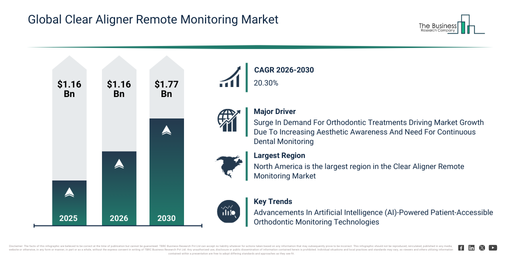
    The clear aligner remote monitoring market is projected to experience substantial growth in the coming years. This market is anticipated to reach a valuation of $2.75 billion by 2030, exhibiting a compound annual growth rate (CAGR) of 20.3%. Factors contributing to this expansion during the forecast period include the incorporation of AI into treatment planning, the widening availability of tele-orthodontics services, a rising patient inclination for remote consultations, continuous improvements in mobile monitoring applications, and the worldwide embrace of digital dental technologies. Key trends shaping the forecast period encompass AI-driven treatment planning systems, remote monitoring platforms based in the cloud, IoT-enabled aligner tracking devices, progress in 3D imaging and patient scanning, and AR/VR-assisted orthodontic treatment guidance.

    Access Your Free Sample Report For In-Depth Market Analysis:

    https://www.thebusinessresearchcompany.com/sample.aspx?id=28980&type=smp

    Which Major Drivers Are Influencing The Expansion Of The Clear Aligner Remote Monitoring Market?

    The rising demand for orthodontic interventions is projected to fuel the expansion of the clear aligner remote monitoring market. Orthodontic treatments are specialized dental procedures designed to diagnose, prevent, and rectify misaligned teeth and jaws, thereby enhancing oral function, aesthetics, and overall dental health. This heightened demand is primarily driven by an increasing aesthetic consciousness, as more individuals desire straighter teeth and improved smiles to boost their appearance and self-confidence. Clear aligner remote monitoring plays a crucial role in supporting orthodontic treatments by enabling orthodontists to track patient advancements in real time, ensure accurate teeth alignment, detect potential complications early, and provide prompt guidance without the necessity of frequent in-person appointments. For example, in October 2024, according to the Australian Institute of Health and Welfare, 52% of people aged 15 and over visited a dental professional in the last 12 months during 2022–23, with 58% of those making more than one visit. In the same period, approximately 87,400 hospitalizations for dental conditions were recorded. Furthermore, in December 2024, the American Dental Association (ADA) reported that dental spending in the US grew by $4 billion, or 2.5%, from 2022 to 2023. Consequently, the escalating demand for orthodontic treatments is propelling the clear aligner remote monitoring market forward.

    How Is The Clear Aligner Remote Monitoring Market Broken Down By Segment Categories?

    The clear aligner remote monitoring market covered in this report is segmented –

    1) By Component: Software, Devices, Services

    2) By Deployment Mode: Cloud-Based, On-Premises

    3) By Application: Orthodontic Clinics, Dental Hospitals, Direct-To-Consumer, Other Applications

    4) By End-User: Adults, Teenagers, Children

    Subsegments:

    1) By Software: Artificial Intelligence (AI)-Powered Treatment Planning, Patient Monitoring Applications, Data Analytics Platforms, Cloud-Based Management Systems

    2) By Devices: Portable Scanning Devices, Intraoral Cameras, 3D Imaging Systems, Patient Self-Scanning Kits

    3) By Services: Remote Treatment Monitoring, Teleconsultation Services, Technical Support And Maintenance, Patient Training And Education

    Which Trends Are Shaping The Clear Aligner Remote Monitoring Market?

    Leading companies in the clear aligners remote monitoring market are concentrating on developing sophisticated solutions, such as portable cloud-connected scanning devices, to improve treatment accuracy, streamline clinical workflows, and enable continuous remote oversight of orthodontic progress. A portable cloud-connected scanning device is a compact, mobile imaging tool that allows patients to capture high-quality dental scans from any location and automatically upload the data to a secure cloud platform for remote analysis and monitoring. For instance, in June 2024, Dental Monitoring SAS, a France-based company specializing in artificial intelligence (AI)-powered orthodontic monitoring software and hardware, introduced the ScanBoxpro. This device is registered with the Food and Drug Administration (FDA), a US-based government agency, and is designed for artificial intelligence (AI)-powered orthodontic monitoring. The ScanBoxpro provides consistent imaging over time for accurate tracking of aligners, braces, and retainers; offers excellent occlusal and lateral views, including molar occlusion; and features increased portability, allowing patients as young as six years old to conveniently manage scans while maintaining precise remote supervision of treatment progress in the clear aligners remote monitoring market.

    Which Players Are Present In The Clear Aligner Remote Monitoring Market Space?

    Major companies operating in the clear aligner remote monitoring market are 3M Company, Henry Schein Inc., Dentsply Sirona, Align Technology Inc., Straumann Group, Glidewell Dental Ceramics Inc., Dental Monitoring SAS, Impress, MakeO, Zenyum Pte. Ltd., Grin, Dentistry.One LLC, Candid Co., OrthoFX, OrthoSnap Corp., Clear Blue Smiles LLC, ProMonitoring, Angelalign Technology Inc., BlueSky Aligners, On Demand Orthodontist, ODONTO Clear Aligners, Smartee Denti-Technology.

    Get The Full Clear Aligner Remote Monitoring Market Report:

    https://www.thebusinessresearchcompany.com/report/clear-aligner-remote-monitoring-global-market-report

    Which Geographic Region Dominates The Clear Aligner Remote Monitoring Market?

    North America was the largest region in the clear aligner remote monitoring market in 2025. Asia-Pacific is expected to be the fastest-growing region in the forecast period. The regions covered in the clear aligner remote monitoring market report are Asia-Pacific, South East Asia, Western Europe, Eastern Europe, North America, South America, Middle East, Africa.

    Request A Customized Clear Aligner Remote Monitoring Market Report For Competitive Insights:

    https://www.thebusinessresearchcompany.com/customise?id=28980&type=smp

    Browse Through More Reports Similar to the Global Clear Aligner Remote Monitoring Market 2026, By The Business Research Company

    Investment Banking Market Report 2026

    https://www.thebusinessresearchcompany.com/report/investment-banking-global-market-report

    Investments Market Report 2026

    https://www.thebusinessresearchcompany.com/report/investments-global-market-report

    Financial Analytics Market Report 2026

    https://www.thebusinessresearchcompany.com/report/financial-analytics-global-market-report

    Get in touch with us:

    The Business Research Company: https://www.thebusinessresearchcompany.com/

    Americas +1 310-496-7795

    Asia +44 7882 955267 & +91 8897263534

    Europe +44 7882 955267

    Email us at info@tbrc.info

    Follow us on:

    LinkedIn: https://in.linkedin.com/company/the-business-research-company

    YouTube: https://www.youtube.com/channel/UC24_fI0rV8cR5DxlCpgmyFQ

    Global Market Model: https://www.thebusinessresearchcompany.com/global-market-model
  • Digital Dose Inhalers Market Insights On Growth Drivers, Trends, And Opportunities

    Digital Dose Inhalers Market Insights On Growth Drivers, Trends, And Opportunities

    The Business Research Company’s 2026 market reports feature enhanced tools like market attractiveness analysis, TAM assessment, and company scoring matrices, along with interactive dashboards, deeper supply chain insights, and startup coverage strengthening the depth, usability, and strategic value of insights.

    From Its 2026 Market Size, What Value Is The Digital Dose Inhalers Market Projected To Reach By 2030?

    The market for digital dose inhalers has observed substantial growth in recent years. This market is anticipated to expand from $23.78 billion in 2025 to $28.97 billion in 2026, registering a compound annual growth rate (CAGR) of 21.8%. Historically, the market’s expansion has been propelled by factors including the increasing prevalence of asthma and COPD, the growing burden of chronic respiratory diseases, the rising adoption of inhalation therapy, the expansion of hospital respiratory care services, and improved access to inhaler medications.

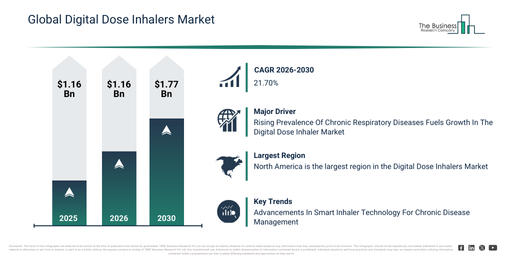
    The digital dose inhalers market is anticipated to experience substantial growth over the next few years. It is projected to expand to $63.58 billion by 2030, demonstrating a compound annual growth rate (CAGR) of 21.7%. This expansion during the forecast period is attributable to an escalating demand for remote patient monitoring, a greater emphasis on personalized respiratory care, increasing awareness regarding the benefits of medication adherence, the expansion of digital health ecosystems, and rising healthcare spending directed towards chronic disease management. Significant trends expected during this period include the increasing adoption of smart inhalation devices, a growing focus on tracking medication adherence, expanded utilization of connected respiratory care solutions, a shift towards managing respiratory diseases at home, and a rising need for precise dose accuracy and usage tracking.

    Access Your Free Sample Report For In-Depth Market Analysis:

    https://www.thebusinessresearchcompany.com/sample.aspx?id=18807&type=smp

    What Key Factors Are Affecting The Digital Dose Inhalers Market Demand?

    The increasing occurrence of chronic respiratory illnesses is anticipated to drive expansion in the digital dose inhalers market. These are enduring conditions that impact the lungs and airways, leading to ongoing breathing problems. Factors such as elevated air pollution, an aging demographic, and growing tobacco consumption contribute to the rising prevalence of these diseases. Digital dose inhalers are crucial for enhancing medication compliance and tracking for individuals suffering from conditions like asthma and chronic obstructive pulmonary disease (COPD). For example, in December 2023, the National Center for Biotechnology Information, a US-based government agency, projected that COPD cases would increase by 112 million, reaching 592 million by 2050, which would constitute 9.5% of the eligible population. Consequently, the escalating incidence of chronic respiratory diseases is fueling the development of the digital dose inhalers market.

    What Segment Categories Shape The Digital Dose Inhalers Market Segment Landscape?

    The digital dose inhalers market covered in this report is segmented –

    1) By Product: Metered Dose Inhaler (MDI), Dry Powder Inhaler (DPI)

    2) By Formulation Type: Branded Medication, Generic Medication

    3) By Indications: Asthma, Chronic Obstructive Pulmonary Disease (COPD), Other Indications

    4) By End User: Medical Device Industry, Hospital

    Subsegments:

    1) By Metered Dose Inhaler (MDI): Conventional MDI, Smart MDI

    2) By Dry Powder Inhaler (DPI): Single-Dose DPI, Multi-Dose DPI, Smart DPI

    What Trends Are Influencing Changes In The Digital Dose Inhalers Market?

    Leading companies operating within the digital dose inhalers market are prioritizing the creation of innovative products, including smart inhalers, to enhance patient outcomes and refine medication management practices. Smart inhalers are sophisticated devices that incorporate sensors and connectivity functionalities to monitor drug utilization, inhalation technique, and adherence, subsequently providing real-time feedback through mobile applications. For example, in June 2024, Aseptika Ltd., a UK-based healthcare company, unveiled the PUFFClicker3 universal smart inhaler dose tracker at the Med-Tech Innovation Expo. The PUFFClicker3 is recognized as the world’s first inhaler dose tracker that can be used with both pressurized metered dose inhalers (pMDI) and dry powder inhalers (DPI), offering support for 101 SNOMED-coded inhaler types. This advancement simplifies the transition process for patients utilizing various inhaler types and incorporates built-in graphical instructions for the proper use of each supported inhaler.

    Who Are The Companies Operating Across The Digital Dose Inhalers Market Value Chain?

    Major companies operating in the digital dose inhalers market are Teva Pharmaceutical Industries Ltd., AstraZeneca plc, GlaxoSmithKline plc, Novartis AG, Propeller Health, Adherium Limited, Cohero Health, FindAir Sp z o o, Amiko Digital Health Limited, Sensirion AG, H&T Presspart Manufacturing Ltd., Philips Respironics, Boehringer Ingelheim GmbH, Cipla Limited, Glenmark Pharmaceuticals Limited, OPKO Health Inc., Mundipharma International Limited, Pneuma Respiratory Inc., Cognita Labs, AptarGroup Inc.

    Get The Full Digital Dose Inhalers Market Report:

    https://www.thebusinessresearchcompany.com/report/digital-dose-inhalers-global-market-report

    Which Region Represents The Largest Share Of The Digital Dose Inhalers Market?

    North America was the largest region in the digital dose inhalers market in 2025. Asia-Pacific is expected to be the fastest-growing region inthe forecast period. The regions covered in the digital dose inhalers market report are Asia-Pacific, South East Asia, Western Europe, Eastern Europe, North America, South America, Middle East, Africa.

    Request A Customized Digital Dose Inhalers Market Report For Competitive Insights:

    https://www.thebusinessresearchcompany.com/customise?id=18807&type=smp

    Browse Through More Reports Similar to the Global Digital Dose Inhalers Market 2026, By The Business Research Company

    Smart Inhalers Market Report 2026

    https://www.thebusinessresearchcompany.com/report/smart-inhalers-global-market-report

    Respiratory Inhaler Devices Market Report 2026

    https://www.thebusinessresearchcompany.com/report/respiratory-inhaler-devices-global-market-report

    Inhalable Drugs Market Report 2026

    https://www.thebusinessresearchcompany.com/report/inhalable-drugs-global-market-report

    Get in touch with us:

    The Business Research Company: https://www.thebusinessresearchcompany.com/

    Americas +1 310-496-7795

    Asia +44 7882 955267 & +91 8897263534

    Europe +44 7882 955267

    Email us at info@tbrc.info

    Follow us on:

    LinkedIn: https://in.linkedin.com/company/the-business-research-company

    YouTube: https://www.youtube.com/channel/UC24_fI0rV8cR5DxlCpgmyFQ

    Global Market Model: https://www.thebusinessresearchcompany.com/global-market-model
  • Cleanroom Technology In Healthcare Market Outlook 2026–2030 Driven By Growth Factors And Projections

    Cleanroom Technology In Healthcare Market Outlook 2026–2030 Driven By Growth Factors And Projections

    The Business Research Company’s 2026 market reports feature enhanced tools like market attractiveness analysis, TAM assessment, and company scoring matrices, along with interactive dashboards, deeper supply chain insights, and startup coverage strengthening the depth, usability, and strategic value of insights.

    How Much Will The Market Value Of The Cleanroom Technology In Healthcare Market Grow Between 2026 And 2030?

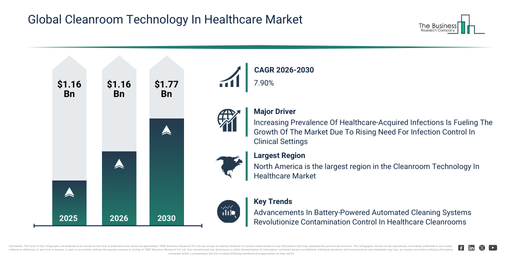
    The cleanroom technology in healthcare market size has shown substantial growth in recent years. It is anticipated to expand from $4.67 billion in 2025 to $5.06 billion in 2026, exhibiting a compound annual growth rate (CAGR) of 8.4%. The historical expansion can be linked to factors such as the limited availability of cleanroom technologies, the rise in pharmaceutical manufacturing, heightened awareness of contamination control, dependence on conventional laboratory setups, and the manual monitoring of environmental parameters.

    The cleanroom technology in healthcare market is projected to experience robust expansion over the coming years. This market is anticipated to reach $6.87 billion by 2030, exhibiting a compound annual growth rate (CAGR) of 7.9%. Key drivers for this growth during the forecast period include the advancement of automated and intelligent cleanroom systems, increasing needs in biotechnology and medical device production, rigorous regulatory mandates for sterile conditions, the incorporation of IoT-powered monitoring solutions, and the enlargement of cleanroom amenities within hospitals. Significant trends emerging in the forecast period involve a heightened requirement for sterile settings in pharmaceutical production, a greater deployment of sophisticated HVAC and filtration systems, the widespread uptake of disposable cleanroom supplies, the embedding of real-time monitoring and environmental sensors, and the enlargement of cleanroom infrastructure in healthcare institutions and research facilities.

    Access Your Free Sample Report For In-Depth Market Analysis:

    https://www.thebusinessresearchcompany.com/sample.aspx?id=27258&type=smp

    What Key Drivers Are Fueling The Growth Of The Cleanroom Technology In Healthcare Market?

    The rising occurrence of healthcare-associated infections is anticipated to boost the expansion of cleanroom technology within the healthcare market. These infections affect patients while they are admitted to or receiving treatment at a medical establishment. The surge in such infections is largely attributed to higher patient numbers and the prevalence of invasive medical procedures, both of which elevate exposure risks within clinical settings. Cleanroom technology serves to combat healthcare-associated infections by creating sterile conditions, meticulously managing airborne contaminants and disease-causing agents. This involves upholding stringent air filtration, pressure regulations, and hygiene protocols, thereby significantly diminishing the potential for infections during medical interventions and patient care. As an illustration, a report from May 2024 by the Center for Infectious Disease Research and Policy (CIDRAP), a US-based disease research organization, indicated that approximately 4.3 million patients annually contracted at least one healthcare-acquired infection in hospitals across the European Union and European Economic Area during 2022 and 2023. Consequently, the expanding occurrence of healthcare-acquired infections is a primary impetus for the growth of cleanroom technology in the healthcare market.

    What Are The Different Segment Types In The Cleanroom Technology In Healthcare Market Segment Breakdown?

    The cleanroom technology in healthcare market covered in this report is segmented –

    1) By Component: Cleanroom Equipment, Cleanroom Consumables

    2) By Application: Drug Manufacturing, Medical Device Manufacturing, Pathology And Research

    3) By End User: Pharmaceutical Industry, Medical Device Industry, Biotechnology Industry, Hospitals And Diagnostic Centers

    Subsegments:

    1) By Cleanroom Equipment: Air Showers, Laminar Airflow Units, High Efficiency Particulate Air Filters, Heating Ventilation and Air Conditioning (HVAC) Systems, Pass Through Systems, Cleanroom Lighting, Cleanroom Furniture

    2) By Cleanroom Consumables: Apparel, Gloves, Wipes, Disinfectants, Adhesive Mats, Swabs, Face Masks, Tacky Rollers

    What Trends Are Influencing The Cleanroom Technology In Healthcare Market?

    Leading companies within the cleanroom technology in the healthcare market are concentrating on developing advanced products, such as battery-powered automated cleaning systems, to mitigate contamination risks and address staffing shortages in controlled healthcare environments. These battery-powered automated cleaning systems are self-operating machines that utilize rechargeable batteries to clean surfaces without requiring manual effort or a constant power supply, thereby improving cleanliness in cleanrooms and hospital settings and reducing healthcare-associated infection risks through consistent, efficient disinfection. For example, in March 2025, i-team Global B.V., a professional cleaning company based in the Netherlands, introduced the SAFE-T product family, which represents the world’s first battery-powered cleanroom floor cleaning range. This product line includes solutions like the SAFE-T-IMOP, SAFE-T-VAC, and SAFE-T-BOT 45, each specifically designed for ISO-certified cleanroom environments. These automated cleaning systems integrate ULPA 15 filtration, an ergonomic design, and mechanical scrubbing to capture over 99.999% of contaminants as tiny as 0.1 microns. The product aims to decrease manual labor, enhance cleaning consistency, minimize contamination risks, and alleviate staff shortages in critical healthcare and other high-tech environments.

    Who Are The Well-Known Companies In The Cleanroom Technology In Healthcare Market?

    Major companies operating in the cleanroom technology in healthcare market are Illinois Tool Works Inc, Ecolab Inc, DuPont de Nemours Inc, Filtration Group Corporation, TSI Incorporated, Taikisha Ltd, Ardmac Ltd, Terra Universal Inc, Avant Garde Cleanroom & Engg Solutions Pvt Ltd, Starrco Company Inc, Clean Rooms International Inc, COLANDIS GmbH, Hectra Enviro Systems LLP, Clean Air Products Inc, Dyna Filters Pvt Ltd, ABN Cleanroom Technology NV, Epack Prefab Private Limited, Saakvee Technologies India Private Limited, Airtech Systems, BioPure Group Modular Cleanrooms, GMP Technical Solutions, Integrated Clean Room Technologies, SBRG CleanTech, Contec Cleanroom, Clean Room Synergy, CleanZones LLC, Controlled Environment Structures Inc, Envirco, Environmental Systems Corporation, Flowstar Corporation, Atmos-Tech Industries, Liberty Industries Inc, G-CON Manufacturing, Allied Cleanrooms, aes Clean Technology, MECART Cleanrooms

    Get The Full Cleanroom Technology In Healthcare Market Report:

    https://www.thebusinessresearchcompany.com/report/cleanroom-technology-in-healthcare-global-market-report

    Which Region Is The Leading Market For The Cleanroom Technology In Healthcare Market?

    North America was the largest region in the cleanroom technology in healthcare market in 2025. Asia-Pacific is expected to be the fastest-growing region in the forecast period. The regions covered in the cleanroom technology in healthcare market report are Asia-Pacific, South East Asia, Western Europe, Eastern Europe, North America, South America, Middle East, Africa.

    Request A Customized Cleanroom Technology In Healthcare Market Report For Competitive Insights:

    https://www.thebusinessresearchcompany.com/customise?id=27258&type=smp

    Browse Through More Reports Similar to the Global Cleanroom Technology In Healthcare Market 2026, By The Business Research Company

    Inventory Management Software Market Report 2026

    https://www.thebusinessresearchcompany.com/report/inventory-management-software-global-market-report

    Pharmaceutical Supply Chain Management Market Report 2026

    https://www.thebusinessresearchcompany.com/report/pharmaceutical-supply-chain-management-global-market-report

    Retail Inventory Management Software Market Report 2026

    https://www.thebusinessresearchcompany.com/report/retail-inventory-management-software-global-market-report

    Get in touch with us:

    The Business Research Company: https://www.thebusinessresearchcompany.com/

    Americas +1 310-496-7795

    Asia +44 7882 955267 & +91 8897263534

    Europe +44 7882 955267

    Email us at info@tbrc.info

    Follow us on:

    LinkedIn: https://in.linkedin.com/company/the-business-research-company

    YouTube: https://www.youtube.com/channel/UC24_fI0rV8cR5DxlCpgmyFQ

    Global Market Model: https://www.thebusinessresearchcompany.com/global-market-model
  • Digital Dentistry Market Developments Shaping Growth Across The Forecast Period

    Digital Dentistry Market Developments Shaping Growth Across The Forecast Period

    The Business Research Company’s 2026 market reports feature enhanced tools like market attractiveness analysis, TAM assessment, and company scoring matrices, along with interactive dashboards, deeper supply chain insights, and startup coverage strengthening the depth, usability, and strategic value of insights.

    How Much Growth In Market Value Is Expected For The Digital Dentistry Market Between 2026 And 2030?

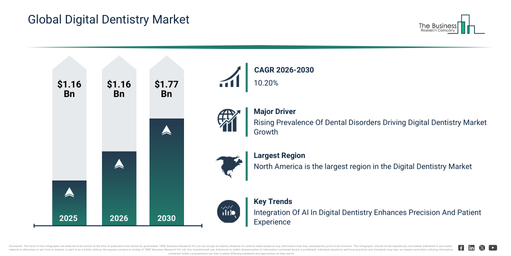
    The digital dentistry market size has experienced significant growth in recent years. It is projected to expand from $6.79 billion in 2025 to $7.57 billion in 2026, achieving a compound annual growth rate (CAGR) of 11.4%. This market’s historical development can be ascribed to an increase in dental care procedures, the growing need for precise diagnostics, the proliferation of private dental clinics, enhanced awareness of sophisticated dental treatments, and greater availability of dental technologies.

    The digital dentistry market is anticipated to experience significant expansion over the coming years. This market is projected to reach $11.15 billion by 2030, demonstrating a compound annual growth rate (CAGR) of 10.2%. This growth during the forecast period can be ascribed to several factors, including a heightened demand for streamlined dental procedures, elevated patient expectations for precise treatments, the broadening scope of cosmetic and implant dentistry, increased capital allocation in digital healthcare infrastructure, and the greater uptake of technologically advanced dental solutions. Key trends anticipated for this period encompass the increased acceptance of intraoral scanners, a growing utilization of CAD/CAM-based restorations, a stronger inclination towards chairside digital workflows, a transition towards comprehensive digital treatment planning, and the increasing incorporation of 3D printing within dental practices.

    Access Your Free Sample Report For In-Depth Market Analysis:

    https://www.thebusinessresearchcompany.com/sample.aspx?id=15789&type=smp

    Which Primary Drivers Are Impacting The Digital Dentistry Market Growth?

    The escalating occurrence of dental disorders is anticipated to propel the expansion of the digital dentistry market moving ahead. These disorders encompass a variety of conditions affecting the teeth, gums, and oral structures, including cavities, gum disease, tooth decay, and oral infections. Such conditions are primarily caused by factors like inadequate oral hygiene practices, unhealthy dietary habits, tobacco use, limited access to dental care, and aging populations. Digital dentistry is transforming the diagnosis and treatment of dental disorders through technologies such as computer-aided design or computer-aided manufacturing (CAD or CAM) systems, digital imaging, and artificial intelligence (AI) diagnostics, thereby enhancing precision and outcomes. For instance, in October 2024, the Australian Institute of Health and Welfare, an Australia-based government agency, reported that in 2022–23 there were approximately 87,400 hospitalizations for dental conditions that could have been avoided with timely treatment. Children aged 5–9 years had the highest rate of preventable hospitalizations, at 12.3 per 1,000 population. Consequently, the increasing prevalence of dental disorders is driving the growth of the digital dentistry market.

    Which Segment Types Are Examined In The Digital Dentistry Market Segment Study?

    The digital dentistry market covered in this report is segmented –

    1) By Type: Instruments, Consumables

    2) By Specialty Areas: Orthodontics, Prosthodontics, Implantology, Other Specialty Areas

    3) By Application: Diagnostics, Therapeutics, Other Applications

    4) By End User: Hospitals, Dental Clinics, Others End Users

    Subsegments:

    1) By Instruments: Digital X-ray Systems, Intraoral Scanners, CAD Or CAM Systems, 3D Printers

    2) By Consumables: Dental Imaging Software, Impression Materials, Digital Inks, 3D Printing Resins

    Which Trends Are Shaping Growth In The Digital Dentistry Market?

    Leading firms within the digital dentistry sector are prioritizing the incorporation of artificial intelligence and machine learning solutions into diagnostic tools, including AI-powered orthodontic scans, with the goal of improving treatment accuracy, operational effectiveness, and the capacity for early identification. An AI-driven orthodontics scan leverages artificial intelligence to facilitate accurate dental imaging for patients, thereby supporting the development of personalized treatment plans. As an example, in June 2023, DentalMonitoring, a medical equipment manufacturer headquartered in France, introduced ScanAssist, an AI-assisted orthodontic scanning system. This device employs AI-powered guidance and instant feedback to help patients successfully complete their scans, intending to boost patient involvement and satisfaction. The integrated application system creates a three-dimensional model of the mouth, monitoring patient scans and providing superior image quality along with comprehensive insights into treatment advancement and dental well-being. ScanAssist, a newly added functionality to the DentalMonitoring app, utilizes software and AI to detect more than 130 distinct intraoral observations relevant to braces and aligner therapies.

    Which Players Are Part Of The Competitive Landscape Of The Digital Dentistry Market?

    Major companies operating in the digital dentistry market are 3M Company, Danaher Corporation, Zimmer Biomet Holdings Inc., DWS Systems, Dentsply Sirona Inc., Align Technology Inc., Institut Straumann AG, Planmeca Oy, Carestream Health Inc., Glidewell Dental, Ivoclar Vivadent, ZimVie Inc, Midmark Corporation, Stratasys, J. Morita Corporation, 3Shape A/S, Roland DG Corporation, Formlabs Inc., KaVo Dental GmbH, Implant Sciences Corporation, Biolase Inc, VITA North America, Medit, exocad GmbH, Kuraray Noritake Dental Inc, DOT GmBH, Apteryx Inc

    Get The Full Digital Dentistry Market Report:

    https://www.thebusinessresearchcompany.com/report/digital-dentistry-global-market-report

    Which Geographic Region Dominates The Digital Dentistry Market?

    North America was the largest region in the digital dentistry market in 2025. Asia-Pacific is expected to be the fastest-growing region in the forecast period. The regions covered in the digital dentistry market report are Asia-Pacific, South East Asia, Western Europe, Eastern Europe, North America, South America, Middle East, Africa.

    Request A Customized Digital Dentistry Market Report For Competitive Insights:

    https://www.thebusinessresearchcompany.com/customise?id=15789&type=smp

    Browse Through More Reports Similar to the Global Digital Dentistry Market 2026, By The Business Research Company

    Digital Dentistry Market Report 2026

    https://www.thebusinessresearchcompany.com/report/digital-dentistry-global-market-report

    Cosmetic Dentistry Market Report 2026

    https://www.thebusinessresearchcompany.com/report/cosmetic-dentistry-global-market-report

    Therapeutic Dental Equipment Market Report 2026

    https://www.thebusinessresearchcompany.com/report/therapeutic-dental-equipment-global-market-report

    Get in touch with us:

    The Business Research Company: https://www.thebusinessresearchcompany.com/

    Americas +1 310-496-7795

    Asia +44 7882 955267 & +91 8897263534

    Europe +44 7882 955267

    Email us at info@tbrc.info

    Follow us on:

    LinkedIn: https://in.linkedin.com/company/the-business-research-company

    YouTube: https://www.youtube.com/channel/UC24_fI0rV8cR5DxlCpgmyFQ

    Global Market Model: https://www.thebusinessresearchcompany.com/global-market-model