Category: Medical Equipment

  • Connected Health Personal Medical Devices Market Growth Analysis 2026–2030 Highlighting Innovation And Competitive Landscape

    Connected Health Personal Medical Devices Market Growth Analysis 2026–2030 Highlighting Innovation And Competitive Landscape

    The Business Research Company’s 2026 market reports feature enhanced tools like market attractiveness analysis, TAM assessment, and company scoring matrices, along with interactive dashboards, deeper supply chain insights, and startup coverage strengthening the depth, usability, and strategic value of insights.

    By 2030, What Market Size Is The Connected Health Personal Medical Devices Market Expected To Reach Based On Its 2026 Value?

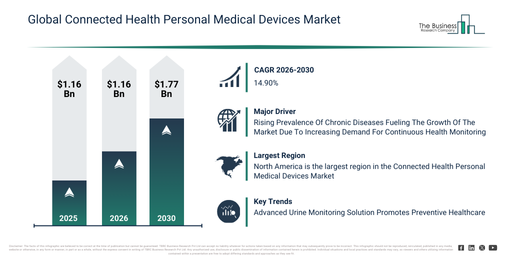
    The connected health personal medical devices market size has undergone rapid expansion in recent years. It is anticipated to increase from $45.71 billion in 2025 to $52.68 billion in 2026, achieving a compound annual growth rate (CAGR) of 15.2%. This growth observed in the historic period can be ascribed to several factors, including the limited availability of connected health devices, a reliance on traditional in-clinic monitoring, the slow adoption of wearable technologies, the growing prevalence of chronic diseases, and a lack of standardized healthcare IT infrastructure.

    The connected health personal medical devices market is projected to experience substantial expansion in the coming years. This market is set to reach $91.9 billion by 2030, demonstrating a compound annual growth rate (CAGR) of 14.9%. The anticipated growth during this period stems from several factors, including the swift advancement of smart wearable medical devices, the broadened scope of home healthcare solutions, enhanced integration with cloud-based health platforms, increased patient participation in self-monitoring, and the incorporation of predictive and real-time analytics for tailored care. Key trends expected over the forecast horizon encompass the increasing uptake of remote patient monitoring devices, the merging of wearable health technologies with mobile applications, a greater reliance on smart pill dispensers and glucose monitors, an emphasis on managing chronic diseases and proactive health measures, and the broadening of telemedicine and home healthcare provisions.

    Access Your Free Sample Report For In-Depth Market Analysis:

    https://www.thebusinessresearchcompany.com/sample.aspx?id=24509&type=smp

    What Key Drivers Are Fueling The Growth Of The Connected Health Personal Medical Devices Market?

    The increasing incidence of chronic illnesses is anticipated to fuel the expansion of the connected health personal medical devices market in the future. These are long-term health issues that progress gradually and endure for prolonged durations, frequently necessitating ongoing medical attention. A contributing factor to the escalating occurrence of chronic diseases is sedentary lifestyles, where extended periods of sitting and insufficient physical exertion heighten the likelihood of conditions like heart ailments and diabetes. Connected health personal medical devices facilitate the oversight of chronic diseases by enabling real-time health monitoring, rendering them perfectly suited for at-home management of conditions such as diabetes and hypertension. These devices diminish the necessity for regular clinic appointments through the provision of continuous data and prompt notifications, thereby enhancing patient results and overall convenience. For instance, in June 2024, data from the National Health Service, a UK-based government department, revealed that 3,615,330 individuals registered with a general practitioner (GP) were diagnosed with non-diabetic hyperglycemia or pre-diabetes (a condition with elevated blood sugar levels, not high enough to be classified as diabetes) in 2023, representing an 18% increase from the 3,065,825 cases recorded in 2022. Consequently, the increasing prevalence of chronic diseases is a significant impetus behind the expansion of the connected health personal medical devices market.

    Which Segment Categories Are Included In The Connected Health Personal Medical Devices Market Segment Analysis?

    The connected health personal medical devices market covered in this report is segmented –

    1) By Solution: Healthcare IT, Health Information Exchange, Healthcare Analytics

    2) By Product: Insulin Pumps, Blood Pressure (BP) Monitors, Portable Global Positioning System (GPS) Personal Emergency Response System (PERS), Glucose Monitor, Personal Pulse Oximeter, Smart Pill Dispenser, Personal Electrocardiogram (ECG)

    3) By Connectivity: Bluetooth, Wi-Fi, Cellular, Other Connectivities

    4) By Application: Chronic Disease Management, Fitness And Wellness, Home Healthcare, Other Applications

    5) By End User: Hospitals, Clinics, Homecare Settings, Other End Users

    Subsegments:

    1) By Healthcare IT: Electronic Health Records (EHR), Telemedicine Solutions, Mobile Health (mHealth) Applications, E-Prescribing Systems

    2) By Health Information Exchange: Directed Exchange, Query-Based Exchange, Consumer-Mediated Exchange, Cloud-Based Health Information Platforms

    3) By Healthcare Analytics: Descriptive Analytics, Predictive Analytics, Prescriptive Analytics, Real-Time Analytics

    What Trends Are Influencing The Connected Health Personal Medical Devices Market?

    Major companies in the connected health personal medical devices market are concentrating on developing advanced offerings, such as sophisticated in-home diagnostic systems, to boost preventive healthcare and user convenience. These in-home diagnostic systems refer to medical instruments and tools that allow individuals to monitor, test, and manage their health conditions from home without requiring a visit to a healthcare facility. For instance, in January 2023, Withings, a France-based health technology company, launched U-Scan, a hands-free, in-home urine analysis system designed to fit inside a toilet bowl. This system uses a replaceable cartridge that performs daily tests for up to three months, analyzing key hydration and nutrition biomarkers. The device connects to a smartphone app, providing users with real-time insights and personalized health recommendations. U-Scan aims to make routine health tracking effortless and non-invasive, thereby promoting proactive wellness management.

    Who Are The Active Companies Shaping The Connected Health Personal Medical Devices Market?

    Major companies operating in the connected health personal medical devices market are Johnson and Johnson, F Hoffmann La Roche AG, Abbott Laboratories, Medtronic plc, Siemens Healthineers, Becton Dickinson and Company, GE HealthCare, Philips Healthcare, Omron Healthcare, Masimo Corporation, Oura Health Oy, Whoop Inc, Withings, Eko Health Inc, TytoCare Ltd, AliveCor Inc, DarioHealth Corp, iHealth Labs Inc, Samsung Electronics, Biostrap, Aktiia, Ava Science Inc, Bloomlife Inc, Movano Health, Oxitone Medical Ltd, Qardio Inc

    Get The Full Connected Health Personal Medical Devices Market Report:

    https://www.thebusinessresearchcompany.com/report/connected-health-personal-medical-devices-global-market-report

    Which Region Is The Largest In The Connected Health Personal Medical Devices Market?

    North America was the largest region in the connected health personal medical devices market in 2025. Asia-Pacific is expected to be the fastest-growing region in the forecast period. The regions covered in the connected health personal medical devices market report are Asia-Pacific, South East Asia, Western Europe, Eastern Europe, North America, South America, Middle East, Africa.

    Request A Customized Connected Health Personal Medical Devices Market Report For Competitive Insights:

    https://www.thebusinessresearchcompany.com/customise?id=24509&type=smp

    Browse Through More Reports Similar to the Global Connected Health Personal Medical Devices Market 2026, By The Business Research Company

    Corporate Wellness Solutions Market Report 2026

    https://www.thebusinessresearchcompany.com/report/corporate-wellness-solutions-global-market-report

    Health And Wellness Market Report 2026

    https://www.thebusinessresearchcompany.com/report/health-and-wellness-global-market-report

    Wellness Supplements Market Report 2026

    https://www.thebusinessresearchcompany.com/report/wellness-supplements-global-market-report

    Get in touch with us:

    The Business Research Company: https://www.thebusinessresearchcompany.com/

    Americas +1 310-496-7795

    Asia +44 7882 955267 & +91 8897263534

    Europe +44 7882 955267

    Email us at info@tbrc.info

    Follow us on:

    LinkedIn: https://in.linkedin.com/company/the-business-research-company

    YouTube: https://www.youtube.com/channel/UC24_fI0rV8cR5DxlCpgmyFQ

    Global Market Model: https://www.thebusinessresearchcompany.com/global-market-model
  • Connected Health and Wellness Solutions Market Forecast Through 2030 With Insights On Market Patterns And Developments

    Connected Health and Wellness Solutions Market Forecast Through 2030 With Insights On Market Patterns And Developments

    The Business Research Company’s 2026 market reports feature enhanced tools like market attractiveness analysis, TAM assessment, and company scoring matrices, along with interactive dashboards, deeper supply chain insights, and startup coverage strengthening the depth, usability, and strategic value of insights.

    What Is The Anticipated Rise In Market Value Of The Connected Health and Wellness Solutions Market During The Forecast Period?

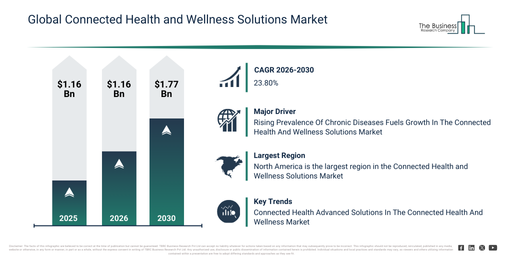
    The connected health and wellness solutions market has experienced exponential growth in its size during recent years. Projections indicate it will expand from $82.06 billion in 2025 to $101.69 billion in 2026, demonstrating a compound annual growth rate (CAGR) of 23.9%. This past growth can be attributed to the increasing penetration of smartphones and internet connectivity, rising consumer awareness regarding health, the expanded adoption of wearable devices, a greater demand for home-based monitoring, and the wider acceptance of digital health tools.

    The connected health and wellness solutions market size is projected to undergo significant expansion in the upcoming years, with an anticipated growth to $238.59 billion in 2030, reflecting a compound annual growth rate (CAGR) of 23.8%. This growth during the forecast period is primarily driven by the increasing adoption of AI-driven health analytics, a rising demand for continuous health monitoring, the expansion of virtual care models, a growing emphasis on chronic disease management, and the increasing integration of connected devices with healthcare systems. Major trends expected in this period include the rising adoption of remote patient monitoring devices, increased use of wearable health technologies, a growing integration of telehealth platforms, the expansion of mobile health applications, and an enhanced focus on preventive and wellness monitoring.

    Access Your Free Sample Report For In-Depth Market Analysis:

    https://www.thebusinessresearchcompany.com/sample.aspx?id=6766&type=smp

    Which Drivers Are Supporting The Connected Health and Wellness Solutions Market Growth?

    The growing occurrence of chronic diseases is projected to drive the expansion of the connected health and wellness solutions market in the coming period. Such diseases are defined as conditions that endure for a year or longer, requiring continuous medical intervention, restricting daily activities, or both. Connected health and wellness solutions play a role in managing chronic diseases by offering remote monitoring, facilitating medication adherence, and providing personalized treatment, thereby enhancing patient care and improving compliance with treatment plans. For example, in March 2025, the Office for Health Improvement & Disparities (OHID), a UK-based unit of the Department of Health and Social Care, reported that the prevalence of GP-recorded type 2 diabetes in adults aged 17 and over in England was 7.0% in March 2024, a rise from 6.8% in March 2023. This upward trend in chronic disease prevalence is thus expected to accelerate the growth of the connected health and wellness solutions market.

    How Is The Connected Health and Wellness Solutions Market Broken Down By Segment Categories?

    The connected health and wellness solutions market covered in this report is segmented –

    1) By Product: Personal Medical Devices, Wellness Products, Software & Services

    2) By Function: Clinical Monitoring, Telehealth

    3) By Application: Diagnosis & Treatment, Wellness and prevention, Monitoring, Other Applications

    Subsegments:

    1) By Personal Medical Devices: Wearable Health Monitors, Remote Patient Monitoring Devices, Connected Inhalers and Medication Adherence Devices

    2) By Wellness Products: Smart Scales and Body Composition Monitors, Sleep Trackers and Sleep Aids, Smart Thermometers

    3) By Software & Services: Mobile Health Applications (mHealth apps), Telehealth Platforms and Services, Data Analytics and Health Management Solutions

    Which Trends Are Expected To Impact The Connected Health and Wellness Solutions Market?

    Key companies active in the connected health and wellness solutions market are prioritizing the creation of technologically advanced offerings, such as the ZAIDYN connected health solution, to improve remote patient monitoring and elevate healthcare outcomes. ZAIDYN connected health supports pharmaceutical firms, healthcare providers, and payers in their innovation endeavors, enabling them to better identify unmet needs, engage patients, and enhance health outcomes. For instance, in October 2023, ZS Associates Group, Inc., a US-based management consulting and technology firm, unveiled the AI-powered ZAIDYN Connected Health solution, which is integrated into the ZAIDYN by ZS platform. It delivers three product suites that aim to close gaps in healthcare and establish a patient-centric future through health insights, patient engagement, and connected research.

    Which Players Are Present In The Connected Health and Wellness Solutions Market Space?

    Major companies operating in the connected health and wellness solutions market are Omron Healthcare Inc., Koninklijke Philips N.V., GE Healthcare Technologies Inc., Abbott Laboratories, Apple Inc., Garmin Ltd., Masimo Corporation, ResMed Inc., Medtronic PLC, Boston Scientific Corporation, Microlife AG, AgaMatrix Inc., Dexcom Inc., Withings S.A., Polar Electro Oy, Suunto Oy, iHealth Labs Inc., AliveCor Inc., Oura Health Oy, WHOOP Inc., Samsung Electronics Co. Ltd., Xiaomi Corporation

    Get The Full Connected Health and Wellness Solutions Market Report:

    https://www.thebusinessresearchcompany.com/report/connected-health-and-wellness-solutions-global-market-report

    Which Region Leads The Connected Health and Wellness Solutions Market In Terms Of Market Share?

    North America was the largest region in the connected health and wellness solutions market in 2025. Asia-Pacific is expected to be the fastest-growing region in the forecast period. The regions covered in the connected health and wellness solutions market report are Asia-Pacific, South East Asia, Western Europe, Eastern Europe, North America, South America, Middle East, Africa.

    Request A Customized Connected Health and Wellness Solutions Market Report For Competitive Insights:

    https://www.thebusinessresearchcompany.com/customise?id=6766&type=smp

    Browse Through More Reports Similar to the Global Connected Health and Wellness Solutions Market 2026, By The Business Research Company

    Heart Blocks Treatment Devices Market Report 2026

    https://www.thebusinessresearchcompany.com/report/heart-blocks-treatment-devices-global-market-report

    Heart Defect Closure Device Market Report 2026

    https://www.thebusinessresearchcompany.com/report/heart-defect-closure-device-global-market-report

    Bradycardia Treatment Devices Market Report 2026

    https://www.thebusinessresearchcompany.com/report/bradycardia-treatment-devices-global-market-report

    Get in touch with us:

    The Business Research Company: https://www.thebusinessresearchcompany.com/

    Americas +1 310-496-7795

    Asia +44 7882 955267 & +91 8897263534

    Europe +44 7882 955267

    Email us at info@tbrc.info

    Follow us on:

    LinkedIn: https://in.linkedin.com/company/the-business-research-company

    YouTube: https://www.youtube.com/channel/UC24_fI0rV8cR5DxlCpgmyFQ

    Global Market Model: https://www.thebusinessresearchcompany.com/global-market-model

  • Congestive Heart Failure Treatment Devices Market Outlook For 2026–2030 Covering Growth Drivers And Industry Trends

    Congestive Heart Failure Treatment Devices Market Outlook For 2026–2030 Covering Growth Drivers And Industry Trends

    The Business Research Company’s 2026 market reports feature enhanced tools like market attractiveness analysis, TAM assessment, and company scoring matrices, along with interactive dashboards, deeper supply chain insights, and startup coverage strengthening the depth, usability, and strategic value of insights.

    How Is The Market Size Of The Congestive Heart Failure Treatment Devices Market Expected To Scale Between 2026 And 2030?

    The congestive heart failure treatment devices market has experienced robust expansion in recent years. Its size is anticipated to expand from $21.07 billion in 2025 to $22.76 billion in 2026, demonstrating a compound annual growth rate (CAGR) of 8.0%. This market’s historical development can be attributed to several factors, including the increasing prevalence of congestive heart failure, a rise in cardiovascular disease incidence, greater adoption of implantable cardiac devices, the establishment of more specialized cardiac care facilities, and improvements in the survival rates of heart failure patients.

    The congestive heart failure treatment devices market is projected to experience substantial expansion over the forthcoming years. This market is anticipated to reach $30.07 billion by 2030, demonstrating a compound annual growth rate (CAGR) of 7.2%. Several factors are expected to drive this growth during the forecast period, including an aging population more susceptible to heart failure, a rising need for minimally invasive cardiac treatments, an intensified emphasis on prompt intervention and managing the disease, broader availability of sophisticated heart failure treatments in developing regions, and the increasing utilization of prolonged mechanical circulatory support devices. Key trends identified for the forecast period encompass a growing acceptance of advanced implantable devices for heart failure, an expanded application of ventricular assist devices in advanced congestive heart failure, a heightened commitment to decreasing hospital admissions due to heart failure, the broadening of device-based solutions for sustained cardiac assistance, and an escalating requirement for ongoing cardiac surveillance and care.

    Access Your Free Sample Report For In-Depth Market Analysis:

    https://www.thebusinessresearchcompany.com/sample.aspx?id=15774&type=smp

    What Key Factors Are Affecting The Congestive Heart Failure Treatment Devices Market Demand?

    The increasing occurrence of cardiovascular conditions is anticipated to drive expansion in the congestive heart failure treatment devices market. These disorders encompass a range of diseases impacting the heart and blood vessels, including coronary artery disease, hypertension, and heart failure, which affect blood circulation and overall cardiac well-being. The growing incidence of cardiovascular disorders primarily stems from a rise in risk factors such as obesity, inactive lifestyles, unhealthy eating habits, and an aging demographic. Congestive heart failure treatment devices play a vital role in managing cardiovascular conditions by stabilizing heart rhythms and enhancing cardiac performance, thereby notably improving patient outcomes. For instance, reports from October 2024 by the US government’s Centers for Disease Control and Prevention indicated that in 2023, cardiovascular disease was responsible for 919,032 lives, representing one in every three fatalities. Coronary heart disease continued to be the most common type of heart ailment, and it was observed that approximately one in six cardiovascular disease deaths occurred in individuals younger than 65 years. Consequently, the increased prevalence of cardiovascular disorders is fueling the expansion of the congestive heart failure (CHF) treatment devices market.

    What Are The Different Segment Types In The Congestive Heart Failure Treatment Devices Market Segment Breakdown?

    The congestive heart failure treatment devices market covered in this report is segmented –

    1) By Product: Cardiac Pacemaker, Implantable Cardioverter Defibrillators (ICDs), Cardiac Resynchronization Therapy Devices (CRT), Counter Pulsation Devices, Ventricular Assist Devices (VADs)

    2) By Application: Left Ventricular Assist Device (LVAD), Right Ventricular Assist Device (RVAD), Biventricular Assist Device (BIVAD)

    3) By End-User: Hospitals And Clinic, Specialized Cardiovascular Disease Treatment Centers, Ambulatory Surgery Centers

    Subsegments:

    1) By Cardiac Pacemaker: Single Chamber Pacemaker, Dual Chamber Pacemaker, Biventricular Pacemaker

    2) By Implantable Cardioverter Defibrillators (ICDs): Traditional ICDs, Subcutaneous ICDs, CRT-D (Cardiac Resynchronization Therapy Defibrillator)

    3) By Cardiac Resynchronization Therapy Devices (CRT): CRT-P (Cardiac Resynchronization Therapy Pacemaker), CRT-D (Cardiac Resynchronization Therapy Defibrillator)

    4) By Counter Pulsation Devices: Intra-Aortic Balloon Pumps (IABP), External Counterpulsation Devices (ECP)

    5) By Ventricular Assist Devices (VADs): Left Ventricular Assist Devices (LVAD), Right Ventricular Assist Devices (RVAD), Biventricular Assist Devices (BiVAD)

    What Trends Are Influencing Changes In The Congestive Heart Failure Treatment Devices Market?

    Major companies operating in the congestive heart failure treatment devices market are focusing on developing innovative solutions, such as the implant-free atrial septostomy system, to enhance hemodynamic relief, reduce procedural complexity, and offer less invasive treatment alternatives for heart failure patients. An implant-free atrial septostomy system refers to a minimally invasive device designed to create a controlled opening in the atrial septum without leaving a permanent implant, enabling improved left atrial pressure reduction and enhanced cardiac hemodynamics in heart failure patients. For instance, in January 2025, Alleviant Medical Inc., a US-based medical device company, received significant FDA milestones for its novel no-implant interatrial shunt device for treating heart failure. It offers a minimally invasive solution for heart failure by creating a precise shunt that reduces elevated pressure in the left atrium without leaving a permanent implant. This approach minimizes complications linked to implanted devices, promotes durable shunt patency, and improves symptoms, exercise capacity, and quality of life for chronic heart failure patients. Its purpose is to unload the heart, alleviate symptoms, and provide a safer, innovative treatment option for patients with limited alternatives.

    Who Are The Well-Known Companies In The Congestive Heart Failure Treatment Devices Market?

    Major companies operating in the congestive heart failure treatment devices market are Medtronic plc, Abbott Laboratories, Boston Scientific Corporation, Biotronik SE & Co KG, LivaNova PLC, Berlin Heart GmbH, Jarvik Heart Inc, ReliantHeart Inc, Abiomed Inc, Lepu Medical Technology Co Ltd, Magenta Medical Ltd, MicroPort Inc, EBR Systems Inc, Syncardia Systems LLC, Oscor Inc, OSYPKA Medical GmbH, Calon Cardio-Technology, CoreWave SA, Zoll Medical Corporation

    Get The Full Congestive Heart Failure Treatment Devices Market Report:

    https://www.thebusinessresearchcompany.com/report/congestive-heart-failure-treatment-devices-global-market-report

    Which Region Leads The Congestive Heart Failure Treatment Devices Market In Overall Market Size?

    North America was the largest region in the congestive heart failure treatment devices market in 2025. Asia-Pacific is expected to be the fastest-growing region in the forecast period. The regions covered in the congestive heart failure treatment devices market report are Asia-Pacific, South East Asia, Western Europe, Eastern Europe, North America, South America, Middle East, Africa.

    Request A Customized Congestive Heart Failure Treatment Devices Market Report For Competitive Insights:

    https://www.thebusinessresearchcompany.com/customise?id=15774&type=smp

    Browse Through More Reports Similar to the Global Congestive Heart Failure Treatment Devices Market 2026, By The Business Research Company

    Heart Defect Closure Device Market Report 2026

    https://www.thebusinessresearchcompany.com/report/heart-defect-closure-device-global-market-report

    Congestive Heart Failure Treatment Devices Market Report 2026

    https://www.thebusinessresearchcompany.com/report/congestive-heart-failure-treatment-devices-global-market-report

    Structural Heart Devices Market Report 2026

    https://www.thebusinessresearchcompany.com/report/structural-heart-devices-global-market-report

    Get in touch with us:

    The Business Research Company: https://www.thebusinessresearchcompany.com/

    Americas +1 310-496-7795

    Asia +44 7882 955267 & +91 8897263534

    Europe +44 7882 955267

    Email us at info@tbrc.info

    Follow us on:

    LinkedIn: https://in.linkedin.com/company/the-business-research-company

    YouTube: https://www.youtube.com/channel/UC24_fI0rV8cR5DxlCpgmyFQ

    Global Market Model: https://www.thebusinessresearchcompany.com/global-market-model
  • 3D And 4D Ultrasound Devices Market Outlook 2026–2030 Highlighting Growth Drivers And Industry Trends

    The Business Research Company’s 2026 market reports feature enhanced tools like market attractiveness analysis, TAM assessment, and company scoring matrices, along with interactive dashboards, deeper supply chain insights, and startup coverage strengthening the depth, usability, and strategic value of insights.

    What Is The Estimated Market Size Of The 3D And 4D Ultrasound Devices Market In 2026, And How Will Its Value Evolve By 2030?

    The market for 3D and 4D ultrasound devices has experienced rapid expansion recently. Projections indicate it will expand from $14.07 billion in 2025 to $17.25 billion by 2026, exhibiting a compound annual growth rate (CAGR) of 22.6%. Historically, this growth has stemmed from factors such as the increasing application of ultrasound imaging in prenatal care, the broadening of diagnostic imaging infrastructure, a greater supply of proficient sonography professionals, heightened public understanding of the importance of early disease detection, and the embrace of non-invasive diagnostic instruments.

    The 3D and 4D ultrasound devices market size is anticipated to undergo significant expansion in the coming years. This market is forecasted to reach $39.28 billion by 2030, demonstrating a compound annual growth rate (CAGR) of 22.8%. The expansion during this period can be attributed to a growing need for advanced prenatal diagnostics, increased investments in portable imaging technologies, the broadening of point-of-care diagnostics, the expanding utilization of AI-assisted image interpretation, and a heightened focus on early-stage disease detection. Prominent trends expected in the forecast period involve the rising adoption of high-resolution fetal imaging systems, an increasing demand for portable and point-of-care ultrasound devices, the greater integration of advanced visualization software, the expansion of multi-specialty diagnostic applications, and an enhanced emphasis on workflow efficiency and imaging accuracy.

    Access Your Free Sample Report For In-Depth Market Analysis:

    https://www.thebusinessresearchcompany.com/sample.aspx?id=14233&type=smp

    What Key Drivers Are Fueling The Growth Of The 3D And 4D Ultrasound Devices Market?

    The rising occurrence of chronic illnesses is anticipated to fuel the expansion of the 3D and 4D ultrasound devices market in the future. These are defined as enduring health conditions that persist over long durations, frequently necessitating continuous management and medical attention. The rise in such conditions largely stems from inactive lifestyles, poor dietary habits, and an aging demographic. 3D and 4D ultrasound devices assist in detecting and tracking chronic ailments by delivering intricate, three-dimensional visuals that improve the observation and evaluation of impacted organs and anatomical structures. Illustratively, in January 2023, the National Library of Medicine, a US-based agency, reported that the population in the US aged 50 and above with at least one chronic condition is projected to surge by 99.5%, amounting to 142.66 million individuals, by 2050. Consequently, the growing incidence of chronic diseases is a key factor propelling the development of the 3D and 4D ultrasound devices market.

    What Are The Main Segments Within The 3D And 4D Ultrasound Devices Market Segment Structure?

    The 3D and 4d ultrasound devices market covered in this report is segmented –

    1) By Type: Stationary 3D And 4D Ultrasound Devices, Portable 3D And 4D Ultrasound Devices

    2) By Display: Color Ultrasound, Black And White (B/W) Ultrasound

    3) By Portability: Trolley Or Cart-Based Ultrasound Systems, Compact Or Handheld Ultrasound Systems, Point-Of-Care (PoC) Ultrasound Systems

    4) By Application: Radiology Or General Imaging, Obstetrics Or Gynecology, Cardiology, Urology, Vascular, Orthopedic And Musculoskeletal, Pain Management, Other Applications

    5) By End-User: Hospitals, Surgical Centers And Diagnostic Centers, Maternity Centers, Ambulatory Care Centers, Other End-Users

    Subsegments:

    1) By Stationary 3D And 4D Ultrasound Devices: Console-Based Systems, High-Performance Ultrasound Machines, Advanced Imaging Systems

    2) By Portable 3D And 4D Ultrasound Devices: Handheld Ultrasound Devices, Mobile Ultrasound Systems, Compact Point-Of-Care Ultrasound Machines

    What Trends Are Influencing The 3D And 4D Ultrasound Devices Market?

    Major companies in the 3D and 4D ultrasound devices market are focusing on developing technologically advanced products, such as ultrasound-on-chip technology, to improve imaging capabilities and drive innovation in medical diagnostics. This technology miniaturizes ultrasound components onto a single chip, making compact and portable ultrasound devices possible for various medical imaging applications. This innovation enhances the availability of ultrasound diagnostics, with potential advancements in point-of-care and wearable healthcare devices. For instance, in June 2023, Butterfly Network Inc., a US-based manufacturer of medical imaging devices, introduced the Butterfly iQ3, the newest version of its handheld point-of-care ultrasound (POCUS) system. It employs P4.3 ultrasound-on-chip technology, featuring the world’s fastest digital data transfer rate. This system is designed to provide enhanced high-resolution imaging and portable ultrasound imaging with advanced 3D capabilities, and it possesses double the processing power of its predecessor, the Butterfly iQ+.

    Who Are The Companies Participating In The 3D And 4D Ultrasound Devices Market?

    Major companies operating in the 3d and 4d ultrasound devices market are Hitachi Ltd., Toshiba Corporation, Siemens Healthineers, Koninklijke Philips N.V., GE HealthCare Technologies Inc., Fujifilm Holdings Corporation, Konica Minolta Healthcare Americas Inc., Hologic Inc., Mindray Medical International Limited, Canon Medical Systems Corporation, Samsung Medison Co. Ltd., Mobisante Inc., Esaote S.p.A, Shimadzu Medical Systems USA, Terason, Alpinion Medical Systems Co. Ltd., Shenzhen Bestman Instrument Co. Ltd., Chison Medical Technologies Co. Ltd., Edan Instruments Inc., Mindray DS USA

    Get The Full 3D And 4D Ultrasound Devices Market Report:

    https://www.thebusinessresearchcompany.com/report/3d-and-4d-ultrasound-devices-global-market-report

    Which Region Leads The 3D And 4D Ultrasound Devices Market In Terms Of Market Share?

    North America was the largest region in the 3D and 4D ultrasound devices market in 2025. Asia-Pacific is expected to be the fastest-growing region in the forecast period. The regions covered in the 3D and 4D ultrasound devices market report are Asia-Pacific, South East Asia, Western Europe, Eastern Europe, North America, South America, Middle East, Africa.

    Request A Customized 3D And 4D Ultrasound Devices Market Report For Competitive Insights:

    https://www.thebusinessresearchcompany.com/customise?id=14233&type=smp

    Browse Through More Reports Similar to the Global 3D And 4D Ultrasound Devices Market 2026, By The Business Research Company

    Ultrasound Systems Devices And Equipment Market Report 2026

    https://www.thebusinessresearchcompany.com/report/ultrasound-systems-devices-and-equipment-global-market-report

    3D And 4D Technology Market Report 2026

    https://www.thebusinessresearchcompany.com/report/3d-and-4d-technology-global-market-report

    3D Medical Imaging Devices Market Report 2026

    https://www.thebusinessresearchcompany.com/report/3d-medical-imaging-devices-global-market-report

    Get in touch with us:

    The Business Research Company: https://www.thebusinessresearchcompany.com/

    Americas +1 310-496-7795

    Asia +44 7882 955267 & +91 8897263534

    Europe +44 7882 955267

    Email us at info@tbrc.info

    Follow us on:

    LinkedIn: https://in.linkedin.com/company/the-business-research-company

    YouTube: https://www.youtube.com/channel/UC24_fI0rV8cR5DxlCpgmyFQ

    Global Market Model: https://www.thebusinessresearchcompany.com/global-market-model
  • Smart Mattress Sensor Market Projected to Reach $4.43 Billion by 2030 at 19.3% CAGR

    Smart Mattress Sensor Market Projected to Reach $4.43 Billion by 2030 at 19.3% CAGR

    The Business Research Company’s 2026 market reports include new capabilities such as market attractiveness scoring and analysis, total addressable market analysis, company scoring matrix, interactive excel data dashboard, improved supply chain analysis, upcoming startups in the market, and overview of key products, aimed at improving the depth, usability, and strategic value of the insights delivered.

    What Market Size Growth Is Projected For The Smart Mattress Sensor Market During The Forecast Period 2026–2030?

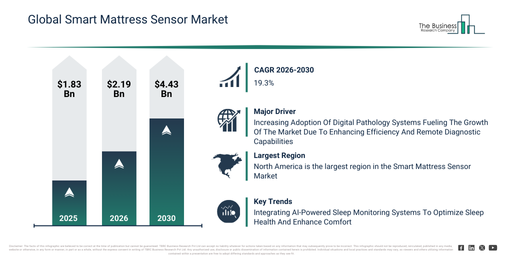
    The smart mattress sensor market has experienced rapid expansion in recent years. This market is projected to grow from $1.83 billion in 2025 to $2.19 billion in 2026, exhibiting a compound annual growth rate (CAGR) of 19.5%. Historically, this growth can be attributed to several factors: increasing awareness of sleep health, the growing adoption of wearable and sleep monitoring devices, a rising demand for comfortable and supportive mattresses, the expanding integration of smart home technology, and an increasing focus on personalized sleep solutions.

    The smart mattress sensor market is projected to experience substantial growth in the coming years. Its value is forecast to reach $4.43 billion by 2030, expanding at a compound annual growth rate (CAGR) of 19.3%. This growth is primarily driven by the increasing adoption of AI-powered sleep tracking, wider integration of IoT-enabled mattress sensors, a rising demand for real-time sleep quality monitoring, the expanding use of cloud-based health data platforms, and a growing focus on preventive health and wellness. Significant trends during this period include technology advancements in sensor accuracy and sensitivity, innovations in AI-driven sleep analytics, developments in connected mattress and bedding systems, research and development in non-intrusive monitoring technologies, and advancements in predictive and personalized sleep optimization.

    Download the Free Sample Report to Explore Key Market Insights:

    https://www.thebusinessresearchcompany.com/sample.aspx?id=30750&type=smp

    What Primary Drivers Are Shaping The Development Of The Smart Mattress Sensor Market?

    The increasing occurrence of sleep disorders is anticipated to drive the expansion of the smart mattress sensor market in the future. These medical conditions, which include insomnia and sleep-related breathing disorders, negatively affect sleep quality, duration, or timing, leading to detrimental physical, cognitive, and cardiovascular consequences. The growing prevalence of sleep disorders can be attributed to higher obesity rates and an aging demographic, both contributing to a greater incidence of issues like sleep-disordered breathing. Smart mattress sensors assist in managing sleep disorders by tracking sleep patterns, body movements, and vital signs, thereby offering customized insights and recommendations. This technology enhances sleep quality and overall well-being through the early identification of disturbances and support for precise interventions. As an example, in March 2024, the National Sleep Foundation, a US-based non-profit sleep health organization, reported an increase in adults experiencing poor sleep quality from 35% in 2023 to 38% in 2024. This data highlights a noticeable rise in sleep-related health concerns that necessitate ongoing monitoring solutions. Consequently, the escalating prevalence of sleep disorders is fueling the growth of the smart mattress sensor market.

    What Market Segments Are Evaluated Within The Smart Mattress Sensor Market?

    The smart mattress sensor market covered in this report is segmented –

    1) By Product Type: Pressure Sensors, Motion Sensors, Temperature Sensors, Multi-Sensor Systems, Other Product Types

    2) By Connectivity: Wired, Wireless

    3) By Distribution Channel: Online Retail, Specialty Stores, Direct Sales, Other Distribution Channels

    4) By End-User: Individual, Commercial, Healthcare, Hospitality, Other End-Users

    Subsegments:

    1) By Pressure Sensors: Mattress Pressure Mapping Units, Sleep Posture Detection Sensors, Weight Distribution Monitoring Devices, Bed Occupancy Detection Modules, High Sensitivity Pressure Tracking Systems

    2) By Motion Sensors: Sleep Movement Tracking Devices, Restlessness And Activity Monitoring Units, Micro Motion Detection Modules, Body Rotation Tracking Sensors, Nighttime Motion Analysis Systems

    3) By Temperature Sensors: Bed Temperature Monitoring Units, Skin Contact Temperature Detection Sensors, Climate Adjustable Sensor Modules, Thermal Comfort Tracking Devices, Smart Heat Regulation Sensors

    4) By Multi-Sensor Systems: Integrated Sleep Monitoring Modules, Combined Pressure And Motion Detection Units, Multi Parameter Sleep Analysis Systems, Comprehensive Bed Sensor Platforms, Advanced Sleep Behavior Tracking Devices

    5) By Other Product Types: Smart Humidity Monitoring Sensors, Biometric Sleep Tracking Devices, Sound And Vibration Detection Modules, Smart Bedding Integration Sensors, Innovative Sleep Environment Monitoring Units

    What Industry Trends Are Redefining The Smart Mattress Sensor Market?

    Leading companies in the smart mattress sensor market are concentrating on creating sophisticated solutions, like multi-sensor sleep monitoring systems, designed to monitor sleep patterns, bodily movements, and vital indicators, offering practical advice for better sleep and proactive health management. These multi-sensor sleep monitoring systems are embedded technologies that continuously gather physiological and environmental data, such as heart rate, respiratory rate, body position, and the distribution of mattress pressure, to evaluate sleep quality and identify any anomalies. An example of this is the DeRUCCI T11 Pro Smart Mattress, launched in November 2023 by De Rucci Healthy Sleep Co. Ltd., a China-based sleep technology company. This mattress is a multi-sensor sleep monitoring device incorporating 23 AI-driven sensors and 18 adaptive support units, enabling real-time tracking of body position and physiological data, analysis of sleep quality, and dynamic adjustment for comfort. Such capabilities provide users with personalized insights into their sleep, early alerts for potential health concerns, and enhanced comfort, thereby representing a major leap forward in sleep health management through the integration of precise monitoring, AI-powered analysis, and adaptive mattress technology.

    Which Global Companies Are Actively Competing In The Smart Mattress Sensor Market?

    Major companies operating in the smart mattress sensor market are Xiaomi Corporation, Nokia, Koninklijke Philips N.V., Tempur Sealy International Inc., Serta Simmons Bedding LLC, Hilding Anders International AB, Saatva Inc., Sleep Number Corporation, Casper Sleep Inc., Silentnight Group Limited, DeRUCCI International Holdings Limited, Kingsdown Inc., Withings SAS, Bosch Sensortec GmbH, Eight Sleep Inc., Sleepace Technology Co. Ltd., Responsive Surface Technology Inc., Emfit Ltd., RestOn Sleep Technology Pvt. Ltd., Slairzz Inc.

    Read the full smart mattress sensor market report here:

    https://www.thebusinessresearchcompany.com/report/smart-mattress-sensor-market-report

    Which Global Regions Are Shaping The Competitive Landscape Of The Smart Mattress Sensor Market?

    North America was the largest region in the smart mattress sensor market in 2025. Asia-Pacific is expected to be the fastest-growing region in the forecast period. The regions covered in the smart mattress sensor market report are Asia-Pacific, South East Asia, Western Europe, Eastern Europe, North America, South America, Middle East, Africa.

    Request A Tailored Smart Mattress Sensor Market Research Report For Competitive Advantage:

    https://www.thebusinessresearchcompany.com/customise?id=30750&type=smp

    Browse Through More Reports Similar to the Global Smart Mattress Sensor Market 2026, By The Business Research Company

    Smart Sensor Market Report 2026

    https://www.thebusinessresearchcompany.com/report/smart-sensor-global-market-report

    Smart Bed Market Report 2026

    https://www.thebusinessresearchcompany.com/report/smart-bed-global-market-report

    bed monitoring system and baby monitoring system global market report

    https://www.thebusinessresearchcompany.com/report/bed-monitoring-system-and-baby-monitoring-system-global-market-report

    Get in touch with us:

    The Business Research Company: https://www.thebusinessresearchcompany.com/

    Americas +1 310-496-7795

    Asia +44 7882 955267 & +91 8897263534

    Europe +44 7882 955267

    Email us at info@tbrc.info

    Follow us on:

    LinkedIn: https://in.linkedin.com/company/the-business-research-company

    YouTube: https://www.youtube.com/channel/UC24_fI0rV8cR5DxlCpgmyFQ

    Global Market Model: https://www.thebusinessresearchcompany.com/global-market-model

  • Smart Home Market Forecast 2026–2035 Highlighting Expansion Opportunities

    Smart Home Market Forecast 2026–2035 Highlighting Expansion Opportunities

    The Business Research Company’s 2026 market reports include new capabilities such as market attractiveness scoring and analysis, total addressable market analysis, company scoring matrix, interactive excel data dashboard, improved supply chain analysis, upcoming startups in the market, and overview of key products, aimed at improving the depth, usability, and strategic value of the insights delivered.

    How Much Is The Smart Home Market Expected To Grow In Terms Of Market Value Between 2026 And 2030?

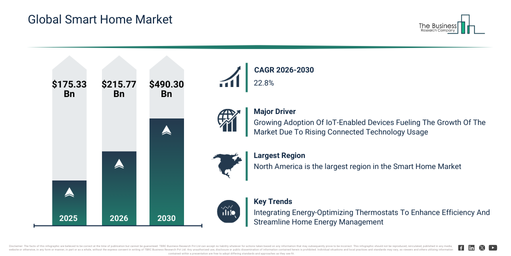
    The smart home market size has seen exponential growth in recent years. It is forecast to grow from $175.33 billion in 2025 to $215.77 billion in 2026, at a compound annual growth rate (CAGR) of 23.1%. This historic growth can be attributed to the increasing adoption of IoT devices, rising consumer demand for home automation, growing awareness about energy efficiency, expanding use of smart security systems, and increasing penetration of smartphones and mobile applications.

    The smart home market is projected to experience substantial growth over the next few years. It is expected to expand to $490.30 billion by 2030, achieving a compound annual growth rate (CAGR) of 22.8%. This anticipated growth during the forecast period is driven by increasing investment in smart home infrastructure, the expanding integration of AI and machine learning technologies, the wider adoption of voice-controlled devices, a rising demand for retrofit solutions, and a heightened focus on sustainable and energy-efficient solutions. Furthermore, significant trends for the forecast period involve technological progress in AI-driven automation, innovations concerning matter protocol interoperability, developments in 5G and edge computing integration, ongoing research into sustainable home solutions, and enhancements in predictive maintenance and smart appliance management.

    Download the Free Sample Report to Explore Key Market Insights:

    https://www.thebusinessresearchcompany.com/sample.aspx?id=30746&type=smp

    Which Growth Drivers Are Contributing To The Progress Of The Smart Home Market?

    The increasing integration of Internet of Things (IoT)-enabled devices is anticipated to drive the expansion of the smart home market in the future. These devices are electronic items fitted with sensors, software, and network capabilities, facilitating data collection and inter-system communication for remote oversight and automated functions. The uptake of IoT-enabled devices is increasing because entities are pursuing real-time data and automation to enhance operational efficiency, decrease expenses, and refine decision-making in homes, cities, and various industries. The smart home environment accommodates IoT-enabled devices by incorporating their functionalities into elements such as climate control, security systems, lighting, and home appliances, thereby enhancing user convenience, operational efficiency, and energy regulation. For example, in September 2024, according to IoT Analytics, a Germany-based research firm focused on IoT market insights, the count of connected IoT devices hit 16.6 billion in 2023, marking a 15% rise from 14.4 billion in 2022. Consequently, the expanding utilization of Internet of Things (IoT)-enabled devices is fueling the development of the smart home market.

    What Major Segment Divisions Exist Within The Smart Home Market?

    The smart home market covered in this report is segmented –

    1) By Type: Audio Equipment, Video Devices, Gaming Consoles

    2) By Device Type: Safety And Security Access Control, Home Appliances, Heating, Ventilation And Air Conditioning, Lighting Control, Smart Entertainment Devices, Smart Kitchen Appliances, Other Device Types

    3) By Protocol: Wired, Wireless

    4) By Sales Channel: Direct-To-Consumer (DTC) Or Online, Retail, Professional Or System Integrators

    5) By Application: Retrofit, New Construction

    Subsegments:

    1) By Audio Equipment: Smart Speakers, Wireless Home Audio Systems, Sound Bars, Multi Room Audio Devices, Home Theater Audio Systems

    2) By Video Devices: Smart Televisions, Streaming Media Players, Projectors, Video Casting Devices, Smart Display Screens

    3) By Gaming Consoles: Home Gaming Consoles, Portable Gaming Consoles, Virtual Reality Gaming Devices, Motion Sensing Gaming Devices, Cloud Based Gaming Consoles

    How Are Trends Shaping The Direction Of The Smart Home Market?

    Leading companies operating within the smart home industry are increasingly focused on developing energy-optimizing solutions, such as integrated smart thermostats, to enhance home energy efficiency, reduce electricity expenditures, and improve automated climate control. Integrated smart thermostats are defined as connected devices that intelligently regulate heating and cooling, synchronize with energy storage or backup systems, and adapt to occupancy patterns to optimize energy usage. For instance, in May 2025, Generac Holdings Inc., a US-based energy technology company, launched the ecobee by Generac Smart Thermostat Enhanced with Home Energy Management. This integrated smart thermostat features climate adjustment based on occupancy, integrates with PWRcell solar battery storage for decreased dependence on the grid, and coordinates seamlessly with Generac Home Standby Generators to maintain comfort during power outages.

    Who Are The Key Players Driving Competition In The Smart Home Market?

    Major companies operating in the smart home market are Amazon.com Inc., Apple Inc., Samsung Electronics Co. Ltd., Robert Bosch GmbH, LG Electronics Inc., Schneider Electric SE, Xiaomi Corporation, Honeywell International Inc., ABB Ltd., Legrand SA, Signify N.V., TP-Link Technologies Co. Ltd., Somfy SA, Anker Innovations Technology Co. Ltd., Lutron Electronics Co. Inc., Control4 Corporation, iRobot Corporation, Aqara, ecobee Inc., Tuya Inc., Nanoleaf Ltd., Eve Systems GmbH

    Read the full smart home market report here:

    https://www.thebusinessresearchcompany.com/report/smart-home-market-report

    Which Geographic Areas Are Emerging As Strong Markets For The Smart Home Market?

    North America was the largest region in the smart home market in 2025. Asia-Pacific is expected to be the fastest-growing region in the forecast period. The regions covered in the smart home market report are Asia-Pacific, South East Asia, Western Europe, Eastern Europe, North America, South America, Middle East, Africa.

    Request A Tailored Smart Home Market Research Report For Competitive Advantage:

    https://www.thebusinessresearchcompany.com/customise?id=30746&type=smp

    Browse Through More Reports Similar to the Global Smart Home Market 2026, By The Business Research Company

    Smart Homes Market 2026

    https://www.thebusinessresearchcompany.com/report/smart-homes-market

    Smart Home Devices Market Report 2026

    https://www.thebusinessresearchcompany.com/report/smart-home-devices-global-market-report

    smart home security systems global market report

    https://www.thebusinessresearchcompany.com/report/smart-home-security-systems-global-market-report

    Get in touch with us:

    The Business Research Company: https://www.thebusinessresearchcompany.com/

    Americas +1 310-496-7795

    Asia +44 7882 955267 & +91 8897263534

    Europe +44 7882 955267

    Email us at info@tbrc.info

    Follow us on:

    LinkedIn: https://in.linkedin.com/company/the-business-research-company

    YouTube: https://www.youtube.com/channel/UC24_fI0rV8cR5DxlCpgmyFQ

    Global Market Model: https://www.thebusinessresearchcompany.com/global-market-model

  • Robot-Assisted Rehabilitation Treadmills Market Outlook 2026–2030 Highlighting Innovation Trends

    Robot-Assisted Rehabilitation Treadmills Market Outlook 2026–2030 Highlighting Innovation Trends

    The Business Research Company’s 2026 market reports include new capabilities such as market attractiveness scoring and analysis, total addressable market analysis, company scoring matrix, interactive excel data dashboard, improved supply chain analysis, upcoming startups in the market, and overview of key products, aimed at improving the depth, usability, and strategic value of the insights delivered.

    What Market Valuation Is Forecasted For The Robot-Assisted Rehabilitation Treadmills Market By 2030 Starting From Its 2026 Size?

    The robot-assisted rehabilitation treadmills market size has seen rapid growth recently. It is projected to increase from $0.97 billion in 2025 to $1.09 billion in 2026, exhibiting a compound annual growth rate (CAGR) of 12.4%. This historical growth can be attributed to several factors including the increasing adoption of robotic rehabilitation devices, the growing prevalence of neurological disorders, a rising demand for advanced physiotherapy solutions, the expansion of rehabilitation centers, and an increasing focus on patient mobility restoration.

    The robot-assisted rehabilitation treadmills market is expected to undergo substantial expansion in the coming years. This sector is projected to reach $1.72 billion by 2030, demonstrating a compound annual growth rate (CAGR) of 12.1%. The expansion during this forecast period can be attributed to increased investment in medical robotics, a growing demand for technology-assisted rehabilitation, an amplified focus on personalized therapy solutions, the broadening of outpatient rehabilitation services, and a rising elderly population requiring mobility assistance. Significant developments anticipated during the forecast period include technological advancements in robotic gait training systems, innovations in sensor-integrated rehabilitation treadmills, progress in artificial intelligence-assisted rehabilitation, extensive research and development in neurorehabilitation robotics, and improvements in immersive rehabilitation technologies.

    Download the Free Sample Report to Explore Key Market Insights:

    https://www.thebusinessresearchcompany.com/sample.aspx?id=30729&type=smp

    What Drivers Are Shaping The Future Growth Of The Robot-Assisted Rehabilitation Treadmills Market?

    The future expansion of the robot-assisted rehabilitation treadmills market is anticipated due to the rising occurrence of neurological disorders. These medical conditions impact the brain, spinal cord, and nerves, thereby disrupting normal nervous system function and leading to impairments in movement, cognition, sensation, behavior, or overall bodily control. Unhealthy lifestyle habits, such as poor diet, physical inactivity, smoking, excessive alcohol consumption, and chronic stress, contribute to the increasing prevalence of neurological disorders. Robot-assisted rehabilitation treadmills support neurological disorder management by offering guided, repetitive gait training along with real-time feedback and assistance. They enhance patient outcomes by improving mobility, muscle strength, balance, and functional recovery during the rehabilitation process. For instance, in June 2025, Brain Research UK, a neurological charity based in the United Kingdom, indicated that the prevalence of neurological conditions rose from 10.5 million people in 2024 to an estimated 11 million in 2025, representing a 4.8% year-over-year increase. Therefore, the rising demand for targeted CNS drug delivery is driving the growth of the robot-assisted rehabilitation treadmills market.

    Which Segment Categories Define The Robot-Assisted Rehabilitation Treadmills Market?

    The robot-assisted rehabilitation treadmills market covered in this report is segmented –

    1) By Product Type: End-Effector Based Treadmills, Exoskeleton Based Treadmills, Gait Training Treadmills, Other Product Types

    2) By Technology: Semi-Automated, Fully Automated

    3) By Application: Neurological Rehabilitation, Orthopedic Rehabilitation, Geriatric Rehabilitation, Other Applications

    4) By End-User: Hospitals, Rehabilitation Centers, Clinics, Home Care Settings, Other End-Users

    Subsegments:

    1) By End-Effector Based Treadmills: Footplate Based Gait Systems, Distal Joint Guidance Systems, Force Feedback Assisted Platforms, Balance And Stability Training Platforms

    2) By Exoskeleton Based Treadmills: Lower Limb Robotic Exoskeletons, Hip And Knee Joint Assisted Exoskeletons, Full Leg Support Robotic Frames, Wearable Motorized Gait Support Systems

    3) By Gait Training Treadmills: Body Weight Support Treadmills, Robotic Assisted Speed Regulated Treadmills, Dynamic Gait And Posture Training Systems, Multidirectional Gait Correction Treadmills

    4) By Other Product Types: Hybrid Gait Rehabilitation Systems, Robotic Balance Training Platforms, Neuromuscular Reeducation Devices, Specialized Rehabilitation Motion Platforms

    What Major Market Trends Are Driving Changes In The Robot-Assisted Rehabilitation Treadmills Market?

    Leading companies in the robot-assisted rehabilitation treadmills market are concentrating on developing advanced products, such as anti-gravity body weight support systems, with the goal of improving patient mobility, accelerating recovery times, and enhancing clinical rehabilitation protocols. Anti-gravity body weight support systems are defined as integrated mechanisms that decrease a patient’s actual body weight while walking on a treadmill, thereby allowing individuals with mobility issues to participate in gait training with a lower risk of falling and less physical effort. For example, in June 2024, ReWalk Robotics Ltd., an Israel-based company specializing in rehabilitation technology, introduced the AlterG NEO Anti-Gravity Treadmill. This treadmill is both cost-effective and user-friendly, incorporating the company’s patented Differential Air Pressure (DAP) technology. This fundamental technology delivers precise and consistent unweighting, enabling safe rehabilitation and athletic training by reducing strain on injured joints and muscles. Its refreshed design and affordable price point are specifically designed to extend the availability of anti-gravity therapy benefits to a wider selection of physical rehabilitation clinics and athletic training facilities.

    Which Major Players Dominate The Robot-Assisted Rehabilitation Treadmills Market?

    Major companies operating in the robot-assisted rehabilitation treadmills market are HIWIN Corp., Biodex Medical Systems Inc., Reha Technology AG, Guangzhou Longest Science & Technology Co. Ltd., Hocoma AG, Motek Medical B.V., Ekso Bionics Holdings Inc., Tyromotion GmbH, ReWalk Robotics Ltd., Meditouch Ltd., Woodway USA Inc., Restorative Therapies Inc., BAMA Teknoloji A.Ş., Aretech LLC, Bionik Laboratories Corp., Techno Concept Inc., Rex Bionics Plc, Rehab‑Robotics Company Limited, LokoHelp Group GmbH, ZARYA

    Read the full robot-assisted rehabilitation treadmills market report here:

    https://www.thebusinessresearchcompany.com/report/robot-assisted-rehabilitation-treadmills-market-report

    Which Regions Are Poised For Strategic Growth In The Robot-Assisted Rehabilitation Treadmills Market?

    North America was the largest region in the robot-assisted rehabilitation treadmills market in 2025. Asia-Pacific is expected to be the fastest-growing region in the forecast period. The regions covered in the robot-assisted rehabilitation treadmills market report are Asia-Pacific, South East Asia, Western Europe, Eastern Europe, North America, South America, Middle East, Africa.

    Request A Tailored Robot-Assisted Rehabilitation Treadmills Market Research Report For Competitive Advantage:

    https://www.thebusinessresearchcompany.com/customise?id=30729&type=smp

    Browse Through More Reports Similar to the Global Robot-Assisted Rehabilitation Treadmills Market 2026, By The Business Research Company

    Rehabilitation Robotics Market Report 2026

    https://www.thebusinessresearchcompany.com/report/rehabilitation-robotics-global-market-report

    Rehabilitation Equipment Market Report 2026

    https://www.thebusinessresearchcompany.com/report/rehabilitation-equipment-global-market-report

    fitness platforms for disabled global market report

    https://www.thebusinessresearchcompany.com/report/fitness-platforms-for-disabled-global-market-report

    Get in touch with us:

    The Business Research Company: https://www.thebusinessresearchcompany.com/

    Americas +1 310-496-7795

    Asia +44 7882 955267 & +91 8897263534

    Europe +44 7882 955267

    Email us at info@tbrc.info

    Follow us on:

    LinkedIn: https://in.linkedin.com/company/the-business-research-company

    YouTube: https://www.youtube.com/channel/UC24_fI0rV8cR5DxlCpgmyFQ

    Global Market Model: https://www.thebusinessresearchcompany.com/global-market-model
  • Intraoperative Neuromonitoring (IONM) Market Projected to Reach $5.14 Billion by 2030 at 7.6% CAGR

    Intraoperative Neuromonitoring (IONM) Market Projected to Reach $5.14 Billion by 2030 at 7.6% CAGR

    The Business Research Company’s 2026 market reports include new capabilities such as market attractiveness scoring and analysis, total addressable market analysis, company scoring matrix, interactive excel data dashboard, improved supply chain analysis, upcoming startups in the market, and overview of key products, aimed at improving the depth, usability, and strategic value of the insights delivered.

    How Is The Market Size Of The Intraoperative Neuromonitoring (IONM) Market Expected To Change Between 2026 And 2030?

    The intraoperative neuromonitoring market has shown substantial growth in recent years. It is anticipated to expand from $3.56 billion in 2025 to $3.84 billion in 2026, achieving a compound annual growth rate (CAGR) of 7.9%. This historical growth can be ascribed to several factors, including an increased demand for safer surgical procedures, the expanding adoption of intraoperative neuromonitoring in complex surgeries, a rising prevalence of neurological and spinal disorders, the development of hospital infrastructure in developed regions, and a greater emphasis on patient safety during surgical operations.

    The intraoperative neuromonitoring market is projected to undergo significant expansion in the upcoming years, with its size anticipated to reach $5.14 billion by 2030, growing at a compound annual growth rate (CAGR) of 7.6%. This expected growth throughout the forecast period stems from factors such as the increasing adoption of multimodality neuromonitoring systems, the rising utilization of artificial intelligence for signal interpretation, augmented investments in research and development for neuromonitoring technologies, the spread of minimally invasive and robotic surgeries, and an expanding availability of skilled neuromonitoring professionals. Prominent trends for the forecast period include the advancement of multimodality monitoring technologies, the increasing integration of artificial intelligence within neuromonitoring systems, the enhanced development of portable and cloud-integrated devices, the wider application of real-time data analytics in surgeries, and a surge in innovations for wearable and intraoperative monitoring sensors.

    Download the Free Sample Report to Explore Key Market Insights:

    https://www.thebusinessresearchcompany.com/sample.aspx?id=30628&type=smp

    Which Growth Drivers Are Contributing To The Progress Of The Intraoperative Neuromonitoring (IONM) Market?

    The anticipated surge in complex surgical procedures is projected to invigorate the expansion of the intraoperative neuromonitoring (IONM) market in the future. Complex surgeries are defined as intricate medical interventions that entail considerable risks, necessitate specialized expertise, and frequently address severe or multi-system health issues. The volume of these complex operations is escalating as surgeons increasingly perform procedures on older patients suffering from multiple chronic conditions such as diabetes, obesity, and heart disease, a trend facilitated by advancements in surgical techniques that enable the feasibility of high-risk cases. Intraoperative neuromonitoring (IONM) supports complex surgeries by offering immediate feedback on neural function, which helps to minimize the potential for nerve damage during critical procedures. For instance, in January 2025, according to the Organ Procurement and Transplantation Network (OPTN), a US-based national system linking US professionals in organ donation and transplantation, the total number of organ transplants in the United States rose to 48,180 in 2024, marking a 3.3% increase from the 46,632 recorded in 2023. Consequently, the increasing prevalence of complex surgeries is acting as a significant catalyst for the growth of the intraoperative neuromonitoring (IONM) market.

    How Is The Intraoperative Neuromonitoring (IONM) Market Structured Across Different Segments?

    The intraoperative neuromonitoring (ionm) market covered in this report is segmented –

    1) By Type: Systems, Accessories And Consumables, Services

    2) By Source Type: Insourced Monitoring, Outsourced Monitoring

    3) By Modality: Somatosensory Evoked Potentials, Motor Evoked Potentials, Electroencephalography, Electromyography, Brainstem Auditory Evoked Potentials, Visual Evoked Potentials, Other Modalities

    4) By Application: Neurosurgery, Spinal Surgery, Vascular Surgery, Cardiothoracic Surgery, Ear, Nose, Throat Surgery, Orthopedic Surgery

    5) By End‑User: Hospitals, Ambulatory Surgical Centers, Specialty Clinics, Other End‑Users

    Subsegments:

    1) By Systems: Electromyography Monitoring System, Electroencephalography Monitoring System, Somatosensory Evoked Potential Monitoring System, Motor Evoked Potential Monitoring System, Brainstem Auditory Evoked Potential Monitoring System

    2) By Accessories And Consumables: Electrodes And Probes, Cables And Connectors, Monitoring Software, Disposable Sensors, Stimulators And Pads

    3) By Services: Preoperative Assessment Services, Intraoperative Monitoring Services, Postoperative Analysis Services, Remote Neuromonitoring Services, Consulting And Training Services

    Which Trends Are Shaping The Future Of The Intraoperative Neuromonitoring (IONM) Market?

    Leading firms within the intraoperative neuromonitoring (IONM) market are prioritizing the creation of product ranges, including specialized disposable concentric needle families, with the aim of enhancing diagnostic precision and operational efficiency. These specialized disposable concentric needle families are designed by engineering single-use needles that offer uniform signal quality and accurate recording abilities, thereby removing the inconsistencies linked with multi-use instruments and preserving high accuracy in electromyography (EMG) and nerve conduction velocity (NCV) examinations. An example of this is the launch of the Concentric Needle Family by Rhythmlink International LLC, a US-based designer and manufacturer of medical devices for intraoperative neuromonitoring, which occurred in October 2023. This product line provides specialized disposable concentric needles available in four sizes, intended for use with a reusable cable custom-engineered for the system. This innovation equips clinicians with a high-quality, adaptable instrument for identifying and capturing data from specific muscle regions with extreme accuracy, consequently boosting the dependability of intraoperative and diagnostic neurological evaluations.

    Who Are The Key Players Driving Competition In The Intraoperative Neuromonitoring (IONM) Market?

    Major companies operating in the intraoperative neuromonitoring (ionm) market are Abbott Laboratories, Medtronic plc, Boston Scientific Corporation, Nihon Kohden Corporation, Nuvaise Inc., Natus Medical incorporated, Speciality care Inc., Brainlab AG, Neurosoft Ltd., Cadwell industries Inc., Neuromonitoring Associates LLC, Compummedics Ltd., Inomed medizintecknic Gmbh, Accurate Neuromonitoring Inc., Electrical Geodesics Inc., Blackrock NeuroTech LLC, Neuromonitoring Technologies Inc., Tucker Davis technologies Inc., Sentient Medical Systems Inc., Dr.Langer Medical Gmbh, Moller Wedel Gmbh, Ionm Solutions Inc., Axontronic GmbH & Co. KG, Alpha Omega Engineering Ltd.

    Read the full intraoperative neuromonitoring (ionm) market report here:

    https://www.thebusinessresearchcompany.com/report/intraoperative-neuromonitoring-ionm-market-report

    How Does The Intraoperative Neuromonitoring (IONM) Market Perform Across Major Global Regions?

    North America was the largest region in the intraoperative neuromonitoring market in 2025. Asia-Pacific is expected to be the fastest-growing region in the forecast period. The regions covered in the intraoperative neuromonitoring (ionm) market report are Asia-Pacific, South East Asia, Western Europe, Eastern Europe, North America, South America, Middle East, Africa.

    Request A Tailored Intraoperative Neuromonitoring (IONM) Market Research Report For Competitive Advantage:

    https://www.thebusinessresearchcompany.com/customise?id=30628&type=smp

    Browse Through More Reports Similar to the Global Intraoperative Neuromonitoring (IONM) Market 2026, By The Business Research Company

    Intraoperative Neuromonitoring Market Report 2026

    https://www.thebusinessresearchcompany.com/report/intraoperative-neuromonitoring-global-market-report

    Home Health Monitoring Devices Market Report 2026

    https://www.thebusinessresearchcompany.com/report/home-health-monitoring-devices-global-market-report

    medical electrodes global market report

    https://www.thebusinessresearchcompany.com/report/medical-electrodes-global-market-report

    Get in touch with us:

    The Business Research Company: https://www.thebusinessresearchcompany.com/

    Americas +1 310-496-7795

    Asia +44 7882 955267 & +91 8897263534

    Europe +44 7882 955267

    Email us at info@tbrc.info

    Follow us on:

    LinkedIn: https://in.linkedin.com/company/the-business-research-company

    YouTube: https://www.youtube.com/channel/UC24_fI0rV8cR5DxlCpgmyFQ

    Global Market Model: https://www.thebusinessresearchcompany.com/global-market-model

  • The Bioactive Wound Care Market Is Influenced By Rising Trauma Cases And Road Accidents Driving Demand

    The Bioactive Wound Care Market Is Influenced By Rising Trauma Cases And Road Accidents Driving Demand

    The Business Research Company’s 2026 market reports feature enhanced tools like market attractiveness analysis, TAM assessment, and company scoring matrices, along with interactive dashboards, deeper supply chain insights, and startup coverage strengthening the depth, usability, and strategic value of insights.

    How Does The Market Size Of The Bioactive Wound Care Market Compare Between 2026 And 2030?

    The bioactive wound care market has demonstrated significant expansion in recent years. It is anticipated to increase from $8.28 billion in 2025 to $9 billion in 2026, achieving a compound annual growth rate (CAGR) of 8.7%. During prior periods, this growth was primarily influenced by limited bioactive wound care alternatives, a reliance on conventional gauze and bandages, the rising occurrence of chronic wounds, an expanding hospital and clinical infrastructure, and increased consciousness of infection control practices.

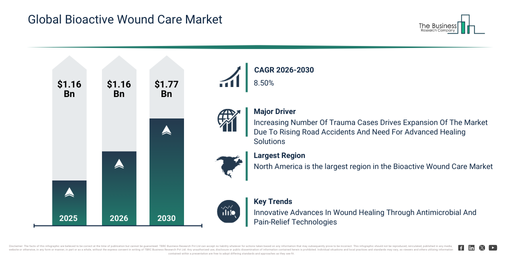
    The bioactive wound care market size is projected to experience substantial growth in the coming years, with an anticipated rise to $12.48 billion by 2030, demonstrating a compound annual growth rate (CAGR) of 8.5%. This growth during the forecast period is primarily attributed to advancements in nanocrystalline silver and iodine-based dressings, the expansion of home care and ambulatory wound management, an increasing diabetic and aging population, stricter regulatory standards and quality certifications, and the adoption of personalized wound care solutions. Major trends expected in this period include a rising uptake of antimicrobial and silver-based dressings, increased use of hydrogels and alginates for chronic wounds, continued expansion in home care and ambulatory wound management, a focus on advanced collagen and hydrofiber dressings, and a heightened emphasis on infection control and wound healing outcomes.

    Access Your Free Sample Report For In-Depth Market Analysis:

    https://www.thebusinessresearchcompany.com/sample.aspx?id=27222&type=smp

    Which Key Drivers Are Affecting The Bioactive Wound Care Market Development?

    A rise in trauma incidents is anticipated to boost the expansion of the bioactive wound care market in the future. These cases involve physical injuries caused by external impacts like accidents, falls, or acts of violence, frequently necessitating immediate medical attention. The surge in trauma instances is primarily fueled by a growing count of road traffic accidents, stemming from increased vehicle use and insufficient road safety protocols. Bioactive wound care assists in trauma scenarios by encouraging quicker recovery, guarding against infections, and aiding tissue regeneration for intricate or severe wounds. For example, the Transport Accident Commission, an Australian government body, disclosed in December 2024 that 267 fatal crashes occurred on Victorian roads in the 12 months leading up to June 2024, representing an increase of 20 from the 247 fatal crashes documented in the previous year. Consequently, the growing frequency of trauma cases is stimulating the growth of the bioactive wound care market.

    Which Segment Classifications Are Used In The Bioactive Wound Care Market Segment Analysis?

    The bioactive wound care market covered in this report is segmented –

    1) By Product Type: Antimicrobial Dressings, Hydrogels, Alginates, Foams, Collagen Dressings, Silver-Based Dressings, Hydrofiber Dressings

    2) By Mode Of Action: Antibacterial Action, Anti-Inflammatory Action, Wound Healing Promotion, Moisture Control

    3) By Application: Chronic Wounds, Acute Wounds, Burns, Surgical Wounds, Diabetic Foot Ulcers, Pressure Ulcers

    4) By End User: Hospitals, Clinics, Home Care Settings, Ambulatory Surgical Centers, Nursing Homes

    Subsegments:

    1) By Antimicrobial Dressings: Silver-Impregnated Dressings, Iodine-Based Dressings, Honey-Based Dressings

    2) By Hydrogels: Amorphous Hydrogel, Hydrogel Sheets, Hydrogel Impregnated Gauze

    3) By Alginates: Calcium Alginate Dressings, Calcium Sodium Alginate Dressings

    4) By Foams: Silicone Foam Dressings, Polyurethane Foam Dressings, Adhesive And Non-Adhesive Foams

    5) By Collagen Dressings: Bovine Collagen, Porcine Collagen, Synthetic Collagen

    6) By Silver-Based Dressings: Nanocrystalline Silver Dressings, Silver Sulfadiazine Dressings

    7) By Hydrofiber Dressings: Adhesive Hydrofiber, Non-Adhesive Hydrofiber

    What Trends Are Transforming The Bioactive Wound Care Market?

    Major companies in the bioactive wound care market are strategically focusing on the development of innovative solutions, such as antimicrobial wound dressings, aiming to enhance infection management, speed up healing processes, and mitigate the risk of complications in both chronic and acute wounds. An antimicrobial wound dressing refers to a type of product for wound care that is infused with antimicrobial agents like silver, iodine, or honey, specifically engineered to inhibit or lessen microbial contamination, control infections, and facilitate faster wound recovery. For example, in October 2024, Imbed Biosciences Inc., a US-based medical device company, secured FDA 510(k) clearance for Microlyte Ag, or lidocaine, making it the first antimicrobial wound dressing to integrate lidocaine for managing painful skin wounds. This wound dressing combines antimicrobial silver with lidocaine to not only prevent infection but also provide localized pain relief in various partial- and full-thickness wounds. It supports healing by maintaining a moist environment and reducing discomfort, potentially lessening the need for systemic antibiotics and opioids.

    Which Firms Are Contributing To The Bioactive Wound Care Market Ecosystem?

    Major companies operating in the bioactive wound care market are 3M Company, Smith & Nephew PLC, Coloplast A/S, PAUL HARTMANN AG, Mölnlycke Health Care AB, CONVATEC GROUP PLC, Hollister Incorporated, Organogenesis Holdings Inc., DeRoyal Industries Inc., MiMedx Group Inc., B. Braun SE, Kerecis Inc., Sanara MedTech Inc., Aroa Biosurgery Limited, BioMonde GmbH, DermaRite Industries LLC., BSN MEDICAL PRIVATE LIMITED, Covalon Technologies Ltd., Sonoma Pharmaceuticals Inc., Integra LifeSciences Holdings Corporation.

    Get The Full Bioactive Wound Care Market Report:

    https://www.thebusinessresearchcompany.com/report/bioactive-wound-care-global-market-report

    Which Region Leads The Bioactive Wound Care Market In Terms Of Market Share?

    North America was the largest region in the bioactive wound care market in 2025. Asia-Pacific is expected to be the fastest-growing region in the forecast period. The regions covered in the bioactive wound care market report are Asia-Pacific, South East Asia, Western Europe, Eastern Europe, North America, South America, Middle East, Africa.

    Request A Customized Bioactive Wound Care Market Report For Competitive Insights:

    https://www.thebusinessresearchcompany.com/customise?id=27222&type=smp

    Browse Through More Reports Similar to the Global Bioactive Wound Care Market 2026, By The Business Research Company

    Drug Eluting Stent Market Report 2026

    https://www.thebusinessresearchcompany.com/report/drug-eluting-stent-global-market-report

    Self Expanding Stents Market Report 2026

    https://www.thebusinessresearchcompany.com/report/self-expanding-stents-global-market-report

    Coronary Stents Market Report 2026

    https://www.thebusinessresearchcompany.com/report/coronary-stents-global-market-report

    Get in touch with us:

    The Business Research Company: https://www.thebusinessresearchcompany.com/

    Americas +1 310-496-7795

    Asia +44 7882 955267 & +91 8897263534

    Europe +44 7882 955267

    Email us at info@tbrc.info

    Follow us on:

    LinkedIn: https://in.linkedin.com/company/the-business-research-company

    YouTube: https://www.youtube.com/channel/UC24_fI0rV8cR5DxlCpgmyFQ

    Global Market Model: https://www.thebusinessresearchcompany.com/global-market-model

  • Growth In The Bioabsorbable Surgical Mesh Market Is Driven By Increasing Surgical Procedures And Chronic Disease Burden

    Growth In The Bioabsorbable Surgical Mesh Market Is Driven By Increasing Surgical Procedures And Chronic Disease Burden

    The Business Research Company’s 2026 market reports feature enhanced tools like market attractiveness analysis, TAM assessment, and company scoring matrices, along with interactive dashboards, deeper supply chain insights, and startup coverage strengthening the depth, usability, and strategic value of insights.

    What Is The Forecasted Market Size Trajectory Of The Bioabsorbable Surgical Mesh Market From 2026 To 2030?

    The bioabsorbable surgical mesh market has seen robust expansion in recent years. Its value is projected to climb from $1.25 billion in 2025 to $1.36 billion in 2026, achieving a compound annual growth rate (CAGR) of 8.8%. This historical growth can be linked to several factors, including the limitations associated with permanent surgical mesh, an increasing number of hernia and soft tissue repair surgeries, heightened awareness of post-surgical complications, a rise in hospital-based surgical procedures, and the early adoption of absorbable polymers.

    The bioabsorbable surgical mesh market is projected to experience strong expansion in the coming years. It is expected to reach $1.88 billion by 2030, growing at a compound annual growth rate (CAGR) of 8.4%. This anticipated growth can be attributed to advancements in bioabsorbable polymer materials, an increasing demand for minimally invasive surgeries, the rising utilization of bioactive and drug-eluting meshes, a growing volume of surgeries in aging populations, and the expanding clinical adoption in specialty surgeries. Key trends for the forecast period include the increasing uptake of bioabsorbable mesh in hernia repair, a growing preference for temporary implants over permanent mesh solutions, the expanding use of composite and bioactive mesh materials, an intensified focus on reducing post-surgical complications and infections, and the broader application of minimally invasive surgical procedures.

    Access Your Free Sample Report For In-Depth Market Analysis:

    https://www.thebusinessresearchcompany.com/sample.aspx?id=25705&type=smp

    What Factors Are Contributing To The Growth Of The Bioabsorbable Surgical Mesh Market?

    The escalating volume of surgical procedures is projected to propel the expansion of the bioabsorbable surgical mesh market moving forward. A surgical procedure is defined as a medical intervention that deliberately and lastingly modifies body structures, often through tissue incision or the repair or removal of a body part, to address, identify, or avert illness, injury, or other health issues. The primary cause of this rise in surgical interventions stems from the growing prevalence of chronic ailments, including cardiovascular diseases, cancer, and conditions linked to obesity. Bioabsorbable surgical mesh aids surgical procedures by offering temporary support to healing tissues before progressively dissolving, thereby mitigating the chances of long-term issues often linked with permanent implants. For example, data from June 2024, provided by the International Society of Aesthetic Plastic Surgery (ISAPS), a US-based professional organization for board-certified aesthetic plastic surgeons, indicated a 5.5% increase in surgical procedures in 2023, with over 15.8 million surgeries and 19.1 million non-surgical procedures conducted worldwide. Consequently, the expanding volume of surgical procedures is fueling the advancement of the bioabsorbable surgical mesh market.

    How Is The Bioabsorbable Surgical Mesh Market Organized By Segment Classification?

    The bioabsorbable surgical mesh market covered in this report is segmented –

    1) By Product Type: Polymer-Based Mesh, Composite Mesh, Bioactive Mesh

    2) By Material Type: Polylactic Acid, Polyglycolic Acid, Polycaprolactone, Composite Materials, Natural Polymers

    3) By Distribution Channel: Direct Sales, Online Sales, Distributors And Wholesalers

    4) By Application: Hernia Repair, Dural Repair, Urological Surgery, Cardiovascular Surgery, Orthopedic Surgery, Other Applications

    5) By End-Use: Hospitals, Ambulatory Surgical Centers, Specialty Clinics, Research Institutions

    Subsegments:

    1) By Polymer-Based Mesh: Polyglycolic Acid (PGA) Mesh, Polylactic Acid (PLA) Mesh, Polycaprolactone (PCL) Mesh, Polydioxanone (PDO) Mesh

    2) By Composite Mesh: Polymer-Collagen Composite Mesh, Polymer-Coated Composite Mesh, Synthetic-Biological Composite Mesh, Polymer-Hydrogel Composite Mesh

    3) By Bioactive Mesh: Antimicrobial-Embedded Mesh, Growth Factor-Embedded Mesh, Drug-Eluting Mesh, Stem Cell-Seeded Mesh

    What Trends Are Shaping The Future Of The Bioabsorbable Surgical Mesh Market?

    Companies operating within the bioabsorbable surgical mesh market are concentrating on developing advanced products, such as fully bioabsorbable pocket and strap designs, to enhance ease of placement and fixation during hernia repair procedures. A fully bioabsorbable pocket and strap design integrates absorbable structural elements into the mesh, enabling precise positioning and lateral fixation while eliminating the need for permanent implants. For instance, in April 2025, Becton, Dickinson and Company, a US-based medical device company, launched the Phasix ST Umbilical Hernia Patch. This is the first entirely absorbable hernia patch specifically created for umbilical hernias, featuring a pocket and strap configuration composed of poly-4-hydroxybutyrate (P4HB), a biologically derived polymer. This design mimics the handling and placement techniques of permanent mesh, yet it is completely absorbed by the body over time. The patch also includes a hydrogel barrier based on Sepra Technology to minimize tissue adhesion. Available in multiple sizes, the product addresses a broad spectrum of umbilical hernia defects and reflects increasing market demand for non-permanent, patient-centric solutions in soft tissue reconstruction.

    Who Are The Industry Participants Involved In The Bioabsorbable Surgical Mesh Market?

    Major companies operating in the bioabsorbable surgical mesh market are Johnson And Johnson, Medtronic plc, Integra LifeSciences Holdings Corporation, B Braun Melsungen AG, Advanced Medical Solutions Group plc, TELA Bio Inc, Kerecis Limited, W L Gore And Associates Inc, Assut Europe S p A, BioHealth Medical Technology Co Ltd, Aroa Biosurgery Limited, Cook Biotech Incorporated, Tissue Regenix Group plc, Aran Biomedical Teoranta, Deep Blue Medical Advances Inc, Meccellis Biotech, PrintBio Inc, Atrium Medical Corporation, Cousin Biotech, Surgical Mesh Technologies Inc, Gore Medical Bioabsorbables, MedSkin Solutions Dr Suwelack AG

    Get The Full Bioabsorbable Surgical Mesh Market Report:

    https://www.thebusinessresearchcompany.com/report/bioabsorbable-surgical-mesh-global-market-report

    Which Region Leads The Bioabsorbable Surgical Mesh Market In Overall Market Size?

    North America was the largest region in the bioabsorbable surgical mesh market in 2025. Asia-Pacific is expected to be the fastest-growing region in the forecast period. The regions covered in the bioabsorbable surgical mesh market report are Asia-Pacific, South East Asia, Western Europe, Eastern Europe, North America, South America, Middle East, Africa.

    Request A Customized Bioabsorbable Surgical Mesh Market Report For Competitive Insights:

    https://www.thebusinessresearchcompany.com/customise?id=25705&type=smp

    Browse Through More Reports Similar to the Global Bioabsorbable Surgical Mesh Market 2026, By The Business Research Company

    Microelectronic Medical Implants Market Report 2026

    https://www.thebusinessresearchcompany.com/report/microelectronic-medical-implants-global-market-report

    Cosmetic Implants Market Report 2026

    https://www.thebusinessresearchcompany.com/report/cosmetic-implants-global-market-report

    Smart Implants Market Report 2026

    https://www.thebusinessresearchcompany.com/report/smart-implants-global-market-report

    Get in touch with us:

    The Business Research Company: https://www.thebusinessresearchcompany.com/

    Americas +1 310-496-7795

    Asia +44 7882 955267 & +91 8897263534

    Europe +44 7882 955267

    Email us at info@tbrc.info

    Follow us on:

    LinkedIn: https://in.linkedin.com/company/the-business-research-company

    YouTube: https://www.youtube.com/channel/UC24_fI0rV8cR5DxlCpgmyFQ

    Global Market Model: https://www.thebusinessresearchcompany.com/global-market-model