Category: Medical Equipment

  • Bioabsorbable Stents Market Analysis Highlighting Growth Potential And Future Outlook

    Bioabsorbable Stents Market Analysis Highlighting Growth Potential And Future Outlook

    The Business Research Company’s 2026 market reports feature enhanced tools like market attractiveness analysis, TAM assessment, and company scoring matrices, along with interactive dashboards, deeper supply chain insights, and startup coverage strengthening the depth, usability, and strategic value of insights.

    How Much Will The Market Value Of The Bioabsorbable Stents Market Grow Between 2026 And 2030?

    The bioabsorbable stents market has seen rapid expansion in recent years. It is anticipated to increase from $0.41 billion in 2025 to $0.45 billion in 2026, at a compound annual growth rate (CAGR) of 10.3%. This historical growth can be attributed to several factors including the increasing prevalence of cardiovascular diseases, the adoption of interventional cardiology procedures, the early use of biodegradable polymers in medical implants, the growth of coronary stent procedures, and advancements in vascular intervention techniques.

    The bioabsorbable stents market is projected to experience substantial expansion in the coming years. This market is anticipated to reach $0.65 billion by 2030, demonstrating a compound annual growth rate (CAGR) of 9.5%. Factors contributing to this growth during the forecast period include the escalating demand for temporary vascular support, a heightened emphasis on long-term patient results, the broader application of peripheral artery disease treatments, increased investment in biodegradable implant research, and a rise in regulatory approvals for new stent materials. Key trends observed within this period encompass the development of advanced bioabsorbable materials, the growing uptake of polymer-based bioabsorbable stents, a concentrated effort on minimizing long-term complications, the expansion of clinical trials for peripheral uses, and a greater focus on biocompatibility and safety.

    Access Your Free Sample Report For In-Depth Market Analysis:

    https://www.thebusinessresearchcompany.com/sample.aspx?id=3269&type=smp

    Which Strong Drivers Are Impacting The Bioabsorbable Stents Market Growth?

    The escalating prevalence of heart failure is anticipated to fuel the expansion of the bioabsorbable stents market. Heart failure is medically defined by the heart muscle’s impaired ability to effectively circulate blood, leading to an accumulation of surplus fluid throughout the body. Bioabsorbable stents can be utilized in treating heart failure to boost cardiac efficiency and lessen its manifestations. For example, the Heart and Stroke Foundation of Canada, a Canada-based informational body on stroke, heart disease, surgeries, and treatments, has reported 750,000 individuals are currently diagnosed with heart failure, with an additional 100,000 new cases of this incurable ailment emerging annually. Forecasts suggest that by 2030, healthcare spending attributed to heart failure in Canada is expected to reach $2.8 billion per year. Thus, the increasing incidence of heart failure will drive the growth of the bioabsorbable stents market moving forward.

    Which Segments Define The Bioabsorbable Stents Market Segment Structure?

    The bioabsorbable stents market covered in this report is segmented –

    1) By Product Type: Polymer-Based Bioabsorbable Stents, Metal-Based Bioabsorbable Stents

    2) By Absorption Rate: Slow- Absorption Stents, Fast- Absorption Stents

    3) By Applications: Coronary Artery Diseases, Peripheral Artery Diseases

    Subsegments:

    1) By Polymer-Based Bioabsorbable Stents: PLGA (Poly(Lactic-Co-Glycolic Acid)) Stents, PGA (Polyglycolic Acid) Stents, PLLA (Poly(L-Lactic Acid)) Stents, Other Biodegradable Polymer Stents

    2) By Metal-Based Bioabsorbable Stents: Magnesium-Based Stents, Iron-Based Stents, Zinc-Based Stents, Other Metal-Based Bioabsorbable Stents

    Which Trends Are Contributing To Changes In The Bioabsorbable Stents Market?

    Companies operating within the bioabsorbable stents market are prioritizing the creation of novel technologies, including the Latest Generation of Bioresorbable Cardiac Stent, to enhance their market profitability. The latest generation of bioresorbable cardiac stents represents advanced medical implants designed for treating coronary artery disease, manufactured from biodegradable substances that naturally dissolve after fulfilling their role of keeping the artery open. As an illustration, in July 2024, MicroPort Scientific Corporation, a China-based manufacturer of medical devices, successfully obtained market clearance for the world’s inaugural next-generation fully bioresorbable cardiac stent from China’s National Medical Products Administration (NMPA). Firesorb, developed by MicroPort Scientific Corporation, is engineered to entirely resorb within three years, thereby considerably reducing long-term complications such as thrombosis. Clinical trials, which included 1,468 patients, have revealed impressive results, featuring a low thrombosis rate of 0.32% and a 4-year target lesion failure rate of just 4.3%. Leading medical experts have commended its innovative thin strut design and superior endothelial coverage when compared to previous generations of stents.

    Who Are The Established Players Within The Bioabsorbable Stents Market?

    Major companies operating in the bioabsorbable stents market are Abbott Laboratories, REVA Medical Inc., Elixir Medical Corporation, Biotronik SE & Co. KG, Amaranth Medical Inc., Tepha Inc., S3V Vascular Technologies, Arterius Limited, MicroPort Scientific Corporation, Meril Life Sciences Pvt. Ltd., Stentys SA, OrbusNeich, Arterial Remodeling Technologies, Cardionovum GmbH, Envision Scientific Pvt. Ltd., Eurocor GmbH, Hexacath, Lifetech Scientific (Shenzhen) Co. Ltd., Manli Cardiology Limited, Sahajanand Medical Technologies Pvt. Ltd.

    Get The Full Bioabsorbable Stents Market Report:

    https://www.thebusinessresearchcompany.com/report/bioabsorbable-stents-global-market-report

    Which Region Is The Top Contributor To The Bioabsorbable Stents Market By Share?

    North America was the largest region in the bioabsorbable stents market in 2025. Western Europe was the second-largest region in the bioabsorbable stents market report. The regions covered in the bioabsorbable stents market report are Asia-Pacific, South East Asia, Western Europe, Eastern Europe, North America, South America, Middle East, Africa.

    Request A Customized Bioabsorbable Stents Market Report For Competitive Insights:

    https://www.thebusinessresearchcompany.com/customise?id=3269&type=smp

    Browse Through More Reports Similar to the Global Bioabsorbable Stents Market 2026, By The Business Research Company

    Portable Food Safety Detectors Market Report 2026

    https://www.thebusinessresearchcompany.com/report/portable-food-safety-detectors-global-market-report

    Biopsy Devices Market Report 2026

    https://www.thebusinessresearchcompany.com/report/biopsy-devices-global-market-report

    Laboratory Accessories Market Report 2026

    https://www.thebusinessresearchcompany.com/report/laboratory-accessories-global-market-report

    Get in touch with us:

    The Business Research Company: https://www.thebusinessresearchcompany.com/

    Americas +1 310-496-7795

    Asia +44 7882 955267 & +91 8897263534

    Europe +44 7882 955267

    Email us at info@tbrc.info

    Follow us on:

    LinkedIn: https://in.linkedin.com/company/the-business-research-company

    YouTube: https://www.youtube.com/channel/UC24_fI0rV8cR5DxlCpgmyFQ

    Global Market Model: https://www.thebusinessresearchcompany.com/global-market-model

  • Bio Implant Allograft And Xenograft Market Forecast Highlighting Industry Growth Trends

    Bio Implant Allograft And Xenograft Market Forecast Highlighting Industry Growth Trends

    The Business Research Company’s 2026 market reports feature enhanced tools like market attractiveness analysis, TAM assessment, and company scoring matrices, along with interactive dashboards, deeper supply chain insights, and startup coverage strengthening the depth, usability, and strategic value of insights.

    What Changes In Market Value Are Expected For The Bio Implant Allograft And Xenograft Market Over The 2026–2030 Period?

    The bio implant allograft and xenograft market has demonstrated substantial growth in recent years. It is anticipated to expand from $2.66 billion in 2025 to $2.9 billion in 2026, achieving a compound annual growth rate (CAGR) of 8.9%. The historical expansion of this market can be attributed to factors like the restricted supply of donor tissue, the high incidence of orthopedic and reconstructive surgeries, an increasing need for wound healing products, the limitations inherent in conventional implants, and an absence of sophisticated preservation technologies.

    The bio implant allograft and xenograft market size is projected to experience significant expansion in the upcoming years. It is foreseen to expand to $4.03 billion by 2030, achieving a compound annual growth rate (CAGR) of 8.6%. This growth over the forecast period is primarily driven by advancements in 3D bioprinting and regenerative medicine, heightened research and development in allograft/xenograft processing, the integration of artificial intelligence for tissue matching, an increasing geriatric population requiring implants, and the global increase in surgical centers. Prominent trends anticipated in the forecast period include AI-based tissue compatibility analysis, the 3D bioprinting of grafts, the broader integration of regenerative medicine, the adoption of minimally invasive implant procedures, and sophisticated sterilization and preservation techniques.

    Access Your Free Sample Report For In-Depth Market Analysis:

    https://www.thebusinessresearchcompany.com/sample.aspx?id=28149&type=smp

    What Key Factors Are Shaping The Bio Implant Allograft And Xenograft Market Landscape?

    The rising occurrence of orthopedic conditions is anticipated to drive the expansion of the bio implant allograft and xenograft market in the future. These conditions involve disorders affecting the musculoskeletal system, including bones, joints, muscles, ligaments, tendons, and nerves. The demand for orthopedic treatments is increasing due to the aging global population, as older individuals are more susceptible to musculoskeletal issues like osteoarthritis, osteoporosis, and fractures. Bio implant allografts and xenografts support the treatment of orthopedic disorders by repairing damaged bone and tissue, fostering natural healing, and enhancing structural integrity. They further improve patient recovery by enabling effective surgical interventions and reducing the risk of complications during orthopedic procedures. For instance, in August 2023, a survey study by the Institute for Health Metrics and Evaluation, a US-based public health research institute, revealed that 15% of individuals aged 30 and older had osteoarthritis in 2023, with this figure projected to reach around 1 billion by 2050. Thus, the increasing prevalence of orthopedic disorders is a key driver for the bio implant allograft and xenograft market’s growth.

    How Is The Bio Implant Allograft And Xenograft Market Segmented Across Different Segment Categories?

    The bio implant allograft and xenograft market covered in this report is segmented –

    1) By Product Type: Allografts, Xenografts, Composite Grafts

    2) By Storage Type: Freeze-Dried (Lyophilized), Fresh Tissue, Preserved Tissue

    3) By Distribution Channel: Direct Sales, Third-Party Distributors, Online Sales Platforms

    4) By Application Area: Orthopedic Surgery, Dental Surgery, Cardiovascular Procedures, Plastic And Reconstructive Surgery, Trauma Surgery

    5) By End-User: Hospitals, Ambulatory Surgical Centers, Specialty Clinics, Research And Academic Institutes

    Subsegments:

    1) By Allografts: Fresh Allografts, Frozen Allografts, Freeze-Dried Allografts

    2) By Xenografts: Bovine-Derived Xenografts, Porcine-Derived Xenografts, Equine-Derived Xenografts

    3) By Composite Grafts: Ceramic-Polymer Composite Grafts, Polymer-Metal Composite Grafts, Biologic-Synthetic Composite Grafts

    What Market Trends Are Affecting The Bio Implant Allograft And Xenograft Market?

    Leading companies active in the bioimplant allograft and xenograft market are concentrating on developing innovative solutions, such as demineralized bone allograft implants, to improve osteoconductivity, enhance graft integration, and accelerate bone regeneration. Demineralized bone allograft implants are donor bone grafts that have had minerals removed, yet retain collagen and growth factors to foster new bone formation and integration in orthopedic, spinal, and dental procedures. For instance, in February 2024, Tetrous Inc., a US-based regenerative medicine company, launched the EnFix TAC, a 100% demineralized bone allograft implant designed to complement its existing EnFix RC implant for rotator cuff surgery. The EnFix TAC aims to facilitate healing at the tendon-to-bone interface (enthesis), intending to improve biologic repair where traditional surgery often results in scar tissue and high failure rates. This implant offers osteoinductive and osteoconductive properties through proprietary demineralized bone fibers and is available in two configurations to suit different rotator cuff tear sizes.

    Which Organizations Play A Role In The Bio Implant Allograft And Xenograft Market Landscape?

    Major companies operating in the bio implant allograft and xenograft market are Stryker Corporation, Zimmer Biomet Holdings Inc., Arthrex Inc., Institut Straumann AG, Integra LifeSciences, NuVasive Inc., Orthofix Medical Inc., MTF Biologics, BioHorizons Inc., MiMedx Group Inc., RTI Surgical Holdings Inc., LifeNet Health, AxoGen Inc., AlloSource, Xtant Medical Holdings Inc., Alpha Bio Tec, Geistlich Pharma AG, Bioventus Inc., Medtronic plc, Organogenesis Inc., Conmed Corporation, Collagen Matrix Inc.

    Get The Full Bio Implant Allograft And Xenograft Market Report:

    https://www.thebusinessresearchcompany.com/report/bio-implant-allograft-and-xenograft-global-market-report

    Which Region Represents The Largest Share Of The Bio Implant Allograft And Xenograft Market?

    North America was the largest region in the bio implant allograft and xenograft market in 2025. Asia-Pacific is expected to be the fastest-growing region in the forecast period. The regions covered in the bio implant allograft and xenograft market report are Asia-Pacific, South East Asia, Western Europe, Eastern Europe, North America, South America, Middle East, Africa.

    Request A Customized Bio Implant Allograft And Xenograft Market Report For Competitive Insights:

    https://www.thebusinessresearchcompany.com/customise?id=28149&type=smp

    Browse Through More Reports Similar to the Global Bio Implant Allograft And Xenograft Market 2026, By The Business Research Company

    Bio Implants Market Report 2026

    https://www.thebusinessresearchcompany.com/report/bio-implants-global-market-report

    Cosmetic Implants Market Report 2026

    https://www.thebusinessresearchcompany.com/report/cosmetic-implants-global-market-report

    Microelectronic Medical Implants Market Report 2026

    https://www.thebusinessresearchcompany.com/report/microelectronic-medical-implants-global-market-report

    Get in touch with us:

    The Business Research Company: https://www.thebusinessresearchcompany.com/

    Americas +1 310-496-7795

    Asia +44 7882 955267 & +91 8897263534

    Europe +44 7882 955267

    Email us at info@tbrc.info

    Follow us on:

    LinkedIn: https://in.linkedin.com/company/the-business-research-company

    YouTube: https://www.youtube.com/channel/UC24_fI0rV8cR5DxlCpgmyFQ

    Global Market Model: https://www.thebusinessresearchcompany.com/global-market-model

  • Bio Decontamination Equipment Market Trends Influencing Growth Through 2030

    Bio Decontamination Equipment Market Trends Influencing Growth Through 2030

    The Business Research Company’s 2026 market reports feature enhanced tools like market attractiveness analysis, TAM assessment, and company scoring matrices, along with interactive dashboards, deeper supply chain insights, and startup coverage strengthening the depth, usability, and strategic value of insights.

    By 2030, What Market Size Is The Bio Decontamination Equipment Market Expected To Reach Based On Its 2026 Value?

    The bio decontamination equipment market has experienced significant expansion recently. Projections indicate it will increase from $1.21 billion in 2025 to reach $1.35 billion by 2026, exhibiting a compound annual growth rate (CAGR) of 11.7%. Historically, this growth has been driven by factors such as rigorous biosafety regulations, worries regarding hospital-acquired infections, inefficiencies associated with manual cleaning methods, the early integration of UV and hydrogen peroxide systems, and increasing requirements from pharmaceutical laboratories.

    The bio decontamination equipment market is poised for significant expansion over the coming years. Its valuation is projected to reach $2.08 billion by 2030, exhibiting a compound annual growth rate (CAGR) of 11.4%. This projected increase during the forecast period is driven by factors such as the incorporation of AI and automation, the enlarging footprint of cleanroom installations, wider application in sectors like food and aerospace, heightened consciousness regarding pathogen management, and governmental backing for adherence to hygiene standards. Key developments anticipated in this timeframe involve AI-powered contamination detection setups, Internet of Things (IoT)-enabled decontamination apparatus, automated processes for sterilizing rooms and surfaces, monitoring platforms linked via the cloud, and environmental regulation informed by data.

    Access Your Free Sample Report For In-Depth Market Analysis:

    https://www.thebusinessresearchcompany.com/sample.aspx?id=28962&type=smp

    Which Factors Are Influencing The Growth Of The Bio Decontamination Equipment Market?

    A rise in hospital-acquired infections (HAIs) is projected to boost the expansion of the bio decontamination equipment market. HAIs are defined as infections contracted by patients during medical treatment in hospitals or other healthcare settings, usually manifesting 48 hours or more post-admission. Growing patient admissions contribute to the increase in HAIs, as higher facility occupancy raises the likelihood of cross-contamination and pathogen dissemination. Bio decontamination equipment plays a crucial role in preventing HAIs by efficiently removing detrimental microorganisms from essential surfaces and the air, thus lowering the danger of pathogen transfer in healthcare settings. As an illustration, in March 2025, data from the Health Security Agency, a UK-based government organization, revealed that 7.6% of patients in 2023 experienced hospital-acquired infections, with pneumonia and lower respiratory tract infections representing the highest proportion (29.6%), succeeded by urinary tract infections (17.5%), and sepsis or disseminated infections (10.6%). Consequently, the escalating occurrence of hospital-acquired infections is fueling the growth of the bio decontamination equipment market.

    What Are The Main Segments Within The Bio Decontamination Equipment Market Segment Structure?

    The bio decontamination equipment market covered in this report is segmented –

    1) By Product Type: Chamber Decontamination, Room Decontamination

    2) By Technology Type: Hydrogen Peroxide Vapor, Chlorine Dioxide, Ultraviolet (UV) Radiation, Others Technology Types

    3) By Application: Surface Decontamination, Air Decontamination

    4) By End User: Hospitals, Pharmaceutical Companies, Research Laboratories, Food Processing Plants, Aerospace Enterprises

    Subsegments:

    1) By Chamber Decontamination: Hydrogen Peroxide Vapor Systems, Ultraviolet Light Chambers, Ozone-Based Chambers, Dry Fog Systems, Chlorine Dioxide Chambers

    2) By Room Decontamination: Mobile Hydrogen Peroxide Units, Fixed Ultraviolet Systems, Fogging Machines

    Which Trends Are Influencing Demand In The Bio Decontamination Equipment Market?

    Leading companies in the bio decontamination equipment market are concentrating on developing advanced solutions, such as contamination control tools, to bolster regulatory compliance and quality standards in vital industries. Contamination control tools are defined as instruments or systems utilized to maintain cleanliness by minimizing or eliminating harmful microbes and particles from a controlled environment. For example, in May 2025, UMF Corporation, a US-based manufacturer of cleaning and hygiene products, introduced its RPM (Ridged Performance Material) product line. This system is a comprehensive 10-piece collection of contamination control tools designed to ensure effective hygiene in high-risk settings like hospital pharmacies, vivariums, food processing areas, and sites requiring hazardous substance remediation. Central to these tools is the Ridged Performance Material, a cleaning medium engineered to efficiently remove and absorb contaminants from surfaces. The collection encompasses specialized contamination control tools including flat mops, wipers, applicators, and various accessories, all engineered for peak lint-free performance. A key innovation is the OTU Hook and Loop Frame, a single-use, fully recyclable polypropylene frame that presents a cost-effective alternative to conventional stainless steel or reusable mop frames.

    Who Are The Companies Participating In The Bio Decontamination Equipment Market?

    Major companies operating in the bio decontamination equipment market are Steris Plc, Labconco Corporation, Turnkey Modular Systems Inc., AM Instruments Srl, Air Science LLC, Automated Systems of Tacoma LLC, UVDI Inc., Brinda Pharma Technologies Pvt. Ltd., TOMI Environmental Solutions Inc., De Lama S.p.A., Sanosil International AG, Suncombe Ltd., Weike Group, LifeAire Systems LLC, Germitec, CURIS Decontamination System, JCE Biotechnology, Noxilizer Inc., Hunan Kehuan Biological Technology Co. Ltd., LAF Technologies Pty Ltd., Cleamix Ltd., Solidfog Technologies

    Get The Full Bio Decontamination Equipment Market Report:

    https://www.thebusinessresearchcompany.com/report/bio-decontamination-equipment-global-market-report

    Which Geographic Region Dominates The Bio Decontamination Equipment Market?

    North America was the largest region in the bio decontamination equipment market in 2025. Asia-Pacific is expected to be the fastest-growing region in the forecast period. The regions covered in the bio decontamination equipment market report are Asia-Pacific, South East Asia, Western Europe, Eastern Europe, North America, South America, Middle East, Africa.

    Request A Customized Bio Decontamination Equipment Market Report For Competitive Insights:

    https://www.thebusinessresearchcompany.com/customise?id=28962&type=smp

    Browse Through More Reports Similar to the Global Bio Decontamination Equipment Market 2026, By The Business Research Company

    Sterilization Equipment And Disinfectants Market 2026

    https://www.thebusinessresearchcompany.com/report/sterilization-equipment-and-disinfectants-market

    Blood Purification Equipment Market Report 2026

    https://www.thebusinessresearchcompany.com/report/blood-purification-equipment-global-market-report

    Air Purification Equipment Market Report 2026

    https://www.thebusinessresearchcompany.com/report/air-purification-equipment-global-market-report

    Get in touch with us:

    The Business Research Company: https://www.thebusinessresearchcompany.com/

    Americas +1 310-496-7795

    Asia +44 7882 955267 & +91 8897263534

    Europe +44 7882 955267

    Email us at info@tbrc.info

    Follow us on:

    LinkedIn: https://in.linkedin.com/company/the-business-research-company

    YouTube: https://www.youtube.com/channel/UC24_fI0rV8cR5DxlCpgmyFQ

    Global Market Model: https://www.thebusinessresearchcompany.com/global-market-model

  • Bilirubin Blood Test Market Growth Trends And Forecast Outlook Through 2030

    Bilirubin Blood Test Market Growth Trends And Forecast Outlook Through 2030

    The Business Research Company’s 2026 market reports feature enhanced tools like market attractiveness analysis, TAM assessment, and company scoring matrices, along with interactive dashboards, deeper supply chain insights, and startup coverage strengthening the depth, usability, and strategic value of insights.

    What Is The Anticipated Rise In Market Value Of The Bilirubin Blood Test Market During The Forecast Period?

    The bilirubin blood test market has experienced strong growth in recent years. It is anticipated to increase from $1.46 billion in 2025 to $1.57 billion in 2026, achieving a compound annual growth rate (CAGR) of 7.4%. The expansion observed in prior periods can be attributed to the rise in neonatal jaundice screening programs, an increase in hospital-based liver function testing, greater diagnostic awareness of liver disorders, the adoption of serum bilirubin testing in standard clinical practice, and the expansion of pediatric and infant diagnostic services.

    The bilirubin blood test market size is anticipated to demonstrate robust growth over the next few years, with projections indicating an increase to $2.08 billion by 2030, reflecting a compound annual growth rate (CAGR) of 7.3%. This expansion during the forecast period is attributable to the increasing incidence of chronic liver disease and hepatitis, a heightened demand for early assessment of liver health, the growing integration of bilirubin testing into primary care settings, increased testing rates among aging and at-risk patient populations, and the advancement of point-of-care and specialized liver diagnostics. Significant trends during this period encompass a rising utilization of bilirubin testing for evaluating liver function, the increasing adoption of bilirubin tests in neonatal jaundice screening programs, an escalating demand for testing in hematology and preliminary liver disorder evaluations, the broader implementation of bilirubin monitoring across hospital and clinical environments, and an intensified focus on early detection and routine screening for optimal liver health.

    Access Your Free Sample Report For In-Depth Market Analysis:

    https://www.thebusinessresearchcompany.com/sample.aspx?id=18522&type=smp

    What Leading Drivers Are Supporting The Bilirubin Blood Test Market Expansion?

    The increasing occurrence of liver ailments is anticipated to drive the expansion of the bilirubin blood test market in the future. Liver conditions encompass diverse health issues that hinder the liver’s proper functioning, stemming from factors like infections, excessive alcohol intake, or metabolic imbalances. This surge in liver disease cases is linked to higher rates of obesity, heavy alcohol use, viral infections, and poor lifestyle choices, all of which contribute to impaired liver function and damage. Liver ailments can notably affect bilirubin levels within the body, and bilirubin blood tests are instrumental in diagnosing and monitoring liver function, offering vital information about patient health and assisting medical professionals in the effective management and treatment of liver-related issues. An example illustrates this trend: in April 2023, data from GOV.UK, a UK-based department for science, innovation, and technology, showed that hospital admissions for liver disease rose from 150.6 (148.2–152.9) to 155.2 (152.9–157.5) per 100,000 population during the financial years ending 2022 and 2023, highlighting an ongoing increase in hospitalizations due to liver conditions. Consequently, the rising prevalence of liver diseases is a key factor propelling the bilirubin blood test market.

    How Is Segmentation Applied In The Bilirubin Blood Test Market Segment Analysis?

    The bilirubin blood test market covered in this report is segmented –

    1) By Test Type: Total Serum Bilirubin Test, Indirect Or Unconjugated Bilirubin Test, Direct Or Conjugated Bilirubin Test

    2) By Age Group: Adults, Pediatrics, Infants

    3) By Application: Hospital, Clinic, Other Applications

    Subsegments:

    1) By Total Serum Bilirubin Test: Routine Screening, Liver Function Assessment, Newborn Jaundice Detection

    2) By Indirect Or Unconjugated Bilirubin Test: Hemolytic Anemia Diagnosis, Gilbert’s Syndrome Detection, Monitoring For Preliver Conditions

    3) By Direct Or Conjugated Bilirubin Test: Bile Duct Obstruction Diagnosis, Hepatitis And Liver Disease Monitoring, Post-Liver Condition Assessment

    What Emerging Trends Are Seen In The Bilirubin Blood Test Market?

    Leading firms within the bilirubin blood test market are increasingly utilizing strategic collaborations as a method to broaden their market presence and improve their service provisions. Such a partnership generally involves a cooperative arrangement between multiple entities, pooling their assets, specialized knowledge, and collective endeavors to attain shared aims or targets. An example occurred in December 2023 when Calmark Sweden AB, a medical diagnostic biotechnology firm from Israel, entered into an exclusive distribution pact with Techno Orbits in Saudi Arabia, specifically for Calmark’s bilirubin test intended for newborns. Techno Orbits is slated to manage the product’s distribution and sales, utilizing its established network and connections, which extend to the Ministry of Health. The goal of this alliance is to smooth the entry of Calmark’s bilirubin test into the Saudi market, anticipating that regulatory approval will require 3 to 6 months.

    Who Are The Companies Participating In The Bilirubin Blood Test Market Environment?

    Major companies operating in the bilirubin blood test market are Abbott Laboratories, Thermo Fisher Scientific, F. Hoffmann-La Roche Ltd, Siemens Healthineers, Danaher Corporation, Sysmex Corporation, Bio-Rad Laboratories Inc, Ortho Clinical Diagnostics Inc, Mindray Medical International Limited, Randox Laboratories Ltd, bioMérieux SA, DiaSorin S.p.A, Horiba Ltd, ELITech Group SAS, Erba Mannheim, Hitachi High-Technologies, DIRUI Industrial Co Ltd, Agappe Diagnostics, Awareness Technology Inc, Sekisui Diagnostics

    Get The Full Bilirubin Blood Test Market Report:

    https://www.thebusinessresearchcompany.com/report/bilirubin-blood-test-global-market-report

    Which Region Is The Leading Market For The Bilirubin Blood Test Market?

    North America was the largest region in the bilirubin blood test market in 2025. The regions covered in the bilirubin blood test market report are Asia-Pacific, South East Asia, Western Europe, Eastern Europe, North America, South America, Middle East, Africa.

    Request A Customized Bilirubin Blood Test Market Report For Competitive Insights:

    https://www.thebusinessresearchcompany.com/customise?id=18522&type=smp

    Browse Through More Reports Similar to the Global Bilirubin Blood Test Market 2026, By The Business Research Company

    Bilirubin Meters Market Report 2026

    https://www.thebusinessresearchcompany.com/report/bilirubin-meters-global-market-report

    Hemoglobin Testing Market Report 2026

    https://www.thebusinessresearchcompany.com/report/hemoglobin-testing-global-market-report

    Hemoglobin A1C Hba1C Testing Market Report 2026

    https://www.thebusinessresearchcompany.com/report/hemoglobin-a1c-hba1c-testing-global-market-report

    Get in touch with us:

    The Business Research Company: https://www.thebusinessresearchcompany.com/

    Americas +1 310-496-7795

    Asia +44 7882 955267 & +91 8897263534

    Europe +44 7882 955267

    Email us at info@tbrc.info

    Follow us on:

    LinkedIn: https://in.linkedin.com/company/the-business-research-company

    YouTube: https://www.youtube.com/channel/UC24_fI0rV8cR5DxlCpgmyFQ

    Global Market Model: https://www.thebusinessresearchcompany.com/global-market-model
  • Biliary Stents Market Insights Covering Growth Drivers, Trends, And Opportunities

    Biliary Stents Market Insights Covering Growth Drivers, Trends, And Opportunities

    The Business Research Company’s 2026 market reports feature enhanced tools like market attractiveness analysis, TAM assessment, and company scoring matrices, along with interactive dashboards, deeper supply chain insights, and startup coverage strengthening the depth, usability, and strategic value of insights.

    How Is The Market Size Of The Biliary Stents Market Expected To Scale Between 2026 And 2030?

    The biliary stents market has experienced substantial growth in recent years. It is anticipated to expand from $0.5 billion in 2025 to $0.53 billion in 2026, achieving a compound annual growth rate (CAGR) of 6.0%. The expansion observed historically can be attributed to factors such as a restricted range of stent material varieties, a continued dependence on traditional plastic stents, an increasing prevalence of biliary obstructions, a rise in hospital-based procedures, and a lack of advanced endoscopic equipment.

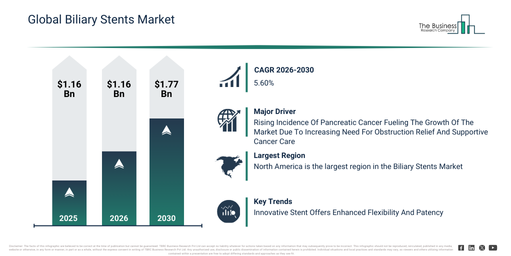
    The biliary stents market is projected to experience substantial expansion over the upcoming years. By 2030, this market is anticipated to reach a valuation of $0.66 billion, exhibiting a compound annual growth rate (CAGR) of 5.6%. This projected growth during the forecast period stems from factors such as the advancements in covered and partially covered metal stents, the growing demand for biodegradable polymer stents, the increasing adoption of minimally invasive surgical techniques, heightened awareness regarding complications associated with stents, and the incorporation of imaging and smart stent technologies. Key trends characterizing the forecast period encompass a greater utilization of self-expandable metal stents (SEMS), an uptick in the adoption of biodegradable polymer stents, an increase in endoscopic and minimally invasive procedures, an broadening of biliary stent applications for pancreatic and gallstone treatments, and a stronger emphasis on stent safety and patient outcomes.

    Access Your Free Sample Report For In-Depth Market Analysis:

    https://www.thebusinessresearchcompany.com/sample.aspx?id=27221&type=smp

    Which Key Factors Are Driving The Biliary Stents Market Growth?

    The increasing occurrence of pancreatic cancer is projected to fuel the expansion of the biliary stents market in the future. Pancreatic cancer is defined as a malignancy that originates in the pancreas’s tissues, an organ crucial for digestion and regulating blood sugar. The heightened prevalence of pancreatic cancer is primarily attributed to an aging populace coupled with an uptick in risk factors like obesity, diabetes, and smoking. Biliary stents play a vital role in pancreatic cancer management by alleviating bile duct blockages, enhancing liver performance, and mitigating jaundice. They improve patient well-being by facilitating improved bile drainage, supporting ongoing cancer therapy, and elevating their quality of life. As an illustration, in February 2025, data from Cancer Australia, an Australia-based government body, indicated 4,641 new cases of pancreatic cancer in 2024, with 2,414 affecting males and 2,227 affecting females. Consequently, the escalating incidence of pancreatic cancer is a significant impetus behind the growth of the biliary stents market.

    What Segment Categories Shape The Biliary Stents Market Segment Landscape?

    The biliary stents market covered in this report is segmented –

    1) By Type: Metal, Polymer, Plastic

    2) By Design: Single Stent, Double Stent, Triple Stent

    3) By Procedure: Endoscopic Retrograde Cholangiopancreatography, Percutaneous Transhepatic Cholangiography

    4) By Application: Biliopancreatic Leakages, Pancreatic Cancer, Benign Biliary Structures, Gallstones, Other Applications

    5) By End User: Hospitals, Ambulatory Surgical Centers, Specialty clinics, Other End-Users

    Subsegments:

    1) By Metal: Self-Expandable Metal Stents (SEMS), Covered Metal Stents, Uncovered Metal Stents, Partially Covered Metal Stents

    2) By Polymer: Biodegradable Polymer Stents, Non-Biodegradable Polymer Stents

    3) By Plastic: Straight Plastic Stents, Double Pigtail Plastic Stents, Multiple Side Hole Stents, Teflon Stents, Polyurethane Stents

    Which Trends Are Guiding The Direction Of The Biliary Stents Market?

    Leading companies operating in the biliary stents market are concentrating on creating sophisticated products, including drug-eluting stents, with the aim of improving patient outcomes, enhancing durability, and mitigating issues such as restenosis. These drug-eluting stents are specialized biliary devices covered with medication that disperses gradually to inhibit excessive tissue growth and blockages within the bile ducts. An example of this is the approval granted by the Pharmaceuticals and Medical Devices Agency (PMDA) in Japan in July 2024 to CGBIO, a South Korea-based medical device firm, for its biliary ARISTENT. This device is engineered to address obstructions in the bile duct, incorporating a patented ‘HOOK & CROSS’ design for superior flexibility and sustained patency. The stent conforms to the bile duct’s natural structure, thereby lessening the chance of migration and enhancing patient comfort. Furthermore, it features an advanced drug-eluting coating intended to reduce inflammation and extend the stent’s effectiveness, presenting a more effective option for treating biliary blockages.

    Who Are The Companies Operating Across The Biliary Stents Market Value Chain?

    Major companies operating in the biliary stents market are Cardinal Health Inc., Abbott Laboratories, Medtronic plc, Becton Dickinson & Company, Stryker Corporation, Boston Scientific Corporation, Olympus Corporation, Smith & Nephew Plc., W. L. Gore & Associates Inc., Nipro Corporation, Teleflex Incorporated, Cook Group, NuVasive Inc., Merit Medical Systems Inc., CONMED Corporation, Brainlab, Bard Peripheral Vascular Inc., Argon Medical Devices Inc., B Braun Melsungen AG, M.I Tech

    Get The Full Biliary Stents Market Report:

    https://www.thebusinessresearchcompany.com/report/biliary-stents-global-market-report

    Where Is The Biliary Stents Market Primarily Concentrated By Region?

    North America was the largest region in the biliary stents market in 2025. Asia-Pacific is expected to be the fastest-growing region in the forecast period. The regions covered in the biliary stents market report are Asia-Pacific, South East Asia, Western Europe, Eastern Europe, North America, South America, Middle East, Africa.

    Request A Customized Biliary Stents Market Report For Competitive Insights:

    https://www.thebusinessresearchcompany.com/customise?id=27221&type=smp

    Browse Through More Reports Similar to the Global Biliary Stents Market 2026, By The Business Research Company

    Hydraulics Market Report 2026

    https://www.thebusinessresearchcompany.com/report/hydraulics-global-market-report

    Smart Elevators Market Report 2026

    https://www.thebusinessresearchcompany.com/report/smart-elevators-global-market-report

    Elevator And Escalator Market Report 2026

    https://www.thebusinessresearchcompany.com/report/elevator-and-escalator-global-market-report

    Get in touch with us:

    The Business Research Company: https://www.thebusinessresearchcompany.com/

    Americas +1 310-496-7795

    Asia +44 7882 955267 & +91 8897263534

    Europe +44 7882 955267

    Email us at info@tbrc.info

    Follow us on:

    LinkedIn: https://in.linkedin.com/company/the-business-research-company

    YouTube: https://www.youtube.com/channel/UC24_fI0rV8cR5DxlCpgmyFQ

    Global Market Model: https://www.thebusinessresearchcompany.com/global-market-model
  • Biliary Catheters Market Developments Driving Growth Across The Forecast Period

    Biliary Catheters Market Developments Driving Growth Across The Forecast Period

    The Business Research Company’s 2026 market reports feature enhanced tools like market attractiveness analysis, TAM assessment, and company scoring matrices, along with interactive dashboards, deeper supply chain insights, and startup coverage strengthening the depth, usability, and strategic value of insights.

    What Level Of Market Value Growth Is Predicted For The Biliary Catheters Market From 2026 To 2030?

    The size of the biliary catheters market has demonstrated robust expansion in recent years. It is anticipated to increase from $3.75 billion in 2025 to $4.12 billion in 2026, achieving a compound annual growth rate (CAGR) of 9.7%. This historic growth is attributable to factors such as the limited availability of advanced biliary catheters, reliance on conventional plastic catheters, the growing incidence of bile duct disorders, an increase in hospital and clinic procedures, and the adoption of standard drainage techniques.

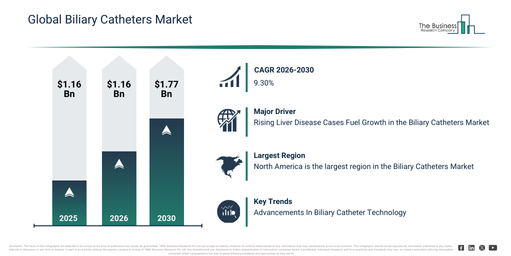
    The biliary catheters market size is set for robust expansion over the next few years. It is projected to reach $5.88 billion by 2030, exhibiting a compound annual growth rate (CAGR) of 9.3%. This growth during the forecast period can be attributed to the advancement of expandable and metal biliary drainage catheters, the increasing prevalence of interventional radiology procedures, a rise in minimally invasive surgeries, more stringent regulatory compliance and quality certifications, and the integration with imaging-guided catheter placement technologies. Significant trends for the forecast period include the growing adoption of minimally invasive procedures, a surge in the use of plastic and metal biliary drainage catheters, the broadening of catheter-based drainage and stent applications, an escalating demand for single-channel and double-channel sump catheters, and a heightened focus on patient safety and sterilization standards.

    Access Your Free Sample Report For In-Depth Market Analysis:

    https://www.thebusinessresearchcompany.com/sample.aspx?id=20508&type=smp

    What Primary Drivers Are Shaping The Biliary Catheters Market?

    The increasing incidence of liver disease is projected to fuel the expansion of the biliary catheters market moving forward. This rise in liver conditions is propelled by factors such as the growing prevalence of chronic hepatitis infections, alcohol misuse, and non-alcoholic fatty liver disease (NAFLD). Biliary catheters are essential for managing complications arising from liver diseases, as they ensure proper bile drainage, which helps to alleviate symptoms, prevent infections, and maintain liver function. For instance, in April 2024, the Office for Health Improvement & Disparities, a UK-based government organization, reported that in 2023, England experienced 85,665 hospital admissions due to liver disease, representing a rate of 155.2 (152.9 to 157.5) per 100,000 population. Therefore, the escalating cases of liver disease are driving the growth of the biliary catheters market.

    Which Segment Types Are Examined In The Biliary Catheters Market Segment Study?

    The biliary catheters market covered in this report is segmented –

    1) By Product: Biliary Drainage Catheter, Multi-Purpose Drainage Catheter, Other Biliary-Specific Types

    2) By Application: Drainage, Aspiration, Diagnostic, Stent Delivery, Dilatation

    3) By End-User: Hospitals, Clinics, Specialized Centers, Other End Users

    Subsegments:

    1) By Biliary Drainage Catheter: Plastic Biliary Drainage Catheter, Metal Biliary Drainage Catheter, Expandable Biliary Drainage Catheter

    2) By Multi-Purpose Drainage Catheter: Multi-Purpose Drainage Catheter, Multi-Purpose Drainage Catheter With Sump

    3) By Other Biliary-Specific Types: Biliary Balloon Catheter, Biliary Stent Catheter, Special Procedure Catheter (Biliary-Specific)

    What Trends Are Affecting The Growth Of The Biliary Catheters Market?

    Companies at the forefront of the biliary catheter market are engaged in the development of innovative products that feature advanced coating technologies, such as the trueGlide hydrophilic coating, aimed at improving catheter performance and ease of use. The TrueGlide hydrophilic coating is instrumental in minimizing friction, thereby ensuring smooth catheter insertion during various medical procedures. For example, in June 2024, B. Braun Interventional Systems Inc., a US-based medical device manufacturer, introduced its ACCEL all-purpose and biliary drainage catheters, which incorporate the trueGlide hydrophilic coating. These catheters are specifically engineered to heighten patient comfort and optimize clinical outcomes. Their design incorporates large oval holes to maximize the efficiency of fluid drainage and a hydrophilic coating to facilitate seamless insertion. This strategic addition enhances B. Braun’s percutaneous drainage portfolio, presenting a comprehensive offering for fluid drainage management and accommodating a broad spectrum of clinical requirements.

    Which Players Are Part Of The Competitive Landscape Of The Biliary Catheters Market?

    Major companies operating in the biliary catheters market are Medtronic plc, Boston Scientific Corporation, Cook Medical Incorporated, Abbott Laboratories, Becton Dickinson and Company, B Braun Melsungen AG, ConMed Corporation, Teleflex Incorporated, Smiths Medical, Asahi Intecc Co. Ltd., AngioDynamics Inc., Endo Flex GmbH, Micro-Tech (Nanjing) Co. Ltd., Rontis Medical, Cardinal Health Inc., Beijing Lepu Medical Technology Co. Ltd., Hanmi Medical Co. Ltd., JW Medical Corporation, Medinol Ltd., MicroPort Scientific Corporation, SMT Medical GmbH, EndoChoice Inc., Argon Medical, Medi-Globe, Infiniti Medical, Lifetech Scientific Corporation, SCW Medicath Ltd.

    Get The Full Biliary Catheters Market Report:

    https://www.thebusinessresearchcompany.com/report/biliary-catheters-global-market-report

    Which Region Has The Greatest Market Share In The Biliary Catheters Market?

    North America was the largest region in the biliary catheters market in 2025. Asia-Pacific is expected to be the fastest-growing region in the forecast period. The regions covered in the biliary catheters market report are Asia-Pacific, South East Asia, Western Europe, Eastern Europe, North America, South America, Middle East, Africa.

    Request A Customized Biliary Catheters Market Report For Competitive Insights:

    https://www.thebusinessresearchcompany.com/customise?id=20508&type=smp

    Browse Through More Reports Similar to the Global Biliary Catheters Market 2026, By The Business Research Company

    Peripheral Iv Catheters Market Report 2026

    https://www.thebusinessresearchcompany.com/report/peripheral-iv-catheters-global-market-report

    Intravascular Catheters Market Report 2026

    https://www.thebusinessresearchcompany.com/report/intravascular-catheters-global-market-report

    Intermittent Catheters Market Report 2026

    https://www.thebusinessresearchcompany.com/report/intermittent-catheters-global-market-report

    Get in touch with us:

    The Business Research Company: https://www.thebusinessresearchcompany.com/

    Americas +1 310-496-7795

    Asia +44 7882 955267 & +91 8897263534

    Europe +44 7882 955267

    Email us at info@tbrc.info

    Follow us on:

    LinkedIn: https://in.linkedin.com/company/the-business-research-company

    YouTube: https://www.youtube.com/channel/UC24_fI0rV8cR5DxlCpgmyFQ

    Global Market Model: https://www.thebusinessresearchcompany.com/global-market-model
  • Bifurcation Lesions Market Forecast Highlighting Demand And Industry Growth

    Bifurcation Lesions Market Forecast Highlighting Demand And Industry Growth

    The Business Research Company’s 2026 market reports feature enhanced tools like market attractiveness analysis, TAM assessment, and company scoring matrices, along with interactive dashboards, deeper supply chain insights, and startup coverage strengthening the depth, usability, and strategic value of insights.

    How Will The Market Value Of The Bifurcation Lesions Market Progress Between 2026 And 2030?

    The bifurcation lesions market has seen significant expansion in recent years. It is anticipated to expand from $2.84 billion in 2025 to $3.1 billion in 2026, registering a compound annual growth rate (CAGR) of 9.4%. This historical growth can be attributed to the increasing prevalence of coronary artery disease, the growth in interventional cardiology procedures, the adoption of stenting over surgical bypass, the availability of specialized bifurcation stents, and rising clinical expertise in complex interventions.

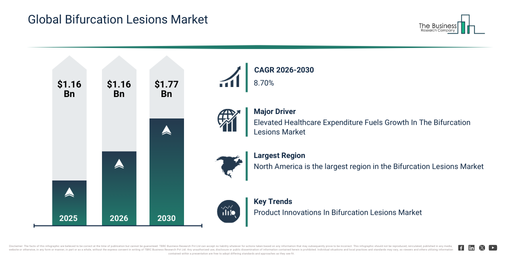
    The bifurcation lesions market size is projected for substantial expansion in the coming years. It is anticipated to achieve $4.34 billion by 2030, exhibiting a compound annual growth rate (CAGR) of 8.7%. This projected growth can be attributed to the increasing deployment of precision-guided coronary interventions, a growing demand for next-generation stent technologies, the expansion of personalized cardiovascular treatments, enhanced integration of imaging and analytics, and a heightened focus on procedural success rates. Noteworthy trends during the forecast period include the increasing adoption of advanced stent techniques for complex lesions, a rise in the use of imaging-guided bifurcation interventions, a developing preference for drug-eluting stents, the broadening of minimally invasive coronary procedures, and an intensified emphasis on long-term vessel patency.

    Access Your Free Sample Report For In-Depth Market Analysis:

    https://www.thebusinessresearchcompany.com/sample.aspx?id=7414&type=smp

    Which Major Drivers Are Influencing The Expansion Of The Bifurcation Lesions Market?

    Future projections indicate that rising healthcare expenditure will significantly contribute to the expansion of the bifurcation lesions market. Healthcare spending covers all financial commitments for medical treatment, preventive strategies, public health efforts, rehabilitation services, community health programs, and medical research. Greater investment in healthcare enables medical facilities to acquire cutting-edge equipment and technologies, specifically sophisticated interventional cardiology devices used for addressing bifurcation lesions. A pertinent example is from May 2024, when the Office for National Statistics, a UK-based government department, reported that the overall healthcare expenditure experienced a 5.6% increase in nominal terms in 2023, marking a 0.9% growth over 2022. Consequently, the burgeoning healthcare expenditure is a primary force propelling the growth of the bifurcation lesions market.

    How Are Different Segments Classified In The Bifurcation Lesions Market Segment Analysis?

    The bifurcation lesions market covered in this report is segmented –

    1) By Type: One-Stent, Two-Stent

    2) By Application: Coronary Vascular, Peripheral Vascular

    3) By End-User: Hospitals & Cardiac Care Centers, Ambulatory Surgical Centers, Specialty Clinics, Diagnostic Centers

    Subsegments:

    1) By One-Stent: Single-Stent Deployment, Balloon-Expandable Stents, Self-Expanding Stents

    2) By Two-Stent: Crush Technique, T- or Y-Configuration Stenting, Side Branch Stenting Techniques

    Which Trends Are Shaping The Bifurcation Lesions Market?

    Leading firms in the bifurcation lesions market are actively developing advanced products, such as drug-eluting coronary stent systems, to cater to broader customer bases, boost sales, and increase revenue. A drug-eluting coronary stent system is a specialized medical device used within interventional cardiology to address coronary artery disease. For instance, in August 2023, Medtronic Plc, an Ireland-based medical device company, introduced the Onyx Frontier drug-eluting stent (DES) for effectively managing non-left main bifurcation lesions through the provisional stenting technique. A key attribute of this product is its refined design, which includes an innovative dual-layer balloon, a reduced crossing profile, and enhanced catheter flexibility. These enhancements contribute to a 16% improvement in deliverability compared to the previous-generation Resolute Onyx DES, all while maintaining its original radial strength. Beyond the advancements in its delivery system, Onyx Frontier provides an extensive range of sizes, accommodating patients with diameters from 2.0 mm to 5.0 mm. Notably, its 4.50-5.00 mm sizes can be expanded to 6.00 mm, specifically tailored for treating extra-large vessels, including those in the left main artery. Onyx Frontier carries over the same clinical data and indications as Resolute Onyx, encompassing approval for managing bifurcation lesions, left main percutaneous coronary intervention (PCI), and a recommended one-month duration of dual antiplatelet therapy (DAPT) for patients at high bleeding risk.

    Who Are The Companies Driving Activity In The Bifurcation Lesions Market?

    Major companies operating in the bifurcation lesions market are Boston Scientific Corporation, Terumo Medical Corporation, Spectranetics Corporation, Medtronic plc, Abbott Laboratories, Biosensors International Group Ltd., B. Braun Melsungen AG, Cook Medical LLC, Cordis Corporation, InspireMD Inc., MicroPort Scientific Corporation, OrbusNeich Medical Company Limited, Biotronik SE & Co. KG, Medinol Ltd., Meril Life Sciences Pvt. Ltd., Sahajanand Medical Technologies Pvt. Ltd., Elixir Medical Corporation, Veryan Medical Ltd., Zorion Medical Inc., Svelte Medical Systems Inc., Amaranth Medical Inc., Cardiva Medical Inc.

    Get The Full Bifurcation Lesions Market Report:

    https://www.thebusinessresearchcompany.com/report/bifurcation-lesions-global-market-report

    Which Region Accounts For The Largest Portion Of The Bifurcation Lesions Market?

    North America was the largest region in the bifurcation lesions market in 2025. Asia-Pacific is expected to be the fastest-growing region in the forecast period. The regions covered in the bifurcation lesions market report are Asia-Pacific, South East Asia, Western Europe, Eastern Europe, North America, South America, Middle East, Africa.

    Request A Customized Bifurcation Lesions Market Report For Competitive Insights:

    https://www.thebusinessresearchcompany.com/customise?id=7414&type=smp

    Browse Through More Reports Similar to the Global Bifurcation Lesions Market 2026, By The Business Research Company

    Furfural Derivatives Market Report 2026

    https://www.thebusinessresearchcompany.com/report/furfural-derivatives-global-market-report

    Anaplastic Astrocytoma Market Report 2026

    https://www.thebusinessresearchcompany.com/report/anaplastic-astrocytoma-global-market-report

    Capital Exchange Ecosystem Market Report 2026

    https://www.thebusinessresearchcompany.com/report/capital-exchange-ecosystem-global-market-report

    Get in touch with us:

    The Business Research Company: https://www.thebusinessresearchcompany.com/

    Americas +1 310-496-7795

    Asia +44 7882 955267 & +91 8897263534

    Europe +44 7882 955267

    Email us at info@tbrc.info

    Follow us on:

    LinkedIn: https://in.linkedin.com/company/the-business-research-company

    YouTube: https://www.youtube.com/channel/UC24_fI0rV8cR5DxlCpgmyFQ

    Global Market Model: https://www.thebusinessresearchcompany.com/global-market-model

  • Benign Prostatic Hyperplasia (BPH) Treatment Devices And Equipment Market Outlook Highlighting Growth Drivers And Market Evolution

    Benign Prostatic Hyperplasia (BPH) Treatment Devices And Equipment Market Outlook Highlighting Growth Drivers And Market Evolution

    The Business Research Company’s 2026 market reports feature enhanced tools like market attractiveness analysis, TAM assessment, and company scoring matrices, along with interactive dashboards, deeper supply chain insights, and startup coverage strengthening the depth, usability, and strategic value of insights.

    What Are The Market Size Estimates For The Benign Prostatic Hyperplasia (BPH) Treatment Devices And Equipment Market In 2026 And 2030?

    The benign prostatic hyperplasia (bph) treatment devices and equipment market has experienced strong growth in recent years. This market is forecasted to increase from $1.34 billion in 2025 to $1.43 billion in 2026, exhibiting a compound annual growth rate (CAGR) of 6.3%. The historical expansion of the market can be linked to the rising prevalence of benign prostatic hyperplasia, enhanced awareness of urological disorders, the adoption of transurethral procedures, the expansion of hospital urology departments, and improvements in endoscopic surgical tools.

    The benign prostatic hyperplasia (bph) treatment devices and equipment market is projected to experience substantial expansion in the coming years. Its valuation is anticipated to reach $1.86 billion by 2030, exhibiting a compound annual growth rate (CAGR) of 6.9%. This expansion during the forecast period can be attributed to the rising elderly male population, a growing inclination towards minimally invasive treatments, the proliferation of outpatient urology clinics, increased uptake of laser and implant-based treatment modalities, and an intensified emphasis on shorter hospitalizations. Key trends shaping the market over the forecast period encompass a greater embrace of minimally invasive BPH treatment equipment, the escalating utilization of laser-based prostate interventions, an increasing desire for implant-driven treatment solutions, the broadening availability of office-based BPH procedures, and a heightened commitment to patient well-being and recuperation.

    Access Your Free Sample Report For In-Depth Market Analysis:

    https://www.thebusinessresearchcompany.com/sample.aspx?id=2431&type=smp

    What Key Drivers Are Fueling The Growth Of The Benign Prostatic Hyperplasia (BPH) Treatment Devices And Equipment Market?

    The projected increase in prostate cancer diagnoses is set to stimulate the expansion of the benign prostatic hyperplasia market. Prostate cancer is characterized as a malignancy that develops within the prostate gland, a small organ resembling a walnut located directly beneath the bladder in men. A higher prevalence of prostate cancer often leads more older men to consult medical professionals for prostate-related concerns, consequently boosting the identification and management of benign prostatic hyperplasia. For instance, in February 2023, data from the American Society of Clinical Oncology (ASCO), a US-based professional organization that publishes patient information on the cancer.net website, indicated an estimated 288,300 men in the United States had prostate cancer in 2023. Furthermore, in 2022, there were 268,490 new cases and 34,500 deaths from prostate cancer. Thus, the escalating incidence of prostate cancer cases is actively driving the growth of the benign prostatic hyperplasia market.

    How Is The Benign Prostatic Hyperplasia (BPH) Treatment Devices And Equipment Market Categorized Across Its Segment Groups?

    The benign prostatic hyperplasia (bph) treatment devices and equipment market covered in this report is segmented –

    1) By Product: Resectoscopes, Radiofrequency Ablation Device, Urology Lasers, Prostatic Stents, Implants

    2) By Procedure Type: Transurethral Needle Ablation (TUNA), Transurethral Resection Of Prostate (TURP), Transurethral Incision Of Prostate (TUIP), Transurethral Microwave Thermotherapy (TUMT), Laser Surgery, Other Procedure Types

    3) By End-User: Hospitals, Ambulatory Surgical Centres (ASC), Clinics, Specialty Urology Centers

    Subsegments:

    1) By Resectoscopes: Bipolar Resectoscopes, Monopolar Resectoscopes, High-Performance Resectoscopes

    2) By Radiofrequency Ablation Device: Single-Needle Radiofrequency Ablation, Multi-Needle Radiofrequency Ablation

    3) By Urology Lasers: Holmium Lasers, Diode Lasers, Green Light Lasers

    4) By Prostatic Stents: Temporary Prostatic Stents, Permanent Prostatic Stents

    5) By Implants: Prostatic Urethral Lift (PUL) Implants, Balloon-Expandable Stents, Permanent Implants for BPH Treatment

    What Trends Are Influencing The Benign Prostatic Hyperplasia (BPH) Treatment Devices And Equipment Market?

    Leading companies in the benign prostatic hyperplasia (BPH) treatment devices and equipment market are increasingly focusing on developing innovative, minimally invasive solutions such as temporarily implantable devices. These solutions aim to broaden access to outpatient treatment and reduce dependence on long-term medication or surgical tissue removal procedures. Temporarily implantable BPH devices are designed for single or short-term use, specifically engineered to reshape the prostatic urethra and alleviate lower urinary tract symptoms (LUTS) caused by an enlarged prostate. For instance, in February 2025, Olympus, a Japan-based medical technology company, announced a significant milestone for its iTind device, with expanded availability across major APAC markets (Thailand, Australia, Hong Kong, Singapore, India, and a planned launch in Korea). Olympus highlighted that the iTind procedure offers a minimally invasive, clinic-room option that can be performed under local anaesthesia and is supported by a comprehensive physician training programme to aid clinical adoption. The iTind itself is a temporarily implantable nitinol device that reshapes the prostatic urethra to improve urinary flow and patient quality of life, with its adoption being accelerated by recent developments in guidelines and reimbursement.

    Which Firms Are Influencing Competition In The Benign Prostatic Hyperplasia (BPH) Treatment Devices And Equipment Market?

    Major companies operating in the benign prostatic hyperplasia (bph) treatment devices and equipment market are Karl Storz, Lumenis Ltd., Olympus Corporation, Urologix LLC, Boston Scientific Inc., NeoTract Inc., OmniGuide Inc., ProArc Medical Ltd., Urotech Devices, Prostalund Operations AB, NxThera Inc., Richard Wolf GmbH, Coloplast A/S, Biolitec AG, BVM Medical, Convergent Laser Technologies, Cook Medical, GreenLight Technologies, PROCEPT BioRobotics, Quanta System

    Get The Full Benign Prostatic Hyperplasia (BPH) Treatment Devices And Equipment Market Report:

    https://www.thebusinessresearchcompany.com/report/benign-prostatic-hyperplasia-bph-treatment-devices-and-equipment-global-market-report

    Which Region Holds The Highest Market Share In The Benign Prostatic Hyperplasia (BPH) Treatment Devices And Equipment Market?

    North America was the largest region in the benign prostatic hyperplasia (BPH) treatment devices and equipment market in 2025. Western Europe was the second-largest region in the global benign prostatic hyperplasia (BPH) treatment devices and equipment market. The regions covered in the benign prostatic hyperplasia (bph) treatment devices and equipment market report are Asia-Pacific, South East Asia, Western Europe, Eastern Europe, North America, South America, Middle East, Africa.

    Request A Customized Benign Prostatic Hyperplasia (BPH) Treatment Devices And Equipment Market Report For Competitive Insights:

    https://www.thebusinessresearchcompany.com/customise?id=2431&type=smp

    Browse Through More Reports Similar to the Global Benign Prostatic Hyperplasia (BPH) Treatment Devices And Equipment Market 2026, By The Business Research Company

    Drugs For Benign Prostatic Hypertrophy Market Report 2026

    https://www.thebusinessresearchcompany.com/report/drugs-for-benign-prostatic-hypertrophy-global-market-report

    Prostate Cancer Drugs Market Report 2026

    https://www.thebusinessresearchcompany.com/report/prostate-cancer-drugs-global-market-report

    Prostate Cancer Nuclear Medicine Diagnostics Market Report 2026

    https://www.thebusinessresearchcompany.com/report/prostate-cancer-nuclear-medicine-diagnostics-global-market-report

    Get in touch with us:

    The Business Research Company: https://www.thebusinessresearchcompany.com/

    Americas +1 310-496-7795

    Asia +44 7882 955267 & +91 8897263534

    Europe +44 7882 955267

    Email us at info@tbrc.info

    Follow us on:

    LinkedIn: https://in.linkedin.com/company/the-business-research-company

    YouTube: https://www.youtube.com/channel/UC24_fI0rV8cR5DxlCpgmyFQ

    Global Market Model: https://www.thebusinessresearchcompany.com/global-market-model

  • Bed-Exit Warning Robot Market Overview 2026–2030 Highlighting Industry Developments

    Bed-Exit Warning Robot Market Overview 2026–2030 Highlighting Industry Developments

    The Business Research Company’s 2026 market reports feature enhanced tools like market attractiveness analysis, TAM assessment, and company scoring matrices, along with interactive dashboards, deeper supply chain insights, and startup coverage strengthening the depth, usability, and strategic value of insights.

    What Expansion In Market Value Is Forecasted For The Bed-Exit Warning Robot Market Between 2026 And 2030?

    The bed-exit warning robot market has experienced rapid expansion in recent years. It is anticipated to increase from $1.55 billion in 2025 to $1.8 billion in 2026, demonstrating a compound annual growth rate (CAGR) of 16.3%. This historical growth can be linked to factors such as an expanding elderly population, a high frequency of patient falls, inefficiencies in caregiver monitoring, heightened hospital safety regulations, and the initial integration of robotics within healthcare settings.

    The bed-exit warning robot market is projected for substantial expansion in the coming years. Its valuation is set to climb to $3.26 billion by 2030, exhibiting a compound annual growth rate (CAGR) of 16.0%. This anticipated growth is primarily fueled by the integration of AI with robotic monitoring, the ongoing expansion of smart hospital infrastructure, increasing homecare automation, the rising adoption of wearable alert devices, and enhanced government support for patient safety technology. Key trends expected in this period include AI-enabled fall prediction systems, IoT-based patient monitoring, smart robotics for assisted mobility, cloud-based alert management platforms, and the application of predictive analytics for elderly care.

    Access Your Free Sample Report For In-Depth Market Analysis:

    https://www.thebusinessresearchcompany.com/sample.aspx?id=28957&type=smp

    Which Drivers Are Supporting The Bed-Exit Warning Robot Market Growth?

    The increasing demand for medical services delivered within patients’ homes is anticipated to boost the expansion of the bed-exit warning robot market in the coming years. In-home medical services encompass healthcare and medical attention provided directly at a patient’s residence, covering aspects like nursing, therapeutic interventions, and management of illnesses. This growing need for home-based medical care stems from an aging population, as elderly individuals often favor receiving their healthcare at home for greater comfort, convenience, and ongoing oversight of long-term health issues. Bed-exit warning robots contribute to in-home medical services by notifying caregivers when patients try to exit their beds unsafely, thereby preventing falls, facilitating prompt support, and aiding in the continuous observation of older adults or those with limited mobility. As an example, the Department of Health and Human Services, a US-based government body, reported that in August 2025, approximately 1 million enrollees utilized remote patient monitoring in 2024, marking a 27% rise from 2023. Consequently, the escalating preference for in-home medical services is fueling the growth of the bed-exit warning robot market.

    How Are Segments Identified Within The Bed-Exit Warning Robot Market Segment Framework?

    The bed-exit warning robot market covered in this report is segmented –

    1) By Product Type: Pressure Sensor-Based, Infrared Sensor-Based

    2) By Distribution Channel: Direct Sales, Distributors, Online Retail, Other Distribution Channels

    3) By Application: Hospitals, Nursing Homes, Home Care, Rehabilitation Centers, Other Applications

    4) By End-User: Adults, Pediatrics, Elderly

    Subsegments:

    1) By Pressure Sensor-Based: Capacitive Pressure Sensors, Resistive Pressure Sensors, Piezoelectric Pressure Sensors

    2) By Infrared Sensor-Based: Active Infrared Sensors, Passive Infrared Sensors, Dual Infrared Sensors

    Which Trends Are Expected To Impact The Bed-Exit Warning Robot Market?

    Companies operating within the bed-exit warning robot market are concentrating on developing advanced strategies, such as real-time fall prevention alerts, to enhance patient safety and facilitate prompt caregiver intervention. A real-time fall prevention alert refers to a system that continuously monitors a patient’s movements, instantly notifying caregivers or activating automated safety measures when a potential bed exit or fall risk is detected. For example, in September 2025, Tochtech Technologies Inc., a digital healthcare company based in Canada, introduced an AI-driven predictive bed exit feature for its acclaimed Toch Sleepsense device. This innovation aims to anticipate patient movements and lower fall risks, providing caregivers with crucial advance alerts before a resident leaves their bed, which enables timely intervention and significantly reduces fall risks. This non-invasive, real-time solution enhances safety and supports improved care by monitoring sleep quality, vital signs, and movement without disrupting the resident. Its primary goal is to transform senior care by preventing injuries, improving response times, and elevating overall well-being through intelligent, data-driven insights.

    Who Are The Companies Competing Within The Bed-Exit Warning Robot Market?

    Major companies operating in the bed-exit warning robot market are Vayyar Imaging Ltd, Emfit Ltd, Smart Caregiver Corporation, EarlySense Ltd, CarePredict Inc, CareView Communications Inc, Linet Group SE, Stryker Corporation, Arjo AB, VirtuSense Technologies Pvt. Ltd., Lunderg AB, Tunstall Healthcare Group Ltd, Ascom Holding AG, Stanley Healthcare, Securitas Healthcare, Kami Vision, BAM Labs, Joerns Healthcare, Invacare Corporation, Völker Sensify, Nurse Assist

    Get The Full Bed-Exit Warning Robot Market Report:

    https://www.thebusinessresearchcompany.com/report/bed-exit-warning-robot-global-market-report

    Where Is The Bed-Exit Warning Robot Market Most Concentrated Geographically?

    North America was the largest region in the bed-exit warning robot in 2025. Asia-Pacific is expected to be the fastest-growing region in the forecast period. The regions covered in the bed-exit warning robot market report are Asia-Pacific, South East Asia, Western Europe, Eastern Europe, North America, South America, Middle East, Africa.

    Request A Customized Bed-Exit Warning Robot Market Report For Competitive Insights:

    https://www.thebusinessresearchcompany.com/customise?id=28957&type=smp

    Browse Through More Reports Similar to the Global Bed-Exit Warning Robot Market 2026, By The Business Research Company

    Smart Bed Market Report 2026

    https://www.thebusinessresearchcompany.com/report/smart-bed-global-market-report

    Robot End Effector Market Report 2026

    https://www.thebusinessresearchcompany.com/report/robot-end-effector-global-market-report

    Medical Bed Market Report 2026

    https://www.thebusinessresearchcompany.com/report/medical-bed-global-market-report

    Get in touch with us:

    The Business Research Company: https://www.thebusinessresearchcompany.com/

    Americas +1 310-496-7795

    Asia +44 7882 955267 & +91 8897263534

    Europe +44 7882 955267

    Email us at info@tbrc.info

    Follow us on:

    LinkedIn: https://in.linkedin.com/company/the-business-research-company

    YouTube: https://www.youtube.com/channel/UC24_fI0rV8cR5DxlCpgmyFQ

    Global Market Model: https://www.thebusinessresearchcompany.com/global-market-model

  • Base-Editing Tools Market Forecast Highlighting Trends And Expansion Potential

    Base-Editing Tools Market Forecast Highlighting Trends And Expansion Potential

    The Business Research Company’s 2026 market reports feature enhanced tools like market attractiveness analysis, TAM assessment, and company scoring matrices, along with interactive dashboards, deeper supply chain insights, and startup coverage strengthening the depth, usability, and strategic value of insights.

    How Large Will The Base-Editing Tools Market Be By 2030 Compared To Its 2026 Market Size?

    The base-editing tools market has experienced substantial expansion over recent years. It is projected to expand from $1.83 billion in 2025 to $2.22 billion in 2026, demonstrating a compound annual growth rate (CAGR) of 21.7%. The significant increase observed in the preceding period was driven by factors such as the early adoption of crispr-cas systems, the availability of research funding, increasing academic-genomic collaborations, rising awareness of genetic disorders, and advancements in enzyme engineering.

    The base-editing tools market size is anticipated to undergo significant expansion in the coming years, with projections indicating a rise to $4.82 billion by 2030, demonstrating a compound annual growth rate (CAGR) of 21.4%. This growth during the forecast period is fueled by the escalating demand for precision medicine, the proliferation of biotechnology startups, regulatory clearances for base-editing applications, the integration with AI-driven analytics, and increasing implementation within agricultural biotechnology. Noteworthy trends expected in this timeframe encompass personalized gene editing solutions, integration with laboratory information systems (LIS), greater automation in base editing workflows, cloud-based platforms for data analysis, and advanced predictive modeling for genetic outcomes.

    Access Your Free Sample Report For In-Depth Market Analysis:

    https://www.thebusinessresearchcompany.com/sample.aspx?id=28148&type=smp

    What Key Factors Are Affecting The Base-Editing Tools Market Demand?

    The rising occurrence of genetic and rare disorders is projected to boost the expansion of the base-editing tools market in the future. These disorders are defined as health conditions resulting from alterations or mutations in a person’s genes or chromosomes, frequently impacting a small segment of the populace and occasionally passed down through generations. The incidence of genetic and rare disorders is on the rise due to progress in genomic testing and newborn screening, which facilitate earlier and more precise identification of previously undiagnosed instances. Base-editing tools offer a way to accurately correct genetic mutations, thereby aiding in the diagnosis and management of rare and hereditary disorders. Through improvements in genetic testing and the facilitation of targeted treatments, these tools contribute to sophisticated diagnostics, tailored interventions, and prospects for cures. For example, as reported by the National Health Service, a UK government department, in May 2024, roughly 17,000 individuals in England are afflicted with sickle cell disease, a hereditary blood condition, with about 250 new diagnoses annually. Consequently, the increasing occurrence of genetic and rare disorders is fueling the expansion of the base-editing tools market.

    What Are The Key Segment Divisions In The Base-Editing Tools Market Segment Structure?

    The base-editing tools market covered in this report is segmented –

    1) By Product Type: Deoxyribonucleic Acid (DNA) Base Editors, Ribonucleic Acid (RNA) Base Editors, Other Product Types

    2) By Application: Genetic Research, Drug Development, Disease Modeling, Agricultural Biotechnology, Other Applications

    3) By End-User: Academic And Research Institutes, Biotechnology And Pharmaceutical Companies, Contract Research Organizations, Other End-Users

    Subsegments:

    1) By Deoxyribonucleic Acid (DNA) Base Editors: Cytosine Base Editors, Adenine Base Editors, Dual Base Editors, Prime Editors

    2) By Ribonucleic Acid (RNA) Base Editors: Cytidine Deaminase Based Editors, Adenosine Deaminase Based Editors, Programmable Ribonucleic Acid (RNA) Editors

    3) By Other Product Types: Delivery Systems, Research Reagents, Computational Tools, Screening Platforms

    What Trends Are Influencing Changes In The Base-Editing Tools Market?

    Leading companies operating in the base-editing tools market are prioritizing the introduction of innovative solutions, such as novel adenine base editors, to boost the precision and efficiency of gene editing. These novel adenine base editors are advanced genome editing tools designed to precisely convert adenine (A) to guanine (G) in DNA without causing double-stranded breaks, thereby enabling safe and specific genetic modifications. For instance, in October 2024, Metagenomi, Inc., a US-based precision genetic medicines company, unveiled new ABEs capable of editing a broad spectrum of genomic targets with over 95% targetability. These editors facilitate precise base conversions with minimal off-target effects in tested cell lines, supporting multiplex gene editing that can lead to a significant functional protein reduction in primary T-cells. The platform itself is compatible with various non-viral delivery methods and engineered Cas variants, making it suitable for both in vivo genome editing and ex vivo cell therapies, including CAR-T treatments.

    Which Organizations Are Engaged In The Base-Editing Tools Market?

    Major companies operating in the base-editing tools market are Thermo Fisher Scientific Inc., Danaher Corporation, Merck KGaA, Revvity Inc., GenScript Biotech Corporation, Beam Therapeutics Inc., CRISPR Therapeutics AG, Maravai LifeSciences Holdings Inc., Aldevron L.L.C., Arcturus Therapeutics Holdings Inc., ElevateBio LLC, Editas Medicine Inc., Synthego Corporation, Metagenomi Inc., Intellia Therapeutics Inc., Mammoth Biosciences Inc., Verve Therapeutics Inc., Precede Biosciences Inc., Cellectis S.A., Creative Biogene Inc., Bio Palette Co. Ltd., Prime Medicine Inc., Base Therapeutics.

    Get The Full Base-Editing Tools Market Report:

    https://www.thebusinessresearchcompany.com/report/base-editing-tools-global-market-report

    Which Region Dominates The Base-Editing Tools Market By Market Share?

    North America was the largest region in the base-editing tools market in 2025. Asia-Pacific is expected to be the fastest-growing region in the forecast period. The regions covered in the base-editing tools market report are Asia-Pacific, South East Asia, Western Europe, Eastern Europe, North America, South America, Middle East, Africa.

    Request A Customized Base-Editing Tools Market Report For Competitive Insights:

    https://www.thebusinessresearchcompany.com/customise?id=28148&type=smp

    Browse Through More Reports Similar to the Global Base-Editing Tools Market 2026, By The Business Research Company

    Metadata Management Tools Market Report 2026

    https://www.thebusinessresearchcompany.com/report/metadata-management-tools-global-market-report

    Waterbased Adhesives Market Report 2026

    https://www.thebusinessresearchcompany.com/report/waterbased-adhesives-global-market-report

    Design Editing Rendering Software Market Report 2026

    https://www.thebusinessresearchcompany.com/report/design-editing-rendering-software-global-market-report

    Get in touch with us:

    The Business Research Company: https://www.thebusinessresearchcompany.com/

    Americas +1 310-496-7795

    Asia +44 7882 955267 & +91 8897263534

    Europe +44 7882 955267

    Email us at info@tbrc.info

    Follow us on:

    LinkedIn: https://in.linkedin.com/company/the-business-research-company

    YouTube: https://www.youtube.com/channel/UC24_fI0rV8cR5DxlCpgmyFQ

    Global Market Model: https://www.thebusinessresearchcompany.com/global-market-model