Category: Medical Equipment

  • Global Smart Hospital Command Center Market Projected to Reach $6.27 Billion by 2030 at 21.6% CAGR

    Global Smart Hospital Command Center Market Projected to Reach $6.27 Billion by 2030 at 21.6% CAGR

    The Business Research Company’s 2026 market reports include new capabilities such as market attractiveness scoring and analysis, total addressable market analysis, company scoring matrix, interactive excel data dashboard, improved supply chain analysis, upcoming startups in the market, and overview of key products, aimed at improving the depth, usability, and strategic value of the insights delivered.

    What Is The Forecasted Market Value Of The Smart Hospital Command Center Market Across 2026–2030?

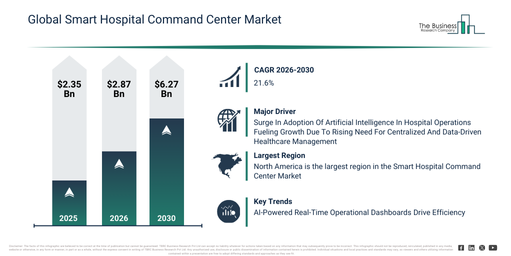
    The smart hospital command center market size has demonstrated rapid expansion in recent years. Projections indicate it will expand from $2.35 billion in 2025 to $2.87 billion by 2026, achieving a compound annual growth rate (CAGR) of 21.9%. Historically, this expansion has been driven by factors such as the increasing digitalization of hospitals, a growing need for real-time operational oversight, an elevated emphasis on patient safety and enhancing quality, the broader integration of data analytics within healthcare, and a heightened requirement for synchronized emergency responses.

    The smart hospital command center market is projected to experience rapid expansion over the coming years. This market is anticipated to reach a valuation of $6.27 billion by 2030, exhibiting a compound annual growth rate (CAGR) of 21.6%. The expansion during this forecast period is primarily driven by factors such as the increasing integration of artificial intelligence into hospital operations, greater investments in intelligent healthcare infrastructure, a growing need for predictive analytics in managing patient flow, wider adoption of connected medical devices, and an enhanced focus on improving operational efficiency and optimizing resource use. Key trends anticipated within this period encompass technological advancements in real-time monitoring platforms, novel developments in artificial intelligence-powered decision support systems, progress in integrated hospital automation solutions, ongoing research and development in digital health analytics, and breakthrough innovations in digital twin-based hospital operations management.

    Download the Free Sample Report to Explore Key Market Insights:

    https://www.thebusinessresearchcompany.com/sample.aspx?id=30748&type=smp

    What Key Drivers Are Influencing The Growth Of The Smart Hospital Command Center Market?

    The smart hospital command center market is projected to expand due to the swift incorporation of artificial intelligence (AI) into hospital functions. AI in hospital operations involves utilizing machine learning algorithms and automation to streamline administrative processes, including scheduling, staffing, inventory management, and resource allocation, which in turn boosts efficiency and cuts operational expenditures. The increasing adoption of AI in hospital operations is a response to the escalating need to optimize intricate administrative and operational workflows. Smart hospital command centers facilitate AI in hospital operations through the use of real-time data integration and predictive analytics, thereby improving responsiveness across all hospital services. As an illustration, in September 2025, the Assistant Secretary for Technology Policy, a US-based government office, indicated that in 2024, 71% of hospitals reported using predictive AI integrated with the electronic health record (EHR), marking an increase from 66% in 2023, with approximately 7 in 10 hospitals reporting predictive AI usage in 2024. Consequently, the rapid integration of artificial intelligence (AI) within hospital operations is propelling the growth of the smart hospital command center market.

    What Segmentation Levels Are Considered In The Smart Hospital Command Center Market?

    The smart hospital command center market covered in this report is segmented –

    1) By Component: Software, Hardware, Services

    2) By Deployment Mode: On-Premises, Cloud-Based

    3) By Application: Patient Flow Management, Resource Allocation, Clinical Operations, Asset Management, Communication And Coordination, Others

    4) By End User: Large Hospitals, Medium Hospitals, Small Hospitals

    Subsegments:

    1) By Software: Real-Time Analytics Platforms, Hospital Workflow Automation Systems, Patient Flow Management Software, Digital Communication And Coordination Tools, Integrated Dashboard And Visualization Software, Clinical Decision Support Solutions, Resource Allocation Optimization Software

    2) By Hardware: Centralized Monitoring Systems, Internet Of Things Enabled Devices, Servers And Data Storage Units, Networking And Connectivity Equipment, Control Room Display Panels, Sensor Based Tracking Devices, Integrated Command Center Consoles

    3) By Services: Implementation And Integration Services, Training And Education Services, Maintenance And Technical Support Services, Consulting And Workflow Optimization Services, System Upgradation And Enhancement Services, Remote Monitoring And Management Services, Customization And Configuration Services

    What Trends Are Projected To Affect The Smart Hospital Command Center Market?

    Prominent companies active in the smart hospital command center market are concentrating on evolving sophisticated solutions, such as real-time predictive analytics, to elevate operational effectiveness, patient movement, and clinical judgment across healthcare systems. Real-time predictive analytics describes software-enabled functions that consistently gather and scrutinize live hospital information to project demand, detect constraints, and enable forward-looking operational responses. For instance, in October 2024, GE HealthCare Technologies Inc., a US-based medical technology company, unveiled the Hospital Pulse Tile for its Command Center Software. This release integrates real-time predictive analytics to deliver system-wide insight into capacity, staffing levels, patient flow, and the efficacy of care provision. The Command Center leverages advanced analytics and AI to transform complex hospital data into practical observations, enabling leaders to foresee demand increases, fine-tune resource allocation, and lessen care delays.

    Who Are The Dominant Players Shaping The Smart Hospital Command Center Market Landscape?

    Major companies operating in the smart hospital command center market are IBM Corporation, Oracle Corporation, Honeywell International Inc., Siemens Healthineers AG, Koninklijke Philips N.V., GE HealthCare Technologies Inc., Palantir Technologies Inc., Huron Consulting Group Inc., Dedalus Group, Allscripts Healthcare Solutions Inc., Everbridge Inc., Ascom Ltd., Care Logistics LLC, Spok Holdings Inc., TeleTracking Technologies Inc., LeanTaaS Inc., Qventus Inc., Connexall, Pointcore, Epic Systems Corporation

    Read the full smart hospital command center market report here:

    https://www.thebusinessresearchcompany.com/report/smart-hospital-command-center-market-report

    Which Regions Are Projected To Dominate The Smart Hospital Command Center Market In The Coming Years?

    North America was the largest region in the smart hospital command center market in 2025. Asia-Pacific is expected to be the fastest-growing region in the forecast period. The regions covered in the smart hospital command center market report are Asia-Pacific, South East Asia, Western Europe, Eastern Europe, North America, South America, Middle East, Africa.

    Request A Tailored Smart Hospital Command Center Market Research Report For Competitive Advantage:

    https://www.thebusinessresearchcompany.com/customise?id=30748&type=smp

    Browse Through More Reports Similar to the Global Smart Hospital Command Center Market 2026, By The Business Research Company

    Smart Hospital Market Report 2026

    https://www.thebusinessresearchcompany.com/report/smart-hospital-global-market-report

    Hospital Information System Market Report 2026

    https://www.thebusinessresearchcompany.com/report/hospital-information-system-global-market-report

    facility management services global market report

    https://www.thebusinessresearchcompany.com/report/facility-management-services-global-market-report

    Get in touch with us:

    The Business Research Company: https://www.thebusinessresearchcompany.com/

    Americas +1 310-496-7795

    Asia +44 7882 955267 & +91 8897263534

    Europe +44 7882 955267

    Email us at info@tbrc.info

    Follow us on:

    LinkedIn: https://in.linkedin.com/company/the-business-research-company

    YouTube: https://www.youtube.com/channel/UC24_fI0rV8cR5DxlCpgmyFQ

    Global Market Model: https://www.thebusinessresearchcompany.com/global-market-model
  • Global Sleep Disorder Market Analysis 2026–2030 with Strategic Forecast Insights

    Global Sleep Disorder Market Analysis 2026–2030 with Strategic Forecast Insights

    The Business Research Company’s 2026 market reports include new capabilities such as market attractiveness scoring and analysis, total addressable market analysis, company scoring matrix, interactive excel data dashboard, improved supply chain analysis, upcoming startups in the market, and overview of key products, aimed at improving the depth, usability, and strategic value of the insights delivered.

    What Market Value Is Expected For The Sleep Disorder Market At The End Of The 2026–2030 Forecast Period?

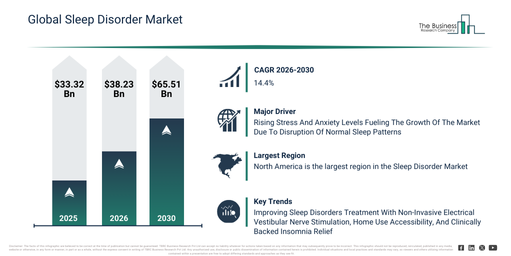
    The sleep disorder market size has undergone substantial expansion over recent years. It is anticipated to grow from $33.32 billion in 2025 to $38.23 billion in 2026, demonstrating a compound annual growth rate (CAGR) of 14.7%. This historical progression can be linked to factors such as increased recognition of sleep health importance, a rising occurrence of insomnia and sleep apnea, the broadening adoption of sleep diagnostic services, an expanding older population, the rise in stress and lifestyle-related sleep issues, and the increasing utilization of smartphones and wearable technology for sleep tracking.

    The sleep disorder market size is anticipated to undergo significant growth in the upcoming years. It is projected to expand to $65.51 billion by 2030, demonstrating a compound annual growth rate (CAGR) of 14.4%. This expansion during the forecast period can be attributed to the broadening of telemedicine services for sleep disorders, the increasing adoption of wearable sleep trackers, the rise in home-based diagnostic testing, the development of cognitive behavioral therapy applications, and growing government initiatives focused on sleep health awareness. Notable trends expected in the forecast period include enhancements in wearable sleep monitoring devices, progress in home-based sleep diagnostic tools, advancements in AI-driven sleep analysis, innovations in non-invasive therapies for sleep apnea, new approaches in telemedicine for sleep consultation, and creative cognitive behavioral therapy applications.

    Download the Free Sample Report to Explore Key Market Insights:

    https://www.thebusinessresearchcompany.com/sample.aspx?id=30744&type=smp

    What Primary Drivers Are Shaping The Development Of The Sleep Disorder Market?

    The escalating prevalence of stress and anxiety is projected to fuel the expansion of the sleep disorder market moving forward. These levels signify the presence of psychological strain and excessive worry within a population, frequently emerging from environmental, social, or economic pressures. The rise in stress and anxiety is attributed to work-related demands, as employees encounter greater workloads, strict deadlines, and job insecurity. Stress and anxiety contribute to sleep disorders by disrupting normal sleep patterns and making it more challenging to fall or stay asleep. They also worsen overall health by impeding restorative sleep, which leads to fatigue, diminished cognitive function, and an increased risk of chronic ailments. For instance, in May 2024, the American Psychiatric Association (APA), a US-based professional association, reported that 43% of U.S. adults felt more anxious in 2024 compared to the previous year, an increase from 37% in 2023 and 32% in 2022. Thus, the growing levels of stress and anxiety are acting as a significant driver for the sleep disorder market.

    What Segment Types Make Up The Sleep Disorder Market?

    The sleep disorder market covered in this report is segmented –

    1) By Disorder Type: Insomnia, Sleep Apnea, Restless Legs Syndrome, Narcolepsy, Circadian Rhythm Disorders

    2) By Treatment: Cognitive Behavioral Therapy, Medication Therapy, Psychiatric Treatment, Behavioral Treatment

    3) By Diagnostic Method: Polysomnography, Home Sleep Testing, Actigraphy, Sleep Diaries, Questionnaires and Screening

    4) By Distribution Channel: Retail Pharmacies, Online Sales, Hospital Pharmacies

    5) By End-User: Hospitals And Sleep Centers, Home Care Settings, Academic

    Subsegments:

    1) By Insomnia: Acute Insomnia, Chronic Insomnia, Onset Insomnia, Maintenance Insomnia, Behavioral Insomnia, Medication-Induced Insomnia

    2) By Sleep Apnea: Obstructive Sleep Apnea, Central Sleep Apnea, Complex Sleep Apnea Syndrome, Mild Sleep Apnea, Moderate Sleep Apnea, Severe Sleep Apnea, Pediatric Sleep Apnea, Treatment-Resistant Sleep Apnea

    3) By Restless Legs Syndrome: Primary Restless Legs Syndrome, Secondary Restless Legs Syndrome, Mild Restless Legs Syndrome, Moderate Restless Legs Syndrome, Severe Restless Legs Syndrome, Intermittent Restless Legs Syndrome, Chronic Persistent Restless Legs Syndrome

    4) By Narcolepsy: Narcolepsy Type 1, Narcolepsy Type 2, Idiopathic Hypersomnia, Pediatric Narcolepsy, Treatment-Resistant Narcolepsy, Secondary Narcolepsy

    5) By Circadian Rhythm Disorders: Delayed Sleep Phase Disorder, Advanced Sleep Phase Disorder, Shift Work Sleep Disorder, Jet Lag Disorder, Irregular Sleep-Wake Rhythm Disorder, Non-24-Hour Sleep-Wake Disorder

    Which Market Trends Are Creating New Opportunities In The Sleep Disorder Market?

    Leading companies in the sleep disorder market are prioritizing the development of advanced therapeutic technologies, including electrical vestibular nerve stimulation (VeNS) techniques. These innovations seek to provide non-pharmacological treatment alternatives that improve sleep quality, regulate circadian rhythms, and support patients dealing with chronic insomnia. Electrical vestibular nerve stimulation (VeNS) is defined as a non-invasive therapeutic approach that sends low-level electrical pulses to the vestibular nerve, a vital neural pathway capable of influencing brain regions involved in sleep regulation without requiring surgery or medication. For example, Neurovalens Ltd., a health-tech company based in the UK, launched Modius Sleep in October 2024. This FDA-cleared, non-invasive device is specifically engineered to address chronic insomnia using electrical vestibular nerve stimulation (VeNS). The medical device, which is designed as a headset, is worn for around 30 minutes each evening. It transmits safe electrical pulses to the vestibular nerve, thereby affecting the hypothalamus and brainstem areas responsible for controlling circadian rhythm and sleep patterns, which helps users fall asleep more quickly and remain asleep longer.

    Which Major Firms Influence Developments In The Sleep Disorder Market?

    Major companies operating in the sleep disorder market are Johnson & Johnson, Merck & Co. Inc., Pfizer Inc., Sanofi S.A., GlaxoSmithKline plc, Eli Lilly and Company, Takeda Pharmaceutical Company Limited, Teva Pharmaceutical Industries Ltd., Otsuka Holdings Co. Ltd., Biogen Inc., Union Chimique Belge S.A., Sun Pharmaceutical Industries Ltd., Eisai Co. Ltd., Jazz Pharmaceuticals plc, Aurobindo Pharma Ltd., Dr. Reddy’s Laboratories Limited, H. Lundbeck A/S, Sumitomo Pharma Co. Ltd., Neurocrine Biosciences Inc., Harmony Biosciences Holdings Inc., Vanda Pharmaceuticals Inc.

    Read the full sleep disorder market report here:

    https://www.thebusinessresearchcompany.com/report/sleep-disorder-market-report

    Which Region Is Projected To Lead The Sleep Disorder Market During The Forecast Period?

    North America was the largest region in the sleep disorder market in 2025. Asia-Pacific is expected to be the fastest-growing region in the forecast period. The regions covered in the sleep disorder market report are Asia-Pacific, South East Asia, Western Europe, Eastern Europe, North America, South America, Middle East, Africa.

    Request A Tailored Sleep Disorder Market Research Report For Competitive Advantage:

    https://www.thebusinessresearchcompany.com/customise?id=30744&type=smp

    Browse Through More Reports Similar to the Global Sleep Disorder Market 2026, By The Business Research Company

    Insomnia Market Report 2026

    https://www.thebusinessresearchcompany.com/report/insomnia-global-market-report

    Sleeping Aids Market Report 2026

    https://www.thebusinessresearchcompany.com/report/sleeping-aids-global-market-report

    sleep testing services global market report

    https://www.thebusinessresearchcompany.com/report/sleep-testing-services-global-market-report

    Get in touch with us:

    The Business Research Company: https://www.thebusinessresearchcompany.com/

    Americas +1 310-496-7795

    Asia +44 7882 955267 & +91 8897263534

    Europe +44 7882 955267

    Email us at info@tbrc.info

    Follow us on:

    LinkedIn: https://in.linkedin.com/company/the-business-research-company

    YouTube: https://www.youtube.com/channel/UC24_fI0rV8cR5DxlCpgmyFQ

    Global Market Model: https://www.thebusinessresearchcompany.com/global-market-model
  • Single Use Medical Devices Market Trends and Growth Opportunities During 2026–2030

    Single Use Medical Devices Market Trends and Growth Opportunities During 2026–2030

    The Business Research Company’s 2026 market reports include new capabilities such as market attractiveness scoring and analysis, total addressable market analysis, company scoring matrix, interactive excel data dashboard, improved supply chain analysis, upcoming startups in the market, and overview of key products, aimed at improving the depth, usability, and strategic value of the insights delivered.

    What Market Size Expansion Is Predicted For The Single Use Medical Devices Market Between 2026 And 2030?

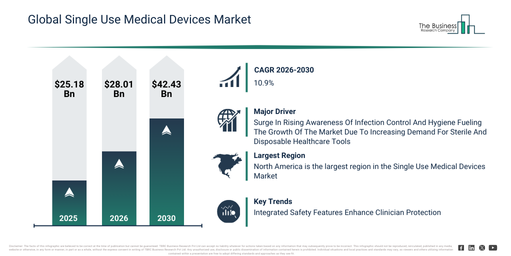
    The market size for single-use medical devices has shown rapid growth in recent years. It is projected to expand from $25.18 billion in 2025 to $28.01 billion in 2026, at a compound annual growth rate (CAGR) of 11.2%. The historical growth can be attributed to increasing demand for infection control, rising surgical procedures worldwide, growing prevalence of chronic diseases, increasing hospital admissions and emergency cases, and rising adoption of disposable equipment for safety.

    The single-use medical devices market is projected to experience substantial expansion over the upcoming years. This market is anticipated to reach $42.43 billion by 2030, exhibiting a compound annual growth rate (CAGR) of 10.9%. Several factors are expected to drive this growth during the forecast period, including progress in biodegradable materials, novel smart disposable devices, the incorporation of automation into manufacturing processes, improvements in sterile barrier packaging, and novel lightweight designs. Key trends anticipated for the forecast period encompass developments in biodegradable disposable materials, breakthroughs in smart single-use devices, the adoption of automation in production, enhancements in sterile packaging technology, and creative lightweight device designs.

    Download the Free Sample Report to Explore Key Market Insights:

    https://www.thebusinessresearchcompany.com/sample.aspx?id=30742&type=smp

    What Key Drivers Are Influencing The Growth Of The Single Use Medical Devices Market?

    Increased understanding and focus on infection control and hygiene are projected to stimulate expansion in the single-use medical devices market moving ahead. Maintaining robust infection control and hygiene protocols is crucial within healthcare environments to avert hospital-acquired infections (HAIs) and cross-contamination, factors that contribute to extended patient stays, elevated treatment expenses, and greater rates of illness and death. This heightened recognition of infection control and hygiene largely stems from more stringent regulatory mandates that prioritize patient safety and the avoidance of hospital-acquired infections. The single-use medical devices market contributes to this development by offering sterile, disposable instruments, thereby diminishing contamination risks and guaranteeing adherence to hygiene norms. As an illustration, data from May 2023, published by the World Health Organization (WHO), a Switzerland-based United Nations (UN) specialized agency, indicated that approximately 1 in 10 patients admitted to acute care hospitals contract at least one healthcare-associated infection (HAI) during their hospitalization. This rate is notably higher in low and middle-income nations compared to high-income ones, highlighting the pervasive threat of infection in clinical settings. Consequently, the increasing recognition of infection prevention and hygiene principles is propelling the widespread use of single-use medical devices throughout hospitals and clinics.

    Which Market Segments Are Examined In The Single Use Medical Devices Market Study?

    The single use medical devices market covered in this report is segmented –

    1) By Product Type: Syringes, Catheters, Surgical Instruments, Diagnostic Devices, Other Product Types

    2) By Material: Plastic, Metal, Glass, Other Materials

    3) By Application: Hospitals, Clinics, Ambulatory Surgical Centers, Home Healthcare, Other Applications

    4) By End-User: Healthcare Providers, Diagnostic Centers, Other End-Users

    Subsegments:

    1) By Syringes: Insulin Syringes, Tuberculin Syringes, Prefilled Syringes, Safety Syringes, Oral Syringes, Auto-Disable Syringes

    2) By Catheters: Intravenous (IV) Catheters, Urinary (Foley) Catheters, Central Venous Catheters, Peripheral Arterial Catheters, Dialysis Catheters, Cardiovascular (Angiography) Catheters

    3) By Surgical Instruments: Disposable Scalpels, Disposable Forceps, Disposable Scissors, Disposable Needle Holders, Disposable Retractors, Disposable Trocar Sets

    4) By Diagnostic Devices: Blood Glucose Test Strips, Rapid Diagnostic Test Kits, Single-Use Endoscopic Accessories, Specimen Collection Swabs, Disposable ECG Electrodes, Disposable Ultrasound Probe Covers

    5) By Other Product Types: Infusion Sets, Wound Dressings, Gloves And Gowns, Suction And Drainage Sets, Oxygen Masks And Cannulas, Disposable Dental Supplies

    Which Trends Are Influencing The Single Use Medical Devices Market?

    Leading companies in the single-use medical devices market are concentrating on developing innovative solutions, such as blood control safety IV catheters that integrate automatic pathogen exposure mitigation and vessel entry confirmation, to gain a competitive advantage. Blood control safety IV catheters are single-use intravenous (IV) devices designed to minimize blood exposure and prevent needlestick injuries during their insertion and use. For instance, in May 2024, MedSource Labs, a US-based medical device company, introduced the ClearSafe Comfort and TrueSafe Comfort Blood Control Safety IV Catheters. These products feature active blood control check valve technology to significantly reduce bloodborne pathogen exposure risk, a translucent flashback chamber for accurate vessel entry confirmation, and an ergonomic non-slip grip for ease of handling. This trend enhances procedural safety and efficiency, though it may result in increased procurement costs and necessitate training for optimal utilization.

    Which Companies Hold Significant Positions In The Single Use Medical Devices Market?

    Major companies operating in the single use medical devices market are Cardinal Health Inc., Medtronic plc, 3M Health Care, Medline Industries LP, Fresenius Medical Care AG, Becton Dickinson and Company, Boston Scientific Corporation, Baxter International Inc., Shandong Weigao Group Medical Polymer Company Limited, B. Braun Melsungen Aktiengesellschaft, Terumo Corporation, Nipro Corporation, Coloplast A/S, Teleflex Incorporated, West Pharmaceutical Services Inc., Paul Hartmann Aktiengesellschaft, ConvaTec Group plc, Ambu A/S, Mercator Medical S.A., Bio-Med HealthCare Products Pvt. Ltd., HLL Lifecare Limited

    Read the full single use medical devices market report here:

    https://www.thebusinessresearchcompany.com/report/single-use-medical-devices-market-report

    How Does The Single Use Medical Devices Market Perform Across Major Global Regions?

    North America was the largest region in the single use medical devices market in 2025. Asia-Pacific is expected to be the fastest-growing region in the forecast period. The regions covered in the single use medical devices market report are Asia-Pacific, South East Asia, Western Europe, Eastern Europe, North America, South America, Middle East, Africa.

    Request A Tailored Single Use Medical Devices Market Research Report For Competitive Advantage:

    https://www.thebusinessresearchcompany.com/customise?id=30742&type=smp

    Browse Through More Reports Similar to the Global Single Use Medical Devices Market 2026, By The Business Research Company

    Portable Medical Devices Market Report 2026

    https://www.thebusinessresearchcompany.com/report/portable-medical-devices-global-market-report

    Medical Device Technologies Market Report 2026

    https://www.thebusinessresearchcompany.com/report/medical-device-technologies-global-market-report

    medical device security global market report

    https://www.thebusinessresearchcompany.com/report/medical-device-security-global-market-report

    Get in touch with us:

    The Business Research Company: https://www.thebusinessresearchcompany.com/

    Americas +1 310-496-7795

    Asia +44 7882 955267 & +91 8897263534

    Europe +44 7882 955267

    Email us at info@tbrc.info

    Follow us on:

    LinkedIn: https://in.linkedin.com/company/the-business-research-company

    YouTube: https://www.youtube.com/channel/UC24_fI0rV8cR5DxlCpgmyFQ

    Global Market Model: https://www.thebusinessresearchcompany.com/global-market-model
  • Robotic Catheter Navigation Systems Market Outlook 2026–2030 Exploring New Opportunities

    Robotic Catheter Navigation Systems Market Outlook 2026–2030 Exploring New Opportunities

    The Business Research Company’s 2026 market reports include new capabilities such as market attractiveness scoring and analysis, total addressable market analysis, company scoring matrix, interactive excel data dashboard, improved supply chain analysis, upcoming startups in the market, and overview of key products, aimed at improving the depth, usability, and strategic value of the insights delivered.

    What Market Value Is Anticipated For The Robotic Catheter Navigation Systems Market Over The Period 2026–2030?

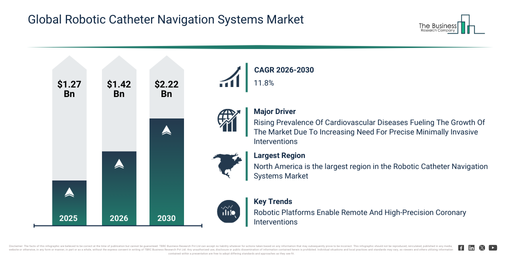
    The market for robotic catheter navigation systems has seen rapid expansion in recent years. This market is projected to grow from $1.27 billion in 2025 to $1.42 billion in 2026, at a compound annual growth rate (CAGR) of 12.0%. The historical growth of this market can be attributed to the rising prevalence of cardiovascular diseases, an increasing demand for minimally invasive procedures, the wider adoption of robotic-assisted surgeries, the expansion of cardiac catheterization labs, and growing healthcare expenditure.

    The robotic catheter navigation systems market size is projected to experience substantial expansion in the coming years. It is expected to achieve $2.22 billion by 2030, demonstrating a compound annual growth rate (CAGR) of 11.8%. This growth during the forecast period can be linked to an intensified focus on precision medicine, the growing adoption of hybrid robotic systems, increased expenditures in research and development, the broadening of applications in neurovascular interventions, and a rising patient demand for expedited recovery. Significant trends for the forecast period include progress in robotic navigation technology, the incorporation of technology with imaging and mapping systems, innovations in catheter design and materials, ongoing research and development in AI and machine learning, and the unification of robotic systems with telemedicine platforms.

    Download the Free Sample Report to Explore Key Market Insights:

    https://www.thebusinessresearchcompany.com/sample.aspx?id=30731&type=smp

    What Drivers Are Expected To Influence The Robotic Catheter Navigation Systems Market During The Forecast Period?

    The increasing incidence of cardiovascular diseases is projected to drive the expansion of the robotic catheter navigation systems market moving forward. These conditions, which affect the heart and blood vessels, including heart attacks, strokes, and hypertension, are escalating due to unhealthy lifestyles such as poor diet, insufficient physical activity, and smoking. Robotic catheter navigation systems assist in managing cardiovascular diseases by enabling precise, minimally invasive navigation within blood vessels during both diagnostic and interventional procedures. These systems enhance patient outcomes through improved procedural accuracy, reduced complications, and shorter recovery periods. For instance, in October 2024, according to the Centers for Disease Control, a US-based government agency, approximately 919,032 people died from cardiovascular disease in 2023, representing 1 in every 3 deaths. Therefore, the rising prevalence of cardiovascular diseases is propelling the growth of the robotic catheter navigation systems market.

    How Is The Robotic Catheter Navigation Systems Market Divided Into Its Major Segments?

    The robotic catheter navigation systems market covered in this report is segmented –

    1) By Product Type: Magnetic Navigation Systems, Electromechanical Navigation Systems, Other Product Types

    2) By Application: Cardiology, Neurology, Urology, Gastroenterology, Other Application

    3) By End-User: Hospitals, Ambulatory Surgical Centers, Specialty Clinics, Other End-Users

    Subsegments:

    1) By Magnetic Navigation Systems: Magnetic Field Generators, Catheter Steering Units, Imaging And Visualization Tools, Navigation Software Platforms, Sensor Modules

    2) By Electromechanical Navigation Systems: Motorized Catheter Devices, Control Consoles, Imaging Integration Modules, Position Sensors, Monitoring Software

    3) By Other Product Types: Accessories And Consumables, Support And Maintenance Tools, Data Management Software, Calibration Equipment, Connectivity Modules

    How Are Trends Transforming The Robotic Catheter Navigation Systems Market Landscape?

    Leading firms within the robotic catheter navigation systems market are concentrating on creating sophisticated systems, including robotic platforms equipped with integrated control command units, aimed at enhancing procedural accuracy and patient safety during interventional cardiology procedures. These robotic platforms featuring integrated control command units enable doctors to operate coronary angioplasty tools remotely from a protected cockpit, substantially lowering radiation exposure for healthcare personnel. Concurrently, they boost the stability and precision of catheter placement through robotic aid, allowing for intricate vascular interventions with exact, millimeter-level accuracy. As an illustration, in May 2023, ROBOCATH SAS, a medical robotics enterprise from France specializing in intelligent solutions for cardiovascular therapies, introduced its R-One+ robotic platform. This particular robotic platform, which includes integrated control command units, is engineered for conducting coronary angioplasties by allowing cardiologists to manipulate instruments from either a control room or a cath lab cockpit, featuring improved hand gesture controls and superior ergonomic design. Furthermore, the system offers clearer visibility through radioscopy and hemodynamic monitoring displays, aiming to speed up the uptake of robotic percutaneous coronary interventions (PCI) and guarantee more secure operational settings for medical staff.

    Which Key Industry Participants Are Active In The Robotic Catheter Navigation Systems Market?

    Major companies operating in the robotic catheter navigation systems market are Johnson & Johnson., Abbott Laboratories, Medtronic plc., Siemens Healthineers Inc, Boston Scientific Corporation, Intuitive Surgical, Terumo Corporation, Springer Nature Link, Biotronik SE & Co. KG, LivaNova PLC, MicroPort Scientific Corporation, ClearPoint Neuro Inc, Imricor Medical Systems Inc., Stereotaxis Inc., Acutus Medical Inc., John Wiley & Sons Inc., Arxiv, Auris Health, Catheter Precision Inc., Robocath S.A.

    Read the full robotic catheter navigation systems market report here:

    https://www.thebusinessresearchcompany.com/report/robotic-catheter-navigation-systems-market-report

    Which Region Is Anticipated To See The Fastest Growth In The Robotic Catheter Navigation Systems Market?

    North America was the largest region in the robotic catheter navigation systems market in 2025. Asia-Pacific is expected to be the fastest-growing region in the forecast period. The regions covered in the robotic catheter navigation systems market report are Asia-Pacific, South East Asia, Western Europe, Eastern Europe, North America, South America, Middle East, Africa.

    Request A Tailored Robotic Catheter Navigation Systems Market Research Report For Competitive Advantage:

    https://www.thebusinessresearchcompany.com/customise?id=30731&type=smp

    Browse Through More Reports Similar to the Global Robotic Catheter Navigation Systems Market 2026, By The Business Research Company

    Catheters Market Report 2026

    https://www.thebusinessresearchcompany.com/report/catheters-global-market-report

    Deflectable Catheters Market Report 2026

    https://www.thebusinessresearchcompany.com/report/deflectable-catheters-global-market-report

    surgical navigation systems global market report

    https://www.thebusinessresearchcompany.com/report/surgical-navigation-systems-global-market-report

    Get in touch with us:

    The Business Research Company: https://www.thebusinessresearchcompany.com/

    Americas +1 310-496-7795

    Asia +44 7882 955267 & +91 8897263534

    Europe +44 7882 955267

    Email us at info@tbrc.info

    Follow us on:

    LinkedIn: https://in.linkedin.com/company/the-business-research-company

    YouTube: https://www.youtube.com/channel/UC24_fI0rV8cR5DxlCpgmyFQ

    Global Market Model: https://www.thebusinessresearchcompany.com/global-market-model
  • Global Robotic Balance Training Systems Market Report 2026–2035 Emphasizing Growth Opportunities

    Global Robotic Balance Training Systems Market Report 2026–2035 Emphasizing Growth Opportunities

    The Business Research Company’s 2026 market reports include new capabilities such as market attractiveness scoring and analysis, total addressable market analysis, company scoring matrix, interactive excel data dashboard, improved supply chain analysis, upcoming startups in the market, and overview of key products, aimed at improving the depth, usability, and strategic value of the insights delivered.

    What Is The Expected Market Size Of The Robotic Balance Training Systems Market From 2026 To 2030?

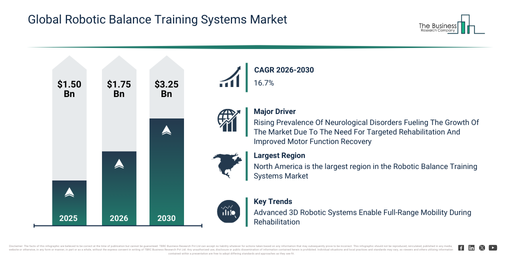
    The robotic balance training systems market has experienced significant growth recently. It is forecast to expand from $1.50 billion in 2025 to $1.75 billion in 2026, exhibiting a compound annual growth rate (CAGR) of 17.0%. This past growth can be attributed to factors such as the increasing prevalence of balance and mobility disorders, the wider adoption of robotic rehabilitation technologies, a growing demand for measurable therapy outcomes, expanding investments in rehabilitation infrastructure, and a heightened focus on fall-prevention programs.

    The robotic balance training systems market is anticipated to experience substantial expansion over the upcoming years. This market is projected to reach $3.25 billion by 2030, reflecting a compound annual growth rate (CAGR) of 16.7%. This expansion throughout the forecast period can be attributed to a global increase in the aging population, the rising adoption of AI-enabled rehabilitation systems, greater integration of robotics into clinical workflows, the widening availability of service and support ecosystems, and the growing demand for sophisticated post-acute rehabilitation solutions. Noteworthy trends during the forecast period include advancements in AI-driven adaptive training algorithms, innovations in VR and AR-based immersive rehabilitation, developments in multi-sensor fusion technologies, ongoing research and development in compact robotic system design, and breakthroughs in cloud-connected rehabilitation platforms.

    Download the Free Sample Report to Explore Key Market Insights:

    https://www.thebusinessresearchcompany.com/sample.aspx?id=30730&type=smp

    What Drivers Are Influencing The Robotic Balance Training Systems Market?

    An anticipated increase in neurological disorders is set to drive the expansion of the robotic balance training systems market in the future. These medical conditions impact the brain, spinal cord, and nerves, thereby disturbing typical nervous system operations and resulting in difficulties with movement, thinking, sensing, behavior, or general bodily regulation. This rise in neurological disorder cases stems from detrimental lifestyle choices such as inadequate nutrition, lack of physical activity, smoking, excessive alcohol intake, and persistent stress. Robotic balance training systems contribute to managing neurological disorders through offering structured, repetitive, and supervised exercises aimed at enhancing stability, coordination, and motor skills. These systems aid patient recuperation by fostering neuroplasticity, lowering the likelihood of falls, and speeding up rehabilitation results. As an illustration, Brain Research UK, a neurological charity in the United Kingdom, reported in June 2025 that the occurrence of neurological conditions grew from 10.5 million people in 2024 to an estimated 11 million in 2025, signifying a 4.8 % annual increase. Consequently, the increasing need for precise CNS drug delivery is fueling the expansion of the robotic balance training systems market.

    Which Segments Are Included In The Analysis Of The Robotic Balance Training Systems Market?

    The robotic balance training systems market covered in this report is segmented –

    1) By Product Type: Treadmill-Based Systems, Platform-Based Systems, Wearable Systems, Others Product Types

    2) By Technology: Sensor-Based, AI-Enabled, Virtual Reality Integrated, Others Technology

    3) By Distribution Or Channel Type: Direct Sales, Distributor-Based Sales, Online Or Partner-Based Procurement Channels

    4) By Application: Rehabilitation Centers, Hospitals And Clinics, Home Care Settings, Others Application

    5) By End User: Hospitals, Physical Therapy Clinics, Sports Facilities, Home Care

    Subsegments:

    1) By Treadmill-Based Systems: Body Weight Support Treadmill, Fixed Speed Treadmill, Adjustable Speed Treadmill, Split Belt Treadmill

    2) By Platform-Based Systems: Static Platform Systems, Dynamic Platform Systems, Force Plate Systems, Multi-Axis Balance Platforms

    3) By Wearable Systems: Lower Limb Exoskeleton, Full Body Exoskeleton, Ankle And Foot Orthosis, Hip And Knee Support Devices

    4) By Other Product Types: Robotic Walker Systems, Hybrid Balance Training Devices, Multi-Modal Rehabilitation Devices, Assistive Balance Robots

    Which Trends Are Impacting The Growth Of The Robotic Balance Training Systems Market?

    Leading companies within the robotic balance training systems market are concentrating on developing sophisticated robotic systems, such as 3D robotic body-weight support systems, to offer unimpeded mobility during rehabilitation exercises. 3D Robotic Body-Weight Support Systems are defined as rehabilitation devices that assist patients with walking or performing motor exercises by partially supporting their body weight across three dimensions. For example, in March 2023, Aretech LLC, a US-based developer of advanced rehabilitation technologies, launched ZeroG 3D. This platform is engineered to support patients weighing up to 450 pounds while enabling free movement in any direction, featuring customizable boundaries and multi-directional tracking. The solution additionally provides dynamic body-weight support of up to 200 pounds and adjustable workspaces for training on treadmills or stairs, thereby accelerating the effectiveness of gait and balance therapy in clinical environments.

    Who Are The Top Companies Competing In The Robotic Balance Training Systems Market?

    Major companies operating in the robotic balance training systems market are Yaskawa Electric Corporation, Fourier Intelligence Co. Ltd., Reha Technology AG, Stereotaxis Inc., Cyberdyne Inc., Genrobotics Medical & Mobility Co. Ltd., Neofect Co. Ltd., Ekso Bionics Holdings Inc., Tyromotion GmbH, ReWalk Robotics Ltd., Bertec Corporation, DIH Medical Group, Rex Bionics Ltd., Bionik Laboratories Corp., Aretech LLC, Kinestica d.o.o., Shenzhen Milebot Robotics Co. Ltd., Guangzhou Yikang Medical Equipment Co. Ltd., Balance International Innovations GmbH, Motorika USA Inc.

    Read the full robotic balance training systems market report here:

    https://www.thebusinessresearchcompany.com/report/robotic-balance-training-systems-market-report

    Which Global Regions Are Shaping The Competitive Landscape Of The Robotic Balance Training Systems Market?

    North America was the largest region in the robotic balance training systems market in 2025. Asia-Pacific is expected to be the fastest-growing region in the forecast period. The regions covered in the robotic balance training systems market report are Asia-Pacific, South East Asia, Western Europe, Eastern Europe, North America, South America, Middle East, Africa.

    Request A Tailored Robotic Balance Training Systems Market Research Report For Competitive Advantage:

    https://www.thebusinessresearchcompany.com/customise?id=30730&type=smp

    Browse Through More Reports Similar to the Global Robotic Balance Training Systems Market 2026, By The Business Research Company

    Rehabilitation Robotics Market Report 2026

    https://www.thebusinessresearchcompany.com/report/rehabilitation-robotics-global-market-report

    Balance Bike Market Report 2026

    https://www.thebusinessresearchcompany.com/report/balance-bike-global-market-report

    fitness equipment global market report

    https://www.thebusinessresearchcompany.com/report/fitness-equipment-global-market-report

    Get in touch with us:

    The Business Research Company: https://www.thebusinessresearchcompany.com/

    Americas +1 310-496-7795

    Asia +44 7882 955267 & +91 8897263534

    Europe +44 7882 955267

    Email us at info@tbrc.info

    Follow us on:

    LinkedIn: https://in.linkedin.com/company/the-business-research-company

    YouTube: https://www.youtube.com/channel/UC24_fI0rV8cR5DxlCpgmyFQ

    Global Market Model: https://www.thebusinessresearchcompany.com/global-market-model
  • Responder Hydration Monitoring Systems Market Forecast 2026–2035 Presenting Industry Insights

    Responder Hydration Monitoring Systems Market Forecast 2026–2035 Presenting Industry Insights

    The Business Research Company’s 2026 market reports include new capabilities such as market attractiveness scoring and analysis, total addressable market analysis, company scoring matrix, interactive excel data dashboard, improved supply chain analysis, upcoming startups in the market, and overview of key products, aimed at improving the depth, usability, and strategic value of the insights delivered.

    How Is The Market Size Of The Responder Hydration Monitoring Systems Market Expected To Change Between 2026 And 2030?

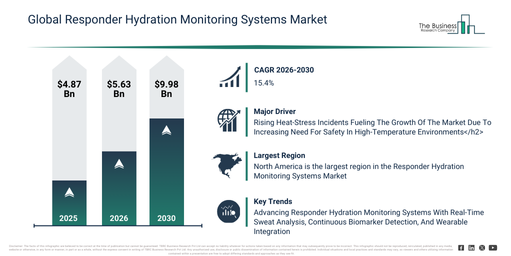
    The responder hydration monitoring systems market size has seen rapid growth over recent years. Its value is expected to rise from $4.87 billion in 2025 to $5.63 billion in 2026, achieving a compound annual growth rate (CAGR) of 15.7%. This expansion in prior periods can be attributed to the increasing adoption of wearable health devices, growing awareness of hydration and wellness, rising demand from sports and fitness users, the expansion of occupational safety initiatives, and increasing use of remote patient monitoring.

    The responder hydration monitoring systems market size is projected to experience substantial growth in the upcoming years. It is forecast to expand to $9.98 billion by 2030, achieving a compound annual growth rate (CAGR) of 15.4%. This anticipated growth during the forecast period is fueled by the increasing integration of hydration sensors within smart wearables, greater adoption by both first responders and industrial workers, a heightened focus on preventive healthcare, the broadening of corporate wellness programs, and a rising demand for cloud-based analytics services. Prominent trends for this period include technological advancements in hydration sensing, innovations in non-invasive wearable patches, developments in AI-based hydration analytics, ongoing research and development aimed at improving biosensor accuracy, and the expanding integration of IoT and cloud platforms.

    Download the Free Sample Report to Explore Key Market Insights:

    https://www.thebusinessresearchcompany.com/sample.aspx?id=30728&type=smp

    Which Economic Or Industry Drivers Are Impacting The Responder Hydration Monitoring Systems Market?

    The increasing occurrence of heat-stress incidents is anticipated to drive the future expansion of the responder hydration monitoring systems market. Heat-stress incidents are medical emergencies where the body fails to adequately cool itself, often stemming from prolonged exposure to high temperatures or strenuous physical exertion. The rise in these incidents is largely due to more frequent and intense heat conditions, coupled with demanding occupational and emergency response activities. Responder hydration monitoring systems are instrumental in mitigating heat-stress incidents by consistently tracking fluid loss, body temperature, and physiological strain in real-time. They enhance responder safety and operational effectiveness through early alerts and timely interventions, preventing heat-related illnesses. For instance, in July 2024, data from the Korea Disease Control and Prevention Agency (KDCA), a South Korea-based government body managing organ transplants and disease control, revealed that 2,818 patients reported heat-related illnesses in 2023, including 32 presumed deaths. This marked an 80.2% increase from 2022, with male patients accounting for 77.8% or 2,192 cases, and female patients 22.2% or 626 cases. Consequently, the escalating instances of heat-stress are a significant factor in the growth of the responder hydration monitoring systems market.

    How Is The Responder Hydration Monitoring Systems Market Structured Across Different Segments?

    The responder hydration monitoring systems market covered in this report is segmented –

    1) By Product Type: Wearable Hydration Monitors, Smart Water Bottles, Patch-Based Sensors, Other Products

    2) By Technology: Bioimpedance, Optical Sensors, Electrochemical Sensors, Other Technologies

    3) By Sales / Distribution Channel: Direct Device Sales, B2B Institutional Sales, E-Commerce And Retail Sales

    4) By Application: Military, Firefighters, Emergency Medical Services, Sports And Fitness, Other Applications

    5) By End-User: Individual, Institutional

    Subsegments:

    1) By Wearable Hydration Monitors: Wrist-Worn Hydration Trackers, Chest-Strap Hydration Monitoring Devices, Headband Hydration Sensor Units, Smart Armband Hydration Monitors, Clip-On Hydration Detection Devices

    2) By Smart Water Bottles: Hydration-Tracking Smart Bottles, Temperature-Sensing Smart Bottles, App-Connected Water Intake Bottles, Self-Monitoring Fluid Level Bottles, Sensor-Embedded Hydration Bottles

    3) By Patch-Based Sensors: Sweat-Analysis Hydration Patches, Skin-Adhesive Hydration Sensor Patches, Real-Time Hydration Tracking Patches, Heat-Responsive Hydration Patch Sensors, Flexible Wearable Hydration Patches

    4) By Other Products: Handheld Hydration Testing Devices, Hydration Monitoring Chest Modules, Portable Electrolyte Measurement Tools, Hydration Assessment Field Kits, Multi-Parameter Wearable Sensor Units

    Which Trends Are Shaping The Future Of The Responder Hydration Monitoring Systems Market?

    Leading firms within the responder hydration monitoring systems market are prioritizing the creation of sophisticated functionalities, including real-time sweat analysis, aiming to elevate hydration evaluation, track electrolyte equilibrium, and provide comprehensive physiological understanding for first responders, athletes, and high-performance professionals. This real-time sweat analysis involves the uninterrupted measurement of biomarkers found in sweat, encompassing electrolytes and indicators of hydration, through the use of wearable sensors that deliver instant feedback on a person’s hydration status as environmental or physical conditions evolve. An example is the launch of HydroSense in October 2025 by Innovosens AB, a Sweden-based company specializing in wearable sensing solutions; HydroSense is a new-generation sweat sensor developed for ongoing hydration and electrolyte tracking. The HydroSense platform integrates small, skin-affixed sensors that examine sweat composition continuously, supplying practical hydration information directly to wearable devices or mobile applications. This functionality empowers both users and their support teams to make well-informed choices regarding fluid and electrolyte replenishment, thereby enhancing performance and mitigating stress associated with heat.

    Who Are The Leading Companies Operating In The Responder Hydration Monitoring Systems Market?

    Major companies operating in the responder hydration monitoring systems market are GE HealthCare Technologies Inc., Masimo Corporation, Abena A/S, John Wiley & Sons Inc., ResearchGate GmbH, Nix Biosensors Inc., Wearable Technologies AG, BSX Technologies Inc., Mode Sensors Inc., Kenzen Inc., WearOptimo Pty Ltd., GraphWear Technologies Inc., MX3 Diagonistics Inc., DC Rainmaker Inc., Intake Health Inc., Epicore Biosystems Inc, Sixty Inc., HDrop Inc., iHydrate Technologies Inc., Oura Health Oy

    Read the full responder hydration monitoring systems market report here:

    https://www.thebusinessresearchcompany.com/report/responder-hydration-monitoring-systems-market-report

    Which Regions Are Projected To Dominate The Responder Hydration Monitoring Systems Market In The Coming Years?

    North America was the largest region in the responder hydration monitoring systems market in 2025. Asia-Pacific is expected to be the fastest-growing region in the forecast period. The regions covered in the responder hydration monitoring systems market report are Asia-Pacific, South East Asia, Western Europe, Eastern Europe, North America, South America, Middle East, Africa.

    Request A Tailored Responder Hydration Monitoring Systems Market Research Report For Competitive Advantage:

    https://www.thebusinessresearchcompany.com/customise?id=30728&type=smp

    Browse Through More Reports Similar to the Global Responder Hydration Monitoring Systems Market 2026, By The Business Research Company

    Water Management Systems Market Report 2026

    https://www.thebusinessresearchcompany.com/report/water-management-systems-global-market-report

    Fluid Sensors Market Report 2026

    https://www.thebusinessresearchcompany.com/report/fluid-sensors-global-market-report

    water testing equipment global market report

    https://www.thebusinessresearchcompany.com/report/water-testing-equipment-global-market-report

    Get in touch with us:

    The Business Research Company: https://www.thebusinessresearchcompany.com/

    Americas +1 310-496-7795

    Asia +44 7882 955267 & +91 8897263534

    Europe +44 7882 955267

    Email us at info@tbrc.info

    Follow us on:

    LinkedIn: https://in.linkedin.com/company/the-business-research-company

    YouTube: https://www.youtube.com/channel/UC24_fI0rV8cR5DxlCpgmyFQ

    Global Market Model: https://www.thebusinessresearchcompany.com/global-market-model
  • Rescue Airway Devices Market Outlook 2026–2030 Highlighting Key Growth Drivers and Trends

    Rescue Airway Devices Market Outlook 2026–2030 Highlighting Key Growth Drivers and Trends

    The Business Research Company’s 2026 market reports include new capabilities such as market attractiveness scoring and analysis, total addressable market analysis, company scoring matrix, interactive excel data dashboard, improved supply chain analysis, upcoming startups in the market, and overview of key products, aimed at improving the depth, usability, and strategic value of the insights delivered.

    What Is The Market Size Of The Rescue Airway Devices Market In 2026 And What Value Is Projected For 2030?

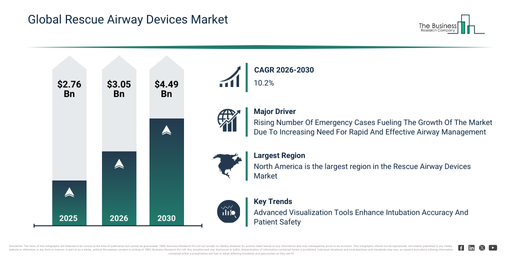
    The rescue airway devices market has seen substantial expansion in its size during recent years. Its valuation is anticipated to climb from $2.76 billion in 2025 to $3.05 billion in 2026, indicating a compound annual growth rate (CAGR) of 10.4%. This past growth is largely attributable to increasing mobile connectivity, rising sensor integration, expanding iot adoption, growing data analytics usage, and increasing indoor positioning demand.

    The rescue airway devices market size is anticipated to experience substantial growth in the upcoming years, with projections indicating it will reach $4.49 billion by 2030, exhibiting a compound annual growth rate (CAGR) of 10.2%. This expansion during the forecast period is largely due to factors such as increasing context aware automation, heightened demand for real time localization, expanding smart infrastructure, broader adoption of AI-enabled processing, and the growing integration of multi modal sensing. Key developments expected in this period encompass advancements in adaptive sensing, innovations in ambient automation, progress in multimodal fusion, ongoing research in predictive intelligence, and significant technology upgrades in spatial computing.

    Download the Free Sample Report to Explore Key Market Insights:

    https://www.thebusinessresearchcompany.com/sample.aspx?id=30727&type=smp

    What Major Drivers Are Influencing Demand In The Rescue Airway Devices Market?

    The increasing volume of emergency situations is projected to boost the expansion of the rescue airway devices market in the future. These emergency cases encompass critical medical incidents like road accidents, cardiac arrests, respiratory failure, and severe injuries that necessitate immediate life-saving procedures. The surge in such cases can be attributed to a rise in road traffic accidents and violence-related injuries among populations that are increasingly urbanized and motorized, prompting individuals to seek urgent hospital treatment. Rescue airway devices play a crucial role in managing these emergencies by providing swift, dependable, and efficient airway management in both pre-hospital and hospital environments, thereby ensuring sufficient oxygenation and mitigating the risk of complications during emergency medical attention. As an illustration, in October 2025, data from NHS England, a government health agency based in the UK, revealed approximately 401,800 emergency hospital admissions through all accident and emergency departments in September 2025, averaging 13,400 individuals daily. Additionally, there were 133,800 emergency admissions not routed through accident and emergency, averaging 4,500 daily. Consequently, the growing number of emergency incidents is propelling the growth of the rescue airway devices market.

    What Are The Key Segments Of The Rescue Airway Devices Market?

    The rescue airway devices market covered in this report is segmented –

    1) By Product Type: Supraglottic Airway Devices (SGA), Laryngeal Mask Airways (LMA), Intubating Laryngeal Mask Airways (ILMA), Laryngeal Tubes, I-Gel Airway Devices, Other Product Types

    2) By Material: Silicone, Polyvinyl Chloride (PVC), Thermoplastic Elastomers (TPE), Other Materials

    3) By Anatomical Placement: Simple Adjuncts (Upper Airway), Supraglottic Or Extraglottic Airway Devices (SADs Or EGDs), Infraglottic Or Tracheal Devices (Definitive Airway), Airway Access Or Visualization Tools, Ventilation Or Resuscitation Devices

    4) By End User: Hospitals, Ambulatory Surgery Centers (ASC), Clinics, Emergency Medical Services (EMS) Providers, Military And Government Medical Units, Other End Users

    Subsegments:

    1) By Supraglottic Airway Devices (SGA): First Generation Supraglottic Devices, Second Generation Supraglottic Devices, Reusable Supraglottic Devices, Disposable Supraglottic Devices

    2) By Laryngeal Mask Airways (LMA): Reusable Laryngeal Mask Airways, Disposable Laryngeal Mask Airways, First Generation Laryngeal Mask Airways, Second Generation Laryngeal Mask Airways

    3) By Intubating Laryngeal Mask Airways (ILMA): Reusable Intubating Laryngeal Mask Airways, Disposable Intubating Laryngeal Mask Airways, Silicone Intubating Mask Airways, Polyvinyl Chloride Intubating Mask Airways

    4) By Laryngeal Tubes: Single Lumen Laryngeal Tubes, Dual Lumen Laryngeal Tubes, Reusable Laryngeal Tubes, Disposable Laryngeal Tubes

    5) By I-Gel Airway Devices: Standard I-Gel Airway Devices, Pediatric I-Gel Airway Devices, Adult I-Gel Airway Devices, Disposable I-Gel Airway Devices

    6) By Other Product Types: Pharyngeal Airway Devices, Oropharyngeal Airway Devices, Nasopharyngeal Airway Devices, Cuffed Pharyngeal Airway Devices

    What Key Trends Are Influencing The Development Of The Rescue Airway Devices Market?

    Leading firms in the rescue airway devices market are prioritizing the creation of sophisticated visual technologies, specifically integrated video laryngoscopy solutions, with the aim of enhancing visibility for clinicians, increasing precision in procedures, and boosting patient safety during airway management across standard and intricate clinical situations. These integrated video laryngoscopy solutions are defined as instruments that merge high-definition video imaging with user-friendly controls and software integration, empowering clinicians to visually direct intubation procedures instantly and effortlessly transmit imaging information to hospital data systems. An example of this is the launch in January 2025 by Ambu A/S, a medical technology firm based in Denmark, of their Ambu SureSight Connect video laryngoscopy solution, which was developed to support effective endotracheal intubation in both operating rooms and intensive care units. This solution is designed to integrate with Ambu’s existing digital platforms, such as Ambu aView 2 Advance and Ambu aBox 2, thereby streamlining workflows, lessening the intricacy of tasks, and equipping clinicians with extensive tools for airway visualization. Notably, it stands as the sole airway visualization product offering a one-lung ventilation solution and incorporating all recommended devices for both airway assessment and intubation, significantly expanding its applicability across various clinical environments.

    Who Are The Primary Competitors In The Rescue Airway Devices Market?

    Major companies operating in the rescue airway devices market are Medtronic plc, Medline Industries LP, GE HealthCare Technologies Inc., Becton, Dickinson and Company, Olympus Corporation, Smiths Group plc, Drägerwerk AG & Co. KGaA, Teleflex Incorporated, Cook Medical LLC, Nihon Kohden Corporation, Fisher & Paykel Healthcare Corporation Limited, Ambu A/S, Armstrong Medical Ltd., Vyaire Medical Inc., Vygon S.A., Intersurgical Ltd., Mercury Enterprises LLC, SunMed LLC, Verathon Inc., SourceMark LLC

    Read the full rescue airway devices market report here:

    https://www.thebusinessresearchcompany.com/report/rescue-airway-devices-market-report

    Which Region Is Expected To Experience The Fastest Growth In The Rescue Airway Devices Market?

    North America was the largest region in the rescue airway devices market in 2025. Asia-Pacific is expected to be the fastest-growing region in the forecast period. The regions covered in the rescue airway devices market report are Asia-Pacific, South East Asia, Western Europe, Eastern Europe, North America, South America, Middle East, Africa.

    Request A Tailored Rescue Airway Devices Market Research Report For Competitive Advantage:

    https://www.thebusinessresearchcompany.com/customise?id=30727&type=smp

    Browse Through More Reports Similar to the Global Rescue Airway Devices Market 2026, By The Business Research Company

    Positive Airway Pressure Devices Market Report 2026

    https://www.thebusinessresearchcompany.com/report/positive-airway-pressure-devices-global-market-report

    Respiratory Protection Equipment Market Report 2026

    https://www.thebusinessresearchcompany.com/report/respiratory-protection-equipment-global-market-report

    air ambulance services global market report

    https://www.thebusinessresearchcompany.com/report/air-ambulance-services-global-market-report

    Get in touch with us:

    The Business Research Company: https://www.thebusinessresearchcompany.com/

    Americas +1 310-496-7795

    Asia +44 7882 955267 & +91 8897263534

    Europe +44 7882 955267

    Email us at info@tbrc.info

    Follow us on:

    LinkedIn: https://in.linkedin.com/company/the-business-research-company

    YouTube: https://www.youtube.com/channel/UC24_fI0rV8cR5DxlCpgmyFQ

    Global Market Model: https://www.thebusinessresearchcompany.com/global-market-model
  • One of the major drivers of the Remote Visualization Workstations Market is increasing digital transformation boosting demand for remote computing

    One of the major drivers of the Remote Visualization Workstations Market is increasing digital transformation boosting demand for remote computing

    The Business Research Company’s 2026 market reports include new capabilities such as market attractiveness scoring and analysis, total addressable market analysis, company scoring matrix, interactive excel data dashboard, improved supply chain analysis, upcoming startups in the market, and overview of key products, aimed at improving the depth, usability, and strategic value of the insights delivered.

    What Will Be The Estimated Market Valuation Of The Remote Visualization Workstations Market By The End Of 2030?

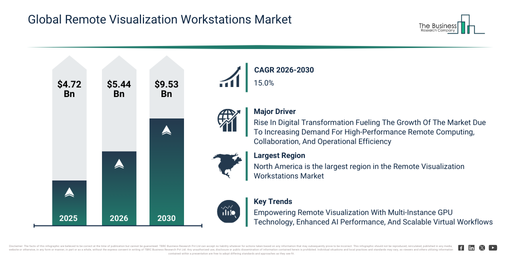
    The remote visualization workstations market size has seen substantial growth in recent years. It is anticipated to increase from $4.72 billion in 2025 to $5.44 billion by 2026, exhibiting a compound annual growth rate (CAGR) of 15.3%. This historical expansion can be linked to the increasing adoption of remote work models, a rising demand for high-performance remote computing solutions, accelerating digital transformation across industries, the expansion of virtualization and remote desktop infrastructure use, and a heightened need for secure remote access and collaboration.

    The remote visualization workstations market size is set for significant expansion over the next few years. It is forecast to grow to $9.53 billion by 2030, demonstrating a compound annual growth rate (CAGR) of 15.0%. This growth during the prediction period is attributable to the increasing demand for hybrid and remote work solutions, the expanding deployment of cloud-based remote visualization platforms, the rising uptake of AI and machine learning-powered visualization tools, deeper market penetration in emerging economies and underserved industries, and a growing need for integrated hardware-software-services remote visualization offerings. Noteworthy trends for this forecast period include technological advancements in graphics processing unit (GPU) and processor performance along with improved graphics capabilities, innovations in artificial intelligence (AI) and machine learning (ML) combined with advanced analytics integration, the emergence of immersive visualization through augmented reality (AR) and virtual reality (VR) and sophisticated remote collaboration tools, an increase in cloud-based and hybrid deployment models for visualization workstations, and heightened research and development investment leading to more scalable, efficient, and secure remote visualization environments.

    Download the Free Sample Report to Explore Key Market Insights:

    https://www.thebusinessresearchcompany.com/sample.aspx?id=30726&type=smp

    Which Market Drivers Are Supporting The Expansion Of The Remote Visualization Workstations Market?

    The expansion of the remote visualization workstations market is anticipated to be driven by the increasing digital transformation. Digital transformation is defined as the integration of digital technologies into all aspects of business operations to enhance processes, improve value delivery, and enable innovation through agile and data-driven approaches. The rise in digital transformation is driven by the growing necessity for companies to offer faster, more personalized, and seamless customer experiences to remain competitive. Remote visualization workstations support digital transformation by enabling secure remote access to high-performance computing and graphics processing. These workstations aid collaborative workflows, reduce dependence on physical infrastructure, and accelerate decision-making in sectors like engineering, healthcare, and media, by boosting flexibility, scalability, and operational efficiency. An example includes the digital infrastructure program in the UK, which, according to the Office for National Statistics in July 2024, received a $535 million (£434 million) investment by 2022, with an additional $907 million (£736 million) earmarked for the period of 2023 to 2025. Therefore, the escalating digital transformation is a significant factor propelling the growth of the remote visualization workstations market.

    Which Segment Classifications Shape The Remote Visualization Workstations Market?

    The remote visualization workstations market covered in this report is segmented –

    1) By Component: Hardware, Software, Services

    2) By Deployment Mode: On-Premises, Cloud-Based, Hybrid

    3) By Application: Engineering And Design, Medical Imaging, Scientific Research, Media And Entertainment, Oil And Gas, Other Applications

    4) By End-User: Healthcare, Education, Manufacturing, Energy, Media And Entertainment, Research Institutes, Other End-Users

    Subsegments:

    1) By Hardware: Central Processing Unit, Graphics Processing Unit, Memory, Storage, Input Devices, Output Devices

    2) By Software: Virtualization Software, Rendering Software, Simulation Software, Monitoring Software, Collaboration Software

    3) By Services: Installation Services, Maintenance Services, Consulting Services, Training Services, Technical Support Services

    How Are Trends Impacting The Remote Visualization Workstations Market?

    Leading companies in the remote visualization workstations market are focusing on developing advanced hardware and software functionalities, including Multi-Instance GPU (MIG) technology. This effort aims to support high-density virtualized graphics, accelerate AI workloads, and deliver responsive remote compute experiences. Multi-Instance GPU (MIG) defines a GPU architecture that partitions a single physical GPU into multiple independent instances, allowing concurrent execution of various tasks or user sessions with guaranteed performance and dedicated resource allocation, making it suitable for distributed visualization, simulation, and AI inference in virtual environments. For instance, in March 2025, NVIDIA Corporation, a US-based provider of accelerated computing solutions, unveiled its Blackwell RTX platform for professional workstations and servers, featuring support for Multi-Instance GPU (MIG) configurations. This technology enables enterprises to run multiple remote visualization sessions and agentic AI workflows simultaneously from a single GPU, thereby enhancing utilization efficiency and ensuring consistent performance for designers, engineers, and content creators working with complex 3D visuals or large datasets. By incorporating Multi-Instance GPU technology into its RTX-powered workstations and servers, NVIDIA allows organizations to virtualize high-end graphics and AI workloads efficiently, reduce infrastructure costs, and foster flexible distributed work environments across industries such as media and entertainment, engineering, and scientific research.

    Which Companies Hold Significant Positions In The Remote Visualization Workstations Market?

    Major companies operating in the remote visualization workstations market are Amazon Web Services Inc., Google LLC, Microsoft Corporation, Dell Technologies Inc., Lenovo Group Limited, Intel Corporation, HP Inc., NVIDIA Corporation, Fujitsu Limited, Atos SE, Super Micro Computer Inc., CoreWeave Inc., Red Hat Inc., Penguin Solutions Inc., Recently Published, Scale Computing Inc., Cirrascale Cloud Services LLC, Puget Systems Inc., BOXX Technologies Inc., NoMachine S.à r.l.

    Read the full remote visualization workstations market report here:

    https://www.thebusinessresearchcompany.com/report/remote-visualization-workstations-market-report

    Which Geographic Areas Are Emerging As Strong Markets For The Remote Visualization Workstations Market?

    North America was the largest region in the remote visualization workstations market in 2025. Asia-Pacific is expected to be the fastest-growing region in the forecast period. The regions covered in the remote visualization workstations market report are Asia-Pacific, South East Asia, Western Europe, Eastern Europe, North America, South America, Middle East, Africa.

    Request A Tailored Remote Visualization Workstations Market Research Report For Competitive Advantage:

    https://www.thebusinessresearchcompany.com/customise?id=30726&type=smp

    Browse Through More Reports Similar to the Global Remote Visualization Workstations Market 2026, By The Business Research Company

    Remote Desktop Software Market Report 2026

    https://www.thebusinessresearchcompany.com/report/remote-desktop-software-global-market-report

    Workstation Software Market Report 2026

    https://www.thebusinessresearchcompany.com/report/workstation-software-global-market-report

    data visualization tools global market report

    https://www.thebusinessresearchcompany.com/report/data-visualization-tools-global-market-report

    Get in touch with us:

    The Business Research Company: https://www.thebusinessresearchcompany.com/

    Americas +1 310-496-7795

    Asia +44 7882 955267 & +91 8897263534

    Europe +44 7882 955267

    Email us at info@tbrc.info

    Follow us on:

    LinkedIn: https://in.linkedin.com/company/the-business-research-company

    YouTube: https://www.youtube.com/channel/UC24_fI0rV8cR5DxlCpgmyFQ

    Global Market Model: https://www.thebusinessresearchcompany.com/global-market-model
  • A key trend shaping the Remote Patient Monitoring Market is the advancement of wearable vital sign monitoring systems for continuous care

    A key trend shaping the Remote Patient Monitoring Market is the advancement of wearable vital sign monitoring systems for continuous care

    The Business Research Company’s 2026 market reports include new capabilities such as market attractiveness scoring and analysis, total addressable market analysis, company scoring matrix, interactive excel data dashboard, improved supply chain analysis, upcoming startups in the market, and overview of key products, aimed at improving the depth, usability, and strategic value of the insights delivered.

    What Market Size Growth Is Projected For The Remote Patient Monitoring Market During The Forecast Period 2026–2030?

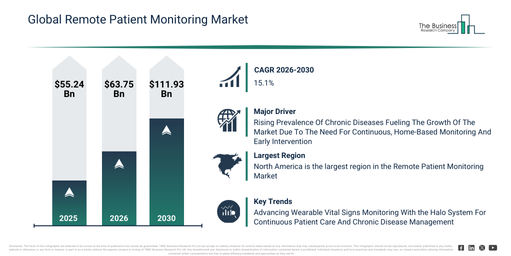
    The remote patient monitoring market size has seen swift expansion in recent years. It is projected to increase from $55.24 billion in 2025 to $63.75 billion in 2026, exhibiting a compound annual growth rate (CAGR) of 15.4%. The growth observed historically can be attributed to the rising prevalence of chronic diseases, a growing aging population, the increasing need for home-based healthcare, the broader adoption of telehealth services, and a heightened focus on reducing hospital readmissions.

    The remote patient monitoring market is projected for significant expansion in the coming years, anticipated to reach $111.93 billion by 2030, showing a compound annual growth rate (CAGR) of 15.1%. This expansion throughout the forecast period stems from factors such as a rise in chronic and lifestyle-related illnesses, a greater need for home healthcare, enhanced patient understanding of remote monitoring advantages, a worldwide increase in healthcare spending, and an intensified focus on care driven by value and outcomes. Key trends anticipated during this period encompass progress in wearable sensor technology, new developments in remote monitoring platforms and software, improved integration of remote patient data with electronic health records, ongoing research and development in predictive analytics for patient oversight, and breakthroughs in artificial intelligence-powered clinical decision support.

    Download the Free Sample Report to Explore Key Market Insights:

    https://www.thebusinessresearchcompany.com/sample.aspx?id=30725&type=smp

    What Underlying Factors Are Accelerating The Growth Of The Remote Patient Monitoring Market?

    The increasing incidence of chronic illnesses is anticipated to fuel the expansion of the remote patient monitoring market moving forward. These long-term health conditions, including hypertension, diabetes, and cardiovascular disorders, necessitate continuous oversight and sustained management. The growing number of chronic diseases is attributed to an aging global population coupled with pervasive unhealthy lifestyle habits like inactivity, poor eating, tobacco consumption, and excessive alcohol intake, which contribute to elevated risks of obesity, high blood pressure, and diabetes over time. Remote patient monitoring facilitates the management of chronic conditions by consistently monitoring patients’ vital signs, symptoms, and adherence to treatment regimens from their residences. This technology enhances patient results by allowing for prompt identification of complications, swift interventions, and tailored adjustments to care plans. For instance, in June 2024, according to the National Health Service, a UK-based government department, 3,615,330 individuals registered with a general practitioner (GP) were diagnosed with non-diabetic hyperglycemia or pre-diabetes (a condition with elevated blood sugar levels, not high enough to be classified as diabetes) in 2023, marking an 18% increase from 3,065,825 cases in 2022. Consequently, the escalating prevalence of chronic diseases is propelling the growth of the remote patient monitoring market.

    What Market Segments Are Evaluated Within The Remote Patient Monitoring Market?

    The remote patient monitoring market covered in this report is segmented –

    1) By Component: Devices, Services, Software

    2) By Application: Chronic Disease Management, Post-Acute Care Monitoring, Preventive Care And Wellness, Home Health Monitoring, Rehabilitation Monitoring

    3) By End User: Hospitals, Clinics, Home Healthcare Providers, Ambulatory Care Centers, Long-Term Care Facilities

    Subsegments:

    1) By Devices: Remote Monitoring Sensors, Wearable Health Trackers, Blood Pressure Monitors, Blood Glucose Monitors, Pulse Oximetry Devices, Electrocardiogram Devices, Temperature Monitoring Devices, Smart Scales, Multi-Parameter Monitoring Devices

    2) By Services: Installation Services, Maintenance Services, Training Services, Technical Support Services, Remote Monitoring Services, Data Management Services, Consultation Services

    3) By Software: Patient Data Management Software, Clinical Decision Support Software, Remote Monitoring Platforms, Mobile Health Applications, Cloud-Based Analytics Software, Alert And Notification Software, Electronic Health Record Integration Software

    What Industry Trends Are Redefining The Remote Patient Monitoring Market?

    Companies operating in the remote patient monitoring market are primarily focused on creating advanced remote monitoring products to improve patient care, enhance clinical decision-making, and expand access to medical-grade data. Remote vital signs monitoring systems are defined as wearable devices that continuously and accurately record key physiological parameters for use in clinical, emergency, and home environments. For example, in May 2024, Sempulse Corporation, a US-based medical device manufacturer, launched its FDA 510(k)-cleared Halo Vital Signs Monitoring System, a miniature wearable device designed to integrate with the LiveCharts mobile app and the Command Cloud platform for centralized data visualization and management. This solution features a reusable design suitable for both home and clinical use, cloud-based data analytics to prioritize patient care, and uninterrupted monitoring of vital signs even during patient activity.

    Who Are The Prominent Organizations Shaping The Remote Patient Monitoring Market?

    Major companies operating in the remote patient monitoring market are Siemens AG, Abbott Laboratories, Medtronic plc, Koninklijke Philips N.V., GE HealthCare Technologies Inc., Boston Scientific Corporation, Baxter International Inc., Roche Diagnostics, Omron Corporation, Shenzhen Mindray Bio-Medical Electronics Co. Ltd., ResMed Inc., Dräger Medical, Dexcom Inc., Teladoc Health Inc., Nihon Kohden Corporation, OSI Systems Inc, Biofourmis Inc., Masimo Corp., VitalConnect Inc., Guangdong Transtek Medical Electronics Co. Ltd.

    Read the full remote patient monitoring market report here:

    https://www.thebusinessresearchcompany.com/report/remote-patient-monitoring-market-report

    Which Region Is Projected To Lead The Remote Patient Monitoring Market During The Forecast Period?

    North America was the largest region in the remote patient monitoring market in 2025. Asia-Pacific is expected to be the fastest-growing region in the forecast period. The regions covered in the remote patient monitoring market report are Asia-Pacific, South East Asia, Western Europe, Eastern Europe, North America, South America, Middle East, Africa.

    Request A Tailored Remote Patient Monitoring Market Research Report For Competitive Advantage:

    https://www.thebusinessresearchcompany.com/customise?id=30725&type=smp

    Browse Through More Reports Similar to the Global Remote Patient Monitoring Market 2026, By The Business Research Company

    Remote Patient Monitoring Devices And Equipment Market Report 2026

    https://www.thebusinessresearchcompany.com/report/remote-patient-monitoring-devices-and-equipment-global-market-report

    Remote Health Monitoring Market Report 2026

    https://www.thebusinessresearchcompany.com/report/remote-health-monitoring-global-market-report

    Patient Monitoring Devices Market

    https://www.thebusinessresearchcompany.com/report/patient-monitoring-devices-market

    Get in touch with us:

    The Business Research Company: https://www.thebusinessresearchcompany.com/

    Americas +1 310-496-7795

    Asia +44 7882 955267 & +91 8897263534

    Europe +44 7882 955267

    Email us at info@tbrc.info

    Follow us on:

    LinkedIn: https://in.linkedin.com/company/the-business-research-company

    YouTube: https://www.youtube.com/channel/UC24_fI0rV8cR5DxlCpgmyFQ

    Global Market Model: https://www.thebusinessresearchcompany.com/global-market-model
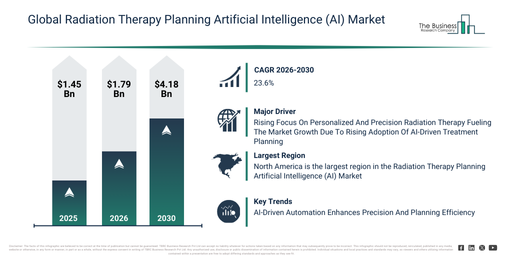
  • Global Radiation Therapy Planning Artificial Intelligence (AI) Market Trends and Forecast 2026–2030

    Global Radiation Therapy Planning Artificial Intelligence (AI) Market Trends and Forecast 2026–2030

    The Business Research Company’s 2026 market reports include new capabilities such as market attractiveness scoring and analysis, total addressable market analysis, company scoring matrix, interactive excel data dashboard, improved supply chain analysis, upcoming startups in the market, and overview of key products, aimed at improving the depth, usability, and strategic value of the insights delivered.

    What Market Value Is Expected For The Radiation Therapy Planning Artificial Intelligence (AI) Market At The End Of The 2026–2030 Forecast Period?

    The radiation therapy planning artificial intelligence (AI) market size has experienced exponential growth in recent years. It is projected to expand from $1.45 billion in 2025 to $1.79 billion in 2026, achieving a compound annual growth rate (CAGR) of 23.9%. The growth observed in the historic period can be attributed to the increasing adoption of AI-based radiotherapy solutions, growing demand for personalized cancer treatment, rising use of automation in radiation planning, expansion of oncology centers in developed regions, and an increasing focus on improving treatment accuracy.

    The radiation therapy planning artificial intelligence (AI) market size is projected to experience substantial growth in the upcoming years. It is forecasted to expand to $4.18 billion by 2030, exhibiting a compound annual growth rate (CAGR) of 23.6%. This expansion during the forecast period can be attributed to the increasing integration of cloud-based AI platforms, rising investment in healthcare digitalization, growing demand for multi-cancer AI planning tools, an expansion of research and development within oncology AI, and greater adoption in emerging markets. Significant trends anticipated for the forecast period include technological advancements in AI-driven contouring and dose calculation, innovations within cloud-based radiation therapy platforms, the development of predictive modeling for treatment outcomes, ongoing research and development in adaptive radiotherapy, and technological improvements in workflow automation and quality assurance.

    Download the Free Sample Report to Explore Key Market Insights:

    https://www.thebusinessresearchcompany.com/sample.aspx?id=30718&type=smp

    What Major Growth Drivers Are Shaping The Outlook Of The Radiation Therapy Planning Artificial Intelligence (AI) Market?

    The expanding emphasis on individualized and precise radiation therapy is projected to boost the expansion of the radiation therapy planning artificial intelligence (AI) market in the coming period. This form of therapy involves customizing the radiation dose, delivery method, and treatment strategy to align with each patient’s unique tumor attributes and anatomical structure. The heightened interest in personalized and precision radiation therapy stems from clinicians’ efforts to optimize tumor eradication while simultaneously reducing harm to adjacent healthy tissues, achieved by adapting dosage, targeting, and scheduling according to the patient’s distinct tumor biology and anatomy. Radiation therapy planning AI facilitates personalized and precision radiation therapy by providing automated utilities capable of producing optimized, patient-tailored treatment schemes more rapidly and consistently than conventional manual approaches. For example, in May 2024, the Department for Health and Social Care, a UK government entity, reported that all National Health Service radiotherapy departments in England received artificial intelligence technology via £15.5 million in government funding. This technology automatically analyzes scans to differentiate cancerous cells from healthy organs 2.5 times faster than older techniques, thereby illustrating the increasing integration of precision radiotherapy methods. Consequently, the increasing concentration on personalized and precision radiation therapy is fueling the expansion of the radiation therapy planning artificial intelligence (AI) market.

    What Segment Types Make Up The Radiation Therapy Planning Artificial Intelligence (AI) Market?

    The radiation therapy planning artificial intelligence (AI) market covered in this report is segmented –

    1) By Component: Software, Hardware, Services

    2) By Technology: Machine Learning (ML), Deep Learning (DL), Knowledge-Based Planning (KBP)

    3) By Deployment Mode: On-Premises, Cloud-Based

    4) By Application: Breast Cancer, Lung Cancer, Prostate Cancer, Head And Neck Cancer, Other Applications

    5) By End-User: Hospitals, Cancer Treatment Centers, Research Institutes, Other End-Users

    Subsegments:

    1) By Software: Automated Contouring Software, Dose Prediction Software, Plan Optimization Software, Quality Assurance Software, Outcome Analytics Software

    2) By Hardware: Graphics Processing Unit Servers, High Performance Computing Clusters, Dedicated Workstation Hardware, Edge Computing Devices

    3) By Services: Implementation And Integration Services, Training And Support Services, Data Management Services, Clinical Validation Services

    Which Market Trends Are Creating New Opportunities In The Radiation Therapy Planning Artificial Intelligence (AI) Market?

    Leading companies operating in the radiation therapy planning artificial intelligence (AI) market are focusing on developing sophisticated solutions, including AI-driven automation and integrated tools, with the aim of boosting precision, enhancing clinical efficiency, and reducing manual planning time. These AI-driven automation and integrated tools refer to advanced algorithms that simplify complex treatment planning processes, thereby minimizing user intervention and variability. For instance, in July 2024, RaySearch Laboratories AB, a Sweden-based medical technology company, introduced its RayStation 2024B treatment planning system. This comprehensive platform features advanced AI-based auto-contouring and a new Proton Monte Carlo dose calculation engine designed for unparalleled accuracy. It further includes automated tools for adaptive therapy and plan optimization, enabling seamless integration of MR-Linac workflows and streamlined proton beam therapy planning without extensive manual effort. Moreover, the system incorporates enhanced scripting and module integration, extending its versatility and reducing operational complexity for oncology clinics and research institutions.

    Which Major Firms Influence Developments In The Radiation Therapy Planning Artificial Intelligence (AI) Market?

    Major companies operating in the radiation therapy planning artificial intelligence (AI) market are Philips Healthcare, Siemens Healthineers AG, Elekta AB, Brainlab SE, Accuray Incorporated, RaySearch Laboratories AB, GE HealthCare, MVision AI, Spectra Medical India Pvt. Ltd., Coexya, LAP GmbH Laser Applikationen, Radformation Inc., TheraPanacea, DOSIsoft SA, Siris Medical Inc., Prowess Inc., Manteia Medical Technologies, Oncora Medical Inc., Adaptiiv Medical Technologies Inc., ViewRay Systems Inc., Pvmed Inc., Doctors App, Mirada Medical Ltd., Vision RT Ltd.

    Read the full radiation therapy planning artificial intelligence (ai) market report here:

    https://www.thebusinessresearchcompany.com/report/radiation-therapy-planning-artificial-intelligence-ai-market-report

    Which Global Regions Are Shaping The Competitive Landscape Of The Radiation Therapy Planning Artificial Intelligence (AI) Market?

    North America was the largest region in the radiation therapy planning artificial intelligence (AI) market in 2025. Asia-Pacific is expected to be the fastest-growing region in the forecast period. The regions covered in the radiation therapy planning artificial intelligence (AI) market report are Asia-Pacific, South East Asia, Western Europe, Eastern Europe, North America, South America, Middle East, Africa.

    Request A Tailored Radiation Therapy Planning Artificial Intelligence (AI) Market Research Report For Competitive Advantage:

    https://www.thebusinessresearchcompany.com/customise?id=30718&type=smp

    Browse Through More Reports Similar to the Global Radiation Therapy Planning Artificial Intelligence (AI) Market 2026, By The Business Research Company

    Artificial Intelligence In Radiology Market Report 2026

    https://www.thebusinessresearchcompany.com/report/artificial-intelligence-in-radiology-global-market-report

    Artificial Intelligence In Oncology Market Report 2026

    https://www.thebusinessresearchcompany.com/report/artificial-intelligence-in-oncology-global-market-report

    artificial intelligence in medical imaging global market report

    https://www.thebusinessresearchcompany.com/report/artificial-intelligence-in-medical-imaging-global-market-report

    Get in touch with us:

    The Business Research Company: https://www.thebusinessresearchcompany.com/

    Americas +1 310-496-7795

    Asia +44 7882 955267 & +91 8897263534

    Europe +44 7882 955267

    Email us at info@tbrc.info

    Follow us on:

    LinkedIn: https://in.linkedin.com/company/the-business-research-company

    YouTube: https://www.youtube.com/channel/UC24_fI0rV8cR5DxlCpgmyFQ

    Global Market Model: https://www.thebusinessresearchcompany.com/global-market-model