Category: Medical Equipment

  • Operating Tables And Lights Market Growth Forecast: Market Size, Key Trends And Emerging Opportunities Through 2030

    Operating Tables And Lights Market Growth Forecast: Market Size, Key Trends And Emerging Opportunities Through 2030

    Built to provide research that’s more actionable and strategically valuable, The Business Research Company’s 2026 market reports include market attractiveness analysis, total addressable market sizing, company benchmarking matrices, interactive Excel dashboards, broader supply chain intelligence, emerging startup tracking, and in-depth product insights.

    Operating Tables And Lights Market Size Outlook: How Quickly Will Revenue Expand Through 2030?

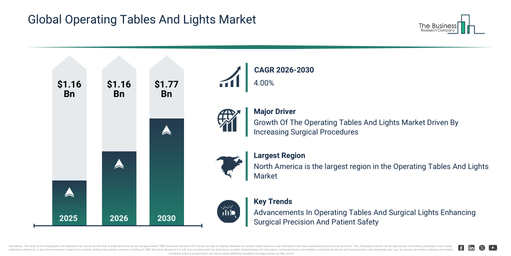
    The market for operating tables and lights has demonstrated consistent expansion in recent years. It is anticipated to increase from $1.47 billion in 2025 to $1.53 billion in 2026, with a compound annual growth rate (CAGR) of 4.5%. The historical growth of this market can be attributed to the rising global number of surgical procedures, the expansion of hospital operating room capacities, increased investments in modern surgical infrastructure, the growing adoption of minimally invasive surgeries, and improved access to advanced OR equipment.

    The operating tables and lights market is anticipated to exhibit consistent growth in the upcoming years. It is projected to expand to $1.79 billion in 2030, demonstrating a compound annual growth rate (CAGR) of 4.0%. This growth during the forecast period stems from factors such as an escalating demand for smart operating rooms, a sharpened focus on workflow efficiency during surgical procedures, the expansion of outpatient surgical facilities, increasing investments in energy-efficient medical equipment, and the growing need to replace older operating tables and lights. Significant trends expected in this period include the rising adoption of electrically powered operating tables, an increased demand for LED surgical lighting systems, the broader integration of adjustable and modular table designs, the expansion of hybrid operating room equipment, and an enhanced emphasis on surgical ergonomics.

    Get A Free Sample Report With In-Depth Market Insights:

    https://thebusinessresearchcompany.com/sample_request?id=13419048&type=smp&name=Operating%20Tables%20And%20Lights%20Market%20Report%202026&utm_source=Blogs&utm_medium=Paid&utm_campaign=Sep_PR

    Operating Tables And Lights Market Industry Drivers: What’s Behind The Revenue Growth?

    The increasing volume of surgical operations is anticipated to drive expansion in the operating tables and lights market in the future. Surgical procedures are defined as medical interventions utilizing manual and instrumental techniques carried out by surgeons to diagnose, treat, or rectify various conditions, injuries, or illnesses. This rise in surgical interventions stems from factors such as an aging demographic, progress in medical technology, enhanced healthcare accessibility, and superior diagnostic abilities. Crucially, operating tables and lights are essential in contemporary surgery, contributing to greater precision, safety, and efficiency during operations, ultimately leading to better patient results. For example, data from November 2023, published by the Australian Institute of Health and Welfare (AIHW), an Australia-based government agency, indicated that approximately 735,500 people underwent surgery from public hospital elective surgery waiting lists during 2022–2023, representing an 18% rise compared to 2021-2022. Consequently, the growing frequency of surgical procedures is projected to significantly boost the expansion of the operating tables and lights market.

    Operating Tables And Lights Market Segment Analysis: What Are The Core Market Categories?

    The operating tables and lights market covered in this report is segmented –

    1) By Product Type: Operating Tables, Operating Room Lights

    2) By Operation: Manual Operating Table, Power Operating Table

    3) By End-User: Hospitals, Ambulatory Surgical Centers, Emergency Centers, Other End-Users

    Subsegments:

    1) By Operating Tables: Manual Operating Tables, Electric Operating Tables, Hydraulic Operating Tables, Surgical Stretcher Tables

    2) By Operating Room Lights: Ceiling-Mounted Surgical Lights, Wall-Mounted Surgical Lights, Mobile Surgical Lights, Examination Lights

    #Operating Tables And Lights Market Growth Trends: What’s Shaping The Future Outlook?

    Leading entities within the operating tables and lights market are concentrating on creating novel offerings, including user-centric designs, aimed at elevating surgical accuracy and bettering patient recovery. These intuitive products prioritize straightforwardness and operational simplicity, allowing users to engage with them effectively without encountering complexity or requiring extensive instruction. Common attributes of these items include readily understandable controls, uncluttered interfaces, and designs that are easy to access, thereby enriching the total user interaction. As an illustration, Getinge AB, a medical technology firm based in Sweden, introduced the Maquet Corin operating room (OR) table and the Maquet Ezea surgical light in August 2024, with the objective of boosting surgical effectiveness, ensuring greater safety, and improving the user’s interaction in operating environments. The Maquet Corin operating room (OR) table incorporates an intuitive interface that facilitates smoother workflows and fosters improved collaboration among surgical personnel, further equipped with intelligent safety mechanisms like collision detection and warnings for overloads. Conversely, the Maquet Ezea surgical light highlights ease of use and resilience, offering powerful lighting alongside sophisticated functionalities such as eye-sensitive dimming and an elevated color rendering index, crucial for precise color display during surgical procedures.

    Operating Tables And Lights Market Top Companies Driving Competitive Growth

    Major companies operating in the operating tables and lights market are Siemens AG, Stryker Corporation, GE Healthcare, STERIS Corporation, Shenzhen Mindray Bio-Medical Electronics Co. Ltd., Drägerwerk AG & Co. KGaA, Getinge AB, Heal Force Bio-Meditech Holdings Limited, AGA Sanitaetsartikel GmbH, Famed Zywiec Sp. z o.o., Alvo Medical Sp. z o.o., Mizuho OSI, Merivaara Corp, Mediland Enterprise Corporation, BenQ Medical Technology, UFSK-International OSYS GmbH, Fazzini SRL, Lojer Oy, Medifa-hesse GmbH & Co. KG, Ningbo Techart Medical Equipment Co. Ltd., OPT Surgisystems S.R.L.

    View The Full Operating Tables And Lights Market Report:

    https://thebusinessresearchcompany.com/report/operating-tables-and-lights-global-market-report?utm_source=Blogs&utm_medium=Paid&utm_campaign=Sep_PR

    Operating Tables And Lights Market Global Footprint: Which Region Leads The Market?

    North America was the largest region in the operating tables and lights market in 2025. The regions covered in the operating tables and lights market report are Asia-Pacific, South East Asia, Western Europe, Eastern Europe, North America, South America, Middle East, Africa.

    Reach Out To Our Team:

    The Business Research Company: https://www.thebusinessresearchcompany.com/

    Americas: +1 310-496-7795

    Asia: +44 7882 955267 & +91 8897263534

    Europe: +44 7882 955267

    Email us at: marketing@tbrc.info

    Follow us on:

    LinkedIn: https://in.linkedin.com/company/the-business-research-company

    YouTube: https://www.youtube.com/channel/UC24_fI0rV8cR5DxlCpgmyFQ

    Global Market Model: https://www.thebusinessresearchcompany.com/global-market-model
  • Open Surgery Instruments Market CAGR Forecast Through 2030: Key Trends Shaping Industry Expansion

    Open Surgery Instruments Market CAGR Forecast Through 2030: Key Trends Shaping Industry Expansion

    Backed by market attractiveness analysis, total addressable market sizing, company benchmarking matrices, interactive Excel dashboards, wider supply chain intelligence, emerging startup coverage, and detailed product-level insights, The Business Research Company’s 2026 market reports are designed to offer research that is more actionable and strategically valuable than ever.

    Operating Room Equipment Market Size, Value And Growth Trajectory Through 2030

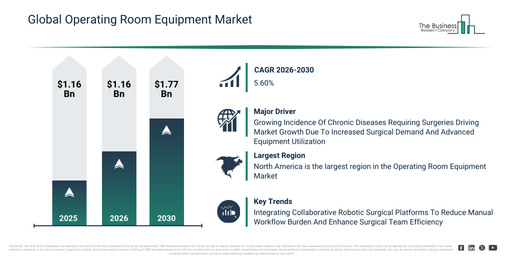
    The operating room equipment market size has seen robust expansion in recent times. Its projected growth will take it from $17.05 billion in 2025 to $17.95 billion in 2026, demonstrating a compound annual growth rate (CAGR) of 5.2%. Historically, this growth can be ascribed to several factors, including an increase in surgical procedure volumes, the expansion of hospital infrastructure, a higher prevalence of chronic diseases necessitating surgery, enhanced access to sophisticated surgical technologies, and the increasing embrace of minimally invasive procedures.

    The operating room equipment market is set for significant expansion in the coming years, projected to achieve a valuation of $22.36 billion by 2030, driven by a compound annual growth rate (CAGR) of 5.6%. This anticipated growth stems from factors such as increased capital allocation for smart hospitals, a rising requirement for real-time integration of surgical data, the broadening footprint of outpatient and ambulatory surgery centers, an intensified focus on patient safety innovations, and sustained advancements in surgical equipment design. Prominent trends foreseen for this period encompass the increased uptake of integrated operating room systems, an escalating demand for sophisticated patient monitoring solutions, the wider application of minimally invasive surgical equipment, the proliferation of smart anesthesia delivery systems, and a heightened emphasis on optimizing surgical workflow.

    Get A Free Sample Report With In-Depth Market Insights:

    https://thebusinessresearchcompany.com/sample_request?id=10335285&type=smp&name=Operating%20Room%20Equipment%20Market%20Report%202026&utm_source=Blogs&utm_medium=Paid&utm_campaign=Sep_PR

    Operating Room Equipment Market Growth Factors: What’s Supporting Expansion?

    The increasing occurrence of chronic illnesses necessitating surgical interventions is projected to fuel the expansion of the operating room equipment market. These are medical conditions of prolonged duration, typically lasting at least three months. This escalating prevalence of chronic ailments stems from an aging global populace and the widespread adoption of inactive lifestyles alongside unhealthy eating habits. The rising number of chronic diseases needing surgery boosts the operating room equipment sector by elevating the need for sophisticated surgical instruments, patient observation systems, surgical tables, and diagnostic imaging devices, all crucial for secure and effective operations. As an illustration, data from June 2024, provided by the National Health Service, a UK-based government department, indicated that 3,615,330 individuals registered with a general practitioner (GP) received a diagnosis of non-diabetic hyperglycemia or pre-diabetes (a state characterized by elevated blood sugar not yet reaching diabetic levels) in 2023. This represented an 18% surge from 3,065,825 instances recorded in 2022. Consequently, the increased occurrence of chronic conditions necessitating surgical interventions is propelling the growth of the operating room equipment market.

    Operating Room Equipment Market Segment Breakdown: Which Categories Lead On Revenue?

    The operating room equipment market covered in this report is segmented –

    1) By Type: Anesthesia Devices, Endoscopes, Operating Room Lights, Operating Tables, Electrosurgical Devices, Surgical Imaging Devices, Patient Monitors

    2) By Application: Cardiovascular Surgery, Thoracic Surgery, Neurosurgery, Other Applications

    3) By End User: Hospitals, Outpatient Facilities And Ambulatory Surgery Centers

    Subsegments:

    1) By Anesthesia Devices: Anesthesia Machines, Vaporizers, Anesthesia Monitors

    2) By Endoscopes: Rigid Endoscopes, Flexible Endoscopes, Accessories For Endoscopy

    3) By Operating Room Lights: Surgical LED Lights, Surgical Halogen Lights, Examination Lights

    4) By Operating Tables: General Surgical Tables, Specialty Surgical Tables, Adjustable Operating Tables

    5) By Electrosurgical Devices: Electrosurgical Generators, Electrosurgical Instruments, Smoke Evacuators

    6) By Surgical Imaging Devices: C-Arms, Surgical Ultrasound Systems, Intraoperative CT Scanners

    7) By Patient Monitors: Multi-Parameter Monitors, Bedside Monitors, Portable Monitors

    Operating Room Equipment Market Industry Trends: What’s Reshaping Demand?

    Prominent companies active in the operating room equipment market are prioritizing the integration of collaborative robotic assistance systems to minimize manual workflow duplication, heighten surgical accuracy, and boost staff output during medical procedures. These cooperative platforms provide aid to surgeons and surgical technologists through automated instrumentation control, consistent support, and features that optimize workflow, thereby lessening physical exertion and streamlining operating room operations. For instance, in November 2024, Moon Surgical, a US-based surgical robotics company, unveiled its Maestro Platform at Lee Health. The platform is designed to augment surgical teams and improve procedural consistency. The company reports that Maestro assists operating rooms in saving the equivalent of 8.3 full working days of surgical technologist time by automating routine tasks and enhancing intraoperative support. This illustrates a broader industry movement towards augmentative robotics, intended to alleviate staff pressure, reduce procedural delays, and improve overall operating room efficiency.

    Operating Room Equipment Market Leading Players And Competitive Positioning

    Major companies operating in the operating room equipment market are Medtronic, Olympus, GE, Stryker, Philips, Getinge, Drägerwerk, Hill-Rom, Nihon Kohden, Steris, STAAN Bio-Med Engineering, GE Healthcare, Covidien, Philips Healthcare, Smiths Medical, Metran, Siemens Healthcare, Opto Circuits, Fukuda Denshi, Canon Medical Systems, Mindray, Boston Scientific, DePuy Synthes, Simeon Medical, Teleflex, Johnson & Johnson, Alvo Medical, Mizuho OSI, Karl Storz, KLS Martin Group

    View The Full Operating Room Equipment Market Report:

    https://thebusinessresearchcompany.com/report/operating-room-equipment-global-market-report?utm_source=Blogs&utm_medium=Paid&utm_campaign=Sep_PR

    Operating Room Equipment Market Regional Split: Which Areas Are Fueling Growth?

    North America was the largest region in the global operating room equipment market in 2025. Asia-Pacific is expected to be the fastest-growing region in the forecast period. The regions covered in the operating room equipment market report are Asia-Pacific, South East Asia, Western Europe, Eastern Europe, North America, South America, Middle East, Africa.

    Reach Out To Our Team:

    The Business Research Company: https://www.thebusinessresearchcompany.com/

    Americas: +1 310-496-7795

    Asia: +44 7882 955267 & +91 8897263534

    Europe: +44 7882 955267

    Email us at: marketing@tbrc.info

    Follow us on:

    LinkedIn: https://in.linkedin.com/company/the-business-research-company

    YouTube: https://www.youtube.com/channel/UC24_fI0rV8cR5DxlCpgmyFQ

    Global Market Model: https://www.thebusinessresearchcompany.com/global-market-model
  • Open Surgery Instruments Market To Witness 5.8% CAGR Growth Through 2030: Key Industry Drivers

    Open Surgery Instruments Market To Witness 5.8% CAGR Growth Through 2030: Key Industry Drivers

    Featuring market attractiveness scoring, total addressable market sizing, company benchmarking matrices, interactive Excel dashboards, deeper supply chain intelligence, emerging startup tracking, and granular product-level insights, The Business Research Company’s 2026 market reports are built to deliver research that is both more actionable and more strategically valuable.

    Open Surgery Instruments Market CAGR Outlook And Future Development

    The open surgery instruments market has demonstrated robust expansion in recent years. It will grow from $68.04 billion in 2025 to $72.38 billion in 2026 at a compound annual growth rate (CAGR) of 6.4%. The historical increase in market size is due to factors such as a rise in the volume of open surgical procedures, the expansion of hospital surgical infrastructure, greater availability of trained surgeons, the increasing use of standardized surgical kits, and ongoing improvements in instrument metallurgy.

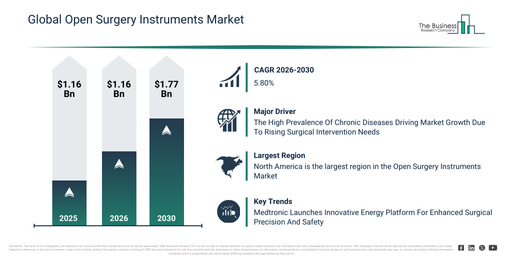
    The open surgery instruments market size is projected to experience robust expansion over the coming years, with expectations to reach $90.57 billion in 2030 at a compound annual growth rate (CAGR) of 5.8%. This anticipated growth during the forecast period is attributable to factors such as the increasing integration of advanced surgical technologies, a rising demand for multi-specialty surgical instruments, the proliferation of complex surgical procedures, a heightened emphasis on reducing surgical complications, and growing investments in hospital operating room upgrades. Key trends for the forecast period include a surging demand for high-precision surgical instruments, increased utilization of reusable and sterilizable tools, wider adoption of ergonomic instrument designs, the expansion of advanced energy-based surgical devices, and an enhanced focus on surgical accuracy.

    Get A Free Sample Report With In-Depth Market Insights:

    https://thebusinessresearchcompany.com/sample_request?id=64690250&type=smp&name=Open%20Surgery%20Instruments%20Market%20Report%202026&utm_source=Blogs&utm_medium=Paid&utm_campaign=Sep_PR

    Open Surgery Instruments Market Demand Drivers: What’s Powering Industry Growth?

    The growing occurrence of chronic diseases is anticipated to fuel the expansion of the open surgery instrument market in the future. These conditions persist over a long duration, necessitate ongoing medical care or supervision, and significantly affect an individual’s quality of life. The increase in chronic diseases stems from various factors, including evolving lifestyles, an aging demographic, enhanced access to healthcare, and genetic susceptibilities. Open surgery instruments improve and simplify the surgical management of chronic illnesses, enabling healthcare professionals to achieve greater procedural accuracy, shorten recovery periods, and guarantee patient safety and welfare during operations. For example, data from May 2023, shared by the World Health Organization, a United Nations health agency situated in Switzerland, indicates that non-communicable diseases (NCDs) are currently responsible for almost three-quarters of worldwide deaths, with forecasts suggesting this figure could climb to 86% by 2048. Consequently, the widespread occurrence of chronic diseases is a key factor boosting the growth of the open surgery instrument market.

    Open Surgery Instruments Market Segmentation: How Does The Market Break Down By Category?

    The open surgery instruments market covered in this report is segmented –

    1) By Product: Scalpel, Scissors, Forceps, Clamps, Needles And Suture, Retractors, Suction, Staplers And Clips, Energy Systems

    2) By Application: Cardiothoracic Surgery, Urologic Surgery, Orthopedic Surgery

    3) By End-User: Hospitals, Ambulatory Surgery Centers, Clinics

    Subsegments:

    1) By Scalpel: Disposable Scalpels, Reusable Scalpels

    2) By Scissors: Straight Scissors, Curved Scissors, Metzenbaum Scissors, Mayo Scissors

    3) By Forceps: Tissue Forceps, Surgical Forceps, Hemostatic Forceps

    4) By Clamps: Hemostatic Clamps, Tissue Clamps, Surgical Clamps

    5) By Needles And Suture: Surgical Needles, Absorbable Sutures, Non-Absorbable Sutures

    6) By Retractors: Handheld Retractors, Self-Retaining Retractors

    7) By Suction: Manual Suction Devices, Electric Suction Devices

    8) By Staplers And Clips: Surgical Staplers, Hemostatic Clips, Skin Staplers

    9) By Energy Systems: Electrosurgical Units, Laser Energy Systems, Ultrasonic Energy Systems

    Open Surgery Instruments Market Innovation Trends: What Developments Are Reshaping The Industry?

    Major companies engaged in the open surgery instruments market are concentrating on developing advanced solutions, specifically next-generation surgical energy platforms, to supersede conventional electrosurgical devices. A next-generation surgical energy platform is defined as a device that enhances procedural precision and safety by dynamically modulating energy delivery, improving vessel sealing, and facilitating more efficient tissue dissection during surgery. For instance, in September 2025, Medtronic Plc., a US-based medical technology company, introduced the Valleylab FT10 Energy Platform in India. This innovation replaces older electrosurgical devices by offering versatile energy modalities, including monopolar, bipolar, and advanced vessel sealing, to support open surgical procedures. It provides real-time tissue sensing and optimized energy control, enabling surgeons to achieve better procedural outcomes with a reduced risk of collateral damage. Integrated with Medtronic’s surgical support programs, encompassing training and workflow integration, it delivers a seamless clinical experience. The Valleylab FT10 Energy Platform enhances patient safety, simplifies surgical workflow, and aids in boosting the adoption of advanced energy solutions in operating rooms.

    Open Surgery Instruments Market Competitive Overview And Top Companies

    Major companies operating in the open surgery instruments market are Johnson & Johnson Services Inc., Medtronic, Olympus, Terumo Corporation, B. Braun Medical Ltd., Cook Medical, Teleflex Incorporated, Mölnlycke Health Care AB, Integra LifeSciences Corporation, ConMed Corporation, C.R. Bard Inc., KLS Martin Group, Aspen Surgical Products Inc., Scanlan International Inc., Sklar Surgical Instruments, Grena Ltd., ELMED Incorporated, Aesculap Inc., Medline Industries Inc., HuFriedyGroup

    View The Full Open Surgery Instruments Market Report:

    https://thebusinessresearchcompany.com/report/open-surgery-instruments-global-market-report?utm_source=Blogs&utm_medium=Paid&utm_campaign=Sep_PR

    Open Surgery Instruments Market Top Region: Where Does Most Revenue Come From?

    North America was the largest region in the open surgery instruments market in 2025. Asia-Pacific is expected to be the fastest-growing region in the forecast period. The regions covered in the open surgery instruments market report are Asia-Pacific, South East Asia, Western Europe, Eastern Europe, North America, South America, Middle East, Africa.

    Reach Out To Our Team:

    The Business Research Company: https://www.thebusinessresearchcompany.com/

    Americas: +1 310-496-7795

    Asia: +44 7882 955267 & +91 8897263534

    Europe: +44 7882 955267

    Email us at: marketing@tbrc.info

    Follow us on:

    LinkedIn: https://in.linkedin.com/company/the-business-research-company

    YouTube: https://www.youtube.com/channel/UC24_fI0rV8cR5DxlCpgmyFQ

    Global Market Model: https://www.thebusinessresearchcompany.com/global-market-model

  • Oncology Molecular Diagnostics Market Projected For Strong Expansion Through 2030: Key Trends And Future Outlook

    Oncology Molecular Diagnostics Market Projected For Strong Expansion Through 2030: Key Trends And Future Outlook

    Built to provide research that’s more actionable and strategically valuable, The Business Research Company’s 2026 market reports include market attractiveness analysis, total addressable market sizing, company benchmarking matrices, interactive Excel dashboards, broader supply chain intelligence, emerging startup tracking, and in-depth product insights.

    Oncology Molecular Diagnostics Market Set To Climb From $6.34 Billion In 2026 To $10.13 Billion By 2030

    The oncology molecular diagnostics market has experienced significant expansion in recent years. This market is projected to grow from $5.65 billion in 2025 to $6.34 billion in 2026, exhibiting a compound annual growth rate (CAGR) of 12.2%. Historically, this growth can be attributed to factors such as the increasing prevalence of cancer, the adoption of PCR and sequencing technologies, enhanced oncology research funding, the expansion of hospital diagnostic capabilities, and regulatory approvals for molecular tests.

    The size of the oncology molecular diagnostics market is projected for significant expansion over the coming years. It is anticipated to reach $10.13 billion in 2030, exhibiting a compound annual growth rate (CAGR) of 12.4%. This projected expansion during the forecast period is fueled by factors such as the embrace of precision oncology, progress in liquid biopsy techniques, the need for customized treatments, AI-powered data analysis, and deeper market penetration in developing regions. Key developments anticipated during this timeframe involve an increase in companion diagnostics, greater reliance on liquid biopsy, the broader implementation of biomarker-based testing, more extensive cancer screening initiatives, and the imperative for prompt and precise cancer identification.

    Get A Free Sample Report With In-Depth Market Insights:

    https://thebusinessresearchcompany.com/sample_request?id=3457&type=smp&name=Oncology%20Molecular%20Diagnostics%20Market%20Report%202026&utm_source=Blogs&utm_medium=Paid&utm_campaign=Sep_PR

    Oncology Molecular Diagnostics Market Growth Drivers: What’s Behind The Acceleration?

    The growing need for personalized medicine is anticipated to fuel the expansion of the oncology molecular diagnostics market moving forward. Personalized medicine describes an innovative method in medical care and treatment that adapts medical choices, practices, interventions, and drug therapies to each specific patient. Oncology molecular diagnostics play a vital role in personalized medicine for cancer patients by offering tailored treatment plans, improved drug selection, and more precise, efficacious, and individualized treatment approaches, thereby enhancing patient results and overall quality of life. For instance, in February 2024, the Personalized Medicine Coalition, a US-based nonprofit organization, reported that in 2023, the FDA approved 16 new personalized treatments for rare disease patients, an increase from six in 2022. Therefore, the rising demand for personalized medicine is a key driver for the growth of the oncology molecular diagnostics market.

    Oncology Molecular Diagnostics Market Segment Trends And Revenue Contributors

    The oncology molecular diagnostics market covered in this report is segmented –

    1) By Product: Instruments, Reagents, Other Products

    2) By Technology: Polymerase Chain Reaction (PCR), In-Situ Hybridization (ISH), Isothermic Nucleic Acid Amplification Technology (INNAT), Chips And Microarrays, Sequencing, Mass Spectroscopy, Transcription Mediated Amplification (TMA), Other Technologies

    3) By End User: Hospitals, Diagnostic Centers, Academic And Research Institutes, Other End Users

    Subsegments:

    1) By Instruments: Polymerase Chain Reaction (PCR) Machines, Sequencers, Microarray Platforms, Fluorescence In Situ Hybridization (FISH) Instruments

    2) By Reagents: DNA And RNA Extraction Kits, PCR Reagents And Kits, NGS Library Preparation Kits, Diagnostic Assay Reagents

    3) By Other Products: Software For Data Analysis And Interpretation, Quality Control And Calibration Products, Consumables, For Molecular Testing, Biomarkers For Oncology Testing

    Oncology Molecular Diagnostics Market Trends: What’s Defining The Industry’s Next Phase?

    Leading companies in the oncology molecular diagnostics market are concentrating on evolving genomics technologies, including next-generation cancer genome sequencing, computational analytics, and innovative tumor modeling, to enhance early cancer detection, identify mutations, and refine personalized treatment strategies. These advancements improve diagnostic accuracy, reduce processing times, and cater to the increasing need for localized, high-accuracy molecular testing. An illustration of this is OncoHelix-CoLab, a Canada-based precision oncology provider focused on genomic and immunologic profiling, advanced molecular diagnostics, and immune-profile testing, which inaugurated a cutting-edge laboratory at Burjeel Medical City in the UAE in May 2024. This facility, a result of a collaboration between Burjeel Holdings and OncoHelix, bolsters regional diagnostic capabilities by enabling complex molecular and immunology tests to be performed locally, thus eliminating the need to send them abroad. Among its specialized services are advanced assays for various cancers, including prostate cancer, further supported by partnerships such as its collaboration with Nanostics for the ClarityDX Prostate test.

    Oncology Molecular Diagnostics Market Competitive Landscape: Which Companies Lead The Industry?

    Major companies operating in the oncology molecular diagnostics market are F. Hoffmann-La Roche AG, Bayer AG, Thermo Fisher Scientific Inc., Abbott Laboratories, Danaher Corporation, Siemens Healthcare AG, Becton Dickinson and Company, Agilent Technologies Inc., HTG Molecular Diagnostics Inc., Hologic Inc., Illumina Inc., bioMérieux SA, Beckman Coulter Inc., Sysmex Corporation, Bio-Rad Laboratories Inc., Qiagen N.V., Exact Sciences Corp., Bio-Techne Corporation, OPKO Health Inc., Myriad Genetics Inc., Guardant Health AMEA, Veracyte Inc., Adaptive Biotechnologies Corp., Foundation Medicine Inc., Pacific Biosciences of California Inc., NanoString Technologies Inc., Genomic Health Inc.

    View The Full Oncology Molecular Diagnostics Market Report:

    https://thebusinessresearchcompany.com/report/oncology-molecular-diagnostics-global-market-report?utm_source=Blogs&utm_medium=Paid&utm_campaign=Sep_PR

    Oncology Molecular Diagnostics Market Regional Breakdown: Where Is Demand Concentrated?

    North America was the largest region in the oncology molecular diagnostics market in 2025. Western Europe was the second largest region in the global oncology molecular diagnostics market report. The regions covered in the oncology molecular diagnostics market report are Asia-Pacific, South East Asia, Western Europe, Eastern Europe, North America, South America, Middle East, Africa.

    Reach Out To Our Team:

    The Business Research Company: https://www.thebusinessresearchcompany.com/

    Americas: +1 310-496-7795

    Asia: +44 7882 955267 & +91 8897263534

    Europe: +44 7882 955267

    Email us at: marketing@tbrc.info

    Follow us on:

    LinkedIn: https://in.linkedin.com/company/the-business-research-company

    YouTube: https://www.youtube.com/channel/UC24_fI0rV8cR5DxlCpgmyFQ

    Global Market Model: https://www.thebusinessresearchcompany.com/global-market-model
  • Oncology Devices Market Outlook 2026–2030: Growth Trends, Market Dynamics And Emerging Opportunities

    Oncology Devices Market Outlook 2026–2030: Growth Trends, Market Dynamics And Emerging Opportunities

    Backed by market attractiveness analysis, total addressable market sizing, company benchmarking matrices, interactive Excel dashboards, wider supply chain intelligence, emerging startup coverage, and detailed product-level insights, The Business Research Company’s 2026 market reports are designed to offer research that is more actionable and strategically valuable than ever.

    Oncology Devices Market Forecast: Value Set To Climb From $210.15 Billion To $397.27 Billion

    The oncology devices market has seen substantial growth in recent years. It is projected to expand from $177.72 billion in 2025 to $210.15 billion in 2026, achieving a compound annual growth rate (CAGR) of 18.2%. This historical expansion can be attributed to factors such as increasing global cancer incidence rates, the enlargement of hospital oncology departments, a growing need for early diagnosis technologies, the availability of advanced imaging systems, and rising awareness of cancer screening programs.

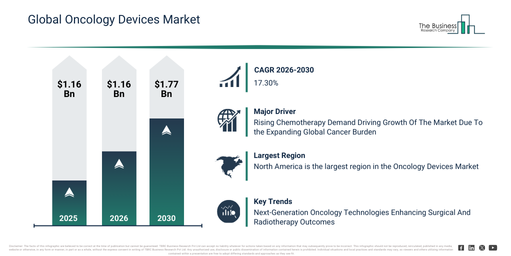
    The oncology devices market is projected to experience substantial expansion in the coming years. This sector is anticipated to reach $397.27 billion by 2030, exhibiting a compound annual growth rate (CAGR) of 17.3%. This projected expansion during the forecast period is driven by several factors, including the increasing embrace of personalized cancer treatment devices, greater financial commitments to oncology infrastructure, the proliferation of outpatient facilities for cancer care, the expanding application of AI-powered diagnostic tools, and a heightened emphasis on solutions for precision oncology. Key developments anticipated during this timeframe involve a greater uptake of sophisticated cancer diagnostic devices, increased deployment of image-guided oncology therapies, broader incorporation of minimally invasive tools for cancer treatment, the widening availability of precision radiation therapy equipment, and a stronger focus on identifying cancer at earlier stages.

    Get A Free Sample Report With In-Depth Market Insights:

    https://thebusinessresearchcompany.com/sample_request?id=55201161&type=smp&name=Oncology%20Devices%20Market%20Report%202026&utm_source=Blogs&utm_medium=Paid&utm_campaign=Sep_PR

    Oncology Devices Market Growth Factors Behind Sustained Expansion

    The escalating need for chemotherapy is poised to drive the expansion of the oncology devices market moving forward. Chemotherapy, a cancer therapy, employs potent drugs to obliterate rapidly proliferating cells, thereby slowing or arresting the proliferation and dissemination of tumors. The demand for chemotherapy is on the rise, stemming from the increasing global prevalence of cancer, as a higher number of diagnosed cases necessitates effective, widely available treatments that can address diverse cancer types and stages. Oncology devices enhance chemotherapy by enabling more secure and precise drug delivery and oversight, which consequently improves treatment effectiveness and patient results. For example, in January 2025, the U.S. National Cancer Institute, a U.S.-based federal cancer research agency, projected that new cancer cases in the United States would reach 2.04 million, an increase from 1.96 million in 2023, emphasizing the growing requirement for chemotherapy administration systems. Therefore, the increasing demand for chemotherapy is fueling the growth of the oncology devices market.

    Oncology Devices Market Segment Analysis Spotlighting Growth Areas

    The oncology devices market covered in this report is segmented –

    1) By Device Type: Brachytherapy Devices, Endoscopic Devices

    2) By Therapy: Chemotherapy, Hormone Therapy, Biotherapy/Immunotherapy, Radition Therapy

    3) By End User: Hospitals, Cancer Research Institutes, Other End Users

    Subsegments:

    1) By Brachytherapy Devices: Afterloaders (High-Dose Rate (HDR) And Low-Dose Rate (LDR)), Applicators, Seeds, Accessories

    2) By Endoscopic Devices: Endoscopes (Flexible, Rigid, Capsule), Endoscopic Ultrasound Systems, Endoscopic Accessories

    Oncology Devices Market Industry Trends Fueling Future Revenue Growth

    Major companies in the oncology devices market are concentrating on developing sophisticated, precision-focused solutions to elevate treatment accuracy, improve patient safety, and enhance clinical workflow efficiency. These innovations prioritize minimally invasive technologies, superior visualization, and real-time therapy optimization to support improved outcomes for various cancer types. For example, in April 2025, ZEISS, a Germany-based medical technology company, secured FDA 510(k) clearance for its INTRABEAM 700 system, which is a next-generation robotic-assisted intraoperative radiotherapy (IORT) platform engineered for targeted radiation delivery in neuro-oncology and breast cancer procedures. The system provides enhanced precision, optimized ergonomics, and seamless integration into surgical workflows, empowering clinicians to administer localized radiation during surgery while minimizing exposure to surrounding healthy tissue. By incorporating advanced imaging, robotics, and comprehensive treatment-planning capabilities, the INTRABEAM 700 boosts therapeutic accuracy, facilitates quicker clinical decision-making, and aligns with the industry’s progression towards technologically advanced, patient-centric oncology care.

    Oncology Devices Market Competitive Landscape: Who Leads The Industry?

    Major companies operating in the oncology devices market are Eckert & Ziegler BEBIG GmbH, Oncura Inc., GE Healthcare, Medtronic plc, Varian Medical Systems Inc., Elekta AB, Theragenics Corporation, Accuray Incorporated, Roche Diagnostics, IBA Group, Biogenex Laboratories, Becton Dickinson and Company, Siemens Healthineers, Philips Healthcare, Hologic Inc., IBA AG, ViewRay Inc., Canon Medical Systems Corporation, Brainlab, PerkinElmer, RaySearch Laboratories, Mevion Medical Systems, Vision RT, IsoRay, RefleXion Medical, Alpha Tau Medical, Nanobiotix, Mirada Medical Ltd., Navidea Biopharmaceuticals Inc.

    View The Full Oncology Devices Market Report:

    https://thebusinessresearchcompany.com/report/oncology-devices-global-market-report?utm_source=Blogs&utm_medium=Paid&utm_campaign=Sep_PR

    Oncology Devices Market Geographic Landscape: Which Region Dominates Industry Growth?

    North America was the largest region in the oncology devices market in 2025. Asia-Pacific was the second-largest region in the oncology devices market report. The regions covered in the oncology devices market report are Asia-Pacific, South East Asia, Western Europe, Eastern Europe, North America, South America, Middle East, Africa.

    Reach Out To Our Team:

    The Business Research Company: https://www.thebusinessresearchcompany.com/

    Americas: +1 310-496-7795

    Asia: +44 7882 955267 & +91 8897263534

    Europe: +44 7882 955267

    Email us at: marketing@tbrc.info

    Follow us on:

    LinkedIn: https://in.linkedin.com/company/the-business-research-company

    YouTube: https://www.youtube.com/channel/UC24_fI0rV8cR5DxlCpgmyFQ

    Global Market Model: https://www.thebusinessresearchcompany.com/global-market-model
  • Integrase Inhibitors Market Trends Reshaping Industry Growth Through 2030

    Integrase Inhibitors Market Trends Reshaping Industry Growth Through 2030

    Backed by market attractiveness analysis, total addressable market sizing, company benchmarking matrices, interactive Excel dashboards, wider supply chain intelligence, emerging startup coverage, and detailed product-level insights, The Business Research Company’s 2026 market reports are designed to offer research that is more actionable and strategically valuable than ever.

    Integrase Inhibitors Market Set To Climb From $4.96 Billion In 2026 To $6.34 Billion By 2030

    The integrase inhibitors market has demonstrated strong growth in recent years. It is anticipated to expand from $4.66 billion in 2025 to $4.96 billion in 2026, at a compound annual growth rate (CAGR) of 6.4%. This historical growth can be linked to factors such as increasing global HIV prevalence, expanded access to antiretroviral treatment, the availability of effective oral HIV therapies, the development of healthcare infrastructure in developing regions, and support from international health organizations.

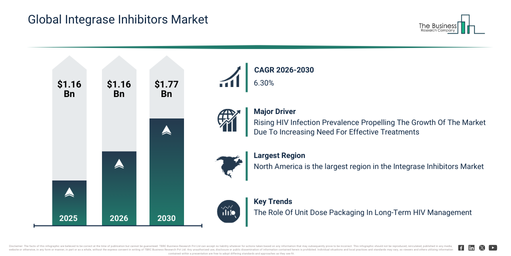
    The integrase inhibitors market size is anticipated to undergo substantial expansion in the coming years. This market is projected to attain $6.34 billion in 2030, demonstrating a compound annual growth rate (CAGR) of 6.3%. This growth during the forecast period can be ascribed to the increasing development of next-generation integrase inhibitors, a rising emphasis on long-acting HIV therapies, the broadening of personalized HIV treatment approaches, expanding investments in antiviral drug research, and a heightened focus on global HIV eradication initiatives. Noteworthy trends expected in the forecast period include the increasing utilization of integrase inhibitors in first-line HIV therapy, a rise in the adoption of combination antiretroviral regimens, the expansion of long-acting drug formulations, an escalating focus on improving drug tolerability, and enhanced access to HIV treatment programs.

    Get A Free Sample Report With In-Depth Market Insights:

    https://thebusinessresearchcompany.com/sample_request?id=90940863&type=smp&name=Integrase%20Inhibitors%20Market%20Report%202026&utm_source=Blogs&utm_medium=Paid&utm_campaign=Oct_PR

    Integrase Inhibitors Market Growth Catalysts And Demand Drivers

    The increasing incidence of HIV infection is anticipated to drive the expansion of the integrase inhibitors market moving forward. HIV infection is a chronic viral condition originating from the human immunodeficiency virus, which attacks and impairs the immune system by eliminating CD4+ T cells, consequently heightening susceptibility to other infections and diseases. The growing occurrence of HIV infection primarily stems from insufficient access to quality healthcare, which impedes efforts in prevention, testing, and treatment, particularly in marginalized communities. Integrase inhibitors are employed in HIV treatment to effectively block the virus from integrating its genetic material into human DNA, thereby reducing viral replication and assisting in controlling the infection, which can help lower the overall prevalence of HIV. For instance, in October 2024, according to gov.uk, a UK-based public sector information website, in 2023, England recorded 6,008 new HIV diagnoses, reflecting a 51% increase compared to 3,975 cases in 2022. Therefore, the rising prevalence of HIV infection will propel the growth of the integrase inhibitors market.

    Integrase Inhibitors Market Segment Performance And Emerging Opportunities

    The integrase inhibitors market covered in this report is segmented –

    1) By Drugs: Raltegravir, Dolutagravir, Elvitegravir, Bictegravir

    2) By Route of Administration: Oral, Intravenous, Long-Acting Oral And Injectable Formulations

    3) By Distribution Channel: Hospital Pharmacies, Retail Pharmacies, Online Pharmacies

    4) By Therapeutic Area: HIV-1 And HIV-2 Infection, HCV Infection, HIV Combination Antiretroviral Therapy

    5) By End User: Hospitals, Clinics, Research Institutes

    Subsegments:

    1) By Raltegravir: Oral Tablet, Oral Suspension, Intravenous (IV) Injection

    2) By Dolutegravir: Oral Tablet, Oral Suspension

    3) By Elvitegravir: Oral Tablet, Oral Suspension

    4) By Bictegravir: Oral Tablet, Fixed-Dose Combination Tablet

    Integrase Inhibitors Market Trends Shaping Long-Term Demand

    Key companies within the integrase inhibitors market are focusing on developing novel packaging options, such as unit dose packaging, to elevate patient adherence, enhance convenience, and ensure the secure and efficient distribution of antiretroviral treatments, especially for long-term HIV management. Unit dose packaging represents a pharmaceutical packaging method where each individual medication dose is separately sealed, thus ensuring precise dosage, convenience, and improved medication safety for patients. For example, in February 2024, ViiV Healthcare, a UK-based pharmaceutical company specializing in the development of HIV treatments, released Dovato (dolutegravir/lamivudine) in a blister pack format in the U.S. This product is authorized as a complete regimen for managing HIV-1 infection in adults who have not received prior antiretroviral (ARV) treatment or for those who are virologically suppressed (HIV-1 RNA <50 copies/mL) on a stable ARV regimen, without a history of treatment failure or known resistance to any part of Dovato.

    Integrase Inhibitors Market Competitive Overview And Top Companies

    Major companies operating in the integrase inhibitors market are Merck & Co. Inc., GlaxoSmithKline plc, Gilead Sciences Inc., ViiV Healthcare, Viatris Inc., Hetero Pharmaceuticals Ltd., Apotex Inc., Shionogi & Co. Ltd., Aurobindo Pharma Ltd., Dr. Reddy’s Laboratories Ltd., Cipla Limited, Lupin Limited, Sun Pharmaceutical Industries Ltd., Mylan Laboratories (Viatris), Teva Pharmaceutical Industries Ltd., Alvogen Pharma, Macleods Pharmaceuticals Ltd., Laurus Labs Ltd., Emcure Pharmaceuticals Ltd., Zydus Lifesciences Limited, Strides Pharma Science Limited, MSN Laboratories Pvt. Ltd.

    View The Full Integrase Inhibitors Market Report:

    https://thebusinessresearchcompany.com/report/integrase-inhibitors-global-market-report?utm_source=Blogs&utm_medium=Paid&utm_campaign=Oct_PR

    Integrase Inhibitors Market Leading Geography: Which Region Contributes The Most Revenue?

    North America was the largest region in the integrase inhibitors market in 2025. The regions covered in the integrase inhibitors market report are Asia-Pacific, South East Asia, Western Europe, Eastern Europe, North America, South America, Middle East, Africa.

    Reach Out To Our Team:

    The Business Research Company: https://www.thebusinessresearchcompany.com/

    Americas: +1 310-496-7795

    Asia: +44 7882 955267 & +91 8897263534

    Europe: +44 7882 955267

    Email us at: marketing@tbrc.info

    Follow us on:

    LinkedIn: https://in.linkedin.com/company/the-business-research-company

    YouTube: https://www.youtube.com/channel/UC24_fI0rV8cR5DxlCpgmyFQ

    Global Market Model: https://www.thebusinessresearchcompany.com/global-market-model
  • Insulin Pens, Syringes, Pumps And Injectors Market Growth To $40.45 Billion Creates New Opportunities Across The Industry

    Insulin Pens, Syringes, Pumps And Injectors Market Growth To $40.45 Billion Creates New Opportunities Across The Industry

    Featuring market attractiveness scoring, total addressable market sizing, company benchmarking matrices, interactive Excel dashboards, deeper supply chain intelligence, emerging startup tracking, and granular product-level insights, The Business Research Company’s 2026 market reports are built to deliver research that is both more actionable and more strategically valuable.

    Insulin Pens, Syringes, Pumps And Injectors Market Forecast: Value Set To Climb From $26.14 Billion To $40.45 Billion

    The insulin pens, syringes, pumps and injectors market has witnessed rapid expansion in recent years. This market is set to expand from $23.52 billion in 2025 to $26.14 billion in 2026, exhibiting a compound annual growth rate (CAGR) of 11.1%. Factors contributing to its historical growth include the escalating prevalence of diabetes, increased reliance on insulin therapy, the emergence of homecare treatment solutions, the introduction of disposable insulin delivery devices, and advancements in patient self-management practices.

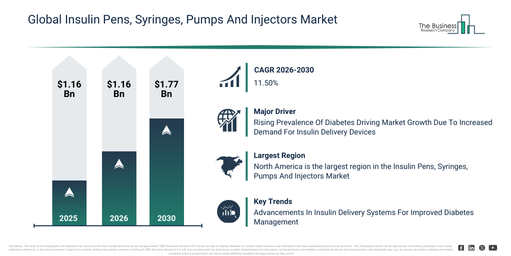
    The market for insulin pens, syringes, pumps, and injectors is projected to experience substantial expansion in the coming years. It is anticipated to reach $40.45 billion in 2030, exhibiting a compound annual growth rate (CAGR) of 11.5%. This anticipated growth during the forecast period is primarily driven by factors such as the greater acceptance of connected diabetes devices, an increased emphasis on automated insulin delivery methods, the broadening of digital platforms for diabetes management, heightened investments in wearable insulin technologies, and a growing need for less invasive delivery systems. Key trends expected over this period encompass a rise in the uptake of smart insulin delivery tools, more widespread utilization of patch and tubeless pumps, an escalating desire for managing diabetes at home, the development of connected insulin monitoring solutions, and a stronger emphasis on improving patient convenience.

    Get A Free Sample Report With In-Depth Market Insights:

    https://thebusinessresearchcompany.com/sample_request?id=12343734&type=smp&name=Insulin%20Pens%2C%20Syringes%2C%20Pumps%20And%20Injectors%20Market%20Report%202026&utm_source=Blogs&utm_medium=Paid&utm_campaign=Oct_PR

    Insulin Pens, Syringes, Pumps And Injectors Market Opportunity Drivers: What’s Unlocking New Revenue Potential?

    The global rise in diabetes prevalence is propelling the expansion of the insulin pens, syringes, pumps, and injectors market. Diabetes is a chronic health condition where the body struggles to maintain normal blood sugar levels, either due to insufficient insulin production or the body’s inability to use insulin effectively, leading to elevated blood glucose. This rising occurrence of diabetes stems from increasingly inactive lifestyles coupled with widespread consumption of high-calorie, unhealthy diets rich in sugars and fats, contributing to obesity and insulin resistance. The growing number of diabetes cases is consequently stimulating the insulin delivery devices market, as more individuals require insulin pens, syringes, pumps, and injectors for effective and convenient management. For instance, in April 2025, the International Diabetes Federation, a Belgium-based organization comprising over 240 national diabetes associations, reported that China’s total adult population of approximately 1.07 billion had a diabetes prevalence of 11.9% among adults, resulting in approximately 148 million total cases of diabetes in adults. Thus, the escalating global prevalence of diabetes is a primary driver for the growth of the insulin pens, syringes, pumps, and injectors market.

    Insulin Pens, Syringes, Pumps And Injectors Market Segment Landscape And Growth Outlook

    The insulin pens, syringes, pumps and injectors market covered in this report is segmented –

    1) By Type: Pens, Injectors And Pumps, Syringes

    2) By Pens: Reusable, Disposable

    3) By Pumps: Tubed Pumps, Tubeless Pumps

    4) By End Users: Hospitals, Homecare, Other End Users

    Subsegments:

    1) By Pens: Disposable Insulin Pens, Reusable Insulin Pens

    2) By Injectors And Pumps: Insulin Injectors, Insulin Pumps, Traditional Insulin Pumps, Patch Insulin Pumps

    3) By Syringes: Disposable Syringes, Reusable Syringes

    Insulin Pens, Syringes, Pumps And Injectors Market Innovation Trends Shaping Future Development

    Many enterprises operating within the insulin pens, syringes, pumps, and injectors market are prioritizing technological advancements in insulin delivery systems to ensure effective and safe insulin administration. These insulin delivery systems are instruments crafted to provide insulin to diabetic patients, incorporating devices such as pens, syringes, pumps, and injectors, thereby enabling precise and effective regulation of blood sugar. For instance, in June 2024, Insulet Corporation, a US-based medical equipment manufacturing company, unveiled Omnipod 5. This is a tubeless automated insulin delivery system developed for individuals with type 1 diabetes aged two and older. It represents the first system capable of integrating with both Dexcom G6 and Abbott FreeStyle Libre 2 Plus continuous glucose monitors, offering distinct compatibility with these leading CGM brands for improved diabetes management.

    Insulin Pens, Syringes, Pumps And Injectors Market Competitive Landscape: Which Companies Lead The Industry?

    Major companies operating in the insulin pens, syringes, pumps and injectors market are Novo Nordisk A/S, Eli Lilly and Company, Medtronic plc, Abbott Laboratories, Insulet Corporation, Sanofi Aventis, F. Hoffmann-La Roche Ltd, Becton Dickinson and Company, Animas Corporation, Ypsomed Holding AG, Dickinson and Company, Valeritas Inc., MannKind Corporation, Tandem Diabetes Care Inc., Biocon Ltd., B. Braun Melsungen AG, Terumo Corporation, Teleflex Incorporated, Nipro Corporation, Smiths Medical Inc., Owen Mumford, UltiMed Inc., Ypsomed Holding, Ascensia Diabetes Care, Trividia Health, ARKRAY Inc., AgaMatrix Inc., Medline Industries LP, Gerresheimer AG, West Pharmaceutical Services Inc., SHL Medical AG, Zhejiang POCTech Medical Co.Ltd., Jiangsu Wanhai Medical Instruments Co. Ltd.

    View The Full Insulin Pens, Syringes, Pumps And Injectors Market Report:

    https://thebusinessresearchcompany.com/report/insulin-pens-syringes-pumps-and-injectors-global-market-report?utm_source=Blogs&utm_medium=Paid&utm_campaign=Oct_PR

    Insulin Pens, Syringes, Pumps And Injectors Market Regional Outlook: Where Is Opportunity Concentrated?

    North America was the largest region in the global insulin pens, syringes, pumps, and injectors devices and equipment market in 2025. Asia-Pacific was the second-largest region in insulin pens, syringes, pumps, and injectors devices and equipment market. The regions covered in the insulin pens, syringes, pumps and injectors market report are Asia-Pacific, South East Asia, Western Europe, Eastern Europe, North America, South America, Middle East, Africa.

    Reach Out To Our Team:

    The Business Research Company: https://www.thebusinessresearchcompany.com/

    Americas: +1 310-496-7795

    Asia: +44 7882 955267 & +91 8897263534

    Europe: +44 7882 955267

    Email us at: marketing@tbrc.info

    Follow us on:

    LinkedIn: https://in.linkedin.com/company/the-business-research-company

    YouTube: https://www.youtube.com/channel/UC24_fI0rV8cR5DxlCpgmyFQ

    Global Market Model: https://www.thebusinessresearchcompany.com/global-market-model
  • Insulin Patch Pumps Market Forecast: Breaking Down The Numbers Behind Future Expansion

    Insulin Patch Pumps Market Forecast: Breaking Down The Numbers Behind Future Expansion

    Built to provide research that’s more actionable and strategically valuable, The Business Research Company’s 2026 market reports include market attractiveness analysis, total addressable market sizing, company benchmarking matrices, interactive Excel dashboards, broader supply chain intelligence, emerging startup tracking, and in-depth product insights.

    Insulin Patch Pumps Market Revenue Growth On Track For A 10.2% CAGR Through 2030

    The insulin patch pumps market size has expanded swiftly in recent years. It is anticipated to increase from $1.56 billion in 2025 to $1.73 billion in 2026, achieving a compound annual growth rate (CAGR) of 10.8%. This historical growth can be attributed to the rising global prevalence of diabetes, an increased demand for intensive insulin therapy, broader adoption of insulin pumps, enhancements in wearable medical device technology, and greater patient awareness of advanced diabetes management.

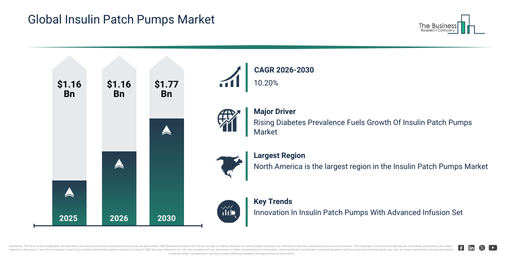
    The insulin patch pumps market is poised for substantial growth over the coming years. It is projected to expand to a value of $2.55 billion by 2030, demonstrating a compound annual growth rate of 10.2%. This growth within the forecast period can be attributed to the increasing adoption of closed-loop insulin delivery systems, rising investments in digital diabetes care, the expansion of personalized insulin therapy solutions, growing demand for remote glucose monitoring, and advancements in miniaturized pump technologies. Significant trends during this period include the increasing uptake of tubeless patch pump systems, a rising demand for connected and smart insulin pumps, the growing integration of continuous glucose monitoring, the expansion of automated insulin delivery technologies, and an enhanced focus on discreet and wearable designs.

    Get A Free Sample Report With In-Depth Market Insights:

    https://thebusinessresearchcompany.com/sample_request?id=21992445&type=smp&name=Insulin%20Patch%20Pumps%20Market%20Report%202026&utm_source=Blogs&utm_medium=Paid&utm_campaign=Oct_PR

    Insulin Patch Pumps Market Growth Momentum: What Factors Are Shaping Demand?

    The escalating global incidence of diabetes is anticipated to fuel the expansion of the insulin patch pumps market during the forecast period. This widespread ailment, stemming from diverse lifestyle and dietary factors, necessitates effective management solutions. Insulin patch pumps provide a convenient method for direct insulin delivery, with many individuals living with diabetes preferring them over conventional injections. The increasing prevalence of diabetes, therefore, stimulates the demand for insulin patch pumps. For instance, in March 2024, data from the Office for Health Improvement & Disparities, a UK-based government department, revealed notable progress between March 2022 and March 2023. The percentage of individuals with type 1 diabetes receiving all eight recommended care processes increased by 22%, and for type 2 diabetes, it rose by 21%. Concurrently, the percentage achieving target HbA1c levels reached 37.9%, which was the highest value ever reported by the National Diabetes Audit (NDA). Consequently, the growing global prevalence of diabetes is poised to drive the growth of the insulin patch pumps market.

    Insulin Patch Pumps Market Breakdown By Product Type And Application

    The insulin patch pumps market covered in this report is segmented –

    1) By Type: Reusable Insulin Patch Pumps, Fully Disposable Insulin Patch Pumps, Smart Or Connected Insulin Patch Pumps, Automated Insulin Patch Pumps

    2) By Mode: Basal, Bolus

    3) By Application: Type 1 Diabetes, Type 2 Diabetes

    Subsegments:

    1) By Reusable Insulin Patch Pumps: Reusable Controller with Disposable Patch Modules, Reusable Controller with Replaceable Insulin Reservoirs, Hybrid Reusable Patch Pump Systems

    2) By Fully Disposable Insulin Patch Pumps: Pre-Filled Disposable Insulin Patch Pumps, Refillable Disposable Insulin Patch Pumps, Short-Wear Disposable Patch Pumps (24–72 hours)

    3) By Smart or Connected Insulin Patch Pumps: Bluetooth-Enabled Insulin Patch Pumps, Mobile App-Integrated Patch Pumps, Cloud-Connected Insulin Patch Pumps

    4) By Automated Insulin Patch Pumps: Hybrid Closed-Loop Insulin Patch Pumps, Fully Closed-Loop (Autonomous) Insulin Patch Pumps, CGM-Integrated Automated Patch Pumps

    Insulin Patch Pumps Market Trends Redefining Industry Growth

    Leading companies in the insulin patch pump sector are concentrating on developing novel products, such as the Infusion Set for Insulin Pumps, to offer dependable services to consumers. The Infusion Set for Insulin Pumps functions as an insulin patch pump, engineered for up to 7 days of wear for the subcutaneous delivery of insulin. For example, in September 2024, Embecta, a U.S.-based diabetes care firm, obtained FDA 510(k) clearance for its inaugural insulin patch pump, which includes a 300-unit insulin reservoir and is designed for up to 3 days of wear. This product introduction signifies a considerable advancement in insulin delivery by providing a flexible, convenient option for individuals with diabetes, integrating patch-pump technology with a potentially reduced device burden.

    Insulin Patch Pumps Market Competitive Landscape: Who Leads The Industry?

    Major companies operating in the insulin patch pumps market are Insulet Corporation, Medtronic PLC, Tandem Diabetes Care Inc., Ypsomed Holding AG, AMF Medical SA, Cequr SA, Debiotech SA, Bigfoot Biomedical Inc., Valeritas Inc., Cellnovo Group SA, Medella Health Ltd., ViCentra B.V., SFC Fluidics Inc., Pancreum Inc., Beta Bionics Inc., Embecta Corp., SOOIL Development Co. Ltd., EOFLOW Co. Ltd., 3S Corporation, Apex Medical Devices

    View The Full Insulin Patch Pumps Market Report:

    https://thebusinessresearchcompany.com/report/insulin-patch-pumps-global-market-report?utm_source=Blogs&utm_medium=Paid&utm_campaign=Oct_PR

    Insulin Patch Pumps Market Geographic Landscape: Which Region Leads Industry Growth?

    North America was the largest region in the insulin patch pumps market in 2025. Asia-Pacific is expected to be the fastest-growing region in the forecast period. The regions covered in the insulin patch pumps market report are Asia-Pacific, South East Asia, Western Europe, Eastern Europe, North America, South America, Middle East, Africa.

    Reach Out To Our Team:

    The Business Research Company: https://www.thebusinessresearchcompany.com/

    Americas: +1 310-496-7795

    Asia: +44 7882 955267 & +91 8897263534

    Europe: +44 7882 955267

    Email us at: marketing@tbrc.info

    Follow us on:

    LinkedIn: https://in.linkedin.com/company/the-business-research-company

    YouTube: https://www.youtube.com/channel/UC24_fI0rV8cR5DxlCpgmyFQ

    Global Market Model: https://www.thebusinessresearchcompany.com/global-market-model
  • Insulin Delivery Devices Market Expected To Grow At 8% CAGR Through 2030: What Businesses Need To Know

    Insulin Delivery Devices Market Expected To Grow At 8% CAGR Through 2030: What Businesses Need To Know

    Backed by market attractiveness analysis, total addressable market sizing, company benchmarking matrices, interactive Excel dashboards, wider supply chain intelligence, emerging startup coverage, and detailed product-level insights, The Business Research Company’s 2026 market reports are designed to offer research that is more actionable and strategically valuable than ever.

    Insulin Delivery Devices Market Value Growth And Long-Term Outlook

    The market size for insulin delivery devices has demonstrated substantial growth over recent years. It is forecast to grow from $19.07 billion in 2025 to $20.61 billion in 2026, achieving a compound annual growth rate (CAGR) of 8.1%. Historically, this expansion has been driven by the rising prevalence of diabetes, growing awareness of diabetes management, increased availability of insulin therapies, expansion of healthcare access, and a rising adoption of self-injection practices.

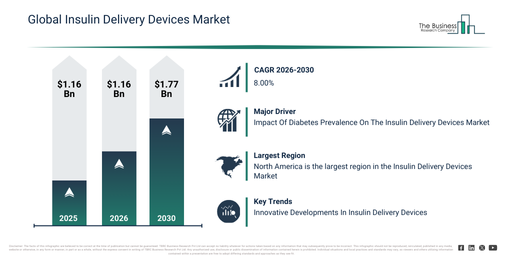
    The insulin delivery devices market is anticipated to experience robust expansion over the coming years. This sector is projected to reach a valuation of $28.03 billion by 2030, demonstrating an 8.0% compound annual growth rate (CAGR). The primary drivers for this growth during the forecast period include the expanding global diabetic population, a heightened need for convenient methods of insulin delivery, increased emphasis on long-term diabetes management, broader access to diabetes care in developing regions, and the growing integration of home healthcare solutions. Key developments expected during this period involve a greater shift towards insulin pens compared to conventional syringes, a surge in demand for insulin pumps offering continuous delivery, an increasing preference for intuitive and portable insulin devices, the broadening of home-based diabetes management options, and an escalated use of disposable and pre-filled insulin delivery solutions.

    Get A Free Sample Report With In-Depth Market Insights:

    https://thebusinessresearchcompany.com/sample_request?id=74999484&type=smp&name=Insulin%20Delivery%20Devices%20Market%20Report%202026&utm_source=Blogs&utm_medium=Paid&utm_campaign=Oct_PR

    Insulin Delivery Devices Market Expansion Drivers: What’s Shaping Future Growth?

    The increasing incidence of diabetes is projected to drive the expansion of the insulin delivery devices market in the future. Diabetes is defined as a chronic condition characterized by elevated blood sugar levels, stemming from either inadequate insulin production by the pancreas or the body’s inability to effectively use insulin. The rise in diabetes rates globally is primarily due to factors such as sedentary lifestyles, unhealthy diets, and escalating obesity rates. Insulin delivery devices are essential for individuals with diabetes to efficiently manage their blood sugar levels by administering insulin in a controlled and convenient manner, thus preventing complications and promoting health. For instance, according to the International Diabetes Federation, a Belgium-based non-governmental organization, in 2024, approximately 589 million adults aged 20–79 are living with diabetes worldwide. This figure is projected to increase to 853 million by 2050. Consequently, the expanding prevalence of diabetes is a significant driver for the growth of the insulin delivery devices market.

    Insulin Delivery Devices Market Segment Analysis And Revenue Potential

    The insulin delivery devices market covered in this report is segmented –

    1) By Type: Insulin Syringes, Insulin Jet Injectors, Pen Needles, Reusable Insulin Pens, Disposable Insulin Pens

    2) By Disease Indication: Type 1, Type 2

    3) By Distribution Channels: Hospital Pharmacies, Retail Pharmacies, Online Sales, Diabetes Clinics Or Centers

    Subsegments:

    1) By Insulin Syringes: Standard Insulin Syringes, Insulin Syringes With Fixed Or Adjustable Needle Length

    2) By Insulin Jet Injectors: Needle-Free Insulin Jet Injectors, High-Pressure Insulin Jet Injectors

    3) By Pen Needles: Short Pen Needles, Long Pen Needles

    4) By Reusable Insulin Pens: Reusable Pens With Replaceable Cartridges, Refillable Insulin Pens

    5) By Disposable Insulin Pens: Single-Use Disposable Insulin Pens, Pre-Filled Disposable Insulin Pens

    Insulin Delivery Devices Market Strategic Trends: What Defines The Next Growth Phase?

    Leading companies in the insulin delivery devices sector are actively developing innovative products, such as insulin pumps, designed to offer continuous or customizable insulin administration. Insulin pumps are programmable medical devices that deliver insulin either continuously or as required through a catheter placed beneath the skin. For instance, in May 2023, Beta Bionics, a US-based medical technology firm, announced that its iLet ACE Pump and iLet Dosing Decision Software received U.S. Food and Drug Administration approval. The iLet Bionic Pancreas system is engineered for individuals aged six and older diagnosed with type 1 diabetes, merging two devices with a compatible FDA-cleared integrated continuous glucose monitor (iCGM). It operates using an automated insulin dosing (AID) system, driven by an adaptive closed-loop algorithm, which initially only requires the user’s body weight for setup, thereby eliminating the need for additional insulin dosing parameters. Unlike traditional pump therapy, this system necessitates no manual adjustment of settings, which simplifies its initiation and management. The iLet device also features a meal announcement capability that streamlines mealtime insulin dosing by classifying meals as small, medium, or large, with the underlying algorithm learning and adapting to individual insulin requirements over time.

    Insulin Delivery Devices Market Company Landscape And Competitive Strategy

    Major companies operating in the insulin delivery devices market are Novo Nordisk A/S, Medtronic Plc, Insulet Corporation, Tandem Diabetes Care Inc., Ypsomed Holding AG, Becton Dickinson and Company, Sanofi SA, Eli Lilly and Company, Abbott Laboratories, EOFlow Co. Ltd., Beta Bionics Inc., Bigfoot Biomedical Inc., CeQur Corporation, Emperra GmbH, Debiotech SA, AMF Medical SA, Aerami Therapeutics Inc., Andain Inc., Apex Medical Devices, Animas Corporation

    View The Full Insulin Delivery Devices Market Report:

    https://thebusinessresearchcompany.com/report/insulin-delivery-devices-global-market-report?utm_source=Blogs&utm_medium=Paid&utm_campaign=Oct_PR

    Insulin Delivery Devices Market Largest Region: Which Geography Holds The Biggest Share?

    North America was the largest region in the insulin delivery devices market in 2025. Asia-Pacific is expected to be the fastest-growing region in the forecast period. The regions covered in the insulin delivery devices market report are Asia-Pacific, South East Asia, Western Europe, Eastern Europe, North America, South America, Middle East, Africa.

    Reach Out To Our Team:

    The Business Research Company: https://www.thebusinessresearchcompany.com/

    Americas: +1 310-496-7795

    Asia: +44 7882 955267 & +91 8897263534

    Europe: +44 7882 955267

    Email us at: marketing@tbrc.info

    Follow us on:

    LinkedIn: https://in.linkedin.com/company/the-business-research-company

    YouTube: https://www.youtube.com/channel/UC24_fI0rV8cR5DxlCpgmyFQ

    Global Market Model: https://www.thebusinessresearchcompany.com/global-market-model
  • Insufflation Devices Market Forecast To Reach $4.16 Billion By 2030: Key Trends Explained

    Insufflation Devices Market Forecast To Reach $4.16 Billion By 2030: Key Trends Explained

    Featuring market attractiveness scoring, total addressable market sizing, company benchmarking matrices, interactive Excel dashboards, deeper supply chain intelligence, emerging startup tracking, and granular product-level insights, The Business Research Company’s 2026 market reports are built to deliver research that is both more actionable and more strategically valuable.

    Insufflation Devices Market Poised To Hit $4.16 Billion By 2030 With A 7.3% CAGR

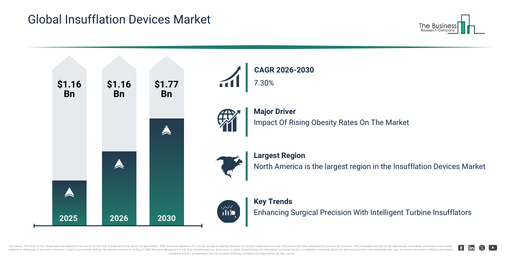
    The insufflation devices market has experienced substantial growth in recent years. Forecasts indicate its size will increase from $2.93 billion in 2025 to $3.14 billion by 2026, achieving a compound annual growth rate (CAGR) of 7.4%. This historical expansion can be primarily ascribed to factors like the escalating volume of laparoscopic surgeries, the rise in bariatric and cardiac procedures, the growing acceptance of minimally invasive techniques, the expansion of surgical infrastructure, and the wider availability of advanced surgical devices.

    The insufflation devices market is projected to experience substantial expansion in the coming years. This market is predicted to reach $4.16 billion in 2030, exhibiting a compound annual growth rate (CAGR) of 7.3%. This anticipated growth during the projection period stems from several factors, including a heightened demand for precise surgical tools, a greater emphasis on improving patient recovery, the proliferation of outpatient surgical facilities, a growing inclination towards disposable devices, and the increasing incorporation of digital surgical platforms. Key trends anticipated over this forecast period encompass the increased utilization of electronic insufflation systems, the rising uptake of disposable insufflation devices, the expanding integration of pressure and flow monitoring capabilities, the wider application of minimally invasive surgical techniques, and an elevated focus on the accuracy and safety of these devices.

    Get A Free Sample Report With In-Depth Market Insights:

    https://thebusinessresearchcompany.com/sample_request?id=60557996&type=smp&name=Insufflation%20Devices%20Market%20Report%202026&utm_source=Blogs&utm_medium=Paid&utm_campaign=Oct_PR

    Insufflation Devices Market Development Factors: What’s Supporting Demand?

    The insufflation devices market is anticipated to expand due to the increasing prevalence of obesity. Obesity rates denote the proportion of individuals within a population considered obese, generally identified by a body mass index (BMI) of 30 or higher. This surge in obesity is primarily attributed to factors such as unhealthy eating habits, insufficient physical activity, greater intake of processed foods, and inactive lifestyles. In obesity treatments, insufflation devices play a crucial role by inflating the abdominal cavity during procedures like bariatric surgery, thereby improving visibility and surgical access. For example, the World Heart Foundation, a global cardiovascular community based in Switzerland, reported in March 2023 that around 2.3 billion adults and children globally are either obese or overweight, a figure expected to climb to 2.7 billion by 2025 if current trends persist. Consequently, the increasing rates of obesity are a significant driver for the growth of the insufflation devices market. The expansion of healthcare facilities and systems is anticipated to drive the growth of the insufflation devices market. Healthcare infrastructure encompasses the physical, technological, and organizational assets essential for the efficient provision of medical services, such as hospitals, clinics, diagnostic centers, medical equipment, and health IT systems. This expansion is fueled by an increasing global population, a rising incidence of chronic diseases, and governmental efforts to enhance healthcare accessibility, all of which mandate the creation of new facilities and the upgrading of existing ones. For instance, the Office for National Statistics, a UK government department, reported in May 2023 that UK healthcare spending saw a 5.6% rise between 2022 and 2023, a significant increase compared to the 0.9% growth observed in 2022. The total UK healthcare expenditure reached approximately $317.63 billion (£292 billion) in 2023. Consequently, the ongoing development of healthcare infrastructure is a key factor propelling the insufflation devices market forward.

    Insufflation Devices Market Segmentation And Category Overview

    The insufflation devices market covered in this report is segmented –

    1) By Type: Disposable, Reusable

    2) By Application: Laparoscopic Surgery, Bariatric Surgery, Cardiac Surgery

    3) By End-Use: Hospitals, Clinics, Ambulatory Surgical Centers

    Subsegments:

    1) By Disposable: Single-Use Insufflation Devices, Disposable Insufflation Tubes

    2) By Reusable: Reusable Insufflation Devices (Manual Or Electronic), Reusable Insufflation Tubes

    Insufflation Devices Market Transformation Trends: What Innovations Are Driving Change?

    Companies operating in the insufflation devices market are prioritizing the creation of innovative products, such as intelligent turbine insufflators, aiming to enhance precision, minimize complications during surgery, and improve patient recovery in minimally invasive procedures. An intelligent turbine insufflator is a medical instrument designed to deliver controlled, high-pressure airflow for insufflation during minimally invasive operations, equipped with advanced capabilities for accuracy and safety. For example, in October 2024, Politecnico di Milano, an Italy-based university, joined forces with Erasmus Medical Center, a Netherlands-based medical center, to engineer insufflators that elevate surgical procedures by generating a temporary cavity inside the body using pressurized gas. This development overcomes existing insufflator limitations by continuously modifying pressure based on the patient’s tissue and breathing patterns. The patented intelligent turbine insufflation not only improves surgical conditions but also patient outcomes, by reducing the requirement for large incisions and enabling more precise control throughout the surgery.

    Insufflation Devices Market Key Players Shaping Industry Direction

    Major companies operating in the insufflation devices market are Cardinal Health Inc., Johnson & Johnson, Medtronic plc, Fujifilm Holdings Corporation, Becton Dickinson and Company, Stryker Corporation, Olympus Corporation, Hoya Corporation, Smith & Nephew PLC, Mindray Medical International Limited, STERIS Corporation, CooperSurgical Inc., Teleflex Incorporated, Karl Storz SE & Co. KG, ConMed Corporation, Applied Medical Resources Corporation, Richard Wolf GmbH, B. Braun Melsungen AG, Pennine Healthcare Limited, Micro-Tech Endoscopy Co. Ltd.

    View The Full Insufflation Devices Market Report:

    https://thebusinessresearchcompany.com/report/insufflation-devices-global-market-report?utm_source=Blogs&utm_medium=Paid&utm_campaign=Oct_PR

    Insufflation Devices Market Regional Analysis: Which Geography Leads On Revenue?

    North America is the largest region in the insufflation devices market in 2025. Asia-Pacific is expected to be the fastest-growing region in the forecast period. The regions covered in the insufflation devices market report are Asia-Pacific, South East Asia, Western Europe, Eastern Europe, North America, South America, Middle East, Africa.

    Reach Out To Our Team:

    The Business Research Company: https://www.thebusinessresearchcompany.com/

    Americas: +1 310-496-7795

    Asia: +44 7882 955267 & +91 8897263534

    Europe: +44 7882 955267

    Email us at: marketing@tbrc.info

    Follow us on:

    LinkedIn: https://in.linkedin.com/company/the-business-research-company

    YouTube: https://www.youtube.com/channel/UC24_fI0rV8cR5DxlCpgmyFQ

    Global Market Model: https://www.thebusinessresearchcompany.com/global-market-model