Category: Medical Equipment

  • Ophthalmology Devices Market Forecast To 2030: Starting From $99.22 Billion In 2026

    Ophthalmology Devices Market Forecast To 2030: Starting From $99.22 Billion In 2026

    Featuring market attractiveness scoring, total addressable market sizing, company benchmarking matrices, interactive Excel dashboards, deeper supply chain intelligence, emerging startup tracking, and granular product-level insights, The Business Research Company’s 2026 market reports are built to deliver research that is both more actionable and more strategically valuable.

    Ophthalmology Devices Market Set To Climb From $63.23 Billion In 2026 To $99.22 Billion By 2030

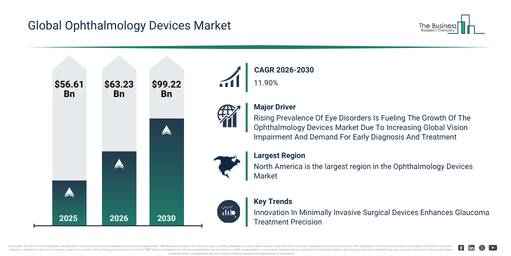
    The ophthalmology devices market has seen rapid expansion in its size over recent years. This market is anticipated to expand from $56. 61 billion in 2025 to $63. 23 billion in 2026, achieving a compound annual growth rate (CAGR) of 11. 7%. Factors contributing to its historical growth include an escalating aging population, a surge in cataract and glaucoma cases, the expansion of hospital-based ophthalmology infrastructure, increased eye care awareness initiatives, and enhanced access to fundamental diagnostic ophthalmic equipment.

    The ophthalmology devices market size is anticipated to experience rapid expansion over the next few years. It is projected to reach $99.22 billion by 2030, demonstrating a compound annual growth rate (CAGR) of 11.9%. This expansion throughout the forecast period is driven by several factors, including the increasing demand for minimally invasive eye surgeries, a rise in healthcare expenditure on vision care, the proliferation of specialized eye care centers in emerging markets, innovations in precision surgical tools, and the growing adoption of advanced refractive correction procedures. Significant trends for this period encompass the wider embrace of minimally invasive ophthalmic surgical systems and advanced phacoemulsification techniques, a rising preference for precision-guided platforms for cataract and refractive surgeries, advancements in laser-based vision correction technologies, the increased availability of disposable ophthalmic surgical instruments to reduce infection risks, and a heightened demand for premium intraocular lens implantation and sophisticated lens customization solutions.

    Get A Free Sample Report With In-Depth Market Insights:

    https://thebusinessresearchcompany.com/sample_request?id=37017566&type=smp&name=Ophthalmology%20Devices%20Market%20Report%202026&utm_source=Blogs&utm_medium=Paid&utm_campaign=Oct_PR

    Ophthalmology Devices Market Growth Backed By Core Demand Fundamentals

    The rising incidence of eye conditions is projected to boost the expansion of the ophthalmology devices market in the future. Eye disorders are defined as health issues that degrade vision or impact the eye’s structure and function, such as glaucoma, cataracts, macular degeneration, and refractive errors. The increase in these conditions stems from an aging global populace and a greater number of people exposed to risk factors like chronic illnesses and lifestyle factors. Ophthalmology devices contribute to public health by offering diagnostic, monitoring, and therapeutic equipment that facilitates the early identification and treatment of eye problems, thereby preventing vision loss and enhancing care quality. For example, in February 2026, the World Health Organization, an international public health body based in Switzerland, reported that a minimum of 2.2 billion individuals worldwide experienced near or distance vision impairment, with almost 1 billion of these instances being preventable or still requiring attention, underscoring the escalating global burden of eye disorders. Consequently, the increasing occurrence of eye disorders is fueling the growth of the ophthalmology devices market.

    Ophthalmology Devices Market Segments: Where Is Growth Concentrated?

    The ophthalmology devices market covered in this report is segmented –

    1) By Product: Corneal Topography Systems, Specular Microscopes, Retinoscopes

    2) By Technology: Optical Imaging Technology, Laser Based Technology, Ultrasound Technology, Micro Surgical Technology

    3) By Application: Vision Care, Ophthalmic Wound Care, Cataract Surgery, Oculoplastic, Other Applications

    4) By End Users: Hospitals, Diagnosis Clinics, Franchise Optical Stores, Eye Research Institutes, Government Agencies And Academics

    Subsegments:

    1) By Corneal Topography Systems: Placido Disc Based Systems, Slit Scanning Systems, Scheimpflug Imaging Systems, Optical Coherence Tomography Systems

    2) By Specular Microscopes: Noncontact Specular Microscopes, Contact Specular Microscopes, Confocal Specular Microscopes

    3) By Retinoscopes: Streak Retinoscopes, Spot Retinoscopes, Portable Retinoscopes, Tabletop Retinoscopes

    Ophthalmology Devices Market Growth Trends Reshaping The Competitive Landscape

    Leading companies within the ophthalmology devices market are concentrating on creating minimally invasive surgical tools, specifically laser endoscopy ophthalmic systems. This effort is directed towards improving surgical precision, reducing tissue trauma, and achieving more effective intraocular pressure reduction. Such laser endoscopy ophthalmic systems merge endoscopic visualization with targeted laser therapy via an ab interno procedure, allowing surgeons to access and treat delicate intraocular structures with minimal disruption while simultaneously enhancing procedural accuracy and workflow efficiency. For example, in April 2025, BVI Medical, a US-based ophthalmic device company, introduced Leos, its laser endoscopy ophthalmic system. Leos offers high-quality endoscopic visualization of eye anatomy, integrates a new ab interno laser procedure for lowering intraocular pressure, and provides an intuitive surgical workflow designed to boost precision and ease of use for a broad range of glaucoma types.

    Ophthalmology Devices Market Leading Players And Competitive Positioning

    Major companies operating in the ophthalmology devices market are EssilorLuxottica S. A., NIDEK Co. Ltd., Alcon Inc., HOYA Corporation, Bausch + Lomb Corporation, Canon Medical Systems Corporation, Topcon Corporation, Menicon Co. Ltd., STAAR Surgical Company, Glaukos Corporation, Lumibird Medical, BVI Medical Inc., Heidelberg Engineering GmbH, Carl Zeiss Meditec AG, Reichert Inc., Oertli Instrumente AG, Konan Medical USA Inc., Sterimedix Ltd, Haag Streit Group, Ziemer Ophthalmic Systems AG, Katena Products Inc., Marco Ophthalmic Inc.

    View The Full Ophthalmology Devices Market Report:

    https://thebusinessresearchcompany.com/report/ophthalmology-devices-market-report?utm_source=Blogs&utm_medium=Paid&utm_campaign=Oct_PR

    Ophthalmology Devices Market Regional Distribution: Which Areas Power Market Growth?

    North America was the largest region in the ophthalmology devices market in 2025. Asia-Pacific is expected to be the fastest-growing region in the forecast period. The regions covered in the ophthalmology devices market report are Asia-Pacific, South East Asia, Western Europe, Eastern Europe, North America, South America, Middle East and Africa.

    Reach Out To Our Team:

    The Business Research Company: https://www.thebusinessresearchcompany.com/

    Americas: +1 310-496-7795

    Asia: +44 7882 955267 & +91 8897263534

    Europe: +44 7882 955267

    Email us at: marketing@tbrc.info

    Follow us on:

    LinkedIn: https://in.linkedin.com/company/the-business-research-company

    YouTube: https://www.youtube.com/channel/UC24_fI0rV8cR5DxlCpgmyFQ

    Global Market Model: https://www.thebusinessresearchcompany.com/global-market-model
  • Non-Animal Stabilized Hyaluronic Acid Fillers Market Size In 2026: Growth Outlook And Forecast Through 2030

    Non-Animal Stabilized Hyaluronic Acid Fillers Market Size In 2026: Growth Outlook And Forecast Through 2030

    Backed by market attractiveness analysis, total addressable market sizing, company benchmarking matrices, interactive Excel dashboards, wider supply chain intelligence, emerging startup coverage, and detailed product-level insights, The Business Research Company’s 2026 market reports are designed to offer research that is more actionable and strategically valuable than ever.

    Non-Animal Stabilized Hyaluronic Acid Fillers Market Revenue Outlook: What CAGR Lies Ahead Through 2030?

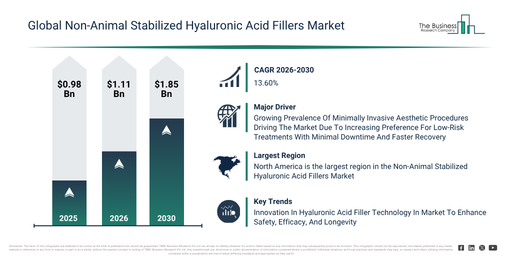
    The non-animal stabilized hyaluronic acid fillers market has witnessed rapid expansion in recent years. This market is set to expand from $0.98 billion in 2025 to $1.11 billion in 2026, achieving a compound annual growth rate (CAGR) of 13.3%. The historical development can be attributed to an escalating demand for non-surgical cosmetic treatments, the limited durability of earlier dermal fillers, a notable shift in preference from animal-derived to synthetic fillers, increased awareness regarding aesthetic dermatology treatments, and the growth in urban disposable income enabling cosmetic enhancements.

    The non-animal stabilized hyaluronic acid fillers market is projected to experience substantial expansion in the coming years. This market is anticipated to reach a valuation of $1.85 billion by the year 2030, demonstrating a compound annual growth rate (CAGR) of 13.6%. This projected growth is primarily driven by several factors, including developments in bioengineered hyaluronic acid technologies, a rise in the uptake of minimally invasive aesthetic treatments, an increasing desire for customized facial aesthetics, the expansion of dermatology and aesthetic clinic infrastructures, and the growing impact of social media on beauty perceptions. Key trends anticipated during this period encompass AI-assisted facial aesthetic planning and injection outcome simulation for tailored NASHA filler applications, bioengineered hyaluronic acid formulations featuring improved cross-linking for prolonged dermal persistence, controlled-release hyaluronic acid fillers based on nanotechnology for progressive volumization, minimally invasive aesthetic interventions powered by precision injection robotics, and advanced skin hydration boosters incorporating stabilized HA to enhance dermal elasticity and regeneration.

    Get A Free Sample Report With In-Depth Market Insights:

    https://thebusinessresearchcompany.com/sample_request?id=73359475&type=smp&name=Non-Animal%20Stabilized%20Hyaluronic%20Acid%20Fillers%20Market%20Report%202026&utm_source=Blogs&utm_medium=Paid&utm_campaign=Oct_PR

    Non-Animal Stabilized Hyaluronic Acid Fillers Market Demand Drivers Opening New Revenue Streams

    The increasing popularity of minimally invasive aesthetic procedures is anticipated to fuel the expansion of the non-animal-stabilized hyaluronic acid fillers market in the future. These procedures are defined as cosmetic interventions that utilize non-surgical or minor approaches to improve appearance, offering benefits such as minimal recovery time, lower risks, and faster recuperation when contrasted with conventional surgical options. The rising incidence of minimally invasive aesthetic procedures stems from a growing consumer desire for treatments that provide minimal disruption and rapid healing, enabling people to return to their regular routines very soon after the treatment. Non-animal-stabilized hyaluronic acid fillers find extensive application in these procedures because of their excellent biocompatibility, robust safety record, and capacity to provide effective, temporary aesthetic improvements with little to no downtime. Being among the most frequently utilized injectable treatments, these fillers are crucial in satisfying the increasing need for non-surgical facial revitalization. For example, data from June 2024, released by the American Society of Plastic Surgeons, a US-based organization of board-certified plastic surgeons, indicated that around 25.4 million minimally invasive cosmetic procedures were conducted in 2023, representing a 7% rise from 2022. Consequently, the increasing widespread use of minimally invasive aesthetic procedures is propelling the expansion of the non-animal-stabilized hyaluronic acid fillers market.

    Non-Animal Stabilized Hyaluronic Acid Fillers Market Segment Outlook: Which Categories Are Growing Fastest?

    The non-animal stabilized hyaluronic acid fillers market covered in this report is segmented –

    1) By Product: Hyaluronic Acid Dermal Fillers, Injectable Facial Fillers, Lip Augmentation Fillers, Wrinkle Correction Fillers, Cheek Volumizing Fillers, Under Eye Fillers, Chin Augmentation Fillers, Jawline Contouring Fillers, Skin Booster Injectables

    2) By Concentration And Viscosity: Low Viscosity Fillers, Medium Viscosity Fillers, High Viscosity Fillers

    3) By Distribution Channel: Hospital Pharmacy, Retail Pharmacy, Online Pharmacy

    4) By Application: Wrinkle Reduction, Facial Line Correction, Lip Enhancement, Facial Volume Restoration, Skin Rejuvenation, Facial Contouring

    5) By End-Users: Hospitals, Specialty And Dermatology Clinics, Medical Spas, Other End User

    Subsegments:

    1) By Hyaluronic Acid Dermal Fillers: Cross Linked Hyaluronic Acid Fillers, Non Cross Linked Hyaluronic Acid Fillers, Monophasic Hyaluronic Acid Fillers, Biphasic Hyaluronic Acid Fillers

    2) By Injectable Facial Fillers: Temporary Injectable Fillers, Semi Permanent Injectable Fillers, Biodegradable Injectable Fillers, Collagen Stimulating Injectable Fillers

    3) By Lip Augmentation Fillers: Volume Enhancing Lip Fillers, Shape Defining Lip Fillers, Hydrating Lip Fillers, Long Lasting Lip Fillers

    4) By Wrinkle Correction Fillers: Fine Line Correction Fillers, Deep Wrinkle Fillers, Dynamic Wrinkle Fillers, Static Wrinkle Fillers

    5) By Cheek Volumizing Fillers: Mid Face Volume Fillers, Cheekbone Enhancing Fillers, Lift And Contour Fillers, Deep Tissue Volume Fillers

    6) By Under Eye Fillers: Tear Trough Fillers, Dark Circle Correction Fillers, Fine Line Under Eye Fillers, Hydrating Under Eye Fillers

    7) By Chin Augmentation Fillers: Projection Enhancing Chin Fillers, Contour Defining Chin Fillers, Structural Support Chin Fillers, Non Surgical Chin Enhancement Fillers

    8) By Jawline Contouring Fillers: Jawline Definition Fillers, Angle Enhancement Fillers, Structural Jawline Fillers, Lift And Tightening Jawline Fillers

    9) By Skin Booster Injectables: Hydration Boosting Injectables, Collagen Stimulating Injectables, Elasticity Enhancing Injectables, Skin Texture Improving Injectables

    Non-Animal Stabilized Hyaluronic Acid Fillers Market Trends Powering Strategic Industry Growth

    Leading companies within the non-animal-stabilized hyaluronic acid fillers market are concentrating on advancing hyaluronic acid filler technology, exemplified by innovations like First OBT, to boost flexibility, achieve natural-looking outcomes, and improve personalized patient treatment results. First OBT, or Optimal Balance Technology, is a sophisticated hyaluronic acid filler approach that precisely balances gel flexibility and structural support to deliver aesthetically pleasing, natural, expressive, and long-lasting effects. For instance, in February 2025, Galderma, a dermatology company based in Switzerland, unveiled Restylane Defyne and Restylane Refyne in Japan, thereby introducing Optimal Balance Technology (OBT) hyaluronic acid injectables to the country for the first time. These products are engineered for administration into the mid-to-deep dermis to correct moderate to severe facial wrinkles and folds, utilizing advanced OBT technology to ensure an optimal combination of softness, flexibility, and structural support, which facilitates natural facial movement while sustaining shape and lift, ultimately elevating aesthetic outcomes.

    Non-Animal Stabilized Hyaluronic Acid Fillers Market Leading Players And Competitive Positioning

    Major companies operating in the non-animal stabilized hyaluronic acid fillers market are Galderma, Allergan Aesthetics (AbbVie), Sinclair Pharma plc, Hugel Inc., Medytox Inc., Caregen Co. Ltd., IMEIK Technology Development Co. Ltd., Prollenium Medical Technologies Inc., Koru Pharma Co. Ltd., Laboratoires Vivacy, Merz Pharma GmbH & Co. KGaA, Teoxane SA, Bloomage Biotech Co. Ltd., ExoCoBio Inc., Regen Biotech Inc., Bioxis Pharmaceuticals, BioPlus Co. Ltd., LG Chem Life Sciences, Shanghai Haohai Biological Technology Co. Ltd., Croma-Pharma GmbH, SciVision Biotech Inc., Across Co. Ltd., Jetema Co. Ltd.

    View The Full Non-Animal Stabilized Hyaluronic Acid Fillers Market Report:

    https://thebusinessresearchcompany.com/report/non-animal-stabilized-hyaluronic-acid-fillers-market-report?utm_source=Blogs&utm_medium=Paid&utm_campaign=Oct_PR

    Non-Animal Stabilized Hyaluronic Acid Fillers Market Regional Split: Which Areas Are Fueling Growth?

    North America was the largest region in the non-animal stabilized hyaluronic acid fillers market in 2025. Asia-Pacific is expected to be the fastest-growing region in the forecast period. The regions covered in the non-animal stabilized hyaluronic acid fillers market report are Asia-Pacific, South East Asia, Western Europe, Eastern Europe, North America, South America, Middle East and Africa.

    Reach Out To Our Team:

    The Business Research Company: https://www.thebusinessresearchcompany.com/

    Americas: +1 310-496-7795

    Asia: +44 7882 955267 & +91 8897263534

    Europe: +44 7882 955267

    Email us at: marketing@tbrc.info

    Follow us on:

    LinkedIn: https://in.linkedin.com/company/the-business-research-company

    YouTube: https://www.youtube.com/channel/UC24_fI0rV8cR5DxlCpgmyFQ

    Global Market Model: https://www.thebusinessresearchcompany.com/global-market-model
  • Nerve Repair Biomaterials Market Growth Potential: What The Latest Forecast Reveals

    Nerve Repair Biomaterials Market Growth Potential: What The Latest Forecast Reveals

    Built to provide research that’s more actionable and strategically valuable, The Business Research Company’s 2026 market reports include market attractiveness analysis, total addressable market sizing, company benchmarking matrices, interactive Excel dashboards, broader supply chain intelligence, emerging startup tracking, and in-depth product insights.

    Nerve Repair Biomaterials Market CAGR Outlook And Future Development

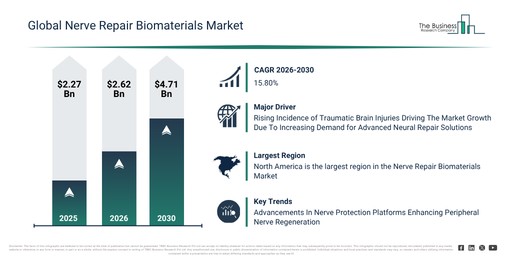
    The market for nerve repair biomaterials has experienced substantial growth in recent years. It will grow from $2. 27 billion in 2025 to $2. 62 billion in 2026 at a compound annual growth rate (CAGR) of 15. 6%. This historical expansion can be attributed to the limited effectiveness of autograft nerve repair techniques, the high incidence of traumatic nerve injuries, the lack of advanced biomaterial scaffolds for nerve regeneration, the slow clinical translation of experimental nerve repair solutions, and the high complication rates in traditional nerve graft procedures.

    The nerve repair biomaterials market is projected to experience significant expansion over the coming years, anticipated to reach $4.71 billion by 2030, exhibiting a compound annual growth rate (CAGR) of 15.8%. Factors contributing to this growth during the forecast period include progress in regenerative medicine and tissue engineering, an increasing need for less invasive nerve repair techniques, wider uptake of bioengineered and customized implants, an increase in clinical trials for advanced nerve conduits, and the rising incorporation of intelligent biomaterials with bioactive compounds. Key trends expected in this period encompass electrospun nanofiber scaffold designs that facilitate guided axonal regeneration, bioresorbable polymer nerve conduits offering regulated degradation characteristics, hydrogel-based nerve guidance matrices improving cellular migration and repair, biomaterial systems infused with growth factors for faster nerve healing, and stem cell-seeded bioengineered nerve graft scaffolds designed for functional restoration.

    Get A Free Sample Report With In-Depth Market Insights:

    https://thebusinessresearchcompany.com/sample_request?id=41832792&type=smp&name=Nerve%20Repair%20Biomaterials%20Market%20Report%202026&utm_source=Blogs&utm_medium=Paid&utm_campaign=Oct_PR

    Nerve Repair Biomaterials Market Expansion Drivers: What’s Shaping Future Growth?

    The expanding occurrence of traumatic brain injuries is projected to accelerate the growth of the nerve repair biomaterials market moving forward. Traumatic brain injuries (TBIs) represent a form of acquired brain damage resulting from an external mechanical force that disrupts normal brain function. The increasing prevalence of TBIs is largely attributable to the aging global population, given that older adults are considerably more prone to falls, which stand as the primary cause of TBI, consequently leading to a steady rise in injury-related hospitalizations and fatalities across developed nations. This escalating incidence of TBIs heightens the necessity for advanced nerve repair biomaterials capable of facilitating nerve regeneration, bridging damaged neural tissue, and restoring functional connectivity in affected patients. For example, data from September 2025, provided by the South Dakota Department of Health, a US-based government health agency, indicated that TBI-related deaths in the state climbed from 241 in 2023 to 267 in 2024, signifying an 11% increase. Therefore, the growing incidence of traumatic brain injuries is a key factor propelling the expansion of the nerve repair biomaterials market. The increasing preference for minimally invasive surgical procedures is anticipated to fuel the expansion of the nerve repair biomaterials market moving forward. Minimally invasive surgical procedures involve techniques where surgeons operate through small incisions or natural body openings, resulting in less trauma to surrounding tissues compared to conventional open surgery. The rising adoption of these procedures is primarily driven by advancements in surgical robotics and imaging technologies, which have broadened the spectrum of complex operations achievable with enhanced precision and minimal tissue disruption. This growing demand for minimally invasive surgery directly elevates the need for nerve repair biomaterials capable of supporting delicate nerve repair within restricted surgical spaces, as surgeons require materials compatible with these less intrusive approaches. For instance, in April 2025, the British Association of Aesthetic Plastic Surgeons, a UK-based surgical organization, reported that cosmetic surgical procedures saw a 5% increase between 2023 and 2024, totaling 27,462 procedures performed in 2024. Consequently, the rising preference for minimally invasive surgical procedures is stimulating the growth of the nerve repair biomaterials market.

    Nerve Repair Biomaterials Market Segmentation: How Does The Market Break Down By Category?

    The nerve repair biomaterials market covered in this report is segmented –

    1) By Product Type: Nerve Conduits, Nerve Wraps, Nerve Guides, Nerve Plates, Nerve Grafts

    2) By Material Type: Natural Biomaterials, Synthetic Biomaterials, Composite Biomaterials

    3) By Application: Peripheral Nerve Repair, Central Nerve Repair, Spinal Cord Injury Repair, Facial Nerve Repair

    4) By End User: Hospitals, Specialty Clinics, Ambulatory Surgical Centers, Research Laboratories

    Subsegments:

    1) By Nerve Conduits: Natural Biomaterial Based Nerve Conduits, Synthetic Biomaterial Based Nerve Conduits, Hybrid Biomaterial Based Nerve Conduits

    2) By Nerve Wraps: Collagen Based Nerve Wraps, Synthetic Polymer Based Nerve Wraps, Amniotic Membrane Based Nerve Wraps

    3) By Nerve Guides: Biodegradable Nerve Guides, Non Biodegradable Nerve Guides, Electrospun Fiber Based Nerve Guides

    4) By Nerve Plates: Resorbable Nerve Plates, Non Resorbable Nerve Plates, Polymer Based Nerve Plates

    5) By Nerve Grafts: Autograft Nerve Grafts, Allograft Nerve Grafts, Xenograft Nerve Grafts, Synthetic Nerve Grafts

    Nerve Repair Biomaterials Market Strategic Trends: What Defines The Next Growth Phase?

    Leading companies in the nerve repair biomaterials market are concentrating on developing sophisticated products, such as nerve protection platforms, to improve axonal regeneration, minimize tissue adhesion, and enhance functional recovery after peripheral nerve injuries. A nerve protection platform broadly encompasses technologies or therapeutic approaches designed to preserve nerve function, prevent damage, and support recovery through protective, regenerative, or advanced delivery methods. For instance, in September 2023, Axogen, Inc., a US-based peripheral nerve repair company, launched Axoguard HA+ Nerve Protector. This product is a porcine submucosa extracellular matrix-based nerve wrap, coated with a proprietary hyaluronate-alginate gel. The nerve protection platform facilitates enhanced nerve gliding to reduce soft tissue attachments, provides long-term structural protection by remodeling into a stable tissue layer, and offers optimized handling for surgeons treating complex nerve injuries near high-mobility joints, thereby expanding clinical options for peripheral nerve protection and regeneration.

    Nerve Repair Biomaterials Market Key Players Shaping Industry Direction

    Major companies operating in the nerve repair biomaterials market are Medtronic plc, Stryker Corporation, Boston Scientific Corporation, Baxter International Inc., B. Braun SE, Toyobo Co. Ltd., Integra LifeSciences Holdings Corporation, Taibang Biologic Group Co. Ltd., Axogen Inc., PolyNovo Limited, Tissium SA, Checkpoint Surgical Inc., Synapse Biomedical Inc., Collagen Matrix Inc., BioCircuit Technologies Inc., Orthocell Limited, Alafair Biosciences Inc., Regenity AG, Neurotex Ltd, NeuroSigma Inc., TissueGen Inc.

    View The Full Nerve Repair Biomaterials Market Report:

    https://thebusinessresearchcompany.com/report/nerve-repair-biomaterials-market-report?utm_source=Blogs&utm_medium=Paid&utm_campaign=Oct_PR

    Nerve Repair Biomaterials Market Regional Analysis: Which Region Leads By Revenue?

    North America was the largest region in the nerve repair biomaterials market in 2025. Asia-Pacific is expected to be the fastest-growing region in the forecast period. The regions covered in the nerve repair biomaterials market report are Asia-Pacific, South East Asia, Western Europe, Eastern Europe, North America, South America, Middle East and Africa.

    Reach Out To Our Team:

    The Business Research Company: https://www.thebusinessresearchcompany.com/

    Americas: +1 310-496-7795

    Asia: +44 7882 955267 & +91 8897263534

    Europe: +44 7882 955267

    Email us at: marketing@tbrc.info

    Follow us on:

    LinkedIn: https://in.linkedin.com/company/the-business-research-company

    YouTube: https://www.youtube.com/channel/UC24_fI0rV8cR5DxlCpgmyFQ

    Global Market Model: https://www.thebusinessresearchcompany.com/global-market-model
  • Nasal Implant Market Forecast Insights: The Road To $1.3 Billion By 2030

    Nasal Implant Market Forecast Insights: The Road To $1.3 Billion By 2030

    Featuring market attractiveness scoring, total addressable market sizing, company benchmarking matrices, interactive Excel dashboards, deeper supply chain intelligence, emerging startup tracking, and granular product-level insights, The Business Research Company’s 2026 market reports are built to deliver research that is both more actionable and more strategically valuable.

    Nasal Implant Market Forecast: Value Set To Climb From $0.9 Billion To $1.3 Billion

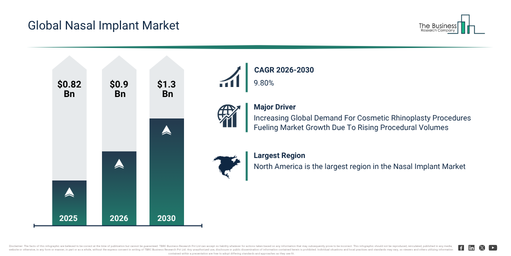
    The nasal implant market size has experienced significant growth in recent years. Its valuation is projected to expand from $0. 82 billion in 2025 to $0. 9 billion in 2026, driven by a compound annual growth rate (CAGR) of 9. 6%. This historical expansion was influenced by several factors, including a global rise in demand for cosmetic rhinoplasty procedures, an increased prevalence of nasal deformities stemming from trauma and congenital conditions, the earlier limited availability of advanced implant customization technologies, the expansion of hospital-based reconstructive surgery capabilities, and the growing adoption of silicone-based nasal implants in traditional surgeries.

    The nasal implant market size is anticipated to undergo substantial growth over the coming years. It is projected to achieve a valuation of $1.3 billion by 2030, demonstrating a compound annual growth rate (CAGR) of 9.8%. This expansion during the forecast period is primarily influenced by advancements in 3D printing and patient-specific implant design technologies, the increasing acceptance of bioresorbable and tissue-compatible implant materials, a rising demand for aesthetic enhancement procedures in emerging economies, the growing integration of digital surgical planning and precision imaging tools, and the expansion of ambulatory and specialty cosmetic surgery centers. Prominent trends for this period include the increased adoption of 3D-printed patient-specific nasal implants for customized surgical outcomes, a surging preference for biocompatible and bioresorbable implant materials, the escalating demand for minimally invasive nasal reconstruction and cosmetic procedures, the broader application of advanced reconstructive surgery techniques in aesthetic clinics, and the enhanced use of hybrid and porous implant materials for improved tissue integration.

    Get A Free Sample Report With In-Depth Market Insights:

    https://thebusinessresearchcompany.com/sample_request?id=22705838&type=smp&name=Nasal%20Implant%20Market%20Report%202026&utm_source=Blogs&utm_medium=Paid&utm_campaign=Oct_PR

    Nasal Implant Market Industry Drivers: What’s Behind The Revenue Growth?

    The growing requirement for cosmetic rhinoplasty procedures is projected to boost the nasal implant market in the future. These procedures involve voluntary surgical operations carried out to modify the nose’s form, look, or dimensions, aligning with personal beauty objectives. The heightened demand for cosmetic rhinoplasty procedures stems from a greater focus on aesthetic appearance, prompting more individuals to opt for nose reshaping surgeries to improve their looks and self-assurance. Nasal implants are crucial for cosmetic rhinoplasty procedures, offering structural support and refining the nose’s shape, symmetry, and overall aesthetic appeal, thus allowing surgeons to achieve accurate and desired results for patients pursuing facial enhancements. For example, in June 2024, data from the International Society of Aesthetic Plastic Surgery, a US-based professional association, indicated that rhinoplasty procedures globally hit approximately 1.1 million in 2023, marking a 21.6 percent rise from 2022, signifying an expansion in facial aesthetic surgeries. Consequently, the escalating demand for cosmetic rhinoplasty procedures is propelling the growth of the nasal implant market. The expansion of medical tourism is anticipated to fuel the nasal implant market’s growth in the coming years. Medical tourism describes individuals venturing internationally to receive medical attention, frequently for treatments that are not readily available or cost-effective in their native countries. This increase in medical tourism is attributed to patients pursuing more economical, prompt, and superior medical care overseas compared to what is offered at home. The rise of medical tourism stimulates the demand for nasal implants, as a greater number of patients traveling internationally for cosmetic or reconstructive surgeries elevates the requirement for sophisticated surgical remedies and premium implant offerings. For instance, in January 2025, a report from the National Center for Biotechnology Information (NCBI), a division of the US-based National Library of Medicine (NLM), revealed that in 2022, roughly 348,000 UK residents journeyed overseas for medical treatment, with this figure climbing to about 431,000 in 2023, reflecting a trend where more individuals sought quicker or less expensive healthcare alternatives internationally. Consequently, the increasing prevalence of medical tourism is propelling the growth of the nasal implant market.

    Nasal Implant Market Segment Analysis Spotlighting Growth Areas

    The nasal implant market covered in this report is segmented –

    1) By Product Type: Silicone Nasal Implants, Porous Polyethylene Nasal Implants, Polytetrafluoroethylene (PTFE) Nasal Implants, Bioresorbable Nasal Implants, Customized Three-Dimensional (3D)-Printed Nasal Implants

    2) By Material Type: Synthetic Materials, Natural Or Biological Materials, Hybrid Materials

    3) By Distribution Channel: Direct Sales, Distributors

    4) By Application: Cosmetic Surgery, Reconstructive Surgery, Other Applications

    5) By End User: Hospitals, Ambulatory Surgical Centers, Specialty Clinics, Other End-Users

    Subsegments:

    1) By Silicone Nasal Implants: Solid Silicone Nasal Implants, Hollow Silicone Nasal Implants, Pre-Shaped Silicone Nasal Implants, Flexible Silicone Nasal Implants

    2) By Porous Polyethylene Nasal Implants: Medpor Porous Polyethylene Nasal Implants, High-Density Porous Polyethylene Nasal Implants, Custom Contoured Porous Polyethylene Nasal Implants, Preformed Porous Polyethylene Nasal Implants

    3) By Polytetrafluoroethylene (PTFE) Nasal Implants: Expanded Polytetrafluoroethylene (ePTFE) Nasal Implants, Pre-Shaped Polytetrafluoroethylene Nasal Implants, Flexible Polytetrafluoroethylene Nasal Implants, Layered Polytetrafluoroethylene Nasal Implants

    4) By Bioresorbable Nasal Implants: Polylactic Acid Bioresorbable Nasal Implants, Polyglycolic Acid Bioresorbable Nasal Implants, Composite Bioresorbable Nasal Implants, Custom Resorbable Nasal Implants

    5) By Customized Three-Dimensional (3D)-Printed Nasal Implants: Patient-Specific 3D-Printed Nasal Implants, Anatomical Contour 3D-Printed Nasal Implants, Bio-Compatible 3D-Printed Nasal Implants, Rapid Prototyped 3D-Printed Nasal Implants

    Nasal Implant Market Leading Companies And Competitive Benchmarking

    Major companies operating in the nasal implant market are Stryker Corporation, KLS Martin Group, Mentor Worldwide LLC, Koken Co. Ltd., Silimed Indústria de Implantes Ltda., Polytech Health & Aesthetics GmbH, Medicon eG, Implantech Associates Inc., Noris Medical GmbH, Matrix Surgical USA Inc., Spiggle & Theis Medizintechnik GmbH, Anatomics Pty Ltd., Alpha Aesthetics (AART), Osteopore International Pte Ltd., Poriferous LLC, Surgiform Technologies Ltd., Heinz Kurz GmbH Medizintechnik, Guangzhou Wanhe Plastic Materials Co. Ltd., Bioteck S. p. A., Houston Advance Nose & Sinus Inc.

    View The Full Nasal Implant Market Report:

    https://thebusinessresearchcompany.com/report/nasal-implant-market-report?utm_source=Blogs&utm_medium=Paid&utm_campaign=Oct_PR

    Nasal Implant Market Largest Region By Revenue And Market Share

    North America was the largest region in the nasal implant market in 2025. Asia-Pacific is expected to be the fastest-growing region in the forecast period. The regions covered in the nasal implant market report are Asia-Pacific, South East Asia, Western Europe, Eastern Europe, North America, South America, Middle East and Africa.

    Reach Out To Our Team:

    The Business Research Company: https://www.thebusinessresearchcompany.com/

    Americas: +1 310-496-7795

    Asia: +44 7882 955267 & +91 8897263534

    Europe: +44 7882 955267

    Email us at: marketing@tbrc.info

    Follow us on:

    LinkedIn: https://in.linkedin.com/company/the-business-research-company

    YouTube: https://www.youtube.com/channel/UC24_fI0rV8cR5DxlCpgmyFQ

    Global Market Model: https://www.thebusinessresearchcompany.com/global-market-model
  • Mobile Sleep Apnea Screening Tools Market Growth Forecast: Market Size, Key Trends And Emerging Opportunities Through 2030

    Mobile Sleep Apnea Screening Tools Market Growth Forecast: Market Size, Key Trends And Emerging Opportunities Through 2030

    Built to provide research that’s more actionable and strategically valuable, The Business Research Company’s 2026 market reports include market attractiveness analysis, total addressable market sizing, company benchmarking matrices, interactive Excel dashboards, broader supply chain intelligence, emerging startup tracking, and in-depth product insights.

    Mobile Sleep Apnea Screening Tools Market Forecast: What Value Will The Market Reach By 2030?

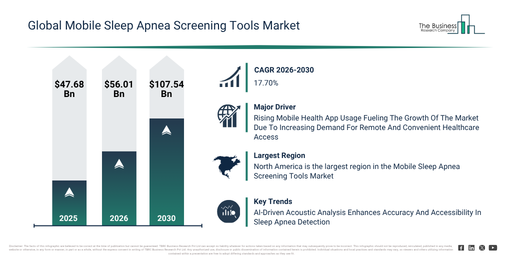
    The mobile sleep apnea screening tools market has experienced swift expansion in recent times. It is projected to increase from $47.68 billion in 2025 to $56.01 billion in 2026, exhibiting a compound annual growth rate (CAGR) of 17.5%. This historical growth is attributable to factors such as the escalating occurrence of sleep apnea disorders, enhanced awareness of sleep-related health issues, restricted availability of sleep laboratories in remote areas, the growing uptake of wearable health devices, and ongoing advancements in healthcare digitization.

    The market for mobile sleep apnea screening tools is anticipated to experience substantial growth over the coming years, with its size projected to reach $107.54 billion by 2030, demonstrating a compound annual growth rate (CAGR) of 17.7%. This expansion during the projected period is driven by several factors, including a greater need for diagnostic options at home, the increasing integration of AI-enabled health monitoring devices, the widening scope of telehealth and remote patient surveillance, an aging demographic experiencing more sleep disorders, and a heightened emphasis on preventative medical care and early detection. Key trends anticipated within this forecast timeframe involve the increasing uptake of wearable devices for continuous at-home monitoring of apnea risk, enhanced incorporation of AI-driven predictive analytics to identify sleep disorders earlier, expanded utilization of smartphone-linked respiratory sensors for non-invasive sleep tracking, the growth of cloud-based sleep health platforms to facilitate remote physician oversight, and a rising preference for home-based sleep diagnostics, thereby decreasing reliance on clinical sleep laboratories.

    Get A Free Sample Report With In-Depth Market Insights:

    https://thebusinessresearchcompany.com/sample_request?id=39804486&type=smp&name=Mobile%20Sleep%20Apnea%20Screening%20Tools%20Market%20Report%202026&utm_source=Blogs&utm_medium=Paid&utm_campaign=Oct_PR

    Mobile Sleep Apnea Screening Tools Market Industry Drivers: What’s Behind The Revenue Growth?

    The rising adoption of mobile health applications is anticipated to substantially fuel the growth of the mobile sleep apnea screening tools market. These applications serve as digital platforms accessible via smartphones, enabling users to monitor their health, access medical services, and share real-time health data with healthcare providers. Their increasing popularity stems from a growing reliance on smartphones for convenient, remote, and on-demand healthcare access. Mobile sleep apnea screening tools leverage these applications to facilitate remote sleep monitoring, real-time data sharing, and early detection of sleep disorders, thereby reducing the necessity for in-person hospital visits. For instance, in December 2025, the National Health Service, a UK-based public healthcare organization, reported that 67.8 million repeat prescriptions were ordered through the NHS App between December 2024 and November 2025, with 62.3 million logins recorded in November alone, marking a 43% increase compared to the previous monthly average. Therefore, the expanding adoption of mobile health applications is a significant factor driving the growth of the mobile sleep apnea screening tools market.

    Mobile Sleep Apnea Screening Tools Market Segment Trends And Revenue Contributors

    The mobile sleep apnea screening tools market covered in this report is segmented –

    1) By Product Type: Diagnostic Devices, Therapeutic Devices

    2) By Connectivity: Bluetooth Enabled Devices, Wi-Fi Enabled Devices, Cloud Connected Systems

    3) By Distribution Channel: Online Channels, Offline Channels

    4) By Application: Obstructive Sleep Apnea Screening, Central Sleep Apnea Screening, Mixed Sleep Apnea Screening

    5) By End User: Home Care Setting, Sleep Laboratories And Hospitals, Other End User

    Subsegments:

    1) By Diagnostic Devices: Home Sleep Apnea Testing Devices, Wearable Sleep Monitoring Devices, Portable Respiratory Monitoring Devices, Polysomnography Devices

    2) By Therapeutic Devices: Continuous Positive Airway Pressure Devices, Automatic Positive Airway Pressure Devices, Bilevel Positive Airway Pressure Devices, Oral Appliance Therapy Devices, Adaptive Servo Ventilation Devices

    #Mobile Sleep Apnea Screening Tools Market Growth Trends: What’s Shaping The Future Outlook?

    Major companies operating in the mobile sleep apnea screening tools market are prioritizing technological advancements, such as AI-powered acoustic sleep monitoring systems, to enhance diagnostic accuracy, facilitate non-invasive testing, and support remote patient monitoring. AI-powered acoustic sleep monitoring systems refer to wearable or mobile-enabled technologies that capture physiological sound signals generated by breathing and analyze them using artificial intelligence algorithms to detect sleep apnea events and respiratory irregularities without the need for complex wired setups. For instance, in June 2023, Acurable, a UK-based medical device company, launched the AcuPebble Ox100. This device features a non-invasive acoustic sensor placed on the neck, AI-driven automated respiratory biomarker analysis, and mobile-connected data transfer to a secure cloud platform for remote diagnosis, enabling efficient at-home sleep testing with minimal clinical supervision.

    Mobile Sleep Apnea Screening Tools Market Industry Leaders And Competitive Landscape

    Major companies operating in the mobile sleep apnea screening tools market are Apple Inc., Samsung Electronics Co. Ltd., Inspire Medical Systems Inc., Koninklijke Philips N. V., ResMed Inc., Nihon Kohden Corporation, Fisher & Paykel Healthcare Corporation Limited, Contec Medical Systems Co. Ltd., Beurer GmbH, Withings S. A., SomnoMed Limited, Cadwell Industries Inc., BMC Medical Co. Ltd., Sibel S. A. U., CleveMed Inc., Sunrise Sleep Technologies SA, Compumedics Limited, Acurable Limited, Advanced Brain Monitoring Inc., Circadiance LLC, Braebon Medical Corporation, Oxitone Medical Ltd., Löwenstein Medical Technology GmbH + Co. KG, Belun Technology Company Limited, Nox Medical ehf.

    View The Full Mobile Sleep Apnea Screening Tools Market Report:

    https://thebusinessresearchcompany.com/report/mobile-sleep-apnea-screening-tools-market-report?utm_source=Blogs&utm_medium=Paid&utm_campaign=Oct_PR

    Mobile Sleep Apnea Screening Tools Market Regional Analysis And Top Geography

    North America was the largest region in the mobile sleep apnea screening tools market in 2025. Asia-Pacific is expected to be the fastest-growing region in the forecast period. The regions covered in the mobile sleep apnea screening tools market report are Asia-Pacific, South East Asia, Western Europe, Eastern Europe, North America, South America, Middle East and Africa.

    Reach Out To Our Team:

    The Business Research Company: https://www.thebusinessresearchcompany.com/

    Americas: +1 310-496-7795

    Asia: +44 7882 955267 & +91 8897263534

    Europe: +44 7882 955267

    Email us at: marketing@tbrc.info

    Follow us on:

    LinkedIn: https://in.linkedin.com/company/the-business-research-company

    YouTube: https://www.youtube.com/channel/UC24_fI0rV8cR5DxlCpgmyFQ

    Global Market Model: https://www.thebusinessresearchcompany.com/global-market-model
  • Minimally Invasive Spine Technologies Market Forecast To Reach $6.81 Billion By 2030: Key Growth Drivers And Industry Trends

    Minimally Invasive Spine Technologies Market Forecast To Reach $6.81 Billion By 2030: Key Growth Drivers And Industry Trends

    Built to provide research that’s more actionable and strategically valuable, The Business Research Company’s 2026 market reports include market attractiveness analysis, total addressable market sizing, company benchmarking matrices, interactive Excel dashboards, broader supply chain intelligence, emerging startup tracking, and in-depth product insights.

    Minimally Invasive Spine Technologies Market Revenue Growth On Track For A 9.5% CAGR Through 2030

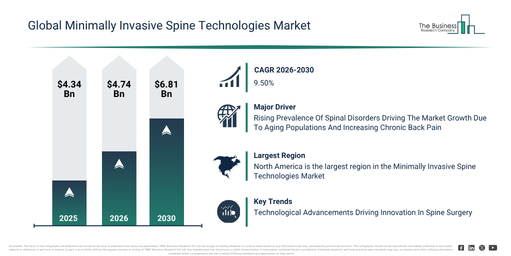
    The minimally invasive spine technologies market size has experienced robust growth in recent years. It is forecast to increase from $4.34 billion in 2025 to $4.74 billion in 2026, demonstrating a compound annual growth rate (CAGR) of 9.2%. This historical expansion can be linked to several factors, including the rising prevalence of degenerative spine disorders, the increasing acceptance of conventional spinal fusion procedures, an uptick in hospital-based spine surgery volumes, the development of initial minimally invasive surgical tools, and heightened awareness concerning post-operative recovery benefits.

    The minimally invasive spine technologies market is projected for significant expansion over the coming years. It is set to reach $6. 81 billion by 2030, exhibiting a compound annual growth rate (CAGR) of 9. 5%. This expansion during the forecast period is propelled by several factors, including the escalating demand for spinal procedures performed on an outpatient basis, a growing preference for surgical methods that ensure quicker recovery, an expanding elderly population suffering from spinal conditions, the proliferation of specialized spine clinics and centers, and a heightened healthcare emphasis on minimizing hospitalization expenses. Key trends anticipated in this period encompass the increasing embrace of ultra-minimally invasive spine techniques designed to lessen tissue damage and inpatient time, a noticeable move towards outpatient and ambulatory spine surgery centers for more efficient patient processing, the rising application of expandable and modular spinal implants for enhanced flexibility during operations, the broadening of tissue-preserving surgical strategies to alleviate post-operative discomfort and issues, and a greater emphasis on financially efficient spine care models featuring shorter rehabilitation durations.

    Get A Free Sample Report With In-Depth Market Insights:

    https://thebusinessresearchcompany.com/sample_request?id=37064088&type=smp&name=Minimally%20Invasive%20Spine%20Technologies%20Market%20Report%202026&utm_source=Blogs&utm_medium=Paid&utm_campaign=Oct_PR

    Minimally Invasive Spine Technologies Market Growth Backed By Core Demand Fundamentals

    The expanding occurrence of spinal disorders is anticipated to drive the growth of the minimally invasive spine technologies market in the future. Spinal disorders encompass a variety of conditions affecting the spine, including chronic back pain, degenerative disc disease, spinal stenosis, and related musculoskeletal issues that negatively impact mobility and overall quality of life. The increasing prevalence of these disorders is primarily due to aging populations and lifestyle factors like sedentary behavior and poor posture, which raise the risk of chronic back pain, degenerative disc disease, and other spinal conditions. Minimally invasive spine technologies offer focused, less intrusive surgical and therapeutic solutions that lessen tissue damage, quicken recovery, relieve pain, and restore spinal function, making them an effective strategy for managing the growing burden of spinal disorders. For instance, in February 2025, data from the National Spinal Cord Injury Statistical Center (NSCISC), a U. S. organization that gathers, analyzes, and disseminates nationwide information on traumatic spinal cord injuries, indicated that with the U. S. population in 2024 at approximately 341 million and an incidence rate of around 54 traumatic spinal cord injuries per million people, an estimated 18,421 new tSCI cases occur annually. Hence, the rising prevalence of spinal disorders is boosting the growth of the minimally invasive spine technologies market.

    Minimally Invasive Spine Technologies Market Segmentation And Category Overview

    The minimally invasive spine technologies market covered in this report is segmented –

    1) By Technology: Robotic-Assisted Surgery, Fluoroscopic Navigation, Image-Guided Surgery, Endoscopic Techniques

    2) By Type Of Procedure: Microdiscectomy, Laminectomy, Spinal Fusion, Kyphoplasty, Foraminotomy

    3) By Device Type: Access Devices, Implants, Visualization Devices, Instruments And Accessories

    4) By Application: Degenerative Disc Disease, Spinal Stenosis, Herniated Disc, Spinal Deformities, Trauma And Fractures

    5) By End User: Hospitals, Ambulatory Surgery Centers, Specialty Spine Clinics, Orthopedic Centers

    Subsegments:

    1) By Robotic-Assisted Surgery: Spinal Pedicle Screw Placement Robotic-Assisted Surgery, Minimally Invasive Lumbar Fusion Robotic-Assisted Surgery, Cervical Spine Robotic-Assisted Procedures, Thoracic Spine Robotic-Assisted Procedures

    2) By Fluoroscopic Navigation: 2D Fluoroscopic Navigation Systems, 3D Fluoroscopic Navigation Systems, Hybrid Fluoroscopic Navigation Systems, Real-Time Fluoroscopic Guidance Systems

    3) By Image-Guided Surgery: Computed Tomography Guided Spine Surgery, Magnetic Resonance Imaging Guided Spine Surgery, Intraoperative Imaging Guided Spine Surgery, Navigation-Assisted Spine Surgery

    4) By Endoscopic Techniques: Percutaneous Endoscopic Lumbar Discectomy, Endoscopic Decompression Techniques, Endoscopic Interbody Fusion Techniques, Minimally Invasive Endoscopic Spinal Procedures

    Minimally Invasive Spine Technologies Market Growth Trends Reshaping The Competitive Landscape

    Major companies operating in the minimally invasive spine technologies market are concentrating on developing innovative solutions, such as advanced camera-based surgical navigation technology, to improve precision, reduce tissue damage, and shorten patient recovery times. This sophisticated technology involves a system that employs cameras and machine-vision algorithms to generate real-time 3D images of the spine during surgery, enabling surgeons to accurately place implants while minimizing tissue damage and reducing recuperation periods. For instance, in August 2023, Orthofix Medical Inc., a US-based spine and orthopedics company, launched the 7D FLASH™ Navigation System Percutaneous Module 2.0. This advanced image-guided navigation technology, specifically designed for minimally invasive spine surgery, incorporates visible-light machine-vision technology to rapidly produce 3D images, which aids in optimizing surgical planning, enhancing procedural efficiency, and supporting reduced radiation exposure and precise implant placement during minimally invasive procedures. The system’s novel camera-based platform offers quicker, more accurate navigation and expands functionality over traditional fluoroscopy and older navigation tools, assisting surgeons with complex spinal fusion and instrumentation tasks while simultaneously minimizing incisional size and trauma.

    Minimally Invasive Spine Technologies Market Competitive Landscape: Who Leads The Industry?

    Major companies operating in the minimally invasive spine technologies market are Johnson & Johnson, Medtronic plc, Stryker Corporation, B. Braun SE, Globus Medical Inc., Orthofix Medical Inc., Alphatec Spine Inc., SI-BONE Inc., Xtant Medical Holdings Inc., Centinel Spine LLC, Precision Spine Inc., Spineart SA, Joimax GmbH, CoreLink LLC, Spine Wave Inc., Spineology Inc., Zavation Medical Products LLC, Aurora Spine Corporation, Life Spine Inc., Neoflex Spine Inc., Camber Spine Technologies LLC, Ulrich GmbH & Co. KG, Safe Orthopaedics SA, Spinal Simplicity LLC, FH Orthopedics SA, SIGNUS Medizintechnik GmbH

    View The Full Minimally Invasive Spine Technologies Market Report:

    https://thebusinessresearchcompany.com/report/minimally-invasive-spine-technologies-market-report?utm_source=Blogs&utm_medium=Paid&utm_campaign=Oct_PR

    Minimally Invasive Spine Technologies Market Geographic Landscape: Which Region Dominates Industry Growth?

    North America was the largest region in the minimally invasive spine technologies market in 2025. Asia-Pacific is expected to be the fastest-growing region in the forecast period. The regions covered in the minimally invasive spine technologies market report are Asia-Pacific, South East Asia, Western Europe, Eastern Europe, North America, South America, Middle East and Africa.

    Reach Out To Our Team:

    The Business Research Company: https://www.thebusinessresearchcompany.com/

    Americas: +1 310-496-7795

    Asia: +44 7882 955267 & +91 8897263534

    Europe: +44 7882 955267

    Email us at: marketing@tbrc.info

    Follow us on:

    LinkedIn: https://in.linkedin.com/company/the-business-research-company

    YouTube: https://www.youtube.com/channel/UC24_fI0rV8cR5DxlCpgmyFQ

    Global Market Model: https://www.thebusinessresearchcompany.com/global-market-model
  • Methicillin-Resistant Staphylococcus Aureus (MRSA) Testing Market Growth Forecast Through 2030: Market Size And Trends In 2026

    Methicillin-Resistant Staphylococcus Aureus (MRSA) Testing Market Growth Forecast Through 2030: Market Size And Trends In 2026

    Backed by market attractiveness analysis, total addressable market sizing, company benchmarking matrices, interactive Excel dashboards, wider supply chain intelligence, emerging startup coverage, and detailed product-level insights, The Business Research Company’s 2026 market reports are designed to offer research that is more actionable and strategically valuable than ever.

    Methicillin-Resistant Staphylococcus Aureus (MRSA) Testing Market Growth From $4.18 Billion In 2026 To $5.28 Billion By 2030 At A CAGR Of 6%

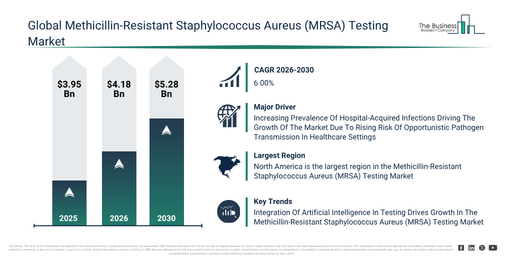
    The methicillin-resistant staphylococcus aureus (MRSA) testing market has seen robust expansion in recent years. It is anticipated to increase from $3.95 billion in 2025 to $4.18 billion in 2026, achieving a compound annual growth rate (CAGR) of 5.8%. The growth observed in the preceding period can be linked to the escalating prevalence of hospital-acquired infections, a heightened awareness of antibiotic resistance, the expansion of diagnostic laboratory infrastructure, the advancement of hospital infection control programs, and the rising adoption of culture-based diagnostic methods.

    The methicillin-resistant staphylococcus aureus (MRSA) testing market is projected to experience substantial growth over the coming years, with its size forecast to reach $5.28 billion by 2030, demonstrating a compound annual growth rate (CAGR) of 6.0%. This expansion is primarily driven by factors such as the increasing integration of rapid molecular diagnostic technologies, heightened investment in precision medicine and pathogen genomics, the broadening of automated laboratory systems, a rising need for real-time infection surveillance, and a more stringent regulatory emphasis on antimicrobial resistance control. Additionally, notable trends for this period encompass the escalating embrace of rapid molecular diagnostics for detecting antibiotic resistance, the expanding deployment of point-of-care MRSA testing within hospital settings, the widespread adoption of automated microbiology workflows in diagnostic labs, the growth of infection surveillance initiatives across healthcare facilities, and a rising requirement for multiplex assays in screening for hospital-acquired infections.

    Get A Free Sample Report With In-Depth Market Insights:

    https://thebusinessresearchcompany.com/sample_request?id=46599439&type=smp&name=Methicillin-Resistant%20Staphylococcus%20Aureus%20%28MRSA%29%20Testing%20Market%20Report%202026&utm_source=Blogs&utm_medium=Paid&utm_campaign=Oct_PR

    Methicillin-Resistant Staphylococcus Aureus (MRSA) Testing Market Expansion Drivers: What’s Shaping Future Growth?

    The rising occurrence of hospital-acquired infections is anticipated to boost expansion in the methicillin-resistant staphylococcus aureus (MRSA) testing market in the future. HAIs, or hospital-acquired infections, refer to secondary infections developed by patients during medical or surgical care in a healthcare setting. This global increase is due to the growing complexity of medical procedures and a large number of immunocompromised patients, which provides more chances for opportunistic pathogens to establish themselves. MRSA testing aids in managing these infections by enabling healthcare professionals to promptly identify colonized individuals and put isolation measures in place to stop widespread transmission within facilities. For example, the Health Security Agency, a national executive agency based in the UK, reported that in August 2025, total MRSA bacteremia cases hit 81, an 8.0% rise from 75 cases recorded in August 2024. Consequently, the growing incidence of hospital-acquired infections is projected to stimulate expansion within the methicillin-resistant staphylococcus aureus (MRSA) testing market.

    Methicillin-Resistant Staphylococcus Aureus (MRSA) Testing Market Segment Analysis: What Are The Core Market Categories?

    The methicillin-resistant staphylococcus aureus (mrsa) testing market covered in this report is segmented –

    1) By Type: Healthcare Acquired Methicillin Resistant Staphylococcus Aureus, Community Acquired Methicillin Resistant Staphylococcus Aureus, Hospital Acquired Methicillin Resistant Staphylococcus Aureus

    2) By Indication: Skin And Soft Tissue Infections (SSTIs), Pneumonia, Bloodstream Infections, Surgical And Medical Infections, Other Indications

    3) By Technology: Polymerase Chain Reaction (PCR), Real Time Polymerase Chain Reaction (RT-PCR), Chromogenic Media, Enzyme Linked Immunosorbent Assay (ELISA), Other Technologies

    4) By End User: Hospitals, Diagnostic Laboratories, Research Institutes, Ambulatory Care Centers, Other End Users

    Subsegments:

    1) By Healthcare Acquired Methicillin Resistant Staphylococcus Aureus: Intensive Care Unit Associated Infections, Catheter Related Infections, Ventilator Associated Infections, Post Surgical Site Infections, Long Term Care Facility Infections

    2) By Community Acquired Methicillin Resistant Staphylococcus Aureus: Skin And Soft Tissue Infections, Athlete Associated Infections, Household Transmission Infections, Community Cluster Infections, School And Daycare Associated Infections

    3) By Hospital Acquired Methicillin Resistant Staphylococcus Aureus: Surgical Site Infections, Bloodstream Infections, Respiratory Tract Infections, Device Associated Infections, Wound And Burn Infections

    Methicillin-Resistant Staphylococcus Aureus (MRSA) Testing Market Strategic Trends: What Defines The Next Growth Phase?

    Key players in the methicillin-resistant staphylococcus aureus (MRSA) testing market are concentrating on incorporating artificial intelligence into their testing procedures, particularly through AI-powered imaging analysis, to secure a competitive advantage. This AI-powered imaging analysis leverages artificial intelligence algorithms to automatically and accurately interpret bacterial growth patterns on chromogenic media plates within MRSA screening workflows. As an illustration, in May 2023, Becton, Dickinson and Company (BD), a US-based medical technology firm, received FDA 510(k) clearance for its BD Kiestra MRSA Imaging application. This application automates the inspection of Petri dishes for mauve-colored MRSA colonies, allows for the batch review of negative results, and integrates with BD Synapsys Informatics for streamlined worklist organization. Laboratories consequently experience advantages like shortened turnaround times, reduced labor demands, and the capacity to redeploy staff to more intricate analyses.

    Methicillin-Resistant Staphylococcus Aureus (MRSA) Testing Market Leading Companies And Competitive Benchmarking

    Major companies operating in the methicillin-resistant staphylococcus aureus (mrsa) testing market are F. Hoffmann-La Roche Ltd., Thermo Fisher Scientific Inc., Abbott Laboratories, Danaher Corporation, Becton Dickinson and Company, bioMérieux SA, Hologic Inc., QuidelOrtho Corporation, Bruker Corporation, Bio-Rad Laboratories Inc., QIAGEN N. V., Randox Laboratories Ltd., SD Biosensor Inc., Seegene Inc., Hardy Diagnostics Inc., Alifax S. r. l., Ganesh Diagnostic and Imaging Centre Pvt. Ltd., Uniogen Oy, 3B BlackBio Dx Limited, Orange Health Labs Private Limited

    View The Full Methicillin-Resistant Staphylococcus Aureus (MRSA) Testing Market Report:

    https://thebusinessresearchcompany.com/report/methicillin-resistant-staphylococcus-aureus-mrsa-testing-market-report?utm_source=Blogs&utm_medium=Paid&utm_campaign=Oct_PR

    Methicillin-Resistant Staphylococcus Aureus (MRSA) Testing Market Largest Region By Revenue And Market Share

    North America was the largest region in the methicillin-resistant staphylococcus aureus (MRSA) testing market in 2025. Asia-Pacific is expected to be the fastest-growing region in the forecast period. The regions covered in the methicillin-resistant staphylococcus aureus (MRSA) testing market report are Asia-Pacific, South East Asia, Western Europe, Eastern Europe, North America, South America, Middle East and Africa.

    Reach Out To Our Team:

    The Business Research Company: https://www.thebusinessresearchcompany.com/

    Americas: +1 310-496-7795

    Asia: +44 7882 955267 & +91 8897263534

    Europe: +44 7882 955267

    Email us at: marketing@tbrc.info

    Follow us on:

    LinkedIn: https://in.linkedin.com/company/the-business-research-company

    YouTube: https://www.youtube.com/channel/UC24_fI0rV8cR5DxlCpgmyFQ

    Global Market Model: https://www.thebusinessresearchcompany.com/global-market-model
  • Medical Instruments Disinfections Market Growth In 2026: Market Size, Key Drivers And Future Outlook

    Medical Instruments Disinfections Market Growth In 2026: Market Size, Key Drivers And Future Outlook

    Built to provide research that’s more actionable and strategically valuable, The Business Research Company’s 2026 market reports include market attractiveness analysis, total addressable market sizing, company benchmarking matrices, interactive Excel dashboards, broader supply chain intelligence, emerging startup tracking, and in-depth product insights.

    Medical Instruments Disinfections Market Revenue Outlook: What CAGR Lies Ahead Through 2030?

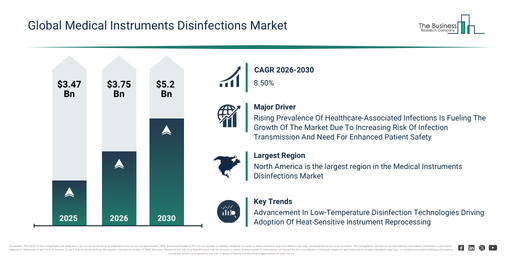
    The medical instruments disinfections market has seen significant expansion in recent years. This market is anticipated to increase from $3.47 billion in 2025 to $3.75 billion in 2026, at a compound annual growth rate (CAGR) of 8.3%. The historical growth of the market can be linked to a rise in healthcare-associated infection cases, ongoing expansion of hospital infrastructure, increased awareness of infection control protocols, an expansion in surgical and diagnostic procedures, and the implementation of stricter regulatory hygiene standards in healthcare settings.

    The medical instruments disinfections market is anticipated to experience substantial growth in the upcoming years, with its size projected to reach $5.2 billion by 2030, exhibiting a compound annual growth rate (CAGR) of 8.5%. This growth throughout the forecast period is propelled by factors such as the increasing adoption of automated sterilization systems, a heightened demand for sustainable disinfectant chemicals, the rise in outpatient and ambulatory surgical procedures, the incorporation of smart tracking within sterilization workflows, and the broader implementation of biotechnology-driven infection control solutions. Prominent trends foreseen for this period include the optimization of low-temperature enzymatic and chemical disinfection processes, the deployment of automated sterilization tracking and validation systems in healthcare facilities, the ongoing development of eco-friendly biodegradable medical disinfectant formulations, the integration of advanced surface-compatible antimicrobial coatings for instruments, and the emergence of rapid high-level disinfection technologies designed for reusable surgical instruments.

    Get A Free Sample Report With In-Depth Market Insights:

    https://thebusinessresearchcompany.com/sample_request?id=22072869&type=smp&name=Medical%20Instruments%20Disinfections%20Market%20Report%202026&utm_source=Blogs&utm_medium=Paid&utm_campaign=Oct_PR

    Medical Instruments Disinfections Market Growth Drivers: What’s Behind The Acceleration?

    The anticipated expansion of the medical instrument disinfection market is significantly driven by the rising occurrence of healthcare-associated infections. These infections are contracted by patients within healthcare environments during treatment, posing risks to patient safety and impacting clinical results. Factors contributing to this increase include greater hospital usage, an older patient demographic, and a growing number of patients with multiple health conditions. Disinfection of medical instruments aids healthcare systems by offering efficient solutions to lessen infection spread from these devices and guarantee enhanced patient safety. A notable example is from January 2024, when the Centers for Disease Control and Prevention, a US-based government agency, reported an approximate 4% increase in the standardized infection ratio (SIR) for surgical site infections (SSI) across all NHSN operative procedure categories combined compared to the prior year. Consequently, the escalating frequency of healthcare-associated infections acts as a key impetus for the expansion of the medical instrument disinfection market.

    Medical Instruments Disinfections Market Segment Performance And Emerging Opportunities

    The medical instruments disinfections market covered in this report is segmented –

    1) By Type Of Disinfectant: Alcohol-Based Disinfectants, Chlorine-Based Disinfectants, Phenolic Disinfectants, Quaternary Ammonium Compounds (Quats), Hydrogen Peroxide

    2) By Formulation Type: Ready-To-Use Formulations, Concentrated Formulations, Wipes, Sprays, High-Level Disinfectants

    3) By Distribution Channel: Direct Sales, Online Retail, Medical Supply Distributors, Pharmacies, Wholesale Suppliers

    4) By Application: Pre-Procedural Disinfection, Post-Procedural Disinfection, Surface Disinfection, Instrument Sterilization, Environmental Disinfection

    5) By End-User: Hospitals And Clinics, Biotechnology And Pharmaceutical Companies, Dental Practices, Ambulatory Surgical Centers, Research Laboratories

    Subsegments:

    1) By Alcohol-Based Disinfectants: Ethanol, Isopropanol, N-Propanol

    2) By Chlorine-Based Disinfectants: Sodium Hypochlorite, Calcium Hypochlorite, Chlorine Dioxide

    3) By Phenolic Disinfectants: Cresol, Orthophenylphenol, Hexachlorophene

    4) By Quaternary Ammonium Compounds: Benzalkonium Chloride, Cetyltrimethylammonium Bromide, Dodecylbenzyldimethylammonium Chloride

    5) By Hydrogen Peroxide: Stabilized Hydrogen Peroxide, Vaporized Hydrogen Peroxide, Hydrogen Peroxide Solutions

    Medical Instruments Disinfections Market Trends: What’s Defining The Industry’s Next Phase?

    Leading companies within the medical instruments disinfection market are prioritizing the development of advanced low-temperature sterilization technologies, such as vaporized hydrogen peroxide (VHP) systems. These innovations aim to enable effective reprocessing of heat-sensitive medical instruments while safeguarding material integrity and ensuring superior microbial elimination. Vaporized hydrogen peroxide (VHP) sterilization operates as a low-temperature technique that utilizes reactive hydrogen peroxide vapor to generate free radicals, which efficiently eradicate microorganisms on delicate medical devices without inflicting thermal damage. For instance, in December 2024, STERIS plc, an Ireland-based provider of products and services supporting patient care with a focus on infection prevention, secured clearance from the U. S. Food and Drug Administration for its V-PRO Low Temperature Sterilizers. These sterilizers are specifically designed for hospital-produced 3D-printed surgical guides and anatomical models. The system is compatible with Formlabs’ BioMed Amber and BioMed Clear resins, guarantees dimensional stability, and has been validated for use with over 43 materials, thereby facilitating the safe and efficient disinfection of heat-sensitive instruments.

    Medical Instruments Disinfections Market Competitive Overview And Top Companies

    Major companies operating in the medical instruments disinfections market are Medline Industries LP, Evonik Industries AG, Ecolab Inc., LANXESS AG, STERIS plc, Getinge AB, PAUL HARTMANN AG, Hu-Friedy Mfg. Co. LLC, Belimed AG, Schülke & Mayr GmbH, 3M Company, Advanced Sterilization Products Inc., Nanosonics Limited, GAMA Healthcare Ltd, Matachana Group S. A., SciCan Ltd., Microgen Bioproducts Ltd, Metrex Research LLC, Tuttnauer Ltd., BODE Chemie GmbH, Wassenburg Medical B. V., Whiteley Corporation Pty Ltd, MMM Group GmbH

    View The Full Medical Instruments Disinfections Market Report:

    https://thebusinessresearchcompany.com/report/medical-instruments-disinfections-market-report?utm_source=Blogs&utm_medium=Paid&utm_campaign=Oct_PR

    Medical Instruments Disinfections Market Leading Geography: Which Region Contributes The Most Revenue?

    North America was the largest region in the medical instruments disinfection market in 2025. Asia-Pacific is expected to be the fastest-growing region in the forecast period. The regions covered in the medical instruments disinfections market report are Asia-Pacific, South East Asia, Western Europe, Eastern Europe, North America, South America, Middle East and Africa.

    Reach Out To Our Team:

    The Business Research Company: https://www.thebusinessresearchcompany.com/

    Americas: +1 310-496-7795

    Asia: +44 7882 955267 & +91 8897263534

    Europe: +44 7882 955267

    Email us at: marketing@tbrc.info

    Follow us on:

    LinkedIn: https://in.linkedin.com/company/the-business-research-company

    YouTube: https://www.youtube.com/channel/UC24_fI0rV8cR5DxlCpgmyFQ

    Global Market Model: https://www.thebusinessresearchcompany.com/global-market-model
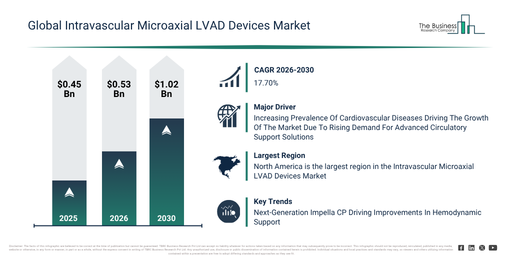
  • Intravascular Microaxial LVAD Devices Market Growth Outlook From $0.53 Billion In 2026 To $1.02 Billion By 2030

    Intravascular Microaxial LVAD Devices Market Growth Outlook From $0.53 Billion In 2026 To $1.02 Billion By 2030

    Featuring market attractiveness scoring, total addressable market sizing, company benchmarking matrices, interactive Excel dashboards, deeper supply chain intelligence, emerging startup tracking, and granular product-level insights, The Business Research Company’s 2026 market reports are built to deliver research that is both more actionable and more strategically valuable.

    Intravascular Microaxial LVAD Devices Market Set To Climb From $0.53 Billion In 2026 To $1.02 Billion By 2030

    The intravascular microaxial LVAD devices market size has experienced rapid growth in recent years. It is forecast to increase from $0.45 billion in 2025 to $0.53 billion in 2026, achieving a compound annual growth rate (CAGR) of 17.5%. Historically, this growth can be ascribed to the increasing prevalence of advanced heart failure, the limited availability of donor hearts for transplantation, the rising adoption of temporary mechanical circulatory support, the expanding use of percutaneous coronary intervention procedures, and the enhancement of cardiac catheterization laboratory infrastructure.

    The intravascular microaxial LVAD devices market size is projected to experience substantial expansion in the coming years, reaching $1.02 billion by 2030, exhibiting a compound annual growth rate (CAGR) of 17.7%. This anticipated rise during the forecast period is driven by factors such as the increasing need for minimally invasive cardiac support solutions, an aging population with a higher incidence of cardiovascular ailments, progress in short-term ventricular assist technologies, a burgeoning clinical inclination towards bridge-to-recovery treatments, and the global proliferation of specialized cardiac care facilities. Key developments defining the forecast period encompass the uptake of minimally invasive percutaneous ventricular support, breakthroughs in hemocompatible blood pump materials, the miniaturization of ultra-compact axial flow pumps, improvements in optimizing extended duration mechanical circulatory support, and the integration of catheter-based cardiac intervention into workflows.

    Get A Free Sample Report With In-Depth Market Insights:

    https://thebusinessresearchcompany.com/sample_request?id=41871603&type=smp&name=Intravascular%20Microaxial%20LVAD%20Devices%20Market%20Report%202026&utm_source=Blogs&utm_medium=Paid&utm_campaign=Oct_PR

    Intravascular Microaxial LVAD Devices Market Growth Catalysts And Demand Drivers

    The expanding occurrence of cardiovascular diseases is anticipated to boost the growth of the intravascular microaxial LVAD devices market in the future. These conditions, which involve disorders of the heart and blood vessels such like coronary artery disease, heart failure, stroke, and hypertension, compromise cardiovascular function and necessitate continuous clinical oversight. The increase in cardiovascular diseases is primarily fueled by aging populations and a rising incidence of risk factors within developed economies. Intravascular microaxial LVAD devices facilitate this trend by offering sophisticated circulatory support that stabilizes hemodynamics and guides patients toward recovery, transplant, or long-term support for severe heart failure cases. For example, in January 2024, the American Heart Association, a US-based non-profit organization, reported that the age-adjusted death rate from cardiovascular disease rose to 233. 3 per 100,000 in 2024, an increase of 4. 0% from 224. 4 per 100,000 in 2023. Consequently, the growing prevalence of cardiovascular diseases is a key driver for the expansion of the intravascular microaxial LVAD devices market. Increasing healthcare expenditure is projected to boost the expansion of the intravascular microaxial LVAD devices market moving forward. Healthcare expenditure signifies the overall financial resources allocated to health services, encompassing hospital care, medical devices, physician services, and preventive care, all aimed at enhancing health outcomes. This rise in spending is influenced by elements such as the increasing incidence of cardiovascular diseases and progress in medical technologies that demand greater investment. Intravascular microaxial LVAD devices offer temporary mechanical circulatory support for individuals with severe cardiac issues, improving cardiac output and stabilizing hemodynamics during critical procedures or acute heart failure episodes. Elevated healthcare spending facilitates broader availability of advanced cardiac care technologies, encourages hospitals to adopt new devices, and improves the affordability of vital treatments for patients. For instance, in May 2024, the Office for National Statistics, a UK-based government department, reported that total healthcare expenditure saw a substantial increase of 5. 6% in nominal terms from 2022 to 2023, representing a significant acceleration from the 0. 9% growth registered in 2022. Consequently, the upward trend in healthcare expenditure is a primary driver for the growth of the intravascular microaxial LVAD devices market.

    Intravascular Microaxial LVAD Devices Market Segment Landscape And Growth Outlook

    The intravascular microaxial lvad devices market covered in this report is segmented –

    1) By Product Type: Low Flow Devices Less Than 3 Liters Per Minute, Mid Flow Devices 3 To 4 Liters Per Minute, High Flow Devices Greater Than Or Equal To 4 Liters Per Minute

    2) By Duration Of Support: Ultra Short Term Less Than 24 Hours, Short Term 1 To 3 Days, Prolonged More Than 3 Days Up To 14 Days

    3) By Patient Type: Adult, Pediatric

    4) By Application: Bridge To Transplant, Bridge To Recovery, Destination Therapy, High Risk Percutaneous Coronary Intervention

    5) By End User: Tertiary Care Hospitals, Specialized Heart And Vascular Centers, Academic And Research Hospitals

    Subsegments:

    1) By Low Flow Devices Less Than 3 Liters Per Minute: Percutaneous Left Ventricular Assist Devices, Miniaturized Flow Left Ventricular Assist Devices, Hemocompatible Low Flow Devices, Temporary Support Left Ventricular Assist Devices, Wearable Low Flow Circulatory Support Devices

    2) By Mid Flow Devices 3 To 4 Liters Per Minute: Percutaneous Mid Flow Left Ventricular Assist Devices, Intermediate Flow Circulatory Support Devices, Compact Mid Flow Heart Pump Devices, Hemocompatible Mid Flow Left Ventricular Assist Devices, Transcatheter Mid Flow Ventricular Support Devices

    3) By High Flow Devices Greater Than Or Equal To 4 Liters Per Minute: Surgical High Flow Left Ventricular Assist Devices, Long Term High Flow Circulatory Support Devices, High Capacity Hemocompatible Left Ventricular Assist Devices, Wearable High Flow Heart Pump Devices, Transcatheter High Flow Ventricular Assist Devices

    Intravascular Microaxial LVAD Devices Market Trends Shaping Long-Term Demand

    Leading companies in the intravascular microaxial LVAD devices market are focusing on advancing precise cardiac support technologies, such as the ninth-generation Impella CP intravascular microaxial flow pump. This focus aims to boost hemodynamic assistance, improve patient survival, enable minimally invasive high-risk cardiac interventions, and optimize real-time monitoring of cardiac performance. The ninth-generation Impella CP intravascular microaxial flow pump is an advanced catheter-based mechanical circulatory support device engineered to provide superior left ventricular unloading and enhanced hemodynamic support through a miniaturized, highly efficient axial flow pump inserted percutaneously into the heart. For instance, in October 2025, Johnson & Johnson MedTech, a US-based medical technology company, showcased the newest Impella CP and long-term survival data during the Transcatheter Cardiovascular Therapeutics (TCT) 2025 conference. This latest Impella CP features optimized pump functionality for improved hemodynamic support, design enhancements that simplify use for clinicians, and upgraded evidence demonstrating better long-term survival outcomes. These innovations align with updated clinical guidelines that recommend Impella for cardiogenic shock and high-risk percutaneous procedures, thus expanding its applicability. While cost and training necessities remain factors to consider, these device advancements significantly strengthen acute cardiac support capabilities.

    Intravascular Microaxial LVAD Devices Market Industry Leaders And Competitive Landscape

    Major companies operating in the intravascular microaxial lvad devices market are Johnson & Johnson, Abbott Laboratories, Medtronic Plc, Supira Medical Inc., Magenta Medical Ltd., Jarvik Heart Inc., Windmill Cardiovascular Systems Inc., PulseCath B. V.

    View The Full Intravascular Microaxial LVAD Devices Market Report:

    https://thebusinessresearchcompany.com/report/intravascular-microaxial-lvad-devices-market-report?utm_source=Blogs&utm_medium=Paid&utm_campaign=Oct_PR

    Intravascular Microaxial LVAD Devices Market Regional Analysis And Leading Geography

    North America was the largest region in the intravascular microaxial LVAD devices market in 2025. Asia-Pacific is expected to be the fastest-growing region in the forecast period. The regions covered in the intravascular microaxial LVAD devices market report are Asia-Pacific, South East Asia, Western Europe, Eastern Europe, North America, South America, Middle East and Africa.

    Reach Out To Our Team:

    The Business Research Company: https://www.thebusinessresearchcompany.com/

    Americas: +1 310-496-7795

    Asia: +44 7882 955267 & +91 8897263534

    Europe: +44 7882 955267

    Email us at: marketing@tbrc.info

    Follow us on:

    LinkedIn: https://in.linkedin.com/company/the-business-research-company

    YouTube: https://www.youtube.com/channel/UC24_fI0rV8cR5DxlCpgmyFQ

    Global Market Model: https://www.thebusinessresearchcompany.com/global-market-model
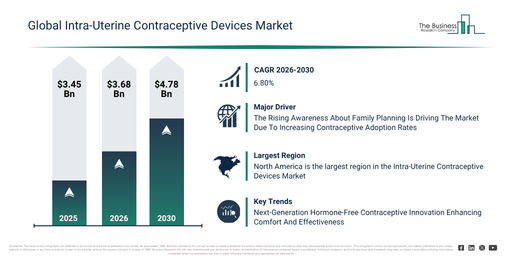
  • Intra-Uterine Contraceptive Devices Market Forecast To Reach $4.78 Billion By 2030: Key Growth Drivers And Industry Trends

    Intra-Uterine Contraceptive Devices Market Forecast To Reach $4.78 Billion By 2030: Key Growth Drivers And Industry Trends

    Built to provide research that’s more actionable and strategically valuable, The Business Research Company’s 2026 market reports include market attractiveness analysis, total addressable market sizing, company benchmarking matrices, interactive Excel dashboards, broader supply chain intelligence, emerging startup tracking, and in-depth product insights.

    Intra-Uterine Contraceptive Devices Market Forecast: Value Set To Climb From $3.68 Billion To $4.78 Billion

    The intra-uterine contraceptive devices market has experienced substantial growth in recent years. It is forecast to expand from $3. 45 billion in 2025 to $3. 68 billion in 2026, exhibiting a compound annual growth rate (CAGR) of 6. 5%. This historical development can be ascribed to increased public knowledge of family planning and the adoption of contraception, government-backed programs for population control and reproductive health, enhanced access to gynecology clinics and maternal healthcare services, improvements in healthcare infrastructure within developing regions, and an increasing preference for long-acting reversible contraceptive methods.

    The intra-uterine contraceptive devices market is projected to experience robust expansion over the coming years, reaching $4.78 billion by 2030, demonstrating a compound annual growth rate (CAGR) of 6.8%. This anticipated growth is driven by several factors, including a rising preference for minimally invasive and user-independent contraceptive methods, the proliferation of women-focused healthcare awareness initiatives, the increasing use of advanced hormonal and bioactive intrauterine systems, a global emphasis on lowering unintended pregnancy rates, and ongoing advancements in biocompatible and drug-eluting device technologies. Key trends expected during this period involve robotic assistance for intrauterine device insertions, automation in contraceptive manufacturing powered by Industry 4.0, IoT-enabled smart tracking and inventory management for medical devices, blockchain systems ensuring traceability in the contraceptive supply chain, and mobile reproductive healthcare outreach services facilitated by electric mobility.

    Get A Free Sample Report With In-Depth Market Insights:

    https://thebusinessresearchcompany.com/sample_request?id=12763659&type=smp&name=Intra-Uterine%20Contraceptive%20Devices%20Market%20Report%202026&utm_source=Blogs&utm_medium=Paid&utm_campaign=Oct_PR

    Intra-Uterine Contraceptive Devices Market Opportunity Drivers: What’s Unlocking New Revenue Potential?

    Increased understanding of family planning is anticipated to boost the expansion of the intra-uterine contraceptive devices market in the future. This awareness refers to individuals’ and couples’ comprehension and insight regarding managing the quantity and timing of their offspring via contraceptive approaches. The growth in family planning awareness stems from widespread public health education initiatives advocating for reproductive well-being and educated decisions on contraception. Intrauterine contraceptive devices enhance family planning efforts by providing durable, dependable, and reversible birth control, which aids in effective pregnancy scheduling and spacing between births. For example, data from July 2025, in a report by the World Health Organization (WHO), a Switzerland-based United Nations (UN) organization, indicated that around 874 million women globally used modern contraceptive methods in 2025. Additionally, an estimated 70 million more women are projected to access family planning services by 2030, showcasing ongoing growth in reproductive healthcare access and usage. Consequently, the increased understanding of family planning is fueling the expansion of the intra-uterine contraceptive device market.

    Intra-Uterine Contraceptive Devices Market Breakdown By Product Type And Application

    The intra-uterine contraceptive devices market covered in this report is segmented –

    1) By Product Type: Copper Intrauterine Devices, Hormonal Intrauterine Devices, Bioactive Intrauterine Devices

    2) By Age Group: Fifteen To Twenty Four Years, Twenty Five To Thirty Four Years, Thirty Five To Forty Four Years, Above Forty Four Years

    3) By Distribution Channel: Direct Sales, Online Retail, Wholesale

    4) By Application: Contraception, Treatment Of Menorrhagia, Endometrial Protection

    5) By End User: Hospitals, Gynecology Clinics, Community Healthcare, Other End Users

    Subsegments:

    1) By Copper Intrauterine Devices: Copper T Shaped Devices, Copper Multiload Devices, Copper Frameless Devices

    2) By Hormonal Intrauterine Devices: Levonorgestrel Releasing Devices, Low Dose Hormonal Devices, High Dose Hormonal Devices

    3) By Bioactive Intrauterine Devices: Silver Ion Releasing Devices, Gold Ion Coated Devices, Drug Eluting Bioactive Devices

    Intra-Uterine Contraceptive Devices Market Innovation Trends Shaping Future Development

    Leading companies operating within the intra-uterine contraceptive devices market are focusing on developing innovative products, such as hormone-free intrauterine systems, to enhance patient comfort and expand non-hormonal contraceptive choices. A hormone-free intrauterine system is a long-acting contraceptive device placed in the uterus that prevents pregnancy using non-hormonal materials, typically copper, to create a spermicidal intrauterine environment. For instance, in February 2025, Sebela Pharmaceuticals Inc., a US-based pharmaceutical company specializing in gastroenterology and women’s health, announced U. S. Food and Drug Administration approval of MIUDELLA. The product utilizes a flexible nitinol frame with a lower copper dose while maintaining high contraceptive effectiveness, supported by a preloaded delivery system designed for ease of insertion. Its introduction is significant as it represents the first hormone-free intrauterine device approval in over four decades in the United States, highlighting renewed innovation in non-hormonal contraceptive technologies.

    Intra-Uterine Contraceptive Devices Market Key Participants And Competitive Landscape

    Major companies operating in the intra-uterine contraceptive devices market are AbbVie Inc., Bayer AG, Meril Life Sciences Pvt. Ltd., CooperSurgical Inc., Sebela Pharmaceuticals Inc., DKT International Inc., HRA Pharma Inc., Pregna International Limited, Egemen International, Zhejiang Daji Medical Instruments Co. Ltd., Medicines360, SMB Corporation of India, HLL Lifecare Limited, Injeflex Ind And Com Ltda, Gynocare Services Pvt Ltd., Aetos Pharma Pvt Ltd., Eurogine S. L., Mona Lisa N. V., Ocon Medical Ltd., Prosan International B. V.

    View The Full Intra-Uterine Contraceptive Devices Market Report:

    https://thebusinessresearchcompany.com/report/intra-uterine-contraceptive-devices-market-report?utm_source=Blogs&utm_medium=Paid&utm_campaign=Oct_PR

    Intra-Uterine Contraceptive Devices Market Geographic Analysis: Where Is Demand Accelerating Fastest?

    North America was the largest region in the intra-uterine contraceptive devices market in 2025. Asia-Pacific is expected to be the fastest-growing region in the forecast period. The regions covered in the intra-uterine contraceptive devices market report are Asia-Pacific, South East Asia, Western Europe, Eastern Europe, North America, South America, Middle East and Africa.

    Reach Out To Our Team:

    The Business Research Company: https://www.thebusinessresearchcompany.com/

    Americas: +1 310-496-7795

    Asia: +44 7882 955267 & +91 8897263534

    Europe: +44 7882 955267

    Email us at: marketing@tbrc.info

    Follow us on:

    LinkedIn: https://in.linkedin.com/company/the-business-research-company

    YouTube: https://www.youtube.com/channel/UC24_fI0rV8cR5DxlCpgmyFQ

    Global Market Model: https://www.thebusinessresearchcompany.com/global-market-model