Category: Medical Equipment

  • Aerosol Delivery Devices Market Forecast Highlighting Industry Growth Trends

    Aerosol Delivery Devices Market Forecast Highlighting Industry Growth Trends

    The Business Research Company’s 2026 market reports feature enhanced tools like market attractiveness analysis, TAM assessment, and company scoring matrices, along with interactive dashboards, deeper supply chain insights, and startup coverage strengthening the depth, usability, and strategic value of insights.

    What Level Of Market Value Growth Is Predicted For The Aerosol Delivery Devices Market From 2026 To 2030?

    The aerosol delivery devices market has shown robust expansion in recent years. It is projected to increase from $51.24 billion in 2025 to $55.42 billion in 2026, achieving a compound annual growth rate (CAGR) of 8.1%. This historical growth can be linked to the rising incidence of asthma and copd cases, the increasing application of metered dose inhalers in clinical practice, a surge in hospital purchases of nebulizers and dpis, the proliferation of respiratory therapy programs across healthcare systems, and a heightened focus on precise pulmonary drug delivery techniques.

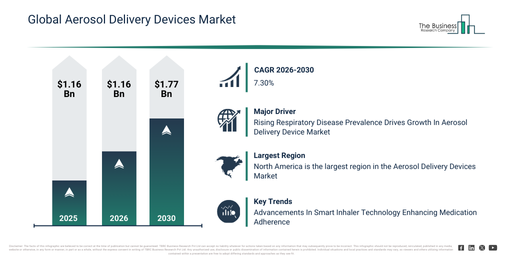
    The aerosol delivery devices market is projected to experience substantial expansion over the coming years. This market is anticipated to reach $73.33 billion by 2030, exhibiting a compound annual growth rate (CAGR) of 7.3%. Factors contributing to this growth during the projected period include the increasing uptake of home care respiratory treatment devices, a rising need for portable mesh and ultrasonic nebulizers, a growing inclination towards patient-focused inhalation technologies, the broadening of retail and e-commerce distribution avenues, and an elevated focus on enhancing treatment compliance for chronic respiratory conditions. Key trends anticipated in the forecast period encompass a heightened clinical emphasis on refined aerosol drug delivery for managing respiratory disorders, the expanding use of sophisticated inhalation platforms within asthma and COPD treatment sectors, a greater inclination towards portable and home-based aerosol delivery systems for ongoing therapy, the increasing application of nebulizers and dry powder inhalers in both pediatric and geriatric patient populations, and the continued development of user-friendly inhalation interfaces to boost adherence and therapeutic results.

    Access Your Free Sample Report For In-Depth Market Analysis:

    https://www.thebusinessresearchcompany.com/sample.aspx?id=17054&type=smp

    What Major Factors Are Driving The Aerosol Delivery Devices Market Forward?

    The escalating prevalence of respiratory illnesses is predicted to drive forward the expansion of the aerosol delivery device market. These conditions span a wide array of disorders impacting the airways, lungs, and the respiratory system itself. The incidence of respiratory diseases is linked to elements like air pollution, smoking, allergens, and respiratory infections. Aerosol delivery devices serve to effectively dispense vital medications, such as bronchodilators and corticosteroids, directly into the lungs for patients with these conditions, thereby enhancing therapeutic results and improving patient adherence. A notable example is data from June 2025, where the World Health Organization/European Respiratory Society, a Europe-based health agency, reported that the count of individuals affected by chronic respiratory diseases in the WHO European Region has reached 81.7 million in 2025, representing an increase from earlier projections, with a significant portion of cases still undiagnosed. This rising occurrence of respiratory diseases is, therefore, expected to be a key catalyst for the growth of the aerosol delivery device market.

    How Are Different Segments Classified In The Aerosol Delivery Devices Market Segment Analysis?

    The aerosol delivery devices market covered in this report is segmented –

    1) By Product: Dry Powder Inhalers, Metered Dose Inhalers, Nebulizers

    2) By Application: Asthma, Chronic Obstructive Pulmonary Disease, Cystic Fibrosis

    3) By Distribution Channel: Retail Pharmacies, Hospital Pharmacies, E Commerce

    Subsegments:

    1) By Dry Powder Inhalers (DPIs): Single-Dose DPIs, Multi-Dose DPIs

    2) By Metered Dose Inhalers (MDIs): Conventional MDIs, MDIs With Spacer/Chamber

    3) By Nebulizers: Jet Nebulizers, Ultrasonic Nebulizers, Mesh Nebulizers

    Which Trends Are Impacting The Progress Of The Aerosol Delivery Devices Market?

    Leading companies in the aerosol delivery device sector are concentrating on innovative inhaler dose trackers, particularly smart inhaler dose monitoring devices, to bolster medication adherence and facilitate real-time tracking of inhaler usage. A smart inhaler dose monitoring device functions as an electronic system that observes and records inhaler consumption, supplying immediate dose monitoring and adherence information. For instance, in June 2024, Aseptika Ltd., a UK-based MedTech company, unveiled the revolutionary PUFFClicker3 Universal Inhaler. This intelligent inhaler dose counter connects to diverse inhalers, employing sensors to record each dose. It features real-time dose observation, an easy-to-use interface, and Bluetooth connectivity to synchronize with health applications, thereby supporting patients in maintaining their medication schedules and equipping healthcare providers with thorough adherence data.

    Who Are The Companies Driving Activity In The Aerosol Delivery Devices Market?

    Major companies operating in the aerosol delivery devices market are AstraZeneca plc, Novartis AG, GlaxoSmithKline plc, 3M Company, Becton Dickinson and Company, Koninklijke Philips NV, Teva Pharmaceutical Industries Ltd, Draegerwerk AG & Co KGaA, Chiesi Farmaceutici SpA, Vectura Group plc, Sunovion Pharmaceuticals Inc., Omron Healthcare Inc., PARI GmbH, Aerogen Inc, Clement Clarke International Ltd, Iconovo AB, Boehringer Ingelheim GmbH, Cipla Ltd, Cipla Respiratory Devices, Cipla Pharma Ltd, Mylan NV

    Get The Full Aerosol Delivery Devices Market Report:

    https://www.thebusinessresearchcompany.com/report/aerosol-delivery-devices-global-market-report

    Which Region Leads The Aerosol Delivery Devices Market In Terms Of Market Share?

    North America was the largest region in the aerosol delivery devices market in 2025. Asia-Pacific is expected to be the fastest-growing region in the forecast period. The regions covered in the aerosol delivery devices market report are Asia-Pacific, South East Asia, Western Europe, Eastern Europe, North America, South America, Middle East, Africa.

    Request A Customized Aerosol Delivery Devices Market Report For Competitive Insights:

    https://www.thebusinessresearchcompany.com/customise?id=17054&type=smp

    Browse Through More Reports Similar to the Global Aerosol Delivery Devices Market 2026, By The Business Research Company

    Aerosol Valves Market Report 2026

    https://www.thebusinessresearchcompany.com/report/aerosol-valves-global-market-report

    Air Purification Equipment Market Report 2026

    https://www.thebusinessresearchcompany.com/report/air-purification-equipment-global-market-report

    Air Transport Market Report 2026

    https://www.thebusinessresearchcompany.com/report/air-transport-global-market-report

    Get in touch with us:

    The Business Research Company: https://www.thebusinessresearchcompany.com/

    Americas +1 310-496-7795

    Asia +44 7882 955267 & +91 8897263534

    Europe +44 7882 955267

    Email us at info@tbrc.info

    Follow us on:

    LinkedIn: https://in.linkedin.com/company/the-business-research-company

    YouTube: https://www.youtube.com/channel/UC24_fI0rV8cR5DxlCpgmyFQ

    Global Market Model: https://www.thebusinessresearchcompany.com/global-market-model
  • Advanced Wound Care Market Trends Driving Growth Through 2030

    Advanced Wound Care Market Trends Driving Growth Through 2030

    The Business Research Company’s 2026 market reports feature enhanced tools like market attractiveness analysis, TAM assessment, and company scoring matrices, along with interactive dashboards, deeper supply chain insights, and startup coverage strengthening the depth, usability, and strategic value of insights.

    How Will The Market Value Of The Advanced Wound Care Market Progress Between 2026 And 2030?

    The advanced wound care market has experienced significant expansion in recent years. It is projected to increase from $11.61 billion in 2025 to $12.43 billion in 2026, demonstrating a compound annual growth rate (CAGR) of 7.0%. The past growth can be ascribed to several factors, including the increasing occurrence of chronic and acute wounds, the expansion of hospital wound care departments, a rising incidence of surgical wounds, the expanding diabetic population, and the accessibility of advanced wound care products.

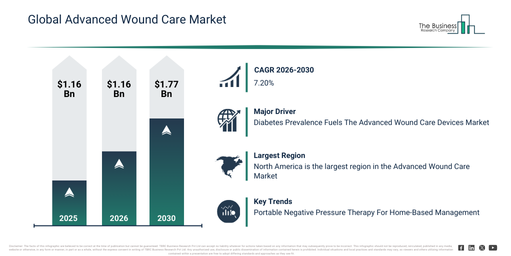
    The advanced wound care market is anticipated to experience substantial growth in the upcoming years. This market is projected to reach $16.43 billion by 2030, exhibiting a compound annual growth rate (CAGR) of 7.2%. This expansion during the forecast period is attributable to several factors, including a heightened demand for sophisticated wound healing solutions, the increasing embrace of home healthcare for wound management, the proliferation of personalized wound treatment methods, a growing emphasis on accelerating healing times, and greater investment in wound care innovation. Key trends anticipated within the forecast period encompass a wider adoption of moist wound healing technologies, an uptick in the utilization of antimicrobial and active dressings, the increasing incorporation of NPWT systems, the development of bioengineered skin substitutes, and an elevated focus on the management of chronic wounds.

    Access Your Free Sample Report For In-Depth Market Analysis:

    https://www.thebusinessresearchcompany.com/sample.aspx?id=9943&type=smp

    Which Key Drivers Are Affecting The Advanced Wound Care Market Development?

    The expanding occurrence of diabetes is projected to fuel the future growth of the advanced wound care devices market. Diabetes, a persistent health condition, is defined by elevated blood glucose levels, stemming from the body’s inability to either produce or effectively utilize insulin, a hormone crucial for blood sugar regulation. This increasing prevalence directly leads to a greater demand for specialized advanced wound care devices, underscoring the necessity for ongoing innovation and investment in technologies to tackle the particular difficulties posed by diabetic wounds and enhance patient outcomes. Advanced wound care aids individuals with diabetes by promoting quicker healing of chronic wounds, mitigating infection risks, averting severe complications such as ulcers or amputations, and enhancing overall skin health. For instance, in June 2024, the National Health Service, a UK-based government department, disclosed that in 2023, the NHS identified an additional 549,000 individuals in England susceptible to developing type 2 diabetes. This raised the total count of people registered with a GP having non-diabetic hyperglycemia, or pre-diabetes, to 3,615,330, marking a significant increase compared to 3,065,825 in 2022, a rise of nearly 20%. Consequently, the escalating incidence of diabetes is a key driver for the expansion of the advanced wound care devices market.

    How Is The Advanced Wound Care Market Categorized Across Its Segment Groups?

    The advanced wound care market covered in this report is segmented –

    1) By Product: Moist, Antimicrobial, Active

    2) By Application: Chronic Wounds, Acute Wounds

    3) By End User: Hospitals, Specialty Clinics, Home Healthcare, Other End Users

    Subsegments:

    1) By Moist: Hydrocolloid Dressings, Hydrogels, Foam Dressings

    2) By Antimicrobial: Silver-Infused Dressings, Honey-Infused Dressings, Iodine-Containing Dressings

    3) By Active: Negative Pressure Wound Therapy (NPWT), Bioengineered Skin Substitutes

    What Trends Are Transforming The Advanced Wound Care Market?

    Leading companies in the advanced wound care market are focusing on developing innovative solutions, such as portable and patient-friendly negative pressure wound therapy (NPWT) systems. This initiative aims to address the growing demand for more accessible and home-based chronic wound management, as healthcare shifts towards outpatient settings and remote care. Negative pressure wound therapy involves applying controlled suction (sub-atmospheric pressure) to wounds, promoting healing by removing exudate, reducing edema, and stimulating tissue growth. Unlike traditional dressings, NPWT provides active, continuous management rather than passive coverage. For instance, in April 2024, Smith+Nephew PLC, a UK-based medical-technology company, launched the RENASYS EDGE NPWT System in the U.S. This device is compact, lightweight, and quiet, specifically designed for chronic wound patients at home. The system’s discreet canister and near-field communication interface contribute to its user-friendliness, offering step-by-step setup guidance. It operates quietly to maintain discretion, supports continuous therapy in an ambulatory environment, and is backed by 24-hour clinical support. Smith+Nephew also partnered with national distributors, SunMED Medical Solutions and First Nation Group, to make the device more widely available, thereby enhancing patient independence and adherence.

    Which Firms Are Influencing Competition In The Advanced Wound Care Market?

    Major companies operating in the advanced wound care market are Integra LifeSciences Corp., Mölnlycke Health Care, Johnson & Johnson Services Inc., Medline Industries Inc., Medtronic plc, Organogenesis Holdings Inc., Smith & Nephew plc, B. Braun Melsungen AG, Coloplast A/S, ConvaTec Group plc, Hollister Incorporated, URGO Medical Ltd., Lohmann & Rauscher GmbH & Co. KG, MiMedx Group Inc., BSN medical GmbH, Paul Hartmann AG, Johnson & Johnson Medical Devices Group, Beiersdorf AG, Zimmer Biomet Holdings Inc., Misonix Inc., Cardinal Health Inc., Nestlé Health Science SA, Becton Dickinson and Company

    Get The Full Advanced Wound Care Market Report:

    https://www.thebusinessresearchcompany.com/report/advanced-wound-care-global-market-report

    Which Region Leads The Advanced Wound Care Market In Overall Market Size?

    North America was the largest region in the advanced wound care devices market in 2025. Asia-Pacific is expected to be the fastest-growing region in the advanced wound care devices market report during the forecast period. The regions covered in the advanced wound care market report are Asia-Pacific, South East Asia, Western Europe, Eastern Europe, North America, South America, Middle East, Africa.

    Request A Customized Advanced Wound Care Market Report For Competitive Insights:

    https://www.thebusinessresearchcompany.com/customise?id=9943&type=smp

    Browse Through More Reports Similar to the Global Advanced Wound Care Market 2026, By The Business Research Company

    Active Wound Care Market Report 2026

    https://www.thebusinessresearchcompany.com/report/active-wound-care-global-market-report

    Chronic Wound Care Market Report 2026

    https://www.thebusinessresearchcompany.com/report/chronic-wound-care-global-market-report

    Wound Care Biologics Market Report 2026

    https://www.thebusinessresearchcompany.com/report/wound-care-biologics-global-market-report

    Get in touch with us:

    The Business Research Company: https://www.thebusinessresearchcompany.com/

    Americas +1 310-496-7795

    Asia +44 7882 955267 & +91 8897263534

    Europe +44 7882 955267

    Email us at info@tbrc.info

    Follow us on:

    LinkedIn: https://in.linkedin.com/company/the-business-research-company

    YouTube: https://www.youtube.com/channel/UC24_fI0rV8cR5DxlCpgmyFQ

    Global Market Model: https://www.thebusinessresearchcompany.com/global-market-model
  • Advanced Orthopedic Technologies, Implants, And Regenerative Products Market Growth Trends And Forecast Outlook To 2030

    Advanced Orthopedic Technologies, Implants, And Regenerative Products Market Growth Trends And Forecast Outlook To 2030

    The Business Research Company’s 2026 market reports feature enhanced tools like market attractiveness analysis, TAM assessment, and company scoring matrices, along with interactive dashboards, deeper supply chain insights, and startup coverage strengthening the depth, usability, and strategic value of insights.

    What Are The Market Size Estimates For The Advanced Orthopedic Technologies, Implants, And Regenerative Products Market In 2026 And 2030?

    The advanced orthopedic technologies, implants, and regenerative products market has experienced robust growth recently. This market is projected to expand from $69.58 billion in 2025 to $74.2 billion in 2026, exhibiting a compound annual growth rate (CAGR) of 6.6%. Historically, this expansion has been driven by factors such as an escalating incidence of musculoskeletal disorders, a rise in orthopedic surgical procedures, innovations in implant material science, the proliferation of specialized orthopedic clinics, and enhanced availability of joint replacement surgeries.

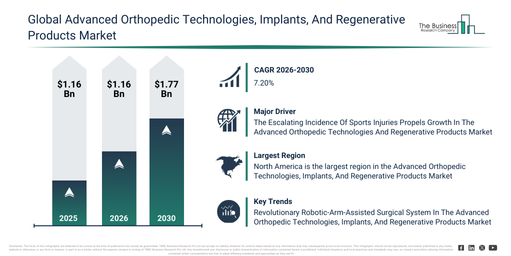
    The market for advanced orthopedic technologies, implants, and regenerative products is projected to experience substantial expansion in the coming years. This market is anticipated to reach $98.14 billion by 2030, exhibiting a compound annual growth rate (CAGR) of 7.2%. This expansion throughout the forecast period can be attributed to factors such as the increasing demand for patient-specific implants, the growing integration of biologics in orthopedic practices, heightened investments in regenerative medicine research, the broadening scope of robotic-assisted orthopedic surgeries, and enhancements in the long-term efficacy of implants. Key trends identified for the forecast period encompass a greater acceptance of regenerative orthopedic therapies, the increasing utilization of advanced materials for implants, the progressive integration of smart orthopedic implants, the wider implementation of minimally invasive orthopedic procedures, and a sharpened emphasis on personalized orthopedic treatments.

    Access Your Free Sample Report For In-Depth Market Analysis:

    https://www.thebusinessresearchcompany.com/sample.aspx?id=12682&type=smp

    What Factors Are Contributing To The Growth Of The Advanced Orthopedic Technologies, Implants, And Regenerative Products Market?

    The increasing occurrence of sports injuries is anticipated to drive growth within the advanced orthopedic technologies, implants, and regenerative products market in upcoming years. Sports injuries are those sustained during participation in sports or exercise, capable of affecting muscles, bones, ligaments, joints, and tendons, among other areas. As more individuals engage in sports and physical activities, the prevalence of such injuries rises, which in turn fuels the demand for orthopedic technology and regenerative products designed to heal injuries, restore tissues, and support quicker recovery. For instance, the U.S. National Safety Council, a US-based public health and safety organization, reported that sports and recreational injuries totaled 564,845 in 2024, marking an increase from 482,886 injuries in 2023. Hence, the escalating incidence of sports injuries is a significant factor propelling the advanced orthopedic technologies, implants, and regenerative products market.

    How Are Segments Identified Within The Advanced Orthopedic Technologies, Implants, And Regenerative Products Market Segment Framework?

    The advanced orthopedic technologies, implants, and regenerative products market covered in this report is segmented –

    1) By Type: Implants, Regenerative Products

    2) By Site: Hip And Pelvis, Foot And Ankle, Knee And Thigh, Hand And Wrist, Shoulder, Arm And Elbow, Spine, Craniomaxillofacial

    3) By Application: Hospitals, Ambulatory Surgical Centers, Specialty Clinics, Other Applications

    Subsegments:

    1) By Implants: Joint Implants, Bone Implants, Spine Implants

    2) By Regenerative Products: Stem Cell Products, Platelet-Rich Plasma (PRP) Products, Bone Graft Substitutes

    What Trends Are Shaping The Future Of The Advanced Orthopedic Technologies, Implants, And Regenerative Products Market?

    Major companies operating in the advanced orthopedic technologies, implants, and regenerative products market are channeling their efforts into innovative offerings, such as robotic-arm-assisted surgical systems, to more effectively address the demands of their current consumers. A robotic-arm-assisted surgical system is a sophisticated medical instrument designed to improve the accuracy and capabilities of surgical procedures. For instance, in March 2023, Stryker Corporation, a US-based medical technology company, introduced Mako Total Knee 2.0. The Mako Total Knee 2.0 is a robotic-arm-assisted surgical system engineered to enhance the surgical procedure for total knee arthroplasty (TKA) by providing an intuitive design, a flexible workflow, and creative functionalities, including a digital tensioner that enables physicians to evaluate knee stability during the procedure without the need for supplementary instrumentation. Mako whole Knee 2.0 is built upon the framework of Mako SmartRobotics and its three fundamental components: 3D CT-based planning, AccuStopTM haptic technology, and insightful data analytics, which have shown superior outcomes for whole knee, total hip, and partial knee patients in contrast to manual surgery.

    Who Are The Companies Competing Within The Advanced Orthopedic Technologies, Implants, And Regenerative Products Market?

    Major companies operating in the advanced orthopedic technologies, implants, and regenerative products market are Johnson & Johnson, Medtronic PLC, Stryker Corporation, B Braun Medical Inc., Zimmer Biomet Holdings Inc., Smith & Nephew PLC, Arthrex Inc., Integra LifeSciences Holdings Corporation, Lepu Medical Technology Co Ltd., NuVasive Inc., CONMED Corporation, Globus Medical Inc., Wright Medical Group N.V., Bioventus LLC, Orthofix Medical Inc., Alphatec Holdings Inc., Acumed LLC, MiMedx Group Inc., Exactech Inc., Anika Therapeutics Inc., DJO Global Inc., Misonix Inc., Osiris Therapeutics Inc., Bacterin International Holdings Inc., Cerapedics Inc., Histogenics Corporation, Kuros Biosciences AG, Life Spine Inc., Aurora Spine Corporation, Camber Spine Technologies LLC.

    Get The Full Advanced Orthopedic Technologies, Implants, And Regenerative Products Market Report:

    https://www.thebusinessresearchcompany.com/report/advanced-orthopedic-technologies-implants-and-regenerative-products-global-market-report

    Which Region Is The Top Contributor To The Advanced Orthopedic Technologies, Implants, And Regenerative Products Market By Share?

    North America was the largest region in the advanced orthopedic technologies, implants, and regenerative products market in 2025. Asia-Pacific is expected to be the fastest-growing region in the forecast period. The regions covered in the advanced orthopedic technologies, implants, and regenerative products market report are Asia-Pacific, South East Asia, Western Europe, Eastern Europe, North America, South America, Middle East, Africa.

    Request A Customized Advanced Orthopedic Technologies, Implants, And Regenerative Products Market Report For Competitive Insights:

    https://www.thebusinessresearchcompany.com/customise?id=12682&type=smp

    Browse Through More Reports Similar to the Global Advanced Orthopedic Technologies, Implants, And Regenerative Products Market 2026, By The Business Research Company

    Orthopedic Regenerative Surgical Products Market Report 2026

    https://www.thebusinessresearchcompany.com/report/orthopedic-regenerative-surgical-products-global-market-report

    Orthopedic Prosthetics Market Report 2026

    https://www.thebusinessresearchcompany.com/report/orthopedic-prosthetics-global-market-report

    Orthopedic Devices Market Report 2026

    https://www.thebusinessresearchcompany.com/report/orthopedic-devices-global-market-report

    Get in touch with us:

    The Business Research Company: https://www.thebusinessresearchcompany.com/

    Americas +1 310-496-7795

    Asia +44 7882 955267 & +91 8897263534

    Europe +44 7882 955267

    Email us at info@tbrc.info

    Follow us on:

    LinkedIn: https://in.linkedin.com/company/the-business-research-company

    YouTube: https://www.youtube.com/channel/UC24_fI0rV8cR5DxlCpgmyFQ

    Global Market Model: https://www.thebusinessresearchcompany.com/global-market-model
  • Advanced Life Support (ALS) Training Manikins Market Insights Covering Drivers, Trends, And Opportunities

    Advanced Life Support (ALS) Training Manikins Market Insights Covering Drivers, Trends, And Opportunities

    The Business Research Company’s 2026 market reports feature enhanced tools like market attractiveness analysis, TAM assessment, and company scoring matrices, along with interactive dashboards, deeper supply chain insights, and startup coverage strengthening the depth, usability, and strategic value of insights.

    What Expansion In Market Value Is Forecasted For The Advanced Life Support (ALS) Training Manikins Market Between 2026 And 2030?

    The advanced life support (als) training manikins market has experienced substantial growth in recent years. It is anticipated to expand from $1.42 billion in 2025 to $1.53 billion in 2026, achieving a compound annual growth rate (CAGR) of 7.7%. The market’s historical growth was primarily driven by factors including the limited availability of advanced manikins, a reliance on basic cpr training tools, an increase in hospital-based training programs, rising awareness of emergency care training, and the adoption of manual skill assessment methods.

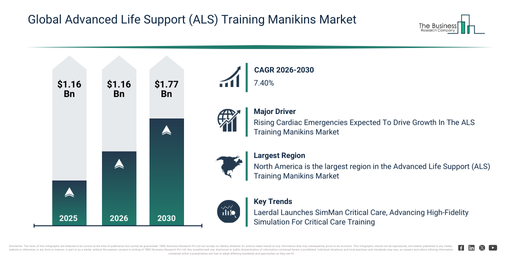
    The advanced life support (ALS) training manikins market size is projected to experience strong expansion in the coming years. It is forecast to reach $2.04 billion by 2030, with a compound annual growth rate (CAGR) of 7.4%. This anticipated growth can be attributed to several factors such as the development of high-fidelity simulation manikins, their integration with AR/VR training platforms, the expansion of certification programs for healthcare professionals, increasing investment in medical training centers, and the adoption of connected and intelligent training devices. Key trends for the forecast period include the incorporation of realistic anatomical features into manikins, the uptake of multi-age (adult, child, infant) training solutions, the rising use of AED and trauma simulation manikins, the expansion of hospital and training center programs, and an enhanced focus on skill assessment and certification.

    Access Your Free Sample Report For In-Depth Market Analysis:

    https://www.thebusinessresearchcompany.com/sample.aspx?id=19270&type=smp

    Which Strong Drivers Are Impacting The Advanced Life Support (ALS) Training Manikins Market Growth?

    The increasing occurrence of cardiac emergencies is anticipated to fuel the expansion of the advanced life support training (ALS) manikins market moving ahead. Cardiac emergencies are defined as critical heart-related medical situations, including heart attacks, sudden cardiac arrest, or significant arrhythmias, demanding prompt intervention to avert fatalities or serious health issues. This increase in cardiac incidents stems from factors like rising obesity, high blood pressure, diabetes, and lifestyle elements such as unhealthy eating habits, insufficient physical activity, and tobacco use. Advanced life support training manikins serve to address cardiac emergencies by replicating lifelike scenarios, enabling practice of vital skills like cardiopulmonary resuscitation (CPR), defibrillation, and advanced cardiac life support methods, thereby assisting healthcare providers in enhancing their responses to cardiac arrest. As an example, the Centers for Disease Control and Prevention, a US-based government agency, reported that in May 2023, more than 695,000 individuals in the US succumbed to heart disease, representing one out of every five deaths. Consequently, the growing frequency of cardiac emergencies is propelling the expansion of the advanced life support training (ALS) manikins market.

    What Are The Key Segment Divisions In The Advanced Life Support (ALS) Training Manikins Market Segment Structure?

    The advanced life support (als) training manikins market covered in this report is segmented –

    1) By Type: Adult, Child, Infant

    2) By Manikin Category: Adult Cardiopulmonary Resuscitation Manikins, Full Body Manikins, Choking Manikins, Injection Simulators, Other Manikin Categories

    3) By Application: Hospital And Clinic, Training Center, Other Applications

    Subsegments:

    1) By Adult: Full-Body Adult Manikins, Half-Body Adult Manikins, Adult CPR Manikins, Adult Trauma Manikins, Adult AED (Automated External Defibrillator) Training Manikins

    2) By Child: Full-Body Child Manikins, Half-Body Child Manikins, Child CPR Manikins, Child Trauma Manikins, Child AED Training Manikins

    3) By Infant: Full-Body Infant Manikins, Half-Body Infant Manikins, Infant CPR Manikins, Infant Trauma Manikins, Infant Airway Management Manikins.

    Which Trends Are Contributing To Changes In The Advanced Life Support (ALS) Training Manikins Market?

    Leading companies within the advanced life support training (ALS) manikins market are concentrating on creating novel products, such as high-fidelity patient simulators, aimed at improving patient care for critical and respiratory conditions that are life-threatening. These high-fidelity patient simulators serve as sophisticated training tools designed to mimic authentic physiological reactions and medical scenarios, thereby enabling thorough and precise development of clinical expertise. An example of this is the collaboration in March 2024 between Laerdal Medical AS, a Norway-based healthcare provider, and IngMar Medical, a US-based medical equipment manufacturer, resulting in the introduction of SimMan Critical Care. This particular high-fidelity simulator is engineered for extensive critical care and respiratory education. The SimMan Critical Care simulation model delivers extensive functionalities for rehearsing vital care situations, encompassing authentic physiological responses like breath sounds, heartbeats, and detectable pulses. It incorporates advanced technology to facilitate the monitoring and handling of diverse emergencies, such as cardiac arrest, respiratory distress, and shock. Furthermore, the manikin delivers immediate feedback and is compatible with simulation software, enabling performance tracking and supporting debriefing sessions.

    Which Organizations Are Engaged In The Advanced Life Support (ALS) Training Manikins Market?

    Major companies operating in the advanced life support (als) training manikins market are HealthFirst Medical Corporation, CAE Inc., Ambu A S, Laerdal Medical, Nasco, 3B Scientific, Life-Assist Inc., Gaumard Scientific Company Inc., Medisol International, Simulaids Ltd., Prestan Products, TruCorp Ltd., Simulaids Inc., Zoll Medical Corporation, Simulab Corporation, Prometheus Medical, Jordan Anesthesia, Richmond Products, Harvard Apparatus, GrahamField, Medical Simulation Corporation, Simbionix, Limbs & Things Ltd., BT Inc., Medical-X, Koken Co Ltd., Sakamoto Model Corporation, Yuan Technology Limited, V4EMS Inc., SmartMan Inc., RealityWorks Inc., Adam Rouilly Ltd.

    Get The Full Advanced Life Support (ALS) Training Manikins Market Report:

    https://www.thebusinessresearchcompany.com/report/advanced-life-support-als-training-manikins-global-market-report

    Which Region Represents The Largest Share Of The Advanced Life Support (ALS) Training Manikins Market?

    North America was the largest region in the advanced life support (ALS) training manikins’ market in 2025. The regions covered in the advanced life support (als) training manikins market report are Asia-Pacific, South East Asia, Western Europe, Eastern Europe, North America, South America, Middle East, Africa.

    Request A Customized Advanced Life Support (ALS) Training Manikins Market Report For Competitive Insights:

    https://www.thebusinessresearchcompany.com/customise?id=19270&type=smp

    Browse Through More Reports Similar to the Global Advanced Life Support (ALS) Training Manikins Market 2026, By The Business Research Company

    Advanced Driver Assistance Systems Adas Market Report 2026

    https://www.thebusinessresearchcompany.com/report/advanced-driver-assistance-systems-adas-global-market-report

    Advanced Analytics Market Report 2026

    https://www.thebusinessresearchcompany.com/report/advanced-analytics-global-market-report

    Advanced Energy Storage Systems Market Report 2026

    https://www.thebusinessresearchcompany.com/report/advanced-energy-storage-systems-global-market-report

    Get in touch with us:

    The Business Research Company: https://www.thebusinessresearchcompany.com/

    Americas +1 310-496-7795

    Asia +44 7882 955267 & +91 8897263534

    Europe +44 7882 955267

    Email us at info@tbrc.info

    Follow us on:

    LinkedIn: https://in.linkedin.com/company/the-business-research-company

    YouTube: https://www.youtube.com/channel/UC24_fI0rV8cR5DxlCpgmyFQ

    Global Market Model: https://www.thebusinessresearchcompany.com/global-market-model

  • Advanced Drug Delivery Systems Market Developments Influencing Growth Across The Forecast Period

    Advanced Drug Delivery Systems Market Developments Influencing Growth Across The Forecast Period

    The Business Research Company’s 2026 market reports feature enhanced tools like market attractiveness analysis, TAM assessment, and company scoring matrices, along with interactive dashboards, deeper supply chain insights, and startup coverage strengthening the depth, usability, and strategic value of insights.

    How Large Will The Advanced Drug Delivery Systems Market Be By 2030 Compared To Its 2026 Market Size?

    The advanced drug delivery systems market has demonstrated significant growth in recent years. This market is anticipated to expand from $285.59 billion in 2025 to $310.15 billion in 2026, achieving a compound annual growth rate (CAGR) of 8.6%. The historical growth can be credited to an expansion of pharmaceutical R&D activities, the increasing prevalence of chronic diseases, advancements in formulation science, the rise of injectable drug therapies, and a greater focus on treatment efficacy.

    The advanced drug delivery systems market size is projected to experience robust expansion over the forthcoming years. This sector is anticipated to reach a valuation of $433.56 billion by 2030, exhibiting a compound annual growth rate (CAGR) of 8.7%. The expansion during the projected timeframe stems from several factors, including a heightened demand for personalized medicine, greater acceptance of biologics, the broadening use of nanotechnology-derived therapies, an intensified effort to mitigate drug side effects, and increased capital allocated to sophisticated pharmaceutical delivery platforms. Key developments expected within this forecast period encompass a wider embrace of targeted drug delivery techniques, a surge in the application of nanocarrier-based formulations, an escalating need for controlled release mechanisms, the proliferation of biologic and biosimilar delivery methods, and a sharpened emphasis on patient-focused drug administration.

    Access Your Free Sample Report For In-Depth Market Analysis:

    https://www.thebusinessresearchcompany.com/sample.aspx?id=12683&type=smp

    What Key Factors Are Shaping The Advanced Drug Delivery Systems Market Landscape?

    The anticipated expansion of the advanced drug delivery systems market is linked to the rising incidence of chronic conditions. These conditions are defined as health issues persisting for at least a year, often requiring ongoing medical attention, limiting daily functions, or both. They are frequently triggered by a range of risky behaviors, such as tobacco use and exposure to secondhand smoke, poor nutrition, physical inactivity, and excessive alcohol use. Advanced drug delivery systems enable precise administration of therapeutic agents to particular areas in the body impacted by chronic conditions. These systems guarantee that medication reaches its target location, thereby boosting its efficacy and reducing adverse reactions. As an illustration, in May 2023, The United Nations (UN), a US-based intergovernmental organization dedicated to fostering international collaboration and preserving global peace and security, reported that chronic diseases account for seven out of 10 deaths in the US, leading to over 1.7 million Americans fatalities annually. Consequently, the growing occurrence of chronic conditions is stimulating the expansion of the advanced drug delivery systems market.

    Which Segment Categories Are Included In The Advanced Drug Delivery Systems Market Segment Analysis?

    The advanced drug delivery systems market covered in this report is segmented –

    1) By Type: Oral Drug Delivery System, Injection-Based Drug Delivery System, Inhalation Or Pulmonary Drug Delivery System, Transdermal Drug Delivery System, Transmucosal Drug Delivery System, Carrier-Based Drug Delivery System, Other Types

    2) By Carrier Type: Liposomes, Nanoparticles, Microspheres, Other Carrier Types

    3) By Technology: Prodrug, Implants And Intrauterine Devices, Targeted Drug Delivery, Polymeric Drug Delivery, Other Technologies

    4) By Application: Cardiovascular Diseases, Oncology, Urology, Diabetes, CNS (Central Nervous System), Ophthalmology, Inflammatory Diseases, Infections, Other Applications

    5) By End User: Hospitals, Specialized clinics, Clinical Research And Development Centers

    Subsegments:

    1) By Oral Drug Delivery System: Solid Dosage Forms, Liquid Dosage Forms, Novel Oral Delivery Systems

    2) By Injection-Based Drug Delivery System: Autoinjectors, Microneedle-Based Systems

    3) By Inhalation Or Pulmonary Drug Delivery System: Metered-Dose Inhalers (MDIs), Dry Powder Inhalers (DPIs), Nebulizers, Soft Mist Inhalers

    4) By Transdermal Drug Delivery System: Transdermal Patches, Microneedle Patches, Iontophoresis Systems

    5) By Transmucosal Drug Delivery System: Buccal Delivery Systems, Sublingual Delivery Systems, Nasal Delivery Systems

    6) By Carrier-Based Drug Delivery System: Liposomes, Nanoparticles, Dendrimers, Niosomes

    7) By Other Types: Implantable Drug Delivery Systems, Targeted Delivery Systems, Bioadhesive Drug Delivery Systems

    What Market Trends Are Affecting The Advanced Drug Delivery Systems Market?

    Major companies in the advanced drug delivery system market are focusing on developing innovative solutions, such as subcutaneous biologic delivery technologies, to cater to the growing demand for convenient, rapid, and patient-friendly administration of complex therapies. Subcutaneous biologic delivery facilitates the administration of high-volume drugs under the skin, offering a less invasive alternative to traditional intravenous infusion. For instance, in June 2023, Halozyme Therapeutics, Inc., a US-based biopharmaceutical company, announced the FDA approval of VYVGART Hytrulo with ENHANZE, an innovative subcutaneous formulation designed for generalized myasthenia gravis. This product combines efgartigimod alfa with Halozyme’s recombinant human hyaluronidase PH20 (rHuPH20), enabling rapid, high-volume subcutaneous delivery through a single injection. It significantly reduces infusion time to seconds, improves patient convenience, supports treatment outside hospital settings, and maintains clinical efficacy comparable to IV administration.

    Who Are The Active Companies Shaping The Advanced Drug Delivery Systems Market?

    Major companies operating in the advanced drug delivery systems market are Pfizer Inc., Johnson and Johnson Services Inc., Roche Holding AG, Abbvie Inc., Bayer AG, Novartis AG, AstraZeneca plc, GlaxoSmithKline plc, 3M Company, Medtronic plc, Eli Lilly and Company, Boehringer Ingelheim GmbH, Amgen Inc., Merck Group, Becton Dickinson and Company, Baxter International Inc., Teva Pharmaceutical Industries Ltd., Sanofi S.A., Boston Scientific Corporation, Astellas Pharma Inc., Catalent Inc., Nipro Corporation, AptarGroup Inc., West Pharmaceutical Services Inc., Gerresheimer AG, Insulet Corporation

    Get The Full Advanced Drug Delivery Systems Market Report:

    https://www.thebusinessresearchcompany.com/report/advanced-drug-delivery-systems-global-market-report

    Which Geographic Region Dominates The Advanced Drug Delivery Systems Market?

    North America was the largest region in the advanced drug delivery systems market in 2025. Asia-Pacific is expected to be the fastest-growing region in the forecast period. The regions covered in the advanced drug delivery systems market report are Asia-Pacific, South East Asia, Western Europe, Eastern Europe, North America, South America, Middle East, Africa.

    Request A Customized Advanced Drug Delivery Systems Market Report For Competitive Insights:

    https://www.thebusinessresearchcompany.com/customise?id=12683&type=smp

    Browse Through More Reports Similar to the Global Advanced Drug Delivery Systems Market 2026, By The Business Research Company

    Electronic Drug Delivery Systems Market Report 2026

    https://www.thebusinessresearchcompany.com/report/electronic-drug-delivery-systems-global-market-report

    Pharmaceutical Drug Delivery Market Report 2026

    https://www.thebusinessresearchcompany.com/report/pharmaceutical-drug-delivery-global-market-report

    Smart Drug Delivery Systems Market Report 2026

    https://www.thebusinessresearchcompany.com/report/smart-drug-delivery-systems-global-market-report

    Get in touch with us:

    The Business Research Company: https://www.thebusinessresearchcompany.com/

    Americas +1 310-496-7795

    Asia +44 7882 955267 & +91 8897263534

    Europe +44 7882 955267

    Email us at info@tbrc.info

    Follow us on:

    LinkedIn: https://in.linkedin.com/company/the-business-research-company

    YouTube: https://www.youtube.com/channel/UC24_fI0rV8cR5DxlCpgmyFQ

    Global Market Model: https://www.thebusinessresearchcompany.com/global-market-model

  • Advanced Dental Digital And Robotic Solutions Market Forecast Highlighting Demand And Industry Growth

    Advanced Dental Digital And Robotic Solutions Market Forecast Highlighting Demand And Industry Growth

    The Business Research Company’s 2026 market reports feature enhanced tools like market attractiveness analysis, TAM assessment, and company scoring matrices, along with interactive dashboards, deeper supply chain insights, and startup coverage strengthening the depth, usability, and strategic value of insights.

    What Is The Projected Increase In Market Value Of The Advanced Dental Digital And Robotic Solutions Market During 2026–2030?

    The advanced dental digital and robotic solutions market has experienced substantial growth in recent years. This market is projected to expand from $7.41 billion in 2025 to $8.03 billion in 2026, at a compound annual growth rate (CAGR) of 8.3%. The growth observed in prior periods can be attributed to elements such as the demand for precise dental treatments, the expansion of cosmetic dentistry, requirements for dentist productivity, the widespread adoption of digital imaging, and an increased focus on patient comfort.

    The advanced dental digital and robotic solutions market is projected to experience substantial expansion over the upcoming years. This market is anticipated to reach $10.96 billion by 2030, exhibiting a compound annual growth rate (CAGR) of 8.1%. The upward trend during this forecast period stems from factors such as the proliferation of AI-driven diagnostics, the need for robotic precision, the rise of digital dental clinics, increased adoption of minimally invasive dentistry, and heightened global oral health awareness. Significant developments expected during the same period encompass the evolution of digital dentistry workflows, increasing integration of robotic implantology, a greater need for chairside CAD/CAM systems, wider application of 3D dental imaging, and the broadening reach of teledentistry platforms.

    Access Your Free Sample Report For In-Depth Market Analysis:

    https://www.thebusinessresearchcompany.com/sample.aspx?id=23294&type=smp

    Which Factors Are Influencing The Growth Of The Advanced Dental Digital And Robotic Solutions Market?

    The increasing demand for minimally invasive procedures is projected to propel the advanced dental digital and robotic solutions market forward. Minimally invasive procedures involve medical interventions through minor cuts or openings, leading to less patient discomfort and quicker healing. The appeal of minimally invasive procedures is growing due to their capacity to offer faster healing, lower complication risks, and reduced discomfort, making them a preferred choice for patients seeking quicker and safer treatments. These procedures assist advanced dental digital and robotic solutions by lessening the need for extensive surgical work and ensuring more accurate and patient-centric treatments. They boost efficiency by decreasing trauma, accelerating recovery, and enhancing treatment results. For instance, in January 2025, Synektik SA, a testing laboratories company based in Poland, reported that in 2023 alone, more than 2.2 million procedures were conducted globally using the da Vinci robotic system. On average, a da Vinci-assisted surgery commences globally every 16.8 seconds. Consequently, the increasing demand for minimally invasive procedures is a key driver for the expansion of the advanced dental digital and robotic solutions market.

    How Is The Advanced Dental Digital And Robotic Solutions Market Broken Down By Segment Categories?

    The advanced dental digital and robotic solutions market covered in this report is segmented –

    1) By Product: Digital Solutions, Robotics

    2) By Application: Implantology, Endodontics, Other Applications

    3) By End-Users: Dental Clinics, Hospitals, Other End-Users

    Subsegments:

    1) By Digital Solutions: Intraoral Scanners, Computer-Aided Design (CAD) Or Computer-Aided Manufacturing (CAM) Systems, Three-Dimensional (3D) Imaging Systems, Artificial Intelligence (AI)-Driven Diagnostic Tools, Digital Impressions, Treatment Planning Software, Teledentistry Platforms

    2) By Robotics: Robot-Assisted Implantology Systems, Robotic Surgery Systems, Robot-Assisted Orthodontic Systems, Robotic Endodontic Systems, Robotic Prosthetics Systems, Surgical Navigation Systems

    Which Trends Are Influencing Demand In The Advanced Dental Digital And Robotic Solutions Market?

    Major companies operating in the advanced dental digital and robotic solutions market are focusing on developing innovative solutions, such as seamless digital integration solutions, to optimize workflows, improve accuracy, and enhance patient care. Seamless digital integration solutions denote the smooth and efficient connection of digital technologies and systems to streamline workflows, enhance accuracy, and improve overall performance in processes like dental treatments. For instance, in March 2025, Medit Corp. Ltd., a South Korea-based digital dentistry company, launched Medit SmartX, an advanced All-on-X solution designed to enhance implant workflows. Medit SmartX captures high-precision three-dimensional (3D) digital impressions using artificial intelligence (AI)-driven intraoral scanning technology, thereby boosting accuracy and efficiency. It integrates seamlessly with computer-aided design (CAD) or computer-aided manufacturing (CAM) systems and robotic tools, streamlining workflows and improving treatment precision in advanced dental solutions.

    Which Players Are Present In The Advanced Dental Digital And Robotic Solutions Market Space?

    Major companies operating in the advanced dental digital and robotic solutions market are Henry Schein Inc., Dentsply Sirona, Align Technology Inc., Straumann Group, Planmeca Group, Ivoclar Vivadent, KaVo Kerr, Carestream Dental LLC, Envista Holdings Corporation, 3D Systems Inc., Formlabs Inc., Vatech, Neocis Inc., BEGO GmbH & Co. KG, Zirkonzahn, imes-icore GmbH, X-NAV Technologies, 3Shape A/S, exocad GmbH, Blue Sky Bio, Dental Wings Inc., Pearl AI

    Get The Full Advanced Dental Digital And Robotic Solutions Market Report:

    https://www.thebusinessresearchcompany.com/report/advanced-dental-digital-and-robotic-solutions-global-market-report

    Which Region Is The Leading Market For The Advanced Dental Digital And Robotic Solutions Market?

    North America was the largest region in the advanced dental digital and robotic solutions market in 2025. Asia-Pacific is expected to be the fastest-growing region in the forecast period. The regions covered in the advanced dental digital and robotic solutions market report are Asia-Pacific, South East Asia, Western Europe, Eastern Europe, North America, South America, Middle East, Africa.

    Request A Customized Advanced Dental Digital And Robotic Solutions Market Report For Competitive Insights:

    https://www.thebusinessresearchcompany.com/customise?id=23294&type=smp

    Browse Through More Reports Similar to the Global Advanced Dental Digital And Robotic Solutions Market 2026, By The Business Research Company

    3D Dental Scanners Market Report 2026

    https://www.thebusinessresearchcompany.com/report/3d-dental-scanners-global-market-report

    Dental 3D Scanners Market Report 2026

    https://www.thebusinessresearchcompany.com/report/dental-3d-scanners-global-market-report

    General Dental Devices And Equipment Market Report 2026

    https://www.thebusinessresearchcompany.com/report/general-dental-devices-and-equipment-global-market-report

    Get in touch with us:

    The Business Research Company: https://www.thebusinessresearchcompany.com/

    Americas +1 310-496-7795

    Asia +44 7882 955267 & +91 8897263534

    Europe +44 7882 955267

    Email us at info@tbrc.info

    Follow us on:

    LinkedIn: https://in.linkedin.com/company/the-business-research-company

    YouTube: https://www.youtube.com/channel/UC24_fI0rV8cR5DxlCpgmyFQ

    Global Market Model: https://www.thebusinessresearchcompany.com/global-market-model
  • Adhesion Barriers Market Outlook Highlighting Growth Drivers And Market Evolution

    Adhesion Barriers Market Outlook Highlighting Growth Drivers And Market Evolution

    The Business Research Company’s 2026 market reports feature enhanced tools like market attractiveness analysis, TAM assessment, and company scoring matrices, along with interactive dashboards, deeper supply chain insights, and startup coverage strengthening the depth, usability, and strategic value of insights.

    How Is The Market Size Of The Adhesion Barriers Market Expected To Change From 2026 To 2030?

    The adhesion barriers market has demonstrated robust growth in recent years. It is anticipated to expand from $0.89 billion in 2025 to $0.96 billion in 2026, achieving a compound annual growth rate (CAGR) of 7.1%. The expansion observed historically can be linked to the restricted availability of adhesion barrier types, the common use of conventional film and gel formulations, an increasing number of surgical procedures worldwide, a heightened understanding of postoperative complications, and a reliance on hospital-centric applications.

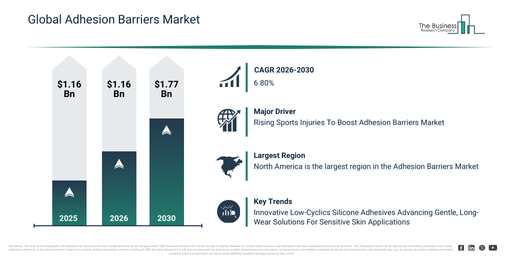
    The adhesion barriers market size is anticipated to experience robust expansion over the coming years. Projections indicate it will reach a value of $1.24 billion by 2030, exhibiting a compound annual growth rate (CAGR) of 6.8%. This projected growth during the forecast period can be ascribed to several factors, including the creation of sophisticated hydrogel and thermoreversible barrier technologies, the rising use of cross-linked hyaluronic acid products, the proliferation of ambulatory surgical facilities, the incorporation of adhesion barriers into orthopedic and cardiovascular surgical procedures, and an increasing commitment to patient-focused postoperative care. Key trends expected within this period encompass a greater acceptance of collagen and protein-derived adhesion barriers, the escalating application of synthetic hydrogels and polylactide barriers, the broadening scope of minimally invasive surgical techniques, an increase in both gynecological and abdominal surgical interventions, and an emphasis on minimizing postoperative complications and enhancing patient recuperation.

    Access Your Free Sample Report For In-Depth Market Analysis:

    https://www.thebusinessresearchcompany.com/sample.aspx?id=19267&type=smp

    What Leading Drivers Are Supporting The Adhesion Barriers Market Expansion?

    The increasing occurrence of sports-related injuries is projected to fuel the expansion of the adhesion barriers market. These injuries represent physical harm sustained during athletic activities or exercise, and their growing prevalence is attributed to factors such as increased participation, higher levels of competition, inadequate training, and insufficient recovery time. Adhesion barriers are utilized for sports-related injuries to prevent scar tissue from binding to surrounding tissues, thereby facilitating a smoother recovery and rehabilitation process. For example, as reported by the Australian Institute of Health and Welfare in July 2025, Cycling accounted for the highest proportion of sports injury hospitalisations in 2023–24, comprising 12% (or 7,500 cases) of all such hospitalisations. This was followed by Australian rules football at 8.7% (or 5,400 cases), and soccer at 8.6% (or 5,300 cases). Therefore, the escalating incidence of sports-related injuries is set to propel the growth of the adhesion barriers market.

    What Are The Different Segment Types In The Adhesion Barriers Market Segment Breakdown?

    The adhesion barriers market covered in this report is segmented –

    1) By Type: Natural Adhesion Barriers, Collagen And Protein, Fibrin, Synthetic Adhesion Barriers, Hyaluronic Acid, Regenerated Cellulose, Polyethylene Glycol

    2) By Formulation: Film Formulations, Gel Formulations, Liquid Formulations

    3) By Application Area Or Surgical Procedure: Gynecological Surgeries, General Or Abdominal Surgeries, Orthopedic Surgeries, Cardiovascular Surgeries, Neurological Surgeries, Urological Surgeries, Reconstructive Surgeries

    4) By End User: Hospitals And Clinics, Ambulatory Surgical Centers, Other End Users

    Subsegments:

    1) By Natural Adhesion Barriers: Collagen-Based Adhesion Barriers, Protein-Based Adhesion Barriers, Fibrin-Based Adhesion Barriers

    2) By Collagen And Protein: Bovine-Derived Collagen Adhesion Barriers, Porcine-Derived Collagen Adhesion Barriers, Human-Derived Protein Adhesion Barriers

    3) By Fibrin: Fibrin Sealant Adhesion Barriers, Fibrin Matrix Adhesion Barriers

    4) By Synthetic Adhesion Barriers: Hydrogels, Thermoreversible Adhesion Barriers, Polylactide Adhesion Barriers, Silicon-Based Adhesion Barriers

    5) By Hyaluronic Acid: Cross-Linked Hyaluronic Acid Adhesion Barriers, Non-Cross-Linked Hyaluronic Acid Adhesion Barriers

    6) By Regenerated Cellulose: Oxidized Regenerated Cellulose Adhesion Barriers, Non-Oxidized Regenerated Cellulose Adhesion Barriers

    7) By Polyethylene Glycol: Hydrophilic Polyethylene Glycol Adhesion Barriers, Polyethylene Glycol Hydrogel Adhesion Barriers

    What Emerging Trends Are Seen In The Adhesion Barriers Market?

    Leading companies in the adhesion barriers market are prioritizing the development of innovative products, such as low-cyclic silicone soft-skin adhesives, aiming to enhance extended wear-time and ensure gentle, atraumatic removal on delicate skin. Soft-skin adhesive (SSA) is a biocompatible, silicone-based adhesive specifically designed to adhere securely to skin for prolonged durations while minimizing damage or irritation during its removal. For instance, in October 2023, DuPont, a US-based chemical company, unveiled its new DuPont Liveo MG 7-9960 Soft Skin Adhesive. This adhesive delivers the highest peel adhesion within the Liveo SSA family, offering robust, durable attachment, excellent repositionability, better wear performance, superior conformability, and non-traumatic removal, thereby making it suitable for advanced wound dressings and wearable medical devices. The product is non-sensitizing, non-irritating, and non-cytotoxic, protecting fragile skin, including that of children, the elderly, or individuals with open wounds. Additionally, DuPont allows device manufacturers the flexibility to customize its performance by adjusting the adhesive coat weight to meet particular device design requirements, thus expanding the adoption of advanced wound care solutions.

    Who Are The Well-Known Companies In The Adhesion Barriers Market?

    Major companies operating in the adhesion barriers market are Johnson & Johnson Services Inc., Terumo Corporation, Atrium Medical Corporation, Integra LifeSciences Holdings Corporation, Gunze Industries Co. Ltd., Anika Therapeutics Inc., CG Bio Inc., Seikagaku Corporation, Hangzhou Singclean Medical Products Co. Ltd., FzioMed Inc., MAST Biosurgery Inc., Betatech Medical Ltd., PlantTec Medical GmbH, Actamax Surgical Materials LLC, Arc Medical Devices Inc., CorMatrix Cardiovascular Inc., Innocoll Biotherapeutics N.A. Inc., Leader Biomedical, BiosCompass Inc.

    Get The Full Adhesion Barriers Market Report:

    https://www.thebusinessresearchcompany.com/report/adhesion-barriers-global-market-report

    Where Is The Adhesion Barriers Market Primarily Concentrated By Region?

    North America was the largest region in the adhesion barriers market in 2025. Asia-Pacific is expected to be the fastest-growing region in the forecast period. The regions covered in the adhesion barriers market report are Asia-Pacific, South East Asia, Western Europe, Eastern Europe, North America, South America, Middle East, Africa.

    Request A Customized Adhesion Barriers Market Report For Competitive Insights:

    https://www.thebusinessresearchcompany.com/customise?id=19267&type=smp

    Browse Through More Reports Similar to the Global Adhesion Barriers Market 2026, By The Business Research Company

    Crash Barrier Systems Market Report 2026

    https://www.thebusinessresearchcompany.com/report/crash-barrier-systems-global-market-report

    Barrier Resins Market Report 2026

    https://www.thebusinessresearchcompany.com/report/barrier-resins-global-market-report

    Barrier Systems Market Report 2026

    https://www.thebusinessresearchcompany.com/report/barrier-systems-global-market-report

    Get in touch with us:

    The Business Research Company: https://www.thebusinessresearchcompany.com/

    Americas +1 310-496-7795

    Asia +44 7882 955267 & +91 8897263534

    Europe +44 7882 955267

    Email us at info@tbrc.info

    Follow us on:

    LinkedIn: https://in.linkedin.com/company/the-business-research-company

    YouTube: https://www.youtube.com/channel/UC24_fI0rV8cR5DxlCpgmyFQ

    Global Market Model: https://www.thebusinessresearchcompany.com/global-market-model

  • Adaptive Radiotherapy Software Market Overview 2026–2030 Covering Industry Developments

    Adaptive Radiotherapy Software Market Overview 2026–2030 Covering Industry Developments

    The Business Research Company’s 2026 market reports feature enhanced tools like market attractiveness analysis, TAM assessment, and company scoring matrices, along with interactive dashboards, deeper supply chain insights, and startup coverage strengthening the depth, usability, and strategic value of insights.

    From Its 2026 Market Size, What Value Is The Adaptive Radiotherapy Software Market Projected To Reach By 2030?

    The adaptive radiotherapy software market size has seen rapid growth in recent years. It is forecast to increase from $0.7 billion in 2025 to $0.81 billion in 2026, achieving a compound annual growth rate (CAGR) of 14.3%. Historically, this expansion has been influenced by factors including the increasing adoption of image-guided radiotherapy, the global rise in cancer incidence, advancements in radiation oncology software, the demand for improved treatment accuracy, and the expansion of radiotherapy centers.

    The adaptive radiotherapy software market size is projected to experience substantial expansion in the coming years. This market is forecast to reach $1.36 billion by 2030, exhibiting a compound annual growth rate (CAGR) of 14.0%. Key factors driving this growth during the forecast period include the increasing demand for personalized cancer treatment, the incorporation of AI-driven treatment adaptation, the expanding use of cloud-based oncology software, a heightened emphasis on reducing radiation toxicity, and significant investments in advanced oncology infrastructure. Prominent trends anticipated over this period encompass adaptive treatment planning, image-guided dose optimization, personalized radiation therapy protocols, workflow automation in radiation oncology, and the integration of multi-modality imaging.

    Access Your Free Sample Report For In-Depth Market Analysis:

    https://www.thebusinessresearchcompany.com/sample.aspx?id=28114&type=smp

    Which Key Factors Are Driving The Adaptive Radiotherapy Software Market Growth?

    The increasing prevalence of cancer diagnoses is projected to propel the expansion of the adaptive radiotherapy software market moving forward. Cancer cases refer to the number of individuals diagnosed with cancer within a specified population over a defined duration. Cancer cases are escalating among aging demographics as longer lifespans contribute to a higher accumulation of genetic mutations, thereby increasing the risk of developing the illness. Adaptive radiotherapy software supports cancer treatment by adjusting radiation therapy in real-time, based on changes in tumor size, shape, and patient anatomy. This improves precision, maximizes tumor targeting, and minimizes damage to healthy tissues. For instance, in February 2025, Cancer Australia, an Australia-based government agency, reported 4,641 new pancreatic cancer cases in 2024, with 2,414 in males and 2,227 in females. Therefore, the rising number of cancer cases is driving the growth of the adaptive radiotherapy software market.

    Which Segment Classifications Are Used In The Adaptive Radiotherapy Software Market Segment Analysis?

    The adaptive radiotherapy software market covered in this report is segmented –

    1) By Component: Software, Services

    2) By Deployment Mode: On-Premises, Cloud-Based

    3) By Application: Prostate Cancer, Head And Neck Cancer, Breast Cancer, Lung Cancer, Other Applications

    4) By End User: Hospitals, Cancer Treatment Centers, Research Institutes, Other End-Users

    Subsegments:

    1) By Software: Treatment Planning Software, Workflow Management Software, Imaging And Visualization Software

    2) By Services: Implementation And Integration Services, Maintenance And Consulting Services, Training And Support Services

    Which Trends Are Guiding The Direction Of The Adaptive Radiotherapy Software Market?

    Major companies operating in the adaptive radiotherapy software market are concentrating on advancing technologies such as AI-powered, adaptive CT-Linac to boost real-time tumor targeting, enhance treatment precision, and optimize patient outcomes. An AI-powered, adaptive CT-Linac is a radiation therapy system that integrates computed tomography (CT) imaging with a linear accelerator (Linac), employing artificial intelligence (AI) to adapt and fine-tune radiation delivery in real time, responding to changes in tumor size, shape, and position during therapy. For instance, in May 2024, Elekta AB, a Sweden-based medication company, launched Evo, which is designed for accurate and efficient radiotherapy treatments. It is built to provide highly personalized and precise cancer radiation therapy. This system offers advanced AI-enhanced imaging, allowing clinicians to visualize tumors with exceptional clarity and adjust treatments instantly or between sessions. Evo seeks to improve treatment accuracy, reduce side effects, and elevate patients’ quality of life, concurrently enabling clinics to adopt innovative technology at their preferred pace.

    Which Firms Are Contributing To The Adaptive Radiotherapy Software Market Ecosystem?

    Major companies operating in the adaptive radiotherapy software market are Siemens Healthineers AG, Koninklijke Philips N.V., GE HealthCare Technologies Inc., Elekta AB, Shanghai United Imaging Healthcare Co. Ltd., United Imaging Healthcare Co. Ltd., Brainlab AG, Accuray Incorporated, RaySearch Laboratories AB, ViewRay Inc., C-RAD AB, Standard Imaging Inc., LAP GmbH Laser Applikationen, Oncology Systems Limited, DOSIsoft SA, Mirada Medical Ltd., Limbus AI, MagnetTx Oncology Solutions Ltd., Spectronic Medical AB, Akesis Inc.

    Get The Full Adaptive Radiotherapy Software Market Report:

    https://www.thebusinessresearchcompany.com/report/adaptive-radiotherapy-software-global-market-report

    Which Region Has The Greatest Market Share In The Adaptive Radiotherapy Software Market?

    North America was the largest region in the adaptive radiotherapy software market in 2025. Asia-Pacific is expected to be the fastest-growing region in the forecast period. The regions covered in the adaptive radiotherapy software market report are Asia-Pacific, South East Asia, Western Europe, Eastern Europe, North America, South America, Middle East, Africa.

    Request A Customized Adaptive Radiotherapy Software Market Report For Competitive Insights:

    https://www.thebusinessresearchcompany.com/customise?id=28114&type=smp

    Browse Through More Reports Similar to the Global Adaptive Radiotherapy Software Market 2026, By The Business Research Company

    Single Dose Radiotherapy Services Market Report 2026

    https://www.thebusinessresearchcompany.com/report/single-dose-radiotherapy-services-global-market-report

    Image Guided Radiation Therapy Market Report 2026

    https://www.thebusinessresearchcompany.com/report/image-guided-radiation-therapy-global-market-report

    Radiation Dose Management Market Report 2026

    https://www.thebusinessresearchcompany.com/report/radiation-dose-management-global-market-report

    Get in touch with us:

    The Business Research Company: https://www.thebusinessresearchcompany.com/

    Americas +1 310-496-7795

    Asia +44 7882 955267 & +91 8897263534

    Europe +44 7882 955267

    Email us at info@tbrc.info

    Follow us on:

    LinkedIn: https://in.linkedin.com/company/the-business-research-company

    YouTube: https://www.youtube.com/channel/UC24_fI0rV8cR5DxlCpgmyFQ

    Global Market Model: https://www.thebusinessresearchcompany.com/global-market-model

  • Acute Care Syndromic Testing Market Forecast Highlighting Key Trends And Growth Potential

    Acute Care Syndromic Testing Market Forecast Highlighting Key Trends And Growth Potential

    The Business Research Company’s 2026 market reports feature enhanced tools like market attractiveness analysis, TAM assessment, and company scoring matrices, along with interactive dashboards, deeper supply chain insights, and startup coverage strengthening the depth, usability, and strategic value of insights.

    How Much Growth In Market Value Is Expected For The Acute Care Syndromic Testing Market Between 2026 And 2030?

    The acute care syndromic testing market has experienced significant expansion in recent years. This market is projected to grow from $4.59 billion in 2025 to $5.17 billion in 2026, showing a compound annual growth rate (CAGR) of 12.8%. The historical increase can be attributed to several key factors, including the demand for emergency infection diagnosis, the expansion of hospital ICUs, various outbreak preparedness initiatives, the adoption of molecular diagnostics, and the optimization of critical care workflows.

    The acute care syndromic testing market is projected for significant expansion in the coming years. It is forecast to reach $8.3 billion by 2030, exhibiting a compound annual growth rate (CAGR) of 12.5%. Key drivers contributing to this growth during the projection period include AI-enabled syndromic panels, expanded emergency testing, antimicrobial stewardship programs, point-of-care molecular systems, and an increased focus on pandemic preparedness. Significant trends anticipated over the forecast timeframe encompass rapid multiplex pathogen detection, molecular testing in emergency departments, single-sample multi-disease panels, enhanced clinical decision support speed, and a reduction in diagnostic turnaround time.

    Access Your Free Sample Report For In-Depth Market Analysis:

    https://www.thebusinessresearchcompany.com/sample.aspx?id=21078&type=smp

    What Primary Drivers Are Shaping The Acute Care Syndromic Testing Market?

    The increasing occurrence of infectious diseases is anticipated to drive the acute care syndromic testing market in the future. These diseases are illnesses resulting from detrimental microorganisms like bacteria, viruses, fungi, or parasites, which have the potential to spread among individuals, animals, or through the environment. The rise in infectious disease cases is fueled by elements such as an expanding population, increasing urbanization, international travel, resistance to antimicrobials, and changes in climate, all of which heighten the demand for effective methods of prevention and treatment. In the context of infectious diseases, acute care syndromic testing employs multiplex molecular diagnostics for swift identification of pathogens and concurrent infections, thereby facilitating precise treatment choices. For example, data from February 2024, provided by the Health Security Agency, a UK-based government body, showed that during week 4 of 2024, the influenza positivity rate rose to 16.6% from 14.0% in the prior week. Consultations for influenza-like illness (ILI) also saw an increase, reaching 9.8 per 100,000 people, an escalation from 7.5 per 100,000 in the week before. Furthermore, influenza hospitalizations ascended to 7.63 per 100,000, an increase from 5.12 per 100,000 in the preceding week. Consequently, the increasing prevalence of infectious diseases is propelling the acute care syndromic testing market.

    How Is The Acute Care Syndromic Testing Market Organized By Segment Classification?

    The acute care syndromic testing market covered in this report is segmented –

    1) By Disease Type: Respiratory Diseases, Gastrointestinal Diseases, Genitourinary Diseases, Tropical Diseases, Other Disease Types

    2) By Sample Type: Blood, Urine, Biofluids, Stool, Swabs, Other Sample Types

    3) By Target: Bacteria, Viruses, Fungi, Parasites

    4) By End User: Hospitals, Clinical And Diagnostic Laboratories, Research And Academic Institutions, Other End Users

    Subsegments:

    1) By Respiratory Diseases: Influenza, Respiratory Syncytial Virus (RSV), COVID-19, Tuberculosis, Other Respiratory Diseases

    2) By Gastrointestinal Diseases: Clostridium Difficile Infection, Norovirus, Rotavirus, Salmonella, Other Gastrointestinal Diseases

    3) By Genitourinary Diseases: Urinary Tract Infections (UTIs), Sexually Transmitted Infections (STIs), Vaginal Infections, Other Genitourinary Diseases

    4) By Tropical Diseases: Malaria, Dengue, Chikungunya, Zika Virus, Other Tropical Diseases

    5) By Other Disease Types: Meningitis, Sepsis, Other Emerging Infectious Diseases

    What Trends Are Affecting The Growth Of The Acute Care Syndromic Testing Market?

    Leading companies within the acute care syndromic testing market are concentrating on technological breakthroughs, such as multiplex real-time polymerase chain reaction (PCR) technology, to elevate diagnostic precision, enable swift pathogen identification, optimize laboratory workflows, reduce turnaround times, and ultimately improve patient outcomes through accurate and timely treatment strategies. This multiplex real-time PCR technology is an advanced molecular diagnostic technique that concurrently identifies and quantifies multiple pathogens or genetic targets in a single PCR reaction, thereby enhancing both efficiency and accuracy in disease diagnosis. For example, in April 2023, QIAGEN N.V., a biotechnology research company headquartered in the Netherlands, released its QIAstat-Dx syndromic testing solution in Japan. This solution incorporates a SARS-CoV-2 respiratory panel capable of detecting over 20 pathogens from a single sample. By employing multiplex real-time PCR technology, it yields rapid results with significantly less labor compared to individual PCR assays. The system is presently offered in more than 100 countries, thereby boosting the global accessibility of syndromic testing.

    Who Are The Industry Participants Involved In The Acute Care Syndromic Testing Market?

    Major companies operating in the acute care syndromic testing market are Siemens Healthineers AG, F. Hoffmann-La Roche Ltd, Thermo Fisher Scientific Inc., Danaher Corporation, Becton Dickinson and Company, Seegene Inc., bioMérieux SA, Sysmex Corporation, Bio-Rad Laboratories Inc., QIAGEN N.V., Werfen, DiaSorin S.p.A., Quidel Corporation, Luminex Corporation, Biocartis NV, Microbiologics Inc., QuantuMDx Group Ltd., Curetis GmbH by OpGen Inc., Genetic Signatures Ltd., Applied BioCode Inc.

    Get The Full Acute Care Syndromic Testing Market Report:

    https://www.thebusinessresearchcompany.com/report/acute-care-syndromic-testing-global-market-report

    Which Region Accounts For The Largest Portion Of The Acute Care Syndromic Testing Market?

    North America was the largest region in the acute care syndromic testing market in 2025. The regions covered in the acute care syndromic testing market report are Asia-Pacific, South East Asia, Western Europe, Eastern Europe, North America, South America, Middle East, Africa.

    Request A Customized Acute Care Syndromic Testing Market Report For Competitive Insights:

    https://www.thebusinessresearchcompany.com/customise?id=21078&type=smp

    Browse Through More Reports Similar to the Global Acute Care Syndromic Testing Market 2026, By The Business Research Company

    Tele Intensive Care Market Report 2026

    https://www.thebusinessresearchcompany.com/report/tele-intensive-care-global-market-report

    Severe Acute Respiratory Syndrome Treatment Market Report 2026

    https://www.thebusinessresearchcompany.com/report/severe-acute-respiratory-syndrome-treatment-global-market-report

    Tele Intensive Care Unit Market Report 2026

    https://www.thebusinessresearchcompany.com/report/tele-intensive-care-unit-global-market-report

    Get in touch with us:

    The Business Research Company: https://www.thebusinessresearchcompany.com/

    Americas +1 310-496-7795

    Asia +44 7882 955267 & +91 8897263534

    Europe +44 7882 955267

    Email us at info@tbrc.info

    Follow us on:

    LinkedIn: https://in.linkedin.com/company/the-business-research-company

    YouTube: https://www.youtube.com/channel/UC24_fI0rV8cR5DxlCpgmyFQ

    Global Market Model: https://www.thebusinessresearchcompany.com/global-market-model
  • Active Implantable Medical Devices Market Analysis Highlighting Growth Drivers And Future Outlook

    Active Implantable Medical Devices Market Analysis Highlighting Growth Drivers And Future Outlook

    The Business Research Company’s 2026 market reports feature enhanced tools like market attractiveness analysis, TAM assessment, and company scoring matrices, along with interactive dashboards, deeper supply chain insights, and startup coverage strengthening the depth, usability, and strategic value of insights.

    What Is The Estimated Market Size Of The Active Implantable Medical Devices Market In 2026, And How Will Its Value Evolve By 2030?

    The active implantable medical devices market has demonstrated significant growth in recent years. It is projected to expand from $27.95 billion in 2025 to $30.51 billion in 2026, exhibiting a compound annual growth rate (CAGR) of 9.1%. This historical growth can be ascribed to several factors, including the increasing occurrence of cardiovascular and neurological disorders, the early embrace of pacemakers and neurostimulators, breakthroughs in battery technologies, enhancements in implant biocompatibility, and an expanding familiarity among clinicians with implantable systems.

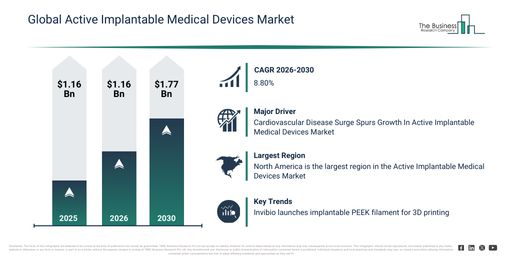
    The active implantable medical devices market is projected to experience substantial expansion over the upcoming years. By 2030, this market is anticipated to reach $42.81 billion, demonstrating a compound annual growth rate (CAGR) of 8.8%. This anticipated growth is driven by several factors, including the proliferation of remote patient monitoring solutions, a growing need for tailored implantable treatments, increased adoption of AI-driven diagnostic tools, an expanding elderly demographic requiring ongoing care, and developments in wireless power and communication systems. Key trends anticipated during this period involve the greater incorporation of intelligent and interconnected implantable devices, a surge in the utilization of compact electronic components, wider application of data-informed therapeutic oversight, an increase in long-duration implantable treatments, and a heightened emphasis on the lifespan and dependability of devices.

    Access Your Free Sample Report For In-Depth Market Analysis:

    https://www.thebusinessresearchcompany.com/sample.aspx?id=8938&type=smp

    Which Major Drivers Are Influencing The Expansion Of The Active Implantable Medical Devices Market?

    The anticipated increase in cardiovascular diseases is projected to drive the expansion of the active implantable medical devices market in the future. Cardiovascular disease (CVD) encompasses various conditions impacting the heart or blood vessels, typically linked to atherosclerosis (fatty deposits in arteries) and a heightened risk of blood clots. Active implantable medical devices serve to regulate or monitor abnormal heartbeats in individuals experiencing particular heart rhythm disorders or heart failure. The growing elderly population has also contributed to the demand for active implantable medical devices. A notable example is data from September 2025 by the British Heart Foundation, a UK-based charity, revealing that over 7.6 million people in the UK (comprising more than 4 million men and over 3.6 million women) currently suffer from cardiovascular disease. Projections further suggest that, influenced by an aging demographic and better survival rates, this number could increase by approximately 1 million by 2030 and by about 2 million by 2040. Consequently, the expanding prevalence of cardiovascular diseases is a key factor propelling the growth of the active implantable medical devices market.

    Which Segments Define The Active Implantable Medical Devices Market Segment Structure?

    The active implantable medical devices market covered in this report is segmented –

    1) By Product Type: Cardiac Pacemakers, Implantable Cardioverter Defibrillators (ICD), Nerve Simulators, Cochlear Implants, Ventricular Assist Devices, Other Products

    2) By Application: Cardiovascular, Neurological, Hearing Impairment, Other Applications

    3) By End User: Hospitals, Specialty Clinics, Ambulatory Surgical Centers

    Subsegments:

    1) By Cardiac Pacemakers: Single Chamber Pacemakers, Dual Chamber Pacemakers, Biventricular Pacemakers

    2) By Implantable Cardioverter Defibrillators (ICD): Transvenous ICDs, Subcutaneous ICDs

    3) By Nerve Stimulators: Spinal Cord Stimulators, Peripheral Nerve Stimulators, Deep Brain Stimulators

    4) By Cochlear Implants: Single-Electrode Cochlear Implants, Multichannel Cochlear Implants

    5) By Ventricular Assist Devices: Left Ventricular Assist Devices (LVAD), Right Ventricular Assist Devices (RVAD), Bi-Ventricular Assist Devices (BiVAD)

    6) By Other Products: Neurostimulators for Pain Management, Implantable Drug Delivery Systems, Implantable Blood Pressure Monitors

    Which Trends Are Shaping The Active Implantable Medical Devices Market?

    Companies active in the implantable medical device market are focusing on technological advancements like implantable PEEK filament to boost customization, improve patient outcomes, and streamline production. Implantable PEEK filament is a specialized substance developed for creating medical implants through additive manufacturing techniques. For instance, in March 2023, Invibio, a U.K.-based provider of high-performance implantable biomaterials, launched PEEK-OPTIMA AM filament. PEEK-OPTIMA AM filament is derived from implantable polyetheretherketone (PEEK) filament, recognized for its biocompatibility and mechanical strength, rendering it suitable for implantable medical devices. This new filament is optimized for fused filament fabrication (FFF) and aims to enhance the manufacturing of medical devices, specifically for 3D printing applications in the medical field.

    Who Are The Established Players Within The Active Implantable Medical Devices Market?

    Major companies operating in the active implantable medical devices market are Medtronic plc, Abbott Laboratories, Boston Scientific Corporation, BIOTRONIK SE & Co KG, LivaNova PLC, Cochlear Limited, MED-EL Medical Electronics, Sonova Holding AG, NeuroPace Inc, NEVRO Corp, Axonics Inc, Aleva Neurotherapeutics SA, MicroTransponder Inc, Shree Pacetronix, Berlin Heart GmbH, Jarvik Heart Inc, Blackrock Neurotech, Nurotron Biotechnology Co Ltd, CARMAT SA, Precision Neuroscience, Pins Medical, Lepu Medical Technology Co Ltd, LifeTech Scientific

    Get The Full Active Implantable Medical Devices Market Report:

    https://www.thebusinessresearchcompany.com/report/active-implantable-medical-devices-global-market-report

    Which Region Holds The Highest Market Share In The Active Implantable Medical Devices Market?

    North America was the largest region in the active implantable medical devices market in 2025. North America is expected to be the fastest-growing region in the forecast period. The regions covered in the active implantable medical devices market report are Asia-Pacific, South East Asia, Western Europe, Eastern Europe, North America, South America, Middle East, Africa.

    Request A Customized Active Implantable Medical Devices Market Report For Competitive Insights:

    https://www.thebusinessresearchcompany.com/customise?id=8938&type=smp

    Browse Through More Reports Similar to the Global Active Implantable Medical Devices Market 2026, By The Business Research Company

    Smart Implants Market Report 2026

    https://www.thebusinessresearchcompany.com/report/smart-implants-global-market-report

    Implantable Drug Delivery Devices Market Report 2026

    https://www.thebusinessresearchcompany.com/report/implantable-drug-delivery-devices-global-market-report

    Microelectronic Medical Implants Market Report 2026

    https://www.thebusinessresearchcompany.com/report/microelectronic-medical-implants-global-market-report

    Get in touch with us:

    The Business Research Company: https://www.thebusinessresearchcompany.com/

    Americas +1 310-496-7795

    Asia +44 7882 955267 & +91 8897263534

    Europe +44 7882 955267

    Email us at info@tbrc.info

    Follow us on:

    LinkedIn: https://in.linkedin.com/company/the-business-research-company

    YouTube: https://www.youtube.com/channel/UC24_fI0rV8cR5DxlCpgmyFQ

    Global Market Model: https://www.thebusinessresearchcompany.com/global-market-model