Category: Medical Equipment

  • Global 3D Printed Medical Devices Market Analysis 2026–2030 Providing Strategic Insights

    Global 3D Printed Medical Devices Market Analysis 2026–2030 Providing Strategic Insights

    The Business Research Company’s 2026 market reports feature enhanced tools like market attractiveness analysis, TAM assessment, and company scoring matrices, along with interactive dashboards, deeper supply chain insights, and startup coverage strengthening the depth, usability, and strategic value of insights.

    What Expansion In Market Value Is Forecasted For The 3D Printed Medical Devices Market Between 2026 And 2030?

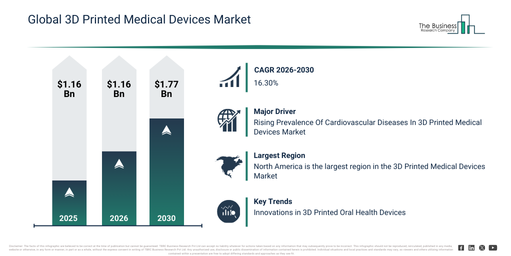
    The market for 3D printed medical devices has experienced swift expansion recently. This market is projected to expand from $4.1 billion in 2025 to $4.83 billion in 2026, demonstrating a compound annual growth rate (CAGR) of 17.7%. Several factors contributed to its historical growth, including a rising demand for tailored medical solutions, the early integration of printed surgical tools into clinical practice, advancements in medical imaging for printing workflows, heightened academic research efforts, and the accessibility of certified printing systems.

    The 3D printed medical devices market is projected to experience substantial expansion in the coming years, with its size anticipated to reach $8.83 billion by 2030, exhibiting a compound annual growth rate (CAGR) of 16.3%. This growth during the forecast period can be attributed to several factors, including the wider adoption of point-of-care manufacturing models, enhanced regulatory clarity for printed medical devices, increased investments in digital healthcare infrastructure, a heightened demand for quicker device development cycles, and advancements in bioprinting and tissue engineering. Significant trends expected in this period involve the rising uptake of custom medical device fabrication, an increased application of multi-material printing technologies, the broader integration of software-driven design platforms, an expansion in on-demand medical device production, and a stronger emphasis on rapid prototyping and validation processes.

    Access Your Free Sample Report For In-Depth Market Analysis:

    https://www.thebusinessresearchcompany.com/sample.aspx?id=2503&type=smp

    What Key Factors Are Shaping The 3D Printed Medical Devices Market Landscape?

    The increasing occurrence of cardiovascular diseases is anticipated to boost the expansion of the 3D printed medical device market. Cardiovascular diseases (CVDs), which are also referred to as heart or circulatory diseases, encompass a range of conditions impacting the heart and blood vessels. In the treatment of cardiovascular diseases, 3D printed medical devices are employed to develop patient-specific cardiac models derived from medical imaging data, including computed tomography (CT) scans and magnetic resonance imaging (MRI). For example, data from September 2025 by the British Heart Foundation, a UK-based charity, indicates that more than 7.6 million individuals throughout the UK—comprising over 4 million men and more than 3.6 million women—are currently afflicted with cardiovascular disease. Furthermore, projections suggest that this figure could increase by approximately 1 million by 2030 and by about 2 million by 2040, primarily due to an aging population and better survival rates. Consequently, the growing prevalence of cardiovascular diseases is a key factor propelling the growth of the 3D printed medical device market.

    How Is The 3D Printed Medical Devices Market Broken Down By Segment Categories?

    The 3D printed medical devices market covered in this report is segmented –

    1) By Type: Implants, Surgical instruments, Prosthetics, Tissue engineering devices

    2) By Raw Material: Plastics, Biomaterial inks, Metals and Alloys

    3) By Technology: Fused Deposition Modelling, Digital Light Processing, Stereolithography, Selective Laser melting

    4) By Application: Orthopedic, Spinal, Dental, Hearing Aids, Other Applications

    5) By End User: Hospitals, Other End Users

    Subsegments:

    1) By Implants: Orthopedic Implants, Dental Implants, Cranial Implants

    2) By Surgical Instruments: Customized Surgical Tools, 3D Printed Guides And Templates

    3) By Prosthetics: Limb Prosthetics, Facial Prosthetics

    4) By Tissue Engineering Devices: Scaffolds, Bioprinted Tissues

    What Market Trends Are Affecting The 3D Printed Medical Devices Market?

    Major companies in the 3D printed medical devices market are concentrating on developing new products, such as oral health devices, intended to enhance dental care by offering customized solutions for patients. Oral health devices refer to products specifically designed for preventing, diagnosing, and treating dental problems, encompassing 3D-printed aligners, dentures, and surgical guides that improve patient comfort and accuracy during dental procedures. For example, in January 2024, Proclaim, a US-based company, introduced its Custom-Jet Oral Health System. This novel Custom-Jet Oral Health System features a 3D printed mouthpiece engineered to eliminate harmful bacteria, particularly P.Gingivalis, in just seven seconds. This innovative device is clinically validated to improve oral health, significantly reducing indicators of gum disease and boosting overall systemic health.

    Which Players Are Present In The 3D Printed Medical Devices Market Space?

    Major companies operating in the 3d printed medical devices market are 3D Systems Corporation, Stratasys Ltd, Materialise NV, EOS GmbH Electro Optical Systems, Renishaw plc, SLM Solutions Group AG, Arcam AB, Concept Laser GmbH, EnvisionTEC Inc, Carbon Inc, Formlabs Inc, Oxford Performance Materials Inc, Organovo Holdings Inc, Cyfuse Biomedical KK, Bio3D Technologies Pte Ltd, FabRx Ltd, Nano3D Biosciences Inc, Aspect Biosystems Ltd, Cellink AB, 3T RPD Ltd

    Get The Full 3D Printed Medical Devices Market Report:

    https://www.thebusinessresearchcompany.com/report/3d-printed-medical-devices-global-market-report

    Which Region Has The Greatest Market Share In The 3D Printed Medical Devices Market?

    North America was the largest region in the 3D printed medical devices market in 2025. Western Europe was the second largest region in the global 3D printed medical devices market report. The regions covered in the 3D printed medical devices market report are Asia-Pacific, South East Asia, Western Europe, Eastern Europe, North America, South America, Middle East, Africa.

    Request A Customized 3D Printed Medical Devices Market Report For Competitive Insights:

    https://www.thebusinessresearchcompany.com/customise?id=2503&type=smp

    Browse Through More Reports Similar to the Global 3D Printed Medical Devices Market 2026, By The Business Research Company

    3D Printing In Healthcare Market Report 2026

    https://www.thebusinessresearchcompany.com/report/3d-printing-in-healthcare-global-market-report

    3D Printed Implants Market Report 2026

    https://www.thebusinessresearchcompany.com/report/3d-printed-implants-global-market-report

    3D Printed Wearables Market Report 2026

    https://www.thebusinessresearchcompany.com/report/3d-printed-wearables-global-market-report

    Get in touch with us:

    The Business Research Company: https://www.thebusinessresearchcompany.com/

    Americas +1 310-496-7795

    Asia +44 7882 955267 & +91 8897263534

    Europe +44 7882 955267

    Email us at info@tbrc.info

    Follow us on:

    LinkedIn: https://in.linkedin.com/company/the-business-research-company

    YouTube: https://www.youtube.com/channel/UC24_fI0rV8cR5DxlCpgmyFQ

    Global Market Model: https://www.thebusinessresearchcompany.com/global-market-model

  • 3D Printed Implants Market Outlook 2026–2030 Driven By Growth Drivers And Projections

    3D Printed Implants Market Outlook 2026–2030 Driven By Growth Drivers And Projections

    The Business Research Company’s 2026 market reports feature enhanced tools like market attractiveness analysis, TAM assessment, and company scoring matrices, along with interactive dashboards, deeper supply chain insights, and startup coverage strengthening the depth, usability, and strategic value of insights.

    How Large Will The 3D Printed Implants Market Be By 2030 Compared To Its 2026 Market Size?

    The market for 3D printed implants has experienced swift expansion recently. This market is projected to expand from $3.9 billion in 2025 to $4.64 billion in 2026, demonstrating a compound annual growth rate (CAGR) of 18.9%. Historically, this growth has been driven by factors such as a greater occurrence of orthopedic and dental conditions, the prompt integration of additive manufacturing within the healthcare sector, enhancements in medical-grade 3D printing materials, increased acceptance among surgeons for personalized implants, and regulatory endorsements for printed implants.

    The 3D printed implants market is anticipated to experience substantial growth over the next few years. It is forecast to expand to $9.51 billion by 2030, exhibiting a compound annual growth rate (CAGR) of 19.6%. This growth during the projection period can be attributed to several factors, including the increasing demand for tailored healthcare solutions, the broadening scope of cranio-maxillofacial and orthopedic surgeries, rising investments in biocompatible materials, the increasing utilization of digital twin technologies in implant design, and advancements in high-resolution 3D printing systems. Significant trends in the forecast period include the increasing adoption of implant designs customized for patients, the rising application of advanced metal and polymer printing materials, the growing integration of digital surgical planning, the expansion into complex anatomical implant applications, and an enhanced focus on implant precision and fit.

    Access Your Free Sample Report For In-Depth Market Analysis:

    https://www.thebusinessresearchcompany.com/sample.aspx?id=2460&type=smp

    Which Factors Are Influencing The Growth Of The 3D Printed Implants Market?

    The increasing volume of dental procedures is anticipated to fuel expansion in the 3D-printed implants market moving ahead. These procedures encompass medical treatments and interventions carried out by dental professionals, including dentists and dental hygienists, for the diagnosis, prevention, or management of diverse oral health conditions and dental problems. The growth in dental treatments is boosting the need for customized, patient-tailored 3D-printed implants, such as crowns, bridges, and prosthetic devices, which are specifically engineered to correspond with an individual’s distinct dental structure. As an illustration, data from November 2024, released by the NHS Business Services Authority (NHSBSA), a UK-based Special Health Authority, indicated that dental services provided 34 million treatment courses, marking a 4.3% increase from 2022/23. Overall activity saw a 3.4% rise, reaching 73 million units. Furthermore, 18 million adults were treated within the 24 months leading up to March 2024, and 6.6 million children received care in the 12 months to March 2024, with 31% of adult treatments involving a scale and polish. Consequently, the expanding application of dental procedures is propelling the expansion of the 3D-printed implants market.

    What Are The Different Segment Types In The 3D Printed Implants Market Segment Breakdown?

    The 3D printed implants market covered in this report is segmented –

    1) By Implantation Technology: Laser Beam Melting, Electronic Beam Melting

    2) By Application: Dental, Orthopedic, Cranio-maxillofacial

    3) By End Users: Medical And Surgical Centers, Medical Institution

    Subsegments:

    1) By Laser Beam Melting (LBM): Selective Laser Melting (SLM), Direct Metal Laser Sintering (DMLS)

    2) By Electronic Beam Melting (EBM): Vacuum EBM, Atmospheric EBM

    Which Trends Are Influencing Demand In The 3D Printed Implants Market?

    Major companies operating in the 3D printed implants market are concentrating on creating innovative products, such as porous PEEK implants, to enhance bone integration and optimize clinical outcomes in orthopedic and spinal procedures. A porous PEEK implant is an additively manufactured polymer-based device engineered with interconnected porous structures to support biological ingrowth while maintaining mechanical properties compatible with human bone. For instance, in September 2024, Nvision Biomedical Technologies, a US-based medical device and implant manufacturer, announced that the U.S. Food and Drug Administration (FDA) had granted clearance of the first 3D-printed PEEK interbody system made from PEEK-OPTIMA. The system incorporates additively manufactured porous architecture designed to promote multidirectional bone ingrowth and enhance implant fixation during cervical and lumbar spinal fusion. It also provides mechanical performance similar to natural bone and improved radiolucency, enabling surgeons to more accurately assess fusion progression and reduce the risk of implant subsidence.

    Who Are The Well-Known Companies In The 3D Printed Implants Market?

    Major companies operating in the 3d printed implants market are Johnson & Johnson, Medtronic plc, Stryker Corporation, Zimmer Biomet Holdings Inc, Lima Corporation, Smith & Nephew plc, Globus Medical Inc, Exactech Inc, KLS Martin Group, Materialise NV, Xilloc Medical B V, 3D LifePrints Ltd, Oxford Performance Materials, Cyfuse Medical, Cyfuse Biomedical K K, SINTX Technologies Inc, restor3d Inc, Additive Orthopaedics Inc, Conformis Inc, Anatomics Pty Ltd

    Get The Full 3D Printed Implants Market Report:

    https://www.thebusinessresearchcompany.com/report/3d-printed-implants-global-market-report

    Which Region Accounts For The Largest Portion Of The 3D Printed Implants Market?

    North America was the largest region in the 3D printed medical implants market in 2025. Asia-Pacific was the second-largest region in the global 3D printed medical implants market. The regions covered in the 3D printed implants market report are Asia-Pacific, South East Asia, Western Europe, Eastern Europe, North America, South America, Middle East, Africa.

    Request A Customized 3D Printed Implants Market Report For Competitive Insights:

    https://www.thebusinessresearchcompany.com/customise?id=2460&type=smp

    Browse Through More Reports Similar to the Global 3D Printed Implants Market 2026, By The Business Research Company

    3D Printed Prosthetics Market Report 2026

    https://www.thebusinessresearchcompany.com/report/3d-printed-prosthetics-global-market-report

    3D Printed Medical Devices Market Report 2026

    https://www.thebusinessresearchcompany.com/report/3d-printed-medical-devices-global-market-report

    3D Printing In Healthcare Market Report 2026

    https://www.thebusinessresearchcompany.com/report/3d-printing-in-healthcare-global-market-report

    Get in touch with us:

    The Business Research Company: https://www.thebusinessresearchcompany.com/

    Americas +1 310-496-7795

    Asia +44 7882 955267 & +91 8897263534

    Europe +44 7882 955267

    Email us at info@tbrc.info

    Follow us on:

    LinkedIn: https://in.linkedin.com/company/the-business-research-company

    YouTube: https://www.youtube.com/channel/UC24_fI0rV8cR5DxlCpgmyFQ

    Global Market Model: https://www.thebusinessresearchcompany.com/global-market-model

  • 3D Orthopedics/Prosthetics Market Opportunities And Developments Across 2026–2030

    3D Orthopedics/Prosthetics Market Opportunities And Developments Across 2026–2030

    The Business Research Company’s 2026 market reports feature enhanced tools like market attractiveness analysis, TAM assessment, and company scoring matrices, along with interactive dashboards, deeper supply chain insights, and startup coverage strengthening the depth, usability, and strategic value of insights.

    What Is The Projected Increase In Market Value Of The 3D Orthopedics/Prosthetics Market During 2026–2030?

    The 3D orthopedics/prosthetics market size has experienced significant expansion in recent years. This market is expected to increase from $3.55 billion in 2025 to $3.75 billion in 2026, achieving a compound annual growth rate (CAGR) of 5.5%. The historical growth of this market can be linked to several factors, including a higher occurrence of limb loss and orthopedic injuries, continuous advancements in additive manufacturing technologies, the increasing availability of rehabilitation services, a rising acceptance of prosthetic solutions, and improvements in material science.

    The 3D orthopedics/prosthetics market is projected to experience substantial growth in the upcoming years, with its valuation expected to reach $4.77 billion by 2030, demonstrating a compound annual growth rate (CAGR) of 6.2%. This anticipated expansion during the forecast period is fueled by increasing investments in smart prosthetic technologies, a rising demand for personalized medical devices, the broader reach of digital orthopedic design platforms, an intensified focus on enhancing patient mobility outcomes, and the greater adoption of AI-assisted prosthetic design. Prominent trends for this period involve the increasing use of 3D printed customized prosthetics, a growing demand for patient-specific orthopedic devices, the expanding integration of smart and sensor-enabled prosthetics, the proliferation of hybrid and electric-powered prosthetic systems, and an enhanced emphasis on rapid prototyping and design flexibility.

    Access Your Free Sample Report For In-Depth Market Analysis:

    https://www.thebusinessresearchcompany.com/sample.aspx?id=6039&type=smp

    What Leading Drivers Are Supporting The 3D Orthopedics/Prosthetics Market Expansion?

    The increasing number of trauma cases and accidental injuries is contributing to the expansion of the 3D orthopedics/prosthetics market. Orthopedic prosthetics refers to the utilization of artificial limbs (prostheses) aimed at improving the function and lifestyle of individuals who have lost limbs. For a prosthesis to meet the specific functional needs of an individual, it must be a distinctive blend of suitable alignment, construction, materials, and design. For instance, in December 2023, according to the Wisconsin Department of Health Services, a US-based public health department, Trauma System Hospitals in Wisconsin observed a 4% rise in the number of traumatic injuries treated in 2023, alongside a 3% increase specifically in pediatric trauma cases. Additionally, 2023 recorded 44,970 trauma system entries and 38,198 unique injury events. Consequently, the growing incidence of trauma cases and accidental injuries is a key factor driving the 3D orthopedics/prosthetics market.

    Which Segment Classifications Are Used In The 3D Orthopedics/Prosthetics Market Segment Analysis?

    The 3D orthopedics/prosthetics market covered in this report is segmented –

    1) By Product Type: Upper Extremity Orthopedic And Prosthetics, Lower Extremity Orthopedic And Prosthetics, Other Product Types

    2) By Technology: Conventional, Electric-powered, Hybrid

    3) By End User: Hospitals, Orthopedic And Prosthetic Centers, Rehabilitation Center, Other End-Users

    Subsegments:

    1) By Upper Extremity Orthopedic And Prosthetics: Prosthetic Arms, Prosthetic Hands, Orthotic Braces for Arms, Shoulder and Elbow Supports

    2) By Lower Extremity Orthopedic And Prosthetics: Prosthetic Legs, Prosthetic Feet, Orthotic Braces for Legs, Knee and Ankle Supports

    3) By Other Product Types: Custom-Made Orthopedic Devices, 3D Printed Implants, Surgical Guides and Templates, Rehabilitation Devices

    What Emerging Trends Are Seen In The 3D Orthopedics/Prosthetics Market?

    Prominent companies within the 3D orthopedics or prosthetics market are concentrating on developing advanced solutions, such as orthoses constructed from glass-fiber-reinforced thermoplastics, to enhance their robustness, structural integrity, and accuracy in customization. A glass-fiber-reinforced thermoplastic is a high-performance composite material that delivers superior strength, flexibility, and impact resistance, making it ideal for manufacturing patient-specific orthopedic devices via additive manufacturing. For example, in March 2024, CRP Technology, an Italy-based 3D-printing company, presented its 3D-printed orthoses at the SuperPower Design exhibition. These orthoses were created using selective laser sintering and Windform GT material, showcasing the potential to produce highly customized, durable support devices precisely adapted to individual anatomical requirements.

    Which Firms Are Contributing To The 3D Orthopedics/Prosthetics Market Ecosystem?

    Major companies operating in the 3d orthopedics/prosthetics market are Zimmer Biomet, Ottobock Inc., DJO Global Inc., Instalimb Inc., Open Bionics, Tornier Inc., Corin Group Plc., Exactech Inc., United Orthopedic Corporation, Stryker Corporation, Allegra Orthopedics, Globus Medical Inc., NEOORTHO, Smith & Nephew, Ortosintese, IMPOL Próteses Ortopédicas, Wright Medical, B. Braun, Meril Life, Matrix Medical, Lithotech Medical, 3D Systems

    Get The Full 3D Orthopedics/Prosthetics Market Report:

    https://www.thebusinessresearchcompany.com/report/3d-orthpedics-prosthetics-global-market-report

    Which Region Holds The Highest Market Share In The 3D Orthopedics/Prosthetics Market?

    North America was the largest region in the 3D orthopedics/prosthetics market in 2025. Asia-Pacific is expected to be the fastest-growing region in the forecast period. The regions covered in the 3D orthopedics/prosthetics market report are Asia-Pacific, South East Asia, Western Europe, Eastern Europe, North America, South America, Middle East, Africa.

    Request A Customized 3D Orthopedics/Prosthetics Market Report For Competitive Insights:

    https://www.thebusinessresearchcompany.com/customise?id=6039&type=smp

    Browse Through More Reports Similar to the Global 3D Orthopedics/Prosthetics Market 2026, By The Business Research Company

    3D Orthpedics Prosthetics Market Report 2026

    https://www.thebusinessresearchcompany.com/report/3d-orthpedics-prosthetics-global-market-report

    3D Printed Prosthetics Market Report 2026

    https://www.thebusinessresearchcompany.com/report/3d-printed-prosthetics-global-market-report

    Advanced Orthopedic Technologies Implants And Regenerative Products Market Report 2026

    https://www.thebusinessresearchcompany.com/report/advanced-orthopedic-technologies-implants-and-regenerative-products-global-market-report

    Get in touch with us:

    The Business Research Company: https://www.thebusinessresearchcompany.com/

    Americas +1 310-496-7795

    Asia +44 7882 955267 & +91 8897263534

    Europe +44 7882 955267

    Email us at info@tbrc.info

    Follow us on:

    LinkedIn: https://in.linkedin.com/company/the-business-research-company

    YouTube: https://www.youtube.com/channel/UC24_fI0rV8cR5DxlCpgmyFQ

    Global Market Model: https://www.thebusinessresearchcompany.com/global-market-model

  • 3D Medical Imaging Devices Market Forecast 2026–2030 Offering Long-Term Industry Insights

    3D Medical Imaging Devices Market Forecast 2026–2030 Offering Long-Term Industry Insights

    The Business Research Company’s 2026 market reports feature enhanced tools like market attractiveness analysis, TAM assessment, and company scoring matrices, along with interactive dashboards, deeper supply chain insights, and startup coverage strengthening the depth, usability, and strategic value of insights.

    How Is The Market Size Of The 3D Medical Imaging Devices Market Expected To Change From 2026 To 2030?

    The 3D medical imaging devices market size has seen substantial growth over recent years. This market is anticipated to expand from $13.68 billion in 2025 to reach $14.76 billion by 2026, registering a compound annual growth rate (CAGR) of 7.9%. This historical growth can be linked to improvements in medical imaging technologies, the increase in diagnostic imaging centers, a growing need for precise anatomical visualization, the rising occurrence of chronic illnesses, and developments in hospital imaging infrastructure.

    The 3D medical imaging devices market is projected to experience robust expansion over the coming years, with its size anticipated to reach $20.16 billion by 2030, demonstrating a compound annual growth rate (CAGR) of 8.1%. This projected growth is largely attributed to the wider embrace of AI-driven diagnostics, escalating investments in precision medicine, the broader application of advanced imaging techniques in oncology and cardiology, an increasing need for early disease identification, and the greater incorporation of cloud-based imaging platforms. Significant trends anticipated during this period encompass the enhanced integration of AI-enabled image reconstruction, a greater uptake of high-resolution 3D imaging modalities, the expanded utilization of advanced visualization software, the development of multi-modality imaging platforms, and a heightened emphasis on diagnostic precision and rapidity.

    Access Your Free Sample Report For In-Depth Market Analysis:

    https://www.thebusinessresearchcompany.com/sample.aspx?id=2513&type=smp

    Which Key Factors Are Driving The 3D Medical Imaging Devices Market Growth?

    The growing incidence of chronic diseases is projected to fuel the expansion of the 3D medical imaging market moving forward. Chronic diseases are defined as health conditions that persist for an extended period, generally three months or more. Three-dimensional medical imaging techniques, including computed tomography (CT) scans and magnetic resonance imaging (MRI), are utilized to generate detailed 3D views of internal body structures, allowing healthcare professionals to identify and diagnose chronic conditions at earlier stages. For instance, in January 2023, the National Library of Medicine, a US-based agency, reported that the number of individuals in the US aged 50 and older with at least one chronic condition is expected to increase by 99.5%, reaching 142.66 million, by 2050. Thus, the increasing prevalence of chronic diseases is a significant driver for the growth of the 3D medical imaging market.

    How Is The 3D Medical Imaging Devices Market Organized By Segment Classification?

    The 3D medical imaging devices market covered in this report is segmented –

    1) By Type: Ultrasound, X-ray, CT Scan, Other Types

    2) By Application: Gynecology and Obstetrics, Cardiology, Neurology, Orthopedics, Oncology

    3) By End User: Diagnostic Centers, Hospitals, Research Centers

    Subsegments:

    1) By Ultrasound: 3D Or 4D Ultrasound, Contrast-Enhanced Ultrasound

    2) By X-Ray: 3D Mammography Or Tomosynthesis, Cone Beam CT Or CBCT For X-Ray Imaging, Fluoroscopy

    3) By CT Scan: Spiral Or Helical CT, Cone Beam CT Or CBCT, Dual-Energy CT

    4) By Other Types: MRI Or Magnetic Resonance Imaging, Positron Emission Tomography Or PET, Single Photon Emission Computed Tomography Or SPECT, 3D Endoscopic Imaging Systems

    Which Trends Are Guiding The Direction Of The 3D Medical Imaging Devices Market?

    Major companies operating in the 3D medical imaging market are developing new immersive learning platforms to provide reliable services to customers. An immersive learning platform in 3D medical imaging is a system that utilizes hyper-realistic 3D medical imagery, obtained from MRI and CT scans, to educate medical professionals and students. For instance, in August 2023, GigXR, Inc., an innovative US-based company and provider of holographic training solutions, launched DICOM XR Library. DICOM XR Library is a shared collection of 3D DICOM holograms that provides hyper-realistic 3D medical imagery from computed tomography (CT) scans and magnetic resonance imaging (MRI). This offers 360-degree diagnostic imaging. This enables instructors to better prepare learners with medically accurate simulation for observation and assessment.

    Who Are The Industry Participants Involved In The 3D Medical Imaging Devices Market?

    Major companies operating in the 3d medical imaging devices market are GE Healthcare, Royal Philips, Siemens AG, Materialise NV, Toshiba Group, Samsung Medison Co. Ltd., Shimadzu Corporation, Analogic Corporation, Digirad Corporation, Del Medical Systems Group, Hologic Inc., Carestream Health Inc., Ambra Health, Fovia, Mach7 Technologies Ltd., Barco NV, TomTec Imaging Systems GmbH, Fujifilm Holdings Corporation, 3D Systems Healthcare, Canon Medical Systems Corporation, ContextVision AB, Curvebeam AI Ltd., EchoPixel Inc., EOS Imaging, Esaote SpA, Hitachi Healthcare, Intrasense, Konica Minolta Healthcare, Mobius Imaging, Neusoft Medical Systems, Pie Medical Imaging, Planmed Oy, Sectra, Shenzhen Mindray Bio-Medical Electronics, Varian Medical Systems, Ziehm Imaging GmbH

    Get The Full 3D Medical Imaging Devices Market Report:

    https://www.thebusinessresearchcompany.com/report/3d-medical-imaging-devices-global-market-report

    Where Is The 3D Medical Imaging Devices Market Most Concentrated Geographically?

    Western Europe was the largest region in the 3D medical imaging market in 2025. Asia-Pacific was the second-largest region in the global 3D medical imaging devices market. The regions covered in the 3D medical imaging devices market report are Asia-Pacific, South East Asia, Western Europe, Eastern Europe, North America, South America, Middle East, Africa.

    Request A Customized 3D Medical Imaging Devices Market Report For Competitive Insights:

    https://www.thebusinessresearchcompany.com/customise?id=2513&type=smp

    Browse Through More Reports Similar to the Global 3D Medical Imaging Devices Market 2026, By The Business Research Company

    3D Printed Medical Devices Market Report 2026

    https://www.thebusinessresearchcompany.com/report/3d-printed-medical-devices-global-market-report

    3D Diagnostic Imaging Services Market Report 2026

    https://www.thebusinessresearchcompany.com/report/3d-diagnostic-imaging-services-global-market-report

    3D Imaging Market Report 2026

    https://www.thebusinessresearchcompany.com/report/3d-imaging-global-market-report

    Get in touch with us:

    The Business Research Company: https://www.thebusinessresearchcompany.com/

    Americas +1 310-496-7795

    Asia +44 7882 955267 & +91 8897263534

    Europe +44 7882 955267

    Email us at info@tbrc.info

    Follow us on:

    LinkedIn: https://in.linkedin.com/company/the-business-research-company

    YouTube: https://www.youtube.com/channel/UC24_fI0rV8cR5DxlCpgmyFQ

    Global Market Model: https://www.thebusinessresearchcompany.com/global-market-model

  • 3D Dental Scanners Market Analysis 2026–2030 Covering Innovation And Competitive Landscape

    3D Dental Scanners Market Analysis 2026–2030 Covering Innovation And Competitive Landscape

    The Business Research Company’s 2026 market reports feature enhanced tools like market attractiveness analysis, TAM assessment, and company scoring matrices, along with interactive dashboards, deeper supply chain insights, and startup coverage strengthening the depth, usability, and strategic value of insights.

    From Its 2026 Market Size, What Value Is The 3D Dental Scanners Market Projected To Reach By 2030?

    The 3D dental scanners market has demonstrated significant growth in recent years. This market is projected to expand from $2.19 billion in 2025 to $2.36 billion in 2026, exhibiting a compound annual growth rate (CAGR) of 7.9%. The historical growth can be ascribed to elements such as growth in orthodontic and prosthodontic treatment volumes, increasing shift from manual impressions to digital workflows, rising installation of cbct systems in dental practices, expanding adoption of digital dentistry in hospitals and dental clinics, and increasing usage of laboratory scanners for restoration fabrication.

    The 3D dental scanners market size is anticipated to experience substantial expansion in the coming years. It is projected to achieve a value of $3.19 billion by 2030, showing a compound annual growth rate (CAGR) of 7.9%. This expected growth during the forecast period can be attributed to an escalating demand for intraoral scanning solutions at the chairside, a growing preference for dental procedures that are minimally invasive and highly precise, the increased integration of digital scanning into implantology planning, wider adoption of portable and handheld dental scanners, and enhanced investment in advanced 3D imaging capabilities across various dental facilities. Significant trends identified for this period include the rising acceptance of intraoral 3D dental scanners for chairside diagnostics and treatment design, a greater utilization of CBCT scanners for detailed orthodontic and implantology imaging, an increasing need for handheld and portable dental scanners within clinical environments, the expanding application of laboratory dental scanners for accurate prosthodontic workflows, and a stronger inclination towards digital impressions compared to traditional mold-based techniques.

    Access Your Free Sample Report For In-Depth Market Analysis:

    https://www.thebusinessresearchcompany.com/sample.aspx?id=18204&type=smp

    What Primary Drivers Are Shaping The 3D Dental Scanners Market?

    The increasing occurrence of dental disorders is expected to propel the growth of the global 3D dental scanner market. These disorders encompass any abnormality, disease, or condition within the oral cavity that necessitates evaluation, diagnosis, and often treatment by dental professionals to maintain oral health and prevent complications. The rise in dental disorders is attributable to factors such as poor oral hygiene habits, increased consumption of sugary foods and beverages, and insufficient access to dental care services. 3D dental scanners are crucial for addressing dental disorders, as they facilitate precise diagnosis, meticulous treatment planning, and the creation of customized dental prosthetics with enhanced accuracy and efficiency. For instance, in October 2024, according to the Australian Institute of Health and Welfare, an Australia-based government agency, in 2022–23 there were around 87,400 hospitalizations for dental conditions that could have been avoided with timely treatment. Children aged 5–9 years had the highest rate of preventable hospitalizations, recorded at 12.3 per 1,000 population. Therefore, the growing prevalence of dental disorders is driving the expansion of the 3D dental scanner market.

    Which Segments Define The 3D Dental Scanners Market Segment Structure?

    The 3D dental scanners market covered in this report is segmented –

    1) By Type: Desktop Or Laboratory 3D Dental Scanners, Intraoral 3D Dental Scanners, Hand-Held 3D Dental Scanners, Cone Beam Computerized Tomography

    2) By Application: Prosthodontics, Orthodontics, Implantology

    3) By End-User: Hospitals, Dental Clinics, Research And Academic Institutes

    Subsegments:

    1) By Desktop Or Laboratory 3D Dental Scanners: Optical Laboratory Scanners, Structured Light Laboratory Scanners

    2) By Intraoral 3D Dental Scanners: Wireless Intraoral Scanners, Wired Intraoral Scanners

    3) By Hand-Held 3D Dental Scanners: Laser-Based Hand-Held Scanners, Structured Light Hand-Held Scanners

    4) By Cone Beam Computerized Tomography (CBCT): Standard Field-Of-View CBCT Scanners, Extended Field-Of-View CBCT Scanners

    What Trends Are Affecting The Growth Of The 3D Dental Scanners Market?

    Leading companies in the dental 3D scanner market are concentrating on developing sophisticated technologies, such as multi-direct capture technology, to enhance scanning accuracy and efficiency, thereby facilitating more precise dental treatments and streamlined workflows. Multi-direct capture technology in 3D dental scanners refers to a methodology where multiple images or scans are simultaneously acquired from various angles. For instance, in January 2024, Align Technology Inc., a US-based medical device company, unveiled the iTero Lumina intraoral scanner. This particular scanner is notable for its distinct ability to provide a 3X wider field of capture in a considerably smaller and lighter wand, which ensures faster scanning, improved precision, enhanced visualization, and a more comfortable experience for the user. It further excels with an expanded capture distance of up to 25 mm, simplifying the scanning of challenging oral areas like narrow or deep palates, edentulous spaces, and partially erupted teeth with minimal adjustments. This cutting-edge technology effortlessly collects extensive data and fine details, yielding exceptional scan quality and photorealistic 3D models, effectively eliminating the requirement for bulky digital cameras and traditional cheek retractors.

    Who Are The Established Players Within The 3D Dental Scanners Market?

    Major companies operating in the 3d dental scanners market are Danaher Corporation, Dentsply Sirona Inc., Align Technology Inc., Midmark Corp., J. Morita Corporation, 3Shape Inc., Roland DG Corp., KaVo Dental GmbH, Amann Girrbach AG, Zirkonzahn, Carestream Health India Pvt. Ltd., Imes-icore GmbH, Planmeca Group Company, Hint-ELS GmbH, Dental Wings Inc., Condor Technologies Inc., Imetric 3D SA, Medit Corporation, Owandy Radiology, 3M Co.

    Get The Full 3D Dental Scanners Market Report:

    https://www.thebusinessresearchcompany.com/report/3d-dental-scanners-global-market-report

    Which Region Dominates The 3D Dental Scanners Market By Market Share?

    North America was the largest region in the 3D dental scanners market in 2025. Asia-Pacific is expected to be the fastest-growing region in the forecast period. The regions covered in the 3D dental scanners market report are Asia-Pacific, South East Asia, Western Europe, Eastern Europe, North America, South America, Middle East, Africa.

    Request A Customized 3D Dental Scanners Market Report For Competitive Insights:

    https://www.thebusinessresearchcompany.com/customise?id=18204&type=smp

    Browse Through More Reports Similar to the Global 3D Dental Scanners Market 2026, By The Business Research Company

    3D Dental Scanners Market Report 2026

    https://www.thebusinessresearchcompany.com/report/3d-dental-scanners-global-market-report

    Dental Diagnostic Imaging Devices And Equipment Market Report 2026

    https://www.thebusinessresearchcompany.com/report/dental-diagnostic-imaging-devices-and-equipment-global-market-report

    3D Scanning Market Report 2026

    https://www.thebusinessresearchcompany.com/report/3d-scanning-global-market-report

    Get in touch with us:

    The Business Research Company: https://www.thebusinessresearchcompany.com/

    Americas +1 310-496-7795

    Asia +44 7882 955267 & +91 8897263534

    Europe +44 7882 955267

    Email us at info@tbrc.info

    Follow us on:

    LinkedIn: https://in.linkedin.com/company/the-business-research-company

    YouTube: https://www.youtube.com/channel/UC24_fI0rV8cR5DxlCpgmyFQ

    Global Market Model: https://www.thebusinessresearchcompany.com/global-market-model
  • 3D Bioprinting Market Forecast To 2030 With Insights On Market Trends And Developments

    3D Bioprinting Market Forecast To 2030 With Insights On Market Trends And Developments

    The Business Research Company’s 2026 market reports feature enhanced tools like market attractiveness analysis, TAM assessment, and company scoring matrices, along with interactive dashboards, deeper supply chain insights, and startup coverage strengthening the depth, usability, and strategic value of insights.

    How Much Growth In Market Value Is Expected For The 3D Bioprinting Market Between 2026 And 2030?

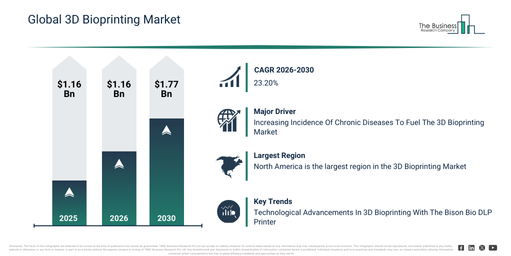
    The 3D bioprinting market size has experienced significant expansion in recent years. It is anticipated to increase from $2.19 billion in 2025 to $2.7 billion in 2026, exhibiting a compound annual growth rate (CAGR) of 23.0%. The growth observed in prior periods can be attributed to increased funding for biomedical research, a growing need for in vitro drug testing models, the initial embrace of regenerative medicine, progress in cell culture technologies, and the expanding utilization of 3D printing in healthcare.

    The 3D bioprinting market is projected to experience substantial expansion over the coming years. By 2030, its valuation is anticipated to reach $6.21 billion, demonstrating a compound annual growth rate (CAGR) of 23.2%. This anticipated growth is driven by factors such as the broadening scope of personalized medicine, a rising need for organ transplantation, supportive regulations for bioprinted tissues, an expanding pipeline of biopharmaceutical research, and progress in scalable bioprinting technologies. Key developments foreseen during this period encompass tissue engineering for regenerative purposes, the creation of patient-specific implants, innovations in bioink formulations, high-resolution bioprinting utilizing multiple materials, and the clinical application of printed tissues.

    Access Your Free Sample Report For In-Depth Market Analysis:

    https://www.thebusinessresearchcompany.com/sample.aspx?id=5341&type=smp

    Which Major Drivers Are Influencing The Expansion Of The 3D Bioprinting Market?

    The projected expansion of the 3D bioprinting market is expected to be driven by the increasing occurrence of chronic diseases. A chronic disease is defined as a persistent medical condition, typically lasting three months or more, and often continuing throughout an individual’s life. 3D bioprinting is employed in the creation of tissue models for research into chronic illnesses and for potential organ replacement therapies. For instance, in June 2024, data from the National Health Service, a UK-based government department, revealed that 3,615,330 individuals registered with a general practitioner (GP) were diagnosed with non-diabetic hyperglycemia or pre-diabetes (a state of elevated blood sugar not yet severe enough to be classified as diabetes) in 2023. This figure represents an 18% rise from the 3,065,825 cases reported in 2022. Thus, the rising incidence of chronic diseases is a key factor propelling the growth of the 3D bioprinting market.

    How Is The 3D Bioprinting Market Segmented Across Different Segment Categories?

    The 3D bioprinting market covered in this report is segmented –

    1) By Component: 3D Bioprinters, Bioinks

    2) By Material: Living Cells, Hydrogels, Extracellular Matrices, Other Materials

    3) By Application: Research Applications, Clinical Application, Other Applications

    4) By End User: Research Organization And Academic Institutes, Biopharmaceutical Companies, Hospitals, Other End Users

    Subsegments:

    1) By 3D Bioprinters: Inkjet 3D Bioprinters, Microextrusion 3D Bioprinters, Laser-Assisted 3D Bioprinters, Stereolithography (SLA) Bioprinters

    2) By Bioinks: Natural Bioinks, Synthetic Bioinks, Hybrid Bioinks

    Which Trends Are Shaping The 3D Bioprinting Market?

    Prominent companies operating in the 3D bioprinting market are dedicated to creating technologically advanced solutions, such as 3D bioprinters, to boost the accuracy and effectiveness of tissue engineering and regenerative medicine. These 3D bioprinters are devices that utilize bioinks containing live cells to construct three-dimensional tissue and organ structures for medical research and applications in regenerative medicine. For instance, in June 2024, Tethon 3D, a US developer of ceramic powder and metal-polymer products, introduced the Bison Bio DLP 3D bioprinter, marking its initial venture into the bioprinting market, developed through a collaboration with Carima. This innovative printer offers customizable build sizes (30 × 20 mm, 57 × 32 mm, and 96 × 54 mm) and is compatible with Tethon’s proprietary LAP photoinitiator and GelMA hydrogel bioink, both vital for bioprinting living tissues. Measuring 24 × 24 × 24 inches and weighing 75 lbs, the Bison Bio is priced at $19,950 and intends to advance healthcare by enabling the fabrication of complex tissues and organs for biomedical research, ultimately contributing to personalized medicine and regenerative therapies.

    Which Organizations Play A Role In The 3D Bioprinting Market Landscape?

    Major companies operating in the 3d bioprinting market are Organovo Holdings Inc., Allevi Inc., Cellink AB, Aspect Biosystems Ltd., Cyfuse Biomedical KK, Poietis SA, TeVido BioDevices, Nano3D Biosciences Inc., RegenHU Ltd., GeSiM mbH, Advanced Solutions Life Sciences LLC, Regenovo Biotechnology Co. Ltd., Regemat 3D S.L., Bio3D Technologies, ROKIT Healthcare Co. Ltd., Inventia Life Science Pvt. Ltd., Vivax Bio LLC, 3D Biotek LLC, 3D Bio Corp, 3D Bioprinting Solutions, BICO Group AB, CollPlant Biotechnologies Ltd., 3D Systems Corporation, EnvisionTEC GmbH, GE HealthCare Technologies Inc., Nuclera Nucleics Ltd.

    Get The Full 3D Bioprinting Market Report:

    https://www.thebusinessresearchcompany.com/report/3d-bioprinting-global-market-report

    Which Region Is The Largest In The 3D Bioprinting Market?

    North America was the largest region in the 3D bioprinting market in 2025. Asia-Pacific is expected to be the fastest-growing region in the 3D bioprinting market during the forecast period. The regions covered in the 3D bioprinting market report are Asia-Pacific, South East Asia, Western Europe, Eastern Europe, North America, South America, Middle East, Africa.

    Request A Customized 3D Bioprinting Market Report For Competitive Insights:

    https://www.thebusinessresearchcompany.com/customise?id=5341&type=smp

    Browse Through More Reports Similar to the Global 3D Bioprinting Market 2026, By The Business Research Company

    4D Bioprinting Market Report 2026

    https://www.thebusinessresearchcompany.com/report/4d-bioprinting-global-market-report

    3D Printing In Healthcare Market Report 2026

    https://www.thebusinessresearchcompany.com/report/3d-printing-in-healthcare-global-market-report

    3D Printing Services Market Report 2026

    https://www.thebusinessresearchcompany.com/report/3d-printing-services-global-market-report

    Get in touch with us:

    The Business Research Company: https://www.thebusinessresearchcompany.com/

    Americas +1 310-496-7795

    Asia +44 7882 955267 & +91 8897263534

    Europe +44 7882 955267

    Email us at info@tbrc.info

    Follow us on:

    LinkedIn: https://in.linkedin.com/company/the-business-research-company

    YouTube: https://www.youtube.com/channel/UC24_fI0rV8cR5DxlCpgmyFQ

    Global Market Model: https://www.thebusinessresearchcompany.com/global-market-model
  • 3D And 4D Ultrasound Devices Market Outlook 2026–2030 Highlighting Growth Drivers And Industry Trends

    3D And 4D Ultrasound Devices Market Outlook 2026–2030 Highlighting Growth Drivers And Industry Trends

    The Business Research Company’s 2026 market reports feature enhanced tools like market attractiveness analysis, TAM assessment, and company scoring matrices, along with interactive dashboards, deeper supply chain insights, and startup coverage strengthening the depth, usability, and strategic value of insights.

    What Is The Estimated Market Size Of The 3D And 4D Ultrasound Devices Market In 2026, And How Will Its Value Evolve By 2030?

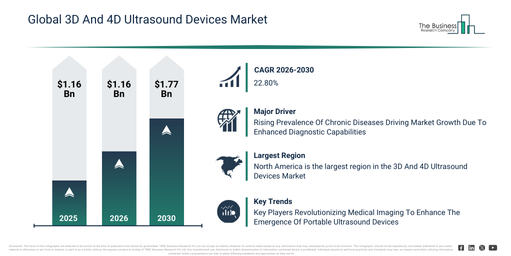
    The market for 3D and 4D ultrasound devices has experienced rapid expansion recently. Projections indicate it will expand from $14.07 billion in 2025 to $17.25 billion by 2026, exhibiting a compound annual growth rate (CAGR) of 22.6%. Historically, this growth has stemmed from factors such as the increasing application of ultrasound imaging in prenatal care, the broadening of diagnostic imaging infrastructure, a greater supply of proficient sonography professionals, heightened public understanding of the importance of early disease detection, and the embrace of non-invasive diagnostic instruments.

    The 3D and 4D ultrasound devices market size is anticipated to undergo significant expansion in the coming years. This market is forecasted to reach $39.28 billion by 2030, demonstrating a compound annual growth rate (CAGR) of 22.8%. The expansion during this period can be attributed to a growing need for advanced prenatal diagnostics, increased investments in portable imaging technologies, the broadening of point-of-care diagnostics, the expanding utilization of AI-assisted image interpretation, and a heightened focus on early-stage disease detection. Prominent trends expected in the forecast period involve the rising adoption of high-resolution fetal imaging systems, an increasing demand for portable and point-of-care ultrasound devices, the greater integration of advanced visualization software, the expansion of multi-specialty diagnostic applications, and an enhanced emphasis on workflow efficiency and imaging accuracy.

    Access Your Free Sample Report For In-Depth Market Analysis:

    https://www.thebusinessresearchcompany.com/sample.aspx?id=14233&type=smp

    What Key Drivers Are Fueling The Growth Of The 3D And 4D Ultrasound Devices Market?

    The rising occurrence of chronic illnesses is anticipated to fuel the expansion of the 3D and 4D ultrasound devices market in the future. These are defined as enduring health conditions that persist over long durations, frequently necessitating continuous management and medical attention. The rise in such conditions largely stems from inactive lifestyles, poor dietary habits, and an aging demographic. 3D and 4D ultrasound devices assist in detecting and tracking chronic ailments by delivering intricate, three-dimensional visuals that improve the observation and evaluation of impacted organs and anatomical structures. Illustratively, in January 2023, the National Library of Medicine, a US-based agency, reported that the population in the US aged 50 and above with at least one chronic condition is projected to surge by 99.5%, amounting to 142.66 million individuals, by 2050. Consequently, the growing incidence of chronic diseases is a key factor propelling the development of the 3D and 4D ultrasound devices market.

    What Are The Main Segments Within The 3D And 4D Ultrasound Devices Market Segment Structure?

    The 3D and 4d ultrasound devices market covered in this report is segmented –

    1) By Type: Stationary 3D And 4D Ultrasound Devices, Portable 3D And 4D Ultrasound Devices

    2) By Display: Color Ultrasound, Black And White (B/W) Ultrasound

    3) By Portability: Trolley Or Cart-Based Ultrasound Systems, Compact Or Handheld Ultrasound Systems, Point-Of-Care (PoC) Ultrasound Systems

    4) By Application: Radiology Or General Imaging, Obstetrics Or Gynecology, Cardiology, Urology, Vascular, Orthopedic And Musculoskeletal, Pain Management, Other Applications

    5) By End-User: Hospitals, Surgical Centers And Diagnostic Centers, Maternity Centers, Ambulatory Care Centers, Other End-Users

    Subsegments:

    1) By Stationary 3D And 4D Ultrasound Devices: Console-Based Systems, High-Performance Ultrasound Machines, Advanced Imaging Systems

    2) By Portable 3D And 4D Ultrasound Devices: Handheld Ultrasound Devices, Mobile Ultrasound Systems, Compact Point-Of-Care Ultrasound Machines

    What Trends Are Influencing The 3D And 4D Ultrasound Devices Market?

    Major companies in the 3D and 4D ultrasound devices market are focusing on developing technologically advanced products, such as ultrasound-on-chip technology, to improve imaging capabilities and drive innovation in medical diagnostics. This technology miniaturizes ultrasound components onto a single chip, making compact and portable ultrasound devices possible for various medical imaging applications. This innovation enhances the availability of ultrasound diagnostics, with potential advancements in point-of-care and wearable healthcare devices. For instance, in June 2023, Butterfly Network Inc., a US-based manufacturer of medical imaging devices, introduced the Butterfly iQ3, the newest version of its handheld point-of-care ultrasound (POCUS) system. It employs P4.3 ultrasound-on-chip technology, featuring the world’s fastest digital data transfer rate. This system is designed to provide enhanced high-resolution imaging and portable ultrasound imaging with advanced 3D capabilities, and it possesses double the processing power of its predecessor, the Butterfly iQ+.

    Who Are The Companies Participating In The 3D And 4D Ultrasound Devices Market?

    Major companies operating in the 3d and 4d ultrasound devices market are Hitachi Ltd., Toshiba Corporation, Siemens Healthineers, Koninklijke Philips N.V., GE HealthCare Technologies Inc., Fujifilm Holdings Corporation, Konica Minolta Healthcare Americas Inc., Hologic Inc., Mindray Medical International Limited, Canon Medical Systems Corporation, Samsung Medison Co. Ltd., Mobisante Inc., Esaote S.p.A, Shimadzu Medical Systems USA, Terason, Alpinion Medical Systems Co. Ltd., Shenzhen Bestman Instrument Co. Ltd., Chison Medical Technologies Co. Ltd., Edan Instruments Inc., Mindray DS USA

    Get The Full 3D And 4D Ultrasound Devices Market Report:

    https://www.thebusinessresearchcompany.com/report/3d-and-4d-ultrasound-devices-global-market-report

    Which Region Leads The 3D And 4D Ultrasound Devices Market In Terms Of Market Share?

    North America was the largest region in the 3D and 4D ultrasound devices market in 2025. Asia-Pacific is expected to be the fastest-growing region in the forecast period. The regions covered in the 3D and 4D ultrasound devices market report are Asia-Pacific, South East Asia, Western Europe, Eastern Europe, North America, South America, Middle East, Africa.

    Request A Customized 3D And 4D Ultrasound Devices Market Report For Competitive Insights:

    https://www.thebusinessresearchcompany.com/customise?id=14233&type=smp

    Browse Through More Reports Similar to the Global 3D And 4D Ultrasound Devices Market 2026, By The Business Research Company

    Ultrasound Systems Devices And Equipment Market Report 2026

    https://www.thebusinessresearchcompany.com/report/ultrasound-systems-devices-and-equipment-global-market-report

    3D And 4D Technology Market Report 2026

    https://www.thebusinessresearchcompany.com/report/3d-and-4d-technology-global-market-report

    3D Medical Imaging Devices Market Report 2026

    https://www.thebusinessresearchcompany.com/report/3d-medical-imaging-devices-global-market-report

    Get in touch with us:

    The Business Research Company: https://www.thebusinessresearchcompany.com/

    Americas +1 310-496-7795

    Asia +44 7882 955267 & +91 8897263534

    Europe +44 7882 955267

    Email us at info@tbrc.info

    Follow us on:

    LinkedIn: https://in.linkedin.com/company/the-business-research-company

    YouTube: https://www.youtube.com/channel/UC24_fI0rV8cR5DxlCpgmyFQ

    Global Market Model: https://www.thebusinessresearchcompany.com/global-market-model

  • Wide Format Printers Market Forecast to Reach $19.92 Billion by 2030 at 7.6% CAGR

    Wide Format Printers Market Forecast to Reach $19.92 Billion by 2030 at 7.6% CAGR

    The Business Research Company’s 2026 market reports include new capabilities such as market attractiveness scoring and analysis, total addressable market analysis, company scoring matrix, interactive excel data dashboard, improved supply chain analysis, upcoming startups in the market, and overview of key products, aimed at improving the depth, usability, and strategic value of the insights delivered.

    How Much Is The Wide Format Printers Market Expected To Grow In Terms Of Market Value Between 2026 And 2030?

    The wide format printers market has demonstrated significant growth in recent years. It is projected to increase from $13.75 billion in 2025 to $14.84 billion in 2026, registering a compound annual growth rate (CAGR) of 7.9%. Historically, this expansion can be attributed to rising demand for large-scale advertising and outdoor signage, the growing adoption of digital printing for short-run production, an increase in the use of wide-format printers for architectural and technical drawings, the expansion of textile and apparel printing, and the ongoing replacement of older solvent-based printers with more eco-friendly systems.

    The wide format printers market size is projected to experience robust expansion over the coming years. By 2030, this market is anticipated to reach $19.92 billion, expanding at a compound annual growth rate (CAGR) of 7.6%. This expected growth during the forecast period is driven by several factors, including the increasing uptake of UV-curable and latex inks, a growing requirement for high-resolution output in commercial sectors, a surge in demand for prints that are on-demand and customized, the broadening scope of interior décor and exhibition graphics uses, and enhanced integration of workflow automation alongside cloud-based print management systems. Key developments shaping the market in the forecast period encompass breakthroughs in high-speed inkjet printing technology, novelties in digital textile printing, the creation of hybrid roll-to-roll and flatbed printing devices, ongoing research and development into environmentally friendly inks and sustainable printing methods, and technological progress in AI-supported print quality and predictive maintenance.

    Download the Free Sample Report to Explore Key Market Insights:

    https://www.thebusinessresearchcompany.com/sample.aspx?id=30786&type=smp

    Which Major Factors Are Driving The Expansion Of The Wide Format Printers Market?

    The escalating need for outdoor advertising is anticipated to drive the expansion of the wide format printers market in the future. This type of marketing involves physical displays like billboards, posters on public transport, and street furniture to engage audiences in communal areas. The growth in outdoor advertising stems from increasing urbanization, with expanding urban populations and greater commuter volumes presenting more chances to connect with broad audiences publicly. Wide format printers facilitate outdoor advertising by producing extensive, superior-quality, and durable visuals, enabling brands to convey impactful and enduring messages in public venues. For example, data released in March 2025 by the Out of Home Advertising Association of America, a US trade body, indicated that out-of-home advertising generated revenue exceeding $9.1 billion in 2024, showing a 4.5% increase from the previous year. Consequently, the heightened demand for outdoor advertising is a key factor propelling the wide format printers market.

    What Major Segment Divisions Exist Within The Wide Format Printers Market?

    The wide format printers market covered in this report is segmented –

    1) By Technology: Inkjet, Laser, Other Ink Types

    2) By Ink Type: Aqueous, Solvent, UV-Curable, Latex, Dye Sublimation

    3) By Print Width: 17″–24″, 24″–36″, 36″–44″, 44″–60″, 60″–72″, Above 72″

    4) By Application: Advertising, Apparel And Textile Printing, CAD And Technical Printing, Signage, Other Applications

    5) By End User: Commercial Print Service Providers, In-House Corporate Print Departments, Textile And Apparel Manufacturers, Engineering And Construction Firms, Retail And Advertising Agencies, Residential And Consumer Users

    Subsegments:

    1) By Inkjet: Thermal Inkjet, Piezoelectric Inkjet, Continuous Inkjet, Drop On Demand Inkjet, Solvent Inkjet, Water Based Inkjet, Ultraviolet Curable Inkjet, Latex Inkjet

    2) By Laser: Monochrome Laser, Color Laser, Single Function Laser, Multifunction Laser, Electrophotographic Laser, Dry Toner Laser, Wet Toner Laser

    How Are Trends Shaping The Direction Of The Wide Format Printers Market?

    Leading companies in the wide format printers market are concentrating on technological advancements, such as improved image processing and productivity optimization solutions, to provide superior print quality, increased output, and operational efficiency that meet evolving professional and commercial printing needs. Enhanced image processing and productivity optimization technologies denote innovations that elevate color reproduction, print speed, media handling capabilities, and workflow effectiveness in wide-format printing systems, thereby enabling vibrant results with reduced interruptions and greater user productivity. For instance, in January 2025, Canon India Pvt. Ltd., an India-based imaging technologies company, introduced the imagePROGRAF TZ-5320 and TX Series wide-format printers. These new printers offer improved color vibrancy and sharpness through new image processing and magenta ink for deeper, more vivid prints, along with faster print speeds and intelligent paper handling features to boost productivity with minimal downtime, and environmentally friendly design elements that decrease energy consumption and support sustainable operation.

    Who Are The Leading Companies Operating In The Wide Format Printers Market?

    Major companies operating in the wide format printers market are HP Inc., Canon Inc., Fujifilm Holdings Corporation, Ricoh Company Ltd., Konica Minolta Inc., Lexmark International Inc., Brother International Corporation, Epson America Inc., OKI Data Americas Inc., Xerox Holdings Corporation, Kyocera Document Solutions Inc., Durst Phototechnik AG, Océ-Tektronix, Mimaki Engineering Co. Ltd., Electronics For Imaging Inc., Roland DG Corporation, AstroNova Inc., Mutoh America Inc., SwissQprint AG, Seiko Instruments Inc.

    Read the full wide format printers market report here:

    https://www.thebusinessresearchcompany.com/report/wide-format-printers-market-report

    Which Region Is Anticipated To See The Fastest Growth In The Wide Format Printers Market?

    North America was the largest region in the wide format printers market in 2025. Asia-Pacific is expected to be the fastest-growing region in the forecast period. The regions covered in the wide format printers market report are Asia-Pacific, South East Asia, Western Europe, Eastern Europe, North America, South America, Middle East, Africa.

    Request A Tailored Wide Format Printers Market Research Report For Competitive Advantage:

    https://www.thebusinessresearchcompany.com/customise?id=30786&type=smp

    Browse Through More Reports Similar to the Global Wide Format Printers Market 2026, By The Business Research Company

    Large Format Printers Market Report 2026

    https://www.thebusinessresearchcompany.com/report/large-format-printers-global-market-report

    Inkjet Printers Market Report 2026

    https://www.thebusinessresearchcompany.com/report/inkjet-printers-global-market-report

    Printing Inks market

    https://www.thebusinessresearchcompany.com/report/printing-inks-market

    Get in touch with us:

    The Business Research Company: https://www.thebusinessresearchcompany.com/

    Americas +1 310-496-7795

    Asia +44 7882 955267 & +91 8897263534

    Europe +44 7882 955267

    Email us at info@tbrc.info

    Follow us on:

    LinkedIn: https://in.linkedin.com/company/the-business-research-company

    YouTube: https://www.youtube.com/channel/UC24_fI0rV8cR5DxlCpgmyFQ

    Global Market Model: https://www.thebusinessresearchcompany.com/global-market-model
  • Global Wearable Technology Market Projected to Reach $222.63 Billion by 2030 at 18% CAGR

    Global Wearable Technology Market Projected to Reach $222.63 Billion by 2030 at 18% CAGR

    The Business Research Company’s 2026 market reports include new capabilities such as market attractiveness scoring and analysis, total addressable market analysis, company scoring matrix, interactive excel data dashboard, improved supply chain analysis, upcoming startups in the market, and overview of key products, aimed at improving the depth, usability, and strategic value of the insights delivered.

    What Market Value Is Expected For The Wearable Technology Market At The End Of The 2026–2030 Forecast Period?

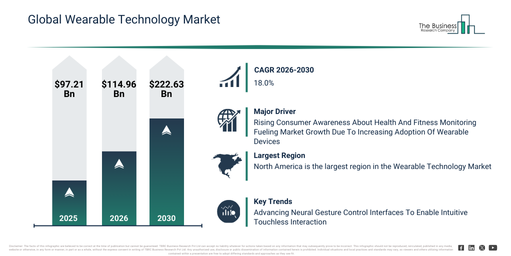
    The wearable technology market has observed remarkable expansion in recent years. Its value is projected to climb from $97.21 billion in 2025 to $114.96 billion in 2026, demonstrating a compound annual growth rate (CAGR) of 18.3%. The drivers behind its past growth include a heightened consumer emphasis on fitness and wellness, the increasing adoption of smartwatches and fitness bands, the growing application of wearables for sports performance tracking, the broadened scope of remote patient monitoring in healthcare, and the enhanced integration of Bluetooth and smartphone connectivity within wearable devices.

    The wearable technology market is poised for substantial growth over the next few years. It is forecast to grow to $222.63 billion in 2030, achieving a compound annual growth rate (CAGR) of 18.0%. This expansion during the projection period can be attributed to various factors, including the rising need for personalized health insights and predictive analytics, increased adoption of clinical-grade medical wearables, growing corporate investment in employee wellness and safety initiatives, the proliferation of augmented reality and virtual reality (AR/VR) wearables across enterprise and entertainment sectors, and the increasing revenue from subscriptions to premium digital coaching and cloud services. Noteworthy trends for the forecast period include technological advancements in artificial intelligence (AI)-based health analytics, innovations in smart clothing and e-textiles, developments in multimodal biometrics and non-invasive medical sensing, ongoing research and developments in battery efficiency and ultra-low-power chips, and enhancements in AR/VR wearables for immersive metaverse-based applications.

    Download the Free Sample Report to Explore Key Market Insights:

    https://www.thebusinessresearchcompany.com/sample.aspx?id=30783&type=smp

    What Key Drivers Are Influencing The Growth Of The Wearable Technology Market?

    The growing understanding among consumers about monitoring their health and fitness is projected to drive the expansion of the wearable technology market in the future. This consumer awareness about health and fitness monitoring signifies individuals’ comprehension and active participation in tracking and managing their physiological and wellness data using technologies that measure health metrics such as heart rate, activity, and sleep, increasingly influencing lifestyle and wellness choices globally. The surge in consumer awareness about health and fitness monitoring is attributed to a greater focus on preventive health and proactive wellness management, prompting more people to adopt devices that assist in monitoring their health. Wearable technology aids in health and fitness monitoring by providing real-time insights into activity, sleep, and vital signs, empowering users to make informed lifestyle and fitness decisions. For example, in January 2025, according to the China Internet Network Information Center, a China-based research organization, as of December 2024, China had 418 million users of internet healthcare services, marking an increase of 3.72 million from December 2023 and representing 37.7% of the total online population. Therefore, the increasing consumer awareness concerning health and fitness monitoring is stimulating the growth of the wearable technology market.

    What Segment Types Make Up The Wearable Technology Market?

    The wearable technology market covered in this report is segmented –

    1) By Product Type: Smartwatches, Fitness And Activity Trackers, Smart Clothing Or E-Textiles, Augmented Reality And Virtual Reality Headsets Or Smart Glasses, Medical And Clinical Wearables, Hearables Or Smart Earbuds, Other Wearable Accessories

    2) By Connectivity: Bluetooth, Wi-Fi, Cellular Or LTE Or 5G, Near Field Communication (NFC), Other Internet Of Things Low-Power Networks

    3) By Distribution Channel: Online Retail Or E-Commerce, Brand Stores Or OEM Stores, Consumer Electronics Retailers, Healthcare And Medical Distribution Networks, Enterprise Or Institutional Sales

    4) By Application Or Use-Case: Health And Fitness Monitoring, Medical Diagnostics And Remote Patient Monitoring, Sports And Performance Analytics, Gaming, Virtual Reality, Entertainment And Immersive Training, Workplace Safety And Productivity, Lifestyle And Personal Assistance, Defense And Tactical Operations

    5) By End-Users: Individual Consumers, Healthcare Providers And Patients, Enterprise And Industrial Users, Athletes And Sports Organizations

    Subsegments:

    1) By Smartwatches: Fitness Tracking Smartwatches, Health Monitoring Smartwatches, Communication Smartwatches, Kids Smartwatches, Luxury Smartwatches

    2) By Fitness And Activity Trackers: Daily Activity Trackers, Sports Performance Trackers, Sleep Tracking Bands, Heart Rate Monitoring Bands, Posture And Movement Trackers

    3) By Smart Clothing Or E-Textiles: Smart Sportswear, Smart Workwear, Smart Military Apparel, Smart Fashion Wear, Smart Thermal Regulating Clothing

    4) By Augmented Reality And Virtual Reality Headsets Or Smart Glasses: Augmented Reality Smart Glasses, Virtual Reality Headsets, Mixed Reality Wearables, Industrial Smart Glasses, Consumer Entertainment Smart Glasses

    5) By Medical And Clinical Wearables: Remote Patient Monitoring Wearables, Cardiac Monitoring Wearables, Glucose Monitoring Wearables, Vital Signs Tracking Wearables, Rehabilitation And Therapy Wearables

    6) By Hearables Or Smart Earbuds: Health Monitoring Earbuds, Noise Cancellation Earbuds, Language Translation Earbuds, Fitness Tracking Earbuds, Gaming And Entertainment Earbuds

    7) By Other Wearable Accessories: Smart Rings, Smart Belts, Smart Helmets, Smart Jewelry, Smart Insoles

    Which Market Trends Are Creating New Opportunities In The Wearable Technology Market?

    Leading companies in the wearable technology market are concentrating on developing sophisticated wearables, such as AI-enabled neural interface wristbands, to expedite human-computer interaction, expand device utility, and enhance accessibility throughout digital ecosystems. AI-enabled neural interface wristbands refer to wearable gadgets engineered to detect, interpret, or engage with neural signals (brain or nerve activity) and provide real-time feedback, control, or insights utilizing artificial intelligence. For example, in January 2025, Wearable Devices Ltd., an Israel-based technology firm, released the Mudra Link neural gesture-control wristband, which stands as the inaugural neural wristband compatible with Android, macOS, and Windows platforms. This device incorporates advanced gesture recognition powered by surface nerve conductance sensors, provides cross-platform compatibility for smooth operation of smart devices, and includes customizable gesture mapping for unique user interaction patterns, thereby enabling effortless hands-free control across augmented reality systems and smart environments, signifying a substantial progression in wearable interaction by substituting conventional input methods with neural gesture-driven command execution.

    Which Major Firms Influence Developments In The Wearable Technology Market?

    Major companies operating in the wearable technology market are Google LLC, Samsung Electronics Co. Ltd., Huawei Technologies Co. Ltd., Sony Corporation, LG Electronics Inc., Nike Inc., Xiaomi Corporation, Adidas AG, ASUSTeK Computer Inc., OPPO Mobile Telecommunications Corp. Ltd., Garmin Ltd., Michael Kors Holdings Limited, Casio America Inc., OnePlus Technology Co. Ltd., Fossil Group Inc., Withings SA, Vuzix Corporation, Fitbit Inc., hDrop Technologies Inc., Bearmind AG

    Read the full wearable technology market report here:

    https://www.thebusinessresearchcompany.com/report/wearable-technology-market-report

    Which Global Regions Are Shaping The Competitive Landscape Of The Wearable Technology Market?

    North America was the largest region in the wearable technology market in 2025. Asia-Pacific is expected to be the fastest-growing region in the forecast period. The regions covered in the wearable technology market report are Asia-Pacific, South East Asia, Western Europe, Eastern Europe, North America, South America, Middle East, Africa.

    Request A Tailored Wearable Technology Market Research Report For Competitive Advantage:

    https://www.thebusinessresearchcompany.com/customise?id=30783&type=smp

    Browse Through More Reports Similar to the Global Wearable Technology Market 2026, By The Business Research Company

    Wearable Computing Market Report 2026

    https://www.thebusinessresearchcompany.com/report/wearable-computing-global-market-report

    Smart Wearables Market Report 2026

    https://www.thebusinessresearchcompany.com/report/smart-wearables-global-market-report

    wearable AI global market report

    https://www.thebusinessresearchcompany.com/report/wearable-ai-global-market-report

    Get in touch with us:

    The Business Research Company: https://www.thebusinessresearchcompany.com/

    Americas +1 310-496-7795

    Asia +44 7882 955267 & +91 8897263534

    Europe +44 7882 955267

    Email us at info@tbrc.info

    Follow us on:

    LinkedIn: https://in.linkedin.com/company/the-business-research-company

    YouTube: https://www.youtube.com/channel/UC24_fI0rV8cR5DxlCpgmyFQ

    Global Market Model: https://www.thebusinessresearchcompany.com/global-market-model
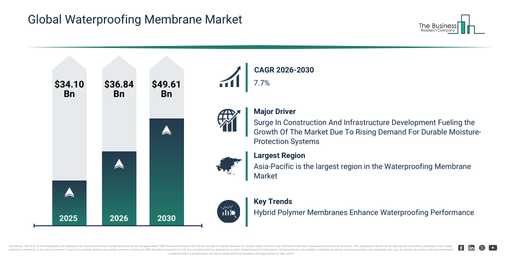
  • Waterproofing Membrane Market Expected to Reach $49.6 Billion by 2030 at 7.7% CAGR

    Waterproofing Membrane Market Expected to Reach $49.6 Billion by 2030 at 7.7% CAGR

    The Business Research Company’s 2026 market reports include new capabilities such as market attractiveness scoring and analysis, total addressable market analysis, company scoring matrix, interactive excel data dashboard, improved supply chain analysis, upcoming startups in the market, and overview of key products, aimed at improving the depth, usability, and strategic value of the insights delivered.

    What Is The Estimated Market Size Of The Waterproofing Membrane Market During 2026–2030?

    The waterproofing membrane market has experienced robust expansion recently. Projections indicate its size will rise from $34.10 billion in 2025 to $36.84 billion in 2026, demonstrating a compound annual growth rate (CAGR) of 8.0%. This historical growth stems from factors such as accelerating urbanization, increased construction endeavors, a heightened requirement for moisture protection, the expansion of industrial infrastructure, and a surging demand for resilient building materials.

    The waterproofing membrane market is poised for significant expansion in the upcoming years. Projections indicate it will reach a value of $49.61 billion by 2030, exhibiting a compound annual growth rate (CAGR) of 7.7%. This anticipated growth during the forecast period is driven by several factors, including the increasing application of waterproofing in residential developments, greater investments in commercial infrastructure, an uptick in renovation and remodeling projects, broader integration in transportation and tunneling sectors, and the rising preference for environmentally friendly waterproofing solutions. Key trends expected during this period involve technological progress enhancing membrane performance, the introduction of novel self-adhesive and spray-applied products, advancements in products for improved durability and chemical resistance, increased research and development efforts for sustainable membranes, and the integration of technology to facilitate quicker installation and monitoring processes.

    Download the Free Sample Report to Explore Key Market Insights:

    https://www.thebusinessresearchcompany.com/sample.aspx?id=30780&type=smp

    What Major Growth Drivers Are Shaping The Outlook Of The Waterproofing Membrane Market?

    The growing trend in construction and infrastructure development is anticipated to drive the expansion of the waterproofing membrane market in the future. This development encompasses the widening of residential, commercial, and industrial structures, alongside transportation and public utility projects, all demanding enduring structural resilience. The surge in construction and infrastructure development stems from greater government funding directed towards major infrastructure initiatives. Waterproofing membranes facilitate construction and infrastructure development by supplying materials that prevent water penetration, bolster structural integrity, and prolong the service life of both buildings and infrastructure. For instance, in May 2025, according to the Office for National Statistics, a UK-based government agency, total construction new orders increased by 26.6% (£2,447 million) in Q1 2025 compared with Q4 2024, driven mainly by growth in infrastructure new work and private industrial new work. Consequently, the expansion of construction and infrastructure development is fueling the growth of the waterproofing membrane market.

    How Are The Various Segments Of The Waterproofing Membrane Market Categorized?

    The waterproofing membrane market covered in this report is segmented –

    1) By Product Type: Liquid-Applied Membrane, Sheet Membrane

    2) By Raw Material: Bitumen, Polymers, Rubber, Other Raw Materials

    3) By Distribution Channel: Direct Sales, Distributors And Dealers, Online Or E-Commerce Supply

    4) By Application: Roofing, Basement And Foundation, Walls And Facades, Landfills And Tunnels, Other Applications

    5) By End Use: Residential, Commercial, Industrial, Infrastructure

    Subsegments:

    1) By Liquid-Applied Membrane: Bituminous, Cementitious, Polyurethane, Polyurea

    2) By Sheet Membrane: Bituminous, Thermoplastic, Rubber, Polyvinyl Chloride

    What Trends Are Affecting The Expansion Of The Waterproofing Membrane Market?

    Leading companies in the waterproofing membrane market are concentrating on developing advanced products, such as hybrid polymer systems, to boost performance, enhance durability, and reduce installation complexity. These hybrid polymer systems are advanced formulations that combine different polymer-modified bitumen technologies into a single sheet, creating a universal membrane suitable for diverse climates and applications. For instance, in February 2025, Sika Corporation, a US-based construction materials company, launched the SikaShield HB79 membrane. This unique “hybrid” modified bitumen membrane features a patented combination of APAO and SBS polymer technologies, eliminating the need for multiple membrane types and drastically simplifying material selection. It includes dual-layer polymer performance, with an APAO top layer for heat resistance and durability and an SBS bottom layer for cold-weather flexibility and substrate bonding, enabling reliable performance under varying seasonal conditions without compromise. Additionally, it incorporates reinforcement from both polyester and glass fiber for increased strength, tear resistance, and dimensional stability, extending roof life and reducing long-term maintenance costs for building owners.

    Who Are The Primary Competitors In The Waterproofing Membrane Market?

    Major companies operating in the waterproofing membrane market are Sika AG, MAPEI S.p.A., Asian Paints Limited, Johns Manville Corporation, Bostik SA, SOPREMA Group, BMI Group, Tremco CPG Inc., GAF Materials LLC, Fosroc International Limited, ARDEX GmbH, IKO Industries Ltd., Polyglass U.S.A. Inc., CICO Technologies Limited, Paul Bauder GmbH & Co. KG, RENOLIT SE, SCHOMBURG GmbH, KÖSTER Bauchemie AG, Pidilite Industries Limited, ALUJET GmbH

    Read the full waterproofing membrane market report here:

    https://www.thebusinessresearchcompany.com/report/waterproofing-membrane-market-report

    Which Regions Are Poised For Strategic Growth In The Waterproofing Membrane Market?

    Asia-Pacific was the largest region in the waterproofing membrane market in 2025. Asia-Pacific is expected to be the fastest-growing region in the forecast period. The regions covered in the waterproofing membrane market report are Asia-Pacific, South East Asia, Western Europe, Eastern Europe, North America, South America, Middle East, Africa.

    Request A Tailored Waterproofing Membrane Market Research Report For Competitive Advantage:

    https://www.thebusinessresearchcompany.com/customise?id=30780&type=smp

    Browse Through More Reports Similar to the Global Waterproofing Membrane Market 2026, By The Business Research Company

    Liquid Applied Membranes Market Report 2026

    https://www.thebusinessresearchcompany.com/report/liquid-applied-membranes-global-market-report

    Waterproof Adhesives And Sealants Market Report 2026

    https://www.thebusinessresearchcompany.com/report/waterproof-adhesives-and-sealants-global-market-report

    breathable membranes global market report

    https://www.thebusinessresearchcompany.com/report/breathable-membranes-global-market-report

    Get in touch with us:

    The Business Research Company: https://www.thebusinessresearchcompany.com/

    Americas +1 310-496-7795

    Asia +44 7882 955267 & +91 8897263534

    Europe +44 7882 955267

    Email us at info@tbrc.info

    Follow us on:

    LinkedIn: https://in.linkedin.com/company/the-business-research-company

    YouTube: https://www.youtube.com/channel/UC24_fI0rV8cR5DxlCpgmyFQ

    Global Market Model: https://www.thebusinessresearchcompany.com/global-market-model