Category: Medical Equipment

  • Artificial Intelligence (AI)-Enhanced Neurorehabilitation Exoskeleton Market Developments Driving Growth

    Artificial Intelligence (AI)-Enhanced Neurorehabilitation Exoskeleton Market Developments Driving Growth

    The Business Research Company’s 2026 market reports feature enhanced tools like market attractiveness analysis, TAM assessment, and company scoring matrices, along with interactive dashboards, deeper supply chain insights, and startup coverage strengthening the depth, usability, and strategic value of insights.

    What Are The Market Size Estimates For The Artificial Intelligence (AI)-Enhanced Neurorehabilitation Exoskeleton Market In 2026 And 2030?

    The artificial intelligence (ai)-enhanced neurorehabilitation exoskeleton market has witnessed substantial growth in recent years. Projections suggest it will expand from $1.24 billion in 2025 to $1.47 billion in 2026, achieving a compound annual growth rate (CAGR) of 18.6%. The expansion observed in previous periods is attributable to factors including a rise in the prevalence of neurological disorders, the early adoption of robotic rehabilitation devices, ongoing advancements in sensor technologies, a heightened demand for intensive rehabilitation therapies, and the increase in rehabilitation centers.

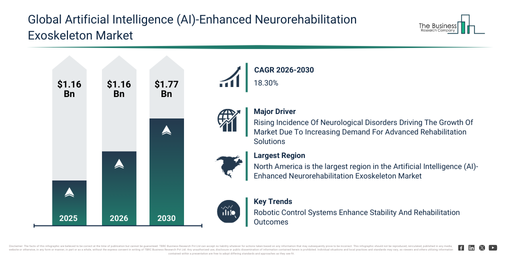
    The artificial intelligence (ai)-enhanced neurorehabilitation exoskeleton market size is projected to experience substantial growth in the coming years. It is forecast to expand to $2.87 billion by 2030, achieving a compound annual growth rate (CAGR) of 18.3%. This expansion during the forecast period can be linked to AI-enabled adaptive rehabilitation, the broadening of home-based neurorehabilitation, a rising geriatric population, supportive reimbursement for robotic therapy, and the incorporation of cloud-based analytics. Noteworthy trends anticipated in this period encompass personalized AI-driven rehabilitation programs, advanced adaptive motion assistance systems, data-driven tracking of therapy outcomes, the proliferation of home-based robotic rehabilitation, and seamless integration with established clinical rehabilitation protocols.

    Access Your Free Sample Report For In-Depth Market Analysis:

    https://www.thebusinessresearchcompany.com/sample.aspx?id=28918&type=smp

    What Significant Factors Are Influencing The Artificial Intelligence (AI)-Enhanced Neurorehabilitation Exoskeleton Market Expansion?

    The increasing prevalence of neurological conditions is anticipated to drive the expansion of the artificial intelligence (AI)-enhanced neurorehabilitation exoskeleton market in the future. These disorders encompass health issues impacting the brain, spinal cord, and nerves, resulting in deficits across movement, cognitive abilities, sensory perception, or other physiological functions. The worldwide increase in neurological ailments is primarily fueled by an aging demographic, given that elderly individuals are more susceptible to conditions like stroke, dementia, and Parkinson’s disease, all of which typically become more common as people age. Artificial intelligence (AI)-enhanced neurorehabilitation exoskeletons assist those suffering from neurological disorders by delivering tailored, flexible therapy that boosts motor function, speeds up recuperation, and offsets compromised movement via continuous monitoring and smart customization for each patient’s unique requirements. As an illustration, data from March 2023, reported by the Alzheimer’s Association, a US-based nonprofit voluntary health organization, indicated that around 6.7 million Americans aged 65 and older are currently living with Alzheimer’s dementia, a figure expected to escalate to 13.8 million by 2060. Consequently, the increasing occurrence of neurological conditions is propelling the expansion of the artificial intelligence (AI)-enhanced neurorehabilitation exoskeleton market.

    Which Segments Define The Artificial Intelligence (AI)-Enhanced Neurorehabilitation Exoskeleton Market Segment Structure?

    The artificial intelligence (ai)-enhanced neurorehabilitation exoskeleton market covered in this report is segmented –

    1) By Component: Hardware, Software, Services

    2) By Mobility Type: Mobile, Stationary

    3) By Application: Stroke Rehabilitation, Spinal Cord Injury, Traumatic Brain Injury, Multiple Sclerosis

    4) By End-User: Hospitals And Clinics, Rehabilitation Centers, Home Care Settings

    Subsegments:

    1) By Hardware: Exoskeleton Frames, Actuators And Motors, Sensors And Wearable Devices, Control Units And Embedded Electronics

    2) By Software: Motion Planning Software, Rehabilitation Protocol Software, Data Analytics And Monitoring Software, Connectivity And Integration Software

    3) By Services: Implementation And Setup Services, Training And Education Services, Maintenance And Support Services, Remote Monitoring And Assistance Services

    What Trends Are Affecting The Direction Of The Artificial Intelligence (AI)-Enhanced Neurorehabilitation Exoskeleton Market?

    Major companies operating in the artificial intelligence (AI)-enhanced neurorehabilitation exoskeleton market are concentrating on integrating advanced solutions, such as robotic control systems, to improve user mobility, stability, and personalized rehabilitation outcomes. Robotic control systems are technologies that manage and coordinate a robot’s or exoskeleton’s movements, enabling users to walk, stand, and perform daily activities safely and efficiently through precise, stable, and adaptive motion. For example, in May 2025, Wandercraft SAS, a France-based robotics company, initiated clinical trials in the U.S. for its AI-powered Personal Exoskeleton. This device blends advanced physical AI with robotic control systems to help individuals with spinal cord injuries, stroke, and other mobility impairments stand, walk, and navigate various surfaces securely. Continuously adapting to the user’s movements in real time, it enhances mobility, stability, and rehabilitation progress. Equipped with a joystick-based control system and intelligent algorithms that anticipate changes in weight, surface, and speed, the exoskeleton fosters greater independence while diminishing secondary health risks associated with prolonged wheelchair use.

    Who Are The Established Players Within The Artificial Intelligence (AI)-Enhanced Neurorehabilitation Exoskeleton Market?

    Major companies operating in the artificial intelligence (ai)-enhanced neurorehabilitation exoskeleton market are Ottobock SE & Co. KGaA, Shanghai Fourier Intelligence Co. Ltd., Kinova Inc., Cyberdyne Inc., Hocoma AG, Myomo Inc., Neofect Co. Ltd., Ekso Bionics Holdings Inc., ReWalk Robotics Ltd., AlterG Inc., RENU ROBOTICS CORPORATION, ExoAtlet Global S.A., REEV Robotics, Bionik Laboratories Corp., Rex Bionics PLC, Wearable Robotics Srl, Gogoa Mobility Robots S.L., Technaid S.L., Bionic Yantra Pvt. Ltd., MediTouch Inc.

    Get The Full Artificial Intelligence (AI)-Enhanced Neurorehabilitation Exoskeleton Market Report:

    https://www.thebusinessresearchcompany.com/report/artificial-intelligence-ai-enhanced-neurorehabilitation-exoskeleton-global-market-report

    Which Region Is The Largest In The Artificial Intelligence (AI)-Enhanced Neurorehabilitation Exoskeleton Market?

    North America was the largest region in the artificial intelligence (AI)-enhanced neurorehabilitation exoskeleton market in 2025. The regions covered in the artificial intelligence (AI)-enhanced neurorehabilitation exoskeleton market report are Asia-Pacific, South East Asia, Western Europe, Eastern Europe, North America, South America, Middle East, Africa.

    Request A Customized Artificial Intelligence (AI)-Enhanced Neurorehabilitation Exoskeleton Market Report For Competitive Insights:

    https://www.thebusinessresearchcompany.com/customise?id=28918&type=smp

    Browse Through More Reports Similar to the Global Artificial Intelligence (AI)-Enhanced Neurorehabilitation Exoskeleton Market 2026, By The Business Research Company

    Wearable Robotic Exoskeleton Market Report 2026

    https://www.thebusinessresearchcompany.com/report/wearable-robotic-exoskeleton-global-market-report

    Military Exoskeleton Market Report 2026

    https://www.thebusinessresearchcompany.com/report/military-exoskeleton-global-market-report

    Rehabilitation Robotics Market Report 2026

    https://www.thebusinessresearchcompany.com/report/rehabilitation-robotics-global-market-report

    Get in touch with us:

    The Business Research Company: https://www.thebusinessresearchcompany.com/

    Americas +1 310-496-7795

    Asia +44 7882 955267 & +91 8897263534

    Europe +44 7882 955267

    Email us at info@tbrc.info

    Follow us on:

    LinkedIn: https://in.linkedin.com/company/the-business-research-company

    YouTube: https://www.youtube.com/channel/UC24_fI0rV8cR5DxlCpgmyFQ

    Global Market Model: https://www.thebusinessresearchcompany.com/global-market-model

  • Waterproofing Membrane Market Expected to Reach $49.6 Billion by 2030 at 7.7% CAGR

    Waterproofing Membrane Market Expected to Reach $49.6 Billion by 2030 at 7.7% CAGR

    The Business Research Company’s 2026 market reports include new capabilities such as market attractiveness scoring and analysis, total addressable market analysis, company scoring matrix, interactive excel data dashboard, improved supply chain analysis, upcoming startups in the market, and overview of key products, aimed at improving the depth, usability, and strategic value of the insights delivered.

    What Is The Estimated Market Size Of The Waterproofing Membrane Market During 2026–2030?

    The waterproofing membrane market has experienced robust expansion recently. Projections indicate its size will rise from $34.10 billion in 2025 to $36.84 billion in 2026, demonstrating a compound annual growth rate (CAGR) of 8.0%. This historical growth stems from factors such as accelerating urbanization, increased construction endeavors, a heightened requirement for moisture protection, the expansion of industrial infrastructure, and a surging demand for resilient building materials.

    The waterproofing membrane market is poised for significant expansion in the upcoming years. Projections indicate it will reach a value of $49.61 billion by 2030, exhibiting a compound annual growth rate (CAGR) of 7.7%. This anticipated growth during the forecast period is driven by several factors, including the increasing application of waterproofing in residential developments, greater investments in commercial infrastructure, an uptick in renovation and remodeling projects, broader integration in transportation and tunneling sectors, and the rising preference for environmentally friendly waterproofing solutions. Key trends expected during this period involve technological progress enhancing membrane performance, the introduction of novel self-adhesive and spray-applied products, advancements in products for improved durability and chemical resistance, increased research and development efforts for sustainable membranes, and the integration of technology to facilitate quicker installation and monitoring processes.

    Download the Free Sample Report to Explore Key Market Insights:

    https://www.thebusinessresearchcompany.com/sample.aspx?id=30780&type=smp

    What Major Growth Drivers Are Shaping The Outlook Of The Waterproofing Membrane Market?

    The growing trend in construction and infrastructure development is anticipated to drive the expansion of the waterproofing membrane market in the future. This development encompasses the widening of residential, commercial, and industrial structures, alongside transportation and public utility projects, all demanding enduring structural resilience. The surge in construction and infrastructure development stems from greater government funding directed towards major infrastructure initiatives. Waterproofing membranes facilitate construction and infrastructure development by supplying materials that prevent water penetration, bolster structural integrity, and prolong the service life of both buildings and infrastructure. For instance, in May 2025, according to the Office for National Statistics, a UK-based government agency, total construction new orders increased by 26.6% (£2,447 million) in Q1 2025 compared with Q4 2024, driven mainly by growth in infrastructure new work and private industrial new work. Consequently, the expansion of construction and infrastructure development is fueling the growth of the waterproofing membrane market.

    How Are The Various Segments Of The Waterproofing Membrane Market Categorized?

    The waterproofing membrane market covered in this report is segmented –

    1) By Product Type: Liquid-Applied Membrane, Sheet Membrane

    2) By Raw Material: Bitumen, Polymers, Rubber, Other Raw Materials

    3) By Distribution Channel: Direct Sales, Distributors And Dealers, Online Or E-Commerce Supply

    4) By Application: Roofing, Basement And Foundation, Walls And Facades, Landfills And Tunnels, Other Applications

    5) By End Use: Residential, Commercial, Industrial, Infrastructure

    Subsegments:

    1) By Liquid-Applied Membrane: Bituminous, Cementitious, Polyurethane, Polyurea

    2) By Sheet Membrane: Bituminous, Thermoplastic, Rubber, Polyvinyl Chloride

    What Trends Are Affecting The Expansion Of The Waterproofing Membrane Market?

    Leading companies in the waterproofing membrane market are concentrating on developing advanced products, such as hybrid polymer systems, to boost performance, enhance durability, and reduce installation complexity. These hybrid polymer systems are advanced formulations that combine different polymer-modified bitumen technologies into a single sheet, creating a universal membrane suitable for diverse climates and applications. For instance, in February 2025, Sika Corporation, a US-based construction materials company, launched the SikaShield HB79 membrane. This unique “hybrid” modified bitumen membrane features a patented combination of APAO and SBS polymer technologies, eliminating the need for multiple membrane types and drastically simplifying material selection. It includes dual-layer polymer performance, with an APAO top layer for heat resistance and durability and an SBS bottom layer for cold-weather flexibility and substrate bonding, enabling reliable performance under varying seasonal conditions without compromise. Additionally, it incorporates reinforcement from both polyester and glass fiber for increased strength, tear resistance, and dimensional stability, extending roof life and reducing long-term maintenance costs for building owners.

    Who Are The Primary Competitors In The Waterproofing Membrane Market?

    Major companies operating in the waterproofing membrane market are Sika AG, MAPEI S.p.A., Asian Paints Limited, Johns Manville Corporation, Bostik SA, SOPREMA Group, BMI Group, Tremco CPG Inc., GAF Materials LLC, Fosroc International Limited, ARDEX GmbH, IKO Industries Ltd., Polyglass U.S.A. Inc., CICO Technologies Limited, Paul Bauder GmbH & Co. KG, RENOLIT SE, SCHOMBURG GmbH, KÖSTER Bauchemie AG, Pidilite Industries Limited, ALUJET GmbH

    Read the full waterproofing membrane market report here:

    https://www.thebusinessresearchcompany.com/report/waterproofing-membrane-market-report

    Which Regions Are Poised For Strategic Growth In The Waterproofing Membrane Market?

    Asia-Pacific was the largest region in the waterproofing membrane market in 2025. Asia-Pacific is expected to be the fastest-growing region in the forecast period. The regions covered in the waterproofing membrane market report are Asia-Pacific, South East Asia, Western Europe, Eastern Europe, North America, South America, Middle East, Africa.

    Request A Tailored Waterproofing Membrane Market Research Report For Competitive Advantage:

    https://www.thebusinessresearchcompany.com/customise?id=30780&type=smp

    Browse Through More Reports Similar to the Global Waterproofing Membrane Market 2026, By The Business Research Company

    Liquid Applied Membranes Market Report 2026

    https://www.thebusinessresearchcompany.com/report/liquid-applied-membranes-global-market-report

    Waterproof Adhesives And Sealants Market Report 2026

    https://www.thebusinessresearchcompany.com/report/waterproof-adhesives-and-sealants-global-market-report

    breathable membranes global market report

    https://www.thebusinessresearchcompany.com/report/breathable-membranes-global-market-report

    Get in touch with us:

    The Business Research Company: https://www.thebusinessresearchcompany.com/

    Americas +1 310-496-7795

    Asia +44 7882 955267 & +91 8897263534

    Europe +44 7882 955267

    Email us at info@tbrc.info

    Follow us on:

    LinkedIn: https://in.linkedin.com/company/the-business-research-company

    YouTube: https://www.youtube.com/channel/UC24_fI0rV8cR5DxlCpgmyFQ

    Global Market Model: https://www.thebusinessresearchcompany.com/global-market-model
  • Artificial Intelligence (AI)-Enhanced Medication Adherence Sensor Market Forecast Highlighting Demand And Growth

    Artificial Intelligence (AI)-Enhanced Medication Adherence Sensor Market Forecast Highlighting Demand And Growth

    The Business Research Company’s 2026 market reports feature enhanced tools like market attractiveness analysis, TAM assessment, and company scoring matrices, along with interactive dashboards, deeper supply chain insights, and startup coverage strengthening the depth, usability, and strategic value of insights.

    What Expansion In Market Value Is Forecasted For The Artificial Intelligence (AI)-Enhanced Medication Adherence Sensor Market Between 2026 And 2030?

    The artificial intelligence (ai)-enhanced medication adherence sensor market has experienced rapid expansion in recent years. This market is projected to grow from $1.96 billion in 2025 to $2.34 billion in 2026, achieving a compound annual growth rate (CAGR) of 19.7%. Historically, the growth can be attributed to several factors including medication non-adherence issues, the increase in chronic disease, the adoption of digital health, clinical trial monitoring needs, and innovation in wearable sensors.

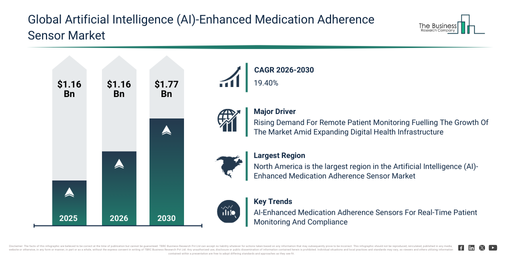
    The artificial intelligence (AI)-enhanced medication adherence sensor market is set for significant expansion in the foreseeable future. This market is predicted to reach $4.75 billion by 2030, achieving a compound annual growth rate (CAGR) of 19.4%. The expected growth during this period stems from factors such as the rise of remote patient monitoring, AI-driven adherence analytics, the adoption of value-based care models, an increasing elderly population, and the digitization of pharmaceutical trials. Key trends anticipated in the forecast period include real-time medication monitoring, tools designed for chronic disease compliance, continued development in remote patient monitoring, specialized medication management for the elderly, and improved tracking of clinical trial adherence.

    Access Your Free Sample Report For In-Depth Market Analysis:

    https://www.thebusinessresearchcompany.com/sample.aspx?id=28917&type=smp

    Which Important Drivers Are Guiding The Artificial Intelligence (AI)-Enhanced Medication Adherence Sensor Market Growth?

    The demand for remote patient monitoring is anticipated to fuel the expansion of the artificial intelligence (AI)-enhanced medication adherence sensor market. Remote patient monitoring (RPM) utilizes connected digital technologies to gather and transmit health data from patients outside traditional healthcare settings, allowing clinicians to manage conditions proactively. The rapid growth of RPM is attributed to increased investments by healthcare systems in digital health infrastructure, which has accelerated the adoption of connected monitoring technologies in patient care. AI-enhanced medication adherence sensors provide real-time tracking of medication intake, sending adherence data to healthcare providers to facilitate timely interventions, reduce missed doses, and enable remote monitoring of treatment compliance and patient health. For example, in April 2025, the Parliamentary Office of Science and Technology, a UK-based non-partisan office of the UK Parliament, reported that in March 2025, England possessed 12,825 virtual ward beds, equating to 20 beds per 100,000 GP-registered individuals, with an occupancy rate of 76.2%, serving 9,767 patients. Consequently, the increasing need for remote patient monitoring is propelling the growth of the artificial intelligence (AI)-enhanced medication adherence sensor market.

    How Is The Artificial Intelligence (AI)-Enhanced Medication Adherence Sensor Market Segmented Across Different Segment Categories?

    The artificial intelligence (ai)-enhanced medication adherence sensor market covered in this report is segmented –

    1) By Product Type: Wearable Sensors, Ingestible Sensors, Smart Pill Bottles, Smart Packaging

    2) By Technology: Artificial Intelligence (AI) Algorithms, Internet Of Things (IoT) Integration, Cloud-Based Solutions, Mobile Applications, Other Technologies

    3) By Distribution Channel: Online, Offline

    4) By Application: Chronic Disease Management, Elderly Care, Clinical Trials, Home Healthcare, Other Applications

    5) By End-User: Patients, Healthcare Providers, Pharmaceutical Companies, Other End-Users

    Subsegments:

    1) By Wearable Sensors: Smart Wristbands, Adhesive Patches, Smartwatches, Clothing-Embedded Sensors, Arm Bands

    2) By Ingestible Sensors: Sensor-Embedded Pills, Biocompatible Capsules, Digestive Monitoring Sensors, pH Tracking Sensors, Temperature-Sensing Capsules

    3) By Smart Pill Bottles: Bluetooth-Enabled Pill Bottles, Reminder-Integrated Bottles, Dose-Tracking Bottles, Automatic Dispensing Bottles, Sensor-Activated Bottles

    4) By Smart Packaging: Blister Pack Sensors, Smart Labels, Pressure-Sensitive Packaging, Temperature-Monitoring Packaging, Tamper-Evident Smart Packs

    What Trends Are Influencing The Evolution Of The Artificial Intelligence (AI)-Enhanced Medication Adherence Sensor Market?

    Companies operating in the artificial intelligence (AI)-enhanced medication adherence sensor market are prioritizing the development of readily integratable solutions, such as smart pill bottle-based medication adherence systems. These tools aim to streamline patient oversight, improve medication compliance, and facilitate effortless data exchange with healthcare providers. Smart pill bottle-based medication adherence systems track patient medication intake continuously, record adherence data, and send out alerts and reminders to ensure timely dosing, while also furnishing actionable insights to healthcare providers. For instance, in June 2024, PatchRx, a US-based digital health technology company, introduced PatchRx Connect. This solution functions as an easy-to-integrate tool, embedding real-time medication adherence data directly into existing care management platforms. It empowers clinical teams to gain immediate understanding of patients’ medication-taking behaviors without disrupting workflows or patient experience. The system encompasses a smart pill bottle cap (PatchCap) that monitors medication use, a cellular gateway that streams data securely without requiring WiFi or a mobile app, and a Connect API that enables providers to view adherence metrics within their own software. This integration contributes to enhanced treatment outcomes and reduced costs by allowing for timely clinical interventions based on actual adherence data.

    Which Organizations Play A Role In The Artificial Intelligence (AI)-Enhanced Medication Adherence Sensor Market Landscape?

    Major companies operating in the artificial intelligence (ai)-enhanced medication adherence sensor market are AiCure Inc., AdhereTech Inc., AARDEX Group Ltd., EtectRx Inc., Proteus Digital Health, Adherium Limited, Wisepill Technologies Proprietary Ltd., SMRxT Inc., Amiko Digital Health Limited, MedMinder Systems Inc., Spencer Health Solutions Inc., iZafe Group AB, Evalan B.V., Mango Health, DoseSmart, CarePredict, Catalia Health, Sentrian, MedAdherence, Pilloxa

    Get The Full Artificial Intelligence (AI)-Enhanced Medication Adherence Sensor Market Report:

    https://www.thebusinessresearchcompany.com/report/artificial-intelligence-ai-enhanced-medication-adherence-sensor-global-market-report

    Which Region Leads The Artificial Intelligence (AI)-Enhanced Medication Adherence Sensor Market In Terms Of Market Share?

    North America was the largest region in the artificial intelligence (AI)-enhanced medication adherence sensor market in 2025. The regions covered in the artificial intelligence (AI)-enhanced medication adherence sensor market report are Asia-Pacific, South East Asia, Western Europe, Eastern Europe, North America, South America, Middle East, Africa.

    Request A Customized Artificial Intelligence (AI)-Enhanced Medication Adherence Sensor Market Report For Competitive Insights:

    https://www.thebusinessresearchcompany.com/customise?id=28917&type=smp

    Browse Through More Reports Similar to the Global Artificial Intelligence (AI)-Enhanced Medication Adherence Sensor Market 2026, By The Business Research Company

    Artificial Intelligence Ai In Precision Medicine Market Report 2026

    https://www.thebusinessresearchcompany.com/report/artificial-intelligence-ai-in-precision-medicine-global-market-report

    Artificial Intelligence In Healthcare Market Report 2026

    https://www.thebusinessresearchcompany.com/report/artificial-intelligence-in-healthcare-global-market-report

    Artificial Intelligence Ai In Remote Patient Monitoring Market Report 2026

    https://www.thebusinessresearchcompany.com/report/artificial-intelligence-ai-in-remote-patient-monitoring-global-market-report

    Get in touch with us:

    The Business Research Company: https://www.thebusinessresearchcompany.com/

    Americas +1 310-496-7795

    Asia +44 7882 955267 & +91 8897263534

    Europe +44 7882 955267

    Email us at info@tbrc.info

    Follow us on:

    LinkedIn: https://in.linkedin.com/company/the-business-research-company

    YouTube: https://www.youtube.com/channel/UC24_fI0rV8cR5DxlCpgmyFQ

    Global Market Model: https://www.thebusinessresearchcompany.com/global-market-model
  • Artificial Intelligence (AI)-Driven Tele-Dermatoscope Market Outlook Highlighting Drivers And Market Evolution

    Artificial Intelligence (AI)-Driven Tele-Dermatoscope Market Outlook Highlighting Drivers And Market Evolution

    The Business Research Company’s 2026 market reports feature enhanced tools like market attractiveness analysis, TAM assessment, and company scoring matrices, along with interactive dashboards, deeper supply chain insights, and startup coverage strengthening the depth, usability, and strategic value of insights.

    How Large Will The Artificial Intelligence (AI)-Driven Tele-Dermatoscope Market Be By 2030 Compared To Its 2026 Market Size?

    The artificial intelligence (ai)-driven tele-dermatoscope market size has seen remarkable growth in recent years. It is projected to expand from $1.51 billion in 2025 to $1.94 billion in 2026, at a compound annual growth rate (CAGR) of 28.2%. Historically, this growth can be attributed to factors such as the rising incidence of skin disorders, the demand for remote dermatology, advancements in imaging sensors, the early adoption of AI in dermatology, and the overall growth of telemedicine platforms.

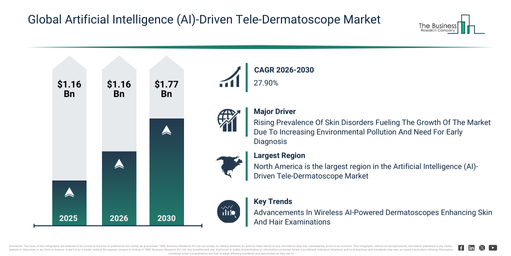
    The market size for artificial intelligence (ai)-driven tele-dermatoscopes is projected to experience rapid expansion in the coming years. This market is anticipated to reach $5.19 billion by 2030, exhibiting a compound annual growth rate (CAGR) of 27.9%. Factors contributing to this growth over the forecast period include the rising adoption of tele-dermatology, its integration with ai analytics, the approval of regulatory standards for skin imaging devices, the expansion of cloud-based dermatology platforms, and heightened awareness regarding early skin cancer detection. Key trends identified for the forecast period encompass remote skin lesion assessment, automated skin cancer detection, mobile dermatology solutions, cloud-based dermatology data management, and integration with telemedicine platforms.

    Access Your Free Sample Report For In-Depth Market Analysis:

    https://www.thebusinessresearchcompany.com/sample.aspx?id=28130&type=smp

    What Major Factors Are Driving The Artificial Intelligence (AI)-Driven Tele-Dermatoscope Market Forward?

    A rising occurrence of skin conditions is anticipated to fuel the expansion of the artificial intelligence (AI)-driven tele-dermatoscope market in the future. Skin conditions refer to ailments that disrupt the skin’s typical structure or operation, manifesting in indicators like redness, irritation, flaking, or lesions. Elevated environmental pollution significantly contributes to the surge in skin disorders, given that detrimental pollutants and atmospheric chemicals can compromise the skin’s defensive layer, causing irritation, hypersensitivity responses, and persistent skin ailments. Artificial intelligence (AI)-driven tele-dermatoscopes aid in managing skin disorders through swift and precise analysis of high-resolution skin images using sophisticated algorithms, enabling prompt identification and diagnosis without the necessity of an in-person visit to a dermatologist. As an illustration, the American Cancer Society, a professional organization located in the US, projected in January 2025 that the US would likely experience about 105,000 new melanoma diagnoses and roughly 8,400 associated fatalities in 2025. Consequently, the escalating occurrence of skin conditions is propelling the expansion of the artificial intelligence (AI)-driven tele-dermatoscope market.

    What Are The Main Segments Within The Artificial Intelligence (AI)-Driven Tele-Dermatoscope Market Segment Structure?

    The artificial intelligence (ai)-driven tele-dermatoscope market covered in this report is segmented –

    1) By Product: Handheld Tele-Dermatoscopes, Desktop Tele-Dermatoscopes, Smartphone-Integrated Tele-Dermatoscopes

    2) By Technology: Machine Learning, Deep Learning, Computer Vision, Other Technologies

    3) By Distribution Channel: Online, Offline

    4) By Application: Skin Cancer Detection, Lesion Tracking, General Dermatology, Other Applications

    5) By End User: Hospitals And Clinics, Diagnostic Centers, Research Institutes, Homecare Settings, Other End Users

    Subsegments:

    1) By Handheld Tele-Dermatoscopes: USB-Connected Digital Dermatoscopes, Wireless Digital Dermatoscopes, Smartphone-Compatible Dermatoscopes

    2) By Desktop Tele-Dermatoscopes: Table-Top Dermatoscopes, Trolley-Mounted Dermatoscopes

    3) By Smartphone-Integrated Tele-Dermatoscopes: Clip-On Attachments, Integrated Systems

    Which Trends Are Impacting The Progress Of The Artificial Intelligence (AI)-Driven Tele-Dermatoscope Market?

    Leading firms within the artificial intelligence (AI)-powered tele-dermatoscope sector are prioritizing the creation of sophisticated tools, notably wireless digital dermatoscopes, to enhance user mobility and ease of use. These portable instruments capture high-resolution skin images, transmitting them wirelessly to computers or mobile devices for distant analysis and diagnostic purposes. As an illustration, in March 2024, FotoFinder Systems, a German company specializing in skin imaging technology, unveiled skeen, an inventive wireless digital dermatoscope featuring integrated cloud storage. This device was conceived to transform skin and hair examinations through cutting-edge technology and artificial intelligence (AI). It establishes a new benchmark in both dermoscopy and trichoscopy by facilitating rapid, precise, and convenient image acquisition and secure storage via a fully compliant cloud platform. The instrument incorporates a high-resolution camera along with a magnetic optical system, offering either 20x or 40x magnification for clear visualization of skin and hair structures in both polarized and non-polarized settings. This device supports a completely wireless operational process, eliminating the necessity for smartphones, tablets, or additional adapters. Developed by FotoFinder Systems, Skeen incorporates sophisticated AI technology, such as the AIMEE assistant, to aid doctors in evaluating skin lesions by supplying an AI-derived score from a rigorously validated deep-learning model.

    Who Are The Companies Participating In The Artificial Intelligence (AI)-Driven Tele-Dermatoscope Market?

    Major companies operating in the artificial intelligence (ai)-driven tele-dermatoscope market are Heine Optotechnik GmbH & Co. KG, Digital Diagnostics, FotoFinder Systems GmbH, Epiphany Dermatology PA, Canfield Scientific Inc., MetaOptima Technology Inc., Base Plus Limited, Skin Analytics, DermaSensor Inc., SkinVision, First Derm, Pixience, VERISKIN INC, Skinive B.V., Miiskin, DermaDetect, Triage Technologies Inc., SkinIO LLC, DermEngine, MoleScope, Stratum Biosciences

    Get The Full Artificial Intelligence (AI)-Driven Tele-Dermatoscope Market Report:

    https://www.thebusinessresearchcompany.com/report/artificial-intelligence-ai-driven-tele-dermatoscope-global-market-report

    Which Region Leads The Artificial Intelligence (AI)-Driven Tele-Dermatoscope Market In Overall Market Size?

    North America was the largest region in the artificial intelligence (AI)-driven tele-dermatoscope market in 2025. Asia-Pacific is expected to be the fastest-growing region in the forecast period. The regions covered in the artificial intelligence (AI)-driven tele-dermatoscope market report are Asia-Pacific, South East Asia, Western Europe, Eastern Europe, North America, South America, Middle East, Africa.

    Request A Customized Artificial Intelligence (AI)-Driven Tele-Dermatoscope Market Report For Competitive Insights:

    https://www.thebusinessresearchcompany.com/customise?id=28130&type=smp

    Browse Through More Reports Similar to the Global Artificial Intelligence (AI)-Driven Tele-Dermatoscope Market 2026, By The Business Research Company

    Ai In Medical Devices Market Report 2026

    https://www.thebusinessresearchcompany.com/report/ai-in-medical-devices-global-market-report

    Wearable Ai Market Report 2026

    https://www.thebusinessresearchcompany.com/report/wearable-ai-global-market-report

    Ai Based Surgical Robots Market Report 2026

    https://www.thebusinessresearchcompany.com/report/ai-based-surgical-robots-global-market-report

    Get in touch with us:

    The Business Research Company: https://www.thebusinessresearchcompany.com/

    Americas +1 310-496-7795

    Asia +44 7882 955267 & +91 8897263534

    Europe +44 7882 955267

    Email us at info@tbrc.info

    Follow us on:

    LinkedIn: https://in.linkedin.com/company/the-business-research-company

    YouTube: https://www.youtube.com/channel/UC24_fI0rV8cR5DxlCpgmyFQ

    Global Market Model: https://www.thebusinessresearchcompany.com/global-market-model
  • Artificial Intelligence (AI)-Driven Augmented Reality (AR) Surgical Telementoring Market Overview 2026–2030 Highlighting Developments

    Artificial Intelligence (AI)-Driven Augmented Reality (AR) Surgical Telementoring Market Overview 2026–2030 Highlighting Developments

    The Business Research Company’s 2026 market reports feature enhanced tools like market attractiveness analysis, TAM assessment, and company scoring matrices, along with interactive dashboards, deeper supply chain insights, and startup coverage strengthening the depth, usability, and strategic value of insights.

    What Is The Projected Increase In Market Value Of The Artificial Intelligence (AI)-Driven Augmented Reality (AR) Surgical Telementoring Market During 2026–2030?

    The artificial intelligence (ai)-driven augmented reality (ar) surgical telementoring market has experienced substantial growth recently. This market is projected to expand from $1.71 billion in 2025 to $2.2 billion in 2026, exhibiting a compound annual growth rate (CAGR) of 28.2%. Key factors driving this market’s historic growth include the shortage of skilled surgeons, increased telemedicine adoption, rising surgical training demand, advancements in connectivity, and the implementation of pilot telementoring programs.

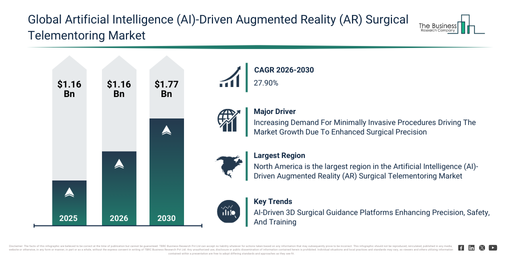
    The artificial intelligence (ai)-driven augmented reality (ar) surgical telementoring market size is anticipated to experience substantial growth over the next few years. It is projected to expand to $5.88 billion by 2030, achieving a compound annual growth rate (CAGR) of 27.9%. This expansion throughout the forecast period can be attributed to the proliferation of 5G networks, the increasing adoption of AI-guided surgery, advancements in global surgical education, improved access to healthcare in rural areas, and the rising demand for complex surgeries. Key trends expected in the forecast period include enhanced remote surgical collaboration, real-time surgical visualization, greater access to specialists in remote regions, precision surgery guidance, and improvements in surgical training.

    Access Your Free Sample Report For In-Depth Market Analysis:

    https://www.thebusinessresearchcompany.com/sample.aspx?id=28911&type=smp

    Which Key Drivers Are Affecting The Artificial Intelligence (AI)-Driven Augmented Reality (AR) Surgical Telementoring Market Development?

    The artificial intelligence (AI)-driven augmented reality (AR) surgical telementoring market is expected to experience growth due to the increasing demand for minimally invasive procedures. Minimally invasive procedures are surgical methods employing small incisions and specialized instruments to reduce trauma, pain, and recovery time when compared to traditional open surgery. This growing demand is influenced by an aging population that increasingly requires surgical interventions but seeks faster recovery times and reduced hospital stays. Advanced minimally invasive surgical approaches necessitate sophisticated guidance systems that leverage AI and AR technologies, offering real-time visualization and remote expert mentoring during complex procedures to enhance surgical precision, minimize errors, and improve patient outcomes. For instance, in April 2025, the British Association of Aesthetic Plastic Surgeons, a UK-based surgical organization, stated that cosmetic surgical procedures rose by 5% between 2023 and 2024, totaling 27,462 procedures performed in 2024. Therefore, the rising demand for minimally invasive procedures is a key driver for the expansion of the artificial intelligence (AI)-driven augmented reality (AR) surgical telementoring market.

    How Is Segmentation Applied In The Artificial Intelligence (AI)-Driven Augmented Reality (AR) Surgical Telementoring Market Segment Analysis?

    The artificial intelligence (ai)-driven augmented reality (ar) surgical telementoring market covered in this report is segmented –

    1) By Component: Hardware, Software, Services

    2) By Deployment Mode: On-Premises, Cloud-Based

    3) By Application: General Surgery, Orthopedic Surgery, Neurosurgery, Cardiovascular Surgery, Other Applications

    4) By End-User: Hospitals, Ambulatory Surgical Centers, Specialty Clinics, Other End-Users

    Subsegments:

    1) By Hardware: Surgical Imaging Cameras, Depth Sensing Modules, Optical Tracking Systems, Electromagnetic Tracking Systems, Head Mounted Displays, Three Dimensional Monitors, Spatial Computing Sensors, Graphics Processing Unit Accelerators

    2) By Software: Real Time Computer Vision Algorithms, Three Dimensional Reconstruction Engines, Spatial Registration And Mapping, Annotation And Telestration Tools, Streaming And Telepresence Platform, Workflow Orchestration And Case Management

    3) By Services: Site Assessment And Readiness Planning, Installation And Commissioning, Clinical Workflow Design And Optimization, Staff Training And Credentialing Support, Remote Proctoring Program Setup

    What Trends Are Transforming The Artificial Intelligence (AI)-Driven Augmented Reality (AR) Surgical Telementoring Market?

    Leading companies in the artificial intelligence (AI)-driven augmented reality (AR) surgical telementoring market are concentrating on developing advanced products, such as real-time 3D surgical guidance platforms, to improve surgical precision, decrease radiation exposure, and enhance training capabilities. These real-time 3D surgical guidance platforms leverage AI and AR technologies to offer surgeons dynamic, segmented views of patient anatomy during procedures, enabling informed decision-making and real-time assessment of surgical success. For example, in April 2025, Proprio, a US-based AI-powered surgical technology company, launched its Paradigm platform, featuring AI-guided visualization and data-driven insights. This platform integrates multimodal data, including CT, MRI, and operative plans, to provide real-time 3D anatomical mapping, similar to Google Maps for surgery. Paradigm adapts to changes in a patient’s body, equipping surgeons with tools and insights designed to improve outcomes. In the first 50 surgeries performed with Paradigm, surgical teams successfully placed hundreds of implants with positive results across a range of challenging procedures, from scoliosis to collapsed discs. On average, the use of Paradigm decreased the need for radiation-based imaging by 10 times, as both highly skilled surgeons and newer residents utilized the technology to navigate complex body structures safely and quickly to achieve their objectives.

    Who Are The Companies Participating In The Artificial Intelligence (AI)-Driven Augmented Reality (AR) Surgical Telementoring Market Environment?

    Major companies operating in the artificial intelligence (ai)-driven augmented reality (ar) surgical telementoring market are Microsoft Corporation, Johnson & Johnson, Medtronic plc, Siemens Healthineers AG, Stryker Corporation, Koninklijke Philips NV, Intuitive Surgical Inc, Olympus Corporation, Karl Storz SE & Co KG, Osso VR Inc, Augmedics Ltd, VirtaMed AG, Surgical Theater Inc, Medivis Inc, Vuzix Corporation, XACT Robotics Inc, FundamentalVR Ltd, SentiAR Inc, EchoPixel Inc, VSI HoloMedicine.

    Get The Full Artificial Intelligence (AI)-Driven Augmented Reality (AR) Surgical Telementoring Market Report:

    https://www.thebusinessresearchcompany.com/report/artificial-intelligence-ai-driven-augmented-reality-ar-surgical-telementoring-global-market-report

    Which Region Is The Top Contributor To The Artificial Intelligence (AI)-Driven Augmented Reality (AR) Surgical Telementoring Market By Share?

    North America was the largest region in the artificial intelligence (AI)-driven augmented reality (AR) surgical telementoring market in 2025. The regions covered in the artificial intelligence (AI)-driven augmented reality (ar) surgical telementoring market report are Asia-Pacific, South East Asia, Western Europe, Eastern Europe, North America, South America, Middle East, Africa.

    Request A Customized Artificial Intelligence (AI)-Driven Augmented Reality (AR) Surgical Telementoring Market Report For Competitive Insights:

    https://www.thebusinessresearchcompany.com/customise?id=28911&type=smp

    Browse Through More Reports Similar to the Global Artificial Intelligence (AI)-Driven Augmented Reality (AR) Surgical Telementoring Market 2026, By The Business Research Company

    Ai In Virtual Reality And Augmented Reality Market Report 2026

    https://www.thebusinessresearchcompany.com/report/ai-in-virtual-reality-and-augmented-reality-global-market-report

    Augmented Intelligence Market Report 2026

    https://www.thebusinessresearchcompany.com/report/augmented-intelligence-global-market-report

    Ar Or Vr Medical Simulation Market Report 2026

    https://www.thebusinessresearchcompany.com/report/ar-or-vr-medical-simulation-global-market-report

    Get in touch with us:

    The Business Research Company: https://www.thebusinessresearchcompany.com/

    Americas +1 310-496-7795

    Asia +44 7882 955267 & +91 8897263534

    Europe +44 7882 955267

    Email us at info@tbrc.info

    Follow us on:

    LinkedIn: https://in.linkedin.com/company/the-business-research-company

    YouTube: https://www.youtube.com/channel/UC24_fI0rV8cR5DxlCpgmyFQ

    Global Market Model: https://www.thebusinessresearchcompany.com/global-market-model
  • Artificial Intelligence (AI)-Based Orthopedic Imaging Market Forecast Highlighting Trends And Growth Potential

    Artificial Intelligence (AI)-Based Orthopedic Imaging Market Forecast Highlighting Trends And Growth Potential

    The Business Research Company’s 2026 market reports feature enhanced tools like market attractiveness analysis, TAM assessment, and company scoring matrices, along with interactive dashboards, deeper supply chain insights, and startup coverage strengthening the depth, usability, and strategic value of insights.

    How Is The Market Size Of The Artificial Intelligence (AI)-Based Orthopedic Imaging Market Expected To Change From 2026 To 2030?

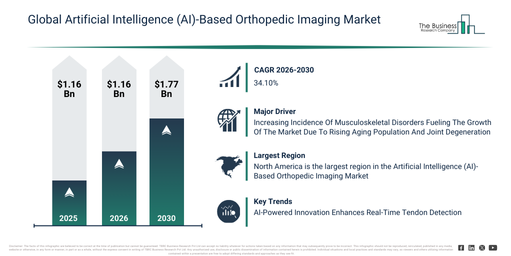
    The artificial intelligence (ai)-based orthopedic imaging market has experienced substantial growth in recent years. It is projected to expand from $2.2 billion in 2025 to $2.95 billion in 2026, achieving a compound annual growth rate (CAGR) of 34.4%. This historical expansion can be ascribed to factors such as the increasing prevalence of orthopedic disorders, a growing number of imaging centers, the adoption of digital radiography, early AI integration in imaging, and the development of hospital IT infrastructure.

    The artificial intelligence (ai)-based orthopedic imaging market is projected to experience substantial growth in the upcoming years. This market is set to expand to $9.56 billion by 2030, driven by a compound annual growth rate (CAGR) of 34.1%. The expansion anticipated during the forecast period stems from the increasing demand for personalized orthopedic care, the integration with predictive analytics, the broadening of cloud-based imaging, the growing adoption of AI-driven diagnostics, and the rise in minimally invasive orthopedic procedures. Noteworthy trends during this period include AI-assisted fracture detection, predictive orthopedic analytics, the emergence of cloud-based imaging platforms, integration with hospital PACS systems, and automated bone density analysis.

    Access Your Free Sample Report For In-Depth Market Analysis:

    https://www.thebusinessresearchcompany.com/sample.aspx?id=28127&type=smp

    What Factors Are Contributing To The Growth Of The Artificial Intelligence (AI)-Based Orthopedic Imaging Market?

    The increasing prevalence of musculoskeletal disorders is anticipated to propel the growth of the artificial intelligence (AI)-based orthopedic imaging market moving forward. Musculoskeletal disorders are defined as conditions affecting muscles, bones, joints, tendons, and ligaments, leading to pain or movement impairment. The surge in these disorders is linked to the aging population, as individuals naturally encounter joint degeneration and a reduction in bone density over time. Artificial intelligence (AI)-based orthopedic imaging assists in the diagnosis of musculoskeletal disorders by providing precise image analysis, which enables the early detection of abnormalities. It also reduces diagnostic errors through automated interpretation, enhancing clinical efficiency and supporting personalized treatment planning. For instance, in January 2024, the Office for Health Improvement and Disparities, a UK-based government department, reported that the prevalence of long-term musculoskeletal (MSK) conditions among self-reporting individuals aged 16 and over was 18.4% in 2023, an increase from 17.6% in 2022. Therefore, the rising incidence of musculoskeletal disorders is a key driver for the artificial intelligence (AI)-based orthopedic imaging market.

    What Segment Categories Shape The Artificial Intelligence (AI)-Based Orthopedic Imaging Market Segment Landscape?

    The artificial intelligence (ai)-based orthopedic imaging market covered in this report is segmented –

    1) By Component: Software, Hardware, Services

    2) By Modality: X-Ray, Computed Tomography (CT), Magnetic Resonance Imaging (MRI), Other Modalities

    3) By Deployment Mode: On-Premises, Cloud-Based

    4) By Application: Fracture Detection, Bone Age Assessment, Joint Disease Diagnosis, Bone Tumor Detection, Other Applications

    Subsegments:

    1) By Software: Image Analysis And Processing Software, Visualization And Detection Software, Workflow Management Software, Diagnostic And Predictive Analytics Software, Machine Learning And Deep Learning Algorithms

    2) By Hardware: Imaging Systems, AI-Integrated Imaging Devices, Graphics Processing Units (GPUs) Or Processing Units, Workstations And Servers, Data Storage Systems

    3) By Services: Installation And Integration Services, Training And Education Services, Consulting Services, Maintenance And Support Services, Cloud-Based Artificial Intelligence (AI) Services

    What Trends Are Shaping The Future Of The Artificial Intelligence (AI)-Based Orthopedic Imaging Market?

    Leading companies within the artificial intelligence (AI)-based orthopedic imaging market are prioritizing the creation of advanced solutions, such as sophisticated AI models, to bolster diagnosis, optimize operational efficiency, and support individualized treatment. These advanced AI models are complex algorithms that analyze medical images to pinpoint abnormalities, automate interpretation, and assist in personalized care. For instance, in February 2023, Clarius Mobile Health, a Canada-based medical imaging company, obtained US Food and Drug Administration (FDA) 510(k) clearance for its Clarius musculoskeletal (MSK) AI model. This model is engineered to automatically identify and measure tendons in the foot, ankle, and knee using AI, and is compatible with the Clarius L7 HD3 and L15 HD3 handheld ultrasound scanners. The objective of this innovation is to streamline musculoskeletal ultrasound by aiding clinicians in real-time tendon detection, labeling, and measurement, which improves workflow, standardizes measurements, and reduces variability among different observers. This AI-augmented scanner enhances the accessibility and user-friendliness of high-definition imaging, facilitating swifter and more accurate patient care.

    Who Are The Companies Operating Across The Artificial Intelligence (AI)-Based Orthopedic Imaging Market Value Chain?

    Major companies operating in the artificial intelligence (ai)-based orthopedic imaging market are United Imaging Intelligence Co. Ltd., Carestream Health Inc., Brainlab AG, Materialise NV, Aidoc Medical Ltd., Qure.ai Technologies Private Limited, Clarius Mobile Health Corp., Quibim S.L., RSIP Vision Ltd., GLEAMER SAS, Nano-X Imaging Ltd., CurveBeam AI Inc., AZmed SAS, VUNO Inc., Radiobotics ApS, PeekMed – Peek Health S.A., ImageBiopsy Lab GmbH, Synapsica Healthcare Pvt. Ltd., Oxipit UAB, Milvue SAS, Raylytic Software GmbH

    Get The Full Artificial Intelligence (AI)-Based Orthopedic Imaging Market Report:

    https://www.thebusinessresearchcompany.com/report/artificial-intelligence-ai-based-orthopedic-imaging-global-market-report

    Which Region Represents The Largest Share Of The Artificial Intelligence (AI)-Based Orthopedic Imaging Market?

    North America was the largest region in the artificial intelligence (AI)-based orthopedic imaging market in 2025. Asia-Pacific is expected to be the fastest-growing region in the forecast period. The regions covered in the artificial intelligence (AI)-based orthopedic imaging market report are Asia-Pacific, South East Asia, Western Europe, Eastern Europe, North America, South America, Middle East, Africa.

    Request A Customized Artificial Intelligence (AI)-Based Orthopedic Imaging Market Report For Competitive Insights:

    https://www.thebusinessresearchcompany.com/customise?id=28127&type=smp

    Browse Through More Reports Similar to the Global Artificial Intelligence (AI)-Based Orthopedic Imaging Market 2026, By The Business Research Company

    Ai In Medical Imaging Market Report 2026

    https://www.thebusinessresearchcompany.com/report/ai-in-medical-imaging-global-market-report

    Ai Enabled Medical Imaging Solutions Market Report 2026

    https://www.thebusinessresearchcompany.com/report/ai-enabled-medical-imaging-solutions-global-market-report

    Artificial Intelligence In Magnetic Resonance Imaging Mri Market Report 2026

    https://www.thebusinessresearchcompany.com/report/artificial-intelligence-in-magnetic-resonance-imaging-mri-global-market-report

    Get in touch with us:

    The Business Research Company: https://www.thebusinessresearchcompany.com/

    Americas +1 310-496-7795

    Asia +44 7882 955267 & +91 8897263534

    Europe +44 7882 955267

    Email us at info@tbrc.info

    Follow us on:

    LinkedIn: https://in.linkedin.com/company/the-business-research-company

    YouTube: https://www.youtube.com/channel/UC24_fI0rV8cR5DxlCpgmyFQ

    Global Market Model: https://www.thebusinessresearchcompany.com/global-market-model
  • Artificial Intelligence (AI)-Based Caries Detection Market Analysis Covering Growth Drivers And Outlook

    Artificial Intelligence (AI)-Based Caries Detection Market Analysis Covering Growth Drivers And Outlook

    The Business Research Company’s 2026 market reports feature enhanced tools like market attractiveness analysis, TAM assessment, and company scoring matrices, along with interactive dashboards, deeper supply chain insights, and startup coverage strengthening the depth, usability, and strategic value of insights.

    From Its 2026 Market Size, What Value Is The Artificial Intelligence (AI)-Based Caries Detection Market Projected To Reach By 2030?

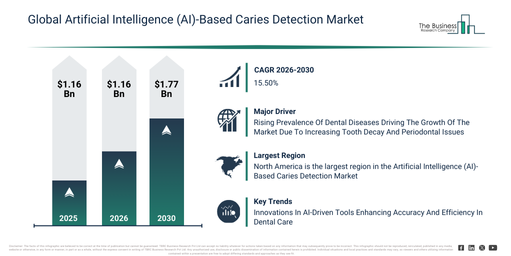
    The artificial intelligence (AI)-based caries detection market has experienced rapid expansion in recent years. It is forecast to increase from $0.62 billion in 2025 to $0.72 billion in 2026, achieving a compound annual growth rate (CAGR) of 15.8%. The growth observed in previous periods is largely due to the growing adoption of digital imaging in dentistry, increasing prevalence of dental caries, advancements in AI algorithms for image analysis, rising awareness of preventive dental care, and the availability of affordable dental imaging devices.

    The artificial intelligence (ai)-based caries detection market is poised for significant expansion in the coming years. This sector is forecast to attain a size of $1.29 billion by 2030, exhibiting a compound annual growth rate (CAGR) of 15.5%. The projected growth during this period stems from several influences, including the broadening availability of tele-dentistry services, the merging of AI with cloud-based dental platforms, advancements in portable intraoral imaging devices, increasing financial commitments to AI-enabled healthcare solutions, and a rising call for customized dental treatments. Prominent trends anticipated within the forecast horizon encompass AI-driven diagnostic precision, the utilization of predictive analytics for prompt detection, remote oversight of dental health, the amalgamation of imaging and AI software, and tailored treatment blueprints.

    Access Your Free Sample Report For In-Depth Market Analysis:

    https://www.thebusinessresearchcompany.com/sample.aspx?id=28126&type=smp

    Which Strong Drivers Are Impacting The Artificial Intelligence (AI)-Based Caries Detection Market Growth?

    The increasing prevalence of dental ailments is projected to stimulate the expansion of the artificial intelligence (AI)-based caries detection market. These conditions are disorders impacting the teeth, gums, or surrounding oral tissues, potentially resulting in pain, infection, or difficulty with oral functions. The surge in dental diseases is linked to higher consumption of sugary and processed foods, which encourages tooth decay and gum problems by feeding harmful oral bacteria. AI-based caries detection aids in managing these diseases by precisely identifying tooth decay early, allowing for quick treatment and lowering the chance of severe complications. For example, according to the National Institutes of Health (NIH), a US-based federal agency, it was reported in September 2023 that approximately 62.06% of older adults are anticipated to experience tooth decay, and about 54.57% are likely to suffer from periodontal disease by 2050. Thus, the escalating impact of dental diseases is a key factor propelling the growth of the artificial intelligence (AI)-based caries detection market.

    Which Segment Types Are Examined In The Artificial Intelligence (AI)-Based Caries Detection Market Segment Study?

    The artificial intelligence (ai)-based caries detection market covered in this report is segmented –

    1) By Product: Software, Hardware, Services

    2) By Deployment Mode: On-Premises, Cloud-Based

    3) By Application: Hospitals, Dental Clinics, Academic And Research Institutes, Other Applications

    4) By End User: General Dentists, Pediatric Dentists, Orthodontists, Other End Users

    Subsegments:

    1) By Software: Diagnostic Software, Imaging Analysis Software, Data Management Software, Predictive Analytics Software, Cloud-Based Software Solutions

    2) By Hardware: Intraoral Cameras, Digital X-Ray Machines, Optical Coherence Tomography (OCT) Devices, Near-Infrared (NIR) Imaging Devices, Laser Fluorescence Devices

    3) By Services: Remote Diagnostic Services, Software As A Service (SaaS), Maintenance And Support Services, Training And Consultation Services, Data Storage And Management Services

    Which Trends Are Contributing To Changes In The Artificial Intelligence (AI)-Based Caries Detection Market?

    Leading companies within the artificial intelligence (AI)-based caries detection market are prioritizing the development of innovative solutions, such as sophisticated clinical enhancers, to optimize clinical workflows, conserve time, and minimize the likelihood of human error. These advanced clinical enhancers are groundbreaking tools or technologies designed to elevate the precision, efficacy, and overall outcomes of medical care. For example, in January 2025, VideaHealth, a US-based dental technology company, introduced its Caries 3.0 model. Caries 3.0 includes an advanced clinical enhancer that boosts accuracy by filtering out potential false positives based on caries size, tooth location, and other vital clinical factors. It boasts extensive patient applicability, being the only FDA-cleared AI model approved for detecting caries in individuals aged 3 and above using bitewing and periapical X-rays. The model also enhances patient communication with improved visualizations, making it simpler to explain conditions and encourage treatment acceptance. These advancements enable dental practices to provide accurate, evidence-based care while remaining technologically current.

    Which Players Are Part Of The Competitive Landscape Of The Artificial Intelligence (AI)-Based Caries Detection Market?

    Major companies operating in the artificial intelligence (ai)-based caries detection market are Dentsply Sirona, Straumann AG, Envista, Planmeca Oy, 3Shape Inc., Dexis Corp., Acteon Group, Carestream Dental LLC, Vatech Co. Ltd., RapidAI, Pearl Inc., Overjet, Videa Health, Dentomo, CranioCatch, Denti.AI Technology Inc., Diagnocat Inc., Genoray Co. Ltd., Manchester Imaging Ltd., Owandy Radiology, Tab32

    Get The Full Artificial Intelligence (AI)-Based Caries Detection Market Report:

    https://www.thebusinessresearchcompany.com/report/artificial-intelligence-ai-based-caries-detection-global-market-report

    Which Geographic Region Dominates The Artificial Intelligence (AI)-Based Caries Detection Market?

    North America was the largest region in the artificial intelligence (AI)-based caries detection market in 2025. Asia-Pacific is expected to be the fastest-growing region in the forecast period. The regions covered in the artificial intelligence (AI)-based caries detection market report are Asia-Pacific, South East Asia, Western Europe, Eastern Europe, North America, South America, Middle East, Africa.

    Request A Customized Artificial Intelligence (AI)-Based Caries Detection Market Report For Competitive Insights:

    https://www.thebusinessresearchcompany.com/customise?id=28126&type=smp

    Browse Through More Reports Similar to the Global Artificial Intelligence (AI)-Based Caries Detection Market 2026, By The Business Research Company

    Artificial Intelligence Ai Camera Market Report 2026

    https://www.thebusinessresearchcompany.com/report/artificial-intelligence-ai-camera-global-market-report

    Artificial Intelligence Ai In Animal Health Market Report 2026

    https://www.thebusinessresearchcompany.com/report/artificial-intelligence-ai-in-animal-health-global-market-report

    Artificial Intelligence In The Diagnostic Market Report 2026

    https://www.thebusinessresearchcompany.com/report/artificial-intelligence-in-the-diagnostic-global-market-report

    Get in touch with us:

    The Business Research Company: https://www.thebusinessresearchcompany.com/

    Americas +1 310-496-7795

    Asia +44 7882 955267 & +91 8897263534

    Europe +44 7882 955267

    Email us at info@tbrc.info

    Follow us on:

    LinkedIn: https://in.linkedin.com/company/the-business-research-company

    YouTube: https://www.youtube.com/channel/UC24_fI0rV8cR5DxlCpgmyFQ

    Global Market Model: https://www.thebusinessresearchcompany.com/global-market-model
  • Surgical Intelligent Auxiliary Navigation Device Market Outlook 2026–2035 Driven by Key Growth Factors

    Surgical Intelligent Auxiliary Navigation Device Market Outlook 2026–2035 Driven by Key Growth Factors

    The Business Research Company’s 2026 market reports include new capabilities such as market attractiveness scoring and analysis, total addressable market analysis, company scoring matrix, interactive excel data dashboard, improved supply chain analysis, upcoming startups in the market, and overview of key products, aimed at improving the depth, usability, and strategic value of the insights delivered.

    What Market Value Is Anticipated For The Surgical Intelligent Auxiliary Navigation Device Market Over The Period 2026–2030?

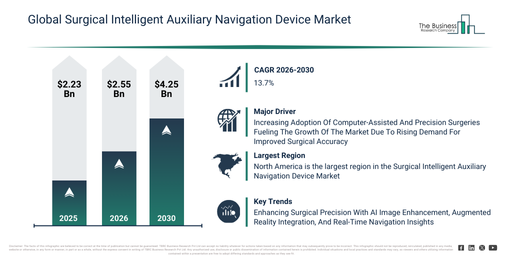
    The surgical intelligent auxiliary navigation device market size has experienced rapid growth in recent years. It is projected to expand from $2.23 billion in 2025 to $2.55 billion in 2026, indicating a compound annual growth rate (CAGR) of 14.0%. The historical increase can be attributed to the growing adoption of computer-assisted surgical tools, an increasing demand for precision in complex surgeries, the rising use of navigation systems in orthopedic and neurosurgical procedures, the expansion of minimally invasive surgical techniques, and an increasing focus on reducing surgical errors and improving patient outcomes.

    The surgical intelligent auxiliary navigation device market is projected to experience substantial expansion over the coming years. It is anticipated to reach a value of $4.25 billion by 2030, exhibiting a compound annual growth rate (CAGR) of 13.7%. This projected growth throughout the forecast period stems from factors such as the increasing incorporation of artificial intelligence (AI) into surgical navigation systems, a surging requirement for real-time imaging and guidance, the escalating adoption of robot-assisted surgical procedures, the expansion of sophisticated healthcare infrastructure, and an uptick in investment dedicated to smart surgical tools. Key trends anticipated during this period encompass technologically-driven advancements in intelligent navigation algorithms, progress in artificial intelligence (AI)-powered intraoperative guidance, evolution in augmented reality (AR) and three-dimensional (3D) visualization systems, increasing research and development efforts for precision surgical devices, and innovations in integrated data and imaging platforms.

    Download the Free Sample Report to Explore Key Market Insights:

    https://www.thebusinessresearchcompany.com/sample.aspx?id=30767&type=smp

    What Drivers Are Shaping The Future Growth Of The Surgical Intelligent Auxiliary Navigation Device Market?

    The growing integration of computer-assisted and precision surgeries is anticipated to fuel the expansion of the surgical intelligent auxiliary navigation device market moving forward. These advanced surgical techniques involve the use of sophisticated imaging, navigation, and digital guidance systems to boost surgical precision, lessen invasiveness, and enhance patient results. The embrace of computer-assisted and precision surgeries is increasing as medical facilities aim to elevate surgical accuracy and patient outcomes, concurrently reducing complications, which facilitates quicker recovery periods and more effective utilization of operating room assets. The surgical intelligent auxiliary navigation device plays a crucial role in these advanced surgeries by offering real-time navigation, three-dimensional visualization, and insights based on data, thereby assisting surgeons with precise instrument placement and informed decisions during procedures. For example, in June 2025, the NHS England, a UK-based government department, projected that by 2035, this innovative approach would support half a million operations annually, marking a substantial increase from 70,000 in 2023–24, with robotic assistance expected in approximately 90% of keyhole surgeries, including those for removing cancerous organs. Consequently, the rising acceptance of computer-assisted and precision surgeries is a primary catalyst for the growth of the surgical intelligent auxiliary navigation device market.

    How Is The Surgical Intelligent Auxiliary Navigation Device Market Divided Into Its Major Segments?

    The surgical intelligent auxiliary navigation device market covered in this report is segmented –

    1) By Component: Hardware, Software, Services, Other Components

    2) By Invasiveness: Minimally Invasive Surgery (MIS), Open Surgery, Other Surgery Types

    3) By Technology: Optical Navigation Equipment, Electromagnetic Navigation Equipment, Robotic-Assisted Navigation Equipment, Other Navigation Technologies

    4) By Application: Orthopedic Surgeries, Neurosurgery, Spinal Procedures, Ear, Nose, Throat (ENT) And Maxillofacial Surgery, Other Surgical Applications

    5) By End User: Hospitals And Surgical Centers, Ambulatory Surgical Centers, Specialized Institutes, Other End Users

    Subsegments:

    1) By Hardware: Navigation Sensors, Imaging Modules, Processing Units

    2) By Software: Navigation Planning Software, Real Time Guidance Software, Data Integration Software

    3) By Services: Installation And Integration Services, Maintenance And Support Services, Training And Consulting Services

    4) By Other Components: User Interface Components, Connectivity Modules, Accessory Devices

    How Are Trends Transforming The Surgical Intelligent Auxiliary Navigation Device Market Landscape?

    Major companies within the surgical intelligent auxiliary navigation device market are concentrating on the creation of advanced products, such as artificial intelligence (AI) image enhancement functionality, to elevate visualization, precision, and intraoperative decision-making. AI image enhancement functionality leverages machine learning algorithms to automatically optimize, clarify, and accentuate critical anatomical structures in medical imaging, thereby enabling surgeons to discern more detail and make better-informed choices during procedures. For instance, in March 2023, Augmedics Inc., a US-based medical technology company specializing in augmented reality solutions for surgery, introduced new features and indications for its xvision AR platform. This update includes AI image enhancement functionality that improves the clarity and contrast of imaging overlays in real time, aiding surgeons in navigating complex anatomy with greater accuracy. By integrating AI-enhanced visualization with augmented reality, xvision supports safer, more efficient surgical navigation and contributes to improved patient outcomes through enhanced intraoperative guidance.

    Which Key Industry Participants Are Active In The Surgical Intelligent Auxiliary Navigation Device Market?

    Major companies operating in the surgical intelligent auxiliary navigation device market are Stryker Corporation, Renishaw plc, CMR Surgical Ltd., Synaptive Medical Inc., ClearPoint Neuro Inc., Augmedics Ltd., Stereotaxis Inc., Xoran Technologies LLC, Novarad Corp., Intellijoint Surgical Inc., Proprio, Fiagon GmbH, Brainomix Ltd., Surgical Theater LLC, Cascination AG, Medivis Inc., Asensus Surgical Inc., ClaroNav Inc., Centerline Biomedical Inc., Medicaroid Corporation, SpineGuard SA

    Read the full surgical intelligent auxiliary navigation device market report here:

    https://www.thebusinessresearchcompany.com/report/surgical-intelligent-auxiliary-navigation-device-market-report

    Which Geographic Areas Are Emerging As Strong Markets For The Surgical Intelligent Auxiliary Navigation Device Market?

    North America was the largest region in the surgical intelligent auxiliary navigation device market in 2025. Asia-Pacific is expected to be the fastest-growing region in the forecast period. The regions covered in the surgical intelligent auxiliary navigation device market report are Asia-Pacific, South East Asia, Western Europe, Eastern Europe, North America, South America, Middle East, Africa.

    Request A Tailored Surgical Intelligent Auxiliary Navigation Device Market Research Report For Competitive Advantage:

    https://www.thebusinessresearchcompany.com/customise?id=30767&type=smp

    Browse Through More Reports Similar to the Global Surgical Intelligent Auxiliary Navigation Device Market 2026, By The Business Research Company

    Surgical Navigation Systems Market Report 2026

    https://www.thebusinessresearchcompany.com/report/surgical-navigation-systems-global-market-report

    Surgical Navigation Systems Market Report 2026

    https://www.thebusinessresearchcompany.com/report/surgical-navigation-systems-global-market-report

    personal navigation devices global market report

    https://www.thebusinessresearchcompany.com/report/personal-navigation-devices-global-market-report

    Get in touch with us:

    The Business Research Company: https://www.thebusinessresearchcompany.com/

    Americas +1 310-496-7795

    Asia +44 7882 955267 & +91 8897263534

    Europe +44 7882 955267

    Email us at info@tbrc.info

    Follow us on:

    LinkedIn: https://in.linkedin.com/company/the-business-research-company

    YouTube: https://www.youtube.com/channel/UC24_fI0rV8cR5DxlCpgmyFQ

    Global Market Model: https://www.thebusinessresearchcompany.com/global-market-model
  • Artificial Intelligence (AI) Powered Remote Electrocardiogram (ECG) Monitoring Market Insights Supporting Growth To 2030

    Artificial Intelligence (AI) Powered Remote Electrocardiogram (ECG) Monitoring Market Insights Supporting Growth To 2030

    The Business Research Company’s 2026 market reports feature enhanced tools like market attractiveness analysis, TAM assessment, and company scoring matrices, along with interactive dashboards, deeper supply chain insights, and startup coverage strengthening the depth, usability, and strategic value of insights.

    How Much Growth In Market Value Is Expected For The Artificial Intelligence (AI) Powered Remote Electrocardiogram (ECG) Monitoring Market Between 2026 And 2030?

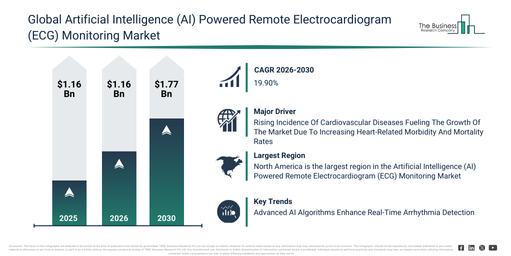
    The artificial intelligence (ai) powered remote electrocardiogram (ecg) monitoring market has seen substantial expansion in recent years. It is anticipated to increase from $1.61 billion in 2025 to $1.94 billion in 2026, achieving a compound annual growth rate (CAGR) of 20.2%. The historical growth of this market can be linked to the increasing prevalence of cardiovascular diseases, the uptake of wearable ecg devices, the necessity for continuous heart monitoring, the integration of ai in cardiac diagnostics, and the development of telehealth platforms.

    The artificial intelligence (AI)-powered remote electrocardiogram (ECG) monitoring market is projected to experience swift expansion in the coming years. This market is anticipated to reach $4.01 billion by 2030, demonstrating a compound annual growth rate (CAGR) of 19.9%. Factors contributing to this growth over the forecast period include the creation of cloud-based ECG monitoring solutions, the incorporation of predictive analytics for detecting arrhythmia, the broadened scope of remote patient monitoring services, increased investment in portable and wearable ECG devices, and their rising use in homecare and ambulatory environments. Key trends shaping the market during this period encompass remote cardiac monitoring, AI-driven arrhythmia detection, predictive cardiovascular analysis, cloud-integrated ECG platforms, and the provision of real-time insights into heart health.

    Access Your Free Sample Report For In-Depth Market Analysis:

    https://www.thebusinessresearchcompany.com/sample.aspx?id=28125&type=smp

    What Key Factors Are Shaping The Artificial Intelligence (AI) Powered Remote Electrocardiogram (ECG) Monitoring Market Landscape?

    The increasing occurrence of cardiovascular conditions is projected to boost the expansion of the artificial intelligence (AI) powered remote electrocardiogram (ECG) monitoring market in the future. These conditions encompass a range of ailments impacting the heart and blood vessels, such as coronary artery disease, heart failure, and stroke. The escalation in cardiovascular diseases stems from poor dietary practices, particularly the overconsumption of processed foods and fats, which contributes to elevated cholesterol and heightened cardiac risks. Artificial intelligence (AI) powered remote electrocardiogram (ECG) monitoring supports the management of cardiovascular diseases by offering continuous, real-time analysis of heart rhythms. This technology facilitates earlier detection of irregularities, allows for prompt medical interventions, and improves patient surveillance from distant places, thereby fostering improved long-term heart health. As an illustration, in October 2024, data from the Centers for Disease Control, a US-based government agency, indicated that in 2023, around 919,032 individuals succumbed to cardiovascular disease, representing 1 in every 3 fatalities. Consequently, the growing prevalence of cardiovascular diseases is propelling the expansion of the artificial intelligence (AI) powered remote electrocardiogram (ECG) monitoring market.

    How Are Different Segments Classified In The Artificial Intelligence (AI) Powered Remote Electrocardiogram (ECG) Monitoring Market Segment Analysis?

    The artificial intelligence (ai) powered remote electrocardiogram (ecg) monitoring market covered in this report is segmented –

    1) By Component: Hardware, Software, Services

    2) By Deployment Mode: Cloud-Based, On-Premises

    3) By End-User: Hospitals And Clinics, Ambulatory Surgical Centers, Homecare Settings, Research Institutes, Other End User

    Subsegments:

    1) By Hardware: Wearable Devices, Electrocardiogram Machines, Sensors And Electrodes, Mobile Devices

    2) By Software: Data Analytics Platforms, Artificial Intelligence Algorithms, Cloud-Based Monitoring Solutions, Mobile Applications

    3) By Services: Remote Patient Monitoring, Technical Support And Maintenance, Training And Consultation, Data Management Services

    What Market Trends Are Affecting The Artificial Intelligence (AI) Powered Remote Electrocardiogram (ECG) Monitoring Market?

    Leading companies operating within the artificial intelligence (AI)-powered remote electrocardiogram (ECG) monitoring market are prioritizing the creation of advanced products, such as AI-driven arrhythmia detection tools, to elevate diagnostic precision, improve patient health outcomes, and reduce healthcare expenses. These AI-driven arrhythmia detection tools are systems that leverage artificial intelligence to automatically scrutinize ECG data and identify irregular heart rhythms, thereby facilitating early detection, real-time notifications, and enhanced cardiac care. For instance, in April 2024, BIOTRONIK, a Germany-based medical technology company, introduced the BIOMONITOR IV insertable cardiac monitor, which incorporates artificial intelligence capabilities designed to refine arrhythmia detection and patient management. It is equipped with advanced AI algorithms that analyze cardiac signals instantaneously, accurately identifying clinically significant arrhythmias while simultaneously minimizing false positives. The BioMonitor IV ICM also features automated rhythm classification and adaptive monitoring functionality, enabling proactive medical intervention and customized treatment plans without requiring manual data review by clinicians.

    Who Are The Companies Driving Activity In The Artificial Intelligence (AI) Powered Remote Electrocardiogram (ECG) Monitoring Market?

    Major companies operating in the artificial intelligence (ai) powered remote electrocardiogram (ecg) monitoring market are Koninklijke Philips N.V., GE Healthcare, Masimo Corporation, Biotronik SE & Co. KG, Nihon Kohden Corporation, iRhythm Technologies Inc., Biofourmis Pte. Ltd., BioSerenity Inc., Withings SA, Eko Devices Inc., AliveCor Inc., Compumedics Limited, Anumana Inc., Electrical Geodesics Inc. (EGI), InfoBionic Inc., Neurable Inc., Cardiomatics Sp. z o.o., IDOVEN S.L., Zeto Inc., NextGen Neuro Inc.

    Get The Full Artificial Intelligence (AI) Powered Remote Electrocardiogram (ECG) Monitoring Market Report:

    https://www.thebusinessresearchcompany.com/report/artificial-intelligence-ai-powered-remote-electrocardiogram-ecg-monitoring-global-market-report

    Which Region Is The Leading Market For The Artificial Intelligence (AI) Powered Remote Electrocardiogram (ECG) Monitoring Market?

    North America was the largest region in the artificial intelligence (AI) powered remote electrocardiogram (ECG) monitoring market in 2025. Asia-Pacific is expected to be the fastest-growing region in the forecast period. The regions covered in the artificial intelligence (AI) powered remote electrocardiogram (ecg) monitoring market report are Asia-Pacific, South East Asia, Western Europe, Eastern Europe, North America, South America, Middle East, Africa.

    Request A Customized Artificial Intelligence (AI) Powered Remote Electrocardiogram (ECG) Monitoring Market Report For Competitive Insights:

    https://www.thebusinessresearchcompany.com/customise?id=28125&type=smp

    Browse Through More Reports Similar to the Global Artificial Intelligence (AI) Powered Remote Electrocardiogram (ECG) Monitoring Market 2026, By The Business Research Company

    Artificial Intelligence Ai In Remote Patient Monitoring Market Report 2026

    https://www.thebusinessresearchcompany.com/report/artificial-intelligence-ai-in-remote-patient-monitoring-global-market-report

    Remote Cardiac Monitoring Market Report 2026

    https://www.thebusinessresearchcompany.com/report/remote-cardiac-monitoring-global-market-report

    Electrocardiogram Ecg Equipment And Management System Market Report 2026

    https://www.thebusinessresearchcompany.com/report/electrocardiogram-ecg-equipment-and-management-system-global-market-report

    Get in touch with us:

    The Business Research Company: https://www.thebusinessresearchcompany.com/

    Americas +1 310-496-7795

    Asia +44 7882 955267 & +91 8897263534

    Europe +44 7882 955267

    Email us at info@tbrc.info

    Follow us on:

    LinkedIn: https://in.linkedin.com/company/the-business-research-company

    YouTube: https://www.youtube.com/channel/UC24_fI0rV8cR5DxlCpgmyFQ

    Global Market Model: https://www.thebusinessresearchcompany.com/global-market-model
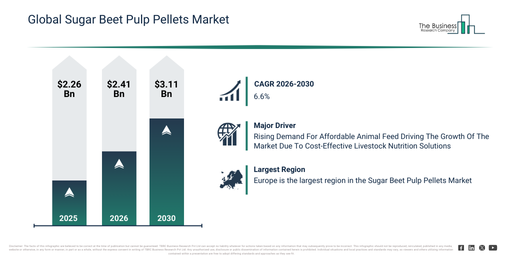
  • Sugar Beet Pulp Pellets Market Trends and Growth Opportunities During 2026–2030

    Sugar Beet Pulp Pellets Market Trends and Growth Opportunities During 2026–2030

    The Business Research Company’s 2026 market reports include new capabilities such as market attractiveness scoring and analysis, total addressable market analysis, company scoring matrix, interactive excel data dashboard, improved supply chain analysis, upcoming startups in the market, and overview of key products, aimed at improving the depth, usability, and strategic value of the insights delivered.

    What Is The Expected Market Size Of The Sugar Beet Pulp Pellets Market From 2026 To 2030?

    The sugar beet pulp pellets market has shown robust growth over recent years. It is projected to expand from $2.26 billion in 2025 to $2.41 billion in 2026, at a compound annual growth rate (CAGR) of 6.8%. This historic growth can be attributed to factors such as increasing livestock feed demand, growing adoption of high-fiber animal diets, a rising dairy cattle population, the expansion of sugar beet processing capacity, and the increasing use of low-cost feed ingredients.

    The market for sugar beet pulp pellets is projected to experience substantial expansion over the coming years. Its valuation is anticipated to reach $3.11 billion by 2030, driven by a compound annual growth rate (CAGR) of 6.6%. This projected increase can be ascribed to several factors, including the escalating need for high-energy animal feed, heightened emphasis on the digestive well-being of animals, the wider embrace of environmentally friendly feed options, the proliferation of commercial livestock operations, and the greater application of byproducts from agro-industrial processes. Key developments during this timeframe are expected to encompass technological improvements in pellet production, new advancements in beet pulp recipes fortified with nutrients, progress in techniques for improving feed quality, dedicated research and development efforts in environmentally sound animal nutrition, and the rising integration of automation within feed manufacturing systems.

    Download the Free Sample Report to Explore Key Market Insights:

    https://www.thebusinessresearchcompany.com/sample.aspx?id=30766&type=smp

    Which Economic Or Industry Drivers Are Impacting The Sugar Beet Pulp Pellets Market?

    The increasing need for animal feed is projected to drive the expansion of the sugar beet pulp pellets market in the future. Affordable animal feed denotes feed components that are nutritionally sound, enabling livestock producers to control feeding expenses while preserving animal well-being and output. The need for animal feed is growing because farmers and feed producers are encountering elevated raw material costs and are looking for budget-friendly substitutes for conventional feed ingredients such as grains and soybean meal. Sugar beet pulp pellets address animal feed needs by providing a feed element that is rich in fiber, easily digestible, and economical, which enhances rumen health and boosts feed efficiency in cattle, horses, and various other livestock. As an illustration, in February 2025, data from the Institute for Feed Education and Research, a US-based organization focused on animal feed and nutrition research and education, showed that US livestock, poultry, and farmed aquaculture utilized approximately 283.6 million tons of feed in 2023, with broilers accounting for 61.5 million tons, dairy cattle for 48.7 million tons, and egg-laying hens for 17.7 million tons, excluding forages and roughages that were harvested. Consequently, the escalating demand for affordable animal feed is propelling the growth of the sugar beet pulp pellets market.

    Which Segments Are Included In The Analysis Of The Sugar Beet Pulp Pellets Market?

    The sugar beet pulp pellets market covered in this report is segmented –

    1) By Type: Conventional, Organic

    2) By Distribution Channel: Direct Sales (B2B), Agricultural Cooperatives, Retail Stores And Online Platforms

    3) By Application: Ruminant Feed (Cattle, Sheep, Goats), Equine Feed, Swine Feed, Other Applications

    4) By End User: Commercial Livestock Farms, Feed Manufacturers And Formulators, Individual Animal Owners (Small Farms, Equine Owners, Pet Owners), Agricultural Cooperatives And Feed Distributors

    Subsegments:

    1) By Conventional: Dried Beet Pulp Pellets, Molassed Beet Pulp Pellets, Unmolassed Beet Pulp Pellets, Blended Pellet Formulations

    2) By Organic: Dried Beet Pulp Pellets, Molassed Beet Pulp Pellets, Unmolassed Beet Pulp Pellets, Blended Pellet Formulations

    Who Are The Top Companies Competing In The Sugar Beet Pulp Pellets Market?

    Major companies operating in the sugar beet pulp pellets market are Archer Daniels Midland Company, Louis Dreyfus Company B.V., Associated British Foods plc, Südzucker AG, Tereos S.A., AGRANA Beteiligungs-AG, Nordzucker AG, Cristal Union S.A.S., Pfeifer & Langen GmbH & Co. KG, Rogers Sugar Inc., Amalgamated Sugar Company LLC, American Crystal Sugar Company, Astarta Holding PLC, Michigan Sugar Company, Western Sugar Cooperative, Damask Investment Ltd., LaBudde Group Inc., Midwest Agri Commodities Inc., United Sugars Corporation, Sucden, Royal Cosun Cooperative U.A.

    Read the full sugar beet pulp pellets market report here:

    https://www.thebusinessresearchcompany.com/report/sugar-beet-pulp-pellets-market-report

    Which Region Is Projected To Lead The Sugar Beet Pulp Pellets Market During The Forecast Period?

    Europe was the largest region in the sugar beet pulp pellets market in 2025. Asia-Pacific is expected to be the fastest-growing region in the forecast period. The regions covered in the sugar beet pulp pellets market report are Asia-Pacific, South East Asia, Western Europe, Eastern Europe, North America, South America, Middle East, Africa.

    Request A Tailored Sugar Beet Pulp Pellets Market Research Report For Competitive Advantage:

    https://www.thebusinessresearchcompany.com/customise?id=30766&type=smp

    Browse Through More Reports Similar to the Global Sugar Beet Pulp Pellets Market 2026, By The Business Research Company

    Wood Pellets Market Report 2026

    https://www.thebusinessresearchcompany.com/report/wood-pellets-global-market-report

    Sugar Beet Juice Extract Market Report 2026

    https://www.thebusinessresearchcompany.com/report/sugar-beet-juice-extract-global-market-report

    pharmaceutical pellets global market report

    https://www.thebusinessresearchcompany.com/report/pharmaceutical-pellets-global-market-report

    Get in touch with us:

    The Business Research Company: https://www.thebusinessresearchcompany.com/

    Americas +1 310-496-7795

    Asia +44 7882 955267 & +91 8897263534

    Europe +44 7882 955267

    Email us at info@tbrc.info

    Follow us on:

    LinkedIn: https://in.linkedin.com/company/the-business-research-company

    YouTube: https://www.youtube.com/channel/UC24_fI0rV8cR5DxlCpgmyFQ

    Global Market Model: https://www.thebusinessresearchcompany.com/global-market-model