Category: Medical Equipment

  • Emotion Artificial Intelligence (AI) Market Forecast to Reach $15.57 Billion by 2030 at 27% CAGR

    Emotion Artificial Intelligence (AI) Market Forecast to Reach $15.57 Billion by 2030 at 27% CAGR

    The Business Research Company’s 2026 market reports include new capabilities such as market attractiveness scoring and analysis, total addressable market analysis, company scoring matrix, interactive excel data dashboard, improved supply chain analysis, upcoming startups in the market, and overview of key products, aimed at improving the depth, usability, and strategic value of the insights delivered.

    How Much Is The Emotion Artificial Intelligence (AI) Market Expected To Grow In Terms Of Market Value Between 2026 And 2030?

    The market for emotion artificial intelligence has experienced rapid expansion in recent years. Projections indicate a rise from $4.71 billion in 2025 to $5.99 billion in 2026, demonstrating a compound annual growth rate (CAGR) of 27.2%. Historically, this growth can be ascribed to several factors, including the increasing embrace of customer behavior analytics, the growing incorporation of emotion recognition into marketing strategies, the expanding deployment of biometric sensors for evaluating user experience, the broadening application of artificial intelligence in security and surveillance, and the greater deployment of emotion analytics in healthcare monitoring.

    The market for emotion artificial intelligence is projected to experience rapid expansion in the coming years. This sector is expected to grow to $15.57 billion by 2030, demonstrating a compound annual growth rate (CAGR) of 27.0%. The anticipated growth during this period is driven by factors such as the increasing demand for personalized digital customer interactions, greater investment in affective computing solutions across various enterprises, the rising deployment of emotion recognition technology in autonomous vehicles, the expanding application of emotion AI in human resources and recruitment processes, and the growing implementation of artificial intelligence-based emotional learning tools in education. Key trends for the forecast period include technological advancements in multimodal emotion sensing systems, innovations in deep learning-based emotion recognition algorithms, developments in facial micro-expression detection models, ongoing research and developments in voice sentiment and tone analysis engines, and progress in real-time wearable emotion recognition devices.

    Download the Free Sample Report to Explore Key Market Insights:

    https://www.thebusinessresearchcompany.com/sample.aspx?id=30586&type=smp

    What Drivers Are Expected To Influence The Emotion Artificial Intelligence (AI) Market During The Forecast Period?

    The increasing integration of AI in customer service is projected to fuel the expansion of the emotion artificial intelligence (AI) market in the future. AI applied to customer service involves employing artificial intelligence technologies like chatbots, virtual assistants, and automated support systems to improve customer interactions, optimize support workflows, and deliver tailored solutions. This surge in AI adoption in customer service is driven by evolving consumer demands for prompt, customized, and emotionally intelligent responses across various digital platforms. Emotion AI facilitates this adoption by equipping systems with the capacity to identify, understand, and react to human emotions, subsequently boosting customer satisfaction, fostering engagement, and building loyalty. As an illustration, in April 2025, the Stanford Institute for Human-Centered Artificial Intelligence, a US-based artificial intelligence research institute, reported that U.S. private artificial intelligence investment expanded to $109.1 billion. Generative artificial intelligence alone garnered $33.9 billion globally, marking an 18.7% rise from 2023. Additionally, 78% of organizations indicated using artificial intelligence in 2024, an increase from 55% in 2023. Consequently, the expanding integration of AI in customer service is propelling the development of the emotion artificial intelligence (AI) market.

    What Major Segment Divisions Exist Within The Emotion Artificial Intelligence (AI) Market?

    The emotion artificial intelligence (AI) market covered in this report is segmented –

    1) By Component: Software, Hardware, Services

    2) By Technology: Facial Recognition, Speech Recognition, Biosensing, Machine Learning, Natural Language Processing

    3) By Application: Human Resources And Recruitment, Driver Safety And Monitoring, Mental Health And Well-Being Monitoring, Personal Assistants And Virtual Agents, Marketing, Sales, And Advertising, Customer Experience Management

    4) By End-User: Banking, Financial Services And Insurance (BFSI), Healthcare, Retail, Automotive, Information Technology (IT) And Telecommunications, Media And Entertainment

    Subsegments:

    1) By Software: Facial Expression Recognition Software, Voice Emotion Recognition Software, Text Sentiment Analysis Software, Behavioral Analytics Software, Physiological Signal Analysis Software

    2) By Hardware: Emotion Detection Cameras, Microphones For Emotion Recognition, Wearable Sensors, Eye Tracking Devices, Physiological Monitoring Devices

    3) By Services: Consulting And Implementation Services, Data Annotation And Training Services, System Integration Services, Maintenance And Support Services, Analytics And Reporting Services

    How Are Trends Shaping The Direction Of The Emotion Artificial Intelligence (AI) Market?

    Leading companies engaged in the emotion artificial intelligence (AI) market are prioritizing the development of advanced products, including foundational voice-to-voice models, to enhance conversational quality, boost emotional intelligence, and reduce unnatural interactions and user dissatisfaction. Foundational voice-to-voice models refer to sophisticated AI systems capable of engaging in rapid, fluent, and emotionally responsive spoken conversations. For instance, in September 2024, Hume AI Inc., a US-based artificial intelligence company, unveiled EVI 2. This new voice-to-voice foundation model offers remarkably human-like conversations with subsecond response times. It integrates a refined understanding of a user’s tone of voice and the ability to generate diverse tones, personalities, and speaking styles, facilitating seamless and adaptive interaction without sounding robotic. Additionally, it features a novel, safe voice modulation system and is trained for emotional intelligence, expanding its utility in various applications and aligning its responses with user well-being.

    Which Major Players Dominate The Emotion Artificial Intelligence (AI) Market?

    Major companies operating in the emotion artificial intelligence (AI) market are NICE Ltd., Uniphore Software Systems, Imentiv Inc., Entropik Technologies Pvt. Ltd., Smart Eye AB, Hume AI Inc., Imotions Inc., Realeyes, Beyond Emotion GmbH, audEERING GmbH, Emteq Labs Ltd., BeEmotion.ai, MorphCast Inc., Emaww, Kairos AR Inc., Vokaturi, Empath Inc., Behavioral Signals, Emotibot Technology (Shanghai) Co. Ltd., Eyeris Technologies Inc., MoodMe Co., Emotionise

    Read the full emotion artificial intelligence (ai) market report here:

    https://www.thebusinessresearchcompany.com/report/emotion-artificial-intelligence-ai-market-report

    Which Region Is Anticipated To See The Fastest Growth In The Emotion Artificial Intelligence (AI) Market?

    North America was the largest region in the emotion artificial intelligence market in 2025. Asia-Pacific is expected to be the fastest-growing region in the forecast period. The regions covered in the emotion artificial intelligence (AI) market report are Asia-Pacific, South East Asia, Western Europe, Eastern Europe, North America, South America, Middle East, Africa.

    Request A Tailored Emotion Artificial Intelligence (AI) Market Research Report For Competitive Advantage:

    https://www.thebusinessresearchcompany.com/customise?id=30586&type=smp

    Browse Through More Reports Similar to the Global Emotion Artificial Intelligence (AI) Market 2026, By The Business Research Company

    Emotional Ai Market Report 2026

    https://www.thebusinessresearchcompany.com/report/emotional-ai-global-market-report

    Artificial Intelligence In Emotion Recognition Market Report 2026

    https://www.thebusinessresearchcompany.com/report/artificial-intelligence-in-emotion-recognition-global-market-report

    affective computing global market report

    https://www.thebusinessresearchcompany.com/report/affective-computing-global-market-report

    Get in touch with us:

    The Business Research Company: https://www.thebusinessresearchcompany.com/

    Americas +1 310-496-7795

    Asia +44 7882 955267 & +91 8897263534

    Europe +44 7882 955267

    Email us at info@tbrc.info

    Follow us on:

    LinkedIn: https://in.linkedin.com/company/the-business-research-company

    YouTube: https://www.youtube.com/channel/UC24_fI0rV8cR5DxlCpgmyFQ

    Global Market Model: https://www.thebusinessresearchcompany.com/global-market-model

  • Electrocardiogram (ECG) Sensor Patches Market Expected to Grow to $3.12 Billion by 2030

    Electrocardiogram (ECG) Sensor Patches Market Expected to Grow to $3.12 Billion by 2030

    The Business Research Company’s 2026 market reports include new capabilities such as market attractiveness scoring and analysis, total addressable market analysis, company scoring matrix, interactive excel data dashboard, improved supply chain analysis, upcoming startups in the market, and overview of key products, aimed at improving the depth, usability, and strategic value of the insights delivered.

    What Market Value Is Expected For The Electrocardiogram (ECG) Sensor Patches Market At The End Of The 2026–2030 Forecast Period?

    The electrocardiogram (ECG) sensor patches market has experienced substantial expansion in recent times. Projections indicate its value will increase from $1.51 billion in 2025 to $1.75 billion in 2026, demonstrating a compound annual growth rate (CAGR) of 15.8%. This historical growth is largely due to factors such as the increasing uptake of wearable cardiac monitoring devices, the rising incidence of cardiovascular conditions, the greater need for continuous remote patient surveillance, the expansion of home healthcare provisions, and an intensified focus on identifying cardiac abnormalities early.

    The electrocardiogram (ECG) sensor patches market size is poised for substantial growth in the upcoming years, projected to reach $3.12 billion by 2030, with a compound annual growth rate (CAGR) of 15.6%. This expected increase during the forecast period is attributed to the growing integration of ECG patches with artificial intelligence (AI) analytics, an escalating demand for inconspicuous long-term heart monitoring, the increasing adoption of digital health and telemedicine platforms, the expansion of connected healthcare ecosystems, and a surge in investment for advanced cardiac monitoring technologies. Significant trends for this period include technology-driven innovations in flexible and skin-friendly sensors, advancements in artificial intelligence (AI)-supported arrhythmia detection, developments in real-time cloud-based cardiac data platforms, heightened research and development in miniaturized biomedical electronics, and innovations in integrated multimodal vital sign monitoring systems.

    Download the Free Sample Report to Explore Key Market Insights:

    https://www.thebusinessresearchcompany.com/sample.aspx?id=30585&type=smp

    What Drivers Are Influencing The Electrocardiogram (ECG) Sensor Patches Market?

    The increasing incidence of cardiovascular diseases is set to drive the expansion of the electrocardiogram (ECG) sensor patches market. These conditions, which include heart attacks, strokes, and hypertension, affect the heart and blood vessels. Unhealthy lifestyles, characterized by poor diet, insufficient exercise, and smoking, are contributing to the rise in cardiovascular diseases. Electrocardiogram (ECG) sensor patches assist in managing these conditions by continuously monitoring heart activity and instantly detecting irregular rhythms. They improve patient outcomes by enabling early diagnosis, timely medical intervention, and personalized treatment approaches. For example, in October 2024, the Centers for Disease Control, a US-based government agency, reported that in 2023, roughly 919,032 individuals died from cardiovascular disease, accounting for 1 in every 3 deaths. Hence, the growing prevalence of cardiovascular diseases is a key factor propelling the growth of the electrocardiogram (ECG) sensor patches market.

    What Segment Types Make Up The Electrocardiogram (ECG) Sensor Patches Market?

    The electrocardiogram (ecg) sensor patches market covered in this report is segmented –

    1) By Product Type: Reusable Electrocardiogram (ECG) Sensor Patch, Disposable Electrocardiogram (ECG) Sensor Patch

    2) By Technology: Wireless Electrocardiogram (ECG) Sensor Patch, Wired Electrocardiogram (ECG) Sensor Patch

    3) By Distribution Channel: Direct Sales, Retail Pharmacies, Online Stores

    4) By Application: Cardiovascular Monitoring, Holter Monitoring, Stress Testing, Long Term Monitoring

    5) By End User: Hospitals And Clinics, Ambulatory Care Centers, Home Care Settings, Urgent Care Centers, Primary Care Centers, Other End Users

    Subsegments:

    1) By Reusable Electrocardiogram (ECG) Sensor Patch: Long Term Monitoring Sensor Patch, Multi Use Clinical Sensor Patch, Rechargeable Cardiac Monitoring Patch

    2) By Disposable Electrocardiogram (ECG) Sensor Patch: Single Use Diagnostic Sensor Patch, Short Term Monitoring Sensor Patch, Adhesive Cardiac Monitoring Patch

    Which Market Trends Are Creating New Opportunities In The Electrocardiogram (ECG) Sensor Patches Market?

    Major companies in the electrocardiogram (ECG) sensor patches market are focusing on developing advanced products, such as specialized sensor adhesives, to boost diagnostic accuracy, enhance patient comfort, and improve data quality for clinical research. These specialized sensor adhesives are optimized interfaces between wearable ECG patches and the skin, designed to improve signal clarity for critical cardiac data. For instance, in September 2025, VivaLNK Inc., a US-based digital health company specializing in wearable cardiac monitoring solutions, launched a new adhesive for its wearable ECG monitor. This product is a single-use, water-resistant adhesive featuring a contoured design and patented eSkin™ technology for maximum flexibility and comfort during extended wear. It incorporates a Modified Lead 1 placement that enhances p-wave visibility, enabling a reported 160% improvement in signal detection for better identification of atrial abnormalities without operator intervention. The adhesive also offers compatibility with the company’s reusable multi-vital ECG patch, extending the device’s utility and supporting high-quality data collection in remote patient monitoring and clinical trial settings.

    Who Are The Leading Companies Operating In The Electrocardiogram (ECG) Sensor Patches Market?

    Major companies operating in the electrocardiogram (ecg) sensor patches market are Medtronic plc, Koninklijke Philips N.V., GE HealthCare Technologies Inc., Boston Scientific Corporation, Hill-Rome Co., iRhythm Technologies Inc., Bittium Corporation, Qardio Inc, LifeSignals Inc., VitalConnect Inc., VivaLNK Inc., Biotricity Inc., Cardiac Insight Inc., Intelesens Ltd., Vpatch Cardio Pty Ltd., Wellysis Ltd., Isansys Lifecare Ltd., Cardiomo Inc., Shenzhen Mindray Bio-Medical Electronics Co. Ltd., CardioNet

    Read the full electrocardiogram (ecg) sensor patches market report here:

    https://www.thebusinessresearchcompany.com/report/electrocardiogram-ecg-sensor-patches-market-report

    Which Global Regions Are Shaping The Competitive Landscape Of The Electrocardiogram (ECG) Sensor Patches Market?

    North America was the largest region in the electrocardiogram (ECG) sensor patches market in 2025. Asia-Pacific is expected to be the fastest-growing region in the forecast period. The regions covered in the electrocardiogram (ecg) sensor patches market report are Asia-Pacific, South East Asia, Western Europe, Eastern Europe, North America, South America, Middle East, Africa.

    Request A Tailored Electrocardiogram (ECG) Sensor Patches Market Research Report For Competitive Advantage:

    https://www.thebusinessresearchcompany.com/customise?id=30585&type=smp

    Browse Through More Reports Similar to the Global Electrocardiogram (ECG) Sensor Patches Market 2026, By The Business Research Company

    Electrocardiograph Ecg Market Report 2026

    https://www.thebusinessresearchcompany.com/report/electrocardiograph-ecg-global-market-report

    Electrocardiography Ecg Electrodes Market Report 2026

    https://www.thebusinessresearchcompany.com/report/electrocardiography-ecg-electrodes-global-market-report

    diagnostic electrocardiograph global market report

    https://www.thebusinessresearchcompany.com/report/diagnostic-electrocardiograph-global-market-report

    Get in touch with us:

    The Business Research Company: https://www.thebusinessresearchcompany.com/

    Americas +1 310-496-7795

    Asia +44 7882 955267 & +91 8897263534

    Europe +44 7882 955267

    Email us at info@tbrc.info

    Follow us on:

    LinkedIn: https://in.linkedin.com/company/the-business-research-company

    YouTube: https://www.youtube.com/channel/UC24_fI0rV8cR5DxlCpgmyFQ

    Global Market Model: https://www.thebusinessresearchcompany.com/global-market-model

  • Electric Vehicle (EV) Infrastructure Market Projected to Reach $50.94 Billion by 2030 at 22.2% CAGR

    Electric Vehicle (EV) Infrastructure Market Projected to Reach $50.94 Billion by 2030 at 22.2% CAGR

    The Business Research Company’s 2026 market reports include new capabilities such as market attractiveness scoring and analysis, total addressable market analysis, company scoring matrix, interactive excel data dashboard, improved supply chain analysis, upcoming startups in the market, and overview of key products, aimed at improving the depth, usability, and strategic value of the insights delivered.

    What Is The Estimated Market Size Of The Electric Vehicle (EV) Infrastructure Market During 2026–2030?

    The electric vehicle infrastructure market size has witnessed exponential expansion in recent years. It is projected to increase from $18.65 billion in 2025 to $22.84 billion in 2026, registering a compound annual growth rate (CAGR) of 22.5%. This growth in the past can be attributed to the rising adoption of electric vehicles, greater government incentives for clean mobility, an expanding network of public charging stations, growing environmental awareness among consumers, and increased investments by automotive and energy companies.

    The electric vehicle infrastructure market size is set to experience substantial growth over the next few years. It is projected to reach $50.95 billion by 2030, exhibiting a compound annual growth rate (CAGR) of 22.2%. This expansion during the forecast period is largely driven by factors such as the increasing deployment of ultra-fast charging networks, greater integration of renewable energy with charging infrastructure, the rising expansion of commercial and fleet electric vehicle charging, growing government regulations supporting net-zero emission targets, and expanding investments in smart grid and load balancing infrastructure. Significant trends anticipated in the forecast period include technological advancements in vehicle-to-grid systems, innovations in wireless and inductive charging technologies, the development of artificial intelligence-based charging management platforms, ongoing research and development in battery swapping infrastructure, and improvements in energy storage systems for peak load management.

    Download the Free Sample Report to Explore Key Market Insights:

    https://www.thebusinessresearchcompany.com/sample.aspx?id=30584&type=smp

    What Drivers Are Shaping The Future Growth Of The Electric Vehicle (EV) Infrastructure Market?

    The future expansion of the electric vehicle (EV) infrastructure market is anticipated to be fueled by the growing embrace of electric vehicles. EVs are automobiles that utilize electric motors, drawing power from rechargeable batteries, thereby providing a form of transport that is more environmentally friendly, quieter, and performs better than conventional automobiles running on fossil fuels. An escalating demand for electric vehicles stems from rising fuel expenses, with EVs presenting a more economical choice compared to traditional gasoline-fueled cars. Greater acceptance of electric vehicles spurs the advancement of EV infrastructure, necessitating more charging stations, maintenance services, and energy management solutions. This development enhances the complete EV ecosystem, guaranteeing ease of access, dependability, and user convenience. As an illustration, the International Energy Agency, an intergovernmental body based in France, reported in May 2025 that electric car sales surpassed 17 million units in 2024, showing a growth of over 25% and an increase of approximately 3.5 million vehicles when contrasted with 2023. Consequently, the expanding use of electric vehicles is a key driver for the growth of the electric vehicle (EV) infrastructure market.

    How Are The Various Segments Of The Electric Vehicle (EV) Infrastructure Market Categorized?

    The electric vehicle (ev) infrastructure market covered in this report is segmented –

    1) By Component: Charging Stations, Electric Vehicle Connectors, Power Control Units

    2) By Charging Level: Level 1, Level 2, Level 3

    3) By Installation Type: Residential, Commercial, Public

    4) By Application: Private, Public, Fleet Operations

    5) By End-User: Commercial Charging Point Operators (CPOs) And Utilities, Governments And Municipalities, Real Estate Developers And Property Managers, Corporate Enterprises, Individual Consumers, Fleet Operators

    Subsegments:

    1) By Charging Stations: Fast Charging Stations, Ultra-Fast Charging Stations, Level Two Charging Stations, Level One Charging Stations, Wireless Charging Stations

    2) By Electric Vehicle Connectors: Type One Connectors, Type Two Connectors, Combined Charging System Connectors, CHAdeMO Connectors, Tesla Connectors

    3) By Power Control Units: Alternating Current Power Control Units, Direct Current Power Control Units, Battery Management Control Units, Smart Energy Management Units, Grid-Connected Power Control Units

    What Trends Are Affecting The Expansion Of The Electric Vehicle (EV) Infrastructure Market?

    Leading companies in the electric vehicle (EV) infrastructure market are concentrating on developing advanced technologies, such as next-generation high-power charging systems, to enhance charging speed, improve vehicle compatibility, and reduce both charging time and grid strain. These next-generation high-power charging systems refer to sophisticated charging stations capable of providing significantly higher power output to facilitate faster charging for both passenger vehicles and commercial trucks. For instance, in September 2025, Tesla Inc., a US-based electric vehicle and charging network operator, began constructing the world’s first V4 Supercharger station in Campbell, California. This new site is distinctive as it will feature the new V4 power cabinets for the first time. These cabinets can deliver a charging speed of up to 500 kW for cars and up to 1.2 MW for the Tesla Semi truck, thus maximizing the potential of the V4 charging posts introduced earlier. Furthermore, the cabinets boast a superior efficiency rating and a more compact size, which simplifies installation for infrastructure operators.

    Which Companies Are Expanding Their Footprint In The Electric Vehicle (EV) Infrastructure Market?

    Major companies operating in the electric vehicle (ev) infrastructure market are Tesla Inc., Siemens AG, Schneider Electric SE, ABB E-mobility Ltd., Leviton Manufacturing Co. Inc., Alfen N.V., Enel X Way S.p.A., ChargePoint Inc., EVgo Inc., Shell Recharge Solutions B.V., Efacec Advanced Systems S.A., Tritium DCFC Limited, GRIDSERVE Sustainable Energy Limited, Wallbox Chargers S.L., Blink Charging Co., Allego B.V., IONITY GmbH, Electrify America LLC, ChargePoint AMPS LLC, EV Connect Inc.

    Read the full electric vehicle (ev) infrastructure market report here:

    https://www.thebusinessresearchcompany.com/report/electric-vehicle-ev-infrastructure-market-report

    Which Regions Are Poised For Strategic Growth In The Electric Vehicle (EV) Infrastructure Market?

    Asia-Pacific was the largest region in the electric vehicle infrastructure market in 2025. North America is expected to be the fastest-growing region in the forecast period. The regions covered in the electric vehicle (ev) infrastructure market report are Asia-Pacific, South East Asia, Western Europe, Eastern Europe, North America, South America, Middle East, Africa.

    Request A Tailored Electric Vehicle (EV) Infrastructure Market Research Report For Competitive Advantage:

    https://www.thebusinessresearchcompany.com/customise?id=30584&type=smp

    Browse Through More Reports Similar to the Global Electric Vehicle (EV) Infrastructure Market 2026, By The Business Research Company

    Electric Vehicle Charging Infrastructure Market Report 2026

    https://www.thebusinessresearchcompany.com/report/electric-vehicle-charging-infrastructure-global-market-report

    Electric Commercial Vehicles Market Report 2026

    https://www.thebusinessresearchcompany.com/report/electric-commercial-vehicles-global-market-report

    electric vehicle global market report

    https://www.thebusinessresearchcompany.com/report/electric-vehicle-global-market-report

    Get in touch with us:

    The Business Research Company: https://www.thebusinessresearchcompany.com/

    Americas +1 310-496-7795

    Asia +44 7882 955267 & +91 8897263534

    Europe +44 7882 955267

    Email us at info@tbrc.info

    Follow us on:

    LinkedIn: https://in.linkedin.com/company/the-business-research-company

    YouTube: https://www.youtube.com/channel/UC24_fI0rV8cR5DxlCpgmyFQ

    Global Market Model: https://www.thebusinessresearchcompany.com/global-market-model

  • Disposable Specimen Container Market Expected to Reach $3.97 Billion by 2030 at 8.3% CAGR

    Disposable Specimen Container Market Expected to Reach $3.97 Billion by 2030 at 8.3% CAGR

    The Business Research Company’s 2026 market reports include new capabilities such as market attractiveness scoring and analysis, total addressable market analysis, company scoring matrix, interactive excel data dashboard, improved supply chain analysis, upcoming startups in the market, and overview of key products, aimed at improving the depth, usability, and strategic value of the insights delivered.

    What Market Size Expansion Is Predicted For The Disposable Specimen Container Market Between 2026 And 2030?

    The disposable specimen container market size has demonstrated strong growth in recent years. It is projected to expand from $2.66 billion in 2025 to $2.89 billion in 2026, achieving a compound annual growth rate (CAGR) of 8.6%. The historical growth experienced by this market can be ascribed to elements such as an escalating demand for diagnostic testing, expanding healthcare infrastructure, heightened awareness regarding infection control, the increasing prevalence of chronic and infectious diseases, and the wider adoption of point-of-care testing.

    The disposable specimen container market size is anticipated to experience robust expansion over the coming years, reaching $3.97 billion by 2030, with a compound annual growth rate (CAGR) of 8.3%. This projected growth during the forecast period is largely attributable to the increasing uptake of home healthcare testing, the wider adoption of molecular diagnostics, a rise in both government and private investments in laboratories, the expansion of clinical trial activities, and a growing need for sterile and leak-proof containers. Significant trends expected during this period include advancements in container design and materials, the integration of technology to enhance safety and efficiency, innovations in bio-based and recyclable materials, dedicated research and development for specialized containers used in molecular diagnostics, and the incorporation of automation and robotics into specimen processing.

    Download the Free Sample Report to Explore Key Market Insights:

    https://www.thebusinessresearchcompany.com/sample.aspx?id=30579&type=smp

    Which Economic Or Industry Drivers Are Impacting The Disposable Specimen Container Market?

    The escalating need for hygienic handling of medical samples is projected to stimulate the expansion of the disposable specimen container market in the future. Hygienic medical sample handling involves the use of sterile, single-use apparatus for the secure collection, storage, and transportation of biological specimens, ensuring they remain free from contamination. This practice is vital for precise diagnoses and preventing infections within healthcare environments. The surge in this demand stems from a rise in diagnostic testing volumes and a heightened emphasis on patient safety, compelling healthcare providers to implement more stringent infection control measures. Disposable specimen containers facilitate hygienic medical sample handling by preserving specimen integrity, averting cross-contamination, and enabling dependable laboratory analysis across various healthcare facilities. For instance, according to NHS England, a UK-based government health authority, the volume of diagnostic tests conducted rose from 2,254,600 in June 2023 to 2,328,300 in June 2024, representing a 3.3% year-over-year increase. Consequently, the growing demand for hygienic medical sample handling is a key factor propelling the disposable specimen container market.

    Which Market Segments Are Examined In The Disposable Specimen Container Market Study?

    The disposable specimen container market covered in this report is segmented –

    1) By Product Type: Urine Specimen Containers, Stool Specimen Containers, Sputum Specimen Containers, Blood Specimen Containers, Multi-Purpose Specimen Containers

    2) By Sterility: Sterile Disposable Specimen Containers, Non-Sterile Disposable Specimen Containers

    3) By Raw Material: Polypropylene, High Density Polyethylene, Polyvinyl Chloride, Other Materials

    4) By Distribution Channel: Direct Sales, Medical Device Distributors, Online Sales Channels

    5) By End User: Hospitals, Diagnostic Laboratories, Clinics And Physician Offices, Research And Academic Institutes, Home Healthcare Settings

    Subsegments:

    1) By Urine Specimen Containers: Sterile Urine Specimen Containers, Non Sterile Urine Specimen Containers, Graduated Urine Specimen Containers, Leak Proof Urine Specimen Containers, Child Resistant Urine Specimen Containers

    2) By Stool Specimen Containers: Wide Mouth Stool Specimen Containers, Scoop Integrated Stool Specimen Containers, Leak Proof Stool Specimen Containers, Preservative Containing Stool Specimen Containers, Sterile Stool Specimen Containers

    3) By Sputum Specimen Containers: Wide Neck Sputum Specimen Containers, Sterile Sputum Specimen Containers, Leak Proof Sputum Specimen Containers, Screw Cap Sputum Specimen Containers, Transparent Sputum Specimen Containers

    4) By Blood Specimen Containers: Vacuum Blood Specimen Containers, Non Vacuum Blood Specimen Containers, Anticoagulant Containing Blood Specimen Containers, Clot Activator Blood Specimen Containers, Sterile Blood Specimen Containers

    5) By Multi Purpose Specimen Containers: Universal Specimen Containers, Sterile Multi Purpose Specimen Containers, Graduated Multi Purpose Specimen Containers, Leak Proof Multi Purpose Specimen Containers, Screw Cap Multi Purpose Specimen Containers

    Which Trends Are Influencing The Disposable Specimen Container Market?

    Major companies operating in the disposable specimen container market are focusing on developing enhanced specimen containers, such as multi-click seal vials and containers, that provide a clear indication of proper sealing to ensure secure sample collection and transport. These multi-click seal vials and containers are designed to maintain sample integrity during handling, storage, and transportation while minimizing contamination or spillage risks. For instance, in April 2025, Thermo Fisher Scientific, a US-based life sciences company, launched Samco Clicktainer Vials and Specimen Containers. These containers feature an audible, visual, and tactile multi-click seal closure to confirm proper sealing, compatibility with both sterile and non-sterile configurations for diverse clinical workflows, and a broad range of cap color options to support sample differentiation. This launch represents a notable technological advancement by combining usability, safety, and versatility, providing laboratories with a reliable solution for secure specimen management and accurate diagnostic testing.

    Who Are The Top Market Participants Influencing The Disposable Specimen Container Market?

    Major companies operating in the disposable specimen container market are Cardinal Health Inc., Thermo Fisher Scientific Inc., Becton Dickinson and Company, SARSTEDT AG & Co. KG, Greiner Bio-One International GmbH, Kabe Labortechnik GmbH, Jiangsu Kangjin Medical Instruments Co. Ltd., Polymed Medical Devices, Citotest Scientific Co. Ltd., HiMedia Laboratories Pvt. Ltd., CML Biotech Pvt. Ltd., Deltalab S.L., Medline Industries LP, Simport Scientific Inc., Abdos Labtech Pvt. Ltd., Globe Scientific Inc., Heathrow Scientific LLC, VITLAB GmbH, FL Medical S.r.l., Aptaca S.p.A., Kartell S.p.A.

    Read the full disposable specimen container market report here:

    https://www.thebusinessresearchcompany.com/report/disposable-specimen-container-market-report

    Which Regions Are Projected To Dominate The Disposable Specimen Container Market In The Coming Years?

    North America was the largest region in the disposable specimen container market in 2025. Asia-Pacific is expected to be the fastest-growing region in the forecast period. The regions covered in the disposable specimen container market report are Asia-Pacific, South East Asia, Western Europe, Eastern Europe, North America, South America, Middle East, Africa.

    Request A Tailored Disposable Specimen Container Market Research Report For Competitive Advantage:

    https://www.thebusinessresearchcompany.com/customise?id=30579&type=smp

    Browse Through More Reports Similar to the Global Disposable Specimen Container Market 2026, By The Business Research Company

    Disposable Hospital Supplies Market Report 2026

    https://www.thebusinessresearchcompany.com/report/disposable-hospital-supplies-global-market-report

    Disposable Urine Bags Market Report 2026

    https://www.thebusinessresearchcompany.com/report/disposable-urine-bags-global-market-report

    waste disposable units global market report

    https://www.thebusinessresearchcompany.com/report/waste-disposable-units-global-market-report

    Get in touch with us:

    The Business Research Company: https://www.thebusinessresearchcompany.com/

    Americas +1 310-496-7795

    Asia +44 7882 955267 & +91 8897263534

    Europe +44 7882 955267

    Email us at info@tbrc.info

    Follow us on:

    LinkedIn: https://in.linkedin.com/company/the-business-research-company

    YouTube: https://www.youtube.com/channel/UC24_fI0rV8cR5DxlCpgmyFQ

    Global Market Model: https://www.thebusinessresearchcompany.com/global-market-model
  • Artificial Intelligence (AI) in Energy Distribution Market Forecast 2026–2035 Indicating Expansion Potential Across Sectors

    Artificial Intelligence (AI) in Energy Distribution Market Forecast 2026–2035 Indicating Expansion Potential Across Sectors

    The Business Research Company’s 2026 market reports include new capabilities such as market attractiveness scoring and analysis, total addressable market analysis, company scoring matrix, interactive excel data dashboard, improved supply chain analysis, upcoming startups in the market, and overview of key products, aimed at improving the depth, usability, and strategic value of the insights delivered.

    What Market Size Expansion Is Predicted For The Artificial Intelligence (AI) In Energy Distribution Market Between 2026 And 2030?

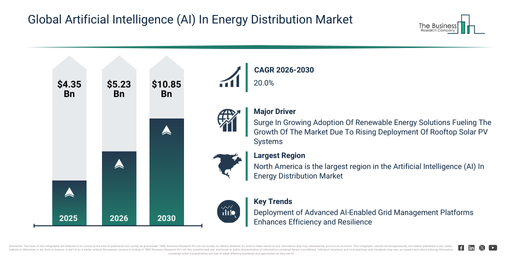
    The artificial intelligence (AI) in energy distribution (ED) market size has experienced substantial growth in recent years. It is projected to expand from $4.35 billion in 2025 to $5.23 billion in 2026, achieving a compound annual growth rate (CAGR) of 20.3%. The historical expansion of this market can be attributed to the rising adoption of smart grid technologies, an increasing demand for efficient energy management, the growing implementation of predictive maintenance in distribution networks, the broader integration of renewable energy, and an increased focus on reducing operational losses and outages.

    The artificial intelligence (AI) in energy distribution (ED) market size is projected to experience substantial growth over the coming years. It is anticipated to expand to $10.85 billion by 2030, demonstrating a compound annual growth rate (CAGR) of 20.0%. This growth during the forecast period is primarily driven by the increasing integration of artificial intelligence (AI) for real-time energy monitoring, the rising adoption of automated demand response systems, growing investment in smart energy distribution infrastructure, the expansion of grid modernization and digitalization initiatives, and an uptick in the deployment of advanced analytics for energy optimization. Key trends expected in the forecast period encompass technology-driven innovations in grid automation systems, advancements in artificial intelligence (AI)-enabled predictive and prescriptive analytics, developments in real-time energy monitoring and control platforms, increasing research and development in renewable energy integration, and innovation in automated and intelligent distribution network management.

    Download the Free Sample Report to Explore Key Market Insights:

    https://www.thebusinessresearchcompany.com/sample.aspx?id=30509&type=smp

    What Major Drivers Are Influencing Demand In The Artificial Intelligence (AI) In Energy Distribution Market?

    The increasing integration of renewable energy solutions is projected to fuel the expansion of the artificial intelligence (AI) in energy distribution (ED) market. Renewable energy adoption denotes the rising deployment of clean and sustainable power sources, specifically solar, wind, and other non-fossil electricity generation, to address growing power demands. This surge in renewable energy adoption is a result of intensified efforts by governments worldwide and private stakeholders to mitigate greenhouse-gas emissions, achieve climate targets, and advance sustainable energy access. Artificial intelligence (AI) in energy distribution (ED) supports the uptake of renewable energy solutions by optimizing grid management, accurately forecasting energy demand, and integrating variable renewable sources. It boosts efficiency and reliability by enabling real-time decision-making, reducing energy losses, and facilitating the smooth incorporation of solar, wind, and other sustainable resources. For instance, in June 2024, according to the Department for Energy Security and Net Zero, a UK-government ministerial department, in the first quarter of 2024, renewable electricity generation climbed 3.7% to 39.2 TWh, predominantly driven by onshore wind, raising renewables’ share of total generation to 50.9% and installed capacity by 2.5 GW compared to the first quarter of 2023. Therefore, the growing adoption of renewable energy solutions is driving the growth of the artificial intelligence (AI) in energy distribution (ED) market.

    Which Market Segments Are Examined In The Artificial Intelligence (AI) In Energy Distribution Market Study?

    The artificial intelligence (AI) in energy distribution market covered in this report is segmented –

    1) By Component: Solutions, Services, Other Components

    2) By Deployment: Cloud-Based Deployment, On-Premises Deployment, Other Deployment Modes

    3) By End Use: Industrial, Commercial, Residential, Other End Users

    4) By Application: Smart Grid Management, Predictive Maintenance And Equipment Monitoring, Energy Demand Forecasting, Renewable Energy Integration, Other Applications

    Subsegments:

    1) By Solutions: Grid Management Solutions, Fault Detection Solutions, Demand Forecasting Solutions, Energy Optimization Solutions

    2) By Services: Consulting Services, Integration Services, Maintenance Services, Training and Support Services

    3) By Other Components: Data Storage Units, Communication Modules, Sensors and Meters, Network Infrastructure Components

    Which Trends Are Influencing The Artificial Intelligence (AI) In Energy Distribution Market?

    Major companies within the artificial intelligence (AI) in energy distribution (ED) market are dedicating their efforts to developing advanced platforms, such as sophisticated AI-enabled grid management platforms, to enhance grid planning, operations, and asset management. These AI-enabled grid management platforms are defined as integrated software systems that employ artificial intelligence to monitor, forecast, and optimize electricity generation, transmission, and distribution in real time, aiming for a more efficient, resilient, and sustainable power grid. For example, in November 2025, Schneider Electric SE, a France-based energy management technology company, introduced the One Digital Grid Platform, which incorporates integrated AI capabilities for estimating outage restoration times in real time. This modular, AI-enabled platform is designed for utilities, integrating asset management, operations, and planning to foster innovation without requiring expensive infrastructure improvements. It delivers integrated technologies to increase dependability, promote productivity, and improve interactions with customers.

    Who Are The Primary Competitors In The Artificial Intelligence (AI) In Energy Distribution Market?

    Major companies operating in the artificial intelligence (AI) in energy distribution market are Siemens Aktiengesellschaft, Honeywell International Inc., ABB Ltd, Atos SE, Alpiq Holding AG, Stem Inc., Fluentgrid Limited, Gridware Inc., AutoGrid Systems Inc., Energi Mine Ltd, AppOrchid Inc, Verdigris Technologies Inc., Gridcog Ltd, Octopus Energy Group Ltd, Tibo Energy B.V., reLi Energy GmbH, Podero GmbH, DaisyChain Energy Inc., Tewke Ltd, Volto Technologies Inc., Irasus Technologies Private Limited, Dotnitron Technologies Private Limited

    Read the full artificial intelligence (ai) in energy distribution market report here:

    https://www.thebusinessresearchcompany.com/report/artificial-intelligence-ai-in-energy-distribution-market-report

    Which Regions Are Projected To Dominate The Artificial Intelligence (AI) In Energy Distribution Market In The Coming Years?

    North America was the largest region in the artificial intelligence (AI) in energy distribution (ED) market in 2025. Asia-Pacific is expected to be the fastest-growing region in the forecast period. The regions covered in the artificial intelligence (AI) in energy distribution market report are Asia-Pacific, South East Asia, Western Europe, Eastern Europe, North America, South America, Middle East, Africa.

    Request A Tailored Artificial Intelligence (AI) In Energy Distribution Market Research Report For Competitive Advantage:

    https://www.thebusinessresearchcompany.com/customise?id=30509&type=smp

    Browse Through More Reports Similar to the Global Artificial Intelligence (AI) In Energy Distribution Market 2026, By The Business Research Company

    Artificial Intelligence Ai In Energy And Power Market Report 2026

    https://www.thebusinessresearchcompany.com/report/artificial-intelligence-ai-in-energy-and-power-global-market-report

    Ai In Energy Market Report 2026

    https://www.thebusinessresearchcompany.com/report/ai-in-energy-global-market-report

    artificial intelligence ai engineering global market report

    https://www.thebusinessresearchcompany.com/report/artificial-intelligence-ai-engineering-global-market-report

    Get in touch with us:

    The Business Research Company: https://www.thebusinessresearchcompany.com/

    Americas +1 310-496-7795

    Asia +44 7882 955267 & +91 8897263534

    Europe +44 7882 955267

    Email us at info@tbrc.info

    Follow us on:

    LinkedIn: https://in.linkedin.com/company/the-business-research-company

    YouTube: https://www.youtube.com/channel/UC24_fI0rV8cR5DxlCpgmyFQ

    Global Market Model: https://www.thebusinessresearchcompany.com/global-market-model
  • Global Artificial Intelligence (AI) Image Upscaling Chip Market Analysis 2026–2030 with Strategic Forecast Insights

    Global Artificial Intelligence (AI) Image Upscaling Chip Market Analysis 2026–2030 with Strategic Forecast Insights

    The Business Research Company’s 2026 market reports include new capabilities such as market attractiveness scoring and analysis, total addressable market analysis, company scoring matrix, interactive excel data dashboard, improved supply chain analysis, upcoming startups in the market, and overview of key products, aimed at improving the depth, usability, and strategic value of the insights delivered.

    How Large Is The Artificial Intelligence (AI) Image Upscaling Chip Market Projected To Become By 2030 Based On Its 2026 Valuation?

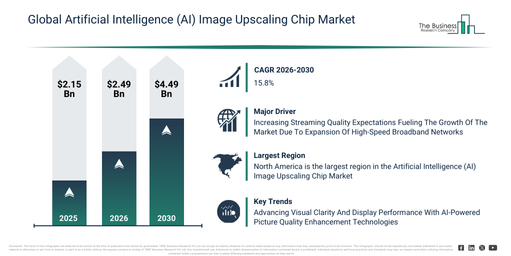
    The artificial intelligence (AI) image upscaling chips market size has experienced substantial expansion in recent years. This market is set to increase from $2.15 billion in 2025 to $2.49 billion in 2026, demonstrating a compound annual growth rate (CAGR) of 16.2%. The growth observed in the preceding period can be attributed to the increasing adoption of high-resolution displays, the rising utilization of AI-enabled smartphones and cameras, the proliferation of media and entertainment streaming services, the escalating demand for video surveillance applications, and the growing embrace of the gaming and AR/VR market.

    The artificial intelligence (AI) image upscaling chips market is projected to experience substantial growth in the upcoming years. This sector is expected to reach $4.49 billion by 2030, demonstrating a compound annual growth rate (CAGR) of 15.8%. The expansion during the forecast period is attributed to the increasing integration of SoC-based AI upscaling modules, the growing adoption of edge AI processing, the broadening of automotive infotainment and ADAS systems, the rise in industrial imaging and machine vision applications, and increased investment in semiconductor research and development for AI hardware. Significant trends anticipated in this period include advancements in deep learning-based super-resolution algorithms, the integration of AI upscaling within SoCs and GPUs, the development of low-power, high-efficiency chips, innovations in multi-modal image enhancement, and research focused on neural network compression and optimization.

    Download the Free Sample Report to Explore Key Market Insights:

    https://www.thebusinessresearchcompany.com/sample.aspx?id=30507&type=smp

    Which Market Drivers Are Supporting The Expansion Of The Artificial Intelligence (AI) Image Upscaling Chip Market?

    The market for artificial intelligence (AI) image upscaling chips is poised for growth, driven by escalating consumer demands for streaming quality. These expectations reflect the consumer desire for high-definition, buffer-free, and immersive video experiences across a range of devices. Such demands are intensifying as viewers increasingly familiarize themselves with large, high-resolution screens and immersive formats, thereby requiring sharper visuals, smoother playback, and richer audio as standard features. artificial intelligence (AI) image upscaling chips meet these streaming quality needs by upgrading lower-resolution content to near-native high definition, ensuring clearer visuals on large displays. They also enhance playback consistency through the reduction of visual artifacts and real-time optimization of frame clarity, offering a more fluid and engaging viewing experience. For example, in September 2023, the Office of Communications, a UK-based statutory regulator for communications services, reported that in March 2023, 73% of Netflix videos were reliably delivered in ultra high definition, marking an increase from 69% in March 2022, while 22% were streamed in high definition and just 4% in standard definition. Hence, the rising streaming quality expectations are a significant factor propelling the expansion of the artificial intelligence (AI) image upscaling chip market.

    What Segment Groups Are Identified Within The Artificial Intelligence (AI) Image Upscaling Chip Market?

    The artificial intelligence (AI) image upscaling chip market covered in this report is segmented –

    1) By Chip Type: Application-Specific Integrated Circuit, Field-Programmable Gate Array, Graphics Processing Unit, System On Chip, Other Chip Types

    2) By Technology: Super-Resolution, Deep Learning, Edge Artificial Intelligence, Other Technologies

    3) By Application: Consumer Electronics, Automotive, Healthcare, Industrial, Media And Entertainment, Other Applications

    4) By End-User: Original Equipment Manufacturers, Aftermarket, Other End-Users

    Subsegments:

    1) By Application-Specific Integrated Circuit: Neural Network Accelerator, Dedicated Upscaling Processor, Hardware-Based Image Enhancement Engine, Low-Power Upscaling Chip, Integrated Upscaling Module

    2) By Field-Programmable Gate Array: Reconfigurable Neural Processor, Custom Upscaling Accelerator, Edge AI Upscaling Module, Programmable Image Enhancement Chip, Low-Latency Upscaling Processor

    3) By Graphics Processing Unit: Artificial Intelligence-Enhanced Graphics Processor, Deep Learning Upscaling Engine, High-Resolution Video Processor, Real-Time Image Enhancement Graphics Processing Unit, Multi-Core Upscaling Processor

    4) By System On Chip: Integrated Artificial Intelligence Upscaling SoC, Mobile Device Upscaling Chip, Edge Artificial Intelligence System On Chip Module, High-Performance Video Upscaling System On Chip, Low-Power Integrated Upscaling Module

    5) By Other Chip Types: Hybrid Upscaling Processor, Research And Development Prototype Chip, Experimental Neural Upscaling Module, Custom Edge AI Chip, Specialized Imaging Processor

    What Trends Are Advancing Progress In The Artificial Intelligence (AI) Image Upscaling Chip Market?

    Leading companies in the artificial intelligence (AI) image upscaling chip market are concentrating on developing advanced technologies, specifically AI-powered picture quality enhancement solutions, to offer sharper visuals, improved color accuracy, and immersive viewing experiences across consumer electronics. These AI-powered picture quality enhancement technologies involve artificial intelligence-driven algorithms embedded at the chip level that intelligently upscale resolution, reduce noise, enhance contrast, and optimize brightness dynamically in real time based on content and display characteristics. For example, in January 2025, MediaTek Inc., a Taiwan-based fabless semiconductor company, unveiled MiraVision Pro. This suite of AI-powered technologies, debuting on the Pentonic 800 smart TV chipset, features AI-Super Resolution 3.0 for smooth scaling across resolutions, 500K-zone AI-Contrast 2.0 for precise HDR quality, and AI-based On-Screen-Display upscaling to elevate user interface clarity beyond standard 4K, all driven by an integrated neural processing unit to deliver cinematic-grade visuals. MiraVision Pro integrates AI-powered picture quality enhancement technologies that dynamically analyze video frames to upscale lower-resolution content while preserving fine details and natural textures. The launch enables device manufacturers to provide premium, high-definition viewing experiences without increasing power consumption or hardware complexity.

    Which Companies Hold Significant Positions In The Artificial Intelligence (AI) Image Upscaling Chip Market?

    Major companies operating in the artificial intelligence (AI) image upscaling chip market are Apple Inc., Samsung Electronics Co. Ltd., Intel Corporation, Qualcomm Incorporated, NVIDIA Corporation, MediaTek Inc., Realtek Semiconductor Corp., Synopsys Inc., Cadence Design Systems Inc., Novatek Microelectronics Corp., Socionext Inc., Magnachip Semiconductor Corporation, Ambarella Inc., Rockchip Electronics Co. Ltd., CEVA Inc., HiSilicon (Shanghai) Technologies Co. Ltd., Amlogic Inc., Pixelworks Inc., Axera Semiconductor Co. Ltd., Advanced Micro Devices Inc., Black Sesame Technologies Inc., Hailo Technologies Ltd.

    Read the full artificial intelligence (ai) image upscaling chip market report here:

    https://www.thebusinessresearchcompany.com/report/artificial-intelligence-ai-image-upscaling-chip-market-report

    Which Region Is Expected To Experience The Fastest Growth In The Artificial Intelligence (AI) Image Upscaling Chip Market?

    North America was the largest region in the artificial intelligence (AI) image upscaling chips market in 2025. Asia-Pacific is expected to be the fastest-growing region in the forecast period. The regions covered in the artificial intelligence (AI) image upscaling chip market report are Asia-Pacific, South East Asia, Western Europe, Eastern Europe, North America, South America, Middle East, Africa.

    Request A Tailored Artificial Intelligence (AI) Image Upscaling Chip Market Research Report For Competitive Advantage:

    https://www.thebusinessresearchcompany.com/customise?id=30507&type=smp

    Browse Through More Reports Similar to the Global Artificial Intelligence (AI) Image Upscaling Chip Market 2026, By The Business Research Company

    Artificial Intelligence Ai Image Generator Market Report 2026

    https://www.thebusinessresearchcompany.com/report/artificial-intelligence-ai-image-generator-global-market-report

    Artificial Intelligence Chip Market Report 2026

    https://www.thebusinessresearchcompany.com/report/artificial-intelligence-chip-global-market-report

    artificial intelligence AI chipsets global market report

    https://www.thebusinessresearchcompany.com/report/artificial-intelligence-ai-chipsets-global-market-report

    Get in touch with us:

    The Business Research Company: https://www.thebusinessresearchcompany.com/

    Americas +1 310-496-7795

    Asia +44 7882 955267 & +91 8897263534

    Europe +44 7882 955267

    Email us at info@tbrc.info

    Follow us on:

    LinkedIn: https://in.linkedin.com/company/the-business-research-company

    YouTube: https://www.youtube.com/channel/UC24_fI0rV8cR5DxlCpgmyFQ

    Global Market Model: https://www.thebusinessresearchcompany.com/global-market-model
  • Artificial Intelligence (AI) Arrhythmia Burden Analytics Market Outlook 2026–2035 Supported by Key Drivers and Projections

    Artificial Intelligence (AI) Arrhythmia Burden Analytics Market Outlook 2026–2035 Supported by Key Drivers and Projections

    The Business Research Company’s 2026 market reports include new capabilities such as market attractiveness scoring and analysis, total addressable market analysis, company scoring matrix, interactive excel data dashboard, improved supply chain analysis, upcoming startups in the market, and overview of key products, aimed at improving the depth, usability, and strategic value of the insights delivered.

    What Market Value Is Anticipated For The Artificial Intelligence (AI) Arrhythmia Burden Analytics Market Over The Period 2026–2030?

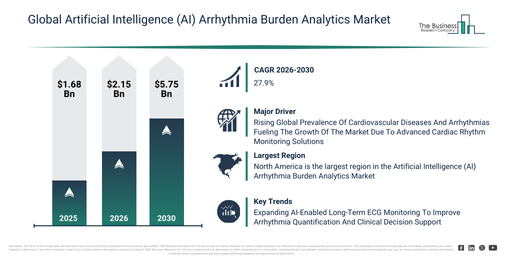
    The artificial intelligence (AI) arrhythmia burden analytics market has experienced significant expansion in recent years. This market is expected to increase from $1.68 billion in 2025 to $2.15 billion in 2026, demonstrating a compound annual growth rate (CAGR) of 28.2%. The growth observed in previous periods can be linked to factors such as the rising incidence of cardiovascular diseases, the increasing adoption of wearable ECG monitors, a greater need for early arrhythmia detection, the broadening of remote patient monitoring platforms, and increased investment in digital health infrastructure.

    The artificial intelligence (AI) arrhythmia burden analytics market is projected to experience substantial expansion in the coming years. By 2030, this market is set to reach $5.75 billion, demonstrating a compound annual growth rate (CAGR) of 27.9%. Factors contributing to this expansion during the forecast period include the increasing incorporation of AI into healthcare IT systems, a heightened emphasis on predictive and tailored cardiac care, the proliferation of cloud-based AI solutions, intensified AI research and development efforts, and enhanced regulatory backing for AI-powered medical devices. Key trends anticipated during this period encompass breakthroughs in predictive algorithms, further progress in cloud-based deployment, the integration of technology with wearable devices, significant investment in data analytics platforms, and the creation of AI-enabled diagnostic software.

    Download the Free Sample Report to Explore Key Market Insights:

    https://www.thebusinessresearchcompany.com/sample.aspx?id=30503&type=smp

    What Underlying Factors Are Accelerating The Growth Of The Artificial Intelligence (AI) Arrhythmia Burden Analytics Market?

    The growing worldwide occurrence of cardiovascular ailments and irregular heart rhythms is anticipated to fuel the expansion of the artificial intelligence (AI) arrhythmia burden analytics market. These conditions, impacting an increasing number of individuals globally with heart and blood vessel disorders, including irregular heartbeats like atrial fibrillation, are major contributors to fatalities and incapacitation worldwide. The increase in their incidence is linked to aging populations and a greater exposure to risk factors such as high blood pressure, excessive weight, and diabetes, which heighten the probability of developing arrhythmias. Artificial intelligence (AI) arrhythmia burden analytics aids in addressing cardiovascular diseases and arrhythmias by offering ongoing, accurate analysis of heart rhythm information, thereby improving the prompt identification and treatment of arrhythmic episodes. For example, in August 2025, data from the Centers for Disease Control and Prevention, a public health agency based in Switzerland, indicated that 90% of the country’s 4.9 trillion dollars in yearly healthcare expenditures are for people with chronic and mental health conditions. Additionally, over 84,000 Americans succumb to heart disease or stroke annually, with the financial burden of cardiovascular diseases predicted to reach approximately 2 trillion dollars by 2050. Consequently, the rising global prevalence of cardiovascular diseases and arrhythmias is propelling the growth of the artificial intelligence (AI) arrhythmia burden analytics market.

    How Is The Artificial Intelligence (AI) Arrhythmia Burden Analytics Market Divided Into Its Major Segments?

    The artificial intelligence (AI) arrhythmia burden analytics market covered in this report is segmented –

    1) By Component: Software, Hardware, Services

    2) By Technology: Machine Learning (ML), Deep Learning (DL), Natural Language Processing (NLP)

    3) By Deployment Mode: On-Premises, Cloud-Based

    4) By Application: Arrhythmia Detection, Burden Quantification, Predictive Risk Assessment, Treatment Efficacy Monitoring, Clinical Decision Support

    5) By End-User: Healthcare Providers, Diagnostic Centers, Academic And Research Institutes, Other End-Users

    Subsegments:

    1) By Software: Data Management, Predictive Analytics, Visualization Tools, Reporting Platforms, Algorithm Development

    2) By Hardware: Monitoring Devices, Wearable Sensors, Data Storage Units, Processing Units, Connectivity Modules

    3) By Services: Consulting Services, Implementation Services, Maintenance And Support, Training Services, Cloud Hosting Services

    How Are Trends Transforming The Artificial Intelligence (AI) Arrhythmia Burden Analytics Market Landscape?

    Leading firms within the artificial intelligence (AI) arrhythmia burden analytics market are concentrating on creating sophisticated offerings, including AI-driven arrhythmia detection systems, with the aim of improving diagnostic precision, increasing patient adherence, and decreasing the chance of incorrect diagnoses and repeat tests. These AI-powered arrhythmia detection systems are defined as sophisticated algorithms found in cardiac monitors that automatically analyze ongoing electrocardiogram (ECG) data to precisely identify and categorize irregular heart rhythms. As an example, in May 2025, iRhythm Technologies, a US-based digital health company, introduced its Zio ECG Recording and Analysis System to the Japanese market. This system is a prescription-exclusive, extended continuous monitoring solution that incorporates a deep-learned artificial intelligence (AI) algorithm, which received approval from Japan’s Pharmaceuticals and Medical Devices Agency (PMDA). The system comprises a patch-based monitor worn for a maximum of 14 days and an accompanying analysis service that delivers thorough reports, allowing for the smooth identification of 13 arrhythmia types without imposing substantial burden on the patient. Furthermore, it integrates certified clinical review and is linked to a high diagnostic success rate and reduced retesting frequency, thereby enhancing clinical efficiency for healthcare professionals.

    Who Are The Prominent Organizations Shaping The Artificial Intelligence (AI) Arrhythmia Burden Analytics Market?

    Major companies operating in the artificial intelligence (AI) arrhythmia burden analytics market are Medtronic plc, Koninklijke Philips N.V., GE HealthCare Technologies Inc., Boston Scientific Corporation, iRhythm Technologies Inc., Bittium Corporation, Cardiac Rhythm Management, AliveCor Inc., VivaLNK Inc., Biotricity Inc., InfoBionic Inc., Cardiac Insight Inc., Cortrium ApS, Eko Health Inc., CardioComm Solutions Inc., Medi-Lynx Cardiac Monitoring LLC, QT Medical Inc., Wearable Sensors Ltd., HeartVista Inc., iCardiac Technologies Inc.

    Read the full artificial intelligence (ai) arrhythmia burden analytics market report here:

    https://www.thebusinessresearchcompany.com/report/artificial-intelligence-ai-arrhythmia-burden-analytics-market-report

    Which Geographic Areas Are Emerging As Strong Markets For The Artificial Intelligence (AI) Arrhythmia Burden Analytics Market?

    North America was the largest region in the artificial intelligence (AI) arrhythmia burden analytics market in 2025. Asia-Pacific is expected to be the fastest-growing region in the forecast period. The regions covered in the artificial intelligence (AI) arrhythmia burden analytics market report are Asia-Pacific, South East Asia, Western Europe, Eastern Europe, North America, South America, Middle East, Africa.

    Request A Tailored Artificial Intelligence (AI) Arrhythmia Burden Analytics Market Research Report For Competitive Advantage:

    https://www.thebusinessresearchcompany.com/customise?id=30503&type=smp

    Browse Through More Reports Similar to the Global Artificial Intelligence (AI) Arrhythmia Burden Analytics Market 2026, By The Business Research Company

    Cardiac Ai Monitoring And Diagnostics Market Report 2026

    https://www.thebusinessresearchcompany.com/report/cardiac-ai-monitoring-and-diagnostics-global-market-report

    Arrhythmia Market Report 2026

    https://www.thebusinessresearchcompany.com/report/arrhythmia-global-market-report

    arrhythmia monitoring devices global market report

    https://www.thebusinessresearchcompany.com/report/arrhythmia-monitoring-devices-global-market-report

    Get in touch with us:

    The Business Research Company: https://www.thebusinessresearchcompany.com/

    Americas +1 310-496-7795

    Asia +44 7882 955267 & +91 8897263534

    Europe +44 7882 955267

    Email us at info@tbrc.info

    Follow us on:

    LinkedIn: https://in.linkedin.com/company/the-business-research-company

    YouTube: https://www.youtube.com/channel/UC24_fI0rV8cR5DxlCpgmyFQ

    Global Market Model: https://www.thebusinessresearchcompany.com/global-market-model
  • Global 4D Radiotherapy Equipment Market Forecast 2026–2035 Presenting Long-Term Growth Insights

    Global 4D Radiotherapy Equipment Market Forecast 2026–2035 Presenting Long-Term Growth Insights

    The Business Research Company’s 2026 market reports include new capabilities such as market attractiveness scoring and analysis, total addressable market analysis, company scoring matrix, interactive excel data dashboard, improved supply chain analysis, upcoming startups in the market, and overview of key products, aimed at improving the depth, usability, and strategic value of the insights delivered.

    What Market Valuation Is Forecasted For The 4D Radiotherapy Equipment Market By 2030 Starting From Its 2026 Size?

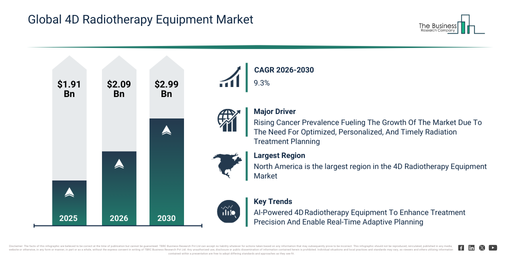
    The 4D radiotherapy equipment market size has seen robust growth in recent years. It is anticipated to expand from $1.91 billion in 2025 to $2.09 billion in 2026, achieving a compound annual growth rate (CAGR) of 9.6%. The historical expansion of this market can be attributed to an increasing need for motion-adaptive radiation therapy, the growing acceptance of advanced imaging systems, an elevated focus on reducing treatment errors, the expanding utilization of real-time patient monitoring, and a rising inclination towards high-precision radiotherapy.

    The 4D radiotherapy equipment market size is anticipated to undergo significant expansion in the coming years. This market is projected to reach $2.99 billion by 2030, demonstrating a compound annual growth rate (CAGR) of 9.3%. The forecasted growth is primarily fueled by rising investments in next-generation radiotherapy technologies, the increasing integration of 4D treatment systems, a growing demand for precise tumor-tracking solutions, the expanding application of AI-enabled motion management, and a heightened need for personalized radiation therapy. Prominent trends within this forecast period include technological enhancements in motion-synchronized radiotherapy systems, novel advancements in real-time imaging capabilities, ongoing developments in adaptive treatment delivery platforms, dedicated research and development in tumor-tracking technologies, and continuous improvements in imaging-guided radiotherapy solutions.

    Download the Free Sample Report to Explore Key Market Insights:

    https://www.thebusinessresearchcompany.com/sample.aspx?id=30492&type=smp

    What Primary Drivers Are Shaping The Development Of The 4D Radiotherapy Equipment Market?

    The increasing incidence of cancer is anticipated to drive the expansion of the 4D radiotherapy equipment market. This condition involves the unchecked proliferation and dissemination of abnormal cells, capable of harming adjacent tissues and organs if left untreated. The rise in cancer cases is linked to lifestyle factors such as inadequate nutrition, smoking, alcohol use, and exposure to environmental contaminants, which heighten the risk of developing diverse cancer types. 4D radiotherapy technology aids in cancer management through the provision of exceptionally precise, movement-responsive radiation therapies that consider tumor motion during respiration. This technology enhances patient results by optimizing tumor targeting, reducing harm to healthy tissues, and boosting treatment efficacy. For example, NHS Digital, a UK government body, reported in October 2025 that England saw 354,820 new cancer diagnoses in 2023, averaging 972 daily and indicating an increase of 8,605 cases from 2022. Prostate cancer was the most frequently diagnosed type, with 58,137 new cases, marking a 6% rise in registrations compared to the previous year. Consequently, the increasing prevalence of cancer is propelling the expansion of the 4D radiotherapy equipment market. Increased Healthcare Expenditure in Emerging Markets Drives Market Growth Amidst Greater Adoption of Advanced Radiotherapy Technologies

    Which Segment Categories Define The 4D Radiotherapy Equipment Market?

    The 4D radiotherapy equipment market covered in this report is segmented –

    1) By Product Type Or Component: 4D Gating/RT Systems, Linear Accelerators (LINACs), 4D Imaging Modalities, SGRT Systems, Treatment Planning Software

    2) By Motion Management Technique: Respiratory Gating, Real-Time Tumor Tracking, Breath-Hold Techniques, Adaptive Radiotherapy (ART)

    3) By Application: Lung Cancer, Liver Cancers, Pancreatic Cancer, Breast Cancer, Lymphoma, Other Cancers

    4) By End User: Hospitals, Cancer Treatment Centers, Specialty Radiotherapy Clinics, Research Institutions

    Subsegments:

    1) By 4D Gating / RT Systems: Respiratory Gating Systems, Real-Time Tumor Tracking Systems, Motion Management Platforms, Adaptive Radiation Delivery Systems

    2) By Linear Accelerators: Standard Linear Accelerators, Image Guided Linear Accelerators, Motion Compensated Linear Accelerators, Stereotactic Body Radiation Therapy Linear Accelerators

    3) By 4D Imaging Modalities: Four Dimensional Computed Tomography, Four Dimensional Magnetic Resonance Imaging, Four Dimensional Positron Emission Tomography, Four Dimensional Cone Beam Computed Tomography

    4) By SGRT Systems: Surface Guided Patient Positioning Systems, Optical Surface Monitoring Systems, Real-Time Surface Tracking Systems, Motion Compensated Surface Imaging Systems

    5) By Treatment Planning Software: Motion Adaptive Planning Software, Dose Calculation Software, Image Fusion Planning Software, Tumor Contouring And Delineation Software

    What Major Market Trends Are Driving Changes In The 4D Radiotherapy Equipment Market?

    Leading companies in the 4D radiotherapy equipment market are focusing on developing high-definition imaging systems, specifically AI-powered CT-Linac platforms, to enhance treatment precision, facilitate real-time plan adjustments, and improve workflow efficiency. These AI-powered CT-Linac platforms are integrated computed tomography–linear accelerator systems that utilize artificial intelligence for high-definition imaging, adaptive treatment planning, and real-time dose adjustment, thereby delivering highly precise personalized radiation therapy to cancer patients. For instance, in May 2024, Elekta AB, a Sweden-based medical technology company, introduced Elekta Evo, a CT-Linac featuring AI-enhanced imaging and online/offline adaptive radiotherapy capabilities. This system allows clinicians to clearly visualize target anatomy and modify radiation delivery on a per-session basis to account for patient motion and anatomical changes. This launch signifies a major technological advancement by integrating high-precision imaging and adaptive therapy into standard clinical workflows, bridging traditional radiotherapy with AI-driven adaptive 4D planning, and providing clinicians with a scalable, efficient solution for improved patient outcomes.

    Who Are The Top Companies Competing In The 4D Radiotherapy Equipment Market?

    Major companies operating in the 4D radiotherapy equipment market are Hitachi Ltd., Siemens Healthineers AG, GE HealthCare Technologies Inc., Koninklijke Philips N.V., Varian Medical Systems Inc., Elekta AB, Shanghai United Imaging Healthcare Co. Ltd., Accuray Incorporated, Brainlab AG, Canon Medical Systems Corporation, RefleXion Medical, Vision RT Ltd., C-Rad AB, MVision AI Ltd., Anzai Medical Co. Ltd., ViewRay Technologies Inc., DYN’R Medical Systems, Ion Beam Applications SA (IBA SA)

    Read the full 4d radiotherapy equipment market report here:

    https://www.thebusinessresearchcompany.com/report/4d-radiotherapy-equipment-market-report

    Which Region Currently Holds The Largest Share Of The 4D Radiotherapy Equipment Market?

    North America was the largest region in the 4D radiotherapy equipment market in 2025. Asia-Pacific is expected to be the fastest-growing region in the forecast period. The regions covered in the 4D radiotherapy equipment market report are Asia-Pacific, South East Asia, Western Europe, Eastern Europe, North America, South America, Middle East, Africa.

    Request A Tailored 4D Radiotherapy Equipment Market Research Report For Competitive Advantage:

    https://www.thebusinessresearchcompany.com/customise?id=30492&type=smp

    Browse Through More Reports Similar to the Global 4D Radiotherapy Equipment Market 2026, By The Business Research Company

    Radiotherapy Devices Market Report 2026

    https://www.thebusinessresearchcompany.com/report/radiotherapy-devices-global-market-report

    Single Dose Radiotherapy Services Market Report 2026

    https://www.thebusinessresearchcompany.com/report/single-dose-radiotherapy-services-global-market-report

    radiosurgery and radiotherapy robotics global market report

    https://www.thebusinessresearchcompany.com/report/radiosurgery-and-radiotherapy-robotics-global-market-report

    Get in touch with us:

    The Business Research Company: https://www.thebusinessresearchcompany.com/

    Americas +1 310-496-7795

    Asia +44 7882 955267 & +91 8897263534

    Europe +44 7882 955267

    Email us at info@tbrc.info

    Follow us on:

    LinkedIn: https://in.linkedin.com/company/the-business-research-company

    YouTube: https://www.youtube.com/channel/UC24_fI0rV8cR5DxlCpgmyFQ

    Global Market Model: https://www.thebusinessresearchcompany.com/global-market-model
  • 3D Neuroscience Market Outlook 2026–2030 Highlighting Emerging Business Prospects

    3D Neuroscience Market Outlook 2026–2030 Highlighting Emerging Business Prospects

    The Business Research Company’s 2026 market reports include new capabilities such as market attractiveness scoring and analysis, total addressable market analysis, company scoring matrix, interactive excel data dashboard, improved supply chain analysis, upcoming startups in the market, and overview of key products, aimed at improving the depth, usability, and strategic value of the insights delivered.

    How Is The Market Size Of The 3D Neuroscience Market Expected To Change Between 2026 And 2030?

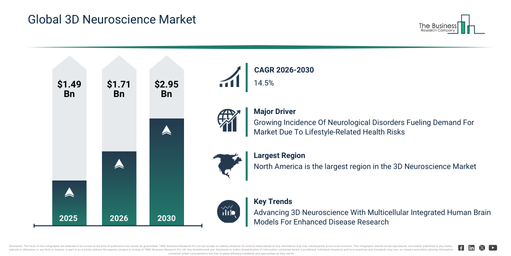
    The three-dimensional (3D) neuroscience market size has demonstrated rapid expansion in recent years. This market is projected to grow from $1.49 billion in 2025 to $1.71 billion in 2026, at a compound annual growth rate (CAGR) of 14.8%. The growth observed in the historic period stems from factors such as the increasing adoption of three-dimensional (3D) brain modeling techniques, a heightened demand for advanced neurological research tools, a rising utilization in drug discovery and neuropharmacology, the expansion of imaging and visualization technologies, and an intensified focus on understanding complex neural networks.

    The three-dimensional (3D) neuroscience market is projected to experience substantial expansion over the upcoming years, reaching a valuation of $2.95 billion by 2030, exhibiting a compound annual growth rate (CAGR) of 14.5%. This anticipated growth stems from several factors, including the increasing incorporation of three-dimensional (3D) models with artificial intelligence (AI) analytics, greater financial commitment to personalized neuroscience research, wider acceptance in disease modeling and therapeutic applications, the proliferation of high-resolution imaging and data acquisition platforms, and an escalated need for predictive and translational neuroscience investigations. Key developments expected during this period involve technological breakthroughs in three-dimensional (3D) neural tissue modeling, progress in artificial intelligence (AI)-powered data analysis, advancements in organoid and lab-grown neural systems, increased investment in research and development for imaging and simulation platforms, and novel integrated neuroscience modeling and visualization instruments.

    Download the Free Sample Report to Explore Key Market Insights:

    https://www.thebusinessresearchcompany.com/sample.aspx?id=30491&type=smp

    Which Major Factors Are Driving The Expansion Of The 3D Neuroscience Market?

    The rising incidence of neurological conditions is anticipated to fuel the expansion of the 3D neuroscience market in the future. These disorders are health issues impacting the brain, spinal cord, and nerves, which hinder typical nervous system operation and result in deficits in motor skills, thinking, perception, conduct, or general bodily command. The growing occurrence of neurological ailments stems from detrimental lifestyle choices, such as inadequate nutrition, lack of exercise, tobacco use, high alcohol intake, and persistent stress. 3D neuroscience improves comprehension of the brain’s anatomy and workings, facilitating more accurate diagnoses and tailored therapies for individuals with neurological conditions. As an illustration, in April 2024, data from the National Institutes of Health (NIH), a US government organization, indicated that approximately 6.9 million Americans aged 65 and above are presently affected by Alzheimer’s dementia, with projections suggesting this number will almost double to 13.8 million by 2060. Consequently, the expanding incidence of neurological conditions is a key impetus for the 3D neuroscience market.

    How Is The 3D Neuroscience Market Structured Across Different Segments?

    The 3D neuroscience market covered in this report is segmented –

    1) By Component: Instruments And Consumables, Software And Services

    2) By Technology: Brain Imaging, Neuro-Microscopy, Electrophysiology, Neurophotonic Analysis, Other Technologies

    3) By Scale Of Analysis: Macro-Scale Connectomics (MSC), Meso-Scale Connectomics (MeSC), Micro-Scale Connectomics (MiSC), Nanoscale Or Synaptic Analysis (NSA)

    4) By Application: Disease Modeling And Drug Discovery, Brain Mapping And Connectomics, Developmental Neuroscience, Diagnostics And Surgical Planning

    5) By End-User: Hospitals, Diagnostic Laboratories, Research and Academic Institutes, Other End-Users

    Subsegments:

    1) By Instruments And Consumables: Imaging Devices, Microelectrodes, Sensors, Reagents, Laboratory Consumables

    2) By Software And Services: Data Analysis Software, Visualization Software, Modeling And Simulation Software, Technical Support Services, Training And Consultation Services

    Which Trends Are Shaping The Future Of The 3D Neuroscience Market?

    Leading entities within the 3D neuroscience market are concentrating on creating sophisticated 3D human brain tissue platforms, including multicellular integrated brain models. This initiative aims to improve disease modeling, expedite drug evaluation, and deliver outcomes with greater physiological relevance. These multicellular integrated brain models are defined as laboratory-grown three-dimensional structures originating from induced pluripotent stem cells. They incorporate several key brain cell types, facilitating comprehensive investigation into cellular interactions, disease mechanisms, and reactions to drugs. An example of this trend is seen in November 2025, when the Massachusetts Institute of Technology (MIT), a US-based research institution, introduced Multicellular Integrated Brains (miBrains). This system represents a customizable 3D human brain tissue platform. This particular platform incorporates six primary brain cell types, offers support for genetic engineering to conduct personalized disease investigations, and possesses scalability for extensive research endeavors. This significantly enhances the availability and practical application of intricate in vitro models for neuroscience exploration.

    Which Major Players Dominate The 3D Neuroscience Market?

    Major companies operating in the 3D neuroscience market are Siemens Healthineers AG, Merck KGaA, Koninklijke Philips N.V., GE Healthcare Technologies Inc., Corning Incorporated, Bruker Corporation, STEMCELL Technologies Inc., Greiner Bio-One International GmbH, American Type Culture Collection, Cellink AB, Aspect Biosystems Ltd., InSphero AG, Axion BioSystems Inc., Emulate Inc., Mimetas B.V., NeuroNexus Technologies Inc., Tessara Therapeutics Inc., TheWell Bioscience Inc., Kirkstall Ltd., Pelobiotech GmbH, 3D Biotek LLC, Mightex Systems Inc., Advanced BioMatrix Inc.

    Read the full 3d neuroscience market report here:

    https://www.thebusinessresearchcompany.com/report/3d-neuroscience-market-report

    How Does The 3D Neuroscience Market Perform Across Major Global Regions?

    North America was the largest region in the three dimensional (3D) neuroscience market in 2025. Asia-Pacific is expected to be the fastest-growing region in the forecast period. The regions covered in the 3D neuroscience market report are Asia-Pacific, South East Asia, Western Europe, Eastern Europe, North America, South America, Middle East, Africa.

    Request A Tailored 3D Neuroscience Market Research Report For Competitive Advantage:

    https://www.thebusinessresearchcompany.com/customise?id=30491&type=smp

    Browse Through More Reports Similar to the Global 3D Neuroscience Market 2026, By The Business Research Company

    Neuroscience Market Report 2026

    https://www.thebusinessresearchcompany.com/report/neuroscience-global-market-report

    3D Imaging Market Report 2026

    https://www.thebusinessresearchcompany.com/report/3d-imaging-global-market-report

    3D animation global market report

    https://www.thebusinessresearchcompany.com/report/3d-animation-global-market-report

    Get in touch with us:

    The Business Research Company: https://www.thebusinessresearchcompany.com/

    Americas +1 310-496-7795

    Asia +44 7882 955267 & +91 8897263534

    Europe +44 7882 955267

    Email us at info@tbrc.info

    Follow us on:

    LinkedIn: https://in.linkedin.com/company/the-business-research-company

    YouTube: https://www.youtube.com/channel/UC24_fI0rV8cR5DxlCpgmyFQ

    Global Market Model: https://www.thebusinessresearchcompany.com/global-market-model
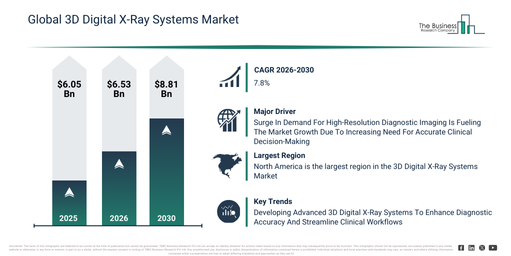
  • Global 3D Digital X-Ray Systems Market Report 2026–2035 Showcasing Growth Outlook and Future Opportunities

    Global 3D Digital X-Ray Systems Market Report 2026–2035 Showcasing Growth Outlook and Future Opportunities

    The Business Research Company’s 2026 market reports include new capabilities such as market attractiveness scoring and analysis, total addressable market analysis, company scoring matrix, interactive excel data dashboard, improved supply chain analysis, upcoming startups in the market, and overview of key products, aimed at improving the depth, usability, and strategic value of the insights delivered.

    What Is The Market Size Of The 3D Digital X-Ray Systems Market In 2026 And What Value Is Projected For 2030?

    The market for 3D digital X-Ray systems has experienced significant expansion over recent years. This market is projected to expand, moving from $6.05 billion in 2025 to reach $6.53 billion by 2026, demonstrating a compound annual growth rate (CAGR) of 8.1%. The historical expansion of this sector was driven by factors such as a heightened demand for sophisticated diagnostic imaging, the increasing incidence of chronic and orthopedic conditions, wider acceptance of digital radiography, expanded application of 3D imaging in dental practices, greater public awareness concerning early disease identification, a movement towards less invasive diagnostic approaches, the increased incorporation of imaging services in outpatient environments, escalating healthcare spending, the wider availability of portable 3D x-ray units, and a growing inclination for highly accurate diagnostic methods.

    The 3D digital X-Ray systems market is anticipated to show significant expansion over the coming years, projected to reach $8.81 billion by 2030, growing at a compound annual growth rate (CAGR) of 7.8%. This growth during the forecast period is primarily fueled by factors such as the increasing adoption of digital radiography, a growing preference for accurate 3D imaging, the rising demand for early diagnosis tools, greater investment in imaging innovations, ongoing hospital modernization initiatives, the expanding use of imaging in chronic disease management, a shift towards automated radiology solutions, the increasing embrace of tele-radiology, a preference for low-dose imaging techniques, and the wider deployment of portable digital x-ray units. Significant developments expected in this period include advances in high-resolution 3D imaging technology, improvements in low-dose radiation solutions, progress in portable 3D x-ray devices, innovations in AI-based diagnostic tools, advancements in automated image enhancement, new workflow-digital platforms, integration with cloud-based storage, assimilation into hospital digital ecosystems, the convergence of 3D imaging with robotics, and strides in affordable digital radiography.

    Download the Free Sample Report to Explore Key Market Insights:

    https://www.thebusinessresearchcompany.com/sample.aspx?id=30490&type=smp

    What Key Drivers Are Influencing The Growth Of The 3D Digital X-Ray Systems Market?

    The increasing need for high-resolution diagnostic imaging is anticipated to fuel the expansion of the 3D Digital X-Ray Systems market in the future. High-resolution diagnostic imaging encompasses medical technologies that produce precise, clear images of internal body structures, thereby facilitating accurate diagnoses and effective clinical choices. This demand is growing as healthcare providers extend their services to identify intricate illnesses sooner, optimize patient care, and boost diagnostic effectiveness. 3D Digital X-Ray Systems facilitate high-resolution diagnostic imaging by offering sophisticated imaging solutions that provide excellent image clarity, enhance diagnostic precision, and optimize patient flow in clinical environments. For example, in March 2024, the Australian Institute of Health and Welfare (AIHW), an Australia-based government health authority, reported that nearly 2 in 5 Australians (39%) utilized over 27 million Medicare-subsidized diagnostic imaging services. The number of imaging services per 100 people saw an increase from 103 in 2022–23 to 106 in 2023–24, indicating a year-on-year rise and greater adoption of advanced imaging technologies. Consequently, the rising demand for high-resolution diagnostic imaging is propelling the growth of the 3D Digital X-Ray Systems market.

    What Are The Key Segments Of The 3D Digital X-Ray Systems Market?

    The 3D digital x-ray systems market covered in this report is segmented –

    1) By Product Type: Stationary 3D Digital X-Ray Systems, Portable 3D Digital X-Ray Systems, Mobile 3D Digital X-Ray Systems

    2) By Detector Type: Flat Panel Detectors, Charge-Coupled Devices (CCD), Image Intensifier Detectors, Computed Radiography (CR) Systems, Line-Scanning Detectors

    3) By Technology: Computed Tomography (CT) Systems, Digital Radiography (DR) Systems, Fluoroscopy Systems, X-Ray Systems With Dual Energy, Portable X-Ray Systems

    4) By Application: Orthopedics, Dental Imaging, Oncology, Pediatric Imaging, Cardiology

    5) By End-User: Hospitals, Diagnostic Imaging Centers, Outpatient Surgery Centers, Research Institutions, Veterinary Clinics

    Subsegments:

    1) By Stationary 3D Digital X-Ray Systems: Fixed-Room 3D Imaging Systems, Hospital Radiology Department Systems, High-Capacity 3D X-Ray Units, Floor-Mounted 3D X-Ray Systems, Ceiling-Mounted 3D X-Ray Systems, Advanced Diagnostic 3D Systems, Large-Format 3D Orthopedic Imaging Units

    2) By Portable 3D Digital X-Ray Systems: Handheld 3D X-Ray Devices, Backpack-Style Portable 3D Systems, Battery-Powered Portable 3D X-Ray Units, Emergency Or Trauma Portable 3D Systems, Field-Use Portable 3D Devices, Compact Point-Of-Care 3D X-Ray Units

    3) By Mobile 3D Digital X-Ray Systems: Cart-Based Mobile 3D X-Ray Systems, Motorized Mobile 3D Systems, Mobile 3D C-Arm Units, ICU Or Mobile Ward 3D Imaging Systems, Mobile Surgical 3D X-Ray Units, Mobile Diagnostic Screening Units

    What Key Trends Are Influencing The Development Of The 3D Digital X-Ray Systems Market?

    Leading companies operating in the 3D digital X-ray systems market are focusing their efforts on creating clinical imaging solutions, including multi-purpose 3D dental imaging platforms, to improve diagnostic accuracy, support treatment planning, and streamline surgical workflows. These multi-purpose 3D dental imaging platforms are technologies used to capture volumetric images, plan interventions, and facilitate precise clinical decision-making within dental and oral surgery practices. As an illustration, in September 2024, Dental Imaging Technologies Corporation (DEXIS), a US-based dental imaging technology company, unveiled the ORTHOPANTOMOGRAPH OP 3D EX. This particular 3D X-ray platform incorporates versatile field of view options, sophisticated imaging software for chairside treatment planning, and integrated tools for rapidly generating surgical guides within practice environments. It is specifically designed for general practitioners who wish to enhance their diagnostic capabilities through 3D imaging and supports a wide array of clinical indications with a broad range of field of view sizes.

    Who Are The Leading Companies Operating In The 3D Digital X-Ray Systems Market?

    Major companies operating in the 3D digital x-ray systems market are Siemens Healthineers AG, Fujifilm Holdings Corporation, Koninklijke Philips N.V., GE HealthCare Technologies Inc., Mindray Medical International Limited, Dentsply Sirona Inc., Shimadzu Corporation, Canon Medical Systems Corporation, Acteon Group Ltd., United Imaging Healthcare Co. Ltd., Hamamatsu Photonics K.K., Agfa-Gevaert Group, Carestream Health Inc., Samsung Medison Co. Ltd., Analogic Corporation, Planmed Oy, Vatech Co. Ltd., Carestream Dental LLC, Ziehm Imaging GmbH, EOS Imaging S.A.

    Read the full 3d digital x-ray systems market report here:

    https://www.thebusinessresearchcompany.com/report/3d-digital-x-ray-systems-market-report

    Which Region Is Anticipated To See The Fastest Growth In The 3D Digital X-Ray Systems Market?

    North America was the largest region in the 3D digital X-Ray systems market in 2025. Asia-Pacific is expected to be the fastest-growing region in the forecast period. The regions covered in the 3D digital x-ray systems market report are Asia-Pacific, South East Asia, Western Europe, Eastern Europe, North America, South America, Middle East, Africa.

    Request A Tailored 3D Digital X-Ray Systems Market Research Report For Competitive Advantage:

    https://www.thebusinessresearchcompany.com/customise?id=30490&type=smp

    Browse Through More Reports Similar to the Global 3D Digital X-Ray Systems Market 2026, By The Business Research Company

    Digital Xray Devices Market Report 2026

    https://www.thebusinessresearchcompany.com/report/digital-xray-devices-global-market-report

    X Ray Systems Devices And Equipment Market Report 2026

    https://www.thebusinessresearchcompany.com/report/x-ray-systems-devices-and-equipment-global-market-report

    medical x ray equipment and imaging software global market report

    https://www.thebusinessresearchcompany.com/report/medical-x-ray-equipment-and-imaging-software-global-market-report

    Get in touch with us:

    The Business Research Company: https://www.thebusinessresearchcompany.com/

    Americas +1 310-496-7795

    Asia +44 7882 955267 & +91 8897263534

    Europe +44 7882 955267

    Email us at info@tbrc.info

    Follow us on:

    LinkedIn: https://in.linkedin.com/company/the-business-research-company

    YouTube: https://www.youtube.com/channel/UC24_fI0rV8cR5DxlCpgmyFQ

    Global Market Model: https://www.thebusinessresearchcompany.com/global-market-model