Category: Medical Equipment

  • Global International Normalized Ratio (INR) Test Meter Market Analysis 2026–2030 with Strategic Business Insights

    Global International Normalized Ratio (INR) Test Meter Market Analysis 2026–2030 with Strategic Business Insights

    The Business Research Company’s 2026 market reports include new capabilities such as market attractiveness scoring and analysis, total addressable market analysis, company scoring matrix, interactive excel data dashboard, improved supply chain analysis, upcoming startups in the market, and overview of key products, aimed at improving the depth, usability, and strategic value of the insights delivered.

    What Will Be The Estimated Market Valuation Of The International Normalized Ratio (INR) Test Meter Market By The End Of 2030?

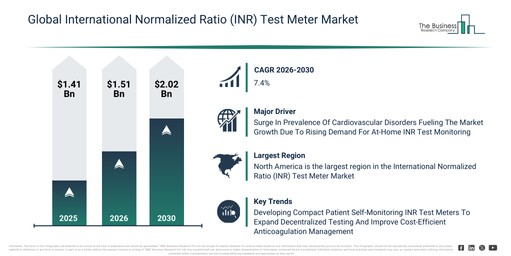
    The INR test meter market size has shown strong growth in recent years. Looking ahead, it is set to grow from $1.41 billion in 2025 to $1.51 billion in 2026, achieving a compound annual growth rate (CAGR) of 7.7%. The expansion observed in the past period is due to factors such as the increasing prevalence of cardiovascular diseases, the wider adoption of point-of-care testing, an expanding geriatric population, greater awareness surrounding anticoagulant therapy, and a growing inclination among patients for home monitoring.

    The INR test meter market is anticipated to experience robust expansion over the coming years. It is projected to achieve a size of $2.02 billion by 2030, progressing at a compound annual growth rate (CAGR) of 7.4%. This expected growth during the forecast period is driven by factors such as an increasing preference for home-based self-testing, the expanding adoption of telemedicine, rising expenditures in healthcare, the broadening of point-of-care networks, and a heightened focus on personalized patient care. Significant trends for this period include progress in biosensor technology, the incorporation of technology with mobile applications, innovations in portable meter design, ongoing research and development for non-invasive testing, and integration with electronic health records.

    Download the Free Sample Report to Explore Key Market Insights:

    https://www.thebusinessresearchcompany.com/sample.aspx?id=30626&type=smp

    Which Major Factors Are Driving The Expansion Of The International Normalized Ratio (INR) Test Meter Market?

    The expanding incidence of cardiovascular disorders is anticipated to stimulate the development of the International Normalized Ratio (INR) test meter market in the future. These conditions, which involve the heart and blood vessels, hinder circulatory function and frequently necessitate prolonged anticoagulant treatment to avert critical events like stroke and thrombosis. A major factor contributing to the increase in cardiovascular disorders is unhealthy eating habits, as overconsumption of saturated fats, trans fats, added sugars, and sodium leads to high blood pressure, obesity, and elevated cholesterol, all significant risk factors for heart-related ailments. INR test meters aid in managing cardiovascular disorders by facilitating regular at-home monitoring of blood coagulation, thereby supporting safer and more effective anticoagulant therapy. For instance, in August 2025, data from the Centers for Disease Control and Prevention, a health agency based in Switzerland, indicated that 90% of the nation’s 4.9 trillion dollars in annual health care spending is linked to individuals suffering from chronic and mental health conditions. Furthermore, more than 84,000 Americans succumb to heart disease or stroke annually, with cardiovascular disease-related costs expected to climb to approximately $2 trillion by 2050. Consequently, the rising prevalence of cardiovascular disorders is fueling the expansion of the International Normalized Ratio (INR) test meter market.

    Which Segment Classifications Shape The International Normalized Ratio (INR) Test Meter Market?

    The international normalized ratio (inr) test meter market covered in this report is segmented –

    1) By Product Type: Devices, Test Strips, Lancets, Reagents, Mobile App Integration

    2) By Technology: Electrochemical Biosensor-Based Meters, Photometric-Based Meters, Bluetooth, Non-Invasive

    3) By End User: Hospitals, Specialty Clinics, Ambulatory Surgical Centers, Homecare Settings

    Subsegments:

    1) By Devices: Handheld Meters, Portable Meters, Desktop Meters, Wireless Meters, Bluetooth Enabled Meters

    2) By Test Strips: Standard Test Strips, Ultra-Sensitive Test Strips, Fast-Acting Test Strips, Reusable Test Strips, Single-Use Test Strips

    3) By Lancets: Safety Lancets, Auto-Release Lancets, Adjustable Depth Lancets, Single-Use Lancets, Spring-Loaded Lancets

    4) By Reagents: Enzymatic Reagents, Chemical Reagents, Calibration Reagents, Buffer Solutions, Control Solutions

    5) By Mobile App Integration: iOS Applications, Android Applications, Cloud-Synced Applications, Real-Time Monitoring Applications, Personalized Health Recommendation Applications

    How Are Trends Impacting The International Normalized Ratio (INR) Test Meter Market?

    Leading companies in the International Normalized Ratio (INR) test meter market are prioritizing the development of advanced products, notably patient self-monitoring coagulation analyzers. This effort aims to expand decentralized testing and shift recurring demand towards more cost-effective consumables. Patient self-monitoring coagulation analyzers are portable devices that empower individuals to perform PT/INR testing at home using a small capillary blood sample, thereby supporting frequent monitoring and decreasing reliance on clinical visits. For example, in March 2024, Universal Biosensors, an Australia-based medical device company, introduced the Xprecia Prime 4U Coagulation Analyzer for patient self-monitoring. This handheld coagulation analyzer provides rapid PT/INR results from just one drop of capillary blood and employs an electrochemical strip format, which supports regulatory clearances including 510(k) clearance and CLIA waiver for the U.S. market. This launch signifies a crucial advancement in INR testing, facilitating broader access to home monitoring, boosting test frequency, and improving cost efficiency via increased consumable utilization, all while maintaining clinical accuracy.

    Who Are The Primary Competitors In The International Normalized Ratio (INR) Test Meter Market?

    Major companies operating in the international normalized ratio (inr) test meter market are Abbott Laboratories, Siemens Healthineers AG, Roche Diagnostics International Ltd., Guangzhou Wondfo Biotech Co. Ltd., Nova Biomedical Corporation, Agappe Diagnostics Ltd., Helena Laboratories Corporation, Getein Biotech Inc., Transasia Bio-Medicals Limited, ACON Laboratories Inc., ERBA Diagnostics Mannheim GmbH, ARKRAY USA Inc., Genrui Biotech Inc., i-SENS Inc., Accurex Biomedical Pvt. Ltd., Trivitron Healthcare Private Limited, iLine Microsystems S.L, Meril Life Sciences Private Limited, Micropoint Biotechnologies Co. Ltd., Universal Biosensors Inc.

    Read the full international normalized ratio (inr) test meter market report here:

    https://www.thebusinessresearchcompany.com/report/international-normalized-ratio-inr-test-meter-market-report

    Which Region Is Anticipated To See The Fastest Growth In The International Normalized Ratio (INR) Test Meter Market?

    North America was the largest region in the INR test meter market in 2025. Asia-Pacific is expected to be the fastest-growing region in the forecast period. The regions covered in the international normalized ratio (inr) test meter market report are Asia-Pacific, South East Asia, Western Europe, Eastern Europe, North America, South America, Middle East, Africa.

    Request A Tailored International Normalized Ratio (INR) Test Meter Market Research Report For Competitive Advantage:

    https://www.thebusinessresearchcompany.com/customise?id=30626&type=smp

    Browse Through More Reports Similar to the Global International Normalized Ratio (INR) Test Meter Market 2026, By The Business Research Company

    Gas Meter Market Report 2026

    https://www.thebusinessresearchcompany.com/report/gas-meter-global-market-report

    Water Meter Market Report 2026

    https://www.thebusinessresearchcompany.com/report/water-meter-global-market-report

    digital multimeter global market report

    https://www.thebusinessresearchcompany.com/report/digital-multimeter-global-market-report

    Get in touch with us:

    The Business Research Company: https://www.thebusinessresearchcompany.com/

    Americas +1 310-496-7795

    Asia +44 7882 955267 & +91 8897263534

    Europe +44 7882 955267

    Email us at info@tbrc.info

    Follow us on:

    LinkedIn: https://in.linkedin.com/company/the-business-research-company

    YouTube: https://www.youtube.com/channel/UC24_fI0rV8cR5DxlCpgmyFQ

    Global Market Model: https://www.thebusinessresearchcompany.com/global-market-model
  • Interactive Patient Care Systems Market Outlook 2026–2035 Supported by Key Drivers and Industry Forecasts

    Interactive Patient Care Systems Market Outlook 2026–2035 Supported by Key Drivers and Industry Forecasts

    The Business Research Company’s 2026 market reports include new capabilities such as market attractiveness scoring and analysis, total addressable market analysis, company scoring matrix, interactive excel data dashboard, improved supply chain analysis, upcoming startups in the market, and overview of key products, aimed at improving the depth, usability, and strategic value of the insights delivered.

    What Market Size Growth Is Projected For The Interactive Patient Care Systems Market During The Forecast Period 2026–2030?

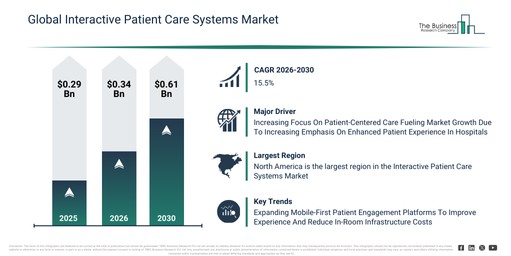
    The interactive patient care systems market has seen considerable growth in recent years. It is anticipated to expand from $0.29 billion in 2025 to $0.34 billion in 2026, exhibiting a compound annual growth rate (CAGR) of 15.8%. This historical growth can be ascribed to several factors, including the increasing adoption of digital health platforms, rising investment in patient engagement solutions, growing integration of bedside terminals and mobile applications, the expansion of telehealth services, and an escalating focus on optimizing clinical workflows.

    The interactive patient care systems market is projected to experience swift expansion in the coming years. It is set to reach $0.61 billion by 2030, exhibiting a compound annual growth rate (CAGR) of 15.5%. This forecasted growth stems from factors such as the expanding development of AI-driven analytics for individualized care, increasing advancements in cloud-based platforms for patient engagement, heightened investment in devices for remote patient monitoring, the proliferation of interactive kiosks and self-service terminals, and improvements in software interoperability and integration capabilities. Key trends anticipated during this period encompass breakthroughs in mobile care applications, progress in telehealth and virtual consultation platforms, the creation of integrated clinical workflow solutions, technological improvements in content management and educational modules, and significant research and development efforts in hybrid deployment and scalable interactive patient care systems.

    Download the Free Sample Report to Explore Key Market Insights:

    https://www.thebusinessresearchcompany.com/sample.aspx?id=30625&type=smp

    What Key Drivers Are Influencing The Growth Of The Interactive Patient Care Systems Market?

    The interactive patient care systems market is anticipated to expand in the future, driven by a growing emphasis on patient-centered care. This type of care involves providing healthcare services that recognize and cater to each patient’s unique preferences, requirements, and values, thereby ensuring their values direct clinical choices and service provision. The heightened attention to patient-centered care stems from hospitals and health systems strategically prioritizing patient experience as a means to enhance quality results, patient contentment, and their organizational standing. Within hospitals, interactive patient care systems facilitate patient-centered care and an improved patient experience through real-time communication, customized educational materials, and engagement tools available at the bedside, which boosts patient experience and operational efficiency. For example, as reported by Chief Healthcare Executive, a US-based healthcare leadership publication, in November 2025, 49% of hospital executives identified enhancing patient experience as their primary strategic goal in 2023, a notable increase from 36% in 2023, representing a 36% rise compared to prior years. Consequently, the growing focus on patient-centered care is a key factor propelling the expansion of the interactive patient care systems market.

    What Market Segments Are Evaluated Within The Interactive Patient Care Systems Market?

    The interactive patient care systems market covered in this report is segmented –

    1) By Component: Hardware, Software, Services

    2) By Product Type: Bedside Terminals, Interactive Displays, Patient Monitoring Devices, Mobile Care Applications, In-Room Entertainment Systems, Other Product Types

    3) By Deployment Mode: On-Premises, Cloud-Based, Hybrid Deployment Models

    4) By Application: Patient Education, Entertainment, Communication, Medication Management, Other Applications

    5) By End-User: Hospitals, Clinics, Ambulatory Surgical Centers, Long-Term Care Centers, Other End-Users

    Subsegments:

    1) By Hardware: Bedside Terminals, Interactive Displays, Patient Monitoring Devices, Mobile Care Applications, In Room Entertainment Systems, Other Product Types

    2) By Software: Patient Education, Entertainment, Communication, Medication Management, Other Applications

    3) By Services: Implementation Support, Training And Education, Maintenance And Support, Consulting Services, Integration Services

    What Industry Trends Are Redefining The Interactive Patient Care Systems Market?

    Leading companies in the interactive patient care systems market are concentrating on creating engagement applications, such as mobile-first patient engagement platforms, with the goals of improving patient involvement, streamlining communication regarding care, and lessening reliance on dedicated bedside equipment. Mobile-first patient engagement platforms are defined as cloud-based digital solutions that allow patients to directly access care information, educational materials, service requests, and communication tools via their personal mobile devices during a hospital stay. For instance, in February 2024, Oneview Healthcare PLC, an Ireland-based healthcare technology company, introduced MyStay Mobile, a software-as-a-service patient engagement platform designed to extend interactive care services beyond traditional in-room terminals. This mobile-first engagement platform enables patients to view personalized stay details, order meals, submit service requests, and provide immediate feedback using their own smartphones without the need for an app installation. Additionally, it integrates with hospital electronic health record systems and supports multilingual content delivery, thereby assisting healthcare providers in enhancing the patient experience while reducing the capital and maintenance expenditures associated with bedside hardware deployment.

    Which Companies Hold Significant Positions In The Interactive Patient Care Systems Market?

    Major companies operating in the interactive patient care systems market are Epic Systems Corporation, Advantech Co. Ltd., Barco NV, HCI Group Inc., Vocera Communications Inc., PatientPoint Inc., Medhost Inc., CipherHealth Inc., Lincor Solutions Ltd., Sentrics, Aceso Interactive Inc., Aiva Health Inc., SONIFI Health Inc., BEWATEC ConnectedCare GmbH, GetWellNetwork Inc., Oneview Healthcare PLC, PDI Communications Inc., eVideon Inc., Onyx Healthcare Inc., ClinicAll

    Read the full interactive patient care systems market report here:

    https://www.thebusinessresearchcompany.com/report/interactive-patient-care-systems-market-report

    Which Global Regions Are Shaping The Competitive Landscape Of The Interactive Patient Care Systems Market?

    North America was the largest region in the interactive patient care systems market in 2025. Asia-Pacific is expected to be the fastest-growing region in the forecast period. The regions covered in the interactive patient care systems market report are Asia-Pacific, South East Asia, Western Europe, Eastern Europe, North America, South America, Middle East, Africa.

    Request A Tailored Interactive Patient Care Systems Market Research Report For Competitive Advantage:

    https://www.thebusinessresearchcompany.com/customise?id=30625&type=smp

    Browse Through More Reports Similar to the Global Interactive Patient Care Systems Market 2026, By The Business Research Company

    Integrated Patient Care Systems Market Report 2026

    https://www.thebusinessresearchcompany.com/report/integrated-patient-care-systems-global-market-report

    Patient Simulators Market Report 2026

    https://www.thebusinessresearchcompany.com/report/patient-simulators-global-market-report

    healthcare information system global market report

    https://www.thebusinessresearchcompany.com/report/healthcare-information-system-global-market-report

    Get in touch with us:

    The Business Research Company: https://www.thebusinessresearchcompany.com/

    Americas +1 310-496-7795

    Asia +44 7882 955267 & +91 8897263534

    Europe +44 7882 955267

    Email us at info@tbrc.info

    Follow us on:

    LinkedIn: https://in.linkedin.com/company/the-business-research-company

    YouTube: https://www.youtube.com/channel/UC24_fI0rV8cR5DxlCpgmyFQ

    Global Market Model: https://www.thebusinessresearchcompany.com/global-market-model
  • Intelligent Medical Guidance and Navigation System Market Trends and Growth Opportunities During 2026–2030

    Intelligent Medical Guidance and Navigation System Market Trends and Growth Opportunities During 2026–2030

    The Business Research Company’s 2026 market reports include new capabilities such as market attractiveness scoring and analysis, total addressable market analysis, company scoring matrix, interactive excel data dashboard, improved supply chain analysis, upcoming startups in the market, and overview of key products, aimed at improving the depth, usability, and strategic value of the insights delivered.

    How Will The Market Size Of The Intelligent Medical Guidance and Navigation System Market Evolve From 2026 To 2030?

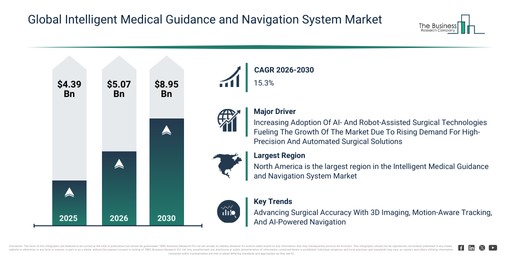
    The intelligent medical guidance and navigation system market has experienced significant growth in recent years. It is anticipated to expand from $4.39 billion in 2025 to $5.07 billion in 2026, achieving a compound annual growth rate (CAGR) of 15.6%. This past growth can be attributed to the increasing adoption of medical imaging technologies, rising demand for minimally invasive procedures, growth in hospital digitalization, early integration of artificial intelligence in clinical workflows, and the expansion of surgical navigation solutions.

    The market for intelligent medical guidance and navigation systems is projected to experience substantial expansion in the coming years. This market is anticipated to reach a valuation of $8.95 billion by 2030, exhibiting a compound annual growth rate (CAGR) of 15.3%. This forecasted growth is driven by several factors, including the increasing demand for precision medicine, the wider integration of artificial intelligence-powered clinical support solutions, greater investments in advanced operating room technologies, a heightened emphasis on environmentally friendly and carbon-neutral hospital facilities, and the quicker uptake of continuous patient monitoring. Key trends expected during this period involve the convergence of artificial intelligence with multimodal imaging techniques, the advancement of robotics in navigation, the proliferation of cloud-hosted clinical decision-making platforms, a rise in the application of digital twin technology for healthcare planning, and a move towards medical systems that are both energy-efficient and carbon-neutral.

    Download the Free Sample Report to Explore Key Market Insights:

    https://www.thebusinessresearchcompany.com/sample.aspx?id=30624&type=smp

    What Underlying Factors Are Accelerating The Growth Of The Intelligent Medical Guidance and Navigation System Market?

    The increasing integration of robot-assisted surgical technologies is anticipated to propel the expansion of the intelligent medical guidance and navigation system market. These advanced systems, which leverage artificial intelligence (AI) and robotic mechanisms, enable surgeons to perform intricate procedures with enhanced precision, control, and efficiency. Hospitals are increasingly adopting artificial intelligence (AI) and robot-assisted surgical technologies to achieve higher surgical accuracy, reduce complication rates, and expedite patient recovery through minimally invasive, digitally guided interventions. The intelligent medical guidance and navigation system complements robot-assisted surgical technologies by providing real-time navigation during surgery, automated guidance for instruments, and crucial decision-support features that optimize procedural accuracy. For example, in November 2024, data from the Private Healthcare Information Network, a UK-based government-mandated organisation, indicated that approximately 22,700 robot-assisted procedures were carried out in the first quarter of 2024. This represented a substantial 45% increase compared to the first quarter of 2023 and a 12% rise from the last quarter of 2023. Consequently, the rising adoption of robot-assisted surgical technologies is a key factor driving the growth of the intelligent medical guidance and navigation system market.

    Which Segment Areas Are Covered In The Intelligent Medical Guidance and Navigation System Market Analysis?

    The intelligent medical guidance and navigation system market covered in this report is segmented –

    1) By Component Or Product Type: Hardware, Software, Service

    2) By Technology: Robotics, Computer Vision, Artificial Intelligence, Augmented Reality, Navigation Software

    3) By Application: Surgical Navigation, Radiation Therapy, Diagnostic Imaging, Orthopedic Guidance, Neurological Guidance

    4) By End Use: Hospitals, Ambulatory Surgery Centers, Diagnostic Centers, Research Institutions

    Subsegments:

    1) By Hardware: Imaging Sensors, Tracking Sensors, Navigation Consoles, Robotic Arms, Display Monitors

    2) By Software: Imaging Analysis Software, Navigation Planning Software, Intraoperative Guidance Software, Workflow Integration Software, Data Management Software

    3) By Service: Installation Service, Maintenance Service, Training Service, Upgradation Service, Technical Support Service

    What Key Developments And Trends Are Impacting The Intelligent Medical Guidance and Navigation System Market?

    Companies prominently featured in the intelligent medical guidance and navigation system market are prioritizing the development of advanced technologies, such as 3D imaging and motion-aware tracking, to heighten intraoperative precision, reduce errors, and enhance surgical outcomes. 3D imaging and motion-aware tracking describes the fusion of three-dimensional visualization with real-time monitoring of surgical instruments and patient anatomy, empowering systems to adapt dynamically to movement and offer accurate direction during procedures. For example, in October 2025, Zeta Surgical Inc., a US-based medical technology firm specializing in AI-enabled surgical solutions, secured FDA 510(k) clearance for its AI-powered TMS Navigation System. This system integrates 3D imaging and motion-aware tracking to provide real-time guidance during complex surgical operations, allowing surgeons to navigate with improved spatial awareness and exactitude. The system supports safer, more efficient surgeries and contributes to better patient outcomes.

    Who Are The Prominent Organizations Shaping The Intelligent Medical Guidance and Navigation System Market?

    Major companies operating in the intelligent medical guidance and navigation system market are Johnson & Johnson, Medtronic Plc, Siemens Healthineers AG, Stryker Corporation, Koninklijke Philips N.V., GE Healthcare Technologies Inc., Smith & Nephew Plc, B. Braun Melsungen AG, Zimmer Biomet Holdings Inc., Intuitive Surgical, Olympus Corporation, Karl Storz SE & Co. KG, Brainlab AG, Amplitude Surgical, Northern Digital Inc., Augmedics, Synaptive Medical Inc., Proprio, Fiagon GmbH, Surgical Theater LLC, Orthofix Medical Inc., Naviswiss AG, SurgicEye GmbH

    Read the full intelligent medical guidance and navigation system market report here:

    https://www.thebusinessresearchcompany.com/report/intelligent-medical-guidance-and-navigation-system-market-report

    Which Regions Are Poised For Strategic Growth In The Intelligent Medical Guidance and Navigation System Market?

    North America was the largest region in the intelligent medical guidance and navigation systems market in 2025. Asia-Pacific is expected to be the fastest-growing region in the forecast period. The regions covered in the intelligent medical guidance and navigation system market report are Asia-Pacific, South East Asia, Western Europe, Eastern Europe, North America, South America, Middle East, Africa.

    Request A Tailored Intelligent Medical Guidance and Navigation System Market Research Report For Competitive Advantage:

    https://www.thebusinessresearchcompany.com/customise?id=30624&type=smp

    Browse Through More Reports Similar to the Global Intelligent Medical Guidance and Navigation System Market 2026, By The Business Research Company

    Navigation System Market Report 2026

    https://www.thebusinessresearchcompany.com/report/navigation-system-global-market-report

    Healthcare Navigation Platform Market Report 2026

    https://www.thebusinessresearchcompany.com/report/healthcare-navigation-platform-global-market-report

    surgical navigation systems global market report

    https://www.thebusinessresearchcompany.com/report/surgical-navigation-systems-global-market-report

    Get in touch with us:

    The Business Research Company: https://www.thebusinessresearchcompany.com/

    Americas +1 310-496-7795

    Asia +44 7882 955267 & +91 8897263534

    Europe +44 7882 955267

    Email us at info@tbrc.info

    Follow us on:

    LinkedIn: https://in.linkedin.com/company/the-business-research-company

    YouTube: https://www.youtube.com/channel/UC24_fI0rV8cR5DxlCpgmyFQ

    Global Market Model: https://www.thebusinessresearchcompany.com/global-market-model
  • Global Insulated Shippers Market Forecast 2026–2035 Presenting Long-Term Growth Insights

    Global Insulated Shippers Market Forecast 2026–2035 Presenting Long-Term Growth Insights

    The Business Research Company’s 2026 market reports include new capabilities such as market attractiveness scoring and analysis, total addressable market analysis, company scoring matrix, interactive excel data dashboard, improved supply chain analysis, upcoming startups in the market, and overview of key products, aimed at improving the depth, usability, and strategic value of the insights delivered.

    What Is The Forecasted Market Value Of The Insulated Shippers Market Across 2026–2030?

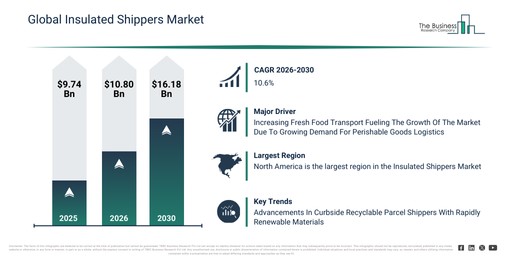
    The insulated shippers market size has experienced swift expansion in recent years. It is projected to grow from $9.74 billion in 2025 to $10.80 billion in 2026, achieving a compound annual growth rate (CAGR) of 10.9%. The growth observed in the past can be attributed to the escalating demand for temperature-sensitive pharmaceuticals, the increasing adoption of cold chain logistics, a greater utilization of expanded polystyrene and polyurethane insulated packaging, the broadening of global food and beverage distribution networks, and an intensified regulatory focus on temperature-controlled shipping.

    The insulated shippers market size is anticipated to undergo rapid expansion over the next few years. It is projected to increase to $16.18 billion in 2030, demonstrating a compound annual growth rate (CAGR) of 10.6%. This expansion during the forecast period is fueled by the escalating requirement for biologics and specialty drugs, the growth of e-commerce shipments for perishable foods, a surge in demand for reusable insulated packaging, the extension of advanced cold chain infrastructure, and the greater adoption of high-performance insulation materials. Significant trends expected in the forecast period involve technological enhancements in thermal packaging systems, novel developments in smart temperature monitoring solutions, the evolution of sustainable and reusable insulated shipper designs, ongoing research and development into vacuum insulated panels and phase-change materials, and progress in modular and customizable insulated packaging solutions.

    Download the Free Sample Report to Explore Key Market Insights:

    https://www.thebusinessresearchcompany.com/sample.aspx?id=30623&type=smp

    Which Growth Drivers Are Contributing To The Progress Of The Insulated Shippers Market?

    The rising transport of fresh food is projected to drive the expansion of the insulated shippers market in the future. Fresh food transport entails the movement of perishable agricultural products, such as fruits, vegetables, meat, and dairy, from producers to consumers while upholding specific temperature conditions to maintain their freshness. This growth in fresh food transport stems from consumers’ growing demand for convenient home delivery of fresh produce and refrigerated items through e-commerce grocery platforms and rapid delivery services. Insulated shippers facilitate this increase in fresh food transport by providing precise temperature control, thereby ensuring perishable products remain safe and high-quality throughout transit. For instance, in January 2025, the United States Department of Agriculture (USDA) reported that United States truck shipments of fresh produce reached 11.21 million tons in the second quarter of 2024, representing a 14% increase compared with the same quarter in 2023. Thus, the increasing fresh food transport is a key driver for the growth of the insulated shippers market.

    What Segmentation Levels Are Considered In The Insulated Shippers Market?

    The insulated shippers market covered in this report is segmented –

    1) By Product Type: Panel Shippers, Envelope Shippers, Box Shippers, Other Product Types

    2) By Material: Expanded Polystyrene (EPS), Polyurethane, Vacuum Insulated Panels, Other Materials

    3) By Distribution Channel: Direct Sales, Distributors, Online Retail

    4) By Application: Pharmaceuticals, Food And Beverages, Chemicals, Other Applications

    5) By End-User: Healthcare, Food Service, E-Commerce, Other End-Users

    Subsegments:

    1) By Panel Shippers: Single Wall Construction, Double Wall Construction, Multi-Layered Composite Construction

    2) By Envelope Shippers: Bubble Insulated Mailers, Foam Lined Padded Mailers, Reflective Foil Insulated Mailers

    3) By Box Shippers: Single-Use Corrugated Boxes, Reusable Plastic Containers, Insulated Dividers And Liners

    4) By Other Product Types: Insulated Totes And Bags, Hard-Sided Insulated Cases, Custom Molded Foam Containers

    What Trends Are Projected To Affect The Insulated Shippers Market?

    Leading companies in the insulated shippers market are concentrating on developing sustainable packaging solutions, such as curbside-recyclable parcel shippers, to enhance thermal performance, operational efficiency, and reduce environmental impact. Recyclable cold chain shippers incorporate robust insulation with rapidly renewable, single-use materials to safeguard product integrity while allowing for straightforward disposal and recycling. For example, in May 2025, Cold Chain Technologies LLC, a US-based company providing temperature-controlled packaging, introduced its CCT TRUEtemp Naturals shipper. This cost-effective, single-use solution addresses customer requirements for reliable cold chain performance and supports corporate sustainability targets. Qualified under the ISTA 7E RFG profile, the system maintains temperatures of 2–8 °C for a period of up to 48 hours. Offered in extra small, small, medium, and large formats, it caters to diverse payload needs and is particularly well-suited for drug sampling programs, wholesale distribution, and overnight domestic shipments.

    Which Key Industry Participants Are Active In The Insulated Shippers Market?

    Major companies operating in the insulated shippers market are DS Smith PLC, Sonoco ThermoSafe, Sealed Air Corporation, Tower Cold Chain Solutions Limited, Ranpak Holdings Corp., CSafe Global, Cryoport Systems LLC, Cold Chain Technologies (CCT), Envirotainer AB, FEURER Group GmbH, TemperPack Technologies Inc., Peli BioThermal LLC, Cryopak Industries Inc., Polar Tech Industries Inc., Nordic Cold Chain Solutions, DGP Intelsius Limited, Inmark Packaging, Topa Thermal Packaging B.V., Sofrigam SA, Chill-Pak, Tempack Packaging Solutions S.L.

    Read the full insulated shippers market report here:

    https://www.thebusinessresearchcompany.com/report/insulated-shippers-market-report

    Which Regions Are Projected To Dominate The Insulated Shippers Market In The Coming Years?

    North America was the largest region in the insulated shippers market in 2025. Asia-Pacific is expected to be the fastest-growing region in the forecast period. The regions covered in the insulated shippers market report are Asia-Pacific, South East Asia, Western Europe, Eastern Europe, North America, South America, Middle East, Africa.

    Request A Tailored Insulated Shippers Market Research Report For Competitive Advantage:

    https://www.thebusinessresearchcompany.com/customise?id=30623&type=smp

    Browse Through More Reports Similar to the Global Insulated Shippers Market 2026, By The Business Research Company

    Insulated Shipping Packaging Market Report 2026

    https://www.thebusinessresearchcompany.com/report/insulated-shipping-packaging-global-market-report

    Insulation Products Market Report 2026

    https://www.thebusinessresearchcompany.com/report/insulation-products-global-market-report

    aircraft insulation global market report

    https://www.thebusinessresearchcompany.com/report/aircraft-insulation-global-market-report

    Get in touch with us:

    The Business Research Company: https://www.thebusinessresearchcompany.com/

    Americas +1 310-496-7795

    Asia +44 7882 955267 & +91 8897263534

    Europe +44 7882 955267

    Email us at info@tbrc.info

    Follow us on:

    LinkedIn: https://in.linkedin.com/company/the-business-research-company

    YouTube: https://www.youtube.com/channel/UC24_fI0rV8cR5DxlCpgmyFQ

    Global Market Model: https://www.thebusinessresearchcompany.com/global-market-model

  • Global Immersive Virtual Stores Market Report 2026–2035 Emphasizing Growth Opportunities

    Global Immersive Virtual Stores Market Report 2026–2035 Emphasizing Growth Opportunities

    The Business Research Company’s 2026 market reports include new capabilities such as market attractiveness scoring and analysis, total addressable market analysis, company scoring matrix, interactive excel data dashboard, improved supply chain analysis, upcoming startups in the market, and overview of key products, aimed at improving the depth, usability, and strategic value of the insights delivered.

    How Much Is The Immersive Virtual Stores Market Expected To Grow In Terms Of Market Value Between 2026 And 2030?

    The market for immersive virtual stores has experienced rapid expansion over recent years. This market is projected to expand from $4.32 billion in 2025 to $5.39 billion in 2026, demonstrating a compound annual growth rate (CAGR) of 24.7%. Historically, this growth has been driven by several factors, including a heightened desire for interactive online retail experiences, the wider integration of augmented reality tools within the retail sector, an increase in the application of three-dimensional product visualization, the global expansion of e-commerce platforms, and a greater emphasis from retailers on engaging customers digitally.

    The immersive virtual stores market is anticipated to undergo significant expansion in the coming years. It is projected to achieve a value of $12.91 billion by 2030, demonstrating a compound annual growth rate (CAGR) of 24.4%. This projected growth is driven by the increasing integration of virtual reality commerce into omnichannel strategies, the rising adoption of cloud-based immersive store platforms, a growing demand for personalized and immersive digital shopping journeys, the expansion of virtual real estate and showroom applications, and increased retailer investment in experiential digital branding. Prominent trends for the forecast period include technological advancements in real-time three-dimensional rendering, innovations in artificial intelligence-enabled virtual try-on systems, developments in web-based immersive environments, ongoing research and developments in spatial computing and mixed reality, and improvements in three-dimensional content creation pipelines.

    Download the Free Sample Report to Explore Key Market Insights:

    https://www.thebusinessresearchcompany.com/sample.aspx?id=30617&type=smp

    Which Major Factors Are Driving The Expansion Of The Immersive Virtual Stores Market?

    The escalating use of smartphones is anticipated to stimulate the expansion of the immersive virtual stores market in the coming years. Smartphones are defined as advanced mobile devices that offer internet connectivity, application functionality, and real-time communication. The rise in smartphone usage stems from the rapid growth of mobile internet access, which allows consumers to engage with online platforms and shop internationally at any time and location. Smartphone utilization enhances immersive virtual stores by providing a portable and interactive platform for augmented and virtual reality shopping experiences. This improves customer engagement and convenience by enabling instant product visualization, personalized recommendations, and effortless online purchasing from any location. For instance, in November 2024, according to Eurostat, the Luxembourg-based official statistical office of the European Union (EU), approximately 89% of EU residents aged 16–74 living in cities used their smartphones to access the internet in 2023, compared with 86% in towns and suburbs and 82% in rural areas. Thus, the increasing penetration of smartphones is a significant driver for the growth of the immersive virtual stores market.

    What Major Segment Divisions Exist Within The Immersive Virtual Stores Market?

    The immersive virtual stores market covered in this report is segmented –

    1) By Technology Platform: Virtual Reality Based Stores, Augmented Reality Based Stores, Mixed Reality Based Stores, Web-Based Three Dimensional Stores

    2) By Deployment Mode: Cloud-Based, On-Premises

    3) By Application: Retail And E-commerce, Fashion And Apparel, Real Estate, Other Applications

    5) By End User: Retailers, Electronic Commerce Companies, Fashion Brands, Real Estate Companies, Consumer Electronics Companies, Other End Users

    Subsegments:

    1) By Virtual Reality Based Stores: Headset Dependent Full Immersion Stores, Social Virtual Reality Platform Stores, Controller Based Navigation Stores, Room Scale Interactive Stores

    2) By Augmented Reality Based Stores: Marker Based Augmented Reality Stores, Markerless Augmented Reality Stores, Projection Based Augmented Reality Stores, Mobile Application Augmented Reality Stores

    3) By Mixed Reality Based Stores: Holographic Device Enabled Stores, Spatial Computing Platform Stores, Interactive Blended Reality Stores, Wearable Display Integrated Stores

    4) By Web-Based Three Dimensional Stores: Browser Rendered Three Dimensional Stores, Game Engine Powered Web Stores, E-Commerce Platform Integrated Three Dimensional Stores, No Download Instant Access Stores

    How Are Trends Shaping The Direction Of The Immersive Virtual Stores Market?

    Leading companies within the immersive virtual stores market are prioritizing the development of advanced technologies, such as immersive AR-enabled virtual closet environments, to improve customer engagement, elevate digital shopping experiences, and bridge the divide between physical and virtual retail. Immersive AR-enabled virtual closet environments are defined as augmented reality and spatial computing platforms that empower users to explore products within lifelike 3D spaces, interact intuitively with merchandise, and view highly realistic visuals that digitally replicate in-store browsing. For instance, in February 2024, J.Crew Group Inc., a US-based fashion retailer, introduced the J.Crew Virtual Closet app on Apple Vision Pro, aiming to deliver an AR-enabled virtual closet experience to spatial computing devices. This experience allows users to browse and mix-and-match clothing items in a hyper-realistic 3D environment, examine textures and materials with high magnification, and engage with stylists via SharePlay during FaceTime calls. This AR-enhanced virtual store not only enriches product discovery but also supports personalized styling and social shopping features that go beyond traditional e-commerce.

    Which Major Players Dominate The Immersive Virtual Stores Market?

    Major companies operating in the immersive virtual stores market are Alibaba Group Holding Limited, Roblox Corporation, Unity Software Inc., HTC Corporation, Flexsin Technologies Pvt. Ltd., Vection Technologies Ltd., Trigma Solutions Inc., Decentraland Foundation, iCreative Technologies Pvt. Ltd., Esferasoft Solutions Pvt. Ltd., Pixelette Technologies Pvt. Ltd., Innowise Group, ByondXR Ltd., Emperia Ltd., rooom GmbH, KiXR Ltd., Digital Agents Interactive Inc., GlamAR Inc., VB Metaverse Ltd., Obsess Inc., Arimars Technologies Pvt. Ltd.

    Read the full immersive virtual stores market report here:

    https://www.thebusinessresearchcompany.com/report/immersive-virtual-stores-market-report

    Which Geographic Areas Are Emerging As Strong Markets For The Immersive Virtual Stores Market?

    North America was the largest region in the immersive virtual stores market in 2025. Asia-Pacific is expected to be the fastest-growing region in the forecast period. The regions covered in the immersive virtual stores market report are Asia-Pacific, South East Asia, Western Europe, Eastern Europe, North America, South America, Middle East, Africa.

    Request A Tailored Immersive Virtual Stores Market Research Report For Competitive Advantage:

    https://www.thebusinessresearchcompany.com/customise?id=30617&type=smp

    Browse Through More Reports Similar to the Global Immersive Virtual Stores Market 2026, By The Business Research Company

    Virtual Reality Shopping Market Report 2026

    https://www.thebusinessresearchcompany.com/report/virtual-reality-shopping-global-market-report

    Immersive Technology Market Report 2026

    https://www.thebusinessresearchcompany.com/report/immersive-technology-global-market-report

    virtual data room global market report

    https://www.thebusinessresearchcompany.com/report/virtual-data-room-global-market-report

    Get in touch with us:

    The Business Research Company: https://www.thebusinessresearchcompany.com/

    Americas +1 310-496-7795

    Asia +44 7882 955267 & +91 8897263534

    Europe +44 7882 955267

    Email us at info@tbrc.info

    Follow us on:

    LinkedIn: https://in.linkedin.com/company/the-business-research-company

    YouTube: https://www.youtube.com/channel/UC24_fI0rV8cR5DxlCpgmyFQ

    Global Market Model: https://www.thebusinessresearchcompany.com/global-market-model

  • One of the main drivers of the Home Spirometry with Bluetooth Integration Market is the increasing use of remote patient monitoring

    One of the main drivers of the Home Spirometry with Bluetooth Integration Market is the increasing use of remote patient monitoring

    The Business Research Company’s 2026 market reports include new capabilities such as market attractiveness scoring and analysis, total addressable market analysis, company scoring matrix, interactive excel data dashboard, improved supply chain analysis, upcoming startups in the market, and overview of key products, aimed at improving the depth, usability, and strategic value of the insights delivered.

    How Large Is The Home Spirometry With Bluetooth Integration Market Projected To Become By 2030 Based On Its 2026 Valuation?

    The market size for home spirometry with Bluetooth integration has expanded rapidly in recent years. It is projected to increase from $1.62 billion in 2025 to $1.82 billion in 2026, reflecting a compound annual growth rate (CAGR) of 12.1%. This historic growth is attributable to an increasing prevalence of respiratory diseases, the growing adoption of home healthcare devices, rising awareness concerning lung health monitoring, the expanding use of portable spirometers, and the increasing integration of wireless health monitoring systems.

    The home spirometry with bluetooth integration market is projected to experience substantial expansion over the upcoming years. This market is anticipated to reach a valuation of $2.85 billion by 2030, demonstrating a compound annual growth rate (CAGR) of 11.9%. Several factors contribute to this growth during the projected timeframe, including the increasing need for remote patient monitoring, wider acceptance of bluetooth-enabled medical devices, enhanced integration of AI and predictive analytics in respiratory healthcare, expanded deployment of cloud-based health data platforms, and a heightened focus on patient-centered telehealth solutions. Key trends expected within this forecast period encompass technological progress in bluetooth-enabled spirometry, novel approaches in AI-powered respiratory analytics, enhancements in cloud-based patient monitoring systems, dedicated research and development for portable diagnostic tools, and improvements in the integration and reporting of real-time health data.

    Download the Free Sample Report to Explore Key Market Insights:

    https://www.thebusinessresearchcompany.com/sample.aspx?id=30608&type=smp

    What Drivers Are Influencing The Home Spirometry With Bluetooth Integration Market?

    The increasing acceptance of remote patient monitoring is projected to propel the expansion of the home spirometry with Bluetooth integration market in the future. Remote patient monitoring involves the use of interconnected medical devices and digital platforms to gather, transmit, and analyze patient health information outside of conventional clinical environments, thereby supporting the ongoing management of chronic conditions. The uptake of remote patient monitoring is on the rise due to the increasing prevalence of chronic respiratory diseases, as continuous oversight helps manage symptoms and prevent hospitalizations. Home spirometry with Bluetooth integration aids remote patient monitoring by enabling patients to track their lung function from home and send data directly to healthcare providers. This technology improves disease management and patient outcomes by facilitating the early identification of respiratory issues and timely intervention. For instance, in December 2025, according to Intuition Labs, a US-based healthcare technology company, nearly 50 million Americans are already using some form of remote patient monitoring device, 80% of Americans are favorable toward incorporating remote patient monitoring into medical care, and by 2025, over 71 million Americans, representing 26% of the population, are expected to use some form of remote patient monitoring service. Consequently, the expanding adoption of remote patient monitoring is serving as a key driver for the growth of the home spirometry with Bluetooth integration market.

    What Segment Groups Are Identified Within The Home Spirometry With Bluetooth Integration Market?

    The home spirometry with bluetooth integration market covered in this report is segmented –

    1) By Product Type: Handheld Spirometers, Tabletop Spirometers, Wearable Spirometers

    2) By Connectivity: Bluetooth, Wi-Fi, Universal Serial Bus (USB)

    3) By Distribution Channel: Online, Offline

    4) By Application: Chronic Obstructive Pulmonary Disease (COPD), Asthma, Cystic Fibrosis, Other Applications

    5) By End-User: Hospitals And Clinics, Homecare Settings, Diagnostic Centers, Other End-Users

    Subsegments:

    1) By Handheld Spirometers: Portable Lung Function Measurement Devices, Battery Operated Spirometry Units, Compact Home Monitoring Spirometers, Bluetooth Enabled Handheld Spirometers, Real Time Data Transmission Spirometry Devices

    2) By Tabletop Spirometers: Desktop Pulmonary Function Testing Units, Clinical Grade Tabletop Spirometry Devices, Multi Parameter Respiratory Assessment Systems, Bluetooth Integrated Desktop Spirometers, High Accuracy Stationary Spirometry Units

    3) By Wearable Spirometers: Continuous Respiratory Monitoring Devices, Smart Wrist Or Chest Mounted Spirometers, Bluetooth Connected Wearable Spirometry Units, Daily Activity Integrated Respiratory Monitors, Lightweight Home Use Wearable Spirometers

    What Trends Are Advancing Progress In The Home Spirometry With Bluetooth Integration Market?

    Leading firms within the home spirometry with Bluetooth integration market are prioritizing the creation of sophisticated products, like bluetooth-enabled spirometers, to improve at-home lung function monitoring, simplify data collection, and facilitate remote clinical oversight. Bluetooth-enabled spirometers are instruments designed to assess key breathing parameters such as airflow and volume, wirelessly sending the gathered information to smartphones, tablets, or cloud platforms, enabling immediate viewing by patients and healthcare providers. For instance, in June 2024, Clario, a US-based clinical technology company, obtained FDA 510(k) approval for its SpiroSphere system, which is integrated with a wireless ECG device. The system provides concurrent tracking of spirometry and cardiac data, automatic data transmission via Bluetooth, and live monitoring via mobile applications. Such capabilities enable precise remote surveillance, prompt identification of respiratory issues, and streamlined clinical processes, marking a notable progression in at-home respiratory healthcare through the amalgamation of usability, data integration, and clinical reliability.

    Who Are The Prominent Organizations Shaping The Home Spirometry With Bluetooth Integration Market?

    Major companies operating in the home spirometry with bluetooth integration market are Contec Medical Systems Co. Ltd., Vyaire Medical Inc., Schiller AG, Vitalograph Ltd., COSMED S.r.l., SDI Diagnostics Inc., NDD Medizintechnik AG, Futuremed America Inc., NuvoAir AB, Cohero Health Inc., Smiths Medical International Ltd., Sibelmed S.L.U., Uscom Ltd., e-LinkCare Meditech Co. Ltd., CMI Health Inc., Medikro Oy, Icen Technology Co. Ltd., HealthUp S.A., Fukuda Sangyo Co. Ltd., Smart Respiratory Products Ltd.

    Read the full home spirometry with bluetooth integration market report here:

    https://www.thebusinessresearchcompany.com/report/home-spirometry-with-bluetooth-integration-market-report

    Which Region Is Anticipated To See The Fastest Growth In The Home Spirometry With Bluetooth Integration Market?

    North America was the largest region in the home spirometry with bluetooth integration market in 2025. Asia-Pacific is expected to be the fastest-growing region in the forecast period. The regions covered in the home spirometry with bluetooth integration market report are Asia-Pacific, South East Asia, Western Europe, Eastern Europe, North America, South America, Middle East, Africa.

    Request A Tailored Home Spirometry With Bluetooth Integration Market Research Report For Competitive Advantage:

    https://www.thebusinessresearchcompany.com/customise?id=30608&type=smp

    Browse Through More Reports Similar to the Global Home Spirometry With Bluetooth Integration Market 2026, By The Business Research Company

    Spirometer Market Report 2026

    https://www.thebusinessresearchcompany.com/report/spirometer-global-market-report

    Respiratory Monitoring Devices Market Report 2026

    https://www.thebusinessresearchcompany.com/report/respiratory-monitoring-devices-global-market-report

    distance health technology global market report

    https://www.thebusinessresearchcompany.com/report/distance-health-technology-global-market-report

    Get in touch with us:

    The Business Research Company: https://www.thebusinessresearchcompany.com/

    Americas +1 310-496-7795

    Asia +44 7882 955267 & +91 8897263534

    Europe +44 7882 955267

    Email us at info@tbrc.info

    Follow us on:

    LinkedIn: https://in.linkedin.com/company/the-business-research-company

    YouTube: https://www.youtube.com/channel/UC24_fI0rV8cR5DxlCpgmyFQ

    Global Market Model: https://www.thebusinessresearchcompany.com/global-market-model
  • A major trend shaping the Hodgkin’s Lymphoma Treatment Market is the expansion of front-line targeted combination therapies

    A major trend shaping the Hodgkin’s Lymphoma Treatment Market is the expansion of front-line targeted combination therapies

    The Business Research Company’s 2026 market reports include new capabilities such as market attractiveness scoring and analysis, total addressable market analysis, company scoring matrix, interactive excel data dashboard, improved supply chain analysis, upcoming startups in the market, and overview of key products, aimed at improving the depth, usability, and strategic value of the insights delivered.

    What Market Value Is Anticipated For The Hodgkin’s Lymphoma Treatment Market Over The Period 2026–2030?

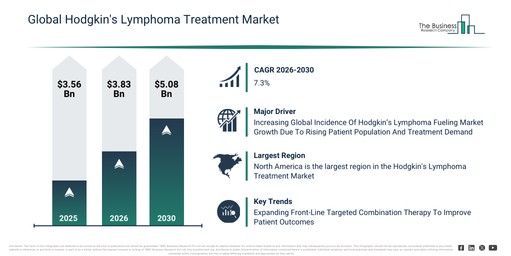
    The hodgkin’s lymphoma treatment market size has seen significant growth in recent years. It is anticipated to expand from $3.56 billion in 2025 to $3.83 billion in 2026, at a compound annual growth rate (CAGR) of 7.6%. This historical growth can be attributed to a higher incidence of hodgkin’s lymphoma, increasing awareness and prompt diagnosis, the rising adoption of chemotherapy and radiation therapy, the expansion of oncology healthcare infrastructure, and greater government funding for cancer research.

    The hodgkin’s lymphoma treatment market is poised for significant expansion over the coming years. This market is projected to reach $5.08 billion by 2030, exhibiting a compound annual growth rate (CAGR) of 7.3%. Several factors are expected to fuel this growth during the forecast period, including the increasing uptake of immunotherapy and targeted therapies, wider access to stem cell transplantation, a growing inclination among patients for individualized treatments, the establishment of more cancer centers in developing regions, and improved insurance coverage and reimbursement frameworks. Key trends anticipated during the forecast timeframe encompass technological progress in diagnostic imaging, breakthroughs in immunotherapy and targeted therapies, the emergence of less invasive treatment alternatives, ongoing research and development in stem cell transplantation, and the incorporation of digital health and telemedicine into ongoing patient care.

    Download the Free Sample Report to Explore Key Market Insights:

    https://www.thebusinessresearchcompany.com/sample.aspx?id=30607&type=smp

    What Drivers Are Shaping The Future Growth Of The Hodgkin’s Lymphoma Treatment Market?

    The escalating occurrence of Hodgkin’s lymphoma is projected to fuel the expansion of the Hodgkin’s lymphoma treatment market in the future. Hodgkin’s lymphoma is defined as a form of cancer impacting the lymphatic system, distinguished by anomalous Reed–Sternberg cells found in lymph nodes, typically affecting B-lymphocytes. Its symptoms frequently include painless enlarged glands, fever, night sweats, and unexplained weight loss. The prevalence of Hodgkin’s lymphoma is increasing due to greater exposure to various risk factors like smoking, obesity, hypertension, and evolving socioeconomic circumstances across numerous regions, contributing to a higher disease occurrence over time. Treatment for Hodgkin’s lymphoma aims to manage the condition by targeting and eradicating malignant lymphocytes through therapeutic approaches such as chemotherapy, radiation, or immunotherapy. This management improves patient results by slowing disease progression, achieving remission, and improving overall survival rates. For example, in October 2025, the American Cancer Society, a US-based nonprofit organization, estimated that Hodgkin lymphoma in the United States would represent approximately 8,720 new cases, comprising 4,840 in males and 3,880 in females, along with about 1,150 deaths, specifically 720 males and 430 females. Consequently, the rising incidence of Hodgkin’s lymphoma is propelling the growth of the Hodgkin’s lymphoma treatment market.

    How Is The Hodgkin’s Lymphoma Treatment Market Divided Into Its Major Segments?

    The hodgkin’s lymphoma treatment market covered in this report is segmented –

    1) By Type of Treatment: Chemotherapy, Radiation Therapy, Targeted Therapy, Immunotherapy

    2) By Disease Type: Classical Hodgkin Lymphoma (CHL), Nodular Lymphocyte-Predominant Hodgkin Lymphoma (NLPHL)

    3) By Treatment Stage: Early-Stage, Advanced-Stage, Relapsed

    4) By Stem Cell Transplantation: Autologous Stem Cell Transplant, Allogeneic Stem Cell Transplant

    5) By End-Use: Hospitals, Specialty Clinics, Cancer Centers, Ambulatory Care Centers, Home Healthcare Services

    Subsegments:

    1) By Chemotherapy: Combination Chemotherapy, Single Agent Chemotherapy, High Dose Chemotherapy with Stem Cell Transplantation

    2) By Radiation Therapy: External Beam Radiation Therapy, Proton Beam Radiation Therapy, Intensity Modulated Radiation Therapy

    3) By Targeted Therapy: Monoclonal Antibody Therapy, Antibody Drug Conjugate Therapy, Small Molecule Inhibitor Therapy

    4) By Immunotherapy: Immune Checkpoint Inhibitor Therapy, Chimeric Antigen Receptor T Cell Therapy, Cytokine Based Immunotherapy

    How Are Trends Transforming The Hodgkin’s Lymphoma Treatment Market Landscape?

    Leading entities within the Hodgkin’s lymphoma treatment market are concentrating their efforts on creating sophisticated therapies, particularly front-line targeted combination treatments. These initiatives aim to enhance treatment efficacy, lessen illness-related complications, and provide more initial treatment choices for individuals suffering from advanced stages of the disease. Such front-line targeted combination therapies involve the concurrent application of at least two precision medications as the primary intervention, an approach designed to simultaneously address numerous disease-promoting pathways, thereby boosting response rates and postponing resistance in patients who have recently received a diagnosis. An illustrative example is Takeda, a pharmaceutical firm based in Japan, which obtained European Commission authorization in June 2025 for ADCETRIS, when administered alongside etoposide, cyclophosphamide, doxorubicin, dacarbazine, and dexamethasone (ECADD). This approval targets adults diagnosed with Stage IIb with risk factors, Stage III, or Stage IV Hodgkin lymphoma, and was granted following the outcomes of the Phase 3 HD21 trial, which demonstrated superior safety and non-inferior progression-free survival compared to the conventional eBEACOPP chemotherapy. This particular front-line targeted combination treatment integrates a specific ADC backbone, a chemotherapy regimen optimized to reduce immediate toxic effects, and expanded applications into initial treatment protocols, marking a substantial progression in the management of Hodgkin’s lymphoma.

    Which Key Industry Participants Are Active In The Hodgkin’s Lymphoma Treatment Market?

    Major companies operating in the hodgkin’s lymphoma treatment market are F. Hoffmann-La Roche Ltd., Merck & Co. Inc., Pfizer Inc., Novartis AG, AstraZeneca plc, Bristol-Myers Squibb Company, Takeda Pharmaceutical Company Limited, Gilead Sciences Inc., Ono Pharmaceutical Co. Ltd., Jiangsu Hengrui Medicine Co. Ltd., Seagen Inc., Zhejiang Hisun Pharmaceutical Co. Ltd., BeiGene Ltd., Innovent Biologics Inc., HUTCHMED (China) Limited, Aurigene Discovery Technologies Limited, ADC Therapeutics SA, CStone Pharmaceuticals, Emcure Pharmaceuticals Ltd., Sorrento Therapeutics Inc.

    Read the full hodgkin’s lymphoma treatment market report here:

    https://www.thebusinessresearchcompany.com/report/hodgkins-lymphoma-treatment-market-report

    Which Region Is Anticipated To See The Fastest Growth In The Hodgkin’s Lymphoma Treatment Market?

    North America was the largest region in the hodgkin’s lymphoma treatment market in 2025. Asia-Pacific is expected to be the fastest-growing region in the forecast period. The regions covered in the hodgkin’s lymphoma treatment market report are Asia-Pacific, South East Asia, Western Europe, Eastern Europe, North America, South America, Middle East, Africa.

    Request A Tailored Hodgkin’s Lymphoma Treatment Market Research Report For Competitive Advantage:

    https://www.thebusinessresearchcompany.com/customise?id=30607&type=smp

    Browse Through More Reports Similar to the Global Hodgkin’s Lymphoma Treatment Market 2026, By The Business Research Company

    Non Hodgkin Lymphoma Nhl Market Report 2026

    https://www.thebusinessresearchcompany.com/report/non-hodgkin-lymphoma-nhl-global-market-report

    Non Hodgkin Lymphoma Nhl Market Report 2026

    https://www.thebusinessresearchcompany.com/report/non-hodgkin-lymphoma-nhl-global-market-report

    emphysema global market report

    https://www.thebusinessresearchcompany.com/report/emphysema-global-market-report

    Get in touch with us:

    The Business Research Company: https://www.thebusinessresearchcompany.com/

    Americas +1 310-496-7795

    Asia +44 7882 955267 & +91 8897263534

    Europe +44 7882 955267

    Email us at info@tbrc.info

    Follow us on:

    LinkedIn: https://in.linkedin.com/company/the-business-research-company

    YouTube: https://www.youtube.com/channel/UC24_fI0rV8cR5DxlCpgmyFQ

    Global Market Model: https://www.thebusinessresearchcompany.com/global-market-model
  • Wound Skin Substitutes Market Trends and Growth Outlook for 2026–2030

    Wound Skin Substitutes Market Trends and Growth Outlook for 2026–2030

    The Business Research Company’s 2026 market reports include new capabilities such as market attractiveness scoring and analysis, total addressable market analysis, company scoring matrix, interactive excel data dashboard, improved supply chain analysis, upcoming startups in the market, and overview of key products, aimed at improving the depth, usability, and strategic value of the insights delivered.

    How Much Is The Wound Skin Substitutes Market Expected To Grow In Terms Of Market Value Between 2026 And 2030?

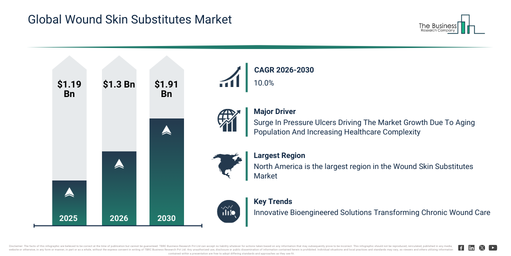
    The wound skin substitutes market has experienced strong growth in recent years. It is expected to grow from $1.19 billion in 2025 to $1.3 billion in 2026, registering a compound annual growth rate (CAGR) of 9.7%. This historical expansion has been supported by rising cases of burn injuries, an increasing prevalence of diabetic ulcers, a higher number of surgical procedures, continued use of collagen dressings, and the growth of wound care facilities.

    Looking ahead, the market is set to witness notable growth, reaching $1.91 billion by 2030 at a compound annual growth rate (CAGR) of 10.0%. This projected growth is driven by factors such as a growing aging population affected by chronic wounds, increasing diabetes incidence, advancements in regenerative medicine, higher spending on advanced wound care, and the expansion of outpatient wound clinics. Key trends during this period include the emergence of bioengineered regenerative skin matrices, cell-based advanced wound coverings, composite biosynthetic skin substitutes, dressings enriched with growth factors, and smart wound coverings designed to balance moisture.

    Download the Free Sample Report to Explore Key Market Insights:

    https://www.thebusinessresearchcompany.com/sample.aspx?id=33363&type=smp

    What Underlying Factors Are Accelerating The Growth Of The Wound Skin Substitutes Market?

    The growing incidence of pressure ulcers is expected to drive the expansion of the wound skin substitutes market in the coming years. Pressure ulcers are localized injuries to the skin and underlying tissue, usually caused by prolonged pressure, particularly over bony areas. Their prevalence is increasing mainly due to an aging population, as older individuals often experience reduced mobility, delicate skin, and chronic health conditions that increase their vulnerability to skin damage.

    Wound skin substitutes play a key role in preventing pressure ulcers by protecting the skin, supporting tissue regeneration, maintaining proper moisture levels, and enhancing skin integrity, thereby lowering the risk of breakdown in high-risk areas. For instance, in November 2023, the National Health Service (NHS) England, a UK-based government department, reported that between October 1, 2022, and October 1, 2023, a total of 193 inpatients developed bedsores, pressure sores, or pressure ulcers during their hospital stay. Therefore, the rising occurrence of pressure ulcers is contributing to the growth of the wound skin substitutes market.

    What Major Segment Divisions Exist Within The Wound Skin Substitutes Market?

    The wound skin substitutes market covered in this report is segmented –

    1) By Product Type: Biologic Skin Substitutes; Synthetic Skin Substitutes; Biosynthetic Skin Substitutes; Collagen Dressings; Acellular Dermal Matrices; Cultured Epithelial Autografts; Allograft Skin; Xenograft Skin; Hydrogel Dressings; Foam Dressings

    2) By Technology: Static Skin Substitutes; Dynamic; Smart

    3) By Application Or Indication: Diabetic Foot Ulcers; Pressure Ulcers; Burns; Surgical Wounds; Trauma Wounds; Chronic Wounds

    4) By Distribution Channel: Direct Sales Or Institutional Sales; Medical Device Distributors; Online Retail Or E-commerce

    5) By End User: Hospitals And Burn Centers; Ambulatory Surgical Centers (ASCs); Specialty Wound Care Clinics; Academic And Research Institute

    Subsegments:

    1) By Biologic Skin Substitutes: Human Derived Skin Substitutes; Animal Derived Skin Substitutes; Cellular Based Skin Substitutes; Growth Factor Enriched Skin Substitutes

    2) By Synthetic Skin Substitutes: Polymer Based Skin Substitutes; Silicone Based Skin Substitutes; Polyurethane Based Skin Substitutes; Synthetic Composite Skin Substitutes

    3) By Biosynthetic Skin Substitutes: Collagen And Silicone Based Skin Substitutes; Polymer And Collagen Composite Skin Substitutes; Semi Synthetic Skin Substitutes

    4) By Collagen Dressings: Native Collagen Dressings; Oxidized Regenerated Collagen Dressings; Collagen With Antimicrobial Agents; Collagen With Silver

    5) By Acellular Dermal Matrices: Human Acellular Dermal Matrices; Animal Acellular Dermal Matrices; Cross Linked Dermal Matrices; Non Cross Linked Dermal Matrices

    6) By Cultured Epithelial Autografts: Keratinocyte Based Autografts; Epidermal Sheet Autografts; Spray On Cultured Epithelial Cells

    7) By Allograft Skin: Fresh Allograft Skin; Cryopreserved Allograft Skin; Lyophilized Allograft Skin

    8) By Xenograft Skin: Porcine Derived Xenograft Skin; Bovine Derived Xenograft Skin; Processed Xenograft Skin

    9) By Hydrogel Dressings: Amorphous Hydrogel Dressings; Sheet Hydrogel Dressings; Impregnated Hydrogel Dressings

    10) By Foam Dressings: Polyurethane Foam Dressings; Silicone Foam Dressings; Adhesive Foam Dressings; Non Adhesive Foam Dressings

    What Key Developments And Trends Are Impacting The Wound Skin Substitutes Market?

    Leading companies in the wound skin substitutes market are concentrating on developing innovative products like advanced bioengineered skin grafts to speed up wound healing, lower infection risks, and enhance tissue regeneration. These advanced bioengineered skin grafts are laboratory-grown or tissue-engineered skin replacements that imitate natural skin structure, offering living cells and scaffolds that foster faster wound healing, support tissue regrowth, and decrease the likelihood of infection when compared to conventional dressings. For example, in May 2025, Tides Medical, a US-based medical device company, unveiled Artacent Wound, a next-generation wound skin substitute. This product utilizes an Arta-Pure Process to carefully preserve the complete structure of amniotic tissue, including its crucial spongy intermediate layer, thereby maximizing the graft’s natural integrity. Artacent Wound features a dual-layer design that can be applied on either side, remains securely in place without sutures, and aids clinicians in treating chronic wounds by maintaining a biologically active matrix that facilitates tissue repair and reduces inflammation, distinguishing it from traditional dehydrated or highly processed grafts.

    Who Are The Leading Companies Operating In The Wound Skin Substitutes Market?

    Major companies operating in the wound skin substitutes market are 3M Company, Stryker Corporation, Essity Aktiebolag, Smith & Nephew plc, B. Braun Melsungen AG, Coloplast A/S, ConvaTec Group plc, Mallinckrodt Pharmaceuticals, Integra LifeSciences Corporation, AVITA Medical Inc., MTF Biologics, Organogenesis Inc., MiMedx Group Inc., Vericel Corporation, LifeNet Health, Anika Therapeutics Inc., AlloSource, BioTissue Inc., Tissue Regenix Group plc, Gunze Medical Co. Ltd., and Molecular Biologicals Inc.

    Read the full wound skin substitutes market report here:

    https://www.thebusinessresearchcompany.com/report/wound-skin-substitutes-market-report

    Which Geographic Areas Are Emerging As Strong Markets For The Wound Skin Substitutes Market?

    North America was the largest region in the wound skin substitutes market in 2025. Asia-Pacific is expected to be the fastest-growing region in the forecast period. The regions covered in the wound skin substitutes market report are Asia-Pacific, South East Asia, Western Europe, Eastern Europe, North America, South America, Middle East, Africa.

    Request A Tailored Wound Skin Substitutes Market Research Report For Competitive Advantage:

    https://www.thebusinessresearchcompany.com/customise?id=33363&type=smp

    Browse Through More Reports Similar to the Global Wound Skin Substitutes Market 2026, By The Business Research Company

    Topical Wound Agents Market Report 2026

    https://www.thebusinessresearchcompany.com/report/topical-wound-agents-global-market-report

    Skin Care Products Market Report 2026

    https://www.thebusinessresearchcompany.com/report/skin-care-products-global-market-report

    Biomaterial Wound Dressing Market Report 2026

    https://www.thebusinessresearchcompany.com/report/biomaterial-wound-dressing-global-market-report

    Get in touch with us:

    The Business Research Company: https://www.thebusinessresearchcompany.com/

    Americas +1 310-496-7795

    Asia +44 7882 955267 & +91 8897263534

    Europe +44 7882 955267

    Email us at info@tbrc.info

    Follow us on:

    LinkedIn: https://in.linkedin.com/company/the-business-research-company

    YouTube: https://www.youtube.com/channel/UC24_fI0rV8cR5DxlCpgmyFQ

    Global Market Model: https://www.thebusinessresearchcompany.com/global-market-model

  • Increasing Neurological Disorders Fueling Expansion in Wearable Neurotechnology Market

    Increasing Neurological Disorders Fueling Expansion in Wearable Neurotechnology Market

    The Business Research Company’s 2026 market reports include new capabilities such as market attractiveness scoring and analysis, total addressable market analysis, company scoring matrix, interactive excel data dashboard, improved supply chain analysis, upcoming startups in the market, and overview of key products, aimed at improving the depth, usability, and strategic value of the insights delivered.

    What Market Value Is Expected For The Wearable Neurotech Market At The End Of The 2026–2030 Forecast Period?

    The wearable neurotechnology market has experienced strong growth in recent years and is expected to continue expanding rapidly. It is projected to increase from $2.18 billion in 2025 to $2.61 billion in 2026, reflecting a compound annual growth rate (CAGR) of 19.4%. This growth has been driven by advancements in EEG miniaturization, the rising use of digital health devices, expanded research in brain-computer interfaces, increasing interest in mental wellness technologies, and wider adoption of wearable sensors.

    Looking ahead, the market is set for significant expansion. It is forecast to reach $5.34 billion by 2030, growing at a CAGR of 19.7%. This future growth is expected to be supported by the expansion of remote neurological monitoring, rising demand for cognitive enhancement solutions, the growth of neuro-based digital therapeutics, increased use of sports performance analytics, and the emergence of personalized brain health programs. Key trends during this period include the development of consumer-focused brain-computer interfaces, greater adoption of neurofeedback wearables, increased availability of portable EEG devices, integration of cognitive monitoring applications, and a rise in home-use neurostimulation devices.

    Download the Free Sample Report to Explore Key Market Insights:

    https://www.thebusinessresearchcompany.com/sample.aspx?id=33359&type=smp

    Which Growth Drivers Are Contributing To The Progress Of The Wearable Neurotech Market?

    The rising prevalence of neurological disorders is expected to drive the growth of the wearable neurotechnology market in the coming years. These conditions refer to disorders that impact the brain, spinal cord, or nerves, affecting movement, sensation, cognitive abilities, or behavior. An expanding global elderly population is a key factor contributing to the increase in neurological disorders, leading to a higher incidence of age-related conditions. Wearable neurotechnology supports the management of these disorders by enabling continuous monitoring of brain and nerve activity, allowing for early diagnosis, personalized treatment strategies, and ongoing symptom management. For instance, in March 2023, the Alzheimer’s Association, a US-based nonprofit voluntary health organization, reported that 6.7 million Americans aged 65+ are living with Alzheimer’s, a number projected to rise to 13.8 million by 2060. Therefore, the growing burden of neurological disorders is driving the expansion of the wearable neurotechnology market.

    What Segment Types Make Up The Wearable Neurotech Market?

    The wearable neurotech market covered in this report is segmented –

    1) By Product Type: Electroencephalography Headsets; Brain Computer Interface Devices; Neurostimulation Wearables; Neurofeedback Wearable Devices; Wearable Neural Sensors

    2) By Technology: Electroencephalography Technology; Functional Near Infrared Spectroscopy Technology; Magnetoencephalography Technology; Transcranial Direct Current Stimulation Technology; Other Neural Sensing and Stimulation Technologies

    3) By Distribution Channel: Online Stores; Specialty Retail Stores; Direct Sales; Other Distribution Channels

    4) By Application: Healthcare; Consumer Electronics; Sports and Fitness; Other Applications

    5) By End User: Hospitals and Clinics; Research Institutes and Laboratories; Consumer End Users; Sports and Fitness Centers; Academic and Educational Institutions

    Subsegments:

    1) By Electroencephalography Headsets: Portable Electroencephalography Headsets; Wireless Electroencephalography Headsets; Clinical Electroencephalography Headsets

    2) By Brain Computer Interface Devices: Non Invasive Brain Computer Interface Devices; Invasive Brain Computer Interface Devices; Hybrid Brain Computer Interface Devices

    3) By Neurostimulation Wearables: Transcranial Direct Current Stimulation Wearables; Transcranial Magnetic Stimulation Wearables; Vagus Nerve Stimulation Wearables

    4) By Neurofeedback Wearable Devices: Real Time Neurofeedback Wearable Devices; Home Use Neurofeedback Wearable Devices; Clinical Neurofeedback Wearable Devices

    5) By Wearable Neural Sensors: Electroencephalography Sensors; Functional Near-Infrared Spectroscopy Sensors; Magnetoencephalography Sensors; Electromyography Sensors; Cognitive Monitoring Sensors; Brain Computer Interface Sensors

    What Trends Are Projected To Affect The Wearable Neurotech Market?

    Leading companies within the wearable neurotech market are intensely focused on advancing non-invasive neurostimulation technologies, such as wearable vagus nerve and electrical muscle stimulation devices, with the goal of aiding rehabilitation, promoting wellness, or assisting neural recovery. Wearable vagus nerve devices themselves are non-invasive systems, worn on the body, that deliver electrical stimulation to the vagus nerve to support various health, wellness, or therapeutic outcomes. An illustrative instance occurred in February 2025, when Neuvotion Inc., a US medical device company, unveiled NeuStim, an FDA-cleared, non-invasive, wearable neurostimulation system designed for precise muscle stimulation to facilitate hand movement recovery after stroke or spinal cord injury. This particular device features a lightweight, wrist-worn design, a clinician-friendly touchscreen for targeting stimulation, and customizable programs accessible via a mobile interface. Similarly, in 2025, Lithuania-based Pulsetto introduced or expanded its wearable vagus nerve stimulation device, which aims to reduce stress and support sleep. This device, worn on the neck, provides low-frequency transcutaneous stimulation, offers several preset programs through a companion app, and is intended for daily, drug-free application. Both these innovations collectively underscore the increasing trend of noninvasive, wearable neurotechnologies being utilized for health and rehabilitation.

    Which Companies Are Expanding Their Footprint In The Wearable Neurotech Market?

    Major companies operating in the wearable neurotech market are Kernel Labs Inc., Nuro Corporation, NeuroSky Inc., BrainCo Inc., Emotiv Inc., Cognito Therapeutics Inc., Neuroelectrics Barcelona S.L.U, Q30 Innovations Inc., Halo Neuroscience, Thync, Neurable Inc., Neurovalens Ltd., Neurovalens Ltd., Bitbrain Technologies S.L., Muse (InteraXon), OpenBCI Inc., BrainBit, Nexstem Technologies Pvt. Ltd, Nalu Medical Inc., Alphabeats, Motif Neurotech.

    Read the full wearable neurotech market report here:

    https://www.thebusinessresearchcompany.com/report/wearable-neurotech-market-report

    Which Region Is Projected To Lead The Wearable Neurotech Market During The Forecast Period?

    North America was the largest region in the wearable neurotech market in 2025. Asia-Pacific is expected to be the fastest-growing region in the forecast period. The regions covered in the wearable neurotech market report are Asia-Pacific, South East Asia, Western Europe, Eastern Europe, North America, South America, Middle East, Africa.

    Request A Tailored Wearable Neurotech Market Research Report For Competitive Advantage:

    https://www.thebusinessresearchcompany.com/customise?id=33359&type=smp

    Browse Through More Reports Similar to the Global Wearable Neurotech Market 2026, By The Business Research Company

    Wearable Medical Devices Market 2026

    https://www.thebusinessresearchcompany.com/report/wearable-medical-devices-market

    Wearable Computing Market Report 2026

    https://www.thebusinessresearchcompany.com/report/wearable-computing-global-market-report

    Neurotechnology Market Report 2026

    https://www.thebusinessresearchcompany.com/report/neurotechnology-global-market-report

    Get in touch with us:

    The Business Research Company: https://www.thebusinessresearchcompany.com/

    Americas +1 310-496-7795

    Asia +44 7882 955267 & +91 8897263534

    Europe +44 7882 955267

    Email us at info@tbrc.info

    Follow us on:

    LinkedIn: https://in.linkedin.com/company/the-business-research-company

    YouTube: https://www.youtube.com/channel/UC24_fI0rV8cR5DxlCpgmyFQ

    Global Market Model: https://www.thebusinessresearchcompany.com/global-market-model

  • Vibrating Mesh Nebulizer Market Trends and Growth Outlook Through 2030

    Vibrating Mesh Nebulizer Market Trends and Growth Outlook Through 2030

    The Business Research Company’s 2026 market reports include new capabilities such as market attractiveness scoring and analysis, total addressable market analysis, company scoring matrix, interactive excel data dashboard, improved supply chain analysis, upcoming startups in the market, and overview of key products, aimed at improving the depth, usability, and strategic value of the insights delivered.

    What Market Valuation Is Forecasted For The Vibrating Mesh Nebulizer Market By 2030 Starting From Its 2026 Size?

    The vibrating mesh nebulizer market size has seen substantial growth over recent years. It is anticipated to expand from $1.05 billion in 2025 to $1.19 billion in 2026, achieving a compound annual growth rate (CAGR) of 13.7%. This historical growth can be attributed to several factors, including an increase in asthma prevalence, the growing number of COPD patients, heightened demand for home respiratory care, innovations in portable devices, and the specific requirements for pediatric inhalation therapy.

    The vibrating mesh nebulizer market is projected to experience substantial expansion over the upcoming years. Its valuation is anticipated to reach $2.01 billion by 2030, demonstrating a compound annual growth rate (CAGR) of 13.9%. This expansion during the projection period is driven by factors such as the adoption of connected respiratory devices, the increase in home-based chronic care, advancements in wearable inhalation monitoring, the rising need for personalized drug delivery, and respiratory care for an aging population. Key developments expected in this period encompass portable handheld mesh nebulizers, exceptionally quiet nebulization devices, intelligent connected inhalation systems, highly efficient aerosol delivery, and rechargeable mesh nebulizer units.

    Download the Free Sample Report to Explore Key Market Insights:

    https://www.thebusinessresearchcompany.com/sample.aspx?id=33348&type=smp

    What Drivers Are Influencing The Vibrating Mesh Nebulizer Market?

    The increasing adoption of home healthcare and self-use is anticipated to fuel expansion within the vibrating mesh nebulizer market over the coming years. These terms denote medical interventions and equipment enabling individuals to autonomously manage their health in environments outside traditional clinics. This transition is primarily propelled by patient desire for accessible and economical care, given that at-home treatment minimizes hospital visits, decreases total healthcare expenditures, and enhances patient comfort and compliance with treatment plans. Vibrating mesh nebulizers are exceptionally suitable for home healthcare and self-administered use because of their small footprint, silent functioning, ease of transport, and capacity to effectively deliver accurate respiratory medication dosages. For example, data released in July 2025 by the Department of Health and Social Care (DHSC), a UK-based government organization, indicated that around 489,000 individuals in England accessed community-based support in 2024. This figure, equivalent to 1,070 per 100,000 adults, demonstrates a year-on-year increase in the uptake of home-based care. Consequently, the expanding trend towards home healthcare and self-use is a key factor propelling the expansion of the vibrating mesh nebulizer market.

    Which Segment Categories Define The Vibrating Mesh Nebulizer Market?

    The vibrating mesh nebulizer market covered in this report is segmented –

    1) By Product Type: Active Mesh Nebulizer; Passive Mesh Nebulizer

    2) By Age Group: Adults; Paediatrics

    3) By Distribution Channel: Online; Offline

    4) By Application: Chronic Obstructive Pulmonary Disease; Asthma; Cystic Fibrosis; Other Applications

    5) By End User: Hospitals; Clinics; Home Healthcare; Emergency Medical Centres; Other End Users

    Subsegments:

    1) By Active Mesh Nebulizer: Portable Active Mesh Nebulizers; Handheld Active Mesh Nebulizers; Battery Operated Active Mesh Nebulizers; Rechargeable Active Mesh Nebulizers; High Frequency Vibration Active Mesh Nebulizers

    2) By Passive Mesh Nebulizer: Compact Passive Mesh Nebulizers; Tabletop Passive Mesh Nebulizers; Low Noise Passive Mesh Nebulizers; Single Patient Use Passive Mesh Nebulizers; Continuous Use Passive Mesh Nebulizers

    What Major Market Trends Are Driving Changes In The Vibrating Mesh Nebulizer Market?

    Key companies operating within the vibrating mesh nebulizer market are emphasizing technological innovation, such as the vibrating mesh nebulizer itself, to improve the efficiency of drug delivery, patient adherence, and overall treatment outcomes. A vibrating mesh nebulizer functions as a medical device that administers medication in the form of a fine aerosol directly to the lungs. For instance, in March 2025, Loxim, a China-based medical technology company, introduced the LX8201-0B chip, a specialized drive solution for vibrating mesh nebulizers created to enhance device performance. The LX8201-0B chip precisely optimizes vibration frequency and amplitude to guarantee a uniform aerosol particle size, enables low power consumption for portable applications, and integrates seamlessly with current nebulizer systems. Its primary benefits encompass better medication delivery efficiency, a longer device lifespan, and adaptability for various therapeutic applications, including asthma, COPD, and other respiratory treatments. This product launch underscores the industry’s push towards miniaturized, energy-efficient, and high-precision nebulizer solutions.

    Who Are The Key Players Driving Competition In The Vibrating Mesh Nebulizer Market?

    Major companies operating in the vibrating mesh nebulizer market are McKesson Corporation, Medtronic plc, Koninklijke Philips N.V, Henry Schein Inc., OMRON Corporation, Jiangsu Yuyue Medical Equipment & Supply Co. Ltd., Beurer GmbH, Drive DeVilbiss Healthcare, AptarGroup Inc., Aerogen Ltd., PARI GmbH, BPL Medical Technologies Private Limited, GF Health Products Inc., Rossmax International Ltd., Shenzhen Feellife Health Technology Co. Ltd., Labtron Equipment Ltd., Honsun (Nantong) Co. Ltd., Well Lead Medical Co. Ltd., Medline Industries LP

    Read the full vibrating mesh nebulizer market report here:

    https://www.thebusinessresearchcompany.com/report/vibrating-mesh-nebulizer-market-report

    Which Regions Are Poised For Strategic Growth In The Vibrating Mesh Nebulizer Market?

    North America was the largest region in the vibrating mesh nebulizer market in 2025. Asia-Pacific is expected to be the fastest-growing region in the forecast period. The regions covered in the vibrating mesh nebulizer market report are Asia-Pacific, South East Asia, Western Europe, Eastern Europe, North America, South America, Middle East, Africa.

    Request A Tailored Vibrating Mesh Nebulizer Market Research Report For Competitive Advantage:

    https://www.thebusinessresearchcompany.com/customise?id=33348&type=smp

    Browse Through More Reports Similar to the Global Vibrating Mesh Nebulizer Market 2026, By The Business Research Company

    Nebulizers Market 2026

    https://www.thebusinessresearchcompany.com/report/nebulizers-market

    Noise Vibration Harshness Testing Market Report 2026

    https://www.thebusinessresearchcompany.com/report/noise-vibration-harshness-testing-global-market-report

    Vibration System Market Report 2026

    https://www.thebusinessresearchcompany.com/report/vibration-system-global-market-report

    Get in touch with us:

    The Business Research Company: https://www.thebusinessresearchcompany.com/

    Americas +1 310-496-7795

    Asia +44 7882 955267 & +91 8897263534

    Europe +44 7882 955267

    Email us at info@tbrc.info

    Follow us on:

    LinkedIn: https://in.linkedin.com/company/the-business-research-company

    YouTube: https://www.youtube.com/channel/UC24_fI0rV8cR5DxlCpgmyFQ

    Global Market Model: https://www.thebusinessresearchcompany.com/global-market-model