Category: Medical Equipment

  • Mobile Health Devices Market Growth Driven by Key Industry Trends Through 2035

    Mobile Health Devices Market Growth Driven by Key Industry Trends Through 2035

    The Business Research Company’s 2026 market reports include new capabilities such as market attractiveness scoring and analysis, total addressable market analysis, company scoring matrix, interactive excel data dashboard, improved supply chain analysis, upcoming startups in the market, and overview of key products, aimed at improving the depth, usability, and strategic value of the insights delivered.

    What Market Size Increase Is Anticipated For The Mobile Health (mHealth) Device Market Over The 2026–2030 Period?

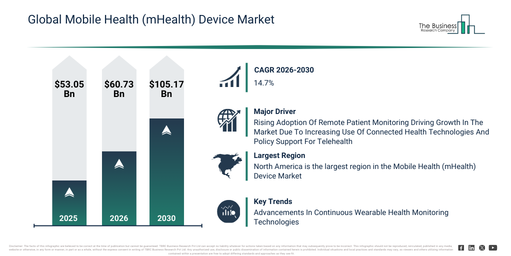
    Recent years have seen substantial growth in the mobile health (mhealth) device market. This market is projected to expand from $53.05 billion in 2025 to $60.73 billion in 2026, achieving a compound annual growth rate (CAGR) of 14.5%. The historical growth can be ascribed to a rise in fitness tracker adoption, early smartwatch health features, the expansion of telehealth services, an increase in chronic disease cases, and the proliferation of mobile health apps.

    The mobile health (mhealth) device market size is anticipated to expand quickly over the coming years. This market is projected to reach $105.17 billion by 2030, exhibiting a compound annual growth rate (CAGR) of 14.7%. Several factors will drive this expansion during the forecast period, including an increase in remote patient monitoring, a greater need for preventive healthcare, the spread of connected care paradigms, enhanced consumer health consciousness, and integration with digital health platforms. Key trends expected during this time frame encompass wearable vital sign tracking devices, health smartwatches equipped with multiple sensors, connected home diagnostic kits, ongoing remote health monitoring, and medical wearables integrated with applications.

    Download the Free Sample Report to Explore Key Market Insights:

    https://www.thebusinessresearchcompany.com/sample.aspx?id=33225&type=smp

    Which Growth Drivers Are Contributing To The Progress Of The Mobile Health (mHealth) Device Market?

    The increasing adoption of remote patient monitoring is anticipated to drive expansion in the mHealth devices market. Remote patient monitoring (RPM) involves utilizing connected medical devices and digital technologies to continuously collect, transmit, and analyze patients’ health data outside traditional healthcare settings, enabling timely clinical decisions and improved care outcomes. The rise in remote patient monitoring is propelled by the growing acceptance of digital health technologies that allow continuous, real-time tracking of patients beyond conventional clinical environments. mHealth devices facilitate remote patient monitoring by enabling the ongoing collection and real-time transmission of patient health data, empowering healthcare providers to oversee conditions remotely, initiate timely interventions, and boost overall care efficiency. For instance, in August 2025, as reported by the U.S. Department of Health & Human Services (OIG), a US-based government agency in 2024, Medicare reimbursement for remote patient monitoring (RPM) surpassed US$536 million, reflecting a 31% year-over-year increase. Approximately one million beneficiaries utilized RPM services, marking a 27% rise compared to 2023, while roughly 4,600 medical practices consistently submitted RPM billing claims. Consequently, the growth of remote patient monitoring is projected to fuel the mHealth devices market.

    How Is The Mobile Health (mHealth) Device Market Segmented Across Key Categories?

    The mobile health (mhealth) device market covered in this report is segmented –

    1) By Product Type: Blood Pressure Monitor; Blood Glucose Meter; Pulse Oximeter; Neurological Monitor; Heart Rate Meter; Electrocardiogram (ECG) Monitor; Cardiac Monitor; Peak Flow Meter; Multiparameter Tracker; Fitbit Or Smart Watches; Sleep Apnea Meter; Other Product Types

    2) By Technology: Bluetooth And Bluetooth Low Energy (BLE); Wireless Fidelity (Wi-Fi); Cellular (4G Or 5G); Near Field Communication (NFC); Radio Frequency Identification (RFID)

    3) By Application: Chronic Care Management; Diabetes Management; Cancer Management; General Health; Fitness; Mental Health Behavioral Disorders Management; Blood Pressure Monitoring; Nutrition; Medical Management; Women’s Health; Other Applications

    4) By End Users: Home Healthcare; Hospitals; Diagnostic Laboratories; Clinics; Academic Research Institutions

    Subsegments:

    1) By Blood Pressure Monitor: Upper Arm; Wrist; Finger

    2) By Blood Glucose Meter: Continuous Glucose Monitor; Self-Monitoring Blood Glucose Device; Flash Glucose Monitor

    3) By Pulse Oximeter: Fingertip; Handheld; Wrist; Tabletop

    4) By Neurological Monitor: Electroencephalogram; Intracranial Pressure Monitor; Cerebral Oxygen Monitor; Evoked Potential Monitor

    5) By Heart Rate Meter: Chest Strap; Wrist-Based; Finger-Based

    6) By Electrocardiogram (ECG) Monitor: Resting; Ambulatory; Stress; Wireless

    7) By Cardiac Monitor: Holter Monitor; Event Monitor; Telemetry Monitor; Implantable Loop Recorder

    8) By Peak Flow Meter: Mechanical; Digital; Portable

    9) By Multiparameter Tracker: Fitness Tracker; Health Tracker; Activity Tracker; Wellness Tracker

    10) By Other Product Types: Temperature Monitor; Respiratory Monitor; Oxygen Concentration Monitor; Blood Gas Monitor

    Which Upcoming Trends Are Expected To Influence The Mobile Health (mHealth) Device Market?

    Major companies operating in the mHealth devices market are concentrating on developing innovative solutions, including advanced wearable health monitoring devices, to cater to the escalating demand for remote patient observation, preventive healthcare, and real-time health data analytics, driven by increasing chronic disease rates and greater consumer wellness awareness. Advanced wearable health monitoring devices typically come equipped with a set of sensors that constantly collect physiological data and transmit it via connected mobile applications or cloud services, allowing users and healthcare providers to monitor health outside traditional clinical settings; unlike conventional intermittent check-ups or isolated medical devices, these wearables facilitate 24/7 data capture, trend analysis, and proactive health interventions. For instance, in May 2025, WHOOP Inc., a US-based wearable technology company, launched WHOOP 5.0 and WHOOP MG, a next-generation wearable health and fitness platform that combines an extended 14+ day battery life, advanced sensors for sleep, recovery, strain, and stress tracking, alongside new blood pressure insights and on-demand ECG heart screening through the WHOOP MG variant, providing continuous healthspan and cardiovascular monitoring beyond typical consumer fitness trackers; these devices are designed as a slim, screen-free strap worn 24/7 with data delivered through the companion app, offering deeper health analytics and personalized recommendations to optimize performance and wellness.

    Which Companies Are Leading Innovation In The Mobile Health (mHealth) Device Market?

    Major companies operating in the mobile health (mhealth) device market are Apple Inc., Google LLC, Samsung Electronics Co. Ltd., Abbott Laboratories, Koninklijke Philips N.V., Garmin Health Inc., OMRON Healthcare Inc., ResMed Inc., Garmin Ltd., DexCom Inc., Masimo Corporation, iRhythm Technologies Inc., BioTelemetry Inc., Biofourmis Pte. Ltd., Withings S.A.S., BPL Medical Technologies Private Limited, AliveCor Inc., iHealth Labs Inc., WellDoc Inc., Qardio Inc.

    Read the full mobile health (mhealth) device market report here:

    https://www.thebusinessresearchcompany.com/report/mobile-health-mhealth-device-market-report

    Which Region Is Expected To Experience The Fastest Growth In The Mobile Health (mHealth) Device Market?

    North America was the largest region in the mHealth devices market in 2025. Asia-Pacific is expected to be the fastest-growing region in the forecast period. The regions covered in the mobile health (mhealth) device market report are Asia-Pacific, South East Asia, Western Europe, Eastern Europe, North America, South America, Middle East, Africa.

    Request A Tailored Mobile Health (mHealth) Device Market Research Report For Competitive Advantage:

    https://www.thebusinessresearchcompany.com/customise?id=33225&type=smp

    Browse Through More Reports Similar to the Global Mobile Health (mHealth) Device Market 2026, By The Business Research Company

    Mobile Healthcare Market Report 2026

    https://www.thebusinessresearchcompany.com/report/mobile-healthcare-global-market-report

    Mhealth Apps Market Report 2026

    https://www.thebusinessresearchcompany.com/report/mhealth-apps-global-market-report

    Mobile Point Of Sale Devices Market Report 2026

    https://www.thebusinessresearchcompany.com/report/mobile-point-of-sale-devices-global-market-report

    Get in touch with us:

    The Business Research Company: https://www.thebusinessresearchcompany.com/

    Americas +1 310-496-7795

    Asia +44 7882 955267 & +91 8897263534

    Europe +44 7882 955267

    Email us at info@tbrc.info

    Follow us on:

    LinkedIn: https://in.linkedin.com/company/the-business-research-company

    YouTube: https://www.youtube.com/channel/UC24_fI0rV8cR5DxlCpgmyFQ

    Global Market Model: https://www.thebusinessresearchcompany.com/global-market-model

  • Miniature Brain Stimulator Market Forecast Highlighting Long-Term Growth Potential

    Miniature Brain Stimulator Market Forecast Highlighting Long-Term Growth Potential

    The Business Research Company’s 2026 market reports include new capabilities such as market attractiveness scoring and analysis, total addressable market analysis, company scoring matrix, interactive excel data dashboard, improved supply chain analysis, upcoming startups in the market, and overview of key products, aimed at improving the depth, usability, and strategic value of the insights delivered.

    What Market Value Is Expected For The Miniature Brain Stimulator Market At The End Of The 2026–2030 Forecast Period?

    The miniature brain stimulator market has experienced significant expansion in recent times. The market is anticipated to expand from $1.01 billion in 2025 to $1.1 billion in 2026, achieving a compound annual growth rate (CAGR) of 8.9%. Historically, this expansion has been driven by the clinical adoption of dbs therapy, an upsurge in epilepsy treatments, increased neuromodulation research, the development of early implantable stimulator devices, and a greater number of movement disorder diagnoses.

    The miniature brain stimulator market is anticipated to show significant expansion in the coming years. It is projected to achieve a value of $1.57 billion in 2030, demonstrating a compound annual growth rate (CAGR) of 9.2%. This growth throughout the forecast period can be attributed to the increasing prevalence of neurological disorders, the expansion of psychiatric stimulation therapy, advancements in miniaturized electronics, a rise in the use of outpatient neurotherapy, and an increase in clinical trials within neuromodulation. Prominent trends for the forecast period include compact implantable neurostimulators, closed-loop brain stimulation systems, rechargeable pulse generator devices, wearable brain stimulation units, and multi-mode neurostimulation platforms.

    Download the Free Sample Report to Explore Key Market Insights:

    https://www.thebusinessresearchcompany.com/sample.aspx?id=33221&type=smp

    Which Major Factors Are Driving The Expansion Of The Miniature Brain Stimulator Market?

    The expanding incidence of neurological disorders is anticipated to stimulate the growth of the miniature brain stimulator market throughout the forecast period. These disorders encompass conditions that affect the brain, spinal cord, and nervous system, such as Parkinson’s disease, epilepsy, chronic pain, and various movement disorders, frequently necessitating precise and long-term therapeutic interventions. The increasing occurrence of these conditions is fueled by elements like aging populations, extended life expectancy, shifts in lifestyle, and enhanced diagnostic capabilities resulting in higher detection rates. Miniature brain stimulators tackle this escalating health challenge by providing focused electrical impulses to particular brain regions, thereby assisting in the modulation of abnormal neural activity and enhancing symptom management when conventional drug treatments prove unsuccessful. For instance, in March 2023, according to the Alzheimer’s Association, a US-based nonprofit voluntary health organization, in 2023, approximately 6.7 million Americans aged 65 and older are living with Alzheimer’s dementia, and this number is projected to rise to 13.8 million by 2060. Consequently, the rising prevalence of neurological disorders is a key factor propelling the expansion of the miniature brain stimulator market.

    What Segment Types Make Up The Miniature Brain Stimulator Market?

    The miniature brain stimulator market covered in this report is segmented –

    1) By Product Type: Implantable; Portable; Battery Operated; Handheld; Wearable; Cap; Headband

    2) By Technology: Deep Brain Stimulation; Transcranial Direct Current Stimulation; Transcranial Magnetic Stimulation

    3) By Application: Depression Therapy; Epilepsy Treatment; Neuromodulation Research; Parkinson’s Disease

    4) By Distribution Channel: Direct Sales; Online Sales; Third Party Distributors

    5) By End User: Home Healthcare Facilities; Hospitals And Clinics; Research Laboratories

    Subsegments:

    1) By Implantable: Deep Brain Stimulator; Cortical Implant; Subdural Electrode; Neural Probe

    2) By Portable: Portable Neurostimulator; Mobile Brain Device; Compact Stimulation Unit; Transportable Monitoring Device

    3) By Battery Operated: Rechargeable Neurostimulator; Long Life Battery Device; Replaceable Battery Module; Standalone Stimulation Unit

    4) By Handheld: Handheld Programming Device; Handheld Neurofeedback Unit; Handheld Stimulation Controller; Handheld Diagnostic Tool

    5) By Wearable: Wearable Neurostimulator; Wearable Headband Device; Wearable Monitoring Sensor; Wearable Electrode Array

    6) By Cap: Stimulation Cap; Monitoring Cap; Electrode Cap; Neurofeedback Cap

    7) By Headband: Cognitive Headband; Sleep Monitoring Headband; Brainwave Tracking Headband; Stimulation Headband

    Which Market Trends Are Creating New Opportunities In The Miniature Brain Stimulator Market?

    Companies operating in the miniature brain stimulator market are concentrating on developing innovative solutions, such as artificial intelligence enabled adaptive brain stimulation systems, to address the increasing demand for personalized, efficient, and responsive neurological therapies for complex disorders like Parkinson’s disease and epilepsy. AI integrated brain stimulation systems utilize real time neural signal sensing, machine learning algorithms, and closed loop feedback mechanisms to automatically adjust stimulation parameters based on a patient’s brain activity, a departure from traditional open loop systems that deliver fixed stimulation regardless of changing neurological conditions. For instance, in February 2025, Medtronic, a US based healthcare technology company, received U.S. Food and Drug Administration approval for the world’s first adaptive deep brain stimulation system for people with Parkinson’s disease. This approved system continuously monitors neural activity and automatically modifies stimulation in real time to enhance symptom control and minimize side effects. It incorporates implantable sensing electrodes, advanced software analytics, and intelligent control algorithms to personalize therapy for individual patients. This regulatory milestone emphasizes the expanding role of AI driven optimization in advancing precision neuromodulation and improving long term clinical outcomes in miniature brain stimulation therapies.

    Which Major Firms Influence Developments In The Miniature Brain Stimulator Market?

    Major companies operating in the miniature brain stimulator market are Abbott Laboratories, Medtronic plc, Boston Scientific Corporation, Renishaw PLC, Neuronetics Inc, NeuroPace Inc., FHC Inc, BrainsWay Ltd, eNeura Inc, Magventure A S, Alpha Omega Engineering Ltd, SceneRay Corporation Ltd, Neuroelectrics SL, Soterix Medical Inc, Synapse Biomedical Inc, Theranica Bioelectronics Ltd, Flow Neuroscience AB, Magstim Inc, NeuroSigma Inc, Newronika S P A, Ybrain Inc, Neurometrix Inc, Helius Medical Technologies Inc

    Read the full miniature brain stimulator market report here:

    https://www.thebusinessresearchcompany.com/report/miniature-brain-stimulator-market-report

    Which Region Is Projected To Lead The Miniature Brain Stimulator Market During The Forecast Period?

    North America was the largest region in the miniature brain stimulator market in 2025. Asia-Pacific is expected to be the fastest-growing region in the forecast period. The regions covered in the miniature brain stimulator market report are Asia-Pacific, South East Asia, Western Europe, Eastern Europe, North America, South America, Middle East, Africa.

    Request A Tailored Miniature Brain Stimulator Market Research Report For Competitive Advantage:

    https://www.thebusinessresearchcompany.com/customise?id=33221&type=smp

    Browse Through More Reports Similar to the Global Miniature Brain Stimulator Market 2026, By The Business Research Company

    Transcranial Magnetic Stimulator Market Report 2026

    https://www.thebusinessresearchcompany.com/report/transcranial-magnetic-stimulator-global-market-report

    Implantable Neurostimulation Devices Market Report 2026

    https://www.thebusinessresearchcompany.com/report/implantable-neurostimulation-devices-global-market-report

    Neurostimulation Devices Market Report 2026

    https://www.thebusinessresearchcompany.com/report/neurostimulation-devices-global-market-report

    Get in touch with us:

    The Business Research Company: https://www.thebusinessresearchcompany.com/

    Americas +1 310-496-7795

    Asia +44 7882 955267 & +91 8897263534

    Europe +44 7882 955267

    Email us at info@tbrc.info

    Follow us on:

    LinkedIn: https://in.linkedin.com/company/the-business-research-company

    YouTube: https://www.youtube.com/channel/UC24_fI0rV8cR5DxlCpgmyFQ

    Global Market Model: https://www.thebusinessresearchcompany.com/global-market-model
  • Micro-Surgical Robots Creating New Opportunities Across Healthcare Applications

    Micro-Surgical Robots Creating New Opportunities Across Healthcare Applications

    The Business Research Company’s 2026 market reports include new capabilities such as market attractiveness scoring and analysis, total addressable market analysis, company scoring matrix, interactive excel data dashboard, improved supply chain analysis, upcoming startups in the market, and overview of key products, aimed at improving the depth, usability, and strategic value of the insights delivered.

    What Is The Estimated Market Size Of The Micro-Surgical Robot Market During 2026–2030?

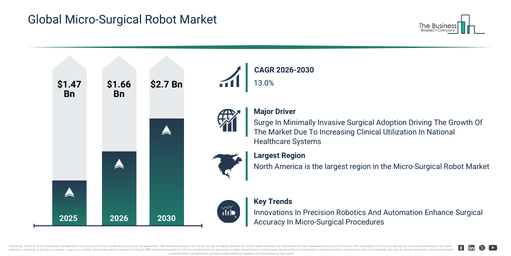
    The micro-surgical robot market has observed rapid expansion in recent years. Its value is projected to climb from $1.47 billion in 2025 to $1.66 billion in 2026, registering a compound annual growth rate (CAGR) of 12.8%. This historical surge can be attributed to several factors such as the expansion of minimally invasive surgery, the early adoption of surgical robots, an increase in neurosurgery procedures, developments in medical imaging systems, and hospital investments in precision surgery.

    The micro-surgical robot market size is anticipated to undergo significant expansion over the next few years, growing to $2.7 billion in 2030 at a compound annual growth rate (CAGR) of 13.0%. This projected growth throughout the forecast period can be attributed to an increasing demand for ultra precise surgery, the expansion of ophthalmic microsurgeries, the proliferation of robotic operating rooms, rising surgeon training in robotics, and higher adoption rates by specialty clinics. Major trends foreseen in this period include motion scaling robotic micro manipulators, high precision robotic end effectors, imaging guided micro surgery platforms, haptic feedback assisted micro procedures, and robot assisted microsurgical workflows.

    Download the Free Sample Report to Explore Key Market Insights:

    https://www.thebusinessresearchcompany.com/sample.aspx?id=33220&type=smp

    What Key Drivers Are Influencing The Growth Of The Micro-Surgical Robot Market?

    The increasing application of minimally invasive surgeries is projected to drive the expansion of the micro-surgical robot market moving forward. Minimally invasive surgery involves using specialized tools and advanced technologies to conduct procedures through small incisions, which reduces tissue trauma, postoperative discomfort, and recovery time compared to traditional open surgeries. The rise in minimally invasive surgeries is attributed to advancements in surgical robotics and imaging technologies, allowing operations with smaller incisions and quicker patient recovery. A micro-surgical robot is employed in minimally invasive surgeries to enable ultraprecise, tremor-free manipulation of tiny instruments within confined anatomical spaces, thereby improving surgical accuracy while minimizing tissue damage and recovery time. For instance, in June 2024, according to the American Society of Plastic Surgeons (ASPS), a US-based professional association, approximately 25.4 million cosmetic minimally invasive procedures were performed in 2023, marking a 7% increase compared with 2022. This demonstrates that the growing acceptance of minimally invasive surgeries is a key driver for the growth of the micro-surgical robot market.

    How Are The Various Segments Of The Micro-Surgical Robot Market Categorized?

    The micro-surgical robot market covered in this report is segmented –

    1) By Component: Hardware; Software; Services

    2) By Technology: Tele-Robotics; Artificial Intelligence (AI)-Assisted Robotics; Imaging-Guided Robotic Systems; Haptic Feedback Systems; Autonomous Surgical Robots

    3) By Sales Channel: Direct Sales; Distributors; Online Sales

    4) By Application: Neurosurgery; Ophthalmology; Ear, Nose, and Throat (ENT) Surgery; Cardiovascular; Urology; Gynecology; Orthopedics; Other Applications

    5) By End-User: Hospitals; Ambulatory Surgical Centers; Research Institutes

    Subsegments:

    1) By Hardware: Robotic Arms; Surgical Instruments; Vision Systems; Control Consoles; Navigation Systems

    2) By Software: Surgical Planning Software; Real-Time Monitoring Software; Robotic Control Software; Image Processing Software; Data Analytics Software

    3) By Services: Installation Services; Maintenance Services; Training Services; Technical Support Services; System Upgradation Services

    What Trends Are Affecting The Expansion Of The Micro-Surgical Robot Market?

    Leading firms within the micro-surgical robot market are concentrating on creating sophisticated offerings, including microsurgery assistance robots. These innovations aim to boost surgical accuracy, minimize human inconsistencies, and aid in extremely intricate operations involving minute anatomical parts. Microsurgery assistance robots are defined as robotic platforms engineered to aid surgeons in extremely fine surgical work, incorporating precise motion control, automated functionalities, and cutting-edge imaging to facilitate stable and exact manipulation that surpasses the dexterity of human hands. As an illustration, in May 2024, Sony Group Corporation, a technology and electronics company headquartered in Japan, unveiled a prototype for a microsurgery assistance robot. This prototype is designed to facilitate sensitive surgical interventions via automated surgical instrument changes and highly accurate robotic governance. This system intends to support surgeons in executing intricate microsurgical operations, like microvascular anastomosis, by enhancing operational exactness, alleviating the burden on surgeons, and pushing forward the utilization of robotics within microsurgery.

    Who Are The Primary Competitors In The Micro-Surgical Robot Market?

    Major companies operating in the micro-surgical robot market are Medtronic plc, Zimmer Biomet Holdings Inc., Smith & Nephew plc, Renishaw plc, Ethicon Inc., Brainlab AG, Meerecompany Inc., Medrobotics Corporation, IotaMotion Inc., Medical Microinstruments S.p.A., Distalmotion SA, Vicarious Surgical Inc., Neocis Inc., ForSight Robotics Ltd., THINK Surgical Inc., ShanghAI MicroPort MedBot (Group) Co. Ltd., Virtual Incision Corporation, MicroSure B.V., Meril Life Sciences Pvt. Ltd., Panda Surgical Co. Ltd.

    Read the full micro-surgical robot market report here:

    https://www.thebusinessresearchcompany.com/report/micro-surgical-robot-market-report

    Which Region Currently Holds The Largest Share Of The Micro-Surgical Robot Market?

    North America was the largest region in the micro-surgical robot market in 2025. Asia-Pacific is expected to be the fastest-growing region in the forecast period. The regions covered in the micro-surgical robot market report are Asia-Pacific, South East Asia, Western Europe, Eastern Europe, North America, South America, Middle East, Africa.

    Request A Tailored Micro-Surgical Robot Market Research Report For Competitive Advantage:

    https://www.thebusinessresearchcompany.com/customise?id=33220&type=smp

    Browse Through More Reports Similar to the Global Micro-Surgical Robot Market 2026, By The Business Research Company

    Surgical Robots Market Report 2026

    https://www.thebusinessresearchcompany.com/report/surgical-robots-global-market-report

    Surgical Robot Accessories Market Report 2026

    https://www.thebusinessresearchcompany.com/report/surgical-robot-accessories-global-market-report

    Robotic Surgery Services Market Report 2026

    https://www.thebusinessresearchcompany.com/report/robotic-surgery-services-global-market-report

    Get in touch with us:

    The Business Research Company: https://www.thebusinessresearchcompany.com/

    Americas +1 310-496-7795

    Asia +44 7882 955267 & +91 8897263534

    Europe +44 7882 955267

    Email us at info@tbrc.info

    Follow us on:

    LinkedIn: https://in.linkedin.com/company/the-business-research-company

    YouTube: https://www.youtube.com/channel/UC24_fI0rV8cR5DxlCpgmyFQ

    Global Market Model: https://www.thebusinessresearchcompany.com/global-market-model

  • Memory-Augmenting Neural Devices Market Outlook and Innovation Trends Through 2030

    Memory-Augmenting Neural Devices Market Outlook and Innovation Trends Through 2030

    The Business Research Company’s 2026 market reports include new capabilities such as market attractiveness scoring and analysis, total addressable market analysis, company scoring matrix, interactive excel data dashboard, improved supply chain analysis, upcoming startups in the market, and overview of key products, aimed at improving the depth, usability, and strategic value of the insights delivered.

    What Is The Expected Market Size Of The Memory-Augmenting Neural Devices Market From 2026 To 2030?

    The memory-augmenting neural devices market has experienced rapid expansion in recent years. Its valuation is anticipated to climb from $1.42 billion in 2025 to $1.63 billion in 2026, achieving a compound annual growth rate (CAGR) of 15.2%. The growth observed during prior periods can be attributed to the advancement of neurostimulation tools, foundational cognitive enhancement studies, the adoption of wearable neuro devices, an increase in BCI prototypes, and various academic brain research programs.

    The memory-augmenting neural devices market is expected to expand rapidly in the coming years, with projections indicating it will reach $2.89 billion in 2030, demonstrating a compound annual growth rate (CAGR) of 15.4%. This growth during the forecast period is primarily attributed to factors such as the rising needs of an aging population, increasing demand for cognitive enhancement, the expansion of wearable neurotech, greater AI-driven neural analysis, and broader clinical validation trials. Notable trends expected during this period include noninvasive brain stimulation wearables, AI-driven memory enhancement algorithms, portable neurostimulation devices, hybrid implant and wearable systems, and closed-loop cognitive support devices.

    Download the Free Sample Report to Explore Key Market Insights:

    https://www.thebusinessresearchcompany.com/sample.aspx?id=33212&type=smp

    What Drivers Are Shaping The Future Growth Of The Memory-Augmenting Neural Devices Market?

    The increasing occurrence of neurological disorders is set to drive the expansion of the memory-augmenting neural devices market. These conditions, which impact the normal structure or function of the central or peripheral nervous system, are becoming more prevalent due to the growing global elderly population, leading to a higher incidence of age-related neurological issues. Memory-augmenting neural devices help address neurological disorders by enhancing or restoring cognitive functions, such as memory and learning, through targeted neural stimulation and adaptive interface technologies. For example, the Alzheimer’s Association reported that in 2023, approximately 6.7 million Americans aged 65 and older were living with Alzheimer’s dementia, a figure projected to increase to 13.8 million by 2060. Consequently, the rising prevalence of neurological disorders is a significant factor propelling the growth of the memory-augmenting neural devices market.

    Which Segments Are Included In The Analysis Of The Memory-Augmenting Neural Devices Market?

    The memory-augmenting neural devices market covered in this report is segmented –

    1) By Device Type: Implantable Neural Devices; Noninvasive Brain Stimulation Devices; Other Device Types

    2) By Technology: Artificial Intelligence (AI) And Machine Learning-Based Memory Enhancement; Neural Implants & Electrodes; Transcranial Stimulation; Other Technologies

    3) By Application: Cognitive Enhancement; Neurodegenerative Disease Treatment; Brain-Computer Interfaces (BCIs); Other Applications

    4) By End User: Healthcare And Medical Institutions; Research And Academic Centers; Defense And Military; Other End Users

    Subsegments:

    1) By Implantable Neural Devices: Deep Brain Stimulation Systems; Cortical Microelectrode Arrays; Hippocampal Memory Prostheses; Neural Recording And Stimulation Implants; Closed Loop Neuromodulation Implants

    2) By Noninvasive Brain Stimulation Devices: Transcranial Magnetic Stimulation Systems; Transcranial Direct Current Stimulation Devices; Transcranial Alternating Current Stimulation Devices; Transcranial Random Noise Stimulation Devices; Focused Ultrasound Brain Stimulation Systems

    3) By Other Device Types: Wearable Neurofeedback Devices; Brain Computer Interface Headsets; Cognitive Enhancement Headgear; Portable Neurostimulation Devices; Hybrid Neural Modulation Systems

    Which Trends Are Impacting The Growth Of The Memory-Augmenting Neural Devices Market?

    Leading entities within the memory augmenting neural devices market are concentrating on creating advanced solutions, specifically implantable brain computer interfaces, aimed at improving cognitive capabilities and memory retention. An implantable BCI represents a device surgically inserted into the brain to directly interpret neural signals and convert them into digital instructions for controlling computers or other external equipment. For example, in July 2025, Neuralink Corp., a neurotechnology firm based in the US, successfully placed its high-channel-count fully implantable brain computer interface (BCI) into a ninth human participant during ongoing clinical trials. This implant is designed to capture and decode neural signals through extremely thin electrode threads embedded in the brain, facilitating direct, real-time interaction between brain activity and external digital tools. The system supports wireless data transfer, prolonged implantation without external components, and high-resolution signal acquisition, allowing individuals to operate computers or interfaces solely through thought. This achievement, which also marked the company’s inaugural instance of conducting two implant procedures in a single day, underscores enhanced surgical efficiency and growing clinical preparedness for widespread human implementation.

    Who Are The Top Companies Competing In The Memory-Augmenting Neural Devices Market?

    Major companies operating in the memory-augmenting neural devices market are Medtronic plc, Bitbrain Technologies S.L., NeuroLutions Inc., CorTec GmbH, FinalSpark Inc., Kernel Inc., Neuralink Corporation, NeuroPace Inc., Blackrock Neurotech Inc., NeuroSky Inc., Emotiv Inc., mBrainTrain Inc., BrainChip Holdings Ltd., BrainCo Inc., INBRAIN Neuroelectronics S.L., Merge Labs Inc., InBrain Neuroelectronics S.L., Axoft Inc., Motif Neurotech Inc., MintNeuro Inc.

    Read the full memory-augmenting neural devices market report here:

    https://www.thebusinessresearchcompany.com/report/memory-augmenting-neural-devices-market-report

    Which Global Regions Are Shaping The Competitive Landscape Of The Memory-Augmenting Neural Devices Market?

    North America was the largest region in the memory-augmenting neural devices market in 2025. Asia-Pacific is expected to be the fastest-growing region in the forecast period. The regions covered in the memory-augmenting neural devices market report are Asia-Pacific, South East Asia, Western Europe, Eastern Europe, North America, South America, Middle East, Africa.

    Request A Tailored Memory-Augmenting Neural Devices Market Research Report For Competitive Advantage:

    https://www.thebusinessresearchcompany.com/customise?id=33212&type=smp

    Browse Through More Reports Similar to the Global Memory-Augmenting Neural Devices Market 2026, By The Business Research Company

    Memory Chips Market Report 2026

    https://www.thebusinessresearchcompany.com/report/memory-chips-global-market-report

    Semiconductor Memory Market Report 2026

    https://www.thebusinessresearchcompany.com/report/semiconductor-memory-global-market-report

    Deep Learning Chipset Market Report 2026

    https://www.thebusinessresearchcompany.com/report/deep-learning-chipset-global-market-report

    Get in touch with us:

    The Business Research Company: https://www.thebusinessresearchcompany.com/

    Americas +1 310-496-7795

    Asia +44 7882 955267 & +91 8897263534

    Europe +44 7882 955267

    Email us at info@tbrc.info

    Follow us on:

    LinkedIn: https://in.linkedin.com/company/the-business-research-company

    YouTube: https://www.youtube.com/channel/UC24_fI0rV8cR5DxlCpgmyFQ

    Global Market Model: https://www.thebusinessresearchcompany.com/global-market-model
  • Growing Neurological Disorders Boost Memory Implants Market Expansion

    Growing Neurological Disorders Boost Memory Implants Market Expansion

    The Business Research Company’s 2026 market reports include new capabilities such as market attractiveness scoring and analysis, total addressable market analysis, company scoring matrix, interactive excel data dashboard, improved supply chain analysis, upcoming startups in the market, and overview of key products, aimed at improving the depth, usability, and strategic value of the insights delivered.

    What Market Valuation Is Forecasted For The Memory Implants Market By 2030 Starting From Its 2026 Size?

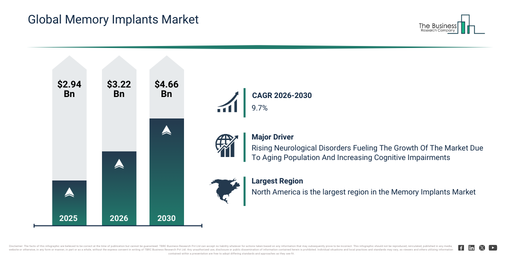
    The memory implants market has demonstrated substantial growth over recent years. It is anticipated to expand from $2.94 billion in 2025 to $3.22 billion in 2026, achieving a compound annual growth rate (CAGR) of 9.4%. The prior period’s growth can be ascribed to advancements in neuroscience research, pioneering brain implant trials, the expansion of neuromodulation therapies, an increase in neurodegenerative disorders, and neural interface programs funded by defense.

    The memory implants market is projected to experience substantial expansion over the coming years. This market is anticipated to reach a valuation of $4.66 billion by 2030, exhibiting a compound annual growth rate (CAGR) of 9.7%. Several factors contribute to this projected growth during the forecast period, including a rise in cases of cognitive disorders, advancements in brain-computer interface technologies, increased investment in neural engineering, the broadening scope of clinical neurotech trials, and a growing need for memory restoration therapies. Key trends expected during this period encompass implantable memory prosthetic systems, devices for hippocampal signal encoding, closed-loop neural memory stimulation, high-density neural electrode arrays, and adaptive memory restoration implants.

    Download the Free Sample Report to Explore Key Market Insights:

    https://www.thebusinessresearchcompany.com/sample.aspx?id=33211&type=smp

    Which Economic Or Industry Drivers Are Impacting The Memory Implants Market?

    The increasing occurrence of neurological conditions is anticipated to drive the expansion of the memory implants market in the future. These conditions impact the brain, spinal cord, or nervous system, resulting in difficulties with movement, sensation, thinking, behavior, or automatic bodily functions. The rise in neurological disorders is linked to the rapidly expanding elderly population, which in turn boosts the incidence of age-related ailments like Alzheimer’s disease, Parkinson’s disease, and stroke, as susceptibility to neurological issues grows with extended lifespans. Memory implants assist patients grappling with the growing number of neurological disorders by enhancing their cognitive abilities and overall quality of life. For example, information from the Alzheimer’s Association, a US-based nonprofit voluntary health organization, indicated in March 2023 that around 6.7 million Americans aged 65 and above were living with Alzheimer’s dementia in 2023, with projections showing this figure increasing to 13.8 million by 2060. Consequently, the expanding incidence of neurological disorders is propelling the growth of the memory implants market. The increase in clinical trials is projected to stimulate the expansion of the memory implants market moving ahead. These trials are organized research investigations involving human participants, designed to assess the safety, efficacy, and best application of medical devices, drugs, or treatments prior to gaining regulatory approval. Clinical trials are growing due to greater funding from governments and life science firms, aimed at expediting the development and regulatory clearance of novel therapies, devices, and digital health solutions. Memory implants support clinical trials by facilitating precise monitoring and adjustment of neural activity, enabling researchers to objectively evaluate cognitive reactions, treatment effectiveness, and neurological results in real-time. For example, the Association of the British Pharmaceutical Industry, a UK-based trade association, reported in December 2024 that the overall number of industry clinical trials started in the UK reached 426 in 2023, up from 411 trials in 2022, signifying a second consecutive year of growth. Consequently, the proliferation of clinical trials is fostering the expansion of the memory implants market.

    Which Segment Categories Define The Memory Implants Market?

    The memory implants market covered in this report is segmented –

    1) By Product Type: Deep Brain Stimulation Devices; Vagus Nerve Stimulation Devices; Implantable Memory Prosthetics; Electrode Arrays; Neural Signal Sensors; Brain–Computer Interface Hardware; Neuromodulation Devices; Wearable Neural Headsets; Other Product Types

    2) By Application: Alzheimer’s Disease; Parkinson’s Disease; Epilepsy; Traumatic Brain Injury; Memory Loss due to Aging; Other Cognitive Disorders; Other Applications

    3) By End-User: Hospitals; Clinics; Research Institutes; Rehabilitation Centers; Other End-Users

    Subsegments:

    1) By Deep Brain Stimulation Devices: Single Target Stimulation Systems; Multi Target Stimulation Systems; Closed Loop Stimulation Systems; Adaptive Stimulation Systems

    2) By Vagus Nerve Stimulation Devices: Implantable Vagus Nerve Stimulators; Transcutaneous Vagus Nerve Stimulation Systems; Programmable Vagus Nerve Modulation Devices

    3) By Implantable Memory Prosthetics: Hippocampal Memory Restoration Systems; Cortical Memory Enhancement Implants; Neural Memory Encoding Devices; Memory Recall Support Implants

    4) By Electrode Arrays: Depth Electrode Arrays; Surface Cortical Electrode Arrays; Flexible Neural Electrode Arrays; High Density Electrode Arrays

    5) By Neural Signal Sensors: Intracranial Neural Signal Sensors; Implantable Bioelectric Signal Sensors; Real Time Neural Monitoring Sensors

    6) By Brain–Computer Interface Hardware: Implantable Brain Signal Processing Units; External Neural Signal Interface Devices; Hybrid Brain Interface Systems

    7) By Neuromodulation Devices: Electrical Neuromodulation Systems; Magnetic Neuromodulation Systems; Targeted Neural Modulation Devices

    8) By Wearable Neural Headsets: Electroencephalography Based Neural Headsets; Cognitive Monitoring Neural Wearables; Noninvasive Neurostimulation Headsets

    9) By Other Product Types: Hybrid Memory Implant Systems; Experimental Neural Augmentation Devices; Integrated Cognitive Enhancement Platforms

    Which Major Players Dominate The Memory Implants Market?

    Major companies operating in the memory implants market are Abbott Laboratories, Medtronic plc, Boston Scientific Corporation, LivaNova PLC, Renishaw plc, NeuroPace Inc., Beijing PINS Medical Co Ltd., FHC Inc., electroCore Inc., SetPoint Medical Corporation, Parasym Ltd., MicroTransponder Inc., ReShape Lifesciences Inc., Adriakaim Inc., Evren Technologies Inc., Soterix Medical Inc., Aleva Neurotherapeutics SA, SceneRay Corporation Ltd., NeuroSigma Inc., BioControl Medical Ltd.

    Read the full memory implants market report here:

    https://www.thebusinessresearchcompany.com/report/memory-implants-market-report

    Which Regions Are Poised For Strategic Growth In The Memory Implants Market?

    North America was the largest region in the memory implants market in 2025. Asia-Pacific is expected to be the fastest-growing region in the forecast period. The regions covered in the memory implants market report are Asia-Pacific, South East Asia, Western Europe, Eastern Europe, North America, South America, Middle East, Africa.

    Request A Tailored Memory Implants Market Research Report For Competitive Advantage:

    https://www.thebusinessresearchcompany.com/customise?id=33211&type=smp

    Browse Through More Reports Similar to the Global Memory Implants Market 2026, By The Business Research Company

    Microelectronic Medical Implants Market Report 2026

    https://www.thebusinessresearchcompany.com/report/microelectronic-medical-implants-global-market-report

    Bio Implants Market Report 2026

    https://www.thebusinessresearchcompany.com/report/bio-implants-global-market-report

    Smart Implants Market Report 2026

    https://www.thebusinessresearchcompany.com/report/smart-implants-global-market-report

    Get in touch with us:

    The Business Research Company: https://www.thebusinessresearchcompany.com/

    Americas +1 310-496-7795

    Asia +44 7882 955267 & +91 8897263534

    Europe +44 7882 955267

    Email us at info@tbrc.info

    Follow us on:

    LinkedIn: https://in.linkedin.com/company/the-business-research-company

    YouTube: https://www.youtube.com/channel/UC24_fI0rV8cR5DxlCpgmyFQ

    Global Market Model: https://www.thebusinessresearchcompany.com/global-market-model
  • Medical Fiber Optics Market Evolving with High-Resolution Imaging Innovations

    Medical Fiber Optics Market Evolving with High-Resolution Imaging Innovations

    The Business Research Company’s 2026 market reports include new capabilities such as market attractiveness scoring and analysis, total addressable market analysis, company scoring matrix, interactive excel data dashboard, improved supply chain analysis, upcoming startups in the market, and overview of key products, aimed at improving the depth, usability, and strategic value of the insights delivered.

    What Is The Market Size Of The Medical Fiber Optics Market In 2026 And What Value Is Projected For 2030?

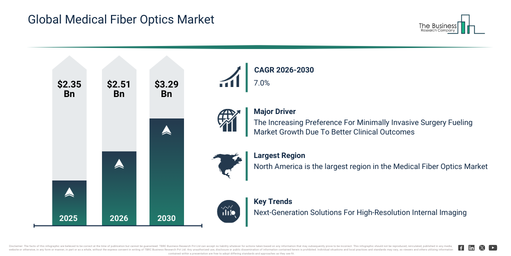
    The medical fiber optics market has exhibited strong expansion over recent years. Its valuation is set to climb from $2.35 billion in 2025 to $2.51 billion in 2026, achieving a compound annual growth rate (CAGR) of 6.8%. This historical growth can be linked to an uptick in endoscopic procedures, the development of laser-based therapies, the wider adoption of minimally invasive diagnostics, the demand from hospitals for superior visualization instruments, and breakthroughs in optical materials.

    The medical fiber optics market size is anticipated to experience significant expansion over the coming years. Its valuation is projected to reach $3.29 billion by 2030, demonstrating a compound annual growth rate (CAGR) of 7.0%. This growth throughout the forecast period can be attributed to several factors, including a rise in image-guided surgeries, increasing demand for accurate diagnostics, an uptick in outpatient procedures, the broadening scope of biomedical sensing applications, and a greater uptake of disposable optical devices. Key trends shaping the market during this period encompass high-resolution endoscopic fiber systems, laser energy delivery fibers, compact optical sensing probes, single-use fiber optic surgical instruments, and sophisticated imaging fiber bundles.

    Download the Free Sample Report to Explore Key Market Insights:

    https://www.thebusinessresearchcompany.com/sample.aspx?id=33209&type=smp

    Which Market Drivers Are Supporting The Expansion Of The Medical Fiber Optics Market?

    The increasing demand for minimally invasive surgical techniques is poised to boost the expansion of the medical fiber optics market in the foreseeable future. These advanced surgical methods involve conducting operations through small incisions with specialized tools and sophisticated imaging technologies, leading to less tissue damage, reduced pain post-operation, and quicker patient recovery. The appeal of these procedures is on the rise due to benefits such as faster patient recuperation, fewer complications, and shorter hospital stays. This escalating trend directly fuels the need for medical fiber optics, given that adaptable and highly precise fiber-optic components are indispensable for lighting and visualization during endoscopic, laparoscopic, and robotic-assisted surgeries. These components empower surgeons to clearly see internal structures and execute intricate operations through minimal entry points. For example, in November 2025, Intuitive Surgical Inc., a US-based medical device company, reported that approximately 2.29 million surgical procedures globally in 2023 utilized da Vinci robotic surgical systems, marking an increase of about 22% from 2022, with the total procedures on da Vinci platforms surpassing 14 million. Consequently, the growing acceptance of minimally invasive surgical procedures stands as a primary catalyst for the growth of the medical fiber optics market.

    What Are The Key Segments Of The Medical Fiber Optics Market?

    The medical fiber optics market covered in this report is segmented –

    1) By Type: Single Mode Optical Fiber; Multimode Optical Fiber

    2) By Usage: Disposable; Reusable

    3) By Application: Endoscopic Imaging; Laser Signal Delivery; Biomedical Sensing; Illumination; Other Applications

    4) By End User: Hospital; Specialty Clinics; Ambulatory Surgical Centers; Diagnostic Laboratories; Other End Users

    Subsegments:

    1) By Single Mode Optical Fiber: Long Distance Signal Transmission; High Precision Laser Energy Delivery; Advanced Biomedical Sensing

    2) By Multimode Optical Fiber: Short Distance Image Transmission; Endoscopic Imaging Bundles; Medical Illumination Systems

    What Key Trends Are Influencing The Development Of The Medical Fiber Optics Market?

    Leading companies within the medical fiber optics market are prioritizing the development of innovative products, such as imaging fiber assemblies, to enable high-resolution, minimally invasive diagnostic imaging applications. These imaging fiber assemblies represent specialized bundles of optical fibers, engineered for incorporation into medical imaging catheters and systems, facilitating the transmission and collection of light to generate high-quality internal images. Compared to traditional rigid endoscopes, these assemblies offer superior flexibility and precision, supporting a broad spectrum of minimally invasive diagnostic and interventional procedures. For example, in January 2025, Coherent Corp., a US-based photonics company, unveiled its AxioView imaging fiber assemblies, specifically designed for use in optical coherence tomography (OCT), near-infrared spectroscopy (NIRS), and multimodal catheter-based imaging applications. AxioView boasts specialty fiber designs optimized for medical imaging, catheter-ready distal geometries including ball-tip and side-fire configurations, vertically integrated manufacturing for consistent optical performance, and ISO 13485-certified production to comply with regulatory requirements.

    Which Major Firms Influence Developments In The Medical Fiber Optics Market?

    Major companies operating in the medical fiber optics market are Heraeus Holding GmbH, Boston Scientific Corporation, Fujikura Ltd., Coherent Medical Group, Smiths Group plc, MKS Instruments Inc., Carl Zeiss Meditec AG, Integra Lifesciences Corporation, IPG Photonics Corporation, SCHOTT AG, Radiall America Inc., OZ Optics Ltd., HEINE Optotechnik GmbH & Co. KG, ForTec Medical Corporation, Thorlabs Inc., Fiberoptics Technology Incorporated (FTI), Biolitec AG, Laser Mechanisms Inc., LEONI AG, Beijing L.H.H. Medical Devices Co. Ltd.

    Read the full medical fiber optics market report here:

    https://www.thebusinessresearchcompany.com/report/medical-fiber-optics-market-report

    Which Region Is Expected To Experience The Fastest Growth In The Medical Fiber Optics Market?

    North America was the largest region in the medical fiber optics market in 2025. The regions covered in the medical fiber optics market report are Asia-Pacific, South East Asia, Western Europe, Eastern Europe, North America, South America, Middle East, Africa.

    Request A Tailored Medical Fiber Optics Market Research Report For Competitive Advantage:

    https://www.thebusinessresearchcompany.com/customise?id=33209&type=smp

    Browse Through More Reports Similar to the Global Medical Fiber Optics Market 2026, By The Business Research Company

    Fiber Optics Market Report 2026

    https://www.thebusinessresearchcompany.com/report/fiber-optics-global-market-report

    Fiber Optical Cable Market Report 2026

    https://www.thebusinessresearchcompany.com/report/fiber-optical-cable-global-market-report

    Fiber Optic Components Market Report 2026

    https://www.thebusinessresearchcompany.com/report/fiber-optic-components-global-market-report

    Get in touch with us:

    The Business Research Company: https://www.thebusinessresearchcompany.com/

    Americas +1 310-496-7795

    Asia +44 7882 955267 & +91 8897263534

    Europe +44 7882 955267

    Email us at info@tbrc.info

    Follow us on:

    LinkedIn: https://in.linkedin.com/company/the-business-research-company

    YouTube: https://www.youtube.com/channel/UC24_fI0rV8cR5DxlCpgmyFQ

    Global Market Model: https://www.thebusinessresearchcompany.com/global-market-model

  • Magnetic Navigation Surgical Robots Advancing Precision in Minimally Invasive Procedures

    Magnetic Navigation Surgical Robots Advancing Precision in Minimally Invasive Procedures

    The Business Research Company’s 2026 market reports include new capabilities such as market attractiveness scoring and analysis, total addressable market analysis, company scoring matrix, interactive excel data dashboard, improved supply chain analysis, upcoming startups in the market, and overview of key products, aimed at improving the depth, usability, and strategic value of the insights delivered.

    What Will Be The Estimated Market Valuation Of The Magnetic Navigation Surgical Robot Market By The End Of 2030?

    The market for magnetic navigation surgical robots has experienced rapid expansion in recent years. Its projected growth trajectory indicates an increase from $0.88 billion in 2025 to $1.01 billion in 2026, demonstrating a compound annual growth rate (CAGR) of 13.9%. Historically, this expansion is linked to factors such as the rise in minimally invasive surgery, the early adoption of surgical robotics, the demand for higher procedural precision, an increase in complex cardiac interventions, and hospital investment in advanced operating rooms.

    The market for magnetic navigation surgical robots is projected to experience swift expansion over the coming years. It is forecasted to reach $1.71 billion by 2030, demonstrating a compound annual growth rate (CAGR) of 14.1%. This anticipated growth throughout the forecast period stems from factors such as an increase in robotic-assisted surgical procedures, the broadening scope of image-guided interventions, a greater need for accurate navigation systems, the proliferation of specialized surgical centers, and enhanced training for surgeons in robotic platforms. Key trends anticipated during this period encompass magnetic-guided minimally invasive techniques, integrated surgical planning software, robotic catheter navigation systems, control modules for high-precision instruments, and tools for procedure simulation and planning.

    Download the Free Sample Report to Explore Key Market Insights:

    https://www.thebusinessresearchcompany.com/sample.aspx?id=33207&type=smp

    What Underlying Factors Are Accelerating The Growth Of The Magnetic Navigation Surgical Robot Market?

    The increasing demand for minimally invasive surgeries is anticipated to propel the growth of the magnetic navigation surgical robot market moving forward. Minimally invasive surgeries are medical procedures performed through small incisions using specialized instruments and techniques, which result in less tissue damage, reduced pain, and faster patient recovery compared to traditional open surgeries. The rise in minimally invasive surgery is due to advancements in surgical instruments and imaging technologies that allow for greater precision with less patient trauma and quicker recovery times. Magnetic navigation surgical robots enhance minimally invasive surgeries by providing surgeons with precise, real-time control of instruments via tiny incisions, improving accuracy, minimizing tissue damage, and enabling complex procedures that would be challenging or risky with conventional methods. For instance, in June 2024, according to the American Society of Plastic Surgeons, a US-based non-profit organization, in 2023, a total of 347,782 liposuction procedures were performed, representing a 7% increase compared to 2022. Minimally invasive procedures also grew by 7% during the year, outpacing the growth of surgical procedures by 2 percentage points. Overall, plastic surgeries rose 5% year-over-year, while minimally invasive treatments saw a 7% increase. Therefore, the escalating demand for minimally invasive surgeries is driving the growth of the magnetic navigation surgical robot market.

    Which Segment Classifications Shape The Magnetic Navigation Surgical Robot Market?

    The magnetic navigation surgical robot market covered in this report is segmented –

    1) By Component: Hardware; Software; Services

    2) By Technology: Active Magnetic Navigation; Passive Magnetic Navigation

    3) By Distribution Channel: Direct Sales; Distributors

    4) By Application: Spine Surgery; Orthopedic Surgery; Neurosurgery; Interventional Cardiology; Ear, Nose, And Throat (ENT) Surgery; Other Surgical Applications

    5) By End-User: Hospitals; Ambulatory Surgical Centers; Specialty Clinics

    Subsegments:

    1) By Hardware: Robotic Manipulation Units; Magnetic Field Generation Systems; Surgical Instrument Navigation Components; Sensor And Imaging Hardware; Control And Power Supply Units

    2) By Software: Navigation And Guidance Software; Imaging Integration Software; Motion Control And Planning Software; User Interface And Visualization Software; Data Processing And Analytics Software

    3) By Services: Installation And System Integration Services; Clinical Training And Education Services; Maintenance And Technical Support Services; Calibration And Performance Optimization Services; Regulatory Compliance And Validation Services

    How Are Trends Impacting The Magnetic Navigation Surgical Robot Market?

    Leading companies in the magnetic navigation surgical robot market are focused on developing innovative solutions, such as advanced endovascular robotic surgery solutions, to enhance surgical precision and lower procedural risks. These advanced endovascular robotic surgery solutions are robotic systems utilizing precise, computer-controlled navigation to guide instruments through blood vessels, assisting surgeons in performing complex procedures with greater accuracy, reduced invasiveness, and improved patient safety. For instance, in November 2025, Stereotaxis Inc., a US-based medical technology company, obtained U.S. FDA 510(k) clearance for its GenesisX Robotic Magnetic Navigation System. This innovative surgical robot is designed to simplify installation and expand access to magnetic navigation technology in endovascular surgeries, reflecting continuous innovation in this domain. These robotic systems improve procedural precision and cut down recovery times by enabling surgeons to execute difficult operations with heightened control. As hospitals and surgical centers increasingly look for technologies that improve outcomes while optimizing infrastructure and operational efficiency, magnetic navigation surgical robots are emerging as a vital enabling technology.

    Who Are The Primary Competitors In The Magnetic Navigation Surgical Robot Market?

    Major companies operating in the magnetic navigation surgical robot market are Medtronic plc, Stereotaxis Inc., Globus Medical Inc., MicroPort Scientific Corporation, Genesis Robotic Magnetic Navigation System, ZimVie Inc., Northern Digital Inc., Brain Navi Biotechnology Co. Ltd., Synaptive Medical Inc., ClearPoint Neuro Inc., Naviq Inc., Polhemus Incorporated, Levita Magnetics International Corp., Flux Robotics Inc., Radwave Technologies Inc., Magnetecs Corporation, EndoQuest Robotics Inc., Nanoflex Robotics AG, Theranautilus Private Limited, Magnendo Corp.

    Read the full magnetic navigation surgical robot market report here:

    https://www.thebusinessresearchcompany.com/report/magnetic-navigation-surgical-robot-market-report

    Which Geographic Areas Are Emerging As Strong Markets For The Magnetic Navigation Surgical Robot Market?

    North America was the largest region in the magnetic navigation surgical robot market in 2025. Asia-Pacific is expected to be the fastest-growing region in the forecast period. The regions covered in the magnetic navigation surgical robot market report are Asia-Pacific, South East Asia, Western Europe, Eastern Europe, North America, South America, Middle East, Africa.

    Request A Tailored Magnetic Navigation Surgical Robot Market Research Report For Competitive Advantage:

    https://www.thebusinessresearchcompany.com/customise?id=33207&type=smp

    Browse Through More Reports Similar to the Global Magnetic Navigation Surgical Robot Market 2026, By The Business Research Company

    Surgical Navigation Systems Market Report 2026

    https://www.thebusinessresearchcompany.com/report/surgical-navigation-systems-global-market-report

    Robotic Surgery Services Market Report 2026

    https://www.thebusinessresearchcompany.com/report/robotic-surgery-services-global-market-report

    Surgical Robots Market Report 2026

    https://www.thebusinessresearchcompany.com/report/surgical-robots-global-market-report

    Get in touch with us:

    The Business Research Company: https://www.thebusinessresearchcompany.com/

    Americas +1 310-496-7795

    Asia +44 7882 955267 & +91 8897263534

    Europe +44 7882 955267

    Email us at info@tbrc.info

    Follow us on:

    LinkedIn: https://in.linkedin.com/company/the-business-research-company

    YouTube: https://www.youtube.com/channel/UC24_fI0rV8cR5DxlCpgmyFQ

    Global Market Model: https://www.thebusinessresearchcompany.com/global-market-model
  • Rising Surgical Volumes Fuel Demand in the Ligation Devices Market

    Rising Surgical Volumes Fuel Demand in the Ligation Devices Market

    The Business Research Company’s 2026 market reports include new capabilities such as market attractiveness scoring and analysis, total addressable market analysis, company scoring matrix, interactive excel data dashboard, improved supply chain analysis, upcoming startups in the market, and overview of key products, aimed at improving the depth, usability, and strategic value of the insights delivered.

    How Will The Market Size Of The Ligation Devices Market Evolve From 2026 To 2030?

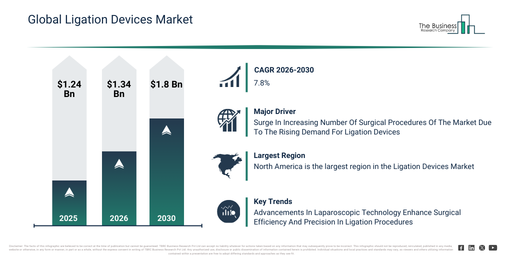
    The ligation devices market size has experienced substantial expansion in recent years. It is projected to increase from $1.24 billion in 2025 to $1.34 billion in 2026, demonstrating a compound annual growth rate (CAGR) of 7.6%. The historical growth can be attributed to a rising volume of surgical procedures, the expansion of hospital infrastructure, growing adoption of laparoscopic surgeries, increased availability of advanced surgical instruments, and the rising prevalence of chronic diseases.

    The ligation devices market is projected to experience robust expansion over the coming years. It is forecast to reach $1.8 billion in 2030, demonstrating a compound annual growth rate (CAGR) of 7.8%. This anticipated growth during the forecast period stems from factors such as a heightened demand for minimally invasive surgeries, escalating investments in surgical technology advancements, the proliferation of ambulatory surgical centers, an intensified emphasis on operational efficiency, and the wider uptake of sophisticated endoscopic instruments. Key developments anticipated during this timeframe involve the greater integration of minimally invasive ligation methods, the increased deployment of disposable and single-use ligation devices, a surging requirement for precise clip application systems, the broadened application of endoscopic and laparoscopic ligation approaches, and a stronger commitment to patient well-being and surgical efficacy.

    Download the Free Sample Report to Explore Key Market Insights:

    https://www.thebusinessresearchcompany.com/sample.aspx?id=33200&type=smp

    What Primary Drivers Are Shaping The Development Of The Ligation Devices Market?

    The anticipated rise in surgical procedures is expected to fuel the expansion of the ligation devices market moving forward. Surgical procedures encompass clinical interventions carried out by trained healthcare professionals to address diseases, repair injuries, or enhance physiological function. The volume of surgeries is on an upward trend as healthcare systems expand their capabilities, meet previously unaddressed surgical needs, and make surgical care more accessible across populations. Ligation devices facilitate this increased surgical volume by enabling surgeons to achieve secure closure of vessels, effective control of bleeding, and reliable joining of tissues, thereby enhancing procedural safety and operational efficiency. For instance, in June 2024, data from the International Society of Aesthetic Plastic Surgery (ISAPS), an association of aesthetic surgeons, revealed that total surgical and non-surgical procedures collectively rose by 3.4% in 2023, with over 15.8 million surgical procedures performed globally, a figure higher than in previous years. Therefore, the increasing count of surgical procedures is a primary driver for the growth of the ligation devices market.

    Which Segment Areas Are Covered In The Ligation Devices Market Analysis?

    The ligation devices market covered in this report is segmented –

    1) By Product Type: Clip Appliers; Endoscopic Ligators; Accessories

    2) By Material Type: Metal Ligation Devices; Polymer Ligation Devices

    3) By Application: Gastrointestinal Surgeries; Gynecological Surgeries; Cardiovascular Surgeries; Urological Surgeries; Other Applications

    4) By End-User: Hospitals; Ambulatory Surgical Centers; Specialty Clinics; Other End-Users

    Subsegments:

    1) By Clip Appliers: Reusable Clip Appliers; Disposable Clip Appliers; Laparoscopic Clip Appliers; Open Surgery Clip Appliers; Multi Fire Clip Appliers

    2) By Endoscopic Ligators: Band Ligation Devices; Loop Ligation Devices; Single Use Endoscopic Ligators; Multiple Band Endoscopic Ligators; Therapeutic Endoscopic Ligators

    3) By Accessories: Ligation Clips; Ligation Bands; Loading Cartridges; Applicator Handles; Replacement Components

    What Key Developments And Trends Are Impacting The Ligation Devices Market?

    Leading firms within the ligation devices market are prioritizing advancements in minimally invasive surgical techniques, specifically advanced laparoscopic vessel sealing and ligation systems, which are designed to enhance procedural command, shorten operating durations, and facilitate accurate tissue manipulation throughout intricate surgical procedures. Such advanced laparoscopic vessel sealing and ligation systems are defined as instruments crafted to provide regulated energy for the purpose of sealing and dissecting blood vessels and tissue aggregations, while incorporating an ergonomic design and improved accessibility within constrained anatomical regions to boost surgical exactness and achieve hemostasis. An illustrative example is Medtronic, an Ireland-based medical technology enterprise, which launched the LigaSure Exact Dissector in March 2023. This laparoscopic vessel sealing and dissection device incorporates sophisticated bipolar energy delivery for dependable sealing capabilities, a curved jaw configuration to enhance visualization and reach, and a nano-coated jaw surface to reduce tissue adherence and streamline the surgical process.

    Who Are The Prominent Organizations Shaping The Ligation Devices Market?

    Major companies operating in the ligation devices market are Johnson & Johnson Services Inc., Abbott Laboratories, Medtronic plc, Stryker Corporation, Boston Scientific Corporation, B. Braun Melsungen AG, Olympus Corporation, Smith & Nephew Plc, The Cooper Companies Inc., Teleflex Incorporated, Cook Medical LLC, Merit Medical Systems Inc., ConMed Corporation, CooperSurgical Inc., AngioDynamics Inc., Argon Medical Devices Inc., Scanlan International Inc., Purple Surgical, Unimicro Medical Systems Co. Ltd., Ovesco Endoscopy AG, Applied Medical Resources Corporation, Grena Think Medical, Genicon Inc., and Hakko Co. Ltd.

    Read the full ligation devices market report here:

    https://www.thebusinessresearchcompany.com/report/ligation-devices-market-report

    Which Region Currently Holds The Largest Share Of The Ligation Devices Market?

    North America was the largest region in the ligation devices market in 2025. Asia-Pacific is expected to be the fastest-growing region in the forecast period. The regions covered in the ligation devices market report are Asia-Pacific, South East Asia, Western Europe, Eastern Europe, North America, South America, Middle East, Africa.

    Request A Tailored Ligation Devices Market Research Report For Competitive Advantage:

    https://www.thebusinessresearchcompany.com/customise?id=33200&type=smp

    Browse Through More Reports Similar to the Global Ligation Devices Market 2026, By The Business Research Company

    Ligases Enzyme Market Report 2026

    https://www.thebusinessresearchcompany.com/report/ligases-enzyme-global-market-report

    Connected Drug Delivery Devices Market Report 2026

    https://www.thebusinessresearchcompany.com/report/connected-drug-delivery-devices-global-market-report

    Specialty Devices Market Report 2026

    https://www.thebusinessresearchcompany.com/report/specialty-devices-global-market-report

    Get in touch with us:

    The Business Research Company: https://www.thebusinessresearchcompany.com/

    Americas +1 310-496-7795

    Asia +44 7882 955267 & +91 8897263534

    Europe +44 7882 955267

    Email us at info@tbrc.info

    Follow us on:

    LinkedIn: https://in.linkedin.com/company/the-business-research-company

    YouTube: https://www.youtube.com/channel/UC24_fI0rV8cR5DxlCpgmyFQ

    Global Market Model: https://www.thebusinessresearchcompany.com/global-market-model
  • IoMT-Based Drug Delivery Market Anticipated to Reach $10.09 Billion by 2030

    IoMT-Based Drug Delivery Market Anticipated to Reach $10.09 Billion by 2030

    The Business Research Company’s 2026 market reports include new capabilities such as market attractiveness scoring and analysis, total addressable market analysis, company scoring matrix, interactive excel data dashboard, improved supply chain analysis, upcoming startups in the market, and overview of key products, aimed at improving the depth, usability, and strategic value of the insights delivered.

    What Market Value Is Expected For The Internet Of Medical Things (IOMT) For Drug Delivery Market At The End Of The 2026–2030 Forecast Period?

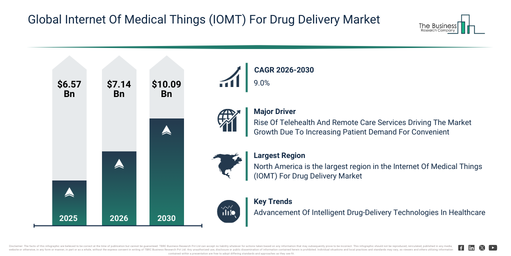
    The internet of medical things (iomt) for drug delivery market has shown considerable expansion over recent years. Its valuation is anticipated to climb from $6.57 billion in 2025 to $7.14 billion in 2026, reflecting a compound annual growth rate (CAGR) of 8.8%. This historical growth can be attributed to several factors including the rising occurrence of chronic diseases, the early adoption of intelligent infusion and monitoring tools, the expansion of home healthcare offerings, an increasing focus on ensuring medication adherence, and the broader development of digital health infrastructure.

    The Internet of Medical Things (IoMT) for drug delivery market size is projected to experience robust expansion over the coming years. It is expected to reach $10.09 billion by 2030, growing at a compound annual growth rate (CAGR) of 9.0%. The expansion during this forecast period can be attributed to several factors, including the increasing application of personalized medicine, greater investments in connected healthcare platforms, the surging demand for remote patient management, the growing integration of AI-driven dosing algorithms, and increased regulatory support for digital therapeutics. Key trends anticipated in the forecast period involve the widespread adoption of connected drug delivery devices, a rise in the use of real-time patient monitoring platforms, the broader integration of wearable and implantable delivery systems, the development of personalized dosage management solutions, and an enhanced focus on remote therapy management.

    Download the Free Sample Report to Explore Key Market Insights:

    https://www.thebusinessresearchcompany.com/sample.aspx?id=33187&type=smp

    What Drivers Are Expected To Influence The Internet Of Medical Things (IOMT) For Drug Delivery Market During The Forecast Period?

    The internet of medical things (IoMT) for drug delivery market is anticipated to grow, spurred by the expansion of telehealth and remote care services. Telehealth and remote care services encompass the provision of healthcare through digital technologies, allowing patients to obtain medical consultations, monitoring, and treatment from their homes without the necessity of physical visits. The increase in telehealth and remote care services stems from rising patient demand for convenient, on-demand healthcare that facilitates consultations with doctors, health monitoring, and treatment management from home, thereby reducing the need for frequent hospital visits. IoMT for drug delivery supports telehealth and remote care services by enabling real-time surveillance of patient medication adherence, automated and accurate drug administration, and smooth data sharing with healthcare providers. This capability permits doctors to remotely monitor treatment progress, adjust dosages, and ensure personalized care without requiring in-person visits. For instance, in April 2023, FAIR Health Inc., a US-based non-profit organization, indicated that national telehealth use climbed by 7.3%, increasing from 5.5% of medical claim lines in December 2022 to 5.9% in January 2023. Therefore, the expanding adoption of telemedicine platforms is a key driver for the growth of the internet of medical things (IoMT) for drug delivery market.

    What Segment Types Make Up The Internet Of Medical Things (IOMT) For Drug Delivery Market?

    The internet of medical things (iomt) for drug delivery market covered in this report is segmented –

    1) By Type: Wearable Drug Delivery Devices; Smart Inhalers; Injectable Drug Delivery Systems; Implantable Drug Delivery Devices; Remote Drug Monitoring

    2) By Connectivity: Bluetooth And Low Energy Connectivity; Wi Fi Connectivity; Cellular Connectivity; Near Field Communication; Cloud And Edge Based Connectivity

    3) By Application: Chronic Disease Management; Acute Care Drug Delivery; Home Based Drug Administration; Hospital And Clinical Drug Delivery; Personalized And Precision Medicine

    4) By End User: Hospitals And Clinics; Home Care Settings; Pharmaceutical And Biotechnology Companies; Research And Development Organizations; Contract Research And Clinical Trial Centers

    Subsegments:

    1) By Wearable Drug Delivery Devices: On Body Infusion Pumps; Patch Based Drug Delivery Systems; Wearable Insulin Delivery Devices; Wearable Pain Management Devices

    2) By Smart Inhalers: Connected Metered Dose Inhalers; Connected Dry Powder Inhalers; Medication Adherence Monitoring Inhalers; Dose Tracking Inhaler Systems

    3) By Injectable Drug Delivery Systems: Connected Auto Injectors; Smart Pen Injectors; Pre Filled Smart Syringes; Electronic Injection Monitoring Systems

    4) By Implantable Drug Delivery Devices: Implantable Infusion Pumps; Controlled Release Implant Systems; Programmable Drug Delivery Implants; Long Term Therapeutic Implants

    5) By Remote Drug Monitoring: Medication Adherence Monitoring Systems; Real Time Dosage Tracking Platforms; Remote Therapy Management Systems; Patient Compliance Monitoring Solutions

    Which Market Trends Are Creating New Opportunities In The Internet Of Medical Things (IOMT) For Drug Delivery Market?

    Leading companies in the internet of medical things (IoMT) for drug delivery market are concentrating on developing advanced solutions, such as connected smart drug-delivery devices with real-time monitoring, to facilitate personalized dosing, boost treatment adherence, and elevate patient outcomes. These connected smart drug-delivery devices, equipped with real-time monitoring, are medical tools that automatically record medication administration and patient data, transmitting it wirelessly to applications or healthcare platforms, thereby aiding in optimizing dosages, enhancing adherence, and supporting prompt clinical judgments. As an illustration, in November 2024, Medtronic plc, an Ireland-based healthcare technology enterprise, introduced its Smart MDI system, which incorporates the InPen app alongside Simplera CGM. This system combines a smart insulin pen with a disposable, integrated CGM to provide individualized insulin dosing insights in real time, offering suggestions for detecting and correcting missed or incorrect mealtime doses. It consistently tracks glucose levels, logs insulin usage, and processes patient information via a mobile application, aiming to lower hyperglycemia risk and promote improved glycemic control. In contrast to traditional insulin pens, this solution provides automated data collection, smart alerts, and clinical decision-making assistance, substantially minimizing dosing uncertainty and enhancing patient results.

    Who Are The Leading Companies Operating In The Internet Of Medical Things (IOMT) For Drug Delivery Market?

    Major companies operating in the internet of medical things (iomt) for drug delivery market are Siemens AG, F. Hoffmann-La Roche AG, IBM Corporation, Bayer AG, Oracle Corporation, Abbott Laboratories, Honeywell Life Care Solutions Inc., Medtronic plc, Koninklijke Philips N.V., GE HealthCare Technologies Inc., Becton Dickinson and Company, Cognizant Technology Solutions Corporation, Biogen Inc., Omron Healthcare Co. Ltd., Dexcom Inc., Insulet Corporation, Tandem Diabetes Care Inc., Senseonics Inc., AdhereTech Inc., Adherium Limited

    Read the full internet of medical things (iomt) for drug delivery market report here:

    https://www.thebusinessresearchcompany.com/report/internet-of-medical-things-iomt-for-drug-delivery-market-report

    Which Global Regions Are Shaping The Competitive Landscape Of The Internet Of Medical Things (IOMT) For Drug Delivery Market?

    North America was the largest region in the internet of medical things (IOMT) for drug delivery market in 2025. The regions covered in the internet of medical things (iomt) for drug delivery market report are Asia-Pacific, South East Asia, Western Europe, Eastern Europe, North America, South America, Middle East, Africa.

    Request A Tailored Internet Of Medical Things (IOMT) For Drug Delivery Market Research Report For Competitive Advantage:

    https://www.thebusinessresearchcompany.com/customise?id=33187&type=smp

    Browse Through More Reports Similar to the Global Internet Of Medical Things (IOMT) For Drug Delivery Market 2026, By The Business Research Company

    Electrical Test Equipment Market Report 2026

    https://www.thebusinessresearchcompany.com/report/electrical-test-equipment-global-market-report

    Engineering Services Market Report 2026

    https://www.thebusinessresearchcompany.com/report/engineering-services-global-market-report

    Emc Testing Market Report 2026

    https://www.thebusinessresearchcompany.com/report/emc-testing-global-market-report

    Get in touch with us:

    The Business Research Company: https://www.thebusinessresearchcompany.com/

    Americas +1 310-496-7795

    Asia +44 7882 955267 & +91 8897263534

    Europe +44 7882 955267

    Email us at info@tbrc.info

    Follow us on:

    LinkedIn: https://in.linkedin.com/company/the-business-research-company

    YouTube: https://www.youtube.com/channel/UC24_fI0rV8cR5DxlCpgmyFQ

    Global Market Model: https://www.thebusinessresearchcompany.com/global-market-model
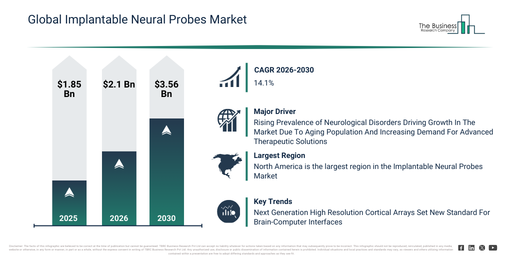
  • Implantable Neural Probes Market Gaining Momentum Toward $3.55 Billion by 2030

    Implantable Neural Probes Market Gaining Momentum Toward $3.55 Billion by 2030

    The Business Research Company’s 2026 market reports include new capabilities such as market attractiveness scoring and analysis, total addressable market analysis, company scoring matrix, interactive excel data dashboard, improved supply chain analysis, upcoming startups in the market, and overview of key products, aimed at improving the depth, usability, and strategic value of the insights delivered.

    How Large Is The Implantable Neural Probes Market Projected To Become By 2030 Based On Its 2026 Valuation?

    The implantable neural probes market size has recently experienced swift expansion. It is forecast to grow from $1.85 billion in 2025 to $2.1 billion in 2026, achieving a compound annual growth rate (CAGR) of 13.8%. The growth observed in prior periods is attributable to developments in neuroscience research tools, the increased utilization of depth electrodes in epilepsy monitoring, the broadening of academic brain research programs, the early implementation of brain-computer interface technologies, and enhancements in microfabrication techniques.

    The implantable neural probes market is anticipated to experience substantial growth in the upcoming years. It is projected to expand to $3.56 billion in 2030, demonstrating a compound annual growth rate (CAGR) of 14.1%. This expansion during the forecast period can be attributed to the increasing demand for neuroprosthetics, heightened investment in brain-machine interfaces, the broadening scope of clinical neuromodulation therapies, an amplified focus on chronic neural implants, and continuous innovation in biocompatible materials. Key trends expected over this period include the rising adoption of high-density microelectrode arrays, a surge in demand for flexible and biocompatible neural probes, the expanding integration of wireless neural recording systems, the proliferation of multi-site and multi-modal neural probes, and an enhanced emphasis on ensuring long-term implant stability.

    Download the Free Sample Report to Explore Key Market Insights:

    https://www.thebusinessresearchcompany.com/sample.aspx?id=33180&type=smp

    Which Economic Or Industry Drivers Are Impacting The Implantable Neural Probes Market?

    The increasing occurrence of neurological disorders is projected to fuel the expansion of the implantable neural probes market in the coming years. Neurological disorders are medical conditions that affect the nervous system, including the brain, spinal cord, and the nerves that connect them. The prevalence of these disorders is rising due to the aging population, as older age represents a major risk factor for conditions such as Alzheimer’s disease, Parkinson’s disease, and stroke. Implantable neural probes assist in managing and treating neurological disorders by enabling precise, real-time recording and stimulation of neural activity, which permits targeted diagnosis, continuous monitoring, and personalized therapeutic interventions for conditions like epilepsy, Parkinson’s disease, and paralysis. For instance, in March 2023, according to the Alzheimer’s Association, a US-based nonprofit voluntary health organization, in 2023, approximately 6.7 million Americans aged 65 and older are living with Alzheimer’s dementia, and this number is projected to rise to 13.8 million by 2060. Therefore, the growing prevalence of neurological disorders is propelling the growth of the implantable neural probes market.

    What Segment Groups Are Identified Within The Implantable Neural Probes Market?

    The implantable neural probes market covered in this report is segmented –

    1) By Product Type: Microelectrodes; Microelectrode Arrays; Depth Probes; Surface Probes; Other Product Types

    2) By Material: Silicon; Glass; Polymer; Metal; Other Materials

    3) By Application: Neuroscience Research; Clinical Diagnostics; Brain-Computer Interfaces; Other Applications

    4) By End-User: Research Institutes; Hospitals; Diagnostic Centers; Other End-Users

    Subsegments:

    1) By Microelectrodes: Platinum Microelectrodes; Tungsten Microelectrodes; Iridium Oxide Microelectrodes; Gold Microelectrodes; Silicon Microelectrodes

    2) By Microelectrode Arrays: Planar Microelectrode Arrays; Three Dimensional Microelectrode Arrays; Flexible Microelectrode Arrays; High Density Microelectrode Arrays; Custom Designed Microelectrode Arrays

    3) By Depth Probes: Single Shank Depth Probes; Multi Shank Depth Probes; Glass Insulated Depth Probes; Metal Coated Depth Probes; Custom Configured Depth Probes

    4) By Surface Probes: Electrocorticography Surface Probes; Flexible Surface Probes; Grid Surface Probes; Strip Surface Probes; Custom Fabricated Surface Probes

    5) By Other Product Types: Optical Neural Probes; Wireless Neural Probes; Nano Fabricated Neural Probes; Multi Modal Neural Probes; Custom Engineered Neural Probes

    What Trends Are Advancing Progress In The Implantable Neural Probes Market?

    Major companies in the implantable neural probes market are concentrating on technological breakthroughs, such as high-resolution cortical electrode arrays, to enhance neural signal accuracy and expand brain-computer interface applications. A high-resolution cortical electrode array is an implantable neural probe type made of a thin, flexible film embedded with hundreds to thousands of microelectrodes. For instance, in April 2025, Precision Neuroscience Corporation, a US-based neurotechnology company developing advanced brain-computer interface systems, unveiled the Layer 7 Cortical Interface. This next-generation implantable microelectrode array received clearance from the U.S. Food and Drug Administration (FDA) under 510(k) for recording, monitoring, and stimulating electrical activity on the brain’s surface for up to 30 days. This device incorporates a high-density array of 1,024 microelectrodes on a flexible polyimide film, which conforms to cortical anatomy to provide detailed neural data while mitigating tissue damage risks. It supports real-time mapping during neurosurgery and offers a platform for future wireless BCI applications for conditions like paralysis and communication impairments. The product’s clearance and features signify a progression towards safer, higher-resolution implantable neural probes with expanded clinical utility.

    Which Global Companies Are Actively Competing In The Implantable Neural Probes Market?

    Major companies operating in the implantable neural probes market are Abbott Laboratories, Medtronic plc, Boston Scientific Corporation, Neuralink Corp., NeuroPace Inc., NeuroOne Medical Technologies Corporation, Alpha Omega Engineering Ltd., INBRAIN Neuroelectronics, Paradromics Inc., Axoft Inc, Synchron Inc., Ripple Neuro LLC, NeuroNexus Technologies Inc., Plexon Inc., CorTec Advanced Neuroscience GmbH, Cambridge NeuroTech Ltd, Spike Neuro LLC, Aleva Neurotherapeutics SA, Optogenix Inc., Precision Neuroscience Corporation.

    Read the full implantable neural probes market report here:

    https://www.thebusinessresearchcompany.com/report/implantable-neural-probes-market-report

    Which Region Is Expected To Experience The Fastest Growth In The Implantable Neural Probes Market?

    North America was the largest region in the implantable neural probes market in 2025. Asia-Pacific is expected to be the fastest-growing region in the forecast period. The regions covered in the implantable neural probes market report are Asia-Pacific, South East Asia, Western Europe, Eastern Europe, North America, South America, Middle East, Africa.

    Request A Tailored Implantable Neural Probes Market Research Report For Competitive Advantage:

    https://www.thebusinessresearchcompany.com/customise?id=33180&type=smp

    Browse Through More Reports Similar to the Global Implantable Neural Probes Market 2026, By The Business Research Company

    Neural Implants Market Report 2026

    https://www.thebusinessresearchcompany.com/report/neural-implants-global-market-report

    Implantable Neurostimulation Devices Market Report 2026

    https://www.thebusinessresearchcompany.com/report/implantable-neurostimulation-devices-global-market-report

    Smart Implants Market Report 2026

    https://www.thebusinessresearchcompany.com/report/smart-implants-global-market-report

    Get in touch with us:

    The Business Research Company: https://www.thebusinessresearchcompany.com/

    Americas +1 310-496-7795

    Asia +44 7882 955267 & +91 8897263534

    Europe +44 7882 955267

    Email us at info@tbrc.info

    Follow us on:

    LinkedIn: https://in.linkedin.com/company/the-business-research-company

    YouTube: https://www.youtube.com/channel/UC24_fI0rV8cR5DxlCpgmyFQ

    Global Market Model: https://www.thebusinessresearchcompany.com/global-market-model