Category: Medical Equipment

  • Intraosseous infusion devices Market Size In 2026 And Beyond: Understanding Future Growth Potential

    Built to provide research that’s more actionable and strategically valuable, The Business Research Company’s 2026 market reports include market attractiveness analysis, total addressable market sizing, company benchmarking matrices, interactive Excel dashboards, broader supply chain intelligence, emerging startup tracking, and in-depth product insights.

    Intraosseous infusion devices Market Set To Climb From $3.61 Billion In 2026 To $4.71 Billion By 2030

    The intraosseous infusion devices market has experienced significant expansion recently. This market is projected to expand from $3.39 billion in 2025 to $3.61 billion in 2026, demonstrating a compound annual growth rate (CAGR) of 6.6%. Historically, this growth was primarily driven by factors such as a rise in trauma and cardiac emergencies, the necessity for swift vascular access in hospital settings, the uptake of manual IO devices, the expansion of emergency medical services (EMS), and the early application of intraosseous needles in pediatric care.

    The intraosseous infusion devices market size is projected for substantial expansion in the coming years. It is set to reach $4.71 billion by 2030, demonstrating a compound annual growth rate (CAGR) of 6.8%. This growth throughout the forecast period is primarily fueled by the increasing uptake of automated IO devices, the incorporation of IO systems into hospital emergency procedures, the broader application of IO in ambulatory surgical centers, enhanced investment in training and simulation resources, and the creation of multi-site intraosseous access options. Noteworthy trends anticipated during this period encompass expedited emergency vascular access, adaptations for both pediatric and adult devices, the emergence of battery-powered and reusable drivers, the widespread embracing of single-use and disposable devices, and the deeper integration of training and simulation.

    Get A Free Sample Report With In-Depth Market Insights:

    https://thebusinessresearchcompany.com/sample_request?id=43238013&type=smp&name=Intraosseous%20infusion%20devices%20Market%20Report%202026&utm_source=Blogs&utm_medium=Paid&utm_campaign=Oct_PR

    Intraosseous infusion devices Market Growth Momentum: What Factors Are Shaping Demand?

    The intraosseous infusion devices market is projected to expand due to the increasing frequency of trauma and emergency medical situations. These situations encompass urgent medical needs arising from severe injuries, acute illnesses, or critical conditions demanding immediate assessment and intervention. The rise in such cases is largely attributable to an uptick in road traffic accidents, intensified by greater vehicle density and higher travel speeds, leading to more serious injuries and subsequent emergency hospitalizations. Intraosseous infusion devices are crucial in these scenarios, offering quick and reliable access to the bloodstream when conventional intravenous access is challenging, especially in trauma or shock cases. This ensures the prompt delivery of fluids and vital medications, thereby facilitating timely and effective emergency care. For instance, as reported by the National Health Service, a UK government health agency, in September 2025, total accident and emergency attendances reached 27.4 million in 2024–25, marking a 4.0 percent increase compared with 2023–24. Consequently, the rising prevalence of trauma and emergency cases is a key factor propelling the growth of the intraosseous infusion devices market. The Rising Hospital Admissions Driving The Growth Of The Market Due To Increasing Critical Care Needs

    Intraosseous infusion devices Market Segment Landscape: Which Areas Lead Development?

    The intraosseous infusion devices market covered in this report is segmented –

    1) By Product: Bone Injection Gun (B.I.G), First Access For Shock And Trauma 1 (FAST1), Easy Intraosseous (EZ-IO), First Access For Shock And Trauma Responder (FASTR), Intraosseous (IO) Needles, Other Products

    2) By Technology: Manual, Automatic

    3) By Route Of Administration: Sternum, Distal And Proximal Tibia, Distal Femur, Calcaneus, Head Of Humerus

    4) By End User: Emergency Medical Services (EMS), Hospitals, Ambulatory Surgical Centers, Cardiac Care Centers

    Subsegments:

    1) By Bone Injection Gun (B.I.G): Manual Activation, Spring Loaded Mechanism, Single Use Device, Adult Use Variant

    2) By First Access For Shock And Trauma 1 (FAST1): Sternal Access Device, Single Use System, Rapid Vascular Access, Emergency Use Configuration

    3) By Easy Intraosseous (EZ-IO): Battery Powered Device, Multiple Needle Sizes, Reusable Driver System, Emergency And Hospital Use

    4) By First Access For Shock And Trauma Responder (FASTR): Sternal Insertion System, Prehospital Emergency Use, Single Use Configuration, Rapid Deployment Design

    5) By Intraosseous (IO) Needles: Manual Insertion Needles, Powered Insertion Compatible, Pediatric Size Needles, Adult Size Needles

    6) By Other Products: Disposable Intraosseous Devices, Training And Simulation Devices, Accessory And Stabilization Kits, Custom Intraosseous Systems

    Intraosseous infusion devices Market Trends Redefining Industry Growth

    Leading companies engaged in the intraosseous infusion devices market are concentrating on developing advanced systems, such as rapid vascular access devices, to facilitate quicker and more dependable vascular access during life-threatening emergencies. A rapid vascular access device serves as a medical tool that enables fast entry into the circulatory system for the administration of fluids, medications, or blood products in emergency and critical care scenarios. It is particularly employed when traditional intravenous access is difficult, time-consuming, or impractical. For example, in October 2024, BD, a US-based medical technology company, introduced the new BD Intraosseous Vascular Access System, an enhanced intraosseous access system built to establish vascular access within seconds for critical care situations. This system incorporates improved needle control, rapid insertion capability, and a user-friendly design to assist clinicians in high-pressure environments, consequently enhancing procedural efficiency and improving patient outcomes in emergency and acute care settings.

    Intraosseous infusion devices Market Leading Companies And Competitive Benchmarking

    Major companies operating in the intraosseous infusion devices market are Cardinal Health Inc., Medline Industries Inc., Becton Dickinson and Company (BD), B Braun Melsungen AG, ZOLL Medical Corporation, Teleflex Incorporated, Cook Medical LLC, Shandong Weigao Group Co Ltd, Vygon SA, Argon Medical Devices Inc., Life Assist, Istem Medikal, SAM Medical Products, Implox Pty Ltd., BIOPSYBELL S R L (BPB Medica), Medax SRL, Troge Medical GmbH, Taizhou Kindly Medical Devices Co Ltd, PAVmed Inc., and Pyng Medical Corporation

    View The Full Intraosseous infusion devices Market Report:

    https://thebusinessresearchcompany.com/report/intraosseous-infusion-devices-market-report?utm_source=Blogs&utm_medium=Paid&utm_campaign=Oct_PR

    Intraosseous infusion devices Market Top Region By Revenue And Market Share

    North America was the largest region in the intraosseous infusion devices market in 2025. Asia-Pacific is expected to be the fastest-growing region in the forecast period. The regions covered in the intraosseous infusion devices market report are Asia-Pacific, South East Asia, Western Europe, Eastern Europe, North America, South America, Middle East, Africa.

    Reach Out To Our Team:

    The Business Research Company: https://www.thebusinessresearchcompany.com/

    Americas: +1 310-496-7795

    Asia: +44 7882 955267 & +91 8897263534

    Europe: +44 7882 955267

    Email us at: marketing@tbrc.info

    Follow us on:

    LinkedIn: https://in.linkedin.com/company/the-business-research-company

    YouTube: https://www.youtube.com/channel/UC24_fI0rV8cR5DxlCpgmyFQ

    Global Market Model: https://www.thebusinessresearchcompany.com/global-market-model
  • Insulated Shippers Market Size And Growth In 2026: Key Factors Shaping Future Demand

    Built to provide research that’s more actionable and strategically valuable, The Business Research Company’s 2026 market reports include market attractiveness analysis, total addressable market sizing, company benchmarking matrices, interactive Excel dashboards, broader supply chain intelligence, emerging startup tracking, and in-depth product insights.

    Insulated Shippers Market Growth From $10.99 Billion In 2026 To $15.56 Billion By 2030 At A CAGR Of 9.1%

    The insulated shippers market has experienced significant growth in recent years. Its value is projected to increase from $10.1 billion in 2025 to $10.99 billion in 2026, achieving a compound annual growth rate (CAGR) of 8.8%. This growth observed in the past can be attributed to a rise in pharmaceutical cold chain shipments, increasing demand for perishable food transport, the expansion of e-commerce and delivery services, the development of foam and gel-pack insulated materials, and the early adoption of vacuum-insulated shippers.

    The insulated shippers market is poised for robust growth over the next few years. Its valuation is expected to climb to $15.56 billion in 2030, achieving a compound annual growth rate (CAGR) of 9.1%. This expansion during the projection period can be attributed to several factors, including an increase in regulatory demands for temperature-sensitive shipments, the adoption of phase change material (pcm) integrated shippers, the growth in biotechnology and biologics transportation, a rise in investment toward smart packaging and IoT-enabled monitoring, and the demand for sustainable and reusable insulated solutions. Key trends influencing this forecast period include innovations in temperature-controlled packaging, the emergence of reusable and eco-friendly shippers, optimization of cold chain logistics, real-time temperature monitoring capabilities, and the development of custom-designed insulated solutions.

    Get A Free Sample Report With In-Depth Market Insights:

    https://thebusinessresearchcompany.com/sample_request?id=30623&type=smp&name=Insulated%20Shippers%20Market%20Report%202026&utm_source=Blogs&utm_medium=Paid&utm_campaign=Oct_PR

    Insulated Shippers Market Growth Drivers: What’s Behind The Acceleration?

    The growing demand for e-commerce and online grocery deliveries is anticipated to drive the expansion of the insulated shippers market moving forward. E-commerce and online grocery deliveries involve the buying and selling of goods or services over the internet, with e-commerce covering all forms of online transactions and online grocery delivery specifically pertaining to ordering groceries online for home delivery. The rise of these services is due to individuals desiring convenient access to a wide range of products for quick home delivery, as well as the ability to compare prices and shop at any time without visiting physical stores. Insulated shippers assist e-commerce and online grocery deliveries by maintaining the necessary temperature for products during transit, thereby protecting them from spoilage and ensuring they arrive at customers in good condition. For instance, in November 2023, data from the United States Census Bureau, a US-based government agency, indicated that retail e-commerce sales in the US reached $271.7 billion in the third quarter of 2023, showing a modest 0.9% increase from the previous quarter and a substantial 7.8% boost compared to the same period in 2022. Thus, the increasing demand for e-commerce and online grocery deliveries is a key factor propelling the growth of the insulated shipper market.

    Insulated Shippers Market Segment Analysis Spotlighting Growth Areas

    The insulated shippers market covered in this report is segmented –

    1) By Product Type: Panel Shippers, Envelope Shippers, Box Shippers, Other Product Types

    2) By Material: Expanded Polystyrene, Polyurethane, Vacuum Insulated Panels, Other Materials

    3) By Application: Pharmaceuticals, Food And Beverages, Chemicals, Other Applications

    4) By Distribution Channel: Direct Sales, Distributors, Online Retail

    5) By End-User: Healthcare, Food Service, E-Commerce, Other End-Users

    Subsegments:

    1) By Panel Shippers: Rigid Insulated Panel Shippers, Collapsible Panel Shippers, Vacuum Insulated Panel (VIP) Shippers, Reusable Panel Shippers, Single-use Panel Shippers

    2) By Envelope Shippers: Bubble-Lined Insulated Envelopes, Foam-Lined Insulated Envelopes, Reflective Foil Insulated Envelopes, Gel-Pack Compatible Envelope Shippers, Lightweight Mailer-type Insulated Envelopes

    3) By Box Shippers: Corrugated Insulated Box Shippers, Foam-insulated Box Shippers, Molded Pulp Insulated Box Shippers, Expanded Polystyrene (EPs) Box Shippers, Temperature-Controlled Box Shippers

    4) By Other Product Types: Pallet-sized Insulated Shippers, Container-based Insulated Shippers, Soft-Sided Insulated Shippers, Custom-Designed Insulated Shippers, Phase Change Material (PCM) Integrated Shippers

    Insulated Shippers Market Trends: What’s Defining The Industry’s Next Phase?

    Leading firms within the insulated shippers market are prioritizing improvements in lightweight insulation options for transport. Examples include phase change materials (PCMs), which enable accurate temperature regulation throughout transit by absorbing and releasing heat as they transition between phases, thereby safeguarding products susceptible to temperature variations. PCMs are defined as materials that either absorb or release thermal energy when they undergo a change in their physical state, such as transitioning from solid to liquid or vice-versa, at a particular temperature. This property allows them to store and release heat, contributing to the maintenance of a consistent temperature in their environment. As an illustration, in December 2025, Cold Chain Technologies, a US-headquartered enterprise focused on temperature-controlled packaging, introduced EcoFlex 3. This product represents a new generation of reusable insulated shippers intended for cold chain logistics, integrating sophisticated phase change materials (PCMs), vacuum insulated panel technology, and air shield dry ice management to ensure dependable temperature consistency and improved handling for pharmaceutical and biologic consignments. Furthermore, it provides various sizes and temperature settings to cater to a wide array of cold chain shipping requirements, complemented by an improved lid design that facilitates simpler packing and dry ice management.

    Insulated Shippers Market Competitive Landscape: Which Companies Lead The Industry?

    Major companies operating in the insulated shippers market are Sonoco ThermoSafe, Sealed Air Corporation, Orora Packaging Solutions, Storopack Hans Reichenecker GmbH, Ranpak Holdings Corp, Snyder Industries Inc, va-Q-tec Thermal Solutions GmbH, SkyCell AG, Drew Foam Companies Inc, Pelican BioThermal (a division of Pelican Products Inc), TCP Reliable Inc, Cryopak, Polar Tech Industries Inc, Intelsius (Global) Ltd, DGP Intelsius, ACH Foam Technologies Inc, Softbox Systems Ltd, Sofrigam, Tempack Ltd, Inmark Global Holdings Ltd, and American Aerogel Corporation.

    View The Full Insulated Shippers Market Report:

    https://thebusinessresearchcompany.com/report/insulated-shippers-market-report?utm_source=Blogs&utm_medium=Paid&utm_campaign=Oct_PR

    Insulated Shippers Market Regional Breakdown: Where Is Demand Concentrated?

    North America was the largest region in the insulated shippers market in 2025. Asia-Pacific is expected to be the fastest-growing region in the forecast period. The regions covered in the insulated shippers market report are Asia-Pacific, South East Asia, Western Europe, Eastern Europe, North America, South America, Middle East, Africa.

    Reach Out To Our Team:

    The Business Research Company: https://www.thebusinessresearchcompany.com/

    Americas: +1 310-496-7795

    Asia: +44 7882 955267 & +91 8897263534

    Europe: +44 7882 955267

    Email us at: marketing@tbrc.info

    Follow us on:

    LinkedIn: https://in.linkedin.com/company/the-business-research-company

    YouTube: https://www.youtube.com/channel/UC24_fI0rV8cR5DxlCpgmyFQ

    Global Market Model: https://www.thebusinessresearchcompany.com/global-market-model
  • Embolization Product Market Analysis: Understanding The Drivers Behind 8.6% CAGR Through 2030 Growth

    Featuring market attractiveness scoring, total addressable market sizing, company benchmarking matrices, interactive Excel dashboards, deeper supply chain intelligence, emerging startup tracking, and granular product-level insights, The Business Research Company’s 2026 market reports are built to deliver research that is both more actionable and more strategically valuable.

    Embolization Product Market Revenue Growth On Track For A 8.6% CAGR Through 2030

    The embolization product market has recently shown strong expansion. Forecasts indicate it will expand from $2.08 billion in 2025 to $2.26 billion in 2026, registering a compound annual growth rate (CAGR) of 8.8%. Historically, this expansion was largely fueled by factors such as the increasing prevalence of cardiovascular diseases, a rising incidence of aneurysms and vascular malformations, the growing adoption of minimally invasive procedures, greater awareness of interventional radiology, increased demand for targeted cancer treatments, an expanding geriatric population in need of vascular interventions, a growing preference for outpatient procedures, improving healthcare infrastructure in emerging economies, a heightened focus on reducing surgical risks and complications, and continuous technological advancements in embolization devices.

    The embolization product market is projected for substantial growth in the coming years, with its size anticipated to reach $3.14 billion by 2030, demonstrating a compound annual growth rate (CAGR) of 8.6%. This expansion during the forecast period is driven by several factors, including progress in bioresorbable embolic materials, innovations in microcatheter-compatible devices, the integration of image-guided navigation systems, advancements in liquid embolic agents, novel coil and plug designs, the adoption of robotic-assisted interventions, enhanced patient-specific device customization, advanced minimally invasive delivery systems, the incorporation of smart monitoring for real-time feedback, and improvements in cost-effective manufacturing processes. Over the forecast period, prominent trends are expected to include the widespread adoption of minimally invasive treatments, the development of personalized vascular therapies, the integration of sophisticated imaging, breakthroughs in biocompatible materials, and the provision of cost-effective embolization solutions.

    Get A Free Sample Report With In-Depth Market Insights:

    https://thebusinessresearchcompany.com/sample_request?id=18020442&type=smp&name=Embolization%20Product%20Market%20Report%202026&utm_source=Blogs&utm_medium=Paid&utm_campaign=Oct_PR

    Embolization Product Market Growth Catalysts And Demand Drivers

    The growing requirement for minimally invasive treatment procedures is projected to boost the expansion of the embolization product market in the future. These procedures are defined as medical interventions involving minor incisions or catheter-based approaches, which lessen trauma and allow for quicker recuperation compared to conventional surgeries. The increasing inclination towards such treatments is promoting the utilization of embolization products, vital for operations like controlling hemorrhages, addressing vascular malformations, and managing tumors. Embolization products aid minimally invasive treatment methods by enabling doctors to accurately block irregular blood flow to specific areas, thereby diminishing surgical risks, reducing recovery periods, and improving overall patient outcomes. For instance, in August 2025, Dr. M. MacDonald reported that the worldwide total of minimally invasive cosmetic procedures reached nearly 25.4 million in 2023, showcasing a significant upward trend and widespread adoption of less invasive medical interventions. Thus, the escalating demand for minimally invasive treatment procedures is fueling the growth of the embolization product market.

    Embolization Product Market Segment Trends And Revenue Contributors

    The embolization product market covered in this report is segmented –

    1) By Product Type: Embolization Coils, Embolic Agents, Detachable Balloons, Liquid Embolics, Microcatheters, Guidewires

    2) By Material: Metallic, Polymeric, Biological, Hybrid

    3) By Technology: Bioresorbable Technology, Non-Bioresorbable Technology

    4) By Application: Oncology, Neurology, Peripheral Vascular Disease, Urology, Other Applications

    5) By End User: Hospitals, Ambulatory Surgical Centers, Specialty Clinics

    1) By Embolization Coils: Detachable Coils, Pushable Coils, Helical Coils, Complex-Shaped Coils, Hydrogel-Coated Coils, Bare Platinum Coils, Fibered Coils, Microcoils (For Neurovascular Use)

    2) By Embolic Agents: Particulate Embolic Agents, Microspheres (Drug-Eluting And Non-Drug-Eluting), Polyvinyl Alcohol (PVA) Particles, Gelatin Sponge Particles, Radiopaque Embolic Agents, Biodegradable Embolic Agents, Metallic Embolic Particles

    3) By Detachable Balloons: Flow-Occlusion Balloons, Aneurysm Treatment Balloons, Temporary Occlusion Balloons, Permanent Occlusion Balloons, Single-Lumen Detachable Balloons, Dual-Lumen Detachable Balloons

    4) By Liquid Embolics: Ethylene-Vinyl Alcohol Copolymer (EVOH) Agents, Cyanoacrylate-Based Adhesives (Glue Embolics), Polymerizing Liquid Embolics, Precipitating Liquid Embolics, Radiopaque Liquid Embolics, Non-Adhesive Liquid Embolics

    5) By Microcatheters: Single-Lumen Microcatheters, Dual-Lumen Microcatheters, Flow-Directed Microcatheters, Over-The-Wire Microcatheters, High-Flow Microcatheters, Steerable Microcatheters, Neurovascular Microcatheters

    6) By Guidewires: Hydrophilic Guidewires, Hydrophobic Guidewires, Stainless Steel Guidewires, Nitinol Guidewires, Shapeable Or Steerable Guidewires, Micro-Guidewires, Specialty Neurovascular Guidewires

    Embolization Product Market Trends Shaping Long-Term Demand

    Key companies in the embolization products market are concentrating on developing advanced microcatheter solutions, such as next-generation balloon occlusion devices, to enhance procedural efficiency, boost usability, and respond to clinical feedback from physicians. Next-generation balloon occlusion microcatheters are minimally invasive tools designed to obstruct or lessen blood flow in specific blood vessels during embolization procedures, offering superior control, security, and ease of operation. For example, in July 2025, Embolx, a US-based medical device company, introduced the Sniper G3 Balloon Occlusion Microcatheter. This third-generation device offers an extended shelf life, improved user-friendliness, and simplified preparation, directly addressing significant feedback from physician users. It empowers clinicians to execute targeted embolization procedures more efficiently, diminishes procedural complexity, and enhances overall patient outcomes.

    Embolization Product Market Leading Players And Competitive Positioning

    Major companies operating in the embolization product market are Cardinal Health, Abbott Laboratories, Medtronic plc, Stryker Corporation, Boston Scientific Corporation, MicroVention Inc., Terumo Corporation, Kaneka Corporation, Cook Medical, Merit Medical Systems Inc., Penumbra Inc., Guerbet Group, B. Braun Melsungen AG, Sirtex Medical Limited, Medikit Co. Ltd., Balt USA LLC, Acandis GmbH & Co. KG, ABK Biomedical Inc., CeloNova BioSciences, Shape Memory Medical Inc.

    View The Full Embolization Product Market Report:

    https://thebusinessresearchcompany.com/report/embolization-product-market-report?utm_source=Blogs&utm_medium=Paid&utm_campaign=Oct_PR

    Embolization Product Market Regional Split: Which Areas Are Fueling Growth?

    North America was the largest region in the embolization product market in 2025. Asia-Pacific is expected to be the fastest-growing region in the forecast period. The regions covered in the embolization product market report are Asia-Pacific, South East Asia, Western Europe, Eastern Europe, North America, South America, Middle East, Africa.

    Reach Out To Our Team:

    The Business Research Company: https://www.thebusinessresearchcompany.com/

    Americas: +1 310-496-7795

    Asia: +44 7882 955267 & +91 8897263534

    Europe: +44 7882 955267

    Email us at: marketing@tbrc.info

    Follow us on:

    LinkedIn: https://in.linkedin.com/company/the-business-research-company

    YouTube: https://www.youtube.com/channel/UC24_fI0rV8cR5DxlCpgmyFQ

    Global Market Model: https://www.thebusinessresearchcompany.com/global-market-model

  • Wound Skin Substitutes Market Explained: What Is Fueling Growth To $1.91 Billion By 2030?

    Built to provide research that’s more actionable and strategically valuable, The Business Research Company’s 2026 market reports include market attractiveness analysis, total addressable market sizing, company benchmarking matrices, interactive Excel dashboards, broader supply chain intelligence, emerging startup tracking, and in-depth product insights.

    Wound Skin Substitutes Market Poised To Hit $1.91 Billion By 2030 With A 10% CAGR

    The market size for wound skin substitutes has exhibited robust growth in recent years. It will grow from $1.19 billion in 2025 to $1.3 billion in 2026 at a compound annual growth rate (CAGR) of 9.7%. Historically, this expansion has been driven by a rise in burn injury cases, an increasing prevalence of diabetic ulcers, a growth in surgical procedures, the historic adoption of collagen dressings, and the expansion of wound care centers.

    The wound skin substitutes market is projected for substantial growth over the next few years, with an expectation to reach $1.91 billion by 2030, demonstrating a compound annual growth rate (CAGR) of 10.0%. This expansion during the forecast period is driven by factors such as an aging population suffering from chronic wounds, the increasing prevalence of diabetes, advancements in regenerative medicine, a rise in spending on advanced wound care, and the proliferation of outpatient wound clinics. Significant trends anticipated during this time include bioengineered regenerative skin matrices, cell-based advanced wound covers, composite biosynthetic skin substitutes, growth factor-enriched dressings, and smart moisture-balancing wound covers.

    Get A Free Sample Report With In-Depth Market Insights:

    https://thebusinessresearchcompany.com/sample_request?id=68541373&type=smp&name=Wound%20Skin%20Substitutes%20Market%20Report%202026&utm_source=Blogs&utm_medium=Paid&utm_campaign=Oct_PR

    Wound Skin Substitutes Market Growth Momentum: What Factors Are Shaping Demand?

    An increase in pressure ulcers is projected to drive the expansion of the wound skin substitutes market in the future. These are specific injuries to the skin and deeper tissues resulting from continuous pressure, typically over areas with bones close to the surface. The frequency of pressure ulcers is increasing, attributed to an aging demographic, given that elderly individuals frequently experience limited mobility, delicate skin, and chronic medical conditions, rendering them more prone to skin damage. Wound skin substitutes help prevent pressure ulcers by shielding the skin, fostering tissue regrowth, ensuring appropriate moisture levels, and improving overall skin strength, collectively lowering the likelihood of skin degradation in at-risk regions. For example, data from November 2023, provided by the National Health Service (NHS) England, a UK-based government department, indicated that from October 1, 2022, to October 1, 2023, 193 inpatients were documented as having developed bedsores, pressure sores, or pressure ulcers while hospitalized. Consequently, the rising occurrence of pressure ulcers is stimulating the growth of the wound skin substitutes market.

    Wound Skin Substitutes Market Segmentation And Category Overview

    The wound skin substitutes market covered in this report is segmented –

    1) By Product Type: Biologic Skin Substitutes; Synthetic Skin Substitutes; Biosynthetic Skin Substitutes; Collagen Dressings; Acellular Dermal Matrices; Cultured Epithelial Autografts; Allograft Skin; Xenograft Skin; Hydrogel Dressings; Foam Dressings

    2) By Technology: Static Skin Substitutes; Dynamic; Smart

    3) By Application Or Indication: Diabetic Foot Ulcers; Pressure Ulcers; Burns; Surgical Wounds; Trauma Wounds; Chronic Wounds

    4) By Distribution Channel: Direct Sales Or Institutional Sales; Medical Device Distributors; Online Retail Or E-commerce

    5) By End User: Hospitals And Burn Centers; Ambulatory Surgical Centers (ASCs); Specialty Wound Care Clinics; Academic And Research Institute

    Subsegments:

    1) By Biologic Skin Substitutes: Human Derived Skin Substitutes; Animal Derived Skin Substitutes; Cellular Based Skin Substitutes; Growth Factor Enriched Skin Substitutes

    2) By Synthetic Skin Substitutes: Polymer Based Skin Substitutes; Silicone Based Skin Substitutes; Polyurethane Based Skin Substitutes; Synthetic Composite Skin Substitutes

    3) By Biosynthetic Skin Substitutes: Collagen And Silicone Based Skin Substitutes; Polymer And Collagen Composite Skin Substitutes; Semi Synthetic Skin Substitutes

    4) By Collagen Dressings: Native Collagen Dressings; Oxidized Regenerated Collagen Dressings; Collagen With Antimicrobial Agents; Collagen With Silver

    5) By Acellular Dermal Matrices: Human Acellular Dermal Matrices; Animal Acellular Dermal Matrices; Cross Linked Dermal Matrices; Non Cross Linked Dermal Matrices

    6) By Cultured Epithelial Autografts: Keratinocyte Based Autografts; Epidermal Sheet Autografts; Spray On Cultured Epithelial Cells

    7) By Allograft Skin: Fresh Allograft Skin; Cryopreserved Allograft Skin; Lyophilized Allograft Skin

    8) By Xenograft Skin: Porcine Derived Xenograft Skin; Bovine Derived Xenograft Skin; Processed Xenograft Skin

    9) By Hydrogel Dressings: Amorphous Hydrogel Dressings; Sheet Hydrogel Dressings; Impregnated Hydrogel Dressings

    10) By Foam Dressings: Polyurethane Foam Dressings; Silicone Foam Dressings; Adhesive Foam Dressings; Non Adhesive Foam Dressings

    Wound Skin Substitutes Market Trends Redefining Industry Growth

    Major companies operating in the wound skin substitutes market are directing their efforts towards developing innovative products, such as advanced bioengineered skin grafts, to accelerate wound healing, mitigate infection risks, and enhance tissue regeneration. These advanced bioengineered skin grafts are laboratory-grown or tissue-engineered skin substitutes crafted to mimic natural skin, providing living cells and scaffolds that foster faster wound healing, support tissue regeneration, and reduce the likelihood of infection compared to standard dressings. For instance, in May 2025, Tides Medical, a US-based medical device company, introduced Artacent Wound. This next-generation wound skin substitute utilizes an Arta-Pure Process to carefully preserve the complete structure of amniotic tissue, including its crucial spongy intermediate layer, thereby maximizing the graft’s natural integrity. The product features a dual-layer design that can be applied on either side, stays securely in place without requiring sutures, and aids clinicians in treating chronic wounds by maintaining a biologically active matrix that facilitates tissue repair and lessens inflammation, differentiating it from traditional dehydrated or highly processed grafts.

    Wound Skin Substitutes Market Leading Companies And Competitive Benchmarking

    Major companies operating in the wound skin substitutes market are 3M Company, Stryker Corporation, Essity Aktiebolag, Smith & Nephew plc, B. Braun Melsungen AG, Coloplast A/S, ConvaTec Group plc, Mallinckrodt Pharmaceuticals, Integra LifeSciences Corporation, AVITA Medical Inc., MTF Biologics, Organogenesis Inc., MiMedx Group Inc., Vericel Corporation, LifeNet Health, Anika Therapeutics Inc., AlloSource, BioTissue Inc., Tissue Regenix Group plc, Gunze Medical Co. Ltd., and Molecular Biologicals Inc.

    View The Full Wound Skin Substitutes Market Report:

    https://thebusinessresearchcompany.com/report/wound-skin-substitutes-market-report?utm_source=Blogs&utm_medium=Paid&utm_campaign=Oct_PR

    Wound Skin Substitutes Market Top Region By Revenue And Market Share

    North America was the largest region in the wound skin substitutes market in 2025. Asia-Pacific is expected to be the fastest-growing region in the forecast period. The regions covered in the wound skin substitutes market report are Asia-Pacific, South East Asia, Western Europe, Eastern Europe, North America, South America, Middle East, Africa.

    Reach Out To Our Team:

    The Business Research Company: https://www.thebusinessresearchcompany.com/

    Americas: +1 310-496-7795

    Asia: +44 7882 955267 & +91 8897263534

    Europe: +44 7882 955267

    Email us at: marketing@tbrc.info

    Follow us on:

    LinkedIn: https://in.linkedin.com/company/the-business-research-company

    YouTube: https://www.youtube.com/channel/UC24_fI0rV8cR5DxlCpgmyFQ

    Global Market Model: https://www.thebusinessresearchcompany.com/global-market-model

  • Wearable Neurotech Market Trends Reshaping Industry Growth Through 2030

    Backed by market attractiveness analysis, total addressable market sizing, company benchmarking matrices, interactive Excel dashboards, wider supply chain intelligence, emerging startup coverage, and detailed product-level insights, The Business Research Company’s 2026 market reports are designed to offer research that is more actionable and strategically valuable than ever.

    Wearable Neurotech Market Growth Potential: How Will Market Size Shift Through 2030?

    The wearable neurotech market has witnessed substantial growth in recent times. It is anticipated to increase from $2.18 billion in 2025 to $2.61 billion in 2026, exhibiting a compound annual growth rate (CAGR) of 19.4%. The historical period’s expansion is due to factors including advancements in EEG miniaturization, an increase in digital health devices, the broadening of brain-computer interface research, the emergence of mental wellness technology, and a greater uptake of wearable sensors.

    The wearable neurotech market is projected for significant expansion in the coming years. It is anticipated to reach a valuation of $5.34 billion by 2030, demonstrating a compound annual growth rate (CAGR) of 19.7%. This projected growth is driven by factors such as the rise in remote neuro monitoring, increased demand for cognitive enhancement tools, the spread of neuro digital therapeutics, greater utilization of sports performance analytics, and the proliferation of personalized brain health programs. Key trends anticipated during this period encompass the development of consumer brain computer interfaces, increasing uptake of neurofeedback wearables, the availability of more portable eeg devices, the incorporation of cognitive monitoring apps, and a surge in home use neurostimulation devices.

    Get A Free Sample Report With In-Depth Market Insights:

    https://thebusinessresearchcompany.com/sample_request?id=23454689&type=smp&name=Wearable%20Neurotech%20Market%20Report%202026&utm_source=Blogs&utm_medium=Paid&utm_campaign=Oct_PR

    Wearable Neurotech Market Growth Factors: What’s Supporting Expansion?

    The increasing occurrence of neurological conditions is anticipated to drive the expansion of the wearable neurotech market in the future. These disorders are defined as health issues affecting the brain, spinal cord, or nerves, which can influence movement, senses, cognitive functions, or behavior. The rise in neurological disorders is attributed to the worldwide aging population, leading to a higher incidence of age-associated neurological conditions. Wearable neurotech offers assistance for neurological disorders by continuously monitoring brain and nerve activity, thereby facilitating early diagnosis, tailored therapies, and symptom management in real-time. As an illustration, the Alzheimer’s Association, a US-based nonprofit voluntary health organization, stated in March 2023 that 6.7 million Americans aged 65+ are affected by Alzheimer’s, a number predicted to reach 13.8 million by 2060. Consequently, the growing occurrence of neurological disorders is a significant factor boosting the growth of the wearable neurotech market.

    Wearable Neurotech Market Segment Analysis: What Are The Core Market Categories?

    The wearable neurotech market covered in this report is segmented –

    1) By Product Type: Electroencephalography Headsets; Brain Computer Interface Devices; Neurostimulation Wearables; Neurofeedback Wearable Devices; Wearable Neural Sensors

    2) By Technology: Electroencephalography Technology; Functional Near Infrared Spectroscopy Technology; Magnetoencephalography Technology; Transcranial Direct Current Stimulation Technology; Other Neural Sensing and Stimulation Technologies

    3) By Distribution Channel: Online Stores; Specialty Retail Stores; Direct Sales; Other Distribution Channels

    4) By Application: Healthcare; Consumer Electronics; Sports and Fitness; Other Applications

    5) By End User: Hospitals and Clinics; Research Institutes and Laboratories; Consumer End Users; Sports and Fitness Centers; Academic and Educational Institutions

    Subsegments:

    1) By Electroencephalography Headsets: Portable Electroencephalography Headsets; Wireless Electroencephalography Headsets; Clinical Electroencephalography Headsets

    2) By Brain Computer Interface Devices: Non Invasive Brain Computer Interface Devices; Invasive Brain Computer Interface Devices; Hybrid Brain Computer Interface Devices

    3) By Neurostimulation Wearables: Transcranial Direct Current Stimulation Wearables; Transcranial Magnetic Stimulation Wearables; Vagus Nerve Stimulation Wearables

    4) By Neurofeedback Wearable Devices: Real Time Neurofeedback Wearable Devices; Home Use Neurofeedback Wearable Devices; Clinical Neurofeedback Wearable Devices

    5) By Wearable Neural Sensors: Electroencephalography Sensors; Functional Near-Infrared Spectroscopy Sensors; Magnetoencephalography Sensors; Electromyography Sensors; Cognitive Monitoring Sensors; Brain Computer Interface Sensors

    Wearable Neurotech Market Industry Trends: What’s Reshaping Demand?

    Major companies within the wearable neurotech market are prioritizing advancements in non-invasive neurostimulation solutions, such as wearable vagus nerve and electrical muscle stimulation devices, to aid in rehabilitation, promote wellness, or facilitate neural restoration. Wearable vagus nerve devices are non-invasive mechanisms worn on the body that provide electrical impulses to the vagus nerve, contributing to general health, well-being, or specific therapeutic results. For instance, in February 2025, Neuvotion Inc., a US medical device company, unveiled NeuStim, an FDA-cleared, non-invasive, wearable neurostimulation system that precisely stimulates muscles to assist in regaining hand movement following a stroke or spinal cord injury. The device features a lightweight, wrist-worn design, a clinician-friendly touchscreen for targeting stimulation, and customizable programs accessible via a mobile interface. Similarly, in 2025, Lithuania-based Pulsetto launched or broadened the availability of its wearable vagus nerve stimulation device aimed at stress reduction and sleep support. This neck-worn device administers low-frequency transcutaneous stimulation, offers multiple preset programs through a companion app, and is designed for daily, drug-free use. Both devices underscore the increasing prominence of non-invasive, wearable neurotechnologies for health and rehabilitation.

    Wearable Neurotech Market Leading Players And Competitive Positioning

    Major companies operating in the wearable neurotech market are Kernel Labs Inc., Nuro Corporation, NeuroSky Inc., BrainCo Inc., Emotiv Inc., Cognito Therapeutics Inc., Neuroelectrics Barcelona S.L.U, Q30 Innovations Inc., Halo Neuroscience, Thync, Neurable Inc., Neurovalens Ltd., Neurovalens Ltd., Bitbrain Technologies S.L., Muse (InteraXon), OpenBCI Inc., BrainBit, Nexstem Technologies Pvt. Ltd, Nalu Medical Inc., Alphabeats, Motif Neurotech.

    View The Full Wearable Neurotech Market Report:

    https://thebusinessresearchcompany.com/report/wearable-neurotech-market-report?utm_source=Blogs&utm_medium=Paid&utm_campaign=Oct_PR

    Wearable Neurotech Market Regional Split: Which Areas Are Fueling Growth?

    North America was the largest region in the wearable neurotech market in 2025. Asia-Pacific is expected to be the fastest-growing region in the forecast period. The regions covered in the wearable neurotech market report are Asia-Pacific, South East Asia, Western Europe, Eastern Europe, North America, South America, Middle East, Africa.

    Reach Out To Our Team:

    The Business Research Company: https://www.thebusinessresearchcompany.com/

    Americas: +1 310-496-7795

    Asia: +44 7882 955267 & +91 8897263534

    Europe: +44 7882 955267

    Email us at: marketing@tbrc.info

    Follow us on:

    LinkedIn: https://in.linkedin.com/company/the-business-research-company

    YouTube: https://www.youtube.com/channel/UC24_fI0rV8cR5DxlCpgmyFQ

    Global Market Model: https://www.thebusinessresearchcompany.com/global-market-model

  • Fever Screening Systems Market Growth Outlook For 2026: Drivers, Trends And Future Opportunities

    Featuring market attractiveness scoring, total addressable market sizing, company benchmarking matrices, interactive Excel dashboards, deeper supply chain intelligence, emerging startup tracking, and granular product-level insights, The Business Research Company’s 2026 market reports are built to deliver research that is both more actionable and more strategically valuable.

    Fever Screening Systems Market Set To Climb From $2.47 Billion In 2026 To $3.48 Billion By 2030

    The fever screening systems market size has experienced substantial growth in recent years. It is forecast to increase from $2.27 billion in 2025 to $2.47 billion in 2026, at a compound annual growth rate (CAGR) of 8.8%. The historical expansion of this market can be attributed to the occurrence of global infectious diseases, intensified public health surveillance measures, greater awareness of infection control, the adoption of infrared thermography devices, and government mandates for temperature screening.

    The fever screening systems market is projected to experience significant growth over the next few years. It is forecast to expand to $3.48 billion by 2030, achieving a compound annual growth rate (CAGR) of 9.0%. This anticipated growth during the forecast period stems from factors such as increasing investment in smart health infrastructure, enhanced integration with access control systems, a growing need for real-time health monitoring, the expansion of AI-based anomaly detection, and a heightened focus on workplace health safety standards. Prominent trends within this period include a greater adoption of contactless temperature screening, increased deployment in high-traffic public areas, a rising demand for portable screening devices, the integration of automated alert and threshold systems, and the broader availability of multi-person thermal scanning solutions.

    Get A Free Sample Report With In-Depth Market Insights:

    https://thebusinessresearchcompany.com/sample_request?id=59648019&type=smp&name=Fever%20Screening%20Systems%20Market%20Report%202026&utm_source=Blogs&utm_medium=Paid&utm_campaign=Oct_PR

    Fever Screening Systems Market Growth Drivers: What’s Behind The Acceleration?

    Growing worries about infectious diseases are projected to boost the fever screening systems market in the future. These illnesses originate from detrimental microorganisms like bacteria, viruses, fungi, or parasites, and their quick dissemination is particularly aided by expanding urban areas and worldwide travel. Such elements have increased public health consciousness and the need for prompt detection methods in various public and medical environments. Fever screening technologies aid in controlling infectious diseases by allowing swift identification of people with high body temperatures, which facilitates quick action and minimizes the chance of broad contagion. For example, in June 2024, data from the UK Health Security Agency, a government body in the UK, indicated that 1,681 patients were admitted to critical care with confirmed influenza in the UK from week 40 of 2022 to week 15 of 2023. This demonstrates the considerable impact of infectious diseases and the increasing requirement for proactive screening. Consequently, the escalating concerns regarding infectious diseases are fueling the expansion of the fever screening systems market.

    Fever Screening Systems Market Segmentation And Category Overview

    The fever screening systems market covered in this report is segmented –

    1) By Product Type: Infrared Thermography, Thermal Scanners, Non-Contact Thermometers, Other Product Types

    2) By Technology: Fixed, Portable

    3) By Application: Hospitals And Clinics, Airports, Public Places, Corporate Offices, Other Applications

    4) By End-User: Healthcare, Transportation, Commercial, Industrial, Other End Users

    Subsegments:

    1) By Infrared Thermography: Handheld Infrared Thermography Devices, Fixed Infrared Thermography Cameras, Portable Infrared Thermography Systems, Industrial Infrared Thermography Solutions, Medical Grade Infrared Thermography Devices

    2) By Thermal Scanners: Handheld Thermal Scanners, Fixed Thermal Scanning Systems, Body Temperature Thermal Scanners, Industrial Thermal Scanners, High Resolution Thermal Scanners

    3) By Non-Contact Thermometers: Digital Non-Contact Thermometers, Infrared Non-Contact Thermometers, Medical Non-Contact Thermometers, Industrial Non-Contact Thermometers, High Precision Non-Contact Thermometers

    4) By Other Product Types: Temperature Screening Kiosks, Thermal Screening Gateways, Automated Fever Detection Systems, Wearable Temperature Monitoring Devices, Smart Fever Screening Solutions

    Fever Screening Systems Market Top Companies Driving Competitive Growth

    Major companies operating in the fever screening systems market are NEC Corporation, Leonardo S.p.A., Hikvision Digital Technology Co. Ltd., Ametek Land Inc., Omron Corporation, Dahua Technology Co. Ltd., Drägerwerk AG & Co. KGaA, Fluke Corporation, Testo SE & Co. KGaA, DALI Technology A/S, Mobotix AG, FLIR Systems Inc., Guangzhou SAT Infrared Technology Co. Ltd., Thermoteknix Systems Ltd., Vicon Industries Inc., Cantronic Systems (Canada) Inc., Infrared Cameras Inc., Omnisense Systems Ltd., Optotherm Inc., InfraTec GmbH, Guide Sensmart Tech Co. Ltd.

    View The Full Fever Screening Systems Market Report:

    https://thebusinessresearchcompany.com/report/fever-screening-systems-market-report?utm_source=Blogs&utm_medium=Paid&utm_campaign=Oct_PR

    Fever Screening Systems Market Global Footprint: Which Region Leads The Industry?

    North America was the largest region in the fever screening systems market in 2025. Asia-Pacific is expected to be the fastest-growing region in the forecast period. The regions covered in the fever screening systems market report are Asia-Pacific, South East Asia, Western Europe, Eastern Europe, North America, South America, Middle East, Africa.

    Reach Out To Our Team:

    The Business Research Company: https://www.thebusinessresearchcompany.com/

    Americas: +1 310-496-7795

    Asia: +44 7882 955267 & +91 8897263534

    Europe: +44 7882 955267

    Email us at: marketing@tbrc.info

    Follow us on:

    LinkedIn: https://in.linkedin.com/company/the-business-research-company

    YouTube: https://www.youtube.com/channel/UC24_fI0rV8cR5DxlCpgmyFQ

    Global Market Model: https://www.thebusinessresearchcompany.com/global-market-model

  • Fast Sterility Testing By Adenosine Triphosphate (ATP) Bioluminescence Market Size And Growth In 2026: Key Factors Shaping Future Demand

    Built to provide research that’s more actionable and strategically valuable, The Business Research Company’s 2026 market reports include market attractiveness analysis, total addressable market sizing, company benchmarking matrices, interactive Excel dashboards, broader supply chain intelligence, emerging startup tracking, and in-depth product insights.

    Fast Sterility Testing By Adenosine Triphosphate (ATP) Bioluminescence Market Poised To Hit $1.76 Billion By 2030 With A 12.9% CAGR

    The market for fast sterility testing employing adenosine triphosphate (ATP) bioluminescence has seen significant expansion in recent years. Its value is set to increase from $0.96 billion in 2025 to $1.08 billion in 2026, exhibiting a compound annual growth rate (CAGR) of 12.7%. This historical growth can be attributed to several factors, including the escalating requirement for quicker sterility assessments in pharmaceuticals, the inherent limitations of conventional culture-based methodologies, a heightened regulatory focus on contamination management, the development of biotechnology production facilities, and the expansion of hospital infection control initiatives.

    The fast sterility testing by adenosine triphosphate (ATP) bioluminescence market is poised for significant expansion over the next few years. It is forecast to achieve a size of $1.76 billion in 2030, exhibiting a compound annual growth rate (CAGR) of 12.9%. This growth throughout the forecast period stems from factors such as the increasing adoption of automated rapid testing platforms, augmented investment in advanced microbial detection technologies, a rising demand from food and beverage safety testing, the expansion of cleanroom manufacturing environments, and a heightened focus on quality assurance and compliance standards. Prominent trends for the forecast period include the increasing embrace of rapid microbial detection methods, an escalating need for real-time sterility assessment, the growing utilization of luminometer-based systems, the proliferation of automated bioluminescence analyzers, and a shift towards replacing culture-based testing methods.

    Get A Free Sample Report With In-Depth Market Insights:

    https://thebusinessresearchcompany.com/sample_request?id=77953217&type=smp&name=Fast%20Sterility%20Testing%20By%20Adenosine%20Triphosphate%20%28ATP%29%20Bioluminescence%20Market%20Report%202026&utm_source=Blogs&utm_medium=Paid&utm_campaign=Oct_PR

    Fast Sterility Testing By Adenosine Triphosphate (ATP) Bioluminescence Market Growth Catalysts And Demand Drivers

    The expansion of the pharmaceutical and biotechnology sectors is anticipated to drive the fast sterility testing by adenosine triphosphate (ATP) bioluminescence market’s growth in the future. These sectors encompass industries involved in researching, developing, manufacturing, and marketing medications, vaccines, and biologics for disease prevention or treatment. Growth within the pharmaceutical and biotechnology sectors stems from rising research and development investments, empowering companies to innovate new drugs, enhance treatments, and boost production capacity to satisfy increasing healthcare needs. Fast sterility testing by adenosine triphosphate (ATP) bioluminescence aids these sectors by quickly identifying microbial contamination, thereby guaranteeing the safety and quality of pharmaceutical products and biologics, and facilitating quicker manufacturing processes while adhering to stringent regulatory requirements. For example, Eurostat, a government agency based in Luxembourg, reported in April 2025 that EU exports of medicinal and pharmaceutical products saw a 13.5% rise in 2024 compared to 2023, totaling $316.38 billion (€313.4 billion). Additionally, the BioIndustry Association (BIA), a UK trade association, indicated in January 2025 that the UK biotech sector achieved significant growth in 2024, attracting £3.5 billion (approximately $4.4 billion) in investment, which marks an impressive 94% increase over the prior year. Consequently, the expansion within the pharmaceutical and biotechnology sectors is propelling the growth of the fast sterility testing by adenosine triphosphate (ATP) bioluminescence market.

    Fast Sterility Testing By Adenosine Triphosphate (ATP) Bioluminescence Market Segment Analysis: What Are The Core Market Categories?

    The fast sterility testing by adenosine triphosphate (atp) bioluminescence market covered in this report is segmented –

    1) By Technology: Adenosine Triphosphate Bioluminescence, Membrane Filtration, Direct Inoculation

    2) By Product Type: Instruments, Reagents And Kits, Consumables

    3) By Application: Pharmaceutical And Biotechnology, Food And Beverage, Medical Devices, Water And Environmental, Cosmetics And Personal Care, Other Applications

    4) By End-User: Hospitals And Clinics, Laboratories, Research Institutes, Other End-Users

    Subsegments:

    1) By Adenosine Triphosphate Bioluminescence: Luminometer Based Systems, Handheld Rapid Detection Kits, Automated Bioluminescence Analyzers

    2) By Membrane Filtration: Vacuum Filtration Units, Gravity Filtration Systems, Automated Membrane Filtration Instruments

    3) By Direct Inoculation: Broth Culture Methods, Agar Plate Culture Methods, Automated Inoculation Systems

    Fast Sterility Testing By Adenosine Triphosphate (ATP) Bioluminescence Market Trends Shaping Long-Term Demand

    Major companies operating in the fast sterility testing by adenosine triphosphate (ATP) bioluminescence market are focusing on developing innovative methods, such as accelerated sterility tests, to shorten batch release times and improve QC efficiency. These accelerated sterility tests, which utilize rapid detection techniques like ATP bioluminescence to identify microbial contamination, contribute to decreasing batch release periods, reducing quarantine times, and enhancing overall quality control efficiency. For instance, in January 2026, Biotactical B.V., a Netherlands-based biotechnology company, unveiled its accelerated rapid sterility testing platform. This innovative solution combines ATP bioluminescence with accelerated growth media to detect microbial contamination in just 48 hours. The system is specifically designed for GMP-compliant environments and supports complex, short-shelf-life products, including advanced therapeutic medicinal products (ATMPs). This platform delivers expedited detection, minimizes handling time and contamination risk, and adheres to USP <71>, <73>, <1223> and Ph. Eur. 2.6 and 5.1.6 standards. This capability enables faster batch release and more efficient inventory management, effectively addressing a critical bottleneck in pharmaceutical quality control workflows.

    Fast Sterility Testing By Adenosine Triphosphate (ATP) Bioluminescence Market Competitive Landscape: Who Leads The Industry?

    Major companies operating in the fast sterility testing by adenosine triphosphate (atp) bioluminescence market are 3M Company, Merck KGaA, Lonza Group AG, SGS SA, Kikkoman Biochemifa, Charles River Laboratories, BioMérieux, Hach Company, Neogen Corporation, Charm Sciences, Promega Corporation, LuminUltra Technologies, Sopex d.o.o., Nelson Laboratories LLC, Hygiena LLC, PCE Instruments, Berthold Technologies, BioThema AB, Pharmetric Laboratory, Biotactical B.V., Promicol BV.

    View The Full Fast Sterility Testing By Adenosine Triphosphate (ATP) Bioluminescence Market Report:

    https://thebusinessresearchcompany.com/report/fast-sterility-testing-by-adenosine-triphosphate-atp-bioluminescence-market-report?utm_source=Blogs&utm_medium=Paid&utm_campaign=Oct_PR

    Fast Sterility Testing By Adenosine Triphosphate (ATP) Bioluminescence Market Geographic Landscape: Which Region Leads Industry Growth?

    North America was the largest region in the fast sterility testing by adenosine triphosphate (ATP) bioluminescence market in 2025. Asia-Pacific is expected to be the fastest-growing region in the forecast period. The regions covered in the fast sterility testing by adenosine triphosphate (atp) bioluminescence market report are Asia-Pacific, South East Asia, Western Europe, Eastern Europe, North America, South America, Middle East, Africa.

    Reach Out To Our Team:

    The Business Research Company: https://www.thebusinessresearchcompany.com/

    Americas: +1 310-496-7795

    Asia: +44 7882 955267 & +91 8897263534

    Europe: +44 7882 955267

    Email us at: marketing@tbrc.info

    Follow us on:

    LinkedIn: https://in.linkedin.com/company/the-business-research-company

    YouTube: https://www.youtube.com/channel/UC24_fI0rV8cR5DxlCpgmyFQ

    Global Market Model: https://www.thebusinessresearchcompany.com/global-market-model

  • Disposable Sleeve Cover Market Growth To $1.45 Billion By 2030: What’s Driving The Expansion?

    Built to provide research that’s more actionable and strategically valuable, The Business Research Company’s 2026 market reports include market attractiveness analysis, total addressable market sizing, company benchmarking matrices, interactive Excel dashboards, broader supply chain intelligence, emerging startup tracking, and in-depth product insights.

    Disposable Sleeve Cover Market Revenue Growth On Track For A 7.3% CAGR Through 2030

    The disposable sleeve cover market has experienced significant growth in recent years. It is projected to increase from $1.02 billion in 2025 to $1.09 billion in 2026, showing a compound annual growth rate (CAGR) of 7.1%. Historically, this market expansion can be linked to increasing healthcare and laboratory safety standards, rising awareness of cross-contamination risks, growth of food processing and manufacturing industries, adoption of disposable protective equipment, and the expansion of hospital and clinical facilities.

    The disposable sleeve cover market is projected to experience substantial expansion over the upcoming years. Its size is forecasted to reach $1.45 billion by 2030, exhibiting a compound annual growth rate (CAGR) of 7.3%. This expansion during the forecast period is propelled by an increasing emphasis on sustainable and biodegradable sleeve covers, elevated demand from the chemical and pharmaceutical sectors, the proliferation of online sales platforms, the incorporation of advanced barrier materials, and stricter industrial hygiene regulations. Key trends anticipated within the forecast timeframe encompass a surge in the need for latex and nitrile elastic cuff sleeve covers, broader utilization of arm-length protective sleeve covers in laboratory settings, increased deployment of specialized chemical-resistant sleeve covers in manufacturing processes, the broadening of online and specialty store distribution networks, and an emphasis on developing lightweight, breathable, and comfortable sleeve materials.

    Get A Free Sample Report With In-Depth Market Insights:

    https://thebusinessresearchcompany.com/sample_request?id=53812717&type=smp&name=Disposable%20Sleeve%20Cover%20Market%20Report%202026&utm_source=Blogs&utm_medium=Paid&utm_campaign=Oct_PR

    Disposable Sleeve Cover Market Expansion Drivers: What’s Shaping Future Growth?

    The increasing focus on food safety is anticipated to fuel the expansion of the disposable sleeve cover market in the coming years. This concern for food safety stems from an elevated awareness and apprehension regarding potential health hazards linked to tainted, adulterated, or improperly handled food items. The growing prevalence of foodborne illness outbreaks is a key factor intensifying this concern, drawing attention to contamination risks and the necessity for more stringent safety protocols. Disposable sleeve covers play a crucial role in enhancing food safety by establishing a protective barrier that reduces the transmission of bacteria and other contaminants from workers’ arms to food products, thereby upholding hygiene standards in food processing environments. For instance, data from December 2024, reported by the European Food Safety Authority, an Italy-based government agency, indicated that in 2023, campylobacteriosis was among the most commonly reported zoonoses in humans, with 148,181 cases (45.7 cases per 100,000 population), showing a 4.3% rise from 2022. Consequently, the escalating concern for food safety is propelling the growth of the disposable sleeve cover market.

    Disposable Sleeve Cover Market Segmentation: How Does The Market Break Down By Category?

    The disposable sleeve cover market covered in this report is segmented –

    1) By Product Type: Standard Disposable Sleeve Covers, Elastic Cuff Sleeve Covers, Arm-length Protective Sleeve Covers, Specialized Chemical-Resistant Sleeve Covers

    2) By Material Type: Polyethylene, Polypropylene, Non-woven Fabric, Other Material Types

    3) By Distribution Channel: Online Stores, Supermarkets or Hypermarkets, Specialty Stores, Other Distribution Channels

    4) By End-User: Hospitals And Clinics, Food Industry, Manufacturing, Laboratories, Other End-Users

    Subsegments:

    1) By Standard Disposable Sleeve Covers: Polyethylene Standard Sleeve Covers, Non-Woven Fabric Standard Sleeve Covers, Polypropylene Standard Sleeve Covers

    2) By Elastic Cuff Sleeve Covers: Latex Elastic Cuff Sleeve Covers, Nitrile Elastic Cuff Sleeve Covers, Neoprene Elastic Cuff Sleeve Covers

    3) By Arm-length Protective Sleeve Covers: Waterproof Arm-length Sleeve Covers, Breathable Arm-length Sleeve Covers, Reinforced Arm-length Sleeve Covers

    4) By Specialized Chemical-Resistant Sleeve Covers: Acid-Resistant Chemical Sleeve Covers, Solvent-Resistant Chemical Sleeve Covers, Heat-Resistant Chemical Sleeve Covers, Anti-Static Chemical Sleeve Covers

    Disposable Sleeve Cover Market Leading Companies And Competitive Benchmarking

    Major companies operating in the disposable sleeve cover market are Cardinal Health Inc., Honeywell International Inc., 3M Company, Medline Industries LP, Kimberly-Clark Corporation, Bunzl plc., DuPont de Nemours Inc., Owens & Minor Inc., Ansell Limited, Protective Industrial Products Inc., Shenzhen Selen Static Scientific Co. Ltd., Xiantao Rayxin Medical Products Co. Ltd., Aspen Surgical Products Inc., Mölnlycke Health Care AB, Lakeland Industries Inc., Alpha Pro Tech Ltd., Berner International GmbH, Zhejiang Langqi Fashion Co. Ltd., Cellucap Manufacturing, Jiya Surgichem Pvt. Ltd.

    View The Full Disposable Sleeve Cover Market Report:

    https://thebusinessresearchcompany.com/report/disposable-sleeve-cover-market-report?utm_source=Blogs&utm_medium=Paid&utm_campaign=Oct_PR

    Disposable Sleeve Cover Market Largest Region By Revenue And Market Share

    Asia-Pacific was the largest region in the disposable sleeve cover market in 2025. Asia-Pacific is expected to be the fastest-growing region in the forecast period. The regions covered in the disposable sleeve cover market report are Asia-Pacific, South East Asia, Western Europe, Eastern Europe, North America, South America, Middle East, Africa.

    Reach Out To Our Team:

    The Business Research Company: https://www.thebusinessresearchcompany.com/

    Americas: +1 310-496-7795

    Asia: +44 7882 955267 & +91 8897263534

    Europe: +44 7882 955267

    Email us at: marketing@tbrc.info

    Follow us on:

    LinkedIn: https://in.linkedin.com/company/the-business-research-company

    YouTube: https://www.youtube.com/channel/UC24_fI0rV8cR5DxlCpgmyFQ

    Global Market Model: https://www.thebusinessresearchcompany.com/global-market-model

  • De Novo Genome Assembly Market Growth Outlook From $2.28 Billion In 2026 To $3.96 Billion By 2030

    De Novo Genome Assembly Market Growth Outlook From $2.28 Billion In 2026 To $3.96 Billion By 2030

    Featuring market attractiveness scoring, total addressable market sizing, company benchmarking matrices, interactive Excel dashboards, deeper supply chain intelligence, emerging startup tracking, and granular product-level insights, The Business Research Company’s 2026 market reports are built to deliver research that is both more actionable and more strategically valuable.

    De Novo Genome Assembly Market Size, Value And Growth Trajectory Through 2030

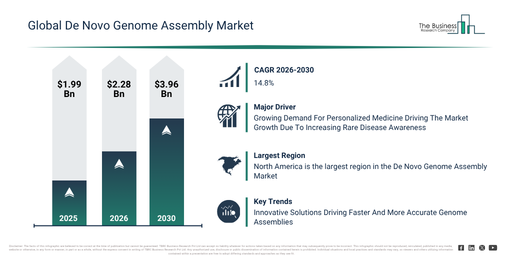
    The de novo genome assembly market has experienced significant expansion recently. It is projected to grow from $1.99 billion in 2025 to $2.28 billion in 2026, at a compound annual growth rate (CAGR) of 14.6%. The historical growth in this market can be attributed to several factors including the increasing use of next-generation sequencing, the growth of academic research initiatives, the adoption of genome assembly software, a rising demand in clinical diagnostics, and the development of plant and microbial genomics projects.

    The de novo genome assembly market size is projected to experience swift expansion over the coming years. Its valuation is anticipated to reach $3.96 billion by 2030, demonstrating a compound annual growth rate (CAGR) of 14.8%. This projected growth can be ascribed to several factors, including the incorporation of AI into genome assembly processes, the proliferation of cloud-based bioinformatics platforms, an increasing need for rapid custom genome sequencing, the advancement of precision medicine applications, and heightened investment in evolutionary and environmental genomics. Key developments expected during this forecast period encompass automated genome assembly pipelines, sophisticated cloud-based data analysis, the integration of high-throughput sequencing, tailored bioinformatics services, and improvements in visualization and annotation capabilities.

    Get A Free Sample Report With In-Depth Market Insights:

    https://thebusinessresearchcompany.com/sample_request?id=76808656&type=smp&name=De%20Novo%20Genome%20Assembly%20Market%20Report%202026&utm_source=Blogs&utm_medium=Paid&utm_campaign=Oct_PR

    De Novo Genome Assembly Market Development Factors: What’s Supporting Demand?

    The escalating demand for personalized medicine is anticipated to drive the expansion of the de novo genome assembly market moving forward. Personalized medicine refers to medical treatments and therapies specifically designed for individual patients, based on their unique genetic makeup, biomarkers, and particular disease characteristics. This demand is on the rise due to advancements in genomic technologies and molecular diagnostics, which enable treatments to be customized according to an individual’s genetic profile, thereby improving outcomes and reducing side effects. De novo genome assembly enhances personalized medicine by reconstructing an individual’s genome from scratch, allowing for the discovery of unique genetic variants and structural alterations that are vital for precision therapies, tailored drug selection, and early disease intervention. For instance, in February 2024, the Personalized Medicine Coalition, a US-based non-profit organization, reported that the U.S. Food and Drug Administration approved 16 new personalized treatments for rare disease patients in 2023, an increase from six in 2022, comprising seven cancer drugs and three for other diseases and conditions. Thus, the increasing need for personalized medicine is a key factor propelling the growth of the de novo genome assembly market.

    De Novo Genome Assembly Market Segmentation: How Does The Market Break Down By Category?

    The de novo genome assembly market covered in this report is segmented –

    1) By Component: Software, Services

    2) By Organism Type: Human, Animal, Plant, Microbial, Metagenomic Or Mixed Samples

    3) By Technology: Next-Generation Sequencing, Third-Generation Sequencing, Sanger Sequencing, Other Technologies

    4) By Application: Clinical Diagnostics, Agricultural Genomics, Environmental Genomics, Evolutionary Biology, Other Applications

    5) By End-User: Academic And Research Institutes, Pharmaceutical And Biotechnology Companies, Hospitals And Clinics, Other End-Users

    Subsegments:

    1) By Software: Sequence Alignment Software, Genome Assembly Software, Error Correction And Quality Control Software, Visualization And Annotation Software

    2) By Services: Genome Sequencing Services, Data Analysis And Interpretation Services, Custom Genome Assembly Services, Consulting And Bioinformatics Support Services

    De Novo Genome Assembly Market Transformation Trends: What Innovations Are Driving Change?

    Leading companies in the de novo genome assembly market are concentrating on developing innovative solutions, such as high-throughput genome assembly platforms, to accelerate genome reconstruction and enhance accuracy for complex and diverse organisms. These advanced systems integrate long- and short-read sequencing data to rapidly reconstruct complete genomes with high precision, enabling researchers to generate contiguous assemblies more quickly and manage intricate or repetitive genomic regions more efficiently than traditional methods. For instance, in May 2024, Dovetail Genomics Inc., a US-based genomics technology company, introduced the AssemblyLINK Assay, a high-throughput genome assembly platform engineered to expedite genome assembly workflows and boost the accuracy of de novo assemblies. The AssemblyLINK Assay combines proprietary scaffolding technology with existing sequencing data to produce highly contiguous genome assemblies, simplifies data processing through streamlined computational pipelines, and supports a broad spectrum of organisms, ranging from plants and animals to microbial communities. Its distinctive characteristics include compatibility with multiple sequencing platforms, minimized manual intervention, and optimized performance for complex and large genomes, making it especially valuable for biodiversity research and conservation genomics.

    De Novo Genome Assembly Market Key Participants And Competitive Landscape

    Major companies operating in the de novo genome assembly market are Thermo Fisher Scientific Inc., Eurofins Scientific SE, Illumina Inc., QIAGEN N.V., Novogene Corporation, Oxford Nanopore Technologies Ltd., Pacific Biosciences of California Inc., Medgenome labs pvt. Ltd, DNASTAR Inc., Nucleome Informatics Pvt Ltd, Seven Bridges Genomics, DNAnexus Inc., Strand Life Sciences Pvt. Ltd., BaseClear B.V., Dovetail Genomics LLC, SoftGenetics LLC, CosmosID Inc., Microba Life Sciences Ltd., GenomeScan B.V., BGI Genomics Co. Ltd., Macrogen Inc., SeqMatic LLC, NeuGen Biologicals.

    View The Full De Novo Genome Assembly Market Report:

    https://thebusinessresearchcompany.com/report/de-novo-genome-assembly-market-report?utm_source=Blogs&utm_medium=Paid&utm_campaign=Oct_PR

    De Novo Genome Assembly Market Geographic Analysis: Where Is Demand Rising Fastest?

    North America was the largest region in the de novo genome assembly market in 2025. Asia-Pacific is expected to be the fastest-growing region in the forecast period. The regions covered in the de novo genome assembly market report are Asia-Pacific, South East Asia, Western Europe, Eastern Europe, North America, South America, Middle East, Africa.

    Reach Out To Our Team:

    The Business Research Company: https://www.thebusinessresearchcompany.com/

    Americas: +1 310-496-7795

    Asia: +44 7882 955267 & +91 8897263534

    Europe: +44 7882 955267

    Email us at: marketing@tbrc.info

    Follow us on:

    LinkedIn: https://in.linkedin.com/company/the-business-research-company

    YouTube: https://www.youtube.com/channel/UC24_fI0rV8cR5DxlCpgmyFQ

    Global Market Model: https://www.thebusinessresearchcompany.com/global-market-model

  • Coronary Physiology Systems Market Size Forecast: How The Industry Is Expected To Grow From 2026 To 2030

    Coronary Physiology Systems Market Size Forecast: How The Industry Is Expected To Grow From 2026 To 2030

    Backed by market attractiveness analysis, total addressable market sizing, company benchmarking matrices, interactive Excel dashboards, wider supply chain intelligence, emerging startup coverage, and detailed product-level insights, The Business Research Company’s 2026 market reports are designed to offer research that is more actionable and strategically valuable than ever.

    Coronary Physiology Systems Market Growth From $1.46 Billion In 2026 To $2.12 Billion By 2030 At A CAGR Of 9.7%

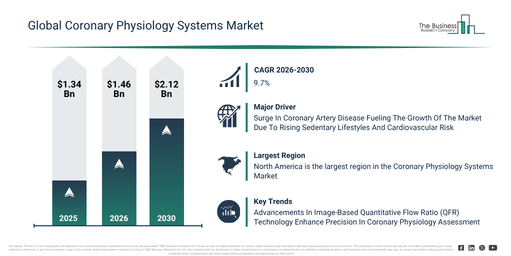
    The coronary physiology systems market size has experienced strong growth in recent years. It is anticipated to increase from $1.34 billion in 2025 to $1.46 billion in 2026, exhibiting a compound annual growth rate (CAGR) of 9.5%. The historical growth of this market can be attributed to the rising incidence of coronary artery disease, the expanding application of invasive diagnostic procedures, the widespread adoption of fractional flow reserve (FFR) measurement, the enlargement of catheterization laboratories in healthcare facilities, and the increasing requirement for precise hemodynamic assessment.

    The coronary physiology systems market is anticipated to experience robust expansion over the next few years, with projections indicating it will reach $2.12 billion by 2030, exhibiting a compound annual growth rate (CAGR) of 9.7%. This growth during the forecast period is fueled by the increasing embrace of integrated physiology and imaging platforms, the expanding utilization of wireless and dual sensor guidewires, a surge in demand for non-invasive iFR and CFR measurements, the proliferation of ambulatory surgical centers offering cardiac diagnostics, and the adoption of AI-driven data analysis for coronary physiology. Prominent trends for the forecast period include the rising adoption of wireless pressure guidewires, a growing need for integrated physiology and imaging systems, increased use of flow measurement systems for microvascular assessment, the broadening of non-invasive coronary physiology modalities, and an elevated focus on real-time data management and analysis software.

    Get A Free Sample Report With In-Depth Market Insights:

    https://thebusinessresearchcompany.com/sample_request?id=36653218&type=smp&name=Coronary%20Physiology%20Systems%20Market%20Report%202026&utm_source=Blogs&utm_medium=Paid&utm_campaign=Oct_PR

    Coronary Physiology Systems Market Growth Catalysts And Demand Drivers

    The rising occurrence of coronary artery disease is propelling expansion in the coronary physiology systems market. This condition, coronary artery disease, involves the narrowing or blockage of coronary arteries from plaque accumulation, which in turn diminishes blood flow and oxygen delivery to the heart muscle. Sedentary lifestyles contribute to the growing incidence of coronary artery disease, given that limited physical activity promotes obesity, elevated blood pressure, and compromised cardiovascular well-being, thus escalating the likelihood of plaque formation in the coronary arteries. These coronary physiology systems aid in diagnosing coronary artery disease through offering accurate measurements of blood flow and pressure within the coronary arteries, empowering clinicians to precisely evaluate the extent of arterial obstructions and formulate knowledgeable choices for specific treatments. As an illustration, the Centers for Disease Control and Prevention, a US-based government agency, reported in October 2024 that cardiovascular disease was responsible for 919,032 deaths in 2023, which amounted to approximately one-third of all fatalities. Among these, coronary heart disease remained the predominant type, with about one in six cardiovascular deaths affecting adults under the age of 65. Consequently, the rising occurrence of coronary artery disease is fostering expansion within the coronary physiology systems market.

    Coronary Physiology Systems Market Segment Outlook: Which Categories Are Growing Fastest?

    The coronary physiology systems market covered in this report is segmented –

    1) By Product Type: Pressure Wire Systems, Flow Measurement Systems, Integrated Systems, Other Product Types

    2) By Modality: Invasive, Non-Invasive

    3) By Application: Fractional Flow Reserve (FFR), Instantaneous Wave-Free Ratio (iFR), Coronary Flow Reserve (CFR), Other Applications

    4) By End-User: Hospitals, Ambulatory Surgical Centers, Specialty Clinics, Other End-Users

    Subsegments:

    1) By Pressure Wire Systems: Wireless Pressure Guidewires, Wired Pressure Guidewires, Dual Sensor Pressure Guidewires, Temperature Sensor Enabled Pressure Guidewires

    2) By Flow Measurement Systems: Coronary Flow Reserve Measurement Systems, Doppler Flow Velocity Systems, Thermodilution Based Flow Systems, Microvascular Resistance Measurement Systems

    3) By Integrated Systems: Combined Physiology And Imaging Systems, Console Integrated Physiology Platforms, Co-Registration Systems, Multimodality Hemodynamic Monitoring Systems

    4) By Other Product Types: Physiology Consoles, Data Management And Analysis Software, Accessories And Disposables, Calibration And Interface Modules

    Coronary Physiology Systems Market Trends Shaping Long-Term Demand

    Leading companies operating within the coronary physiology systems market are focusing on developing advanced image-based functional assessment solutions. These solutions aim to improve procedural efficiency, reduce reliance on invasive pressure wires, and enhance clinical decision-making during coronary interventions. Image-based functional assessment solutions are sophisticated diagnostic systems that interpret medical imaging data to determine the physiological significance of a condition, allowing functional evaluation without the use of invasive instruments. For instance, in April 2025, Medis Medical Imaging Systems, a Netherlands-based medical imaging software company, launched Medis QFR 3.0 in the United States. This latest image-based functional assessment version enhances workflow automation, delivers improved image processing capabilities, and provides faster, more accurate functional assessment of coronary lesions, thereby supporting interventional cardiologists in optimizing treatment strategies for patients with coronary artery disease.

    Coronary Physiology Systems Market Competitive Analysis Of Leading Industry Participants

    Major companies operating in the coronary physiology systems market are Abbott Laboratories, Medtronic plc, Siemens Healthineers AG, Koninklijke Philips N.V., GE HealthCare Technologies Inc., Boston Scientific Corporation, Terumo Corporation, Meril Life Sciences Pvt. Ltd., MicroPort Scientific Corporation, HeartFlow Inc., ACIST Medical Systems Inc., Pie Medical Imaging B.V., CathWorks Ltd., Insight Lifetech Co. Ltd., Keya Medical Co. Ltd., Opsens Inc., RADI Medical Systems AB, Medis Medical Imaging Systems B.V., Remedial Life Sciences Pvt. Ltd., Kamal Medtech Pvt. Ltd.

    View The Full Coronary Physiology Systems Market Report:

    https://thebusinessresearchcompany.com/report/coronary-physiology-systems-market-report?utm_source=Blogs&utm_medium=Paid&utm_campaign=Oct_PR

    Coronary Physiology Systems Market Geographic Distribution And Regional Opportunities

    North America was the largest region in the coronary physiology systems market in 2025. Asia-Pacific is expected to be the fastest-growing region in the forecast period. The regions covered in the coronary physiology systems market report are Asia-Pacific, South East Asia, Western Europe, Eastern Europe, North America, South America, Middle East, Africa.

    Reach Out To Our Team:

    The Business Research Company: https://www.thebusinessresearchcompany.com/

    Americas: +1 310-496-7795

    Asia: +44 7882 955267 & +91 8897263534

    Europe: +44 7882 955267

    Email us at: marketing@tbrc.info

    Follow us on:

    LinkedIn: https://in.linkedin.com/company/the-business-research-company

    YouTube: https://www.youtube.com/channel/UC24_fI0rV8cR5DxlCpgmyFQ

    Global Market Model: https://www.thebusinessresearchcompany.com/global-market-model