Category: Medical Equipment

  • An Important Factor Driving the Audiometric Screening Equipment Market Is the Surge In Hearing Disorders Fueling The Growth Of The Market Due To Aging Populations And Noise Exposure

    An Important Factor Driving the Audiometric Screening Equipment Market Is the Surge In Hearing Disorders Fueling The Growth Of The Market Due To Aging Populations And Noise Exposure

    The Business Research Company’s 2026 market reports include new capabilities such as market attractiveness scoring and analysis, total addressable market analysis, company scoring matrix, interactive excel data dashboard, improved supply chain analysis, upcoming startups in the market, and overview of key products, aimed at improving the depth, usability, and strategic value of the insights delivered.

    What Market Size Increase Is Anticipated For The Audiometric Screening Equipment Market Over The 2026–2030 Period?

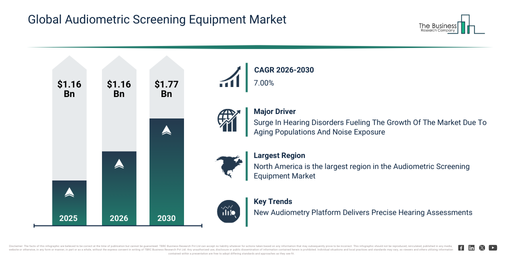
    The audiometric screening equipment market has demonstrated robust expansion recently. This market is anticipated to expand, reaching $1.86 billion in 2026 from $1.73 billion in 2025, progressing at a compound annual growth rate (CAGR) of 7.3%. Historically, this growth has been influenced by factors such as the limited availability of digital audiometers, reliance on conventional analog screening methods, growing awareness of hearing disorders, increasing healthcare infrastructure, and the adoption of routine hearing assessments.

    The audiometric screening equipment market is projected for significant expansion in the coming years, set to reach $2.43 billion by 2030, exhibiting a compound annual growth rate (CAGR) of 7.0%. This projected growth through the forecast period stems from factors such as innovations in tele-audiometry technology, a surge in demand for hearing screenings in educational and occupational settings, the incorporation of cloud-based data management systems, the proliferation of pediatric audiometry initiatives, and the broadening scope of research and diagnostic laboratories. Key trends anticipated during this period encompass the increasing uptake of portable and handheld audiometers, the integration of tele-audiometry solutions for remote diagnostic purposes, a greater reliance on OAE devices for identifying hearing issues early, the broadening of hearing screening programs for children and professionals, and an expanding market for software-driven audiometric systems.

    Download the Free Sample Report to Explore Key Market Insights:

    https://www.thebusinessresearchcompany.com/sample.aspx?id=24475&type=smp

    What Drivers Are Expected To Influence The Audiometric Screening Equipment Market During The Forecast Period?

    The increasing occurrence of hearing disorders is projected to drive the future expansion of the audiometric screening equipment market. Hearing disorders encompass conditions that hinder a person’s ability to effectively perceive, process, or interpret sounds. The surge in these disorders is propelled by aging populations and rising exposure to noise pollution, thereby generating a higher demand for hearing care solutions. Audiometric screening equipment plays a crucial role in determining the prevalence of hearing disorders by enabling rapid and accurate detection of hearing loss within large populations. For instance, in March 2024, the European Federation of Hard of Hearing People, a Belgium-based, non-governmental organization, reported that around 59 million Europeans suffer from daily communication-impairing hearing loss, impacting 20.7% of those aged 65 and older. Therefore, the escalating prevalence of hearing disorders is a key factor boosting the growth of the audiometric screening equipment market.

    How Is The Audiometric Screening Equipment Market Segmented Across Key Categories?

    The audiometric screening equipment market covered in this report is segmented –

    1) By Product Type: Pure-Tone Audiometers, Tympanometers, Otoacoustic Emissions (OAE) Devices, Hearing Screening Systems, Portable And Handheld Audiometers

    2) By Technology: Analog Audiometers, Digital Audiometers, Hybrid Audiometers, Software-Based Audiometric Systems, Tele-audiometry Solutions

    3) By Application: Routine Screening, Diagnostic Assessment, Research Purposes, Occupational Health Screening, Pediatric Audiometry

    4) By End Users: Hospitals And Clinics, Diagnostic Laboratories, Educational Institutions, Hearing Aid Manufacturers, Research Institutions

    Subsegments:

    1) By Pure-Tone Audiometers: Diagnostic Pure-Tone Audiometers, Screening Pure-Tone Audiometers, Clinical Pure-Tone Audiometers, PC-Based Pure-Tone Audiometers, Manual Pure-Tone Audiometers, Automatic Pure-Tone Audiometers

    2) By Tympanometers: Single-Frequency Tympanometers, Multi-Frequency Tympanometers, Automated Tympanometers, Portable Tympanometers

    3) By Otoacoustic Emissions (OAE) Devices: Transient Evoked OAE (TEOAE) Devices, Distortion Product OAE (DPOAE) Devices, Automated OAE Screening Devices, Diagnostic OAE Devices

    4) By Hearing Screening Systems: Newborn Hearing Screening Systems, School Hearing Screening Systems, Workplace Hearing Screening Systems, Mobile Hearing Screening Systems

    5) By Portable And Handheld Audiometers: Battery-Operated Portable Audiometers, PC-Based Portable Audiometers, Smartphone-Connected Handheld Audiometers, Wireless Handheld Audiometers

    Which Upcoming Trends Are Expected To Influence The Audiometric Screening Equipment Market?

    Major companies within the audiometric screening equipment market are prioritizing the development of technologically advanced solutions, such as precise hearing assessments, with the goal of improving diagnostic accuracy, enhancing patient outcomes, and streamlining clinical workflows. Precise hearing assessments involve accurate and detailed evaluations of an individual’s hearing ability across various frequencies and sound levels. For example, in September 2024, AURITEC, a Germany-based medical equipment manufacturing company, introduced the innovative AT2000 audiometry platform. This state-of-the-art device provides highly accurate hearing assessments via its advanced multichannel audiometer. It also incorporates enhanced testing methods for improved diagnostic precision and is engineered to address the requirements of modern audiology with its cutting-edge features.

    Who Are The Dominant Players Shaping The Audiometric Screening Equipment Market Landscape?

    Major companies operating in the audiometric screening equipment market are Sonova Holding AG, Demant AS, GN Store Nord AS, WS Audiology AS, Grason Stadler Inc, GN Otometrics AS, Amplivox Ltd, Inventis Srl, MAICO Diagnostics GmbH, Natus Medical Incorporated, Frye Electronics Inc, Path Medical GmbH, Interacoustics AS, Audiology Systems Inc, Neurosoft Ltd, eMoyo Technologies, Hearing Diagnostics Inc, Otometrics Medical Systems, Etymotic Research Inc, Sibel Health Diagnostics

    Read the full audiometric screening equipment market report here:

    https://www.thebusinessresearchcompany.com/report/audiometric-screening-equipment-global-market-report

    Which Region Is Forecast To Lead The Audiometric Screening Equipment Market In Terms Of Market Size?

    North America was the largest region in the audiometric screening equipment market in 2025. Asia-Pacific is expected to be the fastest-growing region in the forecast period. The regions covered in the audiometric screening equipment market report are Asia-Pacific, South East Asia, Western Europe, Eastern Europe, North America, South America, Middle East, Africa.

    Request A Tailored Audiometric Screening Equipment Market Research Report For Competitive Advantage:

    https://www.thebusinessresearchcompany.com/customise?id=24475&type=smp

    Browse Through More Reports Similar to the Global Audiometric Screening Equipment Market 2026, By The Business Research Company

    Audiology Devices Market Report 2026

    https://www.thebusinessresearchcompany.com/report/audiology-devices-global-market-report

    Home Audio Equipment Market Report 2026

    https://www.thebusinessresearchcompany.com/report/home-audio-equipment-global-market-report

    Hearing Diagnostic Devices And Equipment Market Report 2026

    https://www.thebusinessresearchcompany.com/report/hearing-diagnostic-devices-and-equipment-global-market-report

    Get in touch with us:

    The Business Research Company: https://www.thebusinessresearchcompany.com/

    Americas +1 310-496-7795

    Asia +44 7882 955267 & +91 8897263534

    Europe +44 7882 955267

    Email us at info@tbrc.info

    Follow us on:

    LinkedIn: https://in.linkedin.com/company/the-business-research-company

    YouTube: https://www.youtube.com/channel/UC24_fI0rV8cR5DxlCpgmyFQ

    Global Market Model: https://www.thebusinessresearchcompany.com/global-market-model
  • A Significant Growth Driver for the Audiology Devices Market Is the Rising Prevalence Of Hearing Disorders Fueling The Growth Of The Market Due To Increasing Noise Exposure And Lifestyle Factors

    A Significant Growth Driver for the Audiology Devices Market Is the Rising Prevalence Of Hearing Disorders Fueling The Growth Of The Market Due To Increasing Noise Exposure And Lifestyle Factors

    The Business Research Company’s 2026 market reports include new capabilities such as market attractiveness scoring and analysis, total addressable market analysis, company scoring matrix, interactive excel data dashboard, improved supply chain analysis, upcoming startups in the market, and overview of key products, aimed at improving the depth, usability, and strategic value of the insights delivered.

    How Much Is The Audiology Services Market Expected To Grow In Terms Of Market Value Between 2026 And 2030?

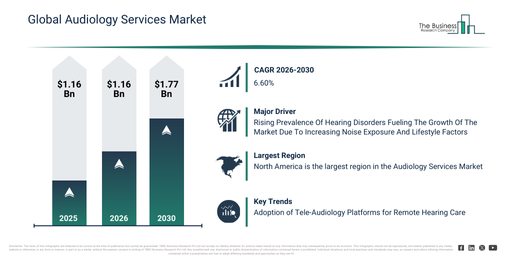
    The audiology services market has demonstrated significant expansion in recent years. This market is set to grow from $10.68 billion in 2025 to $11.4 billion in 2026, advancing at a compound annual growth rate (CAGR) of 6.7%. The surge observed in the historic period can be attributed to factors such as a rise in awareness regarding hearing disorders, the establishment of more audiology clinics and service centers, an increasing geriatric population, the widespread availability of diagnostic audiology tools, and the integration of hearing services into overall healthcare systems.

    The audiology services market is projected to experience substantial growth in the coming years. It is forecast to expand to **$14.72 billion in 2030, achieving a compound annual growth rate (CAGR) of 6.6%.** This expansion during the forecast period can be attributed to several factors, including the increasing demand for remote and home-based audiology services, the rising adoption of AI-enabled diagnostic tools, the expansion of digital healthcare platforms, a growing focus on early hearing loss detection, and increasing investments in hearing healthcare infrastructure. Significant trends expected during this period include the increasing adoption of tele-audiology services, a rising use of smart and connected hearing aids, a growing demand for remote hearing assessments, the expansion of personalized hearing care programs, and an enhanced focus on preventive hearing health.

    Download the Free Sample Report to Explore Key Market Insights:

    https://www.thebusinessresearchcompany.com/sample.aspx?id=24158&type=smp

    What Drivers Are Influencing The Audiology Services Market?

    The audiology services market is projected to expand due to the escalating incidence of hearing disorders. These disorders are defined as conditions that hinder an individual’s capacity to perceive, process, or interpret sound, resulting from issues within the outer, middle, or inner ear, or along the auditory pathways. The increase in hearing disorders is attributed to greater exposure to loud noise, especially from sustained use of headphones and earbuds and attending noisy events, which can lead to gradual and irreversible damage to the delicate hair cells in the inner ear. Consequently, hearing disorders bolster audiology services by creating a consistent demand for diagnostic evaluations and hearing solutions, motivating individuals to seek professional assistance for early detection, treatment, and continuous management of their hearing health. For instance, in February 2025, according to the World Health Organization, a Switzerland-based intergovernmental organization, roughly 2.5 billion individuals are expected to experience some level of hearing loss by 2050, with over 700 million likely needing hearing care and rehabilitation services. Therefore, the rising prevalence of hearing disorders is a significant driver for the growth of the audiology services market.

    What Major Segment Divisions Exist Within The Audiology Services Market?

    The audiology services market covered in this report is segmented –

    1) By Audiology Service Type: Diagnostic Auditory Services, Rehabilitative Services, Consultative Services, Hearing Aid Dispensing Services, Tele-Audiology Services

    2) By Technology Adoption: Traditional Hearing Aids, Bluetooth Hearing Aids, Smart Hearing Aids, Assistive Listening Aids, Implantable Devices

    3) By Patient Demographics: Pediatric Audiology, Adult Audiology, Geriatric Audiology

    4) By Service Delivery Model: In-Person Services, Home Healthcare Services, Online Or Remote Services, Community Outreach Programs

    5) By End-User: Hospitals, Clinics, Ambulatory Surgical Centres, Other End Users

    Subsegments:

    1) By Diagnostic Auditory Services: Pure Tone Audiometry (Pta), Central Auditory Processing Evaluation, Speech Audiometry, Electrocochleography (Ecochg), Tympanometry And Acoustic Reflex Testing, Otoacoustic Emissions (Oae) Testing, Auditory Brainstem Response (Abr) Testing

    2) By Rehabilitative Services: Auditory Training Programs, Assistive Listening Device (Ald) Training, Speech And Language Therapy, Cochlear Implant Rehabilitation, Tinnitus Management, Auditory-Verbal Therapy (Avt), Vestibular (Balance) Rehabilitation

    3) By Consultative Services: Occupational Hearing Conservation Consultation, Multidisciplinary Care Planning, School Hearing Health Programs, Geriatric Hearing Health Advisory, Pre-Employment And Industrial Screening, Pediatric Audiology Consultation, Legal Or Forensic Audiology Consultation

    4) By Hearing Aid Dispensing Services: Hearing Aid Evaluation And Fitting, Rechargeable And Bluetooth-Enabled Devices, Real-Ear Measurement And Verification, In-The-Ear (Ite), Behind-The-Ear (Bte), And Receiver-In-Canal (Ric) Devices, Hearing Aid Repair And Maintenance, Hearing Aid Counseling And Training, Custom Ear Molds And Earmolds Fitting

    5) By Tele-Audiology Services: Remote Hearing Assessments, Virtual Counseling And Follow-Ups, Virtual Hearing Aid Fitting And Adjustments, Cloud-Based Audiometry Tools, Remote Patient Monitoring, Mobile App-Based Hearing Health Support, Online Aural Rehabilitation Sessions

    How Are Trends Shaping The Direction Of The Audiology Services Market?

    Major companies within the audiology services market are increasingly focusing on remote audiological care, leveraging tele-audiology systems that allow hearing care professionals to conduct diagnostic testing, fittings, programming, and follow-ups with patients via internet-connected devices, thereby eliminating or significantly reducing the need for in-person clinic visits. For example, in August 2024, Sonova Holding AG, a Switzerland-based hearing care company, launched a fully remote fitting solution through its Phonak brand, enabling real-time remote hearing aid programming and fine-tuning via the myPhonak app. This solution’s core features include the ability to conduct an audiogram directly through the patient’s hearing aid, secure data transfer between the clinician and the patient’s device, and an intuitive interface that allows patients to receive expert care without the necessity of travel. This growing tele-audiology trend is enhancing the accessibility of audiological services, particularly for individuals in remote or underserved regions, and is fundamentally reshaping the delivery of hearing care in the audiology services market.

    Which Companies Are Leading Innovation In The Audiology Services Market?

    Major companies operating in the audiology services market are Eargo Inc., Sonova Holding AG, William Demant Holding A/S, GN Store Nord A/S, Amplifon S.p.A., Starkey Laboratories Inc., Cochlear Limited, Miracle-Ear Inc., MED-EL Elektromedizinische Geräte GmbH, Natus Medical Incorporated, Beltone, Advanced Bionics LLC, HearUSA Inc., Hear.com LLC, Audicus Inc., Zounds Hearing Inc., Audina Hearing Instruments Inc., Lively Hearing Corporation, Clarity Hearing, ZipHearing LLC

    Read the full audiology services market report here:

    https://www.thebusinessresearchcompany.com/report/audiology-services-global-market-report

    Which Regions Are Expected To Experience Rapid Expansion In The Audiology Services Market?

    North America was the largest region in the audiology services market in 2025. Asia-Pacific is expected to be the fastest-growing region in the forecast period. The regions covered in the audiology services market report are Asia-Pacific, South East Asia, Western Europe, Eastern Europe, North America, South America, Middle East, Africa.

    Request A Tailored Audiology Services Market Research Report For Competitive Advantage:

    https://www.thebusinessresearchcompany.com/customise?id=24158&type=smp

    Browse Through More Reports Similar to the Global Audiology Services Market 2026, By The Business Research Company

    Audio Equipment Market Report 2026

    https://www.thebusinessresearchcompany.com/report/audio-equipment-global-market-report

    Home Audio Equipment Market Report 2026

    https://www.thebusinessresearchcompany.com/report/home-audio-equipment-global-market-report

    Voice Commerce Market Report 2026

    https://www.thebusinessresearchcompany.com/report/voice-commerce-global-market-report

    Get in touch with us:

    The Business Research Company: https://www.thebusinessresearchcompany.com/

    Americas +1 310-496-7795

    Asia +44 7882 955267 & +91 8897263534

    Europe +44 7882 955267

    Email us at info@tbrc.info

    Follow us on:

    LinkedIn: https://in.linkedin.com/company/the-business-research-company

    YouTube: https://www.youtube.com/channel/UC24_fI0rV8cR5DxlCpgmyFQ

    Global Market Model: https://www.thebusinessresearchcompany.com/global-market-model
  • Global Audiology Devices Industry Trends and Market Growth Forecast for 2026–2030

    Global Audiology Devices Industry Trends and Market Growth Forecast for 2026–2030

    The Business Research Company’s 2026 market reports include new capabilities such as market attractiveness scoring and analysis, total addressable market analysis, company scoring matrix, interactive excel data dashboard, improved supply chain analysis, upcoming startups in the market, and overview of key products, aimed at improving the depth, usability, and strategic value of the insights delivered.

    What Market Value Is Expected For The Audiology Devices Market At The End Of The 2026–2030 Forecast Period?

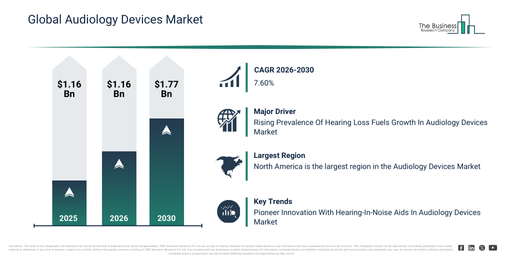
    The audiology devices market has experienced robust expansion recently. Its valuation is projected to increase from $11.21 billion in 2025 to $12.02 billion in 2026, demonstrating a compound annual growth rate (CAGR) of 7.2%. Historically, this expansion can be linked to factors such as the increasing occurrence of hearing loss conditions, a growing elderly demographic, broader access to digital hearing aids, the proliferation of audiology clinics, and heightened public understanding of the importance of early hearing diagnosis.

    The audiology devices market size is projected for substantial expansion in the coming years. This market is forecasted to reach $16.11 billion by 2030, demonstrating a compound annual growth rate (CAGR) of 7.6%. This anticipated growth during the forecast period stems from factors such as the heightened demand for wireless and app-enabled devices, the increasing uptake of pediatric hearing solutions, the wider implementation of cochlear implant procedures, an intensified focus on home-based hearing care, and ongoing advancements in audiology software platforms. Key trends expected within this period encompass the greater embrace of smart and interconnected hearing devices, an escalating demand for rechargeable hearing aids, the expanding application of AI-based sound processing, the proliferation of minimally invasive implant technologies, and a heightened emphasis on customized hearing solutions.

    Download the Free Sample Report to Explore Key Market Insights:

    https://www.thebusinessresearchcompany.com/sample.aspx?id=10700&type=smp

    What Drivers Are Shaping The Future Growth Of The Audiology Devices Market?

    The increasing incidence of hearing loss is projected to boost the expansion of the audiology devices market in the future. Hearing loss refers to a partial or complete incapacity to perceive sounds in one or both ears, resulting from diverse factors such as genetics, aging, exposure to noise, ear injuries or trauma, infections, and specific medications or illnesses. Audiology devices play a crucial role in managing and treating hearing loss by enhancing speech clarity and improving communication skills; consequently, the rising occurrence of hearing loss escalates the demand within the audiology devices market. For example, in February 2023, an article from the World Health Organization, a public health body based in Switzerland, reported that a total of 430 million people, representing more than 5% of the global population (comprising 432 million adults and 34 million children), will require rehabilitation for their disabling hearing loss. Additionally, over 25% of individuals over the age of 60 experience hearing loss, and nearly 80% of those living with permanent hearing loss are situated in developing or underdeveloped nations. Furthermore, projections indicate that over 700 million individuals will be affected by hearing loss by 2050. Thus, the escalating prevalence of hearing loss is a significant factor propelling the growth of the audiology devices market.

    What Segment Types Make Up The Audiology Devices Market?

    The audiology devices market covered in this report is segmented –

    1) By Product: Hearing Aids, In-The-Ear Hearing Aids (ITE), Receiver-In-The-Ear Hearing Aids (RITE), Behind-The-Ear Hearing Aids (BTE), Canal Hearing Aids (CHA), Cochlear Implants, Bone Anchored Healing Aids, Diagnostic Devices

    2) By Technology: Digital, Analog, Wireless & Bluetooth-Enabled Devices

    3) By Diseases Type: Otosclerosis, Meniere’s Disease, Acoustic Tumors, Otitis Media, Other Diseases

    4) By End User: Hospitals,ENT Clinics & Audiology Clinics, Research Institutes

    Subsegments:

    1) By Hearing Aids: Digital Hearing Aids, Analog Hearing Aids, Wireless Hearing Aids, Rechargeable Hearing Aids, Pediatric Hearing Aids, High-Gain Hearing Aids, Low-Noise Hearing Aids

    2) By In-The-Ear (ITE) Hearing Aids: Full Shell ITE, Half Shell ITE, Mini ITE, Wireless ITE, Rechargeable ITE, Directional Microphone ITE

    3) By Receiver-In-The-Ear (RITE) Hearing Aids: Mini RITE, Power RITE, Rechargeable RITE, RITE with Telecoil, Wireless RITE, Invisible RITE

    4) By Behind-The-Ear (BTE) Hearing Aids: Standard BTE, Mini BTE, Power BTE, Open-Fit BTE, Rechargeable BTE, Wireless BTE, Water-Resistant BTE

    5) By Canal Hearing Aids (CHA): Completely-in-the-Canal (CIC), Invisible-in-the-Canal (IIC), Low Profile CHA, Wireless CIC/IIC, Directional Microphone CHA, Rechargeable CHA

    6) By Cochlear Implants: Single-Sided Cochlear Implants, Bilateral Cochlear Implants, Hybrid Cochlear Implants, Fully Implantable Cochlear Implants, Pediatric Cochlear Implants, Advanced Cochlear Implants

    7) By Bone Anchored Hearing Aids (BAHA): Percutaneous BAHA, Transcutaneous BAHA, Active Bone Conduction Implant, Non-Surgical BAHA, Pediatric BAHA, Rechargeable BAHA

    8) By Diagnostic Devices: Audiometers, Otoacoustic Emission (OAE) Devices, Tympanometers

    Which Market Trends Are Creating New Opportunities In The Audiology Devices Market?

    Leading companies in the audiology devices market are concentrating on developing innovative products, such as hearing-in-noise aids, to gain a competitive edge. Hearing-in-noise aids represent a specific type of hearing assistance designed to improve a person’s ability to comprehend speech in environments with significant background noise. For instance, in September 2023, ReSound, a Denmark-based provider of advanced hearing solutions, unveiled its Nexia Hearing Aids. This device incorporates Auracast broadcast audio technology, allowing Nexia users to effortlessly connect to public sound systems in venues like airports, theaters, and restaurants. Through Auracast and Bluetooth LE Audio, Nexia hearing aids establish seamless connections with devices, providing a truly wireless experience that ensures no announcement or important information is missed. Additionally, the Nexia hearing aids are entirely dustproof and water-resistant, empowering customers to wear them confidently in any weather.

    Who Are The Key Players Driving Competition In The Audiology Devices Market?

    Major companies operating in the audiology devices market are Sonova Holding AG, Demant A/S, GN Store Nord A/S, Cochlear Ltd., MED-EL Medical Electronics, Starkey Laboratories Inc., WS Audiology A/S, RION Co. Ltd., Natus Medical Incorporated, MedRx Inc., Inventis s.r.l., MAICO Diagnostics GmbH, Benson Medical Instruments, Horentek Hearing Diagnostic, Zhejiang Nurotron Biotechnology Co. Ltd., Audina Hearing Instruments Inc., Elkon Pvt. Ltd., Eargo Inc., SeboTek Hearing Systems LLC, BHM-Tech Produktionsgesellschaft mbH, Earlens Corporation, Austar Hearing Science and Technology (Xiamen) Co. Ltd.

    Read the full audiology devices market report here:

    https://www.thebusinessresearchcompany.com/report/audiology-devices-global-market-report

    Which Geographic Regions Are Influencing Demand In The Audiology Devices Market?

    North America was the largest region in the audiology devices market in 2025. Asia-Pacific is expected to be the fastest-growing region in the global audiology devices market report during the forecast period. The regions covered in the audiology devices market report are Asia-Pacific, South East Asia, Western Europe, Eastern Europe, North America, South America, Middle East, Africa.

    Request A Tailored Audiology Devices Market Research Report For Competitive Advantage:

    https://www.thebusinessresearchcompany.com/customise?id=10700&type=smp

    Browse Through More Reports Similar to the Global Audiology Devices Market 2026, By The Business Research Company

    Audio Equipment Market Report 2026

    https://www.thebusinessresearchcompany.com/report/audio-equipment-global-market-report

    Home Audio Equipment Market Report 2026

    https://www.thebusinessresearchcompany.com/report/home-audio-equipment-global-market-report

    Hearing Diagnostic Devices And Equipment Market Report 2026

    https://www.thebusinessresearchcompany.com/report/hearing-diagnostic-devices-and-equipment-global-market-report

    Get in touch with us:

    The Business Research Company: https://www.thebusinessresearchcompany.com/

    Americas +1 310-496-7795

    Asia +44 7882 955267 & +91 8897263534

    Europe +44 7882 955267

    Email us at info@tbrc.info

    Follow us on:

    LinkedIn: https://in.linkedin.com/company/the-business-research-company

    YouTube: https://www.youtube.com/channel/UC24_fI0rV8cR5DxlCpgmyFQ

    Global Market Model: https://www.thebusinessresearchcompany.com/global-market-model
  • Atrial Fibrillation Devices Market Size Outlook and Demand Growth Across 2026–2030

    Atrial Fibrillation Devices Market Size Outlook and Demand Growth Across 2026–2030

    The Business Research Company’s 2026 market reports include new capabilities such as market attractiveness scoring and analysis, total addressable market analysis, company scoring matrix, interactive excel data dashboard, improved supply chain analysis, upcoming startups in the market, and overview of key products, aimed at improving the depth, usability, and strategic value of the insights delivered.

    What Is The Estimated Market Size Of The Atrial Fibrillation Devices Market During 2026–2030?

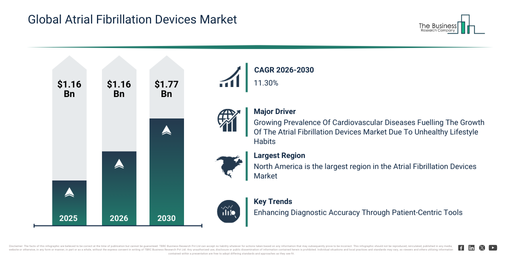
    The atrial fibrillation devices market size has experienced rapid expansion in recent years. It is forecast to grow from $8.6 billion in 2025 to $9.61 billion in 2026, demonstrating a compound annual growth rate (CAGR) of 11.7%. The historical increase can be attributed to several factors including the rising prevalence of atrial fibrillation, an expanding geriatric population, the growing burden of cardiovascular disease, the proliferation of electrophysiology labs, and the adoption of implantable cardiac devices.

    The atrial fibrillation devices market size is projected to undergo substantial expansion in the coming years, with an expected increase to $14.77 billion by 2030, demonstrating a compound annual growth rate (CAGR) of 11.3%. This expansion during the forecast period is primarily driven by improvements in ablation technologies, the growing implementation of remote patient monitoring, heightened public understanding of stroke prevention, the proliferation of ambulatory surgical centers, and technological breakthroughs in mapping and navigation systems. Prominent trends anticipated within this period include a greater embrace of catheter ablation procedures, the expanding deployment of wearable and remote ECG monitoring devices, an increasing preference for minimally invasive AFib treatments, the wider application of left atrial appendage closure devices, and a stronger emphasis on early detection and sustained rhythm monitoring.

    Download the Free Sample Report to Explore Key Market Insights:

    https://www.thebusinessresearchcompany.com/sample.aspx?id=25704&type=smp

    Which Economic Or Industry Drivers Are Impacting The Atrial Fibrillation Devices Market?

    The escalating prevalence of cardiovascular diseases is set to boost the expansion of the atrial fibrillation device market moving forward. Cardiovascular diseases encompass various disorders impacting the heart and blood vessels, including conditions like heart attacks, strokes, and hypertension. The incidence of these diseases is climbing due to a worldwide increase in obesity and diabetes, coupled with the widespread adoption of sedentary lifestyles and poor dietary habits. Atrial fibrillation (AFib) devices play an essential role in managing cardiovascular diseases by effectively detecting, monitoring, and treating irregular heart rhythms, which are frequently associated with or result from underlying heart conditions. As an illustration, in June 2024, data released by the American Heart Association, a US-based public health organization, indicated that with high blood pressure projected to rise from 51.2% to 61.0%, the number of people diagnosed with cardiovascular diseases is anticipated to increase from 128 million in 2020 to more than 184 million by 2050. This surge in cardiovascular diseases is consequently driving the growth of the atrial fibrillation device market.

    How Are The Various Segments Of The Atrial Fibrillation Devices Market Categorized?

    The atrial fibrillation devices market covered in this report is segmented –

    1) By Device Type: Implantable Devices, External Devices, Catheter-Based Devices

    2) By Product: Electrophysiology Ablation Catheters, Cardiac Monitors Or Implantable Loop Recorder, Electrophysiology Diagnostic Catheters, Mapping And Recording Systems, Access Devices, Intracardiac Echocardiography, Left Atrial Appendage Closure Devices, Other Products

    3) By Technology: Radiofrequency, Cryotherapy, Ultrasound, Other Technologies

    4) By Distribution Channel: Direct Sales, Distributors, Online Sales

    5) By End-Use: Hospitals, Cardiac Centers, Ambulatory Surgical Centers, Other End Users

    Subsegments:

    1) By Implantable Devices: Implantable Cardioverter Defibrillators, Pacemakers, Insertable Cardiac Monitors

    2) By External Devices: External Defibrillators, Holter Monitors, Mobile Cardiac Telemetry Devices, Electrocardiogram Monitors

    3) By Catheter-Based Devices: Radiofrequency Ablation Catheters, Cryoablation Catheters, Laser Ablation Catheters, Mapping and Navigation Systems, Transseptal Access Devices

    What Trends Are Affecting The Expansion Of The Atrial Fibrillation Devices Market?

    Leading companies operating in the atrial fibrillation devices market are concentrating on technological breakthroughs, such as patient-centric clinical decision support tools, to improve diagnostic precision, customize treatment regimens, and elevate overall patient outcomes. These patient-centric clinical decision support tools represent digital solutions that empower healthcare professionals to tailor treatment choices by analyzing individual patient data. As an illustration, in August 2023, GE HealthCare Technologies Inc., a US-based medical technology company, launched CardioVisio for Atrial Fibrillation. This digital clinical decision support tool is designed to optimize clinician workflows and facilitate precision care for individuals with atrial fibrillation. It enables healthcare providers to visualize the progression of AFib, including past diagnoses, treatments, medications, and associated conditions. The platform also offers guideline-based therapy recommendations, which aids in reducing diagnostic mistakes and streamlining clinical decision-making. CardioVisio consolidates scattered patient information into an accessible format, thereby reducing the workload on medical staff and enabling more prompt, individualized, and effective management of atrial fibrillation.

    Which Major Firms Influence Developments In The Atrial Fibrillation Devices Market?

    Major companies operating in the atrial fibrillation devices market are Johnson And Johnson Services Inc, Abbott Laboratories, Medtronic Public Limited Company, Koninklijke Philips NV, Boston Scientific Corporation, Shanghai MicroPort EP MedTech Co Ltd, Japan Lifeline Co Ltd, AliveCor Inc, CardioFocus Inc, Imricor Medical Systems Inc, Kardium Inc, Stereotaxis Inc, Volta Medical, Osypka AG, CathRx Ltd, BIOTRONIK SE And Co KG, EP Solutions SA, CardiacSense Ltd, Biosense Webster Inc, Abbott Electrophysiology, Medtronic Cardiac Rhythm And Heart Failure, Boston Scientific Electrophysiology

    Read the full atrial fibrillation devices market report here:

    https://www.thebusinessresearchcompany.com/report/atrial-fibrillation-devices-global-market-report

    What Are The Top-Performing Regions Within The Atrial Fibrillation Devices Market?

    North America was the largest region in the atrial fibrillation devices market in 2025. Asia-Pacific is expected to be the fastest-growing region in the forecast period. The regions covered in the atrial fibrillation devices market report are Asia-Pacific, South East Asia, Western Europe, Eastern Europe, North America, South America, Middle East, Africa.

    Request A Tailored Atrial Fibrillation Devices Market Research Report For Competitive Advantage:

    https://www.thebusinessresearchcompany.com/customise?id=25704&type=smp

    Browse Through More Reports Similar to the Global Atrial Fibrillation Devices Market 2026, By The Business Research Company

    Cardiac Arrhythmia Monitoring Devices Market Report 2026

    https://www.thebusinessresearchcompany.com/report/cardiac-arrhythmia-monitoring-devices-global-market-report

    Ventricular Fibrillation Market Report 2026

    https://www.thebusinessresearchcompany.com/report/ventricular-fibrillation-global-market-report

    Cardiovascular Devices Market Report 2026

    https://www.thebusinessresearchcompany.com/report/cardiovascular-devices-global-market-report

    Get in touch with us:

    The Business Research Company: https://www.thebusinessresearchcompany.com/

    Americas +1 310-496-7795

    Asia +44 7882 955267 & +91 8897263534

    Europe +44 7882 955267

    Email us at info@tbrc.info

    Follow us on:

    LinkedIn: https://in.linkedin.com/company/the-business-research-company

    YouTube: https://www.youtube.com/channel/UC24_fI0rV8cR5DxlCpgmyFQ

    Global Market Model: https://www.thebusinessresearchcompany.com/global-market-model
  • Atomic Spectroscopy Market Insights Highlighting Opportunities and Drivers Supporting Growth to 2030

    Atomic Spectroscopy Market Insights Highlighting Opportunities and Drivers Supporting Growth to 2030

    The Business Research Company’s 2026 market reports include new capabilities such as market attractiveness scoring and analysis, total addressable market analysis, company scoring matrix, interactive excel data dashboard, improved supply chain analysis, upcoming startups in the market, and overview of key products, aimed at improving the depth, usability, and strategic value of the insights delivered.

    What Market Size Expansion Is Predicted For The Atomic Spectroscopy Market Between 2026 And 2030?

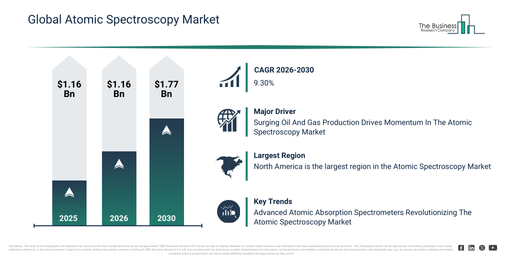
    The atomic spectroscopy market has demonstrated robust expansion in recent years. This market is projected to expand from $8.2 billion in 2025 to $8.9 billion in 2026, registering a compound annual growth rate (CAGR) of 8.6%. Historically, this growth stemmed from factors such as increasing regulatory demands for elemental impurity testing, an uptick in pharmaceutical manufacturing activities, the expanding application of spectroscopy in environmental monitoring, the proliferation of academic research laboratories, and greater uptake of XRF and AAS techniques.

    The atomic spectroscopy market is poised for robust expansion in the coming years. By 2030, its valuation is projected to reach $12.7 billion, demonstrating a compound annual growth rate (CAGR) of 9.3%. This expansion during the forecast period is driven by several factors, including an escalating need for high-throughput analytical testing, increased funding for sophisticated laboratory instruments, the broadening scope of food and beverage safety assessments, an intensifying emphasis on real-time elemental analysis, and ongoing advancements in spectroscopy software and automation technologies. Key developments anticipated within this timeframe involve the greater integration of high-sensitivity elemental analysis systems, the expanding application of ICP-MS in pharmaceutical evaluations, a heightened requirement for automated spectroscopy platforms, the augmentation of multi-element detection abilities, and a stronger emphasis on precision at trace levels.

    Download the Free Sample Report to Explore Key Market Insights:

    https://www.thebusinessresearchcompany.com/sample.aspx?id=12458&type=smp

    What Major Drivers Are Influencing Demand In The Atomic Spectroscopy Market?

    The growing need for oil and gas production is set to propel the atomic spectroscopy market in the future. This production fundamentally involves transforming crude oil and natural gas from wells into refined petroleum products for consumer use. The oil and gas industry utilizes atomic spectroscopy to furnish precise and dependable analytical data essential for exploration, production, refining, and environmental compliance, which in turn helps to optimize processes, ensure product quality, and uphold equipment integrity. For example, in March 2023, the US Energy Information Administration, a US-based government agency, indicated that crude oil output in the US was 12.4 million b/d in 2023, an increase from 11.7 million b/d in 2022. Thus, the escalating demand for oil and gas production is a key driver for the growth of the atomic spectroscopy market.

    Which Market Segments Are Examined In The Atomic Spectroscopy Market Study?

    The atomic spectroscopy market covered in this report is segmented –

    1) By Type: Atomic Absorption Spectroscopy (AAS) Instruments, Atomic Emission Spectroscopy (AES) Instruments, Inductively Coupled Plasma (ICP) Spectrometers (ICP-OES and ICP-MS), X-Ray Fluorescence (XRF) Spectrometers, Laser-Induced Breakdown Spectroscopy (LIBS) Instruments, Other Atomic Spectroscopy Instruments

    2) By Technology: Atomic Absorption Spectroscopy (AAS), X-ray Fluorescence (XRF), Inductively Coupled Plasma-Optical Emission Spectroscopy (ICP-OES), Inductively Coupled Plasma-Mass Spectrometry (ICP-MS), Elemental Analyzers, Other Technologies

    3) By Application: Food And Beverage Testing, Pharmaceutical, Industrial, Environmental Testing, Geological Sciences, Petrochemical, Academics, Other Applications

    4) By Distribution Channel: Direct Tenders, Authorized Distributors / Channel Partners, Government & Institutional Tenders

    5) By End-User: Laboratories, Universities, Manufacturing Facilities, Government Agencies

    Subsegments:

    1) By Atomic Absorption Spectroscopy (AAS) Instruments: Flame Atomic Absorption Spectrometers (FAAS), Graphite Furnace Atomic Absorption Spectrometers (GFAAS), Hydride Generation AAS, Cold Vapor AAS

    2) By Atomic Emission Spectroscopy (AES) Instruments: Flame Emission Spectrometers, Arc Spark Atomic Emission Spectrometers

    3) By Inductively Coupled Plasma (ICP) Spectrometers: Inductively Coupled Plasma And Optical Emission Spectroscopy (ICP-OES And ICP-AES), Inductively Coupled Plasma And Mass Spectrometry (ICP-MS)

    4) By X-Ray Fluorescence (XRF) Spectrometers: Energy-Dispersive X-Ray Fluorescence (EDXRF), Wavelength-Dispersive X-Ray Fluorescence (WDXRF), Handheld And Portable XRF Spectrometers

    5) By Laser-Induced Breakdown Spectroscopy (LIBS) Instruments: Laboratory-Based LIBS Systems, Portable And Handheld LIBS Systems, Inline And Process LIBS Systems

    6) By Other Atomic Spectroscopy Instruments: Glow Discharge Optical Emission Spectroscopy (GD-OES), Atomic Fluorescence Spectroscopy (AFS), Microwave-Induced Plasma Spectroscopy (MIP)

    Which Trends Are Influencing The Atomic Spectroscopy Market?

    Leading companies in the atomic spectroscopy market are concentrating on introducing advanced solutions, such as atomic absorption (AA) spectrometers, to gain a competitive advantage. An atomic absorption (AA) spectrometer is an analytical device utilized to determine the concentration of specific elements in a sample by measuring the absorption of light, typically from a flame or graphite furnace, by free atoms within the sample. For instance, in September 2024, Thermo Fisher Scientific Inc., a US-based life science and clinical research company, unveiled the atomic absorption (AA) spectrometer iCE 3300GF. The iCE 3300GF AA spectrometer is well-suited for cost-conscious laboratories, offering guaranteed deuterium background correction and an automatic optical setup for optimal sensitivity, reliability, and accuracy. Engineered for a broad spectrum of analytical applications in environmental, academic, clinical, and food safety laboratories, this spectrometer excels particularly in trace elemental analysis. Its integrated furnace autosampler simplifies both standard preparation and intelligent dilution of over-range samples, while the Ebert optical system enhances productivity by facilitating automatic and unattended operation. A prominent feature is its innovative graphite furnace vision system (GFTV), which offers a real-time internal view of the graphite cuvette, allowing observation of sample deposition and drying, thereby improving method development.

    Who Are The Primary Competitors In The Atomic Spectroscopy Market?

    Major companies operating in the atomic spectroscopy market are Thermo Fisher Scientific Inc., Agilent Technologies Inc., Shimadzu Corporation, PerkinElmer Inc., Bruker Corporation, JEOL Ltd., Rigaku Corporation, Hitachi High-Tech Corporation, Analytik Jena AG, GBC Scientific Equipment Pty Ltd., Lumex Instruments, AMETEK Inc., Buck Scientific Instruments LLC, PG Instruments Limited, Teledyne Leeman Labs, Horiba Ltd., Skyray Instrument Co. Ltd., Focused Photonics Inc., Aurora Instruments Ltd., Beijing Beifen-Ruili Analytical Instrument (Group) Co. Ltd.

    Read the full atomic spectroscopy market report here:

    https://www.thebusinessresearchcompany.com/report/atomic-spectroscopy-global-market-report

    Which Region Shows The Strongest Potential For Future Growth In The Atomic Spectroscopy Market?

    North America was the largest region in the atomic spectroscopy market in 2025. Asia-Pacific is expected to be the fastest-growing region in the forecast period. The regions covered in the atomic spectroscopy market report are Asia-Pacific, South East Asia, Western Europe, Eastern Europe, North America, South America, Middle East, Africa.

    Request A Tailored Atomic Spectroscopy Market Research Report For Competitive Advantage:

    https://www.thebusinessresearchcompany.com/customise?id=12458&type=smp

    Browse Through More Reports Similar to the Global Atomic Spectroscopy Market 2026, By The Business Research Company

    Molecular Spectroscopy Market Report 2026

    https://www.thebusinessresearchcompany.com/report/molecular-spectroscopy-global-market-report

    Process Spectroscopy Market Report 2026

    https://www.thebusinessresearchcompany.com/report/process-spectroscopy-global-market-report

    Ultravioletvisible Spectroscopy Market Report 2026

    https://www.thebusinessresearchcompany.com/report/ultravioletvisible-spectroscopy-global-market-report

    Get in touch with us:

    The Business Research Company: https://www.thebusinessresearchcompany.com/

    Americas +1 310-496-7795

    Asia +44 7882 955267 & +91 8897263534

    Europe +44 7882 955267

    Email us at info@tbrc.info

    Follow us on:

    LinkedIn: https://in.linkedin.com/company/the-business-research-company

    YouTube: https://www.youtube.com/channel/UC24_fI0rV8cR5DxlCpgmyFQ

    Global Market Model: https://www.thebusinessresearchcompany.com/global-market-model
  • Global Atomic Emission Spectroscopy Market Expected to Reach $9.55 Billion by 2030 with 8.5% CAGR

    Global Atomic Emission Spectroscopy Market Expected to Reach $9.55 Billion by 2030 with 8.5% CAGR

    The Business Research Company’s 2026 market reports include new capabilities such as market attractiveness scoring and analysis, total addressable market analysis, company scoring matrix, interactive excel data dashboard, improved supply chain analysis, upcoming startups in the market, and overview of key products, aimed at improving the depth, usability, and strategic value of the insights delivered.

    How Large Is The Atomic Emission Spectroscopy Market Projected To Become By 2030 Based On Its 2026 Valuation?

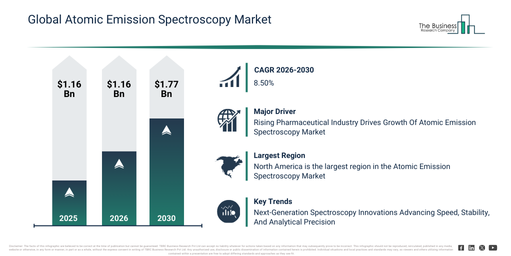
    The atomic emission spectroscopy market size has experienced robust growth in recent years. This market is projected to expand from $6.32 billion in 2025 to $6.88 billion in 2026, demonstrating a compound annual growth rate (CAGR) of 8.9%. Historically, this expansion was driven by several factors, including the dependence on traditional flame and arc emission spectrometers, the availability of limited multi-element analysis functionalities, the increasing adoption in industrial and laboratory settings, stricter regulatory requirements for elemental analysis, and the broadening of environmental monitoring initiatives.

    The market for atomic emission spectroscopy is projected to experience substantial expansion in the coming years. This market is forecast to reach $9.55 billion by 2030, exhibiting a compound annual growth rate (CAGR) of 8.5%. Key factors driving this expansion during the projection period include continuous technological improvements in ICP-AES and MP-AES, the growing acceptance of portable and handheld spectrometers, an uptick in pharmaceutical and biotechnology testing activities, an increase in high-throughput and automated analytical methods, and the incorporation of digital data management and cloud-based platforms. Significant developments anticipated over the forecast timeframe encompass an escalating need for multi-element and highly precise spectroscopy, the wider availability of portable and handheld AES devices, broader applications in environmental and clinical diagnostics, the increased use of ICP-AES systems within pharmaceutical analysis, and the implementation of automated sample handling alongside high-throughput analysis techniques.

    Download the Free Sample Report to Explore Key Market Insights:

    https://www.thebusinessresearchcompany.com/sample.aspx?id=20494&type=smp

    Which Market Drivers Are Supporting The Expansion Of The Atomic Emission Spectroscopy Market?

    The expanding pharmaceutical sector is anticipated to drive the advancement of the atomic emission spectroscopy market in the future. This industry primarily focuses on the exploration, creation, manufacturing, and promotion of medicines to enhance health results. Its growth stems from the rising need for novel therapies, progress in drug development techniques, and increasing worldwide healthcare requirements. Within the pharmaceutical industry, atomic emission spectroscopy finds application in the accurate identification and measurement of trace elements and metallic contaminants within drugs and formulations, thereby guaranteeing adherence to regulatory mandates. For example, a report from August 2025 by the European Federation of Pharmaceutical Industries and Associations (EFPIA), a Belgium-based trade association representing the pharmaceutical industry, highlighted that in 2023, the pharmaceutical industry allocated approximately ($ 60364.80 million) €52,400 million towards research and development in Europe. Consequently, the expanding pharmaceutical sector is fueling the development of the atomic emission spectroscopy market.

    What Segment Groups Are Identified Within The Atomic Emission Spectroscopy Market?

    The atomic emission spectroscopy market covered in this report is segmented –

    1) By Type: Flame Emission Spectroscopy (FES), Spark Atomic Emission Spectroscopy (SAES), Arc Atomic Emission Spectroscopy (AES), Inductively Coupled Plasma Atomic Emission Spectroscopy (ICP-AES), Other Types

    2) By Application: Biotechnology, Environmental Testing, Clinical Applications

    3) By End-User: Pharmaceutical companies, Hospitals, Laboratories, Research institutes, Other End Users

    Subsegments:

    1) By Flame Emission Spectroscopy (FES): Single Element Flame Emission Spectrometers, Multi-Element Flame Emission Spectrometers, Portable Flame Emission Spectrometers, High-Throughput Flame Emission Spectrometers

    2) By Spark Atomic Emission Spectroscopy (SAES): Laboratory Spark Atomic Emission Spectrometers, Industrial Spark Atomic Emission Spectrometers, Handheld Spark Atomic Emission Spectrometers, High-Precision Spark Atomic Emission Spectrometers

    3) By Arc Atomic Emission Spectroscopy (AES): Direct Current Arc Atomic Emission Spectrometers, Radio Frequency Arc Atomic Emission Spectrometers, High-Temperature Arc Atomic Emission Spectrometers, Portable Arc Atomic Emission Spectrometers

    4) By Inductively Coupled Plasma Atomic Emission Spectroscopy (ICP-AES): Quadrupole ICP-AES, High-Resolution ICP-AES, Multi-Element ICP-AES, Portable ICP-AES Systems, High-Sensitivity ICP-AES Systems

    5) By Other Types: Laser-Induced Breakdown Spectroscopy (LIBS), Microwave Plasma Atomic Emission Spectroscopy (MP-AES), Continuous Wave Atomic Emission Spectroscopy (CWAES)

    What Trends Are Advancing Progress In The Atomic Emission Spectroscopy Market?

    Major companies within the atomic emission spectroscopy market are concentrating on enhancing instrument performance through capabilities such as faster processing, improved stability, longer maintenance periods, and integrated automation technologies. This focus aims to deliver more precise, efficient, and dependable elemental analysis solutions for both industrial and research applications. For example, in November 2023, Thermo Fisher Scientific, a US-based medical technology enterprise, unveiled its cutting-edge ARL iSpark Plus Optical Emission Spectrometers. These spectrometers are designed to offer quicker and more reliable elemental analysis for metal producers, processors, recyclers, and research laboratories. Building upon the proven ARL iSpark series, the new systems incorporate enhanced optics, digital spark generation, intelligent algorithms, and an upgraded spark stand that minimizes signal drift, eradicates memory effects, and extends maintenance intervals by 30%. Furthermore, their optimized software and firmware reduce processing time by 15%. These advancements allow for ultra-fast detection of non-metallic inclusions and contribute to higher productivity, energy savings, and improved quality control within metal production and processing environments.

    Which Companies Hold Significant Positions In The Atomic Emission Spectroscopy Market?

    Major companies operating in the atomic emission spectroscopy market are Hitachi Ltd, Thermo Fisher Scientific Inc., Agilent Technologies Inc., Wuxi Jinyibo Instrument Technology, Shimadzu Corporation, Bruker Corporation, Horiba Ltd., Oxford Instruments PLC, Leco Corporation, SPECTRO Analytical Instruments GmbH, Jiangsu Skyray Instrument Co. Ltd., CAMECA Instruments Inc., Teledyne Leeman Labs, Nippon Instruments Corporation, PerkinElmer Inc, Analytik Jena AG, AMETEK Inc, Rigaku Corporation, JEOL Ltd, Focused Photonics Inc, GNR Analytical Instruments Group SpA, Aurora Instruments Ltd.

    Read the full atomic emission spectroscopy market report here:

    https://www.thebusinessresearchcompany.com/report/atomic-emission-spectroscopy-global-market-report

    How Is The Atomic Emission Spectroscopy Market Distributed Across Key Geographic Regions?

    North America was the largest region in the atomic emission spectroscopy market in 2025. Asia-Pacific is expected to be the fastest-growing region in the forecast period. The regions covered in the atomic emission spectroscopy market report are Asia-Pacific, South East Asia, Western Europe, Eastern Europe, North America, South America, Middle East, Africa.

    Request A Tailored Atomic Emission Spectroscopy Market Research Report For Competitive Advantage:

    https://www.thebusinessresearchcompany.com/customise?id=20494&type=smp

    Browse Through More Reports Similar to the Global Atomic Emission Spectroscopy Market 2026, By The Business Research Company

    Emission Monitoring System Market Report 2026

    https://www.thebusinessresearchcompany.com/report/emission-monitoring-system-global-market-report

    Emission Management Software Market Report 2026

    https://www.thebusinessresearchcompany.com/report/emission-management-software-global-market-report

    Single Photon Emission Computed Tomography Spect Market Report 2026

    https://www.thebusinessresearchcompany.com/report/single-photon-emission-computed-tomography-spect-global-market-report

    Get in touch with us:

    The Business Research Company: https://www.thebusinessresearchcompany.com/

    Americas +1 310-496-7795

    Asia +44 7882 955267 & +91 8897263534

    Europe +44 7882 955267

    Email us at info@tbrc.info

    Follow us on:

    LinkedIn: https://in.linkedin.com/company/the-business-research-company

    YouTube: https://www.youtube.com/channel/UC24_fI0rV8cR5DxlCpgmyFQ

    Global Market Model: https://www.thebusinessresearchcompany.com/global-market-model
  • Atomic Absorption Spectrometer Market Future Outlook Showing Expansion Toward $11.74 Billion by 2030

    Atomic Absorption Spectrometer Market Future Outlook Showing Expansion Toward $11.74 Billion by 2030

    The Business Research Company’s 2026 market reports include new capabilities such as market attractiveness scoring and analysis, total addressable market analysis, company scoring matrix, interactive excel data dashboard, improved supply chain analysis, upcoming startups in the market, and overview of key products, aimed at improving the depth, usability, and strategic value of the insights delivered.

    What Market Value Is Anticipated For The Atomic Absorption Spectrometer Market Over The Period 2026–2030?

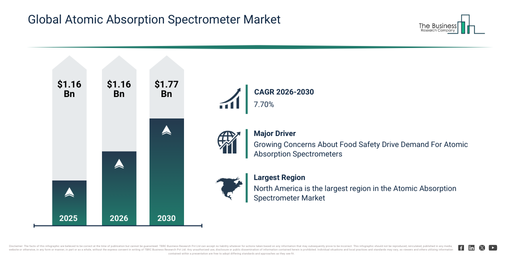
    The atomic absorption spectrometer market size has witnessed substantial growth in recent years. It is anticipated to expand from $8.07 billion in 2025 to $8.72 billion in 2026, at a compound annual growth rate (CAGR) of 8.1%. This expansion in past periods can be credited to factors such as a dependence on manual and single-element AAS systems, constrained availability of automated instruments, escalating industrial and environmental regulations, increasing needs from the mining and petrochemical sectors, and the integration of flame atomic absorption spectrometers.

    The atomic absorption spectrometer market size is anticipated to experience substantial growth in the upcoming years, expanding to $11.75 billion in 2030 with a compound annual growth rate (CAGR) of 7.7%. This growth over the forecast period is fueled by advancements in integrated and modular AAS systems, increasing applications within biotechnology and pharmaceuticals, a growing demand for portable and software-integrated spectrometers, the rise of multi-element and high-throughput analysis, and heightened requirements for environmental and food safety testing. Prominent trends for the forecast period include a surging demand for high-precision elemental analysis, expansion in environmental and food safety testing, greater adoption of portable and automated AAS systems, integration with chromatography and other analytical methods, and a focus on high-throughput and multi-element spectroscopy.

    Download the Free Sample Report to Explore Key Market Insights:

    https://www.thebusinessresearchcompany.com/sample.aspx?id=20493&type=smp

    What Underlying Factors Are Accelerating The Growth Of The Atomic Absorption Spectrometer Market?

    Future expansion of the atomic absorption spectrometer market is anticipated due to increasing anxieties surrounding food safety. These heightened concerns stem from a rise in foodborne diseases, contamination incidents, and the growing intricacy of global food distribution networks. In the context of food safety, the atomic absorption spectrometer is vital for identifying and quantifying minute levels of heavy metals and other harmful substances, thereby ensuring food products adhere to established safety protocols and regulatory thresholds. A relevant example occurred in August 2025, when the United States Department of Agriculture, a US-based government department, reported that in 2023, 18 million U.S. households (13.5%) experienced food insecurity at some point, an increase from 17 million households (12.8%) in 2022. Consequently, the escalating worries over food safety are propelling the growth of the atomic absorption spectrometer market. The projected expansion of the atomic absorption spectrometer market will be fueled by the burgeoning pharmaceutical and biotechnology industries. These industries encompass research, development, manufacturing, and commercialization of medications, treatments, and medical devices, leveraging chemical and biological processes to manage, prevent, or cure diseases. The increasing global demand for sophisticated therapies and novel disease solutions is contributing to the expansion of the pharmaceutical and biotechnology sectors. Atomic absorption spectrometers are employed within these sectors for accurate measurement of trace metal contaminants, thereby guaranteeing product excellence and adherence to regulations. For instance, in June 2024, the European Federation of Pharmaceutical Industries and Associations (EFPIA), a Belgium-based European trade association representing the pharmaceutical industry, indicated that the health sector dedicated approximately $297.79 billion (€258. billion) to research and development in 2023, accounting for 20.5% of overall global business R&D expenditure. Thus, the expansion of the pharmaceutical and biotechnology sectors is accelerating the growth of the atomic absorption spectrometer market.

    How Is The Atomic Absorption Spectrometer Market Divided Into Its Major Segments?

    The atomic absorption spectrometer market covered in this report is segmented –

    1) By Type: Flame Atomic Absorption Spectrometer, Graphite Furnace Atomic Absorption Spectrometer, Integrated Atomic Absorption Spectrometer

    2) By Application: Environmental Analysis, Food And Beverages Testing, Biotechnology, Other Applications

    3) By End User: Pharmaceutical Industry, Mining Industry, Petrochemical Industry, Agriculture Industry, Other End Users

    Subsegments:

    1) By Flame Atomic Absorption Spectrometer: Single Element Flame Atomic Absorption Spectrometers, Multi-Element Flame Atomic Absorption Spectrometers, Portable Flame Atomic Absorption Spectrometers, High-Throughput Flame Atomic Absorption Spectrometers

    2) By Graphite Furnace Atomic Absorption Spectrometer: Single Element Graphite Furnace Atomic Absorption Spectrometers, Multi-Element Graphite Furnace Atomic Absorption Spectrometers, Automated Graphite Furnace Atomic Absorption Spectrometers, High-Resolution Graphite Furnace Atomic Absorption Spectrometers

    3) By Integrated Atomic Absorption Spectrometer: Combination Flame And Graphite Furnace Atomic Absorption Spectrometers, Integrated Systems With Spectroscopy And Chromatography, Modular Integrated Atomic Absorption Spectrometers, Software-Integrated Atomic Absorption Spectrometers

    How Are Trends Transforming The Atomic Absorption Spectrometer Market Landscape?

    Who Are The Prominent Organizations Shaping The Atomic Absorption Spectrometer Market?

    Major companies operating in the atomic absorption spectrometer market are Hitachi Ltd., Thermo Fisher Scientific Inc., Agilent Technologies, Shimadzu Corporation, PerkinElmer Inc., Horiba Scientific, Techcomp, Analytik Jena, Spectro Analytical Instruments, GBC Scientific Equipment, Buck Scientific Instruments LLC, JEOL Ltd., Rigaku Corporation, PG Instruments Limited, Skyray Instrument, Rayleigh Instruments, Aurora Scientific Instruments, Beijing Beifen Ruili Analytical Instrument Group, Aurora Biomed, LABINDIA Analytical Instruments, KLAB Instrument, Sanco Scientific, Toshniwal Instruments, Chemito Technologies, Galaxy Scientific, ECIL Analytical Instruments

    Read the full atomic absorption spectrometer market report here:

    https://www.thebusinessresearchcompany.com/report/atomic-absorption-spectrometer-global-market-report

    Which Region Is Projected To Dominate The Atomic Absorption Spectrometer Market During The Forecast Period?

    North America was the largest region in the atomic absorption spectrometer market in 2025. The regions covered in the atomic absorption spectrometer market report are Asia-Pacific, South East Asia, Western Europe, Eastern Europe, North America, South America, Middle East, Africa.

    Request A Tailored Atomic Absorption Spectrometer Market Research Report For Competitive Advantage:

    https://www.thebusinessresearchcompany.com/customise?id=20493&type=smp

    Browse Through More Reports Similar to the Global Atomic Absorption Spectrometer Market 2026, By The Business Research Company

    Atomic Layer Deposition Market Report 2026

    https://www.thebusinessresearchcompany.com/report/atomic-layer-deposition-global-market-report

    Atomic Spectroscopy Market Report 2026

    https://www.thebusinessresearchcompany.com/report/atomic-spectroscopy-global-market-report

    Smart Gas Meter Market Report 2026

    https://www.thebusinessresearchcompany.com/report/smart-gas-meter-global-market-report

    Get in touch with us:

    The Business Research Company: https://www.thebusinessresearchcompany.com/

    Americas +1 310-496-7795

    Asia +44 7882 955267 & +91 8897263534

    Europe +44 7882 955267

    Email us at info@tbrc.info

    Follow us on:

    LinkedIn: https://in.linkedin.com/company/the-business-research-company

    YouTube: https://www.youtube.com/channel/UC24_fI0rV8cR5DxlCpgmyFQ

    Global Market Model: https://www.thebusinessresearchcompany.com/global-market-model
  • At-Home Orthodontic Aligner Market Revenue Growth Expected to Reach $10.07 Billion by 2030 with 16.1% CAGR

    At-Home Orthodontic Aligner Market Revenue Growth Expected to Reach $10.07 Billion by 2030 with 16.1% CAGR

    The Business Research Company’s 2026 market reports include new capabilities such as market attractiveness scoring and analysis, total addressable market analysis, company scoring matrix, interactive excel data dashboard, improved supply chain analysis, upcoming startups in the market, and overview of key products, aimed at improving the depth, usability, and strategic value of the insights delivered.

    What Is The Expected Market Size Of The At-Home Orthodontic Aligner Market From 2026 To 2030?

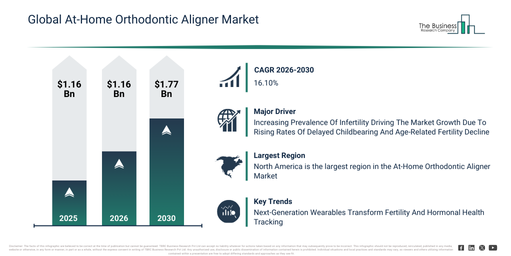
    The at-home orthodontic aligner market has experienced rapid expansion in recent years. It is projected to increase from $4.76 billion in 2025 to $5.54 billion in 2026, demonstrating a compound annual growth rate (CAGR) of 16.4%. This historical growth can be attributed to factors such as a heightened awareness of dental aesthetics, the significant cost associated with traditional braces, the early adoption of clear aligner technology, the expansion of online dental platforms, and a rising demand for adult orthodontic solutions.

    The at-home orthodontic aligner market is expected to witness significant expansion in the upcoming years. It is projected to achieve a valuation of $10.07 billion by 2030, demonstrating a compound annual growth rate (CAGR) of 16.1%. This anticipated growth can be attributed to several factors, including the advent of AI-driven treatment planning, the increasing embrace of remote dental monitoring, a heightened demand for economical orthodontic solutions, advancements in aligner material technology, and the wider availability of teledentistry services. Prominent trends for the forecast period include a surging demand for remote orthodontic care, the growing adoption of direct-to-consumer dental offerings, a rising preference for aligners that are invisible and aesthetically appealing, the expansion of orthodontic services catering to adults, and a shift towards more concise and individualized treatment approaches.

    Download the Free Sample Report to Explore Key Market Insights:

    https://www.thebusinessresearchcompany.com/sample.aspx?id=28939&type=smp

    Which Growth Drivers Are Contributing To The Progress Of The At-Home Orthodontic Aligner Market?

    The increasing incidence of infertility is projected to drive the expansion of the at-home fertility hormone patch market in the future. Infertility is defined as a medical condition where conception cannot be achieved after a year of regular unprotected sexual activity, or experiencing physical challenges in becoming pregnant or carrying a pregnancy to live birth. The rise in infertility rates stems from contemporary trends of delayed childbearing, as more individuals choose to postpone starting families until later in life, a period when age-related reductions in egg quality, ovarian reserve, and sperm parameters significantly diminish the likelihood of successful conception. This growing burden of infertility boosts the demand for at-home fertility hormone testing options, as these patches provide a convenient and non-invasive method for monitoring reproductive hormones, helping individuals track ovulation, pinpoint fertile periods, and make informed choices about their reproductive health without needing frequent clinic visits. For example, in April 2023, the World Health Organization (WHO), a Switzerland-based intergovernmental organization, reported that roughly 17.5% of the adult global population, or approximately 1 in 6 people, experience infertility, underscoring the critical need to improve access to affordable, high-quality fertility care for those affected. Consequently, the escalating prevalence of infertility is stimulating growth in the at-home fertility hormone patch market. Growing investment in women’s health initiatives is expected to boost the growth of the at-home fertility hormone patch market moving forward. Women’s health initiatives encompass various programs, policies, or campaigns designed to enhance women’s physical, mental, and reproductive well-being. The increase in funding for these initiatives is occurring due to the recognition of persistent healthcare disparities, where women’s pain and health concerns have historically been overlooked or downplayed by medical professionals, leading to fragmented services and suboptimal health outcomes that necessitate systematic reform. Investment in women’s health initiatives supports innovations like the at-home fertility hormone patch by providing research funding, improving accessibility, and rectifying historical deficiencies in reproductive healthcare, ultimately enabling women to safely and conveniently monitor and manage their fertility from home. For instance, in March 2025, according to the Department of Health and Social Care, a UK-based government department, $32 million (approximately £25 million) in funding was allocated to local systems between financial years 2023–2024 and 2024–2025 to establish women’s health hubs as a proof of concept. Therefore, the increasing investment in women’s health initiatives is fueling the growth of the at-home fertility hormone patch market.

    Which Segments Are Included In The Analysis Of The At-Home Orthodontic Aligner Market?

    The at-home orthodontic aligner market covered in this report is segmented –

    1) By Product Type: Clear Aligners, Hybrid Orthodontic Aligners, Nighttime Wear Aligners, Short-Term Treatment Aligners, Other Product Types

    2) By Treatment Scope: Mild Malocclusion Correction, Moderate Malocclusion Correction, Cosmetic Alignment, Relapse Correction

    3) By Age Group: Teenagers, Adults

    4) By Material: Polyurethane Plastic, Polyethylene Terephthalate Glycol, Multilayer Thermoplastic Polymers, Other Biocompatible Materials

    5) By Distribution Channel: Direct-to-Consumer Online Platforms, Company-Owned Websites, Tele-Orthodontic Platforms, Hybrid Dental Network Partnerships, Other Online Distribution Channels

    6) By End User: Home Care Users, Hybrid Home-Clinic Users

    Subsegments:

    1) By Clear Aligners: Single-Arch Clear Aligners, Dual-Arch Clear Aligners, Three-Dimensional (3D) Printed Clear Aligners, Artificial Intelligence (AI)-Designed Clear Aligners, Remote-Monitoring-Enabled Clear Aligners

    2) By Hybrid Orthodontic Aligners: Dentist-Prescribed Hybrid Aligners, Remote-Supervised Hybrid Aligners, Periodic In-Clinic Adjustment Aligners, Tele-Orthodontics-Integrated Aligners

    3) By Nighttime Wear Aligners: Part-Time Wear Clear Aligners, Accelerated Night-Only Treatment Aligners, Cosmetic Night-Use Aligners, Compliance-Tracking Night Aligners

    4) By Short-Term Treatment Aligners: Mild Misalignment Correction Aligners, Relapse Correction Aligners, Cosmetic Alignment Aligners, Event-Based Short-Duration Aligners

    5) By Other Product Types: Removable Orthodontic Systems, Retainer-Style Aligner Systems, Subscription-Based Aligner Programs, Custom-Fit At-Home Orthodontic Systems

    Which Trends Are Impacting The Growth Of The At-Home Orthodontic Aligner Market?

    Key players in the at-home fertility hormone patch market are concentrating on creating advanced solutions, including deoxyribonucleic acid (DNA)-based wearable patches, for real-time, non-invasive hormone monitoring. These deoxyribonucleic acid (DNA)-based wearable patches utilize DNA-derived sensors to identify hormone levels in interstitial fluid, allowing individuals to track their hormonal changes continually without needing invasive blood tests, thereby aiding fertility management and general hormonal well-being. For example, in February 2025, Level Zero Health Inc., a biotechnology firm from the UK, secured $6.9 million through an oversubscribed pre-seed funding round to produce the world’s initial continuous hormone monitoring patch. This company’s DNA-based wearable patch assesses critical hormones like cortisol, progesterone, estrogen, and testosterone within interstitial fluid, offering immediate data to assist fertility tracking, managing hormonal health, and remote clinical oversight. This non-invasive device enables users to observe their hormonal shifts either continuously or periodically via an easy-to-wear arm patch, thereby lessening the necessity for clinic appointments and invasive methods. Initially, the startup intends to focus on B2B clinical applications, such as fertility clinics and endocrine treatment centers, concurrently establishing a foundation for eventual expansion into consumer wellness markets.

    Which Key Industry Participants Are Active In The At-Home Orthodontic Aligner Market?

    Major companies operating in the at-home orthodontic aligner market are Align Technology Inc., Candid Care Co., SmileLove LLC, WonderSmile Pty Ltd., ALIGNERCO, NewSmile, Straight Teeth Direct, EZ Smile Pty Ltd., Smileie, Alinger32, OrthoFX Inc., Angel Aligner, Snazzy Clear Aligners, FlexAligners, Smileie Europe, Dezy, Zenyum, PlusDental, SmileWhite, Illusion Aligners, Smartee Aligners

    Read the full at-home orthodontic aligner market report here:

    https://www.thebusinessresearchcompany.com/report/at-home-orthodontic-aligner-global-market-report

    What Are The Leading Geographic Regions In The At-Home Orthodontic Aligner Market?

    North America was the largest region in the at-home fertility hormone patch market in 2025. The regions covered in the at-home orthodontic aligner market report are Asia-Pacific, South East Asia, Western Europe, Eastern Europe, North America, South America, Middle East, Africa.

    Request A Tailored At-Home Orthodontic Aligner Market Research Report For Competitive Advantage:

    https://www.thebusinessresearchcompany.com/customise?id=28939&type=smp

    Browse Through More Reports Similar to the Global At-Home Orthodontic Aligner Market 2026, By The Business Research Company

    Laser Atherectomy Devices Market Report 2026

    https://www.thebusinessresearchcompany.com/report/laser-atherectomy-devices-global-market-report

    Coronary Atherectomy Devices Market Report 2026

    https://www.thebusinessresearchcompany.com/report/coronary-atherectomy-devices-global-market-report

    Biopsy Devices Market Report 2026

    https://www.thebusinessresearchcompany.com/report/biopsy-devices-global-market-report

    Get in touch with us:

    The Business Research Company: https://www.thebusinessresearchcompany.com/

    Americas +1 310-496-7795

    Asia +44 7882 955267 & +91 8897263534

    Europe +44 7882 955267

    Email us at info@tbrc.info

    Follow us on:

    LinkedIn: https://in.linkedin.com/company/the-business-research-company

    YouTube: https://www.youtube.com/channel/UC24_fI0rV8cR5DxlCpgmyFQ

    Global Market Model: https://www.thebusinessresearchcompany.com/global-market-model
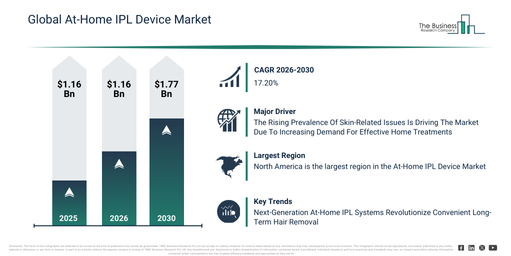
  • At-Home IPL Device Market Expected to Record Steady Growth and Approach $3.97 Billion by 2030

    At-Home IPL Device Market Expected to Record Steady Growth and Approach $3.97 Billion by 2030

    The Business Research Company’s 2026 market reports include new capabilities such as market attractiveness scoring and analysis, total addressable market analysis, company scoring matrix, interactive excel data dashboard, improved supply chain analysis, upcoming startups in the market, and overview of key products, aimed at improving the depth, usability, and strategic value of the insights delivered.

    What Market Valuation Is Forecasted For The At-Home IPL Device Market By 2030 Starting From Its 2026 Size?

    The at-home IPL device market has experienced substantial expansion in recent years. This market is set to expand from $1.79 billion in 2025 to $2.11 billion in 2026, exhibiting a compound annual growth rate (CAGR) of 17.5%. The historical growth of this market is attributable to several factors, including escalating salon treatment costs, the rise of consumer beauty electronics, heightened awareness of aesthetic care, the prompt adoption of home-use light therapy devices, and the proliferation of e-commerce beauty platforms.

    The market for at-home IPL devices is projected to experience swift expansion over the coming years. This market is set to reach **$3.97 billion by 2030, exhibiting a compound annual growth rate (CAGR) of 17.2%.** This anticipated growth during the forecast period is fueled by several factors, including improvements in light-based device technology, a greater emphasis among consumers on self-care practices, an increased need for beauty solutions that are easy to transport, the expansion of direct-to-consumer beauty companies, and the broader acceptance of grooming products suitable for both sexes. Key trends anticipated during this period involve a rising inclination towards aesthetic procedures performed at home, a greater uptake of beauty devices that are economical, a surge in demand for IPL systems with multiple functions, the growing prevalence of personal grooming habits across both genders, and a move towards methods that offer lasting hair reduction.

    Download the Free Sample Report to Explore Key Market Insights:

    https://www.thebusinessresearchcompany.com/sample.aspx?id=28938&type=smp

    What Primary Drivers Are Shaping The Development Of The At-Home IPL Device Market?

    The increasing occurrence of skin conditions is anticipated to fuel the expansion of the at-home IPL device market in the future. These issues encompass any ailment impacting the skin’s well-being, look, or operation, potentially stemming from elements such as allergies, infections, shifts in hormones, or exposure to the environment. The growing incidence of skin problems is propelled by increased contact with environmental contaminants, which compromises the skin’s protective layer and leads to irritation and inflammation. At-home IPL devices assist in treating these skin conditions by employing intense pulsed light to focus on deeper skin layers, thereby diminishing pigmentation and hair growth, refining skin texture, and encouraging collagen synthesis for more vibrant, smoother skin. For example, data from March 2025 by the British Dermatological Nursing Group (BDNG), a professional organization based in the UK, indicates that approximately 60% of individuals in the United Kingdom are presently afflicted with a skin disease, with more than 100,000 new skin cancer cases identified annually. Consequently, the escalating occurrence of skin conditions is fostering the development of the at-home IPL device market.

    Which Segment Categories Define The At-Home IPL Device Market?

    The at-home ipl device market covered in this report is segmented –

    1) By Product Type: Corded, Cordless

    2) By Distribution Channel: Online Retail, Offline Retail, Specialty Stores, Pharmacies, Other Distribution Channels

    3) By Application: Hair Removal, Skin Rejuvenation, Acne Treatment, Other Applications

    4) By End-User: Men, Women, Unisex

    Subsegments:

    1) By Corded: Handheld Device, Tabletop Device

    2) By Cordless: Rechargeable Handheld Device, Battery Operated Device

    What Major Market Trends Are Driving Changes In The At-Home IPL Device Market?

    Major companies operating in the at-home IPL device market are concentrating on developing innovative advancements like IPL hair removal systems to deliver a convenient and dependable means for long-term hair reduction within the home environment. An IPL Hair Removal System is a device utilizing pulsed light technology to target hair follicles, effectively and safely reducing hair growth for domestic use. For instance, in October 2025, Procter & Gamble, a US-based consumer goods company, unveiled the Braun Skin i·expert IPL. This product incorporates automatic adjustment to varying skin tones across different body areas, a high-frequency pulsed light mechanism, and integrates with a mobile application that provides user guidance during treatment. These enhancements enable more precise, efficient, and user-friendly hair reduction, representing a significant advancement in at-home intense pulsed light hair removal technology.

    Who Are The Top Companies Competing In The At-Home IPL Device Market?

    Major companies operating in the at-home ipl device market are Panasonic Holdings Corporation, Koninklijke Philips N.V., Cyden Ltd.(Smooth Skin), SilkÂ’n, Shenzhen Mismon Technology Co. Ltd., VISS BEAUTY UK LIMITED, Shenzhen Ulike Smart Electronics Co. Ltd., Remington Arms Company LLC, Nood, Amiro Ltd., Braun GmbH, HAPPY SKIN CO PTY. LTD., Iluminage Beauty Inc., Kenzzi Limited, Shenzhen Bosidin Technology Co. Ltd., Shenzhen DEESS Science & Technology Co. Ltd., Aopvui, JOVS LTD., Shenzhen Lescolton Electric Appliance Co. Ltd., Zhongshan Aimanfun Intelligent Technology Co. Ltd.

    Read the full at-home ipl device market report here:

    https://www.thebusinessresearchcompany.com/report/at-home-ipl-device-global-market-report

    How Does The At-Home IPL Device Market Perform Across Major Global Regions?

    North America was the largest region in the at-home IPL device market in 2025. Asia-Pacific is expected to be the fastest-growing region in the forecast period. The regions covered in the at-home ipl device market report are Asia-Pacific, South East Asia, Western Europe, Eastern Europe, North America, South America, Middle East, Africa.

    Request A Tailored At-Home IPL Device Market Research Report For Competitive Advantage:

    https://www.thebusinessresearchcompany.com/customise?id=28938&type=smp

    Browse Through More Reports Similar to the Global At-Home IPL Device Market 2026, By The Business Research Company

    Prosthetics And Orthotics Market Report 2026

    https://www.thebusinessresearchcompany.com/report/prosthetics-and-orthotics-global-market-report

    Invisible Orthodontics Market Report 2026

    https://www.thebusinessresearchcompany.com/report/invisible-orthodontics-global-market-report

    Orthopedic Braces And Support Devices And Equipment Market Report 2026

    https://www.thebusinessresearchcompany.com/report/orthopedic-braces-and-support-devices-and-equipment-global-market-report

    Get in touch with us:

    The Business Research Company: https://www.thebusinessresearchcompany.com/

    Americas +1 310-496-7795

    Asia +44 7882 955267 & +91 8897263534

    Europe +44 7882 955267

    Email us at info@tbrc.info

    Follow us on:

    LinkedIn: https://in.linkedin.com/company/the-business-research-company

    YouTube: https://www.youtube.com/channel/UC24_fI0rV8cR5DxlCpgmyFQ

    Global Market Model: https://www.thebusinessresearchcompany.com/global-market-model
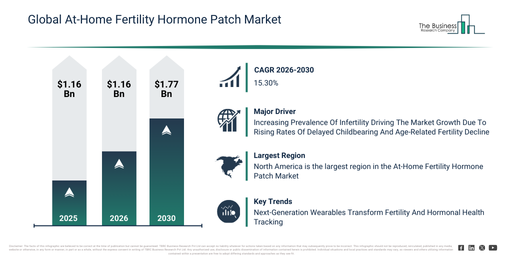
  • At-Home Fertility Hormone Patch Industry Expansion Forecast Showing Market Size of $1.2 Billion by 2030 at 15.3% CAGR

    At-Home Fertility Hormone Patch Industry Expansion Forecast Showing Market Size of $1.2 Billion by 2030 at 15.3% CAGR

    The Business Research Company’s 2026 market reports include new capabilities such as market attractiveness scoring and analysis, total addressable market analysis, company scoring matrix, interactive excel data dashboard, improved supply chain analysis, upcoming startups in the market, and overview of key products, aimed at improving the depth, usability, and strategic value of the insights delivered.

    How Is The Market Size Of The At-Home Fertility Hormone Patch Market Expected To Change Between 2026 And 2030?

    The at-home fertility hormone patch market has seen rapid expansion in recent years. Its size is expected to increase from $0.59 billion in 2025 to $0.68 billion in 2026, achieving a compound annual growth rate (CAGR) of 15.6%. Historically, this growth can be ascribed to factors including increasing infertility rates, the proliferation of home diagnostic devices, greater awareness of reproductive health, the expansion of digital health platforms, and the early uptake of wearable biosensors.

    The at-home fertility hormone patch market is anticipated to experience substantial growth in the upcoming years, with its valuation expected to climb to $1.21 billion in 2030, showing a compound annual growth rate (CAGR) of 15.3%. This expansion throughout the forecast period can be attributed to advancements like AI-enabled hormone analytics, increasing demand for personalized fertility planning, a heightened focus on preventive reproductive healthcare, the growing adoption of connected health devices, and the expansion of tele-fertility services. Notable trends during this time include the rising uptake of non-invasive fertility monitoring, an increased need for at-home reproductive health solutions, greater acceptance of wearable hormone tracking devices, the proliferation of female-centric health technologies, and a shift towards personalized fertility insights.

    Download the Free Sample Report to Explore Key Market Insights:

    https://www.thebusinessresearchcompany.com/sample.aspx?id=28937&type=smp

    Which Major Factors Are Driving The Expansion Of The At-Home Fertility Hormone Patch Market?

    The expanding occurrence of infertility is anticipated to boost the at-home fertility hormone patch market’s development. This condition is medically defined as the failure to become pregnant following a year of consistent, unprotected sex, or encountering physical challenges in conceiving or successfully carrying a pregnancy to term. Its rising incidence stems from trends toward later childbearing, with more people delaying family planning until advanced reproductive ages, a time when diminishing egg quality, ovarian reserve, and sperm health due to age substantially lower the chances of conception. This growing challenge boosts the need for at-home fertility hormone testing products, since these patches offer an easy and non-invasive way to track reproductive hormones, allowing users to monitor ovulation, pinpoint fertile periods, and make educated choices about their reproductive well-being without frequent doctor appointments. For example, data from April 2023, released by the World Health Organization (WHO), a Switzerland-based intergovernmental body, indicates that around 17.5% of adults, or roughly 1 in 6 individuals globally, experience infertility, underscoring the urgent necessity for better access to cost-effective, excellent fertility treatments for those impacted. Consequently, the expanding occurrence of infertility is fueling the market’s expansion for at-home fertility hormone patches.

    How Is The At-Home Fertility Hormone Patch Market Structured Across Different Segments?

    The at-home fertility hormone patch market covered in this report is segmented –

    1) By Product Type: Single-Use Patch, Reusable Patch

    2) By Hormone Type: Estrogen, Progesterone, Luteinizing Hormone, Follicle-Stimulating Hormone, Other Hormone Types

    3) By Distribution Channel: Online Pharmacies, Retail Pharmacies, Supermarkets Or Hypermarkets, Other Distribution Channels

    4) By Application: Female Fertility Testing, Male Fertility Testing

    5) By End-User: Home Care, Clinics, Hospitals, Other End Users

    Subsegments:

    1) By Single-Use Patch: Disposable Fertility Hormone Patches, One-Time Ovulation Monitoring Patches, Single-Cycle Hormone Tracking Patches, Adhesive Single-Use Hormone Detection Patches

    2) By Reusable Patch: Multi-Cycle Fertility Hormone Patches, Rechargeable Hormone Monitoring Patches, Long-Term Wearable Hormone Tracking Patches, Smart Reusable Hormone Patches

    Which Trends Are Shaping The Future Of The At-Home Fertility Hormone Patch Market?

    Leading companies active in the at-home fertility hormone patch market are concentrating on developing innovative solutions like deoxyribonucleic acid (DNA)-based wearable patches to enable real-time, non-invasive hormone tracking. Deoxyribonucleic acid (DNA)-based wearable patches are devices that utilize DNA-derived sensors to detect hormone levels in interstitial fluid, helping users monitor their hormonal fluctuations in real time without invasive blood tests, thereby supporting fertility tracking and overall hormonal health. For instance, in February 2025, Level Zero Health Inc., a UK-based biotechnology company, successfully raised $6.9 million in an oversubscribed pre-seed funding round to develop the world’s first continuous hormone monitoring patch. The company’s DNA-based wearable patch measures key hormones such as cortisol, progesterone, estrogen, and testosterone in interstitial fluid, providing real-time insights to aid fertility tracking, hormonal health management, and remote clinical monitoring. This non-invasive device allows users to monitor their hormonal fluctuations continuously or intermittently through a convenient arm-worn patch, significantly reducing the need for clinic visits and invasive procedures. The startup plans to initially target B2B clinical applications, including fertility clinics and endocrine treatment centers, while simultaneously laying the groundwork for potential expansion into consumer-focused wellness markets.

    Which Major Players Dominate The At-Home Fertility Hormone Patch Market?

    Major companies operating in the at-home fertility hormone patch market are Level Zero Health, Persperity Health, Muun Health, Epicore Biosystems, Impli, POM Health, Eli Health, Mira, Oova, Symex Labs, Arva Health, Ava Science Inc., Tempdrop, Inito, Proov, Hormona, Kegg, Femometer, Fairhaven Health, Ovia Health

    Read the full at-home fertility hormone patch market report here:

    https://www.thebusinessresearchcompany.com/report/at-home-fertility-hormone-patch-global-market-report

    Which Region Currently Holds The Largest Share Of The At-Home Fertility Hormone Patch Market?

    North America was the largest region in the at-home fertility hormone patch market in 2025. The regions covered in the at-home fertility hormone patch market report are Asia-Pacific, South East Asia, Western Europe, Eastern Europe, North America, South America, Middle East, Africa.

    Request A Tailored At-Home Fertility Hormone Patch Market Research Report For Competitive Advantage:

    https://www.thebusinessresearchcompany.com/customise?id=28937&type=smp

    Browse Through More Reports Similar to the Global At-Home Fertility Hormone Patch Market 2026, By The Business Research Company

    Live Internet Protocol Ip Broadcast Equipment Market Report 2026

    https://www.thebusinessresearchcompany.com/report/live-internet-protocol-ip-broadcast-equipment-global-market-report

    Home Use Wi Fi Router Market Report 2026

    https://www.thebusinessresearchcompany.com/report/home-use-wi-fi-router-global-market-report

    Smart Home Devices Market Report 2026

    https://www.thebusinessresearchcompany.com/report/smart-home-devices-global-market-report

    Get in touch with us:

    The Business Research Company: https://www.thebusinessresearchcompany.com/

    Americas +1 310-496-7795

    Asia +44 7882 955267 & +91 8897263534

    Europe +44 7882 955267

    Email us at info@tbrc.info

    Follow us on:

    LinkedIn: https://in.linkedin.com/company/the-business-research-company

    YouTube: https://www.youtube.com/channel/UC24_fI0rV8cR5DxlCpgmyFQ

    Global Market Model: https://www.thebusinessresearchcompany.com/global-market-model