Category: Medical Equipment

  • Automatic Cardiopulmonary Resuscitation (CPR) Devices Market Forecast To Reach $1.73 Billion By 2030: Key Growth Drivers And Industry Trends

    Automatic Cardiopulmonary Resuscitation (CPR) Devices Market Forecast To Reach $1.73 Billion By 2030: Key Growth Drivers And Industry Trends

    Built to provide research that’s more actionable and strategically valuable, The Business Research Company’s 2026 market reports include market attractiveness analysis, total addressable market sizing, company benchmarking matrices, interactive Excel dashboards, broader supply chain intelligence, emerging startup tracking, and in-depth product insights.

    Automatic Cardiopulmonary Resuscitation (CPR) Devices Market Size, Value And Growth Trajectory Through 2030

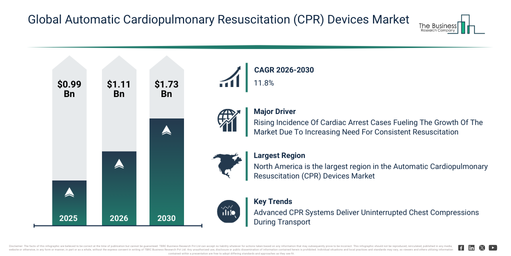
    The market size for automatic CPR devices has seen rapid expansion in recent years. It is projected to increase from $0.99 billion in 2025 to $1.11 billion in 2026, exhibiting a compound annual growth rate (CAGR) of 12.0%. The growth observed in previous periods can be linked to factors such as the rising frequency of cardiac arrest cases, the increased implementation of mechanical CPR devices by hospitals and EMS, a stronger emphasis on improving resuscitation quality, the broadening of emergency medical infrastructure, and an elevated demand for hands-free CPR during patient transport.

    The automatic CPR devices market is projected for substantial expansion in the coming years. It is forecast to reach $1.73 billion in 2030, demonstrating a compound annual growth rate (CAGR) of 11.8%. This anticipated growth is primarily driven by factors such as the increasing integration of automated cpr with aeds, greater investments in advanced life-support systems, the rising uptake of robotic and electromechanical cpr technologies, an expansion of critical-care equipment budgets within hospitals, and a growing need for consistent, high-quality cpr performance. Key trends expected over the forecast period involve technological innovations in automated cpr mechanisms, breakthroughs in lightweight, portable cpr devices, advancements in real-time feedback and sensor analytics, research and development focused on ai-enabled compression optimization, and progress in connected, data-driven emergency response systems.

    Get A Free Sample Report With In-Depth Market Insights:

    https://thebusinessresearchcompany.com/sample_request?id=98986146&type=smp&name=Automatic%20Cardiopulmonary%20Resuscitation%20%28CPR%29%20Devices%20Market%20Report%202026&utm_source=Blogs&utm_medium=Paid&utm_campaign=Oct_PR

    Automatic Cardiopulmonary Resuscitation (CPR) Devices Market Demand Drivers: What’s Powering Industry Growth?

    The increasing number of cardiac arrest incidents is anticipated to boost the expansion of the automatic cardiopulmonary resuscitation (CPR) devices market in the future. Cardiac arrest signifies an abrupt cessation of blood circulation due to the heart’s inability to pump adequately, frequently stemming from an electrical irregularity within the heart. The occurrence of cardiac arrest cases is increasing primarily because of higher rates of heart disease, obesity, high blood pressure, and diabetes, factors that contribute to impaired heart function and irregular heartbeats. Automatic cardiopulmonary resuscitation (CPR) devices assist in handling cardiac arrest situations by delivering unbroken, accurate chest compressions, thereby guaranteeing proper blood flow during critical moments. These devices enhance patient survival chances and results by sustaining steady resuscitation efforts until specialized medical assistance becomes available. As an example, in February 2025, Hato Hone St John, a New Zealand-based charity offering ambulance services, reported that 2,547 individuals received treatment for cardiac arrest in 2024, indicating a 3.6 percent rise from 2023, with 72 percent of these incidents happening at home. Consequently, the growing frequency of cardiac arrest incidents is propelling the expansion of the automatic cardiopulmonary resuscitation (CPR) devices market.

    Automatic Cardiopulmonary Resuscitation (CPR) Devices Market Segment Breakdown: Which Categories Lead On Revenue?

    The automatic cardiopulmonary resuscitation (cpr) devices market covered in this report is segmented –

    1) By Device Type: Piston-Based Mechanical CPR Devices, Load-Distributing Band (LDB) Devices, Pneumatic Compression Vest Systems, Active Compression–Decompression (ACD) Devices, Automated External Defibrillators (AEDs) With CPR Assist Features

    2) By Portability/Setting: Portable Devices, Fixed Devices

    3) By Technology: Mechanical Technology, Electromechanical Technology, Robotic Technology

    4) By Application: Cardiac Arrest (OHCA And IHCA), Respiratory Failure With Secondary Cardiac Compromise, Severe Trauma-Related Arrest, Post-Surgical Cardiac Support, Multi-Patient Emergency Response (Mass-Casualty Scenarios)

    5) By End User: Hospitals (Emergency Departments, ICUs, Cath Labs), Emergency Medical Services (EMS) And Ambulances, Ambulatory Surgical Centers, Public Access And First Responder Units (Fire, Police, Security), Home Care Settings

    Subsegments:

    1) By Piston-Based Mechanical CPR Devices: Single-Piston Systems, Dual-Piston Systems, Battery-Powered Piston Devices, Manual Override Systems

    2) By Load-Distributing Band Devices: Single-Patient Use Bands, Reusable Band Systems, Battery-Powered Band Drivers, Integrated Compression Feedback Systems

    3) By Pneumatic Compression Vest Systems: Adjustable Vest Systems, Single-Size Vest Systems, High-Frequency Oscillation Vests, Integrated Ventilation Support Systems

    4) By Active Compression–Decompression Devices: Manual Lever Devices, Battery-Assisted Devices, Integrated Suction Cup Systems, Depth And Rate Monitoring Systems

    5) By Automated External Defibrillators With CPR Assist Features: Fully Automated Compression Devices, Audio-Visual Feedback Systems, Integrated Metronome And Sensor Guides, Pediatric And Adult Dual-Mode Systems

    Automatic Cardiopulmonary Resuscitation (CPR) Devices Market Innovation Trends: What Developments Are Reshaping The Industry?

    Major companies within the automatic cardiopulmonary resuscitation (CPR) devices market are focusing on developing advanced products, such as automated mechanical CPR devices, to ensure consistent resuscitation during critical air medical missions. Automated mechanical CPR devices are medical devices that automatically deliver consistent, controlled chest compressions during cardiopulmonary resuscitation. For instance, in May 2025, Air Methods Corporation, a US-based air medical service provider, introduced the ZOLL AutoPulse NXT, an automated mechanical CPR device. This platform is designed to provide consistent compressions without interruption during patient loading and flight, featuring a compact, X-ray translucent design that fits all aircraft in their fleet. The solution also offers compatibility with ECMO and PCI-capable facility transport protocols to accelerate the quality of care for cardiac arrest patients and improve survival rates in emergency aeromedical scenarios.

    Automatic Cardiopulmonary Resuscitation (CPR) Devices Market Key Players Shaping Industry Direction

    Major companies operating in the automatic cardiopulmonary resuscitation (cpr) devices market are Stryker Corporation, Mindray Bio-Medical Electronics Co. Ltd., ZOLL Medical Corporation, Nihon Kohden Corporation, Schiller AG, WEINMANN Emergency Medical Technology GmbH & Co. KG, Mediana Co. Ltd., Defibtech LLC, AAT Alber Antriebstechnik, GS Elektromedizinische Geräte G. Stemple GmbH, SunLife Science, Ambulanc Tech Co. Ltd., Michigan Instruments Inc., CPR Therapeutics Inc., Faith Biotech Co. Ltd., Inovytec Medical Solutions Ltd., Landswick Medical, Zhuhai Kindway Medical Science & Technology Co. Ltd., Shenzhen Bangvo Technology Co. Ltd., Beijing M&B Electronic Instruments Co. Ltd.

    View The Full Automatic Cardiopulmonary Resuscitation (CPR) Devices Market Report:

    https://thebusinessresearchcompany.com/report/automatic-cardiopulmonary-resuscitation-cpr-devices-market-report?utm_source=Blogs&utm_medium=Paid&utm_campaign=Oct_PR

    Automatic Cardiopulmonary Resuscitation (CPR) Devices Market Regional Analysis: Which Region Leads By Revenue?

    North America was the largest region in the automatic CPR devices market in 2025. Asia-Pacific is expected to be the fastest-growing region in the forecast period. The regions covered in the automatic cardiopulmonary resuscitation (cpr) devices market report are Asia-Pacific, South East Asia, Western Europe, Eastern Europe, North America, South America, Middle East, Africa.

    Reach Out To Our Team:

    The Business Research Company: https://www.thebusinessresearchcompany.com/

    Americas: +1 310-496-7795

    Asia: +44 7882 955267 & +91 8897263534

    Europe: +44 7882 955267

    Email us at: marketing@tbrc.info

    Follow us on:

    LinkedIn: https://in.linkedin.com/company/the-business-research-company

    YouTube: https://www.youtube.com/channel/UC24_fI0rV8cR5DxlCpgmyFQ

    Global Market Model: https://www.thebusinessresearchcompany.com/global-market-model
  • Automated Tray Management For Operating Room (OR) Implants Market Research 2026: Market Size, Trends, Segments And Growth Forecast

    Automated Tray Management For Operating Room (OR) Implants Market Research 2026: Market Size, Trends, Segments And Growth Forecast

    Backed by market attractiveness analysis, total addressable market sizing, company benchmarking matrices, interactive Excel dashboards, wider supply chain intelligence, emerging startup coverage, and detailed product-level insights, The Business Research Company’s 2026 market reports are designed to offer research that is more actionable and strategically valuable than ever.

    Automated Tray Management For Operating Room (OR) Implants Market CAGR Outlook And Future Development

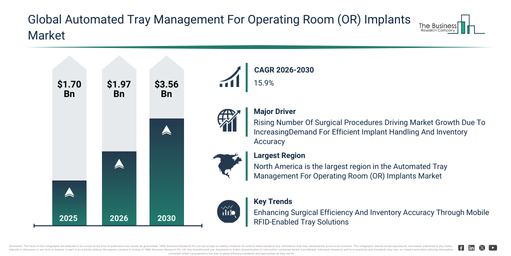
    The market size for automated tray management of OR implants has seen rapid expansion in recent years. This market is set to increase from $1.70 billion in 2025 to $1.97 billion in 2026, exhibiting a compound annual growth rate (CAGR) of 16.2%. The observed growth in earlier periods can be attributed to an elevated focus on the efficiency of surgical workflows, the increasing implementation of instrument tracking systems, a heightened requirement for sterilization accuracy, the broadening scope of hospital digitalization initiatives, and a rising necessity to reduce errors within operating rooms.

    The automated tray management for OR implants market is set for significant expansion in the next few years. It is forecast to reach $3.56 billion in 2030, exhibiting a compound annual growth rate (CAGR) of 15.9%. This anticipated growth over the forecast period is driven by factors such as increasing investment in healthcare automation, the rising adoption of cloud-based tray management solutions, a growing need for real-time instrument visibility, the broadening scope of digital transformation in hospitals, and a stronger emphasis on patient safety compliance. Noteworthy trends during this timeframe encompass technological advancements in automated tray systems, innovations in AI-driven tracking solutions, the development of IoT-enabled monitoring platforms, ongoing research and development in sterilization automation, and progress in predictive analytics for OR management.

    Get A Free Sample Report With In-Depth Market Insights:

    https://thebusinessresearchcompany.com/sample_request?id=12644118&type=smp&name=Automated%20Tray%20Management%20For%20Operating%20Room%20%28OR%29%20Implants%20Market%20Report%202026&utm_source=Blogs&utm_medium=Paid&utm_campaign=Oct_PR

    Automated Tray Management For Operating Room (OR) Implants Market Growth Drivers: What’s Behind The Acceleration?

    An anticipated increase in surgical procedures is set to boost the expansion of the automated tray management for operating room (OR) implants market moving ahead. These surgical interventions encompass typical orthopedic and ophthalmologic operations, such as hip/knee replacements, cataract removals, and spinal fusions, primarily conducted for older demographics to alleviate issues with mobility and vision. The growth in surgical volumes stems from an aging populace needing more medical interventions for persistent ailments, including joint replacement and cardiovascular operations. Automated tray management for operating room (OR) implants facilitates these procedures by digitally managing, monitoring, and preparing surgical trays and implants, ensuring the appropriate instruments are ready on demand, thus minimizing human errors and operational delays. For example, in May 2025, the World Health Organization, a public health body located in Switzerland, reported that global surgical procedures exceeded 300 million in 2023, an increase from 290 million in 2022, representing a 3.4% rise in surgical activity and underscoring the growing need for enhanced efficiency and error mitigation within operating theaters. Consequently, the increasing frequency of surgeries is a primary impetus behind the expansion of the automated tray management for operating room (OR) implants market.

    Automated Tray Management For Operating Room (OR) Implants Market Segmentation: How Does The Market Break Down By Category?

    The automated tray management for operating room (or) implants market covered in this report is segmented –

    1) By Component: Software, Hardware, Services

    2) By Deployment Mode: On-Premises, Cloud-Based

    3) By Application: Orthopedic Implants, Cardiovascular Implants, Neurosurgical Implants, Other Applications

    4) By End User: Hospitals, Ambulatory Surgical Centers, Specialty Clinics, Other End-Users

    Subsegments:

    1) By Software: Electronic Health Record Integration, Predictive Analytics Platforms, Risk Scoring Systems, Clinical Decision Support Tools

    2) By Hardware: Servers, Sensors, Monitoring Devices, Data Storage Devices

    3) By Services: Data Analytics Services, Predictive Modeling Services, Integration And Deployment Services, Training And Support Services, Monitoring And Reporting Services

    Automated Tray Management For Operating Room (OR) Implants Market Trends: What’s Defining The Industry’s Next Phase?

    Major companies within the automated tray management for operating room (OR) implants market are concentrating on developing sophisticated systems, such as mobile RFID-enabled inventory management solutions, to automate the real-time monitoring of surgical trays, implant supplies, and general inventory, reduce setup durations, and enhance operational effectiveness. Mobile RFID-enabled inventory management refers to adaptable mobile case carts equipped with integrated RFID readers and software that continuously gather item-level usage and location data, allowing for seamless tracking of implant kits, surgical supplies, and procedural trays without requiring manual scanning. For instance, in July 2024, Mobile Aspects, a US-based healthcare logistics technology company, introduced SurgiCart, an RFID-enabled mobile case cart specifically designed for hospital procedural environments. This system provides automated inventory visibility, real-time tracking for implants and supplies, and direct integration with electronic health records (EHRs) for expedited documentation and improved compliance. SurgiCart offers integrated RFID tracking for the status of trays and implants, includes mobility to support procedures across multiple areas without manually relocating supplies, and features automated EHR documentation to boost surgical readiness and minimize errors, marking a significant advancement in perioperative tray and implant management.

    Automated Tray Management For Operating Room (OR) Implants Market Competitive Analysis Of Leading Industry Participants

    Major companies operating in the automated tray management for operating room (or) implants market are Becton Dickinson and Company, STERIS plc, Zebra Technologies Corporation, Getinge Group, Belimed AG, InVita Healthcare Technologies LLC, GAO RFID Inc., Censis Technologies Inc., Terso Solutions Inc., Xerafy Singapore Pte. Ltd., Mobile Aspects Inc., RFID4U, RFID Discovery Inc., STANLEY Healthcare Solutions Inc., Paragon Data Systems Inc., Haldor Advanced Technologies Ltd., IDENTI Medical Ltd., RFID Canada Inc., SpaTrack Medical Ltd., CaseChek Inc.

    View The Full Automated Tray Management For Operating Room (OR) Implants Market Report:

    https://thebusinessresearchcompany.com/report/automated-tray-management-for-operating-room-or-implants-market-report?utm_source=Blogs&utm_medium=Paid&utm_campaign=Oct_PR

    Automated Tray Management For Operating Room (OR) Implants Market Geographic Distribution And Regional Opportunities

    North America was the largest region in the automated tray management for OR implants market in 2025. Asia-Pacific is expected to be the fastest-growing region in the forecast period. The regions covered in the automated tray management for operating room (or) implants market report are Asia-Pacific, South East Asia, Western Europe, Eastern Europe, North America, South America, Middle East, Africa.

    Reach Out To Our Team:

    The Business Research Company: https://www.thebusinessresearchcompany.com/

    Americas: +1 310-496-7795

    Asia: +44 7882 955267 & +91 8897263534

    Europe: +44 7882 955267

    Email us at: marketing@tbrc.info

    Follow us on:

    LinkedIn: https://in.linkedin.com/company/the-business-research-company

    YouTube: https://www.youtube.com/channel/UC24_fI0rV8cR5DxlCpgmyFQ

    Global Market Model: https://www.thebusinessresearchcompany.com/global-market-model
  • Automated Peritoneal Dialysis Market Forecast 2026: Market Size, Competitive Landscape And Growth Drivers

    Automated Peritoneal Dialysis Market Forecast 2026: Market Size, Competitive Landscape And Growth Drivers

    Featuring market attractiveness scoring, total addressable market sizing, company benchmarking matrices, interactive Excel dashboards, deeper supply chain intelligence, emerging startup tracking, and granular product-level insights, The Business Research Company’s 2026 market reports are built to deliver research that is both more actionable and more strategically valuable.

    Automated Peritoneal Dialysis Market Set To Climb From $2.56 Billion In 2026 To $3.53 Billion By 2030

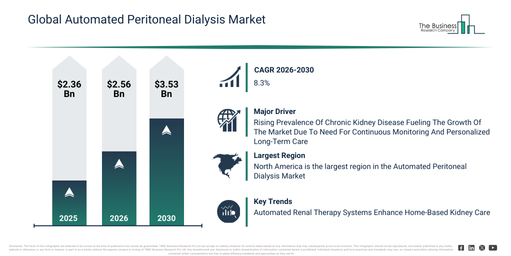
    The automated peritoneal dialysis market size has experienced robust growth in recent years. It is forecast to increase from $2.36 billion in 2025 to $2.56 billion in 2026, achieving a compound annual growth rate (CAGR) of 8.7%. This historic expansion can be attributed to the rising prevalence of chronic kidney disease, growing demand for home-based dialysis, increasing adoption of automated peritoneal dialysis, a rising geriatric population prone to renal complications, and the expansion of patient awareness and education about APD.

    The automated peritoneal dialysis market is projected to experience substantial expansion over the coming years, reaching $3.53 billion by 2030, driven by a compound annual growth rate (CAGR) of 8.3%. This growth during the forecast period is largely due to factors such as a heightened emphasis on patient-centric approaches, the increasing uptake of hybrid and portable APD systems, greater investments in research and development, the expansion of home dialysis initiatives in developing regions, and rising healthcare spending alongside supportive reimbursement policies. Key developments anticipated within this timeframe encompass improvements in automated cycler technology, the incorporation of telehealth and remote monitoring capabilities, innovations in disposable kits and consumables, ongoing research and development into biocompatible PD solutions, and the integration of data analytics and AI for optimizing treatment.

    Get A Free Sample Report With In-Depth Market Insights:

    https://thebusinessresearchcompany.com/sample_request?id=86417296&type=smp&name=Automated%20Peritoneal%20Dialysis%20Market%20Report%202026&utm_source=Blogs&utm_medium=Paid&utm_campaign=Oct_PR

    Automated Peritoneal Dialysis Market Growth Factors Behind Sustained Expansion

    The increasing incidence of chronic kidney disease is anticipated to boost the automated peritoneal dialysis market’s expansion. Chronic kidney disease is a prolonged ailment where the kidneys fail to function optimally, leading to a buildup of waste and fluids within the body. The growing occurrence of diabetes and high blood pressure is a primary factor behind this rise, as these ailments progressively harm kidney blood vessels and compromise the organs’ filtering capability. Automated peritoneal dialysis plays a crucial role in managing chronic kidney disease by providing accurate, pre-programmed dialysis treatments with minimal human involvement, frequently performed while the patient sleeps. This method enhances patient results by ensuring consistent treatment, lessening the load on caregivers, and promoting a better standard of living through adaptable home-based care. For instance, in June 2023, Kidney Research UK, a non-profit organization based in the United Kingdom, reported that approximately 7.2 million individuals in the United Kingdom were afflicted with chronic kidney disease, representing over 10% of the population. Of these, 3.25 million were in advanced stages and 3.9 million were in early stages, with projections indicating an increase to 7.61 million affected individuals by 2033. Consequently, the expanding prevalence of chronic kidney disease is propelling the growth of the automated peritoneal dialysis market.

    Automated Peritoneal Dialysis Market Segment Trends And Revenue Contributors

    The automated peritoneal dialysis market covered in this report is segmented –

    1) By Product Type: Cyclers, Peritoneal Dialysis Solutions, Accessories

    2) By Disease Type: End-Stage Renal Disease (ESRD), Chronic Kidney Disease (CKD)

    3) By Application: Treatment, Training And Education, Research And Development

    4) By End-User: Hospitals, Clinics, Home Care Settings

    Subsegments:

    1) By Cyclers: Home Use Cycler Devices, Portable Cycler Devices, Continuous Ambulatory Compatible Cyclers, Touchscreen Enabled Cyclers, Remote Monitoring Enabled Cyclers

    2) By Peritoneal Dialysis Solutions: Glucose Based Solutions, Icodextrin Based Solutions, Amino Acid Based Solutions, Low Glucose Degradation Solutions, Neutral Ph Balanced Solutions

    3) By Accessories: Transfer Sets, Catheter Sets, Tubing And Connectors, Drain Bags, Solution Warmers

    Automated Peritoneal Dialysis Market Industry Trends Fueling Future Revenue Growth

    Leading firms in the automated peritoneal dialysis market are prioritizing the development of advanced renal therapy solutions, including automated peritoneal dialysis (APD) systems, designed to enhance patient outcomes, ease caregiver responsibilities, and facilitate home-based kidney care. Such an automated peritoneal dialysis system is a machine that performs dialysis exchanges automatically, typically overnight, by precisely managing fluid inflow and outflow based on programmed treatment prescriptions, thereby offering greater convenience, safety, and adherence than manual dialysis. For instance, in May 2025, US-based medical device company By Onyks Inc. obtained FDA 510(k) clearance for its X1 automated peritoneal dialysis (APD) cycler, engineered to revolutionize chronic kidney disease management. This automated peritoneal dialysis system incorporates user-friendly automation with accurate control over dwell times, fluid volumes, and treatment cycles, enabling individualized therapy plans while reducing patient and caregiver effort. This product launch highlights the growing embrace of connected, automated dialysis technologies that facilitate efficient treatment delivery in both clinical settings and at home.

    Automated Peritoneal Dialysis Market Leading Companies And Competitive Benchmarking

    Major companies operating in the automated peritoneal dialysis market are Fresenius Medical Care, Asahi Kasei Medical Co. Ltd., Toray Industries, Baxter International, DaVita Inc., Terumo Corporation, Diaverum AB, WEGO Blood Purification, Satellite Healthcare, JMS Co. Ltd., Zhejiang Tiancheng Medical Technology Co. Ltd, Kawasumi Laboratories Inc., Weigao Group, Mitra Industries Pvt. Ltd., Infomed Fluids S.r.l., Debiotech, Medionics International Inc, Renax Biomedical Tech Co. Ltd., Shenzhen Shenkang Medtech Co. Ltd., Newsol Technologies Inc., Shenzhen Landwind Industry Co. Ltd

    View The Full Automated Peritoneal Dialysis Market Report:

    https://thebusinessresearchcompany.com/report/automated-peritoneal-dialysis-market-report?utm_source=Blogs&utm_medium=Paid&utm_campaign=Oct_PR

    Automated Peritoneal Dialysis Market Largest Region By Revenue And Market Share

    North America was the largest region in the automated peritoneal dialysis market in 2025. Asia-Pacific is expected to be the fastest-growing region in the forecast period. The regions covered in the automated peritoneal dialysis market report are Asia-Pacific, South East Asia, Western Europe, Eastern Europe, North America, South America, Middle East, Africa.

    Reach Out To Our Team:

    The Business Research Company: https://www.thebusinessresearchcompany.com/

    Americas: +1 310-496-7795

    Asia: +44 7882 955267 & +91 8897263534

    Europe: +44 7882 955267

    Email us at: marketing@tbrc.info

    Follow us on:

    LinkedIn: https://in.linkedin.com/company/the-business-research-company

    YouTube: https://www.youtube.com/channel/UC24_fI0rV8cR5DxlCpgmyFQ

    Global Market Model: https://www.thebusinessresearchcompany.com/global-market-model
  • Automated Drug Compounding Systems Market Size In 2026: Regional Growth, Key Segments And Future Outlook

    Automated Drug Compounding Systems Market Size In 2026: Regional Growth, Key Segments And Future Outlook

    Built to provide research that’s more actionable and strategically valuable, The Business Research Company’s 2026 market reports include market attractiveness analysis, total addressable market sizing, company benchmarking matrices, interactive Excel dashboards, broader supply chain intelligence, emerging startup tracking, and in-depth product insights.

    Automated Drug Compounding Systems Market Forecast: Value Set To Climb From $2.08 Billion To $3.28 Billion

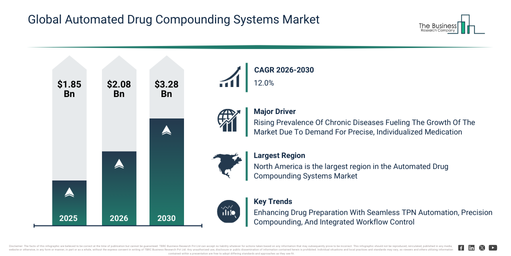
    The automated drug compounding systems market has seen considerable growth in recent years. It is projected to expand from $1.85 billion in 2025 to $2.08 billion in 2026, reflecting a compound annual growth rate (CAGR) of 12.3%. The historical drivers of this expansion include the increasing deployment of automated systems in hospital pharmacies, the heightened necessity to minimize medication errors, a stronger emphasis on sterile and precise drug preparation, the increasing workload for pharmacy staff, and the rising demand for more efficient compounding processes.

    The automated drug compounding systems market is projected to experience swift expansion over the coming years, with its size anticipated to reach $3.28 billion by 2030, driven by a compound annual growth rate (CAGR) of 12.0%. This growth during the forecast period is primarily attributed to increasing investment in healthcare automation, greater integration of software and automation tools, a rising demand for standardization in drug compounding, an elevated focus on minimizing contamination risks, higher hospital spending on automation infrastructure, and the growing need for enhanced operational efficiency in pharmacies. Key trends foreseen in this period include advancements in robotic-assisted drug compounding technologies, innovations in software integration for pharmacy management, the incorporation of AI for error reduction in compounding processes, improvements in real-time monitoring and quality control systems, and novel developments in automated sterile compounding techniques.

    Get A Free Sample Report With In-Depth Market Insights:

    https://thebusinessresearchcompany.com/sample_request?id=40326211&type=smp&name=Automated%20Drug%20Compounding%20Systems%20Market%20Report%202026&utm_source=Blogs&utm_medium=Paid&utm_campaign=Oct_PR

    Automated Drug Compounding Systems Market Demand Drivers Opening New Revenue Streams

    The growing occurrence of chronic diseases is projected to drive the expansion of the automated drug compounding systems market in the future. These conditions, which are long-term health issues that progress gradually, like diabetes, heart disease, and arthritis, often demand continuous medical care and lifestyle adjustments. Unhealthy habits such as poor diet, lack of physical activity, and smoking contribute significantly to the increase in chronic diseases, raising the risk of conditions including diabetes, heart disease, and obesity. Automated systems assist in managing chronic diseases by precisely creating personalized medications tailored to individual patient needs, thereby enhancing treatment accuracy and consistency, minimizing errors, and improving long-term therapeutic results. For example, in June 2024, the National Health Service, a UK-based government department, reported that 3,615,330 individuals registered with a general practitioner (GP) were diagnosed with non-diabetic hyperglycemia or pre-diabetes in 2023, representing an 18% increase from 3,065,825 cases in 2022. Consequently, the rising prevalence of chronic diseases is a key factor propelling the growth of the automated drug compounding systems market. The scarcity of skilled pharmacy personnel is anticipated to fuel the growth of the automated drug compounding systems market moving forward. This shortage signifies a limited availability of proficient pharmacists and technicians capable of safely preparing and dispensing medications across various healthcare settings. The rise in this deficit stems from increasing patient demands and the growing incidence of chronic diseases, which necessitate precise pharmaceutical care. Automated drug compounding systems mitigate the reliance on skilled pharmacy staff by enabling accurate, consistent, and efficient medication preparation with minimal human input, thereby decreasing errors and reducing the workload for pharmacy personnel. For instance, in August 2024, according to the National Center for Health Workforce Studies, a US-based health workforce research organization, projections indicate a shortage of 4,980 pharmacists over the next 15 years through 2036, while overall demand for pharmacists is expected to grow 3% from 2022 to 2032, raising concerns amid declining application trends. Thus, the lack of skilled pharmacy staff is a significant factor driving the expansion of the automated drug compounding systems market.

    Automated Drug Compounding Systems Market Segment Analysis Spotlighting Growth Areas

    The automated drug compounding systems market covered in this report is segmented –

    1) By Product: Robotic Compounding Systems, Automated Liquid Compounding Systems, Tablet And Capsule Dispensers, Injectable Compounding Robots, IV Admixture Systems, Oral Liquid Compounding Systems

    2) By Component: Equipment, Software, Consumables, Services

    3) By Technology: Robotic-Based Systems, Semi-Automated Systems, Gravimetric Dosing Systems, Volumetric Dosing Systems, Hybrid Dosing Systems

    4) By End-User: Hospitals, Clinics, Retail Pharmacies, Compounding Pharmacies, Pharmaceutical Manufacturers

    Subsegments:

    1) By Robotic Compounding Systems: Fully Automated Sterile Compounding Robots, Hazardous Drug Compounding Robots, Non-Hazardous Drug Compounding Robots, High-Throughput Pharmacy Robots, Closed-System Robotic Compounding Units

    2) By Automated Liquid Compounding Systems: Large-Volume Parenteral (LVP) Compounding Systems, Small-Volume Parenteral (SVP) Compounding Systems, Multi-Drug Liquid Compounding Units, Volumetric And Gravimetric Liquid Compounding Systems, Pediatric Liquid Dosing Compounding Systems

    3) By Tablet and Capsule Dispensers: Automated Tablet Counting Dispensers, Unit-Dose Packaging Systems, Multi-Dose Blister Dispensing Units, Capsule Filling and Dispensing Systems, High-Speed Pharmacy Dispensing Robots

    4) By Injectable Compounding Robots: Chemotherapy Drug Compounding Robots, TPN (Total Parenteral Nutrition) Compounding Robots, High-Precision Syringe Preparation Robots, Sterile Injectable Filling Robots, Hazardous Injectable Handling Systems

    5) By IV Admixture Systems: Automated IV Bag Filling Systems, IV Nutrition (TPN) Admixture Systems, IV Antibiotic Admixture Devices, Pharmacy Cleanroom IV Automation Units, Closed-System IV Compounding Systems

    6) By Oral Liquid Compounding Systems: Pediatric Oral Liquid Compounding Machines, Flavoring & Suspension Mixing Systems, Multi-Ingredient Oral Liquid Compounding Units, Gravimetric Oral Solution Compounding Systems, Low-Volume Oral Dosing Compounding Systems

    Automated Drug Compounding Systems Market Trends Powering Strategic Industry Growth

    Leading enterprises within the automated drug compounding systems market are concentrating on creating sophisticated solutions, such as total parenteral nutrition (TPN) automation systems, aiming to enhance the precision, security, and operational effectiveness in crafting individualized intravenous preparations. Specifically, a total parenteral nutrition (TPN) automation system functions as a compounding platform that not only automates the blending and dispensing of total parenteral nutrition (TPN) solutions but also incorporates tools for prescription validation and workflow oversight to minimize human errors and guarantee sterile, superior-quality preparation. As an illustration, in May 2025, MediServ Co. Ltd. introduced the APEX TPN Compounding System in Riyadh, marking the beginning of a novel period of exactitude and automation for parenteral nutrition processes. This system, demonstrated with its EasyComp integration software, improves the total parenteral nutrition (TPN) procedure by connecting validated prescriptions directly to sterile, precise compounding, thereby streamlining pharmacy activities and decreasing manual workloads.

    Automated Drug Compounding Systems Market Industry Leaders And Competitive Landscape

    Major companies operating in the automated drug compounding systems market are Becton Dickinson and Company, Baxter International Inc., B. Braun Melsungen AG, Fresenius Kabi AG, ICU Medical Inc., Omnicell Inc., Eckert & Ziegler SE, Swisslog Healthcare AG, EQUASHIELD Medical Ltd., Trasis S.A., Loccioni Group S.p.A., ARxIUM Inc., Comecer S.p.A., Tema Sinergie S.p.A., Epic Medical Pte. Ltd., IBA Radiopharma Solutions S.A., Steriline S.r.l., Elysia-Raytest GmbH, Curifylabs OY, Kapsam Health Solutions Pvt. Ltd.

    View The Full Automated Drug Compounding Systems Market Report:

    https://thebusinessresearchcompany.com/report/automated-drug-compounding-systems-market-report?utm_source=Blogs&utm_medium=Paid&utm_campaign=Oct_PR

    Automated Drug Compounding Systems Market Regional Analysis And Leading Geography

    North America was the largest region in the automated drug compounding Systems market in 2025. Asia-Pacific is expected to be the fastest-growing region in the forecast period. The regions covered in the automated drug compounding systems market report are Asia-Pacific, South East Asia, Western Europe, Eastern Europe, North America, South America, Middle East, Africa.

    Reach Out To Our Team:

    The Business Research Company: https://www.thebusinessresearchcompany.com/

    Americas: +1 310-496-7795

    Asia: +44 7882 955267 & +91 8897263534

    Europe: +44 7882 955267

    Email us at: marketing@tbrc.info

    Follow us on:

    LinkedIn: https://in.linkedin.com/company/the-business-research-company

    YouTube: https://www.youtube.com/channel/UC24_fI0rV8cR5DxlCpgmyFQ

    Global Market Model: https://www.thebusinessresearchcompany.com/global-market-model
  • Artificial Intelligence (AI)-Powered Surgical Workflow Analytics Devices Market Analysis: $1.94 Billion Market Size In 2026 And Future Growth Prospects

    Artificial Intelligence (AI)-Powered Surgical Workflow Analytics Devices Market Analysis: $1.94 Billion Market Size In 2026 And Future Growth Prospects

    Featuring market attractiveness scoring, total addressable market sizing, company benchmarking matrices, interactive Excel dashboards, deeper supply chain intelligence, emerging startup tracking, and granular product-level insights, The Business Research Company’s 2026 market reports are built to deliver research that is both more actionable and more strategically valuable.

    Artificial Intelligence (AI)-Powered Surgical Workflow Analytics Devices Market Value Growth And Long-Term Outlook

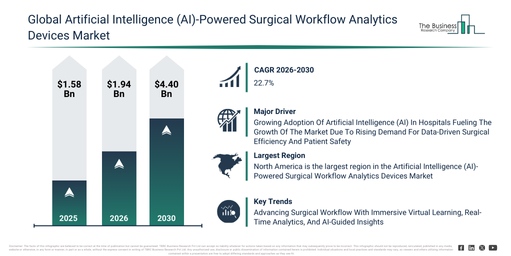
    The market size for artificial intelligence (AI)-powered surgical workflow analytics devices has experienced rapid expansion in recent years. This market is projected to expand from $1.58 billion in 2025 to $1.94 billion in 2026, demonstrating a compound annual growth rate (CAGR) of 23.0%. Several factors contributed to this historical growth, including the rising adoption of minimally invasive surgeries, increased healthcare spending on digital transformation, the growing incorporation of AI in robotic surgery systems, a heightened emphasis on operational efficiency within hospitals, and an increase in collaborations between technology and medtech companies.

    The artificial intelligence (AI)-powered surgical workflow analytics devices market is projected to experience rapid expansion over the coming years. Its value is anticipated to reach $4.40 billion by 2030, exhibiting a compound annual growth rate (CAGR) of 22.7%. This expansion during the projection period stems from factors such as heightened demand for real-time surgical workflow enhancement, increased use of predictive analytics in surgical operations, a greater imperative for combining hardware and software systems, the proliferation of cloud-based deployment methods, and increased funding for digital health advancements and smart hospital endeavors. Key developments expected in this forecast timeframe encompass breakthroughs in real-time surgical analytics platforms, progress in AI-powered decision support tools, the incorporation of technology into robotic and minimally invasive surgical techniques, the creation of compatible solutions for existing hospital IT infrastructure, and allocation of resources into expert services for AI deployment.

    Get A Free Sample Report With In-Depth Market Insights:

    https://thebusinessresearchcompany.com/sample_request?id=82838025&type=smp&name=Artificial%20Intelligence%20%28AI%29-Powered%20Surgical%20Workflow%20Analytics%20Devices%20Market%20Report%202026&utm_source=Blogs&utm_medium=Paid&utm_campaign=Oct_PR

    Artificial Intelligence (AI)-Powered Surgical Workflow Analytics Devices Market Growth Catalysts And Demand Drivers

    The increasing integration of artificial intelligence (AI) within hospitals is anticipated to fuel the expansion of the AI-powered surgical workflow analytics devices market moving forward. This adoption involves the expanded deployment of AI-driven tools for clinical data analysis, streamlining hospital processes, and assisting in decisions across diagnostics, therapies, and surgeries. The uptake of AI in healthcare facilities is driven by its capacity to automate administrative functions such as scheduling, billing, and record keeping, thereby lessening staff burden and inaccuracies, and allowing greater concentration on patient care. AI-powered surgical workflow analytics devices complement AI initiatives in hospitals by examining live surgical data, pinpointing operational bottlenecks, forecasting risks, and facilitating data-backed enhancements in operating room effectiveness and patient safety. For example, data from September 2025 by the US government’s Assistant Secretary for Technology Policy indicated that in 2024, 71% of hospitals utilized predictive AI integrated with electronic health records (EHR), marking an increase from 66% in 2023, with approximately 7 in 10 hospitals reporting predictive AI use in 2024. Consequently, the expanding use of artificial intelligence (AI) in hospitals is a key factor propelling the growth of the AI-powered surgical workflow analytics devices market.

    Artificial Intelligence (AI)-Powered Surgical Workflow Analytics Devices Market Segment Landscape And Growth Outlook

    The artificial intelligence (AI)-powered surgical workflow analytics devices market covered in this report is segmented –

    1) By Component: Hardware, Software, Services

    2) By Deployment Mode: On-Premises, Cloud-Based

    3) By Application: Preoperative Planning, Intraoperative Guidance, Postoperative Analysis, Workflow Optimization, Other Applications

    4) By End-User: Hospitals, Ambulatory Surgical Centers, Specialty Clinics, Other End-Users

    Subsegments:

    1) By Hardware: Surgical Robots, Imaging Devices, Monitoring Equipment, Sensors, Data Storage Devices

    2) By Software: Workflow Management Software, Predictive Analytics Software, Visualization Software, Data Integration Software, Performance Optimization Software

    3) By Services: Installation And Implementation Services, Maintenance And Support Services, Training And Education Services, Consulting Services, Data Analysis And Reporting Services

    Artificial Intelligence (AI)-Powered Surgical Workflow Analytics Devices Market Trends Shaping Long-Term Demand

    Key companies operating in the artificial intelligence (AI)-powered surgical workflow analytics devices market are prioritizing the development of advanced solutions, including immersive virtual learning environments, to elevate surgical planning, team training, and intraoperative performance. An immersive virtual learning environment represents a simulated, interactive digital space where clinicians can engage with real-world procedural scenarios, receive contextual guidance, and practice complex techniques in a risk-free setting, thereby improving both learning outcomes and procedural proficiency. For instance, in April 2024, Medtronic plc, a US-based medical technology company, unveiled 14 new Performance Insights algorithms, incorporating new Live Stream technology and AI analysis capabilities for laparoscopic and robotic-assisted procedures. This solution integrates immersive virtual learning environments that enable surgical teams to access AI-guided visualization, performance feedback, and procedural analytics during training and live operations. These environments utilize real-time data and artificial intelligence to generate dynamic simulations of patient anatomy and surgical workflows, assisting clinicians in refining techniques and anticipating clinical needs.

    Artificial Intelligence (AI)-Powered Surgical Workflow Analytics Devices Market Top Companies Driving Competitive Growth

    Major companies operating in the artificial intelligence (AI)-powered surgical workflow analytics devices market are Medtronic Plc, Johnson & Johnson, Koninklijke Philips N.V., Olympus Corporation, Caresyntax GmbH, Proximie Ltd., Surgical Theater Inc., Surgical Safety Technologies Inc., RSIP Vision Ltd., Surgical Directions Inc., Activ Surgical Inc., Leap Rail Inc., Livedata Inc., Omnimed Inc., Theator Inc., Intuitive Surgical Inc., Copient Health Inc., Pixee Medical SAS, Moon Surgical Inc., ExplORer Surgical Corp.

    View The Full Artificial Intelligence (AI)-Powered Surgical Workflow Analytics Devices Market Report:

    https://thebusinessresearchcompany.com/report/artificial-intelligence-ai-powered-surgical-workflow-analytics-devices-market-report?utm_source=Blogs&utm_medium=Paid&utm_campaign=Oct_PR

    Artificial Intelligence (AI)-Powered Surgical Workflow Analytics Devices Market Global Footprint: Which Region Leads The Industry?

    North America was the largest region in the artificial intelligence (AI)-powered surgical workflow analytics devices market in 2025. Asia-Pacific is expected to be the fastest-growing region in the forecast period. The regions covered in the artificial intelligence (AI)-powered surgical workflow analytics devices market report are Asia-Pacific, South East Asia, Western Europe, Eastern Europe, North America, South America, Middle East, Africa.

    Reach Out To Our Team:

    The Business Research Company: https://www.thebusinessresearchcompany.com/

    Americas: +1 310-496-7795

    Asia: +44 7882 955267 & +91 8897263534

    Europe: +44 7882 955267

    Email us at: marketing@tbrc.info

    Follow us on:

    LinkedIn: https://in.linkedin.com/company/the-business-research-company

    YouTube: https://www.youtube.com/channel/UC24_fI0rV8cR5DxlCpgmyFQ

    Global Market Model: https://www.thebusinessresearchcompany.com/global-market-model
  • Artificial Intelligence (AI)-Driven Retinal Screening Device Market Size Forecast: How The Industry Is Expected To Grow From 2026 To 2030

    Artificial Intelligence (AI)-Driven Retinal Screening Device Market Size Forecast: How The Industry Is Expected To Grow From 2026 To 2030

    Backed by market attractiveness analysis, total addressable market sizing, company benchmarking matrices, interactive Excel dashboards, wider supply chain intelligence, emerging startup coverage, and detailed product-level insights, The Business Research Company’s 2026 market reports are designed to offer research that is more actionable and strategically valuable than ever.

    Artificial Intelligence (AI)-Driven Retinal Screening Device Market Size And Revenue Outlook Through 2030

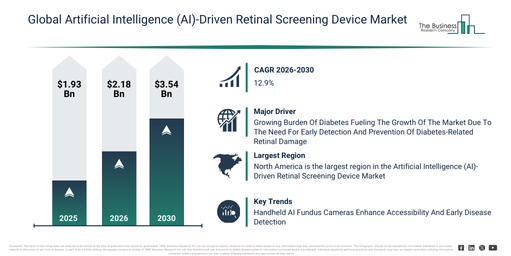
    The artificial intelligence (AI)-driven retinal screening device market size has experienced significant expansion in recent years. Its value is projected to rise from $1.93 billion in 2025 to $2.18 billion in 2026, at a compound annual growth rate (CAGR) of 13.1%. Historically, this growth has been driven by the greater adoption of artificial intelligence (AI)-enabled ophthalmic diagnostics, a growing incidence of diabetic retinopathy, an elevated demand for early retinal disease detection, the enhanced integration of digital health screening programs, and an escalating healthcare focus on preventive eye care.

    The artificial intelligence (AI)-driven retinal screening device market is poised for significant expansion in the coming years, projected to reach $3.54 billion in 2030, exhibiting a compound annual growth rate (CAGR) of 12.9%. This anticipated growth during the forecast period stems from factors such as the increasing adoption of autonomous AI-based screening systems, the wider deployment of point-of-care retinal devices, enhanced government backing for digital eye screening initiatives, the broader incorporation of AI tools in teleophthalmology, and a rising need for quick and affordable retinal assessment solutions. Key trends defining this period involve progress in AI algorithms for interpreting retinal images, novel developments in edge-computing retinal screening devices, technological improvements that enhance image acquisition quality, ongoing research and development into multimodal platforms for detecting eye diseases, and advancements in cloud-based AI screening workflows.

    Get A Free Sample Report With In-Depth Market Insights:

    https://thebusinessresearchcompany.com/sample_request?id=92434941&type=smp&name=Artificial%20Intelligence%20%28AI%29-Driven%20Retinal%20Screening%20Device%20Market%20Report%202026&utm_source=Blogs&utm_medium=Paid&utm_campaign=Oct_PR

    Artificial Intelligence (AI)-Driven Retinal Screening Device Market Growth Momentum: What Factors Are Shaping Demand?

    The increasing prevalence of diabetes is anticipated to fuel the expansion of the AI-driven retinal screening device market in the coming years. Diabetes, a long-term metabolic condition marked by consistently elevated blood glucose, progressively harms blood vessels, including those in the retina, making it a primary cause of avoidable vision loss globally. The heightened burden of diabetes stems from an aging global population and evolving lifestyles, which have led to increased obesity and reduced physical activity in both developed and developing regions. AI-driven retinal screening devices are crucial for diabetes management by facilitating the early identification of diabetes-related retinal damage, broadening screening availability, and aiding prompt clinical action to avert visual impairment. For example, in April 2025, the International Diabetes Federation, a Belgium-based global health organization, reported that around 589 million adults aged 20–79 were living with diabetes globally in 2024, with forecasts suggesting this figure could reach 853 million by 2050, representing a substantial increase over prior decades. Consequently, the mounting worldwide diabetes burden is propelling the growth of the AI-Driven Retinal Screening Device market.

    Artificial Intelligence (AI)-Driven Retinal Screening Device Market Segment Analysis And Revenue Potential

    The artificial intelligence (AI)-driven retinal screening device market covered in this report is segmented –

    1) By Component: Hardware, Software, Services

    2) By Technology: Fundus Image-Based Artificial Intelligence (AI), Optical Coherence Tomography (OCT)-Based Artificial Intelligence (AI), Multi-Modal Artificial Intelligence (AI), Machine Learning (ML), Deep Learning (DL), Natural Language Processing (NLP)

    3) By Deployment: Cloud-Based, On-Premise

    4) By Application: Diabetic Retinopathy, Age-Related Macular Degeneration, Glaucoma, Cataract, Other Applications

    5) By End-User: Hospitals, Ophthalmology Clinics, Mobile Clinics Or Rural Camps, Diagnostic Centers, Research And Academia, Telemedicine Providers

    Subsegments:

    1) By Hardware: Imaging Devices, Sensor Modules, Display Units, Storage Devices

    2) By Software: Image Processing Software, Diagnostic Analysis Software, Data Management Software, Reporting And Visualization Software

    3) By Services: Installation And Setup, Maintenance And Support, Training And Education, Consulting Services

    Artificial Intelligence (AI)-Driven Retinal Screening Device Market Trends Redefining Industry Growth

    Companies operating in the artificial intelligence (AI)-driven retinal screening device market are primarily focusing on developing advanced offerings, such as handheld AI fundus cameras, to enhance accessibility, accelerate diagnostic processes, and facilitate earlier disease detection. These handheld AI fundus cameras are defined as portable imaging devices that utilize artificial intelligence for the automated analysis of retinal images to identify signs of disease. For instance, in May 2024, Optomed USA Inc., a US-based medical technology company, introduced the Optomed Aurora AEYE. This product represents the first FDA-cleared, handheld AI fundus camera specifically for the detection of more than mild diabetic retinopathy. The device integrates automatic, AI-based image analysis to provide immediate screening results at the point of care, thereby enabling clinical decision support without requiring the presence of a specialist. Its battery-operated and highly portable nature is engineered to expand access to vital sight-saving screenings across primary care, endocrinology, and other non-specialist environments.

    Artificial Intelligence (AI)-Driven Retinal Screening Device Market Competitive Overview And Top Companies

    Major companies operating in the artificial intelligence (AI)-driven retinal screening device market are Carl Zeiss Meditec AG, Topcon Corporation, Canon Medical Systems Corporation, Bosch Healthcare Solutions GmbH, Heidelberg Engineering GmbH, Shenzhen Sibionics Technology Co. Ltd., Digital Diagnostics Inc., Optomed Plc, Optain Health Inc., NIDEK Co. Ltd., Airdoc Technology Co. Ltd., Identifeye Health Ltd., Kowa Company Ltd., RetinaLyze System A/S, EyRIS Pte. Ltd., Eyenuk Inc., EYRIS Pte. Ltd., VUNO Inc., Eyenuk Inc., AEYE Health Inc.

    View The Full Artificial Intelligence (AI)-Driven Retinal Screening Device Market Report:

    https://thebusinessresearchcompany.com/report/artificial-intelligence-ai-driven-retinal-screening-device-market-report?utm_source=Blogs&utm_medium=Paid&utm_campaign=Oct_PR

    Artificial Intelligence (AI)-Driven Retinal Screening Device Market Leading Geography: Which Region Contributes The Most Revenue?

    North America was the largest region in the artificial intelligence (AI)-driven retinal screening device market in 2025. Asia-Pacific is expected to be the fastest-growing region in the forecast period. The regions covered in the artificial intelligence (AI)-driven retinal screening device market report are Asia-Pacific, South East Asia, Western Europe, Eastern Europe, North America, South America, Middle East, Africa.

    Reach Out To Our Team:

    The Business Research Company: https://www.thebusinessresearchcompany.com/

    Americas: +1 310-496-7795

    Asia: +44 7882 955267 & +91 8897263534

    Europe: +44 7882 955267

    Email us at: marketing@tbrc.info

    Follow us on:

    LinkedIn: https://in.linkedin.com/company/the-business-research-company

    YouTube: https://www.youtube.com/channel/UC24_fI0rV8cR5DxlCpgmyFQ

    Global Market Model: https://www.thebusinessresearchcompany.com/global-market-model
  • Artificial Intelligence (AI) In Rehabilitation Robotics Market Set To Expand From $10.85 Billion In 2026: Growth Outlook Through 2030

    Artificial Intelligence (AI) In Rehabilitation Robotics Market Set To Expand From $10.85 Billion In 2026: Growth Outlook Through 2030

    Featuring market attractiveness scoring, total addressable market sizing, company benchmarking matrices, interactive Excel dashboards, deeper supply chain intelligence, emerging startup tracking, and granular product-level insights, The Business Research Company’s 2026 market reports are built to deliver research that is both more actionable and more strategically valuable.

    Artificial Intelligence (AI) In Rehabilitation Robotics Market Forecast: Value Set To Climb From $5.23 Billion To $10.85 Billion

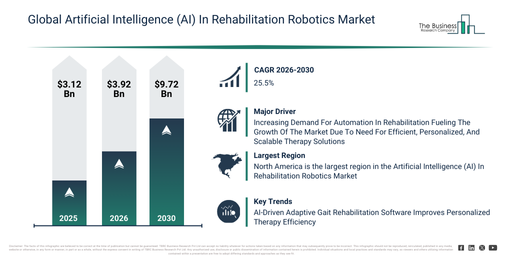
    The artificial intelligence (AI) in rehabilitation robotics market size has experienced substantial growth in recent years. It is projected to expand from $3.12 billion in 2025 to $3.92 billion in 2026, achieving a compound annual growth rate (CAGR) of 25.7%. The market’s historical growth can be attributed to the increasing adoption of robotic-assisted therapy, the growing prevalence of neurological disorders, a rising demand for personalized rehabilitation, expanding investments in AI-based healthcare technologies, and the increasing use of sensor-based patient monitoring.

    The artificial intelligence (AI) in rehabilitation robotics market is anticipated to undergo substantial expansion in the coming years. Its valuation is projected to reach $9.72 billion in 2030, exhibiting a compound annual growth rate (CAGR) of 25.5%. This projected surge in the forecast period stems from factors such as the increasing demand for home-based rehabilitation solutions, the expanding integration of AI with robotic hardware, a rise in investments within digital health ecosystems, the broadening clinical acceptance of data-driven therapy models, and the expanding elderly demographic requiring prolonged rehabilitation. Prominent trends throughout this period also include technological breakthroughs in AI-powered rehabilitation systems, advancements in human-robot interaction and motion analysis, progress in cloud-based and remote therapy platforms, ongoing research and development in soft robotics and adaptive control, and the growing incorporation of virtual and augmented reality in rehabilitation.

    Get A Free Sample Report With In-Depth Market Insights:

    https://thebusinessresearchcompany.com/sample_request?id=84562450&type=smp&name=Artificial%20Intelligence%20%28AI%29%20In%20Rehabilitation%20Robotics%20Market%20Report%202026&utm_source=Blogs&utm_medium=Paid&utm_campaign=Oct_PR

    Artificial Intelligence (AI) In Rehabilitation Robotics Market Expansion Drivers: What’s Shaping Future Growth?

    The projected expansion of the artificial intelligence (AI) in rehabilitation robotics market going forward is significantly influenced by the increasing demand for automation in rehabilitation. Automation in rehabilitation encompasses the utilization of robotic devices, AI-driven systems, and computer vision to precisely monitor, guide, and administer physical therapy exercises, leading to improved patient recovery and progress tracking. This rising demand for automation in rehabilitation is attributed to aging populations and a growing prevalence of chronic conditions, which heighten the necessity for consistent, high-intensity therapy. Robotic systems can deliver this more efficiently than traditional methods, offering personalized sessions with real-time feedback and remote monitoring. AI in Rehabilitation Robotics enhances automation by enabling adaptive robotic systems to analyze patient movements, adjust therapy intensity in real time, and deliver customized rehabilitation support. For instance, in October 2024, the International Federation of Robotics, a Germany-based robotics industry organization, noted that sales of medical robots surged by 36% to approximately 6,100 units in 2023, concurrently with a 128% rise in sales of rehabilitation and non-invasive therapy robots, highlighting strong growth in healthcare robotics adoption. Thus, the increasing demand for automation in rehabilitation is a key driver for the growth of the artificial intelligence (AI) in rehabilitation robotics market.

    Artificial Intelligence (AI) In Rehabilitation Robotics Market Segment Analysis And Revenue Potential

    The artificial intelligence (AI) in rehabilitation robotics market covered in this report is segmented –

    1) By Component: Hardware, Software, Services

    2) By Therapy Type: Physical Therapy, Occupational Therapy, Speech Therap, Other Therapy Types

    3) By Application: Neurological Rehabilitation, Orthopedic Rehabilitation, Geriatric Rehabilitation, Other Applications

    4) By End-User: Hospitals, Rehabilitation Centers, Home Care Settings, Clinics, Other End-Users

    Subsegments:

    1) By Hardware: Sensors, Actuators, Control Units, Power Systems, Embedded Processing Modules

    2) By Software: Motion Analysis Software, Rehabilitation Planning Software, Patient Monitoring Software, Artificial Intelligence Algorithms, User Interface Software

    3) By Services: Installation Services, Maintenance Services, Training Services, Technical Support Services, System Integration Services

    Artificial Intelligence (AI) In Rehabilitation Robotics Market Strategic Trends: What Defines The Next Growth Phase?

    Leading entities within the artificial intelligence (AI) in rehabilitation robotics market are concentrating on creating sophisticated systems, including intelligent gait therapy solutions, designed to analyze patient mobility and offer instantaneous feedback to facilitate personalized rehabilitation strategies and improve patient results. These intelligent gait therapy systems specifically denote software seamlessly incorporated into robotic exoskeletons, employing machine learning algorithms to decipher gait patterns, adapt support levels responsively, and furnish practical insights to medical professionals for enhancing walking therapy. An illustrative case occurred in January 2024, when Ekso Bionics Holdings Inc., a medical robotics firm based in the US, introduced its GaitCoach software, compatible with the EksoNR device. This extensive software suite is engineered to streamline the application of robotics, with the goal of fostering greater user confidence, supplying adaptive feedback, and delivering precise guidance, effectively serving as an additional pair of clinical observations.

    Artificial Intelligence (AI) In Rehabilitation Robotics Market Competitive Landscape: Who Leads The Industry?

    Major companies operating in the artificial intelligence (AI) in rehabilitation robotics market are Ottobock SE & Co. KGaA, Fourier Intelligence Co. Ltd., Neura Robotics GmbH, Kinova Inc., Myomo Inc., Wandercraft SAS, Cyberdyne Inc., EGZOTech Sp. z o.o., Hocoma AG , Ekso Bionics Holdings Inc., Tyromotion GmbH, Lifeward Ltd., ReWalk Robotics Ltd., AlterG Inc., DIH Medical Group, Rehab-Robotics Co. Ltd., Able Human Motion SL, B-Temia Inc., Reha Technology AG, Moterum Technologies Inc., INROBICS

    View The Full Artificial Intelligence (AI) In Rehabilitation Robotics Market Report:

    https://thebusinessresearchcompany.com/report/artificial-intelligence-ai-in-rehabilitation-robotics-market-report?utm_source=Blogs&utm_medium=Paid&utm_campaign=Oct_PR

    Artificial Intelligence (AI) In Rehabilitation Robotics Market Geographic Landscape: Which Region Dominates Industry Growth?

    North America was the largest region in the artificial intelligence (AI) in rehabilitation robotics market in 2025. Asia-Pacific is expected to be the fastest-growing region in the forecast period. The regions covered in the artificial intelligence (AI) in rehabilitation robotics market report are Asia-Pacific, South East Asia, Western Europe, Eastern Europe, North America, South America, Middle East, Africa.

    Reach Out To Our Team:

    The Business Research Company: https://www.thebusinessresearchcompany.com/

    Americas: +1 310-496-7795

    Asia: +44 7882 955267 & +91 8897263534

    Europe: +44 7882 955267

    Email us at: marketing@tbrc.info

    Follow us on:

    LinkedIn: https://in.linkedin.com/company/the-business-research-company

    YouTube: https://www.youtube.com/channel/UC24_fI0rV8cR5DxlCpgmyFQ

    Global Market Model: https://www.thebusinessresearchcompany.com/global-market-model
  • Artificial Intelligence (AI) In Blood Pressure Monitoring Market Forecast 2026–2030: Market Size, Trends And Growth Opportunities

    Artificial Intelligence (AI) In Blood Pressure Monitoring Market Forecast 2026–2030: Market Size, Trends And Growth Opportunities

    Backed by market attractiveness analysis, total addressable market sizing, company benchmarking matrices, interactive Excel dashboards, wider supply chain intelligence, emerging startup coverage, and detailed product-level insights, The Business Research Company’s 2026 market reports are designed to offer research that is more actionable and strategically valuable than ever.

    Artificial Intelligence (AI) In Blood Pressure Monitoring Market Value Growth And Long-Term Outlook

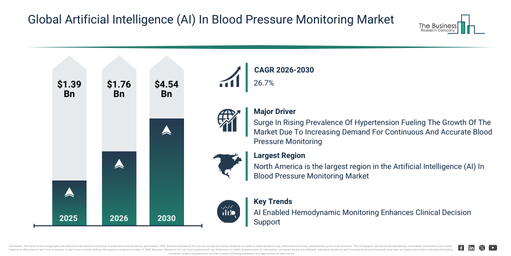
    The artificial intelligence (AI) in blood pressure monitoring market has expanded significantly over recent years. Its size is anticipated to grow from $1.39 billion in 2025 to $1.76 billion in 2026, achieving a compound annual growth rate (CAGR) of 27.0%. This market’s past growth can be ascribed to factors such as the increasing prevalence of hypertension, the rising adoption of digital health tools, greater awareness of home monitoring, the expanding use of wearable sensors, and increased healthcare expenditure.

    The artificial intelligence (AI) in blood pressure monitoring market is anticipated to experience substantial expansion over the next few years. It is projected to achieve a size of $4.54billion by 2030, demonstrating a compound annual growth rate (CAGR) of 26.7%. This growth during the forecast period is fueled by an escalating demand for continuous monitoring, the increasing integration of artificial intelligence (AI)-powered diagnostics, broader telehealth adoption, a heightened focus on preventive healthcare, and expanding investment in medical artificial intelligence. Prominent trends expected in this period include technological improvements in sensor accuracy, innovations in artificial intelligence (AI)-driven predictive analytics, advancements in cuffless monitoring solutions, ongoing research and development in multimodal biometrics, and enhancements in cloud-based health data platforms.

    Get A Free Sample Report With In-Depth Market Insights:

    https://thebusinessresearchcompany.com/sample_request?id=10527066&type=smp&name=Artificial%20Intelligence%20%28AI%29%20In%20Blood%20Pressure%20Monitoring%20Market%20Report%202026&utm_source=Blogs&utm_medium=Paid&utm_campaign=Oct_PR

    Artificial Intelligence (AI) In Blood Pressure Monitoring Market Industry Drivers: What’s Behind The Revenue Growth?

    The increasing incidence of hypertension is anticipated to drive the expansion of artificial intelligence (AI) within the blood pressure monitoring market moving ahead. Hypertension, a chronic health condition, is defined by consistently high blood pressure, which heightens the likelihood of cardiovascular ailments, strokes, and kidney issues, frequently necessitating continuous monitoring and long-term management. The occurrence of hypertension is increasing due to various factors including diets rich in salt and fat, lack of physical activity, obesity, stress, and an aging demographic, leading to an increasing population requiring consistent and precise blood pressure checks. AI-driven blood pressure monitoring solutions aid in managing hypertension through features like continuous or real-time tracking, predictive analysis, and customized alerts, which facilitate early detection of irregular patterns and support prompt medical interventions. For example, data from March 2025, released by the U.S. National Center for Biotechnology Information (NCBI), a US-based government research institution, indicated that the age-adjusted prevalence of hypertension among adults climbed to 27.5% in 2023 from 27.2% in 2022, demonstrating a consistent rise in instances of high blood pressure. Consequently, the growing prevalence of hypertension is accelerating the acceptance and expansion of artificial intelligence (AI) within the blood pressure monitoring market.

    Artificial Intelligence (AI) In Blood Pressure Monitoring Market Segment Outlook: Which Categories Are Growing Fastest?

    The artificial intelligence (AI) in blood pressure monitoring market covered in this report is segmented –

    1) By Product Type: Wearable Devices, Smart Cuffs, Mobile Applications, Standalone Artificial Intelligence (AI) Systems

    2) By Delivery Mode: On-Device Artificial Intelligence (AI), Cloud-Based Artificial Intelligence (AI), Hybrid Artificial Intelligence (AI)

    3) By Technology: Machine Learning Algorithms, Natural Language Processing (NLP), Computer Vision Techniques

    4) By Application: Continuous Monitoring, Diagnostic Support, Remote Patient Management, Clinical Decision Support

    5) By End Use: Hospitals, Home Healthcare, Ambulatory Care Centers, Specialty Clinics

    Subsegments:

    1) By Wearable Devices: Smart Wristbands, Smart Watches, Chest Strap Monitors, Arm Band Sensors, Finger Clip Sensors

    2) By Smart Cuffs: Upper Arm Smart Cuffs, Wrist Smart Cuffs, Forearm Smart Cuffs, Bluetooth Enabled Cuffs, Voice Assisted Smart Cuffs

    3) By Mobile Applications: Blood Pressure Tracking Applications, Heart Health Management Applications, Lifestyle And Wellness Monitoring Applications, Remote Patient Monitoring Applications, Data Analytics And Insights Applications

    4) By Standalone Artificial Intelligence (AI) Systems: Clinic Based AI Monitoring Systems, Home Based AI Monitoring Stations, Real Time Diagnostic AI Systems, Cloud Connected AI Monitoring Platforms, Predictive Health Assessment Systems

    #Artificial Intelligence (AI) In Blood Pressure Monitoring Market Growth Trends: What’s Shaping The Future Outlook?

    Major companies engaged in the AI in blood pressure monitoring market are concentrating on developing innovative solutions, such as hemodynamic monitoring platforms, to achieve a competitive edge. Hemodynamic monitoring platforms refer to systems and devices that consistently measure and assess the blood flow, blood pressure, and cardiac output within the cardiovascular system to inform patient management and treatment decisions. For instance, in April 2025, BD, a US-based medical technology company, introduced the Hemosphere Alta advanced hemodynamic monitoring platform, which includes the cerebral autoregulation index for individualized blood flow assessment, the Acumen hypotension prediction index for early detection of blood pressure drops, and a high resolution touchscreen with voice and gesture controls for enhanced usability. The platform also enables smooth integration with electronic health record systems, facilitating thorough patient data management.

    Artificial Intelligence (AI) In Blood Pressure Monitoring Market Key Players Shaping Industry Direction

    Major companies operating in the artificial intelligence (AI) in blood pressure monitoring market are Apple Inc., Samsung Electronics Co. Ltd., Huawei Technologies Co. Ltd., Masimo Corporation, Shen AI, Omron Healthcare Inc., A&D Company Limited, Valencell Inc., Binah.ai Ltd., Lifelight.AI, BioIntelliSense Inc., Nanowear Inc., FaceHeart Corporation, Hilo Group GmbH, Vastmindz AI Ltd., Biospectal SA, Briah.ai, Biobeat Technologies, Biozen LLC, Dynocardia Inc., Sensifree Co. Ltd.

    View The Full Artificial Intelligence (AI) In Blood Pressure Monitoring Market Report:

    https://thebusinessresearchcompany.com/report/artificial-intelligence-ai-in-blood-pressure-monitoring-market-report?utm_source=Blogs&utm_medium=Paid&utm_campaign=Oct_PR

    Artificial Intelligence (AI) In Blood Pressure Monitoring Market Regional Analysis: Which Region Leads By Revenue?

    North America was the largest region in the artificial intelligence (AI) in blood pressure monitoring market in 2025. Asia-Pacific is expected to be the fastest-growing region in the forecast period. The regions covered in the artificial intelligence (AI) in blood pressure monitoring market report are Asia-Pacific, South East Asia, Western Europe, Eastern Europe, North America, South America, Middle East, Africa.

    Reach Out To Our Team:

    The Business Research Company: https://www.thebusinessresearchcompany.com/

    Americas: +1 310-496-7795

    Asia: +44 7882 955267 & +91 8897263534

    Europe: +44 7882 955267

    Email us at: marketing@tbrc.info

    Follow us on:

    LinkedIn: https://in.linkedin.com/company/the-business-research-company

    YouTube: https://www.youtube.com/channel/UC24_fI0rV8cR5DxlCpgmyFQ

    Global Market Model: https://www.thebusinessresearchcompany.com/global-market-model
  • Artificial Intelligence (AI) Brain Magnetic Resonance Imaging (MRI) Lesion Detection Market Trends Supporting 27.9% CAGR Growth Through 2030

    Artificial Intelligence (AI) Brain Magnetic Resonance Imaging (MRI) Lesion Detection Market Trends Supporting 27.9% CAGR Growth Through 2030

    Featuring market attractiveness scoring, total addressable market sizing, company benchmarking matrices, interactive Excel dashboards, deeper supply chain intelligence, emerging startup tracking, and granular product-level insights, The Business Research Company’s 2026 market reports are built to deliver research that is both more actionable and more strategically valuable.

    Artificial Intelligence (AI) Brain Magnetic Resonance Imaging (MRI) Lesion Detection Market Expansion Outlook: What Revenue Opportunities Are Ahead?

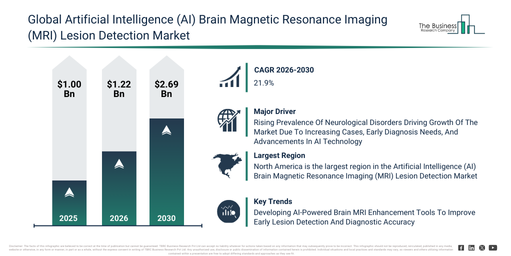
    The market size for AI brain MRI lesion detection has experienced rapid expansion over recent years. Its valuation is projected to increase from $1.00 billion in 2025 to $1.22 billion in 2026, demonstrating a compound annual growth rate (CAGR) of 22.2%. Historically, this growth has been driven by factors such as the greater utilization of MRI in neurology, the increasing acceptance of digital radiology, the rising occurrence of brain tumors and stroke, expanding investments by hospitals in imaging systems, and a growing demand for prompt disease diagnosis.

    The AI brain MRI lesion detection market is projected to experience substantial growth over the coming years. This market is forecast to reach $2.69 billion in 2030, advancing at a compound annual growth rate (CAGR) of 21.9%. This anticipated growth, along with major trends during the forecast period, is primarily attributed to an escalating demand for AI-enabled diagnostics, increased governmental backing for AI within healthcare, the expanding adoption of cloud medical imaging, greater integration of AI with PACS systems, and rising investment in tele-radiology solutions.

    Get A Free Sample Report With In-Depth Market Insights:

    https://thebusinessresearchcompany.com/sample_request?id=63098240&type=smp&name=Artificial%20Intelligence%20%28AI%29%20Brain%20Magnetic%20Resonance%20Imaging%20%28MRI%29%20Lesion%20Detection%20Market%20Report%202026&utm_source=Blogs&utm_medium=Paid&utm_campaign=Oct_PR

    Artificial Intelligence (AI) Brain Magnetic Resonance Imaging (MRI) Lesion Detection Market Growth Factors Behind Sustained Expansion

    The rising occurrence of neurological disorders is anticipated to fuel the expansion of the artificial intelligence (AI) brain MRI lesion detection market in the future. These conditions are medical ailments impacting the brain, spinal cord, and nerves, thereby disturbing typical nervous system operations and resulting in impairments in movement, cognition, sensation, behavior, or overall bodily control. The growing incidence of neurological disorders stems from detrimental lifestyle practices, such as inadequate diet, lack of physical activity, smoking, excessive alcohol intake, and persistent stress. AI brain MRI lesion detection offers assistance to individuals suffering from neurological disorders by allowing for quicker and more precise identification of brain abnormalities, which aids in early diagnosis, tailored treatment strategies, and enhanced patient results. For example, in April 2024, as per the National Institutes of Health (NIH), a leading US government biomedical research institution, approximately 6.9 million Americans aged 65 and above are presently afflicted with Alzheimer’s dementia, a number predicted to nearly double to 13.8 million by 2060. Consequently, the increasing prevalence of neurological disorders is a key driver for the artificial intelligence (AI) brain MRI lesion detection market.

    Artificial Intelligence (AI) Brain Magnetic Resonance Imaging (MRI) Lesion Detection Market Segment Breakdown: Which Categories Lead On Revenue?

    The artificial intelligence (AI) brain magnetic resonance imaging (mri) lesion detection market covered in this report is segmented –

    1) By Component: Software, Hardware, Services

    2) By Lesion Type: Tumor Lesions, Vascular Lesions, Demyelinating Lesions, Traumatic Lesions, Other Lesion Types

    3) By Modality: 3D MRI, 2D MRI, Other Modalitys

    4) By Application: Tumor Detection, Multiple Sclerosis, Stroke, Traumatic Brain Injury, Other Applications

    5) By End-User: Hospitals, Diagnostic Imaging Centers, Research Institutes, Other End-Users

    Subsegments:

    1) By Software: Deep Learning Detection Software, Image Processing Software, Clinical Decision Support Software, Diagnostic Reporting Software, Annotation and Labeling Software

    2) By Hardware: Magnetic Resonance Imaging Scanners, Graphics Processing Units, Edge Computing Devices, Image Acquisition Systems

    3) By Services: Installation And Integration Services, Model Training And Customization Services, Maintenance And Support Services, Data Annotation And Validation Services

    Artificial Intelligence (AI) Brain Magnetic Resonance Imaging (MRI) Lesion Detection Market Industry Trends Fueling Future Revenue Growth

    Leading companies in the artificial intelligence (AI) brain MRI lesion detection market are prioritizing the creation of advanced solutions, such as AI-driven contrast enhancement systems, to improve the early identification of subtle brain abnormalities and elevate diagnostic precision. These AI-powered systems employ sophisticated algorithms to enhance lesion visibility on contrast-enhanced MRI scans, consequently improving lesion-to-brain and contrast-to-noise ratios without modifying standard acquisition protocols. For example, in October 2024, Bracco Diagnostics, a US-based medical imaging company, and Subtle Medical, a US-based AI healthcare company, introduced AiMIFY software. This AI-based brain MRI enhancement tool increases contrast enhancement up to two times compared with standard gadolinium-based imaging and improves the clarity of lesions while preserving existing scanning workflows. This launch signifies a substantial technological step forward, integrating AI with conventional imaging and linking advanced computational analysis with clinical radiology practice. It delivers a scalable, efficient method for strengthening diagnostic confidence and enabling early lesion detection in neurological imaging.

    Artificial Intelligence (AI) Brain Magnetic Resonance Imaging (MRI) Lesion Detection Market Key Participants And Competitive Landscape

    Major companies operating in the artificial intelligence (AI) brain magnetic resonance imaging (mri) lesion detection market are Aidoc Medical Ltd., RapidAI Inc., Annalise.ai Pty Ltd., Quibim S.L., Olea Medical Imaging SAS, DeepTek.ai Inc., Image Analysis Group Ltd., Subtle Medical Inc., Gleamer SAS, Raidium Ltd., Invicro LLC, CorTechs.ai Inc., Omniscient Neurotechnology Inc., NeoSoma Inc., Oxipit Ltd., Cerebriu Inc., BrainReader ApS, MedImaging AI Solutions Ltd., NeuroVision Imaging Inc., NeuroQuant Analytics Inc.

    View The Full Artificial Intelligence (AI) Brain Magnetic Resonance Imaging (MRI) Lesion Detection Market Report:

    https://thebusinessresearchcompany.com/report/artificial-intelligence-ai-brain-magnetic-resonance-imaging-mri-lesion-detection-market-report?utm_source=Blogs&utm_medium=Paid&utm_campaign=Oct_PR

    Artificial Intelligence (AI) Brain Magnetic Resonance Imaging (MRI) Lesion Detection Market Geographic Analysis: Where Is Demand Accelerating Fastest?

    North America was the largest region in the AI brain MRI lesion detection market in 2025. Asia-Pacific is expected to be the fastest-growing region in the forecast period. The regions covered in the artificial intelligence (AI) brain magnetic resonance imaging (mri) lesion detection market report are Asia-Pacific, South East Asia, Western Europe, Eastern Europe, North America, South America, Middle East, Africa.

    Reach Out To Our Team:

    The Business Research Company: https://www.thebusinessresearchcompany.com/

    Americas: +1 310-496-7795

    Asia: +44 7882 955267 & +91 8897263534

    Europe: +44 7882 955267

    Email us at: marketing@tbrc.info

    Follow us on:

    LinkedIn: https://in.linkedin.com/company/the-business-research-company

    YouTube: https://www.youtube.com/channel/UC24_fI0rV8cR5DxlCpgmyFQ

    Global Market Model: https://www.thebusinessresearchcompany.com/global-market-model
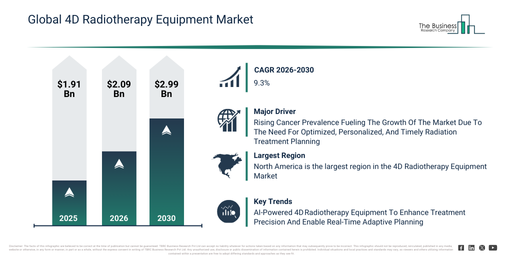
  • 4D Radiotherapy Equipment Market Growth To $2.99 Billion Creates New Opportunities Across The Industry

    4D Radiotherapy Equipment Market Growth To $2.99 Billion Creates New Opportunities Across The Industry

    Featuring market attractiveness scoring, total addressable market sizing, company benchmarking matrices, interactive Excel dashboards, deeper supply chain intelligence, emerging startup tracking, and granular product-level insights, The Business Research Company’s 2026 market reports are built to deliver research that is both more actionable and more strategically valuable.

    4D Radiotherapy Equipment Market Revenue Growth On Track For A 9.3% CAGR Through 2030

    The 4D radiotherapy equipment market size has experienced significant expansion over recent years. It is anticipated to increase from $1.91 billion in 2025 to $2.09 billion in 2026, demonstrating a compound annual growth rate (CAGR) of 9.6%. This historical growth can be ascribed to several factors, including the rising demand for motion-adaptive radiation therapy, the increasing adoption of advanced imaging systems, a heightened focus on minimizing treatment errors, the expanding utilization of real-time patient monitoring, and a growing preference for high-precision radiotherapy.

    The 4D radiotherapy equipment market is projected to experience robust expansion over the coming years. This market is anticipated to reach $2.99 billion by 2030, demonstrating a compound annual growth rate (CAGR) of 9.3%. This anticipated growth during the forecast period stems from factors such as increasing investments in advanced radiotherapy technologies, the wider acceptance of 4D treatment systems, a heightened need for precise tumor-tracking solutions, the broadened incorporation of AI-powered motion management, and a growing requirement for individualized radiation therapy. Key developments anticipated for this period encompass technological progress in motion-synchronized radiotherapy systems, breakthroughs in real-time imaging functionalities, the evolution of adaptive treatment delivery platforms, ongoing research and development in tumor-tracking innovations, and improvements in imaging-guided radiotherapy solutions.

    Get A Free Sample Report With In-Depth Market Insights:

    https://thebusinessresearchcompany.com/sample_request?id=22834228&type=smp&name=4D%20Radiotherapy%20Equipment%20Market%20Report%202026&utm_source=Blogs&utm_medium=Paid&utm_campaign=Oct_PR

    4D Radiotherapy Equipment Market Growth Factors Behind Sustained Expansion

    An anticipated surge in cancer cases is projected to fuel the expansion of the 4D radiotherapy equipment market in the future. Cancer, a condition marked by the unchecked proliferation and dissemination of abnormal cells, can harm adjacent tissues and organs if left untreated. The rise in cancer prevalence stems from lifestyle-related factors such as unhealthy eating habits, smoking, alcohol intake, and exposure to environmental contaminants, all of which heighten the risk of developing various forms of cancer. 4D radiotherapy equipment aids in cancer treatment by delivering exceptionally precise, motion-compensated radiation therapies that account for tumor movement during respiration. This technology enhances patient results by optimizing tumor targeting, reducing harm to healthy tissues, and boosting treatment efficacy. For example, in October 2025, NHS Digital, a UK government organisation, reported 354,820 new cancer diagnoses in England during 2023, equating to an average of 972 diagnoses daily and indicating an increase of 8,605 cases compared to 2022. Prostate cancer was the most frequently diagnosed at 58,137 new cases, showing a 6% rise in registrations over the prior year. Consequently, the increasing incidence of cancer is propelling the growth of the 4D radiotherapy equipment market. The growth of the 4D radiotherapy equipment market is anticipated to be propelled by increasing healthcare expenditure. Healthcare spending in emerging markets involves investments by governmental bodies, private entities, and medical service providers aimed at enhancing medical infrastructure, access to advanced therapies, and patient care services. This spending is escalating in emerging markets due to expanding middle-class populations experiencing greater incomes and extended lifespans, which, in turn, boosts the need for superior medical services, hospital facilities, and insurance coverage. 4D radiotherapy equipment supports this trend by delivering precise, image-guided radiation treatment that accounts for tumor movement, thereby improving treatment results while minimizing harm to surrounding healthy tissue. As an illustration, in June 2025, according to Statistics Austria, the national statistical office of Austria, total healthcare expenditure in Austria reached approximately $61.6 billion (€57 billion) in 2024, with contributions from both public and private sectors. This represented an increase of about $4.6 billion (€4.25 billion) compared to the previous year, and the share of healthcare spending as a proportion of gross domestic product rose from 11.2% in 2023 to 11.8% in 2024. Therefore, the rising healthcare spending in emerging markets is a key driver for the 4D radiotherapy equipment market.

    4D Radiotherapy Equipment Market Segment Analysis: What Are The Core Market Categories?

    The 4D radiotherapy equipment market covered in this report is segmented –

    1) By Product Type Or Component: 4D Gating/RT Systems, Linear Accelerators (LINACs), 4D Imaging Modalities, SGRT Systems, Treatment Planning Software

    2) By Motion Management Technique: Respiratory Gating, Real-Time Tumor Tracking, Breath-Hold Techniques, Adaptive Radiotherapy (ART)

    3) By Application: Lung Cancer, Liver Cancers, Pancreatic Cancer, Breast Cancer, Lymphoma, Other Cancers

    4) By End User: Hospitals, Cancer Treatment Centers, Specialty Radiotherapy Clinics, Research Institutions

    Subsegments:

    1) By 4D Gating / RT Systems: Respiratory Gating Systems, Real-Time Tumor Tracking Systems, Motion Management Platforms, Adaptive Radiation Delivery Systems

    2) By Linear Accelerators: Standard Linear Accelerators, Image Guided Linear Accelerators, Motion Compensated Linear Accelerators, Stereotactic Body Radiation Therapy Linear Accelerators

    3) By 4D Imaging Modalities: Four Dimensional Computed Tomography, Four Dimensional Magnetic Resonance Imaging, Four Dimensional Positron Emission Tomography, Four Dimensional Cone Beam Computed Tomography

    4) By SGRT Systems: Surface Guided Patient Positioning Systems, Optical Surface Monitoring Systems, Real-Time Surface Tracking Systems, Motion Compensated Surface Imaging Systems

    5) By Treatment Planning Software: Motion Adaptive Planning Software, Dose Calculation Software, Image Fusion Planning Software, Tumor Contouring And Delineation Software

    4D Radiotherapy Equipment Market Industry Trends Fueling Future Revenue Growth

    Major companies engaged in the 4D radiotherapy equipment market are concentrating on developing advanced imaging systems, such as AI-powered CT-Linac platforms, to improve treatment accuracy, facilitate real-time adjustments to treatment plans, and enhance operational efficiency. AI-powered CT-Linac platforms refer to integrated computed tomography–linear accelerator systems that utilize artificial intelligence for high-definition imaging, adaptive treatment planning, and real-time dose adjustments to deliver highly precise personalized radiation therapy for cancer patients. For instance, in May 2024, Elekta AB, a medical technology company based in Sweden, introduced Elekta Evo, a CT-Linac equipped with AI-enhanced imaging and both online and offline adaptive radiotherapy capabilities. This system allows clinicians to visualize target anatomy with clarity and modify radiation delivery during each session to account for patient movement and anatomical changes. This launch signifies a substantial technological advancement by incorporating high-precision imaging and adaptive therapy into routine clinical workflows, bridging traditional radiotherapy with AI-driven adaptive 4D planning, and providing clinicians with a scalable, efficient solution for improved patient outcomes.

    4D Radiotherapy Equipment Market Top Companies Driving Competitive Growth

    Major companies operating in the 4D radiotherapy equipment market are Hitachi Ltd., Siemens Healthineers AG, GE HealthCare Technologies Inc., Koninklijke Philips N.V., Varian Medical Systems Inc., Elekta AB, Shanghai United Imaging Healthcare Co. Ltd., Accuray Incorporated, Brainlab AG, Canon Medical Systems Corporation, RefleXion Medical, Vision RT Ltd., C-Rad AB, MVision AI Ltd., Anzai Medical Co. Ltd., ViewRay Technologies Inc., DYN’R Medical Systems, Ion Beam Applications SA (IBA SA)

    View The Full 4D Radiotherapy Equipment Market Report:

    https://thebusinessresearchcompany.com/report/4d-radiotherapy-equipment-market-report?utm_source=Blogs&utm_medium=Paid&utm_campaign=Oct_PR

    4D Radiotherapy Equipment Market Global Footprint: Which Region Leads The Market?

    North America was the largest region in the 4D radiotherapy equipment market in 2025. Asia-Pacific is expected to be the fastest-growing region in the forecast period. The regions covered in the 4D radiotherapy equipment market report are Asia-Pacific, South East Asia, Western Europe, Eastern Europe, North America, South America, Middle East, Africa.

    Reach Out To Our Team:

    The Business Research Company: https://www.thebusinessresearchcompany.com/

    Americas: +1 310-496-7795

    Asia: +44 7882 955267 & +91 8897263534

    Europe: +44 7882 955267

    Email us at: marketing@tbrc.info

    Follow us on:

    LinkedIn: https://in.linkedin.com/company/the-business-research-company

    YouTube: https://www.youtube.com/channel/UC24_fI0rV8cR5DxlCpgmyFQ

    Global Market Model: https://www.thebusinessresearchcompany.com/global-market-model