Category: Pharmaceuticals

  • Rotator Cuff Injuries Market Forecast: Breaking Down The Numbers Behind Future Expansion

    Rotator Cuff Injuries Market Forecast: Breaking Down The Numbers Behind Future Expansion

    Built to provide research that’s more actionable and strategically valuable, The Business Research Company’s 2026 market reports include market attractiveness analysis, total addressable market sizing, company benchmarking matrices, interactive Excel dashboards, broader supply chain intelligence, emerging startup tracking, and in-depth product insights.

    Rotator Cuff Injuries Market Expansion Outlook: What Revenue Opportunities Are Ahead?

    The market for rotator cuff injuries has demonstrated strong growth recently. It is anticipated to expand from $2.59 billion in 2025 to reach $2.78 billion in 2026, progressing at a compound annual growth rate (CAGR) of 7.4%. The growth observed in prior periods can be attributed to elements such as limited awareness surrounding early diagnosis, a reliance on conventional corticosteroid treatments, an absence of advanced biologics, the development of orthopedic clinic networks, and an increase in sports injuries.

    The rotator cuff injuries market is anticipated to experience substantial expansion over the upcoming years. It is projected to reach $3.66 billion by 2030, exhibiting a compound annual growth rate (CAGR) of 7.1%. This growth during the forecast period is fueled by the advancement of combination biologic therapies, increased acceptance of stem cell and PRP treatments, the proliferation of ambulatory surgical centers, the broadening of personalized rehabilitation solutions, and greater investment in orthopedic research and innovation. Key trends expected in this period encompass an escalating occurrence of shoulder injuries among the aging demographic, a rise in the use of minimally invasive surgical techniques, an increasing application of biologics and regenerative therapies, growing demand for customized rehabilitation regimens, and the expansion of sports medicine and orthopedic clinics.

    Get A Free Sample Report With In-Depth Market Insights:

    https://thebusinessresearchcompany.com/sample_request?id=80763157&type=smp&name=Rotator%20Cuff%20Injuries%20Market%20Report%202026&utm_source=Blogs&utm_medium=Paid&utm_campaign=Oct_PR

    Rotator Cuff Injuries Market Development Factors: What’s Supporting Demand?

    The anticipated expansion of the rotator cuff injuries market is linked to the rising occurrence of injuries stemming from sports and physical activities. These injuries encompass harm to muscles, bones, or soft tissues incurred during exercise or athletic involvement, varying in severity. Their uptick is attributed to heightened engagement in strenuous physical regimens, often without sufficient preparation or recuperation, thereby elevating the likelihood of injury. Specifically, rotator cuff injuries frequently arise from sports or physical pursuits involving repetitive overhead motions, examples being tennis, swimming, or weightlifting. Such actions can progressively strain or harm the shoulder tendons, ultimately causing injury. As an illustration, in October 2024, Insideworldfootball, a UK-based online news service, reported that sports injuries totaled 4,123 during the 2023-24 season, representing a 4% increase from 2022-23. Consequently, the growing frequency of sports- and physical activity-related injuries is fueling expansion within the rotator cuff injuries market.

    Rotator Cuff Injuries Market Segment Analysis Spotlighting Growth Areas

    The rotator cuff injuries market covered in this report is segmented –

    1) By Product Type: Mono, Combination

    2) By Molecule Type: Recombinant Fusion Proteins, Small Molecule, Monoclonal Antibody, Peptide, Polymer, Gene Therapy

    3) By Route Of Administration: Oral, Intravenous, Subcutaneous, Parenteral, Topical

    4) By End-User: Hospitals, Orthopedic Clinics, Ambulatory Surgical Centers (ASCs), Rehabilitation Centers, Sports Medicine Centers

    Subsegments:

    1) By Mono: Corticosteroids, Platelet-Rich Plasma (PRP), Stem Cell Therapy, Collagen-Based Implants, Pain Management Drugs

    2) By Combination: Platelet-Rich Plasma (PRP) + Stem Cells, Corticosteroids + Physical Therapy, Collagen Implants + Biologics, Analgesics + Anti-Inflammatory Drugs, Surgical Repair + Biologic Therapy

    Rotator Cuff Injuries Market Transformation Trends: What Innovations Are Driving Change?

    Leading companies operating within the rotator cuff injuries market are primarily concentrating on developing innovative products like implant systems, which enable the surgical attachment of the tendon to the bone in rotator cuff tear repair. An implant system denotes an innovative medical device specifically engineered for rotator cuff tear repair, providing a simplified surgical fixation of the torn tendon to the bone utilizing a patented, small implant made from medical-grade PEEK that effectively secures the tendon to the humerus across a broad area. For instance, in July 2023, Inovedis GmbH, a Germany-based firm specializing in pioneering medical technology for surgical solutions, launched the SINEFIX implant system. This medical device is designed for the surgical restoration of rotator cuff tears, aiming to shorten operation time and improve patient outcomes by offering a sutureless, staple-based technique for tendon fixation. Furthermore, it also presents an improved knot-free surgical method that ensures a stronger and more uniform tendon-to-bone fixation while preserving blood flow to enhance healing.

    Rotator Cuff Injuries Market Leading Companies: Who Holds The Strongest Market Presence?

    Major companies operating in the rotator cuff injuries market are Stryker Corporation, Zimmer Biomet Holdings Inc., Smith & Nephew plc, Arthrex Inc., Integra LifeSciences Holdings Corporation, CONMED Corporation, Bioventus Inc., ExacTech Inc., Karl Storz SE & Co. KG, Orthofix Medical Inc., Acumed LLC, Anika Therapeutics Inc., Ortho Regenerative Technologies Inc., Tensor Surgical Inc., MinInvasive Ltd., DePuy Synthes (Johnson & Johnson MedTech), Medtronic plc, Wright Medical Group N.V., DJO Global (Enovis), MicroPort Orthopedics, Globus Medical Inc., LifeNet Health, RTI Surgical Holdings Inc., Parcus Medical, Blue Belt Technologies, Ceterix Orthopaedics, Exactech Joint Preservation, Smith & Nephew Sports Medicine, Tornier (Stryker), Arthrosurface Inc., Zimmer Biomet Sports Medicine, Biorez Inc., Regenity Biosciences, Ossur hf., AlloSource

    View The Full Rotator Cuff Injuries Market Report:

    https://thebusinessresearchcompany.com/report/rotator-cuff-injuries-global-market-report?utm_source=Blogs&utm_medium=Paid&utm_campaign=Oct_PR

    Rotator Cuff Injuries Market Geographic Distribution And Regional Opportunities

    North America was the largest region in the rotator cuff injuries market in 2025. Asia-Pacific is expected to be the fastest-growing region in the forecast period. The regions covered in the rotator cuff injuries market report are Asia-Pacific, South East Asia, Western Europe, Eastern Europe, North America, South America, Middle East, Africa.

    Reach Out To Our Team:

    The Business Research Company: https://www.thebusinessresearchcompany.com/

    Americas: +1 310-496-7795

    Asia: +44 7882 955267 & +91 8897263534

    Europe: +44 7882 955267

    Email us at: marketing@tbrc.info

    Follow us on:

    LinkedIn: https://in.linkedin.com/company/the-business-research-company

    YouTube: https://www.youtube.com/channel/UC24_fI0rV8cR5DxlCpgmyFQ

    Global Market Model: https://www.thebusinessresearchcompany.com/global-market-model

  • Rosai-Dorfman Disease Market Expected To Grow At 7.2% CAGR Through 2030: What Businesses Need To Know

    Rosai-Dorfman Disease Market Expected To Grow At 7.2% CAGR Through 2030: What Businesses Need To Know

    Backed by market attractiveness analysis, total addressable market sizing, company benchmarking matrices, interactive Excel dashboards, wider supply chain intelligence, emerging startup coverage, and detailed product-level insights, The Business Research Company’s 2026 market reports are designed to offer research that is more actionable and strategically valuable than ever.

    Rosai-Dorfman Disease Market Growth Potential: How Will Market Size Shift Through 2030?

    The rosai-dorfman disease market has shown robust expansion over recent years. It is anticipated to increase from $0.54 billion in 2025 to $0.58 billion in 2026, exhibiting a compound annual growth rate (CAGR) of 7.5%. The historical development of this market stemmed from various factors including limited recognition of rosai-dorfman disease, the absence of uniform diagnostic procedures, a reliance on surgical treatments, insufficient funding for rare disease research, and restricted availability of advanced immunohistochemistry methods.

    The rosai-dorfman disease market size is projected to experience substantial growth in the upcoming years, expanding to $0.76 billion by 2030, with a compound annual growth rate (CAGR) of 7.2%. This expansion during the forecast period is attributable to advancements in molecular diagnostics, the development of targeted immunosuppressive therapies, an increase in rare disease registries, growing collaboration between hospitals and research centers, and the rising adoption of personalized treatment protocols. Key trends anticipated in this period include heightened awareness and early diagnosis of rare diseases, the growth of personalized and targeted immunotherapy, increased investments in rare disease research, the expansion of hospital and cancer center capabilities, and the adoption of multidisciplinary treatment approaches.

    Get A Free Sample Report With In-Depth Market Insights:

    https://thebusinessresearchcompany.com/sample_request?id=68159692&type=smp&name=Rosai-Dorfman%20Disease%20Market%20Report%202026&utm_source=Blogs&utm_medium=Paid&utm_campaign=Oct_PR

    Rosai-Dorfman Disease Market Industry Drivers: What’s Behind The Revenue Growth?

    An increasing need for targeted therapies is projected to boost the expansion of the Rosai-Dorfman disease market in the future. These therapies are precise medications designed to attack particular genetic mutations or cellular processes that foster tumor growth, thus preserving healthy cells. The rising interest in targeted therapies stems from their capacity to combat diseased cells with minimal harm to healthy tissues, resulting in better treatment outcomes and fewer adverse effects compared to conventional treatments. For Rosai-Dorfman disease, targeted therapies work by obstructing critical pathways, such as MAPK/ERK, that contribute to anomalous histiocyte proliferation, thereby managing the condition efficiently with fewer adverse reactions, as these precise interventions focus on disease-specific mechanisms while simultaneously protecting healthy tissues. For example, a report from the American Society of Gene & Cell Therapy (ASGCT), a US-based professional membership organization, indicated that in July 2023, the third quarter of 2023 saw 247 targeted gene therapies in Phase II, marking a 5% increase from the second quarter. Consequently, the increasing demand for targeted therapies is propelling the Rosai-Dorfman disease market’s expansion.

    Rosai-Dorfman Disease Market Segment Performance And Emerging Opportunities

    The rosai-dorfman disease market covered in this report is segmented –

    1) By Type: Classic (Nodal) Rosai-Dorfman Disease, Extranodal Rosai-Dorfman Disease

    2) By Procedure Type: Diagnosis, Treatment

    3) By Route Of Administration: Oral, Parenteral

    4) By Age: Children, Adults

    5) By End-User: Hospitals, Diagnostics, Cancer Centers, Other End-Users

    Subsegments:

    1) By Classic (Nodal) Rosai-Dorfman Disease: Cervical Lymph Node Involvement, Axillary Lymph Node Involvement, Inguinal Lymph Node Involvement, Mediastinal Lymph Node Involvement, Generalized Lymphadenopathy

    2) By Extranodal Rosai-Dorfman Disease: Cutaneous Or Subcutaneous Rosai-Dorfman Disease, Central Nervous System (CNS) Rosai-Dorfman Disease, Orbital Or Ocular Rosai-Dorfman Disease, Bone And Skeletal Rosai-Dorfman Disease, Nasal Or Sinus Rosai-Dorfman Disease, Renal Rosai-Dorfman Disease, Pulmonary Rosai-Dorfman Disease, Hepatic Or Splenic Rosai-Dorfman Disease, Breast Rosai-Dorfman Disease

    #Rosai-Dorfman Disease Market Growth Trends: What’s Shaping The Future Outlook?

    Leading companies in the rosai-dorfman disease market are concentrating on advancements in diagnostic methods, such as digital molecular and genetic testing. This approach enables the identification of genetic mutations and infectious agents by examining deoxyribonucleic acid or ribonucleic acid, facilitating precise diagnosis, risk evaluation, and customized treatment plans. Molecular and genetic testing itself is a form of laboratory analysis that investigates an individual’s deoxyribonucleic acid, ribonucleic acid, or proteins to detect genetic changes or infectious agents. It is utilized for diagnosing illnesses, assessing genetic predispositions, and guiding individualized therapeutic interventions. For example, in February 2025, F. Hoffmann-La Roche AG, a Switzerland-based company focused on pharmaceuticals and diagnostics, is launching its Sequencing By Expansion (SBX) technology. This next-generation sequencing (NGS) technology is designed to revolutionize genomic analysis by boosting speed, accuracy, and scalability. Moreover, it provides ultra-rapid whole genome or targeted sequencing, allowing for quick, extensive genomic profiling to identify rare mutations or structural variants in rosai-dorfman disease tissue samples.

    Rosai-Dorfman Disease Market Key Players: Which Companies Lead Industry Competition?

    Major companies operating in the rosai-dorfman disease market are Pfizer Inc., Johnson And Johnson, F. Hoffmann-La Roche AG, Merck And Co. Inc., Bristol Myers Squibb Company, Novartis AG, Canon Inc., Siemens Healthineers, GE HealthCare, Viatris Inc., Teva Pharmaceutical Industries Ltd., Memorial Sloan Kettering Cancer Center, Dr. Reddy’s Laboratories Ltd., Aurobindo Pharma, Mayo Foundation for Medical Education and Research, Zydus Pharmaceuticals Inc., SternMed GmbH, LGM Pharma, Niksan Pharmaceutical, Herbert Irving Cancer Center

    View The Full Rosai-Dorfman Disease Market Report:

    https://thebusinessresearchcompany.com/report/rosai-dorfman-disease-global-market-report?utm_source=Blogs&utm_medium=Paid&utm_campaign=Oct_PR

    Rosai-Dorfman Disease Market Largest Region By Revenue And Market Share

    North America was the largest region in the rosai-dorfman disease market in 2025. Asia-Pacific is expected to be the fastest-growing region in the forecast period. The regions covered in the rosai-dorfman disease market report are Asia-Pacific, South East Asia, Western Europe, Eastern Europe, North America, South America, Middle East, Africa.

    Reach Out To Our Team:

    The Business Research Company: https://www.thebusinessresearchcompany.com/

    Americas: +1 310-496-7795

    Asia: +44 7882 955267 & +91 8897263534

    Europe: +44 7882 955267

    Email us at: marketing@tbrc.info

    Follow us on:

    LinkedIn: https://in.linkedin.com/company/the-business-research-company

    YouTube: https://www.youtube.com/channel/UC24_fI0rV8cR5DxlCpgmyFQ

    Global Market Model: https://www.thebusinessresearchcompany.com/global-market-model
  • RNA Targeting Small Molecules Therapeutics Market Forecast To Reach $4.83 Billion By 2030: Key Trends Explained

    RNA Targeting Small Molecules Therapeutics Market Forecast To Reach $4.83 Billion By 2030: Key Trends Explained

    Featuring market attractiveness scoring, total addressable market sizing, company benchmarking matrices, interactive Excel dashboards, deeper supply chain intelligence, emerging startup tracking, and granular product-level insights, The Business Research Company’s 2026 market reports are built to deliver research that is both more actionable and more strategically valuable.

    RNA Targeting Small Molecules Therapeutics Market Value Analysis: What Growth Lies Ahead Over The Forecast Period?

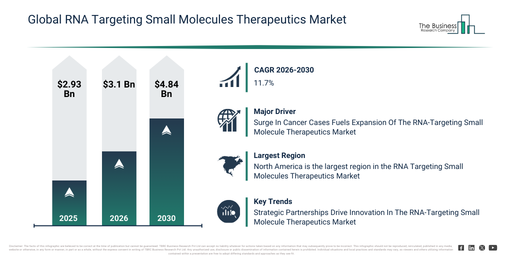
    The rna targeting small molecules therapeutics market size has experienced significant expansion in recent years. This market is anticipated to expand from $2.93 billion in 2025 to $3.1 billion in 2026, demonstrating a compound annual growth rate (CAGR) of 5.8%. The historical growth can be attributed to factors such as the limited efficacy of protein-targeted drugs, an increase in genomic research funding, the rising prevalence of cancer and genetic disorders, the early success of rna-based therapies, and the broadening of academic-industry collaborations.

    The market for RNA-targeting small molecule therapeutics is projected to experience swift expansion over the coming years. This market is anticipated to reach a valuation of $4.84 billion in 2030, exhibiting a compound annual growth rate (CAGR) of 11.7%. Key drivers for this expansion during the projection period include breakthroughs in RNA structure prediction, a rising need for personalized treatments, heightened biotechnology investments in small molecules, favorable regulatory frameworks for innovative RNA drugs, and an expanding array of RNA-targeting clinical trials. Significant trends observed throughout the forecast timeframe encompass the broadening of RNA-targeted drug pipelines, an intensified focus on disease targets previously considered undruggable, enhanced partnerships between pharmaceutical and biotechnology companies, progress in RNA structural biology and chemistry, and increased funding for therapies addressing rare and genetic diseases.

    Get A Free Sample Report With In-Depth Market Insights:

    https://thebusinessresearchcompany.com/sample_request?id=12253&type=smp&name=RNA%20Targeting%20Small%20Molecules%20Therapeutics%20Market%20Report%202026&utm_source=Blogs&utm_medium=Paid&utm_campaign=Oct_PR

    RNA Targeting Small Molecules Therapeutics Market Growth Factors: What’s Supporting Expansion?

    The RNA-targeting small molecule therapeutics market is anticipated to expand due to the growing incidence of cancer cases. Cancer, a group of illnesses, develops when abnormal cells uncontrollably multiply in almost any organ or tissue, surpassing their usual boundaries and potentially spreading to other organs or invading nearby body parts. RNA-targeting small molecules are developed and studied to specifically target RNA molecules linked to cancer as a treatment approach. For instance, the World Health Organization, a Switzerland-based intergovernmental organization, stated in February 2024 that by 2050, more than 35 million new cancer cases are projected, indicating a 77% rise compared to the approximately 20 million cases in 2022. Consequently, the increasing number of cancer cases is a significant factor propelling the growth of the RNA-targeting small molecule therapeutics market.

    RNA Targeting Small Molecules Therapeutics Market Segment Landscape And Growth Outlook

    The rna targeting small molecules therapeutics market covered in this report is segmented –

    1) By Offering: mRNA (Messenger Ribonucleic Acid) Translation Modulators, RNA (Ribonucleic Acid) Splicing Modification, Direct RNA (Ribonucleic Acid) Targeting, Other Offerings

    2) By Therapeutic Indication: Lung Fibrosis, Cancer, Neurodegenerative Diseases, Autoimmune, Inflammatory, Other Therapeutic Indications

    3) By End User: Hospitals, Research Laboratories, Pharmaceutical And Biotechnology Companies, Other End-Users

    RNA Targeting Small Molecules Therapeutics Market Industry Trends: What’s Reshaping Demand?

    Major companies within the RNA-targeting small molecule therapeutics market are increasingly concentrating on strategic alliances to advance the discovery and development of innovative therapies. These strategic alliances typically involve cooperative efforts between several organizations to pool expertise, exchange crucial data, and accelerate the creation of novel RNA-targeting small molecules. For example, in June 2022, Otsuka Pharmaceutical Co. Ltd., a pharmaceutical manufacturing company based in Japan, partnered with xFOREST Therapeutics Co. Ltd., a Japan-based developer of drug discovery platforms. Through this collaboration, xFOREST is poised to provide Otsuka with its Forest technology to propel systemic small-molecule drug discovery research, specifically targeting RNA structures. Additionally, in April 2024, Ipsen, a biopharmaceutical company from France, joined forces with Skyhawk Therapeutics, a US-based clinical-stage biotechnology company that specializes in RNA-targeting small molecule therapeutics. This partnership allowed Ipsen to focus on developing RNA-targeting small molecule drugs for rare neurological diseases and to integrate diverse data sets to identify and develop small molecules capable of modulating RNA.

    RNA Targeting Small Molecules Therapeutics Market Competitive Landscape: Who Leads The Industry?

    Major companies operating in the rna targeting small molecules therapeutics market are F Hoffmann La Roche Ltd, Novartis AG, Sanofi SA, AstraZeneca plc, Eli Lilly and Company, Amgen Inc, Bayer AG, Vertex Pharmaceuticals Inc, PTC Therapeutics Inc, Arrakis Therapeutics, Anima Biotech Inc, Skyhawk Therapeutics Inc, Remix Therapeutics, Accent Therapeutics Inc, STORM Therapeutics Ltd, eFFECTOR Therapeutics Inc, EPICS Therapeutics, Expansion Therapeutics Inc, Ribometrix Inc, Redona Therapeutics, Eloxx Pharmaceuticals Inc, 858 Therapeutics

    View The Full RNA Targeting Small Molecules Therapeutics Market Report:

    https://thebusinessresearchcompany.com/report/RNA-targeting-small-molecules-therapeutics-global-market-report?utm_source=Blogs&utm_medium=Paid&utm_campaign=Oct_PR

    RNA Targeting Small Molecules Therapeutics Market Regional Analysis And Leading Geography

    North America was the largest region in the RNA targeting small molecules therapeutics market in 2025. The regions covered in the rna targeting small molecules therapeutics market report are Asia-Pacific, South East Asia, Western Europe, Eastern Europe, North America, South America, Middle East, Africa.

    Reach Out To Our Team:

    The Business Research Company: https://www.thebusinessresearchcompany.com/

    Americas: +1 310-496-7795

    Asia: +44 7882 955267 & +91 8897263534

    Europe: +44 7882 955267

    Email us at: marketing@tbrc.info

    Follow us on:

    LinkedIn: https://in.linkedin.com/company/the-business-research-company

    YouTube: https://www.youtube.com/channel/UC24_fI0rV8cR5DxlCpgmyFQ

    Global Market Model: https://www.thebusinessresearchcompany.com/global-market-model
  • RNA Targeting Small Molecule Drug Discovery Market Analysis Through 2030: Market Size, Growth Trends And Industry Outlook

    RNA Targeting Small Molecule Drug Discovery Market Analysis Through 2030: Market Size, Growth Trends And Industry Outlook

    Built to provide research that’s more actionable and strategically valuable, The Business Research Company’s 2026 market reports include market attractiveness analysis, total addressable market sizing, company benchmarking matrices, interactive Excel dashboards, broader supply chain intelligence, emerging startup tracking, and in-depth product insights.

    RNA Targeting Small Molecule Drug Discovery Market Size Forecast: How Big Could The Market Get By 2030?

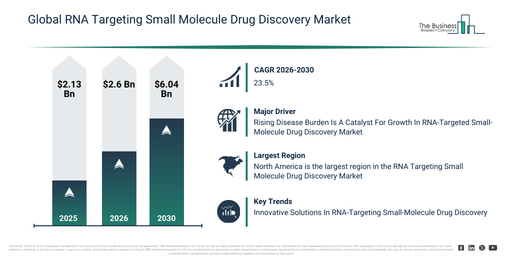
    The rna targeting small molecule drug discovery market has experienced substantial expansion in recent years. It will grow from $2.13 billion in 2025 to $2.6 billion in 2026 at a compound annual growth rate (CAGR) of 22.3%. The historical increase in this market can be attributed to several factors, including the limited druggability of protein targets, an escalating prevalence of genetic disorders, advancements in rna biology research, increased academic-industry collaborations, and the early successes of rna-based therapeutics.

    The rna targeting small molecule drug discovery market size is projected to experience rapid expansion in the coming years. This market is anticipated to reach $6.04 billion by 2030, exhibiting a compound annual growth rate (CAGR) of 23.5%. Factors driving this growth during the forecast period include the advent of AI-enabled rna target identification, a rise in precision medicine investments, the broadening of rna therapeutics pipelines, advancements in rna delivery technologies, and favorable regulatory backing for new treatment approaches. Key trends expected within the forecast timeframe encompass AI-powered rna structure prediction, an increase in rna-targeted oncology pipelines, progress in rna-specific small molecule libraries, enhanced rna binding selectivity and specificity, and the incorporation of multi-omics into rna drug discovery processes.

    Get A Free Sample Report With In-Depth Market Insights:

    https://thebusinessresearchcompany.com/sample_request?id=54719454&type=smp&name=RNA%20Targeting%20Small%20Molecule%20Drug%20Discovery%20Market%20Report%202026&utm_source=Blogs&utm_medium=Paid&utm_campaign=Oct_PR

    RNA Targeting Small Molecule Drug Discovery Market Demand Drivers: What’s Powering Industry Growth?

    The RNA-targeted small-molecule drug discovery market is projected to grow due to the increasing occurrence of cancer, genetic disorders, and viral infections. Cancer is defined as a collection of diseases characterized by the uncontrolled multiplication of cells within the body. Viral infections pertain to illnesses caused by viruses, which are microscopic infectious agents capable of replicating only inside the living cells of organisms. RNA targeting-based drug discovery offers a method to treat cancer, genetic disorders, and viral infections, as these conditions are associated with genes and impaired genetic material, which can be addressed by drugs developed using RNA targeting-based approaches. For instance, in February 2024, a report from the World Health Organization (WHO), a Switzerland-based intergovernmental organization, revealed an estimated 20 million new cancer cases and 9.7 million deaths globally in 2022. Lung cancer was the most prevalent, with 2.5 million new cases (12.4%), followed by female breast cancer (2.3 million cases, 11.6%), colorectal cancer (1.9 million cases, 9.6%), prostate cancer (1.5 million cases, 7.3%), and stomach cancer (970,000 cases, 4.9%). By 2050, new cancer cases are anticipated to climb by 77%, reaching over 35 million annually. Thus, the rising prevalence of cancer, genetic disorders, and viral infections is a key driver for the growth of the RNA-targeted small-molecule drug discovery market.

    RNA Targeting Small Molecule Drug Discovery Market Breakdown By Product Type And Application

    The rna targeting small molecule drug discovery market covered in this report is segmented –

    1) By Target RNA Type: Messenger RNA (mRNA), Non-Coding RNA (ncRNA), MicroRNA (miRNA), Long Non-Coding RNA (lncRNA)

    2) By Therapeutic Area: Oncology, Neurology, Infectious Disease, Metabolic Diseases, Genetic Disorders, Other Therapeutic Areas

    3) By Delivery Method: Intravenous (IV), Oral, Topical, Other Methods

    4) By Application: Research Use, Therapeutic Use, Diagnostic Use, Other Applications

    Subsegments:

    1) By Messenger RNA (mRNA): Targeting mRNA For Protein Coding, Modulation Of mRNA Stability, mRNA Translation Inhibition

    2) By Non-Coding RNA (ncRNA): Long Non-Coding RNA, Small Nuclear RNA, Small Nucleolar RNA

    3) By MicroRNA (miRNA): miRNA Inhibition, miRNA Mimics, Targeting Specific miRNA Pathways

    4) By Long Non-Coding RNA (lncRNA): lncRNA Modulators, Targeting Specific lncRNA Functions, Therapeutic Applications Of lncRNA

    RNA Targeting Small Molecule Drug Discovery Market Innovation Trends: What Developments Are Reshaping The Industry?

    Leading companies in the RNA-targeting small-molecule drug discovery market are implementing innovative platforms, including software-as-a-service platforms, to gain a competitive edge. Software-as-a-service (SaaS) is defined as a software distribution model where applications are hosted by a third-party vendor and are accessible to customers via the Internet. For example, in December 2023, the US-based science and technology company Merck & Co. Inc. launched AIDDISON. This platform suggests optimal synthesis routes for selected medications. This novel approach has the potential to generate significant cost savings in the drug discovery process and markedly improve the success rate for introducing new medicines to patients. By bridging the divide between virtual molecular design and real-world manufacturability, the platform elevates the success rate of delivering innovative treatments to patients by extracting crucial insights from vast datasets. This advanced AI system integrates computer-aided drug design, machine learning, and generative AI to expedite the medication development timeline.

    RNA Targeting Small Molecule Drug Discovery Market Company Landscape And Competitive Strategy

    Major companies operating in the rna targeting small molecule drug discovery market are F. Hoffmann-La Roche Ltd, Novartis AG, Bristol-Myers Squibb Company, Moderna Inc., Biogen Inc., Alnylam Pharmaceuticals Inc., Sarepta Therapeutics Inc., Evotec A.G., PTC Therapeutics Inc., Ionis Pharmaceuticals Inc., Dicerna Pharmaceuticals Inc., Arrakis Therapeutics, H3 Biomedicine Inc., Anima Biotech Inc., Ribometrix Inc., Quark Pharmaceuticals Inc., Regulus Therapeutics Inc., Skyhawk Therapeutics Inc., Accent Therapeutics Inc., Epics Therapeutics, Expansion Therapeutics, Arbutus Biopharma Corporation, Arbutus Biopharma Corporation

    View The Full RNA Targeting Small Molecule Drug Discovery Market Report:

    https://thebusinessresearchcompany.com/report/RNA-targeting-small-molecule-drug-discovery-global-market-report?utm_source=Blogs&utm_medium=Paid&utm_campaign=Oct_PR

    RNA Targeting Small Molecule Drug Discovery Market Geographic Analysis: Where Is Demand Accelerating Fastest?

    North America was the largest region in the RNA-targeting small molecule drug discovery market in 2025. The regions covered in the rna targeting small molecule drug discovery market report are Asia-Pacific, South East Asia, Western Europe, Eastern Europe, North America, South America, Middle East, Africa.

    Reach Out To Our Team:

    The Business Research Company: https://www.thebusinessresearchcompany.com/

    Americas: +1 310-496-7795

    Asia: +44 7882 955267 & +91 8897263534

    Europe: +44 7882 955267

    Email us at: marketing@tbrc.info

    Follow us on:

    LinkedIn: https://in.linkedin.com/company/the-business-research-company

    YouTube: https://www.youtube.com/channel/UC24_fI0rV8cR5DxlCpgmyFQ

    Global Market Model: https://www.thebusinessresearchcompany.com/global-market-model
  • Rituximab Biosimilars Market Outlook From 2026 To 2030: Key Growth Factors And Future Opportunities

    Rituximab Biosimilars Market Outlook From 2026 To 2030: Key Growth Factors And Future Opportunities

    Backed by market attractiveness analysis, total addressable market sizing, company benchmarking matrices, interactive Excel dashboards, wider supply chain intelligence, emerging startup coverage, and detailed product-level insights, The Business Research Company’s 2026 market reports are designed to offer research that is more actionable and strategically valuable than ever.

    Rituximab Biosimilars Market Revenue Outlook: What CAGR Lies Ahead Through 2030?

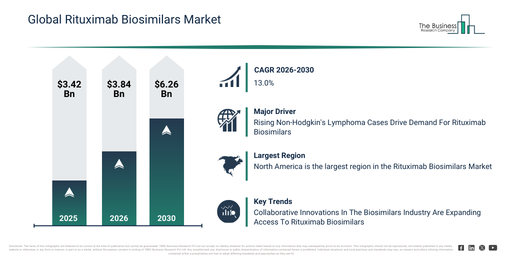
    The rituximab biosimilars market has experienced rapid expansion in recent years. This market is projected to expand from $3.42 billion in 2025 to $3.84 billion in 2026, demonstrating a compound annual growth rate (CAGR) of 12.5%. In previous years, this growth was primarily driven by the high cost of originator rituximab, the increasing prevalence of non-Hodgkin’s lymphoma, the growing incidence of chronic lymphocytic leukemia, rising awareness of autoimmune disease management, and limited access to advanced biologics.

    The rituximab biosimilars market is projected to experience substantial expansion over the coming years. It will grow to $6.26 billion in 2030 at a compound annual growth rate (CAGR) of 13.0%. This projected expansion during the forecast period is primarily driven by the introduction of novel biosimilar formulations, the broadened availability of subcutaneous delivery methods, increasing acceptance in developing economies, augmented governmental and insurance backing for biosimilars, and their integration into hospital and specialized pharmacy initiatives. Noteworthy trends anticipated during this period include a heightened embrace of rituximab biosimilars for treating oncology and autoimmune conditions, the wider deployment of subcutaneous administration and pre-filled delivery systems, an escalating preference for affordable monoclonal antibody alternatives, the expanding application of antibody-drug conjugates (ADCs) in targeted therapies, and improved distribution networks through hospitals and retail pharmacies.

    Get A Free Sample Report With In-Depth Market Insights:

    https://thebusinessresearchcompany.com/sample_request?id=78579731&type=smp&name=Rituximab%20Biosimilars%20Market%20Report%202026&utm_source=Blogs&utm_medium=Paid&utm_campaign=Oct_PR

    Rituximab Biosimilars Market Growth Drivers: What’s Behind The Acceleration?

    The increasing incidence of non-Hodgkin’s lymphoma (NHL) is projected to boost the rituximab biosimilars market moving forward. Non-Hodgkin’s lymphoma is a form of cancer that originates in lymphocytes, which are white blood cells crucial to the body’s immune system. The surge in non-Hodgkin’s lymphoma prevalence is attributed to rising incidence rates, particularly within aging demographics, and also to lifestyle and environmental elements. Rituximab Biosimilars are effective in targeting and eliminating CD20-positive B cells, thereby reducing tumor burden, enhancing immune system regulation, and offering a more accessible and cost-efficient treatment option for patients with non-Hodgkin’s lymphoma (NHL), ultimately improving overall therapeutic outcomes and quality of life. For instance, in January 2024, the American Cancer Society, a US-based cancer advocacy organization, reported that approximately 80,620 individuals (44,590 men and 36,030 women) were anticipated to be diagnosed with non-Hodgkin lymphoma, with an estimated 20,140 deaths (11,780 men and 8,360 women). The lifetime risk of developing this cancer is about 1 in 42 for men and 1 in 52 for women. Consequently, the rising prevalence of non-Hodgkin’s lymphoma is a key driver for the growth of the rituximab biosimilars market.

    Rituximab Biosimilars Market Segment Analysis And Revenue Potential

    The rituximab biosimilars market covered in this report is segmented –

    1) By Route Of Administration: Subcutaneous, Intravenous

    2) By Application: Non-Hodgkin’s Lymphoma, Chronic Lymphocytic Leukemia, Rheumatoid Arthritis, Other Applications

    3) By Distribution Channel: Hospital Pharmacy, Retail Pharmacy, Mail Order

    Subsegments:

    1) By Subcutaneous: Pre-filled Syringes, Injection Pens

    2) By Intravenous: IV Infusion Solutions, IV Push Formulations

    Rituximab Biosimilars Market Trends: What’s Defining The Industry’s Next Phase?

    Leading companies active in the rituximab biosimilars market are concentrating on developing innovative products through strategic partnerships. This approach aims to improve accessibility and offer more economical treatment choices for individuals with various immunological and oncological diseases. Collaborations with established entities assist companies in accelerating commercialization, leveraging collective expertise in regulatory approvals and distribution, and effectively introducing biosimilars to the market, thereby expanding patient access and market penetration. For instance, in July 2023, Dr. Reddy’s Laboratories partnered with Fresenius Kabi to commercialize its planned rituximab biosimilar in the US. This collaboration intends to bring a biosimilar version of rituximab to market, presenting a more affordable and readily available treatment option for patients. The introduction of a rituximab biosimilar in the United States has the potential to broaden access to this vital treatment for patients afflicted with conditions such as rheumatoid arthritis, non-Hodgkin’s lymphoma, chronic lymphocytic leukemia, pemphigus vulgaris, granulomatosis with polyangiitis, and microscopic polyangiitis.

    Rituximab Biosimilars Market Key Players Shaping Industry Direction

    Major companies operating in the rituximab biosimilars market are Novartis AG, Pfizer, BIOCAD, Shanghai Henlius Biotech Inc., Innovent Biologics Inc., Cadila Pharmaceuticals, Hetero Drugs Limited, Dr. Reddy’s Laboratories, Shanghai Fosun Pharmaceutical (Group) Co. Ltd., Reliance Life Sciences India, Zenotech Laboratories, Celltrion, Biocad, MABION S.A., Amgen, Teva Pharmaceuticals, Celltrion Healthcare, Coherus BioSciences, Aryogen Biopharma, TR-Pharm, Hikma Pharmaceuticals plc.

    View The Full Rituximab Biosimilars Market Report:

    https://thebusinessresearchcompany.com/report/Rituximab-Biosimilar-global-market-report?utm_source=Blogs&utm_medium=Paid&utm_campaign=Oct_PR

    Rituximab Biosimilars Market Global Footprint: Which Region Leads The Industry?

    North America was the largest region in the rituximab biosimilars market in 2025. Middle East is expected to be the fastest-growing region in the rituximab biosimilars market report during the forecast period. The regions covered in the rituximab biosimilars market report are Asia-Pacific, South East Asia, Western Europe, Eastern Europe, North America, South America, Middle East, Africa.

    Reach Out To Our Team:

    The Business Research Company: https://www.thebusinessresearchcompany.com/

    Americas: +1 310-496-7795

    Asia: +44 7882 955267 & +91 8897263534

    Europe: +44 7882 955267

    Email us at: marketing@tbrc.info

    Follow us on:

    LinkedIn: https://in.linkedin.com/company/the-business-research-company

    YouTube: https://www.youtube.com/channel/UC24_fI0rV8cR5DxlCpgmyFQ

    Global Market Model: https://www.thebusinessresearchcompany.com/global-market-model
  • Risperidone Market Growth Forecast: Market Size, Key Trends And Emerging Opportunities Through 2030

    Risperidone Market Growth Forecast: Market Size, Key Trends And Emerging Opportunities Through 2030

    Featuring market attractiveness scoring, total addressable market sizing, company benchmarking matrices, interactive Excel dashboards, deeper supply chain intelligence, emerging startup tracking, and granular product-level insights, The Business Research Company’s 2026 market reports are built to deliver research that is both more actionable and more strategically valuable.

    Risperidone Market Growth Analysis: How Will Revenue Trend Over The Forecast Period?

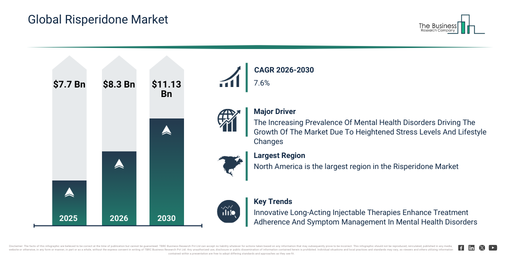
    The risperidone market size has seen robust growth in recent years. It is anticipated to expand from $7.7 billion in 2025 to $8.3 billion in 2026, demonstrating a compound annual growth rate (CAGR) of 7.8%. The reasons for this historical growth include the increasing prevalence of schizophrenia and bipolar disorder, widespread clinical acceptance of atypical antipsychotics, the availability of generic risperidone formulations, the expansion of mental health treatment programs, and improved psychiatric diagnosis rates.

    The risperidone market is projected to experience substantial expansion in the coming years, reaching $11.13 billion in 2030 at a compound annual growth rate (CAGR) of 7.6%. This anticipated growth during the forecast period is fueled by several factors, including a heightened demand for long-acting antipsychotic injections, an increased emphasis on personalized psychiatric care, the broadening of community mental health services, the expanding adoption of digital mental health monitoring, and an expanding elderly patient demographic. Key trends observed over the forecast period encompass a rising preference for long-acting injectable formulations, the increasing application of extended-release tablets, a stronger emphasis on solutions for patient adherence, the development of expanded pediatric and geriatric dosage forms, and improved monitoring of treatment outcomes.

    Get A Free Sample Report With In-Depth Market Insights:

    https://thebusinessresearchcompany.com/sample_request?id=74853380&type=smp&name=Risperidone%20Market%20Report%202026&utm_source=Blogs&utm_medium=Paid&utm_campaign=Oct_PR

    Risperidone Market Growth Factors Behind Sustained Expansion

    The anticipated expansion of the risperidone market is directly linked to the rising occurrence of mental health conditions. These conditions encompass a broad spectrum of issues that affect an individual’s mood, thought processes, and behavior, often resulting in significant distress or impairment in daily functioning. The increasing prevalence of mental health disorders primarily stems from elevated stress levels and modern lifestyle changes that disrupt emotional equilibrium, sleep patterns, and overall psychological well-being. Risperidone effectively assists in managing these disorders by balancing neurotransmitters in the brain, which in turn reduces symptoms such as agitation, hallucinations, and mood swings, thereby supporting overall emotional stability. For instance, in March 2023, the Alzheimer’s Association, a US-based nonprofit voluntary health organization, reported that in 2023, approximately 6.7 million Americans aged 65 and older are living with Alzheimer’s dementia, a number projected to rise to 13.8 million by 2060. Consequently, the escalating incidence of mental health disorders is a key driver for the growth of the risperidone market.

    Risperidone Market Segmentation And Category Overview

    The risperidone market covered in this report is segmented –

    1) By Product Type: Tablets, Oral Solution, Injectable

    2) By Patient Age Group: Pediatric Patients, Adult Patients, Elderly Patients

    3) By Application: Schizophrenia, Bipolar Disorder, Autism, Other Applications

    4) By Distribution Channel: Hospital Pharmacies, Retail Pharmacies, Online Pharmacies, Clinic Pharmacies

    5) By End-Users: Hospitals, Homecare, Specialty Clinics, Ambulatory Surgical Centers, Other End Users

    Subsegments:

    1) By Tablets: Standard Release, Extended Release, Orally Disintegrating

    2) By Oral Solution: Flavored Solution, Unflavored Solution, Concentrated Solution

    3) By Injectable: Long Acting Injection, Short Acting Injection, Depot Injection

    Risperidone Market Industry Trends Fueling Future Revenue Growth

    Leading companies within the risperidone market are concentrating on creating inventive solutions, such as long-acting injectable formulations, to enhance patient adherence and improve treatment results. These long-acting injectable formulations are specifically designed medications that progressively release risperidone over time, enabling less frequent administration while sustaining consistent therapeutic effects. As an illustration, in January 2023, Luye Pharma Group Ltd., a pharmaceutical company based in China, obtained approval from the U.S. Food and Drug Administration (FDA) for Rykindo (risperidone). This extended-release injectable formulation is intended for the treatment of schizophrenia in adults, and for use as either monotherapy or in conjunction with lithium or valproate for the ongoing treatment of bipolar I disorder in adults. This biweekly intramuscular risperidone injection leverages Luye Pharma’s advanced microsphere technology, facilitating a long-acting, sustained-release delivery that helps manage symptoms in both schizophrenia and bipolar I disorder. The formulation offers a swift onset of action for rapid symptom alleviation and allows for quick elimination post-discontinuation, providing healthcare professionals greater adaptability in tailoring treatment plans to individual patient requirements.

    Risperidone Market Competitive Analysis Of Leading Industry Participants

    Major companies operating in the risperidone market are Teva Pharmaceutical Industries Ltd., Sandoz International GmbH, Sun Pharmaceutical Industries Ltd., Apotex Inc., Cipla Limited., Dr. Reddy’s Laboratories Ltd., Hikma Pharmaceuticals PLC, Zydus Cadila Healthcare Ltd, Alkem Laboratories Ltd., Amneal Pharmaceuticals LLC, Natco Pharma Limited., Strides Pharma Science Limited., RPG Life Sciences Limited., Jubilant Cadista Pharmaceuticals Inc., ICROM S.p.A., Accord Healthcare Ltd., Ambica Pharma Machines Pvt. Ltd., Gonane Pharma Private Limited., Janssen Pharmaceuticals, LGM Pharma

    View The Full Risperidone Market Report:

    https://thebusinessresearchcompany.com/report/risperidone-global-market-report?utm_source=Blogs&utm_medium=Paid&utm_campaign=Oct_PR

    Risperidone Market Regional Distribution: Which Areas Power Market Growth?

    North America was the largest region in the risperidone market in 2025. Asia-Pacific is expected to be the fastest-growing region in the forecast period. The regions covered in the risperidone market report are Asia-Pacific, South East Asia, Western Europe, Eastern Europe, North America, South America, Middle East, Africa.

    Reach Out To Our Team:

    The Business Research Company: https://www.thebusinessresearchcompany.com/

    Americas: +1 310-496-7795

    Asia: +44 7882 955267 & +91 8897263534

    Europe: +44 7882 955267

    Email us at: marketing@tbrc.info

    Follow us on:

    LinkedIn: https://in.linkedin.com/company/the-business-research-company

    YouTube: https://www.youtube.com/channel/UC24_fI0rV8cR5DxlCpgmyFQ

    Global Market Model: https://www.thebusinessresearchcompany.com/global-market-model

  • Ribonucleic Acid Interference (RNAi) Technology Market CAGR Forecast Through 2030: Key Trends Shaping Industry Expansion

    Ribonucleic Acid Interference (RNAi) Technology Market CAGR Forecast Through 2030: Key Trends Shaping Industry Expansion

    Built to provide research that’s more actionable and strategically valuable, The Business Research Company’s 2026 market reports include market attractiveness analysis, total addressable market sizing, company benchmarking matrices, interactive Excel dashboards, broader supply chain intelligence, emerging startup tracking, and in-depth product insights.

    Ribonucleic Acid Interference (RNAi) Technology Market Forecast: What Value Will The Market Reach By 2030?

    The ribonucleic acid interference (rnai) technology market has experienced rapid expansion in recent years. It is forecast to grow from $4.43 billion in 2025 to $5.14 billion in 2026, maintaining a compound annual growth rate (CAGR) of 15.9%. This historical growth can be attributed to several factors, including advancements in molecular biology research, the initial clinical success of rnai therapeutics, the broadening of academic gene research programs, the accessibility of robust screening libraries, and the development of biotech innovation ecosystems.

    The ribonucleic acid interference (rnai) technology market size is projected to experience swift expansion in the coming years. It is anticipated to reach $9.19 billion in 2030, demonstrating a compound annual growth rate (CAGR) of 15.6%. This growth during the forecast period can be attributed to the increasing commercialization of RNAi-based pharmaceuticals, a rise in investments targeting rare disease therapeutics, the broadening of nanoparticle delivery technologies, expanding pharmaceutical partnerships, and greater regulatory acceptance of gene-silencing treatments. Prominent trends throughout the forecast period involve the increasing adoption of gene silencing therapies, a rising utilization of siRNA-based drug platforms, the growing integration of RNAi into precision medicine, the expansion of targeted genetic disease treatments, and optimized delivery systems.

    Get A Free Sample Report With In-Depth Market Insights:

    https://thebusinessresearchcompany.com/sample_request?id=15131886&type=smp&name=Ribonucleic%20Acid%20Interference%20%28RNAi%29%20Technology%20Market%20Report%202026&utm_source=Blogs&utm_medium=Paid&utm_campaign=Oct_PR

    Ribonucleic Acid Interference (RNAi) Technology Market Demand Drivers Opening New Revenue Streams

    The increasing demand for targeted therapeutics is anticipated to propel the ribonucleic acid interference (RNAi) technology market’s growth moving forward. Targeted therapies are treatments specifically designed to identify and inhibit molecular abnormalities in cancer or other diseases, aiming to improve treatment precision and minimize harm to healthy cells. The rising emphasis on targeted therapies is primarily driven by advancements in precision medicine, which facilitates personalized, more effective treatments based on individual genetic profiles. Ribonucleic Acid Interference (RNAi) Technology enhances the demand for targeted therapeutics by enabling precise gene silencing to treat genetic and rare diseases. It supports the development of highly specific and effective treatments, fostering innovation in personalized medicine. For instance, in December 2024, according to the American Society of Gene & Cell Therapy (ASGCT), a US-based non-profit medical and scientific organization, the Food and Drug Administration (FDA) approved 6 gene therapy products in 2023, an increase from 5 approvals in 2022. Therefore, the escalating requirement for targeted therapeutics is driving the expansion of the ribonucleic acid interference (RNAi) technology market.

    Ribonucleic Acid Interference (RNAi) Technology Market Segment Outlook: Which Categories Are Growing Fastest?

    The ribonucleic acid interference (rnai) technology market covered in this report is segmented –

    1) By Product: Micro Ribonucleic Acid (miRNA), Small Interfering Ribonucleic Acid (siRNA), Other Products

    2) By Delivery Method: Viral Vectors, Nanoparticles, Chemical Modifications, Physical Methods

    3) By Application: Therapeutics, Drug Discovery, Agriculture, Diagnostics

    4) By End-User: Pharmaceutical And Biotechnology Companies, Academic And Research Institutes, Contract Research Organizations (CROs) And Contract Manufacturing Organizations (CMOs)

    Subsegments:

    1) By Micro Ribonucleic Acid (miRNA): Micro Ribonucleic Acid Mimics, Micro Ribonucleic Acid Inhibitors, Micro Ribonucleic Acid Expression Vectors, Micro Ribonucleic Acid Profiling And Quantification Kits

    2) By Small Interfering Ribonucleic Acid (siRNA): Small Interfering Ribonucleic Acid Synthetic Duplexes, Small Interfering Ribonucleic Acid Dicer Substrate Molecules, Small Interfering Ribonucleic Acid Self Delivering Conjugates, Small Interfering Ribonucleic Acid N Acetylgalactosamine Conjugates

    3) By Other Products: Short Hairpin Ribonucleic Acid Expression Constructs, Ribonucleic Acid Interference Screening Libraries, Ribonucleic Acid Interference Transfection Reagents, Micro Ribonucleic Acid And Small Interfering Ribonucleic Acid Research Kits

    Ribonucleic Acid Interference (RNAi) Technology Market Trends Powering Strategic Industry Growth

    Prominent companies within the ribonucleic acid interference (RNAi) technology market are focusing on platform integration, including strategic funding and support, to optimize the development, delivery, and commercialization of RNA interference (RNAi) therapeutics. This strategy aims to foster a sustainable pipeline of numerous programs across various disease areas. Strategic funding and support involve securing investments and resources from venture capital, industry partners, and other stakeholders to accelerate the research, development, and market launch of RNA interference (RNAi) therapeutics. As an illustration, in October 2024, City Therapeutics Inc., a US-based biopharmaceutical company, received $135 million in Series A financing led by ARCH Venture Partners, with additional participation from other leading life sciences investors, to advance the future of RNA interference (RNAi)-based medicine. This funding will facilitate the development of RNAi-based medicine by leveraging its proprietary lipid nanoparticle (LNP) delivery platform, which is engineered to target tissues beyond the liver with high precision. This platform is designed to overcome a key historical limitation in the field, thereby enabling the development of therapies for an expanded range of genetic disorders.

    Ribonucleic Acid Interference (RNAi) Technology Market Leading Companies And Competitive Benchmarking

    Major companies operating in the ribonucleic acid interference (rnai) technology market are F. Hoffmann-La Roche AG, Merck KGaA, Novartis AG, Thermo Fisher Scientific Inc., Danaher Corporation, Revvity Inc., QIAGEN N.V., Alnylam Pharmaceuticals Inc., Ionis Pharmaceuticals Inc., GenScript Biotech Corporation, Promega Corporation, Arrowhead Pharmaceuticals Inc., Silence Therapeutics plc, Creative Biolabs Inc., Bioneer Corporation, Genevant Sciences Ltd., Gradalis Inc., Altogen Labs LLC, Sirnaomics Inc., Altogen Biosystems Inc.

    View The Full Ribonucleic Acid Interference (RNAi) Technology Market Report:

    https://thebusinessresearchcompany.com/report/global-ribonucleic-acid-interference-rnai-technology-market-report?utm_source=Blogs&utm_medium=Paid&utm_campaign=Oct_PR

    Ribonucleic Acid Interference (RNAi) Technology Market Leading Geography: Which Region Contributes The Most Revenue?

    North America was the largest region in the ribonucleic acid interference (RNAi) technology market in 2025. Asia-Pacific is expected to be the fastest-growing region in the forecast period. The regions covered in the ribonucleic acid interference (rnai) technology market report are Asia-Pacific, South East Asia, Western Europe, Eastern Europe, North America, South America, Middle East, Africa.

    Reach Out To Our Team:

    The Business Research Company: https://www.thebusinessresearchcompany.com/

    Americas: +1 310-496-7795

    Asia: +44 7882 955267 & +91 8897263534

    Europe: +44 7882 955267

    Email us at: marketing@tbrc.info

    Follow us on:

    LinkedIn: https://in.linkedin.com/company/the-business-research-company

    YouTube: https://www.youtube.com/channel/UC24_fI0rV8cR5DxlCpgmyFQ

    Global Market Model: https://www.thebusinessresearchcompany.com/global-market-model

  • Ribonucleic Acid (RNA)-Based Oncolytic Therapy Market To Witness 18.4% CAGR Growth Through 2030: Key Industry Drivers

    Ribonucleic Acid (RNA)-Based Oncolytic Therapy Market To Witness 18.4% CAGR Growth Through 2030: Key Industry Drivers

    Backed by market attractiveness analysis, total addressable market sizing, company benchmarking matrices, interactive Excel dashboards, wider supply chain intelligence, emerging startup coverage, and detailed product-level insights, The Business Research Company’s 2026 market reports are designed to offer research that is more actionable and strategically valuable than ever.

    Ribonucleic Acid (RNA)-Based Oncolytic Therapy Market Size Outlook: How Quickly Will Revenue Expand Through 2030?

    The ribonucleic acid (rna)-based oncolytic therapy market has experienced rapid expansion in recent years. This market is projected to increase from $2.12 billion in 2025 to $2.51 billion in 2026, achieving a compound annual growth rate (CAGR) of 18.7%. Historically, this growth was influenced by advancements in cancer virology research, a deeper understanding of tumor immunology, the availability of clinical trial infrastructure, a rise in oncology research funding, and the early success seen in oncolytic virus studies.

    The ribonucleic acid (rna)-based oncolytic therapy market size is projected to experience substantial expansion over the upcoming years. This market is set to reach $4.94 billion by 2030, exhibiting a compound annual growth rate (CAGR) of 18.4%. This anticipated growth during the forecast period is primarily driven by factors such as the increasing approvals of rna-based cancer therapies, a growing demand for personalized oncology treatments, the expansion of immuno-oncology pipelines, rising investment in gene and cell therapies, and progress in rna delivery system technologies. Key trends anticipated for the forecast period encompass the escalating advancement of rna virus engineering, a rise in the adoption of combination oncolytic therapies, an intensified focus on activating the immune system, the broadening of targeted tumor-specific rna therapies, and improved integration of precision oncology tools.

    Get A Free Sample Report With In-Depth Market Insights:

    https://thebusinessresearchcompany.com/sample_request?id=89190689&type=smp&name=Ribonucleic%20Acid%20%28RNA%29-Based%20Oncolytic%20Therapy%20Market%20Report%202026&utm_source=Blogs&utm_medium=Paid&utm_campaign=Oct_PR

    Ribonucleic Acid (RNA)-Based Oncolytic Therapy Market Growth Backed By Core Demand Fundamentals

    The increasing embrace of personalized medicine is anticipated to fuel the expansion of the RNA-based oncolytic therapy market in the coming period. This approach involves medical interventions specifically crafted for a patient’s unique genetic makeup, leading to enhanced effectiveness and fewer negative side effects. Its uptake is rising because a greater number of healthcare entities and practitioners acknowledge its capacity to improve patient results via focused treatments and accurate diagnostic methods. RNA-based oncolytic therapy holds a significant position in cancer treatment, complementing the rise of personalized medicine to offer therapies that are both targeted and specific to individual patients. As an illustration, in February 2024, the Personalized Medicine Coalition, a US-based advocacy group advocating for customized medical solutions, reported that the FDA sanctioned 16 novel personalized treatments for patients with rare diseases in 2023, an increase from 6 approvals in 2022. Consequently, the escalating acceptance of personalized medicine is a key driver for the RNA-based oncolytic therapy market.

    Ribonucleic Acid (RNA)-Based Oncolytic Therapy Market Segment Landscape: Which Areas Lead Development?

    The ribonucleic acid (rna)-based oncolytic therapy market covered in this report is segmented –

    1) By Therapy Type: Messenger Ribonucleic Acid (mRNA)-Based Oncolytic Therapy, Small Interfering Ribonucleic Acid (siRNA)-Based Oncolytic Therapy, Micro Ribonucleic Acid (miRNA)-Based Oncolytic Therapy, Other Therapy Types

    2) By Route Of Administration: Intravenous, Intratumoral, Other Route Of Administrations

    3) By Application: Breast Cancer, Lung Cancer, Colorectal Cancer, Prostate Cancer, Melanoma, Other Applications

    4) By End-User: Hospitals, Cancer Research Institutes, Specialty Clinics, Other End-Users

    Subsegments:

    1) By Messenger Ribonucleic Acid (mRNA)-Based Oncolytic Therapy: Self-Amplifying mRNA (saRNA), Non-Replicating mRNA, Circular RNA (circRNA)-Based mRNA therapy

    2) By Small Interfering Ribonucleic Acid (siRNA)-Based Oncolytic Therapy: Chemically Modified siRNA, Nanoparticle-Delivered siRNA, Conjugated siRNA

    3) By Micro Ribonucleic Acid (miRNA)-Based Oncolytic Therapy: miRNA Mimics, miRNA Inhibitors (Antagomirs), miRNA Aponges Or Decoys

    4) By Other Therapy Types: Long Non-Coding RNA (lncRNA)-Based Therapies, Short Hairpin RNA (shRNA)-Based Therapies, Aptamer-RNA Based Oncolytic Agents

    Ribonucleic Acid (RNA)-Based Oncolytic Therapy Market Growth Trends Reshaping The Competitive Landscape

    Leading companies operating in the ribonucleic acid (RNA)-based oncolytic therapy market are concentrating on developing technological advancements, notably synthetic messenger RNA (mRNA) technology, to boost tumor-targeting efficiency, enhance immune activation, and achieve more precise and durable cancer treatment results. Synthetic messenger RNA (mRNA) technology represents a biotechnology approach that involves designing and delivering lab-made mRNA sequences to direct cells in producing specific therapeutic proteins for disease treatment, including cancer. For instance, in June 2024, CSPC Pharmaceutical Group Limited, a China-based pharmaceutical company, received regulatory approval in China to commence clinical trials for SYS6020, its synthetic mRNA-based cancer cell therapy. This development signifies a major progression in the country’s messenger RNA therapeutics landscape. SYS6020 employs mRNA-lipid nanoparticle technology to selectively target and eliminate myeloma cancer cells with minimal adverse effects, while also demonstrating potential applications in the treatment of certain autoimmune diseases.

    Ribonucleic Acid (RNA)-Based Oncolytic Therapy Market Industry Leaders And Competitive Landscape

    Major companies operating in the ribonucleic acid (rna)-based oncolytic therapy market are AstraZeneca PLC, Moderna Inc., BioNTech SE, Gritstone Bio Inc., Orna Therapeutics Inc., Strand Therapeutics Inc., Oncolytics Biotech Inc., Anima Biotech Inc., eTheRNA immunotherapies NV, Vyriad Inc., Haya Therapeutics Inc., Virogin Biotech Inc., Providence Therapeutics Holdings Inc., Sirnaomics Inc., Humane Genomics Inc., Replicate Bioscience Inc., Abogen Biosciences Inc., Chimeron Bio Inc., Aro Biotherapeutics Inc., TransCode Therapeutics Inc.

    View The Full Ribonucleic Acid (RNA)-Based Oncolytic Therapy Market Report:

    https://thebusinessresearchcompany.com/report/ribonucleic-acid-rna-based-oncolytic-therapy-global-market-report?utm_source=Blogs&utm_medium=Paid&utm_campaign=Oct_PR

    Ribonucleic Acid (RNA)-Based Oncolytic Therapy Market Regional Outlook: Where Is Opportunity Concentrated?

    North America was the largest region in the ribonucleic acid (RNA)-based oncolytic therapy market in 2025. Asia-Pacific is expected to be the fastest-growing region in the forecast period. The regions covered in the ribonucleic acid (rna)-based oncolytic therapy market report are Asia-Pacific, South East Asia, Western Europe, Eastern Europe, North America, South America, Middle East, Africa.

    Reach Out To Our Team:

    The Business Research Company: https://www.thebusinessresearchcompany.com/

    Americas: +1 310-496-7795

    Asia: +44 7882 955267 & +91 8897263534

    Europe: +44 7882 955267

    Email us at: marketing@tbrc.info

    Follow us on:

    LinkedIn: https://in.linkedin.com/company/the-business-research-company

    YouTube: https://www.youtube.com/channel/UC24_fI0rV8cR5DxlCpgmyFQ

    Global Market Model: https://www.thebusinessresearchcompany.com/global-market-model

  • Ribonucleic Acid (RNA) Therapy Clinical Trials Market Projected For Strong Expansion Through 2030: Key Trends And Future Outlook

    Ribonucleic Acid (RNA) Therapy Clinical Trials Market Projected For Strong Expansion Through 2030: Key Trends And Future Outlook

    Featuring market attractiveness scoring, total addressable market sizing, company benchmarking matrices, interactive Excel dashboards, deeper supply chain intelligence, emerging startup tracking, and granular product-level insights, The Business Research Company’s 2026 market reports are built to deliver research that is both more actionable and more strategically valuable.

    Ribonucleic Acid (RNA) Therapy Clinical Trials Market Size, Value And Growth Trajectory Through 2030

    The ribonucleic acid (rna) therapy clinical trials market has shown consistent expansion recently. Its size is projected to increase from $2.7 billion in 2025 to $2.83 billion in 2026, exhibiting a compound annual growth rate (CAGR) of 4.8%. Historically, this growth can be linked to factors such as limited rna-based therapeutic alternatives, the high expenses of initial clinical trials, hurdles in obtaining regulatory approvals, insufficient understanding of rna therapies, and a dependence on conventional treatment methods.

    The ribonucleic acid (rna) therapy clinical trials market size is anticipated to demonstrate steady expansion in the coming years. It is projected to increase to $3.4 billion in 2030, achieving a compound annual growth rate (CAGR) of 4.7%. This growth over the forecast period can be attributed to enhancements in rna delivery technologies, increased funding for rare disease and anticancer research, strengthening collaboration between biotech and pharma companies, the growing adoption of personalized medicine approaches, and the broadening of global clinical trial networks. Prominent trends for the forecast period include a rising number of rna therapy clinical trials across diverse therapeutic areas, an intensified focus on rare disease and anticancer rna therapeutics, the expansion of mRNA vaccine and self-amplifying rna therapy trials, the integration of CRISPR and rna editing-based therapy trials, and the incorporation of advanced delivery platforms along with oligonucleotide conjugates.

    Get A Free Sample Report With In-Depth Market Insights:

    https://thebusinessresearchcompany.com/sample_request?id=63661000&type=smp&name=Ribonucleic%20Acid%20%28RNA%29%20Therapy%20Clinical%20Trials%20Market%20Report%202026&utm_source=Blogs&utm_medium=Paid&utm_campaign=Oct_PR

    Ribonucleic Acid (RNA) Therapy Clinical Trials Market Growth Catalysts And Demand Drivers

    The expanding impact of infectious diseases is projected to drive the expansion of the ribonucleic acid (RNA) therapy clinical trials market in the future. These diseases are conditions resulting from pathogenic microorganisms like bacteria, viruses, fungi, or parasites that enter the body, reproduce, and compromise health. A primary factor contributing to the increase in infectious diseases is the surge in worldwide travel, enabling swift dissemination of pathogens across different areas and populations. Ribonucleic acid (RNA) therapy clinical trials play a role in combating infectious diseases by facilitating the creation and assessment of specific treatments capable of rapidly adjusting to new pathogens. For instance, in April 2025, a report from the Minnesota Department of Health, a US-based state agency, highlighted that in 2024, the percentage of HIV cases among males aged 35 to 39 saw an increase from 10% in 2023 to 17%. Consequently, the growing prevalence of infectious diseases is fueling the expansion of the ribonucleic acid (RNA) therapy clinical trials market.

    Ribonucleic Acid (RNA) Therapy Clinical Trials Market Segments: Where Is Growth Concentrated?

    The ribonucleic acid (rna) therapy clinical trials market covered in this report is segmented –

    1) By Modality: Ribonucleic Acid (RNA) Interference, Antisense Therapy, Messenger Ribonucleic Acid (RNA), Oligonucleotide, Non-Antisense, Non-Ribonucleic Acid Interference (RNAi)

    2) By Clinical Trials Phase: Phase I, Phase II, Phase III, Phase IV

    3) By Therapeutic Areas: Rare Diseases, Anti-Infective, Anticancer, Neurological, Alimentary Or Metabolic, Musculoskeletal, Cardiovascular Respiratory, Sensory, Other Therapeutic Areas

    Subsegments:

    1) By Ribonucleic Acid (RNA) Interference: Small Interfering RNA (siRNA) Therapy Trials, MicroRNA (miRNA)-Based Therapy Trials, Short Hairpin RNA (shRNA) Therapy Trials, Dicer Substrate RNA Therapy Trials

    2) By Antisense Therapy: Gapmer Antisense Oligonucleotide Trials, Steric Blocking Antisense Trials, Splice-Switching Antisense Oligonucleotide Trials, Antisense Oligonucleotide-Conjugated Delivery Trials

    3) By Messenger Ribonucleic Acid (RNA): mRNA-Based Vaccines Trials, Self-Amplifying mRNA (saRNA) Therapy Trials, Non-Replicating mRNA Therapy Trials, Circular mRNA Therapy Trials

    4) By Oligonucleotide: Phosphorothioate Oligonucleotide Trials, Peptide Nucleic Acid (PNA) Trials, Locked Nucleic Acid (LNA) Trials, Morpholino Oligonucleotide Trials

    5) By Non-Antisense: RNA Aptamer Therapy Trials, Guide RNA (gRNA)-Mediated CRISPR Trials, RNA Editing Therapy Trials, RNA Scaffolding Or Regulatory RNA Therapy Trials

    6) By Non-Ribonucleic Acid Interference (RNAi): Ribozymes Therapy Trials, RNA Decoys Or Sponge RNA Trials, Long Non-Coding RNA (lncRNA) Therapy Trials, Small Activating RNA (saRNA) Therapy Trials

    Ribonucleic Acid (RNA) Therapy Clinical Trials Market Trends Shaping Long-Term Demand

    Leading companies in the ribonucleic acid (RNA) therapy clinical trials market are concentrating on creating novel approaches, such as studies involving RNA-based antisense oligonucleotide therapy, to home in on particular genetic sequences, regulate gene expression, and deliver highly accurate treatments for both genetic and rare conditions. An RNA-based antisense oligonucleotide therapy clinical trial examines the application of brief synthetic RNA strands designed to attach to specific messenger RNA targets, with the goal of altering gene expression and addressing genetic ailments. For example, in December 2024, the French biotechnology firm Sepul Bio commenced the LUNA Phase 2b clinical trial. This trial aims to assess ultevursen, an RNA-based antisense oligonucleotide therapy, which targets mutations in exon 13 of the USH2A gene responsible for retinitis pigmentosa (RP) and Usher syndrome type 2a. This study is a two-year, double-masked, randomized, sham-controlled investigation planned to recruit 81 adults and children aged eight and above from various sites globally. The therapy is intended for patients diagnosed with RP or non-syndromic RP resulting from exon 13 mutations in USH2A, verifiable through genetic testing. The initiation of the LUNA trial follows encouraging outcomes from preceding Phase 1/2 studies, where ultevursen demonstrated improvements in visual acuity, retinal sensitivity, and retinal structure.

    Ribonucleic Acid (RNA) Therapy Clinical Trials Market Key Participants And Competitive Landscape

    Major companies operating in the ribonucleic acid (rna) therapy clinical trials market are Pfizer Inc., AstraZeneca plc, Novartis AG, GlaxoSmithKline plc, Moderna Inc., BioNTech SE, Biogen Inc., Daiichi Sankyo Company Limited, Alnylam Pharmaceuticals Inc., Sarepta Therapeutics Inc., Ionis Pharmaceuticals Inc., Arrowhead Pharmaceuticals Inc., Arcturus Therapeutics Holdings Inc., Cartesian Therapeutics Inc., CureVac N.V., Orna Therapeutics Inc., Silence Therapeutics plc, ETHRIS GmbH, ProQR Therapeutics N.V., Lexeo Therapeutics Inc., Avidity Biosciences Inc., Aro Biotherapeutics Company, Wave Life Sciences Ltd.

    View The Full Ribonucleic Acid (RNA) Therapy Clinical Trials Market Report:

    https://thebusinessresearchcompany.com/report/ribonucleic-acid-rna-therapy-clinical-trials-global-market-report?utm_source=Blogs&utm_medium=Paid&utm_campaign=Oct_PR

    Ribonucleic Acid (RNA) Therapy Clinical Trials Market Geographic Landscape: Which Region Leads Industry Growth?

    North America was the largest region in the ribonucleic acid (RNA) therapy clinical trials market in 2025. Asia-Pacific is expected to be the fastest-growing region in the forecast period. The regions covered in the ribonucleic acid (rna) therapy clinical trials market report are Asia-Pacific, South East Asia, Western Europe, Eastern Europe, North America, South America, Middle East, Africa.

    Reach Out To Our Team:

    The Business Research Company: https://www.thebusinessresearchcompany.com/

    Americas: +1 310-496-7795

    Asia: +44 7882 955267 & +91 8897263534

    Europe: +44 7882 955267

    Email us at: marketing@tbrc.info

    Follow us on:

    LinkedIn: https://in.linkedin.com/company/the-business-research-company

    YouTube: https://www.youtube.com/channel/UC24_fI0rV8cR5DxlCpgmyFQ

    Global Market Model: https://www.thebusinessresearchcompany.com/global-market-model

  • Ribonucleic Acid (RNA) Editing Market Outlook 2026–2030: Growth Trends, Market Dynamics And Emerging Opportunities

    Ribonucleic Acid (RNA) Editing Market Outlook 2026–2030: Growth Trends, Market Dynamics And Emerging Opportunities

    Built to provide research that’s more actionable and strategically valuable, The Business Research Company’s 2026 market reports include market attractiveness analysis, total addressable market sizing, company benchmarking matrices, interactive Excel dashboards, broader supply chain intelligence, emerging startup tracking, and in-depth product insights.

    Ribonucleic Acid (RNA) Editing Market CAGR Outlook And Future Development

    The ribonucleic acid (rna) editing market has experienced substantial growth in recent years. It is forecast to grow from $17.55 billion in 2025 to $19.09 billion in 2026, achieving a compound annual growth rate (CAGR) of 8.8%. The historical growth of this market can be attributed to several factors, including the limited availability of rna editing technologies, an escalating prevalence of genetic disorders, initial research into cancer-targeted rna therapies, a scarcity of standardized editing protocols, and an increase in academic research within the field of molecular biology.

    The ribonucleic acid (rna) editing market is anticipated to experience substantial growth over the coming years, with projections indicating it will reach $26.48 billion by 2030, exhibiting a compound annual growth rate (CAGR) of 8.5%. This growth in the forecast period is driven by factors such as the development of adenosine deaminase acting on rna (adar)-mediated editing, increased investment in precision medicine, the integration of rna editing with gene therapy, the expansion of clinical trials for rna therapeutics, and a rise in collaborations between biotech and pharmaceutical companies. Noteworthy trends for this period include advancements in messenger rna (mrna) editing technologies, the development of transfer rna (trna) therapeutic applications, an expansion of ribosomal rna (rrna) modulation research, a heightened focus on treatments for cancer and genetic disorders, and the adoption of site-directed and base editing techniques.

    Get A Free Sample Report With In-Depth Market Insights:

    https://thebusinessresearchcompany.com/sample_request?id=47715825&type=smp&name=Ribonucleic%20Acid%20%28RNA%29%20Editing%20Market%20Report%202026&utm_source=Blogs&utm_medium=Paid&utm_campaign=Oct_PR

    Ribonucleic Acid (RNA) Editing Market Opportunity Drivers: What’s Unlocking New Revenue Potential?

    An increase in genetic disorders is anticipated to boost the expansion of the ribonucleic acid (RNA) editing market in the future. These disorders are conditions resulting from alterations or mutations within an individual’s genetic material, which can be passed down from parents or emerge without prior inheritance. The prevalence of genetic disorders is on the rise, attributed to an increase in parental age, given that older parents face a greater likelihood of transmitting chromosomal abnormalities. Ribonucleic acid (RNA) editing offers a therapeutic approach for genetic disorders by rectifying mutations directly within the RNA, thereby enabling cells to generate functional proteins without modifying the fundamental DNA structure. As an illustration, data from May 2024, provided by the Centers for Disease Control and Prevention (CDC), a US-based public health agency, indicates that sickle cell disease (SCD) impacts approximately 100,000 people in the United States. Consequently, the growing incidence of genetic disorders serves as a primary impetus for the expansion of the ribonucleic acid (RNA) editing market.

    Ribonucleic Acid (RNA) Editing Market Segment Analysis: What Are The Core Market Categories?

    The ribonucleic acid (rna) editing market covered in this report is segmented –

    1) By Type: Messenger Ribonucleic Acid (RNA) Modification, Transfer Ribonucleic Acid (RNA) Modification, Ribosomal Ribonucleic Acid (RNA) Modification

    2) By Technique: Insertion Or Deletion, Deamination

    3) By Application: Cancer, Genetic Disorders, Temporary Maladies

    Subsegments:

    1) By Messenger Ribonucleic Acid(RNA) (Mrna) Modification: Base Editing, Adenosine Deaminase Acting On Ribonucleic Acid (RNA)-Mediated Editing, Site-Directed Ribonucleic Acid (RNA) Editing

    2) By Transfer Ribonucleic Acid (RNA) (Trna) Modification: Pseudouridylation, Transfer Ribonucleic Acid Splicing, Inosine Modification

    3) By Ribosomal Ribonucleic Acid (RNA) (Rrna) Modification: Pseudouridylation, Ribosomal Ribonucleic Acid (RNA) Maturation Pathway Modulation, Site-Specific Ribosomal Ribonucleic Acid (RNA) Editing

    Ribonucleic Acid (RNA) Editing Market Innovation Trends Shaping Future Development

    Leading companies in the ribonucleic acid (RNA) editing market are prioritizing the creation of novel strategies, such as in vivo gene editing, to facilitate the precise and effective correction of disease-causing mutations within living organisms. In vivo gene editing describes the direct modification of genes within the cells of a living entity to fix genetic defects or alter gene activity for therapeutic applications. For example, in April 2024, the Rett Syndrome Research Trust, a US-based non-profit organization, initiated the MECP2 Editing Consortium to propel gene editing therapies for Rett syndrome forward. This undertaking gathers six leading laboratories to develop DNA and RNA editing treatments that address the genetic basis of Rett syndrome, with the intention of accelerating their move into clinical trials. Its cooperative framework encourages quicker development by combining specialized knowledge to deliver accurate and potentially curative remedies for this grave neurological condition.

    Ribonucleic Acid (RNA) Editing Market Top Companies Driving Competitive Growth

    Major companies operating in the ribonucleic acid (rna) editing market are Beam Therapeutics Inc., EdiGene Inc., Deep Genomics Incorporated, ADARx Pharmaceuticals Inc., Storm Therapeutics Limited, Ascidian Therapeutics Inc., Korro Bio Inc., Shape TX.

    View The Full Ribonucleic Acid (RNA) Editing Market Report:

    https://thebusinessresearchcompany.com/report/ribonucleic-acid-rna-editing-global-market-report?utm_source=Blogs&utm_medium=Paid&utm_campaign=Oct_PR

    Ribonucleic Acid (RNA) Editing Market Largest Region: Which Geography Holds The Biggest Share?

    North America was the largest region in the ribonucleic acid (RNA) editing market in 2025. Asia-Pacific is expected to be the fastest-growing region in the forecast period. The regions covered in the ribonucleic acid (rna) editing market report are Asia-Pacific, South East Asia, Western Europe, Eastern Europe, North America, South America, Middle East, Africa.

    Reach Out To Our Team:

    The Business Research Company: https://www.thebusinessresearchcompany.com/

    Americas: +1 310-496-7795

    Asia: +44 7882 955267 & +91 8897263534

    Europe: +44 7882 955267

    Email us at: marketing@tbrc.info

    Follow us on:

    LinkedIn: https://in.linkedin.com/company/the-business-research-company

    YouTube: https://www.youtube.com/channel/UC24_fI0rV8cR5DxlCpgmyFQ

    Global Market Model: https://www.thebusinessresearchcompany.com/global-market-model