Category: Pharmaceuticals

  • Rhinovirus Infections Drug Market Growth Outlook From $1.47 Billion In 2026 To $2.04 Billion By 2030

    Rhinovirus Infections Drug Market Growth Outlook From $1.47 Billion In 2026 To $2.04 Billion By 2030

    Backed by market attractiveness analysis, total addressable market sizing, company benchmarking matrices, interactive Excel dashboards, wider supply chain intelligence, emerging startup coverage, and detailed product-level insights, The Business Research Company’s 2026 market reports are designed to offer research that is more actionable and strategically valuable than ever.

    Rhinovirus Infections Drug Market Set To Climb From $1.47 Billion In 2026 To $2.04 Billion By 2030

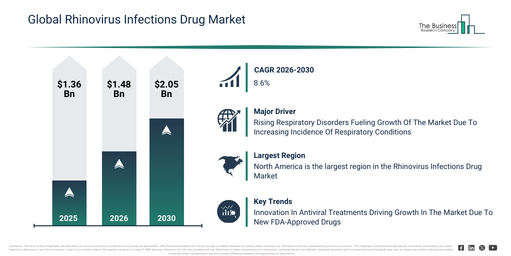
    The rhinovirus infections drug market size has experienced significant expansion in recent years. It is anticipated to grow from $1.36 billion in 2025 to $1.48 billion in 2026, achieving a compound annual growth rate (CAGR) of 8.8%. The historical growth can be ascribed to a high incidence of the common cold, limited antiviral options, widespread use of over-the-counter drugs, seasonal infection patterns, and consumer demand for fast relief.

    The rhinovirus infections drug market size is projected to expand significantly over the coming years. This market is set to reach $2.05 billion in 2030, exhibiting a compound annual growth rate (CAGR) of 8.6%. This anticipated growth during the forecast period is fueled by advancements in antiviral research, better viral targeting technologies, increased awareness of respiratory infections, progress in pediatric drug development, and innovations in nasal delivery methods. Key developments expected during this period include increased research into antiviral treatments for the common cold, a greater emphasis on therapies that reduce symptoms, the proliferation of nasal spray formulations, a heightened interest in immune-modulating drugs, and a move towards preventive respiratory healthcare.

    Get A Free Sample Report With In-Depth Market Insights:

    https://thebusinessresearchcompany.com/sample_request?id=94910066&type=smp&name=Rhinovirus%20Infections%20Drug%20Market%20Report%202026&utm_source=Blogs&utm_medium=Paid&utm_campaign=Oct_PR

    Rhinovirus Infections Drug Market Growth Momentum: What Factors Are Shaping Demand?

    A growing number of respiratory disorders is anticipated to stimulate the expansion of the rhinovirus infections drug market in the coming period. Respiratory disorders are medical conditions that affect the lungs and airways, leading to breathing difficulties such as asthma, chronic obstructive pulmonary disease (COPD), and pneumonia. The rise in these disorders is primarily attributed to increasing air pollution and exposure to occupational hazards, which contribute to the greater prevalence of conditions like asthma, COPD, and pneumonia in affected populations. Rhinovirus infections drugs assist in treating respiratory disorders by targeting viral replication, reducing inflammation, and alleviating symptoms to improve respiratory function. For instance, according to the Office for Health Improvement & Disparities, a UK-based government agency, in June 2025, England recorded 854,922 emergency respiratory-related hospital admissions in the year ending 2024, at a rate of 1,428 per 100,000 people, marking a 7% increase from the previous year. Therefore, the increasing incidence of respiratory disorders is a key driver for growth in the rhinovirus infections drug market.

    Rhinovirus Infections Drug Market Segment Breakdown: Which Categories Lead On Revenue?

    The rhinovirus infections drug market covered in this report is segmented –

    1) By Product: Antivirals, Immunomodulators, Vaccines, Nasal Sprays, Symptomatic Treatments

    2) By Patient Age Group: Infants, Children, Adults, Elderly

    3) By Route Of Administration: Oral, Intranasal, Injectable

    4) By Indication: Common Cold, Asthma Exacerbation, Chronic Obstructive Pulmonary Disease (COPD) Exacerbation, Other Indications

    5) By Distribution Channel: Hospital Pharmacies, Retail Pharmacies, Online Pharmacies, Specialty Pharmacies

    Subsegments:

    1) By Antivirals: Pleconaril, Vapendavir, Rupintrivir, Other Antivirals

    2) By Immunomodulators: Interferons, Toll-Like Receptor Agonists, Other Immunomodulators

    3) By Vaccines: Live Attenuated Vaccines, Inactivated Vaccines, Recombinant Vaccines

    4) By Nasal Sprays: Antihistamine Nasal Sprays, Decongestant Nasal Sprays, Steroid Nasal Sprays, Saline Nasal Sprays

    5) By Symptomatic Treatments: Analgesics, Antipyretics, Cough Suppressants, Expectorants, Antihistamines

    Rhinovirus Infections Drug Market Trends Redefining Industry Growth

    Leading companies in the rhinovirus infections drug market are concentrating on creating innovative products, such as antiviral medications, to improve treatment efficacy, lessen symptom severity, and accelerate patient recovery. Antiviral drugs combat viral infections by hindering viral replication within the body. These medications can effectively manage influenza, HIV, hepatitis, and rhinovirus. Some antivirals prevent viruses from entering host cells, while others stop their replication or assembly. For instance, in March 2025, Altesa BioSciences Inc., a US-based biotechnology company, obtained clearance from the U.S. Food and Drug Administration (FDA) for its Investigational New Drug (IND) application for vapendavir, aimed at treating rhinovirus infections in individuals with COPD. Vapendavir is an oral broad-spectrum antiviral drug that works by preventing rhinovirus from entering and replicating within human cells. It has demonstrated effectiveness against 97% of rhinoviruses and other respiratory enteroviruses. Altesa BioSciences maintains exclusive global rights for the development, manufacturing, and commercialization of vapendavir. The drug is intended to provide targeted treatment for vulnerable populations, including those with COPD and asthma.

    Rhinovirus Infections Drug Market Leading Players And Competitive Positioning

    Major companies operating in the rhinovirus infections drug market are Pfizer Inc., Teva Pharmaceutical Industries Ltd., Cocrystal Pharma Inc., Biota Pharmaceuticals Inc., Romark Laboratories L.C., Altamira Therapeutics Ltd., Pneumagen Ltd., AIM ImmunoTech Inc., hVIVO Services Limited, Maxwell Biosciences Inc., Altesa BioSciences Inc., Via Nova Therapeutics Inc., MetP Pharma AG, Ntvirin Pharma, GlaxoSmithKline plc, Johnson & Johnson, Sanofi S.A., Bayer AG, Cipla Limited, Reckitt Benckiser Group plc

    View The Full Rhinovirus Infections Drug Market Report:

    https://thebusinessresearchcompany.com/report/rhinovirus-infections-drug-global-market-report?utm_source=Blogs&utm_medium=Paid&utm_campaign=Oct_PR

    Rhinovirus Infections Drug Market Regional Analysis: Which Geography Leads On Revenue?

    North America was the largest region in the rhinovirus infection drug market in 2025. Asia-Pacific is expected to be the fastest-growing region in the forecast period. The regions covered in the rhinovirus infections drug market report are Asia-Pacific, South East Asia, Western Europe, Eastern Europe, North America, South America, Middle East, Africa.

    Reach Out To Our Team:

    The Business Research Company: https://www.thebusinessresearchcompany.com/

    Americas: +1 310-496-7795

    Asia: +44 7882 955267 & +91 8897263534

    Europe: +44 7882 955267

    Email us at: marketing@tbrc.info

    Follow us on:

    LinkedIn: https://in.linkedin.com/company/the-business-research-company

    YouTube: https://www.youtube.com/channel/UC24_fI0rV8cR5DxlCpgmyFQ

    Global Market Model: https://www.thebusinessresearchcompany.com/global-market-model
  • Rheumatology Therapeutics Market Forecast To Reach $54.16 Billion By 2030: Key Growth Drivers And Industry Trends

    Rheumatology Therapeutics Market Forecast To Reach $54.16 Billion By 2030: Key Growth Drivers And Industry Trends

    Featuring market attractiveness scoring, total addressable market sizing, company benchmarking matrices, interactive Excel dashboards, deeper supply chain intelligence, emerging startup tracking, and granular product-level insights, The Business Research Company’s 2026 market reports are built to deliver research that is both more actionable and more strategically valuable.

    Rheumatology Therapeutics Market Forecast: Value Set To Climb From $46.16 Billion To $54.16 Billion

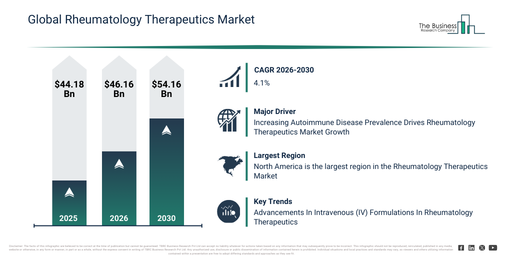
    The rheumatology therapeutics market size has experienced consistent growth in recent years. It is anticipated to expand from $44.18 billion in 2025 to $46.16 billion in 2026, achieving a compound annual growth rate (CAGR) of 4.5%. This historical expansion can be attributed to the rising incidence of rheumatoid arthritis and osteoarthritis, increased access to NSAIDs and corticosteroids, better diagnostic methods for rheumatic diseases, improved healthcare accessibility in mature markets, and an uptick in the use of conventional synthetic DMARDs.

    The rheumatology therapeutics market is projected to experience consistent expansion over the upcoming years. This market is anticipated to reach $54.16 billion in 2030, exhibiting a compound annual growth rate (CAGR) of 4.1%. Factors contributing to this growth trajectory during the projection period include an escalating demand for biologic DMARDs, a rising elderly demographic suffering from chronic joint conditions, enhanced recognition of the importance of prompt diagnosis and intervention, the proliferation of targeted synthetic DMARDs, and increased spending on chronic illness care. Key developments expected within the forecast timeframe encompass the expanding acceptance of biologic and targeted DMARDs, a move towards proactive and intensive disease management, greater application of combination therapies for rheumatic conditions, an elevated emphasis on sustained disease remission, and the broadening of individualized treatment strategies within rheumatology.

    Get A Free Sample Report With In-Depth Market Insights:

    https://thebusinessresearchcompany.com/sample_request?id=53998594&type=smp&name=Rheumatology%20Therapeutics%20Market%20Report%202026&utm_source=Blogs&utm_medium=Paid&utm_campaign=Oct_PR

    Rheumatology Therapeutics Market Expansion Drivers: What’s Shaping Future Growth?

    The expanding incidence of autoimmune conditions is anticipated to fuel the expansion of the rheumatology therapeutics market in the future. An autoimmune disease is characterized by the immune system erroneously targeting and harming the body’s own tissues. The increasing occurrence of autoimmune diseases stems from a blend of genetic, environmental, and lifestyle elements, alongside heightened awareness and more sophisticated diagnostic methods. Rheumatology therapeutics are essential for autoimmune diseases to control inflammation, ease symptoms, and avert harm to joints and tissues resulting from the immune system’s assault on the body. For example, in June 2024, data from the Australian Institute of Health and Welfare, an Australia-based government agency, indicated that approximately 514,000 people in Australia, representing 2.0% of the population, were estimated to have been living with rheumatoid arthritis in 2022. In 2023, rheumatoid arthritis was responsible for 2.0% of the total disease burden and 16% of the burden for all musculoskeletal conditions. Consequently, the escalating prevalence of autoimmune diseases is a key driver for the growth of the rheumatology therapeutics market.

    Rheumatology Therapeutics Market Segmentation: How Does The Market Break Down By Category?

    The rheumatology therapeutics market covered in this report is segmented –

    1) By Drug Class: Disease Modifying Anti-Rheumatic Drugs, Nonsteroidal Anti-Inflammatory Drugs, Corticosteroids, Uric Acid Drugs, Other Drugs Classes

    2) By Distribution Channel: Hospital Pharmacy, Retail Pharmacy, Online Pharmacy

    3) By Disease Indication: Rheumatoid Arthritis, Osteoarthritis, Gout, Psoriatic Arthritis, Ankylosing Spondylitis, Other Disease Indications

    Subsegments:

    1) By Disease Modifying Anti-Rheumatic Drugs (DMARDs): Conventional Synthetic DMARDs, Biologic DMARDs, Targeted Synthetic DMARDs

    2) By Nonsteroidal Anti-Inflammatory Drugs (NSAIDs): COX-2 Inhibitors, Traditional NSAIDs

    3) By Corticosteroids: Oral Corticosteroids, Injectable Corticosteroids, Topical Corticosteroids

    4) By Uric Acid Drugs: Uric Acid Lowering Agents, Uricosuric Agents, Pegloticase

    5) By Other Drug Classes: Immunosuppressants, Biologic Therapies, Analgesics

    Rheumatology Therapeutics Market Strategic Trends: What Defines The Next Growth Phase?

    Leading companies within the rheumatology therapeutics market are innovating, introducing solutions such as intravenous (IV) formulations to improve treatment effectiveness and patient convenience. An intravenous (IV) formulation describes a medicine or substance administered directly into a vein using a needle or catheter. For instance, in October 2023, Novartis AG, a pharmaceutical firm based in Switzerland, announced the US Food and Drug Administration (FDA) had granted approval for Cosentyx, an intravenous (IV) formulation. This particular version of Cosentyx holds unique approval for treating adults diagnosed with psoriatic arthritis (PsA), ankylosing spondylitis (AS), and non-radiographic axial spondyloarthritis (nr-axSpA). Its mechanism involves specifically targeting and inhibiting interleukin-17A (IL-17A), making it the sole non-tumor necrosis factor alpha (TNF-a) IV treatment available for these specific ailments.

    Rheumatology Therapeutics Market Competitive Overview And Top Companies

    Major companies operating in the rheumatology therapeutics market are Pfizer Inc., Johnson & Johnson, AbbVie Inc., Roche Holding AG, Merck & Co. Inc., Bristol-Myers Squibb Company, Novartis AG, Eli Lilly and Company, Amgen Inc., UCB S.A., Sanofi SA, AstraZeneca PLC, Takeda Pharmaceutical Company Limited, Boehringer Ingelheim International GmbH, Gilead Sciences Inc., Regeneron Pharmaceuticals Inc., Biogen Inc., Janssen Biotech, Genentech Inc., Galapagos NV

    View The Full Rheumatology Therapeutics Market Report:

    https://thebusinessresearchcompany.com/report/rheumatology-therapeutics-global-market-report?utm_source=Blogs&utm_medium=Paid&utm_campaign=Oct_PR

    Rheumatology Therapeutics Market Geographic Spread And Regional Opportunities

    North America was the largest region in the rheumatology therapeutics market in 2025. Asia-Pacific is expected to be the fastest-growing region in the forecast period. The regions covered in the rheumatology therapeutics market report are Asia-Pacific, South East Asia, Western Europe, Eastern Europe, North America, South America, Middle East, Africa.

    Reach Out To Our Team:

    The Business Research Company: https://www.thebusinessresearchcompany.com/

    Americas: +1 310-496-7795

    Asia: +44 7882 955267 & +91 8897263534

    Europe: +44 7882 955267

    Email us at: marketing@tbrc.info

    Follow us on:

    LinkedIn: https://in.linkedin.com/company/the-business-research-company

    YouTube: https://www.youtube.com/channel/UC24_fI0rV8cR5DxlCpgmyFQ

    Global Market Model: https://www.thebusinessresearchcompany.com/global-market-model
  • Rheumatoid Arthritis Drugs Market Research 2026: Market Size, Trends, Segments And Growth Forecast

    Rheumatoid Arthritis Drugs Market Research 2026: Market Size, Trends, Segments And Growth Forecast

    Built to provide research that’s more actionable and strategically valuable, The Business Research Company’s 2026 market reports include market attractiveness analysis, total addressable market sizing, company benchmarking matrices, interactive Excel dashboards, broader supply chain intelligence, emerging startup tracking, and in-depth product insights.

    Rheumatoid Arthritis Drugs Market Revenue Growth On Track For A 2.5% CAGR Through 2030

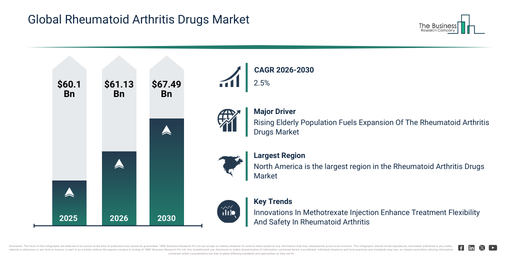
    The rheumatoid arthritis drugs market size has shown a modest increase in recent years. It is anticipated to grow from $60.1 billion in 2025 to $61.13 billion in 2026, at a compound annual growth rate (CAGR) of 1.7%. This growth observed in the past can be ascribed to the rising prevalence of rheumatoid arthritis, increased awareness and diagnosis rates, the expansion of healthcare infrastructure, strong adoption of traditional DMARDs, and favorable reimbursement for established therapies.

    The rheumatoid arthritis drugs market is projected to experience consistent expansion over the upcoming years. By 2030, this market is anticipated to reach a valuation of $67.49 billion, expanding at a compound annual growth rate (CAGR) of 2.5%. Key drivers for this projected growth include the escalating demand for biologics and BRMs, increased adoption of biosimilars, progress in precision medicine, the proliferation of online pharmacy channels, and a growing elderly population. Significant trends observed during this period encompass the broadening application of biologic and targeted therapies, the increasing embrace of early and aggressive treatment approaches, more frequent use of combination drug regimens, a heightened emphasis on personalized treatment protocols, and the increasing role of biosimilars in rheumatoid arthritis management.

    Get A Free Sample Report With In-Depth Market Insights:

    https://thebusinessresearchcompany.com/sample_request?id=46997194&type=smp&name=Rheumatoid%20Arthritis%20Drugs%20Market%20Report%202026&utm_source=Blogs&utm_medium=Paid&utm_campaign=Oct_PR

    Rheumatoid Arthritis Drugs Market Development Factors: What’s Supporting Demand?

    The burgeoning elderly population is anticipated to propel the rheumatoid arthritis drugs market forward. This demographic, defined as individuals aged 65 years or older, constitutes an increasingly larger segment of the general population, a trend primarily influenced by extended life expectancy and declining fertility rates worldwide. Given that rheumatoid arthritis disproportionately affects older individuals, this expansion of the elderly cohort generates heightened demand for effective RA therapies, particularly newer options such as JAK inhibitors and targeted synthetic DMARDs, which may offer better tolerability for older patients. For example, according to a January 2024 report by the Kenya-based nonprofit Population Reference Bureau, the population of Americans aged 65 and older is projected to increase from 58 million in 2022 to 82 million by 2050, a 47% growth. Concurrently, this age group’s proportion of the overall population is forecast to rise from 17% to 23% within the same timeframe. Thus, the expanding elderly population is a significant factor driving the growth of the rheumatoid arthritis drugs market.

    Rheumatoid Arthritis Drugs Market Segment Trends And Revenue Contributors

    The rheumatoid arthritis drugs market covered in this report is segmented –

    1) By Drug Type: Nonsteroidal Anti-Inflammatory Drugs (NSAIDs), Corticosteroids, Disease-Modifying Antirheumatic Drugs (DMARDs), Biologic Response Modifiers (BRMs), Other Drug Types

    2) By Route Of Administration: Oral, Parenteral, Topical, Other Route Of Administrations

    3) By Distribution Channel: Hospital Pharmacy, Retail Pharmacy, Online Pharmacy

    Subsegments:

    1) By Nonsteroidal Anti-Inflammatory Drugs (NSAIDs): Ibuprofen, Naproxen, Diclofenac, Indomethacin

    2) By Corticosteroids: Prednisone, Methylprednisolone, Dexamethasone

    3) By Disease-Modifying Antirheumatic Drugs: Methotrexate, Sulfasalazine, Hydroxychloroquine, Leflunomide

    4) By Biologic Response Modifiers: Tumor Necrosis Factor (TNF) Inhibitors, Interleukin Inhibitors, B-cell Inhibitors

    5) By Other Drug Types: Janus Kinase Inhibitors, Other Novel Therapies

    Rheumatoid Arthritis Drugs Market Transformation Trends: What Innovations Are Driving Change?

    Companies operating in the rheumatoid arthritis drugs market are increasingly focusing on developing advanced solutions, such as flexible-dose methotrexate injections, aimed at enhancing treatment effectiveness, improving patient safety, and offering more convenient administration options. These flexible-dose methotrexate injections offer various strengths, specifically designed for adult patients with active RA, thereby enabling individualized therapy and more effective management of disease activity. A notable example occurred in December 2023, when China Medical System Holdings Limited, a China-based investment holding company primarily engaged in medicine production, received acceptance from the National Medical Products Administration for its New Drug Application for an additional rheumatoid arthritis indication of Methotrexate Injection. This product, specifically developed for adult RA patients, has demonstrated in clinical trials that it is not inferior to methotrexate tablets, indicating a trend of earlier and improved efficacy alongside reduced gastrointestinal side effects. Already approved for severe psoriasis in China, the injection is also marketed in over 40 countries, highlighting its established clinical utility and extensive global presence.

    Rheumatoid Arthritis Drugs Market Competitive Landscape: Which Companies Lead The Industry?

    Major companies operating in the rheumatoid arthritis drugs market are Pfizer Inc., AbbVie Inc., Amgen Inc., Novartis AG, Eli Lilly and Company, F-Hoffmann La Roche AG, Bristol-Myers Squibb Company, Johnson & Johnson Inc., Teva Pharmaceuticals Industries Ltd., Sun Pharmaceutical Industries Ltd., Sanofi S.A, Regeneron Pharmaceuticals Inc., Galapagos NV, Takeda Pharmaceutical Company Limited, Mitsubishi Tanabe Pharma Corporation, UCB S.A., Roche Holding AG, Mallinckrodt Pharmaceuticals, AstraZeneca PLC, Bayer AG

    View The Full Rheumatoid Arthritis Drugs Market Report:

    https://thebusinessresearchcompany.com/report/rheumatoid-arthritis-drugs-global-market-report?utm_source=Blogs&utm_medium=Paid&utm_campaign=Oct_PR

    Rheumatoid Arthritis Drugs Market Top Region By Revenue And Market Share

    North America was the largest region in the rheumatoid arthritis drugs market in 2025.North America is expected to be the fastest-growing region in the global rheumatoid arthritis market report during the forecast period. The regions covered in the rheumatoid arthritis drugs market report are Asia-Pacific, South East Asia, Western Europe, Eastern Europe, North America, South America, Middle East, Africa.

    Reach Out To Our Team:

    The Business Research Company: https://www.thebusinessresearchcompany.com/

    Americas: +1 310-496-7795

    Asia: +44 7882 955267 & +91 8897263534

    Europe: +44 7882 955267

    Email us at: marketing@tbrc.info

    Follow us on:

    LinkedIn: https://in.linkedin.com/company/the-business-research-company

    YouTube: https://www.youtube.com/channel/UC24_fI0rV8cR5DxlCpgmyFQ

    Global Market Model: https://www.thebusinessresearchcompany.com/global-market-model
  • Retinal Disorder Treatment Market Forecast 2026: Market Size, Competitive Landscape And Growth Drivers

    Retinal Disorder Treatment Market Forecast 2026: Market Size, Competitive Landscape And Growth Drivers

    Backed by market attractiveness analysis, total addressable market sizing, company benchmarking matrices, interactive Excel dashboards, wider supply chain intelligence, emerging startup coverage, and detailed product-level insights, The Business Research Company’s 2026 market reports are designed to offer research that is more actionable and strategically valuable than ever.

    Retinal Disorder Treatment Market Value Growth And Long-Term Outlook

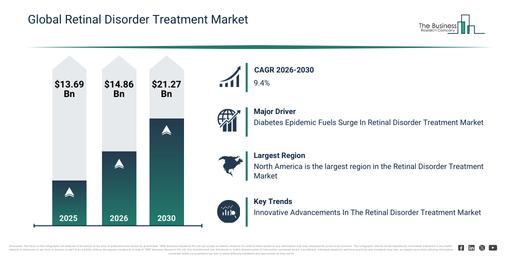
    The retinal disorder treatment market has shown significant expansion in recent years. Its valuation is projected to rise from $13.69 billion in 2025 to $14.86 billion in 2026, registering a compound annual growth rate (CAGR) of 8.6%. This past growth can be ascribed to several factors, including the increasing occurrence of age-related macular degeneration, the worldwide rise in the diabetic population, the establishment of more ophthalmology clinics and specialized hospitals, progress in retinal imaging technologies, and better public understanding of retinal conditions.

    The retinal disorder treatment market is anticipated to experience substantial expansion over the upcoming years, projected to achieve a valuation of $21.27 billion in 2030, exhibiting a compound annual growth rate (CAGR) of 9.4%. This expansion during the forecast period is fueled by several factors, including the creation of extended-duration retinal medications, a rise in the approval of innovative biologics and gene therapies, broader availability of eye care in developing regions, increased funding for ophthalmic studies, and a growing need for customized retinal care. Key developments expected during this period involve the increasing adoption of anti-VEGF treatments, a move towards less invasive retinal procedures, a preference for drug formulations that release medication over time, the broader application of combined therapeutic strategies, and a rise in the utilization of tools for monitoring vision at home.

    Get A Free Sample Report With In-Depth Market Insights:

    https://thebusinessresearchcompany.com/sample_request?id=89180419&type=smp&name=Retinal%20Disorder%20Treatment%20Market%20Report%202026&utm_source=Blogs&utm_medium=Paid&utm_campaign=Oct_PR

    Retinal Disorder Treatment Market Industry Drivers: What’s Behind The Revenue Growth?

    The future expansion of the retinal disorder treatment market is anticipated to be fueled by the rising incidence of diabetes. Diabetes is a long-term health condition marked by high blood sugar levels, occurring when the body fails to produce sufficient insulin or use it properly. Among individuals with diabetes, diabetic retinopathy stands as the most prevalent retinal condition. This condition arises from damage to the retina’s blood vessels, potentially resulting in hemorrhage, fluid seepage, and the formation of new vascular structures. Treatments for retinal disorders often involve laser technology to seal off leaky blood vessels or eliminate irregular ones. As an illustration, the National Health Service (NHS), a UK government body, reported in June 2024 that in 2023, an extra 549,000 people in England were identified as being at risk of developing type 2 diabetes. This increased the total number of individuals with non-diabetic hyperglycemia, also known as pre-diabetes, recorded by GPs to 3,615,330. This figure demonstrates a substantial rise from the 3,065,825 recorded in 2022. Consequently, the expanding occurrence of diabetes is propelling the growth of the retinal disorder treatment market.

    Retinal Disorder Treatment Market Segment Analysis Spotlighting Growth Areas

    The retinal disorder treatment market covered in this report is segmented –

    1) By Type: Macular Degeneration, Diabetic Retinopathy, Other Types

    2) By Dosage Form: Gels, Eye Solutions, Capsules And Tablets, Eye Drops, Ointments

    3) By Distribution Channel: Hospital Pharmacy, Online Pharmacy, Retail Pharmacy

    Subsegments:

    1) By Macular Degeneration: Dry Macular Degeneration, Wet Macular Degeneration

    2) By Diabetic Retinopathy: Non-Proliferative Diabetic Retinopathy, Proliferative Diabetic Retinopathy

    3) By Other Types: Retinal Detachment, Retinitis Pigmentosa, Uveitis, Other Retinal Disorders

    #Retinal Disorder Treatment Market Growth Trends: What’s Shaping The Future Outlook?

    Key players in the retinal disorder treatment market are introducing novel products, such as geographic atrophy therapies, to cater to expanded customer bases, enhance sales, and boost revenue. Current therapeutic approaches for geographic atrophy primarily aim to manage symptoms, decelerate the disease’s advancement, and assist individuals in coping with visual impairment. For example, in August 2023, Astellas Pharma Inc., a Japanese pharmaceutical company, announced that IZERVAY had received approval from the U.S. Food and Drug Administration (FDA). IZERVAY, functioning as a new complement C5 inhibitor, is notable as the sole approved treatment for geographic atrophy (GA) that has demonstrated a statistically significant reduction (p<0.01) in the rate of GA progression at the 12-month primary endpoint in two Phase 3 clinical trials. This distinct attribute establishes IZERVAY (avacincaptad pegol intravitreal solution) as an indicated and effective therapy for GA secondary to age-related macular degeneration (AMD).

    Retinal Disorder Treatment Market Leading Companies: Who Holds The Strongest Market Presence?

    Major companies operating in the retinal disorder treatment market are Pfizer Inc., F. Hoffmann-La Roche Ltd., AbbVie Inc., Bayer AG, Novartis AG, Regeneron Pharmaceuticals Inc., Genentech Inc., Santen Pharmaceutical Co. Ltd., Apellis Pharmaceuticals Inc., Alimera Sciences Inc., Ocular Therapeutix Inc., EyePoint Pharmaceuticals Inc., Adverum Biotechnologies Inc., Kodiak Sciences Inc., Acucela Inc., IVERIC bio Inc., Oxurion NV, Graybug Vision Inc., Clearside Biomedical Inc., Ophthotech Corporation, Opthea Limited, PanOptica Inc., ThromboGenics NV

    View The Full Retinal Disorder Treatment Market Report:

    https://thebusinessresearchcompany.com/report/retinal-disorder-treatment-global-market-report?utm_source=Blogs&utm_medium=Paid&utm_campaign=Oct_PR

    Retinal Disorder Treatment Market Regional Analysis And Top Geography

    North America was the largest region in the retinal disorder treatment market in 2025. Asia-Pacific is expected to be the fastest-growing region in the forecast period. The regions covered in the retinal disorder treatment market report are Asia-Pacific, South East Asia, Western Europe, Eastern Europe, North America, South America, Middle East, Africa.

    Reach Out To Our Team:

    The Business Research Company: https://www.thebusinessresearchcompany.com/

    Americas: +1 310-496-7795

    Asia: +44 7882 955267 & +91 8897263534

    Europe: +44 7882 955267

    Email us at: marketing@tbrc.info

    Follow us on:

    LinkedIn: https://in.linkedin.com/company/the-business-research-company

    YouTube: https://www.youtube.com/channel/UC24_fI0rV8cR5DxlCpgmyFQ

    Global Market Model: https://www.thebusinessresearchcompany.com/global-market-model
  • Retinal Biologics Market Size In 2026: Regional Growth, Key Segments And Future Outlook

    Retinal Biologics Market Size In 2026: Regional Growth, Key Segments And Future Outlook

    Featuring market attractiveness scoring, total addressable market sizing, company benchmarking matrices, interactive Excel dashboards, deeper supply chain intelligence, emerging startup tracking, and granular product-level insights, The Business Research Company’s 2026 market reports are built to deliver research that is both more actionable and more strategically valuable.

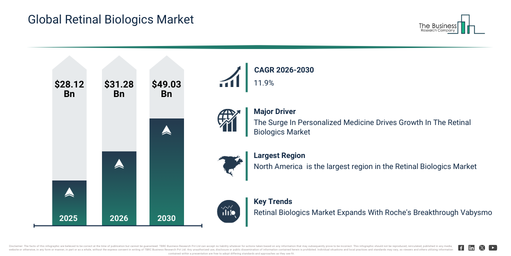
    Retinal Biologics Market Poised To Hit $49.03 Billion By 2030 With A 11.9% CAGR

    The retinal biologics market has experienced swift expansion in recent years. Its value is projected to rise from $28.12 billion in 2025 to $31.28 billion in 2026, with a compound annual growth rate (CAGR) of 11.2%. The historical growth of this market can be attributed to the increasing prevalence of age-related macular degeneration, a rising diabetic population, the clinical success of monoclonal antibody therapies, growing ophthalmology healthcare expenditure, and improvements in diagnostic imaging technologies.

    The retinal biologics market size is projected to experience substantial growth over the next few years. It is forecast to expand to $49.03 billion in 2030, achieving a compound annual growth rate (CAGR) of 11.9%. This expansion during the forecast period is attributable to progress in retinal biologic drug delivery systems, the expansion of biologics in development for retinal diseases, the rising embrace of personalized ophthalmic therapies, improvements in ophthalmology infrastructure within emerging markets, and an increasing need for treatments with extended duration. Key trends anticipated in this period include the development of long-acting retinal biologic formulations, a surge in the adoption of anti-VEGF biologics, a transition towards less invasive intraocular therapies, a wider application of biologics for diabetic eye conditions, and the proliferation of specialty retina clinics.

    Get A Free Sample Report With In-Depth Market Insights:

    https://thebusinessresearchcompany.com/sample_request?id=76102681&type=smp&name=Retinal%20Biologics%20Market%20Report%202026&utm_source=Blogs&utm_medium=Paid&utm_campaign=Oct_PR

    Retinal Biologics Market Growth Factors: What’s Supporting Expansion?

    The increasing demand for personalized medicine is expected to stimulate the expansion of the retinal biologics market moving forward. Personalized medicine involves customizing medical treatment to an individual’s distinct genetic makeup, which offers more effective and accurate healthcare interventions. In the context of retinal biologics, personalized medicine is employed to tailor treatment strategies based on individual genetic and molecular profiles, thereby optimizing efficacy and minimizing adverse effects. As an illustration, in February 2024, data from the Personalised Medicine Coalition, a US-based hospital and healthcare organization, showed that the FDA granted approval to 16 new personalized treatments for rare disease patients in 2023, an increase from 6 in 2022. Therefore, the growing need for personalized medicine is a key driver for the retinal biologics market’s growth.

    Retinal Biologics Market Segment Performance And Emerging Opportunities

    The retinal biologics market covered in this report is segmented –

    1) By Drug Class: Vascular Endothelial Growth Factor (VEGF)-A Antagonist, Tumor Necrosis Factor (TNF)-A Inhibitor

    2) By Indication: Macular Degeneration, Diabetic Retinopathy, Uveitis, Diabetic Macular Edema, Other Indications

    3) By Distribution Channel: Hospitals, Pharmacies, Specialty Clinics, Online Pharmacies, Other Distribution Channels

    Subsegments:

    1) By Vascular Endothelial Growth Factor (VEGF)-A Antagonist: Monoclonal Antibodies, Small Molecule Inhibitors

    2) By Tumor Necrosis Factor (TNF)-A Inhibitor: Monoclonal Antibodies, Fusion Proteins

    Retinal Biologics Market Industry Trends: What’s Reshaping Demand?

    Key players in the retinal biologics market are concentrating on creating innovative solutions, including bispecific antibodies, aimed at boosting treatment effectiveness, minimizing retinal damage, and bettering visual results. These biologic therapies, known as bispecific antibodies, are engineered to concurrently address two distinct pathways contributing to disease progression, thereby delivering enhanced therapeutic advantages. As an illustration, in May 2023, the Switzerland-based healthcare firm F. Hoffmann-La Roche Ltd. disclosed that its supplemental biologics license application (sBLA) for Vabysmo (faricimab), intended for treating macular edema after retinal vein occlusion (RVO), had been accepted by the U.S. Food and Drug Administration. This acceptance stemmed from two Phase III trials demonstrating early and sustained visual enhancement with Vabysmo, successfully meeting the primary endpoint of non-inferiority compared to aflibercept. This particular product represents the initial bispecific antibody approved for ocular use in managing neovascular or ‘wet’ age-related macular degeneration and diabetic macular edema. Additional research revealed no retinal blood vessel leakage in patients treated with Vabysmo, a finding contrasting with those treated with aflibercept.

    Retinal Biologics Market Key Players: Which Companies Lead Industry Competition?

    Major companies operating in the retinal biologics market are Regeneron Pharmaceuticals Inc., AbbVie Inc., MeiraGTx Limited, Oxurion NV, Novartis AG, Spark Therapeutics Inc., Bayer AG, Santen Pharmaceutical Co. Ltd., EyePoint Pharmaceuticals Inc., Iveric Bio Inc., Kodiak Sciences Inc., Alimera Sciences Inc., Acucela Inc., Clearside Biomedical Inc., Ophthotech Corporation, Aerie Pharmaceuticals Inc., Ocular Therapeutix Inc., Fidia Farmaceutici S.p.A, Roche Holding AG, Amgen Inc., Biogen Inc., Genentech Inc., Allergan PLC

    View The Full Retinal Biologics Market Report:

    https://thebusinessresearchcompany.com/report/retinal-biologics-global-market-report?utm_source=Blogs&utm_medium=Paid&utm_campaign=Oct_PR

    Retinal Biologics Market Geographic Analysis: Where Is Demand Rising Fastest?

    North America was the largest region in the retinal biologics market in 2025. Asia-Pacific is expected to be the fastest-growing region in the forecast period. The regions covered in the retinal biologics market report are Asia-Pacific, South East Asia, Western Europe, Eastern Europe, North America, South America, Middle East, Africa.

    Reach Out To Our Team:

    The Business Research Company: https://www.thebusinessresearchcompany.com/

    Americas: +1 310-496-7795

    Asia: +44 7882 955267 & +91 8897263534

    Europe: +44 7882 955267

    Email us at: marketing@tbrc.info

    Follow us on:

    LinkedIn: https://in.linkedin.com/company/the-business-research-company

    YouTube: https://www.youtube.com/channel/UC24_fI0rV8cR5DxlCpgmyFQ

    Global Market Model: https://www.thebusinessresearchcompany.com/global-market-model
  • Respules Market Growth Forecast Through 2030: Market Size And Trends In 2026

    Respules Market Growth Forecast Through 2030: Market Size And Trends In 2026

    Built to provide research that’s more actionable and strategically valuable, The Business Research Company’s 2026 market reports include market attractiveness analysis, total addressable market sizing, company benchmarking matrices, interactive Excel dashboards, broader supply chain intelligence, emerging startup tracking, and in-depth product insights.

    Respules Market Size And Revenue Outlook Through 2030

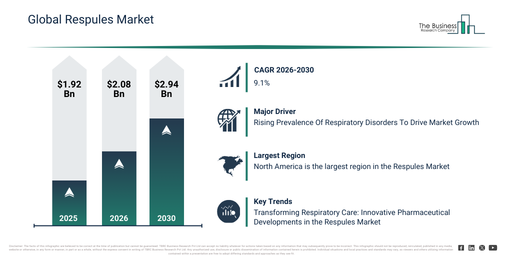
    The respules market has experienced strong growth in recent years. It will grow from $1.92 billion in 2025 to $2.08 billion in 2026 at a compound annual growth rate (CAGR) of 7.9%. The expansion observed in the past can be attributed to the rising prevalence of asthma and COPD, increasing air pollution levels, a surge in hospital-based respiratory treatments, the widespread application of nebulizers in pediatric care, and improved diagnosis of chronic respiratory diseases.

    The respules market size is projected for significant expansion over the next few years. It is estimated to reach $2.94 billion in 2030, with a compound annual growth rate (CAGR) of 9.1%. The increase throughout the forecast period can be attributed to a rising demand for home healthcare solutions, the widening reach of online pharmacy distribution, improved healthcare accessibility in emerging economies, an expanding elderly population suffering from respiratory disorders, and the continuous launch of new combination respules. Key trends anticipated during this period include the growing adoption of nebulized therapies for chronic respiratory diseases, an increasing preference for unit-dose and preservative-free respules, expanded usage of respules by pediatric and geriatric patient groups, the expansion of home-based and self-administration respiratory care, and robust growth in generic and cost-effective respules.

    Get A Free Sample Report With In-Depth Market Insights:

    https://thebusinessresearchcompany.com/sample_request?id=60495159&type=smp&name=Respules%20Market%20Report%202026&utm_source=Blogs&utm_medium=Paid&utm_campaign=Oct_PR

    Respules Market Demand Drivers: What’s Powering Industry Growth?

    An increasing occurrence of respiratory conditions is anticipated to fuel the expansion of the respules market moving ahead. These conditions encompass various pulmonary diseases and ailments, such as tuberculosis, lung cancer, pulmonary hypertension, mesothelioma, cystic fibrosis, emphysema, and asthma. Respules are utilized to manage a range of respiratory ailments, like bronchial asthma, emphysema, spasmodic stenosis, and abnormal bronchial mucus secretion. As an illustration, a research study from JAMA Network Open, a medical journal affiliated with the American Medical Association, indicated in December 2023 that the worldwide prevalence of chronic obstructive pulmonary disease (COPD) is predicted to reach nearly 600 million cases by 2050 globally, representing a 23% rise in its occurrence. Consequently, the growing frequency of respiratory disorders is stimulating the growth of the respules market.

    Respules Market Segment Landscape And Growth Outlook

    The respules market covered in this report is segmented –

    1) By Drug Type: Budesonide, Albuterol, Ipratropium Bromide, Salbutamol Sulphate And Ipratropium Bromide

    2) By Dosage And Strength: 0.25 mg/2 mL, 0.5 mg/2 mL, 1mg/2 mL, Other Dosage And Strength Types

    3) By Distribution Channel: Hospital Pharmacy, Retail Pharmacy, Online Pharmacy, Other Distribution Channels

    Subsegments:

    1) By Budesonide: Budesonide Respules 0.25 mg, Budesonide Respules 0.5 mg, Budesonide Respules 1 mg

    2) By Albuterol: Albuterol Sulfate Respules 0.083%, Albuterol Sulfate Respules 0.5%

    3) By Ipratropium Bromide: Ipratropium Bromide Respules 0.02%, Ipratropium Bromide Respules 0.5 mg

    4) By Salbutamol Sulphate And Ipratropium Bromide: Salbutamol Sulphate Respules 0.083%, Salbutamol Sulphate Respules 2.5 mg

    Respules Market Innovation Trends: What Developments Are Reshaping The Industry?

    Leading companies in the repsules market are concentrating on developing innovative products, specifically novel pharmaceutical offerings that enhance drug delivery, improve patient adherence, and optimize therapeutic effectiveness. Novel pharmaceutical products denote new and inventive medications or drug formulations that significantly differ from current treatments. These products may include unique active ingredients, novel drug combinations, or advanced delivery systems engineered to boost efficacy, safety, or patient compliance. For instance, in January 2023, Lupin Limited, an India-based pharmaceutical company, introduced DIFIZMA to treat inadequately controlled asthma, presenting a novel fixed-dose triple drug combination. It integrates Indacaterol, a long-acting beta-agonist; Glycopyrronium, a long-acting muscarinic receptor antagonist; and Mometasone Furoate, an inhaled corticosteroid, which together improve lung function and offer better symptom management. Furthermore, DIFIZMA helps decrease the frequency of asthma exacerbations, thereby enhancing the overall quality of life for patients and reducing the likelihood of hospitalization.

    Respules Market Competitive Landscape: Who Leads The Industry?

    Major companies operating in the respules market are AstraZeneca PLC, GlaxoSmithKline PLC, Teva Pharmaceutical Industries Ltd., Sandoz International GmbH, Macleods Pharmaceuticals Ltd., Sun Pharmaceutical Industries Ltd., Aurobindo Pharma Ltd., Cipla Limited, Intas Pharmaceuticals Ltd., Lupin Limited, Cadila Healthcare Limited, Torrent Pharmaceuticals Ltd., Glenmark Pharmaceuticals Ltd., Jubilant Life Sciences Limited, Systopic Laboratories Pvt. Ltd., Koye Pharmaceuticals Pvt. Ltd., Amanta Healthcare Ltd., Lucky Pharmaceuticals, Zuche Pharmaceuticals Pvt. Ltd., Alkem Laboratories Ltd., Alembic Pharmaceuticals Ltd., Emcure Pharmaceuticals Ltd., Natco Pharma Ltd., Hetero Labs Ltd., Wockhardt Ltd.

    View The Full Respules Market Report:

    https://thebusinessresearchcompany.com/report/respules-global-market-report?utm_source=Blogs&utm_medium=Paid&utm_campaign=Oct_PR

    Respules Market Global Footprint: Which Region Leads The Market?

    North America was the largest region in the respules market in 2025. Asia-Pacific is expected to be the fastest-growing region in the forecast period. The regions covered in the respules market report are Asia-Pacific, South East Asia, Western Europe, Eastern Europe, North America, South America, Middle East, Africa.

    Reach Out To Our Team:

    The Business Research Company: https://www.thebusinessresearchcompany.com/

    Americas: +1 310-496-7795

    Asia: +44 7882 955267 & +91 8897263534

    Europe: +44 7882 955267

    Email us at: marketing@tbrc.info

    Follow us on:

    LinkedIn: https://in.linkedin.com/company/the-business-research-company

    YouTube: https://www.youtube.com/channel/UC24_fI0rV8cR5DxlCpgmyFQ

    Global Market Model: https://www.thebusinessresearchcompany.com/global-market-model
  • Respiratory Syncytial Virus (RSV) Fusion Inhibitors Market Analysis: $1.72 Billion Market Size In 2026 And Future Growth Prospects

    Respiratory Syncytial Virus (RSV) Fusion Inhibitors Market Analysis: $1.72 Billion Market Size In 2026 And Future Growth Prospects

    Backed by market attractiveness analysis, total addressable market sizing, company benchmarking matrices, interactive Excel dashboards, wider supply chain intelligence, emerging startup coverage, and detailed product-level insights, The Business Research Company’s 2026 market reports are designed to offer research that is more actionable and strategically valuable than ever.

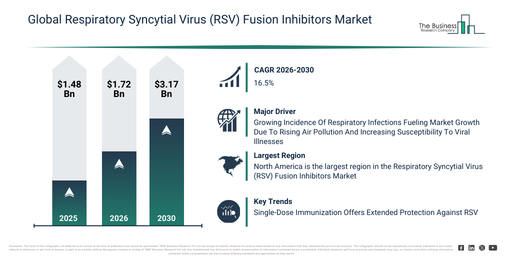
    Respiratory Syncytial Virus (RSV) Fusion Inhibitors Market Growth From $1.72 Billion In 2026 To $3.17 Billion By 2030 At A CAGR Of 16.5%

    The market size for respiratory syncytial virus (RSV) fusion inhibitors has seen substantial growth recently. It is projected to increase from $1.48 billion in 2025 to $1.72 billion in 2026, exhibiting a compound annual growth rate (CAGR) of 16.8%. This historical expansion can be ascribed to several factors, including a rise in the incidence of respiratory viral infections, a previous absence of effective RSV-specific treatments, the development of neonatal and pediatric care infrastructure, progress in antiviral drug discovery, and heightened clinical awareness concerning the burden of RSV.

    The market for respiratory syncytial virus (rsv) fusion inhibitors is projected to experience swift expansion over the coming years. This market is set to reach a valuation of $3.17 billion by 2030, exhibiting a compound annual growth rate (CAGR) of 16.5%. Several factors contribute to this projected growth, including more regulatory clearances for new antivirals, increased funding for research into pediatric infectious diseases, the availability of more monoclonal antibody options, a greater emphasis on managing RSV in outpatient settings, and expanding worldwide vaccination and prevention programs. Key trends anticipated during this period involve the accelerating development of specific antiviral treatments, a heightened concentration on preventing RSV in children, an increase in clinical trials for fusion inhibitors, the broadening of preventative treatment approaches, and an intensified focus on groups of patients at elevated risk.

    Get A Free Sample Report With In-Depth Market Insights:

    https://thebusinessresearchcompany.com/sample_request?id=68474243&type=smp&name=Respiratory%20Syncytial%20Virus%20%28RSV%29%20Fusion%20Inhibitors%20Market%20Report%202026&utm_source=Blogs&utm_medium=Paid&utm_campaign=Oct_PR

    Respiratory Syncytial Virus (RSV) Fusion Inhibitors Market Growth Drivers: What’s Behind The Acceleration?

    The increasing prevalence of respiratory infections is projected to boost the expansion of the respiratory syncytial virus (RSV) fusion inhibitors market moving ahead. A respiratory infection occurs when detrimental microorganisms infiltrate and multiply within the respiratory tract, leading to conditions like the common cold, influenza, or pneumonia. The rise in respiratory infection cases is largely attributed to elevated air pollution levels, which compromise the respiratory system and increase susceptibility to these illnesses. Respiratory Syncytial Virus (RSV) fusion inhibitors improve the treatment of respiratory infections by specifically inhibiting viral fusion, thereby stopping the virus from entering host cells. They lead to a decrease in the intensity and length of RSV infections, reduce the need for hospitalizations, and better patient health outcomes, providing a more precise and efficient method for managing respiratory ailments. For instance, in May 2025, the New York Academy of Sciences, a US-based nonprofit organization, reported that whooping cough cases exceeded 8,000, which was more than double the number recorded in the same period in 2024. Consequently, the increasing occurrence of respiratory infections is stimulating the growth of the respiratory syncytial virus (RSV) fusion inhibitors market.

    Respiratory Syncytial Virus (RSV) Fusion Inhibitors Market Breakdown By Product Type And Application

    The respiratory syncytial virus (rsv) fusion inhibitors market covered in this report is segmented –

    1) By Drug Type: Small Molecule Inhibitors, Monoclonal Antibodies, Peptide Inhibitors, Other Drugs

    2) By Route Of Administration: Oral, Intravenous, Inhalation, Other Routes Of Administration

    3) By Application: By Prophylaxis, Treatment

    4) By End-User: Hospitals, Clinics, Research Institutes, Other End Users

    Subsegments:

    1) By Small Molecule Inhibitors: Fusion Protein Inhibitors, Viral Entry Blockers, Replication Inhibitors, Nucleoside Analogues

    2) By Monoclonal Antibodies: Neutralizing Antibodies, Prophylactic Antibodies, Therapeutic Antibodies, Combination Antibodies

    3) By Peptide Inhibitors: Fusion Inhibitory Peptides, Receptor Binding Peptides, Entry Blocking Peptides, Synthetic Peptides

    4) By Other Drugs: Ribonucleic Acid (RNA) Interference Agents, Host Targeted Inhibitors, Immunomodulators, Small Interfering Agents

    Respiratory Syncytial Virus (RSV) Fusion Inhibitors Market Trends: What’s Defining The Industry’s Next Phase?

    Leading firms in the respiratory syncytial virus (RSV) fusion inhibitors market are prioritizing the creation of sophisticated preventive treatments, specifically long-acting monoclonal antibodies, with the aim of strengthening immunity, improving defense, and mitigating the impact of infectious diseases among susceptible groups. Long-acting monoclonal antibodies (mAbs) constitute a category of therapeutic antibodies specifically designed or prepared to maintain their efficacy within the body for a prolonged duration relative to conventional monoclonal antibodies. An example of this is in June 2025, when US-based biopharmaceutical company Merck & Co. Inc. obtained approval from the U.S. Food and Drug Administration (FDA) for ENFLONSIA (clesrovimab-cfor), a long-acting monoclonal antibody intended to prevent RSV lower-respiratory-tract disease in infants born into or starting their initial RSV season. This product is a fully human IgG1? monoclonal antibody, modified in its Fc-region to prolong its half-life, and operates by attaching to the RSV fusion (F) protein, thereby inhibiting the virus from entering and fusing with host respiratory epithelial cells. Engineered to provide sustained protection via a single administration, it introduces a novel immunization choice to safeguard this at-risk pediatric demographic.

    Respiratory Syncytial Virus (RSV) Fusion Inhibitors Market Company Landscape And Competitive Strategy

    Major companies operating in the respiratory syncytial virus (rsv) fusion inhibitors market are Merck & Co. Inc., Pfizer Inc., AstraZeneca plc, Bristol-Myers Squibb Company, Sanofi S.A., Gilead Sciences Inc., Johnson & Johnson, Taisho Pharmaceutical Co. Ltd., Enanta Pharmaceuticals Inc., Shanghai Ark Biopharmaceutical Co. Ltd., Medivir AB, ARNAV Biotech

    View The Full Respiratory Syncytial Virus (RSV) Fusion Inhibitors Market Report:

    https://thebusinessresearchcompany.com/report/global-respiratory-syncytial-virus-rsv-fusion-inhibitors-market-report?utm_source=Blogs&utm_medium=Paid&utm_campaign=Oct_PR

    Respiratory Syncytial Virus (RSV) Fusion Inhibitors Market Regional Split: Which Areas Are Fueling Growth?

    North America was the largest region in the respiratory syncytial virus (RSV) fusion inhibitors market in 2025. Asia-Pacific is expected to be the fastest-growing region in the forecast period. The regions covered in the respiratory syncytial virus (rsv) fusion inhibitors market report are Asia-Pacific, South East Asia, Western Europe, Eastern Europe, North America, South America, Middle East, Africa.

    Reach Out To Our Team:

    The Business Research Company: https://www.thebusinessresearchcompany.com/

    Americas: +1 310-496-7795

    Asia: +44 7882 955267 & +91 8897263534

    Europe: +44 7882 955267

    Email us at: marketing@tbrc.info

    Follow us on:

    LinkedIn: https://in.linkedin.com/company/the-business-research-company

    YouTube: https://www.youtube.com/channel/UC24_fI0rV8cR5DxlCpgmyFQ

    Global Market Model: https://www.thebusinessresearchcompany.com/global-market-model
  • Respiratory Disease Vaccine Market 2026 Market Size And Growth Forecast: Key Trends To Watch

    Respiratory Disease Vaccine Market 2026 Market Size And Growth Forecast: Key Trends To Watch

    Featuring market attractiveness scoring, total addressable market sizing, company benchmarking matrices, interactive Excel dashboards, deeper supply chain intelligence, emerging startup tracking, and granular product-level insights, The Business Research Company’s 2026 market reports are built to deliver research that is both more actionable and more strategically valuable.

    Respiratory Disease Vaccine Market Expansion Outlook: What Revenue Opportunities Are Ahead?

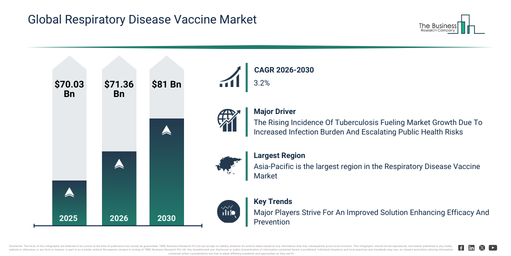
    The respiratory disease vaccine market has shown marginal expansion over recent years. Its size is expected to increase from $70.03 billion in 2025 to $71.36 billion in 2026, progressing at a compound annual growth rate (CAGR) of 1.9%. This historical growth can be attributed to several factors, including the high prevalence of respiratory infections, the limited availability of effective vaccines, government-led immunization programs, breakthroughs in monoclonal antibody research, and a growing awareness surrounding respiratory health.

    The respiratory disease vaccine market is projected to experience consistent expansion over the upcoming years. It will grow to $81 billion in 2030 at a compound annual growth rate (CAGR) of 3.2%. This anticipated growth during the forecast period is due to factors such as a rising need for universal vaccines, breakthroughs in mRNA and viral vector vaccine technologies, improvements in cold-chain logistics, an increase in public-private collaborations for vaccine delivery, and an emphasis on preparing for pandemics and ensuring quick responses. Key developments expected during this timeframe involve the creation of advanced respiratory vaccines, a heightened emphasis on vaccinating children and the elderly, the broadening of immunization initiatives in developing economies, the emergence of combination vaccines offering protection against multiple pathogens, and the implementation of swift vaccine development and deployment systems.

    Get A Free Sample Report With In-Depth Market Insights:

    https://thebusinessresearchcompany.com/sample_request?id=71839476&type=smp&name=Respiratory%20Disease%20Vaccine%20Market%20Report%202026&utm_source=Blogs&utm_medium=Paid&utm_campaign=Oct_PR

    Respiratory Disease Vaccine Market Growth Factors Behind Sustained Expansion

    The increasing occurrence of tuberculosis (TB) is projected to boost the expansion of the respiratory disease vaccine market in the future. As an infectious respiratory ailment stemming from Mycobacterium tuberculosis, Tuberculosis mainly impacts the lungs and constitutes a considerable global health threat. Factors such as deteriorated healthcare systems, postponed diagnoses, and wider transmission patterns are driving the surge in TB cases, collectively intensifying the disease burden. Respiratory disease vaccines are essential for alleviating TB-related risks by lowering infection rates, constraining transmission, and bolstering worldwide prevention initiatives. A notable example comes from March 2024, where the Centers for Disease Control and Prevention, a US-based government agency, reported an increase in tuberculosis cases from 8,320 in 2022 to 9,615 in 2023, indicating a rise of 1,295 cases. Consequently, the escalating incidence of tuberculosis is propelling the growth of the respiratory disease vaccine market.

    Respiratory Disease Vaccine Market Segment Analysis And Revenue Potential

    The respiratory disease vaccine market covered in this report is segmented –

    1) By Type: Viral Vaccine, Bacterial Vaccine, Combination Vaccine

    2) By Infection: COVID-19, Influenza, Respiratory Syncytial Virus (RSV), Pneumonia, Other Infections

    3) By Age: Infant, Adolescent, Adult

    4) By End-User: Clinic, Hospital, Other End-Users

    Subsegments:

    1) By Viral Vaccine: Influenza Vaccine, Respiratory Syncytial Virus (RSV) Vaccine, Coronavirus Vaccine

    2) By Bacterial Vaccine: Pneumococcal Vaccine, Haemophilus Influenzae Type B (Hib) Vaccine, Pertussis Vaccine

    3) By Combination Vaccine: DTaP With Hib And IPV, Pneumococcal Conjugate Vaccine With Influenza Vaccine

    Respiratory Disease Vaccine Market Industry Trends Fueling Future Revenue Growth

    Leading companies engaged in the respiratory disease vaccine market are focusing on developing innovative products to improve their effectiveness and deliver enhanced solutions for averting and addressing respiratory disease infections. For example, in May 2023, Pfizer Inc., a US-based pharmaceutical company, obtained Food and Drug Administration (FDA) approval for ABRYSVO (Respiratory Syncytial Virus Vaccine), the bivalent respiratory syncytial virus prefusion F (RSVpreF) vaccine, specifically for preventing lower respiratory tract disease induced by respiratory syncytial virus in individuals 60 years of age and older. ABRYSVO is an unadjuvanted vaccine comprising a pair of preF proteins engineered to maximize immunity against RSV A and B varieties, and its safety and productivity have been clinically established.

    Respiratory Disease Vaccine Market Key Players Shaping Industry Direction

    Major companies operating in the respiratory disease vaccine market are Pfizer Inc., Johnson & Johnson Ltd., Merck & Co. Inc., Sanofi SA, AstraZeneca PLC, GlaxoSmithKline PLC, Sinovac Biotech Co. Ltd., Moderna Inc., BioNTech SE, CSL Limited, Daiichi Sankyo Company Limited, Mitsubishi Tanabe Pharma Corporation, Novavax Inc., Emergent BioSolutions Inc., Seqirus, Bio Farma, Dynavax Technologies Corporation, Hualan Biological Bacterin Co. Ltd., Serum Institute of India Pvt. Ltd., Bavarian Nordic A/S, Valneva SE, Biological E. Limited, CanSino Biologics Inc., Bharat Biotech International Limited, Medicago Inc, CureVac N.V., Incepta Vaccine Ltd, Inovio Pharmaceuticals Inc., Ology Bioservices, VBI Vaccines Inc.

    View The Full Respiratory Disease Vaccine Market Report:

    https://thebusinessresearchcompany.com/report/respiratory-disease-vaccine-global-market-report?utm_source=Blogs&utm_medium=Paid&utm_campaign=Oct_PR

    Respiratory Disease Vaccine Market Top Region: Where Does Most Revenue Come From?

    Asia-Pacific was the largest region in the respiratory disease vaccine market in 2025. North America is expected to be the fastest-growing region in the forecast period. The regions covered in the respiratory disease vaccine market report are Asia-Pacific, South East Asia, Western Europe, Eastern Europe, North America, South America, Middle East, Africa.

    Reach Out To Our Team:

    The Business Research Company: https://www.thebusinessresearchcompany.com/

    Americas: +1 310-496-7795

    Asia: +44 7882 955267 & +91 8897263534

    Europe: +44 7882 955267

    Email us at: marketing@tbrc.info

    Follow us on:

    LinkedIn: https://in.linkedin.com/company/the-business-research-company

    YouTube: https://www.youtube.com/channel/UC24_fI0rV8cR5DxlCpgmyFQ

    Global Market Model: https://www.thebusinessresearchcompany.com/global-market-model
  • Respiratory Biologics Market Size Forecast: How The Industry Is Expected To Grow From 2026 To 2030

    Respiratory Biologics Market Size Forecast: How The Industry Is Expected To Grow From 2026 To 2030

    Built to provide research that’s more actionable and strategically valuable, The Business Research Company’s 2026 market reports include market attractiveness analysis, total addressable market sizing, company benchmarking matrices, interactive Excel dashboards, broader supply chain intelligence, emerging startup tracking, and in-depth product insights.

    Respiratory Biologics Market Growth Potential: How Will Market Size Shift Through 2030?

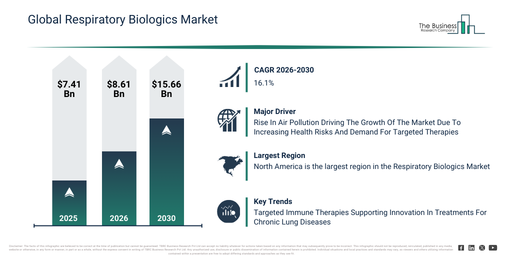
    The respiratory biologics market has experienced rapid expansion in recent years. Its valuation is set to rise from $7.41 billion in 2025 to $8.61 billion in 2026, reflecting a compound annual growth rate (CAGR) of 16.3%. Factors contributing to its historical growth include the constraints of conventional inhalers, an increase in severe asthma cases, the authorization of biologic therapies, advancements in immunology research, and the expansion of specialty clinics.

    The respiratory biologics market is anticipated to expand significantly over the next few years, projected to reach $15.66 billion by 2030, with a compound annual growth rate (CAGR) of 16.1%. This expansion during the forecast period is propelled by the advancement of precision respiratory medicine, the broadening of biologics pipelines, increased healthcare spending, enhancements in reimbursement policies, and the persisting unmet needs in severe respiratory diseases. Key trends during this period are expected to involve the rising adoption of targeted biologic therapies, an expansion of treatments for severe asthma, increased reliance on biomarker-based patient selection, a growing use of injectable respiratory drugs, and a shift towards long-acting biologic agents.

    Get A Free Sample Report With In-Depth Market Insights:

    https://thebusinessresearchcompany.com/sample_request?id=66943313&type=smp&name=Respiratory%20Biologics%20Market%20Report%202026&utm_source=Blogs&utm_medium=Paid&utm_campaign=Oct_PR

    Respiratory Biologics Market Demand Drivers Opening New Revenue Streams

    The future expansion of the respiratory biologics market is anticipated to be driven by increasing air pollution. This phenomenon, known as air pollution, involves the existence of detrimental elements like gases, microscopic particles, and organic compounds within Earth’s atmosphere, posing risks to both human well-being and ecological systems. The escalation of air pollution stems from greater industrial development and urban expansion, resulting in elevated pollutant discharges from manufacturing plants, transportation, and building projects. Respiratory biologics offer a solution to mitigate the health consequences of air pollution by delivering precise treatments designed to lessen inflammation and enhance pulmonary function for those exposed to airborne contaminants. As an illustration, the Environmental Protection Agency, a US-based government entity, reported in January 2025 that the United States emitted more than 66 million tons of pollutants into the atmosphere during 2023. Consequently, the upward trend in air pollution serves as a primary impetus for the expansion of the respiratory biologics market.

    Respiratory Biologics Market Segmentation And Category Overview

    The respiratory biologics market covered in this report is segmented –

    1) By Disease Indication: Asthma, Chronic Rhinosinasitis, Hypereosinophilic Syndrome

    2) By Route Of Administration: Intravenous, Subcutaneous

    3) By Sales Channel: Hospitals, Specialty Clinics, Retail Pharmacies, Mail Order Pharmacies

    Subsegments:

    1) By Asthma: Severe Eosinophilic Asthma, Allergic Asthma, Non-Allergic Asthma

    2) By Chronic Rhinosinasitis: Chronic Rhinosinusitis: Chronic Rhinosinusitis with Nasal Polyps, Chronic Rhinosinusitis without Nasal Polyps

    3) By Hypereosinophilic Syndrome (HES): Idiopathic HES, Lymphocytic Variant HES, Myeloproliferative HES

    Respiratory Biologics Market Trends Powering Strategic Industry Growth

    Major companies in the respiratory biologics market are focusing on developing innovative biologic therapies, such as targeted immune therapies for chronic respiratory diseases, with the goal of providing precise treatments that lessen inflammation and improve lung function. Targeted immune therapies for chronic respiratory diseases are interventions designed to help manage the body’s immune system, thereby reducing swelling and respiratory issues in individuals with long-term lung conditions. For example, in September 2024, Sanofi S.A., a France-based pharmaceutical company, announced that the US Food and Drug Administration (FDA) had approved Dupixent (dupilumab) as an add-on maintenance therapy for adults with inadequately controlled chronic obstructive pulmonary disease (COPD) who presented an eosinophilic phenotype. This approval marked a significant achievement, as Dupixent became the first biologic medicine authorized in the US for treating this specific population of COPD patients.

    Respiratory Biologics Market Competitive Analysis Of Leading Industry Participants

    Major companies operating in the respiratory biologics market are Sanofi S.A., AstraZeneca plc, GlaxoSmithKline plc, Regeneron Pharmaceuticals Inc., Novartis AG, F. Hoffmann-La Roche Ltd., Amgen Inc., Swedish Orphan Biovitrum AB, Teva Pharmaceutical Industries Ltd., AbbVie Inc., Pfizer Inc., Merck & Co. Inc., Bristol Myers Squibb Company, Johnson & Johnson, Boehringer Ingelheim International GmbH, Biogen Inc., Vertex Pharmaceuticals Incorporated, Glenmark Pharmaceuticals Ltd., Kiniksa Pharmaceuticals Ltd., Pieris Pharmaceuticals Inc.

    View The Full Respiratory Biologics Market Report:

    https://thebusinessresearchcompany.com/report/respiratory-biologics-global-market-report?utm_source=Blogs&utm_medium=Paid&utm_campaign=Oct_PR

    Respiratory Biologics Market Regional Breakdown: Where Is Demand Concentrated?

    North America was the largest region in the respiratory biologics market in 2025. Asia-Pacific is expected to be the fastest-growing region in the forecast period. The regions covered in the respiratory biologics market report are Asia-Pacific, South East Asia, Western Europe, Eastern Europe, North America, South America, Middle East, Africa.

    Reach Out To Our Team:

    The Business Research Company: https://www.thebusinessresearchcompany.com/

    Americas: +1 310-496-7795

    Asia: +44 7882 955267 & +91 8897263534

    Europe: +44 7882 955267

    Email us at: marketing@tbrc.info

    Follow us on:

    LinkedIn: https://in.linkedin.com/company/the-business-research-company

    YouTube: https://www.youtube.com/channel/UC24_fI0rV8cR5DxlCpgmyFQ

    Global Market Model: https://www.thebusinessresearchcompany.com/global-market-model
  • Research-Grade Proteins Market Reaches $3.18 Billion In 2026: Forecast And Growth Opportunities

    Research-Grade Proteins Market Reaches $3.18 Billion In 2026: Forecast And Growth Opportunities

    Backed by market attractiveness analysis, total addressable market sizing, company benchmarking matrices, interactive Excel dashboards, wider supply chain intelligence, emerging startup coverage, and detailed product-level insights, The Business Research Company’s 2026 market reports are designed to offer research that is more actionable and strategically valuable than ever.

    Research-Grade Proteins Market Value Analysis: What Growth Lies Ahead Over The Forecast Period?

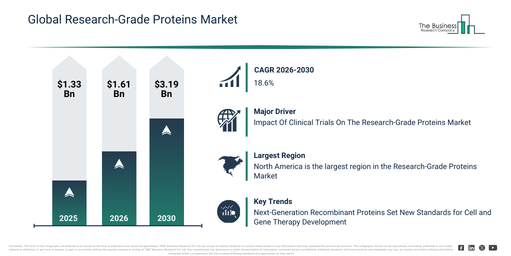
    The market size for research-grade proteins has witnessed substantial growth in recent years. This market is forecasted to increase from $1.33 billion in 2025 to $1.61 billion in 2026, at a compound annual growth rate (CAGR) of 20.8%. Historically, this expansion was driven by several factors, including the growth of academic life sciences research, the increasing utilization of proteins in molecular biology experiments, the expansion of biopharmaceutical R&D activities, the availability of recombinant protein expression systems, and rising funding for basic biomedical research.

    The research-grade proteins market is anticipated to experience significant expansion in the coming years. It will grow to $3.19 billion in 2030 at a compound annual growth rate (CAGR) of 18.6%. This growth during the forecast period stems from an amplified emphasis on precision medicine research, a heightened demand for protein-based drug targets, advancements in cell and gene therapy studies, broader applications of proteins in structural biology, and pharmaceutical companies increasingly outsourcing their research endeavors. Prominent trends foreseen for this period encompass a surge in demand for high-purity proteins in drug discovery, the increasing deployment of recombinant proteins in cell and molecular biology investigations, wider acceptance of research-grade proteins in immunology and oncology research, the proliferation of protein-based assays and functional studies, and a stronger inclination towards tailored and specific-application proteins.

    Get A Free Sample Report With In-Depth Market Insights:

    https://thebusinessresearchcompany.com/sample_request?id=87883603&type=smp&name=Research-Grade%20Proteins%20Market%20Report%202026&utm_source=Blogs&utm_medium=Paid&utm_campaign=Oct_PR

    Research-Grade Proteins Market Growth Backed By Core Demand Fundamentals

    The increasing volume of clinical trials is anticipated to drive expansion in the research-grade proteins market. Clinical trials are defined as investigative studies that examine the safety and effectiveness of new medical treatments, interventions, or devices when applied to human subjects. The rise in the number of these trials can be attributed to advancements in medical research, the existing burden of various diseases, shifts in regulatory frameworks, growing patient demands, and significant industry investment. Research-grade proteins play a crucial role in clinical trials by serving as indispensable tools for developing biomarkers and assays, identifying drug targets, performing quality control, and establishing reference standards, thereby ensuring the accuracy and reliability of experimental outcomes. For instance, in December 2024, the Association of the British Pharmaceutical Industry (ABPI), a UK-based organization, indicated that the number of pharmaceutical industry trials launched in the UK increased for the second consecutive year, rising from 411 in 2022 to 426 in 2023. Thus, the growing number of clinical trials is a key factor propelling the growth of the research-grade proteins market.

    Research-Grade Proteins Market Segment Outlook: Which Categories Are Growing Fastest?

    The research-grade proteins market covered in this report is segmented –

    1) By Product: Cytokines And Growth Factors, Antibodies, Immune Checkpoint Proteins, Virus Antigens, Enzymes, Recombinant Regulatory Proteins, Hormones, Other Products

    2) By Host Cell: Mammalian Cells, Bacterial Cells, Fungi And Yeast, Insect Cells, Other Host Cells

    3) By End-Use: Pharmaceutical And Biotechnology Companies, Academic And Research Institute, Other End-Uses

    Subsegments:

    1) By Cytokines And Growth Factors: Interleukins, Interferons, Colony Stimulating Factors, Erythropoietin, Granulocyte Macrophage Colony-Stimulating Factor

    2) By Antibodies: Monoclonal Antibodies, Polyclonal Antibodies, Recombinant Antibodies, Conjugated Antibodies

    3) By Immune Checkpoint Proteins: PD-1 Inhibitors, PD-L1 Inhibitors, CTLA-4 Inhibitors

    4) By Virus Antigens: HIV Antigens, Hepatitis Antigens, Influenza Antigens, Hepatitis B Antigens

    5) By Enzymes: Restriction Enzymes, Proteases, Ligases, Kinases

    6) By Recombinant Regulatory Proteins: Transcription Factors, Regulatory Enzymes, Epigenetic Modifiers

    7) By Hormones: Insulin, Thyroid Hormones, Growth Hormones, Adrenaline

    8) By Other Products: Peptides, Serum Proteins, Antigen-Binding Proteins

    Research-Grade Proteins Market Growth Trends Reshaping The Competitive Landscape

    Major companies in the research-grade proteins market are concentrating on creating innovative solutions, such as high-purity, animal-origin-free recombinant proteins, to enhance consistency, safety, and performance in advanced cell and gene therapy workflows. These high-purity, animal-origin-free recombinant proteins are laboratory-produced proteins made without any animal-derived components and purified to very high standards, ensuring consistency, safety, and reliability for research and therapeutic applications. For instance, in October 2025, Qkine Ltd., a UK-based manufacturing company, introduced a new range of Cell Therapy Grade recombinant proteins specifically engineered to meet the stringent requirements of cell therapy research, process development, and GMP manufacturing. These high-purity, animal-origin-free proteins feature low endotoxin levels and minimal host cell contaminants, produced using defined manufacturing standards with comprehensive regulatory documentation. Their consistent performance supports smooth scalability from early research to GMP clinical workflows. Designed for advanced applications like CAR-T, iPSC differentiation, and ex vivo gene editing, these regulatory-ready proteins help accelerate therapy development while reducing risks.

    Research-Grade Proteins Market Leading Companies And Competitive Benchmarking

    Major companies operating in the research-grade proteins market are Thermo Fisher Scientific Inc., Bio-Rad Laboratories Inc., Bio-Techne, Stemcell Technologies Inc., Miltenyi Biotec, GenScript Biotech Corporation, Sino Biological Inc., ACROBiosystems, OriGene Technologies Inc., RayBiotech Inc., Rockland Immunochemicals Inc., Proteintech Group Inc., Novus Biologicals LLC, Active Motif, Aviva Systems Biology Corporation, StressMarq Biosciences Inc., Abnova Corporation, AnaSpec, Biomatik, Prospec-Tany Technogene Ltd., Cusabio Technology LLC, United States Biological, Laurus Bio, Boster Biological Technology, AMS Biotechnology Europe Ltd (AMSBIO)

    View The Full Research-Grade Proteins Market Report:

    https://thebusinessresearchcompany.com/report/research-grade-proteins-global-market-report?utm_source=Blogs&utm_medium=Paid&utm_campaign=Oct_PR

    Research-Grade Proteins Market Geographic Landscape: Which Region Dominates Industry Growth?

    North America was the largest region in the research-grade proteins market in 2025. Asia-Pacific is expected to be the fastest-growing region in the forecast period. The regions covered in the research-grade proteins market report are Asia-Pacific, South East Asia, Western Europe, Eastern Europe, North America, South America, Middle East, Africa.

    Reach Out To Our Team:

    The Business Research Company: https://www.thebusinessresearchcompany.com/

    Americas: +1 310-496-7795

    Asia: +44 7882 955267 & +91 8897263534

    Europe: +44 7882 955267

    Email us at: marketing@tbrc.info

    Follow us on:

    LinkedIn: https://in.linkedin.com/company/the-business-research-company

    YouTube: https://www.youtube.com/channel/UC24_fI0rV8cR5DxlCpgmyFQ

    Global Market Model: https://www.thebusinessresearchcompany.com/global-market-model