Category: Pharmaceuticals

  • Medical Device Clinical Trials Market Analysis: $19.36 Billion Market Size In 2026 And Future Growth Prospects

    Medical Device Clinical Trials Market Analysis: $19.36 Billion Market Size In 2026 And Future Growth Prospects

    Built to provide research that’s more actionable and strategically valuable, The Business Research Company’s 2026 market reports include market attractiveness analysis, total addressable market sizing, company benchmarking matrices, interactive Excel dashboards, broader supply chain intelligence, emerging startup tracking, and in-depth product insights.

    Medical Device Clinical Trials Market CAGR Outlook And Future Development

    The medical device clinical trials market has experienced significant expansion in recent years. This market is projected to rise from $18.07 billion in 2025 to $19.36 billion in 2026, demonstrating a compound annual growth rate (CAGR) of 7.2%. Historically, this growth can be ascribed to several factors, including an increase in medical device innovation, strict regulatory approval mandates, a heightened demand for patient safety validation, the enlargement of hospital-based clinical research, and greater investment in generating clinical evidence.

    The medical device clinical trials market size is projected to experience substantial expansion over the upcoming years. It is forecast to reach $25.35 billion in 2030, exhibiting a compound annual growth rate (CAGR) of 7.0%. Factors contributing to this anticipated growth during the forecast period include the rise of wearable and connected medical technologies, heightened regulatory oversight concerning device effectiveness, the proliferation of digital platforms for trials, a greater embrace of remote patient monitoring within studies, and the growing internationalization of clinical research. Key trends anticipated during the same period encompass the growing implementation of decentralized clinical trials, the expanding application of real-world evidence in device studies, an intensified emphasis on post-market approval and prolonged safety evaluations, the broadening of adaptive and hybrid trial methodologies, and a heightened need for trial management that adheres strictly to regulatory standards.

    Get A Free Sample Report With In-Depth Market Insights:

    https://thebusinessresearchcompany.com/sample_request?id=61859328&type=smp&name=Medical%20Device%20Clinical%20Trials%20Market%20Report%202026&utm_source=Blogs&utm_medium=Paid&utm_campaign=Oct_PR

    Medical Device Clinical Trials Market Demand Drivers Opening New Revenue Streams

    The increasing occurrence of chronic diseases is projected to drive the growth of the medical device clinical trials market moving forward. These are long-term health conditions that advance slowly and necessitate continuous medical management. The proliferation of chronic diseases stems from sedentary lifestyles, where individuals spend extended hours seated at desks or engaged with electronic devices. This behavior reduces calorie expenditure and weakens cardiovascular health, contributing to conditions such as obesity, diabetes, and hypertension. The escalating incidence of chronic diseases, in turn, boosts the requirement for medical device clinical trials to create and validate innovative devices for effective diagnosis, treatment, and management. For instance, in June 2023, the Institute for Health Metrics and Evaluation, a US-based public health research institute, reported that over half a billion people globally were living with diabetes. This number is expected to more than double, reaching 1.3 billion people by 2050. Therefore, the rising prevalence of chronic diseases is accelerating the growth of the medical device clinical trials market.

    Medical Device Clinical Trials Market Segment Landscape And Growth Outlook

    The medical device clinical trials market covered in this report is segmented –

    1) By Study Type: Feasibility And Pilot Study, Pivotal Study, FDA Premarket Approval (PMA) Application, Post-Approval Study

    2) By Indication: Cardiovascular Devices, Neurology Devices, Orthopedic Devices, Diagnostic Imaging, Anesthesia And Respiratory Devices, Other Indications

    3) By Study Design: Interventional, Observational, Expanded Access

    Subsegments:

    1) By Feasibility And Pilot Study: First-in-Human (FIH) Trials, Device Safety Assessment, Procedural Feasibility Studies, Prototype Testing

    2) By Pivotal Study: Comparative Effectiveness Studies, Randomized Controlled Trials (RCTs), Non-Inferiority Trials, Superiority Trials

    3) By FDA PMA (Pre-Market Approval) Application: Clinical Data Submission, Device Risk Analysis, Effectiveness Evidence Studies

    4) By Post-Approval Study: Long-Term Safety Monitoring, Real-World Evidence Collection, Registry Studies, Comparative Outcome Studies

    Medical Device Clinical Trials Market Trends Powering Strategic Industry Growth

    Major companies active in the medical device clinical trials market are concentrating on developing AI-powered medical device software to streamline clinical trial protocols and resource allocation, aiming to boost trial efficiency and reduce expenditures. AI-powered medical device software refers to healthcare software that employs artificial intelligence algorithms, particularly machine learning or deep learning, to support or automate medical functions. For instance, in January 2025, Risklick, a pharmaceutical firm based in Switzerland, launched Protocol AI, an AI-driven software designed to accelerate and optimize clinical trials for medical devices. Protocol AI utilizes Natural Language Processing (NLP) and Machine Learning (ML) to analyze clinical data, publications, and regulatory documents, thereby automatically drafting clinical trial protocols within minutes. This innovation significantly decreases the time and cost associated with protocol development, which traditionally takes approximately six months, and has already shown up to a 50% reduction in document development time for medicinal products.

    Medical Device Clinical Trials Market Competitive Landscape: Who Leads The Industry?

    Major companies operating in the medical device clinical trials market are Abbott Laboratories, Siemens Healthineers, Stryker Corporation, Philips Healthcare, Baxter International, Roche Diagnostics, ICON, Intuitive Surgical, Edwards Lifesciences, Fortrea, Medidata, NAMSA, Veranex, TFS HealthScience, Avania, Parexel, Meditrial, Syneos Health, Qserve CRO, Clinius Ltd, Eclevar Medtech, 1med Sa, ISS AG

    View The Full Medical Device Clinical Trials Market Report:

    https://thebusinessresearchcompany.com/report/medical-device-clinical-trials-global-market-report?utm_source=Blogs&utm_medium=Paid&utm_campaign=Oct_PR

    Medical Device Clinical Trials Market Geographic Analysis: Where Is Demand Rising Fastest?

    North America was the largest region in the medical device clinical trials market in 2025. Asia-Pacific is expected to be the fastest-growing region in the forecast period. The regions covered in the medical device clinical trials market report are Asia-Pacific, South East Asia, Western Europe, Eastern Europe, North America, South America, Middle East, Africa.

    Reach Out To Our Team:

    The Business Research Company: https://www.thebusinessresearchcompany.com/

    Americas: +1 310-496-7795

    Asia: +44 7882 955267 & +91 8897263534

    Europe: +44 7882 955267

    Email us at: marketing@tbrc.info

    Follow us on:

    LinkedIn: https://in.linkedin.com/company/the-business-research-company

    YouTube: https://www.youtube.com/channel/UC24_fI0rV8cR5DxlCpgmyFQ

    Global Market Model: https://www.thebusinessresearchcompany.com/global-market-model

  • Medical Amino Acid Market 2026 Market Size And Growth Forecast: Key Trends To Watch

    Medical Amino Acid Market 2026 Market Size And Growth Forecast: Key Trends To Watch

    Backed by market attractiveness analysis, total addressable market sizing, company benchmarking matrices, interactive Excel dashboards, wider supply chain intelligence, emerging startup coverage, and detailed product-level insights, The Business Research Company’s 2026 market reports are designed to offer research that is more actionable and strategically valuable than ever.

    Medical Amino Acid Market Set To Climb From $4.44 Billion In 2026 To $5.99 Billion By 2030

    The medical amino acid market has demonstrated robust expansion in recent years. This market is projected to expand from $4.11 billion in 2025 to $4.44 billion in 2026, exhibiting a compound annual growth rate (CAGR) of 8.0%. Key factors that contributed to its growth in the historic period include limited awareness of amino acid therapies, a reliance on conventional protein supplements, the increasing adoption by hospitals and clinics, growth in nutraceutical research, and the restricted availability of specialty amino acids.

    The medical amino acid market is expected to show significant expansion over the next few years, with its size projected to reach $5.99 billion in 2030 at a compound annual growth rate (CAGR) of 7.8%. This anticipated growth is driven by advancements in medical amino acid synthesis, an increasing demand for personalized nutrition, the broader application in clinical and hospital environments, a rise in pharmaceutical and cell culture research, and the introduction of novel amino acid delivery methods. Important trends within this forecast period include a growing demand for amino acid-based medical nutrition, the development of specialized supplements for metabolic conditions, increased adoption of injectable amino acid formulations, the expanding use of amino acids in pharmaceutical intermediates, and a focused effort on high-purity and clinical-grade amino acid products.

    Get A Free Sample Report With In-Depth Market Insights:

    https://thebusinessresearchcompany.com/sample_request?id=20862937&type=smp&name=Medical%20Amino%20Acid%20Market%20Report%202026&utm_source=Blogs&utm_medium=Paid&utm_campaign=Oct_PR

    Medical Amino Acid Market Growth Backed By Core Demand Fundamentals

    The increasing prevalence of liver diseases is projected to stimulate the expansion of the medical amino acid market. Liver disease, a broad category of conditions that negatively impact the liver’s structure or function, is on the rise, primarily due to growing obesity rates that contribute to non-alcoholic fatty liver disease as excessive fat accumulates in liver cells. Medical amino acids play a vital role in nutritional therapy for affected individuals by addressing liver-related metabolic imbalances and fostering liver cell regeneration. As an illustration, in September 2025, the Centers for Disease Control and Prevention (CDC) stated that chronic liver disease and cirrhosis caused 52,222 deaths in the United States in 2023, making it the ninth leading cause of death. Thus, the escalating incidence of liver diseases is a significant catalyst for the medical amino acid market.

    Medical Amino Acid Market Breakdown By Product Type And Application

    The medical amino acid market covered in this report is segmented –

    1) By Product Type: L-Glutamine, L-Arginine, L-Lysine, L-Leucine, L-Isoleucine, L-Valine, Other Product Types

    2) By Application: Medical Supplements, Medicinal Foods, Active Pharmaceutical Ingredients (API), Pharmaceutical Intermediates, Cell Culture Ingredients

    3) By End-User: Hospitals, Research Laboratories, Clinics, Pharmaceutical Companies, Nutraceutical Companies

    Subsegments:

    1) By L-Glutamine: Powder Form, Capsule Form, Injectable Form

    2) By L-Arginine: Oral Solution, Tablets, Intravenous Injection

    3) By L-Lysine: Hydrochloride Form, Acetate Form, Supplement Blends

    4) By L-Leucine: Branched-Chain Form, Micronized Powder, Pharmaceutical Grade

    5) By L-Isoleucine: Isolated Form, Blended BCAA Form, Medical Nutrition Formulas

    6) By L-Valine: Standalone Supplement, BCAA Combination, Clinical Nutrition Use

    7) By Other Product Types: L-Tryptophan, L-Carnitine, L-Threonine, L-Histidine, Specialty Amino Acids

    Medical Amino Acid Market Growth Trends Reshaping The Competitive Landscape

    Major companies within the medical amino acid market are concentrating on developing innovative formulations, such as high-calorie parenteral nutrition injections, to enhance patient nutrition and support recovery in individuals unable to consume food orally. These high-calorie parenteral nutrition injections are nutrient-rich solutions administered intravenously, containing amino acids, glucose, electrolytes, and vitamins, which aid in supporting energy needs, protein synthesis, and recovery for patients unable to eat or absorb nutrients normally. For instance, in November 2024, Otsuka Pharmaceutical Factory Inc., a Japan-based pharmaceutical and nutrition company, introduced KIDPAREN Injection, a kit formulation for high-calorie parenteral nutrition specifically designed for CKD patients. This product consists of a 1,050 mL three-chamber bag that combines amino acids, glucose, electrolytes (excluding potassium and phosphorus), and multivitamins; it delivers approximately 1,500 kcal in a fluid-restricted volume and facilitates easy aseptic mixing by breaking the centre seal before infusion. In contrast to traditional parenteral nutrition, which frequently necessitates the separate preparation of amino acid solutions, TPN bases, vitamins, and electrolytes, thereby increasing preparation time and the risk of compounding errors, this kit simplifies administration, reduces the burden on healthcare settings, and is optimized for patients who cannot tolerate standard feeding.

    Medical Amino Acid Market Company Landscape And Competitive Strategy

    Major companies operating in the medical amino acid market are Evonik Industries AG, Ajinomoto Co. Inc., Nippon Kayaku Co. Ltd., FUJIFILM Irvine Scientific, Kyowa Hakko Bio Co. Ltd., Aelicure Pharma, Shanghai Kyowa Amino Acid Co. Ltd.

    View The Full Medical Amino Acid Market Report:

    https://thebusinessresearchcompany.com/report/medical-amino-acid-global-market-report?utm_source=Blogs&utm_medium=Paid&utm_campaign=Oct_PR

    Medical Amino Acid Market Global Footprint: Which Region Leads The Market?

    North America was the largest region in the medical amino acid market in 2025. Asia-Pacific is expected to be the fastest-growing region in the forecast period. The regions covered in the medical amino acid market report are Asia-Pacific, South East Asia, Western Europe, Eastern Europe, North America, South America, Middle East, Africa.

    Reach Out To Our Team:

    The Business Research Company: https://www.thebusinessresearchcompany.com/

    Americas: +1 310-496-7795

    Asia: +44 7882 955267 & +91 8897263534

    Europe: +44 7882 955267

    Email us at: marketing@tbrc.info

    Follow us on:

    LinkedIn: https://in.linkedin.com/company/the-business-research-company

    YouTube: https://www.youtube.com/channel/UC24_fI0rV8cR5DxlCpgmyFQ

    Global Market Model: https://www.thebusinessresearchcompany.com/global-market-model
  • Mastocytosis Drug Market Size Forecast: How The Industry Is Expected To Grow From 2026 To 2030

    Mastocytosis Drug Market Size Forecast: How The Industry Is Expected To Grow From 2026 To 2030

    Featuring market attractiveness scoring, total addressable market sizing, company benchmarking matrices, interactive Excel dashboards, deeper supply chain intelligence, emerging startup tracking, and granular product-level insights, The Business Research Company’s 2026 market reports are built to deliver research that is both more actionable and more strategically valuable.

    Mastocytosis Drug Market Forecast: Value Set To Climb From $1.28 Billion To $1.83 Billion

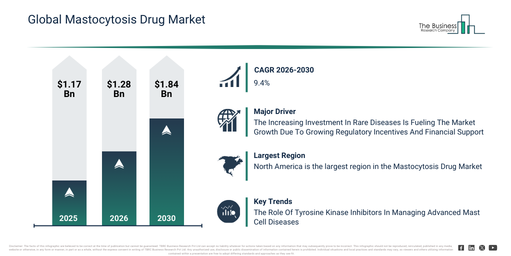
    The mastocytosis drug market has exhibited significant growth in recent years. Its valuation is anticipated to rise from $1.17 billion in 2025 to $1.28 billion in 2026, achieving a compound annual growth rate (CAGR) of 9.7%. This expansion observed historically is attributable to elements like the recognition of rare diseases, symptom control through antihistamines, diagnosis primarily performed in hospitals, the limited availability of therapeutic options, and care delivered by specialists.

    The mastocytosis drug market is projected for substantial expansion over the coming years. Its valuation is set to reach $1.84 billion by 2030, exhibiting a compound annual growth rate (CAGR) of 9.4%. This projected increase is driven by factors such as targeted drug approvals, incentives for orphan drugs, advancements in genetic mutation profiling, the growth of specialty clinics, and enhanced diagnostic capabilities. Key developments anticipated during this period encompass a heightened focus on uncommon mast cell disorders, wider adoption of targeted therapies, an increase in symptom management medications, growing understanding of systemic mastocytosis, and the creation of customized treatment plans.

    Get A Free Sample Report With In-Depth Market Insights:

    https://thebusinessresearchcompany.com/sample_request?id=27684029&type=smp&name=Mastocytosis%20Drug%20Market%20Report%202026&utm_source=Blogs&utm_medium=Paid&utm_campaign=Oct_PR

    Mastocytosis Drug Market Growth Catalysts And Demand Drivers

    The increasing financial commitment to rare diseases is expected to stimulate the expansion of the mastocytosis drug market going forward. Rare diseases are defined as medical conditions affecting a small segment of the population, typically fewer than 200,000 people in the United States or fewer than 1 in 2,000 people in Europe. This heightened investment in rare diseases is predominantly fueled by growing regulatory incentives, such as orphan drug designations, prolonged market exclusivity, and tax credits, which work to reduce development risks and enhance profitability for pharmaceutical companies. Mastocytosis drugs provide targeted treatment that not only alleviates symptoms of mastocytosis but also contributes to broader therapeutic advancements for other rare diseases with similar immune and cellular pathways. For instance, in April 2024, according to Global Genes, a US-based nonprofit organization, in the first quarter of 2024, companies developing drugs for rare diseases secured $7.1 billion through public equity and debt financings, representing a 307% surge compared to the $1.8 billion raised during the same period in 2023. Thus, the escalating investment in rare diseases is driving the growth of the mastocytosis drug market.

    Mastocytosis Drug Market Segment Analysis And Revenue Potential

    The mastocytosis drug market covered in this report is segmented –

    1) By Drug Type: Antihistamines, Corticosteroids, Mast Cell Stabilizers

    2) By Disease Type: Systemic Mastocytosis, Cutaneous Mastocytosis, Mast Cell Activation Syndrome

    3) By Route Of Administration: Oral, Intravenous, Subcutaneous

    4) By Distribution Channel: Hospital Pharmacy, Online Pharmacy, Retailers, Other Distribution Channels

    5) By End Users: Hospitals, Homecare, Specialty Clinics, Other End Users

    Subsegments:

    1) By Antihistamines: H1-Receptor Antagonists, H2-Receptor Antagonists

    2) By Corticosteroids: Topical Corticosteroids, Oral Corticosteroids, Intravenous Corticosteroids

    3) By Mast Cell Stabilizers: Cromolyn sodium, Ketotifen, Nedocromil

    Mastocytosis Drug Market Trends Shaping Long-Term Demand

    Leading companies in the mastocytosis drug market are concentrating on developing innovative products, such as tyrosine kinase inhibitors, to enhance treatment efficacy and deliver targeted therapies for individuals with advanced mast cell diseases. A tyrosine kinase inhibitor is a medication that obstructs enzymes responsible for abnormal cell proliferation, and in the context of mastocytosis, it helps by inhibiting the excessive growth of mast cells and alleviating symptoms like rashes and inflammation. For instance, in May 2023, Blueprint Medicines Corporation, a US-based biotechnology company, obtained U.S. Food and Drug Administration approval for Ayvakit (avapritinib) for the treatment of adults with indolent systemic mastocytosis (ISM). This approval signifies a substantial breakthrough in the treatment of ISM, a rare and chronic condition characterized by an overproduction of mast cells. Ayvakit acts as a selective inhibitor of the KIT D816V mutation, which is frequently found in patients with ISM, providing a targeted therapeutic alternative to manage symptoms and the disease.

    Mastocytosis Drug Market Key Players Shaping Industry Direction

    Major companies operating in the mastocytosis drug market are Pfizer Inc., Johnson & Johnson, Bayer AG, Sanofi S.A., Novartis AG, GSK plc, Teva Pharmaceutical Industries Limited, Alcon Inc., Bausch Health Companies Inc., Genentech Inc., Lupin Limited, Blueprint Medicines Corporation, Don Valley Pharma (Pvt.) Ltd., Vivan Life Sciences Private Limited, AB Science S.A., Medoz Pharmaceutical Private Limited, Zumax Biocare Private Limited, Hi-Cure Biotech Private Limited, Zenomed Healthcare Private Limited, Biosynth AG

    View The Full Mastocytosis Drug Market Report:

    https://thebusinessresearchcompany.com/report/mastocytosis-drug-global-market-report?utm_source=Blogs&utm_medium=Paid&utm_campaign=Oct_PR

    Mastocytosis Drug Market Regional Split: Which Areas Are Fueling Growth?

    North America was the largest region in the mastocytosis drug market in 2025. Asia-Pacific is expected to be the fastest-growing region in the forecast period. The regions covered in the mastocytosis drug market report are Asia-Pacific, South East Asia, Western Europe, Eastern Europe, North America, South America, Middle East, Africa.

    Reach Out To Our Team:

    The Business Research Company: https://www.thebusinessresearchcompany.com/

    Americas: +1 310-496-7795

    Asia: +44 7882 955267 & +91 8897263534

    Europe: +44 7882 955267

    Email us at: marketing@tbrc.info

    Follow us on:

    LinkedIn: https://in.linkedin.com/company/the-business-research-company

    YouTube: https://www.youtube.com/channel/UC24_fI0rV8cR5DxlCpgmyFQ

    Global Market Model: https://www.thebusinessresearchcompany.com/global-market-model

  • Mass Spectrometry Imaging Market Reaches $4.42 Billion In 2026: Forecast And Growth Opportunities

    Mass Spectrometry Imaging Market Reaches $4.42 Billion In 2026: Forecast And Growth Opportunities

    Built to provide research that’s more actionable and strategically valuable, The Business Research Company’s 2026 market reports include market attractiveness analysis, total addressable market sizing, company benchmarking matrices, interactive Excel dashboards, broader supply chain intelligence, emerging startup tracking, and in-depth product insights.

    Mass Spectrometry Imaging Market Revenue Growth On Track For A 9% CAGR Through 2030

    The mass spectrometry imaging market size has shown significant growth in recent years. It is forecast to expand from $2.88 billion in 2025 to $3.14 billion in 2026, achieving a compound annual growth rate (CAGR) of 9.1%. This historical growth can be linked to improvements in mass spectrometry technologies, an increase in proteomics and metabolomics research, enhanced funding for life sciences studies, a growing need for molecular imaging tools, and the establishment of more academic research institutions.

    The mass spectrometry imaging market is anticipated to experience robust expansion over the coming years. By 2030, this market is projected to reach $4.43 billion, demonstrating a compound annual growth rate (CAGR) of 9.0%. This projected growth is largely driven by factors such as the expansion of precision medicine applications, a greater uptake of spatial biology methodologies, increased investments in pharmaceutical research and development, progress in AI-powered data analysis, and the broadening scope of clinical research uses. Key trends expected during this period involve the increasing application of MSI in biomarker identification, its growing utilization in cancer research, the enhanced integration of sophisticated imaging with data analytics, the proliferation of high-resolution mass spectrometry systems, and a heightened need for spatial omics solutions.

    Get A Free Sample Report With In-Depth Market Insights:

    https://thebusinessresearchcompany.com/sample_request?id=79014932&type=smp&name=Mass%20Spectrometry%20Imaging%20Market%20Report%202026&utm_source=Blogs&utm_medium=Paid&utm_campaign=Oct_PR

    Mass Spectrometry Imaging Market Opportunity Drivers: What’s Unlocking New Revenue Potential?

    The growing need for personalized medicine is projected to fuel the expansion of the mass spectrometry imaging market in the future. This approach tailors medical interventions for individual patients, taking into account their unique genetic composition, environmental factors, and lifestyle choices to enhance therapeutic outcomes. Its emergence is propelled by progress in genomics, allowing for specific therapies that align with genetic profiles, thereby boosting efficacy and minimizing adverse reactions. Mass spectrometry imaging aids personalized medicine by generating intricate molecular maps of tissue samples, assisting in the detection of disease indicators, and facilitating the creation of bespoke treatments for unique patient profiles. For example, in February 2024, data from the Personalized Medicine Coalition, a US-based non-profit body, indicated that the FDA cleared 16 novel personalized therapies for rare disease patients in 2023, marking a considerable rise from the six approved in 2022. Consequently, the increasing call for personalized medicine is stimulating the expansion of the mass spectrometry imaging market.

    Mass Spectrometry Imaging Market Segmentation And Category Overview

    The mass spectrometry imaging market covered in this report is segmented –

    1) By Product Type: Instruments, Consumables, Services

    2) By Technology: Matrix-Assisted Laser Desorption Or Ionization (MALDI), Secondary Ion Mass Spectrometry (SIMS), Desorption Electrospray Ionization (DESI), Magnetic Sector Mass Spectrometry, Time-of-Flight Mass Spectrometry (TOFMS), Other Technologies

    3) By Application: Proteomics, Metabolomics, Glycomics, Other Applications

    4) By End-User: Pharmaceutical and Biotechnology Companies, Government and Academic Institutions, Other End-Users

    Subsegments:

    1) By Instruments: High-Resolution Mass Spectrometers, Imaging Mass Spectrometers, Matrix-Assisted Laser Desorption Or Ionization Time-of-Flight System, Liquid Chromatography-Mass Spectrometry System, Quadrupole Time-of-Flight Mass Spectrometers, Tandem Mass Spectrometers

    2) By Consumables: Reagents And Chemicals, Sample Preparation Kits, Mass Spectrometry Plates And Slides, Calibration Standards, Solvents And Buffers

    3) By Services: Installation And Maintenance Services, Data Analysis And Software Services, Training And Support Services, Consultation And Customization Services

    Mass Spectrometry Imaging Market Innovation Trends Shaping Future Development

    Key companies within the mass spectrometry imaging (MSI) market are prioritizing the development of sophisticated technologies, including desorption electrospray ionization, to facilitate more precise and thorough molecular analysis across numerous applications. Desorption electrospray ionization (DESI) is an ionization method that extracts ions from surfaces in ambient conditions utilizing a charged solvent spray, thereby enabling the direct examination of solid samples, such as tissues, without requiring initial preparation or extraction. For example, in June 2023, Waters Corporation, a US-based analytical laboratory instrument manufacturing company, launched a targeted imaging mass spectrometer. This new instrument enhances tissue analysis through improved sensitivity and speed, providing more accurate small-molecule drug analysis with higher resolution in targeted imaging. It also enables faster detection, streamlining biological studies. The device elevates accuracy and efficiency, significantly benefiting research processes and supporting advanced drug development and biological research by delivering detailed, high-quality data.

    Mass Spectrometry Imaging Market Competitive Analysis Of Leading Industry Participants

    Major companies operating in the mass spectrometry imaging market are Thermo Fisher Scientific Inc., Danaher Corporation, Hitachi High-Tech Corporation, Shimadzu Corporation, Waters Corporation, Bruker Corporation, Horiba Scientific, JEOL Ltd., SCIEX, Analytik Jena AG, Standard BioTools, TOFWERK AG, Advion Inc., MassTech Inc., CovalX AG, ImaBiotech SAS, MassAnalytica LLC, Ionwerks Inc., Biognosys AG, Spectroswiss Sàrl

    View The Full Mass Spectrometry Imaging Market Report:

    https://thebusinessresearchcompany.com/report/mass-spectrometry-imaging-global-market-report?utm_source=Blogs&utm_medium=Paid&utm_campaign=Oct_PR

    Mass Spectrometry Imaging Market Top Region: Where Does Most Revenue Come From?

    North America was the largest region in the mass spectrometry imaging market in 2025. Asia-Pacific is expected to be the fastest-growing region in the forecast period. The regions covered in the mass spectrometry imaging market report are Asia-Pacific, South East Asia, Western Europe, Eastern Europe, North America, South America, Middle East, Africa.

    Reach Out To Our Team:

    The Business Research Company: https://www.thebusinessresearchcompany.com/

    Americas: +1 310-496-7795

    Asia: +44 7882 955267 & +91 8897263534

    Europe: +44 7882 955267

    Email us at: marketing@tbrc.info

    Follow us on:

    LinkedIn: https://in.linkedin.com/company/the-business-research-company

    YouTube: https://www.youtube.com/channel/UC24_fI0rV8cR5DxlCpgmyFQ

    Global Market Model: https://www.thebusinessresearchcompany.com/global-market-model

  • Mantle Cell Lymphoma Therapeutics Market Growth In 2026: Market Size, Key Drivers And Future Outlook

    Mantle Cell Lymphoma Therapeutics Market Growth In 2026: Market Size, Key Drivers And Future Outlook

    Backed by market attractiveness analysis, total addressable market sizing, company benchmarking matrices, interactive Excel dashboards, wider supply chain intelligence, emerging startup coverage, and detailed product-level insights, The Business Research Company’s 2026 market reports are designed to offer research that is more actionable and strategically valuable than ever.

    Mantle Cell Lymphoma Therapeutics Market Value Growth And Long-Term Outlook

    The mantle cell lymphoma therapeutics market size has shown substantial expansion in recent years. Its valuation is set to rise from $2.6 billion in 2025 to $2.79 billion in 2026, progressing at a compound annual growth rate (CAGR) of 7.4%. The historical increase can be ascribed to a higher incidence of mantle cell lymphoma, ongoing advancements in chemotherapeutic agents, greater uptake by hospitals and research institutions, the growth of monoclonal antibody therapies, and enhancements in parenteral administration techniques.

    The mantle cell lymphoma therapeutics market is projected to experience substantial expansion in the coming years. This market is anticipated to reach $3.81 billion by 2030, exhibiting a compound annual growth rate (CAGR) of 8.1%. Factors contributing to this growth during the forecast period include the increasing availability of targeted and combination therapies, the rise in oral BTK and BCL2 inhibitors, the implementation of precision medicine strategies, greater investment in immunotherapy research, and an expanding elderly patient demographic. Key trends expected throughout this period involve the broadening of targeted therapies, progress in immunotherapy, the uptake of oral therapeutics, the incorporation of personalized medicine, and the continued development of combination therapies.

    Get A Free Sample Report With In-Depth Market Insights:

    https://thebusinessresearchcompany.com/sample_request?id=18928558&type=smp&name=Mantle%20Cell%20Lymphoma%20Therapeutics%20Market%20Report%202026&utm_source=Blogs&utm_medium=Paid&utm_campaign=Oct_PR

    Mantle Cell Lymphoma Therapeutics Market Growth Momentum: What Factors Are Shaping Demand?

    The increasing prevalence of mantle cell lymphoma is projected to stimulate the growth of the mantle cell lymphoma therapeutics market moving forward. Mantle cell lymphoma (MCL) is categorized as a type of non-Hodgkin lymphoma (NHL), a cancer that affects the lymphatic system. Mantle Cell Lymphoma therapeutics contribute to reducing the disease’s prevalence by providing treatment and management for the condition, leading to improved patient outcomes, extended survival, and a lessened disease burden. For instance, in February 2024, the Lymphoma Action, a UK-based charity dedicated to lymphoma, reported that approximately 600 people in the UK are diagnosed with mantle cell lymphoma each year. This condition is more commonly observed in men than in women and typically identified in individuals who are middle-aged or older. Hence, the rising prevalence of mantle cell lymphoma is driving the expansion of the mantle cell lymphoma therapeutics market.

    Mantle Cell Lymphoma Therapeutics Market Segment Outlook: Which Categories Are Growing Fastest?

    The mantle cell lymphoma therapeutics market covered in this report is segmented –

    1) By Type: Combination Therapy, Monotherapy

    2) By Mechanism of Action: Bruton Tyrosine Kinase Inhibitors, Alkylating Agents, Deoxyribonucleic Acid Synthesis Inhibitors, Microtubule Inhibitors, Monoclonal Antibodies, Other Mechanisms

    3) By Route of Administration: Oral, Parenteral

    4) By Application: Hospital, Research Institute, Other Applications

    Subsegments:

    1) By Combination Therapy: Chemotherapy Combinations, Targeted Therapy Combinations, Immunotherapy Combinations

    2) By Monotherapy: Single-Agent Chemotherapy, Targeted Therapy Monotherapy, Immunotherapy Monotherapy

    Mantle Cell Lymphoma Therapeutics Market Trends Redefining Industry Growth

    Major companies operating in the mantle cell lymphoma therapeutics market are actively creating advanced products, including kinase inhibitors, to attract a wider customer base, boost sales, and generate increased revenue. A kinase inhibitor is a pharmaceutical compound designed to disrupt the action of enzymes known as kinases. For instance, in January 2023, Eli Lilly and Company, a US-based pharmaceutical firm, announced that the U.S. Food and Drug Administration (FDA) had approved Jaypirca (pirtobrutinib, 100 mg & 50 mg tablets). This drug is intended for adult patients whose mantle cell lymphoma (MCL) has recurred or shown resistance to prior treatments. Jaypirca stands out as a highly selective kinase inhibitor, utilizing a distinct binding mechanism. It is notable for its capacity to re-establish BTK inhibition in mantle cell lymphoma (MCL) patients who have previously been treated with covalent BTK inhibitors like ibrutinib, acalabrutinib, or zanubrutinib, thereby expanding the benefits of targeting the BTK pathway.

    Mantle Cell Lymphoma Therapeutics Market Leading Companies And Competitive Benchmarking

    Major companies operating in the mantle cell lymphoma therapeutics market are AstraZeneca plc, Celgene Corporation, Takeda Pharmaceutical Company Limited, Bayer Aktiengesellschaft, Eli Lilly and Company, Amgen Inc., GlaxoSmithKline plc, Kite Pharma Inc., Gilead Sciences Inc., AbbVie Inc., Bristol-Myers Squibb Company, Novartis AG, Merck & Co. Inc., Juno Therapeutics Inc., Nurix Therapeutics Inc., Janssen Biotech Inc., TG Therapeutics Inc., F. Hoffmann-La Roche AG, Astellas Pharma Inc., BeiGene Ltd., Daiichi Sankyo Company Limited, Eisai Co. Ltd., Hutchison China MediTech Limited, Incyte Corporation

    View The Full Mantle Cell Lymphoma Therapeutics Market Report:

    https://thebusinessresearchcompany.com/report/mantle-cell-lymphoma-therapeutics-global-market-report?utm_source=Blogs&utm_medium=Paid&utm_campaign=Oct_PR

    Mantle Cell Lymphoma Therapeutics Market Regional Breakdown: Where Is Demand Concentrated?

    North America was the largest region in the global mantle cell lymphoma therapeutics market in 2025. The regions covered in the mantle cell lymphoma therapeutics market report are Asia-Pacific, South East Asia, Western Europe, Eastern Europe, North America, South America, Middle East, Africa.

    Reach Out To Our Team:

    The Business Research Company: https://www.thebusinessresearchcompany.com/

    Americas: +1 310-496-7795

    Asia: +44 7882 955267 & +91 8897263534

    Europe: +44 7882 955267

    Email us at: marketing@tbrc.info

    Follow us on:

    LinkedIn: https://in.linkedin.com/company/the-business-research-company

    YouTube: https://www.youtube.com/channel/UC24_fI0rV8cR5DxlCpgmyFQ

    Global Market Model: https://www.thebusinessresearchcompany.com/global-market-model
  • Male Infertility Market Size And Forecast 2026–2030: Trends Driving Industry Expansion

    Male Infertility Market Size And Forecast 2026–2030: Trends Driving Industry Expansion

    Featuring market attractiveness scoring, total addressable market sizing, company benchmarking matrices, interactive Excel dashboards, deeper supply chain intelligence, emerging startup tracking, and granular product-level insights, The Business Research Company’s 2026 market reports are built to deliver research that is both more actionable and more strategically valuable.

    Male Infertility Market Poised To Hit $5.76 Billion By 2030 With A 6% CAGR

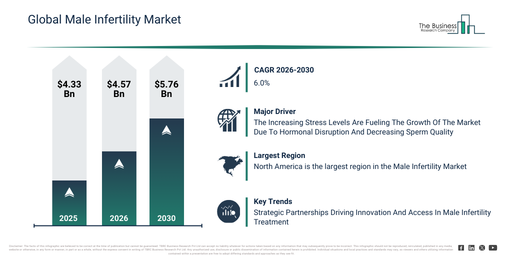
    The male infertility market size has experienced significant expansion in recent years. It is projected to expand from $4.33 billion in 2025 to $4.57 billion in 2026, demonstrating a compound annual growth rate (CAGR) of 5.6%. This historical growth can be linked to factors such as declining sperm quality globally, an increased prevalence of lifestyle-related infertility, the expansion of fertility clinics, growing acceptance of ART procedures, and advancements in semen analysis techniques.

    The male infertility market is poised for significant expansion in the coming years. By 2030, its valuation is projected to reach $5.76 billion, exhibiting a compound annual growth rate (CAGR) of 6.0%. This anticipated growth is driven by several factors, including an increase in infertility rates linked to environmental elements, a heightened demand for IVF and ICSI procedures, advancements in fertility diagnostic technologies, a greater awareness of male reproductive health, and the broadened availability of fertility treatments in developing economies. Key trends expected during this period involve a greater uptake of assisted reproductive technologies, the expanded utilization of advanced sperm diagnostic tests, an escalating emphasis on hormonal and targeted drug therapies, the broader application of microsurgical treatments for male infertility, and enhanced awareness leading to earlier diagnosis of male infertility.

    Get A Free Sample Report With In-Depth Market Insights:

    https://thebusinessresearchcompany.com/sample_request?id=19266568&type=smp&name=Male%20Infertility%20Market%20Report%202026&utm_source=Blogs&utm_medium=Paid&utm_campaign=Oct_PR

    Male Infertility Market Expansion Drivers: What’s Shaping Future Growth?

    The future expansion of the male infertility market is expected to be propelled by increasing stress levels. Stress levels denote the intensity of emotional, physical, or mental strain encountered when responding to challenging situations or pressures. The surge in stress originates from escalating work demands, where persistent pressure and high expectations cause burnout and disrupt mental well-being and work-life balance. Elevated stress can interfere with hormone balance, diminish sperm quality, and impair sexual function, leading to male infertility. Chronic stress disturbs cortisol and testosterone levels, contributing to an increase in infertility cases. As an illustration, in May 2024, the American Psychiatric Association, a US-based professional organization of psychologists, indicated that 43% of adults in the US felt more anxious in 2024, compared to 37% in 2023 and 32% in 2022, signifying a consistent rise in anxiety levels. Consequently, the increasing stress levels are driving the growth of the male infertility market.

    Male Infertility Market Segment Landscape: Which Areas Lead Development?

    The male infertility market covered in this report is segmented –

    1) By Treatment Type: Medication, Surgery, Assisted Reproductive Technology

    2) By Test Type: Sperm Agglutination, Deoxyribonucleic Acid Fragmentation Technique, Oxidative Stress Analysis, Computer Assisted Semen Analysis, Sperm Penetration Assay, Other Test Types

    3) By Distribution Channel: Hospitals Pharmacies, Pharmacies And Drug Stores, Online Pharmacies

    4) By End-User: Hospitals And Clinics, Fertility Centers, Research Institutes, Other End-Users

    Subsegments:

    1) By Medication: Hormone Treatments, Gonadotropins, Antibiotics, Antiestrogens, Dopamine Agonists

    2) By Surgery: Varicocelectomy, Vasovasostomy, Epididymovasostomy, Transurethral Resection of the Ejaculatory Duct (TURED), Sperm Retrieval Procedures

    3) By Assisted Reproductive Technology (ART): In Vitro Fertilization (IVF), Intracytoplasmic Sperm Injection (ICSI), Intrauterine Insemination (IUI), Sperm Donation, Cryopreservation Of Sperm

    Male Infertility Market Strategic Trends: What Defines The Next Growth Phase?

    Leading companies operating in the male infertility market are concentrating on strategic partnership approaches to enhance access to advanced fertility treatments across global markets. Strategic partnerships involve collaborations between organizations that combine resources and expertise to achieve shared objectives, helping to drive innovation, broaden market presence, and enhance R&D efforts. For instance, in June 2024, Ferring Pharmaceuticals, a Switzerland-based pharmaceutical company, joined forces with Posterity Health, a US-based male fertility clinic, to introduce a male fertility program on Ferring’s Fertility Out Loud platform designed to educate men about their fertility. This initiative provides men with a confidential online assessment and educational resources developed by reproductive urologists to aid their understanding of their fertility status and reduce the stigma associated with male infertility, which contributes to up to 50% of infertility cases. The program seeks to empower men to take early action, potentially improving a couple’s path to parenthood by addressing male fertility issues sooner and more conveniently through digital tools and telehealth.

    Male Infertility Market Industry Leaders And Competitive Landscape

    Major companies operating in the male infertility market are Novartis AG, Amgen Inc., Teva Pharmaceutical Industries Ltd., Intas Pharmaceuticals Ltd., NYU Langone Hospitals, Sun Pharmaceutical Industries Ltd., Cipla Limited, Ferring Pharmaceuticals, Fortis Healthcare, Vitrolife, Max Healthcare, CinnaGen Co., Aytu BioScience Inc., Zydus Hospitals and Healthcare Research Private Limited, Apricus Biosciences Inc., SCSA Diagnostics Inc., Andrology Solutions, Halotech DNA, Indira IVF, Conduit Pharmaceuticals, Shree IVF Clinics

    View The Full Male Infertility Market Report:

    https://thebusinessresearchcompany.com/report/male-infertility-global-market-report?utm_source=Blogs&utm_medium=Paid&utm_campaign=Oct_PR

    Male Infertility Market Geographic Landscape: Which Region Dominates Industry Growth?

    North America was the largest region in the male infertility market in 2025. The regions covered in the male infertility market report are Asia-Pacific, South East Asia, Western Europe, Eastern Europe, North America, South America, Middle East, Africa.

    Reach Out To Our Team:

    The Business Research Company: https://www.thebusinessresearchcompany.com/

    Americas: +1 310-496-7795

    Asia: +44 7882 955267 & +91 8897263534

    Europe: +44 7882 955267

    Email us at: marketing@tbrc.info

    Follow us on:

    LinkedIn: https://in.linkedin.com/company/the-business-research-company

    YouTube: https://www.youtube.com/channel/UC24_fI0rV8cR5DxlCpgmyFQ

    Global Market Model: https://www.thebusinessresearchcompany.com/global-market-model
  • Male Hypogonadism Market 2026 Outlook: Market Size, CAGR And Key Growth Opportunities

    Male Hypogonadism Market 2026 Outlook: Market Size, CAGR And Key Growth Opportunities

    Built to provide research that’s more actionable and strategically valuable, The Business Research Company’s 2026 market reports include market attractiveness analysis, total addressable market sizing, company benchmarking matrices, interactive Excel dashboards, broader supply chain intelligence, emerging startup tracking, and in-depth product insights.

    Male Hypogonadism Market Size And Revenue Outlook Through 2030

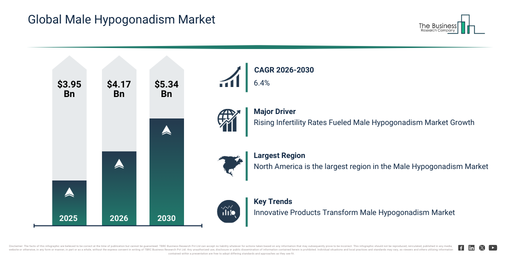
    The male hypogonadism market has demonstrated robust expansion in recent years. Its valuation is predicted to climb from $3.95 billion in 2025 to $4.17 billion in 2026, exhibiting a compound annual growth rate (CAGR) of 5.6%. Historically, this market’s development can be ascribed to the increasing occurrence of hypogonadism, growing understanding of testosterone deficiency, the expanding demographic of aging men, breakthroughs in hormone replacement therapies, and a greater embrace of diagnostic testing by physicians.

    The male hypogonadism market is anticipated to experience substantial growth over the upcoming years. Its value is projected to reach $5.34 billion by 2030, exhibiting a compound annual growth rate (CAGR) of 6.4%. Several factors are expected to contribute to this expansion during the forecast period, including the increased adoption of personalized medicine, the incorporation of AI into diagnosis and treatment, the rise of telehealth services, the growing use of advanced drug delivery systems, and enhanced investment in male hormonal research. Key developments anticipated in this period encompass personalized testosterone therapy, the development of minimally invasive drug delivery systems, initiatives to raise awareness about male hormonal health, the integration of telemedicine into hormonal treatment, and the broadening of chronic disease management services.

    Get A Free Sample Report With In-Depth Market Insights:

    https://thebusinessresearchcompany.com/sample_request?id=39180405&type=smp&name=Male%20Hypogonadism%20Market%20Report%202026&utm_source=Blogs&utm_medium=Paid&utm_campaign=Oct_PR

    Male Hypogonadism Market Development Factors: What’s Supporting Demand?

    The rising infertility rates are projected to fuel the expansion of the male hypogonadism market. Infertility describes a condition impacting either the male or female reproductive system, defined by the failure to achieve conception following 12 months or more of regular, unprotected sexual intercourse. Male hypogonadism, a factor that can result in reduced sperm production and infertility, is identified as one of the possible origins of male infertility. Consequently, the escalating occurrence of male infertility is anticipated to propel the growth of the male hypogonadism market. For example, data from February 2023, released by the Office for National Statistics, a UK-based government department, showed that in England and Wales, 31.8% of all live births were to non-UK-born mothers, an increase from 30.3% in 2022. Additionally, 37.3% of live births were to parents where either one or both were born outside the UK, marking a rise from 35.8% in 2022. Thus, the heightened infertility rate is acting as a catalyst for the expansion of the male hypogonadism market.

    Male Hypogonadism Market Segments: Where Is Growth Concentrated?

    The male hypogonadism market covered in this report is segmented –

    1) By Type: Klinefelters Syndrome, Kallmann Syndrome, Pituitary Disorders, Other Types

    2) By Drug Delivery: Topical Gels, Injectables, Transdermal Patches, Other Drug Deliveries

    3) By Therapy: Testosterone Therapy, Gonadotropin-Releasing Hormone Therapy

    Subsegments:

    1) By Klinefelter’s Syndrome: 47,XXY Syndrome, Other Variants

    2) By Kallmann Syndrome: Isolated Kallmann Syndrome, Syndromic Kallmann Syndrome

    3) By Pituitary Disorders: Hypopituitarism, Pituitary Tumors, Other Pituitary Disorders

    4) By Other Types: Androgen Insensitivity Syndrome, Testicular Dysgenesis Syndrome, Genetic Mutations And Disorders

    Male Hypogonadism Market Transformation Trends: What Innovations Are Driving Change?

    Leading entities within the male hypogonadism market are concentrating on creating cutting-edge solutions, including advanced digital platforms, aimed at connecting with patients via telehealth, providing educational materials, and simplifying treatment availability. This approach is transforming the management of male hypogonadism by boosting patient assistance and improving access to therapies. An example is the October 2024 introduction of TestoRx by LifeMD, Inc., a US-based virtual primary care provider. This direct-to-consumer telehealth service for testosterone replacement therapy operates under their Rex MD men’s health brand. The TestoRx program encompasses an initial online consultation, essential blood tests, a range of treatment choices covering both testosterone replacement and alternative methods to stimulate the body’s own hormone production, along with continuous virtual healthcare appointments and subsequent follow-up care.

    Male Hypogonadism Market Key Participants And Competitive Landscape

    Major companies operating in the male hypogonadism market are Pfizer Inc., Bayer AG, Eli Lilly and Company Ltd., Endo International plc., Merck & Co. Inc., Teva Pharmaceutical Industries Ltd., AbbVie Inc., Perrigo Company plc, IBSA Institut Biochimique SA, Sun Pharmaceutical Industries Limited, Antares Pharma Inc., Besins Healthcare Ltd., Clarus Therapeutics Holdings Inc., Lipocine Inc., Myovant Sciences Ltd., Sandoz International GmbH, TherapeuticsMD Inc., Viking Therapeutics Inc., Shionogi & Co. Ltd., Ferring Pharmaceuticals

    View The Full Male Hypogonadism Market Report:

    https://thebusinessresearchcompany.com/report/male-hypogonadism-global-market-report?utm_source=Blogs&utm_medium=Paid&utm_campaign=Oct_PR

    Male Hypogonadism Market Largest Region: Which Geography Holds The Highest Market Share?

    North America was the largest region in the male hypogonadism market in 2025. Asia-Pacific is expected to be the fastest-growing region in the male hypogonadism market report during the forecast period. The regions covered in the male hypogonadism market report are Asia-Pacific, South East Asia, Western Europe, Eastern Europe, North America, South America, Middle East, Africa.

    Reach Out To Our Team:

    The Business Research Company: https://www.thebusinessresearchcompany.com/

    Americas: +1 310-496-7795

    Asia: +44 7882 955267 & +91 8897263534

    Europe: +44 7882 955267

    Email us at: marketing@tbrc.info

    Follow us on:

    LinkedIn: https://in.linkedin.com/company/the-business-research-company

    YouTube: https://www.youtube.com/channel/UC24_fI0rV8cR5DxlCpgmyFQ

    Global Market Model: https://www.thebusinessresearchcompany.com/global-market-model
  • Malaria Treatment Market Size Growth: From $1.69 Billion In 2026 To $2.18 Billion By 2030

    Malaria Treatment Market Size Growth: From $1.69 Billion In 2026 To $2.18 Billion By 2030

    Backed by market attractiveness analysis, total addressable market sizing, company benchmarking matrices, interactive Excel dashboards, wider supply chain intelligence, emerging startup coverage, and detailed product-level insights, The Business Research Company’s 2026 market reports are designed to offer research that is more actionable and strategically valuable than ever.

    Malaria Treatment Market Growth From $1.69 Billion In 2026 To $2.18 Billion By 2030 At A CAGR Of 6.5%

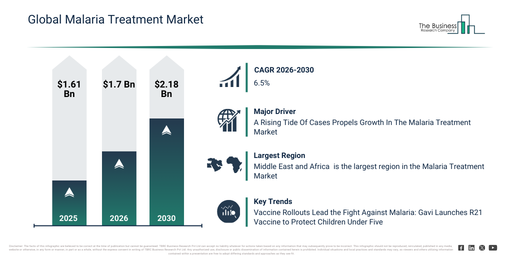
    The malaria treatment market has experienced robust expansion over recent years. Projections indicate its expansion from $1.61 billion in 2025 to $1.7 billion in 2026, demonstrating a compound annual growth rate (CAGR) of 5.6%. Historically, this growth can be ascribed to factors such as the high prevalence of malaria in tropical regions, the widespread use of chloroquine and artemisinin, various global health initiatives including WHO malaria programs, augmented funding for malaria research, and advancements in diagnostic technologies.

    The malaria treatment market is poised for significant expansion in the coming years. Its valuation is projected to reach $2.18 billion by 2030, exhibiting a compound annual growth rate (CAGR) of 6.5%. This anticipated growth during the forecast period stems from factors such as the creation of novel antimalarial vaccines, an increase in drug-resistant malaria strains, the implementation of digital health monitoring systems, the broadening of healthcare infrastructure across Africa and Asia, and the proliferation of public-private partnerships dedicated to malaria eradication. Key trends foreseen for this period encompass the uptake of rapid diagnostic technologies, an enlarging antimalarial drug pipeline, the advancement of vaccine development initiatives, heightened awareness alongside preventive actions, and the incorporation of telemedicine for effective malaria management.

    Get A Free Sample Report With In-Depth Market Insights:

    https://thebusinessresearchcompany.com/sample_request?id=15359391&type=smp&name=Malaria%20Treatment%20Market%20Report%202026&utm_source=Blogs&utm_medium=Paid&utm_campaign=Oct_PR

    Malaria Treatment Market Industry Drivers: What’s Behind The Revenue Growth?

    The increasing occurrence of malaria is expected to drive the expansion of the malaria treatment market. Malaria is a potentially life-threatening mosquito-borne illness caused by the Plasmodium parasite, characterized by recurring fever and other flu-like symptoms. This heightened incidence stems from factors such as poverty, limited access to healthcare services, climate change, insufficient malaria control measures, and drug resistance. Malaria treatment is crucial for effectively managing and curing infections caused by the Plasmodium parasite. For example, in December 2024, the UK Health Security Agency, a UK-based government department, stated that imported malaria cases in the UK reached 2,106 in 2023, reflecting a 26% rise from 2022, with England recording 1,977 cases and the rest distributed across Scotland, Wales, and Northern Ireland. Therefore, the significant incidence of malaria is stimulating growth in the malaria treatment market.

    Malaria Treatment Market Segment Analysis: What Are The Core Market Categories?

    The malaria treatment market covered in this report is segmented –

    1) By Treatment: Prescription Medications, Vaccines, Diagnostic Tests, Other Treatments

    2) By Route Of Administration: Oral, Parenteral, Intravenous

    3) By Distribution Channel: Direct Tender, Hospital Pharmacies, Retail Pharmacies, Online Pharmacies, Other Distribution Channels

    4) By End User: Hospitals, Specialty Clinics, Homecare, Other End Users

    Subsegments:

    1) By Prescription Medications: Antimalarial Drugs, Prophylactic Medications

    2) By Vaccines: RTS,S Or AS01, Other Experimental Vaccines

    3) By Diagnostic Tests: Rapid Diagnostic Tests, Microscopy-Based Tests, Polymerase Chain Reaction (PCR) Tests

    4) By Other Treatments: Supportive Care, Herbal Remedies, Vector Control Measures

    #Malaria Treatment Market Growth Trends: What’s Shaping The Future Outlook?

    Major companies in the malaria treatment market are concentrating on advancing vaccine rollouts to strengthen prevention efforts and diminish the worldwide impact of malaria. A vaccine rollout signifies the method of distributing and administering vaccines to a population, generally on a large scale. For example, in July 2024, Gavi, a Sweden-based vaccine alliance, initiated the R21 malaria vaccine rollout. The R21 vaccine is projected to notably reduce the number of malaria cases among children under five. This R21 malaria vaccine represents a pivotal breakthrough in public health endeavors to combat malaria in children, with aspirations that it will lead to a considerable decrease in disease burden and mortality rates linked to this preventable illness.

    Malaria Treatment Market Top Companies Driving Competitive Growth

    Major companies operating in the malaria treatment market are Pfizer Inc., Merck & Co., Johnson & Johnson, Roche Holding AG, Bayer AG, Novartis AG, Sanofi SA, AstraZeneca Plc, GlaxoSmithKline PLC, Takeda Pharmaceutical Company Limited, Viatris Inc., Sun Pharmaceutical Industries Ltd., Serum Institute of India, Cipla Ltd., Amneal Pharmaceuticals LLC, Lupin Ltd., Zydus Lifesciences Limited, Ipca Laboratories Ltd., Chongqing Holley Pharmaceutical Co. Ltd., Strides Pharma Science Limited, AdvaCare Pharma USA LLC, Actiza Pharmaceutical Private Limited

    View The Full Malaria Treatment Market Report:

    https://thebusinessresearchcompany.com/report/malaria-treatment-global-market-report?utm_source=Blogs&utm_medium=Paid&utm_campaign=Oct_PR

    Malaria Treatment Market Regional Analysis: Which Region Leads By Revenue?

    Middle East and Africa was the largest region in the malaria treatment market in 2025. Asia-Pacific is expected to be the fastest-growing region in the forecast period. The regions covered in the malaria treatment market report are Asia-Pacific, South East Asia, Western Europe, Eastern Europe, North America, South America, Middle East, Africa.

    Reach Out To Our Team:

    The Business Research Company: https://www.thebusinessresearchcompany.com/

    Americas: +1 310-496-7795

    Asia: +44 7882 955267 & +91 8897263534

    Europe: +44 7882 955267

    Email us at: marketing@tbrc.info

    Follow us on:

    LinkedIn: https://in.linkedin.com/company/the-business-research-company

    YouTube: https://www.youtube.com/channel/UC24_fI0rV8cR5DxlCpgmyFQ

    Global Market Model: https://www.thebusinessresearchcompany.com/global-market-model

  • Machine Learning (ML) in The Pharmaceutical Industry Market Analysis 2026: Market Size, Growth Trends And Industry Outlook

    Machine Learning (ML) in The Pharmaceutical Industry Market Analysis 2026: Market Size, Growth Trends And Industry Outlook

    Featuring market attractiveness scoring, total addressable market sizing, company benchmarking matrices, interactive Excel dashboards, deeper supply chain intelligence, emerging startup tracking, and granular product-level insights, The Business Research Company’s 2026 market reports are built to deliver research that is both more actionable and more strategically valuable.

    Machine Learning (ML) in The Pharmaceutical Industry Market Expansion Outlook: What Revenue Opportunities Are Ahead?

    The market size for machine learning (ML) in the pharmaceutical industry has experienced substantial expansion in recent years. It is forecast to increase from $4.08 billion in 2025 to $5.52 billion in 2026, achieving a compound annual growth rate (CAGR) of 35.4%. The drivers for this historical growth include augmented research and development investment within pharmaceuticals, the embrace of AI and ML in drug discovery, the rising incidence of chronic diseases, progress in computational biology, and collaborative efforts between pharmaceutical and technology companies.

    The market size for machine learning (ML) in the pharmaceutical industry is set to experience significant growth over the coming years. It is projected to expand to $18.71 billion in 2030, with a compound annual growth rate (CAGR) of 35.7%. This growth during the forecast period is primarily driven by the increasing integration of AI in clinical trials, the expanding scope of precision medicine, the greater adoption of real-world data analytics, advancements in cloud-based pharmaceutical platforms, and the ongoing development of personalized therapeutics. Prominent trends expected in this period include predictive drug discovery models, the optimization of clinical trials, the utilization of real-world evidence data, the implementation of personalized medicine, and the automation of regulatory compliance.

    Get A Free Sample Report With In-Depth Market Insights:

    https://thebusinessresearchcompany.com/sample_request?id=51802056&type=smp&name=Machine%20Learning%20%28ML%29%20in%20The%20Pharmaceutical%20Industry%20Market%20Report%202026&utm_source=Blogs&utm_medium=Paid&utm_campaign=Oct_PR

    Machine Learning (ML) in The Pharmaceutical Industry Market Growth Factors: What’s Supporting Expansion?

    The growing acceptance of artificial intelligence (AI) is propelling machine learning (ML) within the pharmaceutical sector. AI refers to computer software designed to imitate human thought processes for intricate tasks like analysis, reasoning, and learning, whereas ML, a component of AI, employs algorithms trained on datasets to create models capable of executing complex functions. Both AI and ML have found application in pharmaceutical technology and the development of drug delivery systems, providing accelerated answers to difficult problems. This technology holds the capacity to revolutionize drug delivery methods, improve instruments for decision-making, and process vast amounts of data for more informed choices. For example, as reported by Forbes, a US-based business magazine, in June 2023, around 432,000 UK organizations, equivalent to one in six, had implemented at least one AI technology. Moreover, at least one AI technology was adopted by 68% of large enterprises, 33% of medium-sized firms, and 15% of small businesses. Consequently, the expanding integration of artificial intelligence (AI) will fuel machine learning (ML) within the pharmaceutical industry.

    Machine Learning (ML) in The Pharmaceutical Industry Market Segment Breakdown: Which Categories Lead On Revenue?

    The machine learning (ml) in the pharmaceutical industry market covered in this report is segmented –

    1) By Component: Solution, Services

    2) By Deployment: Cloud, On-premise

    3) By Enterprise Size: Small and Medium Enterprises (SMEs), Large Enterprises

    Subsegments:

    1) By Solution: Drug Discovery Platforms, Predictive Analytics Tools, Clinical Trial Optimization Solutions, Patient Data Management Systems, Personalized Medicine Applications

    2) By Services: Consulting Services, Implementation And Integration Services, Data Analysis And Modeling Services, Training And Support Services, Managed Services

    Machine Learning (ML) in The Pharmaceutical Industry Market Industry Trends: What’s Reshaping Demand?

    Major companies engaged in machine learning within the pharmaceutical industry are focusing on creating user-friendly software platforms, such as drug discovery software, to improve their capabilities in discovering new drugs. Drug discovery software is a broad category encompassing various specialized tools and platforms employed throughout the entire process of identifying and developing novel pharmaceutical drugs. For instance, in December 2023, Merck & Co. Inc., a US-based pharmaceutical company, launched the AIDDISON drug discovery software, which stands as the first software-as-a-service platform to integrate drug discovery and synthesis through the application of generative AI, machine learning, and computer-aided drug design. This platform allows laboratories to pinpoint appropriate drug candidates in a vast chemical space, virtually screen compounds from a universe exceeding 60 billion chemical targets, and assess synthesis routes for drug manufacturing that is safer, more cost-effective, and results in higher yields.

    Machine Learning (ML) in The Pharmaceutical Industry Market Leading Players And Competitive Positioning

    Major companies operating in the machine learning (ml) in the pharmaceutical industry market are Amazon.com Inc., Alphabet Inc., Microsoft Corporation, Dell Technologies Inc., Hitachi Ltd., International Business Machines Corporation, Cisco Systems Inc., Oracle Corporation, Honeywell International Inc., Hewlett Packard Enterprise, NVIDIA Corporation, Thales SA, Atos SE, Hexagon AB, Palantir Technologies Inc., Alteryx Inc., Comet ML Inc., GAVS Technologies, NEC Corporation, Veritone Inc., H2O.ai Inc., Sparkcognition Inc., Akira AI, Deep Genomics Inc., Cloud Pharmaceuticals Inc., Atomwise Inc., Cyclica Inc., BioSymetrics Inc., Neptune Labs

    View The Full Machine Learning (ML) in The Pharmaceutical Industry Market Report:

    https://thebusinessresearchcompany.com/report/machine-learning-ml-in-the-pharmaceutical-industry-global-market-report?utm_source=Blogs&utm_medium=Paid&utm_campaign=Oct_PR

    Machine Learning (ML) in The Pharmaceutical Industry Market Geographic Distribution And Regional Opportunities

    North America was the largest region in the machine learning in the pharmaceutical industry market in 2025. Asia-Pacific is expected to be the fastest-growing region in the forecast period. The regions covered in the machine learning (ml) in the pharmaceutical industry market report are Asia-Pacific, South East Asia, Western Europe, Eastern Europe, North America, South America, Middle East, Africa.

    Reach Out To Our Team:

    The Business Research Company: https://www.thebusinessresearchcompany.com/

    Americas: +1 310-496-7795

    Asia: +44 7882 955267 & +91 8897263534

    Europe: +44 7882 955267

    Email us at: marketing@tbrc.info

    Follow us on:

    LinkedIn: https://in.linkedin.com/company/the-business-research-company

    YouTube: https://www.youtube.com/channel/UC24_fI0rV8cR5DxlCpgmyFQ

    Global Market Model: https://www.thebusinessresearchcompany.com/global-market-model
  • Lysosomal Enzyme Market Forecast To 2030: Starting From $13.48 Billion In 2026

    Lysosomal Enzyme Market Forecast To 2030: Starting From $13.48 Billion In 2026

    Built to provide research that’s more actionable and strategically valuable, The Business Research Company’s 2026 market reports include market attractiveness analysis, total addressable market sizing, company benchmarking matrices, interactive Excel dashboards, broader supply chain intelligence, emerging startup tracking, and in-depth product insights.

    Lysosomal Enzyme Market Growth Potential: How Will Market Size Shift Through 2030?

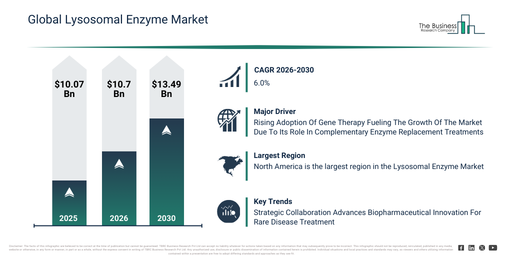
    The lysosomal enzyme market has demonstrated robust expansion over recent years. Its valuation is anticipated to climb from $10.07 billion in 2025 to $10.7 billion in 2026, advancing at a compound annual growth rate (CAGR) of 6.3%. The historical drivers behind this growth include heightened awareness of lysosomal storage diseases, the establishment of orphan drug programs, the provision of hospital-based genetic treatments, progress in recombinant enzyme development, and increased financial support for rare disease research.

    The lysosomal enzyme market is projected to experience robust expansion over the coming years. By 2030, this market is anticipated to reach a valuation of $13.49 billion, expanding at a compound annual growth rate (CAGR) of 6.0%. Factors driving this growth during the forecast period include the integration of gene therapy, the broadening of newborn screening programs, the development of personalized enzyme therapies, the scaling up of biopharmaceutical manufacturing, and worldwide initiatives for rare diseases. Key trends expected over the forecast period encompass an increase in enzyme replacement therapies, a heightened emphasis on rare genetic disorders, greater investment in recombinant enzymes, ongoing advancements in gene and enzyme therapies, and improving diagnostic rates for lysosomal conditions.

    Get A Free Sample Report With In-Depth Market Insights:

    https://thebusinessresearchcompany.com/sample_request?id=63280886&type=smp&name=Lysosomal%20Enzyme%20Market%20Report%202026&utm_source=Blogs&utm_medium=Paid&utm_campaign=Oct_PR

    Lysosomal Enzyme Market Demand Drivers: What’s Powering Industry Growth?

    The rising integration of gene therapy is anticipated to fuel the expansion of the lysosomal enzymes market in the future. Gene therapy refers to a medical intervention where genes within an individual’s cells are modified or substituted to manage or avert illnesses. Its uptake is growing due to progress in delivery methods and proven long-term effectiveness, establishing it as a feasible, potentially curative treatment for genetic conditions. Often, gene therapy necessitates initial or supplementary enzyme replacement therapies to alleviate symptoms and stabilize patients while the gene therapy takes hold, thereby maintaining demand for lysosomal enzyme products. For example, in April 2024, the American Society of Gene & Cell Therapy, a US-based non-profit body, reported that phase III gene therapy clinical trials increased by 10% in 2023, representing the initial quarterly rise since 2022. Consequently, the expanding use of gene therapy is poised to accelerate the expansion of the lysosomal enzymes market.

    Lysosomal Enzyme Market Segmentation: How Does The Market Break Down By Category?

    The lysosomal enzyme market covered in this report is segmented –

    1) By Type: Acid Alpha-Glucosidase, Acid Sphingomyelinase, Beta-Glucocerebrosidase, Hexosaminidase

    2) By Indication: Gaucher Disease, Mucopolysaccharidosis, Pompe Disease, Other Indications

    3) By Source: Recombinant Enzymes, Natural Enzymes, Synthetic Enzymes

    4) By Application: Enzyme Replacement Therapy, Research And Development, Diagnostics, Gene Therapy

    5) By End-Use: Hospitals, Diagnostic Laboratories, Research Institutions, Pharmaceutical Companies

    Subsegments:

    1) By Acid Alpha-Glucosidase: Pompe Disease Enzymes, Glycogen Storage Disease Type II Enzymes

    2) By Acid Sphingomyelinase: Niemann-Pick Disease Type A, Niemann-Pick Disease Type B

    3) By Beta-Glucocerebrosidase: Gaucher Disease Type I, Gaucher Disease Type II, Gaucher Disease Type III

    4) By Hexosaminidase: Tay-Sachs Disease Enzymes, Sandhoff Disease Enzymes

    Lysosomal Enzyme Market Innovation Trends: What Developments Are Reshaping The Industry?

    Leading companies operating within the lysosomal enzymes market are increasingly adopting a strategic partnership approach to broaden diagnostic capabilities and accelerate the creation of novel therapies. These strategic partnerships are defined as cooperative agreements between two or more organizations, pooling resources or capabilities to achieve common goals and bolster their competitive edge. For example, in February 2024, a Spain-based biotechnology company collaborated with Biosidus, an Argentina-based biotechnology company, to produce the active enzyme ingredient Agalsidase Beta. This strategic alliance represents a significant stride in developing and manufacturing treatments for rare diseases, specifically Fabry disease, which arises from lysosomal enzyme deficiency. It also establishes a regional landmark in rare disease treatment and reinforces companies’ commitment to global health and fostering accessible biopharmaceutical innovation.

    Lysosomal Enzyme Market Competitive Overview And Top Companies

    Major companies operating in the lysosomal enzyme market are Sanofi SA, BioMarin Pharmaceutical Inc., Amicus Therapeutics Inc., JCR Pharmaceuticals Co. Ltd., Protalix BioTherapeutics Inc., Takeda Rare Diseases (Shire), Ultragenyx Pharmaceutical Inc., Orchard Therapeutics plc, Sangamo Therapeutics Inc., Avrobio Inc., Greenovation Biotech GmbH, Chiesi Global Rare Diseases, GC Pharma, Pfizer Rare Disease (through Spark & partnered LSD programs), Idorsia Pharmaceuticals Ltd., Abeona Therapeutics Inc., Selecta Biosciences Inc., Denali Therapeutics Inc., Passage Bio Inc., Freeline Therapeutics plc, REGENXBIO Inc., Homology Medicines Inc., LogicBio Therapeutics Inc., Allievex Corporation, Reneo Pharmaceuticals Inc., Lysogene SAS, Sio Gene Therapies Inc., Anika Therapeutics Inc., ArmaGen Inc., PerkinElmer Inc., Thermo Fisher Scientific Inc., Merck KGaA (MilliporeSigma), Agilent Technologies Inc.,

    View The Full Lysosomal Enzyme Market Report:

    https://thebusinessresearchcompany.com/report/lysosomal-enzyme-global-market-report?utm_source=Blogs&utm_medium=Paid&utm_campaign=Oct_PR

    Lysosomal Enzyme Market Largest Region By Revenue And Market Share

    North America was the largest region in the lysosomal enzymes market in 2025. Asia-Pacific is expected to be the fastest-growing region in the forecast period. The regions covered in the lysosomal enzyme market report are Asia-Pacific, South East Asia, Western Europe, Eastern Europe, North America, South America, Middle East, Africa.

    Reach Out To Our Team:

    The Business Research Company: https://www.thebusinessresearchcompany.com/

    Americas: +1 310-496-7795

    Asia: +44 7882 955267 & +91 8897263534

    Europe: +44 7882 955267

    Email us at: marketing@tbrc.info

    Follow us on:

    LinkedIn: https://in.linkedin.com/company/the-business-research-company

    YouTube: https://www.youtube.com/channel/UC24_fI0rV8cR5DxlCpgmyFQ

    Global Market Model: https://www.thebusinessresearchcompany.com/global-market-model