Category: Pharmaceuticals

  • Foot Fungal Spray Market 2026: Market Size, Growth Drivers And Emerging Opportunities

    Foot Fungal Spray Market 2026: Market Size, Growth Drivers And Emerging Opportunities

    Backed by market attractiveness analysis, total addressable market sizing, company benchmarking matrices, interactive Excel dashboards, wider supply chain intelligence, emerging startup coverage, and detailed product-level insights, The Business Research Company’s 2026 market reports are designed to offer research that is more actionable and strategically valuable than ever.

    Foot Fungal Spray Market Value Analysis: What Growth Lies Ahead Over The Forecast Period?

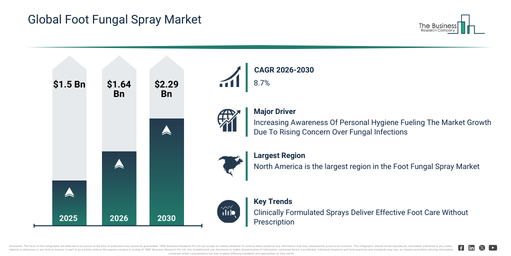
    The foot fungal spray market size has demonstrated strong expansion in recent years. It is projected to increase from $1.5 billion in 2025 to $1.64 billion in 2026, exhibiting a compound annual growth rate (CAGR) of 9.0%. The growth observed in prior periods can be attributed to a rise in fungal foot infection incidents, the prevalent use of communal facilities, growing awareness of foot hygiene, the accessibility of over-the-counter (OTC) antifungal treatments, and the development of personal care retail channels.

    The foot fungal spray market is projected to witness substantial growth over the next few years, reaching a valuation of $2.29 billion in 2030 with a compound annual growth rate (CAGR) of 8.7%. This anticipated expansion during the forecast period is fueled by an increasing demand for preventative foot care solutions, a growing preference for natural antifungal ingredients, the development of e-commerce distribution channels, a heightened focus on skin-compatible formulations, and an increasing emphasis on sustained infection prevention. Key trends expected in this period include a wider adoption of antifungal spray treatments, a rising demand for over-the-counter foot care products, a growing inclination towards herbal and natural formulations, the broadening of preventative foot hygiene practices, and an enhanced focus on fast-absorbing spray formats.

    Get A Free Sample Report With In-Depth Market Insights:

    https://thebusinessresearchcompany.com/sample_request?id=70405069&type=smp&name=Foot%20Fungal%20Spray%20Market%20Report%202026&utm_source=Blogs&utm_medium=Paid&utm_campaign=Oct_PR

    Foot Fungal Spray Market Growth Drivers: What’s Behind The Acceleration?

    The heightened understanding of personal hygiene is projected to drive the expansion of the foot fungal spray market in the coming period. Personal hygiene encompasses the routines and customs individuals adopt to uphold cleanliness and health for their bodies and environments, thereby preventing sickness and fostering general well-being. This growing awareness is largely fueled by recent health emergencies, which underscored the vital role of hygienic practices in preventing diseases, leading to extensive educational programs and public health efforts promoting sound sanitation routines. Fungal spray aids personal hygiene through its efficacy in eradicating and stopping the proliferation of detrimental fungi on the skin, alleviating itching, bad odor, and unease, concurrently fostering a clean and healthy foot environment. This assists in warding off infections like athlete’s foot and guarantees overall skin health. For example, in August 2025, data from the United Nations International Children’s Emergency Fund (UNICEF), a US-based humanitarian aid organization, indicated that in 2024, 1.7 billion individuals continued to lack fundamental hygiene services, with 611 million of these having no handwashing facilities. Conversely, four nations had already attained universal basic hygiene service access (>99%), and an additional nine were progressing toward achieving this by 2030. Consequently, the heightened emphasis on personal hygiene is stimulating the expansion of the foot fungal spray market.

    Foot Fungal Spray Market Segments: Where Is Growth Concentrated?

    The foot fungal spray market covered in this report is segmented –

    1) By Product Type: Antifungal Sprays, Herbal Or Natural Sprays, Medicated Sprays, Other Product Types

    2) By Distribution Channel: Pharmacies Or Drug Stores, Online Stores, Supermarkets Or Hypermarkets, Other Distribution Channels

    3) By Application: Athlete’s Foot, Ringworm, Toenail Fungus, Other Applications

    4) By End User: Adults, Children, Other End Users

    Subsegments:

    1) By Antifungal Sprays: Cream Based, Powder Based, Liquid Based, Spray Foam

    2) By Herbal Or Natural Sprays: Aloe Vera, Tea Tree Oil, Neem Extract, Chamomile

    3) By Medicated Sprays: Prescription Strength, Over The Counter, Antibacterial Medicated, Antiseptic Medicated

    4) By Other Product Types: Cooling Sprays, Deodorizing Sprays, Moisturizing Sprays, Antiperspirant Sprays

    Foot Fungal Spray Market Trends: What’s Defining The Industry’s Next Phase?

    Major companies operating in the foot fungal spray market are concentrating on developing innovative products, such as over-the-counter quasi-drugs, to effectively treat fungal infections, control odor, and provide convenient, user-friendly solutions for daily foot care. These over-the-counter quasi-drugs are products with mild medicinal effects, approved for general use without a prescription, and they can assist in treating fungal infections by incorporating antifungal ingredients that suppress fungal growth, reduce itching and redness, and accelerate the healing of affected regions. For instance, in June 2025, Medi K, a South Korea-based personal hygiene company, introduced Clear Solution, a medicated foot spray specifically formulated to combat athlete’s foot and eliminate foot odor. This product is packaged in a convenient 200 ml spray bottle and is categorized as an over-the-counter quasi-drug, enabling consumers to utilize it without a prescription. Clear Solution is intended for application on the soles, toes, and toenails, assisting in inhibiting fungal growth while maintaining foot freshness and odor-free conditions. Featuring its practical pump spray design, clinically focused formulation, and competitive pricing, the product is aimed at active adults and athletes seeking effective, everyday foot care solutions, simultaneously attracting general consumers who prioritize hygiene, comfort, and convenience in preserving healthy, odor-free feet.

    Foot Fungal Spray Market Key Participants And Competitive Landscape

    Major companies operating in the foot fungal spray market are The Kroger Co., Bayer Aktiengesellschaft, Novartis AG, GSK plc, Perrigo Company plc, Prestige Consumer Healthcare Inc., Zeria Pharmaceutical Co. Ltd., The Himalaya Drug Company, Melisana Healthcare, Footlogix Inc., Hunan Huamuyang Biotechnology Co. Ltd., PediFix Inc., Kripa Pharma, Zeolite Herbals Pvt. Ltd., Marie Originals LLC, Herbax Ayurveda, Arcadia Consumer Healthcare Inc., Melisana Healthcare AG, West-Coast Pharmaceutical Works Ltd, Taisho Holdings Co. Ltd.

    View The Full Foot Fungal Spray Market Report:

    https://thebusinessresearchcompany.com/report/foot-fungal-spray-global-market-report?utm_source=Blogs&utm_medium=Paid&utm_campaign=Oct_PR

    Foot Fungal Spray Market Geographic Landscape: Which Region Leads Industry Growth?

    North America was the largest region in the foot fungal spray market in 2025. Asia-Pacific is expected to be the fastest-growing region in the forecast period. The regions covered in the foot fungal spray market report are Asia-Pacific, South East Asia, Western Europe, Eastern Europe, North America, South America, Middle East, Africa.

    Reach Out To Our Team:

    The Business Research Company: https://www.thebusinessresearchcompany.com/

    Americas: +1 310-496-7795

    Asia: +44 7882 955267 & +91 8897263534

    Europe: +44 7882 955267

    Email us at: marketing@tbrc.info

    Follow us on:

    LinkedIn: https://in.linkedin.com/company/the-business-research-company

    YouTube: https://www.youtube.com/channel/UC24_fI0rV8cR5DxlCpgmyFQ

    Global Market Model: https://www.thebusinessresearchcompany.com/global-market-model
  • Food Pathogen Detection Technology Market Set To Expand From $9.37 Billion In 2026: Growth Outlook Through 2030

    Food Pathogen Detection Technology Market Set To Expand From $9.37 Billion In 2026: Growth Outlook Through 2030

    Featuring market attractiveness scoring, total addressable market sizing, company benchmarking matrices, interactive Excel dashboards, deeper supply chain intelligence, emerging startup tracking, and granular product-level insights, The Business Research Company’s 2026 market reports are built to deliver research that is both more actionable and more strategically valuable.

    Food Pathogen Detection Technology Market Size Forecast: How Big Could The Market Get By 2030?

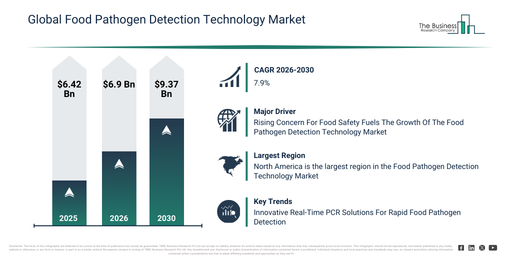
    The food pathogen detection technology market has experienced substantial expansion in recent years. It is anticipated to increase from $6.42 billion in 2025 to $6.9 billion in 2026, demonstrating a compound annual growth rate (CAGR) of 7.5%. This historical growth can be attributed to factors such as foodborne illness outbreaks, the escalating consumption of packaged and processed foods, the broadening scope of global food trade, more rigorous regulatory inspections, and the reliance on conventional culture-based testing.

    The food pathogen detection technology market is anticipated to experience robust expansion over the coming years. It is projected to reach $9.37 billion by 2030, exhibiting a compound annual growth rate (CAGR) of 7.9%. This expansion during the forecast period is attributable to factors such as increased demand for quicker turnaround times, more stringent food safety regulations, an increase in meat and poultry processing, heightened consumer awareness regarding food safety, and advancements in rapid detection kit technologies. Key trends anticipated within the forecast timeframe encompass the wider adoption of rapid pathogen detection techniques, an increasing application of automation in culture-based testing processes, a heightened need for high-sensitivity consumables, the broadening of on-site testing within food processing facilities, and the harmonization of microbiological testing protocols across different geographical areas.

    Get A Free Sample Report With In-Depth Market Insights:

    https://thebusinessresearchcompany.com/sample_request?id=13957238&type=smp&name=Food%20Pathogen%20Detection%20Technology%20Market%20Report%202026&utm_source=Blogs&utm_medium=Paid&utm_campaign=Oct_PR

    Food Pathogen Detection Technology Market Growth Factors Behind Sustained Expansion

    A growing emphasis on food safety is anticipated to stimulate the expansion of the food pathogen detection technology market in the future. Food safety concerns encompass the measures and methods employed to maintain food quality, thereby averting contamination and illnesses transmitted through food. The food pathogen detection technology offers swift identification of pathogens found in food, which is essential for guaranteeing the safety of food products. As an illustration, in December 2024, the European Food Safety Authority, a government body located in Italy, reported that in 2023, campylobacteriosis was among the most frequently identified zoonoses in humans, totaling 148,181 cases (45.7 cases per 100,000 population), indicating a 4.3% rise in the notification rate compared to 2022. Consequently, the increasing worry regarding food safety is fueling the growth of the food pathogen detection technology market.

    Food Pathogen Detection Technology Market Segment Analysis: What Are The Core Market Categories?

    The food pathogen detection technology market covered in this report is segmented –

    1) By Technology: Traditional Food Pathogen Detection Technology, Rapid Food Pathogen Detection Technology

    2) By Type Of Product: Consumables, Equipment

    3) By Food Type: Meat & Poultry, Dairy, Processed Food, Fruits And Vegetables, Cereals And Grains

    Subsegments:

    1) By Traditional Food Pathogen Detection Technology: Culture-Based Methods, Enrichment Techniques, Biochemical Tests, Microscopy Techniques, Serological Tests

    2) By Rapid Food Pathogen Detection Technology: Polymerase Chain Reaction (PCR) Methods, Immunoassays, Nucleic Acid Amplification Tests (NAAT), Biosensors, Next-Generation Sequencing (NGS)

    Food Pathogen Detection Technology Market Industry Trends Fueling Future Revenue Growth

    Leading companies in the food pathogen detection technology market are concentrating on introducing sophisticated molecular diagnostic platforms. This focus is aimed at enhancing the speed, accuracy, and overall workflow efficiency within food safety testing. Advanced molecular diagnostic platforms are defined as high-performance systems that utilize molecular techniques to swiftly and precisely detect pathogens at their genetic level. For instance, in March 2025, bioMérieux, a France-based in vitro diagnostics company, unveiled the GENE-UP TYPER. This next-generation molecular testing solution is designed to offer rapid, accurate pathogen identification and optimize laboratory operations, thereby supporting food producers in strengthening quality control measures and ensuring safer global food supply chains. This introduction further solidifies bioMérieux’s commitment to expanding its GENE-UP ecosystem and driving innovation in food safety diagnostics.

    Food Pathogen Detection Technology Market Top Companies Driving Competitive Growth

    Major companies operating in the food pathogen detection technology market are Biomérieux SA, Merck KGaA, Bio-Rad Laboratories Inc., 3M Company, Qiagen N.V., Hygiena LLC, Romer Labs, Thermo Fisher Scientific, Charm Sciences Inc., SGS Group, Eurofins Analytical Services India Private Limited, TUV India Private Limited, Intertek India Private Limited, Bureau Veritas Consumer Products Services Private Limited, ALS Global, Merieux NutriSciences, Becton Dickinson, Clear Labs, Qualicon, Neogen Corp, Det Norske Veritas As.

    View The Full Food Pathogen Detection Technology Market Report:

    https://thebusinessresearchcompany.com/report/Food-Pathogens-Detection-Technology-global-market-report?utm_source=Blogs&utm_medium=Paid&utm_campaign=Oct_PR

    Food Pathogen Detection Technology Market Largest Region: Which Geography Holds The Biggest Share?

    North America was the largest region in the global food pathogen detection technology market in 2025. Middle East is expected to be the fastest-growing region in the forecast period. The regions covered in the food pathogen detection technology market report are Asia-Pacific, South East Asia, Western Europe, Eastern Europe, North America, South America, Middle East, Africa.

    Reach Out To Our Team:

    The Business Research Company: https://www.thebusinessresearchcompany.com/

    Americas: +1 310-496-7795

    Asia: +44 7882 955267 & +91 8897263534

    Europe: +44 7882 955267

    Email us at: marketing@tbrc.info

    Follow us on:

    LinkedIn: https://in.linkedin.com/company/the-business-research-company

    YouTube: https://www.youtube.com/channel/UC24_fI0rV8cR5DxlCpgmyFQ

    Global Market Model: https://www.thebusinessresearchcompany.com/global-market-model
  • Fondaparinux Market Size And Growth In 2026: Key Factors Shaping Future Demand

    Fondaparinux Market Size And Growth In 2026: Key Factors Shaping Future Demand

    Built to provide research that’s more actionable and strategically valuable, The Business Research Company’s 2026 market reports include market attractiveness analysis, total addressable market sizing, company benchmarking matrices, interactive Excel dashboards, broader supply chain intelligence, emerging startup tracking, and in-depth product insights.

    Fondaparinux Market Revenue Outlook: What CAGR Lies Ahead Through 2030?

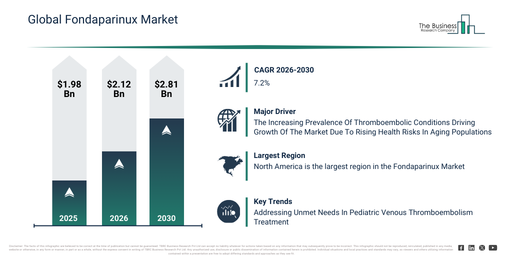
    The fondaparinux market has experienced substantial expansion in recent years. It is forecast to rise from $1.98 billion in 2025 to $2.12 billion in 2026, registering a compound annual growth rate (CAGR) of 7.2%. The growth observed historically can be attributed to an uptick in the incidence of venous thromboembolism, the clinical effectiveness of factor Xa inhibition, an increase in orthopedic and surgical operations, the adoption of injectable anticoagulants by hospitals, and its established safety profile.

    The fondaparinux market is projected to experience substantial expansion over the upcoming years. Its value is anticipated to reach $2.81 billion by 2030, exhibiting a compound annual growth rate (CAGR) of 7.2%. This projected expansion during the forecast timeframe is primarily driven by factors such as an aging demographic prone to clotting issues, a rise in cardiovascular surgical procedures, the need for reliable anticoagulation treatments, wider application of outpatient anticoagulants, and a preference for medications requiring minimal monitoring. Key developments expected during the same period encompass broader application in preventing thromboembolism, increased deployment in post-operative care, a growing inclination towards factor Xa inhibitors, the proliferation of pre-filled syringe formulations, and enhanced usage within hospital-centric anticoagulation strategies.

    Get A Free Sample Report With In-Depth Market Insights:

    https://thebusinessresearchcompany.com/sample_request?id=71019562&type=smp&name=Fondaparinux%20Market%20Report%202026&utm_source=Blogs&utm_medium=Paid&utm_campaign=Oct_PR

    Fondaparinux Market Demand Drivers Opening New Revenue Streams

    The increasing prevalence of thromboembolic conditions is set to drive the expansion of the fondaparinux market. Thromboembolic conditions are medical issues caused by blood clots forming in vessels, potentially blocking blood flow to vital organs. The growing incidence of these conditions is linked to an aging population, as older individuals are more susceptible to issues like deep vein thrombosis and pulmonary embolism due to slower circulation and other health factors. Fondaparinux is utilized to prevent and treat thromboembolic conditions by inhibiting the formation of harmful blood clots. For instance, in January 2025, the Centers for Disease Control and Prevention, a US-based government agency, stated that approximately 60,000 to 100,000 annual fatalities occur in the United States due to venous thromboembolism (VTE), with many patients experiencing prolonged complications. Therefore, the rising occurrence of thromboembolic conditions will stimulate the growth of the fondaparinux market.

    Fondaparinux Market Driver: Rising Healthcare Expenditures Fueling Growth Of The Market Due To Increasing Demand For Advanced Medical Treatments

    The fondaparinux market is expected to be propelled by rising healthcare expenditures. These expenditures represent the total financial outlay by individuals, governments, and organizations on medical services, treatments, and related products. Increased healthcare spending is driven by a greater demand for advanced medical treatments and technologies, coupled with the growing prevalence of chronic diseases and an aging population requiring more healthcare services. The use of fondaparinux contributes to higher healthcare expenditures as its demand rises for treating cardiovascular and thromboembolic conditions, thereby increasing medical costs. For example, in May 2024, the Office for National Statistics, a UK-based government department, reported that total healthcare expenditure grew by 5.6% in nominal terms from 2022 to 2023, which was a significant acceleration compared to the 0.9% increase seen in 2022. Consequently, rising healthcare expenditures will drive the growth of the fondaparinux market.

    Fondaparinux Market Segment Breakdown: Which Categories Lead On Revenue?

    The fondaparinux market covered in this report is segmented –

    1) By Type: Deep Vein Thrombosis, Pulmonary Embolism

    2) By Route of Administration: Oral, Parenteral, Other Routes of Administration

    3) By Dosage Form: Injection, Pre-filled Syringe

    4) By Distribution Channel : Hospital Pharmacies, Retail Pharmacies, Online Pharmacies

    5) By End Users: Hospitals, Specialty clinics, Other End Users

    Subsegments:

    1) By Deep Vein Thrombosis: Prophylaxis (Prevention), Treatment (Management)

    2) By Pulmonary Embolism: Acute Pulmonary Embolism, Chronic Pulmonary Embolism Management

    Fondaparinux Market Trends Powering Strategic Industry Growth

    Leading companies in the fondaparinux market are emphasizing product innovation, such as pediatric-focused drug development, to expand fondaparinux’s therapeutic applications, address unmet medical needs, and improve treatment options for younger patients suffering from conditions like venous thromboembolism (VTE). Pediatric-focused drug development involves creating and adapting medications specifically for safe and effective use in children, considering their unique physiological and developmental needs. For example, in December 2024, Mylan N.V., a US-based pharmaceutical company, received Food and Drug Administration (FDA) approval for Arixtra to treat venous thromboembolism (VTE) in pediatric patients aged 1 year and older, weighing a minimum of 10 kg. Additionally, Arixtra is approved for adult indications, including the prophylaxis of deep vein thrombosis (DVT) and the treatment of both acute DVT and pulmonary embolism. This pediatric approval is backed by a retrospective, open-label clinical study involving 366 patients, which demonstrated that 44.9% of participants achieved complete resolution of at least one clot, while 44% achieved full resolution of all clots.

    Fondaparinux Market Leading Players And Competitive Positioning

    Major companies operating in the fondaparinux market are Sanofi S.A., Viatris Inc., Mylan N.V., Sandoz Group AG, Zydus Lifesciences Limited, Aurobindo Pharma Limited, Dr. Reddy’s Laboratories Limited, Sun Pharmaceutical Industries Limited, Lupin Pharmaceuticals Inc., Cipla Limited, Aspen Pharmacare Holdings Limited, Jiangsu Hengrui Pharmaceuticals Co. Ltd., Sihuan Pharmaceutical Holdings Group Ltd., Apino Pharma Co. Ltd., Home Sunshine Pharma Co. Ltd., Zhejiang Borui Pharmaceutical Co. Ltd., Alchemia Limited, Amphastar Pharmaceuticals Inc., Hikma Pharmaceuticals plc, Fresenius Kabi AG

    View The Full Fondaparinux Market Report:

    https://thebusinessresearchcompany.com/report/fondaparinux-global-market-report?utm_source=Blogs&utm_medium=Paid&utm_campaign=Oct_PR

    Fondaparinux Market Regional Analysis: Which Geography Leads On Revenue?

    North America was the largest region in the fondaparinux market in 2025. Asia-Pacific is expected to be the fastest-growing region in the forecast period. The regions covered in the fondaparinux market report are Asia-Pacific, South East Asia, Western Europe, Eastern Europe, North America, South America, Middle East, Africa.

    Reach Out To Our Team:

    The Business Research Company: https://www.thebusinessresearchcompany.com/

    Americas: +1 310-496-7795

    Asia: +44 7882 955267 & +91 8897263534

    Europe: +44 7882 955267

    Email us at: marketing@tbrc.info

    Follow us on:

    LinkedIn: https://in.linkedin.com/company/the-business-research-company

    YouTube: https://www.youtube.com/channel/UC24_fI0rV8cR5DxlCpgmyFQ

    Global Market Model: https://www.thebusinessresearchcompany.com/global-market-model
  • Follicular Lymphoma Treatment Market Forecast 2026–2030: Market Size, Trends And Growth Opportunities

    Follicular Lymphoma Treatment Market Forecast 2026–2030: Market Size, Trends And Growth Opportunities

    Backed by market attractiveness analysis, total addressable market sizing, company benchmarking matrices, interactive Excel dashboards, wider supply chain intelligence, emerging startup coverage, and detailed product-level insights, The Business Research Company’s 2026 market reports are designed to offer research that is more actionable and strategically valuable than ever.

    Follicular Lymphoma Treatment Market Growth Analysis: How Will Revenue Trend Over The Forecast Period?

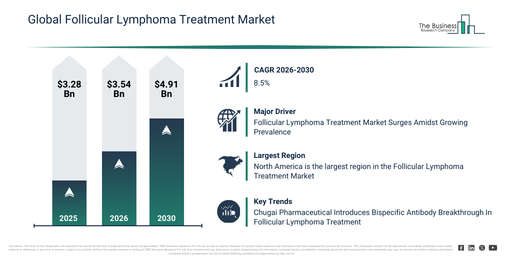
    The follicular lymphoma treatment market size has experienced robust growth in recent times. It is projected to increase from $3.28 billion in 2025 to $3.54 billion in 2026, achieving a compound annual growth rate (CAGR) of 7.8%. The historical growth in this period can be ascribed to progress in monoclonal antibodies, greater recognition of lymphoma, a surge in oncology research, the enlargement of hospital facilities, and the increasing incidence of Non-Hodgkin lymphoma.

    The follicular lymphoma treatment market is anticipated to experience substantial growth over the next few years. It is expected to expand to $4.91 billion in 2030, exhibiting a compound annual growth rate (CAGR) of 8.5%. The projected increase in this period can be attributed to breakthroughs in targeted therapy, the integration of AI into treatment planning, an escalation in stem cell transplant procedures, the expansion of oncology centers in emerging markets, and the development of biosimilars. Prominent trends for the forecast period include personalized treatment protocols, the creation of novel monoclonal antibodies, combination therapy approaches, initiatives for early diagnosis and screening, and the utilization of minimally invasive treatment techniques.

    Get A Free Sample Report With In-Depth Market Insights:

    https://thebusinessresearchcompany.com/sample_request?id=43647896&type=smp&name=Follicular%20Lymphoma%20Treatment%20Market%20Report%202026&utm_source=Blogs&utm_medium=Paid&utm_campaign=Oct_PR

    Follicular Lymphoma Treatment Market Growth Backed By Core Demand Fundamentals

    The increasing incidence of follicular lymphoma is anticipated to drive expansion in the follicular lymphoma treatment market. Follicular lymphoma prevalence denotes the overall count or percentage of individuals in a defined population identified with the condition at a specific moment or across a certain timeframe. This trend stems from an expanding aging demographic, genetic susceptibility, advancements in diagnostic methods, and enhanced awareness and screening efforts. Treating follicular lymphoma assists in diminishing its prevalence by managing the illness across different stages and supporting its treatment and progression control. The escalating occurrence of follicular lymphoma is accelerating the expansion of the follicular lymphoma treatment market. As an illustration, in January 2023, data from the American Cancer Society, a US-based Voluntary organization, indicated that non-Hodgkin lymphoma, which includes indolent follicular lymphoma, stands as the most common cancer in the US, making up approximately 4% of all malignancies. The American Cancer Society forecasts diagnoses of NHL in roughly 80,550 individuals (44,880 men and 35,670 women). This figure encompasses both adults and pediatric cases. Consequently, the growing prevalence of follicular lymphoma is fueling the growth of the follicular lymphoma treatment market.

    Follicular Lymphoma Treatment Market Segmentation: How Does The Market Break Down By Category?

    The follicular lymphoma treatment market covered in this report is segmented –

    1) By Treatment: Monoclonal Antibodies, Targeted Therapy, Chemotherapy, Radiation Therapy, Stem Cell Transplant, Alkylating Agents

    2) By Product Type: Tablets, Capsules, Injectables, Other Product Types

    3) By Route of Administration: Oral, Parenteral, Other Route of Administration

    4) By End Use: Hospitals, Oncology Centers, Ambulatory Care Centers, Academic Research Institutes, Other End Users

    Subsegments:

    1) By Monoclonal Antibodies: Rituximab, Obinutuzumab, Ofatumumab

    2) By Targeted Therapy: PI3K Inhibitors, BTK Inhibitors, BCL-2 Inhibitors

    3) By Chemotherapy: CHOP Regimen, Bendamustine, Fludarabine

    4) By Radiation Therapy: External Beam Radiation Therapy (EBRT), Radioimmunotherapy

    5) By Stem Cell Transplant: Autologous Stem Cell Transplant, Allogeneic Stem Cell Transplant

    6) By Alkylating Agents: Cyclophosphamide, Ifosfamide

    Follicular Lymphoma Treatment Market Growth Trends Reshaping The Competitive Landscape

    Leading companies within the follicular lymphoma treatment market are actively developing advanced solutions like bispecific antibodies to enhance durable remission and lessen the burden of patient treatment. A bispecific antibody is an engineered molecule designed to simultaneously bind two different targets; for example, one arm connects to a tumor antigen on B cells while the other engages T cells, thereby more effectively redirecting the immune system to eradicate cancer cells. Illustratively, in March 2025, Chugai Pharmaceutical, a Japan-based research-driven oncology company, introduced LUNSUMIO, which features a CD20/CD3 bispecific antibody system. LUNSUMIO is approved as an intravenous infusion in 1 mg and 30 mg formulations and is intended for patients with relapsed or refractory follicular lymphoma who have previously failed at least two standard therapies. This therapy is structured for fixed-duration treatment, adapting to individual patient response, which can consequently reduce the long-term treatment burden. LUNSUMIO has exhibited high complete response rates and offers the potential for durable remission when administered as a monotherapy.

    Follicular Lymphoma Treatment Market Competitive Overview And Top Companies

    Major companies operating in the follicular lymphoma treatment market are AbbVie Inc., Bayer AG, Bristol Myers Squibb Company, F. Hoffmann-La Roche Ltd., Johnson and Johnson Services Inc., GlaxoSmithKline plc, Novartis AG, Merck & Co. Inc., Boehringer Ingelheim GmbH, CTI BioPharma Corp., Spectrum Pharmaceuticals Inc., Seattle Genetics Inc., Daiichi Sankyo Company Ltd., Pfizer Inc., Incyte Corporation, MorphoSys AG, Regeneron Pharmaceuticals Inc., Eli Lilly and Company, Seagen Inc., Takeda Pharmaceutical Company, Nordic Nanovector ASA, ADC Therapeutics SA, MEI Pharma Inc., BeiGene Inc., TG Therapeutics Inc., Amgen Inc.

    View The Full Follicular Lymphoma Treatment Market Report:

    https://thebusinessresearchcompany.com/report/follicular-lymphoma-treatment-global-market-report?utm_source=Blogs&utm_medium=Paid&utm_campaign=Oct_PR

    Follicular Lymphoma Treatment Market Geographic Spread And Regional Opportunities

    North America was the largest region in the follicular lymphoma treatment market in 2025. The regions covered in the follicular lymphoma treatment market report are Asia-Pacific, South East Asia, Western Europe, Eastern Europe, North America, South America, Middle East, Africa.

    Reach Out To Our Team:

    The Business Research Company: https://www.thebusinessresearchcompany.com/

    Americas: +1 310-496-7795

    Asia: +44 7882 955267 & +91 8897263534

    Europe: +44 7882 955267

    Email us at: marketing@tbrc.info

    Follow us on:

    LinkedIn: https://in.linkedin.com/company/the-business-research-company

    YouTube: https://www.youtube.com/channel/UC24_fI0rV8cR5DxlCpgmyFQ

    Global Market Model: https://www.thebusinessresearchcompany.com/global-market-model
  • Follicle Stimulating Hormone Market Size Reaches $2.21 Billion In 2026: What Is Driving Growth?

    Follicle Stimulating Hormone Market Size Reaches $2.21 Billion In 2026: What Is Driving Growth?

    Featuring market attractiveness scoring, total addressable market sizing, company benchmarking matrices, interactive Excel dashboards, deeper supply chain intelligence, emerging startup tracking, and granular product-level insights, The Business Research Company’s 2026 market reports are built to deliver research that is both more actionable and more strategically valuable.

    Follicle Stimulating Hormone Market Forecast: What Value Will The Market Reach By 2030?

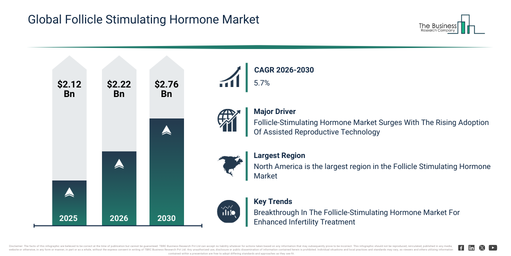
    The follicle stimulating hormone market has seen consistent expansion in recent years. It is projected to increase from $2.12 billion in 2025 to $2.22 billion in 2026, achieving a compound annual growth rate (CAGR) of 4.8%. The historic period’s growth can be attributed to progress in recombinant hormone production, a rise in infertility cases, the expansion of healthcare infrastructure, heightened awareness of fertility treatments, and the adoption of urinary FSH formulations.

    The market for follicle-stimulating hormone is projected to experience substantial expansion in the coming years. By 2030, its valuation is anticipated to reach $2.76 billion, demonstrating a compound annual growth rate (CAGR) of 5.7%. This predicted growth is largely due to advancements in FSH delivery systems, the proliferation of assisted reproductive technology (ART) centers, the wider adoption of telehealth services for fertility care, governmental backing for infertility solutions, and a rising preference for individualized approaches in reproductive medicine. Key developments during this period will encompass tailored fertility interventions, greater utilization of recombinant hormones, the incorporation of telemedicine into fertility services, heightened emphasis on female reproductive health education, and the continued establishment of assisted reproductive technology (ART) clinics.

    Get A Free Sample Report With In-Depth Market Insights:

    https://thebusinessresearchcompany.com/sample_request?id=80182643&type=smp&name=Follicle%20Stimulating%20Hormone%20Market%20Report%202026&utm_source=Blogs&utm_medium=Paid&utm_campaign=Oct_PR

    Follicle Stimulating Hormone Market Growth Catalysts And Demand Drivers

    The follicle-stimulating hormone market is projected to experience growth in the coming years, primarily propelled by the rising adoption of assisted reproductive technology. Assisted Reproductive Technology (ART) refers to medical procedures designed to help individuals or couples achieve conception when conventional methods have been unsuccessful. The application of follicle-stimulating hormone within ART is a well-established therapeutic approach aimed at enhancing the probability of a successful pregnancy for those facing reproductive challenges. For instance, in March 2024, the US department of Health and Human services, a US-based government agency, reported that the use of ART escalates with maternal age. In 2023, ART played a role in 9% of live births among women aged 40-45, a proportion that significantly increased to nearly one-third for women 45 and older. Furthermore, ART usage exhibits regional variations across the U.S. Hence, the increasing integration of assisted reproductive technology is a significant factor driving the follicle-stimulating hormone market.

    Follicle Stimulating Hormone Market Segment Trends And Revenue Contributors

    The follicle stimulating hormone market covered in this report is segmented –

    1) By Type: Recombinant FSH, Urinary FSH

    2) By Application: Infertility Treatment, Assisted Reproductive Technology (ART), Other Applications

    3) By End-Users: Infertility Center, Hospitals, Other End-Users

    Subsegments:

    1) By Recombinant FSH: Pure Recombinant FSH, Mixed Recombinant FSH Formulations

    2) By Urinary FSH: Purified Urinary FSH, Urinary FSH Combined With Other Hormones

    Follicle Stimulating Hormone Market Trends Shaping Long-Term Demand

    Leading companies in the follicle-stimulating hormone market are developing advanced products, such as multi-hormone at-home diagnostic testing systems, to provide enhanced accuracy, continuous monitoring, and patient-centric understanding of hormone health and reproductive function. These integrated, user-friendly platforms allow for the measurement of FSH along with other crucial reproductive hormones through non-invasive sampling, thereby enabling real-time tracking, personalized health assessments, and improved clinical decision-making without the necessity of in-clinic visits. As an illustration, in July 2024, Proov, a US-based women’s health company, unveiled its Proov Empower Perimenopause Testing System. Proov Empower delivers comprehensive and tailored insights into how fluctuating hormones influence a woman’s overall health and well-being. This non-invasive, multi-time point urine test evaluates four key hormones FSH, estrogen marker E1G, progesterone marker PdG, and LH, which impact symptoms and the perimenopause experience. Through periodic retesting, Proov Empower assists women in tracking hormone variations and associated symptoms, serving as an important guide during the menopause transition.

    Follicle Stimulating Hormone Market Competitive Landscape: Which Companies Lead The Industry?

    Major companies operating in the follicle stimulating hormone market are Pfizer Inc., Sanofi S.A., Merck KGaA, Teva Pharmaceutical Industries Ltd., Sun Pharmaceutical Industries Ltd., Intas Pharmaceuticals Ltd., Cipla Ltd., Ferring Pharmaceuticals Inc., Lupin Limited, Zydus Lifesciences Limited, Emcure Pharmaceuticals Ltd., IBSA Group, Taj Pharmaceuticals Ltd., Trumac Healthcare, Midas Pharma GmbH, Shanghai Techwell Biopharmaceutical Co. Ltd., Livzon Pharmaceutical Group Inc., Anhui Anke Biotechnology Group Co. Ltd., LG Chem Life Sciences, Genpharm Inc., Biogenix Inc. Pvt. Ltd.

    View The Full Follicle Stimulating Hormone Market Report:

    https://thebusinessresearchcompany.com/report/follicle-stimulating-hormone-global-market-report?utm_source=Blogs&utm_medium=Paid&utm_campaign=Oct_PR

    Follicle Stimulating Hormone Market Top Region By Revenue And Market Share

    North America was the largest region in the follicle stimulating hormone market in 2025. Asia-Pacific is expected to be the fastest-growing region in the forecast period. The regions covered in the follicle stimulating hormone market report are Asia-Pacific, South East Asia, Western Europe, Eastern Europe, North America, South America, Middle East, Africa.

    Reach Out To Our Team:

    The Business Research Company: https://www.thebusinessresearchcompany.com/

    Americas: +1 310-496-7795

    Asia: +44 7882 955267 & +91 8897263534

    Europe: +44 7882 955267

    Email us at: marketing@tbrc.info

    Follow us on:

    LinkedIn: https://in.linkedin.com/company/the-business-research-company

    YouTube: https://www.youtube.com/channel/UC24_fI0rV8cR5DxlCpgmyFQ

    Global Market Model: https://www.thebusinessresearchcompany.com/global-market-model
  • Folate Market Valued At $4.04 Billion In 2026: Key Trends And Growth Drivers

    Folate Market Valued At $4.04 Billion In 2026: Key Trends And Growth Drivers

    Built to provide research that’s more actionable and strategically valuable, The Business Research Company’s 2026 market reports include market attractiveness analysis, total addressable market sizing, company benchmarking matrices, interactive Excel dashboards, broader supply chain intelligence, emerging startup tracking, and in-depth product insights.

    Folate Market Size Outlook: How Quickly Will Revenue Expand Through 2030?

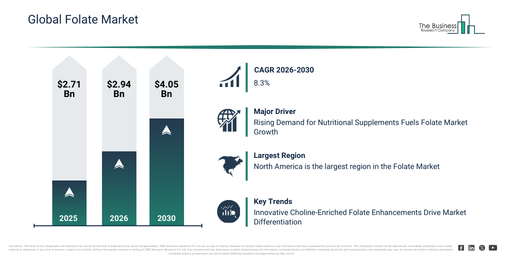
    The folate market has experienced robust growth recently. It is projected to expand from $2.71 billion in 2025 to $2.94 billion in 2026, achieving a compound annual growth rate (CAGR) of 8.6%. Historically, this expansion has been driven by factors including the heightened recognition of folate deficiency risks, the increased consumption of fortified foods, the implementation of folic acid in maternal health programs, the accessibility of synthetic folate forms, and the rise of dietary supplement markets.

    The folate market size is projected to experience robust growth in the upcoming years. It is expected to expand to $4.05 billion in 2030, demonstrating a compound annual growth rate (CAGR) of 8.3%. This anticipated growth during the forecast period is driven by factors such as the increasing demand for bioavailable folate alternatives, the expansion of personalized nutrition products, a heightened focus on maternal and fetal health, advancements in functional food development, and growing regulatory support for fortification initiatives. Noteworthy trends predicted for this period include the rising adoption of bioactive folate forms, increased demand for prenatal nutrition supplements, the broadening of food fortification programs, an escalating use of mthf in nutraceuticals, and improved stability in folate formulations.

    Get A Free Sample Report With In-Depth Market Insights:

    https://thebusinessresearchcompany.com/sample_request?id=67744688&type=smp&name=Folate%20Market%20Report%202026&utm_source=Blogs&utm_medium=Paid&utm_campaign=Oct_PR

    Folate Market Opportunity Drivers: What’s Unlocking New Revenue Potential?

    The escalating need for nutritional supplements is projected to fuel the expansion of the folate market moving forward. A nutritional supplement refers to a product designed to deliver essential nutrients that might be insufficient or absent from an individual’s diet. Consumers are increasingly prioritizing their health and wellness, which in turn stimulates the demand for dietary supplements, especially those containing crucial vitamins like folate. Folate plays a vital role in preventing birth defects, supporting healthy cell function, and lowering the risk of chronic diseases, thereby making it a sought-after ingredient in prenatal vitamins and various other health-focused products. For instance, in 2024, according to Synadiet, a France-based professional association representing companies that manufacture and distribute dietary supplements, 61% of French adults stated they had consumed a dietary supplement in the prior 24 months (as of early 2024), marking an increase from 59% in 2023 and 2022. Therefore, this rising demand for nutritional supplements is propelling the folate market.

    Folate Market Segment Analysis Spotlighting Growth Areas

    The folate market covered in this report is segmented –

    1) By Type: 5-Methyltetrahydrofolate (MTHF) Calcium Salt, 5-Methyltetrahydrofolate (MTHF) Glucosamine Salt

    2) By Source: Fruit, Milk, Green Vegetables, Liver, Seafood

    3) By Form: Tablets, Capsules, Powder, Lozenges, Gummies, Other Forms

    4) By Application: Food Industry, Nutraceuticals, Pharmaceuticals

    5) By End User: Fortified Foods, Baby Foods, Supplements

    Subsegments:

    1) By 5-Methyltetrahydrofolate (MTHF) Calcium Salt: Pharmaceutical Grade MTHF Calcium Salt, Nutraceutical Grade MTHF Calcium Salt, Food Grade MTHF Calcium Salt, Specialty MTHF Calcium Salt Formulations

    2) By 5-Methyltetrahydrofolate (MTHF) Glucosamine Salt: Pharmaceutical Grade MTHF Glucosamine Salt, Nutraceutical Grade MTHF Glucosamine Salt, Food Grade MTHF Glucosamine Salt, Specialty MTHF Glucosamine Salt Formulations

    Folate Market Innovation Trends Shaping Future Development

    Major companies operating in the folate market are actively developing innovative products, such as choline-enriched folate, with the goal of enhancing the nutritional benefits of folate supplements, improving cognitive function, and supporting overall brain health. Choline-enriched folate refers to a dietary supplement or fortified product that combines folate (vitamin B9) with choline, an essential nutrient vital for supporting brain function, liver health, and cellular membrane integrity. As an example, in June 2024, Balchem, a US-based manufacturer of specialty ingredients for human nutrition and health, unveiled Optifolin+. This ingredient showcases patented L-5-methylfolate, containing 98% active methylating nutrients, and provides seven times the methyl groups found in other folate products. It also enhances stability, solubility, shelf life, and performance, facilitating easier product development. Additionally, Optifolin+ aids in DNA and RNA synthesis, red blood cell formation, and brain health, while also helping to maintain healthy homocysteine levels.

    Folate Market Leading Companies: Who Holds The Strongest Market Presence?

    Major companies operating in the folate market are BASF SE, Merck KGaA, DSM Nutritional Products, Shandong Xinhua Pharmaceutical Co., Lincoln Pharmaceuticals Ltd., Nature’s Bounty Co, Jiangxi Tianxin Pharmaceutical Co. Ltd., Zydus Cadila Healthcare Ltd., Jubilant Pharmova Ltd., Emcure Pharmaceuticals Ltd., Pharmavite LLC, Niutang Chemical Plant Co. Ltd., Gemini Pharmaceuticals Inc., Synokem Pharmaceuticals Ltd., ITM Isotope Technologies Munich SE, NattoPharma ASA, D.S. Lab, Gnosis by Lesaffre, Gnosis SPA, AIE Pharmaceuticals Inc., Hebei Jiheng Group Pharmacy Co. Ltd., Seidler Chemical Co. Inc., Superior Supplement Manufacturing

    View The Full Folate Market Report:

    https://thebusinessresearchcompany.com/report/folate-global-market-report?utm_source=Blogs&utm_medium=Paid&utm_campaign=Oct_PR

    Folate Market Regional Analysis And Top Geography

    North America was the largest region in the folate market in 2025. Asia-Pacific is expected to be the fastest-growing region in the forecast period. The regions covered in the folate market report are Asia-Pacific, South East Asia, Western Europe, Eastern Europe, North America, South America, Middle East, Africa.

    Reach Out To Our Team:

    The Business Research Company: https://www.thebusinessresearchcompany.com/

    Americas: +1 310-496-7795

    Asia: +44 7882 955267 & +91 8897263534

    Europe: +44 7882 955267

    Email us at: marketing@tbrc.info

    Follow us on:

    LinkedIn: https://in.linkedin.com/company/the-business-research-company

    YouTube: https://www.youtube.com/channel/UC24_fI0rV8cR5DxlCpgmyFQ

    Global Market Model: https://www.thebusinessresearchcompany.com/global-market-model

  • Focal Segmental Glomerulosclerosis Drugs Market Size In 2026: Growth Outlook And Forecast Through 2030

    Focal Segmental Glomerulosclerosis Drugs Market Size In 2026: Growth Outlook And Forecast Through 2030

    Backed by market attractiveness analysis, total addressable market sizing, company benchmarking matrices, interactive Excel dashboards, wider supply chain intelligence, emerging startup coverage, and detailed product-level insights, The Business Research Company’s 2026 market reports are designed to offer research that is more actionable and strategically valuable than ever.

    Focal Segmental Glomerulosclerosis Drugs Market Size, Value And Growth Trajectory Through 2030

    The focal segmental glomerulosclerosis drugs market size has demonstrated robust growth in recent years. It is anticipated to increase from $17 billion in 2025 to $18.58 billion in 2026, achieving a compound annual growth rate (CAGR) of 9.3%. This historical expansion can be ascribed to several factors, including limited available treatment options, the high prevalence of kidney diseases, a reliance on corticosteroids, growing awareness of FSGS, and progress in immunosuppressive drugs.

    The focal segmental glomerulosclerosis drugs market is anticipated to experience significant expansion in the coming years. This market is projected to reach $27.71 billion by 2030, demonstrating a compound annual growth rate (CAGR) of 10.5%. The projected growth during this period is largely driven by factors such as the increasing use of biologics and monoclonal antibodies, the emergence of personalized medicine strategies, greater financial support for rare disease research, the incorporation of technology into treatment development, and the improvement of healthcare facilities in developing regions. Key trends expected over the forecast horizon include advancements in personalized medicine, focused research on targeted therapeutics, the broadening of the rare disease drug pipeline, enhanced efficiency in clinical trials, and improvements in immunomodulatory therapies.

    Get A Free Sample Report With In-Depth Market Insights:

    https://thebusinessresearchcompany.com/sample_request?id=29644824&type=smp&name=Focal%20Segmental%20Glomerulosclerosis%20Drugs%20Market%20Report%202026&utm_source=Blogs&utm_medium=Paid&utm_campaign=Oct_PR

    Focal Segmental Glomerulosclerosis Drugs Market Growth Momentum: What Factors Are Shaping Demand?

    The growth of the focal segmental glomerulosclerosis (FSGS) drugs market is anticipated to be propelled by increasing healthcare expenditure in the future. Healthcare expenditure refers to the total amount of money spent on healthcare services and related goods and activities within a specific healthcare system or economy over a defined period. Elevated healthcare spending can significantly aid the development and availability of drugs for focal segmental glomerulosclerosis (FSGS), as it boosts research funding and clinical trials, thereby enhancing drug output. For instance, in November 2023, according to the Canadian Institute for Health Information, a Canada-based Institute for Health Information, total health spending in Canada is projected to reach $344 billion in 2023, which equates to $8,740 per person. This figure signifies a 2.8% increase compared to the previous year, where health spending saw only a 1.5% growth in 2022, indicating a notable rebound in healthcare investment. Therefore, rising healthcare expenditures are a key driver for the expansion of the focal segmental glomerulosclerosis (FSGS) drugs market.

    Focal Segmental Glomerulosclerosis Drugs Market Segment Performance And Emerging Opportunities

    The focal segmental glomerulosclerosis drugs market covered in this report is segmented –

    1) By Type: Losmapimod, SHP-627, Sparsentan, TM-5484, Other Types

    2) By Treatment: Corticosteroids, Immunosuppressive Drugs, Angiotensin Converting Enzymes (ACE) Inhibitors, A.R. Blockers, Diuretics, Other Treatments

    3) By Route of Administration: Oral, Parenteral

    4) By End User: Hospitals, Homecare, Specialty Clinics, Other End Users

    Focal Segmental Glomerulosclerosis Drugs Market Trends Redefining Industry Growth

    Major companies engaged in the focal segmental glomerulosclerosis (FSGS) market are increasingly prioritizing product development and innovation to deliver reliable products to their customers and strengthen their market standing. For instance, in February 2023, Travere Therapeutics, a US-based biopharmaceutical company, launched FILSPARI for focal segmental glomerulosclerosis (FSGS), which received approval from the Food and Drug Administration (FDA), a US-based federal agency. This oral medicine is used for treating IgA nephropathy (IgAN). It stands as the first and only non-immunosuppressive treatment available for lowering proteinuria in IgAN, a rare kidney disease. Furthermore, FILSPARI has been granted orphan drug designation in the United States and Europe for the treatment of both IgAN and focal segmental glomerulosclerosis (FSGS).

    Focal Segmental Glomerulosclerosis Drugs Market Key Players: Which Companies Lead Industry Competition?

    Major companies operating in the focal segmental glomerulosclerosis drugs market are Travere Therapeutics, Aurinia Pharmaceuticals Inc., Omeros Corporation, Dimerix Ltd., Goldfinch Bio, Alexion Pharmaceuticals, Bayer AG, Novartis AG, Pfizer Inc., Johnson and Johnson Ltd., Bristol Myers Squibb Company, Takeda Pharmaceutical Company Limited, Eli Lilly and Company, Astellas Pharma Inc., Otsuka Pharmaceutical Co. Ltd., Sanofi S.A., Fresenius Kabi Ltd., Gilead Sciences Inc, Reata Pharmaceuticals, Amgen Inc

    View The Full Focal Segmental Glomerulosclerosis Drugs Market Report:

    https://thebusinessresearchcompany.com/report/focal-segmental-glomerulosclerosis-drugs-global-market-report?utm_source=Blogs&utm_medium=Paid&utm_campaign=Oct_PR

    Focal Segmental Glomerulosclerosis Drugs Market Geographic Analysis: Where Is Demand Rising Fastest?

    North America was the largest region in the focal segmental glomerulosclerosis drugs market in 2025. The regions covered in the focal segmental glomerulosclerosis drugs market report are Asia-Pacific, South East Asia, Western Europe, Eastern Europe, North America, South America, Middle East, Africa.

    Reach Out To Our Team:

    The Business Research Company: https://www.thebusinessresearchcompany.com/

    Americas: +1 310-496-7795

    Asia: +44 7882 955267 & +91 8897263534

    Europe: +44 7882 955267

    Email us at: marketing@tbrc.info

    Follow us on:

    LinkedIn: https://in.linkedin.com/company/the-business-research-company

    YouTube: https://www.youtube.com/channel/UC24_fI0rV8cR5DxlCpgmyFQ

    Global Market Model: https://www.thebusinessresearchcompany.com/global-market-model

  • Focal Segmental Glomerulosclerosis Market Trends Supporting 7.2% CAGR Growth Through 2030

    Focal Segmental Glomerulosclerosis Market Trends Supporting 7.2% CAGR Growth Through 2030

    Featuring market attractiveness scoring, total addressable market sizing, company benchmarking matrices, interactive Excel dashboards, deeper supply chain intelligence, emerging startup tracking, and granular product-level insights, The Business Research Company’s 2026 market reports are built to deliver research that is both more actionable and more strategically valuable.

    Focal Segmental Glomerulosclerosis Market CAGR Outlook And Future Development

    The focal segmental glomerulosclerosis market size has experienced significant growth in recent years. It is projected to expand from $1.57 billion in 2025 to $1.69 billion in 2026, demonstrating a compound annual growth rate (CAGR) of 7.6%. This historical growth can be ascribed to factors such as the prevalence of proteinuria, the burden of chronic kidney disease, the utilization of corticosteroids, the expansion of nephrology clinics, and advancements in dialysis infrastructure.

    The focal segmental glomerulosclerosis market is projected to experience robust expansion over the coming years, forecast to reach $2.24 billion by 2030, exhibiting a compound annual growth rate (CAGR) of 7.2%. This anticipated growth during the forecast period is fueled by advancements such as precision nephrology, the identification of early disease biomarkers, progress in biologic drug development, the expansion of transplant programs, and increased funding for rare kidney diseases. Key trends anticipated for this period involve a heightened emphasis on targeted immunosuppressive therapy, the increasing use of combination drug regimens, broader early diagnostic screening initiatives, a growing reliance on renin-angiotensin system inhibitors, and improved kidney transplant preparedness.

    Get A Free Sample Report With In-Depth Market Insights:

    https://thebusinessresearchcompany.com/sample_request?id=89493600&type=smp&name=Focal%20Segmental%20Glomerulosclerosis%20Market%20Report%202026&utm_source=Blogs&utm_medium=Paid&utm_campaign=Oct_PR

    Focal Segmental Glomerulosclerosis Market Expansion Drivers: What’s Shaping Future Growth?

    An increasing prevalence of kidney diseases is anticipated to fuel the growth of the focal segmental glomerulosclerosis market in the coming years. Kidney diseases are conditions that compromise the kidneys’ function and structure, thereby impacting their capacity to filter waste, maintain fluid balance, and regulate essential bodily functions. The growing incidence of kidney diseases is primarily linked to diabetes, as consistently high blood sugar levels over time damage the filtering units of the kidneys, leading to diabetic nephropathy. Focal segmental glomerulosclerosis itself represents the progressive scarring of kidney filters, serving as an important indicator and target for understanding, diagnosing, and managing chronic kidney diseases. For example, in August 2025, the American Kidney Fund, a U.S.-based nonprofit organization, reported that 35.5 million Americans are living with chronic kidney disease (CKD), approximately 815,000 Americans are experiencing kidney failure, and nearly 555,000 Americans are currently on dialysis. Thus, the escalating prevalence of kidney diseases is a significant driver for the focal segmental glomerulosclerosis market.

    Focal Segmental Glomerulosclerosis Market Segment Landscape And Growth Outlook

    The focal segmental glomerulosclerosis market covered in this report is segmented –

    1) By Disease Type: Primary Focal Segmental Glomerulosclerosis, Secondary Focal Segmental Glomerulosclerosis

    2) By Treatment: Drug Therapy, Dialysis, Kidney Transplant, Other Treatments

    3) By Drug Class: Immunosuppressants, Angiotensin Inhibitors, Corticosteroids

    4) By Route Of Administration: Oral, Parenteral

    5) By End User: Hospitals, Homecare, Specialty Clinics, Other End Users

    Subsegments:

    1) By Primary Focal Segmental Glomerulosclerosis: Idiopathic Focal Segmental Glomerulosclerosis, Genetic Or Familial Focal Segmental Glomerulosclerosis, Collapsing Variant, Tip Lesion Variant, Cellular Variant, Perihilar Variant

    2) By Secondary Focal Segmental Glomerulosclerosis: Virus-Associated Focal Segmental Glomerulosclerosis, Drug-Induced Focal Segmental Glomerulosclerosis, Adaptive Or Compensatory Focal Segmental Glomerulosclerosis, Other Secondary Causes

    Focal Segmental Glomerulosclerosis Market Strategic Trends: What Defines The Next Growth Phase?

    Major companies in the focal segmental glomerulosclerosis market are concentrating on developing innovative therapies, such as non-immunosuppressive oral medication, to enhance patient outcomes and minimize treatment side effects. These oral drugs treat the disease without weakening the immune system, managing focal segmental glomerulosclerosis by directly targeting kidney damage and avoiding immune-related adverse effects. For example, in May 2025, Travere Therapeutics Inc., a US-based biopharmaceutical company, obtained traditional approval from the U.S. Food and Drug Administration (FDA) for its supplemental New Drug Application (sNDA) for FILSPARI (sparsentan), specifically for the treatment of focal segmental glomerulosclerosis (FSGS). FILSPARI is a first-in-class therapy that operates by simultaneously blocking the endothelin type A receptor (ETAR) and the angiotensin II type 1 receptor (AT1R). This dual mechanism substantially reduces proteinuria in conditions like FSGS and IgA nephropathy. In comparison to existing treatments, FILSPARI delivers improved kidney protection while upholding a strong safety profile.

    Focal Segmental Glomerulosclerosis Market Competitive Landscape: Who Leads The Industry?

    Major companies operating in the focal segmental glomerulosclerosis market are Pfizer Inc., Merck And Co. Inc., Sanofi S.A., Eli Lilly and Company, Boehringer Ingelheim GmbH, Astellas Pharma Inc., Vertex Pharmaceuticals Incorporated, Mallinckrodt ARD LLC, Kyowa Kirin Co. Ltd., Aurinia Pharmaceuticals Inc., Travere Therapeutics Inc., Eledon Pharmaceuticals Inc., ZyVersa Therapeutics Inc., Complexa Inc., Certa Therapeutics, Delta 4 GmbH, Dimerix Limited, Goldfinch Bio Inc., Oraxion Therapeutics Inc., Variant Pharmaceuticals Inc.

    View The Full Focal Segmental Glomerulosclerosis Market Report:

    https://thebusinessresearchcompany.com/report/focal-segmental-glomerulosclerosis-global-market-report?utm_source=Blogs&utm_medium=Paid&utm_campaign=Oct_PR

    Focal Segmental Glomerulosclerosis Market Global Footprint: Which Region Leads The Market?

    North America was the largest region in the focal segmental glomerulosclerosis market in 2025. Asia-Pacific is expected to be the fastest-growing region in the forecast period. The regions covered in the focal segmental glomerulosclerosis market report are Asia-Pacific, South East Asia, Western Europe, Eastern Europe, North America, South America, Middle East, Africa.

    Reach Out To Our Team:

    The Business Research Company: https://www.thebusinessresearchcompany.com/

    Americas: +1 310-496-7795

    Asia: +44 7882 955267 & +91 8897263534

    Europe: +44 7882 955267

    Email us at: marketing@tbrc.info

    Follow us on:

    LinkedIn: https://in.linkedin.com/company/the-business-research-company

    YouTube: https://www.youtube.com/channel/UC24_fI0rV8cR5DxlCpgmyFQ

    Global Market Model: https://www.thebusinessresearchcompany.com/global-market-model
  • Fluconazole Preparation Market Forecast Highlights A $100.94 Billion Opportunity For Industry Participants

    Fluconazole Preparation Market Forecast Highlights A $100.94 Billion Opportunity For Industry Participants

    Built to provide research that’s more actionable and strategically valuable, The Business Research Company’s 2026 market reports include market attractiveness analysis, total addressable market sizing, company benchmarking matrices, interactive Excel dashboards, broader supply chain intelligence, emerging startup tracking, and in-depth product insights.

    Fluconazole Preparation Market Set To Climb From $61.21 Billion In 2026 To $100.94 Billion By 2030

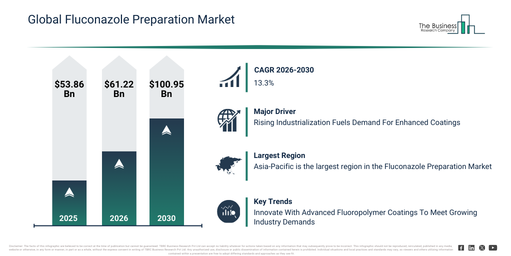
    The fluconazole preparation market has experienced substantial growth in recent years. It is projected to increase from $53.86 billion in 2025 to $61.22 billion in 2026, achieving a compound annual growth rate (CAGR) of 13.7%. The market’s past expansion is due to several factors, including the limited availability of antifungal drug formulations, a rise in fungal infection cases, more hospital and clinic visits, a reliance on established oral antifungals, and increasing recognition of fluconazole’s efficacy.

    The fluconazole preparation market size is projected to experience substantial expansion over the coming years. This market is anticipated to reach a value of $100.95 billion by 2030, exhibiting a compound annual growth rate (CAGR) of 13.3%. Factors contributing to this growth during the forecast period include the introduction of innovative formulations such as sustained-release eye drops, the expanding reach of online pharmacy distribution, the growing use of delayed-release and extended-release tablets, advancements in antifungal treatment awareness initiatives, and increased investments in both pediatric and adult fluconazole treatments. Key trends identified for the forecast period encompass an escalating demand for standard and delayed-release fluconazole capsules, the rising uptake of extended-release and film-coated tablets, the proliferation of preservative-free and sustained-release eye drop formulations, the broadened availability of intravenous, topical, and oral suspension fluconazole products, and enhanced distribution channels via hospital, retail, and online pharmacies.

    Get A Free Sample Report With In-Depth Market Insights:

    https://thebusinessresearchcompany.com/sample_request?id=93502879&type=smp&name=Fluconazole%20Preparation%20Market%20Report%202026&utm_source=Blogs&utm_medium=Paid&utm_campaign=Oct_PR

    Fluconazole Preparation Market Development Factors: What’s Supporting Demand?

    The fluoropolymer coating market is expected to expand going forward, primarily driven by rising industrialization. Industrialization defines the transformation of an economy from being predominantly agricultural to one centered on the manufacturing of goods. The rise of industrialization is attributed to technological progress that enhances production efficiency and economic expansion that encourages investments in manufacturing and infrastructure to meet the growing global demand for goods. Fluoropolymer coatings are crucial for industrial processes, assisting in advancements across various industrial sectors by providing protection against extreme conditions, minimizing maintenance requirements, and improving operational efficiency. For instance, in February 2024, as per the Xinhua News Agency, a China-based government agency, Mexico’s industrial activity increased by 3.5 percent in 2023 compared to the prior year. Consequently, the increasing industrialization is a key driver for the growth of the fluoropolymer coating market.

    Fluconazole Preparation Market Breakdown By Product Type And Application

    The fluconazole preparation market covered in this report is segmented –

    1) By Type: Capsule, Tablet, Eye Drops, Other Types

    2) By Distribution Channel: Hospital Pharmacies, Retail Pharmacies, Online Pharmacies

    3) By Application: Hospital, Clinic, Other Applications

    Subsegments:

    1) By Capsule: Standard Fluconazole Capsules, Delayed-Release Fluconazole Capsules, Liquid-Filled Capsules, Orally Disintegrating Capsules

    2) By Tablet: Standard Fluconazole Tablets, Chewable Tablets, Extended-Release Tablets, Film-Coated Tablets

    3) By Eye Drops: Preservative-Free Eye Drops, Antifungal Eye Drops with Fluconazole, Sustained-Release Eye Drop Formulations

    4) By Other Types: Intravenous (IV) Fluconazole, Topical Fluconazole Creams, Fluconazole Oral Suspension, Fluconazole Suppositories

    Fluconazole Preparation Market Transformation Trends: What Innovations Are Driving Change?

    Leading companies in the fluoropolymer coating market are concentrating on developing innovative products, such as high-performance fluoropolymer coatings, to enhance durability and resistance in challenging environments. These high-performance fluoropolymer coatings are advanced protective layers that offer exceptional resistance to corrosion, chemicals, and extreme temperatures while maintaining longevity and aesthetic quality. For instance, in July 2024, Alfa Chemistry, a US-based provider of materials chemistry solutions, announced an expansion of its new range of advanced fluoropolymers to enhance its product offerings and meet the growing demand for high-performance materials across various industries. This strategic expansion aims to provide innovative solutions that leverage the exceptional properties of fluoropolymers, such as chemical resistance, thermal stability, and low friction. The company positions itself as a comprehensive supplier capable of supporting applications in critical sectors, including aerospace, automotive, and chemical processing, by introducing materials like polytetrafluoroethylene (PTFE), polychlorotrifluoroethylene (PCTFE), and ethylene tetrafluoroethylene (ETFE).

    Fluconazole Preparation Market Company Landscape And Competitive Strategy

    Major companies operating in the fluconazole preparation market are Pfizer Inc., Bayer AG, Novartis AG, Fresenius Kabi, Viatris Inc., Teva Pharmaceutical Industries Ltd., Yangtze River Pharmaceutical Group Co. Ltd., B. Braun SE, Sun Pharmaceutical Industries Ltd., Strides Pharma Science Ltd., Aurobindo Pharma Limited, Dr. Reddy’s Laboratories, Cipla Limited, Apotex Inc., Sichuan Kelun Pharmaceutical Co. Ltd., Amneal Pharmaceuticals Inc., Lupin Pharmaceuticals Inc., Zydus Group, Hetero Drugs Ltd., Glenmark Pharmaceuticals, Alkem Laboratories Ltd., Torrent Pharmaceuticals Ltd., Alembic Pharmaceuticals Ltd., Medochemie Ltd, Taj Pharmaceuticals Ltd.

    View The Full Fluconazole Preparation Market Report:

    https://thebusinessresearchcompany.com/report/fluconazole-preparation-global-market-report?utm_source=Blogs&utm_medium=Paid&utm_campaign=Oct_PR

    Fluconazole Preparation Market Regional Split: Which Areas Are Fueling Growth?

    Asia-Pacific was the largest region in the flouropolymer coating market in 2025. Asia-Pacific is expected to be the fastest-growing region in the forecast period. The regions covered in the fluconazole preparation market report are Asia-Pacific, South East Asia, Western Europe, Eastern Europe, North America, South America, Middle East, Africa.

    Reach Out To Our Team:

    The Business Research Company: https://www.thebusinessresearchcompany.com/

    Americas: +1 310-496-7795

    Asia: +44 7882 955267 & +91 8897263534

    Europe: +44 7882 955267

    Email us at: marketing@tbrc.info

    Follow us on:

    LinkedIn: https://in.linkedin.com/company/the-business-research-company

    YouTube: https://www.youtube.com/channel/UC24_fI0rV8cR5DxlCpgmyFQ

    Global Market Model: https://www.thebusinessresearchcompany.com/global-market-model
  • Cell Culture Media Market For Regenerative Medicines Market Outlook From 2026 To 2030: Key Growth Factors And Future Opportunities

    Cell Culture Media Market For Regenerative Medicines Market Outlook From 2026 To 2030: Key Growth Factors And Future Opportunities

    Built to provide research that’s more actionable and strategically valuable, The Business Research Company’s 2026 market reports include market attractiveness analysis, total addressable market sizing, company benchmarking matrices, interactive Excel dashboards, broader supply chain intelligence, emerging startup tracking, and in-depth product insights.

    #Cell Culture Media Market For Regenerative Medicines Market Growth Analysis: How Will Revenue Trend Over The Forecast Period?#_x000D_

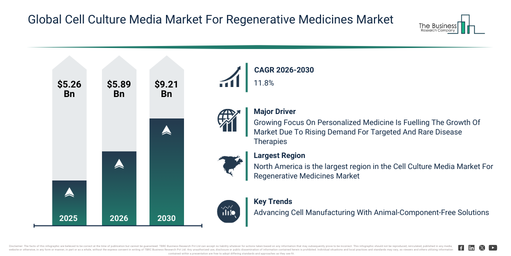
    The market size for cell culture media in regenerative medicines has experienced rapid growth in recent years. It is anticipated to expand from $5.26 billion in 2025 to $5.89 billion in 2026, achieving a compound annual growth rate (CAGR) of 12.0%. Historically, this growth has been fueled by factors including the increasing application of cell culture in academic research, a rise in investments within regenerative medicine, the reliance on traditional basal media formulations, the expansion of pharmaceutical and biotechnology research and development, and the growing prevalence of chronic and degenerative diseases._x000D_

    _x000D_

    The cell culture media market for regenerative medicines is projected to experience substantial growth in the upcoming years. Its value is expected to reach $9.21 billion by 2030, progressing at a compound annual growth rate (CAGR) of 11.8%. This expansion over the forecast period is driven by progress in stem cell and gene therapy development, a surging demand for personalized regenerative treatments, the enlargement of cell therapy manufacturing sites, increasing acceptance of chemically defined and specialty media, and a rise in regulatory approvals for regenerative medicine products. Significant trends during this period involve a rising need for serum-free and chemically defined media, broader application of cell culture media in stem cell and cell therapy uses, a heightened emphasis on media optimization for cell differentiation and proliferation, the expansion of regenerative medicine research and clinical trials, and an increasing requirement for scalable and reproducible cell culture solutions._x000D_

    _x000D_

    #Get A Free Sample Report With In-Depth Market Insights:#_x000D_

    https://thebusinessresearchcompany.com/sample_request?id=27241&type=smp&name=Cell%20Culture%20Media%20Market%20For%20Regenerative%20Medicines%20Market%20Report%202026&utm_source=Blogs&utm_medium=Paid&utm_campaign=Oct_PR_x000D_

    _x000D_

    #Cell Culture Media Market For Regenerative Medicines Market Development Factors: What’s Supporting Demand?#_x000D_

    An increasing emphasis on personalized medicine is anticipated to fuel the expansion of the cell culture media market for regenerative medicines. This medical strategy involves tailoring treatments and prevention based on an individual’s genetic profile, environment, and lifestyle. The rising demand for targeted therapies for rare and complex conditions, stemming from advancements in genomic research and improved access to precision diagnostics, is intensifying the focus on personalized medicine. The cell culture media market for regenerative medicines contributes to personalized medicine by facilitating the creation of specialized cell culture media designed to cultivate patient-specific cells for bespoke regenerative therapies. For example, in February 2024, the Personalized Medicine Coalition, a US-based nonprofit organization, reported that the FDA approved 16 new personalized treatments for rare disease patients in 2023, an increase from 6 in 2022. Consequently, the escalating attention on personalized medicine is propelling the growth of the cell culture media market for regenerative medicines._x000D_

    _x000D_

    #Cell Culture Media Market For Regenerative Medicines Market Segmentation: How Does The Market Break Down By Category?#_x000D_

    The cell culture media market for regenerative medicines market covered in this report is segmented – _x000D_

    _x000D_

    1) By Type: Liquid Media, Semi-Solid And Solid Media_x000D_

    2) By Application: Tissue Engineering, Stem Cell Research, Cell Therapy, Drug Discovery And Development, Other Applications_x000D_

    3) By End User: Pharmaceutical And Biotechnology Companies, Academic And Research Institutes, Hospitals And Diagnostic Laboratories, Cell Banks, Other End Users_x000D_

    _x000D_

    Subsegments:_x000D_

    1) By Liquid Media: Basal Media, Serum-Free Media, Chemically Defined Media, Protein-Free Media, Specialty Media_x000D_

    2) By Semi-Solid And Solid Media: Agar-Based Media, Gelatin-Based Media, Collagen-Based Media, Methylcellulose Media_x000D_

    _x000D_

    #Cell Culture Media Market For Regenerative Medicines Market Transformation Trends: What Innovations Are Driving Change?#_x000D_

    Leading companies operating within the cell culture media market for regenerative medicines are prioritizing the development of innovative products, such as animal-component-free mediums. This focus aims to enhance cell growth consistency, improve safety standards, meet regulatory prerequisites, and support scalable clinical manufacturing operations. An animal-component-free medium is a cell culture solution precisely formulated without any materials sourced from animals, specifically designed to elevate consistency, safety, and regulatory compliance in various research and therapeutic applications. For instance, in May 2023, Lonza Group AG, a Switzerland-based life sciences company, launched TheraPEAK T-VIVO Cell Culture Medium. This novel, chemically defined, and animal-component-free formulation is engineered to optimize CAR T-cell manufacturing. By eliminating the reliance on animal or human serum—components traditionally associated with high variability, the risk of adventitious agents, and the need for extensive safety testing and batch stockpiling—the new medium enhances process consistency, improves control, and streamlines regulatory adherence, ultimately resulting in reduced costs and accelerated time-to-market. Delivering exceptional performance without the necessity of human serum supplementation, TheraPEAK T-VIVO signifies a strategic advancement in Lonza’s ongoing mission to expedite and simplify cell therapy commercialization for its global customer base._x000D_

    _x000D_

    #Cell Culture Media Market For Regenerative Medicines Market Competitive Overview And Top Companies#_x000D_

    Major companies operating in the cell culture media market for regenerative medicines market are Thermo Fisher Scientific Inc., Danaher Corporation, Merck KGaA, Avantor Inc., Lonza Group AG, Cytiva Life Sciences, Sartorius AG, Bio-Techne Corporation, Miltenyi Biotec B.V. & Co. KG, STEMCELL Technologies Inc., FUJIFILM Irvine Scientific Inc., PromoCell GmbH, Cell Biologics Inc., Xcell Biosciences Inc. _x000D_

    _x000D_

    #View The Full Cell Culture Media Market For Regenerative Medicines Market Report:#_x000D_

    https://thebusinessresearchcompany.com/report/cell-culture-media-market-for-regenerative-medicines-global-market-report?utm_source=Blogs&utm_medium=Paid&utm_campaign=Oct_PR_x000D_

    _x000D_

    #Cell Culture Media Market For Regenerative Medicines Market Top Region By Revenue And Market Share#_x000D_

    North America was the largest region in the cell culture media market for regenerative medicines market in 2025. Asia-Pacific is expected to be the fastest-growing region in the forecast period. The regions covered in the cell culture media market for regenerative medicines market report are Asia-Pacific, South East Asia, Western Europe, Eastern Europe, North America, South America, Middle East, Africa._x000D_

    _x000D_

    #Reach Out To Our Team:#_x000D_

    _x000D_

    The Business Research Company: https://www.thebusinessresearchcompany.com/_x000D_

    Americas: +1 310-496-7795_x000D_

    Asia: +44 7882 955267 & +91 8897263534_x000D_

    Europe: +44 7882 955267_x000D_

    Email us at: marketing@tbrc.info_x000D_

    _x000D_

    #Follow us on:#_x000D_

    _x000D_

    LinkedIn: https://in.linkedin.com/company/the-business-research-company_x000D_

    YouTube: https://www.youtube.com/channel/UC24_fI0rV8cR5DxlCpgmyFQ_x000D_

    Global Market Model: https://www.thebusinessresearchcompany.com/global-market-model