Category: Pharmaceuticals

  • Gene Circuit Therapeutics Market Growth Outlook From $2.25 Billion In 2026 To $5.03 Billion By 2030

    Gene Circuit Therapeutics Market Growth Outlook From $2.25 Billion In 2026 To $5.03 Billion By 2030

    Featuring market attractiveness scoring, total addressable market sizing, company benchmarking matrices, interactive Excel dashboards, deeper supply chain intelligence, emerging startup tracking, and granular product-level insights, The Business Research Company’s 2026 market reports are built to deliver research that is both more actionable and more strategically valuable.

    Gene Circuit Therapeutics Market Growth From $2.25 Billion In 2026 To $5.03 Billion By 2030 At A CAGR Of 22.3%

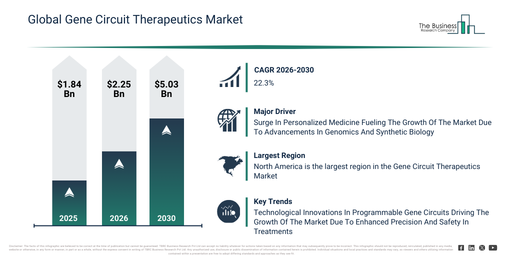
    The gene circuit therapeutics market has experienced substantial growth in its size over recent years. It is forecast to rise from $1.84 billion in 2025 to $2.25 billion in 2026, at a compound annual growth rate (CAGR) of 22.3%. This historical expansion can be attributed to advancements in synthetic biology research, the early successes of gene editing technologies, an increase in academic research funding, a greater understanding of cellular signaling pathways, and the expansion of immuno-oncology research.

    The gene circuit therapeutics market is poised for significant expansion in the coming years, with projections indicating a rise to $5.03 billion by 2030, exhibiting a compound annual growth rate (CAGR) of 22.3%. This projected increase during the forecast period stems from factors such as the increasing clinical application of gene circuit therapies, a growing need for highly specific treatments, the expanding uptake of programmable cell therapies, the enlargement of rare disease gene therapy pipelines, and elevated investments in advanced genetic medicines. Prominent trends anticipated within this period involve the intensified creation of programmable gene circuits, the rising utilization of logic-gated cell therapies, the broader integration of synthetic biology platforms, the advancement of precision-controlled gene expression systems, and an augmented focus on safety switch mechanisms.

    Get A Free Sample Report With In-Depth Market Insights:

    https://thebusinessresearchcompany.com/sample_request?id=25629143&type=smp&name=Gene%20Circuit%20Therapeutics%20Market%20Report%202026&utm_source=Blogs&utm_medium=Paid&utm_campaign=Oct_PR

    Gene Circuit Therapeutics Market Growth Catalysts And Demand Drivers

    The burgeoning demand for personalized medicine is poised to drive the expansion of the gene circuit therapeutics market in the future. Personalized medicine involves customizing medical care to align with the unique characteristics of each patient, often relying on genetic, biomarker, or molecular profiling. The surge in personalized medicine demand is fueled by advancements in genomics and synthetic biology, which enable more precise targeting of diseases and improved treatment outcomes. Gene circuit therapeutics play a crucial role in supporting personalized medicine by engineering cells and microbes with programmable logic to sense, compute, and respond to specific disease conditions, thereby facilitating safer, more effective, and patient-specific therapies. For instance, according to NHS England’s Genomics Statistical Commentary, a UK-based government authority, the total number of personalized genomic tests reached 65,884 in 2024, up 14% 2023, reflecting growing demand for personalized medicine. As a result, the increasing demand for personalized medicine has propelled the growth of the gene circuit therapeutics market.

    Gene Circuit Therapeutics Market Segment Performance And Emerging Opportunities

    The gene circuit therapeutics market covered in this report is segmented –

    1) By Product Type: Synthetic Gene Circuits, Programmable Cell Therapies, Gene Editing Tools, Other Product Types

    2) By Technology: Clustered Regularly Interspaced Short Palindromic Repeats (CRISPR), Transcription Activator-Like Effector Nuclease (TALEN), Zinc Finger Nucleases, Other Technologies

    3) By Application: Oncology, Rare Diseases, Infectious Diseases, Regenerative Medicine, Other Applications

    4) By End-User: Pharmaceutical And Biotechnology Companies, Academic And Research Institutes, Hospitals And Clinics, Other End-Users

    Subsegments:

    1) By Synthetic Gene Circuits: Switch-based Circuits, Logic Gate Circuits, Oscillatory Circuits, Memory Circuits

    2) By Programmable Cell Therapies: CAR-T Cell Therapy, TCR-T Cell Therapy, NK Cell Therapy, Stem Cell-Based Therapies

    3) By Gene Editing Tools: CRISPR-Cas Systems, TALENs, Zinc Finger Nucleases (ZFNs), Meganucleases

    4) By Others: RNA-Based Therapeutics, Antisense Oligonucleotides, Epigenome Editing Tools

    Gene Circuit Therapeutics Market Trends Shaping Long-Term Demand

    Companies operating within the gene circuit therapeutics market are primarily focused on creating programmable gene circuits. This development aims to enable more accurate disease targeting, better controlled therapeutic responses, and enhanced safety. These programmable circuits are essentially engineered genetic networks, constructed from DNA, RNA, and regulatory proteins, designed to emulate logical operations inside cells. This capability allows them to detect biological inputs, process information, and generate specific outputs. An illustrative example occurred in May 2023 when Synlogic, Inc., a US-based clinical-stage biotechnology company, unveiled new data on SYNB1353 at the Synthetic Biology: Engineering, Evolution & Design (SEED) Conference. SYNB1353 is a Synthetic Biotic drug candidate developed for homocystinuria (HCU). This candidate utilizes genetically programmed probiotic bacteria, equipped with metabolic gene circuits, specifically designed to consume methionine and consequently reduce toxic homocysteine levels. This application demonstrates the potential of programmable circuits to extend beyond oncology into the treatment of rare metabolic disorders, highlighting their ability to produce precise, durable, and patient-friendly medicines.

    Gene Circuit Therapeutics Market Key Players: Which Companies Lead Industry Competition?

    Major companies operating in the gene circuit therapeutics market are GenScript Biotech, Agilent Technologies, Cellectis S.A., CRISPR Therapeutics, Beam Therapeutics, Twist Bioscience, Ginkgo Bioworks, Sangamo Therapeutics, Senti Biosciences, Editas Medicine, BlueRock Therapeutics, Synthego Corporation, Manus Bio, Strand Therapeutics, Dyno Therapeutics, Obsidian Therapeutics, Rubius Therapeutics, Precigen Inc., Aurealis Therapeutics, Synlogic Inc., Azalea Therapeutics

    View The Full Gene Circuit Therapeutics Market Report:

    https://thebusinessresearchcompany.com/report/gene-circuit-therapeutics-global-market-report?utm_source=Blogs&utm_medium=Paid&utm_campaign=Oct_PR

    Gene Circuit Therapeutics Market Regional Analysis: Which Geography Leads On Revenue?

    North America was the largest region in the gene circuit therapeutics market in 2025. Asia-Pacific is expected to be the fastest-growing region in the forecast period. The regions covered in the gene circuit therapeutics market report are Asia-Pacific, South East Asia, Western Europe, Eastern Europe, North America, South America, Middle East, Africa.

    Reach Out To Our Team:

    The Business Research Company: https://www.thebusinessresearchcompany.com/

    Americas: +1 310-496-7795

    Asia: +44 7882 955267 & +91 8897263534

    Europe: +44 7882 955267

    Email us at: marketing@tbrc.info

    Follow us on:

    LinkedIn: https://in.linkedin.com/company/the-business-research-company

    YouTube: https://www.youtube.com/channel/UC24_fI0rV8cR5DxlCpgmyFQ

    Global Market Model: https://www.thebusinessresearchcompany.com/global-market-model
  • Gemcitabine Hydrochloride Market Forecast To Reach $1.14 Billion By 2030: Key Growth Drivers And Industry Trends

    Gemcitabine Hydrochloride Market Forecast To Reach $1.14 Billion By 2030: Key Growth Drivers And Industry Trends

    Built to provide research that’s more actionable and strategically valuable, The Business Research Company’s 2026 market reports include market attractiveness analysis, total addressable market sizing, company benchmarking matrices, interactive Excel dashboards, broader supply chain intelligence, emerging startup tracking, and in-depth product insights.

    Gemcitabine Hydrochloride Market Expansion Outlook: What Revenue Opportunities Are Ahead?

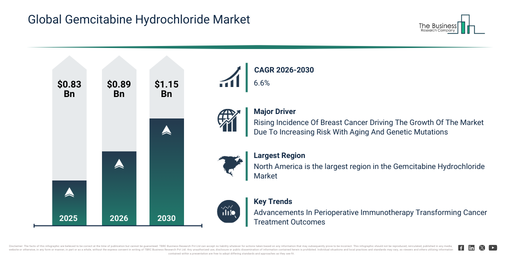
    The gemcitabine hydrochloride market size has experienced robust expansion in recent years. Projections indicate an increase from $0.83 billion in 2025 to $0.89 billion in 2026, demonstrating a compound annual growth rate (CAGR) of 6.7%. Historically, this growth can be linked to several factors, including a rise in cancer incidence rates, the authorization of gemcitabine-based treatments, the proliferation of oncology hospitals, increased adoption of chemotherapy, and greater investment in cancer research.

    The market for gemcitabine hydrochloride is projected to experience substantial growth in the upcoming years, with expectations to reach $1.15 billion by 2030, exhibiting a compound annual growth rate (CAGR) of 6.6%. This expansion during the forecast period stems from factors such as the rise of combination oncology therapies, the broadening of cancer care infrastructure, the increasing occurrence of solid tumors, the advancement of biosimilars, and improved access to oncology drugs. Key trends foreseen for this period encompass a greater utilization in combination chemotherapy, an uptick in demand for injectable oncology medications, an expansion of cancer treatments within hospitals, an intensified focus on precision oncology, and broader application across various cancer types.

    Get A Free Sample Report With In-Depth Market Insights:

    https://thebusinessresearchcompany.com/sample_request?id=12131099&type=smp&name=Gemcitabine%20Hydrochloride%20Market%20Report%202026&utm_source=Blogs&utm_medium=Paid&utm_campaign=Oct_PR

    Gemcitabine Hydrochloride Market Opportunity Drivers: What’s Unlocking New Revenue Potential?

    The increasing occurrence of breast cancer is expected to boost the expansion of the gemcitabine hydrochloride market in the future. Breast cancer is defined as a malignancy that originates in the breast cells, commonly within the milk ducts or glandular tissue. A longer life expectancy contributes to the increase in breast cancer diagnoses, given that extended lifespan provides more opportunities for genetic mutations to gather, thereby increasing the likelihood of developing this condition. Gemcitabine hydrochloride is essential in treating breast cancer because it disrupts DNA replication, thereby effectively impeding the swift proliferation of cancerous cells. For example, the International Agency For Research On Cancer, a US-based health organization, projected in February 2025 that 3.2 million breast cancer new cases per year are anticipated annually by 2050. Consequently, the escalating rate of breast cancer will fuel the expansion of the gemcitabine hydrochloride market.

    Gemcitabine Hydrochloride Market Segment Landscape And Growth Outlook

    The gemcitabine hydrochloride market covered in this report is segmented –

    1) By Product Type: Injection, Solution, Other Product Types

    2) By Distribution Channel: Hospital Pharmacies, Retail Pharmacies, Online Pharmacies, Specialty Clinics

    3) By Application: Pancreatic Cancer, Non-Small Cell Lung Cancer, Bladder Cancer, Breast Cancer, Ovarian Cancer, Other Applications

    Subsegments:

    1) By Injection: Single-Dose Vials, Multi-Dose Vials, Prefilled Syringes

    2) By Solution: Ready-To-Use Liquid Solutions, Concentrated Solutions For Dilution

    3) By Other Product Types: Lyophilized Powder, Combination Formulations With Other Chemotherapeutic Agents

    Gemcitabine Hydrochloride Market Innovation Trends Shaping Future Development

    Leading companies in the gemcitabine hydrochloride market are concentrating on developing advanced therapeutic approaches, such as perioperative immunotherapy, to increase treatment effectiveness. Perioperative immunotherapy refers to cancer treatment administered both before (neoadjuvant) and after (adjuvant) surgery to improve patient outcomes and decrease the likelihood of recurrence. For instance, in March 2025, AstraZeneca, a UK-based pharmaceutical company, obtained US Food and Drug Administration (FDA) approval for Imfinzi (durvalumab). This approval signifies the first and only perioperative immunotherapy sanctioned for treating muscle-invasive bladder cancer (MIBC). The treatment protocol involves combining Imfinzi with chemotherapy (gemcitabine and cisplatin) before surgery, then continuing with Imfinzi alone following the procedure. Clinical trials have indicated improved survival rates and reduced risks of recurrence.

    Gemcitabine Hydrochloride Market Competitive Landscape: Who Leads The Industry?

    Major companies operating in the gemcitabine hydrochloride market are Fresenius Kabi, Eli Lilly and Company, Teva Pharmaceutical Industries Ltd., Intas Pharmaceuticals Ltd., Mylan NV, Accord Healthcare, Sandoz Group AG, Sun Pharmaceutical Industries Ltd., Apotex Inc., Dr. Reddy’s Laboratories, Cipla Ltd., Amneal Pharmaceuticals, Alkem Laboratories, Gland Pharma Ltd., Strides Pharma Science Ltd., Shilpa Medicare Ltd., ScinoPharm Taiwan Ltd., Orchid Pharma Ltd., Arevipharma GmbH, Qilu Pharmaceutical Co. Ltd.

    View The Full Gemcitabine Hydrochloride Market Report:

    https://thebusinessresearchcompany.com/report/gemcitabine-hydrochloride-global-market-report?utm_source=Blogs&utm_medium=Paid&utm_campaign=Oct_PR

    Gemcitabine Hydrochloride Market Geographic Spread And Regional Opportunities

    North America was the largest region in the gemcitabine hydrochloride market in 2025. Asia-Pacific is expected to be the fastest-growing region in the forecast period. The regions covered in the gemcitabine hydrochloride market report are Asia-Pacific, South East Asia, Western Europe, Eastern Europe, North America, South America, Middle East, Africa.

    Reach Out To Our Team:

    The Business Research Company: https://www.thebusinessresearchcompany.com/

    Americas: +1 310-496-7795

    Asia: +44 7882 955267 & +91 8897263534

    Europe: +44 7882 955267

    Email us at: marketing@tbrc.info

    Follow us on:

    LinkedIn: https://in.linkedin.com/company/the-business-research-company

    YouTube: https://www.youtube.com/channel/UC24_fI0rV8cR5DxlCpgmyFQ

    Global Market Model: https://www.thebusinessresearchcompany.com/global-market-model
  • G-CSF (Granulocyte Colony Stimulating Factors) Market Research 2026: Market Size, Trends, Segments And Growth Forecast

    G-CSF (Granulocyte Colony Stimulating Factors) Market Research 2026: Market Size, Trends, Segments And Growth Forecast

    Backed by market attractiveness analysis, total addressable market sizing, company benchmarking matrices, interactive Excel dashboards, wider supply chain intelligence, emerging startup coverage, and detailed product-level insights, The Business Research Company’s 2026 market reports are designed to offer research that is more actionable and strategically valuable than ever.

    G-CSF (Granulocyte Colony Stimulating Factors) Market Growth Potential: How Will Market Size Shift Through 2030?

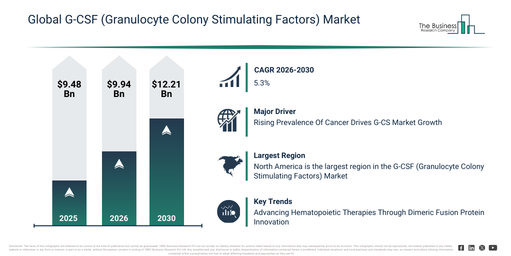
    The g-csf (granulocyte colony stimulating factors) market has shown consistent expansion in recent years. It is projected to increase from $9.48 billion in 2025 to $9.94 billion in 2026, at a compound annual growth rate (CAGR) of 4.8%. This historical growth can be attributed to factors such as the limited availability of g-csf therapies, the rising prevalence of chemotherapy-induced neutropenia, an expanding oncology patient population, regulatory approvals for first-generation g-csf products, and the adoption of injectable formulations.

    The market for g-csf (granulocyte colony stimulating factors) is projected to experience substantial expansion over the upcoming years. Its valuation is set to reach $12.21 billion in 2030, exhibiting a compound annual growth rate (CAGR) of 5.3%. This anticipated growth is driven by factors such as the introduction of innovative g-csf products, the widening presence of biosimilars in developing markets, an increase in combination therapy applications, a growing preference for pre-filled syringe formats, and enhanced investment in supportive care and programs for neutropenia management. Key trends foreseen during this period encompass an escalating demand for g-csf biosimilars, a greater uptake of pre-filled syringes and injectable options, an increase in combination treatments involving other growth factors, broader application of g-csf in oncology and blood disorder therapies, and heightened understanding of neutropenia management and supportive care.

    Get A Free Sample Report With In-Depth Market Insights:

    https://thebusinessresearchcompany.com/sample_request?id=41480887&type=smp&name=G-CSF%20%28Granulocyte%20Colony%20Stimulating%20Factors%29%20Market%20Report%202026&utm_source=Blogs&utm_medium=Paid&utm_campaign=Oct_PR

    G-CSF (Granulocyte Colony Stimulating Factors) Market Growth Momentum: What Factors Are Shaping Demand?

    The G-CSF (granulocyte colony stimulating factor) market is anticipated to expand due to the rising incidence of cancer. Cancer is defined as an illness marked by the unchecked proliferation and dissemination of atypical cells, capable of impairing normal bodily functions and causing mortality. This growing prevalence of cancer stems from factors like an aging demographic, shifts in lifestyle, and environmental exposures that elevate the risk of developing the disease. The G-CSF market addresses this trend by offering growth factors that encourage the production of white blood cells, thereby lowering the chances of infection and sepsis in individuals with cancer receiving chemotherapy. For example, data from October 2025, provided by the National Health Service (NHS), a UK government health agency, reported 354,820 new cancer diagnoses in 2023, averaging 972 daily, which represents an increase of 8,605 compared to 2022. Consequently, the expanding incidence of cancer is stimulating the growth within the G-CSF (granulocyte colony stimulating factor) market.

    G-CSF (Granulocyte Colony Stimulating Factors) Market Breakdown By Product Type And Application

    The g-csf (granulocyte colony stimulating factors) market covered in this report is segmented –

    1) By Type: Pegfilgrastim, Lenograstim, Filgrastim, Other Types

    2) By Product Form: Tablet, Capsule, Other Product Forms

    3) By Application: Oncological Diseases, Blood Disorders, Chronic And Autoimmune Disorders, Other Applications

    Subsegments:

    1) By Pegfilgrastim: Pre-filled Syringes, Vial Formulations, Biosimilars Of Pegfilgrastim

    2) By Lenograstim: Injectable Formulations, Vial Formulations, Combination Therapies

    3) By Filgrastim: Injectable Formulations, Pre-filled Syringes, Biosimilars Of Filgrastim

    4) By Other Types: Filgrastim-sndz (Biosimilar), Novel G-CSF Products In Development, Combination Therapies With Other Growth Factors

    G-CSF (Granulocyte Colony Stimulating Factors) Market Trends Redefining Industry Growth

    Companies operating within the G-CSF (granulocyte colony stimulating factor) market are concentrating on technological breakthroughs in hematopoietic treatments, including dimeric fusion protein design, to enhance neutrophil production and mitigate immunogenicity in long-acting G-CSF therapies. Dimeric fusion protein design signifies the linkage of two G-CSF molecules into a singular protein to extend its half-life and improve receptor activation without PEGylation. As an illustration, in November 2023, Evive Biotech Inc., a biopharmaceutical company based in Singapore, secured U.S. Food and Drug Administration (FDA) approval for Ryzneuta (efbemalenograstim alfa), which is a long-acting biosimilar G-CSF intended for reducing the length of neutropenia and febrile neutropenia in adults undergoing cytotoxic chemotherapy. Ryzneuta, a modified recombinant G-CSF, works by stimulating neutrophil creation in the bone marrow, thereby accelerating the recovery of neutrophil counts. Its significant attributes encompass long-acting administration, compatibility with numerous chemotherapy regimens, and a ready-to-use prefilled syringe. It is employed for the prevention of chemotherapy-induced neutropenia, mobilization of stem cells, and supportive care for immunocompromised patients, providing benefits such as fewer injections, better adherence, and superior overall patient results.

    G-CSF (Granulocyte Colony Stimulating Factors) Market Company Landscape And Competitive Strategy

    Major companies operating in the g-csf (granulocyte colony stimulating factors) market are Amgen Inc., Coherus Biosciences Inc., Sandoz, Biocon/Mylan, Teva Pharmaceuticals Inc., Chugai Pharma, Intalfarmaco Group, Pfizer, Sun Pharmaceutical Industries Limited, Cipla.

    View The Full G-CSF (Granulocyte Colony Stimulating Factors) Market Report:

    https://thebusinessresearchcompany.com/report/G-CSF-global-market-report?utm_source=Blogs&utm_medium=Paid&utm_campaign=Oct_PR

    G-CSF (Granulocyte Colony Stimulating Factors) Market Top Region By Revenue And Market Share

    North America was the largest region in the G-CSF (granulocyte colony-stimulating factors) market in 2025. The regions covered in the g-csf (granulocyte colony stimulating factors) market report are Asia-Pacific, South East Asia, Western Europe, Eastern Europe, North America, South America, Middle East, Africa.

    Reach Out To Our Team:

    The Business Research Company: https://www.thebusinessresearchcompany.com/

    Americas: +1 310-496-7795

    Asia: +44 7882 955267 & +91 8897263534

    Europe: +44 7882 955267

    Email us at: marketing@tbrc.info

    Follow us on:

    LinkedIn: https://in.linkedin.com/company/the-business-research-company

    YouTube: https://www.youtube.com/channel/UC24_fI0rV8cR5DxlCpgmyFQ

    Global Market Model: https://www.thebusinessresearchcompany.com/global-market-model
  • Gastroparesis Drugs Market Forecast 2026: Market Size, Competitive Landscape And Growth Drivers

    Gastroparesis Drugs Market Forecast 2026: Market Size, Competitive Landscape And Growth Drivers

    Featuring market attractiveness scoring, total addressable market sizing, company benchmarking matrices, interactive Excel dashboards, deeper supply chain intelligence, emerging startup tracking, and granular product-level insights, The Business Research Company’s 2026 market reports are built to deliver research that is both more actionable and more strategically valuable.

    Gastroparesis Drugs Market Value Analysis: What Growth Lies Ahead Over The Forecast Period?

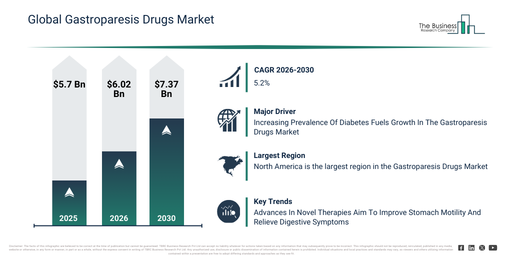
    The gastroparesis drugs market has experienced substantial growth in recent years. It is forecast to increase from $5.7 billion in 2025 to $6.02 billion in 2026, achieving a compound annual growth rate (CAGR) of 5.7%. The market’s historical expansion can be attributed to several factors: an uptick in the diagnosis of diabetic gastroparesis, the continued application of prokinetic and antiemetic drugs, a rising prevalence of diabetes-related gastrointestinal disorders, the availability of both OTC and prescription medications for symptom relief, and the expansion of gastroenterology care services.

    The gastroparesis drugs market is anticipated to experience robust expansion over the coming years. This market is projected to reach $7.37 billion in 2030, exhibiting a compound annual growth rate (CAGR) of 5.2%. Factors driving this growth during the forecast timeframe include an increase in global diabetes prevalence, heightened understanding of gastroparesis as a chronic illness, a rising need for efficacious long-term symptom management, broader availability of specialized gastrointestinal treatment, and a continuous requirement for better motility-enhancing treatments. Key trends anticipated during this period encompass an increasing dependence on prokinetic medications for symptom relief, a surge in the adoption of combination drug therapies for gastroparesis, a heightened demand for prescription-only gastroparesis medications, an expansion of treatment strategies centered on symptoms, and more widespread application of oral drug forms for extended management.

    Get A Free Sample Report With In-Depth Market Insights:

    https://thebusinessresearchcompany.com/sample_request?id=64329955&type=smp&name=Gastroparesis%20Drugs%20Market%20Report%202026&utm_source=Blogs&utm_medium=Paid&utm_campaign=Oct_PR

    Gastroparesis Drugs Market Expansion Drivers: What’s Shaping Future Growth?

    The expanding occurrence of diabetes is projected to fuel the expansion of the gastroparesis drugs market in the future. Diabetes is a long-term metabolic condition marked by high blood sugar levels, stemming from either inadequate insulin generation or inefficient insulin use. The rise in diabetes cases can be attributed to factors such as inactive lifestyles, poor eating habits, genetic factors, increased urbanization, an aging populace, and increasing obesity. The gastroparesis drugs market contributes to diabetes care through medicines that alleviate symptoms like nausea, vomiting, and delayed stomach emptying, which are frequent gastrointestinal issues linked to diabetic gastroparesis. For instance, data from March 2024 by the Office for Health Improvement & Disparities, a UK-based government department, showed that from March 2022 to March 2023, the number of individuals with type 1 diabetes getting all eight suggested care processes grew by 22%, while type 2 diabetes patients experienced a 21% rise, and the proportion reaching target HbA1c levels climbed to 37.9%, marking the highest figure ever recorded by the National Diabetes Audit. Consequently, the growing incidence of diabetes is propelling the expansion of the gastroparesis drugs market.

    Gastroparesis Drugs Market Segment Analysis And Revenue Potential

    The gastroparesis drugs market covered in this report is segmented –

    1) By Drug Type: Over-the-counter (OTC) Drugs, Prescription Drugs

    2) By Drug Class: Prokinetic Agents, Antiemetic Drugs, Proton Pump Inhibitors, Other Drug Classes

    3) By Disease Type: Diabetic Gastroparesis, Post-Surgical Gastroparesis, Idiopathic Gastroparesis, Other Disease Types

    4) By Route Of Administration: Oral, Injectables, Other Routes Of Administration

    5) By Distribution Channel: Hospitals, Pharmacies, Clinics, E-commerce

    Subsegments:

    1) By Over-the-counter (OTC) Drugs: Antacids, Anti-Nausea Medications, Antiemetics, Digestive Enzyme Supplements

    2) By Prescription Drugs: Prokinetic Agents, Antiemetic Drugs, Antibiotics, Antidepressants

    Gastroparesis Drugs Market Strategic Trends: What Defines The Next Growth Phase?

    Leading companies within the gastroparesis drugs market are focusing on developing innovative solutions, including novel prokinetic therapies, to enhance gastric motility and reduce associated symptoms. These novel prokinetic therapies are new medications formulated to stimulate and improve the natural movement of the stomach and intestines, aiding in more effective food passage. For instance, in December 2023, Vanda Pharmaceuticals Inc., a US-based biopharmaceutical company, obtained approval from the U.S. Food and Drug Administration (FDA) for the filing of its New Drug Application (NDA) concerning tradipitant for addressing the symptoms of gastroparesis. This approval is for tradipitant, an investigational oral neurokinin-1 receptor antagonist, designated for treating gastroparesis, a significant digestive disorder with considerable unmet medical requirements. This acceptance marks a crucial regulatory achievement for Vanda as the company proceeds with seeking marketing authorization for tradipitant among gastroparesis patients.

    Gastroparesis Drugs Market Key Players Shaping Industry Direction

    Major companies operating in the gastroparesis drugs market are Evoke Pharma Inc., Takeda Pharmaceutical Inc., AbbVie Inc., Salix Pharmaceuticals Inc., Pfizer Inc., Sanofi SA, AstraZeneca plc, Teva Pharmaceutical Inc., Bausch Health Companies Inc., Abbott Laboratories, GSK plc, Eisai Co. Ltd., Vanda Pharmaceuticals Inc., Theravance Biopharma Inc., ANI Pharmaceuticals Inc., Cadila Pharmaceuticals, Cipla Ltd., Ipca Laboratories Ltd., Neurogastrx Inc., Processa Pharmaceuticals Inc.

    View The Full Gastroparesis Drugs Market Report:

    https://thebusinessresearchcompany.com/report/gastroparesis-drugs-global-market-report?utm_source=Blogs&utm_medium=Paid&utm_campaign=Oct_PR

    Gastroparesis Drugs Market Regional Analysis And Top Geography

    North America was the largest region in the gastroparesis drugs market in 2025. Asia-Pacific is expected to be the fastest-growing region in the forecast period. The regions covered in the gastroparesis drugs market report are Asia-Pacific, South East Asia, Western Europe, Eastern Europe, North America, South America, Middle East, Africa.

    Reach Out To Our Team:

    The Business Research Company: https://www.thebusinessresearchcompany.com/

    Americas: +1 310-496-7795

    Asia: +44 7882 955267 & +91 8897263534

    Europe: +44 7882 955267

    Email us at: marketing@tbrc.info

    Follow us on:

    LinkedIn: https://in.linkedin.com/company/the-business-research-company

    YouTube: https://www.youtube.com/channel/UC24_fI0rV8cR5DxlCpgmyFQ

    Global Market Model: https://www.thebusinessresearchcompany.com/global-market-model
  • Gastrointestinal Therapeutics Market Size In 2026: Regional Growth, Key Segments And Future Outlook

    Gastrointestinal Therapeutics Market Size In 2026: Regional Growth, Key Segments And Future Outlook

    Built to provide research that’s more actionable and strategically valuable, The Business Research Company’s 2026 market reports include market attractiveness analysis, total addressable market sizing, company benchmarking matrices, interactive Excel dashboards, broader supply chain intelligence, emerging startup tracking, and in-depth product insights.

    Gastrointestinal Therapeutics Market Size Forecast: How Big Could The Market Get By 2030?

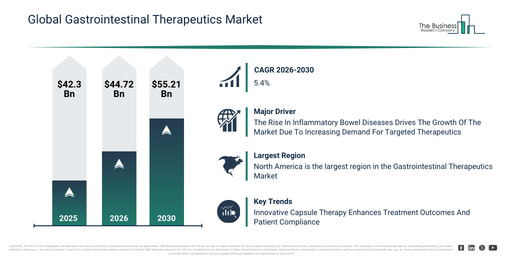
    The gastrointestinal therapeutics market has shown robust growth in recent years. It is anticipated to expand from $42.3 billion in 2025 to $44.72 billion in 2026, registering a compound annual growth rate (CAGR) of 5.7%. The market’s historical expansion stemmed from various factors, including the constrained availability of biologics and advanced gastrointestinal therapies, a rising occurrence of acid reflux and ulcers, a dependency on hospital and clinic-based treatment, growing public awareness concerning digestive health, and the widespread use of traditional over-the-counter antacids and laxatives.

    The gastrointestinal therapeutics market size is projected for substantial expansion over the upcoming years. It will grow to $55.21 billion in 2030 at a compound annual growth rate (CAGR) of 5.4%. This anticipated growth during the forecast period is propelled by factors such as the development of targeted biologics and immunotherapies, the expansion of ambulatory surgical centers and diagnostic laboratories, increased adoption of oral and intravenous delivery systems, growing online pharmacy penetration, and advancements in probiotics and digestive enzyme formulations. Key trends observed within the forecast period encompass a rising prevalence of gastrointestinal disorders, a greater uptake of biologics and advanced therapies, an increase in over-the-counter therapeutics, an intensified focus on personalized gastrointestinal treatments, and expanding online and retail pharmacy distribution.

    Get A Free Sample Report With In-Depth Market Insights:

    https://thebusinessresearchcompany.com/sample_request?id=19972173&type=smp&name=Gastrointestinal%20Therapeutics%20Market%20Report%202026&utm_source=Blogs&utm_medium=Paid&utm_campaign=Oct_PR

    Gastrointestinal Therapeutics Market Development Factors: What’s Supporting Demand?

    The increasing prevalence of inflammatory bowel diseases is projected to stimulate the expansion of the gastrointestinal therapeutics market moving forward. Inflammatory bowel disease (IBD) is a persistent condition characterized by inflammation of the digestive tract, primarily involving Crohn’s disease and ulcerative colitis. The rise in inflammatory bowel diseases can be attributed to genetic susceptibility, which causes an abnormal immune response to gut microbes. Gastrointestinal therapeutics play a crucial role in managing and treating bowel diseases by targeting underlying inflammation, regulating digestive functions, and alleviating associated symptoms to improve patient outcomes. For instance, in December 2023, data from the IBD Registry, a UK-based non-profit organization, indicated that over 5,300 individuals with inflammatory bowel diseases (IBD) were registered in 2023, marking an increase of more than 3,000 members from 2022. Hence, the escalating occurrence of inflammatory bowel diseases is fueling the growth of the gastrointestinal therapeutics market.

    Gastrointestinal Therapeutics Market Segmentation And Category Overview

    The gastrointestinal therapeutics market covered in this report is segmented –

    1) By Product: Over-The-Counter Gastrointestinal Therapeutics, Prescription-Based Gastrointestinal Therapeutics

    2) By Route Of Administration: Oral, Intravenous, Other Routes Of Administration

    3) By Application: Inflammatory Bowel Disease, Gastroesophageal Reflux Disease, Peptic Ulcer Disease, Irritable Bowel Syndrome, Other Applications

    4) By Distribution Channel: Hospital Pharmacies, Retail Pharmacies, Online Pharmacies

    5) By End-User: Hospitals, Clinics, Ambulatory Surgical Centers, Diagnostic Laboratories, Other End-Users

    Subsegments:

    1) By Over-The-Counter Gastrointestinal Therapeutics: Antacids, Laxatives, Anti-Diarrheal Agents, Digestive Enzymes, Probiotics, H2-Receptor Antagonists, Simethicone Products

    2) By Prescription-Based Gastrointestinal Therapeutics: Proton Pump Inhibitors, Antibiotics For H. pylori, Aminosalicylates, Biologics, Corticosteroids, Immunosuppressants, Antiemetics

    Gastrointestinal Therapeutics Market Transformation Trends: What Innovations Are Driving Change?

    Leading companies within the gastrointestinal therapeutics market are prioritizing the development of innovative treatments, such as sustained-release (SR) fixed-dose combination capsules, to boost patient adherence and enhance the efficacy of therapy. These sustained-release (SR) fixed-dose combination capsules are oral medications engineered to gradually release multiple active ingredients over time, thus maintaining consistent drug levels and reducing the frequency of dosing. For example, in June 2024, Akums Drugs and Pharmaceuticals Limited, an India-based pharmaceutical preparation manufacturing company, unveiled rabeprazole + levosulpiride SR capsules for the treatment of gastrointestinal disorders across India. This particular formulation integrates rabeprazole, a proton pump inhibitor that reduces stomach acid, with levosulpiride, a prokinetic agent that improves gut motility. Together, these components deliver effective relief from symptoms like heartburn, acid reflux, bloating, and indigestion. This specific combination is extensively prescribed for managing gastroesophageal reflux disease, peptic ulcers, and other associated gastrointestinal (GI) conditions.

    Gastrointestinal Therapeutics Market Competitive Analysis Of Leading Industry Participants

    Major companies operating in the gastrointestinal therapeutics market are Abbott Laboratories, Novartis AG, Takeda Pharmaceutical Company Limited., Boehringer Ingelheim International GmbH, Otsuka Holdings Co. Ltd., Daiichi Sankyo Company Limited., Bausch Health Companies Inc, UCB S.A., Eisai Co. Ltd., Aurobindo Pharma Limited., Dr. Reddy’s Laboratories Limited., Ironwood Pharmaceuticals Inc, Salix Pharmaceuticals Ltd., Ferring Pharmaceuticals A/S, Jubilant Pharma Limited., Sebela Pharmaceuticals Inc, Cosmo Pharmaceuticals N.V., Tillotts Pharma AG, Mitsubishi Tanabe Pharma Corporation

    View The Full Gastrointestinal Therapeutics Market Report:

    https://thebusinessresearchcompany.com/report/gastrointestinal-therapeutics-global-market-report?utm_source=Blogs&utm_medium=Paid&utm_campaign=Oct_PR

    Gastrointestinal Therapeutics Market Geographic Analysis: Where Is Demand Rising Fastest?

    North America was the largest region in the gastrointestinal therapeutics market in 2025. Asia-Pacific is expected to be the fastest-growing region in the forecast period. The regions covered in the gastrointestinal therapeutics market report are Asia-Pacific, South East Asia, Western Europe, Eastern Europe, North America, South America, Middle East, Africa.

    Reach Out To Our Team:

    The Business Research Company: https://www.thebusinessresearchcompany.com/

    Americas: +1 310-496-7795

    Asia: +44 7882 955267 & +91 8897263534

    Europe: +44 7882 955267

    Email us at: marketing@tbrc.info

    Follow us on:

    LinkedIn: https://in.linkedin.com/company/the-business-research-company

    YouTube: https://www.youtube.com/channel/UC24_fI0rV8cR5DxlCpgmyFQ

    Global Market Model: https://www.thebusinessresearchcompany.com/global-market-model
  • Gastrointestinal Over-The-Counter (OTC) Drugs Market Growth Forecast Through 2030: Market Size And Trends In 2026

    Gastrointestinal Over-The-Counter (OTC) Drugs Market Growth Forecast Through 2030: Market Size And Trends In 2026

    Backed by market attractiveness analysis, total addressable market sizing, company benchmarking matrices, interactive Excel dashboards, wider supply chain intelligence, emerging startup coverage, and detailed product-level insights, The Business Research Company’s 2026 market reports are designed to offer research that is more actionable and strategically valuable than ever.

    Gastrointestinal Over-The-Counter (OTC) Drugs Market Revenue Outlook: What CAGR Lies Ahead Through 2030?

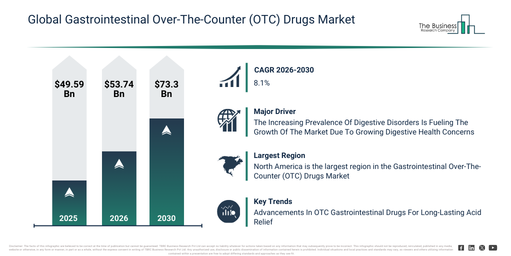
    The gastrointestinal over-the-counter (otc) drugs market has experienced robust expansion in recent years. Its value is expected to rise from $49.59 billion in 2025 to $53.74 billion in 2026, demonstrating a compound annual growth rate (CAGR) of 8.4%. The increase observed in previous periods is attributable to the widespread occurrence of digestive disorders, the ease of access to OTC medications, the growth of pharmacy retail networks, evolving urban lifestyles, and alterations in dietary patterns.

    The market for gastrointestinal over-the-counter (OTC) drugs is projected to experience substantial expansion in the coming years. This market is anticipated to reach a value of $73.3 billion by 2030, demonstrating a compound annual growth rate (CAGR) of 8.1%. Factors contributing to this growth during the projection period include the increasing adoption of preventive digestive care, the expansion of e-commerce platforms, a rising demand for clean-label OTC products, an aging global population, and heightened awareness regarding digestive health. Key trends anticipated over the forecast timeframe encompass a surge in self-medication for various digestive ailments, an escalating need for rapidly effective OTC relief, a greater utilization of combined gastrointestinal formulations, the proliferation of online pharmacy sales, and an increasing inclination towards herbal and enzyme-derived products.

    Get A Free Sample Report With In-Depth Market Insights:

    https://thebusinessresearchcompany.com/sample_request?id=36491417&type=smp&name=Gastrointestinal%20Over-The-Counter%20%28OTC%29%20Drugs%20Market%20Report%202026&utm_source=Blogs&utm_medium=Paid&utm_campaign=Oct_PR

    Gastrointestinal Over-The-Counter (OTC) Drugs Market Industry Drivers: What’s Behind The Revenue Growth?

    A growing incidence of digestive ailments is projected to boost the expansion of the gastrointestinal OTC drugs market in the foreseeable future. These conditions encompass various affections of the gastrointestinal tract, such as the stomach, intestines, and related organs. The surge in digestive issues primarily stems from increased consumption of processed, low-fiber diets, leading to compromised gut health and impaired digestion. Over-the-counter gastrointestinal medications alleviate symptoms of these disorders through mechanisms like stomach acid reduction, bowel movement regulation, and improvements in gut health. Such drugs offer quick and accessible relief for prevalent problems including acidity, constipation, and indigestion. For example, data from the IBD Registry Ltd., a non-profit organization based in the UK, revealed that in December 2023, the count of individuals suffering from inflammatory bowel disease (IBD) surpassed 5,300, indicating an increment of over 3,000 members since 2022. Consequently, the rising occurrence of digestive disorders is fueling the expansion of the gastrointestinal OTC drugs market.

    Gastrointestinal Over-The-Counter (OTC) Drugs Market Segment Outlook: Which Categories Are Growing Fastest?

    The gastrointestinal over-the-counter (otc) drugs market covered in this report is segmented –

    1) By Product: Antacid, Laxatives, Anti-Diarrheal, Anti-Emetics, Other Products

    2) By Formulation: Tablets, Capsules, Liquids, Other Formulations

    3) By Indications: Heartburn, Diarrhoea, Constipation, Gastroesophageal Reflux Disease (GERD), Nausea, Vomiting, Motion Sickness, Other Indications

    4) By Distribution Channel: Hospital Pharmacy, Retail Pharmacy, Online Pharmacy, Other Distribution Channels

    5) By End-Users: Hospitals, Clinics, Home Healthcare, Other End-Users

    Subsegments:

    1) By Antacid: Proton Pump Inhibitors (PPIs), H2-Receptor Antagonists, Calcium Carbonate, Magnesium Hydroxide, Sodium Bicarbonate, Combination Antacids

    2) By Laxatives: Bulk-Forming Laxatives, Stimulant Laxatives, Osmotic Laxatives, Stool Softeners, Lubricant Laxatives

    3) By Anti-Diarrheal: Loperamide, Bismuth Subsalicylate, Probiotics, Electrolyte Solutions

    4) By Anti-Emetics: Antihistamines, Bismuth Subsalicylate, Phosphorated Carbohydrate Solution, Ginger Supplements

    5) By Other Products: Digestive Enzymes, Simethicone, Herbal Remedies, Activated Charcoal

    #Gastrointestinal Over-The-Counter (OTC) Drugs Market Growth Trends: What’s Shaping The Future Outlook?

    Key players within the gastrointestinal OTC drugs market are concentrating their efforts on creating sophisticated offerings, including over-the-counter proton pump inhibitors, designed to deliver efficient and sustained alleviation from conditions related to excess acid. These over-the-counter (OTC) proton pump inhibitors (PPIs) represent a category of non-prescription drugs formulated to diminish stomach acid secretion, frequently utilized for managing ailments like recurring heartburn, acid reflux (GERD), and gastric ulcers. An illustrative development occurred in March 2025 when Eisai Co., Ltd., a pharmaceutical firm based in Japan, secured regulatory approval in Japan for the transition of its product, Pariet S (rabeprazole sodium 10 mg), from prescription (RX) to over-the-counter (OTC) availability. This landmark decision established it as Japan’s inaugural OTC PPI to feature the identical active ingredient and dosage as its prescription counterpart. Pariet S addresses stomach pain, heartburn, and bloating, providing 24-hour relief through a convenient once-daily, easy-to-swallow tablet. Its introduction is intended to meet the increasing demand for potent treatments for gastric acid-related issues, driven by evolving lifestyle patterns and demographic shifts.

    Gastrointestinal Over-The-Counter (OTC) Drugs Market Leading Companies And Competitive Benchmarking

    Major companies operating in the gastrointestinal over-the-counter (otc) drugs market are Pfizer Inc., Procter & Gamble Co., Johnson & Johnson, Merck & Co. Inc., Bayer AG, Novartis AG, Sanofi S.A., AstraZeneca plc, Abbott Laboratories, GlaxoSmithKline plc, Takeda Pharmaceutical Company Limited, Teva Pharmaceutical Industries Ltd., Reckitt Benckiser Group plc, Boehringer Ingelheim GmbH, Haleon plc, Sandoz AG, Bausch Health Companies Inc., Sun Pharmaceutical Industries Ltd., Perrigo Company plc, Dr. Reddy’s Laboratories Ltd.

    View The Full Gastrointestinal Over-The-Counter (OTC) Drugs Market Report:

    https://thebusinessresearchcompany.com/report/gastrointestinal-over-the-counter-otc-drugs-global-market-report?utm_source=Blogs&utm_medium=Paid&utm_campaign=Oct_PR

    Gastrointestinal Over-The-Counter (OTC) Drugs Market Global Footprint: Which Region Leads The Market?

    North America was the largest region in the gastrointestinal over-the-counter (OTC) drugs market in 2025. Asia-Pacific is expected to be the fastest-growing region in the forecast period. The regions covered in the gastrointestinal over-the-counter (otc) drugs market report are Asia-Pacific, South East Asia, Western Europe, Eastern Europe, North America, South America, Middle East, Africa.

    Reach Out To Our Team:

    The Business Research Company: https://www.thebusinessresearchcompany.com/

    Americas: +1 310-496-7795

    Asia: +44 7882 955267 & +91 8897263534

    Europe: +44 7882 955267

    Email us at: marketing@tbrc.info

    Follow us on:

    LinkedIn: https://in.linkedin.com/company/the-business-research-company

    YouTube: https://www.youtube.com/channel/UC24_fI0rV8cR5DxlCpgmyFQ

    Global Market Model: https://www.thebusinessresearchcompany.com/global-market-model
  • Gastroesophageal Reflux Disease Therapeutics Market Analysis: $6.42 Billion Market Size In 2026 And Future Growth Prospects

    Gastroesophageal Reflux Disease Therapeutics Market Analysis: $6.42 Billion Market Size In 2026 And Future Growth Prospects

    Featuring market attractiveness scoring, total addressable market sizing, company benchmarking matrices, interactive Excel dashboards, deeper supply chain intelligence, emerging startup tracking, and granular product-level insights, The Business Research Company’s 2026 market reports are built to deliver research that is both more actionable and more strategically valuable.

    Gastroesophageal Reflux Disease Therapeutics Market Growth Analysis: How Will Revenue Trend Over The Forecast Period?

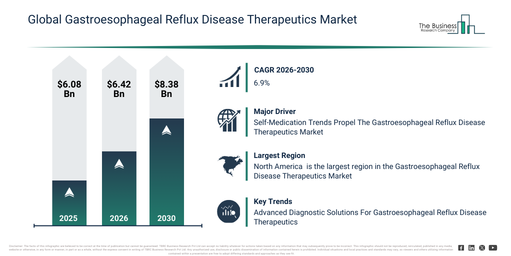
    The gastroesophageal reflux disease therapeutics market has demonstrated robust expansion over recent years. It is projected to increase from $6.08 billion in 2025 to $6.42 billion in 2026, achieving a compound annual growth rate (CAGR) of 5.6%. The historical development of this market is attributable to the rising prevalence of gerd, the adoption of proton pump inhibitors, heightened awareness regarding digestive health, the growth of hospital pharmacies, and an expanding geriatric population.

    The gastroesophageal reflux disease therapeutics market is expected to experience substantial growth over the next few years. It is projected to reach $8.38 billion in 2030, expanding at a compound annual growth rate (CAGR) of 6.9%. This anticipated growth during the forecast period can be attributed to innovations in drug formulations, the expansion of e-pharmacies, the adoption of telemedicine for gastro care, increasing investment in precision medicine, and the growing demand for minimally invasive therapies. Major trends identified for the forecast period include personalized GERD treatment approaches, the development of novel drug delivery systems, a rising demand for over-the-counter GERD medications, an increased focus on gut health and microbiome regulation, and the integration of remote patient monitoring and telehealth services.

    Get A Free Sample Report With In-Depth Market Insights:

    https://thebusinessresearchcompany.com/sample_request?id=82387208&type=smp&name=Gastroesophageal%20Reflux%20Disease%20Therapeutics%20Market%20Report%202026&utm_source=Blogs&utm_medium=Paid&utm_campaign=Oct_PR

    Gastroesophageal Reflux Disease Therapeutics Market Growth Factors: What’s Supporting Expansion?

    The gastroesophageal reflux disease therapeutics market is experiencing growth driven by the increased embrace of self-medication. This approach involves individuals using drugs or other substances to manage a medical condition without professional consultation. Self-medication is instrumental in improving GERD symptoms by aiding in the identification and avoidance of trigger foods, stress management, and smoking cessation. For instance, in July 2024, the Proprietary Association of Great Britain (PAGB), a UK-based trade association, highlighted that 64 million UK residents experienced at least one self-treatable condition in 2023. The same report indicated a notable increase in GP-advised cases for over-the-counter self-care, which rose from 58% in 2023 to 75% in 2024, while consumer confidence in these medications escalated to 89%, representing an 8-point gain over the previous year. Thus, the growing adoption of self-medication is a primary factor propelling the gastroesophageal reflux disease therapeutics market.

    Gastroesophageal Reflux Disease Therapeutics Market Segment Landscape: Which Areas Lead Development?

    The gastroesophageal reflux disease therapeutics market covered in this report is segmented –

    1) By Type: Branded, Generic

    2) By Drug Class: Antacids, Proton Pump Inhibitors, Histamine Blockers, Pro-Kinetic Agents, Other Drugs Class

    3) By Distribution Channel: Hospital Pharmacy, Drug Stores, General Stores, Supermarkets

    Subsegments:

    1) By Branded: Proton Pump Inhibitors (PPIs), H2-Receptor Antagonists, Antacids, Coating Agents

    2) By Generic: Generic Proton Pump Inhibitors (PPIs), Generic H2-Receptor Antagonists, Generic Antacids, Generic Coating Agents

    Gastroesophageal Reflux Disease Therapeutics Market Industry Trends: What’s Reshaping Demand?

    Leading companies in the gastroesophageal reflux disease therapeutics market are prioritizing the development of innovative solutions, such as wireless pH-capsule reflux testing systems. These wireless pH-capsule reflux testing systems are medical devices specifically designed for the diagnosis and ongoing monitoring of gastroesophageal reflux disease (GERD) and related health conditions. For instance, in April 2023, Laborie Medical Technologies Corp., a US-based company manufacturing medical testing equipment, announced the debut of its alpHaONE system. This system is a wireless pH-capsule reflux testing device precisely engineered to diagnose gastroesophageal reflux disease (GERD). It offers up to 96 hours of data monitoring, ensuring the provision of accurate and reliable data. The alpHaONE presents a distinct solution, featuring an ergonomic and compact design, enlarged buttons that are easy to press, and a fail-safe capsule delivery system intended to safeguard the patient’s oesophagus.

    Gastroesophageal Reflux Disease Therapeutics Market Industry Leaders And Competitive Landscape

    Major companies operating in the gastroesophageal reflux disease therapeutics market are Pfizer Inc., Johnson and Johnson, Novartis AG, Sanofi S.A., AstraZeneca plc, GlaxoSmithKline plc, Eisai Co. Ltd., Takeda Pharmaceutical Company Limited, Teva Pharmaceutical Industries, Dr. Reddy’s Laboratories Ltd., Amneal Pharmaceuticals LLC, CHEPLAPHARM Arzneimittel GmbH, Daewoong Pharmaceutical Co. Ltd, Ironwood Pharmaceuticals Inc., Sebela Pharmaceuticals Inc., Camber Pharmaceuticals Inc., Sun Pharmaceutical Industries Ltd., RaQualia Pharma Inc, TWi Pharmaceuticals Inc., Astellas Pharma Inc., SFJ Pharmaceuticals Group, Boehringer Ingelheim International GmbH, Cadila Pharmaceuticals Limited

    View The Full Gastroesophageal Reflux Disease Therapeutics Market Report:

    https://thebusinessresearchcompany.com/report/gastroesophageal-reflux-disease-therapeutics-global-market-report?utm_source=Blogs&utm_medium=Paid&utm_campaign=Oct_PR

    Gastroesophageal Reflux Disease Therapeutics Market Regional Split: Which Areas Are Fueling Growth?

    North America was the largest region in the gastroesophageal reflux disease therapeutics market in 2025. Asia-Pacific is expected to be the fastest-growing region in the forecast period. The regions covered in the gastroesophageal reflux disease therapeutics market report are Asia-Pacific, South East Asia, Western Europe, Eastern Europe, North America, South America, Middle East, Africa.

    Reach Out To Our Team:

    The Business Research Company: https://www.thebusinessresearchcompany.com/

    Americas: +1 310-496-7795

    Asia: +44 7882 955267 & +91 8897263534

    Europe: +44 7882 955267

    Email us at: marketing@tbrc.info

    Follow us on:

    LinkedIn: https://in.linkedin.com/company/the-business-research-company

    YouTube: https://www.youtube.com/channel/UC24_fI0rV8cR5DxlCpgmyFQ

    Global Market Model: https://www.thebusinessresearchcompany.com/global-market-model
  • Gastric Cancer Therapy Market 2026 Market Size And Growth Forecast: Key Trends To Watch

    Gastric Cancer Therapy Market 2026 Market Size And Growth Forecast: Key Trends To Watch

    Built to provide research that’s more actionable and strategically valuable, The Business Research Company’s 2026 market reports include market attractiveness analysis, total addressable market sizing, company benchmarking matrices, interactive Excel dashboards, broader supply chain intelligence, emerging startup tracking, and in-depth product insights.

    Gastric Cancer Therapy Market Forecast: What Value Will The Market Reach By 2030?

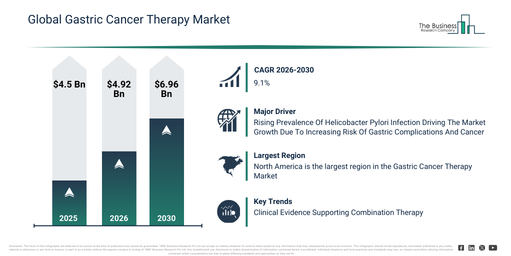
    The gastric cancer therapy market size has experienced strong growth in recent years. This market is set to expand from $4.5 billion in 2025 to $4.92 billion in 2026, achieving a compound annual growth rate (CAGR) of 9.3%. The historical period’s growth can be linked to factors such as the limited availability of targeted therapies, ongoing reliance on conventional chemotherapy and surgery, the increasing prevalence of gastric cancer, expanding hospital oncology infrastructure, and greater awareness of early detection programs.

    The gastric cancer therapy market is anticipated to undergo robust growth in the coming years. It is projected to reach $6.96 billion by 2030, demonstrating a compound annual growth rate (CAGR) of 9.1%. This expansion during the forecast period is attributed to the creation of novel immunotherapies and checkpoint inhibitors, the increasing acceptance of precision medicine, the extension of outpatient oncology services, heightened investment in gastric cancer research, and the incorporation of digital health tools for monitoring patients. Significant trends anticipated for this period include the rising adoption of targeted and personalized therapies, an increased reliance on combination therapy approaches, the development of early detection and screening programs, the proliferation of home care and ambulatory treatment options, and a focus on mitigating adverse effects to enhance patient quality of life.

    Get A Free Sample Report With In-Depth Market Insights:

    https://thebusinessresearchcompany.com/sample_request?id=39099361&type=smp&name=Gastric%20Cancer%20Therapy%20Market%20Report%202026&utm_source=Blogs&utm_medium=Paid&utm_campaign=Oct_PR

    Gastric Cancer Therapy Market Demand Drivers: What’s Powering Industry Growth?

    The increasing incidence of Helicobacter pylori infection is anticipated to stimulate the expansion of the gastric cancer therapy market in the coming years. This bacterial infection predominantly impacts the stomach lining and serves as a primary contributor to both chronic gastritis and gastric cancer. The escalating occurrence of Helicobacter pylori infection largely stems from suboptimal hygiene conditions, given that inadequate sanitation practices and tainted food or water sources facilitate the bacteria’s transmission through oral-oral or fecal-oral routes. Gastric cancer therapy plays a crucial role in mitigating the risk of gastric cancer linked to Helicobacter pylori infection by addressing the infection, reducing associated inflammation and cellular harm within the stomach, and halting the advancement of chronic gastritis and atrophic alterations that can lead to malignant transformation of the gastric lining. For instance, in November 2024, according to the report published by the Government of Canada, a Canada-based government administration, as of January 2023, the recurrence rate of H. pylori infection is estimated to be up to 19%, although it varies based on geographic region and age. Consequently, the rising prevalence of Helicobacter pylori infection is propelling the growth of the gastric cancer therapy market.

    Gastric Cancer Therapy Market Segments: Where Is Growth Concentrated?

    The gastric cancer therapy market covered in this report is segmented –

    1) By Therapy Type: Chemotherapy, Targeted Therapy, Immunotherapy, Radiation Therapy, Surgery

    2) By Drug Class: Cytotoxic Agents, Monoclonal Antibodies, Tyrosine Kinase Inhibitors, Checkpoint Inhibitors, Miscellaneous Agents

    3) By Administration Route: Oral, Intravenous, Intramuscular, Subcutaneous

    4) By Stage of Disease: Early Stage, Locally Advanced Stage, Metastatic Stage

    5) By End User: Hospitals, Oncology Clinics, Ambulatory Surgical Centers, Research Institutions, Home Care Settings

    Subsegments:

    1) By Chemotherapy: Neoadjuvant Chemotherapy (NAC), Adjuvant Chemotherapy (AC), Palliative Chemotherapy (PC), Combination Chemotherapy, Monotherapy

    2) By Targeted Therapy: Human Epidermal Growth Factor Receptor 2 (HER2) Targeted Therapy, Vascular Endothelial Growth Factor (VEGF) Inhibitors, Fibroblast Growth Factor Receptor (FGFR) Inhibitors, Mesenchymal-Epithelial Transition (MET) Inhibitors, Claudin 18 Isoform 2 Inhibitors

    3) By Immunotherapy: Immune Checkpoint Inhibitors, Cancer Vaccines, Adoptive Cell Transfer, Cytokine Therapy, Combination Immunotherapy

    4) By Radiation Therapy: External Beam Radiation Therapy (EBRT), Intensity-Modulated Radiation Therapy (IMRT), Three-Dimensional Conformal Radiation Therapy (3D-CRT), Brachytherapy

    5) By Surgery: Endoscopic Mucosal Resection (EMR), Endoscopic Submucosal Dissection (ESD), Subtotal Gastrectomy, Total Gastrectomy, Lymphadenectomy

    Gastric Cancer Therapy Market Innovation Trends: What Developments Are Reshaping The Industry?

    Leading entities within the gastric cancer therapy market are prioritizing the creation of novel therapies, including combination approaches, to elevate treatment effectiveness and patient results. This therapeutic strategy combines two or more interventions, like chemotherapy, targeted therapy, or immunotherapy, to boost comprehensive efficacy. An example of this is the approval granted in December 2024 by the U.S. Food and Drug Administration (FDA) to BeOne Medicines Ltd., a pharmaceutical firm from China previously known as BeiGene. The approval was for Tevimbra (tislelizumab-jsgr) when used in conjunction with platinum- and fluoropyrimidine-based chemotherapy, intended as a first-line treatment for adults suffering from unresectable or metastatic HER2-negative gastric or gastroesophageal junction (G/GEJ) adenocarcinoma with PD-L1 expression (=1) in their tumors. The basis for this authorization stemmed from findings of the Phase 3 RATIONALE-305 trial. This study illustrated that the combination treatment notably extended median overall survival to 15.0 months, a significant improvement over the 12.9 months observed with chemotherapy by itself, thereby achieving a 20% reduction in the likelihood of mortality. This accomplishment underscores an increasing inclination among prominent pharmaceutical enterprises to commit resources to pioneering, multimodal therapeutic approaches. These strategies merge immunotherapy with standard chemotherapy protocols to elevate clinical results, postpone disease advancement, and better survival rates for individuals with advanced gastric cancer.

    Gastric Cancer Therapy Market Key Participants And Competitive Landscape

    Major companies operating in the gastric cancer therapy market are Pfizer Inc., F. Hoffmann-La Roche Ltd., Merck & Co. Inc., Sanofi S.A., Bristol-Myers Squibb Company, AstraZeneca PLC, Novartis AG, Eli Lilly and Company, Amgen Inc., Astellas Pharma Inc., Jiangsu Hengrui Pharmaceuticals Co. Ltd., BeiGene Ltd., Celltrion Healthcare Co. Ltd., Hutchison MediPharma Limited, Shanghai Henlius Biotech Inc.

    View The Full Gastric Cancer Therapy Market Report:

    https://thebusinessresearchcompany.com/report/gastric-cancer-therapy-global-market-report?utm_source=Blogs&utm_medium=Paid&utm_campaign=Oct_PR

    Gastric Cancer Therapy Market Top Region: Where Does Most Revenue Come From?

    North America was the largest region in the gastric cancer therapy market in 2025. Asia-Pacific is expected to be the fastest-growing region in the forecast period. The regions covered in the gastric cancer therapy market report are Asia-Pacific, South East Asia, Western Europe, Eastern Europe, North America, South America, Middle East, Africa.

    Reach Out To Our Team:

    The Business Research Company: https://www.thebusinessresearchcompany.com/

    Americas: +1 310-496-7795

    Asia: +44 7882 955267 & +91 8897263534

    Europe: +44 7882 955267

    Email us at: marketing@tbrc.info

    Follow us on:

    LinkedIn: https://in.linkedin.com/company/the-business-research-company

    YouTube: https://www.youtube.com/channel/UC24_fI0rV8cR5DxlCpgmyFQ

    Global Market Model: https://www.thebusinessresearchcompany.com/global-market-model

  • Gastric Cancer Drugs Market Size Forecast: How The Industry Is Expected To Grow From 2026 To 2030

    Gastric Cancer Drugs Market Size Forecast: How The Industry Is Expected To Grow From 2026 To 2030

    Backed by market attractiveness analysis, total addressable market sizing, company benchmarking matrices, interactive Excel dashboards, wider supply chain intelligence, emerging startup coverage, and detailed product-level insights, The Business Research Company’s 2026 market reports are designed to offer research that is more actionable and strategically valuable than ever.

    Gastric Cancer Drugs Market Size Outlook: How Quickly Will Revenue Expand Through 2030?

    The gastric cancer drugs market has experienced substantial expansion in recent years. This market is projected to expand from $4.9 billion in 2025 to $5.39 billion by 2026, demonstrating a compound annual growth rate (CAGR) of 9.9%. Historically, this growth has been influenced by factors such as the increasing prevalence of gastric cancer, limited awareness regarding early detection, a reliance on conventional chemotherapy, the rising adoption of hospital-based treatment, and the high cost associated with branded drugs.

    The gastric cancer drugs market is projected to experience substantial expansion over the upcoming years. This market is set to reach a valuation of $8.14 billion by 2030, exhibiting a compound annual growth rate (CAGR) of 10.9%. This anticipated growth during the forecast timeframe is primarily driven by improvements in targeted treatments, the rising acceptance of immunotherapy, the broadening scope of precision medicine, the creation of new oral and injectable drug forms, and increased financial backing from both government and private sectors for cancer studies. Key trends anticipated for the forecast period encompass individualized treatments for gastric cancer, the creation of specific drug delivery methods, a greater reliance on combined therapeutic approaches, the extension of outpatient services for cancer treatment, and an increase in supportive care and symptom alleviation efforts.

    Get A Free Sample Report With In-Depth Market Insights:

    https://thebusinessresearchcompany.com/sample_request?id=27941617&type=smp&name=Gastric%20Cancer%20Drugs%20Market%20Report%202026&utm_source=Blogs&utm_medium=Paid&utm_campaign=Oct_PR

    Gastric Cancer Drugs Market Growth Drivers: What’s Behind The Acceleration?

    The global gastric cancer drug market is anticipated to expand in the future, largely due to the rising worldwide aging population. This demographic describes a scenario where a substantial portion of a country’s or area’s inhabitants are older, generally aged 65 and above. It arises from a combination of extended life expectancy and declining birth rates, leading to a greater percentage of older individuals within the total populace. Elderly patients often exhibit reduced tolerance for specific cancer therapies like surgery or chemotherapy. Consequently, there is an escalating demand for customized treatment approaches, including pharmaceutical interventions, to cater to the unique requirements and physiological limits of older patients. For example, data from July 2024 provided by the UK Parliament’s House of Commons Library, a UK-based government administration, indicated that in 2022, the UK had 12.7 million individuals aged 65 or older, making up 19% of its total population. This figure is forecast to climb to 22.1 million by 2072, at which point it will constitute 27% of the population. Hence, the gastric cancer drug market is projected to see future expansion, spurred by the increasing senior demographic.

    Gastric Cancer Drugs Market Segment Analysis: What Are The Core Market Categories?

    The gastric cancer drugs market covered in this report is segmented –

    1) By Type: Imatinib, Trastuzumab, Other Types

    2) By Route of Administration: Oral, Parenteral

    3) By End User: Hospitals, Clinics, Cancer Speciality Centers

    Subsegments:

    1) By Imatinib: Oral Formulations, Injectable Formulations, Combination Therapies

    2) By Trastuzumab: Monotherapy, Combination Therapy With Chemotherapy, Biosimilars Of Trastuzumab

    3) By Other Types: Chemotherapy Agents, Targeted Therapy Agents, Immunotherapy Agents, Supportive Care Medications

    Gastric Cancer Drugs Market Trends: What’s Defining The Industry’s Next Phase?

    Companies active in the gastric cancer drugs market are dedicated to developing innovative products, such as CLDN18.2-targeted treatments, aiming to enhance the efficacy of therapies and provide more personalized patient options. CLDN18.2-targeted treatment refers to therapies specifically designed to target claudin 18.2 (CLDN18.2), a protein predominantly expressed in certain epithelial tissues, including the gastric epithelium. For instance, in October 2024, Astellas Pharma Inc., a Japan-based company, obtained approval from the Food and Drug Administration (FDA), a US-based federal agency for protecting public health, for VYLOY (zolbetuximab). VYLOY (zolbetuximab) is the first and only CLDN18.2-targeted treatment utilized for advanced gastric and gastroesophageal junction cancer where tumors are CLDN18.2 positive. The treatment is administered in combination with fluoropyrimidine- and platinum-based chemotherapy regimens, and it is indicated for adults with locally advanced unresectable negative gastric or gastroesophageal junction cancer adenocarcinoma.

    Gastric Cancer Drugs Market Top Companies Driving Competitive Growth

    Major companies operating in the gastric cancer drugs market are F. Hoffmann-La Roche, Eli Lilly and Company, Jiangsu HengRui Medicine, Biocon, Sanofi, PV Pharma Healthcare (India), Novartis Oncology, Arlak Biotech (India), CStone Pharma (China), CARsgen Therapeutics (China), JW Therapeutics (China), BeiGene (China), Takeda Pharmaceuticals (Japan), Astellas Pharma Inc. (Japan), Daiichi Sankyo, AstraZeneca plc, GlaxoSmithKline plc, Biocad, Bristol-Myers Squibb, Celon Pharma, Celltrion Inc., Merck & Co. Inc., Pfizer Inc., Sandoz AG (Novartis), Eurofarma Laboratórios S.A., TUTEUR Argentina / Pierre Fabre Group, Johnson & Johnson, Teva Pharmaceutical Industries Ltd., Mylan Laboratories, Gilead Sciences, BMS

    View The Full Gastric Cancer Drugs Market Report:

    https://thebusinessresearchcompany.com/report/Gastric-Cancer-Drugs-Global-Market-Report?utm_source=Blogs&utm_medium=Paid&utm_campaign=Oct_PR

    Gastric Cancer Drugs Market Regional Breakdown: Where Is Demand Concentrated?

    North America was the largest region in the gastric cancer drugs market in 2025. Middle East is expected to be the largest growing region in the global gastric cancer drugs market share during the forecast period. The regions covered in the gastric cancer drugs market report are Asia-Pacific, South East Asia, Western Europe, Eastern Europe, North America, South America, Middle East, Africa.

    Reach Out To Our Team:

    The Business Research Company: https://www.thebusinessresearchcompany.com/

    Americas: +1 310-496-7795

    Asia: +44 7882 955267 & +91 8897263534

    Europe: +44 7882 955267

    Email us at: marketing@tbrc.info

    Follow us on:

    LinkedIn: https://in.linkedin.com/company/the-business-research-company

    YouTube: https://www.youtube.com/channel/UC24_fI0rV8cR5DxlCpgmyFQ

    Global Market Model: https://www.thebusinessresearchcompany.com/global-market-model
  • Gastric Antisecretory Drug Market Reaches $20.69 Billion In 2026: Forecast And Growth Opportunities

    Gastric Antisecretory Drug Market Reaches $20.69 Billion In 2026: Forecast And Growth Opportunities

    Featuring market attractiveness scoring, total addressable market sizing, company benchmarking matrices, interactive Excel dashboards, deeper supply chain intelligence, emerging startup tracking, and granular product-level insights, The Business Research Company’s 2026 market reports are built to deliver research that is both more actionable and more strategically valuable.

    Gastric Antisecretory Drug Market Size, Value And Growth Trajectory Through 2030

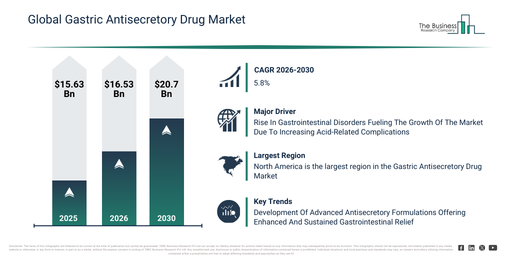
    The gastric antisecretory drug market has seen significant growth in recent years. Its value is anticipated to increase from $15.63 billion in 2025 to $16.53 billion in 2026, achieving a compound annual growth rate (CAGR) of 5.7%. This historic expansion is largely due to the high prevalence of acid-related disorders, a rise in gastroesophageal reflux disease diagnoses, the broadening reach of hospital pharmacies, the extensive use of H2 receptor antagonists, and an upward trend in self-medication.

    The gastric antisecretory drug market size is anticipated to experience robust expansion in the coming years. By 2030, this market is projected to reach $20.7 billion, demonstrating a compound annual growth rate (CAGR) of 5.8%. This projected increase during the forecast period is primarily driven by factors such as an aging global population, the rise in gastric conditions linked to stress, the broadening of over-the-counter (OTC) medication markets, heightened health consciousness, and the development of safer, enduring treatment options. Key developments expected to shape the market during this period involve the increasing adoption of proton pump inhibitors, a growing need for sustained acid suppression, a shift towards oral drug formulations, wider over-the-counter access, and a greater emphasis on managing gastrointestinal diseases.

    Get A Free Sample Report With In-Depth Market Insights:

    https://thebusinessresearchcompany.com/sample_request?id=90605220&type=smp&name=Gastric%20Antisecretory%20Drug%20Market%20Report%202026&utm_source=Blogs&utm_medium=Paid&utm_campaign=Oct_PR

    Gastric Antisecretory Drug Market Growth Factors Behind Sustained Expansion

    The increasing occurrence of gastrointestinal disorders is anticipated to propel the expansion of the gastric antisecretory drug market in the coming years. These conditions impact the digestive tract, including the stomach, intestines, and associated organs, leading to symptoms such as pain, bloating, and altered bowel movements. The rise in gastrointestinal disorders is primarily fueled by unhealthy dietary practices, where excessive intake of processed foods and insufficient fiber contribute to imbalances in gut microbiota and impaired digestion. Gastric antisecretory drugs are essential because an excess of stomach acid can damage the protective lining of the gastrointestinal tract, resulting in irritation or injury, which these medications help prevent by reducing acid production. For instance, in June 2025, according to the Turkish Journal Of Gastroenterology, a Turkey-based journal, 6.9 million individuals globally suffering from inflammatory bowel disease (IBD) currently. Therefore, the growing prevalence of gastrointestinal disorders will boost the growth of the gastric antisecretory drug market.

    Gastric Antisecretory Drug Market Segment Breakdown: Which Categories Lead On Revenue?

    The gastric antisecretory drug market covered in this report is segmented –

    1) By Drug Class: Proton Pump Inhibitors (PPIs), H2 Receptor Antagonists, Antacids, Prostaglandin Analogs

    2) By Route Of Administration: Oral, Intravenous

    3) By Distribution Channel: Hospital Pharmacies, Retail Pharmacies, Online Pharmacies, Other Distribution Channels

    4) By Application: Gastroesophageal Reflux Disease, Peptic Ulcer Disease, Zollinger-Ellison Syndrome, Other Applications

    Subsegments:

    1) By Proton Pump Inhibitors (PPIs): Omeprazole, Esomeprazole, Lansoprazole, Pantoprazole, Rabeprazole, Dexlansoprazole

    2) By H2 Receptor Antagonists: Ranitidine, Famotidine, Cimetidine, Nizatidine

    3) By Antacids: Magnesium Hydroxide, Calcium Carbonate, Aluminum Hydroxide, Sodium Bicarbonate, Combination Antacids

    4) By Prostaglandin Analogs: Misoprostol, Enprostil

    Gastric Antisecretory Drug Market Industry Trends Fueling Future Revenue Growth

    Leading companies in the gastric antisecretory drug market are concentrating on developing advanced products, such as antisecretory compounds, to provide extended relief. Antisecretory compounds are substances designed to diminish or suppress the secretion of bodily fluids, particularly gastric acid, by acting on specific cellular pathways or receptors. For instance, in June 2024, Akums Drugs and Pharmaceuticals, an India-based pharmaceutical company, launched Rabeprazole + Levosulpiride SR Capsules, a new formulation intended for Gastrointestinal patients. This formulation uniquely integrates rabeprazole sodium, a powerful antisecretory agent that selectively inhibits the H?/K? ATPase in gastric parietal cells, with levosulpiride, which is known for its central antidopaminergic and antiemetic properties. The capsule delivers 40 mg of enteric-coated rabeprazole and 75 mg of sustained-release levosulpiride, ensuring a targeted and prolonged therapeutic action. Its dual mechanism addresses both the suppression of acid and the regulation of gastrointestinal motility.

    Gastric Antisecretory Drug Market Leading Players And Competitive Positioning

    Major companies operating in the gastric antisecretory drug market are Pfizer Inc., Bayer AG, AstraZeneca plc, Takeda Pharmaceutical Company Ltd., Sun Pharmaceutical Industries, Dr. Reddy’s Laboratories, Chemo Biological, Spansules Pharmatech Pvt. Ltd., Phoenix Biologicals Pvt. Ltd., Centurion Remedies Private Limited, Solitaire Pharmacia Pvt. Ltd., Shreeji Pharma International, Estrellas Life Sciences Private Limited, 3s Corporation, Actiza Pharmaceutical Private Limited, Lark Laboratories, Cytonova Labs International Private Limited, Luckys Pharma Lab Pvt. Ltd., Lexicare Pharma Pvt. Ltd., Mustcure Healthcare LLP

    View The Full Gastric Antisecretory Drug Market Report:

    https://thebusinessresearchcompany.com/report/gastric-antisecretory-drug-global-market-report?utm_source=Blogs&utm_medium=Paid&utm_campaign=Oct_PR

    Gastric Antisecretory Drug Market Geographic Landscape: Which Region Dominates Industry Growth?

    North America was the largest region in the gastric antisecretory drug market in 2025. Asia-Pacific is expected to be the fastest-growing region in the forecast period. The regions covered in the gastric antisecretory drug market report are Asia-Pacific, South East Asia, Western Europe, Eastern Europe, North America, South America, Middle East, Africa.

    Reach Out To Our Team:

    The Business Research Company: https://www.thebusinessresearchcompany.com/

    Americas: +1 310-496-7795

    Asia: +44 7882 955267 & +91 8897263534

    Europe: +44 7882 955267

    Email us at: marketing@tbrc.info

    Follow us on:

    LinkedIn: https://in.linkedin.com/company/the-business-research-company

    YouTube: https://www.youtube.com/channel/UC24_fI0rV8cR5DxlCpgmyFQ

    Global Market Model: https://www.thebusinessresearchcompany.com/global-market-model