Category: Pharmaceuticals

  • Digital Therapeutics For Fibromyalgia Market Size And Forecast 2026–2030: Trends Driving Industry Expansion

    Digital Therapeutics For Fibromyalgia Market Size And Forecast 2026–2030: Trends Driving Industry Expansion

    Featuring market attractiveness scoring, total addressable market sizing, company benchmarking matrices, interactive Excel dashboards, deeper supply chain intelligence, emerging startup tracking, and granular product-level insights, The Business Research Company’s 2026 market reports are built to deliver research that is both more actionable and more strategically valuable.

    Digital Therapeutics For Fibromyalgia Market Size, Value And Growth Trajectory Through 2030

    The digital therapeutics for fibromyalgia market size has experienced significant expansion in recent years. It is anticipated to expand from $1.19 billion in 2025 to $1.44 billion in 2026, achieving a compound annual growth rate (CAGR) of 21.1%. The market’s growth during the preceding period is attributable to heightened awareness of fibromyalgia management requirements, increasing adoption of digital health solutions, expanded smartphone penetration within healthcare, the spread of telehealth services, and the constraints of traditional pain management methods.

    The digital therapeutics for fibromyalgia market size is projected to experience substantial growth over the next few years. It is expected to expand to $3.07 billion in 2030, exhibiting a compound annual growth rate (CAGR) of 20.8%. This expansion in the projected period is driven by factors such as the increasing demand for personalized chronic pain management, the rising integration of AI-driven therapy optimization, the broadening of remote care reimbursement models, an amplified focus on data-driven treatment personalization, and enhanced collaboration between clinicians and digital health providers. Prominent trends for the forecast period include a growing adoption of mobile therapies for symptom tracking, the increasing utilization of personalized digital care plans, the expanding integration of wearables with therapeutic platforms, the widening scope of remote patient monitoring programs, and a strengthened emphasis on patient engagement and adherence.

    Get A Free Sample Report With In-Depth Market Insights:

    https://thebusinessresearchcompany.com/sample_request?id=10687978&type=smp&name=Digital%20Therapeutics%20For%20Fibromyalgia%20Market%20Report%202026&utm_source=Blogs&utm_medium=Paid&utm_campaign=Oct_PR

    Digital Therapeutics For Fibromyalgia Market Expansion Drivers: What’s Shaping Future Growth?

    Increased understanding of digital health tools is anticipated to fuel the expansion of the digital therapeutics for fibromyalgia market in the future. These solutions encompass software-driven tools and services, including patient applications, patient portals, and virtual care platforms, designed to provide information, monitoring, and therapeutic interventions via digital channels. This rising recognition of digital health solutions stems from government-supported initiatives and the broad uptake of official health applications, which make accessing care online a common practice. Digital therapeutics for fibromyalgia capitalize on this heightened awareness by engaging patients through these familiar digital avenues, simplifying the process of starting and consistently using app-based cognitive behavioral therapy, pacing, and sleep programs, all while allowing for clinician supervision. As an illustration, in December 2023, data from the National Health Service, a UK-based government department, indicated that digital health app users totaled 33.6 million, an increase from 16.8 million in 2022. Furthermore, monthly logins saw a 54% jump, moving from 16.8 million to 25.8 million. Consequently, the expanding understanding of digital health solutions is propelling the digital therapeutics for fibromyalgia market.

    Digital Therapeutics For Fibromyalgia Market Segments: Where Is Growth Concentrated?

    The digital therapeutics for fibromyalgia market covered in this report is segmented –

    1) By Product Type: Software Applications, Devices, Platforms

    2) By Therapy Area: Cognitive Behavioral Therapy, Mindfulness-Based Interventions, Pain Management, Other Therapy Types

    3) By Distribution Channel: Online, Offline

    4) By Application: Chronic Pain Management, Sleep Disorders, Fatigue Management, Other Applications

    5) By End-User: Hospitals, Clinics, Homecare, Other End-Users

    Subsegments:

    1) By Software Applications: Mobile Applications, Web-Based Applications, Cloud-Based Applications, Virtual Reality Applications

    2) By Devices: Wearable Devices, Handheld Devices, Smart Monitoring Devices, Connected Therapeutics Devices

    3) By Platforms: Telehealth Platforms, Remote Monitoring Platforms, Patient Engagement Platforms, Data Analytics Platforms

    Digital Therapeutics For Fibromyalgia Market Strategic Trends: What Defines The Next Growth Phase?

    Major companies in the digital therapeutics for fibromyalgia market are prioritizing technological advancements, such as computerized behavioral therapy devices, to offer evidence-based interventions. These interventions aim to improve pain management, reduce fatigue, enhance sleep quality, and support mental health, all delivered via scalable, patient-centric digital platforms. A computerized behavioral therapy device is a software-based digital platform or application that provides structured, evidence-based cognitive or behavioral therapy interventions to patients remotely, often utilizing interactive modules, exercises, and real-time feedback to manage symptoms of conditions like fibromyalgia. For instance, in May 2023, Swing Therapeutics, Inc., a US-based biopharmaceutical company, launched Stanza following U.S. FDA De Novo marketing authorization (DEN220083). It provides a 12-week, self-guided acceptance and commitment therapy (ACT) program for fibromyalgia, with a randomized controlled trial reported in the lancet showing significant clinical improvements. This therapy is delivered through smartphones (iOS or Android), offering patients convenient, in-app, at-home treatment.

    Digital Therapeutics For Fibromyalgia Market Key Participants And Competitive Landscape

    Major companies operating in the digital therapeutics for fibromyalgia market are Grünenthal GmbH, Hinge Health Inc., DarioHealth Corp., Kaia Health, CogniFit Inc., Big Health Ltd., Remedee Labs, HelloBetter GmbH, AppliedVR Inc., PainDrainer, Swing Therapeutics Inc., Fern Health Inc., JOGO Health Inc., LIN Health Inc., MoreGoodDays, Happify Health Inc., Click Therapeutics Inc., Wellthy Therapeutics Pvt. Ltd., FlexifyMe, SleepioRx

    View The Full Digital Therapeutics For Fibromyalgia Market Report:

    https://thebusinessresearchcompany.com/report/digital-therapeutics-for-fibromyalgia-global-market-report?utm_source=Blogs&utm_medium=Paid&utm_campaign=Oct_PR

    Digital Therapeutics For Fibromyalgia Market Geographic Spread And Regional Opportunities

    North America was the largest region in the digital therapeutics for fibromyalgia market in 2025. Asia-Pacific is expected to be the fastest-growing region in the forecast period. The regions covered in the digital therapeutics for fibromyalgia market report are Asia-Pacific, South East Asia, Western Europe, Eastern Europe, North America, South America, Middle East, Africa.

    Reach Out To Our Team:

    The Business Research Company: https://www.thebusinessresearchcompany.com/

    Americas: +1 310-496-7795

    Asia: +44 7882 955267 & +91 8897263534

    Europe: +44 7882 955267

    Email us at: marketing@tbrc.info

    Follow us on:

    LinkedIn: https://in.linkedin.com/company/the-business-research-company

    YouTube: https://www.youtube.com/channel/UC24_fI0rV8cR5DxlCpgmyFQ

    Global Market Model: https://www.thebusinessresearchcompany.com/global-market-model

  • Digital Therapeutics For Atopic Dermatitis Market 2026 Outlook: Market Size, CAGR And Key Growth Opportunities

    Digital Therapeutics For Atopic Dermatitis Market 2026 Outlook: Market Size, CAGR And Key Growth Opportunities

    Built to provide research that’s more actionable and strategically valuable, The Business Research Company’s 2026 market reports include market attractiveness analysis, total addressable market sizing, company benchmarking matrices, interactive Excel dashboards, broader supply chain intelligence, emerging startup tracking, and in-depth product insights.

    Digital Therapeutics For Atopic Dermatitis Market CAGR Outlook And Future Development

    The digital therapeutics for atopic dermatitis market size has experienced substantial expansion in recent years. It is anticipated to increase from $0.57 billion in 2025 to $0.7 billion in 2026, demonstrating a compound annual growth rate (CAGR) of 21.5%. The historical growth in this market can be attributed to factors such as the increasing prevalence of atopic dermatitis, the growing adoption of digital health tools in dermatology, heightened patient demand for remote care, early clinical validation of digital dermatology solutions, and the expansion of mobile health platforms.

    The market size for digital therapeutics in atopic dermatitis is poised for significant expansion in the coming years. It is projected to reach $1.5 billion by 2030, exhibiting a compound annual growth rate (CAGR) of 21.2%. This anticipated growth during the forecast period is fueled by the increased deployment of prescription digital therapeutics in dermatology, enhanced integration with connected monitoring devices, the broadening of preventive and long-term care initiatives, rising investments in digital skin health platforms, and greater acceptance from healthcare providers. Noteworthy trends during this period include a surge in the adoption of app-based disease management tools, an increased reliance on wearable skin monitoring devices, the proliferation of personalized treatment support platforms, a rise in the integration of teledermatology solutions, and a stronger emphasis on treatment adherence and patient education.

    Get A Free Sample Report With In-Depth Market Insights:

    https://thebusinessresearchcompany.com/sample_request?id=94875395&type=smp&name=Digital%20Therapeutics%20For%20Atopic%20Dermatitis%20Market%20Report%202026&utm_source=Blogs&utm_medium=Paid&utm_campaign=Oct_PR

    Digital Therapeutics For Atopic Dermatitis Market Development Factors: What’s Supporting Demand?

    The expanding use of smartphones is anticipated to drive the expansion of the digital therapeutics for atopic dermatitis market in the future. These handheld gadgets combine communication, internet connectivity, and computing capabilities into one unit. Their growing prevalence is attributed to increased internet access, which enables a greater number of individuals to conveniently utilize online services, social media, and digital entertainment via their devices. Significant smartphone penetration benefits digital therapeutics for atopic dermatitis by offering patients straightforward and consistent access to mobile applications and digital platforms. This facilitates real-time monitoring of symptoms, timely treatment reminders, and tailored advice, ultimately enhancing patient adherence and overall disease management. As an illustration, a February 2023 report from Uswitch Limited, a UK-based comparison service, indicated 71.8 million active mobile connections in 2022. Furthermore, by 2025, it is projected that 95% of the 68.3 million residents in the UK will possess smartphones. Consequently, the rising adoption of smartphones is poised to boost the growth of the digital therapeutics for atopic dermatitis market.

    Digital Therapeutics For Atopic Dermatitis Market Segment Analysis: What Are The Core Market Categories?

    The digital therapeutics for atopic dermatitis market covered in this report is segmented –

    1) By Product Type: Software Applications, Devices, Platforms

    2) By Application: Disease Management, Preventive Care, Treatment Support

    3) By End-User: Patients, Healthcare Providers, Payers, Other End-Users

    4) By Distribution Channel: Online, Offline

    Subsegments:

    1) By Software Applications: Mobile Applications, Web Applications, Desktop Applications, Cloud-Based Applications

    2) By Devices: Wearable Devices, Monitoring Devices, Diagnostic Devices, Therapeutic Devices

    3) By Platforms: Patient Management Platforms, Clinician Support Platforms, Data Analytics Platforms, Telehealth Platforms

    Digital Therapeutics For Atopic Dermatitis Market Transformation Trends: What Innovations Are Driving Change?

    Major companies operating in the digital therapeutics for atopic dermatitis market are keenly focused on establishing seed funds, aiming to provide mentorship, industry connections, and strategic guidance in addition to financial support. Seed funds represent investment capital allocated to startups at their foundational stage, designed to assist in refining their ideas, developing products, and scaling business operations. For example, in May 2023, Nia Health, a Germany-based company offering AI-powered dermatological imaging solutions, declared it had successfully raised $4.1 million (€3.5 million) in a seed funding round. This investment will enable the company to further develop its digital therapeutics app for atopic dermatitis, which was initially conceived at Charité Universitätsmedizin Berlin. The funding is earmarked to bolster growth by strengthening its footprint in German-speaking regions, expanding into other EU countries over the upcoming two years, and preparing for entry into the US market. Additionally, these funds will be deployed to advance the app’s AI-driven features, encompassing machine vision, natural language processing, and teledermatology functionalities.

    Digital Therapeutics For Atopic Dermatitis Market Top Companies Driving Competitive Growth

    Major companies operating in the digital therapeutics for atopic dermatitis market are Pfizer Inc., AbbVie Inc., Sanofi, Eli Lilly and Company, Boehringer Ingelheim International GmbH, Otsuka Pharmaceutical Co. Ltd., OMRON Corporation, Galderma S.A., Incyte Corporation, Chugai Pharmaceutical Co. Ltd., Teladoc Health Inc., LEO Pharma A/S, Almirall S.A., Biofourmis Inc., Click Therapeutics Inc., DarioHealth Corp., Sidekick Health GmbH, Digital Diagnostics Inc., Liva Healthcare A/S, 3Derm Systems

    View The Full Digital Therapeutics For Atopic Dermatitis Market Report:

    https://thebusinessresearchcompany.com/report/digital-therapeutics-for-atopic-dermatitis-global-market-report?utm_source=Blogs&utm_medium=Paid&utm_campaign=Oct_PR

    Digital Therapeutics For Atopic Dermatitis Market Top Region By Revenue And Market Share

    North America was the largest region in the digital therapeutics for atopic dermatitis market in 2025. Asia-Pacific is expected to be the fastest-growing region in the forecast period. The regions covered in the digital therapeutics for atopic dermatitis market report are Asia-Pacific, South East Asia, Western Europe, Eastern Europe, North America, South America, Middle East, Africa.

    Reach Out To Our Team:

    The Business Research Company: https://www.thebusinessresearchcompany.com/

    Americas: +1 310-496-7795

    Asia: +44 7882 955267 & +91 8897263534

    Europe: +44 7882 955267

    Email us at: marketing@tbrc.info

    Follow us on:

    LinkedIn: https://in.linkedin.com/company/the-business-research-company

    YouTube: https://www.youtube.com/channel/UC24_fI0rV8cR5DxlCpgmyFQ

    Global Market Model: https://www.thebusinessresearchcompany.com/global-market-model

  • Digital Therapeutics Endometriosis Market Size Growth: From $2.08 Billion In 2026 To $4.64 Billion By 2030

    Digital Therapeutics Endometriosis Market Size Growth: From $2.08 Billion In 2026 To $4.64 Billion By 2030

    Backed by market attractiveness analysis, total addressable market sizing, company benchmarking matrices, interactive Excel dashboards, wider supply chain intelligence, emerging startup coverage, and detailed product-level insights, The Business Research Company’s 2026 market reports are designed to offer research that is more actionable and strategically valuable than ever.

    Digital Therapeutics Endometriosis Market Set To Climb From $2.08 Billion In 2026 To $4.64 Billion By 2030

    The digital therapeutics endometriosis market has witnessed significant growth in recent years. It is anticipated to expand from $1.7 billion in 2025 to $2.09 billion in 2026, achieving a compound annual growth rate (CAGR) of 22.5%. The historical market expansion is primarily due to the increasing prevalence of endometriosis diagnosis, a rise in the use of mobile health applications, growing patient demand for non-invasive management choices, early regulatory acceptance of digital therapeutics, and the broader availability of women’s health digital platforms.

    The digital therapeutics endometriosis market size is anticipated to undergo substantial expansion over the next few years. It is forecast to grow to $4.65 billion in 2030 at a compound annual growth rate (CAGR) of 22.2%. The expansion during the projected timeframe stems from various factors, including increasing clinical validation of digital endometriosis therapies, a growing need for tools to manage chronic conditions over the long term, the expansion of cloud-based digital health platforms, rising integration with wearable health devices, and increased adoption by both payers and providers. Significant trends expected in the forecast period involve a greater uptake of personalized digital treatment programs, increased utilization of symptom and fertility tracking applications, the proliferation of behavior-based therapy platforms, a rise in the integration of remote care and teleconsultation tools, and an enhanced focus on patient education and engagement.

    Get A Free Sample Report With In-Depth Market Insights:

    https://thebusinessresearchcompany.com/sample_request?id=85842063&type=smp&name=Digital%20Therapeutics%20Endometriosis%20Market%20Report%202026&utm_source=Blogs&utm_medium=Paid&utm_campaign=Oct_PR

    Digital Therapeutics Endometriosis Market Industry Drivers: What’s Behind The Revenue Growth?

    The swift adoption of smartphones is projected to drive the expansion of the digital therapeutics endometriosis market in the foreseeable future. Smartphones are compact handheld devices that integrate communication, internet access, and computing capabilities into a single unit. Their increasing prevalence is attributed to rising internet penetration, which enables more individuals to conveniently access online services, social media, and digital entertainment from their devices. Widespread smartphone ownership facilitates digital therapeutics for endometriosis by offering users effortless and constant access to personalized therapeutic applications, thereby allowing real-time symptom tracking, data monitoring, and evidence-based treatment guidance at any time and in any location. For example, in February 2023, a report issued by Uswitch Limited, a UK-based online and telephone comparison and switching service provider, indicated that there were 71.8 million active mobile connections in 2022, and it is anticipated that by 2025, 95% of the 68.3 million people living in the UK will own smartphones. Consequently, the rapid embrace of smartphones is expected to propel the growth of the digital therapeutics endometriosis market.

    Digital Therapeutics Endometriosis Market Segment Breakdown: Which Categories Lead On Revenue?

    The digital therapeutics endometriosis market covered in this report is segmented –

    1) By Product Type: Software, Devices, Services

    2) By Deployment Mode: On-Premises, Cloud-Based

    3) By Application: Pain Management, Symptom Tracking, Fertility Management, Education And Awareness, Other Applications

    4) By End User: Hospitals And Clinics, Homecare, Research Institutes, Other End Users

    Subsegments:

    1) By Software: Mobile Applications, Web-Based Platforms, Cloud-Based Solutions, Decision Support Tools

    2) By Devices: Wearable Monitoring Devices, Smart Therapeutic Devices, Digital Diagnostic Tools, Connected Medical Devices

    3) By Services: Remote Patient Monitoring Services, Teleconsultation Services, Therapy Management Services, Data Analytics And Support Services

    #Digital Therapeutics Endometriosis Market Growth Trends: What’s Shaping The Future Outlook?

    Key companies operating within the digital therapeutics endometriosis market are emphasizing the establishment of strategic collaborations. These partnerships aim to accelerate innovation by integrating diverse perspectives and specialized skills. Collaborations signify alliances where multiple entities join forces to achieve shared objectives, combine resources, or leverage each other’s strengths. For example, in March 2024, Endometriosis Australia, a nationally accredited Australian charity, teamed up with CHARLI, an Australia-based digital health company. Their aim was to unveil a groundbreaking platform intended to support thousands of Australians impacted by endometriosis. This joint venture culminated in the creation of an app, developed by medical and health experts in conjunction with consumers. The application utilizes AI to help women monitor menstruation, fertility, sexual health, pregnancy, and peri/menopause, while also assisting in detecting pain or potential conditions such as endometriosis. By partnering with Endometriosis Australia, the app delivers crucial support to the one in seven Australians affected by the condition, thereby enabling quicker diagnosis and more accessible care.

    Digital Therapeutics Endometriosis Market Leading Players And Competitive Positioning

    Major companies operating in the digital therapeutics endometriosis market are Bayer AG, Kissei Pharmaceutical Co. Ltd., Abbott Laboratories, Luna Endoscore, Chugai Pharmaceutical Co. Ltd., Sword health inc., Charli , Maven Clinic Co., Flo Health Inc., Hinge Health Inc., PrecisionLife Ltd., TiumBio, EpicentRx Inc., Syrona Health, Matilda Health Care, ELANZA Wellness Inc., iCareBetter Inc., Endocare Clinic Fz LLc, Herabiotech, Ziwig Biotech, Hera Biotech Inc.

    View The Full Digital Therapeutics Endometriosis Market Report:

    https://thebusinessresearchcompany.com/report/digital-therapeutics-endometriosis-global-market-report?utm_source=Blogs&utm_medium=Paid&utm_campaign=Oct_PR

    Digital Therapeutics Endometriosis Market Regional Analysis And Top Geography

    North America was the largest region in the digital therapeutics endometriosis market in 2025. Asia-Pacific is expected to be the fastest-growing region in the forecast period. The regions covered in the digital therapeutics endometriosis market report are Asia-Pacific, South East Asia, Western Europe, Eastern Europe, North America, South America, Middle East, Africa.

    Reach Out To Our Team:

    The Business Research Company: https://www.thebusinessresearchcompany.com/

    Americas: +1 310-496-7795

    Asia: +44 7882 955267 & +91 8897263534

    Europe: +44 7882 955267

    Email us at: marketing@tbrc.info

    Follow us on:

    LinkedIn: https://in.linkedin.com/company/the-business-research-company

    YouTube: https://www.youtube.com/channel/UC24_fI0rV8cR5DxlCpgmyFQ

    Global Market Model: https://www.thebusinessresearchcompany.com/global-market-model
  • Digital Therapeutics Complex Regional Pain Syndrome Market Analysis 2026: Market Size, Growth Trends And Industry Outlook

    Digital Therapeutics Complex Regional Pain Syndrome Market Analysis 2026: Market Size, Growth Trends And Industry Outlook

    Featuring market attractiveness scoring, total addressable market sizing, company benchmarking matrices, interactive Excel dashboards, deeper supply chain intelligence, emerging startup tracking, and granular product-level insights, The Business Research Company’s 2026 market reports are built to deliver research that is both more actionable and more strategically valuable.

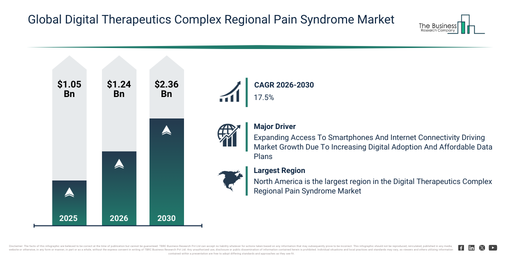
    Digital Therapeutics Complex Regional Pain Syndrome Market Forecast: Value Set To Climb From $1.24 Billion To $2.36 Billion

    The digital therapeutics complex regional pain syndrome market size has expanded quickly over recent years. It is projected to increase from $1.05 billion in 2025 to $1.24 billion in 2026, at a compound annual growth rate (CAGR) of 17.8%. The historical growth of this market stemmed from factors such as growing awareness of CRPS treatment gaps, the rising adoption of digital health solutions for pain management, increased acceptance of telehealth platforms, initial clinical validation of digital therapeutics, and an escalating focus on non-pharmacological therapies.

    The digital therapeutics complex regional pain syndrome market is anticipated to experience significant expansion over the coming years. This market is projected to reach $2.36 billion by 2030, demonstrating a compound annual growth rate (CAGR) of 17.5%. This expansion during the forecast period is primarily driven by factors such as the greater acceptance of prescription digital therapeutics, a heightened demand for pain management solutions administered at home, the spread of digital care models supported by clinicians, the rising incorporation of wearable monitoring devices, and enhanced reimbursement for digital therapeutics. Key developments expected throughout this period encompass the wider use of software-based pain management programs, a greater integration of remote patient monitoring tools, the broadening of personalized therapy algorithms, an increased utilization of data-driven symptom tracking platforms, and an elevated emphasis on patient engagement and adherence.

    Get A Free Sample Report With In-Depth Market Insights:

    https://thebusinessresearchcompany.com/sample_request?id=48141240&type=smp&name=Digital%20Therapeutics%20Complex%20Regional%20Pain%20Syndrome%20Market%20Report%202026&utm_source=Blogs&utm_medium=Paid&utm_campaign=Oct_PR

    Digital Therapeutics Complex Regional Pain Syndrome Market Growth Factors: What’s Supporting Expansion?

    Future growth in the digital therapeutics complex regional pain syndrome market is anticipated to be driven by increasing accessibility to smartphones and internet connectivity. These terms denote mobile devices capable of internet access, allowing individuals to communicate, explore information, and utilize online services at any time or location. The rise in smartphone and internet access is fueled by rapid urbanization, where dense urban centers generate infrastructure needs and economic environments conducive to the quick rollout of mobile networks and broadband. Increased adoption of smartphones and the internet fosters the expansion of digital therapeutics for complex regional pain syndrome by facilitating ongoing patient interaction, distant monitoring, and customized therapy delivery via easily accessible mobile platforms, which in turn enhances treatment compliance, gathers real-time data, and improves general pain management results. For example, data from the Federal Communications Commission, a US-based government agency, in May 2025, showed that total connections saw an increase of approximately 2.5% from June 2023 to June 2024, reaching 549 million. During this period, mobile connections climbed 2.5% year over year to 416 million by June 2024, while fixed connections also rose by about 2.3% to 133 million. Consequently, the expanding availability of smartphones and internet connectivity is a key driver for the growth of the digital therapeutics complex regional pain syndrome market.

    Digital Therapeutics Complex Regional Pain Syndrome Market Segmentation: How Does The Market Break Down By Category?

    The digital therapeutics complex regional pain syndrome market covered in this report is segmented –

    1) By Product Type: Software, Devices, Platforms

    2) By Distribution Channel: Online Platforms, Pharmacies, Direct Sales, Other Distribution Channels

    3) By Application: Pain Management, Rehabilitation, Patient Education, Other Applications

    4) By End-User: Hospitals, Clinics, Homecare, Research Institutes, Other End Users

    Subsegments:

    1) By Software: Pain Management Software, Cognitive Behavioral Therapy Software, Symptom Tracking Software, Telehealth Integration Software

    2) By Devices: Wearable Pain Monitoring Devices, Biofeedback Devices, Peripheral Nerve Stimulation Devices, Rehabilitation Support Devices

    3) By Platforms: Patient Engagement Platforms, Clinician Management Platforms, Data Analytics Platforms, Telemedicine Platforms

    Digital Therapeutics Complex Regional Pain Syndrome Market Competitive Overview And Top Companies

    Major companies operating in the digital therapeutics complex regional pain syndrome market are Abbott Laboratories, Hinge Health Inc., MedBridge Inc., Luna Innovations Inc., BioWave Inc., Kaia Health Software GmbH, XRHealth Inc., Vori Health Inc., AppliedVR Inc., Theranica Bio-Electronics Ltd., PainDrainer Inc., Physitrack Ltd., WellBrain Inc., Vitrue Health Inc., Upswing Health Inc., Flowly Inc., Plethy Inc., PainChek Ltd., Oska Wellness Inc., DarioHealth Corp.

    View The Full Digital Therapeutics Complex Regional Pain Syndrome Market Report:

    https://thebusinessresearchcompany.com/report/digital-therapeutics-complex-regional-pain-syndrome-global-market-report?utm_source=Blogs&utm_medium=Paid&utm_campaign=Oct_PR

    Digital Therapeutics Complex Regional Pain Syndrome Market Geographic Analysis: Where Is Demand Rising Fastest?

    North America was the largest region in the digital therapeutics complex regional pain syndrome market in 2025. Asia-Pacific is expected to be the fastest-growing region in the forecast period. The regions covered in the digital therapeutics complex regional pain syndrome market report are Asia-Pacific, South East Asia, Western Europe, Eastern Europe, North America, South America, Middle East, Africa.

    Reach Out To Our Team:

    The Business Research Company: https://www.thebusinessresearchcompany.com/

    Americas: +1 310-496-7795

    Asia: +44 7882 955267 & +91 8897263534

    Europe: +44 7882 955267

    Email us at: marketing@tbrc.info

    Follow us on:

    LinkedIn: https://in.linkedin.com/company/the-business-research-company

    YouTube: https://www.youtube.com/channel/UC24_fI0rV8cR5DxlCpgmyFQ

    Global Market Model: https://www.thebusinessresearchcompany.com/global-market-model
  • Digital Assistants In Health care Market Forecast To 2030: Starting From $6.66 Billion In 2026

    Digital Assistants In Health care Market Forecast To 2030: Starting From $6.66 Billion In 2026

    Built to provide research that’s more actionable and strategically valuable, The Business Research Company’s 2026 market reports include market attractiveness analysis, total addressable market sizing, company benchmarking matrices, interactive Excel dashboards, broader supply chain intelligence, emerging startup tracking, and in-depth product insights.

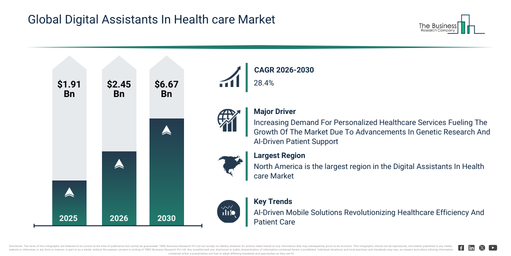
    Digital Assistants In Health care Market Revenue Growth On Track For A 28.4% CAGR Through 2030

    The market for digital assistants in health care has seen rapid expansion recently. It is projected to increase from $1.91 billion in 2025 to $2.45 billion in 2026, exhibiting a compound annual growth rate (CAGR) of 28.7%. This historic growth is largely due to factors like rising healthcare digitization, a shortage of clinical staff, increasing patient engagement needs, the adoption of electronic health records, and the growth of telehealth services.

    The market size for digital assistants in health care is anticipated to experience substantial growth over the coming years. This sector is projected to expand to $6.67 billion by 2030, achieving a compound annual growth rate (CAGR) of 28.4%. This projected growth can be ascribed to several factors, including developments in conversational AI, the broadening of virtual care models, an increasing need for operational efficiency, the proliferation of remote monitoring solutions, and heightened investment in digital health platforms. Noteworthy trends for the forecast period encompass the escalating adoption of AI-driven virtual assistants, a rising prevalence of voice-enabled healthcare interfaces, enhanced integration with electronic health records, the expansion of tools for remote patient engagement, and a greater emphasis on workflow automation within healthcare.

    Get A Free Sample Report With In-Depth Market Insights:

    https://thebusinessresearchcompany.com/sample_request?id=72319784&type=smp&name=Digital%20Assistants%20In%20Health%20care%20Market%20Report%202026&utm_source=Blogs&utm_medium=Paid&utm_campaign=Oct_PR

    Digital Assistants In Health care Market Demand Drivers: What’s Powering Industry Growth?

    The rising need for tailored medical care is anticipated to drive the expansion of the digital assistants in healthcare market in the future. Personalized healthcare involves medical solutions specifically adapted to an individual’s genetic makeup, lifestyle choices, and health records, aiming for greater precision and efficacy in treatment. This encompasses bespoke medicines, individualized therapies, diagnostic procedures, and wellness strategies. The expansion of personalized healthcare is fueled by progress in genetic research, which allows for highly specific and potent treatments aligned with a person’s unique genetic characteristics. Within healthcare, digital assistants improve personalized services by providing customized health data and assistance via artificial intelligence-powered interactions. These assistants enhance patient involvement by automating functions such as symptom evaluation and scheduling appointments, thereby boosting access to care and its operational effectiveness. As an illustration, in February 2024, the Personalized Medicine Coalition (PMC), a US-based nonprofit, reported that the U.S. Food and Drug Administration (FDA) authorized 26 new personalized medicines in 2023, marking a considerable rise from the 12 approved in 2022. Consequently, the growing demand for personalized healthcare services is stimulating the growth of the digital assistants in healthcare market.

    Digital Assistants In Health care Market Segment Trends And Revenue Contributors

    The digital assistants in health care market covered in this report is segmented –

    1) By Type: Smart Speaker, Chatbot, Other Types

    2) By Technology: Artificial Intelligence (AI)-Powered Assistants, Rule-Based Assistants, Natural Language Processing (NLP) Assistants, Machine Learning Assistants, Robotic Process Automation (RPA) Assistants

    3) By Application: Diagnosis, Virtual Nursing Assistance, Patient Tracking, Other Applications

    4) By End-User: Healthcare Providers, Healthcare Payers, Patients, Other End Users

    Subsegments:

    1) By Smart Speaker: Voice-activated Healthcare Assistants, Speech Recognition Systems for Healthcare, Virtual Health Assistants (VHA)

    2) By Chatbot: Symptom Checking Chatbots, Patient Support and Engagement Chatbots, Virtual Health Coaching Chatbots, Mental Health Support Chatbots

    Digital Assistants In Health care Market Innovation Trends: What Developments Are Reshaping The Industry?

    Key companies within the digital assistants in healthcare market are concentrating on developing advanced technological solutions, such as artificial intelligence (AI)-powered mobile solutions, to automate routine operations, improve patient care, and assist in clinical decision-making. An AI-powered mobile solution refers to a mobile application that harnesses artificial intelligence to deliver personalized, efficient, and data-driven services, thereby enhancing user experience and supporting healthcare tasks like diagnostics, patient engagement, and remote monitoring. For instance, in July 2024, Oracle Corporation, a US-based computer software company, unveiled an Oracle Clinical Digital Assistant. This mobile solution is integrated with the Oracle health electronic health record (EHR) and utilizes artificial intelligence (AI) and voice technology to automate clinical documentation and streamline workflows, notably reducing the administrative burden on physicians. This allows doctors to conserve time, enhance patient interaction, and boost overall healthcare efficiency.

    Digital Assistants In Health care Market Competitive Landscape: Which Companies Lead The Industry?

    Major companies operating in the digital assistants in health care market are Amazon.com Inc., Apple Inc., Google LLC, Samsung Electronics Co. Ltd, Microsoft Corporation, IBM Corporation, Siemens Healthineers AG, Koninklijke Philips N.V., GE HealthCare Technologies Inc., Babylon Holdings Limited, Verint Systems Inc., eGain Corporation, Suki Inc., Ada Health GmbH, K Health Inc., Infermedica Sp. z o.o, Your.MD Ltd, Fabric Labs Inc., Mediktor, MediSprout

    View The Full Digital Assistants In Health care Market Report:

    https://thebusinessresearchcompany.com/report/digital-assistants-in-health-care-global-market-report?utm_source=Blogs&utm_medium=Paid&utm_campaign=Oct_PR

    Digital Assistants In Health care Market Global Footprint: Which Region Leads The Market?

    North America was the largest region in the digital assistants in the healthcare market in 2025. Asia-Pacific is expected to be the fastest-growing region in the forecast period. The regions covered in the digital assistants in health care market report are Asia-Pacific, South East Asia, Western Europe, Eastern Europe, North America, South America, Middle East, Africa.

    Reach Out To Our Team:

    The Business Research Company: https://www.thebusinessresearchcompany.com/

    Americas: +1 310-496-7795

    Asia: +44 7882 955267 & +91 8897263534

    Europe: +44 7882 955267

    Email us at: marketing@tbrc.info

    Follow us on:

    LinkedIn: https://in.linkedin.com/company/the-business-research-company

    YouTube: https://www.youtube.com/channel/UC24_fI0rV8cR5DxlCpgmyFQ

    Global Market Model: https://www.thebusinessresearchcompany.com/global-market-model
  • Digestive Health Supplements Market Size In 2026 And Beyond: Understanding Future Growth Potential

    Digestive Health Supplements Market Size In 2026 And Beyond: Understanding Future Growth Potential

    Backed by market attractiveness analysis, total addressable market sizing, company benchmarking matrices, interactive Excel dashboards, wider supply chain intelligence, emerging startup coverage, and detailed product-level insights, The Business Research Company’s 2026 market reports are designed to offer research that is more actionable and strategically valuable than ever.

    Digestive Health Supplements Market Value Growth And Long-Term Outlook

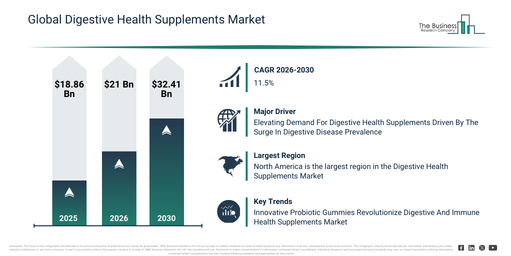
    The digestive health supplements market has seen substantial expansion in recent years. Its size is expected to increase from $18.86 billion in 2025 to $21 billion in 2026, achieving a compound annual growth rate (CAGR) of 11.3%. This growth during the historical period can be attributed to several factors, including the rising incidence of digestive disorders, increased consumer awareness regarding gut health, a greater adoption of probiotics and enzymes, the expansion of retail pharmacy distribution channels, and an increase in disposable income within emerging economies.

    The digestive health supplements market is projected to experience significant expansion in the coming years. Its valuation is predicted to reach $32.41 billion by 2030, demonstrating a compound annual growth rate (CAGR) of 11.5%. This anticipated growth during the forecast period is primarily driven by breakthroughs in microbiome research, a growing desire for customized nutrition, the rise of online platforms for supplements, an aging demographic with specific digestive requirements, and an increasing emphasis on proactive healthcare. Key developments expected in this period encompass tailored gut health products, natural and clean-label digestive aids, the creation of synbiotic and multi-strain solutions, the embrace of preventive digestive well-being, and the broadening of e-commerce and direct-to-consumer sales channels.

    Get A Free Sample Report With In-Depth Market Insights:

    https://thebusinessresearchcompany.com/sample_request?id=28153099&type=smp&name=Digestive%20Health%20Supplements%20Market%20Report%202026&utm_source=Blogs&utm_medium=Paid&utm_campaign=Oct_PR

    Digestive Health Supplements Market Growth Drivers: What’s Behind The Acceleration?

    The expanding occurrence of digestive diseases is anticipated to boost the growth of the digestive health supplement market going forward. A digestive disease refers to any health problem impacting the digestive tract, with severity ranging from mild to severe. Digestive health supplements, including probiotics, prebiotics, and enzymes, provide assistance for digestive issues such as diarrhea, constipation, inflammatory bowel disease, irritable bowel disease, urinary tract infections, and other gastrointestinal-related digestive problems. For instance, in November 2025, the Canadian Cancer Society, a Canada-based national cancer charity, projected that around 7,100 individuals in Canada would be diagnosed with pancreatic cancer, with roughly 6,300 expected to succumb to the disease, indicating a notably high mortality rate compared to the number of new cases. Therefore, the increasing prevalence of digestive diseases will fuel the growth of the digestive health supplements market.

    Digestive Health Supplements Market Segment Analysis Spotlighting Growth Areas

    The digestive health supplements market covered in this report is segmented –

    1) By Product: Prebiotics, Probiotics, Enzymes, Other Product

    2) By Form: Capsules, Tablets, Powders, Liquids, Other Form

    3) By Distribution Channel: Supermarkets/Hypermarkets, Convenience Store, Specialty Store, Pharmacies, E-Commerce, Other Distribution Channels

    Subsegments:

    1) By Prebiotics: Inulin, Oligofructose, Fructooligosaccharides (FOS), Galactooligosaccharides (GOS), Other Prebiotics

    2) By Probiotics: Lactobacillus, Bifidobacterium, Saccharomyces, Streptococcus, Other Probiotics

    3) By Enzymes: Amylase, Protease, Lipase, Cellulase, Other Digestive Enzymes

    4) By Other Products: Herbal Supplements, Fiber Supplements, Digestive Health Blends, Other Natural Ingredients

    Digestive Health Supplements Market Trends: What’s Defining The Industry’s Next Phase?

    Major companies in the market are focusing on creating advanced products such as Probiotic Gummies to expand their product ranges and boost revenue share. Nutrazee Probiotic Gummies are specifically formulated to withstand stomach acid and maintain stability at room temperature throughout their shelf life, offering practical and effective gut health assistance. For instance, in March 2023, Nutrazee, an India-based vegan dietary supplement company, introduced its latest offering, the Nutrazee Probiotic Gummies for Digestive and Immune Health, which includes prebiotic fiber to foster beneficial gut bacteria growth. This new product in Nutrazee’s portfolio is engineered to bolster digestive and immune health for both children and adults. The Nutrazee Probiotic Gummies feature a patented and clinically validated probiotic strain, Bacillus coagulans, known for its powerful health advantages. This strain has demonstrated efficacy in alleviating irritable bowel syndrome (IBS) symptoms in children, including common issues like abdominal discomfort, bloating, and stool irregularities, while also improving stool consistency.

    Digestive Health Supplements Market Leading Companies: Who Holds The Strongest Market Presence?

    Major companies operating in the digestive health supplements market are Amway Corp., Bayer AG, NOW Foods, Alimentary Health Limited, Garden of Life LLC, Better Body Co., Florastor – Biocodex, Culturelle – i-Health Inc., Pure Encapsulations LLC, Bio-K Probiotic Inc., Renew Life Formulas Inc., The Nature’s Bounty Co., Nature Made – Pharmavite LLC, Align – The Procter & Gamble Company, Nature’s Way Products LLC, Schiff Nutrition International Inc., Rainbow Light Nutritional Systems, Jarrow Formulas Inc., Enzymedica Inc., Thorne Research Inc., New Chapter Inc., Solgar Inc., Gaia Herbs Inc., MegaFood, Country Life LLC, Bluebonnet Nutrition Corporation, Nature’s Plus – Natural Organics Inc., Carlson Laboratories Inc., Irwin Naturals

    View The Full Digestive Health Supplements Market Report:

    https://thebusinessresearchcompany.com/report/digestive-health-supplements-global-market-report?utm_source=Blogs&utm_medium=Paid&utm_campaign=Oct_PR

    Digestive Health Supplements Market Regional Split: Which Areas Are Fueling Growth?

    North America was the largest region in the digestive health supplements market in 2025. Asia-Pacific is expected to be the fastest-growing region in the forecast period. The regions covered in the digestive health supplements market report are Asia-Pacific, South East Asia, Western Europe, Eastern Europe, North America, South America, Middle East, Africa.

    Reach Out To Our Team:

    The Business Research Company: https://www.thebusinessresearchcompany.com/

    Americas: +1 310-496-7795

    Asia: +44 7882 955267 & +91 8897263534

    Europe: +44 7882 955267

    Email us at: marketing@tbrc.info

    Follow us on:

    LinkedIn: https://in.linkedin.com/company/the-business-research-company

    YouTube: https://www.youtube.com/channel/UC24_fI0rV8cR5DxlCpgmyFQ

    Global Market Model: https://www.thebusinessresearchcompany.com/global-market-model
  • Digestive Health Market Reaches $117.03 Billion In 2026: Key Developments Shaping Expansion

    Digestive Health Market Reaches $117.03 Billion In 2026: Key Developments Shaping Expansion

    Featuring market attractiveness scoring, total addressable market sizing, company benchmarking matrices, interactive Excel dashboards, deeper supply chain intelligence, emerging startup tracking, and granular product-level insights, The Business Research Company’s 2026 market reports are built to deliver research that is both more actionable and more strategically valuable.

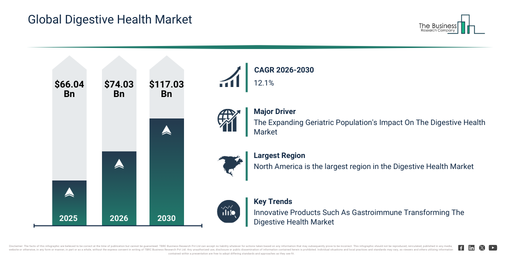
    Digestive Health Market Poised To Hit $117.03 Billion By 2030 With A 12.1% CAGR

    The digestive health market size has undergone rapid expansion in recent years. It is projected to grow from $66.04 billion in 2025 to $74.03 billion in 2026, achieving a compound annual growth rate (CAGR) of 12.1%. The market’s historical growth can be attributed to several factors, including the rising prevalence of digestive disorders, increased consumer understanding of gut health, a surge in functional food consumption, the expansion of retail outlets for dietary supplements, and doctors’ recommendations for probiotics.

    The digestive health market is set for significant expansion over the next few years. It is forecast to achieve a valuation of $117.03 billion by 2030, growing at a compound annual growth rate (CAGR) of 12.1%. This anticipated growth during the forecast period can be attributed to the rising adoption of personalized nutrition, the expansion of e-commerce health platforms, breakthroughs in probiotic strains, an increasing aging population, and increased spending on preventive healthcare. Prominent trends expected in this period include a growing demand for probiotic and prebiotic offerings, the development of functional foods aimed at digestive wellness, a preference for natural and herbal solutions for digestion, the proliferation of online pharmacies and direct-to-consumer distribution, and a greater emphasis on gut health within preventive healthcare.

    Get A Free Sample Report With In-Depth Market Insights:

    https://thebusinessresearchcompany.com/sample_request?id=69707250&type=smp&name=Digestive%20Health%20Market%20Report%202026&utm_source=Blogs&utm_medium=Paid&utm_campaign=Oct_PR

    Digestive Health Market Growth Factors Behind Sustained Expansion

    The expanding older adult demographic is fueling the digestive health market. This group includes individuals aged 65 and above. As individuals age, the digestive system frequently loses its speed and efficiency because various biological functions slow down. Over time, the muscles within the digestive system stiffen, become softer, and are less effective. Digestive health products assist the body in effectively digesting food and absorbing nutrients, thereby supporting overall health. For instance, in October 2025, the World Health Organization (WHO), a Switzerland-based United Nations (UN) organization, stated that by 2030, one in six people globally will be aged 60 or older, with this population projected to double to 2.1 billion by 2050. Consequently, the increasing geriatric population is expected to drive growth in the digestive health market.

    Digestive Health Market Segment Performance And Emerging Opportunities

    The digestive health market covered in this report is segmented –

    1) By Product Type: Functional Foods and Beverages, Vitamins And Dietary Supplements, Other Products

    2) By Ingredient Type: Probiotics, Prebiotics, Digestive Enzymes, Other Ingredients

    3) By Distribution Channel: Supermarkets Or Hypermarkets, Hospital Pharmacies, Online Pharmacies, Other Distribution Channels

    Subsegments:

    1) By Functional Foods And Beverages: Probiotic Yogurts, Prebiotic Foods, Fiber-Enriched Products, Fermented Foods, Digestive Health Beverages

    2) By Vitamins And Dietary Supplements: Probiotic Supplements, Digestive Enzymes, Fiber Supplements, Multivitamins With Digestive Support, Herbal Supplements

    3) By Other Products: Dietary Aids, Over-The-Counter Digestive Health Products

    Digestive Health Market Industry Trends Fueling Future Revenue Growth

    Major companies in the digestive health market are introducing innovative products like GastroImmune to expand their portfolios and gain a competitive advantage. Daiwa GastroImmune is specifically formulated to support digestive wellness and a robust mucosal immune system through the combination of ImmunoLin with essential nutrients. For example, in April 2023, Daiwa Health Development, Inc., a US-based dietary supplement company, launched GastroImmune, a dietary supplement designed to aid digestive function and a healthy mucosal immune system. GastroImmune is powered by ImmunoLin, an agglomerated powder purified from edible bovine plasma, which is rich in immunoglobulins, peptides, and growth factors naturally found in milk or colostrum. This advanced supplement contains more than 50% immunoglobulins and over 180 unique proteins, which were identified using proteomics techniques. ImmunoLin, also known as serum-derived bovine immunoglobulin/protein isolate (SBI), is produced in an FDA-inspected facility under stringent quality control standards.

    Digestive Health Market Key Players: Which Companies Lead Industry Competition?

    Major companies operating in the digestive health market are Chr. Hansen Holdings A/S, Yakult Honsha Co. Ltd., Nestlé SA, DuPont de Nemours Inc., PepsiCo Inc., Abbott Laboratories, ANI Pharmaceuticals Inc., Carlson Labs, Biovencer Healthcare Private Limited, Evoke Pharma Inc., Swanson Health, GlaxoSmithKline PLC, Solgar Inc., Mac Twins – The Gut Stuff Limited, Culturelle – i-Health Inc., Jarrow Formulas Inc., SmartyPants Inc., Takeda Pharmaceutical Company Limited, Enzymedica Inc., Gaia Herbs Inc., Zeria Pharmaceutical Co. Ltd., Thorne Research Inc., The Nature’s Bounty Co.

    View The Full Digestive Health Market Report:

    https://thebusinessresearchcompany.com/report/digestive-health-global-market-report?utm_source=Blogs&utm_medium=Paid&utm_campaign=Oct_PR

    Digestive Health Market Top Region: Where Does Most Revenue Come From?

    North America was the largest region in the digestive health market in 2025. The regions covered in the digestive health market report are Asia-Pacific, South East Asia, Western Europe, Eastern Europe, North America, South America, Middle East, Africa.

    Reach Out To Our Team:

    The Business Research Company: https://www.thebusinessresearchcompany.com/

    Americas: +1 310-496-7795

    Asia: +44 7882 955267 & +91 8897263534

    Europe: +44 7882 955267

    Email us at: marketing@tbrc.info

    Follow us on:

    LinkedIn: https://in.linkedin.com/company/the-business-research-company

    YouTube: https://www.youtube.com/channel/UC24_fI0rV8cR5DxlCpgmyFQ

    Global Market Model: https://www.thebusinessresearchcompany.com/global-market-model
  • Digestive Enzymes Market Growth Outlook For 2026: Drivers, Trends And Future Opportunities

    Digestive Enzymes Market Growth Outlook For 2026: Drivers, Trends And Future Opportunities

    Built to provide research that’s more actionable and strategically valuable, The Business Research Company’s 2026 market reports include market attractiveness analysis, total addressable market sizing, company benchmarking matrices, interactive Excel dashboards, broader supply chain intelligence, emerging startup tracking, and in-depth product insights.

    Digestive Enzymes Market Size And Revenue Outlook Through 2030

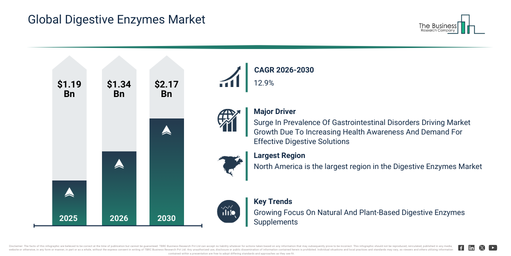
    The market size for digestive enzymes has experienced rapid expansion in recent years. This market is expected to increase from $1.19 billion in 2025 to $1.34 billion in 2026, at a compound annual growth rate (CAGR) of 12.4%. The historic growth of the market can be attributed to factors such as the growing prevalence of digestive disorders, increased awareness regarding enzyme therapy, a rising aging population, the expansion of pharmaceutical enzyme formulations, and the growth of retail pharmacy networks.

    The digestive enzymes market is projected to experience substantial expansion over the upcoming years, reaching $2.17 billion in 2030 at a compound annual growth rate (CAGR) of 12.9%. This anticipated expansion throughout the forecast period stems from factors such as increasing consumer need for customized digestive remedies, a heightened emphasis on maintaining gut health, the rise in plant-derived enzyme manufacturing, the broadening reach of online sales for health-related products, and advancements in enzyme formulation techniques. Key developments expected during this period involve a greater uptake of enzyme supplements for digestive well-being, an increasing preference for enzymes from plant and microbial sources, the wider availability and use of over-the-counter digestive aids, the expanding application of enzymes in managing chronic digestive ailments, and the growth of internet-based channels for distributing digestive enzyme products.

    Get A Free Sample Report With In-Depth Market Insights:

    https://thebusinessresearchcompany.com/sample_request?id=13172301&type=smp&name=Digestive%20Enzymes%20Market%20Report%202026&utm_source=Blogs&utm_medium=Paid&utm_campaign=Oct_PR

    Digestive Enzymes Market Demand Drivers Opening New Revenue Streams

    The increasing incidence of gastrointestinal conditions across various age demographics propels the expansion of the digestive enzymes market. These disorders encompass issues within the entire gastrointestinal tract, from the mouth to the anus, often resulting from insufficient digestive enzymes. The growing frequency of these conditions stems from factors such as smoking, dietary habits and genetics, poor sanitation, heightened antibiotic usage, and evolving environmental conditions linked to industrialization and urbanization. An illustrative example is found in September 2025, where the UK Health Security Agency (UKHSA), a UK-based government agency responsible for all health security in England, reported a 27.0 percent rise in Campylobacter, a pathogen causing gastrointestinal infections, with its rate per 100,000 population climbing from 96.1 in 2022 to 122.0 in 2024, based on laboratory findings. Consequently, the greater occurrence of digestive ailments contributes significantly to the expansion of the digestive enzymes market.

    Digestive Enzymes Market Segment Landscape And Growth Outlook

    The digestive enzymes market covered in this report is segmented –

    1) By Enzyme Type: Carbohydrates, Protease, Lipase, Other Enzyme Types

    2) By Origin: Animal, Fungi, Microbial, Plant

    3) By Application: Indigestion, Chronic Pancreatitis, Irritable Bowel Syndrome, Other Applications

    4) By Distribution Channel: Retail Stores, Online Stores

    Subsegments:

    1) By Carbohydrates: Amylase, Alpha-Galactosidase, Lactase, Sucrase, Maltase

    2) By Protease: Pepsin, Trypsin, Chymotrypsin, Bromelain, Papain

    3) By Lipase: Pancreatic Lipase, Gastric Lipase, Lingual Lipase

    4) By Other Enzyme Types: Cellulase, Lactase, Phytase, Beta-Glucanase, Xylanase

    Digestive Enzymes Market Trends Powering Strategic Industry Growth

    Leading companies within the digestive enzymes market are concentrating on developing innovative solutions, such as enzymatic digestibility enhancers, to satisfy increasing consumer demand for healthier alternatives. An enzymatic digestibility enhancer is a substance or supplement that contains enzymes specifically formulated to improve the breakdown and assimilation of nutrients in food. For example, in September 2023, Huvepharma EOOD, a pharmaceutical company based in Bulgaria, introduced its enzymatic digestibility enhancer, Huvezym neXo, throughout the European Union, with the purpose of enhancing feed efficiency in growing poultry. This product, part of the Huvezym brand, comprises a complex of enzymes that improve nutrient absorption by lowering intestinal viscosity, liberating encapsulated nutrients, and releasing prebiotic oligosaccharides. Clinical trials have indicated that Huvezym neXo can increase growth rates by 4.4% and enhance feed conversion by 3.5%.

    Digestive Enzymes Market Competitive Landscape: Who Leads The Industry?

    Major companies operating in the digestive enzymes market are Garden of Life LLC, Biotics Research Corporation, Klaire Laboratories, Abbott Nutrition, Amway Corporation, Food State Inc., Matsun Nutrition, Metagenics Inc., Twinlab Corporation, AST Enzymes, Vemo Corp., Advanced Vital Enzymes Pvt. Ltd., Zeus Biotech Limited, Vox Nutrition Inc., Enzyme Bioscience Pvt. Ltd., XYMOGEN Inc., Douglas Laboratories, Thorne Research Inc., Integrative Therapeutics LLC, Pure Encapsulations Inc., Ortho Molecular Products Inc., Designs for Health Inc., Master Supplements Inc., Proteozymes Pvt Ltd., Chr. Hansen Holding A/S, DSM Nutritional Products AG, DuPont de Nemours Inc., Kerry Group plc, Koninklijke DSM N.V., Nestle S.A., Pfizer Inc., Sanofi S.A., Specialty Enzymes & Biotechnologies Co.

    View The Full Digestive Enzymes Market Report:

    https://thebusinessresearchcompany.com/report/digestive-enzyme-global-market-report?utm_source=Blogs&utm_medium=Paid&utm_campaign=Oct_PR

    Digestive Enzymes Market Regional Breakdown: Where Is Demand Concentrated?

    North America was the largest region in the digestive enzymes market in 2025. Middle East is expected to be the largest growing region in the digestive enzymes market report during the forecast period. The regions covered in the digestive enzymes market report are Asia-Pacific, South East Asia, Western Europe, Eastern Europe, North America, South America, Middle East, Africa.

    Reach Out To Our Team:

    The Business Research Company: https://www.thebusinessresearchcompany.com/

    Americas: +1 310-496-7795

    Asia: +44 7882 955267 & +91 8897263534

    Europe: +44 7882 955267

    Email us at: marketing@tbrc.info

    Follow us on:

    LinkedIn: https://in.linkedin.com/company/the-business-research-company

    YouTube: https://www.youtube.com/channel/UC24_fI0rV8cR5DxlCpgmyFQ

    Global Market Model: https://www.thebusinessresearchcompany.com/global-market-model

  • Digestive and Intestinal Remedies Market Size Forecast From 2026 To 2030: Key Industry Trends

    Digestive and Intestinal Remedies Market Size Forecast From 2026 To 2030: Key Industry Trends

    Backed by market attractiveness analysis, total addressable market sizing, company benchmarking matrices, interactive Excel dashboards, wider supply chain intelligence, emerging startup coverage, and detailed product-level insights, The Business Research Company’s 2026 market reports are designed to offer research that is more actionable and strategically valuable than ever.

    Digestive and Intestinal Remedies Market Growth From $23.66 Billion In 2026 To $30.42 Billion By 2030 At A CAGR Of 6.5%

    The market size for digestive and intestinal remedies has witnessed significant growth in recent years. This market is anticipated to expand from $22.28 billion in 2025 to $23.67 billion in 2026, demonstrating a compound annual growth rate (CAGR) of 6.2%. The historical expansion can be attributed to several factors, including the increasing prevalence of gastrointestinal disorders, a rise in the usage of antacids and PPIs, enhanced awareness regarding digestive health, the development of hospital and clinic infrastructure, and the uptake of herbal remedies.

    The digestive and intestinal remedies market size is anticipated to expand significantly in the forthcoming years. It is projected to reach $30.43 billion in 2030, demonstrating a compound annual growth rate (CAGR) of 6.5%. This expected growth during the forecast period can be attributed to several factors such as advancements in gut microbiome therapies, the integration of AI in digestive health diagnostics, the increasing development of personalized nutrition and supplements, the expansion of online pharmaceutical platforms, and a rising geriatric population experiencing digestive issues. Key trends anticipated in the forecast period include the rise of personalized digestive health solutions, growth in herbal and natural remedies, an increased focus on gut microbiome research, the expansion of online pharmacy and e-pharmacy channels, and a growing awareness of preventive gastrointestinal care.

    Get A Free Sample Report With In-Depth Market Insights:

    https://thebusinessresearchcompany.com/sample_request?id=31044238&type=smp&name=Digestive%20and%20Intestinal%20Remedies%20Market%20Report%202026&utm_source=Blogs&utm_medium=Paid&utm_campaign=Oct_PR

    Digestive and Intestinal Remedies Market Growth Backed By Core Demand Fundamentals

    The digestive and intestinal remedy market is anticipated to expand due to an increase in gastrointestinal disorder cases. These disorders are a collective term for conditions like nausea, vomiting, food poisoning, and diarrhea, which impair the overall biological functioning of the gastrointestinal (GI) tract. The escalating incidence of gastrointestinal disorders has resulted in a heightened demand for effective digestive and intestinal remedies. For instance, in January 2024, according to the American Cancer Society, a US-based non-profit organization, approximately 26,890 new cases of stomach cancer are projected in the U.S. in 2024, comprising 16,160 cases in men and 10,730 in women, potentially leading to about 10,880 deaths, which include 6,490 men and 4,390 women. Consequently, the rising number of gastrointestinal disorder cases is expected to fuel the growth of the digestive and intestinal remedy market.

    Digestive and Intestinal Remedies Market Breakdown By Product Type And Application

    The digestive and intestinal remedies market covered in this report is segmented –

    1) By Type: Digestive Medicines, Remedies Against Gastrointestinal Complaints, Natural And Synthetic Agents

    2) By Age Group: Pediatric, Adults

    3) By Distribution Channel: Online, Offline

    Subsegments:

    1) By Digestive Medicines: Antacids, Digestive Enzymes, Proton Pump Inhibitors (PPIs), H2-Receptor Antagonists

    2) By Remedies Against Gastrointestinal Complaints: Anti-Nausea Medications, Antidiarrheal Agents, Laxatives, Gastroprotective Agents

    3) By Natural And Synthetic Agents: Herbal Remedies, Synthetic Antispasmodics, Probiotics And Prebiotics

    Digestive and Intestinal Remedies Market Growth Trends Reshaping The Competitive Landscape

    Leading companies within the digestive and intestinal remedy market are developing innovative offerings, such as digital platforms, to reach a broader customer base, increase sales, and boost revenue. Digital platforms are defined as online technology-based systems or frameworks designed to facilitate the creation, delivery, and interaction of digital content, services, or products. For example, in April 2023, Owlstone Medical, a biotechnology firm based in the UK, introduced OMED Health, with the goal of enabling patients to grasp their gut microbiome and effectively manage their digestive well-being. Initially focused on digestive ailments, OMED Health aims to improve the quality of life for individuals dealing with gut health issues by providing enhanced and faster comprehension and control over their conditions. In the context of digestive health, breath testing is emerging as an effective method for patients to monitor and regulate symptoms. The distinguishing feature of OMED Health’s gut health tests is their capability to detect minimal concentrations of hydrogen and methane gases in breath, offering a convenient process for collection at home. These gases act as significant indicators of gut health, pointing to specific conditions and diseases.

    Digestive and Intestinal Remedies Market Company Landscape And Competitive Strategy

    Major companies operating in the digestive and intestinal remedies market are Bayer AG, Abbott Laboratories, Bausch Health Companies Inc., Eli Lilly and Company, GlaxoSmithKline PLC, Jiangzhong Pharmaceutical Co. Ltd., Johnson & Johnson Pvt. Ltd., Menarini Group, Merck Co. & KGaA, Pfizer Inc., Prestige Consumer Healthcare Inc., Procter & Gamble Company, Reckitt Benckiser Group PLC, Sanofi SA, Takeda Pharmaceutical Company Limited, AbbVie Inc., Alfa Wassermann and Sigma-Tau, Allergan PLC, AstraZeneca PLC, Boehringer Ingelheim International GmbH, Daiichi Sankyo Chemical Pharma Co. Ltd., Evoke Pharma Inc., Ipsen SA, Ironwood Pharmaceuticals Inc., Mundipharma, Mylan NV, Norgine Pharmaceuticals Ltd., Novartis AG, Otsuka Pharmaceutical Co. Ltd., Perrigo Company, Recordati S.p.A., RedHill Biopharma Ltd., Ritter Pharmaceuticals Inc., Salix Pharmaceuticals Inc.

    View The Full Digestive and Intestinal Remedies Market Report:

    https://thebusinessresearchcompany.com/report/digestive-and-intestinal-remedies-global-market-report?utm_source=Blogs&utm_medium=Paid&utm_campaign=Oct_PR

    Digestive and Intestinal Remedies Market Geographic Landscape: Which Region Dominates Industry Growth?

    North America was the largest region in the digestive and intestinal remedies market in 2025. Asia-Pacific is expected to be the fastest-growing region in the forecast period. The regions covered in the digestive and intestinal remedies market report are Asia-Pacific, South East Asia, Western Europe, Eastern Europe, North America, South America, Middle East, Africa.

    Reach Out To Our Team:

    The Business Research Company: https://www.thebusinessresearchcompany.com/

    Americas: +1 310-496-7795

    Asia: +44 7882 955267 & +91 8897263534

    Europe: +44 7882 955267

    Email us at: marketing@tbrc.info

    Follow us on:

    LinkedIn: https://in.linkedin.com/company/the-business-research-company

    YouTube: https://www.youtube.com/channel/UC24_fI0rV8cR5DxlCpgmyFQ

    Global Market Model: https://www.thebusinessresearchcompany.com/global-market-model

  • Diffuse Large B-cell Lymphoma Therapeutics Market 2026: Market Size, Growth Drivers And Emerging Opportunities

    Diffuse Large B-cell Lymphoma Therapeutics Market 2026: Market Size, Growth Drivers And Emerging Opportunities

    Featuring market attractiveness scoring, total addressable market sizing, company benchmarking matrices, interactive Excel dashboards, deeper supply chain intelligence, emerging startup tracking, and granular product-level insights, The Business Research Company’s 2026 market reports are built to deliver research that is both more actionable and more strategically valuable.

    Diffuse Large B-cell Lymphoma Therapeutics Market Expansion Outlook: What Revenue Opportunities Are Ahead?

    The diffuse large b-cell lymphoma therapeutics market has experienced robust expansion over recent years. It is anticipated to increase from $5.1 billion in 2025 to $5.48 billion in 2026, achieving a compound annual growth rate (CAGR) of 7.6%. The historical growth trajectory can be linked to several factors, including a higher incidence of non-hodgkin lymphoma, the extensive uptake of rituximab-based therapies, more accurate diagnostic methods, an expanding hospital-based oncology infrastructure, and greater awareness regarding lymphoma treatment options.

    The diffuse large b-cell lymphoma therapeutics market is forecast to undergo significant expansion in the upcoming years, with its valuation expected to reach $7.54 billion in 2030 at a compound annual growth rate (CAGR) of 8.3%. This anticipated growth across the forecast period can be attributed to several factors including the expanding development pipeline for targeted therapies, the increasing application of combination immunochemotherapy, the proliferation of oncology specialty clinics, rising healthcare investments in emerging economies, and progress in personalized medicine techniques. Prominent trends for the forecast period encompass the wider implementation of immunotherapy-based treatment plans, a surge in the adoption of combination chemotherapy protocols, more frequent use of monoclonal antibody therapies, the progression of individualized treatment pathways, and an increased focus on improving treatment tolerability.

    Get A Free Sample Report With In-Depth Market Insights:

    https://thebusinessresearchcompany.com/sample_request?id=58590847&type=smp&name=Diffuse%20Large%20B-cell%20Lymphoma%20Therapeutics%20Market%20Report%202026&utm_source=Blogs&utm_medium=Paid&utm_campaign=Oct_PR

    Diffuse Large B-cell Lymphoma Therapeutics Market Growth Catalysts And Demand Drivers

    A rising prevalence of diffuse large B-cell lymphoma (DLBCL) is anticipated to stimulate expansion in the diffuse large B-cell lymphoma therapeutics market moving forward. Diffuse large B-cell lymphoma (DLBCL) is an aggressive malignancy originating from B-cells within the lymphatic system, characterized by swift and widespread growth. It is classified as a type of non-Hodgkin lymphoma (NHL). The diffuse large B-cell lymphoma therapeutics aim to enhance patient outcomes for those already diagnosed by targeting and managing the cancer cells. For example, the American Cancer Society, a US-based voluntary health organization, forecasted that approximately 80,550 individuals (44,880 males and 35,670 females) would be diagnosed with non-Hodgkin’s lymphoma (NHL) in 2023, with roughly 20,180 people expected to die from NHL. Therefore, the increasing incidence of diffuse large B-cell lymphoma (DLBCL) fuels the growth of the diffuse large B-cell lymphoma therapeutics market.

    Diffuse Large B-cell Lymphoma Therapeutics Market Segment Analysis And Revenue Potential

    The diffuse large b-cell lymphoma therapeutics market covered in this report is segmented –

    1) By Drug Class: Cisplatin, Carboplatin, 5-fluorouracil, Docetaxel, Paclitaxel, Methotrexate, Other Drugs

    2) By Therapy: Targeted Therapy, Immunotherapy, Chemotherapy, Other Therapies

    3) By Route of Administration: Oral, Parenteral, Other Routes

    4) By End User: Hospitals, Clinics, Other End-Users

    Diffuse Large B-cell Lymphoma Therapeutics Market Trends Shaping Long-Term Demand

    Major companies in the diffuse large B-cell lymphoma therapeutics market are developing new drugs, such as novel CD19-targeting immunotherapies, to enhance treatment efficacy and expand options for patients with relapsed or refractory disease. Novel CD19-targeting immunotherapies are defined as next-generation antibody-based or antibody-derived treatments designed to recognize the CD19 antigen on B-cell lymphoma cells, thereby activating immune mechanisms like antibody-dependent cellular cytotoxicity or enhanced immune cell engagement to improve tumor cell elimination. For instance, in June 2023, MINJUVI (tafasitamab), developed by Specialized Therapeutics Asia Pte Ltd (STA), a Singapore-based biopharmaceutical company, received approval from the Therapeutic Goods Administration (TGA). MINJUVI, in combination with lenalidomide, is indicated for adult patients with relapsed or refractory diffuse large B-cell lymphoma (DLBCL) who are not eligible for autologous stem cell transplant (ASCT). This therapy, a CD19-targeting immunotherapy, stimulates an immune response against B-cell lymphoma cells. MINJUVI has demonstrated a favorable side effect profile and high response rates in patients with relapsed disease. Its approval via a provisional regulatory pathway and participation in the Modified Project Orbis initiative highlight efforts to expedite availability for Australian patients. The decision was based on positive data from the Phase 2 L-MIND study, and continued approval depends on findings from the confirmatory Phase 3 frontMIND study.

    Diffuse Large B-cell Lymphoma Therapeutics Market Key Players Shaping Industry Direction

    Major companies operating in the diffuse large b-cell lymphoma therapeutics market are Novartis AG, Pfizer Inc., Merck & Co Inc., GlaxoSmithKline plc, F. Hoffmann-La Roche AG, CTI BioPharma Corp., Celltrion Healthcare Co Ltd., Bristol-Myers Squibb Company, AbbVie Inc., Gilead Sciences Inc., Seagen Inc., Kite Pharma Inc., ADC Therapeutics SA, Bayer AG, Xencor Inc., Autolus Therapeutics plc, Allogene Therapeutics Inc., Spectrum Pharmaceuticals Inc., AstraZeneca PLC, Aptevo Therapeutics Inc., Takeda Pharmaceutical Company Limited, Johnson & Johnson, Celgene Corporation, Eli Lilly and Company, Sanofi SA, Seattle Genetics Inc., Karyopharm Therapeutics Inc., TG Therapeutics Inc., MorphoSys AG

    View The Full Diffuse Large B-cell Lymphoma Therapeutics Market Report:

    https://thebusinessresearchcompany.com/report/diffuse-large-B-cell-lymphoma-therapeutics-global-market-report?utm_source=Blogs&utm_medium=Paid&utm_campaign=Oct_PR

    Diffuse Large B-cell Lymphoma Therapeutics Market Largest Region: Which Geography Holds The Highest Market Share?

    North America was the largest region in the global diffuse large B-cell lymphoma therapeutics market in 2025. Asia-Pacific is expected to be the fastest-growing region in the forecast period. The regions covered in the diffuse large b-cell lymphoma therapeutics market report are Asia-Pacific, South East Asia, Western Europe, Eastern Europe, North America, South America, Middle East, Africa.

    Reach Out To Our Team:

    The Business Research Company: https://www.thebusinessresearchcompany.com/

    Americas: +1 310-496-7795

    Asia: +44 7882 955267 & +91 8897263534

    Europe: +44 7882 955267

    Email us at: marketing@tbrc.info

    Follow us on:

    LinkedIn: https://in.linkedin.com/company/the-business-research-company

    YouTube: https://www.youtube.com/channel/UC24_fI0rV8cR5DxlCpgmyFQ

    Global Market Model: https://www.thebusinessresearchcompany.com/global-market-model