Category: Pharmaceuticals

  • Bisphosphonate Drug Market 2026 Outlook: Market Size, CAGR And Key Growth Opportunities

    Bisphosphonate Drug Market 2026 Outlook: Market Size, CAGR And Key Growth Opportunities

    Featuring market attractiveness scoring, total addressable market sizing, company benchmarking matrices, interactive Excel dashboards, deeper supply chain intelligence, emerging startup tracking, and granular product-level insights, The Business Research Company’s 2026 market reports are built to deliver research that is both more actionable and more strategically valuable.

    Bisphosphonate Drug Market Growth Analysis: How Will Revenue Trend Over The Forecast Period?

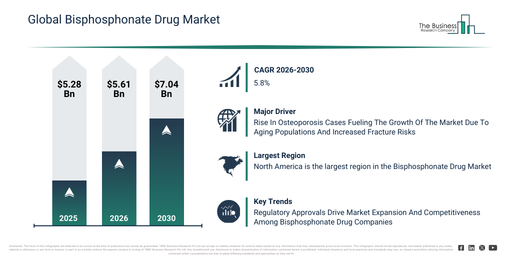
    The bisphosphonate drug market size has seen robust growth over the past few years. It is anticipated to expand from $5.28 billion in 2025 to $5.61 billion in 2026, achieving a compound annual growth rate (CAGR) of 6.2%. Historically, this expansion has been driven by factors such as the prevalence of osteoporosis, an aging global population, the implementation of hospital bone care protocols, various fracture prevention programs, and the adoption of oral bisphosphonates.

    The bisphosphonate drug market is projected to experience substantial expansion over the upcoming years. This market is forecast to reach $7.04 billion by 2030, exhibiting a compound annual growth rate (CAGR) of 5.8%. The expansion anticipated during this period is largely driven by factors such as an aging demographic, the increasing acceptance of injectable therapies, advancements in oncology supportive care, the proliferation of generic drugs, and a heightened emphasis on proactive bone health. Key developments expected within the forecast timeframe encompass the rising application in postmenopausal osteoporosis, a move towards long-acting injectable formulations, the rise of generic bisphosphonate medications, the broadening scope of treatments for cancer-related bone loss, and an increased focus on lowering fracture risk.

    Get A Free Sample Report With In-Depth Market Insights:

    https://www.thebusinessresearchcompany.com/sample.aspx?id=24482&type=smp&utm_source=Blogs&utm_medium=Paid&utm_campaign=Oct_PR

    Bisphosphonate Drug Market Growth Catalysts And Demand Drivers

    The increasing incidence of osteoporosis is anticipated to fuel expansion in the bisphosphonates drug market. Osteoporosis is marked by enfeebled bones more susceptible to breaks due to diminished bone density. Its rising occurrence stems mainly from the aging global populace, as bone density naturally diminishes with age, alongside lifestyle influences and inadequate preventative measures. Bisphosphonate medications manage osteoporosis by decelerating bone degradation, thereby fortifying bones and lowering fracture susceptibility. For example, in August 2024, as per Healthy Bones Australia, an Australia-based organization focused on bone health research and advocacy, approximately 193,482 fractures were attributed to osteoporosis and osteopenia in 2023, with projections indicating a 34% increase to 237,632 fractures by 2033. Consequently, the growing prevalence of osteoporosis is propelling the bisphosphonates drug market’s expansion.

    Bisphosphonate Drug Market Segment Performance And Emerging Opportunities

    The bisphosphonate drug market covered in this report is segmented –

    1) By Type: Alendronate, Risedronate, Zoledronic Acid

    2) By Mode Of Delivery: Oral, Intravenous

    3) By Distribution Channel: Hospital Pharmacies, Retail Pharmacies, Online Pharmacies, Other Distribution Channels

    4) By Application: Postmenopausal Osteoporosis, Men With Osteoporosis, Paget’s Disease, Bone Loss Caused By Cancer Treatment, Glucocorticoid Induced Osteoporosis, Other Applications

    5) By End User: Hospitals, Clinics, Homecare Settings, Other End Users

    Subsegments:

    1) By Alendronate: Oral Alendronate Tablets, Effervescent Alendronate Tablets, Alendronate Combination Drugs, Generic Alendronate, Branded Alendronate

    2) By Risedronate: Immediate-Release Risedronate Tablets, Delayed-Release Risedronate Tablets, Risedronate Combination Drugs, Generic Risedronate, Branded Risedronate

    3) By Zoledronic Acid: Intravenous Zoledronic Acid, Single-Dose Infusion, Multiple-Dose Regimens, Generic Zoledronic Acid, Branded Zoledronic Acid

    4) By Other Types: Ibandronate (Oral And IV Forms), Etidronate, Pamidronate, Tiludronate, Experimental Or Pipeline Bisphosphonates

    Bisphosphonate Drug Market Trends Shaping Long-Term Demand

    Leading corporations operating within the bisphosphonate drug market are concentrating on securing regulatory clearances to expand their product reach, enhance market competitiveness, and ensure adherence to evolving safety and efficacy benchmarks. Regulatory approvals represent formal authorizations issued by government health agencies, enabling companies to legally sell and market their medications once their safety and effectiveness have been substantiated. For instance, in March 2025, Celltrion, Inc., a South Korea-based biopharmaceutical company, obtained U.S. FDA approval for its biosimilars STOBOCLO (denosumab-bmwo) and OSENVELT (denosumab-bmwo). STOBOCLO is prescribed for conditions related to osteoporosis, encompassing the management of osteoporosis in postmenopausal women and men, glucocorticoid-induced osteoporosis, and bone density loss in patients undergoing specific cancer treatments. Meanwhile, OSENVELT is sanctioned for cancer-associated skeletal events, such as preventing bone complications in individuals with multiple myeloma or bone metastases, treating giant cell tumor of bone, and managing hypercalcemia of malignancy.

    Bisphosphonate Drug Market Key Players: Which Companies Lead Industry Competition?

    Major companies operating in the bisphosphonate drug market are Mylan N.V., Sandoz International GmbH, Fresenius Kabi AG, Lupin Limited, Glenmark Pharmaceuticals Ltd., Torrent Pharmaceuticals Ltd., Cadila Pharmaceuticals Ltd., Alembic Pharmaceuticals Ltd., Micro Labs Ltd., Wockhardt Ltd., Macleods Pharmaceuticals Ltd., Emcure Pharmaceuticals Ltd., Intas Pharmaceuticals Ltd., Granules India Ltd., IPCA Laboratories Ltd., Jubilant Pharmova Ltd., Accord Healthcare Ltd., Aarti Drugs Ltd., Shilpa Medicare Ltd., Indoco Remedies Ltd., Unichem Laboratories Ltd., Alvogen Inc., Perrigo Company plc, ANI Pharmaceuticals Inc., Endo International plc

    View The Full Bisphosphonate Drug Market Report:

    https://www.thebusinessresearchcompany.com/report/bisphosphonate-drug-global-market-report?utm_source=Blogs&utm_medium=Paid&utm_campaign=Oct_PR

    Bisphosphonate Drug Market Geographic Analysis: Where Is Demand Rising Fastest?

    North America was the largest region in the bisphosphonate drug market in 2025. Asia-Pacific is expected to be the fastest-growing region in the forecast period. The regions covered in the bisphosphonate drug market report are Asia-Pacific, South East Asia, Western Europe, Eastern Europe, North America, South America, Middle East, Africa.

    Reach Out To Our Team:

    The Business Research Company: https://www.thebusinessresearchcompany.com/

    Americas: +1 310-496-7795

    Asia: +44 7882 955267 & +91 8897263534

    Europe: +44 7882 955267

    Email us at: marketing@tbrc.info

    Follow us on:

    LinkedIn: https://in.linkedin.com/company/the-business-research-company

    YouTube: https://www.youtube.com/channel/UC24_fI0rV8cR5DxlCpgmyFQ

    Global Market Model: https://www.thebusinessresearchcompany.com/global-market-model
  • Bispecific T-Cell Engagers Market Size Growth: From $1.94 Billion In 2026 To $4.18 Billion By 2030

    Bispecific T-Cell Engagers Market Size Growth: From $1.94 Billion In 2026 To $4.18 Billion By 2030

    Built to provide research that’s more actionable and strategically valuable, The Business Research Company’s 2026 market reports include market attractiveness analysis, total addressable market sizing, company benchmarking matrices, interactive Excel dashboards, broader supply chain intelligence, emerging startup tracking, and in-depth product insights.

    Bispecific T-Cell Engagers Market Forecast: What Value Will The Market Reach By 2030?

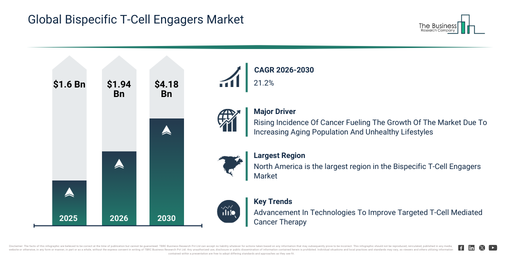
    The bispecific t-cell engagers market has witnessed substantial expansion in recent years. It is anticipated to grow from $1.6 billion in 2025 to $1.94 billion in 2026, demonstrating a compound annual growth rate (CAGR) of 21.3%. The historical increase in market size is due to factors such as the limited efficacy of conventional cancer therapies, an escalating incidence of hematologic malignancies, an evolving comprehension of immune-oncology mechanisms, swift regulatory approvals for bispecific antibodies, and increased investment in oncology research.

    The bispecific t-cell engagers market is projected to experience substantial expansion over the next few years. Its valuation is set to reach $4.18 billion in 2030 at a compound annual growth rate (CAGR) of 21.2%. This projected growth during the forecast period can be attributed to factors like the broadening of solid tumor indications, advancements in antibody engineering platforms, increasing clinical success rates of t-cell engagers, rising healthcare expenditure on cancer immunotherapy, and an increase in strategic partnerships and licensing deals. Prominent trends for the forecast period encompass the growing adoption of bispecific t-cell engagers in hematologic malignancies, an escalating focus on targeted immunotherapy and precision oncology, the expansion of clinical trials for solid tumor applications, increasing investment in antibody engineering and novel formats, and a rise in collaborations between biotech firms and research institutes.

    Get A Free Sample Report With In-Depth Market Insights:

    https://www.thebusinessresearchcompany.com/sample.aspx?id=27226&type=smp&utm_source=Blogs&utm_medium=Paid&utm_campaign=Oct_PR

    Bispecific T-Cell Engagers Market Opportunity Drivers: What’s Unlocking New Revenue Potential?

    The increasing occurrence of cancer is projected to drive expansion within the bispecific T-cell engagers market in the future. Cancer is defined as a collection of illnesses marked by the unregulated proliferation and dissemination of atypical cells, capable of infiltrating and harming bodily tissues. This surge in cancer cases stems from elements like demographic aging and detrimental lifestyle choices, given that advancing age leads to a greater buildup of mutations, and habits like smoking, inadequate nutrition, and a sedentary lifestyle heighten the chances of developing cancer. Bispecific T-cell engagers facilitate cancer therapy by concurrently attaching to T cells and cancer cells, thereby forming a link between the immune system and tumor sites. This process stimulates the patient’s own T cells to identify, target, and eliminate cancerous cells with considerable precision. For example, data from February 2024, released by the World Health Organization (WHO), a Switzerland-based intergovernmental body, indicated an estimated 20 million new cancer diagnoses in 2022, a number anticipated to climb by 77% to exceed 35 million cases by 2050. Consequently, the growing prevalence of cancer is propelling the expansion of the bispecific T-cell engagers market.

    Bispecific T-Cell Engagers Market Segment Landscape And Growth Outlook

    The bispecific t-cell engagers market covered in this report is segmented –

    1) By Product Type: Monoclonal Antibodies, Bispecific Antibodies, Other Product Types

    2) By Application: Hematologic Malignancies, Solid Tumors, Other Applications

    3) By End-User: Hospitals, Specialty Clinics, Research Institutes, Other End-Users

    Subsegments:

    1) By Monoclonal Antibodies: IgG1 Monoclonal Antibodies, IgG2 Monoclonal Antibodies, IgG4 Monoclonal Antibodies, Chimeric Monoclonal Antibodies, Humanized Monoclonal Antibodies

    2) By Bispecific Antibodies: T Cell Engagers, Dual Specific Antibodies, Trispecific Antibodies, Bispecific IgG Antibodies, Tandem Single Chain Variable Fragment Antibodies

    3) By Other Product Types: Fusion Proteins, Recombinant Proteins, Peptide Therapeutics

    Bispecific T-Cell Engagers Market Innovation Trends Shaping Future Development

    Companies within the bispecific T-cell engagers market are concentrating on innovative strategies, including the optimization of cytolytic synapse formation, to enhance the precision of cancer cell elimination. This process, cytolytic synapse formation, involves a T cell establishing a specific point of contact with a target tumor cell to transmit destructive signals, leading to the tumor cell’s demise. As an illustration, Amgen Inc., a biopharmaceutical firm from the US, introduced IMDELLTRA (tarlatamab-dlle) in May 2024. This therapy represents the first and only Food and Drug Administration (FDA), a US-based government agency, approved DLL3-targeting bispecific T-cell engager treatment for extensive-stage small cell lung cancer (ES-SCLC). This treatment functions by stimulating the patient’s own T cells to target tumor cells that express DLL3, thereby providing a new targeted immunotherapy alternative for individuals whose disease has advanced following platinum-based chemotherapy.

    Bispecific T-Cell Engagers Market Competitive Landscape: Who Leads The Industry?

    Major companies operating in the bispecific t-cell engagers market are Pfizer Incorporated, Johnson & Johnson, F. Hoffmann-La Roche AG, AbbVie Incorporated, Sanofi S.A., Amgen Incorporated, Regeneron Pharmaceuticals Incorporated, Ipsen S.A., Genmab A/S, Evotec SE, Akeso Inc., Immunocore Holdings Public Limited Company, MacroGenics Incorporated, Zymeworks Inc., Zenas BioPharma Limited, Candid Therapeutics Inc., BPS Bioscience Inc., Alloy Therapeutics Inc., AP Biosciences Inc., Medigene AG.

    View The Full Bispecific T-Cell Engagers Market Report:

    https://www.thebusinessresearchcompany.com/report/bispecific-t-cell-engagers-global-market-report?utm_source=Blogs&utm_medium=Paid&utm_campaign=Oct_PR

    Bispecific T-Cell Engagers Market Global Footprint: Which Region Leads The Market?

    North America was the largest region in the bispecific T-cell engagers market in 2025. Asia-Pacific is expected to be the fastest-growing region in the forecast period. The regions covered in the bispecific t-cell engagers market report are Asia-Pacific, South East Asia, Western Europe, Eastern Europe, North America, South America, Middle East, Africa.

    Reach Out To Our Team:

    The Business Research Company: https://www.thebusinessresearchcompany.com/

    Americas: +1 310-496-7795

    Asia: +44 7882 955267 & +91 8897263534

    Europe: +44 7882 955267

    Email us at: marketing@tbrc.info

    Follow us on:

    LinkedIn: https://in.linkedin.com/company/the-business-research-company

    YouTube: https://www.youtube.com/channel/UC24_fI0rV8cR5DxlCpgmyFQ

    Global Market Model: https://www.thebusinessresearchcompany.com/global-market-model
  • Bi-Specific MAbS Market Analysis 2026: Market Size, Growth Trends And Industry Outlook

    Bi-Specific MAbS Market Analysis 2026: Market Size, Growth Trends And Industry Outlook

    Backed by market attractiveness analysis, total addressable market sizing, company benchmarking matrices, interactive Excel dashboards, wider supply chain intelligence, emerging startup coverage, and detailed product-level insights, The Business Research Company’s 2026 market reports are designed to offer research that is more actionable and strategically valuable than ever.

    Bi-Specific MAbS Market Size Outlook: How Quickly Will Revenue Expand Through 2030?

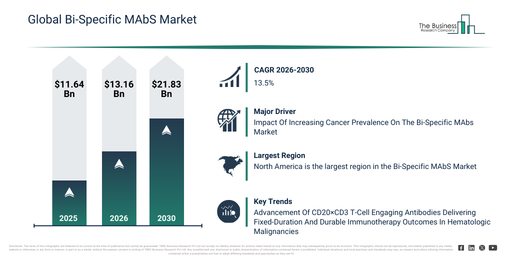
    The bi-specific mabs market has experienced significant expansion in recent years. It is projected to grow from $11.64 billion in 2025 to $13.16 billion in 2026, reflecting a compound annual growth rate (CAGR) of 13.0%. The historical growth of this market can be attributed to factors such as the approval of initial bsabs therapies, an increasing incidence of hematological cancers, the early adoption of monoclonal antibodies, augmented investment in oncology research and development, and a rise in hospital-based clinical trials.

    The bi-specific mabs market is expected to experience significant growth in the coming years, with its size projected to reach $21.83 billion in 2030, exhibiting a compound annual growth rate (CAGR) of 13.5%. This expansion during the forecast period can be attributed to advancements in the integration of gene and cell therapies, the expanding pipeline of bsAbs, increased research and development funding for rare diseases, the growing adoption of precision medicine, and the emergence of novel bsAbs delivery platforms. Major trends anticipated in this period include the broadening applications of tumor immunotherapy, the development of multi-targeted bi-specific antibodies, a rise in treatments for hemophilia and other rare diseases, progress in both in vitro and in vivo platforms, and an increase in collaborations between pharmaceutical and biotechnology firms.

    Get A Free Sample Report With In-Depth Market Insights:

    https://www.thebusinessresearchcompany.com/sample.aspx?id=3390&type=smp&utm_source=Blogs&utm_medium=Paid&utm_campaign=Oct_PR

    Bi-Specific MAbS Market Growth Momentum: What Factors Are Shaping Demand?

    The increasing incidence of cancer and other long-term illnesses is expected to drive the growth of the bispecific monoclonal antibodies market throughout the forecast period. Bispecific monoclonal antibodies are developed for the treatment of various cancers, infectious diseases, central nervous system disorders, and autoimmune disorders. These antibodies are considered more effective than monoclonal antibodies (moAbs) as they target two or more tumor antigens on cells to disrupt cancer progression. For instance, in 2023, according to the Cancer Facts & Figures 2023 report published by the American Cancer Society (ACS), a US-based voluntary health organization, there will be an estimated 609,820 cancer-related deaths in the USA. Therefore, an increasing number of chronic diseases, including cancer, is anticipated to boost the demand for bi-specific MAbs to treat these diseases effectively.

    Bi-Specific MAbS Market Breakdown By Product Type And Application

    The bi-specific mabs market covered in this report is segmented –

    1) By Drug: Catumaxomab (Removab), Blinatumomab, Duligotumab, Emicizumab, Amivantamab, Faricimab, Teclistamab

    2) By Product Type: In Vivo, In Vitro

    3) By Indication: Cancer, Haemophilia A, Ophthalmic

    4) By End Use: Hospitals, Research Institutes, Other End-Users

    Subsegments:

    1) By Catumaxomab (Removab): Cancer Therapy, Targeting EpCAM and CD3

    2) By Blinatumomab: Acute Lymphoblastic Leukemia (ALL) Treatment, Targeting CD19 and CD3

    3) By Duligotumab: Oncology Treatments, Targeting Epidermal Growth Factor Receptor (EGFR)

    4) By Emicizumab: Hemophilia A Treatment, Targeting Factor IXa and Factor X

    5) By Amivantamab: Non-Small Cell Lung Cancer (NSCLC) Therapy, Targeting EGFR And MET

    6) By Faricimab: Ophthalmology Treatment (Wet Age-related Macular Degeneration, Diabetic Macular Edema), Targeting Angiopoietin-2 And VEGF-A

    7) By Teclistamab: Multiple Myeloma Treatment, Targeting BCMA and CD3

    Bi-Specific MAbS Market Trends Redefining Industry Growth

    Leading companies operating within the bi-specific mAbs market are concentrating on technological advancements, including CD20 x CD3 T-cell engaging bispecific antibodies, to address the increasing demand for more effective, off-the-shelf immunotherapies for hematological malignancies that offer specific treatment durations. A CD20 x CD3 bispecific antibody is engineered to facilitate close contact between T cells and B cells by simultaneously attaching to CD3 on T cells and CD20 on B cells, thus activating T-cell–mediated destruction of malignant B cells. Unlike traditional monoclonal antibodies that exclusively target B cells or T-cell checkpoints, this design leverages immune effector function in a highly directed manner. For instance, in June 2023, Roche AG, a biopharmaceutical company based in Switzerland, launched Columvi (glofitamab-gxbm), which is a CD20xCD3 bispecific T-cell engager. Columvi possesses a novel 2:1 structural format, incorporating two CD20-binding domains and one CD3-binding domain, and is administered as a fixed-duration therapy lasting approximately 8.5 months, aiming to provide durable responses for patients with relapsed or refractory diffuse large B-cell lymphoma (DLBCL). Its fixed-duration regimen presents the possibility of a treatment-free interval following therapy, distinguishing it from continuous treatment strategies, and it has exhibited strong efficacy in clinical trials along with manageable safety.

    Bi-Specific MAbS Market Company Landscape And Competitive Strategy

    Major companies operating in the bi-specific mabs market are F. Hoffmann-La Roche AG, Amgen Inc, Johnson & Johnson, Kyowa Kirin, Zai Lab, Alphamab Oncology, Celldex Therapeutics, Biocon, EpimAb Biotherapeutics, ABL Bio, Takeda Pharmaceuticals, Innovent Biologics, Merck & Co Inc, Eli Lilly Company Inc., AbbVie Inc, Bayer AG, Pfizer Inc, Novartis AG, GlaxoSmithKline, AstraZeneca, Cytiva, Bristol Myers Squibb, AbCellera, BioMarin Pharmaceuticals, Sanofi S.A., Novo Nordisk A/S, Aspen Pharmacare, Baxter International

    View The Full Bi-Specific MAbS Market Report:

    https://www.thebusinessresearchcompany.com/report/bi-specific-mab-global-market-report?utm_source=Blogs&utm_medium=Paid&utm_campaign=Oct_PR

    Bi-Specific MAbS Market Regional Split: Which Areas Are Fueling Growth?

    North America was the largest region in the bi-specific MAbs market in 2025. The regions covered in the bi-specific mabs market report are Asia-Pacific, South East Asia, Western Europe, Eastern Europe, North America, South America, Middle East, Africa.

    Reach Out To Our Team:

    The Business Research Company: https://www.thebusinessresearchcompany.com/

    Americas: +1 310-496-7795

    Asia: +44 7882 955267 & +91 8897263534

    Europe: +44 7882 955267

    Email us at: marketing@tbrc.info

    Follow us on:

    LinkedIn: https://in.linkedin.com/company/the-business-research-company

    YouTube: https://www.youtube.com/channel/UC24_fI0rV8cR5DxlCpgmyFQ

    Global Market Model: https://www.thebusinessresearchcompany.com/global-market-model
  • Bisoprolol Market Forecast To 2030: Starting From $3.25 Billion In 2026

    Bisoprolol Market Forecast To 2030: Starting From $3.25 Billion In 2026

    Featuring market attractiveness scoring, total addressable market sizing, company benchmarking matrices, interactive Excel dashboards, deeper supply chain intelligence, emerging startup tracking, and granular product-level insights, The Business Research Company’s 2026 market reports are built to deliver research that is both more actionable and more strategically valuable.

    Bisoprolol Market Size, Value And Growth Trajectory Through 2030

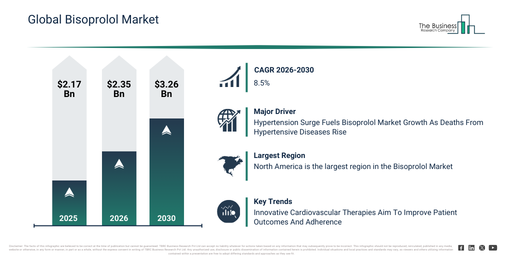
    The bisoprolol market has experienced robust expansion in recent years. It is anticipated to increase from $2.17 billion in 2025 to $2.35 billion in 2026, exhibiting a compound annual growth rate (CAGR) of 8.5%. This market’s historical development can be ascribed to factors such as the high occurrence of hypertension, the recognized clinical effectiveness of beta-blockers, an aging demographic, the expansion of hospital-centric cardiac care, and extensive prescription by physicians.

    The bisoprolol market size is projected to demonstrate substantial growth in the upcoming years. It is expected to expand to $3.26 billion in 2030, achieving a compound annual growth rate (CAGR) of 8.5%. This anticipated growth over the forecast period can be attributed to the escalating burden of cardiovascular diseases, improved access to generic medications, the rise of outpatient cardiac management, the broadening of pharmacy networks, and more effective treatment adherence programs. Significant trends identified for this period include the increasing incidence of cardiovascular disorders, the expanding application of beta-blockers in chronic care, greater adoption of generic cardiovascular drugs, the growth of retail and hospital pharmacies, and a heightened emphasis on long-term blood pressure management.

    Get A Free Sample Report With In-Depth Market Insights:

    https://www.thebusinessresearchcompany.com/sample.aspx?id=18977&type=smp&utm_source=Blogs&utm_medium=Paid&utm_campaign=Oct_PR

    Bisoprolol Market Expansion Drivers: What’s Shaping Future Growth?

    The expanding occurrence of hypertension is anticipated to fuel the expansion of the bisoprolol market going forward. Hypertension is defined as a medical state where blood pressure levels are persistently elevated beyond the typical physiological range. This rise in hypertension cases is linked to more sedentary lifestyles and growing rates of obesity. The bisoprolol market aids in managing hypertension by helping to reduce blood pressure, decrease the heart’s workload, and enhance blood circulation. As an illustration, in February 2024, data from the Singapore Ministry of Health, a government health authority located in Singapore, revealed that the prevalence of hypertension among adults reached 36.1% in 2023, an increase from 33.0% in 2022, signifying a notable year-on-year rise. Consequently, the escalating prevalence of hypertension is stimulating the growth of the bisoprolol market.

    Bisoprolol Market Segment Analysis And Revenue Potential

    The bisoprolol market covered in this report is segmented –

    1) By Type: Tablet, Capsule

    2) By Distribution Channels: Hospital Pharmacies, Retail Pharmacies, Other Distribution Channels

    3) By Application: High Blood Pressure, Coronary Heart Disease, Angina Pectoris, Other Applications

    Subsegments:

    1) By Tablet: Immediate-Release Tablets, Extended-Release Tablets

    2) By Capsule: Immediate-Release Capsules, Extended-Release Capsules, Hard Gelatin Capsules

    Bisoprolol Market Strategic Trends: What Defines The Next Growth Phase?

    Leading companies in the bisoprolol market are concentrating on developing innovative solutions, such as fixed-dose combinations and extended-release formulations, to enhance patient adherence, improve cardiovascular outcomes, and address the limitations of conventional therapies. Fixed-dose combinations are medicines that combine two or more active substances into a single pill to simplify treatment, while extended-release formulations are designed to release the drug slowly over time, providing longer-lasting effects and reducing the frequency of dosing. For instance, in June 2025, Cadila Pharmaceuticals Limited, an India-based pharmaceutical company, launched Biscado (Bisoprolol) in India, thereby entering the beta-blocker therapy segment for managing cardiovascular diseases. It is a highly cardioselective beta-1 adrenergic blocker indicated for the treatment of high blood pressure, angina, and chronic heart failure by decreasing heart rate and blood pressure to lessen the strain on the heart. Clinical studies support its efficacy, showing significant reductions in mortality, sudden cardiac death, and hospitalizations due to heart failure. Biscado is available in once-daily dosing and in fixed-dose combinations with other antihypertensive agents, aligning with global cardiovascular treatment guidelines and improving patient adherence in India.

    Bisoprolol Market Key Players Shaping Industry Direction

    Major companies operating in the bisoprolol market are Merck & Co. Inc., Abbott Healthcare Pvt Ltd, Novartis AG, Teva Pharmaceutical Industries Ltd, Aurobindo Pharma Limited, Intas Pharmaceuticals Limited, Cipla Limited, Hikma Pharmaceuticals, Lupin Limited, Dr. Reddy’s Laboratories Limited, Glenmark Pharmaceuticals Limited, Alkem Laboratories Limited, Ipca Laboratories Limited, Medreich Limited, Alembic Pharmaceuticals Limited, Accord Healthcare Limited, Zydus Lifesciences Limited, Zentiva Group, Taj Pharmaceuticals Limited, Torrent Pharmaceuticals Limited, Suanfarma, Rusan Healthcare Limited, VHB Lifesciences Limited, Synnat Pharmaceuticals, Vidakem Lifesciences Pvt Ltd, Pluviaendo Pharmaceuticals

    View The Full Bisoprolol Market Report:

    https://www.thebusinessresearchcompany.com/report/bisoprolol-global-market-report?utm_source=Blogs&utm_medium=Paid&utm_campaign=Oct_PR

    Bisoprolol Market Top Region: Where Does Most Revenue Come From?

    North America was the largest region in the bisoprolol market in 2025. The regions covered in the bisoprolol market report are Asia-Pacific, South East Asia, Western Europe, Eastern Europe, North America, South America, Middle East, Africa.

    Reach Out To Our Team:

    The Business Research Company: https://www.thebusinessresearchcompany.com/

    Americas: +1 310-496-7795

    Asia: +44 7882 955267 & +91 8897263534

    Europe: +44 7882 955267

    Email us at: marketing@tbrc.info

    Follow us on:

    LinkedIn: https://in.linkedin.com/company/the-business-research-company

    YouTube: https://www.youtube.com/channel/UC24_fI0rV8cR5DxlCpgmyFQ

    Global Market Model: https://www.thebusinessresearchcompany.com/global-market-model
  • Bismuth Subsalicylate Market Size In 2026 And Beyond: Understanding Future Growth Potential

    Bismuth Subsalicylate Market Size In 2026 And Beyond: Understanding Future Growth Potential

    Built to provide research that’s more actionable and strategically valuable, The Business Research Company’s 2026 market reports include market attractiveness analysis, total addressable market sizing, company benchmarking matrices, interactive Excel dashboards, broader supply chain intelligence, emerging startup tracking, and in-depth product insights.

    Bismuth Subsalicylate Market CAGR Outlook And Future Development

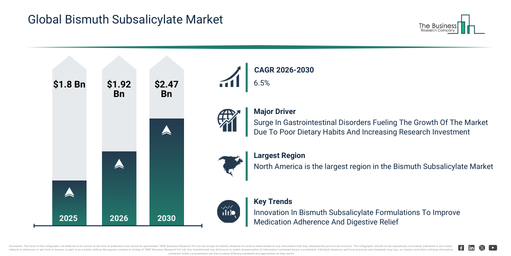
    The bismuth subsalicylate market has shown significant growth over the past few years. It is anticipated to expand from $1.8 billion in 2025 to $1.92 billion in 2026, achieving a compound annual growth rate (CAGR) of 6.6%. This historical expansion was influenced by the prevalence of gastrointestinal disorders, the ease of access to over-the-counter (OTC) drugs, the expansion of retail pharmacies, consumer self-medication tendencies, and heightened awareness of digestive health.

    The bismuth subsalicylate market is anticipated to experience significant expansion in the coming years. It is projected to reach $2.47 billion by 2030, exhibiting a compound annual growth rate (CAGR) of 6.5%. The expansion during this forecast period can be attributed to several factors, including the increasing adoption of preventive healthcare, the demand for safe over-the-counter (OTC) therapies, advancements in pediatric digestive care, penetration into emerging markets, and innovations in liquid formulations. Concurrently, major trends expected in the forecast period include a rising demand for OTC gastrointestinal relief, the development of more pediatric-friendly formulations, an increase in the usage of preventive digestive care, greater availability through various retail channels, and a specific focus on producing alcohol-free and sugar-free products.

    Get A Free Sample Report With In-Depth Market Insights:

    https://www.thebusinessresearchcompany.com/sample.aspx?id=24173&type=smp&utm_source=Blogs&utm_medium=Paid&utm_campaign=Oct_PR

    Bismuth Subsalicylate Market Development Factors: What’s Supporting Demand?

    The increasing occurrence of gastrointestinal (GI) disorders is expected to fuel the expansion of the bismuth subsalicylate market in the foreseeable future. These conditions impact the digestive system, encompassing the stomach, intestines, and related organs, leading to symptoms like discomfort, bloating, and changes in bowel function. The increase in GI disorders largely stems from unhealthy eating habits, where excessive consumption of processed foods and insufficient fiber disturb gut microbiota equilibrium and hinder digestion. Bismuth subsalicylate offers relief for diarrhea associated with GI disorders by calming gut inflammation and impeding the proliferation of specific bacteria that contribute to digestive distress. For example, forecasts from population-based registry data released by Nature, a UK-based scientific journal, indicated in April 2025 that the prevalence of inflammatory bowel disease (IBD) in Canada is projected to rise from 0.83% in 2025 to 0.96% in 2035 and further to 1.05% by 2043, assuming consistent incidence rates. This means approximately 321,000 Canadians would be living with IBD in 2025, climbing to 372,000 in 2035 and 407,000 by 2043. Consequently, the rising incidence of gastrointestinal disorders is poised to enhance the growth of the bismuth subsalicylate market.

    Bismuth Subsalicylate Market Driver: Expansion Of The Pharmaceutical Industry Fueling The Growth Of The Market Due To Increasing Demand For Innovative Treatments And Improved Access To Medications

    The growth of the bismuth subsalicylate market is anticipated to be propelled by the expanding pharmaceutical industry in the coming period. This industry primarily concentrates on the research, development, production, and promotion of medicines and therapeutic items aimed at enhancing health and managing diverse medical ailments. The growth of the pharmaceutical sector is stimulated by the rising global incidence of chronic illnesses, which necessitates a continuous demand for novel and enhanced therapies to manage these enduring health issues. The broadening pharmaceutical industry aids bismuth subsalicylate by enhancing the provision of advanced formulations and broadening distribution networks, thereby ensuring greater global availability of this effective remedy for gastrointestinal conditions. For instance, as per the FDA’s Fiscal Year 2023 Report, a US-based government publication, released in June 2024, the CDER Product Catalog contained 13,572 Abbreviated New Drug Applications by the conclusion of fiscal year 2023, marking an increase from previous years. New Drug Applications reached 3,593, a 1.5% increase, and Biologics License Applications totaled 354, a 9% increase. In total, the quantity of listed products grew by 6% to 148,886 in fiscal year 2023. Thus, the expansion of the pharmaceutical industry will drive the bismuth subsalicylate market’s growth.

    Bismuth Subsalicylate Market Segmentation And Category Overview

    The bismuth subsalicylate market covered in this report is segmented –

    1) By Product: Bismuth Subsalicylate Tablets, Bismuth Subsalicylate Suspension, Bismuth Subsalicylate Chewable Tablets

    2) By Distribution Channel: Online Pharmacies, Retail Pharmacies, Supermarkets Or Hypermarkets, Health And Wellness Stores

    3) By Application: Gastrointestinal Disorders, Diarrhea, Nausea, Heartburn, Indigestion

    4) By End-User: Adult Consumers, Pediatric Consumers, Healthcare Professionals, Caretakers And Guardians

    Subsegments:

    1) By Bismuth Subsalicylate Tablets: Prescription Tablets, Over-The-Counter (OTC) Tablets, Coated Tablets, Uncoated Tablets

    2) By Bismuth Subsalicylate Suspension: Flavored Suspension, Unflavored Suspension, Alcohol-Free Suspension, Sugar-Free Suspension

    3) By Bismuth Subsalicylate Chewable Tablets: Adult Chewable Tablets, Pediatric Chewable Tablets, Mint-Flavored Chewable Tablets, Fruit-Flavored Chewable Tablets

    Bismuth Subsalicylate Market Transformation Trends: What Innovations Are Driving Change?

    Companies operating within the bismuth subsalicylate market are prioritizing the development of advanced products, such as chewable tablets, to enhance patient adherence to medication or supplement regimens. Chewable tablets are solid oral medications or supplements intended for chewing before swallowing, which simplifies consumption and permits quicker absorption. For instance, in May 2025, Wonderbelly, a US-based pharmaceutical company, launched the Dye-Free Alternative to Pepto-Bismol (Bismuth Subsalicylate). These multi-symptom relief chewable tablets effectively address upset stomach, diarrhea, indigestion, and nausea. They contain the same active ingredient as Pepto-Bismol (bismuth subsalicylate) but are formulated without dyes or talc.

    Bismuth Subsalicylate Market Competitive Analysis Of Leading Industry Participants

    Major companies operating in the bismuth subsalicylate market are Procter & Gamble, GlaxoSmithKline Plc, Perrigo Company Plc, Siegfried AG, Laboratorios Imperiales S.A. de C.V., Shandong Xinhua Pharmaceutical Co. Ltd., Alpha Chemika, JQC (Huayin) Pharmaceutical Co. Ltd., Chr. Olesen Group, Vital Materials Co. Ltd., Shanpar Industries Pvt. Ltd., OCB Pharmaceutical, Muby Chemicals, A. B. Enterprises, Samuh Laxmi, Lumax Pharmaceutical Labs Pvt. Ltd., GB Nitrochem Pvt. Ltd., Indian Platinum Private Limited, Organs Bio Lab Private Limited, Maan Medex Private Limited

    View The Full Bismuth Subsalicylate Market Report:

    https://www.thebusinessresearchcompany.com/report/bismuth-subsalicylate-global-market-report?utm_source=Blogs&utm_medium=Paid&utm_campaign=Oct_PR

    Bismuth Subsalicylate Market Regional Breakdown: Where Is Demand Concentrated?

    North America was the largest region in the bismuth subsalicylate market in 2025. Asia-Pacific is expected to be the fastest-growing region in the forecast period. The regions covered in the bismuth subsalicylate market report are Asia-Pacific, South East Asia, Western Europe, Eastern Europe, North America, South America, Middle East, Africa.

    Reach Out To Our Team:

    The Business Research Company: https://www.thebusinessresearchcompany.com/

    Americas: +1 310-496-7795

    Asia: +44 7882 955267 & +91 8897263534

    Europe: +44 7882 955267

    Email us at: marketing@tbrc.info

    Follow us on:

    LinkedIn: https://in.linkedin.com/company/the-business-research-company

    YouTube: https://www.youtube.com/channel/UC24_fI0rV8cR5DxlCpgmyFQ

    Global Market Model: https://www.thebusinessresearchcompany.com/global-market-model

  • Bipolar Disorder Drugs And Treatment Market Reaches $10.83 Billion In 2026: Key Developments Shaping Expansion

    Bipolar Disorder Drugs And Treatment Market Reaches $10.83 Billion In 2026: Key Developments Shaping Expansion

    Backed by market attractiveness analysis, total addressable market sizing, company benchmarking matrices, interactive Excel dashboards, wider supply chain intelligence, emerging startup coverage, and detailed product-level insights, The Business Research Company’s 2026 market reports are designed to offer research that is more actionable and strategically valuable than ever.

    Bipolar Disorder Drugs And Treatment Market Set To Climb From $8.63 Billion In 2026 To $10.83 Billion By 2030

    The bipolar disorder drugs and treatment market size has exhibited strong growth in recent years. It is anticipated to expand from $8.16 billion in 2025 to $8.63 billion in 2026, registering a compound annual growth rate (CAGR) of 5.8%. The expansion observed historically can be linked to heightened mental health awareness, the broadening use of antidepressants, improvements in psychiatric hospital infrastructure, the accessibility of mood stabilizers, and an increase in diagnosis rates.

    The market for bipolar disorder drugs and treatments is poised for substantial expansion over the next few years. It is expected to grow to $10.83 billion in 2030 at a compound annual growth rate (CAGR) of 5.8%. The projected increase during this period can be attributed to advancements in precision psychiatry, the development of long-acting injectable drugs, the integration of digital mental health solutions, personalized treatment planning, and the expansion of outpatient psychiatric care. Major trends anticipated in the forecast period include a greater emphasis on combination drug therapies, the increasing adoption of long-term mood stabilization techniques, an expansion in atypical antipsychotic prescriptions, a heightened focus on relapse prevention, and improved programs for treatment adherence.

    Get A Free Sample Report With In-Depth Market Insights:

    https://www.thebusinessresearchcompany.com/sample.aspx?id=24171&type=smp&utm_source=Blogs&utm_medium=Paid&utm_campaign=Oct_PR

    Bipolar Disorder Drugs And Treatment Market Industry Drivers: What’s Behind The Revenue Growth?

    The rising occurrence of mental health disorders is projected to propel the expansion of the bipolar disorder drugs and treatment market in upcoming years. These conditions impact an individual’s thinking, emotions, behavior, or mood, frequently hindering daily functionality and overall well-being. The increase in mental health disorders stems from growing chronic stress associated with contemporary lifestyles; persistent demands concerning work, finances, and societal expectations can diminish emotional health and lead to enduring psychological difficulties. Bipolar disorder drugs and treatment offer advantages for mental health disorders by assisting in stabilizing mood fluctuations, which is crucial for enhancing emotional regulation and lessening the frequency and severity of disruptive episodes linked to these conditions. For example, data from 2024, provided by the National Alliance On Mental Illness, a US-based organization, indicates that psychosis spectrum and mood disorders result in nearly 600,000 yearly hospitalizations among individuals aged 18-44 in the U.S. Consequently, the escalating incidence of mental health disorders will drive the growth of the bipolar disorder drugs and treatment market.

    Bipolar Disorder Drugs And Treatment Market Segment Outlook: Which Categories Are Growing Fastest?

    The bipolar disorder drugs and treatment market covered in this report is segmented –

    1) By Types: Mood Stabilizers, Anticonvulsants, Antipsychotic Drugs, Antidepressant Drugs, Anti-Anxiety Drugs

    2) By Route Of Administration: Oral, Parenteral, Other Routes Of Administration

    3) By Bipolar Disorder: Bipolar I Disorder, Bipolar II Disorder, Cyclothymic Disorder

    4) By Distribution Channel: Hospital Pharmacies, Retail Pharmacies, Online Pharmacies

    Subsegments:

    1) By Mood Stabilizers: Lithium Carbonate, Lamotrigine, Valproate

    2) By Anticonvulsants: Carbamazepine, Oxcarbazepine, Topiramate

    3) By Antipsychotic Drugs: Olanzapine, Risperidone, Quetiapine, Aripiprazole

    4) By Antidepressant Drugs: Selective Serotonin Reuptake Inhibitors (SSRIs), Serotonin-Norepinephrine Reuptake Inhibitors (SNRIs), Tricyclic Antidepressants (TCAs)

    5) By Anti-Anxiety Drugs: Benzodiazepines, Buspirone

    #Bipolar Disorder Drugs And Treatment Market Growth Trends: What’s Shaping The Future Outlook?

    Leading firms in the bipolar disorder drugs and treatment market are concentrating on creating sophisticated remedies, including extended-release injectable formulations, to deliver steady and enduring therapeutic outcomes. These injectable formulations release medicine gradually into the bloodstream over an extended period, which lessens the requirement for daily administration and encourages stable therapeutic results. An example of this is Luye Pharma, a pharmaceutical company from China, which in January 2023, declared the U.S. Food and Drug Administration (FDA) approval of Rykindo (risperidone). This long-acting injectable suspension is indicated for treating adult schizophrenia and for adult bipolar I disorder, either as a sole therapy or alongside lithium or valproate. The drug employs a distinctive microsphere technology platform pioneered by Luye Pharma. Administered via intramuscular injection every two weeks, this medication offers prolonged effects. Its active component, risperidone, is delivered through extended-release microsphere technology, guaranteeing a continuous release over time.

    Bipolar Disorder Drugs And Treatment Market Leading Companies And Competitive Benchmarking

    Major companies operating in the bipolar disorder drugs and treatment market are Pfizer Inc., Johnson & Johnson, Merck & Co. Inc., AbbVie Inc., Novartis AG, Sanofi S.A., Bristol-Myers Squibb Company, AstraZeneca PLC, GSK PLC, Takeda Pharmaceutical Company Limited, Eli Lilly and Company, Teva Pharmaceutical Industries Ltd., Boehringer Ingelheim International GmbH, Otsuka Holdings Co. Ltd., Astellas Pharma Inc., Sumitomo Pharma America Inc., Dr. Reddy’s Laboratories Ltd., H. Lundbeck A/S, Cipla Limited, Gedeon Richter Plc, Lupin Limited, Neurocrine Biosciences Inc., Alkermes Plc.

    View The Full Bipolar Disorder Drugs And Treatment Market Report:

    https://www.thebusinessresearchcompany.com/report/bipolar-disorder-drugs-and-treatment-global-market-report?utm_source=Blogs&utm_medium=Paid&utm_campaign=Oct_PR

    Bipolar Disorder Drugs And Treatment Market Geographic Landscape: Which Region Dominates Industry Growth?

    North America was the largest region in the bipolar disorder drugs and treatment market in 2025. Asia-Pacific is expected to be the fastest-growing region in the forecast period. The regions covered in the bipolar disorder drugs and treatment market report are Asia-Pacific, South East Asia, Western Europe, Eastern Europe, North America, South America, Middle East, Africa.

    Reach Out To Our Team:

    The Business Research Company: https://www.thebusinessresearchcompany.com/

    Americas: +1 310-496-7795

    Asia: +44 7882 955267 & +91 8897263534

    Europe: +44 7882 955267

    Email us at: marketing@tbrc.info

    Follow us on:

    LinkedIn: https://in.linkedin.com/company/the-business-research-company

    YouTube: https://www.youtube.com/channel/UC24_fI0rV8cR5DxlCpgmyFQ

    Global Market Model: https://www.thebusinessresearchcompany.com/global-market-model
  • Biotech Ingredient Market Growth Outlook For 2026: Drivers, Trends And Future Opportunities

    Biotech Ingredient Market Growth Outlook For 2026: Drivers, Trends And Future Opportunities

    Featuring market attractiveness scoring, total addressable market sizing, company benchmarking matrices, interactive Excel dashboards, deeper supply chain intelligence, emerging startup tracking, and granular product-level insights, The Business Research Company’s 2026 market reports are built to deliver research that is both more actionable and more strategically valuable.

    Biotech Ingredient Market Forecast: Value Set To Climb From $67.42 Billion To $87.05 Billion

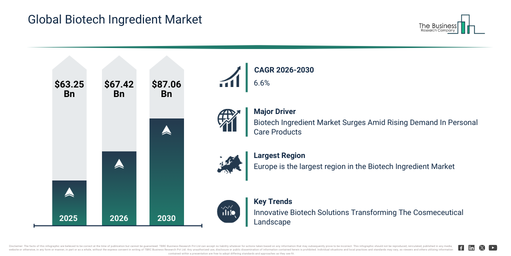
    The biotech ingredient market has experienced significant expansion in recent years. This market is set to increase from $63.25 billion in 2025 to $67.42 billion in 2026, registering a compound annual growth rate (CAGR) of 6.6%. Historical growth can be ascribed to a rising need for natural and secure ingredients, advancements in microbial fermentation technologies, heightened understanding of biotech uses in food and personal care, growing consumer preference for sustainable ingredients, and the initial integration of yeast- and algae-based compounds.

    The biotech ingredient market is projected for significant expansion over the coming years, reaching $87.06 billion in 2030 with a compound annual growth rate (CAGR) of 6.6%. This anticipated growth is driven by several factors, such as the increasing scope of precision medicine and personalized nutrition, enhanced government backing for biotech research and development, the scaling up of microbial and yeast expression systems, the integration of artificial intelligence and automation into production, and the expanding application across cosmetics, cleaning products, and food industries. Prominent trends for the forecast period include advancements in synthetic biology, innovations in microbial engineering, the development of cost-effective ingredient production methods, strict adherence to regulatory compliance and safety standards, and wider adoption in food, personal care, and cleaning applications.

    Get A Free Sample Report With In-Depth Market Insights:

    https://www.thebusinessresearchcompany.com/sample.aspx?id=9817&type=smp&utm_source=Blogs&utm_medium=Paid&utm_campaign=Oct_PR

    Biotech Ingredient Market Growth Factors: What’s Supporting Expansion?

    The future expansion of the biotech ingredient market is anticipated due to the rising need for personal care items. These products encompass a wide range of goods utilized for personal cleanliness and aesthetic improvement. When incorporated into personal care formulations, biotechnologically derived components provide numerous benefits, including a smaller environmental impact, sustainability, uniform quality, lower risk of allergic reactions, better compatibility with biological systems, improved effectiveness, and a decreased reliance on petroleum-based chemicals. As an illustration, the Bureau of Labor Statistics, a US-based government agency, reported in December 2024 that the average yearly spending on personal care goods and services per consumer unit increased from $866 in 2022 to $950 in 2023. Consequently, the growing consumer requirement for personal care items is fueling the expansion of the biotech ingredient market.

    Biotech Ingredient Market Segment Landscape: Which Areas Lead Development?

    The biotech ingredient market covered in this report is segmented –

    1) By Type: Active Pharmaceutical Ingredients, Biosimilars

    2) By Expression Systems: Mammalian Expression Systems, Microbial Expression Systems, Yeast Expression Systems, Plant Expression Systems, Insect Expression Systems

    3) By Application: Food And Beverages, Personal Care And Cosmetics, Cleaning Products, Other Applications

    Subsegments:

    1) By Active Pharmaceutical Ingredients (APIs): Biologic APIs, Synthetic APIs

    2) By Biosimilars: Monoclonal Antibodies, Recombinant Proteins, Insulin Biosimilars

    Biotech Ingredient Market Industry Trends: What’s Reshaping Demand?

    Leading companies in the biotech ingredient market are concentrating on developing inventive solutions, such as advanced biotechnology-based ingredient platforms, to meet the increasing demand for high-performance, sustainable, and next-generation cosmetic and personal care formulations. These biotechnology-driven ingredients harness enzymatic and bio-based processes to create novel molecular structures with enhanced functionality, providing superior performance, scalability, and environmental benefits compared to traditional chemically synthesized ingredients. For instance, in March 2023, International Flavors & Fragrances Inc., a US-based manufacturer of fragrance, biotech solutions, cosmetic energetics, and organic health ingredients, introduced Aurist AGC, a new biopolymer for hair care. This showcases the potential of the new DEB platform by utilizing IFF’s comprehensive biotechnology functionality to ensure sustained and high-performance glamour solutions that can truly contribute to change in the cosmeceutical industry. The ingredient incorporates IFF’s proprietary Designed Enzymatic Biopolymers (DEB) technology, an advanced biotechnology capable of producing novel bio-based polysaccharides with distinct structures and product features.

    Biotech Ingredient Market Industry Leaders And Competitive Landscape

    Major companies operating in the biotech ingredient market are Merck & Co. Inc., Sanofi S.A., AbbVie Inc., International Flavors & Fragrance (IFF) Inc., Novartis AG, Pfizer Inc., Teva Pharmaceutical Industries Ltd., Mylan Inc., Boehringer Ingelheim International GmbH., AstraZeneca plc., Givaudan, Firmenich SA, Amyris Inc., Advanced BioTech, Sollice Biotech, Novocap S.A., Eli Lilly, Bristol-Myers Squibb Company, GlaxoSmithKline plc., F. Hoffmann-La Roche AG, Biogen Inc., Amgen Inc., Johnson & Johnson, Genentech Inc., Regeneron Pharmaceuticals Inc., Vertex Pharmaceuticals Incorporated, Alexion Pharmaceuticals Inc., Celgene Corporation, Gilead Sciences Inc., BioMarin Pharmaceutical Inc., Incyte Corporation, Seattle Genetics Inc., Alnylam Pharmaceuticals Inc., Ionis Pharmaceuticals Inc., Moderna Inc., Editas Medicine Inc., Intellia Therapeutics Inc., Sangamo Therapeutics Inc., Bluebird Bio Inc., Spark Therapeutics Inc.

    View The Full Biotech Ingredient Market Report:

    https://www.thebusinessresearchcompany.com/report/biotech-ingredient-global-market-report?utm_source=Blogs&utm_medium=Paid&utm_campaign=Oct_PR

    Biotech Ingredient Market Largest Region: Which Geography Holds The Highest Market Share?

    Europe was the largest region in the biotech ingredient market in 2025. Asia-Pacific is expected to be the fastest-growing region in the biotech ingredients market report during the forecast period. The regions covered in the biotech ingredient market report are Asia-Pacific, South East Asia, Western Europe, Eastern Europe, North America, South America, Middle East, Africa.

    Reach Out To Our Team:

    The Business Research Company: https://www.thebusinessresearchcompany.com/

    Americas: +1 310-496-7795

    Asia: +44 7882 955267 & +91 8897263534

    Europe: +44 7882 955267

    Email us at: marketing@tbrc.info

    Follow us on:

    LinkedIn: https://in.linkedin.com/company/the-business-research-company

    YouTube: https://www.youtube.com/channel/UC24_fI0rV8cR5DxlCpgmyFQ

    Global Market Model: https://www.thebusinessresearchcompany.com/global-market-model

  • Biotech Collaborations Market Size Forecast From 2026 To 2030: Key Industry Trends

    Biotech Collaborations Market Size Forecast From 2026 To 2030: Key Industry Trends

    Built to provide research that’s more actionable and strategically valuable, The Business Research Company’s 2026 market reports include market attractiveness analysis, total addressable market sizing, company benchmarking matrices, interactive Excel dashboards, broader supply chain intelligence, emerging startup tracking, and in-depth product insights.

    Biotech Collaborations Market Revenue Growth On Track For A 11% CAGR Through 2030

    The biotech collaborations market has seen a rapid increase in size over recent years. It is anticipated to expand from $94.35 billion in 2025 to $105.07 billion in 2026, registering a compound annual growth rate (CAGR) of 11.4%. This historical growth can be attributed to the growing complexity of drug development pipelines, the escalating costs of clinical trials, the broadening scope of translational research initiatives, the emergence of venture-backed biotech startups, and the heightened role of academic research.

    The biotech collaborations market is anticipated to experience substantial growth in the upcoming years. It is projected to reach $159.77 billion in 2030, demonstrating a compound annual growth rate (CAGR) of 11.0%. This expansion during the forecast period is attributed to an increasing emphasis on precision medicine collaborations, a rising adoption of data-driven drug discovery partnerships, the enlargement of public-private research programs, a growing interest in platform-based biotech alliances, and the increasing globalization of clinical research. Significant trends for this period include a rise in strategic R&D partnerships between biotech firms, an increase in the use of licensing and co-development models, expanding collaboration with academic research institutes, the broadening of cross-border biotech alliances, and an enhanced focus on risk-sharing innovation.

    Get A Free Sample Report With In-Depth Market Insights:

    https://www.thebusinessresearchcompany.com/sample.aspx?id=28151&type=smp&utm_source=Blogs&utm_medium=Paid&utm_campaign=Oct_PR

    Biotech Collaborations Market Demand Drivers: What’s Powering Industry Growth?

    The rising demand for personalized medicine is projected to propel the growth of the biotech collaborations market going forward. Personalized medicine refers to a medical approach that tailors treatment and prevention strategies to an individual’s unique genetic makeup, lifestyle, and environment. The increasing adoption of personalized medicine is primarily due to advancements in genomics, which enable precise identification of genetic variations and tailored treatments for individuals. Biotech collaborations accelerate the advancement of personalized medicine by combining expertise and innovative technologies, enabling the development of targeted therapies for individual patients. These partnerships reduce research timelines and improve success rates, enhancing treatment efficacy and patient outcomes. For instance, in February 2024, according to the Personalized Medicine Coalition (PMC), a US-based nonprofit organization, the U.S. Food and Drug Administration (FDA) approved 26 new personalized medicines in 2023, a significant increase from the 12 approved in 2022. Therefore, the increasing demand for personalized medicine is driving the growth of the biotech collaborations market.

    Biotech Collaborations Market Segments: Where Is Growth Concentrated?

    The biotech collaborations market covered in this report is segmented –

    1) By Collaboration Type: Research And Development Collaborations, Licensing Agreements, Joint Ventures, Mergers Or Acquisitions, Other Collaborations

    2) By Application: Drug Discovery, Clinical Research, Diagnostics, Therapeutics, Other Applications

    3) By End User: Pharmaceutical Companies, Biotechnology Firms, Academic And Research Institutes, Other End-Users

    Subsegments:

    1) By Research And Development Collaborations: Preclinical Research, Clinical Trials, Translational Research, Drug Discovery

    2) By Licensing Agreements: Exclusive Licensing, Non Exclusive Licensing, In Licensing, Out Licensing

    3) By Joint Ventures: Strategic Alliance, Co Development, Co Marketing, Technology Sharing

    4) By Mergers Or Acquisitions: Horizontal Merger, Vertical Merger, Conglomerate Merger, Acquisition Of Assets

    5) By Other Collaborations: Research Consortium, Public Private Partnership, Academic Collaboration, Contract Research

    Biotech Collaborations Market Innovation Trends: What Developments Are Reshaping The Industry?

    Prominent companies operating within the biotech collaborations market are concentrating on developing innovative solutions, such as artificial intelligence-driven drug discovery platforms, to expedite the identification of new therapeutics and enhance research and development efficiency. These artificial intelligence-driven drug discovery platforms employ advanced algorithms and machine learning to analyze biological data, predict drug-target interactions, and streamline the process of developing novel treatments. For instance, in January 2025, Iktos S.A.S., a France-based biotechnology company, partnered with Cube Biotech GmbH, a Germany-based biotechnology company, to develop novel small molecule agonists targeting the amylin receptor, which is a promising therapeutic target for cardiometabolic disorders including obesity, diabetes, and metabolic dysfunction-associated steatotic hepatitis (MASH). This collaboration leverages Iktos’ generative AI-driven drug discovery and robotic synthesis platform alongside Cube Biotech’s advanced NativeMP membrane protein technology, protein stabilization methods, and biophysical assay expertise. The partnership aims to accelerate drug discovery timelines, increase success rates, and more effectively address challenging membrane protein targets, thereby offering potential therapies that could be more efficient and cost-effective than existing treatments such as GLP-1 receptor agonists.

    Biotech Collaborations Market Key Participants And Competitive Landscape

    Major companies operating in the biotech collaborations market are Johnson And Johnson, F. Hoffmann-La Roche Ltd., Merck And Co. Inc., Pfizer Inc., AbbVie Inc., Bayer AG, Sanofi S.A., Novartis AG, AstraZeneca plc, Bristol-Myers Squibb Company, GlaxoSmithKline plc, Eli Lilly And Company, Novo Nordisk A/S, Takeda Pharmaceutical Company Limited, Amgen Inc., Gilead Sciences Inc., C.H. Boehringer Sohn AG & Co. KG, CSL Limited., Regeneron Pharmaceuticals Inc., Vertex Pharmaceuticals Incorporated, Biogen Inc.

    View The Full Biotech Collaborations Market Report:

    https://www.thebusinessresearchcompany.com/report/biotech-collaborations-global-market-report?utm_source=Blogs&utm_medium=Paid&utm_campaign=Oct_PR

    Biotech Collaborations Market Regional Analysis: Which Region Leads By Revenue?

    North America was the largest region in the biotech collaborations market in 2025. The regions covered in the biotech collaborations market report are Asia-Pacific, South East Asia, Western Europe, Eastern Europe, North America, South America, Middle East, Africa.

    Reach Out To Our Team:

    The Business Research Company: https://www.thebusinessresearchcompany.com/

    Americas: +1 310-496-7795

    Asia: +44 7882 955267 & +91 8897263534

    Europe: +44 7882 955267

    Email us at: marketing@tbrc.info

    Follow us on:

    LinkedIn: https://in.linkedin.com/company/the-business-research-company

    YouTube: https://www.youtube.com/channel/UC24_fI0rV8cR5DxlCpgmyFQ

    Global Market Model: https://www.thebusinessresearchcompany.com/global-market-model
  • Biosimilars Market 2026: Market Size, Growth Drivers And Emerging Opportunities

    Biosimilars Market 2026: Market Size, Growth Drivers And Emerging Opportunities

    Backed by market attractiveness analysis, total addressable market sizing, company benchmarking matrices, interactive Excel dashboards, wider supply chain intelligence, emerging startup coverage, and detailed product-level insights, The Business Research Company’s 2026 market reports are designed to offer research that is more actionable and strategically valuable than ever.

    Biosimilars Market Value Growth And Long-Term Outlook

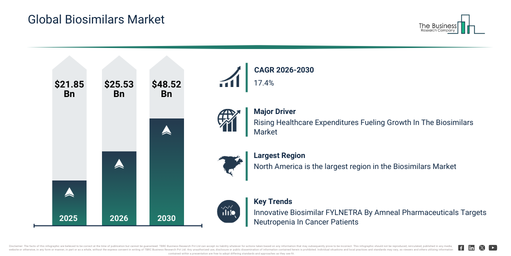
    The biosimilars market has experienced significant expansion recently. It is projected to expand from $21.85 billion in 2025 to $25.53 billion in 2026, demonstrating a compound annual growth rate (CAGR) of 16.9%. Historically, this growth has been driven by factors such as the increasing incidence of chronic and autoimmune diseases, the substantial expense of original biologic drugs, a rising need for affordable treatment options, continuous innovation in biopharmaceutical research and development, and the improvement of healthcare infrastructure in developing economies.

    The biosimilars market size is anticipated to experience significant expansion over the next few years. It is projected to increase to $48.52 billion in 2030, demonstrating a compound annual growth rate (CAGR) of 17.4%. This growth during the forecast period is primarily driven by factors such as the expiration of patents for major biologics, the rising use of biosimilars in oncology and autoimmune therapies, favorable government incentives and policies, the scaling of manufacturing capabilities in the Asia-Pacific region, and an increase in partnerships between biopharma companies and contract manufacturing organizations. Noteworthy trends for this period encompass personalized biosimilar development, the manufacturing of cost-effective biologics, regulatory alignment and adherence, the expansion of biosimilar markets into emerging regions, and strategic collaborations and alliances.

    Get A Free Sample Report With In-Depth Market Insights:

    https://www.thebusinessresearchcompany.com/sample.aspx?id=2807&type=smp&utm_source=Blogs&utm_medium=Paid&utm_campaign=Oct_PR

    Biosimilars Market Growth Drivers: What’s Behind The Acceleration?

    Rising healthcare expenditures are anticipated to drive the expansion of the biosimilars market moving forward. These expenditures represent the aggregate spending on medical goods and services within a particular population or healthcare system. The biosimilars market aids in decreasing healthcare spending by presenting more affordable options than expensive biologic drugs, thus reducing treatment costs for both patients and healthcare systems. For instance, in March 2024, according to the Health Foundation, a UK-based independent charity and think tank, the overall health expenditures in England for the last confirmed spending year, 2022/23, amounted to £182 billion ($196.78 billion). While planned health spending is projected to reach £192 billion ($207.59 billion) in 2024/25, inflation is expected to limit the real-term increase to merely 0.6% compared to the 2023/24 fiscal year. Hence, growing healthcare expenditures are a primary impetus for the biosimilars market’s growth.

    Biosimilars Market Segment Analysis: What Are The Core Market Categories?

    The biosimilars market covered in this report is segmented –

    1) By Type: Monoclonal Antibodies, Insulin, Erythropoietin, Granulocyte-Colony Stimulating Factor, Other Hormones

    2) By Protein Type: Recombinant Non-glycosylated Proteins, Recombinant Glycosylated Proteins

    3) By Application: Oncology, Chronic And Autoimmune Diseases, Growth Hormone Deficiency, Infectious Diseases, Other Applications

    Subsegments:

    1) By Monoclonal Antibodies: IgG Biosimilars, Non-IgG Biosimilars

    2) By Insulin: Rapid-Acting Insulin Biosimilars, Long-Acting Insulin Biosimilars, Premixed Insulin Biosimilars

    3) By Erythropoietin: Epoetin Alfa Biosimilars, Darbepoetin Alfa Biosimilars

    4) By Granulocyte-Colony Stimulating Factor (G-CSF): Filgrastim Biosimilars, Pegfilgrastim Biosimilars

    5) By Other Hormones: Growth Hormones, Hormonal Replacement Therapy Biosimilars

    Biosimilars Market Trends: What’s Defining The Industry’s Next Phase?

    Leading companies within the biosimilars market prioritize the creation of innovative products to secure a competitive advantage. FYLNETRA serves as a leukocyte growth factor, designed to reduce the occurrence of infections, specifically febrile neutropenia, in patients with non-myeloid cancers who are undergoing myelosuppressive anti-cancer drug treatments that carry a high risk of febrile neutropenia. As an illustration, in May 2023, Amneal Pharmaceuticals Inc., a pharmaceutical firm based in the US, initiated the commercial release of FYLNETRA (pegfilgrastim-pbbk), a biosimilar that references Neulasta and is available in a pre-filled single-dose syringe. FYLNETRA is employed for managing neutropenia (a condition characterized by low levels of neutrophils, a kind of white blood cell crucial for fighting infection), a common side effect for individuals receiving chemotherapy.

    Biosimilars Market Top Companies Driving Competitive Growth

    Major companies operating in the biosimilars market are Amgen, Novartis AG, Samsung Bioepis Co. Ltd., Viatris, Celltrion Inc., Coherus Biosciences, Eli Lilly and Company, Dr. Reddy’s Laboratories, Roche India Pvt Ltd, Abbott India Limited, Wuxi Biologics, Shanghai Henlius Biotech, Innovent Biologics, Hisun Pharma, 3SBio, Beijing ShuangLu Pharmaceuticals, Qilu Pharmaceutical, Kyowa Hakko Kirin, Takeda, Mitsubishi Tanabe, AGC Biologics, Bio-Thera, Sandoz Pty Ltd, Apotex Pty Ltd, Cadila Pharmaceuticals, BiosanaPharma, GlaxoSmithKline, AstraZeneca, Bayer, Merck, Boehringer Ingelheim, Sanofi, Fresenius Kabi, Napp Pharmaceuticals, Mundipharma Deutschland GmbH & Co. KG, Geropharm, Valenta, NovaMedica, SynBio, Rani Therapeutics, Johnson & Johnson, Biogen Inc., Aché, Eurofarma, Teva Pharmaceuticals, Oramed Pharmaceuticals, Entera Bio, Julphar, Hikma Pharmaceuticals, BIOPHARMA-MEA, NeoTX, AID Genomics Limited, Altis Biologics, Cipla Medpro South Africa, Next Biosciences, Viome, Inqaba Biotechnical Industries (Pty)

    View The Full Biosimilars Market Report:

    https://www.thebusinessresearchcompany.com/report/biosimilar-global-market-report?utm_source=Blogs&utm_medium=Paid&utm_campaign=Oct_PR

    Biosimilars Market Geographic Distribution And Regional Opportunities

    North America was the largest region in the global biosimilars market in 2025. Middle East is expected to be the fastest-growing region in the forecast period. The regions covered in the biosimilars market report are Asia-Pacific, South East Asia, Western Europe, Eastern Europe, North America, South America, Middle East, Africa.

    Reach Out To Our Team:

    The Business Research Company: https://www.thebusinessresearchcompany.com/

    Americas: +1 310-496-7795

    Asia: +44 7882 955267 & +91 8897263534

    Europe: +44 7882 955267

    Email us at: marketing@tbrc.info

    Follow us on:

    LinkedIn: https://in.linkedin.com/company/the-business-research-company

    YouTube: https://www.youtube.com/channel/UC24_fI0rV8cR5DxlCpgmyFQ

    Global Market Model: https://www.thebusinessresearchcompany.com/global-market-model

  • Biosimilar Therapeutic Peptides Market Set To Expand From $6.11 Billion In 2026: Growth Outlook Through 2030

    Biosimilar Therapeutic Peptides Market Set To Expand From $6.11 Billion In 2026: Growth Outlook Through 2030

    Featuring market attractiveness scoring, total addressable market sizing, company benchmarking matrices, interactive Excel dashboards, deeper supply chain intelligence, emerging startup tracking, and granular product-level insights, The Business Research Company’s 2026 market reports are built to deliver research that is both more actionable and more strategically valuable.

    Biosimilar Therapeutic Peptides Market Poised To Hit $6.11 Billion By 2030 With A 11.9% CAGR

    The biosimilar therapeutic peptides market has experienced substantial growth in its size over recent years. It is projected to expand from $3.5 billion in 2025 to $3.9 billion in 2026, exhibiting a compound annual growth rate (CAGR) of 11.5%. Historically, this expansion has been driven by factors such as the limited availability of biosimilar peptides, a reliance on innovative peptide therapies, the increasing prevalence of cancer and metabolic disorders, rising awareness of peptide-based treatments, and advancements in parenteral administration methods.

    The biosimilar therapeutic peptides market is projected to experience substantial expansion over the upcoming years. This market is predicted to reach $6.11 billion by 2030, demonstrating an 11.9% compound annual growth rate (CAGR). Factors contributing to this expansion during the forecast period include the introduction of combination and long-acting peptides, increased generic peptide manufacturing, wider embrace of transdermal delivery systems, escalating investment in peptide research and development, and a rise in healthcare spending on peptide-based therapies. Key trends anticipated during this period encompass a growing need for biosimilar therapeutic peptides in cancer management, advancements in peptide-based treatments for metabolic and cardiovascular conditions, greater integration of long-acting and combination peptides, broadening of parenteral and transdermal administration pathways, and an emphasis on affordable generic peptides and their availability in developing markets.

    Get A Free Sample Report With In-Depth Market Insights:

    https://www.thebusinessresearchcompany.com/sample.aspx?id=3423&type=smp&utm_source=Blogs&utm_medium=Paid&utm_campaign=Oct_PR

    Biosimilar Therapeutic Peptides Market Growth Factors Behind Sustained Expansion

    The biosimilar therapeutic peptide market is anticipated to be propelled by the rising prevalence of chronic diseases. These are enduring medical conditions necessitating continuous management and treatment, frequently spanning years or an entire lifespan. The growing incidence of chronic diseases fuels a heightened need for economical treatments, positioning biosimilar therapeutic peptides as an appealing choice owing to their affordability and capacity to enhance patient access and ensure healthcare system sustainability. Further market expansion is supported by regulatory endorsements and clinical data. As an illustration, in April 2025, data from the Centers for Disease Control and Prevention (CDC), a US-based federal agency, indicated that in 2023, around 194 million U.S. adults, or 76.4%, reported suffering from at least one chronic condition. The reported prevalence stood at 59.5% for young adults, 78.4% for midlife adults, and 93.0% for older adults. Consequently, the increasing prevalence of chronic diseases is projected to stimulate the expansion of the biosimilar therapeutic peptides market.

    Biosimilar Therapeutic Peptides Market Segment Breakdown: Which Categories Lead On Revenue?

    The biosimilar therapeutic peptides market covered in this report is segmented –

    1) By Type: Innovative, Generic

    2) By Route Of Administration: Parenteral Route, Transdermal Route, Other Route Of Administrations

    3) By Application: Cancer, Cardiovascular, Central Nervous Systems, Metabolic Disorders, Infection, Hematological Disorders, Gastrointestinal Disorders, Dermatology, Respiratory Disorders

    Subsegments:

    1) By Innovative: Long-Acting Peptides, Combination Peptides

    2) By Generic: Monoclonal Antibodies, Hormones, Enzymes

    Biosimilar Therapeutic Peptides Market Industry Trends Fueling Future Revenue Growth

    Major companies in the biosimilar therapeutic peptide market are establishing a research platform focused on optimizing peptide synthesis, enhancing production efficiency, and ensuring consistent quality from discovery through commercialization. The Biodrug Design Accelerator is a platform developed to manage research processes for peptide drug discovery, an area many consider a promising frontier in new drug development. For instance, in May 2023, Fujitsu Limited, a US-based toy manufacturing and entertainment company, unveiled the Biodrug Design Accelerator platform to accelerate research into peptide drug discovery. The Biodrug Design Accelerator is set to support peptide drug discovery scientists in pharmaceutical companies by speeding up and improving the efficiency of peptide drug development, specifically via the design, make, test, analyze (DMTA) cycles. This ultimately enables the accelerated and informed design of peptide drug candidates, alongside efficient communication among scientists regarding synthesis and testing.

    Biosimilar Therapeutic Peptides Market Leading Players And Competitive Positioning

    Major companies operating in the biosimilar therapeutic peptides market are Pfizer Inc., Merck & Co. Inc., Novartis AG, Sanofi SA, Takeda Pharmaceuticals Co. Ltd., Eli Lilly and Company, Novo Nordisk A/S, Apotex Inc., Teva Pharmaceuticals Industries Ltd., Sandoz International GmbH, Lonza Inc., Stada Arzneimittel AG, Ipsen S.A, Biocon Biopharmaceuticals Pvt. Ltd., Dr. Reddy’s Laboratories Ltd., Alvogen Pharma US Inc., Corden Pharma GmbH, Bachem Holding AG, PolyPeptide Laboratories Ltd.

    View The Full Biosimilar Therapeutic Peptides Market Report:

    https://www.thebusinessresearchcompany.com/report/biosimilar-therapeutic-peptide-global-market-report?utm_source=Blogs&utm_medium=Paid&utm_campaign=Oct_PR

    Biosimilar Therapeutic Peptides Market Largest Region By Revenue And Market Share

    North America was the largest region in the biosimilar therapeutics peptides market in 2025. Middle East is expected to be the fastest growing region in the biosimilar therapeutic peptides market report during the forecast period. The regions covered in the biosimilar therapeutic peptides market report are Asia-Pacific, South East Asia, Western Europe, Eastern Europe, North America, South America, Middle East, Africa.

    Reach Out To Our Team:

    The Business Research Company: https://www.thebusinessresearchcompany.com/

    Americas: +1 310-496-7795

    Asia: +44 7882 955267 & +91 8897263534

    Europe: +44 7882 955267

    Email us at: marketing@tbrc.info

    Follow us on:

    LinkedIn: https://in.linkedin.com/company/the-business-research-company

    YouTube: https://www.youtube.com/channel/UC24_fI0rV8cR5DxlCpgmyFQ

    Global Market Model: https://www.thebusinessresearchcompany.com/global-market-model