Category: Pharmaceuticals

  • Biosimilar Monoclonal Antibodies Market Size And Growth In 2026: Key Factors Shaping Future Demand

    Biosimilar Monoclonal Antibodies Market Size And Growth In 2026: Key Factors Shaping Future Demand

    Built to provide research that’s more actionable and strategically valuable, The Business Research Company’s 2026 market reports include market attractiveness analysis, total addressable market sizing, company benchmarking matrices, interactive Excel dashboards, broader supply chain intelligence, emerging startup tracking, and in-depth product insights.

    Biosimilar Monoclonal Antibodies Market Size And Revenue Outlook Through 2030

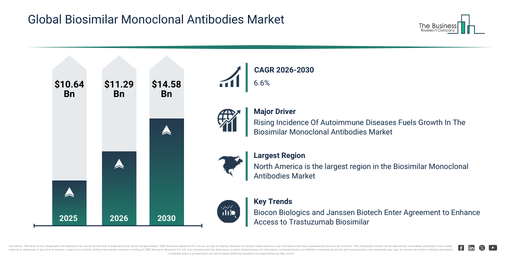
    The biosimilar monoclonal antibodies market has shown substantial growth in recent years. It is anticipated to expand from $10.64 billion in 2025 to $11.29 billion in 2026, achieving a compound annual growth rate (CAGR) of 6.2%. This historical development can be attributed to factors such as the high cost associated with originator biologics, the increasing incidence of chronic and autoimmune diseases, the expiration of patents for key monoclonal antibodies, rising healthcare expenditure, and a gradual improvement in regulatory clarity for biosimilars.

    The biosimilar monoclonal antibodies market is projected to experience substantial expansion in the coming years. This market is predicted to reach a value of $14.58 billion by 2030, exhibiting a compound annual growth rate (CAGR) of 6.6%. This anticipated growth during the forecast period is attributable to several factors, including the expansion of biosimilar pipelines, an escalating demand for accessible biologic treatments, a rise in approvals within developing markets, continuous progress in biopharmaceutical manufacturing, and supportive governmental policies encouraging biosimilar adoption. Key trends anticipated for this period encompass a growing acceptance of cost-effective biosimilar monoclonal antibodies, their increased application in treating oncology and autoimmune conditions, enhanced acceptance by both physicians and patients, broader regulatory approvals across international markets, and an intensified commitment to enhancing accessibility to biologic therapies.

    Get A Free Sample Report With In-Depth Market Insights:

    https://www.thebusinessresearchcompany.com/sample.aspx?id=3412&type=smp&utm_source=Blogs&utm_medium=Paid&utm_campaign=Oct_PR

    Biosimilar Monoclonal Antibodies Market Demand Drivers Opening New Revenue Streams

    The increasing occurrence of autoimmune conditions is anticipated to drive expansion within the biosimilar monoclonal antibodies market in the coming period. These diseases represent a category of ailments where the body’s immune system erroneously assaults its own tissues and organs. The surge in autoimmune diseases is largely attributed to heightened environmental factors like pollution and chemicals, which can unbalance the immune system and foster unusual immune reactions. Biosimilar monoclonal antibodies contribute to tackling the growing prevalence of autoimmune diseases by offering affordable, potent, and readily available targeted treatments that regulate excessive immune responses in patients. For example, data from February 2024, provided by Arthritis Australia, an Australia-based non-profit organization, forecasts that in 2025, around 212,136 males and 362,137 females will be living with rheumatoid arthritis (RA). These figures are projected to climb by 2040, reaching approximately 280,040 males and 479,828 females. Consequently, the increasing frequency of autoimmune conditions is propelling the development of the biosimilar monoclonal antibodies market.

    Biosimilar Monoclonal Antibodies Market Segmentation: How Does The Market Break Down By Category?

    The biosimilar monoclonal antibodies market covered in this report is segmented –

    1) By Type: Biopharmaceuticals, Other Types

    2) By Compound: Infliximab, Rituximab, Abciximab, Trastuzumab, Adalimumab, Bevacizumab

    3) By Application: Chronic & Autoimmune Diseases, Oncology, Other Applications

    Subsegments:

    1) By Biopharmaceuticals: Monoclonal Antibodies, Recombinant Proteins, Vaccines, Other Biopharmaceuticals

    2) By Other Types: Antibody-Drug Conjugates, Fusion Proteins, Biosimilars Of Other Biologics

    Biosimilar Monoclonal Antibodies Market Trends Powering Strategic Industry Growth

    Key players in the biosimilar monoclonal antibody market are developing biosimilar versions of monoclonal antibodies with the goal of presenting economical alternatives to existing monoclonal antibody therapies, thus improving healthcare access and affordability. An intravenous formulation refers to an antibody preparation designed for direct delivery into the bloodstream through a vein, ensuring a swift therapeutic effect. For example, in May 2024, Bio-Thera Solutions, a China-based biopharmaceutical company, and Biogen Inc., a US-based biopharmaceutical company, launched TOFIDENCE (tocilizumab-bavi) in an intravenous formulation within the United States. The U.S. Food and Drug Administration had approved TOFIDENCE in September 2023 for the treatment of moderately to severely active rheumatoid arthritis, polyarticular juvenile idiopathic arthritis, and systemic juvenile idiopathic arthritis. At its launch, TOFIDENCE is accessible in three vial sizes: 80 mg/4 mL, 200 mg/10 mL, and 400 mg/20 mL for intravenous infusion, with subcutaneous formulations anticipated for future release.

    Biosimilar Monoclonal Antibodies Market Competitive Overview And Top Companies

    Major companies operating in the biosimilar monoclonal antibodies market are Pfizer Inc., Novartis AG, AbbVie Inc., Coherus BioSciences, Biocon Limited, Amgen Inc., Boehringer Ingelheim International GmbH, Celltrion Inc., BioXpress Therapeutics SA, Intas Pharmaceuticals Limited, Genor BioPharma Co. Ltd., BIOCAD, Dr. Reddy’s Laboratories Ltd., 3SBio Inc., Reliance Life Sciences, Hisun Pharmaceuticals, Celgen Biopharmaceuticals, Torrent Pharmaceuticals Ltd., Cadila Healthcare Ltd., Shanghai Henlius Biotech Inc., Teva Pharmaceutical Industries Ltd., Alvotech, Xentria Inc., Lazuline Biotech Private Limited, Epygen Biotech Pvt Ltd., Mabpharm Limited, Qilu Pharmaceutical Co. Ltd., Chiatai Tianqing Pharmaceutical Group Co. Ltd., YL Biologics Ltd., Aprogen Biologics, UNDBIO Co Ltd., Samsung Bioepis Co. Ltd., ISU Abxis Corp., Bio-Rad Laboratories Inc.

    View The Full Biosimilar Monoclonal Antibodies Market Report:

    https://www.thebusinessresearchcompany.com/report/biosimilar-monoclonal-antibodie-global-market-report?utm_source=Blogs&utm_medium=Paid&utm_campaign=Oct_PR

    Biosimilar Monoclonal Antibodies Market Regional Analysis And Leading Geography

    North America was the largest region in the biosimilar monoclonal antibodies market in 2025. The regions covered in the biosimilar monoclonal antibodies market report are Asia-Pacific, South East Asia, Western Europe, Eastern Europe, North America, South America, Middle East, Africa.

    Reach Out To Our Team:

    The Business Research Company: https://www.thebusinessresearchcompany.com/

    Americas: +1 310-496-7795

    Asia: +44 7882 955267 & +91 8897263534

    Europe: +44 7882 955267

    Email us at: marketing@tbrc.info

    Follow us on:

    LinkedIn: https://in.linkedin.com/company/the-business-research-company

    YouTube: https://www.youtube.com/channel/UC24_fI0rV8cR5DxlCpgmyFQ

    Global Market Model: https://www.thebusinessresearchcompany.com/global-market-model

  • Biosimilar Lymphocyte Modulator Market Forecast 2026–2030: Market Size, Trends And Growth Opportunities

    Biosimilar Lymphocyte Modulator Market Forecast 2026–2030: Market Size, Trends And Growth Opportunities

    Backed by market attractiveness analysis, total addressable market sizing, company benchmarking matrices, interactive Excel dashboards, wider supply chain intelligence, emerging startup coverage, and detailed product-level insights, The Business Research Company’s 2026 market reports are designed to offer research that is more actionable and strategically valuable than ever.

    Biosimilar Lymphocyte Modulator Market Growth From $2.32 Billion In 2026 To $3.53 Billion By 2030 At A CAGR Of 11.1%

    The biosimilar lymphocyte modulator market size has experienced rapid growth recently. It is projected to increase from $2.1 billion in 2025 to $2.32 billion in 2026, achieving a compound annual growth rate (CAGR) of 10.6%. This historical growth can be attributed to several factors, including the high cost of branded biologics, the rising prevalence of autoimmune diseases, the growing incidence of cancer, limited access to innovative therapies, and increasing healthcare expenditure.

    The biosimilar lymphocyte modulator market is projected to experience substantial expansion over the upcoming years. Its valuation is set to reach $3.53 billion by 2030, exhibiting a compound annual growth rate (CAGR) of 11.1%. This anticipated growth is driven by factors such as the expiry of patents for reference biologics, expanding biosimilar development programs, enhanced physician trust in biosimilars, the broadening reach of online pharmacy distribution, and increasing governmental backing for biosimilar integration. Key trends during this period encompass the increasing use of biosimilar lymphocyte modulators for economical treatment, a rising need for therapies targeting autoimmune and oncology conditions, greater clinical acceptance of biosimilars, broader treatment alternatives for multiple sclerosis and multiple myeloma, and enhanced regulatory processes facilitating biosimilar approvals.

    Get A Free Sample Report With In-Depth Market Insights:

    https://www.thebusinessresearchcompany.com/sample.aspx?id=3434&type=smp&utm_source=Blogs&utm_medium=Paid&utm_campaign=Oct_PR

    Biosimilar Lymphocyte Modulator Market Growth Backed By Core Demand Fundamentals

    The increasing occurrence of autoimmune conditions is anticipated to fuel the expansion of the biosimilar lymphocyte modulator market in the future. Autoimmune conditions represent a category of illnesses where the immune system erroneously attacks the body’s own tissues and organs. The surge in autoimmune diseases is largely propelled by heightened environmental factors like pollution and chemicals, capable of disturbing immune system equilibrium and fostering irregular immune reactions. Biosimilar lymphocyte modulators aid in managing autoimmune diseases by adjusting the immune system’s function, decreasing inflammation, and relieving associated symptoms. For instance, a February 2024 report from Arthritis Australia, an Australia-based non-profit organization, projects that in 2025, roughly 212,136 males and 362,137 females will be affected by rheumatoid arthritis (RA). These figures are anticipated to increase by 2040, reaching an estimated 280,040 males and 479,828 females. Consequently, the escalating prevalence of autoimmune diseases is driving the growth of the biosimilar lymphocyte modulator market.

    Biosimilar Lymphocyte Modulator Market Segment Trends And Revenue Contributors

    The biosimilar lymphocyte modulator market covered in this report is segmented –

    1) By Drug: Campath-1H, Natalizumab Biosimilar, Efalizumab – A1089-Anti-CD11a Biosimilar, Anti-CD38 Daratumumab Biosimilar, Anti-CS1 Elotuzumab Biosimilar

    2) By Disease: Arthritis, Diabetes, Multiple Myeloma, Enterocolitis, Multiple Sclerosis, Psoriasis, Other Diseases

    3) By Distribution Channel: Online Pharmacies, Direct To Consumer

    Biosimilar Lymphocyte Modulator Market Growth Trends Reshaping The Competitive Landscape

    Leading firms within the biosimilar lymphocyte modulator market are creating biosimilar iterations of crucial lymphocyte modulator medications, aiming to secure a competitive advantage within the sector. Idacio (adalimumab-aacf) functions as a tumor necrosis factor (TNF) blocker and serves as a biosimilar equivalent to Humira (adalimumab). As an illustration, Fresenius Kabi AG, a healthcare firm based in Germany, introduced the citrate-free biosimilar Idacio (adalimumab-aacf) in July 2023 for addressing chronic autoimmune conditions within the US. In the US, it is provided in both a self-administered prefilled syringe and a self-administered pre-filled pen (autoinjector) to facilitate appropriate dosing for its sanctioned uses.

    Biosimilar Lymphocyte Modulator Market Competitive Landscape: Which Companies Lead The Industry?

    Major companies operating in the biosimilar lymphocyte modulator market are Pfizer Inc., Celltrion Inc., Genentech Inc., Novartis AG, Sandoz International GmbH, Fresenius Kabi AG, Biocon Ltd., Dr. Reddy’s Laboratories Ltd., Intas Pharmaceuticals Ltd., Lupin Limited, Stada Arzneimittel AG, Zydus Cadila, Hetero Drugs Limited, Torrent Pharmaceuticals Ltd., Glenmark Pharmaceuticals Ltd., Alvotech, Coherus BioSciences, Innovent Biologics, Shanghai Henlius Biotech, BioXpress Therapeutics SA, Mabion SA, Polpharma Biologics, Prestige BioPharma, Qilu Pharmaceutical, Shanghai Fosun Pharmaceutical Group Co. Ltd., Wockhardt Ltd., Amega Biotech

    View The Full Biosimilar Lymphocyte Modulator Market Report:

    https://www.thebusinessresearchcompany.com/report/biosimilar-lymphocytes-modulator-global-market-report?utm_source=Blogs&utm_medium=Paid&utm_campaign=Oct_PR

    Biosimilar Lymphocyte Modulator Market Geographic Analysis: Where Is Demand Accelerating Fastest?

    North America was the largest region in the biosimilar lymphocyte modulator market in 2025. Middle East is expected to be the fastest-growing region in the biosimilar lymphocyte modulator market report during the forecast period. The regions covered in the biosimilar lymphocyte modulator market report are Asia-Pacific, South East Asia, Western Europe, Eastern Europe, North America, South America, Middle East, Africa.

    Reach Out To Our Team:

    The Business Research Company: https://www.thebusinessresearchcompany.com/

    Americas: +1 310-496-7795

    Asia: +44 7882 955267 & +91 8897263534

    Europe: +44 7882 955267

    Email us at: marketing@tbrc.info

    Follow us on:

    LinkedIn: https://in.linkedin.com/company/the-business-research-company

    YouTube: https://www.youtube.com/channel/UC24_fI0rV8cR5DxlCpgmyFQ

    Global Market Model: https://www.thebusinessresearchcompany.com/global-market-model
  • Biosimilar Interleukins Market Size Reaches $10.53 Billion In 2026: What Is Driving Growth?

    Biosimilar Interleukins Market Size Reaches $10.53 Billion In 2026: What Is Driving Growth?

    Featuring market attractiveness scoring, total addressable market sizing, company benchmarking matrices, interactive Excel dashboards, deeper supply chain intelligence, emerging startup tracking, and granular product-level insights, The Business Research Company’s 2026 market reports are built to deliver research that is both more actionable and more strategically valuable.

    Biosimilar Interleukins Market Expansion Outlook: What Revenue Opportunities Are Ahead?

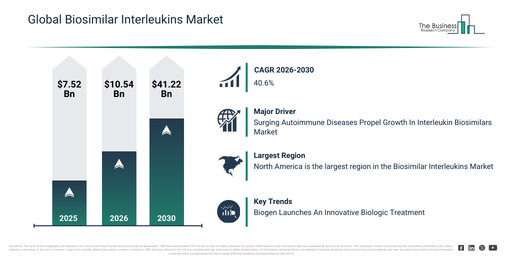
    The biosimilar interleukins market has experienced substantial expansion in recent years. Its value is expected to increase from $7.52 billion in 2025 to $10.54 billion in 2026, achieving a compound annual growth rate (CAGR) of 40.2%. Historically, this growth can be linked to the expensive nature of originator interleukin biologics, the rising occurrence of autoimmune and inflammatory diseases, the increasing impact of rheumatoid arthritis and psoriasis, limited patient availability of biologic treatments, and a growing understanding of biologics’ role in immune modulation.

    The biosimilar interleukins market size is projected for significant expansion in the coming years. This market is anticipated to reach a valuation of $41.22 billion by 2030, exhibiting a compound annual growth rate (CAGR) of 40.6%. Several factors are contributing to this projected growth during the forecast period, including the expiration of patents for branded interleukins, the expanding pipelines of biosimilar clinical trials, greater acceptance of biosimilars by physicians, government policies that support biosimilar adoption, and a growing need for cost-effective biologic treatments for cancer and immunological conditions. Key trends expected in the forecast period involve a surge in the use of biosimilar interleukins for treating autoimmune diseases, an escalating demand for economical substitutes to original biologic drugs, an increase in biosimilar approvals for various indications, the expanded application of interleukins in managing chronic inflammatory conditions, and the reinforcement of regulatory structures that facilitate biosimilar uptake.

    Get A Free Sample Report With In-Depth Market Insights:

    https://www.thebusinessresearchcompany.com/sample.aspx?id=3433&type=smp&utm_source=Blogs&utm_medium=Paid&utm_campaign=Oct_PR

    Biosimilar Interleukins Market Growth Catalysts And Demand Drivers

    The anticipated rise in autoimmune conditions, such as psoriasis and rheumatoid arthritis, is projected to accelerate the expansion of the interleukin biosimilars market over the forecast period. Autoimmune disorders are characterized by immune cells’ inability to differentiate healthy cells from potentially harmful antibodies. Biologic drugs, like anti-interleukin antibodies, have exhibited significant clinical benefits in regulating cellular processes, including proliferation, activation, and migration. For instance, in February 2024, reports from the National Institutes of Health (NIH), a US-based biomedical research agency, estimated annual global increases in the incidence and prevalence of autoimmune diseases at 19.1% and 12.5%, respectively. Therefore, the increasing occurrence of autoimmune diseases is boosting demand within the biosimilar interleukins market and is expected to drive the growth of the market.

    Biosimilar Interleukins Market Segment Analysis Spotlighting Growth Areas

    The biosimilar interleukins market covered in this report is segmented –

    1) By Type: IL-17, IL-23, IL-1, IL-5, IL-6

    2) By Application: Psoriasis, Psoriatic Arthritis, Rheumatoid Arthritis, Asthma, Inflammatory Bowel Disease (IBD), Other Applications

    3) By Distribution Channel: Hospital Pharmacies, Online Pharmacies, Retail Pharmacies, Clinics, Research Institutes

    Subsegments:

    1) By IL-17: Autoimmune Disease Treatment, Inflammatory Disease Management

    2) By IL-23: Psoriasis Treatment, Inflammatory Bowel Disease (IBD) Treatment

    3) By IL-1: Rheumatoid Arthritis Management, Other Autoimmune Disorders

    4) By IL-5: Asthma Treatment, Eosinophilic Disorders

    5) By IL-6: Rheumatoid Arthritis Management, Inflammatory Disease Treatment

    Biosimilar Interleukins Market Trends Shaping Long-Term Demand

    Key companies operating in the biosimilar interleukins market are introducing new products such as Tofidence (tocilizumab-bavi) to enhance their market profitability. Tofidence is a monoclonal antibody that targets and connects to interleukin-6 receptors, used in treating various inflammatory autoimmune disorders. For instance, in September 2023, Biogen Inc., a US-based biotechnology firm, obtained FDA approval for Tofidence (tocilizumab-bavi) as the first biosimilar referencing Genentech’s Actemra (tocilizumab). Tofidence is administered through intravenous infusion and has been approved for treating severely active rheumatoid arthritis, polyarticular juvenile idiopathic arthritis, and systemic juvenile idiopathic arthritis.

    Biosimilar Interleukins Market Leading Companies: Who Holds The Strongest Market Presence?

    Major companies operating in the biosimilar interleukins market are Mabpharm Limitied, Gedeon Richter plc, Bio-Thera Solutions Ltd., Sunshine Guojian Pharmaceutical, Stada Arzneimittel AG, Teva Pharmaceutical Industries, 3SBio Inc., Shanghai Fosun Pharmaceuticals, Novartis AG, Pfizer Inc., Amgen Inc., F. Hoffmann-La Roche AG, Sanofi SA, Merck & Co. Inc., GlaxoSmithKline plc, Eli Lilly and Company, AstraZeneca plc, Qilu Pharmaceutical, Tonghua Dongbao, PROBIOMED S.A. de C.V., Biosidus S.A., LG Life Sciences, Viatris Inc.

    View The Full Biosimilar Interleukins Market Report:

    https://www.thebusinessresearchcompany.com/report/biosimilar-interleukin-global-market-report?utm_source=Blogs&utm_medium=Paid&utm_campaign=Oct_PR

    Biosimilar Interleukins Market Global Footprint: Which Region Leads The Industry?

    North America was the largest region in the biosimilar interleukins market in 2025. The regions covered in the biosimilar interleukins market report are Asia-Pacific, South East Asia, Western Europe, Eastern Europe, North America, South America, Middle East, Africa.

    Reach Out To Our Team:

    The Business Research Company: https://www.thebusinessresearchcompany.com/

    Americas: +1 310-496-7795

    Asia: +44 7882 955267 & +91 8897263534

    Europe: +44 7882 955267

    Email us at: marketing@tbrc.info

    Follow us on:

    LinkedIn: https://in.linkedin.com/company/the-business-research-company

    YouTube: https://www.youtube.com/channel/UC24_fI0rV8cR5DxlCpgmyFQ

    Global Market Model: https://www.thebusinessresearchcompany.com/global-market-model
  • Biosimilar Hormones Market Valued At $18.12 Billion In 2026: Key Trends And Growth Drivers

    Built to provide research that’s more actionable and strategically valuable, The Business Research Company’s 2026 market reports include market attractiveness analysis, total addressable market sizing, company benchmarking matrices, interactive Excel dashboards, broader supply chain intelligence, emerging startup tracking, and in-depth product insights.

    Biosimilar Hormones Market Growth Potential: How Will Market Size Shift Through 2030?

    The biosimilar hormones market size has seen substantial growth recently. It is anticipated to increase from $6.22 billion in 2025 to $7.68 billion in 2026, at a compound annual growth rate (CAGR) of 23.5%. The expansion witnessed over the past period is due to elements such as the increasing occurrence of diabetes and hormonal disorders, the significant expense of branded hormone medications, a growing elderly demographic, heightened understanding of hormone replacement therapies, and the enlargement of hospital and retail pharmacy networks.

    The biosimilar hormones market size is anticipated to experience substantial growth over the next few years. It is predicted to expand to $18.12 billion by 2030, exhibiting a compound annual growth rate (CAGR) of 23.9%. This projected growth can be ascribed to factors such as the expiry of patents for significant biologic hormones, increasing regulatory encouragement for biosimilars, a rising need for affordable endocrine treatments, the expansion of online pharmacy distribution networks, and increasing investment in biosimilar research and development. Notable trends for the forecast period include the increasing adoption of biosimilar hormones as economical alternatives, a greater demand for insulin and growth hormone biosimilars, enhanced acceptance of biosimilar hormone therapies among medical professionals, the expanded application of biosimilars in chronic and lifestyle diseases, and more efficient regulatory pathways supporting biosimilar approvals.

    Get A Free Sample Report With In-Depth Market Insights:

    https://www.thebusinessresearchcompany.com/sample.aspx?id=3432&type=smp&utm_source=Blogs&utm_medium=Paid&utm_campaign=Oct_PR

    Biosimilar Hormones Market Opportunity Drivers: What’s Unlocking New Revenue Potential?

    The biosimilar hormones market is anticipated to expand due to increasing healthcare spending. This spending encompasses all funds utilized by individuals, organizations, or governments for the prevention, treatment, and management of various health conditions. Such expenditure is on the rise, primarily driven by progress in medical technology, as novel diagnostic methods, treatments, and advanced therapies frequently incur higher expenses, thus contributing to an increase in overall healthcare costs. The growth in healthcare spending stimulates the adoption of biosimilar hormones by creating a greater need for economical treatments and improving patient accessibility throughout healthcare systems. For example, data released in December 2024 by the Centers for Medicare & Medicaid Services, a US-based agency overseeing the Medicare and Medicaid programs, indicated that in 2023, health care spending in the U.S. grew by 7.5%, reaching $4.9 trillion, which translates to approximately $14,570 per person. Consequently, the expansion of healthcare expenditure is a key factor fueling the development of the biosimilar hormones market.

    Biosimilar Hormones Market Segment Performance And Emerging Opportunities

    The biosimilar hormones market covered in this report is segmented –

    1) By Type: Teriparatide Biosimilars, Follitropin Alfa Biosimilars, Insulin Biosimilars, Somatropin Biosimilars, Other Types

    2) By Application: Research & Biotechnology, Therapeutics, Other Applications

    3) By Distribution Channel: Hospital And Retail Pharmacy, Online Pharmacy/pharmacy, Specialty Clinics

    Subsegments:

    1) By Teriparatide Biosimilars: Osteoporosis Treatment, Bone Health Maintenance

    2) By Follitropin Alfa Biosimilars: Infertility Treatment, Assisted Reproductive Technology (ART)

    3) By Insulin Biosimilars: Type 1 Diabetes Management, Type 2 Diabetes Management

    4) By Somatropin Biosimilars: Growth Hormone Deficiency Treatment, Pediatric Growth Disorders

    5) By Other Types: Thyroid Hormones, Corticosteroids

    Biosimilar Hormones Market Innovation Trends Shaping Future Development

    Leading companies in the biosimilar hormones market are introducing new products, such as the Sogroya (somapacitan-beco) injection, to enhance their market profitability. Sogroya (somapacitan-beco) is a prescription analog of human growth hormone (GH) used for treating individuals diagnosed with growth hormone deficiency (GHD). For example, in April 2023, Novo Nordisk, a pharmaceutical firm from Denmark, secured FDA approval for an additional indication for Sogroya (somapacitan-beco) injection, intended for children aged 2.5 years and older experiencing growth failure due to insufficient endogenous growth hormone secretion. Sogroya is unique as the only once-weekly growth hormone (GH) therapy developed for both children and adults. This approval was granted following results from the phase 3 REAL4 trial, which confirmed Sogroya’s effectiveness in managing growth hormone deficiency (GHD) in pediatric patients.

    Biosimilar Hormones Market Key Players: Which Companies Lead Industry Competition?

    Major companies operating in the biosimilar hormones market are Teva Pharmaceutical Industries Ltd., Gedeon Richter Plc., Intas Pharmaceuticals Ltd., Biocon Limited, Mylan, Sanofi, Sandoz Group AG, LG Life Sciences, Ferring Pharmaceuticals, GC Pharma, Pfizer Inc., Dr. Reddy’s Laboratories, Amgen Inc., Eli Lilly and Company, Celltrion Inc., Samsungbioepis Co.Ltd, Merck & Co., Biogen Inc., Boehringer Ingelheim, Alvotech, Cipla Limited, Lupin Ltd., Stada Arzneimittel AG, Torrent Pharmaceuticals, Zydus Cadila, Accord Healthcare, Hetero Drugs, Wockhardt

    View The Full Biosimilar Hormones Market Report:

    https://www.thebusinessresearchcompany.com/report/biosimilar-hormone-global-market-report?utm_source=Blogs&utm_medium=Paid&utm_campaign=Oct_PR

    Biosimilar Hormones Market Regional Distribution: Which Areas Power Market Growth?

    North America was the largest region in the biosimilar hormones market in 2025. The regions covered in the biosimilar hormones market report are Asia-Pacific, South East Asia, Western Europe, Eastern Europe, North America, South America, Middle East, Africa.

    Reach Out To Our Team:

    The Business Research Company: https://www.thebusinessresearchcompany.com/

    Americas: +1 310-496-7795

    Asia: +44 7882 955267 & +91 8897263534

    Europe: +44 7882 955267

    Email us at: marketing@tbrc.info

    Follow us on:

    LinkedIn: https://in.linkedin.com/company/the-business-research-company

    YouTube: https://www.youtube.com/channel/UC24_fI0rV8cR5DxlCpgmyFQ

    Global Market Model: https://www.thebusinessresearchcompany.com/global-market-model
  • Biosimilar Growth Hormones Market Size In 2026: Growth Outlook And Forecast Through 2030

    Biosimilar Growth Hormones Market Size In 2026: Growth Outlook And Forecast Through 2030

    Backed by market attractiveness analysis, total addressable market sizing, company benchmarking matrices, interactive Excel dashboards, wider supply chain intelligence, emerging startup coverage, and detailed product-level insights, The Business Research Company’s 2026 market reports are designed to offer research that is more actionable and strategically valuable than ever.

    Biosimilar Growth Hormones Market Value Analysis: What Growth Lies Ahead Over The Forecast Period?

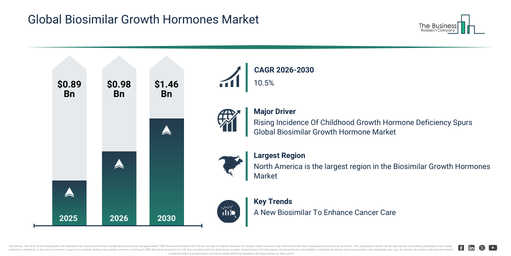
    The biosimilar growth hormones market has expanded quickly in recent years. It is projected to rise from $0.89 billion in 2025 to $0.98 billion in 2026, achieving a compound annual growth rate (CAGR) of 10.1%. The expansion observed in the historic period can be attributed to the high cost of branded growth hormone therapies, increasing prevalence of growth hormone deficiency, rising pediatric growth disorder diagnoses, limited access to affordable treatment options, and dependence on hospital-based administration.

    The biosimilar growth hormones market size is anticipated to expand rapidly over the next few years, projected to reach $1.46 billion in 2030, demonstrating a compound annual growth rate (CAGR) of 10.5%. The expansion during this forecast period stems from factors such as the patent expiry of branded growth hormones, increased approvals for biosimilars, the proliferation of self-administration therapies, heightened awareness of growth disorders, and escalating healthcare expenditure in developing markets. Notable trends for the forecast period include the growing adoption of economical biosimilar growth hormones, a rising need for pediatric and adult growth hormone treatments, an increasing preference for subcutaneous self-administration, the growth of online pharmacies and specialized clinics, and improved regulatory acceptance for biosimilars.

    Get A Free Sample Report With In-Depth Market Insights:

    https://www.thebusinessresearchcompany.com/sample.aspx?id=3391&type=smp&utm_source=Blogs&utm_medium=Paid&utm_campaign=Oct_PR

    Biosimilar Growth Hormones Market Growth Momentum: What Factors Are Shaping Demand?

    The expansion of the global biosimilar growth hormone market is propelled by the rising incidence of growth hormone deficiency among children. This deficiency arises from damage to the pituitary gland or hypothalamus, potentially stemming from abnormal development before birth (congenital) or issues that emerge during or after birth (acquired). For example, data from September 2023, provided by Hormones Australia through the Endocrine Society of Australia (ESA) – an Australia-based national authority for the treatment of endocrine related conditions and disease – indicates that approximately 2 to 3 out of every 10,000 people are estimated to be affected by growth hormone deficiency. Consequently, the expanding population of children experiencing growth deficiencies is a key factor boosting the biosimilar growth hormones industry.

    Biosimilar Growth Hormones Market Segment Landscape And Growth Outlook

    The biosimilar growth hormones market covered in this report is segmented –

    1) By Route Of Administration: Subcutaneous, Intramuscular, Oral

    2) By Application: Growth Hormone Deficiency, Turner Syndrome, Idiopathic Short Stature, Prader Willi Syndrome, Other Applications

    3) By Distribution Channel: Hospital And Retail Pharmacy, Online Pharmacy/ePharmacy, Specialty Clinics

    Subsegments:

    1) By Subcutaneous: Self-administration, Professional Administration

    2) By Intramuscular: Pediatric Care, Adult Care

    3) By Oral: Tablets, Capsules

    Biosimilar Growth Hormones Market Trends Redefining Industry Growth

    Leading companies in the biosimilar growth hormones market are innovating solutions, such as human growth hormone, to enhance the effectiveness and affordability of treatments for growth hormone deficiencies. Growth hormone solutions refer to medical interventions or supplements designed to stimulate or replace human growth hormone (HGH) in the body, addressing growth deficiencies or anti-aging needs. For example, in June 2023, Pfizer Inc., a US-based pharmaceutical company, and OPKO Health Inc., a US-based healthcare company, obtained US Food and Drug Administration (FDA) approval for NGENLA (somatrogon-ghla). This is a once-weekly injectable human growth hormone treatment specifically developed for pediatric patients experiencing growth hormone deficiency (GHD). This long-acting growth hormone therapy provides an alternative to daily injections, thereby improving adherence and convenience for both patients and caregivers. The approval stemmed from clinical studies that demonstrated its efficacy and safety, signifying a notable progression in growth hormone therapies.

    Biosimilar Growth Hormones Market Competitive Landscape: Who Leads The Industry?

    Major companies operating in the biosimilar growth hormones market are Amega Biotech, Biosidus S.A., Eli Lilly and Company, Ferring Pharmaceuticals, Genetech Inc., Merck & Co. Inc., Novartis AG, Novo Nordisk A/S, Sanofi S.A., USV Private Limited, Zhongshan Hygene Biopharm Co. Ltd., Biopartners And LG Chem, Boehringer Ingelheim International GmbH, Celltrion Inc., Dr. Reddy’s Laboratories Ltd., Gedeon Richter Plc., Genor Biopharma Co. Ltd., Hetero Drugs Limited, Intas Pharmaceuticals Ltd., LG Chem Ltd., Lupin Limited, Mabion S.A., Mundipharma International Limited, Panacea Biotec Limited, Pfenex Inc., PlantForm Corporation

    View The Full Biosimilar Growth Hormones Market Report:

    https://www.thebusinessresearchcompany.com/report/biosimilar-growth-hormone-global-market-report?utm_source=Blogs&utm_medium=Paid&utm_campaign=Oct_PR

    Biosimilar Growth Hormones Market Leading Geography: Which Region Contributes The Most Revenue?

    North America was the largest region in the biosimilar growth hormone market in 2025. The Middle East is expected to be the fastest-growing region in the biosimilar growth hormones market report during the forecast period. The regions covered in the biosimilar growth hormones market report are Asia-Pacific, South East Asia, Western Europe, Eastern Europe, North America, South America, Middle East, Africa.

    Reach Out To Our Team:

    The Business Research Company: https://www.thebusinessresearchcompany.com/

    Americas: +1 310-496-7795

    Asia: +44 7882 955267 & +91 8897263534

    Europe: +44 7882 955267

    Email us at: marketing@tbrc.info

    Follow us on:

    LinkedIn: https://in.linkedin.com/company/the-business-research-company

    YouTube: https://www.youtube.com/channel/UC24_fI0rV8cR5DxlCpgmyFQ

    Global Market Model: https://www.thebusinessresearchcompany.com/global-market-model
  • Biosimilar Contract Manufacturing Market Trends Supporting 15.4% CAGR Growth Through 2030

    Biosimilar Contract Manufacturing Market Trends Supporting 15.4% CAGR Growth Through 2030

    Featuring market attractiveness scoring, total addressable market sizing, company benchmarking matrices, interactive Excel dashboards, deeper supply chain intelligence, emerging startup tracking, and granular product-level insights, The Business Research Company’s 2026 market reports are built to deliver research that is both more actionable and more strategically valuable.

    Biosimilar Contract Manufacturing Market Size Forecast: How Big Could The Market Get By 2030?

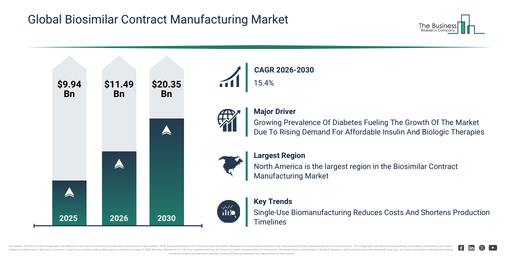
    The biosimilar contract manufacturing market has seen substantial growth recently. Its value is projected to rise from $9.94 billion in 2025 to $11.49 billion in 2026, exhibiting a compound annual growth rate (CAGR) of 15.7%. Historically, this expansion can be attributed to the expiration of reference biologic patents, the early adoption of biosimilar development initiatives, an increase in contract manufacturing partnerships, developing regulatory guidance for biosimilars, and the growing prevalence of chronic diseases.

    The biosimilar contract manufacturing sector is projected to experience swift expansion over the coming years, anticipated to reach $20.35 billion in 2030 at a compound annual growth rate (CAGR) of 15.4%. This anticipated growth during the forecast period stems from factors such as a rise in biosimilar approvals worldwide, the escalating need to lower biologic treatment expenses, the expansion of biosimilar product pipelines, increasing capital expenditure in large-scale production facilities, and improvements in process optimization techniques. Key developments expected over the forecast period encompass a surge in the outsourcing of biosimilar production, a heightened demand for economical manufacturing platforms, a greater emphasis on analytical and quality control provisions, the broadening of mammalian cell-based manufacturing capabilities, and a strengthened adherence to regulatory standards.

    Get A Free Sample Report With In-Depth Market Insights:

    https://www.thebusinessresearchcompany.com/sample.aspx?id=30215&type=smp&utm_source=Blogs&utm_medium=Paid&utm_campaign=Oct_PR

    Biosimilar Contract Manufacturing Market Expansion Drivers: What’s Shaping Future Growth?

    The expanding incidence of diabetes is projected to drive the growth of the biosimilar contract manufacturing market moving forward. Diabetes prevalence indicates the percentage of individuals in a population living with diabetes at a specific time, signifying ongoing treatment requirements and a lifelong demand for therapy. The rise in diabetes prevalence stems from increasingly sedentary lifestyles and inadequate dietary habits, which contribute to obesity, insulin resistance, and a higher occurrence of type 2 diabetes. Biosimilar contract manufacturing supports diabetes management by enabling the efficient, large-scale, and cost-effective production of biosimilar insulin and related biological products. It ensures consistent quality and adherence to regulatory standards, thereby making advanced therapies more accessible to patients. This improves treatment affordability and expands global access to vital diabetes care. For example, in June 2024, the National Health Service, a UK-based government department, reported that 3,615,330 individuals registered with a general practitioner (GP) were diagnosed with non-diabetic hyperglycemia or pre-diabetes in 2023, representing an 18% increase from 3,065,825 cases in 2022. Thus, the increasing prevalence of diabetes is fueling the expansion of the biosimilar contract manufacturing market.

    Biosimilar Contract Manufacturing Market Breakdown By Product Type And Application

    The biosimilar contract manufacturing market covered in this report is segmented –

    1) By Product Type: Monoclonal Antibodies, Insulin, Erythropoietin, Granulocyte Colony-Stimulating Factor, Other Product Types

    2) By Service Type: Process Development, Analytical And Quality Control, Fill And Finish Operations, Packaging, Other Service Types

    3) By Source: Mammalian, Non-mammalian

    4) By Application: Oncology, Autoimmune Diseases, Blood Disorders, Growth Hormone Deficiency, Other Applications

    5) By End-Use: Pharmaceutical Companies, Biotech Companies

    Subsegments:

    1) By Monoclonal Antibodies: Chimeric Monoclonal Antibodies, Humanized Monoclonal Antibodies, Fully Human Monoclonal Antibodies, Bispecific Monoclonal Antibodies

    2) By Insulin: Rapid Acting Insulin, Short Acting Insulin, Intermediate Acting Insulin, Long Acting Insulin, Premixed Insulin

    3) By Erythropoietin: Alpha Erythropoietin, Beta Erythropoietin, Darbepoetin Alfa, Continuous Erythropoietin Receptor Activators

    4) By Granulocyte Colony-Stimulating Factor: Filgrastim, Pegfilgrastim, Lenograstim, Long Acting Granulocyte Colony-Stimulating Factor

    5) By Other Product Types: Interferons, Interleukins, Fusion Proteins, Enzyme Therapeutics, Hormonal Biologics

    Biosimilar Contract Manufacturing Market Strategic Trends: What Defines The Next Growth Phase?

    Major companies within the biosimilar contract manufacturing sector are prioritizing the establishment of advanced production sites, such as mirrored single-use facilities, to enhance the pace of technology transfer, scaling operations, and commercial dependability. Mirrored single-use plants are characterized by identical production environments that utilize disposable bioprocess tools and integrated digital platforms, facilitating rapid operational shifts, uniform quality across various locations, and a decreased risk of contamination. For example, in September 2025, Rezon Bio, a contract development and manufacturing organization situated in Poland, inaugurated two single-use biomanufacturing sites with mirrored capabilities, spanning from cell line development to commercial GMP provision. This strategy enables quicker technology transfer and adaptable scale-up for biosimilars, reducing operational interruptions, while simultaneously improving consistency between batches through standardized suites, integrated analytical tools, and automated logistics. Furthermore, it decreases the overall cost for sponsors by lessening cleaning validation requirements, shortening development and manufacturing schedules, and mitigating expansion risks.

    Biosimilar Contract Manufacturing Market Company Landscape And Competitive Strategy

    Major companies operating in the biosimilar contract manufacturing market are Thermo Fisher Scientific Inc., Biocon Limited, Lonza Group AG, Samsung Biologics Co. Ltd., WuXi Biologics (Cayman) Inc., Laboratorios Farmacéuticos Rovi S.A., Vetter Pharma-Fertigung GmbH & Co. KG, National Resilience Inc., Porton Pharma Solutions Co. Ltd., Syngene International Limited, Rentschler Biopharma SE, Boehringer Ingelheim International GmbH, Enzene Biosciences Ltd., Prestige Biologics Co. Ltd., Mabion S.A., HALIX B.V., BioConnection B.V., BioCina Pty Ltd, Mycenax Biotech Inc., Polpharma Biologics S.A.

    View The Full Biosimilar Contract Manufacturing Market Report:

    https://www.thebusinessresearchcompany.com/report/global-biosimilar-contract-manufacturing-market-report?utm_source=Blogs&utm_medium=Paid&utm_campaign=Oct_PR

    Biosimilar Contract Manufacturing Market Regional Outlook: Where Is Opportunity Concentrated?

    North America was the largest region in the biosimilar contract manufacturing market in 2025. Asia-Pacific is expected to be the fastest-growing region in the forecast period. The regions covered in the biosimilar contract manufacturing market report are Asia-Pacific, South East Asia, Western Europe, Eastern Europe, North America, South America, Middle East, Africa.

    Reach Out To Our Team:

    The Business Research Company: https://www.thebusinessresearchcompany.com/

    Americas: +1 310-496-7795

    Asia: +44 7882 955267 & +91 8897263534

    Europe: +44 7882 955267

    Email us at: marketing@tbrc.info

    Follow us on:

    LinkedIn: https://in.linkedin.com/company/the-business-research-company

    YouTube: https://www.youtube.com/channel/UC24_fI0rV8cR5DxlCpgmyFQ

    Global Market Model: https://www.thebusinessresearchcompany.com/global-market-model

  • Bioprocess Analyzers Market Forecast Highlights A $3.34 Billion Opportunity For Industry Participants

    Bioprocess Analyzers Market Forecast Highlights A $3.34 Billion Opportunity For Industry Participants

    Built to provide research that’s more actionable and strategically valuable, The Business Research Company’s 2026 market reports include market attractiveness analysis, total addressable market sizing, company benchmarking matrices, interactive Excel dashboards, broader supply chain intelligence, emerging startup tracking, and in-depth product insights.

    Bioprocess Analyzers Market Revenue Outlook: What CAGR Lies Ahead Through 2030?

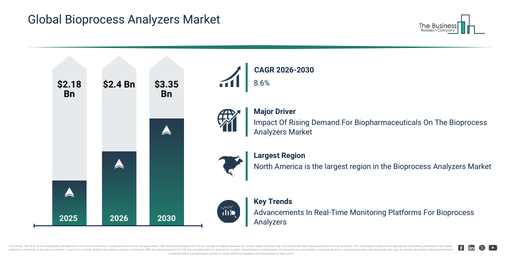
    The bioprocess analyzers market has seen rapid expansion in recent years. Its valuation is anticipated to climb from $2.18 billion in 2025 to $2.4 billion in 2026, exhibiting a compound annual growth rate (CAGR) of 10.1%. This past growth can be attributed to several factors including an increase in biopharmaceutical production, the rising adoption of automation within laboratories, the growing demand for biologics, the necessity for regulatory compliance, and advancements in sensor technologies.

    The bioprocess analyzers market is projected to experience substantial expansion over the upcoming years. By 2030, its valuation is set to reach $3.35 billion, demonstrating a compound annual growth rate (CAGR) of 8.6%. Several factors contributing to this growth during the projected period include the broadening scope of personalized medicine, the incorporation of AI into bioprocessing, the increasing need for continuous manufacturing, the rise of contract manufacturing organizations (CMOs), and advancements in miniaturized analytical systems. Key developments anticipated within the forecast timeframe encompass real-time bioprocess monitoring, the integration of process analytical technology (PAT), enhanced high-throughput screening and automation, the creation of advanced sensors, and the adoption of quality-by-design (QbD) principles.

    Get A Free Sample Report With In-Depth Market Insights:

    https://www.thebusinessresearchcompany.com/sample.aspx?id=14865&type=smp&utm_source=Blogs&utm_medium=Paid&utm_campaign=Oct_PR

    Bioprocess Analyzers Market Development Factors: What’s Supporting Demand?

    The increasing demand for biopharmaceuticals is anticipated to drive the expansion of the bioprocess analyzer market in the coming years. Biopharmaceuticals are medical products derived from biological sources, such as living organisms or their components. The biopharmaceutical industry is experiencing growth, fueled by innovative research and development activities that lead to the creation of novel biologics and biosimilars. Bioprocess analyzers play a crucial role in monitoring various parameters during biopharmaceutical production, including cell growth, protein expression, and product purity. For instance, in January 2024, IQVIA, a US-based provider of biopharmaceutical development services, reported that global biotech spending is projected to exceed $892 billion by 2028. Thus, the escalating demand for biopharmaceuticals will propel the growth of the bioprocess analyzer market.

    Bioprocess Analyzers Market Segment Analysis And Revenue Potential

    The bioprocess analyzers market covered in this report is segmented –

    1) By Product: Instruments, Consumables

    2) By Application: Antibiotics, Recombinant Proteins, Biosimilars, Other Applications

    3) By End-User: Biopharmaceutical Companies, Contract Manufacturing Organizations, Contract Research Organizations, Other End Users

    Subsegments:

    1) By Instruments: Spectrometers, Chromatographs, pH Or DO Analyzers, Gas Analyzers, Offline Analyzers

    2) By Consumables: Reagents, Sensors, Calibration Kits

    Bioprocess Analyzers Market Transformation Trends: What Innovations Are Driving Change?

    Major companies in the bioprocess analyzer sector are focusing on developing advanced solutions, such as optical in-line analyzers, to gain a competitive advantage. These optical in-line analyzers are instruments that utilize optical technology to provide real-time monitoring and analysis of critical parameters in bioprocessing applications. For example, in September 2023, 908 Devices Inc., a US-based chemical and biochemical analysis company, launched MAVERICK, an advanced optical in-line analyzer. MAVERICK offers real-time monitoring and control of essential factors like glucose, lactate, and total biomass in mammalian cell cultures. Biopharmaceutical experts can leverage the device’s comprehensive process fingerprint data to fine-tune large-scale bioprocesses. Its user-friendly design simplifies tasks for scientists and engineers, accelerating the development of cell culture media and the creation of effective feeding and control plans. The instrument employs Raman spectroscopy to measure various important process parameters in real time, including glucose, lactate, and biomass, directly in bioreactors. MAVERICK is designed to improve process comprehension, optimize performance, and ensure batch-to-batch reproducibility in cell culture automation for biologic production involving CHO (Chinese hamster ovary) or HEK293 (human embryonic kidney 293) mammalian cell lines and multiple medium types.

    Bioprocess Analyzers Market Key Players Shaping Industry Direction

    Major companies operating in the bioprocess analyzers market are Danaher Corporation, Merck KGaA, Thermo Fisher Scientific, MilliporeSigma, Sartorius AG, Beckman Coulter Inc., Waters Corporation, Bio-Rad Laboratories, Bruker Corporation, Agilent Technologies, GE Healthcare, Pall Corporation, HORIBA Ltd., Nova Biomedical, Hamilton Company, BioTek Instruments, PerkinElmer Inc, Analytik Jena AG, Eppendorf AG, Metrohm AG, Zymo Research Corporation, Macherey-Nagel GmbH & Co. KG

    View The Full Bioprocess Analyzers Market Report:

    https://www.thebusinessresearchcompany.com/report/bioprocess-analyzers-global-market-report?utm_source=Blogs&utm_medium=Paid&utm_campaign=Oct_PR

    Bioprocess Analyzers Market Geographic Landscape: Which Region Leads Industry Growth?

    North America was the largest region in the bioprocess analyzers market in 2025. Asia-Pacific is expected to be the fastest-growing region in the forecast period. The regions covered in the bioprocess analyzers market report are Asia-Pacific, South East Asia, Western Europe, Eastern Europe, North America, South America, Middle East, Africa.

    Reach Out To Our Team:

    The Business Research Company: https://www.thebusinessresearchcompany.com/

    Americas: +1 310-496-7795

    Asia: +44 7882 955267 & +91 8897263534

    Europe: +44 7882 955267

    Email us at: marketing@tbrc.info

    Follow us on:

    LinkedIn: https://in.linkedin.com/company/the-business-research-company

    YouTube: https://www.youtube.com/channel/UC24_fI0rV8cR5DxlCpgmyFQ

    Global Market Model: https://www.thebusinessresearchcompany.com/global-market-model

  • Biopharmaceutical Lab Equipment Market Analysis: How The Industry Is Evolving Toward A $25.72 Billion Future

    Biopharmaceutical Lab Equipment Market Analysis: How The Industry Is Evolving Toward A $25.72 Billion Future

    Backed by market attractiveness analysis, total addressable market sizing, company benchmarking matrices, interactive Excel dashboards, wider supply chain intelligence, emerging startup coverage, and detailed product-level insights, The Business Research Company’s 2026 market reports are designed to offer research that is more actionable and strategically valuable than ever.

    Biopharmaceutical Lab Equipment Market Growth Analysis: How Will Revenue Trend Over The Forecast Period?

    The biopharmaceutical lab equipment market has demonstrated robust growth over recent years. This market is projected to expand from $17.77 billion in 2025 to $19.18 billion in 2026, showing a compound annual growth rate (CAGR) of 7.9%. Historically, this growth is primarily due to factors such as the expansion of biopharmaceutical research pipelines, increased adoption of laboratory automation, rising investment in life sciences infrastructure, dependence on chromatography and PCR technologies, and the standardization of quality control processes.

    The biopharmaceutical lab equipment market is projected to experience robust expansion in the coming years. This market is anticipated to reach $25.72 billion by 2030, demonstrating a compound annual growth rate (CAGR) of 7.6%. The projected growth during this period can be ascribed to several factors, including the increasing development of biologics and cell therapies, a heightened need for continuous processing solutions, the expansion of extensive biopharmaceutical laboratories, greater integration of AI-powered analytics, and an intensified focus on operational efficiency within labs. Key trends anticipated during the forecast timeframe encompass a growing embrace of single-use laboratory equipment, increased implementation of automated analytical tools, a surging demand for high-throughput testing solutions, the broadening of advanced cell culture platforms, and a strengthened emphasis on data integrity and reproducibility.

    Get A Free Sample Report With In-Depth Market Insights:

    https://www.thebusinessresearchcompany.com/sample.aspx?id=28967&type=smp&utm_source=Blogs&utm_medium=Paid&utm_campaign=Oct_PR

    Biopharmaceutical Lab Equipment Market Industry Drivers: What’s Behind The Revenue Growth?

    The rising focus on personalized medicine is anticipated to stimulate expansion within the biopharmaceutical lab equipment market in the future. This approach to patient care customizes treatment and prevention plans, considering unique variations in a patient’s genetic makeup, surroundings, and daily habits. Its increasing acceptance stems from breakthroughs in genomic sequencing technologies and data analytics, empowering healthcare professionals to devise more accurate diagnostic instruments and specific treatments for individual patients. Such a transition towards precision-focused healthcare necessitates advanced laboratory equipment capable of examining genetic data, creating tailored therapies, and assisting clinical research for bespoke treatments. As an illustration, in February 2024, the Personalized Medicine Coalition, a US-based hospital and health care organization, reported that the FDA sanctioned 16 novel personalized treatments for rare disease patients in 2023, an increase from six in 2022. Consequently, the heightened focus on personalized medicine is propelling the expansion of the biopharmaceutical lab equipment market.

    Biopharmaceutical Lab Equipment Market Segmentation And Category Overview

    The biopharmaceutical lab equipment market covered in this report is segmented –

    1) By Product Type: Chromatography Systems, Mass Spectrometers, Polymerase Chain Reaction (PCR) Equipment, Cell Culture Systems, Microscopes, Other Product Types

    2) By Technology: Single-Use Technology, Continuous Processing Technology, Cell Culture Technology, Filtration Technology, High-Throughput Screening Technology

    3) By Size Of Lab: Small Scale Labs, Medium Scale Labs, Large Scale Labs

    4) By Application: Drug Discovery, Clinical Diagnostics, Research And Development, Quality Control, Other Applications

    5) By End-User: Pharmaceutical Companies, Biotechnology Companies, Academic And Research Institutes, Other End-Users

    Subsegments:

    1) By Chromatography Systems: High-Performance Liquid Chromatography (HPLC), Gas Chromatography (GC), Ion Exchange Chromatography, Affinity Chromatography, Size Exclusion Chromatography (SEC), Thin Layer Chromatography (TLC)

    2) By Mass Spectrometers: Time-Of-Flight Mass Spectrometer (TOF-MS), Quadrupole Mass Spectrometer, Ion Trap Mass Spectrometer, Fourier Transform Ion Cyclotron Resonance (FT-ICR) Mass Spectrometer, Orbitrap Mass Spectrometer

    3) By Polymerase Chain Reaction (PCR) Equipment: Real-Time Polymerase Chain Reaction (qPCR) Machines, Digital Polymerase Chain Reaction (dPCR) Systems, Conventional Thermocyclers, Polymerase Chain Reaction (PCR) Workstations

    4) By Cell Culture Systems: Bioreactors, Incubators, Laminar Flow Cabinets, Automated Cell Culture Systems, CO2 Incubators

    5) By Microscopes: Optical Microscopes, Electron Microscopes, Fluorescence Microscopes, Confocal Microscopes

    6) By Other Product Types: Spectrophotometers, Microplate Readers, Autoclaves, Centrifuges, Freeze Dryers

    #Biopharmaceutical Lab Equipment Market Growth Trends: What’s Shaping The Future Outlook?

    Leading companies in the biopharmaceutical lab equipment market are concentrating on creating innovative products, such as high-resolution mass analysis systems, to improve testing accuracy, streamline workflows, and enhance overall laboratory efficiency. A high-resolution mass analysis system is a sophisticated instrument that accurately measures the mass-to-charge ratio of ions to identify and quantify complex molecules with significant sensitivity and resolution for applications in proteomics, pharmaceuticals, and chemical analysis. For instance, in June 2025, Thermo Fisher Scientific, a US-based life sciences company, launched its next-generation mass spectrometry instruments featuring Thermo Scientific OptiSpray technology. These instruments offer exceptional speed and sensitivity for detecting proteins, metabolites, and other biomolecules, thereby facilitating advanced precision medicine research. Its primary features include high-resolution mass analysis, optimized workflows for multiomics studies, user-friendly software for data processing, robust automation for sample handling, and flexible integration with environmental and food safety research applications, enabling researchers to produce reproducible and high-quality data while accelerating discovery in complex disease studies.

    Biopharmaceutical Lab Equipment Market Competitive Analysis Of Leading Industry Participants

    Major companies operating in the biopharmaceutical lab equipment market are Thermo Fisher Scientific Inc., Danaher Corporation, Merck KGaA, GE HealthCare Technologies Inc., Agilent Technologies Inc., Hitachi High-Tech Corporation, Illumina Inc., Mettler-Toledo International Inc., Shimadzu Corporation, Bruker Corporation, Waters Corporation, Horiba Ltd., Eppendorf SE, Tecan Group Ltd., Hamilton Company, Oxford Instruments plc, Telstar SA, Advanced Instruments LLC, PBS Biotech Inc., Logos Biosystems Inc., Napro Scientific Inc., Accumax Lab Devices Pvt. Ltd.

    View The Full Biopharmaceutical Lab Equipment Market Report:

    https://www.thebusinessresearchcompany.com/report/biopharmaceutical-lab-equipment-global-market-report?utm_source=Blogs&utm_medium=Paid&utm_campaign=Oct_PR

    Biopharmaceutical Lab Equipment Market Largest Region: Which Geography Holds The Biggest Share?

    North America was the largest region in the biopharmaceutical lab equipment market in 2025. Asia-Pacific is expected to be the fastest-growing region in the forecast period. The regions covered in the biopharmaceutical lab equipment market report are Asia-Pacific, South East Asia, Western Europe, Eastern Europe, North America, South America, Middle East, Africa.

    Reach Out To Our Team:

    The Business Research Company: https://www.thebusinessresearchcompany.com/

    Americas: +1 310-496-7795

    Asia: +44 7882 955267 & +91 8897263534

    Europe: +44 7882 955267

    Email us at: marketing@tbrc.info

    Follow us on:

    LinkedIn: https://in.linkedin.com/company/the-business-research-company

    YouTube: https://www.youtube.com/channel/UC24_fI0rV8cR5DxlCpgmyFQ

    Global Market Model: https://www.thebusinessresearchcompany.com/global-market-model
  • Biopharmaceutical Fermentation Systems Market Outlook Through 2030: Understanding The Growth Opportunity

    Biopharmaceutical Fermentation Systems Market Outlook Through 2030: Understanding The Growth Opportunity

    Featuring market attractiveness scoring, total addressable market sizing, company benchmarking matrices, interactive Excel dashboards, deeper supply chain intelligence, emerging startup tracking, and granular product-level insights, The Business Research Company’s 2026 market reports are built to deliver research that is both more actionable and more strategically valuable.

    Biopharmaceutical Fermentation Systems Market Forecast: What Value Will The Market Reach By 2030?

    The biopharmaceutical fermentation systems market has experienced significant expansion in recent years. This market is projected to expand from $26.6 billion in 2025 to reach $28.97 billion in 2026, exhibiting a compound annual growth rate (CAGR) of 8.9%. Historically, this growth was driven by factors such as the early adoption of bioreactors, an increasing need for monoclonal antibodies, the expansion of biopharmaceutical research and development, the growth of contract manufacturing organization (CMO) and contract research organization (CRO) services, and innovations in fermentation equipment technology.

    The biopharmaceutical fermentation systems market is poised for significant expansion over the next few years. It is projected to achieve a valuation of $41.42 billion by 2030, demonstrating a compound annual growth rate (CAGR) of 9.4%. This anticipated growth during the forecast period stems from factors such as increasing biologics production, the rising demand for personalized medicine, the integration of automation into fermentation processes, market expansion in emerging economies, and favorable regulatory support for biopharmaceutical manufacturing. Prominent trends expected in this period encompass advanced bioreactor design and optimization, the adoption of single-use and disposable systems, the implementation of high-throughput fermentation techniques, sophisticated real-time process monitoring and analytics, and enhanced integration of upstream and downstream processes.

    Get A Free Sample Report With In-Depth Market Insights:

    https://www.thebusinessresearchcompany.com/sample.aspx?id=15524&type=smp&utm_source=Blogs&utm_medium=Paid&utm_campaign=Oct_PR

    Biopharmaceutical Fermentation Systems Market Growth Factors: What’s Supporting Expansion?

    The expansion of the biologics pipeline is anticipated to drive the progress of the biopharmaceutical fermentation systems market in the future. Biologics are defined as medical items originating from living entities or their constituents, encompassing vaccines, blood fractions, gene-based treatments, tissues, and genetically engineered therapeutic proteins. This pipeline for biologics is expanding because of breakthroughs in biotechnology, improved comprehension of disease mechanisms, and an increasing need for specific and customized treatments. The biopharmaceutical fermentation systems market facilitates the development of biologics by allowing the large-scale culture of modified cells or microbes to generate intricate therapeutic proteins, antibodies, and vaccines for commercial use. As an illustration, in 2023, data from the National Library of Medicine, a US-based medical library, indicated that the U.S. Food and Drug Administration (FDA) cleared 55 novel drugs, comprising 29 new chemical entities (NCEs) and 25 new biological entities (NBEs). This represented a notable rise when contrasted with the 37 approvals recorded in 2022. Consequently, the expanding biologics pipeline is fueling the progression of the biopharmaceutical fermentation systems market.

    Biopharmaceutical Fermentation Systems Market Segment Outlook: Which Categories Are Growing Fastest?

    The biopharmaceutical fermentation systems market covered in this report is segmented –

    1) By Product: Upstream Products, Downstream Products

    2) By Application: Recombinant Proteins, Monoclonal Antibodies, Antibiotics, Probiotics, Other Applications

    3) By End-User: Biopharmaceutical Companies, Contract Manufacturing Organizations, Contract Research Organizations, Academic Research Institutes, Food Industry, Other End-Users

    Subsegments:

    1) By Upstream Products: Fermenters Or Bioreactors, Culture Media, Inoculum Preparation Systems, Gas And Liquid Flow Control Systems, Process Monitoring And Control Systems, Sterilization Systems

    2) By Downstream Products: Filtration Systems, Centrifuges, Chromatography Systems, Ultrafiltration And Microfiltration Systems, Concentration And Purification Systems, Packaging And Storage Systems

    Biopharmaceutical Fermentation Systems Market Industry Trends: What’s Reshaping Demand?

    Major companies within the biopharmaceutical fermentation systems market are prioritizing the development of innovative solutions, such as intensified fixed-bed bioreactors, to enhance productivity and optimize large-scale biologics manufacturing processes. Intensified fixed-bed bioreactors are advanced fermentation systems that leverage densely packed, immobilized cells to achieve higher product yields and more efficient bioprocessing. For example, in October 2024, Univercells Technologies, a Belgium-based bioprocessing company, unveiled the scale-X nexo bioreactor, a miniaturized fixed-bed system. This system features a compact 0.5 m² growth surface that operates in merely ~75 mL, enabling low-volume screening; its design substantially reduces media and reagent consumption (leading to up to ~60% lower cost per run) and simplifies seed-train efforts. It supports high cell densities, utilizes ready-to-use, single-use gamma-irradiated manifolds for easy setup, and integrates with the Skaia™ Vision software to estimate cell numbers without direct sampling, making it well-suited for early-stage development in areas like cell and gene therapy, vaccines, and exosome production.

    Biopharmaceutical Fermentation Systems Market Leading Companies And Competitive Benchmarking

    Major companies operating in the biopharmaceutical fermentation systems market are Thermo Fisher Scientific Inc., Danaher Corporation, Merck KGaA, Sartorius Stedim Biotech, GE Healthcare, Lonza Group AG, GEA Group AG, Bio-Rad Laboratories Inc., Pall Corporation, Eppendorf AG, Repligen Corporation, Agilent Technologies Inc., ABEC Inc., Pierre Guérin Technologies, Applikon Biotechnology, Infors HT, Cellexus Ltd., ZETA Holding GmbH, New Brunswick Scientific, Nova Biomedical

    View The Full Biopharmaceutical Fermentation Systems Market Report:

    https://www.thebusinessresearchcompany.com/report/biopharmaceutical-fermentation-systems-global-market-report?utm_source=Blogs&utm_medium=Paid&utm_campaign=Oct_PR

    Biopharmaceutical Fermentation Systems Market Regional Analysis: Which Geography Leads On Revenue?

    North America was the largest region in the biopharmaceutical fermentation systems market in 2025. The regions covered in the biopharmaceutical fermentation systems market report are Asia-Pacific, South East Asia, Western Europe, Eastern Europe, North America, South America, Middle East, Africa.

    Reach Out To Our Team:

    The Business Research Company: https://www.thebusinessresearchcompany.com/

    Americas: +1 310-496-7795

    Asia: +44 7882 955267 & +91 8897263534

    Europe: +44 7882 955267

    Email us at: marketing@tbrc.info

    Follow us on:

    LinkedIn: https://in.linkedin.com/company/the-business-research-company

    YouTube: https://www.youtube.com/channel/UC24_fI0rV8cR5DxlCpgmyFQ

    Global Market Model: https://www.thebusinessresearchcompany.com/global-market-model

  • Biopharmaceutical Excipients Market Growth Potential: What The Latest Forecast Reveals

    Biopharmaceutical Excipients Market Growth Potential: What The Latest Forecast Reveals

    Built to provide research that’s more actionable and strategically valuable, The Business Research Company’s 2026 market reports include market attractiveness analysis, total addressable market sizing, company benchmarking matrices, interactive Excel dashboards, broader supply chain intelligence, emerging startup tracking, and in-depth product insights.

    Biopharmaceutical Excipients Market Size Outlook: How Quickly Will Revenue Expand Through 2030?

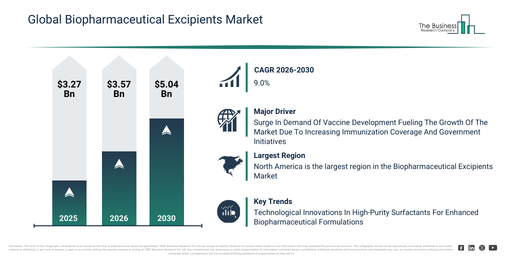
    The biopharmaceutical excipients market size has experienced robust growth in recent years. This market is projected to expand from $3.27 billion in 2025 to $3.57 billion in 2026, demonstrating a compound annual growth rate (CAGR) of 9.2%. Historically, this growth can be attributed to several factors including increasing biologic drug approvals, the early adoption of protein stabilizers, a rise in injectable formulations, the expansion of vaccine development, and advancements in formulation science.

    The biopharmaceutical excipients market size is anticipated to experience robust expansion over the next few years. This market is projected to reach $5.04 billion by 2030, exhibiting a compound annual growth rate (CAGR) of 9.0%. This growth during the forecast period can be attributed to factors such as the increasing complexity of biologic formulations, a rising demand for products with extended shelf lives, the expansion of cell and gene therapies, a heightened regulatory focus on excipient safety, and increased investments in advanced drug delivery systems. Major trends expected in this period include a growing demand for high-purity biologic excipients, an increasing use of multifunctional formulation ingredients, the broadening application of excipients for cell and gene therapies, a rising emphasis on stability-enhancing compounds, and more tailored customization of excipient solutions.

    Get A Free Sample Report With In-Depth Market Insights:

    https://www.thebusinessresearchcompany.com/sample.aspx?id=30214&type=smp&utm_source=Blogs&utm_medium=Paid&utm_campaign=Oct_PR

    Biopharmaceutical Excipients Market Demand Drivers: What’s Powering Industry Growth?

    The expanding need for vaccine creation is projected to fuel the advancement of the biopharmaceutical excipients market moving ahead. Vaccine creation involves the method of designing and producing immunizations to combat infectious illnesses and enhance public well-being, necessitating premium excipients for the stability, effectiveness, and security of these vaccine products. This rising demand for vaccine development originates from a worldwide emphasis on avoiding infectious ailments, bolstering public health readiness, and expediting research to provide quicker and more potent immunization options. Biopharmaceutical excipients are crucial in vaccine formulations, as they stabilize antigens, boost solubility, and preserve integrity throughout storage and distribution. An illustration of this trend is seen in 2025, when the Centers for Disease Control and Prevention, a US-based national public health agency, reported an increase in adolescent vaccination coverage for critical vaccines like tetanus, diphtheria, and acellular pertussis from 89.9% in 2022 to 91.3% in 2024. During the identical timeframe, meningococcal conjugate vaccine coverage climbed from 88.6% to 90.1%, and human papillomavirus vaccine coverage (=2 doses) saw a substantial rise from 76.0% to 92.6%. Consequently, the expanding need for vaccine development is propelling the expansion of the biopharmaceutical excipients market.

    Biopharmaceutical Excipients Market Segment Landscape: Which Areas Lead Development?

    The biopharmaceutical excipients market covered in this report is segmented –

    1) By Product Types: Binders, Coatings, Diluents, Disintegrants, Lubricants And Glidants, Polyols, Preservatives, Solubilizers And Surfactants Or Emulsifiers, Suspending And Viscosity Agents

    2) By Type Of Biologics: Antibodies, Vaccines, Cell Therapies, Other Biologics

    3) By Functionality: Fillers And Diluents, Binders, Suspending And Viscosity Agents, Flavouring Agents And Sweeteners, Coating Agents, Colourants, Disintegrants, Lubricants And Glidants, Preservatives

    4) By Application: Injectable Formulations, Oral Formulations, Topical Formulations, Transdermal Formulations, Cell and Gene Therapy

    5) By End Users: Biopharmaceutical Companies And Pharmaceutical Companies, Contract Manufacturers, Research Institutes

    Subsegments:

    1) By Binders: Starch Binders, Cellulose Binders, Synthetic Binders, Natural Polymer Binders

    2) By Coatings: Film Coatings, Sugar Coatings, Enteric Coatings, Polymer Coatings

    3) By Diluents: Lactose, Microcrystalline Cellulose, Starch, Mannitol

    4) By Disintegrants: Crosslinked Cellulose, Starch Derivatives, Crospovidone, Sodium Starch Glycolate

    5) By Lubricants And Glidants: Magnesium Stearate, Stearic Acid, Talc, Silicon Dioxide

    6) By Polyols: Sorbitol, Mannitol, Glycerol, Xylitol

    7) By Preservatives: Parabens, Benzoates, Sorbates, Phenols

    8) By Solubilizers And Surfactants Or Emulsifiers: Polysorbates, Polyethylene Glycol, Lecithin, Sodium Lauryl Sulfate

    9) By Suspending And Viscosity Agents: Cellulose Derivatives, Xanthan Gum, Guar Gum, Carbomers

    Biopharmaceutical Excipients Market Innovation Trends: What Developments Are Reshaping The Industry?

    Leading companies within the biopharmaceutical excipients market are emphasizing technological advancements, including ultra-high purity surfactants, aimed at improving protein stability, preventing degradation, and ensuring regulatory compliance for injectable formulations. These ultra-high purity surfactants consist of precisely refined surface-active agents that possess minimal impurities and a consistent composition, specifically formulated to guarantee stability, safety, and optimal performance in delicate pharmaceutical and biopharmaceutical preparations. An example of this trend occurred in September 2025, when Evonik Industries AG, a Germany-based chemicals company, unveiled MaxiPure Polysorbate 80, intended for injectable and biopharmaceutical applications. This particular excipient has been developed to feature an oleic acid content surpassing ninety-eight percent, remarkable clarity, and complete adherence to European Pharmacopoeia, United States Pharmacopoeia, Japanese Pharmacopoeia, and Chinese Pharmacopoeia standards. It effectively tackles significant issues regarding protein stability, inhibits oxidative degradation, facilitates reliable solubilization of hydrophobic active pharmaceutical ingredients, and boosts overall formulation reliability. Through the incorporation of this excipient, Evonik supports pharmaceutical and biopharmaceutical companies in the efficient development of complex biologics and injectable therapies, simultaneously ensuring both safety and compliance.

    Biopharmaceutical Excipients Market Industry Leaders And Competitive Landscape

    Major companies operating in the biopharmaceutical excipients market are The Archer-Daniels-Midland Company, BASF SE, The Dow Chemical Company, Mitsubishi Chemical Group Corporation, Novo Nordisk A/S, Associated British Foods plc, Merck KGaA, Asahi Kasei Corporation, Evonik Industries AG, Kerry Group plc, Wacker Chemie AG, Clariant AG, Shin-Etsu Chemical Co. Ltd., Roquette Frères, IMCD Group N.V., Croda International Plc, Ashland Global Holdings Inc., NOF Corporation, Colorcon Limited, J. Rettenmaier & Söhne GmbH + Co. KG, Spectrum Chemical Manufacturing Corporation, BioSpectra Inc., Sigachi Industries Limited, DFE Pharma, FUJIFILM Toyama Chemical Co. Ltd, Kirsch Pharma GmbH, Meggle Group GmbH, InVitria Inc., BOC Sciences Inc.

    View The Full Biopharmaceutical Excipients Market Report:

    https://www.thebusinessresearchcompany.com/report/global-biopharmaceutical-excipients-market-report?utm_source=Blogs&utm_medium=Paid&utm_campaign=Oct_PR

    Biopharmaceutical Excipients Market Geographic Spread And Regional Opportunities

    North America was the largest region in the biopharmaceutical excipients market in 2025. Asia-Pacific is expected to be the fastest-growing region in the forecast period. The regions covered in the biopharmaceutical excipients market report are Asia-Pacific, South East Asia, Western Europe, Eastern Europe, North America, South America, Middle East, Africa.

    Reach Out To Our Team:

    The Business Research Company: https://www.thebusinessresearchcompany.com/

    Americas: +1 310-496-7795

    Asia: +44 7882 955267 & +91 8897263534

    Europe: +44 7882 955267

    Email us at: marketing@tbrc.info

    Follow us on:

    LinkedIn: https://in.linkedin.com/company/the-business-research-company

    YouTube: https://www.youtube.com/channel/UC24_fI0rV8cR5DxlCpgmyFQ

    Global Market Model: https://www.thebusinessresearchcompany.com/global-market-model