Category: Pharmaceuticals

  • Future Growth Forecast For The Calcium Channel Block Global Market 2024-2033

    Future Growth Forecast For The Calcium Channel Block Global Market 2024-2033

    The Business Research Company’s global market reports provide comprehensive analysis on the various markets in 27 industries across 60 geographies.

    • Cardiovascular Disease Prevalence: The surge in cardiovascular diseases drives demand for calcium channel blockers.
    • Market Dynamics: Factors such as aging populations, changing lifestyles, and increased awareness contribute to market growth.
    • Market Players: Key companies include Pfizer Inc., Novartis AG, GlaxoSmithKline PLC, among others, shaping the market landscape.

    Innovative Advancements In The Calcium Channel Blocker Market

    • Product Innovation: Companies focus on innovative solutions to enhance market competitiveness.
    • Example: CMP Pharma’s launch of Norliqva, an oral liquid solution of amlodipine, addresses specific patient needs and enhances treatment options.
    • Strategic Acquisitions: Azurity Pharmaceuticals Inc.’s acquisition of Arbor Pharmaceuticals LLC strengthens market presence and expands offerings in calcium channel blocking agents.

    Market Segmentation and Regional Dynamics

    • Segmentation: The calcium channel blocker market segments include drug class (dihydropyridine, benzodiazepine, phenylalkylamine, others), disease indications (hypertension, chest pain, arrhythmias), route of administration (oral, parenteral, other), and end users (hospitals, homecare, specialty clinics, others).
    • Regional Influence: North America leads the calcium channel blocker market in 2023, reflecting significant market share.

    Forecasted Growth and Market Trends

    • Strong Growth Trajectory: The calcium channel blocker market is set to grow from $14.72 billion in 2023 to $15.75 billion in 2024, with a CAGR of 7.0%.
    • Anticipated Expansion: The market is projected to reach $20.64 billion by 2028, fueled by factors such as global burden of cardiovascular diseases and regulatory approvals.
    • Trends: Market growth, technological advancements, regulatory landscape, competitive analysis, patient preferences, and awareness drive market dynamics.

    Conclusion: Charting the Course in the Calcium Channel Blocker Market
    The calcium channel blocker market witnesses robust growth driven by the escalating prevalence of cardiovascular diseases worldwide. Market players leverage innovative advancements and strategic acquisitions to meet evolving healthcare needs. Segmentation and regional dynamics provide insights into market intricacies, with North America leading the charge. As the market progresses, stakeholders anticipate a trajectory marked by innovation, regulatory advancements, and enhanced patient care. With a strong forecasted growth trajectory and dynamic trends shaping the landscape, the calcium channel blocker market remains poised for continued evolution and advancement in cardiovascular care.

    View More On The Calcium Channel Block Market Report 2024 – https://www.thebusinessresearchcompany.com/report/calcium-channel-blocker-global-market-report

    Request A Sample Of The Global Calcium Channel Block Market Report 2024:
    https://www.thebusinessresearchcompany.com/sample_request?id=9428&type=smp

  • Comprehensive Analysis On Size, Share, And Drivers Of The Biotech Ingredient Market

    Comprehensive Analysis On Size, Share, And Drivers Of The Biotech Ingredient Market

    The Business Research Company’s global market reports provide comprehensive analysis on the various markets in 27 industries across 60 geographies.

    The Growth Trajectory of Biotech Ingredients Market

    • From $56.76 billion in 2023 to $60.6 billion in 2024, with a CAGR of 6.8%
    • Historic growth factors: Innovations in food and beverage industry, increasing adoption of biofuel, consumer demand for functional foods, advances in genetic engineering
    • Expected growth to $78.43 billion in 2028, with a CAGR of 6.7%
    • Forecasted growth drivers: Focus on personalized nutrition, expansion of cell-based meat production, development of therapeutic biotech ingredients, bio ingredients for waste reduction, shift towards bioplastics

    The Surging Demand For Generic Medicines Boosting Growth In The Biotech Ingredient Market

    • Rising demand for generic medicines propels market growth
    • Generic medicines offer cost-effective alternatives to branded drugs
    • Significant savings reported in healthcare expenditure due to generic medicines adoption
    • Key players in the market: Merck & Co. Inc., Sanofi S.A., AbbVie Inc., International Flavors & Fragrance (IFF) Inc., and more.

    Innovative Biotech Solutions Transforming The Cosmeceutical Landscape

    • Technological advancement drives innovation in biotech ingredients
    • Introduction of new technologies to develop innovative products
    • Example: International Flavors & Fragrances Inc.’s launch of Aurist AGC, a novel biopolymer for hair care
    • Kerry Group Plc’s strategic acquisition of c-LEcta to enhance innovation in enzymatic engineering and biotechnological development

    Segmentation of the Biotech Ingredient Market

    • By Type: Active Pharmaceutical Ingredients, Biosimilars
    • By Expression Systems: Mammalian, Microbial, Yeast, Plant, Insect Expression Systems
    • By Application: Food And Beverages, Personal Care And Cosmetics, Cleaning Products, Other Applications

    Regional Insights

    • Europe: Largest region in the biotech ingredient market in 2023
    • Asia-Pacific: Fastest-growing region in the forecast period

    Conclusion: Navigating the Future of Biotech Ingredients
    The biotech ingredient market is experiencing robust growth fueled by innovations, rising demand for generic medicines, and technological advancements. As the industry embraces personalized nutrition, sustainable practices, and therapeutic advancements, it opens avenues for transformative solutions. From active pharmaceutical ingredients to biosimilars and beyond, the market offers diverse opportunities for companies to explore and innovate. With a focus on sustainability, efficiency, and efficacy, stakeholders are poised to shape the future of biotech ingredients. As regions like Asia-Pacific emerge as key growth hubs, collaboration and innovation will remain critical drivers of success in the dynamic landscape of biotech ingredients. As we navigate the evolving demands of consumers and industries, the biotech ingredient market stands as a beacon of innovation and possibility, driving positive change across diverse sectors.

    View More On The Biotech Ingredient Market Report 2024 – https://www.thebusinessresearchcompany.com/report/biotech-ingredient-global-market-report

    Request A Sample Of The Global Biotech Ingredient Market Report 2024:
    https://www.thebusinessresearchcompany.com/sample_request?id=9817&type=smp

  • What Is The Forecast Growth Rate For The Biologic And Biosimilar RA Drug Market?

    What Is The Forecast Growth Rate For The Biologic And Biosimilar RA Drug Market?

    The Business Research Company’s market reports offer an in-depth analysis on the market’s growth potential, major drivers, key trends and more.

    Dynamics of Growth

    • The market size of biologic & biosimilar RA drugs has witnessed robust expansion.
    • From $13.44 billion in 2023, it is projected to reach $14.15 billion in 2024, boasting a 5.3% compound annual growth rate (CAGR).
    • Historical growth is attributed to factors like market adoption rates, clinical trial outcomes, and pricing strategies.

    Embracing Future Potential

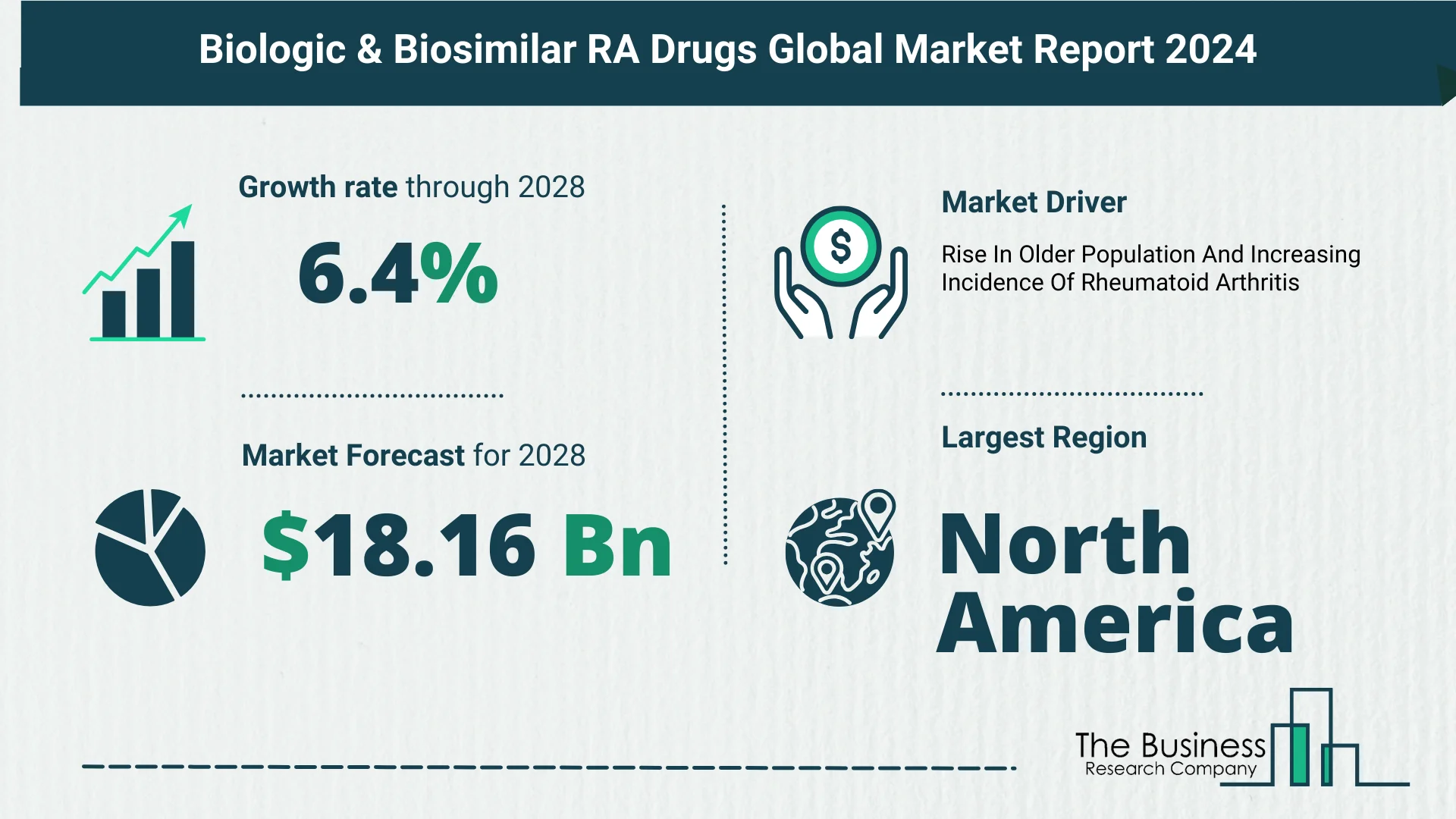
    • Forecasts indicate even stronger growth, with the market set to soar to $18.16 billion by 2028, boasting a 6.4% CAGR.
    • Anticipated growth factors include increasing biologic drug development, evolving healthcare policies, and expanding patient preferences.

    Emerging Trends Shaping the Landscape

    • Rise in Biosimilar Market Competition: Intensifying competition promises more affordable treatment options.
    • Personalized Medicine and Precision Therapy: Tailored approaches enhance treatment efficacy and patient outcomes.
    • Advancements in Drug Delivery Systems: Innovations optimize drug administration and improve patient compliance.
    • Focus on Safety and Efficacy: Enhanced drug safety profiles prioritize patient well-being.
    • Patient-Centric Healthcare: Patient preferences and needs increasingly drive treatment decisions.

    Geriatric Population Surge and RA Incidence

    • The growing geriatric population and rising incidence of rheumatoid arthritis fuel market growth.
    • Rheumatoid arthritis, an autoimmune disease, disproportionately affects older individuals.
    • Biologics and biosimilar RA drugs offer superior treatment options compared to conventional drugs.
    • Statistics project a significant increase in arthritis cases, underlining the market’s potential for expansion.

    Noteworthy Innovations

    • Major companies introduce innovative biologics for polymyalgia rheumatica treatment.
    • Regeneron Pharmaceuticals, Inc. and Sanofi’s FDA-approved Kevzara offers new hope for PMR patients.
    • Positive outcomes from the SAPHYR Phase 3 trial showcase Kevzara’s efficacy in sustaining remission.

    Strategic Acquisitions and Expansions

    • Biocon’s acquisition of Viatris’ global biosimilars business for $3 billion expands its biologics portfolio.
    • The acquisition strengthens Biocon’s commercial capabilities across emerging and advanced markets.
    • Viatris’ expertise in manufacturing biosimilars augments Biocon’s position in the market.

    Market Segmentation Insights

    • By Source: Microbial, Mammalian, Other Sources.
    • By Disease: Oncology, Immunological Disorders, Cardiovascular Disorders, Hematological Disorders, Other Diseases.
    • By Manufacturing: Outsourced, In-House.
    • By Mode of Purchase: Prescription Drugs, Over-The-Counter (OTC) Drugs.
    • By Distribution Channel: Hospital Pharmacies, Retail Pharmacies, Online Pharmacies.

    Regional Dynamics

    • North America leads the biologic & biosimilar RA drugs market in 2023.
    • Asia-Pacific emerges as the fastest-growing region during the forecast period.

    The biologic & biosimilar RA drugs market presents a dynamic landscape driven by innovation, strategic partnerships, and evolving patient needs. As the market continues to evolve, stakeholders navigate through opportunities and challenges, ensuring access to effective treatments for individuals battling rheumatoid arthritis and related conditions.

    Read More On The Biologic And Biosimilar RA Drug Market Report 2024 – https://www.thebusinessresearchcompany.com/report/biologic-and-biosimilar-ra-drugs-global-market-report

    Request for A Sample Of The Global Biologic And Biosimilar RA Drug Market Report:
    https://www.thebusinessresearchcompany.com/sample_request?id=9255&type=smp

  • Global Aspirin Market Key Insights 2024-2033

    Global Aspirin Market Key Insights 2024-2033

    The Business Research Company’s global market reports are now updated with the latest market sizing information for the year 2024 and forecasted to 2033

    According to The Business Research Company’s Aspirin Global Market Report 2024, the aspirin market is expected to show promising growth in the forecast period.

    Understanding Market Growth

    • Aspirin market witnesses steady growth in recent years.
    • Driven by pain management demand and cardiovascular health awareness.
    • Market to reach $2.59 billion in 2024 with a 4.9% CAGR.

    Anticipating Strong Growth Ahead

    • Forecast projects market size to reach $3.2 billion by 2028.
    • Driven by rising chronic diseases and pharmaceutical innovations.
    • Major trends include cancer prevention research and personalized medicine.

    Arthritis Prevalence and Market Expansion

    • Increasing arthritis prevalence propels aspirin market growth.
    • Aspirin serves as a nonsteroidal anti-inflammatory for arthritis pain.
    • CDC reports 1 in 4 US adults diagnosed with arthritis, driving aspirin use.
    • Major companies like Bayer AG and Pfizer Inc. are key players in the market.

    Significance of Aspirin FDCs in Patient Care

    • Companies focus on developing aspirin fixed-dose combinations (FDCs) for competitive advantage.
    • Example: Dr. Reddy’s Laboratories launches Rozat Gold, an aspirin FDC.
    • Rozat Gold targets high-risk cardiovascular conditions, offering comprehensive treatment.
    • Acquisition of OtiTopic by Philip Morris International signifies aspirin’s role in respiratory drug development.

    Segmentation Insights

    1. By Product: Prescription, OTC.
    2. By Route of Administration: Oral, Rectal, Parenteral.
    3. By Dosage Form: Tablets, Capsules, Injections, Suppositories.
    4. By Application: Cardiovascular Disease, Pain, Fever, Inflammation, Others.
    5. By End User: Hospitals, Clinics, Other End Users.

    Regional Dominance

    • Asia-Pacific leads the aspirin market in 2023.

    Conclusion: Navigating Aspirin Market Trends
    The aspirin market’s growth trajectory reflects its vital role in pain management, cardiovascular health, and disease prevention. With a focus on personalized treatments and innovative formulations, stakeholders drive advancements in aspirin therapy. The rise in chronic diseases and the pursuit of preventive healthcare fuel market expansion, with emerging trends such as cancer prevention research shaping the landscape. As aspirin continues to evolve, its significance in patient care and pharmaceutical innovations underscores its enduring relevance in global healthcare.

    View More On The Aspirin Market Report 2024 – https://www.thebusinessresearchcompany.com/report/aspirin-global-market-report

    Request A Sample Of The Global Aspirin Market Report 2024:
    https://www.thebusinessresearchcompany.com/sample_request?id=9154&type=smp

  • Key Insights On The Antispasmodics Drugs Market 2024 – Size, Driver, And Major Players

    Key Insights On The Antispasmodics Drugs Market 2024 – Size, Driver, And Major Players

    The Business Research Company’s global market reports are now updated with the latest market sizing information for the year 2024 and forecasted to 2033

    As per The Business Research Company’s Antispasmodics Drugs Global Market Report 2024, the template market is expected to show significant growth in the forecast period.

    Market Growth and Projections

    • The antispasmodics drugs market has witnessed substantial growth.
    • Expected to rise from $12.69 billion in 2023 to $13.92 billion in 2024, with a CAGR of 9.7%.
    • Forecasted to reach $20.04 billion in 2028, with a CAGR of 9.5%.

    Drivers of Growth

    • Rising prevalence of spasmodic conditions.
    • Advancements in medical research.
    • Growing aging population and changing lifestyles.
    • Improvements in diagnosis leading to increased demand.

    Factors Contributing to Future Growth

    • Increasing healthcare expenditure worldwide.
    • Emphasis on personalized medicine.
    • Global population growth, especially in emerging markets.
    • Rise in clinical trials and research activities.

    Major Trends in the Forecast Period

    • Expanding indications for antispasmodics.
    • Healthcare infrastructure development in emerging markets.
    • Advancements in drug development for improved efficacy.
    • Increasing awareness and diagnosis of spasmodic conditions.
    • Preference for non-invasive treatment options.

    Elderly Population Boom Fuels Growth In Antispasmodic Drug Market

    • The elderly population surge drives market expansion.
    • Antispasmodic drugs crucial for managing symptoms in older adults.
    • Global projections indicate a significant increase in the elderly population by 2050.

    Product Innovation Transforms The Market

    • Product innovations drive market dynamics.
    • Example: Ardelyx Inc.’s introduction of IBSRELA for IBS-C treatment.
    • Acquisition of Dyscovry Science Ltd. by Silo Wellness Inc. expands psychedelic portfolio.

    Market Segmentation

    1. By Drug: Dicyclomine Hydrochloride, Loperamide Hydrochloride, Other Drugs
    2. By Indication: Irritable Bowel Syndrome, Stomach Cramps, Other Indications
    3. By Route Of Administration: Oral, Parenteral, Other Modes Of Administrations
    4. By Distribution Channel: Hospital Pharmacy, Online Pharmacy, Retail Pharmacy
    5. By End-User: Hospitals, Homecare, Specialty Clinics, Other End-Users

    Regional Insights

    • North America led the antispasmodics drugs market in 2023.
    • Asia-Pacific expected to witness the fastest growth during the forecast period.

    In summary, the antispasmodics drugs market exhibits robust growth driven by demographic shifts, technological advancements, and increasing healthcare investments. As the elderly population expands and innovative treatments emerge, the demand for antispasmodic drugs continues to rise globally. With a focus on personalized medicine and expanded indications, the market presents significant opportunities for stakeholders. As the landscape evolves, companies must adapt to emerging trends and consumer preferences to sustain growth and meet the evolving healthcare needs of the population.

    View More On The Antispasmodics Drugs Market Report 2024 – https://www.thebusinessresearchcompany.com/report/antispasmodics-drugs-global-market-report

    Request A Sample Of The Global Antispasmodics Drugs Market Report 2024:
    https://www.thebusinessresearchcompany.com/sample_request?id=9414&type=smp

  • 5 Takeaways From The Alzheimers Drugs Market Overview 2024

    5 Takeaways From The Alzheimers Drugs Market Overview 2024

    The Business Research Company’s global market reports are now updated with the latest market sizing information for the year 2024 and forecasted to 2033

    According to The Business Research Company’s Alzheimers Drugs Global Market Report 2024, the alzheimers drugs market is expected to show promising growth in the forecast period.

    The Alzheimer’s drugs market has experienced robust growth in recent years, with a projected increase from $8.64 billion in 2023 to $9.44 billion in 2024, indicating a compound annual growth rate (CAGR) of 9.3%. This upward trajectory is attributed to several factors, including the surge in Alzheimer’s disease cases, substantial investments in research and development, improved understanding of disease mechanisms, global health initiatives, and increased public awareness and education.

    An Optimistic Future: Projections and Influencing Factors

    1. Foreseen Growth: Anticipated expansion to $13.32 billion by 2028, with a CAGR of 9.0%.
    2. Driving Forces: Precision medicine, disease modification focus, biomarker identification, patient-centric drug development, and non-pharmacological interventions.
    3. Key Trends: Diverse therapeutic approaches, digital health solutions, regenerative medicine, diagnostic technology advancements, AI in drug discovery, and strategic partnerships.

    Rising Prevalence Of Alzheimer’s Disease To Drive Market Growth

    The alarming rise in Alzheimer’s disease cases emerges as a primary catalyst propelling the growth of the Alzheimer’s drugs market. This neurologic condition, characterized by progressive brain shrinkage and cell death, necessitates effective drugs to address memory loss, cognitive challenges, and everyday living difficulties. Notably, the 2022 Alzheimer’s Disease Facts and Figures report by The Alzheimer’s Association underscores the prevalence of the disease, with 6.5 million Americans aged 65 and older affected in 2022. Projections hint at a significant increase by 2050, emphasizing the urgent need for effective drugs in the market.

    View More On The Alzheimers Drugs Market Report 2024 – https://www.thebusinessresearchcompany.com/report/alzheimers-drugs-global-market-report

    Technological Advancements Driving Innovation

    1. Key Trend: Embrace of technological advancements as a driving force for innovation.
    2. Noteworthy Example: iMediSync’s launch of iSyncBrain, an EEG digital biomarker for early Alzheimer’s dementia diagnosis, showcases the integration of AI cloud platform and customized NIR-LED neuromodulation. With over 90% accuracy rates, this innovative solution screens and distinguishes amnestic mild cognitive impairment (MCI) in the preclinical stage.
    3. Strategic Acquisitions: AbbVie’s acquisition of Syndesi Therapeutics in March 2022, bringing in new modulators of the synaptic vesicle protein 2A (SV2A), exemplifies the industry’s commitment to expanding neuroscience portfolios.

    Market Segmentation and Regional Dynamics

    1. By Drugs: Segmented into Donepezil, Rivastigmine, Galantamine, and Memantine.
    2. By Distribution Channel: Encompassing Hospital Pharmacy, Retail Pharmacy, and Online Pharmacy.
    3. By Application: Categorized into Early to Moderate Stages and Moderate to Severe Stages.

    Global Landscape: Regional Perspectives

    1. North America Dominance: Emerged as the largest region in the Alzheimer’s drugs market in 2023.
    2. Asia-Pacific Growth: Expected to be the fastest-growing region during the forecast period, highlighting the global nature of Alzheimer’s disease and the need for effective drug solutions.

    Conclusion

    The trajectory of the Alzheimer’s drugs market underscores the urgency and significance of addressing the growing prevalence of Alzheimer’s disease. With technological innovations, strategic acquisitions, and a focus on precision medicine, the industry is poised for substantial growth. As diverse therapeutic approaches and digital health solutions come to the forefront, there is a renewed hope for advancements in diagnostic technologies and breakthroughs in drug discovery. Collaborations and partnerships in the pharmaceutical landscape emphasize the collective effort to combat Alzheimer’s disease. In this dynamic landscape, the Alzheimer’s drugs market is not just a business sector; it’s a crucial endeavor for improving lives and shaping a healthier future.

    Request A Sample Of The Global Alzheimers Drugs Market Report 2024:
    https://www.thebusinessresearchcompany.com/sample_request?id=9040&type=smp

  • Key Trends And Drivers In The Womens Health And Beauty Supplements Market 2024

    Key Trends And Drivers In The Womens Health And Beauty Supplements Market 2024

    The Business Research Company’s market reports offer an in-depth analysis on the market’s growth potential, major drivers, key trends and more.

    The women’s health and beauty supplements market has witnessed remarkable growth, projecting an escalation from $75.41 billion in 2023 to $83.65 billion in 2024, boasting a compound annual growth rate (CAGR) of 10.9%. This expansion stems from a myriad of factors including an aging population, evolving lifestyles, a preference for natural products, preventive healthcare initiatives, and heightened emphasis on skin health.

    Anticipated Growth Trajectory

    1. Historic Growth Drivers: Aging population, lifestyle changes, and preventive healthcare measures.
    2. Forecasted Surge: Expectations soar with a projected value of $129.04 billion by 2028, attributed to innovation in ingredient formulations, cultural shifts, and advancements in delivery systems.
    3. Major Trends: Digital health, beauty-from-within concept, menopause support, CBD products, collagen supplementation, personalized nutrition, and anti-aging ingredients integration.

    Rising Prevalence Of Women’s Health Disorders Fuels Growth In The Market
    An escalating prevalence of health disorders among women, such as anemia and arthritis, propels the demand for health and beauty supplements. Deficiencies in essential vitamins and minerals contribute to these disorders, highlighting the necessity for supplements like vitamin B12 and calcium. Notably, statistics from the Centers for Disease Control and Prevention (CDC) project a significant rise in doctor-diagnosed arthritis cases among women by 2040, driving market growth.

    Innovative Products Transforming the Landscape

    1. Product Innovation: Key players focus on introducing innovative products tailored to women’s health needs.
    2. Digital Support Solutions: Integration of digital technologies enhances user experience and effectiveness of supplements.
    3. Case in Point: Health & Her’s Perimenopause MIND+ supplement coupled with a technologically advanced menopause tracker exemplifies innovation in addressing women’s health concerns.

    Read More On The Womens Health And Beauty Supplements Market Report 2024 – https://www.thebusinessresearchcompany.com/report/womens-health-and-beauty-supplements-global-market-report

    Nestle Strengthens Health And Nutrition Portfolio
    Nestle’s acquisition of The Bountiful Company’s vitamin brands for $5.75 billion bolsters its health and nutrition portfolio. This strategic move underscores Nestle’s commitment to catering to diverse customer needs and expanding its market presence.

    Market Segmentation and Regional Dynamics

    1. By Product: Segmented into vitamins, minerals, enzymes, botanicals, proteins, omega-3, probiotics, and other products.
    2. By Consumer Group: Caters to various consumer groups including prenatal, postnatal, PMS, perimenopause, postmenopause, and others.
    3. By Distribution Channel: Hypermarkets, health and beauty retail stores, drug stores, online pharmacies, and e-commerce platforms.
    4. By Application: Addresses beauty and women’s health concerns.
    5. By End-Users Age Group: Distinguished by age groups for targeted supplementation.

    Asia-Pacific emerges as the largest region in the women’s health and beauty supplements market, with the Middle East & Africa expected to witness rapid growth in the forecast period.

    Conclusion
    The women’s health and beauty supplements market’s exponential growth trajectory reflects evolving consumer preferences, technological advancements, and proactive healthcare initiatives. As awareness of women’s health issues expands and innovative solutions emerge, the market is poised for substantial expansion. Key players’ focus on product innovation, strategic acquisitions, and market segmentation underscores the industry’s commitment to meeting diverse consumer needs and enhancing overall well-being. As the market continues to evolve, collaboration, innovation, and consumer-centric approaches will remain integral to sustained growth and success.

    Request for A Sample Of The Global Womens Health And Beauty Supplements Market Report:
    https://www.thebusinessresearchcompany.com/sample_request?id=8537&type=smp

  • 5 Key Insights On The Vitamin D Therapy Market 2024

    5 Key Insights On The Vitamin D Therapy Market 2024

    The Business Research Company’s global market reports are now updated with the latest market sizing information for the year 2024 and forecasted to 2033

    As per The Business Research Company’s Vitamin D Therapy Global Market Report 2024, the vitamin D therapy market is expected to show significant growth in the forecast period.

    The vitamin D therapy market emerges as a crucial sector in healthcare, driven by increasing awareness, technological advancements, and evolving healthcare needs. Let’s delve into the dynamics, trends, and projections shaping this dynamic landscape.

    Rising Prevalence of Malnutrition: Catalyst for Growth

    • Malnutrition, characterized by nutrient deficiencies or imbalances, underscores the importance of vitamin D therapy.
    • Vitamin D deficiency is prevalent among malnourished individuals, contributing to long-term health complications.
    • The World Health Organization reports significant global malnutrition statistics, highlighting the urgency to address nutrient deficiencies and promote vitamin D supplementation.

    Key Players and Market Landscape

    • Major companies such as Abbott Laboratories, Sanofi SA, and GlaxoSmithKline PLC lead innovations and market expansion in vitamin D therapy.
    • Product innovations, strategic acquisitions, and global partnerships drive market competitiveness and enhance product portfolios.
    • Market segmentation includes administration methods, purchasing options, age groups, and applications, catering to diverse patient needs and preferences.

    Innovations Redefining Vitamin D Therapy

    • Product innovations, such as DSM Pharma Solutions’ vitamin D3 powder, revolutionize vitamin D supplementation.
    • DSM’s new vitamin D3 formulation addresses immune and musculoskeletal health, offering enhanced bioavailability and faster absorption.
    • Strategic acquisitions, like Nestle Health Science’s acquisition of The Better Health Company, expand market reach and bolster nutritional portfolios.

    Market Growth and Projections

    • The vitamin D therapy market has experienced rapid growth, with projections indicating continued expansion.
    • From $2.63 billion in 2023, the market is set to reach $2.95 billion in 2024, reflecting a robust CAGR of 12.3%.
    • Anticipated growth to $4.8 billion by 2028, with a CAGR of 12.9%, underscores the market’s resilience and potential.

    Trends Driving Market Evolution

    • Expanding applications beyond bone health, government initiatives for supplementation, and innovations in formulations characterize key market trends.
    • Focus on clinical research, evidence-based practices, and global market expansion enhance treatment efficacy and patient outcomes.
    • Technological advances in formulations and delivery methods optimize therapeutic efficacy and patient compliance.

    Regional Dynamics and Market Outlook

    • North America leads the vitamin D therapy market, with Asia-Pacific poised for rapid growth.
    • Asia-Pacific’s expanding healthcare infrastructure, rising healthcare expenditures, and increasing health awareness drive market expansion and penetration.

    Embracing the Future of Vitamin D Therapy

    • As the vitamin D therapy market evolves, stakeholders must prioritize education, accessibility, and personalized healthcare.
    • Collaboration between healthcare providers, policymakers, and industry stakeholders is essential to address nutrient deficiencies and promote public health.
    • By embracing technological advancements, fostering research and development, and advocating for nutritional supplementation, the industry can drive positive health outcomes and enhance quality of life globally.

    In conclusion, the vitamin D therapy market reflects a dynamic landscape characterized by innovation, growth, and evolving healthcare paradigms. By leveraging technological advancements, strategic partnerships, and patient-centered approaches, the industry can unlock new opportunities and pave the way for a healthier future for individuals worldwide.

    View More On The Vitamin D Therapy Market Report 2024 – https://www.thebusinessresearchcompany.com/report/vitamin-d-therapy-global-market-report

    Request A Sample Of The Global Vitamin D Therapy Market Report 2024:
    https://www.thebusinessresearchcompany.com/sample_request?id=8810&type=smp

  • Adult Vaccines Market Forecast 2024: Forecast Market Size, Drivers And Key Segments

    Adult Vaccines Market Forecast 2024: Forecast Market Size, Drivers And Key Segments

    The Business Research Company’s global market reports are now updated with the latest market sizing information for the year 2024 and forecasted to 2033

    The adult vaccines market has witnessed robust growth in recent years, with a projected increase from $21.48 billion in 2023 to $23.09 billion in 2024, boasting a compound annual growth rate (CAGR) of 7.5%. This expansion is attributed to several factors, including the aging population, government vaccination programs, and heightened awareness of preventive healthcare. Further, vaccine development, innovation, and public health campaigns have contributed significantly to this growth trajectory.

    Forecasting Strong Momentum
    Looking ahead, the adult vaccines market is poised for continued expansion, reaching an estimated value of $32.13 billion by 2028, with a CAGR of 8.6%. Emerging infectious threats, immunization registries, and the escalating threat of antimicrobial resistance are expected to fuel this growth, alongside global efforts for pandemic preparedness and a shift towards personalized vaccines. Maternal immunization is also gaining traction as a focus area for preventive healthcare.

    Spotlight on Trends
    As the market evolves, several trends are shaping its landscape. The integration of digital health, advancements in vaccine production technologies, and strategic collaborations between governments and pharmaceutical companies are among the key trends driving innovation. Moreover, advancements in vaccine delivery technologies and expanding immunization programs are further propelling the market forward, promising a dynamic future for adult vaccinations.

    Rising Prevalence of Contagious Diseases Drives Growth in Adult Vaccine Market
    Understanding the Dynamics
    The escalating prevalence of contagious diseases is a significant driver of growth in the adult vaccine market. With diseases spreading rapidly from person to person, vaccines play a pivotal role in building immunity and combating infections. The impact of contagious diseases is evident, with staggering figures reflecting the toll of diseases such as COVID-19 and tuberculosis (TB) on global health.

    Market Players and Contributions
    Major companies in the adult vaccines market, including GlaxoSmithKline PLC, Merck & Co, Sanofi Pasteur, Pfizer Inc., and others, are actively engaged in vaccine research, development, and distribution. Their efforts are instrumental in addressing the growing demand for adult vaccines, bolstering preventive healthcare initiatives worldwide.

    View More On The Adult Vaccines Market Report 2024 – https://www.thebusinessresearchcompany.com/report/adult-vaccines-global-market-report

    Strategic Collaborations Drive Innovation in Adult Vaccines
    Strategic Alliances
    Leading companies in the adult vaccines market are forging strategic collaborations to advance vaccine development and commercialization. These partnerships facilitate the pooling of resources, expertise, and capabilities to achieve common goals, such as the development of personalized cancer vaccines.

    Case in Point: Merck & Co., Inc. and Moderna Collaboration
    A notable collaboration between Merck & Co., Inc. and Moderna focuses on the development and commercialization of personalized cancer vaccines. The partnership aims to leverage Moderna’s mRNA-4157/V940, in combination with Merck’s anti-PD-1 therapy, for the treatment of high-risk melanoma patients, marking a significant milestone in cancer immunotherapy.

    GSK Expands Vaccine Portfolio Through Strategic Acquisition
    Strategic Acquisition
    GSK’s acquisition of Affinivax, Inc. in August 2022 underscores the company’s commitment to expanding its vaccine portfolio. Affinivax’s innovative pneumococcal and adult vaccines, based on the Multiple Antigen Presenting System (MAPS) platform technology, complement GSK’s existing offerings, positioning the company for continued growth and innovation.

    Segmentation and Regional Outlook
    Segmentation Overview
    The adult vaccines market is segmented based on vaccine type, technology, application, and end-users, offering a comprehensive view of the market landscape. From monovalent to multivalent vaccines and live attenuated to recombinant vaccines, the market caters to diverse healthcare needs and preferences.

    Regional Dynamics
    North America emerged as the largest region in the adult vaccines market in 2023, with Asia-Pacific poised to witness the fastest growth during the forecast period. These regional dynamics underscore the global nature of vaccine distribution and highlight opportunities for market expansion and innovation.

    In conclusion, the adult vaccines market is experiencing unprecedented growth driven by evolving healthcare needs, technological advancements, and strategic collaborations. As the market continues to evolve, stakeholders must remain agile and proactive in addressing emerging challenges and opportunities, ensuring access to safe, effective, and innovative vaccines for adults worldwide.

     Request A Sample Of The Global Adult Vaccines Market Report 2024:
    https://www.thebusinessresearchcompany.com/sample_request?id=9038&type=smp

  • Key Trends And Drivers In The Anti-Cancer MAbS Market 2024

    Key Trends And Drivers In The Anti-Cancer MAbS Market 2024

    The Business Research Company’s market reports offer an in-depth analysis on the market’s growth potential, major drivers, key trends and more.

    Explosive Market Growth

    • The anti-cancer mAbs market has witnessed rapid expansion, growing from $59.98 billion in 2023 to $66.1 billion in 2024, boasting a CAGR of 10.2%.
    • Historic growth is attributed to increasing cancer incidence rates, advancements in cancer biology, and rising patient awareness.

    Anticipating Future Surge

    • Forecasts indicate continued growth, reaching $95.99 billion by 2028, driven by immunotherapy advancements, adoption of combination therapies, and global cancer initiatives.
    • Emerging trends include innovations in drug delivery, AI integration in drug discovery, and strategic collaborations in biotechnology.

    Rising Global Cancer Prevalence Fuels Market Growth

    • The escalating prevalence of cancer worldwide is a significant driver for the anti-cancer mAbs market.
    • Anticancer mAbs target specific proteins on cancer cells, offering targeted treatment options for patients.
    • Global estimates project millions of new cancer cases annually, underscoring the critical need for effective treatments.

    Read More On The Anti-Cancer MAbS Market Report 2024 – https://www.thebusinessresearchcompany.com/report/anti-cancer-mabs-global-market-report

    Product Innovations Drive Advancements

    • Product innovations are reshaping the landscape of anti-cancer mAbs, with companies focusing on more effective and targeted treatments.
    • Roche Holding AG’s launch of PHESGO, a subcutaneous mAbs combination treatment for HER2-positive breast cancer, highlights industry efforts to enhance treatment options.
    • Strategic acquisitions, like Exelixis Inc.’s acquisition of GamaMabs Pharma SA, further expand drug portfolios and technology capabilities.

    Market Segmentation and Regional Dynamics

    • The market is segmented by type, application, and end-user, reflecting diverse treatment modalities and healthcare settings.
    • North America dominates the market, with Asia Pacific emerging as the fastest-growing region, driven by increasing healthcare investments and rising cancer burden.

    In conclusion, the anti-cancer mAbs market is poised for significant growth, fueled by advancements in cancer treatment and rising global cancer prevalence. As companies continue to innovate and expand their portfolios, patients can benefit from more targeted and effective therapies. With a focus on collaboration, innovation, and patient-centric care, stakeholders can navigate the evolving landscape and contribute to improved cancer outcomes worldwide.

    Request for A Sample Of The Global Anti-Cancer MAbS Market Report:
    https://www.thebusinessresearchcompany.com/sample_request?id=9041&type=smp