Category: Pharmaceuticals

  • Allergic Rhinitis Drugs Market 2026 Outlook: Market Size, CAGR And Key Growth Opportunities

    Allergic Rhinitis Drugs Market 2026 Outlook: Market Size, CAGR And Key Growth Opportunities

    Featuring market attractiveness scoring, total addressable market sizing, company benchmarking matrices, interactive Excel dashboards, deeper supply chain intelligence, emerging startup tracking, and granular product-level insights, The Business Research Company’s 2026 market reports are built to deliver research that is both more actionable and more strategically valuable.

    Allergic Rhinitis Drugs Market Value Analysis: What Growth Lies Ahead Over The Forecast Period?

    The market for allergic rhinitis drugs has demonstrated steady expansion over recent years. Its value is anticipated to rise from $16.26 billion in 2025 to $16.95 billion in 2026, reflecting a compound annual growth rate (CAGR) of 4.2%. The past growth in this sector can be ascribed to a number of elements, including the increasing prevalence of seasonal and perennial allergic rhinitis, insufficient awareness and access to allergy treatments, continued reliance on conventional antihistamines and corticosteroids, rising levels of environmental allergens and pollution, and a growing urban demographic with greater exposure to allergens.

    The allergic rhinitis drugs market size is projected to experience sustained expansion in the coming years, reaching $20 billion in 2030 at a compound annual growth rate (CAGR) of 4.2%. This growth in the forecast period is attributable to several factors, including advancements in biologics and immunotherapy, the growing adoption of digital health platforms for allergy management, increased research and development in pediatric and precision medicine, the expansion of e-commerce and online pharmacy channels, and rising government initiatives promoting allergy awareness and early diagnosis. Major trends anticipated during this period include the rise of personalized allergy treatments, the growth of biologic-based allergic rhinitis drugs, the expansion of online pharmacies and e-pharmacy platforms, an increasing focus on pediatric allergic rhinitis management, and the adoption of non-steroidal anti-inflammatory therapies.

    Get A Free Sample Report With In-Depth Market Insights:

    https://www.thebusinessresearchcompany.com/sample.aspx?id=18218&type=smp&utm_source=Blogs&utm_medium=Paid&utm_campaign=Oct_PR

    Allergic Rhinitis Drugs Market Growth Factors: What’s Supporting Expansion?

    The rising incidence of respiratory conditions is projected to stimulate expansion in the allergic rhinitis drug market moving ahead. Conditions like asthma, which are long-term ailments impacting the lungs and respiratory passages, are becoming more common. This increase is attributable to factors like deteriorating air quality, elevated concentrations of airborne allergens, and shifts in the environment linked to climate change. Specifically, escalating air pollution contributes to this surge by harming lung tissue and initiating persistent respiratory illnesses, resulting in a greater occurrence of conditions such as asthma and COPD globally. Medications for allergic rhinitis assist with respiratory disorders by diminishing nasal inflammation and blockage, consequently enhancing airflow and simplifying respiration, which in turn prevents lower respiratory tract issues. An illustration of this trend is seen in January 2025, when data from the 2023 Behavioral Risk Factor Surveillance System Asthma Call-Back Survey (ACBS), cited by the U.S.-based federal agency Centers for Disease Control and Prevention (CDC), indicated that around 81.7% of U.S. adults experienced current asthma. Consequently, the expanding occurrence of respiratory disorders is propelling the growth of the allergic rhinitis drug market.

    Allergic Rhinitis Drugs Market Segments: Where Is Growth Concentrated?

    The allergic rhinitis drugs market covered in this report is segmented –

    1) By Disease: Seasonal Allergic Rhinitis, Perennial Allergic Rhinitis, Occupational Allergic Rhinitis

    2) By Treatment: Antihistamines, Immunotherapy, Corticosteroids, Decongestants, Other Treatments

    3) By Route Of Administration: Oral, Nasal, Intraocular

    4) By Distribution Channel: Retail Pharmacies, Hospital Pharmacies, Online Channel

    Subsegments:

    1) By Seasonal Allergic Rhinitis: Hay Fever, Pollen Allergy, Spring And Summer Allergies

    2) By Perennial Allergic Rhinitis: Dust Mite Allergy, Pet Dander Allergy, Mold Allergy

    3) By Occupational Allergic Rhinitis: Chemical Exposure Allergies, Occupational Dust And Fume Allergies, Allergies Related To Specific Work Environments

    Allergic Rhinitis Drugs Market Industry Trends: What’s Reshaping Demand?

    Leading firms within the Allergic Rhinitis Drugs market are concentrating on creating advanced products, like new probiotics, to effectively boost immune system reactions and diminish allergy manifestations. The potential of new probiotics is under investigation for their capacity to regulate the immune system and lessen the symptoms of allergic rhinitis. By fostering a healthy balance in the gut microbiome, these products present a promising natural alternative compared to conventional therapies. An example of this is when Entod Pharma, an India-based pharmaceutical company, introduced Lactoshield RH in March 2024, specifically for addressing nasal allergies, such as allergic rhinitis. This particular product incorporates clinically assessed probiotic strains designed to stabilize gut bacteria and modify immune responses, which could potentially relieve symptoms linked to nasal allergies.

    Allergic Rhinitis Drugs Market Key Participants And Competitive Landscape

    Major companies operating in the allergic rhinitis drugs market are Pfizer Inc., Johnson & Johnson, Merck & Co., Bayer AG, Sanofi SA, AstraZeneca plc, Novartis AG, GlaxoSmithKline PLC, Boehringer Ingelheim International GmbH, Viatris Inc., Teva Pharmaceutical Industries Ltd., Regeneron Pharmaceuticals Inc., Bausch Health Companies Inc., Sun Pharmaceuticals Industries Ltd., Perrigo Company plc, Dr. Reddy’s Laboratories, Apotex Inc., Meda AB, Amneal Pharmaceuticals Inc., Glenmark Pharmaceuticals Ltd, ALK-Abelló A/S, Stallergenes Greer plc, Himalaya Wellness Company, Aytu BioPharma Inc., Allergy Therapeutics PLC

    View The Full Allergic Rhinitis Drugs Market Report:

    https://www.thebusinessresearchcompany.com/report/allergic-rhinitis-drugs-global-market-report?utm_source=Blogs&utm_medium=Paid&utm_campaign=Oct_PR

    Allergic Rhinitis Drugs Market Regional Analysis: Which Geography Leads On Revenue?

    Asia-Pacific was the largest region in the allergic rhinitis drugs market in 2025. The regions covered in the allergic rhinitis drugs market report are Asia-Pacific, South East Asia, Western Europe, Eastern Europe, North America, South America, Middle East, Africa.

    Reach Out To Our Team:

    The Business Research Company: https://www.thebusinessresearchcompany.com/

    Americas: +1 310-496-7795

    Asia: +44 7882 955267 & +91 8897263534

    Europe: +44 7882 955267

    Email us at: marketing@tbrc.info

    Follow us on:

    LinkedIn: https://in.linkedin.com/company/the-business-research-company

    YouTube: https://www.youtube.com/channel/UC24_fI0rV8cR5DxlCpgmyFQ

    Global Market Model: https://www.thebusinessresearchcompany.com/global-market-model
  • Alkylating Agents Market Size Growth: From $5.63 Billion In 2026 To $6.9 Billion By 2030

    Alkylating Agents Market Size Growth: From $5.63 Billion In 2026 To $6.9 Billion By 2030

    Built to provide research that’s more actionable and strategically valuable, The Business Research Company’s 2026 market reports include market attractiveness analysis, total addressable market sizing, company benchmarking matrices, interactive Excel dashboards, broader supply chain intelligence, emerging startup tracking, and in-depth product insights.

    Alkylating Agents Market Size Forecast: How Big Could The Market Get By 2030?

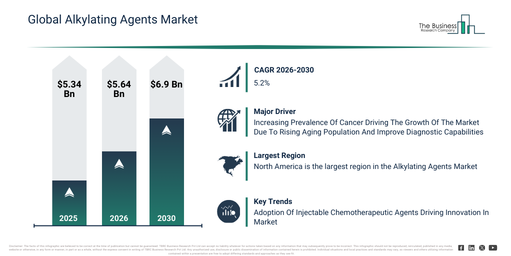
    The alkylating agents market has shown strong growth in recent years. It is forecast to increase from $5.34 billion in 2025 to $5.64 billion in 2026, demonstrating a compound annual growth rate (CAGR) of 5.5%. The historical growth in this market can be attributed to factors such as cancer prevalence, established hospital oncology protocols, the widespread adoption of chemotherapy, the availability of alkylating drugs, and ongoing oncology research.

    The alkylating agents market size is projected to undergo significant expansion in the foreseeable future. By 2030, it is anticipated to attain a valuation of $6.9 billion, growing at a compound annual growth rate (CAGR) of 5.2%. This projected increase during the forecast period is driven by factors such as the expanding oncology drug development pipeline, the proliferation of biosimilars, wider embrace of combination therapy, an aging demographic, and the implementation of cancer screening initiatives. Notable trends for the coming period include their continued integration into chemotherapy regimens, increasing demand for their use in hematological malignancies, the rise of combination cancer therapies, the broadening reach of generic oncology medications, and a concerted effort towards enhancing toxicity management.

    Get A Free Sample Report With In-Depth Market Insights:

    https://www.thebusinessresearchcompany.com/sample.aspx?id=24457&type=smp&utm_source=Blogs&utm_medium=Paid&utm_campaign=Oct_PR

    Alkylating Agents Market Demand Drivers: What’s Powering Industry Growth?

    The escalating prevalence of cancer is anticipated to drive the expansion of the alkylating agents market in the future. Cancer is defined as the uncontrolled proliferation and spread of abnormal cells within the body, which can invade or damage healthy tissue. It has the potential to develop in almost any organ or tissue and may metastasize to other parts of the body via the blood and lymph systems. The rising incidence of cancer is primarily attributed to aging populations, as the risk of developing cancer significantly increases with age; older individuals have had more prolonged exposure to risk factors, and their cells accumulate genetic mutations over time. Alkylating agents are effective in treating cancer by attaching alkyl groups to the deoxyribonucleic acid of cancer cells, thereby disrupting their ability to replicate, leading to cancer cell death, and slowing tumor growth. For example, in October 2025, the National Health Service (NHS), a UK-based government health agency, stated there were 354,820 new cancer diagnoses in 2023, averaging 972 per day, which signifies 8,605 more than in 2022. Hence, the increasing occurrence of cancer is a primary catalyst for the growth of the alkylating agents market.

    Alkylating Agents Market Segment Analysis: What Are The Core Market Categories?

    The alkylating agents market covered in this report is segmented –

    1) By Type: Nitrogen Mustards, Nitrosoureas, Aziridines, Ethylenimines, Triazines, Alkyl Sulfonates

    2) By Route Of Administration: Oral, Intravenous, Other Route Of Administrations

    3) By Application: Oncology, Hematology, Other Applications

    4) By End-Users: Hospitals, Specialty Clinics, Homecare, Other End-Users

    Subsegments:

    1) By Nitrogen Mustards: Mechlorethamine, Cyclophosphamide, Ifosfamide, Melphalan, Chlorambucil

    2) By Nitrosoureas: Carmustine, Lomustine, Streptozocin, Semustine

    3) By Aziridines: Thiotepa, Mitomycin C

    4) By Ethylenimines: Hexamethylmelamine (HMM), Altretamine

    5) By Triazines: Dacarbazine, Temozolomide

    6) By Alkyl Sulfonates: Busulfan, Sulfur Mustard

    Alkylating Agents Market Innovation Trends: What Developments Are Reshaping The Industry?

    Leading firms within the alkylating agents market are concentrating on creating novel products, like injectable chemotherapeutic agents, to improve their transportability and simplify their application across diverse healthcare environments. These injectable agents are pharmaceuticals given either intravenously or via injection, facilitating the direct delivery of anticancer medications into the bloodstream or specific tissues, which ensures swift absorption and precise tumor treatment. An example of this is Avenacy Inc., a US-based pharmaceutical manufacturing company, which introduced Melphalan Hydrochloride in January 2024. This is a recognized alkylating agent employed in chemotherapy for cancer therapy. The product comprises a 50 mg vial of lyophilized melphalan along with a 10 mL vial of sterile diluent, designed for storage at room temperature, thereby boosting its transportability and availability in clinical environments. Its unique packaging and labeling guarantee correct medication identification, positioning it as a therapeutically equivalent generic to Alkeran for Injection. It is particularly prescribed for the palliative management of multiple myeloma patients when oral treatment is unsuitable.

    Alkylating Agents Market Top Companies Driving Competitive Growth

    Major companies operating in the alkylating agents market are Pfizer Inc., Merck KGaA, AstraZeneca PLC, Novartis AG, Fresenius Kabi AG, Teva Pharmaceuticals USA Inc., Baxter Healthcare Corporation, Apotex Inc., Jiangsu Hengrui Pharmaceuticals Co. Ltd., Dr. Reddy’s Laboratories Ltd., Hikma Pharmaceuticals PLC, Cipla Limited, Aspen Pharmacare Holdings Limited, Zydus Lifesciences Limited, Emcure Pharmaceuticals Ltd., KRKA d. d. Novo mesto, Sagent Pharmaceuticals Inc., Debiopharm International SA, Accord Healthcare Ltd., NextSource Biotechnology LLC

    View The Full Alkylating Agents Market Report:

    https://www.thebusinessresearchcompany.com/report/alkylating-agents-global-market-report?utm_source=Blogs&utm_medium=Paid&utm_campaign=Oct_PR

    Alkylating Agents Market Geographic Spread And Regional Opportunities

    North America was the largest region in the alkylating agents market in 2025. Asia-Pacific is expected to be the fastest-growing region in the forecast period. The regions covered in the alkylating agents market report are Asia-Pacific, South East Asia, Western Europe, Eastern Europe, North America, South America, Middle East, Africa.

    Reach Out To Our Team:

    The Business Research Company: https://www.thebusinessresearchcompany.com/

    Americas: +1 310-496-7795

    Asia: +44 7882 955267 & +91 8897263534

    Europe: +44 7882 955267

    Email us at: marketing@tbrc.info

    Follow us on:

    LinkedIn: https://in.linkedin.com/company/the-business-research-company

    YouTube: https://www.youtube.com/channel/UC24_fI0rV8cR5DxlCpgmyFQ

    Global Market Model: https://www.thebusinessresearchcompany.com/global-market-model
  • Hormone-Refractory Oncology Drug Market Trends Are Creating New Opportunities For Industry Leaders

    Enhanced with market attractiveness analysis, total addressable market evaluation, company benchmarking matrices, interactive Excel dashboards, expanded supply chain intelligence, emerging startup coverage, and detailed product insights, The Business Research Company’s 2026 market reports deliver more actionable and strategically valuable research.

    Hormone-Refractory Oncology Drug Market CAGR Analysis And Future Market Development

    The hormone-refractory oncology drug market has seen substantial growth recently. This market is expected to expand from $3.93 billion in 2025 to $4.4 billion in 2026, exhibiting a compound annual growth rate (CAGR) of 11.9%. Historically, this growth was propelled by the increasing global occurrence of prostate and breast cancer, a growing dependence on hormone therapy for initial cancer treatment, the expansion of oncology drug research and clinical trials, the rising implementation of chemotherapy and endocrine therapy combinations, and increased healthcare spending on cancer treatment and hospital oncology infrastructure.

    The market for hormone-refractory oncology drugs is anticipated to achieve rapid expansion in the upcoming years, projected to reach $6.95 billion by 2030 with a compound annual growth rate (CAGR) of 12.1%. This growth during the forecast period can be attributed to advancements in precision medicine and biomarker-driven oncology treatments, increasing development of next-generation targeted cancer therapies, rising adoption of combination immunotherapy and small molecule drugs, the expansion of personalized oncology treatment pathways within hospitals, and a rise in regulatory approvals for advanced refractory cancer drugs. Significant trends expected in this period include the increasing uptake of targeted kinase inhibitors and next-generation biologics for resistant cancer types, a rising reliance on combination therapy approaches to overcome hormone resistance in oncology treatment, the expansion of precision oncology enabling biomarker-driven treatment selection for advanced cancers, growing innovation in immunotherapy-based alternatives for hormone-refractory cancer management, and an increasing shift toward oral oncology drugs to improve patient compliance in long-term treatment.

    Download A Free Sample Report For Comprehensive Market Insights:

    https://www.thebusinessresearchcompany.com/sample_request?id=92156837&type=smp

    Hormone-Refractory Oncology Drug Market Growth Drivers: What Factors Are Accelerating Expansion?

    The rising occurrence of hormone-resistant cancers is anticipated to fuel the expansion of the hormone-refractory oncology drug market in the future. These cancers are defined as malignancies that persist in growing or spreading even when treated with hormone-blocking treatments, exemplified by castration-resistant prostate cancer (CRPC) or endocrine-resistant breast cancer. The growing incidence of hormone-resistant cancers stems from extended exposure to endocrine (hormone) therapies, leading tumor cells to adapt and acquire resistance mechanisms over time. The advancement of hormone-refractory oncology drugs helps manage these resistant disease conditions by offering targeted treatment alternatives when standard hormone therapies prove ineffective. As an illustration, in October 2025, NHS England, a UK-based publicly funded healthcare system, reported 354,820 new cancer diagnoses in 2023, representing an increase of 8,605 compared to 2022. Consequently, the expanding prevalence of hormone-resistant cancers is propelling the growth of the hormone-refractory oncology drug market.

    Hormone-Refractory Oncology Drug Market Segmentation Trends And Revenue Drivers

    The hormone-refractory oncology drug market covered in this report is segmented –

    1) By Drug Type: Anti-Androgens, Aromatase Inhibitors, Estrogen Receptor Modulators, Gonadotropin Releasing Hormone Agonists/Antagonists, Other Drug Types

    2) By Therapy Approach: Monotherapy, Combination Therapy

    3) By Route Of Administration: Oral, Injectable

    4) By Distribution Channel: Hospital Pharmacies, Retail Pharmacies, Online Pharmacies

    5) By Application: Prostate Cancer, Breast Cancer, Other Cancers

    Subsegments:

    1) By Anti-Androgens: Non Steroidal Anti Androgens, Steroidal Anti Androgens, Second Generation Anti Androgens

    2) By Aromatase Inhibitors: Non Steroidal Aromatase Inhibitors, Steroidal Aromatase Inhibitors

    3) By Estrogen Receptor Modulators: Selective Estrogen Receptor Modulators, Selective Estrogen Receptor Degraders

    4) By Gonadotropin Releasing Hormone Agonists / Antagonists: Gonadotropin Releasing Hormone Agonists, Gonadotropin Releasing Hormone Antagonists

    5) By Other Drug Types: Androgen Biosynthesis Inhibitors, Targeted Kinase Inhibitors, Immunotherapy Agents

    Hormone-Refractory Oncology Drug Market Trends: What Is Shaping Future Industry Growth?

    Entities in the hormone-refractory oncology drug market are increasingly emphasizing biomarker-driven targeted therapies, which aim to obstruct specific molecular pathways contributing to resistance to hormone treatment. These targeted therapies, guided by biomarkers, are designed to identify genetic modifications and selectively inhibit signaling routes that support tumor growth after endocrine therapy has proven ineffective. For instance, in November 2023, AstraZeneca, a pharmaceutical company from the UK, obtained U. S. Food and Drug Administration (FDA) authorization for Truqap (capivasertib). This approval permits its use in conjunction with fulvestrant for treating hormone receptor-positive, HER2-negative advanced breast cancer with PIK3CA, AKT1, or PTEN alterations following disease progression. This particular therapy specifically targets and inhibits the AKT signaling pathway and integrates biomarker-based patient selection to optimize treatment outcomes. The approval was supported by positive findings from the Phase III CAPItello-291 trial, which showed improved progression-free survival in patients with these genetic alterations, thereby strengthening AstraZeneca’s oncology portfolio and expanding therapeutic options for patients battling hormone-resistant breast cancer.

    #Hormone-Refractory Oncology Drug Market Industry Leaders: Which Organizations Are Driving Competition?

    Major companies operating in the hormone-refractory oncology drug market are Johnson & Johnson, F. Hoffmann-La Roche Ltd., Merck & Co. Inc., Pfizer Inc., AbbVie Inc., Bayer AG, Sanofi S. A., Novartis AG, AstraZeneca plc, Bristol-Myers Squibb Company, GlaxoSmithKline plc, Eli Lilly and Company, Takeda Pharmaceutical Company Limited, Amgen Inc., Astellas Pharma Inc., Daiichi Sankyo Company Limited, Incyte Corporation, Ipsen S. A., Exelixis Inc., Arvinas Inc., Nuvation Bio Inc., Immunic Inc., Noxopharm Limited, Accutar Biotechnology Inc.

    Access The Complete Hormone-Refractory Oncology Drug Market Report:

    https://www.thebusinessresearchcompany.com/report/hormone-refractory-oncology-drug-market-report

    Hormone-Refractory Oncology Drug Market Regional Outlook: Where Are The Largest Opportunities Located?

    North America was the largest region in the hormone-refractory oncology drug market in 2025. Asia-Pacific is expected to be the fastest-growing region in the forecast period. The regions covered in the hormone-refractory oncology drug market report are Asia-Pacific, South East Asia, Western Europe, Eastern Europe, North America, South America, Middle East and Africa.

    Get in touch with us:

    The Business Research Company: https://www.thebusinessresearchcompany.com/

    Americas: +1 310-496-7795

    Asia: +44 7882 955267 & +91 8897263534

    Europe: +44 7882 955267

    Email us at: marketing@tbrc.info

    Follow us on:

    LinkedIn: https://in.linkedin.com/company/the-business-research-company

    YouTube: https://www.youtube.com/channel/UC24_fI0rV8cR5DxlCpgmyFQ

    Global Market Model: https://www.thebusinessresearchcompany.com/global-market-model
  • Hair Growth Botanical Blends Market Forecast Signals New Revenue Opportunities Through 2030

    Hair Growth Botanical Blends Market Forecast Signals New Revenue Opportunities Through 2030

    Enhanced with market attractiveness analysis, total addressable market evaluation, company benchmarking matrices, interactive Excel dashboards, expanded supply chain intelligence, emerging startup coverage, and detailed product insights, The Business Research Company’s 2026 market reports deliver more actionable and strategically valuable research.

    Hair Growth Botanical Blends Market Expansion From $2.18 Billion In 2026 To $3.05 Billion In 2030

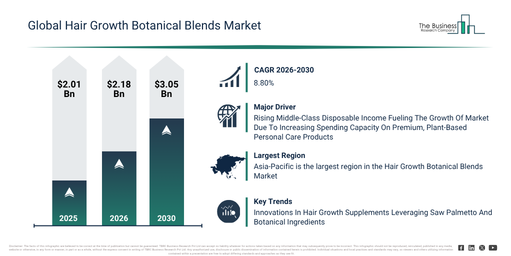
    The hair growth botanical blends market has experienced robust expansion in recent years. It is anticipated to grow from $2.01 billion in 2025 to $2.18 billion in 2026, achieving a compound annual growth rate (CAGR) of 8.6%. The historical growth in this market can be attributed to the adoption of traditional herbal medicine in hair care, the increasing prevalence of stress-induced hair loss, a rising consumer shift toward natural cosmetics, the expansion of salon-based hair treatment services, and growing awareness of chemical-free personal care products.

    The market for hair growth botanical blends is projected to experience substantial expansion over the coming years, reaching a valuation of $3.05 billion by 2030, driven by an anticipated compound annual growth rate (CAGR) of 8.8%. This projected increase during the forecast period is fueled by several factors, including the development of personalized botanical hair care formulations, enhanced clinical validation of plant-derived active ingredients, an escalating need for scalp microbiome-focused solutions, the incorporation of bioactive peptides into botanical mixtures, and the proliferation of direct-to-consumer digital hair care brands. Key trends anticipated during this period encompass a renewed interest in ayurvedic and traditional herbal remedies for hair care, formulations designed to balance the scalp microbiome, adaptogenic botanical blends addressing stress-related hair loss, herbal systems for protection against pollution, and versatile plant-based scalp tonics and treatments for hair densification.

    Download A Free Sample Report For Comprehensive Market Insights:

    https://www.thebusinessresearchcompany.com/sample_request?id=93596884&type=smp

    Hair Growth Botanical Blends Market Growth Momentum: Which Factors Are Influencing Demand?

    The future expansion of the hair growth botanical blends market is anticipated to be significantly propelled by the increasing disposable income within the middle class. Disposable income represents the funds an individual or household retains for spending or saving once all taxes have been paid. This income primarily sees an uptick due to economic prosperity, as industries grow, leading to more employment opportunities and enhanced wages, which in turn leaves individuals with greater post-tax funds for consumption and savings. The rise in disposable income particularly among the higher middle class fuels the demand for hair growth botanical blends because it enables consumers to invest more in premium, plant-based items recognized for their effectiveness, thereby encouraging the uptake of superior, performance-driven hair care solutions. As an illustration, the Bureau of Economic Analysis (BEA), a US-based government body, reported in March 2026 that disposable personal income (DPI), defined as personal income minus current taxes, saw an increase of $219.9 billion (0.9%), while personal consumption expenditures (PCE) advanced by $81.1 billion (0.4%). Consequently, the expanding disposable income of the middle class is a key factor driving the growth of the hair growth botanical blends market.

    Hair Growth Botanical Blends Market Segment Analysis And Revenue Opportunities

    The hair growth botanical blends market covered in this report is segmented –

    1) By Product: Shampoos, Serums, Oils, Supplements, Other Products

    2) By Distribution Channel: Online Stores, Supermarkets Or Hypermarkets, Pharmacies, Specialty Stores, Other Distribution Channels

    3) By Application: Men, Women, Unisex

    4) By End User: Individual Consumers, Professional Salons, Dermatology Clinics, Hair Care Treatment Centers

    Subsegments:

    1) By Shampoos: Herbal Infused Shampoos, Botanical Extract Shampoos, Plant Based Nourishing Shampoos, Sulfate Free Botanical Shampoos, Scalp Revitalizing Herbal Shampoos

    2) By Serums: Botanical Hair Growth Serums, Herbal Concentrate Serums, Plant Extract Strengthening Serums, Scalp Repair Botanical Serums, Natural Follicle Stimulating Serums

    3) By Oils: Herbal Infused Hair Oils, Botanical Blend Hair Oils, Plant Extract Nourishing Oils, Scalp Therapy Botanical Oils, Cold Pressed Herbal Hair Oils

    4) By Supplements: Botanical Hair Growth Capsules, Herbal Nutritional Supplements, Plant Based Hair Health Tablets, Botanical Extract Hair Support Supplements, Natural Hair Strengthening Supplements

    5) By Other Products: Botanical Hair Growth Sprays, Herbal Hair Masks And Creams, Scalp Treatment Tonics, Leave In Conditioning Treatments, Natural Hair Growth Kits

    Hair Growth Botanical Blends Market Trends Reshaping Industry Growth

    Major companies within the hair growth botanical blends market are concentrating on developing innovative products, such as saw palmetto extract, to foster a healthy scalp environment, which can lead to stronger and healthier hair growth. Saw palmetto extract is a natural, plant-derived substance obtained from the berries of the saw palmetto palm, frequently used to support hair health and hormonal balance. For example, in March 2026, Live Conscious, a US-based lifestyle wellness brand, launched Clinical Hair Growth+. This innovative hair growth supplement features Serevelle, a scientifically validated saw palmetto extract, which was demonstrated in a double-blind, randomized, placebo-controlled study to boost hair growth by 35% within 90 days. It is specifically designed for men and women experiencing age-related hair thinning, shedding, or reduced density. The product combines clinically supported ingredients, collagen, botanicals, and essential vitamins to nurture hair from within. This supplement aids in reducing everyday hair shedding, strengthening hair structure, and supporting visible hair density. Additionally, it promotes healthy hair growth at the root while maintaining overall scalp health.

    Hair Growth Botanical Blends Market Leading Players Shaping Industry Direction

    Major companies operating in the hair growth botanical blends market are Rahua Beauty, Blossom Kochhar Aroma Magic Pvt. Ltd., The Good Glamm Group, WishCare, Hindustan Unilever Limited, Innersense Organic Beauty Inc., Rolland S. r. l., Brillare Science Pvt. Ltd., Lotus Herbals Pvt. Ltd., Juicy Chemistry Pvt. Ltd., Biotique Bio Veda Action Research Company, Soulflower Co. Pvt. Ltd., Khadi Natural Healthcare Pvt. Ltd., Forest Essentials Pvt. Ltd., Kama Ayurveda Pvt. Ltd., Briogeo Hair Care LLC, Herbal Hills Wellness India Pvt. Ltd., EVOLVh Inc., Bo International Pvt. Ltd., Nakshtra Botanique Pvt. Ltd.

    Access The Complete Hair Growth Botanical Blends Market Report:

    https://www.thebusinessresearchcompany.com/report/hair-growth-botanical-blends-market-report

    Hair Growth Botanical Blends Market Geographic Analysis: Where Is Demand Growing The Fastest?

    Asia-Pacific was the largest region in the hair growth botanical blends market in 2025. North America is expected to be the fastest-growing region in the forecast period. The regions covered in the hair growth botanical blends market report are Asia-Pacific, South East Asia, Western Europe, Eastern Europe, North America, South America, Middle East and Africa.

    Get in touch with us:

    The Business Research Company: https://www.thebusinessresearchcompany.com/

    Americas: +1 310-496-7795

    Asia: +44 7882 955267 & +91 8897263534

    Europe: +44 7882 955267

    Email us at: marketing@tbrc.info

    Follow us on:

    LinkedIn: https://in.linkedin.com/company/the-business-research-company

    YouTube: https://www.youtube.com/channel/UC24_fI0rV8cR5DxlCpgmyFQ

    Global Market Model: https://www.thebusinessresearchcompany.com/global-market-model
  • Drug Resistant Virus Treatment Market Size Projected To Increase From $10.28 Billion To $14.69 Billion During The Forecast Period

    Drug Resistant Virus Treatment Market Size Projected To Increase From $10.28 Billion To $14.69 Billion During The Forecast Period

    Enhanced with market attractiveness analysis, total addressable market evaluation, company benchmarking matrices, interactive Excel dashboards, expanded supply chain intelligence, emerging startup coverage, and detailed product insights, The Business Research Company’s 2026 market reports deliver more actionable and strategically valuable research.

    #Drug Resistant Virus Treatment Market Size And Revenue Forecast Through 2030

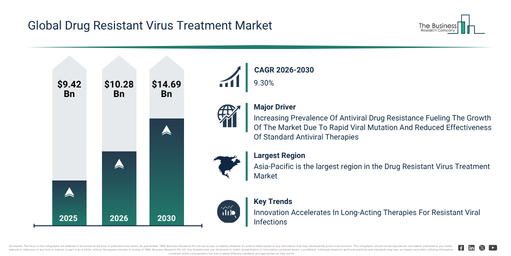
    The market size for drug resistant virus treatment has demonstrated strong growth in recent years. It is projected to increase from $9.42 billion in 2025 to $10.28 billion in 2026, growing at a compound annual growth rate (CAGR) of 9.1%. The expansion observed in the historical period can be linked to factors such as limited antiviral drug diversity, the emergence of HIV and hepatitis drug resistance cases, a reliance on single mechanism antiviral therapies, the growth of global viral outbreak monitoring systems, and increased hospital based infectious disease treatment protocols.

    The drug resistant virus treatment market size is expected to witness substantial growth over the next few years. It is projected to expand to $14.69 billion by 2030, exhibiting a compound annual growth rate (CAGR) of 9.3%. The expansion during the forecast period is attributable to the proliferation of precision antiviral therapy development, the increasing prevalence of multi-drug resistant viral strains, elevated investment in monoclonal antibody research, the advancement of genomic-based resistance tracking, and the scaling of global pandemic preparedness programs. Noteworthy trends anticipated in the forecast period include the uptake of next-generation antiviral drug combination therapies, the creation of broad-spectrum antiviral resistance inhibitors, personalized viral resistance profiling diagnostics, adaptive clinical trial designs tailored for resistant viral strains, and the expanded use of monoclonal antibody-based rescue therapies.

    Download A Free Sample Report For Comprehensive Market Insights:

    https://www.thebusinessresearchcompany.com/sample_request?id=81914430&type=smp

    Drug Resistant Virus Treatment Market Industry Drivers: What Is Driving Revenue Growth?

    The escalating presence of antiviral drug resistance is set to invigorate the expansion of the drug-resistant virus treatment market moving forward. This resistance occurs when a virus develops the capacity to mutate and persist despite antiviral medication, thereby diminishing the drug’s effectiveness. The surge in antiviral drug resistance is a consequence of viruses’ rapid mutation rates, which enable them to quickly develop immunity to existing treatments. Drug-resistant virus treatments address antiviral drug resistance by employing diverse or combination antiviral therapies that target various viral mechanisms to suppress strains no longer responsive to standard drugs. For instance, in November 2025, the World Health Organization (WHO), a Switzerland-based intergovernmental organization, reported that without mitigation measures, HIV drug resistance to Dolutegravir (DTG) is projected to rise sharply among those failing DTG-based ART, increasing from 18% in 2023 to 42% by 2035. Ultimately, the increasing prevalence of antiviral drug resistance is a key factor driving the growth of the drug-resistant virus treatment market.

    Drug Resistant Virus Treatment Market Segment Analysis And Revenue Opportunities

    The drug resistant virus treatment market covered in this report is segmented –

    1) By Virus Type: Human Immunodeficiency Virus Drug Resistant, Hepatitis B Virus Treatment Experienced, Cytomegalovirus Resistant Or Refractory, Influenza Resistant Strains, Herpes Simplex Virus Or Varicella Zoster Virus Acyclovir Resistant, Other Virus Types

    2) By Therapy Class: Small Molecule Antivirals, Long Acting Injectables, Monoclonal Antibodies, Host Targeted Therapies, Combination Regimens

    3) By Treatment Setting: Outpatient, Inpatient, Specialty Infusion Centers

    4) By Route Of Administration: Oral, Intravenous, Subcutaneous, Intramuscular

    5) By End User: Hospitals, Specialty Clinics, Homecare Settings

    Subsegments:

    1) By Human Immunodeficiency Virus Drug Resistant: First Line Resistance, Second Line Resistance, Multi Drug Resistance, Transmitted Drug Resistance, Acquired Drug Resistance

    2) By Hepatitis B Virus Treatment Experienced: Nucleoside Analogue Resistant, Lamivudine Resistant, Entecavir Resistant, Tenofovir Partial Response, Multi Drug Resistant Hepatitis B

    3) By Cytomegalovirus Resistant Or Refractory: Ganciclovir Resistant, Foscarnet Resistant, Cidofovir Resistant, Multi Drug Resistant Cytomegalovirus, Refractory Cytomegalovirus Infection

    4) By Influenza Resistant Strains: Neuraminidase Inhibitor Resistant, Adamantane Resistant, Oseltamivir Resistant, Zanamivir Reduced Susceptibility, Multi Drug Resistant Influenza

    5) By Herpes Simplex Virus Or Varicella Zoster Virus Acyclovir Resistant: Acyclovir Resistant Herpes Simplex, Acyclovir Resistant Varicella Zoster, Foscarnet Resistant Herpes Virus, Cidofovir Resistant Herpes Virus, Multi Drug Resistant Herpes Virus

    6) By Other Virus Types: Respiratory Syncytial Virus Resistant, Adenovirus Resistant, Enterovirus Resistant, Norovirus Resistant, Emerging Viral Resistant Infections

    #Drug Resistant Virus Treatment Market Growth Trends: What Is Influencing The Future Outlook?

    Leading companies within the drug resistant virus treatment market are concentrating on developing novel therapies, such as twice yearly long acting capsid inhibitor prophylactics, to enhance patient compliance and offer sustained defense against drug-resistant viral infections. These twice-yearly long-acting capsid inhibitor prophylactics are injectable antiviral treatments that specifically target the viral capsid, thereby inhibiting replication over an extended duration. This approach helps patients maintain viral suppression and avert drug-resistant infections with just two doses per year. For instance, in June 2025, Gilead Sciences Inc., a US-based biopharmaceutical company, secured U. S. Food and Drug Administration (FDA) approval for Yeztugo (lenacapavir), a twice-yearly long-acting HIV-1 capsid inhibitor designated for pre-exposure prophylaxis (PrEP) to reduce the likelihood of sexually acquired HIV-1 infection in adults and adolescents weighing at least 35 kg. This milestone made it the first and only twice-yearly PrEP option sanctioned in the United States. Yeztugo comprises lenacapavir, which impedes the HIV capsid protein critical for viral assembly and replication, and is administered as two subcutaneous injections providing up to six months of protection. This offers significant advantages including extended dosing intervals, high efficacy observed in clinical trials (= 99.9% protection), and enhanced adherence when compared to daily oral PrEP regimens such as FTC/TDF.

    Drug Resistant Virus Treatment Market Leading Players Shaping Industry Direction

    Major companies operating in the drug resistant virus treatment market are Johnson & Johnson, F. Hoffmann-La Roche Ltd., Merck & Co. Inc., Pfizer Inc., AbbVie Inc., Sanofi S. A., Novartis AG, AstraZeneca plc, Bristol-Myers Squibb Company, GlaxoSmithKline plc, Gilead Sciences Inc., Regeneron Pharmaceuticals Inc., Moderna Inc., BioNTech SE, Alnylam Pharmaceuticals Inc., Enanta Pharmaceuticals Inc., Vir Biotechnology Inc., Atea Pharmaceuticals Inc., Arbutus Biopharma Corporation, Chimerix Inc.

    Access The Complete Drug Resistant Virus Treatment Market Report:

    https://www.thebusinessresearchcompany.com/report/drug-resistant-virus-treatment-market-report

    #Drug Resistant Virus Treatment Market Largest Region: Which Geography Holds The Highest Market Share?

    Asia-Pacific was the largest region in the drug resistant virus treatment market in 2025. Asia-Pacific is expected to be the fastest-growing region in the forecast period. The regions covered in the drug resistant virus treatment market report are Asia-Pacific, South East Asia, Western Europe, Eastern Europe, North America, South America, Middle East and Africa.

    Get in touch with us:

    The Business Research Company: https://www.thebusinessresearchcompany.com/

    Americas: +1 310-496-7795

    Asia: +44 7882 955267 & +91 8897263534

    Europe: +44 7882 955267

    Email us at: marketing@tbrc.info

    Follow us on:

    LinkedIn: https://in.linkedin.com/company/the-business-research-company

    YouTube: https://www.youtube.com/channel/UC24_fI0rV8cR5DxlCpgmyFQ

    Global Market Model: https://www.thebusinessresearchcompany.com/global-market-model
  • Dental Caries And Endodontic Market Outlook Highlights The Next Major Growth Opportunities

    Dental Caries And Endodontic Market Outlook Highlights The Next Major Growth Opportunities

    Delivering more actionable and strategically valuable research, The Business Research Company’s 2026 market reports feature market attractiveness analysis, total addressable market evaluation, company benchmarking matrices, interactive Excel dashboards, expanded supply chain intelligence, emerging startup coverage, and detailed product insights.

    Dental Caries And Endodontic Market CAGR Analysis And Future Market Development

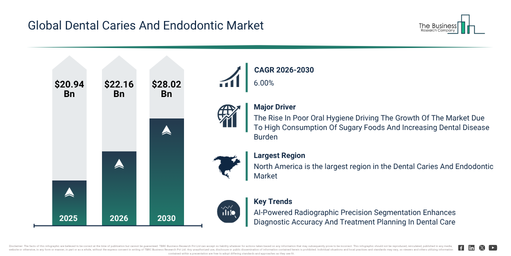
    The dental caries and endodontic market has shown robust expansion in recent years. This market is anticipated to expand from $20.94 billion in 2025 to $22.16 billion in 2026, achieving a compound annual growth rate (CAGR) of 5.8%. The historical growth of this market can be linked to factors like the increasing occurrence of dental caries and pulp infections, greater public awareness concerning oral hygiene and preventive dentistry, the global spread of dental clinic infrastructure, the rising adoption of restorative dental procedures, and advancements in endodontic instruments.

    The dental caries and endodontic market is projected for substantial expansion in the coming years. Its valuation is anticipated to reach $28.02 billion by the year 2030, exhibiting a compound annual growth rate (CAGR) of 6.0%. This growth during the forecast period is propelled by factors such as the rising demand for regenerative endodontic procedures, increased uptake of digital dentistry solutions, greater utilization of advanced dental biomaterials, an expanding elderly demographic experiencing dental issues, and heightened investment in cosmetic and restorative dentistry. Key developments expected over this period encompass AI-driven detection of caries and endodontic diagnostic imaging, advancements in regenerative endodontics and biomaterial innovations, the integration of cloud-based dental records and treatment planning, smart connected dental devices for continuous monitoring, and the adoption of AR/VR-based training and procedure simulations in dentistry.

    Download A Free Sample Report For Comprehensive Market Insights:

    https://www.thebusinessresearchcompany.com/sample_request?id=39633854&type=smp

    Dental Caries And Endodontic Market Development Factors: Which Trends Are Supporting Demand?

    The increasing prevalence of poor oral hygiene is projected to fuel the expansion of the dental caries and endodontic markets in the coming period. Poor oral hygiene describes inadequate maintenance of oral cleanliness, which results in the accumulation of plaque, bacteria, and food debris that can lead to dental and gum diseases. The rise in poor oral hygiene is primarily attributed to the high consumption of sugary foods and drinks, which foster the growth of harmful bacteria in the mouth and elevate the risk of tooth decay and gum disease. Dental caries and endodontics address poor oral hygiene by early diagnosis and treatment of tooth decay and root canal infections, thus preventing the worsening of oral disease and improving overall dental health. For instance, in December 2024, data from the Parliament of the United Kingdom, a UK-based governing body, revealed that approximately 31,165 hospital admissions of children were recorded for the extraction of decayed teeth in 2022–23. Therefore, the growing issue of poor oral hygiene is expected to drive the growth of the dental caries and endodontic market.

    #Dental Caries And Endodontic Market Segment Landscape And Growth Potential

    The dental caries and endodontic market covered in this report is segmented –

    1) By Product Type: Dental Restoratives, Endodontic Instruments, Dental Biomaterials, Other Product Types

    2) By Treatment Type: Direct Restoration, Indirect Restoration, Endodontic Treatment

    3) By Material Type: Biomaterials, Metals, Ceramics, Metals Ceramics

    4) By Application: Diagnosis, Prevention, Treatment, Restorative Procedures, Root Canal Therapy, Regenerative Endodontics

    5) By End User: Dental Clinics, Hospitals, Academic And Research Institutes

    Subsegments:

    1) By Dental Restoratives: Composite Restoratives, Amalgam Restoratives, Glass Ionomer Restoratives, Resin Modified Glass Ionomer Restoratives, Compomers, Temporary Restoratives

    2) By Endodontic Instruments: Endodontic Files, Endodontic Reamers, Broaches, Endodontic Irrigation Needles, Endodontic Obturation Instruments, Endodontic Handpieces

    3) By Dental Biomaterials: Filling Materials, Bonding Agents, Dental Cements, Pulp Capping Materials, Root Canal Sealers, Regenerative Materials

    4) By Other Product Types: Dental Adhesives, Disinfectants And Irrigants, Isolation Materials, Matrix Systems, Finishing And Polishing Materials, Temporary Filling Materials

    Dental Caries And Endodontic Market Transformation Trends: Which Innovations Are Driving Change?

    Leading companies within the dental caries and endodontic market are concentrating on developing innovative solutions, such as AI-powered radiographic precision segmentation systems, with the goal of improving diagnostic accuracy, enabling precise lesion mapping, and enhancing treatment planning efficiency in dental care. These AI-powered radiographic precision segmentation systems are artificial intelligence tools designed to analyze dental X-rays or other radiographic images. They function by accurately outlining and separating specific structures or disease areas, including tooth decay or bone loss, with high spatial detail for better diagnosis and treatment planning. For instance, in June 2025, Pearl Inc., a US-based software development company, expanded its FDA-cleared Second Opinion dental AI platform by incorporating precision segmentation capabilities for caries and periapical radiolucency on 2D radiographs. This enhancement allows the system to generate highly accurate, pixel-level outlining of pathological regions, providing clinicians with clearer visualization compared to conventional bounding-box detection methods.

    Dental Caries And Endodontic Market Competitive Landscape: Who Are The Leading Companies?

    Major companies operating in the dental caries and endodontic market are Kuraray Noritake Dental Inc., Dentsply Sirona Inc., Envista Holdings Corporation, Ultradent Products Inc., Septodont Holding, Coltene Holding AG, Mani Inc., Voco GmbH, Brasseler USA Inc, GC Corporation, Ivoclar Vivadent AG, Meta Biomed Co Ltd., Pearl Inc., VDW GmbH, Micro-Mega SA, FKG Dentaire SA, Produits Dentaires SA, DiaDent Group International, EdgeEndo, Prevest DenPro Limited

    Access The Complete Dental Caries And Endodontic Market Report:

    https://www.thebusinessresearchcompany.com/report/dental-caries-and-endodontic-market-report

    #Dental Caries And Endodontic Market Largest Region: Which Geography Holds The Highest Market Share?

    North America was the largest region in the dental caries and endodontic market in 2025. Asia-Pacific is expected to be the fastest-growing region in the forecast period. The regions covered in the dental caries and endodontic market report are Asia-Pacific, South East Asia, Western Europe, Eastern Europe, North America, South America, Middle East and Africa.

    Get in touch with us:

    The Business Research Company: https://www.thebusinessresearchcompany.com/

    Americas: +1 310-496-7795

    Asia: +44 7882 955267 & +91 8897263534

    Europe: +44 7882 955267

    Email us at: marketing@tbrc.info

    Follow us on:

    LinkedIn: https://in.linkedin.com/company/the-business-research-company

    YouTube: https://www.youtube.com/channel/UC24_fI0rV8cR5DxlCpgmyFQ

    Global Market Model: https://www.thebusinessresearchcompany.com/global-market-model
  • Dental Anaesthetic Market Expansion Is Reshaping Competitive Dynamics Across The Industry

    Dental Anaesthetic Market Expansion Is Reshaping Competitive Dynamics Across The Industry

    Through market attractiveness analysis, total addressable market evaluation, company benchmarking matrices, interactive Excel dashboards, expanded supply chain intelligence, emerging startup coverage, and detailed product insights, The Business Research Company’s 2026 market reports provide more actionable and strategically valuable research.

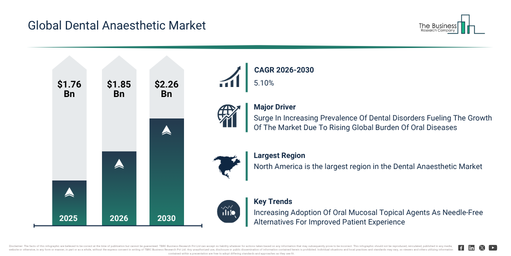
    Dental Anaesthetic Market Forecast Highlighting Growth From $1.85 Billion To $2.26 Billion

    The dental anaesthetic market has experienced consistent expansion over recent years. It is anticipated to grow from $1.76 billion in 2025 to $1.85 billion in 2026, registering a compound annual growth rate (CAGR) of 4.9%. The historical growth of this market can be attributed to several factors, including the increasing global volume of dental procedures, the rising prevalence of oral diseases, a greater adoption of local anesthetics in dentistry, the expansion of dental clinic infrastructure, and improvements in injectable anesthetic formulations.

    The dental anaesthetic market is projected to undergo significant expansion in the upcoming years. Its size is expected to reach $2.26 billion by 2030, demonstrating a compound annual growth rate (CAGR) of 5.1%. This growth during the forecast period is fueled by an increasing demand for pain-free dentistry procedures, the adoption of computer-controlled anesthetic delivery systems, growing requirements for pediatric dental care, an uptick in outpatient dental surgeries, and innovations in longer-lasting and safer anesthetic drugs. Key trends anticipated during this period include AI-assisted precision in anesthesia dosage planning and monitoring, smart dental injection systems offering automated pain control feedback, advancements in minimally invasive needle-free anesthetic delivery, digitally integrated systems for tracking patient pain responses in dentistry, and the formulation of long-acting biodegradable anesthetics for extended procedures.

    Download A Free Sample Report For Comprehensive Market Insights:

    https://www.thebusinessresearchcompany.com/sample_request?id=16524406&type=smp

    #Dental Anaesthetic Market Growth Factors: Which Forces Are Supporting Market Expansion?

    The rising occurrence of dental conditions is projected to boost the expansion of the dental anaesthetic market moving forward. These conditions encompass various medical issues affecting the teeth, gums, and other structures within the oral cavity, such as cavities, gum diseases, tooth loss, and oral infections. The increasing frequency of dental disorders is attributed to higher consumption of sugar-rich and processed foods, alongside poor oral hygiene practices, which collectively contribute to the development of cavities, gum ailments, and other oral health problems. Dental anaesthetics aid in managing these disorders by enabling pain-free procedures like cavity fillings, tooth extractions, root canal treatments, and periodontal therapies. This not only encourages patients to seek prompt treatment but also allows dentists to efficiently perform complex and lengthy interventions, ultimately improving oral health outcomes. For instance, according to the Parliament of the United Kingdom, a UK-based governing body, in December 2024, there were roughly 31,165 hospital admissions of children for the extraction of decayed teeth in 2022-23. Hence, the increasing prevalence of dental disorders is expected to drive the growth of the dental anaesthetic market.

    Dental Anaesthetic Market Segment Analysis And Revenue Opportunities

    The dental anaesthetic market covered in this report is segmented –

    1) By Anesthesia Type: Local Anesthesia, General Anesthesia, Sedation Anesthesia

    2) By Drug Type: Lidocaine, Articaine, Mepivacaine, Bupivacaine, Prilocaine, Other Drug Types

    3) By Delivery Mode: Injectable, Topical, Inhalation And Conscious Sedation Agents, Computer Controlled Local Anesthetic Delivery, Emerging Electronic Or Needle Free Systems

    4) By Application: Restorative Dentistry, Oral Surgery, Endodontics, Pediatric Dentistry, Periodontics

    5) By End User: Hospitals, Dental Clinics, Ambulatory Surgical Centers, Academic And Research Institutes

    Subsegments:

    1) By Local Anesthesia: Infiltration Anesthesia, Nerve Block Anesthesia, Periodontal Ligament Anesthesia, Intraosseous Anesthesia, Intrapulpal Anesthesia

    2) By General Anesthesia: Intravenous General Anesthesia, Inhalational General Anesthesia, Balanced General Anesthesia

    3) By Sedation Anesthesia: Minimal Sedation, Moderate Sedation, Deep Sedation, Oral Sedation, Intravenous Sedation, Inhalation Sedation

    Dental Anaesthetic Market Industry Trends: What Changes Are Reshaping Demand?

    Companies in the Dental Anaesthetic market are prioritizing the creation of advanced formulations, such as oral mucosal anesthetics, to boost patient comfort and ease injection-related apprehension. Oral mucosal anesthetics function as topical agents, applied directly to the mouth’s mucous membranes to desensitize the surface tissue, thereby mitigating pain and discomfort during dental procedures and reducing the necessity for injections. For example, in June 2025, VCS Medicals, a US-based medical device company, obtained U. S. Food and Drug Administration approval for DentalJect, its oral topical anesthetic spray. DentalJect is a spray-based product that delivers active anesthetic compounds directly to the mucosal tissue, ensuring a rapid start to its effect and accurate numbing without the requirement of injections. Its distinct advantages include ease of use, a prolonged effect, and suitability for patients who fear needles, making it highly appropriate for standard dental treatments like fillings, cleanings, and minor oral surgeries.

    Dental Anaesthetic Market Leading Players Shaping Industry Direction

    Major companies operating in the dental anaesthetic market are Pfizer Inc., Henry Schein Inc., Patterson Companies Inc., Dentsply Sirona Inc., Laboratorios Normon S. A., ZimVie Inc., Septodont Holding SAS, Shofu Inc., Hu-Friedy Mfg. Co. LLC, S. S. White Burs Inc., Laboratorios Inibsa S. A., Pierrel S. p. A., Centrix Inc., Young Innovations Inc., Laboratorios Zeyco S. A. de C. V., Sintetica S. A., Cetylite Industries Inc., Dentalhitec S. A. S., VCS Medical LLC, Sultan Healthcare Inc.

    Access The Complete Dental Anaesthetic Market Report:

    https://www.thebusinessresearchcompany.com/report/dental-anaesthetic-market-report

    Dental Anaesthetic Market Geographic Distribution And Regional Opportunities

    North America was the largest region in the dental anaesthetic market in 2025. Asia-Pacific is expected to be the fastest-growing region in the forecast period. The regions covered in the dental anaesthetic market report are Asia-Pacific, South East Asia, Western Europe, Eastern Europe, North America, South America, Middle East and Africa.

    Get in touch with us:

    The Business Research Company: https://www.thebusinessresearchcompany.com/

    Americas: +1 310-496-7795

    Asia: +44 7882 955267 & +91 8897263534

    Europe: +44 7882 955267

    Email us at: marketing@tbrc.info

    Follow us on:

    LinkedIn: https://in.linkedin.com/company/the-business-research-company

    YouTube: https://www.youtube.com/channel/UC24_fI0rV8cR5DxlCpgmyFQ

    Global Market Model: https://www.thebusinessresearchcompany.com/global-market-model
  • Clinical Drug Supply Chain Services Market Expansion Is Opening New Pathways For Strategic Investment

    Clinical Drug Supply Chain Services Market Expansion Is Opening New Pathways For Strategic Investment

    Delivering more actionable and strategically valuable research, The Business Research Company’s 2026 market reports feature market attractiveness analysis, total addressable market evaluation, company benchmarking matrices, interactive Excel dashboards, expanded supply chain intelligence, emerging startup coverage, and detailed product insights.

    Clinical Drug Supply Chain Services Market Value Analysis: What Growth Is Expected Over The Forecast Period?

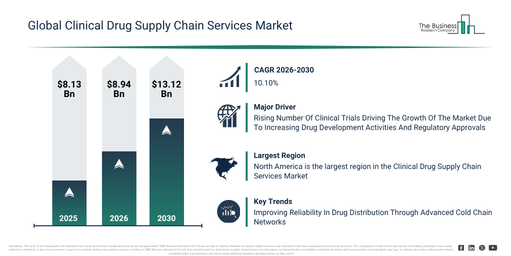
    The clinical drug supply chain services market size has experienced significant expansion in recent years. The market is expected to expand from $8.13 billion in 2025 to $8.94 billion in 2026, exhibiting a compound annual growth rate (CAGR) of 9.8%. The growth in the historic period can be attributed to globalization of clinical trials, rising complexity of biologic drugs, stringent regulatory compliance requirements, growth of contract research organizations, expansion of multi-region clinical studies.

    The clinical drug supply chain services market is projected for significant expansion in the coming years, with its valuation anticipated to reach $13.12 billion by 2030, exhibiting a compound annual growth rate (CAGR) of 10.1%. This growth during the forecast period is propelled by factors such as AI-enabled predictive optimization of supply chains, the increasing prevalence of decentralized and hybrid clinical trial models, greater integration of real-time supply chain monitoring, the expansion of personalized medicine and cell and gene therapy trials, and enhanced automation in clinical logistics operations. Key trends foreseen for the same period encompass optimized cold chain solutions for clinical trial logistics, new decentralized models for distributing drugs in clinical trials, capabilities for real-time visibility and tracking of shipments in global studies, a rise in outsourcing to specialized clinical supply providers, and a growing need for patient-focused investigational drug delivery approaches.

    Download A Free Sample Report For Comprehensive Market Insights:

    https://www.thebusinessresearchcompany.com/sample_request?id=22293554&type=smp

    Clinical Drug Supply Chain Services Market Demand Drivers: What Is Fueling Industry Growth?

    The future expansion of the clinical drug supply chain services market is anticipated to be significantly boosted by the growing volume of clinical trials. These trials are systematically designed research studies involving human participants, undertaken to assess the safety, effectiveness, and appropriate dosage of novel medications and medical interventions. The surge in clinical trials primarily stems from heightened drug development endeavors and a greater number of regulatory authorizations within established healthcare frameworks. In this context, clinical drug supply chain services play a crucial role by overseeing the manufacturing, packaging, storage, and distribution of drugs, thereby guaranteeing the prompt and compliant delivery of investigational products to various trial locations. As an illustration, data from December 2024, provided by the National Library of Medicine (ClinicalTrials.gov), a US-based government clinical trial registry, showed a rise in registered clinical studies from approximately 479,859 studies in January 2024 to more than 570,636 studies by December 2024. Consequently, the increasing frequency of clinical trials is propelling the growth of the clinical drug supply chain services market.

    Clinical Drug Supply Chain Services Market Categorization By Product Type And Application

    The clinical drug supply chain services market covered in this report is segmented –

    1) By Type: Cold Chain Logistics, Serialization And Track Trace, Specialized Clinical Packaging

    2) By Drug Type: Small Molecule, Biologics Products, Cell Therapy, Other Drug Types

    3) By Application: Clinical Trial Drug Distribution, Temperature Controlled Drug Shipping, Regulatory Compliant Labeling, Return And Destruction Services

    4) By End User: Pharmaceutical Companies, Biotechnology Companies, Contract Research Organizations

    Subsegments:

    1) By Cold Chain Logistics: Temperature Controlled Storage Services, Refrigerated Transportation Services, Frozen Drug Distribution Services, Real-Time Temperature Monitoring Solutions, Cryogenic Shipping Services

    2) By Serialization And Track Trace: Unique Product Identifier Management, Aggregation And Deaggregation Services, Regulatory Compliance Reporting, Real-Time Track And Trace Software, Anti-Counterfeiting Verification Solutions

    3) By Specialized Clinical Packaging: Blister Packaging Services, Bottle And Vial Packaging Services, Unit Dose Packaging Solutions, Customized Clinical Trial Kits, Tamper-Evident Packaging Solutions

    Clinical Drug Supply Chain Services Market Innovation Trends: Which Developments Are Transforming The Industry?

    Key players in the clinical drug supply chain services market are concentrating on developing their cold chain freight forwarding capabilities. This includes establishing cutting-edge temperature-controlled cross-dock and logistics networks, essential for preserving exact environmental conditions for sensitive pharmaceutical products throughout their transport. These systems integrate strategically positioned global facilities with comprehensive monitoring and certification processes, thereby guaranteeing the quality and regulatory adherence of clinical drug consignments. An example is the August 2025 expansion by UPS Healthcare, a US-based logistics and supply chain services provider, of its global cold chain freight forwarding network, which added 20 advanced cross-dock facilities in major cities like Chicago, Singapore, Amsterdam, and Shanghai. These facilities offer specialized handling at refrigerated and controlled room temperatures, inbound/outbound consolidation supported by thermal blankets and dry ice, and hold various certifications including GDP and IATA CEIV Pharma, all aimed at bolstering package integrity. While regional infrastructure needs and operational expenses remain key considerations, these improvements markedly enhance the precision of handling and the reliability of deliveries across global clinical drug supply chains.

    Clinical Drug Supply Chain Services Market Company Landscape And Strategic Competition

    Major companies operating in the clinical drug supply chain services market are United Parcel Service Inc., DHL International GmbH, FedEx Corporation, Thermo Fisher Scientific Inc., Kuehne + Nagel International AG, IQVIA Holdings Inc., Yusen Logistics Co. Ltd., ICON Public Limited Company, Lonza Group AG, Catalent Inc., Parexel International Corporation, PCI Services LLC, Almac Group Limited, World Courier Management Inc., Marken Limited, Piramal Pharma Limited, Movianto International GmbH, Clinigen Group plc, Sharp Clinical Services Inc., Biocair International Limited, Ancillare LP, Bilcare Limited, Myonex Inc.

    Access The Complete Clinical Drug Supply Chain Services Market Report:

    https://www.thebusinessresearchcompany.com/report/clinical-drug-supply-chain-services-market-report

    Clinical Drug Supply Chain Services Market Geographic Analysis: Where Is Demand Growing The Fastest?

    North America was the largest region in the clinical drug supply chain services market in 2025. Asia-Pacific is expected to be the fastest-growing region in the forecast period. The regions covered in the clinical drug supply chain services market report are Asia-Pacific, South East Asia, Western Europe, Eastern Europe, North America, South America, Middle East and Africa.

    Get in touch with us:

    The Business Research Company: https://www.thebusinessresearchcompany.com/

    Americas: +1 310-496-7795

    Asia: +44 7882 955267 & +91 8897263534

    Europe: +44 7882 955267

    Email us at: marketing@tbrc.info

    Follow us on:

    LinkedIn: https://in.linkedin.com/company/the-business-research-company

    YouTube: https://www.youtube.com/channel/UC24_fI0rV8cR5DxlCpgmyFQ

    Global Market Model: https://www.thebusinessresearchcompany.com/global-market-model

  • Chromatography And Filtration Reagents Market Growth Is Accelerating As Industry Transformation Continues

    Chromatography And Filtration Reagents Market Growth Is Accelerating As Industry Transformation Continues

    Enhanced with market attractiveness analysis, total addressable market evaluation, company benchmarking matrices, interactive Excel dashboards, expanded supply chain intelligence, emerging startup coverage, and detailed product insights, The Business Research Company’s 2026 market reports deliver more actionable and strategically valuable research.

    Chromatography And Filtration Reagents Market Forecast: What Market Value Is Expected By 2030?

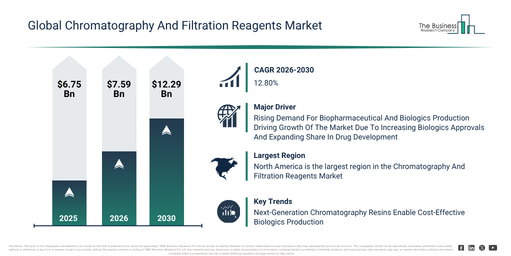
    The chromatography and filtration reagents market has observed rapid expansion in recent years. This market is expected to expand from $6.75 billion in 2025 to $7.59 billion in 2026, registering a compound annual growth rate (CAGR) of 12.6%. The historical growth of this market is attributable to the increasing demand for pharmaceutical quality control testing, the enlargement of research and academic laboratories, the rise in generic drug manufacturing, a greater application of analytical testing in food safety, and the progress in standardized chromatography techniques.

    The chromatography and filtration reagents market size is anticipated to undergo swift expansion over the coming years. Its valuation is set to reach $12.29 billion by 2030, progressing at a compound annual growth rate (CAGR) of 12.8%. This expansion during the projected timeframe stems from factors such as the increasing uptake of biologics and biosimilar testing, a growing need for precise analytical methods in genomics, the development of personalized medicine and biomarker analysis, the broadening of environmental monitoring regulations, and an escalating move towards automated and high-throughput laboratory setups. Prominent trends expected over this period involve the growing acceptance of high-performance liquid chromatography and UHPLC consumables, an escalating requirement for sophisticated membrane filtration systems, a greater utilization of eco-friendly chromatography solvents, the proliferation of automated laboratory sample preparation systems, and the enhanced incorporation of digital analytics within separation workflows.

    Download A Free Sample Report For Comprehensive Market Insights:

    https://www.thebusinessresearchcompany.com/sample_request?id=93321371&type=smp

    Chromatography And Filtration Reagents Market Expansion Supported By Key Demand Factors

    The increasing need for biopharmaceutical and biologic manufacturing is anticipated to drive expansion in the chromatography and filtration reagents market moving ahead. This production method entails creating intricate therapeutic goods like monoclonal antibodies, vaccines, and recombinant proteins, leveraging live cells and sophisticated bioprocessing methods. The demand for producing biopharmaceuticals and biologics is escalating, attributed to a rising volume of biologics receiving approval and their growing contribution to overall drug development. Chromatography and filtration reagents are crucial for biopharmaceutical and biologic manufacturing, as they facilitate accurate purification, separation, and quality control, which are essential for regulatory adherence and extensive production. As an illustration, official statistics from the UK government indicated that in October 2025, the life sciences manufacturing turnover reached $61.57 billion (£46.5 billion) during 2023–2024, representing 32% of the sector’s total turnover. Consequently, the expanding need for biopharmaceutical and biologic production is fueling the expansion of the chromatography and filtration reagents market.

    Chromatography And Filtration Reagents Market Segment Landscape: Which Areas Lead Market Development?

    The chromatography and filtration reagents market covered in this report is segmented –

    1) By Type: Solvents, Buffers, Derivatization Reagents, Ion Pair Reagents, Other Types

    2) By Technique: Liquid Chromatography, Gas Chromatography, Thin-Layer Chromatography, Supercritical Fluid Chromatography, Other Techniques

    3) By Grade: High Performance Liquid Chromatography And Ultra High Performance Liquid Chromatography Grade Reagents, Gas Chromatography Grade Reagents, Analytical Grade Reagents, Liquid Chromatography–Mass Spectrometry Grade Reagents, Preparative Grade Reagents, Biotechnology Grade Reagents, Technical Grade Filtration Products

    4) By Filtration Type: Microfiltration Products, Ultrafiltration Reagents, Nanofiltration Membranes, Reverse Osmosis Filters, Depth Filtration Media, Sterile Filtration Products, Tangential Flow Filtration

    5) By End-User: Pharmaceutical And Biotechnology Companies, Contract Research Organizations, Contract Manufacturing Organizations, Academic And Research Institutions, Clinical And Diagnostic Laboratories, Food And Beverage Testing Laboratories, Environmental Testing Laboratories, Government And Regulatory Agencies, Chemical And Industrial Manufacturing Companies

    Subsegments:

    1) By Solvents: Aqueous Solvents, Organic Solvents, Polar Solvents, Non Polar Solvents, High Performance Liquid Chromatography Grade Solvents

    2) By Buffers: Phosphate Buffers, Acetate Buffers, Tris Buffers, Citrate Buffers, Carbonate Buffers

    3) By Derivatization Reagents: Pre Column Derivatization Reagents, Post Column Derivatization Reagents, Fluorescence Derivatization Reagents, Ultraviolet Derivatization Reagents, Gas Chromatography Derivatization Reagents

    4) By Ion Pair Reagents: Alkyl Sulfonates, Quaternary Ammonium Salts, Perfluorinated Carboxylic Acids, Tetraalkylammonium Salts, Ion Pairing Acids

    5) By Other Types: Affinity Reagents, Size Exclusion Media, Chromatography Resins, Filter Membranes, Sample Preparation Reagents

    Chromatography And Filtration Reagents Market Growth Trends Influencing Competitive Dynamics

    Leading companies active in the chromatography and filtration reagents market are prioritizing the development of resilient resins, such as high-cycle-life chromatography resins, to diminish purification costs and boost process scalability. High-cycle-life chromatography resins are advanced separation media engineered to withstand multiple cleaning and reuse cycles while maintaining their binding efficiency and structural integrity, thereby cutting the cost per batch in biologics manufacturing. For instance, in June 2024, Ecolab Inc., a US-based life sciences and specialty chemicals company, introduced its Purolite DurA Cycle chromatography resin. This resin supports the large-scale purification of monoclonal antibodies, offers extended reuse thanks to enhanced alkaline stability, and improves manufacturing efficiency by lowering the cost of goods and enabling consistent high-throughput processing.

    Chromatography And Filtration Reagents Market Industry Leaders And Market Competition

    Major companies operating in the chromatography and filtration reagents market are Thermo Fisher Scientific Inc., Honeywell International Inc., 3M Company, Merck KGaA, Tosoh Corporation, Agilent Technologies Inc., Daicel Corporation, Sartorius AG, Shimadzu Corporation, Waters Corporation, Bio-Rad Laboratories Inc., Hamilton Company, Pall Corporation, Repligen Corporation, Porvair plc, Macherey-Nagel GmbH & Co. KG, Cole-Parmer, Restek Corporation, GFS Chemicals Inc., Membrane Solutions LLC, Regis Technologies Inc., Tedia Company Inc., KNAUER Wissenschaftliche Geräte GmbH, Sterlitech Corporation

    Access The Complete Chromatography And Filtration Reagents Market Report:

    https://www.thebusinessresearchcompany.com/report/chromatography-and-filtration-reagents-market-report

    Chromatography And Filtration Reagents Market Regional Outlook: Where Are The Largest Opportunities Located?

    North America was the largest region in the chromatography and filtration reagents market in 2025. Asia-Pacific is expected to be the fastest-growing region in the forecast period. The regions covered in the chromatography and filtration reagents market report are Asia-Pacific, South East Asia, Western Europe, Eastern Europe, North America, South America, Middle East and Africa.

    Get in touch with us:

    The Business Research Company: https://www.thebusinessresearchcompany.com/

    Americas: +1 310-496-7795

    Asia: +44 7882 955267 & +91 8897263534

    Europe: +44 7882 955267

    Email us at: marketing@tbrc.info

    Follow us on:

    LinkedIn: https://in.linkedin.com/company/the-business-research-company

    YouTube: https://www.youtube.com/channel/UC24_fI0rV8cR5DxlCpgmyFQ

    Global Market Model: https://www.thebusinessresearchcompany.com/global-market-model

  • Cell Culture Media Ingredients Market Growth Through 2030 Creates New Strategic Opportunities

    Cell Culture Media Ingredients Market Growth Through 2030 Creates New Strategic Opportunities

    Delivering more actionable and strategically valuable research, The Business Research Company’s 2026 market reports feature market attractiveness analysis, total addressable market evaluation, company benchmarking matrices, interactive Excel dashboards, expanded supply chain intelligence, emerging startup coverage, and detailed product insights.

    Cell Culture Media Ingredients Market Forecast Highlighting Growth From $3.1 Billion To $4.81 Billion

    The cell culture media ingredients market size has experienced significant growth in recent years. This market is anticipated to expand from $2.78 billion in 2025 to $3.1 billion in 2026, exhibiting a compound annual growth rate (CAGR) of 11.4%. Historically, this growth can be ascribed to the increasing integration of cell culture techniques in research, heightened demand in biopharmaceutical manufacturing, the proliferation of vaccine development programs, increased academic and clinical research activities, and the expansion of contract research organizations.

    The cell culture media ingredients market is projected for significant expansion in the coming years, with its valuation expected to reach $4. 81 billion by 2030, exhibiting a compound annual growth rate (CAGR) of 11. 6%. This anticipated growth during the forecast period is primarily driven by factors such as the expanding pipelines for cell and gene therapies, the increasing need for personalized medicine, greater utilization of recombinant proteins and growth factors, the integration of single-use bioprocessing technologies, and continuous improvements in optimized and custom media formulations. Key developments anticipated for this period encompass the wider acceptance of serum-free and chemically defined media, the proliferation of single-use bioprocessing systems, a heightened need for aseptic processing free from contamination, the emergence of advanced high-throughput cell culture screening platforms, and the increasing incorporation of 3d cell culture and organoid systems.

    Download A Free Sample Report For Comprehensive Market Insights:

    https://www.thebusinessresearchcompany.com/sample_request?id=14277073&type=smp

    Cell Culture Media Ingredients Market Development Factors: Which Trends Are Supporting Demand?

    The rising need for biopharmaceutical manufacturing is anticipated to significantly contribute to the expansion of the cell culture media ingredients market. This involves the large-scale production of biologic-based medicines, including monoclonal antibodies, vaccines, and cell and gene therapies, using living cells. This heightened demand is fueled by the rapid growth in biologics pipelines, which necessitates advanced cell culture systems for both development and manufacturing phases. Cell culture media ingredients play a crucial role in these processes by delivering essential nutrients, growth factors, and supplements required for optimal cell growth, viability, and productivity. For example, in December 2024, according to the International Federation of Pharmaceutical Manufacturers & Associations, a Switzerland-based global industry association, over 12,700 medicines are at various stages of clinical development globally, with nearly half categorized as biologics. This broadening pipeline is expected to increase manufacturing demand, with around 700 new medicines projected for launch by 2035. Therefore, the escalating demand for biopharmaceutical production is driving the growth of the cell culture media ingredients market.

    Cell Culture Media Ingredients Market Segmentation Trends And Revenue Drivers

    The cell culture media ingredients market covered in this report is segmented –

    1) By Type: Amino Acids, Vitamins, Sugars, Salts, Buffers, Other Types

    2) By Form: Liquid, Powder

    3) By Application: Biopharmaceutical Production, Vaccine Production, Drug Discovery And Development, Regenerative Medicine, Cell And Gene Therapy, Diagnostics, Toxicology Testing, Other Applications

    4) By End Users: Biotechnology Companies, Pharmaceutical Companies, Academic And Research Institutes, Contract Research Organizations

    Subsegments:

    1) By Amino Acids: Essential Amino Acids, Non Essential Amino Acids, Conditionally Essential Amino Acids, Branched Chain Amino Acids

    2) By Vitamins: Fat Soluble Vitamins, Water Soluble Vitamins, Vitamin B Complex, Vitamin C

    3) By Sugars: Monosaccharides, Disaccharides, Polysaccharides, Sugar Alcohols

    4) By Salts: Inorganic Salts, Organic Salts, Trace Element Salts, Balanced Salt Solutions

    5) By Buffers: Phosphate Buffers, Bicarbonate Buffers, Organic Buffers, Zwitterionic Buffers

    6) By Other Types: Growth Factors, Hormones, Lipids, Proteins, Serum Additives

    Cell Culture Media Ingredients Market Transformation Trends: Which Innovations Are Driving Change?

    Leading companies within the cell culture media ingredients market are concentrating on technological advancements in developing serum-free media, such as efficient-pro medium (+) insulin, to enhance production efficiency, reduce variability, and decrease reliance on animal-derived components. Efficient-Pro Medium (+) Insulin is characterized as a next-generation serum-free and animal-origin-free cell culture medium that directly integrates essential nutrients and growth-supporting elements, including insulin, into its formulation. This integration aims to improve cell growth and protein production, thereby removing the necessity for external supplementation. Illustratively, in September 2025, Thermo Fisher Scientific, a US-based life sciences company, introduced Gibco Efficient-Pro Medium (+) Insulin. This particular product achieves up to 61% higher protein titers, maintains high viable cell densities with consistent quality, and features advanced granulation technology for swift reconstitution and scalability, making it very suitable for biopharmaceutical manufacturing workflows.

    #Cell Culture Media Ingredients Market Industry Leaders: Which Organizations Are Driving Competition?

    Major companies operating in the cell culture media ingredients market are Thermo Fisher Scientific Inc., Merck KGaA, FUJIFILM Wako Pure Chemical Corporation, Danaher Corporation, GE Healthcare Life Sciences (Cytiva), Becton Dickinson and Company, Corning Incorporated, Lonza Group AG, Avantor Inc., Agilent Technologies Inc., Sartorius AG, Bio-Rad Laboratories Inc., STEMCELL Technologies Inc., Miltenyi Biotec B. V. & Co. KG, Takara Bio Inc., Imperial Life Sciences Pvt. Ltd., PromoCell GmbH, BioLamina AB, Equitech-Bio Inc., Axol Bioscience Ltd., Nucleus Biologics LLC, Plant Cell Technology Inc., Cell Applications Inc.

    Access The Complete Cell Culture Media Ingredients Market Report:

    https://www.thebusinessresearchcompany.com/report/cell-culture-media-ingredients-market-report

    Cell Culture Media Ingredients Market Largest Region By Revenue And Market Share

    North America was the largest region in the cell culture media ingredients market in 2025. Asia-Pacific is expected to be the fastest-growing region in the forecast period. The regions covered in the cell culture media ingredients market report are Asia-Pacific, South East Asia, Western Europe, Eastern Europe, North America, South America, Middle East and Africa.

    Get in touch with us:

    The Business Research Company: https://www.thebusinessresearchcompany.com/

    Americas: +1 310-496-7795

    Asia: +44 7882 955267 & +91 8897263534

    Europe: +44 7882 955267

    Email us at: marketing@tbrc.info

    Follow us on:

    LinkedIn: https://in.linkedin.com/company/the-business-research-company

    YouTube: https://www.youtube.com/channel/UC24_fI0rV8cR5DxlCpgmyFQ

    Global Market Model: https://www.thebusinessresearchcompany.com/global-market-model