Category: Pharmaceuticals

  • Cell Culture Media And Single-Use Reagents Market Size Projected To Increase From $5 Billion To $8.34 Billion During The Forecast Period

    Enhanced with market attractiveness analysis, total addressable market evaluation, company benchmarking matrices, interactive Excel dashboards, expanded supply chain intelligence, emerging startup coverage, and detailed product insights, The Business Research Company’s 2026 market reports deliver more actionable and strategically valuable research.

    Cell Culture Media And Single-Use Reagents Market Revenue Growth Supported By A CAGR Of 8.34% Through 2030

    The cell culture media and single-use reagents market has witnessed rapid growth in recent years. It is forecast to grow from $4.41 billion in 2025 to $5 billion in 2026, achieving a compound annual growth rate (CAGR) of 13.4%. The historical expansion of this market can be attributed to several factors including the increasing embrace of serum-based cell culture systems, the constrained availability of standardized GMP-grade reagents, reliance on reusable laboratory consumables, the fragmented nature of global bioprocessing supply chains, and the initial adoption phases of single-use technologies.

    The cell culture media and single-use reagents market is anticipated to undergo significant expansion in the coming years, with its value projected to reach $8.34 billion by 2030, exhibiting a compound annual growth rate (CAGR) of 13.6%. This growth during the forecast period is propelled by factors such as the shift towards serum-free and chemically defined media, the expansion of large-scale biomanufacturing facilities, the increasing adoption of single-use bioprocessing systems, the escalating demand for cell and gene therapy production, and rising investment in automated and high-throughput cell culture platforms. Prominent trends for the forecast period encompass the wider acceptance of serum-free and chemically defined media, the broader implementation of single-use bioprocessing systems, a heightened requirement for contamination-free aseptic processing, the emergence of high-throughput cell culture screening platforms, and a growing emphasis on regulatory-compliant GMP-grade reagents.

    Download A Free Sample Report For Comprehensive Market Insights:

    https://www.thebusinessresearchcompany.com/sample_request?id=97873000&type=smp

    Cell Culture Media And Single-Use Reagents Market Industry Drivers: What Is Driving Revenue Growth?

    Increased funding directed towards cell and gene therapy development is anticipated to drive expansion in the cell culture media and single-use reagents market in the future. This development pertains to the creation of therapies that either alter or substitute faulty genes, or utilize modified cells for disease treatment or prevention. The increase in investment for cell and gene therapy development is a consequence of the rising incidence of genetic and rare diseases. The market for cell culture media and single-use reagents benefits from this increasing investment in cell and gene therapy, given that these products are crucial for the scalable, sterile, and efficient production of advanced therapies. For example, data from CGT Catapult, a UK-based independent innovation and technology organization, reported in September 2024, indicates that the total investment in advanced therapies (which includes cell and gene therapy) reached £0. 77 billion in 2023 and subsequently £0. 97 billion in 2024, representing a 26% year-on-year growth. Consequently, the expanding investment in cell and gene therapy development is a key driver for the growth of the cell culture media and single-use reagents market.

    Cell Culture Media And Single-Use Reagents Market Segment Analysis Highlighting Growth Areas

    The cell culture media and single-use reagents market covered in this report is segmented –

    1) By Cell Type: Mammalian Cells, Stem Cells, Insect Cells, Microbial Cells, Plant Cells

    2) By Technology: Single-Use Bioprocessing Systems, Continuous Bioprocessing, Upstream Processing Technologies, Downstream Processing Technologies

    3) By Portability And Scale: Fully Automated Benchtop Systems, Portable And Handheld Analyzers, Fully Integrated Core-Lab Systems

    4) By Application: Biopharmaceutical Production, Vaccine Manufacturing, Gene Therapy, Cell Therapy, Cell Culture Research

    Subsegments:

    1) By Mammalian Cells: Chinese Hamster Ovary Cells, Human Embryonic Kidney Cells, Baby Hamster Kidney Cells, Mouse Myeloma Cells, Hybridoma Cells

    2) By Stem Cells: Embryonic Stem Cells, Adult Stem Cells, Induced Pluripotent Stem Cells, Mesenchymal Stem Cells, Hematopoietic Stem Cells

    3) By Insect Cells: Spodoptera Frugiperda Cells, Trichoplusia Ni Cells, Drosophila Melanogaster Cells

    4) By Microbial Cells: Escherichia Coli Cells, Saccharomyces Cerevisiae Cells, Pichia Pastoris Cells, Bacillus Subtilis Cells

    5) By Plant Cells: Tobacco Plant Cells, Rice Plant Cells, Carrot Plant Cells, Arabidopsis Thaliana Cells

    #Cell Culture Media And Single-Use Reagents Market Growth Trends: What Is Influencing The Future Outlook?

    Leading entities within the cell culture media and single-use reagents sector are increasingly utilizing single-use bioprocessing methods, particularly integrated single-use bioreactor systems, aiming to enhance manufacturing efficiency and mitigate contamination hazards in bioproduction. These integrated systems represent pre-sterilized, disposable cultivation platforms, consolidating process control, monitoring, and fluid management functions into one unit. This design serves to eliminate the need for cleaning, shorten turnaround times, and guarantee uniform batch performance. A notable example occurred in August 2023, when Sartorius AG, a life sciences company based in Germany, collaborated with Repligen Corporation, a US-based life sciences firm, to introduce an integrated Biostat STR system featuring XCell ATF technology. This particular system incorporates embedded cell retention technology and pre-set control recipes, which contribute to improved process intensification and simplified setup. Furthermore, it facilitates quicker installation and offers an optimized equipment footprint, thereby reducing operational expenditures and boosting scalability in large-scale cell culture manufacturing.

    Cell Culture Media And Single-Use Reagents Market Leading Companies: Who Holds Significant Market Presence?

    Major companies operating in the cell culture media and single-use reagents market are Thermo Fisher Scientific Inc., Merck KGaA, Fujifilm Wako, Corning Incorporated, Lonza Group AG, Avantor Inc., Agilent Technologies, Sartorius AG, Bio-Rad Laboratories Inc., Bio-Techne Corporation, STEMCELL Technologies, Miltenyi Biotec, LGC Science Group Holdings Ltd, Takara Bio Inc., MP Biomedicals LLC, Chemglass Life Sciences, ATCC, ITW Reagents, PromoCell GmbH, Axol Bioscience Ltd, HiMedia Laboratories, Eppendorf AG, Kohjin Bio Co. Ltd., Nucleus Biologics, OPM Biosciences, Plant Cell Technology, ZenBio Inc., Yocon Corporation.

    Access The Complete Cell Culture Media And Single-Use Reagents Market Report:

    https://www.thebusinessresearchcompany.com/report/cell-culture-media-and-single-use-reagents-market-report

    Cell Culture Media And Single-Use Reagents Market Regional Analysis And Leading Geography

    North America was the largest region in the cell culture media and single-use reagents market in 2025. Asia-Pacific is expected to be the fastest-growing region in the forecast period. The regions covered in the cell culture media and single-use reagents market report are Asia-Pacific, South East Asia, Western Europe, Eastern Europe, North America, South America, Middle East and Africa.

    Get in touch with us:

    The Business Research Company: https://www.thebusinessresearchcompany.com/

    Americas: +1 310-496-7795

    Asia: +44 7882 955267 & +91 8897263534

    Europe: +44 7882 955267

    Email us at: marketing@tbrc.info

    Follow us on:

    LinkedIn: https://in.linkedin.com/company/the-business-research-company

    YouTube: https://www.youtube.com/channel/UC24_fI0rV8cR5DxlCpgmyFQ

    Global Market Model: https://www.thebusinessresearchcompany.com/global-market-model

  • Bioprocessing Support Services Market Expansion Is Reshaping Competitive Dynamics Across The Industry

    Bioprocessing Support Services Market Expansion Is Reshaping Competitive Dynamics Across The Industry

    Through market attractiveness analysis, total addressable market evaluation, company benchmarking matrices, interactive Excel dashboards, expanded supply chain intelligence, emerging startup coverage, and detailed product insights, The Business Research Company’s 2026 market reports provide more actionable and strategically valuable research.

    Bioprocessing Support Services Market Size, Value And Growth Trends Through 2030

    The bioprocessing support services market has experienced substantial expansion in recent years. This market is set to increase from $2.1 billion in 2025 to $2.4 billion in 2026, achieving a compound annual growth rate (CAGR) of 14.3%. Historically, this growth can be attributed to several factors, including a rise in monoclonal antibody production demand, the expansion of contract research and manufacturing outsourcing, the tightening of global regulatory frameworks for biologics, an increase in biotechnology startups and funding activity, and the adoption of single-use bioprocessing technologies.

    The bioprocessing support services market is projected to experience substantial expansion in the coming years, reaching $4.13 billion by 2030, exhibiting a compound annual growth rate (CAGR) of 14.6%. This anticipated growth is driven by factors such as the increasing intricacy and variety of the biologics pipeline, a heightened demand for quicker drug development cycles, the expansion of manufacturing for advanced therapy medicinal products, a growing imperative for robust global supply chain resilience in biomanufacturing, and a greater focus on optimizing costs and enhancing process efficiency in production. Key trends during this period encompass the growing practice of outsourcing bioprocess development and analytical services to expert providers, the increasing embrace of single-use bioprocessing support solutions, an escalating need for comprehensive regulatory compliance and documentation services, the broadening of technological transfer and scale-up assistance for intricate biologics manufacturing, and an amplified commitment to process standardization and quality assurance in biologics production.

    Download A Free Sample Report For Comprehensive Market Insights:

    https://www.thebusinessresearchcompany.com/sample_request?id=64400075&type=smp

    #Bioprocessing Support Services Market Growth Factors: Which Forces Are Supporting Market Expansion?

    The rising need for biopharmaceuticals is projected to drive the expansion of the bioprocessing support services market moving forward. Biopharmaceuticals are therapeutic products derived from biological sources, such as proteins, monoclonal antibodies, vaccines, and cell and gene therapies, utilized for addressing a broad spectrum of chronic and life-threatening conditions. This escalating demand for biopharmaceuticals is fueled by the increasing prevalence of chronic diseases, advancements in biotechnology, and the shift towards targeted and personalized medical interventions. Bioprocessing support services are crucial in meeting this demand by delivering specialized solutions like process development, scale-up, analytical testing, and regulatory assistance, all of which are vital for efficient and compliant manufacturing of biologics. These services empower biopharmaceutical companies to accelerate production timelines, maintain product quality, and optimize manufacturing effectiveness while minimizing operational complexity. For instance, according to the International Federation of Pharmaceutical Manufacturers & Associations, a U. S. trade association representing leading research-based pharmaceutical and biotechnology companies, biopharmaceutical companies in the United States invested approximately $96 billion in research and development in 2023, accounting for over 20% of total industry sales. Additionally, the economic contribution of the industry remains substantial, with more than $25 billion in biopharmaceutical exports generated by majority foreign-owned firms operating in the United States in 2022. Therefore, the increasing demand for biopharmaceuticals is fostering the growth of the bioprocessing support services market.

    Bioprocessing Support Services Market Segment Analysis Highlighting Growth Areas

    The bioprocessing support services market covered in this report is segmented –

    1) By Service Type: Process Development And Optimization, Analytical And Quality Control Services, Regulatory Support And Compliance Services, Manufacturing Support Services, Validation And Qualification Services, Supply Chain And Logistics Support, Training And Consultancy Services

    2) By Product Type: Single-Use Systems, Bioreactors And Fermenters, Filtration And Purification, Bags And Containers, Media And Buffers

    3) By Scale: Small Scale, Large Scale

    4) By End User: Biopharmaceutical Companies, Contract Manufacturing Organizations, Contract Research Organizations, Academic And Research Institutes, Biotechnology Startups

    Subsegments:

    1) By Process Development And Optimization: Upstream Process Development, Downstream Process Development, Process Scale Up And Scale Down Studies, Process Optimization And Improvement, Cell Line Development Support, Formulation Development Assistance

    2) By Analytical And Quality Control Services: Bioanalytical Testing, Microbiological Testing, Physicochemical Testing, Stability Studies And Shelf Life Analysis, Method Development And Validation, Quality Assurance And Quality Control Support

    3) By Regulatory Support And Compliance Services: Regulatory Submission Preparation, Regulatory Strategy And Consulting, Good Manufacturing Practice Compliance Support, Documentation And Dossier Preparation, Inspection Readiness And Audits Support, Product Registration And Licensing Assistance

    4) By Manufacturing Support Services: Contract Manufacturing Assistance, Technology Transfer Support, Pilot Scale Manufacturing, Commercial Scale Manufacturing, Process Monitoring And Troubleshooting, Equipment And Facility Support

    5) By Validation And Qualification Services: Equipment Qualification, Process Validation, Cleaning Validation, Analytical Method Validation, Computer System Validation, Facility Qualification

    6) By Supply Chain And Logistics Support: Cold Chain Management, Inventory Management, Transportation And Distribution Support, Vendor Management, Supply Chain Planning And Optimization, Import Export Compliance Assistance

    7) By Training And Consultancy Services: Workforce Training Programs, Technical Workshops And Seminars, Process Improvement Consultancy, Regulatory And Compliance Training, Quality Management System Consultancy, Custom Advisory Services

    Bioprocessing Support Services Market Industry Trends: What Changes Are Reshaping Demand?

    Leading companies in the bioprocessing support services market are focused on developing integrated bioprocessing platforms, such as the chromatography resin platform, to improve bioprocessing efficiency and purification performance. A chromatography resin platform is a specialized collection of engineered resins specifically designed for use in bioprocessing and purification workflows. For example, in June 2025, Ecolab Life Sciences, a US-based bioprocessing solutions provider, released Purolite AP+50, an affinity chromatography resin created to boost antibody manufacturing efficiency. Purolite AP+50 boasts a 50-micron bead size, offering the highest dynamic binding capacity within the AP resin platform, alongside excellent durability for capturing monoclonal antibodies. By utilizing Ecolab’s patented Jetted resin bead technology, it guarantees lot-to-lot consistency and reduced lead times, making it suitable for cost-effective, high-purity antibody production and streamlined operations in biopharmaceutical manufacturing.

    Bioprocessing Support Services Market Leading Companies: Who Holds Significant Market Presence?

    Major companies operating in the bioprocessing support services market are Thermo Fisher Scientific Inc., Merck KGaA, Boehringer Ingelheim International GmbH, Corning Incorporated, SGS Société Générale de Surveillance S. A., Eurofins Scientific SE, Agilent Technologies Inc., bioMérieux S. A., Sartorius AG, Getinge AB, Waters Corporation, Samsung Biologics Co. Ltd., Bio-Rad Laboratories Inc., Eppendorf AG, Repligen Corporation, Randox Laboratories Ltd, GenScript Biotech Corporation, Promega Corporation, Takara Bio Inc., Rentschler Biopharma SE, Maravai LifeSciences Holdings Inc., Oxford Biomedica plc, PBS Biotech Inc., Meissner Filtration Products Inc., Bio-Synthesis Inc.

    Access The Complete Bioprocessing Support Services Market Report:

    https://www.thebusinessresearchcompany.com/report/bioprocessing-support-services-market-report

    Bioprocessing Support Services Market Global Footprint: Which Region Holds Market Leadership?

    Asia-Pacific was the largest region in the bioprocessing support services market in 2025. North America is expected to be the fastest-growing region in the forecast period. The regions covered in the bioprocessing support services market report are Asia-Pacific, South East Asia, Western Europe, Eastern Europe, North America, South America, Middle East and Africa.

    Get in touch with us:

    The Business Research Company: https://www.thebusinessresearchcompany.com/

    Americas: +1 310-496-7795

    Asia: +44 7882 955267 & +91 8897263534

    Europe: +44 7882 955267

    Email us at: marketing@tbrc.info

    Follow us on:

    LinkedIn: https://in.linkedin.com/company/the-business-research-company

    YouTube: https://www.youtube.com/channel/UC24_fI0rV8cR5DxlCpgmyFQ

    Global Market Model: https://www.thebusinessresearchcompany.com/global-market-model
  • Bioprocessing Reagent Market Forecast Reveals Where Future Industry Value Will Be Created

    Bioprocessing Reagent Market Forecast Reveals Where Future Industry Value Will Be Created

    Delivering more actionable and strategically valuable research, The Business Research Company’s 2026 market reports feature market attractiveness analysis, total addressable market evaluation, company benchmarking matrices, interactive Excel dashboards, expanded supply chain intelligence, emerging startup coverage, and detailed product insights.

    Bioprocessing Reagent Market CAGR Analysis And Future Market Development

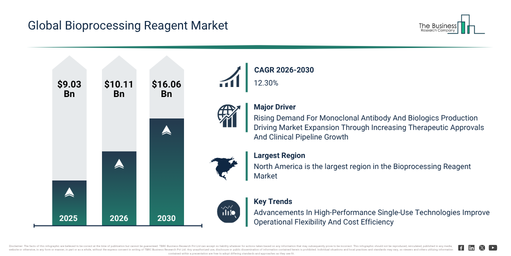
    The bioprocessing reagent market’s size has experienced rapid growth in recent years. It is forecast to increase from $9.03 billion in 2025 to $10.11 billion in 2026, exhibiting a compound annual growth rate (CAGR) of 12.0%. This historical expansion can be attributed to the rising adoption of cell culture techniques in biologics production, the growth in monoclonal antibody manufacturing which necessitates specialized reagents, the expansion of pharmaceutical and biotechnology research infrastructure, the escalating demand for vaccines driving large-scale bioprocessing activities, and the early development of fermentation-based industrial biotechnology processes.

    The bioprocessing reagent market is forecast for substantial growth in the upcoming period, with its size projected to reach $16.06 billion by 2030, demonstrating a compound annual growth rate (CAGR) of 12.3%. This expansion is primarily driven by the increasing need for biosimilars and advanced biologics manufacturing, the rising adoption of automated and continuous bioprocessing setups, growing investments in cell and gene therapy production, the expanding field of personalized medicine requiring specialized bioprocessing workflows, and a stronger focus on scalable and cost-effective biomanufacturing. Major trends anticipated during this forecast include AI-driven bioprocess optimization for enhanced yield and reduced variability in production, the widespread use of single-use bioprocessing systems enabling flexible and contamination-free manufacturing, continuous bioprocessing technologies improving production efficiency and scalability, innovations in advanced chromatography resins for high-purity biologics separation, and the development of sustainable bio-based reagents for greener biomanufacturing processes.

    Download A Free Sample Report For Comprehensive Market Insights:

    https://www.thebusinessresearchcompany.com/sample_request?id=64986523&type=smp

    Bioprocessing Reagent Market Demand Drivers: What Is Fueling Industry Growth?

    The rising demand for monoclonal antibody and biologics production is set to fuel the growth of the bioprocessing reagent market. Monoclonal antibodies and biologics are intricate protein-based therapeutics, crafted from living cells, designed to target specific antigens for treating various ailments like cancer, autoimmune disorders, and neurological conditions. This escalating demand for their production stems from an increasing number of therapeutic approvals and a strong late-stage clinical development pipeline. Bioprocessing reagents play a vital role in enabling efficient cell culture, protein synthesis, and purification processes necessary for the large-scale manufacturing of biologics. An illustrative example from December 2024, reported by the National Center for Biotechnology Information, a US-based biomedical research platform, showed that 21 antibody therapeutics received their first approvals in 2024, an increase from 16 approvals in 2023, signaling a year-on-year rise in biologics commercialization activities. Consequently, the heightened demand for monoclonal antibody and biologics production is a primary driver for the expansion of the bioprocessing reagent market.

    Bioprocessing Reagent Market Segment Performance And Strategic Opportunities

    The bioprocessing reagent market covered in this report is segmented –

    1) By Product Type: Cell Culture Media, Buffer Solutions, Enzymes, Growth Factors, Chromatography Resins, Filtration Reagents, Antifoaming Agents, Purification Reagents, Other Bioprocessing Reagents

    2) By Technology: Upstream Bioprocessing Reagents, Downstream Bioprocessing Reagents, Single-Use Bioprocessing Solutions, Continuous Bioprocessing Systems, Chromatography-Based Purification Reagents, Filtration And Separation Reagents

    3) By Grade: Research Grade Bioprocessing Reagents, Good Manufacturing Practice (GMP) Grade And Clinical Grade Reagents, Animal Component-Free Certified Reagents, Chemically Defined Formulations, Xeno-Free Bioprocessing Reagents

    4) By Process Stage: Upstream Processing Reagents, Cell Culture And Fermentation Reagents, Downstream Processing Reagents, Purification And Chromatography Reagents, Formulation And Fill-Finish Reagents

    5) By End-User: Biopharmaceutical Manufacturers, Contract Development And Manufacturing Organizations, Contract Research Organizations, Academic And Research Institutions, Vaccine Production Facilities, Cell And Gene Therapy Companies, Diagnostic Manufacturers, Industrial Biotechnology Companies

    Subsegments:

    1) By Cell Culture Media: Basal Media, Serum Free Media, Protein Free Media, Chemically Defined Media

    2) By Buffer Solutions: Phosphate Buffers, Acetate Buffers, Tris Buffers, Citrate Buffers

    3) By Enzymes: Proteases, Nucleases, Ligases, Polymerases

    4) By Growth Factors: Epidermal Growth Factors, Fibroblast Growth Factors, Insulin Like Growth Factors, Transforming Growth Factors

    5) By Chromatography Resins: Ion Exchange Resins, Affinity Resins, Size Exclusion Resins, Hydrophobic Interaction Resins

    6) By Filtration Reagents: Membrane Filters, Depth Filters, Filter Aids, Microfiltration Reagents

    7) By Antifoaming Agents: Silicone Based Antifoaming Agents, Oil Based Antifoaming Agents, Water Based Antifoaming Agents

    8) By Purification Reagents: Precipitation Reagents, Extraction Reagents, Clarification Reagents, Concentration Reagents

    9) By Other Bioprocessing Reagents: Cryoprotectants, Stabilizers, Detergents, Process Additives

    Bioprocessing Reagent Market Innovation Trends: Which Developments Are Transforming The Industry?

    Major companies operating in the bioprocessing reagent market are concentrating on developing high-performance single-use technologies, such as pre-sterilized, disposable bioprocessing reagents, to increase manufacturing flexibility, decrease contamination hazards, and reduce capital expenditure. Single-use bioprocessing reagents are ready-to-use, disposable chemical and biological components intended for a singular application in upstream and downstream processing, eliminating the need for cleaning validation and shortening turnaround time. For instance, in October 2023, Thermo Fisher Scientific Inc., a US-based biotechnology company, launched its Gibco CTS Detachable Dynabeads platform, an advanced cell separation technology designed for cell therapy manufacturing. This platform allows for gentle bead detachment to improve cell viability, supports closed-system processing to lessen contamination risk, and enhances scalability for commercial production. This product introduction highlights a strong supplier commitment to reducing operational costs while improving process efficiency and regulatory compliance in advanced biomanufacturing environments.

    Bioprocessing Reagent Market Key Players: Which Companies Shape Industry Competition?

    Major companies operating in the bioprocessing reagent market are Thermo Fisher Scientific Inc., Danaher Corporation, Merck KGaA, FUJIFILM Corporation, Corning Incorporated, Lonza Group, Avantor Inc., Sartorius AG, Bio-Rad Laboratories Inc., Bio-Techne, Repligen Corporation, Promega Corporation, Takara Bio, MP Biomedicals, ITW, Creative Bioarray, PromoCell, Rockland Immunochemicals, Solis BioDyne, Nippon Genetics, HiMedia Laboratories, Capricorn Scientific, Serana Europe, ZenBio

    Access The Complete Bioprocessing Reagent Market Report:

    https://www.thebusinessresearchcompany.com/report/bioprocessing-reagent-market-report

    Bioprocessing Reagent Market Regional Distribution: Which Areas Drive Market Expansion?

    North America was the largest region in the bioprocessing reagent market in 2025. Asia-Pacific is expected to be the fastest-growing region in the forecast period. The regions covered in the bioprocessing reagent market report are Asia-Pacific, South East Asia, Western Europe, Eastern Europe, North America, South America, Middle East and Africa.

    Get in touch with us:

    The Business Research Company: https://www.thebusinessresearchcompany.com/

    Americas: +1 310-496-7795

    Asia: +44 7882 955267 & +91 8897263534

    Europe: +44 7882 955267

    Email us at: marketing@tbrc.info

    Follow us on:

    LinkedIn: https://in.linkedin.com/company/the-business-research-company

    YouTube: https://www.youtube.com/channel/UC24_fI0rV8cR5DxlCpgmyFQ

    Global Market Model: https://www.thebusinessresearchcompany.com/global-market-model
  • Alirocumab Market Size Projected To Increase From $2.32 Billion To $3.48 Billion During The Forecast Period

    Alirocumab Market Size Projected To Increase From $2.32 Billion To $3.48 Billion During The Forecast Period

    Enhanced with market attractiveness analysis, total addressable market evaluation, company benchmarking matrices, interactive Excel dashboards, expanded supply chain intelligence, emerging startup coverage, and detailed product insights, The Business Research Company’s 2026 market reports deliver more actionable and strategically valuable research.

    Alirocumab Market CAGR Analysis And Future Market Development

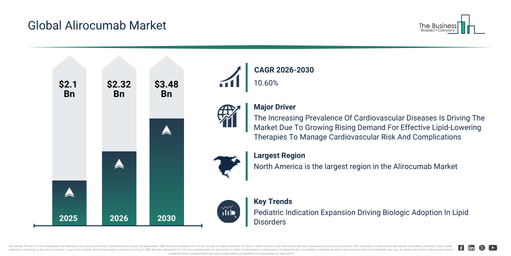
    The alirocumab market has expanded significantly in recent years. It is anticipated to increase from $2.1 billion in 2025 to $2.32 billion in 2026, driven by a compound annual growth rate (CAGR) of 10.4%. This historical expansion can be ascribed to several factors, including rising ldl cholesterol prevalence, an increasing cardiovascular disease burden, limitations associated with statin therapy, the early adoption of biologics in lipid management, and advancements in clinical guidelines for hypercholesterolemia.

    The alirocumab market is projected to experience swift expansion in the coming years. Its valuation is anticipated to reach $3.48 billion by the year 2030, exhibiting a compound annual growth rate (CAGR) of 10.6%. This projected growth during the forecast period is attributable to several factors, including the increasing global elderly population, the broadening pipeline of pcsk9 inhibitors, enhanced reimbursement coverage for biologic drugs, the rise of home-based self-administration treatments, and the expansion of preventative cardiovascular care initiatives. Key trends expected within this period encompass the growing uptake of pcsk9 inhibitor therapies, a heightened prevalence of patients intolerant to statins, the proliferation of cardiovascular risk screening programs, an increase in monoclonal antibody-based lipid-lowering treatments, and an escalating demand for combination lipid-lowering regimens.

    Download A Free Sample Report For Comprehensive Market Insights:

    https://www.thebusinessresearchcompany.com/sample_request?id=48369847&type=smp

    Alirocumab Market Industry Drivers: What Is Driving Revenue Growth?

    The expansion of the alirocumab market is anticipated to be fueled by the growing occurrence of cardiovascular diseases. These conditions encompass various heart and blood vessel disorders, such as coronary artery disease, cerebrovascular disease, and heart failure, which collectively hinder the efficient supply of blood and oxygen throughout the body. A primary contributor to the escalating prevalence of cardiovascular diseases is the widespread adoption of inactive lifestyles; reduced physical activity leads to metabolic imbalances, promotes excessive fat accumulation, and accelerates the onset of risk factors like hypertension and dyslipidemia, thereby significantly increasing the probability of cardiovascular complications over time. Alirocumab effectively reduces low-density lipoprotein cholesterol levels through proprotein convertase subtilisin or kexin type 9 inhibition, thereby assisting in the reduction of cardiovascular risk and management of disease progression in populations increasingly impacted by these ailments. For instance, in June 2024, according to data published by the American Heart Association Inc., a US-based non-profit organization, the prevalence of cardiovascular disease in the United States is projected to rise from approximately 50% of adults currently to 61% by 2050. Consequently, the increasing prevalence of cardiovascular diseases is propelling the growth of the alirocumab market.

    Alirocumab Market Segment Analysis: What Are The Major Market Categories?

    The alirocumab market covered in this report is segmented –

    1) By Indication: Familial Hypercholesterolemia, Atherosclerotic Cardiovascular Disease, Secondary Hyperlipidemia, High Cardiovascular Risk Patients

    2) By Administration Route: Subcutaneous Injection, Self-Administration

    3) By Patient Demographics: Geriatric, Pediatric, Gender-Based

    4) By Treatment Line: First-Line Treatment, Second-Line Treatment

    5) By Distribution Channel: Hospitals, Clinics, Online Pharmacies, Retail Pharmacies, Other Distribution Channels

    Subsegments:

    1) By Familial Hypercholesterolemia: Heterozygous Familial Hypercholesterolemia, Homozygous Familial Hypercholesterolemia

    2) By Atherosclerotic Cardiovascular Disease: Coronary Artery Disease, Peripheral Artery Disease, Cerebrovascular Disease

    3) By Secondary Hyperlipidemia: Diabetes Induced Hyperlipidemia, Obesity Related Hyperlipidemia, Hypothyroidism Induced Hyperlipidemia

    4) By High Cardiovascular Risk Patients: Hypertension Patients, Smokers At Risk, Elderly Population At Risk, Metabolic Syndrome Patients

    #Alirocumab Market Growth Trends: What Is Influencing The Future Outlook?

    Major companies in the alirocumab market are focusing on developing innovative products, such as expanded indication biologics, to broaden patient eligibility and enhance early-stage disease management. An expanded indication biologic is a therapeutic agent that receives regulatory approval for use in additional patient populations or disease conditions beyond its original indication. For instance, in March 2024, Regeneron Pharmaceuticals Inc., a US-based biotechnology company, announced U. S. Food and Drug Administration approval for Praluent. This development extends the use of alirocumab to pediatric patients aged 8 years and older with heterozygous familial hypercholesterolemia, enabling earlier intervention in genetically predisposed individuals. The approval strengthens preventive cardiovascular care by improving low-density lipoprotein cholesterol management and expanding the therapy’s clinical and commercial scope.

    Alirocumab Market Leading Companies Driving Competitive Growth

    Major companies operating in the alirocumab market are Sanofi S. A., Regeneron Pharmaceuticals Inc.

    Access The Complete Alirocumab Market Report:

    https://www.thebusinessresearchcompany.com/report/alirocumab-market-report

    Alirocumab Market Leading Geography: Which Region Generates The Most Revenue?

    North America was the largest region in the alirocumab market in 2025. Asia-Pacific is expected to be the fastest-growing region in the forecast period. The regions covered in the alirocumab market report are Asia-Pacific, South East Asia, Western Europe, Eastern Europe, North America, South America, Middle East and Africa.

    Get in touch with us:

    The Business Research Company: https://www.thebusinessresearchcompany.com/

    Americas: +1 310-496-7795

    Asia: +44 7882 955267 & +91 8897263534

    Europe: +44 7882 955267

    Email us at: marketing@tbrc.info

    Follow us on:

    LinkedIn: https://in.linkedin.com/company/the-business-research-company

    YouTube: https://www.youtube.com/channel/UC24_fI0rV8cR5DxlCpgmyFQ

    Global Market Model: https://www.thebusinessresearchcompany.com/global-market-model
  • Advanced Lab Reagents Market Trends Are Creating New Opportunities For Industry Leaders

    Advanced Lab Reagents Market Trends Are Creating New Opportunities For Industry Leaders

    Through market attractiveness analysis, total addressable market evaluation, company benchmarking matrices, interactive Excel dashboards, expanded supply chain intelligence, emerging startup coverage, and detailed product insights, The Business Research Company’s 2026 market reports provide more actionable and strategically valuable research.

    Advanced Lab Reagents Market Growth From $1.87 Billion In 2026 To $2.92 Billion By 2030 At A CAGR Of 11.8%

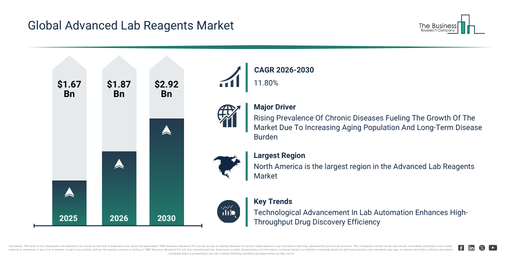
    The advanced lab reagents market has observed significant expansion in recent years. It is anticipated to grow from $1.67 billion in 2025 to $1.87 billion in 2026, exhibiting a compound annual growth rate (CAGR) of 11.5%. This market’s past growth can be attributed to increasing pharmaceutical and biotechnology research and development activities, greater investment in academic and research laboratories, a rise in the occurrence of chronic and infectious diseases, the expanding integration of molecular diagnostics technologies, and a heightened demand for high sensitivity analytical testing.

    The market for advanced lab reagents is projected to expand significantly in the coming years. This market is anticipated to reach $2.92 billion by the year 2030, exhibiting a compound annual growth rate (CAGR) of 11.8%. This expansion during the projection period stems from factors such as the increasing reach of precision medicine applications, the greater uptake of automated laboratory processes, a heightened need for cell and gene therapy research, the broader application of biomarker-based diagnostics, and rising investments in the development of advanced biologics and biosimilars. Key developments expected within this forecast timeframe encompass the wider acceptance of reagents that are high in purity and free from contaminants, a rising need for consistent and standardized laboratory procedures, an increased deployment of multiplex and high-throughput assay reagents, a greater emphasis on reagent formulations tailored for specific applications, and the expanding deployment of advanced reagents in both clinical diagnostics and translational research.

    Download A Free Sample Report For Comprehensive Market Insights:

    https://www.thebusinessresearchcompany.com/sample_request?id=27077684&type=smp

    #Advanced Lab Reagents Market Growth Drivers And Industry Catalysts

    The increasing incidence of chronic illnesses is anticipated to drive expansion in the advanced lab reagents market. These enduring medical conditions, including arthritis, cancer, and cardiovascular issues, necessitate ongoing observation, identification, and care for prolonged durations. The growth in chronic disease prevalence is largely attributable to an aging demographic, which elevates vulnerability to these persistent health conditions. Advanced laboratory reagents play a crucial role in addressing the increasing incidence of chronic diseases by facilitating precise biomarker identification, disease tracking, and efficient diagnostic tests, thereby aiding in prompt diagnosis and successful management of enduring health issues. For example, data from February 2024 published by the Centers for Disease Control and Prevention indicates that the percentage of people in the US experiencing multiple chronic conditions rose from 42% in 2024 to 51% in 2025. This shows a significant rise compared to prior years, with a larger segment of the populace grappling with a greater health burden. Consequently, the expanding occurrence of chronic diseases is stimulating the expansion of the lung cancer screening market.

    Advanced Lab Reagents Market Categorization By Product Type And Application

    The advanced lab reagents market covered in this report is segmented –

    1) By Type: Enzymes And Proteins, Antibodies And Immunoassays, Other Reagents

    2) By Technology: Molecular Biology Techniques, Cell Biology Techniques, Analytical Chemistry Techniques

    3) By Distribution Channel: Direct Sales, Distributors And Wholesalers, Online Sales Channels

    4) By End User: Pharmaceutical And Biotechnology Companies, Research And Academic Institutes, Clinical And Diagnostic Laboratories

    Subsegments:

    1) By Enzymes And Proteins: Restriction Enzymes, Polymerases, Ligases, Proteases, Kinases, Phosphatases, Recombinant Proteins, Native Proteins

    2) By Antibodies And Immunoassays: Monoclonal Antibodies, Polyclonal Antibodies, Secondary Antibodies, Immunoassay Kits, Enzyme Linked Immunosorbent Assay Kits, Western Blot Reagents, Immunohistochemistry Reagents, Flow Cytometry Reagents

    3) By Other Reagents: Buffers And Solutions, Stains And Dyes, Cell Culture Reagents, Nucleic Acid Reagents, Chromatography Reagents, Electrophoresis Reagents, Sample Preparation Reagents, Detection Reagents

    #Advanced Lab Reagents Market Trends Influencing Long-Term Demand

    Leading companies within the advanced lab reagents market are increasingly concentrating on technological advancements in laboratory automation, specifically through automation-compatible internalization assay reagents, to enhance workflow efficiency, scalability, and data precision during drug discovery processes. Automation-compatible internalization assay reagents denote specialized biochemical compounds crafted to function flawlessly with automated, plate-based laboratory setups, thereby facilitating high-throughput analysis of cellular activities like receptor internalization with minimal human intervention. For instance, in June 2025, Revvity, Inc., a US-based life sciences firm, introduced pHSense reagents, an innovative reagent technology developed for high-throughput internalization research in GPCR and antibody-drug conjugate (ADC) studies. This product incorporates a pH-sensitive dye combined with time-resolved fluorescence (TRF) to improve detection sensitivity, delivers robust kinetic measurements of internalization even with low receptor expression levels, and is fully compatible with standard plate readers and automated workflows, allowing for effortless integration into existing laboratory systems.

    Advanced Lab Reagents Market Company Landscape And Strategic Competition

    Major companies operating in the advanced lab reagents market are Thermo Fisher Scientific Inc., Merck KGaA, Danaher Corporation, Lonza Group AG, Agilent Technologies Inc., Sartorius AG, Waters Corporation, Bio-Rad Laboratories Inc., QIAGEN N. V., Bio-Techne Corporation, GenScript Biotech Corporation, Promega Corporation, New England Biolabs Inc., Cell Signaling Technology Inc., OriGene Technologies Inc., Elabscience Biotechnology Inc., RayBiotech Inc., Proteintech Group Inc., Santa Cruz Biotechnology Inc., Rockland Immunochemicals Inc., Creative Biolabs Inc., Bioss Antibodies Inc., Creative Diagnostics LLC, Boster Biological Technology Co. Ltd., Abbexa Ltd.

    Access The Complete Advanced Lab Reagents Market Report:

    https://www.thebusinessresearchcompany.com/report/advanced-lab-reagents-market-report

    Advanced Lab Reagents Market Regional Analysis And Leading Geography

    North America was the largest region in the advanced lab reagents market in 2025. Asia-Pacific is expected to be the fastest-growing region in the forecast period. The regions covered in the advanced lab reagents market report are Asia-Pacific, South East Asia, Western Europe, Eastern Europe, North America, South America, Middle East and Africa.

    Get in touch with us:

    The Business Research Company: https://www.thebusinessresearchcompany.com/

    Americas: +1 310-496-7795

    Asia: +44 7882 955267 & +91 8897263534

    Europe: +44 7882 955267

    Email us at: marketing@tbrc.info

    Follow us on:

    LinkedIn: https://in.linkedin.com/company/the-business-research-company

    YouTube: https://www.youtube.com/channel/UC24_fI0rV8cR5DxlCpgmyFQ

    Global Market Model: https://www.thebusinessresearchcompany.com/global-market-model
  • Acetaminophen Market Forecast Reveals Where Future Industry Value Will Be Created

    Acetaminophen Market Forecast Reveals Where Future Industry Value Will Be Created

    Delivering more actionable and strategically valuable research, The Business Research Company’s 2026 market reports feature market attractiveness analysis, total addressable market evaluation, company benchmarking matrices, interactive Excel dashboards, expanded supply chain intelligence, emerging startup coverage, and detailed product insights.

    Acetaminophen Market Forecast: What Market Value Is Expected By 2030?

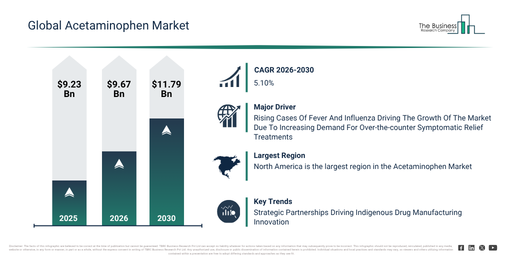
    The acetaminophen market has consistently expanded in recent times. Its value is projected to increase from $9.23 billion in 2025 to $9.67 billion by 2026, demonstrating a compound annual growth rate (CAGR) of 4.8%. Factors contributing to this historical growth include the growing incidence of fever and pain conditions, enhanced availability of over-the-counter drugs, increasing healthcare spending in emerging economies, the spread of retail pharmacy chains, and a rise in self-medication practices.

    The acetaminophen market size is anticipated to undergo significant expansion in the upcoming years. It is predicted to reach $11.79 billion by 2030, demonstrating a compound annual growth rate (CAGR) of 5.1%. This growth during the forecast period can be attributed to the rising demand for advanced drug delivery formulations, increased investments in pharmaceutical manufacturing capacity, a burgeoning aging population experiencing chronic pain conditions, the expanding reach of homecare treatment solutions, and a heightened focus on pediatric and geriatric medications. Prominent trends expected in this period include an escalating demand for over-the-counter pain relief medications, a growing preference for pediatric acetaminophen formulations, increasing adoption of extended-release pain management products, enhanced consumer awareness regarding safe dosage consumption, and a rising demand for convenient oral and liquid dosage forms.

    Download A Free Sample Report For Comprehensive Market Insights:

    https://www.thebusinessresearchcompany.com/sample_request?id=72908604&type=smp

    Acetaminophen Market Demand Drivers: What Is Fueling Industry Growth?

    The acetaminophen market is poised for growth due to the escalating incidence of fever and influenza. These common acute viral infections present with elevated body temperature, body aches, headaches, and respiratory symptoms, frequently requiring symptomatic management. The prevalence of fever and influenza is climbing as a result of seasonal viral outbreaks, evolving climatic conditions, and increased transmission rates in crowded urban settings, contributing to an expanding global health burden. Acetaminophen effectively manages fever and influenza symptoms by lowering body temperature and mitigating pain, making it a widely adopted initial over-the-counter treatment for relief. For instance, in December 2025, the Health Security Agency, a UK-based government agency, observed an upward trend in influenza positivity rates, with the weekly average increasing to 21% in week 49 from 17% in the preceding week, signaling a significant rise in influenza activity. Thus, the growing number of fever and influenza cases is a key driver for the acetaminophen market. The acetaminophen market is anticipated to expand as the availability of over-the-counter (OTC) medication increases. OTC medications are products obtainable without a prescription, intended for treating common ailments such as pain, fever, and cold symptoms. The growth in OTC medication usage stems from enhanced consumer awareness, easier access through physical and online pharmacies, and a rising preference for convenient self-care solutions. Acetaminophen plays a vital role within the OTC medication market by delivering effective relief from pain and fever, positioning it as a leading non-prescription analgesic and antipyretic treatment. For instance, in January 2025, the Consumer Healthcare Products Association (CHPA), a US-based trade association, stated that 93% of U. S. adults choose to address minor health concerns with over-the-counter (OTC) medicines before consulting a healthcare professional, with this tendency growing by 8.5% annually. Hence, the increasing prevalence of over-the-counter medication is a significant factor driving the growth of the acetaminophen market.

    Acetaminophen Market Segment Breakdown: Which Categories Generate The Most Revenue?

    The acetaminophen market covered in this report is segmented –

    1) By Product Form: Tablets, Liquid Suspensions, Capsules, Suppositories, Other Product Forms

    2) By Route of Administration: Oral, Parenteral, Other Routes of Administration

    3) By Application: Pain Management, Fever Reduction, Other Applications

    4) By End User: Hospitals, Clinics, Homecare Settings, Other End Users

    Subsegments:

    1) By Tablets: Immediate Release Tablets, Extended Release Tablets, Chewable Tablets, Effervescent Tablets, Orally Disintegrating Tablets

    2) By Liquid Suspensions: Sugar-Based Suspensions, Sugar-Free Suspensions, Flavored Suspensions, Antipyretic Suspensions, Pediatric Suspensions

    3) By Capsules: Soft Gelatin Capsules, Hard Gelatin Capsules, Extended Release Capsules, Delayed Release Capsules, Enteric Coated Capsules

    4) By Suppositories: Pediatric Suppositories, Adult Suppositories, Rectal Pain Relief Suppositories, Fever Relief Suppositories, Extended Release Suppositories

    5) By Other Product Forms: Powders For Oral Suspension, Oral Granules, Topical Gels, Transdermal Patches, Lozenges

    Acetaminophen Market Innovation Trends: Which Developments Are Transforming The Industry?

    Leading firms within the acetaminophen market are embracing strategic collaborations to improve technological integration and broaden their market presence. Such partnerships generally involve joint efforts between multiple entities, pooling their resources, knowledge, and work to meet shared targets or aims. As an illustration, in January 2025, an India-based scientific body, the Council of Scientific and Industrial Research, together with Satya Deeptha Pharmaceuticals Ltd., an India-based producer of active pharmaceutical ingredients, successfully created a completely homegrown manufacturing method for paracetamol (acetaminophen). This innovation facilitates complete domestic production through the use of locally obtained intermediates, thereby decreasing dependence on foreign sources and boosting operational efficiency. It also ensures top-tier output, strengthens the reliability of supply, and decreases manufacturing expenses. Although implementing this on a large scale might necessitate significant capital outlay and process refinement, this advancement represents a crucial stride towards greater self-sufficiency and environmental responsibility in the production of acetaminophen.

    Acetaminophen Market Key Players And Strategic Industry Positioning

    Major companies operating in the acetaminophen market are Bayer AG, Sanofi S. A., Abbott Laboratories, GSK plc, Teva Pharmaceutical Industries Ltd., Sun Pharmaceutical Industries Limited, Perrigo Company plc, Mallinckrodt Pharmaceuticals plc, Seqens SAS, Granules India Limited, Aarti Drugs Limited, IOL Chemicals and Pharmaceuticals Limited, Farmson Basic Drugs Private Limited, Amol Pharmaceuticals Private Limited, Sri Krishna Pharmaceuticals Limited, Anqiu Lu’an Pharmaceutical Co. Ltd., Anhui BBCA Likang Pharmaceutical Co. Ltd., Hebei Jiheng Pharmaceutical Co. Ltd., Atabay Kimya Sanayi ve Ticaret A. S., Changshu Huagang Pharmaceutical Co. Ltd.

    Access The Complete Acetaminophen Market Report:

    https://www.thebusinessresearchcompany.com/report/acetaminophen-market-report

    #Acetaminophen Market Largest Region: Which Geography Holds The Highest Market Share?

    North America was the largest region in the acetaminophen market in 2025. Asia-Pacific is expected to be the fastest-growing region in the forecast period. The regions covered in the acetaminophen market report are Asia-Pacific, South East Asia, Western Europe, Eastern Europe, North America, South America, Middle East and Africa.

    Get in touch with us:

    The Business Research Company: https://www.thebusinessresearchcompany.com/

    Americas: +1 310-496-7795

    Asia: +44 7882 955267 & +91 8897263534

    Europe: +44 7882 955267

    Email us at: marketing@tbrc.info

    Follow us on:

    LinkedIn: https://in.linkedin.com/company/the-business-research-company

    YouTube: https://www.youtube.com/channel/UC24_fI0rV8cR5DxlCpgmyFQ

    Global Market Model: https://www.thebusinessresearchcompany.com/global-market-model

  • Viral Arthritis Vaccine  Market Trends Are Creating New Opportunities For Industry Leaders

    Viral Arthritis Vaccine Market Trends Are Creating New Opportunities For Industry Leaders

    Through market attractiveness analysis, total addressable market evaluation, company benchmarking matrices, interactive Excel dashboards, expanded supply chain intelligence, emerging startup coverage, and detailed product insights, The Business Research Company’s 2026 market reports provide more actionable and strategically valuable research.

    Viral Arthritis Vaccine Market Size Forecast: How Large Could The Market Become By 2030?

    The viral arthritis vaccine market has expanded significantly in recent years. This market is projected to expand from $6.66 billion in 2025 to $7.36 billion in 2026, driven by a compound annual growth rate (CAGR) of 10.6%. Its historical expansion can be attributed to several factors, including the history of chikungunya outbreaks, advancements in vaccine platforms, global immunization programs, research into zoonotic viruses, and public health preparedness efforts.

    The viral arthritis vaccine market size is anticipated to expand rapidly over the next few years, reaching $11.09 billion by 2030, at a compound annual growth rate (CAGR) of 10.8%. The projected increase in this period can be linked to the development of next generation vaccine platforms, the growing danger posed by arboviruses, swifter clinical trials, increased exposure due to global travel, and the wider adoption of preventive immunization. Significant trends during the forecast period involve mrna based viral arthritis vaccines, the use of recombinant vector vaccine platforms, multivalent arthritogenic virus vaccines, innovative rapid response vaccine design, and adjuvanted immunogenic formulations.

    Download A Free Sample Report For Comprehensive Market Insights:

    https://www.thebusinessresearchcompany.com/sample.aspx?id=33349&type=smp&utm_source=Blogs&utm_medium=Paid&utm_campaign=Jul_PR

    #Viral Arthritis Vaccine Market Growth Drivers And Industry Catalysts

    The increasing prevalence of mosquito-borne viral infections is projected to drive the expansion of the viral arthritis vaccine market in the coming years. These infections involve diseases transmitted to humans through the bite of infected mosquitoes, including chikungunya, Zika, and dengue viruses, which can manifest as symptoms like fever, joint pain, rash, and, in some instances, enduring complications such as viral arthritis. The rise in mosquito-borne viral infections is attributed to climate change, leading to warmer temperatures and altered rainfall patterns that extend mosquito habitats and breeding cycles. A viral arthritis vaccine assists in mitigating mosquito-borne viral infections by preventing initial infection and the progression of diseases caused by viruses that induce joint inflammation, thereby reducing transmission risk and the overall disease burden in affected populations. For instance, in 2024, the World Health Organization (WHO), a Switzerland-based intergovernmental organization, reported over 7.6 million cases globally by April, which is triple the number recorded during the same period in 2023, with transmission continuing to spread across more than 90 countries. Therefore, the escalating incidence of mosquito-borne viral infections is propelling growth in the viral arthritis vaccine market.

    Viral Arthritis Vaccine Market Segmentation And Category Breakdown

    The viral arthritis vaccine market covered in this report is segmented –

    1) By Type: Viral Arthritis Vaccine, Live; Viral Arthritis Vaccine, Inactivated

    2) By Virus Targeted: Chikungunya Virus; Rubella Virus; Parvovirus; Other Viral Arthritis-Causing Viruses

    3) By Application: Farms; Individual

    4) By End-User: Hospitals And Clinics; Vaccination Centers; Homecare; Government Programs

    Subsegments:

    1) By Viral Arthritis Vaccine, Live: Single Dose; Combination Dose; Recombinant Live Vaccine

    2) By Viral Arthritis Vaccine, Inactivated: Whole Virus Inactivated Vaccine; Split Virus Inactivated Vaccine; Adjuvanted Inactivated Vaccine

    #Viral Arthritis Vaccine Market Trends Influencing Long-Term Demand

    Leading companies in the viral arthritis vaccine market are prioritizing the development of innovative vaccine candidates, such as live-attenuated and next-generation chikungunya vaccines. This initiative aims to address the growing necessity for effective prevention against viral-induced joint pain and long-term arthritic complications, particularly for vulnerable populations. Live-attenuated and next-generation chikungunya vaccines represent advanced formulations engineered to prevent chikungunya virus infection by eliciting strong and enduring immune responses. Live-attenuated vaccines achieve this by employing weakened forms of the virus to closely mimic natural infection and provide durable protection, while next-generation vaccines utilize modern platforms like viral vectors, recombinant proteins, or novel attenuation technologies to enhance safety, immunogenicity, and broader applicability across populations. For instance, in June 2025, Bavarian Nordic A/S, a Denmark-based biotechnology company, initiated a Phase 3 clinical study of its chikungunya vaccine specifically for children. This move is designed to extend protection to pediatric populations in endemic regions, where early-life exposure can result in a significant disease burden. The progression to late-stage clinical evaluation demonstrates increasing confidence in the vaccine’s safety and immunogenicity profile and highlights continuous efforts to broaden age indications, strengthen population-level immunity, and diminish the global long-term impact of chikungunya-associated viral arthritis.

    Viral Arthritis Vaccine Market Competitive Analysis Of Major Industry Participants

    Major companies operating in the viral arthritis vaccine market are Bavarian Nordic A/S, Serum Institute of India Private Limited, Valneva SE, Bharat Biotech International Limited, Panacea Biotec Ltd., The Biologicals and Vaccines Institute of Southern Africa (Pty) Ltd.

    Access The Complete Viral Arthritis Vaccine Market Report:

    https://www.thebusinessresearchcompany.com/report/viral-arthritis-vaccine-market-report?utm_source=Blogs&utm_medium=Paid&utm_campaign=Jul_PR

    Viral Arthritis Vaccine Market Regional Outlook: Where Are The Largest Opportunities Located?

    North America was the largest region in the viral arthritis vaccine market in 2025. Asia-Pacific is expected to be the fastest-growing region in the forecast period. The regions covered in the viral arthritis vaccine market report are Asia-Pacific, South East Asia, Western Europe, Eastern Europe, North America, South America, Middle East, Africa.

    Get in touch with us:

    The Business Research Company: https://www.thebusinessresearchcompany.com/

    Americas: +1 310-496-7795

    Asia: +44 7882 955267 & +91 8897263534

    Europe: +44 7882 955267

    Email us at: marketing@tbrc.info

    Follow us on:

    LinkedIn: https://in.linkedin.com/company/the-business-research-company

    YouTube: https://www.youtube.com/channel/UC24_fI0rV8cR5DxlCpgmyFQ

    Global Market Model: https://www.thebusinessresearchcompany.com/global-market-model
  • Targeted LNPs For Extrahepatic Delivery  Market Forecast Highlights Expansion From $2.19 Billion To $4.68 Billion Through 2030

    Targeted LNPs For Extrahepatic Delivery Market Forecast Highlights Expansion From $2.19 Billion To $4.68 Billion Through 2030

    Enhanced with market attractiveness analysis, total addressable market evaluation, company benchmarking matrices, interactive Excel dashboards, expanded supply chain intelligence, emerging startup coverage, and detailed product insights, The Business Research Company’s 2026 market reports deliver more actionable and strategically valuable research.

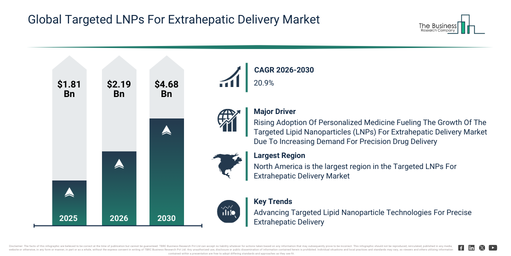
    Targeted LNPs For Extrahepatic Delivery Market Expected To Reach $4.68 Billion By 2030 At 20.9% CAGR

    The targeted lnps for extrahepatic delivery market size has experienced significant expansion recently. This market is set to increase from $1.81 billion in 2025 to $2.19 billion in 2026, with a compound annual growth rate (CAGR) of 20.7%. Factors contributing to its historical growth include the achievements of hepatic LNP delivery systems, the proliferation of mRNA vaccine platforms, the widening scope of nanomedicine research, an uptick in gene therapy trials, and the increasing complexities associated with biologic drug delivery.

    The targeted lnps for extrahepatic delivery market is poised for substantial expansion over the next few years. This market is forecast to ascend to $4.68 billion by 2030, demonstrating a compound annual growth rate (CAGR) of 20.9%. The projected increase during the forecast period is propelled by factors such as a burgeoning pipeline of RNA therapeutics, an escalating need for tissue-targeted delivery, the proliferation of precision drug delivery platforms, heightened research into oncology nanoparticles, and an uptick in biotech delivery partnerships. Prominent trends anticipated in the forecast timeframe involve extrahepatic targeted LNP formulations, ligand-directed nanoparticle delivery, RNA delivery systems tailored for specific tissues, sophisticated ionizable lipid designs, and modular targeted nanocarrier platforms.

    Download A Free Sample Report For Comprehensive Market Insights:

    https://www.thebusinessresearchcompany.com/sample.aspx?id=33338&type=smp&utm_source=Blogs&utm_medium=Paid&utm_campaign=Jul_PR

    Targeted LNPs For Extrahepatic Delivery Market Expansion Supported By Key Demand Factors

    The expanding need for personalized medicine (PM) is anticipated to fuel the expansion of the market for targeted lipid nanoparticles (LNPs) used in extrahepatic delivery in the future. Personalized medicine (PM) involves medical treatments designed specifically for an individual’s genetic makeup, disease attributes, or biological markers to optimize treatment effectiveness and reduce adverse reactions. Developments in molecular diagnostics, the discovery of biomarkers, and drug development based on precision are speeding up the embrace of personalized treatments. Targeted lipid nanoparticles are essential for facilitating personalized medicine by enabling the exact delivery of therapeutic agents to particular tissues or cell types, including those outside the liver, thus improving therapeutic efficacy and safety. As an illustration, the U.S. Food and Drug Administration, according to the Personalized Medicine Coalition, a US-based hospital and health care organization, sanctioned 16 new personalized treatments for rare disease patients in 2023, an increase from six in 2022. Consequently, the increasing demand for personalized medicine (PM) is propelling the growth of the targeted lipid nanoparticles (LNPs) for extrahepatic delivery market.

    Targeted LNPs For Extrahepatic Delivery Market Categorization By Product Type And Application

    The targeted lnps for extrahepatic delivery market covered in this report is segmented –

    1) By Product Type: Ionizable Lipid-Based Lipid Nanoparticles; Cationic Lipid-Based Lipid Nanoparticles; Polyethylene Glycol-Coated Lipid Nanoparticles; Other Lipid Nanoparticle Formulations

    2) By Therapeutic Area: Oncology; Infectious Diseases; Genetic Disorders; Metabolic Diseases; Other Therapeutic Area

    3) By Application: Gene Therapy; Messenger Ribonucleic Acid Vaccines; Small Interfering Ribonucleic Acid Delivery; Protein Delivery; Other Application

    4) By End-User: Pharmaceutical Companies; Biotechnology Companies; Academic and Research Institutes; Other End-Users

    Subsegments:

    1) By Ionizable Lipid-Based Lipid Nanoparticles: Single Chain Ionizable Lipids; Multi-Chain Ionizable Lipids; Functionalized Ionizable Lipids

    2) By Cationic Lipid-Based Lipid Nanoparticles: Quaternary Ammonium Cationic Lipids; Permanent Cationic Lipids; Helper Lipids in Cationic Formulations

    3) By Polyethylene Glycol-Coated Lipid Nanoparticles: Polyethylene Glycolylated Lipids with Different Chain Lengths; Polyethylene Glycol-Lipid Conjugates with Targeting Ligands; Polyethylene Glycolylated Lipid Combinations for Stability

    4) By Other Lipid Nanoparticle Formulations: Sphingomyelin-Based Lipid Nanoparticles; Biodegradable Lipid Nanoparticles; Modular or Hybrid Lipid Nanoparticles; Stimulus-Responsive Lipid Nanoparticles

    Targeted LNPs For Extrahepatic Delivery Market Growth Trends Influencing Competitive Dynamics

    Leading companies in the targeted lipid nanoparticles (LNPs) for extrahepatic delivery market are concentrating on technological breakthroughs in targeted LNP platforms, including DARPin-conjugated systems, to enhance the precise delivery of substances to immune and tissue-specific cells. DARPin-conjugated lipid nanoparticles are characterized as LNPs functionalized with Designed Ankyrin Repeat Proteins (DARPins), which are engineered binding proteins capable of highly specific interactions with selected cell surface receptors. This specific targeting ability facilitates improved cellular uptake by particular cell types, supporting extrahepatic applications such as immune cell modulation and tissue-specific gene delivery. For example, in November 2025, Acuitas Therapeutics Inc., a Canada-based biotechnology company, unveiled next-generation LNP technologies designed for extrahepatic targeting. These included platforms for T-lymphocyte delivery, mucous-penetrant formulations targeting airway epithelial cells, and a pre-formed vesicle manufacturing method intended to improve scalability, cost efficiency, and storage stability. These innovations expand the potential applications of mRNA-LNP therapeutics beyond the liver, supporting broader use cases in gene editing, vaccines, and personalized medicine.

    Targeted LNPs For Extrahepatic Delivery Market Company Landscape And Strategic Competition

    Major companies operating in the targeted lnps for extrahepatic delivery market are Pfizer Inc., Sanofi S.A., Merck KGaA, FUJIFILM Pharmaceuticals U.S.A. Inc., Evonik Industries AG, Recipharm, CordenPharma International GmbH, Ardena Nanomedicines, Arcturus Therapeutics Holdings Inc., BIOVECTRA Inc., Ascendia Pharmaceuticals Inc., ABITEC Corporation, Creative Biolabs, Genevant Sciences GmbH, Polymun Scientific Immunbiologische Forschung GmbH, ST Pharm, eTheRNA immunotherapies NV, NanoVation Therapeutics, DIANT Pharma, Curapath, Phosphorex Inc.

    Access The Complete Targeted LNPs For Extrahepatic Delivery Market Report:

    https://www.thebusinessresearchcompany.com/report/targeted-lnps-for-extrahepatic-delivery-market-report?utm_source=Blogs&utm_medium=Paid&utm_campaign=Jul_PR

    Targeted LNPs For Extrahepatic Delivery Market Regional Outlook: Where Are The Largest Opportunities Located?

    North America was the largest region in the targeted lipid nanoparticles (LNPs) for extrahepatic delivery market in 2025. Asia-Pacific is expected to be the fastest-growing region in the forecast period. The regions covered in the targeted lnps for extrahepatic delivery market report are Asia-Pacific, South East Asia, Western Europe, Eastern Europe, North America, South America, Middle East, Africa.

    Get in touch with us:

    The Business Research Company: https://www.thebusinessresearchcompany.com/

    Americas: +1 310-496-7795

    Asia: +44 7882 955267 & +91 8897263534

    Europe: +44 7882 955267

    Email us at: marketing@tbrc.info

    Follow us on:

    LinkedIn: https://in.linkedin.com/company/the-business-research-company

    YouTube: https://www.youtube.com/channel/UC24_fI0rV8cR5DxlCpgmyFQ

    Global Market Model: https://www.thebusinessresearchcompany.com/global-market-model
  • Systemic Amyloidosis Therapeutic  Market Expected To Reach $8.88 Billion By 2030 As Growth Accelerates At 9.4% CAGR

    Systemic Amyloidosis Therapeutic Market Expected To Reach $8.88 Billion By 2030 As Growth Accelerates At 9.4% CAGR

    Through market attractiveness analysis, total addressable market evaluation, company benchmarking matrices, interactive Excel dashboards, expanded supply chain intelligence, emerging startup coverage, and detailed product insights, The Business Research Company’s 2026 market reports provide more actionable and strategically valuable research.

    #Systemic Amyloidosis Therapeutic Market Size And Revenue Forecast Through 2030

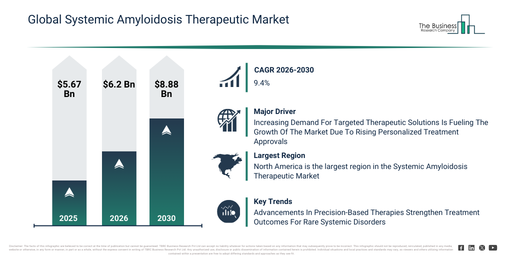
    The systemic amyloidosis therapeutic market size has shown strong expansion in recent years. It is projected to increase from $5.67 billion in 2025 to $6.2 billion in 2026, achieving a compound annual growth rate (CAGR) of 9.2%. The historical growth of this market was driven by factors such as the past underdiagnosis of amyloidosis, the reliance on chemotherapy regimens, the expansion of hematology treatment centers, heightened rare disease awareness, and the early incorporation of proteasome inhibitors.

    The therapeutic market for systemic amyloidosis is projected to experience robust expansion over the coming years. This market is set to reach $8.88 billion by 2030, demonstrating a compound annual growth rate (CAGR) of 9.4%. This anticipated growth during the forecast period stems from several factors, including an increase in rare disease diagnosis rates, the proliferation of targeted biologic medications, a rise in approvals for gene silencing therapies, the expansion of specialized clinic networks, and more robust incentives for orphan drugs. Key trends anticipated within this period encompass targeted amyloid protein stabilizer drugs, gene silencing therapies for amyloidosis, treatments based on monoclonal antibodies, combination regimen protocols, and organ-specific supportive drug strategies.

    Download A Free Sample Report For Comprehensive Market Insights:

    https://www.thebusinessresearchcompany.com/sample.aspx?id=33337&type=smp&utm_source=Blogs&utm_medium=Paid&utm_campaign=Jul_PR

    #Systemic Amyloidosis Therapeutic Market Growth Drivers And Industry Catalysts

    The increasing application of personalized medicine methodologies is projected to stimulate the growth of the systemic amyloidosis therapeutic market in the coming years. Personalized medicine represents a medical strategy that customizes treatment and prevention plans based on an individual’s genetic makeup, biomarkers, and distinct disease characteristics. Demand for personalized medicine is escalating due to advancements in genomic and biomarker technologies, which allow clinicians to precisely identify disease drivers and tailor treatments, thereby enhancing efficacy and reducing adverse effects for individual patients. The integration of personalized medicine heightens the need for systemic amyloidosis therapeutics, as patients with systemic amyloidosis exhibit diverse amyloid subtypes (e.g., AL, ATTR) and genetic variations. Therefore, effective treatment necessitates therapies specifically formulated to target the patient’s unique disease profile, ensuring maximum efficacy and minimal side effects. For instance, in April 2025, the US-based nonprofit advocacy and educational organization, Personalized Medicine Coalition (PMC), reported that in 2023, the FDA approved 16 new personalized treatments for rare disease patients, an increase from six in 2022. Consequently, the expanding adoption of personalized medicine approaches is fueling the growth of the systemic amyloidosis therapeutic market.

    Systemic Amyloidosis Therapeutic Market Segment Analysis And Revenue Opportunities

    The systemic amyloidosis therapeutic market covered in this report is segmented –

    1) By Product Type: Small Molecule Drugs; Biologic Therapies; Monoclonal Antibodies; Chemotherapy Based Regimens; Targeted Therapies; Supportive Treatments

    2) By Formulation: Tablets; Capsules; Injection

    3) By Route of Administration: Oral; Intravenous; Subcutaneous

    4) By Distribution Channel: Hospital Pharmacies; Retail Pharmacies; Online Pharmacies

    5) By End User: Hospitals; Specialty Clinics; Specialty Pharmacies; Research and Academic Institutes; Other End Users

    Subsegments:

    1) By Small Molecule Drugs: Proteasome Inhibitors; Stabilizers of Transthyretin Protein; Amyloid Fibril Disruptors; Immunomodulatory Small Molecules

    2) By Biologic Therapies: Recombinant Protein Therapies; Gene Silencing Biologic Agents; Plasma Derived Biologic Products

    3) By Monoclonal Antibodies: Anti Amyloid Fibril Antibodies; Anti Light Chain Antibodies; Targeted Clearance Antibodies

    4) By Chemotherapy Based Regimens: Alkylating Agent Based Regimens; Proteasome Inhibitor Based Chemotherapy; Combination Chemotherapy Protocols

    5) By Targeted Therapies: Targeted Light Chain Suppression Therapies; Targeted Transthyretin Reduction Therapies; Organ Specific Targeted Treatments

    6) By Supportive Treatments: Cardiac Supportive Therapies; Renal Supportive Therapies; Neurological Symptom Management Therapies; Nutritional and Palliative Care Therapies

    #Systemic Amyloidosis Therapeutic Market Trends Influencing Long-Term Demand

    Major companies operating in the systemic amyloidosis therapeutic market are concentrating on creating advanced targeted treatment approaches, including RNA interference-based therapies, to address the underlying genetic causes of protein misfolding disorders, curb disease progression, and improve long-term patient outcomes. RNA interference-based therapies function by selectively silencing disease-causing genes, thereby diminishing the production of harmful proteins responsible for systemic organ damage. For instance, in March 2025, Alnylam Pharmaceuticals, a US-based biotechnology company, launched AMVUTTRA. AMVUTTRA provides a targeted, disease-modifying treatment for adults with transthyretin amyloidosis with cardiomyopathy (ATTR-CM). Developed by Alnylam Pharmaceuticals, it is the first RNAI therapeutic shown to reduce cardiovascular death, hospitalizations, and urgent heart failure visits in this patient population. AMVUTTRA works by rapidly suppressing transthyretin production at the source, directly addressing the underlying cause of amyloid deposition. It demonstrates consistent benefits across cardiovascular outcomes, functional capacity, and quality of life.

    Systemic Amyloidosis Therapeutic Market Leading Players Shaping Industry Direction

    Major companies operating in the systemic amyloidosis therapeutic market are Johnson & Johnson Services Inc., Sanofi SA, Novartis Plc, AstraZeneca Plc, GSK Plc, Novo Nordisk A/S, Takeda Pharmaceutical Company Limited, Regeneron Pharmaceuticals Inc., Alnylam Pharmaceuticals Inc., Ionis Pharmaceuticals, Arcturus Therapeutics Inc, Prothena Biosciences, Fortress Biotech Inc., Intellia Therapeutics Inc., Zentalis Pharmaceuticals Inc., BridgeBio Pharma Inc., Neurimmune AG, HaemaLogix Pty Ltd., Attralus Inc., and Oncopeptides AB.

    Access The Complete Systemic Amyloidosis Therapeutic Market Report:

    https://www.thebusinessresearchcompany.com/report/systemic-amyloidosis-therapeutic-market-report?utm_source=Blogs&utm_medium=Paid&utm_campaign=Jul_PR

    Systemic Amyloidosis Therapeutic Market Geographic Landscape: Which Region Dominates Industry Growth?

    North America was the largest region in the systemic amyloidosis therapeutic market in 2025. Asia-Pacific is expected to be the fastest-growing region in the forecast period. The regions covered in the systemic amyloidosis therapeutic market report are Asia-Pacific, South East Asia, Western Europe, Eastern Europe, North America, South America, Middle East, Africa.

    Get in touch with us:

    The Business Research Company: https://www.thebusinessresearchcompany.com/

    Americas: +1 310-496-7795

    Asia: +44 7882 955267 & +91 8897263534

    Europe: +44 7882 955267

    Email us at: marketing@tbrc.info

    Follow us on:

    LinkedIn: https://in.linkedin.com/company/the-business-research-company

    YouTube: https://www.youtube.com/channel/UC24_fI0rV8cR5DxlCpgmyFQ

    Global Market Model: https://www.thebusinessresearchcompany.com/global-market-model
  • Super Generics  Market Forecast Signals New Revenue Opportunities Through 2030

    Super Generics Market Forecast Signals New Revenue Opportunities Through 2030

    Through market attractiveness analysis, total addressable market evaluation, company benchmarking matrices, interactive Excel dashboards, expanded supply chain intelligence, emerging startup coverage, and detailed product insights, The Business Research Company’s 2026 market reports provide more actionable and strategically valuable research.

    Super Generics Market Revenue Outlook: What CAGR Is Expected Through 2030?

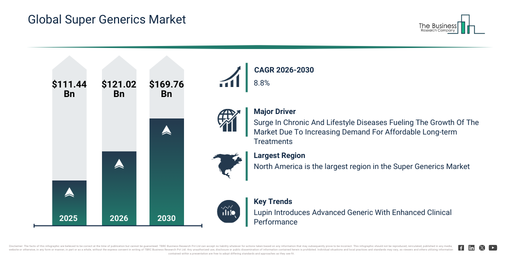
    The super generics market size has experienced strong growth in recent years. It is anticipated to increase from $111.44 billion in 2025 to $121.02 billion in 2026, achieving a compound annual growth rate (CAGR) of 8.6%. The expansion witnessed in the historic period is attributable to the patent expiry of branded drugs, growth in generic drug demand, rising healthcare cost pressure, expansion of generic manufacturing, and supportive generic substitution policies.

    The super generics market is projected to experience robust expansion in the upcoming years. Its valuation is anticipated to reach $169.76 billion by 2030, demonstrating a compound annual growth rate (CAGR) of 8.8%. This projected increase over the forecast duration stems from factors such as an expanding pipeline of specialty generics, an escalating need for enhanced generic drugs, the development of sophisticated formulation technologies, increased emphasis by payers on affordable treatments, and the rising prevalence of chronic illnesses. Key trends during this period are expected to encompass the creation of value-added reformulations, an increase in extended-release generic medications, growing acceptance of abuse-deterrent formulations, the diversification of drug delivery methods, and a rise in patient-centric dosage forms.

    Download A Free Sample Report For Comprehensive Market Insights:

    https://www.thebusinessresearchcompany.com/sample.aspx?id=33331&type=smp&utm_source=Blogs&utm_medium=Paid&utm_campaign=Jul_PR

    #Super Generics Market Growth Factors: Which Forces Are Supporting Market Expansion?

    The escalating occurrence of chronic and lifestyle diseases is poised to stimulate the expansion of the super generics market in the coming years. These are persistent health conditions, such as diabetes, cardiovascular disorders, and obesity, influenced by elements like diet, physical inactivity, stress, an aging population, and better disease diagnosis. The increasing strain from these conditions has spurred a continuous need for long-term and cost-effective treatment methods. Super generics are instrumental in managing chronic and lifestyle diseases by providing economical, high-quality iterations of complex and value-added medications, especially in therapeutic fields like cardiovascular, metabolic, and respiratory care. This enhances patient access and supports sustained disease management. As an illustration, recent data cited by Wecovr, derived from UK health statistics, reveals that more than 17 million adults in England – over one-third of the population – live with two or more chronic conditions, with a rising percentage of individuals in their 40s and 50s affected. Thus, the escalating prevalence of chronic and lifestyle diseases is a significant factor driving the growth of the super generics market.

    Super Generics Market Segment Breakdown: Which Categories Generate The Most Revenue?

    The super generics market covered in this report is segmented –

    1) By Product Type: Generic Pharmaceuticals; Branded Generic Pharmaceuticals; Over-the-Counter (OTC) Products

    2) By Therapeutic Area: Cardiovascular; Oncology; Neurology; Diabetes; Anti-infective

    3) By Formulation Type: Tablet; Capsule; Injectable; Topical; Syrup

    4) By Distribution Channel: Hospital Pharmacies; Retail Pharmacies; Online

    5) By End User: Hospitals and Specialty Clinics; Homecare Settings; Ambulatory Surgical Centers

    Subsegments:

    1) By Generic Pharmaceuticals: Immediate Release Formulations; Modified Release Formulations; Fixed Dose Combination Products; Improved Bioavailability Formulations

    2) By Branded Generic Pharmaceuticals: Value Added Formulations; Patient Friendly Dosage Forms; Therapeutically Enhanced Products; Reformulated Established Medicines

    3) By Over The Counter Products: Pain Relief Products; Cold and Cough Remedies; Digestive Health Products; Vitamin and Mineral Supplements

    Super Generics Market Industry Trends: What Changes Are Reshaping Demand?

    Major companies operating in the super generics market are increasingly focusing on the development of advanced solutions, such as enhanced formulation platforms, to improve drug performance and deliver cost-effective therapeutic alternatives. These enhanced formulation platforms involve modifying existing drug formulations or delivery mechanisms to optimize parameters like bioavailability, stability, dosing convenience, or patient adherence, while maintaining established safety and efficacy profiles. Such approaches enable companies to differentiate products from conventional generics and address unmet clinical needs without developing entirely new molecules. For instance, Lupin, an India-based pharmaceutical company, has expanded its super generics portfolio in the United States by introducing value-added formulations targeting high-demand therapeutic segments. Such products are designed to offer improved clinical performance compared to standard generics while remaining economically attractive for healthcare systems and providers. By leveraging advanced formulation technologies, robust quality controls, and regulatory-compliant manufacturing processes, companies aim to ensure consistent potency, safety, and reliability.

    Super Generics Market Key Players And Strategic Industry Positioning

    Major companies operating in the super generics market are Teva Pharmaceutical Industries Ltd, Viatris Inc., Baxter International Inc., Sandoz Group AG, Sun Pharmaceutical Industries Ltd, Aurobindo Pharma, Dr. Reddy’s Laboratories Ltd, Cipla Ltd, Hikma Pharmaceuticals, Lupin Limited, Zydus Lifesciences., Glenmark Pharmaceuticals, Torrent Pharmaceuticals, Ascendia Pharmaceutical Solutions, Accord Healthcare, Neurelis Inc, Latitude Pharmaceuticals, Biovista Inc, CritiTech Inc, Crossject SA

    Access The Complete Super Generics Market Report:

    https://www.thebusinessresearchcompany.com/report/super-generics-market-report?utm_source=Blogs&utm_medium=Paid&utm_campaign=Jul_PR

    Super Generics Market Geographic Analysis: Where Is Demand Growing The Fastest?

    North America was the largest region in the super generics market in 2025. Asia-Pacific is expected to be the fastest-growing region in the forecast period. The regions covered in the super generics market report are Asia-Pacific, South East Asia, Western Europe, Eastern Europe, North America, South America, Middle East, Africa.

    Get in touch with us:

    The Business Research Company: https://www.thebusinessresearchcompany.com/

    Americas: +1 310-496-7795

    Asia: +44 7882 955267 & +91 8897263534

    Europe: +44 7882 955267

    Email us at: marketing@tbrc.info

    Follow us on:

    LinkedIn: https://in.linkedin.com/company/the-business-research-company

    YouTube: https://www.youtube.com/channel/UC24_fI0rV8cR5DxlCpgmyFQ

    Global Market Model: https://www.thebusinessresearchcompany.com/global-market-model