Category: Pharmaceuticals

  • In Silico Drug Discovery  Market Growth Through 2030 Creates New Strategic Opportunities

    In Silico Drug Discovery Market Growth Through 2030 Creates New Strategic Opportunities

    Through market attractiveness analysis, total addressable market evaluation, company benchmarking matrices, interactive Excel dashboards, expanded supply chain intelligence, emerging startup coverage, and detailed product insights, The Business Research Company’s 2026 market reports provide more actionable and strategically valuable research.

    In Silico Drug Discovery Market Growth Potential: How Will Market Size Change Through 2030?

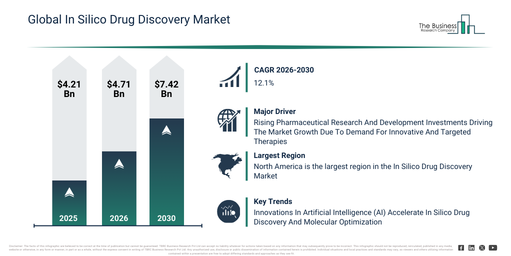
    The in silico drug discovery market has experienced rapid expansion in recent years. This market is projected to increase from $4.21 billion in 2025 to $4.71 billion in 2026, demonstrating a compound annual growth rate (CAGR) of 11.8%. Historically, this growth was influenced by rising pharmaceutical R&D costs, the early adoption of molecular modeling tools, advancements in computational chemistry capabilities, the expansion of genomic databases, and increasing collaboration between academia and industry.

    The in silico drug discovery market is projected to experience swift expansion in the coming years. Its valuation is anticipated to reach $7.42 billion by 2030, progressing at a compound annual growth rate (CAGR) of 12.1%. This expansion over the forecast period stems from factors such as the increasing need for quicker drug development cycles, the growing application of machine learning within pharmacology, the broadening scope of cloud computing in life sciences, a heightened emphasis on precision medicine, and the broader embrace of in silico clinical trial simulations. Key developments anticipated during this period encompass a greater utilization of AI-driven virtual screening platforms, the escalating uptake of cloud-based drug discovery software, the advancing integration of predictive toxicology models, the enlargement of target identification and validation tools, and a sharpened focus on data-driven lead optimization.

    Download A Free Sample Report For Comprehensive Market Insights:

    https://www.thebusinessresearchcompany.com/sample.aspx?id=33181&type=smp&utm_source=Blogs&utm_medium=Paid&utm_campaign=Jul_PR

    #In Silico Drug Discovery Market Growth Drivers And Industry Catalysts

    The expanding pharmaceutical research and development investments are poised to fuel the growth of the in silico drug discovery market. These investments represent the resources companies commit to discovering, developing, and testing new, safe, and effective drugs and therapies. Their increase is driven by a rising demand for innovative therapies to combat complex and chronic diseases, leading companies to invest more in targeted and effective treatments to fulfill unmet medical needs. Such investments accelerate in silico drug discovery by enhancing candidate screening and optimization, allowing companies to prioritize the most promising compounds, thereby boosting research efficiency and maximizing returns on R&D expenditure. For instance, according to the Office for National Statistics, a UK-based government agency, the UK government’s net spending on research and development (R&D) rose to $22.1 billion (£17.4 billion) in 2023, up from $20.45 billion (£16.1 billion) in 2022, marking an 8.2% increase. Consequently, the escalating pharmaceutical research and development investments are a primary driver for the in silico drug discovery market.

    In Silico Drug Discovery Market Segment Analysis And Revenue Opportunities

    The in silico drug discovery market covered in this report is segmented –

    1) By Component: Software; Services

    2) By Deployment: On-Premise; Cloud-Based Source

    3) By Drug-Discovery Phase: Target Identification And Validation; Hit Identification; Lead Optimization; Candidate Validation

    4) By Therapeutic Area: Oncology; Neurology; Cardiovascular; Infectious Diseases; Metabolic Disorders

    5) By End User: Pharmaceutical Companies; Biotechnology Firms; Academic And Research Institutes; Contract Research Organization

    Subsegments:

    1) By Software: Molecular Modeling And Simulation; Pharmacophore Modeling Software; Virtual Screening Tools; Quantitative Structure Activity Relationship Modeling; Protein Structure Prediction Software; Ligand Based Design Software; De Novo Drug Design Software; Cheminformatics And Data Analysis Tools

    2) By Services: Algorithm Development Services; Model Customization And Tailoring Services; Data Analytics Consulting Services; Computational Screening And Outsourcing Services; Protein Modeling And Simulation Services; Virtual Library Design Services; Target Assessment And Validation Services; Lead Optimization And Candidate Evaluation Services

    #In Silico Drug Discovery Market Trends Influencing Long-Term Demand

    Companies operating within the in silico drug discovery market are prioritizing the development of advanced solutions, including pharmaceutical-grade AI benchmarking platforms, to elevate the accuracy, efficiency, and predictive capabilities of computational drug design and candidate screening processes. A pharmaceutical-grade AI benchmarking platform involves stringent evaluation of AI models using established pharmaceutical datasets to guarantee precision, dependability, and regulatory adherence in drug discovery. As an illustration, in January 2026, Insilico Medicine Inc., a clinical-stage biotechnology company based in the US, launched its Science MMAI Gym, which is a specialized training platform designed to optimize large language models (LLMs) for drug discovery applications. This platform aims to refine frontier LLMs into pharmaceutical-grade AI engines for drug discovery, leveraging proprietary datasets from chemistry, biology, and clinical domains. Its purpose is to facilitate pharmaceutical superintelligence by boosting model performance up to 10x on benchmarks like TargetBench and ClinBench through multi-task fine-tuning and reinforcement learning. Its main advantages encompass versatile single-model reasoning, adaptable membership programs with laboratory validation, and expedited in silico tasks such as retrosynthesis and trial prediction.

    In Silico Drug Discovery Market Leading Players Shaping Industry Direction

    Major companies operating in the in silico drug discovery market are NVIDIA Corporation, Dassault Systèmes, Clarivate, Schrödinger Inc., XtalPi Inc., Cresset Discovery Ltd., BenevolentAI, Simulations Plus Inc., Owkin Inc., Insilico Medicine, Recursion Pharmaceuticals Inc., Ardigen S.A., Aqemia, Iktos SA., Enveda Therapeutics Inc., Atomwise Inc., Turbine Simulated Cell Technologies Ltd., Optibrium Ltd., PostEra Inc., Insitro Inc., BioMap Inc., BioSolveIT GmbH, Quris Technologies LTD., and Nabla Bio Inc.

    Access The Complete In Silico Drug Discovery Market Report:

    https://www.thebusinessresearchcompany.com/report/in-silico-drug-discovery-market-report?utm_source=Blogs&utm_medium=Paid&utm_campaign=Jul_PR

    In Silico Drug Discovery Market Regional Analysis: Which Region Leads By Revenue?

    North America was the largest region in the in silico drug discovery market in 2025. Asia-Pacific is expected to be the fastest-growing region in the forecast period. The regions covered in the in silico drug discovery market report are Asia-Pacific, South East Asia, Western Europe, Eastern Europe, North America, South America, Middle East, Africa.

    Get in touch with us:

    The Business Research Company: https://www.thebusinessresearchcompany.com/

    Americas: +1 310-496-7795

    Asia: +44 7882 955267 & +91 8897263534

    Europe: +44 7882 955267

    Email us at: marketing@tbrc.info

    Follow us on:

    LinkedIn: https://in.linkedin.com/company/the-business-research-company

    YouTube: https://www.youtube.com/channel/UC24_fI0rV8cR5DxlCpgmyFQ

    Global Market Model: https://www.thebusinessresearchcompany.com/global-market-model
  • Human Osteoblasts  Market Trends Are Creating New Opportunities For Industry Leaders

    Human Osteoblasts Market Trends Are Creating New Opportunities For Industry Leaders

    Enhanced with market attractiveness analysis, total addressable market evaluation, company benchmarking matrices, interactive Excel dashboards, expanded supply chain intelligence, emerging startup coverage, and detailed product insights, The Business Research Company’s 2026 market reports deliver more actionable and strategically valuable research.

    Human Osteoblasts Market CAGR Analysis And Future Market Development

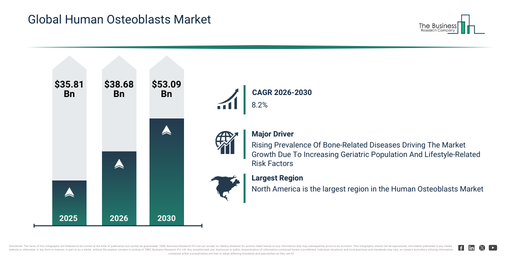
    The human osteoblasts market has experienced substantial growth in recent years. It is anticipated to expand from $35.81 billion in 2025 to $38.68 billion in 2026, demonstrating a compound annual growth rate (CAGR) of 8.0%. The expansion observed in the past can be attributed to advancements in cell culture technologies, the increasing prevalence of bone-related disorders, a rise in orthopedic research funding, the broadening of musculoskeletal research programs, and the availability of commercial cell lines.

    The human osteoblasts market is projected to experience substantial expansion in the coming years, reaching a valuation of $53.09 billion by 2030, driven by a compound annual growth rate (CAGR) of 8.2%. This anticipated growth is primarily driven by factors such as the increasing integration of regenerative medicine therapies, a surge in investments directed towards bone tissue engineering, the broadening scope of stem cell research applications, an escalating need for customized orthopedic treatments, and their expanding utility in drug screening platforms. Key developments shaping this forecast period encompass the escalating utilization of osteoblast cell cultures in various research endeavors, a heightened demand for studies focused on bone regeneration, their widening integration into orthopedic and spine research, the further advancement of tissue engineering applications, and a reinforced emphasis on developing and employing high-quality cell lines.

    Download A Free Sample Report For Comprehensive Market Insights:

    https://www.thebusinessresearchcompany.com/sample.aspx?id=33173&type=smp&utm_source=Blogs&utm_medium=Paid&utm_campaign=Jul_PR

    Human Osteoblasts Market Growth Drivers: What Factors Are Accelerating Expansion?

    The increasing occurrence of bone-related illnesses is anticipated to boost the human osteoblasts market. These conditions affect bone density, structure, and strength, leading to increased fragility and a higher risk of fractures. The prevalence of bone-related diseases is growing due to aging populations in developed nations, as advancing age naturally leads to decreased bone density and increased susceptibility to conditions such as osteoporosis and osteopenia. Human osteoblasts help prevent bone loss and maintain skeletal integrity by driving bone formation, promoting mineralization, and regulating the balance between bone resorption and deposition, thereby safeguarding against osteoporosis, fractures, and other metabolic bone disorders. For instance, in February 2024, according to Arthritis Australia, an Australia-based non-profit organization, by 2040, the number of Australians with osteoarthritis (OA) is projected to rise to 3.11 million, a 32% increase from 2.35 million in 2025, corresponding to an additional 762,515 people living with OA in the country. Therefore, the rising prevalence of bone-related diseases is driving the growth of the human osteoblasts market. The expanding elderly demographic is set to drive the human osteoblasts market forward. The geriatric population refers to individuals aged 65 and above who experience higher risks of bone density loss, fractures, and other skeletal conditions that require targeted therapeutic interventions. This population is growing primarily due to improved life expectancy resulting from better healthcare, which enables people to live longer and reach advanced ages. Human osteoblasts assist older adults by initiating new bone formation, sustaining bone density, and aiding skeletal repair, thereby mitigating age-related bone deterioration, lowering fracture susceptibility, and maintaining mobility and overall quality of life for seniors. For example, in June 2025, according to the United States Census Bureau, a US-based federal statistical agency, the population aged 65 and older grew to 61.2 million in 2024, marking a 3.1% increase from 2023. Thus, the increasing geriatric population is stimulating the growth of the human osteoblasts market.

    Human Osteoblasts Market Segmentation Trends And Revenue Drivers

    The human osteoblasts market covered in this report is segmented –

    1) By Product: Human Cell Culture; Osteoblast Cell Lines

    2) By Application: Traumatic Injuries; Road Accidents; Regeneration Surgeries; Orthopedics; Musculoskeletal And Spine; Neurology

    3) By End User: Hospitals; Specialty Clinics; Ambulatory Surgical Centers

    Subsegments:

    1) By Human Cell Culture: Primary Human Osteoblast Cultures; Cryopreserved Human Osteoblast Cells; Fresh Human Osteoblast Cultures; Customized Human Cell Culture Media; Specialized Human Cell Culture Reagents

    2) By Osteoblast Cell Lines: Immortalized Osteoblast Cell Lines; Genetically Modified Osteoblast Cell Lines; Disease Specific Osteoblast Cell Lines; Research Grade Osteoblast Cell Lines; Commercially Available Osteoblast Cell Lines

    #Human Osteoblasts Market Industry Leaders: Which Organizations Are Driving Competition?

    Major companies operating in the human osteoblasts market are Merck KGaA, Thermo Fisher Scientific Inc., Lonza Group Ltd., STEMCELL Technologies Inc., Takara Bio Inc., BioIVT LLC, American Type Culture Collection, Cyagen Biosciences Inc., CELLINK AB, ScienCell Research Laboratories Inc., ZenBio Inc., Creative Bioarray Inc., PromoCell GmbH, ReproCELL Inc., MatTek Life Sciences Inc., Axol Bioscience Ltd., iXCells Biotechnologies USA Inc., Cell Applications Inc., Neuromics Inc., and Innoprot S.L.

    Access The Complete Human Osteoblasts Market Report:

    https://www.thebusinessresearchcompany.com/report/human-osteoblasts-market-report?utm_source=Blogs&utm_medium=Paid&utm_campaign=Jul_PR

    Human Osteoblasts Market Regional Outlook: Where Are The Largest Opportunities Located?

    North America was the largest region in the human osteoblasts market in 2025. Asia-Pacific is expected to be the fastest-growing region in the forecast period. The regions covered in the human osteoblasts market report are Asia-Pacific, South East Asia, Western Europe, Eastern Europe, North America, South America, Middle East, Africa.

    Get in touch with us:

    The Business Research Company: https://www.thebusinessresearchcompany.com/

    Americas: +1 310-496-7795

    Asia: +44 7882 955267 & +91 8897263534

    Europe: +44 7882 955267

    Email us at: marketing@tbrc.info

    Follow us on:

    LinkedIn: https://in.linkedin.com/company/the-business-research-company

    YouTube: https://www.youtube.com/channel/UC24_fI0rV8cR5DxlCpgmyFQ

    Global Market Model: https://www.thebusinessresearchcompany.com/global-market-model
  • High-Throughput Screening Services  Market Outlook Highlights The Next Major Growth Opportunities

    High-Throughput Screening Services Market Outlook Highlights The Next Major Growth Opportunities

    Through market attractiveness analysis, total addressable market evaluation, company benchmarking matrices, interactive Excel dashboards, expanded supply chain intelligence, emerging startup coverage, and detailed product insights, The Business Research Company’s 2026 market reports provide more actionable and strategically valuable research.

    High-Throughput Screening Services Market Value Expansion And Long-Term Growth Outlook

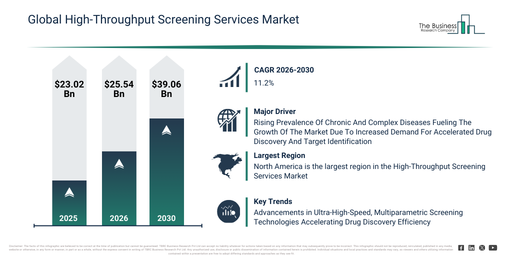
    The high-throughput screening services market has seen rapid growth in its size over recent years. Projections indicate it will expand from $23.02 billion in 2025 to $25.54 billion by 2026, reflecting a compound annual growth rate (CAGR) of 11.0%. The expansion observed in prior periods can be attributed to the broadening of pharmaceutical R&D initiatives, the increasing adoption of combinatorial chemistry libraries, the integration of automated liquid handling systems, a rising need for swift target identification, and the accessibility of extensive compound libraries.

    The high-throughput screening services market is projected for significant expansion in the coming years, reaching $39.06 billion by 2030, exhibiting a compound annual growth rate (CAGR) of 11.2%. This growth during the forecast period is attributable to several factors, including heightened investments in precision drug discovery, an increased emphasis on biologics and intricate targets, the expansion of personalized medicine research, the expanding application of AI-assisted screening workflows, and the growing trend of outsourcing screening services to Contract Research Organizations (CROs). Key trends anticipated in this period encompass the increased deployment of automated robotic screening platforms, a surging demand for ultra-high-throughput screening services, wider acceptance of cell-based and label-free assays, the broadening of AI-driven data analysis within drug discovery, and a sharpened focus on expediting hit-to-lead identification.

    Download A Free Sample Report For Comprehensive Market Insights:

    https://www.thebusinessresearchcompany.com/sample.aspx?id=33169&type=smp&utm_source=Blogs&utm_medium=Paid&utm_campaign=Jul_PR

    #High-Throughput Screening Services Market Growth Drivers And Industry Catalysts

    The increasing occurrence of chronic and complex diseases is anticipated to boost the high-throughput screening services market. These conditions are characterized as long-term illnesses involving multiple biological pathways, requiring extended management rather than quick fixes. Their rising prevalence stems significantly from aging global populations, lifestyle-related risk factors, and enhanced disease detection, collectively escalating the burden on healthcare systems and stimulating the need for advanced therapeutic solutions. High-throughput screening (HTS) services facilitate research into chronic and complex diseases by enabling rapid and simultaneous testing of numerous compounds against biological targets. This capability accelerates initial drug discovery, refines target identification, and supports the development of more effective treatments for multifactorial, long-duration conditions. For instance, in April 2025, according to the Centers for Disease Control and Prevention (CDC), a US-based federal agency, approximately 76.4% of adults in the United States, representing more than 194 million people—reported having at least one chronic condition in 2023, while 51.4% (around 131 million people) reported multiple chronic conditions. Thus, the expanding presence of chronic and complex diseases is fueling the growth of the high-throughput screening services market.

    High-Throughput Screening Services Market Categorization By Product Type And Application

    The high-throughput screening services market covered in this report is segmented –

    1) By Products And Services: Instruments; Reagents And Kits; Services

    2) By Technology: Ultra-high-throughput Screening; Cell-based Assays; Lab-on-a-chip; Label-free Technology

    3) By Application: Target Identification; Primary Screening; Toxicology

    4) By End User: Pharmaceutical And Biotechnology Firms; Academia And Research Institutes; Contract Research Organizations

    Subsegments:

    1) By Instruments: Automated Screening Systems; Liquid Handling Systems; Detection And Imaging Systems; Data Acquisition Systems

    2) By Reagents And Kits: Assay Reagents; Screening Kits; Cell Based Reagents; Detection Reagents

    3) By Services: Assay Development And Optimization Services; Primary Screening Services; Hit Confirmation And Validation; Data Analysis And Bioinformatics Support; Specialized Screens; Project Management And Reporting

    #High-Throughput Screening Services Market Trends Influencing Long-Term Demand

    Major companies in the high-throughput screening services market are concentrating on innovations in miniaturized and high-density assays, such as ultra-high screening speed with up to 27 detection channels, to enable faster, large-scale multiparametric analysis and accelerate drug discovery workflows. Ultra-high screening speed with up to 27 detection channels signifies the capability to rapidly analyze numerous biological parameters concurrently, thereby increasing data output and efficiency in high-throughput screening studies. For instance, in May 2024, Evotec SE, a Germany-based drug discovery and development services company, unveiled comprehensive high-throughput screening services as a component of its integrated early discovery platform. Evotec conducts extensive biochemical and cell-based HTS campaigns utilizing highly automated, miniaturized assay systems and advanced data analytics. The company assists pharmaceutical and biotechnology partners by promptly identifying hit compounds and optimizing lead selection, consequently speeding up early-stage drug discovery programs.

    High-Throughput Screening Services Market Company Landscape And Strategic Competition

    Major companies operating in the high-throughput screening services market are Thermo Fisher Scientific Inc., Danaher Corporation, Merck KGaA, Corning Incorporated, Eurofins Scientific SE, Charles River Laboratories International Inc., Revvity Inc., Bio-Rad Laboratories Inc., Hamilton Company, Tecan Group Ltd., GenScript Biotech Corporation, Promega Corporation, Molecular Devices LLC, ShanghAI Medicilon Inc., Sygnature Discovery Limited, Selvita S.A., Cayman Chemical Company, Creative Bioarray Inc., Axxam S.p.A., Axcelead Inc., Creative Biolabs Inc., Enamine Ltd., Aurora Biomed Inc.

    Access The Complete High-Throughput Screening Services Market Report:

    https://www.thebusinessresearchcompany.com/report/high-throughput-screening-services-market-report?utm_source=Blogs&utm_medium=Paid&utm_campaign=Jul_PR

    High-Throughput Screening Services Market Geographic Distribution And Regional Opportunities

    North America was the largest region in the high-throughput screening services market in 2025. Asia-Pacific is expected to be the fastest-growing region in the forecast period. The regions covered in the high-throughput screening services market report are Asia-Pacific, South East Asia, Western Europe, Eastern Europe, North America, South America, Middle East, Africa.

    Get in touch with us:

    The Business Research Company: https://www.thebusinessresearchcompany.com/

    Americas: +1 310-496-7795

    Asia: +44 7882 955267 & +91 8897263534

    Europe: +44 7882 955267

    Email us at: marketing@tbrc.info

    Follow us on:

    LinkedIn: https://in.linkedin.com/company/the-business-research-company

    YouTube: https://www.youtube.com/channel/UC24_fI0rV8cR5DxlCpgmyFQ

    Global Market Model: https://www.thebusinessresearchcompany.com/global-market-model
  • Hemophilia B Gene Therapy  Market Forecast Highlights Expansion From $0.71 Billion To $2.01 Billion Through 2030

    Hemophilia B Gene Therapy Market Forecast Highlights Expansion From $0.71 Billion To $2.01 Billion Through 2030

    Delivering more actionable and strategically valuable research, The Business Research Company’s 2026 market reports feature market attractiveness analysis, total addressable market evaluation, company benchmarking matrices, interactive Excel dashboards, expanded supply chain intelligence, emerging startup coverage, and detailed product insights.

    Hemophilia B Gene Therapy Market Size Forecast: How Large Could The Market Become By 2030?

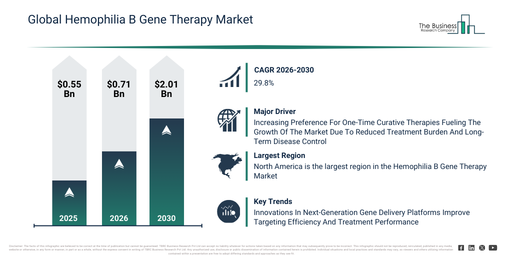
    The hemophilia b gene therapy market has experienced considerable expansion in recent years. It is anticipated to grow from $0.55 billion in 2025 to $0.71 billion in 2026, at a compound annual growth rate (CAGR) of 29.6%. This past growth can be attributed to several factors including advances in gene delivery technologies, improved understanding of hemophilia b genetics, the broadening of clinical research programs, the escalating burden of lifelong replacement therapy, and the establishment of specialized treatment centers.

    The hemophilia b gene therapy market size is projected to experience substantial growth in the coming years, with expectations to reach $2.01 billion by 2030, demonstrating a compound annual growth rate (CAGR) of 29.8%. This expansion during the forecast period is attributed to increasing approvals of gene therapies, rising investments in rare disease treatments, a growing demand for durable therapeutic outcomes, the expansion of advanced manufacturing capabilities, and an increase in patient access programs. Major trends anticipated in this period include enhanced progress in one-time curative therapies, a greater focus on long-term factor IX expression, continuous optimization of AAV vector design, the expansion of personalized gene therapy approaches, and improved regulatory alignment for advanced therapies.

    Download A Free Sample Report For Comprehensive Market Insights:

    https://www.thebusinessresearchcompany.com/sample.aspx?id=33162&type=smp&utm_source=Blogs&utm_medium=Paid&utm_campaign=Jul_PR

    Hemophilia B Gene Therapy Market Demand Drivers: What Is Fueling Industry Growth?

    The growing volume of gene therapy clinical trials is anticipated to boost the expansion of the hemophilia B gene therapy market in the future. These trials are investigative studies aimed at assessing the safety, effectiveness, and lasting therapeutic promise of gene-based treatments in human subjects. The surge in gene therapy clinical trials stems from increased capital inflow from biopharmaceutical firms, progress in viral vector technology, supportive regulatory environments, and the imperative to tackle rare genetic conditions with significant unmet medical demands, such as hemophilia B. Hemophilia B gene therapy gains advantages from this expanding field of clinical trials by utilizing existing clinical development routes, regulatory know-how, and production capabilities linked to in vivo gene delivery methods. For instance, in January 2026, according to Bioindustry Association (BIA) a UK-based national trade association, UK recorded 193 ongoing advanced therapy clinical trials, broadly similar to 2024, with over half in early stages, around 80% commercially sponsored, and more than 80% focused on gene therapies, evenly split between ex vivo and in vivo approaches. Consequently, the increasing number of cell and gene therapy clinical trials is stimulating growth in the hemophilia B gene therapy market.

    Hemophilia B Gene Therapy Market Segment Breakdown: Which Categories Generate The Most Revenue?

    The hemophilia b gene therapy market covered in this report is segmented –

    1) By Therapy: Adeno-Associated Viral (AAV) Vectors; Lentiviral Vectors; Retroviral Vectors

    2) By Disease Severity: Severe Hemophilia B; Moderate Hemophilia B; Mild Hemophilia B

    3) By Treatment Type: On-Demand; Cure; Prophylaxis

    4) By Patient Age Group: Geriatric; Adults; Pediatric

    5) By Distribution Channel: Hospital Pharmacies; Specialty Pharmacies

    Subsegments:

    1) By Adeno-Associated Viral Vectors: Single-Stranded Adeno-Associated Viral Vectors; Self-Complementary Adeno-Associated Viral Vectors; Tissue Specific Promoter Adeno-Associated Viral Vectors; Capsid Modified Adeno-Associated Viral Vectors

    2) By Lentiviral Vectors: Integrating Lentiviral Vectors; Non-Integrating Lentiviral Vectors; Self-Inactivating Lentiviral Vectors; Pseudotyped Lentiviral Vectors

    3) By Retroviral Vectors: Gamma Retroviral Vectors; Alpha Retroviral Vectors; Moloney Murine Leukemia Virus Retroviral Vectors; Spumaretroviral Vectors

    Hemophilia B Gene Therapy Market Innovation Trends: Which Developments Are Transforming The Industry?

    Leading companies in the hemophilia B gene therapy market are increasingly prioritizing innovations in advanced gene delivery platforms, particularly optimized adeno-associated virus (AAV)–based vector systems, to enhance treatment effectiveness and patient safety. These refined AAV-based vector systems function as sophisticated viral delivery mechanisms, enabling the efficient and controlled transfer of functional clotting factor IX genes into target hepatocytes, thereby supporting long-term endogenous factor production. For instance, in May 2023, CSL Behring GmbH, a Germany-based biotechnology company, obtained European Commission approval for HEMGENIX, which is the first gene therapy authorized for the treatment of hemophilia B. HEMGENIX is prescribed for adult patients with severe or moderate hemophilia B who do not have a history of factor IX inhibitors and is designed to reduce or eliminate the requirement for routine factor IX prophylaxis. Results from the pivotal HOPE-B clinical study showed that a significant number of treated patients no longer needed regular factor IX infusions, demonstrating a sustained therapeutic benefit and emphasizing the potential of next-generation AAV-based gene therapies in long-term disease management.

    Hemophilia B Gene Therapy Market Key Players And Strategic Industry Positioning

    Major companies operating in the hemophilia b gene therapy market are REGENXBIO Inc., Pfizer Inc., Bayer Aktiengesellschaft (Bayer AG), Thermo Fisher Scientific Inc., Takeda Pharmaceutical Company Limited, Merck KGaA, CSL Behring LLC, Lonza Group AG, Alnylam Pharmaceuticals Inc., GenScript ProBio LLC, Ultragenyx Pharmaceutical Inc., Takara Bio Inc., Sangamo Therapeutics Inc., Precision BioSciences Inc., Synthego Corporation, MaxCyte Inc., uniQure N.V., Freeline Therapeutics Ltd., Be Biopharma Inc., Asklepios BioPharmaceutical Inc., Cellectis S.A.

    Access The Complete Hemophilia B Gene Therapy Market Report:

    https://www.thebusinessresearchcompany.com/report/hemophilia-b-gene-therapy-market-report?utm_source=Blogs&utm_medium=Paid&utm_campaign=Jul_PR

    Hemophilia B Gene Therapy Market Regional Outlook: Where Are The Largest Opportunities Located?

    North America was the largest region in the hemophilia b gene therapy market in 2025. Asia-Pacific is expected to be the fastest-growing region in the forecast period. The regions covered in the hemophilia b gene therapy market report are Asia-Pacific, South East Asia, Western Europe, Eastern Europe, North America, South America, Middle East, Africa.

    Get in touch with us:

    The Business Research Company: https://www.thebusinessresearchcompany.com/

    Americas: +1 310-496-7795

    Asia: +44 7882 955267 & +91 8897263534

    Europe: +44 7882 955267

    Email us at: marketing@tbrc.info

    Follow us on:

    LinkedIn: https://in.linkedin.com/company/the-business-research-company

    YouTube: https://www.youtube.com/channel/UC24_fI0rV8cR5DxlCpgmyFQ

    Global Market Model: https://www.thebusinessresearchcompany.com/global-market-model
  • Group B Streptococcus Infection Treatment  Market Set To Grow From $1.36 Billion In 2026 To $1.89 Billion By 2030 At A CAGR Of 8.6%

    Group B Streptococcus Infection Treatment Market Set To Grow From $1.36 Billion In 2026 To $1.89 Billion By 2030 At A CAGR Of 8.6%

    Delivering more actionable and strategically valuable research, The Business Research Company’s 2026 market reports feature market attractiveness analysis, total addressable market evaluation, company benchmarking matrices, interactive Excel dashboards, expanded supply chain intelligence, emerging startup coverage, and detailed product insights.

    Group B Streptococcus Infection Treatment Market Revenue Outlook: What CAGR Is Expected Through 2030?

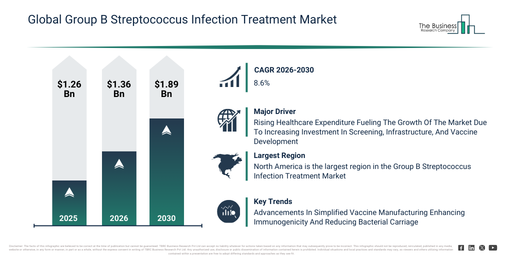
    The market size for Group B Streptococcus infection treatment has seen considerable growth in recent years. It is anticipated to expand from $1.26 billion in 2025 to $1.36 billion in 2026, demonstrating a compound annual growth rate (CAGR) of 8.3%. The expansion observed in prior periods can be attributed to a heightened awareness of neonatal infections, the extension of prenatal care programs, the widespread application of beta-lactam antibiotics, an increase in hospital-based screening protocols, and the accessibility of microbiological testing services.

    The group b streptococcus infection treatment market size is set to experience robust expansion over the forthcoming years. It is projected to reach $1.89 billion by 2030, exhibiting a compound annual growth rate (CAGR) of 8.6%. This anticipated growth during the forecast period is fueled by the accelerating development of gbs vaccines, increasing uptake of point-of-care diagnostics, a heightened focus on antimicrobial resistance management, the expansion of molecular testing infrastructure, and a growing emphasis on preventive maternal healthcare. Significant trends anticipated in this period encompass the rising adoption of rapid molecular diagnostic testing, a greater concentration on prenatal gbs screening programs, the expanding implementation of antibiotic stewardship protocols, the broadening of pipeline therapies aimed at gbs prevention, and enhanced monitoring of maternal and neonatal outcomes.

    Download A Free Sample Report For Comprehensive Market Insights:

    https://www.thebusinessresearchcompany.com/sample.aspx?id=33144&type=smp&utm_source=Blogs&utm_medium=Paid&utm_campaign=Jul_PR

    Group B Streptococcus Infection Treatment Market Opportunity Drivers: What Is Creating New Revenue Potential?

    The increasing healthcare expenditure is anticipated to drive the expansion of the group B streptococcus infection treatment market in the future. Healthcare expenditure encompasses all financial resources allocated to medical services, preventative measures, pharmaceutical products, healthcare facilities, and associated health activities aimed at preserving or enhancing public health. This expenditure is escalating primarily due to the growing occurrence of chronic and infectious diseases, which in turn fuels consistent demand for extended treatments, sophisticated therapies, and ongoing medical attention. Increased healthcare spending bolsters the group B Streptococcus infection treatment by facilitating greater investment in prenatal screening, clinical infrastructure, and vaccine research. These collective efforts lead to better early detection, prevention, and successful management of GBS infections in both mothers and newborns. For example, in April 2025, as reported by the Office for National Statistics, a UK-based government organization, total healthcare spending saw a rise of 6.5% from 2023 to 2024, demonstrating an acceleration when compared to the 6.3% growth recorded in 2023. Consequently, the upward trend in healthcare expenditure is a significant factor propelling the growth of the group B streptococcus infection treatment market.

    #Group B Streptococcus Infection Treatment Market Segment Landscape And Growth Potential

    The group b streptococcus infection treatment market covered in this report is segmented –

    1) By Treatment Type: Antibiotic Therapy; Intravenous Immunoglobulin (IVIG); Experimental Therapies

    2) By Drug Class: Beta-Lactam Antibiotic; Clindamycin And Alternatives; Pipeline Therapies

    3) By Route of Administration: Oral Administration; Intravenous Administration; Topical Application

    4) By Patient Type: Newborns; Pregnant Women; Immunocompromised Patients; Elderly Population

    5) By End User: Hospitals; Clinics; Research Institutions; Home Care Settings

    Subsegments:

    1) By Antibiotic Therapy: Penicillin Based Antibiotics; Cephalosporin Antibiotics; Macrolide Antibiotics; Aminoglycoside Antibiotics

    2) By Intravenous Immunoglobulin (IVIG): Standard Polyclonal Immunoglobulin; High Dose Immunoglobulin Therapy; Adjunctive Immunoglobulin Therapy

    3) By Experimental Therapies: Vaccine Based Therapies; Monoclonal Antibody Therapies; Bacteriophage Therapies; Immunomodulatory Therapies

    Group B Streptococcus Infection Treatment Market Innovation Trends Driving Future Development

    Major companies operating in the group B streptococcus infection treatment market are focusing on developing innovative products, such as polysaccharide conjugate vaccines, to reduce asymptomatic bacterial carriage. These immunizations, known as polysaccharide conjugate vaccines, chemically link bacterial surface sugars to a carrier protein to enhance immune recognition and generate a strong, long-lasting protective response, especially in infants and young children. For instance, in September 2023, Omniose, a US-based biotechnology company, announced a grant award of up to $3.0 million from the National Institute of Allergy and Infectious Diseases at the U.S. National Institutes of Health to support the development of a Group B Streptococcus (GBS) vaccine. The vaccine’s unique feature lies in its aim to achieve high efficacy through a highly simplified manufacturing approach. Omniose’s platform leverages synthetic biology and a one-step enzymatic process within a single re-engineered E. coli cell to produce GBS polysaccharide conjugate vaccines, eliminating conventional chemical conjugation steps. This process preserves 100% of sialic acid residues on each capsular polysaccharide, a factor shown to be critical for inducing strong functional antibody responses against specific GBS serotypes.

    Group B Streptococcus Infection Treatment Market Competitive Landscape: Who Are The Leading Companies?

    Major companies operating in the group b streptococcus infection treatment market are Merck & Co. Inc., Pfizer Inc., Sanofi S.A., Novartis AG, GlaxoSmithKline plc, Biological E. Limited, Serum Institute of India Pvt. Ltd., Walvax Biotechnology Co. Ltd., Vaxcyte Inc., Bharat Biotech International Limited, Clover Biopharmaceuticals Ltd., Biovac Institute (Pty) Ltd., Inventprise Inc., BioNet Asia Co. Ltd., GeneOne Life Science Inc., Alopexx Enterprises LLC, Wellstat Vaccines LLC, MinervaX ApS, and ShanghAI Zerun Biotechnology Co. Ltd.

    Access The Complete Group B Streptococcus Infection Treatment Market Report:

    https://www.thebusinessresearchcompany.com/report/group-b-streptococcus-infection-treatment-market-report?utm_source=Blogs&utm_medium=Paid&utm_campaign=Jul_PR

    Group B Streptococcus Infection Treatment Market Geographic Analysis: Where Is Demand Growing The Fastest?

    North America was the largest region in the group B streptococcus infection treatment market in 2025. Asia-Pacific is expected to be the fastest-growing region in the forecast period. The regions covered in the group b streptococcus infection treatment market report are Asia-Pacific, South East Asia, Western Europe, Eastern Europe, North America, South America, Middle East, Africa.

    Get in touch with us:

    The Business Research Company: https://www.thebusinessresearchcompany.com/

    Americas: +1 310-496-7795

    Asia: +44 7882 955267 & +91 8897263534

    Europe: +44 7882 955267

    Email us at: marketing@tbrc.info

    Follow us on:

    LinkedIn: https://in.linkedin.com/company/the-business-research-company

    YouTube: https://www.youtube.com/channel/UC24_fI0rV8cR5DxlCpgmyFQ

    Global Market Model: https://www.thebusinessresearchcompany.com/global-market-model
  • Good Manufacturing Practice (GMP) Services For Cell And Gene Therapy  Market Growth Is Reshaping Competitive Advantage Across The Industry

    Good Manufacturing Practice (GMP) Services For Cell And Gene Therapy Market Growth Is Reshaping Competitive Advantage Across The Industry

    Through market attractiveness analysis, total addressable market evaluation, company benchmarking matrices, interactive Excel dashboards, expanded supply chain intelligence, emerging startup coverage, and detailed product insights, The Business Research Company’s 2026 market reports provide more actionable and strategically valuable research.

    Good Manufacturing Practice (GMP) Services For Cell And Gene Therapy Market Size Outlook: How Fast Will Revenue Grow Through 2030?

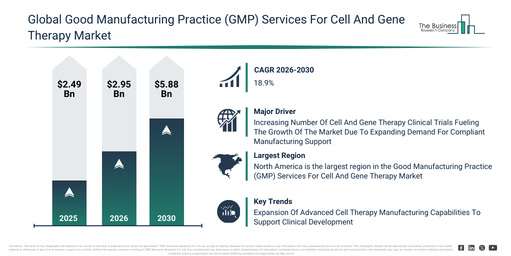
    The good manufacturing practice (gmp) services for cell and gene therapy market has experienced rapid expansion in recent years. This market is set to expand from $2.49 billion in 2025 to $2.95 billion in 2026, achieving a compound annual growth rate (CAGR) of 18.6%. The historical growth of this market can be attributed to several factors, including an increase in clinical trials for advanced therapies, the enlargement of cell therapy research programs, greater regulatory standardization, the establishment of early-stage gmp facilities, and rising investment within biopharmaceutical manufacturing.

    The market for good manufacturing practice (gmp) services in cell and gene therapy is anticipated to experience swift expansion over the coming years. This market is projected to reach $5.88 billion by 2030, exhibiting a compound annual growth rate (CAGR) of 18.9%. This projected expansion is fueled by factors such as the increasing commercialization of gene therapies, a greater need for scalable manufacturing capabilities, the broadening of personalized medicine pipelines, an uptick in outsourcing to CDMOs, and the wider implementation of automated quality control systems. Key trends anticipated during this period involve a heightened demand for commercial-scale manufacturing of cell and gene therapies, an increase in the use of viral vector production services, a stronger emphasis on GMP-compliant automation, the growth of fill-finish and cold chain services, and an increased focus on regulatory compliance.

    Download A Free Sample Report For Comprehensive Market Insights:

    https://www.thebusinessresearchcompany.com/sample.aspx?id=33124&type=smp&utm_source=Blogs&utm_medium=Paid&utm_campaign=Jul_PR

    Good Manufacturing Practice (GMP) Services For Cell And Gene Therapy Market Growth Factors Supporting Long-Term Expansion

    The market for good manufacturing practice (GMP) services catering to cell and gene therapy is anticipated to grow due to a rising number of cell and gene therapy clinical trials. These trials are regulated investigations assessing the safety, effectiveness, and quality of advanced therapies that utilize genetically modified or living cells to address conditions like cancer, rare genetic disorders, and autoimmune diseases. This increase in trials is driven by heightened research and development in advanced therapies, greater financial contributions from biotechnology and pharmaceutical firms, and a growing need for novel treatments for previously unaddressed medical conditions. Since numerous trial sponsors do not possess internal GMP manufacturing capabilities, they increasingly depend on specialized GMP service providers for manufacturing compliance, analytical testing, quality control, and quality assurance. Such services are essential to guarantee a secure, uniform, and prompt provision of clinical-grade materials throughout all trial stages. As an example, the Bioindustry Association (BIA), a national trade association based in the UK, reported 193 active advanced therapy clinical trials in the UK in January 2026, with over half being in early stages and more than 80% specifically targeting gene therapies. Consequently, the rising volume of cell and gene therapy clinical trials is propelling the expansion of the good manufacturing practice (GMP) services for cell and gene therapy market.

    Good Manufacturing Practice (GMP) Services For Cell And Gene Therapy Market Segment Analysis: What Are The Major Market Categories?

    The good manufacturing practice (gmp) services for cell and gene therapy market covered in this report is segmented –

    1) By Service Type: Process Development; Manufacturing; Analytical and Quality Control; Fill-Finish; Other Service Types

    2) By Therapy Type: Cell Therapy; Gene Therapy; Combination Therapy

    3) By Phase: Preclinical; Clinical; Commercial

    4) By End-User: Pharmaceutical and Biotechnology Companies; Academic and Research Institutes; Other End-Users

    Subsegments:

    1) By Process Development: Vector Design Optimization; Cell Line Development; Upstream Process Optimization; Downstream Purification Development; Process Scale Up Studies

    2) By Manufacturing: Clinical Trial Material Production; Commercial Scale Manufacturing; Viral Vector Manufacturing; Plasmid Production Services; Cell Therapy Manufacturing

    3) By Analytical and Quality Control: Method Development And Validation; Potency And Efficacy Testing; Safety And Sterility Testing; Stability And Shelf Life Studies; Release Testing Services

    4) By Fill-Finish: Aseptic Filling Services; Vial And Syringe Filling; Lyophilization Services; Packaging And Labeling; Cold Chain Handling

    5) By Other Service Types: Regulatory Support Services; Technology Transfer Services; Supply Chain Management; Storage And Distribution; Post Manufacturing Support

    Good Manufacturing Practice (GMP) Services For Cell And Gene Therapy Market Industry Trends Shaping Future Revenue Growth

    Leading companies operating within the good manufacturing practice (GMP) services for cell and gene therapy market are increasingly prioritizing the expansion of advanced manufacturing capabilities, particularly cell therapy manufacturing, to aid regional clinical trials and accelerate the development of therapies. Cell therapy manufacturing involves GMP-compliant processes for the collection, modification, expansion, and formulation of therapeutic cells, ensuring product safety, quality, and clinical effectiveness. For example, in July 2025, AGC Biologics, a US-based contract development and manufacturing organization (CDMO), initiated cell therapy process development and clinical manufacturing services at its Yokohama Technical Center in Japan. This facility provides GMP-compliant production support for preclinical and clinical trials, including CAR-T therapies, induced pluripotent stem cells, and other stem cell platforms. This strategic expansion enhances AGC Biologics’ global GMP footprint across Europe, North America, and Asia, enabling faster and more compliant advancement of cell and gene therapies towards commercialization.

    Good Manufacturing Practice (GMP) Services For Cell And Gene Therapy Market Leading Companies Driving Competitive Growth

    Major companies operating in the good manufacturing practice (gmp) services for cell and gene therapy market are Novartis AG, Boehringer Ingelheim BioXcellence GmbH, Batavia Biosciences B.V., FUJIFILM Diosynth Biotechnologies, AGC Biologics Inc., Lonza Group AG, WuXi AppTec Co. Ltd., BioNTech Innovative Manufacturing Services, Charles River Laboratories International Inc., Catalent Inc., Samsung Biologics Co. Ltd., Miltenyi Biotec GmbH, SK pharmteco Co. Ltd., KBI Biopharma Inc., Oxford Biomedica plc, OmniaBio Inc., RoslinCT Ltd., Pluri CDMO, SCTbio Inc., Made Scientific Inc., ENCell Co. Ltd.

    Access The Complete Good Manufacturing Practice (GMP) Services For Cell And Gene Therapy Market Report:

    https://www.thebusinessresearchcompany.com/report/good-manufacturing-practice-gmp-services-for-cell-and-gene-therapy-market-report?utm_source=Blogs&utm_medium=Paid&utm_campaign=Jul_PR

    Good Manufacturing Practice (GMP) Services For Cell And Gene Therapy Market Largest Region By Revenue And Market Share

    North America was the largest region in the good manufacturing practice (GMP) services for cell and gene therapy market in 2025. Asia-Pacific is expected to be the fastest-growing region in the forecast period. The regions covered in the good manufacturing practice (gmp) services for cell and gene therapy market report are Asia-Pacific, South East Asia, Western Europe, Eastern Europe, North America, South America, Middle East, Africa.

    Get in touch with us:

    The Business Research Company: https://www.thebusinessresearchcompany.com/

    Americas: +1 310-496-7795

    Asia: +44 7882 955267 & +91 8897263534

    Europe: +44 7882 955267

    Email us at: marketing@tbrc.info

    Follow us on:

    LinkedIn: https://in.linkedin.com/company/the-business-research-company

    YouTube: https://www.youtube.com/channel/UC24_fI0rV8cR5DxlCpgmyFQ

    Global Market Model: https://www.thebusinessresearchcompany.com/global-market-model
  • Gene Therapy Bioassays  Market Expansion Is Reshaping Competitive Dynamics Across The Industry

    Gene Therapy Bioassays Market Expansion Is Reshaping Competitive Dynamics Across The Industry

    Enhanced with market attractiveness analysis, total addressable market evaluation, company benchmarking matrices, interactive Excel dashboards, expanded supply chain intelligence, emerging startup coverage, and detailed product insights, The Business Research Company’s 2026 market reports deliver more actionable and strategically valuable research.

    Gene Therapy Bioassays Market Revenue Growth Supported By A CAGR Of 2.62% Through 2030

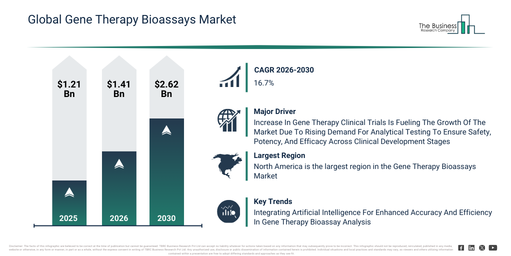
    The gene therapy bioassays market has experienced significant growth in recent years. It is projected to expand from $1.21 billion in 2025 to $1.41 billion in 2026, achieving a compound annual growth rate (CAGR) of 16.5%. The expansion witnessed in previous periods can be attributed to the increase in gene therapy research programs, the scaling up of viral vector manufacturing, a rise in clinical trial activity, the implementation of standardized bioassay protocols, and growing regulatory scrutiny on gene therapy products.

    The gene therapy bioassays market size is set to experience substantial expansion in the upcoming years. It is projected to climb to $2.62 billion by 2030, demonstrating a compound annual growth rate (CAGR) of 16.7%. This anticipated growth is linked to the increasing commercialization of gene therapies, a rising need for high-throughput bioassay solutions, the broadening field of personalized genetic medicine, growing investments in advanced cell and gene therapy pipelines, and a greater emphasis on assay automation and reproducibility. Significant trends expected during this period involve the increasing adoption of cell-based potency assays, a rising demand for viral vector characterization tests, the growing use of automated bioassay platforms, the expansion of regulatory-compliant assay validation, and an enhanced focus on functional gene expression analysis.

    Download A Free Sample Report For Comprehensive Market Insights:

    https://www.thebusinessresearchcompany.com/sample.aspx?id=33119&type=smp&utm_source=Blogs&utm_medium=Paid&utm_campaign=Jul_PR

    Gene Therapy Bioassays Market Growth Momentum: Which Factors Are Influencing Demand?

    An increasing volume of gene therapy clinical trials is projected to stimulate growth in the gene therapy bioassays market. These trials are designed to evaluate the safety, efficacy, and biological performance of gene-based treatments in human subjects. The expansion of these trials is fueled by intensified research and development efforts and rising investment from biopharmaceutical companies aiming to address unmet medical needs via innovative genetic therapies. Gene therapy bioassays facilitate clinical development by offering essential analytical tests to assess biological activity, potency, safety, and mechanism of action at each development stage, with regulatory requirements escalating as programs advance through clinical phases. For instance, in January 2026, the Bioindustry Association (BIA), a UK-based national trade association, reported that the UK had 193 ongoing advanced therapy clinical trials, with over 80% concentrating on gene therapies. Thus, the proliferation of gene therapy clinical trials is a significant driver for the growth of the gene therapy bioassays market.

    Gene Therapy Bioassays Market Segment Performance And Strategic Opportunities

    The gene therapy bioassays market covered in this report is segmented –

    1) By Product Type: Cell-Based Assays; Viral Vector-Based Assays; Non-Viral Vector-Based Assays; Other Product Types

    2) By Service Type: Assay Development Services; Assay Validation Services; Quality Control Testing Services; Regulatory Support Services; Data Analysis And Reporting Services; Custom Bioassay Design Services

    3) By Application: Research And Development; Clinical Testing; Quality Control; Other Applications

    4) By End User: Biotechnology Companies; Pharmaceutical Companies; Contract Research Organizations; Academic And Research Institutes; Regulatory Laboratories

    Subsegments:

    1) By Cell-Based Assays: Reporter Gene Expression Assays; Cell Viability And Cytotoxicity Assays; Transduction Efficiency Assays; Functional Potency Cell Assays; Cellular Uptake And Localization Assays

    2) By Viral Vector-Based Assays: Adeno Associated Virus Vector Assays; Lentiviral Vector Characterization Assays; Retroviral Vector Titer Assays; Vector Genome Integrity Assays; Infectivity And Transduction Assays

    3) By Non-Viral Vector-Based Assays: Plasmid Deoxyribonucleic Acid Delivery Assays; Lipid Nanoparticle Transfection Assays; Polymeric Carrier Efficiency Assays; Physical Gene Delivery Evaluation Assays; Non Viral Vector Stability Assays

    4) By Other Product Types: Immunogenicity Assessment Assays; Biodistribution And Persistence Assays; Safety And Toxicity Bioassays; Analytical Method Development Assays; Custom Gene Therapy Bioassays

    Gene Therapy Bioassays Market Trends Reshaping Industry Growth

    Major companies within the gene therapy bioassays market are increasingly incorporating artificial intelligence and machine learning into bioassay analysis. This integration, notably seen in AI-enabled digital PCR data interpretation, aims to enhance accuracy, reduce experimental variability, accelerate result turnaround, and optimize the assessment of therapeutic efficacy and safety in gene therapy development. AI-powered dPCR data interpretation utilizes advanced algorithms to automate result analysis, differentiate true signals from background noise, and precisely quantify viral genomes or vector copy numbers with minimal human intervention. For instance, in April 2025, QIAGEN N.V., a Germany-based molecular diagnostics company, launched expanded QIAcuity lentivirus solutions, including the QIAcuity RCL Quant Kit and CGT dPCR assays. These solutions feature algorithm-driven absolute quantification, compatibility for multiplex and singleplex assays in vector genome and vector copy number analysis, and software-assisted data analysis workflows designed to support regulatory-compliant decision-making in gene therapy bioassay applications.

    Gene Therapy Bioassays Market Key Players: Which Companies Shape Industry Competition?

    Major companies operating in the gene therapy bioassays market are Boehringer Ingelheim BioXcellence, AGC Biologics, ICON plc, Lonza Group AG, SGS SA, Eurofins Scientific SE, WuXi AppTec, Charles River Laboratories International Inc., Catalent Inc, Recipharm AB, KBI Biopharma, Syngene International Limited, QPS Holdings LLC, BioAgilytix Labs (operationally independent CRO), Oxford Biomedica plc, Viralgen Vector S.L., ProtaGene Inc., Center for Breakthrough Medicines, RoslinCT, Immunologix Labs, Genezen Laboratories

    Access The Complete Gene Therapy Bioassays Market Report:

    https://www.thebusinessresearchcompany.com/report/gene-therapy-bioassays-market-report?utm_source=Blogs&utm_medium=Paid&utm_campaign=Jul_PR

    Gene Therapy Bioassays Market Leading Geography: Which Region Generates The Most Revenue?

    North America was the largest region in the gene therapy bioassays market in 2025. Asia-Pacific is expected to be the fastest-growing region in the forecast period. The regions covered in the gene therapy bioassays market report are Asia-Pacific, South East Asia, Western Europe, Eastern Europe, North America, South America, Middle East, Africa.

    Get in touch with us:

    The Business Research Company: https://www.thebusinessresearchcompany.com/

    Americas: +1 310-496-7795

    Asia: +44 7882 955267 & +91 8897263534

    Europe: +44 7882 955267

    Email us at: marketing@tbrc.info

    Follow us on:

    LinkedIn: https://in.linkedin.com/company/the-business-research-company

    YouTube: https://www.youtube.com/channel/UC24_fI0rV8cR5DxlCpgmyFQ

    Global Market Model: https://www.thebusinessresearchcompany.com/global-market-model
  • G Protein-Coupled Receptor Family C Group 5 Member D (GPRC5D) Targeted Therapies  Market Size Projected To Increase From $0.78 Billion To $2.42 Billion During The Forecast Period

    G Protein-Coupled Receptor Family C Group 5 Member D (GPRC5D) Targeted Therapies Market Size Projected To Increase From $0.78 Billion To $2.42 Billion During The Forecast Period

    Enhanced with market attractiveness analysis, total addressable market evaluation, company benchmarking matrices, interactive Excel dashboards, expanded supply chain intelligence, emerging startup coverage, and detailed product insights, The Business Research Company’s 2026 market reports deliver more actionable and strategically valuable research.

    #G Protein-Coupled Receptor Family C Group 5 Member D (GPRC5D) Targeted Therapies Market Size And Revenue Forecast Through 2030

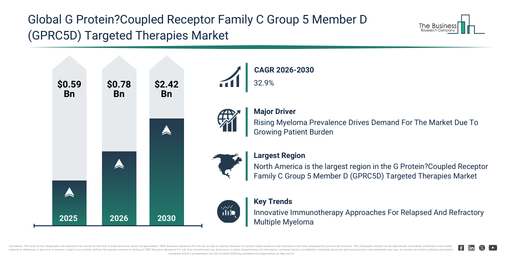
    The g protein-coupled receptor family c group 5 member d (gprc5d) targeted therapies market has seen significant expansion in its size over recent years. This market is projected to expand from $0.59 billion in 2025 to $0.78 billion in 2026, demonstrating a compound annual growth rate (CAGR) of 32.7%. The growth observed historically is largely attributable to advancements in targeted cancer therapy research, an increasing prevalence of multiple myeloma cases, the expansion of monoclonal antibody development programs, improvements in clinical trial infrastructure, and rising investments in oncology drug discovery.

    The g protein-coupled receptor family c group 5 member d (gprc5d) targeted therapies market is set for significant expansion in the coming years, with projections indicating it will reach $2.42 billion by 2030, exhibiting a compound annual growth rate (CAGR) of 32.9%. This projected growth during the forecast period is primarily fueled by a surge in regulatory approvals for targeted biologics, the escalating demand for individualized cancer treatments, the ongoing development of next-generation immunotherapy platforms, increased financial commitments to precision medicine ecosystems, and the wider adoption of biomarker-guided therapy selection. Key developments expected during this timeframe involve the accelerating creation of bispecific antibody therapies, an intensifying focus on gprc5d biomarker-informed patient screening, the broadened use of CAR-T cell platforms, an expansion in precision oncology clinical trial pipelines, and the enhanced incorporation of companion diagnostics.

    Download A Free Sample Report For Comprehensive Market Insights:

    https://www.thebusinessresearchcompany.com/sample.aspx?id=33116&type=smp&utm_source=Blogs&utm_medium=Paid&utm_campaign=Jul_PR

    G Protein-Coupled Receptor Family C Group 5 Member D (GPRC5D) Targeted Therapies Market Industry Drivers: What Is Driving Revenue Growth?

    An increase in myeloma prevalence is projected to boost the expansion of the GPRC5D-targeted therapies market in the future. Myeloma, a cancer affecting plasma cells within the bone marrow, interferes with the regular production of blood cells and may lead to issues such as bone damage, anemia, and kidney dysfunction. The occurrence of myeloma is growing, partly attributable to aging demographics, given that the likelihood of developing plasma cell disorders increases with age as genetic mutations accrue over time. GPRC5D-targeted therapies provide a treatment approach for myeloma by attaching to the GPRC5D protein found on malignant plasma cells and guiding the immune system, particularly T cells, to specifically eliminate these cancerous cells, largely preserving healthy ones. For example, in January 2026, the American Cancer Society, a US-based professional organization, reported expectations for 2026 that the United States will see around 36,000 new cases of multiple myeloma, with 20,150 cases in men and 15,850 cases in women, and an anticipated 10,850 deaths, consisting of 5,780 men and 5,070 women. Consequently, the increasing prevalence of myeloma is propelling the expansion of the GPRC5D-targeted therapies market.

    G Protein-Coupled Receptor Family C Group 5 Member D (GPRC5D) Targeted Therapies Market Segment Analysis And Revenue Opportunities

    The g protein-coupled receptor family c group 5 member d (gprc5d) targeted therapies market covered in this report is segmented –

    1) By Therapy Type: Monoclonal Antibodies; Bispecific Antibodies; Chimeric Antigen Receptor (CAR-T) Cell Therapies; Other Therapy Types

    2) By Indication: Multiple Myeloma; Solid Tumors; Other Indications

    3) By Technology: Precision Medicine Approaches; Molecular Targeted Therapy; Cancer Immunotherapy Platforms; Biopharmaceutical Drug Delivery Systems

    4) By Route Of Administration: Intravenous; Subcutaneous; Other Routes Of Administration

    5) By End-User: Hospitals; Specialty Clinics; Research Institutes; Other End-Users

    Subsegments:

    1) By Monoclonal Antibodies: Fully Human Monoclonal Antibodies; Humanized Monoclonal Antibodies; Chimeric Monoclonal Antibodies; Murine Monoclonal Antibodies

    2) By Bispecific Antibodies: Dual Targeting Bispecific Antibodies; Cross Linking Bispecific Antibodies; Immune Cell Engaging Bispecific Antibodies; Cytotoxic Bispecific Antibodies

    3) By Chimeric Antigen Receptor (CAR-T) Cell Therapies: Autologous Car T Cell Therapies; Allogeneic Car T Cell Therapies; Next Generation Car T Cell Therapies; Gene Edited Car T Cell Therapies

    4) By Other Therapy Types: Targeted Small Molecule Drugs; Receptor Specific Inhibitors; Injectable Biologics; Oral Targeted Therapeutics

    #G Protein-Coupled Receptor Family C Group 5 Member D (GPRC5D) Targeted Therapies Market Growth Trends: What Is Influencing The Future Outlook?

    Leading companies in the GPRC5D targeted therapies market are concentrating on developing innovative solutions, such as bispecific T cell engagers, to enhance immune-mediated targeting of cancer cells and improve treatment effectiveness. A bispecific T-cell engager (BiTE) is a type of immunotherapy molecule engineered to connect T-cells directly to cancer cells through simultaneous binding, thereby activating the T-cells to eliminate the specified cancer cells. For instance, in August 2023, Johnson & Johnson, a US-based healthcare company, secured approval from the European Commission for TALVEY (talquetamab), Janssen’s bispecific antibody therapy targeting GPRC5D, intended for relapsed and refractory multiple myeloma (RRMM) in patients who have received at least three prior therapies. This is a first-in-class bispecific T-cell engager that targets GPRC5D on multiple myeloma cells and CD3 on T cells for treating relapsed/refractory multiple myeloma in heavily pretreated patients. Its main goal is to provide durable responses (ORR >70% in trials) after at least four prior therapies, with advantages including subcutaneous dosing, sustained quality-of-life benefits, and efficacy even after bispecifics or CAR-T, thus addressing an unmet need in late-line disease.

    G Protein-Coupled Receptor Family C Group 5 Member D (GPRC5D) Targeted Therapies Market Leading Players Shaping Industry Direction

    Major companies operating in the g protein-coupled receptor family c group 5 member d (gprc5d) targeted therapies market are Johnson And Johnson, F. Hoffmann-La Roche AG., AbbVie Inc., Sanofi S.A., AstraZeneca plc, Bristol Myers Squibb Company, Genmab A/S, Genentech Inc., Simcere Zaiming Biotechnology Co. Ltd., Innovent Biologics Inc., Essen Biotech Co. Ltd., Nanjing IASO Biotechnology Co. Ltd., CARsgen Therapeutics Holdings Limited, Oricell Therapeutics Co. Ltd., Integral Molecular Inc., Overland Therapeutics Inc., Qilu Pharmaceutical Co. Ltd., Leads Biolabs Ltd., ShanghAI Yake Biotechnology Co. Ltd., Guangzhou Bio-gene Technology Co. Ltd.

    Access The Complete G Protein-Coupled Receptor Family C Group 5 Member D (GPRC5D) Targeted Therapies Market Report:

    https://www.thebusinessresearchcompany.com/report/g-protein-coupled-receptor-family-c-group-5-member-d-gprc5d-targeted-therapies-market-report?utm_source=Blogs&utm_medium=Paid&utm_campaign=Jul_PR

    #G Protein-Coupled Receptor Family C Group 5 Member D (GPRC5D) Targeted Therapies Market Largest Region: Which Geography Holds The Highest Market Share?

    North America was the largest region in the GPRC5D targeted therapies market in 2025. Asia-Pacific is expected to be the fastest-growing region in the forecast period. The regions covered in the g protein-coupled receptor family c group 5 member d (gprc5d) targeted therapies market report are Asia-Pacific, South East Asia, Western Europe, Eastern Europe, North America, South America, Middle East, Africa.

    Get in touch with us:

    The Business Research Company: https://www.thebusinessresearchcompany.com/

    Americas: +1 310-496-7795

    Asia: +44 7882 955267 & +91 8897263534

    Europe: +44 7882 955267

    Email us at: marketing@tbrc.info

    Follow us on:

    LinkedIn: https://in.linkedin.com/company/the-business-research-company

    YouTube: https://www.youtube.com/channel/UC24_fI0rV8cR5DxlCpgmyFQ

    Global Market Model: https://www.thebusinessresearchcompany.com/global-market-model
  • Epitranscriptomic Therapies  Market Growth Is Reshaping Competitive Advantage Across The Industry

    Epitranscriptomic Therapies Market Growth Is Reshaping Competitive Advantage Across The Industry

    Delivering more actionable and strategically valuable research, The Business Research Company’s 2026 market reports feature market attractiveness analysis, total addressable market evaluation, company benchmarking matrices, interactive Excel dashboards, expanded supply chain intelligence, emerging startup coverage, and detailed product insights.

    Epitranscriptomic Therapies Market Forecast: What Market Value Is Expected By 2030?

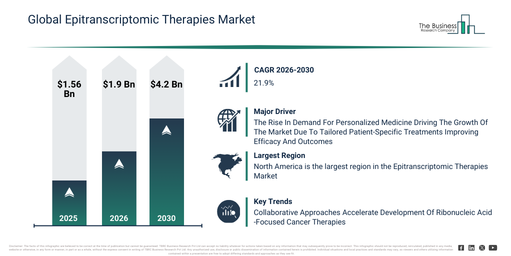
    The epitranscriptomic therapies market has experienced substantial growth in recent years. It is forecast to increase from $1.56 billion in 2025 to $1.9 billion in 2026, exhibiting a compound annual growth rate (CAGR) of 21.6%. This past expansion can be linked to progress in RNA biology research, an improved understanding of gene regulation mechanisms, the expansion of oncology research programs, the accessibility of advanced sequencing technologies, and a rise in translational medicine initiatives.

    The epitranscriptomic therapies market size is projected to experience substantial growth in the coming years, reaching $4.2 billion by 2030 with a compound annual growth rate (CAGR) of 21.9%. This anticipated expansion during the forecast period is attributed to factors like increasing investments in RNA-based therapeutics, a rising demand for targeted cancer treatments, the broader adoption of personalized medicine approaches, heightened clinical trial activity in epitranscriptomics, and increased regulatory engagement for novel RNA therapies. Major trends expected in this period include the accelerated development of epitranscriptomic drug pipelines, the growing utilization of RNA modification profiling tools, an expansion of combination epitranscriptomic therapies, increasing integration of bioinformatics in therapy design, and an enhanced focus on precision medicine applications.

    Download A Free Sample Report For Comprehensive Market Insights:

    https://www.thebusinessresearchcompany.com/sample.aspx?id=33108&type=smp&utm_source=Blogs&utm_medium=Paid&utm_campaign=Jul_PR

    Epitranscriptomic Therapies Market Opportunity Drivers: What Is Creating New Revenue Potential?

    The anticipated expansion of the epitranscriptomic therapies market is set to be driven by the escalating need for personalized medicine. This medical approach involves customizing healthcare decisions, treatments, and interventions to align with each patient’s unique characteristics, such as their genetic profile, lifestyle, and environment. The primary force behind the rising demand for personalized medicine is the increasing prevalence of chronic and complex diseases, as tailored treatments are more effective in addressing individual patient requirements and enhancing outcomes. Personalized medicine bolsters epitranscriptomic therapies by adapting treatments to an individual’s specific RNA modification patterns, thereby boosting therapeutic effectiveness while mitigating the risk of adverse effects. For instance, in February 2024, data from the Personalized Medicine Coalition, a US-based non-profit organization, revealed that the U.S. Food and Drug Administration (FDA) approved 16 new personalized treatments for rare disease patients in 2023, marking an increase from six in 2022. The personalized treatments newly approved in 2023 also encompassed seven cancer drugs and three for other diseases and conditions. Therefore, the growing demand for personalized medicine is a significant catalyst for the growth of the epitranscriptomic therapies market.

    Epitranscriptomic Therapies Market Segmentation Trends And Revenue Drivers

    The epitranscriptomic therapies market covered in this report is segmented –

    1) By Therapy Type: Small Molecule Inhibitors; Ribonucleic Acid Modifying Enzymes; Antisense Oligonucleotides; Other Therapy Types

    2) By Route of Administration: Injectable; Oral; Other Routes Of Administration

    3) By Application: Cancer; Neurological Disorders; Metabolic Diseases; Infectious Diseases; Other Applications

    4) By End-User: Hospitals; Research Institutes; Pharmaceutical And Biotechnology Companies; Other End-Users

    Subsegments:

    1) By Small Molecule Inhibitors: Methyltransferase Inhibitors; Demethylase Inhibitors; Reader Protein Inhibitors; Writer Enzyme Inhibitors; Eraser Enzyme Inhibitors

    2) By Ribonucleic Acid Modifying Enzymes: Methyltransferase Enzymes; Demethylase Enzymes; Pseudouridine Synthase Enzymes; Adenosine Deaminase Enzymes; Cytidine Deaminase Enzymes

    3) By Antisense Oligonucleotides: Gapmer Oligonucleotides; Splice Modulating Oligonucleotides; Translation Blocking Oligonucleotides; Exon Skipping Oligonucleotides; Gene Expression Silencing Oligonucleotides

    4) By Other Therapy Types: Ribonucleic Acid Interference Based Therapies; Messenger Ribonucleic Acid Editing Therapies; Epitranscriptomic Vaccine Platforms; Gene Regulation Modulation Therapies; Combination Epitranscriptomic Therapies

    Epitranscriptomic Therapies Market Innovation Trends Driving Future Development

    Prominent companies within the epitranscriptomic therapies market are concentrating on forming strategic partnerships to create groundbreaking RNA-modifying cancer treatments. Strategic partnerships involve cooperative arrangements where organizations pool resources, knowledge, or capabilities to achieve common objectives, leading to quicker growth, reduced operational risks, and stronger market competitiveness. For example, in January 2026, STORM Therapeutics Ltd., a UK-based biotechnology company, collaborated with Alida Biosciences Inc., a US-based technology company, to further develop cancer therapies focused on epitranscriptomic mechanisms. This collaboration is centered on integrating AlidaBio’s EpiPlex and EpiScout platforms with STORM’s clinical trials for STC-15, a first-in-class METTL3 inhibitor. The partnership intends to identify and validate m6A RNA modification biomarkers that can predict patient responses and enhance therapeutic strategies. This joint effort combines drug development with advanced RNA profiling, representing a significant progression in epitranscriptomic cancer therapies.

    #Epitranscriptomic Therapies Market Industry Leaders: Which Organizations Are Driving Competition?

    Major companies operating in the epitranscriptomic therapies market are AstraZeneca PLC, GSK plc, Moderna Inc., Alnylam Pharmaceuticals Inc., Ionis Pharmaceuticals Inc., Arcturus Therapeutics Holdings Inc., Arrakis Therapeutics Inc., AIRNA Corporation, CD Genomics, ProQR Therapeutics N.V., Nimbus Therapeutics LLC, Envisagenics Inc., Skyhawk Therapeutics Inc., Avidity Biosciences Inc., STORM Therapeutics Ltd., Omega Therapeutics Inc., Korro Bio Inc., Accent Therapeutics Inc., Alida Biosciences Inc., and O2nix Bio.

    Access The Complete Epitranscriptomic Therapies Market Report:

    https://www.thebusinessresearchcompany.com/report/epitranscriptomic-therapies-market-report?utm_source=Blogs&utm_medium=Paid&utm_campaign=Jul_PR

    Epitranscriptomic Therapies Market Leading Geography: Which Region Generates The Most Revenue?

    North America was the largest region in the epitranscriptomic therapies market in 2025. Asia-Pacific is expected to be the fastest-growing region in the forecast period. The regions covered in the epitranscriptomic therapies market report are Asia-Pacific, South East Asia, Western Europe, Eastern Europe, North America, South America, Middle East, Africa.

    Get in touch with us:

    The Business Research Company: https://www.thebusinessresearchcompany.com/

    Americas: +1 310-496-7795

    Asia: +44 7882 955267 & +91 8897263534

    Europe: +44 7882 955267

    Email us at: marketing@tbrc.info

    Follow us on:

    LinkedIn: https://in.linkedin.com/company/the-business-research-company

    YouTube: https://www.youtube.com/channel/UC24_fI0rV8cR5DxlCpgmyFQ

    Global Market Model: https://www.thebusinessresearchcompany.com/global-market-model

  • Enzymatic Deoxyribonucleic Acid (DNA) Synthesis Technology  Market Forecast Signals New Revenue Opportunities Through 2030

    Enzymatic Deoxyribonucleic Acid (DNA) Synthesis Technology Market Forecast Signals New Revenue Opportunities Through 2030

    Enhanced with market attractiveness analysis, total addressable market evaluation, company benchmarking matrices, interactive Excel dashboards, expanded supply chain intelligence, emerging startup coverage, and detailed product insights, The Business Research Company’s 2026 market reports deliver more actionable and strategically valuable research.

    Enzymatic Deoxyribonucleic Acid (DNA) Synthesis Technology Market Size Outlook: How Fast Will Revenue Grow Through 2030?

    The enzymatic deoxyribonucleic acid (dna) synthesis technology market size has seen significant growth in recent years. It is anticipated to increase from $3.05 billion in 2025 to $3.77 billion in 2026, achieving a compound annual growth rate (CAGR) of 23.3%. This historical expansion can be linked to the rising adoption of synthetic biology in research, the inherent drawbacks of chemical dna synthesis methods, advancements in genomics and gene editing research, an increase in biotech research funding, and the accessibility of enzyme engineering technologies.

    The enzymatic deoxyribonucleic acid (dna) synthesis technology market is anticipated to show significant expansion in the near future, with projections indicating it will reach $8.77 billion by 2030, exhibiting a compound annual growth rate (CAGR) of 23.5%. This growth during the forecast period is primarily driven by an escalating need for scalable DNA manufacturing, the increasing adoption of DNA-based data storage methods, the broadening scope of biopharmaceutical development pipelines, growing financial commitments to sustainable biotech processes, and the rising deployment of automated and microfluidic synthesis systems. Prominent trends for this period include the wider embrace of enzymatic DNA synthesis platforms, a growing demand for long and high-fidelity DNA constructs, the expansion of benchtop and cloud-based synthesis models, an intensified focus on environmentally sustainable DNA manufacturing, and enhanced integration within synthetic biology workflows.

    Download A Free Sample Report For Comprehensive Market Insights:

    https://www.thebusinessresearchcompany.com/sample.aspx?id=33107&type=smp&utm_source=Blogs&utm_medium=Paid&utm_campaign=Jul_PR

    Enzymatic Deoxyribonucleic Acid (DNA) Synthesis Technology Market Growth Momentum: Which Factors Are Influencing Demand?

    The anticipated expansion of the enzymatic DNA synthesis technology market is linked to the increasing embrace of genomics and personalized medicine in the future. Genomics and personalized medicine describe practices that leverage genetic data and precise healthcare methods to customize diagnostic tools, therapies, and preventative measures for unique genetic profiles. The uptake of genomics and personalized medicine is growing, driven by ongoing progress in sequencing technologies which have reduced expenses and accelerated analysis schedules, consequently improving clinical results and enhancing the efficiency of care. Enzymatic DNA synthesis technology facilitates genomics and personalized medicine through its capacity for scalable, highly accurate DNA generation, which is crucial for manufacturing tailored genetic sequences and devising specific treatments. As an illustration, in February 2024, the Personalized Medicine Coalition, a US-based nonprofit organization, reported that the Food and Drug Administration had greenlit 16 new personalized treatments for rare diseases in 2023, marking a significant rise from 6 approvals recorded in 2022. Consequently, the increased integration of genomics and personalized medicine is propelling the expansion of the enzymatic DNA synthesis technology market.

    Enzymatic Deoxyribonucleic Acid (DNA) Synthesis Technology Market Segment Analysis Highlighting Growth Areas

    The enzymatic deoxyribonucleic acid (dna) synthesis technology market covered in this report is segmented –

    1) By Technology: Polymerase Mediated Synthesis; Terminal Deoxynucleotidyl Transferase (TdT); Template Free Ligase Based Synthesis; Hybrid Chemical Enzymatic Workflows; Xeno Nucleic Acid (XNA) Synthesis Platforms

    2) By Fragment: Short Oligos; Gene Fragments; Long Constructs

    3) By Delivery Model: Benchtop Instrument; Outsourced Service; Cloud Based As A Service

    4) By Application: Synthetic Biology; Genomics And Gene Editing; Biopharmaceutical Development; Diagnostics And Research Tools; Biotechnology Research And Development

    5) By End-User Or Application: Academic And Government Research Institutes; Pharmaceutical And Biotechnology Companies; Diagnostic Companies; Agricultural Biotech Companies; Industrial Biotech And Chemical Companies

    Subsegments:

    1) By Polymerase Mediated Synthesis: Polymerase Chain Reaction Based Synthesis; Isothermal Amplification Based Synthesis; Rolling Circle Amplification Based Synthesis; Strand Displacement Amplification Based Synthesis; Primer Extension Based Synthesis

    2) By Terminal Deoxynucleotidyl Transferase (TdT): Single Nucleotide Addition Synthesis; Homopolymer Tail Synthesis; Random Oligonucleotide Tail Synthesis; Labeling And Tagging Synthesis; Enzyme Mediated Extension Synthesis

    3) By Template Free Ligase Based Synthesis: Enzymatic Ligation Synthesis; Oligonucleotide Assembly Synthesis; Fragment Ligation Synthesis; Cyclic Ligation Synthesis; Automated Ligase Synthesis

    4) By Hybrid Chemical Enzymatic Workflows: Phosphoramidite Enzymatic Integration Synthesis; Chemical Precursor Enzymatic Extension Synthesis; Stepwise Hybrid Synthesis; Enzyme Assisted Chemical Assembly Synthesis; Automated Hybrid Workflow Synthesis

    5) By Xeno Nucleic Acid (XNA) Synthesis Platforms: Peptide Nucleic Acid Synthesis; Locked Nucleic Acid Synthesis; Glycol Nucleic Acid Synthesis; Threose Nucleic Acid Synthesis; Cyclohexenyl Nucleic Acid Synthesis

    Enzymatic Deoxyribonucleic Acid (DNA) Synthesis Technology Market Trends Reshaping Industry Growth

    Leading companies in the enzymatic deoxyribonucleic acid (DNA) synthesis technology market are concentrating on developing sophisticated solutions, such as algorithm-driven enzymatic DNA synthesis platforms, to facilitate the creation of longer, more complex, and highly accurate synthetic DNA sequences. Algorithm-driven enzymatic DNA synthesis platforms utilize advanced computational models to direct enzyme-based, stepwise DNA synthesis in vitro. These systems improve sequence fidelity, scalability, and output by continually adjusting synthesis conditions using real-time error prediction and correction mechanisms. For example, in May 2025, Ribbon Bio, an Austria-based synthetic biology company, launched its MiroSynth DNA molecules, designed to enable a new generation of complex and long synthetic DNA constructs. This algorithm-driven technology permits the assembly of DNA sequences that are considerably longer and more precise than those produced by conventional methods, supporting advanced applications in gene therapy, synthetic biology, and industrial biotechnology. The solution incorporates proprietary enzymatic processes to reduce error rates, boost scalability, and uphold high sequence accuracy, making it suitable for demanding downstream biological applications. It is engineered to cater to the growing demand for intricate DNA architectures while providing better reliability, sustainability, and design flexibility compared to traditional DNA synthesis technologies.

    Enzymatic Deoxyribonucleic Acid (DNA) Synthesis Technology Market Leading Companies: Who Holds Significant Market Presence?

    Major companies operating in the enzymatic deoxyribonucleic acid (dna) synthesis technology market are Thermo Fisher Scientific Inc, Almac Group Limited, Twist Bioscience Corporation, DNA Script SAS, Synbio Technologies, Telesis Bio Inc., Touchlight Genetics Limited, Yeasen Biotechnology, CD Genomics, Bioneer Corporation, Ansa Biotechnologies Inc., Elegen Corporation, Molecular Assemblies Inc., Moligo Technologies AB, Evonetix Ltd, Camena Bioscience Limited, Baseclick GmbH, Kern Systems, Ribbon Bio, and Helixworks.

    Access The Complete Enzymatic Deoxyribonucleic Acid (DNA) Synthesis Technology Market Report:

    https://www.thebusinessresearchcompany.com/report/enzymatic-deoxyribonucleic-acid-dna-synthesis-technology-market-report?utm_source=Blogs&utm_medium=Paid&utm_campaign=Jul_PR

    Enzymatic Deoxyribonucleic Acid (DNA) Synthesis Technology Market Regional Outlook: Where Are The Largest Opportunities Located?

    North America was the largest region in the enzymatic deoxyribonucleic acid (DNA) synthesis technology market in 2025. Asia-Pacific is expected to be the fastest-growing region in the forecast period. The regions covered in the enzymatic deoxyribonucleic acid (dna) synthesis technology market report are Asia-Pacific, South East Asia, Western Europe, Eastern Europe, North America, South America, Middle East, Africa.

    Get in touch with us:

    The Business Research Company: https://www.thebusinessresearchcompany.com/

    Americas: +1 310-496-7795

    Asia: +44 7882 955267 & +91 8897263534

    Europe: +44 7882 955267

    Email us at: marketing@tbrc.info

    Follow us on:

    LinkedIn: https://in.linkedin.com/company/the-business-research-company

    YouTube: https://www.youtube.com/channel/UC24_fI0rV8cR5DxlCpgmyFQ

    Global Market Model: https://www.thebusinessresearchcompany.com/global-market-model