Category: Pharmaceuticals

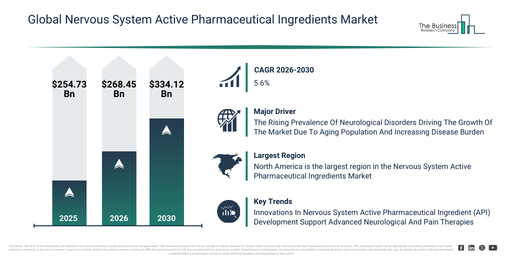
  • Nervous System Active Pharmaceutical Ingredients  Market Set To Grow From $268.45 Billion In 2026 To $334.12 Billion By 2030 At A CAGR Of 5.6%

    Nervous System Active Pharmaceutical Ingredients Market Set To Grow From $268.45 Billion In 2026 To $334.12 Billion By 2030 At A CAGR Of 5.6%

    Delivering more actionable and strategically valuable research, The Business Research Company’s 2026 market reports feature market attractiveness analysis, total addressable market evaluation, company benchmarking matrices, interactive Excel dashboards, expanded supply chain intelligence, emerging startup coverage, and detailed product insights.

    Nervous System Active Pharmaceutical Ingredients Market Expansion From $268.45 Billion In 2026 To $334.12 Billion In 2030

    The nervous system active pharmaceutical ingredients market size has demonstrated significant growth in recent years. It is anticipated to expand from $254.73 billion in 2025 to $268.45 billion in 2026, achieving a compound annual growth rate (CAGR) of 5.4%. Factors contributing to its historical growth include an increasing prevalence of neurological disorders, the expanded use of psychiatric drugs, the rise in generic API manufacturing, a greater number of CNS drug approvals, and the expansion of contract API production.

    The nervous system active pharmaceutical ingredients market is projected to experience substantial expansion in the coming years. This market is forecast to reach $334.12 billion by 2030, demonstrating a compound annual growth rate (CAGR) of 5.6%. Factors contributing to this anticipated growth include an increasing prevalence of neurodegenerative diseases, the broadening availability of specialized central nervous system (CNS) therapies, a heightened need for high-purity APIs, a rise in outsourced API production, and the development of biologic neuro drugs. Key trends foreseen during this period involve the development of high-potency neurology APIs, the synthesis of complex CNS molecules, the emergence of peptide-based neuro APIs, the introduction of controlled-release neuro API formats, and the formation of specialized neuro API CDMO partnerships.

    Download A Free Sample Report For Comprehensive Market Insights:

    https://www.thebusinessresearchcompany.com/sample.aspx?id=33240&type=smp&utm_source=Blogs&utm_medium=Paid&utm_campaign=Jul_PR

    Nervous System Active Pharmaceutical Ingredients Market Opportunity Drivers: What Is Creating New Revenue Potential?

    The increasing occurrence of neurological conditions is anticipated to fuel the expansion of the nervous system active pharmaceutical ingredients market in the future. Neurological disorders encompass diverse medical ailments that interfere with the normal operation of the central and peripheral nervous system, frequently leading to symptoms like seizures, paralysis, memory loss, or issues with coordination. The rise in neurological disorders is primarily attributed to the world’s aging populace, given that elderly persons are more susceptible to neurodegenerative illnesses such as Alzheimer’s and Parkinson’s disease, as nerve cells naturally deteriorate and become more susceptible to harm over time. Nervous system active pharmaceutical ingredients assist in managing neurological disorders through regulating neural signaling and safeguarding nerve cells, consequently decelerating disease progression and improving symptom management in conditions including epilepsy, multiple sclerosis, and neurodegenerative diseases. For example, in December 2025, data from the Australian Institute of Health and Welfare, an Australia-based government agency, indicated that approximately 425,000 Australians were affected by dementia in 2024. This number is forecast to increase 2.5 times, exceeding 1.1 million by 2065, comprising about 662,000 women and 390,000 men. Consequently, the increasing prevalence of neurological disorders is propelling the expansion of the nervous system active pharmaceutical ingredients market.

    Nervous System Active Pharmaceutical Ingredients Market Segment Breakdown: Which Categories Generate The Most Revenue?

    The nervous system active pharmaceutical ingredients market covered in this report is segmented –

    1) By Product: Cytokines; Vaccines; Fusion Proteins; Therapeutic Enzymes

    2) By Expression System: Mammalian; Microbial Yeast

    3) By Application: Diabetes; Cardiovascular Diseases; Oncology; Neurological Disorder

    4) By End User: Pharmaceutical Companies; Biopharmaceutical Companies; Contract Development And Manufacturing Organizations; Research And Development Laboratories; Generic Drug Manufacturers

    Subsegments:

    1) By Cytokines: Interleukin Cytokines; Interferon Cytokines; Tumor Necrosis Factor Cytokines; Growth Factor Cytokines; Chemokine Cytokines

    2) By Vaccines: Inactivated Vaccines; Live Attenuated Vaccines; Subunit Vaccines; Recombinant Vaccines; Conjugate Vaccines

    3) By Fusion Proteins: Antibody Fusion Proteins; Receptor Fusion Proteins; Enzyme Fusion Proteins; Ligand Fusion Proteins; Multifunctional Fusion Proteins

    4) By Therapeutic Enzymes: Replacement Enzymes; Digestive Enzymes; Metabolic Enzymes; Detoxifying Enzymes; Neuroprotective Enzymes

    Nervous System Active Pharmaceutical Ingredients Market Innovation Trends Driving Future Development

    Leading companies operating within the nervous system active pharmaceutical ingredients market are prioritizing the creation of innovative solutions, such as cannabinoid-based active pharmaceutical ingredients, to enhance the effectiveness, safety, and targeted administration of treatments for neurological disorders. Cannabinoid-based active pharmaceutical ingredients (APIs) are highly refined natural or synthetic compounds that exert therapeutic effects by interacting with the body’s endocannabinoid system, thereby assisting in the management of pain, epilepsy, nausea, and various neurological conditions. For example, in March 2024, Brains Bioceutical Corp., a Canada-based pharmaceutical company, unveiled solid D9 Tetrahydrocannabinol (THC), a cannabinoid-based active pharmaceutical ingredient specifically designed to advance pharmaceutical research and drug development in neurological and pain management applications. This solid D9-THC API incorporates a crystalline structure that improves storage stability and dosing accuracy when compared to traditional cannabinoid extracts, thus simplifying its integration into research and formulation development across therapeutic fields where CNS-active agents are crucial. The introduction of this product emphasizes a broader industry movement toward more sophisticated API formats that can support precise, scalable pharmaceutical manufacturing.

    Nervous System Active Pharmaceutical Ingredients Market Key Players And Strategic Industry Positioning

    Major companies operating in the nervous system active pharmaceutical ingredients market are F. Hoffmann-La Roche Ltd., Pfizer Inc., Novartis AG., Thermo Fisher Scientific Inc., GSK plc, Eli Lilly and Company, Boehringer Ingelheim International GmbH, Teva Pharmaceutical Industries Ltd., Cipla Limited, Zydus Lifesciences Limited, Biocon Ltd., Siegfried Holding AG., Alkem Laboratories Ltd., Almac Group, Torrent Pharmaceuticals Ltd., Granules India Ltd., Wockhardt Ltd., Neuland Laboratories Ltd., Hetero Labs Ltd., MSN Laboratories Pvt. Ltd., and Piramal Pharma.

    Access The Complete Nervous System Active Pharmaceutical Ingredients Market Report:

    https://www.thebusinessresearchcompany.com/report/nervous-system-active-pharmaceutical-ingredients-market-report?utm_source=Blogs&utm_medium=Paid&utm_campaign=Jul_PR

    Nervous System Active Pharmaceutical Ingredients Market Leading Geography: Which Region Generates The Most Revenue?

    North America was the largest region in the nervous system active pharmaceutical ingredients market in 2025. Asia-Pacific is expected to be the fastest-growing region in the forecast period The regions covered in the nervous system active pharmaceutical ingredients market report are Asia-Pacific, South East Asia, Western Europe, Eastern Europe, North America, South America, Middle East, Africa.

    Get in touch with us:

    The Business Research Company: https://www.thebusinessresearchcompany.com/

    Americas: +1 310-496-7795

    Asia: +44 7882 955267 & +91 8897263534

    Europe: +44 7882 955267

    Email us at: marketing@tbrc.info

    Follow us on:

    LinkedIn: https://in.linkedin.com/company/the-business-research-company

    YouTube: https://www.youtube.com/channel/UC24_fI0rV8cR5DxlCpgmyFQ

    Global Market Model: https://www.thebusinessresearchcompany.com/global-market-model
  • Monogenetic Disease Therapy  Market Growth Through 2030 Creates New Strategic Opportunities

    Monogenetic Disease Therapy Market Growth Through 2030 Creates New Strategic Opportunities

    Through market attractiveness analysis, total addressable market evaluation, company benchmarking matrices, interactive Excel dashboards, expanded supply chain intelligence, emerging startup coverage, and detailed product insights, The Business Research Company’s 2026 market reports provide more actionable and strategically valuable research.

    Monogenetic Disease Therapy Market Revenue Outlook: What CAGR Is Expected Through 2030?

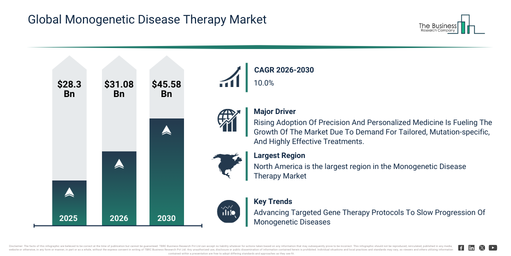
    The monogenetic disease therapy market size has seen robust expansion in recent years. It is anticipated to increase from $28.3 billion in 2025 to $31.08 billion in 2026, achieving a compound annual growth rate (CAGR) of 9.8%. The growth observed in prior periods can be attributed to developments in human genome research, the early stages of gene therapy trials, an escalation in rare disease diagnoses, the availability of orphan drug incentives, and progress in viral vectors.

    The monogenetic disease therapy market is poised for significant expansion in the coming years. Its size is expected to reach $45.58 billion by 2030, progressing at a compound annual growth rate (CAGR) of 10.0%. This growth during the forecast period is attributed to several factors, including advancements in gene editing platforms, an increased pipeline for rare disease treatments, higher rates of genetic screening, greater funding for personalized therapies, and more extensive regulatory approvals. Furthermore, major trends anticipated in this period comprise single gene targeted therapies, gene replacement treatment programs, RNA-based genetic treatments, gene correction for rare diseases, and precision genetic drug design.

    Download A Free Sample Report For Comprehensive Market Insights:

    https://www.thebusinessresearchcompany.com/sample.aspx?id=33229&type=smp&utm_source=Blogs&utm_medium=Paid&utm_campaign=Jul_PR

    #Monogenetic Disease Therapy Market Growth Drivers And Industry Catalysts

    The increasing acceptance of precision and personalized medicine is anticipated to drive the future growth of the monogenetic disease therapy market. This medical approach involves tailoring disease prevention, diagnosis, and treatment according to an individual’s unique genetic, molecular, or lifestyle characteristics to maximize therapeutic efficacy and minimize adverse effects. The rise of precision and personalized medicine is largely due to healthcare providers and patients seeking individualized treatments that optimize therapeutic efficacy, reduce unwanted side effects, and consider specific genetic, molecular, or lifestyle factors. Monogenetic disease therapy supports precision and personalized medicine by specifically targeting a patient’s genetic mutation, thereby enabling highly customized and effective treatments. For instance, in February 2024, according to the Personalized Medicine Coalition, a US-based hospital and health care organization, in 2023, the FDA approved 16 new personalized treatments for rare disease patients, a notable increase from six in 2022. Therefore, the growing adoption of precision and personalized medicine is acting as a key driver for the expansion of the monogenetic disease therapy market.

    Monogenetic Disease Therapy Market Segments: Where Are The Largest Growth Opportunities?

    The monogenetic disease therapy market covered in this report is segmented –

    1) By Therapy Type: Pharmacological; Surgical; Blood Transfusion; Gene Therapies; Other Therapy Types

    2) By Inheritance Pattern: Autosomal; Chromosomal

    3) By Application: Cystic Fibrosis; Sickle Cell Anemia; Phenylketonuria; Other Applications

    4) By Distribution Channel: Hospital Pharmacy; Retail Pharmacy; Online Pharmacy

    5) By End-Users: Clinics; Hospitals; Diagnostic Centres; Home Healthcare; Other End-Users

    Subsegments:

    1) By Pharmacological: Small Molecule Drugs; Enzyme Replacement Therapies; Protein Replacement Therapies; Immunomodulatory Drugs; Targeted Molecular Therapies

    2) By Surgical: Organ Transplant Procedures; Tissue Repair Surgeries; Gene Editing Assisted Surgeries; Minimally Invasive Surgeries; Corrective Surgical Interventions

    3) By Blood Transfusion: Red Blood Cell Transfusions; Platelet Transfusions; Plasma Transfusions; Stem Cell Infusions; Autologous Blood Transfusions

    4) By Gene Therapies: Ex Vivo Gene Therapy; In Vivo Gene Therapy; Viral Vector Based Gene Therapy; Non Viral Vector Gene Therapy; Genome Editing Based Therapy

    5) By Other Therapy Types: Cell Based Therapies; RNA Based Therapies; Protein Based Therapies; Combination Therapies; Experimental Therapies

    #Monogenetic Disease Therapy Market Trends Influencing Long-Term Demand

    Major companies within the monogenetic disease therapy market are concentrating on developing innovative gene therapies, including Duchenne muscular dystrophy (DMD)–targeted protocols, to slow disease progression and enhance long-term patient outcomes. Duchenne muscular dystrophy–targeted protocols are defined as structured clinical or therapeutic guidelines specifically crafted to diagnose, monitor, and manage patients afflicted with Duchenne muscular dystrophy, with an emphasis on mitigating disease progression, improving muscle function, and addressing associated complications. For instance, in January 2026, Sarepta Therapeutics Inc, a US-based biopharmaceutical company, launched Elevidys for ambulatory patients aged four and older with DMD. This treatment showed up to a 73% reduction in the rate of functional decline over three years when compared with an external control group, highlighting the importance of early intervention in altering the disease course and improving the quality of life.

    Monogenetic Disease Therapy Market Major Participants And Competitive Dynamics

    Major companies operating in the monogenetic disease therapy market are Pfizer Inc., Sanofi S.A., Astellas Pharma Inc., Vertex Pharmaceuticals Incorporated, Sarepta Therapeutics Inc., Ptc therapeutics inc., Crispr therapeutics ag, CRISPR Therapeutics, Voyager Therapeutics Inc., Oxford Biomedica plc, REGENXBIO INC., Arcturus therapeutics holdings inc., Editas medicine Inc., American Gene Technologies, UniQure NV., MeiraGTx Limited, Prime medicine, Abeona therapeutics Inc., Blue Cross Blue Shield Association, Rocket pharmaceuticals Inc.

    Access The Complete Monogenetic Disease Therapy Market Report:

    https://www.thebusinessresearchcompany.com/report/monogenetic-disease-therapy-market-report?utm_source=Blogs&utm_medium=Paid&utm_campaign=Jul_PR

    Monogenetic Disease Therapy Market Leading Geography: Which Region Generates The Most Revenue?

    North America was the largest region in the monogenetic disease therapy market in 2025. Asia-Pacific is expected to be the fastest-growing region in the forecast period. The regions covered in the monogenetic disease therapy market report are Asia-Pacific, South East Asia, Western Europe, Eastern Europe, North America, South America, Middle East, Africa.

    Get in touch with us:

    The Business Research Company: https://www.thebusinessresearchcompany.com/

    Americas: +1 310-496-7795

    Asia: +44 7882 955267 & +91 8897263534

    Europe: +44 7882 955267

    Email us at: marketing@tbrc.info

    Follow us on:

    LinkedIn: https://in.linkedin.com/company/the-business-research-company

    YouTube: https://www.youtube.com/channel/UC24_fI0rV8cR5DxlCpgmyFQ

    Global Market Model: https://www.thebusinessresearchcompany.com/global-market-model
  • Mitogen-Activated Protein Kinase Inhibitors  Market Expansion Is Opening New Pathways For Strategic Investment

    Mitogen-Activated Protein Kinase Inhibitors Market Expansion Is Opening New Pathways For Strategic Investment

    Delivering more actionable and strategically valuable research, The Business Research Company’s 2026 market reports feature market attractiveness analysis, total addressable market evaluation, company benchmarking matrices, interactive Excel dashboards, expanded supply chain intelligence, emerging startup coverage, and detailed product insights.

    Mitogen-Activated Protein Kinase Inhibitors Market Forecast Highlighting Growth From $3.4 Billion To $5.22 Billion

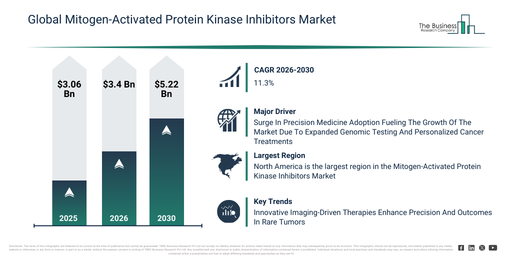
    The mitogen-activated protein kinase inhibitors market size has experienced rapid growth in recent years. It is anticipated to increase from $3.06 billion in 2025 to $3.4 billion in 2026, achieving a compound annual growth rate (CAGR) of 11.1%. The expansion observed in the historic period can be credited to the rise of targeted cancer therapy, the discovery of MAPK pathway mutations, early BRAF and RAS research, the growth in precision oncology, and initial MEK drug approvals.

    The mitogen-activated protein kinase inhibitors market size is anticipated to undergo significant growth over the next few years. It is projected to expand to $5.22 billion in 2030, achieving a compound annual growth rate (CAGR) of 11.3%. This projected growth during the forecast period is driven by factors such as the proliferation of combination oncology trials, elevated biomarker testing rates, the evolution of personalized cancer care, expanded indication approvals, and an increase in oncology drug pipelines. Prominent trends identified for the forecast period include selective MEK targeted therapies, combination targeted oncology regimens, biomarker-guided MEK treatment approaches, oral targeted cancer inhibitors, and the development of next-generation MEK molecules.

    Download A Free Sample Report For Comprehensive Market Insights:

    https://www.thebusinessresearchcompany.com/sample.aspx?id=33222&type=smp&utm_source=Blogs&utm_medium=Paid&utm_campaign=Jul_PR

    Mitogen-Activated Protein Kinase Inhibitors Market Demand Drivers: What Is Fueling Industry Growth?

    The increasing embrace of precision medicine is anticipated to drive expansion in the mitogen-activated protein kinase kinase (MEK) inhibitors market going forward. This healthcare strategy involves tailoring disease prevention, diagnosis, and treatment according to an individual’s unique genetic profile, lifestyle choices, and environmental influences. The heightened uptake of precision medicine stems from enhanced treatment efficacy, as therapies, being customized to a patient’s genetic and molecular characteristics, result in superior clinical outcomes and minimize the need for trial-and-error approaches in treatment. MEK inhibitors support precision medicine by precisely targeting particular genetic mutations within the MAPK/ERK pathway, thus facilitating individualized cancer treatments that boost effectiveness and simultaneously reduce harm to healthy cells. As an illustration, in February 2025, the UK’s government agency, the National Health Service, reported that its NHS Genomic Medicine Service conducted more than 810,000 genomic tests across various life stages in England during 2024, marking an 8% rise compared to 2023. Such tests are crucial for early diagnosis, patient stratification, and personalized treatment, which are fundamental elements of precision medicine. Consequently, the growing adoption of precision medicine is fueling the expansion of the mitogen-activated protein kinase kinase (MEK) inhibitors market.

    #Mitogen-Activated Protein Kinase Inhibitors Market Segment Landscape And Growth Potential

    The mitogen-activated protein kinase inhibitors market covered in this report is segmented –

    1) By Product Type: Allosteric Mitogen Activated Protein Kinase Kinase Inhibitors; Adenosine Triphosphate Competitive Mitogen Activated Protein Kinase Kinase Inhibitors

    2) By Target: Mitogen Activated Protein Kinase Kinase 1; Mitogen Activated Protein Kinase Kinase 2

    3) By Route Of Administration: Oral; Injectable

    4) By Application: Non Small Cell Lung Cancer; Metastatic Melanoma; Kirsten Rat Sarcoma Viral Oncogene Homolog And Neuroblastoma RAS Viral Oncogene Homolog Mutated Tumors; Thyroid Carcinoma; Lung Carcinoma; Other Applications

    5) By Distribution Channel: Hospital Pharmacy; Retail Pharmacy; Online Pharmacy

    Subsegments:

    1) By Allosteric Mitogen Activated Protein Kinase Kinase Inhibitors: First Generation Allosteric Inhibitors; Second Generation Allosteric Inhibitors; Highly Selective Allosteric Inhibitors; Dual Pathway Allosteric Inhibitors; Orally Active Allosteric Inhibitors

    2) By Adenosine Triphosphate Competitive Mitogen Activated Protein Kinase Kinase Inhibitors: First Generation Competitive Inhibitors; Second Generation Competitive Inhibitors; Highly Potent Competitive Inhibitors; Broad Spectrum Competitive Inhibitors; Targeted Competitive Inhibitors

    Mitogen-Activated Protein Kinase Inhibitors Market Innovation Trends: Which Developments Are Transforming The Industry?

    Key companies within the mitogen-activated protein kinase kinase (MEK) inhibitors market are prioritizing the development of efficacy demonstrated through volumetric MRI with central review. This approach aims to enhance the precision of treatments, improve patient results, and expedite regulatory clearances for rare and challenging tumors. This method involves assessing tumor response by accurately measuring tumor volumes using precise 3D MRI, with a centralized expert panel independently verifying the evaluations to ensure accuracy and consistency. As an illustration, in February 2025, SpringWorks Therapeutics Inc., a US-based biopharmaceutical firm, introduced Gomekli (mirdametinib). This oral MEK inhibitor received approval from the U.S. Food and Drug Administration (FDA) for treating neurofibromatosis type 1 (NF1)-associated symptomatic plexiform neurofibromas (PN) in adult and pediatric patients aged 2 years and older. Gomekli functions by selectively blocking MEK enzymes within the MAPK signaling cascade, which leads to reduced tumor growth and provides symptomatic relief in a rare genetic disorder where surgical interventions are frequently restricted. Furthermore, it enhances treatment accessibility by offering both capsule and dispersible tablet formulations, catering to patients who experience difficulties with swallowing.

    Mitogen-Activated Protein Kinase Inhibitors Market Competitive Landscape: Who Are The Leading Companies?

    Major companies operating in the mitogen-activated protein kinase inhibitors market are ShanghAI Fosun Pharmaceutical (Group) Co. Ltd., F. Hoffmann-La Roche AG, Pfizer Inc., Bayer AG, Novartis AG, AstraZeneca PLC, GlaxoSmithKline plc, Takeda Pharmaceutical Company Limited, Merck KGaA, Boehringer Ingelheim International GmbH, Ono Pharmaceutical Co. Ltd., Exelixis Inc., Laboratoires Pierre Fabre S.A., Day One Biopharmaceuticals Inc., CStone Pharmaceuticals Co. Ltd., Chia TAI Tianqing Pharmaceutical Group Co. Ltd., Immuneering Corporation, Atriva Therapeutics GmbH, ShanghAI Kechow Pharmaceutical Co. Ltd., NFlection Therapeutics Inc., and Verastem Inc.

    Access The Complete Mitogen-Activated Protein Kinase Inhibitors Market Report:

    https://www.thebusinessresearchcompany.com/report/mitogen-activated-protein-kinase-inhibitors-market-report?utm_source=Blogs&utm_medium=Paid&utm_campaign=Jul_PR

    Mitogen-Activated Protein Kinase Inhibitors Market Regional Analysis And Leading Geography

    North America was the largest region in the mitogen-activated protein kinase kinase (MEK) inhibitors market in 2025. Asia-Pacific is expected to be the fastest-growing region in the forecast period. The regions covered in the mitogen-activated protein kinase inhibitors market report are Asia-Pacific, South East Asia, Western Europe, Eastern Europe, North America, South America, Middle East, Africa.

    Get in touch with us:

    The Business Research Company: https://www.thebusinessresearchcompany.com/

    Americas: +1 310-496-7795

    Asia: +44 7882 955267 & +91 8897263534

    Europe: +44 7882 955267

    Email us at: marketing@tbrc.info

    Follow us on:

    LinkedIn: https://in.linkedin.com/company/the-business-research-company

    YouTube: https://www.youtube.com/channel/UC24_fI0rV8cR5DxlCpgmyFQ

    Global Market Model: https://www.thebusinessresearchcompany.com/global-market-model
  • Messenger Ribonucleic Acid (MRNA) Manufacturing Service  Market Trends And Growth Drivers Point To Strong Future Potential

    Messenger Ribonucleic Acid (MRNA) Manufacturing Service Market Trends And Growth Drivers Point To Strong Future Potential

    Delivering more actionable and strategically valuable research, The Business Research Company’s 2026 market reports feature market attractiveness analysis, total addressable market evaluation, company benchmarking matrices, interactive Excel dashboards, expanded supply chain intelligence, emerging startup coverage, and detailed product insights.

    Messenger Ribonucleic Acid (MRNA) Manufacturing Service Market Expansion Outlook: What Revenue Opportunities Lie Ahead?

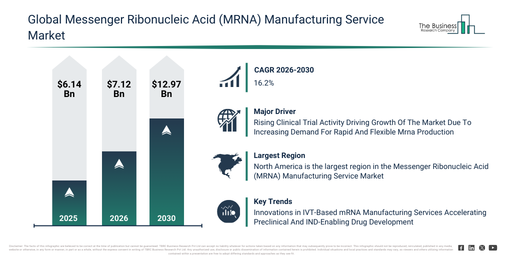
    The messenger ribonucleic acid (mrna) manufacturing service market size has experienced swift growth in recent years. It is anticipated to expand from $6.14 billion in 2025 to $7.12 billion in 2026, progressing at a compound annual growth rate (CAGR) of 15.9%. Historically, this growth can be attributed to the rise of mrna therapeutics research, vaccine emergency manufacturing demand, limited in house mrna capacity, growth of cdmo partnerships, and the expansion of biotech pipelines.

    The messenger ribonucleic acid (mrna) manufacturing service market size is projected to experience significant expansion over the coming years. It is expected to grow to $12.97 billion in 2030, achieving a compound annual growth rate (CAGR) of 16.2%. This anticipated expansion during the forecast period is primarily driven by an increase in mrna therapy trials, the growing demand for contract manufacturing, the growth in personalized medicine, higher outsourcing by biotech firms, and the scaling up of commercial mrna products. Prominent trends identified for the upcoming period encompass integrated mrna process development services, large scale in vitro transcription production, end to end lnp encapsulation services, rapid technology transfer programs, and gmp grade mrna batch manufacturing.

    Download A Free Sample Report For Comprehensive Market Insights:

    https://www.thebusinessresearchcompany.com/sample.aspx?id=33216&type=smp&utm_source=Blogs&utm_medium=Paid&utm_campaign=Jul_PR

    Messenger Ribonucleic Acid (MRNA) Manufacturing Service Market Opportunity Drivers: What Is Creating New Revenue Potential?

    The messenger ribonucleic acid (mRNA) manufacturing service market is anticipated to grow propelled by increasing clinical trial activity. This activity encompasses all processes involved in conducting and managing clinical studies to evaluate medical interventions in humans. Clinical trial activity is rising due to the growing adoption of digital and decentralized trial models, which facilitate faster patient recruitment, remote monitoring, and more efficient data collection across wider populations. Messenger ribonucleic acid (mRNA) manufacturing services support clinical trial activity by ensuring the rapid and flexible production of mRNA-based therapies, allowing for timely supply across multiple trial phases and accelerating drug development. For instance, in December 2024, the Association of the British Pharmaceutical Industry (ABPI), a UK-based trade association, reported that the number of industry clinical trials initiated in the UK rose to 426 in 2023, from 411 in 2022. Therefore, the escalating clinical trial activity is driving the expansion of the messenger ribonucleic acid (mRNA) manufacturing service market.

    Messenger Ribonucleic Acid (MRNA) Manufacturing Service Market Segments: Where Are The Largest Growth Opportunities?

    The messenger ribonucleic acid (mrna) manufacturing service market covered in this report is segmented –

    1) By Service Type: Process Development; Analytical Testing; Manufacturing; Fill-Finish; Other Service Types

    2) By Scale of Operation: Research And Preclinical Scale; Clinical Scale; Commercial Scale

    3) By Application: Vaccines; Therapeutics; Research; Other Applications

    4) By End-User: Pharmaceutical And Biotechnology Companies; Academic And Research Institutes; Other End-Users

    Subsegments:

    1) By Process Development: Template Design And Optimization; In Vitro Transcription Process Design; Formulation Development; Process Scale-Up And Technology Transfer; Process Validation Support

    2) By Analytical Testing: Identity And Purity Testing; Potency And Functional Assays; Impurity And Contaminant Analysis; Stability And Shelf Life Studies; Quality Control Release Testing

    3) By Manufacturing: Plasmid Deoxyribonucleic Acid Production; In Vitro Transcription Manufacturing; Enzymatic Capping And Tailoring; Purification And Concentration; Large-Scale Batch Production

    4) By Fill-Finish: Aseptic Filling Services; Vial And Syringe Filling; Lyophilization Services; Labeling And Packaging; Cold Chain Handling And Storage

    5) By Other Service Types: Regulatory Support Services; Quality Assurance And Documentation; Supply Chain And Logistics Support; Technology Consulting Services; Custom Manufacturing Solutions

    Messenger Ribonucleic Acid (MRNA) Manufacturing Service Market Innovation Trends Driving Future Development

    Key players within the messenger ribonucleic acid (mRNA) manufacturing service market are prioritizing the development of innovative solutions, such as in vitro transcription (IVT), to expedite the creation of high-quality, clinical-grade mRNA for vaccines and personalized therapies. In vitro transcription (IVT) describes a laboratory technique that synthesizes messenger RNA (mRNA) from a DNA template using RNA polymerase enzymes, enabling mRNA production outside living cells for research, therapeutic, or vaccine applications. For example, in May 2025, GenScript Biotech Corporation, a China-based biotechnology firm, introduced a GMP-like mRNA manufacturing service aimed at supporting preclinical studies and research essential for Investigational New Drug (IND) applications. This service offers high-purity, scalable in vitro transcription (IVT) processes with rigorous control over vital quality attributes like capping efficiency, poly(A) tail length, and impurity profiles. It facilitates a quick transition from preclinical to clinical stages by ensuring consistent production across batches, flexible customization for diverse mRNA constructs, and shortened development timelines. Moreover, the GMP-like framework ensures regulatory readiness through improved traceability, standardized operational procedures, and comprehensive quality documentation, helping developers reduce risks in subsequent manufacturing stages and accelerate clinical progress.

    Messenger Ribonucleic Acid (MRNA) Manufacturing Service Market Major Participants And Competitive Dynamics

    Major companies operating in the messenger ribonucleic acid (mrna) manufacturing service market are Thermo Fisher Scientific Inc., Merck KGaA, FUJIFILM Biotechnologies, Evonik Industries AG, Lonza Group AG, Charles River Laboratories International Inc., Samsung Biologics Co. Ltd., WuXi Biologics Inc., Recipharm AB, Curia Global Inc., Emergent BioSolutions Inc., AGC Biologics Inc., Corden Pharma International GmbH, Rentschler Biopharma SE, GenScript ProBio, ST Pharm Co. Ltd., etherna Immunotherapies NV, BIOMAY AG., Porton Advanced Solutions Ltd., Wacker Biotech GmbH.

    Access The Complete Messenger Ribonucleic Acid (MRNA) Manufacturing Service Market Report:

    https://www.thebusinessresearchcompany.com/report/messenger-ribonucleic-acid-mrna-manufacturing-service-market-report?utm_source=Blogs&utm_medium=Paid&utm_campaign=Jul_PR

    Messenger Ribonucleic Acid (MRNA) Manufacturing Service Market Geographic Landscape: Which Region Dominates Industry Growth?

    North America was the largest region in the mRNA manufacturing service market in 2025. Asia-Pacific is expected to be the fastest-growing region in the forecast period. The regions covered in the messenger ribonucleic acid (mrna) manufacturing service market report are Asia-Pacific, South East Asia, Western Europe, Eastern Europe, North America, South America, Middle East, Africa.

    Get in touch with us:

    The Business Research Company: https://www.thebusinessresearchcompany.com/

    Americas: +1 310-496-7795

    Asia: +44 7882 955267 & +91 8897263534

    Europe: +44 7882 955267

    Email us at: marketing@tbrc.info

    Follow us on:

    LinkedIn: https://in.linkedin.com/company/the-business-research-company

    YouTube: https://www.youtube.com/channel/UC24_fI0rV8cR5DxlCpgmyFQ

    Global Market Model: https://www.thebusinessresearchcompany.com/global-market-model
  • Messenger Ribonucleic Acid (mRNA) And Next-Generation Vaccine Platforms  Market Expansion Is Reshaping Competitive Dynamics Across The Industry

    Messenger Ribonucleic Acid (mRNA) And Next-Generation Vaccine Platforms Market Expansion Is Reshaping Competitive Dynamics Across The Industry

    Enhanced with market attractiveness analysis, total addressable market evaluation, company benchmarking matrices, interactive Excel dashboards, expanded supply chain intelligence, emerging startup coverage, and detailed product insights, The Business Research Company’s 2026 market reports deliver more actionable and strategically valuable research.

    Messenger Ribonucleic Acid (mRNA) And Next-Generation Vaccine Platforms Market Growth Potential: How Will Market Size Change Through 2030?

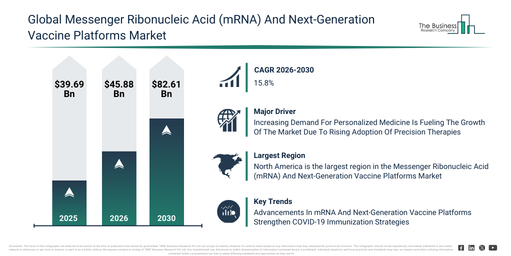
    The messenger ribonucleic acid (mrna) and next-generation vaccine platforms market size has experienced rapid expansion in recent years. This market is anticipated to increase from $39.69 billion in 2025 to $45.88 billion in 2026, demonstrating a compound annual growth rate (CAGR) of 15.6%. The historical growth of this market can be attributed to covid 19 vaccine breakthroughs, prior viral vector research, global pandemic preparedness programs, advances in genomic sequencing, and early nucleic acid vaccine trials.

    The messenger ribonucleic acid (mRNA) and next-generation vaccine platforms market is projected to experience significant expansion in the coming years. It is forecast to reach $82.61 billion by 2030, driven by a compound annual growth rate (CAGR) of 15.8%. This growth during the forecast period can be attributed to several factors, including the increasing development of personalized cancer vaccines, the broadening of infectious disease pipelines, more rapid platform-based approvals, a surge in biotech funding, and the wider adoption of therapeutic vaccines. Furthermore, prominent trends anticipated during this period encompass self-amplifying mRNA platforms, optimized lipid nanoparticle delivery, modular vaccine platform design, swift adaptation to pathogen targets, and the emergence of next-generation adjuvant systems.

    Download A Free Sample Report For Comprehensive Market Insights:

    https://www.thebusinessresearchcompany.com/sample.aspx?id=33215&type=smp&utm_source=Blogs&utm_medium=Paid&utm_campaign=Jul_PR

    Messenger Ribonucleic Acid (mRNA) And Next-Generation Vaccine Platforms Market Growth Momentum: Which Factors Are Influencing Demand?

    The rising need for individualized healthcare approaches is anticipated to drive expansion within the messenger ribonucleic acid (mRNA) and next-generation vaccine platforms market in the future. This medical strategy, personalized medicine, involves customizing disease prevention and treatment plans according to a person’s unique genetic makeup, molecular traits, and particular health status. The heightened requirement for personalized medicine stems from the increasing occurrence of intricate and long-term illnesses, given that such conditions necessitate precise, patient-focused therapeutic interventions to enhance the effectiveness and safety of treatments. Messenger ribonucleic acid (mRNA) and next-generation vaccine platforms facilitate personalized medicine by allowing for the quick, adaptable, and very specific creation of vaccines and therapies, which can be adapted to an individual’s genetic and disease characteristics, thereby promoting precise healthcare provision. An example illustrates this: in February 2024, the Personalized Medicine Coalition, a US-based hospital and health care organization, reported that the FDA approved 16 novel personalized treatments for patients with rare diseases in 2023, a notable increase from six in 2022. Consequently, the escalating need for personalized medicine is fostering the expansion of the messenger ribonucleic acid (mRNA) and next-generation vaccine platforms market.

    Messenger Ribonucleic Acid (mRNA) And Next-Generation Vaccine Platforms Market Segment Analysis: What Are The Major Market Categories?

    The messenger ribonucleic acid (mrna) and next-generation vaccine platforms market covered in this report is segmented –

    1) By Vaccine Type: Messenger Ribonucleic Acid Vaccines; Deoxyribonucleic Acid (DNA) Vaccines; Viral Vector Vaccines; Protein Subunit Vaccines; Peptide Vaccines; Other Vaccine Types

    2) By Technology or Platform: Lipid Nanoparticle (LNP) Delivery; Self-Amplifying Messenger Ribonucleic Acid; Circular Messenger Ribonucleic Acid; Replicon or Non-replicating Platforms; Viral Vector Technologies

    3) By Disease Indication: Infectious Diseases; Oncology; Rare Diseases; Other Disease Indications

    4) By End User: Pharmaceutical and Biotechnology Companies; Contract Research Organizations (CROs); Academic and Research Institutes; Hospitals and Clinics

    Subsegments:

    1) By Messenger Ribonucleic Acid Vaccines: Conventional Messenger Ribonucleic Acid Vaccines; Self Amplifying Messenger Ribonucleic Acid Vaccines; Modified Messenger Ribonucleic Acid Vaccines; Circular Messenger Ribonucleic Acid Vaccines

    2) By Deoxyribonucleic Acid Vaccines: Plasmid Deoxyribonucleic Acid Vaccines; Viral Assisted Deoxyribonucleic Acid Vaccines; Synthetic Deoxyribonucleic Acid Vaccines; Gene Based Deoxyribonucleic Acid Vaccines

    3) By Viral Vector Vaccines: Adenovirus Based Viral Vector Vaccines; Lentivirus Based Viral Vector Vaccines; Poxvirus Based Viral Vector Vaccines; Measles Virus Based Viral Vector Vaccines

    4) By Protein Subunit Vaccines: Recombinant Protein Vaccines; Virus Like Particle Vaccines; Toxoid Based Protein Vaccines; Polysaccharide Conjugate Vaccines

    5) By Peptide Vaccines: Synthetic Peptide Vaccines; Personalized Peptide Vaccines; Multi Epitope Peptide Vaccines; Long Peptide Vaccines

    6) By Other Vaccine Types: Protein Subunit Vaccines, Virus-Like Particle Vaccines, Inactivated Vaccines, Live Attenuated Vaccines, Recombinant Vector Vaccines

    Messenger Ribonucleic Acid (mRNA) And Next-Generation Vaccine Platforms Market Trends Reshaping Industry Growth

    Leading companies in the mRNA and next-generation vaccine platforms market are concentrating on the development of advanced mRNA-based COVID-19 vaccines to strengthen immune response duration, broaden coverage against variants, and elevate overall vaccine efficacy. These next-generation mRNA-based COVID-19 vaccines employ refined mRNA engineering and delivery techniques to offer more extensive and sustained protection against both existing and emerging SARS-CoV-2 variants. They also aim to improve safety, stability, and storage convenience, while facilitating rapid adaptation to viral evolution. For example, in June 2025, Moderna Inc., a US-based biotechnology company, launched mNEXSPIKE, its next-generation COVID-19 vaccine specifically crafted to enhance protection against circulating and emerging SARS-CoV-2 variants. This vaccine integrates an updated spike protein antigen that more closely corresponds to recent variants, seeking to provide improved immune durability and effectiveness, thereby supporting ongoing COVID-19 prevention strategies and future booster programs.

    Messenger Ribonucleic Acid (mRNA) And Next-Generation Vaccine Platforms Market Leading Companies Driving Competitive Growth

    Major companies operating in the messenger ribonucleic acid (mrna) and next-generation vaccine platforms market are Pfizer Inc., Sanofi S.A., AstraZeneca PLC, Thermo Fisher Scientific Inc., GSK plc, Takeda Pharmaceutical Company Limited, Daiichi Sankyo Company Limited, Moderna Inc., BioNTech SE, Novavax Inc., Walvax Biotechnology Co Ltd, Arcturus Therapeutics Inc, Gennova Biopharmaceuticals Ltd, Vaxxas Pty Ltd, Vaxart Inc, Ethris GmbH, The Biologicals and Vaccines Institute of Southern Africa Proprietary Limited, eTheRNA Immunotherapies NV, Stemirna Therapeutics Co Ltd, Primrose Bio Inc, Acuitas Therapeutics Inc, and Incepta Vaccine Ltd.

    Access The Complete Messenger Ribonucleic Acid (mRNA) And Next-Generation Vaccine Platforms Market Report:

    https://www.thebusinessresearchcompany.com/report/messenger-ribonucleic-acid-mrna-and-next-generation-vaccine-platforms-market-report?utm_source=Blogs&utm_medium=Paid&utm_campaign=Jul_PR

    #Messenger Ribonucleic Acid (mRNA) And Next-Generation Vaccine Platforms Market Largest Region: Which Geography Holds The Highest Market Share?

    North America was the largest region in the messenger ribonucleic acid (mRNA) and next-generation vaccine platforms market in 2025. Asia-Pacific is expected to be the fastest-growing region in the forecast period. The regions covered in the messenger ribonucleic acid (mrna) and next-generation vaccine platforms market report are Asia-Pacific, South East Asia, Western Europe, Eastern Europe, North America, South America, Middle East, Africa.

    Get in touch with us:

    The Business Research Company: https://www.thebusinessresearchcompany.com/

    Americas: +1 310-496-7795

    Asia: +44 7882 955267 & +91 8897263534

    Europe: +44 7882 955267

    Email us at: marketing@tbrc.info

    Follow us on:

    LinkedIn: https://in.linkedin.com/company/the-business-research-company

    YouTube: https://www.youtube.com/channel/UC24_fI0rV8cR5DxlCpgmyFQ

    Global Market Model: https://www.thebusinessresearchcompany.com/global-market-model
  • Messenger Ribo Nucleic Acid (mRNA) Vaccine Contract Development And Manufacturing Organization (CDMO)  Market Forecast Reveals Where Future Industry Value Will Be Created

    Messenger Ribo Nucleic Acid (mRNA) Vaccine Contract Development And Manufacturing Organization (CDMO) Market Forecast Reveals Where Future Industry Value Will Be Created

    Through market attractiveness analysis, total addressable market evaluation, company benchmarking matrices, interactive Excel dashboards, expanded supply chain intelligence, emerging startup coverage, and detailed product insights, The Business Research Company’s 2026 market reports provide more actionable and strategically valuable research.

    Messenger Ribo Nucleic Acid (mRNA) Vaccine Contract Development And Manufacturing Organization (CDMO) Market Value Analysis: What Growth Is Expected Over The Forecast Period?

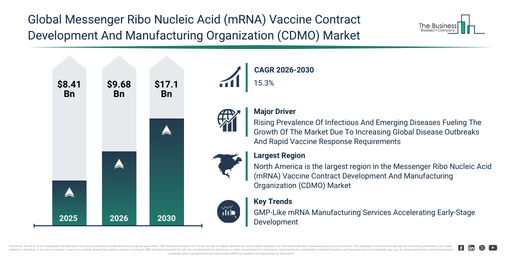
    The messenger ribo nucleic acid (mrna) vaccine contract development and manufacturing organization (cdmo) market size has shown rapid expansion in recent years. This market is projected to expand from $8.41 billion in 2025 to $9.68 billion in 2026, achieving a compound annual growth rate (CAGR) of 15.1%. The historical growth of this market can be linked to covid 19 vaccine programs, the rise of biotech startups, insufficient in-house manufacturing capabilities, an increase in contract manufacturing, and quick mrna platform validation.

    The market for messenger ribonucleic acid (mRNA) vaccine contract development and manufacturing organizations (CDMO) is projected to experience swift expansion over the coming years, reaching $17.1 billion by 2030 with a compound annual growth rate (CAGR) of 15.3%. This anticipated growth is driven by factors such as the increasing development of mRNA cancer vaccines, the rise of personalized vaccines, an increase in CDMO collaborations, the need for quick large-scale manufacturing, and an expanding range of mRNA therapies in development. Key trends anticipated during this period encompass services for lipid nanoparticle formulation, accelerated mRNA process scale-up, outsourced integrated fill-finish solutions, adaptable modular vaccine manufacturing facilities, and comprehensive end-to-end mRNA development offerings.

    Download A Free Sample Report For Comprehensive Market Insights:

    https://www.thebusinessresearchcompany.com/sample.aspx?id=33214&type=smp&utm_source=Blogs&utm_medium=Paid&utm_campaign=Jul_PR

    Messenger Ribo Nucleic Acid (mRNA) Vaccine Contract Development And Manufacturing Organization (CDMO) Market Expansion Drivers: What Is Shaping Future Growth?

    The increasing occurrence of infectious and newly developing diseases is projected to drive the expansion of the mRNA vaccine CDMO market in the future. These diseases are conditions resulting from disease-causing microbes that either spread quickly or appear for the first time, influenced by aspects like environmental shifts, city growth, and enhanced global connections. Increased global movement, higher population concentrations, and interlinked supply networks have sped up the spread of pathogens, leading to more common, extensive, and challenging-to-manage disease outbreaks. mRNA vaccine CDMOs are essential in tackling these issues, facilitating the swift creation, large-scale production, and adaptable manufacturing of vaccines necessary to combat changing infectious dangers. Given that mRNA technologies demand specific manufacturing facilities and specialized knowledge, vaccine developers often partner with contract development and manufacturing organizations to speed up development schedules and ensure manufacturing capabilities are in place during outbreaks. As an example, in May 2024, data from the World Health Organization (WHO), the United Nations’ global health agency based in Switzerland, showed that by 30 April 2024, over 7.6 million dengue cases were reported worldwide to WHO, comprising 3.4 million confirmed cases, more than 16,000 severe cases, and upwards of 3,000 fatalities. This rise was notably significant in the Region of the Americas, with cases surpassing seven million by April 2024, which exceeded the 2023 annual total of 4.6 million cases. Consequently, the increasing occurrence of infectious and emerging diseases is fueling the expansion of the mRNA vaccine CDMO market.

    Messenger Ribo Nucleic Acid (mRNA) Vaccine Contract Development And Manufacturing Organization (CDMO) Market Segment Breakdown: Which Categories Generate The Most Revenue?

    The messenger ribo nucleic acid (mrna) vaccine contract development and manufacturing organization (cdmo) market covered in this report is segmented –

    1) By Service Type: Process Development; Manufacturing; Analytical And Quality Control; Fill Finish; Packaging; Other Service Types

    2) By Vaccine Type: COVID-19 Vaccines; Cancer Vaccines; Infectious Disease Vaccines; Other Vaccine Types

    3) By Scale of Operation: Preclinical; Clinical; Commercial

    4) By End-User: Pharmaceutical Companies; Biotechnology Companies; Research Institutes; Other End-Users

    Subsegments:

    1) By Process Development: Formulation Optimization; Cell Line Development; Upstream Process Development; Process Scale-Up

    2) By Manufacturing: Lipid Nanoparticle Production; Enzymatic Capping; Purification Process

    3) By Analytical And Quality Control: Potency Testing; Purity Analysis; Stability Testing; Identity Testing; Microbial Testing

    4) By Fill Finish: Aseptic Filling; Vial Filling; Syringe Filling; Lyophilization

    5) By Packaging: Primary Packaging; Secondary Packaging; Labeling Operations; Cold Chain Packaging; Unit Dose Packaging

    6) By Other Service Types: Regulatory Support Services; Technology Transfer Services; Contract Development Services; Consulting Services; Supply Chain Management

    Messenger Ribo Nucleic Acid (mRNA) Vaccine Contract Development And Manufacturing Organization (CDMO) Market Strategic Trends: What Is Defining The Next Phase Of Growth?

    Leading companies in the mRNA vaccine CDMO market are increasingly prioritizing innovative approaches, such as phase-appropriate GMP mRNA contract development and manufacturing services, to accelerate preclinical and IND-enabling development, while upholding regulatory-aligned quality standards and achieving shorter timelines. Phase-appropriate GMP-like mRNA manufacturing refers to a production method designed to deliver high-quality, regulatory-aware mRNA material suitable for preclinical and early development stages, without the expenses and operational complexities associated with full GMP manufacturing. For instance, in May 2025, GenScript Biotech Corporation, a China-based global biotechnology reagents and services provider, launched a GMP-like mRNA manufacturing service aimed at supporting preclinical and IND-enabling development. This service provides high-quality, regulatory-aware mRNA with reduced lead times and lower costs compared to traditional full GMP manufacturing, reflecting the increasing demand for flexible, phase-appropriate CDMO solutions in the mRNA vaccine market.

    Messenger Ribo Nucleic Acid (mRNA) Vaccine Contract Development And Manufacturing Organization (CDMO) Market Key Players And Strategic Industry Positioning

    Major companies operating in the messenger ribo nucleic acid (mrna) vaccine contract development and manufacturing organization (cdmo) market are Sanofi S.A., Thermo Fisher Scientific Inc., FUJIFILM Diosynth Biotechnologies U.S.A. Inc., Danaher Corporation, Boehringer Ingelheim BioXcellence GmbH & Co. KG, AGC Biologics A/S, Eurofins Scientific SE, Lonza Group AG, BioNTech SE, Samsung Biologics Co. Ltd., WuXi Biologics (Cayman) Inc., Siegfried Holding AG, Recipharm AB, Vetter Pharma International GmbH, CordenPharma GmbH & Co. KG, Ajinomoto Bio-Pharma Services Inc., Novasep Holding S.A.S., Rentschler Biopharma SE, IDT Biologika GmbH, Wacker Biotech GmbH

    Access The Complete Messenger Ribo Nucleic Acid (mRNA) Vaccine Contract Development And Manufacturing Organization (CDMO) Market Report:

    https://www.thebusinessresearchcompany.com/report/messenger-ribo-nucleic-acid-mrna-vaccine-contract-development-and-manufacturing-organization-cdmo-market-report?utm_source=Blogs&utm_medium=Paid&utm_campaign=Jul_PR

    Messenger Ribo Nucleic Acid (mRNA) Vaccine Contract Development And Manufacturing Organization (CDMO) Market Regional Analysis: Which Region Leads By Revenue?

    North America was the largest region in the mRNA vaccine contract development and manufacturing organization (CDMO) market in 2025. Asia-Pacific is expected to be the fastest-growing region in the forecast period. The regions covered in the messenger ribo nucleic acid (mrna) vaccine contract development and manufacturing organization (cdmo) market report are Asia-Pacific, South East Asia, Western Europe, Eastern Europe, North America, South America, Middle East, Africa.

    Get in touch with us:

    The Business Research Company: https://www.thebusinessresearchcompany.com/

    Americas: +1 310-496-7795

    Asia: +44 7882 955267 & +91 8897263534

    Europe: +44 7882 955267

    Email us at: marketing@tbrc.info

    Follow us on:

    LinkedIn: https://in.linkedin.com/company/the-business-research-company

    YouTube: https://www.youtube.com/channel/UC24_fI0rV8cR5DxlCpgmyFQ

    Global Market Model: https://www.thebusinessresearchcompany.com/global-market-model
  • Lipid Nanoparticle Delivery System  Market Growth Is Accelerating As Industry Transformation Continues

    Lipid Nanoparticle Delivery System Market Growth Is Accelerating As Industry Transformation Continues

    Through market attractiveness analysis, total addressable market evaluation, company benchmarking matrices, interactive Excel dashboards, expanded supply chain intelligence, emerging startup coverage, and detailed product insights, The Business Research Company’s 2026 market reports provide more actionable and strategically valuable research.

    Lipid Nanoparticle Delivery System Market Expected To Reach $4.19 Billion By 2030 At 15.5% CAGR

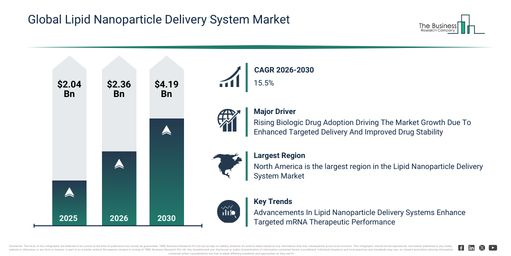
    The lipid nanoparticle delivery system market has experienced rapid expansion in recent years. It is projected to grow from $2.04 billion in 2025 to $2.36 billion in 2026, at a compound annual growth rate (CAGR) of 15.3%. This historical growth can be attributed to several factors, including advancements in lipid chemistry research, the increasing prevalence of nucleic acid therapeutics, the enlargement of vaccine development programs, augmented funding for gene therapy research, and the establishment of robust nanoparticle manufacturing capabilities.

    The lipid nanoparticle delivery system market is poised for substantial expansion in the coming years. It is expected to climb to $4.19 billion by 2030, demonstrating a compound annual growth rate (CAGR) of 15.5%. This anticipated growth during the forecast period is driven by several factors, including the expanding pipeline of RNA-based drugs, increased investments in precision medicine, the broader adoption of personalized therapeutics, a growing need for scalable delivery platforms, and a rise in regulatory approvals for gene therapies. Concurrently, major trends expected during this period involve the increasing embrace of mRNA-based therapeutic delivery, a rising demand for ionizable lipid formulations, a concentrated focus on targeted drug delivery systems, the expansion of scalable nanoparticle manufacturing processes, and an enhanced emphasis on ensuring delivery efficiency and stability.

    Download A Free Sample Report For Comprehensive Market Insights:

    https://www.thebusinessresearchcompany.com/sample.aspx?id=33202&type=smp&utm_source=Blogs&utm_medium=Paid&utm_campaign=Jul_PR

    Lipid Nanoparticle Delivery System Market Expansion Drivers: What Is Shaping Future Growth?

    The increasing use of biologic drugs is anticipated to propel the expansion of the lipid nanoparticle delivery system market moving forward. Biologic drugs are therapeutic products created from living systems, such as proteins, antibodies, or cells, designed to treat ailments that traditional chemical drugs cannot address. The utilization of biologic drugs is growing due to the rising incidence of chronic and complex diseases that require targeted therapies. Lipid nanoparticle delivery systems enhance the adoption of biologic drugs by encapsulating them to prevent degradation, facilitating cellular uptake, and enabling precise delivery to target tissues. For instance, in January 2023, as per Cardinal Health Inc., a US-based healthcare company, the US had 33 biosimilar products approved by the FDA as of January 2022, with 21 available on the market. By 2023, FDA-approved biosimilars had increased to 40, with 25 commercially available. Therefore, the expanding adoption of biologic drugs is driving the growth of the lipid nanoparticle delivery system market.

    Lipid Nanoparticle Delivery System Market Segment Analysis: What Are The Major Market Categories?

    The lipid nanoparticle delivery system market covered in this report is segmented –

    1) By Product Type: Solid Lipid Nanoparticles; Nanostructured Lipid Carriers; Liposomes; Other Product Types

    2) By Route Of Administration: Oral; Injectable; Topical; Other Route Of Administrations

    3) By Application: Drug Delivery; Gene Therapy; Vaccines; Cosmetics; Other Applications

    4) By End-User: Pharmaceutical And Biotechnology Companies; Research Institutes; Hospitals And Clinics; Other End Users

    Subsegments:

    1) By Solid Lipid Nanoparticles: Glyceryl Monostearate Based; Glyceryl Behenate Based; Stearic Acid Based; Compritol Based

    2) By Nanostructured Lipid Carriers: Type I Nanostructured Lipid Carriers; Type II Nanostructured Lipid Carriers; Type III Nanostructured Lipid Carriers

    3) By Liposomes: Multilamellar Vesicles; Small Unilamellar Vesicles; Large Unilamellar Vesicles; Giant Unilamellar Vesicles

    4) By Other Product Types: Polymeric Lipid Nanoparticles; Lipid Polymer Hybrids; Micelles

    Lipid Nanoparticle Delivery System Market Strategic Trends: What Is Defining The Next Phase Of Growth?

    Leading firms in the lipid nanoparticle delivery system sector are concentrating on creating sophisticated solutions, particularly targeted mRNA delivery systems, with the aim of boosting the accuracy, effectiveness, and safety of gene therapies and vaccines. This type of system is a technological approach employing lipid nanoparticles or alternative carriers to precisely deliver messenger RNA (mRNA) to intended cells or tissues, thereby ensuring robust protein production and concurrently reducing unintended effects and immune responses. As an illustration, in November 2025, Acuitas Therapeutics Inc., a biotechnology company based in Canada, introduced Next-Generation Lipid Nanoparticle Advancements designed to refine the targeted delivery and efficacy of mRNA therapeutics. Key attributes include up to fourfold potency increases for gene editing and vaccines, improved lipids engineered to lessen liver exposure while preserving effectiveness in mouse models, and DARPin-conjugated LNPs for precise targeting of T-lymphocytes. Such innovations significantly improve ALC-315, a component of Pfizer-BioNTech’s COMIRNATY vaccine, by facilitating superior intramuscular mRNA delivery for cancer vaccines even at reduced doses. Furthermore, these advancements open up wider applications in CAR T-cell therapies, epigenetic treatments, multivalent vaccines targeting diseases like malaria, HIV, or TB, and personalized oncology, ultimately speeding up the development of safer and more potent mRNA therapies that extend beyond liver targets.

    Lipid Nanoparticle Delivery System Market Leading Companies Driving Competitive Growth

    Major companies operating in the lipid nanoparticle delivery system market are Johnson and Johnson, Pfizer Inc, AstraZeneca plc, Avanti Polar Lipids Inc, Evonik Industries AG, Moderna Inc, Sanofi SA, BioNTech SE, Alnylam Pharmaceuticals Inc, Ascendia Pharmaceuticals Inc, Arcturus Therapeutics Holdings Inc, Lipoid GmbH, Creative Biolabs Inc, Acuitas Therapeutics Inc, Genevant Sciences GmbH, Polymun Scientific Immunbiologische Forschung GmbH, Carcell Biopharma Inc, Integrated Nanotherapeutics Inc, Sinopeg Biotech Co Ltd, CureVac NV, ReCode Therapeutics Inc, and Intellia Therapeutics Inc.

    Access The Complete Lipid Nanoparticle Delivery System Market Report:

    https://www.thebusinessresearchcompany.com/report/lipid-nanoparticle-delivery-system-market-report?utm_source=Blogs&utm_medium=Paid&utm_campaign=Jul_PR

    Lipid Nanoparticle Delivery System Market Geographic Distribution And Regional Opportunities

    North America was the largest region in the lipid nanoparticle delivery system market in 2025. Asia-Pacific is expected to be the fastest-growing region in the forecast period. The regions covered in the lipid nanoparticle delivery system market report are Asia-Pacific, South East Asia, Western Europe, Eastern Europe, North America, South America, Middle East, Africa.

    Get in touch with us:

    The Business Research Company: https://www.thebusinessresearchcompany.com/

    Americas: +1 310-496-7795

    Asia: +44 7882 955267 & +91 8897263534

    Europe: +44 7882 955267

    Email us at: marketing@tbrc.info

    Follow us on:

    LinkedIn: https://in.linkedin.com/company/the-business-research-company

    YouTube: https://www.youtube.com/channel/UC24_fI0rV8cR5DxlCpgmyFQ

    Global Market Model: https://www.thebusinessresearchcompany.com/global-market-model
  • Kinase Drug Discovery Solutions  Market Opportunities Are Emerging Beyond Traditional Growth Areas

    Kinase Drug Discovery Solutions Market Opportunities Are Emerging Beyond Traditional Growth Areas

    Enhanced with market attractiveness analysis, total addressable market evaluation, company benchmarking matrices, interactive Excel dashboards, expanded supply chain intelligence, emerging startup coverage, and detailed product insights, The Business Research Company’s 2026 market reports deliver more actionable and strategically valuable research.

    Kinase Drug Discovery Solutions Market Size, Value And Growth Trends Through 2030

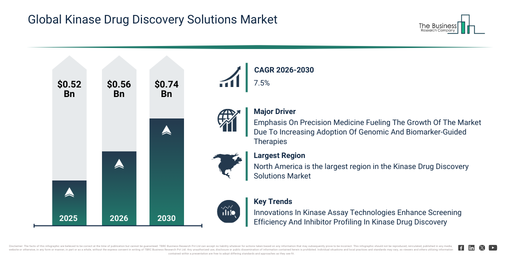
    The kinase drug discovery solutions market has experienced robust expansion in recent years. Its size is projected to expand from $0.52 billion in 2025 to $0.56 billion in 2026, achieving a compound annual growth rate (CAGR) of 7.3%. The growth observed in the historic period can be attributed to factors such as the increasing prevalence of kinase-driven diseases, the expansion of oncology research pipelines, advancements in assay development technologies, the growth of contract research services, and increasing pharmaceutical R&D investments.

    The kinase drug discovery solutions market is predicted to experience significant expansion over the next few years. It is projected to reach $0.74 billion by 2030, demonstrating a compound annual growth rate (CAGR) of 7.5%. This growth throughout the forecast period can be ascribed to the increasing embrace of precision oncology approaches, the growing integration of computational modeling in drug discovery, the broadening applications of biologics and gene editing, a rising need for swifter lead optimization, and an increase in partnerships between pharmaceutical firms and CROs. Prominent trends anticipated in the forecast period involve the expanded use of AI-driven kinase target identification, a surge in the adoption of structure-based drug design platforms, an escalating demand for high-throughput screening services, the proliferation of integrated medicinal chemistry solutions, and a heightened focus on the development of selective kinase inhibitors.

    Download A Free Sample Report For Comprehensive Market Insights:

    https://www.thebusinessresearchcompany.com/sample.aspx?id=33191&type=smp&utm_source=Blogs&utm_medium=Paid&utm_campaign=Jul_PR

    Kinase Drug Discovery Solutions Market Growth Momentum: Which Factors Are Influencing Demand?

    The increasing focus on precision medicine is anticipated to drive the expansion of the kinase drug discovery solutions market in the future. Precision medicine involves an escalating concentration within medical systems on creating and implementing therapies customized for unique patient traits, leveraging genetic, molecular, and biomarker data to enhance treatment results. The uptake of personalized medicine is increasing, attributed to advancements in genomic and sequencing technologies, which have lowered the duration, expense, and intricacy of genetic examinations. Kinase drug discovery solutions aid precision medicine through the provision of assays, screening technologies, and analytical instruments necessary for identifying and perfecting kinase inhibitors that accurately target disease-pertinent pathways and enhance therapeutic results. As an illustration, in February 2024, the Personalized Medicine Coalition, a US-based nonprofit group, reported that in 2023, the FDA cleared 16 new personalized therapies for rare disease patients, marking a notable rise from only six approvals in 2022. Consequently, the heightened focus on precision medicine is fueling the growth of the kinase drug discovery solutions market.

    Kinase Drug Discovery Solutions Market Segment Landscape: Which Areas Lead Market Development?

    The kinase drug discovery solutions market covered in this report is segmented –

    1) By Type: Small Molecules; Biologies; Antibodies; Gene Editing

    2) By Technology: High-Throughput Screening; Structure-Based Drug Design

    3) By Application: Cancer Research; Cardiovascular Diseases; Neurological Disorders; Metabolic Disorders; Autoimmune Diseases

    4) By End-User: Pharmaceutical Companies; Biotechnology Firms; Research Institutions; Academic Organizations

    Subsegments:

    1) By Small Molecules: Kinase Inhibitor Compounds; Allosteric Modulator Compounds; Covalent Inhibitor Compounds; Selective Kinase Modulator Compounds; Multi Target Kinase Inhibitor Compounds

    2) By Biologies: Recombinant Protein Therapeutics; Enzyme Based Therapeutics; Peptide Based Therapeutics; Fusion Protein Therapeutics; Protein Degradation Therapeutics

    3) By Antibodies: Monoclonal Antibodies; Bispecific Antibodies; Antibody Fragment Therapeutics; Conjugated Antibody Therapeutics; Humanized Antibody Therapeutics

    4) By Gene Editing: Clustered Regularly Interspaced Short Palindromic Repeats Based Editing; Transcription Activator Like Effector Nuclease Based Editing; Zinc Finger Nuclease Based Editing; Base Editing Technologies; Prime Editing Technologies

    Kinase Drug Discovery Solutions Market Trends Reshaping Industry Growth

    Companies operating within the kinase drug discovery solutions market are primarily focused on developing advanced products, such as ready-to-use kinase activity detection kits, to enhance assay consistency and streamline inhibitor profiling during early-stage drug discovery. A ready-to-use kinase activity detection kit is a complete assay solution that enables quick measurement of kinase enzyme activity without extensive preparation. It offers sensitive and accurate detection of phosphorylation events, facilitating efficient analysis of signaling pathways in research and drug development. For instance, in January 2026, Sino Biological, a US-based biotechnology company, launched the SwiftFluo TR-FRET Kinase Assay Kits, a ready-to-use, high-performance solution developed to support high-throughput screening of kinase inhibitors in drug discovery workflows. These kits utilize time-resolved fluorescence resonance energy transfer (TR-FRET) technology to provide strong signal stability, reduce background interference, and improve assay consistency, leading to faster and more precise identification of potential kinase inhibitor candidates for therapeutic development.

    Kinase Drug Discovery Solutions Market Industry Leaders And Market Competition

    Major companies operating in the kinase drug discovery solutions market are Thermo Fisher Scientific Inc., Eurofins Scientific SE, Pharmaron Incorporated, KMD Bioscience Co. Ltd., GenScript Biotech Corporation, Sino Biological Inc., Reaction Biology Corp, Domainex Ltd, Creative Bioarray Inc, Carna Biosciences Inc., BPS Bioscience Inc., Syngene International Ltd, MedChemExpress LLC, Creative Biogene Inc, Kinexus Bioinformatics Corporation, Enzymlogic S.L., AssayQuant Technologies Inc., LC Sciences LLC, Luceome Biotechnologies LLC, and BOC Sciences Inc.

    Access The Complete Kinase Drug Discovery Solutions Market Report:

    https://www.thebusinessresearchcompany.com/report/kinase-drug-discovery-solutions-market-report?utm_source=Blogs&utm_medium=Paid&utm_campaign=Jul_PR

    Kinase Drug Discovery Solutions Market Geographic Distribution And Regional Opportunities

    North America was the largest region in the kinase drug discovery solutions market in 2025. Asia-Pacific is expected to be the fastest-growing region in the forecast period. The regions covered in the kinase drug discovery solutions market report are Asia-Pacific, South East Asia, Western Europe, Eastern Europe, North America, South America, Middle East, Africa.

    Get in touch with us:

    The Business Research Company: https://www.thebusinessresearchcompany.com/

    Americas: +1 310-496-7795

    Asia: +44 7882 955267 & +91 8897263534

    Europe: +44 7882 955267

    Email us at: marketing@tbrc.info

    Follow us on:

    LinkedIn: https://in.linkedin.com/company/the-business-research-company

    YouTube: https://www.youtube.com/channel/UC24_fI0rV8cR5DxlCpgmyFQ

    Global Market Model: https://www.thebusinessresearchcompany.com/global-market-model
  • Janus Kinase (JAK) 3 Inhibitor  Market Trends Are Creating New Opportunities For Industry Leaders

    Janus Kinase (JAK) 3 Inhibitor Market Trends Are Creating New Opportunities For Industry Leaders

    Delivering more actionable and strategically valuable research, The Business Research Company’s 2026 market reports feature market attractiveness analysis, total addressable market evaluation, company benchmarking matrices, interactive Excel dashboards, expanded supply chain intelligence, emerging startup coverage, and detailed product insights.

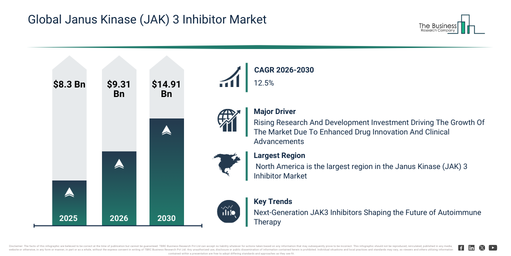
    Janus Kinase (JAK) 3 Inhibitor Market Expansion From $9.31 Billion In 2026 To $14.91 Billion In 2030

    The janus kinase (jak) 3 inhibitor market has seen substantial expansion in recent years. This market is anticipated to expand from $8.3 billion in 2025 to $9.31 billion in 2026, at a compound annual growth rate (CAGR) of 12.2%. The historical growth of this market is attributable to progress in kinase inhibitor drug discovery, the increasing occurrence of autoimmune diseases, early positive results from selective JAK inhibition in trials, the wider availability of oral immunomodulatory therapies, and the increasing focus on targeted therapy research.

    The janus kinase (JAK) 3 inhibitor market is projected for rapid expansion in the coming years, reaching $14.91 billion by 2030, demonstrating a compound annual growth rate (CAGR) of 12.5%. This growth over the forecast period is primarily driven by the proliferation of precision immunology treatments, increasing demand for secure long-term immune therapies, greater incorporation of biomarker-guided treatment decisions, rising investment in advanced JAK inhibitors, and the broadening of therapeutic applications. Key trends anticipated during the forecast period encompass the heightened development of highly selective JAK3 inhibitors, an increasing emphasis on minimizing off-target immunosuppression, the expanding adoption of companion diagnostics, the proliferation of oral small molecule therapies, and intensified clinical investigations into autoimmune and inflammatory conditions.

    Download A Free Sample Report For Comprehensive Market Insights:

    https://www.thebusinessresearchcompany.com/sample.aspx?id=33189&type=smp&utm_source=Blogs&utm_medium=Paid&utm_campaign=Jul_PR

    Janus Kinase (JAK) 3 Inhibitor Market Development Factors: Which Trends Are Supporting Demand?

    The future expansion of the janus kinase 3 (JAK3) inhibitor market is anticipated due to increasing investment in research and development. Research and development (R&D) represents a methodical process of investigation, innovation, and creation of new products, services, or processes to advance understanding and drive business or technological progression. Investments in research and development are growing as a result of intensifying competition, prompting companies to allocate more resources to innovation to differentiate their products and maintain a technological edge in rapidly evolving markets. These research and development investments specifically benefit Janus kinase 3 (JAK3) inhibitors by providing funds for extensive studies required to comprehend the drug’s mechanism, refine its chemical structure for greater specificity, and assess its safety and efficacy in clinical trials, ultimately leading to more effective treatments with fewer side effects for conditions like autoimmune diseases and organ transplant rejection. For instance, in November 2025, Eurostat, a Luxembourg-based statistical office, reported that the European Union allocated $475 billion (€403) billion to research and development in 2024, with this spending accounting for 2.24% of the region’s GDP. Consequently, the rising investment in research and development is a significant driver of growth for the janus kinase 3 (JAK3) inhibitor market.

    Janus Kinase (JAK) 3 Inhibitor Market Segment Analysis: What Are The Major Market Categories?

    The janus kinase (jak) 3 inhibitor market covered in this report is segmented –

    1) By Product Type: Selective Janus Kinase (JAK)3 Inhibitors; Pan-Janus Kinase (JAK) Inhibitors with Janus Kinase (JAK) 3 Activity

    2) By Therapeutic Indication: Rheumatoid Arthritis; Psoriasis; Ulcerative Colitis; Hematologic Malignancies; Other Therapeutic Indications

    3) By Route of Administration: Oral Tablets and Capsules; Topical Creams and Ointments; Subcutaneous and Parenteral Injections; Transdermal Drug Delivery Systems

    4) By Distribution Channel: Direct Sales to Healthcare Providers; Pharmaceutical Distributors and Wholesalers; Online and E-Pharmacy Channels

    5) By End User: Hospitals; Specialty Clinics; Retail Pharmacies and Outpatient Centers; Academic and Research Institutions

    Subsegments:

    1) By Selective Janus Kinase (JAK)3 Inhibitors: First Generation Selective Janus Kinase Three Inhibitors; Next Generation Highly Selective Janus Kinase Three Inhibitors; Oral Small Molecule Selective Janus Kinase Three Inhibitors; Immune Targeted Selective Janus Kinase Three Inhibitors

    2) By Pan-Janus Kinase (JAK) Inhibitors with JAK3 Activity: Multi Kinase Pan Janus Kinase Inhibitors; Broad Spectrum Immune Modulating Janus Kinase Inhibitors; Oral Systemic Pan Janus Kinase Therapies; Combination Activity Janus Kinase Inhibitor Therapies

    Janus Kinase (JAK) 3 Inhibitor Market Transformation Trends: Which Innovations Are Driving Change?

    Major companies operating in the janus kinase 3 (JAK3) inhibitor market are concentrating on developing innovative solutions, such as selective oral small-molecule JAK3 inhibitors, to satisfy the increasing demand for targeted autoimmune and inflammatory disease treatments that offer improved safety profiles. Selective oral small-molecule JAK3 inhibitors are characterized as low-molecular-weight, orally administered drugs specifically designed to inhibit Janus kinase 3 (JAK3) while not affecting other JAK family members (JAK1, JAK2, and TYK2). For instance, in June 2023, Pfizer Inc., a US-based biopharmaceutical company, secured U.S. Food and Drug Administration (FDA) approval for LITFULO (ritlecitinib), a novel once-daily oral JAK3-selective inhibitor indicated for the treatment of severe alopecia areata in adults and adolescents aged 12 years and older. Ritlecitinib selectively inhibits JAK3 and TEC family kinases, which play a critical role in immune-mediated inflammation that affects hair follicles. This selective mechanism sets it apart from conventional JAK inhibitors by providing a more focused immunomodulatory approach. The FDA approval was underpinned by positive results from the ALLEGRO Phase 2b/3 clinical trials, demonstrating significant scalp hair regrowth and establishing LITFULO as a landmark advancement in the JAK3 inhibitor market.

    Janus Kinase (JAK) 3 Inhibitor Market Leading Companies Driving Competitive Growth

    Major companies operating in the janus kinase (jak) 3 inhibitor market are Merck & Co. Inc., Pfizer Inc., AbbVie Inc., Novartis AG, GlaxoSmithKline Plc, Eli Lilly and Company, Takeda Pharmaceutical Company Limited, Vertex Pharmaceuticals Incorporated, Sun Pharmaceutical Industries Limited, Incyte Corporation, LEO Pharma A/S, Alfasigma S.p.A., Karyopharm Therapeutics Inc., Rigel Pharmaceuticals Inc., Arcutis Biotherapeutics Inc., Theravance Biopharma Inc., Celon Pharma S.A., Aclaris Therapeutics Inc., Dizal Pharmaceutical Co. Ltd., Asana BioSciences LLC, Ajax Therapeutics Inc., Sareum Holdings plc, and MaxiNovel Pharmaceuticals Co. Ltd.

    Access The Complete Janus Kinase (JAK) 3 Inhibitor Market Report:

    https://www.thebusinessresearchcompany.com/report/janus-kinase-jak-3-inhibitor-market-report?utm_source=Blogs&utm_medium=Paid&utm_campaign=Jul_PR

    Janus Kinase (JAK) 3 Inhibitor Market Regional Analysis And Leading Geography

    North America was the largest region in the janus kinase 3 (JAK3) inhibitor market in 2025. Asia-Pacific is expected to be the fastest-growing region in the forecast period. The regions covered in the janus kinase (jak) 3 inhibitor market report are Asia-Pacific, South East Asia, Western Europe, Eastern Europe, North America, South America, Middle East, Africa.

    Get in touch with us:

    The Business Research Company: https://www.thebusinessresearchcompany.com/

    Americas: +1 310-496-7795

    Asia: +44 7882 955267 & +91 8897263534

    Europe: +44 7882 955267

    Email us at: marketing@tbrc.info

    Follow us on:

    LinkedIn: https://in.linkedin.com/company/the-business-research-company

    YouTube: https://www.youtube.com/channel/UC24_fI0rV8cR5DxlCpgmyFQ

    Global Market Model: https://www.thebusinessresearchcompany.com/global-market-model
  • Interleukin-2 (IL-2) Mutein Therapies  Market Outlook Highlights The Next Major Growth Opportunities

    Interleukin-2 (IL-2) Mutein Therapies Market Outlook Highlights The Next Major Growth Opportunities

    Enhanced with market attractiveness analysis, total addressable market evaluation, company benchmarking matrices, interactive Excel dashboards, expanded supply chain intelligence, emerging startup coverage, and detailed product insights, The Business Research Company’s 2026 market reports deliver more actionable and strategically valuable research.

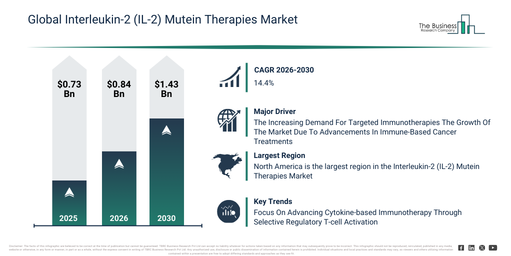
    Interleukin-2 (IL-2) Mutein Therapies Market Expected To Reach $1.43 Billion By 2030 At 14.4% CAGR

    The market for interleukin-2 (il-2) mutein therapies has experienced rapid expansion in its size over recent years. This market is projected to expand from $0.73 billion in 2025 to $0.84 billion in 2026, demonstrating a compound annual growth rate (CAGR) of 14.1%. The historical growth of this market can be linked to several factors, including strides in cytokine engineering techniques, a deeper comprehension of immune signaling pathways, initial clinical triumphs of altered IL-2 therapies, increased funding in immuno-oncology research, and the rising occurrence of immune-related ailments.

    The interleukin-2 (il-2) mutein therapies market is set for significant expansion in the upcoming years. It is projected to reach $1.43 billion by 2030, progressing at a compound annual growth rate (CAGR) of 14.4%. This anticipated growth is influenced by the broadening of personalized immunotherapy approaches, an uptick in clinical trial activities for next-generation cytokines, an increasing demand for safer immune modulators, robust regulatory backing for innovative biologics, and a surge in partnerships between biotechnology and pharmaceutical companies. Noteworthy trends during this period include the accelerated development of receptor-biased il-2 muteins, a concentrated effort on achieving reduced cytokine toxicity profiles, the growing application of combination immunotherapy regimens, the expansion of precision immune modulation techniques, and enhanced clinical pipeline activities for autoimmune and oncology indications.

    Download A Free Sample Report For Comprehensive Market Insights:

    https://www.thebusinessresearchcompany.com/sample.aspx?id=33185&type=smp&utm_source=Blogs&utm_medium=Paid&utm_campaign=Jul_PR

    Interleukin-2 (IL-2) Mutein Therapies Market Growth Drivers: What Factors Are Accelerating Expansion?

    Growing demand for targeted immunotherapies is projected to fuel expansion within the interleukin-2 (IL-2) mutein therapies market. These treatments aim to adjust the immune system, enabling it to specifically target cancer cells and minimize harm to healthy tissues. The need for such therapies is increasing because healthcare professionals and researchers are searching for safer, more potent options compared to traditional chemotherapy and radiation, which frequently involve considerable toxicity and a lack of precision. IL-2 mutein therapies contribute to the progress of targeted immunotherapies by employing modified versions of interleukin-2 that specifically activate immune effector cells crucial for anti-tumor actions, simultaneously reducing the stimulation of pathways linked to widespread toxicity. As an example, the Cancer Research Institute, a US-based non-profit organization, reported in April 2025 that the FDA approved 17 new targeted immunotherapy agents in 2024. This expanded the available options for immune-based cancer treatment and broadened the number of patients eligible for these therapies. Consequently, the heightened requirement for targeted immunotherapies is accelerating the expansion of the interleukin-2 (IL-2) mutein therapies market.

    Interleukin-2 (IL-2) Mutein Therapies Market Segment Analysis Highlighting Growth Areas

    The interleukin-2 (il-2) mutein therapies market covered in this report is segmented –

    1) By Product Type: Monotherapy; Combination Therapy

    2) By Route Of Administration: Intravenous; Subcutaneous; Other Route Of Administrations

    3) By Application: Cancer; Autoimmune Diseases; Infectious Diseases; Other Applications

    4) By End User: Hospitals; Specialty Clinics; Research Institutes; Other End Users

    Subsegments:

    1) By Monotherapy: Single Agent Interleukin Two Mutein Therapy; Standalone Cytokine Based Immunotherapy; Targeted Immune Modulation Therapy

    2) By Combination Therapy: Interleukin Two Mutein With Immune Checkpoint Inhibitors; Interleukin Two Mutein With Chemotherapy; Interleukin Two Mutein With Targeted Biologic Therapies; Interleukin Two Mutein With Cell Based Therapies

    Interleukin-2 (IL-2) Mutein Therapies Market Trends: What Is Shaping Future Industry Growth?

    Leading firms within the interleukin-2 (IL-2) mutein therapies market are directing more attention towards technological progress in cytokine-based immunotherapy, specifically concerning methods like selective regulatory T-cell (Treg) activation achieved via engineered IL-2 muteins. This process of selective regulatory T-cell activation, facilitated by engineered IL-2 muteins, entails employing genetically altered IL-2 proteins crafted to primarily activate Tregs while simultaneously curbing the stimulation of effector immune cells. As an illustration, in December 2023, Almirall S.A., a pharmaceutical company based in Spain, commenced the initial Phase I clinical investigation of its engineered IL-2 mutein fusion protein, ALM223. This study aims to assess its safety, pharmacokinetics, immunogenicity, and pharmacodynamics within the context of autoimmune diseases. This particular candidate compound incorporates selective Treg activation, an adapted Fc fusion for enhanced molecular stability, and an engineered cytokine backbone designed to optimize immune modulation. Although these technological advancements underscore the potential of IL-2 muteins for achieving precise immunomodulation and wider applicability in autoimmune conditions, their clinical effectiveness and long-term safety characteristics still require confirmation through current and forthcoming trials.

    Interleukin-2 (IL-2) Mutein Therapies Market Leading Companies: Who Holds Significant Market Presence?

    Major companies operating in the interleukin-2 (il-2) mutein therapies market are Merck & Co. Inc., Sanofi S.A., Roche Holding AG, Bristol-Myers Squibb, Amgen Inc., Lonza Group AG, Alkermes plc, BioNTech SE, Xencor Inc., Innovent Biologics Inc., Ascendis Pharma A/S, ShanghAI Junshi Biosciences Co. Ltd., Mural Oncology Inc., ProBioGen AG, Werewolf Therapeutics Ltd., Philogen S.p.A., Cue Biopharma Inc., Medicenna Therapeutics Corp., Bright Peak Therapeutics Inc., Iovance Biotherapeutics Inc.

    Access The Complete Interleukin-2 (IL-2) Mutein Therapies Market Report:

    https://www.thebusinessresearchcompany.com/report/interleukin-2-il-2-mutein-therapies-market-report?utm_source=Blogs&utm_medium=Paid&utm_campaign=Jul_PR

    Interleukin-2 (IL-2) Mutein Therapies Market Leading Geography: Which Region Generates The Most Revenue?

    North America was the largest region in the interleukin 2 (IL-2) mutein therapies market in 2025. Asia-Pacific is expected to be the fastest-growing region in the forecast period. The regions covered in the interleukin-2 (il-2) mutein therapies market report are Asia-Pacific, South East Asia, Western Europe, Eastern Europe, North America, South America, Middle East, Africa.

    Get in touch with us:

    The Business Research Company: https://www.thebusinessresearchcompany.com/

    Americas: +1 310-496-7795

    Asia: +44 7882 955267 & +91 8897263534

    Europe: +44 7882 955267

    Email us at: marketing@tbrc.info

    Follow us on:

    LinkedIn: https://in.linkedin.com/company/the-business-research-company

    YouTube: https://www.youtube.com/channel/UC24_fI0rV8cR5DxlCpgmyFQ

    Global Market Model: https://www.thebusinessresearchcompany.com/global-market-model