Category: Pharmaceuticals

  • Sprycel Market Growth Through 2030 Creates New Strategic Opportunities

    Sprycel Market Growth Through 2030 Creates New Strategic Opportunities

    Delivering more actionable and strategically valuable research, The Business Research Company’s 2026 market reports feature market attractiveness analysis, total addressable market evaluation, company benchmarking matrices, interactive Excel dashboards, expanded supply chain intelligence, emerging startup coverage, and detailed product insights.

    Sprycel Market CAGR Analysis And Future Market Development

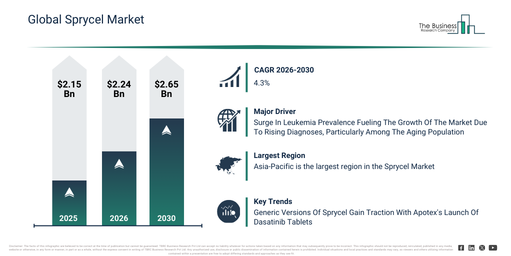
    The market for Sprycel has experienced consistent expansion over the past few years. Projections indicate an increase from $2.15 billion in 2025 to $2.24 billion in 2026, reflecting a compound annual growth rate (CAGR) of 4.3%. This historical growth has been driven by factors such as a high prevalence of leukemia, resistance encountered with initial treatment options, the proven effectiveness of tyrosine kinase inhibitors in clinical settings, widespread integration into hospital oncology practices, and the granting of regulatory approvals.

    The market for Sprycel is projected to experience consistent expansion over the coming years. By 2030, its value is anticipated to reach $2.65 billion, with a compound annual growth rate (CAGR) of 4.3%. Several factors are expected to drive this growth in the forecast period, including advancements in precision oncology, personalized approaches to cancer treatment, the broadening of specialty care services, ongoing innovation in oncology drugs, and enhanced patient survival rates. Among the key developments shaping this period are the sustained application of targeted leukemia therapies, an increasing focus on drug-resistant chronic myeloid leukemia (CML), the wider adoption of precision oncology methods, the expansion of specialty oncology pharmacies, and an emphasis on managing the disease over the long term.

    Download A Free Sample Report For Comprehensive Market Insights:

    https://www.thebusinessresearchcompany.com/sample.aspx?id=24407&type=smp&utm_source=BlogsPR&utm_medium=Paid&utm_campaign=Jul_PR

    Sprycel Market Development Factors: Which Trends Are Supporting Demand?

    The growing incidence of leukemia is anticipated to drive the sprycel market forward in the coming years. Leukemia, a malignancy affecting the blood and bone marrow, involves the overproduction of abnormal white blood cells. Its rising prevalence is largely due to an aging population, as older individuals are more susceptible to developing the disease, leading to a higher number of new cases. Sprycel, also known as dasatinib, is employed in treating specific leukemia types, including Philadelphia chromosome-positive chronic myeloid leukemia (CML) and acute lymphoblastic leukemia (ALL), by targeting the BCR-ABL protein responsible for promoting cancer cell proliferation. As reported by the American Cancer Society (ACS), a US-based nonprofit focused on eradicating cancer as a major health issue, around 59,610 individuals were diagnosed with leukemia in 2023, with roughly 23,940 fatalities. Consequently, the upward trend in leukemia prevalence is fueling expansion of the sprycel market.

    Rising healthcare expenditure is expected to boost the sprycel market in the foreseeable future. Healthcare expenditure represents the cumulative financial outlay on medical services and products within a given region or country over a set timeframe. This spending is climbing due to technological progress in medicine, which drives adoption of costly diagnostic devices and treatments that enhance patient outcomes but substantially elevate costs. Higher healthcare spending facilitates wider availability of cutting-edge cancer therapies like sprycel, as it allows hospitals and healthcare systems to invest in sophisticated oncology treatments. In April 2025, the Office for National Statistics, a UK governmental agency, reported that total healthcare spending grew by 6.5% in nominal terms from 2023 to 2024, a slight increase from the 6.3% growth seen in 2023. Hence, the ongoing rise in healthcare expenditure is propelling the sprycel market forward.

    Sprycel Market Segment Analysis: What Are The Major Market Categories?

    The sprycel market covered in this report is segmented –

    1) By Indication: Chronic Myeloid Leukemia, Acute Lymphoblastic Leukemia

    2) By Dosage Forms: Tablets, Oral Suspension

    3) By Distribution Channel: Hospitals and Clinics, Retail Pharmacies, Online Pharmacies, Specialty Pharmacies

    Subsegments:

    1) By Chronic Myeloid Leukemia: Newly Diagnosed Chronic Phase CML, Imatinib-Resistant Or Intolerant CML, Accelerated Phase CML, Blast Phase CML

    2) By Acute Lymphoblastic Leukemia: Philadelphia Chromosome-Positive (Ph+) ALL In Adults, Philadelphia Chromosome-Positive (Ph+) ALL In Pediatric Patients, Relapsed Or Refractory Ph+ ALL

    Sprycel Market Transformation Trends: Which Innovations Are Driving Change?

    Major pharmaceutical companies within the sprycel market are concentrating on producing a generic form of sprycel to take advantage of the upcoming patent expiry and cater to the increasing need for affordable cancer therapies. This generic version of Sprycel is defined as dasatinib-based drugs manufactured by other firms after the original patent lapses, delivering equivalent therapeutic benefits at a reduced cost. As an example, in September 2024, Apotex Corp., a pharmaceutical company headquartered in Canada, introduced dasatinib tablets, which serve as a generic counterpart to Sprycel, a kinase inhibitor employed for treating particular leukemia types. Dasatinib functions as a kinase inhibitor indicated for managing specific leukemia forms in adults and children aged one year and older, such as Philadelphia chromosome-positive chronic myeloid leukemia (CML) and acute lymphoblastic leukemia (ALL), especially in situations where prior therapies proved ineffective or were poorly tolerated. This product is crafted to comply with rigorous quality standards, being latex-free, sugar-free, dye-free, alcohol-free, and preservative-free, and is supplied in bottles containing either 30 or 60 tablets, depending on the strength being dispensed.

    Sprycel Market Leading Companies Driving Competitive Growth

    Major companies operating in the sprycel market are Bristol-Myers Squibb Company, Otsuka Pharmaceutical Co. Ltd., Beacon Pharmaceuticals Limited, Panacea Biotec Limited, Apotex Corp., Hubei Haosun Pharmaceutical Co. Ltd., Dr. Reddy’s Laboratories Ltd., Lupin Limited, Zydus Lifesciences Limited, Biocon Limited, Zentiva k.s., Alembic Pharmaceuticals Limited, Granules India Limited, Natco Pharma Limited, Shilpa Medicare Limited, Prasco Laboratories, Stason Pharmaceuticals Inc., HRV Global Life Sciences Pvt. Ltd., Sichuan Elixir Pharmaceutical Co. Ltd., Gonane Pharma Limited

    Access The Complete Sprycel Market Report:

    https://www.thebusinessresearchcompany.com/report/sprycel-global-market-report?utm_source=BlogsPR&utm_medium=Paid&utm_campaign=Jul_PR

    Sprycel Market Largest Region By Revenue And Market Share

    Asia-Pacific was the largest region in the sprycel market in 2025. North America is expected to be the fastest-growing region in the forecast period. The regions covered in the sprycel market report are Asia-Pacific, South East Asia, Western Europe, Eastern Europe, North America, South America, Middle East, Africa.

    Get in touch with us:

    The Business Research Company: https://www.thebusinessresearchcompany.com/?utm_source=BlogsPR&utm_medium=Paid&utm_campaign=home_page_test

    Americas: +1 310-496-7795

    Asia: +44 7882 955267 & +91 8897263534

    Europe: +44 7882 955267

    Email us at: marketing@tbrc.info

    Follow us on:

    LinkedIn: https://in.linkedin.com/company/the-business-research-company

    YouTube: https://www.youtube.com/channel/UC24_fI0rV8cR5DxlCpgmyFQ

    Global Market Model: https://www.thebusinessresearchcompany.com/global-market-model
  • Spray-Dried Biologics Market Size Projected To Increase From $2.07 Billion To $3.2 Billion During The Forecast Period

    Spray-Dried Biologics Market Size Projected To Increase From $2.07 Billion To $3.2 Billion During The Forecast Period

    Enhanced with market attractiveness analysis, total addressable market evaluation, company benchmarking matrices, interactive Excel dashboards, expanded supply chain intelligence, emerging startup coverage, and detailed product insights, The Business Research Company’s 2026 market reports deliver more actionable and strategically valuable research.

    Spray-Dried Biologics Market Expansion From $2.07 Billion In 2026 To $3.2 Billion In 2030

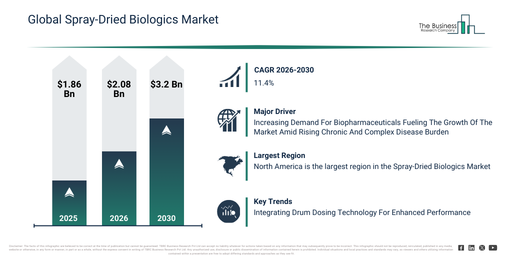
    The market for spray-dried biologics has experienced swift expansion in recent times. Valued at $1.86 billion in 2025, it is projected to reach $2.08 billion by 2026, reflecting a compound annual growth rate (CAGR) of 11.7%. This historical growth has been driven by progress in biologics formulation science, a rise in biologic drug approvals, a demand for enhanced drug stability, an increase in vaccine production capacity, and the uptake of cutting-edge pharmaceutical processing methods.

    The spray-dried biologics market is anticipated to experience significant expansion over the coming years. By 2030, its value is projected to reach $3.2 billion, driven by a compound annual growth rate of 11.4%. This forecasted growth is fueled by several factors, including a heightened demand for non-injectable biologics, increased investments in dry powder delivery technologies, the worldwide scaling of vaccine manufacturing, a greater emphasis on minimizing cold-chain requirements, and enhancements in spray-drying equipment design. Key trends shaping this period involve the broader application of spray-drying to improve biologic stability, a rising preference for inhalable and oral biologic formulations, the advancement of continuous spray-drying methods, a growing utilization of dry powder biologics in vaccines, and an intensified focus on extending product shelf life.

    Download A Free Sample Report For Comprehensive Market Insights:

    https://www.thebusinessresearchcompany.com/sample.aspx?id=30401&type=smp&utm_source=BlogsPR&utm_medium=Paid&utm_campaign=Jul_PR

    Spray-Dried Biologics Market Industry Drivers: What Is Driving Revenue Growth?

    The spray-dried biologics market is anticipated to benefit from a growing appetite for biopharmaceuticals moving forward. Biopharmaceuticals represent therapeutic goods sourced from living organisms, such as cells, proteins, and other biological molecules. This sector’s expansion is fueled by a worldwide increase in chronic and complicated diseases, resulting in an urgent requirement for treatments that provide better precision, enhanced effectiveness, and reduced systemic side effects. Consequently, the spray-dried biologics field is seeing heightened interest as the swift progress of biopharmaceuticals encourages firms to embrace scalable formulation methods that boost stability, prolong shelf life, and improve delivery performance. A case in point is February 2025, when the World Health Organization (WHO), a Switzerland-based global public health body, reported that the 2023 WHO essential medicines list (EML) contained 81 biologic therapies, representing over 15% of all essential medicines. Thus, the spike in biopharmaceutical demand is pushing the spray-dried biologics market ahead.

    Spray-Dried Biologics Market Segment Breakdown: Which Categories Generate The Most Revenue?

    The spray-dried biologics market covered in this report is segmented –

    1) By Product Type: Monoclonal Antibodies, Vaccines, Enzymes, Hormones, Other Product Types

    2) By Route Of Administration: Oral, Inhalation Or Pulmonary, Injectable, Topical

    3) By End-User: Hospitals, Research Institutes, Pharmaceutical And Biotechnology Companies, Other End-Users

    Subsegments:

    1) By Monoclonal Antibodies: Chimeric Antibodies, Humanized Antibodies, Fully Human Antibodies, Bispecific Antibodies, Antibody Fragments

    2) By Vaccines: Live Attenuated Vaccines, Inactivated Vaccines, Subunit Vaccines, Toxoid Vaccines, Viral Vector Vaccines, Recombinant Protein Vaccines

    3) By Enzymes: Therapeutic Enzymes, Digestive Enzymes, Metabolic Enzymes, Recombinant Enzymes, Replacement Enzymes

    4) By Hormones: Peptide Hormones, Protein Hormones, Steroid Hormones, Recombinant Hormones, Growth Hormones

    5) By Other Product Types: Blood Factors, Cytokines, Fusion Proteins, Nucleic Acid Therapeutics, Cell Culture Media Proteins

    Spray-Dried Biologics Market Growth Trends: What Is Influencing The Future Outlook?

    Key industry players in the spray-dried biologics space are increasingly adopting innovations like drum dosing technology to improve dose precision, powder handling, and high-volume capsule filling reliability. This advanced powder-filling technique relies on a rotating drum fitted with precisely designed dosing cavities and vacuum-assisted transfer to accurately measure and dispense dry powders into capsules, offering benefits such as consistent filling at low doses, better flow control for spray-dried powders, and scalable throughput. A notable example occurred in February 2024, when Catalent Inc., a US-based contract development and manufacturing organization (CDMO), enhanced its inhalation manufacturing site in the United States by incorporating potent capsule-filling capabilities that use drum-based dosing systems alongside in-line advanced mass verification. This upgraded configuration supports precise filling of engineered and spray-dried powders, with in-process dose validation and controlled low-humidity conditions. Such improvements boost manufacturing efficiency, ensure product uniformity, and prepare the facility for commercial-scale output of spray-dried biologic dry-powder inhalation treatments.

    Spray-Dried Biologics Market Key Players And Strategic Industry Positioning

    Major companies operating in the spray-dried biologics market are Thermo Fisher Scientific Inc., Evonik Industries AG, Lonza Group AG, GEA Group, Fareva Group, Almac Group Limited, Seqens Group, Fabbrica Italiana Sintetici S.p.A., CordenPharma International, Hovione FarmaCiencia SA, Veranova Inc., Pace Analytical Services LLC, Olon S.p.A., Nova Laboratories Ltd, Leukocare AG, Micro Sphere SA, Seran Bioscience LLC, CritiTech Particle Engineering Solutions LLC, Xedev BV, BÜCHI Labortechnik AG.

    Access The Complete Spray-Dried Biologics Market Report:

    https://www.thebusinessresearchcompany.com/report/global-spray-dried-biologics-market-report?utm_source=BlogsPR&utm_medium=Paid&utm_campaign=Jul_PR

    Spray-Dried Biologics Market Regional Analysis And Leading Geography

    North America was the largest region in the spray-dried biologics market in 2025. Asia-Pacific is expected to be the fastest-growing region in the forecast period. The regions covered in the spray-dried biologics market report are Asia-Pacific, South East Asia, Western Europe, Eastern Europe, North America, South America, Middle East, Africa.

    Get in touch with us:

    The Business Research Company: https://www.thebusinessresearchcompany.com/?utm_source=BlogsPR&utm_medium=Paid&utm_campaign=home_page_test

    Americas: +1 310-496-7795

    Asia: +44 7882 955267 & +91 8897263534

    Europe: +44 7882 955267

    Email us at: marketing@tbrc.info

    Follow us on:

    LinkedIn: https://in.linkedin.com/company/the-business-research-company

    YouTube: https://www.youtube.com/channel/UC24_fI0rV8cR5DxlCpgmyFQ

    Global Market Model: https://www.thebusinessresearchcompany.com/global-market-model
  • Sports Medicine Market Growth Outlook Reveals A CAGR Of 7.5% And A Market Value Of $12.76 Billion By 2030

    Sports Medicine Market Growth Outlook Reveals A CAGR Of 7.5% And A Market Value Of $12.76 Billion By 2030

    Through market attractiveness analysis, total addressable market evaluation, company benchmarking matrices, interactive Excel dashboards, expanded supply chain intelligence, emerging startup coverage, and detailed product insights, The Business Research Company’s 2026 market reports provide more actionable and strategically valuable research.

    Sports Medicine Market Forecast Highlighting Growth From $9.54 Billion To $12.76 Billion

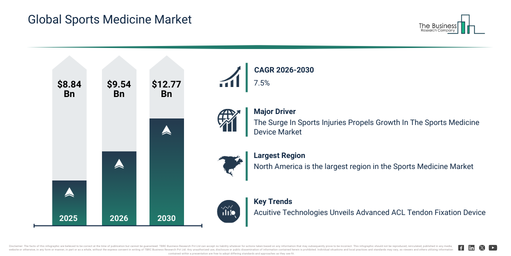
    The sports medicine market has experienced robust expansion over the past few years. Projections indicate an increase from $8.84 billion in 2025 to $9.54 billion in 2026, reflecting a compound annual growth rate (CAGR) of 8.0%. This historic growth is driven by several factors, including a rising number of sports-related injuries, greater awareness regarding musculoskeletal well-being, heightened utilization of orthopedic implants, the proliferation of sports venues and professional leagues, and notable progress in surgical techniques.

    Projections indicate robust expansion of the sports medicine sector in the coming years, with its value anticipated to reach $12.77 billion by 2030, reflecting a compound annual growth rate (CAGR) of 7.5%. This forecasted growth is driven by factors including the increasing demand for tele-rehabilitation, the incorporation of artificial intelligence into injury diagnostics, the uptake of wearable recovery devices, a heightened emphasis on preventive care, and the expanding population of aging athletes. Key developments shaping this period involve minimally invasive surgical methods, customized rehabilitation programs, tele-rehabilitation alongside remote monitoring, advanced diagnostics for sports injuries, and wearable technology for tracking performance and recovery.

    Download A Free Sample Report For Comprehensive Market Insights:

    https://www.thebusinessresearchcompany.com/sample.aspx?id=9376&type=smp&utm_source=BlogsPR&utm_medium=Paid&utm_campaign=Jul_PR

    #Sports Medicine Market Growth Factors: Which Forces Are Supporting Market Expansion?

    The expanding number of sports injuries is anticipated to drive forward momentum in the sports medicine device market. A sports injury includes the various kinds of harm typically sustained during athletic pursuits. Sports medicine devices serve functions beyond merely addressing injuries; they are also applied in performance enhancement, physical rehabilitation, and injury avoidance, so the growing prevalence of sports injuries is predicted to stimulate demand in this market. For example, in October 2024, Insideworldfootball, a UK-based online news service, reported that there were 4,123 sports injuries recorded during the 2023-24 season, a 4% rise from the 2022-23 period. Consequently, the increase in sports injuries is fueling expansion in the sports medicine device market.

    Sports Medicine Market Segmentation: How Is The Market Structured Across Key Categories?

    The sports medicine market covered in this report is segmented –

    1) By Product: Orthopedic Devices, Body Reconstruction And Repair, Body Support And Recovery, Body Monitoring And Evaluation, Accessories

    2) By Orthopedic Product: Artificial Joint Implants, Arthroscopy Devices, Fracture Repair Devices, Prosthesis, Orthobiologic

    3) By Recovery And Support Product: Braces, Performance Monitoring Devices, Accessories, Other Recovery Products

    4) By Application: Knee Injury, Shoulder Injury, Ankle-Foot Injury, Back-Spine Injury, Hand-Wrist Injury, Hip-Groin Injury, Arm-Elbow Injury

    5) By End Users: Ambulatory Surgical Centers, Hospitals, Orthopedic Clinics, Other End Users

    Subsegments:

    1) By Orthopedic Devices: Braces And Supports, Splints, Orthopedic Implants

    2) By Body Reconstruction And Repair: Surgical Instruments, Biologics, Soft Tissue Repair Devices

    3) By Body Support And Recovery: Compression Wear, Rehabilitation Devices, Physiotherapy Equipment

    4) By Body Monitoring And Evaluation: Wearable Sensors, Diagnostic Imaging Devices, Motion Analysis Systems

    5) By Accessories: Ice Packs And Heat Wraps, Taping And Strapping Materials, Therapeutic Gel Packs

    Sports Medicine Market Industry Trends: What Changes Are Reshaping Demand?

    Major players in the sports medicine device sector are placing significant emphasis on creating advanced solutions, including novel resorbable tendon-fixation technologies, to address the growing need for robust fixation, less invasive procedures, and equipment that fosters natural healing in the context of orthopedic and sports injury repairs. These innovations rely on bioresorbable materials crafted to replicate the natural characteristics of bone, delivering better biocompatibility and decreasing the risk of enduring complications versus conventional metal implants. A notable example occurred in June 2023, when Acuitive Technologies Inc., a medical device manufacturer based in the United States, launched the CITRELOCK ACL Tendon Fixation Device, a state-of-the-art system engineered to provide secure tendon anchoring. This device employs a spiral thread that enables straightforward placement and stable fastening while preventing harm to the tendon, and it utilizes Citregen—a sophisticated resorbable material specifically designed for orthopedic applications. Citregen imitates the natural makeup of bone, offers compressive strength equivalent to that of cortical bone, and has a modulus similar to trabecular bone, thereby delivering dependable fixation, seamless biological integration, and controlled resorption.

    Sports Medicine Market Competitive Landscape And Leading Companies

    Major companies operating in the sports medicine market are Stryker Corporation, Arthrex Inc., Zimmer Biomet Holdings Inc., Smith & Nephew plc, Mueller Sports Medicine Inc., Karl Storz SE & Co KG, CONMED Corporation, Johnson & Johnson, DJ Orthopedics LLC, Breg Inc., RTI Surgical Inc., Performance Health International Limited, Bauerfeind AG, Ossur Corporate, Cramer Product Inc., Medtronic plc, Bioventus LLC, Hanger Inc., AlloSource Inc., Surgalign Holdings Inc., DePuy Synthes Companies, Acumed LLC, Integra LifeSciences Corporation, Orthofix Medical Inc., Musculoskeletal Transplant Foundation

    Access The Complete Sports Medicine Market Report:

    https://www.thebusinessresearchcompany.com/report/sports-medicine-devices-global-market-report?utm_source=BlogsPR&utm_medium=Paid&utm_campaign=Jul_PR

    Sports Medicine Market Geographic Analysis: Where Is Demand Growing The Fastest?

    North America was the largest region in the sports medicine device market in 2025. Asia-Pacific is expected to be the fastest-growing region in the sports medicine devices market report during the forecast period. The regions covered in the sports medicine market report are Asia-Pacific, South East Asia, Western Europe, Eastern Europe, North America, South America, Middle East, Africa.

    Get in touch with us:

    The Business Research Company: https://www.thebusinessresearchcompany.com/?utm_source=BlogsPR&utm_medium=Paid&utm_campaign=home_page_test

    Americas: +1 310-496-7795

    Asia: +44 7882 955267 & +91 8897263534

    Europe: +44 7882 955267

    Email us at: marketing@tbrc.info

    Follow us on:

    LinkedIn: https://in.linkedin.com/company/the-business-research-company

    YouTube: https://www.youtube.com/channel/UC24_fI0rV8cR5DxlCpgmyFQ

    Global Market Model: https://www.thebusinessresearchcompany.com/global-market-model

  • Spine Biologics Market Forecast Highlights Expansion From $2.6 Billion To $3.16 Billion Through 2030

    Spine Biologics Market Forecast Highlights Expansion From $2.6 Billion To $3.16 Billion Through 2030

    Delivering more actionable and strategically valuable research, The Business Research Company’s 2026 market reports feature market attractiveness analysis, total addressable market evaluation, company benchmarking matrices, interactive Excel dashboards, expanded supply chain intelligence, emerging startup coverage, and detailed product insights.

    Spine Biologics Market Revenue Growth Supported By A CAGR Of 3.16% Through 2030

    The spine biologics market has experienced robust expansion over the past few years. Projections indicate it will increase from $2.47 billion in 2025 to $2.61 billion in 2026, achieving a compound annual growth rate (CAGR) of 5.5%. This historical growth has been driven by several key factors, including a higher incidence of degenerative spine conditions, a greater volume of spinal fusion procedures, the shortcomings of conventional bone grafts, a rapidly aging demographic, and enhanced patient outcomes achieved through the application of biologic treatments.

    The spine biologics market is anticipated to experience consistent expansion over the coming years, reaching a projected value of $3.17 billion by 2030, which corresponds to a compound annual growth rate (CAGR) of 5.0%. This forecasted growth is driven by several key factors, including a rising need for regenerative medicine approaches, an increase in minimally invasive spinal surgeries, a heightened emphasis on minimizing post-operative issues, progress in the development of biological materials, and greater healthcare expenditures directed toward orthopedic treatments. Notable trends shaping this period encompass a greater adoption of biologic bone grafts for spinal fusion procedures, a wider utilization of synthetic bone graft alternatives, a growing inclination toward less invasive spinal techniques, the emergence of cell-based and regenerative therapies for the spine, and an elevated demand for rapid bone recovery options.

    Download A Free Sample Report For Comprehensive Market Insights:

    https://www.thebusinessresearchcompany.com/sample.aspx?id=15928&type=smp&utm_source=BlogsPR&utm_medium=Paid&utm_campaign=Jul_PR

    Spine Biologics Market Demand Drivers: What Is Fueling Industry Growth?

    The anticipated expansion of the spinal biologics market is being fueled by the increasing frequency of road accidents. These incidents, which are unintended collisions involving vehicles on public thoroughfares, frequently lead to traumatic spinal injuries that necessitate sophisticated biological treatments. The upward trend in accident rates can be attributed to heightened traffic volumes, distracted and impaired driving behaviors, and substandard road infrastructure. Biologic products designed for the spine aid in patient recovery by facilitating spinal fusion, accelerating bone healing, minimizing surgical complications, and enhancing long-term functional results. As an example, data from the International Transport Forum, an intergovernmental body based in France, indicates that Australia experienced 1,297 road fatalities in 2024, reflecting a 4 percent rise from the previous year. Consequently, the growing number of road accidents is propelling the spinal biologics market forward.

    Spine Biologics Market Segmentation Trends And Revenue Drivers

    The spine biologics market covered in this report is segmented –

    1) By Product: Bone Allografts, Bone Graft Substitute, Platelet Rich Plasma, Bone Marrow Aspirate Therapy

    2) By Surgery Type: Anterior Cervical Discectomy And Fusion (ACDF), Posterior Lumbar Interbody Fusion (PLIF), Transforaminal Lumbar Interbody Fusion (TLIF), Anterior Lumbar Interbody Fusion (ALIF), Lateral Lumbar Interbody Fusion (LLIF), Other Surgery Types

    3) By Application: Spinal Fusion, Spinal Non-Union And Fracture Repair, Degenerative Disc Disease Treatment, Other Applications

    4) By End User: Hospitals, Spinal Surgery Centers, Orthopedic Clinics, Other End Users

    Subsegments:

    1) By Bone Allografts: Fresh Allografts, Freeze-Dried Allografts

    2) By Bone Graft Substitute: Synthetic Bone Grafts, Demineralized Bone Matrix (DBM), Calcium Phosphate-Based Grafts, Platelet Rich Plasma (PRP)

    3) By Bone Marrow Aspirate Therapy: Concentrated Bone Marrow Aspirate, Bone Marrow Concentrates

    Spine Biologics Market Innovation Trends: Which Developments Are Transforming The Industry?

    Leading enterprises within the spinal biologics industry are prioritizing the creation of sophisticated products, particularly regenerative biologics, to enhance the effectiveness of spinal fusion procedures and boost operational efficiency in surgery. Regenerative biologics refer to medical substances sourced from natural or engineered biological components that facilitate tissue repair, regrowth, or replacement. For example, in October 2025, Aurora Spine Corporation, a manufacturer headquartered in Canada, unveiled a fresh lineup of biologics through its newly established division, Aurora Biologics, with the goal of improving spinal fusion outcomes. This portfolio includes 100% allograft bone offerings such as TURBO FUSE Fiber Putty and OSTEO BRIDGE Sponge Strips, which are specifically engineered to support better results in spinal fusion. These materials are combined with Aurora’s minimally invasive spinal implant systems, leading to improved surgical performance and prolonged patient recovery. This release increases Aurora’s biologics range by more than 30%, fueling expansion and supporting their objective of streamlining complex spinal care.

    Spine Biologics Market Industry Leaders: Which Organizations Are Driving Competition?

    Major companies operating in the spine biologics market are Medtronic PLC, Johnson & Johnson Services Inc., Stryker Corporation, Zimmer Biomet Holdings Inc., Integra LifeSciences Corporation, RTI Surgical Inc., LifeNet Health Inc., Xtant Medical Holdings Inc., Kuros Biosciences A.G., Cerapedics Inc, Aziyo Biologics, Bone Biologics Corp., Orthofix Medical Inc., NuVasive Inc., SeaSpine Holdings Corporation, Exactech Inc., DePuy Synthes, Globus Medical Inc., Spine Wave Inc., Osiris Therapeutics Inc.

    Access The Complete Spine Biologics Market Report:

    https://www.thebusinessresearchcompany.com/report/spine-biologics-global-market-report?utm_source=BlogsPR&utm_medium=Paid&utm_campaign=Jul_PR

    Spine Biologics Market Global Footprint: Which Region Holds Market Leadership?

    North America was the largest region in the spine biologics market in 2025. Asia-Pacific is expected to be the fastest-growing region in the forecast period. The regions covered in the spine biologics market report are Asia-Pacific, South East Asia, Western Europe, Eastern Europe, North America, South America, Middle East, Africa.

    Get in touch with us:

    The Business Research Company: https://www.thebusinessresearchcompany.com/?utm_source=BlogsPR&utm_medium=Paid&utm_campaign=home_page_test

    Americas: +1 310-496-7795

    Asia: +44 7882 955267 & +91 8897263534

    Europe: +44 7882 955267

    Email us at: marketing@tbrc.info

    Follow us on:

    LinkedIn: https://in.linkedin.com/company/the-business-research-company

    YouTube: https://www.youtube.com/channel/UC24_fI0rV8cR5DxlCpgmyFQ

    Global Market Model: https://www.thebusinessresearchcompany.com/global-market-model
  • Spinal Muscular Atrophy Treatment Market Expected To Reach $10.37 Billion By 2030 As Growth Accelerates At 15.2% CAGR

    Spinal Muscular Atrophy Treatment Market Expected To Reach $10.37 Billion By 2030 As Growth Accelerates At 15.2% CAGR

    Enhanced with market attractiveness analysis, total addressable market evaluation, company benchmarking matrices, interactive Excel dashboards, expanded supply chain intelligence, emerging startup coverage, and detailed product insights, The Business Research Company’s 2026 market reports deliver more actionable and strategically valuable research.

    Spinal Muscular Atrophy Treatment Market Value Expansion And Long-Term Growth Outlook

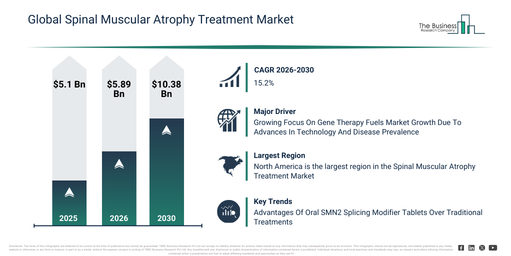
    The spinal muscular atrophy treatment market has experienced significant expansion in recent years. Its value is projected to increase from $5.1 billion in 2025 to $5.89 billion in 2026, reflecting a compound annual growth rate (CAGR) of 15.5%. Historical growth was driven by factors such as the scarcity of treatment alternatives for SMA, limited public understanding of genetic conditions, a dependence on hospital-centered care, a gradual uptake of advanced therapies, and insufficient early diagnostic initiatives.

    The market for spinal muscular atrophy treatments is projected to experience substantial expansion in the coming years, reaching $10.38 billion by 2030 with a compound annual growth rate of 15.2%. This upward trajectory in the forecast period is driven by the development of advanced gene therapies, increased funding for SMA research, the expansion of newborn screening initiatives, and the growth of specialized clinics and homecare services, alongside the incorporation of digital health and telemedicine solutions. Key trends influencing the period include the growing use of gene therapy and SMN2-targeting treatments, a stronger emphasis on early detection and universal newborn screening, the rise of homecare and specialty clinic-based SMA management, the development of multidisciplinary care teams for patients, and the adoption of telehealth and remote monitoring technologies.

    Download A Free Sample Report For Comprehensive Market Insights:

    https://www.thebusinessresearchcompany.com/sample.aspx?id=24714&type=smp&utm_source=BlogsPR&utm_medium=Paid&utm_campaign=Jul_PR

    Spinal Muscular Atrophy Treatment Market Growth Drivers: What Factors Are Accelerating Expansion?

    The anticipated expansion of the spinal muscular atrophy treatment market is being driven by an intensified emphasis on gene therapy. This medical method entails altering a person’s genetic code—either DNA or RNA—to address or avert illnesses. This heightened attention on gene therapy stems largely from its capacity to tackle the fundamental causes of genetic disorders by directly correcting or substituting defective genes, thereby providing enduring or permanent therapeutic benefits that surpass those of conventional approaches. Treatments for spinal muscular atrophy, like onasemnogene abeparvovec (Zolgensma), effectively leverage gene therapy through a single-dose, precision-focused strategy that introduces a working version of the SMN1 gene, substantially enhancing motor abilities and life quality for SMA patients. As an example, reports from the American Society of Gene and Cell Therapy, a US-based entity dedicated to gene and cell therapy, indicate that by January 2024, there was a 10% rise in Phase III gene therapy trials during the fourth quarter of 2023 compared to the prior quarter—the first such uptick observed since the third quarter of 2022. Consequently, this increasing concentration on gene therapy is fueling the momentum behind the spinal muscular atrophy treatment market.

    Spinal Muscular Atrophy Treatment Market Segment Analysis Highlighting Growth Areas

    The spinal muscular atrophy treatment market covered in this report is segmented –

    1) By Treatment: Medication, Physical Therapy, Surgery, Other Treatments

    2) By Type: Werdnig-Hoffmann Disease, Infant Spinal Muscular Atrophy, Kugelberg-Welander Disease, Adult Spinal Muscular Atrophy

    3) By Route Of Administration: Oral, Parenteral

    4) By Distribution Channel: Hospital Pharmacies, Retail Pharmacies, Other Distribution Channels

    5) By End User: Hospitals, Homecare, Specialty Clinics, Other End Users

    Subsegments:

    1) By Medication: Nusinersen (Spinraza), Onasemnogene Abeparvovec-Xioi (Zolgensma), Risdiplam (Evrysdi), Antisense Oligonucleotides, Spinal Muscular Atrophy (SMN2) Splicing Modifiers, Corticosteroids, Supportive Medications

    2) By Physical Therapy: Occupational Therapy, Respiratory Therapy, Aquatic Therapy, Orthotic Support, Assistive Mobility Devices, Range-Of-Motion Exercises

    3) By Surgery: Spinal Fusion Surgery, Scoliosis Correction Surgery, Orthopedic Surgery, Gastrostomy Tube Placement, Tracheostomy

    4) By Other Treatments: Nutritional Support, Respiratory Support, Psychosocial Support And Counseling, Genetic Counseling, Stem Cell Therapy

    Spinal Muscular Atrophy Treatment Market Trends: What Is Shaping Future Industry Growth?

    Leading market players in the spinal muscular atrophy treatment sector are concentrating on creating advanced formulations, such as survival motor neuron 2 (SMN2) splicing modifier tablets, aimed at boosting motor function and decelerating disease advancement. These tablets, which are taken orally, work by altering the splicing of the SMN2 gene to promote the production of functional SMN protein, essential for preserving motor neurons. By elevating levels of full-length SMN protein, they assist in treating spinal muscular atrophy (SMA), leading to enhanced muscle function and a slower progression of the condition. A notable example occurred in February 2025 when Genentech, Inc., a biotechnology firm based in the United States, secured U.S. Food and Drug Administration approval for its Evrysdi (risdiplam) tablet. This represents the first non-invasive SMN2 splicing modifier tablet specifically designed for SMA management. The Evrysdi tablet delivers effectiveness and safety comparable to the current oral solution, while offering extra advantages like the ability to be stored at room temperature and easier administration for patients aged 2 years and older weighing over 44 lbs (20 kgs), thereby improving convenience and adaptability in disease control.

    Spinal Muscular Atrophy Treatment Market Leading Companies: Who Holds Significant Market Presence?

    Major companies operating in the spinal muscular atrophy treatment market are F. Hoffmann-La Roche Ltd, Novartis AG, Biogen Inc., Ionis Pharmaceuticals Inc., Chugai Pharmaceutical Co. Ltd, PTC Therapeutics Inc., Voyager Therapeutics Inc., Scholar Rock Holding Corporation, Genethon, Exegenesis Bio Inc., Alcyone Therapeutics Inc., Biophytis SA, Ractigen Therapeutics, Sarepta Therapeutics Inc., Astellas Pharma Inc., Pfizer Inc., AstraZeneca PLC, Roche Molecular Systems Inc., Avexis Inc., Cytokinetics Incorporated, Repligen Corporation, Neurogene Inc., Solid Biosciences Inc., Entrada Therapeutics Inc., Regenxbio Inc., Rocket Pharmaceuticals Inc., Asklepios BioPharmaceutical (AskBio) Inc., Ultragenyx Pharmaceutical Inc., Catalyst Pharmaceuticals Inc., NMD Pharma A/S, Biohaven Pharmaceutical Holding Company Ltd, Vybion Inc., Apteeus SAS, BIOCAD INDIA PRIVATE LIMITED

    Access The Complete Spinal Muscular Atrophy Treatment Market Report:

    https://www.thebusinessresearchcompany.com/report/spinal-muscular-atrophy-treatment-global-market-report?utm_source=BlogsPR&utm_medium=Paid&utm_campaign=Jul_PR

    Spinal Muscular Atrophy Treatment Market Regional Distribution: Which Areas Drive Market Expansion?

    North America was the largest region in the spinal muscular atrophy treatment market in 2025. Asia-Pacific is expected to be the fastest-growing region in the forecast period. The regions covered in the spinal muscular atrophy treatment market report are Asia-Pacific, South East Asia, Western Europe, Eastern Europe, North America, South America, Middle East, Africa.

    Get in touch with us:

    The Business Research Company: https://www.thebusinessresearchcompany.com/?utm_source=BlogsPR&utm_medium=Paid&utm_campaign=home_page_test

    Americas: +1 310-496-7795

    Asia: +44 7882 955267 & +91 8897263534

    Europe: +44 7882 955267

    Email us at: marketing@tbrc.info

    Follow us on:

    LinkedIn: https://in.linkedin.com/company/the-business-research-company

    YouTube: https://www.youtube.com/channel/UC24_fI0rV8cR5DxlCpgmyFQ

    Global Market Model: https://www.thebusinessresearchcompany.com/global-market-model
  • Sphingosine 1 Phosphate Receptor (S1PR) Modulator Drugs Market Set To Grow From $2.71 Billion In 2026 To $3.37 Billion By 2030 At A CAGR Of 5.5%

    Sphingosine 1 Phosphate Receptor (S1PR) Modulator Drugs Market Set To Grow From $2.71 Billion In 2026 To $3.37 Billion By 2030 At A CAGR Of 5.5%

    Through market attractiveness analysis, total addressable market evaluation, company benchmarking matrices, interactive Excel dashboards, expanded supply chain intelligence, emerging startup coverage, and detailed product insights, The Business Research Company’s 2026 market reports provide more actionable and strategically valuable research.

    Sphingosine 1 Phosphate Receptor (S1PR) Modulator Drugs Market Expected To Reach $3.37 Billion By 2030 At 5.5% CAGR

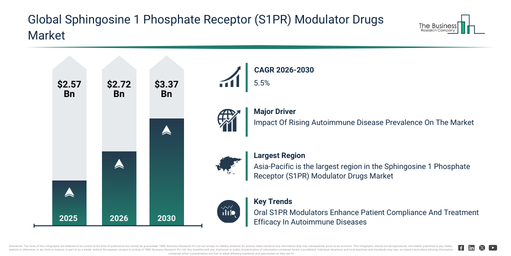
    The market for sphingosine 1 phosphate receptor (S1PR) modulator drugs has experienced robust growth in recent years. Projected to rise from $2.57 billion in 2025 to $2.72 billion in 2026, this expansion corresponds to a compound annual growth rate (CAGR) of 5.6%. Several factors contributed to this historical growth, including the clinical achievements of fingolimod, an increasing incidence of autoimmune diseases, the broadening of neurology treatment regimens, the integration of immunotherapy within hospital settings, and the receipt of regulatory approvals for S1PR-based therapies.

    The sphingosine 1 phosphate receptor (S1PR) modulator drugs market is projected to experience robust expansion over the coming years. Forecasts indicate it will reach a valuation of $3.37 billion by 2030, representing a compound annual growth rate (CAGR) of 5.5%. This anticipated growth during the forecast period is driven by several factors, including a rising number of multiple sclerosis patients, the broadening of S1PR drug development initiatives, a growing preference for oral immunotherapies, higher diagnosis rates for autoimmune diseases, and increased utilization within specialty clinics. Key trends shaping the forecast period involve the increasing application of immune cell trafficking modulators, wider adoption in multiple sclerosis management, the expansion of oral immunomodulatory treatments, a heightened emphasis on targeted immune system modulation, and greater use in managing chronic autoimmune conditions.

    Download A Free Sample Report For Comprehensive Market Insights:

    https://www.thebusinessresearchcompany.com/sample.aspx?id=21288&type=smp&utm_source=BlogsPR&utm_medium=Paid&utm_campaign=Jul_PR

    Sphingosine 1 Phosphate Receptor (S1PR) Modulator Drugs Market Growth Factors Supporting Long-Term Expansion

    The growing incidence of autoimmune disorders is anticipated to boost the expansion of the sphingosine 1-phosphate receptor (S1PR) modulator drugs market in the foreseeable future. Autoimmune diseases are characterized by the immune system erroneously attacking the body’s own healthy cells, resulting in inflammation and tissue damage. Factors such as genetic predisposition, environmental triggers, lifestyle modifications, and enhanced diagnostic capabilities contribute to the rising frequency of these conditions. S1PR modulator drugs are utilized in treating autoimmune diseases by controlling immune cell movement, thereby alleviating inflammation in illnesses like multiple sclerosis and ulcerative colitis. For example, as reported by the Australian Broadcasting Corporation, a national public broadcaster in Australia, in February 2025, inflammatory bowel disease currently affects nearly 180,000 Australians. Specifically, Crohn’s Disease impacts 93,700 individuals, while Ulcerative Colitis affects 80,430, with projections indicating that the total number will increase to 200,000 within the next decade. Consequently, the escalating prevalence of autoimmune diseases is fueling the growth of the S1PR modulator drugs market.

    Sphingosine 1 Phosphate Receptor (S1PR) Modulator Drugs Market Segment Performance And Strategic Opportunities

    The sphingosine 1 phosphate receptor (s1pr) modulator drugs market covered in this report is segmented –

    1) By Type: Fingolimod, Ozanimod

    2) By Route Of Administration: Oral, Injectable

    3) By Application: Multiple Sclerosis, Cardiovascular Diseases, Transplant Rejection

    4) By End User: Hospital, Rehabilitation Centres, Retail Pharmacies

    Subsegments:

    1) By Fingolimod: Branded Formulations, Generic Formulations

    2) By Ozanimod: Oral Capsules, Other Formulations

    Sphingosine 1 Phosphate Receptor (S1PR) Modulator Drugs Market Industry Trends Shaping Future Revenue Growth

    Key players in the sphingosine 1 phosphate receptor (S1PR) modulator drugs market are prioritizing the development of oral therapies, including etrasimod (VELSIPITY), with the goal of improving patient compliance, increasing treatment effectiveness, and broadening therapeutic options for immuno-inflammatory disorders. As a small molecule pill, an oral S1PR modulator works by binding selectively to S1P receptors, thereby controlling immune cell movement and alleviating inflammation. A notable example occurred in October 2023, when Pfizer—a US-based pharmaceutical and biotechnology firm—secured FDA clearance for VELSIPITY (etrasimod) as a treatment for moderately to severely active ulcerative colitis; this once-daily medication is characterized by strong receptor selectivity, a favorable safety record, and the convenience of oral administration.

    Sphingosine 1 Phosphate Receptor (S1PR) Modulator Drugs Market Key Players: Which Companies Shape Industry Competition?

    Major companies operating in the sphingosine 1 phosphate receptor (s1pr) modulator drugs market are Novartis International AG, Bristol Myers Squibb Company, Celgene Corporation, Biogen Inc., Pfizer Inc., Merck & Co. Inc., AbbVie Inc., Johnson & Johnson, Ventyx Biosciences Inc., Arena Pharmaceuticals, Idorsia Pharmaceuticals Ltd., Sun Pharmaceutical Industries Ltd., Eisai Co. Ltd., Ono Pharmaceutical Co. Ltd., KYORIN Pharmaceutical Co. Ltd., Actelion Pharmaceuticals Ltd., Vanda Pharmaceuticals Inc., Juvisé Pharmaceuticals, Priothera Limited, Teva Pharmaceutical Industries Ltd.

    Access The Complete Sphingosine 1 Phosphate Receptor (S1PR) Modulator Drugs Market Report:

    https://www.thebusinessresearchcompany.com/report/sphingosine-1-phosphate-receptor-s1pr-modulator-drugs-global-market-report?utm_source=BlogsPR&utm_medium=Paid&utm_campaign=Jul_PR

    Sphingosine 1 Phosphate Receptor (S1PR) Modulator Drugs Market Leading Geography: Which Region Generates The Most Revenue?

    Asia-Pacific was the largest region in the sphingosine 1 phosphate receptor (S1PR) modulator drugs market in 2025. The regions covered in the sphingosine 1 phosphate receptor (s1pr) modulator drugs market report are Asia-Pacific, South East Asia, Western Europe, Eastern Europe, North America, South America, Middle East, Africa.

    Get in touch with us:

    The Business Research Company: https://www.thebusinessresearchcompany.com/?utm_source=BlogsPR&utm_medium=Paid&utm_campaign=home_page_test

    Americas: +1 310-496-7795

    Asia: +44 7882 955267 & +91 8897263534

    Europe: +44 7882 955267

    Email us at: marketing@tbrc.info

    Follow us on:

    LinkedIn: https://in.linkedin.com/company/the-business-research-company

    YouTube: https://www.youtube.com/channel/UC24_fI0rV8cR5DxlCpgmyFQ

    Global Market Model: https://www.thebusinessresearchcompany.com/global-market-model

  • Specific Antiviral Drugs For COVID 19 Market Opportunities Are Emerging Beyond Traditional Growth Areas

    Specific Antiviral Drugs For COVID 19 Market Opportunities Are Emerging Beyond Traditional Growth Areas

    Delivering more actionable and strategically valuable research, The Business Research Company’s 2026 market reports feature market attractiveness analysis, total addressable market evaluation, company benchmarking matrices, interactive Excel dashboards, expanded supply chain intelligence, emerging startup coverage, and detailed product insights.

    Specific Antiviral Drugs For COVID 19 Market Size And Revenue Forecast Through 2030

    The market for specific antiviral drugs targeting COVID-19 has experienced notable expansion in recent years, climbing from $15.23 billion in 2025 to an estimated $17.83 billion in 2026, reflecting a compound annual growth rate (CAGR) of 17.1%. This historical growth was driven by several key factors, including the swift transmission of the COVID-19 virus, the granting of emergency use authorizations, a dependence on established antiviral drug categories, constrained manufacturing capabilities on a global scale, and elevated rates of hospitalization.

    The market for specific antiviral drugs targeting COVID-19 is anticipated to experience significant expansion in the coming years. It is projected to reach $33.17 billion by 2030, achieving a compound annual growth rate (CAGR) of 16.8%. Growth during this forecast period is driven by factors such as the creation of advanced antiviral agents, enhanced collaborations between public and private sectors, greater uptake of preventive treatments, broader use of combination therapies, and the incorporation of personalized medicine strategies. Key trends shaping this period include heightened investment in the creation of COVID-19 antiviral drugs, a surge in the use of oral antiviral tablets, progress in monoclonal antibody treatments, wider availability through hospital and retail pharmacy networks, and a greater emphasis on specific treatments for hospitalized and high-risk individuals.

    Download A Free Sample Report For Comprehensive Market Insights:

    https://www.thebusinessresearchcompany.com/sample.aspx?id=24713&type=smp&utm_source=BlogsPR&utm_medium=Paid&utm_campaign=Jul_PR

    Specific Antiviral Drugs For COVID 19 Market Demand Drivers Creating New Revenue Opportunities

    The anticipated growth of the specific antiviral drugs market for COVID-19 is being driven by the increasing number of confirmed cases. These cases represent individuals who have tested positive for SARS-CoV-2, the virus responsible for COVID-19. This surge in infections is largely attributed to newly emerging variants that are more transmissible and possess the ability to partially bypass immunity gained from prior vaccinations or previous infections. Antiviral medications specifically designed for COVID-19 play a crucial role in lessening the severity and shortening the duration of the illness, which enhances patient recovery and reduces the overall strain caused by the pandemic. To illustrate, data released by the World Health Organization—a global public health body based in Switzerland—in May 2025 showed that the test positivity rate in the Eastern Mediterranean region surged from 4% to 17% during early 2025, exceeding figures recorded in the corresponding period of 2024. Consequently, the escalating number of COVID-19 cases is fueling expansion in the specific antiviral drugs market for this disease.

    Specific Antiviral Drugs For COVID 19 Market Segment Landscape And Growth Potential

    The specific antiviral drugs for covid 19 market covered in this report is segmented –

    1) By Type: Tablet, Injection

    2) By Indication: Hospitalized Patients, Non-Hospitalized Patients, Preventive Treatment

    3) By Drug Class: Nucleoside Analogues, Protease Inhibitors, Ribonucleic Acid Polymerase Inhibitors, Entry Inhibitors, Monoclonal Antibodies

    4) By Route Of Administration: Oral, Intravenous, Subcutaneous, Inhalation

    5) By Distribution Channel: Hospital Pharmacies, Retail Pharmacies, Other Distribution Channels

    Subsegments:

    1) By Tablet: Oral Antiviral Tablets, Combination Antiviral Tablets, Extended-Release Tablets

    2) By Injection: Intravenous (IV) Antiviral Injections, Intramuscular (IM) Antiviral Injections, Subcutaneous Antiviral Injections

    Specific Antiviral Drugs For COVID 19 Market Trends Driving Strategic Industry Expansion

    Key players within the specific antiviral drugs market for COVID-19 are concentrating on creating novel treatments, particularly oral antiviral therapies, aimed at improving both accessibility and effectiveness of care. These oral antiviral agents, ingested as pills, function by stopping the replication of viruses such as COVID-19, providing a convenient and efficient therapeutic approach. In March 2024, for example, Shionogi & Co., a pharmaceutical firm based in Japan, introduced Xocova and secured full standard approval from Japan’s Ministry of Health, Labour and Welfare (MHLW) for the antiviral drug ensitrelvir. Moreover, this drug serves as a post-exposure prophylaxis, notably lowering the likelihood of developing symptomatic COVID-19 among exposed individuals while also decreasing symptom duration and maintaining a favorable safety profile.

    Specific Antiviral Drugs For COVID 19 Market Competitive Landscape: Who Are The Leading Companies?

    Major companies operating in the specific antiviral drugs for covid 19 market are Pfizer Inc., Merck & Co. Inc., Gilead Sciences Inc., Shionogi & Co. Ltd., Cipla Limited, Hetero Drugs Limited, Roche Holding AG, Johnson & Johnson, Novartis AG, GSK plc, Eli Lilly and Company, Regeneron Pharmaceuticals Inc., Sun Pharmaceutical Industries Ltd., Beximco Pharmaceuticals Limited, Atea Pharmaceuticals Inc., Enanta Pharmaceuticals Inc., RedHill Biopharma Ltd., Synairgen plc, Dr. Reddy’s Laboratories Ltd., Aurobindo Pharma Ltd., Lupin Limited, Natco Pharma Ltd., Zydus Lifesciences Ltd., Viatris Inc., Teva Pharmaceutical Industries Ltd., Hikma Pharmaceuticals PLC, Alkem Laboratories Ltd., Torrent Pharmaceuticals Ltd., Apotex Inc., Mylan N.V.

    Access The Complete Specific Antiviral Drugs For COVID 19 Market Report:

    https://www.thebusinessresearchcompany.com/report/specific-antiviral-drugs-for-covid-19-global-market-report?utm_source=BlogsPR&utm_medium=Paid&utm_campaign=Jul_PR

    Specific Antiviral Drugs For COVID 19 Market Regional Outlook: Where Are The Largest Opportunities Located?

    North America was the largest region in the specific antiviral drugs for COVID 19 market in 2025. Asia-Pacific is expected to be the fastest-growing region in the forecast period. The regions covered in the specific antiviral drugs for covid 19 market report are Asia-Pacific, South East Asia, Western Europe, Eastern Europe, North America, South America, Middle East, Africa.

    Get in touch with us:

    The Business Research Company: https://www.thebusinessresearchcompany.com/?utm_source=BlogsPR&utm_medium=Paid&utm_campaign=home_page_test

    Americas: +1 310-496-7795

    Asia: +44 7882 955267 & +91 8897263534

    Europe: +44 7882 955267

    Email us at: marketing@tbrc.info

    Follow us on:

    LinkedIn: https://in.linkedin.com/company/the-business-research-company

    YouTube: https://www.youtube.com/channel/UC24_fI0rV8cR5DxlCpgmyFQ

    Global Market Model: https://www.thebusinessresearchcompany.com/global-market-model
  • Specialty Supplements Market Expansion Is Opening New Pathways For Strategic Investment

    Specialty Supplements Market Expansion Is Opening New Pathways For Strategic Investment

    Enhanced with market attractiveness analysis, total addressable market evaluation, company benchmarking matrices, interactive Excel dashboards, expanded supply chain intelligence, emerging startup coverage, and detailed product insights, The Business Research Company’s 2026 market reports deliver more actionable and strategically valuable research.

    Specialty Supplements Market Growth From $50.39 Billion In 2026 To $69.17 Billion By 2030 At A CAGR Of 8.2%

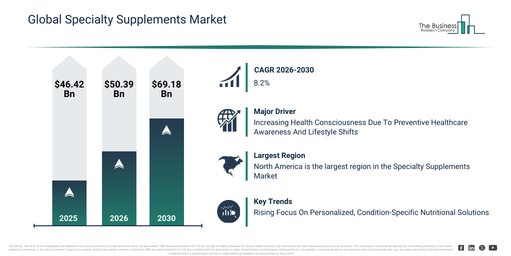
    The specialty supplements segment has experienced robust expansion in recent years, with projections indicating an increase from $46.42 billion in 2025 to $50.39 billion in 2026, reflecting a compound annual growth rate of 8.6%. This historical growth has been driven by heightened consumer awareness regarding dietary supplements, a greater incidence of lifestyle-associated health issues, a scarcity of clinically backed specialty products, evolving health-focused consumer habits, and continued dependence on traditional retail outlets for distribution.

    The specialty supplements market is projected to experience robust expansion over the coming years, reaching a valuation of $69.18 billion by 2030, driven by a compound annual growth rate (CAGR) of 8.2%. This anticipated growth during the forecast period is fueled by several key factors, including advancements in supplement formulation technologies, the broadening of personalized nutrition offerings, the increasing prevalence of e-commerce for health-related purchases, heightened demand from both elderly and pediatric demographics, and strengthened regulatory frameworks and certifications that ensure product quality. Among the prominent trends shaping this period are a growing consumer preference for targeted health supplements, an intensified focus on immune support and overall wellness products, the expansion of sports nutrition and performance-enhancing supplements, the proliferation of online and direct-to-consumer sales channels, and the development of formulations that incorporate clinically validated ingredients.

    Download A Free Sample Report For Comprehensive Market Insights:

    https://www.thebusinessresearchcompany.com/sample.aspx?id=24712&type=smp&utm_source=BlogsPR&utm_medium=Paid&utm_campaign=Jul_PR

    Specialty Supplements Market Expansion Supported By Key Demand Factors

    The growing focus on health awareness is anticipated to boost the specialty supplements market in the coming years. Health awareness describes the level of knowledge and deliberate attention people give to preserving and enhancing their health via habits like nutrition, exercise, and preventative care. This trend is fueled by individuals looking for proactive methods to sustain wellness, avoid disease, and embrace healthier routines through educated decisions about diet and supplementation. Specialty supplements cater to this awareness by delivering targeted nutritional products that enable people to sustain and improve their health through scientifically developed formulas. For example, in 2023, the Global Wellness Institute, a nonprofit organization based in the US, reported that the global wellness economy reached $6.3 trillion, showing a notable increase after the pandemic, and is expected to expand at a steady annual rate of 7.3% through 2028. Thus, rising health awareness is fueling the expansion of the specialty supplements market.

    Specialty Supplements Market Categorization By Product Type And Application

    The specialty supplements market covered in this report is segmented –

    1) By Type: Vitamins, Minerals, Herbal Supplements, Amino Acids, Probiotics, Other Types

    2) By Application: Sports Nutrition, Bone And Joint Health, Digestive Health, Immune Health, Other Applications

    3) By Distribution Channel: Online Retailers, Health Food Stores, Pharmacies, Supermarkets, Direct Selling, Fitness Centers, Other Distribution Channels

    4) By End User: Adults, Geriatric, Pregnant Women, Children, Other End Users

    Subsegments:

    1) By Vitamins: Vitamin A, Vitamin B Complex, Vitamin C, Vitamin D, Vitamin E, Vitamin K

    2) By Minerals: Calcium, Magnesium, Zinc, Iron, Potassium, Selenium, Copper

    3) By Herbal Supplements: Ginseng, Echinacea, Turmeric, Garlic, Ginkgo Biloba, Ashwagandha

    4) By Amino Acids: Branched-Chain Amino Acids (BCAA), Glutamine, Arginine, Lysine, Taurine, Tyrosine

    5) By Probiotics: Lactobacillus, Bifidobacterium, Saccharomyces, Streptococcus, Bacillus

    6) By Other Types: Enzymes, Omega Fatty Acids, Coenzyme Q10, Antioxidants, Collagen Supplements

    Specialty Supplements Market Growth Trends Influencing Competitive Dynamics

    Key players in the specialty supplements sector are increasingly directing their efforts toward personalized and condition-specific nutrition strategies—namely the condition-specific supplementation model—with the goal of providing customized nutritional solutions that cater to unique individual health requirements and boost the effectiveness of wellness and therapeutic treatments. This supplementation model involves designing dietary products that target the distinct physiological demands and health obstacles posed by particular medical conditions or therapies. A notable example occurred in March 2025, when The Vitamin Shoppe, an American retailer and contract manufacturer of nutritional goods, launched GLP-1 Support from Whole Health Rx. This specialized supplement was crafted to aid weight management and metabolic wellness, employing GLP-1 (glucagon-like peptide-1) compounds to regulate appetite and enhance glucose metabolism. Intended for everyday use, GLP-1 Support delivers a practical, evidence-based method for fostering healthy weight loss and maintaining steady energy levels throughout the day.

    Specialty Supplements Market Company Landscape And Strategic Competition

    Major companies operating in the specialty supplements market are Thorne HealthTech Inc., Life Extension Foundation Buyers Club Inc., Bactolac Pharmaceutical Inc., Designs for Health Inc., Ritual Inc., Seed Health Inc., SDC Nutrition Inc., Oriflame Holding AG, Bio Nutraceuticals Inc., HUM Nutrition Inc., Advanced Supplements LLC, True Nutrition Inc., ACF Pharma LLC, Lemme Wellness Inc., Vimergy LLC, 1Mission Nutrition LLC, Nugen Research Inc., Beyond Organic LLC, Fungi Perfecti LLC (operates as Host Defense Mushrooms), New Life Vitamins Inc.

    Access The Complete Specialty Supplements Market Report:

    https://www.thebusinessresearchcompany.com/report/specialty-supplements-global-market-report?utm_source=BlogsPR&utm_medium=Paid&utm_campaign=Jul_PR

    Specialty Supplements Market Geographic Landscape: Which Region Dominates Industry Growth?

    North America was the largest region in the specialty supplements market in 2025. The regions covered in the specialty supplements market report are Asia-Pacific, South East Asia, Western Europe, Eastern Europe, North America, South America, Middle East, Africa.

    Get in touch with us:

    The Business Research Company: https://www.thebusinessresearchcompany.com/?utm_source=BlogsPR&utm_medium=Paid&utm_campaign=home_page_test

    Americas: +1 310-496-7795

    Asia: +44 7882 955267 & +91 8897263534

    Europe: +44 7882 955267

    Email us at: marketing@tbrc.info

    Follow us on:

    LinkedIn: https://in.linkedin.com/company/the-business-research-company

    YouTube: https://www.youtube.com/channel/UC24_fI0rV8cR5DxlCpgmyFQ

    Global Market Model: https://www.thebusinessresearchcompany.com/global-market-model
  • Specialty Pharmaceuticals Market Trends Are Creating New Opportunities For Industry Leaders

    Specialty Pharmaceuticals Market Trends Are Creating New Opportunities For Industry Leaders

    Through market attractiveness analysis, total addressable market evaluation, company benchmarking matrices, interactive Excel dashboards, expanded supply chain intelligence, emerging startup coverage, and detailed product insights, The Business Research Company’s 2026 market reports provide more actionable and strategically valuable research.

    Specialty Pharmaceuticals Market Expansion Outlook: What Revenue Opportunities Lie Ahead?

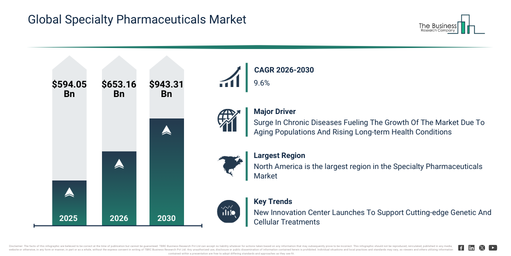
    The market for specialty pharmaceuticals has experienced robust expansion in recent years. Projections indicate it will rise from $594.05 billion in 2025 to $653.16 billion in 2026, reflecting a compound annual growth rate (CAGR) of 10.0%. During the historic period, this growth was driven by factors such as the elevated cost of these drugs, the restricted accessibility of advanced therapeutic options, a rising incidence of chronic and rare conditions, enhanced healthcare infrastructure, and growing public knowledge regarding specialty treatments.

    The specialty pharmaceuticals market is projected to experience robust growth over the coming years, reaching an estimated $943.31 billion by 2030, with a compound annual growth rate (CAGR) of 9.6%. This anticipated expansion during the forecast period is driven by key factors such as the advancement of cell and gene therapies, the broadening scope of personalized medicine, increased investment in biologics and biosimilars, a growing preference for sophisticated drug delivery methods, and the expanding role of telehealth along with remote patient management. Important developments that are shaping this period include a greater utilization of biologics and biosimilars in specialized treatments, a surge in orphan drug development targeting rare illnesses, a higher uptake of tailored therapies and innovative delivery systems, the growth of homecare settings and specialty clinics for managing chronic conditions, and the incorporation of telehealth services and remote monitoring technologies for specialty pharmaceutical care.

    Download A Free Sample Report For Comprehensive Market Insights:

    https://www.thebusinessresearchcompany.com/sample.aspx?id=25909&type=smp&utm_source=BlogsPR&utm_medium=Paid&utm_campaign=Jul_PR

    Specialty Pharmaceuticals Market Growth Drivers And Industry Catalysts

    The growth of the specialty pharmaceuticals market is being driven forward by the rising incidence of chronic diseases. These are long-term health conditions that usually last a year or more, requiring ongoing medical care or restricting routine activities. An aging population is fueling this increase, as older individuals are more prone to enduring ailments like diabetes, heart disease, and arthritis. Specialty pharmaceuticals address these conditions through precise, highly effective treatments that enhance patient outcomes and life quality, particularly when standard options fall short. To illustrate, the National Library of Medicine, a medical institution based in the US, reported in June 2024 that the count of Americans aged 50 and above with at least one chronic condition is expected to nearly double by 2050, climbing to around 142.66 million—a remarkable 99.5% surge. Consequently, the escalating prevalence of chronic diseases is accelerating the specialty pharmaceuticals market’s expansion.

    Specialty Pharmaceuticals Market Segment Analysis And Revenue Opportunities

    The specialty pharmaceuticals market covered in this report is segmented –

    1) By Drug Types: Biologics, Biosimilars, Orphan Drugs, Small Molecules, Other Drug Types

    2) By Route Of Administration: Oral, Injectables, Intranasal, Transdermal, Inhalation

    3) By Therapeutic Area: Oncology, Autoimmune Diseases, Neurology, Infectious Diseases, Rare Genetic Disorders, Other Therapeutic Areas

    4) By Distribution Channel: Online, Offline

    5) By End User: Hospitals, Specialty Clinics, Homecare Settings, Pharmacies

    Subsegments:

    1) By Biologics: Monoclonal Antibodies, Recombinant Proteins, Vaccines, Cell And Gene Therapies, Fusion Proteins

    2) By Biosimilars: Monoclonal Antibody Biosimilars, Insulin Biosimilars, Growth Hormone Biosimilars, Erythropoietin Biosimilars, Other Biosimilars

    3) By Orphan Drugs: Rare Genetic Disorders, Rare Cancers, Rare Metabolic Disorders, Rare Infectious Diseases, Rare Autoimmune Diseases

    4) By Small Molecules: Chemotherapy Agents, Immunosuppressants, Anti-inflammatory Agents, Antiviral Drugs, Hormonal Therapies

    5) By Other Drug Types: Advanced Drug Delivery Systems, Combination Therapies, Personalized Medicines, Nanomedicines, Radiopharmaceuticals

    Specialty Pharmaceuticals Market Trends Influencing Long-Term Demand

    Leading firms within the specialty pharmaceuticals sector are prioritizing the development of novel approaches, including integrated digital care environments, with the goal of boosting patient involvement, supporting better treatment compliance, and optimizing care coordination. These integrated digital care spaces function as either virtual or physical settings that utilize digital health innovations to deliver synchronized remote and in-person healthcare, linking patients, clinicians, and ancillary services to elevate therapeutic results and operational effectiveness. A case in point occurred in April 2024, when Walgreens Boots Alliance, Inc.—a US pharmacy-centered health and wellness organization—unveiled gene and cell services as part of its newly established specialty pharmacy unit. This initiative concentrates on offering advanced gene and cell therapy solutions, intending to improve patient care and therapy oversight. The facility is designed to manage the intricate logistics and specialized demands associated with these state-of-the-art treatments. This rollout underscores Walgreens’ dedication to strengthening its presence in the specialty pharmaceutical market.

    Specialty Pharmaceuticals Market Leading Players Shaping Industry Direction

    Major companies operating in the specialty pharmaceuticals market are Pfizer Inc., Johnson & Johnson, Merck & Co. Inc., AbbVie Inc., Novartis AG, Sanofi S.A., GlaxoSmithKline plc, Gilead Sciences Inc., Amgen Inc., Viatris Inc., Teva Pharmaceutical Industries Limited, Bausch Health Companies Inc., Sun Pharmaceutical Industries Limited, Hikma Pharmaceuticals plc, United Therapeutics Corporation, Mallinckrodt plc, Biocon Biologics Limited, Medicure Inc.

    Access The Complete Specialty Pharmaceuticals Market Report:

    https://www.thebusinessresearchcompany.com/report/specialty-pharmaceuticals-global-market-report?utm_source=BlogsPR&utm_medium=Paid&utm_campaign=Jul_PR

    Specialty Pharmaceuticals Market Largest Region: Which Geography Holds The Highest Market Share?

    North America was the largest region in the specialty pharmaceuticals market in 2025. Asia-Pacific is expected to be the fastest-growing region in the forecast period. The regions covered in the specialty pharmaceuticals market report are Asia-Pacific, South East Asia, Western Europe, Eastern Europe, North America, South America, Middle East, Africa.

    Get in touch with us:

    The Business Research Company: https://www.thebusinessresearchcompany.com/?utm_source=BlogsPR&utm_medium=Paid&utm_campaign=home_page_test

    Americas: +1 310-496-7795

    Asia: +44 7882 955267 & +91 8897263534

    Europe: +44 7882 955267

    Email us at: marketing@tbrc.info

    Follow us on:

    LinkedIn: https://in.linkedin.com/company/the-business-research-company

    YouTube: https://www.youtube.com/channel/UC24_fI0rV8cR5DxlCpgmyFQ

    Global Market Model: https://www.thebusinessresearchcompany.com/global-market-model
  • Specialty Generics Market Growth Is Reshaping Competitive Advantage Across The Industry

    Specialty Generics Market Growth Is Reshaping Competitive Advantage Across The Industry

    Delivering more actionable and strategically valuable research, The Business Research Company’s 2026 market reports feature market attractiveness analysis, total addressable market evaluation, company benchmarking matrices, interactive Excel dashboards, expanded supply chain intelligence, emerging startup coverage, and detailed product insights.

    Specialty Generics Market Growth Potential: How Will Market Size Change Through 2030?

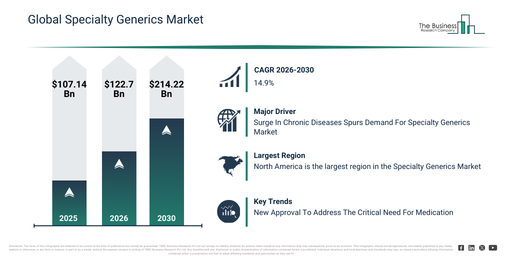
    The specialty generics market has experienced significant expansion in recent years. Its value is projected to rise from $107.14 billion in 2025 to $122.7 billion in 2026, achieving a compound annual growth rate (CAGR) of 14.5%. This historical growth has been driven by a growing incidence of autoimmune disorders, the expiration of patents for branded specialty medications, heightened funding for healthcare infrastructure, the broadening of hospital and retail pharmacy networks, and the early uptake of biosimilars in major markets.

    The specialty generics market is projected to experience significant expansion over the coming years, reaching $214.22 billion by 2030 with a compound annual growth rate (CAGR) of 14.9%. This forecasted growth is driven by factors such as the broadening of specialty generics portfolios, progress in biologics manufacturing techniques, rising healthcare spending, increased demand for tailored therapies, and a surge in partnerships between pharmaceutical firms and contract development and manufacturing organizations (CDMOs). Key trends shaping this period include the rising uptake of biologics and biosimilars, the growth of specialized pharmacy services, the incorporation of personalized medicine, heightened regulatory compliance demands, and an increase in the need for chronic disease treatments.

    Download A Free Sample Report For Comprehensive Market Insights:

    https://www.thebusinessresearchcompany.com/sample.aspx?id=7781&type=smp&utm_source=BlogsPR&utm_medium=Paid&utm_campaign=Jul_PR

    Specialty Generics Market Opportunity Drivers: What Is Creating New Revenue Potential?

    The increasing prevalence of chronic illnesses is anticipated to boost demand within the specialty generic market. These long-term conditions are often incurable, although they can occasionally be managed or controlled. Unhealthy lifestyle choices, poor dietary habits, and failure to maintain a healthy body weight contribute to the onset of chronic diseases; furthermore, certain prolonged infections may elevate the risk of cancer. Greater exposure to such health issues intensifies the need for specialty generics, which are used to treat complex chronic conditions. As an example, GOV.UK, a non-profit governmental organization based in the United Kingdom, reported in March 2025 that the rate of type 2 diabetes among adults aged 17 and over in England stood at 7.0% in March 2024—up from 6.8% recorded in March 2023. Consequently, the growth of the specialty generic market is being fueled by the rising occurrence of chronic diseases.

    Specialty Generics Market Segmentation And Category Breakdown

    The specialty generics market covered in this report is segmented –

    1) By Route Of Administration: Injectables, Oral, Other Routes Of Administration

    2) By Indication: Oncology, Autoimmune Diseases, Infectious Diseases, Other Indications

    3) By Distribution Channel: Retail Pharmacies, Specialty Pharmacies, Hospital Pharmacies

    Subsegments:

    1) By Injectables: Intravenous (IV) Injectables, Intramuscular (IM) Injectables, Subcutaneous (SC) Injectables

    2) By Oral: Tablets, Capsules, Liquid Formulations

    3) By Other Route Of Administration: Topical, Transdermal, Inhalation

    Specialty Generics Market Innovation Trends Driving Future Development

    In the specialty generic market, leading firms are obtaining regulatory clearance for products like Lisdexamfetamine Dimesylate to meet a significant demand for medication. This type of approval constitutes the official authorization given to pharmaceutical preparations that are both bioequivalent and therapeutically equivalent to their brand-name counterparts, which are generally used for treating complex or rare diseases, following the end of patent exclusivity. To illustrate, during August 2023, Mallinckrodt plc, a specialty pharmaceutical company based in Ireland, secured FDA approval for its Lisdexamfetamine Dimesylate Capsules under the SpecGx LLC Specialty Generics division for managing Attention-Deficit/Hyperactivity Disorder (ADHD). As a federally controlled substance classified as CII, lisdexamfetamine dimesylate serves as a specialty generic option for treating ADHD along with other conditions.

    Specialty Generics Market Competitive Analysis Of Major Industry Participants

    Major companies operating in the specialty generics market are Teva Pharmaceutical Industries Ltd., Endo International plc, Akorn Operating Company LLC, Mallinckrodt Pharmaceuticals, Dr. Reddy’s Laboratories Ltd., Fresenius Kabi Brasil Ltda, STADA Arzneimittel AG, Cipla Limited, Lupin Ltd, Aurobindo Pharma Limited, Aspen Pharmacare Holdings Limited, Pfizer Inc., Accord Healthcare Limited, Amneal Pharmaceuticals Inc., Sandoz International GmbH, Zydus Lifesciences Ltd., Torrent Pharmaceuticals Ltd., Perrigo Company plc, Impax Laboratories Inc., Par Pharmaceutical Companies Inc., Alvogen, Alkem Laboratories Ltd., Wockhardt Ltd., Strides Pharma Science Limited, Indoco Remedies Ltd., Unichem Laboratories Ltd., Alembic Pharmaceuticals Ltd., Jubilant Life Sciences Ltd.

    Access The Complete Specialty Generics Market Report:

    https://www.thebusinessresearchcompany.com/report/specialty-generics-global-market-report?utm_source=BlogsPR&utm_medium=Paid&utm_campaign=Jul_PR

    Specialty Generics Market Regional Analysis: Which Region Leads By Revenue?

    North America was the largest region in the specialty generics market in 2025. Asia-Pacific is expected to be the fastest-growing region in the forecast period. The regions covered in the specialty generics market report are Asia-Pacific, South East Asia, Western Europe, Eastern Europe, North America, South America, Middle East, Africa.

    Get in touch with us:

    The Business Research Company: https://www.thebusinessresearchcompany.com/?utm_source=BlogsPR&utm_medium=Paid&utm_campaign=home_page_test

    Americas: +1 310-496-7795

    Asia: +44 7882 955267 & +91 8897263534

    Europe: +44 7882 955267

    Email us at: marketing@tbrc.info

    Follow us on:

    LinkedIn: https://in.linkedin.com/company/the-business-research-company

    YouTube: https://www.youtube.com/channel/UC24_fI0rV8cR5DxlCpgmyFQ

    Global Market Model: https://www.thebusinessresearchcompany.com/global-market-model