Category: Pharmaceuticals

  • RNA Targeting Small Molecules Therapeutics Market Opportunities Are Emerging Beyond Traditional Growth Areas

    RNA Targeting Small Molecules Therapeutics Market Opportunities Are Emerging Beyond Traditional Growth Areas

    Enhanced with market attractiveness analysis, total addressable market evaluation, company benchmarking matrices, interactive Excel dashboards, expanded supply chain intelligence, emerging startup coverage, and detailed product insights, The Business Research Company’s 2026 market reports deliver more actionable and strategically valuable research.

    RNA Targeting Small Molecules Therapeutics Market Forecast Highlighting Growth From $3.1 Billion To $4.83 Billion

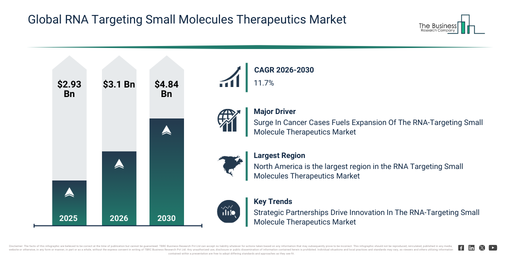
    The market for RNA targeting small molecules therapeutics has seen robust expansion in recent years. Projections indicate it will rise from $2.93 billion in 2025 to $3.1 billion in 2026, reflecting a compound annual growth rate (CAGR) of 5.8%. This historical growth is largely driven by the limited effectiveness of drugs aimed at proteins, increased funding for genomic research, a rising incidence of cancer and genetic disorders, early achievements in RNA-based treatments, and the broadening of partnerships between academia and industry.

    The market for RNA-targeting small molecule therapeutics is projected to experience rapid expansion over the coming years. By 2030, its value is anticipated to reach $4.84 billion, reflecting a compound annual growth rate (CAGR) of 11.7%. This forecasted growth is driven by several factors, including improvements in RNA structure prediction, a heightened demand for precision-based treatments, increased biotech investments focused on small molecules, regulatory backing for innovative RNA drugs, and an expanding pipeline of clinical trials targeting RNA. Key trends shaping this period involve the broadening of RNA-targeted drug development efforts, a stronger emphasis on addressing previously undruggable diseases, more frequent partnerships between pharmaceutical and biotechnology companies, progress in RNA structural biology and chemistry, and growing financial support for therapies aimed at rare and genetic conditions.

    Download A Free Sample Report For Comprehensive Market Insights:

    https://www.thebusinessresearchcompany.com/sample.aspx?id=12253&type=smp&utm_source=BlogsPR&utm_medium=Paid&utm_campaign=Jul_PR

    RNA Targeting Small Molecules Therapeutics Market Growth Momentum: Which Factors Are Influencing Demand?

    The anticipated rise in cancer cases is set to drive the expansion of the RNA-targeting small molecule therapeutics market in the coming period. Cancer encompasses a range of diseases that can emerge in virtually any organ or tissue when abnormal cells grow uncontrollably, breach their normal boundaries, and invade adjacent body parts or spread to other organs. RNA-targeting small molecules are developed and studied to specifically target RNA molecules linked to cancer, offering a treatment approach. As an example, in February 2024, the World Health Organization, an intergovernmental body based in Switzerland, projected that by 2050, over 35 million new cancer cases will occur, marking a 77% rise from the estimated 20 million cases in 2022. Consequently, the growing prevalence of cancer is fueling the growth of the RNA-targeting small molecule therapeutics market.

    The increasing prevalence of genetic disorders is anticipated to accelerate the growth of the RNA-targeting small molecule therapeutics market moving forward. Genetic disorders arise from abnormalities or mutations in an individual’s genetic material, including DNA or chromosomes. RNA-targeting small molecule therapeutics represent a promising and emerging field with significant potential for addressing genetic disorders. Certain genetic disorders involve toxic expansions of repeated RNA sequences, and small molecules can stabilize or destabilize these expansions, potentially reducing their detrimental effects. For instance, in October 2024, the Cystic Fibrosis Trust, a UK-based national charity, reported that 11,148 people were living with cystic fibrosis (CF) in the UK in 2022, a figure that rose to 11,318 in 2023. Thus, the growing incidence of genetic disorders is propelling the expansion of the RNA-targeting small molecule therapeutics market.

    RNA Targeting Small Molecules Therapeutics Market Segment Performance And Strategic Opportunities

    The rna targeting small molecules therapeutics market covered in this report is segmented –

    1) By Offering: mRNA (Messenger Ribonucleic Acid) Translation Modulators, RNA (Ribonucleic Acid) Splicing Modification, Direct RNA (Ribonucleic Acid) Targeting, Other Offerings

    2) By Therapeutic Indication: Lung Fibrosis, Cancer, Neurodegenerative Diseases, Autoimmune, Inflammatory, Other Therapeutic Indications

    3) By End User: Hospitals, Research Laboratories, Pharmaceutical And Biotechnology Companies, Other End-Users

    RNA Targeting Small Molecules Therapeutics Market Trends Reshaping Industry Growth

    Key players in the RNA-targeting small molecule therapeutics market are actively pursuing strategic partnerships to boost the development and discovery of innovative treatments. Such collaborations typically bring together two or more organizations, allowing them to pool their knowledge, exchange information, and speed up the creation of new RNA-targeting small molecules. As an example, in June 2022, Otsuka Pharmaceutical Co. Ltd., a Japanese pharmaceutical firm, joined forces with xFOREST Therapeutics Co. Ltd., a Japanese developer of drug discovery platforms. Under this arrangement, xFORESS made its Forest technology available to Otsuka to facilitate systemic small-molecule drug discovery research that targets RNA structures. Additionally, in April 2024, Ipsen, a biopharmaceutical company based in France, established a partnership with Skyhawk Therapeutics, a clinical-stage U.S. biotechnology company specializing in RNA-targeting small molecule therapeutics. Through this alliance, Ipsen aimed to create RNA-targeting small molecule drugs for rare neurological conditions, integrating diverse datasets to pinpoint and develop small molecules capable of modulating RNA.

    RNA Targeting Small Molecules Therapeutics Market Key Players: Which Companies Shape Industry Competition?

    Major companies operating in the rna targeting small molecules therapeutics market are F Hoffmann La Roche Ltd, Novartis AG, Sanofi SA, AstraZeneca plc, Eli Lilly and Company, Amgen Inc, Bayer AG, Vertex Pharmaceuticals Inc, PTC Therapeutics Inc, Arrakis Therapeutics, Anima Biotech Inc, Skyhawk Therapeutics Inc, Remix Therapeutics, Accent Therapeutics Inc, STORM Therapeutics Ltd, eFFECTOR Therapeutics Inc, EPICS Therapeutics, Expansion Therapeutics Inc, Ribometrix Inc, Redona Therapeutics, Eloxx Pharmaceuticals Inc, 858 Therapeutics

    Access The Complete RNA Targeting Small Molecules Therapeutics Market Report:

    https://www.thebusinessresearchcompany.com/report/rna-targeting-small-molecules-therapeutics-global-market-report?utm_source=BlogsPR&utm_medium=Paid&utm_campaign=Jul_PR

    RNA Targeting Small Molecules Therapeutics Market Regional Distribution: Which Areas Drive Market Expansion?

    North America was the largest region in the RNA targeting small molecules therapeutics market in 2025. The regions covered in the rna targeting small molecules therapeutics market report are Asia-Pacific, South East Asia, Western Europe, Eastern Europe, North America, South America, Middle East, Africa.

    Get in touch with us:

    The Business Research Company: https://www.thebusinessresearchcompany.com/?utm_source=BlogsPR&utm_medium=Paid&utm_campaign=home_page_test

    Americas: +1 310-496-7795

    Asia: +44 7882 955267 & +91 8897263534

    Europe: +44 7882 955267

    Email us at: marketing@tbrc.info

    Follow us on:

    LinkedIn: https://in.linkedin.com/company/the-business-research-company

    YouTube: https://www.youtube.com/channel/UC24_fI0rV8cR5DxlCpgmyFQ

    Global Market Model: https://www.thebusinessresearchcompany.com/global-market-model
  • RNA Targeting Small Molecule Drug Discovery Market Expansion Is Opening New Pathways For Strategic Investment

    RNA Targeting Small Molecule Drug Discovery Market Expansion Is Opening New Pathways For Strategic Investment

    Through market attractiveness analysis, total addressable market evaluation, company benchmarking matrices, interactive Excel dashboards, expanded supply chain intelligence, emerging startup coverage, and detailed product insights, The Business Research Company’s 2026 market reports provide more actionable and strategically valuable research.

    RNA Targeting Small Molecule Drug Discovery Market Revenue Growth Supported By A CAGR Of 6.04% Through 2030

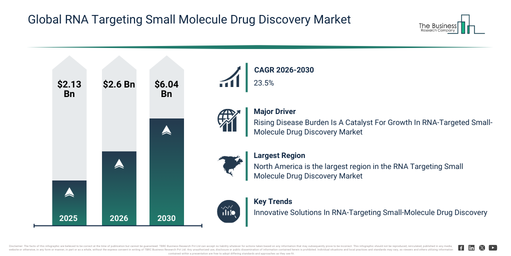
    The market for RNA-targeting small molecule drug discovery has experienced rapid expansion in recent years. Its value is projected to increase from $2.13 billion in 2025 to $2.6 billion in 2026, reflecting a compound annual growth rate (CAGR) of 22.3%. This historical growth has been driven by several factors, including the restricted druggability of protein targets, a growing incidence of genetic disorders, progress in RNA biology research, increased partnerships between academia and industry, and early achievements in RNA-based therapeutics.

    The anticipated trajectory for the market focused on small molecule drugs targeting RNA indicates a period of substantial expansion in the coming years. By 2030, projections place its valuation at $6.04 billion, reflecting a compound annual growth rate of 23.5%. This forecasted growth is fueled by several contributing factors, including the identification of RNA targets through artificial intelligence, heightened investment directed toward precision medicine, an expanding pipeline of RNA-based therapeutics, advancements in delivery mechanisms for these molecules, and a supportive regulatory environment for novel therapeutic approaches. Key trends shaping this forward-looking period encompass AI-powered predictions of RNA structures, a growing number of oncology-focused drugs targeting RNA sequences, progress in constructing specialized small molecule libraries for RNA, enhancements in how these molecules bind with specificity and selectivity, and the integration of multi-omic data into the drug discovery process for RNA.

    Download A Free Sample Report For Comprehensive Market Insights:

    https://www.thebusinessresearchcompany.com/sample.aspx?id=12480&type=smp&utm_source=BlogsPR&utm_medium=Paid&utm_campaign=Jul_PR

    RNA Targeting Small Molecule Drug Discovery Market Expansion Drivers: What Is Shaping Future Growth?

    The rising incidence of cancer, genetic disorders, and viral infections is anticipated to drive expansion in the RNA-targeted small-molecule drug discovery market moving forward. Cancer encompasses a range of diseases marked by the abnormal and uncontrolled proliferation of cells within the body. Viral infections are those caused by viruses—tiny infectious entities that can only multiply inside the cells of living hosts. RNA-targeted drug discovery is employed to address cancer, genetic disorders, and viral infections because these conditions are associated with genes and defective genetic material, which can be managed through medications developed via RNA-targeting approaches. As an example, in February 2024, a report from the World Health Organization (WHO), an intergovernmental body based in Switzerland, indicated that approximately 20 million new cancer cases and 9.7 million deaths occurred worldwide in 2022. Lung cancer was the most prevalent, accounting for 2.5 million new cases (12.4%), followed by female breast cancer (2.3 million cases, 11.6%), colorectal cancer (1.9 million cases, 9.6%), prostate cancer (1.5 million cases, 7.3%), and stomach cancer (970,000 cases, 4.9%). By 2050, the number of new cancer cases is projected to increase by 77%, reaching over 35 million annually. Consequently, the growing prevalence of cancer, genetic disorders, and viral infections is fueling the growth of the RNA-targeted small-molecule drug discovery market.

    RNA Targeting Small Molecule Drug Discovery Market Segment Landscape And Growth Potential

    The rna targeting small molecule drug discovery market covered in this report is segmented –

    1) By Target RNA Type: Messenger RNA (mRNA), Non-Coding RNA (ncRNA), MicroRNA (miRNA), Long Non-Coding RNA (lncRNA)

    2) By Therapeutic Area: Oncology, Neurology, Infectious Disease, Metabolic Diseases, Genetic Disorders, Other Therapeutic Areas

    3) By Delivery Method: Intravenous (IV), Oral, Topical, Other Methods

    4) By Application: Research Use, Therapeutic Use, Diagnostic Use, Other Applications

    Subsegments:

    1) By Messenger RNA (mRNA): Targeting mRNA For Protein Coding, Modulation Of mRNA Stability, mRNA Translation Inhibition

    2) By Non-Coding RNA (ncRNA): Long Non-Coding RNA, Small Nuclear RNA, Small Nucleolar RNA

    3) By MicroRNA (miRNA): miRNA Inhibition, miRNA Mimics, Targeting Specific miRNA Pathways

    4) By Long Non-Coding RNA (lncRNA): lncRNA Modulators, Targeting Specific lncRNA Functions, Therapeutic Applications Of lncRNA

    RNA Targeting Small Molecule Drug Discovery Market Strategic Trends: What Is Defining The Next Phase Of Growth?

    Key players in the RNA-targeting small-molecule drug discovery sector are advancing unique platforms, including software-as-a-service models, to strengthen their market positions. The software-as-a-service (SaaS) framework operates as a distribution method where applications are managed by an external provider and offered to users via the internet. A notable example is Merck & Co. Inc., a United States-based science and technology firm, which released AIDDISON in December 2023. This platform identifies optimal synthetic approaches for these chosen compounds, potentially leading to significant reductions in expenses for the drug development process while substantially enhancing the likelihood of introducing new therapies to patients. By closing the gap between digital molecular design and tangible production feasibility, the system elevates the success rate of bringing innovative therapies to individuals by uncovering hidden patterns from extensive data sets. To speed up the medication creation process, this advanced artificial intelligence system combines computational drug design, machine learning methodologies, and generative AI techniques.

    RNA Targeting Small Molecule Drug Discovery Market Competitive Landscape: Who Are The Leading Companies?

    Major companies operating in the rna targeting small molecule drug discovery market are F. Hoffmann-La Roche Ltd, Novartis AG, Bristol-Myers Squibb Company, Moderna Inc., Biogen Inc., Alnylam Pharmaceuticals Inc., Sarepta Therapeutics Inc., Evotec A.G., PTC Therapeutics Inc., Ionis Pharmaceuticals Inc., Dicerna Pharmaceuticals Inc., Arrakis Therapeutics, H3 Biomedicine Inc., Anima Biotech Inc., Ribometrix Inc., Quark Pharmaceuticals Inc., Regulus Therapeutics Inc., Skyhawk Therapeutics Inc., Accent Therapeutics Inc., Epics Therapeutics, Expansion Therapeutics, Arbutus Biopharma Corporation, Arbutus Biopharma Corporation

    Access The Complete RNA Targeting Small Molecule Drug Discovery Market Report:

    https://www.thebusinessresearchcompany.com/report/rna-targeting-small-molecule-drug-discovery-global-market-report?utm_source=BlogsPR&utm_medium=Paid&utm_campaign=Jul_PR

    RNA Targeting Small Molecule Drug Discovery Market Leading Geography: Which Region Generates The Most Revenue?

    North America was the largest region in the RNA-targeting small molecule drug discovery market in 2025. The regions covered in the rna targeting small molecule drug discovery market report are Asia-Pacific, South East Asia, Western Europe, Eastern Europe, North America, South America, Middle East, Africa.

    Get in touch with us:

    The Business Research Company: https://www.thebusinessresearchcompany.com/?utm_source=BlogsPR&utm_medium=Paid&utm_campaign=home_page_test

    Americas: +1 310-496-7795

    Asia: +44 7882 955267 & +91 8897263534

    Europe: +44 7882 955267

    Email us at: marketing@tbrc.info

    Follow us on:

    LinkedIn: https://in.linkedin.com/company/the-business-research-company

    YouTube: https://www.youtube.com/channel/UC24_fI0rV8cR5DxlCpgmyFQ

    Global Market Model: https://www.thebusinessresearchcompany.com/global-market-model
  • Rituximab Biosimilars Market Trends Are Creating New Opportunities For Industry Leaders

    Rituximab Biosimilars Market Trends Are Creating New Opportunities For Industry Leaders

    Delivering more actionable and strategically valuable research, The Business Research Company’s 2026 market reports feature market attractiveness analysis, total addressable market evaluation, company benchmarking matrices, interactive Excel dashboards, expanded supply chain intelligence, emerging startup coverage, and detailed product insights.

    Rituximab Biosimilars Market Value Expansion And Long-Term Growth Outlook

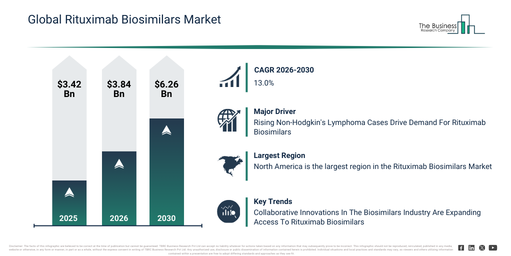
    The rituximab biosimilars market has seen considerable expansion over the last few years. Valued at $3.42 billion in 2025, projections indicate it will reach $3.84 billion by 2026, reflecting a compound annual growth rate (CAGR) of 12.5%. This historical growth has been largely driven by the high price of the original rituximab, a surge in non-Hodgkin’s lymphoma cases, more frequent diagnoses of chronic lymphocytic leukemia, heightened public understanding of managing autoimmune conditions, and restricted availability of sophisticated biologic therapies.

    The market for rituximab biosimilars is projected to experience rapid expansion in the coming years. By 2030, its value is anticipated to reach $6.26 billion, driven by a compound annual growth rate (CAGR) of 13.0%. This forecasted growth is fueled by several factors, including the introduction of new biosimilar formulations, the broadening of subcutaneous delivery options, a surge in adoption within emerging markets, heightened government and insurance backing for biosimilars, and their integration into hospital and specialty pharmacy programs. Key trends shaping the forecast period encompass the growing uptake of rituximab biosimilars for treating oncology and autoimmune conditions, the expansion of subcutaneous administration alongside pre-filled delivery systems, an increasing preference for cost-effective monoclonal antibody alternatives, the rising utilization of antibody-drug conjugates (ADCs) in targeted therapies, and the improvement of distribution channels across hospital and retail pharmacy settings.

    Download A Free Sample Report For Comprehensive Market Insights:

    https://www.thebusinessresearchcompany.com/sample.aspx?id=3430&type=smp&utm_source=BlogsPR&utm_medium=Paid&utm_campaign=Jul_PR

    Rituximab Biosimilars Market Development Factors: Which Trends Are Supporting Demand?

    The anticipated expansion of the rituximab biosimilars market is significantly influenced by the escalating incidence of non-Hodgkin’s lymphoma (NHL). Non-Hodgkin’s lymphoma is defined as a cancer originating in white blood cells, particularly lymphocytes, which are integral to the immune system. Its growing prevalence is primarily driven by higher occurrence rates, especially within aging demographics, along with contributions from lifestyle and environmental influences. Rituximab biosimilars function by specifically binding to and eliminating CD20-positive B cells, thereby decreasing tumor load, enhancing immune system regulation, and offering a more affordable and accessible therapeutic choice for patients with NHL, which in turn improves overall treatment results and quality of life. As an example, the American Cancer Society, a cancer advocacy group based in the US, reported in January 2024 that around 80,620 individuals (44,590 males and 36,030 females) were projected to receive an NHL diagnosis, with an estimated 20,140 fatalities (11,780 males and 8,360 females), and that the lifetime risk of developing this cancer is roughly 1 in 42 for men and 1 in 52 for women. Consequently, the increasing frequency of non-Hodgkin’s lymphoma is fueling growth within the rituximab biosimilars market.

    The increasing occurrence of autoimmune conditions is projected to drive forward the expansion of the rituximab biosimilars market. Such autoimmune conditions encompass disorders where the immune system mistakenly attacks its own healthy tissues, viewing them as foreign invaders. Rituximab biosimilars are employed in managing these diseases by targeting specific B cells, thereby mitigating inflammation and dampening autoimmune responses. For instance, data from Arthritis Australia, a non-profit entity based in Australia, indicated in February 2024 that an estimated 562,378 Australians will be affected by rheumatoid arthritis (RA) in 2025, representing 14% of all arthritis cases that year. By 2040, this figure is predicted to climb by 33%, reaching 748,721 individuals, meaning an additional 186,343 Australians will have RA in 2040 compared to 2025. As a result, the heightened prevalence of autoimmune diseases is spurring the growth of the rituximab biosimilars market.

    Rituximab Biosimilars Market Categorization By Product Type And Application

    The rituximab biosimilars market covered in this report is segmented –

    1) By Route Of Administration: Subcutaneous, Intravenous

    2) By Application: Non-Hodgkin’s Lymphoma, Chronic Lymphocytic Leukemia, Rheumatoid Arthritis, Other Applications

    3) By Distribution Channel: Hospital Pharmacy, Retail Pharmacy, Mail Order

    Subsegments:

    1) By Subcutaneous: Pre-filled Syringes, Injection Pens

    2) By Intravenous: IV Infusion Solutions, IV Push Formulations

    Rituximab Biosimilars Market Transformation Trends: Which Innovations Are Driving Change?

    Key players in the rituximab biosimilars market are concentrating on advancing innovative solutions by forming strategic partnerships, aiming to improve treatment availability and deliver cost-effective options for patients dealing with a range of immune and cancer-related disorders. These collaborations with seasoned partners enable companies to streamline commercialization, pool regulatory and distribution know-how, and efficiently launch biosimilars, thereby boosting patient access and market reach. For example, in July 2023, Dr. Reddy’s Laboratories joined forces with its collaborator Fresenius Kabi to bring its proposed rituximab biosimilar to the U.S. market. Such an alliance is designed to introduce a more affordable and easier-to-access rituximab alternative, benefiting patients afflicted with diseases like rheumatoid arthritis, non-Hodgkin’s lymphoma, chronic lymphocytic leukemia, pemphigus vulgaris, granulomatosis with polyangiitis, and microscopic polyangiitis. The introduction of this biosimilar in the United States could significantly expand the availability of this critical treatment for these conditions.

    Rituximab Biosimilars Market Company Landscape And Strategic Competition

    Major companies operating in the rituximab biosimilars market are Novartis AG, Pfizer, BIOCAD, Shanghai Henlius Biotech Inc., Innovent Biologics Inc., Cadila Pharmaceuticals, Hetero Drugs Limited, Dr. Reddy’s Laboratories, Shanghai Fosun Pharmaceutical (Group) Co. Ltd., Reliance Life Sciences India, Zenotech Laboratories, Celltrion, Biocad, MABION S.A., Amgen, Teva Pharmaceuticals, Celltrion Healthcare, Coherus BioSciences, Aryogen Biopharma, TR-Pharm, Hikma Pharmaceuticals plc.

    Access The Complete Rituximab Biosimilars Market Report:

    https://www.thebusinessresearchcompany.com/report/rituximab-biosimilar-global-market-report?utm_source=BlogsPR&utm_medium=Paid&utm_campaign=Jul_PR

    Rituximab Biosimilars Market Regional Outlook: Where Are The Largest Opportunities Located?

    North America was the largest region in the rituximab biosimilars market in 2025. Middle East is expected to be the fastest-growing region in the rituximab biosimilars market report during the forecast period. The regions covered in the rituximab biosimilars market report are Asia-Pacific, South East Asia, Western Europe, Eastern Europe, North America, South America, Middle East, Africa.

    Get in touch with us:

    The Business Research Company: https://www.thebusinessresearchcompany.com/?utm_source=BlogsPR&utm_medium=Paid&utm_campaign=home_page_test

    Americas: +1 310-496-7795

    Asia: +44 7882 955267 & +91 8897263534

    Europe: +44 7882 955267

    Email us at: marketing@tbrc.info

    Follow us on:

    LinkedIn: https://in.linkedin.com/company/the-business-research-company

    YouTube: https://www.youtube.com/channel/UC24_fI0rV8cR5DxlCpgmyFQ

    Global Market Model: https://www.thebusinessresearchcompany.com/global-market-model
  • Risperidone Market Growth Is Reshaping Competitive Advantage Across The Industry

    Risperidone Market Growth Is Reshaping Competitive Advantage Across The Industry

    Enhanced with market attractiveness analysis, total addressable market evaluation, company benchmarking matrices, interactive Excel dashboards, expanded supply chain intelligence, emerging startup coverage, and detailed product insights, The Business Research Company’s 2026 market reports deliver more actionable and strategically valuable research.

    Risperidone Market Expected To Reach $11.12 Billion By 2030 At 7.6% CAGR

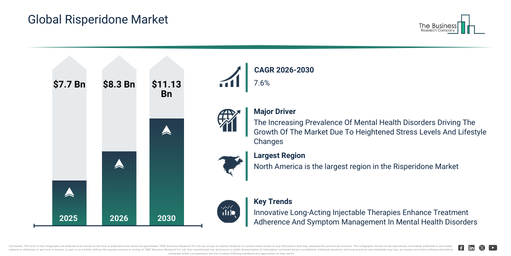
    The risperidone market has experienced notable expansion in recent years. Projections indicate that its value will rise from $7.7 billion in 2025 to $8.3 billion in 2026, corresponding to a compound annual growth rate (CAGR) of 7.8%. Historically, this growth has been driven by a higher incidence of schizophrenia and bipolar disorder, broad medical endorsement of atypical antipsychotics, the introduction of generic risperidone versions, the scaling up of mental health treatment initiatives, and enhanced rates of psychiatric diagnosis.

    The risperidone market is anticipated to experience robust expansion in the coming years, projected to reach $11.13 billion by 2030 with a compound annual growth rate (CAGR) of 7.6%. This anticipated growth during the forecast period is driven by several factors, including a heightened demand for long-acting injectable antipsychotics, a growing emphasis on personalized psychiatric care, the expansion of community-based mental health services, the increasing integration of digital tools for mental health monitoring, and a rising number of elderly patients. Key trends shaping the forecast period involve a growing preference for long-acting injectable formulations, increased adoption of extended-release tablets, a stronger focus on patient adherence solutions, the development of specialized pediatric and geriatric dosage forms, and closer monitoring of therapeutic outcomes.

    Download A Free Sample Report For Comprehensive Market Insights:

    https://www.thebusinessresearchcompany.com/sample.aspx?id=28322&type=smp&utm_source=BlogsPR&utm_medium=Paid&utm_campaign=Jul_PR

    Risperidone Market Industry Drivers: What Is Driving Revenue Growth?

    The rising occurrence of mental health conditions is anticipated to boost the risperidone market in the coming period. Such disorders encompass a broad spectrum of illnesses impacting an individual’s mood, cognition, and conduct, often leading to notable distress or interference with everyday activities. This uptick in mental health issues stems from elevated stress levels and shifts in contemporary lifestyles that disturb emotional equilibrium, sleep cycles, and overall mental wellness. Risperidone aids in controlling these conditions by adjusting brain neurotransmitters, alleviating signs like restlessness, hallucinations, and mood fluctuations, while fostering emotional steadiness. As an example, in March 2023, the Alzheimer’s Association, a US-based nonprofit voluntary health entity, reported that around 6.7 million Americans aged 65 and older were living with Alzheimer’s dementia that year, with projections indicating a rise to 13.8 million by 2060. Consequently, the growing frequency of mental health disorders is fueling expansion within the risperidone market.

    Risperidone Market Segment Analysis And Revenue Opportunities

    The risperidone market covered in this report is segmented –

    1) By Product Type: Tablets, Oral Solution, Injectable

    2) By Patient Age Group: Pediatric Patients, Adult Patients, Elderly Patients

    3) By Application: Schizophrenia, Bipolar Disorder, Autism, Other Applications

    4) By Distribution Channel: Hospital Pharmacies, Retail Pharmacies, Online Pharmacies, Clinic Pharmacies

    5) By End-Users: Hospitals, Homecare, Specialty Clinics, Ambulatory Surgical Centers, Other End Users

    Subsegments:

    1) By Tablets: Standard Release, Extended Release, Orally Disintegrating

    2) By Oral Solution: Flavored Solution, Unflavored Solution, Concentrated Solution

    3) By Injectable: Long Acting Injection, Short Acting Injection, Depot Injection

    Risperidone Market Growth Trends: What Is Influencing The Future Outlook?

    Key players within the risperidone market prioritize the creation of novel approaches, particularly long-acting injectable preparations, aimed at enhancing both patient compliance and therapeutic results. These long-acting injectable formulations are specifically engineered medications that release risperidone in a gradual, controlled manner, thereby enabling reduced dosing frequency while still sustaining consistent medicinal benefits. To illustrate, in January 2023, Luye Pharma Group Ltd., a pharmaceutical enterprise based in China, secured clearance from the U.S. Food and Drug Administration (FDA) for Rykindo (risperidone), an extended-release injectable product intended for managing schizophrenia in adult patients, and also for application either as a standalone therapy or in combination with lithium or valproate for ongoing maintenance of bipolar I disorder in adults. This particular biweekly intramuscular risperidone injection, created through Luye Pharma’s sophisticated microsphere technology, facilitates a prolonged and sustained release mechanism that aids in sustaining symptom management for both schizophrenia and bipolar I disorder. The formulation provides a quick onset of action to deliver rapid symptom mitigation and permits swift elimination after cessation, affording clinicians enhanced flexibility to modify treatment strategies based on individual patient requirements.

    Risperidone Market Leading Players Shaping Industry Direction

    Major companies operating in the risperidone market are Teva Pharmaceutical Industries Ltd., Sandoz International GmbH, Sun Pharmaceutical Industries Ltd., Apotex Inc., Cipla Limited., Dr. Reddy’s Laboratories Ltd., Hikma Pharmaceuticals PLC, Zydus Cadila Healthcare Ltd, Alkem Laboratories Ltd., Amneal Pharmaceuticals LLC, Natco Pharma Limited., Strides Pharma Science Limited., RPG Life Sciences Limited., Jubilant Cadista Pharmaceuticals Inc., ICROM S.p.A., Accord Healthcare Ltd., Ambica Pharma Machines Pvt. Ltd., Gonane Pharma Private Limited., Janssen Pharmaceuticals, LGM Pharma

    Access The Complete Risperidone Market Report:

    https://www.thebusinessresearchcompany.com/report/risperidone-global-market-report?utm_source=BlogsPR&utm_medium=Paid&utm_campaign=Jul_PR

    Risperidone Market Geographic Landscape: Which Region Dominates Industry Growth?

    North America was the largest region in the risperidone market in 2025. Asia-Pacific is expected to be the fastest-growing region in the forecast period. The regions covered in the risperidone market report are Asia-Pacific, South East Asia, Western Europe, Eastern Europe, North America, South America, Middle East, Africa.

    Get in touch with us:

    The Business Research Company: https://www.thebusinessresearchcompany.com/?utm_source=BlogsPR&utm_medium=Paid&utm_campaign=home_page_test

    Americas: +1 310-496-7795

    Asia: +44 7882 955267 & +91 8897263534

    Europe: +44 7882 955267

    Email us at: marketing@tbrc.info

    Follow us on:

    LinkedIn: https://in.linkedin.com/company/the-business-research-company

    YouTube: https://www.youtube.com/channel/UC24_fI0rV8cR5DxlCpgmyFQ

    Global Market Model: https://www.thebusinessresearchcompany.com/global-market-model
  • Ribonucleic Acid Interference (RNAi) Technology Market Forecast Signals New Revenue Opportunities Through 2030

    Ribonucleic Acid Interference (RNAi) Technology Market Forecast Signals New Revenue Opportunities Through 2030

    Through market attractiveness analysis, total addressable market evaluation, company benchmarking matrices, interactive Excel dashboards, expanded supply chain intelligence, emerging startup coverage, and detailed product insights, The Business Research Company’s 2026 market reports provide more actionable and strategically valuable research.

    Ribonucleic Acid Interference (RNAi) Technology Market Size And Revenue Forecast Through 2030

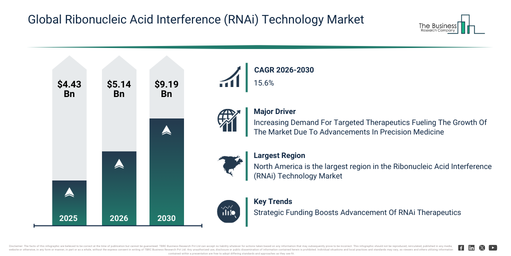
    The market for ribonucleic acid interference (RNAi) technology has experienced substantial expansion over the last few years. Its value is projected to increase from $4.43 billion in 2025 to $5.14 billion in 2026, reflecting a compound annual growth rate (CAGR) of 15.9%. This historical growth has been driven by progress in molecular biology research, early achievements in RNAi therapeutic development, the broadening of academic gene research programs, the accessibility of comprehensive screening libraries, and the flourishing of biotechnology innovation ecosystems.

    The market for ribonucleic acid interference (RNAi) technology is projected to experience substantial expansion over the coming years. By 2030, its value is anticipated to reach $9.19 billion, driven by a compound annual growth rate (CAGR) of 15.6%. This forecasted growth is fueled by factors such as the growing commercialization of RNAi-based medications, heightened investment in therapies for rare diseases, advancements in nanoparticle delivery systems, increased pharmaceutical collaborations, and broader regulatory acceptance of gene-silencing treatments. Key trends shaping this period include a greater uptake of gene silencing therapies, expanded use of siRNA-based drug platforms, deeper integration of RNAi into precision medicine, a focus on targeted treatments for genetic disorders, and ongoing improvements in delivery system optimization.

    Download A Free Sample Report For Comprehensive Market Insights:

    https://www.thebusinessresearchcompany.com/sample.aspx?id=30371&type=smp&utm_source=BlogsPR&utm_medium=Paid&utm_campaign=Jul_PR

    #Ribonucleic Acid Interference (RNAi) Technology Market Growth Factors: Which Forces Are Supporting Market Expansion?

    The anticipated expansion of the RNA interference (RNAi) technology market is being significantly driven by the rising demand for targeted therapeutics. These therapies are designed to precisely identify and block molecular abnormalities in diseases such as cancer, thereby enhancing treatment accuracy while reducing damage to healthy cells. This heightened emphasis on targeted treatments largely stems from progress in precision medicine, which customizes therapies based on individual genetic profiles to improve effectiveness. RNAi technology plays a key role in meeting this demand through its capacity for precise gene silencing, particularly for genetic and rare conditions. It fosters the creation of highly specific and potent treatments, encouraging innovation within the realm of personalized medicine. For example, data from December 2024 provided by the American Society of Gene & Cell Therapy (ASGCT), a U.S.-based nonprofit medical and scientific organization, reveals that the FDA approved six gene therapy products in 2023, exceeding the five approvals granted in 2022. Consequently, the growing appetite for targeted therapeutics is propelling the RNAi technology market forward.

    Ribonucleic Acid Interference (RNAi) Technology Market Segmentation And Category Breakdown

    The ribonucleic acid interference (rnai) technology market covered in this report is segmented –

    1) By Product: Micro Ribonucleic Acid (miRNA), Small Interfering Ribonucleic Acid (siRNA), Other Products

    2) By Delivery Method: Viral Vectors, Nanoparticles, Chemical Modifications, Physical Methods

    3) By Application: Therapeutics, Drug Discovery, Agriculture, Diagnostics

    4) By End-User: Pharmaceutical And Biotechnology Companies, Academic And Research Institutes, Contract Research Organizations (CROs) And Contract Manufacturing Organizations (CMOs)

    Subsegments:

    1) By Micro Ribonucleic Acid (miRNA): Micro Ribonucleic Acid Mimics, Micro Ribonucleic Acid Inhibitors, Micro Ribonucleic Acid Expression Vectors, Micro Ribonucleic Acid Profiling And Quantification Kits

    2) By Small Interfering Ribonucleic Acid (siRNA): Small Interfering Ribonucleic Acid Synthetic Duplexes, Small Interfering Ribonucleic Acid Dicer Substrate Molecules, Small Interfering Ribonucleic Acid Self Delivering Conjugates, Small Interfering Ribonucleic Acid N Acetylgalactosamine Conjugates

    3) By Other Products: Short Hairpin Ribonucleic Acid Expression Constructs, Ribonucleic Acid Interference Screening Libraries, Ribonucleic Acid Interference Transfection Reagents, Micro Ribonucleic Acid And Small Interfering Ribonucleic Acid Research Kits

    Ribonucleic Acid Interference (RNAi) Technology Market Industry Trends: What Changes Are Reshaping Demand?

    Major players within the RNA interference (RNAi) technology sector are actively pursuing platform integration, specifically through strategic funding and support, in order to optimize the development, delivery, and commercialization of RNAi therapeutics. This approach helps maintain a sustainable pipeline of multiple programs targeting various disease areas. Strategic funding and support involves obtaining investment and resources from venture capital firms, industry partners, and other stakeholders to speed up the research, development, and commercialization of RNAi treatments. As an example, in October 2024, City Therapeutics Inc., a US-based biopharmaceutical company, secured $135 million in Series A financing led by ARCH Venture Partners, with additional contributions from other prominent life sciences investors, to advance the future of RNAi-based medicine. This funding will be utilized to progress RNAi medicine by capitalizing on its proprietary lipid nanoparticle (LNP) delivery system, specifically engineered to target tissues other than the liver with high accuracy. This platform aims to address a significant historical challenge in this field, thereby facilitating the creation of therapies for a broader spectrum of genetic conditions.

    Ribonucleic Acid Interference (RNAi) Technology Market Competitive Analysis Of Major Industry Participants

    Major companies operating in the ribonucleic acid interference (rnai) technology market are F. Hoffmann-La Roche AG, Merck KGaA, Novartis AG, Thermo Fisher Scientific Inc., Danaher Corporation, Revvity Inc., QIAGEN N.V., Alnylam Pharmaceuticals Inc., Ionis Pharmaceuticals Inc., GenScript Biotech Corporation, Promega Corporation, Arrowhead Pharmaceuticals Inc., Silence Therapeutics plc, Creative Biolabs Inc., Bioneer Corporation, Genevant Sciences Ltd., Gradalis Inc., Altogen Labs LLC, Sirnaomics Inc., Altogen Biosystems Inc.

    Access The Complete Ribonucleic Acid Interference (RNAi) Technology Market Report:

    https://www.thebusinessresearchcompany.com/report/global-ribonucleic-acid-interference-rnai-technology-market-report?utm_source=BlogsPR&utm_medium=Paid&utm_campaign=Jul_PR

    Ribonucleic Acid Interference (RNAi) Technology Market Largest Region: Which Geography Holds The Highest Market Share?

    North America was the largest region in the ribonucleic acid interference (RNAi) technology market in 2025. Asia-Pacific is expected to be the fastest-growing region in the forecast period. The regions covered in the ribonucleic acid interference (rnai) technology market report are Asia-Pacific, South East Asia, Western Europe, Eastern Europe, North America, South America, Middle East, Africa.

    Get in touch with us:

    The Business Research Company: https://www.thebusinessresearchcompany.com/?utm_source=BlogsPR&utm_medium=Paid&utm_campaign=home_page_test

    Americas: +1 310-496-7795

    Asia: +44 7882 955267 & +91 8897263534

    Europe: +44 7882 955267

    Email us at: marketing@tbrc.info

    Follow us on:

    LinkedIn: https://in.linkedin.com/company/the-business-research-company

    YouTube: https://www.youtube.com/channel/UC24_fI0rV8cR5DxlCpgmyFQ

    Global Market Model: https://www.thebusinessresearchcompany.com/global-market-model
  • Ribonucleic Acid (RNA)-Based Oncolytic Therapy Market Growth Is Accelerating As Industry Transformation Continues

    Ribonucleic Acid (RNA)-Based Oncolytic Therapy Market Growth Is Accelerating As Industry Transformation Continues

    Delivering more actionable and strategically valuable research, The Business Research Company’s 2026 market reports feature market attractiveness analysis, total addressable market evaluation, company benchmarking matrices, interactive Excel dashboards, expanded supply chain intelligence, emerging startup coverage, and detailed product insights.

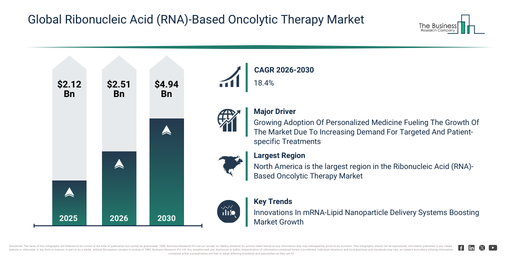
    Ribonucleic Acid (RNA)-Based Oncolytic Therapy Market Growth From $2.51 Billion In 2026 To $4.93 Billion By 2030 At A CAGR Of 18.4%

    Recent years have witnessed rapid expansion in the market for ribonucleic acid (rna)-based oncolytic therapies. According to projections, the market is expected to increase from $2.12 billion in 2025 to $2.51 billion in 2026, marking a compound annual growth rate (CAGR) of 18.7%. This historical growth can be explained by advances in cancer virology research, a deeper understanding of tumor immunology, the development of clinical trial infrastructure, rising funds dedicated to oncology research, and the initial successes seen in oncolytic virus studies.

    The market for ribonucleic acid (RNA)-based oncolytic therapies is projected to experience substantial expansion over the coming years. By 2030, its value is anticipated to reach $4.94 billion, reflecting a compound annual growth rate (CAGR) of 18.4%. This forecasted growth is driven by several factors, including a higher number of approvals for RNA-based cancer treatments, an increased demand for personalized oncology approaches, the broadening of immuno-oncology development programs, greater funding directed toward gene and cell therapies, and improvements in RNA delivery technologies. Key developments shaping the forecast period encompass progress in RNA virus engineering, a growing trend toward combining oncolytic therapies, an intensified emphasis on stimulating immune responses, the emergence of tumor-specific RNA treatments, and the deeper incorporation of precision oncology tools.

    Download A Free Sample Report For Comprehensive Market Insights:

    https://www.thebusinessresearchcompany.com/sample.aspx?id=28321&type=smp&utm_source=BlogsPR&utm_medium=Paid&utm_campaign=Jul_PR

    Ribonucleic Acid (RNA)-Based Oncolytic Therapy Market Demand Drivers: What Is Fueling Industry Growth?

    The upward trend in the adoption of personalized medicine is anticipated to fuel the expansion of the RNA-based oncolytic therapy market moving forward. Personalized medicine involves tailoring medical interventions to the unique genetic characteristics of each patient, thereby boosting effectiveness and minimizing unwanted side effects. Its usage is on the rise as a growing number of healthcare providers and institutions recognize how targeted therapies and precision diagnostics can improve patient outcomes. Within cancer care, RNA-based oncolytic therapy is significant because it supports the shift toward personalized medicine by offering customized treatment strategies. To illustrate, in February 2024, the Personalized Medicine Coalition, a U.S.-based organization advocating for individualized medical care, reported that the FDA approved 16 new personalized treatments for rare disease patients in 2023, a sharp increase from 6 in 2022. Consequently, this growing embrace of personalized medicine is propelling the RNA-based oncolytic therapy market forward.

    Ribonucleic Acid (RNA)-Based Oncolytic Therapy Market Segment Outlook: Which Categories Are Expanding The Fastest?

    The ribonucleic acid (rna)-based oncolytic therapy market covered in this report is segmented –

    1) By Therapy Type: Messenger Ribonucleic Acid (mRNA)-Based Oncolytic Therapy, Small Interfering Ribonucleic Acid (siRNA)-Based Oncolytic Therapy, Micro Ribonucleic Acid (miRNA)-Based Oncolytic Therapy, Other Therapy Types

    2) By Route Of Administration: Intravenous, Intratumoral, Other Route Of Administrations

    3) By Application: Breast Cancer, Lung Cancer, Colorectal Cancer, Prostate Cancer, Melanoma, Other Applications

    4) By End-User: Hospitals, Cancer Research Institutes, Specialty Clinics, Other End-Users

    Subsegments:

    1) By Messenger Ribonucleic Acid (mRNA)-Based Oncolytic Therapy: Self-Amplifying mRNA (saRNA), Non-Replicating mRNA, Circular RNA (circRNA)-Based mRNA therapy

    2) By Small Interfering Ribonucleic Acid (siRNA)-Based Oncolytic Therapy: Chemically Modified siRNA, Nanoparticle-Delivered siRNA, Conjugated siRNA

    3) By Micro Ribonucleic Acid (miRNA)-Based Oncolytic Therapy: miRNA Mimics, miRNA Inhibitors (Antagomirs), miRNA Aponges Or Decoys

    4) By Other Therapy Types: Long Non-Coding RNA (lncRNA)-Based Therapies, Short Hairpin RNA (shRNA)-Based Therapies, Aptamer-RNA Based Oncolytic Agents

    Ribonucleic Acid (RNA)-Based Oncolytic Therapy Market Innovation Trends: Which Developments Are Transforming The Industry?

    Major industry players in the ribonucleic acid (RNA)-based oncolytic therapy sector are actively working on technological innovations, specifically using synthetic messenger RNA (mRNA) technology to boost how effectively tumors are targeted, strengthen immune responses, and deliver more accurate and enduring outcomes in cancer treatment. Synthetic messenger RNA (mRNA) technology itself is a biotechnological method where custom-made mRNA sequences are designed and administered, prompting cells to manufacture specific therapeutic proteins for treating diseases like cancer. In one example from June 2024, CSPC Pharmaceutical Group Limited, a pharmaceutical firm based in China, secured regulatory clearance in China to begin clinical trials for SYS6020, its cancer cell therapy built on synthetic mRNA. This progress marks a significant milestone in the nation’s mRNA therapeutics field. SYS6020 relies on mRNA-lipid nanoparticle technology to precisely target and eliminate myeloma cancer cells while keeping side effects low, and it also shows promise for treating certain autoimmune conditions.

    Ribonucleic Acid (RNA)-Based Oncolytic Therapy Market Key Companies And Competitive Benchmarking

    Major companies operating in the ribonucleic acid (rna)-based oncolytic therapy market are AstraZeneca PLC, Moderna Inc., BioNTech SE, Gritstone Bio Inc., Orna Therapeutics Inc., Strand Therapeutics Inc., Oncolytics Biotech Inc., Anima Biotech Inc., eTheRNA immunotherapies NV, Vyriad Inc., Haya Therapeutics Inc., Virogin Biotech Inc., Providence Therapeutics Holdings Inc., Sirnaomics Inc., Humane Genomics Inc., Replicate Bioscience Inc., Abogen Biosciences Inc., Chimeron Bio Inc., Aro Biotherapeutics Inc., TransCode Therapeutics Inc.

    Access The Complete Ribonucleic Acid (RNA)-Based Oncolytic Therapy Market Report:

    https://www.thebusinessresearchcompany.com/report/ribonucleic-acid-rna-based-oncolytic-therapy-global-market-report?utm_source=BlogsPR&utm_medium=Paid&utm_campaign=Jul_PR

    Ribonucleic Acid (RNA)-Based Oncolytic Therapy Market Regional Analysis: Which Region Leads By Revenue?

    North America was the largest region in the ribonucleic acid (RNA)-based oncolytic therapy market in 2025. Asia-Pacific is expected to be the fastest-growing region in the forecast period. The regions covered in the ribonucleic acid (rna)-based oncolytic therapy market report are Asia-Pacific, South East Asia, Western Europe, Eastern Europe, North America, South America, Middle East, Africa.

    Get in touch with us:

    The Business Research Company: https://www.thebusinessresearchcompany.com/?utm_source=BlogsPR&utm_medium=Paid&utm_campaign=home_page_test

    Americas: +1 310-496-7795

    Asia: +44 7882 955267 & +91 8897263534

    Europe: +44 7882 955267

    Email us at: marketing@tbrc.info

    Follow us on:

    LinkedIn: https://in.linkedin.com/company/the-business-research-company

    YouTube: https://www.youtube.com/channel/UC24_fI0rV8cR5DxlCpgmyFQ

    Global Market Model: https://www.thebusinessresearchcompany.com/global-market-model
  • Ribonucleic Acid (RNA) Therapy Clinical Trials Market Outlook Highlights The Next Major Growth Opportunities

    Ribonucleic Acid (RNA) Therapy Clinical Trials Market Outlook Highlights The Next Major Growth Opportunities

    Enhanced with market attractiveness analysis, total addressable market evaluation, company benchmarking matrices, interactive Excel dashboards, expanded supply chain intelligence, emerging startup coverage, and detailed product insights, The Business Research Company’s 2026 market reports deliver more actionable and strategically valuable research.

    Ribonucleic Acid (RNA) Therapy Clinical Trials Market Expansion Outlook: What Revenue Opportunities Lie Ahead?

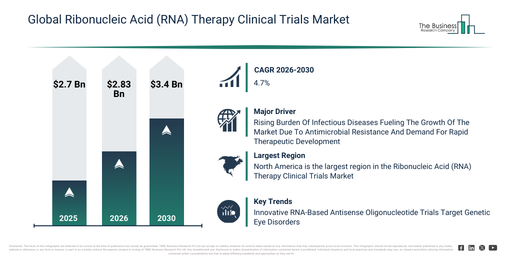
    The ribonucleic acid (rna) therapy clinical trials market has experienced consistent expansion in recent years, with projections indicating it will increase from $2.7 billion in 2025 to $2.83 billion in 2026, achieving a compound annual growth rate (CAGR) of 4.8%. This past growth can be accounted for by a scarcity of rna-based treatment options, the substantial expenses associated with early-stage clinical trials, difficulties in securing regulatory approvals, limited awareness of rna therapies, and a continued dependence on conventional therapeutic approaches.

    Over the coming years, steady growth is projected for the market focused on ribonucleic acid (RNA) therapy clinical trials. By 2030, the market is anticipated to reach $3.4 billion, reflecting a compound annual growth rate (CAGR) of 4.7%. Several factors are expected to fuel this expansion during the forecast period, including improvements in RNA delivery technologies, heightened investment in rare disease and anticancer research, strengthened collaborations between biotechnology and pharmaceutical firms, a growing emphasis on personalized medicine, and an increase in global clinical trial networks. Key trends likely to shape this period involve a rising number of RNA therapy clinical trials spanning diverse therapeutic fields, intensified efforts on rare disease and anticancer RNA therapeutics, an uptick in mRNA vaccine and self-amplifying RNA therapy trials, the emergence of CRISPR and RNA editing-based therapy trials, and the incorporation of advanced delivery platforms alongside oligonucleotide conjugates.

    Download A Free Sample Report For Comprehensive Market Insights:

    https://www.thebusinessresearchcompany.com/sample.aspx?id=25896&type=smp&utm_source=BlogsPR&utm_medium=Paid&utm_campaign=Jul_PR

    Ribonucleic Acid (RNA) Therapy Clinical Trials Market Growth Drivers: What Factors Are Accelerating Expansion?

    The anticipated expansion of the ribonucleic acid (RNA) therapy clinical trials market will be driven by the growing weight of infectious diseases. These diseases stem from pathogenic microorganisms such as bacteria, viruses, fungi, or parasites that infiltrate the body, multiply, and disrupt normal functions. A primary factor behind the surge in infectious diseases is the increase in international travel, which accelerates the dissemination of pathogens across various regions and communities. By facilitating the creation and assessment of targeted therapies capable of swiftly adapting to new pathogens, RNA therapy clinical trials play a vital role in combating these illnesses. For example, the Minnesota Department of Health, a state agency in the US, reported in April 2025 that the proportion of HIV cases among males aged 35 to 39 climbed from 10% in 2023 to 17% in 2024. Consequently, the rising prevalence of infectious diseases is fueling growth within the RNA therapy clinical trials market.

    Ribonucleic Acid (RNA) Therapy Clinical Trials Market Segment Landscape: Which Areas Lead Market Development?

    The ribonucleic acid (rna) therapy clinical trials market covered in this report is segmented –

    1) By Modality: Ribonucleic Acid (RNA) Interference, Antisense Therapy, Messenger Ribonucleic Acid (RNA), Oligonucleotide, Non-Antisense, Non-Ribonucleic Acid Interference (RNAi)

    2) By Clinical Trials Phase: Phase I, Phase II, Phase III, Phase IV

    3) By Therapeutic Areas: Rare Diseases, Anti-Infective, Anticancer, Neurological, Alimentary Or Metabolic, Musculoskeletal, Cardiovascular Respiratory, Sensory, Other Therapeutic Areas

    Subsegments:

    1) By Ribonucleic Acid (RNA) Interference: Small Interfering RNA (siRNA) Therapy Trials, MicroRNA (miRNA)-Based Therapy Trials, Short Hairpin RNA (shRNA) Therapy Trials, Dicer Substrate RNA Therapy Trials

    2) By Antisense Therapy: Gapmer Antisense Oligonucleotide Trials, Steric Blocking Antisense Trials, Splice-Switching Antisense Oligonucleotide Trials, Antisense Oligonucleotide-Conjugated Delivery Trials

    3) By Messenger Ribonucleic Acid (RNA): mRNA-Based Vaccines Trials, Self-Amplifying mRNA (saRNA) Therapy Trials, Non-Replicating mRNA Therapy Trials, Circular mRNA Therapy Trials

    4) By Oligonucleotide: Phosphorothioate Oligonucleotide Trials, Peptide Nucleic Acid (PNA) Trials, Locked Nucleic Acid (LNA) Trials, Morpholino Oligonucleotide Trials

    5) By Non-Antisense: RNA Aptamer Therapy Trials, Guide RNA (gRNA)-Mediated CRISPR Trials, RNA Editing Therapy Trials, RNA Scaffolding Or Regulatory RNA Therapy Trials

    6) By Non-Ribonucleic Acid Interference (RNAi): Ribozymes Therapy Trials, RNA Decoys Or Sponge RNA Trials, Long Non-Coding RNA (lncRNA) Therapy Trials, Small Activating RNA (saRNA) Therapy Trials

    Ribonucleic Acid (RNA) Therapy Clinical Trials Market Trends: What Is Shaping Future Industry Growth?

    Key players in the RNA therapy clinical trials market are concentrating on advancing breakthrough approaches, including antisense oligonucleotide therapies based on RNA, designed to bind particular genetic sequences, regulate gene expression, and deliver extremely accurate treatments for genetic and rare conditions. An RNA-driven antisense oligonucleotide clinical trial examines how brief synthetic RNA molecules attach to specific messenger RNA targets, aiming to control gene activity and address genetic disorders. As an example, Sepul Bio, a biotechnology firm based in France, launched in December 2024 the LUNA Phase 2b clinical study assessing ultevursen, an RNA-based antisense oligonucleotide therapy focused on mutations in exon 13 of the USH2A gene responsible for retinitis pigmentosa (RP) and Usher syndrome type 2a. This randomized, double-masked, sham-controlled trial, spanning two years, will involve 81 participants—adults and children aged eight and older—recruited from various global sites. The treatment is designed for individuals suffering from RP or non-syndromic RP linked to exon 13 mutations in USH2A, confirmed via genetic testing. Building on encouraging outcomes from earlier Phase 1/2 trials, where ultevursen demonstrated improvements in visual clarity, retinal sensitivity, and retinal architecture, the LUNA study advances this research.

    Ribonucleic Acid (RNA) Therapy Clinical Trials Market Industry Leaders And Market Competition

    Major companies operating in the ribonucleic acid (rna) therapy clinical trials market are Pfizer Inc., AstraZeneca plc, Novartis AG, GlaxoSmithKline plc, Moderna Inc., BioNTech SE, Biogen Inc., Daiichi Sankyo Company Limited, Alnylam Pharmaceuticals Inc., Sarepta Therapeutics Inc., Ionis Pharmaceuticals Inc., Arrowhead Pharmaceuticals Inc., Arcturus Therapeutics Holdings Inc., Cartesian Therapeutics Inc., CureVac N.V., Orna Therapeutics Inc., Silence Therapeutics plc, ETHRIS GmbH, ProQR Therapeutics N.V., Lexeo Therapeutics Inc., Avidity Biosciences Inc., Aro Biotherapeutics Company, Wave Life Sciences Ltd.

    Access The Complete Ribonucleic Acid (RNA) Therapy Clinical Trials Market Report:

    https://www.thebusinessresearchcompany.com/report/ribonucleic-acid-rna-therapy-clinical-trials-global-market-report?utm_source=BlogsPR&utm_medium=Paid&utm_campaign=Jul_PR

    Ribonucleic Acid (RNA) Therapy Clinical Trials Market Geographic Distribution And Regional Opportunities

    North America was the largest region in the ribonucleic acid (RNA) therapy clinical trials market in 2025. Asia-Pacific is expected to be the fastest-growing region in the forecast period. The regions covered in the ribonucleic acid (rna) therapy clinical trials market report are Asia-Pacific, South East Asia, Western Europe, Eastern Europe, North America, South America, Middle East, Africa.

    Get in touch with us:

    The Business Research Company: https://www.thebusinessresearchcompany.com/?utm_source=BlogsPR&utm_medium=Paid&utm_campaign=home_page_test

    Americas: +1 310-496-7795

    Asia: +44 7882 955267 & +91 8897263534

    Europe: +44 7882 955267

    Email us at: marketing@tbrc.info

    Follow us on:

    LinkedIn: https://in.linkedin.com/company/the-business-research-company

    YouTube: https://www.youtube.com/channel/UC24_fI0rV8cR5DxlCpgmyFQ

    Global Market Model: https://www.thebusinessresearchcompany.com/global-market-model
  • Ribonucleic Acid (RNA) Editing Market Trends And Growth Drivers Point To Strong Future Potential

    Ribonucleic Acid (RNA) Editing Market Trends And Growth Drivers Point To Strong Future Potential

    Through market attractiveness analysis, total addressable market evaluation, company benchmarking matrices, interactive Excel dashboards, expanded supply chain intelligence, emerging startup coverage, and detailed product insights, The Business Research Company’s 2026 market reports provide more actionable and strategically valuable research.

    Ribonucleic Acid (RNA) Editing Market Growth Potential: How Will Market Size Change Through 2030?

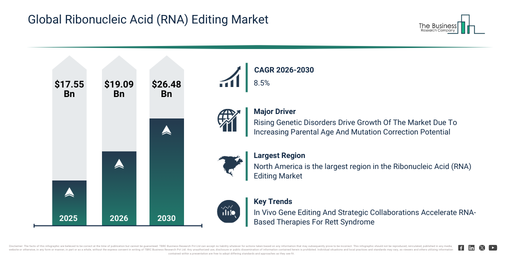
    The RNA editing market has experienced substantial expansion in recent years, with its valuation rising from $17.55 billion in 2025 to an anticipated $19.09 billion in 2026, reflecting a compound annual growth rate of 8.8%. This historical growth period was largely driven by constraints in available RNA editing technologies, a rising incidence of genetic disorders, initial investigations into RNA-based cancer treatments, the absence of uniformly accepted editing guidelines, and an uptick in academic research focused on molecular biology.

    The market for ribonucleic acid (RNA) editing is anticipated to undergo substantial expansion over the coming years. By 2030, its value is projected to reach $26.48 billion, reflecting a compound annual growth rate (CAGR) of 8.5%. This projected rise during the forecast period is driven by advancements in adenosine deaminase acting on RNA (ADAR)-mediated editing, growing investment in precision medicine, the incorporation of RNA editing into gene therapy, an increasing number of clinical trials focused on RNA-based therapeutics, and heightened collaboration between biotechnology and pharmaceutical firms. Key trends shaping this period include progress in messenger RNA (mRNA) editing technologies, the creation of therapeutic applications for transfer RNA (tRNA), broader investigation into ribosomal RNA (rRNA) modulation, a heightened emphasis on treating cancer and genetic disorders, and the growing use of site-directed and base editing methodologies.

    Download A Free Sample Report For Comprehensive Market Insights:

    https://www.thebusinessresearchcompany.com/sample.aspx?id=27407&type=smp&utm_source=BlogsPR&utm_medium=Paid&utm_campaign=Jul_PR

    Ribonucleic Acid (RNA) Editing Market Growth Factors Supporting Long-Term Expansion

    The increasing prevalence of genetic disorders is anticipated to drive expansion in the ribonucleic acid (RNA) editing market. Genetic disorders result from alterations or mutations in genetic material, whether inherited from parents or occurring spontaneously. These conditions are becoming more common, partly due to advancing parental age, as older parents face a heightened risk of transmitting chromosomal abnormalities. RNA editing offers a therapeutic approach by correcting mutations at the RNA level, enabling cells to produce functional proteins without changing the underlying DNA. For example, in May 2024, the Centers for Disease Control and Prevention (CDC), a public health agency based in the United States, reported that sickle cell disease (SCD) impacts roughly 100,000 individuals in the country. Consequently, the growing incidence of genetic disorders is fueling the growth of the RNA editing market.

    Ribonucleic Acid (RNA) Editing Market Segments: Where Are The Largest Growth Opportunities?

    The ribonucleic acid (rna) editing market covered in this report is segmented –

    1) By Type: Messenger Ribonucleic Acid (RNA) Modification, Transfer Ribonucleic Acid (RNA) Modification, Ribosomal Ribonucleic Acid (RNA) Modification

    2) By Technique: Insertion Or Deletion, Deamination

    3) By Application: Cancer, Genetic Disorders, Temporary Maladies

    Subsegments:

    1) By Messenger Ribonucleic Acid(RNA) (Mrna) Modification: Base Editing, Adenosine Deaminase Acting On Ribonucleic Acid (RNA)-Mediated Editing, Site-Directed Ribonucleic Acid (RNA) Editing

    2) By Transfer Ribonucleic Acid (RNA) (Trna) Modification: Pseudouridylation, Transfer Ribonucleic Acid Splicing, Inosine Modification

    3) By Ribosomal Ribonucleic Acid (RNA) (Rrna) Modification: Pseudouridylation, Ribosomal Ribonucleic Acid (RNA) Maturation Pathway Modulation, Site-Specific Ribosomal Ribonucleic Acid (RNA) Editing

    Ribonucleic Acid (RNA) Editing Market Industry Trends Shaping Future Revenue Growth

    Leading players in the ribonucleic acid (RNA) editing market are concentrating on the development of cutting-edge strategies, such as in vivo gene editing, to facilitate the accurate and efficient correction of mutations responsible for diseases directly within living organisms. This technique involves the direct modification of genes inside the cells of a live subject to rectify genetic defects or to alter gene expression for therapeutic purposes. As a case in point, in April 2024, the Rett Syndrome Research Trust, a nonprofit organization based in the United States, established the MECP2 Editing Consortium with the goal of advancing gene editing treatments for Rett syndrome. This consortium unites six premier laboratories to develop both DNA and RNA editing therapies aimed at tackling the root genetic cause of Rett syndrome, with the aim of speeding up their progression into clinical trials. By combining specialized knowledge through its cooperative framework, the initiative promotes swifter development and strives to deliver targeted, potentially curative options for this serious neurological disorder.

    Ribonucleic Acid (RNA) Editing Market Major Participants And Competitive Dynamics

    Major companies operating in the ribonucleic acid (rna) editing market are Beam Therapeutics Inc., EdiGene Inc., Deep Genomics Incorporated, ADARx Pharmaceuticals Inc., Storm Therapeutics Limited, Ascidian Therapeutics Inc., Korro Bio Inc., Shape TX.

    Access The Complete Ribonucleic Acid (RNA) Editing Market Report:

    https://www.thebusinessresearchcompany.com/report/ribonucleic-acid-rna-editing-global-market-report?utm_source=BlogsPR&utm_medium=Paid&utm_campaign=Jul_PR

    Ribonucleic Acid (RNA) Editing Market Largest Region By Revenue And Market Share

    North America was the largest region in the ribonucleic acid (RNA) editing market in 2025. Asia-Pacific is expected to be the fastest-growing region in the forecast period. The regions covered in the ribonucleic acid (rna) editing market report are Asia-Pacific, South East Asia, Western Europe, Eastern Europe, North America, South America, Middle East, Africa.

    Get in touch with us:

    The Business Research Company: https://www.thebusinessresearchcompany.com/?utm_source=BlogsPR&utm_medium=Paid&utm_campaign=home_page_test

    Americas: +1 310-496-7795

    Asia: +44 7882 955267 & +91 8897263534

    Europe: +44 7882 955267

    Email us at: marketing@tbrc.info

    Follow us on:

    LinkedIn: https://in.linkedin.com/company/the-business-research-company

    YouTube: https://www.youtube.com/channel/UC24_fI0rV8cR5DxlCpgmyFQ

    Global Market Model: https://www.thebusinessresearchcompany.com/global-market-model

  • Rhinovirus Infections Drug Market Expansion Is Reshaping Competitive Dynamics Across The Industry

    Rhinovirus Infections Drug Market Expansion Is Reshaping Competitive Dynamics Across The Industry

    Delivering more actionable and strategically valuable research, The Business Research Company’s 2026 market reports feature market attractiveness analysis, total addressable market evaluation, company benchmarking matrices, interactive Excel dashboards, expanded supply chain intelligence, emerging startup coverage, and detailed product insights.

    Rhinovirus Infections Drug Market Value Analysis: What Growth Is Expected Over The Forecast Period?

    The market for drugs targeting rhinovirus infections has experienced robust expansion in recent years, with projections indicating a rise from $1.36 billion in 2025 to $1.48 billion in 2026, reflecting a compound annual growth rate (CAGR) of 8.8%. This historical growth has been driven by factors such as the high frequency of common colds, a scarcity of antiviral treatments, extensive use of over-the-counter medications, recurring seasonal infection cycles, and consumer preferences for rapid symptom relief.

    The market for drugs targeting rhinovirus infections is projected to experience robust expansion in the coming years. By 2030, it is anticipated to reach $2.05 billion, reflecting a compound annual growth rate (CAGR) of 8.6%. This anticipated growth during the forecast period is driven by progress in antiviral research, enhanced viral targeting techniques, heightened awareness of respiratory infections, the development of pediatric medications, and innovations in nasal delivery methods. Key developments shaping the forecast period encompass increased research into antiviral cold treatments, a growing emphasis on therapies aimed at reducing symptoms, the broader availability of nasal spray formulations, heightened interest in immune-modulating pharmaceuticals, and a transition toward preventive approaches in respiratory care.

    Download A Free Sample Report For Comprehensive Market Insights:

    https://www.thebusinessresearchcompany.com/sample.aspx?id=23503&type=smp&utm_source=BlogsPR&utm_medium=Paid&utm_campaign=Jul_PR

    Rhinovirus Infections Drug Market Demand Drivers Creating New Revenue Opportunities

    The anticipated expansion of the rhinovirus infections drug market is set to be driven by a growing prevalence of respiratory disorders. These conditions, which impact the lungs and airways and cause breathing difficulties—including asthma, chronic obstructive pulmonary disease (COPD), and pneumonia—are becoming more common. This upward trend is largely attributable to rising air pollution and increased exposure to occupational hazards, which heighten the frequency of such disorders in affected groups. Medications designed to combat rhinovirus infections aid in managing these respiratory issues by inhibiting viral replication, decreasing inflammation, and relieving symptoms, thereby enhancing respiratory performance. As an illustration, data from June 2025 released by the Office for Health Improvement & Disparities, a UK governmental entity, revealed that by the end of 2024, England experienced 854,922 emergency hospitalizations due to respiratory causes—equating to 1,428 per 100,000 individuals—which represented a 7% increase compared to the prior year. Consequently, the rising occurrence of respiratory disorders is fueling growth within the rhinovirus infections drug market.

    Rhinovirus Infections Drug Market Segment Analysis: What Are The Major Market Categories?

    The rhinovirus infections drug market covered in this report is segmented –

    1) By Product: Antivirals, Immunomodulators, Vaccines, Nasal Sprays, Symptomatic Treatments

    2) By Patient Age Group: Infants, Children, Adults, Elderly

    3) By Route Of Administration: Oral, Intranasal, Injectable

    4) By Indication: Common Cold, Asthma Exacerbation, Chronic Obstructive Pulmonary Disease (COPD) Exacerbation, Other Indications

    5) By Distribution Channel: Hospital Pharmacies, Retail Pharmacies, Online Pharmacies, Specialty Pharmacies

    Subsegments:

    1) By Antivirals: Pleconaril, Vapendavir, Rupintrivir, Other Antivirals

    2) By Immunomodulators: Interferons, Toll-Like Receptor Agonists, Other Immunomodulators

    3) By Vaccines: Live Attenuated Vaccines, Inactivated Vaccines, Recombinant Vaccines

    4) By Nasal Sprays: Antihistamine Nasal Sprays, Decongestant Nasal Sprays, Steroid Nasal Sprays, Saline Nasal Sprays

    5) By Symptomatic Treatments: Analgesics, Antipyretics, Cough Suppressants, Expectorants, Antihistamines

    Rhinovirus Infections Drug Market Trends Driving Strategic Industry Expansion

    Leading players in the rhinovirus infections drug market are prioritizing the creation of cutting-edge treatments, including novel antiviral drugs designed to improve therapeutic outcomes, lessen symptom intensity, and speed up patient recovery from infections. Antiviral medications work against viral illnesses by blocking the replication process of viruses inside the body. These therapies are effective in handling conditions like influenza, HIV, hepatitis, and rhinovirus infections. Some antivirals function by stopping viruses from entering host cells, whereas others interrupt viral replication or assembly steps. As an example, in March 2025, Altesa BioSciences Inc., a biotechnology firm headquartered in the United States, obtained approval from the U.S. Food and Drug Administration (FDA) for its Investigational New Drug (IND) application concerning vapendavir, aimed at treating rhinovirus infections in individuals suffering from COPD. Vapendavir represents an oral broad-spectrum antiviral agent that hinders rhinovirus from infiltrating human cells and multiplying. This drug has shown efficacy against 97% of rhinoviruses in addition to other respiratory enteroviruses. Altesa BioSciences possesses exclusive global rights to further develop, manufacture, and market vapendavir. The drug is intended to deliver focused therapy for at-risk groups, especially those with COPD and asthma.

    Rhinovirus Infections Drug Market Leading Companies Driving Competitive Growth

    Major companies operating in the rhinovirus infections drug market are Pfizer Inc., Teva Pharmaceutical Industries Ltd., Cocrystal Pharma Inc., Biota Pharmaceuticals Inc., Romark Laboratories L.C., Altamira Therapeutics Ltd., Pneumagen Ltd., AIM ImmunoTech Inc., hVIVO Services Limited, Maxwell Biosciences Inc., Altesa BioSciences Inc., Via Nova Therapeutics Inc., MetP Pharma AG, Ntvirin Pharma, GlaxoSmithKline plc, Johnson & Johnson, Sanofi S.A., Bayer AG, Cipla Limited, Reckitt Benckiser Group plc

    Access The Complete Rhinovirus Infections Drug Market Report:

    https://www.thebusinessresearchcompany.com/report/rhinovirus-infections-drug-global-market-report?utm_source=BlogsPR&utm_medium=Paid&utm_campaign=Jul_PR

    Rhinovirus Infections Drug Market Regional Analysis And Leading Geography

    North America was the largest region in the rhinovirus infection drug market in 2025. Asia-Pacific is expected to be the fastest-growing region in the forecast period. The regions covered in the rhinovirus infections drug market report are Asia-Pacific, South East Asia, Western Europe, Eastern Europe, North America, South America, Middle East, Africa.

    Get in touch with us:

    The Business Research Company: https://www.thebusinessresearchcompany.com/?utm_source=BlogsPR&utm_medium=Paid&utm_campaign=home_page_test

    Americas: +1 310-496-7795

    Asia: +44 7882 955267 & +91 8897263534

    Europe: +44 7882 955267

    Email us at: marketing@tbrc.info

    Follow us on:

    LinkedIn: https://in.linkedin.com/company/the-business-research-company

    YouTube: https://www.youtube.com/channel/UC24_fI0rV8cR5DxlCpgmyFQ

    Global Market Model: https://www.thebusinessresearchcompany.com/global-market-model
  • Rheumatology Therapeutics Market Forecast Reveals Where Future Industry Value Will Be Created

    Rheumatology Therapeutics Market Forecast Reveals Where Future Industry Value Will Be Created

    Enhanced with market attractiveness analysis, total addressable market evaluation, company benchmarking matrices, interactive Excel dashboards, expanded supply chain intelligence, emerging startup coverage, and detailed product insights, The Business Research Company’s 2026 market reports deliver more actionable and strategically valuable research.

    Rheumatology Therapeutics Market Size Forecast: How Large Could The Market Become By 2030?

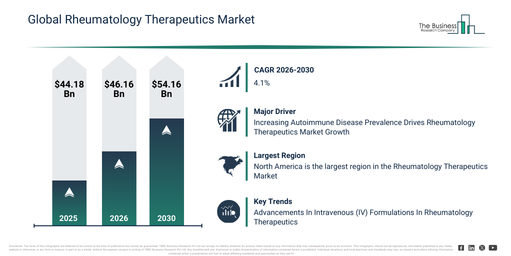
    The rheumatology therapeutics market has experienced consistent expansion in recent years. Projections indicate it will rise from $44.18 billion in 2025 to $46.16 billion in 2026, reflecting a compound annual growth rate (CAGR) of 4.5%. This historical growth has been driven by factors such as the growing incidence of rheumatoid arthritis and osteoarthritis, broader access to NSAIDs and corticosteroids, enhanced diagnostic capabilities for rheumatic conditions, improved healthcare availability in developed regions, and increased utilization of conventional synthetic DMARDs.

    The rheumatology therapeutics market is projected to experience consistent expansion over the coming years. By 2030, its value is anticipated to reach $54.16 billion, reflecting a compound annual growth rate (CAGR) of 4.1%. This forecasted growth is driven by an increased demand for biologic disease-modifying antirheumatic drugs (DMARDs), a growing elderly population suffering from chronic joint conditions, greater emphasis on early diagnosis and treatment, an expansion in the availability of targeted synthetic DMARDs, and higher healthcare spending directed at managing chronic diseases. Key developments shaping this period include a rising uptake of biologic and targeted DMARDs, a transition toward prompt and intensive disease control, more frequent use of combination therapies for rheumatic conditions, a heightened focus on achieving sustained remission, and the broadening of customized treatment strategies within rheumatology.

    Download A Free Sample Report For Comprehensive Market Insights:

    https://www.thebusinessresearchcompany.com/sample.aspx?id=17246&type=smp&utm_source=BlogsPR&utm_medium=Paid&utm_campaign=Jul_PR

    Rheumatology Therapeutics Market Expansion Supported By Key Demand Factors

    A growing number of autoimmune disease cases is anticipated to fuel the expansion of the rheumatology therapeutics market in the near future. An autoimmune disorder occurs when the immune system erroneously attacks and damages the body’s own organs and tissues. This rising incidence stems from an interplay of genetic, environmental, and lifestyle elements, along with heightened awareness and better diagnostic tools. Rheumatology treatments are essential for these conditions to control inflammation, relieve symptoms, and stop joint and tissue harm caused by the body’s immune response. For example, in June 2024, the Australian Institute of Health and Welfare, a government body based in Australia, reported that approximately 514,000 people in Australia—or 2.0% of its population—were estimated to have rheumatoid arthritis in 2022. This disease represented 2.0% of the total disease burden and 16% of the burden for all musculoskeletal conditions in 2023. Consequently, the increasing occurrence of autoimmune diseases is driving the rheumatology therapeutics market.

    Rheumatology Therapeutics Market Segment Breakdown: Which Categories Generate The Most Revenue?

    The rheumatology therapeutics market covered in this report is segmented –

    1) By Drug Class: Disease Modifying Anti-Rheumatic Drugs, Nonsteroidal Anti-Inflammatory Drugs, Corticosteroids, Uric Acid Drugs, Other Drugs Classes

    2) By Distribution Channel: Hospital Pharmacy, Retail Pharmacy, Online Pharmacy

    3) By Disease Indication: Rheumatoid Arthritis, Osteoarthritis, Gout, Psoriatic Arthritis, Ankylosing Spondylitis, Other Disease Indications

    Subsegments:

    1) By Disease Modifying Anti-Rheumatic Drugs (DMARDs): Conventional Synthetic DMARDs, Biologic DMARDs, Targeted Synthetic DMARDs

    2) By Nonsteroidal Anti-Inflammatory Drugs (NSAIDs): COX-2 Inhibitors, Traditional NSAIDs

    3) By Corticosteroids: Oral Corticosteroids, Injectable Corticosteroids, Topical Corticosteroids

    4) By Uric Acid Drugs: Uric Acid Lowering Agents, Uricosuric Agents, Pegloticase

    5) By Other Drug Classes: Immunosuppressants, Biologic Therapies, Analgesics

    Rheumatology Therapeutics Market Growth Trends Influencing Competitive Dynamics

    Key players in the rheumatology therapeutics market are introducing novel approaches such as intravenous (IV) formulations to improve how well treatments work and make them easier for patients to use. An IV formulation is a type of medication given straight into a vein using a needle or catheter. In October 2023, for example, Switzerland-based pharmaceutical company Novartis AG announced that the US Food and Drug Administration (FDA) had given the green light to Cosentyx as an IV formulation. This version of Cosentyx is the only one of its kind authorized to treat adults with psoriatic arthritis (PsA), ankylosing spondylitis (AS), and non-radiographic axial spondyloarthritis (nr-axSpA). It functions by precisely targeting and blocking interleukin-17A (IL-17A) and stands as the sole non-tumor necrosis factor alpha (TNF-a) IV therapy available for these indications.

    Rheumatology Therapeutics Market Key Players And Strategic Industry Positioning

    Major companies operating in the rheumatology therapeutics market are Pfizer Inc., Johnson & Johnson, AbbVie Inc., Roche Holding AG, Merck & Co. Inc., Bristol-Myers Squibb Company, Novartis AG, Eli Lilly and Company, Amgen Inc., UCB S.A., Sanofi SA, AstraZeneca PLC, Takeda Pharmaceutical Company Limited, Boehringer Ingelheim International GmbH, Gilead Sciences Inc., Regeneron Pharmaceuticals Inc., Biogen Inc., Janssen Biotech, Genentech Inc., Galapagos NV

    Access The Complete Rheumatology Therapeutics Market Report:

    https://www.thebusinessresearchcompany.com/report/rheumatology-therapeutics-global-market-report?utm_source=BlogsPR&utm_medium=Paid&utm_campaign=Jul_PR

    Rheumatology Therapeutics Market Geographic Analysis: Where Is Demand Growing The Fastest?

    North America was the largest region in the rheumatology therapeutics market in 2025. Asia-Pacific is expected to be the fastest-growing region in the forecast period. The regions covered in the rheumatology therapeutics market report are Asia-Pacific, South East Asia, Western Europe, Eastern Europe, North America, South America, Middle East, Africa.

    Get in touch with us:

    The Business Research Company: https://www.thebusinessresearchcompany.com/?utm_source=BlogsPR&utm_medium=Paid&utm_campaign=home_page_test

    Americas: +1 310-496-7795

    Asia: +44 7882 955267 & +91 8897263534

    Europe: +44 7882 955267

    Email us at: marketing@tbrc.info

    Follow us on:

    LinkedIn: https://in.linkedin.com/company/the-business-research-company

    YouTube: https://www.youtube.com/channel/UC24_fI0rV8cR5DxlCpgmyFQ

    Global Market Model: https://www.thebusinessresearchcompany.com/global-market-model