Category: Pharmaceuticals

  • Rheumatoid Arthritis Drugs Market Growth Through 2030 Creates New Strategic Opportunities

    Rheumatoid Arthritis Drugs Market Growth Through 2030 Creates New Strategic Opportunities

    Through market attractiveness analysis, total addressable market evaluation, company benchmarking matrices, interactive Excel dashboards, expanded supply chain intelligence, emerging startup coverage, and detailed product insights, The Business Research Company’s 2026 market reports provide more actionable and strategically valuable research.

    Rheumatoid Arthritis Drugs Market Revenue Outlook: What CAGR Is Expected Through 2030?

    The rheumatoid arthritis drugs market has experienced modest expansion over recent years, increasing from $60.1 billion in 2025 to $61.13 billion in 2026, reflecting a compound annual growth rate (CAGR) of 1.7%. This historical growth has been driven by a growing incidence of rheumatoid arthritis, heightened awareness and improved diagnostic rates, the broadening of healthcare infrastructure, widespread utilization of conventional DMARDs, and supportive reimbursement policies for well-established treatments.

    The anticipated growth trajectory of the rheumatoid arthritis drugs market remains steady over the coming years, with projections indicating it will reach a value of $67.49 billion by 2030, representing a compound annual growth rate (CAGR) of 2.5%. This upward movement during the forecast period is fueled by several factors, including a rising demand for biologics and biologic response modifiers (BRMs), wider adoption of biosimilars, progress in precision medicine, the growing prominence of online pharmacy platforms, and an expanding elderly population. Key developments shaping this period involve the proliferation of biologic and targeted treatment options, a shift toward earlier and more aggressive therapeutic approaches, increased reliance on combination drug protocols, a stronger emphasis on customized treatment plans, and the expanding role of biosimilars in managing rheumatoid arthritis.

    Download A Free Sample Report For Comprehensive Market Insights:

    https://www.thebusinessresearchcompany.com/sample.aspx?id=10120&type=smp&utm_source=BlogsPR&utm_medium=Paid&utm_campaign=Jul_PR

    Rheumatoid Arthritis Drugs Market Growth Drivers And Industry Catalysts

    The expansion of the rheumatoid arthritis drugs market is expected to be driven by the rising elderly population in the coming years. Individuals aged 65 years or older form this demographic group, which is steadily becoming a larger portion of the overall population. This shift is mainly due to increased life expectancy and lower birth rates, leading to a greater number of older adults worldwide. As rheumatoid arthritis occurs more frequently in older individuals, this growing elderly segment fuels a higher demand for effective RA treatments, particularly newer options like JAK inhibitors and targeted synthetic DMARDs that may be more suitable for older patients. For example, in January 2024, the Population Reference Bureau, a nonprofit based in Kenya, reported that the number of Americans aged 65 and above is anticipated to increase from 58 million in 2022 to 82 million by 2050, marking a 47% rise. The proportion of this age group within the total population is also forecasted to climb from 17% to 23% over the same timeframe. Consequently, the increasing elderly population is propelling growth in the rheumatoid arthritis drugs market.

    Rheumatoid Arthritis Drugs Market Segmentation: How Is The Market Structured Across Key Categories?

    The rheumatoid arthritis drugs market covered in this report is segmented –

    1) By Drug Type: Nonsteroidal Anti-Inflammatory Drugs (NSAIDs), Corticosteroids, Disease-Modifying Antirheumatic Drugs (DMARDs), Biologic Response Modifiers (BRMs), Other Drug Types

    2) By Route Of Administration: Oral, Parenteral, Topical, Other Route Of Administrations

    3) By Distribution Channel: Hospital Pharmacy, Retail Pharmacy, Online Pharmacy

    Subsegments:

    1) By Nonsteroidal Anti-Inflammatory Drugs (NSAIDs): Ibuprofen, Naproxen, Diclofenac, Indomethacin

    2) By Corticosteroids: Prednisone, Methylprednisolone, Dexamethasone

    3) By Disease-Modifying Antirheumatic Drugs: Methotrexate, Sulfasalazine, Hydroxychloroquine, Leflunomide

    4) By Biologic Response Modifiers: Tumor Necrosis Factor (TNF) Inhibitors, Interleukin Inhibitors, B-cell Inhibitors

    5) By Other Drug Types: Janus Kinase Inhibitors, Other Novel Therapies

    Rheumatoid Arthritis Drugs Market Trends Influencing Long-Term Demand

    Key players in the rheumatoid arthritis drugs market are concentrating on creating advanced treatment options, like flexible-dose methotrexate injections, which aim to boost therapeutic effectiveness, increase patient safety, and provide convenient ways to administer medication. These adjustable-dose injections offer a range of strengths specifically designed for adults with active rheumatoid arthritis, allowing for personalized therapy and more effective control of disease progression. As an example, in December 2023, China Medical System Holdings Limited, a Chinese investment holding firm primarily involved in medicine production, received acceptance from the National Medical Products Administration for its New Drug Application targeting an additional rheumatoid arthritis indication for Methotrexate Injection. Intended for use in adult RA patients, this product has proven through clinical studies to be as effective as methotrexate tablets, with evidence suggesting earlier and better outcomes, along with a reduction in gastrointestinal adverse effects. The injection has already gained approval for treating severe psoriasis in China and is available in more than 40 countries, highlighting its established clinical usefulness and widespread market presence.

    Rheumatoid Arthritis Drugs Market Competitive Landscape And Leading Companies

    Major companies operating in the rheumatoid arthritis drugs market are Pfizer Inc., AbbVie Inc., Amgen Inc., Novartis AG, Eli Lilly and Company, F-Hoffmann La Roche AG, Bristol-Myers Squibb Company, Johnson & Johnson Inc., Teva Pharmaceuticals Industries Ltd., Sun Pharmaceutical Industries Ltd., Sanofi S.A, Regeneron Pharmaceuticals Inc., Galapagos NV, Takeda Pharmaceutical Company Limited, Mitsubishi Tanabe Pharma Corporation, UCB S.A., Roche Holding AG, Mallinckrodt Pharmaceuticals, AstraZeneca PLC, Bayer AG

    Access The Complete Rheumatoid Arthritis Drugs Market Report:

    https://www.thebusinessresearchcompany.com/report/rheumatoid-arthritis-drugs-global-market-report?utm_source=BlogsPR&utm_medium=Paid&utm_campaign=Jul_PR

    Rheumatoid Arthritis Drugs Market Global Footprint: Which Region Holds Market Leadership?

    North America was the largest region in the rheumatoid arthritis drugs market in 2025.North America is expected to be the fastest-growing region in the global rheumatoid arthritis market report during the forecast period. The regions covered in the rheumatoid arthritis drugs market report are Asia-Pacific, South East Asia, Western Europe, Eastern Europe, North America, South America, Middle East, Africa.

    Get in touch with us:

    The Business Research Company: https://www.thebusinessresearchcompany.com/?utm_source=BlogsPR&utm_medium=Paid&utm_campaign=home_page_test

    Americas: +1 310-496-7795

    Asia: +44 7882 955267 & +91 8897263534

    Europe: +44 7882 955267

    Email us at: marketing@tbrc.info

    Follow us on:

    LinkedIn: https://in.linkedin.com/company/the-business-research-company

    YouTube: https://www.youtube.com/channel/UC24_fI0rV8cR5DxlCpgmyFQ

    Global Market Model: https://www.thebusinessresearchcompany.com/global-market-model
  • Retinal Disorder Treatment Market Size Projected To Increase From $14.86 Billion To $21.26 Billion During The Forecast Period

    Retinal Disorder Treatment Market Size Projected To Increase From $14.86 Billion To $21.26 Billion During The Forecast Period

    Delivering more actionable and strategically valuable research, The Business Research Company’s 2026 market reports feature market attractiveness analysis, total addressable market evaluation, company benchmarking matrices, interactive Excel dashboards, expanded supply chain intelligence, emerging startup coverage, and detailed product insights.

    Retinal Disorder Treatment Market Growth Analysis: How Will Revenue Expand During The Forecast Period?

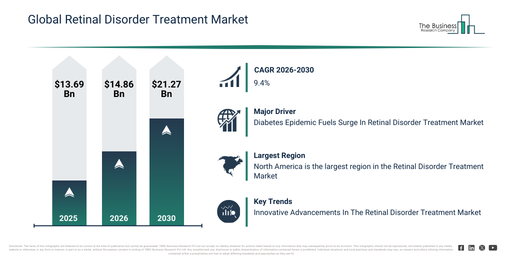
    The market for retinal disorder treatments has experienced substantial expansion in recent years. Projections indicate growth from $13.69 billion in 2025 to $14.86 billion in 2026, reflecting a compound annual growth rate (CAGR) of 8.6%. This historical upward trend is largely driven by a surge in age-related macular degeneration cases, a growing global diabetic population, an increase in ophthalmology clinics and specialty hospitals, progress in retinal imaging technologies, and heightened awareness surrounding retinal diseases.

    Over the next several years, the retinal disorder treatment market is anticipated to experience significant expansion, with projections indicating it will reach $21.27 billion by 2030, driven by a compound annual growth rate (CAGR) of 9.4%. This forecasted growth is largely fueled by advancements such as the development of long-acting retinal medications, a rise in approvals for novel biologics and gene therapies, improved accessibility to eye care in emerging markets, heightened investments in ophthalmic research, and a growing focus on personalized retinal therapies. Key trends shaping this period include the increasing adoption of anti-VEGF treatments, a movement toward less invasive retinal procedures, a greater preference for sustained-release drug formulations, the expansion of combination therapy strategies, and a growing utilization of home-based vision monitoring tools.

    Download A Free Sample Report For Comprehensive Market Insights:

    https://www.thebusinessresearchcompany.com/sample.aspx?id=12701&type=smp&utm_source=BlogsPR&utm_medium=Paid&utm_campaign=Jul_PR

    Retinal Disorder Treatment Market Opportunity Drivers: What Is Creating New Revenue Potential?

    The rising incidence of diabetes is anticipated to propel expansion in the retinal disorder treatment market moving forward. As a chronic health condition, diabetes involves elevated blood glucose levels due to the body’s insufficient insulin production or ineffective insulin utilization. Diabetic retinopathy stands as the most prevalent retinal issue among diabetics, resulting from retinal blood vessel damage that may cause bleeding, fluid leakage, and the formation of new blood vessels. Treatment for retinal disorders employs lasers to seal off leaking vessels or eliminate abnormal ones. For example, in June 2024, the National Health Service, a UK government department, reported that over half a million (549,000) additional individuals in England were identified as at risk for type 2 diabetes in 2023, raising the total of those with non-diabetic hyperglycemia, or pre-diabetes, registered with a GP to 3,615,330. This marks a notable increase from 3,065,825 in 2022. Consequently, the growing prevalence of diabetes is fueling the expansion of the retinal disorder treatment market.

    Retinal Disorder Treatment Market Segmentation Trends And Revenue Drivers

    The retinal disorder treatment market covered in this report is segmented –

    1) By Type: Macular Degeneration, Diabetic Retinopathy, Other Types

    2) By Dosage Form: Gels, Eye Solutions, Capsules And Tablets, Eye Drops, Ointments

    3) By Distribution Channel: Hospital Pharmacy, Online Pharmacy, Retail Pharmacy

    Subsegments:

    1) By Macular Degeneration: Dry Macular Degeneration, Wet Macular Degeneration

    2) By Diabetic Retinopathy: Non-Proliferative Diabetic Retinopathy, Proliferative Diabetic Retinopathy

    3) By Other Types: Retinal Detachment, Retinitis Pigmentosa, Uveitis, Other Retinal Disorders

    Retinal Disorder Treatment Market Innovation Trends Driving Future Development

    Leading players in the retinal disorder treatment market are actively creating new products, like therapies for geographic atrophy, aimed at reaching broader audiences, boosting sales, and driving revenue growth. Such treatments for geographic atrophy are designed to control symptoms, decelerate disease advancement, and assist patients in handling vision loss. A notable example occurred in August 2023, when Astellas Pharma Inc., a pharmaceutical firm based in Japan, received U.S. Food and Drug Administration (FDA) clearance for IZERVAY. This drug, a groundbreaking complement C5 inhibitor, holds the unique position of being the only approved option for geographic atrophy (GA) that has shown a highly significant reduction (p<0.01) in GA progression rates at the 12-month primary endpoint across two Phase 3 clinical studies. This distinctive attribute confirms IZERVAY (avacincaptad pegol intravitreal solution) as a proven and indicated treatment for GA linked to age-related macular degeneration (AMD).

    Retinal Disorder Treatment Market Industry Leaders: Which Organizations Are Driving Competition?

    Major companies operating in the retinal disorder treatment market are Pfizer Inc., F. Hoffmann-La Roche Ltd., AbbVie Inc., Bayer AG, Novartis AG, Regeneron Pharmaceuticals Inc., Genentech Inc., Santen Pharmaceutical Co. Ltd., Apellis Pharmaceuticals Inc., Alimera Sciences Inc., Ocular Therapeutix Inc., EyePoint Pharmaceuticals Inc., Adverum Biotechnologies Inc., Kodiak Sciences Inc., Acucela Inc., IVERIC bio Inc., Oxurion NV, Graybug Vision Inc., Clearside Biomedical Inc., Ophthotech Corporation, Opthea Limited, PanOptica Inc., ThromboGenics NV

    Access The Complete Retinal Disorder Treatment Market Report:

    https://www.thebusinessresearchcompany.com/report/retinal-disorder-treatment-global-market-report?utm_source=BlogsPR&utm_medium=Paid&utm_campaign=Jul_PR

    Retinal Disorder Treatment Market Regional Distribution: Which Areas Drive Market Expansion?

    North America was the largest region in the retinal disorder treatment market in 2025. Asia-Pacific is expected to be the fastest-growing region in the forecast period. The regions covered in the retinal disorder treatment market report are Asia-Pacific, South East Asia, Western Europe, Eastern Europe, North America, South America, Middle East, Africa.

    Get in touch with us:

    The Business Research Company: https://www.thebusinessresearchcompany.com/?utm_source=BlogsPR&utm_medium=Paid&utm_campaign=home_page_test

    Americas: +1 310-496-7795

    Asia: +44 7882 955267 & +91 8897263534

    Europe: +44 7882 955267

    Email us at: marketing@tbrc.info

    Follow us on:

    LinkedIn: https://in.linkedin.com/company/the-business-research-company

    YouTube: https://www.youtube.com/channel/UC24_fI0rV8cR5DxlCpgmyFQ

    Global Market Model: https://www.thebusinessresearchcompany.com/global-market-model
  • Retinal Biologics Market Growth Outlook Reveals A CAGR Of 11.9% And A Market Value Of $49.03 Billion By 2030

    Retinal Biologics Market Growth Outlook Reveals A CAGR Of 11.9% And A Market Value Of $49.03 Billion By 2030

    Enhanced with market attractiveness analysis, total addressable market evaluation, company benchmarking matrices, interactive Excel dashboards, expanded supply chain intelligence, emerging startup coverage, and detailed product insights, The Business Research Company’s 2026 market reports deliver more actionable and strategically valuable research.

    Retinal Biologics Market Forecast: What Market Value Is Expected By 2030?

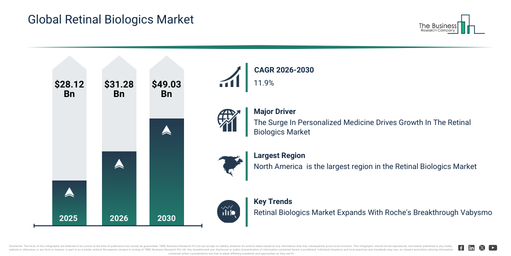
    The retinal biologics market has experienced significant growth in recent times. Its value is projected to rise from $28.12 billion in 2025 to $31.28 billion in 2026, reflecting an 11.2% compound annual growth rate (CAGR). This historical expansion has been driven by factors such as the growing incidence of age-related macular degeneration, an expanding diabetic population, the clinical effectiveness of monoclonal antibody treatments, higher spending on ophthalmology healthcare, and enhancements in diagnostic imaging technologies.

    The retinal biologics market is projected to experience robust expansion in the coming years, reaching $49.03 billion by 2030 with an 11.9% compound annual growth rate (CAGR). This forecasted growth is largely driven by enhanced drug delivery systems for retinal biologics, an expanding pipeline of biologic treatments targeting retinal diseases, greater uptake of personalized ophthalmic therapies, improved ophthalmology infrastructure in emerging markets, and a growing preference for long-lasting therapeutic options. Key trends shaping this period encompass the development of sustained-release retinal biologic formulations, wider use of anti-VEGF biologics, a movement toward less invasive intraocular procedures, increased biologics development for diabetic eye conditions, and a rise in specialized retina care centers.

    Download A Free Sample Report For Comprehensive Market Insights:

    https://www.thebusinessresearchcompany.com/sample.aspx?id=11911&type=smp&utm_source=BlogsPR&utm_medium=Paid&utm_campaign=Jul_PR

    Retinal Biologics Market Growth Momentum: Which Factors Are Influencing Demand?

    The growing need for personalized medicine is anticipated to boost the retinal biologics market in the coming years. Personalized medicine customizes medical care to a person’s distinct genetic profile, enabling more precise and effective healthcare solutions. In the context of retinal biologics, this approach is used to adapt therapies to individual genetic and molecular characteristics, enhancing treatment effectiveness while reducing unwanted side effects. For example, as reported by the Personalized Medicine Coalition, a U.S.-based hospital and healthcare organization, in February 2024, the FDA approved 16 new personalized therapies for rare diseases in 2023, a significant increase from 6 in 2022. Consequently, the increasing demand for personalized medicine is fueling the expansion of the retinal biologics market.

    Retinal Biologics Market Segment Analysis Highlighting Growth Areas

    The retinal biologics market covered in this report is segmented –

    1) By Drug Class: Vascular Endothelial Growth Factor (VEGF)-A Antagonist, Tumor Necrosis Factor (TNF)-A Inhibitor

    2) By Indication: Macular Degeneration, Diabetic Retinopathy, Uveitis, Diabetic Macular Edema, Other Indications

    3) By Distribution Channel: Hospitals, Pharmacies, Specialty Clinics, Online Pharmacies, Other Distribution Channels

    Subsegments:

    1) By Vascular Endothelial Growth Factor (VEGF)-A Antagonist: Monoclonal Antibodies, Small Molecule Inhibitors

    2) By Tumor Necrosis Factor (TNF)-A Inhibitor: Monoclonal Antibodies, Fusion Proteins

    Retinal Biologics Market Trends Reshaping Industry Growth

    Key players in the retinal biologics sector are increasingly concentrating on the creation of sophisticated therapies like bispecific antibodies, with the goal of boosting treatment effectiveness, decreasing retinal injury, and enhancing visual outcomes. These bispecific antibodies represent biologic treatments specifically engineered to attack two distinct pathways related to disease progression at once, thereby delivering superior therapeutic advantages. A notable example occurred in May 2023 when F. Hoffmann-La Roche Ltd., a healthcare firm headquartered in Switzerland, disclosed that the U.S. Food and Drug Administration had approved its supplemental biologics license application for Vabysmo, also known as faricimab, to address macular edema resulting from retinal vein occlusion. This approval stemmed from two Phase III clinical trials which demonstrated early and sustained improvements in vision when using Vabysmo, successfully meeting the primary endpoint of being non-inferior to aflibercept. This medication stands out as the initial bispecific antibody sanctioned for ocular use, specifically targeting neovascular or wet age-related macular degeneration as well as diabetic macular edema. Subsequent investigations indicated that patients treated with Vabysmo experienced an absence of retinal vascular leakage, contrasting with outcomes seen in those receiving aflibercept.

    Retinal Biologics Market Leading Companies: Who Holds Significant Market Presence?

    Major companies operating in the retinal biologics market are Regeneron Pharmaceuticals Inc., AbbVie Inc., MeiraGTx Limited, Oxurion NV, Novartis AG, Spark Therapeutics Inc., Bayer AG, Santen Pharmaceutical Co. Ltd., EyePoint Pharmaceuticals Inc., Iveric Bio Inc., Kodiak Sciences Inc., Alimera Sciences Inc., Acucela Inc., Clearside Biomedical Inc., Ophthotech Corporation, Aerie Pharmaceuticals Inc., Ocular Therapeutix Inc., Fidia Farmaceutici S.p.A, Roche Holding AG, Amgen Inc., Biogen Inc., Genentech Inc., Allergan PLC

    Access The Complete Retinal Biologics Market Report:

    https://www.thebusinessresearchcompany.com/report/retinal-biologics-global-market-report?utm_source=BlogsPR&utm_medium=Paid&utm_campaign=Jul_PR

    Retinal Biologics Market Leading Geography: Which Region Generates The Most Revenue?

    North America was the largest region in the retinal biologics market in 2025. Asia-Pacific is expected to be the fastest-growing region in the forecast period. The regions covered in the retinal biologics market report are Asia-Pacific, South East Asia, Western Europe, Eastern Europe, North America, South America, Middle East, Africa.

    Get in touch with us:

    The Business Research Company: https://www.thebusinessresearchcompany.com/?utm_source=BlogsPR&utm_medium=Paid&utm_campaign=home_page_test

    Americas: +1 310-496-7795

    Asia: +44 7882 955267 & +91 8897263534

    Europe: +44 7882 955267

    Email us at: marketing@tbrc.info

    Follow us on:

    LinkedIn: https://in.linkedin.com/company/the-business-research-company

    YouTube: https://www.youtube.com/channel/UC24_fI0rV8cR5DxlCpgmyFQ

    Global Market Model: https://www.thebusinessresearchcompany.com/global-market-model
  • Respules Market Forecast Highlights Expansion From $2.07 Billion To $2.94 Billion Through 2030

    Respules Market Forecast Highlights Expansion From $2.07 Billion To $2.94 Billion Through 2030

    Through market attractiveness analysis, total addressable market evaluation, company benchmarking matrices, interactive Excel dashboards, expanded supply chain intelligence, emerging startup coverage, and detailed product insights, The Business Research Company’s 2026 market reports provide more actionable and strategically valuable research.

    Respules Market Size Outlook: How Fast Will Revenue Grow Through 2030?

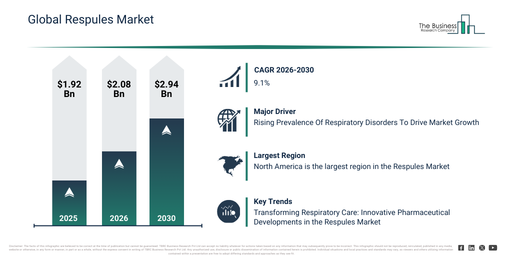
    The market for respules has experienced notable expansion in recent times. Projected to increase from $1.92 billion in 2025 to $2.08 billion in 2026, this reflects a compound annual growth rate (CAGR) of 7.9%. This historical growth has been fueled by factors such as the growing incidence of asthma and COPD, elevated air pollution levels, the expansion of hospital-based respiratory treatments, extensive reliance on nebulizers for pediatric care, and enhanced diagnostic capabilities for chronic respiratory diseases.

    The market for respules is projected to experience robust expansion in the coming years, reaching a valuation of $2.94 billion by 2030, driven by a compound annual growth rate (CAGR) of 9.1%. This forecasted growth is fueled by several factors, including the rising demand for home healthcare solutions, the broadening of online pharmacy channels, improved healthcare access in developing nations, an aging population prone to respiratory ailments, and the ongoing introduction of combination respule products. Key trends shaping this period encompass a heightened adoption of nebulized therapies for chronic respiratory conditions, a growing preference for unit-dose and preservative-free formulations, increased usage among pediatric and geriatric patients, the expansion of home-based and self-managed respiratory care, and a significant uptick in generic, cost-effective respule options.

    Download A Free Sample Report For Comprehensive Market Insights:

    https://www.thebusinessresearchcompany.com/sample.aspx?id=12497&type=smp&utm_source=BlogsPR&utm_medium=Paid&utm_campaign=Jul_PR

    Respules Market Expansion Drivers: What Is Shaping Future Growth?

    The anticipated growth in the respules market is being driven by the increasing prevalence of respiratory disorders. These disorders encompass a range of lung diseases and conditions, such as tuberculosis, lung cancer, pulmonary hypertension, mesothelioma, cystic fibrosis, emphysema, and asthma. Respules are used to manage various respiratory issues, including bronchial asthma, emphysema, spasmodic stenosis, and abnormal bronchial mucus production. For example, a research study published in December 2023 by JAMA Network Open, a medical journal from the American Medical Association, projected that the global burden of chronic obstructive pulmonary disease (COPD) could reach nearly 600 million cases by 2050, reflecting a 23% rise in prevalence. Consequently, the growing incidence of respiratory disorders is fueling the expansion of the respules market.

    Rising healthcare expenditure is set to accelerate the growth of the respules market in the coming period. Healthcare expenditure includes the total financial resources allocated to healthcare services, such as medical treatments, hospital care, medications, and public health initiatives, contributed by governments, businesses, and individuals. The growing demand for healthcare spending is driven by the increasing prevalence of chronic diseases, which necessitate long-term and costly therapies. Enhanced healthcare expenditure facilitates greater use of respules by improving access to advanced respiratory treatments and promoting the uptake of cost-effective nebulized medications. Higher spending leads to better healthcare infrastructure, more accurate diagnoses, and timely management of chronic respiratory conditions, thereby increasing demand for respules. As an illustration, in May 2024, the Office for National Statistics, a UK government agency, reported that total healthcare expenditure rose by 5.6% in nominal terms in 2023, representing a 0.9% increase in growth compared to 2022. Thus, the rise in healthcare expenditure is propelling the respules market forward.

    Respules Market Segment Performance And Strategic Opportunities

    The respules market covered in this report is segmented –

    1) By Drug Type: Budesonide, Albuterol, Ipratropium Bromide, Salbutamol Sulphate And Ipratropium Bromide

    2) By Dosage And Strength: 0.25 mg/2 mL, 0.5 mg/2 mL, 1mg/2 mL, Other Dosage And Strength Types

    3) By Distribution Channel: Hospital Pharmacy, Retail Pharmacy, Online Pharmacy, Other Distribution Channels

    Subsegments:

    1) By Budesonide: Budesonide Respules 0.25 mg, Budesonide Respules 0.5 mg, Budesonide Respules 1 mg

    2) By Albuterol: Albuterol Sulfate Respules 0.083%, Albuterol Sulfate Respules 0.5%

    3) By Ipratropium Bromide: Ipratropium Bromide Respules 0.02%, Ipratropium Bromide Respules 0.5 mg

    4) By Salbutamol Sulphate And Ipratropium Bromide: Salbutamol Sulphate Respules 0.083%, Salbutamol Sulphate Respules 2.5 mg

    Respules Market Strategic Trends: What Is Defining The Next Phase Of Growth?

    Key players in the repsules market are concentrating on creating groundbreaking products, like novel pharmaceutical solutions that boost drug delivery, increase patient adherence, and maximize treatment effectiveness. These novel pharmaceutical products represent new and inventive medications or drug forms that are distinctly different from current therapies. Such offerings might feature unique active components, fresh drug combinations, or advanced delivery mechanisms aimed at enhancing efficacy, safety, or patient compliance. As an example, in January 2023, Lupin Limited, a pharmaceutical company headquartered in India, introduced DIFIZMA for the management of poorly controlled asthma—a novel fixed-dose triple-drug combination. This product blends Indacaterol, a long-acting beta-agonist; Glycopyrronium, a long-acting muscarinic receptor antagonist; and Mometasone Furoate, an inhaled corticosteroid, all working together to improve pulmonary function and deliver superior symptom management. Moreover, DIFIZMA aids in lowering the rate of asthma attacks, thus boosting patients’ overall quality of life and minimizing the likelihood of hospitalization.

    Respules Market Key Players: Which Companies Shape Industry Competition?

    Major companies operating in the respules market are AstraZeneca PLC, GlaxoSmithKline PLC, Teva Pharmaceutical Industries Ltd., Sandoz International GmbH, Macleods Pharmaceuticals Ltd., Sun Pharmaceutical Industries Ltd., Aurobindo Pharma Ltd., Cipla Limited, Intas Pharmaceuticals Ltd., Lupin Limited, Cadila Healthcare Limited, Torrent Pharmaceuticals Ltd., Glenmark Pharmaceuticals Ltd., Jubilant Life Sciences Limited, Systopic Laboratories Pvt. Ltd., Koye Pharmaceuticals Pvt. Ltd., Amanta Healthcare Ltd., Lucky Pharmaceuticals, Zuche Pharmaceuticals Pvt. Ltd., Alkem Laboratories Ltd., Alembic Pharmaceuticals Ltd., Emcure Pharmaceuticals Ltd., Natco Pharma Ltd., Hetero Labs Ltd., Wockhardt Ltd.

    Access The Complete Respules Market Report:

    https://www.thebusinessresearchcompany.com/report/respules-global-market-report?utm_source=BlogsPR&utm_medium=Paid&utm_campaign=Jul_PR

    Respules Market Regional Outlook: Where Are The Largest Opportunities Located?

    North America was the largest region in the respules market in 2025. Asia-Pacific is expected to be the fastest-growing region in the forecast period. The regions covered in the respules market report are Asia-Pacific, South East Asia, Western Europe, Eastern Europe, North America, South America, Middle East, Africa.

    Get in touch with us:

    The Business Research Company: https://www.thebusinessresearchcompany.com/?utm_source=BlogsPR&utm_medium=Paid&utm_campaign=home_page_test

    Americas: +1 310-496-7795

    Asia: +44 7882 955267 & +91 8897263534

    Europe: +44 7882 955267

    Email us at: marketing@tbrc.info

    Follow us on:

    LinkedIn: https://in.linkedin.com/company/the-business-research-company

    YouTube: https://www.youtube.com/channel/UC24_fI0rV8cR5DxlCpgmyFQ

    Global Market Model: https://www.thebusinessresearchcompany.com/global-market-model
  • Respiratory Syncytial Virus (RSV) Fusion Inhibitors Market Expected To Reach $3.17 Billion By 2030 As Growth Accelerates At 16.5% CAGR

    Respiratory Syncytial Virus (RSV) Fusion Inhibitors Market Expected To Reach $3.17 Billion By 2030 As Growth Accelerates At 16.5% CAGR

    Delivering more actionable and strategically valuable research, The Business Research Company’s 2026 market reports feature market attractiveness analysis, total addressable market evaluation, company benchmarking matrices, interactive Excel dashboards, expanded supply chain intelligence, emerging startup coverage, and detailed product insights.

    Respiratory Syncytial Virus (RSV) Fusion Inhibitors Market Size, Value And Growth Trends Through 2030

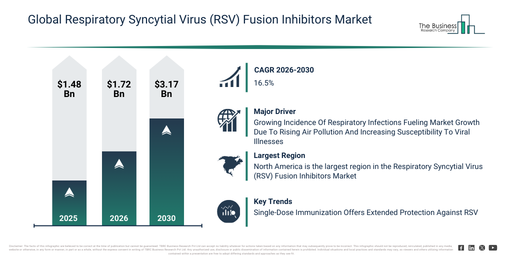
    The respiratory syncytial virus (rsv) fusion inhibitors market has experienced significant expansion in recent years. It is projected to increase from $1.48 billion in 2025 to $1.72 billion in 2026, representing a compound annual growth rate (CAGR) of 16.8%. This historical growth has been driven by several factors: a rising prevalence of respiratory viral infections, a historical shortage of effective treatments specifically targeting rsv, improvements in neonatal and pediatric healthcare facilities, progress in the development of antiviral medications, and a growing understanding among clinicians of the disease burden caused by rsv.

    The respiratory syncytial virus (RSV) fusion inhibitors market is projected to experience substantial growth in the coming years, with its value anticipated to reach $3.17 billion by 2030, driven by a compound annual growth rate (CAGR) of 16.5%. This upward trajectory in the forecast period is fueled by several factors, including a rise in regulatory approvals for novel antiviral drugs, heightened investment in pediatric infectious disease research, the expansion of monoclonal antibody alternatives, a greater emphasis on outpatient management of RSV, and the global push for vaccination and preventive initiatives. Key trends shaping this period include the accelerated development of targeted antiviral therapies, a stronger focus on RSV prevention in children, expanding clinical trials for fusion inhibitors, the broadening of prophylactic treatment options, and an intensified attention on high-risk patient populations.

    Download A Free Sample Report For Comprehensive Market Insights:

    https://www.thebusinessresearchcompany.com/sample.aspx?id=30370&type=smp&utm_source=BlogsPR&utm_medium=Paid&utm_campaign=Jul_PR

    Respiratory Syncytial Virus (RSV) Fusion Inhibitors Market Development Factors: Which Trends Are Supporting Demand?

    The upward trend in respiratory infections is set to drive further expansion in the respiratory syncytial virus (RSV) fusion inhibitors market. Respiratory infections occur when harmful microorganisms invade and multiply within the respiratory tract, leading to conditions like common colds, influenza, or pneumonia. This rise in cases is largely attributed to worsening air pollution, which compromises the respiratory system and heightens vulnerability to infections. RSV fusion inhibitors play a key role in treatment by specifically obstructing the viral fusion process, thereby stopping the virus from penetrating host cells. These agents help lessen the severity and shorten the duration of RSV infections, contribute to reduced hospitalization numbers, and enhance patient recovery, offering a more precise and effective strategy for managing respiratory illnesses. In May 2025, as reported by the New York Academy of Sciences—a U.S.-based nonprofit—whooping cough cases had exceeded 8,000, marking more than a twofold increase relative to the same timeframe in 2024. Consequently, the growing frequency of respiratory infections is fueling demand for the respiratory syncytial virus (RSV) fusion inhibitors market.

    Rising healthcare spending is anticipated to accelerate growth within the respiratory syncytial virus (RSV) fusion inhibitors market. Healthcare expenditure represents the overall financial outlay devoted to medical services, treatments, facilities, research, and public health initiatives aimed at preserving or improving health outcomes. This increased spending is driven by the growing prevalence of chronic conditions, which necessitate long-term and costly care. Higher expenditure on healthcare supports RSV fusion inhibitors by channeling more funds into research, development, and making innovative therapies more accessible. This enables healthcare providers to adopt RSV fusion inhibitors more broadly, facilitating better prevention and management of respiratory infections while improving patient results. In May 2024, the Office for National Statistics, a UK-based government body, reported that total healthcare spending grew by 5.6% in nominal terms in 2023, representing a 0.9% increase compared to 2022. As a result, rising healthcare expenditure is driving forward the respiratory syncytial virus (RSV) fusion inhibitors market.

    Respiratory Syncytial Virus (RSV) Fusion Inhibitors Market Segment Landscape And Growth Potential

    The respiratory syncytial virus (rsv) fusion inhibitors market covered in this report is segmented –

    1) By Drug Type: Small Molecule Inhibitors, Monoclonal Antibodies, Peptide Inhibitors, Other Drugs

    2) By Route Of Administration: Oral, Intravenous, Inhalation, Other Routes Of Administration

    3) By Application: By Prophylaxis, Treatment

    4) By End-User: Hospitals, Clinics, Research Institutes, Other End Users

    Subsegments:

    1) By Small Molecule Inhibitors: Fusion Protein Inhibitors, Viral Entry Blockers, Replication Inhibitors, Nucleoside Analogues

    2) By Monoclonal Antibodies: Neutralizing Antibodies, Prophylactic Antibodies, Therapeutic Antibodies, Combination Antibodies

    3) By Peptide Inhibitors: Fusion Inhibitory Peptides, Receptor Binding Peptides, Entry Blocking Peptides, Synthetic Peptides

    4) By Other Drugs: Ribonucleic Acid (RNA) Interference Agents, Host Targeted Inhibitors, Immunomodulators, Small Interfering Agents

    Respiratory Syncytial Virus (RSV) Fusion Inhibitors Market Transformation Trends: Which Innovations Are Driving Change?

    Key players in the respiratory syncytial virus (RSV) fusion inhibitors market are concentrating on creating cutting-edge prophylactic approaches, including long-acting monoclonal antibodies, aimed at strengthening immune responses, improving defense mechanisms, and alleviating the impact of infectious diseases on at-risk groups. Long-acting monoclonal antibodies (mAbs) are a category of therapeutic antibodies that have been modified or formulated to maintain efficacy in the body for a longer duration compared to conventional monoclonal antibodies. For example, in June 2025, Merck & Co. Inc., a biopharmaceutical firm based in the United States, secured approval from the U.S. Food and Drug Administration (FDA) for ENFLONSIA (clesrovimab-cfor), a long-acting monoclonal antibody intended to prevent RSV lower-respiratory-tract disease in infants who are born during or are entering their first RSV season. This agent is a fully human IgG1? monoclonal antibody featuring Fc-region alterations to prolong its half-life, and it attaches to the RSV fusion (F) protein, thereby obstructing viral entry and fusion with host respiratory epithelial cells. It is intended to deliver sustained protection through a single administration, presenting a novel immunization option to safeguard this susceptible pediatric group.

    Respiratory Syncytial Virus (RSV) Fusion Inhibitors Market Competitive Landscape: Who Are The Leading Companies?

    Major companies operating in the respiratory syncytial virus (rsv) fusion inhibitors market are Merck & Co. Inc., Pfizer Inc., AstraZeneca plc, Bristol-Myers Squibb Company, Sanofi S.A., Gilead Sciences Inc., Johnson & Johnson, Taisho Pharmaceutical Co. Ltd., Enanta Pharmaceuticals Inc., Shanghai Ark Biopharmaceutical Co. Ltd., Medivir AB, ARNAV Biotech

    Access The Complete Respiratory Syncytial Virus (RSV) Fusion Inhibitors Market Report:

    https://www.thebusinessresearchcompany.com/report/global-respiratory-syncytial-virus-rsv-fusion-inhibitors-market-report?utm_source=BlogsPR&utm_medium=Paid&utm_campaign=Jul_PR

    Respiratory Syncytial Virus (RSV) Fusion Inhibitors Market Geographic Landscape: Which Region Dominates Industry Growth?

    North America was the largest region in the respiratory syncytial virus (RSV) fusion inhibitors market in 2025. Asia-Pacific is expected to be the fastest-growing region in the forecast period. The regions covered in the respiratory syncytial virus (rsv) fusion inhibitors market report are Asia-Pacific, South East Asia, Western Europe, Eastern Europe, North America, South America, Middle East, Africa.

    Get in touch with us:

    The Business Research Company: https://www.thebusinessresearchcompany.com/?utm_source=BlogsPR&utm_medium=Paid&utm_campaign=home_page_test

    Americas: +1 310-496-7795

    Asia: +44 7882 955267 & +91 8897263534

    Europe: +44 7882 955267

    Email us at: marketing@tbrc.info

    Follow us on:

    LinkedIn: https://in.linkedin.com/company/the-business-research-company

    YouTube: https://www.youtube.com/channel/UC24_fI0rV8cR5DxlCpgmyFQ

    Global Market Model: https://www.thebusinessresearchcompany.com/global-market-model
  • Respiratory Disease Vaccine Market Set To Grow From $71.36 Billion In 2026 To $81 Billion By 2030 At A CAGR Of 3.2%

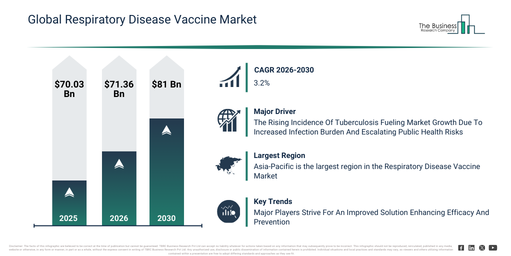
    Respiratory Disease Vaccine Market Set To Grow From $71.36 Billion In 2026 To $81 Billion By 2030 At A CAGR Of 3.2%

    Enhanced with market attractiveness analysis, total addressable market evaluation, company benchmarking matrices, interactive Excel dashboards, expanded supply chain intelligence, emerging startup coverage, and detailed product insights, The Business Research Company’s 2026 market reports deliver more actionable and strategically valuable research.

    Respiratory Disease Vaccine Market CAGR Analysis And Future Market Development

    The market for vaccines targeting respiratory diseases has experienced slight expansion in recent times. Expected to rise from $70.03 billion in 2025 to $71.36 billion in 2026, this represents a compound annual growth rate (CAGR) of 1.9%. This historical growth has been driven by factors such as a high incidence of respiratory infections, restricted access to effective immunizations, government-led vaccination programs, progress in monoclonal antibody development, and increased public consciousness regarding respiratory well-being.

    The market for respiratory disease vaccines is anticipated to experience consistent expansion over the coming years, reaching a projected value of $81 billion by 2030, reflecting a compound annual growth rate (CAGR) of 3.2%. This growth during the forecast period is driven by factors such as a rising need for universal vaccines, progress in mRNA and viral vector technologies, improvements in cold-chain logistics, enhanced collaboration between public and private sectors for vaccine delivery, and a stronger emphasis on pandemic readiness and quick response capabilities. Key trends expected to shape this period involve the creation of next-generation respiratory vaccines, a heightened focus on immunization for children and the elderly, the broadening of vaccination initiatives in developing economies, the emergence of combination vaccines offering protection against multiple pathogens, and the implementation of platforms enabling swift vaccine development and distribution.

    Download A Free Sample Report For Comprehensive Market Insights:

    https://www.thebusinessresearchcompany.com/sample.aspx?id=12924&type=smp&utm_source=BlogsPR&utm_medium=Paid&utm_campaign=Jul_PR

    Respiratory Disease Vaccine Market Industry Drivers: What Is Driving Revenue Growth?

    The growing prevalence of tuberculosis (TB) is anticipated to drive expansion in the respiratory disease vaccine market moving forward. TB, an infectious respiratory condition caused by Mycobacterium tuberculosis, predominantly impacts the lungs and poses a major global health challenge. This increase in TB cases stems from weakened healthcare infrastructures, diagnostic delays, and extended transmission patterns, all of which intensify the overall disease load. Respiratory disease vaccines are vital in lowering TB-associated threats by decreasing infection rates, curbing disease spread, and reinforcing international prevention initiatives. For example, in March 2024, the Centers for Disease Control and Prevention, a US-based federal agency, reported a rise in tuberculosis cases from 8,320 in 2022 to 9,615 in 2023, marking an increase of 1,295 cases. Consequently, the escalating incidence of tuberculosis is fueling growth in the respiratory disease vaccine market.

    Respiratory Disease Vaccine Market Categorization By Product Type And Application

    The respiratory disease vaccine market covered in this report is segmented –

    1) By Type: Viral Vaccine, Bacterial Vaccine, Combination Vaccine

    2) By Infection: COVID-19, Influenza, Respiratory Syncytial Virus (RSV), Pneumonia, Other Infections

    3) By Age: Infant, Adolescent, Adult

    4) By End-User: Clinic, Hospital, Other End-Users

    Subsegments:

    1) By Viral Vaccine: Influenza Vaccine, Respiratory Syncytial Virus (RSV) Vaccine, Coronavirus Vaccine

    2) By Bacterial Vaccine: Pneumococcal Vaccine, Haemophilus Influenzae Type B (Hib) Vaccine, Pertussis Vaccine

    3) By Combination Vaccine: DTaP With Hib And IPV, Pneumococcal Conjugate Vaccine With Influenza Vaccine

    Respiratory Disease Vaccine Market Growth Trends: What Is Influencing The Future Outlook?

    Key players in the respiratory disease vaccine market are focusing their efforts on developing novel products to boost effectiveness and deliver superior options for preventing and managing respiratory disease infections. For example, in May 2023, Pfizer Inc., a pharmaceutical firm based in the United States, secured approval from the Food and Drug Administration (FDA) for ABRYSVO (Respiratory Syncytial Virus Vaccine), a bivalent respiratory syncytial virus prefusion F (RSVpreF) vaccine, designed to prevent lower respiratory tract disease caused by respiratory syncytial virus in adults aged 60 years and older. ABRYSVO is an unadjuvanted vaccine composed of two preF proteins engineered to optimize immune response against RSV A and B strains, and it has been clinically demonstrated to be both safe and effective.

    Respiratory Disease Vaccine Market Company Landscape And Strategic Competition

    Major companies operating in the respiratory disease vaccine market are Pfizer Inc., Johnson & Johnson Ltd., Merck & Co. Inc., Sanofi SA, AstraZeneca PLC, GlaxoSmithKline PLC, Sinovac Biotech Co. Ltd., Moderna Inc., BioNTech SE, CSL Limited, Daiichi Sankyo Company Limited, Mitsubishi Tanabe Pharma Corporation, Novavax Inc., Emergent BioSolutions Inc., Seqirus, Bio Farma, Dynavax Technologies Corporation, Hualan Biological Bacterin Co. Ltd., Serum Institute of India Pvt. Ltd., Bavarian Nordic A/S, Valneva SE, Biological E. Limited, CanSino Biologics Inc., Bharat Biotech International Limited, Medicago Inc, CureVac N.V., Incepta Vaccine Ltd, Inovio Pharmaceuticals Inc., Ology Bioservices, VBI Vaccines Inc.

    Access The Complete Respiratory Disease Vaccine Market Report:

    https://www.thebusinessresearchcompany.com/report/respiratory-disease-vaccine-global-market-report?utm_source=BlogsPR&utm_medium=Paid&utm_campaign=Jul_PR

    Respiratory Disease Vaccine Market Largest Region: Which Geography Holds The Highest Market Share?

    Asia-Pacific was the largest region in the respiratory disease vaccine market in 2025. North America is expected to be the fastest-growing region in the forecast period. The regions covered in the respiratory disease vaccine market report are Asia-Pacific, South East Asia, Western Europe, Eastern Europe, North America, South America, Middle East, Africa.

    Get in touch with us:

    The Business Research Company: https://www.thebusinessresearchcompany.com/?utm_source=BlogsPR&utm_medium=Paid&utm_campaign=home_page_test

    Americas: +1 310-496-7795

    Asia: +44 7882 955267 & +91 8897263534

    Europe: +44 7882 955267

    Email us at: marketing@tbrc.info

    Follow us on:

    LinkedIn: https://in.linkedin.com/company/the-business-research-company

    YouTube: https://www.youtube.com/channel/UC24_fI0rV8cR5DxlCpgmyFQ

    Global Market Model: https://www.thebusinessresearchcompany.com/global-market-model
  • Respiratory Biologics Market Opportunities Are Emerging Beyond Traditional Growth Areas

    Respiratory Biologics Market Opportunities Are Emerging Beyond Traditional Growth Areas

    Through market attractiveness analysis, total addressable market evaluation, company benchmarking matrices, interactive Excel dashboards, expanded supply chain intelligence, emerging startup coverage, and detailed product insights, The Business Research Company’s 2026 market reports provide more actionable and strategically valuable research.

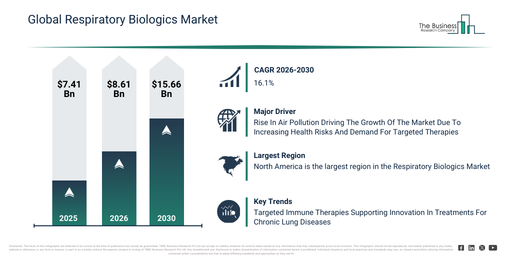
    Respiratory Biologics Market Expansion From $8.61 Billion In 2026 To $15.66 Billion In 2030

    The respiratory biologics market has experienced rapid expansion in recent years. With a compound annual growth rate (CAGR) of 16.3%, its size is projected to increase from $7.41 billion in 2025 to $8.61 billion in 2026. This historic growth has been driven by the constraints associated with conventional inhalers, an uptick in severe asthma occurrences, approvals for biologic therapies, advancements in immunology research, and the proliferation of specialty clinics.

    The respiratory biologics market is projected to experience significant expansion over the coming years, with an anticipated valuation of $15.66 billion by 2030, reflecting a compound annual growth rate (CAGR) of 16.1%. This upward trajectory in the forecast period is driven by factors such as the advancement of precision respiratory medicine, a broadening pipeline of biologic therapies, increased healthcare expenditures, enhanced reimbursement frameworks, and the demand to address unmet clinical needs in severe respiratory conditions. Key developments shaping this period include a growing preference for targeted biologic treatments, an expanded focus on managing severe asthma, the rising prominence of biomarker-driven patient selection strategies, a greater reliance on injectable respiratory medications, and a notable shift toward the utilization of long-acting biologic agents.

    Download A Free Sample Report For Comprehensive Market Insights:

    https://www.thebusinessresearchcompany.com/sample.aspx?id=23497&type=smp&utm_source=BlogsPR&utm_medium=Paid&utm_campaign=Jul_PR

    #Respiratory Biologics Market Growth Factors: Which Forces Are Supporting Market Expansion?

    The expected increase in air pollution will drive expansion in the respiratory biologics market moving forward. Air pollution is defined as the presence of dangerous substances like gases, particulate matter, and biological molecules within Earth’s atmosphere, which can adversely affect human health and the environment. This phenomenon is worsening due to expanding industrialization and urbanization, which result in greater emissions of pollutants from factories, automobiles, and construction sites. Respiratory biologics address the health impacts of air pollution by delivering focused treatments that decrease inflammation and enhance lung function in people exposed to airborne contaminants. For example, in January 2025, the Environmental Protection Agency, a U.S. government organization, reported that the United States emitted over 66 million tons of pollutants into the atmosphere during 2023. Consequently, the growing level of air pollution is fueling the advancement of the respiratory biologics market.

    Respiratory Biologics Market Segment Analysis And Revenue Opportunities

    The respiratory biologics market covered in this report is segmented –

    1) By Disease Indication: Asthma, Chronic Rhinosinasitis, Hypereosinophilic Syndrome

    2) By Route Of Administration: Intravenous, Subcutaneous

    3) By Sales Channel: Hospitals, Specialty Clinics, Retail Pharmacies, Mail Order Pharmacies

    Subsegments:

    1) By Asthma: Severe Eosinophilic Asthma, Allergic Asthma, Non-Allergic Asthma

    2) By Chronic Rhinosinasitis: Chronic Rhinosinusitis: Chronic Rhinosinusitis with Nasal Polyps, Chronic Rhinosinusitis without Nasal Polyps

    3) By Hypereosinophilic Syndrome (HES): Idiopathic HES, Lymphocytic Variant HES, Myeloproliferative HES

    Respiratory Biologics Market Industry Trends: What Changes Are Reshaping Demand?

    Key players in the respiratory biologics market are concentrating on the creation of advanced biologic treatments, including targeted immune therapies designed for chronic respiratory conditions, with the goal of delivering precise interventions that curb inflammation and enhance respiratory performance. These targeted immune therapies for chronic lung diseases work by regulating the immune system to alleviate swelling and ease breathing difficulties in persistent pulmonary disorders. As an example, in September 2024, Sanofi S.A., a pharmaceutical firm headquartered in France, disclosed that the U.S. Food and Drug Administration (FDA) had granted approval for Dupixent (dupilumab) as an additional maintenance therapy for adults suffering from inadequately managed chronic obstructive pulmonary disease (COPD) who exhibit an eosinophilic phenotype. This authorization represented a major breakthrough, as Dupixent was the first biologic medication cleared in the United States for addressing this particular subset of COPD patients.

    Respiratory Biologics Market Leading Players Shaping Industry Direction

    Major companies operating in the respiratory biologics market are Sanofi S.A., AstraZeneca plc, GlaxoSmithKline plc, Regeneron Pharmaceuticals Inc., Novartis AG, F. Hoffmann-La Roche Ltd., Amgen Inc., Swedish Orphan Biovitrum AB, Teva Pharmaceutical Industries Ltd., AbbVie Inc., Pfizer Inc., Merck & Co. Inc., Bristol Myers Squibb Company, Johnson & Johnson, Boehringer Ingelheim International GmbH, Biogen Inc., Vertex Pharmaceuticals Incorporated, Glenmark Pharmaceuticals Ltd., Kiniksa Pharmaceuticals Ltd., Pieris Pharmaceuticals Inc.

    Access The Complete Respiratory Biologics Market Report:

    https://www.thebusinessresearchcompany.com/report/respiratory-biologics-global-market-report?utm_source=BlogsPR&utm_medium=Paid&utm_campaign=Jul_PR

    Respiratory Biologics Market Regional Analysis: Which Region Leads By Revenue?

    North America was the largest region in the respiratory biologics market in 2025. Asia-Pacific is expected to be the fastest-growing region in the forecast period. The regions covered in the respiratory biologics market report are Asia-Pacific, South East Asia, Western Europe, Eastern Europe, North America, South America, Middle East, Africa.

    Get in touch with us:

    The Business Research Company: https://www.thebusinessresearchcompany.com/?utm_source=BlogsPR&utm_medium=Paid&utm_campaign=home_page_test

    Americas: +1 310-496-7795

    Asia: +44 7882 955267 & +91 8897263534

    Europe: +44 7882 955267

    Email us at: marketing@tbrc.info

    Follow us on:

    LinkedIn: https://in.linkedin.com/company/the-business-research-company

    YouTube: https://www.youtube.com/channel/UC24_fI0rV8cR5DxlCpgmyFQ

    Global Market Model: https://www.thebusinessresearchcompany.com/global-market-model
  • Research-Grade Proteins Market Expansion Is Opening New Pathways For Strategic Investment

    Research-Grade Proteins Market Expansion Is Opening New Pathways For Strategic Investment

    Delivering more actionable and strategically valuable research, The Business Research Company’s 2026 market reports feature market attractiveness analysis, total addressable market evaluation, company benchmarking matrices, interactive Excel dashboards, expanded supply chain intelligence, emerging startup coverage, and detailed product insights.

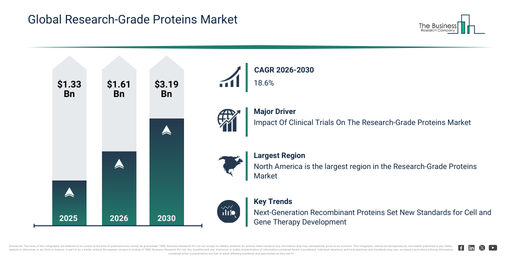
    Research-Grade Proteins Market Forecast Highlighting Growth From $1.61 Billion To $3.18 Billion

    The research-grade proteins market has experienced an extremely rapid expansion over recent years. Its value is projected to rise from $1.33 billion in 2025 to $1.61 billion in 2026, reflecting a compound annual growth rate (CAGR) of 20.8%. This historic growth has been driven by several key factors, including the advancement of academic life sciences research, the growing application of proteins in molecular biology experiments, the expansion of biopharmaceutical research and development efforts, the increased availability of recombinant protein expression systems, and the influx of funding for fundamental biomedical research.

    The market for research-grade proteins is anticipated to experience substantial expansion in the coming years, with projections indicating it will reach a value of $3.19 billion by 2030, growing at a compound annual rate of 18.6%. This upward trajectory in the forecast period is largely driven by an intensified focus on precision medicine studies, a heightened demand for protein-derived drug targets, advancements in cellular and gene therapy investigations, a broader application of proteins within structural biology, and a growing trend among pharmaceutical companies to outsource their research activities. Key developments shaping this period include an increased requirement for highly purified proteins in drug discovery efforts, a rising utilization of recombinant proteins in both cellular and molecular biology analyses, a greater incorporation of research-grade proteins into immunology and oncology studies, a proliferation of protein-based assays and functional assessments, and a notable shift toward custom-designed and application-specific protein products.

    Download A Free Sample Report For Comprehensive Market Insights:

    https://www.thebusinessresearchcompany.com/sample.aspx?id=15917&type=smp&utm_source=BlogsPR&utm_medium=Paid&utm_campaign=Jul_PR

    Research-Grade Proteins Market Demand Drivers: What Is Fueling Industry Growth?

    The expansion of the research-grade proteins market is being significantly driven by the increasing volume of clinical trials. These trials are studies designed to evaluate the safety and efficacy of new medical treatments, interventions, or devices in human subjects. A surge in their numbers has been observed, fueled by progress in medical research, a growing burden of diseases, shifts in regulatory frameworks, heightened patient demand, and substantial industry investments. Within this context, research-grade proteins play a critical role, providing essential support in biomarker development, assay creation, drug target identification, quality control, and as reference standards, all of which are vital for maintaining the precision and reliability of experimental findings. A notable example occurred in December 2024, when the Association of the British Pharmaceutical Industry (ABPI), based in the UK, reported that the number of new pharmaceutical industry trials in the UK grew for a second consecutive year, climbing from 411 in 2022 to 426 in 2023. Consequently, this upward trend in clinical trial activity is a key factor propelling the growth of the research-grade proteins market.

    Research-Grade Proteins Market Segmentation And Category Breakdown

    The research-grade proteins market covered in this report is segmented –

    1) By Product: Cytokines And Growth Factors, Antibodies, Immune Checkpoint Proteins, Virus Antigens, Enzymes, Recombinant Regulatory Proteins, Hormones, Other Products

    2) By Host Cell: Mammalian Cells, Bacterial Cells, Fungi And Yeast, Insect Cells, Other Host Cells

    3) By End-Use: Pharmaceutical And Biotechnology Companies, Academic And Research Institute, Other End-Uses

    Subsegments:

    1) By Cytokines And Growth Factors: Interleukins, Interferons, Colony Stimulating Factors, Erythropoietin, Granulocyte Macrophage Colony-Stimulating Factor

    2) By Antibodies: Monoclonal Antibodies, Polyclonal Antibodies, Recombinant Antibodies, Conjugated Antibodies

    3) By Immune Checkpoint Proteins: PD-1 Inhibitors, PD-L1 Inhibitors, CTLA-4 Inhibitors

    4) By Virus Antigens: HIV Antigens, Hepatitis Antigens, Influenza Antigens, Hepatitis B Antigens

    5) By Enzymes: Restriction Enzymes, Proteases, Ligases, Kinases

    6) By Recombinant Regulatory Proteins: Transcription Factors, Regulatory Enzymes, Epigenetic Modifiers

    7) By Hormones: Insulin, Thyroid Hormones, Growth Hormones, Adrenaline

    8) By Other Products: Peptides, Serum Proteins, Antigen-Binding Proteins

    Research-Grade Proteins Market Innovation Trends: Which Developments Are Transforming The Industry?

    Key players in the research-grade proteins market are concentrating on creating advanced solutions like high-purity, animal-origin-free recombinant proteins, which aim to improve consistency, safety, and effectiveness in sophisticated cell and gene therapy processes. These proteins, manufactured synthetically in laboratories without any animal-derived components, are refined to exceptional standards to provide dependability and integrity for both scientific investigations and clinical uses. As an example, in October 2025, Qkine Ltd., a manufacturing firm based in the UK, introduced a novel series of Cell Therapy Grade recombinant proteins specifically crafted to meet the rigorous demands of cell therapy research, process optimization, and GMP production. These proteins, characterized by low endotoxin levels and minimal impurities from host cells, are created with standardized production protocols and comprehensive regulatory documentation. Their reliable performance facilitates seamless transition from early-stage research to GMP-compliant clinical applications. Tailored for complex uses such as CAR-T therapy, iPSC differentiation, and ex vivo gene editing, these regulation-compliant proteins accelerate therapy development while minimizing potential risks.

    Research-Grade Proteins Market Competitive Analysis Of Major Industry Participants

    Major companies operating in the research-grade proteins market are Thermo Fisher Scientific Inc., Bio-Rad Laboratories Inc., Bio-Techne, Stemcell Technologies Inc., Miltenyi Biotec, GenScript Biotech Corporation, Sino Biological Inc., ACROBiosystems, OriGene Technologies Inc., RayBiotech Inc., Rockland Immunochemicals Inc., Proteintech Group Inc., Novus Biologicals LLC, Active Motif, Aviva Systems Biology Corporation, StressMarq Biosciences Inc., Abnova Corporation, AnaSpec, Biomatik, Prospec-Tany Technogene Ltd., Cusabio Technology LLC, United States Biological, Laurus Bio, Boster Biological Technology, AMS Biotechnology Europe Ltd (AMSBIO)

    Access The Complete Research-Grade Proteins Market Report:

    https://www.thebusinessresearchcompany.com/report/research-grade-proteins-global-market-report?utm_source=BlogsPR&utm_medium=Paid&utm_campaign=Jul_PR

    Research-Grade Proteins Market Geographic Distribution And Regional Opportunities

    North America was the largest region in the research-grade proteins market in 2025. Asia-Pacific is expected to be the fastest-growing region in the forecast period. The regions covered in the research-grade proteins market report are Asia-Pacific, South East Asia, Western Europe, Eastern Europe, North America, South America, Middle East, Africa.

    Get in touch with us:

    The Business Research Company: https://www.thebusinessresearchcompany.com/?utm_source=BlogsPR&utm_medium=Paid&utm_campaign=home_page_test

    Americas: +1 310-496-7795

    Asia: +44 7882 955267 & +91 8897263534

    Europe: +44 7882 955267

    Email us at: marketing@tbrc.info

    Follow us on:

    LinkedIn: https://in.linkedin.com/company/the-business-research-company

    YouTube: https://www.youtube.com/channel/UC24_fI0rV8cR5DxlCpgmyFQ

    Global Market Model: https://www.thebusinessresearchcompany.com/global-market-model

  • Research Antibodies and Reagents Market Trends Are Creating New Opportunities For Industry Leaders

    Research Antibodies and Reagents Market Trends Are Creating New Opportunities For Industry Leaders

    Enhanced with market attractiveness analysis, total addressable market evaluation, company benchmarking matrices, interactive Excel dashboards, expanded supply chain intelligence, emerging startup coverage, and detailed product insights, The Business Research Company’s 2026 market reports deliver more actionable and strategically valuable research.

    Research Antibodies and Reagents Market Revenue Growth Supported By A CAGR Of 24.38% Through 2030

    The market for research antibodies and reagents has experienced robust expansion in recent years, with projections indicating an increase from $17.43 billion in 2025 to $18.65 billion in 2026, reflecting a compound annual growth rate (CAGR) of 7.0%. This upward trajectory during the historical period can be linked to several factors: a rise in funding for fundamental life science research, greater utilization of western blot and ELISA techniques, an expansion in the number of academic and research institutions, a higher incidence of chronic and infectious diseases, and the early implementation of antibody-based detection methods.

    The market for research antibodies and reagents is expected to experience robust expansion in the coming years, with projections indicating it will reach $24.39 billion by 2030, driven by a compound annual growth rate (CAGR) of 6.9%. This anticipated growth during the forecast period is fueled by several factors, including advancements in proteomics and genomics research, an increase in pharmaceutical and biotechnology research and development initiatives, a growing emphasis on precision and translational medicine, the expansion of contract research organizations, and the broadening of cell and gene therapy studies. Key trends shaping the future of this market include the growing preference for recombinant and monoclonal antibodies, a heightened demand for highly specific and validated antibodies, the proliferation of multiplex and high-throughput assay reagents, the increased availability of ready-to-use antibody and reagent kits, and the development of custom antibodies tailored to specific research requirements.

    Download A Free Sample Report For Comprehensive Market Insights:

    https://www.thebusinessresearchcompany.com/sample.aspx?id=3418&type=smp&utm_source=BlogsPR&utm_medium=Paid&utm_campaign=Jul_PR

    Research Antibodies and Reagents Market Growth Drivers: What Factors Are Accelerating Expansion?

    A growing commitment to medical and health research and development (R&D) is expected to drive expansion in the market for research antibodies and reagents. These tools are vital in life science research, serving as fundamental elements used to examine biological processes or uncover the origins of diseases through meticulous experimentation, observation, lab work, analysis, and testing. For example, data from the Office for National Statistics, a UK government entity, reveals that the UK government’s net R&D spending climbed to £17.4 billion ($22.1 billion) in 2023, compared to £16.1 billion ($20.45 billion) in 2022—an increase of 8.2%. Consequently, heightened investment in healthcare R&D is set to boost the adoption and usage of research antibodies and reagents in the market.

    Research Antibodies and Reagents Market Segment Outlook: Which Categories Are Expanding The Fastest?

    The research antibodies and reagents market covered in this report is segmented –

    1) By Technology: Western Blot, Immunofluorescence, Immunohistochemistry, Flow Cytometry, Enzyme-Linked Immunosorbent Assay (Elisa), Others

    2) By Application: Proteomics, Genomics, Other Applications

    3) By End User: Pharmaceutical & Biotechnology Industry, Academic & Research Institutes, Contract Research Organizations (CROs)

    Subsegments:

    1) By Western Blot: Primary Antibodies For Western Blot, Secondary Antibodies For Western Blot, Detection Kits

    2) By Immunofluorescence: Primary Antibodies For Immunofluorescence, Secondary Antibodies For Immunofluorescence, Fluorescent Dyes And Probes

    3) By Immunohistochemistry: Primary Antibodies For Immunohistochemistry, Secondary Antibodies For Immunohistochemistry, Detection Kits

    4) By Flow Cytometry: Fluorochrome-Conjugated Antibodies, Isotype Controls, Flow Cytometry Kits

    5) By Enzyme-Linked Immunosorbent Assay (ELISA): Capture Antibodies, Detection Antibodies, ELISA Kits

    6) By Others: Proteomics Reagents, Cell Culture Reagents, Antibody Conjugation Kits

    Research Antibodies and Reagents Market Trends: What Is Shaping Future Industry Growth?

    Leading players in the research antibodies and reagents market are concentrating on creating reagent solutions tailored for immunohistochemistry to secure a competitive advantage. These solutions typically consist of antibodies and blocking agents suspended in a buffered formulation. For example, in March 2023, Aptamer Group PLC, a UK-based life sciences firm specializing in Optimer binders, introduced Optimer-Fc, designed for use in automated immunohistochemistry (IHC) workflows. This novel product combines an Optimer binder with the Fc region of an antibody, offering a practical alternative to primary detection antibodies across a range of IHC applications. By enabling smooth integration into established protocols, Optimer-Fc effectively replaces the primary detection antibody while preserving the overall process integrity.

    Research Antibodies and Reagents Market Key Companies And Competitive Benchmarking

    Major companies operating in the research antibodies and reagents market are Thermo Fisher Scientific Inc., Abcam plc, Cell Signaling Technology Inc., Merck KGaA, Santa Cruz Biotechnology Inc., Bio-Rad Laboratories Inc., Danaher Corporation, Johnson & Johnson, F. Hoffmann-La Roche AG, Becton Dickinson and Company, Immunochina, Takara Bio, GE Healthcare, Zhejiang Kangte Biotechnology Co. Ltd., Wuxi Tech-star Technology Co. Ltd., Shaanxi Bloom Tech Co. Ltd., PerkinElmer Inc., Lonza Group AG, GenScript Biotech Corporation, Bio-Techne Corporation

    Access The Complete Research Antibodies and Reagents Market Report:

    https://www.thebusinessresearchcompany.com/report/research-antibodie-and-reagent-global-market-report?utm_source=BlogsPR&utm_medium=Paid&utm_campaign=Jul_PR

    Research Antibodies and Reagents Market Largest Region By Revenue And Market Share

    North America was the largest region in the research antibodies and reagents market in 2025. The regions covered in the research antibodies and reagents market report are Asia-Pacific, South East Asia, Western Europe, Eastern Europe, North America, South America, Middle East, Africa.

    Get in touch with us:

    The Business Research Company: https://www.thebusinessresearchcompany.com/?utm_source=BlogsPR&utm_medium=Paid&utm_campaign=home_page_test

    Americas: +1 310-496-7795

    Asia: +44 7882 955267 & +91 8897263534

    Europe: +44 7882 955267

    Email us at: marketing@tbrc.info

    Follow us on:

    LinkedIn: https://in.linkedin.com/company/the-business-research-company

    YouTube: https://www.youtube.com/channel/UC24_fI0rV8cR5DxlCpgmyFQ

    Global Market Model: https://www.thebusinessresearchcompany.com/global-market-model
  • Renin-Angiotensin-System (RAS)-Acting Agents Market Growth Is Reshaping Competitive Advantage Across The Industry

    Renin-Angiotensin-System (RAS)-Acting Agents Market Growth Is Reshaping Competitive Advantage Across The Industry

    Through market attractiveness analysis, total addressable market evaluation, company benchmarking matrices, interactive Excel dashboards, expanded supply chain intelligence, emerging startup coverage, and detailed product insights, The Business Research Company’s 2026 market reports provide more actionable and strategically valuable research.

    Renin-Angiotensin-System (RAS)-Acting Agents Market Value Expansion And Long-Term Growth Outlook

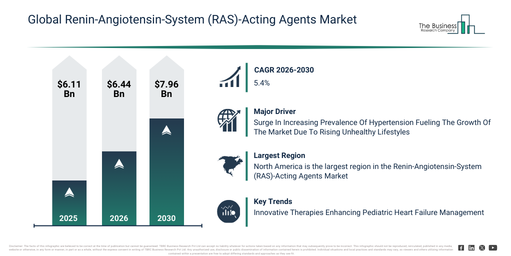
    The renin-angiotensin-system (RAS)-acting agents market has experienced robust expansion in recent years, with its value projected to rise from $6.11 billion in 2025 to $6.44 billion in 2026, reflecting a compound annual growth rate (CAGR) of 5.5%. This historical growth is driven by factors such as the high incidence of hypertension, an expanding elderly demographic, the widespread uptake of ACE inhibitors, enhanced cardiovascular screening programs, and the cost-effectiveness of generic medications.

    Forecasts indicate robust expansion within the renin-angiotensin-system (RAS)-acting agents market over the coming years. By 2030, its value is projected to reach $7.96 billion, representing a compound annual growth rate (CAGR) of 5.4%. Several key factors are expected to drive this growth during the forecast period, including the rising burden of chronic kidney disease, heightened demand for cardiometabolic medications, better rates of treatment adherence, growing opportunities in emerging markets, and approvals for combination therapies. Among the significant developments shaping this period are the increased adoption of combination antihypertensive treatments, the development of long-acting cardiovascular therapies, a growing emphasis on renal protection strategies, the rising availability of generic RAS drugs, and a noticeable movement toward fixed-dose combinations.

    Download A Free Sample Report For Comprehensive Market Insights:

    https://www.thebusinessresearchcompany.com/sample.aspx?id=23496&type=smp&utm_source=BlogsPR&utm_medium=Paid&utm_campaign=Jul_PR

    Renin-Angiotensin-System (RAS)-Acting Agents Market Growth Factors Supporting Long-Term Expansion

    The growing incidence of hypertension is anticipated to accelerate the expansion of the renin-angiotensin system (RAS)-acting agents market. Hypertension, commonly known as high blood pressure, is a chronic condition characterized by persistently elevated force of blood against artery walls. Its rising prevalence stems largely from unhealthy dietary patterns, particularly those rich in salt and processed foods, which elevate blood pressure and add stress to the cardiovascular system. By blocking angiotensin II—a hormone that narrows blood vessels and promotes fluid retention—renin-angiotensin system (RAS)-acting agents help regulate blood pressure, facilitating vasodilation and reducing hypertension rates. As an example, in September 2025, the World Health Organization, an intergovernmental organization based in Switzerland, reported that an estimated 1.4 billion adults aged 30–79 worldwide were living with hypertension in 2024, accounting for roughly 33% of that age group. Hence, the escalating prevalence of hypertension is fueling growth in the renin-angiotensin system (RAS)-acting agents market.

    Renin-Angiotensin-System (RAS)-Acting Agents Market Segment Landscape: Which Areas Lead Market Development?

    The renin-angiotensin-system (ras)-acting agents market covered in this report is segmented –

    1) By Drug Class: Angiotensin-Converting Enzyme (ACE) Inhibitors, Angiotensin II Receptor Blockers (ARBs), Renin Inhibitors, Aldosterone Antagonists, Other Drug Classes

    2) By Indication: Hypertension, Heart Failure, Chronic Kidney Disease, Diabetic Nephropathy, Coronary Artery Disease

    3) By Distribution Channel: Hospital Pharmacies, Retail Pharmacies, Online Pharmacies, Specialty Clinics

    4) By End-User: Hospitals, Research Institutes, Pharmaceutical Companies, Other End-Users

    Subsegments:

    1) By Angiotensin-Converting Enzyme (ACE) Inhibitors: Captopril, Enalapril, Lisinopril, Ramipril, Perindopril

    2) By Angiotensin II Receptor Blockers (ARBs): Losartan, Valsartan, Irbesartan, Olmesartan, Telmisartan

    3) By Renin Inhibitors: Aliskiren

    4) By Aldosterone Antagonists: Spironolactone, Eplerenone

    5) By Other Drug Classes: Dual Angiotensin Receptor-Neprilysin Inhibitors (ARNIs), Vasopeptidase Inhibitors, Mineralocorticoid Receptor Antagonists (MRAs), Angiotensin Receptor Blockers With Neprilysin Inhibitors (ARNBIs)

    Renin-Angiotensin-System (RAS)-Acting Agents Market Industry Trends Shaping Future Revenue Growth

    Major pharmaceutical companies in the renin-angiotensin system (RAS)-acting agents market are concentrating their efforts on creating innovative RAS inhibitors, particularly angiotensin-converting enzyme (ACE) inhibitors, with the aim of improving effectiveness, reducing adverse effects, increasing patient adherence, and addressing conditions like hypertension, heart failure, and kidney disorders. An ACE inhibitor functions as a pharmaceutical agent that reduces blood pressure by inhibiting the enzyme responsible for converting angiotensin I into angiotensin II, a compound known to constrict blood vessels. A case in point occurred in November 2023, when Proveca Ltd., a pharmaceutical firm headquartered in the UK, was granted a pediatric use marketing authorization (PUMA) by the European Commission for Aqumeldi (enalapril maleate) orodispersible tablets. These tablets are specifically indicated for managing heart failure in children ranging from birth to under 18 years of age. Aqumeldi works as an ACE inhibitor, providing treatment for pediatric heart failure patients by blocking the action of ACE, which prevents the transformation of angiotensin I to angiotensin II. This mechanism leads to the relaxation of blood vessels, enhanced blood circulation, and a reduction in the heart’s workload.

    Renin-Angiotensin-System (RAS)-Acting Agents Market Industry Leaders And Market Competition

    Major companies operating in the renin-angiotensin-system (ras)-acting agents market are Novartis AG, AstraZeneca plc, Boehringer Ingelheim GmbH, Teva Pharmaceutical Industries Ltd., Sandoz International GmbH, Aurobindo Pharma Limited, Cipla Limited, Dr. Reddy’s Laboratories Ltd., Glenmark Pharmaceuticals Ltd., Torrent Pharmaceuticals Ltd., Pfizer Inc., Sanofi S.A., Bayer AG, Daiichi Sankyo Company Limited, Astellas Pharma Inc., Biocon Limited, Lupin Limited, Sun Pharmaceutical Industries Ltd., Mylan N.V., Zydus Lifesciences Limited

    Access The Complete Renin-Angiotensin-System (RAS)-Acting Agents Market Report:

    https://www.thebusinessresearchcompany.com/report/renin-angiotensin-system-ras-acting-agents-global-market-report?utm_source=BlogsPR&utm_medium=Paid&utm_campaign=Jul_PR

    Renin-Angiotensin-System (RAS)-Acting Agents Market Regional Analysis And Leading Geography

    North America was the largest region in the renin-angiotensin-system (RAS)-acting agents market in 2025. Asia-Pacific is expected to be the fastest-growing region in the forecast period. The regions covered in the renin-angiotensin-system (ras)-acting agents market report are Asia-Pacific, South East Asia, Western Europe, Eastern Europe, North America, South America, Middle East, Africa.

    Get in touch with us:

    The Business Research Company: https://www.thebusinessresearchcompany.com/?utm_source=BlogsPR&utm_medium=Paid&utm_campaign=home_page_test

    Americas: +1 310-496-7795

    Asia: +44 7882 955267 & +91 8897263534

    Europe: +44 7882 955267

    Email us at: marketing@tbrc.info

    Follow us on:

    LinkedIn: https://in.linkedin.com/company/the-business-research-company

    YouTube: https://www.youtube.com/channel/UC24_fI0rV8cR5DxlCpgmyFQ

    Global Market Model: https://www.thebusinessresearchcompany.com/global-market-model