Category: Pharmaceuticals

  • Menopause Supplement Market Expected To Reach $2.97 Billion By 2030 As Growth Accelerates At 7.7% CAGR

    Menopause Supplement Market Expected To Reach $2.97 Billion By 2030 As Growth Accelerates At 7.7% CAGR

    Delivering more actionable and strategically valuable research, The Business Research Company’s 2026 market reports feature market attractiveness analysis, total addressable market evaluation, company benchmarking matrices, interactive Excel dashboards, expanded supply chain intelligence, emerging startup coverage, and detailed product insights.

    Menopause Supplement Market Revenue Outlook: What CAGR Is Expected Through 2030?

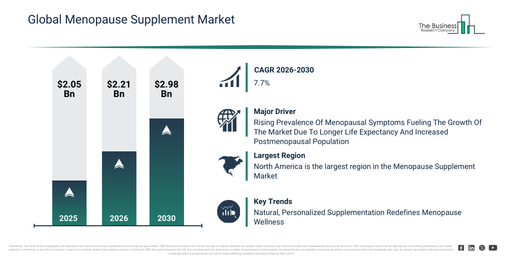
    In recent years, the market for menopause supplements has experienced robust expansion. By 2026, its value is projected to reach $2.21 billion, climbing from $2.05 billion in 2025, which corresponds to a 7.9% compound annual growth rate. This historical growth has been driven by heightened awareness surrounding the management of menopause-related health issues, a growing inclination toward non-prescription wellness products, a wider range of women’s health supplement options, increased health knowledge among women in middle age, and the introduction of various supplement forms.

    The menopause supplement market is projected to experience robust expansion over the coming years. By 2030, its value is anticipated to reach $2.98 billion, driven by a compound annual growth rate (CAGR) of 7.7%. This forecasted growth is fueled by several factors, including an increasing need for personalized menopause nutrition, greater utilization of digital platforms dedicated to women’s health, a heightened emphasis on holistic and lifestyle-oriented menopause management, the broadening of e-commerce channels for supplement sales, and rising financial support for female health research. Key trends shaping this period encompass a growing preference for natural hormone support products, a shift toward non-hormonal supplement options, the development of symptom-specific menopause formulas, an intensified focus on wellness products tailored for women, and a broader acceptance of preventive approaches to menopause care.

    Download A Free Sample Report For Comprehensive Market Insights:

    https://www.thebusinessresearchcompany.com/sample.aspx?id=30320&type=smp&utm_source=BlogsPR&utm_medium=Paid&utm_campaign=Jul_PR

    Menopause Supplement Market Development Factors: Which Trends Are Supporting Demand?

    The growing frequency of menopausal symptoms is anticipated to propel the expansion of the menopause supplement market in the coming years. These symptoms encompass the physical and emotional shifts women undergo as estrogen levels decline during the transition to menopause. This trend is on the rise because women are living longer and spending more time in the postmenopausal stage, which results in prolonged exposure to hormonal and bodily changes. Menopause supplements are frequently utilized to address these symptoms by supplying targeted nutrients and herbal ingredients that may ease hot flashes, mood fluctuations, and sleep issues, thereby contributing to improved hormonal balance and overall health, though individual responses may differ. For example, in December 2023, the National Library of Medicine, a U.S. government body, indicated that roughly 1.3 million women reach menopause each year, typically between ages 45 and 56, with 5% experiencing early menopause between 40 and 45 and 1% dealing with primary ovarian insufficiency before age 40. Consequently, the rising occurrence of menopausal symptoms serves as a major factor driving growth in the menopause supplement market.

    Menopause Supplement Market Segment Analysis Highlighting Growth Areas

    The menopause supplement market covered in this report is segmented –

    1) By Product Type: Hormonal supplements, Non-hormonal supplements, Nutritional supplements, Other Product Types

    2) By Form: Tablets, Capsules, Liquids, Powders, Gummies, Soft gels

    3) By Gender: Women, Men

    4) By Sales Channel: Store-based, Modern trade, Hospital pharmacies, Retail pharmacies, Drug stores, Online pharmacies

    5) By End-user: Hospitals, Homecare, Clinics

    Subsegments:

    1) By Hormonal Supplements: Estrogen Therapy, Progesterone Therapy, Combined Hormone Therapy, Bioidentical Hormone Therapy

    2) By Non-Hormonal Supplements: Herbal Extract Supplements, Phytoestrogen Supplements, Homeopathic Supplements, Botanical Blend Supplements

    3) By Nutritional Supplements: Vitamin Supplements, Mineral Supplements, Protein Supplements, Omega Fatty Acid Supplements

    4) By Other Product Types: Probiotic Supplements, Collagen Supplements, Antioxidant Supplements, Enzyme Supplements

    Menopause Supplement Market Transformation Trends: Which Innovations Are Driving Change?

    In the menopause supplement industry, leading players are concentrating on advanced innovations like customized supplements, which are tailored to offer specific symptom relief, boost effectiveness, and address the distinct hormonal and nutritional profiles of individual women. These customized supplements involve personalized nutritional formulas crafted in response to a person’s particular health requirements, symptoms, hormonal levels, or lifestyle factors. A notable example occurred in September 2025 when Desert Harvest, an American firm recognized for developing natural health products, unveiled its inaugural menopause supplement that incorporates human-identical lactoferrin. This development represents a significant breakthrough because the lactoferrin utilized closely resembles the form naturally present in the human body. The supplement is intended to assist women going through the peri- and post-menopausal stages by combating issues like hormonal imbalances, exhaustion, and immune system support. Through the combination of bioidentical lactoferrin with natural components, the company seeks to provide a non-hormonal, scientifically validated option for menopause relief. This initiative also signifies Desert Harvest’s foray into the swiftly expanding sector of women’s health and menopause supplements.

    Menopause Supplement Market Leading Companies: Who Holds Significant Market Presence?

    Major companies operating in the menopause supplement market are Nestlé Health Science, Procter & Gamble, Bayer AG, Church & Dwight Co. Inc., Herbalife Nutrition Ltd., Amway Corporation, The Nature’s Bounty Co., GNC Holdings Inc., Pharmavite LLC, Blackmores Limited, NOW Foods, Thorne HealthTech, Metagenics Inc., Jarrow Formulas Inc., Nature’s Way, Vitabiotics Ltd., Standard Process Inc., Swisse Wellness Pty Ltd., Bio-Botanica Inc., Life Extension

    Access The Complete Menopause Supplement Market Report:

    https://www.thebusinessresearchcompany.com/report/global-menopause-supplement-market-report?utm_source=BlogsPR&utm_medium=Paid&utm_campaign=Jul_PR

    Menopause Supplement Market Geographic Analysis: Where Is Demand Growing The Fastest?

    North America was the largest region in the menopause supplement market in 2025. Asia-Pacific is expected to be the fastest-growing region in the forecast period. The regions covered in the menopause supplement market report are Asia-Pacific, South East Asia, Western Europe, Eastern Europe, North America, South America, Middle East, Africa.

    Get in touch with us:

    The Business Research Company: https://www.thebusinessresearchcompany.com/?utm_source=BlogsPR&utm_medium=Paid&utm_campaign=home_page_test

    Americas: +1 310-496-7795

    Asia: +44 7882 955267 & +91 8897263534

    Europe: +44 7882 955267

    Email us at: marketing@tbrc.info

    Follow us on:

    LinkedIn: https://in.linkedin.com/company/the-business-research-company

    YouTube: https://www.youtube.com/channel/UC24_fI0rV8cR5DxlCpgmyFQ

    Global Market Model: https://www.thebusinessresearchcompany.com/global-market-model
  • Menopausal Disorder Treatment Market Set To Grow From $12.31 Billion In 2026 To $16.25 Billion By 2030 At A CAGR Of 7.2%

    Menopausal Disorder Treatment Market Set To Grow From $12.31 Billion In 2026 To $16.25 Billion By 2030 At A CAGR Of 7.2%

    Enhanced with market attractiveness analysis, total addressable market evaluation, company benchmarking matrices, interactive Excel dashboards, expanded supply chain intelligence, emerging startup coverage, and detailed product insights, The Business Research Company’s 2026 market reports deliver more actionable and strategically valuable research.

    Menopausal Disorder Treatment Market Growth Analysis: How Will Revenue Expand During The Forecast Period?

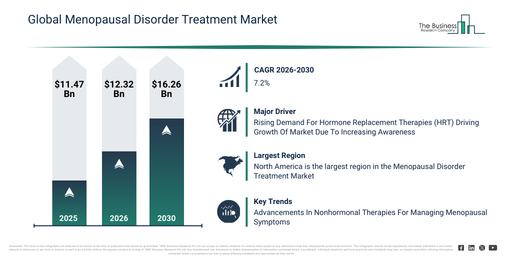
    The market for treating menopausal disorders has experienced robust expansion in recent years. In 2025, its value stood at $11.47 billion, and by 2026 it is projected to reach $12.32 billion, reflecting a compound annual growth rate (CAGR) of 7.4%. This growth during the historical period was driven by factors such as an increase in the aging female population, broader adoption of hormone replacement therapy, more frequent diagnoses of menopausal symptoms, the growth of gynecology care services, and improved healthcare access for women.

    The market for treatments addressing menopausal disorders is projected to experience substantial growth over the coming years. By 2030, its value is anticipated to reach $16.26 billion, reflecting a compound annual growth rate (CAGR) of 7.2%. This upward trajectory during the forecast interval is largely driven by several key factors, including an increased desire for safer menopausal interventions, a stronger emphasis on customized therapeutic approaches, heightened comprehension of the long-term risks associated with hormonal replacement therapy, the proliferation of digital platforms dedicated to women’s wellness, and a growing trend towards preventive healthcare measures for women. Notable developments expected to shape this period include a growing inclination towards non-hormonal treatment options for menopause, a surge in the uptake of individually tailored hormone replacement therapies, the expanded application of lifestyle and behavioral modifications, a wider availability of botanical and natural remedies for menopause, and an elevated consciousness regarding the effective management of menopause-related symptoms.

    Download A Free Sample Report For Comprehensive Market Insights:

    https://www.thebusinessresearchcompany.com/sample.aspx?id=24318&type=smp&utm_source=BlogsPR&utm_medium=Paid&utm_campaign=Jul_PR

    Menopausal Disorder Treatment Market Industry Drivers: What Is Driving Revenue Growth?

    The growth of the menopausal disorder treatment market is being significantly fueled by the escalating demand for hormone replacement therapies. Hormone replacement therapy (HRT) is a medical intervention designed to supplement or replace hormones in order to relieve symptoms caused by menopause or hormonal imbalances. This increasing adoption of HRT stems from enhanced awareness and a stronger desire for effective control of menopausal discomforts and hormone-related issues. By directly replenishing estrogen and progesterone, HRT works to restore hormonal balance and reduce disruptive symptoms such as hot flashes, night sweats, and mood swings, thereby improving patients’ overall well-being. For example, data released in October 2024 by the NHS Business Services Authority (NHSBSA), a UK-based support services entity, indicated that HRT prescriptions surged by 22% to 13 million, while the number of identified patients rose by 12% from 2.3 million in 2022/23 to 2.6 million in 2023/24. Thus, the rising need for hormone replacement therapies continues to drive the expansion of the menopausal disorder treatment market.

    Menopausal Disorder Treatment Market Segment Performance And Strategic Opportunities

    The menopausal disorder treatment market covered in this report is segmented –

    1) By Treatment Type: Hormone Replacement Therapy, Non-Hormonal Treatment, Herbal Supplements, Lifestyle Modifications

    2) By Stages: Menopause, Postmenopause, Perimenopause

    3) By Application: Hot Flashes, Night Sweats, Mood Swings, Vaginal Dryness

    4) By Distribution Channel: Hospital Pharmacy, Retail Pharmacy, Online Pharmacy, Other Distribution Channels

    5) By End-Users: Hospitals, Specialty Clinics, Homecare, Other End-Users

    Subsegments:

    1) By Hormone Replacement Therapy (HRT): Estrogen Therapy, Progesterone Therapy, Combination Therapy, Transdermal Patches, Vaginal Estrogen, Oral Tablets

    2) By Non-Hormonal Treatment: Selective Estrogen Receptor Modulators (SERMs), Antidepressants, Gabapentin, Clonidine, Bisphosphonates, Calcium And Vitamin D Supplements

    3) By Herbal Supplements: Black Cohosh, Red Clover, Dong Quai, Ginseng, Soy Isoflavones, Flaxseed

    4) By Lifestyle Modifications: Dietary Changes, Regular Physical Exercise, Stress Management Techniques, Cognitive Behavioral Therapy (CBT), Smoking Cessation, Sleep Hygiene Practices

    Menopausal Disorder Treatment Market Growth Trends: What Is Influencing The Future Outlook?

    Key players in the menopause disorder treatment sector are focusing on the creation of advanced nonhormonal neurokinin 3 (NK3) receptor antagonist medications to address vasomotor symptoms effectively while avoiding hormone-based approaches. These innovative NK3 receptor antagonist therapies function by blocking NK3 receptors to alleviate menopausal discomfort without the use of hormones. A case in point is Astellas Pharma Inc., a pharmaceutical firm based in Japan, which obtained European Commission approval in December 2023 for Veozah (fezolinetant). This non-hormonal NK3 receptor antagonist is designed to manage moderate to severe vasomotor symptoms (VMS), including hot flashes and night sweats, experienced by menopausal women. The drug achieves this by acting on neurons within the brain’s thermoregulatory center, thereby decreasing both the occurrence and severity of these symptoms.

    Menopausal Disorder Treatment Market Key Players: Which Companies Shape Industry Competition?

    Major companies operating in the menopausal disorder treatment market are Pfizer Inc., F. Hoffmann-La Roche Ltd, Merck & Co Inc., Novartis AG, Bayer AG, Bristol-Myers Squibb Company, Sanofi SA, AstraZeneca plc, Eli Lilly and Company, Novo Nordisk A/S, Abbott Laboratories, GlaxoSmithKline plc, Teva Pharmaceutical Industries Ltd., Ipsen SA, Dr. Reddy’s Laboratories Ltd., Theramex, Besins Healthcare, Mithra Pharmaceuticals, Duchesnay USA, Fervent Pharmaceuticals, Joylux Inc., TherapeuticsMD Inc.

    Access The Complete Menopausal Disorder Treatment Market Report:

    https://www.thebusinessresearchcompany.com/report/menopausal-disorder-treatment-global-market-report?utm_source=BlogsPR&utm_medium=Paid&utm_campaign=Jul_PR

    Menopausal Disorder Treatment Market Global Footprint: Which Region Holds Market Leadership?

    North America was the largest region in the menopausal disorder treatment market in 2025. The regions covered in the menopausal disorder treatment market report are Asia-Pacific, South East Asia, Western Europe, Eastern Europe, North America, South America, Middle East, Africa.

    Get in touch with us:

    The Business Research Company: https://www.thebusinessresearchcompany.com/?utm_source=BlogsPR&utm_medium=Paid&utm_campaign=home_page_test

    Americas: +1 310-496-7795

    Asia: +44 7882 955267 & +91 8897263534

    Europe: +44 7882 955267

    Email us at: marketing@tbrc.info

    Follow us on:

    LinkedIn: https://in.linkedin.com/company/the-business-research-company

    YouTube: https://www.youtube.com/channel/UC24_fI0rV8cR5DxlCpgmyFQ

    Global Market Model: https://www.thebusinessresearchcompany.com/global-market-model
  • Meningococcal Vaccines Market Opportunities Are Emerging Beyond Traditional Growth Areas

    Meningococcal Vaccines Market Opportunities Are Emerging Beyond Traditional Growth Areas

    Through market attractiveness analysis, total addressable market evaluation, company benchmarking matrices, interactive Excel dashboards, expanded supply chain intelligence, emerging startup coverage, and detailed product insights, The Business Research Company’s 2026 market reports provide more actionable and strategically valuable research.

    Meningococcal Vaccines Market Forecast: What Market Value Is Expected By 2030?

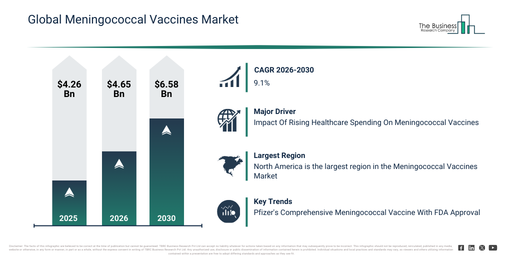
    The meningococcal vaccines market has experienced robust expansion over the past few years. Projections indicate it will rise from $4.26 billion in 2025 to $4.65 billion in 2026, reflecting a compound annual growth rate (CAGR) of 9.3%. Historically, this growth was driven by factors such as the launch of meningococcal conjugate vaccines, a higher frequency of meningitis outbreaks, government-led immunization initiatives, enhanced vaccination rates among children, and increased funding for public health programs.

    The market for meningococcal vaccines is anticipated to experience robust expansion over the coming years, projected to reach $6.58 billion by 2030, with a compound annual growth rate of 9.1%. This forecasted growth is driven by several factors, including improvements in vaccine technology, the broadening of worldwide immunization efforts, heightened public awareness about meningococcal disease, strategic alliances and collaborations, and a rise in vaccination programs targeting adolescents and young adults. Key developments shaping the future of this market include the widening of pediatric immunization schedules, the creation of broad-spectrum meningococcal vaccines, stronger governmental vaccination initiatives, growing focus on preventing meningococcal disease, and an increase in vaccination drives at schools and colleges.

    Download A Free Sample Report For Comprehensive Market Insights:

    https://www.thebusinessresearchcompany.com/sample.aspx?id=8013&type=smp&utm_source=BlogsPR&utm_medium=Paid&utm_campaign=Jul_PR

    #Meningococcal Vaccines Market Growth Factors: Which Forces Are Supporting Market Expansion?

    The growth of the meningococcal vaccine market is set to be driven by rising healthcare expenditures. Healthcare encompasses establishments like residential care facilities, nursing homes, and intermediate care centers for individuals with mental illnesses or intellectual disabilities. The considerable cost of newer vaccine generations compared to older ones has sparked debates over whether their advantages justify the price tags. Evaluating the full societal and economic benefits of vaccination is gaining traction as a critical focus in vaccine valuation research. For example, in April 2025, the American Medical Association—a U.S.-based professional organization and lobbying group for physicians and medical students—reported that U.S. health spending surged by 7.5% in 2023, reaching $4.9 trillion or $14,570 per person. This marks a notable acceleration from the 4.6% increase seen in 2022. Consequently, the rise in healthcare spending is fueling momentum in the meningococcal vaccine market.

    Meningococcal Vaccines Market Segment Landscape And Growth Potential

    The meningococcal vaccines market covered in this report is segmented –

    1) By Vaccine Type: Meningococcal Conjugate Vaccine, Polysaccharide, Subcapsular Vaccine

    2) By Serotype: Men Acwy, Men B/Bc, Men C

    3) By Age Group: Infants, Children, Adolescents and Young Adults, Adults

    4) By Distribution Channel: Pharmacies, Community Clinics, Public Health Agencies, Other Channels

    5) By End user: Hospitals, Research, Academic Institutes

    Subsegments:

    1) By Meningococcal Conjugate Vaccine: Quadrivalent Conjugate Vaccine (MenACWY), Bivalent Conjugate Vaccine

    2) By Polysaccharide Vaccine: Meningococcal Polysaccharide Vaccine (MPSV4), Group C Polysaccharide Vaccine

    3) By Subcapsular Vaccine: Meningococcal B Vaccine (MenB), Combination Subcapsular Vaccines

    Meningococcal Vaccines Market Industry Trends: What Changes Are Reshaping Demand?

    Leading players in the meningococcal vaccines sector are working on innovative vaccines aimed at preventing serogroups, with the goal of boosting their market profitability. These vaccines serve as preventive tools, shielding individuals from infections tied to specific serogroups of the Neisseria meningitidis bacteria. For example, in October 2023, Pfizer Inc., a pharmaceutical firm headquartered in the United States, secured FDA approval for its vaccine, PENBRAYA. Offering extensive serogroup protection, this vaccine is the most comprehensive meningococcal vaccine cleared in the U.S., covering groups A, B, C, W, and Y. The FDA’s decision was backed by solid Phase 2 and 3 trial results, which showed non-inferior immunogenicity compared to Trumenba + Menveo across all serogroups, along with a reassuring safety profile. Additionally, an announcement from Pfizer in September 2022 highlighted positive Phase 3 trial findings, where PENBRAYA was assessed against currently licensed meningococcal vaccines regarding safety, tolerability, and immunogenicity.

    Meningococcal Vaccines Market Competitive Landscape: Who Are The Leading Companies?

    Major companies operating in the meningococcal vaccines market are Pfizer Inc.,GlaxoSmithKline plc,Sanofi Pasteur,Merck & Co. Inc.,Serum Institute of India Pvt. Ltd.,Bio-Manguinhos,Walvax Biotechnology Co. Ltd.,Bharat Biotech,Panacea Biotec Ltd.,CSL Limited,Minhai Biotechnology Co. Ltd.,Hualan Biological Engineering Inc.,Shenzhen Kangtai Biological Products Co. Ltd.,Chongqing Zhifei Biological Products Co. Ltd.,Incepta Pharmaceuticals Ltd.,Biological E. Limited,Biokangtai,Biomed Pvt Ltd.,Biocine SCL,Bavarian Nordic A/S

    Access The Complete Meningococcal Vaccines Market Report:

    https://www.thebusinessresearchcompany.com/report/meningococcal-vaccines-global-market-report?utm_source=BlogsPR&utm_medium=Paid&utm_campaign=Jul_PR

    Meningococcal Vaccines Market Regional Distribution: Which Areas Drive Market Expansion?

    North America was the largest region in the meningococcal vaccines market in 2025. Asia-Pacific is expected to be the fastest-growing region in the meningococcal vaccines market report during the forecast period. The regions covered in the meningococcal vaccines market report are Asia-Pacific, South East Asia, Western Europe, Eastern Europe, North America, South America, Middle East, Africa.

    Get in touch with us:

    The Business Research Company: https://www.thebusinessresearchcompany.com/?utm_source=BlogsPR&utm_medium=Paid&utm_campaign=home_page_test

    Americas: +1 310-496-7795

    Asia: +44 7882 955267 & +91 8897263534

    Europe: +44 7882 955267

    Email us at: marketing@tbrc.info

    Follow us on:

    LinkedIn: https://in.linkedin.com/company/the-business-research-company

    YouTube: https://www.youtube.com/channel/UC24_fI0rV8cR5DxlCpgmyFQ

    Global Market Model: https://www.thebusinessresearchcompany.com/global-market-model
  • Memantine HCl Market Expansion Is Opening New Pathways For Strategic Investment

    Memantine HCl Market Expansion Is Opening New Pathways For Strategic Investment

    Delivering more actionable and strategically valuable research, The Business Research Company’s 2026 market reports feature market attractiveness analysis, total addressable market evaluation, company benchmarking matrices, interactive Excel dashboards, expanded supply chain intelligence, emerging startup coverage, and detailed product insights.

    Memantine HCl Market Size Outlook: How Fast Will Revenue Grow Through 2030?

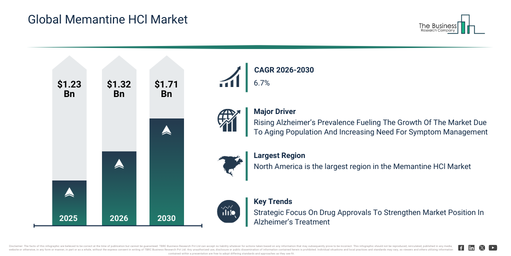
    The memantine hydrochloride market has experienced robust expansion in recent years. Projections indicate an increase from $1.23 billion in 2025 to $1.32 billion in 2026, reflecting a compound annual growth rate (CAGR) of 7.0%. This historical growth has been driven by factors such as the rising elderly demographic, the growing incidence of Alzheimer’s disease, treatments prescribed by neurologists, dementia care provided in hospital settings, and the uptake of branded medications.

    The memantine hcl market is projected to experience robust growth over the coming years. By 2030, its value is anticipated to reach $1.71 billion, reflecting a compound annual growth rate (CAGR) of 6.7%. This expansion during the forecast period is driven by factors such as higher rates of dementia diagnosis, the prevalence of home-based elderly care, the growing generics market, increasing demand for extended-release dosage forms, and the adoption of digital cognitive monitoring tools. Key trends shaping this future period include a greater need for Alzheimer’s disease treatments, a growing preference for combination dementia therapies, broader accessibility to generic medications, the progression of long-term cognitive management, and ongoing innovation in extended-release formulations.

    Download A Free Sample Report For Comprehensive Market Insights:

    https://www.thebusinessresearchcompany.com/sample.aspx?id=24604&type=smp&utm_source=BlogsPR&utm_medium=Paid&utm_campaign=Jul_PR

    Memantine HCl Market Demand Drivers: What Is Fueling Industry Growth?

    There is an increasing prevalence of Alzheimer’s disease, which is anticipated to drive the expansion of the memantine hydrochloride market in the near future. Alzheimer’s disease is defined as a progressive neurodegenerative condition primarily impacting memory, thought processes, behavior, and the capacity to carry out routine activities. This rise in Alzheimer’s cases is largely attributed to an aging population, as longer life expectancy resulting from improvements in healthcare and nutrition leads to a greater number of elderly individuals who are at an elevated risk. Memantine HCl serves to address Alzheimer’s disease by offering a medication that decelerates the advancement of moderate to severe symptoms through the regulation of abnormal glutamate activity within the brain, thus enhancing cognition, memory, and daily functioning in those affected. As an example, a report published by the National Library of Medicine, a US-based national library, in April 2025 indicated that 7.2 million Americans aged 65 and older currently live with Alzheimer’s dementia, a number that could potentially climb to 13.8 million by 2060. Consequently, the escalating incidence of Alzheimer’s disease is fueling the growth of the memantine HCl market.

    Memantine HCl Market Driver: Rise In Personalized Medicine Fueling The Growth Of The Market Due To Advancements In Genomic Technologies

    The increasing appetite for personalized medicine is set to boost the memantine hydrochloride market moving forward. Personalized medicine is defined as a healthcare strategy that customizes treatments and care according to an individual’s distinct genetic profile, lifestyle choices, and environmental factors. This surge in demand for personalized medicine stems from progress in genomic technologies, which have rendered genetic testing more rapid and economical, enabling healthcare professionals to pinpoint specific genetic mutations or biomarkers linked to various diseases, thereby facilitating more accurate diagnoses and customized therapeutic approaches for each patient. Memantine HCl aligns with the objectives of personalized medicine by delivering a focused treatment option for individuals suffering from moderate to severe Alzheimer’s disease, customized based on their particular symptoms and the stage of disease progression. For instance, according to the Personalized Medicine Coalition, a US-based nonprofit organization, in February 2024, the FDA approved 16 novel personalized therapies for patients with rare diseases in 2023, representing a substantial increase from the 6 approvals observed in 2022. Hence, the rising demand for personalized medicine is propelling the growth of the memantine HCl market.

    Memantine HCl Market Categorization By Product Type And Application

    The memantine hcl market covered in this report is segmented –

    1) By Product Type: Tablet Formulation, Oral Solution, Extended-Release Capsules

    2) By Dosage Form: Standard Dosage (5 mg, 10 mg), Customized Dosage Solutions

    3) By Distribution Channel: Hospital Pharmacies, Retail Pharmacies, Online Pharmacies

    4) By Application: Alzheimer’s Disease Treatment, Vascular Dementia Management, Off-Label Uses

    5) By End User: Hospitals, Long-Term Care Facilities, Home Healthcare, Outpatient Clinics

    Subsegments:

    1) By Tablet Formulation: Immediate-Release Tablets, Film-Coated Tablets, Dispersible Tablets, Chewable Tablets, Scored Tablets

    2) By Oral Solution: Ready-To-Use Oral Solution, Concentrated Oral Solution (Requires Dilution), Flavored Oral Solution, Sugar-Free Oral Solution, Alcohol-Free Oral Solution

    3) By Extended-Release Capsules: Once-Daily ER Capsules, Multi-Particulate Capsule Formulations, Bead-Filled ER Capsules, Liquid-Filled ER Capsules, High-Dose ER Capsules

    Memantine HCl Market Innovation Trends: Which Developments Are Transforming The Industry?

    Leading players within the memantine HCl market are placing a strong emphasis on securing regulatory approvals as a key strategy to broaden their footprint and reinforce their involvement in treating Alzheimer’s disease along with other neurodegenerative conditions. These approvals represent official permissions issued by government or regulatory agencies, notably the U.S. Food and Drug Administration (FDA). Such authorizations enable drugs, medical tools, or therapies to be legally promoted and accessed by the public. A concrete example occurred in January 2025, when Amneal Pharmaceuticals Inc., a pharmaceutical firm based in the U.S., obtained FDA clearance for memantine/donepezil extended-release capsules and everolimus tablets for oral suspension, in addition to a tentative U.S. FDA approval for rifaximin. The memantine/donepezil extended-release capsules, offered in 14-10 mg and 28-10 mg doses, serve as a generic counterpart to AbbVie’s Namzaric. This fixed-dose combination brings together memantine hydrochloride, functioning as an NMDA receptor antagonist, and donepezil hydrochloride, acting as an acetylcholinesterase inhibitor. It is prescribed for managing moderate to severe dementia of the Alzheimer’s type among patients already stabilized on a daily 10 mg dose of donepezil hydrochloride.

    Memantine HCl Market Company Landscape And Strategic Competition

    Major companies operating in the memantine hcl market are Sun Pharmaceutical Industries Ltd, Dr. Reddy’s Laboratories Ltd, Lupin Limited, Amneal Pharmaceuticals Inc., Zydus Lifesciences Limited, Ajanta Pharma Limited, ANI Pharmaceuticals Inc., Uquifa S.A., Procos S.p.A., Orchid Pharma Limited, Forest Laboratories LLC, Olon S.p.A., Smilax Laboratories Limited, Consern Pharma Private Limited, Pellets Pharma Limited, Zeal MediPharma, Hermes Chemical Industries, JPN Pharma Pvt Ltd., Murli Krishna Pharma Pvt Ltd., Prudence Pharma Chem.

    Access The Complete Memantine HCl Market Report:

    https://www.thebusinessresearchcompany.com/report/memantine-hcl-global-market-report?utm_source=BlogsPR&utm_medium=Paid&utm_campaign=Jul_PR

    Memantine HCl Market Leading Geography: Which Region Generates The Most Revenue?

    North America was the largest region in the memantine HCl market in 2025. Asia-Pacific is expected to be the fastest-growing region in the forecast period. The regions covered in the memantine hcl market report are Asia-Pacific, South East Asia, Western Europe, Eastern Europe, North America, South America, Middle East, Africa.

    Get in touch with us:

    The Business Research Company: https://www.thebusinessresearchcompany.com/?utm_source=BlogsPR&utm_medium=Paid&utm_campaign=home_page_test

    Americas: +1 310-496-7795

    Asia: +44 7882 955267 & +91 8897263534

    Europe: +44 7882 955267

    Email us at: marketing@tbrc.info

    Follow us on:

    LinkedIn: https://in.linkedin.com/company/the-business-research-company

    YouTube: https://www.youtube.com/channel/UC24_fI0rV8cR5DxlCpgmyFQ

    Global Market Model: https://www.thebusinessresearchcompany.com/global-market-model
  • Melatonin Supplements Market Trends Are Creating New Opportunities For Industry Leaders

    Melatonin Supplements Market Trends Are Creating New Opportunities For Industry Leaders

    Enhanced with market attractiveness analysis, total addressable market evaluation, company benchmarking matrices, interactive Excel dashboards, expanded supply chain intelligence, emerging startup coverage, and detailed product insights, The Business Research Company’s 2026 market reports deliver more actionable and strategically valuable research.

    Melatonin Supplements Market Size, Value And Growth Trends Through 2030

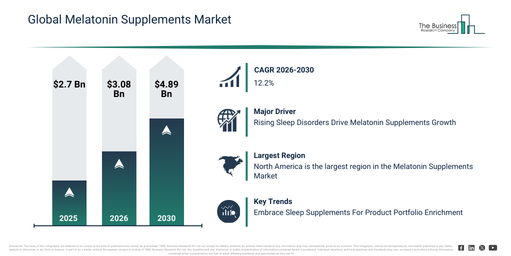
    The melatonin supplements market has experienced substantial expansion in the past few years. Its value is projected to increase from $2.7 billion in 2025 to $3.08 billion in 2026, marking a compound annual growth rate (CAGR) of 14.3%. This historical growth is driven by factors such as the rising incidence of sleep disorders and insomnia, the broad availability of over-the-counter melatonin products, heightened public understanding of circadian rhythm regulation, a growing preference for sleep aids that are not habit-forming, and early uptake by frequent travelers and shift workers.

    The melatonin supplements market is forecast to experience substantial expansion over the coming years, reaching a value of $4.89 billion by 2030, driven by a compound annual growth rate (CAGR) of 12.2%. This projected growth in the forecast period is fueled by several key factors, including heightened global stress levels and increased screen exposure that impair sleep quality, a growing elderly population facing sleep-related challenges, an intensified emphasis on mental health and sleep optimization, the development of specialized melatonin formulations for both children and the elderly, and the growing prevalence of online supplement retail platforms. Important trends shaping the forecast period encompass a rise in consumer uptake of sleep health supplements, escalating demand for over-the-counter sleep aids, an increase in melatonin products offered in various dosage formats, expanded usage of melatonin for managing jet lag and shift work sleep disorders, and a surge in popularity for clean-label and natural melatonin options.

    Download A Free Sample Report For Comprehensive Market Insights:

    https://www.thebusinessresearchcompany.com/sample.aspx?id=15605&type=smp&utm_source=BlogsPR&utm_medium=Paid&utm_campaign=Jul_PR

    Melatonin Supplements Market Growth Drivers: What Factors Are Accelerating Expansion?

    The increasing occurrence of sleep disturbances is anticipated to accelerate the expansion of the melatonin supplement market in the coming period. Sleep disturbances are medical conditions that impact the quality, timing, or duration of rest, resulting in diminished daytime performance and a decline in overall wellness. A growing number of people are experiencing these issues due to modern lifestyle habits, heavy reliance on digital screens, poor sleep practices, and an older demographic. The market for melatonin supplements serves those affected by providing an external source of this hormone to help restore normal circadian rhythms, enhance sleeping patterns, and manage issues like jet lag and delayed sleep phase syndrome. As an example, Sleep Care Online, a telemedicine company based in the United States, reported in November 2023 that chronic sleep problems affect an estimated 50 to 70 million Americans, with insomnia, sleep apnea, and narcolepsy being the most prevalent conditions. Consequently, this upward trend in sleep disorder prevalence is fueling the growth of the melatonin supplement market.

    Melatonin Supplements Market Segment Analysis And Revenue Opportunities

    The melatonin supplements market covered in this report is segmented –

    1) By Type: Natural Melatonin, Synthetic Melatonin

    2) By Form: Tablets And Capsules, Liquid, Sublingual Pellets, Other Forms

    3) By Distribution Channel: Supermarkets And Hypermarkets, Drug Stores, Online Retail, Other Distribution Channels

    4) By Application: Alzheimer’s Disease, Weak Immune System, Osteoporosis, Nerve Pain, Other Applications

    5) By End User: Adults, Children

    Subsegments:

    1) By Natural Melatonin: Plant-Based Melatonin

    2) By Synthetic Melatonin: Tablet Or capsule Form, Liquid Form, Chewable Or softgel Form, Sublingual Melatonin

    Melatonin Supplements Market Trends: What Is Shaping Future Industry Growth?

    Major players in the melatonin supplements market are placing their focus on creating advanced sleep aids in order to boost sleep quality, promote relaxation, and tackle problems like trouble initiating or maintaining sleep. These sleep aids are dietary products that contain ingredients such as melatonin, which help regulate healthy sleep patterns, encourage deep rest, and decrease the frequency of waking up during the night. For example, in May 2024, Natrol LLC, a supplement manufacturer based in the United States, introduced time-release melatonin gummies that utilize a dual-action delivery system. This system delivers an initial dose of melatonin to assist users in falling asleep rapidly, followed by a gradual, extended release that ensures continuous sleep throughout the night. Offered in various strengths, these gummies are made with clean ingredients, free from artificial flavors, sweeteners, and dyes, providing a natural and effective option for achieving uninterrupted, restorative rest.

    Melatonin Supplements Market Leading Players Shaping Industry Direction

    Major companies operating in the melatonin supplements market are Walgreens Boots Alliance Inc., Swanson Health Products Incorporated, Vitacost.com Inc., Now Health Group Inc., The Himalaya Drug Company, Jarrow Industries Inc., Natrol Inc., Life Extension, Natural Factors Nutritional Products Inc., Robinson Pharma Inc., Country Life LLC, Pharmavite LLC, Pure Encapsulations LLC, Solgar Inc., Solaray Inc, Mason Vitamins Inc., The Nature’s Bounty Co., Optimum Nutrition Inc., Douglas Laboratories, Puritan’s Pride Inc., Nature Made, Amazing Nutrition Inc., Just Potent LLC, Source Naturals Inc., Bio-Tech Pharmacal Inc.

    Access The Complete Melatonin Supplements Market Report:

    https://www.thebusinessresearchcompany.com/report/melatonin-supplements-global-market-report?utm_source=BlogsPR&utm_medium=Paid&utm_campaign=Jul_PR

    Melatonin Supplements Market Regional Outlook: Where Are The Largest Opportunities Located?

    North America was the largest region in the melatonin supplements market in 2025. The regions covered in the melatonin supplements market report are Asia-Pacific, South East Asia, Western Europe, Eastern Europe, North America, South America, Middle East, Africa.

    Get in touch with us:

    The Business Research Company: https://www.thebusinessresearchcompany.com/?utm_source=BlogsPR&utm_medium=Paid&utm_campaign=home_page_test

    Americas: +1 310-496-7795

    Asia: +44 7882 955267 & +91 8897263534

    Europe: +44 7882 955267

    Email us at: marketing@tbrc.info

    Follow us on:

    LinkedIn: https://in.linkedin.com/company/the-business-research-company

    YouTube: https://www.youtube.com/channel/UC24_fI0rV8cR5DxlCpgmyFQ

    Global Market Model: https://www.thebusinessresearchcompany.com/global-market-model
  • Melanoma Therapeutics Market Growth Is Reshaping Competitive Advantage Across The Industry

    Melanoma Therapeutics Market Growth Is Reshaping Competitive Advantage Across The Industry

    Through market attractiveness analysis, total addressable market evaluation, company benchmarking matrices, interactive Excel dashboards, expanded supply chain intelligence, emerging startup coverage, and detailed product insights, The Business Research Company’s 2026 market reports provide more actionable and strategically valuable research.

    Melanoma Therapeutics Market CAGR Analysis And Future Market Development

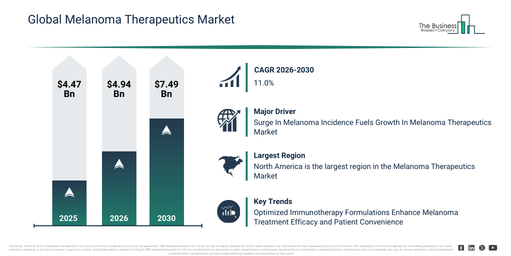
    The melanoma therapeutics market has experienced significant expansion in recent years. Projections indicate an increase from $4.47 billion in 2025 to $4.94 billion in 2026, reflecting a compound annual growth rate (CAGR) of 10.4%. This historical growth has been driven by several factors, including a growing incidence of melanoma, the creation of monoclonal antibodies, heightened public awareness regarding skin cancer, improvements in radiation therapy, and the broader adoption of dermatoscopy.

    Projected growth in the melanoma therapeutics market remains strong over the coming years. By 2030, the market is anticipated to reach $7.49 billion, reflecting a compound annual growth rate (CAGR) of 11.0%. Several factors are driving this expansion in the forecast period, including advances in precision medicine, a broader use of immunotherapy treatments, new developments in small molecule inhibitors, higher healthcare spending, and the increasing application of artificial intelligence in diagnostics. Key trends expected during this period encompass the creation of personalized melanoma therapies, further uptake of immunotherapies, breakthroughs in targeted treatments, the incorporation of sophisticated diagnostic tools, and the use of combined treatment protocols.

    Download A Free Sample Report For Comprehensive Market Insights:

    https://www.thebusinessresearchcompany.com/sample.aspx?id=10713&type=smp&utm_source=BlogsPR&utm_medium=Paid&utm_campaign=Jul_PR

    Melanoma Therapeutics Market Growth Factors Supporting Long-Term Expansion

    The growth of the melanoma therapeutics market is expected to be driven forward by the rising incidence of melanoma. Melanoma is a type of skin cancer that begins in melanocytes. Melanoma therapeutics encompass a range of therapies and drugs designed to treat melanoma patients and alleviate the disease. Consequently, a higher occurrence of melanoma leads to increased sales of these treatments. For example, an August 2024 report from the Australian Institute of Health and Welfare, an Australian national agency specializing in health and welfare statistics, projects that by 2034, Australia will see around 209,000 new cancer diagnoses, marking a substantial rise from the estimated 169,000 cases expected in 2024, driven by population growth and escalating cancer rates. Furthermore, in 2024, cancer is predicted to be responsible for roughly 3 out of every 10 deaths in the country. Hence, the growing prevalence of melanoma is fueling the expansion of the melanoma therapeutics drug market.

    Melanoma Therapeutics Market Segmentation And Category Breakdown

    The melanoma therapeutics market covered in this report is segmented –

    1) By Drug Type: Monoclonal Antibodies, Small Molecule Inhibitors, Other Drug Types

    2) By Therapy: Surgery, Radiation Therapy, Immunotherapy, Targeted Therapy, Chemotherapy

    3) By Route of administration: Oral, Injectable

    4) By Cancer Type: Superficial Spreading Melanoma, Nodular Melanoma, Lentigo Maligna Melanoma, Acral Lentiginous Melanoma, Amelanotic Melanoma, Other Cancer Types

    5) By Diagnosis: Dermatoscopy, Sentinel Lymph Node Biopsy, Blood Test, X-ray, Ultrasound, CT Scan

    Subsegments:

    1) By Monoclonal Antibodies: Checkpoint Inhibitors, Targeted Monoclonal Antibodies, Conjugated Antibodies

    2) By Small Molecule Inhibitors: BRAF Inhibitors, MEK Inhibitors, Other Kinase Inhibitors

    3) By Other Drug Types: Chemotherapy Agents, Immunotherapy Agents, Adjuvant Therapies

    Melanoma Therapeutics Market Industry Trends Shaping Future Revenue Growth

    Major pharmaceutical firms in the melanoma therapeutics space are concentrating their efforts on creating cutting-edge innovations, particularly subcutaneous immunotherapy formulations, to boost patient adherence and enhance treatment convenience. This type of injectable anticancer therapy administers immune-modulating agents under the skin, offering effectiveness on par with intravenous delivery while cutting down on treatment duration and procedural demands. A notable example occurred in December 2024, when Bristol Myers Squibb, a global biopharmaceutical company headquartered in the United States, secured approval from the U.S. Food and Drug Administration for Opdivo Qvantig. This subcutaneous co-formulation combining nivolumab with hyaluronidase showed non-inferior pharmacokinetics, comparable safety outcomes, and similar overall response rates relative to its intravenous counterpart, as demonstrated in the Phase 3 CheckMate-67T trial. With this approval, the first subcutaneously delivered programmed death protein 1 (PD-1) inhibitor was introduced, providing a notably faster administration method and broadening treatment options for solid tumor patients, including those with melanoma.

    Melanoma Therapeutics Market Competitive Analysis Of Major Industry Participants

    Major companies operating in the melanoma therapeutics market are AstraZeneca plc, Eli Lilly and Company, Merck & Co. Inc., Novartis AG, Amgen Inc., F. Hoffmann-La Roche Ltd., Pfizer Inc., Bristol-Myers Squibb Company, Oncolys BioPharma Inc., Iovance Biotherapeutics Inc., Eisai Co. Ltd., Seattle Genetics Inc., Regeneron Pharmaceuticals Inc., Takeda Pharmaceutical Company Limited, Daiichi Sankyo Company Limited, Nektar Therapeutics, Immutep Ltd., Partner Therapeutics Inc., Infinity Pharmaceuticals Inc., Spring Bank Pharmaceuticals Inc., AIM ImmunoTech Inc.

    Access The Complete Melanoma Therapeutics Market Report:

    https://www.thebusinessresearchcompany.com/report/melanoma-therapeutics-global-market-report?utm_source=BlogsPR&utm_medium=Paid&utm_campaign=Jul_PR

    Melanoma Therapeutics Market Geographic Landscape: Which Region Dominates Industry Growth?

    North America was the largest region in the melanoma therapeutics market in 2025. The regions covered in the melanoma therapeutics market report are Asia-Pacific, South East Asia, Western Europe, Eastern Europe, North America, South America, Middle East, Africa.

    Get in touch with us:

    The Business Research Company: https://www.thebusinessresearchcompany.com/?utm_source=BlogsPR&utm_medium=Paid&utm_campaign=home_page_test

    Americas: +1 310-496-7795

    Asia: +44 7882 955267 & +91 8897263534

    Europe: +44 7882 955267

    Email us at: marketing@tbrc.info

    Follow us on:

    LinkedIn: https://in.linkedin.com/company/the-business-research-company

    YouTube: https://www.youtube.com/channel/UC24_fI0rV8cR5DxlCpgmyFQ

    Global Market Model: https://www.thebusinessresearchcompany.com/global-market-model
  • Melanoma Drugs Market Forecast Signals New Revenue Opportunities Through 2030

    Melanoma Drugs Market Forecast Signals New Revenue Opportunities Through 2030

    Delivering more actionable and strategically valuable research, The Business Research Company’s 2026 market reports feature market attractiveness analysis, total addressable market evaluation, company benchmarking matrices, interactive Excel dashboards, expanded supply chain intelligence, emerging startup coverage, and detailed product insights.

    Melanoma Drugs Market Expansion From $11.2 Billion In 2026 To $17.06 Billion In 2030

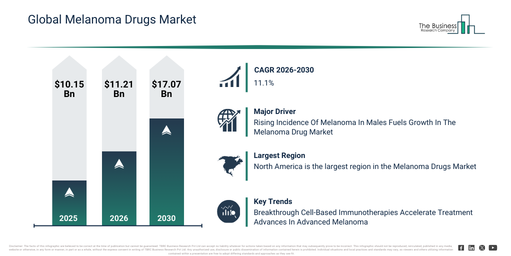
    The melanoma drugs market has experienced swift expansion in recent times, with projections indicating an increase from $10.15 billion in 2025 to $11.21 billion in 2026, reflecting a compound annual growth rate (CAGR) of 10.4%. This historical growth has been driven by factors such as the rising occurrence of melanoma, heightened awareness regarding skin cancer, the authorization of initial immunotherapy medications, growing utilization of targeted treatments, and the broadening of hospital-based oncology services.

    The melanoma drugs market is projected to experience significant expansion in the coming years, with an anticipated increase to $17.07 billion by 2030, representing a compound annual growth rate (CAGR) of 11.1%. This projected growth during the forecast period is driven by progress in precision medicine, the creation of combination therapies, a growing elderly demographic, greater investment in melanoma research, and the incorporation of artificial intelligence into drug discovery. Key developments shaping this period include the evolution of tailored melanoma treatments, breakthroughs in targeted immunotherapy, the adoption of multimodal treatment strategies, advances in early detection and diagnostic tools, and a heightened emphasis on therapies for orphan and rare melanoma cases.

    Download A Free Sample Report For Comprehensive Market Insights:

    https://www.thebusinessresearchcompany.com/sample.aspx?id=10783&type=smp&utm_source=BlogsPR&utm_medium=Paid&utm_campaign=Jul_PR

    Melanoma Drugs Market Demand Drivers Creating New Revenue Opportunities

    The rising occurrence of melanoma among men is anticipated to drive the expansion of the melanoma drug market in the years ahead. Melanoma, a form of skin cancer, originates in melanocytes—the cells responsible for skin pigmentation. Drugs designed for melanoma treatment work by targeting and suppressing the proliferation and dissemination of melanoma cells within the body. Consequently, a higher prevalence of melanoma is expected to boost the demand for these medications. For example, data from the American Cancer Society, Inc., a U.S.-based nonprofit organization focused on cancer eradication, revealed that the number of new male melanoma cases in the United States grew from 57,180 in 2022 to 58,120 in 2023. Thus, the growing incidence of melanoma in males is fueling the melanoma drug market’s growth.

    Melanoma Drugs Market Segment Outlook: Which Categories Are Expanding The Fastest?

    The melanoma drugs market covered in this report is segmented –

    1) By Therapy: Chemotherapy, Immunotherapy, Targeted Therapy

    2) By Disease Type: Superficial Spreading Melanoma, Lentigo Maligna, Acral Lentiginous Melanoma, Nodular Melanoma

    3) By Application: Hospitals, Outpatient Oncologist Clinics, Other Applications

    Subsegments:

    1) By Chemotherapy: Alkylating Agents, Antimetabolites, Plant Alkaloids, Topoisomerase Inhibitors

    2) By Immunotherapy: Checkpoint Inhibitors, Interleukin Therapy, Oncolytic Virus Therapy, Cancer Vaccines

    3) By Targeted Therapy: BRAF Inhibitors, MEK Inhibitors, Immune Modulators, Other Targeted Agents

    Melanoma Drugs Market Trends Driving Strategic Industry Expansion

    Prominent players in the melanoma drugs market are actively working on advancing next-generation cell-based immunotherapies, notably tumor-infiltrating lymphocyte (TIL) treatments, to improve therapeutic outcomes for patients with advanced or surgically inoperable melanoma. Through TIL therapy, a patient’s own immune cells that have infiltrated the tumor are isolated, multiplied, and then reintroduced into the body, strengthening its capacity to identify and destroy cancer cells—presenting a viable choice for those who do not respond adequately to current systemic immunotherapies. As an example, in February 2024, Iovance Biotherapeutics, a biotechnology firm based in the United States, secured FDA approval for AMTAGVI (lifileucel), marking the first time a TIL therapy has been authorized for advanced melanoma. Data from the FDA reveals that this therapy achieved an overall response rate (ORR) of 31.5%, with 5.6% complete responses, among heavily pretreated patients dealing with unresectable or metastatic melanoma. By offering a customized, single-dose cellular immunotherapy, AMTAGVI represents a notable scientific breakthrough and broadens the range of clinical choices for melanoma patients who have few remaining treatment options.

    Melanoma Drugs Market Key Companies And Competitive Benchmarking

    Major companies operating in the melanoma drugs market are Amgen Inc., Bristol-Myers Squibb Company, F. Hoffmann-La Roche AG, Novartis AG, Pfizer Inc., Merck & Co. Inc., Aduro Biotech Inc., Seagen Inc., OncoSec Medical Incorporated, Regeneron Pharmaceuticals Inc., Iovance Biotherapeutics, Takeda Pharmaceutical Company Limited, Eli Lilly and Company, Daiichi Sankyo Company Limited, Gilead Sciences, MacroGenics Inc., Kyowa Kirin Co. Ltd., Fortress Biotech Inc., OSE Immunotherapeutics, Vical Incorporated, Almirall S.A.

    Access The Complete Melanoma Drugs Market Report:

    https://www.thebusinessresearchcompany.com/report/melanoma-drugs-global-market-report?utm_source=BlogsPR&utm_medium=Paid&utm_campaign=Jul_PR

    Melanoma Drugs Market Largest Region: Which Geography Holds The Highest Market Share?

    North America was the largest region in the melanoma drugs market in 2025. The regions covered in the melanoma drugs market report are Asia-Pacific, South East Asia, Western Europe, Eastern Europe, North America, South America, Middle East, Africa.

    Get in touch with us:

    The Business Research Company: https://www.thebusinessresearchcompany.com/?utm_source=BlogsPR&utm_medium=Paid&utm_campaign=home_page_test

    Americas: +1 310-496-7795

    Asia: +44 7882 955267 & +91 8897263534

    Europe: +44 7882 955267

    Email us at: marketing@tbrc.info

    Follow us on:

    LinkedIn: https://in.linkedin.com/company/the-business-research-company

    YouTube: https://www.youtube.com/channel/UC24_fI0rV8cR5DxlCpgmyFQ

    Global Market Model: https://www.thebusinessresearchcompany.com/global-market-model
  • Meganuclease Genome Editing Market Growth Is Accelerating As Industry Transformation Continues

    Meganuclease Genome Editing Market Growth Is Accelerating As Industry Transformation Continues

    Enhanced with market attractiveness analysis, total addressable market evaluation, company benchmarking matrices, interactive Excel dashboards, expanded supply chain intelligence, emerging startup coverage, and detailed product insights, The Business Research Company’s 2026 market reports deliver more actionable and strategically valuable research.

    Meganuclease Genome Editing Market Forecast Highlighting Growth From $1.43 Billion To $2.68 Billion

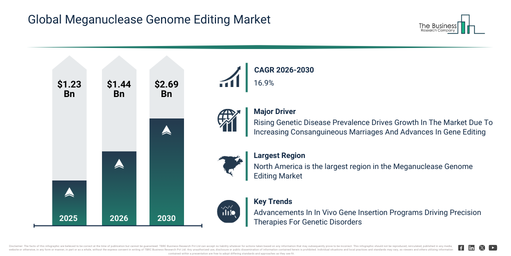
    The meganuclease genome editing market has seen notable expansion over the last few years. Its size is projected to rise from $1.23 billion in 2025 to $1.44 billion in 2026, reflecting a compound annual growth rate (CAGR) of 17.2%. This historical growth has been driven by the introduction of meganuclease-based genome editing, the use of zinc finger nucleases and TALENs, heightened research activity in genetic engineering, the constraints of earlier genome editing tools regarding accuracy, and an increase in academic research programs.

    The meganuclease genome editing market is projected to experience a notable surge in value over the coming years, with expectations of reaching $2.69 billion by 2030, reflecting a compound annual growth rate (CAGR) of 16.9%. This anticipated expansion during the forecast period is driven by several key factors, including the development of advanced meganuclease variants and megaTALs, the broadening of clinical applications and therapeutic development, the increased adoption of both ex-vivo and in-vivo genome editing strategies, a rise in government and private sector funding dedicated to gene editing initiatives, and the integration of these technologies with diagnostic and precision medicine approaches. Looking ahead, major trends shaping the landscape include the growing utilization of meganucleases for therapeutic purposes, advancement in agricultural and plant genome engineering, a greater emphasis on both ex-vivo and in-vivo delivery methods, an increase in collaborative efforts between academic institutions and biopharmaceutical companies, and the progress in creating homing endonuclease-based precision therapies.

    Download A Free Sample Report For Comprehensive Market Insights:

    https://www.thebusinessresearchcompany.com/sample.aspx?id=27342&type=smp&utm_source=BlogsPR&utm_medium=Paid&utm_campaign=Jul_PR

    Meganuclease Genome Editing Market Expansion Supported By Key Demand Factors

    The rising occurrence of genetic disorders is anticipated to boost the expansion of the meganuclease genome editing market in the future. Genetic diseases are defined as conditions resulting from alterations or mutations in a person’s DNA that disrupt normal bodily functions. The growing frequency of these diseases stems from an increased rate of consanguineous marriages, which elevates the probability of passing on genetic conditions. Meganuclease genome editing creates precise DNA incisions to fix, remove, or swap impaired genes, facilitating targeted gene therapies that feature fewer unintended effects and the potential to cure inherited disorders. As an illustration, per the National Health Service, a UK governmental body, roughly 17,000 individuals in England suffer from sickle cell disease, an inherited blood disorder, with about 250 new cases reported annually as of May 2024. Consequently, the heightened prevalence of genetic diseases is fueling the growth of the meganuclease genome editing market.

    Meganuclease Genome Editing Market Segment Landscape: Which Areas Lead Market Development?

    The meganuclease genome editing market covered in this report is segmented –

    1) By Technology: Clustered Regularly Interspaced Short Palindromic Repeats (CRISPR) Or Cas9, Transcription Activator-Like Effector Nucleases (TALENs) Or Meganuclase-Transcription Activator-Like Effector Nucleases (MegaTALs), Zinc Finger Nucleases (ZFN), Meganuclease, Other Technologies

    2) By Mode: Contract, In-house

    3) By Delivery Method: Ex-Vivo, In-Vivo

    4) By Application: Genetic Engineering, Cell Line Engineering, Plant Genetic Engineering, Animal Genetic Engineering, Clinical Applications, Diagnostics Development, Therapy Development, Other Applications

    5) By End-User: Biotechnology And Pharmaceutical Companies, Academic And Government Research Institutes, Contract Research Organizations

    Subsegments:

    1) By Clustered Regularly Interspaced Short Palindromic Repeats (CRISPR) Or Cas9: Clustered Regularly Interspaced Short Palindromic Repeats (CRISPR)-Cas9 Gene Editing, Clustered Regularly Interspaced Short Palindromic Repeats (CRISPR)-Cas12, Clustered Regularly Interspaced Short Palindromic Repeats (CRISPR)-Cas13

    2) By Transcription Activator-Like Effector Nucleases (TALENs) Or Meganuclase-Transcription Activator-Like Effector Nucleases (MegaTALs): Genome Editing Applications, Therapeutic Applications, Agricultural Biotechnology

    3) By Zinc Finger Nucleases (ZFN): Zinc Finger Nucleases Gene Editing, Transcription Activator-Like Effector Nucleases

    4) By Meganuclease: Homing Endonucleases, Self Splicing Introns

    5) By Other Technologies: Base Editing, Prime Editing

    Meganuclease Genome Editing Market Growth Trends Influencing Competitive Dynamics

    Major players in the meganuclease genome editing market are prioritizing the development of cutting-edge solutions, including in vivo gene insertion initiatives, to broaden therapeutic possibilities and improve the correction of genetic disorders. These programs involve the direct delivery of genetic material into living organisms to insert or modify specific genes within their native cells, enabling precise medical treatments for inherited conditions directly inside the body. For example, in May 2024, iECURE Inc., a gene-editing company based in the United States, unveiled ECUR-506, an in vivo gene insertion program aimed at treating neonatal onset ornithine transcarbamylase (OTC) deficiency, which was granted fast track status by the U.S. Food and Drug Administration (FDA). This gene editing therapy is designed specifically for newborn males suffering from severe neonatal-onset OTC deficiency, aiming to restore functional OTC enzyme activity through a single intravenous infusion. The treatment has demonstrated a complete clinical response in the first infant treated, making it possible to discontinue ammonia scavenger medications and resume normal protein intake, while side effects have remained manageable.

    Meganuclease Genome Editing Market Industry Leaders And Market Competition

    Major companies operating in the meganuclease genome editing market are Thermo Fisher Scientific Inc., Danaher Corp., Merck KGaA, Lonza Group Ltd., Charles River Laboratories International Inc., Genscript, Takara Bio Inc., Applied StemCell Inc., Cellectis SA., New England Biolabs, Precision Biosciences Inc.

    Access The Complete Meganuclease Genome Editing Market Report:

    https://www.thebusinessresearchcompany.com/report/meganuclease-genome-editing-global-market-report?utm_source=BlogsPR&utm_medium=Paid&utm_campaign=Jul_PR

    Meganuclease Genome Editing Market Regional Analysis: Which Region Leads By Revenue?

    North America was the largest region in the meganuclease genome editing market in 2025. The regions covered in the meganuclease genome editing market report are Asia-Pacific, South East Asia, Western Europe, Eastern Europe, North America, South America, Middle East, Africa.

    Get in touch with us:

    The Business Research Company: https://www.thebusinessresearchcompany.com/?utm_source=BlogsPR&utm_medium=Paid&utm_campaign=home_page_test

    Americas: +1 310-496-7795

    Asia: +44 7882 955267 & +91 8897263534

    Europe: +44 7882 955267

    Email us at: marketing@tbrc.info

    Follow us on:

    LinkedIn: https://in.linkedin.com/company/the-business-research-company

    YouTube: https://www.youtube.com/channel/UC24_fI0rV8cR5DxlCpgmyFQ

    Global Market Model: https://www.thebusinessresearchcompany.com/global-market-model
  • Medulloblastoma Drug Market Outlook Highlights The Next Major Growth Opportunities

    Medulloblastoma Drug Market Outlook Highlights The Next Major Growth Opportunities

    Through market attractiveness analysis, total addressable market evaluation, company benchmarking matrices, interactive Excel dashboards, expanded supply chain intelligence, emerging startup coverage, and detailed product insights, The Business Research Company’s 2026 market reports provide more actionable and strategically valuable research.

    Medulloblastoma Drug Market Revenue Growth Supported By A CAGR Of 4.49% Through 2030

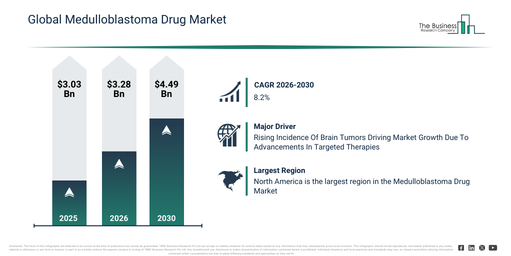
    The market for medulloblastoma drugs has demonstrated robust expansion in recent times. Projected to rise from $3.03 billion in 2025 to $3.28 billion in 2026, it is expected to achieve a compound annual growth rate (CAGR) of 8.3%. This historical growth has been driven by progress in pediatric oncology, a higher incidence of brain tumor diagnoses, the standardization of chemotherapy protocols, the growth of specialized cancer treatment centers, and enhanced surgical success rates.

    The medulloblastoma drug market is forecasted to experience robust expansion over the coming years, reaching a projected value of $4.49 billion by 2030, driven by a compound annual growth rate (CAGR) of 8.2%. This anticipated growth during the forecast period can be linked to advancements in targeted brain cancer research, higher patient survival rates, increased investment in pediatric oncology, the establishment of more specialized treatment centers, and greater funding allocated to rare diseases. Key developments expected to shape the market include the more frequent application of combination chemotherapy protocols, a stronger emphasis on pediatric oncology services, heightened clinical trial efforts focused on uncommon brain tumors, the broader availability of hospital-based cancer care, and intensified research dedicated to novel treatments for brain cancer.

    Download A Free Sample Report For Comprehensive Market Insights:

    https://www.thebusinessresearchcompany.com/sample.aspx?id=20874&type=smp&utm_source=BlogsPR&utm_medium=Paid&utm_campaign=Jul_PR

    Medulloblastoma Drug Market Growth Drivers And Industry Catalysts

    The growing prevalence of brain tumors is anticipated to boost the expansion of the medulloblastoma drug market in the coming period. A brain tumor represents an abnormal proliferation of cells within the brain or spinal canal, which can be either non-cancerous or malignant, and may impair brain functionality. The increasing rate of brain tumors stems from enhanced diagnostic methods, an older demographic, environmental influences, higher public awareness, and hereditary susceptibilities. Medications for medulloblastoma—such as chemotherapy, radiation, and targeted therapies—work to reduce tumor size, destroy cancerous cells, and inhibit their dissemination. For example, in January 2025, the American Cancer Society, a US-based nonprofit dedicated to cancer research and patient care, reported that around 14,040 new instances of brain tumors and other nervous system cancers are forecasted in males, and 10,780 in females, for 2025, accompanied by an estimated total of 18,330 deaths. Consequently, the rising frequency of brain tumors is fueling growth within the medulloblastoma drug market.

    Increased healthcare spending is projected to drive forward the medulloblastoma drug market. Healthcare expenditure encompasses all outlays on medical treatments, pharmaceuticals, preventive measures, facilities, and administrative overhead by governments, private organizations, and individuals. This growth in healthcare spending results from an aging population, progress in medical innovations, a higher occurrence of chronic conditions, and administrative expenses. Such investment promotes the creation of medulloblastoma drugs by supporting research, clinical trials, and novel therapies, thereby enabling technological progress and specialized care for uncommon illnesses. As an illustration, in December 2024, the Centers for Medicare & Medicaid Services, a US federal agency, noted that hospital expenditures in 2023 climbed by 10.4% to $1,519.7 billion—a steeper rise than the 3.2% growth seen in 2022—and prescription drug spending accelerated by 11.4% to $449.7 billion, exceeding the 7.8% increase from the prior year. Hence, the escalation of healthcare expenditure is propelling the medulloblastoma drug market forward.

    A heightened emphasis on personalized medicine is expected to drive the expansion of the medulloblastoma drug market. Personalized medicine is a healthcare strategy that customizes treatments and medical plans according to an individual’s unique traits, genetic makeup, and requirements. This approach is gaining traction due to breakthroughs in genomics, biotechnology, and data analysis, which enable therapies to be tailored to personal genetic information and other health specifics. The growing commitment to personalized medicine fosters the medulloblastoma drug sector by boosting demand for targeted treatments, enhancing therapeutic effectiveness, lessening side effects, and improving patient survival outcomes. For instance, in February 2024, the Personalized Medicine Coalition, a US nonprofit organization, reported that in 2023, the FDA greenlit 16 new personalized therapies for individuals with rare diseases, a jump from six in 2022. Among these newly approved treatments for 2023 were seven cancer medications and three for other ailments and conditions. Therefore, the escalating focus on personalized medicine is propelling growth in the medulloblastoma drug market.

    Medulloblastoma Drug Market Segments: Where Are The Largest Growth Opportunities?

    The medulloblastoma drug market covered in this report is segmented –

    1) By Drug Candidate: Dianhydrogalactitol, Investigational Medicinal Product 5471, Ipilimumab, Indoximod, Other Types

    2) By Product: Chemotherapy Drugs, Targeted Therapy Drugs, Radiation Therapy Drugs

    3) By Route Of Administration: Intravenous, Oral, Intrathecal

    4) By Distribution Channel: Hospital Pharmacy, Online Pharmacy, Retail Pharmacy

    5) By End-Users: Hospitals, Homecare, Speciality Centres, Other End-Users

    Subsegments:

    1) By Dianhydrogalactitol: Dianhydrogalactitol Oral Formulations, Dianhydrogalactitol Intravenous Formulations

    2) By Investigational Medicinal Product 5471: Oral Investigational Medicinal Product 5471, Intravenous Investigational Medicinal Product 5471

    3) By Ipilimumab: Ipilimumab Monotherapy, Ipilimumab Combination Therapy

    4) By Indoximod: Indoximod Oral Formulations, Indoximod Combination Therapy

    5) By Other Types: Temozolomide, Lomustine, Cyclophosphamide, Targeted Therapy Drugs

    Medulloblastoma Drug Market Major Participants And Competitive Dynamics

    Major companies operating in the medulloblastoma drug market are Pfizer Inc., Novartis AG, Roche Holding AG, Bristol-Myers Squibb Company, Merck & Co. Inc., AstraZeneca plc, Eli Lilly and Company, Amgen Inc., Sanofi S.A., Bayer AG, Eisai Co. Ltd., Teva Pharmaceutical Industries Ltd., Takeda Pharmaceutical Company Limited, Ipsen S.A., Daiichi Sankyo Co. Ltd., Jazz Pharmaceuticals plc, Sun Pharmaceutical Industries Ltd., Dr. Reddy’s Laboratories Ltd., Curtana Pharmaceuticals Inc., Biodexa Pharmaceuticals plc.

    Access The Complete Medulloblastoma Drug Market Report:

    https://www.thebusinessresearchcompany.com/report/medulloblastoma-drug-global-market-report?utm_source=BlogsPR&utm_medium=Paid&utm_campaign=Jul_PR

    Medulloblastoma Drug Market Geographic Distribution And Regional Opportunities

    North America was the largest region in the medulloblastoma drug market in 2025. Asia-Pacific is expected to be the fastest-growing region in the forecast period. The regions covered in the medulloblastoma drug market report are Asia-Pacific, South East Asia, Western Europe, Eastern Europe, North America, South America, Middle East, Africa.

    Get in touch with us:

    The Business Research Company: https://www.thebusinessresearchcompany.com/?utm_source=BlogsPR&utm_medium=Paid&utm_campaign=home_page_test

    Americas: +1 310-496-7795

    Asia: +44 7882 955267 & +91 8897263534

    Europe: +44 7882 955267

    Email us at: marketing@tbrc.info

    Follow us on:

    LinkedIn: https://in.linkedin.com/company/the-business-research-company

    YouTube: https://www.youtube.com/channel/UC24_fI0rV8cR5DxlCpgmyFQ

    Global Market Model: https://www.thebusinessresearchcompany.com/global-market-model
  • Meditation Software Market Trends And Growth Drivers Point To Strong Future Potential

    Meditation Software Market Trends And Growth Drivers Point To Strong Future Potential

    Delivering more actionable and strategically valuable research, The Business Research Company’s 2026 market reports feature market attractiveness analysis, total addressable market evaluation, company benchmarking matrices, interactive Excel dashboards, expanded supply chain intelligence, emerging startup coverage, and detailed product insights.

    Meditation Software Market Value Expansion And Long-Term Growth Outlook

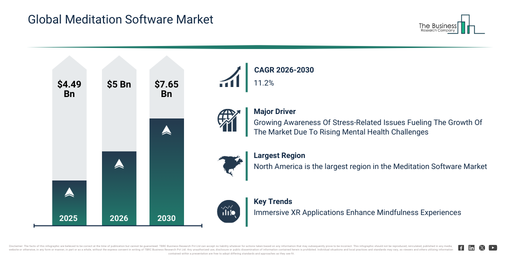
    The meditation software market has experienced substantial expansion over the recent period, with its valuation increasing from $4.49 billion in 2025 to an anticipated $5 billion in 2026, reflecting a compound annual growth rate of 11.4%. This historic growth has been primarily driven by escalating stress levels linked to contemporary lifestyles, the extensive use of smartphones, a growing recognition of the importance of mental health, the proliferation of digital health tools, and the widespread adoption of subscription-based wellness offerings.

    The meditation software market is anticipated to experience rapid expansion over the coming years. By 2030, its value is projected to reach $7.65 billion, reflecting a compound annual growth rate (CAGR) of 11.2%. This forecasted growth is driven by several factors, including the expansion of workplace mental health initiatives, the increasing implementation of AI-driven customization, a higher uptake of digital therapeutic solutions, the widespread adoption of remote and hybrid work arrangements, and a growing societal emphasis on preventive mental health care. Key developments shaping this period include a rising preference for guided meditation applications, a growing adoption of personalized mindfulness programs, the growing incorporation of meditation apps with wearable devices, the emergence of corporate wellness platforms focused on meditation, and an escalating need for tools that manage stress and anxiety.

    Download A Free Sample Report For Comprehensive Market Insights:

    https://www.thebusinessresearchcompany.com/sample.aspx?id=24316&type=smp&utm_source=BlogsPR&utm_medium=Paid&utm_campaign=Jul_PR

    Meditation Software Market Opportunity Drivers: What Is Creating New Revenue Potential?

    The rising recognition of stress-related concerns is anticipated to fuel the expansion of the meditation software market moving forward. Stress-related concerns encompass physical, emotional, or psychological difficulties stemming from the experience of excessive stress. Awareness of these issues is increasing as workplaces more frequently acknowledge the effect of stress on employee productivity and well-being, which drives the implementation of mental health initiatives and support structures. Meditation software aids in addressing stress-related problems by providing guided sessions, breathing exercises, and mindfulness practices that soothe the mind, lessen anxiety, lower cortisol levels, and foster emotional stability. For example, in May 2024, based on a report from the American Psychiatric Association, a U.S.-based professional body, 43% of adults reported feeling more anxious than they did the year before, a rise from 37% in 2023 and 32% in 2022. Consequently, the heightened awareness regarding stress-related issues is propelling the growth of the meditation software market.

    Meditation Software Market Segment Analysis: What Are The Major Market Categories?

    The meditation software market covered in this report is segmented –

    1) By Type Of Meditation: Guided Meditation, Mindfulness Meditation, Transcendental Meditation, Zen Meditation, Yoga Meditation

    2) By Platform: Mobile Applications, Web-Based Platforms, Desktop Applications, Wearable Devices, Smart Speakers

    3) By Features Offered: Scheduled Reminders, Progress Tracking, Personalized Content, Community Features, Offline Accessibility

    4) By Subscription Model: Freemium Models, Monthly Subscription, Annual Subscription, One-Time Purchase, In-App Purchases

    5) By Target Audience: Individuals, Corporate Clients, Therapists And Counselors, Yoga Studios And Health Coaches, Educational Institutions

    Subsegments:

    1) By Guided Meditation: Sleep-Focused Meditation, Stress And Anxiety Relief, Healing And Recovery Sessions, Productivity And Focus, Self-Improvement And Affirmations

    2) By Mindfulness Meditation: Breath Awareness, Body Scan Meditation, Emotion Regulation, Present Moment Awareness, Mindful Eating

    3) By Transcendental Meditation: Personalized Mantra Sessions, Silent Mantra Repetition, Advanced Transcendental Meditation Techniques, Transcendental Meditation For Stress Management, Transcendental Meditation For Cognitive Enhancement

    4) By Zen Meditation: Zazen, Koan Practice, Walking Meditation, Breathing And Posture Guidance, Zen Mindfulness Practices

    5) By Yoga Meditation: Kundalini Meditation, Chakra Meditation, Yoga Nidra, Pranayama-Based Meditation, Bhakti And Mantra Meditation

    Meditation Software Market Innovation Trends Driving Future Development

    Leading players in the meditation software industry are placing a strong emphasis on immersive technologies, including extended-reality (XR) meditation applications—software that leverages virtual reality (VR) or mixed reality (MR) to let users meditate, explore, play, and participate in breathwork within richly detailed spatial settings. A case in point is March 2024, when Headspace, a digital mental health firm based in the United States, unveiled Headspace XR, a virtual-reality mindfulness application developed for Meta Quest. This offering incorporates mood-enhancing games aimed at emotional regulation, personalized guided meditations conducted by Headspace instructors, and movement along with breathwork routines designed to deepen the connection between mind and body.

    Meditation Software Market Leading Companies Driving Competitive Growth

    Major companies operating in the meditation software market are Headspace Inc, Calm.com Inc., Aura Health Inc., Committee for Children, Mindvalley LLC, Insight Timer, Breethe, Abide, Mindfulness Everywhere Ltd., Ipnos Software Inc., Deep Relax, Smiling Mind, Inner Explorer, Stop Breathe & Think PBC, The Mindfulness App, Ten Percent Happier, Insights Network Inc., Meditation Moments B.V., Sattva Inc., Meditopia Inc.

    Access The Complete Meditation Software Market Report:

    https://www.thebusinessresearchcompany.com/report/meditation-software-global-market-report?utm_source=BlogsPR&utm_medium=Paid&utm_campaign=Jul_PR

    Meditation Software Market Largest Region By Revenue And Market Share

    North America was the largest region in the meditation software market in 2025. Asia-Pacific is expected to be the fastest-growing region in the forecast period. The regions covered in the meditation software market report are Asia-Pacific, South East Asia, Western Europe, Eastern Europe, North America, South America, Middle East, Africa.

    Get in touch with us:

    The Business Research Company: https://www.thebusinessresearchcompany.com/?utm_source=BlogsPR&utm_medium=Paid&utm_campaign=home_page_test

    Americas: +1 310-496-7795

    Asia: +44 7882 955267 & +91 8897263534

    Europe: +44 7882 955267

    Email us at: marketing@tbrc.info

    Follow us on:

    LinkedIn: https://in.linkedin.com/company/the-business-research-company

    YouTube: https://www.youtube.com/channel/UC24_fI0rV8cR5DxlCpgmyFQ

    Global Market Model: https://www.thebusinessresearchcompany.com/global-market-model