Category: Pharmaceuticals

  • Generic Oncology Drugs Market Opportunities Are Emerging Beyond Traditional Growth Areas

    Generic Oncology Drugs Market Opportunities Are Emerging Beyond Traditional Growth Areas

    Through market attractiveness analysis, total addressable market evaluation, company benchmarking matrices, interactive Excel dashboards, expanded supply chain intelligence, emerging startup coverage, and detailed product insights, The Business Research Company’s 2026 market reports provide more actionable and strategically valuable research.

    Generic Oncology Drugs Market Forecast Highlighting Growth From $30.51 Billion To $39.98 Billion

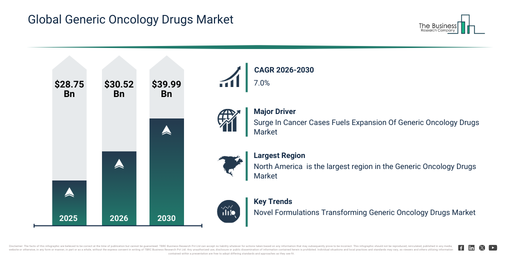
    The market for generic oncology medications has experienced robust expansion in recent years. Between 2025 and 2026, its value is projected to climb from $28.75 billion to $30.52 billion, achieving a compound annual growth rate (CAGR) of 6.1%. This historical growth has been driven by factors such as the expiration of patents on major oncology drugs, a global rise in cancer prevalence, heightened awareness regarding cost-effective cancer therapies, the growing presence of hospital and retail pharmacies, and supportive government incentives for generic drug production.

    The generic oncology drugs market is projected to undergo robust expansion during the coming years. Its value is anticipated to rise to $39.99 billion by 2030, advancing at a compound annual growth rate (CAGR) of 7.0%. This forecast period growth is driven by factors such as the uptake of precision medicine technologies, the incorporation of artificial intelligence in drug development, the growing reach of online pharmacies, improvements to healthcare infrastructure in emerging markets, and strategic alliances for distributing oncology drugs. Among the key trends shaping this period are the increasing presence of biosimilars in cancer care, expanded production of generic drugs within developing nations, a greater preference for oral and injectable chemotherapies, collaborative efforts and licensing deals among pharmaceutical firms, and a heightened emphasis on affordable cancer treatment options.

    Download A Free Sample Report For Comprehensive Market Insights:

    https://www.thebusinessresearchcompany.com/sample.aspx?id=12174&type=smp&utm_source=BlogsPR&utm_medium=Paid&utm_campaign=Jul_PR

    #Generic Oncology Drugs Market Growth Factors: Which Forces Are Supporting Market Expansion?

    A growing number of cancer patients is anticipated to drive expansion in the generic oncology drugs market moving forward. Cancer is defined as the abnormal proliferation of cells, affecting multiple organs and leading to considerable illness and death globally. The affordability of generic oncology medications is vital for cancer care, as it enhances access to critical treatments, fosters market rivalry, and lowers healthcare expenses. For example, in January 2022, the National Cancer Institute (NCI), a US government agency, reported that around 5.4% of the US population, equating to 18.1 million people, were cancer survivors. Furthermore, 623,405 individuals were living with metastatic breast, prostate, lung, colorectal, or bladder cancer or metastatic melanoma in 2022, with this number expected to climb to 693,452 by 2025. Consequently, the substantial increase in cancer patients is fueling growth in the generic oncology drugs market.

    Generic Oncology Drugs Market Segmentation Trends And Revenue Drivers

    The generic oncology drugs market covered in this report is segmented –

    1) By Molecule Type: Large Molecule, Small Molecule

    2) By Route Of Administration: Oral, Parenteral

    3) By Distribution Channel: Hospital Pharmacy, Retail Pharmacy, Online Pharmacies, Managed Care Institutions

    Subsegments:

    1) By Large Molecule: Monoclonal Antibodies, Biologics, Biosimilars

    2) By Small Molecule: Chemotherapeutics, Targeted Therapy Agents, Hormonal Therapy Drugs

    Generic Oncology Drugs Market Industry Trends: What Changes Are Reshaping Demand?

    Key players in the generic oncology drugs sector are concentrating on creating next-generation oral oncology generics to enhance treatment availability, improve patient comfort, and ensure therapeutic equivalence with expensive branded cancer medications. These advanced oral generics consist of bioequivalent formulations of established cancer drugs that offer greater dosing flexibility, better stability, and patient-oriented administration options, thus broadening access to high-value therapies in budget-limited healthcare environments. For example, in January 2023, MSN Laboratories Private Limited, a pharmaceutical company based in India that focuses on generic drugs, introduced Palborest, the first generic Palbociclib tablets worldwide for treating advanced breast cancer. This generic breast cancer medication provides a cheaper alternative to the original tablet while preserving bioequivalence. Its tablet form offers a clear benefit over capsules because it can be taken regardless of meals and used alongside proton pump inhibitors or antacids. Also, the tablet contains no lactose or gelatin, which boosts its effectiveness.

    Generic Oncology Drugs Market Industry Leaders: Which Organizations Are Driving Competition?

    Major companies operating in the generic oncology drugs market are Pfizer Inc., AbbVie, Novartis AG, Bristol-Myers Squibb Company, AstraZeneca Plc, Abbott Laboratories, Fresenius Kabi AG, GlaxoSmithKline PLC, Eli Lilly and Company, Merck & Co. Inc., Baxter International Inc., Mylan N.V., Sun Pharmaceutical Industries Ltd., Teva Pharmaceutical Industries Ltd., Dr. Reddy’s Laboratories Ltd., Aurobindo Pharma Limited, Cipla Inc., Hikma Pharmaceuticals, Lupin Limited, Torrent Pharmaceuticals Ltd., Cadila Healthcare Ltd., Accord Healthcare

    Access The Complete Generic Oncology Drugs Market Report:

    https://www.thebusinessresearchcompany.com/report/generic-oncology-drugs-global-market-report?utm_source=BlogsPR&utm_medium=Paid&utm_campaign=Jul_PR

    Generic Oncology Drugs Market Regional Analysis: Which Region Leads By Revenue?

    North America was the largest region in the generic oncology drugs market in 2025. The regions covered in the generic oncology drugs market report are Asia-Pacific, South East Asia, Western Europe, Eastern Europe, North America, South America, Middle East, Africa.

    Get in touch with us:

    The Business Research Company: https://www.thebusinessresearchcompany.com/?utm_source=BlogsPR&utm_medium=Paid&utm_campaign=home_page_test

    Americas: +1 310-496-7795

    Asia: +44 7882 955267 & +91 8897263534

    Europe: +44 7882 955267

    Email us at: marketing@tbrc.info

    Follow us on:

    LinkedIn: https://in.linkedin.com/company/the-business-research-company

    YouTube: https://www.youtube.com/channel/UC24_fI0rV8cR5DxlCpgmyFQ

    Global Market Model: https://www.thebusinessresearchcompany.com/global-market-model
  • Generic Musculoskeletal Disorders Drugs Market Expansion Is Opening New Pathways For Strategic Investment

    Generic Musculoskeletal Disorders Drugs Market Expansion Is Opening New Pathways For Strategic Investment

    Delivering more actionable and strategically valuable research, The Business Research Company’s 2026 market reports feature market attractiveness analysis, total addressable market evaluation, company benchmarking matrices, interactive Excel dashboards, expanded supply chain intelligence, emerging startup coverage, and detailed product insights.

    Generic Musculoskeletal Disorders Drugs Market Revenue Growth Supported By A CAGR Of 0.08% Through 2030

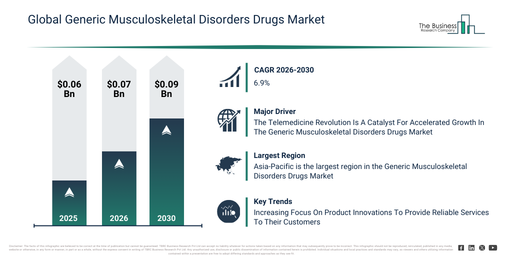
    Over the recent years, the market for generic drugs targeting musculoskeletal disorders has experienced robust expansion. According to projections, it is anticipated to increase from $0.06 billion in 2025 to $0.07 billion in 2026, reflecting a compound annual growth rate (CAGR) of 6.9%. Several factors drove this historical growth, including the high incidence of osteoarthritis and arthritis, a growing elderly demographic, extensive utilization of pain management medications, the broadening scope of hospital and retail pharmacy networks, and the accessibility of cost-effective generic options.

    The market for generic musculoskeletal disorder drugs is projected to experience robust expansion in the coming years. By 2030, its value is anticipated to reach $0.09 billion, representing a compound annual growth rate (CAGR) of 6.9%. This anticipated growth is driven by factors such as the increasing prevalence of lifestyle-related musculoskeletal issues, improved healthcare accessibility in developing nations, a greater emphasis on early detection and intervention, the proliferation of online pharmacy services, and the rising need for affordable solutions to chronic pain. Key trends shaping this forecast period encompass the growing utilization of generic NSAIDs and analgesics, a shift toward oral dosage forms, a broader availability of over-the-counter musculoskeletal pain relievers, a heightened demand for economical long-term treatment options, and the more frequent application of drug combination therapies.

    Download A Free Sample Report For Comprehensive Market Insights:

    https://www.thebusinessresearchcompany.com/sample.aspx?id=9433&type=smp&utm_source=BlogsPR&utm_medium=Paid&utm_campaign=Jul_PR

    Generic Musculoskeletal Disorders Drugs Market Demand Drivers: What Is Fueling Industry Growth?

    The rising use of telemedicine is anticipated to boost the expansion of the generic musculoskeletal disorders drugs market in the coming period. Telemedicine is defined as the application of telecommunications and digital tools to offer remote healthcare services to both patients and medical professionals. It enables individuals to have remote consultations with healthcare providers, facilitates timely medical interactions, improves convenience, ensures ongoing care, lowers healthcare expenses, boosts adherence to medication regimens, and enhances communication between patients and their doctors. As an example, in April 2023, data from FAIR Health Inc., a non-profit organization based in the United States, showed that national telehealth usage rose by 7.3%, climbing from 5.5% of medical claim lines in December 2022 to 5.9% in January 2023. Consequently, the growing adoption of telemedicine is fueling progress in the generic musculoskeletal disorders drugs market.

    Generic Musculoskeletal Disorders Drugs Market Segment Analysis Highlighting Growth Areas

    The generic musculoskeletal disorders drugs market covered in this report is segmented –

    1) By Treatment Type: Medication, Therapy, Other Treatment Types

    2) By Disorder Type: Osteoarthritis, Rheumatoid Arthritis, Spondylarthritis, Juvenile Idiopathic Arthritis, Psoriatic Arthritis, Fibromyalgia, Other Disorder Types

    3) By Route Of Administration: Oral, Parenteral, Other Routes

    4) By Distribution Channel: Hospital Pharmacy, Retail Pharmacy, Drug Store, Online Pharmacy

    Subsegments:

    1) By Medication: Non-Steroidal Anti-Inflammatory Drugs (NSAIDs), Analgesics, Corticosteroids, Disease-Modifying Antirheumatic Drugs (DMARDs), Biologics

    2) By Therapy: Physical Therapy, Occupational Therapy, Chiropractic Treatment, Massage Therapy

    3) By Other Treatment Types: Lifestyle Modifications, Alternative Therapies, Assistive Devices

    Generic Musculoskeletal Disorders Drugs Market Innovation Trends: Which Developments Are Transforming The Industry?

    Leading firms within the generic musculoskeletal disorders drugs sector are emphasizing the development of novel products, like the non-permanent ossiofiber compression staple, to expand their market revenues. This specific device serves as a medical tool applied in orthopedic and musculoskeletal surgeries for fracture stabilization and bone fusion, engineered to deliver transient stability and compression that facilitates bone healing and fusion processes. As an example, in February 2023, Ossio Inc., a United States-based enterprise dedicated to crafting advanced products for orthopedic and musculoskeletal uses, introduced the non-permanent ossiofiber compression staple. By merging mechanical robustness with natural bone regeneration, ossiofiber presents a substitute for conventional resorbable and allograft implants, as well as permanent metal hardware. Through the deployment of Ossiofiber Compression Staples, the organization now supplies solutions for an array of midfoot and hindfoot operations, including flatfoot corrective procedures, Lapidus fusions, and midfoot fusions.

    Generic Musculoskeletal Disorders Drugs Market Leading Companies: Who Holds Significant Market Presence?

    Major companies operating in the generic musculoskeletal disorders drugs market are Pfizer Inc., Sanofi S.A., Eli Lilly and Company, Ampio Pharmaceuticals Inc., Amgen Inc., Boehringer Ingelheim International GmbH, Merck & Co. Inc., Sun Pharmaceutical Industries Ltd., Teva Pharmaceuticals Industries Ltd., AstraZeneca plc, Mitsubishi Tanabe Pharma Corporation, Horizon Therapeutics plc, Eisai Co. Ltd., Biogen Inc., Sino Biopharmaceutical Limited, Bristol-Myers Squibb Company, Johnson & Johnson Services Inc., AbbVie Inc., Novartis AG, F. Hoffmann-La Roche Ltd., Bayer AG, Mylan Pharmaceuticals Inc., Taisho Pharmaceutical Holdings Co. Ltd., Flexion Therapeutics Inc.

    Access The Complete Generic Musculoskeletal Disorders Drugs Market Report:

    https://www.thebusinessresearchcompany.com/report/generic-musculoskeletal-disorders-drugs-global-market-report?utm_source=BlogsPR&utm_medium=Paid&utm_campaign=Jul_PR

    Generic Musculoskeletal Disorders Drugs Market Geographic Distribution And Regional Opportunities

    Asia-Pacific was the largest region in the generic musculoskeletal disorders drugs market in 2025. The regions covered in the generic musculoskeletal disorders drugs market report are Asia-Pacific, South East Asia, Western Europe, Eastern Europe, North America, South America, Middle East, Africa.

    Get in touch with us:

    The Business Research Company: https://www.thebusinessresearchcompany.com/?utm_source=BlogsPR&utm_medium=Paid&utm_campaign=home_page_test

    Americas: +1 310-496-7795

    Asia: +44 7882 955267 & +91 8897263534

    Europe: +44 7882 955267

    Email us at: marketing@tbrc.info

    Follow us on:

    LinkedIn: https://in.linkedin.com/company/the-business-research-company

    YouTube: https://www.youtube.com/channel/UC24_fI0rV8cR5DxlCpgmyFQ

    Global Market Model: https://www.thebusinessresearchcompany.com/global-market-model
  • Generic Injectables Market Trends Are Creating New Opportunities For Industry Leaders

    Generic Injectables Market Trends Are Creating New Opportunities For Industry Leaders

    Enhanced with market attractiveness analysis, total addressable market evaluation, company benchmarking matrices, interactive Excel dashboards, expanded supply chain intelligence, emerging startup coverage, and detailed product insights, The Business Research Company’s 2026 market reports deliver more actionable and strategically valuable research.

    Generic Injectables Market Value Expansion And Long-Term Growth Outlook

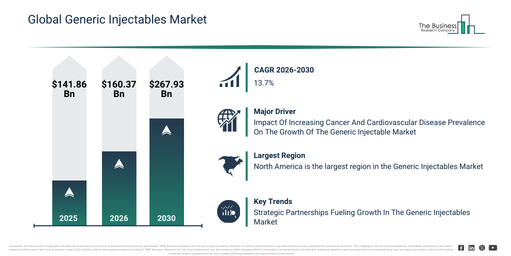
    The market for generic injectables has experienced significant expansion in recent years. Its value is projected to climb from $141.86 billion in 2025 to $160.37 billion in 2026, reflecting a compound annual growth rate (CAGR) of 13.0%. Several factors drove this historical growth, including the expiration of patents for branded injectables, a rising incidence of chronic conditions, higher healthcare spending, increasing interest in biosimilars, and advancements in sterile manufacturing processes.

    Over the coming years, the generic injectables market is projected to experience rapid expansion, reaching a value of $267.93 billion by 2030, with a robust compound annual growth rate (CAGR) of 13.7%. Several key drivers are fueling this growth in the forecast period, including advancements in biosimilar research, the development of healthcare infrastructure in emerging markets, increased government incentives aimed at promoting generic drugs, the integration of artificial intelligence and digital tools into manufacturing processes, and a growing number of collaborations among pharmaceutical companies. Notable trends shaping this future landscape encompass a rising adoption of generic biologics, a heightened preference for cost-effective injectable options, an increasing number of regulatory approvals for biosimilars, an expansion of both hospital and retail pharmacy networks, and a stronger emphasis on sterility and quality assurance.

    Download A Free Sample Report For Comprehensive Market Insights:

    https://www.thebusinessresearchcompany.com/sample.aspx?id=10776&type=smp&utm_source=BlogsPR&utm_medium=Paid&utm_campaign=Jul_PR

    Generic Injectables Market Growth Drivers: What Factors Are Accelerating Expansion?

    The growing occurrence of cancer and cardiovascular conditions is anticipated to accelerate the expansion of the generic injectable market in the coming period. Cardiovascular diseases encompass a range of disorders affecting the heart and blood vessels, while cancer involves the uncontrolled growth of certain body cells that can spread to other areas. Generic injectables are utilized in treating these illnesses to provide comparable pharmaceutical equivalence or bioequivalence to branded drugs, alongside improved drug availability and accessibility, thereby offering more cost-effective therapeutic options. For example, in January 2024, data released by the American Cancer Society, a US-based non-profit, indicated that the United States is expected to witness 2,001,140 new cancer cases and 611,720 deaths from cancer in 2024, a rise from 1,958,310 cases and 609,820 deaths in 2023. Additionally, in September 2025, the British Heart Foundation, a UK-based charity, reported that over 7.6 million people across the UK, with more than 4 million men and over 3.6 million women, are currently living with cardiovascular diseases; projections suggest that, due to an aging population and enhanced survival rates, this number might increase by approximately 1 million by 2030 and by nearly 2 million by 2040. Consequently, the increasing prevalence of cancer and cardiovascular diseases is fueling growth in the generic injectable market.

    Generic Injectables Market Segment Performance And Strategic Opportunities

    The generic injectables market covered in this report is segmented –

    1) By Product Type: Monoclonal Antibodies, Cytokines, Insulin, Vaccines, Other Products

    2) By Container Type: Vials, Ampoules, Premix, Prefilled Syringes, Other Containers

    3) By Route Of Administration: Intravenous, Intramuscular, Subcutaneous, Other Routes Of Administration

    4) By Distribution Channel: Hospital Pharmacy, Retail Pharmacy, Drug Stores, Online Prescription Stores

    5) By Application: Oncology, Diabetes , Infectious Diseases , Blood Disorders , Musculoskeletal Disorders , Hormonal Disorders , Pain Management , CNS Diseases , Cardiovascular Diseases

    Subsegments:

    1) By Monoclonal Antibodies: IgG Monoclonal Antibodies, IgM Monoclonal Antibodies, Other Types Of Monoclonal Antibodies

    2) By Cytokines: Interferons, Interleukins, Tumor Necrosis Factor (TNF) Inhibitors

    3) By Insulin: Rapid-Acting Insulin, Long-Acting Insulin, Combination Insulin

    4) By Vaccines: Inactivated Vaccines, Live Attenuated Vaccines, Recombinant Vaccines

    5) By Other Products: Hormones, Peptides, Enzymes

    Generic Injectables Market Trends: What Is Shaping Future Industry Growth?

    Major players within the generic injectables sector are actively pursing strategic alliances and collaborations as a means of maintaining their market standing. Such partnerships refer to cooperative arrangements established between two or more entities with the aim of reaching particular commercial targets or objectives. An example of this occurred in December 2023, when ITAAN Pharma—a Canadian pharmaceutical firm specializing in injectable medications—entered into an agreement with ACIC Pharmaceuticals, another Canada-based drug company. Via this collaboration, the two organizations combined their efforts in a joint initiative to create generic injectables intended for the North American marketplace.

    Generic Injectables Market Key Players: Which Companies Shape Industry Competition?

    Major companies operating in the generic injectables market are Baxter International Inc., Sanofi SA, AstraZeneca plc., Johnson & Johnson, Merck & Co. Inc., Biocon Limited, Lupin Limited, Dr. Reddy’s Laboratories Ltd., Teva Pharmaceutical Industries Ltd., Cipla Limited, Aurobindo Pharma Limited, Samsung Biologics Co. Ltd., Piramal Pharma Limited, Bristol-Myers Squibb Company, Pfizer Inc., Hikma Pharmaceuticals PLC, Sandoz International GmbH, Mylan N.V., Sun Pharmaceutical Industries Ltd., Wockhardt Limited

    Access The Complete Generic Injectables Market Report:

    https://www.thebusinessresearchcompany.com/report/generic-injectables-global-market-report?utm_source=BlogsPR&utm_medium=Paid&utm_campaign=Jul_PR

    Generic Injectables Market Largest Region By Revenue And Market Share

    North America was the largest region in the generic injectable market in 2025. Asia-Pacific is expected to be the fastest-growing region in the forecast period. The regions covered in the generic injectables market report are Asia-Pacific, South East Asia, Western Europe, Eastern Europe, North America, South America, Middle East, Africa.

    Get in touch with us:

    The Business Research Company: https://www.thebusinessresearchcompany.com/?utm_source=BlogsPR&utm_medium=Paid&utm_campaign=home_page_test

    Americas: +1 310-496-7795

    Asia: +44 7882 955267 & +91 8897263534

    Europe: +44 7882 955267

    Email us at: marketing@tbrc.info

    Follow us on:

    LinkedIn: https://in.linkedin.com/company/the-business-research-company

    YouTube: https://www.youtube.com/channel/UC24_fI0rV8cR5DxlCpgmyFQ

    Global Market Model: https://www.thebusinessresearchcompany.com/global-market-model
  • Generic Central Nervous System Drugs Market Growth Is Reshaping Competitive Advantage Across The Industry

    Generic Central Nervous System Drugs Market Growth Is Reshaping Competitive Advantage Across The Industry

    Through market attractiveness analysis, total addressable market evaluation, company benchmarking matrices, interactive Excel dashboards, expanded supply chain intelligence, emerging startup coverage, and detailed product insights, The Business Research Company’s 2026 market reports provide more actionable and strategically valuable research.

    Generic Central Nervous System Drugs Market Expected To Reach $132.44 Billion By 2030 At 7.2% CAGR

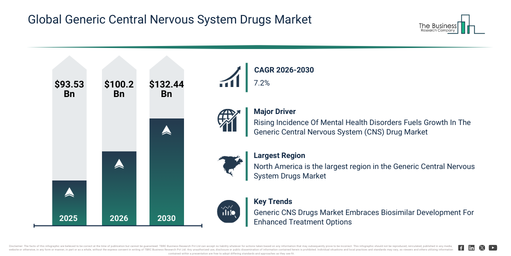
    The market for generic central nervous system drugs has experienced robust expansion in recent years. Valued at $93.53 billion in 2025, it is projected to reach $100.2 billion by 2026, reflecting a compound annual growth rate (CAGR) of 7.1%. This historical uptick was driven by several factors, including a higher prevalence of anxiety and insomnia disorders, restricted access to branded CNS medications, greater research and development spending on generics, an increased public focus on mental health, and financial pressures on healthcare systems.

    The generic central nervous system drugs market is projected for significant expansion over the coming years, with its value anticipated to reach $132.44 billion by 2030, representing a compound annual growth rate (CAGR) of 7.2%. This growth during the forecast period is driven by factors such as the expansion of generic drug manufacturing, the adoption of digital therapeutics, the integration of artificial intelligence in CNS drug discovery, the increasing demand for outpatient and home care, and the rising population affected by neurodegenerative diseases. Key trends shaping the forecast period include the growing prevalence of neurological disorders, the rising adoption of generic drugs, the expansion of home-based and outpatient care, a heightened focus on mental health and stress management, and the development of multi-mechanism CNS drugs.

    Download A Free Sample Report For Comprehensive Market Insights:

    https://www.thebusinessresearchcompany.com/sample.aspx?id=9315&type=smp&utm_source=BlogsPR&utm_medium=Paid&utm_campaign=Jul_PR

    Generic Central Nervous System Drugs Market Growth Factors Supporting Long-Term Expansion

    A mental health disorder represents a clinically significant disturbance in cognition, emotional regulation, or behavior, often associated with distress or functional impairment in key areas. Generic central nervous system (CNS) drugs are instrumental in managing these conditions, offering affordable and accessible treatment options. The growing prevalence of such disorders is anticipated to fuel expansion of the generic CNS drug market. For example, data released in November 2023 by the National Health Service—a UK government department—indicated that roughly one in five people aged 8 to 25 years were believed to have a probable mental disorder that year, impacting 20.3% of those aged 8–16, 23.3% of those aged 17–19, and 21.7% of those aged 20–25. Consequently, the rising incidence of mental health disorders is accelerating demand for generic central nervous system (CNS) medications.

    Generic Central Nervous System Drugs Market Segment Landscape And Growth Potential

    The generic central nervous system drugs market covered in this report is segmented –

    1) By Type: Multiple Sclerosis (MS), Anti-Psychotic, Analgesics, Anti-Parkinson Drugs, Anesthetics, Anti-Epileptics, Anti-Depressants, Other Types

    2) By Drug Classification: Branded Drugs, Generic Drugs

    3) By Disease: Neurovascular Diseases, CNS Trauma, Mental Health, Neurodegenerative Diseases, Infectious Diseases, CNS Cancer

    4) By Route Of Administration: Oral, Intravenous, Intranasal Or Inhalation, Other Route Of Administrations

    5) By Mode Of Purchase: Over-The-counter drugs, Prescription-Based Drugs

    6) By Distribution Channel: Hospital Pharmacies, Retail Pharmacies, Other Distribution Channels

    Subsegments:

    1) By Multiple Sclerosis (MS): Interferons, Glatiramer Acetate, Sphingosine-1 Phosphate Receptor Modulators, Monoclonal Antibodies

    2) By Anti-Psychotic: Atypical Antipsychotics, Typical Antipsychotics

    3) By Analgesics: Non-Opioid Analgesics, Opioid Analgesics, Combination Analgesics

    4) By Anti-Parkinson Drugs: Dopamine Agonists, MAO-B Inhibitors, COMT Inhibitors, Anticholinergics

    5) By Anesthetics: General Anesthetics, Local Anesthetics

    6) By Anti-Epileptics: Sodium Channel Blockers, GABA Enhancers, Glutamate Modulators, Other Mechanisms

    7) By Anti-Depressants: Selective Serotonin Reuptake Inhibitors (SSRIs), Serotonin-Norepinephrine Reuptake Inhibitors (SNRIs), Tricyclic Antidepressants (TCAs), Monoamine Oxidase Inhibitors (MAOIs), Atypical Antidepressants

    8) By Other Types: Cognitive Enhancers, Anxiolytics, Sleep Aids

    Generic Central Nervous System Drugs Market Industry Trends Shaping Future Revenue Growth

    Major players in the generic central nervous system drugs sector are placing emphasis on creating biosimilars aimed at central nervous system (CNS) disorders. The emergence and regulatory approval of biosimilars for specific biologic therapies used in CNS conditions are gaining traction, as they provide more affordable choices compared to branded biologic products. A case in point is October 2023, when Sandoz, a pharmaceutical company headquartered in Switzerland, introduced natalizumab-sztn, the inaugural biosimilar designed for treating relapsing forms of multiple sclerosis (MS). Those include clinically isolated syndrome, relapsing-remitting MS, and active secondary progressive MS. MS is a chronic and progressive autoimmune disease impacting the central nervous system, with most affected individuals experiencing alternating periods of relapse and remission—a pattern that significantly diminishes their quality of life. The use of this treatment is not recommended for patients with progressive multifocal leukoencephalopathy (PML) or those who have previously contracted PML.

    Generic Central Nervous System Drugs Market Competitive Landscape: Who Are The Leading Companies?

    Major companies operating in the generic central nervous system drugs market are Biogen Inc., Johnson & Johnson, Hoffmann-La Roche Ltd, Novartis AG, UCB, Sanofi, Pfizer Inc., Merck KGaA, Sumitomo Dainippon Pharma, AbbVie, Recipharm AB, Neuraxpharm, Sun Pharmaceutical Ltd, Ranbaxy Laboratories, Merz Pharma GmbH & Co. KGaA, AstraZeneca, Apotex, Bayer, GlaxoSmithKline, Amgen, Abbott Laboratories, Janssen Pharmaceutica, Teva Canada, Accord Healthcare Inc., Acerus Pharmaceuticals, EMS Pharma, Hypermarcas, Eurofarma, Teuto Brasileiro, Biolab Farmaceutica, Cristalia, União Quimica, Boehringer Ingelheim, Eli Lilly and Company, Adcock Ingram

    Access The Complete Generic Central Nervous System Drugs Market Report:

    https://www.thebusinessresearchcompany.com/report/generic-central-nervous-system-drugs-global-market-report?utm_source=BlogsPR&utm_medium=Paid&utm_campaign=Jul_PR

    Generic Central Nervous System Drugs Market Regional Analysis And Leading Geography

    North America was the largest region in the generic central nervous system drugs market in 2025. The regions covered in the generic central nervous system drugs market report are Asia-Pacific, South East Asia, Western Europe, Eastern Europe, North America, South America, Middle East, Africa.

    Get in touch with us:

    The Business Research Company: https://www.thebusinessresearchcompany.com/?utm_source=BlogsPR&utm_medium=Paid&utm_campaign=home_page_test

    Americas: +1 310-496-7795

    Asia: +44 7882 955267 & +91 8897263534

    Europe: +44 7882 955267

    Email us at: marketing@tbrc.info

    Follow us on:

    LinkedIn: https://in.linkedin.com/company/the-business-research-company

    YouTube: https://www.youtube.com/channel/UC24_fI0rV8cR5DxlCpgmyFQ

    Global Market Model: https://www.thebusinessresearchcompany.com/global-market-model
  • General Anesthesia Drugs Market Forecast Signals New Revenue Opportunities Through 2030

    General Anesthesia Drugs Market Forecast Signals New Revenue Opportunities Through 2030

    Delivering more actionable and strategically valuable research, The Business Research Company’s 2026 market reports feature market attractiveness analysis, total addressable market evaluation, company benchmarking matrices, interactive Excel dashboards, expanded supply chain intelligence, emerging startup coverage, and detailed product insights.

    General Anesthesia Drugs Market Size And Revenue Forecast Through 2030

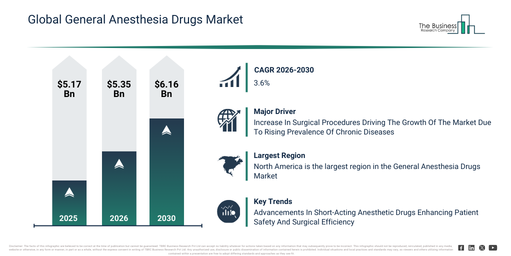
    The market for general anesthesia drugs has experienced consistent expansion in recent times. Its value is projected to rise from $5.17 billion in 2025 to $5.35 billion in 2026, reflecting a compound annual growth rate (CAGR) of 3.5%. This historical growth has been driven by an increase in surgical procedures, the global expansion of hospital facilities, the well-documented effectiveness of anesthetic agents, a higher frequency of trauma and emergency surgeries, and enhancements in surgical infrastructure.

    The market for general anesthesia drugs is projected to experience consistent expansion over the coming years. By 2030, its value is anticipated to reach $6.16 billion, reflecting a compound annual growth rate (CAGR) of 3.6%. This forecasted growth is driven by factors such as the rising number of minimally invasive procedures, the expansion of ambulatory surgical centers, an increasing elderly demographic, heightened demand for cosmetic and elective surgeries, and advancements in anesthesia monitoring technology. Key trends shaping this period include a global uptick in surgical volumes, a growing preference for short-acting anesthetic agents, their wider application in outpatient and day-care settings, the adoption of multimodal anesthesia approaches, and increased demand from an aging surgical population.

    Download A Free Sample Report For Comprehensive Market Insights:

    https://www.thebusinessresearchcompany.com/sample.aspx?id=23407&type=smp&utm_source=BlogsPR&utm_medium=Paid&utm_campaign=Jul_PR

    General Anesthesia Drugs Market Demand Drivers Creating New Revenue Opportunities

    The rising number of surgical operations is anticipated to boost the expansion of the general anesthesia drugs market in the coming period. A surgical procedure is a medical intervention conducted by skilled professionals to address diseases, injuries, or physical abnormalities, often involving an incision or the use of specialized tools to reach internal structures and tissues. This growth in surgical procedures is largely fueled by the growing incidence of chronic illnesses, which frequently necessitate surgical solutions for proper management. For complex or invasive surgeries, general anesthesia drugs are essential to bring about unconsciousness, eliminate pain, and keep patients still and unaware of the procedure. As an example, in June 2024, the American Society of Plastic Surgeons—a U.S.-based nonprofit overseeing minimally invasive procedures—reported a 7% increase in such operations in 2023, up by 2% from the previous year. Consequently, the growing number of surgeries is driving forward the general anesthesia drugs market.

    An expansion in healthcare infrastructure is expected to drive growth in the general anesthesia drugs market moving forward. Healthcare infrastructure denotes the system of hospitals, clinics, diagnostic centers, and other medical support facilities that enable a population to access quality health services. This infrastructure growth is supported by rising investments from both government and private sources, a growing population, and an increasing need for sophisticated medical care. By facilitating a higher volume of surgeries and encouraging investments in modern operating theaters and advanced anesthesia equipment, general anesthesia drugs play a key role in this infrastructure development. For instance, in April 2024, data from the American Medical Association—a U.S.-based professional organization—showed that U.S. healthcare spending increased by 7.5% in 2023, totaling $4.9 trillion or $14,570 per person, a notable acceleration from the 4.6% growth recorded in 2022. Thus, the broadening of healthcare infrastructure is propelling the expansion of the general anesthesia drugs market.

    General Anesthesia Drugs Market Categorization By Product Type And Application

    The general anesthesia drugs market covered in this report is segmented –

    1) By Drug: Sevoflurane, Propofol, Dexmedetomidine, Remifentanil, Desflurane, Midazolam, Other Drugs

    2) By Route Of Administration: Intravenous, Inhaled

    3) By Application: Cardiovascular Surgery, Orthopedic Surgery, Neurosurgery, General Surgery, Cosmetic Surgery, Other Applications

    4) By End-Use: Hospitals, Ambulatory Surgical Centers, Clinics, Other End-Users

    Subsegments:

    1) By Sevoflurane: Inhalation Anesthesia, Pediatric Anesthesia, Outpatient Procedures

    2) By Propofol: Induction Anesthesia, Maintenance Anesthesia, ICU Sedation

    3) By Dexmedetomidine: Procedural Sedation, ICU Sedation, Postoperative Sedation

    4) By Remifentanil: Opioid-Based Anesthesia, Short Surgical Procedures, Pain Management

    5) By Desflurane: Inhalation Anesthesia, Rapid Recovery Procedures, Outpatient Surgeries

    6) By Midazolam: Preoperative Sedation, Procedural Sedation, ICU Sedation

    7) By Other Drugs: Thiopental Sodium, Etomidate, Isoflurane, Ketamine

    General Anesthesia Drugs Market Trends Driving Strategic Industry Expansion

    Leading firms in the general anesthesia drugs market are concentrating on creating cutting-edge anesthetic compounds, like short-acting benzodiazepines, to boost patient safety, speed up recovery times, and enhance procedural efficiency. A short-acting benzodiazepine, exemplified by midazolam, is frequently employed for procedural sedation because of its swift onset and short-lived effects. For example, in August 2023, PAION AG, a biotechnology firm headquartered in Germany, introduced Byfavo (remimazolam) for general anesthesia in the Netherlands, representing its first European commercial release. This drug demonstrates a quick start and cessation of action, with its impacts generally appearing within 1 to 1.5 minutes and patients recovering between 11 and 14 minutes after administration, establishing it as a highly efficient choice for brief surgical procedures. It is primarily metabolized by hepatic esterases, enzymes that are extensively present in the body, rather than through cytochrome-dependent liver pathways in humans. As with other benzodiazepines, it is accompanied by a quickly accessible antagonist, flumazenil, which can promptly reverse sedation or anesthesia if required.

    General Anesthesia Drugs Market Company Landscape And Strategic Competition

    Major companies operating in the general anesthesia drugs market are Baxter International Inc., Fresenius Kabi USA LLC, Piramal Critical Care, B. Braun SE, Hikma Pharmaceuticals PLC, Mylan N.V., Viatris Inc., Jiangsu Hengrui Pharmaceutical Co. Ltd., Sun Pharmaceutical Industries Ltd., Aspen Pharmacare Holdings Limited, Claris Lifesciences Limited, Pfizer CentreOne, Abbott Laboratories Inc., Dr. Reddy’s Laboratories Ltd., Aurobindo Pharma Limited, Lupin Limited, Sini Pharma Pvt Ltd., Safeline Pharmaceuticals (Pty) Ltd, Rouzel Pharma Pvt Ltd, Avet Pharmaceuticals Inc.

    Access The Complete General Anesthesia Drugs Market Report:

    https://www.thebusinessresearchcompany.com/report/general-anesthesia-drugs-global-market-report?utm_source=BlogsPR&utm_medium=Paid&utm_campaign=Jul_PR

    General Anesthesia Drugs Market Geographic Analysis: Where Is Demand Growing The Fastest?

    North America was the largest region in the general anesthesia drugs market in 2025. Asia-Pacific is expected to be the fastest-growing region in the forecast period. The regions covered in the general anesthesia drugs market report are Asia-Pacific, South East Asia, Western Europe, Eastern Europe, North America, South America, Middle East, Africa.

    Get in touch with us:

    The Business Research Company: https://www.thebusinessresearchcompany.com/?utm_source=BlogsPR&utm_medium=Paid&utm_campaign=home_page_test

    Americas: +1 310-496-7795

    Asia: +44 7882 955267 & +91 8897263534

    Europe: +44 7882 955267

    Email us at: marketing@tbrc.info

    Follow us on:

    LinkedIn: https://in.linkedin.com/company/the-business-research-company

    YouTube: https://www.youtube.com/channel/UC24_fI0rV8cR5DxlCpgmyFQ

    Global Market Model: https://www.thebusinessresearchcompany.com/global-market-model
  • Gene-Editing Transfection Chemicals Market Growth Is Accelerating As Industry Transformation Continues

    Gene-Editing Transfection Chemicals Market Growth Is Accelerating As Industry Transformation Continues

    Enhanced with market attractiveness analysis, total addressable market evaluation, company benchmarking matrices, interactive Excel dashboards, expanded supply chain intelligence, emerging startup coverage, and detailed product insights, The Business Research Company’s 2026 market reports deliver more actionable and strategically valuable research.

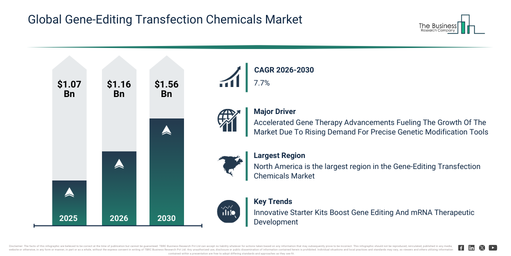
    Gene-Editing Transfection Chemicals Market Growth From $1.16 Billion In 2026 To $1.56 Billion By 2030 At A CAGR Of 7.7%

    The market for transfection chemicals used in gene editing has experienced notable expansion in recent years. From $1.07 billion in 2025, its value is projected to rise to $1.16 billion in 2026, reflecting a compound annual growth rate (CAGR) of 8.4%. Earlier growth was driven by several factors, including a scarcity of highly efficient transfection reagents, dependence on conventional delivery approaches, a surge in academic and research institution initiatives, heightened funding for biotechnology research, and the early integration of gene-editing technologies.

    Over the next several years, the market for gene-editing transfection chemicals is anticipated to experience robust expansion. By 2030, its value is projected to reach $1.56 billion, reflecting a compound annual growth rate (CAGR) of 7.7%. This growth in the forecast period is driven by factors such as the creation of advanced lipid, polymer, and peptide-based compounds, a heightened demand for highly specific gene-editing applications, increased pharmaceutical and biotechnology R&D efforts, the integration of automated transfection systems, and a growing number of regulatory approvals and standardized protocols. Key trends shaping the forecast period encompass the growing preference for lipid-based transfection agents, wider utilization of polymer and peptide-based delivery systems, progress in both non-viral and viral delivery methods, the broadening of gene-editing applications within drug discovery and disease modeling, and a sustained emphasis on enhancing transfection efficiency and cell viability.

    Download A Free Sample Report For Comprehensive Market Insights:

    https://www.thebusinessresearchcompany.com/sample.aspx?id=25770&type=smp&utm_source=BlogsPR&utm_medium=Paid&utm_campaign=Jul_PR

    Gene-Editing Transfection Chemicals Market Expansion Supported By Key Demand Factors

    The gene-editing transfection chemicals market is anticipated to experience growth driven by the accelerating pace of research in gene therapy. This therapeutic approach focuses on correcting defective genes within a person’s cells to prevent or treat diseases. Research momentum has increased significantly due to advancements in technologies like CRISPR, which enable scientists to precisely target and modify faulty genes responsible for genetic disorders. Transfection chemicals play a critical role in this research by facilitating the efficient delivery of genetic materials—including CRISPR-Cas9 components, mRNA, and plasmid DNA—into human cells. In December 2024, the American Society of Gene & Cell Therapy reported that the FDA approved six gene therapy products in 2023, compared to five in 2022, highlighting the field’s growing momentum. Consequently, this accelerated research activity in gene therapy is fueling expansion in the gene-editing transfection chemicals market.

    Gene-Editing Transfection Chemicals Market Segment Analysis And Revenue Opportunities

    The gene-editing transfection chemicals market covered in this report is segmented –

    1) By Chemical Type: Lipid-Based, Polymer-Based, Peptide-Based, Other Chemical Types

    2) By Delivery Mechanism: Non-Viral, Viral

    3) By Application: Biomedical Research, Drug Discovery, Disease Modeling, Agricultural Biotechnology, Vaccine Development, Other Applications

    4) By End-User: Academic And Research Institutes, Biotechnology Companies, Pharmaceutical Companies, Other End-Users

    Subsegments:

    1) By Lipid-Based: Cationic Lipids, Neutral Lipids, Ionizable Lipids

    2) By Polymer-Based: Polyethyleneimine (PEI), Poly(L-Lysine) (PLL), Dendrimers

    3) By Peptide-Based: Cell-Penetrating Peptides (CPPs), Amphipathic Peptides, Targeting Peptides

    4) By Other Chemical Types: Inorganic Nanoparticles, Hybrid Nanoparticles

    Gene-Editing Transfection Chemicals Market Growth Trends Influencing Competitive Dynamics

    Leading firms within the gene-editing transfection chemicals sector are increasingly prioritizing the development of cutting-edge solutions, including lipid nanoparticle (LNP) starter kits, to enhance gene therapy and mRNA delivery processes. These starter kits are pre-made formulations or toolkits equipped with optimized lipid components and protocols, intended to simplify the creation and assessment of LNP-based delivery systems. A notable example occurred in February 2024, when CordenPharma, a pharmaceutical company based in Switzerland, unveiled its Lipid NanoParticle (LNP) Starter Kits, aimed at assisting researchers and developers in the formulation and optimization of mRNA-based treatments, such as vaccines and gene therapies. Each kit includes four essential lipid types—ionizable lipids, helper lipids, sterols, and PEGylated lipids—derived from commercial-scale, high-purity sources to ensure uniform batch quality and minimize the potential loss of valuable payloads during development. Through this dependable and expandable lipid platform, CordenPharma seeks to expedite gene editing and mRNA therapeutic creation while protecting critical genetic materials.

    Gene-Editing Transfection Chemicals Market Leading Players Shaping Industry Direction

    Major companies operating in the gene-editing transfection chemicals market are Thermo Fisher Scientific Inc., Merck KGaA, Lonza Group AG, Takara Bio Inc., Mirus Bio LLC, OZ Biosciences SAS, Genlantis Inc., Polyplus-Transfection SA, Altogen Biosystems LLC, SignaGen Laboratories.

    Access The Complete Gene-Editing Transfection Chemicals Market Report:

    https://www.thebusinessresearchcompany.com/report/gene-editing-transfection-chemicals-global-market-report?utm_source=BlogsPR&utm_medium=Paid&utm_campaign=Jul_PR

    Gene-Editing Transfection Chemicals Market Global Footprint: Which Region Holds Market Leadership?

    North America was the largest region in the gene-editing transfection chemicals market in 2025. The regions covered in the gene-editing transfection chemicals market report are Asia-Pacific, South East Asia, Western Europe, Eastern Europe, North America, South America, Middle East, Africa.

    Get in touch with us:

    The Business Research Company: https://www.thebusinessresearchcompany.com/?utm_source=BlogsPR&utm_medium=Paid&utm_campaign=home_page_test

    Americas: +1 310-496-7795

    Asia: +44 7882 955267 & +91 8897263534

    Europe: +44 7882 955267

    Email us at: marketing@tbrc.info

    Follow us on:

    LinkedIn: https://in.linkedin.com/company/the-business-research-company

    YouTube: https://www.youtube.com/channel/UC24_fI0rV8cR5DxlCpgmyFQ

    Global Market Model: https://www.thebusinessresearchcompany.com/global-market-model
  • Gene-Circuit Cell Therapy Market Outlook Highlights The Next Major Growth Opportunities

    Gene-Circuit Cell Therapy Market Outlook Highlights The Next Major Growth Opportunities

    Through market attractiveness analysis, total addressable market evaluation, company benchmarking matrices, interactive Excel dashboards, expanded supply chain intelligence, emerging startup coverage, and detailed product insights, The Business Research Company’s 2026 market reports provide more actionable and strategically valuable research.

    Gene-Circuit Cell Therapy Market Expansion Outlook: What Revenue Opportunities Lie Ahead?

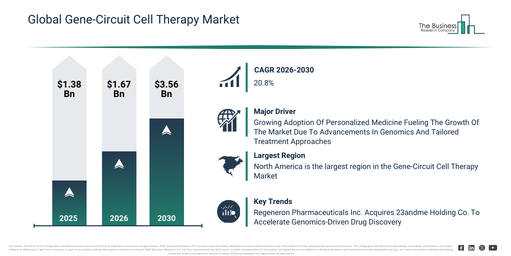
    The gene-circuit cell therapy market has witnessed remarkable expansion over the past few years. Valued at $1.38 billion in 2025, it is projected to reach $1.67 billion by 2026, reflecting a compound annual growth rate (CAGR) of 21.1%. This historic growth has been driven by progress in cell engineering technologies, the achievements associated with CAR-T cell therapies, the broadening of gene editing platforms, expanding clinical expertise in cell therapies, and heightened investment levels within the biotechnology sector.

    The market for gene-circuit cell therapies is anticipated to experience rapid expansion in the coming years. It is projected to reach $3.56 billion by 2030, with a compound annual growth rate (CAGR) of 20.8%. This growth during the forecast period can be explained by factors such as the increasing commercialization of these therapies, a growing need for controllable immunotherapies, a broader pipeline centered on oncology, a rising preference for allogeneic platforms, and improvements in scalable cell production methods. Key trends in the forecast period involve the greater use of synthetic gene circuits in cell therapy, the emergence of logic-gated immune cells, the wider application of ready-to-use allogeneic treatments, the development of dynamic systems that respond to cellular changes, and a stronger emphasis on therapeutic safety and management.

    Download A Free Sample Report For Comprehensive Market Insights:

    https://www.thebusinessresearchcompany.com/sample.aspx?id=28233&type=smp&utm_source=BlogsPR&utm_medium=Paid&utm_campaign=Jul_PR

    Gene-Circuit Cell Therapy Market Growth Drivers And Industry Catalysts

    The expansion of personalized medicine is anticipated to boost the gene-circuit cell therapy market moving forward. Personalized medicine involves a healthcare model that customizes treatments and preventive measures based on an individual’s distinct genetic profile, lifestyle, and environmental factors. Its rising uptake is largely driven by progress in genomics, which allows for accurate detection of genetic differences and the design of targeted therapies for patients. Gene-circuit cell therapy contributes to personalized medicine by offering targeted and programmable therapeutic options, making it well-suited for managing complex and chronic conditions. It improves treatment precision by adjusting interventions to meet specific patient requirements, thereby enhancing therapeutic efficacy and overall health results. For example, as reported by the Personalized Medicine Coalition (PMC), a nonprofit organization based in the United States, the FDA authorized 26 new personalized medicines in 2023, compared to 12 in 2022, reflecting a substantial rise. Consequently, the increasing embrace of personalized medicine is propelling growth in the gene-circuit cell therapy market.

    Gene-Circuit Cell Therapy Market Segmentation And Category Breakdown

    The gene-circuit cell therapy market covered in this report is segmented –

    1) By Product Type: Autologous, Allogeneic

    2) By Technology: Clustered Regularly Interspaced Short Palindromic Repeats (CRISPR), Transcription Activator-Like Effector Nuclease (TALEN), Zinc Finger Nuclease (ZFN), Other Technologies

    3) By Application: Oncology, Genetic Disorders, Infectious Diseases, Other Applications

    4) By End-User: Hospitals And Clinics, Research Institutes, Biotechnology And Pharmaceutical Companies, Other End Users

    Subsegments:

    1) By Autologous: Chimeric Antigen Receptor (CAR)-T Cell Therapies, T-Cell Receptor (TCR)-T Cell Therapies, Natural Killer (NK) Cell Therapies, Stem Cell-Based Therapies

    2) By Allogeneic: Off-The-Shelf Chimeric Antigen Receptor (CAR)-T Cell Therapies, Off-The-Shelf Natural Killer (NK) Cell Therapies, TT-Cell Receptor (TCR)-T Cell Therapies, Stem Cell-Derived Therapies

    Gene-Circuit Cell Therapy Market Trends Influencing Long-Term Demand

    Key players in the gene-circuit cell therapy market are actively advancing sophisticated therapeutic platforms, including those built on CRISPR-based gene editing technologies, to boost treatment accuracy, enhance patient outcomes, and tackle previously untreatable genetic disorders. These gene editing systems represent innovative tools that allow for precise genomic alterations, enabling the correction of inherited defects or the insertion of therapeutic genes into cells. A notable development occurred in December 2023, when Vertex Pharmaceuticals Inc., a US-based biopharmaceutical firm, collaborated with CRISPR Therapeutics Inc., a US-based biotechnology research company, and secured conditional marketing authorization from the United Kingdom’s Medicines and Healthcare products Regulatory Agency (MHRA) for CASGEVY (exagamglogene autotemcel, exa-cel). This therapy is approved for patients aged 12 and over who suffer from sickle cell disease (SCD) with recurrent vaso-occlusive crises, or from transfusion-dependent beta thalassemia (TDT). The mechanism of Casgevy involves editing a patient’s hematopoietic stem cells to reactivate fetal hemoglobin production, thereby diminishing or eliminating disease manifestations and offering a possible functional cure for these conditions.

    Gene-Circuit Cell Therapy Market Competitive Analysis Of Major Industry Participants

    Major companies operating in the gene-circuit cell therapy market are Tmunity Therapeutics Inc., Ginkgo Bioworks Holdings Inc., Arcellx Inc., Beam Therapeutics Inc., CRISPR Therapeutics AG, Intellia Therapeutics Inc., Orchard Therapeutics plc, Fate Therapeutics Inc., Rubius Therapeutics Inc., BlueRock Therapeutics LP (a subsidiary of Bayer AG), Precigen Inc., SparingVision, Alaunos Therapeutics Inc., Cartesian Therapeutics Inc., Lyell Immunopharma Inc., Synlogic Inc., Senti Biosciences Inc., Autolus Therapeutics plc, Cellectis S.A., Sotio Biotech

    Access The Complete Gene-Circuit Cell Therapy Market Report:

    https://www.thebusinessresearchcompany.com/report/gene-circuit-cell-therapy-global-market-report?utm_source=BlogsPR&utm_medium=Paid&utm_campaign=Jul_PR

    Gene-Circuit Cell Therapy Market Regional Distribution: Which Areas Drive Market Expansion?

    North America was the largest region in the gene-circuit cell therapy market in 2025. The regions covered in the gene-circuit cell therapy market report are Asia-Pacific, South East Asia, Western Europe, Eastern Europe, North America, South America, Middle East, Africa.

    Get in touch with us:

    The Business Research Company: https://www.thebusinessresearchcompany.com/?utm_source=BlogsPR&utm_medium=Paid&utm_campaign=home_page_test

    Americas: +1 310-496-7795

    Asia: +44 7882 955267 & +91 8897263534

    Europe: +44 7882 955267

    Email us at: marketing@tbrc.info

    Follow us on:

    LinkedIn: https://in.linkedin.com/company/the-business-research-company

    YouTube: https://www.youtube.com/channel/UC24_fI0rV8cR5DxlCpgmyFQ

    Global Market Model: https://www.thebusinessresearchcompany.com/global-market-model
  • Gene Therapy On Neurological Diseases Market Trends And Growth Drivers Point To Strong Future Potential

    Gene Therapy On Neurological Diseases Market Trends And Growth Drivers Point To Strong Future Potential

    Delivering more actionable and strategically valuable research, The Business Research Company’s 2026 market reports feature market attractiveness analysis, total addressable market evaluation, company benchmarking matrices, interactive Excel dashboards, expanded supply chain intelligence, emerging startup coverage, and detailed product insights.

    Gene Therapy On Neurological Diseases Market Growth Potential: How Will Market Size Change Through 2030?

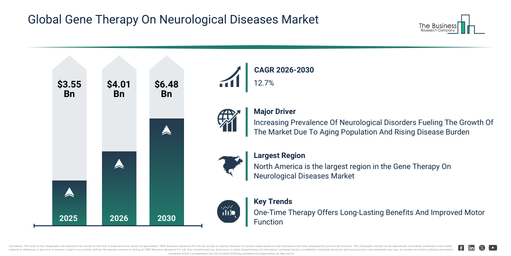
    The market for gene therapy targeting neurological disorders has seen swift expansion in recent years. Valued at $3.55 billion in 2025, it is projected to reach $4.01 billion by 2026, reflecting a compound annual growth rate (CAGR) of 13.0%. This historical growth has been driven by several factors, including the scarcity of available gene therapy options for neurological conditions, the rising incidence of Alzheimer’s and Parkinson’s diseases, a continued dependence on conventional treatment modalities, heightened awareness of genetic strategies, and the early-stage clinical testing of viral vectors.

    The market for gene therapy targeting neurological diseases is projected to experience substantial expansion in the coming years. By 2030, its value is forecasted to reach $6.48 billion, reflecting a compound annual growth rate (CAGR) of 12.7%. This anticipated growth is driven by several factors, including the advancement of therapies based on adeno-associated viruses and lentiviruses, the broader development of non-viral delivery systems, an increase in regulatory approvals for neurological gene therapies, heightened investment in research and development focused on targeted genetic interventions, and the incorporation of digital monitoring tools along with AI-driven patient management approaches. Key trends shaping the forecast period involve growing financial commitments to both viral and non-viral gene therapy platforms, an expansion in the use of gene therapy for various neurological conditions, a heightened emphasis on personalized and precisely targeted genetic treatments, the proliferation of hospital and clinic-based gene therapy initiatives, and the creation of innovative delivery methods to advance neurological gene therapy.

    Download A Free Sample Report For Comprehensive Market Insights:

    https://www.thebusinessresearchcompany.com/sample.aspx?id=27294&type=smp&utm_source=BlogsPR&utm_medium=Paid&utm_campaign=Jul_PR

    Gene Therapy On Neurological Diseases Market Opportunity Drivers: What Is Creating New Revenue Potential?

    The rising incidence of neurological disorders is anticipated to accelerate the expansion of the gene therapy market for neurological diseases in the foreseeable future. Neurological disorders encompass medical conditions that impact the brain, spinal cord, and nerves, resulting in various symptoms such as cognitive, motor, and sensory deficits. This uptick in neurological disorder cases is attributed to an aging population, where aging progressively diminishes neuronal function, reduces brain plasticity, and heightens oxidative stress, thereby facilitating the onset and advancement of these conditions. Gene therapy for neurological diseases supports the management of such disorders by addressing fundamental genetic causes, providing potentially lasting or permanent therapeutic options. It enhances patient outcomes by correcting or adjusting gene activity, alleviating symptoms, and decreasing the need for repeated treatments, thus improving overall life quality. For example, in July 2024, the National Health Service, a government organization in the UK, reported 487,432 patients diagnosed with dementia—a progressive brain disorder affecting memory, thinking, and daily activities—by June 30, 2024, marking an increase of 3,155 cases from May 31, 2024. Consequently, the growing frequency of neurological disorders is fueling the progression of the gene therapy market for neurological diseases.

    Gene Therapy On Neurological Diseases Market Segment Outlook: Which Categories Are Expanding The Fastest?

    The gene therapy on neurological diseases market covered in this report is segmented –

    1) By Type: Viral Gene Therapy, Non-Viral Gene Therapy

    2) By Target Disease: Alzheimer’s Disease, Parkinsons Disease, Amyotrophic Lateral Sclerosis (ALS), Huntington’s Disease, Multiple Sclerosis

    3) By Administration Route: Intravenous, Intrathecal, Intranasal, Intracerebral, Other Administration Routes

    4) By Application: Hospital, Clinic, Other Applications

    Subsegments:

    1) By Viral Gene Therapy Type: Adeno Associated Virus, Lentivirus, Retrovirus, Herpes Simplex Virus, Adenovirus

    2) By Non-Viral Gene Therapy Type: Liposomes, Nanoparticles, Electroporation, Gene Gun, Naked Plasmid Deoxyribonucleic Acid (DNA)

    Gene Therapy On Neurological Diseases Market Innovation Trends Driving Future Development

    Major players in the gene therapy for neurological diseases market are concentrating on the development of sophisticated viral delivery platforms—like the adeno-associated virus serotype 2 (AAV2) vector—aimed at refining targeted gene transfer, boosting therapeutic effectiveness, lowering immune responses, and facilitating enduring treatments. Such a vector is described as a genetically engineered, non-harmful viral carrier employed in gene therapy to deliver therapeutic genes to specific cells, especially neurons, allowing sustained expression. As an example, in November 2024, PTC Therapeutics Inc., a biopharmaceutical firm based in the United States, obtained approval from the U.S. Food and Drug Administration (FDA) for a gene therapy targeting aromatic L-amino acid decarboxylase (AADC) deficiency. This treatment leverages an AAV2 vector to transport a functional DDC gene copy into the putamen, thereby enabling dopamine synthesis and enhancing motor capabilities. It involves a single, intraputaminal infusion intended to deliver lasting therapeutic advantages, markedly improving motor function and alleviating severe symptoms while eliminating the requirement for repeated treatments.

    Gene Therapy On Neurological Diseases Market Key Companies And Competitive Benchmarking

    Major companies operating in the gene therapy on neurological diseases market are Novartis AG, Biogen Inc., Sarepta Therapeutics Inc., PTC Therapeutics Inc., Oxford Biomedica plc, Regenxbio Inc., Passage Bio Inc., Intellia Therapeutics Inc., Voyager Therapeutics Inc., UniQure N.V., AviadoBio Ltd., Capsida Biotherapeutics Inc., StrideBio Inc., Lysogene S.A., Wave Life Sciences Ltd., Taysha Gene Therapies Inc., Abeona Therapeutics Inc., CRISPR Therapeutics AG

    Access The Complete Gene Therapy On Neurological Diseases Market Report:

    https://www.thebusinessresearchcompany.com/report/gene-therapy-on-neurological-diseases-global-market-report?utm_source=BlogsPR&utm_medium=Paid&utm_campaign=Jul_PR

    Gene Therapy On Neurological Diseases Market Leading Geography: Which Region Generates The Most Revenue?

    North America was the largest region in the gene therapy on neurological diseases market in 2025. Asia-Pacific is expected to be the fastest-growing region in the forecast period. The regions covered in the gene therapy on neurological diseases market report are Asia-Pacific, South East Asia, Western Europe, Eastern Europe, North America, South America, Middle East, Africa.

    Get in touch with us:

    The Business Research Company: https://www.thebusinessresearchcompany.com/?utm_source=BlogsPR&utm_medium=Paid&utm_campaign=home_page_test

    Americas: +1 310-496-7795

    Asia: +44 7882 955267 & +91 8897263534

    Europe: +44 7882 955267

    Email us at: marketing@tbrc.info

    Follow us on:

    LinkedIn: https://in.linkedin.com/company/the-business-research-company

    YouTube: https://www.youtube.com/channel/UC24_fI0rV8cR5DxlCpgmyFQ

    Global Market Model: https://www.thebusinessresearchcompany.com/global-market-model
  • Gene Therapy For Parkinson’s Disease Market Expansion Is Reshaping Competitive Dynamics Across The Industry

    Gene Therapy For Parkinson’s Disease Market Expansion Is Reshaping Competitive Dynamics Across The Industry

    Enhanced with market attractiveness analysis, total addressable market evaluation, company benchmarking matrices, interactive Excel dashboards, expanded supply chain intelligence, emerging startup coverage, and detailed product insights, The Business Research Company’s 2026 market reports deliver more actionable and strategically valuable research.

    Gene Therapy For Parkinson’s Disease Market Value Analysis: What Growth Is Expected Over The Forecast Period?

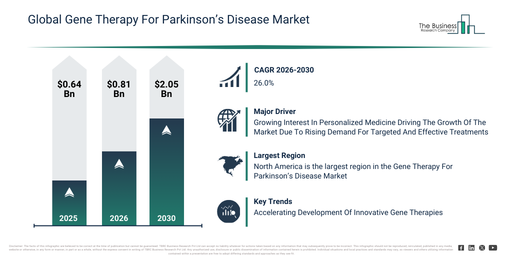
    The gene therapy for Parkinson’s disease market has experienced rapid expansion in recent years, increasing from $0.64 billion in 2025 to $0.81 billion in 2026, reflecting a compound annual growth rate (CAGR) of 26.3. This historical growth has been driven by progress in viral vector engineering, a deeper comprehension of Parkinson’s disease pathology, heightened investment in neuroscience research, the development of more effective delivery technologies, and encouraging outcomes from early-stage clinical trials.

    The market for gene therapy targeting Parkinson’s disease is projected to experience exponential expansion in the coming years. By 2030, its value is anticipated to reach $2.05 billion, reflecting a compound annual growth rate (CAGR) of 26.0%. This forecasted growth is driven by heightened investment in treatments for neurodegenerative disorders, a greater uptake of customized gene therapy strategies, an expansion of advanced clinical trials in later stages, a rising need for therapies that alter disease progression, and improvements in minimally invasive delivery techniques. Key developments likely to shape this period include the growing creation of therapies based on viral vectors, an increased emphasis on methods to restore dopamine, broader application of neurotrophic factor gene delivery, refinement of precise intracerebral administration techniques, and a stronger focus on achieving sustained therapeutic outcomes over the long term.

    Download A Free Sample Report For Comprehensive Market Insights:

    https://www.thebusinessresearchcompany.com/sample.aspx?id=28231&type=smp&utm_source=BlogsPR&utm_medium=Paid&utm_campaign=Jul_PR

    Gene Therapy For Parkinson’s Disease Market Growth Momentum: Which Factors Are Influencing Demand?

    The rising focus on personalized medicine is anticipated to drive expansion in the gene therapy market for Parkinson’s disease in the coming years. Personalized medicine is a medical strategy that customizes treatments and preventive measures according to an individual’s genetic profile, lifestyle, and environmental factors. This approach is gaining momentum because of an increasing need for targeted therapies that boost treatment efficacy and reduce unwanted side effects. Within the context of Parkinson’s disease, gene therapy in personalized medicine involves applying specific genetic alterations to restore dopamine function and address unique disease mechanisms in each patient. As an example, in February 2024, the Personalized Medicine Coalition, a nonprofit organization based in the United States, noted that the US Food and Drug Administration (FDA) authorized 16 new personalized therapies for patients with rare diseases in 2023, a significant jump from just 6 approvals recorded in 2022. Consequently, the heightened interest in personalized medicine is fueling growth in the market for gene therapy targeting Parkinson’s disease.

    Gene Therapy For Parkinson’s Disease Market Segment Landscape: Which Areas Lead Market Development?

    The gene therapy for parkinson’s disease market covered in this report is segmented –

    1) By Therapy Type: In Vivo Gene Therapy, Ex Vivo Gene Therapy

    2) By Vector Type: Viral Vectors, Non-Viral Vectors

    3) By Target Gene: Aromatic L-Amino Acid Decarboxylase (AADC), Glial Cell Line-Derived Neurotrophic Factor (GDNF), Neurturin, Other Target Genes

    4) By Delivery Method: Intracerebral, Intravenous, Other Delivery Methods

    5) By End-User: Hospitals, Specialty Clinics, Research Institutes, Other End-Users

    Subsegments:

    1) By In Vivo Gene Therapy: Viral Vectors, Non-Viral Vectors

    2) By Ex Vivo Gene Therapy: Autologous Cell-Based Gene Therapy, Allogeneic Cell-Based Gene Therapy

    Gene Therapy For Parkinson’s Disease Market Trends Reshaping Industry Growth

    Key players in the gene therapy market for Parkinson’s disease are actively working on refining therapeutic approaches, including regenerative medicine advanced therapy, aimed at improving neuronal survival, restoring dopamine function, and delivering sustained disease-modifying advantages for individuals affected by Parkinson’s. Regenerative medicine advanced therapy (RMAT) is a specific classification from the U.S. Food and Drug Administration (FDA) assigned to regenerative medicine products—such as cell therapies, gene therapies, and tissue-engineered solutions—designed to treat, alter, reverse, or cure severe or life-threatening conditions. As an example, in February 2025, Asklepios BioPharmaceutical, Inc. (AskBio), a gene therapy firm headquartered in the United States, unveiled AB-1005, an investigational AAV2-GDNF gene therapy that has been awarded FDA regenerative medicine advanced therapy (RMAT) designation. This designation, aimed at accelerating the development and review of promising treatments, was granted based on information submitted by AskBio, which included clinical findings from its Phase Ib open-label, uncontrolled trial, showing AB-1005’s ability to potentially decelerate disease advancement and enhance motor function in Parkinson’s patients.

    Gene Therapy For Parkinson’s Disease Market Industry Leaders And Market Competition

    Major companies operating in the gene therapy for parkinson’s disease market are Merck & Co. Inc., Bayer AG, Sanofi S.A., Eli Lilly and Company, Biogen Inc., PTC Therapeutics Inc., Zambon S.p.A., Oxford BioMedica plc, Voyager Therapeutics Inc., Insilico Medicine Inc., Spur Therapeutics Inc., Cerevance Inc., MeiraGTx Holdings plc, BlackfinBio Inc., Partner Therapeutics Inc., Kenai Therapeutics Inc., CureSen Therapeutics Inc., BioVie Inc., Clexio Biosciences Ltd., Tetraneuron S.L.

    Access The Complete Gene Therapy For Parkinson’s Disease Market Report:

    https://www.thebusinessresearchcompany.com/report/gene-therapy-for-parkinsons-disease-global-market-report?utm_source=BlogsPR&utm_medium=Paid&utm_campaign=Jul_PR

    Gene Therapy For Parkinson’s Disease Market Regional Outlook: Where Are The Largest Opportunities Located?

    North America was the largest region in the gene therapy for parkinson’s disease market in 2025. Asia-Pacific is expected to be the fastest-growing region in the forecast period. The regions covered in the gene therapy for parkinson’s disease market report are Asia-Pacific, South East Asia, Western Europe, Eastern Europe, North America, South America, Middle East, Africa.

    Get in touch with us:

    The Business Research Company: https://www.thebusinessresearchcompany.com/?utm_source=BlogsPR&utm_medium=Paid&utm_campaign=home_page_test

    Americas: +1 310-496-7795

    Asia: +44 7882 955267 & +91 8897263534

    Europe: +44 7882 955267

    Email us at: marketing@tbrc.info

    Follow us on:

    LinkedIn: https://in.linkedin.com/company/the-business-research-company

    YouTube: https://www.youtube.com/channel/UC24_fI0rV8cR5DxlCpgmyFQ

    Global Market Model: https://www.thebusinessresearchcompany.com/global-market-model
  • Gene Therapy For Inherited Genetic Disorders Market Forecast Reveals Where Future Industry Value Will Be Created

    Gene Therapy For Inherited Genetic Disorders Market Forecast Reveals Where Future Industry Value Will Be Created

    Through market attractiveness analysis, total addressable market evaluation, company benchmarking matrices, interactive Excel dashboards, expanded supply chain intelligence, emerging startup coverage, and detailed product insights, The Business Research Company’s 2026 market reports provide more actionable and strategically valuable research.

    Gene Therapy For Inherited Genetic Disorders Market Size Forecast: How Large Could The Market Become By 2030?

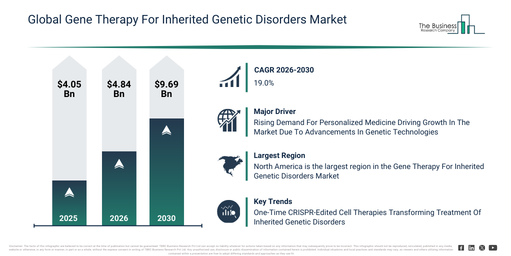
    The market for gene therapy targeting inherited genetic disorders has experienced swift expansion over recent years. Projected to rise from $4.05 billion in 2025 to $4.84 billion in 2026, this represents a compound annual growth rate (CAGR) of 19.3%. Historically, this growth was driven by factors such as the restricted access to sophisticated gene therapy methods, dependence on traditional approaches for treating genetic conditions, a growing incidence of inherited genetic diseases, foundational clinical investigations involving viral vectors, and heightened awareness surrounding the management of rare diseases.

    The gene therapy market for inherited genetic disorders is projected to experience significant expansion in the coming years, reaching a value of $9.69 billion by 2030, with a compound annual growth rate (CAGR) of 19.0%. This forecasted growth is driven by advancements in novel viral vectors and gene editing tools, the broadening scope of RNA-based treatments, increased use of ex vivo stem cell therapies, heightened investment in customized gene therapies, and enhanced capabilities in hospitals and specialty clinics for administering these therapies. Key trends shaping the forecast period include the proliferation of viral vector-based approaches for rare genetic conditions, greater adoption of ex vivo gene therapy techniques, rising utilization of RNA-focused therapeutics, a growing emphasis on addressing neurological and ophthalmic disorders, and the integration of personalized medicine into gene therapy strategies.

    Download A Free Sample Report For Comprehensive Market Insights:

    https://www.thebusinessresearchcompany.com/sample.aspx?id=27293&type=smp&utm_source=BlogsPR&utm_medium=Paid&utm_campaign=Jul_PR

    Gene Therapy For Inherited Genetic Disorders Market Expansion Drivers: What Is Shaping Future Growth?

    The growing demand for tailored medical approaches is anticipated to accelerate the expansion of the gene therapy market focused on inherited genetic disorders. Personalized medicine involves adapting treatments to a patient’s genetic profile and individual characteristics in order to deliver optimized care. This trend is gaining momentum due to progress in genetic technologies, which have made it simpler and more cost-effective to customize therapies according to a person’s unique genetic composition. Such customization boosts gene therapy by aligning treatments with each patient’s distinct genetic blueprint, enabling precise gene targeting and delivery while improving efficacy and minimizing adverse effects. For example, in February 2024, the Personalized Medicine Coalition—a nonprofit organization based in the United States—reported that the U.S. Food and Drug Administration (FDA) approved 16 new personalized therapies for rare disease patients in 2023, compared with 6 in 2022. Among these newly approved personalized treatments for 2023 were seven cancer drugs and three medications targeting other conditions. Consequently, the rising demand for personalized medicine is fueling growth in the gene therapy market for inherited genetic disorders.

    Gene Therapy For Inherited Genetic Disorders Market Segments: Where Are The Largest Growth Opportunities?

    The gene therapy for inherited genetic disorders market covered in this report is segmented –

    1) By Type: Viral Vector-Based Therapies, Gene Editing Techniques, Ribonucleic Acid-Based Therapies, Ex Vivo Gene Therapy

    2) By Application: Inherited Metabolic Disorders, Neurological Disorders, Cardiovascular Disorders, Musculoskeletal Disorders, Ophthalmic Disorders

    3) By End-User: Hospitals, Specialty Clinics, Research Institutes, Other End-Users

    Subsegments:

    1) By Viral Vector-Based Therapies: Adenovirus Vectors, Adeno-Associated Virus (AAV) Vectors, Lentivirus Vectors

    2) By Gene Editing Techniques: Zinc Finger Nucleases (ZFNs), Transcription Activator-Like Effector Nucleases (TALENs), Meganucleases

    3) By Ribonucleic Acid-Based Therapies: Small Interfering Ribonucleic Acid, Antisense Oligonucleotides (ASOs), Messenger Ribonucleic Acid (mRNA) Therapies

    4) By Ex Vivo Gene Therapy: Hematopoietic Stem Cell Gene Therapy, Mesenchymal Stem Cell Gene Therapy, Induced Pluripotent Stem Cell (iPSC) Therapy

    Gene Therapy For Inherited Genetic Disorders Market Strategic Trends: What Is Defining The Next Phase Of Growth?

    Key players in the gene therapy market for inherited genetic disorders are concentrating on developing advanced treatments, particularly ex-vivo CRISPR/Cas9-based gene-edited cell therapies, to address the growing need for one-time, potentially curative options that minimize reliance on lifelong blood transfusions, frequent hospital stays, and expensive chronic care for inherited blood and metabolic conditions. In this approach, a patient’s hematopoietic stem cells are collected and precisely modified using CRISPR/Cas9 technology to correct disease-causing genes or enhance regulatory elements that boost protective fetal hemoglobin; these edited cells are then reinfused, allowing them to engraft and deliver sustained therapeutic outcomes. A notable example occurred in December 2023 when Vertex Pharmaceuticals, a U.S.-based biopharmaceutical firm, secured approval from the U.S. Food and Drug Administration (FDA) and launched CASGEVY (exagamglogene autotemcel), a CRISPR/Cas9-based ex-vivo gene-edited cell therapy designed for sickle cell disease, an inherited genetic disorder. This therapy is derived from the patient’s own hematopoietic stem cells, which undergo gene editing to elevate fetal hemoglobin levels; its composition features autologous stem cells modified with CRISPR/Cas9, and its mechanism works by generating durable fetal hemoglobin concentrations that inhibit red blood cell sickling. Distinct characteristics include ex-vivo precise genome editing via CRISPR/Cas9 and a single administration that offers lasting effects; CASGEVY’s primary use is for severe sickle cell disease and similar indications under regulatory review, while clinical trials have demonstrated significant reductions in vaso-occlusive crises and transfusion needs compared to conventional treatments.

    Gene Therapy For Inherited Genetic Disorders Market Major Participants And Competitive Dynamics

    Major companies operating in the gene therapy for inherited genetic disorders market are Sanofi S.A., Novartis AG, Astellas Pharma Inc., Vertex Pharmaceuticals Incorporated, Genentech, Biomarin Pharmaceutical Inc, Sarepta Therapeutics Inc., Krystal Biotech Inc., Rocket Pharmaceuticals Inc., Sangamo Therapeutics Inc., REGENXBIO Inc., Passage Bio Inc., Voyager Therapeutics Inc., Generation Bio Co., Avrobio Inc, Editas Medicine Inc., MeiraGTx Holdings Plc, uniQure N.V., Intellia Therapeutics Inc., Bluebird Bio Inc, 4D Molecular Therapeutics Inc., CRISPR Therapeutics AG

    Access The Complete Gene Therapy For Inherited Genetic Disorders Market Report:

    https://www.thebusinessresearchcompany.com/report/gene-therapy-for-inherited-genetic-disorders-global-market-report?utm_source=BlogsPR&utm_medium=Paid&utm_campaign=Jul_PR

    Gene Therapy For Inherited Genetic Disorders Market Geographic Landscape: Which Region Dominates Industry Growth?

    North America was the largest region in the gene therapy for inherited genetic disorders market in 2025. Asia-Pacific is expected to be the fastest-growing region in the forecast period. The regions covered in the gene therapy for inherited genetic disorders market report are Asia-Pacific, South East Asia, Western Europe, Eastern Europe, North America, South America, Middle East, Africa.

    Get in touch with us:

    The Business Research Company: https://www.thebusinessresearchcompany.com/?utm_source=BlogsPR&utm_medium=Paid&utm_campaign=home_page_test

    Americas: +1 310-496-7795

    Asia: +44 7882 955267 & +91 8897263534

    Europe: +44 7882 955267

    Email us at: marketing@tbrc.info

    Follow us on:

    LinkedIn: https://in.linkedin.com/company/the-business-research-company

    YouTube: https://www.youtube.com/channel/UC24_fI0rV8cR5DxlCpgmyFQ

    Global Market Model: https://www.thebusinessresearchcompany.com/global-market-model