Category: Pharmaceuticals

  • Charcot-Marie-Tooth Disease Market Expansion Is Opening New Pathways For Strategic Investment

    Charcot-Marie-Tooth Disease Market Expansion Is Opening New Pathways For Strategic Investment

    Delivering more actionable and strategically valuable research, The Business Research Company’s 2026 market reports feature market attractiveness analysis, total addressable market evaluation, company benchmarking matrices, interactive Excel dashboards, expanded supply chain intelligence, emerging startup coverage, and detailed product insights.

    Charcot-Marie-Tooth Disease Market Expected To Reach $3.36 Billion By 2030 At 20.5% CAGR

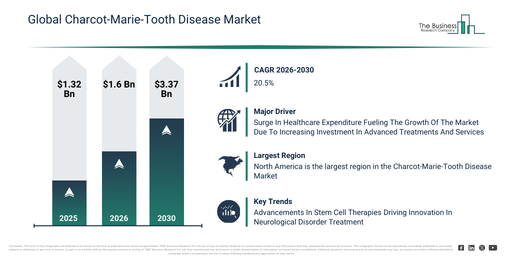
    The market for Charcot-Marie-Tooth disease has seen remarkable exponential expansion in recent times. Valued at $1.32 billion in 2025, it is projected to reach $1.6 billion by 2026, reflecting a compound annual growth rate (CAGR) of 20.8%. This historical growth has been driven by heightened awareness of genetic disorders, the broadening of neurology clinics, increased utilization of pain management strategies, the incorporation of physical therapy, and a dedicated emphasis on supportive care.

    The market for Charcot-Marie-Tooth disease is projected to experience rapid expansion over the coming years. By 2030, its value is anticipated to reach $3.37 billion, driven by a compound annual growth rate (CAGR) of 20.5%. This forecasted growth is fueled by advances in gene therapy research, the rise of precision neurology, early genetic screening programs, increased rare disease funding, and patient advocacy initiatives. Key developments shaping the market include a heightened emphasis on therapies that manage symptoms, broader use of genetic testing and diagnostics, greater application of supportive pharmacological treatments, intensified investigation into disease-modifying therapies, and the emergence of multidisciplinary care frameworks.

    Download A Free Sample Report For Comprehensive Market Insights:

    https://www.thebusinessresearchcompany.com/sample.aspx?id=24501&type=smp&utm_source=BlogsPR&utm_medium=Paid&utm_campaign=Jul_PR

    Charcot-Marie-Tooth Disease Market Demand Drivers: What Is Fueling Industry Growth?

    The anticipated increase in healthcare spending is expected to drive growth in the Charcot-Marie-Tooth disease market moving forward. Healthcare expenditure refers to total outlays on medical services, supplies, and activities designed to preserve or enhance health. This spending is climbing due to the creation and implementation of cutting-edge medical technologies, which entail significant costs for research, equipment, and specialized training, thus raising overall healthcare service expenses. The growth in healthcare spending supports demand for Charcot-Marie-Tooth disease treatment by facilitating greater investment in targeted therapies, diagnostic tools, and supportive care services, thereby enhancing access to comprehensive disease management. For example, in April 2025, the Office for National Statistics, a UK government agency, reported that healthcare spending increased by 6.5% between 2023 and 2024, a modest uptick compared to the 6.3% rise observed in 2023. Consequently, the surge in healthcare expenditure will propel the expansion of the Charcot-Marie-Tooth disease market.

    Charcot-Marie-Tooth Disease Market Segment Outlook: Which Categories Are Expanding The Fastest?

    The charcot-marie-tooth disease market covered in this report is segmented –

    1) By Disease Type: CMT 1, CMT 2, CMT 3, Other Disease Types

    2) By Drug Type: Nonsteroidal Anti-Inflammatory Drugs, Cyclooxygenase-2 Inhibitors, Tricyclic Antidepressants, Anticonvulsants, Analgesics, Pipeline Drug

    3) By Distribution Channel: Hospital Pharmacies, Retail Pharmacies, Online Pharmacies

    Charcot-Marie-Tooth Disease Market Innovation Trends: Which Developments Are Transforming The Industry?

    Leading firms in the Charcot-Marie-Tooth disease market are prioritizing the creation of cutting-edge treatments like mesenchymal stem cell therapies, chosen for their ability to be easily harvested and multiplied from diverse tissue origins. These therapies harness multipotent cells that can transform into various cell types, promoting tissue repair and mitigating inflammation across numerous medical conditions. A notable example occurred in March 2025, when ENCell Co. Ltd., a biopharmaceutical company based in South Korea, received orphan drug designation from the U.S. Food and Drug Administration for its therapy EN001. This mesenchymal stem cell treatment is designed to combat Charcot-Marie-Tooth (CMT) disease through mechanisms that boost cell viability and increase the secretion of beneficial molecules. Once delivered, it works to mend damaged nerves, stimulate the production of reparative factors, and facilitate remyelination of nerve fibers. Safety, tolerability, and dosage optimization were assessed in a phase 1 open-label, dose-escalation clinical trial (NCT05333406) involving patients with type 1a CMT. Over 16 weeks, the study employed a 3+3 design, with low-dose subjects receiving an intravenous injection on the initial day.

    Charcot-Marie-Tooth Disease Market Key Companies And Competitive Benchmarking

    Major companies operating in the charcot-marie-tooth disease market are Applied Therapeutics Inc., PTC Therapeutics Inc., Wave Life Sciences Ltd., Atalanta Therapeutics, Taysha Gene Therapies, Passage Bio Inc., Solid Biosciences Inc., Reata Pharmaceuticals, AskBio (Bayer subsidiary), Sarepta Gene Therapy, Forge Biologics, Neurogene Inc., Regenxbio Inc., Bluebird Bio Inc., GenSight Biologics SA, Rocket Pharmaceuticals Inc., Krystal Biotech Inc., Amicus Therapeutics Inc., Orchard Therapeutics plc, Anokion SA, Neurocrine Biosciences Inc., VectivBio Holding AG, Biomarin Pharmaceutical Inc., Travere Therapeutics Inc., Ascendis Pharma A/S

    Access The Complete Charcot-Marie-Tooth Disease Market Report:

    https://www.thebusinessresearchcompany.com/report/charcot-marie-tooth-disease-global-market-report?utm_source=BlogsPR&utm_medium=Paid&utm_campaign=Jul_PR

    Charcot-Marie-Tooth Disease Market Largest Region: Which Geography Holds The Highest Market Share?

    North America was the largest region in the charcot-marie-tooth disease market in 2025. Asia-Pacific is expected to be the fastest-growing region in the forecast period. The regions covered in the charcot-marie-tooth disease market report are Asia-Pacific, South East Asia, Western Europe, Eastern Europe, North America, South America, Middle East, Africa.

    Get in touch with us:

    The Business Research Company: https://www.thebusinessresearchcompany.com/?utm_source=BlogsPR&utm_medium=Paid&utm_campaign=home_page_test

    Americas: +1 310-496-7795

    Asia: +44 7882 955267 & +91 8897263534

    Europe: +44 7882 955267

    Email us at: marketing@tbrc.info

    Follow us on:

    LinkedIn: https://in.linkedin.com/company/the-business-research-company

    YouTube: https://www.youtube.com/channel/UC24_fI0rV8cR5DxlCpgmyFQ

    Global Market Model: https://www.thebusinessresearchcompany.com/global-market-model
  • Cervical Cancer Vaccine Market Trends Are Creating New Opportunities For Industry Leaders

    Cervical Cancer Vaccine Market Trends Are Creating New Opportunities For Industry Leaders

    Enhanced with market attractiveness analysis, total addressable market evaluation, company benchmarking matrices, interactive Excel dashboards, expanded supply chain intelligence, emerging startup coverage, and detailed product insights, The Business Research Company’s 2026 market reports deliver more actionable and strategically valuable research.

    Cervical Cancer Vaccine Market Size And Revenue Forecast Through 2030

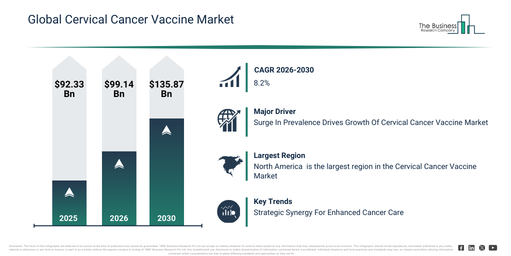
    The cervical cancer vaccine market has experienced robust expansion in recent years. Projections indicate it will rise from $92.33 billion in 2025 to $99.14 billion in 2026, reflecting a compound annual growth rate (CAGR) of 7.4%. This historical growth has been driven by a higher incidence of HPV infections, the early rollout of HPV vaccines, government-led immunization initiatives, growing public awareness about cervical cancer, and the availability of vaccination infrastructure.

    The market for cervical cancer vaccines is projected to experience robust expansion in the coming years, reaching an estimated value of $135.87 billion by 2030, with a compound annual growth rate (CAGR) of 8.2%. This forecasted growth is driven by factors such as improvements in vaccine technology, the broadening of immunization efforts in developing nations, partnerships between public and private sectors for vaccination campaigns, the launch of single-dose HPV vaccines, and increased spending on preventive healthcare. Key trends shaping this period include the expansion of HPV vaccination initiatives, growing public awareness of cervical cancer prevention, the creation of next-generation HPV vaccines, immunization programs led by governments and non-governmental organizations, and collaborative efforts between pharmaceutical and biotech firms.

    Download A Free Sample Report For Comprehensive Market Insights:

    https://www.thebusinessresearchcompany.com/sample.aspx?id=11886&type=smp&utm_source=BlogsPR&utm_medium=Paid&utm_campaign=Jul_PR

    Cervical Cancer Vaccine Market Growth Drivers: What Factors Are Accelerating Expansion?

    The anticipated growth of the cervical cancer vaccine market is expected to be fueled by the increasing incidence of cervical cancer. This type of cancer occurs in the cervix, which is the lower part of the uterus connecting to the upper vagina. A lack of human papillomavirus (HPV) vaccination, inadequate hygiene practices, and limited awareness and understanding of cervical cancer are key reasons behind the rising case numbers. Cervical cancer vaccines are highly effective, as they target high-risk strains of HPV to prevent the disease from developing. In January 2023, the American Cancer Society, a US-based nonprofit focused on cancer advocacy, indicated that 13,960 new cases of cervical cancer were reported in the United States. As a result, the growing prevalence of this condition is driving expansion in the cervical cancer vaccine market.

    Cervical Cancer Vaccine Market Segment Landscape: Which Areas Lead Market Development?

    The cervical cancer vaccine market covered in this report is segmented –

    1) By Type: Cervarix, Gardasil, Gardasil 9

    2) By Distribution Channels: Hospital Pharmacies, Retail Pharmacies, Online Pharmacies

    3) By End-Users: Hospital, Other End-Users

    Cervical Cancer Vaccine Market Trends: What Is Shaping Future Industry Growth?

    Key players in the cervical cancer vaccines market are increasingly turning to collaboration and partnerships as a strategy to enhance and ensure dependable service delivery to customers. A strategic partnership typically refers to a formal relationship between two or more businesses, forged through one or more binding agreements or contracts. As an example, in June 2023, Nykode Therapeutics ASA, which is headquartered in Norway and specializes in next-generation vaccine development, announced an expanded collaboration with Roche Holding AG, a Swiss healthcare firm, focused on advancing VB10.16—a ready-to-use therapeutic cancer vaccine. These partners intend to evaluate VB10.16 when used together with Roche’s atezolizumab (Tecentriq), an anti-PD-L1 immunotherapeutic agent, specifically for patients suffering from advanced cervical cancer. This collaboration holds significant promise for creating a novel and effective therapeutic solution for a cancer type that currently faces limited treatment alternatives and carries a poor prognosis.

    Cervical Cancer Vaccine Market Industry Leaders And Market Competition

    Major companies operating in the cervical cancer vaccine market are Merck & Co Inc, GlaxoSmithKline plc, Serum Institute of India Pvt Ltd, Beijing Wantai Biological Pharmacy Enterprise Co Ltd, Walvax Biotechnology Co Ltd, Xiamen Innovax Biotech Co Ltd, THERAVECTYS, ViciniVax, Recbio, Yuxi Zerun Biotech, BioVaxys Technology Corp, Procare Health Iberia SL, R-Pharm LLC, PathoVax LLC, PT Biofarma, Instituto Butantan, Sinergium Biotech, CSL Limited, UCB SA, Bharat Biotech International Ltd

    Access The Complete Cervical Cancer Vaccine Market Report:

    https://www.thebusinessresearchcompany.com/report/cervical-cancer-vaccine-global-market-report?utm_source=BlogsPR&utm_medium=Paid&utm_campaign=Jul_PR

    Cervical Cancer Vaccine Market Regional Analysis: Which Region Leads By Revenue?

    North America was the largest region in the cervical cancer vaccine market in 2025. Asia-Pacific is expected to be the fastest-growing region in the forecast period. The regions covered in the cervical cancer vaccine market report are Asia-Pacific, South East Asia, Western Europe, Eastern Europe, North America, South America, Middle East, Africa.

    Get in touch with us:

    The Business Research Company: https://www.thebusinessresearchcompany.com/?utm_source=BlogsPR&utm_medium=Paid&utm_campaign=home_page_test

    Americas: +1 310-496-7795

    Asia: +44 7882 955267 & +91 8897263534

    Europe: +44 7882 955267

    Email us at: marketing@tbrc.info

    Follow us on:

    LinkedIn: https://in.linkedin.com/company/the-business-research-company

    YouTube: https://www.youtube.com/channel/UC24_fI0rV8cR5DxlCpgmyFQ

    Global Market Model: https://www.thebusinessresearchcompany.com/global-market-model
  • Cervical Cancer Drugs Market Growth Is Reshaping Competitive Advantage Across The Industry

    Cervical Cancer Drugs Market Growth Is Reshaping Competitive Advantage Across The Industry

    Through market attractiveness analysis, total addressable market evaluation, company benchmarking matrices, interactive Excel dashboards, expanded supply chain intelligence, emerging startup coverage, and detailed product insights, The Business Research Company’s 2026 market reports provide more actionable and strategically valuable research.

    Cervical Cancer Drugs Market Growth From $27.23 Billion In 2026 To $32.67 Billion By 2030 At A CAGR Of 4.7%

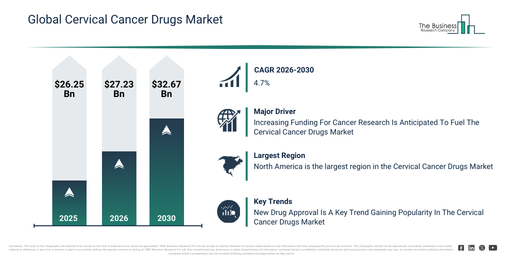
    The market for cervical cancer medications has experienced consistent expansion over the past few years. Projections indicate a rise from $26.25 billion in 2025 to $27.23 billion in 2026, reflecting a compound annual growth rate (CAGR) of 3.7%. This historical growth has been driven by a higher prevalence of cervical cancer, improvements in healthcare facilities, greater use of chemotherapy agents, heightened awareness initiatives, and the increased accessibility of generic pharmaceuticals.

    Over the coming years, the cervical cancer drugs market is anticipated to experience consistent expansion. By 2030, its value is projected to reach $32.67 billion, reflecting a compound annual growth rate (CAGR) of 4.7%. This upward trajectory in the forecast period is largely driven by progress in targeted therapies, growing funding for immunotherapy, the broader application of precision medicine, rising activity in developing markets, and the introduction of innovative drug delivery systems. Key developments shaping this period encompass the creation of new targeted treatments, the refinement of combination chemotherapy regimens, wider acceptance of immunotherapies, a shift toward personalized medicine, and an increase in both hospital and retail distribution channels.

    Download A Free Sample Report For Comprehensive Market Insights:

    https://www.thebusinessresearchcompany.com/sample.aspx?id=2589&type=smp&utm_source=BlogsPR&utm_medium=Paid&utm_campaign=Jul_PR

    Cervical Cancer Drugs Market Growth Factors Supporting Long-Term Expansion

    The cervical cancer drug market is anticipated to expand due to rising financial support for cancer research. Cancer research involves systematic scientific investigations into the origins, development, and therapies for the disease. Cervical cancer medications are crucial in this field, as they uncover mechanisms behind cancer progression, identify therapeutic targets, and enhance disease treatment and management. For example, in March 2023, the American Association for Cancer Research, a US-based organization dedicated to cancer-related studies, stated that the NIH budget for cancer research grew by $2.5 billion (5.6%), reaching $47.5 billion. Consequently, this growth in research funding is fueling the cervical cancer drug market.

    Cervical Cancer Drugs Market Segments: Where Are The Largest Growth Opportunities?

    The cervical cancer drugs market covered in this report is segmented –

    1) By Cancer Type: Squamous Cell Cancer, Adenocarcinoma

    2) By Drug Type: Avastin, Bevacizumab, Bleomycin, Blenoxane, Other Drug Types

    3) By Distribution Channel: Hospitals Pharmacies, Retail Pharmacies, Other Distribution Channels

    Cervical Cancer Drugs Market Industry Trends Shaping Future Revenue Growth

    Leading players in the cervical cancer drugs market are securing approvals for treatments that pair chemotherapy with agents like KEYTRUDA (pembrolizumab) Plus Chemotherapy, aimed at managing PD-L1 expression in cervical cancer tumors, thereby boosting their market earnings. By obstructing the PD-1 and its ligands interaction, this drug regimen facilitates a stronger immune response to detect and eliminate cancer cells, while chemotherapy directly inhibits or reduces cancer cell proliferation. A notable example occurred in April 2024, when Pfizer Inc., a pharmaceutical giant headquartered in the US, alongside Genmab A/S, a Danish biotechnology firm, introduced TIVDAK (tisotumab vedotin-tftv) following FDA approval for treating recurrent or metastatic cervical cancer, based on a global Phase 3 trial that showed significant survival enhancements compared to chemotherapy alone. This therapy functions by attaching to the Tissue Factor protein found on cancer cells, then delivering a chemotherapy agent directly inside the cell, which disrupts its internal structure and triggers cell death, thereby minimizing harm to healthy tissues while focusing on malignant ones. This venture is a collaboration between Pfizer Inc., a US-based leader in pharmaceuticals and biotechnology, and Genmab A/S, a European biotechnology company.

    Cervical Cancer Drugs Market Major Participants And Competitive Dynamics

    Major companies operating in the cervical cancer drugs market are Pfizer Inc., Johnson & Johnson Services Inc., F. Hoffmann-La Roche Ltd., Merck & Co. Inc., Bayer AG, Novartis AG, Sanofi S.A., Bristol Myers Squibb Company, AstraZeneca plc, GlaxoSmithKline plc, Eli Lilly and Company, Amgen Inc., Teva Pharmaceutical Industries Ltd., Mylan NV, Hetero Drugs Limited, Sun Pharmaceutical Industries Limited, Genentech Inc., Seagen Inc., Akeso Biopharma Co. Ltd., Biocad Corp., Betta Pharmaceuticals Co. Ltd., Biocon Limited, ADC Therapeutics SA, Clovis Oncology Inc., Agenus Inc., Iovance Biotherapeutics Inc., MacroGenics Inc.

    Access The Complete Cervical Cancer Drugs Market Report:

    https://www.thebusinessresearchcompany.com/report/cervical-cancer-drugs-global-market-report?utm_source=BlogsPR&utm_medium=Paid&utm_campaign=Jul_PR

    Cervical Cancer Drugs Market Geographic Distribution And Regional Opportunities

    North America was the largest region in the cervical cancer drugs market in 2025. Middle East is expected to be the fastest-growing region in the global cervical cancer drugs market share during the forecast period. The regions covered in the cervical cancer drugs market report are Asia-Pacific, South East Asia, Western Europe, Eastern Europe, North America, South America, Middle East, Africa.

    Get in touch with us:

    The Business Research Company: https://www.thebusinessresearchcompany.com/?utm_source=BlogsPR&utm_medium=Paid&utm_campaign=home_page_test

    Americas: +1 310-496-7795

    Asia: +44 7882 955267 & +91 8897263534

    Europe: +44 7882 955267

    Email us at: marketing@tbrc.info

    Follow us on:

    LinkedIn: https://in.linkedin.com/company/the-business-research-company

    YouTube: https://www.youtube.com/channel/UC24_fI0rV8cR5DxlCpgmyFQ

    Global Market Model: https://www.thebusinessresearchcompany.com/global-market-model
  • Cerebral Infarction Treatment Market Forecast Signals New Revenue Opportunities Through 2030

    Cerebral Infarction Treatment Market Forecast Signals New Revenue Opportunities Through 2030

    Delivering more actionable and strategically valuable research, The Business Research Company’s 2026 market reports feature market attractiveness analysis, total addressable market evaluation, company benchmarking matrices, interactive Excel dashboards, expanded supply chain intelligence, emerging startup coverage, and detailed product insights.

    Cerebral Infarction Treatment Market Expansion Outlook: What Revenue Opportunities Lie Ahead?

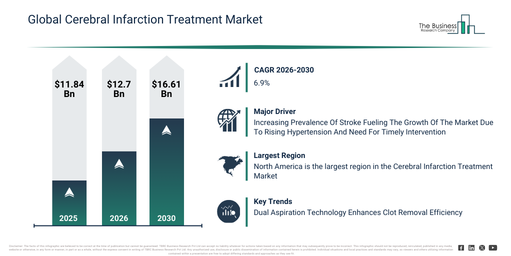
    The market for treating cerebral infarction has experienced significant growth over the past few years. Projections indicate an increase from $11.84 billion in 2025 to $12.7 billion in 2026, reflecting a compound annual growth rate (CAGR) of 7.2%. This expansion during the historical period was driven by factors such as an aging demographic, a higher incidence of hypertension, the establishment of more specialized hospital stroke units, advancements in diagnostic imaging, and the development of enhanced emergency care infrastructure.

    The cerebral infarction treatment market is projected to experience robust expansion in the coming years, reaching an estimated value of $16.61 billion by 2030, with a compound annual growth rate (CAGR) of 6.9%. Several factors are anticipated to drive this growth during the forecast period, including the adoption of AI-assisted stroke diagnosis, the implementation of early screening programs, the development of advanced endovascular devices, increased demand for post-stroke rehabilitation, and various government-led stroke initiatives. Key trends expected to shape the market going forward encompass a higher uptake of mechanical thrombectomy, more frequent use of thrombolytic therapies, the establishment of dedicated stroke centers, a stronger emphasis on early intervention protocols, and the integration of rehabilitation services into acute care settings.

    Download A Free Sample Report For Comprehensive Market Insights:

    https://www.thebusinessresearchcompany.com/sample.aspx?id=24500&type=smp&utm_source=BlogsPR&utm_medium=Paid&utm_campaign=Jul_PR

    Cerebral Infarction Treatment Market Demand Drivers Creating New Revenue Opportunities

    The anticipated expansion of the cerebral infarction treatment market is being driven by the rising occurrence of stroke. A stroke arises when blood flow to the brain is either interrupted or obstructed, causing a deficiency of oxygen and nutrients within the brain tissue. Hypertension, which leads to damage in blood vessels due to persistently high pressure, is a major factor behind the growing prevalence of stroke. By restoring cerebral blood flow, treatments for cerebral infarction improve stroke management, thereby minimizing lasting harm and disability. Through prompt interventions, these therapies enhance patient outcomes, making recovery both more effective and easier to handle. As an example, data from the Stroke Foundation—a nonprofit organization based in Australia—released in September 2024 shows that the country documented 45,785 stroke cases in 2023, with predictions indicating a significant increase to 72,000 cases by 2050. Consequently, the increasing frequency of stroke is fueling growth in the cerebral infarction treatment market.

    Cerebral Infarction Treatment Market Segment Analysis: What Are The Major Market Categories?

    The cerebral infarction treatment market covered in this report is segmented –

    1) By Treatment Type: Medication, Surgical Interventions, Rehabilitation Therapies

    2) By Diagnostic Tools: Computed Tomography Scan, Magnetic Resonance Imaging, Angiography, Doppler Ultrasound

    3) By Application: Ischemic Stroke, Transient Ischemic Attack, Large Artery Stroke, Small Vessel Stroke

    4) By End-User: Hospitals, Specialized Stroke Centers, Ambulatory Surgical Centers, Home Care Providers

    Subsegments:

    1) By Medication: Antiplatelet Drugs, Anticoagulants, Thrombolytics, Statins, Antihypertensives

    2) By Surgical Interventions: Mechanical Thrombectomy, Carotid Endarterectomy, Decompressive Craniectomy, Stent Placement, Angioplasty

    3) By Rehabilitation: Physical Therapy, Occupational Therapy, Speech and Language Therapy, Cognitive Rehabilitation, Psychological Counseling

    Cerebral Infarction Treatment Market Trends Driving Strategic Industry Expansion

    Key players in the cerebral infarction treatment market are concentrating on creating innovative technologies, particularly dual aspiration systems, aimed at shortening treatment times for individuals with acute ischemic stroke. This method involves employing two catheters concurrently to improve clot extraction effectiveness during stroke interventions. As an example, Imperative Care, a medical technology firm based in the United States, introduced Zoom DuoPort in May 2025; this cutting-edge stroke therapy solution facilitates dual aspiration by allowing two catheters to work together from a single vacuum power source. It offers physicians increased control, delivers instantaneous updates during procedures, and enhances the efficacy of mechanical thrombectomy when addressing acute ischemic stroke.

    Cerebral Infarction Treatment Market Leading Companies Driving Competitive Growth

    Major companies operating in the cerebral infarction treatment market are Pfizer Inc., Johnson & Johnson, F. Hoffmann-La Roche AG, Bayer AG, Sanofi S.A., AstraZeneca plc, Abbott Laboratories, Novartis AG, Medtronic plc, Amgen Inc., Siemens Healthineers, Becton Dickinson and Company, Stryker Corporation, Boston Scientific Corporation, Daiichi Sankyo Company Limited, Penumbra Inc., Terumo Corporation, phenox GmbH, Boehringer Ingelheim International GmbH, Imperative Care Inc., Acandis GmbH & Co. KG, Reflow Medical Inc., NeuroVasc Technologies Inc., Rapid Medical Ltd., Q’Apel Medical Inc.

    Access The Complete Cerebral Infarction Treatment Market Report:

    https://www.thebusinessresearchcompany.com/report/cerebral-infarction-treatment-global-market-report?utm_source=BlogsPR&utm_medium=Paid&utm_campaign=Jul_PR

    Cerebral Infarction Treatment Market Largest Region By Revenue And Market Share

    North America was the largest region in the cerebral infarction treatment market in 2025. The regions covered in the cerebral infarction treatment market report are Asia-Pacific, South East Asia, Western Europe, Eastern Europe, North America, South America, Middle East, Africa.

    Get in touch with us:

    The Business Research Company: https://www.thebusinessresearchcompany.com/?utm_source=BlogsPR&utm_medium=Paid&utm_campaign=home_page_test

    Americas: +1 310-496-7795

    Asia: +44 7882 955267 & +91 8897263534

    Europe: +44 7882 955267

    Email us at: marketing@tbrc.info

    Follow us on:

    LinkedIn: https://in.linkedin.com/company/the-business-research-company

    YouTube: https://www.youtube.com/channel/UC24_fI0rV8cR5DxlCpgmyFQ

    Global Market Model: https://www.thebusinessresearchcompany.com/global-market-model
  • Cephalosporin Market Outlook Highlights The Next Major Growth Opportunities

    Cephalosporin Market Outlook Highlights The Next Major Growth Opportunities

    Through market attractiveness analysis, total addressable market evaluation, company benchmarking matrices, interactive Excel dashboards, expanded supply chain intelligence, emerging startup coverage, and detailed product insights, The Business Research Company’s 2026 market reports provide more actionable and strategically valuable research.

    Cephalosporin Market Value Analysis: What Growth Is Expected Over The Forecast Period?

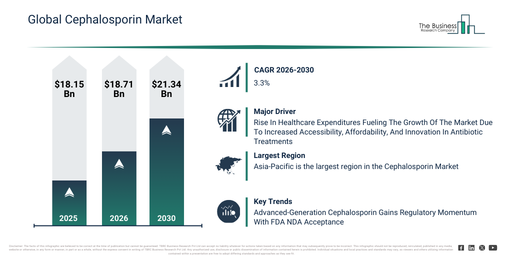
    The cephalosporin sector has experienced consistent expansion over the past few years. Its valuation is projected to increase from $18.15 billion in 2025 to $18.71 billion in 2026, reflecting a compound annual growth rate (CAGR) of 3.1%. This past growth has been driven by factors such as a rising frequency of bacterial diseases, a high occurrence of respiratory tract infections, greater public understanding of antibiotic therapies, the accessibility of branded cephalosporins, and an enlarged hospital infrastructure.

    The cephalosporin market is anticipated to achieve steady expansion over the coming years, with projections reaching $21.34 billion by 2030 at a compound annual growth rate (CAGR) of 3.3%. This forecasted growth is driven by factors such as progress in antibiotic drug development, a growing preference for generic cephalosporins, the expansion of home healthcare and outpatient services, an increasing number of pediatric and geriatric patients, and the implementation of innovative drug delivery methods. Key trends shaping this period include the escalating issue of antibiotic resistance, the creation of broad-spectrum cephalosporins, a higher prevalence of hospital-acquired infections, a wider availability of generic cephalosporin medications, and the heightened application of cephalosporins in pediatric treatment.

    Download A Free Sample Report For Comprehensive Market Insights:

    https://www.thebusinessresearchcompany.com/sample.aspx?id=13402&type=smp&utm_source=BlogsPR&utm_medium=Paid&utm_campaign=Jul_PR

    Cephalosporin Market Growth Drivers And Industry Catalysts

    The expected increase in healthcare spending is set to boost the cephalosporin market forward. Health expenditures encompass all expenses tied to delivering medical services, family planning initiatives, nutrition programs, and emergency health-focused aid. Higher healthcare spending supports the cephalosporin market through improved access and affordability, as well as by encouraging research, development, and innovation in antibiotic therapies. For example, a June 2025 report from the Centers for Medicare & Medicaid Services, a U.S. federal agency, indicated that in 2023, national health expenditures in the U.S. rose by 7.5% to $4.9 trillion, or $14,570 per person, accounting for 17.6% of the gross domestic product (GDP). Consequently, rising healthcare expenditures are fueling growth in the cephalosporin market.

    Cephalosporin Market Segmentation: How Is The Market Structured Across Key Categories?

    The cephalosporin market covered in this report is segmented –

    1) By Type: Branded, Generic

    2) By Route Of Administration: Injection, Oral

    3) By Application: Respiratory Tract Infection, Skin Infection, Ear Infection, Urinary Tract Infection, Sexually Transmitted Infection, Other Applications

    Subsegments:

    1) By Branded: Rocephin, Cefzil, Suprax

    2) By Generic: Ceftriaxone sodium, Cefixime, Cefuroxime

    Cephalosporin Market Trends Influencing Long-Term Demand

    Key players in the cephalosporin market are concentrating on the creation of innovative products and treatments, including next-generation cephalosporins, to address antibiotic resistance and strengthen the efficacy of their product lines against a broader array of bacterial infections. These advanced-generation cephalosporins represent newer classes of cephalosporin antibiotics characterized by a wide-ranging activity, which includes effectiveness against resilient strains such as methicillin-resistant Staphylococcus aureus (MRSA). A notable example occurred in October 2023, when Basilea Pharmaceutica, a biopharmaceutical firm headquartered in Switzerland, received FDA acceptance of its New Drug Application (NDA) for Ceftobiprole medocaril. This fifth-generation broad-spectrum cephalosporin antibiotic is designed for managing severe bacterial infections, covering conditions like community-acquired and hospital-acquired pneumonia, as well as acute bacterial skin and skin structure infections. Its benefits encompass robust activity against MRSA and multi-drug-resistant pathogens, an extensive antibacterial coverage, and a well-tolerated safety profile, positioning it as a viable therapeutic option for managing complex infections.

    Cephalosporin Market Competitive Landscape And Leading Companies

    Major companies operating in the cephalosporin market are Pfizer Inc., Merck & Co. Inc., Sanofi SA, Boehringer Ingelheim International GmbH, Macleods Pharmaceuticals Ltd, Sun Pharmaceutical Industries Ltd., Shionogi & Co Ltd, Cipla Inc., Hikma Pharmaceuticals PLC, Lupin Ltd., Zydus Lifesciences Ltd., Alkem Labs Ltd., Aurobindo Pharma Ltd., Aristo Pharmaceuticals Ltd., Accord Healthcare Ltd., Mankind Pharma Ltd., Qilu Anti Pharmaceutical Co. Ltd., Shandong Ruiying Pioneer Pharmaceutical Co. Ltd, Vansen Pharma Inc., Fresenius Kabi

    Access The Complete Cephalosporin Market Report:

    https://www.thebusinessresearchcompany.com/report/cephalosporin-global-market-report?utm_source=BlogsPR&utm_medium=Paid&utm_campaign=Jul_PR

    Cephalosporin Market Geographic Analysis: Where Is Demand Growing The Fastest?

    Asia-Pacific was the largest region in the cephalosporin market in 2025. The regions covered in the cephalosporin market report are Asia-Pacific, South East Asia, Western Europe, Eastern Europe, North America, South America, Middle East, Africa.

    Get in touch with us:

    The Business Research Company: https://www.thebusinessresearchcompany.com/?utm_source=BlogsPR&utm_medium=Paid&utm_campaign=home_page_test

    Americas: +1 310-496-7795

    Asia: +44 7882 955267 & +91 8897263534

    Europe: +44 7882 955267

    Email us at: marketing@tbrc.info

    Follow us on:

    LinkedIn: https://in.linkedin.com/company/the-business-research-company

    YouTube: https://www.youtube.com/channel/UC24_fI0rV8cR5DxlCpgmyFQ

    Global Market Model: https://www.thebusinessresearchcompany.com/global-market-model
  • Central Precocious Puberty (CPP) Treatment Market Trends And Growth Drivers Point To Strong Future Potential

    Central Precocious Puberty (CPP) Treatment Market Trends And Growth Drivers Point To Strong Future Potential

    Delivering more actionable and strategically valuable research, The Business Research Company’s 2026 market reports feature market attractiveness analysis, total addressable market evaluation, company benchmarking matrices, interactive Excel dashboards, expanded supply chain intelligence, emerging startup coverage, and detailed product insights.

    Central Precocious Puberty (CPP) Treatment Market Size Forecast: How Large Could The Market Become By 2030?

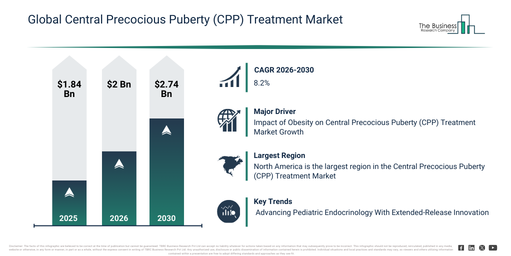
    The market for central precocious puberty (CPP) treatments has experienced significant expansion in recent years. From $1.84 billion in 2025, it is projected to reach $2 billion in 2026, reflecting an 8.5% compound annual growth rate (CAGR). Key drivers during this historical phase include the scarcity of available CPP therapies, insufficient understanding of early puberty management, a rising number of children, enhanced hospital and clinic networks, and a heavy dependence on traditional hormone-based treatments.

    The market for central precocious puberty (CPP) treatments is projected to experience significant expansion in the coming years, reaching a value of $2.74 billion by 2030 with a compound annual growth rate (CAGR) of 8.2%. This anticipated growth during the forecast period is driven by factors such as the development of innovative GnRH-based therapies, the incorporation of digital monitoring tools, a rise in pediatric endocrinology specialization, enhanced government healthcare initiatives, and the growth of homecare and telemedicine programs. Key trends shaping this period include greater awareness around early CPP diagnosis, increased utilization of GnRH agonists and antagonists, advancements in personalized hormonal therapy approaches, the establishment of more pediatric endocrinology clinics and specialty centers, and the integration of homecare and remote monitoring solutions.

    Download A Free Sample Report For Comprehensive Market Insights:

    https://www.thebusinessresearchcompany.com/sample.aspx?id=19362&type=smp&utm_source=BlogsPR&utm_medium=Paid&utm_campaign=Jul_PR

    Central Precocious Puberty (CPP) Treatment Market Opportunity Drivers: What Is Creating New Revenue Potential?

    The rising incidence of hormonal disorders is anticipated to drive the expansion of the central precocious puberty (CPP) treatment market in the coming period. Hormonal disorders encompass a diverse array of medical conditions resulting from imbalances in the body’s hormone levels. Their increasing prevalence is largely attributed to obesity, which can disturb the equilibrium of hormones such as insulin, estrogen, and leptin, thereby contributing to conditions like diabetes, thyroid disorders, and reproductive issues. Treatment for central precocious puberty (CPP) addresses these hormonal imbalances by regulating early excess hormone production, slowing down premature sexual development, and reinstating normal hormonal equilibrium. For example, in February 2025, the World Health Organization, an intergovernmental body based in Switzerland, reported that polycystic ovary syndrome is a significant public health concern and one of the most prevalent hormonal disorders among women of childbearing age, affecting an estimated 6 to 13 percent, with up to 70 percent of cases going undiagnosed. Consequently, the growing prevalence of hormonal disorders is fueling the growth of the central precocious puberty (CPP) treatment market.

    Central Precocious Puberty (CPP) Treatment Market Segmentation Trends And Revenue Drivers

    The central precocious puberty (cpp) treatment market covered in this report is segmented –

    1) By Type: Medication, Surgery

    2) By Diagnosis: Blood Tests, Magnetic Resonance Imaging (MRI), Computed Tomography (CT) Scans, X-rays

    3) By Gender: Girls, Boys

    4) By End-User: Hospitals, Specialty Clinics, Homecare, Other End-Users

    Subsegments:

    1) By Medication: Gonadotropin-Releasing Hormone (GnRH) Agonists, GnRH Antagonists, Aromatase Inhibitors

    2) By Surgery: Ovarian Tissue Removal, Surgical Removal Of Hormone-Producing Tumors

    Central Precocious Puberty (CPP) Treatment Market Innovation Trends Driving Future Development

    Major pharmaceutical firms in the central precocious puberty (CPP) treatment market are actively conducting clinical trials to advance novel therapeutic options like long-acting GnRH analog treatments. These aim to enhance adherence, effectiveness, and ease of use for pediatric patients facing early puberty onset, as opposed to conventional shorter-acting injections that demand more frequent administration and monitoring. Long-acting GnRH analogs function by inhibiting the pituitary-gonadal axis, curbing premature sex hormone release, and slowing the development of secondary sexual characteristics until the appropriate age for puberty. For example, in September 2024, Debiopharm Group, a biopharmaceutical firm headquartered in Switzerland, disclosed favorable outcomes from Phase 3 trials of Debio 4326, an innovative long-acting CPP treatment. Debio 4326 features a sustained-release GnRH analog designed for monthly subcutaneous administration; it operates through continuous downregulation of gonadotropin secretion to stabilize hormone levels and delay early pubertal development. Its distinctive attributes include an extended dosing schedule, pediatric-friendly application, and predictable pharmacokinetics. Applications encompass managing children diagnosed with CPP, tracking pubertal progression, and fostering normal growth alongside psychosocial development. Benefits comprise enhanced patient compliance, decreased injection frequency, and effective hormone level control to restore standard pubertal timing.

    Central Precocious Puberty (CPP) Treatment Market Industry Leaders: Which Organizations Are Driving Competition?

    Major companies operating in the central precocious puberty (cpp) treatment market are Pfizer Inc., Merck & Co. Inc., AbbVie Inc., AstraZeneca plc, Takeda Pharmaceutical Company Limited, Teva Pharmaceutical Industries Ltd., Astellas Pharma Inc., Sun Pharmaceutical Industries Ltd., Ipsen S.A., Dr Reddy’s Laboratories Limited, Endo Pharmaceuticals Inc., Livzon Pharmaceutical Group Co. Ltd., Daewoong Pharmaceutical Co.Ltd, Bachem Holding AG, Ferring Pharmaceuticals, Tolmar Pharmaceuticals Inc., Arbor Pharmaceuticals, Debiopharm Group, Beijing Biote Pharmaceutical Ltd, GP Pharm S.A.

    Access The Complete Central Precocious Puberty (CPP) Treatment Market Report:

    https://www.thebusinessresearchcompany.com/report/central-precocious-puberty-cpp-treatment-global-market-report?utm_source=BlogsPR&utm_medium=Paid&utm_campaign=Jul_PR

    Central Precocious Puberty (CPP) Treatment Market Global Footprint: Which Region Holds Market Leadership?

    North America was the largest region in the central precocious puberty (CPP) treatment market in 2025. Asia-Pacific is expected to be the fastest-growing region in the forecast period. The regions covered in the central precocious puberty (cpp) treatment market report are Asia-Pacific, South East Asia, Western Europe, Eastern Europe, North America, South America, Middle East, Africa.

    Get in touch with us:

    The Business Research Company: https://www.thebusinessresearchcompany.com/?utm_source=BlogsPR&utm_medium=Paid&utm_campaign=home_page_test

    Americas: +1 310-496-7795

    Asia: +44 7882 955267 & +91 8897263534

    Europe: +44 7882 955267

    Email us at: marketing@tbrc.info

    Follow us on:

    LinkedIn: https://in.linkedin.com/company/the-business-research-company

    YouTube: https://www.youtube.com/channel/UC24_fI0rV8cR5DxlCpgmyFQ

    Global Market Model: https://www.thebusinessresearchcompany.com/global-market-model
  • Central Nervous System Therapeutics Market Expansion Is Reshaping Competitive Dynamics Across The Industry

    Central Nervous System Therapeutics Market Expansion Is Reshaping Competitive Dynamics Across The Industry

    Enhanced with market attractiveness analysis, total addressable market evaluation, company benchmarking matrices, interactive Excel dashboards, expanded supply chain intelligence, emerging startup coverage, and detailed product insights, The Business Research Company’s 2026 market reports deliver more actionable and strategically valuable research.

    Central Nervous System Therapeutics Market Revenue Outlook: What CAGR Is Expected Through 2030?

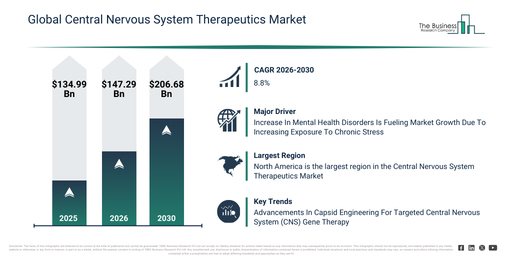
    The central nervous system therapeutics market has seen robust expansion in recent years. It is projected to rise from $134.99 billion in 2025 to $147.29 billion in 2026, reflecting a compound annual growth rate (CAGR) of 9.1%. This historic growth has been driven by factors such as a growing prevalence of depression and epilepsy, an aging population, a scarcity of therapies for degenerative diseases, higher rates of hospitalization for CNS-related conditions, and improved hospital and clinic infrastructure.

    The central nervous system therapeutics market is projected to experience significant expansion in the coming years, with an anticipated increase to $206.68 billion by 2030, reflecting a compound annual growth rate (CAGR) of 8.8%. This forecasted growth is driven by the emergence of innovative neuroprotective agents, advancements in biologics and gene-based therapies, heightened financial commitments to neuroscience research, a growing emphasis on personalized medicine, and improved accessibility to central nervous system treatments in emerging markets. Key developments shaping this period include the escalating incidence of neurological and mental health conditions, an increased incorporation of combination therapies for managing CNS disorders, a heightened focus on long-term disease management and symptom alleviation, the expansion of home-based treatment options for CNS care, the introduction of enhanced drug formulations designed to more effectively penetrate the blood-brain barrier, and a broader adoption of these solutions across various healthcare settings.

    Download A Free Sample Report For Comprehensive Market Insights:

    https://www.thebusinessresearchcompany.com/sample.aspx?id=27249&type=smp&utm_source=BlogsPR&utm_medium=Paid&utm_campaign=Jul_PR

    Central Nervous System Therapeutics Market Growth Momentum: Which Factors Are Influencing Demand?

    The growth of the central nervous system therapeutics market is anticipated to be driven forward by the rising occurrence of mental health disorders. These disorders encompass a broad spectrum of conditions that influence an individual’s thoughts, emotions, behaviors, or mood, including depression, anxiety disorders, schizophrenia, and bipolar disorder. Their increasing prevalence is largely attributed to heightened exposure to chronic stress, which impairs emotional regulation, diminishes coping abilities, and fosters conditions like anxiety, depression, and burnout. Central nervous system (CNS) therapeutics address mental health disorders by acting on brain chemicals and neural circuits responsible for mood, behavior, and cognition. For example, a December 2025 report from Bristol City Council, a UK local government body, revealed that in Bristol, 66,815 patients aged 18 and above were noted on GP practice depression registers during 2022-23, representing a 6.0% increase relative to 2021-22. Hence, the escalating prevalence of mental health disorders is fueling expansion in the central nervous system therapeutics market.

    Central Nervous System Therapeutics Market Segment Analysis Highlighting Growth Areas

    The central nervous system therapeutics market covered in this report is segmented –

    1) By Drug Class: Anesthetics, Anticonvulsants, Antiemetics, Central Nervous System (CNS) Stimulants, Pain Relievers, Other Drug Classes

    2) By Disease: Neurovascular Diseases, Mental Health, Degenerative Disorders, Genetic Diseases, Substance Abuse Disorders, Autoimmune And Inflammatory Diseases, Central Nervous System (CNS) Trauma, Infectious Diseases, Central Nervous System (CNS) Cancer, Other Diseases

    3) By Distribution Channel: Hospital Pharmacies, Retail Pharmacies, Other Distribution Channels

    4) By Application: Hospital, Clinic, Homecare, Other Applications

    Subsegments:

    1) By Anesthetics: General Anesthetics, Local Anesthetics, Dissociative Anesthetics, Inhalation Anesthetics, Intravenous Anesthetics

    2) By Anticonvulsants: Sodium Channel Blockers, GABA Enhancers, Calcium Channel Blockers, SV2A Modulators, Mixed Mechanism Agents

    3) By Antiemetics: Serotonin 5-HT3 Antagonists, Dopamine Antagonists, Neurokinin-1 (NK1) Receptor Antagonists, Antihistamines, Cannabinoids

    4) By Central Nervous System (CNS) Stimulants: Amphetamines, Methylphenidates, Modafinil and Armodafinil, Caffeine-Based Stimulants, Xanthine Derivatives

    5) By Pain Relievers: Opioid Analgesics, Antidepressants for Neuropathic Pain, Anticonvulsants for Pain Relief

    6) By Other Drug Classes: Antipsychotics, Antidepressants, Muscle Relaxants, Sedatives and Hypnotics, Neuroprotective Agents

    Central Nervous System Therapeutics Market Trends Reshaping Industry Growth

    Leading firms in the central nervous system therapeutics sector are advancing their efforts through innovations like capsid engineering, which aims to refine targeted gene delivery, boost therapeutic effectiveness, and improve crossing of the blood-brain barrier for better management of neurological conditions. This process involves altering and enhancing the protein shell—often referred to as the capsid—of viral vectors, particularly adeno-associated viruses (AAVs), that play a key role in gene therapy. A notable example from May 2025 is Coave Therapeutics S.A., a biotechnology company based in France, which introduced coAAV CSF 01, a novel AAV vehicle designed specifically for central nervous system (CNS) applications, developed with their proprietary ALIGATER platform. Tests revealed that this vector achieved substantially higher transduction efficiency and safety relative to AAV9. When delivered through intracisternal magna or intracerebroventricular methods, coAAV-CSF-01 produced transgene expression that was 100 times greater in the cortex and 10,000 times more pronounced in the hippocampus at equivalent doses. Interestingly, it matched AAV9’s expression levels while requiring only one-fifth of the dosage, underscoring its enhanced strength. Furthermore, the vector exhibited significantly less off-target activity outside the CNS, particularly in peripheral organs like the liver, and maintained a strong safety record with preserved integrity of peripheral nerves. Findings point to this vector’s capacity to improve CNS gene therapy outcomes, offering greater precision and lowering risks associated with systemic treatments.

    Central Nervous System Therapeutics Market Leading Companies: Who Holds Significant Market Presence?

    Major companies operating in the central nervous system therapeutics market are Biogen Inc., Otsuka Pharmaceutical Co Ltd., UCB S.A., Jazz Pharmaceuticals plc, Supernus Pharmaceuticals Inc., Biohaven Ltd., Acadia Pharmaceuticals Inc., Neumora Therapeutics Inc., Cerevel Therapeutics LLC, Axsome Therapeutics Inc., TauRx Therapeutics Ltd., Autobahn Therapeutics, BrainStorm Cell Therapeutics Inc., Progentos Therapeutics Inc., Tonix Pharmaceuticals Holding Corp., Neuroplast B.V., Assertio Holdings Inc.

    Access The Complete Central Nervous System Therapeutics Market Report:

    https://www.thebusinessresearchcompany.com/report/central-nervous-system-therapeutics-global-market-report?utm_source=BlogsPR&utm_medium=Paid&utm_campaign=Jul_PR

    Central Nervous System Therapeutics Market Regional Distribution: Which Areas Drive Market Expansion?

    North America was the largest region in the central nervous system therapeutics market in 2025. Asia-Pacific is expected to be the fastest-growing region in the forecast period. The regions covered in the central nervous system therapeutics market report are Asia-Pacific, South East Asia, Western Europe, Eastern Europe, North America, South America, Middle East, Africa.

    Get in touch with us:

    The Business Research Company: https://www.thebusinessresearchcompany.com/?utm_source=BlogsPR&utm_medium=Paid&utm_campaign=home_page_test

    Americas: +1 310-496-7795

    Asia: +44 7882 955267 & +91 8897263534

    Europe: +44 7882 955267

    Email us at: marketing@tbrc.info

    Follow us on:

    LinkedIn: https://in.linkedin.com/company/the-business-research-company

    YouTube: https://www.youtube.com/channel/UC24_fI0rV8cR5DxlCpgmyFQ

    Global Market Model: https://www.thebusinessresearchcompany.com/global-market-model
  • Cellulose Gel Market Forecast Reveals Where Future Industry Value Will Be Created

    Cellulose Gel Market Forecast Reveals Where Future Industry Value Will Be Created

    Through market attractiveness analysis, total addressable market evaluation, company benchmarking matrices, interactive Excel dashboards, expanded supply chain intelligence, emerging startup coverage, and detailed product insights, The Business Research Company’s 2026 market reports provide more actionable and strategically valuable research.

    Cellulose Gel Market Growth Analysis: How Will Revenue Expand During The Forecast Period?

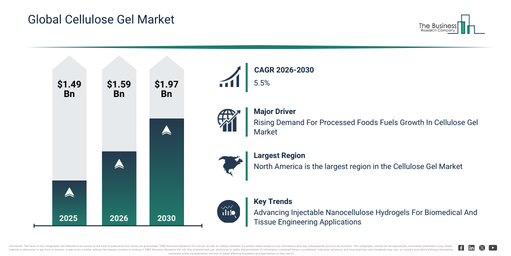
    The market for cellulose gel has demonstrated robust expansion over the past several years. Valued at $1.49 billion in 2025, it is projected to reach $1.59 billion by 2026, reflecting a compound annual growth rate (CAGR) of 6.2%. This historical growth has been driven by increased consumption of processed foods, the broad application of cellulose as a thickening and stabilizing ingredient, its growing use as a pharmaceutical excipient, heightened demand from the paint and textile sectors, and the ready supply of raw materials sourced from wood and cotton.

    The cellulose gel market is poised for substantial growth over the coming years, with projections indicating it will reach a valuation of $1.97 billion by 2030, reflecting a compound annual growth rate of 5.5%. This anticipated expansion is driven by several factors, such as the rising preference for clean-label food additives, increased spending on cosmetics and personal care items, higher production volumes in the pharmaceutical sector, the broadening scope of nanocellulose-based innovations, and a mounting focus on bio-based and renewable resources. Among the key developments shaping this period are the growing demand for plant-derived and clean-label components, the widespread adoption of cellulose gel as a replacement for fats and sugars, its increasing integration into pharmaceutical and nutraceutical preparations, the widening use of cellulose gel within personal care products, and a pronounced shift toward high-purity cellulose derivatives.

    Download A Free Sample Report For Comprehensive Market Insights:

    https://www.thebusinessresearchcompany.com/sample.aspx?id=16648&type=smp&utm_source=BlogsPR&utm_medium=Paid&utm_campaign=Jul_PR

    Cellulose Gel Market Expansion Drivers: What Is Shaping Future Growth?

    The cellulose gel market is anticipated to expand in the coming years, driven by a rising appetite for processed food items. These products are defined as foods altered through mechanical, physical, or chemical methods to improve convenience, safety, and longevity. Their growing popularity stems from hectic lifestyles, innovations in food processing, urban expansion, and higher disposable incomes. By offering a flexible ingredient that enhances texture, stability, and shelf life in items like sauces, dressings, desserts, and ready-to-eat meals, the cellulose gel market bolsters the processed food industry. For example, in November 2024, the United States Department of Agriculture, a US government agency, reported that the 2024 milk consumption forecast by FAS/Canberra was slightly raised by 0.2% to 2.46 million metric tons, marking a 0.7% increase from 2023. Consequently, the growing demand for processed food products is fueling the expansion of the cellulose gel market.

    Cellulose Gel Market Segment Performance And Strategic Opportunities

    The cellulose gel market covered in this report is segmented –

    1) By Source: Wood Cellulose, Cotton Cellulose

    2) By Derivative Type: Commodity Cellulose Pulp, Cellulose Ethers, Cellulose Esters, Microcrystalline Cellulose, Nanocellulose, Other Derivatives

    3) By Property: Thickening Agent, Stabilizer, Binder, Anti Repository Agent, Lubricator, Emulsifier, Excipient

    4) By Application: Food And Beverages, Oil And Refining, Pharmaceutical, Paint Industry And Textile, Cosmetics And Personal Care Industry, Paper Coating And Household Care, Other Applications

    Subsegments:

    1) By Wood Cellulose: Hardwood Cellulose, Softwood Cellulose

    2) By Cotton Cellulose: Organic Cotton Cellulose, Conventional Cotton Cellulose

    Cellulose Gel Market Strategic Trends: What Is Defining The Next Phase Of Growth?

    Leading players in the cellulose gel industry are concentrating on creating innovative nanocellulose-based injectable hydrogels to advance biomedical uses. These hydrogels, derived from cellulose and rich in water and biocompatibility, can be introduced into the body to serve as a scaffold for activities like tissue engineering, administering drugs, or healing wounds. As an example, in October 2024, UPM-Kymmene Corporation, a bioindustry firm from Finland, produced FibGe—made entirely from birch wood cellulose and water—in compliance with ISO 13485 standards. This material offers properties such as shear-thinning behavior that allows injection even at high stiffness, adjustable stiffness, a prolonged minimum shelf life (around 18 months at room temperature), and the capacity to accommodate other components; its primary uses span soft tissue repair, orthopedics, drug delivery, aesthetics, and cell transplantation. In contrast to degradable or animal-derived hydrogels, FibGel is non-degradable and designed to prevent immune rejection or the development of a fibrotic capsule.

    Cellulose Gel Market Key Players: Which Companies Shape Industry Competition?

    Major companies operating in the cellulose gel market are Thermo Fisher Scientific Inc., Shin Etsu Chemical Co. Ltd., Asahi Kasei Corporation, DuPont de Nemours Inc., International Flavors & Fragrances Inc., AkzoNobel N.V., Avantor Inc., FMC Corporation, Clariant AG, Roquette Frères, Sigma-Aldrich, J.M. Huber Corporation, Ashland Inc., Rayonier Advanced Materials (RYAM), CP Kelco U.S. Inc., Borregaard AS, Lamberti S.p.A., Spectrum Chemical Manufacturing Corporation, J. Rettenmaier & Söhne GmbH + Co KG, DMV-Fonterra Excipients GmbH & Co. KG, CFF GmbH & Co. KG, Maple Biotech Private Limited, Mingtai Chemical Co. Ltd., Sigachi Industries Limited, Accent Microcell Limited, CelluForce Inc

    Access The Complete Cellulose Gel Market Report:

    https://www.thebusinessresearchcompany.com/report/cellulose-gel-global-market-report?utm_source=BlogsPR&utm_medium=Paid&utm_campaign=Jul_PR

    Cellulose Gel Market Leading Geography: Which Region Generates The Most Revenue?

    North America was the largest region in the cellulose gel market in 2025. Asia-Pacific is expected to be the fastest-growing region in the forecast period. The regions covered in the cellulose gel market report are Asia-Pacific, South East Asia, Western Europe, Eastern Europe, North America, South America, Middle East, Africa.

    Get in touch with us:

    The Business Research Company: https://www.thebusinessresearchcompany.com/?utm_source=BlogsPR&utm_medium=Paid&utm_campaign=home_page_test

    Americas: +1 310-496-7795

    Asia: +44 7882 955267 & +91 8897263534

    Europe: +44 7882 955267

    Email us at: marketing@tbrc.info

    Follow us on:

    LinkedIn: https://in.linkedin.com/company/the-business-research-company

    YouTube: https://www.youtube.com/channel/UC24_fI0rV8cR5DxlCpgmyFQ

    Global Market Model: https://www.thebusinessresearchcompany.com/global-market-model
  • Cellular Tumor Antigen p53 Market Growth Through 2030 Creates New Strategic Opportunities

    Cellular Tumor Antigen p53 Market Growth Through 2030 Creates New Strategic Opportunities

    Delivering more actionable and strategically valuable research, The Business Research Company’s 2026 market reports feature market attractiveness analysis, total addressable market evaluation, company benchmarking matrices, interactive Excel dashboards, expanded supply chain intelligence, emerging startup coverage, and detailed product insights.

    Cellular Tumor Antigen p53 Market Forecast: What Market Value Is Expected By 2030?

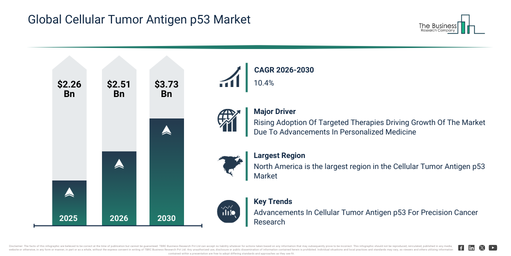
    The cellular tumor antigen p53 market experienced significant expansion over recent years, with its value climbing from $2.26 billion in 2025 to an estimated $2.51 billion in 2026, reflecting a compound annual growth rate (CAGR) of 10.7%. This upward trajectory during the historical period is largely explained by the global rise in cancer cases, the early recognition of the tp53 gene’s function in suppressing tumors, continued dependence on conventional chemotherapy methods, increased research efforts in academic cancer studies, and the restricted range of targeted treatments available for p53.

    The market for cellular tumor antigen p53 is projected to experience substantial expansion in the coming years. By 2030, its value is anticipated to reach $3.73 billion, reflecting a compound annual growth rate (CAGR) of 10.4%. This anticipated growth during the forecast period is fueled by progress in p53 reactivation treatments, the broadening of precision oncology initiatives, heightened funding for cancer biomarker studies, the emergence of gene and RNA-based therapeutic approaches, and increased financial backing for research and development within the pharmaceutical and biotech sectors. Key trends shaping this period include an intensified focus on cancer therapies that target p53, the expanding application of p53 as a biomarker in oncology research, greater innovation in small molecule and gene-based p53 modulators, the proliferation of diagnostic and assay kits designed for p53 detection, and an uptick in joint cancer research and drug discovery efforts.

    Download A Free Sample Report For Comprehensive Market Insights:

    https://www.thebusinessresearchcompany.com/sample.aspx?id=27247&type=smp&utm_source=BlogsPR&utm_medium=Paid&utm_campaign=Jul_PR

    Cellular Tumor Antigen p53 Market Development Factors: Which Trends Are Supporting Demand?

    The anticipated growth of the cellular tumor antigen p53 market is being driven by a heightened emphasis on targeted therapies. These therapies are designed to specifically block or alter molecular targets associated with disease progression, providing more precise treatment options with fewer side effects compared to conventional methods. The growing interest in personalized medicine fuels this focus, as targeted therapies allow for treatments tailored to individual genetic profiles, enhancing effectiveness while reducing adverse reactions. Cellular tumor antigen p53 plays a key role in these approaches by acting as an essential biomarker and therapeutic target; because p53 mutations are frequent in cancers, therapies aimed at restoring or modulating its function can selectively suppress tumor growth without harming healthy cells. For example, the American Society of Gene & Cell Therapy, a US-based organization, reported in January 2024 that Phase III clinical trials for gene therapies increased by 10% in the fourth quarter, marking the first such quarterly rise since the third quarter of 2022. Consequently, the growing focus on targeted therapies is fueling expansion in the cellular tumor antigen p53 market.

    Cellular Tumor Antigen p53 Market Segment Landscape And Growth Potential

    The cellular tumor antigen p53 market covered in this report is segmented –

    1) By Drug Candidate: Coti-2, D-12PGJ3, APR-246, ATRN-502, Cenersen Sodium, MJ-05, MX-225, Other Types

    2) By Product Type: Antibodies, Assays, Kits, Reagents

    3) By Application: Cancer Research, Diagnostics, Therapeutic Development, Drug Discovery, Biomarker Identification

    4) By End-User: Academic Research Institutions, Pharmaceutical Companies, Biotechnology Companies, Diagnostic Laboratories, Contract Research Organizations

    Subsegments:

    1) By Coti-2: Oral Formulation, Injectable Formulation, Nanoparticle-Based Deliver

    2) By D-12PGJ3: Recombinant Protein, Peptide-Based Therapy, Liposomal Formulation, APR-246: Small Molecule Activators, Combination Therapy, Targeted Delivery Systems

    3) By APR-246: Small Molecule Activators, Combination Therapy, Targeted Delivery Systems

    4) By ATRN-502: Antisense Oligonucleotides, Conjugated Delivery, Inhalation Formulation, Cenersen Sodium: Intravenous Infusion, Lyophilized Powder, Combination Therapy

    5) By Cenersen Sodium: Intravenous Infusion, Lyophilized Powder, Combination Therapy

    6) By MJ-05: Monoclonal Antibody, Bispecific Antibody, Conjugated Antibody

    7) By MX-225: Synthetic Peptide, Gene Therapy Vector, Controlled-Release Formulation

    8) By Other Types: Experimental Compounds, Research Reagents, Preclinical Formulations

    Cellular Tumor Antigen p53 Market Transformation Trends: Which Innovations Are Driving Change?

    Key players in the cellular tumor antigen p53 market are investing in the creation of cutting-edge solutions, especially powerful molecules for studying tumor suppression, to speed up the progress of individualized treatment approaches. These potent research molecules are strong compounds that mimic, activate, or restore the function of tumor suppressor proteins, facilitating studies and therapeutic development aimed at halting cancer cell growth and inducing programmed cell death. For example, in January 2024, Creative Diagnostics, a US-based biotech firm specializing in antibodies, antigens, and assay kits, introduced a comprehensive set of P53 and TP53 antibodies and tools to assist scientists in the vital area of cancer research. This offering is intended to support sophisticated cancer studies by enabling accurate identification and differentiation of both wild-type and mutant p53 proteins, along with their post-translational modifications. This innovative cellular tumor antigen p53 is characterized by advanced mutation differentiation, thorough detection of post-translational changes, and exceptional specificity, allowing for precise cancer investigation, deeper insights into tumor biology, and the advancement of targeted therapeutic options.

    Cellular Tumor Antigen p53 Market Competitive Landscape: Who Are The Leading Companies?

    Major companies operating in the cellular tumor antigen p53 market are Abcam Limited, Sino Biological Inc, CUSABIO Technology LLC, Cell Signaling Technology Inc, RayBiotech Life Inc, GeneTex, Bioss Inc., Creative Diagnostics, Active Motif Inc, Aviva Systems Biology Corporation, Biomatik Corporation, ScienCell Research Laboratories, MyBiosource Inc, United States Biological, Boster Biological Technology Ltd, ABBEXA LTD., Aprea Therapeutics AB, Geno Biosciences Private Limited, INDIGO BIOSCIENCES INC, ProteoGenix

    Access The Complete Cellular Tumor Antigen p53 Market Report:

    https://www.thebusinessresearchcompany.com/report/cellular-tumor-antigen-p53-global-market-report?utm_source=BlogsPR&utm_medium=Paid&utm_campaign=Jul_PR

    Cellular Tumor Antigen p53 Market Regional Outlook: Where Are The Largest Opportunities Located?

    North America was the largest region in the cellular tumor antigen p53 market in 2025. Asia-Pacific is expected to be the fastest-growing region in the forecast period. The regions covered in the cellular tumor antigen p53 market report are Asia-Pacific, South East Asia, Western Europe, Eastern Europe, North America, South America, Middle East, Africa.

    Get in touch with us:

    The Business Research Company: https://www.thebusinessresearchcompany.com/?utm_source=BlogsPR&utm_medium=Paid&utm_campaign=home_page_test

    Americas: +1 310-496-7795

    Asia: +44 7882 955267 & +91 8897263534

    Europe: +44 7882 955267

    Email us at: marketing@tbrc.info

    Follow us on:

    LinkedIn: https://in.linkedin.com/company/the-business-research-company

    YouTube: https://www.youtube.com/channel/UC24_fI0rV8cR5DxlCpgmyFQ

    Global Market Model: https://www.thebusinessresearchcompany.com/global-market-model
  • Cellular Immunotherapy Market Size Projected To Increase From $7.47 Billion To $12.49 Billion During The Forecast Period

    Cellular Immunotherapy Market Size Projected To Increase From $7.47 Billion To $12.49 Billion During The Forecast Period

    Enhanced with market attractiveness analysis, total addressable market evaluation, company benchmarking matrices, interactive Excel dashboards, expanded supply chain intelligence, emerging startup coverage, and detailed product insights, The Business Research Company’s 2026 market reports deliver more actionable and strategically valuable research.

    Cellular Immunotherapy Market Size Outlook: How Fast Will Revenue Grow Through 2030?

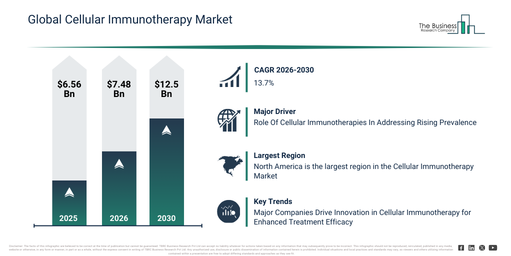
    In recent times, the market for cellular immunotherapy has expanded significantly. From a valuation of $6.56 billion in 2025, it is projected to reach $7.48 billion by 2026, reflecting a compound annual growth rate of 14.1%. The expansion observed in the historical period was driven by several key factors, including the achievements of initial CAR-T therapies, the existence of unaddressed requirements in oncology, an increase in research funding, the granting of regulatory approvals, and cooperative efforts between academia and industry.

    The cellular immunotherapy market is anticipated to undergo rapid expansion over the coming years. By 2030, its valuation is projected to reach $12.5 billion, driven by a compound annual growth rate (CAGR) of 13.7%. This forecasted growth is largely fueled by advancements in solid tumor treatment, breakthroughs in NK cell therapy, the development of scalable manufacturing processes, the establishment of supportive regulatory environments, and heightened levels of oncology funding. Key trends shaping this period include the swift expansion of CAR-T cell therapies, the growing adoption of allogeneic cell treatments, an increased application in hematologic malignancies, notable progress in T cell engineering, and a surge in clinical trial activity.

    Download A Free Sample Report For Comprehensive Market Insights:

    https://www.thebusinessresearchcompany.com/sample.aspx?id=3435&type=smp&utm_source=BlogsPR&utm_medium=Paid&utm_campaign=Jul_PR

    Cellular Immunotherapy Market Industry Drivers: What Is Driving Revenue Growth?

    The growing incidence of cancer is anticipated to drive expansion in the cellular immunotherapy market moving forward. Cancer encompasses a range of diseases marked by the abnormal, uncontrolled growth and dissemination of cells within the body. This upward trend in cancer prevalence can be attributed primarily to an aging demographic, lifestyle-related choices, and enhancements in screening and detection methods. Additionally, environmental factors and hereditary susceptibilities contribute significantly to higher occurrence rates. Cellular therapy strengthens the body’s immune defense against tumors by directly targeting malignant cells, thereby enhancing patient survival outcomes. When integrated with other therapeutic modalities, this strategy has the potential to lower both cancer incidence and recurrence rates. As an illustration, data from March 2024, released by MAC Clinical Research—a UK-based cancer research entity—shows that the number of individuals living with cancer in the United Kingdom is projected to climb from roughly 3 million currently to 3.5 million by 2025, 4 million by 2030, and 5.3 million by 2040. Consequently, the escalating prevalence of cancer is fueling the growth of the cellular immunotherapy sector.

    Cellular Immunotherapy Market Categorization By Product Type And Application

    The cellular immunotherapy market covered in this report is segmented –

    1) By Therapy: Tumor-Infiltrating Lymphocyte (TIL) Therapy, Engineered T Cell Receptor (TCR) Therapy, Chimeric Antigen Receptor (CAR) T Cell Therapy, Natural Killer (NK) Cell Therapy

    2) By Primary Indication: B-cell Malignancies, Prostate Cancer, Renal Cell Carcinoma, Liver Cancer, Non-Hodgkin lymphoma, Other Primary Indications

    3) By Application: Prostate Cancer, Breast Cancer, Skin Cancer, Ovarian Cancer, Brain Tumor, Lung Cancer, Other Applications

    Subsegments:

    1) By Tumour-Infiltrating Lymphocyte (TIL) Therapy: Autologous TIL Therapy, Allogeneic TIL Therapy

    2) By Engineered T Cell Receptor (TCR) Therapy: Alpha-Beta TCR Therapy, Gamma-Delta TCR Therapy

    3) By Chimeric Antigen Receptor (CAR) T Cell Therapy: Autologous CAR T Cell Therapy, Allogeneic CAR T Cell Therapy, CAR T Cell Therapy For Solid Tumors, CAR T Cell Therapy For Hematologic Malignancies

    4) By Natural Killer (NK) Cell Therapy: Autologous NK Cell Therapy, Allogeneic NK Cell Therapy, NK Cell Therapy With Engineered Modifications

    Cellular Immunotherapy Market Growth Trends: What Is Influencing The Future Outlook?

    Key industry players in the cellular immunotherapy market are prioritizing innovations like immunotherapy to improve treatment effectiveness and broaden its use. Their efforts center on personalized medicine, combination therapies, and scalable manufacturing processes to enhance patient outcomes. Immunotherapy leverages the body’s own immune system to combat diseases, particularly cancer, by either amplifying immune responses or deploying targeted therapies that boost immune activity against specific cells. For example, in December 2023, Max Healthcare Institute Limited, a healthcare provider based in India, adopted CAR-T cell therapy—a groundbreaking cancer treatment that uses genetically modified T cells to precisely identify and destroy cancer cells. This personalized method achieves durable remission, especially for resistant blood cancers, while reducing harm to healthy tissues.

    Cellular Immunotherapy Market Company Landscape And Strategic Competition

    Major companies operating in the cellular immunotherapy market are Novartis International AG, Gilead Sciences Inc., Apac Biotech, Dendreon Pharmaceuticals LLC, JW CreaGene Co. Ltd, Green Cross Corp, AstraZeneca plc, Bristol Myers Squibb Company, Pfizer Inc., F. Hoffmann-La Roche Ltd., Adicet Bio Inc., ResTORbio Inc., Celyad SA, Merck KGaA, GlaxoSmithKline plc., Johnson & Johnson, Adaptimmune Therapeutics plc, AVROBIO Inc., Cellular Biomedicine Group Inc., Kite Pharma Inc., Juno Therapeutics Inc., Celgene Corporation, Bluebird Bio Inc., Tmunity Therapeutics Inc., Atara Biotherapeutics Inc., Fate Therapeutics Inc., Precision Biosciences Inc., Allogene Therapeutics Inc., CRISPR Therapeutics AG, Sangamo Therapeutics Inc., Intellia Therapeutics Inc., Editas Medicine Inc., Caribou Biosciences Inc., Mammoth Biosciences Inc., Synthego Corporation

    Access The Complete Cellular Immunotherapy Market Report:

    https://www.thebusinessresearchcompany.com/report/cellulars-immunotherapy-global-market-report?utm_source=BlogsPR&utm_medium=Paid&utm_campaign=Jul_PR

    Cellular Immunotherapy Market Geographic Landscape: Which Region Dominates Industry Growth?

    North America was the largest region in the cellular immunotherapy market in 2025. The regions covered in the cellular immunotherapy market report are Asia-Pacific, South East Asia, Western Europe, Eastern Europe, North America, South America, Middle East, Africa.

    Get in touch with us:

    The Business Research Company: https://www.thebusinessresearchcompany.com/?utm_source=BlogsPR&utm_medium=Paid&utm_campaign=home_page_test

    Americas: +1 310-496-7795

    Asia: +44 7882 955267 & +91 8897263534

    Europe: +44 7882 955267

    Email us at: marketing@tbrc.info

    Follow us on:

    LinkedIn: https://in.linkedin.com/company/the-business-research-company

    YouTube: https://www.youtube.com/channel/UC24_fI0rV8cR5DxlCpgmyFQ

    Global Market Model: https://www.thebusinessresearchcompany.com/global-market-model