Category: Pharmaceuticals

  • Cell-Based Ophthalmic Therapies Market Growth Outlook Reveals A CAGR Of 20.5% And A Market Value Of $3.78 Billion By 2030

    Cell-Based Ophthalmic Therapies Market Growth Outlook Reveals A CAGR Of 20.5% And A Market Value Of $3.78 Billion By 2030

    Through market attractiveness analysis, total addressable market evaluation, company benchmarking matrices, interactive Excel dashboards, expanded supply chain intelligence, emerging startup coverage, and detailed product insights, The Business Research Company’s 2026 market reports provide more actionable and strategically valuable research.

    Cell-Based Ophthalmic Therapies Market Size, Value And Growth Trends Through 2030

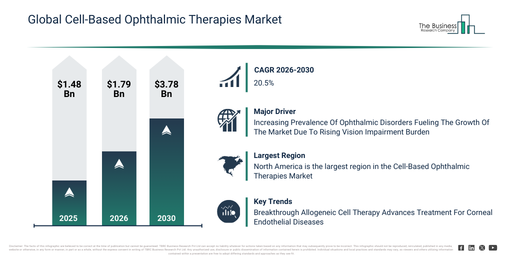
    The cell-based ophthalmic therapies market has witnessed a remarkable surge in its valuation over recent years, climbing from $1.48 billion in 2025 to an anticipated $1.79 billion in 2026, reflecting a robust compound annual growth rate of 20.9%. This upward trajectory in the historical period was largely driven by factors such as the scarcity of effective treatments for degenerative eye conditions, a higher incidence of retinal and corneal disorders, an expanding elderly demographic, greater public understanding of regenerative medicine, and the ongoing development of ophthalmic research facilities.

    The cell-based ophthalmic therapies market is projected to undergo remarkable expansion in the coming years, with its value anticipated to climb to $3.78 billion by 2030, reflecting a compound annual growth rate (CAGR) of 20.5%. This strong forecast period growth is driven by several key factors, such as breakthroughs in stem cell and gene editing technologies, heightened funding for regenerative ophthalmology, an increasing number of regulatory approvals for cell-based treatments, a rising need for durable vision restoration options, and the proliferation of dedicated ophthalmic treatment facilities. Among the major trends likely to define this period are the growing embrace of stem cell and gene therapies for restoring sight, an intensified emphasis on regenerative approaches to address retinal and corneal conditions, a surge in clinical trials exploring cell-based ophthalmic interventions, a broadening of personalized and precision-driven ophthalmic care, and the delivery of better long-lasting results when compared to conventional ophthalmic therapies.

    Download A Free Sample Report For Comprehensive Market Insights:

    https://www.thebusinessresearchcompany.com/sample.aspx?id=27246&type=smp&utm_source=BlogsPR&utm_medium=Paid&utm_campaign=Jul_PR

    #Cell-Based Ophthalmic Therapies Market Growth Factors: Which Forces Are Supporting Market Expansion?

    The growing frequency of ophthalmic conditions is anticipated to drive the expansion of the cell-based ophthalmic therapies market in the coming years. These disorders involve diseases or issues that affect the eyes, leading to vision difficulties or damage to ocular health. Their prevalence is climbing, largely because aging populations face an elevated risk of age-related eye diseases, which contribute to vision loss as lifespans lengthen. Cell-based ophthalmic therapies work to restore or substitute damaged retinal and ocular cells, aiming to recover vision, halt further deterioration, foster regeneration, and improve overall eye performance. As an example, in August 2024, data from the Welsh Government, a UK government body, revealed that ophthalmology departments across Wales saw more than 35,000 admissions in 2023-24, reflecting a 5.8% rise from the previous year. Consequently, the heightened incidence of ophthalmic disorders is fueling growth in the cell-based ophthalmic therapies market.

    Cell-Based Ophthalmic Therapies Market Segment Analysis And Revenue Opportunities

    The cell-based ophthalmic therapies market covered in this report is segmented –

    1) By Therapy Type: Stem Cell Therapy, Gene Therapy, Tissue Engineering

    2) By Application: Retinal Disorders, Corneal Disorders, Glaucoma, Other Applications

    3) By End-User: Hospitals, Ophthalmic Clinics, Research Institutes, Other End-Users

    Subsegments:

    1) By Stem Cell Therapy: Embryonic Stem Cell Therapy, Mesenchymal Stem Cell Therapy, Induced Pluripotent Stem Cell Therapy, Retinal Pigment Epithelium Cell Therapy, Limbal Stem Cell Therapy

    2) By Gene Therapy: Viral Vector-Based Gene Therapy, Non-Viral Vector Based Gene Therapy, In-Vivo Gene Therapy, Ex-Vivo Gene Therapy, Clustered Regularly Interspaced Short Palindromic Repeats (CRISPR)-Based Gene Therapy

    3) By Tissue Engineering: Bioengineered Corneal Tissue, Amniotic Membrane Transplantation, Hydrogel-Based Scaffolds, Synthetic Polymer Scaffolds, Decellularized Tissue Constructs

    Cell-Based Ophthalmic Therapies Market Industry Trends: What Changes Are Reshaping Demand?

    Leading firms in the cell-based ophthalmic therapies sector are concentrating on the development of innovative treatments, including allogeneic cell therapy, aimed at fulfilling unmet requirements for managing corneal endothelial disorders. Allogeneic cell therapy involves the use of stem or other cells donated by a genetically distinct member of the same species to repair or replace damaged tissues, or to combat diseases. As an example, in September 2024, Aurion Biotech, Inc., a clinical-stage biotechnology company headquartered in the United States, introduced Vyznova (neltependocel) commercially in Japan. This product is intended for bullous keratopathy, a severe corneal endothelial condition. Vyznova is regarded as the first approved allogeneic cell therapy specifically for corneal endothelial disease, having obtained both regulatory and reimbursement clearances in Japan.

    Cell-Based Ophthalmic Therapies Market Leading Players Shaping Industry Direction

    Major companies operating in the cell-based ophthalmic therapies market are F. Hoffmann-La Roche Ltd., Bayer AG, Novartis AG, Astellas Pharma Inc., Sumitomo Pharma Co. Ltd., Healios K.K., Lineage Cell Therapeutics, Pandorum Technologies Pvt. Ltd., Neurotech Pharmaceuticals Inc., Coave Therapeutics SAS, jCyte Inc., Eyestem Research Pvt. Ltd., Opsis Therapeutics, Regenerative Patch Technologies LLC, Emmetrope Ophthalmics LLC, GenSight Biologics S.A., MEDIPOST Co. Ltd., Riken, Luxa Biotechnology Inc.

    Access The Complete Cell-Based Ophthalmic Therapies Market Report:

    https://www.thebusinessresearchcompany.com/report/cell-based-ophthalmic-therapies-global-market-report?utm_source=BlogsPR&utm_medium=Paid&utm_campaign=Jul_PR

    Cell-Based Ophthalmic Therapies Market Largest Region: Which Geography Holds The Highest Market Share?

    North America was the largest region in the cell-based ophthalmic therapies market in 2025. The regions covered in the cell-based ophthalmic therapies market report are Asia-Pacific, South East Asia, Western Europe, Eastern Europe, North America, South America, Middle East, Africa.

    Get in touch with us:

    The Business Research Company: https://www.thebusinessresearchcompany.com/?utm_source=BlogsPR&utm_medium=Paid&utm_campaign=home_page_test

    Americas: +1 310-496-7795

    Asia: +44 7882 955267 & +91 8897263534

    Europe: +44 7882 955267

    Email us at: marketing@tbrc.info

    Follow us on:

    LinkedIn: https://in.linkedin.com/company/the-business-research-company

    YouTube: https://www.youtube.com/channel/UC24_fI0rV8cR5DxlCpgmyFQ

    Global Market Model: https://www.thebusinessresearchcompany.com/global-market-model
  • Cell Therapy Raw Materials Market Forecast Highlights Expansion From $6.1 Billion To $12.74 Billion Through 2030

    Cell Therapy Raw Materials Market Forecast Highlights Expansion From $6.1 Billion To $12.74 Billion Through 2030

    Delivering more actionable and strategically valuable research, The Business Research Company’s 2026 market reports feature market attractiveness analysis, total addressable market evaluation, company benchmarking matrices, interactive Excel dashboards, expanded supply chain intelligence, emerging startup coverage, and detailed product insights.

    Cell Therapy Raw Materials Market CAGR Analysis And Future Market Development

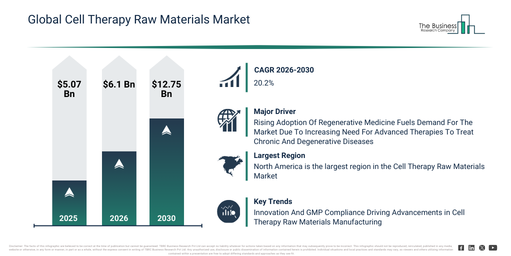
    The market for raw materials used in cell therapy has experienced remarkable expansion over the past few years, with its value projected to climb from $5.07 billion in 2025 to $6.1 billion in 2026, reflecting a compound annual growth rate (CAGR) of 20.4%. This upward trajectory in the historical period was driven by several factors, including the early-stage development of cell therapies, a heavy dependence on animal-derived sera, constraints on scaling up cell culture processes, a rise in academic and clinical investigations focused on cell therapy, and heightened investment flowing into regenerative medicine.

    The cell therapy raw materials sector is anticipated to undergo significant expansion over the coming years. Projections indicate it will reach a value of $12.75 billion by 2030, driven by a compound annual growth rate (CAGR) of 20.2%. This anticipated rise during the forecast period stems from factors such as the commercialization of cell and gene therapies, a growing need for CAR-T treatments, improvements in materials used for cell expansion and cryopreservation, heightened regulatory demands concerning raw material quality, and the scaling up of biopharmaceutical manufacturing capacity. Key developments shaping this period include a growing need for consistent, high-quality cell culture media, a shift toward serum-free and chemically defined raw materials, an expanding pipeline for CAR-T and gene therapy production, a rise in outsourcing to specialized material suppliers, and an intensified focus on meeting regulatory standards and ensuring traceability.

    Download A Free Sample Report For Comprehensive Market Insights:

    https://www.thebusinessresearchcompany.com/sample.aspx?id=27245&type=smp&utm_source=BlogsPR&utm_medium=Paid&utm_campaign=Jul_PR

    Cell Therapy Raw Materials Market Demand Drivers: What Is Fueling Industry Growth?

    The rising application of regenerative medicine is anticipated to boost the cell therapy raw materials market in the coming years. Regenerative medicine is a medical field focused on restoring or establishing normal function by replacing, engineering, or regenerating human cells, tissues, or organs. Its adoption is accelerating due to the increasing prevalence of chronic and degenerative diseases, as these conditions create a demand for therapies that repair or replace damaged tissues rather than merely alleviating symptoms. Cell therapy raw materials support advancements in regenerative medicine by supplying critical components like growth factors, cell culture media, enzymes, and scaffolds, which are necessary for cultivating, expanding, and maintaining therapeutic cells used to repair or regenerate damaged tissues and organs. For example, the National Library of Medicine, a U.S.-based biomedical repository, reported in January 2025 that 32 new gene therapies, including genetically modified cell therapies, had received approval in 2024. Consequently, the expanding use of regenerative medicine is fueling growth in the cell therapy raw materials market.

    Cell Therapy Raw Materials Market Segmentation And Category Breakdown

    The cell therapy raw materials market covered in this report is segmented –

    1) By Therapy Area: Stem Cell Based Raw Materials, Gene Therapy Raw Materials, CAR-T Cell Therapy Raw Materials

    2) By Product Type: Media, Sera, Cell Culture Supplements, Antibodies, Reagents And Buffers, Other Product Types

    3) By End User: Biopharmaceutical And Pharmaceutical Companies, Contract Research Organization And Contract Manufacturing Organization, Other End Users

    Subsegments:

    1) By Stem Cell Based Raw Materials: Growth Factors, Cytokines, Cell Culture Media

    2) By Gene Therapy Raw Materials: Transfection Reagents, Nucleotides And Enzymes, Cell Culture Media For Gene Modification

    3) By Car-T Cell Therapy Raw Materials: T Cell Activation Reagents, Cell Expansion Media, Cryopreservation Agents

    Cell Therapy Raw Materials Market Innovation Trends: Which Developments Are Transforming The Industry?

    Major key players within the cell therapy raw materials market are actively prioritizing the creation of novel solutions, particularly through good manufacturing practice (GMP)-compliant manufacturing, aimed at guaranteeing product safety, uniformity, and adherence to regulatory standards across the cell therapy production workflow. The concept of GMP-compliant manufacturing involves a framework designed to ensure that products are consistently generated and managed in line with quality benchmarks established by regulatory bodies, thereby minimizing risks inherent in pharmaceutical and biotechnological production. As an example, in April 2025, Thermo Fisher Scientific Inc., a US-based enterprise specializing in life sciences and clinical research, unveiled an advanced therapies collaboration center (ATxCC) in the US to facilitate the development and market introduction of cell and gene therapies. This facility expedites cell therapy development by delivering comprehensive cGMP manufacturing assistance, state-of-the-art technologies, and expert process refinement. It encourages collaborative efforts aimed at addressing manufacturing obstacles and accelerating the path to commercialization.

    Cell Therapy Raw Materials Market Competitive Analysis Of Major Industry Participants

    Major companies operating in the cell therapy raw materials market are Thermo Fisher Scientific Inc., Danaher Corporation, Merck KGaA, Lonza Group AG, Sartorius Stedim Biotech SA, Bio-Techne Corporation, Stemcell Technologies Inc., Miltenyi Biotec GmbH, ACROBiosystems Co Ltd., CellGenix GmbH, Promocell GmbH, RoosterBio Inc., Akron Biotech LLC.

    Access The Complete Cell Therapy Raw Materials Market Report:

    https://www.thebusinessresearchcompany.com/report/cell-therapy-raw-materials-global-market-report?utm_source=BlogsPR&utm_medium=Paid&utm_campaign=Jul_PR

    Cell Therapy Raw Materials Market Regional Analysis: Which Region Leads By Revenue?

    North America was the largest region in the cell therapy raw materials market in 2025. Asia-Pacific is expected to be the fastest-growing region in the forecast period. The regions covered in the cell therapy raw materials market report are Asia-Pacific, South East Asia, Western Europe, Eastern Europe, North America, South America, Middle East, Africa.

    Get in touch with us:

    The Business Research Company: https://www.thebusinessresearchcompany.com/?utm_source=BlogsPR&utm_medium=Paid&utm_campaign=home_page_test

    Americas: +1 310-496-7795

    Asia: +44 7882 955267 & +91 8897263534

    Europe: +44 7882 955267

    Email us at: marketing@tbrc.info

    Follow us on:

    LinkedIn: https://in.linkedin.com/company/the-business-research-company

    YouTube: https://www.youtube.com/channel/UC24_fI0rV8cR5DxlCpgmyFQ

    Global Market Model: https://www.thebusinessresearchcompany.com/global-market-model
  • Cell Therapy Human Raw Materials Market Expected To Reach $7.71 Billion By 2030 As Growth Accelerates At 17.6% CAGR

    Cell Therapy Human Raw Materials Market Expected To Reach $7.71 Billion By 2030 As Growth Accelerates At 17.6% CAGR

    Enhanced with market attractiveness analysis, total addressable market evaluation, company benchmarking matrices, interactive Excel dashboards, expanded supply chain intelligence, emerging startup coverage, and detailed product insights, The Business Research Company’s 2026 market reports deliver more actionable and strategically valuable research.

    Cell Therapy Human Raw Materials Market Expansion From $4.02 Billion In 2026 To $7.71 Billion In 2030

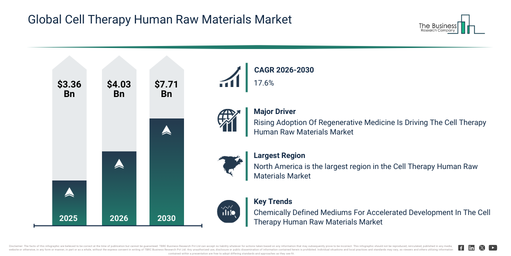
    The market for human raw materials used in cell therapy has experienced significant expansion in recent years. Its value is projected to increase from $3.36 billion in 2025 to $4.03 billion in 2026, reflecting a compound annual growth rate (CAGR) of 19.8%. This historical growth has been driven by factors such as the early uptake of stem cell treatments, the broadening of academic investigations into cell therapy, a rising number of clinical trials focused on cell-based approaches, greater accessibility to biological materials sourced from humans, and increased funding directed toward regenerative medicine research.

    The cell therapy human raw materials market is anticipated to experience significant expansion over the coming years, reaching a value of $7.71 billion by 2030, with a compound annual growth rate (CAGR) of 17.6%. Key drivers behind this forecast period growth include a rising number of approved cell therapy products, growing demand for both allogeneic and autologous therapies, heightened regulatory scrutiny regarding raw material quality, the expansion of commercial-scale cell therapy manufacturing, and an increase in oncology-focused cell therapies. Prominent trends shaping the forecast period encompass a growing preference for xeno-free and human-derived raw materials, an intensified focus on GMP-grade and clinical-grade inputs, enhanced standardization in human cell sourcing and processing, broader raw material requirements for advanced cell therapies, and the establishment of long-term supply agreements for essential human raw materials.

    Download A Free Sample Report For Comprehensive Market Insights:

    https://www.thebusinessresearchcompany.com/sample.aspx?id=15759&type=smp&utm_source=BlogsPR&utm_medium=Paid&utm_campaign=Jul_PR

    Cell Therapy Human Raw Materials Market Growth Drivers: What Factors Are Accelerating Expansion?

    The increasing embrace of regenerative medicine is anticipated to propel the cell therapy human raw materials market forward. This field involves therapeutic methods that repair, replace, or regenerate impaired tissues and organs through stem cells, gene therapy, tissue engineering, or other biological processes aimed at restoring normal function. Its growing popularity stems from biotechnological progress, a deeper comprehension of cellular functions, a heightened demand for tailored treatments, and the capacity to tackle previously unmet medical requirements. By supplying vital biological elements necessary for creating standardized, efficient, and dependable cell-based therapies, the cell therapy human raw materials market plays a key role in bolstering regenerative medicine. As an example, in August 2023, the Alliance for Regenerative Medicine—a US nonprofit—reported 2,760 developers of cell, gene, and tissue-engineering therapies worldwide in the first quarter of 2023, a 101% increase from 1,369 developers in the same period of 2022. Consequently, the growing use of regenerative medicine is fueling the expansion of the cell therapy human raw materials market.

    Cell Therapy Human Raw Materials Market Segment Outlook: Which Categories Are Expanding The Fastest?

    The cell therapy human raw materials market covered in this report is segmented –

    1) By Product: Cell Culture Media, Cell Culture Sera, Cell Culture Supplements, Reagents And Buffers, Other Raw Materials

    2) By Type Of Cell Therapy: Dendritic Cell Therapy, Natural Killer (NK) Cell Therapy, Stem Cell Therapy, T-Cell Therapy

    3) By End-Use: Biopharmaceutical And Pharmaceutical Companies, Contract Research Organizations (CROs) And Contract Manufacturing Organization (CMOs), Academic And Research Institutions

    Subsegments:

    1) By Cell Culture Media: Serum-Free Media, Serum-Based Media, Defined Media, Specialized Media (E.G., For Stem Cells)

    2) By Cell Culture Sera: Human Serum

    3) By Cell Culture Supplements: Growth Factors, Cytokines, Peptides

    4) By Reagents And Buffers: Enzymes (E.G., Trypsin), Ph Buffers, Cryoprotectants

    5) By Other Raw Materials: Cell-Free DNA, Plasma And Platelet-Rich Plasma (PRP)

    Cell Therapy Human Raw Materials Market Trends: What Is Shaping Future Industry Growth?

    Major players in the cell therapy human raw materials market are placing a growing emphasis on the creation of chemically defined cell culture media to speed up the development of cell therapies. A cell culture medium is a nutrient-dense solution that supplies vital nutrients, growth factors, and the right environmental conditions to support the growth and propagation of cells outside their natural setting. As an example, in May 2023, Lonza Group AG, a healthcare manufacturing firm based in Switzerland, introduced the TheraPEAK T-VIVO Cell Culture Medium. This product offers a chemically defined formulation that is free of serum and animal components, incorporates recombinant proteins, provides enhanced support for culture and expansion, and includes application assistance, all of which help ensure consistency, safety, and adherence to regulatory standards in cell therapy production. This medium marks a notable technological leap by removing animal-derived ingredients, featuring a chemically defined composition, and offering regulatory-friendly attributes, thereby enhancing safety, quality, and regulatory compliance.

    Cell Therapy Human Raw Materials Market Key Companies And Competitive Benchmarking

    Major companies operating in the cell therapy human raw materials market are Thermo Fisher Scientific Inc., Merck KGaA, Lonza Group Ltd., Sartorius AG, Miltenyi Biotec, Bio-Techne Corporation, STEMCELL Technologies, PromoCell GmbH, AllCells LLC, BioIVT LLC, ACROBiosystems, Sartorius CellGenix GmbH, RoosterBio Inc., Takara Bio Inc., Grifols S.A., Charles River Laboratories, WuXi AppTec, Catalent Inc., Fujifilm Cellular Dynamics Inc., Orgenesis Inc.

    Access The Complete Cell Therapy Human Raw Materials Market Report:

    https://www.thebusinessresearchcompany.com/report/cell-therapy-human-raw-materials-global-market-report?utm_source=BlogsPR&utm_medium=Paid&utm_campaign=Jul_PR

    Cell Therapy Human Raw Materials Market Geographic Distribution And Regional Opportunities

    North America was the largest region in the cell therapy human raw materials market in 2025. Asia-Pacific is expected to be the fastest-growing region in the forecast period. The regions covered in the cell therapy human raw materials market report are Asia-Pacific, South East Asia, Western Europe, Eastern Europe, North America, South America, Middle East, Africa.

    Get in touch with us:

    The Business Research Company: https://www.thebusinessresearchcompany.com/?utm_source=BlogsPR&utm_medium=Paid&utm_campaign=home_page_test

    Americas: +1 310-496-7795

    Asia: +44 7882 955267 & +91 8897263534

    Europe: +44 7882 955267

    Email us at: marketing@tbrc.info

    Follow us on:

    LinkedIn: https://in.linkedin.com/company/the-business-research-company

    YouTube: https://www.youtube.com/channel/UC24_fI0rV8cR5DxlCpgmyFQ

    Global Market Model: https://www.thebusinessresearchcompany.com/global-market-model
  • Cell Therapy Market Set To Grow From $19.31 Billion In 2026 To $32.47 Billion By 2030 At A CAGR Of 13.9%

    Cell Therapy Market Set To Grow From $19.31 Billion In 2026 To $32.47 Billion By 2030 At A CAGR Of 13.9%

    Through market attractiveness analysis, total addressable market evaluation, company benchmarking matrices, interactive Excel dashboards, expanded supply chain intelligence, emerging startup coverage, and detailed product insights, The Business Research Company’s 2026 market reports provide more actionable and strategically valuable research.

    Cell Therapy Market Forecast Highlighting Growth From $19.31 Billion To $32.47 Billion

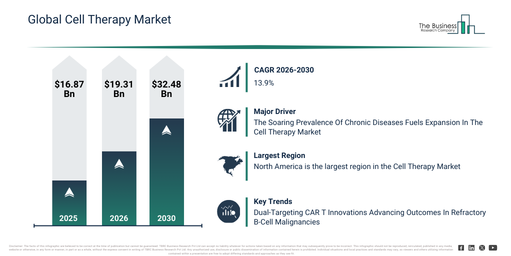
    The cell therapy market has seen substantial expansion in recent years. This market is projected to increase from $16.87 billion in 2025 to $19.31 billion in 2026, reflecting a compound annual growth rate (CAGR) of 14.5%. Key drivers behind this historical growth include the elevated expense of autologous treatments, scarce donor resources, the absence of uniform manufacturing processes, promising results from early-phase clinical trials, and a growing occurrence of chronic illnesses.

    The cell therapy market is projected to experience substantial expansion over the coming years, reaching a valuation of $32.48 billion by 2030, driven by a compound annual growth rate of 13.9 percent. Several factors are fueling this anticipated growth, including progress in gene editing, the automation of cell production processes, increased funding for cell therapy startups, a rising need for regenerative medicine, and the broadening of applications into oncology and cardiovascular disease.

    Download A Free Sample Report For Comprehensive Market Insights:

    https://www.thebusinessresearchcompany.com/sample.aspx?id=3393&type=smp&utm_source=BlogsPR&utm_medium=Paid&utm_campaign=Jul_PR

    Cell Therapy Market Growth Factors Supporting Long-Term Expansion

    The expansion of the cell therapy market has been driven by the increasing incidence of chronic diseases. As defined by the US Centers for Disease Control and Prevention (CDC), these are conditions persisting for a year or longer, necessitating ongoing medical care, limiting daily activities, or both—encompassing ailments like heart disease, cancer, diabetes, and Parkinson’s disease. Stem cell treatments offer potential benefits for patients with spinal cord injuries, type 1 diabetes, Parkinson’s disease (PD), heart disease, cancer, and osteoarthritis. For example, in July 2024, the CDC—a US-based national public health agency—announced important updates in public health initiatives. Every year, heart disease or stroke claims over 944,800 American lives, representing more than a third of all deaths nationwide. Cancer is diagnosed in 1.7 million people annually in the U.S., with over 600,000 deaths, positioning it as the second most common cause of mortality. Furthermore, more than 38 million Americans live with diabetes, while an additional 98 million adults are prediabetic, elevating their susceptibility to type 2 diabetes. This condition can lead to severe outcomes such as heart disease, kidney failure, and blindness. Obesity impacts 20% of children and 42% of adults, further raising the risk for chronic issues like type 2 diabetes, heart disease, and certain cancers. This growing burden of chronic diseases has spurred demand for cell therapies, thereby fueling growth in the cell therapy market.

    Cell Therapy Market Segment Landscape: Which Areas Lead Market Development?

    The cell therapy market covered in this report is segmented –

    1) By Technique: Stem Cell Therapy, Cell Vaccine, Adoptive Cell Transfer (ACT), Fibroblast Cell Therapy, Chondrocyte Cell Therapy

    2) By Therapy Type: Allogeneic Therapies, Autologous Therapies

    3) By Application: Oncology, Cardiovascular Disease (CVD), Orthopedic, Wound Healing, Other Applications

    Subsegments:

    1) By Stem Cell Therapy: Hematopoietic Stem Cell Transplantation, Mesenchymal Stem Cell Therapy, Embryonic Stem Cell Therapy, Induced Pluripotent Stem Cell Therapy

    2) By Cell Vaccine: Dendritic Cell Vaccine, Tumor-Infiltrating Lymphocyte (TIL) Vaccine, Antigen-Specific Cell Vaccine

    3) By Adoptive Cell Transfer (ACT): CAR T-Cell Therapy, T-Cell Receptor (TCR) Therapy, Natural Killer (NK) Cell Therapy

    4) By Fibroblast Cell Therapy: Dermal Fibroblast Therapy, Adipose-Derived Stem Cell Therapy

    5) By Chondrocyte Cell Therapy: Autologous Chondrocyte Implantation (ACI), Chondral Graft Therapy

    Cell Therapy Market Industry Trends Shaping Future Revenue Growth

    Major players in the cell therapy sector are advancing next-generation, multi-targeted treatments backed by promising early-stage clinical data, aiming to boost therapeutic efficacy and address unmet needs in complex cancers. For example, in June 2025, Johnson & Johnson, a US pharmaceutical giant, unveiled encouraging first results from its Phase 1b trial of JNJ-4496—a dual-targeting CAR T-cell therapy that binds both CD19 and CD20 for relapsed or refractory large B-cell lymphoma. Initial data presented at the 2025 EHA Congress indicated robust response rates, achieving 75–80% complete responses at the recommended Phase 2 dose with no Grade 3–4 cytokine release syndrome reported. The regimen showed a favorable safety profile, manageable neurotoxicity, and meaningful activity even in heavily pretreated patients. These outcomes underscore the promise of next-generation dual-targeting CAR T strategies and reaffirm Johnson & Johnson’s dedication to pioneering novel therapies for B-cell malignancies.

    Cell Therapy Market Industry Leaders And Market Competition

    Major companies operating in the cell therapy market are Stempeutics Research Pvt. Ltd., Osiris Therapeutics Inc., Vericel Corporation, AlloSource, Anterogen Co. Ltd., MediPost Co. Ltd., Pharmicell Co. Ltd., Corestem Inc., Stemedica Cell Technologies Inc., Adaptimmune Therapeutics plc, Mesoblast Ltd., Cell Medica Ltd., Cellerant Therapeutics Inc., Kolon TissueGene Inc., Athersys Inc., Forticell Bioscience Inc., Bone Therapeutics, Holostem Terapie Avanzate S.r.l, Fibrocell Science Inc., AlloCure Inc., TiGenix NV, Cells for Cells, Cellular Biomedicine Group Inc.

    Access The Complete Cell Therapy Market Report:

    https://www.thebusinessresearchcompany.com/report/cells-therapy-global-market-report?utm_source=BlogsPR&utm_medium=Paid&utm_campaign=Jul_PR

    Cell Therapy Market Largest Region By Revenue And Market Share

    North America was the largest region in the cell therapy market in 2025. The regions covered in the cell therapy market report are Asia-Pacific, South East Asia, Western Europe, Eastern Europe, North America, South America, Middle East, Africa.

    Get in touch with us:

    The Business Research Company: https://www.thebusinessresearchcompany.com/?utm_source=BlogsPR&utm_medium=Paid&utm_campaign=home_page_test

    Americas: +1 310-496-7795

    Asia: +44 7882 955267 & +91 8897263534

    Europe: +44 7882 955267

    Email us at: marketing@tbrc.info

    Follow us on:

    LinkedIn: https://in.linkedin.com/company/the-business-research-company

    YouTube: https://www.youtube.com/channel/UC24_fI0rV8cR5DxlCpgmyFQ

    Global Market Model: https://www.thebusinessresearchcompany.com/global-market-model
  • Cell Regeneration Medicine Market Opportunities Are Emerging Beyond Traditional Growth Areas

    Cell Regeneration Medicine Market Opportunities Are Emerging Beyond Traditional Growth Areas

    Delivering more actionable and strategically valuable research, The Business Research Company’s 2026 market reports feature market attractiveness analysis, total addressable market evaluation, company benchmarking matrices, interactive Excel dashboards, expanded supply chain intelligence, emerging startup coverage, and detailed product insights.

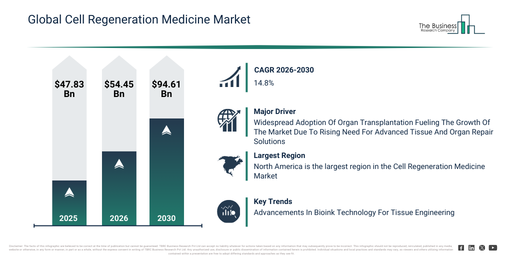
    Cell Regeneration Medicine Market Revenue Growth Supported By A CAGR Of 94.61% Through 2030

    The cell regeneration medicine industry has experienced swift expansion in recent years, with its market value projected to increase from $47.83 billion in 2025 to $54.45 billion in 2026, reflecting a compound annual growth rate (CAGR) of 13.8%. This historical growth can be explained by the early implementation of stem cell treatments, the creation of fundamental tissue engineering products, a growing incidence of chronic conditions, governmental financial support for regenerative research, and progress in methods for isolating cells.

    The market for cell regeneration medicine is projected to undergo significant expansion over the coming years, with its value anticipated to reach $94.61 billion by 2030, reflecting a compound annual growth rate (CAGR) of 14.8%. This upward trajectory during the forecast period can be linked to rising gene therapy applications, the incorporation of artificial intelligence into cell therapy research, a growing preference for personalized medicine, the worldwide broadening of clinical trials, and the advancement of scalable bioreactor technologies. Among the key developments shaping the forecast period are personalized cell therapies, regenerative tissue engineering, improved cell culture methodologies, automated laboratory systems, and the continued evolution of laboratory solutions designed to enhance efficiency.

    Download A Free Sample Report For Comprehensive Market Insights:

    https://www.thebusinessresearchcompany.com/sample.aspx?id=12884&type=smp&utm_source=BlogsPR&utm_medium=Paid&utm_campaign=Jul_PR

    Cell Regeneration Medicine Market Demand Drivers Creating New Revenue Opportunities

    The growing acceptance of organ transplantation is expected to drive expansion in the cell regeneration medicine sector moving forward. Organ transplantation refers to a surgical process where an organ is taken from a donor and inserted into a recipient to substitute a malfunctioning or absent organ. This procedure has gained traction because it extends life expectancy and reduces the need for treatments like dialysis. Cell regenerative medicine holds promise for advancing organ transplantation by concentrating on healing and regenerating impaired tissues or organs. As an example, in January 2025, the Organ Procurement and Transplantation Network, a US-based independent nonprofit organization, stated that the number of organ transplants exceeded 48,000 in 2024, representing a 3.3% increase from the count in 2023. Hence, the broad uptake of organ transplants is fueling growth in the cell regeneration medicine market.

    Cell Regeneration Medicine Market Segments: Where Are The Largest Growth Opportunities?

    The cell regeneration medicine market covered in this report is segmented –

    1) By Product: Therapeutics, Tools, Banks, Services

    2) By Therapeutic Category: Dermatology, Musculoskeletal, Immunology And Inflammation, Oncology, Cardiovascular, Ophthalmology, Other Therapeutic Categories

    3) By End-User: Hospitals And Clinics, Commercial Industries, Government And Academic Research Institutes

    Subsegments:

    1) By Therapeutics: Stem Cell Therapies, Gene Therapies, Tissue Engineering Products

    2) By Tools: Cell Culture Equipment, Bioreactors, Imaging Systems

    3) By Banks: Stem Cell Banks, Tissue Banks, Cord Blood Banks

    4) By Services: Cell Processing Services, Research And Development Services, Clinical Trial Services

    Cell Regeneration Medicine Market Trends Driving Strategic Industry Expansion

    Major players within the cell regeneration medicine market are placing strong emphasis on creating medical-grade bioink in order to achieve a competitive advantage. This type of bioink is a specifically designed material for bioprinting that complies with strict regulations concerning safety and biocompatibility, allowing it to be used in tissue engineering, regenerative medicine, and the construction of biologically relevant structures for medical purposes. As an example, in October 2023, CELLINK, a firm headquartered in Sweden that focuses on cell regeneration medicine products and technologies, introduced CELLINK Vivoink. This product represents the first medical-grade bioink created specifically for clinical use in regenerative medicine and tissue engineering, having been refined to deliver superior printability, mechanical stability, and durability.

    Cell Regeneration Medicine Market Major Participants And Competitive Dynamics

    Major companies operating in the cell regeneration medicine market are Pfizer Inc., Johnson & Johnson, Novartis AG, Bristol-Myers Squibb Company, Medtronic Plc, Amgen Inc., ViaCord LLC, Stryker Corporation, Zimmer Biomet Holdings Inc., Cook Biotech Inc., Integra LifeSciences Holdings Corporation, NuVasive Inc., Organogenesis Holdings Inc., Takara Bio Inc., MiMedx Group Inc., Vericel Corporation, Mesoblast Limited, Osiris Therapeutics Inc., Guanhao Biotech Co. Ltd., CordLife Group Limited, FUJIFILM Cellular Dynamics Inc., Cesca Therapeutics Inc., U.S. Stem Cell Inc., Cytori Therapeutics Inc.

    Access The Complete Cell Regeneration Medicine Market Report:

    https://www.thebusinessresearchcompany.com/report/cell-regeneration-medicine-global-market-report?utm_source=BlogsPR&utm_medium=Paid&utm_campaign=Jul_PR

    Cell Regeneration Medicine Market Regional Analysis And Leading Geography

    North America was the largest region in the cell regeneration medicine market in 2025. The regions covered in the cell regeneration medicine market report are Asia-Pacific, South East Asia, Western Europe, Eastern Europe, North America, South America, Middle East, Africa.

    Get in touch with us:

    The Business Research Company: https://www.thebusinessresearchcompany.com/?utm_source=BlogsPR&utm_medium=Paid&utm_campaign=home_page_test

    Americas: +1 310-496-7795

    Asia: +44 7882 955267 & +91 8897263534

    Europe: +44 7882 955267

    Email us at: marketing@tbrc.info

    Follow us on:

    LinkedIn: https://in.linkedin.com/company/the-business-research-company

    YouTube: https://www.youtube.com/channel/UC24_fI0rV8cR5DxlCpgmyFQ

    Global Market Model: https://www.thebusinessresearchcompany.com/global-market-model
  • Cell Line Development Market Expansion Is Opening New Pathways For Strategic Investment

    Cell Line Development Market Expansion Is Opening New Pathways For Strategic Investment

    Enhanced with market attractiveness analysis, total addressable market evaluation, company benchmarking matrices, interactive Excel dashboards, expanded supply chain intelligence, emerging startup coverage, and detailed product insights, The Business Research Company’s 2026 market reports deliver more actionable and strategically valuable research.

    Cell Line Development Market Value Expansion And Long-Term Growth Outlook

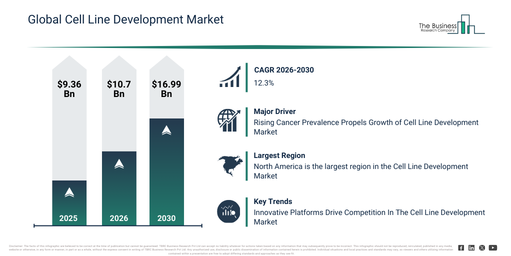
    The market for cell line development has experienced substantial expansion in recent years, climbing from $9.36 billion in 2025 to a projected $10.7 billion in 2026, reflecting a compound annual growth rate (CAGR) of 14.4%. This historical growth was driven by several factors, including the increasing development of monoclonal antibodies, the broadening scope of biopharmaceutical research efforts, a greater reliance on mammalian expression systems, heightened demand for in vitro toxicity evaluation, and expanding life science research activities in both academic and industrial settings.

    The cell line development sector is anticipated to witness substantial expansion in the upcoming years, with projections indicating it will reach $16.99 billion by 2030, driven by a compound annual growth rate (CAGR) of 12.3%. This forecasted growth is fueled by factors such as an increase in biologics and biosimilar pipelines, heightened requirements for scalable bioproduction platforms, greater investment in cell and gene therapies, a growing preference for continuous cell lines, and the broadening scope of tissue engineering and regenerative medicine research. Key trends shaping this period include a higher uptake of stable and high-yield cell lines, an expanding demand for serum-free and chemically defined media, a stronger emphasis on cell line stability and genetic integrity, wider utilization of mammalian cell lines in bioproduction, and an increase in outsourcing of cell line development services.

    Download A Free Sample Report For Comprehensive Market Insights:

    https://www.thebusinessresearchcompany.com/sample.aspx?id=15536&type=smp&utm_source=BlogsPR&utm_medium=Paid&utm_campaign=Jul_PR

    Cell Line Development Market Expansion Supported By Key Demand Factors

    The rising incidence of cancer is anticipated to drive forward the expansion of the cell line development market. Cancer encompasses various diseases marked by the abnormal proliferation and dissemination of defective cells within the body. This increase in cancer cases is being fueled by factors such as an aging population, lifestyle-related risks, rising obesity rates, and genetic vulnerabilities. Through the development of reliable cellular models, the cell line development market facilitates cancer research by enabling drug screening, efficacy assessments, and the identification of promising therapeutic options. As an example, the World Health Organization (WHO), a United Nations agency headquartered in Switzerland, projected in February 2024 that global cancer diagnoses will surpass 35 million by 2050—a 77% jump from the 20 million cases recorded in 2022. Consequently, this growing prevalence of cancer is fueling momentum in the cell line development market.

    Cell Line Development Market Segment Analysis: What Are The Major Market Categories?

    The cell line development market covered in this report is segmented –

    1) By Product: Reagents And Media, Equipment, Accessories And Consumables

    2) By Source: Mammalian, Non-Mammalian

    3) By Cell Line: Recombinant, Hybridomas, Continuous Cell Line, Primary Cell Line

    4) By Application: Bioproduction, Drug Discovery, Toxicity Testing, Tissue Engineering, Research

    Subsegments:

    1) By Reagents And Media: Cell Culture Media, Serum-Free Media, Recombinant Protein Supplements, Growth Factors, Cytokines And Hormones, Buffers And Salts

    2) By Equipment: Bioreactors And Fermenters, Incubators, Cell Counters And Analyzers, Cell Sorters, Cryopreservation Equipment, Filtration And Separation Equipment

    3) By Accessories And Consumables: Culture Vessels (Flasks, Plates), Pipettes And Pipette Tips, Cell Culture Inserts, Syringes And Needles, Cryovials And Freezing Containers, Petri Dishes

    Cell Line Development Market Growth Trends Influencing Competitive Dynamics

    Leading players in the cell line development sector are increasingly prioritizing the creation of advanced platforms to optimize workflows, boost productivity, and expedite biologic drug development. These innovative cell line development platforms represent sophisticated, engineered systems aimed at enhancing cell line creation by improving selection efficiency, elevating protein expression levels, and shortening overall development timelines for biologic therapeutics. For example, in January 2023, Abzena, a UK-based provider of outsourced research, development, and manufacturing services, introduced AbZelect and AbZelectPro, two next-generation platforms designed to accelerate the cell line development process for biologic drug programs, delivering higher productivity per manufacturing run, increased capacity, reduced operational expenses, and faster delivery of essential therapies to patients.

    Cell Line Development Market Leading Companies Driving Competitive Growth

    Major companies operating in the cell line development market are Thermo Fisher Scientific Inc., Danaher Corporation, Merck KGaA, GE Health Care, Corning Inc., Lonza Group Ltd., WuXi AppTec, Sartorius AG, GenScript Biotech Corporation, FUJIFILM Diosynth Biotechnologies, KBI Biopharma Inc., Advanced Instruments LLC, Cyagen, Horizon Discovery Group Plc, Probiogen AG, PromoCell GmbH, Premas Biotech, Eurofins Scientific SE, Promega Corporation, Rentschler Biopharma SE

    Access The Complete Cell Line Development Market Report:

    https://www.thebusinessresearchcompany.com/report/cell-line-development-global-market-report?utm_source=BlogsPR&utm_medium=Paid&utm_campaign=Jul_PR

    Cell Line Development Market Geographic Analysis: Where Is Demand Growing The Fastest?

    North America was the largest region in the cell line development market in 2025. The regions covered in the cell line development market report are Asia-Pacific, South East Asia, Western Europe, Eastern Europe, North America, South America, Middle East, Africa.

    Get in touch with us:

    The Business Research Company: https://www.thebusinessresearchcompany.com/?utm_source=BlogsPR&utm_medium=Paid&utm_campaign=home_page_test

    Americas: +1 310-496-7795

    Asia: +44 7882 955267 & +91 8897263534

    Europe: +44 7882 955267

    Email us at: marketing@tbrc.info

    Follow us on:

    LinkedIn: https://in.linkedin.com/company/the-business-research-company

    YouTube: https://www.youtube.com/channel/UC24_fI0rV8cR5DxlCpgmyFQ

    Global Market Model: https://www.thebusinessresearchcompany.com/global-market-model
  • Cell Culture Media Market For Regenerative Medicines Market Trends Are Creating New Opportunities For Industry Leaders

    Cell Culture Media Market For Regenerative Medicines Market Trends Are Creating New Opportunities For Industry Leaders

    Through market attractiveness analysis, total addressable market evaluation, company benchmarking matrices, interactive Excel dashboards, expanded supply chain intelligence, emerging startup coverage, and detailed product insights, The Business Research Company’s 2026 market reports provide more actionable and strategically valuable research.

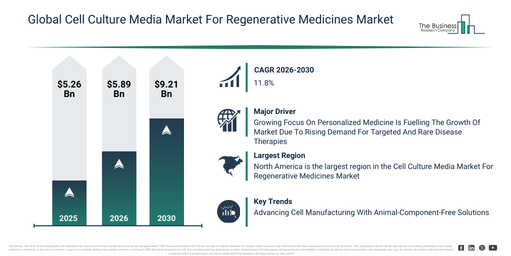
    Cell Culture Media Market For Regenerative Medicines Market Expected To Reach $9.21 Billion By 2030 At 11.8% CAGR

    The market for cell culture media used in regenerative medicine has experienced significant expansion in recent years. Its value is projected to increase from $5.26 billion in 2025 to $5.89 billion in 2026, reflecting a compound annual growth rate (CAGR) of 12.0%. This historical growth has been driven by several factors, including the rising application of cell culture in academic research, heightened investments in regenerative medicine, continued dependence on conventional basal media formulations, the broadening of research and development activities within the pharmaceutical and biotechnology sectors, and the growing incidence of chronic and degenerative diseases.

    The cell culture media market for regenerative medicines is projected to experience rapid expansion in the coming years. By 2030, its value is anticipated to reach $9.21 billion, reflecting a compound annual growth rate (CAGR) of 11.8%. This growth during the forecast period is driven by progress in stem cell and gene therapy development, a heightened demand for personalized regenerative treatments, the expansion of cell therapy manufacturing facilities, a rising preference for chemically defined and specialty media, and an increasing number of regulatory approvals for regenerative medicine products. Key trends shaping this period include a growing need for serum-free and chemically defined media, broader adoption of cell culture media in stem cell and cell therapy contexts, a heightened emphasis on optimizing media for cell differentiation and proliferation, the expansion of regenerative medicine research and clinical trials, and an increasing requirement for scalable and reproducible cell culture solutions.

    Download A Free Sample Report For Comprehensive Market Insights:

    https://www.thebusinessresearchcompany.com/sample.aspx?id=27241&type=smp&utm_source=BlogsPR&utm_medium=Paid&utm_campaign=Jul_PR

    Cell Culture Media Market For Regenerative Medicines Market Growth Drivers And Industry Catalysts

    The expanding emphasis on personalized medicine is anticipated to boost the cell culture media market for regenerative medicines going forward. Personalized medicine is a healthcare approach that tailors treatments and preventive measures to an individual’s genetic profile, environment, and lifestyle choices. This growing focus is driven by the heightened demand for targeted therapies in rare and complex diseases, fueled by advancements in genomic research and greater access to precise diagnostic tools. The cell culture media market for regenerative medicines supports this by enabling the creation of customized culture media designed to grow cells from specific patients for individual regenerative therapies. For example, in February 2024, the Personalized Medicine Coalition, a US-based nonprofit, reported that the FDA approved 16 new personalized treatments for rare disease patients in 2023, compared to just 6 in 2022. Hence, the increased emphasis on personalized medicine is propelling growth in the cell culture media market for regenerative medicines.

    Cell Culture Media Market For Regenerative Medicines Market Segment Breakdown: Which Categories Generate The Most Revenue?

    The cell culture media market for regenerative medicines market covered in this report is segmented –

    1) By Type: Liquid Media, Semi-Solid And Solid Media

    2) By Application: Tissue Engineering, Stem Cell Research, Cell Therapy, Drug Discovery And Development, Other Applications

    3) By End User: Pharmaceutical And Biotechnology Companies, Academic And Research Institutes, Hospitals And Diagnostic Laboratories, Cell Banks, Other End Users

    Subsegments:

    1) By Liquid Media: Basal Media, Serum-Free Media, Chemically Defined Media, Protein-Free Media, Specialty Media

    2) By Semi-Solid And Solid Media: Agar-Based Media, Gelatin-Based Media, Collagen-Based Media, Methylcellulose Media

    Cell Culture Media Market For Regenerative Medicines Market Trends Influencing Long-Term Demand

    Leading players in the regenerative medicine cell culture media sector are prioritizing the creation of innovative products, including animal-component-free formulations, to improve cell growth uniformity, boost safety, satisfy regulatory standards, and facilitate scalable clinical production. An animal-component-free medium refers to a cell culture solution devoid of any animal-derived substances, aimed at enhancing consistency, safety, and adherence to regulations in research and therapeutic contexts. For example, in May 2023, Lonza Group AG, a life sciences firm based in Switzerland, launched TheraPEAK T-VIVO Cell Culture Medium, a novel chemically defined, animal-component-free formulation tailored to optimize CAR T-cell manufacturing. By removing dependence on animal or human serum, which is often linked to significant variability, risks of adventitious agents, and the requirement for extensive safety assessments and batch reserves, this new medium boosts process uniformity, improves oversight, and simplifies regulatory compliance, ultimately cutting expenses and shortening time-to-market. Offering exceptional performance without the necessity for human serum supplementation, TheraPEAK T-VIVO represents a strategic milestone in Lonza’s goal to accelerate and streamline cell therapy commercialization for its worldwide clientele.

    Cell Culture Media Market For Regenerative Medicines Market Key Players And Strategic Industry Positioning

    Major companies operating in the cell culture media market for regenerative medicines market are Thermo Fisher Scientific Inc., Danaher Corporation, Merck KGaA, Avantor Inc., Lonza Group AG, Cytiva Life Sciences, Sartorius AG, Bio-Techne Corporation, Miltenyi Biotec B.V. & Co. KG, STEMCELL Technologies Inc., FUJIFILM Irvine Scientific Inc., PromoCell GmbH, Cell Biologics Inc., Xcell Biosciences Inc.

    Access The Complete Cell Culture Media Market For Regenerative Medicines Market Report:

    https://www.thebusinessresearchcompany.com/report/cell-culture-media-market-for-regenerative-medicines-global-market-report?utm_source=BlogsPR&utm_medium=Paid&utm_campaign=Jul_PR

    Cell Culture Media Market For Regenerative Medicines Market Global Footprint: Which Region Holds Market Leadership?

    North America was the largest region in the cell culture media market for regenerative medicines market in 2025. Asia-Pacific is expected to be the fastest-growing region in the forecast period. The regions covered in the cell culture media market for regenerative medicines market report are Asia-Pacific, South East Asia, Western Europe, Eastern Europe, North America, South America, Middle East, Africa.

    Get in touch with us:

    The Business Research Company: https://www.thebusinessresearchcompany.com/?utm_source=BlogsPR&utm_medium=Paid&utm_campaign=home_page_test

    Americas: +1 310-496-7795

    Asia: +44 7882 955267 & +91 8897263534

    Europe: +44 7882 955267

    Email us at: marketing@tbrc.info

    Follow us on:

    LinkedIn: https://in.linkedin.com/company/the-business-research-company

    YouTube: https://www.youtube.com/channel/UC24_fI0rV8cR5DxlCpgmyFQ

    Global Market Model: https://www.thebusinessresearchcompany.com/global-market-model
  • Cell Culture Media Market Growth Is Reshaping Competitive Advantage Across The Industry

    Cell Culture Media Market Growth Is Reshaping Competitive Advantage Across The Industry

    Delivering more actionable and strategically valuable research, The Business Research Company’s 2026 market reports feature market attractiveness analysis, total addressable market evaluation, company benchmarking matrices, interactive Excel dashboards, expanded supply chain intelligence, emerging startup coverage, and detailed product insights.

    Cell Culture Media Market Size And Revenue Forecast Through 2030

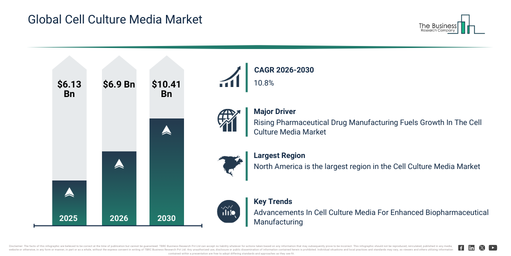
    The cell culture media market has experienced strong growth in recent years, expanding from $6.13 billion in 2025 to an anticipated $6.9 billion in 2026, reflecting a compound annual growth rate (CAGR) of 12.6%. This historic expansion can be linked to several key drivers, such as the increasing need for biopharmaceutical manufacturing, a rise in academic and clinical research endeavors, the emergence of stem cell research, the creation of traditional media formulations, and a heightened understanding of drug screening methods.

    Over the coming years, the cell culture media market is projected to experience substantial expansion, reaching an estimated $10.41 billion by 2030 with a compound annual growth rate of 10.8%. This anticipated growth during the forecast period is driven by several key factors, such as progress in precision medicine, a greater uptake of automated liquid handling systems, expanding applications in tissue engineering and regenerative medicine, rising demand for serum-free and chemically defined media, and the broadening scope of cell-based diagnostics and therapies. Moreover, notable trends shaping the market include the emergence of customized cell culture media formulations, increased stem cell research activities, further refinement of serum-free and chemically defined media, integration of automation and high-throughput screening technologies, and continued development within tissue engineering and regenerative medicine.

    Download A Free Sample Report For Comprehensive Market Insights:

    https://www.thebusinessresearchcompany.com/sample.aspx?id=14871&type=smp&utm_source=BlogsPR&utm_medium=Paid&utm_campaign=Jul_PR

    Cell Culture Media Market Opportunity Drivers: What Is Creating New Revenue Potential?

    The expected growth of the cell culture media market is being driven forward by rising pharmaceutical drug production. These drugs are defined as substances or medications applied to prevent, treat, or diagnose medical conditions in humans or animals. This manufacturing surge is largely due to higher rates of chronic and infectious diseases, along with an expanding elderly population that requires more medications for age-related health issues. By supplying essential nutrients and a suitable environment, cell culture media support cell growth and maintenance, which is crucial for producing therapeutic proteins or molecules in pharmaceutical manufacturing. For example, the Association of the British Pharmaceutical Industry (ABPI), a UK-based organization, reported in December 2024 that clinical trial initiations for drugs in the UK climbed from 411 in 2022 to 426 in 2023. Consequently, the increased manufacturing of pharmaceutical drugs is fueling expansion in the cell culture media market.

    Cell Culture Media Market Segmentation: How Is The Market Structured Across Key Categories?

    The cell culture media market covered in this report is segmented –

    1) By Media Format: Liquid Media, Semi-Solid And Solid Media

    2) By Product: Serum Free Media, Classical Media, Stem Cell Culture Media, Specialty Media, Chemically Defined Media, Other Cell Culture Media

    3) By Application: Biopharmaceutical Production, Diagnostics, Drug Screening And Development, Tissue Engineering And Regenerative Medicine, Other Applications

    4) By End User: Biotechnology And Pharmaceutical Industry, Academic Institute, Research Laboratory, Other End Users

    Subsegments:

    1) By Liquid Media: Classical Media, Chemically Defined Media, Serum-Free Media, Specialty Media (Protein-Free, Low-Glucose Media)

    2) By Semi-Solid And Solid Media: Semi-Solid Media (Agar-Based), Solid Media (Petri Dishes, Agar Plates For Colony Formation)

    Cell Culture Media Market Innovation Trends Driving Future Development

    Major industry players within the cell culture media space are concentrating on the creation of advanced cell culture media, specifically chemically defined and animal-component-free variants, as a strategy to secure a market advantage. These specific formulations, free from animal components and chemically defined, are intended to boost both cell growth and protein output, thereby enhancing the scalability and effectiveness of biopharmaceutical production workflows. As an example, in July 2023, Lonza Group Ltd., a healthcare firm headquartered in Switzerland, introduced the TheraPRO CHO Media System. This state-of-the-art cell culture platform was developed to elevate productivity and quality in the manufacture of therapeutic proteins. Customized to optimize the production of therapeutic monoclonal antibodies, the system employs a chemically defined, animal-component-free, two-part production method that streamlines media preparation and supports scalability.

    Cell Culture Media Market Competitive Landscape And Leading Companies

    Major companies operating in the cell culture media market are Thermo Fisher Scientific Inc., Danaher Corporation, Merck KGaA, Becton Dickinson and Company, Corning Incorporated, Lonza Group AG, Sartorius AG, CYTIVA Lifesciences, Bio-Rad Laboratories Inc., STEMCELL Technologies Inc., Miltenyi Biotec, Takara Bio, MP Biomedicals, FUJIFILM Irvine Scientific Inc., Promocell Inc., InSphero AG, PeproTech Inc., HiMedia Laboratories Pvt. Ltd., Elabscience Biotechnology Inc., Capricorn Scientific GmbH, CAISSON Laboratories Inc., Cell Biologics Inc., Nucleus Biologics LLC

    Access The Complete Cell Culture Media Market Report:

    https://www.thebusinessresearchcompany.com/report/cell-culture-media-global-market-report?utm_source=BlogsPR&utm_medium=Paid&utm_campaign=Jul_PR

    Cell Culture Media Market Regional Distribution: Which Areas Drive Market Expansion?

    North America was the largest region in the cell culture media market in 2025. Asia-Pacific is expected to be the fastest-growing region in the forecast period. The regions covered in the cell culture media market report are Asia-Pacific, South East Asia, Western Europe, Eastern Europe, North America, South America, Middle East, Africa.

    Get in touch with us:

    The Business Research Company: https://www.thebusinessresearchcompany.com/?utm_source=BlogsPR&utm_medium=Paid&utm_campaign=home_page_test

    Americas: +1 310-496-7795

    Asia: +44 7882 955267 & +91 8897263534

    Europe: +44 7882 955267

    Email us at: marketing@tbrc.info

    Follow us on:

    LinkedIn: https://in.linkedin.com/company/the-business-research-company

    YouTube: https://www.youtube.com/channel/UC24_fI0rV8cR5DxlCpgmyFQ

    Global Market Model: https://www.thebusinessresearchcompany.com/global-market-model
  • Cell Culture Market Forecast Signals New Revenue Opportunities Through 2030

    Cell Culture Market Forecast Signals New Revenue Opportunities Through 2030

    Enhanced with market attractiveness analysis, total addressable market evaluation, company benchmarking matrices, interactive Excel dashboards, expanded supply chain intelligence, emerging startup coverage, and detailed product insights, The Business Research Company’s 2026 market reports deliver more actionable and strategically valuable research.

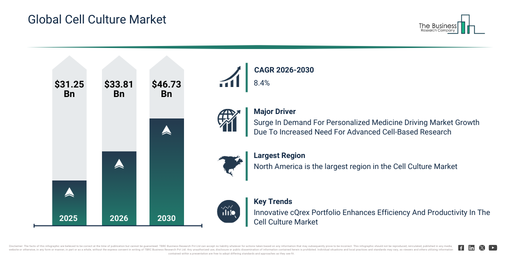
    Cell Culture Market Growth From $33.8 Billion In 2026 To $46.72 Billion By 2030 At A CAGR Of 8.4%

    The cell culture market has experienced robust expansion over the past few years. Its value is projected to rise from $31.25 billion in 2025 to $33.81 billion in 2026, reflecting a compound annual growth rate (CAGR) of 8.2%. This historical growth has been driven by several factors, including advancements in life science research, a rise in academic funding, the broadening of the biopharmaceutical sector, the extensive application of cell lines, and a growing preference for in vitro testing methods.

    The cell culture market is anticipated to experience robust expansion in the coming years, reaching a projected value of $46.73 billion by 2030 with a compound annual growth rate (CAGR) of 8.4%. This forecasted growth is fueled by advancements in regenerative medicine, a surge in biologics development, innovations in cell culture media, the broadening scope of personalized medicine, and heightened research and development investments. Key trends driving this period include escalating demand for biopharmaceutical manufacturing, progress in stem cell research, wider application in cancer research, a growing preference for sophisticated cell lines, and an increased emphasis on serum-free media solutions.

    Download A Free Sample Report For Comprehensive Market Insights:

    https://www.thebusinessresearchcompany.com/sample.aspx?id=3392&type=smp&utm_source=BlogsPR&utm_medium=Paid&utm_campaign=Jul_PR

    Cell Culture Market Growth Momentum: Which Factors Are Influencing Demand?

    The cell culture market is anticipated to experience significant growth, driven by an increasing demand for personalized medicine. Also referred to as precision medicine, this approach involves medical treatments and therapies specifically designed around the unique traits of each patient. The rising preference for personalized medicine stems from individuals seeking healthcare that is customized to their distinct genetic, molecular, and environmental profiles, which in turn enhances treatment effectiveness and minimizes adverse reactions. Cell culture serves as an essential foundation in this field, supporting research, drug development, disease modeling, and therapeutic strategies that are individually tailored. As an example, in February 2024, the Personalized Medicine Coalition, a US-based nonprofit advocating for individualized care, reported that out of 53 new therapeutic molecular entities approved by the Food and Drug Administration in 2023, 20 were classified as personalized medicines, alongside six new gene and cell-based therapies, representing roughly 38% of all new molecular entities authorized that year. Consequently, the escalating demand for personalized medicine is fueling expansion in the cell culture market.

    Cell Culture Market Segmentation Trends And Revenue Drivers

    The cell culture market covered in this report is segmented –

    1) By Type: Primary Cell Culture, Secondary Cell Culture, Cell Line

    2) By Media: Natural, Artificial

    3) By Applications: Stem Cell Technologies, Cancer Research, Biopharmaceutical, Tissue Engineering & Regenerative Medicine, Other Applications

    Subsegments:

    1) By Primary Cell Culture: Adherent Cell Culture, Suspension Cell Culture

    2) By Secondary Cell Culture: Continuous Cell Lines, Finite Cell Lines

    3) By Cell Line: Immortalized Cell Lines, Transformed Cell Lines

    Cell Culture Market Trends Reshaping Industry Growth

    Major players in the cell culture industry are creating innovative solutions—like the cQrex portfolio—aimed at enhancing cell culture efficiency and tackling ongoing cultivation challenges. This portfolio includes a collection of peptides and the keto acid AKG, formulated to improve the stability or solubility of essential nutrients, thereby boosting productivity. For example, in June 2023, Evonik Industries AG, a specialty chemicals company based in Germany, unveiled the cQrex line to support greater efficiency and output. These ingredients serve as a valuable resource for scientists working to optimize their cell cultures, especially those producing high-value products such as monoclonal antibodies and vaccines. The portfolio is valued for its high purity, broad applicability, and user-friendly nature. Ultimately, these components help researchers increase both the efficiency and productivity of their cell culture processes.

    Cell Culture Market Industry Leaders: Which Organizations Are Driving Competition?

    Major companies operating in the cell culture market are Becton Dickinson, Corning Incorporation, Eppendorf, GE Healthcare, Merck KGaA, Thermo Fisher Scientific, Lonza Group, HiMedia Laboratories, Agilent Technologies Inc., PromoCell GmbH, CellGenix GmbH, InvivoGen, Greiner Bio-One, Irvine Scientific, Cell Culture Company (CCC) LLC, Sera Care Life Sciences Incorporation, American Type Culture Collection, Miltenyi Biotec, Bel-Art Products Inc., Sumitomo Bakelite, EMD Millipore, VWR International LLC, WHEATON IndustriesInc, Sartorius AG, Nunc Systems, Pall Corporation

    Access The Complete Cell Culture Market Report:

    https://www.thebusinessresearchcompany.com/report/cell-cultures-global-market-report?utm_source=BlogsPR&utm_medium=Paid&utm_campaign=Jul_PR

    Cell Culture Market Leading Geography: Which Region Generates The Most Revenue?

    North America was the largest region in the cell culture market in 2025. The Middle East is expected to be the fastest-growing region in the global cell culture market share during the forecast period. The regions covered in the cell culture market report are Asia-Pacific, South East Asia, Western Europe, Eastern Europe, North America, South America, Middle East, Africa.

    Get in touch with us:

    The Business Research Company: https://www.thebusinessresearchcompany.com/?utm_source=BlogsPR&utm_medium=Paid&utm_campaign=home_page_test

    Americas: +1 310-496-7795

    Asia: +44 7882 955267 & +91 8897263534

    Europe: +44 7882 955267

    Email us at: marketing@tbrc.info

    Follow us on:

    LinkedIn: https://in.linkedin.com/company/the-business-research-company

    YouTube: https://www.youtube.com/channel/UC24_fI0rV8cR5DxlCpgmyFQ

    Global Market Model: https://www.thebusinessresearchcompany.com/global-market-model
  • Cell Banking Outsourcing Market Growth Is Accelerating As Industry Transformation Continues

    Cell Banking Outsourcing Market Growth Is Accelerating As Industry Transformation Continues

    Through market attractiveness analysis, total addressable market evaluation, company benchmarking matrices, interactive Excel dashboards, expanded supply chain intelligence, emerging startup coverage, and detailed product insights, The Business Research Company’s 2026 market reports provide more actionable and strategically valuable research.

    Cell Banking Outsourcing Market Expansion Outlook: What Revenue Opportunities Lie Ahead?

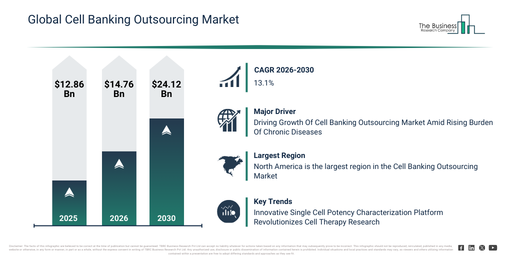
    The cell banking outsourcing market has experienced substantial growth over recent years. Projections indicate an increase from $12.86 billion in 2025 to $14.76 billion in 2026, reflecting a compound annual growth rate (CAGR) of 14.8%. This historic expansion has been driven by several key factors, including the advancement of biologics manufacturing, a growing dependence on outsourced bioprocessing solutions, the expansion of vaccine production initiatives, an escalating demand for standardized cell line storage, and cost optimization strategies implemented by pharmaceutical firms.

    Over the coming years, the cell banking outsourcing market is anticipated to expand at a rapid pace, reaching $24.12 billion by 2030, with a compound annual growth rate (CAGR) of 13.1%. This forecasted growth is driven by a rise in cell and gene therapy pipelines, an increased need for viral vector manufacturing, heightened regulatory emphasis on cell line traceability, the progression of personalized medicine, and the broadening scope of contract development and manufacturing organizations. Key trends shaping the period ahead include a greater shift toward outsourcing GMP-compliant cell banking services, a growing demand for capabilities in multi-species cell banking, the standardization of documentation and traceability for cell lines, the expansion of viral and vector cell banking tailored to advanced therapies, and an increasing preference for long-term storage agreements for cell banks.

    Download A Free Sample Report For Comprehensive Market Insights:

    https://www.thebusinessresearchcompany.com/sample.aspx?id=15754&type=smp&utm_source=BlogsPR&utm_medium=Paid&utm_campaign=Jul_PR

    Cell Banking Outsourcing Market Expansion Drivers: What Is Shaping Future Growth?

    The anticipated increase in chronic disease prevalence is set to drive expansion within the cell banking outsourcing market moving forward. Chronic diseases are defined as long-term medical conditions that emerge gradually and continue over prolonged periods, frequently demanding sustained care. Factors such as lifestyle modifications, aging demographics, and hereditary susceptibilities are fueling this growing burden. By offering specialized infrastructure, cutting-edge technologies, and expert proficiency for the efficient storage, preservation, and processing of cellular materials essential to therapeutic development, the cell banking outsourcing sector aids chronic disease research. In April 2025, the NHS Confederation, a UK-based national body, projected that by 2035, approximately 17% of the United Kingdom’s population might be managing four or more chronic conditions. Consequently, the escalating prevalence of chronic diseases is fueling the growth of the cell banking outsourcing market.

    Cell Banking Outsourcing Market Segment Analysis Highlighting Growth Areas

    The cell banking outsourcing market covered in this report is segmented –

    1) By Type: Master Cell Banking, Working Cell Banking, Viral Cell Banking

    2) By Cell Type: Stem Cell Banking, Non-Stem Cell Banking

    3) By Phase: Bank Storage, Bank Characterization And Testing, Bank Preparation

    Subsegments:

    1) By Master Cell Banking: Human Master Cell Bank, Animal Master Cell Bank

    2) By Working Cell Banking: Human Working Cell Bank, Animal Working Cell Bank

    3) By Viral Cell Banking: Virus Bank For Vaccine Production, Viral Vector Bank For Gene Therapy, Adenovirus Bank

    Cell Banking Outsourcing Market Strategic Trends: What Is Defining The Next Phase Of Growth?

    Leading firms in the cell banking outsourcing space are prioritizing the creation of cutting-edge solutions, including single-cell potency characterization platforms, to offer more accurate potency measurements and aid in the production of superior cell therapies. This type of platform is an advanced analytical tool that assesses the functional performance and therapeutic promise of individual cells within mixed populations, providing detailed understanding of cell dynamics, efficacy, and mode of action for both research and clinical uses. As an example, in January 2024, Cellply Srl, a biotechnology company headquartered in Italy, unveiled VivaCyte, a complete single-cell potency characterization system that merges potency evaluation with immunophenotyping, offering fully automated workflows, single-cell detail, and swift multiparameter functional testing to shorten development timelines, cut expenses, and lower risk, while allowing thorough screening of various cell therapy products across different procedures.

    Cell Banking Outsourcing Market Leading Companies: Who Holds Significant Market Presence?

    Major companies operating in the cell banking outsourcing market are Lonza Group Ltd., WuXi AppTec, Charles River Laboratories, Labcorp Drug Development, Covance Inc., SGS Life Sciences, Sartorius AG, BioReliance, Cleancells, Clean Biologics, Texcell, Goodwin Biotechnology Inc., Perfectus Biomed Limited, BioStorage Technologies Inc., Toxikon Corp., PX’Therapeutics SA, Sigma-Aldrich Co. Ltd., Transcell Biolife Pvt Ltd, Eurofins Scientific SE, ViruSure GmbH

    Access The Complete Cell Banking Outsourcing Market Report:

    https://www.thebusinessresearchcompany.com/report/cell-banking-outsourcing-global-market-report?utm_source=BlogsPR&utm_medium=Paid&utm_campaign=Jul_PR

    Cell Banking Outsourcing Market Regional Outlook: Where Are The Largest Opportunities Located?

    North America was the largest region in the cell banking outsourcing market in 2025. Asia-Pacific is expected to be the fastest-growing region in the forecast period. The regions covered in the cell banking outsourcing market report are Asia-Pacific, South East Asia, Western Europe, Eastern Europe, North America, South America, Middle East, Africa.

    Get in touch with us:

    The Business Research Company: https://www.thebusinessresearchcompany.com/?utm_source=BlogsPR&utm_medium=Paid&utm_campaign=home_page_test

    Americas: +1 310-496-7795

    Asia: +44 7882 955267 & +91 8897263534

    Europe: +44 7882 955267

    Email us at: marketing@tbrc.info

    Follow us on:

    LinkedIn: https://in.linkedin.com/company/the-business-research-company

    YouTube: https://www.youtube.com/channel/UC24_fI0rV8cR5DxlCpgmyFQ

    Global Market Model: https://www.thebusinessresearchcompany.com/global-market-model