Category: Pharmaceuticals

  • Biologics API Market Revenue Forecast to Hit $101.84 Billion by 2030 at 8.8% CAGR

    Biologics API Market Revenue Forecast to Hit $101.84 Billion by 2030 at 8.8% CAGR

    The Business Research Company’s 2026 market reports feature advanced enhancements such as market attractiveness analysis, total addressable market evaluation, company benchmarking matrices, interactive Excel dashboards, expanded supply chain intelligence, emerging startup coverage, and detailed product insights, delivering more actionable and strategically valuable research.

    What Market Value Trend Is Expected For The Biologics Active Pharmaceutical Ingredient (API) Market From 2026 To 2030?

    In recent years, the market for biologics active pharmaceutical ingredient (api) has demonstrated considerable growth. This market is projected to expand from $66.82 billion in 2025 to $72.57 billion in 2026, registering a compound annual growth rate (CAGR) of 8.6%. Historically, this expansion has been driven by the rising incidence of chronic and autoimmune conditions, the broadening of monoclonal antibody development pipelines, the surge in recombinant protein therapeutics, greater investments in biologics manufacturing infrastructure, and increased outsourcing to biologics cmos.

    The biologics active pharmaceutical ingredient (API) market size is projected to experience strong growth in the next few years. It is anticipated to expand to $101.84 billion by 2030, demonstrating a compound annual growth rate (CAGR) of 8.8%. The growth during this forecast period can be attributed to the increasing development of cell and gene therapies, the rising demand for personalized biologic medicines, the expansion of commercial-scale biologics production, a growing focus on process scalability and consistency, and an increasing regulatory emphasis on API quality and traceability. Major trends expected in the forecast period include the increasing adoption of single-use bioprocessing systems, a rising demand for high-purity biologics APIs, the expansion of large-scale commercial biomanufacturing, a growing focus on cold chain integrity, and enhanced integration of advanced purification technologies.

    Download A Free Sample Report For Comprehensive Market Insights:

    https://www.thebusinessresearchcompany.com/sample.aspx?id=33040&type=smp

    What Major Growth Factors Are Impacting The Biologics Active Pharmaceutical Ingredient (API) Market?

    The increasing need for personalized medicine is projected to propel the expansion of the biologics active pharmaceutical ingredients market moving forward. Personalized medicine refers to a healthcare approach that customizes disease prevention, diagnosis, and treatment strategies according to an individual’s genetic profile, biomarkers, lifestyle, and environmental elements. The rising demand for personalized medicine is driven by its improved treatment effectiveness, as therapies tailored to a person’s genetic and molecular makeup enhance clinical outcomes while simultaneously reducing unfavorable drug reactions. This growing requirement for personalized medicine supports the growth in biologics active pharmaceutical ingredient (API) production by escalating the necessity for precise, patient-specific biologic compounds. This, in turn, boosts the demand for complex, high-quality biologic APIs utilized in precision treatment strategies. For instance, in February 2024, information from the Personalized Medicine Coalition, a US-based nonprofit industry alliance, indicated that the Food and Drug Administration approved 16 new personalized treatments for rare diseases in 2023, which was a substantial increase from 6 approvals in 2022. Therefore, the escalating demand for personalized medicine is a significant catalyst for the growth of the biologics active pharmaceutical ingredients market.

    Which Segment Divisions Form The Structure Of The Biologics Active Pharmaceutical Ingredient (API) Market?

    The biologics active pharmaceutical ingredient (api) market covered in this report is segmented –

    1) By Type Of Modality: Monoclonal Antibodies; Recombinant Proteins; Vaccines; Enzymes; Other Biologics

    2) By Scale Of Operation: Preclinical Or Clinical Scale; Commercial Scale

    3) By Service: Upstream Processing; Downstream Purification; Formulation And Fill-Finish Services; Analytical Testing And Quality Control

    4) By End-Users: Pharmaceutical Companies; Biotechnology Companies; Academic And Research Institutions; Contract Research Organizations

    Subsegments:

    1) By Monoclonal Antibodies: Therapeutic Monoclonal Antibodies; Diagnostic Monoclonal Antibodies; Human Monoclonal Antibodies

    2) By Recombinant Proteins: Hormonal Proteins; Growth Factor Proteins; Cytokine Proteins

    3) By Vaccines: Live Attenuated Vaccines; Inactivated Vaccines; Subunit Vaccines

    4) By Enzymes: Replacement Enzymes; Digestive Enzymes; Metabolic Enzymes

    5) By Other Biologics: Cell And Gene Therapy Products; Fusion Proteins; Plasma Derived Products

    What Trends Are Shaping The Biologics Active Pharmaceutical Ingredient (API) Market Structure?

    Major companies active in the biologics active pharmaceutical ingredients (APIs) market are concentrating on innovating advanced solutions, such as biosimilar development platforms, to improve drug effectiveness and broaden treatment accessibility. Biosimilar development platforms denote structured frameworks and methods that facilitate the creation of biologic medications closely resembling approved reference products, thereby guaranteeing comparable safety, potency, and quality while simultaneously addressing concerns of affordability and supply. For instance, in March 2023, Enzene Biosciences, an India-based biopharmaceutical company, launched its biosimilar rendition of adalimumab, a commonly prescribed therapeutic monoclonal antibody. This offering aims to deliver clinical performance on par with the original product while also providing a cost-effective choice for patients and healthcare systems. The platform incorporates advanced bioprocessing and analytical methods to uphold consistent batch quality, achieve high purity, and satisfy regulatory benchmarks, which enables large-scale production and a steady supply. It is specifically designed to cater to the escalating demand for readily available biologic therapies across various chronic and autoimmune diseases, thereby expanding patient reach and offering sustainable treatment alternatives.

    Who Are The Prominent Players Across The Biologics Active Pharmaceutical Ingredient (API) Market?

    Major companies operating in the biologics active pharmaceutical ingredient (api) market are F Hoffmann-La Roche Ltd, Pfizer Inc, AbbVie Inc, Sanofi SA, Novartis AG, AstraZeneca PLC, Bristol-Myers Squibb Company, Thermo Fisher Scientific Inc, GSK plc, Eli Lilly and Company, Amgen Inc, Danaher Corporation, Boehringer Ingelheim International GmbH, AGC Inc, Biogen Inc, Lonza Group AG, Novo Holdings AS, FUJIFILM Biotechnologies Inc, Curia Global Inc, Almac Group Ltd, Syngene International Limited, and Hepalink USA Inc.

    Access The Complete Biologics Active Pharmaceutical Ingredient (API) Market Report:

    https://www.thebusinessresearchcompany.com/report/biologics-active-pharmaceutical-ingredient-api-market-report

    Which Region Leads The Biologics Active Pharmaceutical Ingredient (API) Market By Size?

    North America was the largest region in the biologics active pharmaceutical ingredients (API) market in 2025. Asia-Pacific is expected to be the fastest-growing region in the forecast period. The regions covered in the biologics active pharmaceutical ingredient (api) market report are Asia-Pacific, South East Asia, Western Europe, Eastern Europe, North America, South America, Middle East, Africa.

    Access a Customized Biologics Active Pharmaceutical Ingredient (API) Market Report for Deeper Competitive Insights

    Get in touch with us:

    The Business Research Company: https://www.thebusinessresearchcompany.com/

    Americas: +1 310-496-7795

    Asia: +44 7882 955267 & +91 8897263534

    Europe: +44 7882 955267

    Email us at: marketing@tbrc.info

    Follow us on:

    LinkedIn: https://in.linkedin.com/company/the-business-research-company

    YouTube: https://www.youtube.com/channel/UC24_fI0rV8cR5DxlCpgmyFQ

    Global Market Model: https://www.thebusinessresearchcompany.com/global-market-model

  • Global Bioconjugation Market Projected to Reach $11.11 Billion by 2030 with 12.7% CAGR

    Global Bioconjugation Market Projected to Reach $11.11 Billion by 2030 with 12.7% CAGR

    The Business Research Company’s 2026 market reports feature advanced enhancements such as market attractiveness analysis, total addressable market evaluation, company benchmarking matrices, interactive Excel dashboards, expanded supply chain intelligence, emerging startup coverage, and detailed product insights, delivering more actionable and strategically valuable research.

    How Does The Forecasted Market Size Of The Bioconjugation Market Compare Between 2026 And 2030?

    The bioconjugation market size has experienced significant growth in recent years. The market is set to expand from $6.12 billion in 2025 to $6.89 billion in 2026, achieving a compound annual growth rate (CAGR) of 12.5%. This historical growth can be ascribed to several factors, including increasing biologics research activity, the expansion of antibody-based therapeutics, the development of diagnostic assays, the rising adoption of protein labeling techniques, and the availability of standardized conjugation kits.

    The bioconjugation market is poised for rapid expansion in the coming years, with its size projected to reach $11.12 billion in 2030, demonstrating a compound annual growth rate (CAGR) of 12.7%. This anticipated growth can be attributed to the increasing development of targeted drug conjugates, a rise in investments in precision medicine research, the expansion of companion diagnostics, the growing application of conjugated biomolecules in imaging, and an increasing demand for scalable conjugation workflows. Throughout the forecast period, significant trends are expected to include the increasing adoption of site-specific conjugation techniques, a rising use of advanced linker chemistries, a growing demand for high-purity conjugation reagents, the expansion of automated conjugation platforms, and an enhanced focus on stability and reproducibility.

    Download A Free Sample Report For Comprehensive Market Insights:

    https://www.thebusinessresearchcompany.com/sample.aspx?id=33039&type=smp

    What Market Drivers Are Helping Shape The Bioconjugation Market Expansion?

    The bioconjugation market is expected to expand moving forward, driven by the escalating need for targeted therapeutics. These are medical treatments specifically crafted to identify and act upon disease-causing cells or molecules, thereby enhancing treatment effectiveness and minimizing harm to healthy tissues. The surge in targeted therapeutics is attributed to the rising desire for precision medicine, which enables more exact treatment strategies, leading to improved patient outcomes and fewer adverse reactions. Bioconjugation plays a crucial role in supporting targeted therapeutics by allowing for the precise linkage of drugs to specific targeting molecules, thus facilitating selective delivery to diseased cells and boosting therapeutic efficacy. For instance, in February 2024, information from the West China Hospital, Sichuan University, a China-based medical research center focused on advancing targeted therapies, indicated that over 47 novel targeted therapeutics were approved by the U.S. Food and Drug Administration in 2023. This figure represented about 85.5% of all new drug approvals, highlighting an increasing emphasis on precision-targeted treatment options in the United States. Therefore, the growing demand for targeted therapeutics is propelling the growth of the bioconjugation market.

    How Are Different Segment Groups Identified Within The Bioconjugation Market?

    The bioconjugation market covered in this report is segmented –

    1) By Product And Service: Consumables; Instruments; Service

    2) By Biomolecule Type: Antibodies; Proteins; Peptides; Oligonucleotides; Other Biomolecules

    3) By Technique: Chemical Conjugation; Enzyme-Mediated Conjugation; Click Chemistry; Photoreactive Crosslinking; Other Techniques

    4) By Application: Therapeutics; Research And Development; Diagnostics

    5) By End Use: Pharmaceutical And Biotechnology Companies; Contract Research Organizations (CRO) And Contract Manufacturing Organizations (CMOs); Academic And Research Institutes; Hospitals, Clinical And Diagnostic Laboratories

    Subsegments:

    1) By Consumables: Reagents; Buffers; Linkers; Kits; Resins; Chromatography Materials; Protein Purification Materials

    2) By Instruments: Chromatography Systems; Spectroscopy Systems; Electrophoresis Systems; Automated Conjugation Platforms; Imaging Systems; Bioreactors

    3) By Service: Custom Conjugation Services; Antibody Modification Services; Protein Labeling Services; Contract Research Services; Analytical Testing Services; Purification Services

    Which Trends Are Supporting The Evolution Of The Bioconjugation Market?

    Leading companies in the bioconjugation market are prioritizing the creation of advanced platforms, such as site-specific conjugation methods, to enhance drug delivery accuracy, improve coupling stability, and reduce off-target toxicity. Site-specific conjugation methods are bioconjugation techniques that enable the controlled attachment of therapeutic molecules, like drugs or RNAi, to biomolecules such as antibodies, peptides, or oligonucleotides, ensuring reliable activity and safety. For instance, in August 2023, BOCSCI Inc., a US-based provider of research chemicals and bioconjugation services, introduced the XDC bioconjugation platform, a next-generation solution aimed at optimizing bioconjugate synthesis. By employing advanced conjugation strategies, including unnatural amino acid incorporation, engineered cysteine conjugation, enzyme-assisted ligation, and glycoconjugation generation, the platform allows for the precise manufacturing of antibody-drug conjugates, siRNA conjugates, and other targeted drug delivery molecules, thereby empowering researchers to develop safer and more effective biopharmaceuticals.

    Which Companies Form The Competitive Landscape Of The Bioconjugation Market?

    Major companies operating in the bioconjugation market are Thermo Fisher Scientific Inc., Merck KGaA, Danaher Corporation, Lonza Group AG, Agilent Technologies Inc., Charles River Laboratories International Inc., Sartorius AG, Bio-Rad Laboratories Inc., Vector Laboratories Inc., Promega Corporation, LGC Biosearch Technologies Ltd., TriLink BioTechnologies LLC, Creative PEGWorks Inc., Lumiprobe Corporation, Biotium Inc., Jena Bioscience GmbH, Quanta BioDesign Ltd., Setareh Biotech Inc., Baseclick GmbH, Biosynth Carbosynth Ltd., Glen Research Inc., BroadPharm Inc., and Biorbyt Ltd.

    Access The Complete Bioconjugation Market Report:

    https://www.thebusinessresearchcompany.com/report/bioconjugation-market-report

    Which Region Has The Strongest Presence In The Bioconjugation Market?

    North America was the largest region in the bioconjugation market in 2025. Asia-Pacific is expected to be the fastest-growing region in the forecast period. The regions covered in the bioconjugation market report are Asia-Pacific, South East Asia, Western Europe, Eastern Europe, North America, South America, Middle East, Africa.

    Access a Customized Bioconjugation Market Report for Deeper Competitive Insights

    Get in touch with us:

    The Business Research Company: https://www.thebusinessresearchcompany.com/

    Americas: +1 310-496-7795

    Asia: +44 7882 955267 & +91 8897263534

    Europe: +44 7882 955267

    Email us at: marketing@tbrc.info

    Follow us on:

    LinkedIn: https://in.linkedin.com/company/the-business-research-company

    YouTube: https://www.youtube.com/channel/UC24_fI0rV8cR5DxlCpgmyFQ

    Global Market Model: https://www.thebusinessresearchcompany.com/global-market-model

  • Global CRISPR Screening Market Analysis 2026–2030 Offering Strategic Insights for Businesses

    Global CRISPR Screening Market Analysis 2026–2030 Offering Strategic Insights for Businesses

    The Business Research Company’s 2026 market reports feature advanced enhancements such as market attractiveness analysis, total addressable market evaluation, company benchmarking matrices, interactive Excel dashboards, expanded supply chain intelligence, emerging startup coverage, and detailed product insights, delivering more actionable and strategically valuable research.

    What Is The Expected Market Size Of The Arrayed Clustered Regularly Interspaced Short Palindromic Repeats (CRISPR) Screening Market In 2026 And How Much Will It Reach By 2030?

    The market size for arrayed clustered regularly interspaced short palindromic repeats (crispr) screening has seen rapid growth recently. It is forecast to increase from $1.52 billion in 2025 to $1.79 billion in 2026, achieving a compound annual growth rate (CAGR) of 17.5%. The expansion witnessed in prior periods can be attributed to the broader scope of functional genomics research, the availability of crispr editing reagents, the development of academic screening programs, the early adoption of arrayed screening methods, and the increased application of cell-based assays.

    The arrayed clustered regularly interspaced short palindromic repeats (crispr) screening market size is forecast to experience significant growth in the upcoming years, reaching $3.43 billion by 2030, with a compound annual growth rate (CAGR) of 17.7%. This expansion during the forecast period can be attributed to a heightened need for precision drug discovery, increasing investments in gene therapy research, broader applications for disease modeling, a rising adoption of bioinformatics-driven screening, and strengthened collaboration between academia and industry. Prominent trends expected in this timeframe include a growing demand for targeted gene validation screens, increased deployment of high-throughput arrayed crispr assays, greater integration of phenotypic data analytics, an expansion of custom crispr screening services, and an enhanced emphasis on the accuracy of functional genomics.

    Download A Free Sample Report For Comprehensive Market Insights:

    https://www.thebusinessresearchcompany.com/sample.aspx?id=33018&type=smp

    Which Growth Factors Are Strengthening The Arrayed Clustered Regularly Interspaced Short Palindromic Repeats (CRISPR) Screening Market Landscape?

    An elevated emphasis on personalized medicine is anticipated to stimulate the expansion of the arrayed clustered regularly interspaced short palindromic repeats (CRISPR) screening market in the coming years. This medical discipline tailors therapeutic and preventative methods according to a person’s unique genetic makeup, biological factors, and lifestyle attributes. Its uptake is growing, driven by advancements in genomics and molecular diagnostics, enabling therapies to be precisely matched to an individual’s genetic profile for improved results. Arrayed CRISPR screening supports personalized medicine through the systematic evaluation of how particular gene edits influence individual cell reactions. This facilitates the discovery of patient-specific drug targets, the forecasting of treatment effectiveness, and the creation of customized therapies informed by an individual’s genetic and cellular characteristics. As an illustration, in February 2024, the Personalized Medicine Coalition, a US-based non-profit organization, reported that the FDA cleared 16 novel personalized treatments for patients with rare diseases in 2023, an increase from six approvals in 2022. Among the personalized treatments sanctioned in 2023 were also seven medications for cancer and three for various other illnesses and states. Consequently, the heightened emphasis on personalized medicine is propelling the expansion of the arrayed clustered regularly interspaced short palindromic repeats (CRISPR) screening market.

    Which Segment Groups Define The Arrayed Clustered Regularly Interspaced Short Palindromic Repeats (CRISPR) Screening Market Landscape?

    The arrayed clustered regularly interspaced short palindromic repeats (crispr) screening market covered in this report is segmented –

    1) By Product Type: Clustered Regularly Interspaced Short Palindromic Repeats Libraries; Reagents And Consumables; Instruments; Software And Services

    2) By Application: Functional Genomics; Drug Discovery; Disease Modeling; Gene Validation; Other Applications

    3) By End User: Pharmaceutical And Biotechnology Companies; Academic And Research Institutes; Contract Research Organizations; Other End Users

    Subsegments:

    1) By Clustered Regularly Interspaced Short Palindromic Repeats Libraries: Genome Wide Knockout Libraries; Targeted Gene Libraries; Activation Libraries; Repression Libraries; Custom Designed Libraries

    2) By Reagents And Consumables: Guide Ribonucleic Acid Reagents; Cas Enzyme Reagents; Transfection Reagents; Cell Culture Reagents; Assay And Detection Reagents

    3) By Instruments: Automated Liquid Handling Systems; High Throughput Screening Systems; Cell Imaging Systems; Flow Cytometry Instruments; Genomic Analysis Instruments

    4) By Software And Services: Screening Design Software; Data Analysis Software; Bioinformatics Services; Screening Execution Services; Custom Assay Development Services

    What Trends Are Driving Changes In The Arrayed Clustered Regularly Interspaced Short Palindromic Repeats (CRISPR) Screening Market?

    Companies operating in the arrayed clustered regularly interspaced short palindromic repeats (CRISPR) screening market are concentrating on forging strategic partnerships to enhance the precision of high-throughput phenotypic screening. A strategic partnership represents a formal collaboration where organizations pool resources, expertise, or technologies to attain shared goals, facilitating faster innovation, mitigating risk, and broadening market reach without requiring a merger or acquisition. For instance, in November 2023, AstraZeneca Plc, a UK-based science-led biopharmaceutical company, collaborated with the Medical Research Council (MRC), a UK-based government agency, and the Milner Therapeutics Institute (MTI) at the University of Cambridge, a UK-based biomedical research institute, to launch a Functional Genomics Screening Laboratory (FGSL). This state-of-the-art facility is dedicated to advancing drug discovery by mapping gene-phenotype relationships in chronic conditions such as cardiovascular and metabolic disorders, thereby boosting UK genomics leadership through open academic collaborations. Key advantages include high-throughput automation for accurate imaging and phenotyping in organoids or iPSCs, surpassing the effectiveness of pooled methods; benefits extend to providing free access for researchers, accelerating target validation, and sharing expertise to expedite the development of therapies.

    Who Are The Businesses Driving Activity In The Arrayed Clustered Regularly Interspaced Short Palindromic Repeats (CRISPR) Screening Market?

    Major companies operating in the arrayed clustered regularly interspaced short palindromic repeats (crispr) screening market are Thermo Fisher Scientific Inc, Merck KGaA, GE HealthCare Technologies Inc, Applied Biological Materials Inc, Agilent Technologies Inc, Charles River Laboratories International Inc, Integrated DNA Technologies Inc, GenScript Biotech Corporation, Synthego Holdings LLC, Santa Cruz Biotechnology Inc, Creative Biolabs Inc, VectorBuilder Inc, Admera Health LLC, Addgene Inc, Ncardia, BioCat GmbH, Cellecta Inc, GeneCopoeia Inc, Creative Biogene Inc, and Aelian Biotechnology.

    Access The Complete Arrayed Clustered Regularly Interspaced Short Palindromic Repeats (CRISPR) Screening Market Report:

    https://www.thebusinessresearchcompany.com/report/arrayed-clustered-regularly-interspaced-short-palindromic-repeats-crispr-screening-market-report

    Which Region Contributes The Most To The Arrayed Clustered Regularly Interspaced Short Palindromic Repeats (CRISPR) Screening Market?

    North America was the largest region in the arrayed clustered regularly interspaced short palindromic repeats (CRISPR) screening market in 2025. Asia-Pacific is expected to be the fastest-growing region in the forecast period. The regions covered in the arrayed clustered regularly interspaced short palindromic repeats (crispr) screening market report are Asia-Pacific, South East Asia, Western Europe, Eastern Europe, North America, South America, Middle East, Africa.

    Access a Customized Arrayed Clustered Regularly Interspaced Short Palindromic Repeats (CRISPR) Screening Market Report for Deeper Competitive Insights

    Get in touch with us:

    The Business Research Company: https://www.thebusinessresearchcompany.com/

    Americas: +1 310-496-7795

    Asia: +44 7882 955267 & +91 8897263534

    Europe: +44 7882 955267

    Email us at: marketing@tbrc.info

    Follow us on:

    LinkedIn: https://in.linkedin.com/company/the-business-research-company

    YouTube: https://www.youtube.com/channel/UC24_fI0rV8cR5DxlCpgmyFQ

    Global Market Model: https://www.thebusinessresearchcompany.com/global-market-model

  • Antibiotics API Market Trends and Growth Opportunities Across 2026–2030

    Antibiotics API Market Trends and Growth Opportunities Across 2026–2030

    The Business Research Company’s 2026 market reports feature advanced enhancements such as market attractiveness analysis, total addressable market evaluation, company benchmarking matrices, interactive Excel dashboards, expanded supply chain intelligence, emerging startup coverage, and detailed product insights, delivering more actionable and strategically valuable research.

    How Is The Market Value Of The Antibiotics Active Pharmaceutical Ingredient (API) Market Projected To Expand During 2026–2030?

    The antibiotics active pharmaceutical ingredient (API) market size has experienced rapid expansion in recent years. It is anticipated to grow from $26.4 billion in 2025 to $29.26 billion in 2026, exhibiting a compound annual growth rate (CAGR) of 10.8%. The historical growth of this market is attributable to the widespread increase in global antibiotic consumption, the availability of low-cost manufacturing regions, the expansion of generic pharmaceutical production, a rising incidence of bacterial infections, and the early practice of outsourcing API manufacturing.

    The antibiotics active pharmaceutical ingredient (api) market is anticipated to undergo significant expansion in the coming years, with its size projected to reach $44.5 billion in 2030, driven by a compound annual growth rate (CAGR) of 11.1%. This projected growth during the forecast period stems from factors such as a heightened focus on managing antimicrobial resistance, increased investments in domestic api manufacturing, a growing need for hospital-grade antibiotics, the broadening of regulated pharmaceutical markets, and a greater emphasis on the security of supply chains. Key developments expected within this period involve the greater integration of fermentation-based api production, an elevated emphasis on high-purity antibiotic apis, an escalating demand for broad-spectrum antibiotics, the expansion of contract api manufacturing services, and a strengthened commitment to regulatory adherence.

    Download A Free Sample Report For Comprehensive Market Insights:

    https://www.thebusinessresearchcompany.com/sample.aspx?id=33016&type=smp

    Which Major Factors Are Contributing To The Development Of The Antibiotics Active Pharmaceutical Ingredient (API) Market?

    The growing occurrence of bacterial infections is projected to stimulate the expansion of the antibiotics active pharmaceutical ingredient (API) market in the future. These infections are conditions resulting from detrimental bacteria invading the human body, necessitating antibacterial interventions. The escalation in bacterial infections is largely attributable to increasing rates of antibiotic-resistant bacteria, which pose significant challenges to existing treatment options and result in more frequent, severe, and enduring illnesses. The active pharmaceutical ingredient (API) for antibiotics is vital for creating and producing effective antibiotic medications that address bacterial infections and adapt to resistance patterns by providing essential active drug substances. For instance, in November 2024, the UK Health Security Agency, a UK-based government department, reported an estimated 66,730 serious antibiotic-resistant infections in 2023, accompanied by a 2.4% rise in antibiotic consumption compared to 2022. Consequently, the increasing prevalence of bacterial infections is propelling the growth of the antibiotic active pharmaceutical ingredient (API) market.

    How Is Segment Classification Applied In The Antibiotics Active Pharmaceutical Ingredient (API) Market?

    The antibiotics active pharmaceutical ingredient (api) market covered in this report is segmented –

    1) By Product Type: Beta-Lactams; Aminoglycosides; Macrolides; Tetracyclines; Glycopeptides; Quinolones; Polypeptides; Sulfonamides

    2) By Formulation Type: Injectable; Oral; Topical; Inhalation

    3) By Route of Administration: Oral Administration; Intravenous Administration; Intramuscular Administration; Topical Application; Inhalation Therapy

    4) By Therapeutic Application: Bacterial Infections; Respiratory Tract Infections; Skin Infections; Sepsis

    5) By End-User: Hospitals; Pharmacies; Clinics; Homecare Settings; Long-Term Care Facilities

    Subsegments:

    1) By Beta-Lactams: Penicillins; Cephalosporins; Carbapenems; Monobactams

    2) By Aminoglycosides: Streptomycin Based Antibiotics; Gentamicin Based Antibiotics; Amikacin Based Antibiotics; Tobramycin Based Antibiotics

    3) By Macrolides: Erythromycin Based Antibiotics; Azithromycin Based Antibiotics; Clarithromycin Based Antibiotics; Roxithromycin Based Antibiotics

    4) By Tetracyclines: Doxycycline Based Antibiotics; Minocycline Based Antibiotics; Oxytetracycline Based Antibiotics; Chlortetracycline Based Antibiotics

    5) By Glycopeptides: Vancomycin Based Antibiotics; Teicoplanin Based Antibiotics; Dalbavancin Based Antibiotics; Oritavancin Based Antibiotics

    6) By Quinolones: Ciprofloxacin Based Antibiotics; Levofloxacin Based Antibiotics; Moxifloxacin Based Antibiotics; Ofloxacin Based Antibiotics

    7) By Polypeptides: Bacitracin Based Antibiotics; Polymyxin Based Antibiotics; Colistin Based Antibiotics; Gramicidin Based Antibiotics

    8) By Sulfonamides: Sulfamethoxazole Based Antibiotics; Sulfadiazine Based Antibiotics; Sulfisoxazole Based Antibiotics; Sulfacetamide Based Antibiotics

    What Trends Are Influencing The Antibiotics Active Pharmaceutical Ingredient (API) Market Outlook?

    Leading companies in the antibiotic active pharmaceutical ingredient (API) market are prioritizing the enhancement of manufacturing capabilities and strengthening regulatory compliance. This strategic focus aims to guarantee a consistent supply, superior quality, and global market access for essential antibiotic drugs. Manufacturing capabilities refer to the capacity to produce antibiotic APIs at a large scale while consistently maintaining quality, purity, and controlled processes. Regulatory compliance, on the other hand, ensures these APIs conform to global regulatory and Good Manufacturing Practice (GMP) standards, supporting their safety, efficacy, and commercial approval. For instance, in March 2024, Zydus Lifesciences, an India-based pharmaceutical company, secured approval from the US Food and Drug Administration for commercial production at its Ahmedabad API manufacturing facility. This authorization enables the company to manufacture antibiotic APIs for regulated markets, reinforcing dependable supply chains and adherence to international quality standards. The facility utilizes robust process controls, comprehensive quality checks, and manufacturing methods that meet regulations to ensure the APIs are consistently pure, safe, and effective. It is engineered to support high-volume production while upholding rigorous compliance requirements, thereby bolstering supply security for essential antibiotics and meeting worldwide demand for high-quality antimicrobial APIs.

    Who Are The Major Companies Operating In The Antibiotics Active Pharmaceutical Ingredient (API) Market?

    Major companies operating in the antibiotics active pharmaceutical ingredient (api) market are Sanofi S.A., Sun Pharmaceutical Industries Limited, Zydus Lifesciences Limited, Zhejiang NHU Co Ltd, Almac Group Limited, Jubilant Pharmova Limited, Esteve Healthcare S L, Granules India Limited, Teva Pharmaceutical Industries Ltd, Neuland Laboratories Ltd, Fermion Oy, Century Pharmaceuticals Ltd, Sreepathi Lab Private Limited, Virchow Biotech Private Limited, AMGIS Lifescience Ltd., Midas Pharma GmbH, Sinoway Industrial ShanghAI Co Ltd, Penam Laboratories Limited, and Noreva Biotech.

    Access The Complete Antibiotics Active Pharmaceutical Ingredient (API) Market Report:

    https://www.thebusinessresearchcompany.com/report/antibiotics-active-pharmaceutical-ingredient-api-market-report

    Which Region Holds The Largest Share In The Antibiotics Active Pharmaceutical Ingredient (API) Market?

    North America was the largest region in the antibiotics active pharmaceutical ingredient (API) market in 2025. Asia-Pacific is expected to be the fastest-growing region in the forecast period. The regions covered in the antibiotics active pharmaceutical ingredient (api) market report are Asia-Pacific, South East Asia, Western Europe, Eastern Europe, North America, South America, Middle East, Africa.

    Access a Customized Antibiotics Active Pharmaceutical Ingredient (API) Market Report for Deeper Competitive Insights

    Get in touch with us:

    The Business Research Company: https://www.thebusinessresearchcompany.com/

    Americas: +1 310-496-7795

    Asia: +44 7882 955267 & +91 8897263534

    Europe: +44 7882 955267

    Email us at: marketing@tbrc.info

    Follow us on:

    LinkedIn: https://in.linkedin.com/company/the-business-research-company

    YouTube: https://www.youtube.com/channel/UC24_fI0rV8cR5DxlCpgmyFQ

    Global Market Model: https://www.thebusinessresearchcompany.com/global-market-model
  • Clinical Trials Market Trends And Growth Outlook Across The 2026–2030 Forecast Period

    The Business Research Company’s 2026 market reports feature advanced enhancements such as market attractiveness analysis, total addressable market evaluation, company benchmarking matrices, interactive Excel dashboards, expanded supply chain intelligence, emerging startup coverage, and detailed product insights, delivering more actionable and strategically valuable research.

    What Will Be The Estimated Market Size Of The Clinical Trials Market By 2030?

    The clinical trials market has experienced significant expansion in recent years, with its size anticipated to grow from $127.16 billion in 2025 to $135.51 billion in 2026, exhibiting a compound annual growth rate (CAGR) of 6.6%. The historical growth of this market can be attributed to several factors including increased pharmaceutical R&D investment, the broadening of global drug development pipelines, a rising prevalence of chronic diseases, the establishment of regulatory frameworks for clinical trials, and an uptick in outsourcing to contract research organizations.

    The clinical trials market is projected to experience substantial expansion in the coming years, with its size expected to reach $176.32 billion by 2030, demonstrating a compound annual growth rate (CAGR) of 6.8%. This growth throughout the forecast period can be attributed to several factors, including the increasing adoption of AI-enabled clinical trial designs, the expansion of trials based on precision medicine, the rise of decentralized and virtual trial approaches, a heightened regulatory emphasis on real-world evidence, and the growing demand for faster drug approval timelines. Major trends anticipated during this period encompass the greater adoption of decentralized clinical trials facilitated by digital platforms, the increasing utilization of AI for patient recruitment and trial optimization, the growth of real-time remote patient monitoring in clinical studies, the development of patient-centric trial designs aimed at improving retention rates, and the increasing outsourcing of clinical trial functions to Contract Research Organizations (CROs).

    Download A Free Sample Report For Comprehensive Market Insights:

    https://www.thebusinessresearchcompany.com/sample_request?id=88754940&type=smp&name=Clinical%20Trials%20Market%20Report%202026

    Which Strategic Drivers Are Supporting The Clinical Trials Market Development?

    The future expansion of the clinical trials market is anticipated to be significantly boosted by the escalating need for novel drug development. New drug development encompasses the process of identifying, assessing, and introducing innovative pharmaceutical compounds to the market, addressing previously unmet medical requirements. This rise in drug development is primarily fueled by the increasing requirement for advanced treatments for persistent and intricate illnesses, which in turn stimulates extensive research and evaluation efforts. Clinical trials play a crucial role in meeting the demand for new drug development by enabling the structured evaluation of drug safety, effectiveness, and adherence to regulations throughout different trial stages. For example, data released in June 2023 by the European Federation of Pharmaceutical Industries and Associations (EFPIA), a Belgium-based trade group representing the pharmaceutical sector in Europe, indicated that the total pharmaceutical production in Europe reached €390,000 million ($422,803 million) in 2023, an increase from €363,300 million ($393,857 million) in 2022. Consequently, the growing imperative for new drug development is a key factor propelling the expansion of the clinical trials market.

    What Segment Types Are Included In The Clinical Trials Market Analysis?

    The clinical trials market covered in this report is segmented –

    1) By Service Type: Protocol Development, Site Management Or Selection, Data Management Or Biostatistics, Regulatory Submission Support

    2) By Study Design: Interventional Trials, Observational Trials, Expanded Access Trials, Other Study Designs

    3) By Phase: Phase I, Phase II, Phase III, Phase IV, Other Phases

    4) By Indication Or Therapy Area: Oncology, Cardiovascular Diseases, Central Nervous System Disorders, Infectious Diseases, Immunological Disorders, Metabolic Disorders

    5) By End User: Pharmaceutical And Biotechnology Companies, Contract Research Organizations, Academic And Research Institutes

    Subsegments:

    1) By Protocol Development: Study Design And Planning Services, Clinical Trial Protocol Writing Services, Dose Selection And Escalation Planning Services, Endpoint Selection And Validation Services, Risk Assessment And Mitigation Planning Services

    2) By Site Management Or Selection: Investigator Site Identification Services, Site Feasibility Assessment Services, Site Initiation And Activation Services, Site Monitoring And Management Services, Patient Recruitment And Retention Support Services

    3) By Data Management Or Biostatistics: Clinical Data Collection And Entry Services, Data Validation And Cleaning Services, Statistical Analysis And Modeling Services, Clinical Trial Data Reporting Services, Database Design And Management Services

    4) By Regulatory Submission Support: Regulatory Documentation Preparation Services, Clinical Trial Application Submission Services, Ethics Committee Submission And Coordination Services, Regulatory Compliance Monitoring Services, Post Submission Support And Query Management Services

    Which Trends Are Shaping The Clinical Trials Market Landscape?

    Leading companies in the clinical trials market are concentrating on developing sophisticated solutions, including integrated decentralized clinical trial (DCT) platforms, to enhance patient access, optimize trial operations, and improve the efficiency of data collection. Decentralized clinical trial platforms are technology-powered systems that facilitate remote patient involvement, virtual oversight, and digital data acquisition, thereby lessening the requirement for physical site visits and increasing trial flexibility. For instance, in June 2024, IQVIA, a US-based provider of advanced analytics, technology solutions, and clinical research services, unveiled One Home for Sites. This unified clinical trial technology platform is engineered to support both decentralized and hybrid trials. The platform integrates various digital features, such as remote patient monitoring, telehealth, eConsent, and data collection instruments, into a singular interface, enabling seamless trial administration, boosting patient engagement, and accelerating clinical research outcomes.

    Which Companies Are Engaged In The Clinical Trials Market Environment?

    Major companies operating in the clinical trials market are ICON plc, WuXi AppTec Co Ltd, Charles River Laboratories International Inc, Fortrea Holdings Inc, CMIC Holdings Co Ltd, EPS Holdings Inc, Medpace Holdings Inc, Pharmaron Beijing Co Ltd, Hangzhou Tigermed Consulting Co Ltd, ClinChoice Inc, Worldwide Clinical Trials Holdings Inc, Lambda Therapeutic Research Ltd, Syngene International Ltd, Altasciences Company Inc, KCR SA, Accutest Research Laboratories India Pvt Ltd, Rho Inc

    Access The Complete Clinical Trials Market Report:

    https://www.thebusinessresearchcompany.com/report/clinical-trials-market-report

    Which Region Leads The Clinical Trials Market By Size?

    North America was the largest region in the clinical trials market in 2025. Asia-Pacific is expected to be the fastest-growing region in the forecast period. The regions covered in the clinical trials market report are Asia-Pacific, South East Asia, Western Europe, Eastern Europe, North America, South America, Middle East, Africa.

    Get in touch with us:

    The Business Research Company: https://www.thebusinessresearchcompany.com/

    Americas: +1 310-496-7795

    Asia: +44 7882 955267 & +91 8897263534

    Europe: +44 7882 955267

    Email us at: marketing@tbrc.info

    Follow us on:

    LinkedIn: https://in.linkedin.com/company/the-business-research-company

    YouTube: https://www.youtube.com/channel/UC24_fI0rV8cR5DxlCpgmyFQ

    Global Market Model: https://www.thebusinessresearchcompany.com/global-market-model
  • Throat Soothing Hard Candy Market Industry Analysis Covering Trends, Drivers, And Future Outlook

    Throat Soothing Hard Candy Market Industry Analysis Covering Trends, Drivers, And Future Outlook

    The Business Research Company’s 2026 market reports feature advanced enhancements such as market attractiveness analysis, total addressable market evaluation, company benchmarking matrices, interactive Excel dashboards, expanded supply chain intelligence, emerging startup coverage, and detailed product insights, delivering more actionable and strategically valuable research.

    What Market Value Expansion Is Expected For The Throat Soothing Hard Candy Market Over The Forecast Period?

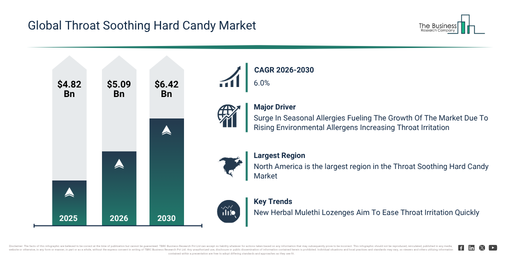
    The throat soothing hard candy market size has experienced strong growth in recent years. It is anticipated to increase from $4.82 billion in 2025 to $5.09 billion in 2026, reflecting a compound annual growth rate (CAGR) of 5.7%. The historical period’s growth can be linked to a heightened occurrence of throat infections and irritation, a growing understanding of natural remedies, an increasing demand for menthol-based items, the expansion of retail pharmacy networks, and the inclusion of traditional herbal ingredients in candies.

    The market for throat soothing hard candies is anticipated to show robust growth in the coming years. It is projected to reach $6.42 billion by 2030, with a compound annual growth rate (CAGR) of 6.0%. This projected expansion over the forecast period stems from increasing demand for functional and immunity-boosting candies, a rising preference for organic and natural sweeteners, the expansion of online and direct-to-consumer sales channels, a growing focus on pediatric and adult wellness, and the adoption of innovative formulations and new flavor profiles. Key developments observed during this period will involve a rising demand for herbal and natural ingredients, increasing adoption of sugar-free formulations, the growing popularity of honey-based soothing candies, the expansion of online and e-commerce distribution channels, and a rising focus on products targeted at children and adults.

    Download A Free Sample Report For Comprehensive Market Insights:

    https://www.thebusinessresearchcompany.com/sample_request?id=25947230&type=smp&name=Throat%20Soothing%20Hard%20Candy%20Market%20Report%202026

    What Market Drivers Are Helping Shape The Throat Soothing Hard Candy Market Expansion?

    The rising occurrence of seasonal allergies is anticipated to drive the expansion of the throat soothing hard candy market in the future. These allergies, which are allergic reactions provoked by environmental elements like pollen, mold spores, and airborne particles during specific periods, frequently lead to throat irritation, coughing, and dryness. The increase in seasonal allergies is largely attributed to higher pollen levels, rising air pollution, and evolving climate patterns that lengthen allergy seasons and increase exposure to allergens. Throat soothing hard candy offers relief for symptoms linked with seasonal allergies through readily available over-the-counter products containing components such as menthol, honey, and herbal extracts that alleviate throat irritation and dryness. For example, in January 2026, the Centers for Disease Control and Prevention (CDC) reported that 31.7% of US adults had a diagnosed allergic condition, encompassing seasonal allergies, eczema, or food allergies. Consequently, the growing prevalence of seasonal allergies is a key factor propelling the throat soothing hard candy market’s growth. The growing frequency of respiratory infections is projected to stimulate the growth of the throat soothing hard candy market going forward. Respiratory infections are illnesses impacting the lungs and airways, including conditions like influenza, COVID-19, and pneumonia. The escalating incidence of these infections is partly fueled by increased exposure to air pollution, which compromises the respiratory system and heightens vulnerability to illness. Throat soothing hard candy assists in mitigating symptoms associated with respiratory infections by soothing throat irritation, offering temporary relief from coughing and soreness, and facilitating more comfortable breathing. For instance, in July 2025, the Australian Bureau of Statistics, an Australia-based government department, documented approximately 440 influenza-related deaths and 1,230 COVID-19 deaths in Australia, illustrating the ongoing effect of respiratory infections on public health. As a result, the increasing incidence of respiratory infections is a significant force behind the growth of the throat soothing hard candy market.

    How Are Different Segment Groups Identified Within The Throat Soothing Hard Candy Market?

    The throat soothing hard candy market covered in this report is segmented –

    1) By Product Type: Herbal Throat Soothing Hard Candy, Menthol Throat Soothing Hard Candy, Honey-Based Throat Soothing Hard Candy, Other Product Types

    2) By Formulation: Sugar-Based, Sugar-Free

    3) By Distribution Channel: Supermarkets And Hypermarkets, Pharmacies, Online Stores, Convenience Stores, Other Distribution Channels

    4) By End-User: Adults, Children

    Subsegments:

    1) By Herbal Throat Soothing Hard Candy: Tulsi Based Hard Candy, Ginger Extract Hard Candy, Licorice Root Hard Candy, Eucalyptus Herbal Hard Candy

    2) By Menthol Throat Soothing Hard Candy: Strong Menthol Hard Candy, Cooling Mint Hard Candy, Extra Strength Menthol Candy, Sugar Free Menthol Candy

    3) By Honey-Based Throat Soothing Hard Candy: Pure Honey Hard Candy, Honey Lemon Hard Candy, Honey Ginger Hard Candy, Organic Honey Hard Candy

    4) By Other Product Types: Vitamin Enriched Hard Candy, Propolis Infused Hard Candy, Herbal Blend Hard Candy, Fruit Infused Hard Candy

    Which Trends Are Expected To Shape The Throat Soothing Hard Candy Market?

    Major companies operating in the throat soothing hard candy market are increasingly focused on developing formulations based on natural ingredients, including herbal flavor infusions, to improve throat comfort, reduce irritation, and provide relief from soreness and dryness. Herbal flavor infusions denote throat candy formulations that incorporate natural components such as mulethi (licorice), honey, or menthol, which are traditionally acknowledged for their soothing and anti-inflammatory attributes, aiding in calming throat irritation and easing coughing. As an illustration, in March 2026, Cofsils, an India-based confectionery and healthcare brand, broadened its range of throat lozenges by introducing a new Mulethi flavor, crafted to deliver quick relief for sore throats. This product, developed to assist consumers experiencing seasonal allergies, cold symptoms, or throat discomfort, merges traditional herbal ingredients with modern confectionery technology to offer soothing relief, a pleasant taste, and enhanced overall oral comfort.

    Which Companies Form The Competitive Landscape Of The Throat Soothing Hard Candy Market?

    Major companies operating in the throat soothing hard candy market are Procter & Gamble Co., GlaxoSmithKline plc, Mondelez International, Inc., Reckitt Benckiser Group plc, Cipla Limited, Dabur India Ltd., Prestige Consumer Healthcare Inc., Ricola AG, Himalaya Wellness Company, Bliss GVS Pharma Ltd., Gelnova Laboratories Pvt. Ltd., Healing Pharma India Pvt. Ltd., Multani Pharmaceuticals Pvt. Ltd., Biovencer Healthcare Pvt. Ltd., Zinda Tilismath, Doetsch Grether AG, Ernest Jackson & Co., Lofthouse of Fleetwood Ltd, Nin Jiom Medicine Manufactory Ltd, Throat Discs Ltd.

    Access The Complete Throat Soothing Hard Candy Market Report:

    https://www.thebusinessresearchcompany.com/report/throat-soothing-hard-candy-market-report

    Which Region Stands As The Largest Contributor To The Throat Soothing Hard Candy Market?

    North America was the largest region in the throat soothing hard candy market in 2025. Asia-Pacific is expected to be the fastest-growing region in the forecast period. The regions covered in the throat soothing hard candy market report are Asia-Pacific, South East Asia, Western Europe, Eastern Europe, North America, South America, Middle East, Africa.

    Get in touch with us:

    The Business Research Company: https://www.thebusinessresearchcompany.com/

    Americas: +1 310-496-7795

    Asia: +44 7882 955267 & +91 8897263534

    Europe: +44 7882 955267

    Email us at: marketing@tbrc.info

    Follow us on:

    LinkedIn: https://in.linkedin.com/company/the-business-research-company

    YouTube: https://www.youtube.com/channel/UC24_fI0rV8cR5DxlCpgmyFQ

    Global Market Model: https://www.thebusinessresearchcompany.com/global-market-model
  • Teen Acne Sulfur Mask Market Expected To Witness Revenue Growth Toward $1.64 Billion By 2030

    Teen Acne Sulfur Mask Market Expected To Witness Revenue Growth Toward $1.64 Billion By 2030

    The Business Research Company’s 2026 market reports feature advanced enhancements such as market attractiveness analysis, total addressable market evaluation, company benchmarking matrices, interactive Excel dashboards, expanded supply chain intelligence, emerging startup coverage, and detailed product insights, delivering more actionable and strategically valuable research.

    What Is The Forecasted Rise In Market Size Of The Teen Acne Sulfur Mask Market During The Forecast Period?

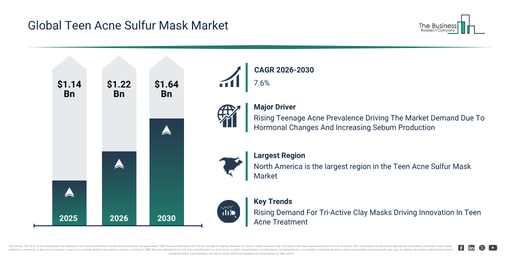
    The teen acne sulfur mask market size has experienced significant growth in recent years. It is projected to expand from $1.14 billion in 2025 to $1.22 billion in 2026, exhibiting a compound annual growth rate (CAGR) of 7.4%. Historically, this market’s expansion stems from factors such as a rising incidence of teenage acne, the uptake of sulfur-based skincare items, heightened awareness regarding over-the-counter skincare, the escalating impact of social media on adolescent skincare routines, and the broader availability of dermatologist-endorsed products.

    The market for teen acne sulfur masks is anticipated to experience substantial expansion over the coming years. This market is projected to reach $1.64 billion by 2030, demonstrating a compound annual growth rate (CAGR) of 7.6%. Several factors contribute to this growth during the forecast period, including an increasing preference for personalized teen skincare, the greater use of masks with multiple ingredients, the expansion of e-commerce and online retail platforms, enhanced awareness regarding skin sensitivity and safety, and the creation of dermatologist-formulated high-strength masks. Key trends anticipated over the forecast timeframe encompass the rising appeal of over-the-counter sulfur masks, an increased need for skincare products tailored for teenagers, the broader acceptance of formulations containing multiple ingredients, the growth of online distribution channels, and a heightened emphasis on facial application for targeted acne solutions.

    Download A Free Sample Report For Comprehensive Market Insights:

    https://www.thebusinessresearchcompany.com/sample_request?id=23122327&type=smp&name=Teen%20Acne%20Sulfur%20Mask%20Market%20Report%202026

    What Core Drivers Are Transforming The Teen Acne Sulfur Mask Market?

    The increasing occurrence of teenage acne is anticipated to boost the expansion of the teen acne sulfur mask market. This skin condition, prevalent in adolescents, manifests as pimples, blackheads, and whiteheads, primarily caused by hormonal shifts and excess oil production. The rise in teenage acne is largely due to pubertal hormonal fluctuations that elevate sebum production, clog pores, and create an ideal environment for acne-causing bacteria. Teen acne sulfur masks help address this by curbing oiliness, calming inflammation, and promoting clearer skin via their antibacterial and exfoliating properties. For instance, in May 2024, the Journal of the American Academy of Dermatology, a US-based scientific publication, stated that the overall prevalence of acne was 20.5%, with the peak rate of 28.3% observed in the 16 to 24 age group. Therefore, the growing prevalence of teenage acne is a significant driver for the teen acne sulfur mask market’s growth.

    How Is The Teen Acne Sulfur Mask Market Examined Through Segment Analysis?

    The teen acne sulfur mask market covered in this report is segmented –

    1) By Product Type: Over-The-Counter, Prescription

    2) By Formulation: Cream, Gel, Mask, Cleanser, Other Formulations

    3) By Distribution Channel: Online Stores, Pharmacies, Supermarkets, Specialty Stores, Other Distribution Channels

    4) By Application: Face, Body

    5) By End User: Teenagers, Young Adults

    Subsegments:

    1) By Over-The-Counter: Sulfur Clay Mask, Sulfur Cream Mask, Sulfur Gel Mask, Sulfur Peel Off Mask

    2) By Prescription: High Strength Sulfur Mask, Sulfur And Salicylic Acid Mask, Sulfur And Benzoyl Peroxide Mask, Dermatologist Formulated Sulfur Mask

    Which Trends Are Influencing The Expansion Of The Teen Acne Sulfur Mask Market?

    Major companies engaged in the teen acne sulfur mask market are prioritizing the development of innovative solutions, including tri-active clay masks, to effectively tackle excess oil, purify pores, and reduce acne breakouts in teenagers. A tri-active clay mask functions as a skincare product that cleanses, exfoliates, and soothes the skin to aid in both preventing and treating acne. As an example, in July 2023, Murad, a US-based skincare brand, unveiled its Rapid Relief Acne Sulfur Mask, a tri-active clay mask designed for prompt acne treatment. It incorporates sulfur, salicylic acid, and Austrian peat extract to efficiently target pimples and blackheads. The mask promises rapid oil control, shrinkage of pimples, and alleviation of redness, substantiated by clinical results indicating 92% less oil after just one use. Its non-drying, easy-rinse formula quickly gained popularity at retailers like Ulta and Sephora.

    Which Organizations Are Operating Within The Teen Acne Sulfur Mask Market?

    Major companies operating in the teen acne sulfur mask market are Clinique Laboratories LLC, Dermalogica Inc., Murad LLC, Peter Thomas Roth Labs LLC, Bioelements Inc., Sunday Riley Modern Skincare LLC, GlyMed Plus, Bubble Skincare Ltd., Herbivore Botanicals LLC, Topicals Inc., CLARA Dermatology LLC, Versed Skincare LLC, Control Corrective Skincare Systems Inc., Joesoef Skin Care LLC, Raya Beauty Inc., The Facial Lounge LLC, Starface World Inc., Cocokind Inc., Ebanel Laboratories Inc., The Bolden Company LLC, Vivant Skin Care LLC, DAHL Skincare LLC.

    Access The Complete Teen Acne Sulfur Mask Market Report:

    https://www.thebusinessresearchcompany.com/report/teen-acne-sulfur-mask-market-report

    Which Region Contributes The Most To The Teen Acne Sulfur Mask Market?

    North America was the largest region in the teen acne sulfur mask market in 2025. Asia-Pacific is expected to be the fastest-growing region in the forecast period. The regions covered in the teen acne sulfur mask market report are Asia-Pacific, South East Asia, Western Europe, Eastern Europe, North America, South America, Middle East, Africa.

    Get in touch with us:

    The Business Research Company: https://www.thebusinessresearchcompany.com/

    Americas: +1 310-496-7795

    Asia: +44 7882 955267 & +91 8897263534

    Europe: +44 7882 955267

    Email us at: marketing@tbrc.info

    Follow us on:

    LinkedIn: https://in.linkedin.com/company/the-business-research-company

    YouTube: https://www.youtube.com/channel/UC24_fI0rV8cR5DxlCpgmyFQ

    Global Market Model: https://www.thebusinessresearchcompany.com/global-market-model
  • Spare Parts Kitting For Aseptic Fillers Market Industry Outlook 2026–2030 Highlighting Growth Momentum And Market Trends

    Spare Parts Kitting For Aseptic Fillers Market Industry Outlook 2026–2030 Highlighting Growth Momentum And Market Trends

    The Business Research Company’s 2026 market reports feature advanced enhancements such as market attractiveness analysis, total addressable market evaluation, company benchmarking matrices, interactive Excel dashboards, expanded supply chain intelligence, emerging startup coverage, and detailed product insights, delivering more actionable and strategically valuable research.

    How Is The Spare Parts Kitting For Aseptic Fillers Market’s Market Value Anticipated To Evolve From 2026 To 2030?

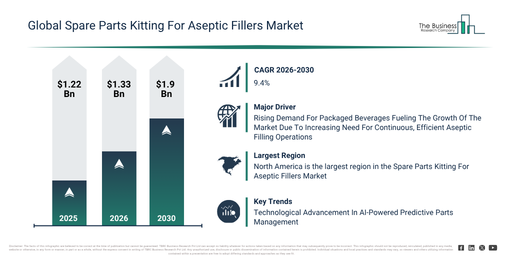
    The spare parts kitting for aseptic fillers market has demonstrated strong expansion in recent years. This market is expected to expand from $1.22 billion in 2025 to $1.33 billion in 2026, achieving a compound annual growth rate (CAGR) of 9.1%. Historically, its growth can be linked to the growing uptake of aseptic fillers, an increase in downtime due to equipment malfunctions, an expansion in pharmaceutical and dairy manufacturing, the adoption of standardized spare parts kits, and heightened regulatory scrutiny concerning sterile production.

    The spare parts kitting for aseptic fillers market is set to experience substantial growth in the upcoming years. It is projected to expand to $1.9 billion by 2030, exhibiting a compound annual growth rate (CAGR) of 9.4%. This increase during the forecast period can be attributed to several factors, including the increasing demand for predictive maintenance solutions, a rising adoption of customized spare parts kits, greater automation in aseptic filler operations, the expansion of online industrial spare platforms, and a growing emphasis on minimizing production downtime. Furthermore, significant trends anticipated in this period include the increased embrace of preventive maintenance spare kits, an escalating demand for customized spare parts kits, the growing integration of real-time inventory monitoring, the expansion of OEM and direct-to-plant distribution channels, and a heightened focus on ensuring sterility and compliance.

    Download A Free Sample Report For Comprehensive Market Insights:

    https://www.thebusinessresearchcompany.com/sample_request?id=14622246&type=smp&name=Spare%20Parts%20Kitting%20For%20Aseptic%20Fillers%20Market%20Report%202026

    Which Growth Factors Are Strengthening The Spare Parts Kitting For Aseptic Fillers Market Landscape?

    The growing demand for packaged beverages is anticipated to drive the future expansion of the spare parts kitting for aseptic fillers market. Packaged beverages encompass ready-to-drink options such as fruit juices, nectars, dairy-based drinks, functional beverages, and soft drinks, which are processed and sealed to ensure product safety, quality, and an extended shelf life. The increasing need for these beverages is influenced by consumers seeking convenient, hygienic, and long-lasting products, supported by urbanization, evolving lifestyles, and a rising trend of on-the-go consumption across global markets. Spare parts kitting for aseptic fillers facilitates packaged beverage production by ensuring the prompt availability of crucial replacement components, thereby minimizing maintenance-related downtime and enabling efficient preventive servicing of aseptic filling lines. This capability assists manufacturers in sustaining continuous production, consistent quality, and high operational efficiency. As an illustration, the International Juice and Soft Drinks Review by AIJN, a Belgium-based fruit juice association, reported in September 2024 that the European Union (EU)-27’s consumption of fruit juices and nectars reached 6.8 billion liters in 2023, marking a 7% year-on-year increase. Consequently, the escalating demand for aseptic packaging is projected to stimulate the growth of the spare parts kitting for the aseptic fillers market.

    Which Segment Groups Define The Spare Parts Kitting For Aseptic Fillers Market Landscape?

    The spare parts kitting for aseptic fillers market covered in this report is segmented –

    1) By Filler Type: Vial Aseptic Fillers, Syringe Aseptic Fillers, Cartridge Aseptic Fillers, Bottle Aseptic Fillers, Ampoule Aseptic Fillers

    2) By Kit Type: Preventive Maintenance Kits, Corrective Maintenance Kits, Consumable Spare Parts Kits, Critical Spare Parts Kits, Customized Spare Parts Kits

    3) By Distribution Channel: Original Equipment Manufacturer Sales, Third Party Service Providers, Online Industrial Spare Platforms, Direct To Plant Contracts, Specialized Regional Machinery Distributors

    4) By End User Industry: Dairy And Beverage Production, Pharmaceutical And Biotech Firms, Processed Food Packaging Facilities, Cosmetic And Personal Care, Contract Development And Manufacturing Organizations (CDMOs)

    Subsegments:

    1) By Vial Aseptic Fillers: Rotary Vial Fillers, Linear Vial Fillers, Blow Fill Seal Vial Fillers, Stopper Placement Vial Fillers

    2) By Syringe Aseptic Fillers: Prefilled Syringe Fillers, Manual Syringe Fillers, Automatic Syringe Fillers, Semi Automatic Syringe Fillers

    3) By Cartridge Aseptic Fillers: Single Cartridge Fillers, Multi Cartridge Fillers, Rotary Cartridge Fillers, Linear Cartridge Fillers

    4) By Bottle Aseptic Fillers: Glass Bottle Fillers, Plastic Bottle Fillers, Rotary Bottle Fillers, Linear Bottle Fillers

    5) By Ampoule Aseptic Fillers: Small Volume Ampoule Fillers, Large Volume Ampoule Fillers, Rotary Ampoule Fillers, Linear Ampoule Fillers

    Which Trends Are Expected To Shape The Spare Parts Kitting For Aseptic Fillers Market?

    Companies operating in the spare parts kitting for aseptic fillers market are increasingly prioritizing technological progress, such as AI-powered predictive parts and kit management, to secure a competitive edge. These intelligent solutions utilize artificial intelligence to foresee maintenance needs, forecast component malfunctions in aseptic filling systems, and autonomously resupply essential spare parts kits, thereby enhancing operational effectiveness and minimizing unforeseen stoppages within regulated production environments. For instance, in September 2024, ThroughPut.AI, a US-based supply chain analytics company, introduced AI-powered predictive parts and kit management capabilities designed to support high-precision manufacturing machinery, including aseptic filling lines used in pharmaceutical and biopharmaceutical facilities. The platform offers real-time predictions for aseptic filler spare part demands, smart classification of vital versus less vital components, and adaptive safety stock refinement.

    Who Are The Businesses Driving Activity In The Spare Parts Kitting For Aseptic Fillers Market?

    Major companies operating in the spare parts kitting for aseptic fillers market are Tetra Pak International S.A., GEA Group AG, Krones AG, SIG Group AG, Coesia S.p.A., Syntegon Technology GmbH, SIDEL Group, SPX FLOW Inc., OPTIMA packaging group GmbH, Marchesini Group S.p.A., Bausch+Ströbel SE + Co. KG, Watson-Marlow Fluid Technology Solutions, Dara Pharmaceutical Packaging, Serac Group, Serac Inc., KHS GmbH, IMA S.p.A., Ronchi Mario S.p.A., Groninger & Co. GmbH, IC Filling Systems S.r.l.

    Access The Complete Spare Parts Kitting For Aseptic Fillers Market Report:

    https://www.thebusinessresearchcompany.com/report/spare-parts-kitting-for-aseptic-fillers-market-report

    Which Regional Market Leads The Spare Parts Kitting For Aseptic Fillers Market?

    North America was the largest region in the spare parts kitting for aseptic fillers market in 2025. Asia-Pacific is expected to be the fastest-growing region in the forecast period. The regions covered in the spare parts kitting for aseptic fillers market report are Asia-Pacific, South East Asia, Western Europe, Eastern Europe, North America, South America, Middle East, Africa.

    Get in touch with us:

    The Business Research Company: https://www.thebusinessresearchcompany.com/

    Americas: +1 310-496-7795

    Asia: +44 7882 955267 & +91 8897263534

    Europe: +44 7882 955267

    Email us at: marketing@tbrc.info

    Follow us on:

    LinkedIn: https://in.linkedin.com/company/the-business-research-company

    YouTube: https://www.youtube.com/channel/UC24_fI0rV8cR5DxlCpgmyFQ

    Global Market Model: https://www.thebusinessresearchcompany.com/global-market-model
  • Postbiotic Ferment Lysates Market Projected To Surpass $2.18 Billion By 2030 At 13.7% CAGR

    Postbiotic Ferment Lysates Market Projected To Surpass $2.18 Billion By 2030 At 13.7% CAGR

    The Business Research Company’s 2026 market reports feature advanced enhancements such as market attractiveness analysis, total addressable market evaluation, company benchmarking matrices, interactive Excel dashboards, expanded supply chain intelligence, emerging startup coverage, and detailed product insights, delivering more actionable and strategically valuable research.

    What Increase In Market Value Is Predicted For The Postbiotic Ferment Lysates Market During The 2026–2030 Period?

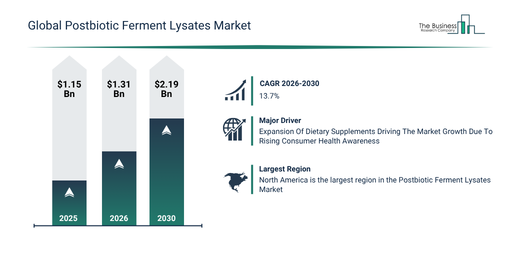
    The postbiotic ferment lysates market has witnessed rapid expansion in recent times. Its valuation is set to increase from $1.15 billion in 2025 to $1.31 billion in 2026, achieving a compound annual growth rate (CAGR) of 13.4%. This historical growth can be attributed to a heightened awareness of skin microbiome health, an increase in the application of probiotics within personal care products, the integration of postbiotic formulations into cosmetic items, a surging demand for natural and bioactive constituents, and the expansion of offerings in skincare and haircare portfolios.

    The postbiotic ferment lysates market is projected for significant expansion over the coming years. Its value is set to reach $2.19 billion by 2030, exhibiting a compound annual growth rate (CAGR) of 13.7%. This anticipated growth during the forecast timeframe is driven by a heightened emphasis on functional and medicinal postbiotics, increased research and development efforts in bacterial and yeast ferment lysates, a surge in demand across pharmaceutical and nutraceutical sectors, the broadening of online and specialized sales channels, and consumers’ growing inclination towards solutions for anti-aging and hydration. Key developments expected within this period involve the rising uptake of postbiotic products in liquid and serum formats, an escalating need for lysates derived from bacteria and yeast, their increasing incorporation into formulations for skincare and haircare, the proliferation of freeze-dried and spray-dried powder versions, and a concentrated focus on anti-aging and hydration advantages.

    Download A Free Sample Report For Comprehensive Market Insights:

    https://www.thebusinessresearchcompany.com/sample_request?id=56420289&type=smp&name=Postbiotic%20Ferment%20Lysates%20Market%20Report%202026

    Which Core Factors Are Supporting The Expansion Of The Postbiotic Ferment Lysates Market?

    The expansion of dietary supplements is expected to propel the growth of the postbiotic ferment lysates market going forward. Dietary supplements are manufactured products intended to complement a person’s diet by providing nutrients such as vitamins, minerals, amino acids, and other bioactive compounds that may be insufficient through regular food intake alone. The growing expansion of dietary supplements is largely driven by rising consumer focus on preventive healthcare, as individuals increasingly seek proactive, science-backed nutritional solutions to manage their long-term well-being rather than relying solely on conventional medical treatment. The surge in dietary supplement adoption directly accelerates demand for postbiotic ferment lysates, as these bioactive fermentation-derived compounds are increasingly incorporated into supplement formulations to deliver gut health, immune support, and microbiome-balancing benefits. For instance, in September 2024, according to HerbalGram, a US-based international nonprofit organization, the total annual sales of herbal dietary supplements in the US rose from $12.018 billion in 2022 to $12.551 billion in 2023, reflecting a growth of 4.4%. Therefore, the expansion of dietary supplements is driving the growth of the postbiotic ferment lysates market. The increasing cosmetic industry is expected to propel the growth of the postbiotic ferment lysates market going forward. The cosmetic industry encompasses the manufacturing, distribution, and sale of products intended to cleanse, beautify, and enhance the appearance of the human body, including skincare, haircare, makeup, and personal care formulations. The cosmetic industry is rising primarily due to growing consumer awareness around skin health and the widespread influence of social media, which has accelerated demand for innovative, science-backed beauty products among younger demographics. This surge in cosmetic activity directly intensifies demand for advanced bioactive ingredients such as postbiotic ferment lysates, which are increasingly incorporated into premium skincare formulations for their barrier-strengthening, anti-inflammatory, and microbiome-balancing properties. For instance, in July 2024, according to a report published by the British Beauty Council, a UK-based organization, in 2023, the personal care sector contributed £27.2 billion ($30.44 billion) to the GDP, marking an 11% rise compared to 2022. This growth is attributed to a 10% increase in household spending on personal care products and services in the UK. Therefore, the increasing cosmetic industry is driving the growth of the postbiotic ferment lysates market.

    How Is The Postbiotic Ferment Lysates Market Structured Across Different Market Segments?

    The postbiotic ferment lysates market covered in this report is segmented –

    1) By Product Type: Liquid, Powder, Cream, Serum, Other Product Types

    2) By Source: Bacterial, Yeast, Fungal, Other Sources

    3) By Distribution Channel: Online Stores, Supermarkets Or Hypermarkets, Specialty Stores, Other Distribution Channels

    4) By Application: Skincare, Haircare, Pharmaceuticals, Nutraceuticals, Other Applications

    5) By End-User: Cosmetic Industry, Pharmaceutical Industry, Personal Care, Other End-Users

    Subsegments:

    1) By Liquid: Water-Based, Oil-Based, Alcohol-Based, Glycerin-Based

    2) By Powder: Freeze-Dried, Spray-Dried, Granular, Micronized

    3) By Cream: Emulsion, Lotion, Balm, Gel-Cream

    4) By Serum: Hydrating, Anti-Aging, Brightening, Repairing

    5) By Other Product Types: Capsule, Tablet, Stick, Sheet Mask

    Who Are The Companies Shaping The Postbiotic Ferment Lysates Market Landscape?

    Major companies operating in the postbiotic ferment lysates market are The Procter & Gamble Company, DSM-Firmenich AG, International Flavors & Fragrances Inc., Lallemand Inc., Seppic SA, Mibelle AG, Lucas Meyer Cosmetics by IFF, Active Concepts LLC, Bloomage Biotechnology Corporation Limited, Codif Technologie Naturelle SAS, Greentech SA, Biocogent LLC, Vytrus Biotech S.A., Chemisches Laboratorium Dr. Kurt Richter GmbH, Codex Beauty Labs Inc., Lactobio A/S, Lipotrue S.L., Senyuan Biotechnology Co. Ltd., Active Cells Biotechnology S.r.l., Dermat India.

    Access The Complete Postbiotic Ferment Lysates Market Report:

    https://www.thebusinessresearchcompany.com/report/postbiotic-ferment-lysates-market-report

    Which Region Commands The Largest Share Of The Postbiotic Ferment Lysates Market?

    North America was the largest region in the postbiotic ferment lysates market in 2025. Asia-Pacific is expected to be the fastest-growing region in the forecast period. The regions covered in the postbiotic ferment lysates market report are Asia-Pacific, South East Asia, Western Europe, Eastern Europe, North America, South America, Middle East, Africa.

    Get in touch with us:

    The Business Research Company: https://www.thebusinessresearchcompany.com/

    Americas: +1 310-496-7795

    Asia: +44 7882 955267 & +91 8897263534

    Europe: +44 7882 955267

    Email us at: marketing@tbrc.info

    Follow us on:

    LinkedIn: https://in.linkedin.com/company/the-business-research-company

    YouTube: https://www.youtube.com/channel/UC24_fI0rV8cR5DxlCpgmyFQ

    Global Market Model: https://www.thebusinessresearchcompany.com/global-market-model

  • Pharmaceutical Depyrogenation Equipment Market Forecast Through 2030 Featuring Industry Drivers And Opportunities

    Pharmaceutical Depyrogenation Equipment Market Forecast Through 2030 Featuring Industry Drivers And Opportunities

    The Business Research Company’s 2026 market reports feature advanced enhancements such as market attractiveness analysis, total addressable market evaluation, company benchmarking matrices, interactive Excel dashboards, expanded supply chain intelligence, emerging startup coverage, and detailed product insights, delivering more actionable and strategically valuable research.

    How Will The Market Size Of The Pharmaceutical Depyrogenation Equipment Market Progress Through 2030?

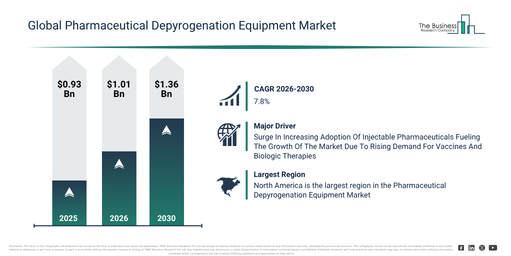
    The pharmaceutical depyrogenation equipment market size has experienced robust expansion in recent times. Projections indicate it will expand from $0.93 billion in 2025 to $1.01 billion in 2026, demonstrating a compound annual growth rate (CAGR) of 7.6%. This historical growth can be linked to factors such as increasing pharmaceutical production volumes, a rising incidence of injectable drug manufacturing, the demand for sterile glassware and containers, regulatory requirements for endotoxin-free products, and the adoption of conventional batch depyrogenation systems.

    The pharmaceutical depyrogenation equipment market size is projected to demonstrate robust expansion in the coming years, with expectations to reach $1.36 billion by 2030, driven by a compound annual growth rate (CAGR) of 7.8%. This growth throughout the forecast period is attributable to an increase in vaccine and biologics production, the widespread adoption of automated and high-throughput depyrogenation equipment, intensified R&D efforts in sterile manufacturing technologies, the integration of sophisticated monitoring and IoT-based control systems, and the worldwide growth of contract manufacturing organizations (CMOs). Significant developments anticipated during this period encompass a rising demand for automated depyrogenation systems, an increasing uptake of high-temperature dry heat sterilization methods, the broader application of depyrogenation equipment in vaccine and biologics manufacturing, a heightened focus on regulatory compliance and sterility standards, and the incorporation of real-time monitoring and process control systems.

    Download A Free Sample Report For Comprehensive Market Insights:

    https://www.thebusinessresearchcompany.com/sample_request?id=83716511&type=smp&name=Pharmaceutical%20Depyrogenation%20Equipment%20Market%20Report%202026

    What Are The Main Drivers Accelerating The Growth Of The Pharmaceutical Depyrogenation Equipment Market?

    The growing uptake of injectable drugs is anticipated to drive expansion in the pharmaceutical depyrogenation equipment market moving forward. Injectable medications are sterile drug preparations delivered straight into the body via syringe or infusion, bypassing the gastrointestinal tract. The prevalence of injectable drugs is rising due to the growing incidence of chronic conditions like diabetes and cancer, which demand swift and efficient drug administration. This equipment plays a crucial role in injectable pharmaceutical production by eliminating pyrogens and endotoxins from drug packaging, thereby guaranteeing sterility and patient well-being. For example, in July 2024, data from the United Nations Children’s Fund (UNICEF), a US-based international organization dedicated to providing humanitarian and developmental assistance globally, revealed that the worldwide percentage of adolescent girls who received at least one dose of the HPV vaccine increased from 20% in 2022 to 27% in 2023, representing a 7-percentage-point rise. Consequently, the expanding use of injectable pharmaceuticals is fueling the growth of the pharmaceutical depyrogenation equipment market. The growth of the biopharmaceutical and biotechnology sector is anticipated to drive the expansion of the pharmaceutical depyrogenation equipment market in the future. This industry focuses on creating medical treatments leveraging biological systems and fosters innovation in areas such as drug discovery, vaccine development, and therapies through methods like genetic engineering and molecular biology. The swift expansion of this sector is primarily fueled by rising investments in the research and development of new biologics, biosimilars, and advanced therapeutic approaches, all of which require extremely regulated and contamination-free production settings. The increasing volume of biopharmaceutical manufacturing heightens the demand for depyrogenation equipment, given its essential role in maintaining endotoxin-free environments crucial for the safe production of injectable medications, vaccines, and biological treatments. For instance, in January 2023, data from Cardinal Health Inc., a US-based healthcare firm, indicated that as of January 2022, 33 biosimilar products were FDA-approved in the US, with 21 being commercially accessible. By 2023, the number of FDA-approved biosimilars rose to 40, with 25 of them on the market. Consequently, the development of the biopharmaceutical and biotechnology industry is a significant driver for the growth of the pharmaceutical depyrogenation equipment market.

    Which Segment-Based Categories Are Covered In The Pharmaceutical Depyrogenation Equipment Market?

    The pharmaceutical depyrogenation equipment market covered in this report is segmented –

    1) By Equipment Type: Depyrogenation Tunnels, Dry Heat Sterilizers, Depyrogenation Ovens, Vial And Ampoule Depyrogenation Systems, Automated Depyrogenation Chambers

    2) By Technology: Conveyor-Based Systems, Batch Processing Ovens, Continuous Flow Tunnels, High-Temperature Plasma Systems

    3) By Application: Ampoules, Penicillin Bottles, Syringes

    4) By End-User: Pharmaceutical Manufacturers, Biotechnology Companies, Contract Manufacturing Organizations (CMOs), Research And Academic Institutes, Vaccine And Biologics Manufacturing Facilities

    Subsegments:

    1) By Depyrogenation Tunnels: Conveyor Depyrogenation Tunnels, Modular Depyrogenation Tunnels, High Throughput Depyrogenation Tunnels, Compact Depyrogenation Tunnels

    2) By Dry Heat Sterilizers: Horizontal Dry Heat Sterilizers, Vertical Dry Heat Sterilizers, Laboratory Dry Heat Sterilizers, Industrial Dry Heat Sterilizers

    3) By Depyrogenation Ovens: Bench Top Depyrogenation Ovens, Floor Standing Depyrogenation Ovens, High Capacity Depyrogenation Ovens, Programmable Depyrogenation Ovens

    4) By Vial And Ampoule Depyrogenation Systems: Glass Vial Depyrogenation Systems, Ampoule Depyrogenation Systems, Combined Vial And Ampoule Depyrogenation Systems, High Speed Container Depyrogenation Systems

    5) By Automated Depyrogenation Chambers: Fully Automated Depyrogenation Chambers, Semi Automated Depyrogenation Chambers, Programmable Depyrogenation Chambers, Large Capacity Depyrogenation Chambers

    Which Industry Players Are Present In The Pharmaceutical Depyrogenation Equipment Market?

    Major companies operating in the pharmaceutical depyrogenation equipment market are STERIS Public Limited Company, Getinge Aktiebolag, Azbil Telstar Sociedad Limitada Unipersonal, Syntegon Technology Gesellschaft mit beschränkter Haftung, Belimed Aktiengesellschaft, Shibuya Corporation (Kabushiki Kaisha Shibuya Kogyo), OPTIMA Packaging Group Gesellschaft mit beschränkter Haftung, Marchesini Group Società per Azioni, Bausch + Ströbel SE & Co. Kommanditgesellschaft, Shanghai Tofflon Science and Technology Group Co. Ltd., Zhangjiagang Tofflon Machinery Co. Ltd., Fedegari Autoclavi Società per Azioni, Pharmalab India Private Limited, Steriline Società a responsabilità limitata, De Lama Società per Azioni, Dara Pharmaceutical Packaging S.A., Neelam Industries Private Limited, Lodha International Limited Liability Partnership, Stericox India Private Limited, Steelco.

    Access The Complete Pharmaceutical Depyrogenation Equipment Market Report:

    https://www.thebusinessresearchcompany.com/report/pharmaceutical-depyrogenation-equipment-market-report

    Which Region Accounts For The Highest Share Of The Pharmaceutical Depyrogenation Equipment Market?

    North America was the largest region in the pharmaceutical depyrogenation equipment market in 2025. Asia-Pacific is expected to be the fastest-growing region in the forecast period. The regions covered in the pharmaceutical depyrogenation equipment market report are Asia-Pacific, South East Asia, Western Europe, Eastern Europe, North America, South America, Middle East, Africa.

    Get in touch with us:

    The Business Research Company: https://www.thebusinessresearchcompany.com/

    Americas: +1 310-496-7795

    Asia: +44 7882 955267 & +91 8897263534

    Europe: +44 7882 955267

    Email us at: marketing@tbrc.info

    Follow us on:

    LinkedIn: https://in.linkedin.com/company/the-business-research-company

    YouTube: https://www.youtube.com/channel/UC24_fI0rV8cR5DxlCpgmyFQ

    Global Market Model: https://www.thebusinessresearchcompany.com/global-market-model