Category: Pharmaceuticals

  • In Silico Drug Discovery Market Set for Strong Growth, Reaching $7.42 Billion by 2030

    In Silico Drug Discovery Market Set for Strong Growth, Reaching $7.42 Billion by 2030

    The Business Research Company’s 2026 market reports feature advanced enhancements such as market attractiveness analysis, total addressable market evaluation, company benchmarking matrices, interactive Excel dashboards, expanded supply chain intelligence, emerging startup coverage, and detailed product insights, delivering more actionable and strategically valuable research.

    What Market Value Trend Is Expected For The In Silico Drug Discovery Market From 2026 To 2030?

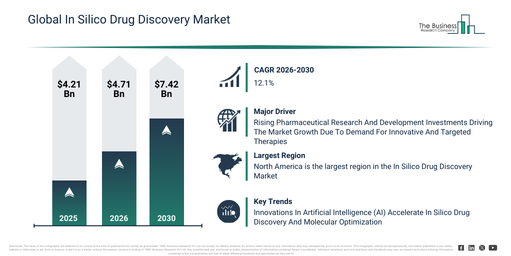
    The in silico drug discovery market size has experienced rapid growth in recent years. It is anticipated to expand from $4.21 billion in 2025 to $4.71 billion in 2026, achieving a compound annual growth rate (CAGR) of 11.8%. The expansion observed in prior periods stemmed from several factors, including escalating pharmaceutical R&D costs, the early embrace of molecular modeling tools, enhanced computational chemistry capabilities, the widening of genomic databases, and increasing cooperation between academic institutions and industry.

    The in silico drug discovery market is anticipated to experience substantial expansion over the coming years. Its valuation is projected to reach $7.42 billion in 2030, exhibiting a compound annual growth rate (CAGR) of 12.1%. This projected growth throughout the forecast period stems from factors such as an increasing need for expedited drug development processes, the escalating application of machine learning within pharmacology, the broadening scope of cloud computing in life sciences, a heightened emphasis on precision medicine, and the greater uptake of in silico clinical trial simulations. Key trends anticipated during this period encompass the increasing utilization of AI-powered virtual screening platforms, a greater embrace of cloud-hosted drug discovery software, the advancing integration of predictive toxicology models, the expansion of tools for target identification and validation, and a sharper focus on data-centric lead optimization.

    Download A Free Sample Report For Comprehensive Market Insights:

    https://www.thebusinessresearchcompany.com/sample.aspx?id=33181&type=smp

    What Core Drivers Are Transforming The In Silico Drug Discovery Market?

    The in silico drug discovery market is set to experience growth, propelled by the expanding investments in pharmaceutical research and development. Pharmaceutical R&D investments refer to the resources companies dedicate to discovering, developing, and testing new drugs and therapies to ensure their safe and effective application. These investments in pharmaceutical R&D are escalating due to a heightened demand for innovative therapies to tackle complex and chronic diseases, prompting companies to increase their funding for developing targeted and effective treatments that address unmet medical needs. Such pharmaceutical R&D investments fuel in silico drug discovery by speeding up the screening and optimization of potential candidates, enabling companies to concentrate on the most viable compounds, which in turn enhances research efficiency and optimizes returns on R&D expenditure. For instance, in April 2025, as reported by the Office for National Statistics, a UK-based government agency, the UK government’s net spending on research and development (R&D) rose to $22.1 billion (£17.4 billion) in 2023, an increase from $20.45 billion (£16.1 billion) in 2022, signifying an 8.2% rise. Consequently, the expanding pharmaceutical research and development investments are a key driver for the growth of the in silico drug discovery market.

    What Segment Types Are Included In The In Silico Drug Discovery Market Analysis?

    The in silico drug discovery market covered in this report is segmented –

    1) By Component: Software; Services

    2) By Deployment: On-Premise; Cloud-Based Source

    3) By Drug-Discovery Phase: Target Identification And Validation; Hit Identification; Lead Optimization; Candidate Validation

    4) By Therapeutic Area: Oncology; Neurology; Cardiovascular; Infectious Diseases; Metabolic Disorders

    5) By End User: Pharmaceutical Companies; Biotechnology Firms; Academic And Research Institutes; Contract Research Organization

    Subsegments:

    1) By Software: Molecular Modeling And Simulation; Pharmacophore Modeling Software; Virtual Screening Tools; Quantitative Structure Activity Relationship Modeling; Protein Structure Prediction Software; Ligand Based Design Software; De Novo Drug Design Software; Cheminformatics And Data Analysis Tools

    2) By Services: Algorithm Development Services; Model Customization And Tailoring Services; Data Analytics Consulting Services; Computational Screening And Outsourcing Services; Protein Modeling And Simulation Services; Virtual Library Design Services; Target Assessment And Validation Services; Lead Optimization And Candidate Evaluation Services

    Which Trends Are Expected To Shape The In Silico Drug Discovery Market?

    Major companies operating in the in silico drug discovery market are concentrating on creating innovative solutions, such as pharmaceutical-grade AI benchmarking platforms, to boost the accuracy, efficiency, and predictive power of computational drug design and candidate screening. A pharmaceutical-grade AI benchmarking platform refers to the rigorous evaluation of AI models against standard pharmaceutical datasets to guarantee their accuracy, reliability, and adherence to regulations in drug discovery. For instance, in January 2026, Insilico Medicine Inc., a US-based clinical-stage biotechnology company, launched a Science MMAI Gym, a specialized training platform intended to enhance large language models (LLMs) for drug discovery tasks. This platform is designed to fine-tune frontier LLMs into pharmaceutical-grade AI engines for drug discovery, employing proprietary datasets from chemistry, biology, and clinical domains. Its purpose is to foster pharmaceutical superintelligence by increasing model performance up to 10x on benchmarks like TargetBench and ClinBench through multi-task fine-tuning and reinforcement learning. Its key advantages encompass versatile single-model reasoning, flexible membership programs with lab validation, and accelerated in silico tasks such as retrosynthesis and trial prediction.

    Which Organizations Are Operating Within The In Silico Drug Discovery Market?

    Major companies operating in the in silico drug discovery market are NVIDIA Corporation, Dassault Systèmes, Clarivate, Schrödinger Inc., XtalPi Inc., Cresset Discovery Ltd., BenevolentAI, Simulations Plus Inc., Owkin Inc., Insilico Medicine, Recursion Pharmaceuticals Inc., Ardigen S.A., Aqemia, Iktos SA., Enveda Therapeutics Inc., Atomwise Inc., Turbine Simulated Cell Technologies Ltd., Optibrium Ltd., PostEra Inc., Insitro Inc., BioMap Inc., BioSolveIT GmbH, Quris Technologies LTD., and Nabla Bio Inc.

    Access The Complete In Silico Drug Discovery Market Report:

    https://www.thebusinessresearchcompany.com/report/in-silico-drug-discovery-market-report

    Which Area Represents The Largest Portion Of The In Silico Drug Discovery Market?

    North America was the largest region in the in silico drug discovery market in 2025. Asia-Pacific is expected to be the fastest-growing region in the forecast period. The regions covered in the in silico drug discovery market report are Asia-Pacific, South East Asia, Western Europe, Eastern Europe, North America, South America, Middle East, Africa.

    Access a Customized In Silico Drug Discovery Market Report for Deeper Competitive Insights

    Get in touch with us:

    The Business Research Company: https://www.thebusinessresearchcompany.com/

    Americas: +1 310-496-7795

    Asia: +44 7882 955267 & +91 8897263534

    Europe: +44 7882 955267

    Email us at: marketing@tbrc.info

    Follow us on:

    LinkedIn: https://in.linkedin.com/company/the-business-research-company

    YouTube: https://www.youtube.com/channel/UC24_fI0rV8cR5DxlCpgmyFQ

    Global Market Model: https://www.thebusinessresearchcompany.com/global-market-model
  • Human Osteoblasts Market Forecast to Expand to $53.09 Billion by 2030 at 8.2% CAGR

    Human Osteoblasts Market Forecast to Expand to $53.09 Billion by 2030 at 8.2% CAGR

    The Business Research Company’s 2026 market reports feature advanced enhancements such as market attractiveness analysis, total addressable market evaluation, company benchmarking matrices, interactive Excel dashboards, expanded supply chain intelligence, emerging startup coverage, and detailed product insights, delivering more actionable and strategically valuable research.

    What Increase In Market Value Is Predicted For The Human Osteoblasts Market During The 2026–2030 Period?

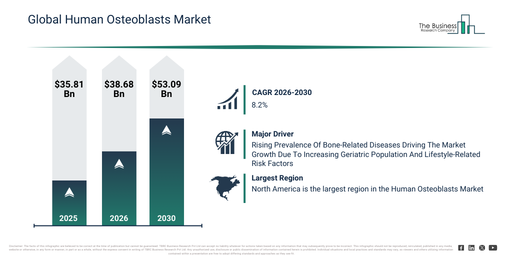
    The human osteoblasts market has experienced robust growth in recent years. It is set to expand from $35.81 billion in 2025 to $38.68 billion in 2026, achieving a compound annual growth rate (CAGR) of 8.0%. This past growth can be attributed to progress in cell culture technologies, the increasing incidence of bone-related disorders, a rise in orthopedic research funding, the expansion of musculoskeletal research programs, and the accessibility of commercial cell lines.

    The market for human osteoblasts is projected to experience robust expansion over the coming years. This market is anticipated to reach $53.09 billion in 2030, exhibiting a compound annual growth rate (CAGR) of 8.2%. Factors driving this expansion during the forecast timeframe include the wider acceptance of regenerative medicine treatments, a surge in investments directed towards bone tissue engineering, the broadening scope of stem cell research uses, an escalating need for tailored orthopedic solutions, and increased application in drug screening methodologies. Key developments expected over the forecast period encompass a greater utilization of osteoblast cell cultures for research purposes, an escalating requirement for investigations into bone regeneration, increased integration into orthopedic and spinal research, the broadening of tissue engineering applications, and a heightened emphasis on superior quality cell lines.

    Download A Free Sample Report For Comprehensive Market Insights:

    https://www.thebusinessresearchcompany.com/sample.aspx?id=33173&type=smp

    What Important Drivers Are Powering The Human Osteoblasts Market Growth?

    The increasing occurrence of bone-related ailments is anticipated to drive expansion in the human osteoblasts market. These medical conditions impact bone density, structure, and strength, making bones more fragile and prone to fractures. The growth in bone-related disease prevalence is attributed to the aging demographic in developed nations, where advanced age naturally results in diminished bone density and a higher susceptibility to conditions such as osteoporosis and osteopenia. Human osteoblasts are crucial for preventing bone loss and preserving skeletal integrity by stimulating bone formation, facilitating mineralization, and managing the equilibrium between bone resorption and deposition, thereby offering protection against osteoporosis, fractures, and other metabolic bone disorders. For instance, in February 2024, Arthritis Australia, an Australia-based non-profit organization, forecast that by 2040, the number of Australians afflicted with osteoarthritis (OA) is predicted to reach 3.11 million, representing a 32% increase from 2.35 million in 2025, which corresponds to an additional 762,515 individuals living with OA in the country. Consequently, the escalating incidence of bone-related diseases is propelling the growth of the human osteoblasts market.

    How Are Different Segment Groups Identified Within The Human Osteoblasts Market?

    The human osteoblasts market covered in this report is segmented –

    1) By Product: Human Cell Culture; Osteoblast Cell Lines

    2) By Application: Traumatic Injuries; Road Accidents; Regeneration Surgeries; Orthopedics; Musculoskeletal And Spine; Neurology

    3) By End User: Hospitals; Specialty Clinics; Ambulatory Surgical Centers

    Subsegments:

    1) By Human Cell Culture: Primary Human Osteoblast Cultures; Cryopreserved Human Osteoblast Cells; Fresh Human Osteoblast Cultures; Customized Human Cell Culture Media; Specialized Human Cell Culture Reagents

    2) By Osteoblast Cell Lines: Immortalized Osteoblast Cell Lines; Genetically Modified Osteoblast Cell Lines; Disease Specific Osteoblast Cell Lines; Research Grade Osteoblast Cell Lines; Commercially Available Osteoblast Cell Lines

    Which Firms Are Competing In The Human Osteoblasts Market?

    Major companies operating in the human osteoblasts market are Merck KGaA, Thermo Fisher Scientific Inc., Lonza Group Ltd., STEMCELL Technologies Inc., Takara Bio Inc., BioIVT LLC, American Type Culture Collection, Cyagen Biosciences Inc., CELLINK AB, ScienCell Research Laboratories Inc., ZenBio Inc., Creative Bioarray Inc., PromoCell GmbH, ReproCELL Inc., MatTek Life Sciences Inc., Axol Bioscience Ltd., iXCells Biotechnologies USA Inc., Cell Applications Inc., Neuromics Inc., and Innoprot S.L.

    Access The Complete Human Osteoblasts Market Report:

    https://www.thebusinessresearchcompany.com/report/human-osteoblasts-market-report

    Which Region Accounts For The Highest Share Of The Human Osteoblasts Market?

    North America was the largest region in the human osteoblasts market in 2025. Asia-Pacific is expected to be the fastest-growing region in the forecast period. The regions covered in the human osteoblasts market report are Asia-Pacific, South East Asia, Western Europe, Eastern Europe, North America, South America, Middle East, Africa.

    Access a Customized Human Osteoblasts Market Report for Deeper Competitive Insights

    Get in touch with us:

    The Business Research Company: https://www.thebusinessresearchcompany.com/

    Americas: +1 310-496-7795

    Asia: +44 7882 955267 & +91 8897263534

    Europe: +44 7882 955267

    Email us at: marketing@tbrc.info

    Follow us on:

    LinkedIn: https://in.linkedin.com/company/the-business-research-company

    YouTube: https://www.youtube.com/channel/UC24_fI0rV8cR5DxlCpgmyFQ

    Global Market Model: https://www.thebusinessresearchcompany.com/global-market-model
  • High-Throughput Screening Services Market to Unlock Cross-Industry Growth Opportunities by 2035

    High-Throughput Screening Services Market to Unlock Cross-Industry Growth Opportunities by 2035

    The Business Research Company’s 2026 market reports feature advanced enhancements such as market attractiveness analysis, total addressable market evaluation, company benchmarking matrices, interactive Excel dashboards, expanded supply chain intelligence, emerging startup coverage, and detailed product insights, delivering more actionable and strategically valuable research.

    How Is The Market Value Of The High-Throughput Screening Services Market Projected To Expand During 2026–2030?

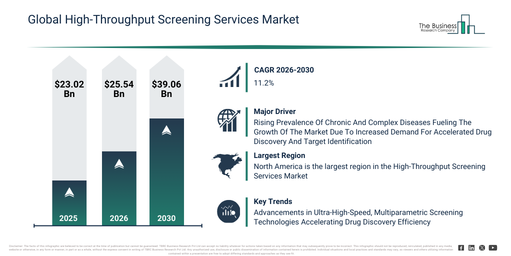
    The high-throughput screening services market has experienced significant growth recently. This market is projected to expand from $23.02 billion in 2025 to $25.54 billion in 2026, demonstrating a compound annual growth rate (CAGR) of 11.0%. Historically, this expansion has been driven by factors such as the rise in pharmaceutical research and development (R&D) endeavors, increased application of combinatorial chemistry libraries, the integration of automated liquid handling systems, a heightened need for swift target identification, and the accessibility of extensive compound libraries.

    The high-throughput screening services market is projected to experience swift expansion over the coming years. This market is anticipated to reach a valuation of $39.06 billion by 2030, demonstrating a compound annual growth rate (CAGR) of 11.2%. This projected growth is attributable to several factors, including heightened investments in precision drug discovery, a growing emphasis on biologics and intricate targets, the broadening of personalized medicine research, an expanding adoption of AI-assisted screening workflows, and increased outsourcing of screening services to Contract Research Organizations (CROs). Key trends foreseen during this period encompass the wider deployment of automated robotic screening platforms, a surging demand for ultra-high-throughput screening services, the increasing uptake of cell-based and label-free assays, the expansion of AI-driven data analysis within drug discovery, and a sharpened focus on expediting hit-to-lead identification processes.

    Download A Free Sample Report For Comprehensive Market Insights:

    https://www.thebusinessresearchcompany.com/sample.aspx?id=33169&type=smp

    What Are The Main Drivers Accelerating The Growth Of The High-Throughput Screening Services Market?

    The escalating occurrence of chronic and complex diseases is projected to drive the expansion of the high-throughput screening services market. These conditions are characterized as long-term ailments that involve various biological pathways, persist for extended durations, and typically demand continuous management rather than short-term treatment. The growth in their prevalence is largely due to an aging global population, lifestyle-related risk factors, and improved disease detection methods, which collectively increase the burden on healthcare infrastructure and stimulate the demand for innovative therapeutic solutions. High-throughput screening (HTS) services support the investigation of chronic and complex diseases by enabling the rapid and simultaneous evaluation of a large volume of compounds against biological targets. This capability accelerates the early stages of drug discovery, enhances target identification, and facilitates the development of more effective treatments for multifaceted and enduring conditions. For instance, in April 2025, information from the Centers for Disease Control and Prevention (CDC), a US-based federal agency, revealed that approximately 76.4% of adults in the United States, representing more than 194 million people, reported having at least one chronic condition in 2023, while 51.4% (around 131 million people) reported multiple chronic conditions. Thus, the increasing prevalence of chronic and complex diseases is a significant catalyst for the growth of the high-throughput screening services market.

    What Key Segment Areas Are Included In The High-Throughput Screening Services Market Assessment?

    The high-throughput screening services market covered in this report is segmented –

    1) By Products And Services: Instruments; Reagents And Kits; Services

    2) By Technology: Ultra-high-throughput Screening; Cell-based Assays; Lab-on-a-chip; Label-free Technology

    3) By Application: Target Identification; Primary Screening; Toxicology

    4) By End User: Pharmaceutical And Biotechnology Firms; Academia And Research Institutes; Contract Research Organizations

    Subsegments:

    1) By Instruments: Automated Screening Systems; Liquid Handling Systems; Detection And Imaging Systems; Data Acquisition Systems

    2) By Reagents And Kits: Assay Reagents; Screening Kits; Cell Based Reagents; Detection Reagents

    3) By Services: Assay Development And Optimization Services; Primary Screening Services; Hit Confirmation And Validation; Data Analysis And Bioinformatics Support; Specialized Screens; Project Management And Reporting

    Which Trends Are Guiding The Development Of The High-Throughput Screening Services Market?

    Major companies engaged in the high-throughput screening services market are prioritizing innovation in miniaturized and high-density assays, including those offering ultra-high screening speed with up to 27 detection channels. This focus aims to enable faster, large-scale multiparametric analysis and accelerate drug discovery workflows. Ultra-high screening speed with up to 27 detection channels refers to the capacity to quickly analyze numerous biological parameters concurrently, thereby boosting data output and efficiency in high-throughput screening studies. As an illustration, in May 2024, Evotec SE, a Germany-based company providing drug discovery and development services, introduced comprehensive high-throughput screening services as an element of its integrated early discovery platform. Evotec executes large-scale biochemical and cell-based HTS campaigns utilizing highly automated, miniaturized assay systems and advanced data analytics. The company assists pharmaceutical and biotechnology partners by swiftly identifying hit compounds and optimizing lead selection, consequently accelerating early-stage drug discovery programs.

    Which Industry Players Are Present In The High-Throughput Screening Services Market?

    Major companies operating in the high-throughput screening services market are Thermo Fisher Scientific Inc., Danaher Corporation, Merck KGaA, Corning Incorporated, Eurofins Scientific SE, Charles River Laboratories International Inc., Revvity Inc., Bio-Rad Laboratories Inc., Hamilton Company, Tecan Group Ltd., GenScript Biotech Corporation, Promega Corporation, Molecular Devices LLC, ShanghAI Medicilon Inc., Sygnature Discovery Limited, Selvita S.A., Cayman Chemical Company, Creative Bioarray Inc., Axxam S.p.A., Axcelead Inc., Creative Biolabs Inc., Enamine Ltd., Aurora Biomed Inc.

    Access The Complete High-Throughput Screening Services Market Report:

    https://www.thebusinessresearchcompany.com/report/high-throughput-screening-services-market-report

    Which Region Has The Strongest Presence In The High-Throughput Screening Services Market?

    North America was the largest region in the high-throughput screening services market in 2025. Asia-Pacific is expected to be the fastest-growing region in the forecast period. The regions covered in the high-throughput screening services market report are Asia-Pacific, South East Asia, Western Europe, Eastern Europe, North America, South America, Middle East, Africa.

    Access a Customized High-Throughput Screening Services Market Report for Deeper Competitive Insights

    Get in touch with us:

    The Business Research Company: https://www.thebusinessresearchcompany.com/

    Americas: +1 310-496-7795

    Asia: +44 7882 955267 & +91 8897263534

    Europe: +44 7882 955267

    Email us at: marketing@tbrc.info

    Follow us on:

    LinkedIn: https://in.linkedin.com/company/the-business-research-company

    YouTube: https://www.youtube.com/channel/UC24_fI0rV8cR5DxlCpgmyFQ

    Global Market Model: https://www.thebusinessresearchcompany.com/global-market-model
  • Hemophilia B Gene Therapy Market Outlook 2026–2035 Driven by Key Industry Factors

    Hemophilia B Gene Therapy Market Outlook 2026–2035 Driven by Key Industry Factors

    The Business Research Company’s 2026 market reports feature advanced enhancements such as market attractiveness analysis, total addressable market evaluation, company benchmarking matrices, interactive Excel dashboards, expanded supply chain intelligence, emerging startup coverage, and detailed product insights, delivering more actionable and strategically valuable research.

    How Much Larger Will The Hemophilia B Gene Therapy Market Become By 2030 Compared To 2026?

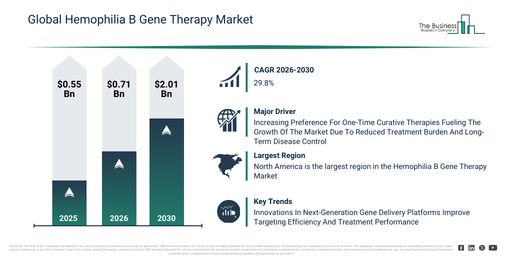
    The hemophilia b gene therapy market size has seen significant expansion in recent years. It is anticipated to increase from $0.55 billion in 2025 to $0.71 billion in 2026, achieving a compound annual growth rate (CAGR) of 29.6%. The historical growth can be linked to several factors, including advancements in gene delivery technologies, a deeper understanding of hemophilia b genetics, the expansion of clinical research programs, the increasing burden associated with lifelong replacement therapy, and the presence of specialized treatment centers.

    The hemophilia b gene therapy market size is projected to experience substantial growth over the upcoming years. It is forecast to achieve a valuation of **$2.01 billion in 2030, exhibiting a compound annual growth rate (CAGR) of 29.8%**. This expansion during the forecast period is primarily driven by factors such as the increasing approvals of gene therapies, rising investments in treatments for rare diseases, a growing demand for enduring therapeutic results, the enhancement of advanced manufacturing capabilities, and an increase in patient access programs. Furthermore, significant trends anticipated during this period include continued progress in one-time curative therapies, a heightened focus on long-term factor IX expression, ongoing optimization of AAV vector design, the expansion of personalized gene therapy approaches, and improved regulatory harmonization for advanced therapies.

    Download A Free Sample Report For Comprehensive Market Insights:

    https://www.thebusinessresearchcompany.com/sample.aspx?id=33162&type=smp

    What Influential Factors Are Boosting The Hemophilia B Gene Therapy Market Demand?

    The hemophilia B gene therapy market is projected to expand due to the increasing volume of gene therapy clinical trials. These trials are research endeavors aimed at assessing the safety, effectiveness, and lasting therapeutic impact of gene-based treatments in human subjects. The growth in gene therapy clinical trials is spurred by greater investment from biopharmaceutical firms, advancements in viral vector technologies, supportive regulatory environments, and the critical need to address rare genetic conditions with significant unmet medical requirements, including hemophilia B. This expanding landscape of clinical trials benefits hemophilia B gene therapy by providing established clinical development routes, regulatory expertise, and manufacturing capabilities pertinent to in vivo gene delivery methods. For example, in January 2026, the Bioindustry Association (BIA), a national trade association based in the UK, reported 193 ongoing advanced therapy clinical trials in the UK, a figure broadly comparable to 2024. Over half of these trials were in early stages, approximately 80% were commercially sponsored, and more than 80% focused on gene therapies, divided equally between ex vivo and in vivo approaches. Consequently, the escalation in cell and gene therapy clinical trials is propelling the hemophilia B gene therapy market’s expansion. Rising Adoption Of Personalized Medicine Is Fueling The Growth Of The Market Due To Its Role In Enabling Tailored Treatments, Patient Stratification, And Improved Therapeutic Outcomes

    What Are The Core Segment Classifications In The Hemophilia B Gene Therapy Market?

    The hemophilia b gene therapy market covered in this report is segmented –

    1) By Therapy: Adeno-Associated Viral (AAV) Vectors; Lentiviral Vectors; Retroviral Vectors

    2) By Disease Severity: Severe Hemophilia B; Moderate Hemophilia B; Mild Hemophilia B

    3) By Treatment Type: On-Demand; Cure; Prophylaxis

    4) By Patient Age Group: Geriatric; Adults; Pediatric

    5) By Distribution Channel: Hospital Pharmacies; Specialty Pharmacies

    Subsegments:

    1) By Adeno-Associated Viral Vectors: Single-Stranded Adeno-Associated Viral Vectors; Self-Complementary Adeno-Associated Viral Vectors; Tissue Specific Promoter Adeno-Associated Viral Vectors; Capsid Modified Adeno-Associated Viral Vectors

    2) By Lentiviral Vectors: Integrating Lentiviral Vectors; Non-Integrating Lentiviral Vectors; Self-Inactivating Lentiviral Vectors; Pseudotyped Lentiviral Vectors

    3) By Retroviral Vectors: Gamma Retroviral Vectors; Alpha Retroviral Vectors; Moloney Murine Leukemia Virus Retroviral Vectors; Spumaretroviral Vectors

    Which Trends Are Contributing To Changes In The Hemophilia B Gene Therapy Market?

    Companies operating in the hemophilia B gene therapy market are increasingly concentrating on advancements in next-generation gene delivery platforms, particularly optimized adeno-associated virus (AAV)–based vector systems, to enhance therapeutic efficacy and safety. These optimized AAV-based vector systems function as advanced viral delivery platforms, enabling the efficient and controlled transfer of functional clotting factor IX genes into target hepatocytes, which supports long-term endogenous factor production. For example, in May 2023, CSL Behring GmbH, a Germany-based biotechnology company, obtained European Commission approval for HEMGENIX, the initial gene therapy sanctioned for treating hemophilia B. HEMGENIX is prescribed for adult patients with severe or moderate hemophilia B who have no history of factor IX inhibitors, with the goal of reducing or eliminating the need for routine factor IX prophylaxis. Results from the pivotal HOPE-B clinical study showed that a substantial number of treated patients no longer required regular factor IX infusions, demonstrating sustained therapeutic benefit and underscoring the potential of next-generation AAV-based gene therapies in managing the disease long-term.

    Who Are The Firms Contributing To The Hemophilia B Gene Therapy Market Ecosystem?

    Major companies operating in the hemophilia b gene therapy market are REGENXBIO Inc., Pfizer Inc., Bayer Aktiengesellschaft (Bayer AG), Thermo Fisher Scientific Inc., Takeda Pharmaceutical Company Limited, Merck KGaA, CSL Behring LLC, Lonza Group AG, Alnylam Pharmaceuticals Inc., GenScript ProBio LLC, Ultragenyx Pharmaceutical Inc., Takara Bio Inc., Sangamo Therapeutics Inc., Precision BioSciences Inc., Synthego Corporation, MaxCyte Inc., uniQure N.V., Freeline Therapeutics Ltd., Be Biopharma Inc., Asklepios BioPharmaceutical Inc., Cellectis S.A.

    Access The Complete Hemophilia B Gene Therapy Market Report:

    https://www.thebusinessresearchcompany.com/report/hemophilia-b-gene-therapy-market-report

    What Is The Largest Regional Market In The Hemophilia B Gene Therapy Market?

    North America was the largest region in the hemophilia b gene therapy market in 2025. Asia-Pacific is expected to be the fastest-growing region in the forecast period. The regions covered in the hemophilia b gene therapy market report are Asia-Pacific, South East Asia, Western Europe, Eastern Europe, North America, South America, Middle East, Africa.

    Access a Customized Hemophilia B Gene Therapy Market Report for Deeper Competitive Insights

    Get in touch with us:

    The Business Research Company: https://www.thebusinessresearchcompany.com/

    Americas: +1 310-496-7795

    Asia: +44 7882 955267 & +91 8897263534

    Europe: +44 7882 955267

    Email us at: marketing@tbrc.info

    Follow us on:

    LinkedIn: https://in.linkedin.com/company/the-business-research-company

    YouTube: https://www.youtube.com/channel/UC24_fI0rV8cR5DxlCpgmyFQ

    Global Market Model: https://www.thebusinessresearchcompany.com/global-market-model
  • Group B Streptococcus Infection Treatment Market Insights 2026–2030 Exploring Opportunities

    Group B Streptococcus Infection Treatment Market Insights 2026–2030 Exploring Opportunities

    The Business Research Company’s 2026 market reports feature advanced enhancements such as market attractiveness analysis, total addressable market evaluation, company benchmarking matrices, interactive Excel dashboards, expanded supply chain intelligence, emerging startup coverage, and detailed product insights, delivering more actionable and strategically valuable research.

    How Will The Market Value Of The Group B Streptococcus Infection Treatment Market Increase Between 2026 And 2030?

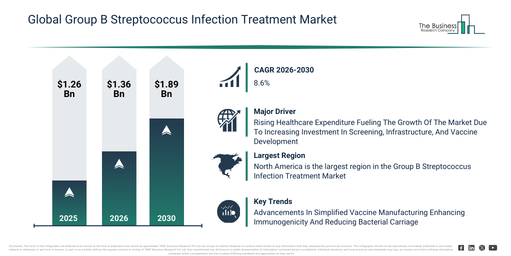
    The group b streptococcus infection treatment market has demonstrated significant expansion in recent years. Its size is expected to increase from $1.26 billion in 2025 to $1.36 billion in 2026, at a compound annual growth rate (CAGR) of 8.3%. The growth observed in previous periods is attributable to several factors, including heightened awareness of neonatal infections, the proliferation of prenatal care programs, the extensive application of beta-lactam antibiotics, the development of hospital-based screening protocols, and the availability of microbiological testing services.

    The market for group b streptococcus infection treatment is anticipated to experience robust expansion in the coming years. By 2030, this market is projected to reach $1.89 billion, advancing at a compound annual growth rate (CAGR) of 8.6%. This expansion during the forecast period is largely driven by factors such as the accelerated development of gbs vaccines, greater uptake of point-of-care diagnostic tools, a heightened emphasis on managing antimicrobial resistance, the broadening of molecular testing infrastructure, and a stronger focus on preventive maternal healthcare. Key trends anticipated for the forecast period encompass a surge in the adoption of rapid molecular diagnostic testing, an intensified focus on prenatal gbs screening programs, an increasing implementation of antibiotic stewardship protocols, the enlargement of therapeutic pipelines aimed at gbs prevention, and improved surveillance of maternal and neonatal outcomes.

    Download A Free Sample Report For Comprehensive Market Insights:

    https://www.thebusinessresearchcompany.com/sample.aspx?id=33144&type=smp

    Which Strategic Drivers Are Supporting The Group B Streptococcus Infection Treatment Market Development?

    The increasing healthcare expenditure is anticipated to propel the growth of the group B streptococcus infection treatment market moving forward. Healthcare expenditure is defined as the total financial resources allocated to medical services, preventive care, medications, infrastructure, and related health activities, all aimed at maintaining or improving population health. This expenditure is experiencing a rise due to the increasing prevalence of chronic and infectious diseases, which subsequently fuels sustained demand for long-term treatment, advanced therapies, and continuous medical care. A boost in healthcare expenditure strengthens group B Streptococcus infection treatment through heightened investment in prenatal screening, clinical infrastructure, and vaccine research. These combined efforts lead to improved early detection, prevention, and effective management of GBS infections in mothers and newborns. For instance, in April 2025, according to the Office for National Statistics, a UK-based government organization, overall healthcare spending increased by 6.5% from 2023 to 2024, indicating an acceleration compared with the 6.3% growth recorded in 2023. Therefore, the escalating healthcare expenditure is a key factor driving the growth of the group B streptococcus infection treatment market.

    What Are The Major Segment Categories Within The Group B Streptococcus Infection Treatment Market?

    The group b streptococcus infection treatment market covered in this report is segmented –

    1) By Treatment Type: Antibiotic Therapy; Intravenous Immunoglobulin (IVIG); Experimental Therapies

    2) By Drug Class: Beta-Lactam Antibiotic; Clindamycin And Alternatives; Pipeline Therapies

    3) By Route of Administration: Oral Administration; Intravenous Administration; Topical Application

    4) By Patient Type: Newborns; Pregnant Women; Immunocompromised Patients; Elderly Population

    5) By End User: Hospitals; Clinics; Research Institutions; Home Care Settings

    Subsegments:

    1) By Antibiotic Therapy: Penicillin Based Antibiotics; Cephalosporin Antibiotics; Macrolide Antibiotics; Aminoglycoside Antibiotics

    2) By Intravenous Immunoglobulin (IVIG): Standard Polyclonal Immunoglobulin; High Dose Immunoglobulin Therapy; Adjunctive Immunoglobulin Therapy

    3) By Experimental Therapies: Vaccine Based Therapies; Monoclonal Antibody Therapies; Bacteriophage Therapies; Immunomodulatory Therapies

    What Trends Are Affecting The Growth Of The Group B Streptococcus Infection Treatment Market?

    Leading companies in the group B streptococcus infection treatment market are concentrating on developing novel products, such as polysaccharide conjugate vaccines, aimed at reducing asymptomatic bacterial carriage. These vaccines are immunizations where bacterial surface sugars are chemically linked to a carrier protein to enhance immune recognition and generate a strong, long-lasting protective response, especially beneficial for infants and young children. For example, in September 2023, Omniose, a US-based biotechnology company, announced a grant award of up to $3.0 million from the National Institute of Allergy and Infectious Diseases at the U.S. National Institutes of Health to support the development of a Group B Streptococcus (GBS) vaccine. The vaccine’s distinguishing feature is its objective to achieve high efficacy through a significantly simplified manufacturing method. Omniose’s platform employs synthetic biology and a one-step enzymatic process within a single re-engineered E. coli cell to produce GBS polysaccharide conjugate vaccines, thereby eliminating conventional chemical conjugation steps. This process preserves 100% of sialic acid residues on each capsular polysaccharide, a factor demonstrated to be critical for inducing strong functional antibody responses against specific GBS serotypes.

    Which Companies Are Engaged In The Group B Streptococcus Infection Treatment Market Environment?

    Major companies operating in the group b streptococcus infection treatment market are Merck & Co. Inc., Pfizer Inc., Sanofi S.A., Novartis AG, GlaxoSmithKline plc, Biological E. Limited, Serum Institute of India Pvt. Ltd., Walvax Biotechnology Co. Ltd., Vaxcyte Inc., Bharat Biotech International Limited, Clover Biopharmaceuticals Ltd., Biovac Institute (Pty) Ltd., Inventprise Inc., BioNet Asia Co. Ltd., GeneOne Life Science Inc., Alopexx Enterprises LLC, Wellstat Vaccines LLC, MinervaX ApS, and ShanghAI Zerun Biotechnology Co. Ltd.

    Access The Complete Group B Streptococcus Infection Treatment Market Report:

    https://www.thebusinessresearchcompany.com/report/group-b-streptococcus-infection-treatment-market-report

    Which Region Holds The Largest Share In The Group B Streptococcus Infection Treatment Market?

    North America was the largest region in the group B streptococcus infection treatment market in 2025. Asia-Pacific is expected to be the fastest-growing region in the forecast period. The regions covered in the group b streptococcus infection treatment market report are Asia-Pacific, South East Asia, Western Europe, Eastern Europe, North America, South America, Middle East, Africa.

    Access a Customized Group B Streptococcus Infection Treatment Market Report for Deeper Competitive Insights

    Get in touch with us:

    The Business Research Company: https://www.thebusinessresearchcompany.com/

    Americas: +1 310-496-7795

    Asia: +44 7882 955267 & +91 8897263534

    Europe: +44 7882 955267

    Email us at: marketing@tbrc.info

    Follow us on:

    LinkedIn: https://in.linkedin.com/company/the-business-research-company

    YouTube: https://www.youtube.com/channel/UC24_fI0rV8cR5DxlCpgmyFQ

    Global Market Model: https://www.thebusinessresearchcompany.com/global-market-model
  • Global GMP Services for Cell and Gene Therapy Market Outlook 2026–2035 with Growth Opportunities

    Global GMP Services for Cell and Gene Therapy Market Outlook 2026–2035 with Growth Opportunities

    The Business Research Company’s 2026 market reports feature advanced enhancements such as market attractiveness analysis, total addressable market evaluation, company benchmarking matrices, interactive Excel dashboards, expanded supply chain intelligence, emerging startup coverage, and detailed product insights, delivering more actionable and strategically valuable research.

    What Will Be The Estimated Market Size Of The Good Manufacturing Practice (GMP) Services For Cell And Gene Therapy Market By 2030?

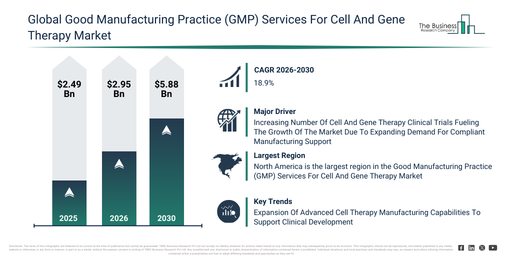
    The good manufacturing practice (gmp) services for cell and gene therapy market size has experienced rapid expansion in recent years. This market is projected to increase from $2.49 billion in 2025 to $2.95 billion in 2026, achieving a compound annual growth rate (CAGR) of 18.6%. Historically, this market’s growth can be attributed to several factors including an uptick in clinical trials for advanced therapies, the enlargement of cell therapy research programs, intensified regulatory standardization, the creation of early-stage GMP facilities, and increased investment in biopharmaceutical manufacturing.

    The market for good manufacturing practice (gmp) services in cell and gene therapy is anticipated to experience swift expansion over the coming years. This market is projected to reach $5.88 billion by 2030, exhibiting a compound annual growth rate (CAGR) of 18.9%. The expansion during this forecast timeframe stems from factors such as the heightened commercialization of gene therapies, a greater need for scalable manufacturing capabilities, the enlargement of personalized medicine development pipelines, an increase in outsourcing to CDMOs, and the wider implementation of automated quality control systems. Key developments anticipated in the forecast period encompass a surging requirement for commercial-scale cell and gene therapy manufacturing, a growing uptake of viral vector production services, an intensified concentration on GMP-compliant automation, the broadening of fill-finish and cold chain offerings, and a strengthened commitment to adhering to regulatory standards.

    Download A Free Sample Report For Comprehensive Market Insights:

    https://www.thebusinessresearchcompany.com/sample.aspx?id=33124&type=smp

    What Major Growth Factors Are Impacting The Good Manufacturing Practice (GMP) Services For Cell And Gene Therapy Market?

    The rising volume of cell and gene therapy clinical trials is anticipated to boost the good manufacturing practice (GMP) services for cell and gene therapy market in the future. These trials are regulated investigations assessing the safety, effectiveness, and quality of advanced therapies that utilize genetically altered or live cells to address ailments like cancer, rare genetic conditions, and autoimmune disorders. This surge in trials stems from expanded research and development in advanced therapies, increased funding from biotechnology and pharmaceutical companies, and a growing need for novel treatments for currently unaddressed medical requirements. Given that numerous trial sponsors do not possess internal GMP manufacturing capabilities, they are progressively turning to specialized GMP service providers for compliant manufacturing, analytical testing, quality control, and quality assurance. Such services are vital for guaranteeing the secure, consistent, and prompt provision of clinical-grade materials throughout all trial stages. For example, data from January 2026, reported by the Bioindustry Association (BIA), a UK-based national trade association, indicated that the UK had 193 active advanced therapy clinical trials, with over half in early phases and more than 80% concentrating on gene therapies. Consequently, the growing count of cell and gene therapy clinical trials is propelling the expansion of the good manufacturing practice (GMP) services for cell and gene therapy market.

    How Is The Good Manufacturing Practice (GMP) Services For Cell And Gene Therapy Market Distributed Across Key Segments?

    The good manufacturing practice (gmp) services for cell and gene therapy market covered in this report is segmented –

    1) By Service Type: Process Development; Manufacturing; Analytical and Quality Control; Fill-Finish; Other Service Types

    2) By Therapy Type: Cell Therapy; Gene Therapy; Combination Therapy

    3) By Phase: Preclinical; Clinical; Commercial

    4) By End-User: Pharmaceutical and Biotechnology Companies; Academic and Research Institutes; Other End-Users

    Subsegments:

    1) By Process Development: Vector Design Optimization; Cell Line Development; Upstream Process Optimization; Downstream Purification Development; Process Scale Up Studies

    2) By Manufacturing: Clinical Trial Material Production; Commercial Scale Manufacturing; Viral Vector Manufacturing; Plasmid Production Services; Cell Therapy Manufacturing

    3) By Analytical and Quality Control: Method Development And Validation; Potency And Efficacy Testing; Safety And Sterility Testing; Stability And Shelf Life Studies; Release Testing Services

    4) By Fill-Finish: Aseptic Filling Services; Vial And Syringe Filling; Lyophilization Services; Packaging And Labeling; Cold Chain Handling

    5) By Other Service Types: Regulatory Support Services; Technology Transfer Services; Supply Chain Management; Storage And Distribution; Post Manufacturing Support

    Which Trends Are Influencing The Direction Of The Good Manufacturing Practice (GMP) Services For Cell And Gene Therapy Market?

    Leading firms within the good manufacturing practice (GMP) services for cell and gene therapy market are dedicating more effort to enhancing their advanced manufacturing infrastructure, which encompasses cell therapy production, to facilitate regional clinical studies and expedite the progression of therapies. The production of cell therapies necessitates processes that comply with GMP standards for gathering, altering, multiplying, and preparing therapeutic cells, thereby guaranteeing the product’s safety, quality, and efficacy in clinical settings. As an illustration, in July 2025, AGC Biologics, a US-headquartered contract development and manufacturing organization (CDMO), inaugurated services for cell therapy process development and clinical manufacturing at its facility located in Yokohama, Japan. This center provides support for GMP-adherent production tailored for both preclinical and clinical investigations, encompassing CAR-T treatments, induced pluripotent stem cells, and various other stem cell methodologies. Such growth enhances AGC Biologics’ worldwide GMP presence spanning Europe, North America, and Asia, thereby facilitating the quicker and more compliant progression of cell and gene therapies toward market availability.

    Who Are The Prominent Players Across The Good Manufacturing Practice (GMP) Services For Cell And Gene Therapy Market?

    Major companies operating in the good manufacturing practice (gmp) services for cell and gene therapy market are Novartis AG, Boehringer Ingelheim BioXcellence GmbH, Batavia Biosciences B.V., FUJIFILM Diosynth Biotechnologies, AGC Biologics Inc., Lonza Group AG, WuXi AppTec Co. Ltd., BioNTech Innovative Manufacturing Services, Charles River Laboratories International Inc., Catalent Inc., Samsung Biologics Co. Ltd., Miltenyi Biotec GmbH, SK pharmteco Co. Ltd., KBI Biopharma Inc., Oxford Biomedica plc, OmniaBio Inc., RoslinCT Ltd., Pluri CDMO, SCTbio Inc., Made Scientific Inc., ENCell Co. Ltd.

    Access The Complete Good Manufacturing Practice (GMP) Services For Cell And Gene Therapy Market Report:

    https://www.thebusinessresearchcompany.com/report/good-manufacturing-practice-gmp-services-for-cell-and-gene-therapy-market-report

    Which Region Is The Dominant Market In The Good Manufacturing Practice (GMP) Services For Cell And Gene Therapy Market?

    North America was the largest region in the good manufacturing practice (GMP) services for cell and gene therapy market in 2025. Asia-Pacific is expected to be the fastest-growing region in the forecast period. The regions covered in the good manufacturing practice (gmp) services for cell and gene therapy market report are Asia-Pacific, South East Asia, Western Europe, Eastern Europe, North America, South America, Middle East, Africa.

    Access a Customized Good Manufacturing Practice (GMP) Services For Cell And Gene Therapy Market Report for Deeper Competitive Insights

    Get in touch with us:

    The Business Research Company: https://www.thebusinessresearchcompany.com/

    Americas: +1 310-496-7795

    Asia: +44 7882 955267 & +91 8897263534

    Europe: +44 7882 955267

    Email us at: marketing@tbrc.info

    Follow us on:

    LinkedIn: https://in.linkedin.com/company/the-business-research-company

    YouTube: https://www.youtube.com/channel/UC24_fI0rV8cR5DxlCpgmyFQ

    Global Market Model: https://www.thebusinessresearchcompany.com/global-market-model
  • Gene Therapy Bioassays Market Forecast 2026–2035 with Industry Insights

    Gene Therapy Bioassays Market Forecast 2026–2035 with Industry Insights

    The Business Research Company’s 2026 market reports feature advanced enhancements such as market attractiveness analysis, total addressable market evaluation, company benchmarking matrices, interactive Excel dashboards, expanded supply chain intelligence, emerging startup coverage, and detailed product insights, delivering more actionable and strategically valuable research.

    What Market Value Expansion Is Expected For The Gene Therapy Bioassays Market Over The Forecast Period?

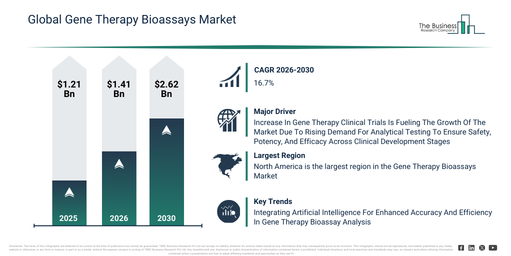
    The gene therapy bioassays market size has witnessed rapid growth in recent years. It is anticipated to expand from $1.21 billion in 2025 to $1.41 billion in 2026, exhibiting a compound annual growth rate (CAGR) of 16.5%. The historical growth of this market is attributable to the proliferation of gene therapy research programs, an increase in viral vector manufacturing, heightened clinical trial activity, the embrace of standardized bioassay protocols, and increasing regulatory scrutiny on gene therapy products.

    The gene therapy bioassays market is anticipated to undergo significant expansion in the coming years. Its size is projected to reach $2.62 billion by 2030, exhibiting a compound annual growth rate (CAGR) of 16.7%. This expansion is primarily driven by the increasing commercialization of gene therapies, a rising demand for high-throughput bioassay solutions, the broadening field of personalized genetic medicine, growing investments in advanced cell and gene therapy pipelines, and an increased emphasis on assay automation and reproducibility. Noteworthy trends during this period include a greater adoption of cell-based potency assays, an escalating demand for viral vector characterization tests, the wider use of automated bioassay platforms, the growth of regulatory-compliant assay validation, and an enhanced focus on functional gene expression analysis.

    Download A Free Sample Report For Comprehensive Market Insights:

    https://www.thebusinessresearchcompany.com/sample.aspx?id=33119&type=smp

    Which Significant Factors Are Encouraging Growth In The Gene Therapy Bioassays Market?

    The growing number of gene therapy clinical trials is projected to fuel expansion in the gene therapy bioassays market. These trials critically assess the safety, effectiveness, and biological function of gene-based treatments in human subjects. Their proliferation is a result of intensified research and development efforts and increased investment from biopharmaceutical companies striving to meet unmet medical needs through innovative genetic therapies. Gene therapy bioassays are essential for clinical development, providing crucial analytical tests to evaluate biological activity, potency, safety, and mechanism of action at each development stage, with regulatory scrutiny heightening as programs advance through clinical phases. For instance, in January 2026, the Bioindustry Association (BIA), a UK-based national trade association, reported that the UK had 193 ongoing advanced therapy clinical trials, with over 80% focusing on gene therapies. Therefore, the surge in gene therapy clinical trials is a key driver for the growth of the gene therapy bioassays market.

    What Segment Types Are Included In The Gene Therapy Bioassays Market Analysis?

    The gene therapy bioassays market covered in this report is segmented –

    1) By Product Type: Cell-Based Assays; Viral Vector-Based Assays; Non-Viral Vector-Based Assays; Other Product Types

    2) By Service Type: Assay Development Services; Assay Validation Services; Quality Control Testing Services; Regulatory Support Services; Data Analysis And Reporting Services; Custom Bioassay Design Services

    3) By Application: Research And Development; Clinical Testing; Quality Control; Other Applications

    4) By End User: Biotechnology Companies; Pharmaceutical Companies; Contract Research Organizations; Academic And Research Institutes; Regulatory Laboratories

    Subsegments:

    1) By Cell-Based Assays: Reporter Gene Expression Assays; Cell Viability And Cytotoxicity Assays; Transduction Efficiency Assays; Functional Potency Cell Assays; Cellular Uptake And Localization Assays

    2) By Viral Vector-Based Assays: Adeno Associated Virus Vector Assays; Lentiviral Vector Characterization Assays; Retroviral Vector Titer Assays; Vector Genome Integrity Assays; Infectivity And Transduction Assays

    3) By Non-Viral Vector-Based Assays: Plasmid Deoxyribonucleic Acid Delivery Assays; Lipid Nanoparticle Transfection Assays; Polymeric Carrier Efficiency Assays; Physical Gene Delivery Evaluation Assays; Non Viral Vector Stability Assays

    4) By Other Product Types: Immunogenicity Assessment Assays; Biodistribution And Persistence Assays; Safety And Toxicity Bioassays; Analytical Method Development Assays; Custom Gene Therapy Bioassays

    Which Trends Are Shaping The Gene Therapy Bioassays Market Landscape?

    Major companies operating in the gene therapy bioassays market are increasingly integrating artificial intelligence and machine learning into bioassay analysis, exemplified by AI-enabled digital PCR data interpretation. This approach seeks to improve accuracy, diminish experimental variability, accelerate result generation, and optimize the assessment of therapeutic efficacy and safety during gene therapy development. AI-enabled dPCR data interpretation leverages advanced algorithms to automate result analysis, distinguish true signals from background noise, and precisely quantify viral genomes or vector copy number with reduced human intervention. For instance, in April 2025, QIAGEN N.V., a Germany-based molecular diagnostics company, launched an expansion of its QIAcuity lentivirus solutions, which included the QIAcuity RCL Quant Kit and CGT dPCR assays. These solutions offer algorithm-driven absolute quantification, compatibility for multiplex and singleplex assays for vector genome and vector copy number analysis, and software-assisted data analysis workflows designed to aid regulatory-compliant decision-making in gene therapy bioassay applications.

    Who Are The Key Market Participants In The Gene Therapy Bioassays Market?

    Major companies operating in the gene therapy bioassays market are Boehringer Ingelheim BioXcellence, AGC Biologics, ICON plc, Lonza Group AG, SGS SA, Eurofins Scientific SE, WuXi AppTec, Charles River Laboratories International Inc., Catalent Inc, Recipharm AB, KBI Biopharma, Syngene International Limited, QPS Holdings LLC, BioAgilytix Labs (operationally independent CRO), Oxford Biomedica plc, Viralgen Vector S.L., ProtaGene Inc., Center for Breakthrough Medicines, RoslinCT, Immunologix Labs, Genezen Laboratories

    Access The Complete Gene Therapy Bioassays Market Report:

    https://www.thebusinessresearchcompany.com/report/gene-therapy-bioassays-market-report

    Which Region Commands The Largest Share Of The Gene Therapy Bioassays Market?

    North America was the largest region in the gene therapy bioassays market in 2025. Asia-Pacific is expected to be the fastest-growing region in the forecast period. The regions covered in the gene therapy bioassays market report are Asia-Pacific, South East Asia, Western Europe, Eastern Europe, North America, South America, Middle East, Africa.

    Access a Customized Gene Therapy Bioassays Market Report for Deeper Competitive Insights

    Get in touch with us:

    The Business Research Company: https://www.thebusinessresearchcompany.com/

    Americas: +1 310-496-7795

    Asia: +44 7882 955267 & +91 8897263534

    Europe: +44 7882 955267

    Email us at: marketing@tbrc.info

    Follow us on:

    LinkedIn: https://in.linkedin.com/company/the-business-research-company

    YouTube: https://www.youtube.com/channel/UC24_fI0rV8cR5DxlCpgmyFQ

    Global Market Model: https://www.thebusinessresearchcompany.com/global-market-model
  • GPRC5D Targeted Therapies Market Outlook 2026–2030 Highlighting Key Trends and Drivers

    GPRC5D Targeted Therapies Market Outlook 2026–2030 Highlighting Key Trends and Drivers

    The Business Research Company’s 2026 market reports feature advanced enhancements such as market attractiveness analysis, total addressable market evaluation, company benchmarking matrices, interactive Excel dashboards, expanded supply chain intelligence, emerging startup coverage, and detailed product insights, delivering more actionable and strategically valuable research.

    How Will The Market Value Of The G Protein-Coupled Receptor Family C Group 5 Member D (GPRC5D) Targeted Therapies Market Change Between 2026 And 2030?

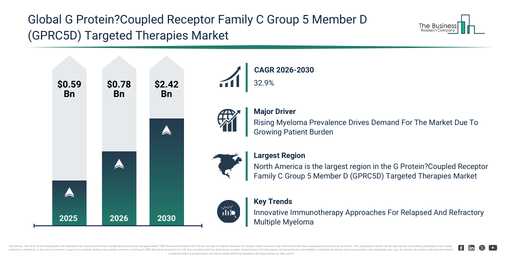
    The market for g protein-coupled receptor family c group 5 member d (gprc5d) targeted therapies has seen substantial growth in recent times. It is anticipated to increase from $0.59 billion in 2025 to $0.78 billion in 2026, achieving a compound annual growth rate (CAGR) of 32.7%. This past growth is attributable to advancements in targeted cancer therapy research, a rising incidence of multiple myeloma, the expansion of monoclonal antibody development initiatives, better clinical trial infrastructure, and increased investment in oncology drug discovery.

    The g protein-coupled receptor family c group 5 member d (gprc5d) targeted therapies market size is anticipated to experience substantial growth in the coming years. It is projected to reach $2.42 billion by 2030, exhibiting a compound annual growth rate (CAGR) of 32.9%. This expansion during the forecast period is propelled by factors such as an increase in regulatory approvals for targeted biologics, a growing demand for personalized cancer treatments, the broadening of next-generation immunotherapy platforms, rising investments in precision medicine ecosystems, and the wider adoption of biomarker-based therapy selection. Prominent trends observed for this period include the increased development of bispecific antibody therapies, a heightened focus on gprc5d biomarker-driven patient selection, the expanding use of CAR-T cell platforms, the enlargement of precision oncology clinical pipelines, and improved integration of companion diagnostics.

    Download A Free Sample Report For Comprehensive Market Insights:

    https://www.thebusinessresearchcompany.com/sample.aspx?id=33116&type=smp

    What Core Drivers Are Transforming The G Protein-Coupled Receptor Family C Group 5 Member D (GPRC5D) Targeted Therapies Market?

    An increase in myeloma prevalence is projected to boost the expansion of the GPRC5D-targeted therapies market. Myeloma, a form of cancer affecting plasma cells within the bone marrow, interferes with typical blood cell formation and may lead to issues such as bone damage, anemia, and kidney dysfunction. The growing incidence of myeloma is partly attributable to demographic aging, since the likelihood of developing plasma cell disorders escalates with advancing age due to the gradual accumulation of genetic mutations. GPRC5D-targeted therapies offer a treatment approach for myeloma by attaching to the GPRC5D protein present on cancerous plasma cells. This mechanism guides the immune system, particularly T cells, to specifically eliminate these malignant cells while largely preserving healthy ones. For example, the American Cancer Society, a US-based professional organization, projected in January 2026 that in 2026, the United States is likely to observe about 36,000 new cases of multiple myeloma, comprising 20,150 cases in men and 15,850 cases in women. Additionally, approximately 10,850 deaths are expected, with 5,780 men and 5,070 women affected. Consequently, the increasing prevalence of myeloma is fueling the growth of the GPRC5D-targeted therapies market.

    Which Segment Divisions Form The Structure Of The G Protein-Coupled Receptor Family C Group 5 Member D (GPRC5D) Targeted Therapies Market?

    The g protein-coupled receptor family c group 5 member d (gprc5d) targeted therapies market covered in this report is segmented –

    1) By Therapy Type: Monoclonal Antibodies; Bispecific Antibodies; Chimeric Antigen Receptor (CAR-T) Cell Therapies; Other Therapy Types

    2) By Indication: Multiple Myeloma; Solid Tumors; Other Indications

    3) By Technology: Precision Medicine Approaches; Molecular Targeted Therapy; Cancer Immunotherapy Platforms; Biopharmaceutical Drug Delivery Systems

    4) By Route Of Administration: Intravenous; Subcutaneous; Other Routes Of Administration

    5) By End-User: Hospitals; Specialty Clinics; Research Institutes; Other End-Users

    Subsegments:

    1) By Monoclonal Antibodies: Fully Human Monoclonal Antibodies; Humanized Monoclonal Antibodies; Chimeric Monoclonal Antibodies; Murine Monoclonal Antibodies

    2) By Bispecific Antibodies: Dual Targeting Bispecific Antibodies; Cross Linking Bispecific Antibodies; Immune Cell Engaging Bispecific Antibodies; Cytotoxic Bispecific Antibodies

    3) By Chimeric Antigen Receptor (CAR-T) Cell Therapies: Autologous Car T Cell Therapies; Allogeneic Car T Cell Therapies; Next Generation Car T Cell Therapies; Gene Edited Car T Cell Therapies

    4) By Other Therapy Types: Targeted Small Molecule Drugs; Receptor Specific Inhibitors; Injectable Biologics; Oral Targeted Therapeutics

    What Trends Are Influencing The G Protein-Coupled Receptor Family C Group 5 Member D (GPRC5D) Targeted Therapies Market Outlook?

    Leading firms within the GPRC5D targeted therapies market are concentrating on creating novel therapies, specifically bispecific T cell engagers, aimed at strengthening the immune system’s ability to target cancer cells and boosting treatment effectiveness. A bispecific T-cell engager (BiTE) represents an immunotherapy molecule engineered to forge a direct link between T-cells and cancer cells, simultaneously binding to both, thereby stimulating T-cells to eliminate the designated cancer cells. As an illustration, in August 2023, Johnson & Johnson, a healthcare firm based in the US, secured approval from the European Commission for TALVEY (talquetamab), Janssen’s bispecific antibody therapy that targets GPRC5D, intended for treating relapsed and refractory multiple myeloma (RRMM) in patients who have undergone at least three prior therapies. This particular therapy stands as a first-in-class bispecific T-cell engager, designed to target GPRC5D found on multiple myeloma cells and CD3 on T cells, for addressing relapsed/refractory multiple myeloma in patients extensively pretreated. Its primary objective is to deliver enduring responses (with an ORR >70% observed in trials) following at least four prior therapies, offering benefits such as subcutaneous administration, maintained improvements in quality of life, and continued effectiveness even after bispecific or CAR-T treatments, thereby addressing a critical unmet requirement in advanced-stage disease.

    Which Organizations Are Operating Within The G Protein-Coupled Receptor Family C Group 5 Member D (GPRC5D) Targeted Therapies Market?

    Major companies operating in the g protein-coupled receptor family c group 5 member d (gprc5d) targeted therapies market are Johnson And Johnson, F. Hoffmann-La Roche AG., AbbVie Inc., Sanofi S.A., AstraZeneca plc, Bristol Myers Squibb Company, Genmab A/S, Genentech Inc., Simcere Zaiming Biotechnology Co. Ltd., Innovent Biologics Inc., Essen Biotech Co. Ltd., Nanjing IASO Biotechnology Co. Ltd., CARsgen Therapeutics Holdings Limited, Oricell Therapeutics Co. Ltd., Integral Molecular Inc., Overland Therapeutics Inc., Qilu Pharmaceutical Co. Ltd., Leads Biolabs Ltd., ShanghAI Yake Biotechnology Co. Ltd., Guangzhou Bio-gene Technology Co. Ltd.

    Access The Complete G Protein-Coupled Receptor Family C Group 5 Member D (GPRC5D) Targeted Therapies Market Report:

    https://www.thebusinessresearchcompany.com/report/g-protein-coupled-receptor-family-c-group-5-member-d-gprc5d-targeted-therapies-market-report

    Which Region Accounts For The Highest Share Of The G Protein-Coupled Receptor Family C Group 5 Member D (GPRC5D) Targeted Therapies Market?

    North America was the largest region in the GPRC5D targeted therapies market in 2025. Asia-Pacific is expected to be the fastest-growing region in the forecast period. The regions covered in the g protein-coupled receptor family c group 5 member d (gprc5d) targeted therapies market report are Asia-Pacific, South East Asia, Western Europe, Eastern Europe, North America, South America, Middle East, Africa.

    Access a Customized G Protein-Coupled Receptor Family C Group 5 Member D (GPRC5D) Targeted Therapies Market Report for Deeper Competitive Insights

    Get in touch with us:

    The Business Research Company: https://www.thebusinessresearchcompany.com/

    Americas: +1 310-496-7795

    Asia: +44 7882 955267 & +91 8897263534

    Europe: +44 7882 955267

    Email us at: marketing@tbrc.info

    Follow us on:

    LinkedIn: https://in.linkedin.com/company/the-business-research-company

    YouTube: https://www.youtube.com/channel/UC24_fI0rV8cR5DxlCpgmyFQ

    Global Market Model: https://www.thebusinessresearchcompany.com/global-market-model
  • Collaborative innovation accelerating RNA-based cancer therapy development in the Epitranscriptomic Therapies Market

    Collaborative innovation accelerating RNA-based cancer therapy development in the Epitranscriptomic Therapies Market

    The Business Research Company’s 2026 market reports feature advanced enhancements such as market attractiveness analysis, total addressable market evaluation, company benchmarking matrices, interactive Excel dashboards, expanded supply chain intelligence, emerging startup coverage, and detailed product insights, delivering more actionable and strategically valuable research.

    What Market Value Trend Is Expected For The Epitranscriptomic Therapies Market From 2026 To 2030?

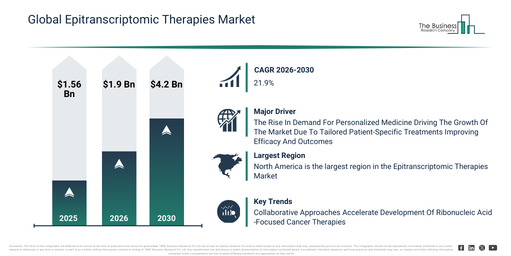
    The epitranscriptomic therapies market has seen rapid expansion in recent years. Its valuation is anticipated to climb from $1.56 billion in 2025 to $1.9 billion in 2026, demonstrating a compound annual growth rate (CAGR) of 21.6%. The historical growth in this sector can be attributed to several factors including progress in RNA biology research, a deeper insight into gene regulation mechanisms, the expansion of oncology research programs, the availability of cutting-edge sequencing technologies, and an increase in translational medicine initiatives.

    The epitranscriptomic therapies market size is anticipated to experience substantial growth in the upcoming years, expanding to $4.2 billion by 2030, demonstrating a compound annual growth rate (CAGR) of 21.9%. This projected growth is attributed to factors such as increasing investments in RNA-based therapeutics, a rising demand for targeted cancer treatments, the expansion of personalized medicine approaches, growing clinical trial activity within epitranscriptomics, and increasing regulatory engagement concerning novel RNA therapies. Prominent trends throughout this period include the increasing development of epitranscriptomic drug pipelines, the growing utilization of RNA modification profiling tools, the expansion of combination epitranscriptomic therapies, the rising integration of bioinformatics in therapy design, and an enhanced focus on precision medicine applications.

    Download A Free Sample Report For Comprehensive Market Insights:

    https://www.thebusinessresearchcompany.com/sample.aspx?id=33108&type=smp

    What Key Growth Drivers Are Influencing The Epitranscriptomic Therapies Market?

    The epitranscriptomic therapies market is projected to grow in the future due to the rising demand for personalized medicine. This medical approach involves customizing healthcare decisions, treatments, and interventions according to each patient’s unique characteristics, such as their genetic profile, lifestyle, and environment. The primary factor behind the increasing need for personalized medicine is the growing incidence of chronic and complex diseases, as customized treatments can more effectively address individual patient requirements and enhance outcomes. Personalized medicine assists epitranscriptomic therapies by tailoring treatments to an individual’s specific RNA modification patterns, thereby boosting therapeutic effectiveness while minimizing the risk of adverse effects. As an illustration, in February 2024, the Personalized Medicine Coalition, a US-based non-profit organization, reported that the U.S. Food and Drug Administration (FDA) approved 16 new personalized treatments for rare disease patients in 2023, an increase from six in 2022. The personalized treatments newly approved in 2023 also included seven cancer drugs and three for other diseases and conditions. Therefore, the escalating demand for personalized medicine is a significant driver for the growth of the epitranscriptomic therapies market.

    Which Segment Groups Define The Epitranscriptomic Therapies Market Landscape?

    The epitranscriptomic therapies market covered in this report is segmented –

    1) By Therapy Type: Small Molecule Inhibitors; Ribonucleic Acid Modifying Enzymes; Antisense Oligonucleotides; Other Therapy Types

    2) By Route of Administration: Injectable; Oral; Other Routes Of Administration

    3) By Application: Cancer; Neurological Disorders; Metabolic Diseases; Infectious Diseases; Other Applications

    4) By End-User: Hospitals; Research Institutes; Pharmaceutical And Biotechnology Companies; Other End-Users

    Subsegments:

    1) By Small Molecule Inhibitors: Methyltransferase Inhibitors; Demethylase Inhibitors; Reader Protein Inhibitors; Writer Enzyme Inhibitors; Eraser Enzyme Inhibitors

    2) By Ribonucleic Acid Modifying Enzymes: Methyltransferase Enzymes; Demethylase Enzymes; Pseudouridine Synthase Enzymes; Adenosine Deaminase Enzymes; Cytidine Deaminase Enzymes

    3) By Antisense Oligonucleotides: Gapmer Oligonucleotides; Splice Modulating Oligonucleotides; Translation Blocking Oligonucleotides; Exon Skipping Oligonucleotides; Gene Expression Silencing Oligonucleotides

    4) By Other Therapy Types: Ribonucleic Acid Interference Based Therapies; Messenger Ribonucleic Acid Editing Therapies; Epitranscriptomic Vaccine Platforms; Gene Regulation Modulation Therapies; Combination Epitranscriptomic Therapies

    What Trends Are Impacting The Epitranscriptomic Therapies Market?

    Leading companies in the epitranscriptomic therapies market are prioritizing strategic alliances to develop innovative RNA-modifying cancer treatments. Strategic partnerships are collaborative arrangements where organizations combine resources, knowledge, or strengths to pursue shared objectives, leading to faster growth, reduced operational risks, and enhanced market competitiveness. For example, in January 2026, STORM Therapeutics Ltd., a UK-based biotechnology company, partnered with Alida Biosciences Inc., a US-based technology company, to advance cancer therapies targeting epitranscriptomic mechanisms. This collaboration focuses on integrating AlidaBio’s EpiPlex and EpiScout platforms with STORM’s clinical trials of STC-15, a first-in-class METTL3 inhibitor. The partnership aims to identify and validate m6A RNA modification biomarkers that can predict patient responses and optimize therapeutic strategies. This joint effort combines drug development with advanced RNA profiling, representing a significant advancement in epitranscriptomic cancer therapies.

    Which Companies Are Influencing The Epitranscriptomic Therapies Market?

    Major companies operating in the epitranscriptomic therapies market are AstraZeneca PLC, GSK plc, Moderna Inc., Alnylam Pharmaceuticals Inc., Ionis Pharmaceuticals Inc., Arcturus Therapeutics Holdings Inc., Arrakis Therapeutics Inc., AIRNA Corporation, CD Genomics, ProQR Therapeutics N.V., Nimbus Therapeutics LLC, Envisagenics Inc., Skyhawk Therapeutics Inc., Avidity Biosciences Inc., STORM Therapeutics Ltd., Omega Therapeutics Inc., Korro Bio Inc., Accent Therapeutics Inc., Alida Biosciences Inc., and O2nix Bio.

    Access The Complete Epitranscriptomic Therapies Market Report:

    https://www.thebusinessresearchcompany.com/report/epitranscriptomic-therapies-market-report

    Which Region Has The Strongest Presence In The Epitranscriptomic Therapies Market?

    North America was the largest region in the epitranscriptomic therapies market in 2025. Asia-Pacific is expected to be the fastest-growing region in the forecast period. The regions covered in the epitranscriptomic therapies market report are Asia-Pacific, South East Asia, Western Europe, Eastern Europe, North America, South America, Middle East, Africa.

    Access a Customized Epitranscriptomic Therapies Market Report for Deeper Competitive Insights

    Get in touch with us:

    The Business Research Company: https://www.thebusinessresearchcompany.com/

    Americas: +1 310-496-7795

    Asia: +44 7882 955267 & +91 8897263534

    Europe: +44 7882 955267

    Email us at: marketing@tbrc.info

    Follow us on:

    LinkedIn: https://in.linkedin.com/company/the-business-research-company

    YouTube: https://www.youtube.com/channel/UC24_fI0rV8cR5DxlCpgmyFQ

    Global Market Model: https://www.thebusinessresearchcompany.com/global-market-model
  • Growing adoption of genomics fueling the DNA synthesis technology market

    Growing adoption of genomics fueling the DNA synthesis technology market

    The Business Research Company’s 2026 market reports feature advanced enhancements such as market attractiveness analysis, total addressable market evaluation, company benchmarking matrices, interactive Excel dashboards, expanded supply chain intelligence, emerging startup coverage, and detailed product insights, delivering more actionable and strategically valuable research.

    How Does The Forecasted Market Size Of The Enzymatic Deoxyribonucleic Acid (DNA) Synthesis Technology Market Compare Between 2026 And 2030?

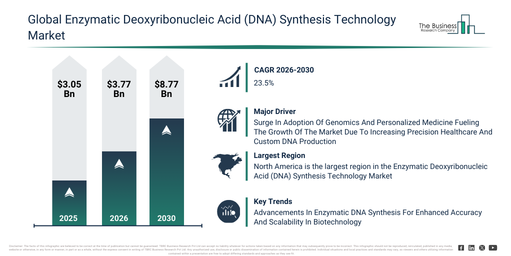
    The enzymatic deoxyribonucleic acid (dna) synthesis technology market has witnessed significant expansion in recent years. This market is set to grow from $3.05 billion in 2025 to $3.77 billion in 2026, at a compound annual growth rate (CAGR) of 23.3%. Historically, this growth can be attributed to an increasing adoption of synthetic biology in research, the inherent constraints of chemical dna synthesis methods, progress in genomics and gene editing research, an increase in biotech research funding, and the development of enzyme engineering technologies.

    The enzymatic deoxyribonucleic acid (dna) synthesis technology market is projected to experience substantial growth in the coming years, with its size expected to reach $8.77 billion in 2030 at a compound annual growth rate (CAGR) of 23.5%. This anticipated growth during the forecast period is attributed to several factors, including an increasing demand for scalable dna manufacturing, the rising adoption of dna-based data storage concepts, the expansion of biopharmaceutical development pipelines, growing investments in sustainable biotech processes, and the increasing use of automated and microfluidic synthesis systems. Key trends shaping this period include the increasing adoption of enzymatic dna synthesis platforms, a growing demand for long and high-fidelity dna constructs, the expansion of benchtop and cloud-based synthesis models, a rising focus on environmentally sustainable dna manufacturing, and enhanced integration with synthetic biology workflows.

    Download A Free Sample Report For Comprehensive Market Insights:

    https://www.thebusinessresearchcompany.com/sample.aspx?id=33107&type=smp

    Which Core Factors Are Supporting The Expansion Of The Enzymatic Deoxyribonucleic Acid (DNA) Synthesis Technology Market?

    Increased integration of genomics and personalized medicine is anticipated to fuel expansion within the enzymatic DNA synthesis technology market. Genomics and personalized medicine involve leveraging genetic data and precise healthcare methods to customize diagnostics, therapies, and preventative measures for unique genetic makeups. The growing uptake of genomics and personalized medicine stems from ongoing progress in sequencing technologies, which has resulted in reduced expenses and quicker analysis, contributing to improved clinical results and enhanced care effectiveness. Enzymatic DNA synthesis technology facilitates genomics and personalized medicine through its capacity for scalable, highly accurate DNA generation, crucial for crafting bespoke genetic sequences and devising targeted treatments. For example, in February 2024, as reported by the Personalized Medicine Coalition, a US-based nonprofit organization, the Food and Drug Administration sanctioned 16 new personalized treatments for rare diseases in 2023, representing a substantial rise from 6 approvals in 2022. Consequently, the expanding incorporation of genomics and personalized medicine is propelling the market growth of enzymatic DNA synthesis technology.

    What Key Segment Areas Are Included In The Enzymatic Deoxyribonucleic Acid (DNA) Synthesis Technology Market Assessment?

    The enzymatic deoxyribonucleic acid (dna) synthesis technology market covered in this report is segmented –

    1) By Technology: Polymerase Mediated Synthesis; Terminal Deoxynucleotidyl Transferase (TdT); Template Free Ligase Based Synthesis; Hybrid Chemical Enzymatic Workflows; Xeno Nucleic Acid (XNA) Synthesis Platforms

    2) By Fragment: Short Oligos; Gene Fragments; Long Constructs

    3) By Delivery Model: Benchtop Instrument; Outsourced Service; Cloud Based As A Service

    4) By Application: Synthetic Biology; Genomics And Gene Editing; Biopharmaceutical Development; Diagnostics And Research Tools; Biotechnology Research And Development

    5) By End-User Or Application: Academic And Government Research Institutes; Pharmaceutical And Biotechnology Companies; Diagnostic Companies; Agricultural Biotech Companies; Industrial Biotech And Chemical Companies

    Subsegments:

    1) By Polymerase Mediated Synthesis: Polymerase Chain Reaction Based Synthesis; Isothermal Amplification Based Synthesis; Rolling Circle Amplification Based Synthesis; Strand Displacement Amplification Based Synthesis; Primer Extension Based Synthesis

    2) By Terminal Deoxynucleotidyl Transferase (TdT): Single Nucleotide Addition Synthesis; Homopolymer Tail Synthesis; Random Oligonucleotide Tail Synthesis; Labeling And Tagging Synthesis; Enzyme Mediated Extension Synthesis

    3) By Template Free Ligase Based Synthesis: Enzymatic Ligation Synthesis; Oligonucleotide Assembly Synthesis; Fragment Ligation Synthesis; Cyclic Ligation Synthesis; Automated Ligase Synthesis

    4) By Hybrid Chemical Enzymatic Workflows: Phosphoramidite Enzymatic Integration Synthesis; Chemical Precursor Enzymatic Extension Synthesis; Stepwise Hybrid Synthesis; Enzyme Assisted Chemical Assembly Synthesis; Automated Hybrid Workflow Synthesis

    5) By Xeno Nucleic Acid (XNA) Synthesis Platforms: Peptide Nucleic Acid Synthesis; Locked Nucleic Acid Synthesis; Glycol Nucleic Acid Synthesis; Threose Nucleic Acid Synthesis; Cyclohexenyl Nucleic Acid Synthesis

    Which Trends Are Affecting The Enzymatic Deoxyribonucleic Acid (DNA) Synthesis Technology Market Framework?

    Leading entities within the enzymatic deoxyribonucleic acid (DNA) synthesis technology market are prioritizing the creation of sophisticated solutions, including algorithm-driven enzymatic DNA synthesis platforms, aimed at facilitating the generation of synthetic DNA sequences that are extended, intricate, and extremely precise. These algorithm-driven platforms utilize advanced computational models to direct the enzyme-dependent, step-by-step synthesis of DNA in vitro. Such systems boost sequence accuracy, expandability, and production levels by consistently adjusting synthesis parameters through real-time error prediction and rectification processes. As an illustration, in May 2025, Ribbon Bio, a synthetic biology firm based in Austria, unveiled its MiroSynth DNA molecules, which are intended to pave the way for a new era of intricate and lengthy synthetic DNA constructs. This algorithmic technology allows for the construction of DNA sequences that are considerably longer and more accurate compared to what traditional techniques can achieve, thereby supporting cutting-edge uses in gene therapy, synthetic biology, and industrial biotechnology. The solution employs proprietary enzymatic methods to reduce error occurrences, enhance scalability, and sustain elevated sequence accuracy, rendering it highly suitable for stringent downstream biological applications. It is designed to cater to the increasing need for complex DNA structures, simultaneously providing superior reliability, environmental friendliness, and design adaptability when contrasted with conventional DNA synthesis technologies.

    Who Are The Companies Shaping The Enzymatic Deoxyribonucleic Acid (DNA) Synthesis Technology Market Landscape?

    Major companies operating in the enzymatic deoxyribonucleic acid (dna) synthesis technology market are Thermo Fisher Scientific Inc, Almac Group Limited, Twist Bioscience Corporation, DNA Script SAS, Synbio Technologies, Telesis Bio Inc., Touchlight Genetics Limited, Yeasen Biotechnology, CD Genomics, Bioneer Corporation, Ansa Biotechnologies Inc., Elegen Corporation, Molecular Assemblies Inc., Moligo Technologies AB, Evonetix Ltd, Camena Bioscience Limited, Baseclick GmbH, Kern Systems, Ribbon Bio, and Helixworks.

    Access The Complete Enzymatic Deoxyribonucleic Acid (DNA) Synthesis Technology Market Report:

    https://www.thebusinessresearchcompany.com/report/enzymatic-deoxyribonucleic-acid-dna-synthesis-technology-market-report

    Which Region Stands As The Largest Contributor To The Enzymatic Deoxyribonucleic Acid (DNA) Synthesis Technology Market?

    North America was the largest region in the enzymatic deoxyribonucleic acid (DNA) synthesis technology market in 2025. Asia-Pacific is expected to be the fastest-growing region in the forecast period. The regions covered in the enzymatic deoxyribonucleic acid (dna) synthesis technology market report are Asia-Pacific, South East Asia, Western Europe, Eastern Europe, North America, South America, Middle East, Africa.

    Access a Customized Enzymatic Deoxyribonucleic Acid (DNA) Synthesis Technology Market Report for Deeper Competitive Insights

    Get in touch with us:

    The Business Research Company: https://www.thebusinessresearchcompany.com/

    Americas: +1 310-496-7795

    Asia: +44 7882 955267 & +91 8897263534

    Europe: +44 7882 955267

    Email us at: marketing@tbrc.info

    Follow us on:

    LinkedIn: https://in.linkedin.com/company/the-business-research-company

    YouTube: https://www.youtube.com/channel/UC24_fI0rV8cR5DxlCpgmyFQ

    Global Market Model: https://www.thebusinessresearchcompany.com/global-market-model