Category: Pharmaceuticals

  • Biologics Active Pharmaceutical Ingredient (API) Market 2026 Market Size And Growth Forecast: Key Trends To Watch

    Built to provide research that’s more actionable and strategically valuable, The Business Research Company’s 2026 market reports include market attractiveness analysis, total addressable market sizing, company benchmarking matrices, interactive Excel dashboards, broader supply chain intelligence, emerging startup tracking, and in-depth product insights.

    Biologics Active Pharmaceutical Ingredient (API) Market Poised To Hit $101.84 Billion By 2030 With A 8.8% CAGR

    The market for biologics active pharmaceutical ingredient (API) has experienced robust expansion over recent years. It is anticipated to increase from $66.82 billion in 2025 to $72.57 billion in 2026, exhibiting a compound annual growth rate (CAGR) of 8.6%. This historical expansion can be attributed to factors such as the increasing prevalence of chronic and autoimmune diseases, the expansion of monoclonal antibody development pipelines, the growth of recombinant protein therapeutics, rising investments in biologics manufacturing infrastructure, and increasing outsourcing to biologics CMOs.

    The market size for biologics active pharmaceutical ingredients (API) is anticipated to experience substantial growth over the coming years. This market is projected to reach $101.84 billion by 2030, exhibiting a compound annual growth rate (CAGR) of 8.8%. Factors contributing to this growth during the forecast period include the increasing advancement of cell and gene therapies, a heightened demand for customized biologic medicines, the expansion of commercial biologics manufacturing, an intensifying focus on process scalability and consistency, and greater regulatory attention on API quality and traceability. Key trends expected during this period involve the rising adoption of single-use bioprocessing systems, an increasing need for high-purity biologics APIs, the expansion of large-scale commercial biomanufacturing, a heightened emphasis on cold chain integrity, and improved integration of advanced purification technologies.

    Get A Free Sample Report With In-Depth Market Insights:

    https://thebusinessresearchcompany.com/sample_request?id=10812543&type=smp&name=Biologics%20Active%20Pharmaceutical%20Ingredient%20%28API%29%20Market%20Report%202026&utm_source=Blogs&utm_medium=Paid&utm_campaign=Oct_PR

    Biologics Active Pharmaceutical Ingredient (API) Market Opportunity Drivers: What’s Unlocking New Revenue Potential?

    The increasing need for personalized medicine is projected to fuel expansion within the biologics active pharmaceutical ingredients market. This medical strategy involves customizing disease prevention, diagnosis, and treatment based on an individual’s unique genetic profile, biomarkers, lifestyle choices, and environmental influences. The surge in demand for personalized medicine stems from its enhanced treatment effectiveness, where therapies designed for an individual’s genetic and molecular makeup improve clinical results and lessen negative drug responses. This growing requirement for personalized medicine consequently bolsters biologics active pharmaceutical ingredient (API) production, as it necessitates precise, patient-specific biologic compounds, thereby elevating the demand for sophisticated, high-quality biologic APIs essential for precision treatment methodologies. For instance, data from February 2024, provided by the Personalized Medicine Coalition, a US-based nonprofit industry alliance, indicates that the Food and Drug Administration sanctioned 16 new personalized treatments for rare diseases in 2023, marking a significant rise from 6 approvals in 2022. Consequently, the expanding demand for personalized medicine is a primary force propelling the expansion of the biologics active pharmaceutical ingredients market.

    Biologics Active Pharmaceutical Ingredient (API) Market Breakdown By Product Type And Application

    The biologics active pharmaceutical ingredient (api) market covered in this report is segmented –

    1) By Type Of Modality: Monoclonal Antibodies; Recombinant Proteins; Vaccines; Enzymes; Other Biologics

    2) By Scale Of Operation: Preclinical Or Clinical Scale; Commercial Scale

    3) By Service: Upstream Processing; Downstream Purification; Formulation And Fill-Finish Services; Analytical Testing And Quality Control

    4) By End-Users: Pharmaceutical Companies; Biotechnology Companies; Academic And Research Institutions; Contract Research Organizations

    Subsegments:

    1) By Monoclonal Antibodies: Therapeutic Monoclonal Antibodies; Diagnostic Monoclonal Antibodies; Human Monoclonal Antibodies

    2) By Recombinant Proteins: Hormonal Proteins; Growth Factor Proteins; Cytokine Proteins

    3) By Vaccines: Live Attenuated Vaccines; Inactivated Vaccines; Subunit Vaccines

    4) By Enzymes: Replacement Enzymes; Digestive Enzymes; Metabolic Enzymes

    5) By Other Biologics: Cell And Gene Therapy Products; Fusion Proteins; Plasma Derived Products

    Biologics Active Pharmaceutical Ingredient (API) Market Innovation Trends Shaping Future Development

    Leading companies in the biologics active pharmaceutical ingredients (APIs) market are prioritizing the development of sophisticated solutions, including biosimilar development platforms, to boost drug effectiveness and expand treatment accessibility. These biosimilar development platforms denote structured systems and procedures that facilitate the creation of biologic drugs closely resembling approved reference products, ensuring equivalent safety, potency, and quality while simultaneously tackling issues of cost and availability. For instance, in March 2023, Enzene Biosciences, an India-based biopharmaceutical firm, launched its biosimilar version of adalimumab, a commonly used therapeutic monoclonal antibody. This particular solution aims to deliver clinical performance comparable to the original product, offering a more economical choice for both patients and healthcare systems. The platform incorporates advanced bioprocessing and analytical methods to uphold consistent batch quality, achieve high purity, and comply with regulatory criteria, thus supporting large-scale production and a dependable supply. It is specifically designed to address the increasing need for available biologic therapies for chronic and autoimmune conditions, thereby enabling wider patient access and sustainable treatment alternatives.

    Biologics Active Pharmaceutical Ingredient (API) Market Leading Players And Competitive Positioning

    Major companies operating in the biologics active pharmaceutical ingredient (api) market are F Hoffmann-La Roche Ltd, Pfizer Inc, AbbVie Inc, Sanofi SA, Novartis AG, AstraZeneca PLC, Bristol-Myers Squibb Company, Thermo Fisher Scientific Inc, GSK plc, Eli Lilly and Company, Amgen Inc, Danaher Corporation, Boehringer Ingelheim International GmbH, AGC Inc, Biogen Inc, Lonza Group AG, Novo Holdings AS, FUJIFILM Biotechnologies Inc, Curia Global Inc, Almac Group Ltd, Syngene International Limited, and Hepalink USA Inc.

    View The Full Biologics Active Pharmaceutical Ingredient (API) Market Report:

    https://thebusinessresearchcompany.com/report/biologics-active-pharmaceutical-ingredient-api-market-report?utm_source=Blogs&utm_medium=Paid&utm_campaign=Oct_PR

    Biologics Active Pharmaceutical Ingredient (API) Market Regional Distribution: Which Areas Power Market Growth?

    North America was the largest region in the biologics active pharmaceutical ingredients (API) market in 2025. Asia-Pacific is expected to be the fastest-growing region in the forecast period. The regions covered in the biologics active pharmaceutical ingredient (api) market report are Asia-Pacific, South East Asia, Western Europe, Eastern Europe, North America, South America, Middle East, Africa.

    Reach Out To Our Team:

    The Business Research Company: https://www.thebusinessresearchcompany.com/

    Americas: +1 310-496-7795

    Asia: +44 7882 955267 & +91 8897263534

    Europe: +44 7882 955267

    Email us at: marketing@tbrc.info

    Follow us on:

    LinkedIn: https://in.linkedin.com/company/the-business-research-company

    YouTube: https://www.youtube.com/channel/UC24_fI0rV8cR5DxlCpgmyFQ

    Global Market Model: https://www.thebusinessresearchcompany.com/global-market-model
  • Bioconjugation Market Size Forecast: How The Industry Is Expected To Grow From 2026 To 2030

    Backed by market attractiveness analysis, total addressable market sizing, company benchmarking matrices, interactive Excel dashboards, wider supply chain intelligence, emerging startup coverage, and detailed product-level insights, The Business Research Company’s 2026 market reports are designed to offer research that is more actionable and strategically valuable than ever.

    Bioconjugation Market Size And Revenue Outlook Through 2030

    The bioconjugation market has experienced swift expansion in recent years. Its value is projected to climb from $6.12 billion in 2025 to $6.89 billion in 2026, registering a compound annual growth rate (CAGR) of 12.5%. Historically, this expansion was driven by factors such as intensifying biologics research activities, the broadened application of antibody-based therapeutics, advancements in diagnostic assay development, the increasing embrace of protein labeling techniques, and the accessibility of standardized conjugation kits.

    The bioconjugation market size is anticipated to experience significant expansion in the coming years. It will grow to $11.12 billion in 2030 at a compound annual growth rate (CAGR) of 12.7%. This growth during the forecast period can be attributed to the increasing development of targeted drug conjugates, rising investments in precision medicine research, the expansion of companion diagnostics, the growing use of conjugated biomolecules in imaging, and an increasing demand for scalable conjugation workflows. Key trends expected in the forecast period include the increasing adoption of site-specific conjugation techniques, a rising use of advanced linker chemistries, a growing demand for high-purity conjugation reagents, the expansion of automated conjugation platforms, and an enhanced focus on stability and reproducibility.

    Get A Free Sample Report With In-Depth Market Insights:

    https://thebusinessresearchcompany.com/sample_request?id=37670751&type=smp&name=Bioconjugation%20Market%20Report%202026&utm_source=Blogs&utm_medium=Paid&utm_campaign=Oct_PR

    Bioconjugation Market Growth Momentum: What Factors Are Shaping Demand?

    The escalating requirement for targeted therapeutics is anticipated to fuel the expansion of the bioconjugation market in the future. These therapeutics are medical interventions specifically engineered to pinpoint disease-causing cells or molecules, thereby boosting treatment effectiveness and reducing harm to healthy tissues. The surge in targeted therapeutics stems from a growing need for precision medicine, which facilitates more accurate treatment strategies leading to improved patient results and fewer negative side effects. Bioconjugation aids targeted therapeutics by allowing for the exact attachment of drugs to specific targeting molecules, which enhances selective delivery to diseased cells and boosts therapeutic potency. An illustration of this trend is seen in February 2024, where data from the West China Hospital, Sichuan University, a medical research center in China focused on targeted therapies, indicated that more than 47 novel targeted therapeutics gained approval from the U.S. Food and Drug Administration in 2023. These approvals constituted approximately 85.5% of all new drug approvals, highlighting a growing focus on precision-targeted treatment options within the United States. Consequently, the heightened need for targeted therapeutics is acting as a primary catalyst for the expansion of the bioconjugation market.

    Bioconjugation Market Segment Analysis And Revenue Potential

    The bioconjugation market covered in this report is segmented –

    1) By Product And Service: Consumables; Instruments; Service

    2) By Biomolecule Type: Antibodies; Proteins; Peptides; Oligonucleotides; Other Biomolecules

    3) By Technique: Chemical Conjugation; Enzyme-Mediated Conjugation; Click Chemistry; Photoreactive Crosslinking; Other Techniques

    4) By Application: Therapeutics; Research And Development; Diagnostics

    5) By End Use: Pharmaceutical And Biotechnology Companies; Contract Research Organizations (CRO) And Contract Manufacturing Organizations (CMOs); Academic And Research Institutes; Hospitals, Clinical And Diagnostic Laboratories

    Subsegments:

    1) By Consumables: Reagents; Buffers; Linkers; Kits; Resins; Chromatography Materials; Protein Purification Materials

    2) By Instruments: Chromatography Systems; Spectroscopy Systems; Electrophoresis Systems; Automated Conjugation Platforms; Imaging Systems; Bioreactors

    3) By Service: Custom Conjugation Services; Antibody Modification Services; Protein Labeling Services; Contract Research Services; Analytical Testing Services; Purification Services

    Bioconjugation Market Trends Redefining Industry Growth

    Leading companies in the bioconjugation market are prioritizing the creation of advanced platforms, such as site-specific conjugation methods, with the aim of refining drug delivery precision, boosting coupling stability, and reducing off-target toxicity. Site-specific conjugation methods are defined as bioconjugation techniques that enable precise linkage of therapeutic molecules, for example, drugs or RNAi, to biomolecules including antibodies, peptides, or oligonucleotides, thereby guaranteeing consistent activity and safety. An example illustrating this occurred in August 2023, when BOCSCI Inc., a US-based supplier of research chemicals and bioconjugation services, introduced the XDC bioconjugation platform, a cutting-edge solution intended to enhance the creation of bioconjugates. Utilizing advanced conjugation strategies, comprising unnatural amino acid incorporation, engineered cysteine conjugation, enzyme-assisted ligation, and glycoconjugation generation, this platform facilitates the accurate production of antibody-drug conjugates, siRNA conjugates, and other targeted drug delivery molecules, ultimately enabling researchers to develop safer and more effective biopharmaceuticals.

    Bioconjugation Market Competitive Overview And Top Companies

    Major companies operating in the bioconjugation market are Thermo Fisher Scientific Inc., Merck KGaA, Danaher Corporation, Lonza Group AG, Agilent Technologies Inc., Charles River Laboratories International Inc., Sartorius AG, Bio-Rad Laboratories Inc., Vector Laboratories Inc., Promega Corporation, LGC Biosearch Technologies Ltd., TriLink BioTechnologies LLC, Creative PEGWorks Inc., Lumiprobe Corporation, Biotium Inc., Jena Bioscience GmbH, Quanta BioDesign Ltd., Setareh Biotech Inc., Baseclick GmbH, Biosynth Carbosynth Ltd., Glen Research Inc., BroadPharm Inc., and Biorbyt Ltd.

    View The Full Bioconjugation Market Report:

    https://thebusinessresearchcompany.com/report/bioconjugation-market-report?utm_source=Blogs&utm_medium=Paid&utm_campaign=Oct_PR

    Bioconjugation Market Leading Geography: Which Region Contributes The Most Revenue?

    North America was the largest region in the bioconjugation market in 2025. Asia-Pacific is expected to be the fastest-growing region in the forecast period. The regions covered in the bioconjugation market report are Asia-Pacific, South East Asia, Western Europe, Eastern Europe, North America, South America, Middle East, Africa.

    Reach Out To Our Team:

    The Business Research Company: https://www.thebusinessresearchcompany.com/

    Americas: +1 310-496-7795

    Asia: +44 7882 955267 & +91 8897263534

    Europe: +44 7882 955267

    Email us at: marketing@tbrc.info

    Follow us on:

    LinkedIn: https://in.linkedin.com/company/the-business-research-company

    YouTube: https://www.youtube.com/channel/UC24_fI0rV8cR5DxlCpgmyFQ

    Global Market Model: https://www.thebusinessresearchcompany.com/global-market-model
  • Arrayed Clustered Regularly Interspaced Short Palindromic Repeats (CRISPR) Screening Market Analysis: How The Industry Is Evolving Toward A $3.43 Billion Future

    Backed by market attractiveness analysis, total addressable market sizing, company benchmarking matrices, interactive Excel dashboards, wider supply chain intelligence, emerging startup coverage, and detailed product-level insights, The Business Research Company’s 2026 market reports are designed to offer research that is more actionable and strategically valuable than ever.

    Arrayed Clustered Regularly Interspaced Short Palindromic Repeats (CRISPR) Screening Market Value Analysis: What Growth Lies Ahead Over The Forecast Period?

    The arrayed clustered regularly interspaced short palindromic repeats (crispr) screening market has experienced rapid expansion in recent years. This market is projected to grow from $1.52 billion in 2025 to $1.79 billion in 2026, achieving a compound annual growth rate (CAGR) of 17.5%. The historical growth of the market can be attributed to the expansion of functional genomics research, the availability of crispr editing reagents, the increase in academic screening programs, the early adoption of arrayed screening formats, and the rising use of cell-based assays.

    The arrayed clustered regularly interspaced short palindromic repeats (crispr) screening market is projected to experience substantial expansion over the coming years, with its valuation anticipated to reach $3.43 billion by 2030, demonstrating a compound annual growth rate (CAGR) of 17.7%. This growth trajectory within the forecast period is fueled by factors such as the heightened demand for precision drug discovery, increased investment in gene therapy research, the broadening of disease modeling applications, the expanding adoption of bioinformatics-driven screening methods, and stronger collaborations between academic institutions and industrial entities. Key trends expected during this period involve a surge in demand for targeted gene validation screens, the escalating utilization of high-throughput arrayed crispr assays, the deeper integration of phenotypic data analytics, the broadened availability of custom crispr screening services, and a heightened emphasis on the accuracy of functional genomics.

    Get A Free Sample Report With In-Depth Market Insights:

    https://thebusinessresearchcompany.com/sample_request?id=40849201&type=smp&name=Arrayed%20Clustered%20Regularly%20Interspaced%20Short%20Palindromic%20Repeats%20%28CRISPR%29%20Screening%20Market%20Report%202026&utm_source=Blogs&utm_medium=Paid&utm_campaign=Oct_PR

    Arrayed Clustered Regularly Interspaced Short Palindromic Repeats (CRISPR) Screening Market Growth Backed By Core Demand Fundamentals

    The expanding focus on personalized medicine is projected to drive the growth of the arrayed clustered regularly interspaced short palindromic repeats (CRISPR) screening market. Personalized medicine represents a healthcare strategy that customizes treatment and prevention plans according to an individual’s genetic, biological, and lifestyle attributes. Its adoption is increasing due to advancements in genomics and molecular diagnostics, allowing treatments to be tailored to a person’s genetic profile for improved outcomes. Arrayed CRISPR screening supports personalized medicine by systematically testing the impact of specific gene edits on individual cell responses. This facilitates the identification of patient-specific drug targets, the prediction of treatment responses, and the development of customized therapies based on a person’s genetic and cellular profile. For example, in February 2024, data from the Personalized Medicine Coalition, a US-based non-profit organization, indicated that the FDA approved 16 new personalized treatments for rare disease patients in 2023, a rise from six in 2022. The new personalized treatments approved in 2023 also included seven cancer drugs and three for other diseases and conditions. Consequently, the heightened emphasis on personalized medicine is fueling the growth of the arrayed clustered regularly interspaced short palindromic repeats (CRISPR) screening market.

    Arrayed Clustered Regularly Interspaced Short Palindromic Repeats (CRISPR) Screening Market Segment Trends And Revenue Contributors

    The arrayed clustered regularly interspaced short palindromic repeats (crispr) screening market covered in this report is segmented –

    1) By Product Type: Clustered Regularly Interspaced Short Palindromic Repeats Libraries; Reagents And Consumables; Instruments; Software And Services

    2) By Application: Functional Genomics; Drug Discovery; Disease Modeling; Gene Validation; Other Applications

    3) By End User: Pharmaceutical And Biotechnology Companies; Academic And Research Institutes; Contract Research Organizations; Other End Users

    Subsegments:

    1) By Clustered Regularly Interspaced Short Palindromic Repeats Libraries: Genome Wide Knockout Libraries; Targeted Gene Libraries; Activation Libraries; Repression Libraries; Custom Designed Libraries

    2) By Reagents And Consumables: Guide Ribonucleic Acid Reagents; Cas Enzyme Reagents; Transfection Reagents; Cell Culture Reagents; Assay And Detection Reagents

    3) By Instruments: Automated Liquid Handling Systems; High Throughput Screening Systems; Cell Imaging Systems; Flow Cytometry Instruments; Genomic Analysis Instruments

    4) By Software And Services: Screening Design Software; Data Analysis Software; Bioinformatics Services; Screening Execution Services; Custom Assay Development Services

    Arrayed Clustered Regularly Interspaced Short Palindromic Repeats (CRISPR) Screening Market Growth Trends Reshaping The Competitive Landscape

    Major entities operating within the CRISPR screening market are increasingly engaging in strategic partnerships to elevate the precision of high-throughput phenotypic screening. A strategic partnership is defined as a formal collaborative effort where organizations combine their assets, knowledge, or technologies to accomplish shared objectives, leading to accelerated innovation, diminished risk, and a broader market reach without necessitating a merger or acquisition. For example, in November 2023, AstraZeneca Plc, a UK-based science-focused biopharmaceutical company, collaborated with the Medical Research Council (MRC), a UK government agency, and the Milner Therapeutics Institute (MTI) at the University of Cambridge, a UK biomedical research institute, to launch the Functional Genomics Screening Laboratory (FGSL). This state-of-the-art facility aims to advance drug discovery by charting gene-phenotype connections in chronic conditions like cardiovascular and metabolic disorders, thus reinforcing UK genomics leadership through open academic partnerships. Key advantages include high-throughput automation for accurate imaging and phenotyping in organoids or iPSCs, which is superior to pooled approaches, as well as offering free access to researchers, faster target validation, and shared expertise to accelerate the development of therapies.

    Arrayed Clustered Regularly Interspaced Short Palindromic Repeats (CRISPR) Screening Market Leading Players And Competitive Positioning

    Major companies operating in the arrayed clustered regularly interspaced short palindromic repeats (crispr) screening market are Thermo Fisher Scientific Inc, Merck KGaA, GE HealthCare Technologies Inc, Applied Biological Materials Inc, Agilent Technologies Inc, Charles River Laboratories International Inc, Integrated DNA Technologies Inc, GenScript Biotech Corporation, Synthego Holdings LLC, Santa Cruz Biotechnology Inc, Creative Biolabs Inc, VectorBuilder Inc, Admera Health LLC, Addgene Inc, Ncardia, BioCat GmbH, Cellecta Inc, GeneCopoeia Inc, Creative Biogene Inc, and Aelian Biotechnology.

    View The Full Arrayed Clustered Regularly Interspaced Short Palindromic Repeats (CRISPR) Screening Market Report:

    https://thebusinessresearchcompany.com/report/arrayed-clustered-regularly-interspaced-short-palindromic-repeats-crispr-screening-market-report?utm_source=Blogs&utm_medium=Paid&utm_campaign=Oct_PR

    Arrayed Clustered Regularly Interspaced Short Palindromic Repeats (CRISPR) Screening Market Regional Distribution: Which Areas Power Market Growth?

    North America was the largest region in the arrayed clustered regularly interspaced short palindromic repeats (CRISPR) screening market in 2025. Asia-Pacific is expected to be the fastest-growing region in the forecast period. The regions covered in the arrayed clustered regularly interspaced short palindromic repeats (crispr) screening market report are Asia-Pacific, South East Asia, Western Europe, Eastern Europe, North America, South America, Middle East, Africa.

    Reach Out To Our Team:

    The Business Research Company: https://www.thebusinessresearchcompany.com/

    Americas: +1 310-496-7795

    Asia: +44 7882 955267 & +91 8897263534

    Europe: +44 7882 955267

    Email us at: marketing@tbrc.info

    Follow us on:

    LinkedIn: https://in.linkedin.com/company/the-business-research-company

    YouTube: https://www.youtube.com/channel/UC24_fI0rV8cR5DxlCpgmyFQ

    Global Market Model: https://www.thebusinessresearchcompany.com/global-market-model
  • Antibiotics Active Pharmaceutical Ingredient (API) Market Growth Potential: What The Latest Forecast Reveals

    Built to provide research that’s more actionable and strategically valuable, The Business Research Company’s 2026 market reports include market attractiveness analysis, total addressable market sizing, company benchmarking matrices, interactive Excel dashboards, broader supply chain intelligence, emerging startup tracking, and in-depth product insights.

    Antibiotics Active Pharmaceutical Ingredient (API) Market Revenue Outlook: What CAGR Lies Ahead Through 2030?

    The antibiotics active pharmaceutical ingredient (API) market has seen swift expansion in recent years. Its valuation is projected to increase from $26.4 billion in 2025 to $29.26 billion in 2026, demonstrating a compound annual growth rate (CAGR) of 10.8%. This historical growth can be attributed to factors such as the rise in global antibiotic consumption, the accessibility of cost-effective manufacturing areas, an increase in generic pharmaceutical production, the growing frequency of bacterial infections, and the early practice of outsourcing API manufacturing.

    The antibiotics active pharmaceutical ingredient (api) market size is anticipated to experience significant expansion in the coming years. This market is projected to reach $44.5 billion by 2030, exhibiting a compound annual growth rate (CAGR) of 11.1%. This expansion during the forecast period is driven by several factors, including a heightened focus on managing antimicrobial resistance, increased investments in domestic api manufacturing, a rising need for hospital-grade antibiotics, the broadening of regulated pharmaceutical markets, and a greater emphasis on securing the supply chain. Key developments expected during this period involve a surge in the adoption of fermentation-based api production, a stronger emphasis on high-purity antibiotic apis, an escalating demand for broad-spectrum antibiotics, the expansion of contract api manufacturing services, and a reinforced commitment to regulatory compliance.

    Get A Free Sample Report With In-Depth Market Insights:

    https://thebusinessresearchcompany.com/sample_request?id=10807529&type=smp&name=Antibiotics%20Active%20Pharmaceutical%20Ingredient%20%28API%29%20Market%20Report%202026&utm_source=Blogs&utm_medium=Paid&utm_campaign=Oct_PR

    Antibiotics Active Pharmaceutical Ingredient (API) Market Opportunity Drivers: What’s Unlocking New Revenue Potential?

    The anticipated expansion of the antibiotics active pharmaceutical ingredient (API) market is linked to the increasing occurrence of bacterial infections. These infections are defined as ailments resulting from detrimental bacteria invading the human body, necessitating antibacterial remedies. This increase in bacterial infections stems from the escalating rates of antibiotic-resistant bacteria, which complicate existing therapeutic approaches and contribute to infections becoming more common, serious, and enduring. The antibiotics active pharmaceutical ingredient (API) facilitates the creation and production of potent antibiotic medications designed to combat bacterial infections and address resistance trends, achieved by providing crucial active drug substances for medicines. For example, data from November 2024 by the UK Health Security Agency, a UK-based government department, reported approximately 66,730 significant antibiotic-resistant infections in 2023, coupled with a 2.4% rise in antibiotic consumption from 2022. Consequently, the growing frequency of bacterial infections is a key factor propelling the expansion of the antibiotic active pharmaceutical ingredient (API) market.

    Antibiotics Active Pharmaceutical Ingredient (API) Market Segment Performance And Emerging Opportunities

    The antibiotics active pharmaceutical ingredient (api) market covered in this report is segmented –

    1) By Product Type: Beta-Lactams; Aminoglycosides; Macrolides; Tetracyclines; Glycopeptides; Quinolones; Polypeptides; Sulfonamides

    2) By Formulation Type: Injectable; Oral; Topical; Inhalation

    3) By Route of Administration: Oral Administration; Intravenous Administration; Intramuscular Administration; Topical Application; Inhalation Therapy

    4) By Therapeutic Application: Bacterial Infections; Respiratory Tract Infections; Skin Infections; Sepsis

    5) By End-User: Hospitals; Pharmacies; Clinics; Homecare Settings; Long-Term Care Facilities

    Subsegments:

    1) By Beta-Lactams: Penicillins; Cephalosporins; Carbapenems; Monobactams

    2) By Aminoglycosides: Streptomycin Based Antibiotics; Gentamicin Based Antibiotics; Amikacin Based Antibiotics; Tobramycin Based Antibiotics

    3) By Macrolides: Erythromycin Based Antibiotics; Azithromycin Based Antibiotics; Clarithromycin Based Antibiotics; Roxithromycin Based Antibiotics

    4) By Tetracyclines: Doxycycline Based Antibiotics; Minocycline Based Antibiotics; Oxytetracycline Based Antibiotics; Chlortetracycline Based Antibiotics

    5) By Glycopeptides: Vancomycin Based Antibiotics; Teicoplanin Based Antibiotics; Dalbavancin Based Antibiotics; Oritavancin Based Antibiotics

    6) By Quinolones: Ciprofloxacin Based Antibiotics; Levofloxacin Based Antibiotics; Moxifloxacin Based Antibiotics; Ofloxacin Based Antibiotics

    7) By Polypeptides: Bacitracin Based Antibiotics; Polymyxin Based Antibiotics; Colistin Based Antibiotics; Gramicidin Based Antibiotics

    8) By Sulfonamides: Sulfamethoxazole Based Antibiotics; Sulfadiazine Based Antibiotics; Sulfisoxazole Based Antibiotics; Sulfacetamide Based Antibiotics

    Antibiotics Active Pharmaceutical Ingredient (API) Market Innovation Trends Shaping Future Development

    Leading companies within the antibiotic active pharmaceutical ingredient (API) market are concentrating on enhancing their manufacturing capacities and adhering to regulatory standards to ensure a consistent supply, high quality, and global access for crucial antibiotic medications. Manufacturing capabilities refer to the capacity to produce antibiotic APIs on a large scale while upholding consistent quality, purity, and controlled processes, whereas regulatory compliance verifies these APIs conform to global regulatory and GMP standards, thereby supporting their safety, efficacy, and approval for commercial use. For instance, in March 2024, Zydus Lifesciences, an India-based pharmaceutical company, received approval from the US Food and Drug Administration for commercial production at its Ahmedabad API manufacturing facility. This authorization allows the company to manufacture antibiotic APIs for regulated markets, thus supporting reliable supply chains and compliance with international quality standards. The facility utilizes strong process controls, quality checks, and manufacturing methods that meet regulations to guarantee that the APIs consistently maintain purity, safety, and effectiveness. It is engineered to support large-volume production while upholding stringent compliance requirements, reinforcing supply security for essential antibiotics and addressing global demand for high-quality antimicrobial APIs.

    Antibiotics Active Pharmaceutical Ingredient (API) Market Competitive Landscape: Which Companies Lead The Industry?

    Major companies operating in the antibiotics active pharmaceutical ingredient (api) market are Sanofi S.A., Sun Pharmaceutical Industries Limited, Zydus Lifesciences Limited, Zhejiang NHU Co Ltd, Almac Group Limited, Jubilant Pharmova Limited, Esteve Healthcare S L, Granules India Limited, Teva Pharmaceutical Industries Ltd, Neuland Laboratories Ltd, Fermion Oy, Century Pharmaceuticals Ltd, Sreepathi Lab Private Limited, Virchow Biotech Private Limited, AMGIS Lifescience Ltd., Midas Pharma GmbH, Sinoway Industrial ShanghAI Co Ltd, Penam Laboratories Limited, and Noreva Biotech.

    View The Full Antibiotics Active Pharmaceutical Ingredient (API) Market Report:

    https://thebusinessresearchcompany.com/report/antibiotics-active-pharmaceutical-ingredient-api-market-report?utm_source=Blogs&utm_medium=Paid&utm_campaign=Oct_PR

    Antibiotics Active Pharmaceutical Ingredient (API) Market Regional Outlook: Where Is Opportunity Concentrated?

    North America was the largest region in the antibiotics active pharmaceutical ingredient (API) market in 2025. Asia-Pacific is expected to be the fastest-growing region in the forecast period. The regions covered in the antibiotics active pharmaceutical ingredient (api) market report are Asia-Pacific, South East Asia, Western Europe, Eastern Europe, North America, South America, Middle East, Africa.

    Reach Out To Our Team:

    The Business Research Company: https://www.thebusinessresearchcompany.com/

    Americas: +1 310-496-7795

    Asia: +44 7882 955267 & +91 8897263534

    Europe: +44 7882 955267

    Email us at: marketing@tbrc.info

    Follow us on:

    LinkedIn: https://in.linkedin.com/company/the-business-research-company

    YouTube: https://www.youtube.com/channel/UC24_fI0rV8cR5DxlCpgmyFQ

    Global Market Model: https://www.thebusinessresearchcompany.com/global-market-model
  • Life Science Market Size In 2026: Regional Growth, Key Segments And Future Outlook

    Life Science Market Size In 2026: Regional Growth, Key Segments And Future Outlook

    Built to provide research that’s more actionable and strategically valuable, The Business Research Company’s 2026 market reports include market attractiveness analysis, total addressable market sizing, company benchmarking matrices, interactive Excel dashboards, broader supply chain intelligence, emerging startup tracking, and in-depth product insights.

    Life Science Market Size And Revenue Outlook Through 2030

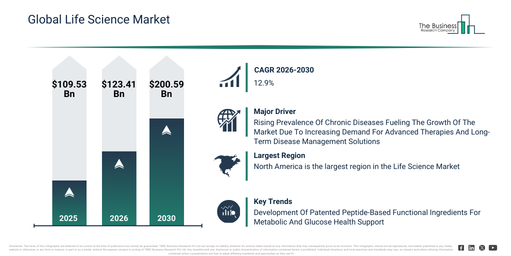
    The life science market has witnessed rapid expansion in recent years. Its value is anticipated to rise from $109.53 billion in 2025 to $123.41 billion in 2026, achieving a compound annual growth rate (CAGR) of 12.7%. Over the past, this growth can be ascribed to elements such as increased pharmaceutical R&D investments, the proliferation of biotechnology companies, the embrace of laboratory automation, a growing need for diagnostics, and the escalating occurrence of chronic and rare diseases.

    The life science market size is anticipated to experience substantial growth over the next few years, projected to attain a value of $200.59 billion by 2030, at a compound annual growth rate (CAGR) of 12.9%. This expansion during the forecast period is attributable to breakthroughs in precision medicine, the proliferation of digital health solutions, the integration of AI and big data analytics into research, a rise in collaborations between academic and commercial research institutions, and the broadening of global clinical trials. Prominent trends for this period involve sophisticated drug discovery platforms, unified clinical trial management, high-throughput laboratory automation, regulatory compliance and consulting provisions, and bioinformatics and data analytics.

    Get A Free Sample Report With In-Depth Market Insights:

    https://thebusinessresearchcompany.com/sample_request?id=23300631&type=smp&name=Life%20Science%20Market%20Report%202026&utm_source=Blogs&utm_medium=Paid&utm_campaign=Oct_PR

    Life Science Market Growth Momentum: What Factors Are Shaping Demand?

    The expanding occurrence of chronic illnesses is anticipated to propel the growth of the life science market in the future. These conditions are defined as long-lasting health issues that typically progress slowly and necessitate continuous oversight rather than brief interventions. The rise in chronic diseases is linked to detrimental lifestyle choices such as inadequate nutrition, lack of physical activity, and growing rates of obesity. The field of life science contributes to tackling chronic diseases through facilitating the development of innovative treatments, diagnostic tools, and biologics, thereby enhancing enduring disease management and results for patients. As an illustration, data from the US-based government agency Centers for Disease Control and Prevention revealed in April 2025 that in 2023, 76.4% (equating to 194 million) of adults in the US reported having at least one chronic condition. This included 59.5% of young adults, 78.4% of midlife adults, and 93.0% of older adults, respectively. Consequently, the rising occurrence of chronic illnesses is a key factor boosting the growth of the life science market.

    Life Science Market Segments: Where Is Growth Concentrated?

    The life science market covered in this report is segmented –

    1) By Type: Biotechnology, Pharmaceuticals, Medical Devices, Life Science Tools, Digital Health Solutions

    2) By Therapeutic Areas: Oncology, Cardiology, Neurology, Immunology, Rare Diseases, Other Therapeutic Areas

    3) By Applications: Drug Discovery And Development, Diagnostics, Therapeutics, Clinical Trials, Research And Development

    4) By End-User: Pharmaceutical Companies, Biotechnology Companies, Academic And Research Institutions, Hospitals And Clinics

    Subsegments:

    1) By Biotechnology: Genetic Engineering, Cell Based Technologies, Microbial Biotechnology, Industrial Biotechnology, Agricultural Biotechnology

    2) By Pharmaceuticals: Prescription Drugs, Over The Counter Drugs, Generic Drugs, Branded Drugs, Specialty Drugs

    3) By Medical Devices: Diagnostic Devices, Therapeutic Devices, Surgical Instruments, Monitoring Devices, Implantable Devices

    4) By Life Science Tools: Laboratory Instruments, Reagents And Consumables, Analytical Tools, Sample Preparation Tools, Research Software Solutions

    5) By Digital Health Solutions: Health Information Systems, Remote Patient Monitoring, Mobile Health Applications, Clinical Decision Support Systems, Healthcare Data Analytics

    Life Science Market Trends Redefining Industry Growth

    Leading companies in the life science market are focusing on developing innovative products, such as patented peptide-based functional ingredients, to offer scientifically proven assistance for glucose management and metabolic well-being. These peptide-based functional ingredients are bioactive, short-chain amino acid compounds engineered to engage with particular metabolic pathways to achieve specific health advantages. For instance, in December 2025, Greenyn Biotechnology Co. Ltd., a Taiwan-based provider of proprietary biotechnology-driven functional ingredients and health supplement solutions, launched Insumate mcIRBP-19 Bitter Melon Peptide, a bioactive peptide designed to support metabolic health in dietary supplement applications. The product incorporates a uniquely identified bitter melon-derived peptide that mimics insulin receptor binding activity, aiding in blood glucose control. Its production involves a low-temperature supercritical extraction process, ensuring the preservation of peptide bioactivity and consistency. Insumate mcIRBP-19 is backed by clinical validation and international certifications, establishing it as a next-generation, evidence-based nutraceutical ingredient for the rapidly growing metabolic health and diabetes-support segment.

    Life Science Market Competitive Analysis Of Leading Industry Participants

    Major companies operating in the life science market are Johnson & Johnson, Roche Holding AG, Pfizer Inc., AbbVie Inc., AstraZeneca plc, Bayer AG, Novartis AG, Bristol-Myers Squibb Company, Sanofi S.A., Abbott Laboratories, Thermo Fisher Scientific Inc., GlaxoSmithKline plc, Novo Nordisk A/S, Amgen Inc., Eli Lily and Company, Takeda Pharmaceutical Company Limited, Gilead Sciences Inc., Merck KGaA, Boehringer Ingelheim International GmbH, Vertex Pharmaceuticals Incorporated, Astellas Pharma Inc., Biogen Inc., bioMérieux SA, Sartorius AG

    View The Full Life Science Market Report:

    https://thebusinessresearchcompany.com/report/life-science-market-report?utm_source=Blogs&utm_medium=Paid&utm_campaign=Oct_PR

    Life Science Market Geographic Distribution And Regional Opportunities

    North America was the largest region in the life science market in 2025. Asia-Pacific is expected to be the fastest-growing region in the forecast period. The regions covered in the life science market report are Asia-Pacific, South East Asia, Western Europe, Eastern Europe, North America, South America, Middle East, Africa.

    Reach Out To Our Team:

    The Business Research Company: https://www.thebusinessresearchcompany.com/

    Americas: +1 310-496-7795

    Asia: +44 7882 955267 & +91 8897263534

    Europe: +44 7882 955267

    Email us at: marketing@tbrc.info

    Follow us on:

    LinkedIn: https://in.linkedin.com/company/the-business-research-company

    YouTube: https://www.youtube.com/channel/UC24_fI0rV8cR5DxlCpgmyFQ

    Global Market Model: https://www.thebusinessresearchcompany.com/global-market-model
  • Drug Development Services Market Outlook 2026–2030: Growth Trends, Market Dynamics And Emerging Opportunities

    Drug Development Services Market Outlook 2026–2030: Growth Trends, Market Dynamics And Emerging Opportunities

    Backed by market attractiveness analysis, total addressable market sizing, company benchmarking matrices, interactive Excel dashboards, wider supply chain intelligence, emerging startup coverage, and detailed product-level insights, The Business Research Company’s 2026 market reports are designed to offer research that is more actionable and strategically valuable than ever.

    Drug Development Services Market Size, Value And Growth Trajectory Through 2030

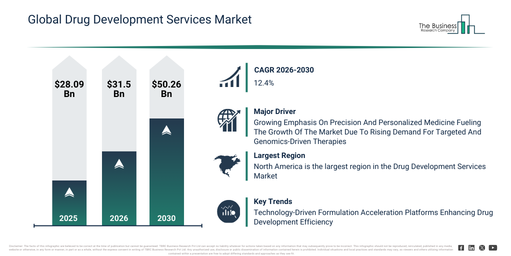
    The drug development services market has experienced significant expansion in recent years. This market is anticipated to grow from $28.09 billion in 2025 to $31.5 billion in 2026, achieving a compound annual growth rate (CAGR) of 12.2%. The historical increase can be attributed to several factors, including heightened research and development investments by pharmaceutical firms, an increase in the outsourcing of drug development services, the rising prevalence of chronic and infectious diseases, stricter regulatory compliance requirements, and advancements in molecular biology and in vitro testing.

    The drug development services market is projected to experience substantial growth in the upcoming years. It is anticipated to increase to $50.26 billion by 2030, demonstrating a compound annual growth rate (CAGR) of 12.4%. This expansion during the forecast period can be attributed to factors such as the adoption of AI and machine learning in drug discovery, the broadening of biologics and personalized medicine pipelines, a rising demand for contract research organizations, the integration of cloud-based clinical data management, and the growth of emerging markets for drug development services. Prominent trends expected in this period include the expansion of preclinical research, optimization of regulatory affairs, enhancement of pharmacovigilance, an increase in clinical data management services, and the reinforcement of quality assurance and compliance services.

    Get A Free Sample Report With In-Depth Market Insights:

    https://thebusinessresearchcompany.com/sample_request?id=24189940&type=smp&name=Drug%20Development%20Services%20Market%20Report%202026&utm_source=Blogs&utm_medium=Paid&utm_campaign=Oct_PR

    Drug Development Services Market Opportunity Drivers: What’s Unlocking New Revenue Potential?

    The increasing focus on precision and personalized medicine is projected to drive the expansion of the drug development services market in the future. This medical strategy involves customizing treatments and interventions for individual patients, taking into account their unique genetic composition, clinical traits, and particular disease profiles. The rise of precision and personalized medicine is attributed to advancements in genomic technologies, which facilitate more precise disease diagnosis and the selection of targeted therapies. Drug development services play a crucial role in precision and personalized medicine by facilitating the creation, testing, and validation of targeted treatments that align with specific genetic, molecular, and patient-specific disease attributes. For example, in February 2024, the Personalized Medicine Coalition, a US-based non-profit organization, stated that the FDA granted approval for 16 new personalized treatments for individuals with rare diseases in 2023, marking a substantial rise from the six approved in 2022. Consequently, the heightened focus on precision and personalized medicine is fueling the expansion of the drug development services market.

    Drug Development Services Market Segment Trends And Revenue Contributors

    The drug development services market covered in this report is segmented –

    1) By Type: Drug Metabolism And Pharmacokinetics, Biological Services, Medicinal Chemistry

    2) By Process: Candidate Validation, Lead Optimization, Hit To Lead Identification, Target Validation, Target Selection

    3) By Drug: Biologics, Infectious Disease Diagnostics, Small Molecules

    4) By Therapeutic Area: Cardiovascular Disease, Digestive System Disease, Immune System And Infectious Disease, Neurology, Oncology, Other Therapeutic Areas

    5) By End User: Pharmaceutical Companies, Biotechnology Companies, Contract Research Organizations, Academic And Research Institutes

    Subsegments:

    1) By Drug Metabolism And Pharmacokinetics: Absorption Studies, Distribution Studies, Metabolism Studies, Excretion Studies, Bioavailability Assessment, Drug Drug Interaction Studies

    2) By Biological Services: Cell Based Assays, Molecular Biology Services, Protein Expression And Purification, Biomarker Discovery, In Vitro Pharmacology

    3) By Medicinal Chemistry: Compound Design And Synthesis, Structure Activity Relationship Studies, Lead Optimization Chemistry, Chemical Library Development, Process Chemistry Development

    Drug Development Services Market Innovation Trends Shaping Future Development

    Major companies operating in the drug development services market are focusing on developing innovative solutions, such as science-driven formulation acceleration platforms, to optimize early-stage drug formulation and reduce time-to-market for complex drug candidates. These platforms are integrated development programs that apply targeted technologies and structured protocols to rapidly enhance drug formulations and advance them toward clinical testing. For instance, in May 2025, Aenova Group GmbH, a Germany-based pharmaceutical company, launched the Aenovation program to accelerate the initial development of pharmaceutical formulations, especially for poorly soluble compounds that are challenging to progress through the pipeline. The program utilizes a three-step approach—comprehensive API profiling and developability classification, rapid formulation and prototype selection using solubility enhancement technologies, and seamless transfer to GMP lab and pilot-scale manufacturing—to deliver right-first-time results and materials for first-in-human trials more quickly. By addressing critical bioavailability challenges and enabling efficient formulation strategies, the Aenovation program helps pharma innovators, including biotech start-ups, bring innovative therapies closer to clinical phases with greater speed and resource efficiency.

    Drug Development Services Market Competitive Landscape: Which Companies Lead The Industry?

    Major companies operating in the drug development services market are IQVIA Holdings Inc., Labcorp Drug Development, Lonza Group AG, SGS Life Sciences, ICON plc, Eurofins Scientific SE, PPD Inc., Syneos Health Inc., WuXi AppTec Co. Ltd., Catalent Inc., Charles River Laboratories International Inc., Parexel International Corporation, Samsung Biologics Co. Ltd., Medpace Holdings Inc., PRA Health Sciences Inc., Fujifilm Diosynth Biotechnologies, Recipharm AB, PCI Pharma Services Inc., Almac Group Limited, Evotec SE, Aenova Group GmbH, Rentschler Biopharma SE, BioReliance Corporation, Covance SE

    View The Full Drug Development Services Market Report:

    https://thebusinessresearchcompany.com/report/drug-development-services-market-report?utm_source=Blogs&utm_medium=Paid&utm_campaign=Oct_PR

    Drug Development Services Market Regional Outlook: Where Is Opportunity Concentrated?

    North America was the largest region in the drug development services market in 2025. Asia-Pacific is expected to be the fastest-growing region in the forecast period. The regions covered in the drug development services market report are Asia-Pacific, South East Asia, Western Europe, Eastern Europe, North America, South America, Middle East, Africa.

    Reach Out To Our Team:

    The Business Research Company: https://www.thebusinessresearchcompany.com/

    Americas: +1 310-496-7795

    Asia: +44 7882 955267 & +91 8897263534

    Europe: +44 7882 955267

    Email us at: marketing@tbrc.info

    Follow us on:

    LinkedIn: https://in.linkedin.com/company/the-business-research-company

    YouTube: https://www.youtube.com/channel/UC24_fI0rV8cR5DxlCpgmyFQ

    Global Market Model: https://www.thebusinessresearchcompany.com/global-market-model
  • Betulinic Acid Market Size And Forecast 2026–2030: Trends Driving Industry Expansion

    Betulinic Acid Market Size And Forecast 2026–2030: Trends Driving Industry Expansion

    Backed by market attractiveness analysis, total addressable market sizing, company benchmarking matrices, interactive Excel dashboards, wider supply chain intelligence, emerging startup coverage, and detailed product-level insights, The Business Research Company’s 2026 market reports are designed to offer research that is more actionable and strategically valuable than ever.

    Betulinic Acid Market Growth Potential: How Will Market Size Shift Through 2030?

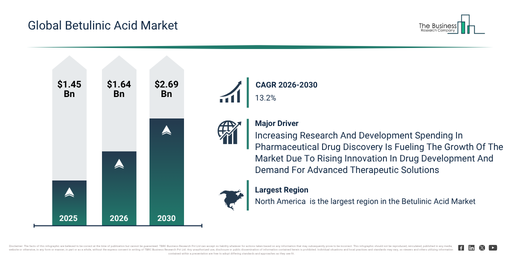
    The betulinic acid market has seen considerable growth recently. Its value is expected to rise from $1.45 billion in 2025 to $1.64 billion in 2026, demonstrating a compound annual growth rate (CAGR) of 12.9%. The historical growth of this market can be attributed to the traditional application of plant-derived compounds in herbal medicine systems, a burgeoning pharmaceutical interest in screening natural products, the increasing prevalence of chronic diseases driving drug discovery research, advancements in botanical extraction technologies, and a surge in academic research focusing on triterpenoid chemistry.

    The betulinic acid market is anticipated to experience substantial growth in the coming years, with its size projected to reach $2.69 billion in 2030, demonstrating a compound annual growth rate (CAGR) of 13.2%. This expansion during the forecast period can be attributed to the broadening scope of precision medicine and targeted cancer therapies, increasing financial commitments to the development of drugs based on natural compounds, advancements in antiviral and immunotherapy research, a growing demand for bioactive nutraceutical ingredients, and progress in synthetic biology and compound optimization techniques. Significant trends during this period include intensified research into betulinic acid as a potential therapeutic agent against cancer and viruses, the increasing integration of plant-derived triterpenoids into pharmaceutical drug discovery processes, a wider application of natural bioactive compounds in nutraceutical formulations, rising adoption of botanical extracts in dermatological and cosmetic anti-inflammatory products, and an elevated focus on semi-synthetic modifications of betulinic acid to enhance its bioavailability and efficacy.

    Get A Free Sample Report With In-Depth Market Insights:

    https://thebusinessresearchcompany.com/sample_request?id=90591879&type=smp&name=Betulinic%20Acid%20Market%20Report%202026&utm_source=Blogs&utm_medium=Paid&utm_campaign=Oct_PR

    Betulinic Acid Market Industry Drivers: What’s Behind The Revenue Growth?

    The betulinic acid market is projected to expand due to increased investment in pharmaceutical drug discovery research and development. These financial outlays by organizations and companies aim to create novel drugs, treatments, and therapeutic solutions. The escalating demand for sophisticated and targeted therapies fuels this rise in R&D spending, fostering innovation in drug creation. For betulinic acid, such investments are directed at enhancing its chemical attributes, boosting its bioavailability, and confirming its safety and effectiveness for uses like anticancer and antiviral treatments. As an illustration, the Food and Drug Administration, a US government body, reported in January 2024 that 55 new drugs received approval in 2023, an increase from 37 in 2022; among these, 36% were deemed first-in-class, and over 50% addressed rare diseases. This surge in pharmaceutical drug discovery R&D spending is consequently a key factor driving the growth of the betulinic acid market. The rising incidence of cancer is anticipated to boost the expansion of the betulinic acid market. Cancer encompasses various diseases marked by uncontrolled cellular proliferation that may metastasize and necessitate medical intervention. The growing elderly population contributes to this increased cancer prevalence, leading to higher global incidence rates. Betulinic acid addresses this need by exhibiting potential anticancer qualities, which aid in the research and development of innovative therapeutic options. For example, Cancer Research UK, an independent cancer research body in the UK, indicated in October 2025 that cancer cases in the UK are expected to rise by about 2% from 2024–2026 to 2038–2040, with annual new cases exceeding 505,000 by the conclusion of this period. Hence, the increasing prevalence of cancer is stimulating the growth of the betulinic acid market.

    Betulinic Acid Market Segment Landscape: Which Areas Lead Development?

    The betulinic acid market covered in this report is segmented –

    1) By Type: Natural Extracted Betulinic Acid, Synthetic Betulinic Acid

    2) By Purity: Up To 95 Percent, Above 95 Percent

    3) By Application: Pharmaceutical, Cosmetics And Personal Care, Nutraceuticals, Other Applications

    4) By End-User: Pharmaceutical Companies, Cosmetic Companies

    Subsegments:

    1) By Natural Extracted Betulinic Acid: Plant Derived Betulinic Acid, Bark Extracted Betulinic Acid, Leaf Extracted Betulinic Acid, Herbal Source Betulinic Acid

    2) By Synthetic Betulinic Acid: Chemically Synthesized Betulinic Acid, Semi Synthetic Betulinic Acid, High Purity Laboratory Synthesized Betulinic Acid, Industrial Grade Synthetic Betulinic Acid, Pharmaceutical Grade Synthetic Betulinic Acid

    Betulinic Acid Market Company Landscape And Competitive Strategy

    Major companies operating in the betulinic acid market are Symrise BioActives GmbH, Purestar Chem Enterprise Co. Ltd., Cayman Chemical, Tokyo Chemical Industry Co. Ltd., Santa Cruz Biotechnology Inc., MedChemExpress, Leap Chem Co. Ltd., H&Z Industry Co. Ltd., Finetech Industry Limited, Aktin Chemicals Inc., BOC Sciences, Manus Aktteva Biopharma LLP, Hangzhou Lingrui Chemical Co. Ltd., Capot Chemical Co. Ltd., Kono Chem Co. Ltd., Glentham Life Sciences Ltd., Xiamen Hisunny Chemical Co. Ltd., Dayang Chem (Hangzhou) Co. Ltd., BIOZOL Diagnostica Vertrieb GmbH, Wuhan PharmChem Co. Ltd., Betulin Lab, Shanghai Tauto Biotech Co. Ltd., DaXingAnLing Lingonberry Boreal Biotech, Simagchem Corporation, Sancai Industry Co. Ltd.

    View The Full Betulinic Acid Market Report:

    https://thebusinessresearchcompany.com/report/betulinic-acid-market-report?utm_source=Blogs&utm_medium=Paid&utm_campaign=Oct_PR

    Betulinic Acid Market Largest Region: Which Geography Holds The Biggest Share?

    North America was the largest region in the betulinic acid market in 2025. Asia-Pacific is expected to be the fastest-growing region in the forecast period. The regions covered in the betulinic acid market report are Asia-Pacific, South East Asia, Western Europe, Eastern Europe, North America, South America, Middle East, Africa.

    Reach Out To Our Team:

    The Business Research Company: https://www.thebusinessresearchcompany.com/

    Americas: +1 310-496-7795

    Asia: +44 7882 955267 & +91 8897263534

    Europe: +44 7882 955267

    Email us at: marketing@tbrc.info

    Follow us on:

    LinkedIn: https://in.linkedin.com/company/the-business-research-company

    YouTube: https://www.youtube.com/channel/UC24_fI0rV8cR5DxlCpgmyFQ

    Global Market Model: https://www.thebusinessresearchcompany.com/global-market-model

  • Three-Dimensional (3D) Printed Drugs Market Size And Forecast 2026–2030: Trends Driving Industry Expansion

    Three-Dimensional (3D) Printed Drugs Market Size And Forecast 2026–2030: Trends Driving Industry Expansion

    Backed by market attractiveness analysis, total addressable market sizing, company benchmarking matrices, interactive Excel dashboards, wider supply chain intelligence, emerging startup coverage, and detailed product-level insights, The Business Research Company’s 2026 market reports are designed to offer research that is more actionable and strategically valuable than ever.

    Three-Dimensional (3D) Printed Drugs Market CAGR Outlook And Future Development

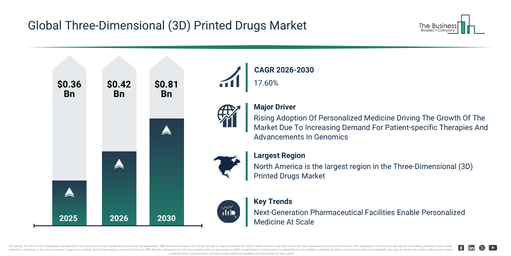
    The three-dimensional (3D) printed drugs market has experienced substantial expansion in recent years. This market is set to expand from $0.36 billion in 2025 to $0.42 billion in 2026, achieving a compound annual growth rate (CAGR) of 17.4%. The surge observed historically can be attributed to a heightened demand for individualized medical solutions, ongoing progress in additive manufacturing technologies, the increasing occurrence of chronic conditions that require bespoke therapies, an expansion of pharmaceutical research and development endeavors, and an intensified focus on improving patient compliance and dosage accuracy.

    The three-dimensional (3D) printed drugs market size is projected to experience rapid expansion over the next few years. It is expected to grow to $0.81 billion by 2030 at a compound annual growth rate (CAGR) of 17.6%. The anticipated growth during the forecast period is largely due to increased investment in digital pharmaceutical manufacturing platforms, the rising acceptance of AI-assisted drug formulation technologies, a growing need for on-demand drug production in healthcare facilities, the expansion of precision medicine applications in oncology and neurology, and increasing innovation in multi-material pharmaceutical printing technologies. Noteworthy trends in the upcoming period include the wider adoption of personalized dosage formulations via 3D printing technologies, the escalating development of complex multi-drug release structures for targeted therapies, the expanding use of layer-by-layer drug fabrication to enhance patient compliance, increasing research into the rapid prototyping of customized oral dosage forms, and a heightened demand for precise low-volume pharmaceutical manufacturing solutions.

    Get A Free Sample Report With In-Depth Market Insights:

    https://thebusinessresearchcompany.com/sample_request?id=35663436&type=smp&name=Three-Dimensional%20%283D%29%20Printed%20Drugs%20Market%20Report%202026&utm_source=Blogs&utm_medium=Paid&utm_campaign=Oct_PR

    Three-Dimensional (3D) Printed Drugs Market Opportunity Drivers: What’s Unlocking New Revenue Potential?

    The 3D printed drugs market is anticipated to expand due to the increasing integration of personalized medicine techniques. These personalized medicine approaches involve customizing drug formulas and treatments according to specific patient attributes, such as their genetic makeup, age, existing health conditions, and how they respond to therapy. The primary factors driving this surge in personalized medicine adoption are a growing demand for treatments tailored to individual patients, the rising occurrence of chronic illnesses, and breakthroughs in genomics and digital health innovations. 3D printed drugs bolster this trend by allowing for exact dose customization, the creation of multi-drug pills (polypill formulation), and drug release profiles precisely aligned with patient requirements. As an illustration, the Personalized Medicine Coalition, a non-profit organization based in the US, reported in February 2024 that the FDA approved 16 new personalized treatments for rare diseases in 2023, marking a substantial rise from the six approvals in 2022. Consequently, the increasing embrace of personalized medicine strategies is a key driver for the expansion of the 3D printed drugs market.

    Three-Dimensional (3D) Printed Drugs Market Segment Breakdown: Which Categories Lead On Revenue?

    The three-dimensional (3d) printed drugs market covered in this report is segmented –

    1) By Technology: Inkjet Printing, Fused Deposition Modeling (FDM), Stereolithography (SLA), Selective Laser Sintering (SLS), Other Technologies

    2) By Drug Type: Immediate Release, Sustained Release, Personalized Medicines, Other Drug Types

    3) By Application: Oncology, Neurology, Infectious Diseases, Cardiovascular, Other Applications

    4) By End-User: Hospitals, Pharmaceutical Companies, Research Institutes, Other End-Users

    Subsegments:

    1) By Inkjet Printing: Continuous Inkjet Printing, Drop-On-Demand Inkjet Printing, Thermal Inkjet Printing, Piezoelectric Inkjet Printing, Electrohydrodynamic Inkjet Printing

    2) By Fused Deposition Modeling (FDM): Filament Extrusion Deposition, Hot Melt Extrusion Deposition, Multi-Material Extrusion, High Precision Layer Deposition, Continuous Filament Deposition

    3) By Stereolithography (SLA): Digital Light Processing Stereolithography, Two-Photon Polymerization Stereolithography, Mask Stereolithography, High Speed Stereolithography, Laser Scanning Stereolithography

    4) By Selective Laser Sintering (SLS): Polymer Powder Laser Sintering, Metal Powder Laser Sintering, Ceramic Powder Laser Sintering, Composite Powder Laser Sintering, High Precision Laser Sintering

    5) By Other Technologies: Binder Jetting Technology, Electron Beam Melting, Laminated Object Manufacturing, Direct Energy Deposition, Continuous Liquid Interface Production

    Three-Dimensional (3D) Printed Drugs Market Innovation Trends Shaping Future Development

    Leading companies in the 3D printed drugs market are concentrating on establishing fully automated digital pharmaceutical production facilities, exemplified by precision 3D-printed drug factories. These facilities are designed to fabricate tablets in successive layers according to digital drug designs, allowing for intricate internal geometries and tailored release profiles while substantially decreasing production stages. Precision 3D-printed drug factories refer to advanced, often compact, pharmaceutical manufacturing units that employ 3D printing technologies to create personalized medications with high accuracy, flexibility, and on-demand capabilities. An instance of this is in October 2025, when Triastek, a China-based pharmaceutical technology company, inaugurated a 3D-printed drug factory in Nanjing. This facility is capable of manufacturing up to 300 million tablets annually by utilizing its digital systems, which replace conventional granulation and coating processes, facilitate internal channels for controlled release, and incorporate over 100,000 monitoring points for quality assurance. Furthermore, this establishment holds China’s initial pharmaceutical production license for 3D-printed drugs and supports product pipelines for anticoagulants and hormone therapies; however, regulatory validation and maintaining consistent printing quality remain crucial as the industry expands.

    Three-Dimensional (3D) Printed Drugs Market Leading Players And Competitive Positioning

    Major companies operating in the three-dimensional (3d) printed drugs market are Merck KGaA, Adare Pharma Solutions Inc., Aprecia Pharmaceuticals Company, Multiply Labs Inc., FabRx Ltd, Laxxon Medical AG, CurifyLabs Oy, MB Therapeutics SAS, Doser Ltd, DiHeSys Digital Health Systems GmbH, Craft Health Pte. Ltd., Triastek Inc., Cycle Pharmaceuticals Ltd, Amply Discovery Inc.

    View The Full Three-Dimensional (3D) Printed Drugs Market Report:

    https://thebusinessresearchcompany.com/report/three-dimensional-3d-printed-drugs-market-report?utm_source=Blogs&utm_medium=Paid&utm_campaign=Oct_PR

    Three-Dimensional (3D) Printed Drugs Market Regional Distribution: Which Areas Power Market Growth?

    North America was the largest region in the 3D printed drugs market in 2025. Asia-Pacific is expected to be the fastest-growing region in the forecast period. The regions covered in the three-dimensional (3D) printed drugs market report are Asia-Pacific, South East Asia, Western Europe, Eastern Europe, North America, South America, Middle East and Africa.

    Reach Out To Our Team:

    The Business Research Company: https://www.thebusinessresearchcompany.com/

    Americas: +1 310-496-7795

    Asia: +44 7882 955267 & +91 8897263534

    Europe: +44 7882 955267

    Email us at: marketing@tbrc.info

    Follow us on:

    LinkedIn: https://in.linkedin.com/company/the-business-research-company

    YouTube: https://www.youtube.com/channel/UC24_fI0rV8cR5DxlCpgmyFQ

    Global Market Model: https://www.thebusinessresearchcompany.com/global-market-model

  • Taxane-Based Oncology Drug Class Market 2026: Market Size, Growth Drivers And Emerging Opportunities

    Taxane-Based Oncology Drug Class Market 2026: Market Size, Growth Drivers And Emerging Opportunities

    Backed by market attractiveness analysis, total addressable market sizing, company benchmarking matrices, interactive Excel dashboards, wider supply chain intelligence, emerging startup coverage, and detailed product-level insights, The Business Research Company’s 2026 market reports are designed to offer research that is more actionable and strategically valuable than ever.

    Taxane-Based Oncology Drug Class Market Growth Potential: How Will Market Size Shift Through 2030?

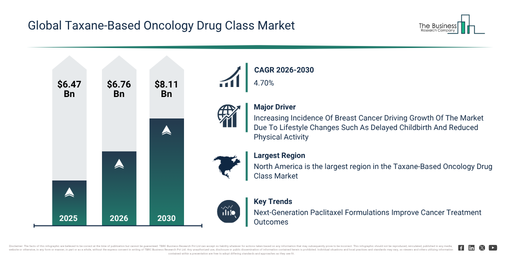
    The taxane-based oncology drug class market size has shown steady expansion in recent years. It is anticipated to increase from $6.47 billion in 2025 to $6.76 billion in 2026, achieving a compound annual growth rate (CAGR) of 4.4%. This historical growth can be attributed to several factors including the rising global prevalence of solid tumor cancers, increased adoption of chemotherapy-based cancer treatment protocols, growing utilization of paclitaxel in breast and ovarian cancer therapies, expansion of hospital oncology treatment infrastructure, and the increasing availability of generic taxane drugs.

    The taxane-based oncology drug class market size is projected to experience consistent expansion over the upcoming years. This market is anticipated to reach a value of $8.11 billion by 2030, exhibiting a compound annual growth rate (CAGR) of 4.7%. Factors contributing to this growth during the forecast period include the increasing creation of sophisticated nanoparticle taxane formulations, a rising need for individualized oncology treatment methods, escalating investment in oncology drug research and development, the broadening of specialized cancer treatment facilities, and a greater uptake of targeted combination cancer therapies. Significant patterns expected during this period involve the increasing embrace of nanoparticle and liposomal taxane formulations, greater application of combination chemotherapy regimens in treating solid tumors, an escalating requirement for targeted drug delivery systems in cancer therapies, the widening application of taxane drugs in managing breast and lung cancers, and an enhanced emphasis on minimizing chemotherapy-related toxicity and adverse effects.

    Get A Free Sample Report With In-Depth Market Insights:

    https://thebusinessresearchcompany.com/sample_request?id=20851510&type=smp&name=Taxane-Based%20Oncology%20Drug%20Class%20Market%20Report%202026&utm_source=Blogs&utm_medium=Paid&utm_campaign=Oct_PR

    Taxane-Based Oncology Drug Class Market Demand Drivers Opening New Revenue Streams

    The taxane-based oncology drug class market is anticipated to grow due to the rising incidence of breast cancer. Breast cancer, a malignant tumor originating in breast tissue, stands as one of the most frequently diagnosed cancers among women globally. Its incidence is increasing, influenced by lifestyle changes such as delayed childbirth and reduced physical activity. The taxane-based oncology drug class plays a vital role in breast cancer treatment by providing microtubule-stabilizing chemotherapeutic agents that impede tumor cell division, and these agents are widely adopted in first-line and adjuvant treatment regimens for patients. For instance, in October 2024, the American Cancer Society (ACS), a US-based nationwide voluntary health organization, reported an estimated 310,720 new invasive breast cancer cases diagnosed in 2024, indicating a clear increase compared to prior years. Consequently, the escalating incidence of breast cancer is a key driver for the expansion of the taxane-based oncology drug class market.

    Taxane-Based Oncology Drug Class Market Segment Outlook: Which Categories Are Growing Fastest?

    The taxane-based oncology drug class market covered in this report is segmented –

    1) By Type: Paclitaxel, Docetaxel, Cabazitaxel

    2) By Formulation: Liposomes, Nanoparticles, Polymeric Micelles, Other Formulations

    3) By Distribution Channel: Hospital Pharmacies, Retail Pharmacies, Online Pharmacies

    4) By Application: Ovarian Cancer, Breast Cancer, Prostate Cancer, Non-Small Cell Lung Cancer, Other Cancers

    5) By End User: Hospitals, Ambulatory Surgical Centers, Specialty Clinics, Other End Users

    Subsegments:

    1) By Paclitaxel: Albumin Bound Paclitaxel, Polymeric Micelle Paclitaxel, Liposomal Paclitaxel, Solvent Based Paclitaxel, Nanoparticle Paclitaxel

    2) By Docetaxel: Conventional Docetaxel, Polymeric Micelle Docetaxel, Liposomal Docetaxel, Nanoparticle Docetaxel, Generic Docetaxel

    3) By Cabazitaxel: Conventional Cabazitaxel, Liposomal Cabazitaxel, Nanoparticle Cabazitaxel, Polymeric Micelle Cabazitaxel, Generic Cabazitaxel

    Taxane-Based Oncology Drug Class Market Trends Powering Strategic Industry Growth

    Leading companies in the taxane-based oncology drug class market are concentrating on advancements in nanoparticle drug delivery systems, such as polymer-based nanoparticle paclitaxel, to enhance tumor targeting, boost solubility, and diminish the toxicity associated with traditional solvent-based taxanes. Polymer-based nanoparticle paclitaxel is a nanotechnology-driven formulation that encases paclitaxel within biocompatible polymer nanoparticles, enabling controlled release, improved accumulation in tumors, and better safety profiles. For instance, in March 2024, Onselex, a South Korea-based biotechnology company, launched ONX-1006, a nanoparticle paclitaxel formulation created using water-soluble polymer conjugation. This technology facilitates tumor-specific penetration through the enhanced permeability and retention effect, offers selective protection to normal cells via polymer shielding, and improves tissue diffusion for more profound drug delivery into solid tumors. Moreover, the development of ONX-1006 underscores the increasing focus on precision oncology treatments, bolstering the company’s product pipeline and expanding advanced therapeutic alternatives within the taxane-based oncology drug class market.

    Taxane-Based Oncology Drug Class Market Key Participants And Competitive Landscape

    Major companies operating in the taxane-based oncology drug class market are Pfizer Inc., Sanofi SA, Novartis AG, Bristol Myers Squibb Company, Fresenius Kabi, Teva Pharmaceutical Industries Ltd, Hetero Drugs Ltd, Sun Pharmaceutical Industries Ltd, Dr. Reddy’s Laboratories Ltd., Cipla Ltd, Hikma Pharmaceuticals plc, Zydus Lifesciences Ltd, Biocon Ltd., Alkem Laboratories Ltd., Torrent Pharmaceuticals Ltd, Alembic Pharmaceuticals Ltd., Natco Pharma Ltd, Beacon Pharmaceuticals PLC, ScinoPharm Taiwan Ltd., Venus Remedies Ltd., Panacea Biotec Ltd., Cellon Pharma Ltd, Reliance Life Sciences, Ellia Cytocare Pvt. Ltd.

    View The Full Taxane-Based Oncology Drug Class Market Report:

    https://thebusinessresearchcompany.com/report/taxane-based-oncology-drug-class-market-report?utm_source=Blogs&utm_medium=Paid&utm_campaign=Oct_PR

    Taxane-Based Oncology Drug Class Market Geographic Analysis: Where Is Demand Rising Fastest?

    North America was the largest region in the taxane based oncology drug class market in 2025. Asia-Pacific is expected to be the fastest-growing region in the forecast period. The regions covered in the taxane-based oncology drug class market report are Asia-Pacific, South East Asia, Western Europe, Eastern Europe, North America, South America, Middle East and Africa.

    Reach Out To Our Team:

    The Business Research Company: https://www.thebusinessresearchcompany.com/

    Americas: +1 310-496-7795

    Asia: +44 7882 955267 & +91 8897263534

    Europe: +44 7882 955267

    Email us at: marketing@tbrc.info

    Follow us on:

    LinkedIn: https://in.linkedin.com/company/the-business-research-company

    YouTube: https://www.youtube.com/channel/UC24_fI0rV8cR5DxlCpgmyFQ

    Global Market Model: https://www.thebusinessresearchcompany.com/global-market-model

  • Taurine Powder Sticks Market Set To Expand From $1.75 Billion In 2026: Growth Outlook Through 2030

    Taurine Powder Sticks Market Set To Expand From $1.75 Billion In 2026: Growth Outlook Through 2030

    Featuring market attractiveness scoring, total addressable market sizing, company benchmarking matrices, interactive Excel dashboards, deeper supply chain intelligence, emerging startup tracking, and granular product-level insights, The Business Research Company’s 2026 market reports are built to deliver research that is both more actionable and more strategically valuable.

    Taurine Powder Sticks Market Value Analysis: What Growth Lies Ahead Over The Forecast Period?

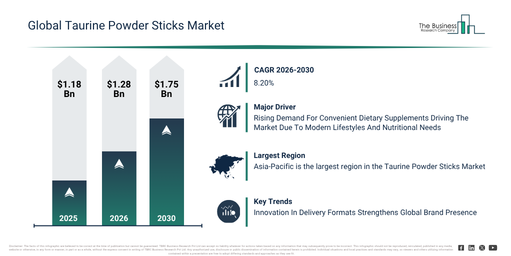
    The taurine powder sticks market has experienced robust expansion recently. It is projected to grow from $1.18 billion in 2025 to $1.28 billion by 2026, demonstrating a compound annual growth rate (CAGR) of 8.0%. This historical market growth can be attributed to heightened awareness of the benefits of amino acids in human nutrition, the increasing adoption of sports and fitness culture, a rise in the consumption of energy drinks and functional supplements, the expansion of retail availability for dietary supplements, and an escalating demand for portable nutrition solutions.

    The taurine powder sticks market is projected to experience substantial expansion in the coming years, anticipated to reach $1.75 billion by 2030, exhibiting a compound annual growth rate (CAGR) of 8.2%. Several factors contribute to this projected increase, including a growing appetite for tailored nutrition and supplements, a heightened emphasis on preventative health and overall wellness, the expansion of supplement distribution through e-commerce platforms, the increasing number of individuals involved in fitness and athletic training, and ongoing advancements in clean label and functional ingredient formulations. Key trends expected during this period involve an increasing need for functional energy supplements within sports nutrition, the proliferation of convenient single-serve wellness packaging, greater integration of taurine-based recovery solutions in fitness items, the development of more clean label and sugar-free supplement options, and the growing appeal of combined amino acid and electrolyte supplement sticks.

    Get A Free Sample Report With In-Depth Market Insights:

    https://thebusinessresearchcompany.com/sample_request?id=79982300&type=smp&name=Taurine%20Powder%20Sticks%20Market%20Report%202026&utm_source=Blogs&utm_medium=Paid&utm_campaign=Oct_PR

    Taurine Powder Sticks Market Growth Backed By Core Demand Fundamentals

    The rising need for easily accessible dietary supplements is anticipated to drive expansion in the taurine powder sticks market moving forward. These supplements encompass items like vitamins, minerals, herbs, amino acids, or various other compounds designed to enhance one’s diet and promote general health and well-being. The surge in appetite for convenient dietary supplements stems from contemporary living, as busy schedules and less time for cooking prompt individuals to look for fast and effective ways to meet their nutritional needs. Taurine powder sticks facilitate dietary supplementation by providing this amino acid in an easy-to-use, pre-portioned format, aiding in enhanced energy, better concentration, and comprehensive nutritional uptake. For example, data from September 2025, provided by the Australian Bureau of Statistics, an Australian government body, showed that dietary supplement consumption hit 33.6% in 2023, representing a rise from earlier surveys and demonstrating growing acceptance over time. Consequently, the heightened requirement for convenient dietary supplements is fueling the expansion of the taurine powder sticks market.

    Taurine Powder Sticks Market Segment Landscape: Which Areas Lead Development?

    The taurine powder sticks market covered in this report is segmented –

    1) By Product Type: Pure Taurine Powder Sticks, Blended Taurine Powder Sticks

    2) By Sweetener Type: Sugar-Free, Naturally Sweetened, Artificially Sweetened, Unsweetened

    3) By Distribution Channel: Online Stores, Supermarkets/Hypermarkets, Specialty Stores, Pharmacies, Other Distribution Channels

    4) By Application: Sports Nutrition, Energy Supplements, Pharmaceuticals, Functional Food And Beverages, Other Applications

    5) By End User: Adults, Teenagers, Athletes, Fitness Enthusiasts, Aging Population, Other End Users

    Subsegments:

    1) By Pure Taurine Powder Sticks: Flavored, Unflavored, Instant Dissolving, High Purity

    2) By Blended Taurine Powder Sticks: Taurine And Caffeine, Taurine And Vitamins, Taurine And Electrolytes, Taurine And Amino Acids

    Taurine Powder Sticks Market Growth Trends Reshaping The Competitive Landscape

    Leading companies within the taurine powder sticks market are prioritizing innovations in product format and delivery, such as granular stick formats. This focus aims to enhance user convenience, improve dosage accuracy, increase portability for on-the-go consumption, and provide higher taurine concentrations compared to traditional energy drinks. A granular stick format describes a single-serving powdered supplement, packaged in a stick, specifically designed for precise, convenient, and easy consumption. For instance, in May 2025, Yongan Pharmaceuticals, a China-based taurine manufacturer, introduced its Yi Jia Neng taurine effervescent product in a granular stick format. Each stick contains 4 grams of taurine and is offered in a 12-stick box priced at approximately RMB 45, enabling convenient single-serving use. This format supports exact dosing, easy portability, and broad distribution through e-commerce platforms such as Taobao, JD.com, Pinduoduo, Douyin, and Kuaishou. With a production capacity of 58,000 tons annually and a significant global market presence, the company is well-positioned to expand its market reach and capitalize on the increasing demand for energy-enhancing supplements.

    Taurine Powder Sticks Market Top Companies Driving Competitive Growth

    Major companies operating in the taurine powder sticks market are Evonik Industries AG, DSM-Firmenich, Lonza Group AG, Fufeng Group Company Limited, Taisho Pharmaceutical Co. Ltd., Zhejiang NHU Co. Ltd., Grand Pharmaceutical Group, Prinova Group LLC, SIRIO Pharma Co. Ltd., AlzChem Group AG, Meihua Holdings Group Co. Ltd., Kyowa Hakko Bio Co. Ltd., SternVitamin GmbH & Co. KG, Yongan Pharmaceutical Co. Ltd., Avanscure Lifesciences Pvt. Ltd., AIE Pharmaceuticals Inc., Vitakem Nutraceutical Inc., Jiangyin Huachang Food Additive Co. Ltd., Jiangsu Yuanyang Pharmaceutical Co. Ltd.

    View The Full Taurine Powder Sticks Market Report:

    https://thebusinessresearchcompany.com/report/taurine-powder-sticks-market-report?utm_source=Blogs&utm_medium=Paid&utm_campaign=Oct_PR

    Taurine Powder Sticks Market Global Footprint: Which Region Leads The Market?

    Asia-Pacific was the largest region in the taurine powder sticks market in 2025. North America is expected to be the fastest-growing region in the forecast period. The regions covered in the taurine powder sticks market report are Asia-Pacific, South East Asia, Western Europe, Eastern Europe, North America, South America, Middle East and Africa.

    Reach Out To Our Team:

    The Business Research Company: https://www.thebusinessresearchcompany.com/

    Americas: +1 310-496-7795

    Asia: +44 7882 955267 & +91 8897263534

    Europe: +44 7882 955267

    Email us at: marketing@tbrc.info

    Follow us on:

    LinkedIn: https://in.linkedin.com/company/the-business-research-company

    YouTube: https://www.youtube.com/channel/UC24_fI0rV8cR5DxlCpgmyFQ

    Global Market Model: https://www.thebusinessresearchcompany.com/global-market-model