Category: Pharmaceuticals

  • The Increase In Gene Therapies Is Fueling The Growth Of The Market Due To Their Ability To Target Genetic Causes And Slow Disease Progression Is Supporting Development Across The Huntington’s Disease Treatment Market

    The Increase In Gene Therapies Is Fueling The Growth Of The Market Due To Their Ability To Target Genetic Causes And Slow Disease Progression Is Supporting Development Across The Huntington’s Disease Treatment Market

    The Business Research Company’s 2026 market reports feature advanced enhancements such as market attractiveness analysis, total addressable market evaluation, company benchmarking matrices, interactive Excel dashboards, expanded supply chain intelligence, emerging startup coverage, and detailed product insights, delivering more actionable and strategically valuable research.

    How Will The Market Value Of The Huntington’s Disease Treatment Market Increase Between 2026 And 2030?

    The Huntington’s disease treatment market has experienced rapid expansion in recent years. This market is projected to expand from $0.82 billion in 2025 to $0.92 billion in 2026, achieving a compound annual growth rate (CAGR) of 12.6%. Historically, this growth can be attributed to several factors, including the scarcity of treatment alternatives for neurodegenerative conditions, a rise in the diagnosis of genetic neurological illnesses, an initial focus on managing symptoms, the broadening of neurology specialty healthcare services, and an increase in neurological treatments provided in hospitals.

    The huntington’s disease treatment market is projected for significant expansion over the coming years. It is anticipated to reach $1.48 billion by 2030, exhibiting a compound annual growth rate (CAGR) of 12.6%. This expansion during the forecast period is driven by progress in gene therapy technologies, increased funding for rare disease research, more orphan drug designations, the growing embrace of precision medicine, and a broader array of disease-modifying therapies in development. Key developments expected during this period include an intensified focus on disease-modifying treatments, wider use of gene and RNA-based therapies, broader application of combination treatment strategies, a greater emphasis on developing symptom-specific drugs, and heightened clinical trial activity for uncommon neurological conditions.

    Download A Free Sample Report For Comprehensive Market Insights:

    https://www.thebusinessresearchcompany.com/sample.aspx?id=24245&type=smp

    What Influential Factors Are Boosting The Huntington’s Disease Treatment Market Demand?

    The Huntington’s disease treatment market is anticipated to expand due to the rising adoption of gene therapies. These therapies involve altering or substituting defective genes to prevent or treat illnesses at their fundamental genetic origin. The progression of precision medicine is fueling the expansion of gene therapies, allowing them to precisely target genetic root causes and deliver superior results compared to conventional approaches. In the context of Huntington’s disease, gene therapies work by deactivating the faulty HTT gene, which is responsible for producing detrimental proteins, thereby averting damage to nerve cells. This method aids in decelerating the disease’s advancement, preserving brain capabilities, and presents a prospect for sustained management. An illustration of this trend is seen in data from July 2023, released by the American Society of Gene & Cell Therapy (ASGCT), a US-based professional membership organization, and Citeline, a US-based provider of drugs and devices, which indicated that while there were 247 gene therapies in phase II at the close of Q1 2023, this figure increased by 5% to 260 by the end of Q2. Consequently, the expanding availability of gene therapies is stimulating the expansion of the Huntington’s disease treatment market.

    How Are Different Segment Groups Identified Within The Huntington’s Disease Treatment Market?

    The huntington’s disease treatment market covered in this report is segmented –

    1) By Treatment: Symptomatic Treatment, Disease-Modifying Therapies

    2) By Administration Type: Oral, Intravenous, Subcutaneous, Topical

    3) By Therapeutic: Genetic Disorders, Neurological Disorders, Psychiatric Disorders

    4) By Distribution Channel: Hospital Pharmacies, Retail Pharmacies, Online Pharmacies

    5) By End-User: Hospitals, Clinics, Homecare Settings, Research Centers

    Subsegments:

    1) By Symptomatic Treatment: Antidepressants, Antipsychotics, Mood Stabilizers, Chorea Medications, Cognitive Enhancers

    2) By Disease-Modifying Therapies: Gene Therapy, Neuroprotective Agents, RNA-Based Therapies, Stem Cell Therapy, Protein-Targeting Therapies

    Which Trends Are Supporting The Evolution Of The Huntington’s Disease Treatment Market?

    Leading enterprises in the Huntington’s disease treatment market are concentrating on the development of advanced therapies, such as selective vesicular monoamine transporter 2 (VMAT2) inhibitor capsules, with the aim of potentially enhancing patients’ quality of life and decelerating disease progression. Selective VMAT2 inhibitor capsules are medications designed to block the vesicular monoamine transporter 2, a protein essential for packaging neurotransmitters prior to their release in the brain. These drugs contribute to reducing neurotransmitter release, thereby assisting in the management of involuntary movements and related symptoms. For example, in August 2023, Neurocrine Biosciences, Inc., a US-based biotech company, secured approval from the U.S. Food and Drug Administration (FDA) for Ingrezza (valbenazine) capsules for addressing chorea associated with Huntington’s disease (HD) in adults. These capsules represent a once-daily oral VMAT2 inhibitor, which functions by mitigating excessive dopamine signaling in the brain to aid in controlling involuntary movements. The medication is offered in multiple capsule strengths and can be taken either with or without food, presenting a practical dosing choice for patients.

    Who Are The Firms Contributing To The Huntington’s Disease Treatment Market Ecosystem?

    Major companies operating in the huntington’s disease treatment market are F. Hoffmann-La Roche Ltd., Novartis AG, Teva Pharmaceutical Industries Ltd., H. Lundbeck A/S, Neurocrine Biosciences Inc., Wave Life Sciences Ltd., PTC Therapeutics Inc., Ionis Pharmaceuticals Inc., uniQure N.V., Prilenia Therapeutics B.V., Sage Therapeutics Inc., Annexon Inc., Alnylam Pharmaceuticals Inc., Sun Pharmaceutical Industries Inc., Dr. Reddy’s Laboratories Ltd., Lupin Limited, Hikma Pharmaceuticals plc, Astellas Pharma Inc., Otsuka Pharmaceutical Co. Ltd., AbbVie Inc.

    Access The Complete Huntington’s Disease Treatment Market Report:

    https://www.thebusinessresearchcompany.com/report/huntingtons-disease-treatment-global-market-report

    Which Region Leads The Huntington’s Disease Treatment Market By Size?

    North America was the largest region in the Huntington’s disease treatment market in 2025. Asia-Pacific is expected to be the fastest-growing region in the forecast period. The regions covered in the huntington’s disease treatment market report are Asia-Pacific, South East Asia, Western Europe, Eastern Europe, North America, South America, Middle East, Africa.

    Access Huntington’s Disease Treatment Market Report for Deeper Competitive Insights

    https://www.thebusinessresearchcompany.com/sample.aspx?id=24245&type=smp

    Browse Through More Reports Similar to the Global Huntington’s Disease Treatment Market 2026, By The Business Research Company

    Brain Tumor Drugs Market Report 2026

    https://www.thebusinessresearchcompany.com/report/brain-tumor-drugs-global-market-report

    Brain And Neuroimaging Devices Market Report 2026

    https://www.thebusinessresearchcompany.com/report/brain-and-neuroimaging-devices-global-market-report

    Brain Tumor Drugs Market 2026

    https://www.thebusinessresearchcompany.com/report/brain-tumor-drugs-global-market

    Get in touch with us:

    The Business Research Company: https://www.thebusinessresearchcompany.com/

    Americas: +1 310-496-7795

    Asia: +44 7882 955267 & +91 8897263534

    Europe: +44 7882 955267

    Email us at: marketing@tbrc.info

    Follow us on:

    LinkedIn: https://in.linkedin.com/company/the-business-research-company

    YouTube: https://www.youtube.com/channel/UC24_fI0rV8cR5DxlCpgmyFQ

    Global Market Model: https://www.thebusinessresearchcompany.com/global-market-model
  • Growing Incidence Of Autoimmune Diseases Fuels Demand For Humira Drug Is Supporting Development Across The Humira Drug Market

    Growing Incidence Of Autoimmune Diseases Fuels Demand For Humira Drug Is Supporting Development Across The Humira Drug Market

    The Business Research Company’s 2026 market reports feature advanced enhancements such as market attractiveness analysis, total addressable market evaluation, company benchmarking matrices, interactive Excel dashboards, expanded supply chain intelligence, emerging startup coverage, and detailed product insights, delivering more actionable and strategically valuable research.

    What Will Be The Estimated Market Size Of The Humira Drug Market By 2030?

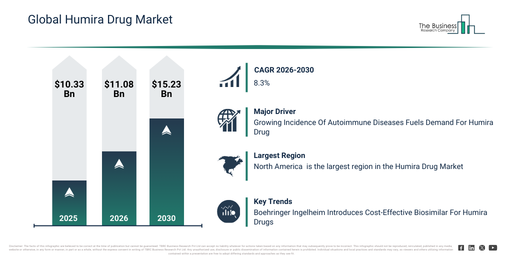
    The Humira drug market size has seen robust growth over recent years. It is anticipated to expand from $10.33 billion in 2025 to $11.08 billion in 2026, demonstrating a compound annual growth rate (CAGR) of 7.3%. This historical expansion can be attributed to factors such as increasing arthritis prevalence, enhanced awareness of biologics, Humira’s patent exclusivity, the proliferation of specialty clinics, regulatory approvals for rheumatoid arthritis, rising healthcare spending, limited biosimilar market penetration, advancements in injection technology, increasing hospital adoption, and high unmet medical needs.

    The humira drug market is anticipated to show significant growth over the next few years, with projections indicating it will reach $15.23 billion in 2030, demonstrating a compound annual growth rate (CAGR) of 8.3%. This expansion during the forecast period can be attributed to several factors such as the increasing availability of biosimilars, a growing preference among patients for self-administration, the widespread adoption of telemedicine, an expanding geriatric population, the development of emerging markets, advancements in pre-filled pen delivery systems, enhanced government support for biologics, integration with digital health platforms, the evolution of personalized medicine trends, and improved insurance coverage. Key developments expected during this period include customized arthritis treatments, increased adoption of biologic therapy, the rise of home-based injection solutions, combination therapy approaches, and further integration of telemedicine.

    Download A Free Sample Report For Comprehensive Market Insights:

    https://www.thebusinessresearchcompany.com/sample.aspx?id=11934&type=smp

    Which Drivers Are Advancing The Humira Drug Market Growth?

    The HUMIRA drug market is projected to expand due to an increasing incidence of autoimmune diseases. Autoimmune conditions involve the body’s immune system mistakenly attacking and damaging its own healthy tissues and cells. Given that the HUMIRA drug addresses the pain and inflammation associated with various autoimmune diseases, an uptick in the prevalence of these conditions naturally fuels demand for the medication. For example, data from February 2024, shared by Arthritis Australia, an Australian charitable not-for-profit organization supporting individuals with arthritis and musculoskeletal issues, indicates that by 2025, an estimated 562,378 Australians will be affected by rheumatoid arthritis (RA), representing 14% of the overall arthritis demographic. Consequently, the rising occurrence of autoimmune diseases is set to bolster the HUMIRA drug market.

    What Segment Categories Are Evaluated In The Humira Drug Market Study?

    The humira drug market covered in this report is segmented –

    1) By Type: Humira Syringe, Humira Pen

    2) By Application: Ankylosing Spondylitis, Rheumatoid Arthritis, Crohn’s Disease, Other Applications

    3) By End-Users: Hospitals, Specialty Clinics, Other End-Users

    Subsegments:

    1) By Humira Syringe: Pre-Filled Syringe, Disposable Syringe

    2) By Humira Pen: Auto-Injector Pen, Pre-Filled Injection Pen

    What Trends Are Affecting The Growth Of The Humira Drug Market?

    Leading firms within the himra drug market are prioritizing the creation of biosimilars for humira medications. Businesses are concentrating on enhancing the economic efficiency of humira drugs through the production of specialized biosimilars tailored for them. As an example, in October 2023, Boehringer Ingelheim, a pharmaceutical company based in Germany, introduced a biosimilar version of Humira. Notably, the only near duplicates of Humira that the US Food and Drug Administration has approved as interchangeable are those produced by Boehringer, allowing their use as a substitute for the original without a doctor’s prescription.

    Which Key Players Are Active In The Humira Drug Market?

    Major companies operating in the humira drug market are AbbVie Inc., Amgen Inc., Sandoz International GmbH, Viatris Inc., Samsung Bioepis Co Ltd., Coherus BioSciences Inc., Celltrion Healthcare Co Ltd., Alvotech Holdings S.A, Biocad Biopharmaceutical Company, Fujifilm Kyowa Kirin Biologics Co Ltd, Alteogen Inc, Bio-Thera Solutions Ltd, Momenta Pharmaceuticals Inc, Innovent Biologics Inc, CinnaGen Co, Hetero Healthcare Ltd, Glenmark Pharmaceuticals Ltd, Torrent Pharmaceuticals Ltd, Cadila Pharmaceuticals Ltd, Mochida Pharmaceutical Co Ltd

    Access The Complete Humira Drug Market Report:

    https://www.thebusinessresearchcompany.com/report/humira-drug-global-market-report

    Which Region Has The Strongest Presence In The Humira Drug Market?

    North America was the largest region in the humira drug market in 2025. Asia Pacific is expected to be the fastest-growing region in the forecast period. The regions covered in the humira drug market report are Asia-Pacific, South East Asia, Western Europe, Eastern Europe, North America, South America, Middle East, Africa.

    Access Humira Drug Market Report for Deeper Competitive Insights

    https://www.thebusinessresearchcompany.com/sample.aspx?id=11934&type=smp

    Browse Through More Reports Similar to the Global Humira Drug Market 2026, By The Business Research Company

    Humira Drug Market Report 2026

    https://www.thebusinessresearchcompany.com/report/humira-drug-global-market-report

    Alexipharmic Drugs Market Report 2026

    https://www.thebusinessresearchcompany.com/report/alexipharmic-drugs-global-market-report

    Acne Drugs Market Report 2026

    https://www.thebusinessresearchcompany.com/report/acne-drugs-global-market-report

    Get in touch with us:

    The Business Research Company: https://www.thebusinessresearchcompany.com/

    Americas: +1 310-496-7795

    Asia: +44 7882 955267 & +91 8897263534

    Europe: +44 7882 955267

    Email us at: marketing@tbrc.info

    Follow us on:

    LinkedIn: https://in.linkedin.com/company/the-business-research-company

    YouTube: https://www.youtube.com/channel/UC24_fI0rV8cR5DxlCpgmyFQ

    Global Market Model: https://www.thebusinessresearchcompany.com/global-market-model
  • Growing Acceptance Of Robotic Solutions Fueling The Growth Of The Market Due To Enhancing Efficiency And Reduced Staff Workload Is Supporting Development Across The Humanoid Healthcare Assistive Robot Market

    Growing Acceptance Of Robotic Solutions Fueling The Growth Of The Market Due To Enhancing Efficiency And Reduced Staff Workload Is Supporting Development Across The Humanoid Healthcare Assistive Robot Market

    The Business Research Company’s 2026 market reports feature advanced enhancements such as market attractiveness analysis, total addressable market evaluation, company benchmarking matrices, interactive Excel dashboards, expanded supply chain intelligence, emerging startup coverage, and detailed product insights, delivering more actionable and strategically valuable research.

    What Is The Estimated Growth In Market Size Of The Humanoid Healthcare Assistive Robot Market During 2026–2030?

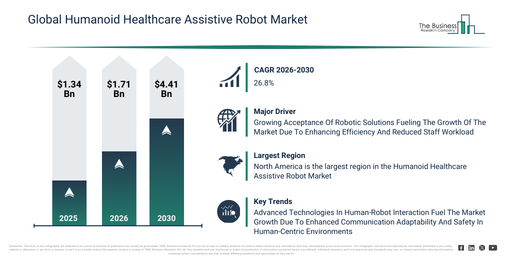
    The market size for humanoid healthcare assistive robots has seen remarkable expansion in recent years. This market is expected to expand from $1.34 billion in 2025 to $1.71 billion in 2026, achieving a compound annual growth rate (CAGR) of 27.1%. Historically, this growth can be linked to factors such as a deficit in the healthcare workforce, an aging global population, innovations in robotics technology, increased automation in hospital environments, and the rising need for patient monitoring systems.

    The humanoid healthcare assistive robot market size is projected to experience rapid expansion in the coming years. This market is predicted to reach $4.41 billion by 2030, exhibiting a compound annual growth rate (CAGR) of 26.8%. Several factors contribute to this anticipated growth during the forecast period, such as the emergence of smart hospitals, increased investment in healthcare robotics, a growing need for homecare automation, improvements in human-robot interaction, and the broader application of AI-based clinical support. Key trends expected during this period involve the expanded deployment of robots in elderly and assisted care settings, a rise in the uptake of AI-enabled patient interaction robots, broader robotic assistance in hospital operations, a heightened demand for contactless healthcare services, and the incorporation of advanced sensors and computer vision technologies.

    Download A Free Sample Report For Comprehensive Market Insights:

    https://www.thebusinessresearchcompany.com/sample.aspx?id=24243&type=smp

    What Primary Factors Are Fueling The Expansion Of The Humanoid Healthcare Assistive Robot Market?

    The humanoid healthcare assistive robot market is anticipated to experience growth due to the increasing adoption of robotic solutions. Robotic solutions involve the application of robotic systems and technologies to automate tasks, boost efficiency, and resolve intricate issues across various industries and applications. The rising acceptance of these solutions stems from their capability to alleviate the burden on healthcare staff by efficiently managing repetitive tasks, allowing professionals to dedicate more time to critical patient care. Humanoid healthcare assistive robots further enhance robotic solutions by offering personalized support in caregiving, rehabilitation, and patient interaction, characterized by human-like behavior and adaptive assistance. For example, in September 2023, the International Federation of Robotics (IFR) reported 553,052 industrial robot installations in factories globally in 2022, representing a 5% year-on-year growth. Therefore, the growing acceptance of robotic solutions is a significant driver for the expansion of the humanoid healthcare assistive robot market.

    How Is The Humanoid Healthcare Assistive Robot Market Examined Through Segment Analysis?

    The humanoid healthcare assistive robot market covered in this report is segmented –

    1) By Type: Surveillance Healthcare Assistive Robot, Security Healthcare Assistive Robot

    2) By Component: Hardware, Software, Services

    3) By Technology: Artificial Intelligence, Machine learning, Natural Language Processing, Robotic Process Automation, Computer Vision

    4) By Application: Elderly Care, Rehabilitation, Surgery Assistance, Patient Monitoring, Other Applications

    5) By End-User: Hospitals, Clinics, Home Care Settings, Rehabilitation Centers, Other End-Users

    Subsegments:

    1) By Surveillance Healthcare Assistive Robot: Remote Monitoring Robots, Diagnostic Assistance Robots, Patient Interaction Robots, Vital Signs Monitoring Robots, Surveillance And Security Monitoring Robots

    2) By Security Healthcare Assistive Robot: Patient Safety Robots, Emergency Response Robots, Intruder Detection Robots

    Which Trends Are Influencing The Direction Of The Humanoid Healthcare Assistive Robot Market?

    Major companies engaged in the humanoid healthcare assistive robot market are prioritizing the development of advanced solutions, such as human-robot interaction, to enable more efficient and empathetic engagements with people. Human-robot interaction (HRI) is defined as the investigation and creation of systems that allow robots to communicate, collaborate, and interact with humans in a natural and intuitive way. This involves comprehending how humans perceive, direct, and work alongside robots, with the goal of establishing smooth and effective interactions. For example, in March 2024, Toyota Research Institute, a company based in the US focused on artificial intelligence-driven research and robotics innovation, unveiled its Punyo robots. These robots are uniquely designed without legs, emphasizing flexibility, softness, and safety for daily human tasks. They are equipped with tactile sensors that adapt to different objects, airbags in their arms to adjust pressure for controlling rigidity and softness, and sophisticated learning techniques. By integrating soft materials with internal mechanical structures, Punyo is designed to observe and mimic human actions, allowing it to perform various household duties and improve its functionality in common environments.

    Who Are The Leading Firms Participating In The Humanoid Healthcare Assistive Robot Market?

    Major companies operating in the humanoid healthcare assistive robot market are Ubtech Robotics Inc., SoftBank Robotics Corp, Fourier Intelligence Co. Ltd., Hanson Robotics Limited, PAL Robotics, F&P Robotics AG, Diligent Robotics Inc., Neura Robotics GmbH, Apptronik, 1X Technologies, Kinova Robotics Inc., Hocoma AG, Ekso Bionics, ReWalk Robotics, Agility Robotics, Rainbow Robotics, Engineered Arts, Focal Meditech, Toyota Motor Corporation, Honda Motor Co. Ltd.

    Access The Complete Humanoid Healthcare Assistive Robot Market Report:

    https://www.thebusinessresearchcompany.com/report/humanoid-healthcare-assistive-robot-global-market-report

    Which Region Stands As The Largest Contributor To The Humanoid Healthcare Assistive Robot Market?

    North America was the largest region in the humanoid healthcare assistive robot market in 2025. Asia-Pacific is expected to be the fastest-growing region in the forecast period. The regions covered in the humanoid healthcare assistive robot market report are Asia-Pacific, South East Asia, Western Europe, Eastern Europe, North America, South America, Middle East, Africa.

    Access Humanoid Healthcare Assistive Robot Market Report for Deeper Competitive Insights

    https://www.thebusinessresearchcompany.com/sample.aspx?id=24243&type=smp

    Browse Through More Reports Similar to the Global Humanoid Healthcare Assistive Robot Market 2026, By The Business Research Company

    Healthcare Assistive Robot Market Report 2026

    https://www.thebusinessresearchcompany.com/report/healthcare-assistive-robot-global-market-report

    Healthcare Companion Robots Market Report 2026

    https://www.thebusinessresearchcompany.com/report/healthcare-companion-robots-global-market-report

    Humanoid Robot Market Report 2026

    https://www.thebusinessresearchcompany.com/report/humanoid-robot-global-market-report

    Get in touch with us:

    The Business Research Company: https://www.thebusinessresearchcompany.com/

    Americas: +1 310-496-7795

    Asia: +44 7882 955267 & +91 8897263534

    Europe: +44 7882 955267

    Email us at: marketing@tbrc.info

    Follow us on:

    LinkedIn: https://in.linkedin.com/company/the-business-research-company

    YouTube: https://www.youtube.com/channel/UC24_fI0rV8cR5DxlCpgmyFQ

    Global Market Model: https://www.thebusinessresearchcompany.com/global-market-model

  • Rising Liver Disease Cases Fueling The Growth Of The Market Due To Increasing Obesity-Linked Non-Alcoholic Fatty Liver Disease (NAFLD) Cases Is Supporting Development Across The Human Serum Albumin Market

    Rising Liver Disease Cases Fueling The Growth Of The Market Due To Increasing Obesity-Linked Non-Alcoholic Fatty Liver Disease (NAFLD) Cases Is Supporting Development Across The Human Serum Albumin Market

    The Business Research Company’s 2026 market reports feature advanced enhancements such as market attractiveness analysis, total addressable market evaluation, company benchmarking matrices, interactive Excel dashboards, expanded supply chain intelligence, emerging startup coverage, and detailed product insights, delivering more actionable and strategically valuable research.

    What Market Value Expansion Is Expected For The Human Serum Albumin Market Over The Forecast Period?

    The human serum albumin market has demonstrated substantial growth over recent years. It is anticipated to expand from $5.79 billion in 2025 to $6.21 billion in 2026, registering a compound annual growth rate (CAGR) of 7.3%. This past growth can be attributed to factors such as the constrained availability of recombinant HSA, the ongoing reliance on plasma-derived HSA, increasing demand from hospitals and clinical settings, its rising application in diagnostic and therapeutic procedures, and the adoption of standard injection solutions.

    The human serum albumin market is anticipated to experience robust growth in the coming years. It is projected to expand to $8.16 billion by 2030, achieving a compound annual growth rate (CAGR) of 7.0%. This growth during the forecast period is driven by factors such as the development of yeast, bacterial, and plant-based recombinant hsa, an increasing demand for fatty acid-free formulations, the widening application in drug delivery and nutrition enhancement, greater investment in research laboratories, and increased procurement by hospitals and blood banks. Prominent trends observed in this period include a rising demand for both plasma-derived and recombinant human serum albumin, an expanded use of hsa in volume expanders and drug delivery systems, growing adoption of lyophilized powder and injection solutions, the expansion of applications in hospital and research laboratories, and a focus on fatty acid-free and specialty hsa preparations.

    Download A Free Sample Report For Comprehensive Market Insights:

    https://www.thebusinessresearchcompany.com/sample.aspx?id=27310&type=smp

    Which Strategic Drivers Are Supporting The Human Serum Albumin Market Development?

    The growing incidence of liver ailments is anticipated to drive expansion in the human serum albumin market. These conditions encompass various disorders that compromise liver function, such as hepatitis, fatty liver disease, cirrhosis, and liver cancer. The surge in liver diseases stems from the increasing rates of obesity, given that excessive abdominal fat contributes to non-alcoholic fatty liver disease (NAFLD), which can result in fat buildup, inflammation, and eventual liver failure. Human serum albumin aids in managing liver disease by restoring blood volume, minimizing fluid retention, safeguarding kidney function, and enhancing prognoses in related complications like ascites and hepatorenal syndrome. As an illustration, a report issued in December 2024 by the Office for Health Improvement and Disparities, a UK government agency, indicated a 3.6% rise in premature fatalities from alcoholic liver disease in 2023, totaling 5,984 cases against 5,776 in 2022. Consequently, the escalating occurrence of liver conditions is fueling the expansion of the human serum albumin market.

    Which Segment Groups Define The Human Serum Albumin Market Landscape?

    The human serum albumin market covered in this report is segmented –

    1) By Type Of Preparation: Recombinant Human Serum Albumin, Plasma-Derived Human Serum Albumin

    2) By Formulation Type: Injection Solutions, Lyophilized Powder

    3) By Distribution Channel: Direct Sales, Online Pharmacies, Third-party Distributors, Hospital Pharmacies

    4) By Application: Volume Expanders, Drug Delivery Systems, Nutrition Enhancement, Diagnostic Agents

    5) By End-User: Hospitals, Research Laboratories, Pharmaceutical Companies, Blood Banks

    Subsegments:

    1) By Recombinant Human Serum Albumin: Yeast-Based Recombinant Human Serum Albumin, Bacterial-Based Recombinant Human Serum Albumin, Plant-Based Recombinant Human Serum Albumin, Mammalian Cell-Based Recombinant Human Serum Albumin, Insect Cell-Based Recombinant Human Serum Albumin

    2) By Plasma-Derived Human Serum Albumin: 5% Human Serum Albumin Solution, 20% Human Serum Albumin Solution, 25% Human Serum Albumin Solution, Lyophilized Human Serum Albumin, Fatty Acid-Free Human Serum Albumin

    What Trends Are Driving Changes In The Human Serum Albumin Market?

    Major companies in the human serum albumin market are concentrating on developing innovative solutions, such as animal-free recombinant excipients, to boost product safety, scalability, and adherence to regulatory standards in biomanufacturing applications. An animal-free recombinant excipient refers to a biologically engineered inactive substance created using recombinant DNA technology without any animal or human-derived components, ensuring high purity and safety in pharmaceutical and biomanufacturing applications. For instance, in April 2025, InVitri Inc., a US-based provider of animal-free, recombinant proteins and excipients, launched Optibumin 25, the first recombinant 25% human serum albumin for closed-system biomanufacturing. This product is the first recombinant 25% human serum albumin specifically designed for closed-system biomanufacturing. It is optimized for downstream processing, formulation, and cryopreservation workflows, and is currently available in 100 mL single-use bags. With its animal-origin-free and chemically defined composition, it ensures high purity, consistency, and reduced contamination risks. It is GMP-ready, scalable to commercial production volumes, and offers a stable, sterile solution that integrates seamlessly into applications such as viral vector manufacturing, stem cell preservation, vaccine formulation, and regenerative medicine.

    Which Companies Are Engaged In The Human Serum Albumin Market Environment?

    Major companies operating in the human serum albumin market are Thermo Fisher Scientific Inc., Takeda Pharmaceutical Company Limited, Merck KGaA, CSL Behring (CSL), Baxter International Inc., Grifols SA, Sartorius AG, Octapharma AG, Kedrion Biopharma, Shanghai RAAS Blood Products Co Ltd., Biotest Aktiengesellschaft, LFB Group, Hualan Biological Engineering Inc., Taibang Biologic Group, Kamada Ltd., InVitria Inc., Reliance Life Sciences, Bio Products Laboratory, Mitsubishi Tanabe Pharma, Sichuan Yuanda Shuyang Pharmaceutical Co Ltd.

    Access The Complete Human Serum Albumin Market Report:

    https://www.thebusinessresearchcompany.com/report/human-serum-albumin-global-market-report

    What Is The Largest Regional Market In The Human Serum Albumin Market?

    North America was the largest region in the human serum albumin market in 2025. Asia-Pacific is expected to be the fastest-growing region in the forecast period. The regions covered in the human serum albumin market report are Asia-Pacific, South East Asia, Western Europe, Eastern Europe, North America, South America, Middle East, Africa.

    Access Human Serum Albumin Market Report for Deeper Competitive Insights

    https://www.thebusinessresearchcompany.com/sample.aspx?id=27310&type=smp

    Browse Through More Reports Similar to the Global Human Serum Albumin Market 2026, By The Business Research Company

    Wall Decor Market Report 2026

    https://www.thebusinessresearchcompany.com/report/wall-decor-global-market-report

    Painting And Wall Covering Contractors Market Report 2026

    https://www.thebusinessresearchcompany.com/report/painting-and-wall-covering-contractors-global-market-report

    Commercial Flooring Market Report 2026

    https://www.thebusinessresearchcompany.com/report/commercial-flooring-global-market-report

    Get in touch with us:

    The Business Research Company: https://www.thebusinessresearchcompany.com/

    Americas: +1 310-496-7795

    Asia: +44 7882 955267 & +91 8897263534

    Europe: +44 7882 955267

    Email us at: marketing@tbrc.info

    Follow us on:

    LinkedIn: https://in.linkedin.com/company/the-business-research-company

    YouTube: https://www.youtube.com/channel/UC24_fI0rV8cR5DxlCpgmyFQ

    Global Market Model: https://www.thebusinessresearchcompany.com/global-market-model
  • Rising Prevalence Of HPV-Related Diseases Sparks Surge In Human Papillomavirus (HPV) Vaccine Market Growth Is Supporting Development Across The Human Papillomavirus (HPV) Vaccine Market

    Rising Prevalence Of HPV-Related Diseases Sparks Surge In Human Papillomavirus (HPV) Vaccine Market Growth Is Supporting Development Across The Human Papillomavirus (HPV) Vaccine Market

    The Business Research Company’s 2026 market reports feature advanced enhancements such as market attractiveness analysis, total addressable market evaluation, company benchmarking matrices, interactive Excel dashboards, expanded supply chain intelligence, emerging startup coverage, and detailed product insights, delivering more actionable and strategically valuable research.

    How Will The Market Value Of The Human Papillomavirus (HPV) Vaccine Market Change Between 2026 And 2030?

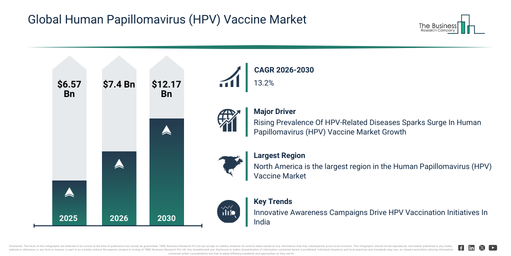
    The human papillomavirus (hpv) vaccine market size has experienced substantial expansion in recent years. It is projected to expand from $6.57 billion in 2025 to $7.4 billion in 2026, at a compound annual growth rate (CAGR) of 12.7%. This historical growth can be attributed to the high prevalence of cervical cancer, limited awareness about HPV vaccination, government funding for immunization initiatives, the availability of tetravalent and bivalent vaccines, and the rising healthcare infrastructure in developed regions.

    The human papillomavirus (HPV) vaccine market is projected to experience substantial expansion over the coming years. It is anticipated to reach $12.17 billion in 2030, driven by a compound annual growth rate (CAGR) of 13.2%. This anticipated growth during the forecast period is primarily due to several factors, including the increasing uptake of nonavalent vaccines, the broadening of public-private collaborations in healthcare, a rise in awareness initiatives, improvements in vaccine delivery technology, and greater investments in preventive health measures. Key trends expected within this period involve heightened awareness regarding HPV vaccination, various government-led immunization schemes, market penetration into developing regions, the creation of advanced HPV vaccines, and strategic alliances between pharmaceutical firms and healthcare providers.

    Download A Free Sample Report For Comprehensive Market Insights:

    https://www.thebusinessresearchcompany.com/sample.aspx?id=12040&type=smp

    What Major Growth Factors Are Impacting The Human Papillomavirus (HPV) Vaccine Market?

    The growing occurrence of HPV-related diseases is projected to drive the expansion of the human papillomavirus (HPV) vaccine market in the future. These diseases, which are viral infections, often manifest as warts on the skin or mucous membranes. The HPV vaccination precisely aims at specific HPV subtypes. It helps in managing the risk of HPV infection and the recurrence of these diseases. For example, data from February 2023, provided by the National Cancer Institute, a US-based Department of Health and Human Services, indicates an estimation of approximately 13,960 American women to be diagnosed with aggressive cervical cancer, with 4,310 fatalities from this illness predicted for 2023 in the US. Furthermore, new cervical cancer cases were identified at a rate of 7.7 per 100,000 women per year, alongside an annual mortality rate of 2.2 per 100,000 females. Consequently, the rising occurrence of HPV-related diseases is fueling the expansion of the human papillomavirus (HPV) vaccine market.

    What Key Segment Areas Are Included In The Human Papillomavirus (HPV) Vaccine Market Assessment?

    The human papillomavirus (hpv) vaccine market covered in this report is segmented –

    1) By Type: Tetravalent, Nonavalent, Bivalent

    2) By Disease Indication: Cervical Cancer, Anal Cancer, Vulvar And Vaginal Cancer, Penile Cancer, Oropharyngeal Cancer, Other Indications

    3) By Distribution Channel: Hospital And Retail Pharmacies, Government Suppliers, Other Channels

    4) By Industry Vertical: Public And Private Alliance, Government Entities, Physicians, Other Industries

    Which Trends Are Shaping The Human Papillomavirus (HPV) Vaccine Market Landscape?

    Major companies operating in the human papillomavirus (HPV) vaccine market are prioritizing the development of innovation, such as awareness campaigns, to educate communities about the benefits of vaccination. Awareness campaigns are deliberate efforts created to inform and enlighten a specific audience or the general public concerning a particular issue, cause, product, or service. For instance, in January 2023, the Family Planning Association of India, an India-based charity, launched a vaccine drive against cervical cancer, focusing on girls aged 9 to 14 years. A nationwide HPV vaccination drive is currently in progress to protect girls and women from cervical cancer. This campaign plans to utilize a quadrivalent vaccine targeting key strains of the virus. Aiming to vaccinate around 50 million girls, the initiative concentrates on increasing awareness and improving access in both urban and rural areas.

    Who Are The Prominent Players Across The Human Papillomavirus (HPV) Vaccine Market?

    Major companies operating in the human papillomavirus (hpv) vaccine market are Merck & Co Inc, GlaxoSmithKline plc, Serum Institute of India Pvt Ltd, Walvax Biotechnology Co Ltd, Beijing Wantai Biological Pharmacy Enterprise Co Ltd, Xiamen Innovax Biotech Co Ltd, Bharat Biotech International Ltd, Shanghai Zerun Biotech Co Ltd, Recbio Biotech, Yuxi Zerun Biotechnology Co Ltd, Innovax, Biofarma Co, Incepta Pharmaceuticals, PT Bio Farma, Instituto Butantan, Sinergium Biotech, BioMed Vaccine Technologies, Vaxart Inc., GeoVax, Recbio

    Access The Complete Human Papillomavirus (HPV) Vaccine Market Report:

    https://www.thebusinessresearchcompany.com/report/human-papillomavirus-hpv-vaccine-global-market-report

    Which Region Contributes The Most To The Human Papillomavirus (HPV) Vaccine Market?

    North America was the largest region in the human papillomavirus (HPV) vaccine market in 2025. The regions covered in the human papillomavirus (hpv) vaccine market report are Asia-Pacific, South East Asia, Western Europe, Eastern Europe, North America, South America, Middle East, Africa.

    Access Human Papillomavirus (HPV) Vaccine Market Report for Deeper Competitive Insights

    https://www.thebusinessresearchcompany.com/sample.aspx?id=12040&type=smp

    Browse Through More Reports Similar to the Global Human Papillomavirus (HPV) Vaccine Market 2026, By The Business Research Company

    Human Papillomavirus Hpv Vaccine Market Report 2026

    https://www.thebusinessresearchcompany.com/report/human-papillomavirus-hpv-vaccine-global-market-report

    Human Papillomavirus Hpv Vaccine Market Report 2026

    https://www.thebusinessresearchcompany.com/report/human-papillomavirus-hpv-vaccine-global-market-report

    Cervical Cancer Vaccine Market Report 2026

    https://www.thebusinessresearchcompany.com/report/cervical-cancer-vaccine-global-market-report

    Get in touch with us:

    The Business Research Company: https://www.thebusinessresearchcompany.com/

    Americas: +1 310-496-7795

    Asia: +44 7882 955267 & +91 8897263534

    Europe: +44 7882 955267

    Email us at: marketing@tbrc.info

    Follow us on:

    LinkedIn: https://in.linkedin.com/company/the-business-research-company

    YouTube: https://www.youtube.com/channel/UC24_fI0rV8cR5DxlCpgmyFQ

    Global Market Model: https://www.thebusinessresearchcompany.com/global-market-model

  • Rising Adoption Of Targeted Cancer Therapy Fueling The Growth Of The Market Due To Advancements In Genetic Profiling Is Supporting Development Across The Human Epidermal Growth Factor Receptor 2 (HER2)-Positive Gastric Cancer Market

    Rising Adoption Of Targeted Cancer Therapy Fueling The Growth Of The Market Due To Advancements In Genetic Profiling Is Supporting Development Across The Human Epidermal Growth Factor Receptor 2 (HER2)-Positive Gastric Cancer Market

    The Business Research Company’s 2026 market reports feature advanced enhancements such as market attractiveness analysis, total addressable market evaluation, company benchmarking matrices, interactive Excel dashboards, expanded supply chain intelligence, emerging startup coverage, and detailed product insights, delivering more actionable and strategically valuable research.

    What Is The Forecasted Rise In Market Size Of The Human Epidermal Growth Factor Receptor 2 (HER2)-Positive Gastric Cancer Market During The Forecast Period?

    The human epidermal growth factor receptor 2 (her2)-positive gastric cancer market has experienced steady growth in recent years. It is projected to expand from $1.31 billion in 2025 to $1.37 billion in 2026, achieving a compound annual growth rate (CAGR) of 4.6%. In the past, this expansion was attributable to several factors, including the limited availability of targeted therapies, reliance on conventional chemotherapy and radiation therapy, low awareness of her2-positive gastric cancer, restricted access to specialty clinics, and the slow adoption of immunotherapy.

    The market for human epidermal growth factor receptor 2 (HER2)-positive gastric cancer is projected to experience consistent expansion in the coming years. This market is predicted to reach **$1.64 billion by 2030, exhibiting a compound annual growth rate (CAGR) of 4.6%.** This anticipated growth during the forecast period stems from factors such as the creation of new antibody-drug conjugates, a rise in clinical investigations for HER2-targeted treatments, improvements in healthcare facilities within developing economies, the advancement of precision medicine and biomarker screening, and an increase in ambulatory surgery centers and specialized oncology clinics. Key trends identified for the upcoming period encompass a greater acceptance of HER2-targeted treatments, enhanced understanding of various gastric cancer subtypes, broader application of immunotherapy and monoclonal antibodies, a rise in tailored treatment strategies, and a stronger emphasis on early diagnosis and screening.

    Download A Free Sample Report For Comprehensive Market Insights:

    https://www.thebusinessresearchcompany.com/sample.aspx?id=25787&type=smp

    What Market Drivers Are Helping Shape The Human Epidermal Growth Factor Receptor 2 (HER2)-Positive Gastric Cancer Market Expansion?

    The increasing adoption of targeted cancer therapy is anticipated to drive growth in the human epidermal growth factor receptor 2 (HER2)-positive gastric cancer market going forward. This treatment method, also known as personalized medicine, utilizes specific drugs or substances to block cancer growth by concentrating on particular molecules involved in tumor development. The rise in the use of targeted therapy is primarily attributed to advancements in genetic profiling, which allow for more precise treatments tailored to an individual’s unique tumor characteristics, leading to improved effectiveness and fewer side effects. For HER2-positive gastric cancer, targeted therapy functions by directly attacking the HER2 protein, which is overexpressed in these tumors, thereby slowing disease progression and enhancing patient outcomes. For instance, in February 2024, the Food and Drug Administration (FDA) approved 16 new personalized medicines in 2023, including 7 drugs for cancer and 3 for various other diseases and conditions, an increase from 6 in 2022, as reported by the Personalized Medicine Coalition, a US-based professional membership organization. Consequently, the rising adoption of targeted cancer therapy is driving the growth of the human epidermal growth factor receptor 2 (HER2)-positive gastric cancer market.

    How Is Segment Classification Applied In The Human Epidermal Growth Factor Receptor 2 (HER2)-Positive Gastric Cancer Market?

    The human epidermal growth factor receptor 2 (her2)-positive gastric cancer market covered in this report is segmented –

    1) By Therapy: Chemotherapy, Immunotherapy, Radiation Therapy, Targeted Therapy

    2) By Stage: Stage I, Stage II, Stage III, Stage IV

    3) By End-User: Ambulatory Surgery Centers, Hospitals And Specialty Clinics, Other End-Users

    Subsegments:

    1) By Chemotherapy: Fluoropyrimidines, Platinum-Based Agents, Taxanes, Irinotecan, Anthracyclines

    2) By Immunotherapy: Immune Checkpoint Inhibitors, Monoclonal Antibodies, Cancer Vaccines, Cytokine-Based Therapies

    3) By Radiation Therapy: External Beam Radiation Therapy, Intensity-Modulated Radiation Therapy, Stereotactic Body Radiation Therapy, 3D Conformal Radiation Therapy

    4) By Targeted Therapy: HER2-Targeted Therapies, Tyrosine Kinase Inhibitors, Antibody-Drug Conjugates, mTOR Inhibitors, PI3K/AKT/mTOR Pathway Inhibitors

    What Trends Are Influencing The Human Epidermal Growth Factor Receptor 2 (HER2)-Positive Gastric Cancer Market Outlook?

    Leading companies within the human epidermal growth factor receptor 2 (HER2)-positive gastric cancer market are concentrating on securing approvals for novel treatments, specifically advanced immunotherapy-enhanced combination regimens, which combine immune checkpoint inhibitors with targeted therapy and chemotherapy. This strategy aims to significantly enhance patient outcomes in initial treatment scenarios. The advanced immunotherapy-enhanced combination regimens method works by harnessing the body’s immune system through the suppression of programmed death (PD)-1 or programmed death (PD)-L1 interaction, simultaneously targeting HER2 receptors and employing chemotherapeutic agents, thereby boosting anti-tumor activity and improving survival rates. For instance, in March 2025, Merck & Co., Inc., a US-based biopharmaceutical firm, obtained approval from the U.S. Food and Drug Administration (FDA) for pembrolizumab (Keytruda), used with trastuzumab and chemotherapy, as a primary treatment for adults diagnosed with HER2-positive unresectable or metastatic gastric or gastroesophageal junction (GEJ) adenocarcinoma, whose tumors exhibit programmed death (PD)-L1 expression. This recently approved combination therapy demonstrated a considerable improvement in median progression-free survival and overall survival when compared to conventional treatments. With an elevated overall response rate of 73% and an extended median duration of response, this treatment signifies a transformative approach in addressing advanced HER2-positive gastric cancers.

    Which Companies Form The Competitive Landscape Of The Human Epidermal Growth Factor Receptor 2 (HER2)-Positive Gastric Cancer Market?

    Major companies operating in the human epidermal growth factor receptor 2 (her2)-positive gastric cancer market are Pfizer Inc., Roche Holding AG, Merck & Co Inc., Bayer Aktiengesellschaft, Eli Lilly and Company, Bristol-Myers Squibb Company, AstraZeneca PLC, Novartis AG, Amgen Inc., Astellas Pharma Inc., Daiichi Sankyo Company Limited, Genentech Inc., Ono Pharmaceutical Co Ltd., Shanghai Henlius Biotech Inc., MacroGenics Inc., Hutchison Medipharma Limited , ALX Oncology Holdings Inc., Taiho Pharmaceutical Co Ltd., Ambrx Biopharma Inc., LintonPharm Co Ltd.

    Access The Complete Human Epidermal Growth Factor Receptor 2 (HER2)-Positive Gastric Cancer Market Report:

    https://www.thebusinessresearchcompany.com/report/human-epidermal-growth-factor-receptor-2-her2-positive-gastric-cancer-global-market-report

    Which Regional Market Leads The Human Epidermal Growth Factor Receptor 2 (HER2)-Positive Gastric Cancer Market?

    North America was the largest region in the human epidermal growth factor receptor 2 (HER2)-positive gastric cancer market in 2025. Asia-Pacific is expected to be the fastest-growing region in the forecast period. The regions covered in the human epidermal growth factor receptor 2 (her2)-positive gastric cancer market report are Asia-Pacific, South East Asia, Western Europe, Eastern Europe, North America, South America, Middle East, Africa.

    Access Human Epidermal Growth Factor Receptor 2 (HER2)-Positive Gastric Cancer Market Report for Deeper Competitive Insights

    https://www.thebusinessresearchcompany.com/sample.aspx?id=25787&type=smp

    Browse Through More Reports Similar to the Global Human Epidermal Growth Factor Receptor 2 (HER2)-Positive Gastric Cancer Market 2026, By The Business Research Company

    Gastric Cancer Drugs Market Report 2026

    https://www.thebusinessresearchcompany.com/report/gastric-cancer-drugs-global-market-report

    Gastric Cancer Diagnostic Procedure Market Report 2026

    https://www.thebusinessresearchcompany.com/report/gastric-cancer-diagnostic-procedure-global-market-report

    Intestine Cancer Therapeutics Market Report 2026

    https://www.thebusinessresearchcompany.com/report/intestine-cancer-therapeutics-global-market-report

    Get in touch with us:

    The Business Research Company: https://www.thebusinessresearchcompany.com/

    Americas: +1 310-496-7795

    Asia: +44 7882 955267 & +91 8897263534

    Europe: +44 7882 955267

    Email us at: marketing@tbrc.info

    Follow us on:

    LinkedIn: https://in.linkedin.com/company/the-business-research-company

    YouTube: https://www.youtube.com/channel/UC24_fI0rV8cR5DxlCpgmyFQ

    Global Market Model: https://www.thebusinessresearchcompany.com/global-market-model

  • Rising Prevalence Of HPV-Associated Cases To Drive HPV Associated Disorders Market Is Supporting Development Across The HPV Associated Disorders Market

    Rising Prevalence Of HPV-Associated Cases To Drive HPV Associated Disorders Market Is Supporting Development Across The HPV Associated Disorders Market

    The Business Research Company’s 2026 market reports feature advanced enhancements such as market attractiveness analysis, total addressable market evaluation, company benchmarking matrices, interactive Excel dashboards, expanded supply chain intelligence, emerging startup coverage, and detailed product insights, delivering more actionable and strategically valuable research.

    How Is The HPV Associated Disorders Market’s Market Value Anticipated To Evolve From 2026 To 2030?

    The market size for hpv associated disorders has experienced substantial growth in recent years. This market is expected to expand from $22.13 billion in 2025 to $23.7 billion in 2026, achieving a compound annual growth rate (CAGR) of 7.1%. The expansion observed in the past can be ascribed to several factors, including the high prevalence of hpv infections, the launch of prophylactic hpv vaccines, an increase in cervical cancer screening programs, rising healthcare expenditure in oncology, and growing public health awareness campaigns.

    The market size for hpv associated disorders is projected to experience substantial expansion in the coming years. This market is anticipated to reach a valuation of $30.97 billion by 2030, exhibiting a compound annual growth rate (CAGR) of 6.9%. Key factors driving this growth during the projected period include the broadening of gender-neutral vaccination policies, significant progress in molecular diagnostics, a rise in the occurrence of hpv-linked oropharyngeal cancers, enhanced healthcare accessibility in developing nations, and the ongoing development of therapeutic hpv vaccines. Furthermore, prominent trends expected in the forecast period involve the wider implementation of hpv vaccination programs, increased uptake of early screening and diagnostic methods, an escalating emphasis on non-invasive treatment alternatives, heightened awareness regarding hpv-related cancers, and a move towards integrated prevention and treatment approaches.

    Download A Free Sample Report For Comprehensive Market Insights:

    https://www.thebusinessresearchcompany.com/sample.aspx?id=7777&type=smp

    Which Significant Factors Are Encouraging Growth In The HPV Associated Disorders Market?

    The rising occurrence of HPV infections is projected to drive expansion within the HPV-associated disorders market in the future. These disorders encompass conditions such as benign verrucae vulgates, condylomas acuminata, cancers affecting the cervix, vulva, anus, and penis, alongside anogenital warts, recurrent respiratory papillomatosis, and both anogenital and oropharyngeal cancers. Globally, HPV infection is quite widespread, especially impacting women. As an illustration, in June 2025, data from the Centers for Disease Control and Prevention, a US-based government agency, indicated that in the United States, roughly 13,000 women receive a cervical cancer diagnosis every year, with about 4,000 fatalities from the illness occurring annually. Consequently, the rise in HPV infections is propelling the expansion of the HPV-associated disorders market.

    What Are The Core Segment Classifications In The HPV Associated Disorders Market?

    The hpv associated disorders market covered in this report is segmented –

    1) By Indication: Cervical Intraepithelial Neoplasia (CIN), Cervical Cancer, Anal Intraepithelial Neoplasia (AIN), Anal Cancer, Genital Warts, Other Indications

    2) By Therapy: Prevention, Treatment

    3) By Distribution Channel: Hospital Pharmacies, Retail Pharmacies, Online Pharmacies

    Subsegments:

    1) By Cervical Intraepithelial Neoplasia (CIN): CIN 1, CIN 2, CIN 3

    2) By Cervical Cancer: Squamous Cell Carcinoma, Adenocarcinoma

    3) By Anal Intraepithelial Neoplasia (AIN): AIN 1, AIN 2, AIN 3

    4) By Anal Cancer: Squamous Cell Carcinoma, Other Types

    5) By Genital Warts: Condylomata Acuminata

    6) By Other Indications: Oropharyngeal Cancer, Vulvar and Vaginal Cancers, Other HPV-Related Conditions

    Which Trends Are Expected To Shape The HPV Associated Disorders Market?

    Prominent companies operating in the HPV associated disorders market are introducing HPV vaccines to combat diseases linked to HPV. HPV vaccines are essential for public health, as they lower the occurrence of HPV-related conditions and support initiatives for cervical cancer screening and prevention. For instance, in January 2023, the Serum Institute of India, an India-based institute, unveiled CERVAVAC, the first indigenously developed human papillomavirus (HPV) vaccine specifically designed to prevent cervical cancer in women. The vaccine utilizes L1 virus-like particles (VLPs) to stimulate an immune response without causing an infection. This approach effectively primes the immune system to recognize and fight HPV if exposed in the future.

    Who Are The Key Market Participants In The HPV Associated Disorders Market?

    Major companies operating in the hpv associated disorders market are AstraZeneca plc, F. Hoffmann-La Roche Ltd, Biocon Ltd, GlaxoSmithKline plc, Merck & Co Inc., Pfizer Inc., Sanofi S. A., Novartis AG, Bristol-Myers Squibb Company, Johnson & Johnson Inc., Takeda Pharmaceutical Company Limited, Amgen Inc., Bayer AG, Eisai Co. Ltd., Genentech Inc., MSD Pharmaceuticals, Seqirus, Bavarian Nordic, Serum Institute of India, Moderna Inc

    Access The Complete HPV Associated Disorders Market Report:

    https://www.thebusinessresearchcompany.com/report/hpv-associated-disorders-global-market-report

    Which Region Holds The Largest Share In The HPV Associated Disorders Market?

    North America was the largest region in the HPV associated disorders market in 2025. Asia-Pacific is expected to be the fastest-growing region in the forecast period. The regions covered in the hpv associated disorders market report are Asia-Pacific, South East Asia, Western Europe, Eastern Europe, North America, South America, Middle East, Africa.

    Access HPV Associated Disorders Market Report for Deeper Competitive Insights

    https://www.thebusinessresearchcompany.com/sample.aspx?id=7777&type=smp

    Browse Through More Reports Similar to the Global HPV Associated Disorders Market 2026, By The Business Research Company

    Hpv Associated Disorders Market Report 2026

    https://www.thebusinessresearchcompany.com/report/hpv-associated-disorders-global-market-report

    Human Papillomavirus Hpv Vaccine Market Report 2026

    https://www.thebusinessresearchcompany.com/report/human-papillomavirus-hpv-vaccine-global-market-report

    Hpv Testing And Pap Test Market Report 2026

    https://www.thebusinessresearchcompany.com/report/hpv-testing-and-pap-test-global-market-report

    Get in touch with us:

    The Business Research Company: https://www.thebusinessresearchcompany.com/

    Americas: +1 310-496-7795

    Asia: +44 7882 955267 & +91 8897263534

    Europe: +44 7882 955267

    Email us at: marketing@tbrc.info

    Follow us on:

    LinkedIn: https://in.linkedin.com/company/the-business-research-company

    YouTube: https://www.youtube.com/channel/UC24_fI0rV8cR5DxlCpgmyFQ

    Global Market Model: https://www.thebusinessresearchcompany.com/global-market-model
  • High Potency APIS Market Growth Fueled By Rising Cancer Cases And Drug Sales Is Supporting Development Across The HP (High Potency) APIs Market

    High Potency APIS Market Growth Fueled By Rising Cancer Cases And Drug Sales Is Supporting Development Across The HP (High Potency) APIs Market

    The Business Research Company’s 2026 market reports feature advanced enhancements such as market attractiveness analysis, total addressable market evaluation, company benchmarking matrices, interactive Excel dashboards, expanded supply chain intelligence, emerging startup coverage, and detailed product insights, delivering more actionable and strategically valuable research.

    By 2030, How Much Growth In Market Size Is Expected For The HP (High Potency) APIs Market?

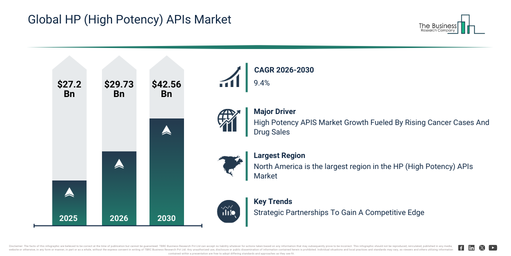
    The hp (high potency) apis market size has demonstrated strong growth in recent years. It is projected to expand from $27.2 billion in 2025 to $29.73 billion in 2026, registering a compound annual growth rate (CAGR) of 9.3%. The historical growth in this market stems from factors including the rising prevalence of cancer and hormonal disorders, the expansion of the generic hpapis market, advancements in synthetic hpapi manufacturing, an increasing focus on drug efficacy at low doses, and the early adoption of biotech hpapis in developed regions.

    The hp (high potency) apis market size is projected to experience significant growth over the coming years. It is forecast to expand to $42.56 billion by 2030, demonstrating a compound annual growth rate (CAGR) of 9.4%. This expansion during the forecast period is primarily driven by the increasing scope of oncology and hormonal therapeutic applications, rising investments directed towards precision medicine, the growing embrace of automated manufacturing processes, an uptick in contract manufacturing outsourcing, and continuous technological innovations in hpapi delivery systems. Prominent trends expected during the forecast period include the implementation of enhanced safety protocols for handling hpapis, the development of advanced formulation technologies, a surging demand for oncology and hormonal therapies, the formation of more contract manufacturing partnerships, and a strong emphasis on regulatory compliance and quality standardization.

    Download A Free Sample Report For Comprehensive Market Insights:

    https://www.thebusinessresearchcompany.com/sample.aspx?id=2814&type=smp

    What Core Drivers Are Transforming The HP (High Potency) APIs Market?

    The expansion of the HP (high potency) APIs market has been driven by the increasing prevalence of cancer and the concurrent rise in cancer drug sales. Cancer is characterized by the unchecked proliferation of abnormal cells, which have the potential to metastasize throughout the body. The growing occurrence of cancer fuels intensified research and development efforts for anticancer medications, thereby boosting the demand within this market. High Potency (HP) APIs are instrumental in cancer therapy, providing highly potent active pharmaceutical ingredients in precise, small quantities to target cancerous cells efficiently, simultaneously reducing harm to healthy tissue. As an illustration, the American Cancer Society, a professional organization based in the US, anticipates approximately 313,780 new cases of prostate cancer in the United States in 2025, as reported in September 2025. The likelihood of developing prostate cancer escalates notably with age, increasing from 0.2% for males below 50 years to 6.5% for those between 70–79 years old. Consequently, the escalating incidence of cancer cases is predicted to significantly boost revenues for the HP (high potency) APIs market.

    How Is The HP (High Potency) APIs Market Structured Across Different Market Segments?

    The hp (high potency) apis market covered in this report is segmented –

    1) By Type: Innovative HPAPI, Generic HPAPI

    2) By Synthesis Type: Synthetic HPAPI, Biotech HPAPI

    3) By Therapeutic Application: Oncology, Hormonal Disorder, Glaucoma, Other Therapeutic Applications

    Subsegments:

    1) By Innovative HPAPI: Branded High Potency APIs, Newly Developed, Patented APIs

    2) By Generic HPAPI: Off-Patent High Potency APIs, Generic Versions Of Innovative HPAPIs

    What Trends Are Affecting The HP (High Potency) APIs Market Dynamics?

    Major companies active in the HP (high potency) APIS market are concentrating on forming strategic partnerships to increase their market revenues. Collaborative efforts between these firms can yield several advantages, including acquiring new technology, expanding customer choices, enhancing global servicing capabilities, establishing a cooperative global platform, and integrating services. For instance, in March 2023, CatSci Ltd., a UK-based provider of innovative process research and development services, collaborated with AGC Pharma Chemicals Europe S.L.U. Through this alliance, clients will gain access to a broad spectrum of manufacturing technologies, such as fluorination, bromination, and others. The partnership will also enable AGC Pharma Chemicals’ customers to utilize specialized knowledge in state-of-the-art chemical development, analytical development, and more.

    Which Organizations Are Operating Within The HP (High Potency) APIs Market?

    Major companies operating in the hp (high potency) apis market are Merck KGaA, Pfizer Inc, Thermo Fisher Scientific Inc, Teva Pharmaceuticals, Lonza Group AG, Sanofi (EUROAPI), Corden Pharma International, Dr. Reddy’s Laboratories Ltd., Siegfried Holding AG, Novartis, Roche India, Cstone Pharma (China), Beigene (China), Takeda Pharmaceuticals (Japan), Astellas Pharma Inc (Japan), Otsuka Pharmaceutical Co Ltd (Japan), Abbott Laboratories, Eli Lilly And Company, Bristol-Myers Squibb Company, Apotex, Gilead Sciences, Abbvie Inc, GlaxoSmithKline, Ferring Pharmaceuticals, Cipla, Bayer, Johnson & Johnson, AstraZeneca Pharmaceutical (Pty) Ltd

    Access The Complete HP (High Potency) APIs Market Report:

    https://www.thebusinessresearchcompany.com/report/hp-high-potency-api-global-market-report

    Which Region Is The Dominant Market In The HP (High Potency) APIs Market?

    North America was the largest region in the global HP (high potency) APIS market in 2025. Middle East is expected to be the fastest growing region in the HP (high potency) APIS market report during the forecast period. The regions covered in the hp (high potency) apis market report are Asia-Pacific, South East Asia, Western Europe, Eastern Europe, North America, South America, Middle East, Africa.

    Access HP (High Potency) APIs Market Report for Deeper Competitive Insights

    https://www.thebusinessresearchcompany.com/sample.aspx?id=2814&type=smp

    Browse Through More Reports Similar to the Global HP (High Potency) APIs Market 2026, By The Business Research Company

    Hp High Potency Api Market Report 2026

    https://www.thebusinessresearchcompany.com/report/hp-high-potency-api-global-market-report

    Hpc Data Management Market Report 2026

    https://www.thebusinessresearchcompany.com/report/hpc-data-management-global-market-report

    Pharmaceuticals Market 2026

    https://www.thebusinessresearchcompany.com/report/pharmaceuticals-market

    Get in touch with us:

    The Business Research Company: https://www.thebusinessresearchcompany.com/

    Americas: +1 310-496-7795

    Asia: +44 7882 955267 & +91 8897263534

    Europe: +44 7882 955267

    Email us at: marketing@tbrc.info

    Follow us on:

    LinkedIn: https://in.linkedin.com/company/the-business-research-company

    YouTube: https://www.youtube.com/channel/UC24_fI0rV8cR5DxlCpgmyFQ

    Global Market Model: https://www.thebusinessresearchcompany.com/global-market-model
  • Rising Aging Population Fuels Growth In The Hormone Therapy Market Is Supporting Development Across The Hormone Therapy Market

    Rising Aging Population Fuels Growth In The Hormone Therapy Market Is Supporting Development Across The Hormone Therapy Market

    The Business Research Company’s 2026 market reports feature advanced enhancements such as market attractiveness analysis, total addressable market evaluation, company benchmarking matrices, interactive Excel dashboards, expanded supply chain intelligence, emerging startup coverage, and detailed product insights, delivering more actionable and strategically valuable research.

    What Market Value Trend Is Expected For The Hormone Therapy Market From 2026 To 2030?

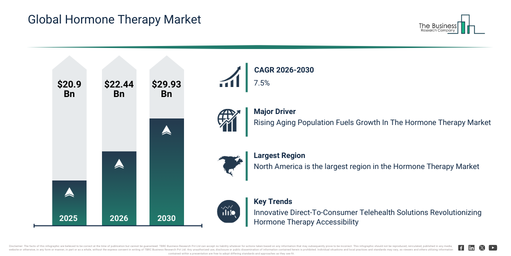
    Having demonstrated strong growth in recent years, the hormone therapy market size is anticipated to grow from $20.9 billion in 2025 to $22.44 billion in 2026, at a compound annual growth rate (CAGR) of 7.4%. This historical growth can be attributed to several factors, including the rising prevalence of hormonal disorders, increasing awareness of hormone replacement therapy, improved diagnosis rates of hypothyroidism, the expansion of hospital pharmacy networks, and the availability of low-cost generic hormones.

    The hormone therapy market is projected to experience robust expansion over the coming years. Its valuation is anticipated to reach $29.93 billion by 2030, demonstrating a compound annual growth rate (CAGR) of 7.5%. This growth during the forecast period is fueled by factors such as an aging global populace, an increase in treatments related to menopause, a heightened emphasis on therapies improving quality of life, the spread of online pharmacies, and continuous advancements in hormone delivery mechanisms. Key developments expected within this period involve a surge in personalized hormone regimens, increasing consumer demand for bioidentical hormones, broader application of hormone therapy among older demographics, greater utilization of combination hormone therapies, and a move towards formulations that are both convenient and long-lasting.

    Download A Free Sample Report For Comprehensive Market Insights:

    https://www.thebusinessresearchcompany.com/sample.aspx?id=9246&type=smp

    Which Growth Factors Are Strengthening The Hormone Therapy Market Landscape?

    The rising population of senior citizens is anticipated to stimulate the expansion of the hormone therapy market in the future. Elderly individuals are defined as those in advanced stages of life, often referred to as older persons or the senior demographic. Hormone therapy for seniors, especially concerning health issues linked to aging, seeks to correct imbalanced hormone levels and address particular age-related conditions. For example, data from July 2024 by the UK Parliament, a UK-based government body, indicates that the UK’s population is projected to hit 70 million by 2026. Furthermore, the demographic is aging, with 19% of individuals being 65 or older in 2022. This proportion is forecast to increase to 27% by 2072. Consequently, the growing elderly population is fueling the hormone therapy market.

    Which Segment-Based Categories Are Covered In The Hormone Therapy Market?

    The hormone therapy market covered in this report is segmented –

    1) By Therapy: Estrogen Hormone Replacement, Growth Hormone Replacement, Thyroid Hormone Replacement, Testosterone Replacement

    2) By Route Of Administration: Oral, Parenteral, Other Routes Of Administration

    3) By Indication: Menopause, Hypothyroidism, Growth Hormone Deficiency, Other Indications

    4) By Distribution Channel: Hospitals Pharmacies, Retail Pharmacies And Stores, Online Pharmacies

    Subsegments:

    1) By Estrogen Hormone Replacement: Systemic Estrogen Therapy, Local Estrogen Therapy, Combination Estrogen-Progestin Therapy

    2) By Growth Hormone Replacement: Recombinant Growth Hormones, Synthetic Growth Hormones

    3) By Thyroid Hormone Replacement: Levothyroxine, Liothyronine, Natural Desiccated Thyroid

    4) By Testosterone Replacement: Injectable Testosterone, Transdermal Testosterone, Oral Testosterone, Pellets

    Which Trends Are Influencing The Expansion Of The Hormone Therapy Market?

    Leading companies in the hormone therapy market are concentrating on developing innovative solutions, such as direct-to-consumer telehealth systems for hormone therapy, to improve patient accessibility and convenience. This direct-to-consumer telehealth approach for hormone therapy refers to a healthcare delivery method that allows patients to receive hormone therapy services remotely, without requiring traditional in-person appointments. For example, in September 2023, LifeMD, a US-based telehealth firm, partnered with ASCEND Therapeutics, a US-based pharmaceutical company, to launch an integrated direct-to-consumer telehealth model for hormone therapy, specifically utilizing EstroGel (estradiol gel) to alleviate menopausal symptoms. This collaboration enables patients to access LifeMD’s telehealth services directly through the EstroGel website, facilitating consultations with licensed healthcare providers who can prescribe the medication and arrange home delivery. By simplifying access and resolving issues like extended wait times, this initiative aims to enhance health outcomes for women seeking menopause treatment.

    Who Are The Businesses Driving Activity In The Hormone Therapy Market?

    Major companies operating in the hormone therapy market are Abbott Laboratories, Bayer AG, Eli Lilly and Company, F. Hoffmann-La Roche, Merck KGaA, Mylan NV, Novartis AG, Novo Nordisk AS, Pfizer Inc., Abbvie Inc., Teva Pharmaceutical Industries Ltd., Perrigo Company Plc., Cipla Inc., Lupin Limited, Sun Pharmaceuticals Industries Ltd., Hikma Pharmaceuticals PLC., Johnsons & Johnsons Services Inc., Boehringer Ingelheim International GmbH, Sanofi S.A., AstraZeneca plc, TherapeuticsMD Inc., Amgen Inc., Genentech Inc., Dr. Reddy’s Laboratories Ltd, Allergan PLC, GlaxoSmithKline plc, Bristol-Myers Squibb Company, Takeda Pharmaceutical Company Limited, Astellas Pharma Inc., Daiichi Sankyo Company Limited

    Access The Complete Hormone Therapy Market Report:

    https://www.thebusinessresearchcompany.com/report/hormone-therapy-global-market-report

    Which Area Represents The Largest Portion Of The Hormone Therapy Market?

    North America was the largest region in the hormone therapy market in 2025. The regions covered in the hormone therapy market report are Asia-Pacific, South East Asia, Western Europe, Eastern Europe, North America, South America, Middle East, Africa.

    Access Hormone Therapy Market Report for Deeper Competitive Insights

    https://www.thebusinessresearchcompany.com/sample.aspx?id=9246&type=smp

    Browse Through More Reports Similar to the Global Hormone Therapy Market 2026, By The Business Research Company

    Hormone Therapy Market Report 2026

    https://www.thebusinessresearchcompany.com/report/hormone-therapy-global-market-report

    Drugs For Hormonal Replacement Therapy Market Report 2026

    https://www.thebusinessresearchcompany.com/report/drugs-for-hormonal-replacement-therapy-global-market-report

    Synthetic Hormones Market Report 2026

    https://www.thebusinessresearchcompany.com/report/synthetic-hormones-global-market-report

    Get in touch with us:

    The Business Research Company: https://www.thebusinessresearchcompany.com/

    Americas: +1 310-496-7795

    Asia: +44 7882 955267 & +91 8897263534

    Europe: +44 7882 955267

    Email us at: marketing@tbrc.info

    Follow us on:

    LinkedIn: https://in.linkedin.com/company/the-business-research-company

    YouTube: https://www.youtube.com/channel/UC24_fI0rV8cR5DxlCpgmyFQ

    Global Market Model: https://www.thebusinessresearchcompany.com/global-market-model
  • Increasing Number Of Postmenopausal Women Fueling The Growth Of The Market Due To Rising Life Expectancy Is Supporting Development Across The Hormone Replacement Therapy Market

    Increasing Number Of Postmenopausal Women Fueling The Growth Of The Market Due To Rising Life Expectancy Is Supporting Development Across The Hormone Replacement Therapy Market

    The Business Research Company’s 2026 market reports feature advanced enhancements such as market attractiveness analysis, total addressable market evaluation, company benchmarking matrices, interactive Excel dashboards, expanded supply chain intelligence, emerging startup coverage, and detailed product insights, delivering more actionable and strategically valuable research.

    How Does The Forecasted Market Size Of The Hormone Replacement Therapy Market Compare Between 2026 And 2030?

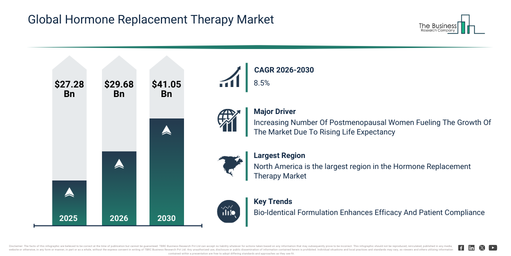
    The hormone replacement therapy market has experienced robust expansion in recent years. It is projected to increase from $27.28 billion in 2025 to $29.68 billion in 2026, at a compound annual growth rate (CAGR) of 8.8%. Historically, this growth can be attributed to factors such as managing menopause symptoms, the increasing aging population, the prevalence of thyroid disorders, improved diagnosis of endocrine disorders, and the utilization of hormone therapy in hospital settings.

    The hormone replacement therapy market is projected to experience robust expansion in the coming years. By 2030, this market is anticipated to reach $41.05 billion, growing at a compound annual growth rate (CAGR) of 8.5%. This anticipated growth during the forecast period can be attributed to factors such as the increasing adoption of personalized hormone therapy, a global aging population, the prevalence of lifestyle-related hormonal imbalances, the integration of telemedicine, and the rising demand for long-term hormone management. Key trends expected over the forecast period encompass a greater uptake of menopause management therapies, an escalating demand for bioidentical hormones, more widespread use of transdermal hormone delivery methods, the expansion of hormone replacement options for men, and enhanced patient awareness coupled with improved diagnosis rates.

    Download A Free Sample Report For Comprehensive Market Insights:

    https://www.thebusinessresearchcompany.com/sample.aspx?id=24563&type=smp

    What Important Drivers Are Powering The Hormone Replacement Therapy Market Growth?

    The rising count of postmenopausal women is anticipated to fuel the expansion of the hormone replacement therapy market moving forward. These are defined as women whose menstruation has ceased permanently, a result of the natural decrease in reproductive hormones, usually observed a year after their final menstrual period. This increase is attributed to longer life expectancies, leading to a greater aging female demographic undergoing menopause. Hormone replacement therapy assists postmenopausal women by easing frequent symptoms like hot flashes and night sweats, thereby enhancing their quality of life. Furthermore, it supports hormonal equilibrium through tailored treatments, which lessens discomfort and fosters general well-being. For example, data from November 2023, shared by the National Menopause Foundation (NMF), a US-based nonprofit organization, indicates that around 1.3 million women in the United States begin menopause annually, and globally, the population of postmenopausal women is projected to reach 1.1 billion by 2025. Consequently, the expanding demographic of postmenopausal women is propelling the development of the hormone replacement therapy market.

    What Are The Major Segment Categories Within The Hormone Replacement Therapy Market?

    The hormone replacement therapy market covered in this report is segmented –

    1) By Therapy Type: Estrogen Replacement Therapy, Human Growth Hormone Replacement Therapy, Thyroid Hormone Replacement Therapy, Testosterone Replacement Therapy, Other Therapy Types

    2) By Indication: Menopause, Hypothyroidism, Male Hypogonadism, Growth Hormone Deficiency, Other Indications

    3) By Route Of Administration: Oral, Transdermal, Injectable, Other Routes Of Administration

    4) By Distribution Channel: Hospital Pharmacies, Retail Pharmacies, Online Pharmacies, Other Distribution Channels

    Subsegments:

    1) By Estrogen Replacement Therapy: Oral Estrogen, Transdermal Estrogen, Topical Estrogen, Vaginal Estrogen, Injectable Estrogen

    2) By Human Growth Hormone (hGH) Replacement Therap: Somatropin, Somatrem, Recombinant Human Growth Hormone (rhGH), Pegylated hGH, Other Human Growth Hormone (hGH) Replacement Therapies

    3) By Thyroid Hormone Replacement Therapy: Levothyroxine (T4), Liothyronine (T3), Natural Desiccated Thyroid (NDT), Combination T3 Or T4 Therapy

    4) By Testosterone Replacement Therapy: Gels And Creams, Injections, Patches, Oral Testosterone, Pellets

    5) By Other Therapy Types: Progesterone Replacement Therapy, Combined Estrogen-Progesterone Therapy, Dehydroepiandrosterone Therapy, Melatonin Replacement Therapy

    What Trends Are Impacting The Hormone Replacement Therapy Market?

    Leading companies operating within the hormone replacement therapy market are concentrating on developing innovative formulations, such as bio-identical hormone preparations, to enhance treatment efficacy and patient compliance. Bio-identical hormone formulations are therapeutic options that utilize hormones chemically identical to those naturally produced by the human body, aiming to offer more natural and effective symptom relief with fewer adverse effects. For instance, in May 2024, Jagsonpal Pharmaceuticals Ltd., an India-based pharmaceutical company, introduced MemUp, a bio-identical hormone replacement therapy (HRT). This novel therapy combines estradiol and progesterone into a single, once-daily oral capsule. MemUp is engineered to effectively alleviate common menopausal symptoms like hot flashes and night sweats, while simplifying the treatment regimen to improve patient convenience and adherence.

    Which Firms Are Competing In The Hormone Replacement Therapy Market?

    Major companies operating in the hormone replacement therapy market are Viatris Inc., Organon & Co., Endo International plc, Ferring Pharmaceuticals, Besins Healthcare, Ascendis Pharma A/S, Astellas Pharma Inc., Kyowa Kirin Co. Ltd., Sun Pharmaceutical Industries Ltd., Dr. Reddy’s Laboratories Ltd., Zydus Lifesciences Ltd., Torrent Pharmaceuticals Ltd., Alvogen Pharma, Perrigo Company plc, Hikma Pharmaceuticals PLC, Accord Healthcare Ltd., Glenmark Pharmaceuticals Ltd., Intas Pharmaceuticals Ltd., Alkem Laboratories Ltd., Piramal Pharma Ltd.

    Access The Complete Hormone Replacement Therapy Market Report:

    https://www.thebusinessresearchcompany.com/report/hormone-replacement-therapy-global-market-report

    Which Region Commands The Largest Share Of The Hormone Replacement Therapy Market?

    North America was the largest region in the hormone replacement therapy market in 2025. Asia-Pacific is expected to be the fastest-growing region in the forecast period. The regions covered in the hormone replacement therapy market report are Asia-Pacific, South East Asia, Western Europe, Eastern Europe, North America, South America, Middle East, Africa.

    Access Hormone Replacement Therapy Market Report for Deeper Competitive Insights

    https://www.thebusinessresearchcompany.com/sample.aspx?id=24563&type=smp

    Browse Through More Reports Similar to the Global Hormone Replacement Therapy Market 2026, By The Business Research Company

    Hormone Therapy Market Report 2026

    https://www.thebusinessresearchcompany.com/report/hormone-therapy-global-market-report

    Drugs For Hormonal Replacement Therapy Market Report 2026

    https://www.thebusinessresearchcompany.com/report/drugs-for-hormonal-replacement-therapy-global-market-report

    Testosterone Replacement Therapy Market Report 2026

    https://www.thebusinessresearchcompany.com/report/testosterone-replacement-therapy-global-market-report

    Get in touch with us:

    The Business Research Company: https://www.thebusinessresearchcompany.com/

    Americas: +1 310-496-7795

    Asia: +44 7882 955267 & +91 8897263534

    Europe: +44 7882 955267

    Email us at: marketing@tbrc.info

    Follow us on:

    LinkedIn: https://in.linkedin.com/company/the-business-research-company

    YouTube: https://www.youtube.com/channel/UC24_fI0rV8cR5DxlCpgmyFQ

    Global Market Model: https://www.thebusinessresearchcompany.com/global-market-model